The Austin Motor Company Limited was founded in 1905 by Herbert Austin in Longbridge, England. Austin was an engineer by trade and by passion. His goal was straightforward: build well-made cars that ordinary families could actually afford. The first model, the Austin 25/30, rolled out in 1906 and sold well from the start. Within two decades, the company had grown into one of the largest car manufacturers in the world, producing over 14,000 vehicles a year by the 1920s.
Affordability was the cornerstone of Austin’s appeal. These were not luxury cars built for the wealthy. They were reliable, well-constructed vehicles priced for the average household. That combination — quality at a fair price — turned Austin into a trusted name across Britain and far beyond. By the mid-20th century, Austins were being driven on roads across Europe, Australia, South America, and North America.
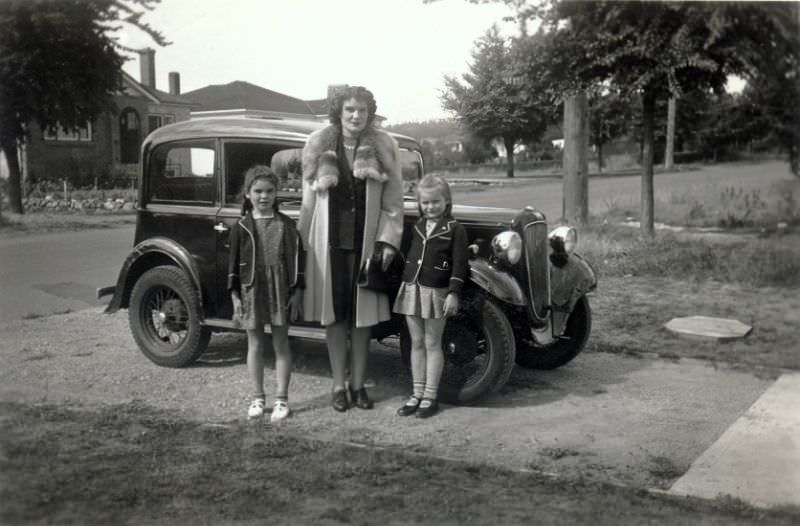
The Austin 7 was one of the company’s most successful early models. Introduced in 1922, it became the car that put motoring within reach of British working and middle-class families. Its compact size and low running costs made it practical for everyday use. By 1935, the updated “New Ruby” variant was a common sight in residential streets across Britain and beyond.
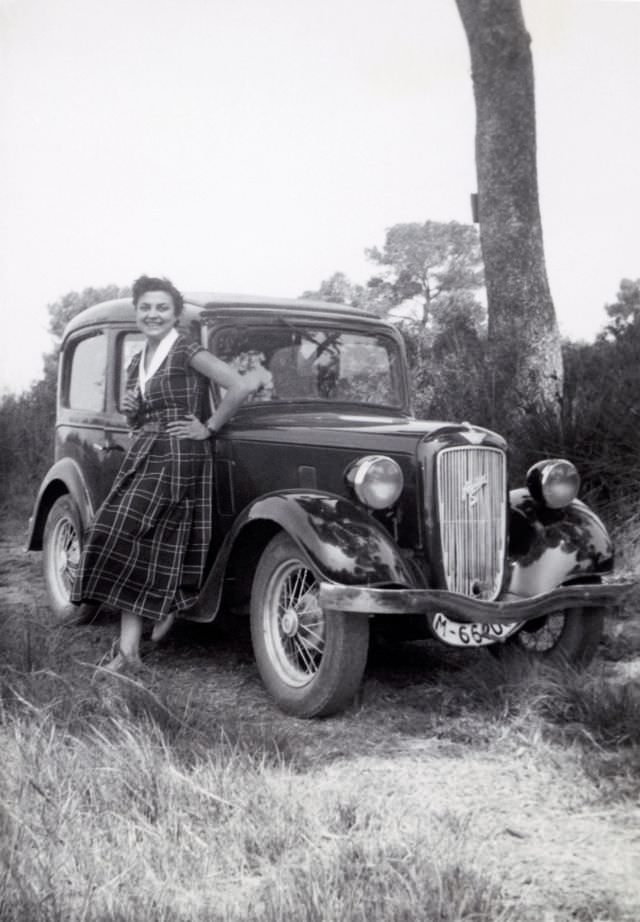
The reach of the Austin 7 extended well past British shores. This example, registered in Madrid, shows how broadly the model had spread across Europe by the mid-1930s. Austin exported heavily during this period, and local licensing agreements in countries like Germany and France helped the brand take hold internationally.
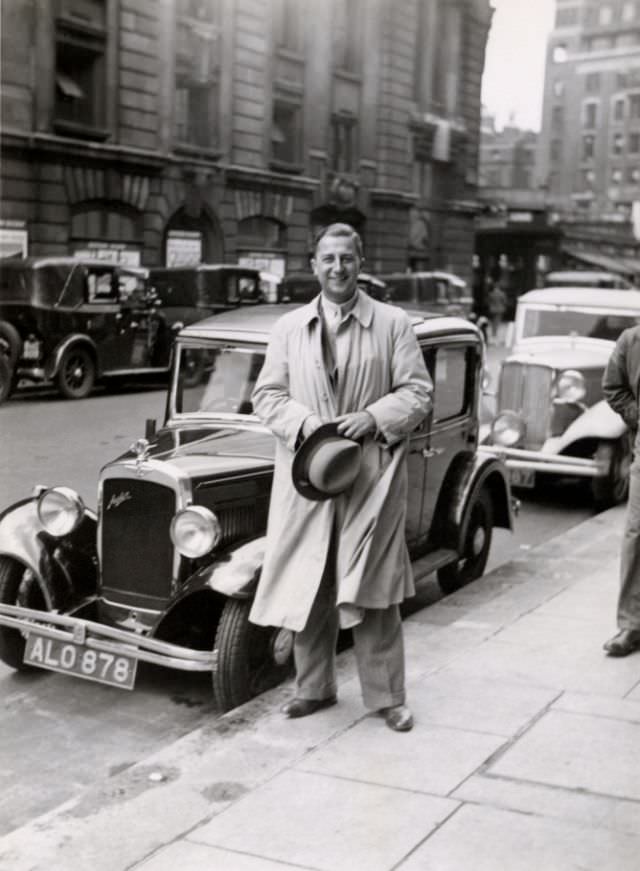
Alongside the Austin 7, the larger Austin 10/4 catered to families who needed a bit more space. Introduced in 1932, the 10/4 featured a four-cylinder engine and a roomier body than the 7. It was a practical family saloon that held its own against competitors throughout the 1930s. Scenes like this one — a well-kept 10/4 parked on a London street — were entirely ordinary at the time.
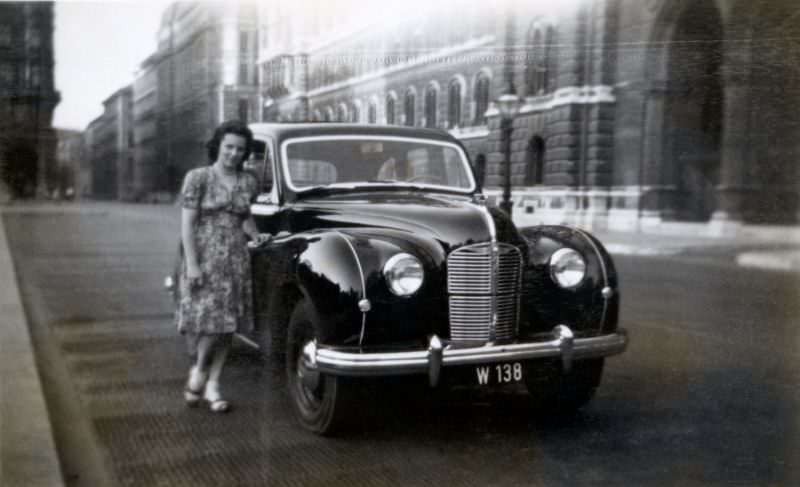
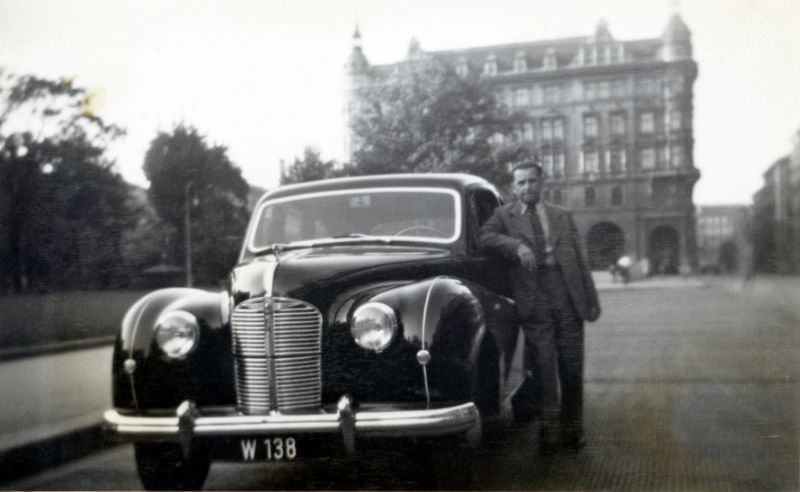
After World War II, Austin launched a new range of models under the “A” series naming system. The A70 Hampshire, introduced in 1948, was a mid-size saloon built for comfort and durability. These two photos of the same left-hand drive Hampshire in Vienna show the car from different angles — a reminder that even in postwar Austria, British cars had found a market.
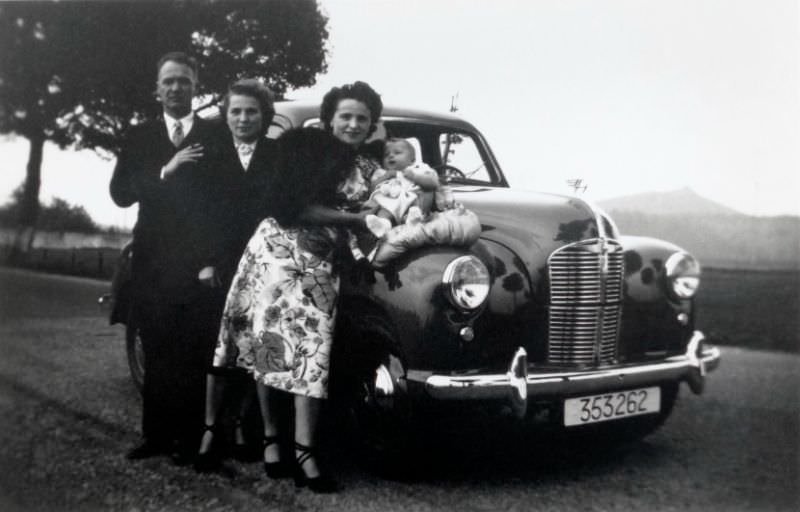
The Austin A40 Devon, launched in 1947, became one of the company’s most popular postwar models. It was modern in design, with a full unibody construction that replaced the older separate-chassis method. For families across Europe, posing beside a new Austin was a genuine occasion worth photographing. This Belgian family captured exactly that moment in the autumn of 1949.
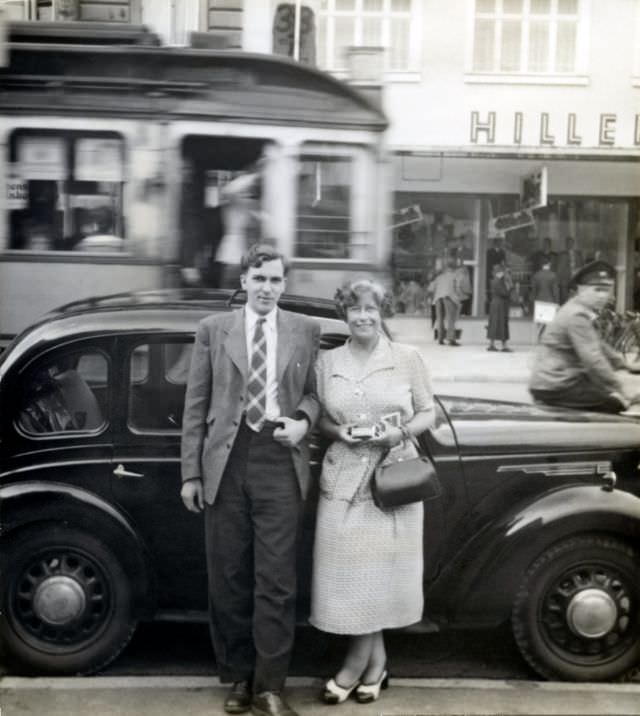
Across Britain, Austins appeared in countless personal photographs throughout the 1940s and 1950s. A new car was a significant purchase for most households, and people marked the occasion. The Austin Eight — a small, economical prewar design that continued into the early postwar years — was a common choice for working families. This English couple’s photo is typical of the era.
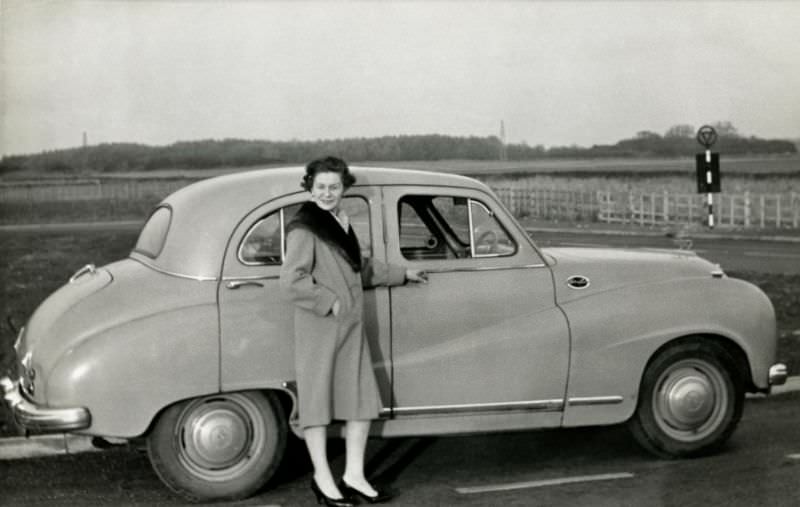
The A70 Hereford replaced the Hampshire in 1950, bringing a slightly revised body and updated mechanicals. It was a solid, capable car suited to both city driving and longer country runs. Austin’s model names during this period drew heavily from English counties and towns — Hampshire, Hereford, Somerset, Cambridge — giving each car a distinct British identity.
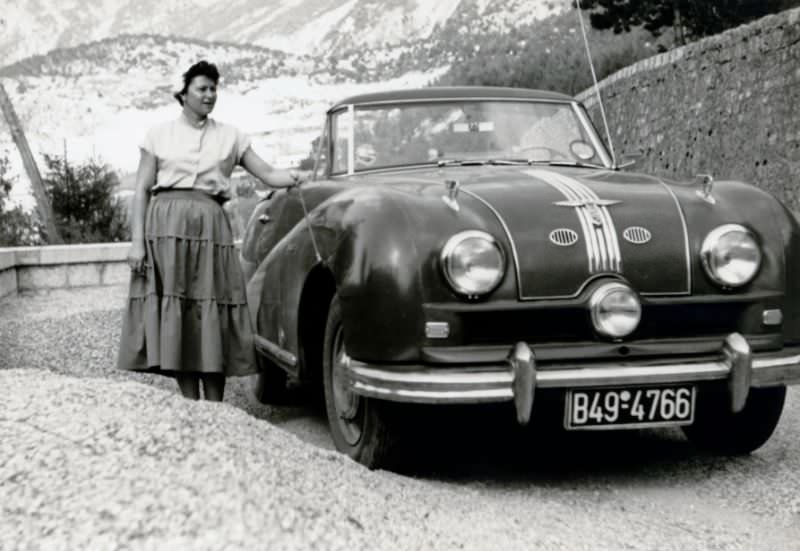
The A90 Atlantic was a bold departure for Austin. Designed in part to appeal to the American market, it featured a distinctive transatlantic styling with a curved, wide body and, in convertible form, a power-operated hood. It launched in 1948 but sold poorly in the United States. It found more buyers in Europe, as this Munich-registered example from 1952 demonstrates.
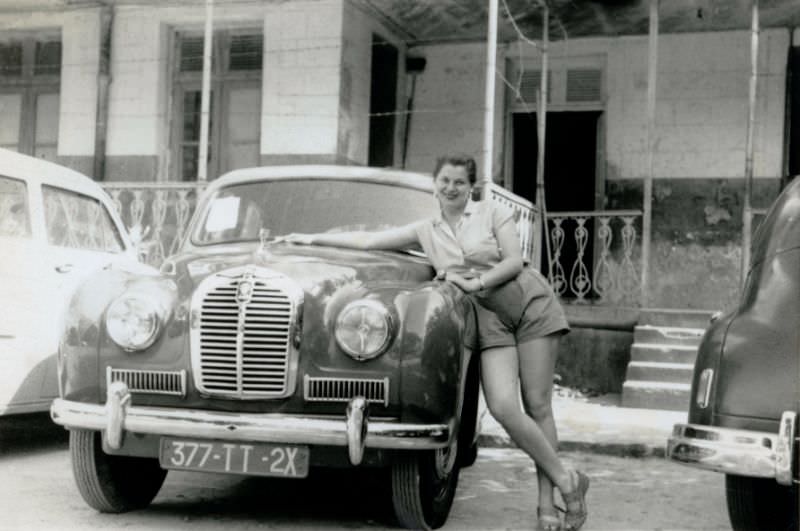
Austin’s export operation reached well beyond Europe. The A40 Somerset — introduced in 1952 as a successor to the Devon — made its way to South America, as this photograph from São Vicente, Brazil, confirms. Austin maintained a strong export business throughout the early 1950s, shipping cars to dealers in dozens of countries. Right-hand and left-hand drive versions were produced to meet different market requirements.
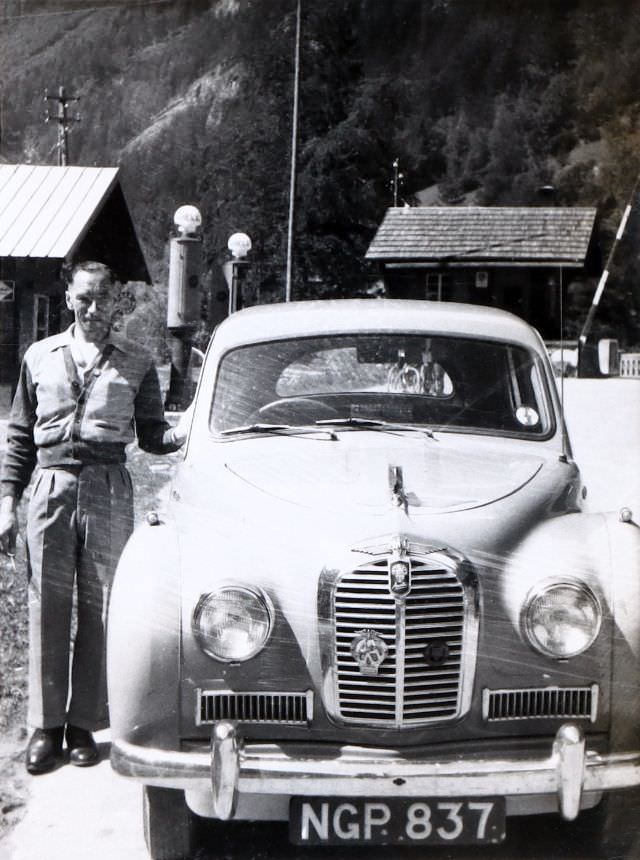
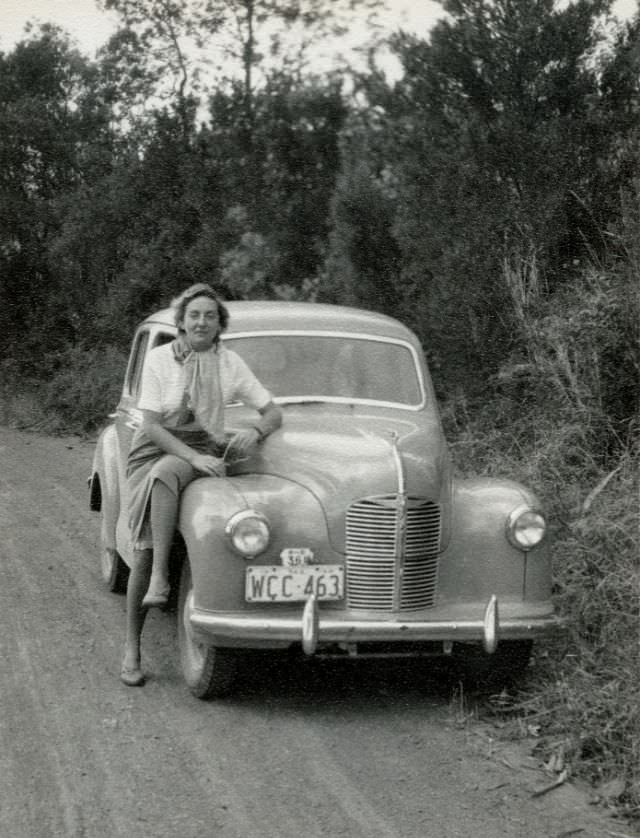
From border crossings in postwar Austria to dirt roads in rural Australia, Austin A40s turned up in remarkably varied settings. The Devon’s sturdy construction made it well suited to rough conditions, and Australian buyers in particular put their cars to serious use. Austin assembled vehicles in Australia through local operations, which helped keep prices competitive in that market.
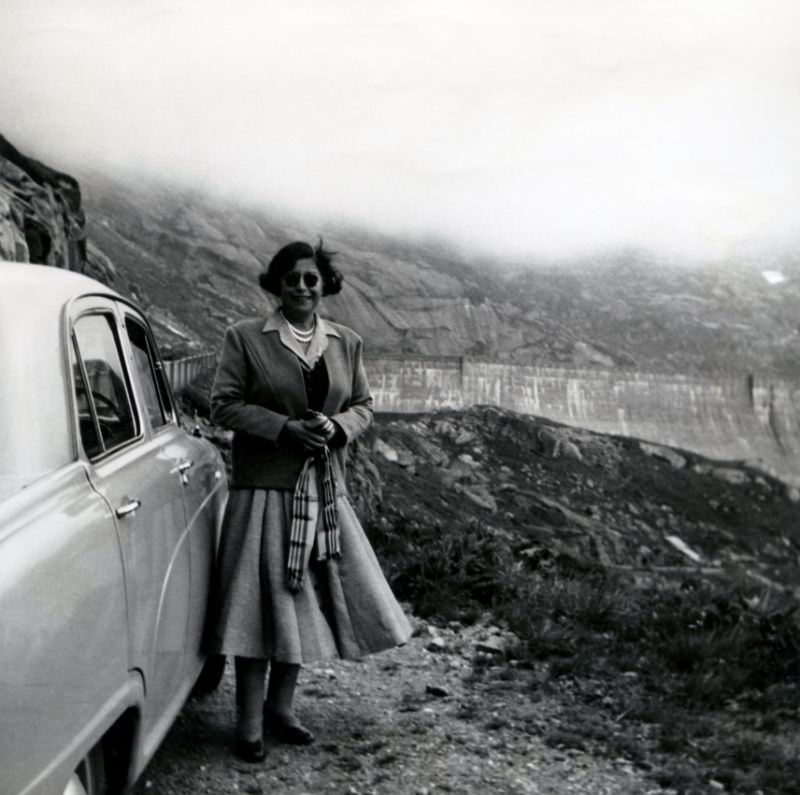
By the mid-1950s, Austins were a familiar sight on European roads, including the winding mountain passes of Switzerland. Holidaymakers from Britain and the Continent regularly drove their Austins on long-distance touring trips. The cars’ reliability made them a sensible choice for journeys across difficult terrain.
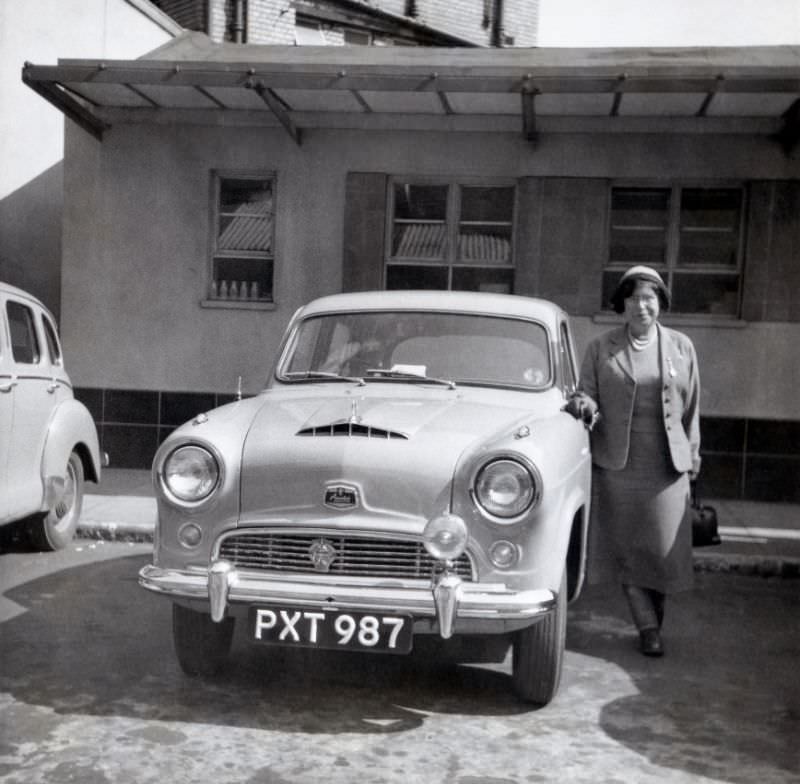
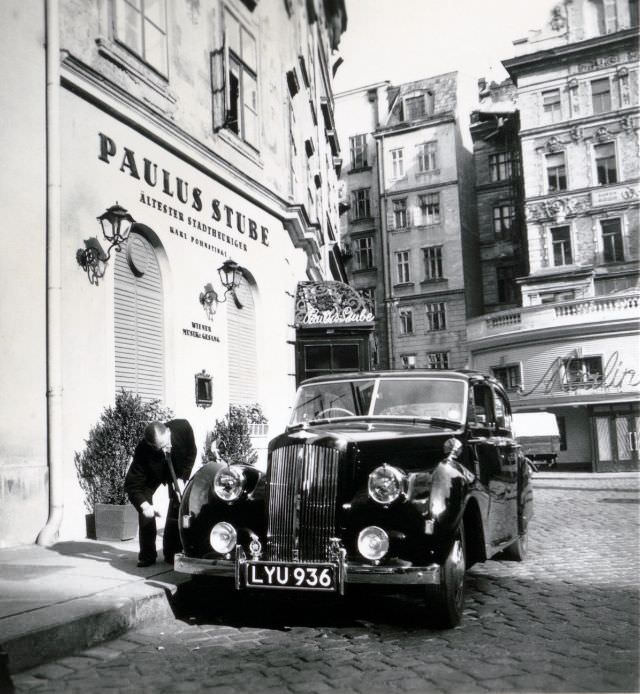
Austin’s range in 1955 covered a wide spectrum. At the affordable end sat the A40 Cambridge — here fitted with an extra driving light and an Automobile Association badge, marking its owner as a practical, prepared motorist. At the top of the lineup stood the A135 Princess, a large, elegant saloon aimed at executives and officials. This Vienna example, parked on cobblestones outside a historic tavern, reflects the Princess’s upmarket positioning.
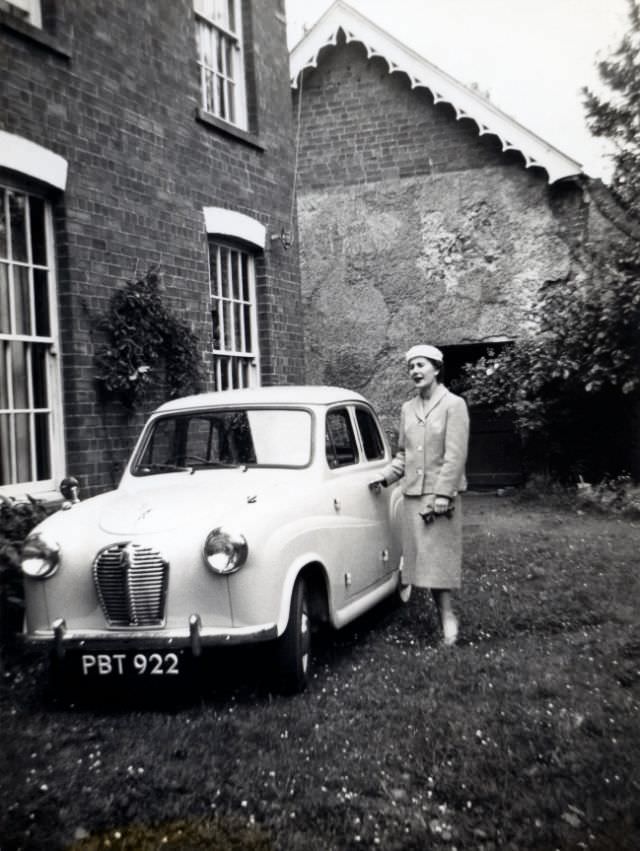
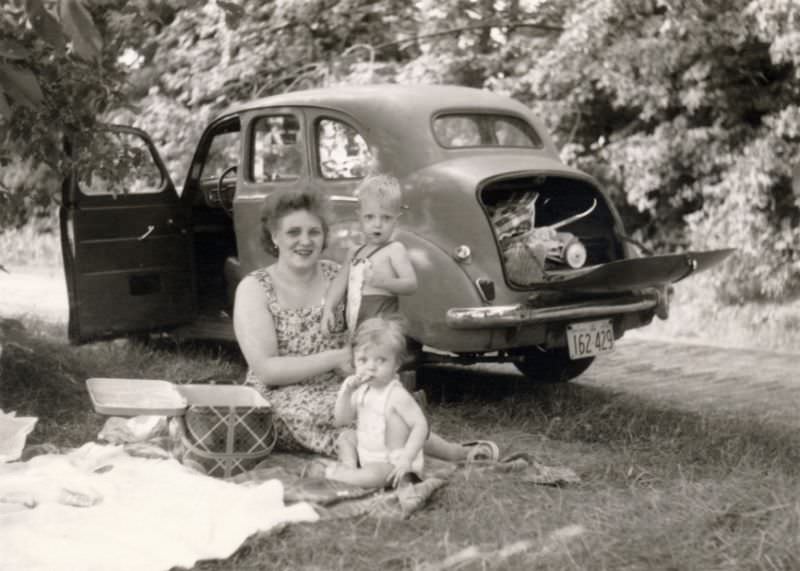
The compact Austin A30, launched in 1951, brought the economy-car tradition of the Austin 7 into the modern era. At home in a suburban garden or parked on a Canadian street, Austins of the mid-1950s reflected just how far the brand had spread. Ontario, Canada, was one of the stronger North American markets for British cars during this period.
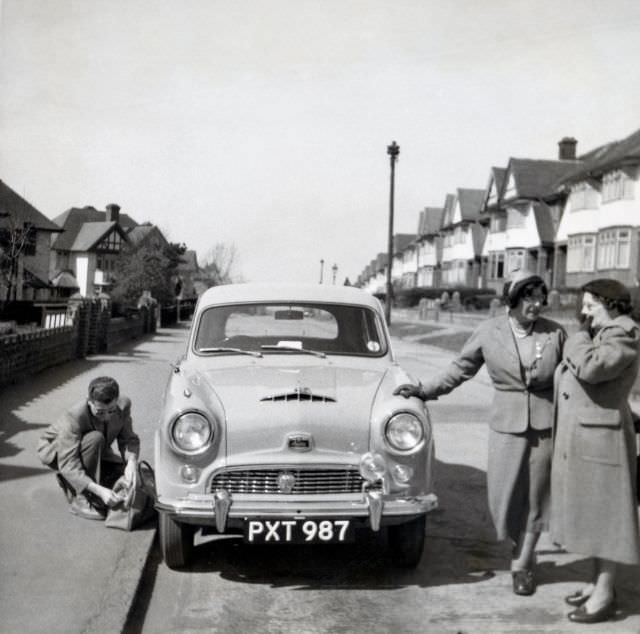
The A40 Cambridge succeeded the Somerset in 1954. It kept the same basic mechanical layout but offered a cleaner, more upright body style. In residential streets across Britain, the Cambridge was a common and recognizable presence throughout the second half of the 1950s. Its sensible proportions and modest running costs made it a natural fit for family use.
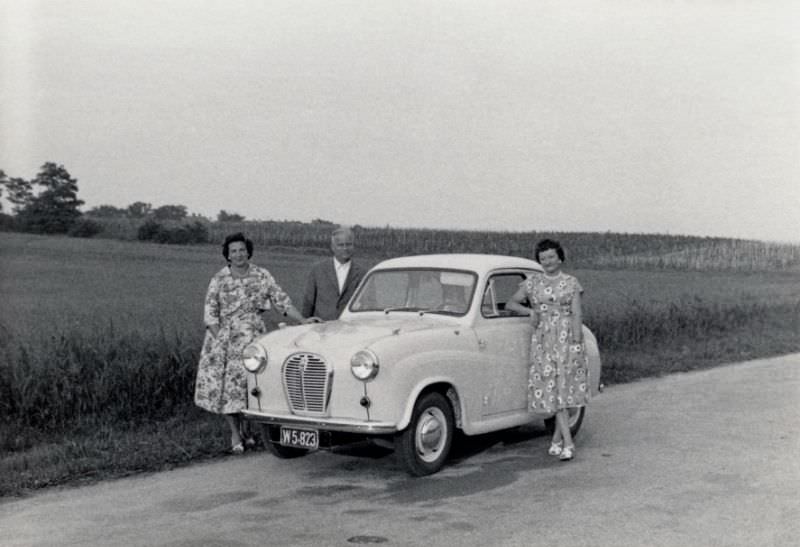
The Austin A35 arrived in 1956 as a direct upgrade of the A30. It featured a larger engine, a wider rear window, and a revised grille. Like many Austins of the era, it found buyers well outside the UK — this Vienna-registered example being one of many that ended up in Austrian hands. The A35 remained in production until 1968 in van form, long after the saloon had been discontinued.
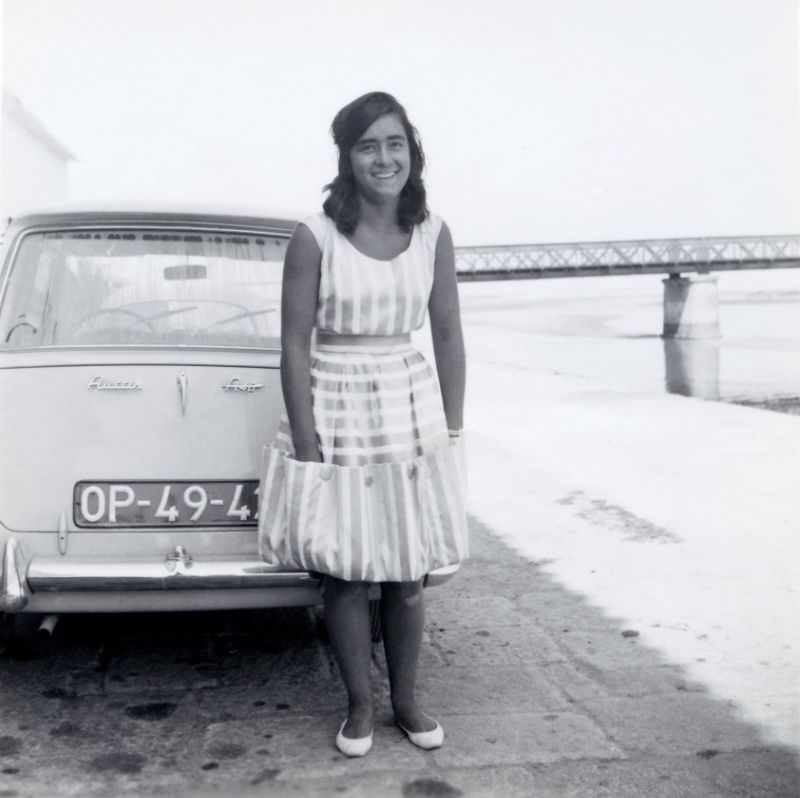
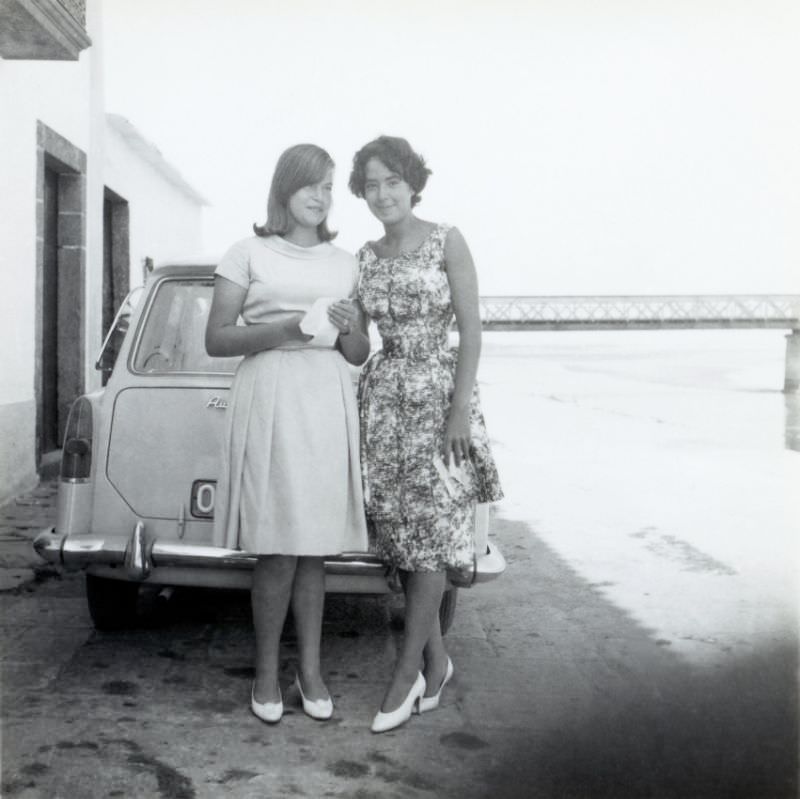
The A40 Farina, introduced in 1958, marked a sharp stylistic break from earlier Austins. It was designed by Italian coachbuilder Pininfarina, giving it a crisp, modern look that set it apart from the rounded shapes of the previous decade. It was also one of the earliest production cars to use a hatchback-style tailgate, making it ahead of its time in terms of practicality.
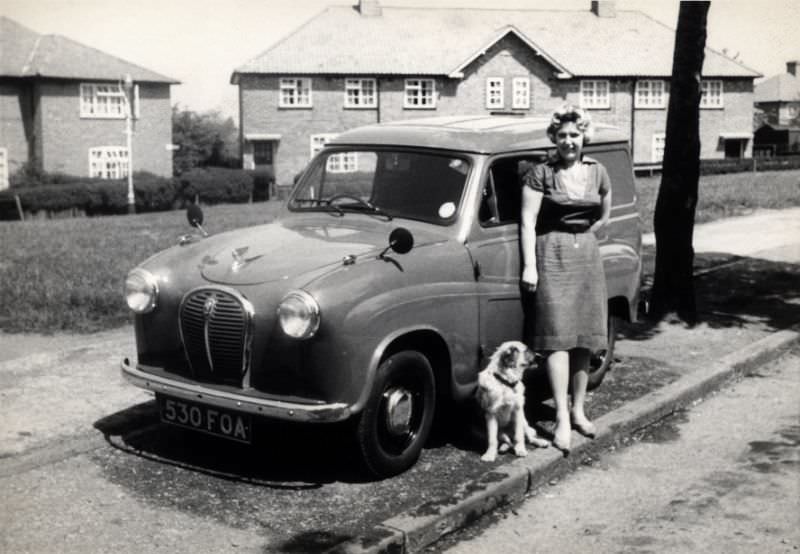
Austin’s commercial vehicles shared mechanicals with the passenger car range, keeping production costs down. The A35 Van was a direct derivative of the A35 saloon, using the same floorpan and drivetrain. Small businesses across Britain relied on these vans for local deliveries throughout the late 1950s and into the 1960s. Their light weight and simple mechanics made them easy and cheap to maintain.
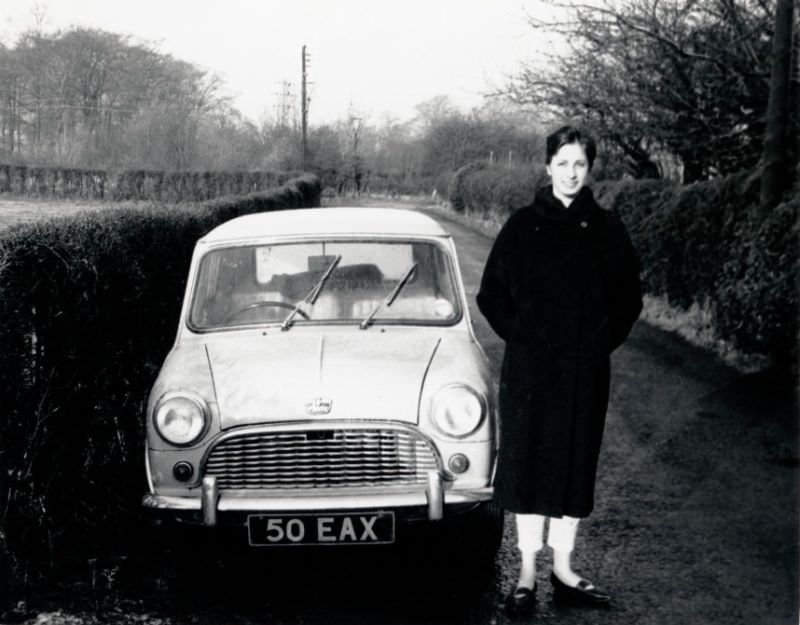
The Austin Mini, launched in 1959, was a radical design by Alec Issigonis. Its transversely mounted engine and front-wheel drive layout packed a full four-seat cabin into a body just ten feet long. The Mini was a direct response to the 1956 Suez Crisis, which caused fuel shortages across Britain and pushed demand toward economical small cars. It went on to become one of the most recognized cars ever built.
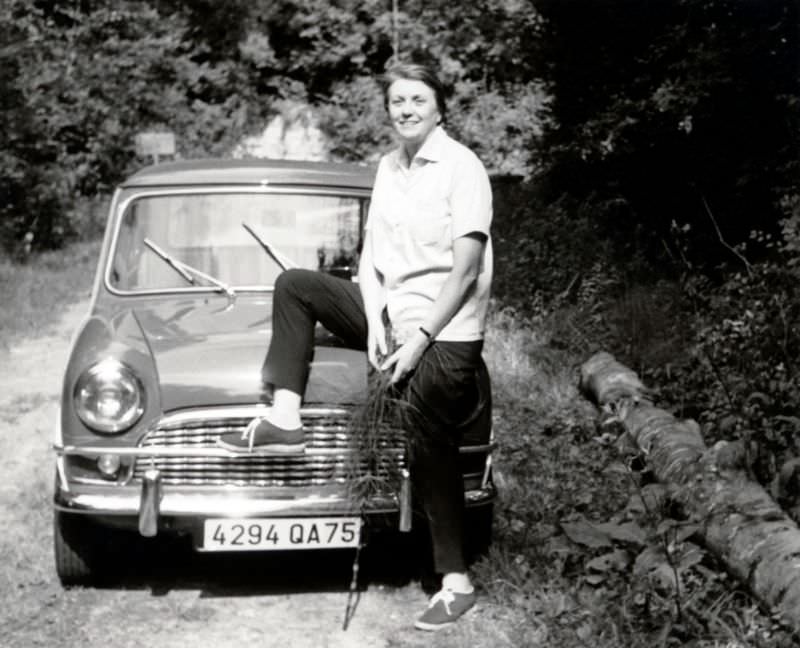
By the mid-1960s, the Mini had become a cultural fixture across Europe. French buyers took to it enthusiastically, and this Paris-registered example on a forest track in 1965 captures the car in its element — nimble, compact, and at home anywhere. Austin badged versions of the Mini sat alongside mechanically identical Riley, Wolseley, and Morris variants, all produced under the British Motor Corporation umbrella that Austin had helped form in 1952.