Hey There! Before You Go. 😧
Get the best vintage content straight into your inbox!

Don't worry, we don't spam

What France looked like in the 1950s Through these Stunning Photos

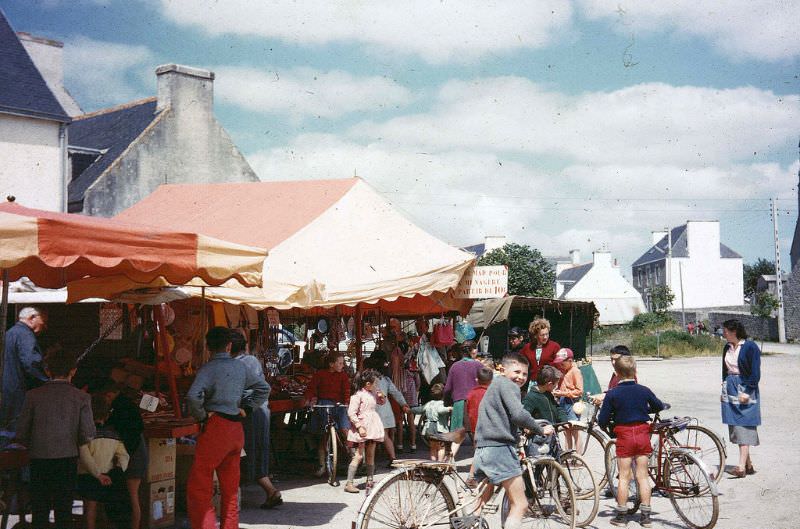
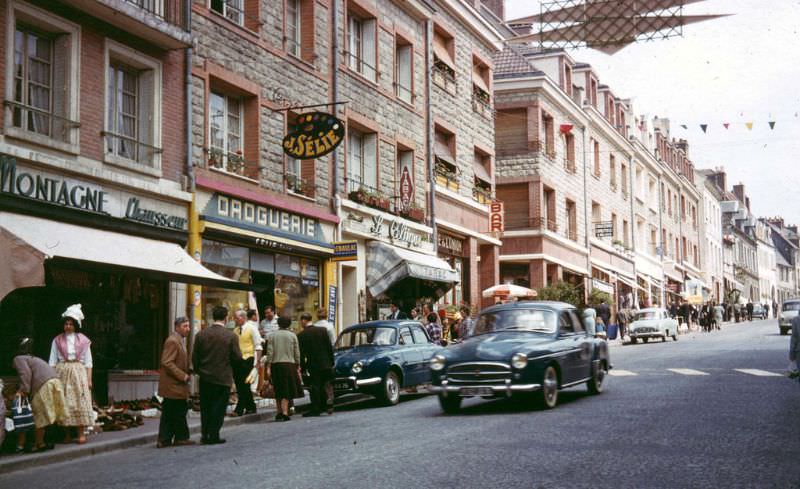
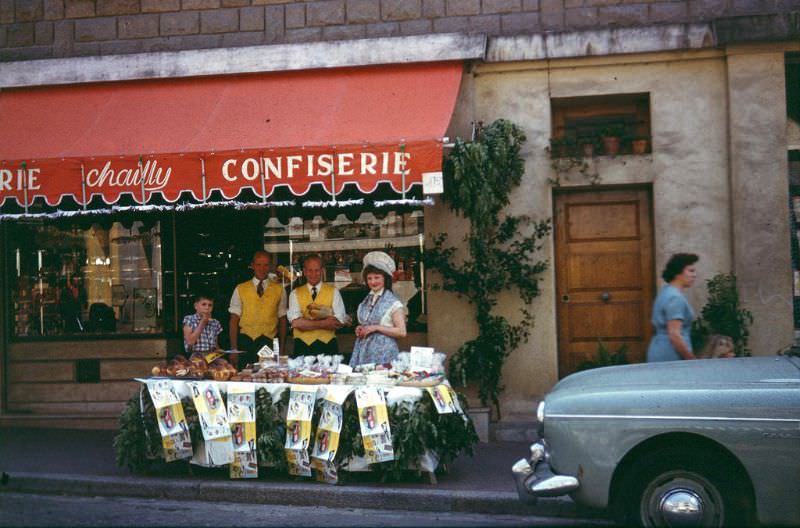
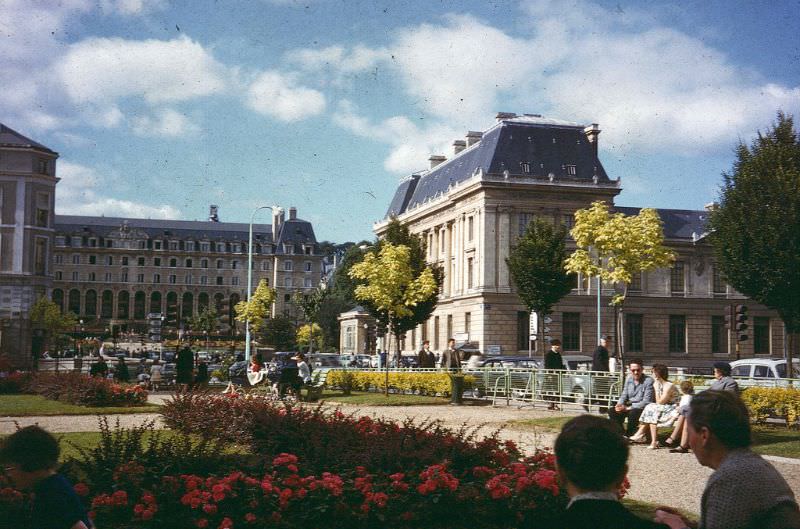
France in the 1950s was a country in motion. The destruction of World War II was still fresh in memory, but the economy was climbing fast. This period — known in France as the “Trente Glorieuses,” or thirty glorious years — brought real material change to ordinary French households. Families who had scraped by for decades now had access to refrigerators, washing machines, and automobiles. Supermarkets began replacing small local shops, and spending on leisure and health started to rise as food costs fell as a share of household budgets.
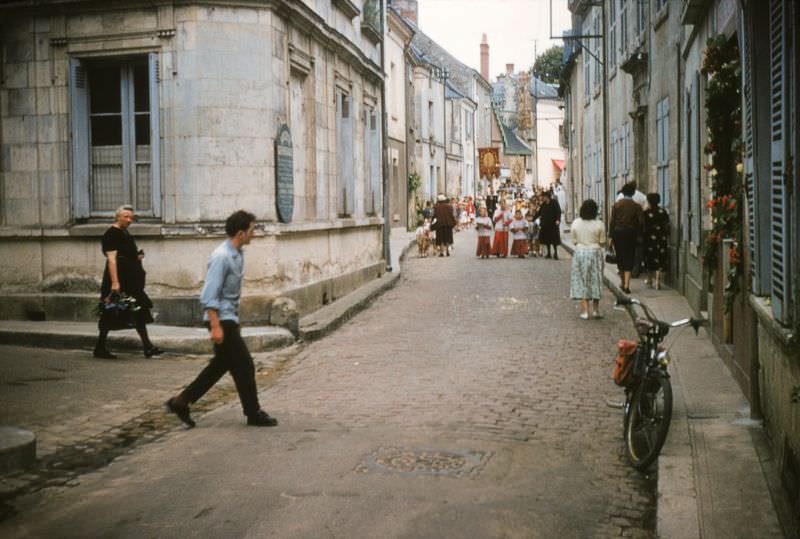
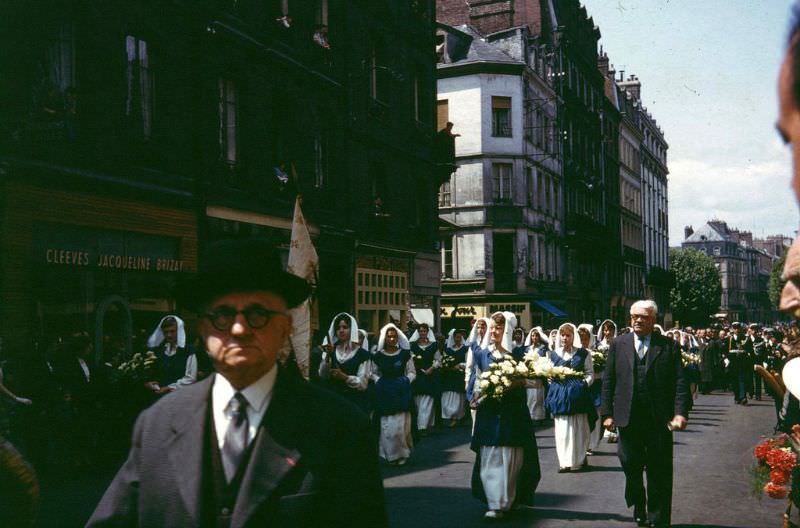
Azay-le-Rideau. Religious procession, Rue Balzac, France, early 1950s

Even as France modernized, traditional life carried on in its towns and villages. Religious processions still wound through narrow streets, as they had for generations. The contrast was striking — a country racing toward industrial modernity while its communities kept deeply rooted customs alive. The expanded social security system introduced after World War II gave French workers stronger protection against illness, unemployment, and poverty in old age, making the transition to modern life more stable for millions of families.
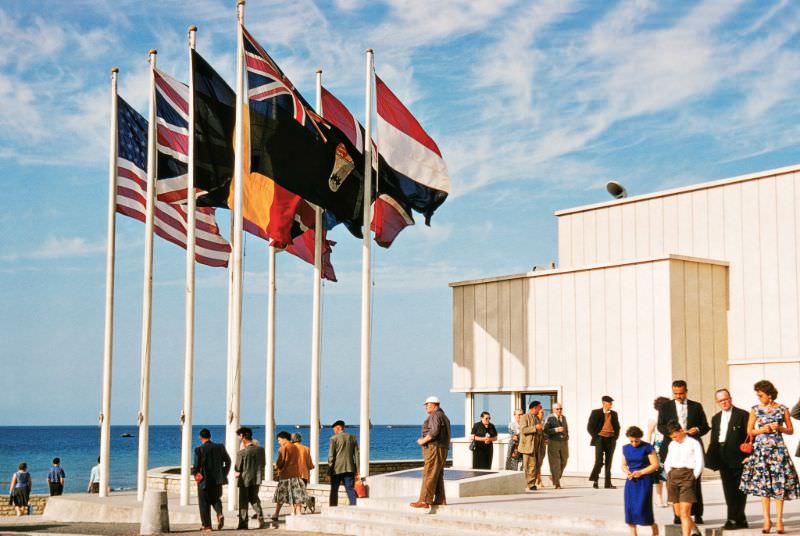
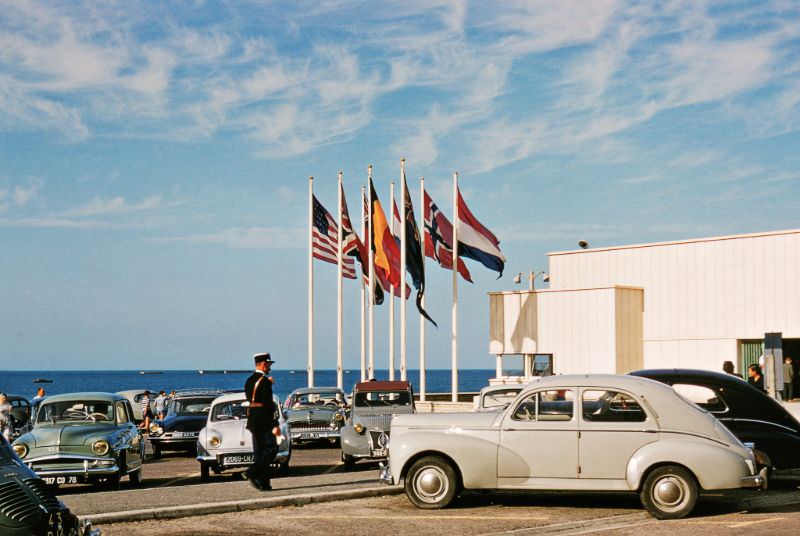
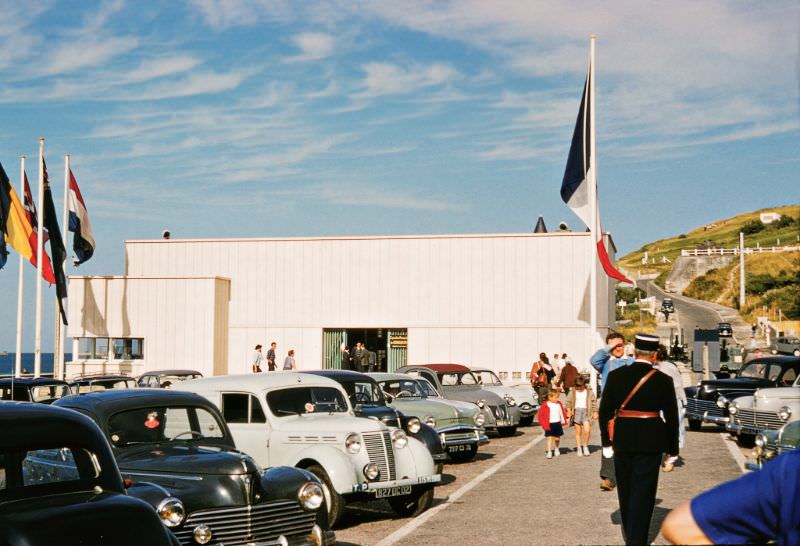
Arromanches les Bains, Landing Museum, 1958

The Normandy coast carried the weight of recent history. At Arromanches, the Landing Museum had opened in 1954 to document the D-Day operations just ten years earlier. Visitors in 1958 could stand on the same beaches where Allied forces had stormed ashore in June 1944. The remains of the artificial Mulberry harbour were still visible offshore, a concrete reminder of the war that had shaped everything that came after.
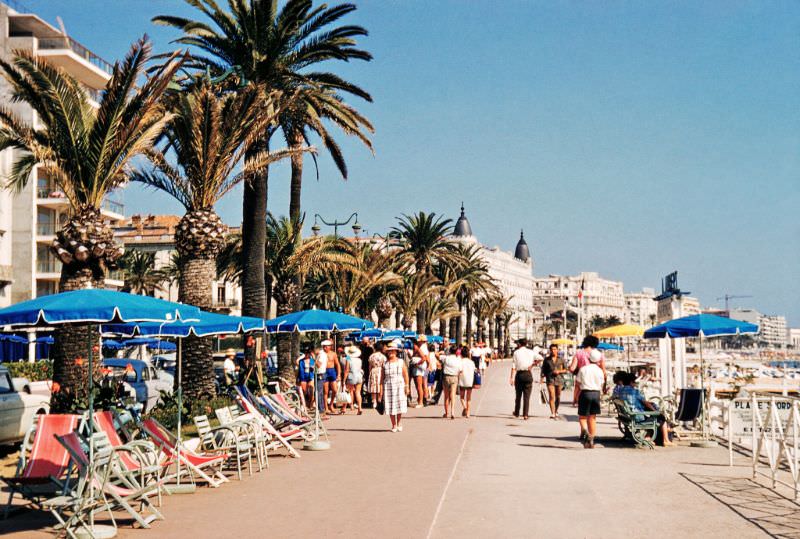
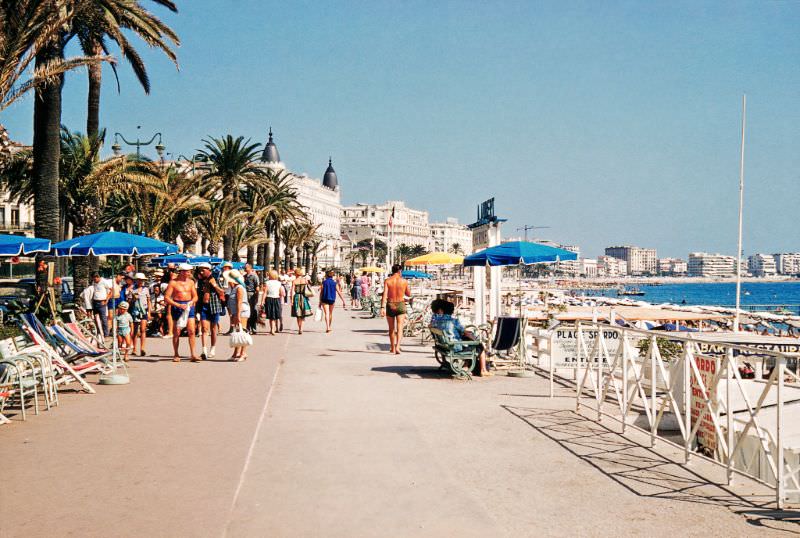
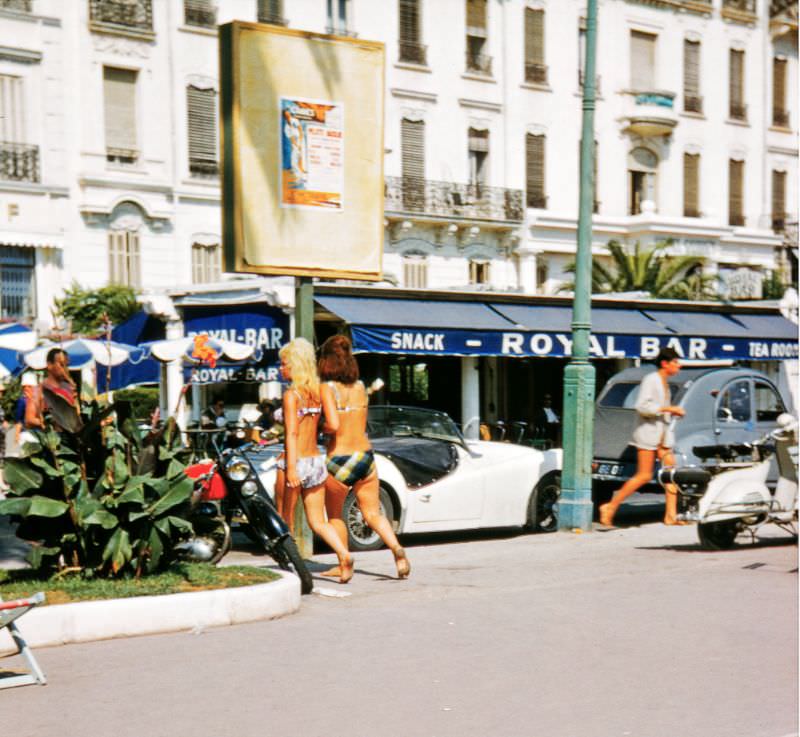
Boulevard de la Croisette, Cannes, 1958

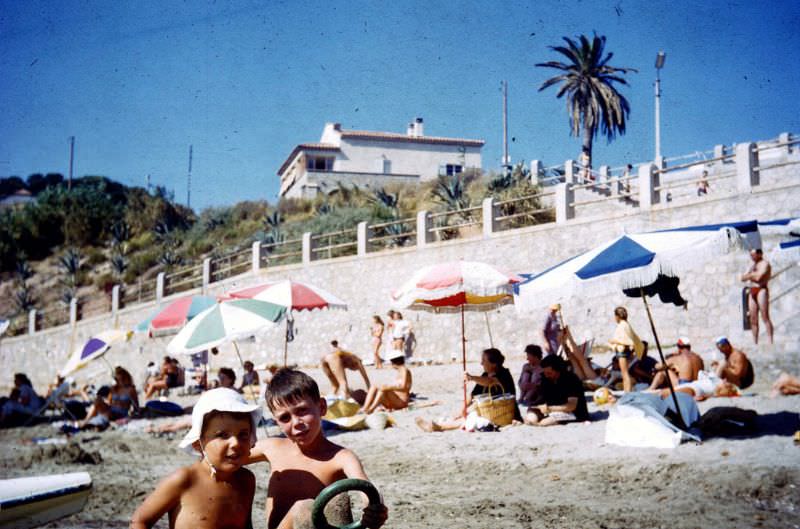
Cannes was already one of France’s most glamorous destinations by the mid-1950s. The Cannes Film Festival, launched in 1946, had turned the city into an international spotlight. The Boulevard de la Croisette — the famous seafront promenade — was lined with luxury hotels and palm trees, attracting film stars, directors, and tourists from across the world. The beach at Cannes became a symbol of the new leisure culture spreading across postwar Europe.
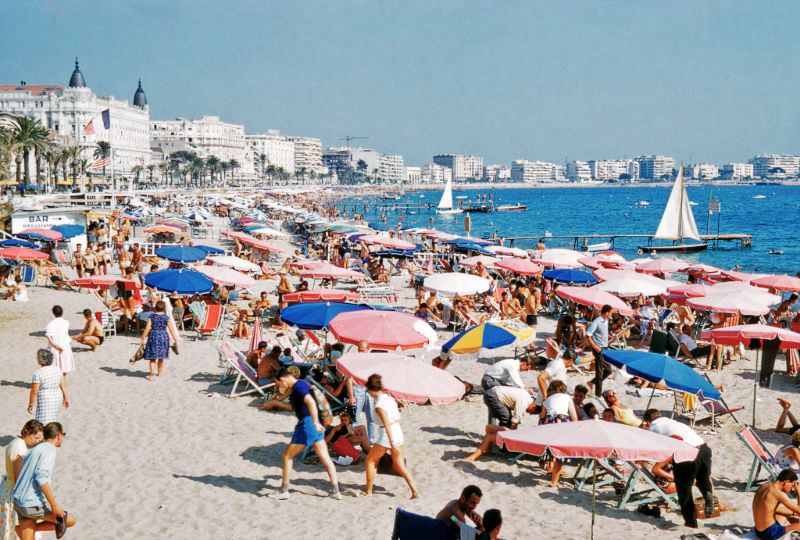
On the beach, Cannes, 1958
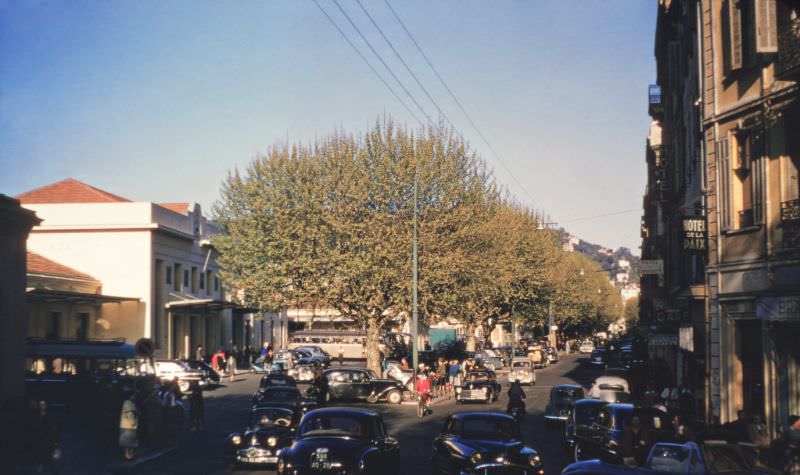
Outside Hotel L'Amiraute, Place de la Gare, Cannes, 1955
Outside Hotel L’Amiraute, Place de la Gare, Cannes, 1955
Possibly taken near the Plage Royale. The buildings in the background may have been demolished, Cannes, 1958
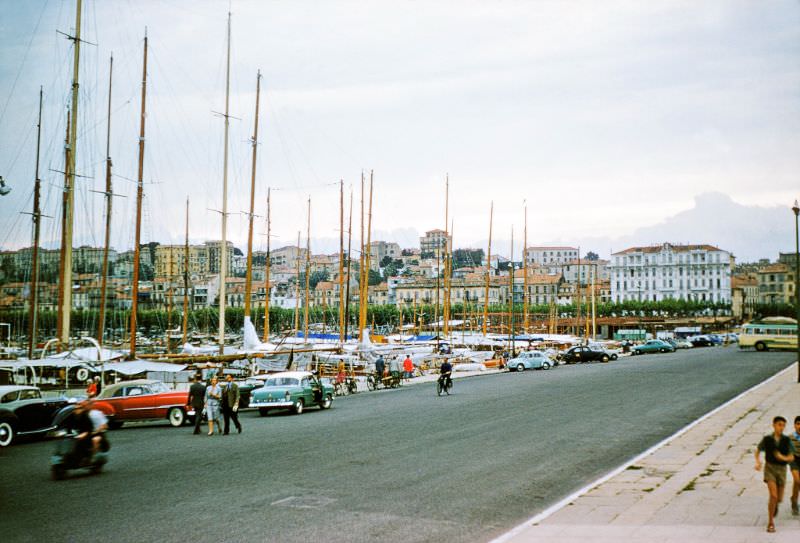
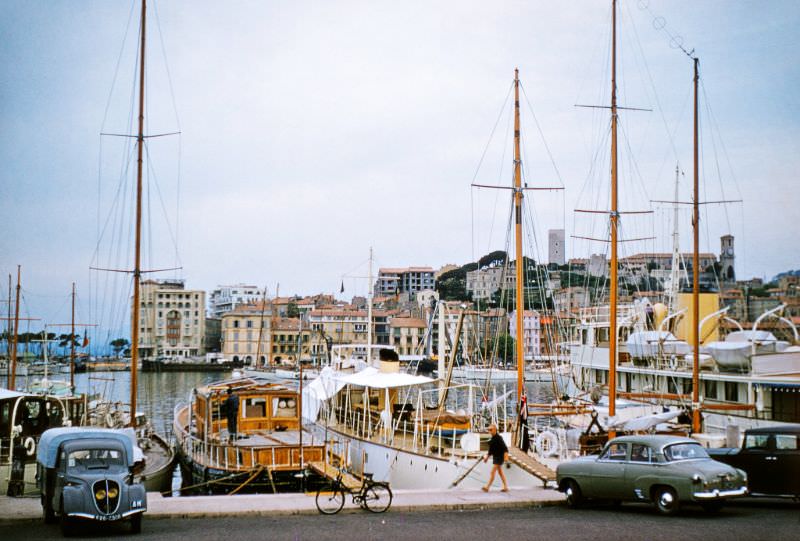
View from Jette Albert Edouard, Cannes, 1956

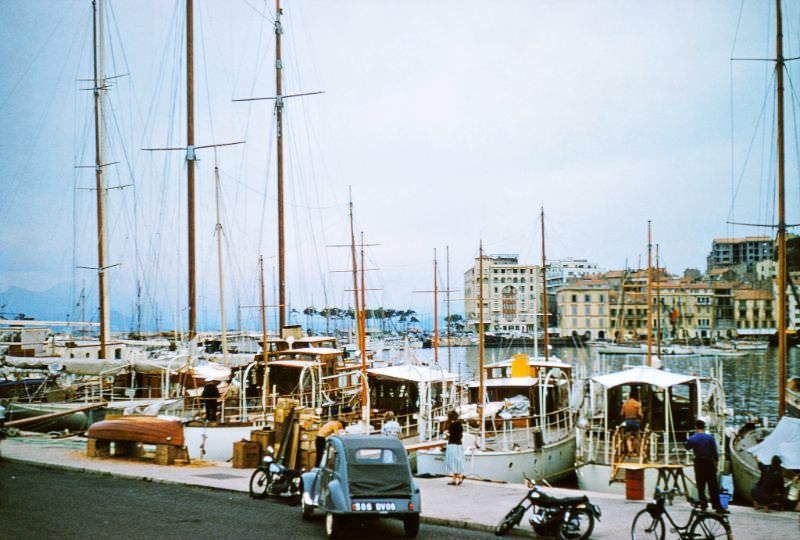
The harbor at Cannes offered a different kind of spectacle. In 1956, the USS Intrepid — the American aircraft carrier — was visible in the Golfe de la Napoule from the Boulevard de la Croisette. The American military presence in postwar Europe was impossible to miss, and so was American economic influence. The Marshall Plan had sent 471 French businessmen and experts on tours of American factories, farms, stores, and offices. Many returned stunned by what they saw. In the United States, a worker could buy a new car after nine months of labor. In France, the same purchase required thirty months of wages.
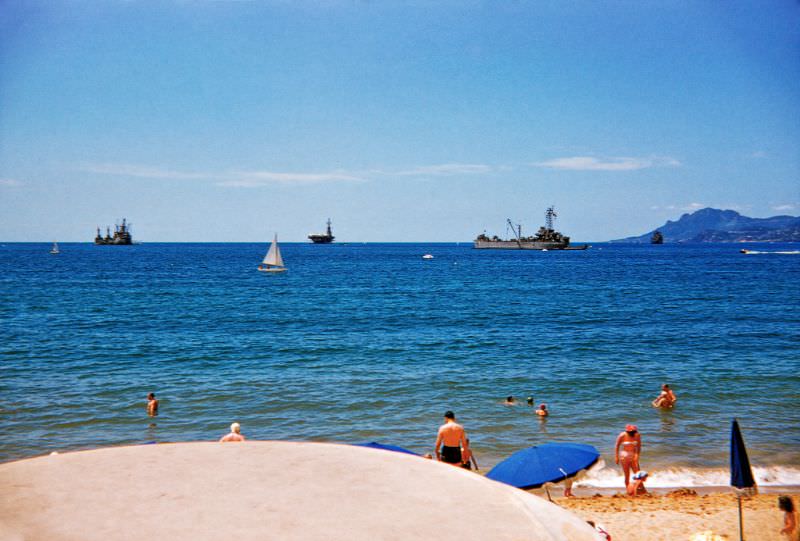
View of the USS Intrepid in the Golfe de la Napoule from Boulevard de la Croisette, Cannes, 1956
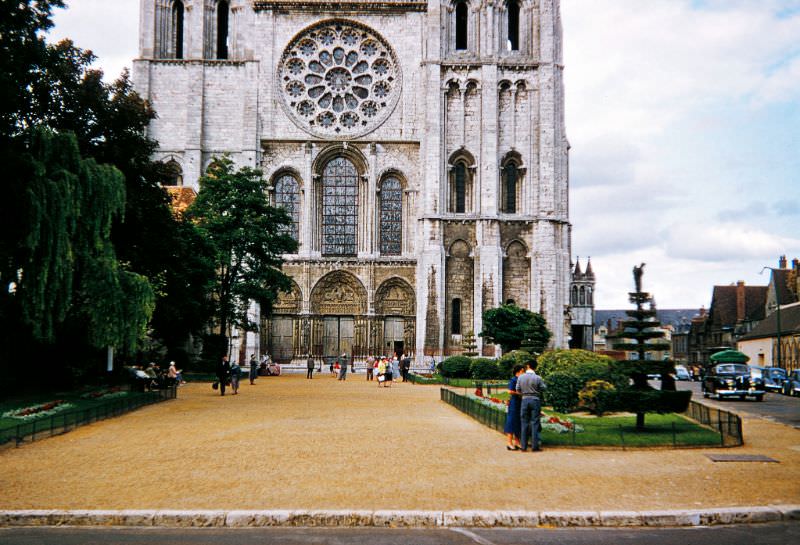
Chartres Cathedral (Cathédrale Notre-Dame de Chartres), Cannes, 1956

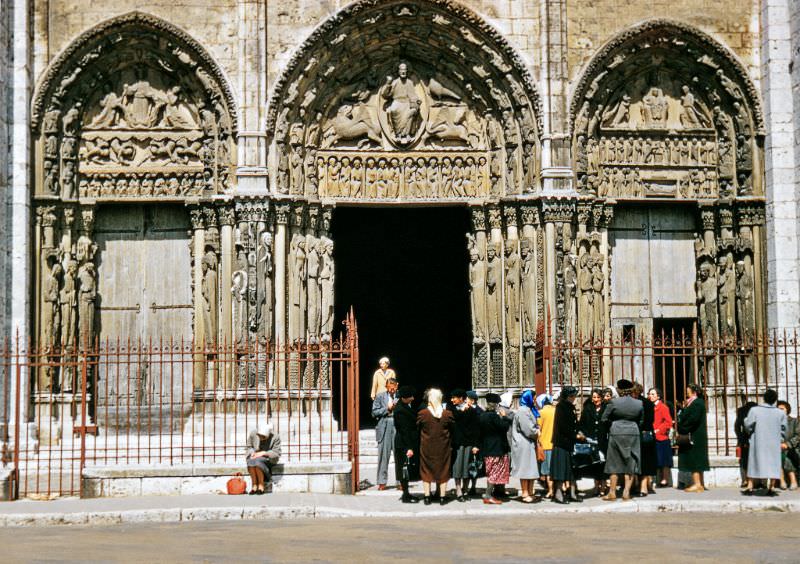
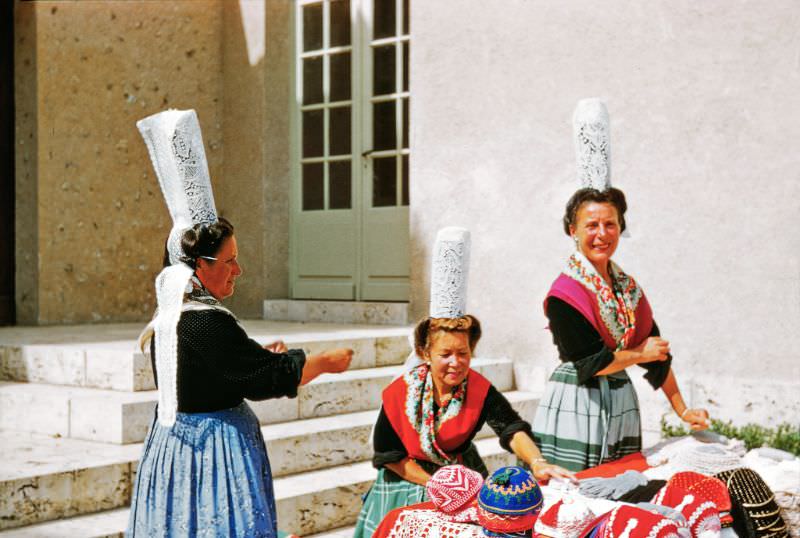
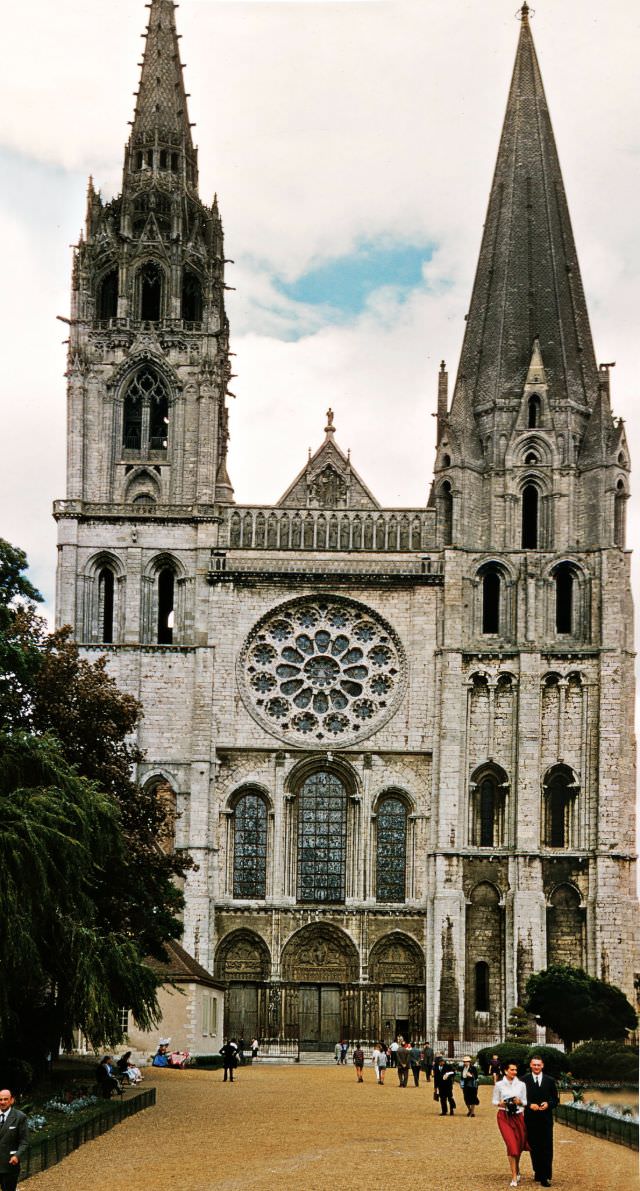
Away from the glamour of the Riviera, France’s medieval heritage stood in quiet contrast to the decade’s pace of change. Chartres Cathedral — one of the finest examples of Gothic architecture in Europe — drew visitors from around the world. Its twin towers and famous stained glass windows had survived the wars intact. Outside the cathedral, lacemakers in traditional dress still practiced their craft, a scene that could have belonged to any century.
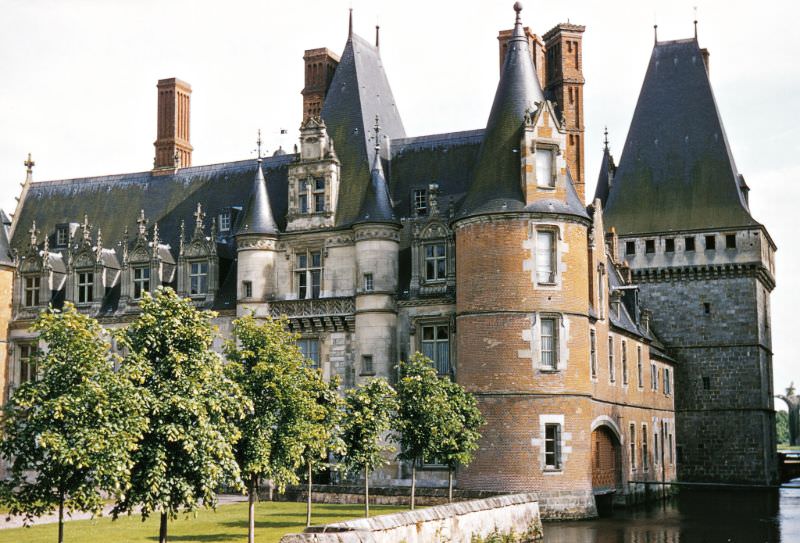
Chateau de Maintenon, Cannes, 1958
Chatres Cathedral, Cannes, 1958
Front portal, Chartres Cathedral, Cannes, 1958
Lacemakers in traditional dresses outside Chartres Cathedral, Chartres, 1958
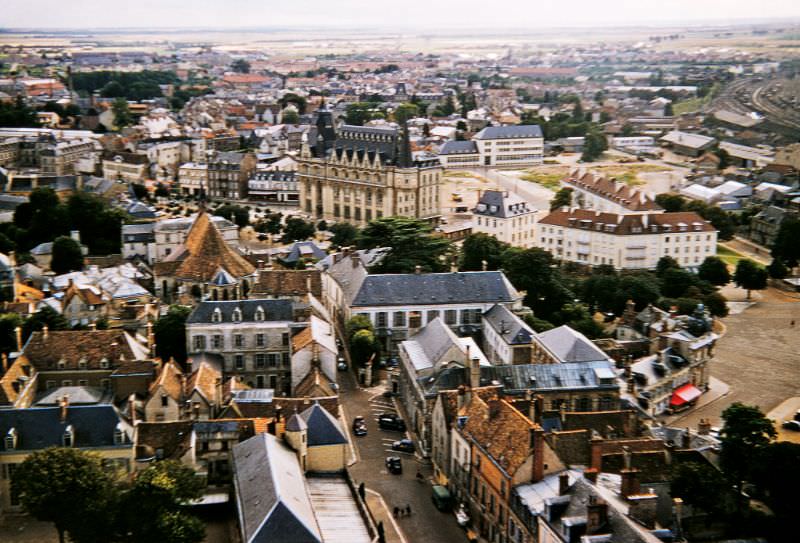
View from the tower, Chartres Cathedral (Cathédrale Notre-Dame de Chartres), Chartres, 1956

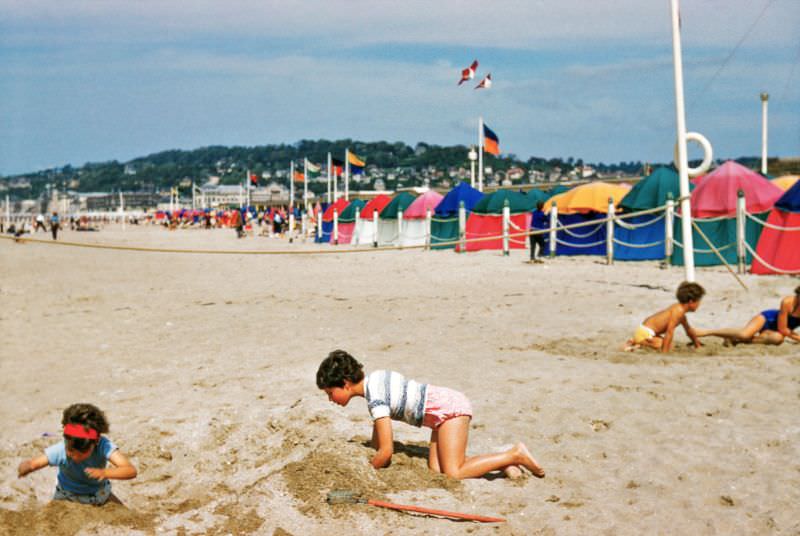
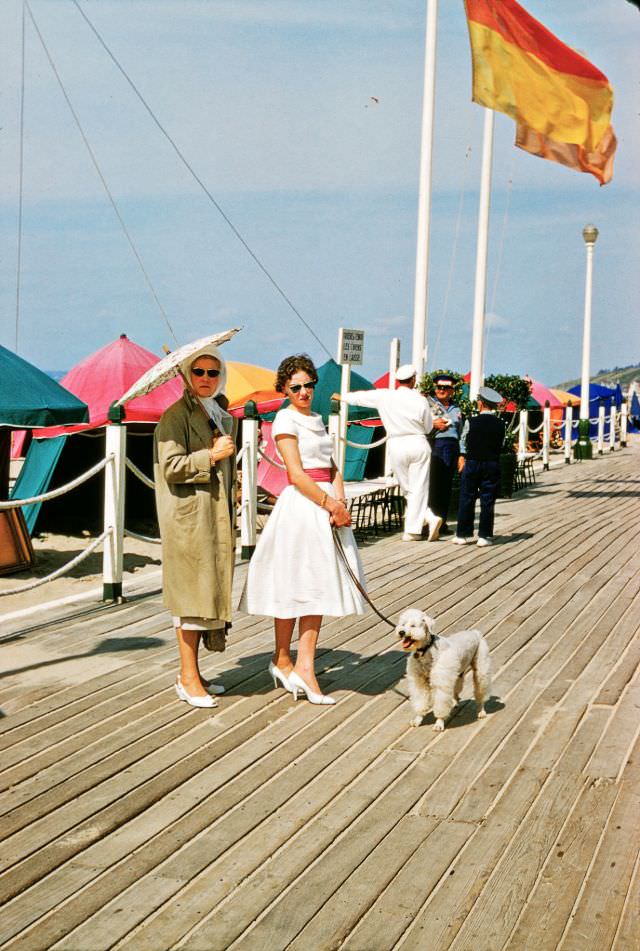
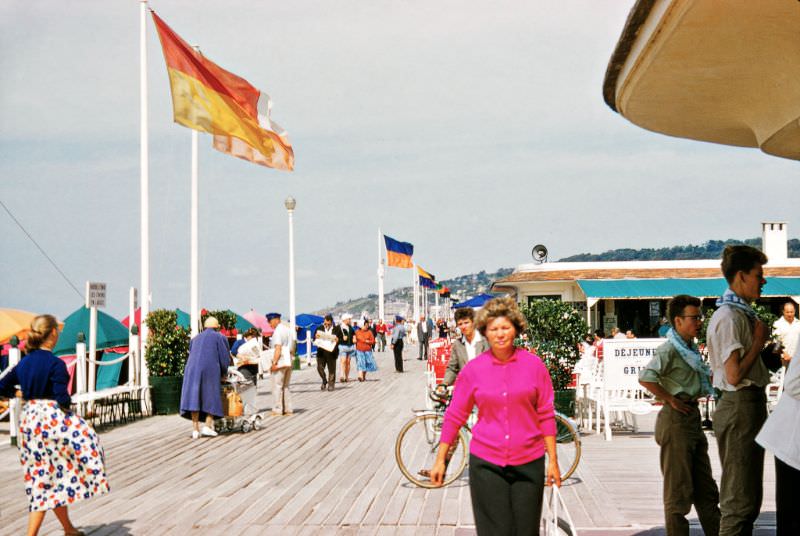
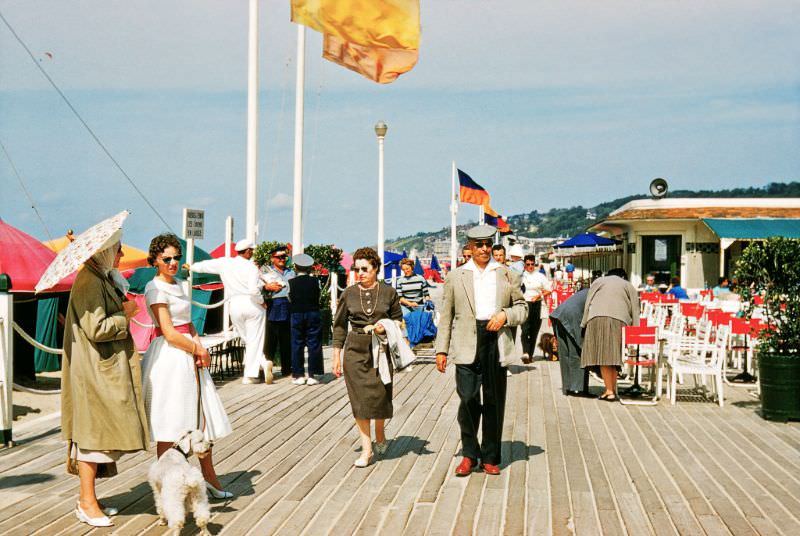
Deauville, on the Normandy coast, was another world entirely. The resort town had long been a favorite of wealthy Parisians escaping the city for the summer. Its famous boardwalk, Les Planches, stretched along the beach beside rows of colorful beach cabins. The Casino and the Hôtel Barrière Le Normandy dominated the seafront, their grand architecture unchanged from the Belle Époque. By the late 1950s, Deauville still carried that air of restrained elegance.
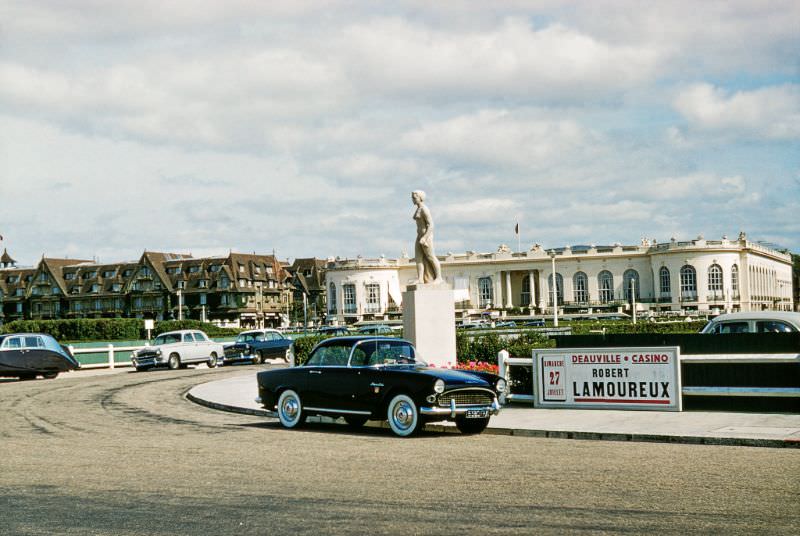
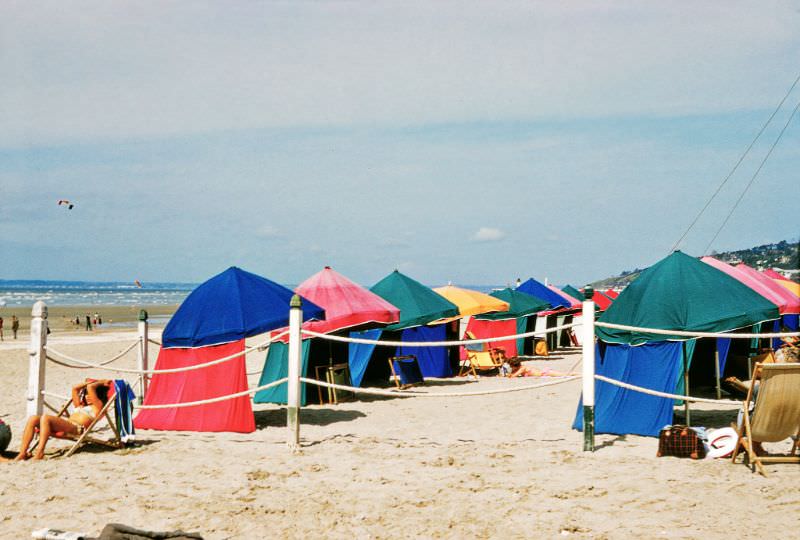
Deauville Casino (the white building to the right), and the Hôtel Barrière Le Normandy (the brown building on the left) from Rue de la Mer, 1958
Deauville, France, 1958
Le Planches de Deauville (cnr Place Claude Lelouch), Deauville, 1958

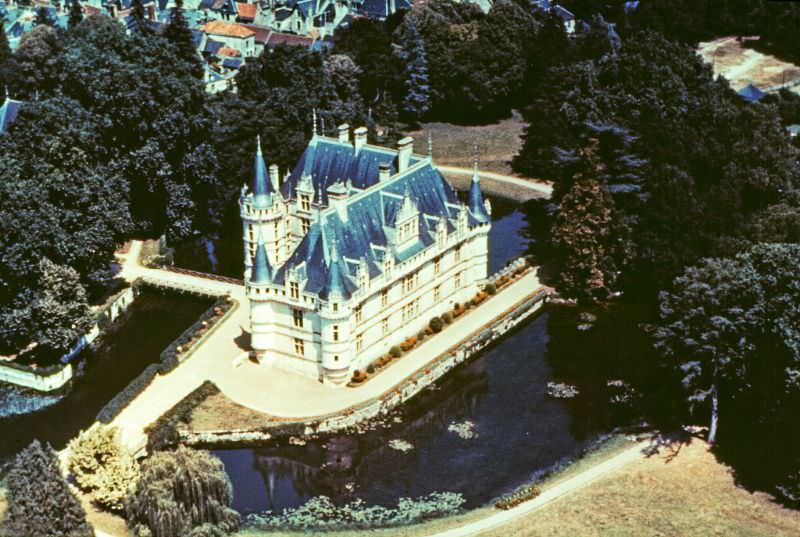
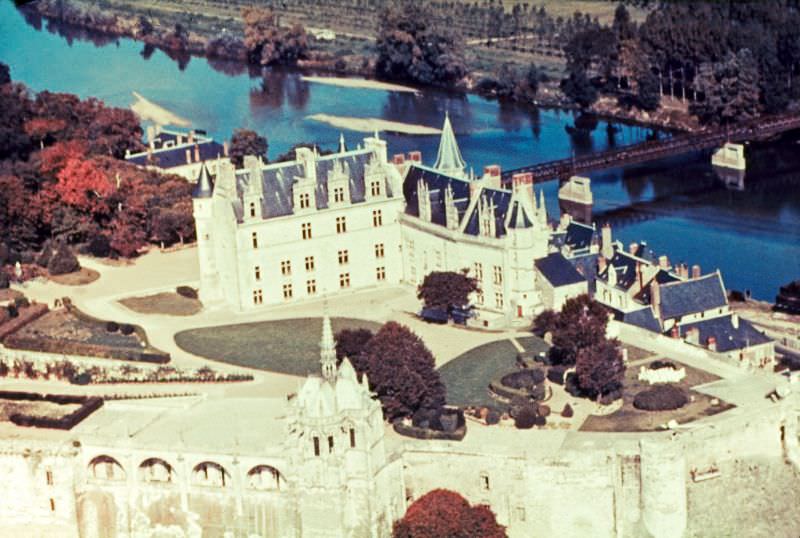
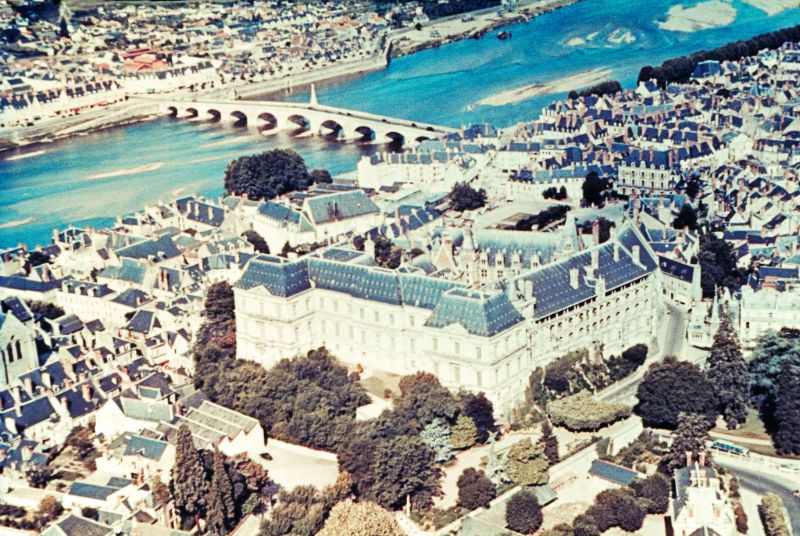
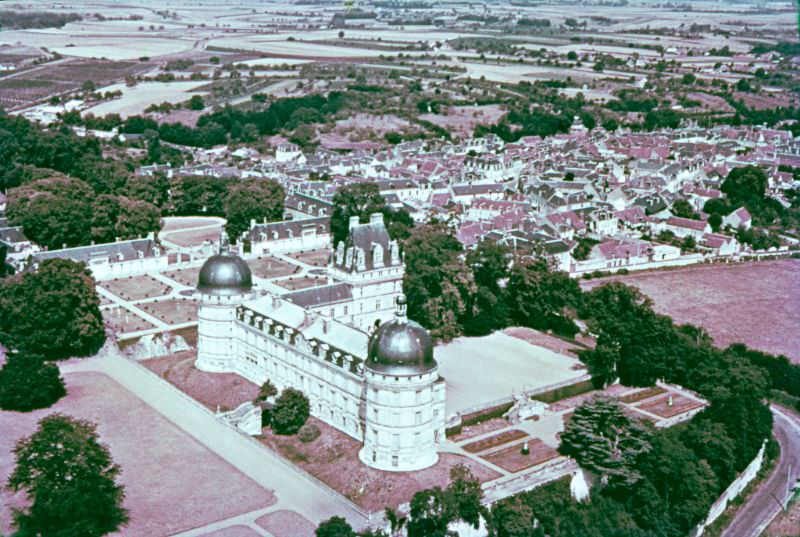
The Loire Valley held some of France’s most celebrated châteaux. Built across the medieval and Renaissance periods, these royal residences — Azay-le-Rideau, Amboise, Blois, Valençay, Langeais, and Saumur — attracted a steady stream of visitors in the 1950s. The Loire River wound past their stone walls just as it always had. Tourism in France was growing rapidly during this decade, driven partly by rising wages and paid holidays that gave working-class families the ability to travel domestically for the first time.
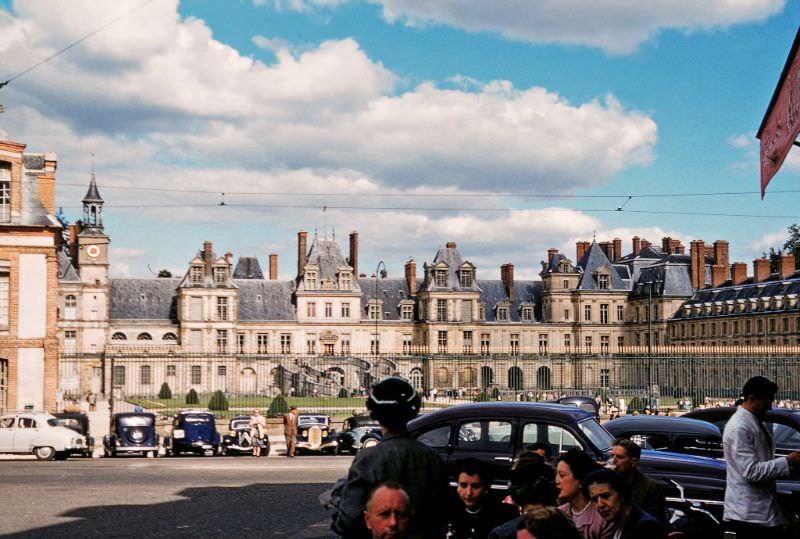
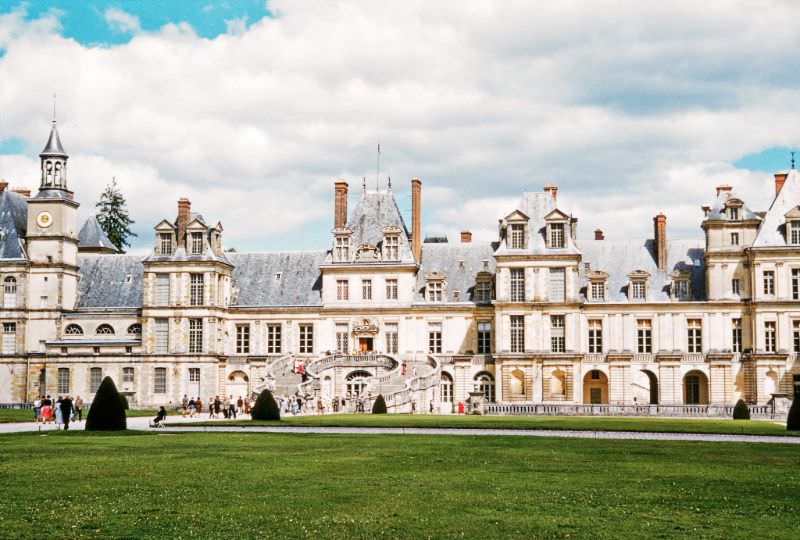
Chateau Fontainebleau, Fontainebleau, 1953
Château Azay le Rideau, Loire Valley, 1950s
Château d'Amboise, Loire Valley, 1950s
Château d’Amboise, Loire Valley, 1950s
Château de Blois, Loire Valley, 1950s
Le Château de Valensay, Loire Valley, 1950s
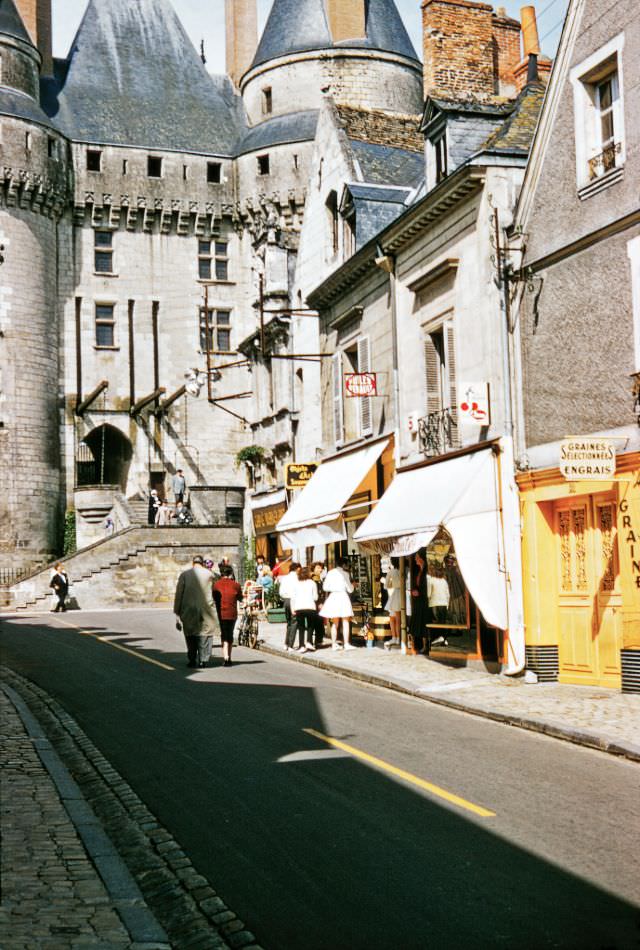
View from Rue Gambatta of Château de Langeais, Langeais, Loire Valley, 1958
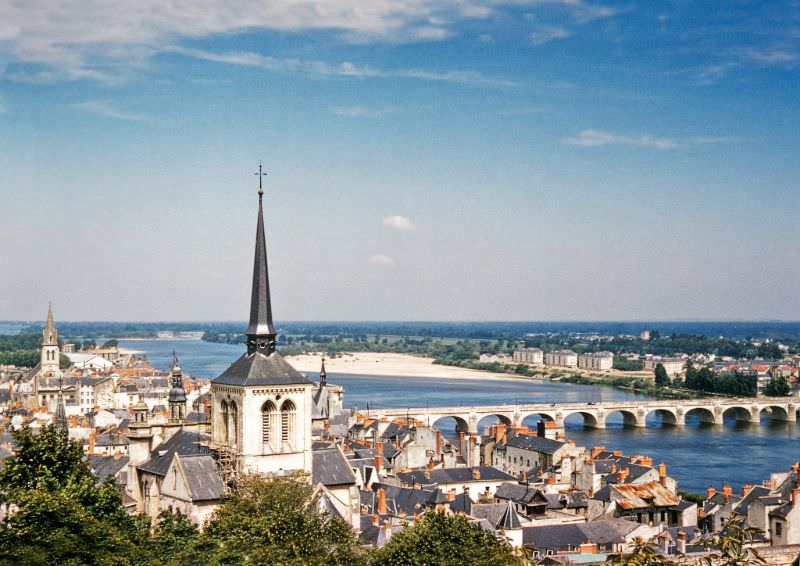
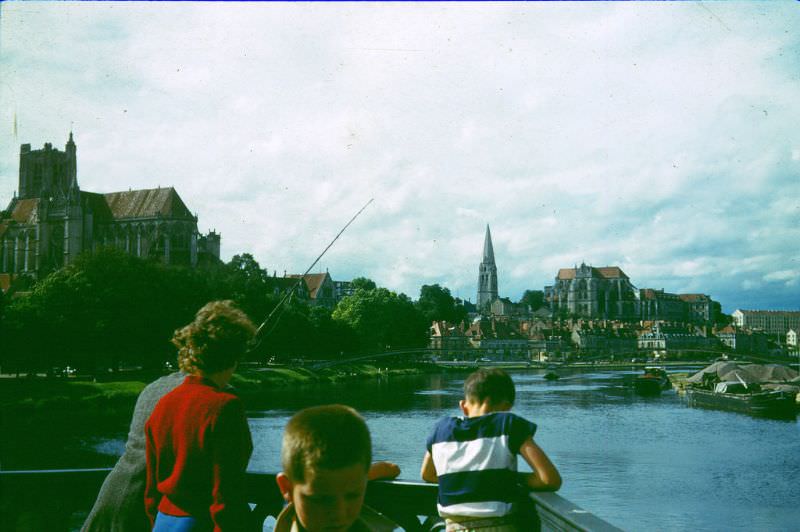
View of the Spire of St Peters Church and the Cessart Bridge from Château de Saumur, Loire Valley, 1958

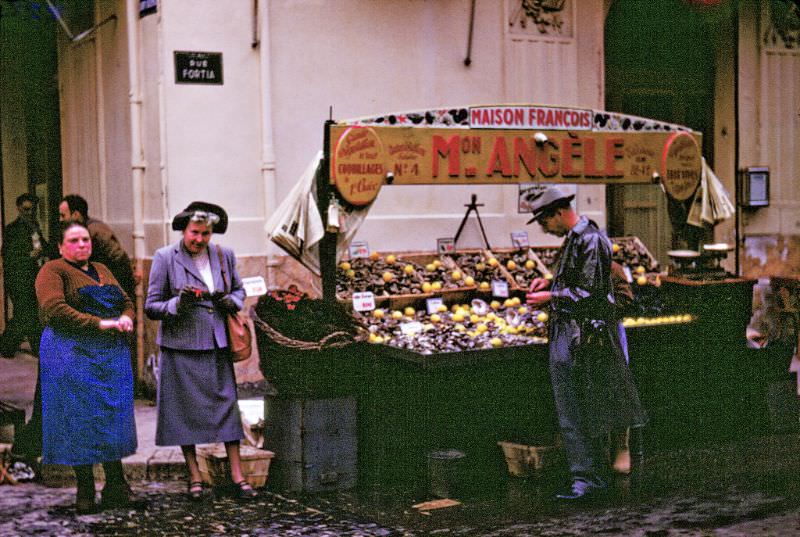
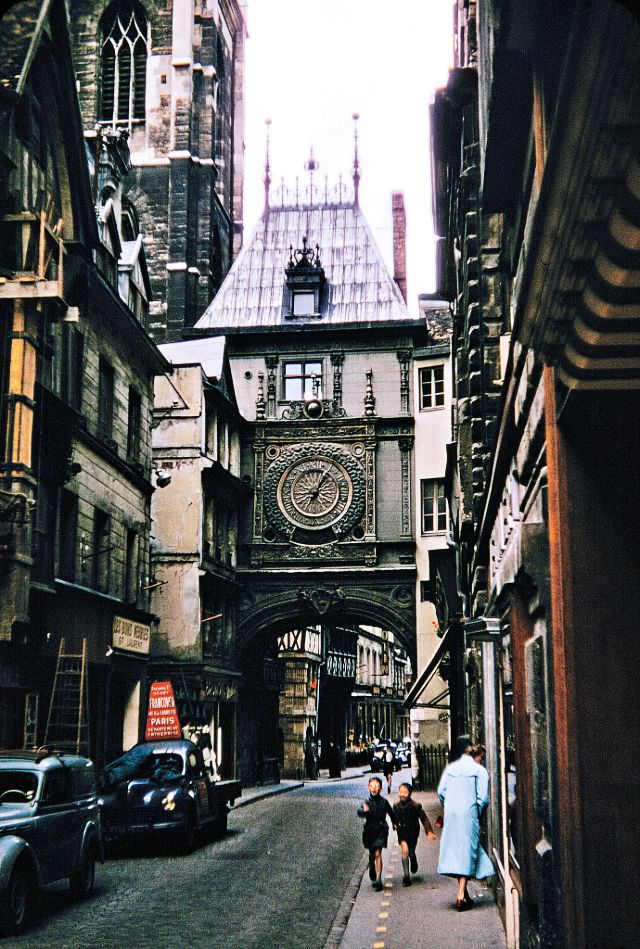
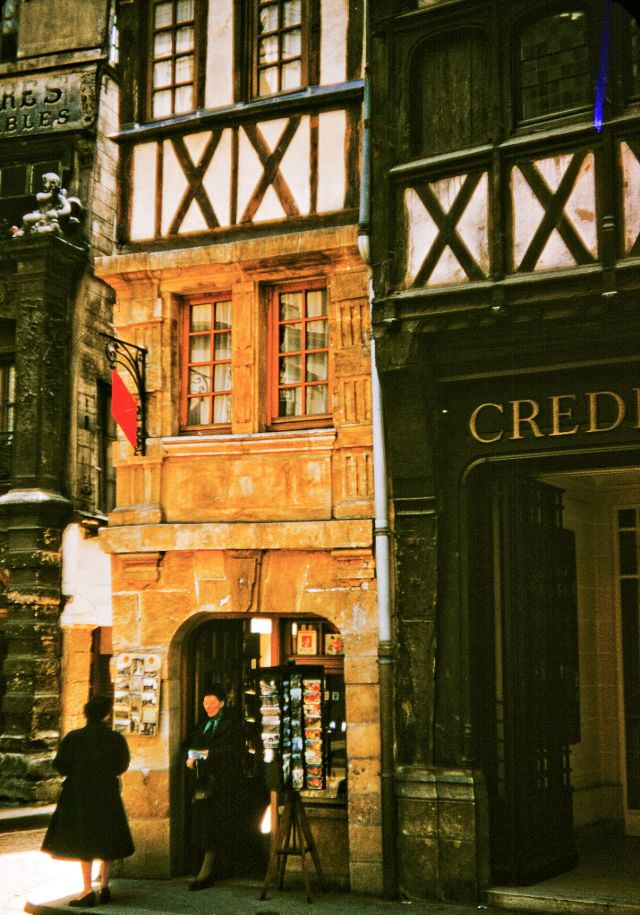
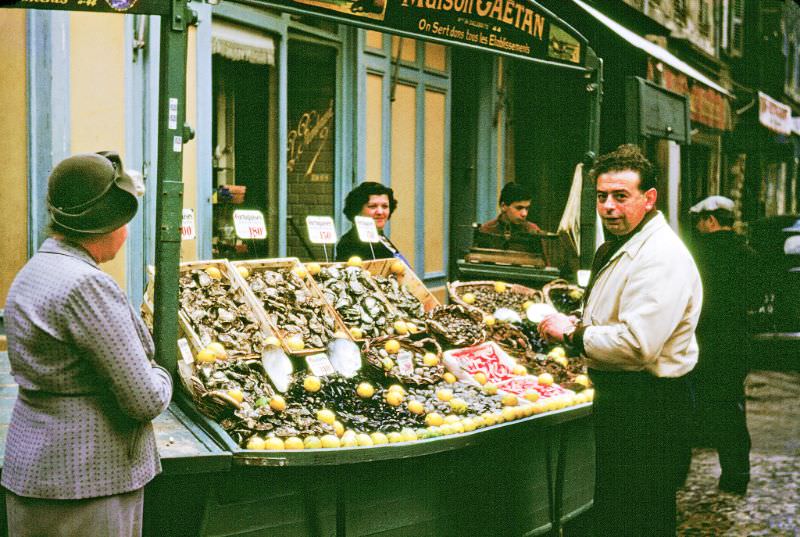
Rouen’s Gros Horloge — the Big Clock — was one of the most photographed streets in Normandy. The Renaissance astronomical clock mounted above the street had kept time since 1527. The street below it buzzed with pedestrians and shopfronts throughout the 1950s. Marseille, France’s largest port city, presented a completely different face of the country. Its open-air produce markets on Rue Fortia in 1953 were loud, colorful, and packed with vendors selling fruit, vegetables, and fish.
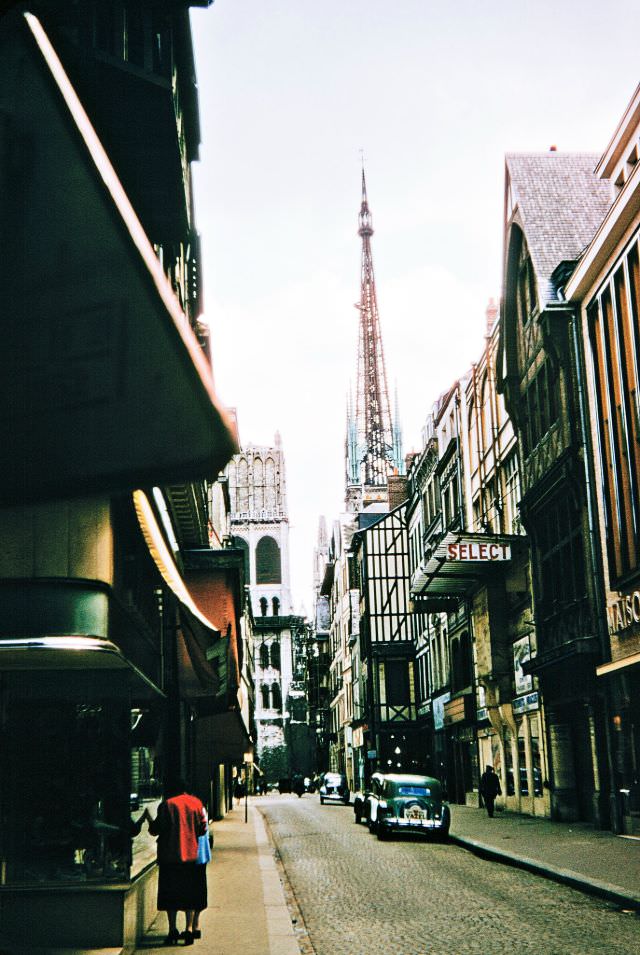
Looking towards the Cathedral, Gros Horloge (Big Clock) Street, France, 1956
Produce market, Rue Fortia, Marseille, 1953
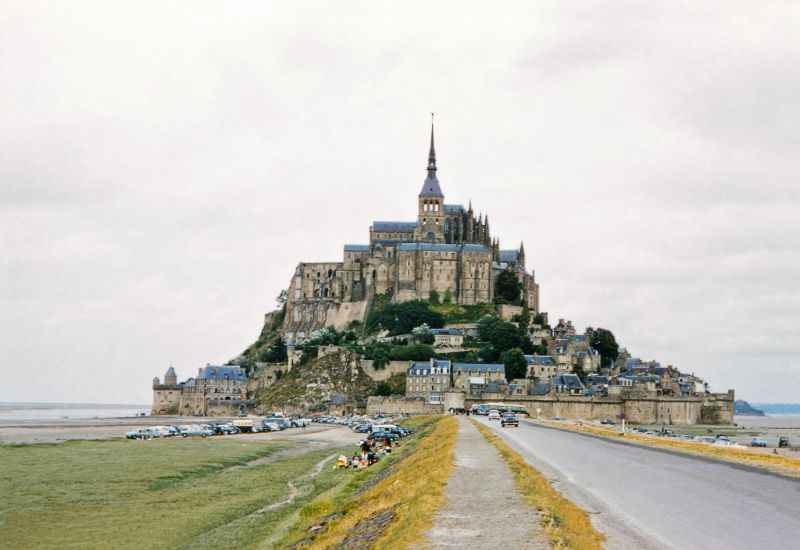
Mont St Michel, France, 1958

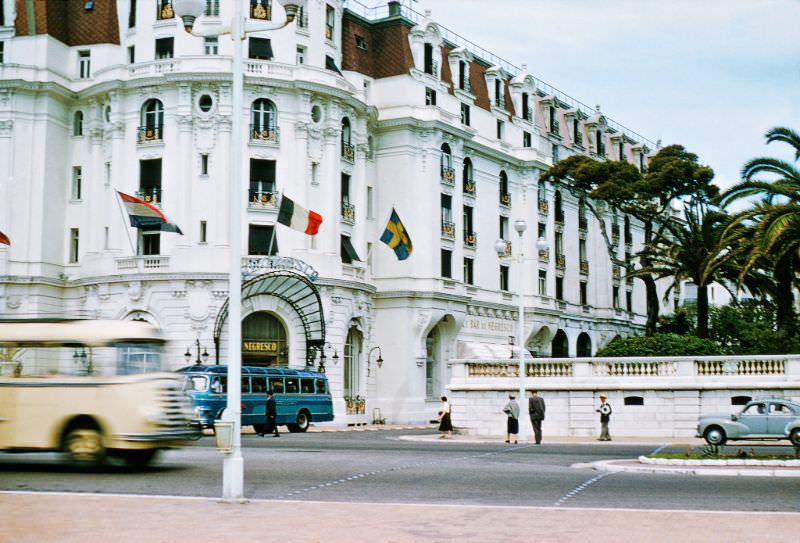
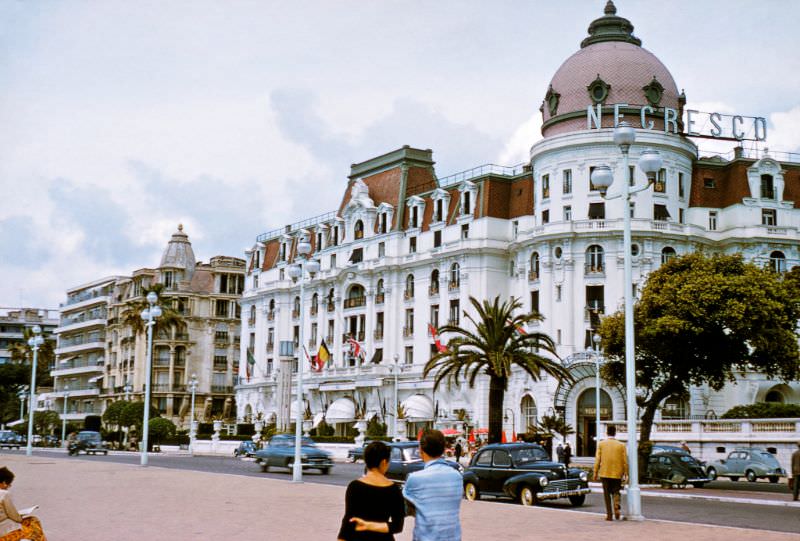
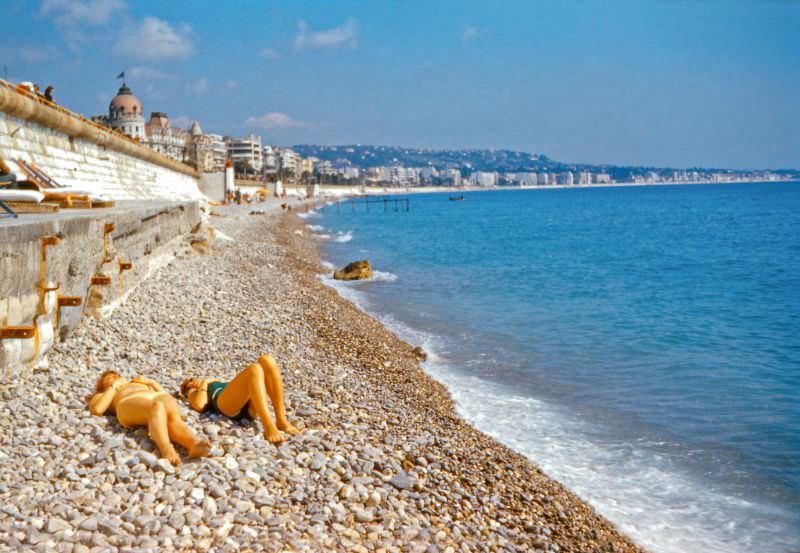
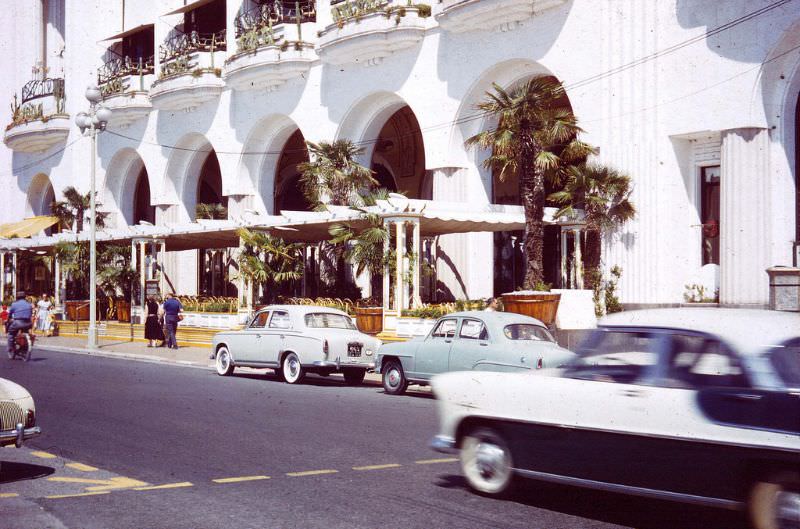
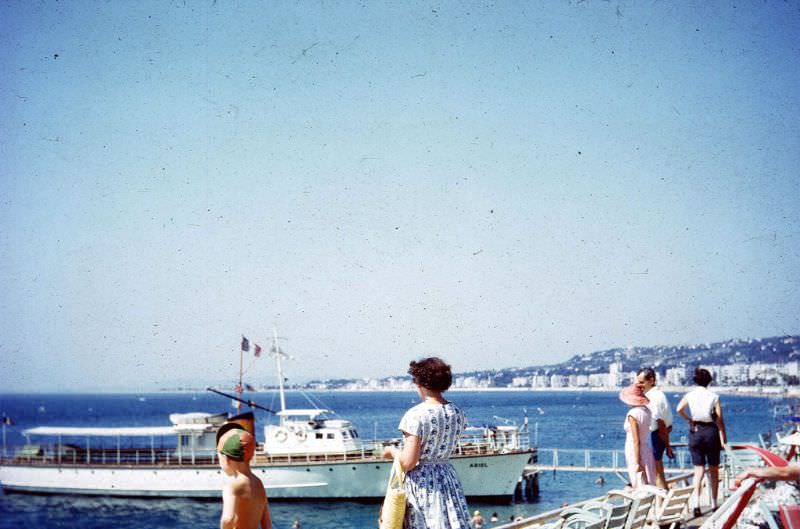
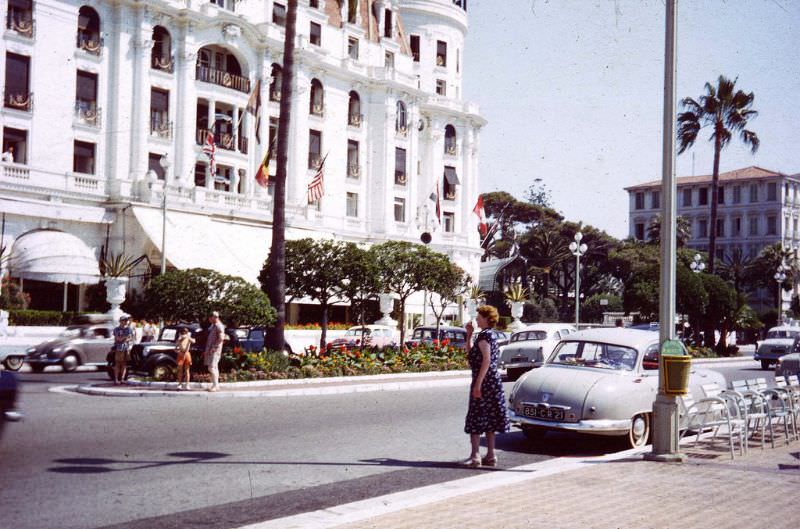
The beaches of Nice drew sun-seekers from across Europe. The French Riviera had been a playground for the wealthy since the 19th century, but by the 1950s the bikini — introduced in 1946 — had become a fixture on its shores. The Promenade des Anglais ran along the waterfront, backed by grand hotels including the legendary Le Negresco. The city’s casino, its palm-lined streets, and its old harbor made Nice one of the most visited cities in France during this decade.
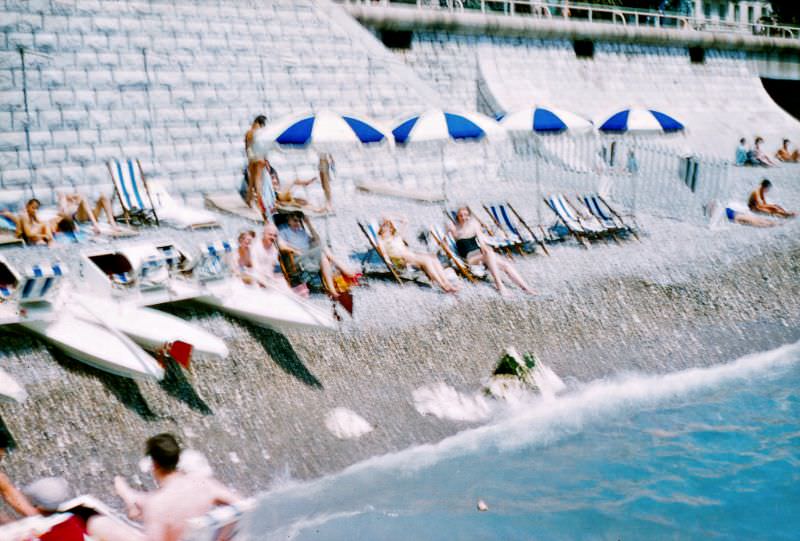
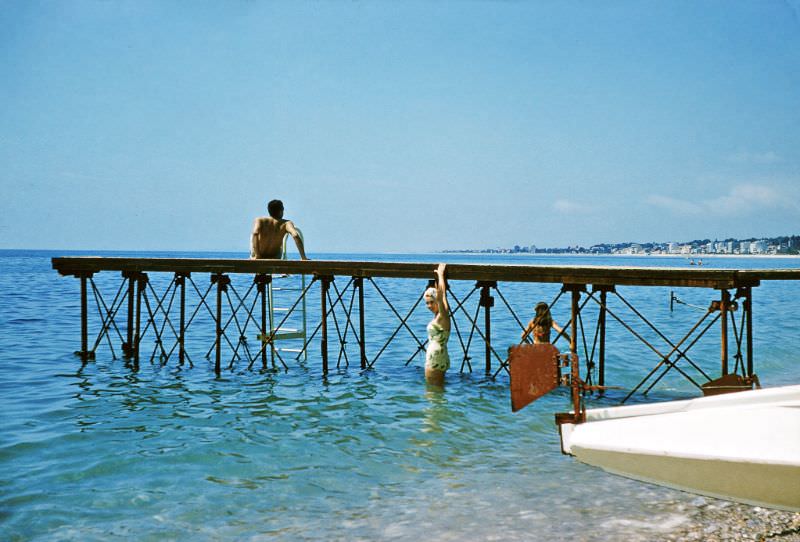
At the beach, Nice, 1955
Le Negresco and the garden wall of Villa Massena, Nice, 1956
Promenade de Angais, and Le Negresco, Marseille, 1956
Sunbathers in bikinis, Marseille, 1955
View from around 142-154 Boulevard Carnot, Mont Boron of Port Lympia, Marseille, 1956
On Gros Horloge (Big Clock) Street, France, 1956
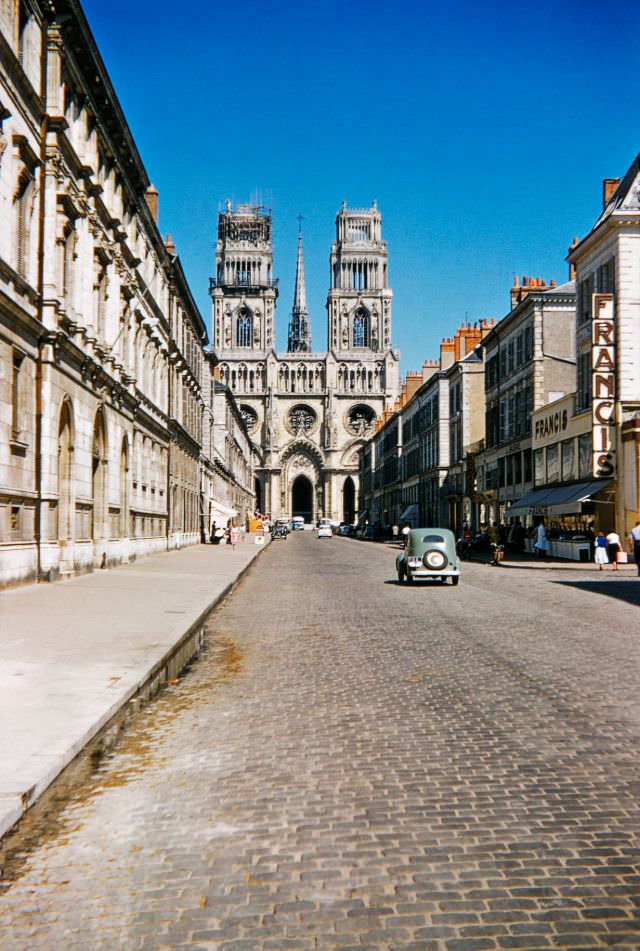
Orléans Cathedral (Basilique Cathédrale Sainte-Croix d'Orléans) from Rue Jeanne d'Arc, 1956
Orléans Cathedral (Basilique Cathédrale Sainte-Croix d’Orléans) from Rue Jeanne d’Arc, 1956

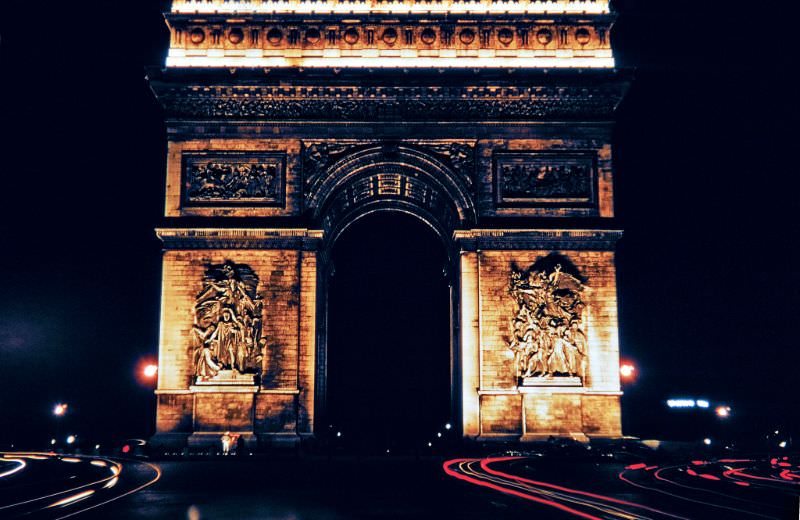
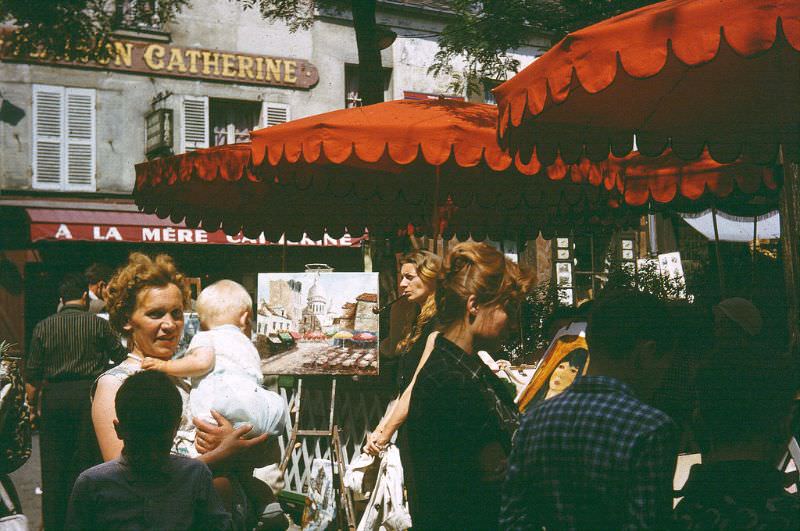
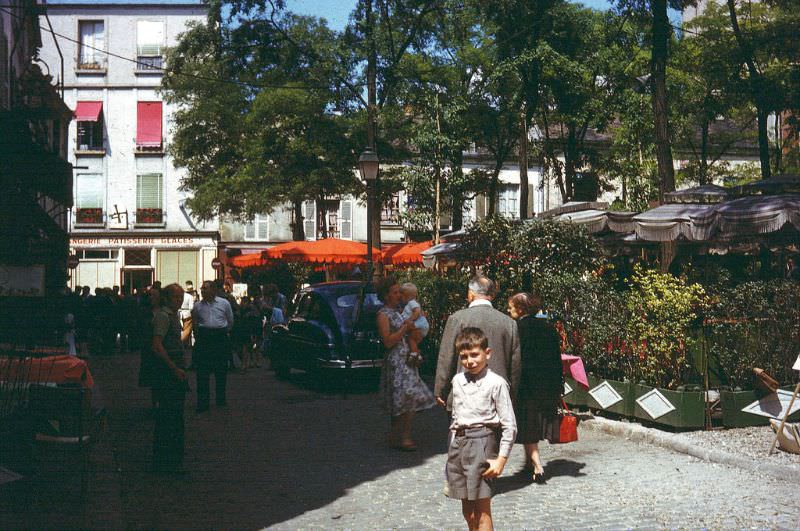
Paris in the 1950s was the intellectual and cultural capital of the Western world. Jean-Paul Sartre’s existentialism dominated philosophical debate in the cafés of Saint-Germain-des-Prés. Writers, artists, and thinkers gathered in Paris from across France and beyond, drawn by its reputation as a place where ideas were taken seriously. The city’s streets, monuments, and neighborhoods — from the Champs-Élysées to Montmartre — were as crowded with life and argument as they had ever been.
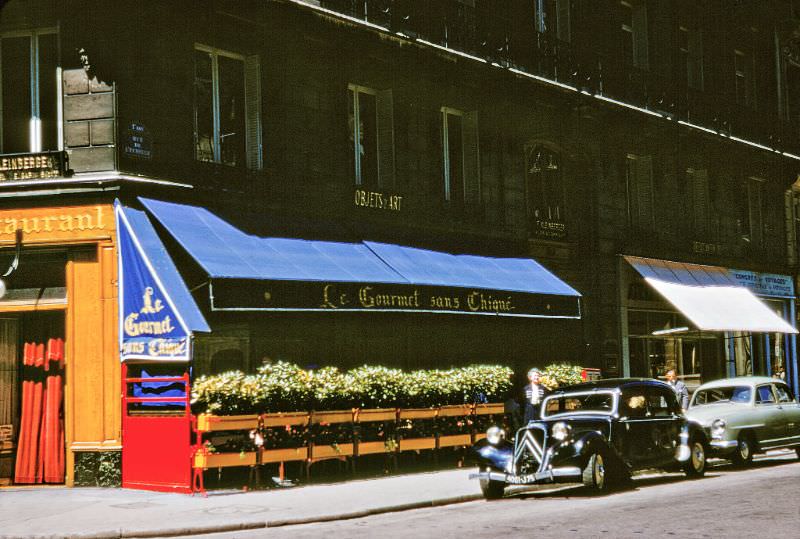
9 Rue de l'Échelle, 1st Arrondissement, then the Le Gourmet Sans Chiqué Restaurant, now the Metal Flaque Bridal Shop, Paris, 1953
9 Rue de l’Échelle, 1st Arrondissement, then the Le Gourmet Sans Chiqué Restaurant, now the Metal Flaque Bridal Shop, Paris, 1953
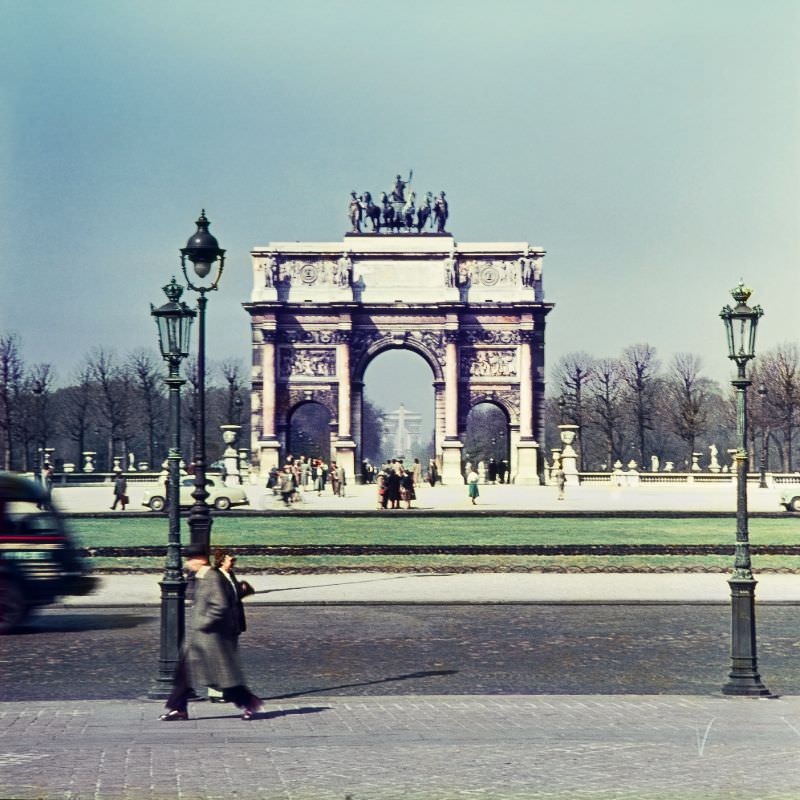
Arc de Triomphe du Carrousel, Paris, 1950s
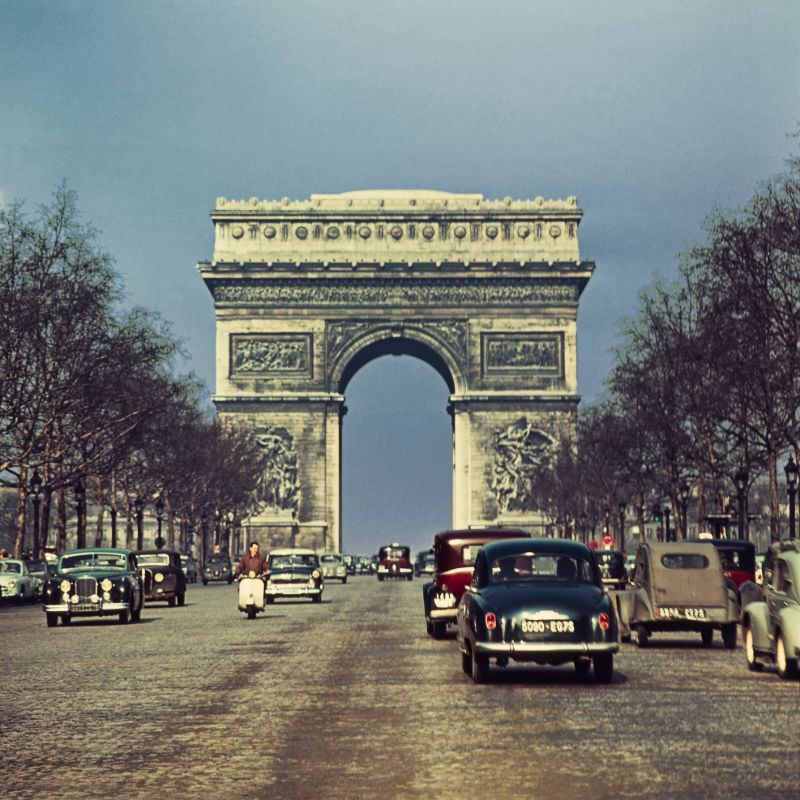
Arc de Triomphe, Paris, 1950s
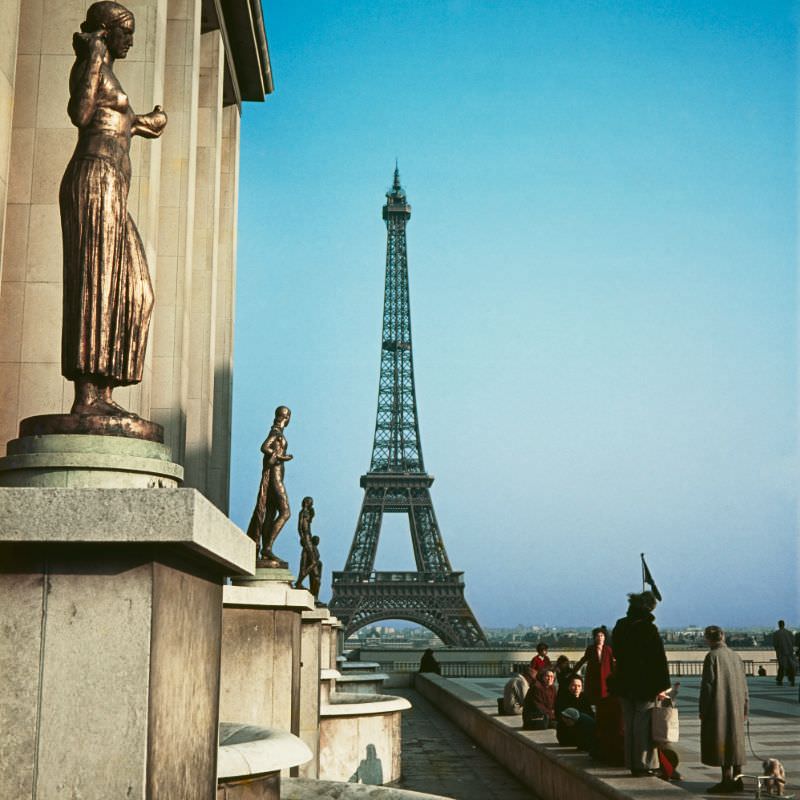
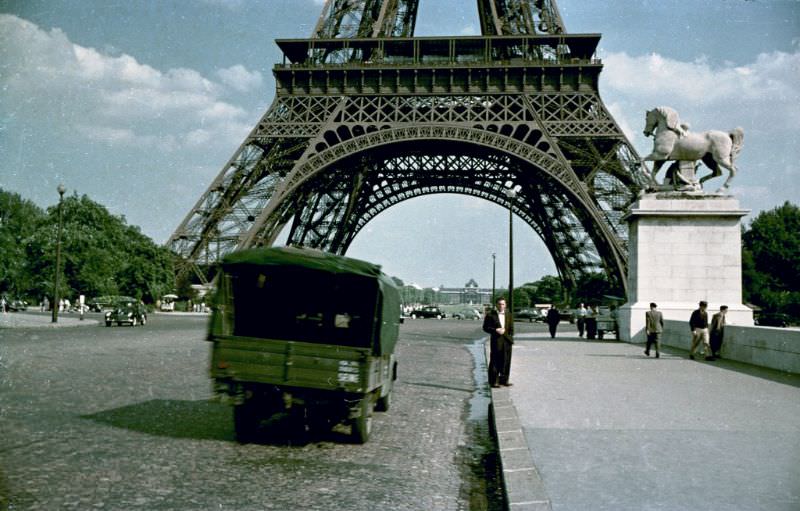
Eiffel Tower and the Golden Statues of Palais Chaillot, Paris, 1950s
L'Arc de Triomphe at night, Paris, 1956
L’Arc de Triomphe at night, Paris, 1956
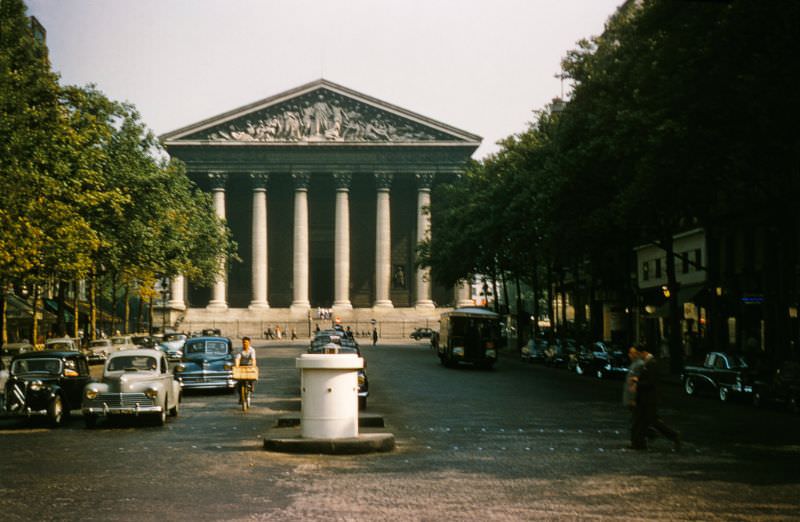
L'église de la Madeleine, Paris, August 1955
L’église de la Madeleine, Paris, August 1955
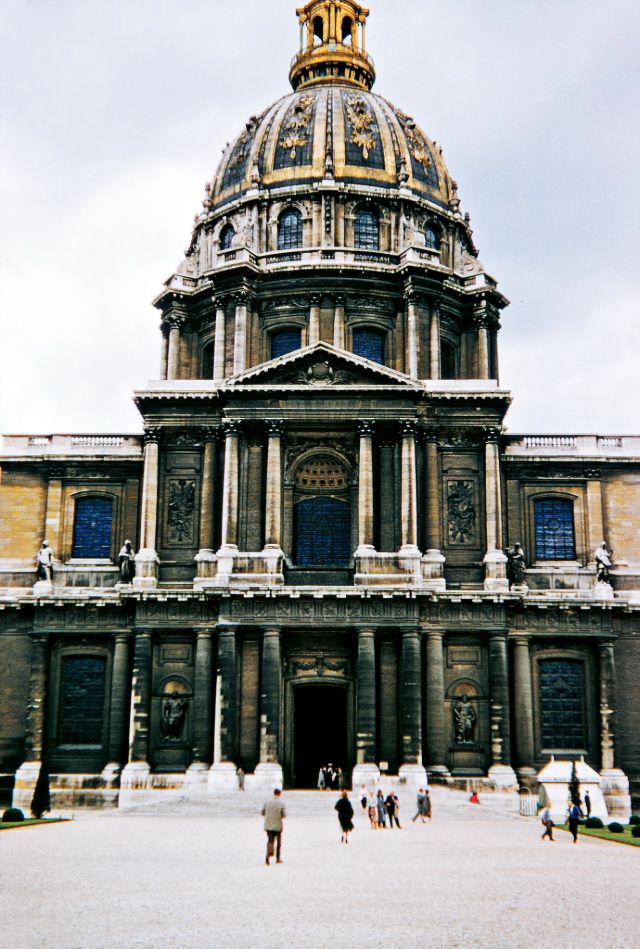
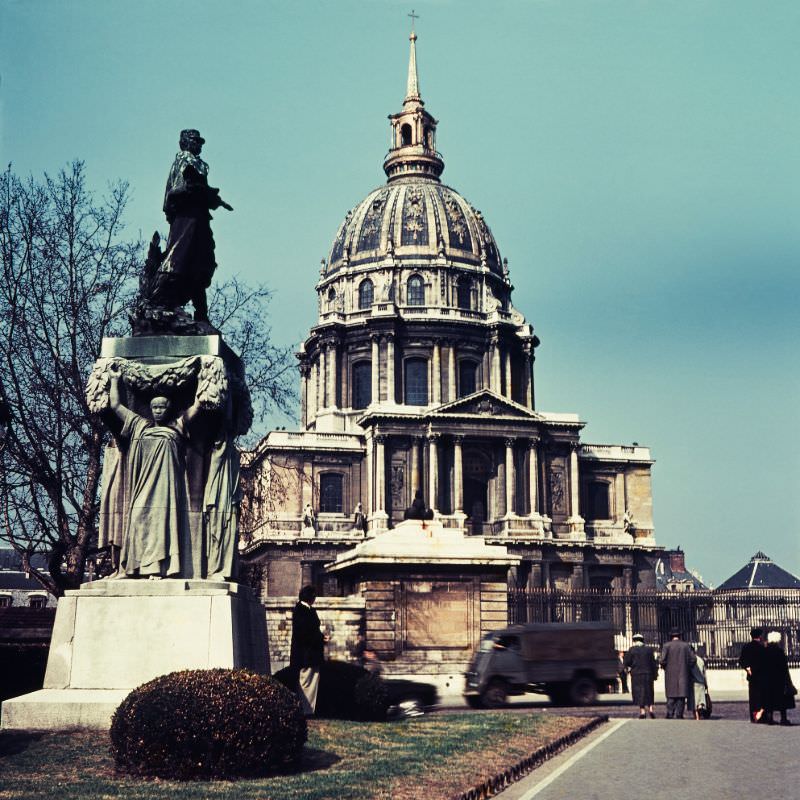
L'Hôtel national des Invalides (The National Residence of the Invalids), Paris, 1956
L’Hôtel national des Invalides (The National Residence of the Invalids), Paris, 1956

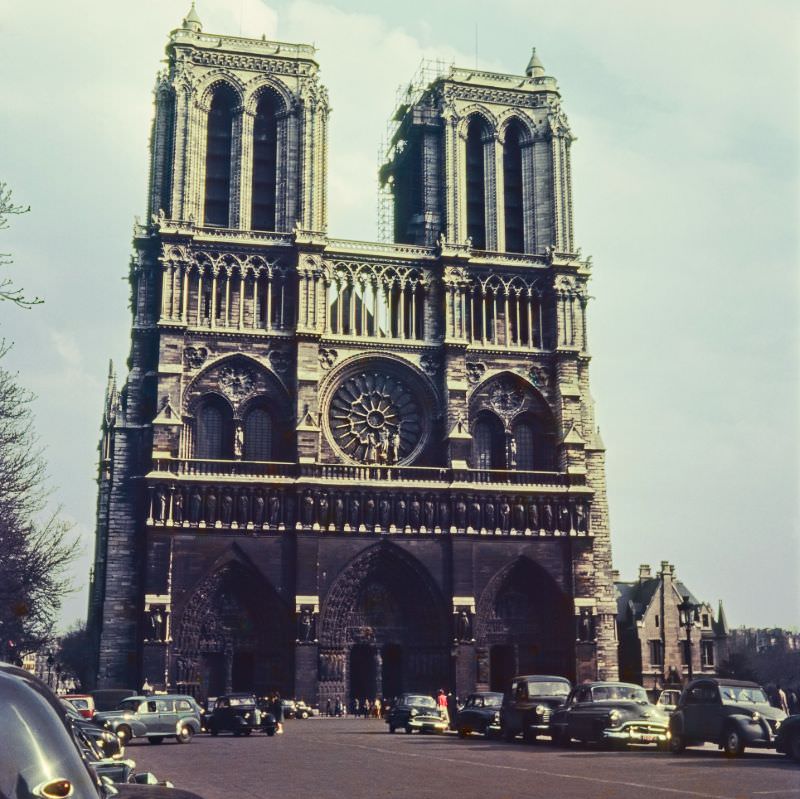
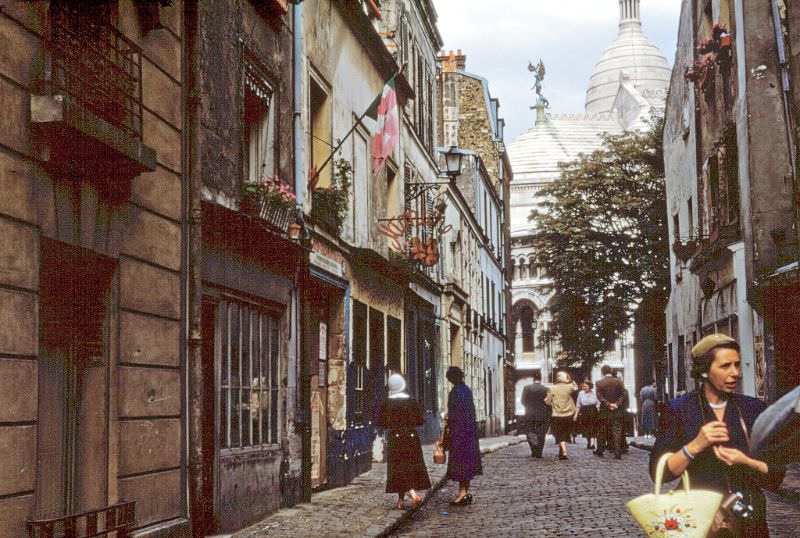
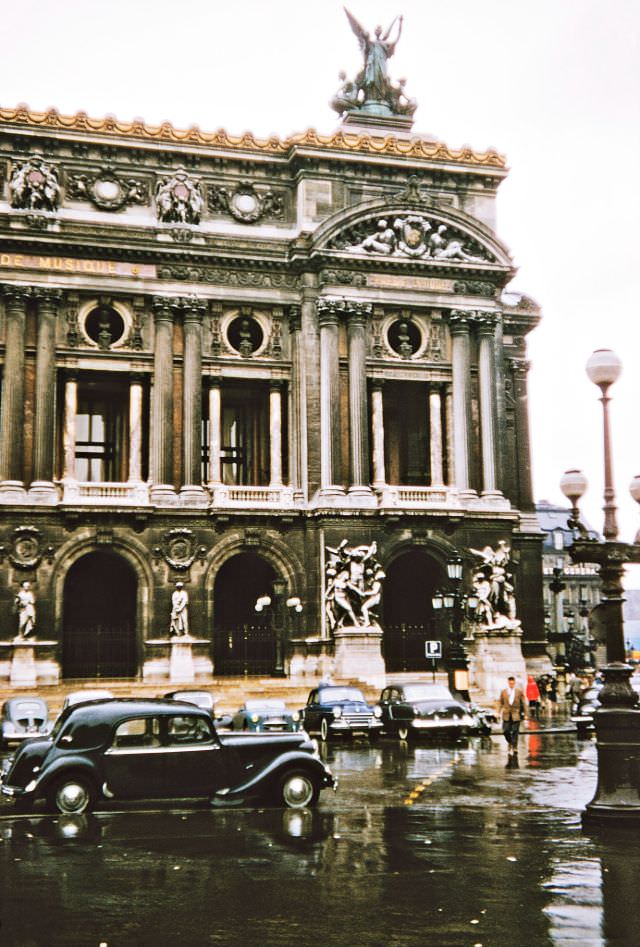
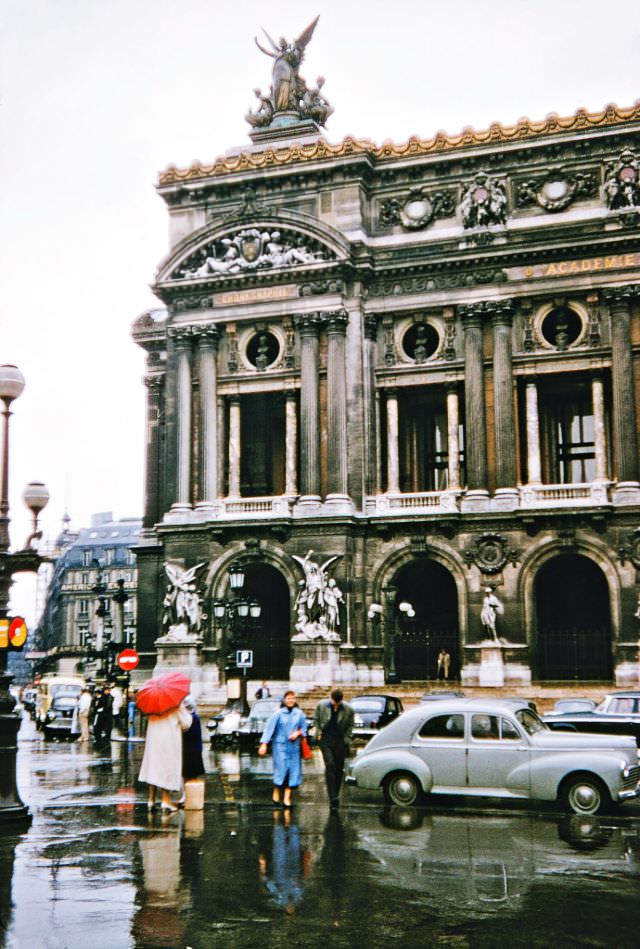
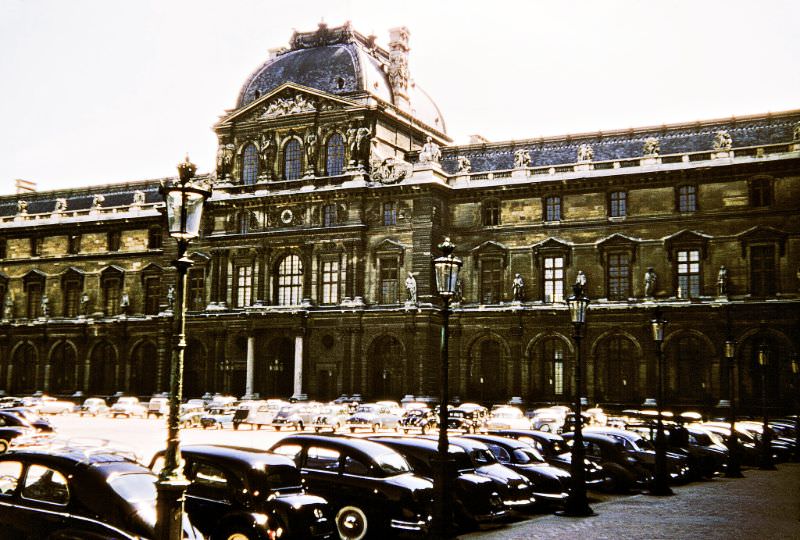
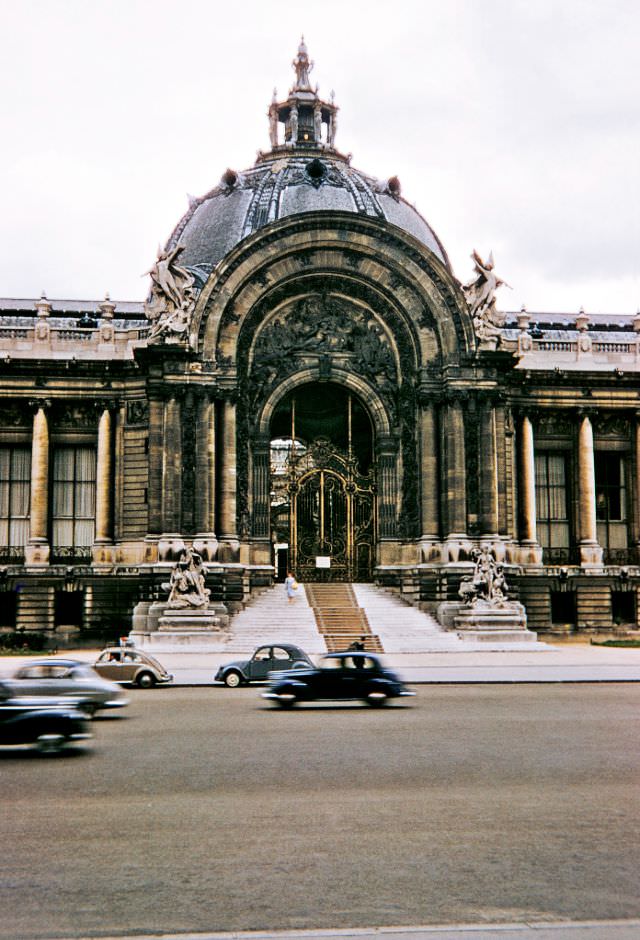
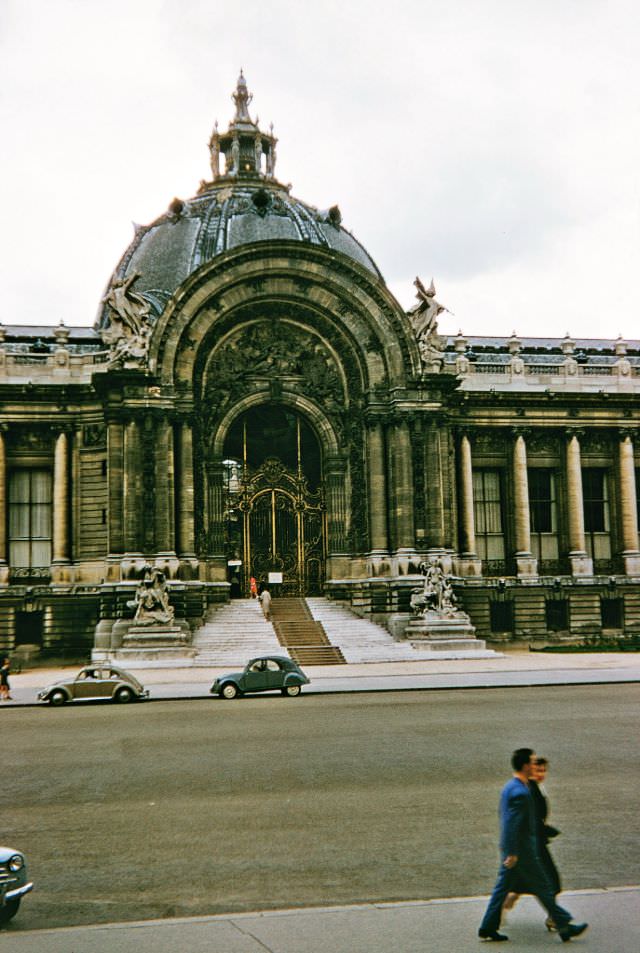
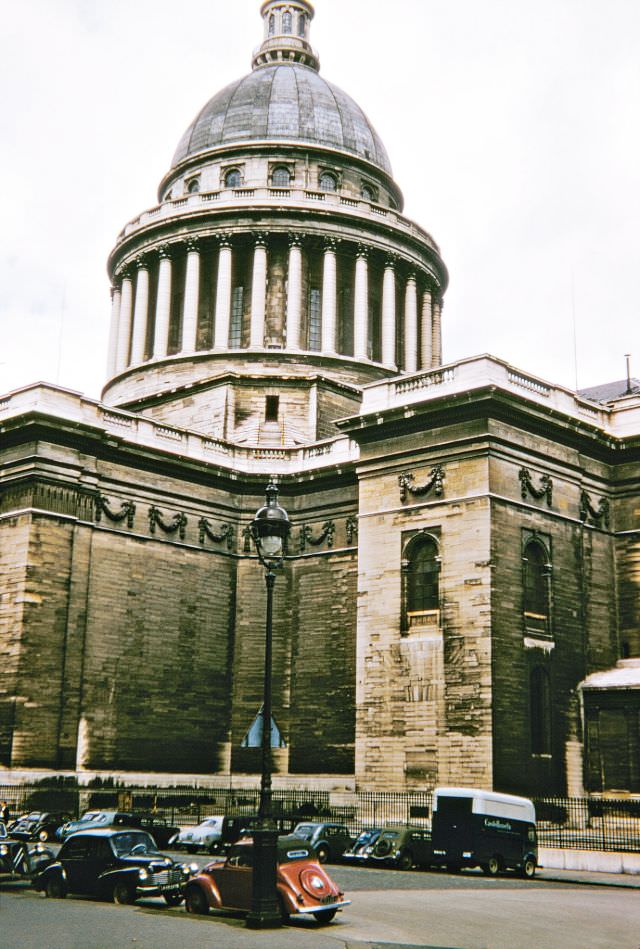
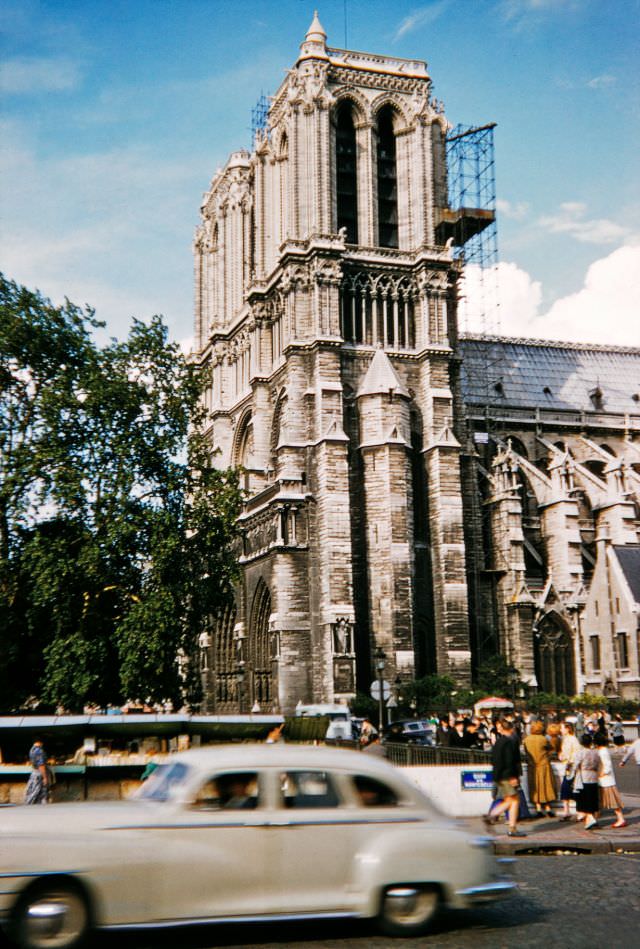
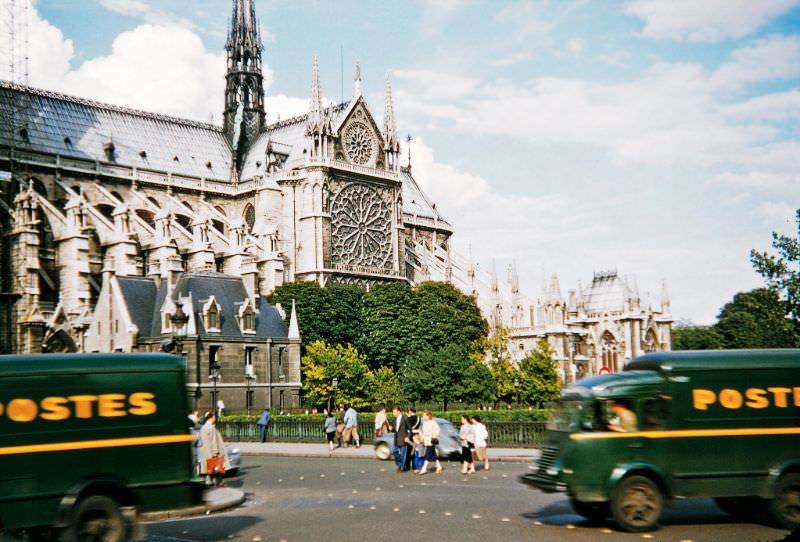
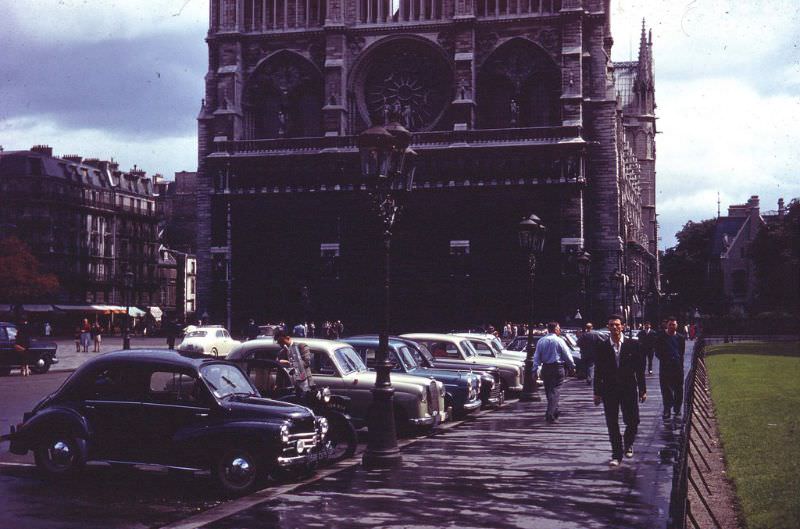
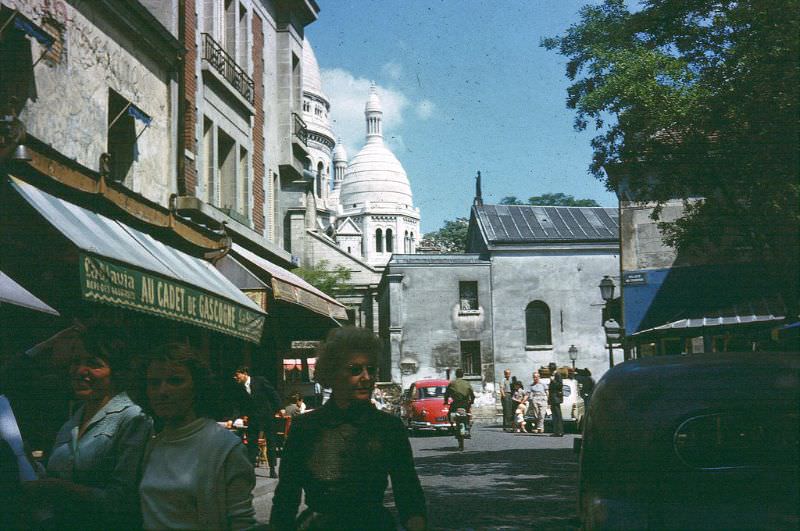
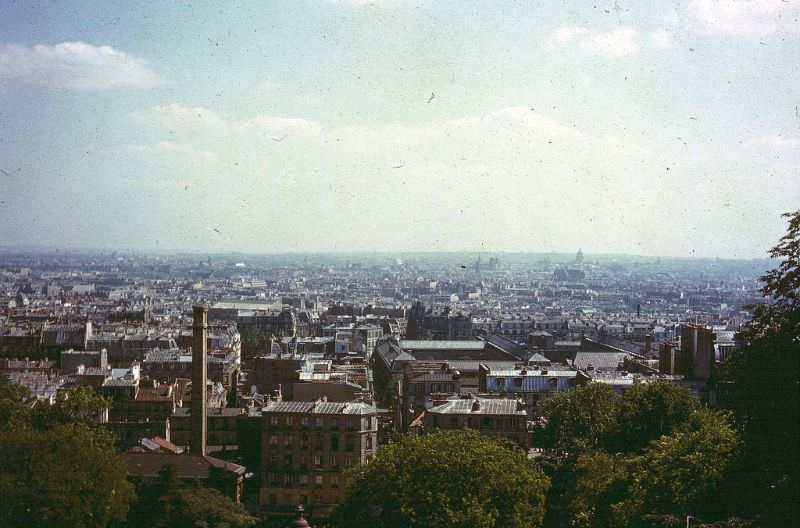
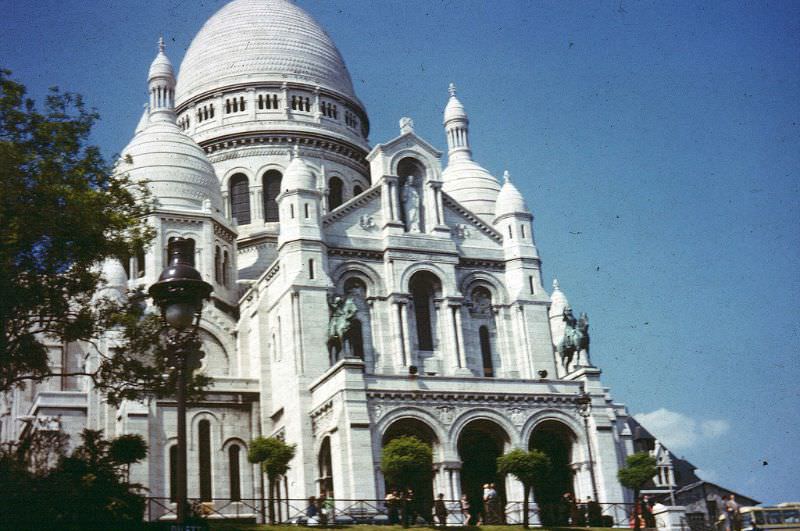
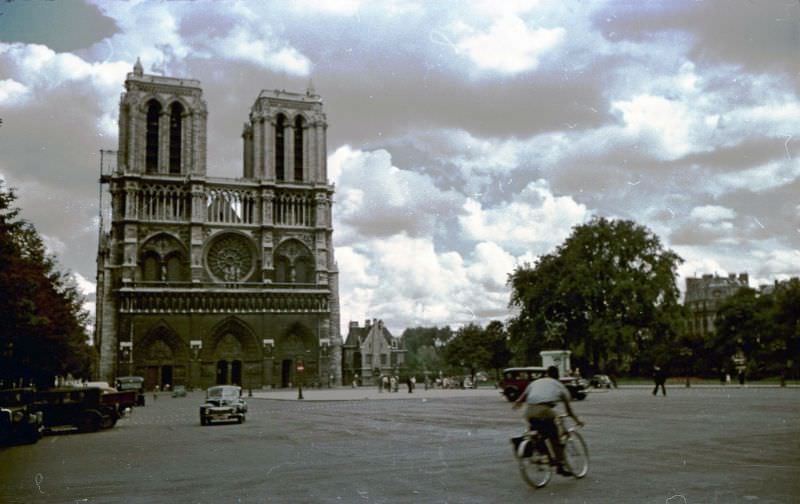
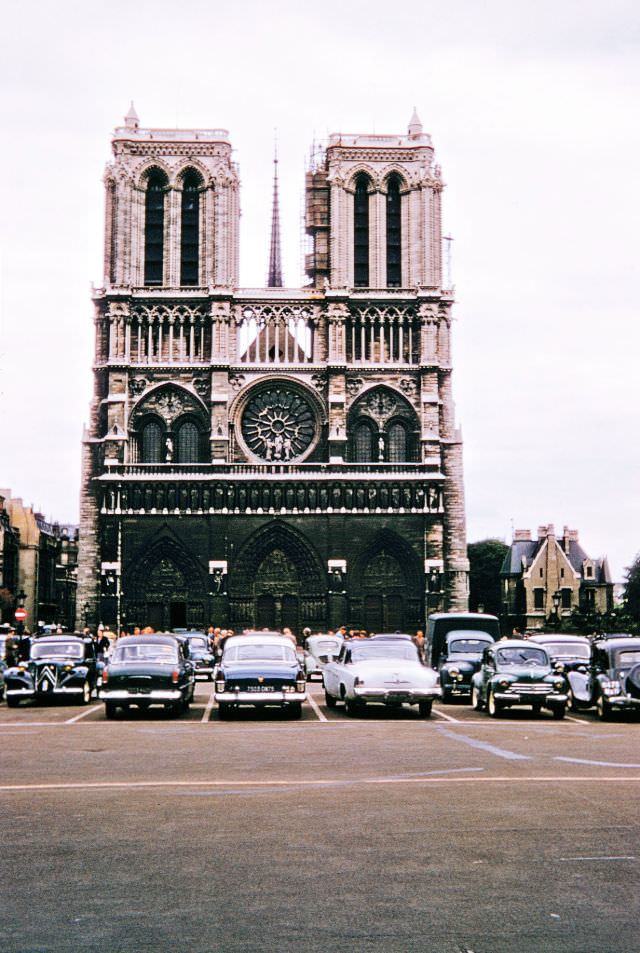
The Moulin Rouge in Montmartre blazed with neon light at night, a beacon of Paris’s entertainment scene. Nearby, the white dome of the Sacré-Cœur Basilica rose above the hill of Montmartre, visible from much of the city. Notre-Dame Cathedral stood on the Île de la Cité as it had since the 13th century, drawing visitors from the southern banks of the Seine. The Louvre, the Palais Garnier, the Panthéon, and the Petit Palais were all in daily use — part of a city that wore its history on every street corner.
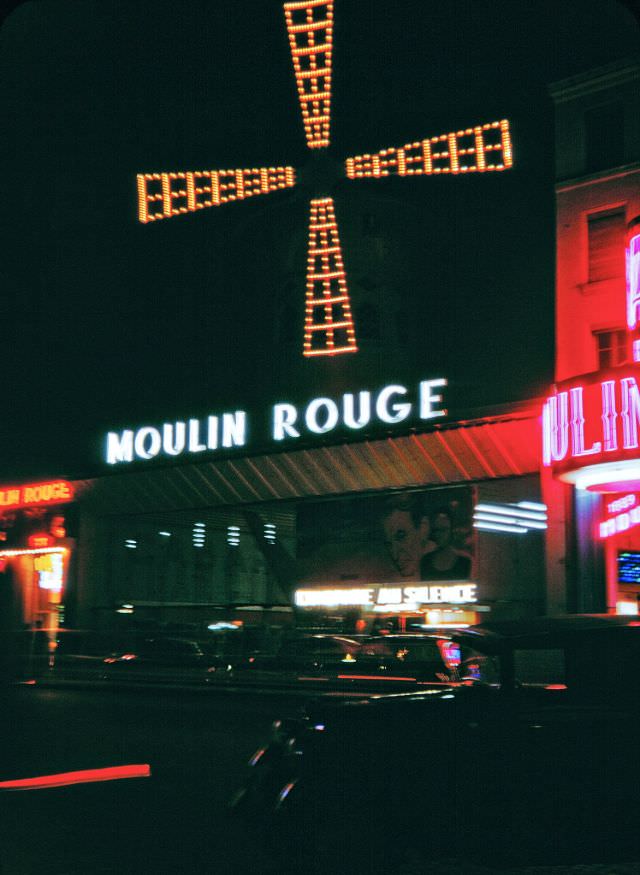
Moulin Rouge at night, Paris, 1956
Notre Dame de Paris, Paris, 1956
Notre-Dame de Paris, 1950s
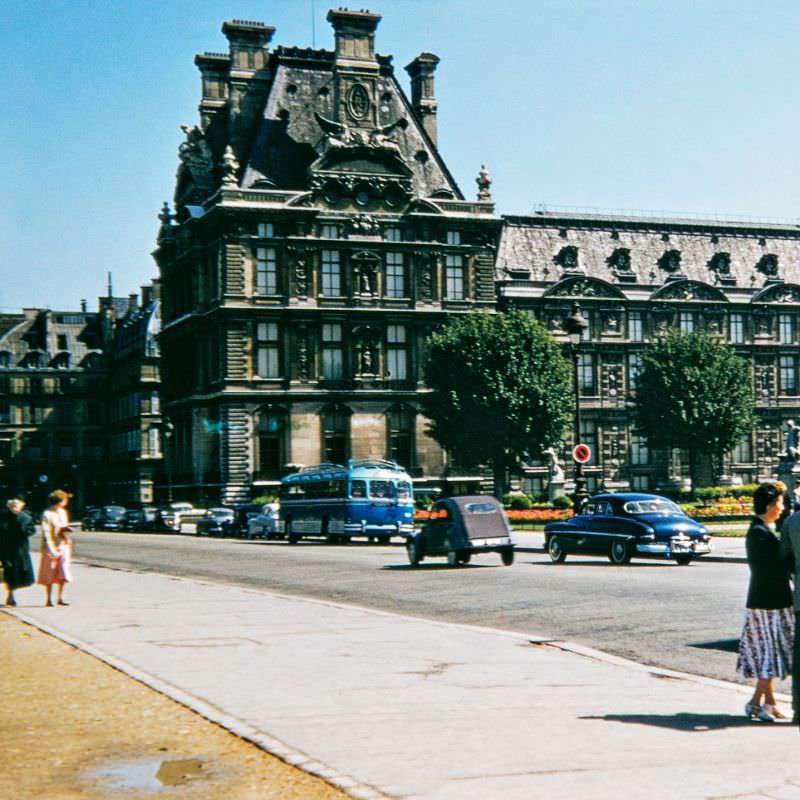
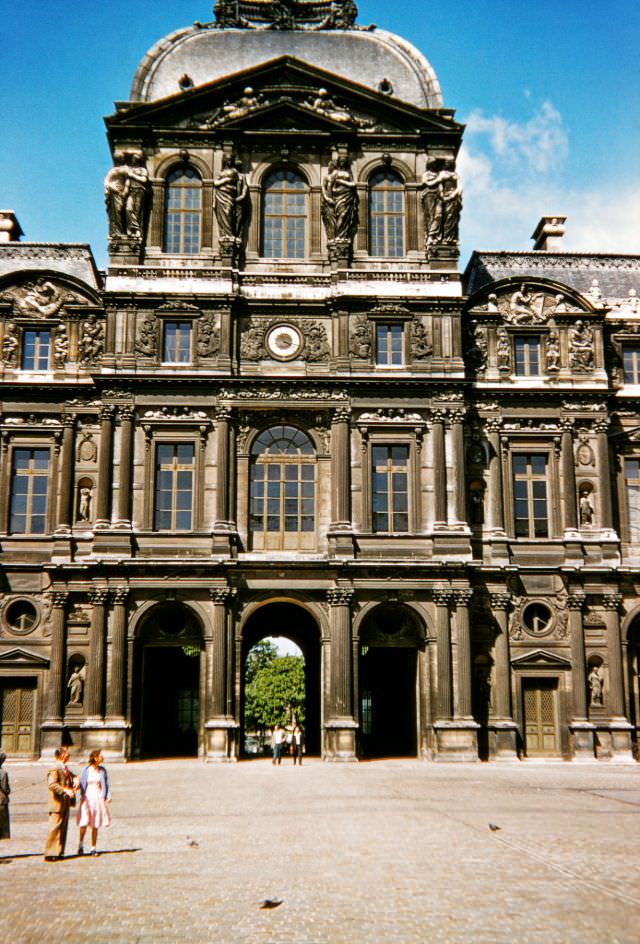
On Avenue du General Lemonnier looking towards the Pavillon de Marsan, Louvre, Paris, 1956
On Rue du Chevalier de la Barre, looking towards Sacré-Cœur Basilica, Paris, 1953
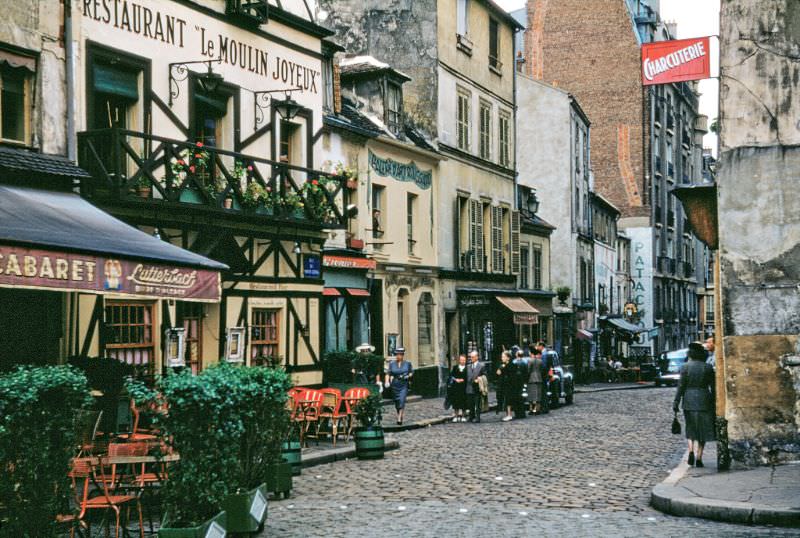
On Rue du Mont-Cenis (cnr of rue du Chevalier-de-La-Barre), 1953
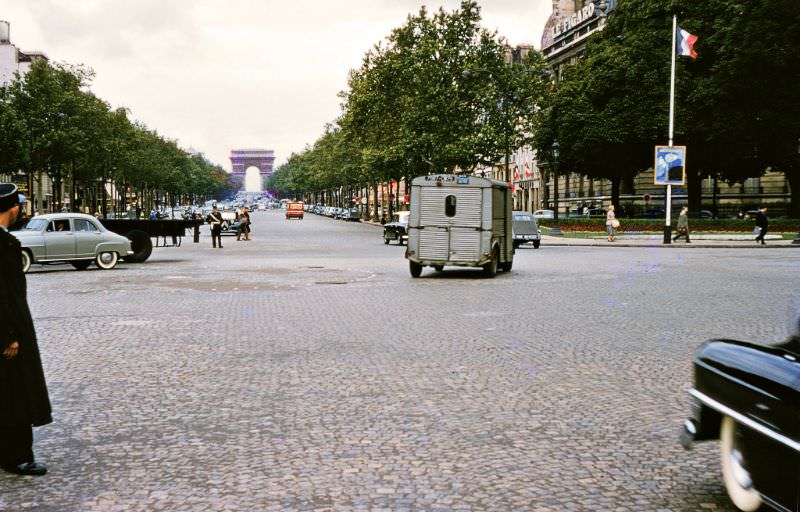
On the Avenue des Champs-Elysees looking toward the Arc de Triomphe, Paris, 1950s
Palais Garnier (Home of the Paris Opera), Paris, 1956
Pavillon Sully, Palais du Louvre, Paris, 1956
Petit Palais, Paris, 1956

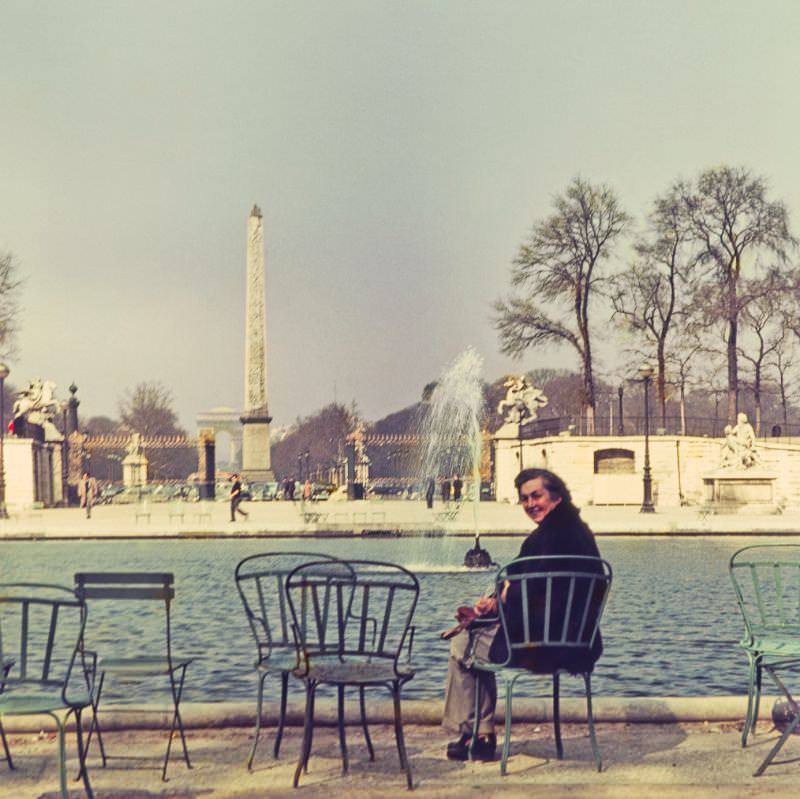
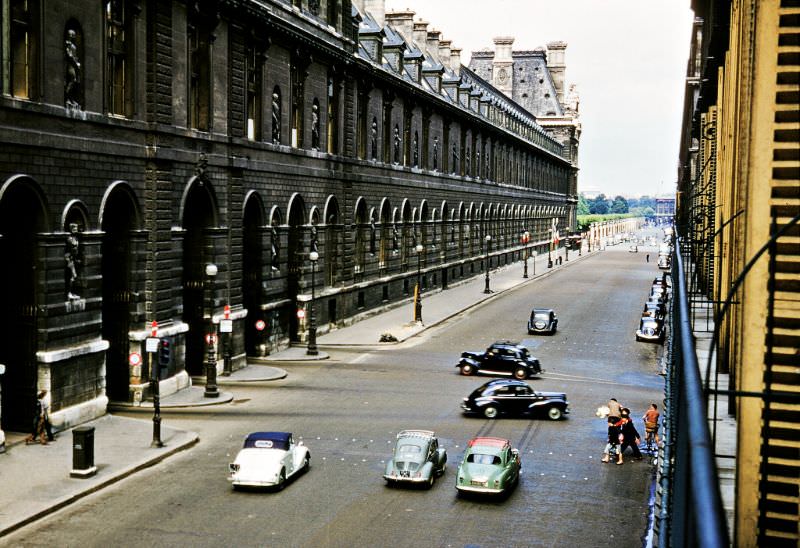
The pissoir — the open-air public urinal that stood on Paris street corners — was a fixture of mid-century Parisian life. By the late 1950s, city authorities were beginning to phase them out, but photographs from 1955 and 1959 show them still in regular use. The Rue de Rivoli, running alongside the Tuileries Garden, was one of Paris’s busiest shopping streets. The Tuileries itself provided a formal green space at the heart of the city, with the Obelisk of Luxor visible at the far end of the axis toward the Place de la Concorde.
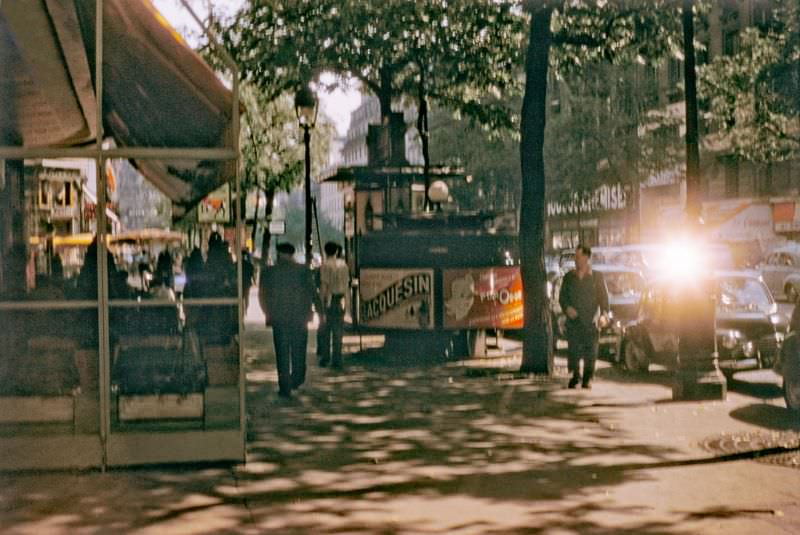
Pissoir, Paris, August 1955
Rue de Rivoli, Paris, 1950s
The Obelisk from the Tuileries Garden, Paris, 1950s
The Panthéon, Paris, 1956
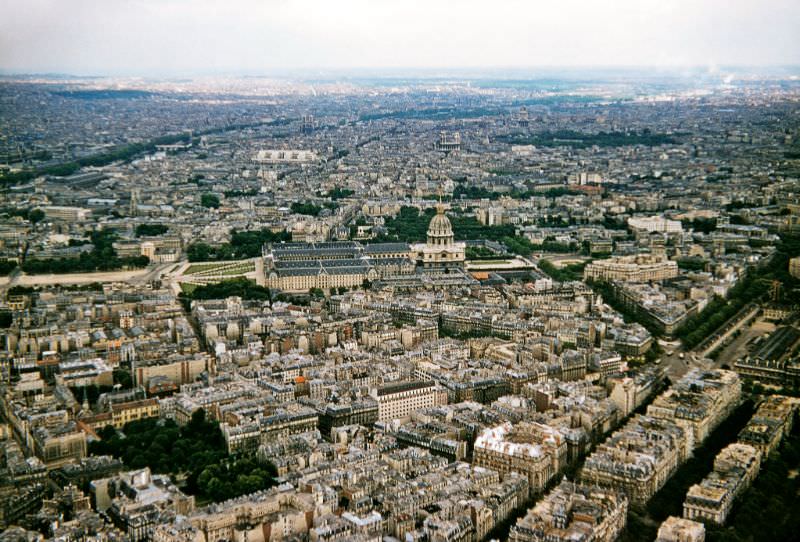
View from Avenue de Tourville of the Monument to Marshal Gallieni & the Palaise Les Invalides, Paris, 1950s
View from the Cour Carrée, Louvre, Paris, 1956
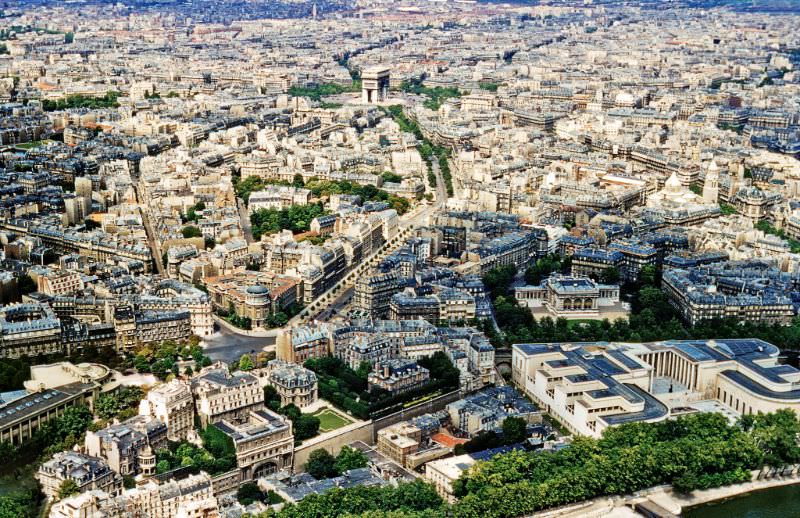
View from the Eiffel tower towards Arc de Triomph, Paris, 1953
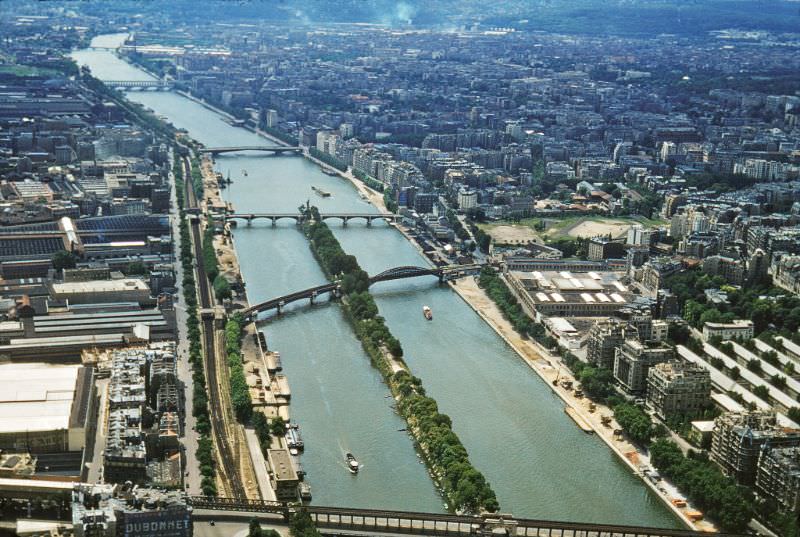
View from the Eiffel Tower, 1956
View from the southern bank of the River Seine of the Notre Dame de Paris, 1956
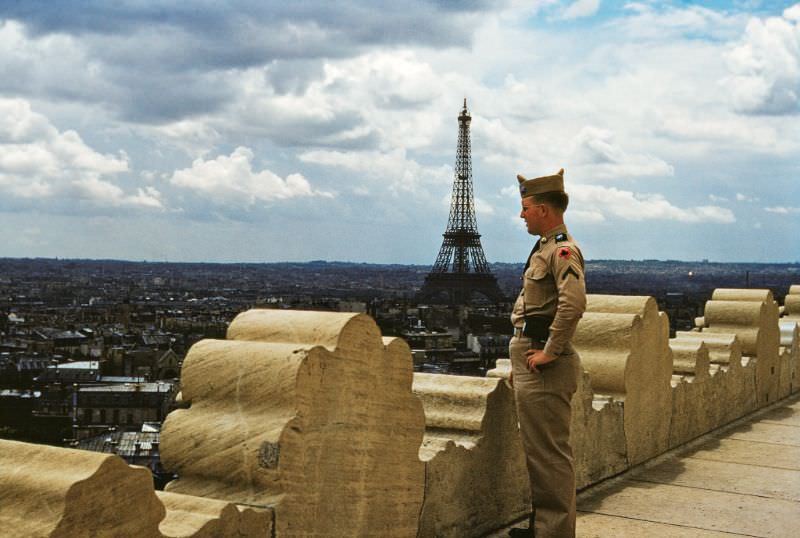
View towards the Eiffel Tower from the Arc de Triomphe (the soldier is Canadian), 1953

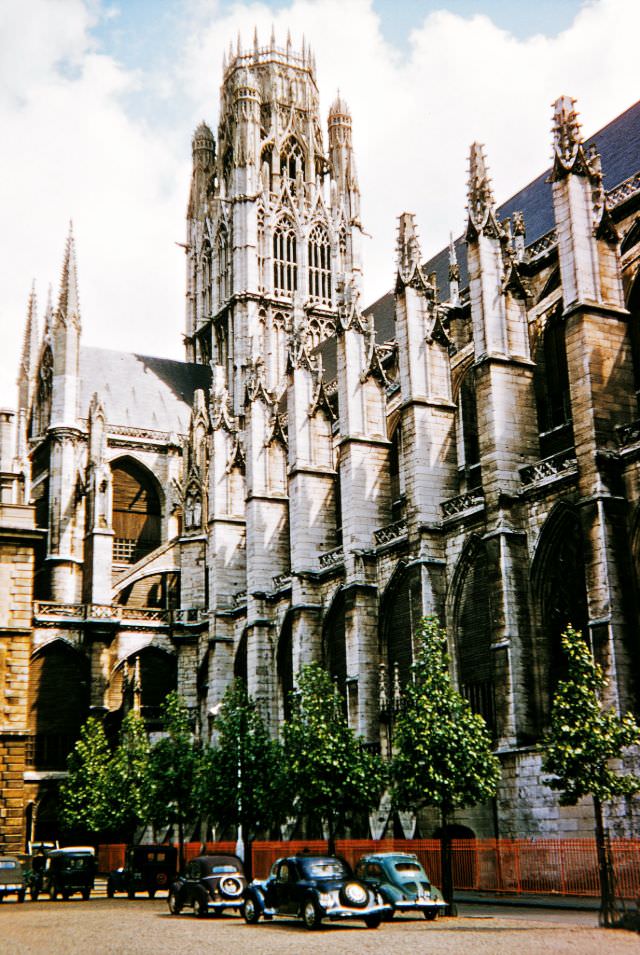
Beyond Paris, France’s industrial north was undergoing a different kind of transformation. In Reims, the cathedral district still showed scars from the First World War, while new construction rose around it. The Church of St. Ouen in Rouen displayed its crossing tower over a city that had been heavily bombed in 1944 and was steadily being rebuilt. French industrial companies — especially those in chemicals, oil, electronics, and instrumentation — were actively attracting American investment during this period. The most successful ones used that capital to expand into international markets.
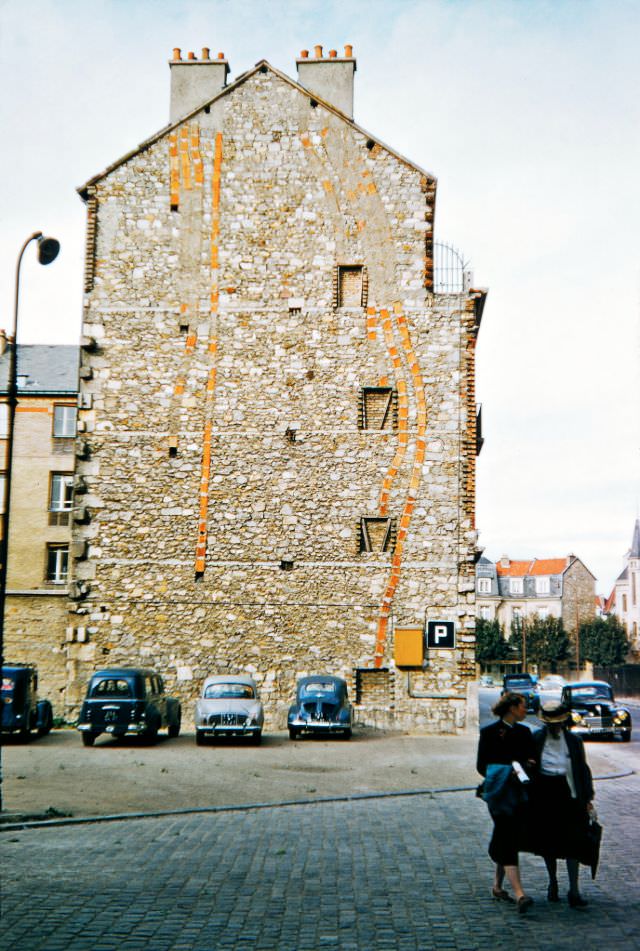
Chimney Flues, Rue Robert de Coucy, near the Reims Cathedral, Reims, 1956
Crossing Tower of the Church of St. Ouen, Rouen, 1956
Street scene, 97 Gros Horloge (Big Clock) Street, France, 1956
Village in the Jura Mountains, France, 1953

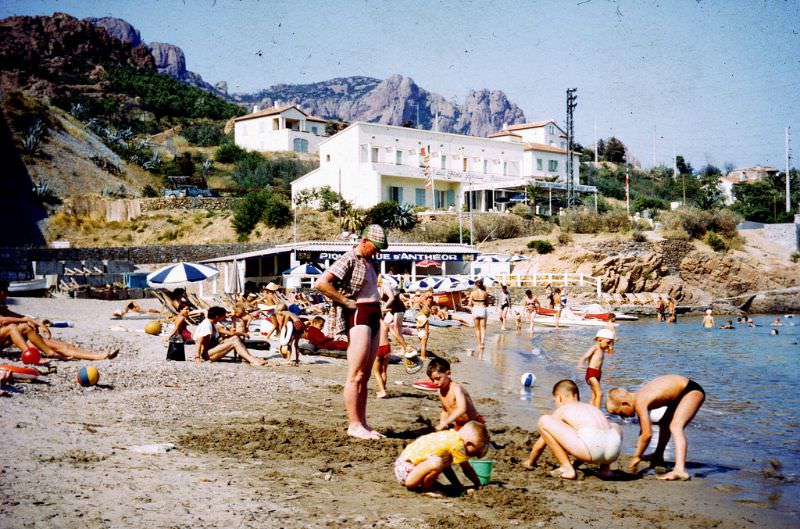
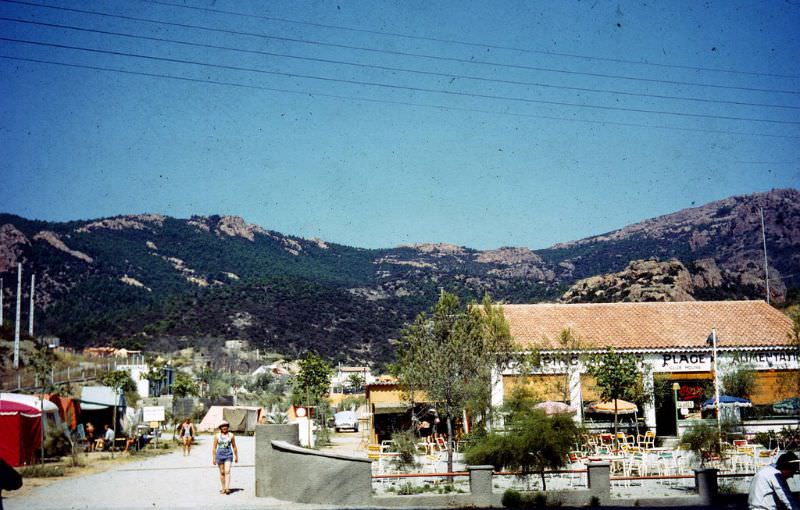
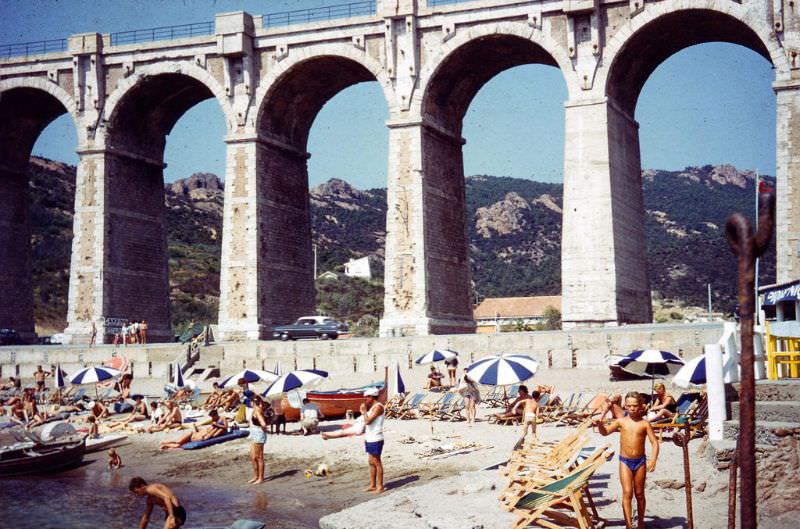
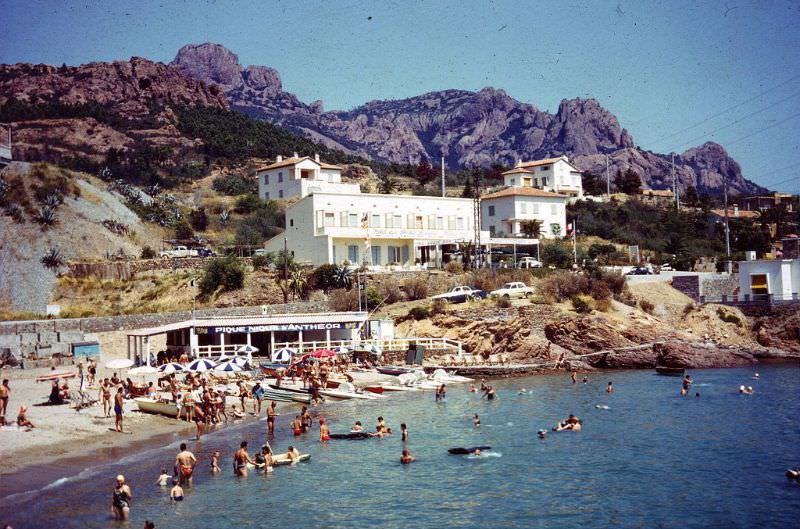
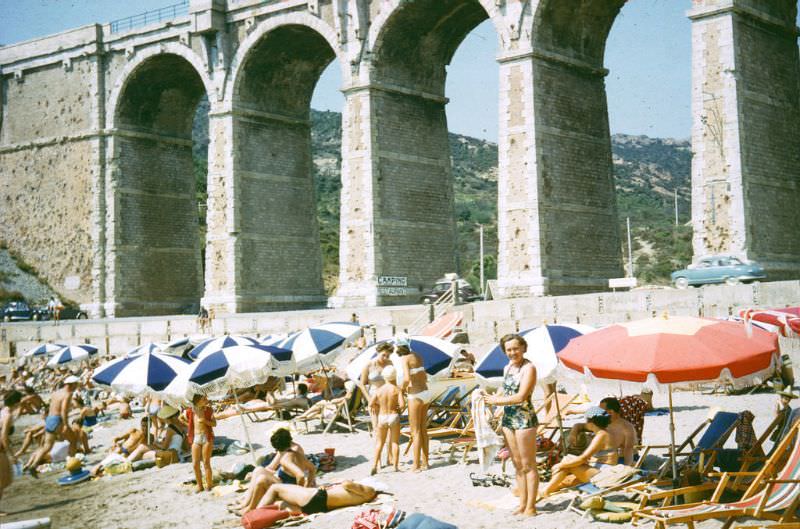
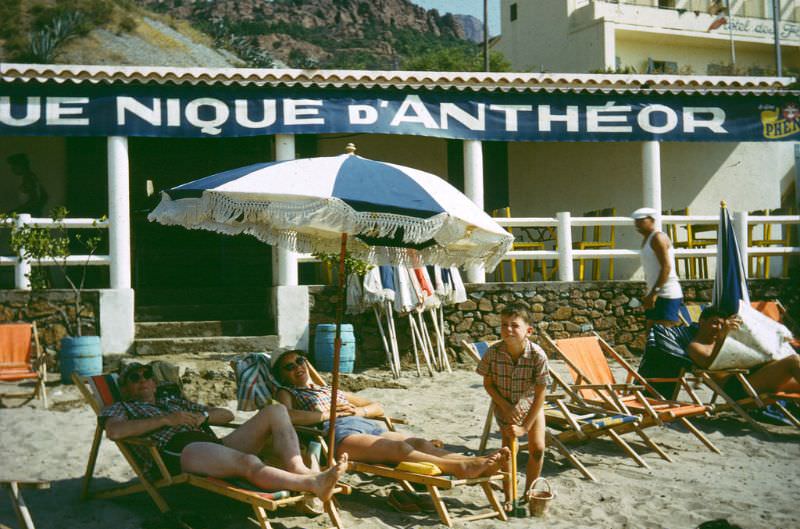
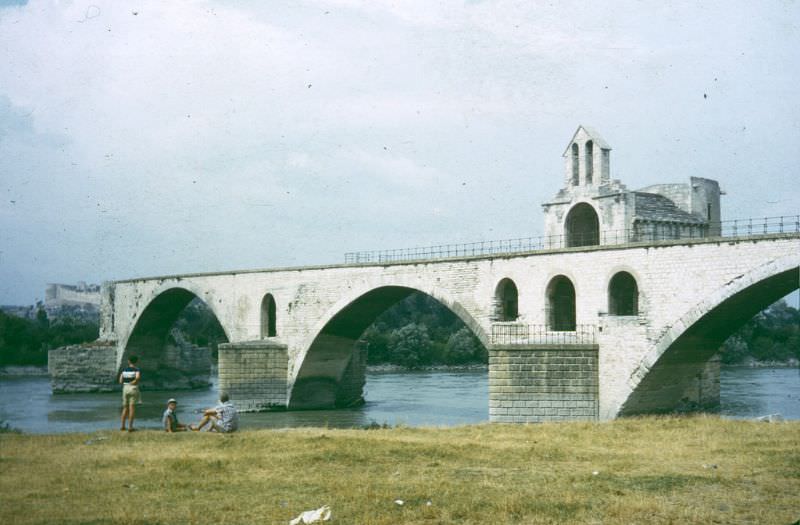
The Côte d’Azur in 1957 was at its postwar peak. The coastal towns of Anthéor, Hyères, and Sanary offered dramatic scenery — red volcanic rock, clear blue water, and pine-covered hillsides. Bar Pique Nique at Anthéor catered to the growing number of visitors driving south along the newly improved national roads. The Pont d’Avignon — formally the Pont Saint-Bénézet — still stood in the Rhône River with only four of its original twenty-two arches remaining, as it had since the 17th century.
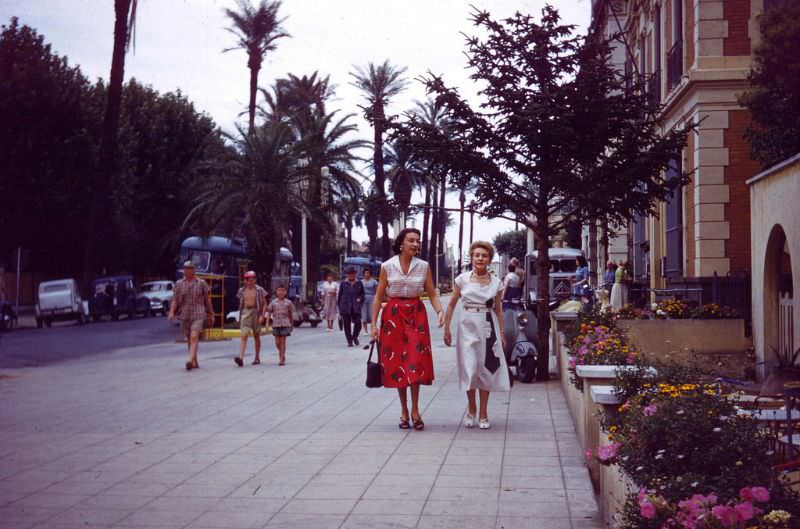
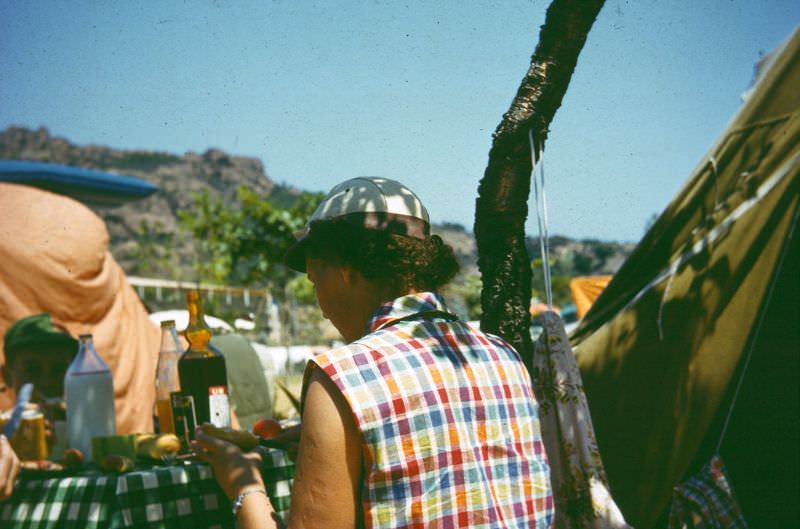
Hyères, 1957
Hyères, 1957
Anthéor, 1957
Anthéor, 1957
Anthéor, 1957
Anthéor, 1957
Anthéor, 1957
Anthéor, 1957
Anthéor, 1957
Anthéor, 1957
Anthéor, 1957
Anthéor, 1957
Anthéor, 1957
Anthéor, 1957
Bar Pique Nique, Anthéor, 1957
Cote D'Azur , 1957
Cote D’Azur , 1957
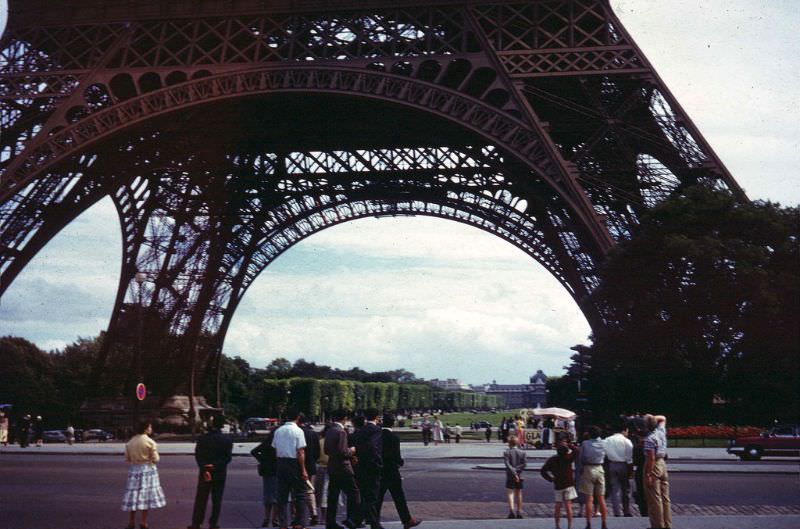
Eiffel Tower, 1957
Eiffel Tower, 1957
Le Pont d'Avignon, 1957
Le Pont d’Avignon, 1957
Nice casino, 1957
Nice casino, 1957
Nice, 1957
Nice, 1957
Notre Dame, Paris, 1957
Paris, 1957
Paris, 1957
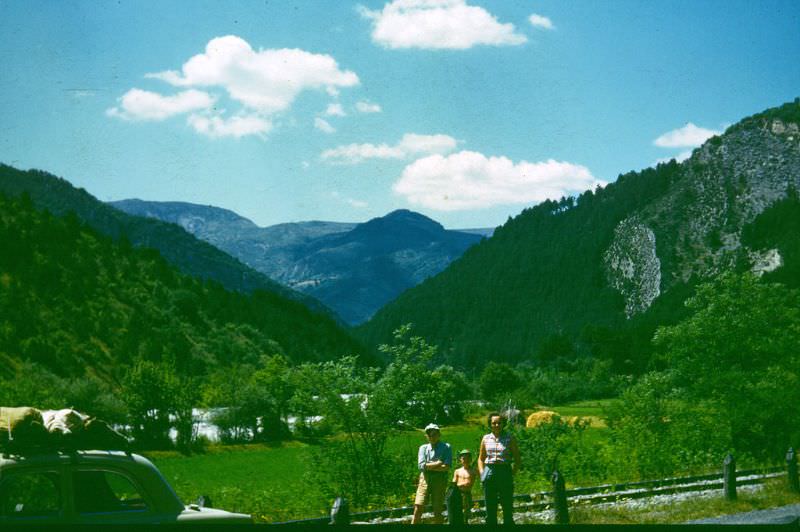
Probably between Grenoble and Nice, 1957
Promenade des Anglais, Nice, 1957
Sanary, 1957
Sanary, 1957

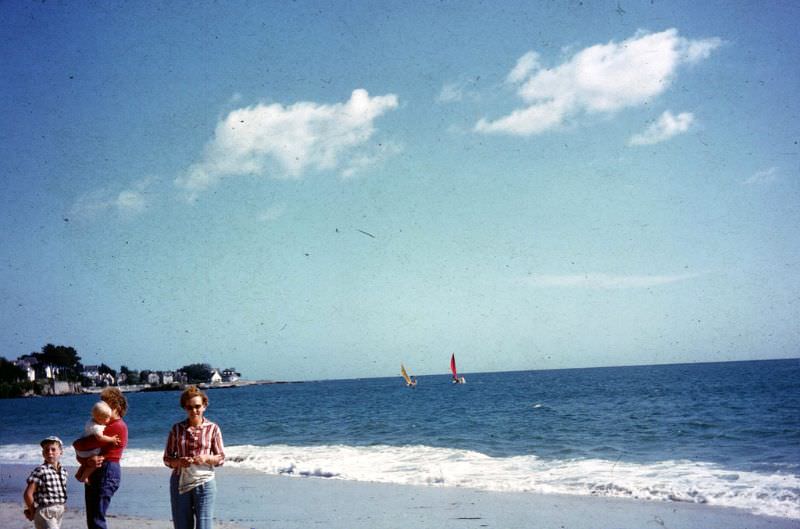
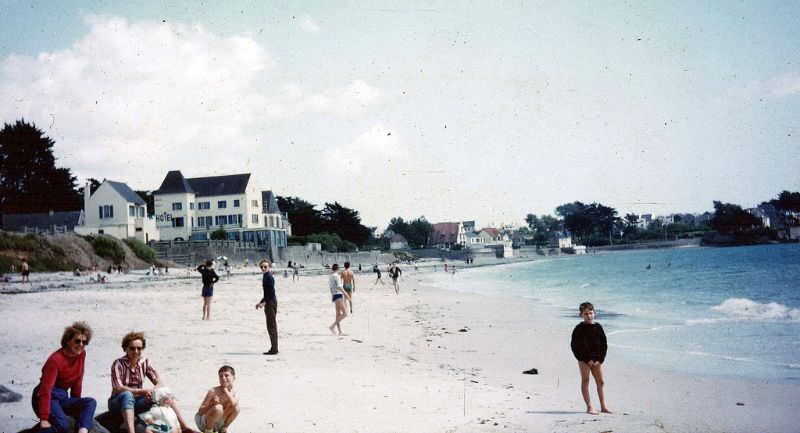
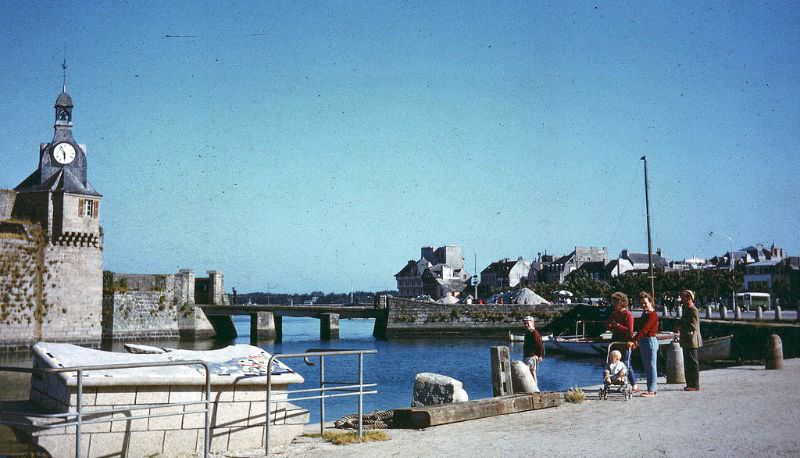
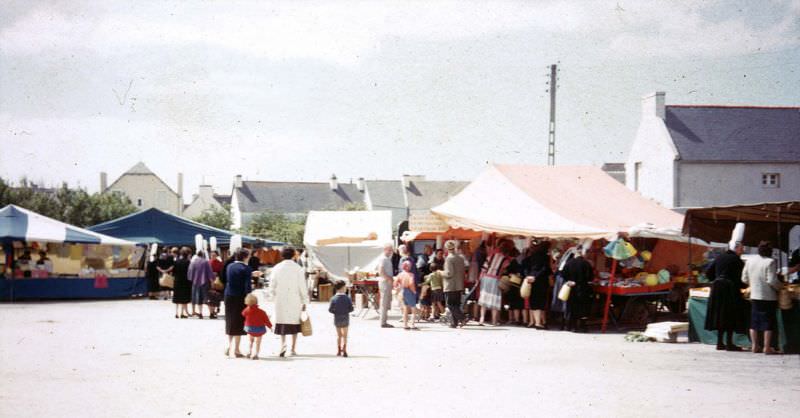
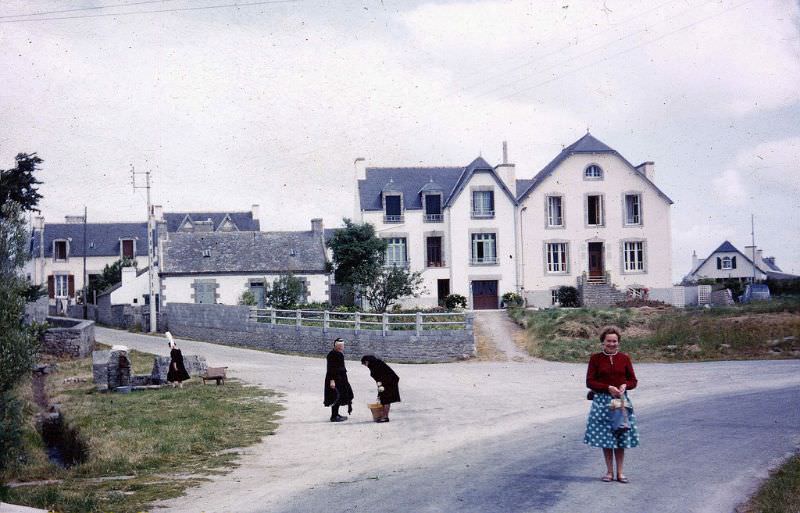
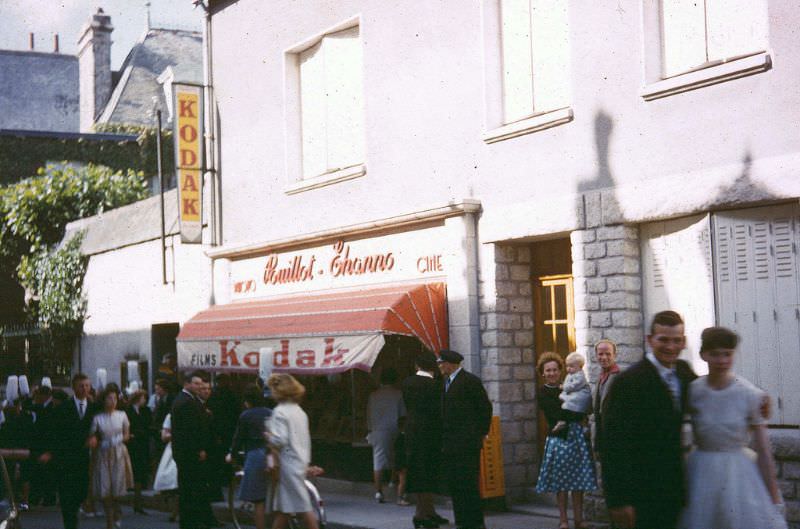
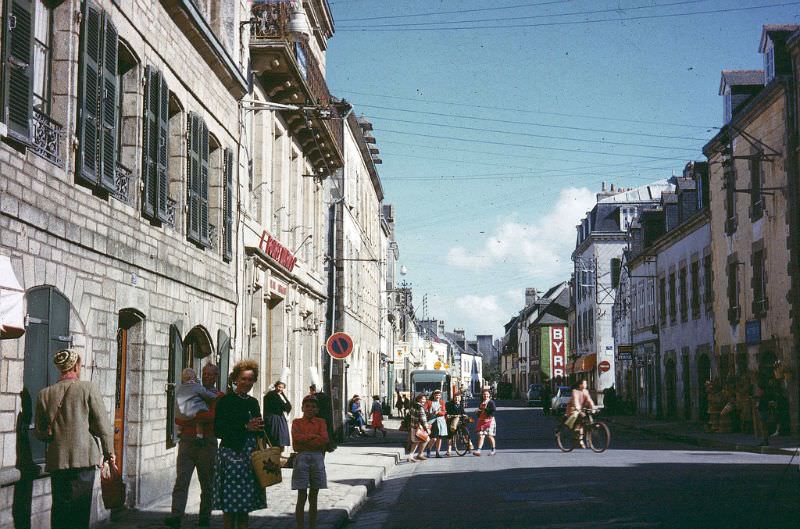
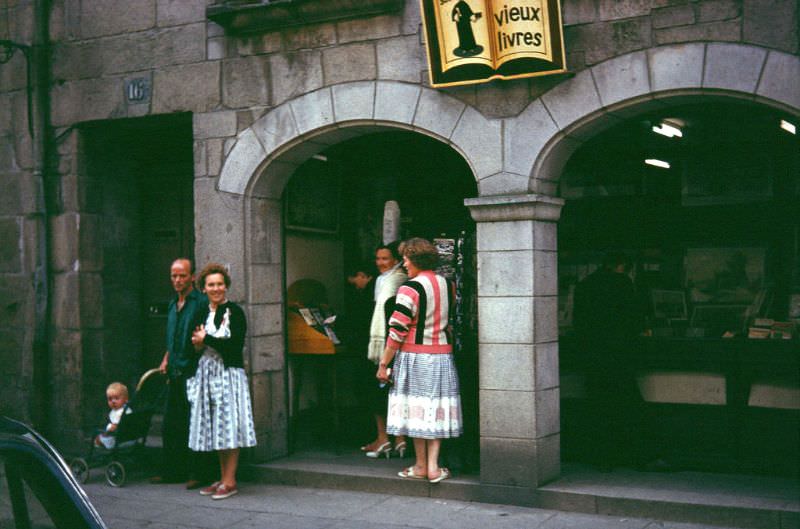
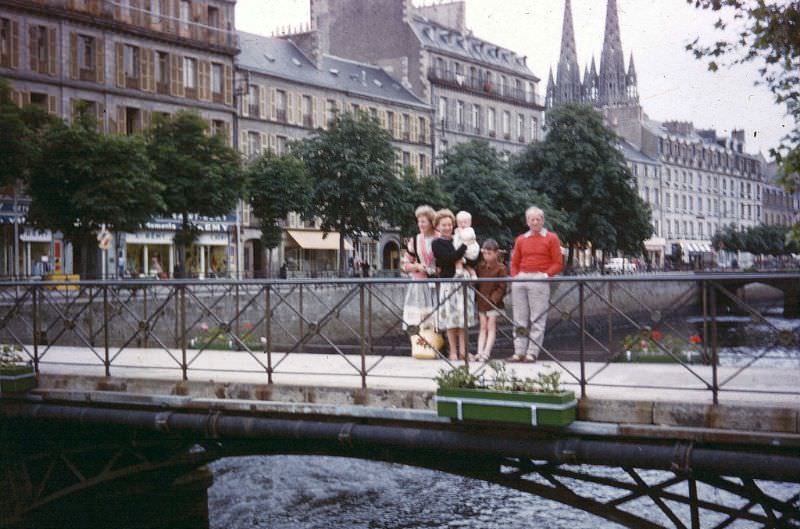
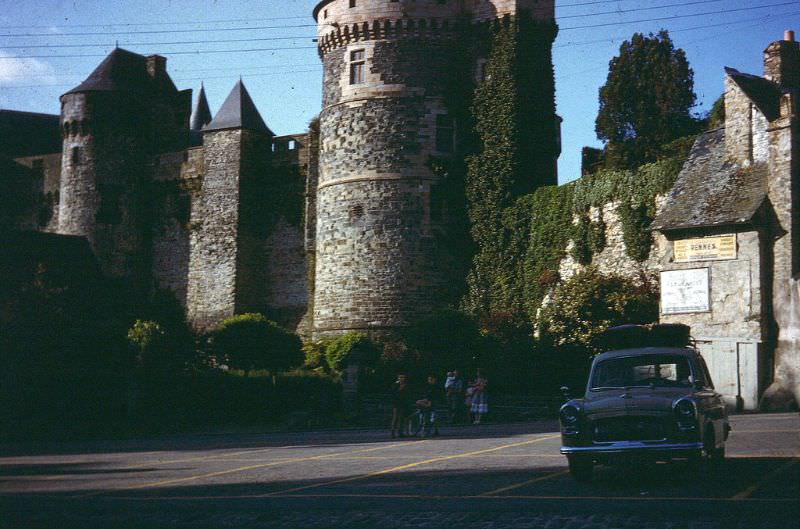
Brittany, in the far northwest of France, presented a landscape and culture far removed from Paris or the Riviera. The fishing port of Concarneau, the river town of Bénodet, the small coastal village of Lesconil, and the market town of Quimper all carried a distinct Breton identity in 1959. Women wore traditional coiffes — tall lace headdresses — on festival days. The harbor at Concarneau, enclosed within a medieval walled city, drew both fishing boats and summer visitors. Rennes, the regional capital, showed a mix of timber-framed medieval buildings and modern postwar construction.
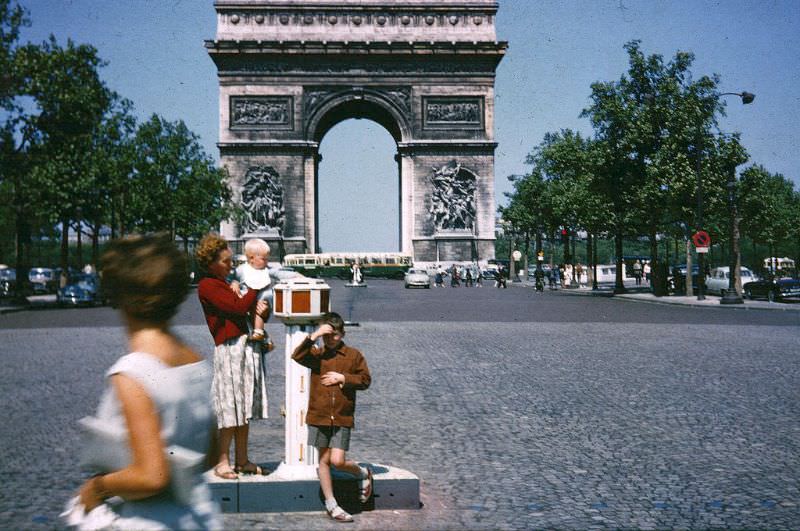
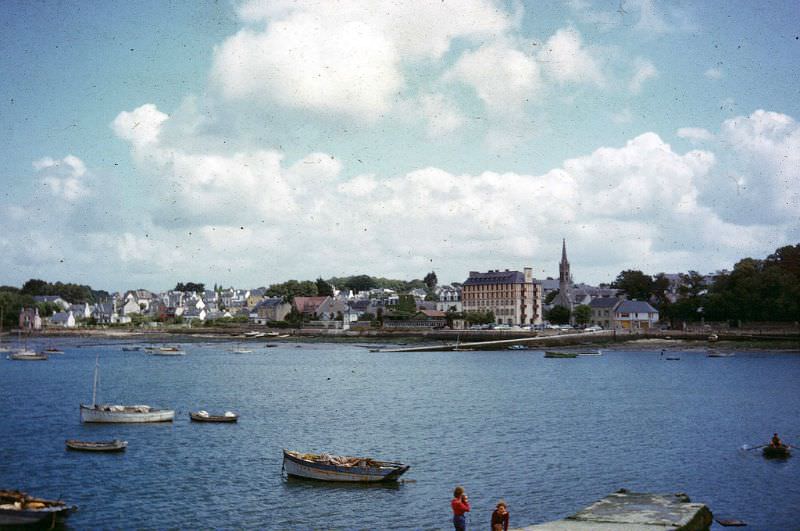
Arc de Triomphe, 1959
Bénodet Le Bac, 1959
Bénodet, 1959
Bénodet, 1959
Chartres, 1959
Chartres, 1959
Concarneau, 1959
Concarneau, 1959
Concarneau, 1959
Concarneau, 1959
Concarneau, 1959
Concarneau, 1959
Concarneau, 1959
Concarneau, 1959
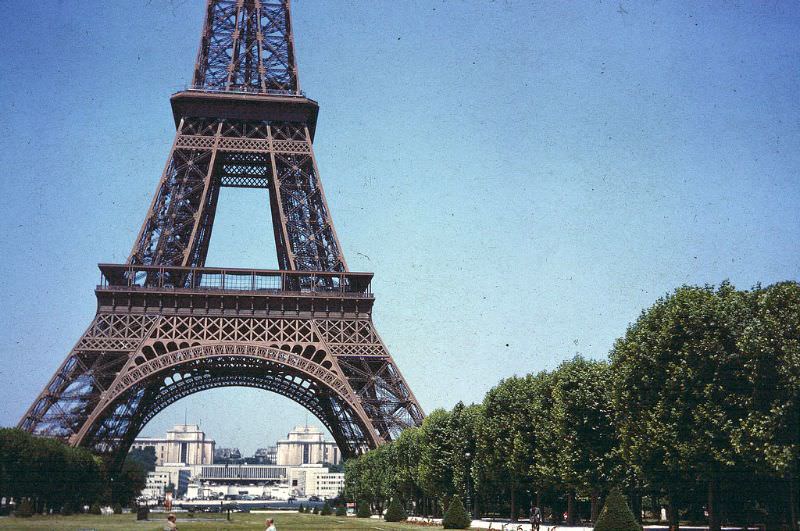
Eiffel Tower, 1959
Eiffel Tower, 1959
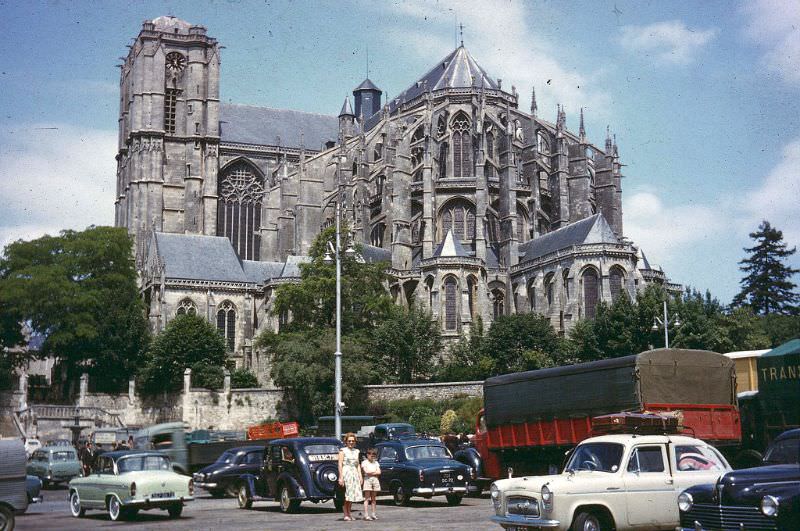
Le Mans, 1959
Le Mans, 1959
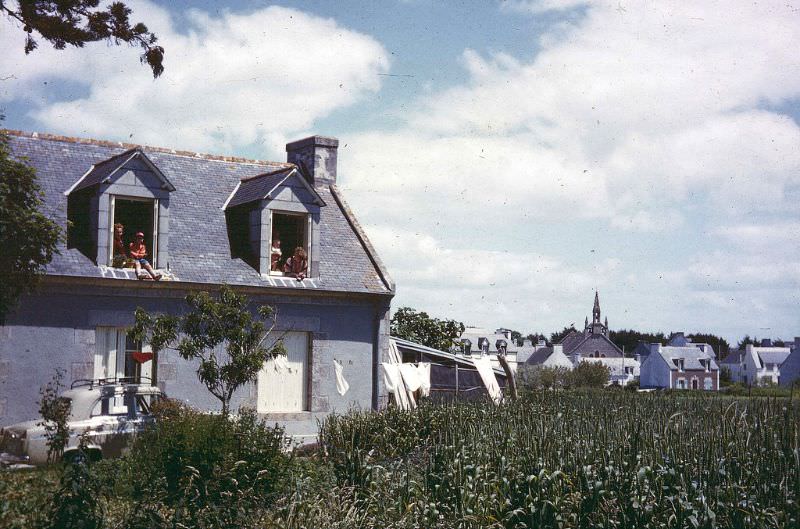
Lesconil, 1959
Lesconil, 1959
Lesconil, 1959
Lesconil, 1959
Lesconil, 1959
Lesconil, 1959
Lesconil, 1959
Lesconil, 1959
Lesconil, 1959
Lesconil, 1959
Montmartre, 1959
Montmartre, 1959
Montmartre, 1959
Montmartre, 1959
Montmartre, 1959
Montmartre, 1959
Neufchatel, 1959
Neufchatel, 1959
Neufchatel, 1959
Neufchatel, 1959
Paris from Sacré Couer, 1959
Pont L'Abbé, 1959
Pont L’Abbé, 1959
Pont L'Abbé, 1959
Pont L’Abbé, 1959
Quimper, 1959
Quimper, 1959
Quimper, 1959
Quimper, 1959
Rennes, 1959
Rennes, 1959
Rouen, 1959
Rouen, 1959
Sacré Coeur, 1959
Sacré Coeur, 1959
Un Pissoir, 1959
Un Pissoir, 1959
Vitré, 1959
Vitré, 1959

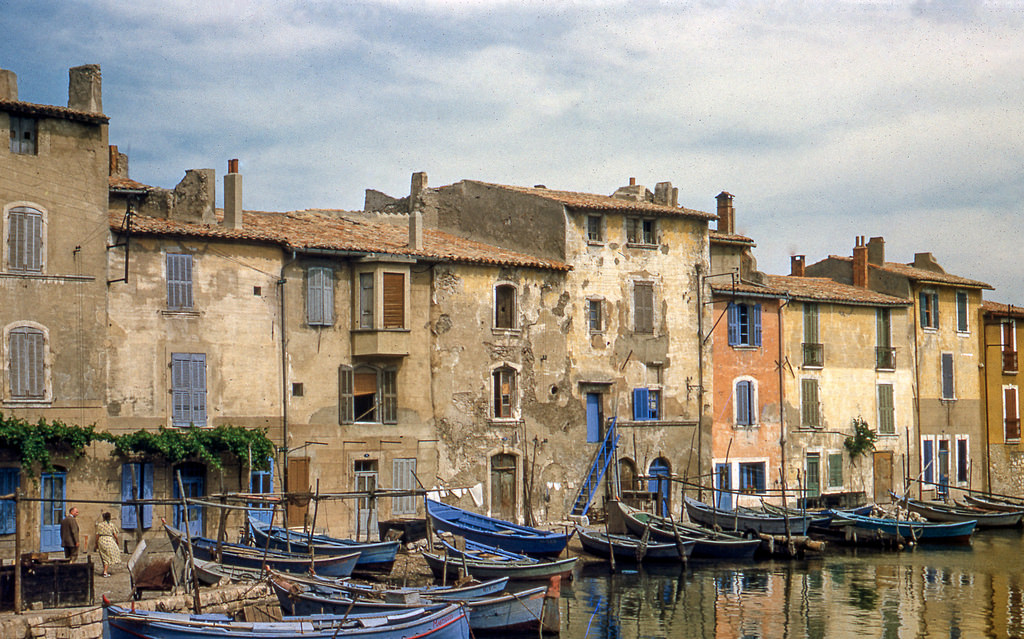
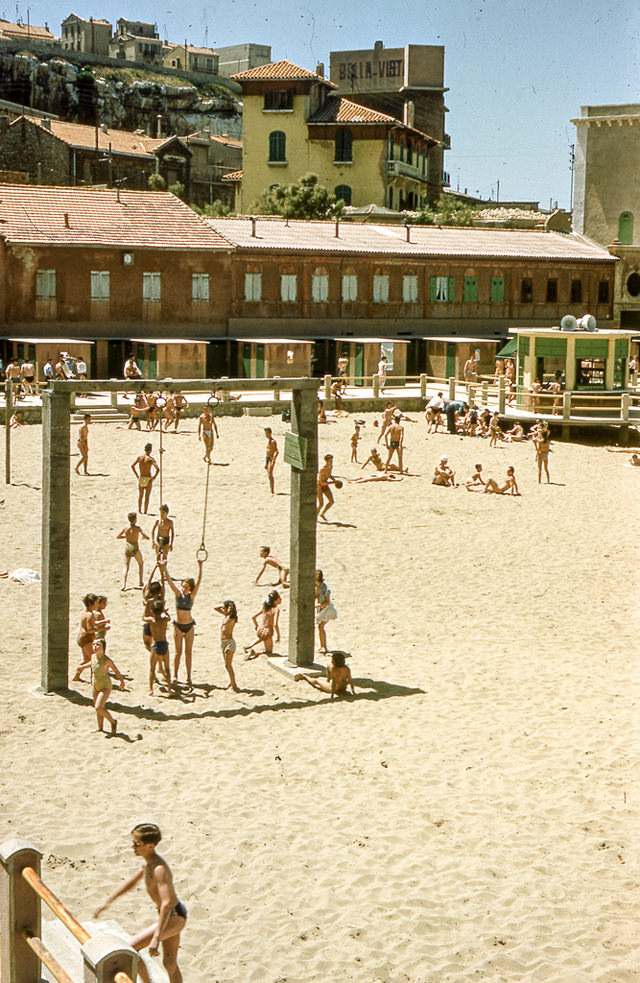
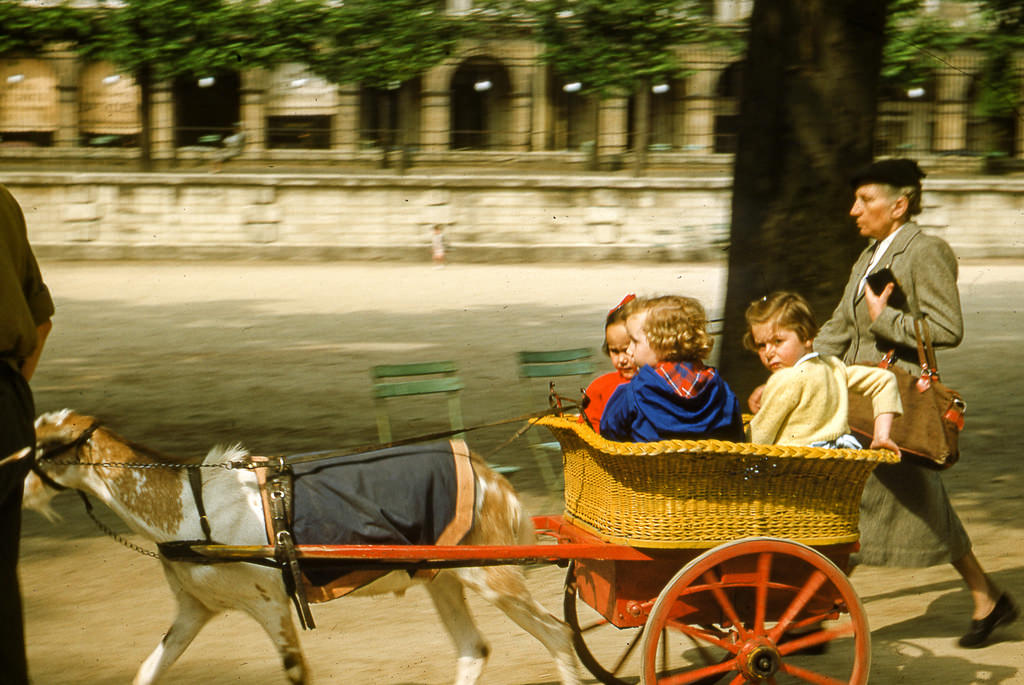
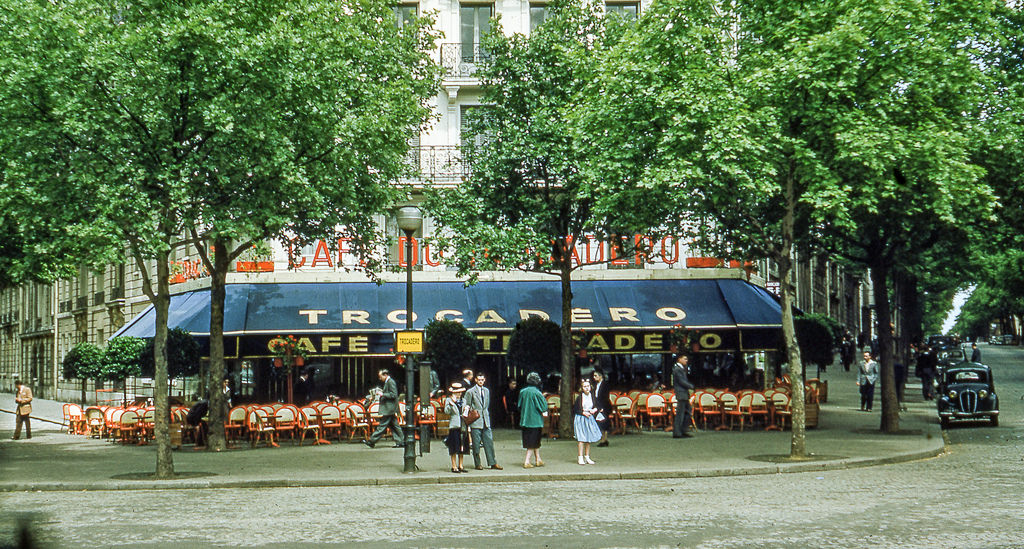
Early in the decade, Paris in 1952 was a city still finding its postwar rhythm. The Champs-Élysées was busy with traffic and pedestrians. Le Café du Trocadéro sat near the Palais de Chaillot, looking across toward the Eiffel Tower. Further south, at Martigues on the Mediterranean coast — sometimes called the Venice of Provence — the canals and colorful facades drew painters and photographers. The beach at Plage des Catalans in Marseille showed sun-seekers on the sand just a short walk from the city center.
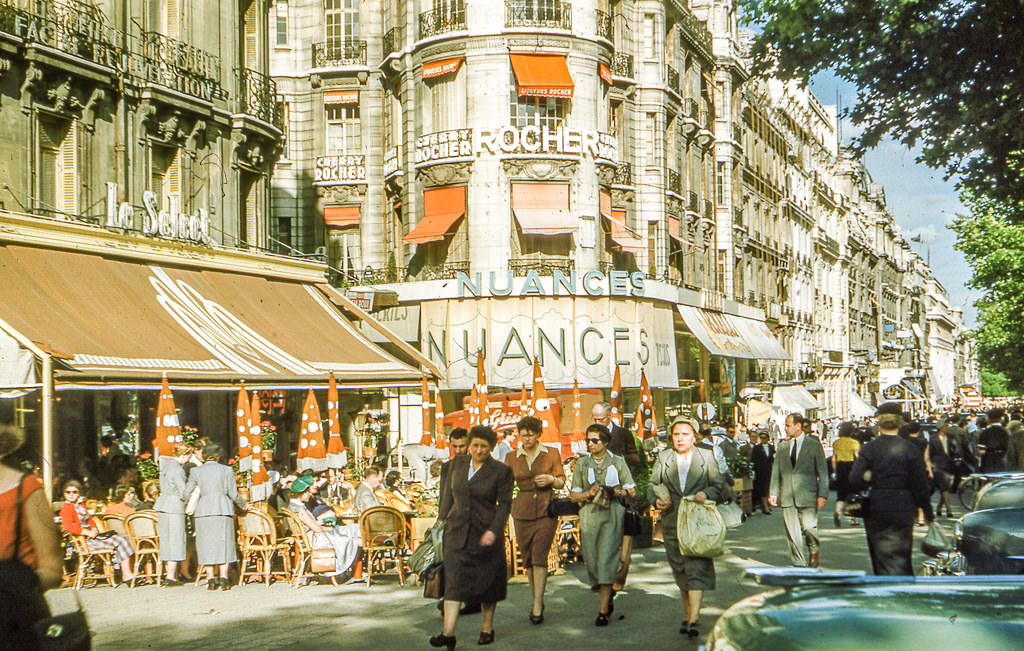
Champs-Élysées Avenue, Paris in June 2, 1952
Le Café du Trocadéro,Paris in June 2, 1952
Martigues, France in June 8, 1952
Plage des Catalans, Marseille in June 8, 1952
The Tuileries Garden, Paris in June 7, 1952

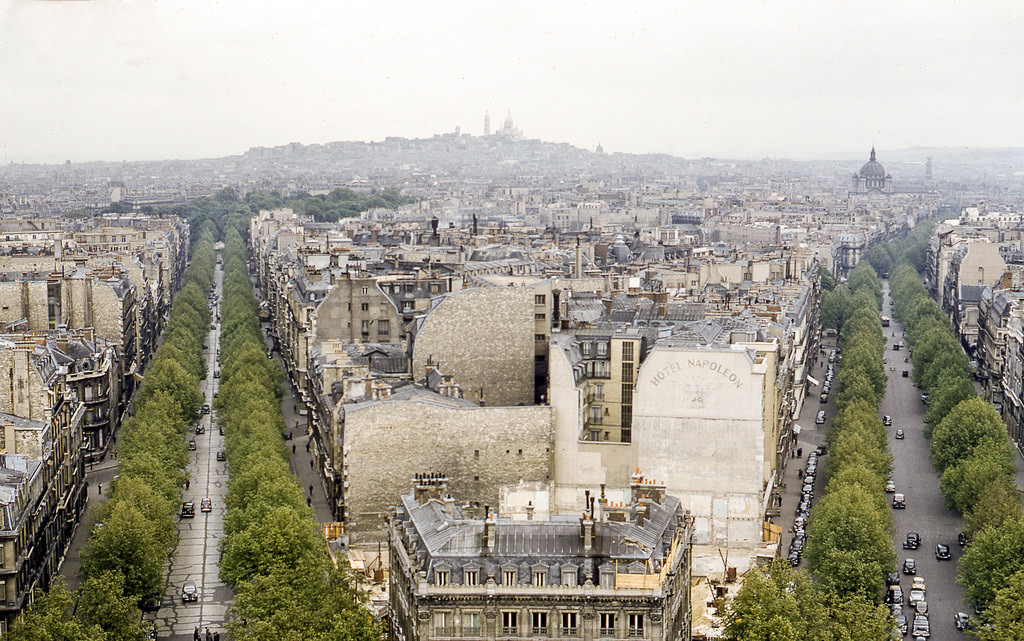
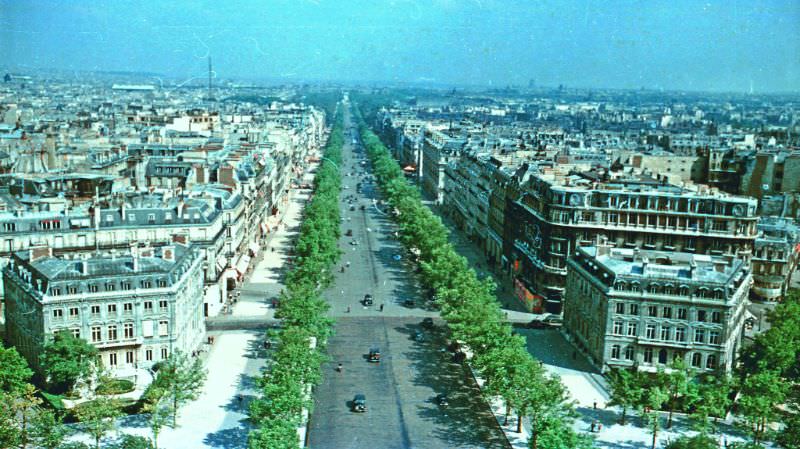
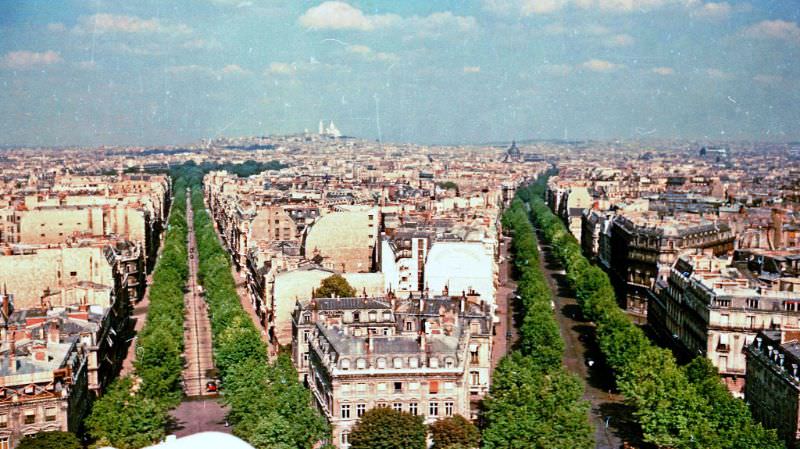
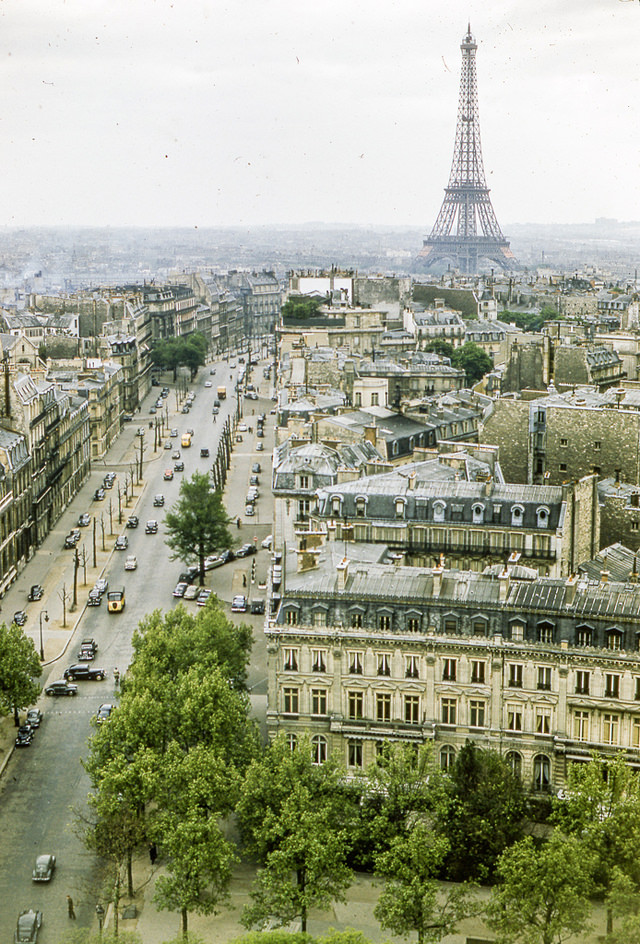
In 1954, the city of Avignon — home of the medieval Palace of the Popes — drew visitors to its ancient streets and its famous broken bridge. A view looking down Avenue d’Iéna toward the Eiffel Tower showed Paris in May 1954 as a city of wide boulevards and moving traffic, while the Arc de Triomphe commanded its hilltop above the radiating avenues of Haussmann’s 19th-century city plan.
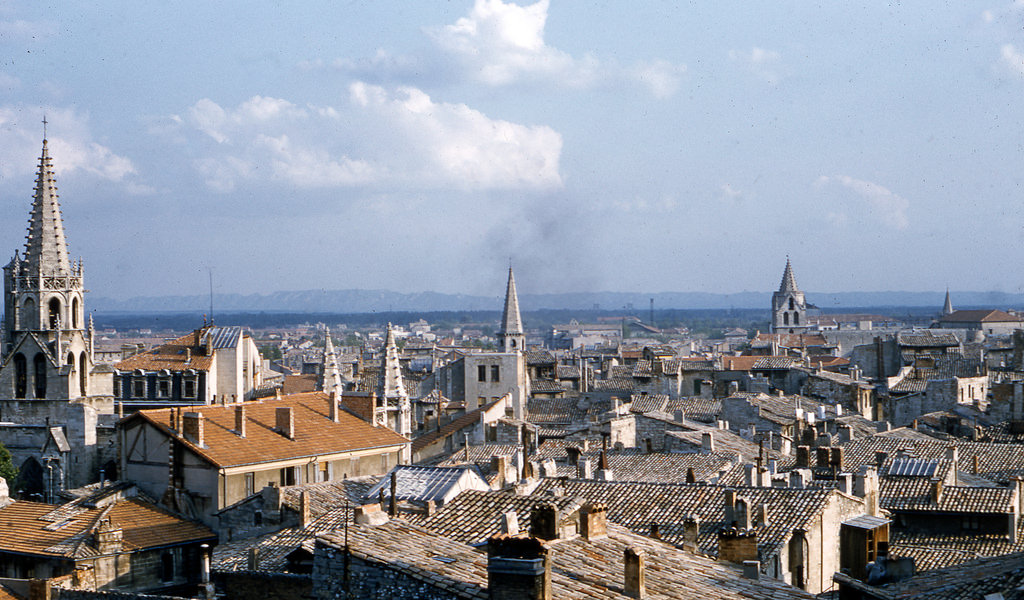
Avignon, France, May 22, 1954
Looking down Avenue d'Iéna toward the Eiffel Tower, May 19, 1954
Looking down Avenue d’Iéna toward the Eiffel Tower, May 19, 1954
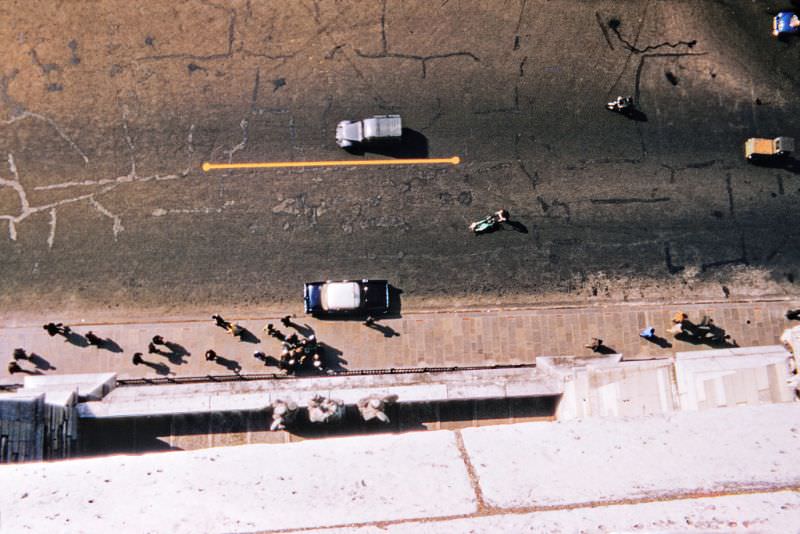
View of Paris from the Arc de Triomphe, May 19, 1954

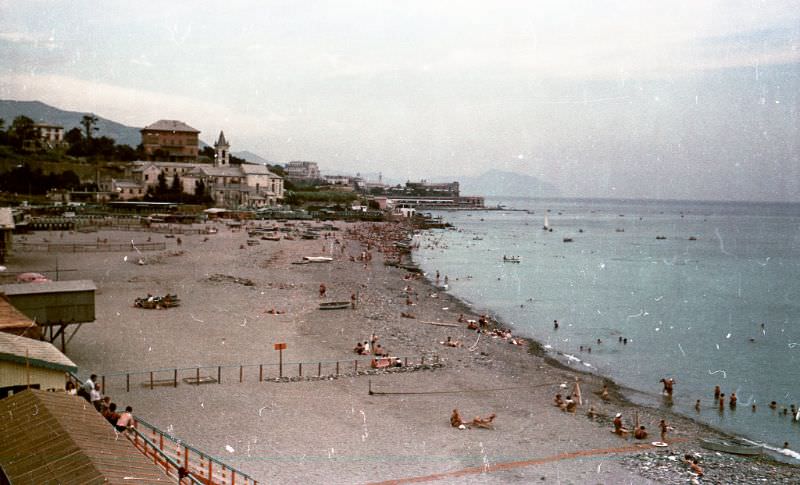
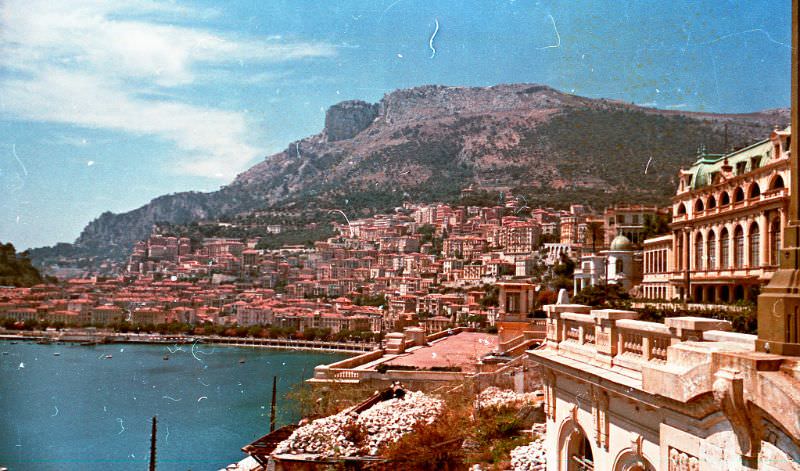
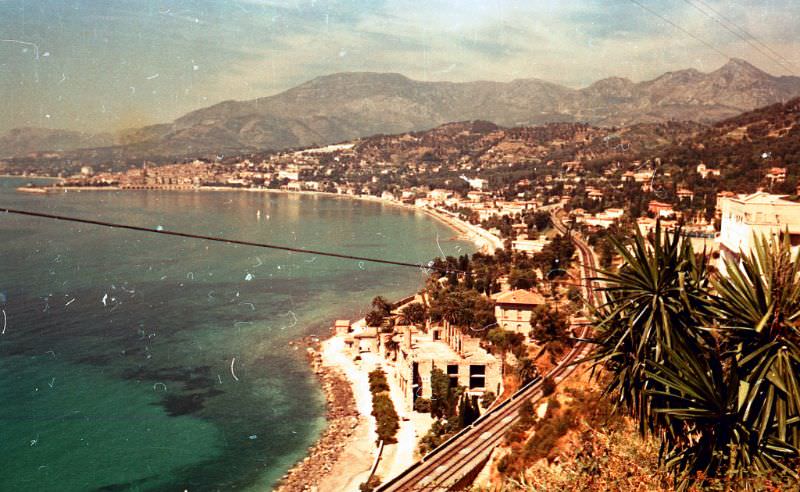
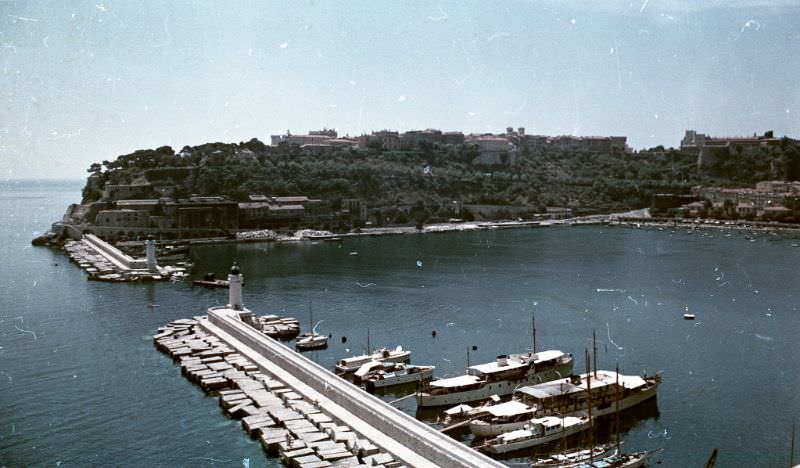
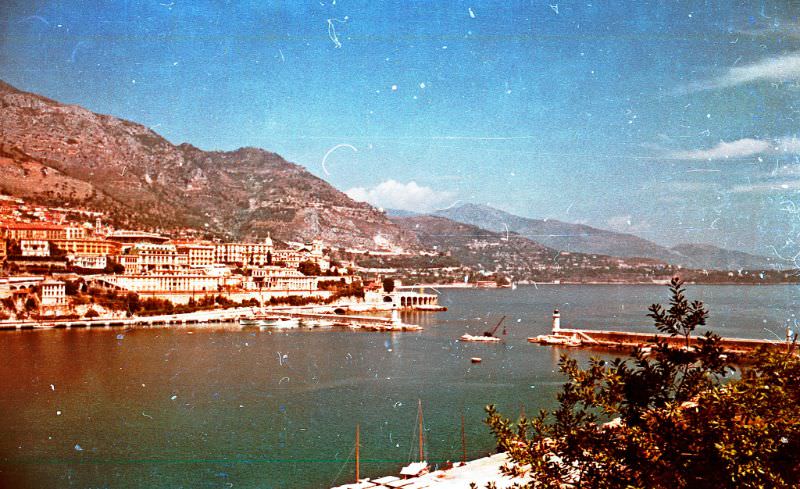
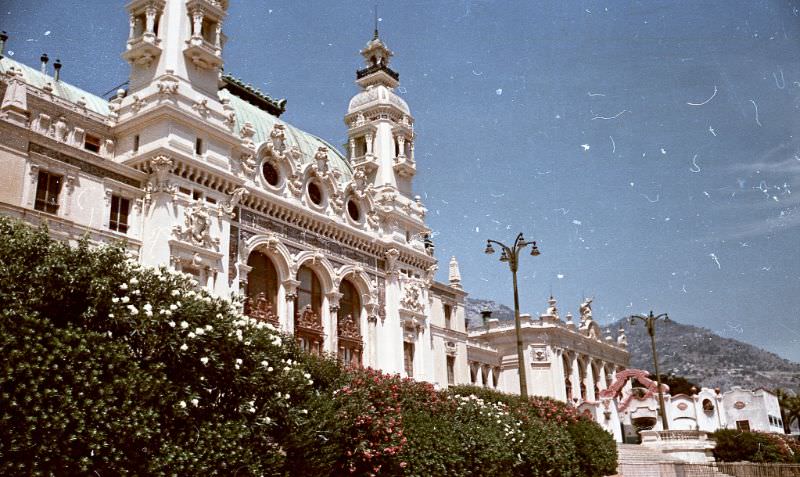
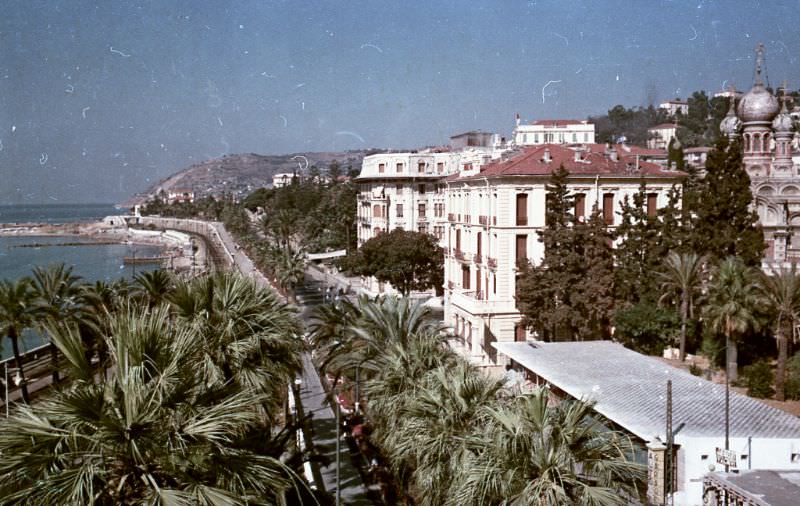
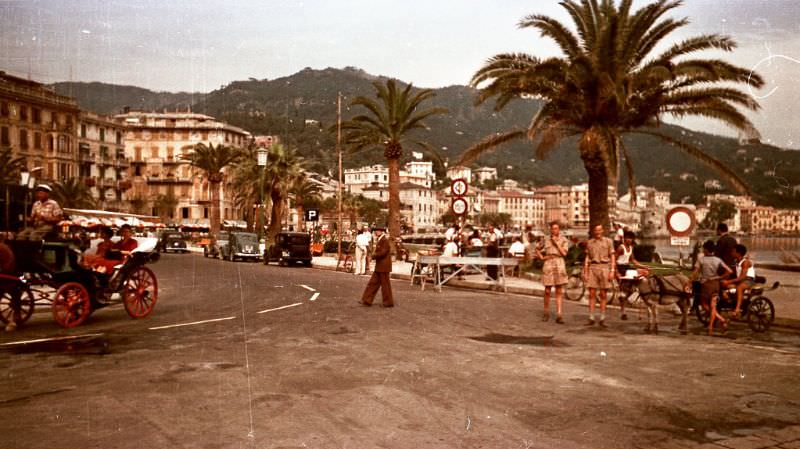
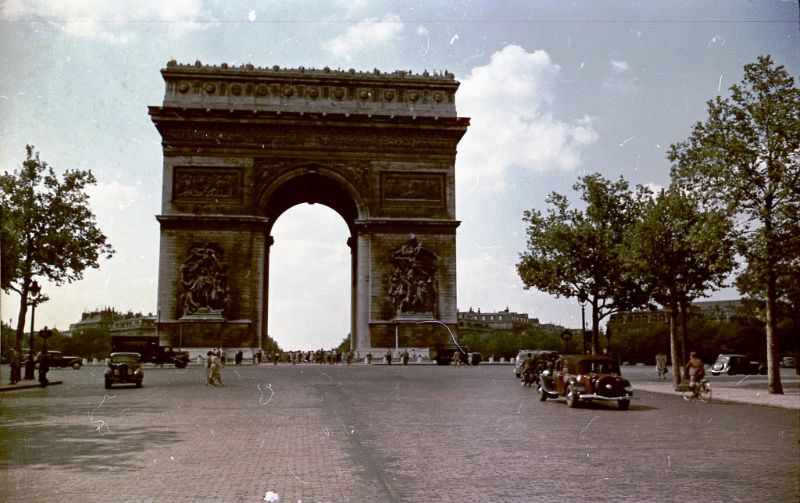
At the start of the decade in 1950, France was still a country where donkey carts shared roads with automobiles. The southern coastline — Monaco, Nice, and Menton — showed the Mediterranean France that wealthy tourists had sought for a century. Monaco’s harbor was packed with boats of every kind. The Monte Carlo Casino, with its ornate Belle Époque facade, was already one of the most famous buildings in Europe. Max Leonard, photographed strolling the Promenade des Anglais in Nice with the Hôtel Negresco visible in the distance, captured the easy pace of life along the French Riviera.
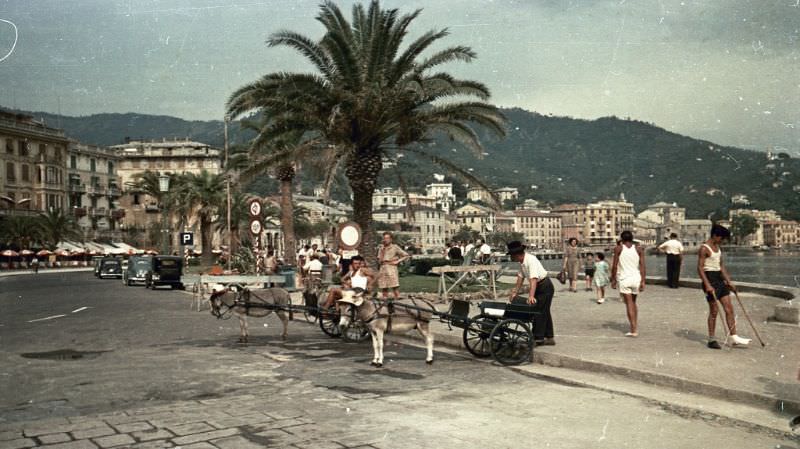
Donkey carts, France, 1950
Arc de Triomphe, Paris, France, 1950
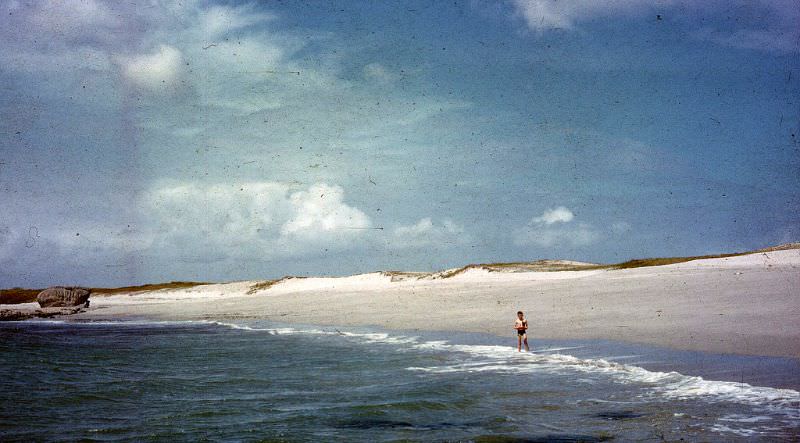
French beach, 1950
French beach, 1950
French coast, 1950
French coast, 1950
French coastline, 1950
Jardins Biovès, Menton, France, 1950
Max Leonard on the Promenade des Anglais in Nice. The hotel Negresco is at the far end, France, 1950
Max Leonard on waterfront, France, 1950
Monaco harbor and boats, France, 1950
Monaco harbor, France, 1950.
Monaco harbor, France, 1950
Monte Carlo Casino, Monaco, France, 1950
Notre-Dame, Paris, France, 1950
Palm lined street, France, 1950
Pont d'lena, Paris, France, 1950
Pont d’lena, Paris, France, 1950
Soldiers posing, France, 1950
Top of Arc de Triomphe, Paris, France, 1950
View from Arc de Triomphe, Paris, France, 1950

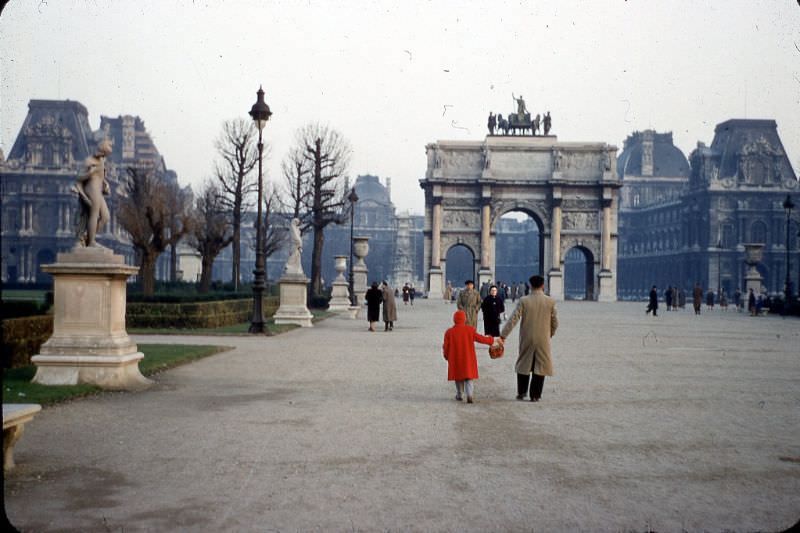
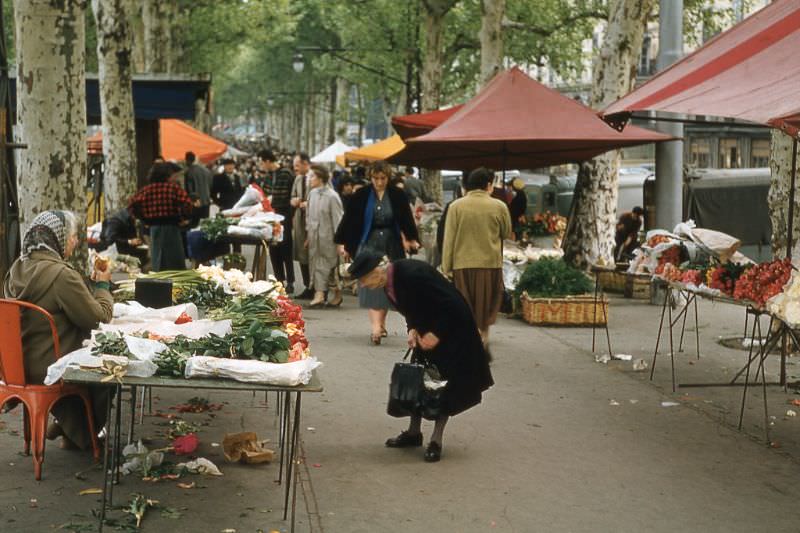
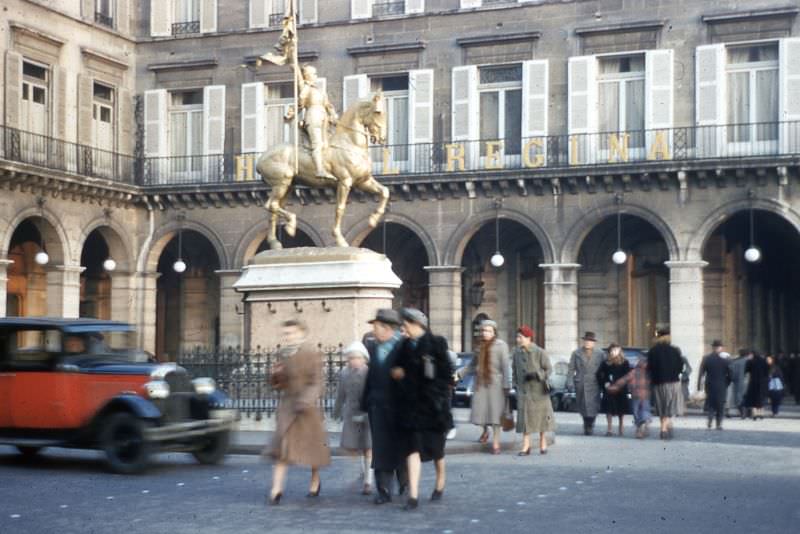
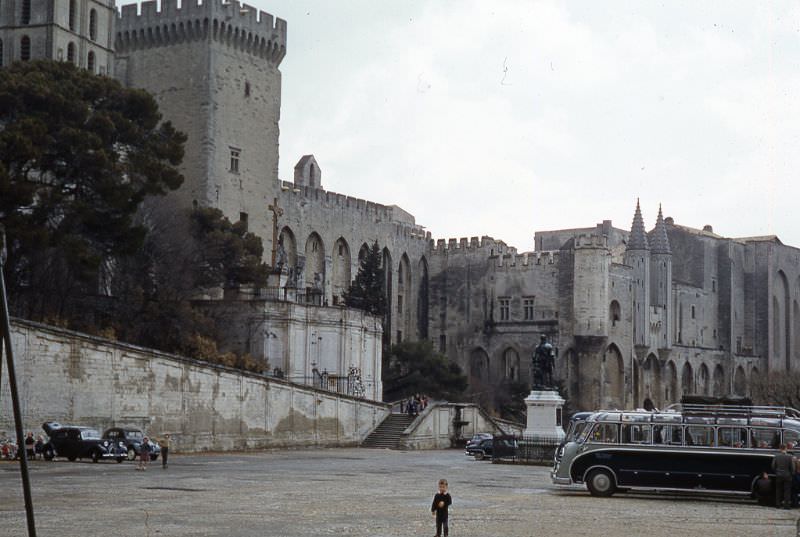
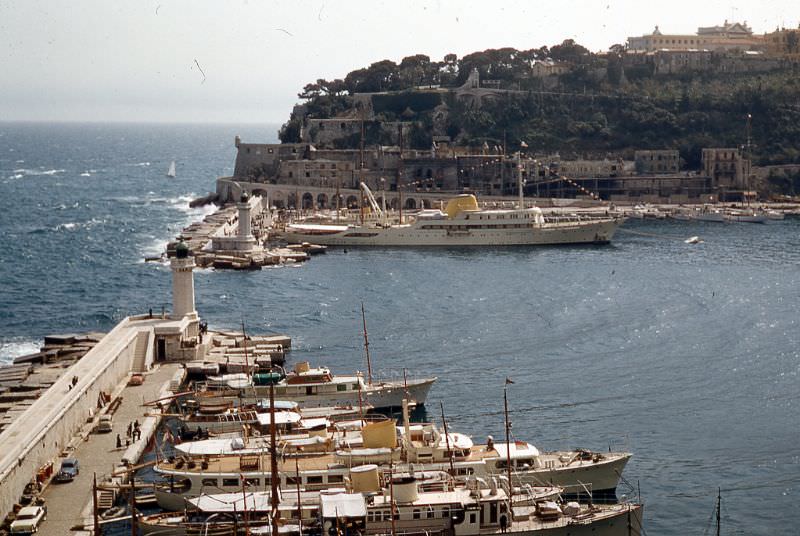
The Church of Saint-Ausone in Angoulême, photographed in 1952, showed a Romanesque structure that had stood since the 12th century. Monaco’s harbor in the same year was a tight cluster of fishing boats and small yachts beneath the rock of the principality. By 1956, Paris’s flower markets were in full bloom, and the gilded equestrian statue of Joan of Arc at the Place des Pyramides stood as it had since 1874, looking down the Rue de Rivoli. The Palace of the Popes in Avignon, photographed in 1957, presented the massive fortified walls of the 14th-century papal residence — the largest Gothic building in the world.
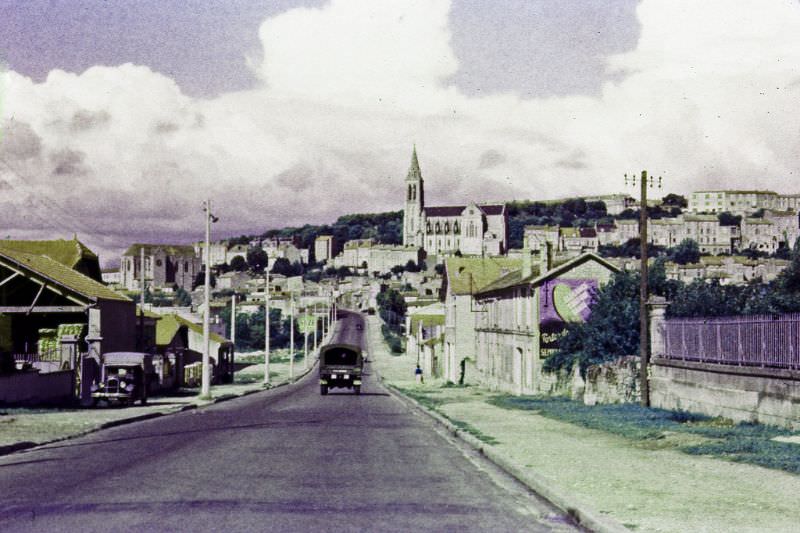
Église Saint-Ausone d'Angoulême, France, 1952
Église Saint-Ausone d’Angoulême, France, 1952
Monaco harbor, France, 1952
Arc de Triomphe du Carrousel, France, 1956
Flower market in Paris, France, 1956
Joan of Arc at the Place des Pyramides on the Rue de Rivoli in Paris, France, 1956
Paris garden, France, 1956
Palace of the Popes, Avignon, France, 1957

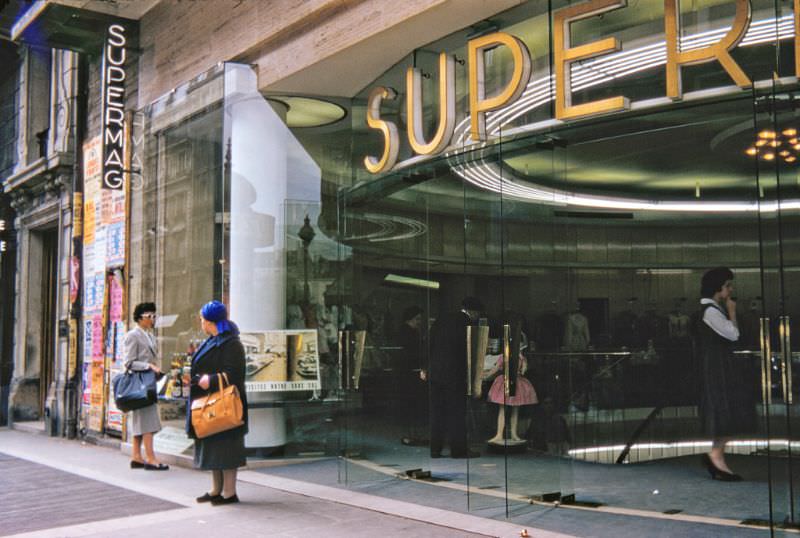
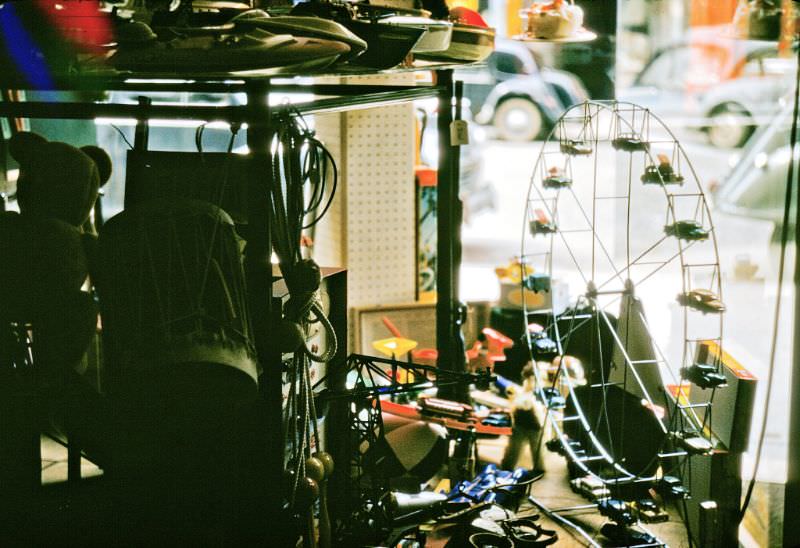
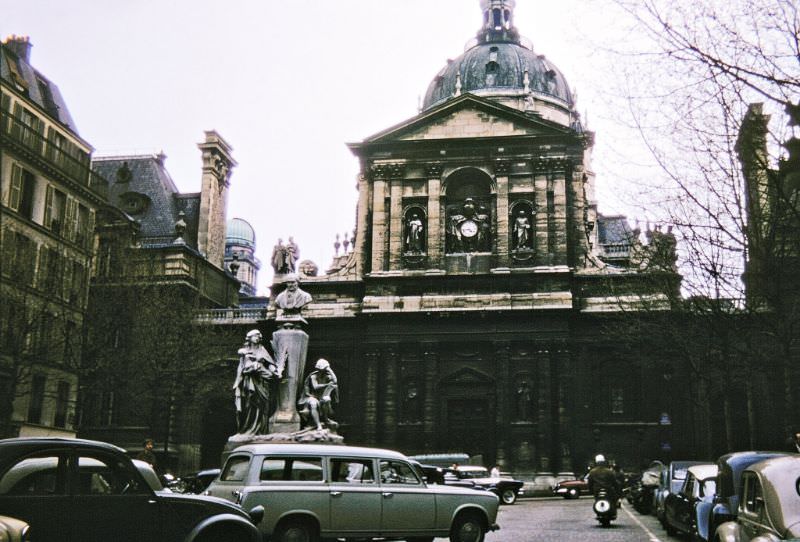
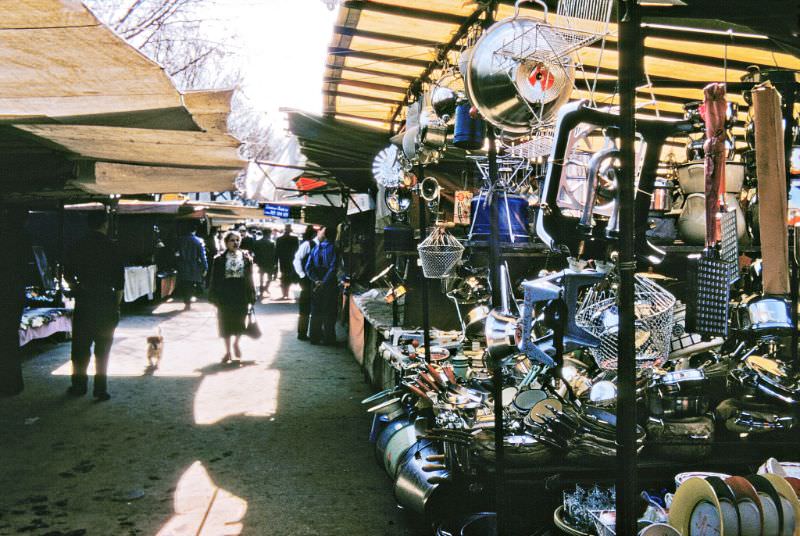
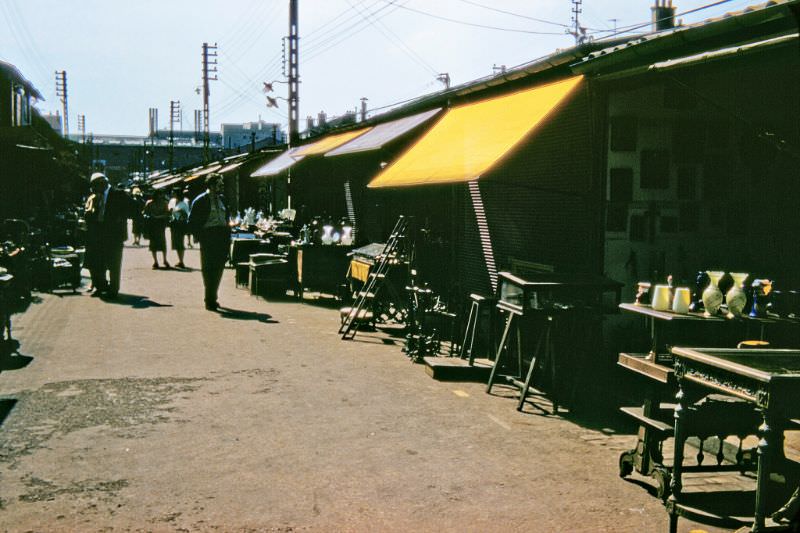
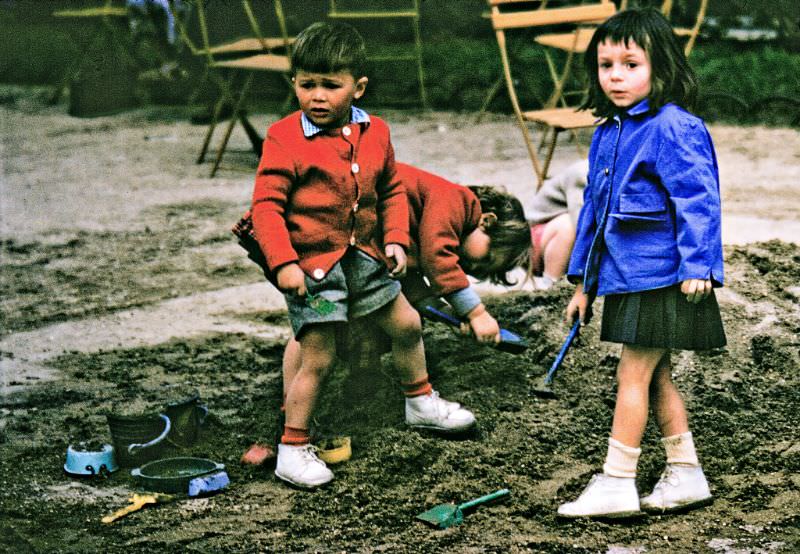
The streets of Paris captured in undated photographs from the decade show a city going about its daily life. Boulevard Saint-Germain was one of the main arteries of the Left Bank, lined with cafés and bookshops. Children played in the streets of Montmartre. The Flea Market at Porte de Clignancourt — the Marché aux Puces — was already one of the largest antique and secondhand markets in the world, with hundreds of vendors selling furniture, clothing, jewelry, and curiosities. The Supermag clothing store on Rue de Rennes represented the new retail culture spreading through French cities, while toy-shop windows on Paris streets drew children with faces pressed to the glass.
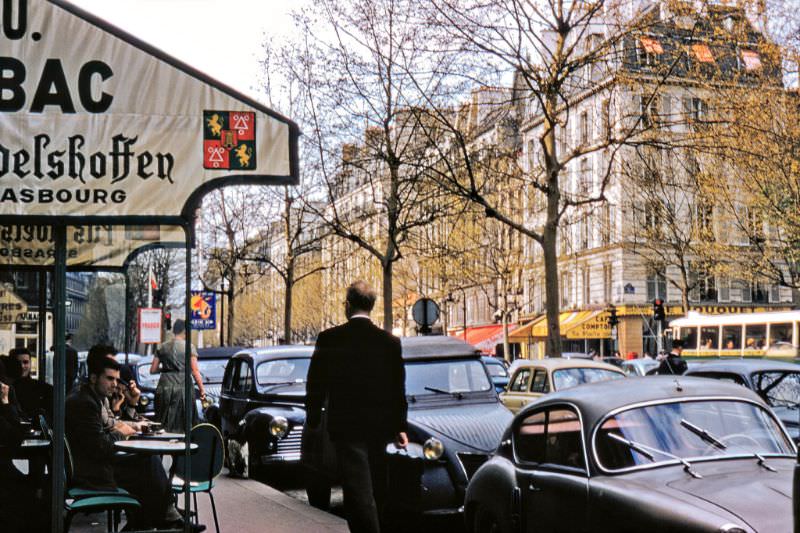
On Boulevard Saint-Germain looking toward Le Rouquet on the opposite corner (situated at 188 Boulevard Saint-Germain), Paris.
Children playing, Paris.
Supermag Clothing Store, 50 Rue de Rennes, Paris.
Toy-shop window, Paris.
Bust of Auguste Comte and Chapel of the Sorbonne, Place de la Sorbonne, Paris.
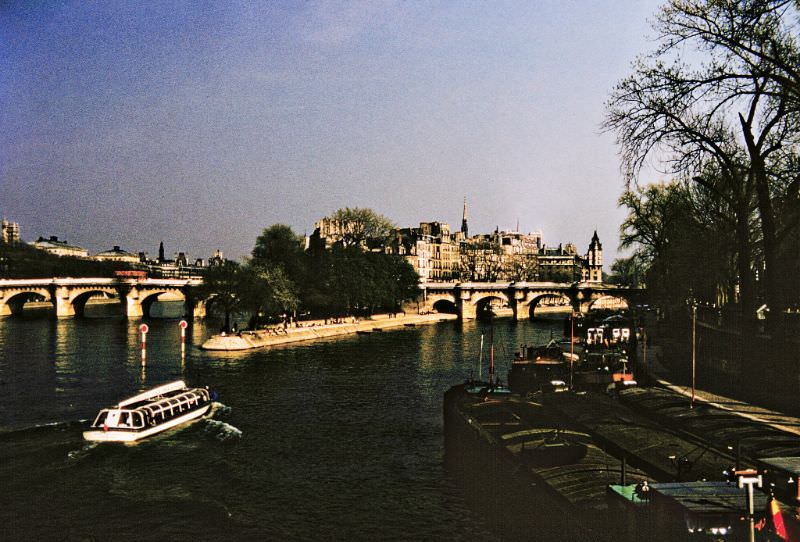
View from the Pont des Arts of the Ile de la Cite and Pont Nuef, Paris.
Flea Market (marché aux puces), Porte de Clignancourt, Paris.

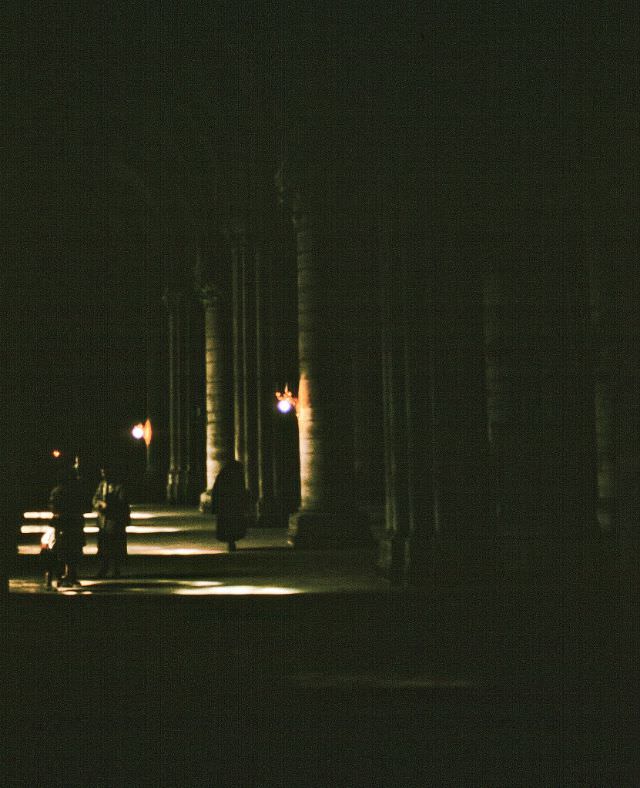
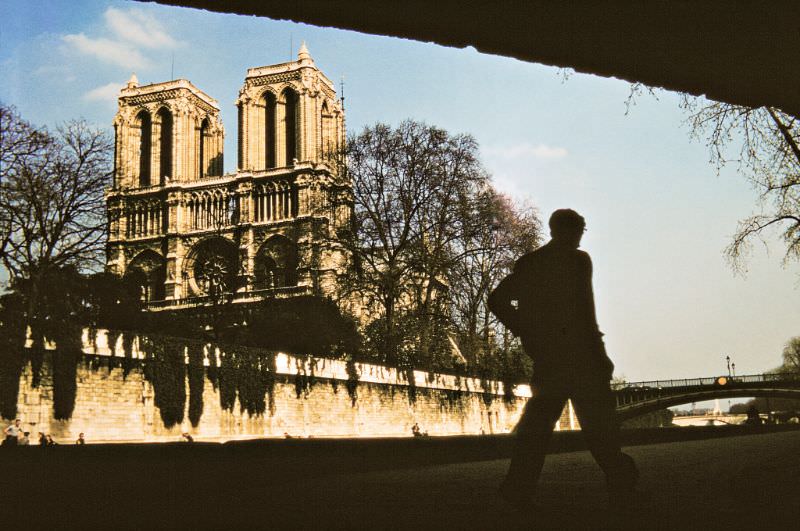
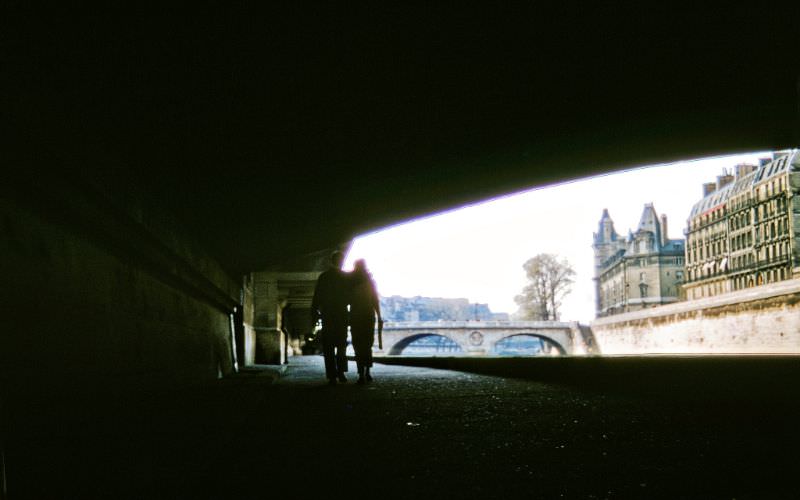
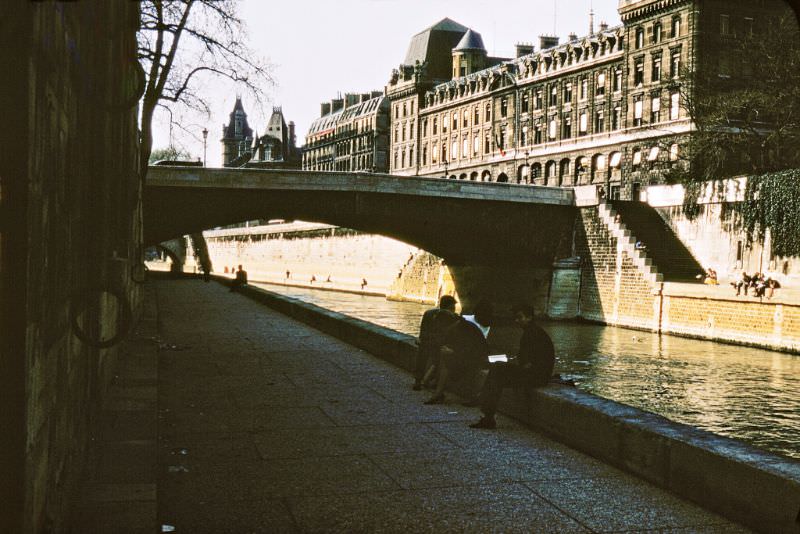
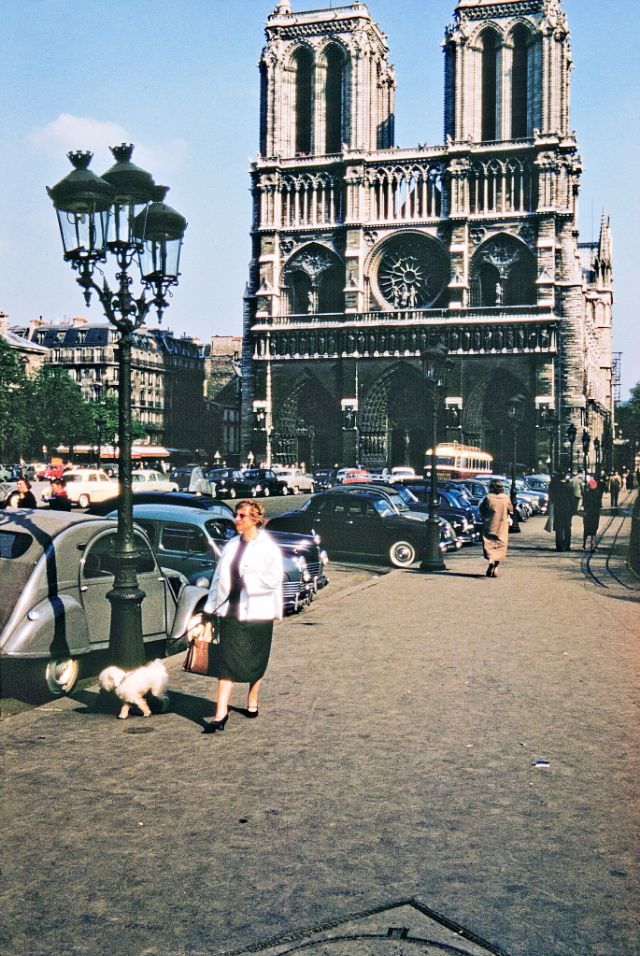
Notre-Dame Cathedral appeared in photographs from multiple angles — from the Pont des Arts looking toward the Île de la Cité, from the Promenade Maurice Carême below the southern transept, and from the northwestern tower looking out over the rooftops of Paris. A woman walking a dog near the cathedral’s walls, the interior nave bathed in colored light from the stained glass, the view from under the Petit Pont — each image captured a different dimension of a building that anchored the city’s identity.
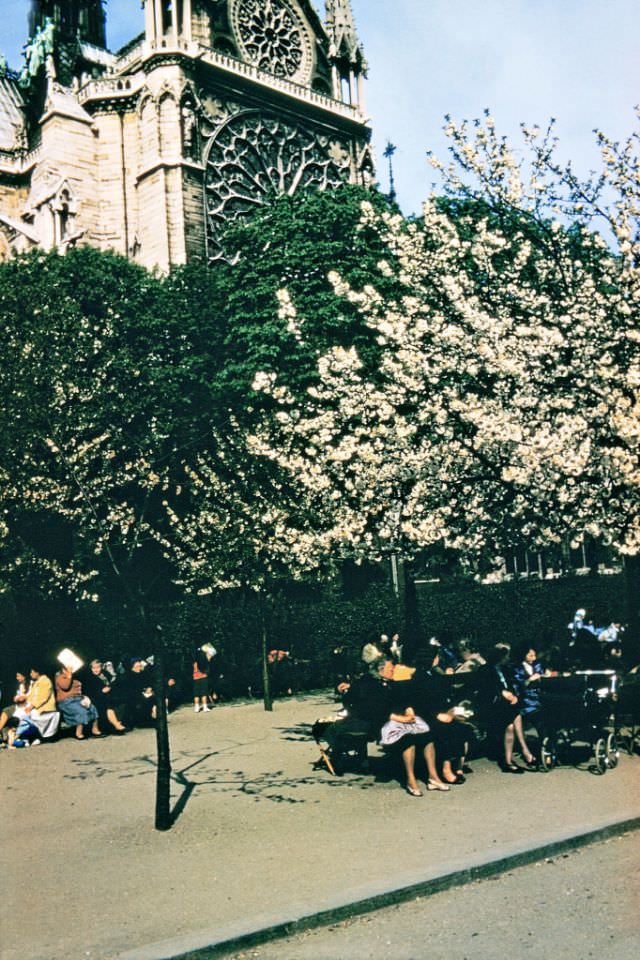
View from Prom. Maurice Carême of the Face of the Southern Transept of Notre Dame Cathedral, Paris.
Woman & dog near Notre Dame Cathedral, Paris.
View from North Western Tower of Notre Dame Cathedral, Paris.
Inside Notre Dame Cathedral, Paris.
View from under the Petit Pont of Notre Dame Cathedral, Paris.
View from under the Petit Pont of Pont Saint-Michel, Paris.
The Petit Pont, Paris.

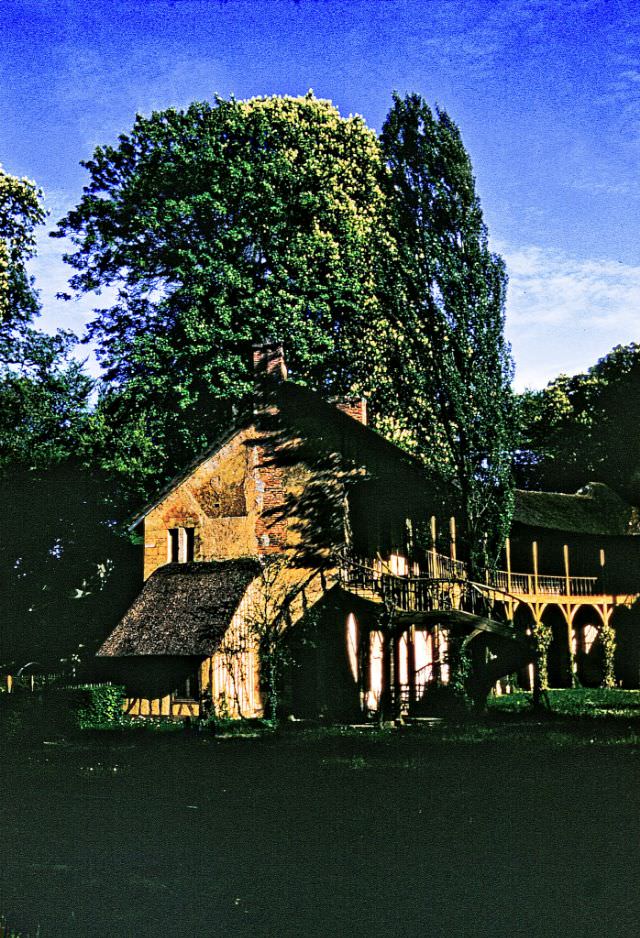
Along the Normandy coast, Le Havre was a city rebuilt almost entirely from scratch after Allied bombing destroyed 82% of its buildings in 1944. By the 1950s, Auguste Perret’s reconstruction plan had transformed it into a modern city of reinforced concrete — a sharp contrast to the ancient stones of everywhere else in France. The Gardens at Versailles, unchanged since Louis XIV’s gardener André Le Nôtre laid them out in the 17th century, remained one of the most formal and imposing landscape designs in Europe. The Latona Fountain at their center was still a focal point of the palace’s grand axis.
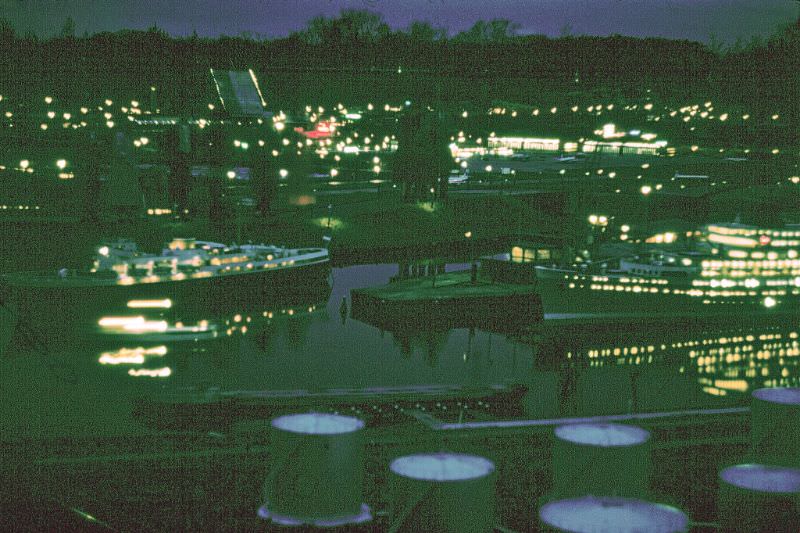
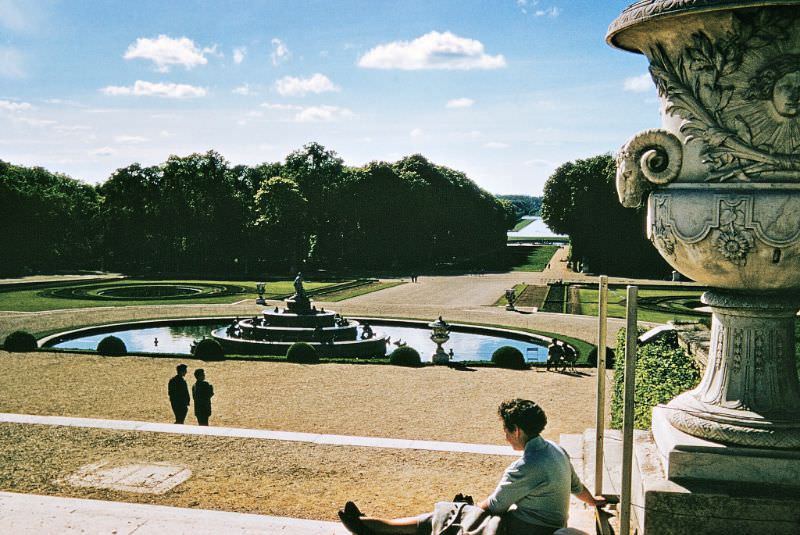
Le Havre.
Le Havre.
Latona Fountain, Gardens at the Palace of Versailles.
Hameau de la Reine, Versailles.

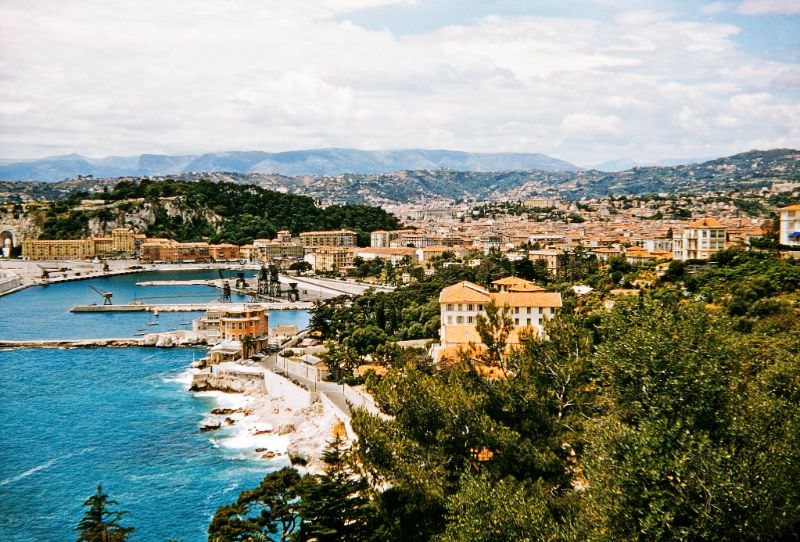
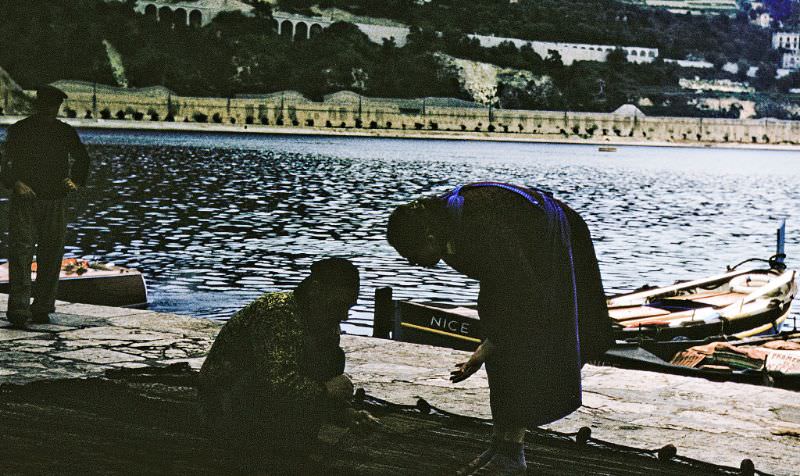
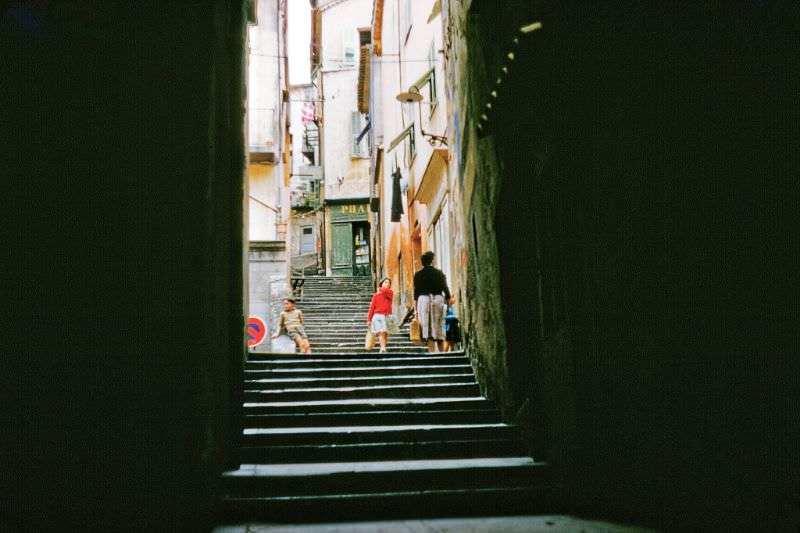
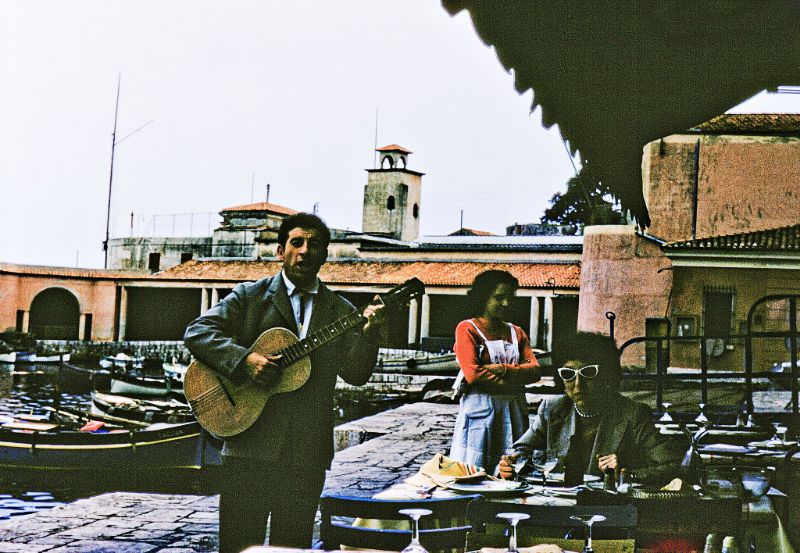
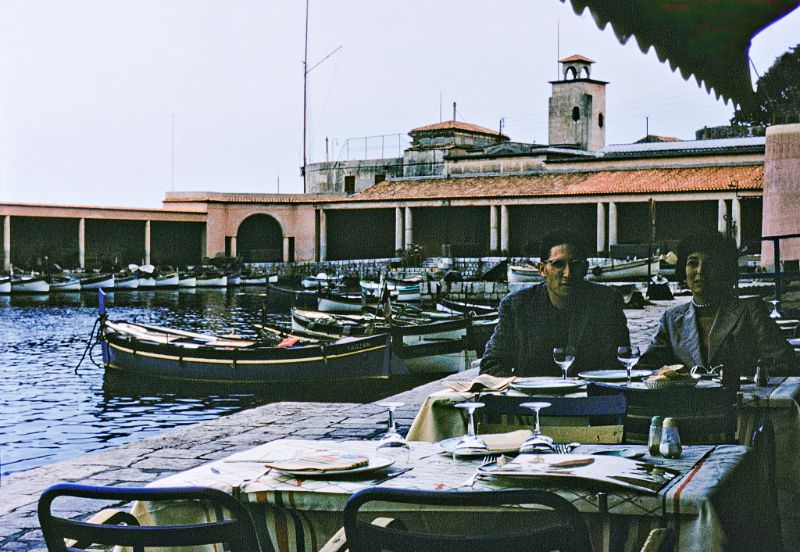
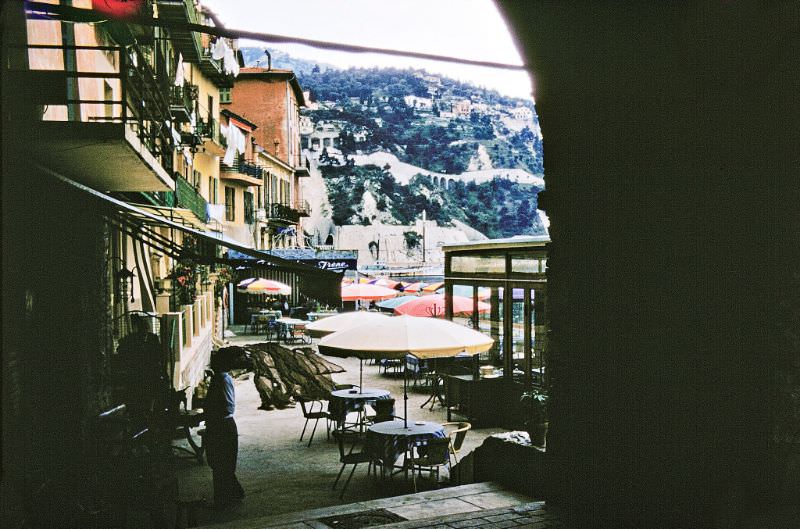
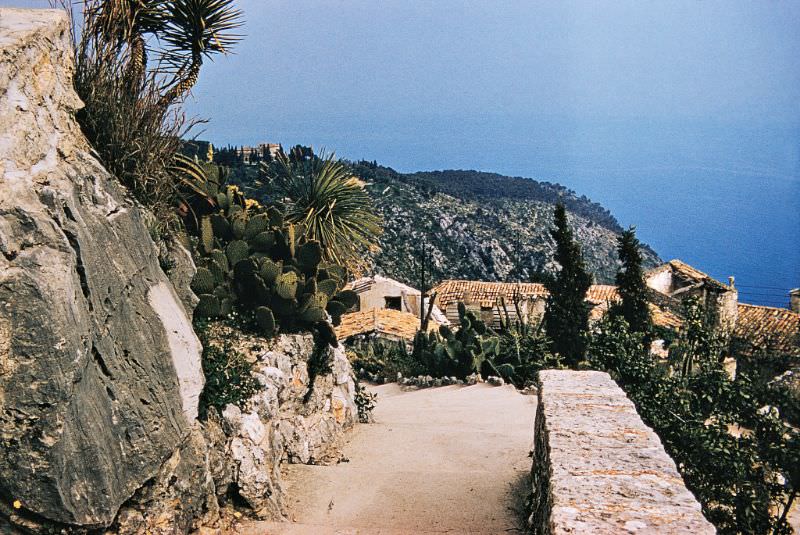
Back on the Côte d’Azur, the town of Villefranche-sur-Mer sat in one of the deepest natural harbors on the Mediterranean. Fishermen repaired their nets on the quay at Port de la Santé. Dinner was served outside the Hotel Welcome, where tables faced the water and the old town’s coloured facades rose behind. The harbor at Port Lympia in Nice, photographed from the heights of Mont Boron along Boulevard Carnot, showed the compact geometry of the 18th-century port basin. The hilltop village of Èze, perched above the sea between Nice and Monaco, completed the Riviera’s picture of dramatic landscape and long-settled human life.
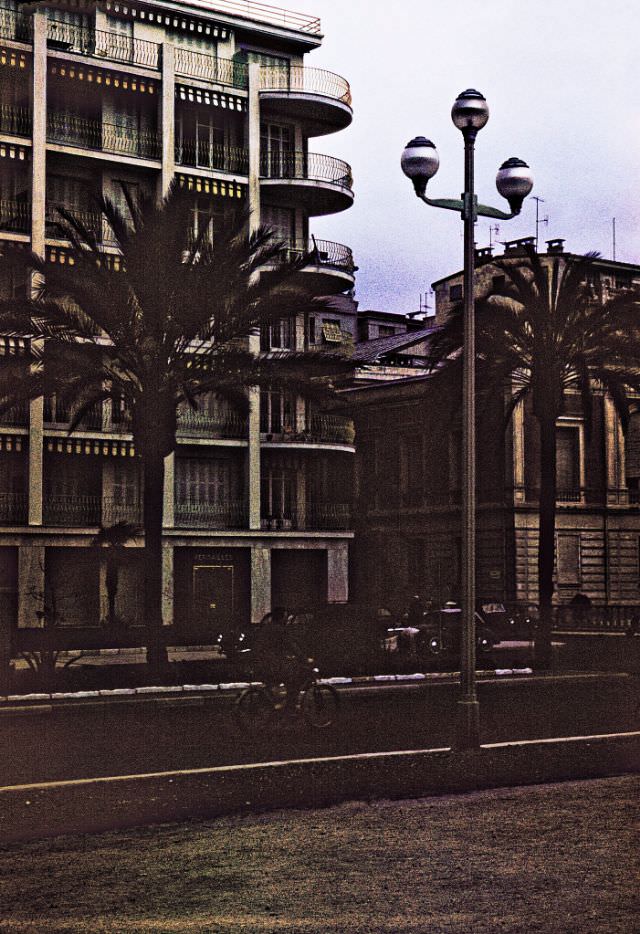
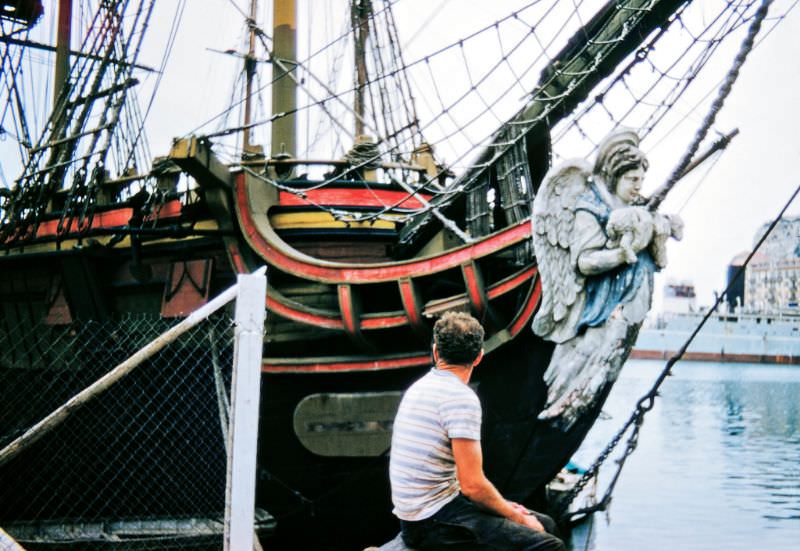
Le Versailles apartment block to the left and Centre Universitaire Méditerranéen to the right, Promenade Des Anglais, Nice.
Quai Entrecasteaux (near the Yacht Club), Port Lympia, Nice.
Fishing-net repairs on the quay at Port de la Santé, Villefranche Sur Mer.
The Old Town, Villefranche Sur Mer.
Dinner outside the Hotel Welcome, Villefranche Sur Mer.
Northerly view from outside Hotel Welcome, Villefranche Sur Mer.
Eze.
Eze.
Enjoyed this post? Get new ones in your inbox.

Leave a Comment

Your email address will not be published. Required fields are marked *

Share this Post 🥺

Please take a moment to share this content. Your support is greatly appreciated! 🙌🙏

Share this Post 🥺

Please take a moment to share this content. Your support is greatly appreciated! 🙌🙏
Scroll to Top
 
Hey Friend, Before You Go.. Please like & follow for more interesting content