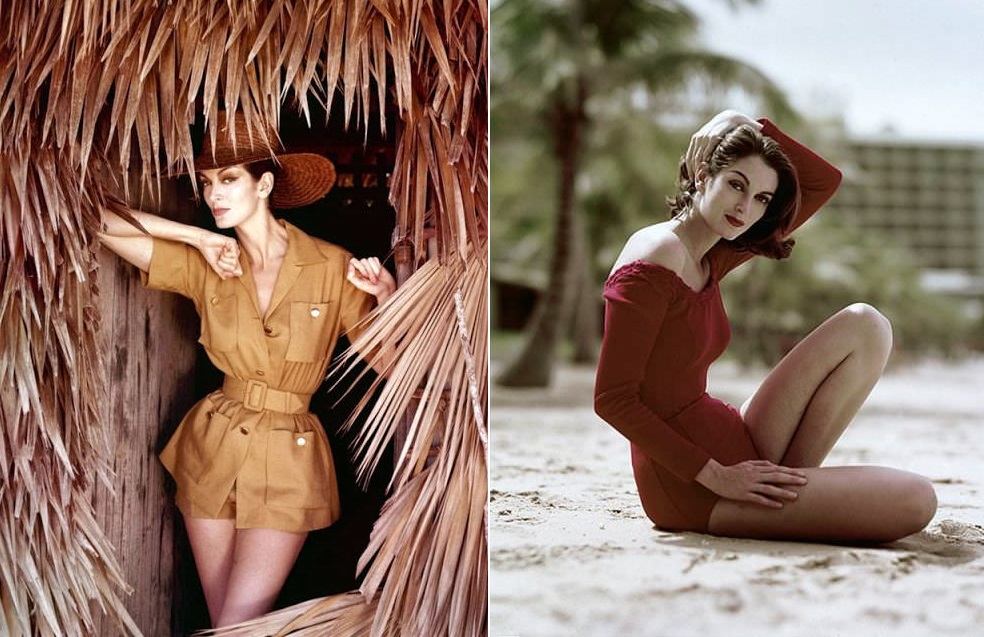
The 1940s were a decade of real change — not just in world events, but in everyday life, including what women wore to the beach. World War II touched almost every corner of society, and fashion was no exception. Fabric rationing forced designers to rethink how they made clothing, and swimwear shifted dramatically as a result.
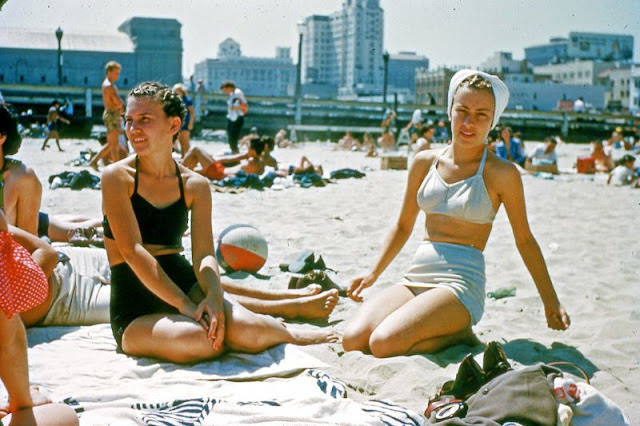
Before the 1940s, women’s swimwear was heavily structured and conservative. The war changed that fast. With wool and other materials in short supply, manufacturers turned to rayon jersey. It was elastic, form-fitting, and held up well in water — a practical choice that also happened to look sleek.
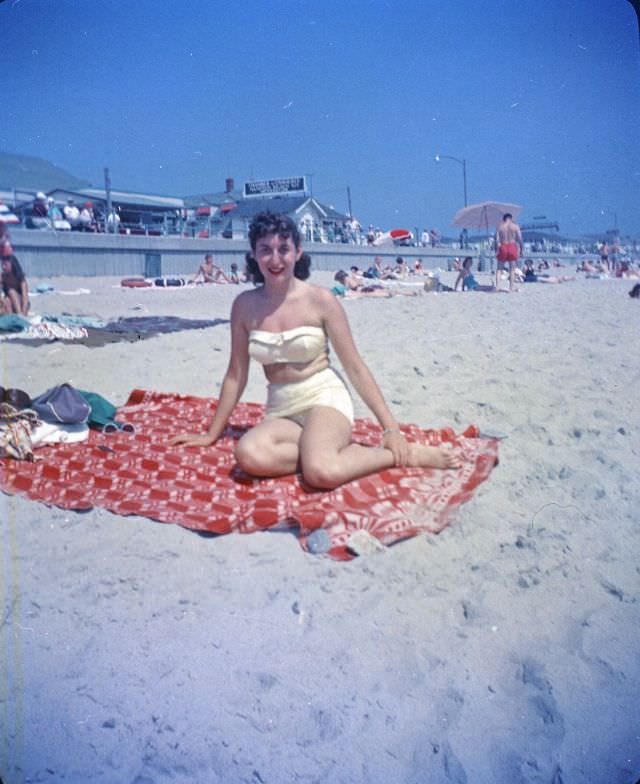

Two-piece bathing suits appeared during this decade. They were modest by today’s standards — a bare midriff was about as daring as it got — but at the time, they were considered a bold departure from earlier styles. Coverage was still the norm, but the silhouette became noticeably more streamlined.
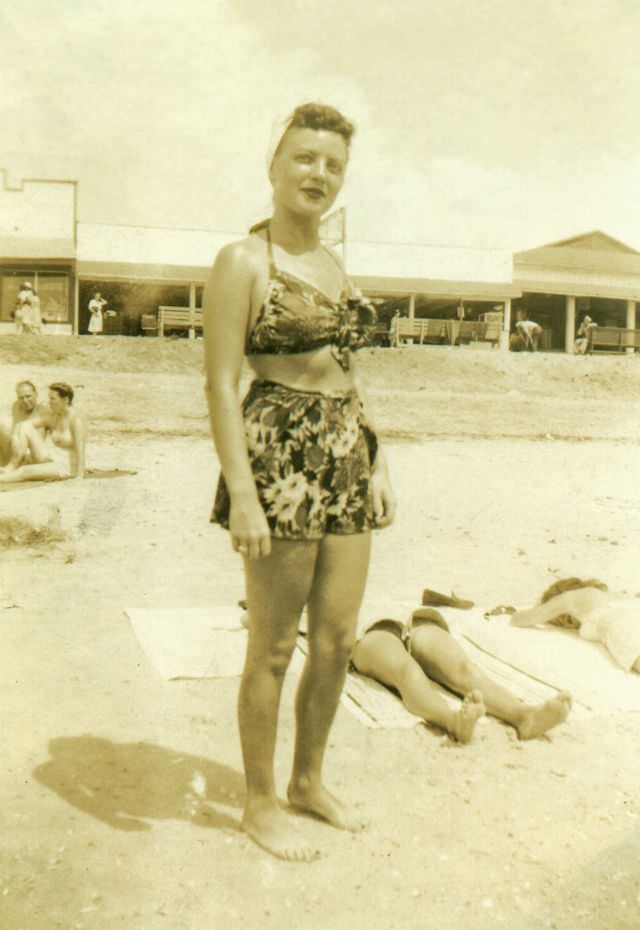
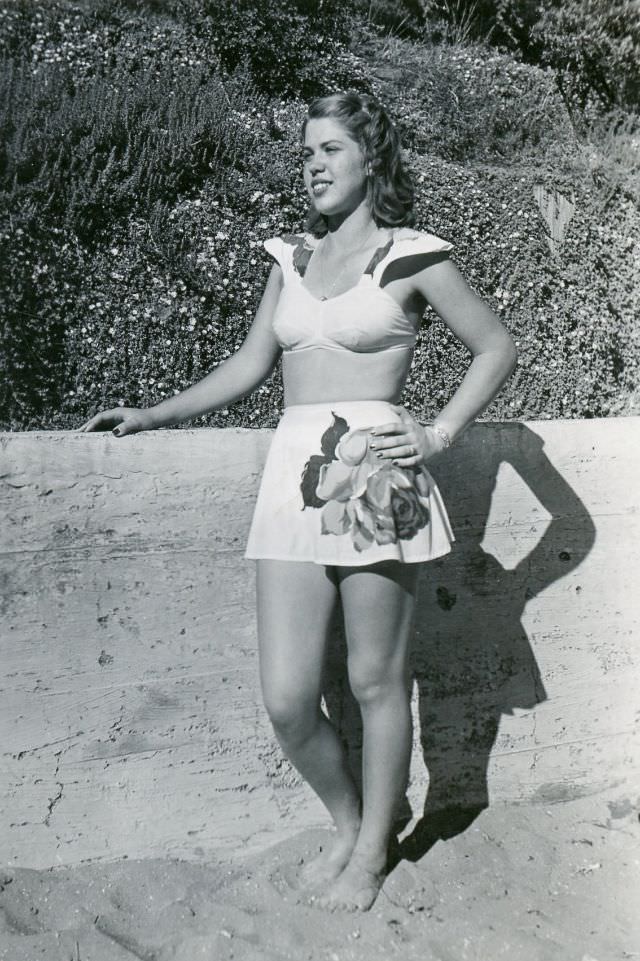
Hollywood had a direct hand in shaping what women wanted to wear. Actress Esther Williams starred in a series of elaborate water-themed musicals and became the face of 1940s swimwear. Her costumes were polished and eye-catching, and women across the country took notice. What appeared on screen quickly showed up on beaches and in stores.

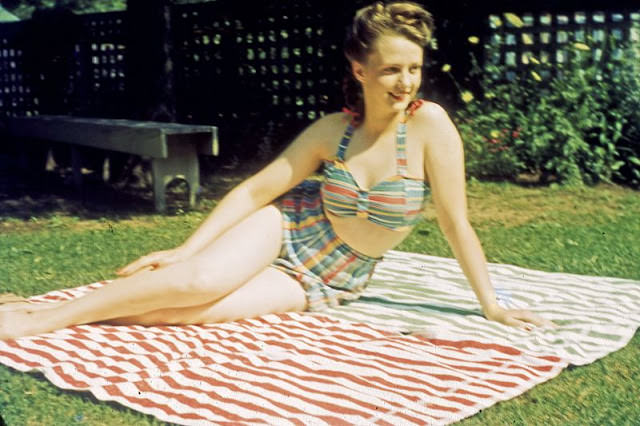

Women in the 1940s were spending more time outdoors — swimming, sunbathing, and taking part in leisure activities that called for functional clothing. Swimwear had to do more than just look good. It needed to move with the body and hold its shape in the water.
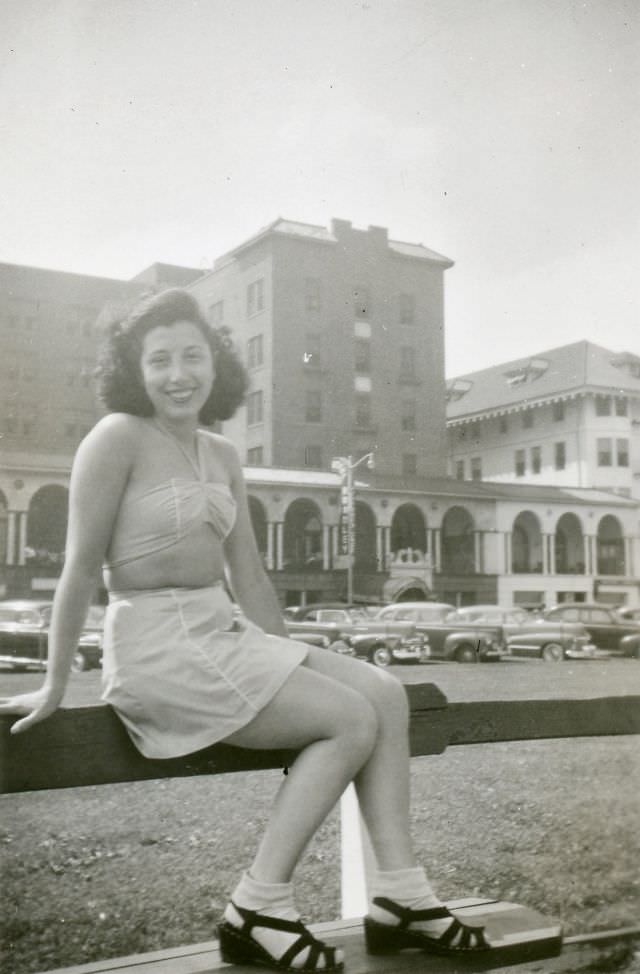

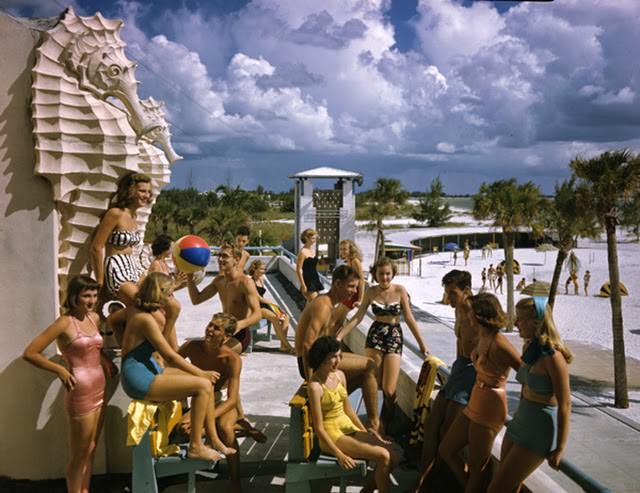
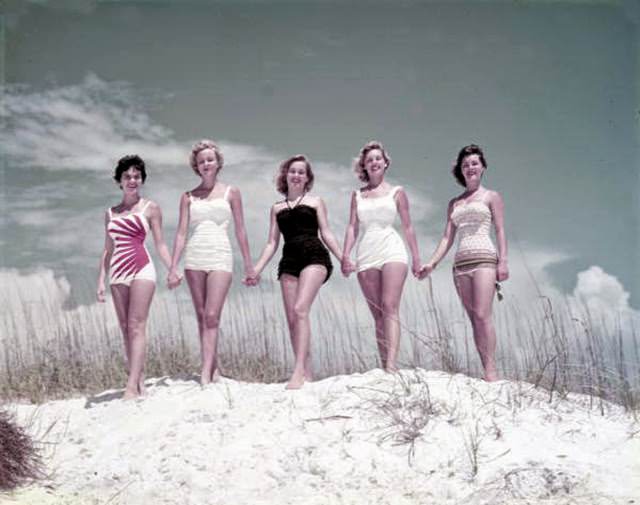
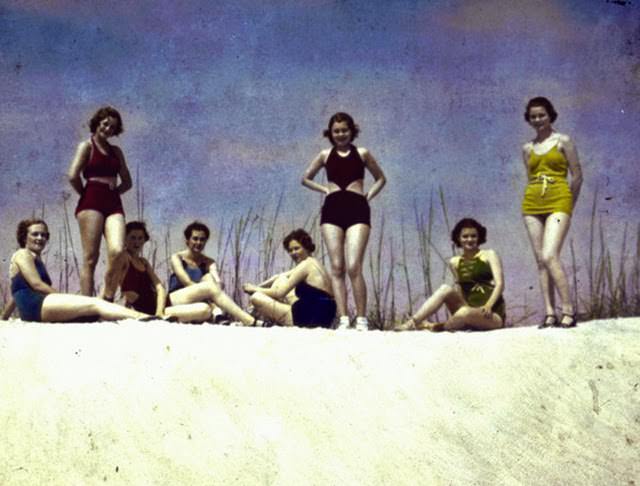
These found photos capture real women in their everyday swimwear — not models or movie stars, but ordinary people going about their lives. That’s what makes them so interesting. The suits they’re wearing tell a story about a society navigating both the pressures of war and a genuine appetite for something new.
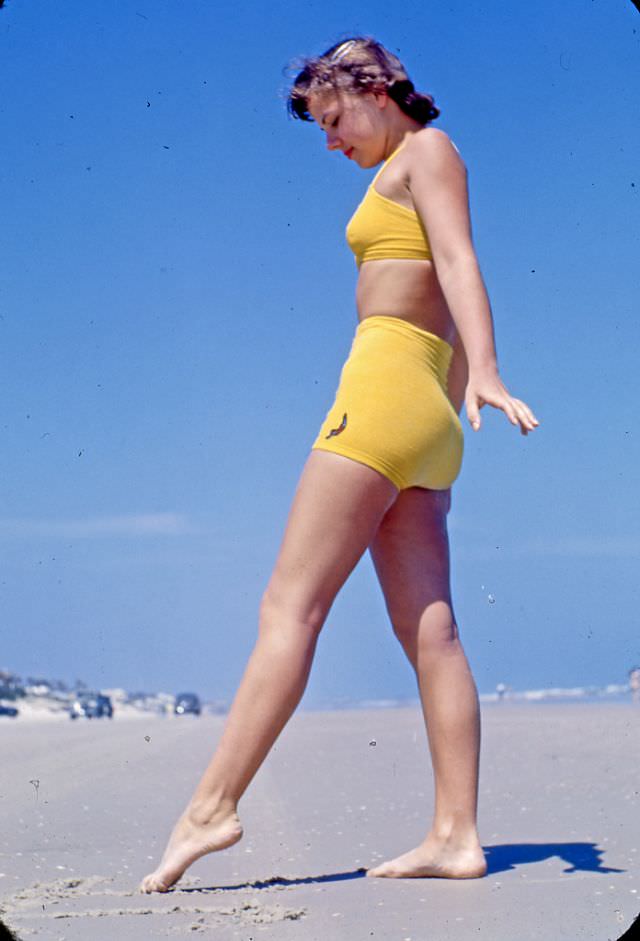


The designs walk a clear line between modesty and modernity. Ruching, halter necklines, and belted waists were common details. Solid colors and bold prints both appeared. The suits were shaped to flatter, but they still covered far more than what came in later decades.
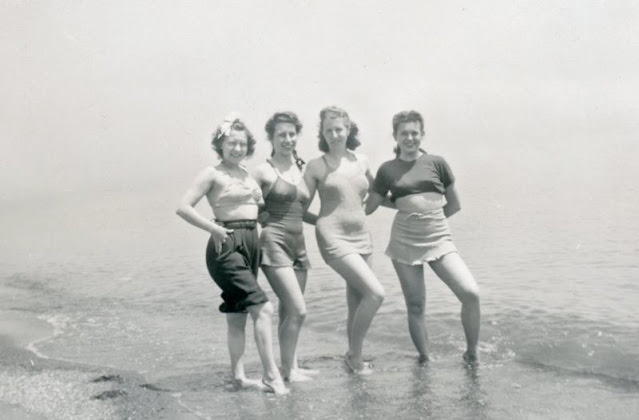
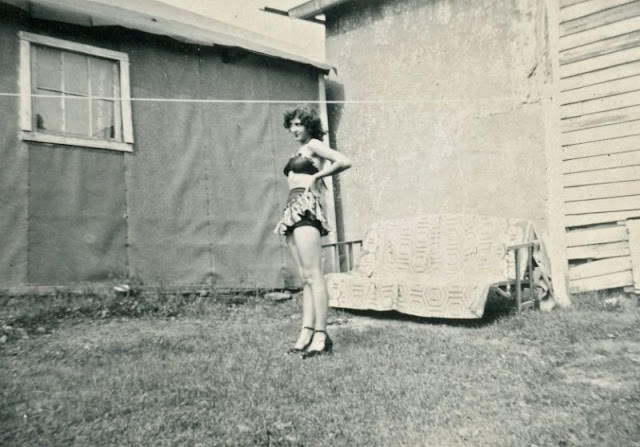

Fabric rationing didn’t just limit what designers used — it pushed them to be more precise. Less material meant every seam and cut had to be intentional. That constraint produced some of the cleanest, most efficient silhouettes the era had seen in swimwear.
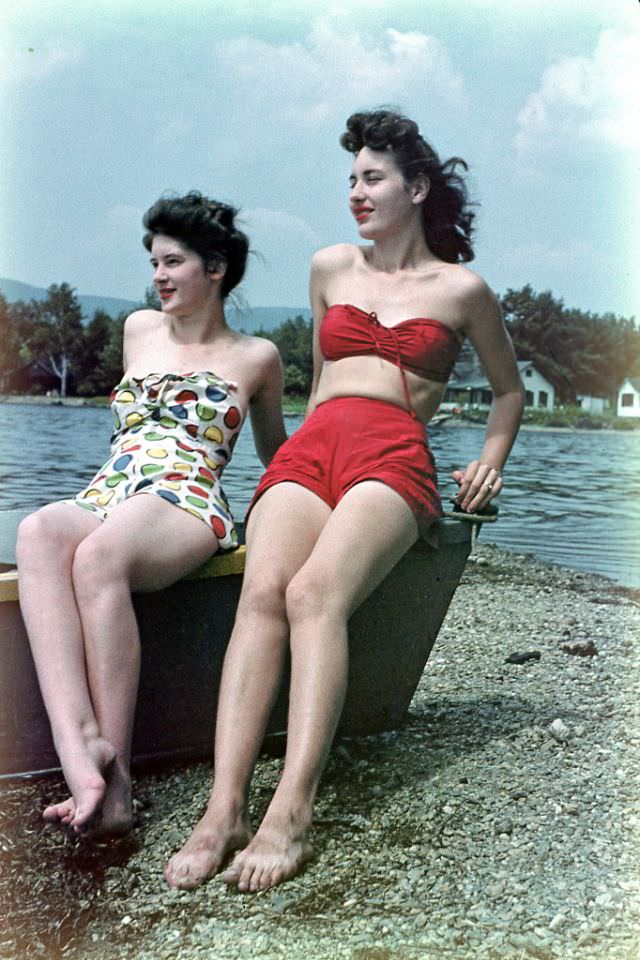


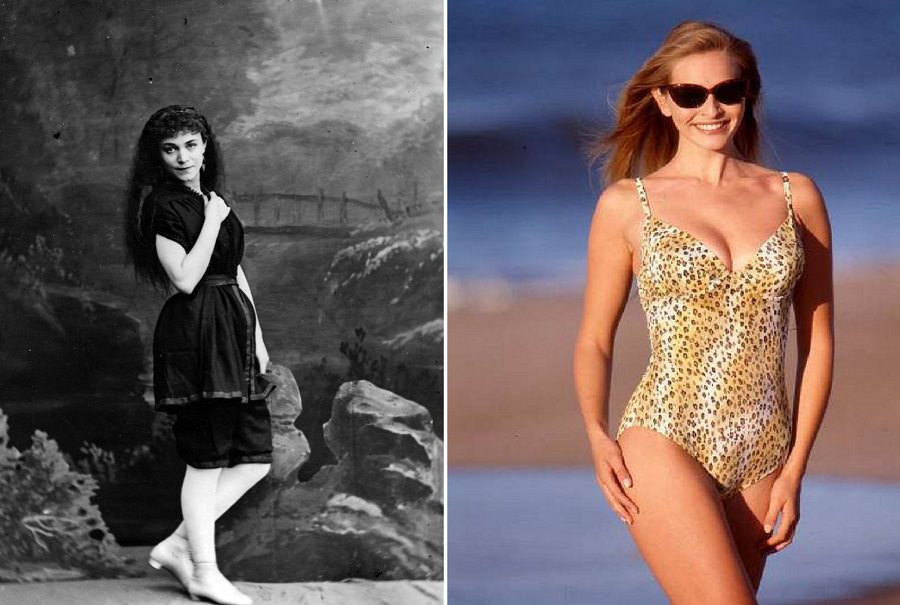
Looking at these photos side by side, a clear pattern emerges. The suits get slightly less structured and a little more fitted as the decade progresses. The shift is gradual, but it’s real. By the late 1940s, swimwear had moved noticeably away from the boxy shapes of earlier years.
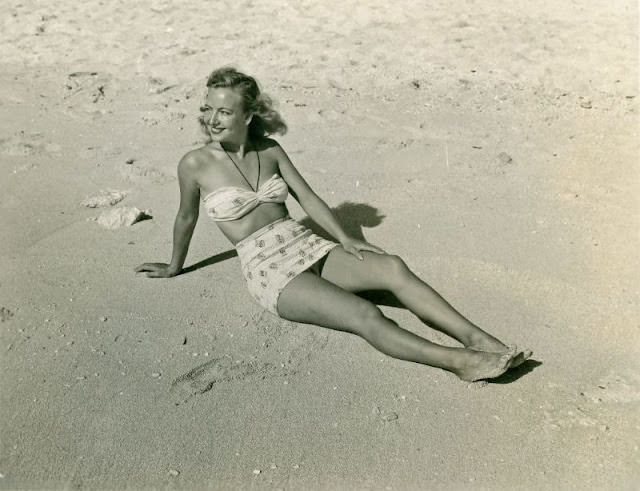
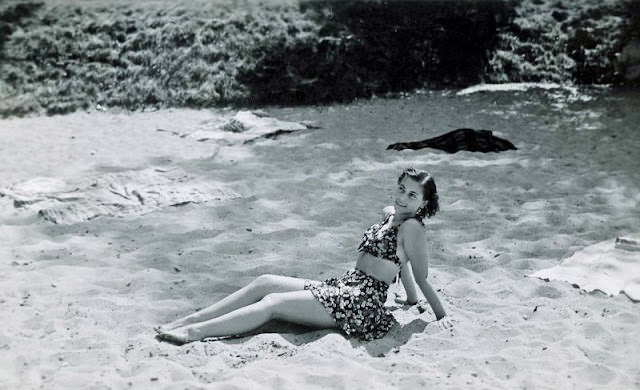
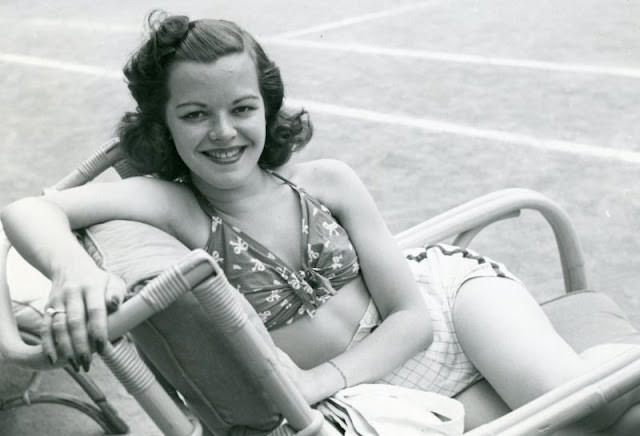
The social rules around what women could wear in public were still strict. A suit that showed the shoulders and upper legs was acceptable at the beach but would have turned heads anywhere else. These photos reflect exactly where those boundaries sat in 1940s America.

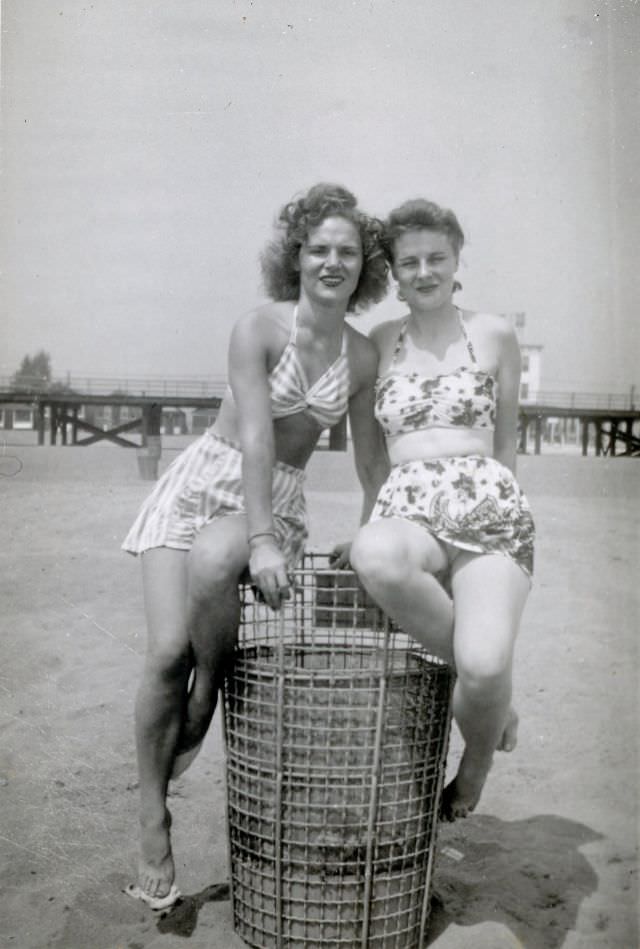
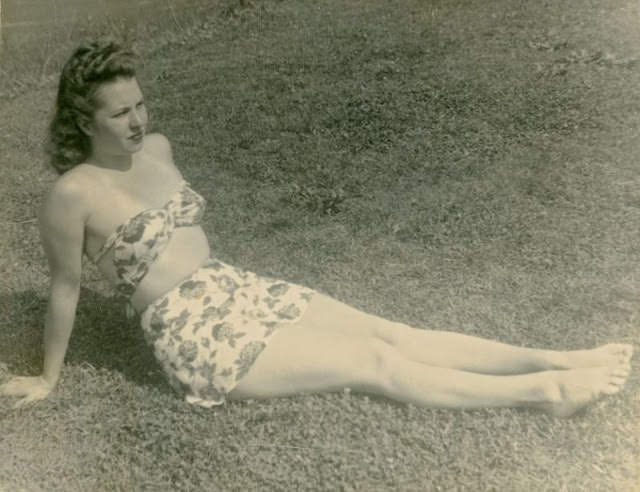
Rayon jersey wasn’t the only material in play. Some suits used cotton blends, especially for more casual wear. Knit fabrics also appeared, though they were heavier when wet. Each material created a slightly different look and fit, which is visible across this collection of photos.
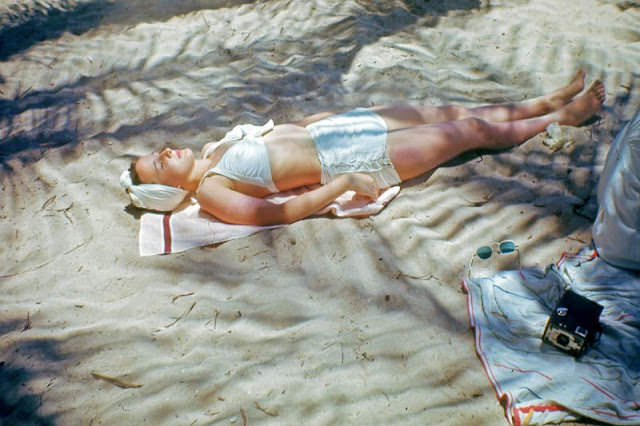
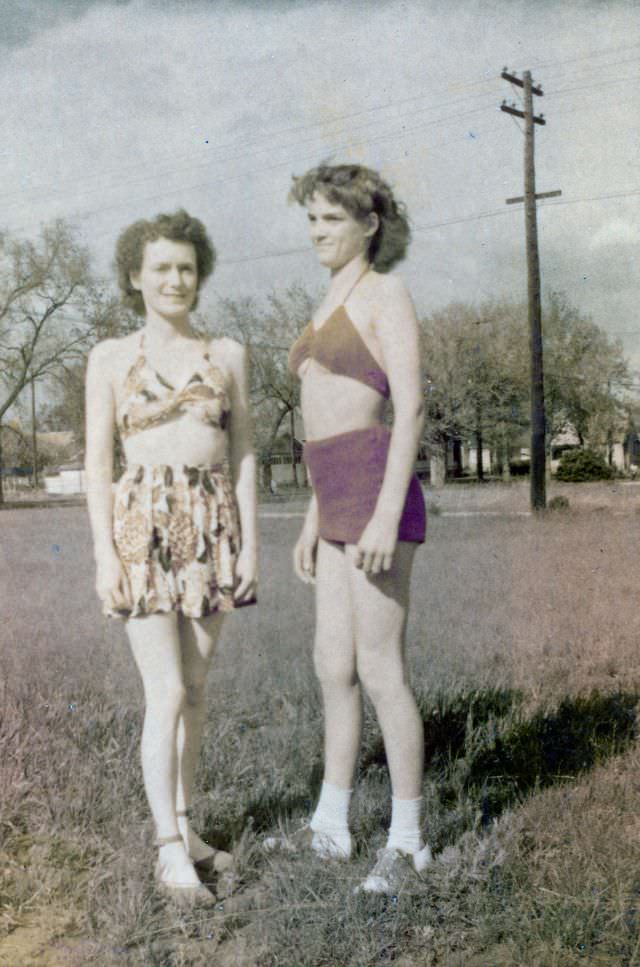
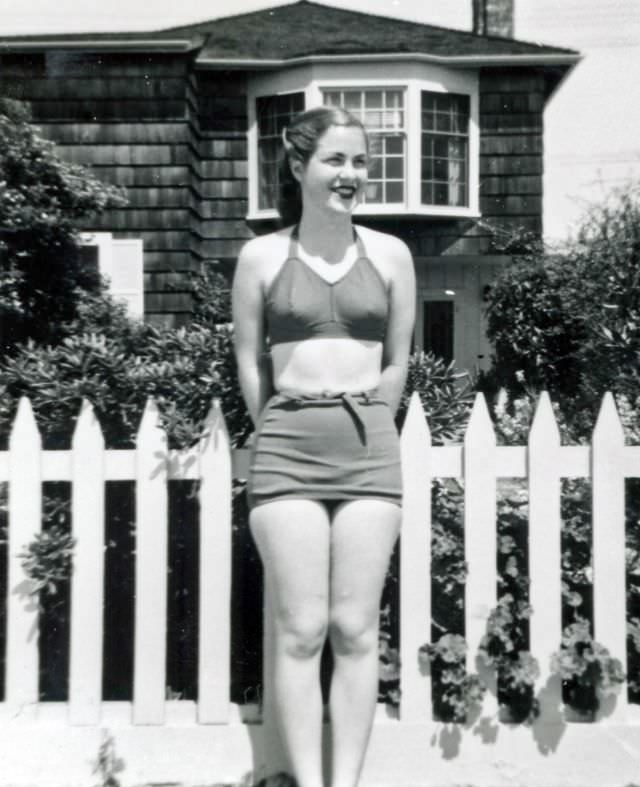
Bathing caps were a common accessory in this era. Many women wore them to protect their hair from chlorine and salt water. In several of these photos, the caps are as carefully chosen as the suits themselves — part of a complete look rather than an afterthought.
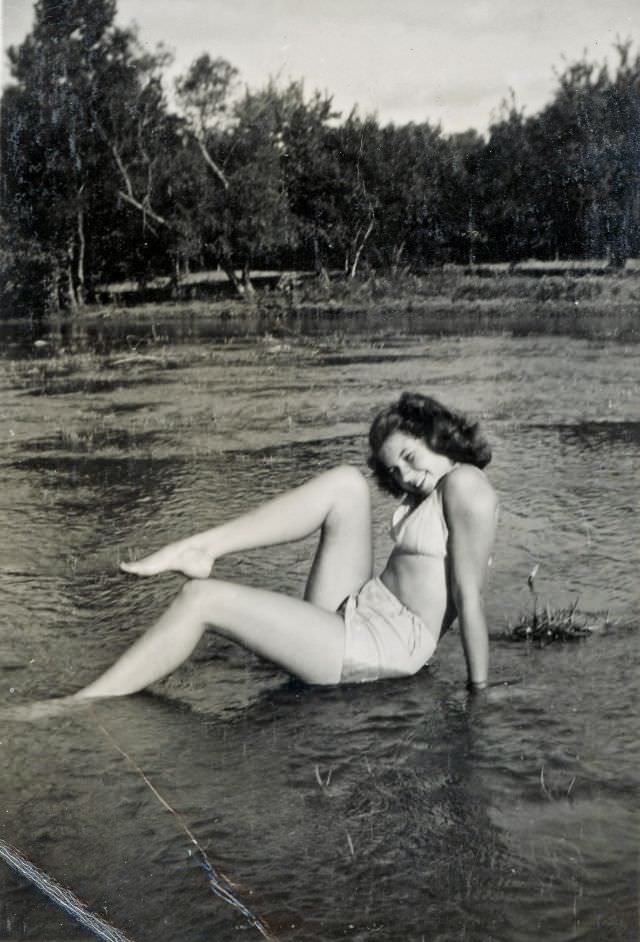
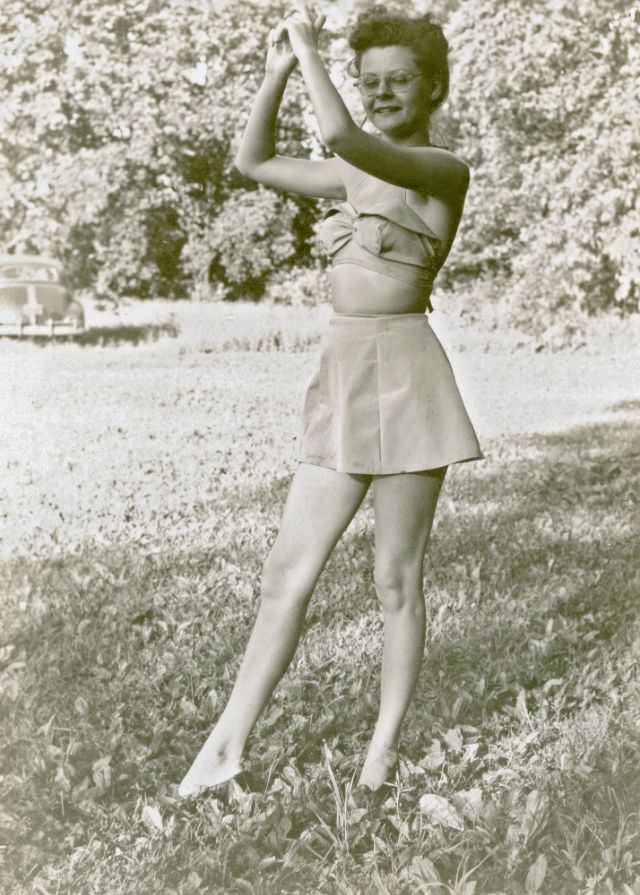
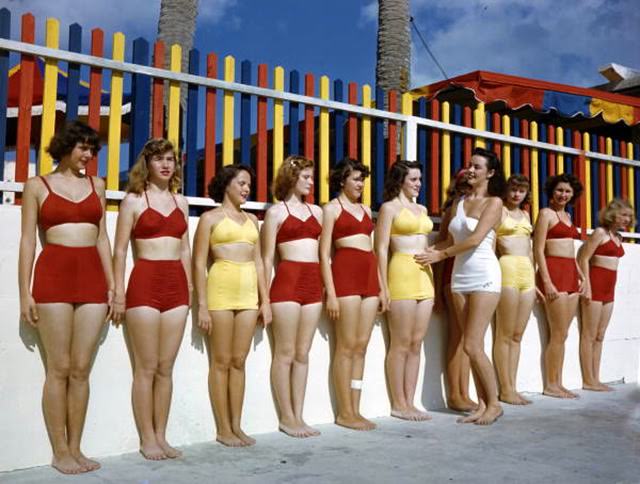
The poses in these photos are natural and unguarded. Some women are sitting on the beach, others are standing poolside or laughing with friends. The casualness of the shots is part of what makes them valuable — they weren’t staged for a magazine. They were taken by regular people with cameras.
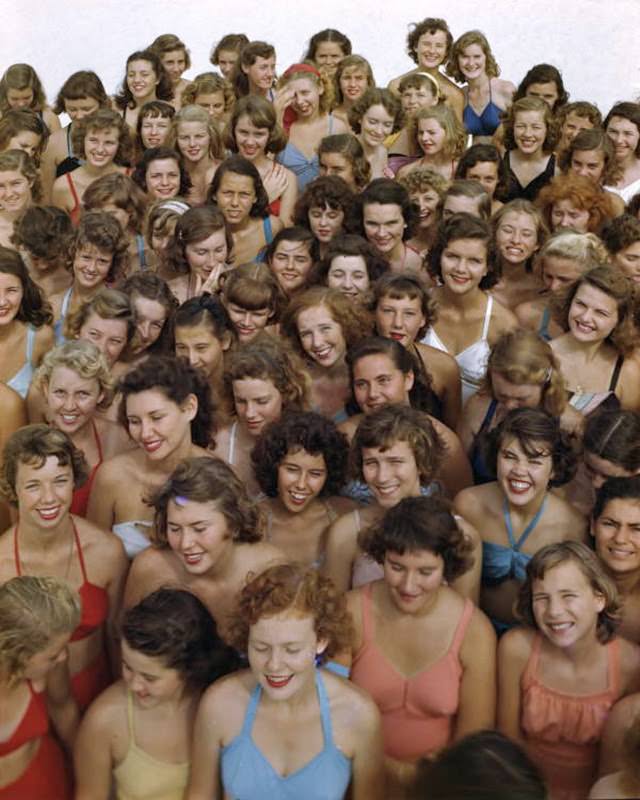


Color photography was still rare in the 1940s for everyday use, so most of these images are black and white. That actually helps draw attention to the cut and construction of each suit rather than the color. You can see the stitching, the ruching, and the way the fabric falls clearly in these shots.
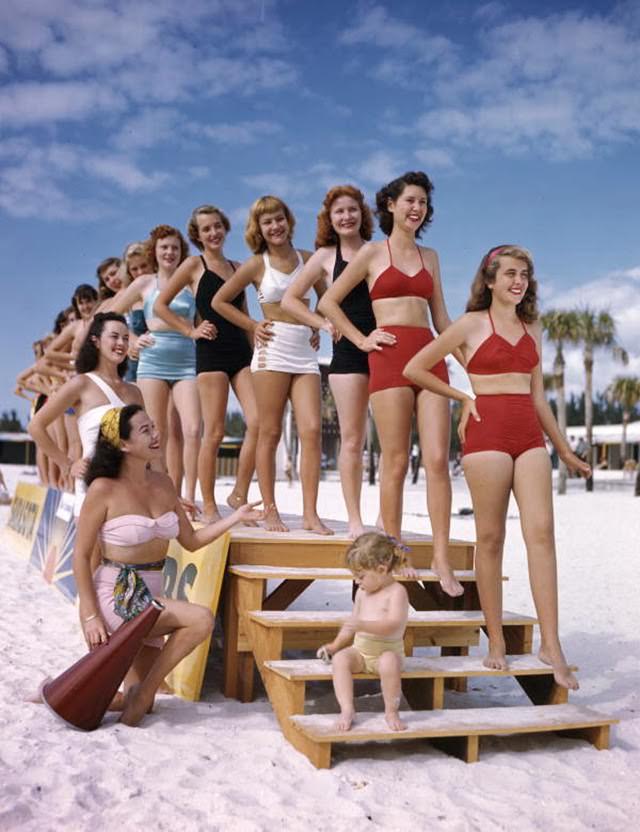
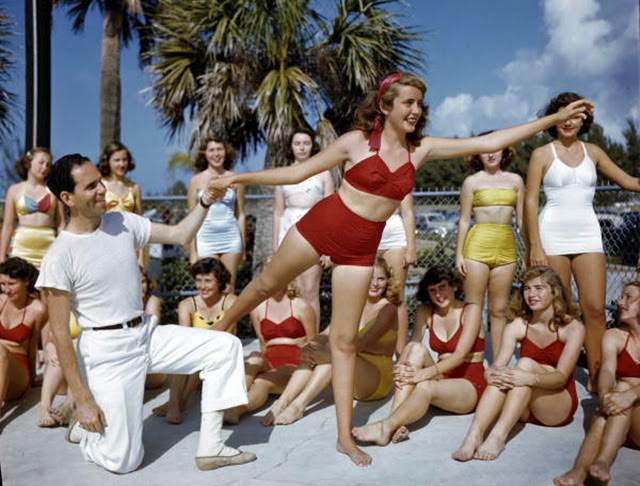
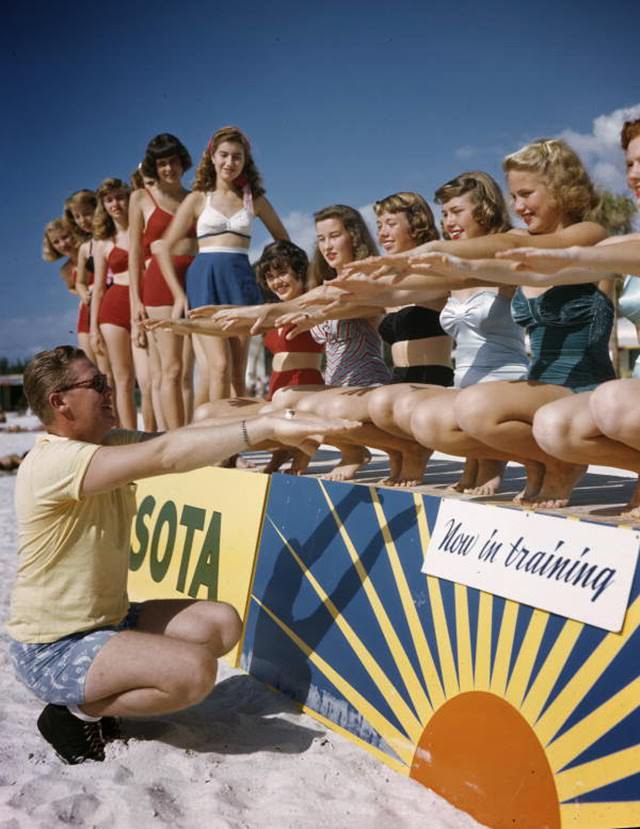
Swimwear in this decade wasn’t just about recreation. Wearing the right bathing suit was a statement about who you were and how you carried yourself. Even with wartime restrictions in place, women put care and thought into what they wore to the water.
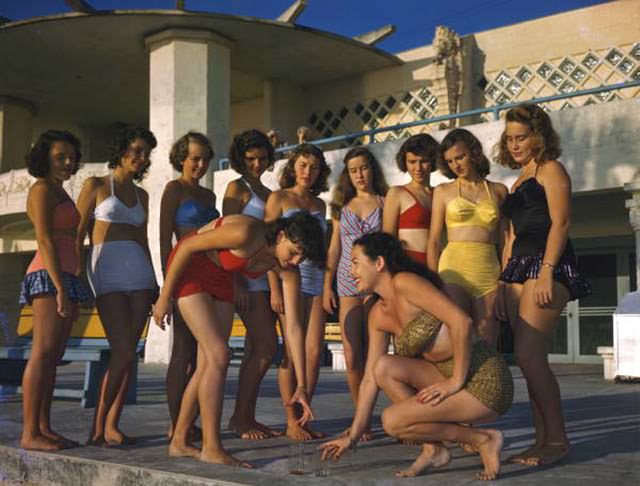
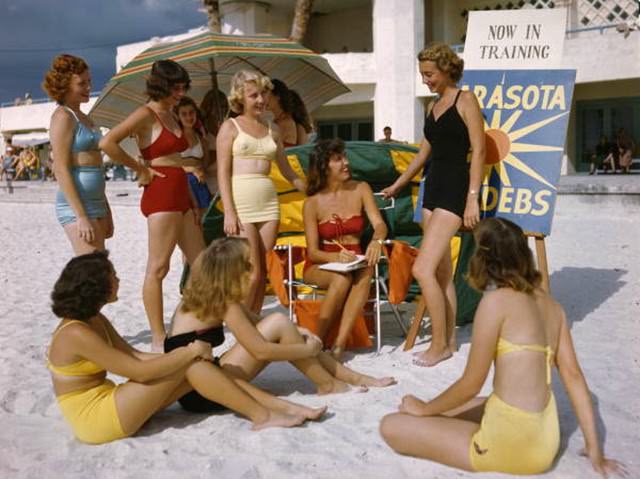

These found photos offer something that fashion catalogs from the same period cannot — a genuine look at how real women wore and lived in their swimwear. The difference between a posed advertisement and a candid snapshot is significant, and this collection leans entirely toward the candid.



Each photo is a small piece of a larger picture. Taken together, they show how women’s swimwear moved from stiff and conservative to practical and form-fitting across a single decade — driven equally by wartime necessity and a growing demand for freedom in everyday dress.