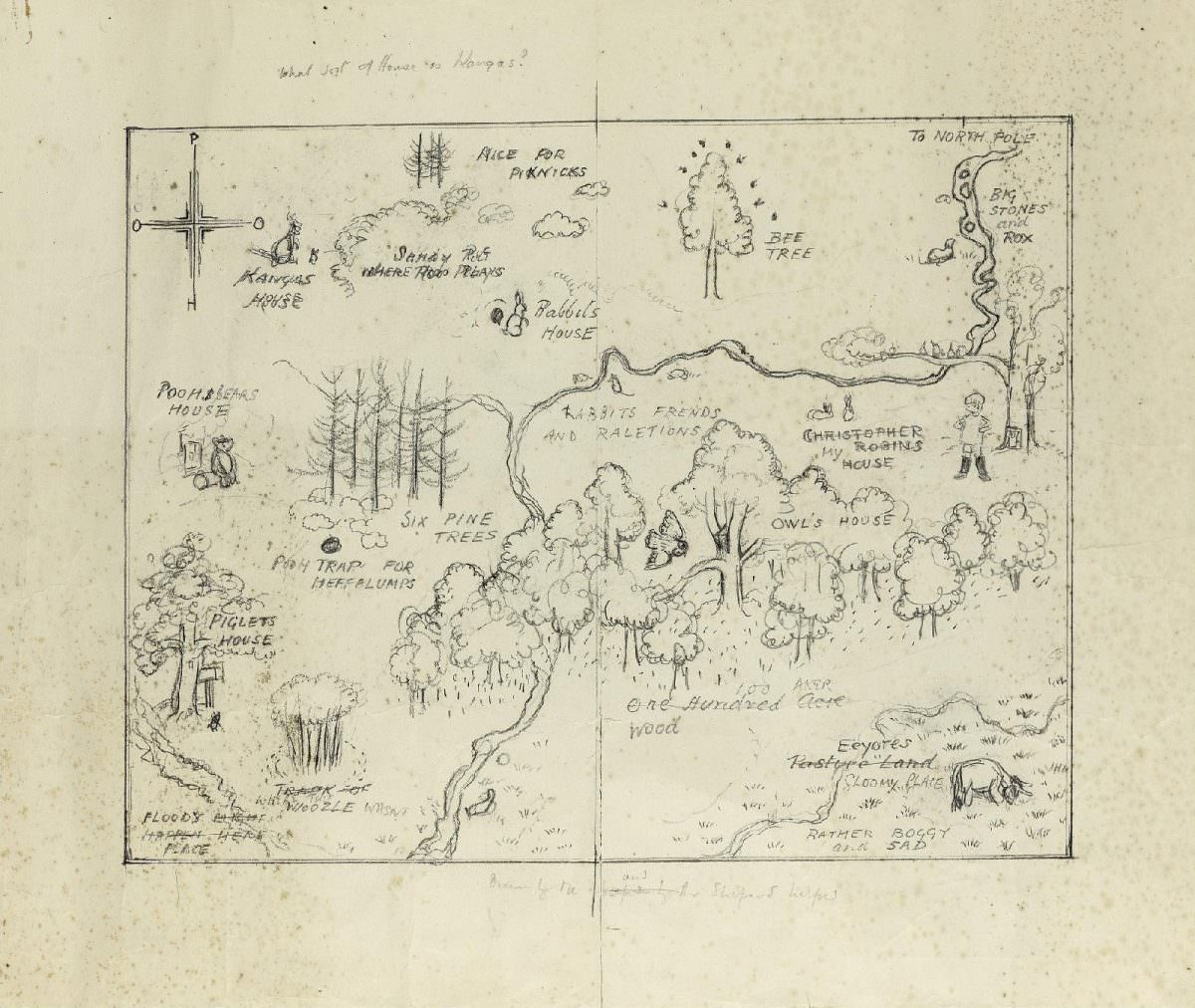
Ernest Howard Shepard, known as E.H. Shepard, was a British artist whose illustrations for A.A. Milne’s Winnie-the-Pooh books, first published in 1926, became among the most recognized images in children’s literature. His clean lines and expressive style brought Pooh, Piglet, Eeyore, Tigger, and Kanga to life, while his detailed backgrounds were drawn from the real Ashdown Forest in Sussex, England. Beyond the Pooh books, Shepard also illustrated works such as Kenneth Grahame’s The Wind in the Willows and Milne’s poetry collections. He was awarded the Order of Merit in 1976, the same year he died.
![Winnie the Pooh [Lot]](https://www.bygonely.com/wp-content/uploads/2023/01/Winnie_the_Pooh_by_Ernest_Howard_1.jpg)
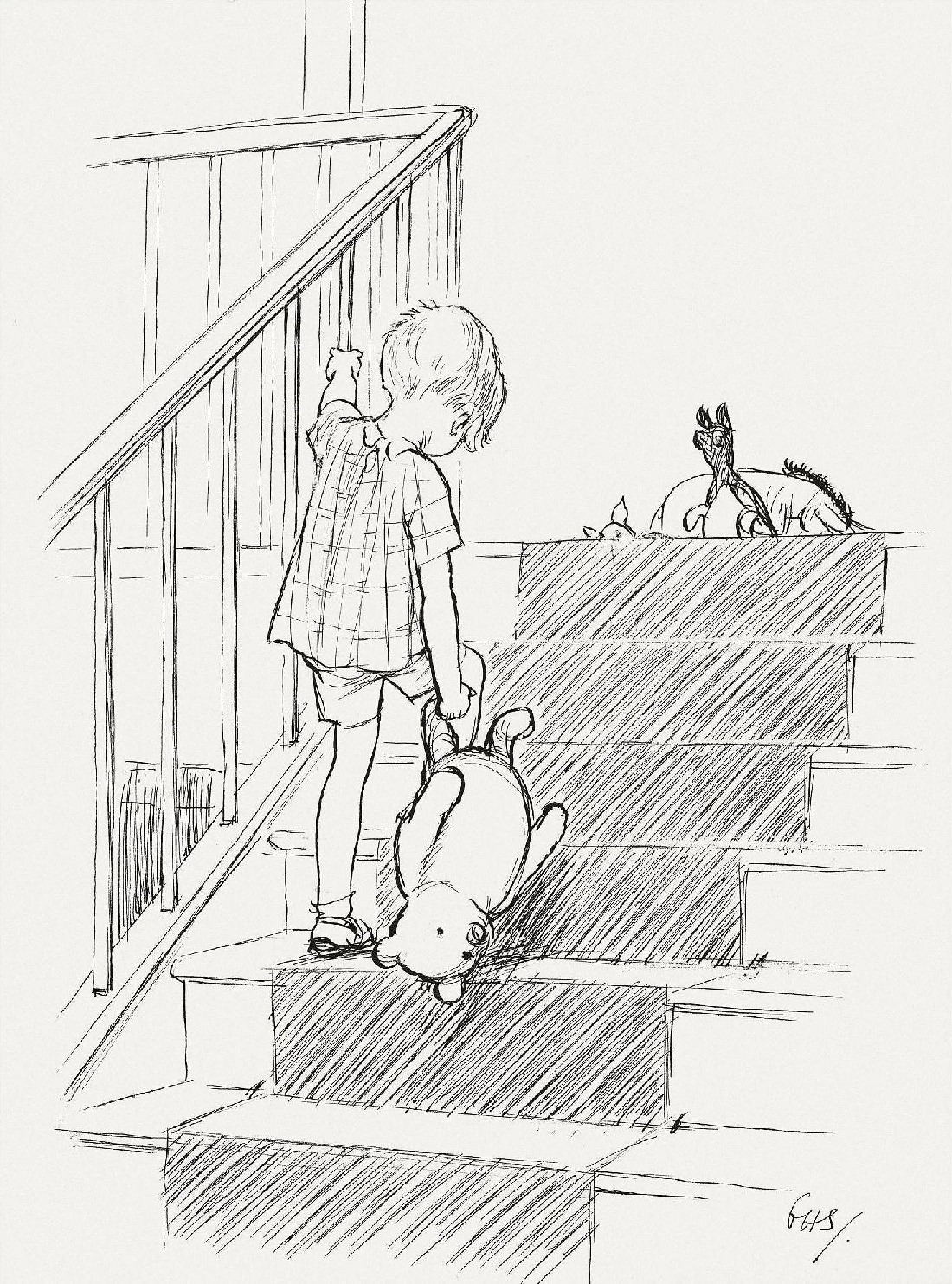
This original illustration is reproduced on page 159 of Winnie-the-Pooh and comprises a full-page illustration in the published volume. It represents one of the iconic images of Winnie-the-Pooh and comes from the final chapter in which Christopher Robin gives a Pooh party, and we say good-bye.
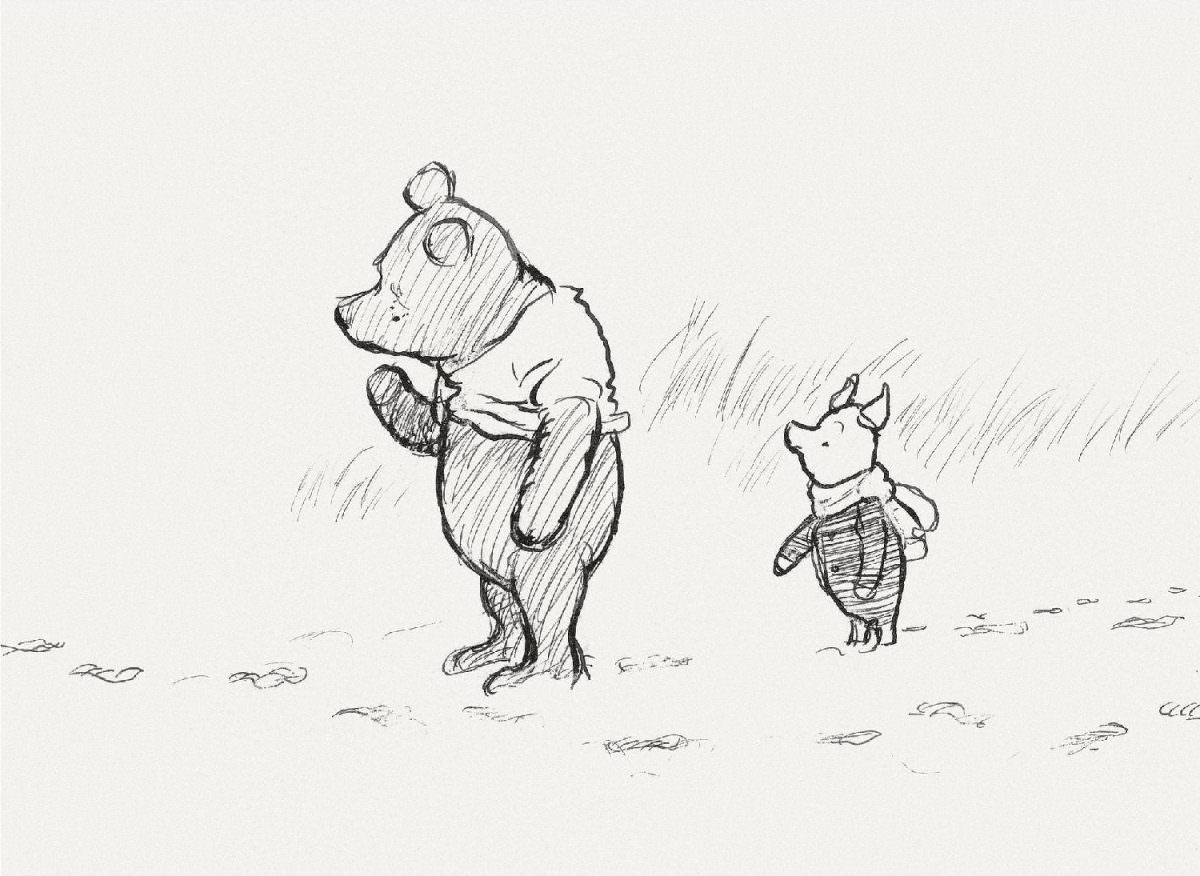
This original illustration is reproduced on page 34 of Winnie-the-Pooh from the chapter in which Pooh and Piglet go hunting and nearly catch a woozle. This is the first drawing in the sequence of hunting illustrations.
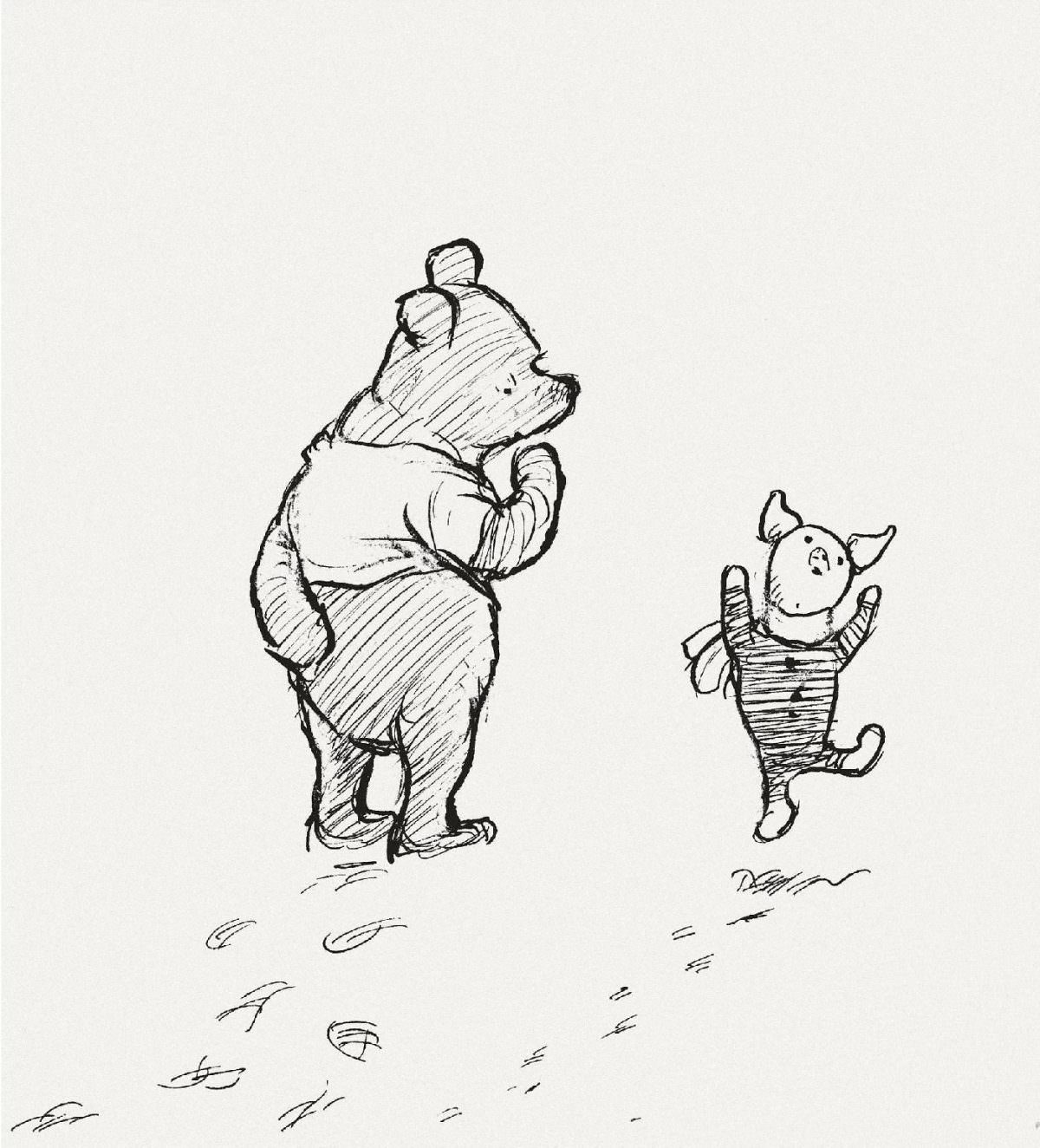
This original illustration is reproduced on page 37 of Winnie-the-Pooh. It is from the chapter in which Pooh and Piglet go hunting and nearly catch a woozle. It is the third drawing in the sequence of hunting illustrations.
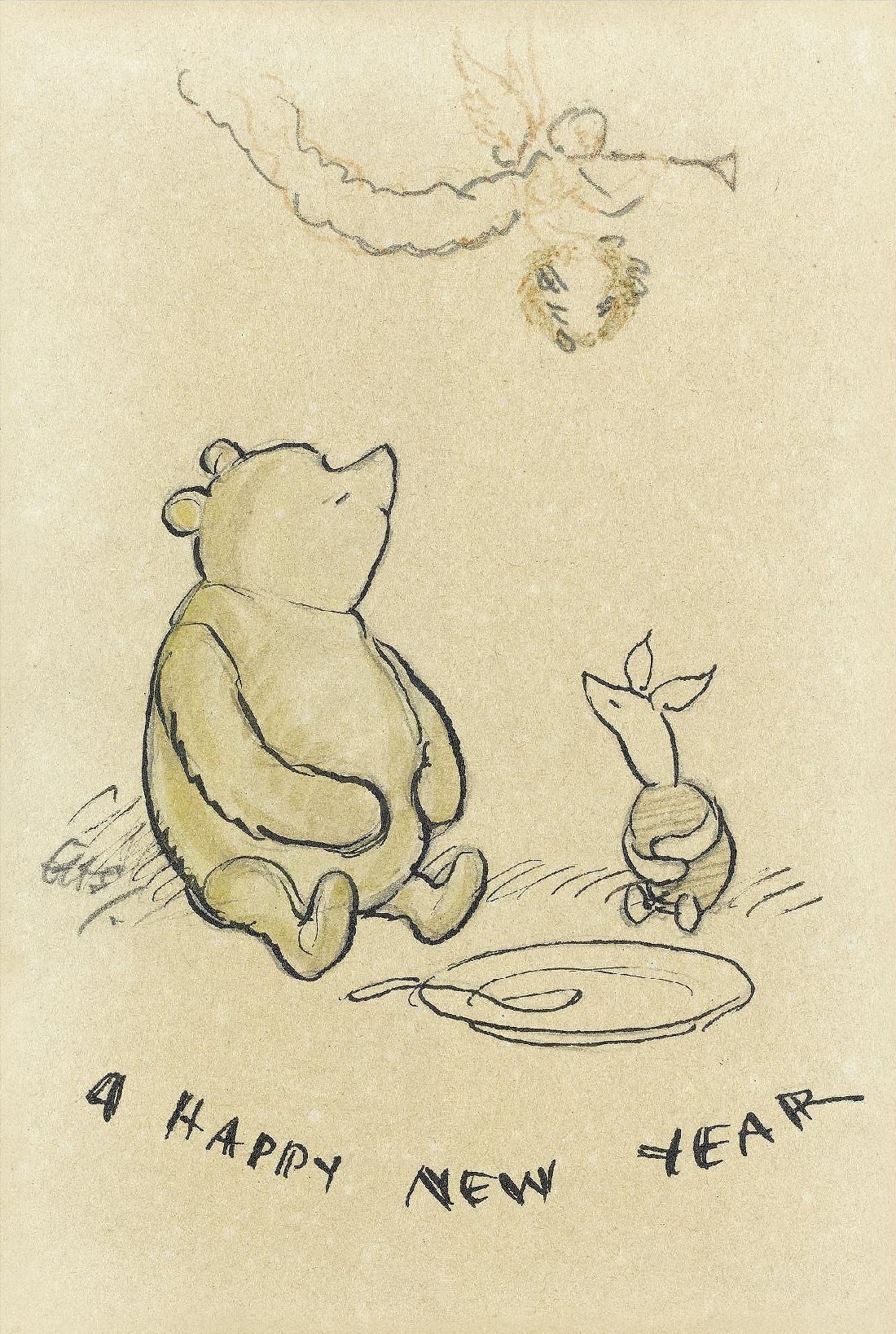
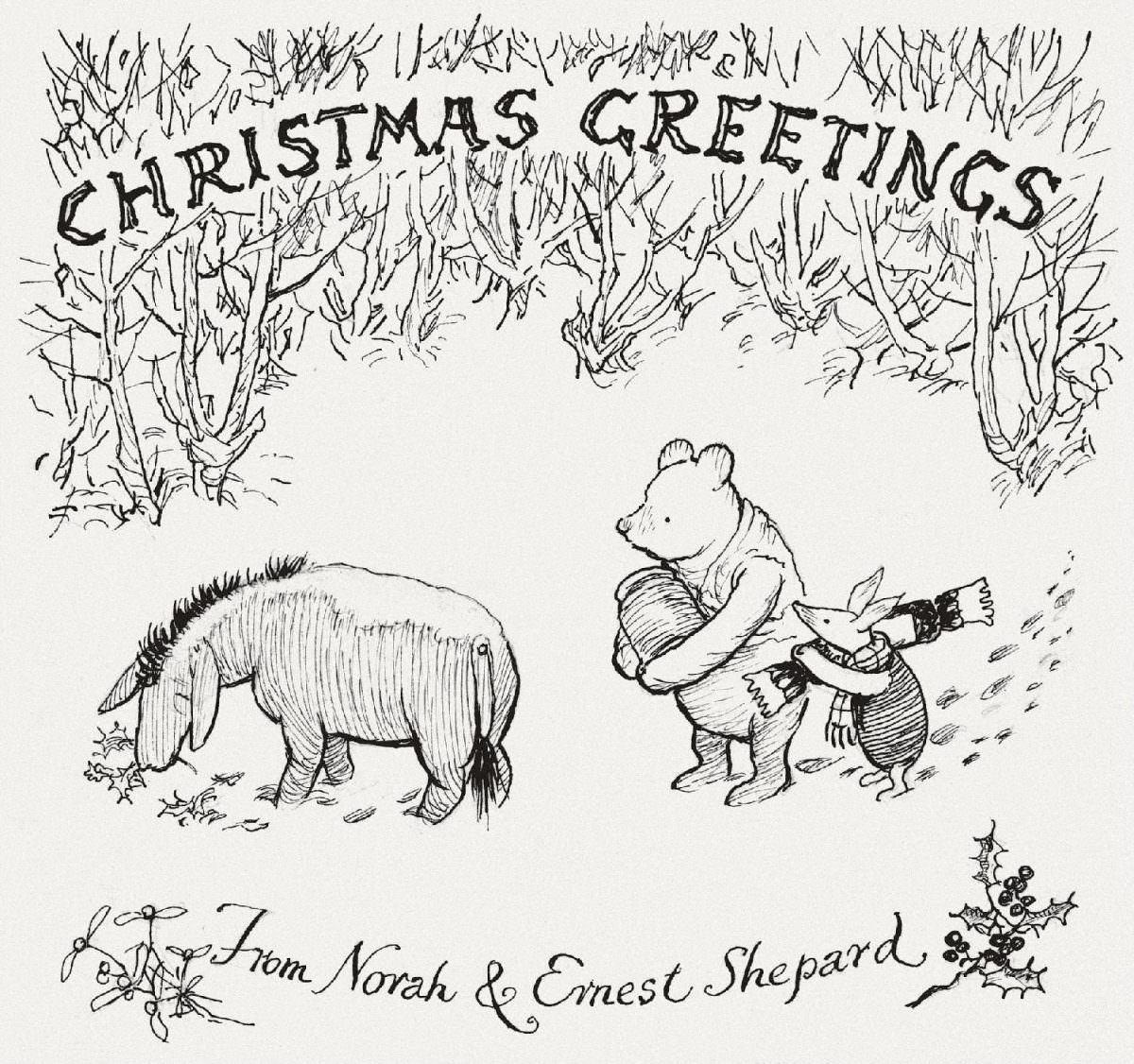
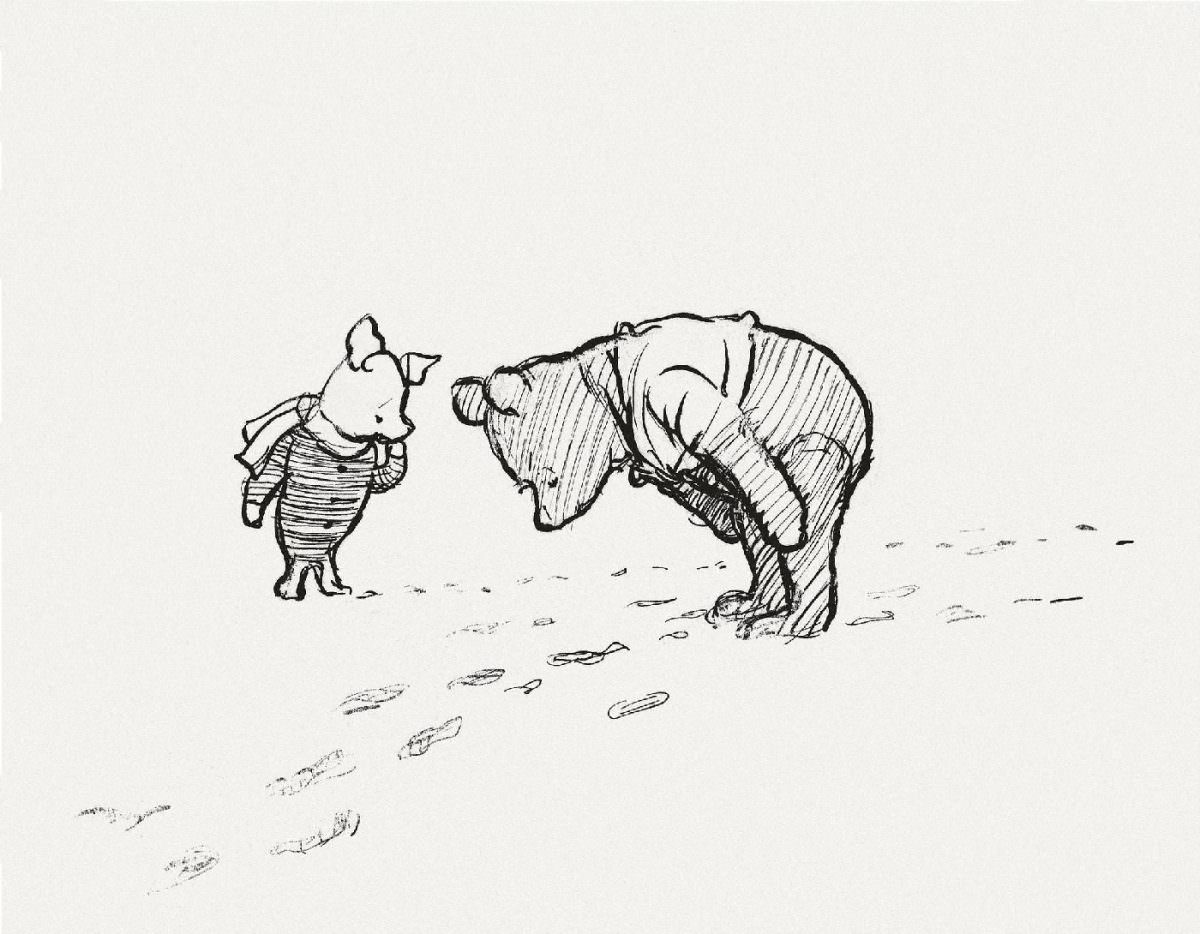
This original illustration is reproduced (at a different angle to the original) on page 38 of Winnie-the-Pooh. It is from the chapter in which Pooh and Piglet go hunting and nearly catch a woozle. It is the fourth and final drawing in the sequence of hunting illustrations.

This original illustration is reproduced on page 64 of Winnie-the-Pooh. It is from the chapter in which Piglet meets a Heffalump. The reverse of the drawing includes a note that this drawing was given by Shepard’s daughter as a gift in 1974.
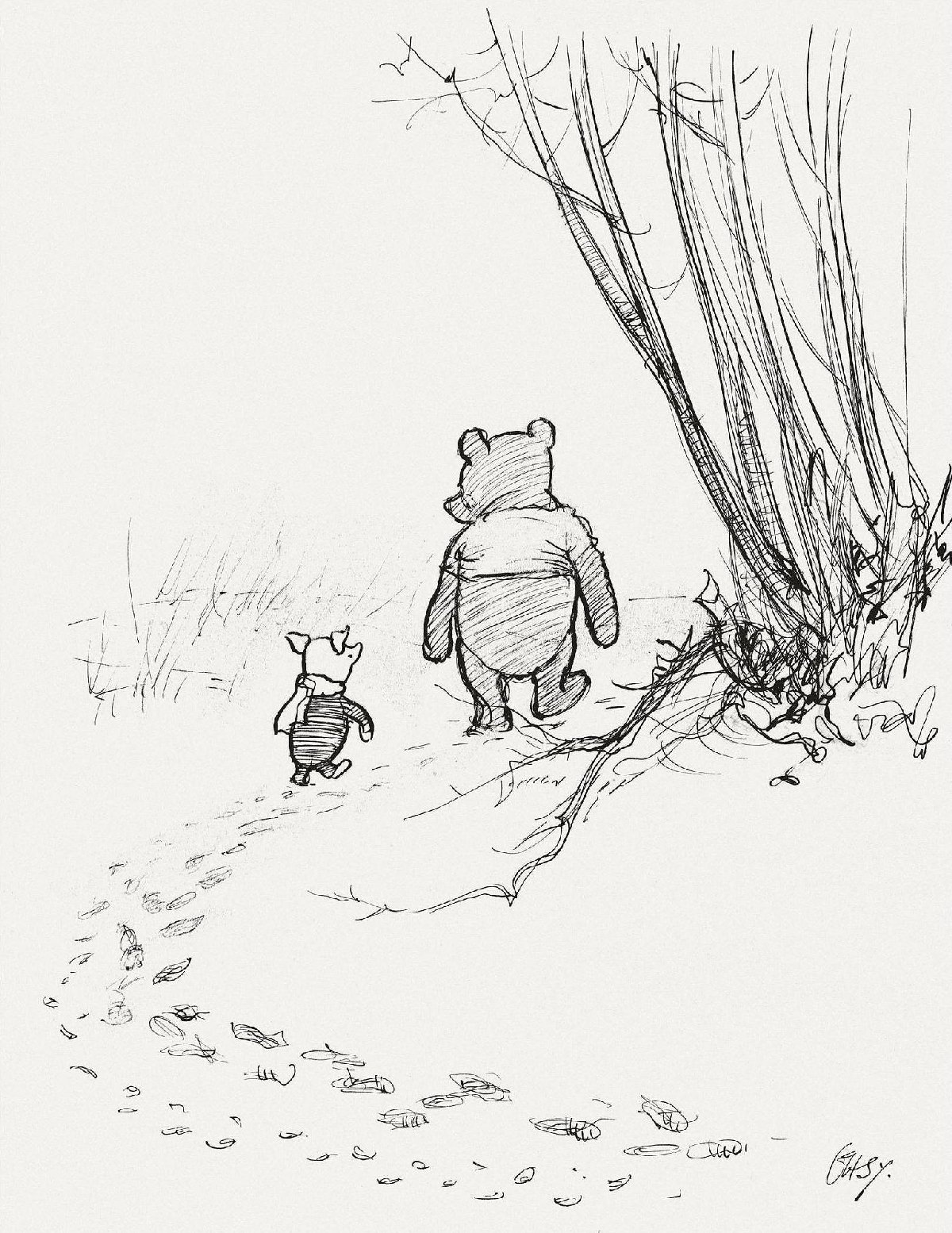
This original illustration is reproduced on page 35 of Winnie-the-Pooh and comprises a full-page illustration in the published volume. It is from the chapter in which Pooh and Piglet go hunting and nearly catch a woozle. It is the second drawing in the sequence of hunting illustrations.
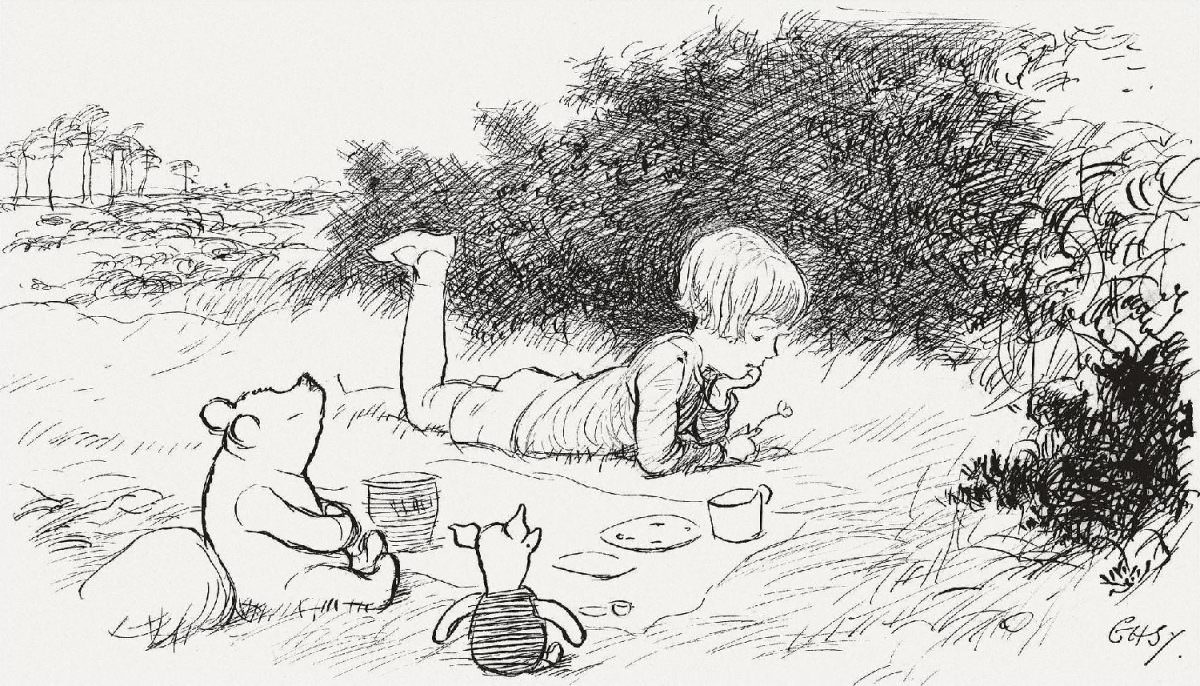
This original illustration is reproduced on page 55 of Winnie-the-Pooh. It is from the chapter in which Piglet meets a Heffalump.
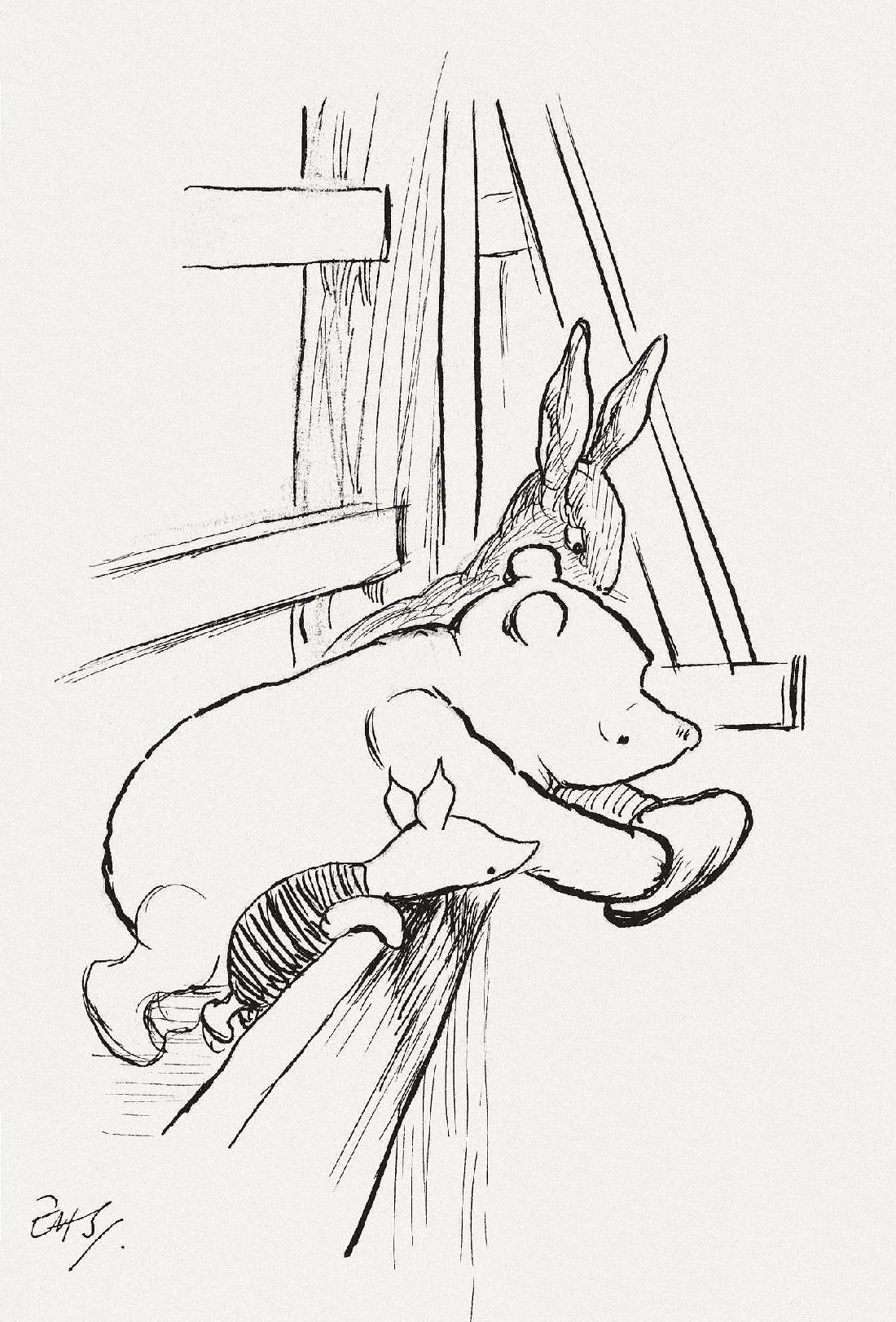
Pooh had got the biggest stone he could carry, and was leaning over the bridge, holding it in his paws. This original illustration was reproduced on page 98 of The House at Pooh Corner and is from the chapter in which Pooh invents the game of Poohsticks. At this point Eeyore had fallen into the river and Pooh, Piglet, and Rabbit were attempting to make waves to wash him to the bank.
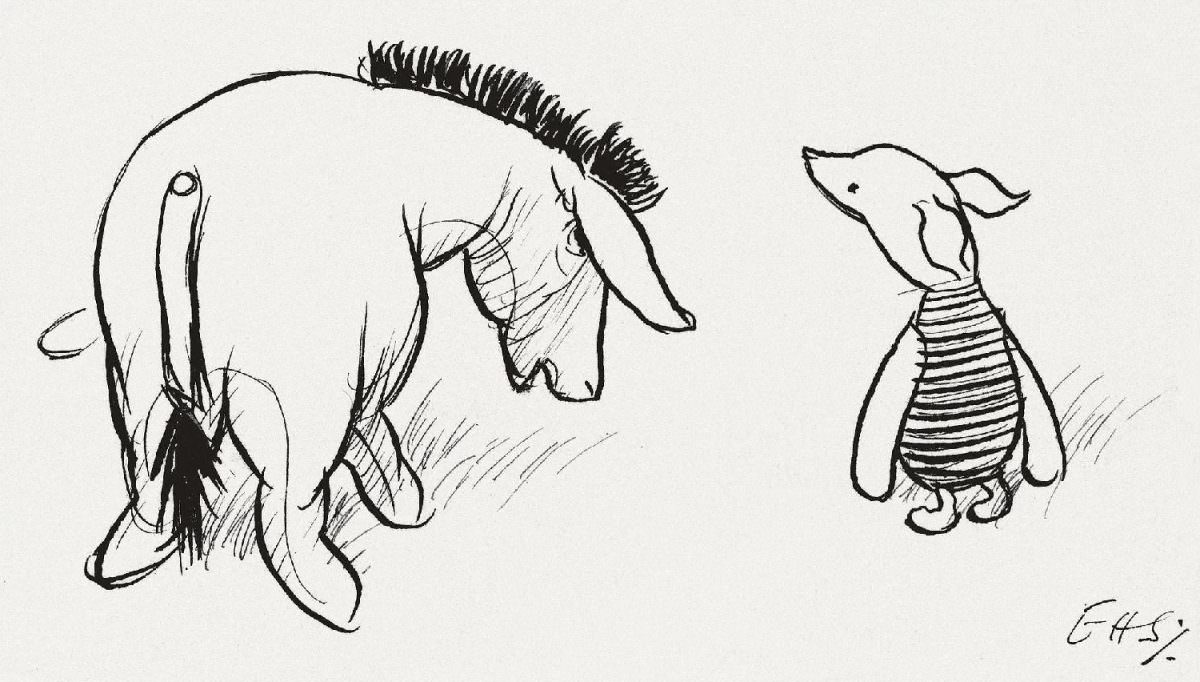
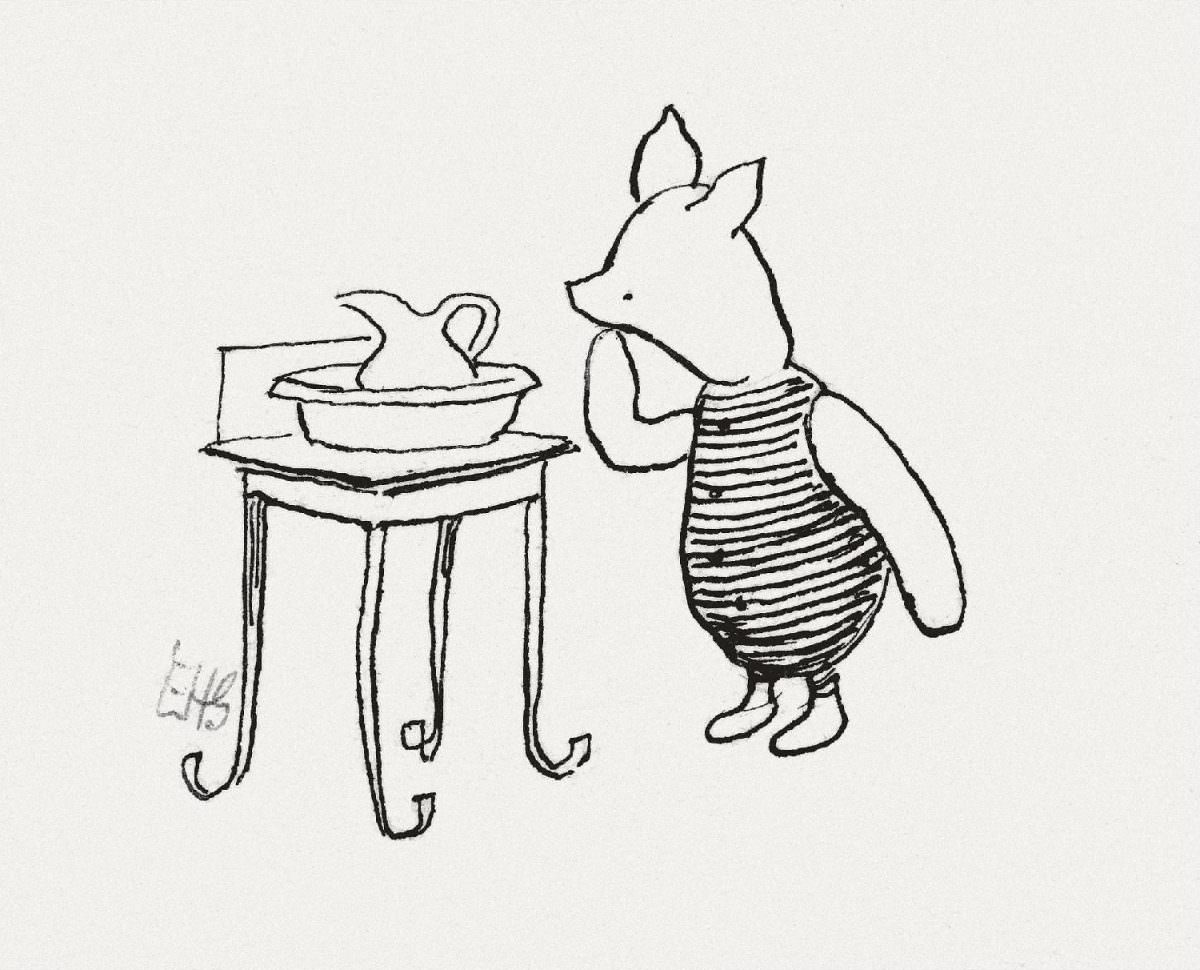
This Shepard drawing is a later version of that reproduced on page 149 of Winnie-the-Pooh from the final chapter of the book in which Christopher Robin gives a Pooh party.
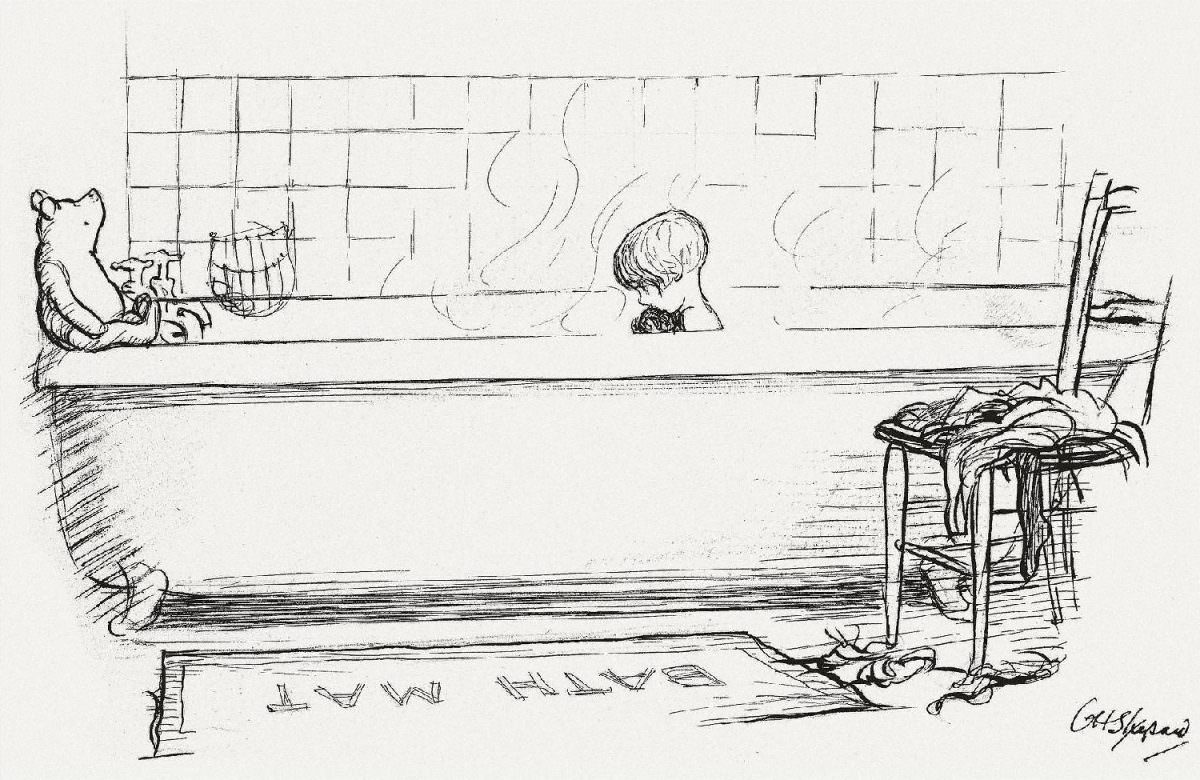
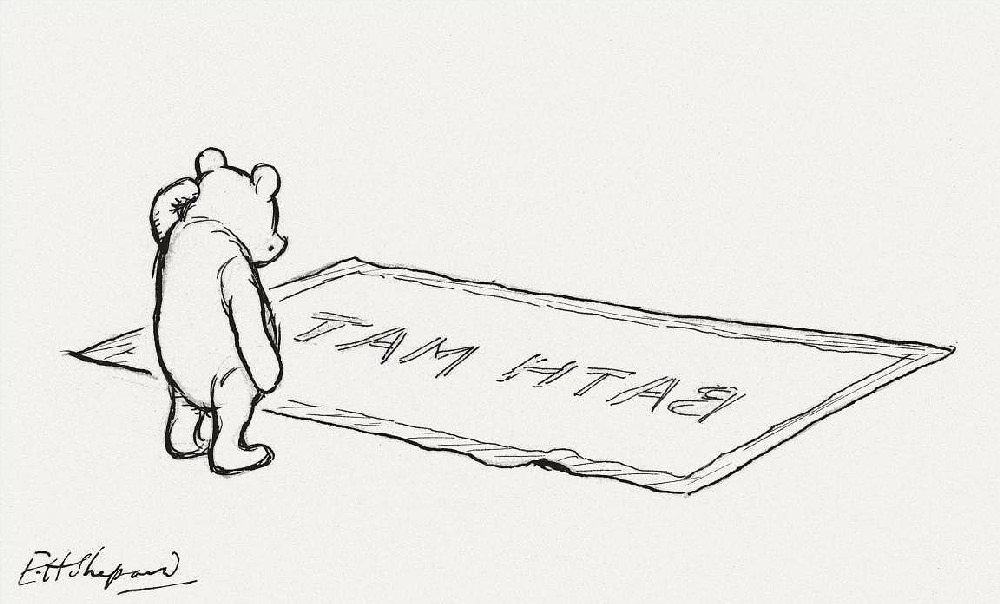
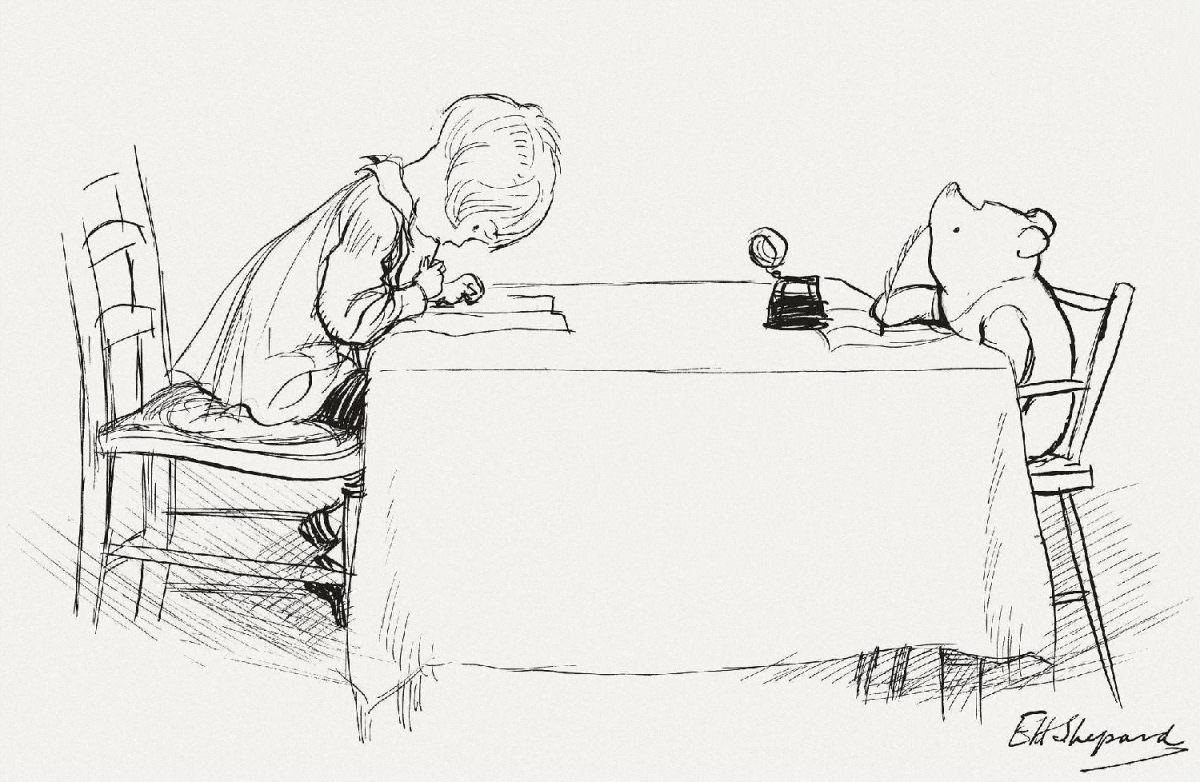
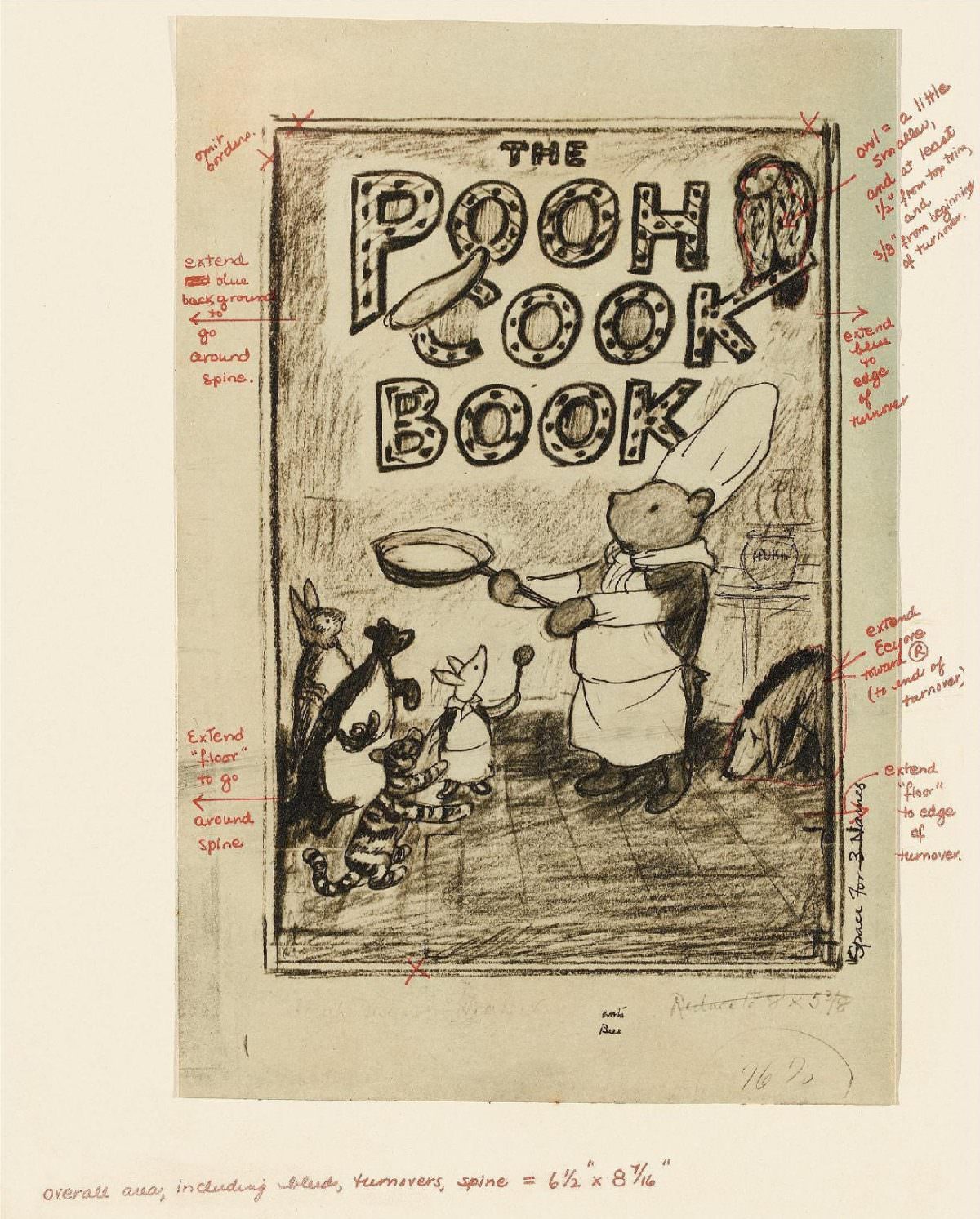
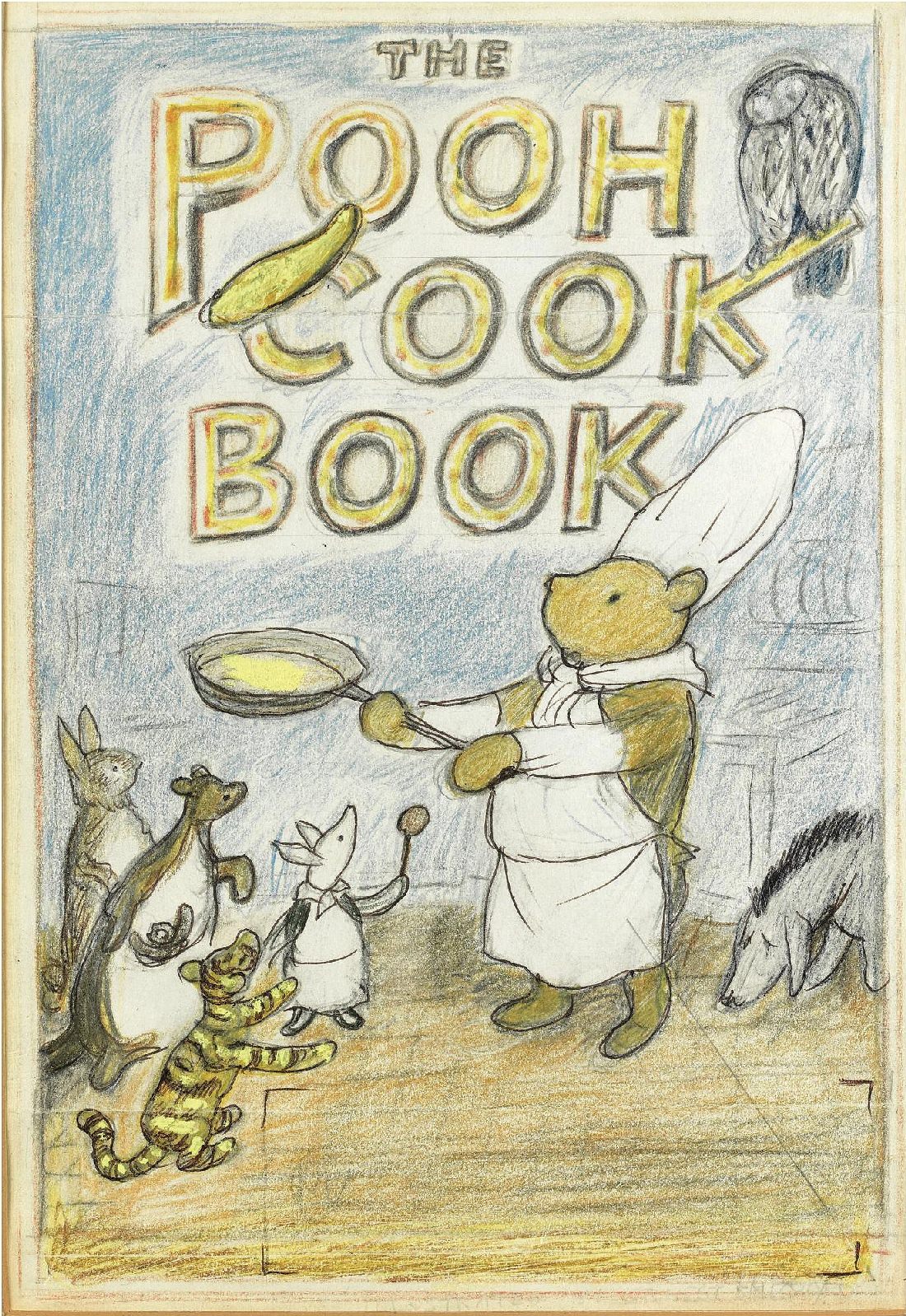
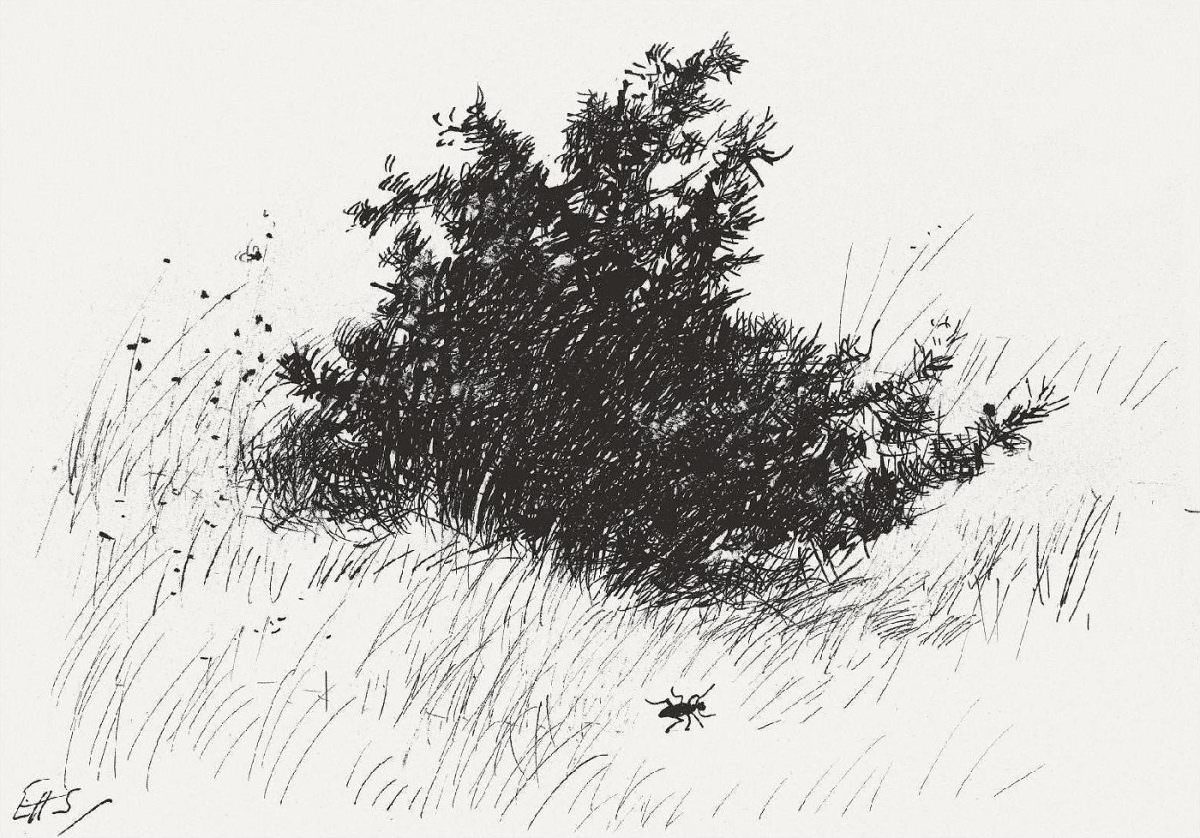
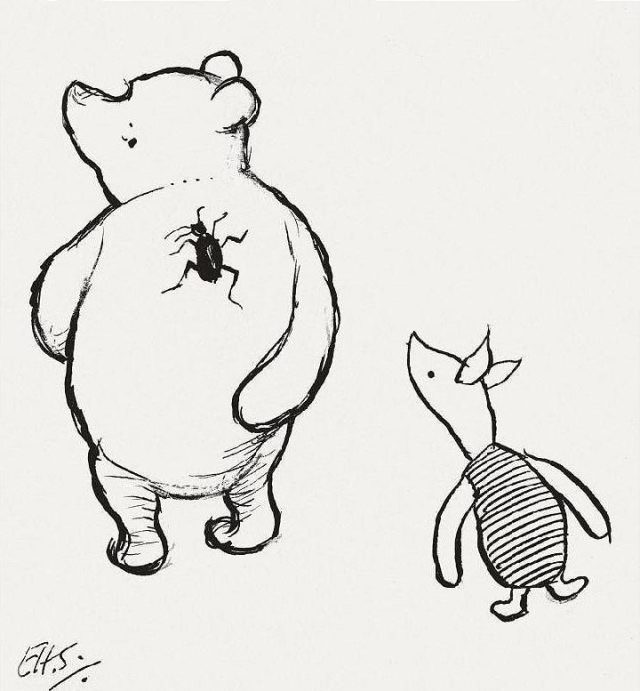
These original illustrations are reproduced on pages 52 and 47 respectively of The House at Pooh Corner. They both come from the chapter in which a search for Small is ‘organdized.’
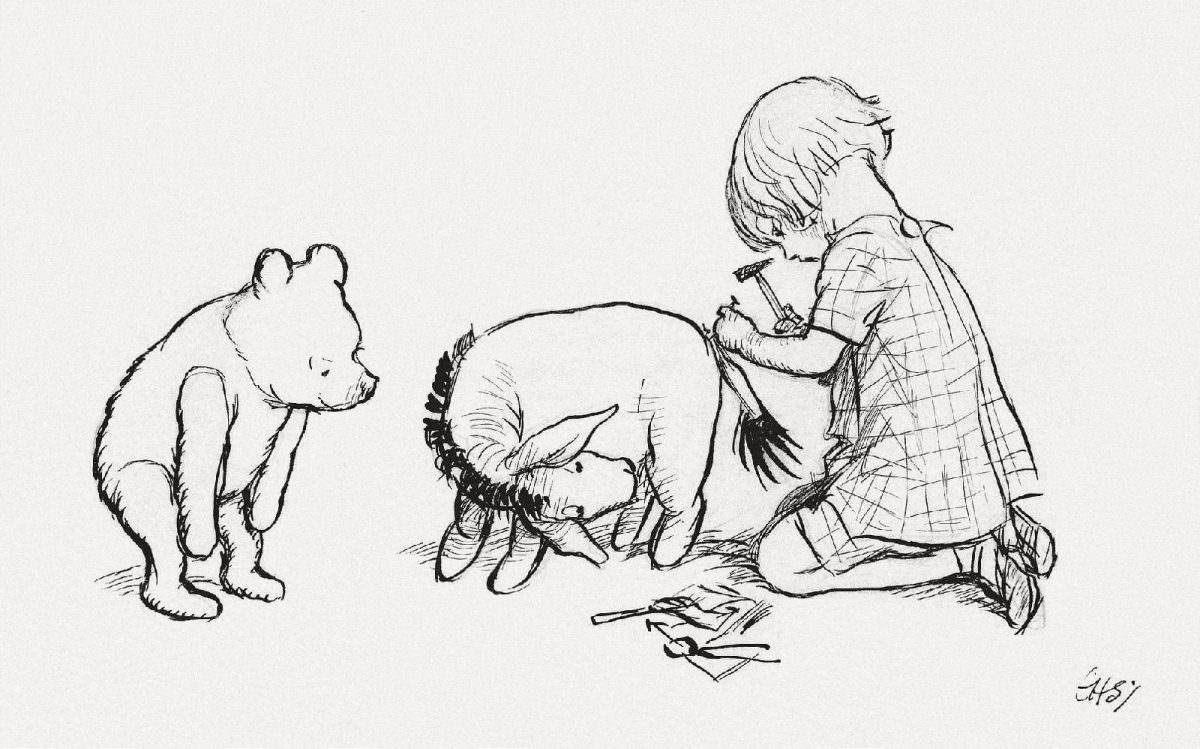
This original illustration is reproduced on page 52 of Winnie-the-Pooh. It is from the chapter in which Eeyore loses a tail and Pooh finds one.
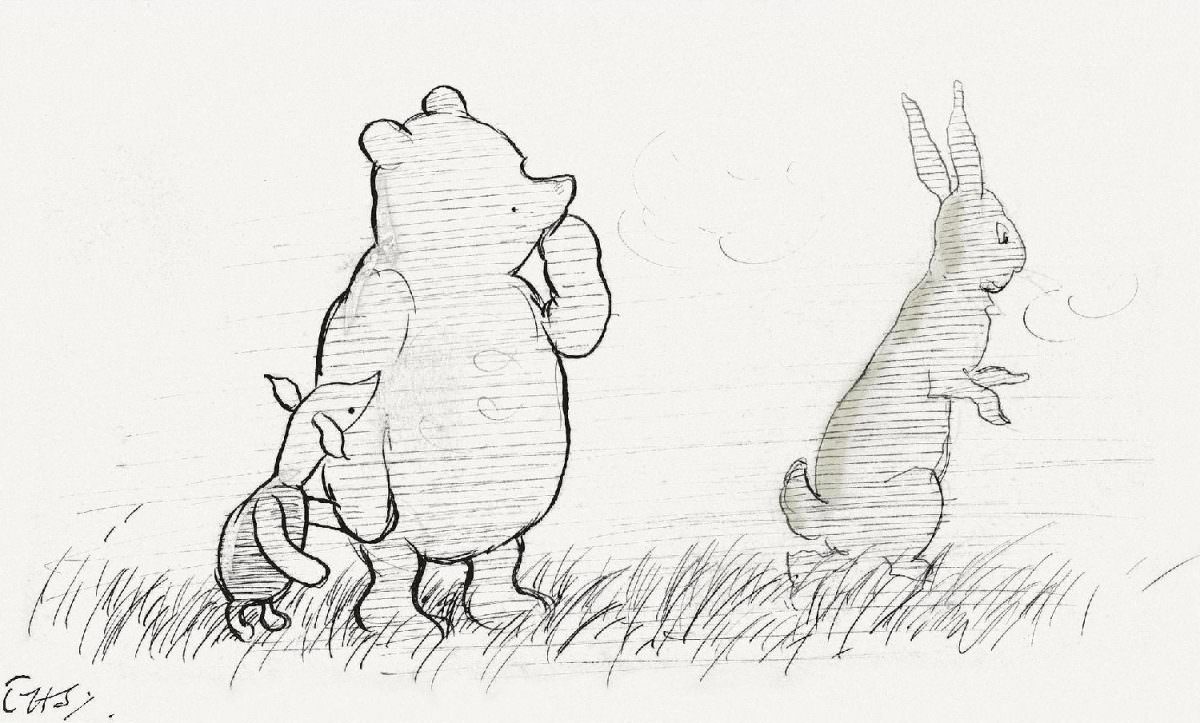
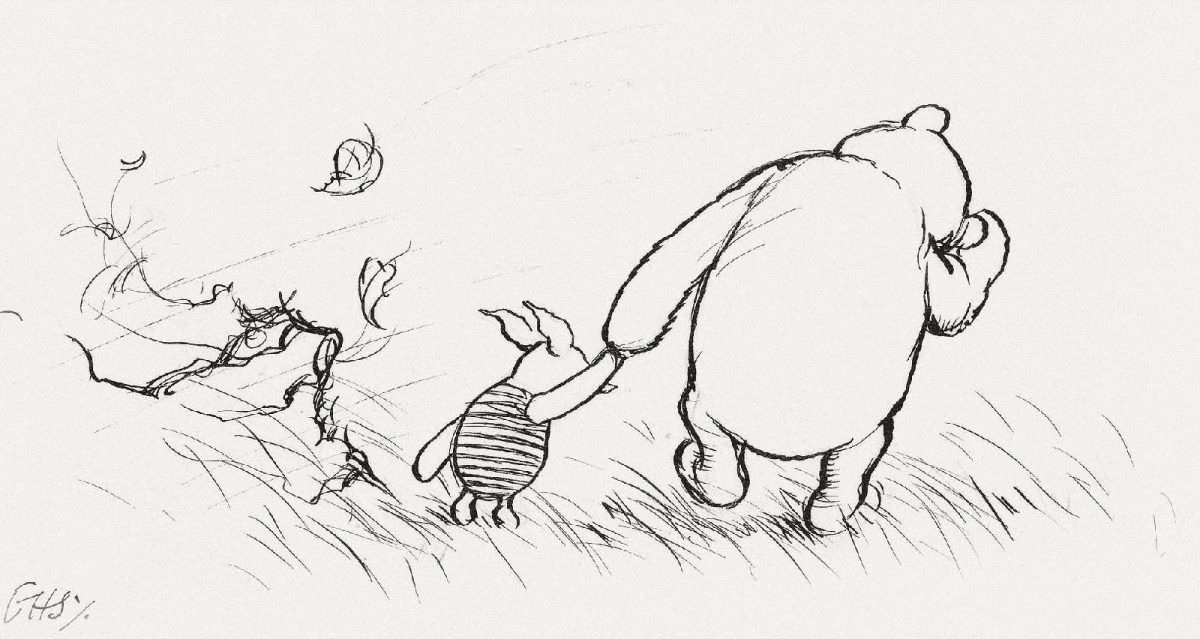
This original illustration was reproduced on page 129 of The House at Pooh Corner and is from the chapter in which Piglet does a very grand thing. It shows Pooh and Piglet walking against the wind on the way to Kanga’s house.
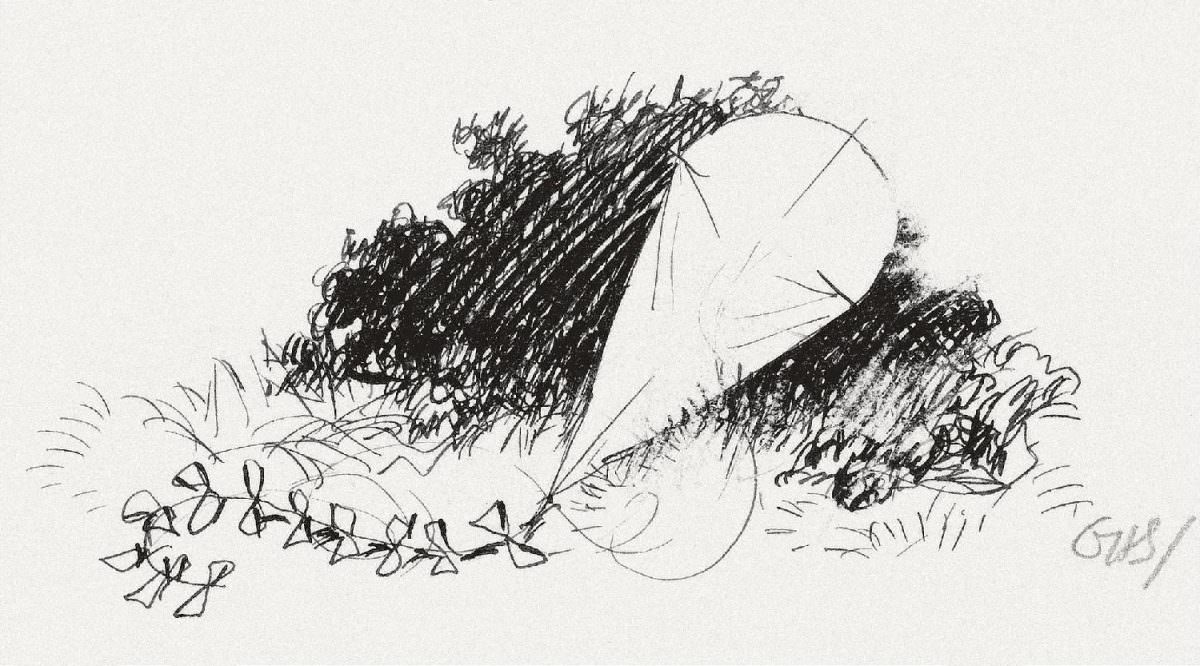
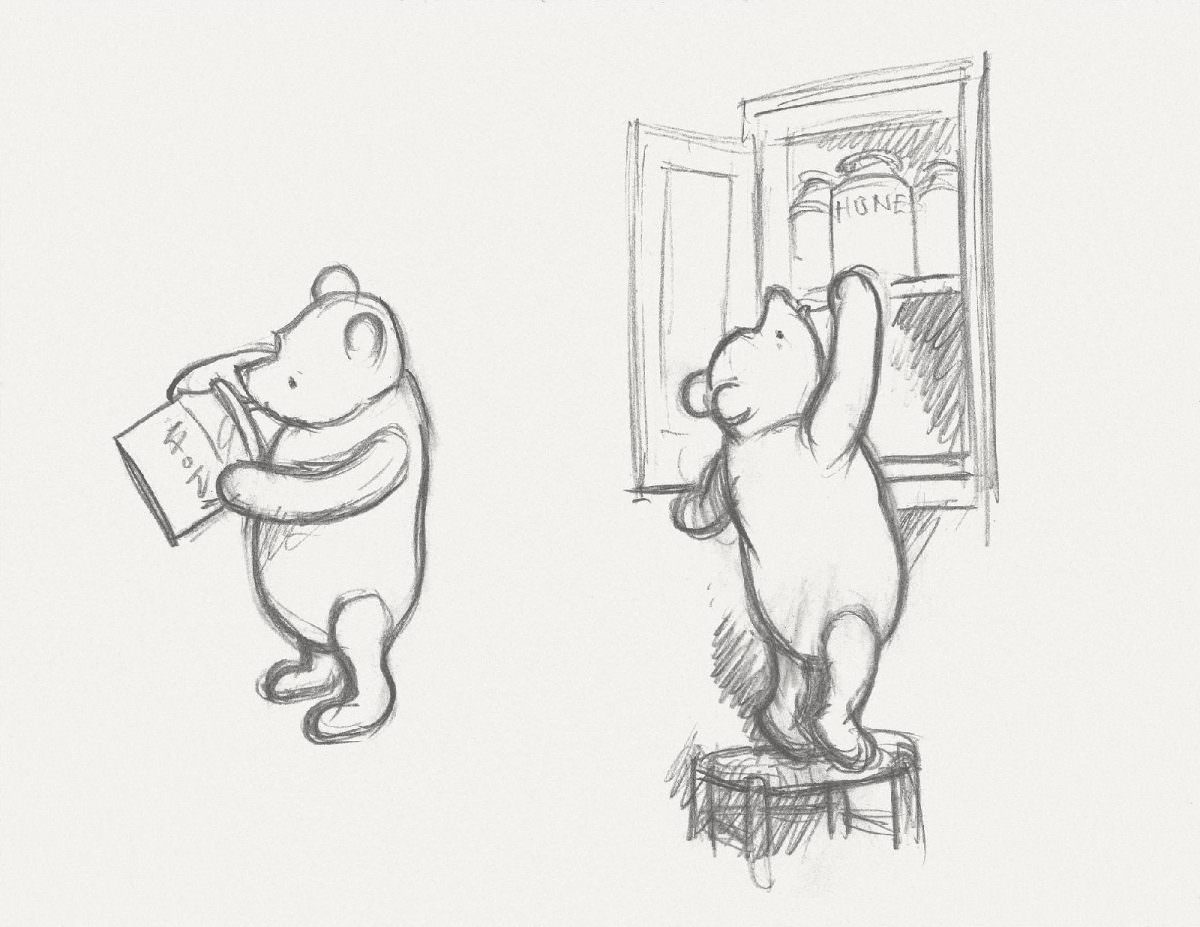
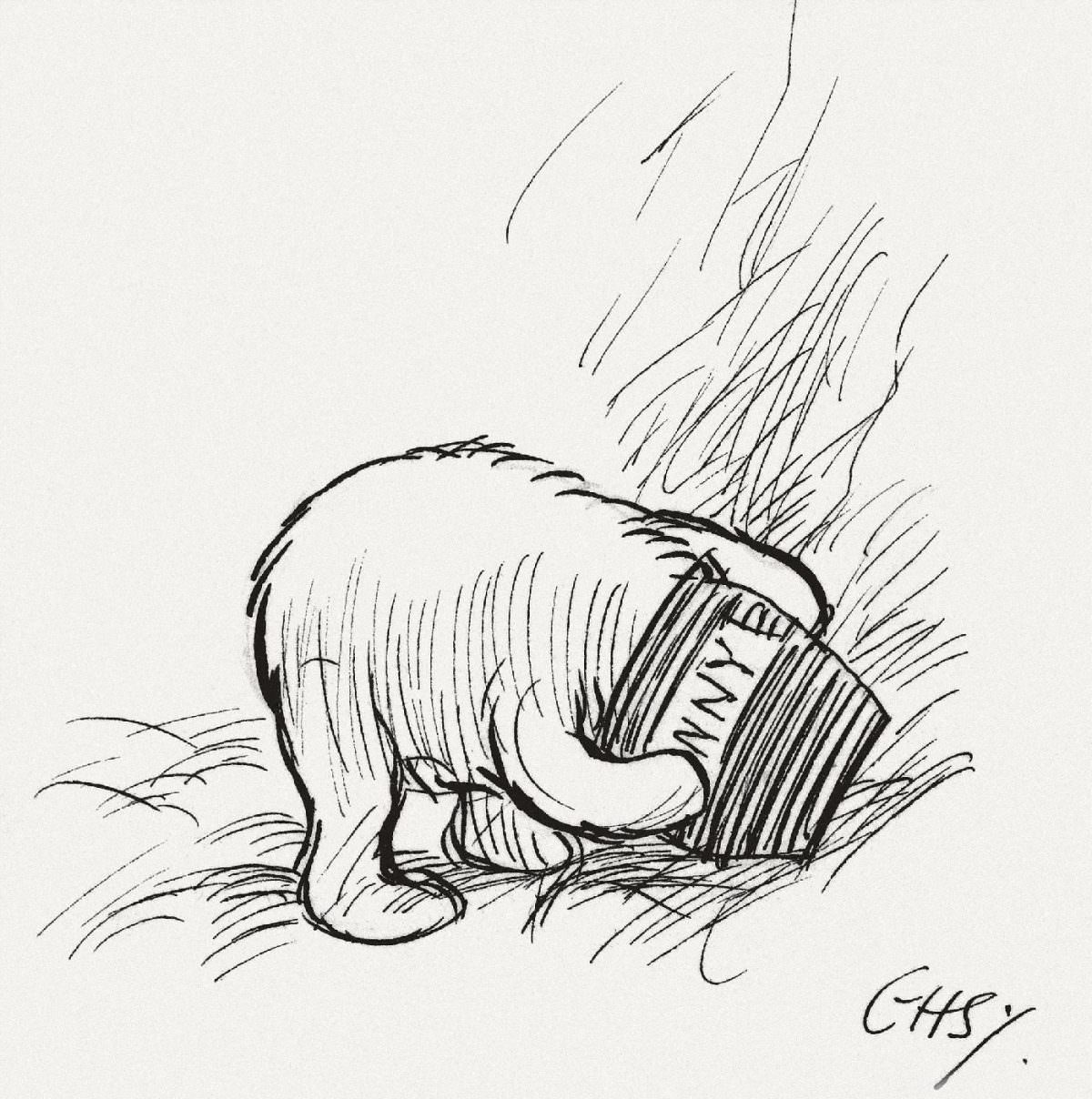
These preparatory sketches reveal Shepard’s typical working practice, with the reverse of the leaf prepared with pencil rubbing for transfer of outlines. The images show some heavy pencil markings where Shepard pressed down hard on his pencil for the process. The images are early, since the spelling of “Hunny” has not yet been adopted within the illustration.
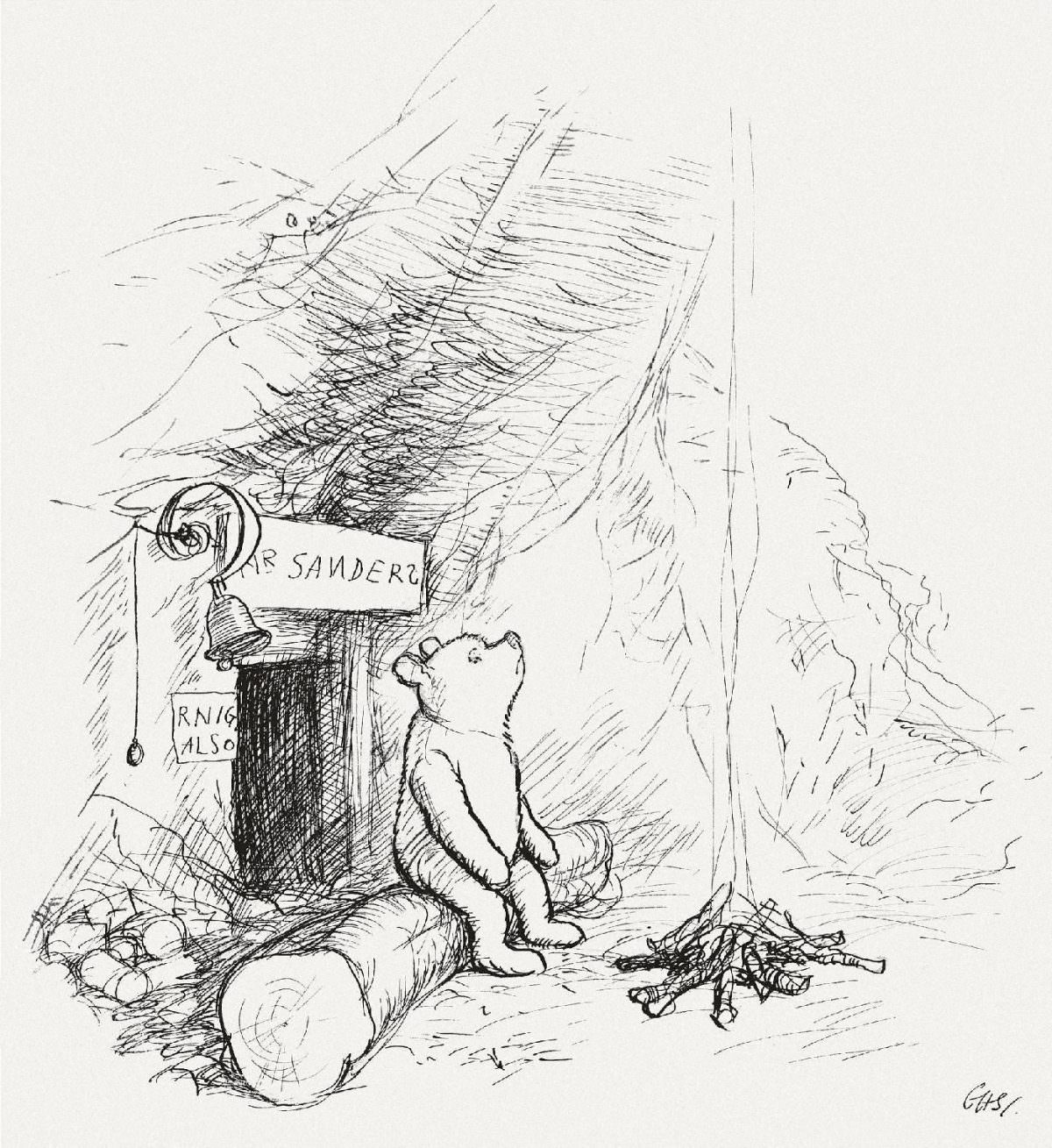
This original illustration is reproduced on page 3 of Winnie-the-Pooh and therefore accompanies the chapter in which Winnie-the-Pooh is first introduced.