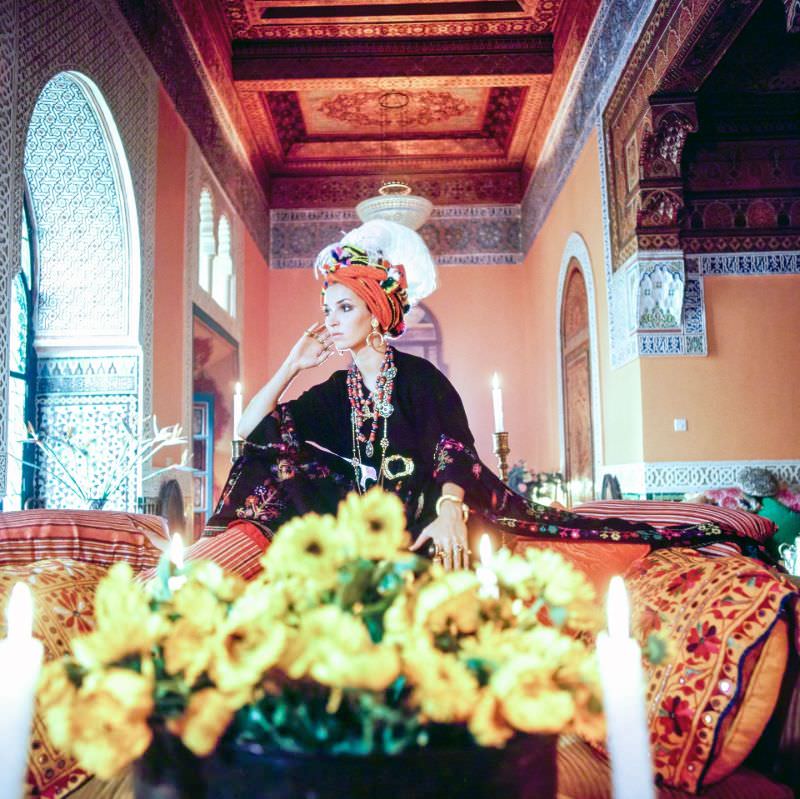
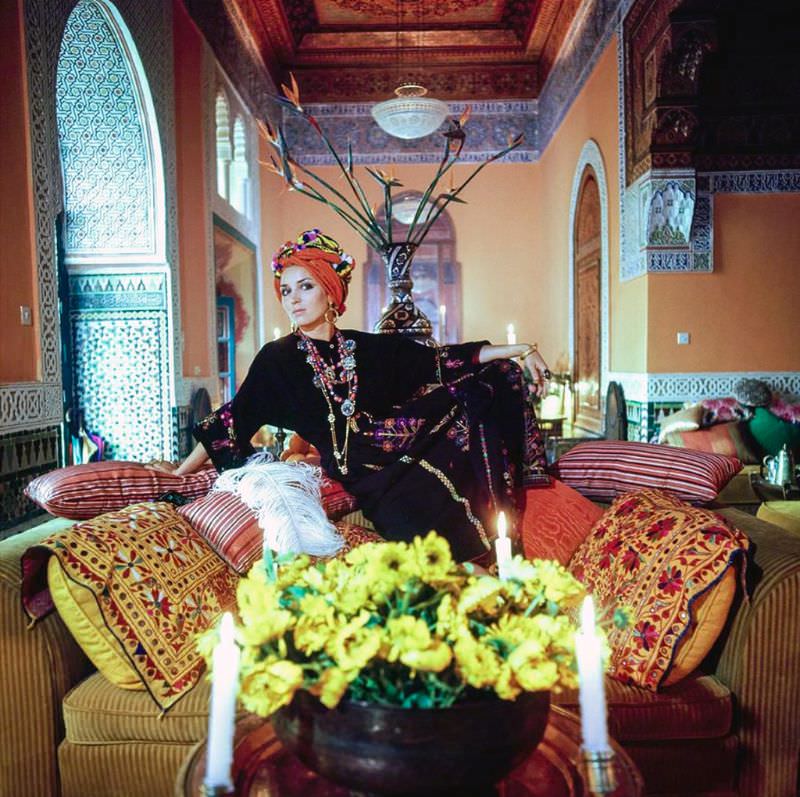
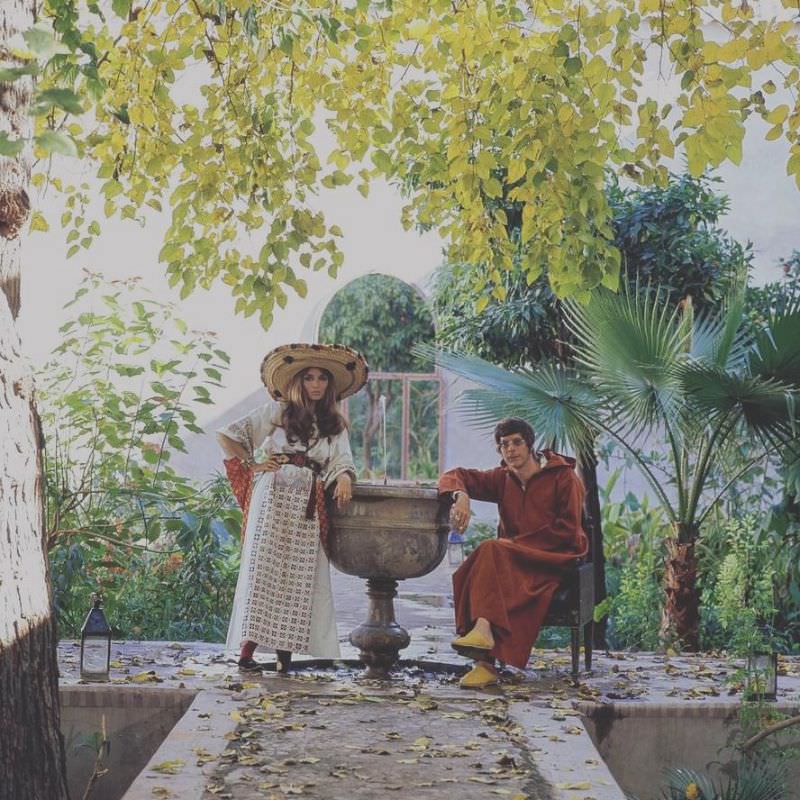
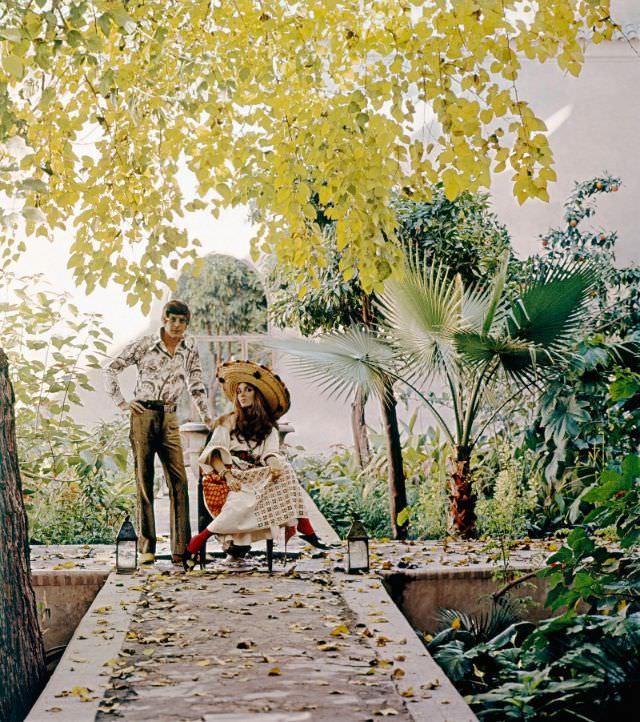
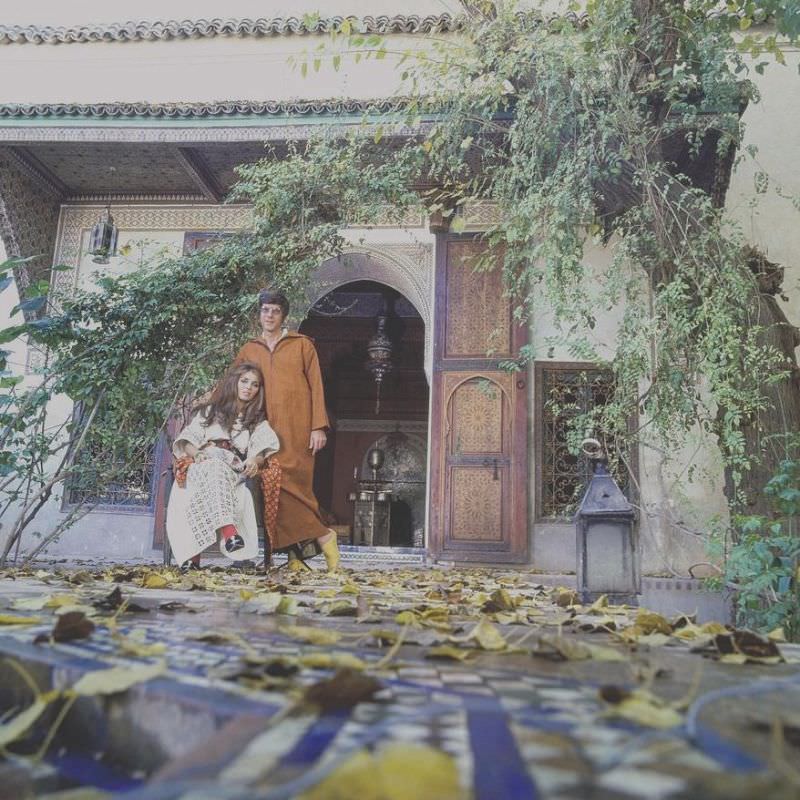
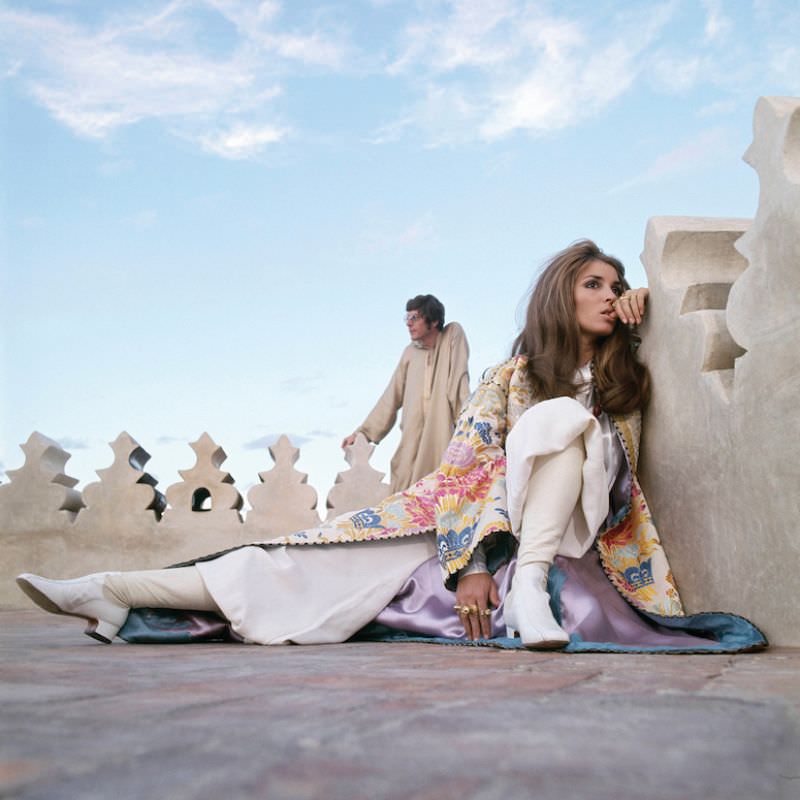
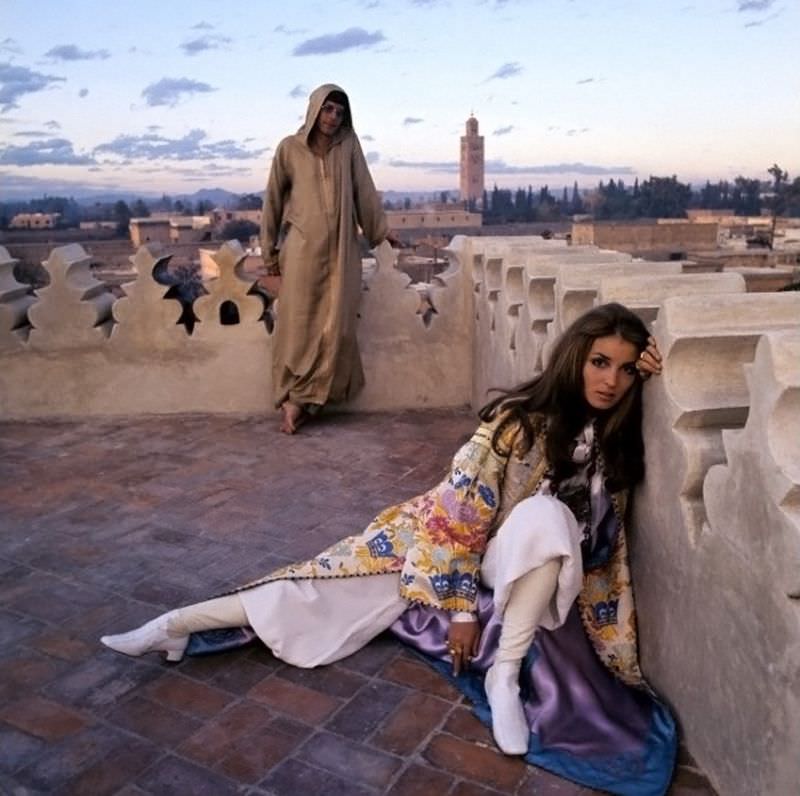
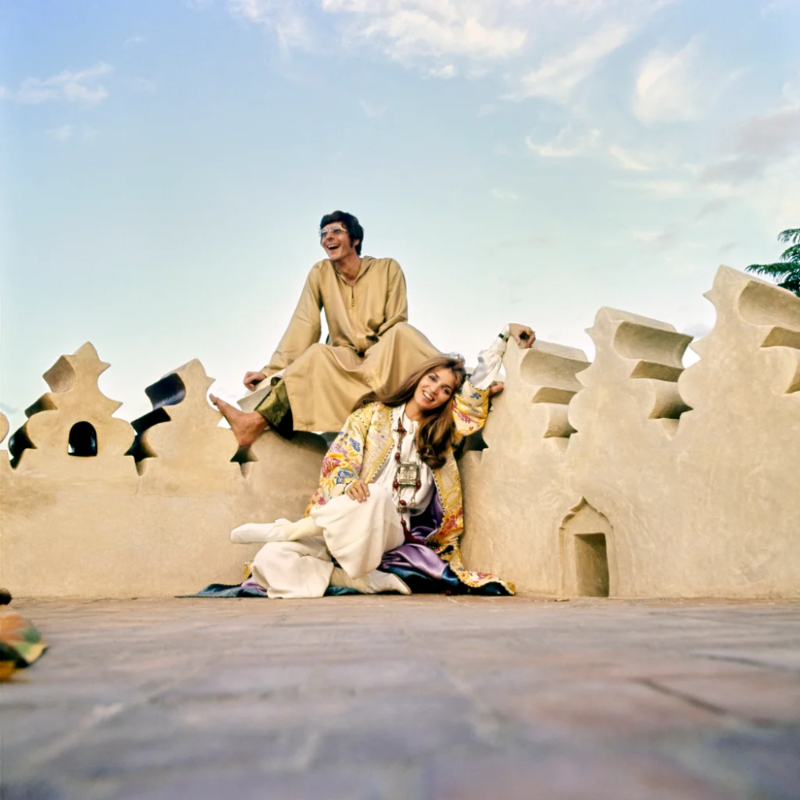
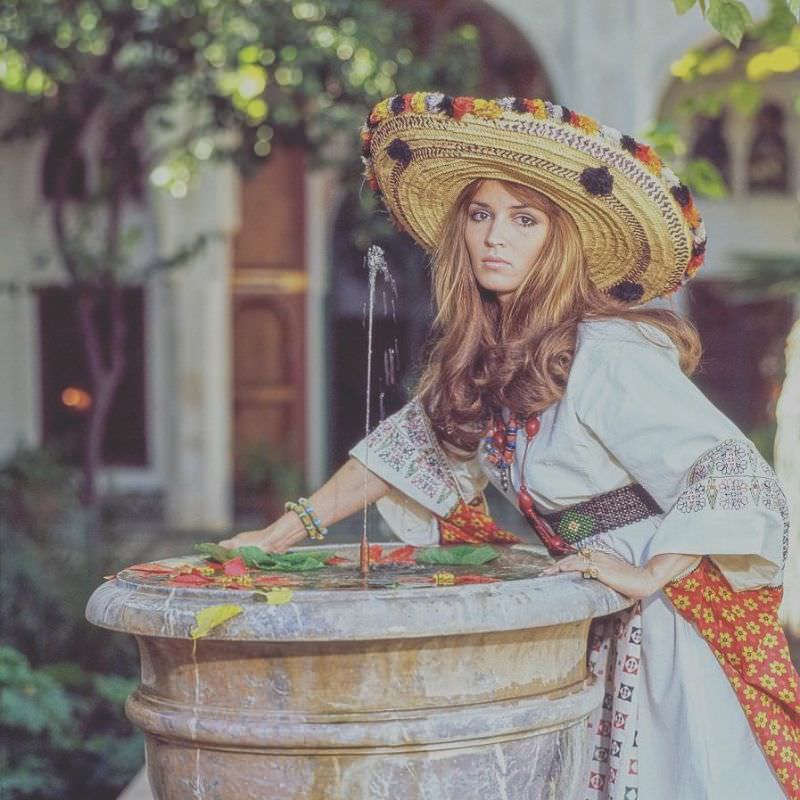
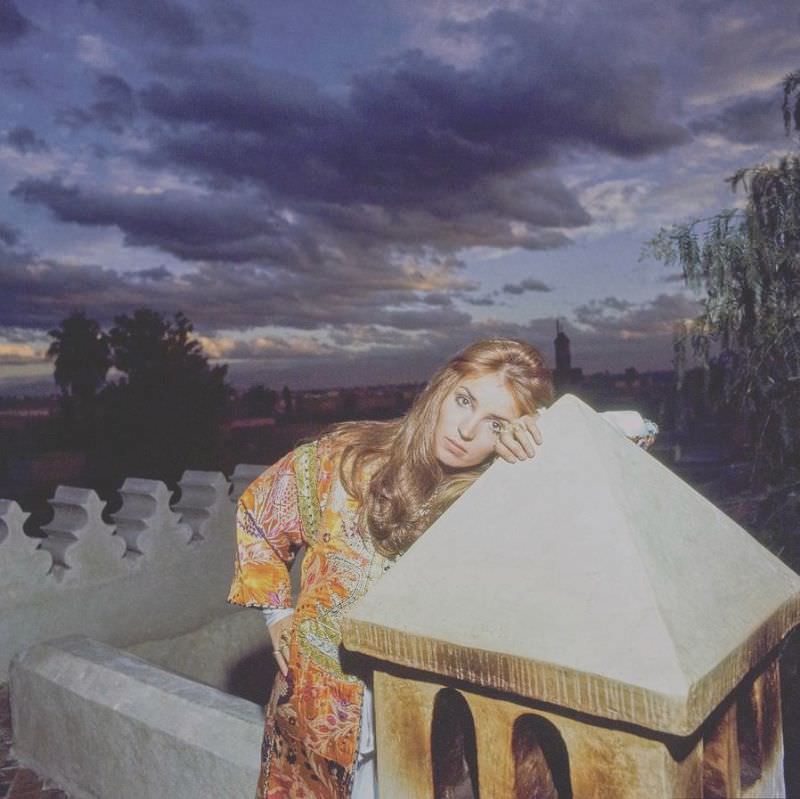
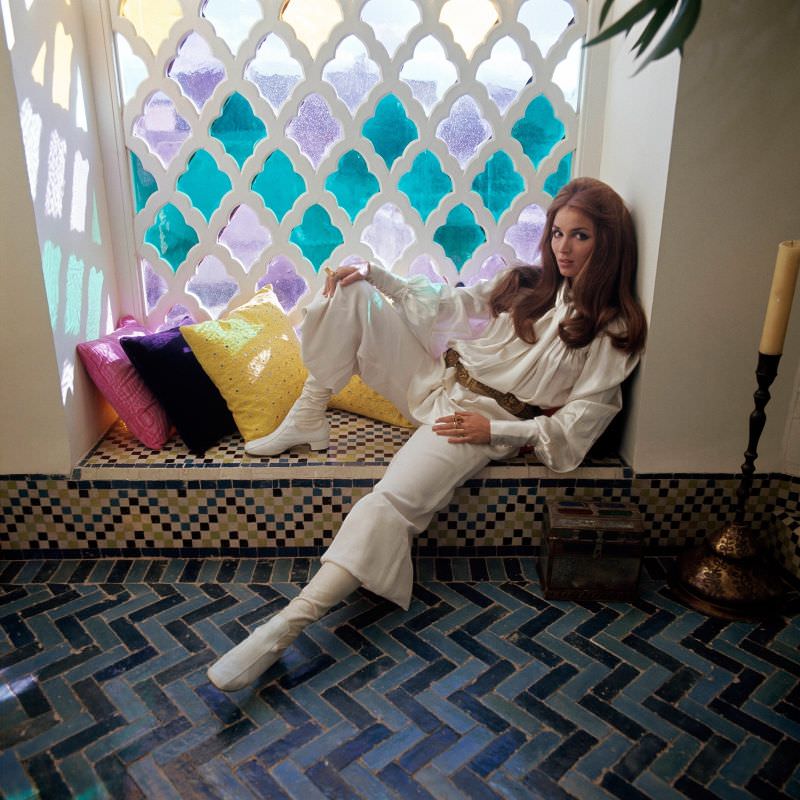
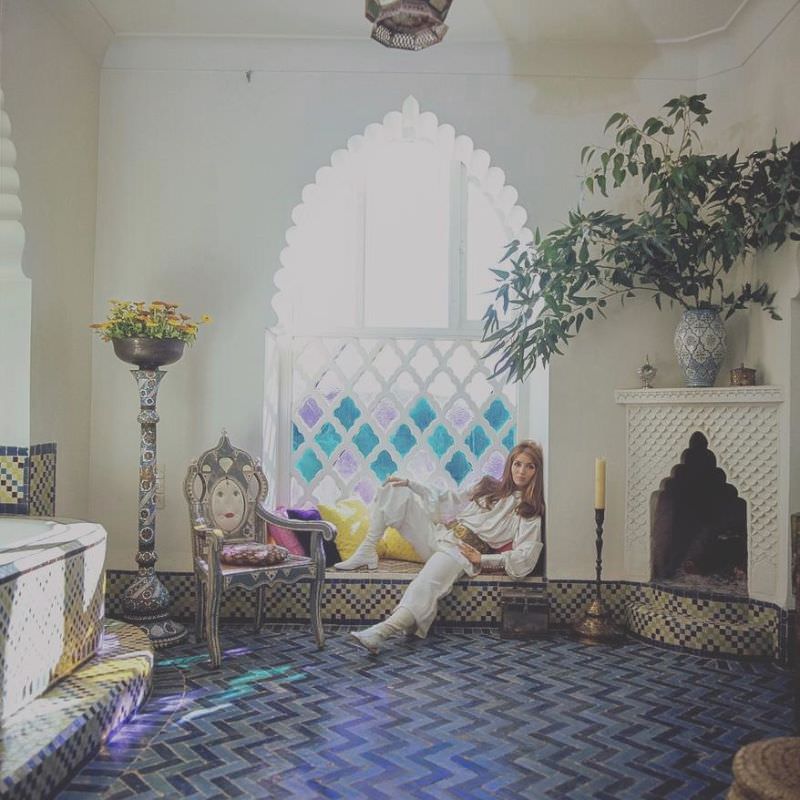
On January 15, 1970, photographer Patrick Lichfield traveled to Marrakesh, Morocco, to photograph John Paul Getty Jr. and his wife, Talitha Getty. The resulting images are among the most iconic style photographs of the entire decade. Shot across the couple’s garden, roof terrace, and the interior of their home, the photos captured a world that felt both exotic and effortlessly free. They defined what later generations would come to call “hippie chic” or “boho chic” — a look built around flowing kaftans, headscarves, bold patterns, and an unhurried ease that felt completely at home in the warm Moroccan light.
John Paul Getty Jr. — known as Paul — was the fifth son of oil tycoon J. Paul Getty, one of the richest men in the world. Paul had moved to Europe in the early 1960s to oversee his father’s Italian oil interests. It was during these years in Europe that he met Talitha Dina Pol, a Dutch socialite and model whose beauty and personality made her one of the most captivating figures in the late 1960s jet set. The two married in Rome in 1966 after a long-distance romance that stretched across several years.
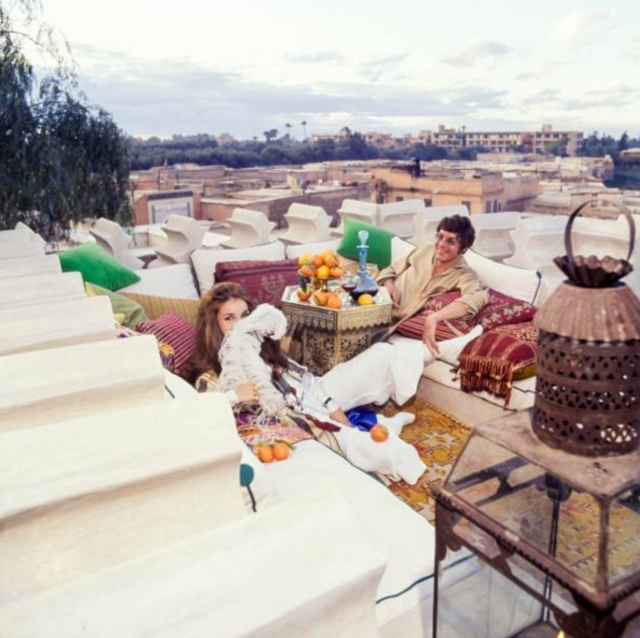
By the late 1960s, Marrakesh had become a favored destination for wealthy Europeans and artists seeking something outside the ordinary. The Gettys embraced it fully. Their Moroccan home served as a gathering place for the international creative crowd that moved through the city. Lichfield’s photographs on the roof terrace show the couple relaxed and at ease, with the rooftops of Marrakesh spreading out behind them.
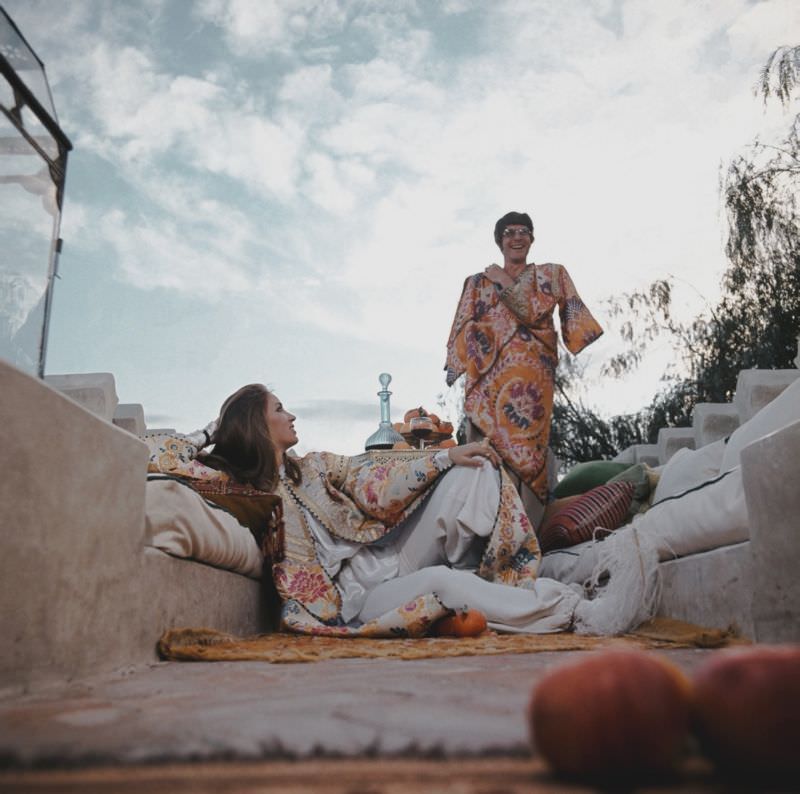
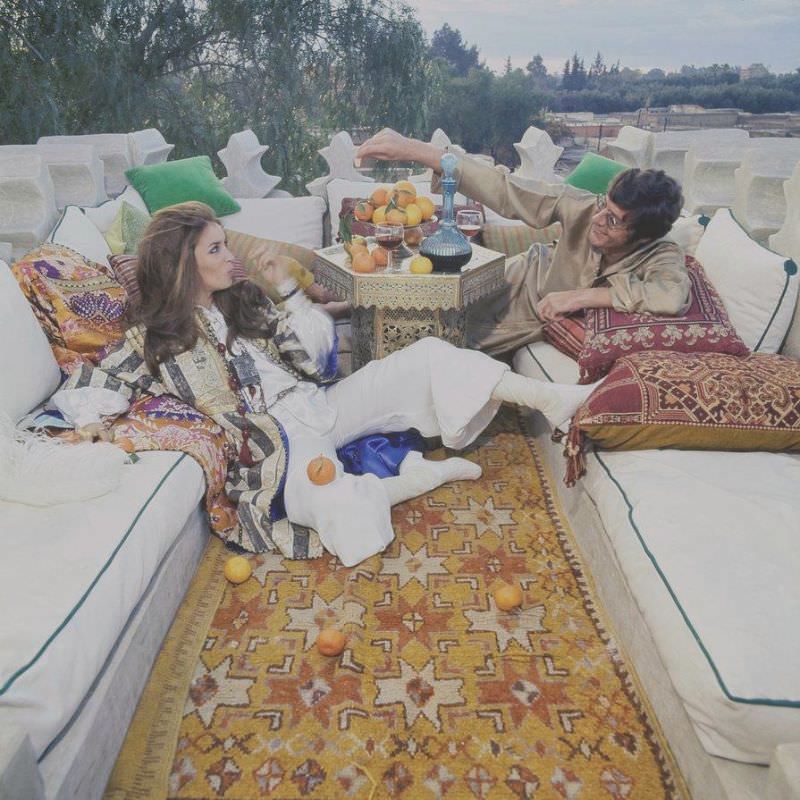
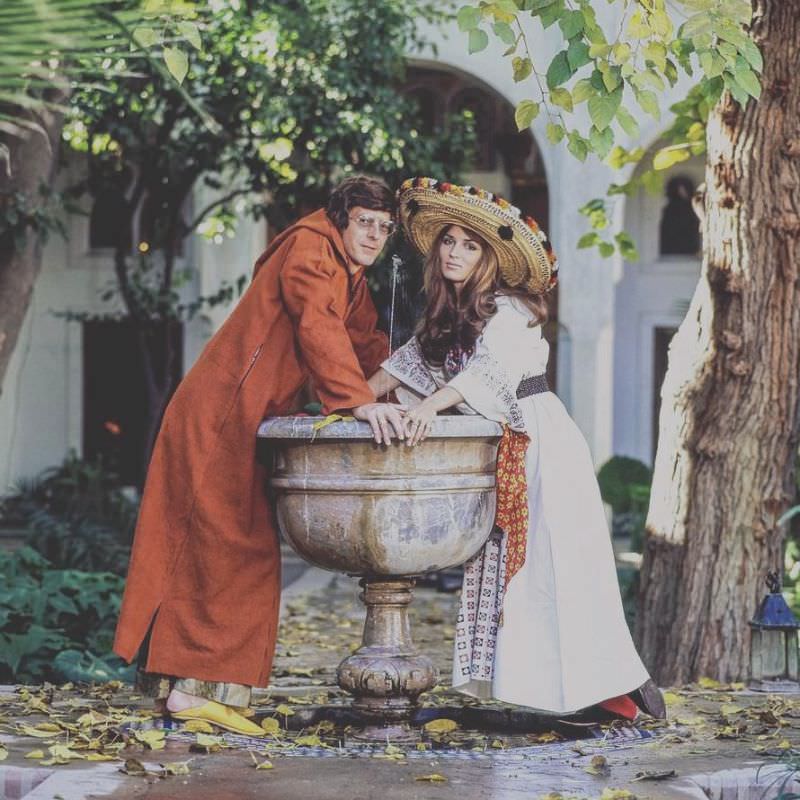
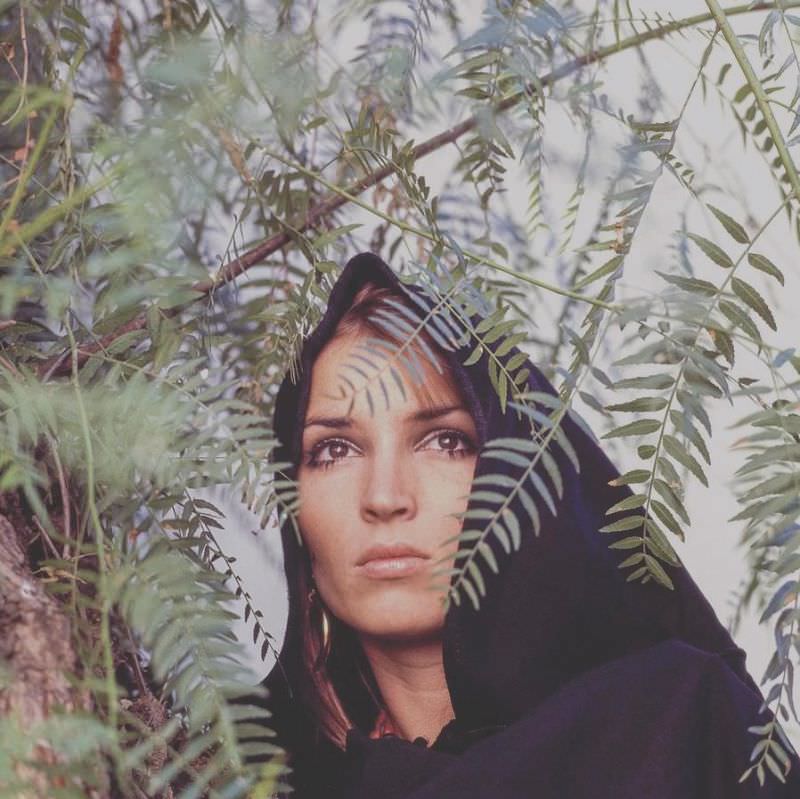
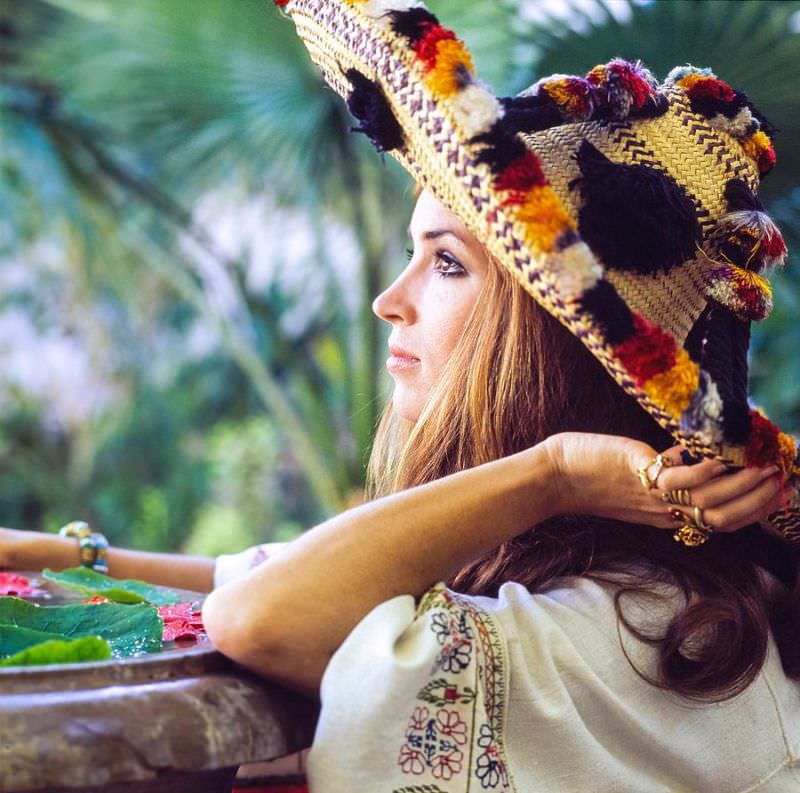
Talitha’s wardrobe throughout the shoot was a masterclass in the era’s most adventurous dressing. She wore flowing kaftans, a wide-brimmed sombrero, turbans, and headscarves — each look completely natural on her. The garden photographs, in particular, show her in richly patterned kaftans alongside Paul, the two of them framed by the architecture and greenery of their Moroccan retreat.
Patrick Lichfield — formally Thomas Patrick John Anson, 5th Earl of Lichfield — was one of Britain’s most prominent photographers at the time. A cousin of Queen Elizabeth II, he moved comfortably in the same elite social circles as his subjects. His eye for natural, unforced moments gave the Marrakesh photographs their lasting power. He shot Talitha alone as well, and these solo portraits are among the most striking images of the entire session.
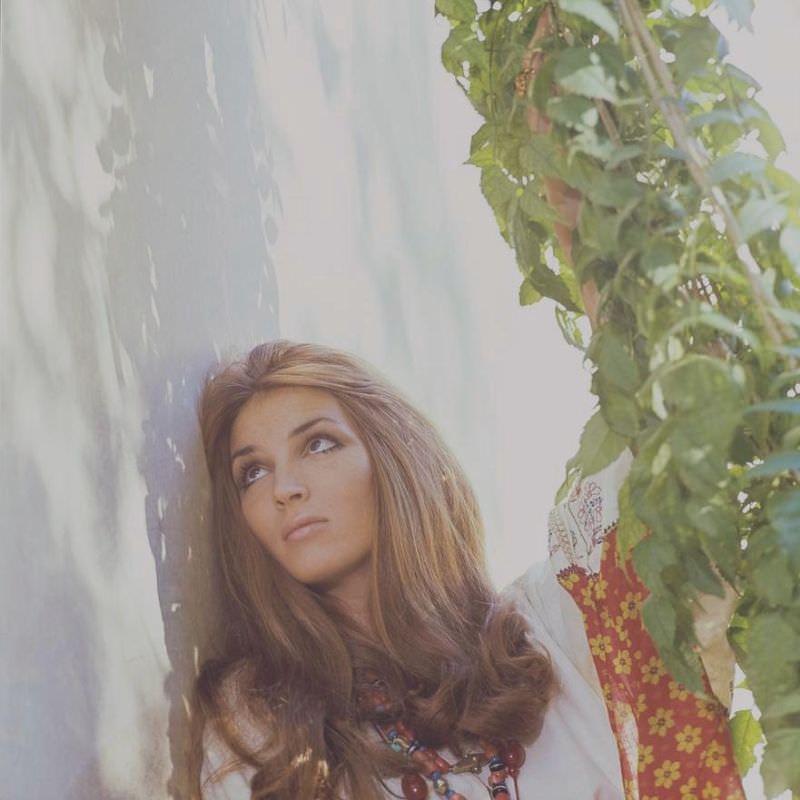
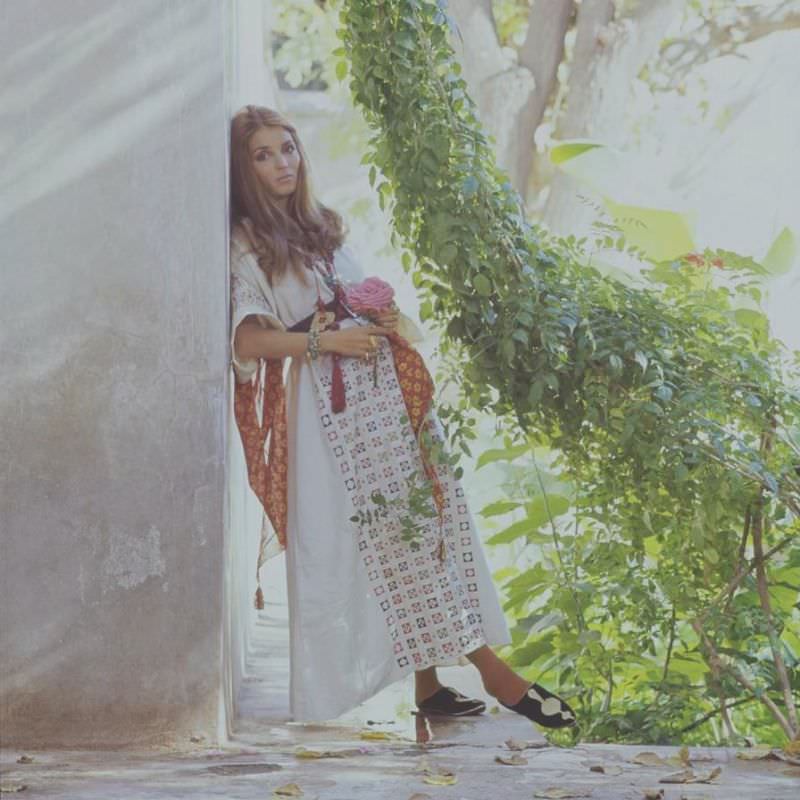
In several photographs, Talitha is pictured against the vine-covered walls of the house. The late afternoon light and the texture of the old stone walls give these images a timeless, painterly quality. Others show her seated by a window inside the home, dressed in a turban and kaftan, the interior’s rich fabrics and decor framing her perfectly.
Despite the beauty of these images, the years that followed were deeply troubled. By 1971, the couple had been living apart for some time, and Talitha asked Paul for a divorce. Paul refused to accept the end of the marriage. Her lawyers advised her that demonstrating an attempt at reconciliation would help the divorce proceedings move forward, so on July 9, 1971, Talitha flew to Rome. She was found dead in their apartment on the Piazza d’Aracoeli on July 11, 1971. Her death was caused by a heroin overdose. The Italian press reported speculation that Paul’s continued heroin use had contributed to Talitha’s relapse.
Talitha’s autopsy was not conducted until eight months after her death. The delay made the findings inconclusive, as heroin can remain detectable in the body for an extended period, making it impossible to pinpoint exactly when the drug was taken. Italian authorities opened a formal investigation into her death in January 1973 and requested that Paul Jr. be interviewed. In February 1973, fearing arrest and prosecution for his own drug use, Paul fled Italy for the United Kingdom. He never returned to Italy.