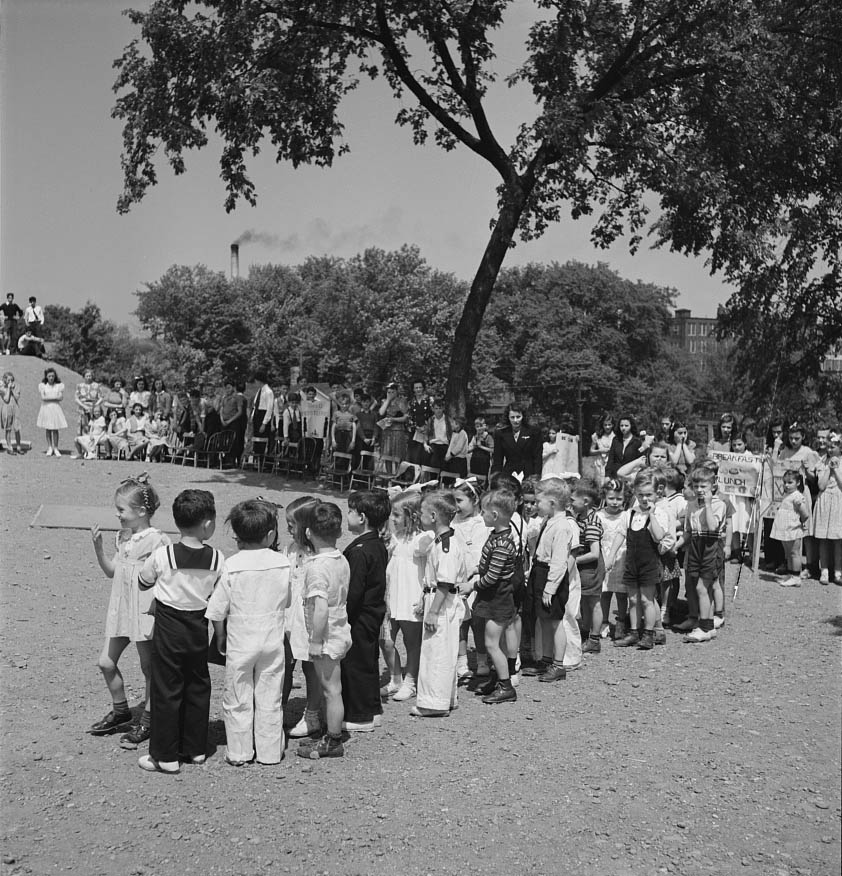
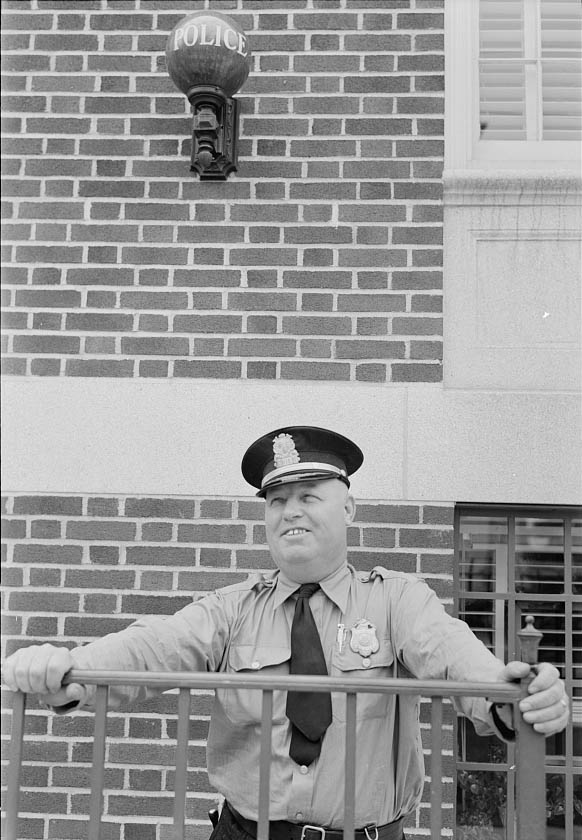
Hey There! Before You Go. 😧
Get the best vintage content straight into your inbox!

Don't worry, we don't spam

Fascinating Historical Photos of Life in Southington, Connecticut During WWII

In 1942, the U.S. War Department selected Southington, Connecticut, as the subject of a defense booklet titled “Southington, CT — Microcosm of America.” The town had a population of just under 10,000 at the time, and according to the Southington Observer, 1,591 of those residents served in World War II. That means roughly one in every six people in town put on a uniform. The War Department wanted to show the American public — and the world — what a typical U.S. town looked like during wartime. Southington was that town.

To document it, the military turned to Charles Fenno Jacobs. He was a seasoned photographer whose work had appeared in Time, Life, National Geographic, Fortune, and U.S. Camera. His strength was capturing people in unguarded, authentic moments. Shortly after the Japanese attack on Pearl Harbor, Jacobs was recruited by Edward Steichen to join the Naval Aviation Photographic Unit — a group established by the U.S. Navy specifically to document and publicize its aviation operations. Before that assignment took over, Jacobs spent time in Southington photographing everyday life: families at the dinner table, kids at school, workers on factory floors, and neighbors at town meetings.
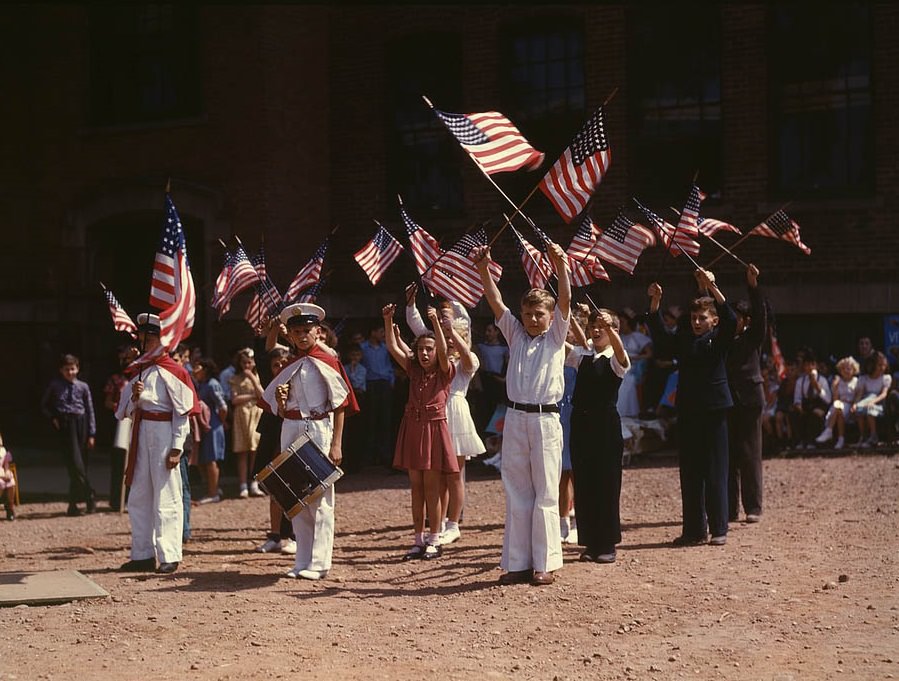
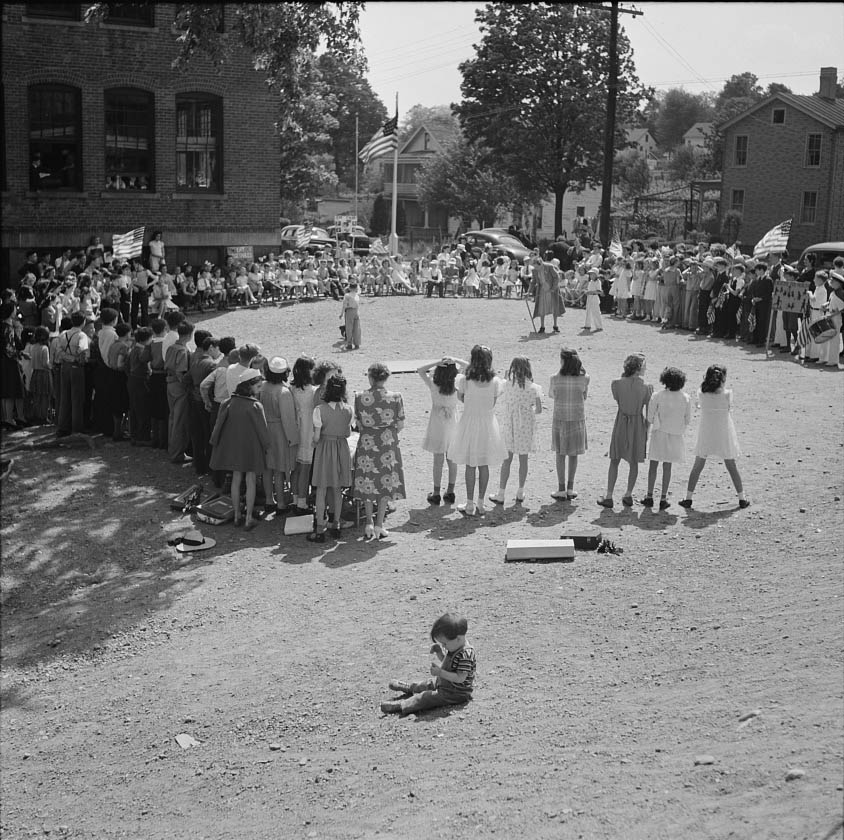
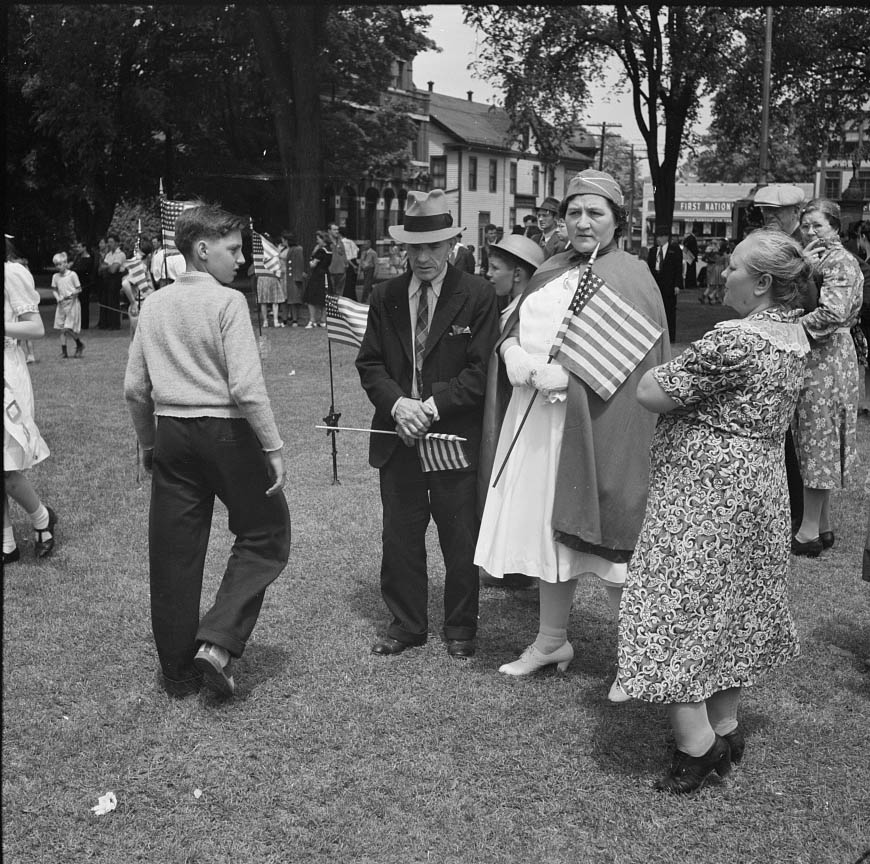
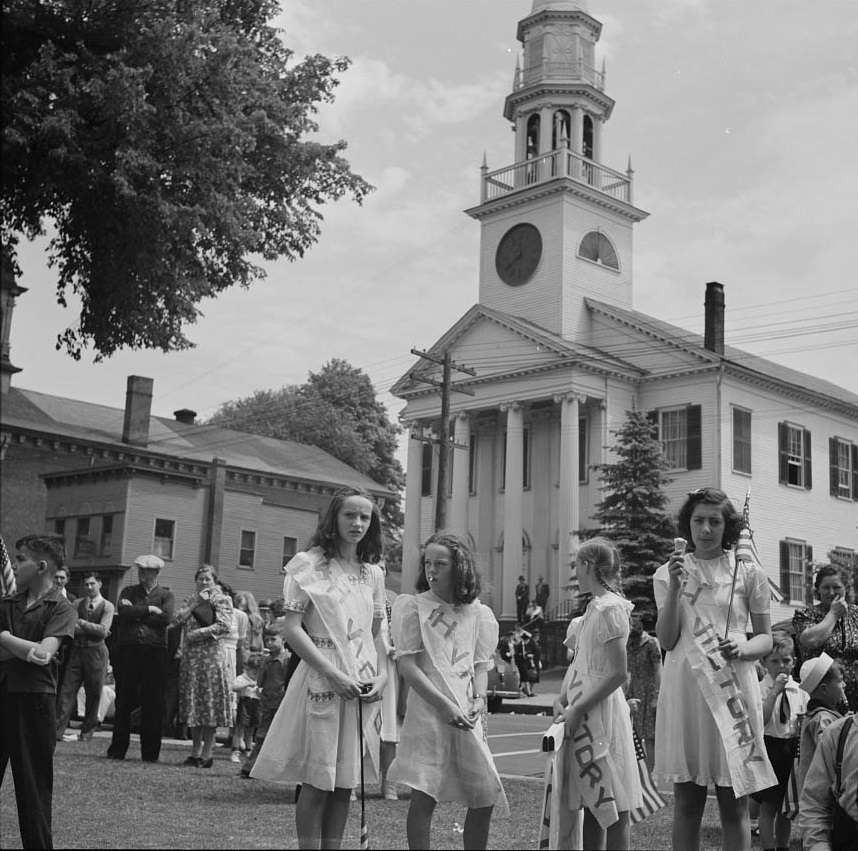
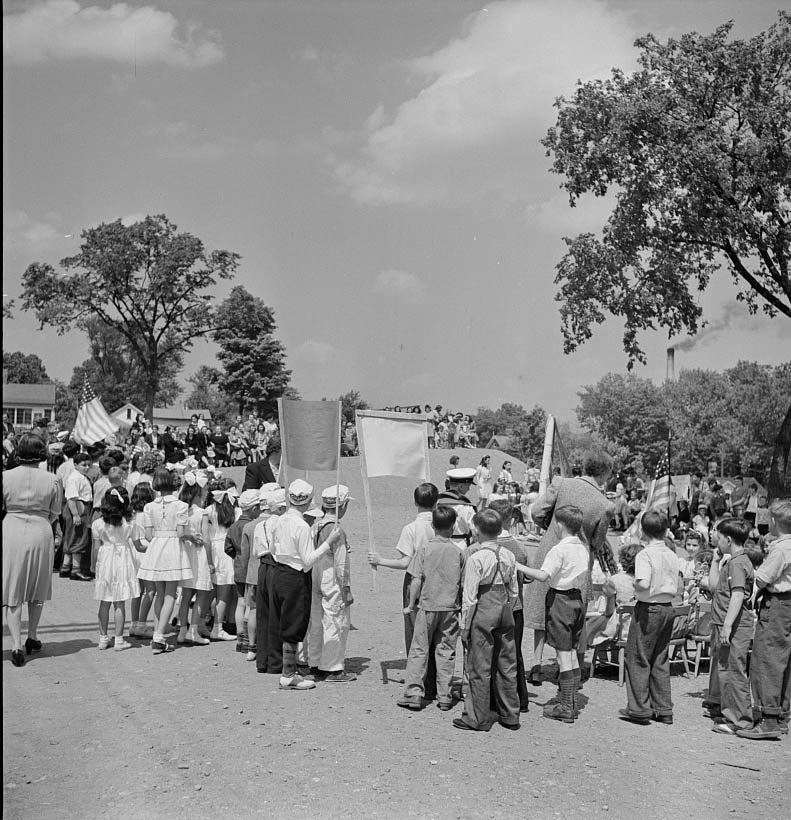
Children stage a patriotic demonstration, Southington, 1942

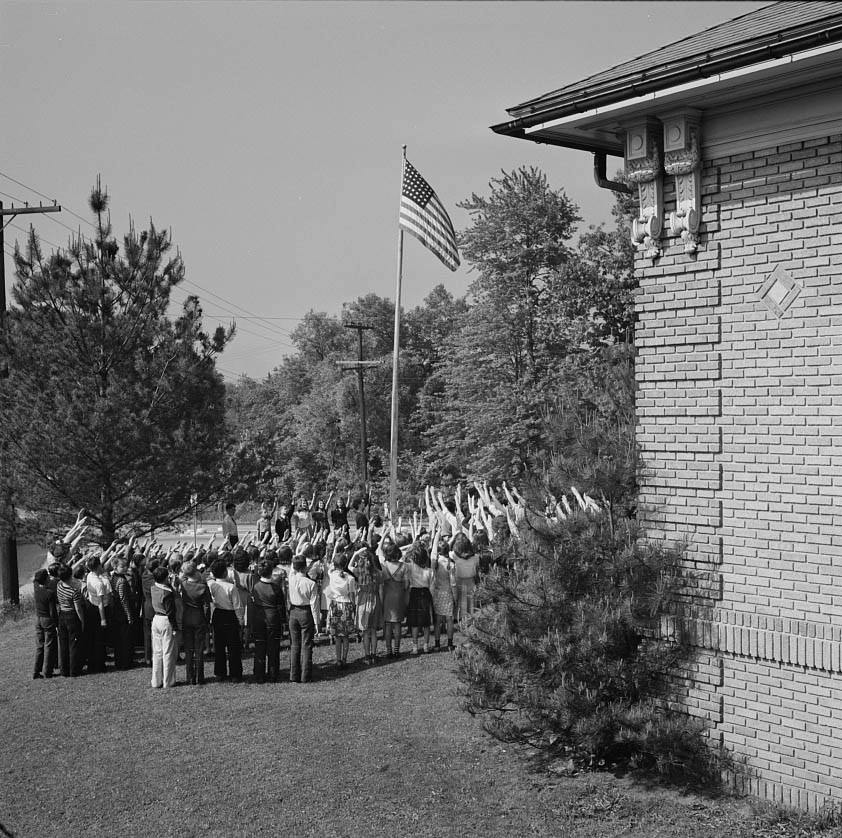
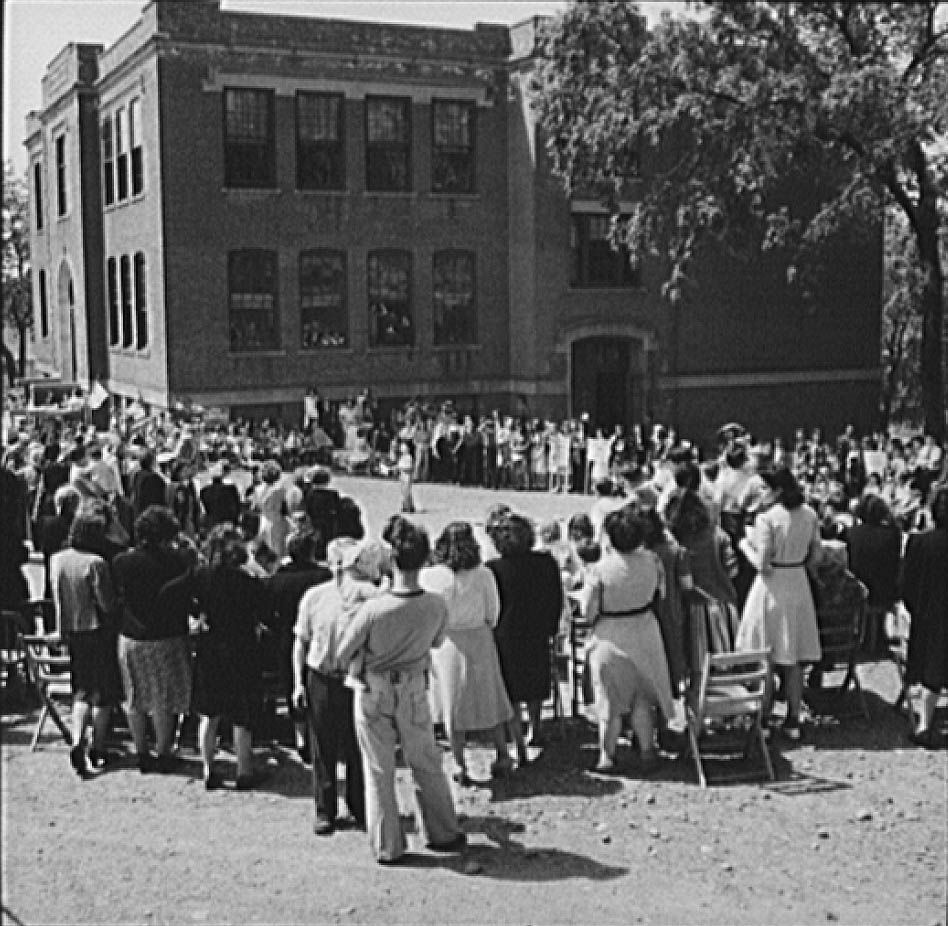
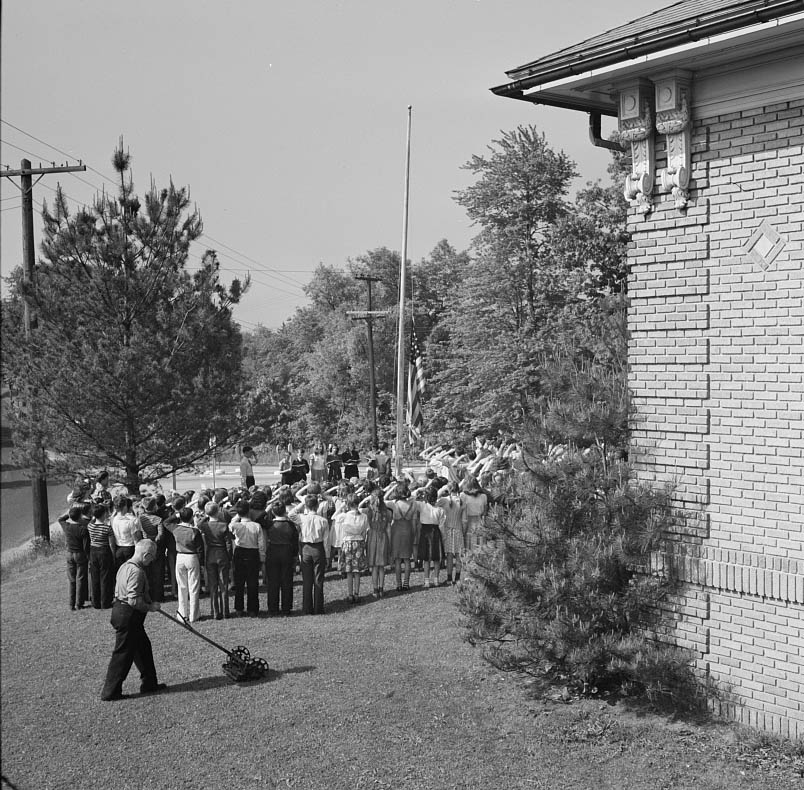
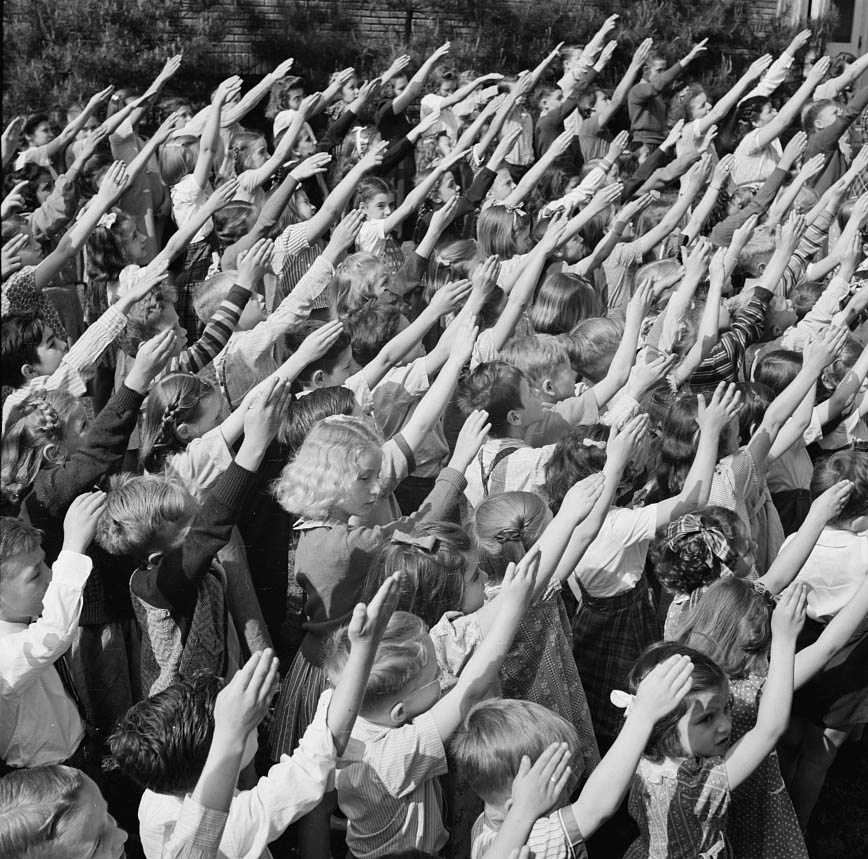
Patriotism was visible everywhere in Southington in 1942. Children took part in public demonstrations and led pledge ceremonies at school. These were not just feel-good moments — they were part of a broader effort to maintain morale and reinforce a sense of shared purpose while so many family members were overseas.
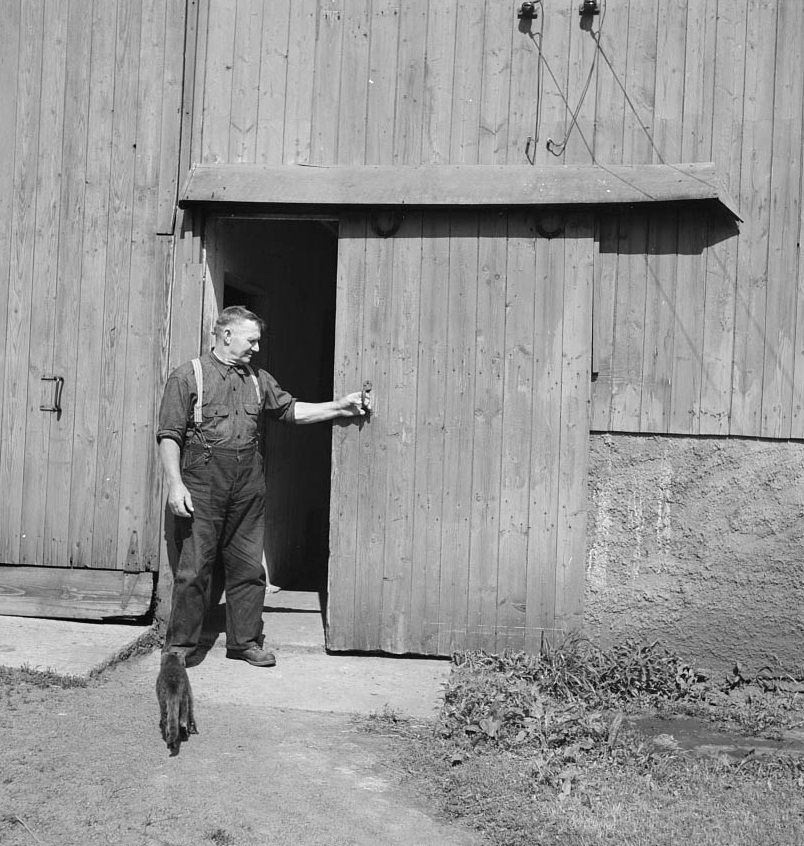
Andrew Smedberg came to America twenty-two years ago from Sweden.

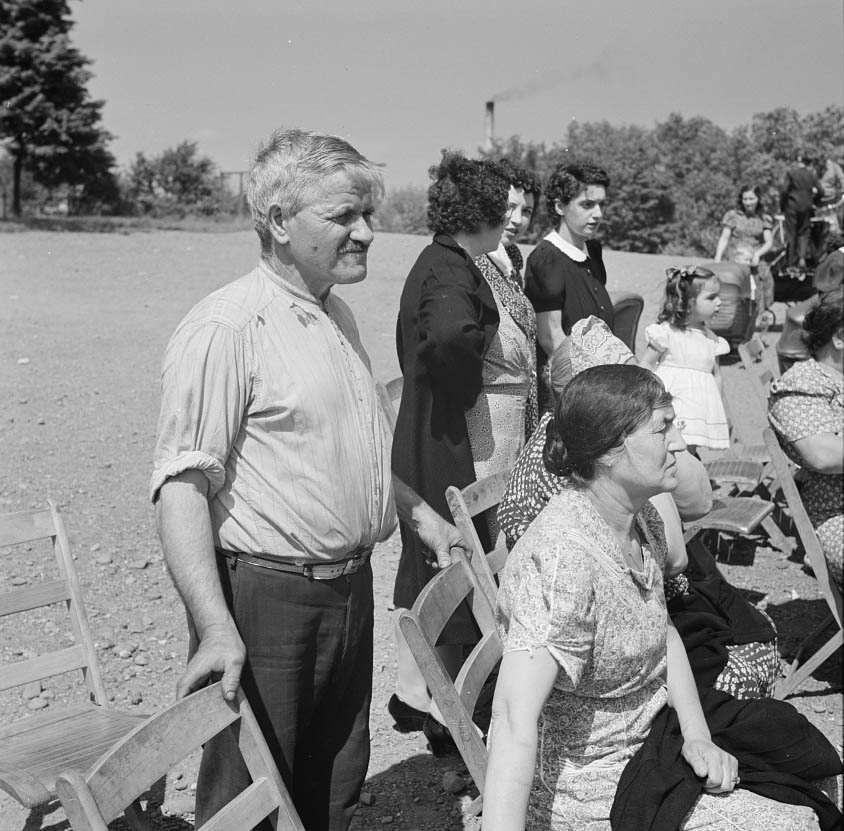
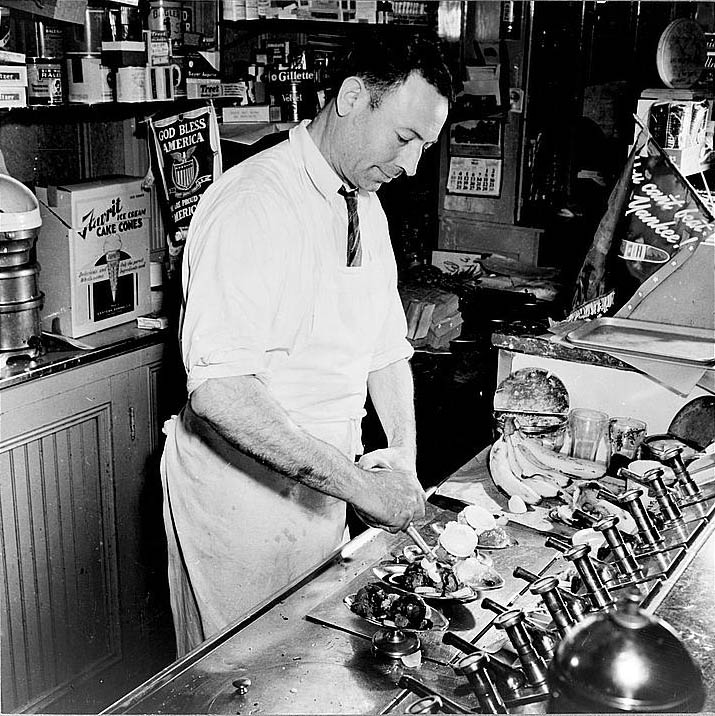
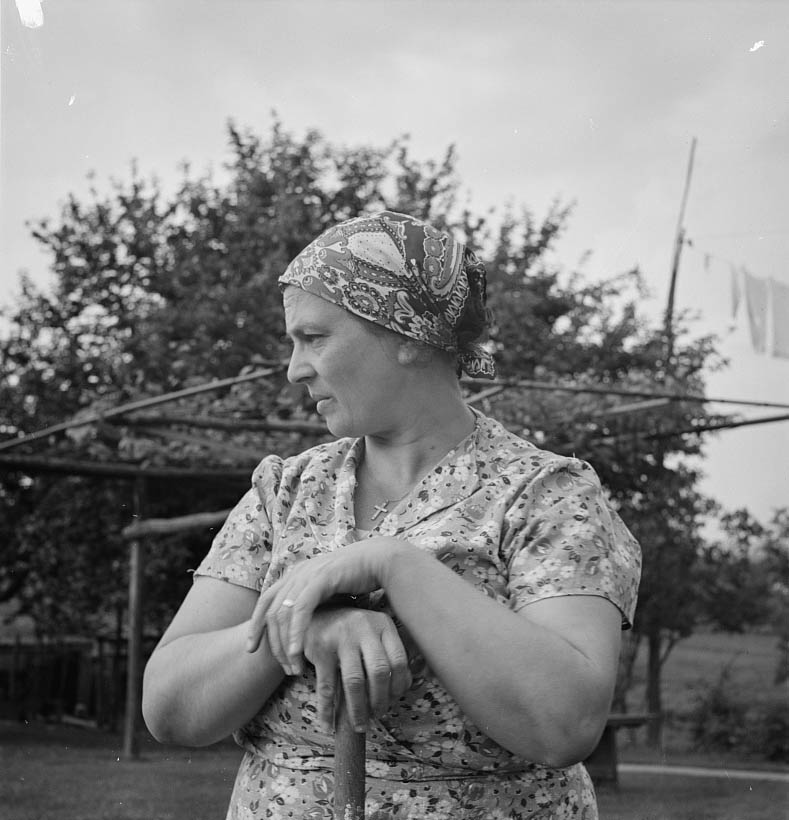
Southington was a town built largely by immigrants. Andrew Smedberg had arrived from Sweden broke and built a thriving dairy farm that supported his family of seven through hard work alone. James Pompey had come from Italy twenty years earlier on the advice of a brother, and he too farmed the land. Dimitrios Giorgios arrived from Greece, opened a soda fountain, and when the U.S. entered World War I, he enlisted — becoming a proud member of the American Legion. Mrs. John Chimbor came from Iceland twenty years before Jacobs arrived with his camera. These were the faces of Southington.
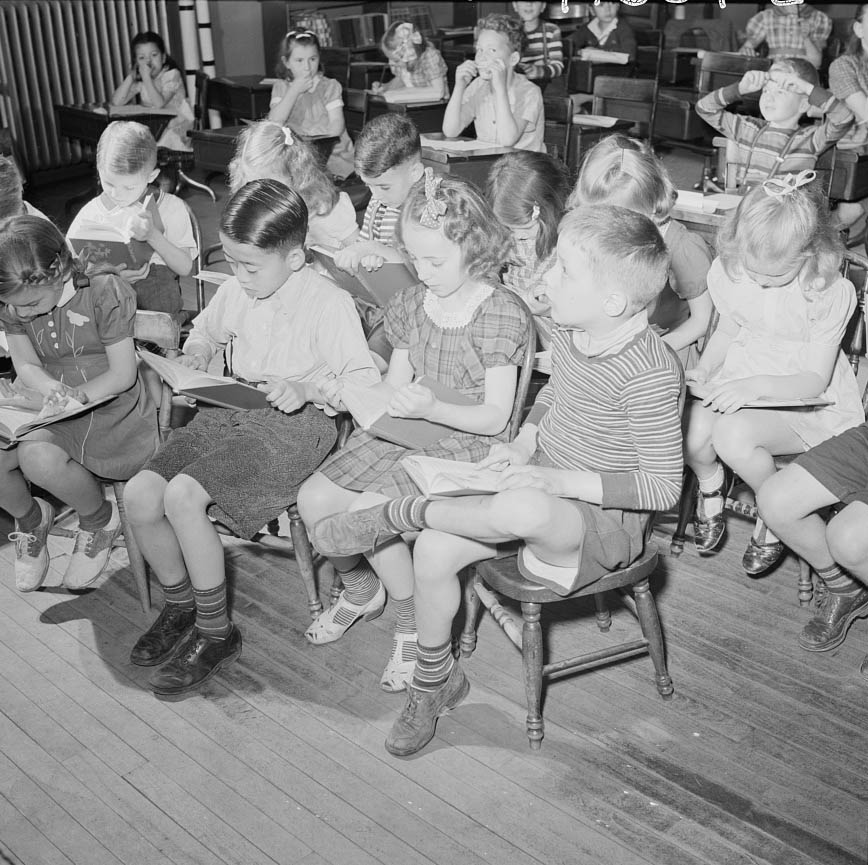
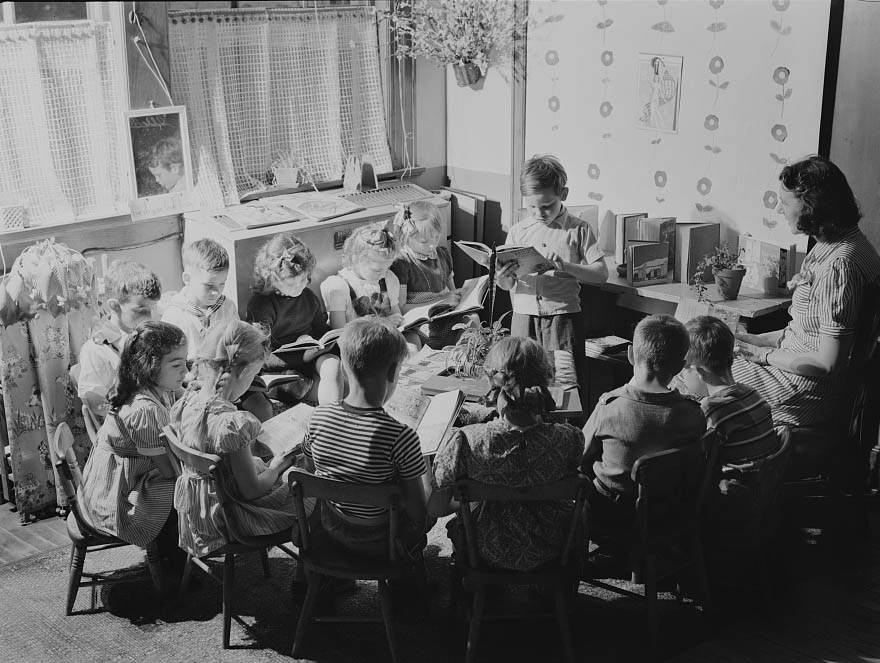
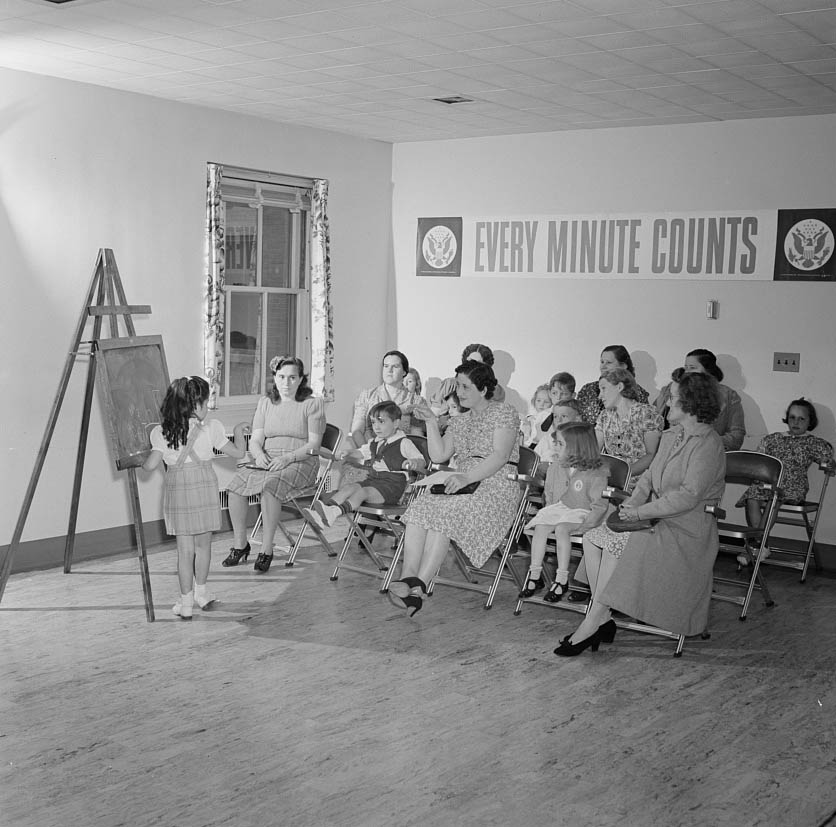
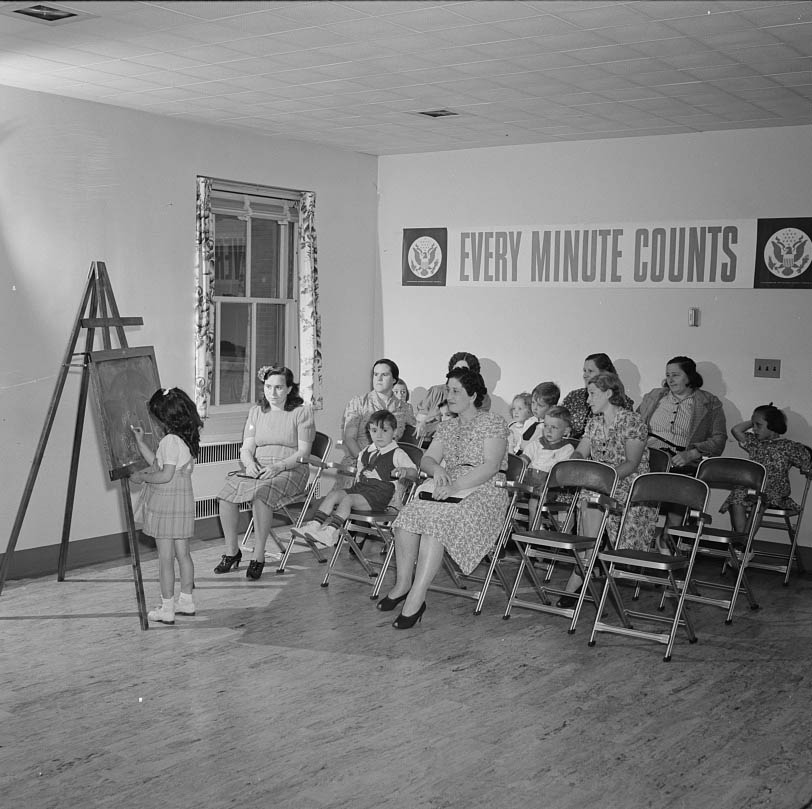
Class instruction, 1942
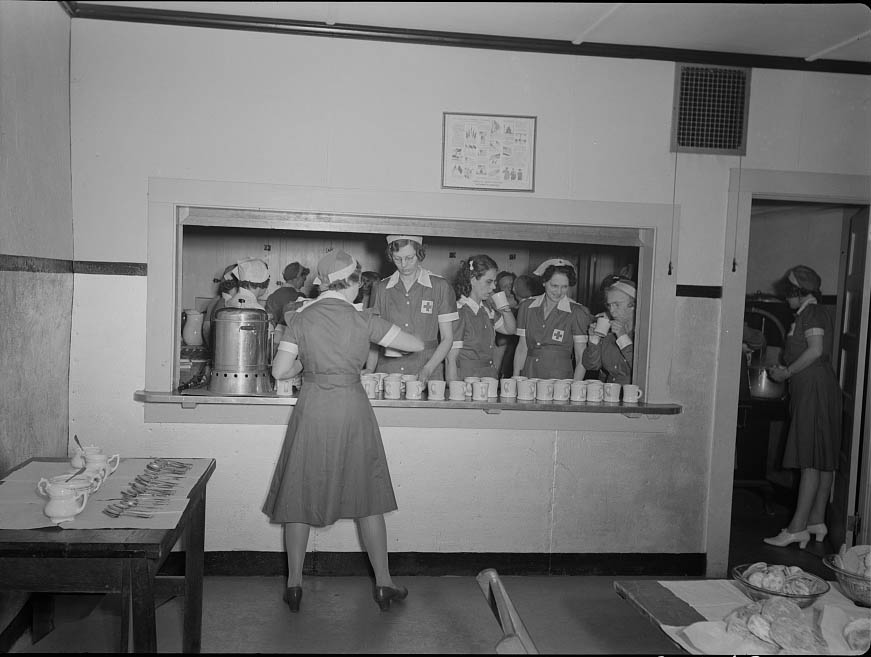
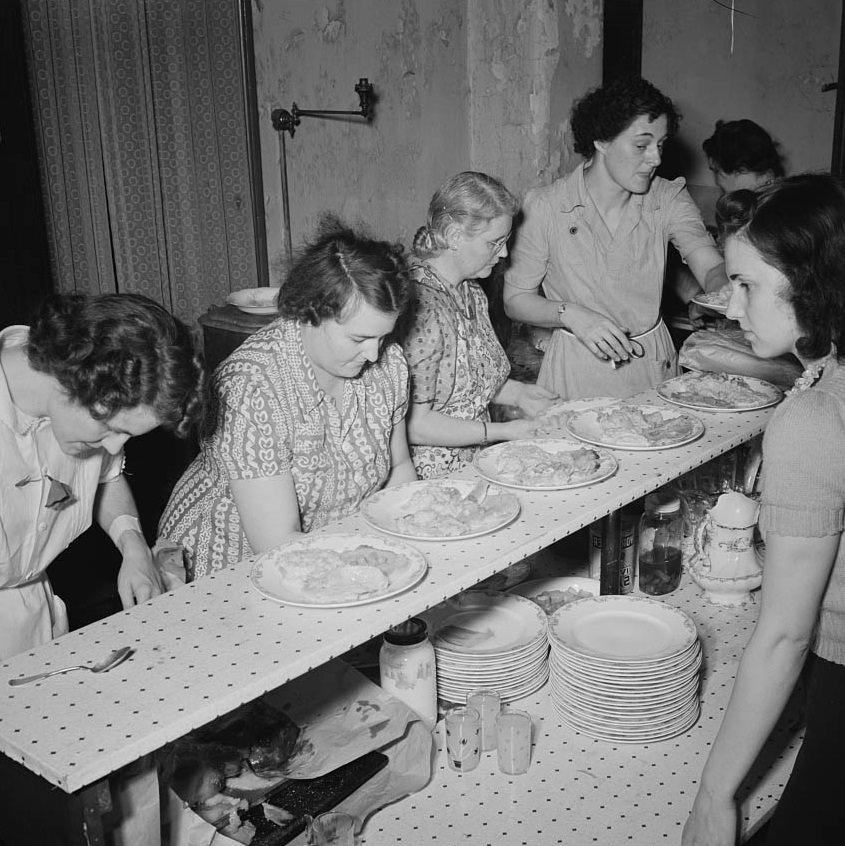
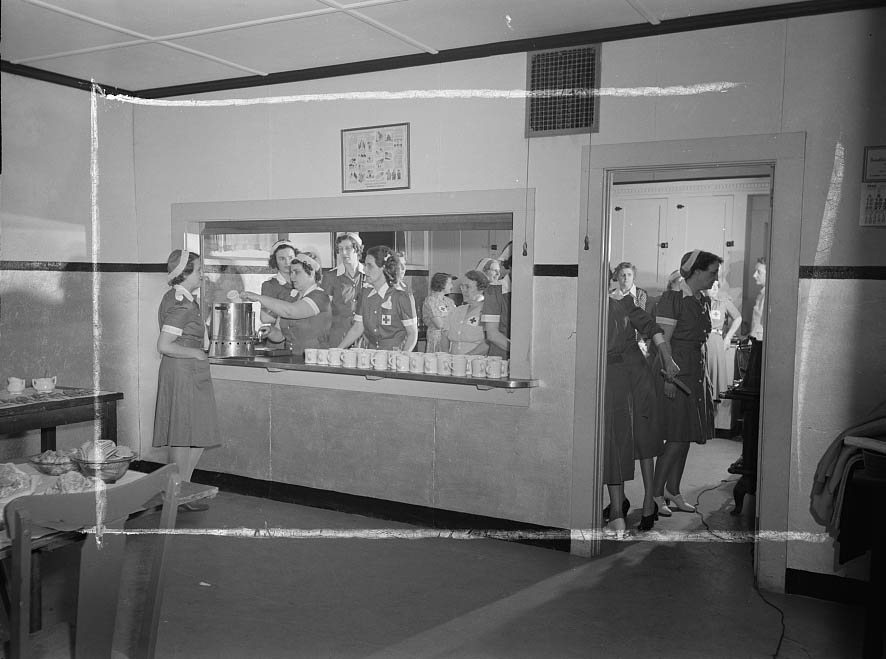
Red Cross mess hall, 1942

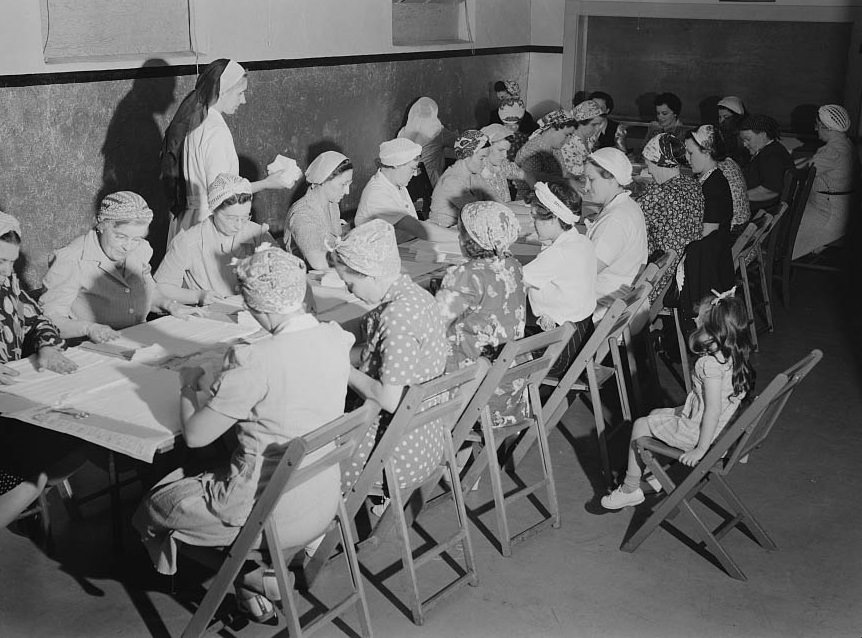
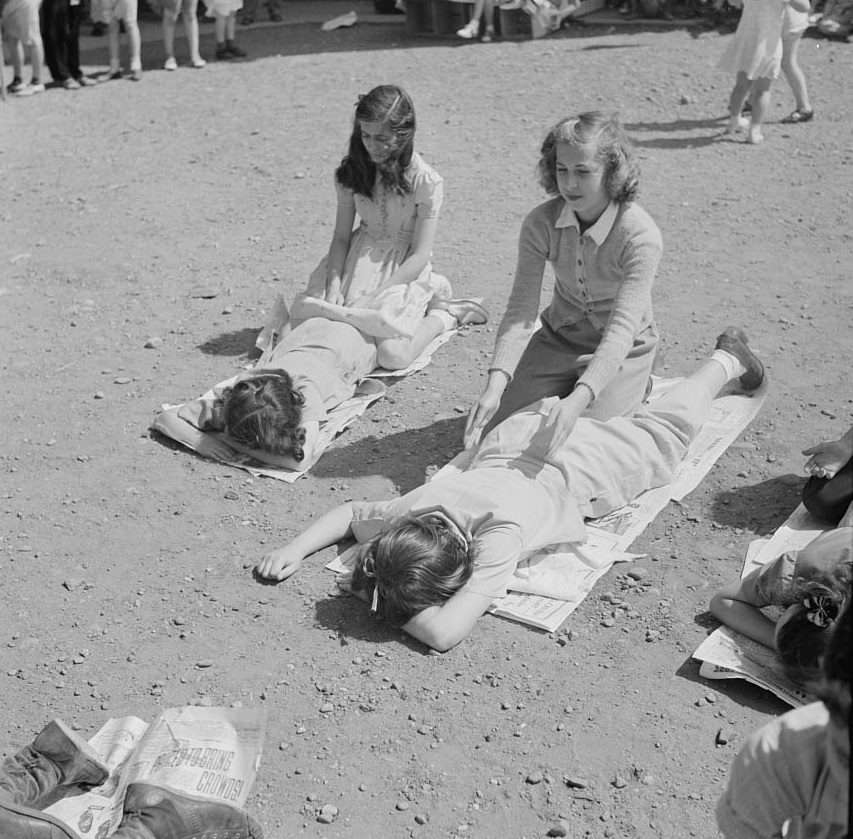
The war effort shaped nearly every corner of daily life. The Red Cross maintained a mess hall in town, and women gathered regularly to roll bandages and prepare surgical dressings. Residents enrolled in Red Cross nursing courses and received certificates upon completion. Southington also had 250 trained air raid wardens who held weekly meetings to stay prepared. First aid courses were routine — photographs show students practicing artificial respiration on one another.
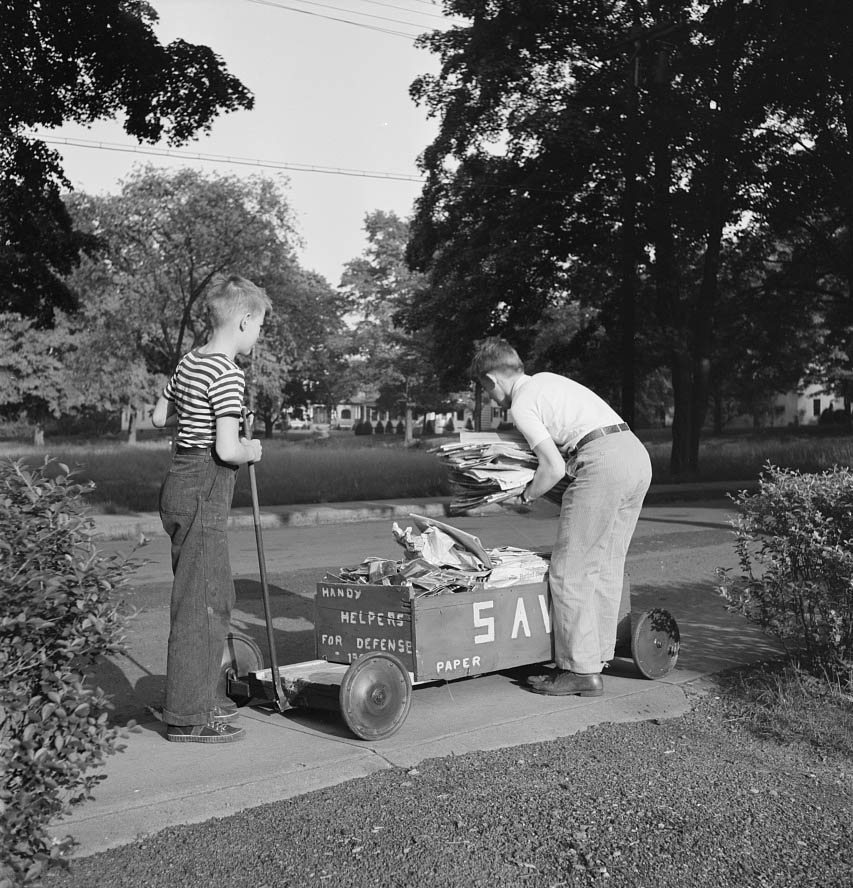
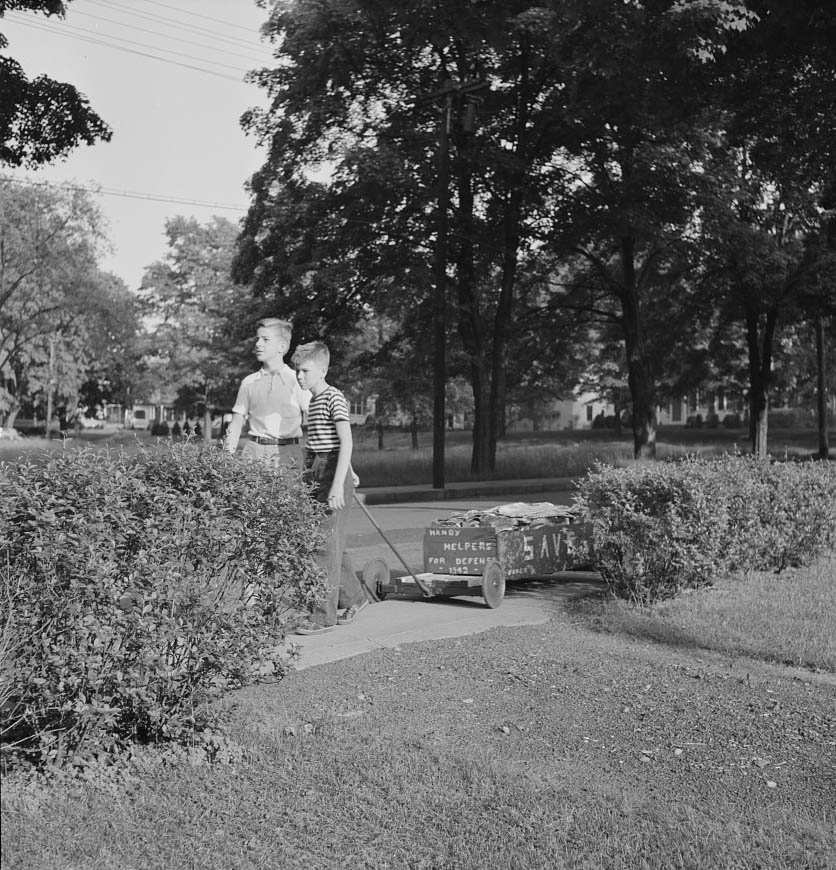
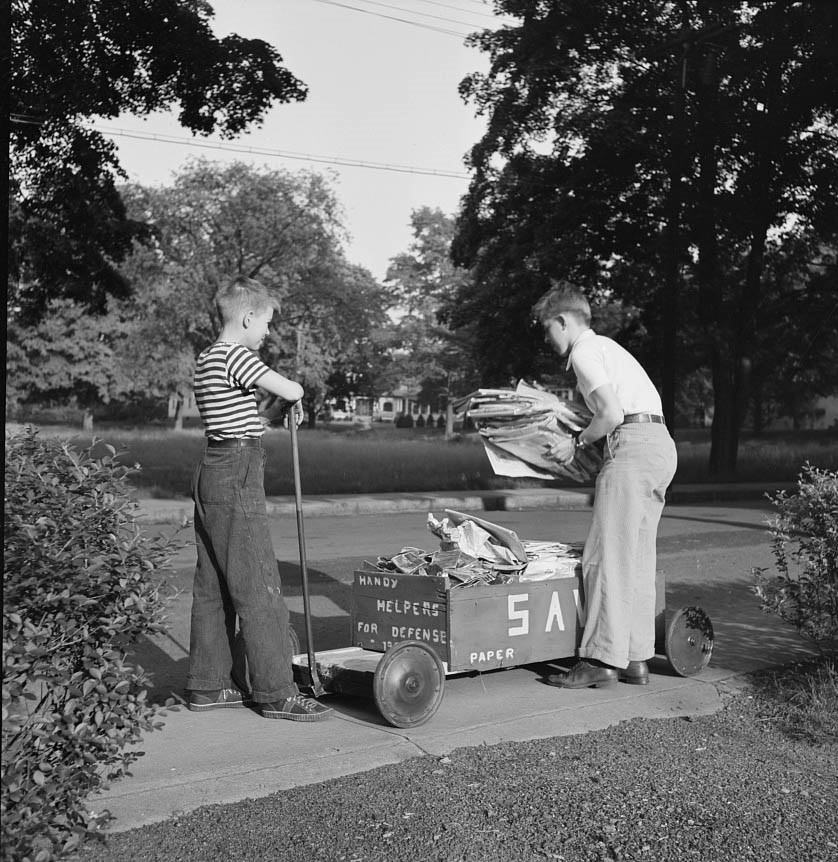
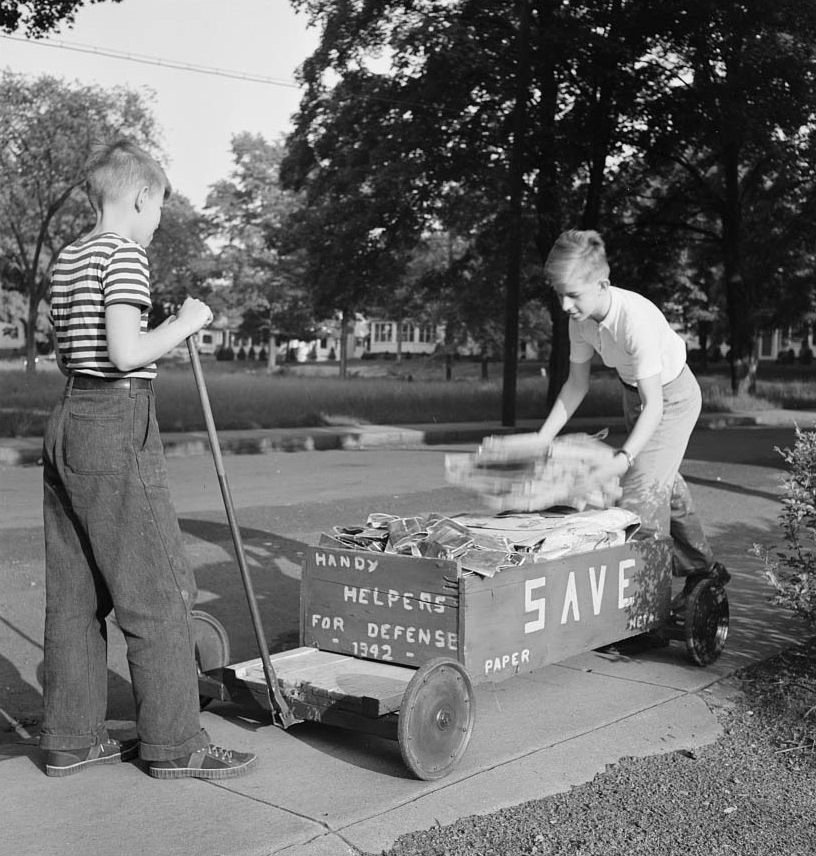
Boys collecting paper for war conversion, 1942
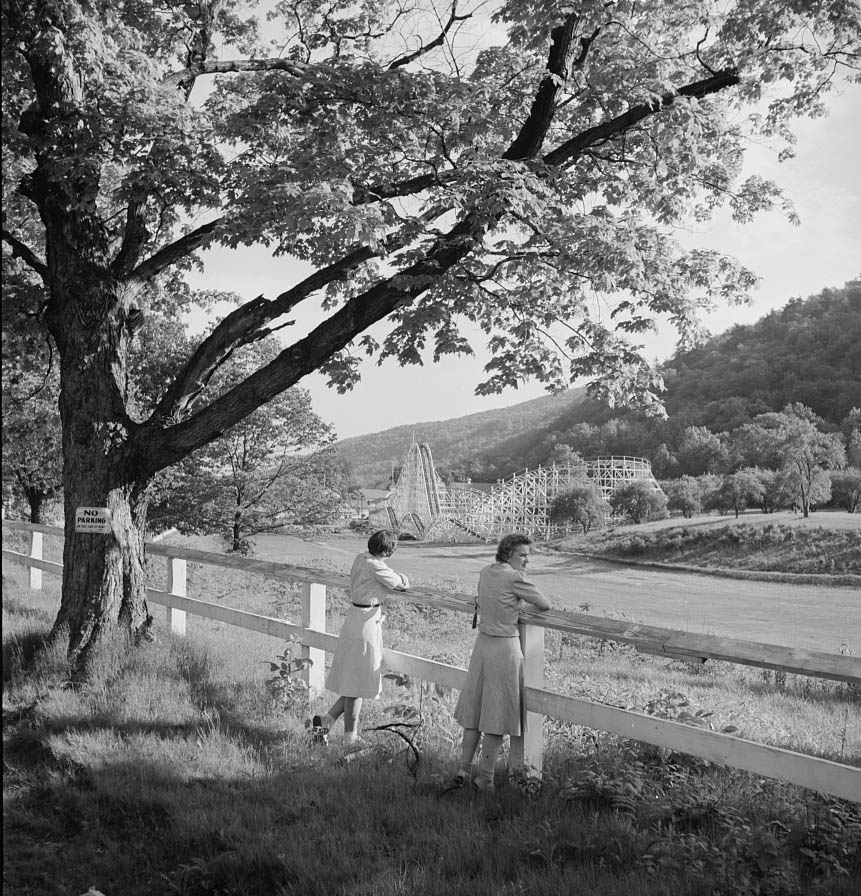
Amusement Park, 1942

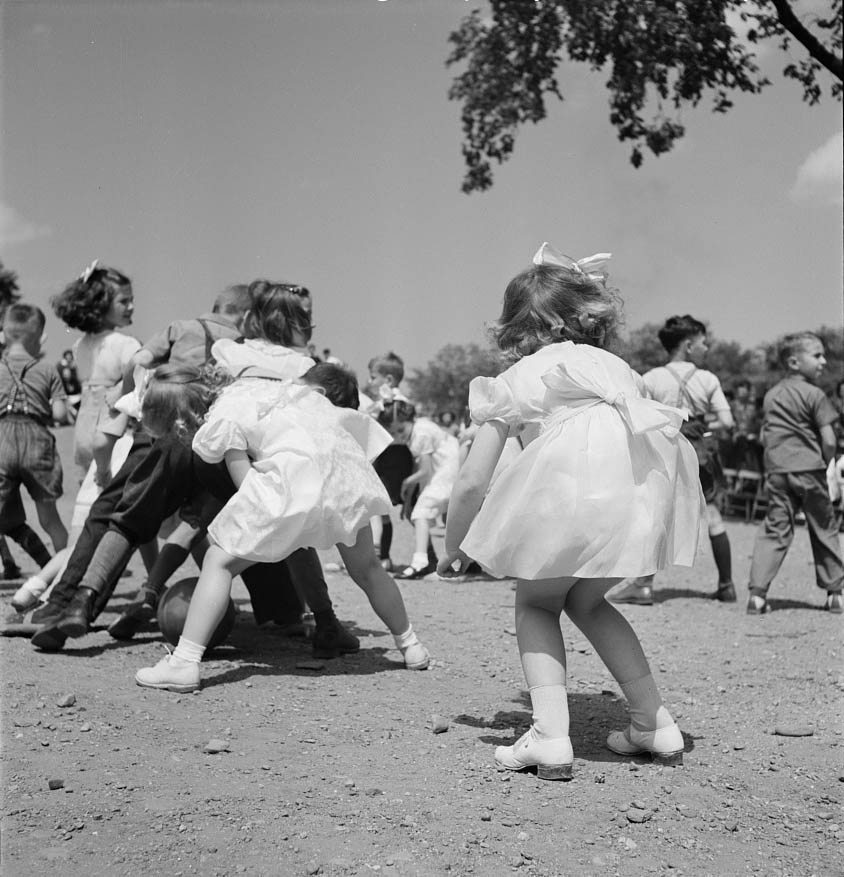
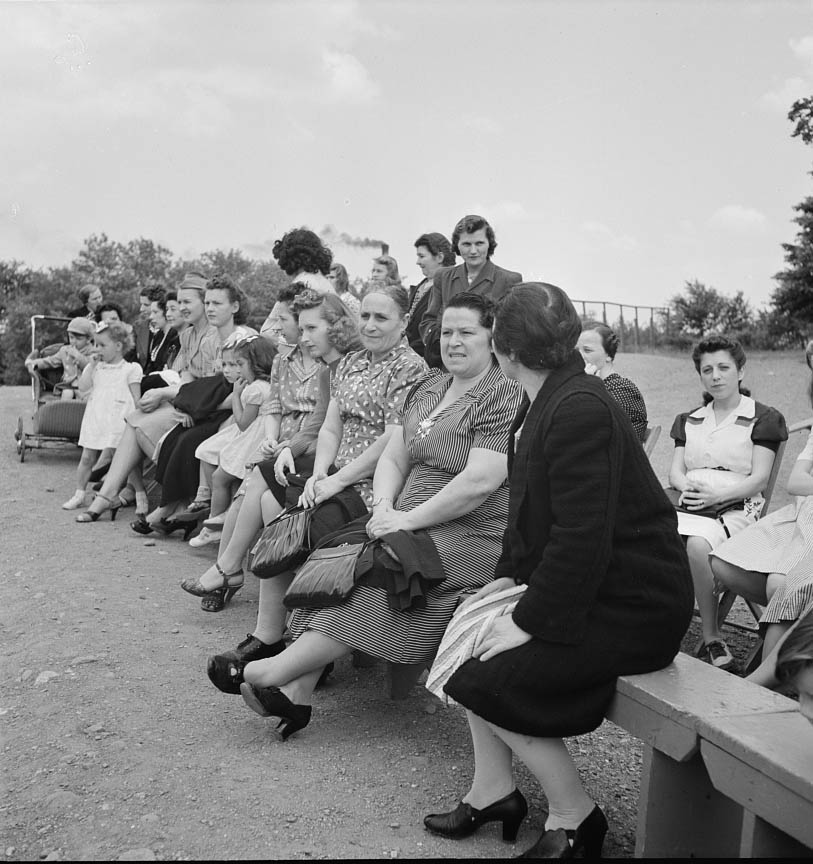
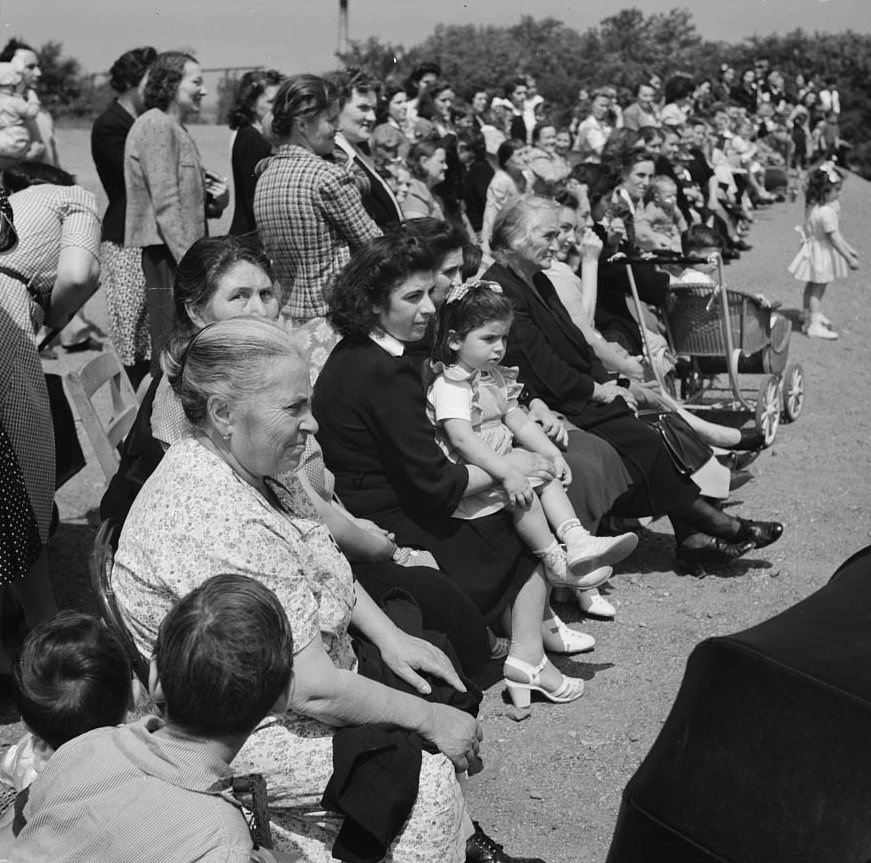
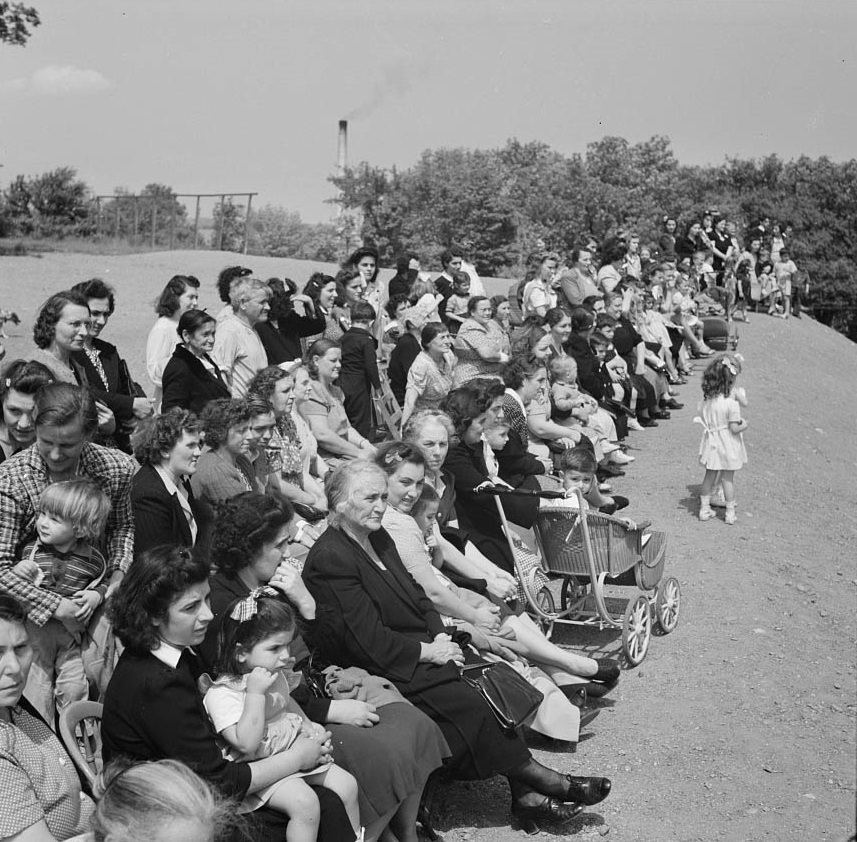
Even children were pulled into the war effort. Boys collected paper across the neighborhood for war conversion drives — scrap material was desperately needed for manufacturing. But childhood still had room for fun. The local amusement park and playgrounds were active, and young people gathered to watch games and cheer on their peers.
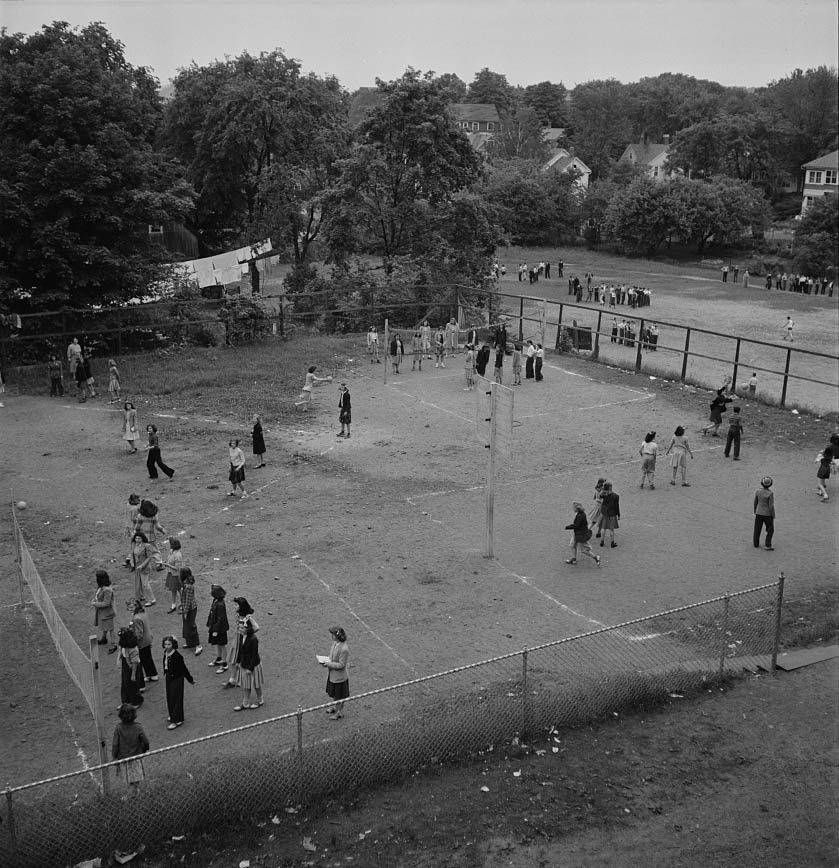
Playground in Southington, 1942
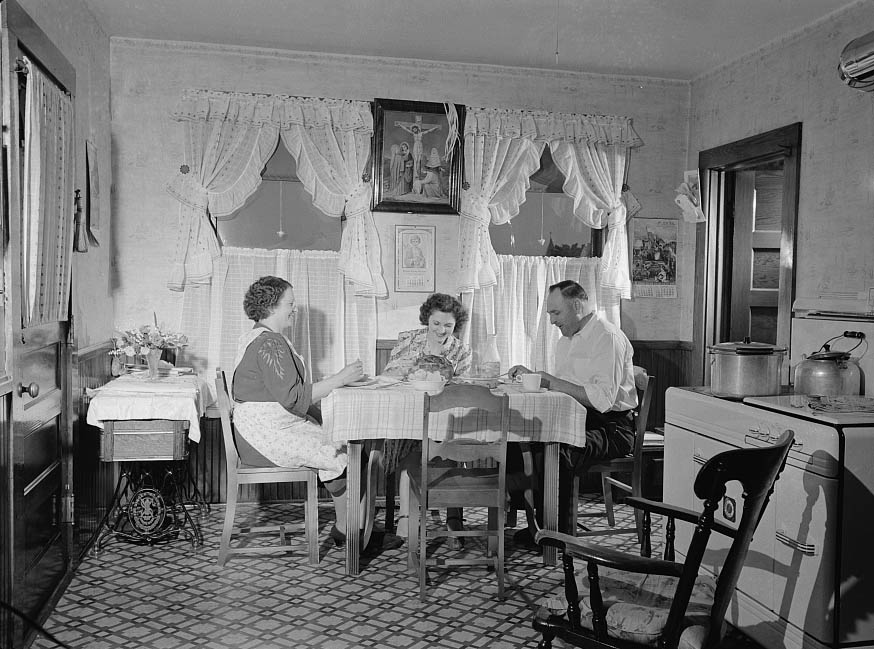
Ralph Eurlbut and his family at mealtime, 1942

Jacobs photographed families at home, capturing the ordinary rhythms of life that the war was being fought to protect. Meals around the kitchen table, kitchen scenes, and quiet domestic moments made up a significant portion of his work in Southington. These images were meant to give the defense booklet a human face — to show that behind every statistic about war production and military service was a family eating dinner.
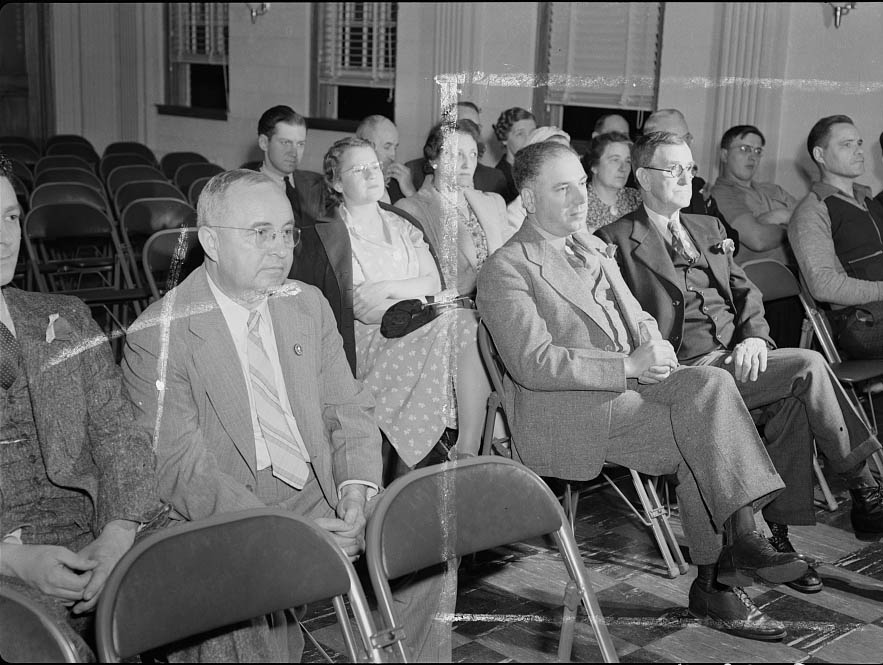
First Selectman (for 1942) James Simone (left) attending the town meeting in his capacity as citizen.

Local government in Southington ran on a town meeting system. James Simone served as First Selectman in 1942 — a role comparable to mayor — but at town meetings, he had exactly one vote, the same as every other citizen. No measure could be acted upon without the consent of the people gathered in that room. Jacobs photographed Simone not from behind a desk, but seated among his fellow citizens, which captured the democratic character of the town’s government precisely.
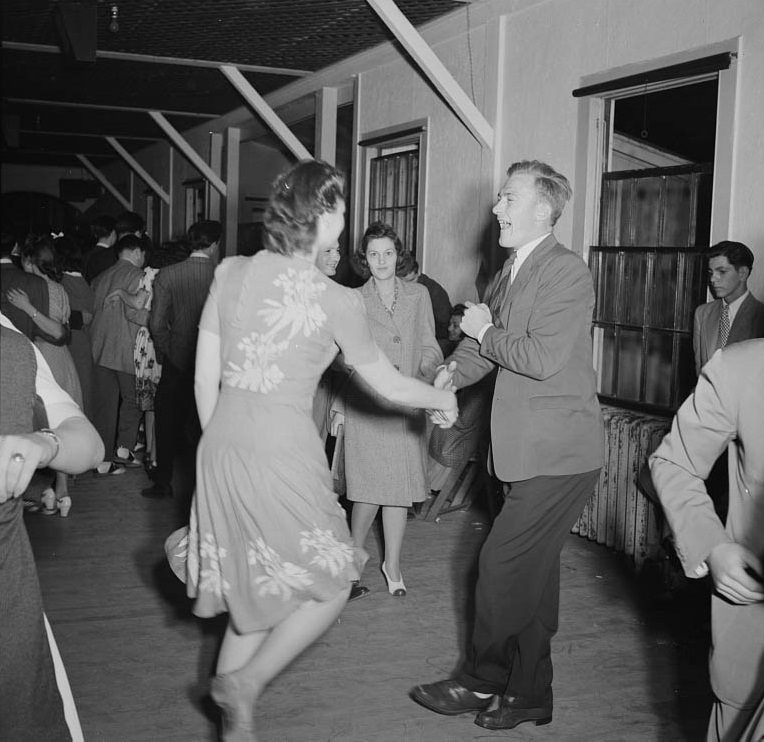
People dancing and enjoying, 1942.
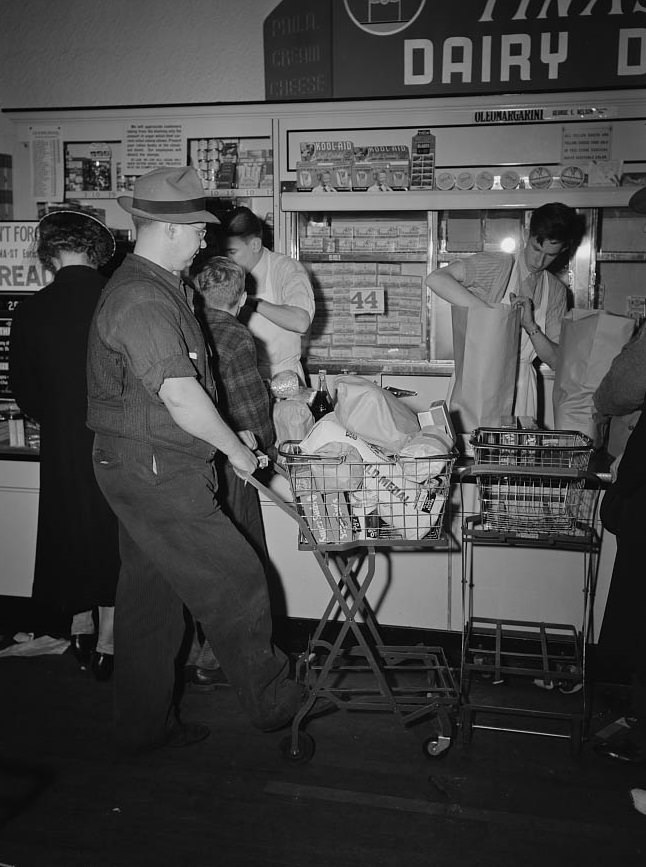
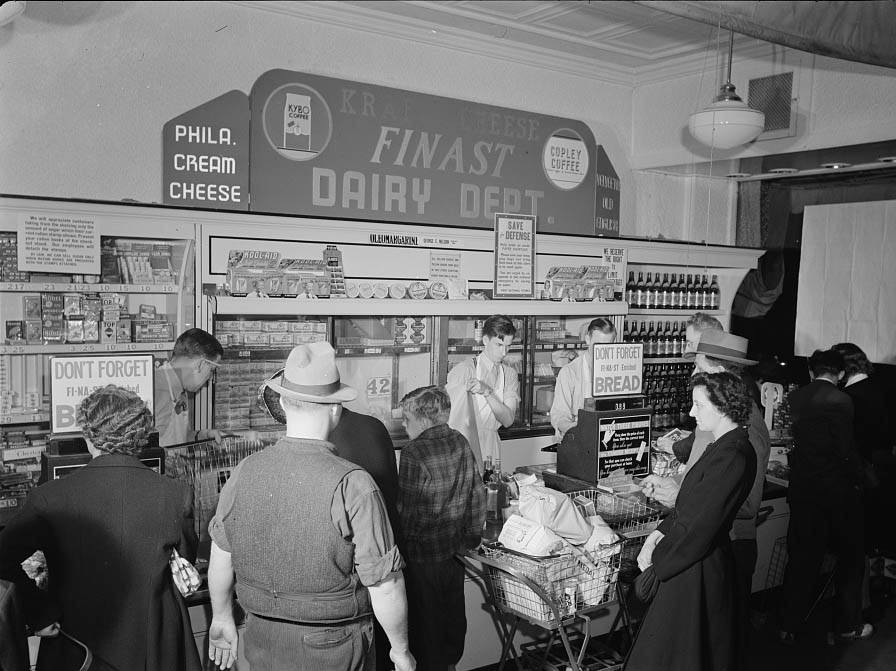
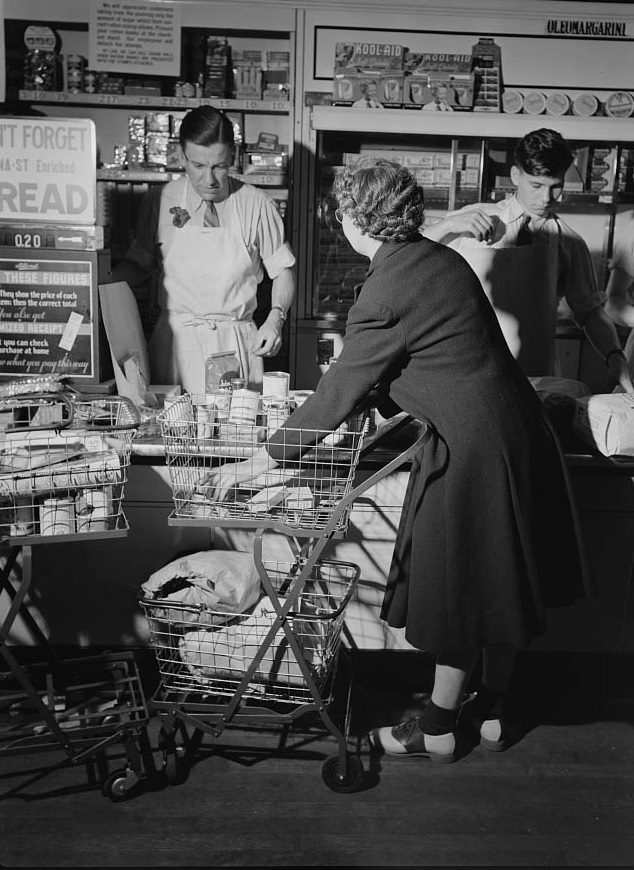
Shopping on Saturday nights, 1942

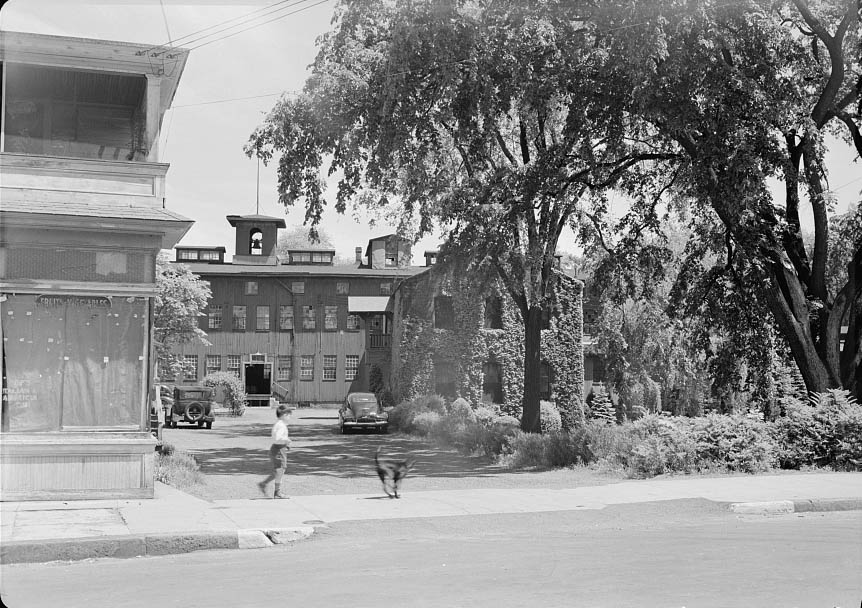
Saturday nights were a social institution in Southington. Residents flooded the shops, and the Old Mill — a building erected in 1737 as one of the first metal mills in the American colonies — had become a popular destination for young couples. Dancing at the Old Mill on a Saturday night was a regular part of town life, even in wartime.
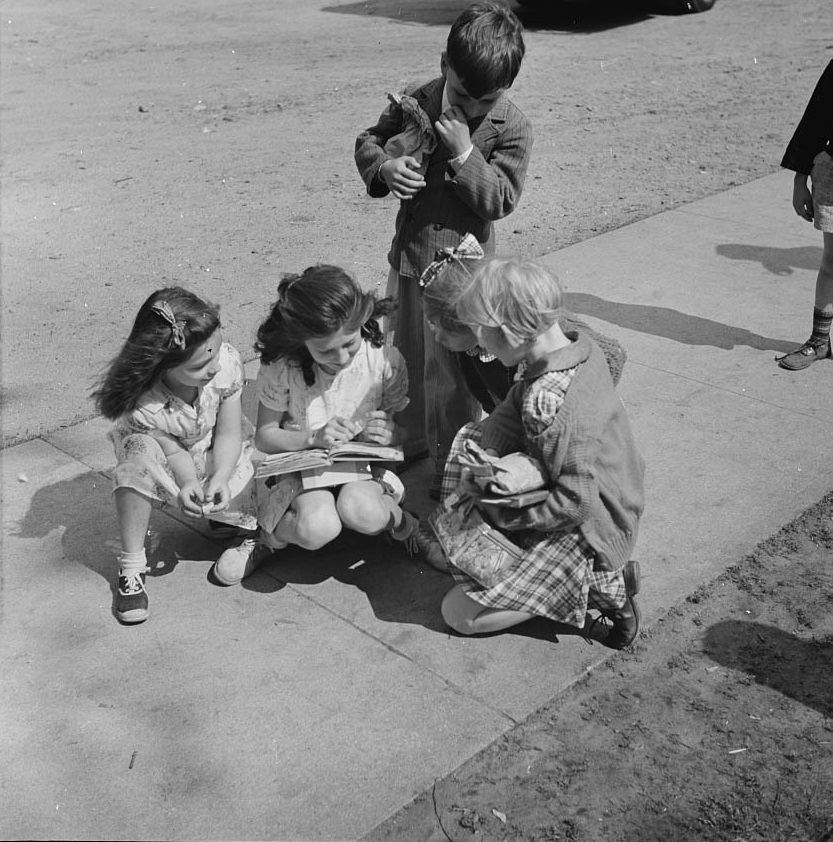
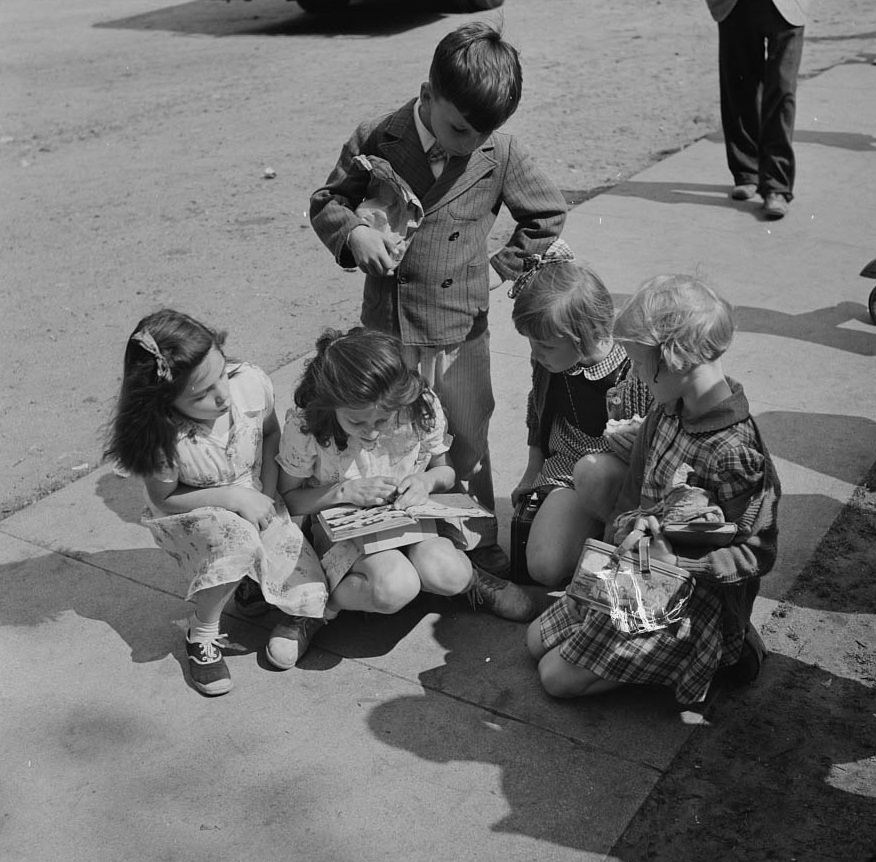
A group of children, 1942
School children pledging their allegiance to the flag, 1942

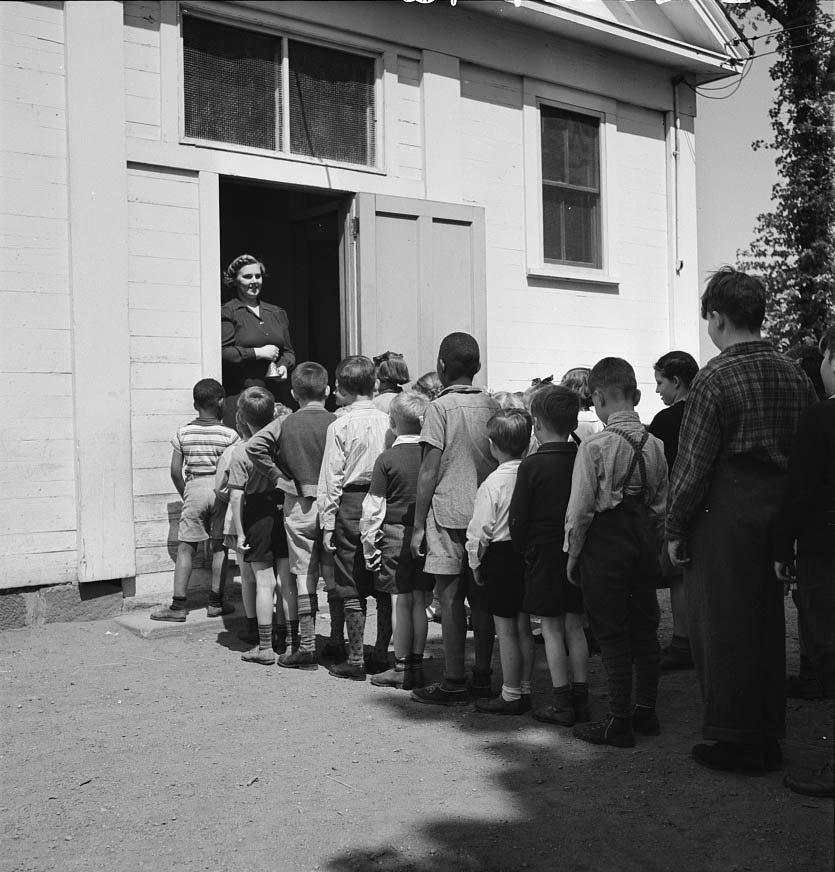
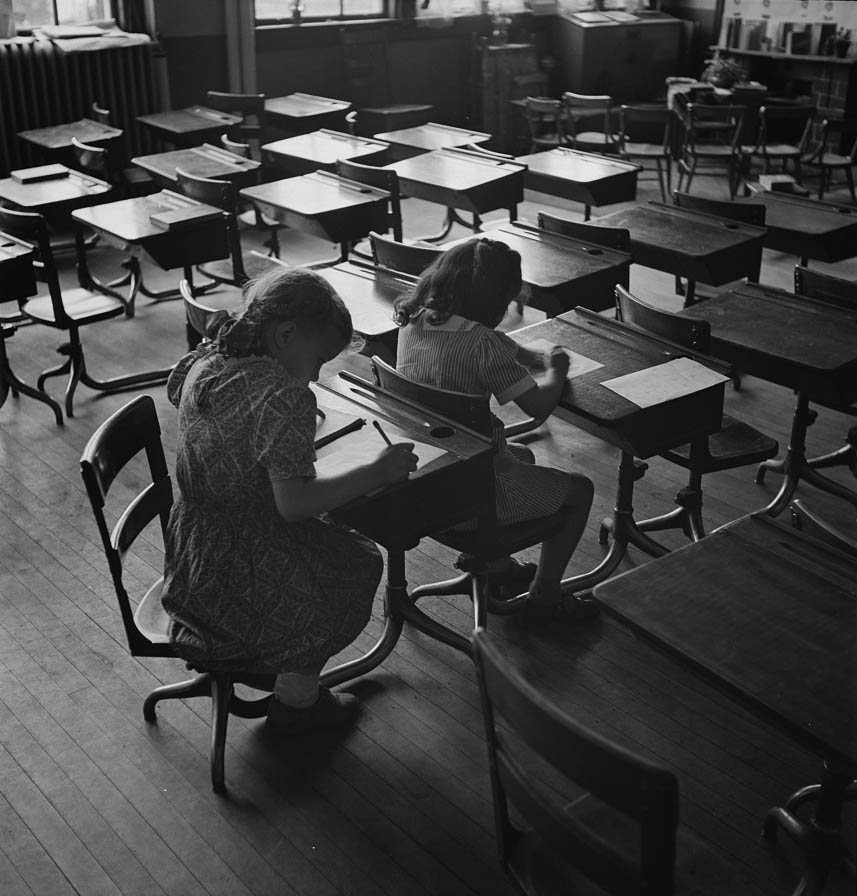
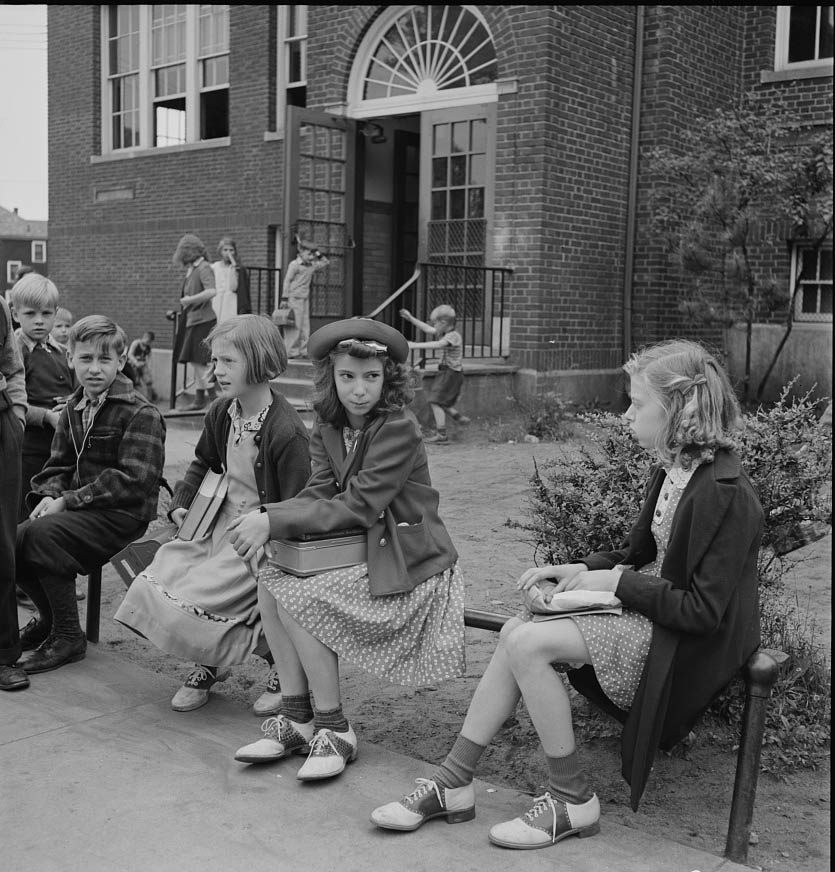
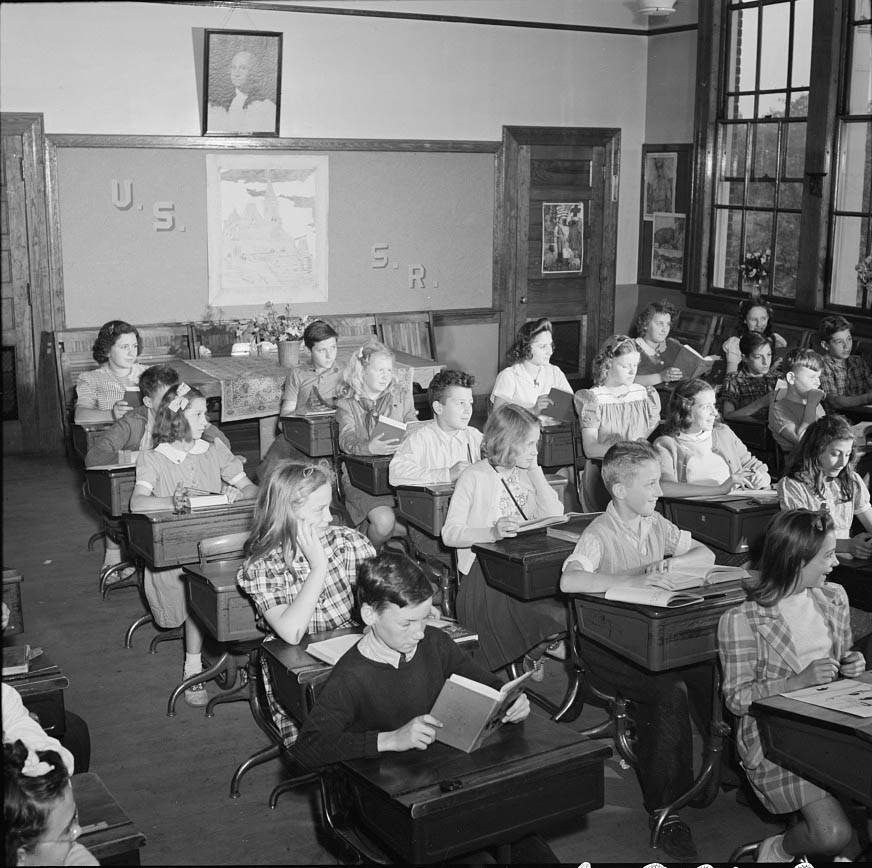
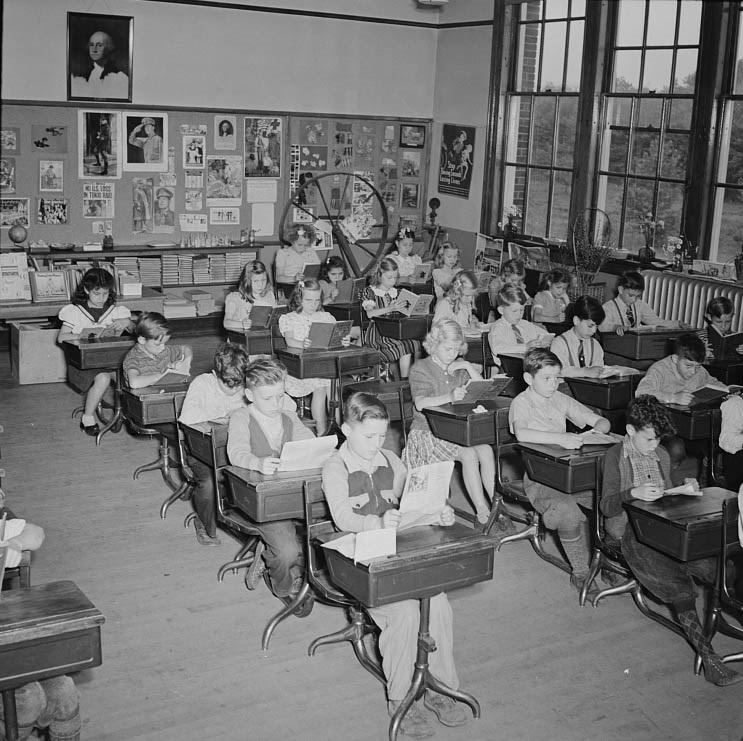
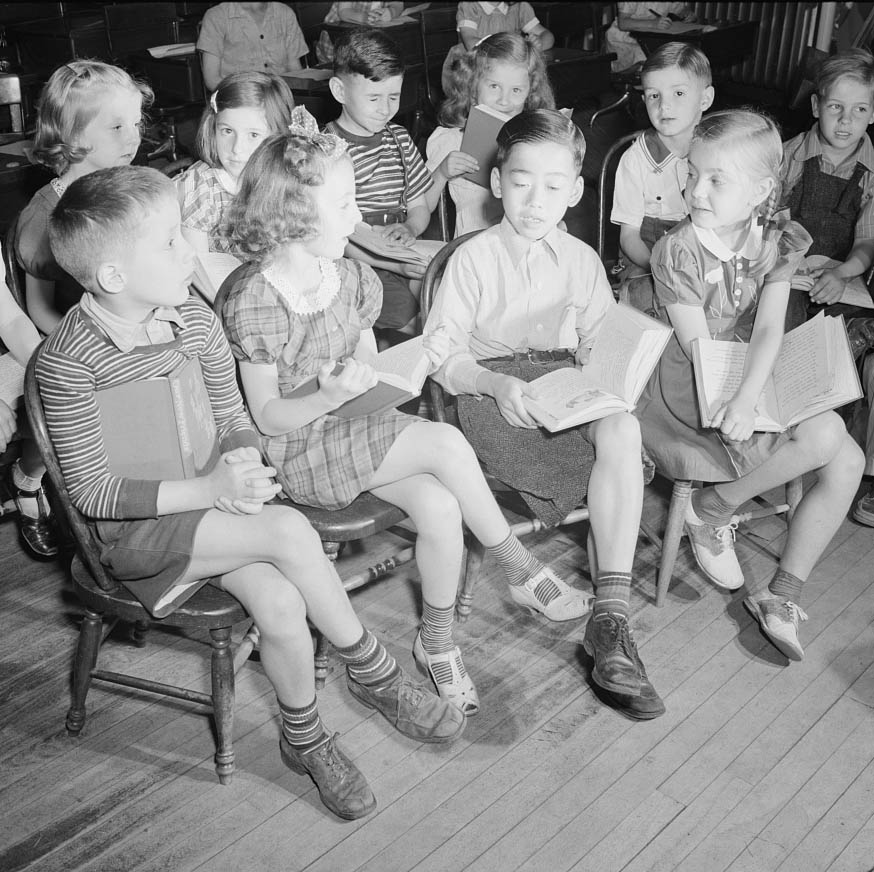
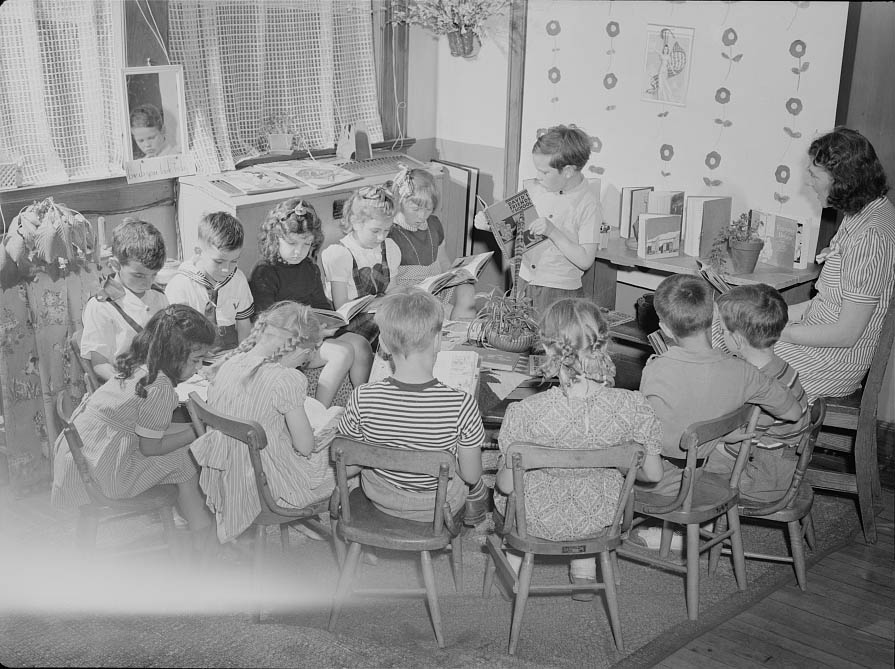
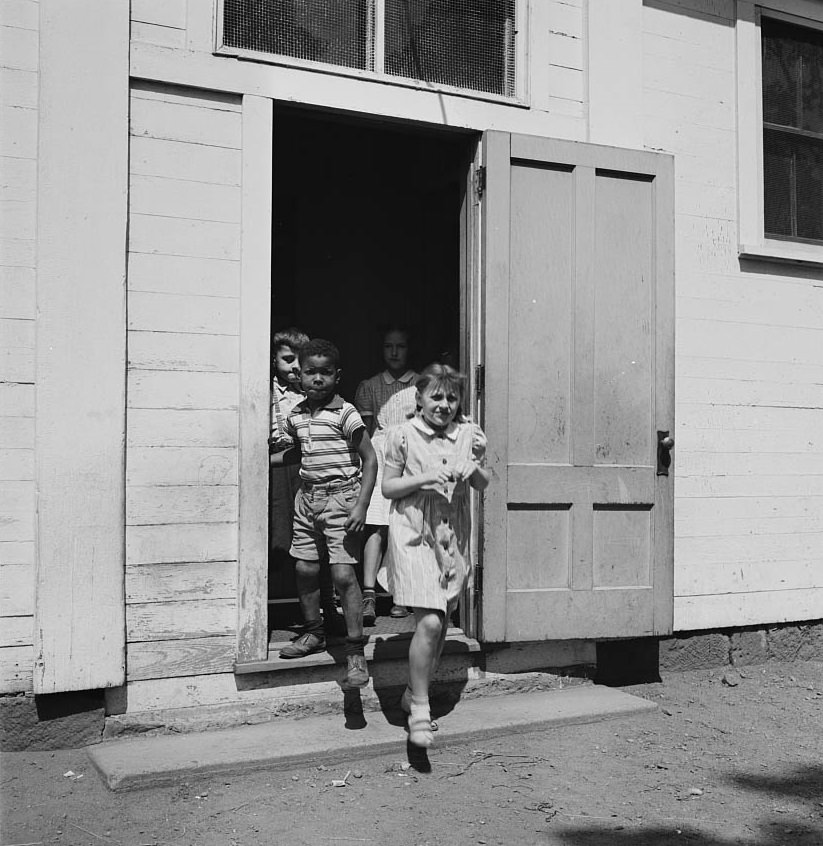
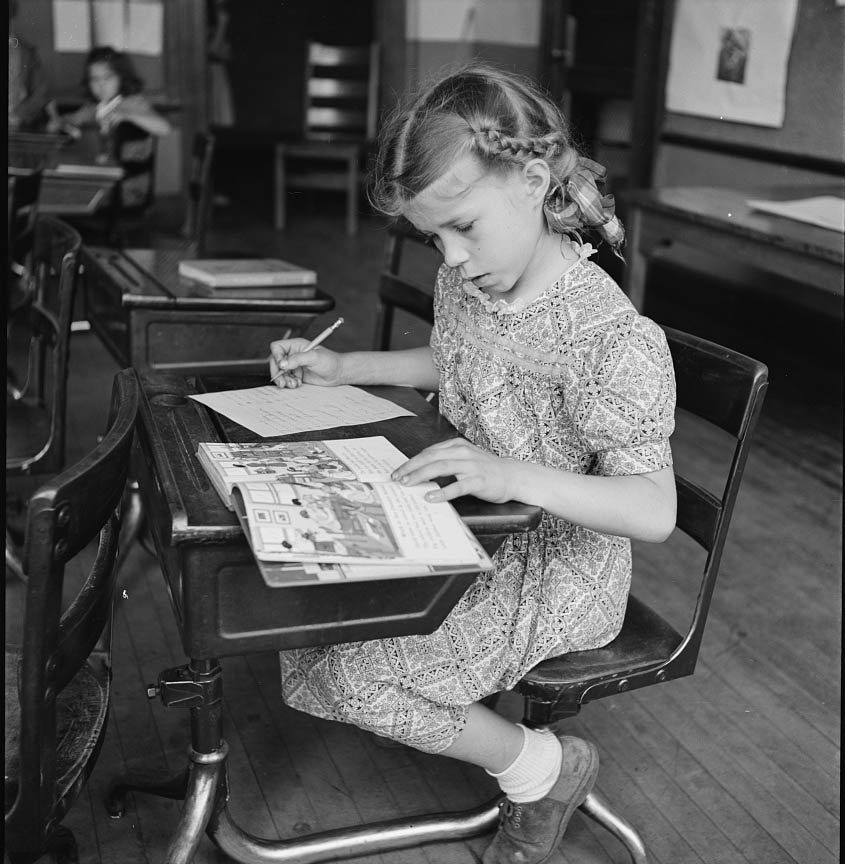
Schools in Southington were a study in diversity. Beecher Street School had a student body that was roughly half Americans of Polish descent and half Americans of Italian descent. The school’s May celebration saw Emily Shivak, of Polish heritage, crowned Queen of the May, and Philip D’Agostino, of Italian heritage, named King. One-room schoolhouses still operated in the area, and class instruction photographs show teachers working with students of varying ages under the same roof.
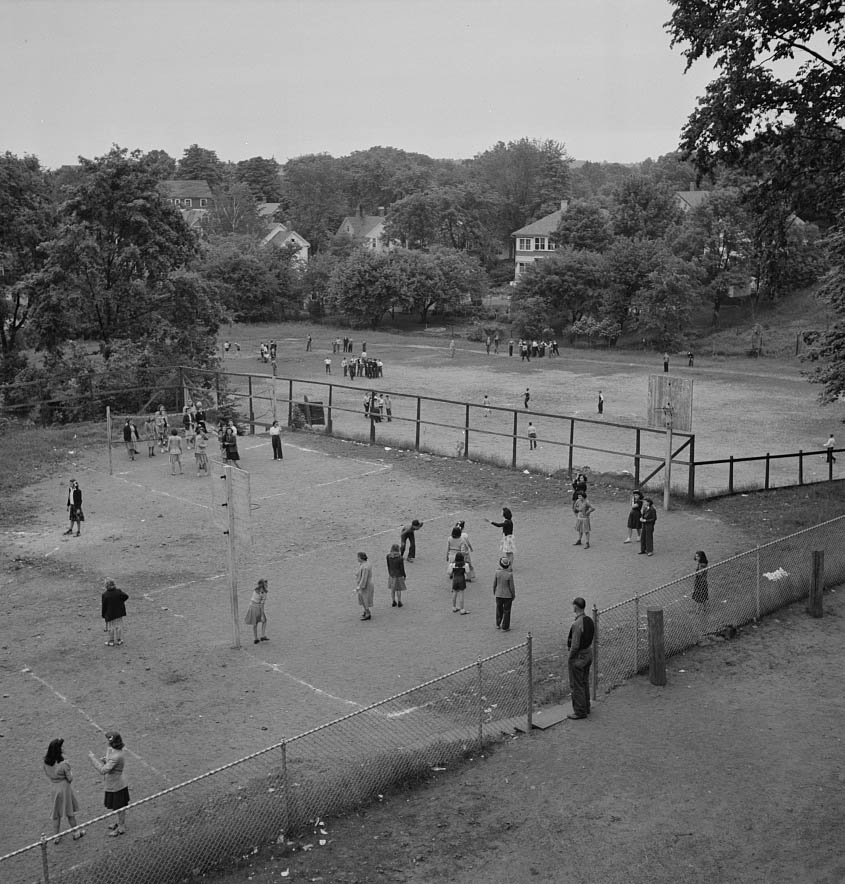
Playground, 1942
Playground, 1942
An American town and its way of life.

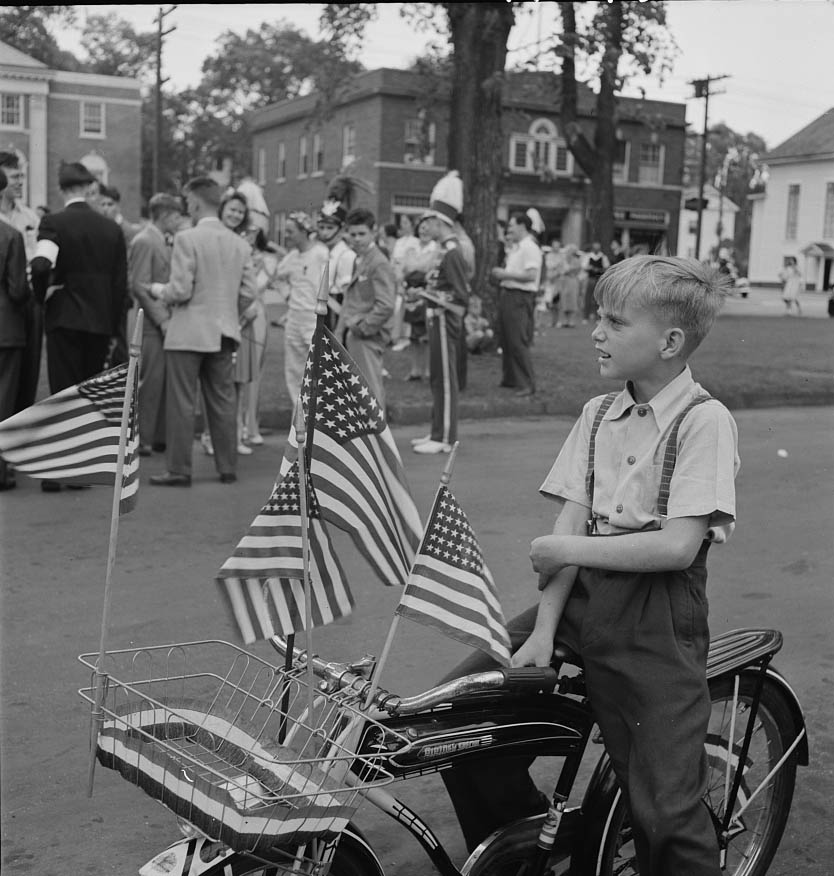
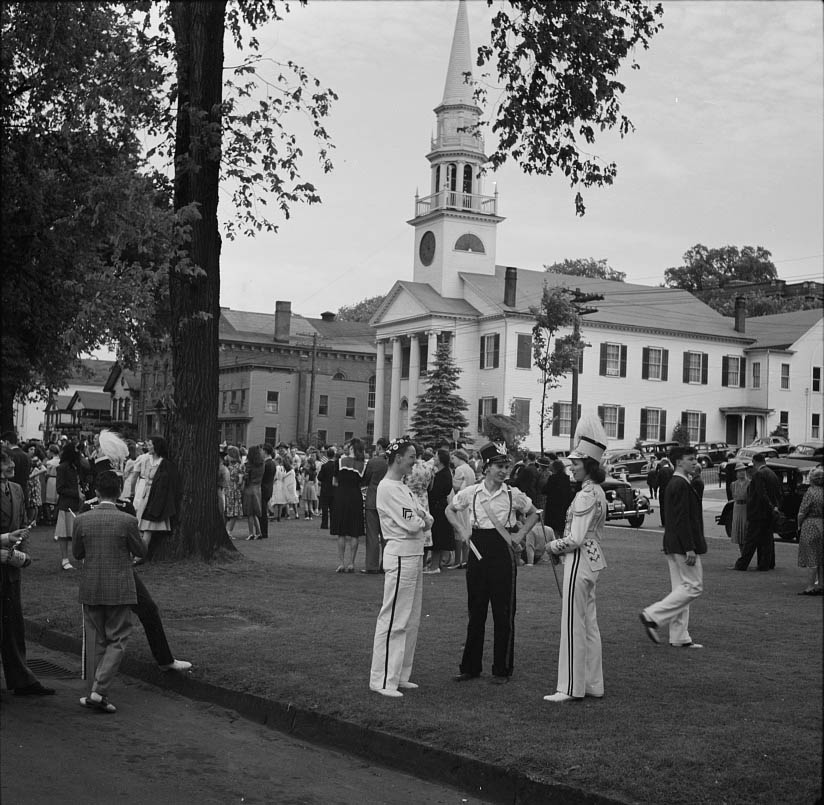
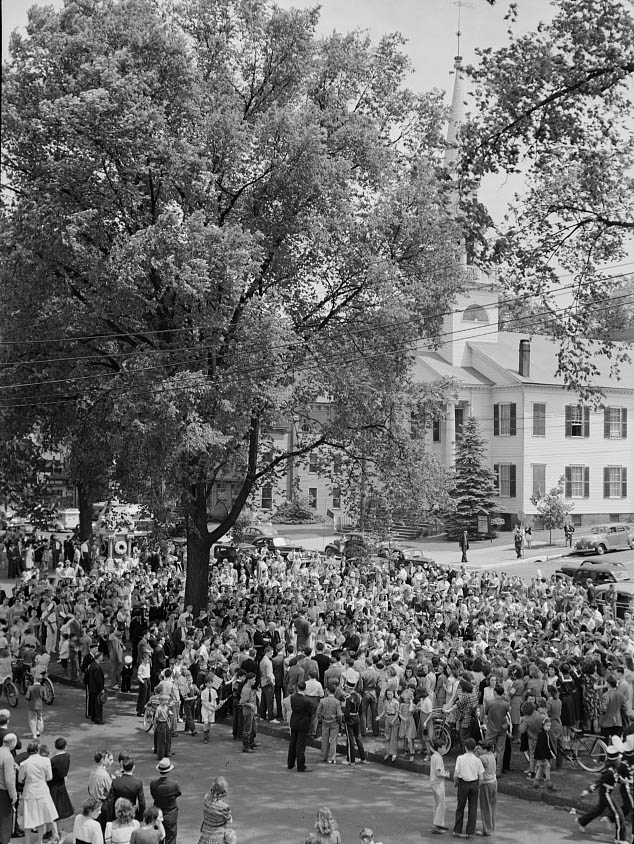
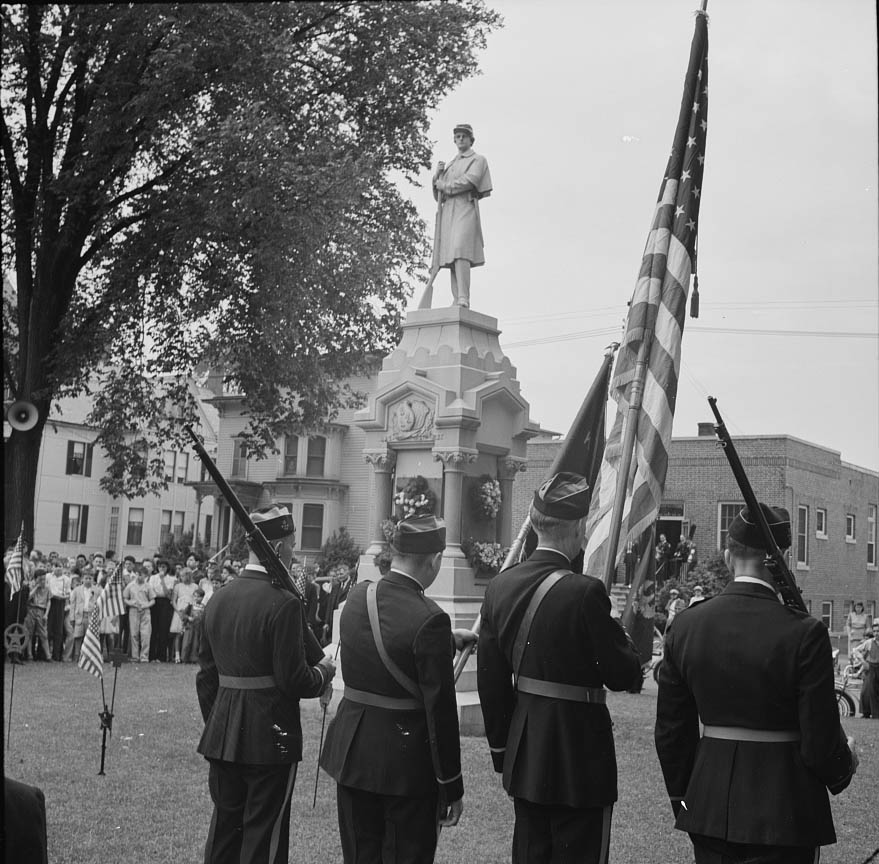
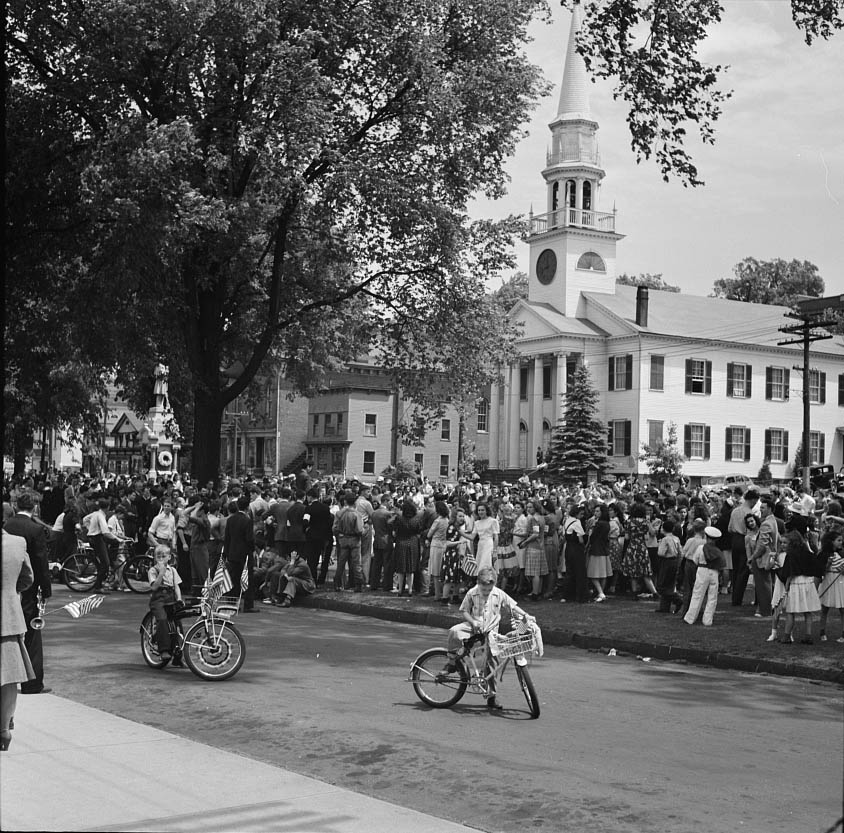
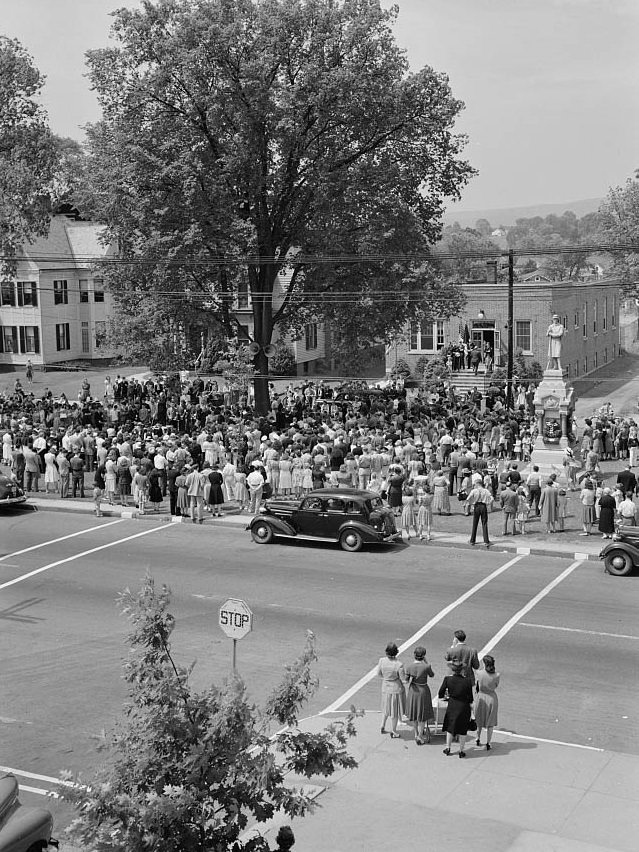
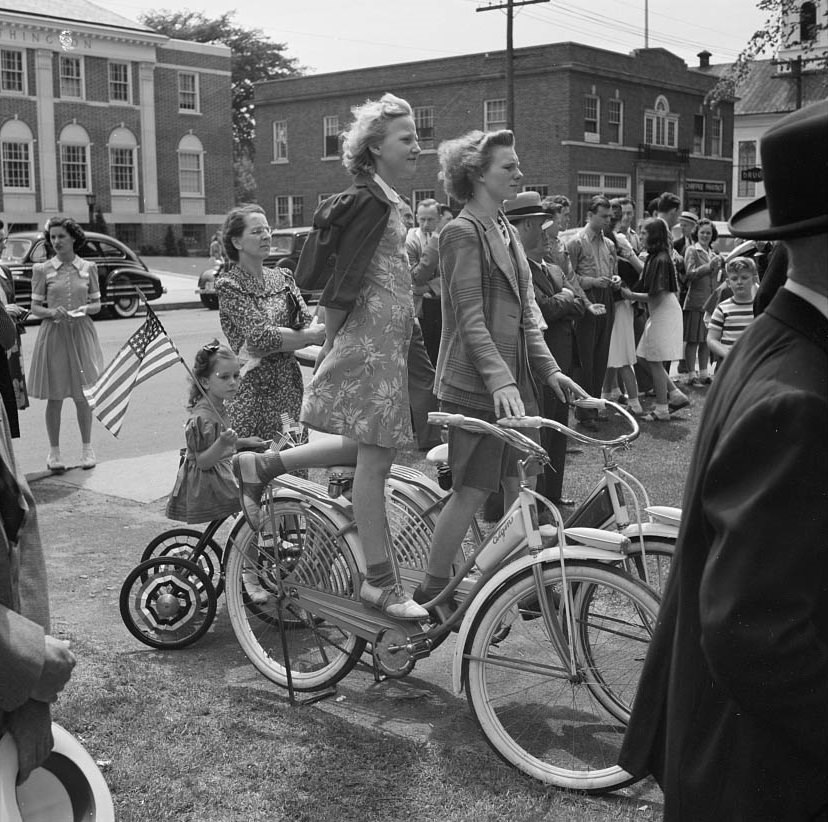
The Memorial Day parade moved down Southington’s main street in 1942, but the sidewalks were noticeably thin. The reason was straightforward: the town’s war factories did not close for the holiday. Production kept going, and many residents were at their workstations instead of watching the parade. It was a quiet but telling sign of how completely the war had reorganized priorities in a small Connecticut town.
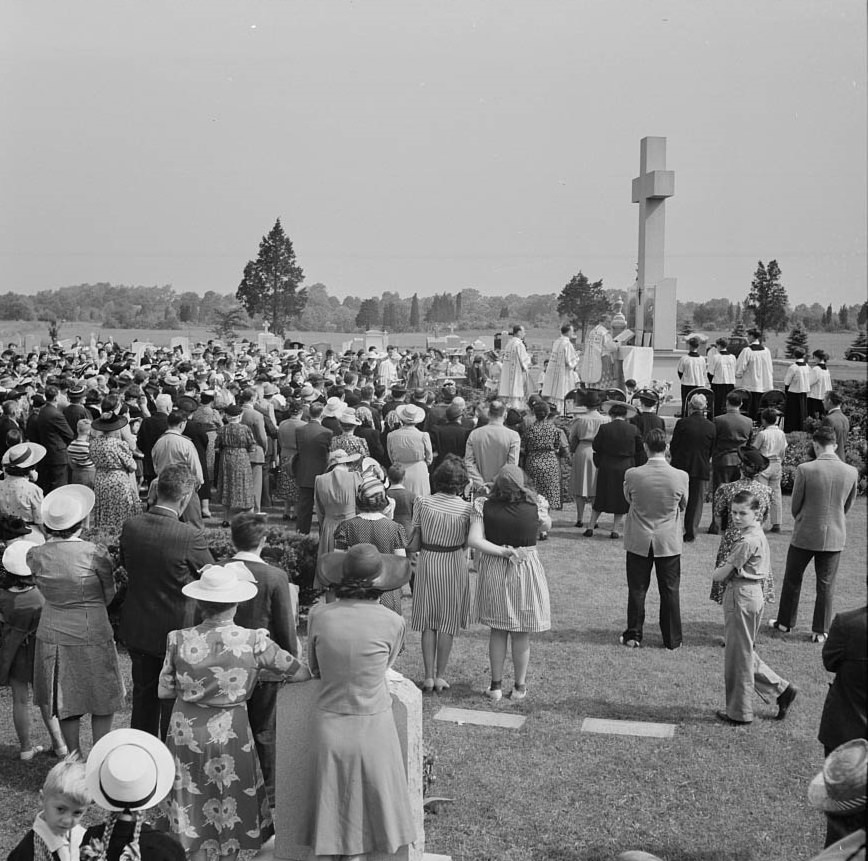
On All Soul's Day the Catholic congregation is gathering in the Saint Thomas cemetery.
On All Soul’s Day the Catholic congregation is gathering in the Saint Thomas cemetery.
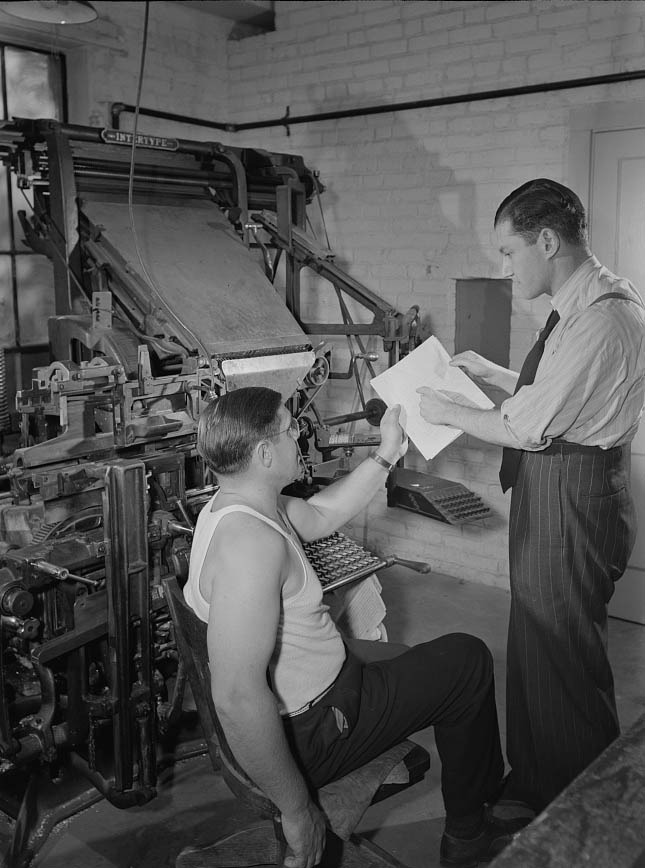
August L. Loeb, editor of the Southington News, 1942

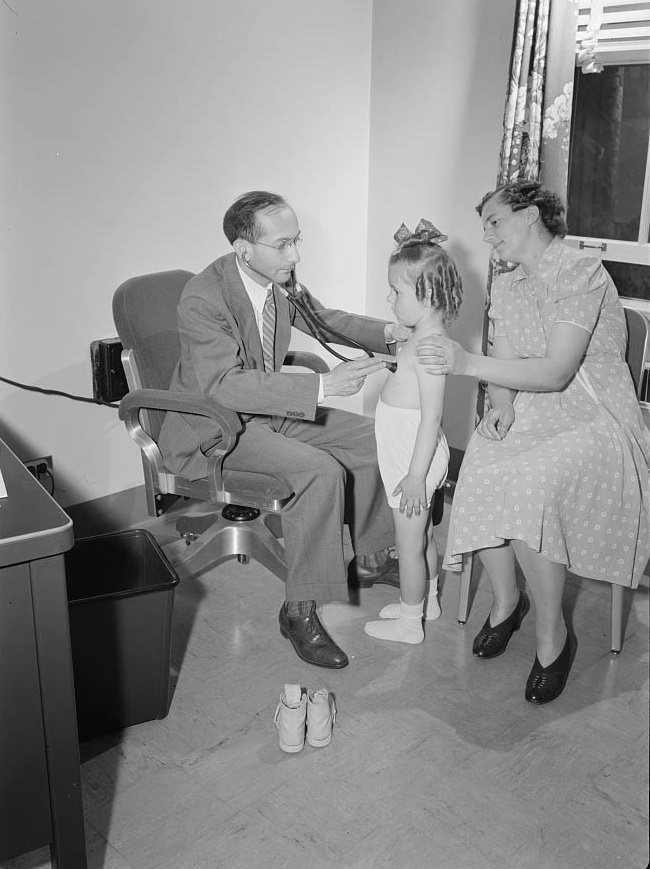
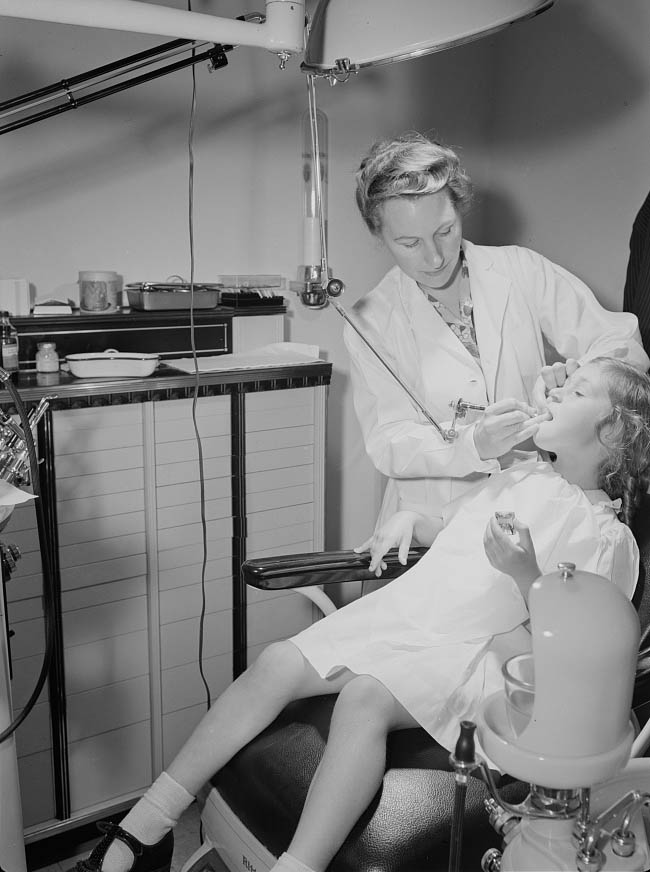
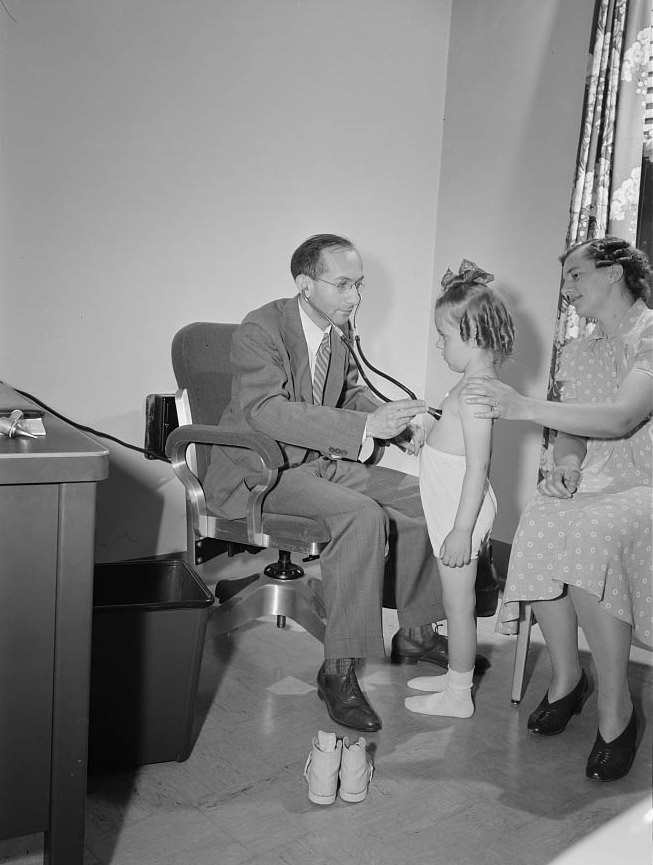
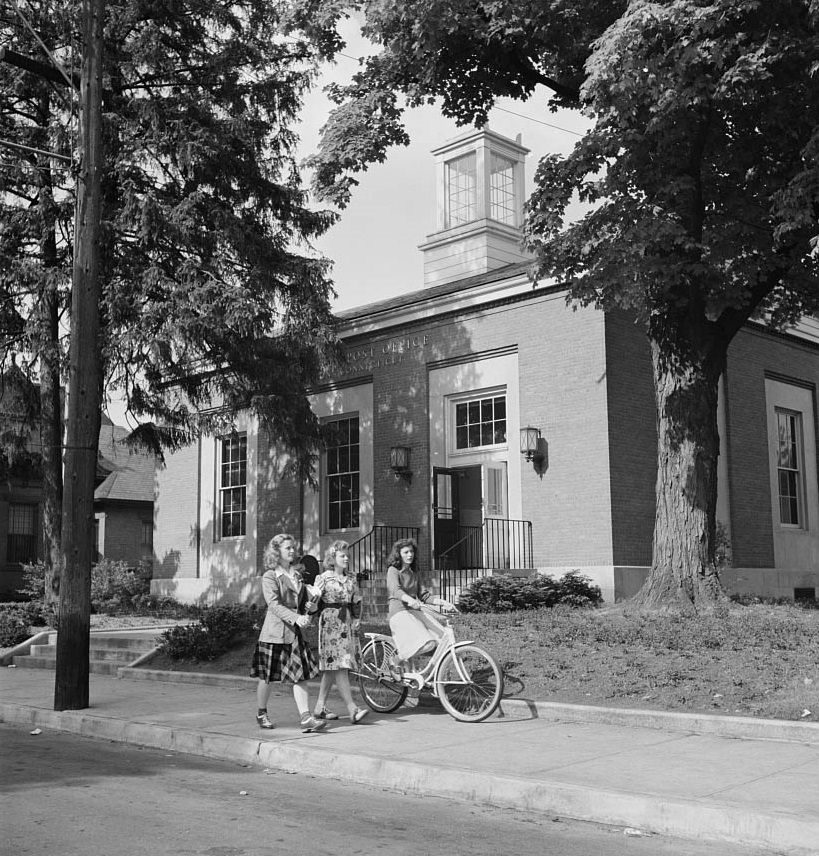
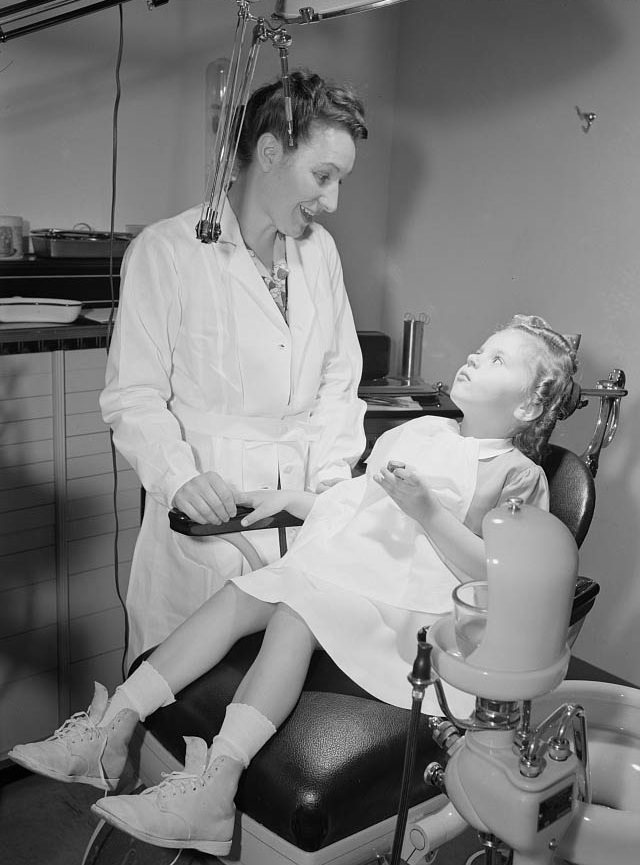
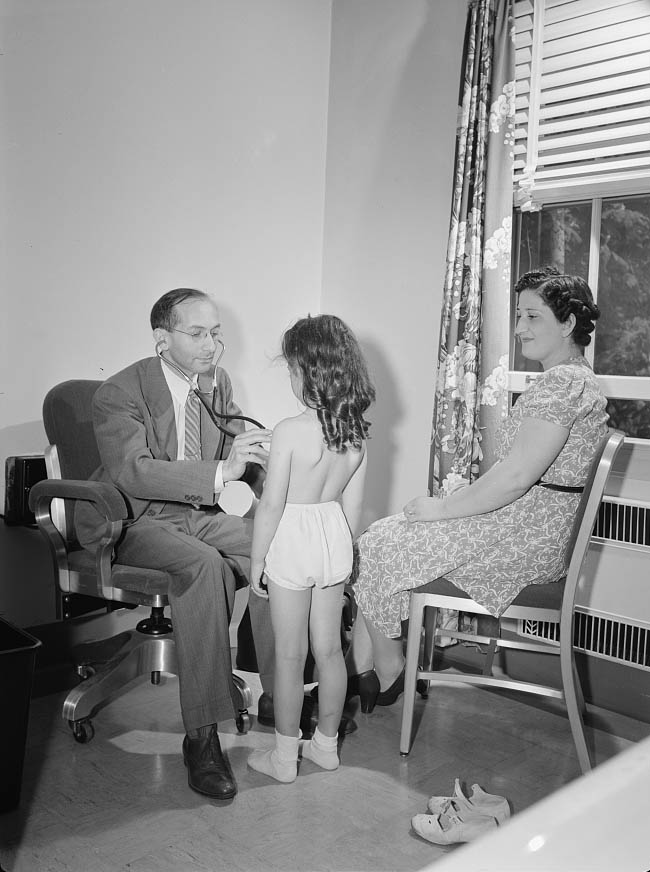
Community institutions anchored life in Southington. August L. Loeb edited the local newspaper, the Southington News, keeping residents informed. The town court handled local legal matters. The post office was a daily gathering point. A health center offered medical advice and basic medical care to residents who needed it, including a modern dental clinic where children received treatment.
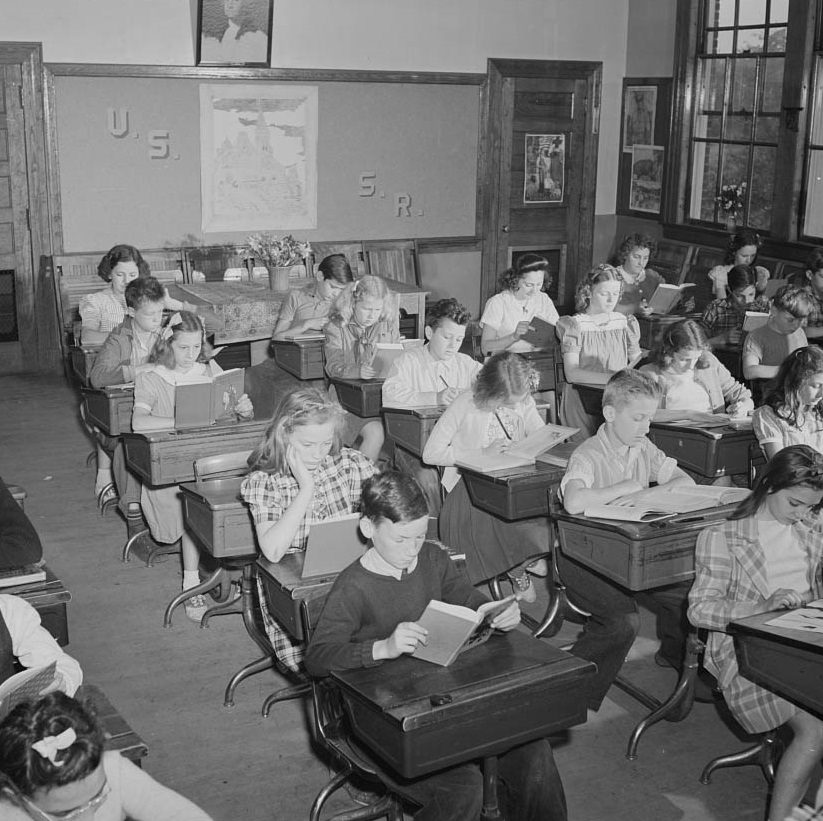
Class instruction, 1942
Farm owned by James Pompey who twenty years ago came from Italy on the advice of a brother.
Shopping on Saturday nights, 1942
A street scene in Southington, 1942

The streets of Southington in 1942 had a particular energy. Shops were busy, neighbors stopped to talk, and the rhythms of civilian life continued even as the war cast its shadow. Jacobs walked those streets with his camera and documented what he saw without staging or sentimentality.
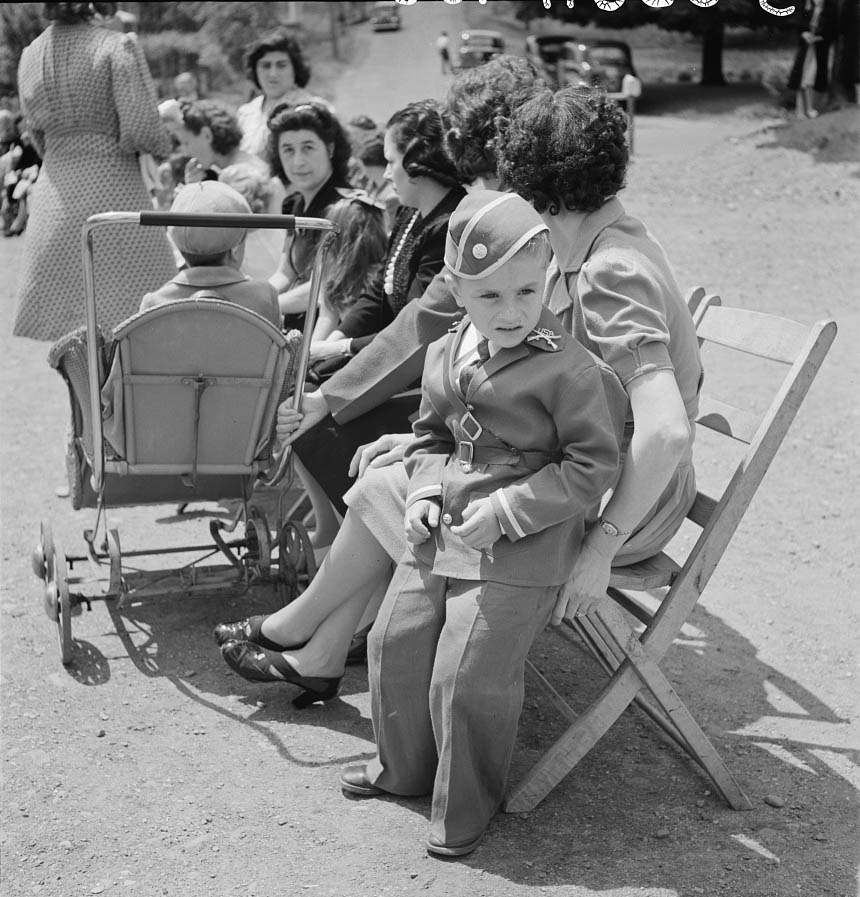
Citizens of Southington, 1942
Southington school children staging a patriotic demonstration, 1942

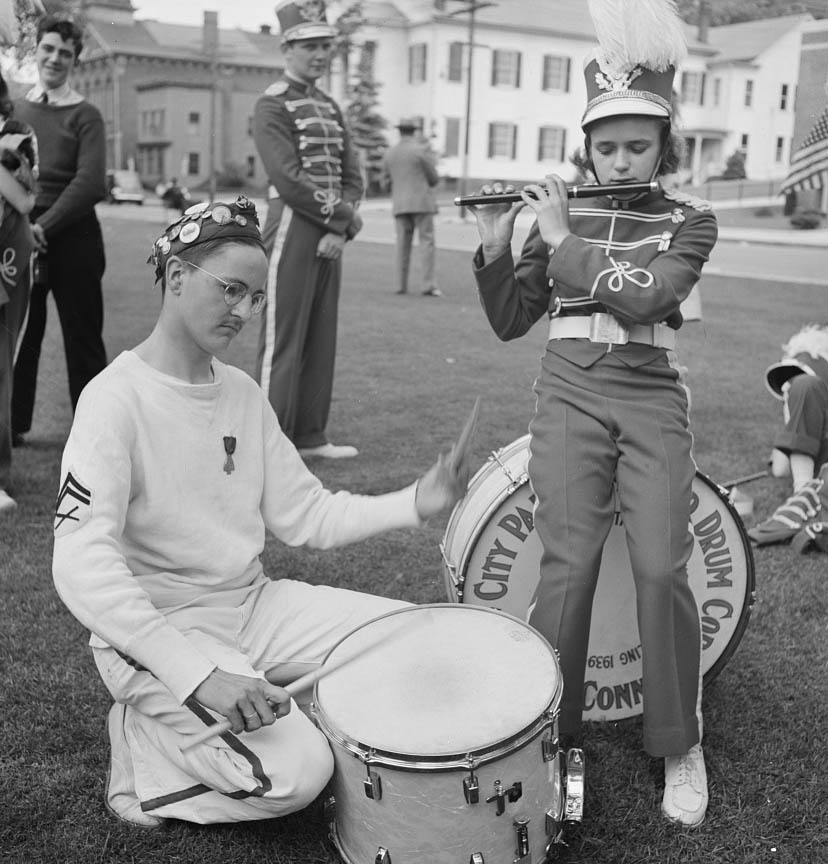
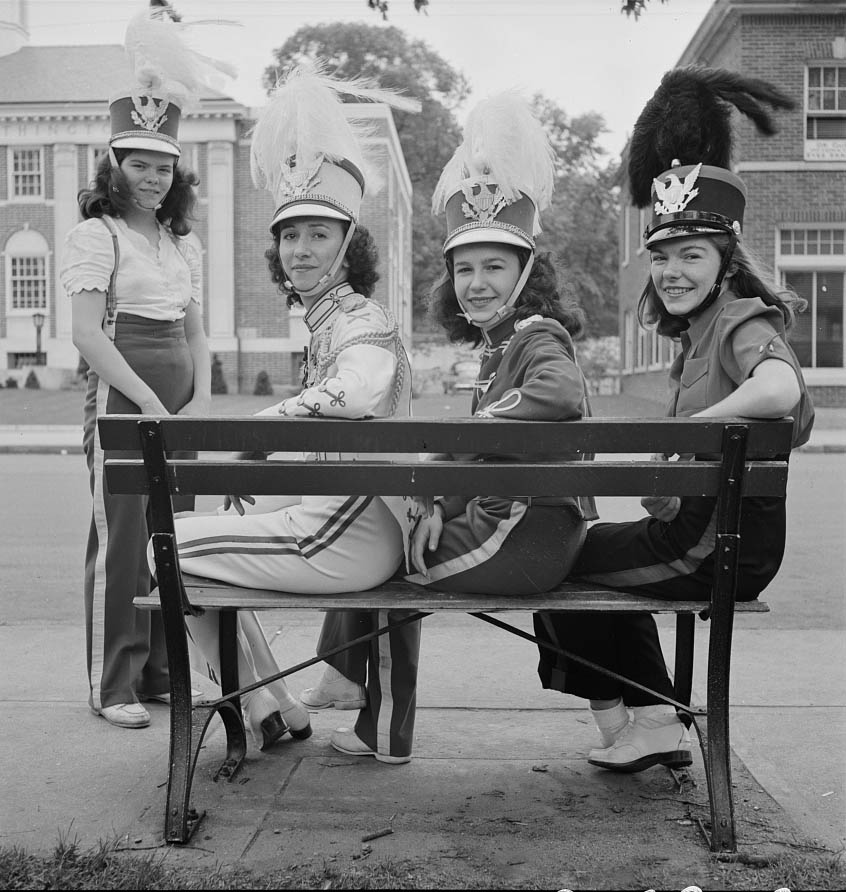
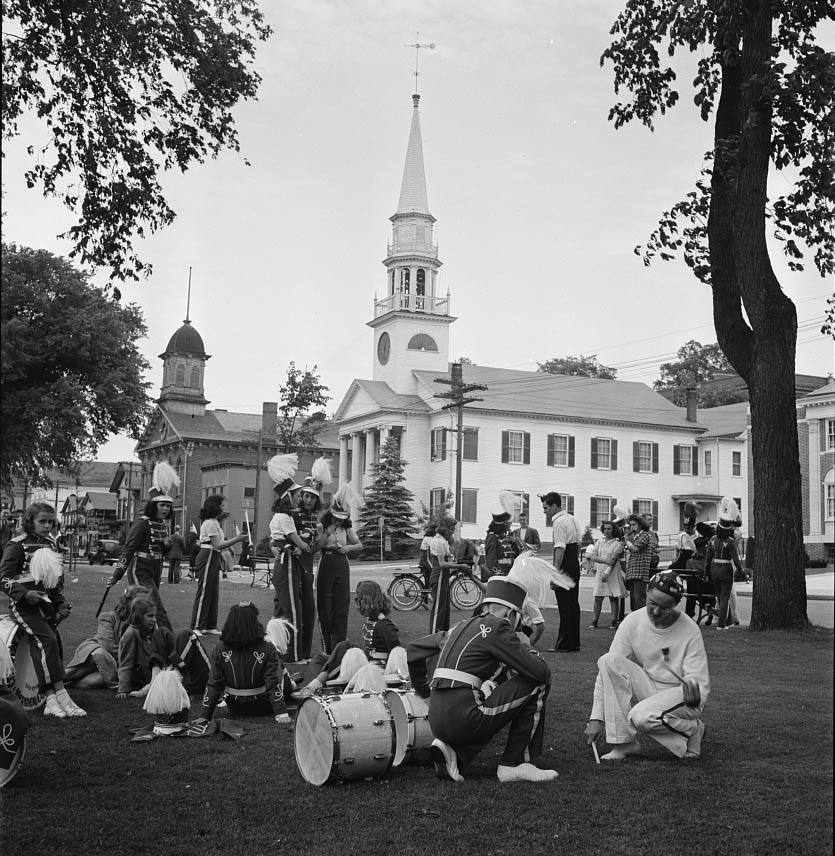
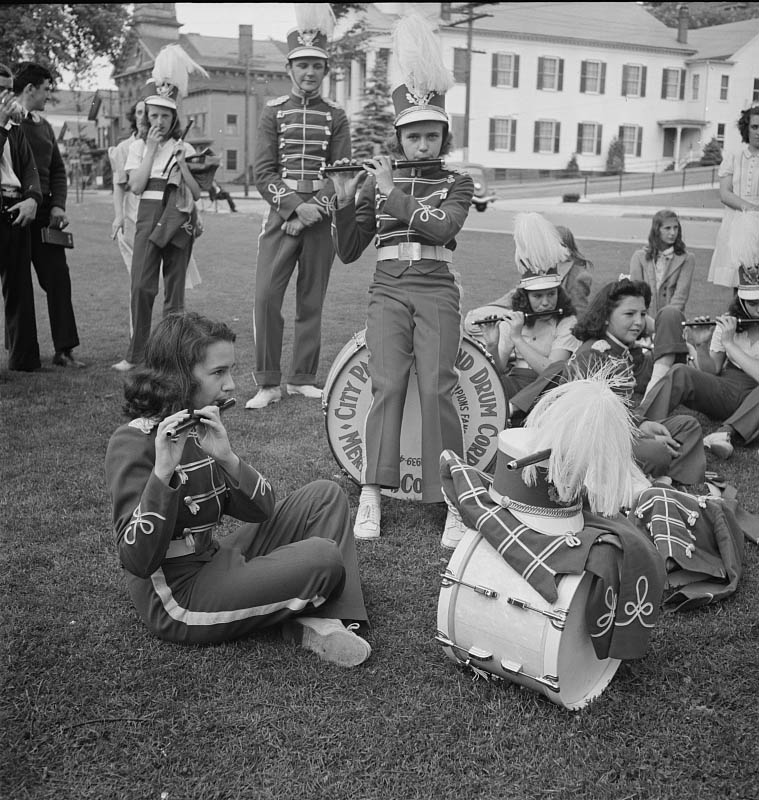
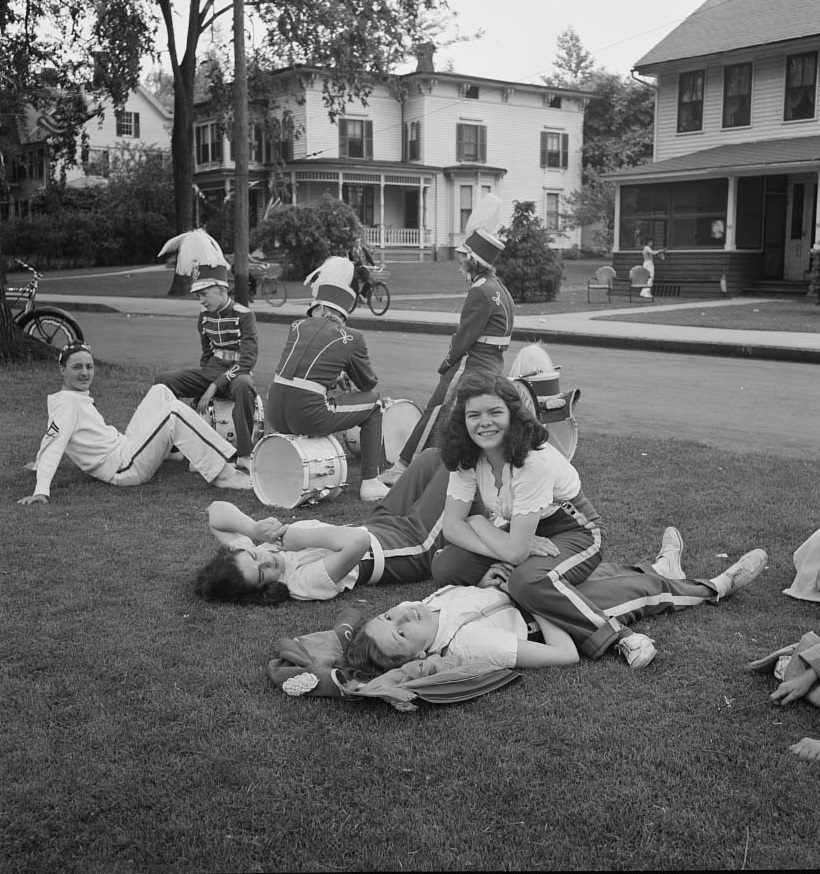
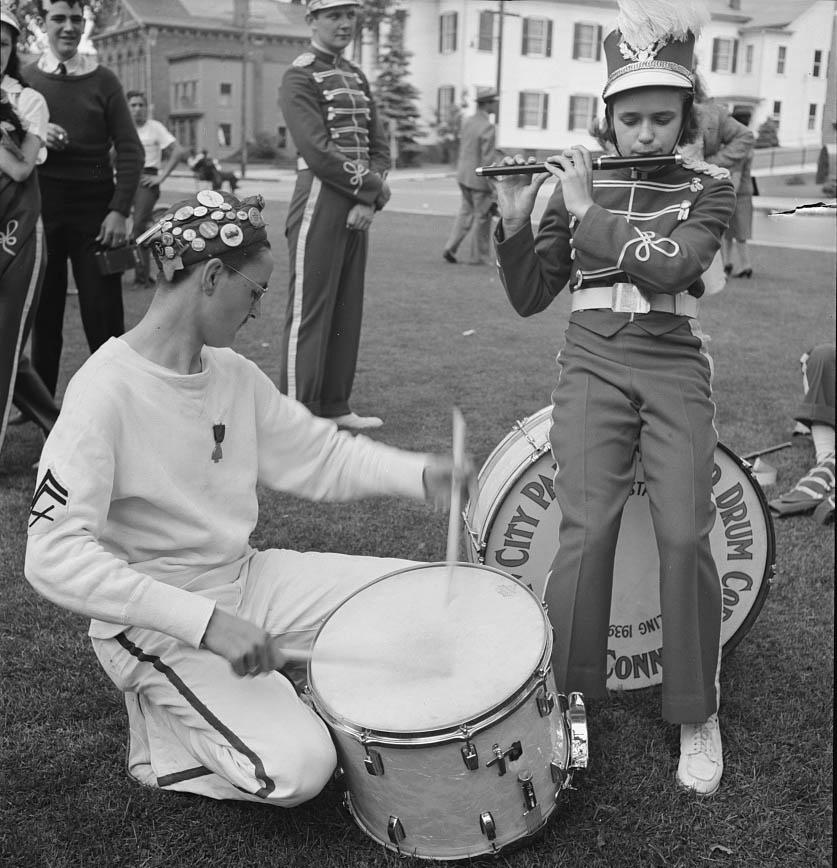
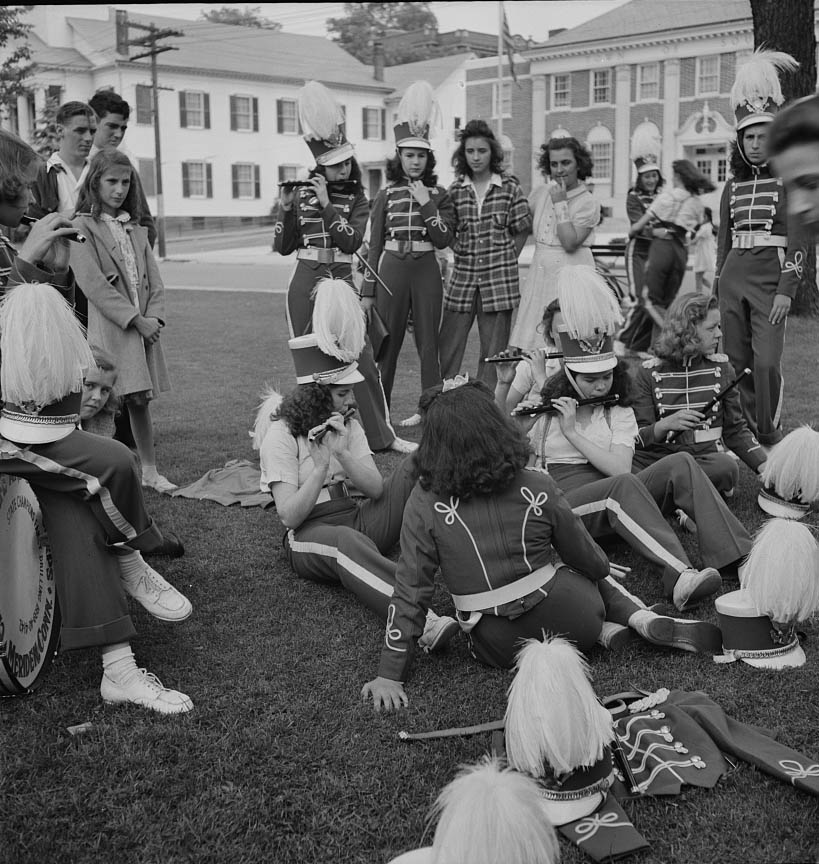
The youth drum corps was one of the most visible signs of organized community spirit. Girls in uniform marched and performed, representing a disciplined, coordinated effort that mirrored the military culture of the time. Their recitals and public appearances were covered by Jacobs extensively, appearing in multiple photographs from different angles and moments.
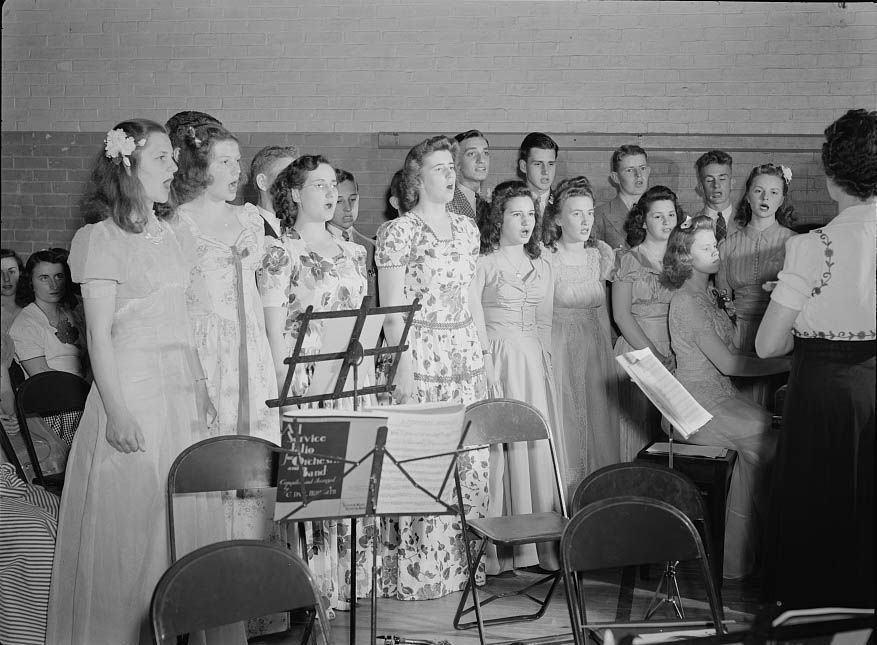
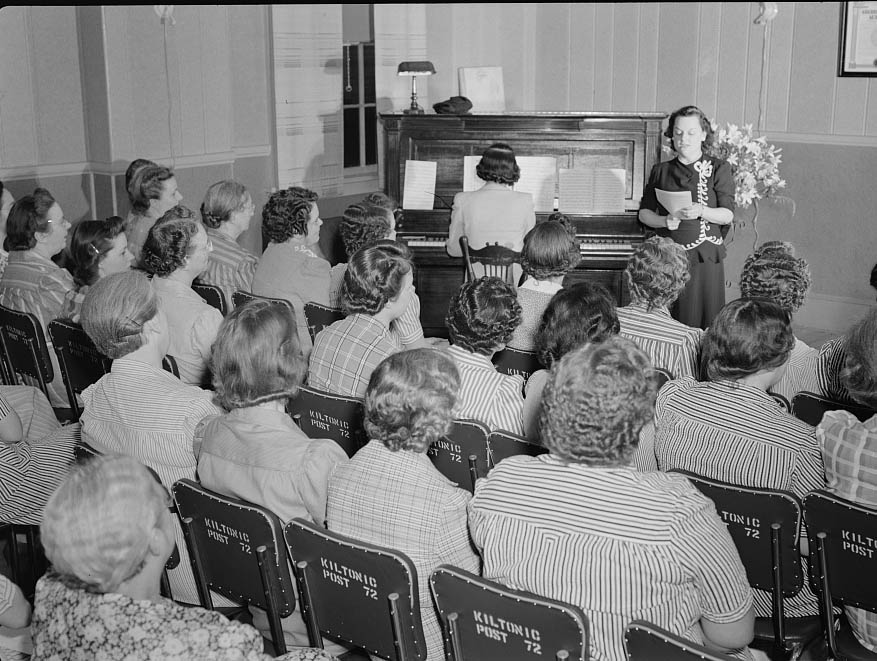
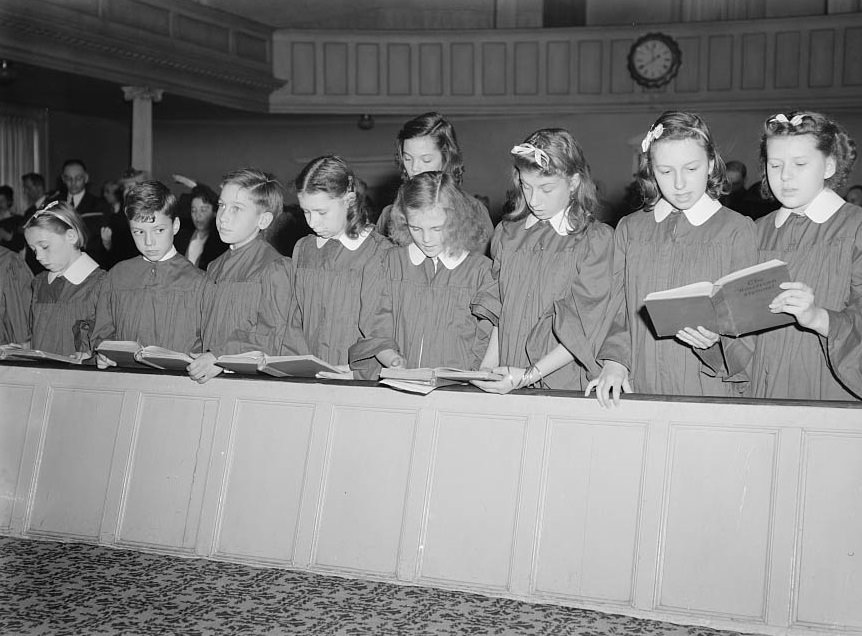
A highlight in the town's life is the annual girls' glee club recital, 1942
A highlight in the town’s life is the annual girls’ glee club recital, 1942
A one-room school, 1942
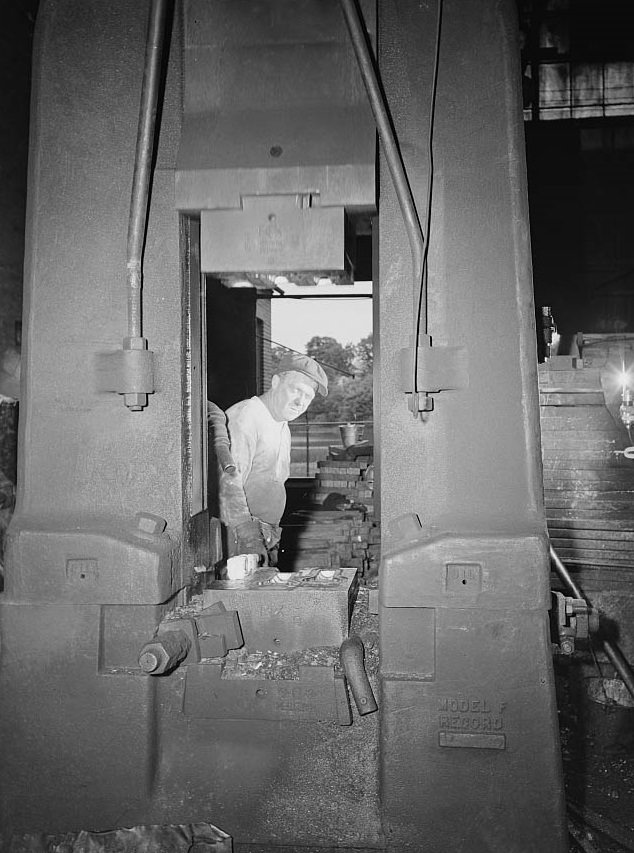
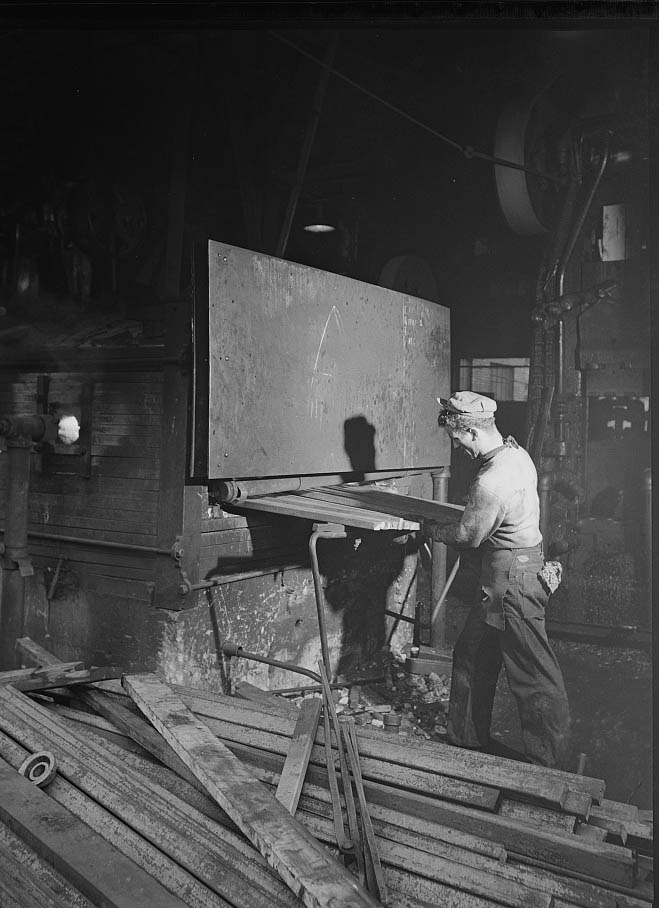
Worker in the Peck, Stow and Wilcox factory, 1942

The Peck, Stow and Wilcox factory was one of Southington’s key wartime employers. Workers on the factory floor kept production moving, and Jacobs photographed them at their stations. These images were central to the defense booklet’s argument — that small-town America was not just watching the war happen, but actively fueling it.
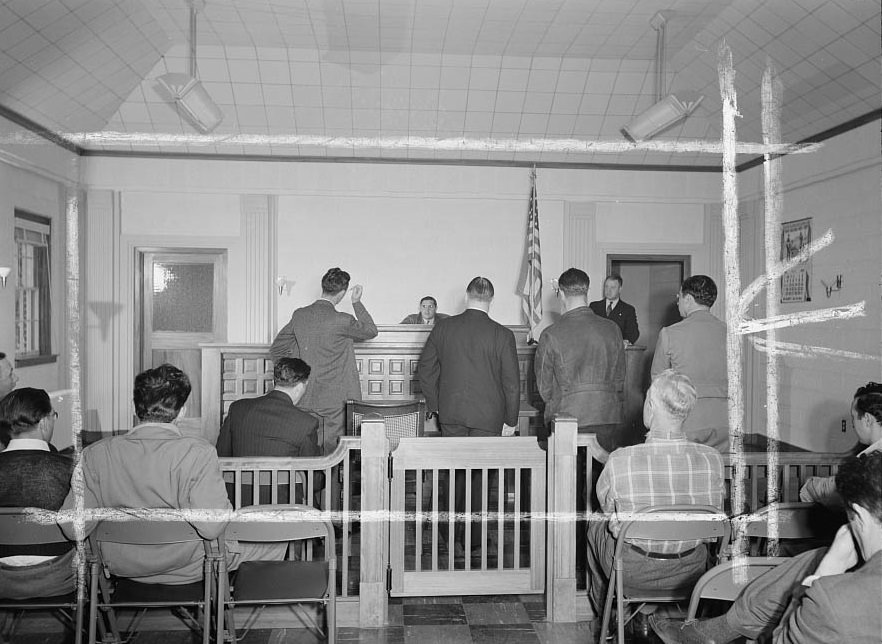
The town court. Southington, Connecticut, 1942
A class of young children.1942
A one-room school, 1942
School children pledging their allegiance to the flag, 1942
Citizens of Southington, 1942
Women's club, 1942
Women’s club, 1942

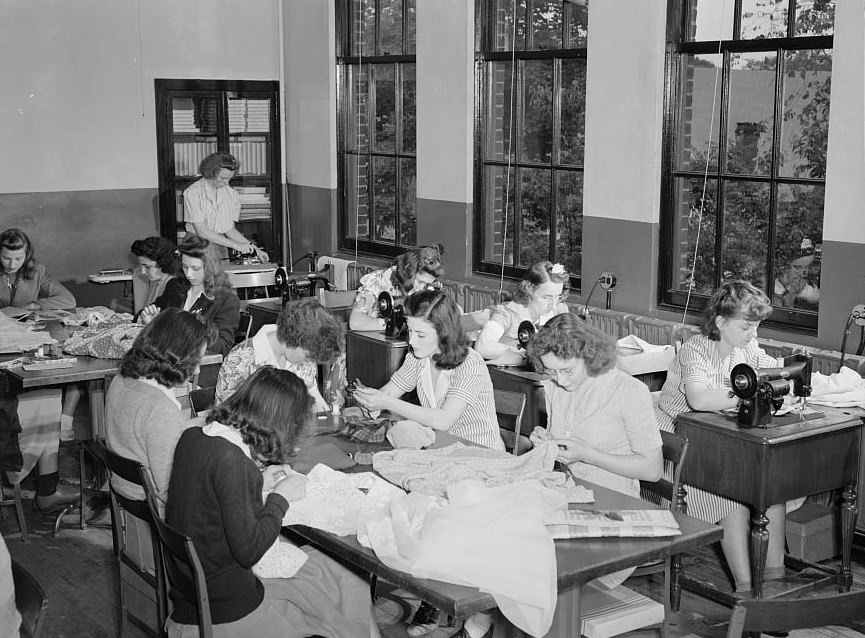
Women’s organizations played an active role in Southington’s wartime community. The women’s club met regularly, and women were visible not just in domestic settings but in civic life — attending meetings, volunteering for Red Cross work, and taking instruction in practical skills like dressmaking. The health center and Red Cross were largely sustained by their participation.
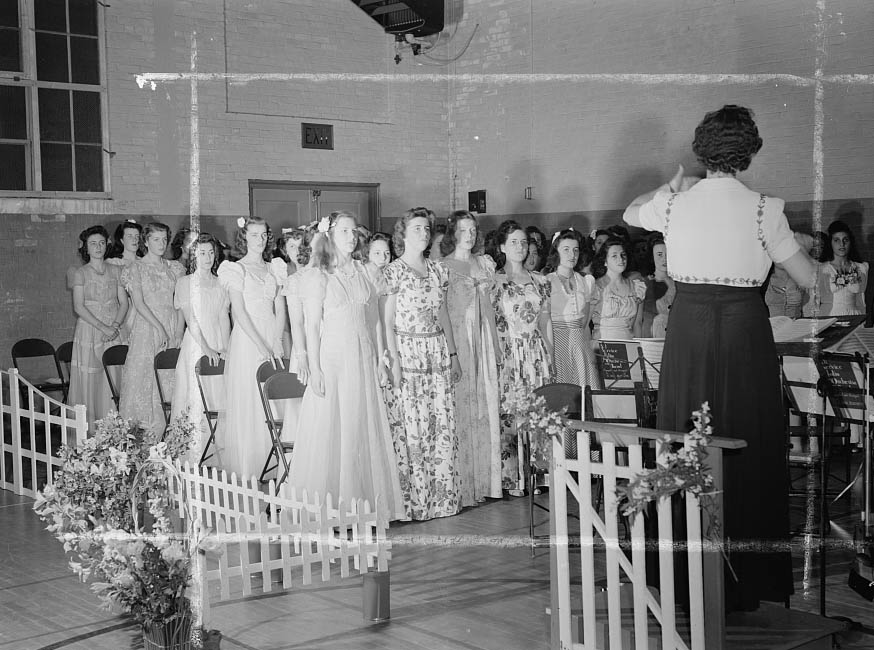
A highlight in the town's life is the annual girls' glee club recital, 1942
A highlight in the town’s life is the annual girls’ glee club recital, 1942
At the health center, the people of Southington may receive medical advice and a certain amount of medical care, 1942
School girls studying, 1942
Member of the youth drum corps, 1942

The Old Mill gave young people in Southington a place to gather on weekends. Originally built in 1737 as one of the earliest metal mills in the American colonies, by 1942 it had transformed into a social venue. Dancing inside its walls on a Saturday night was a Southington tradition that the war had not yet displaced.
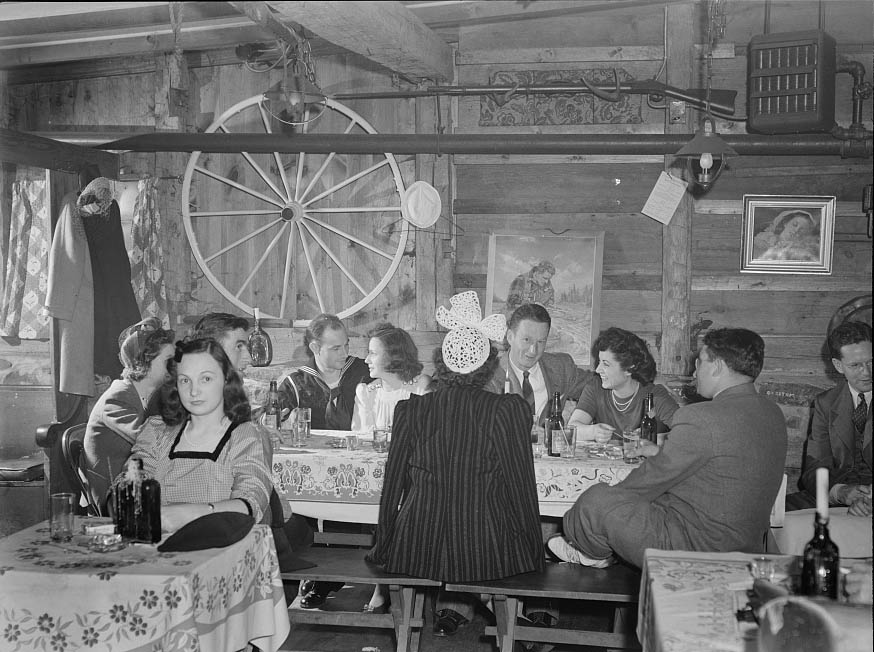
The Old Mill is a popular place for young men to take girl friends on Saturday night.
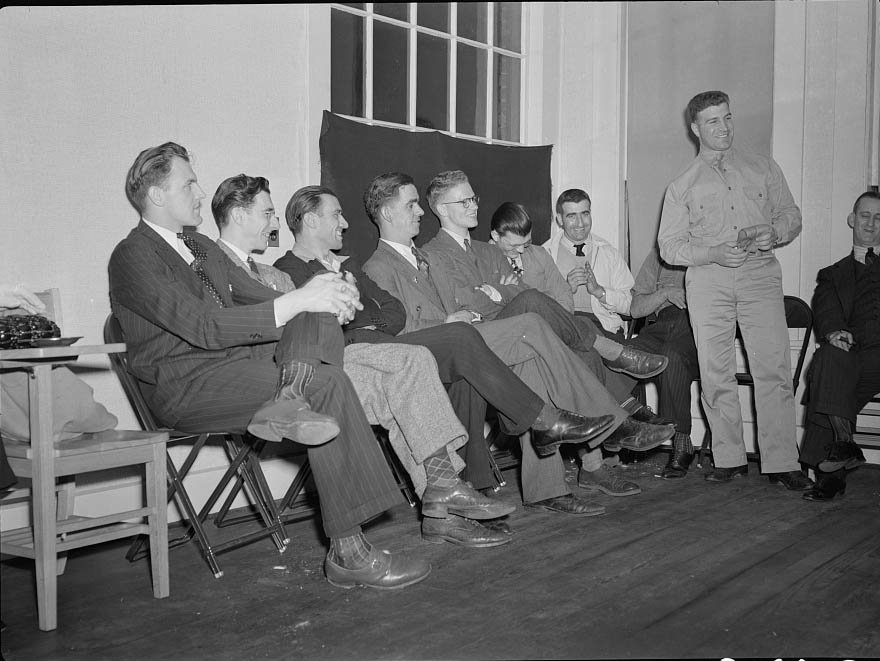
A group of young men soon to leave for army induction camps are listening to William Mongelo, of the U.S. Army Air Corps,1942

Not all of Southington’s young men would remain civilians much longer. A group photographed by Jacobs was on the verge of leaving for army induction camps, listening to William Mongelo of the U.S. Army Air Corps. These were the faces of men who were days away from entering a world very different from the dairy farms, dance halls, and schoolrooms of their hometown.
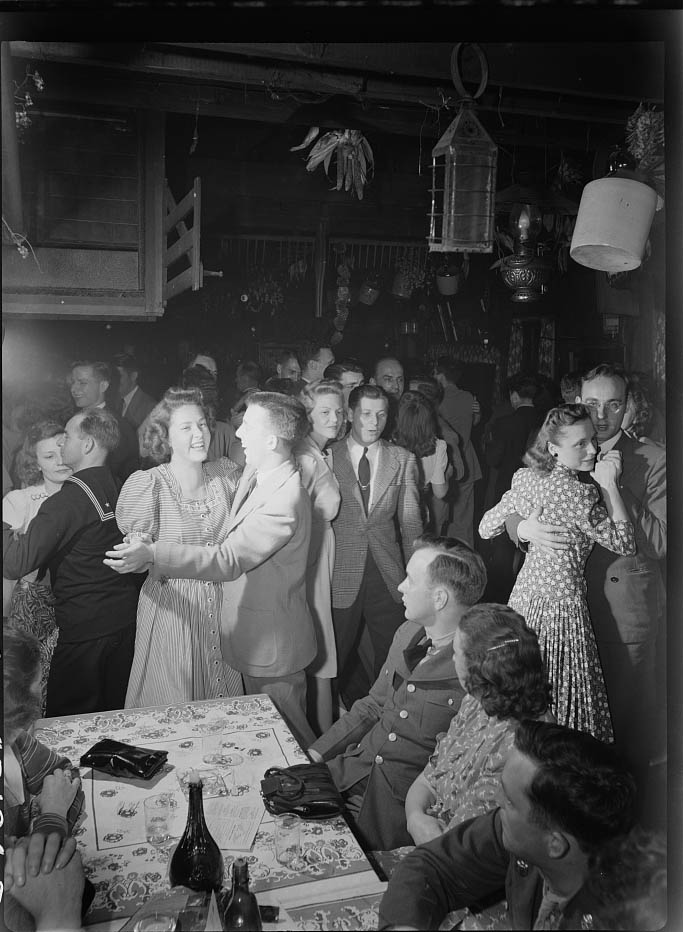
Dancing at the Old Mill, 1942
Members of the youth drum corps, 1942
Young people watching a game, 1942
Southington school children staging a patriotic demonstration, 1942
Southington girls, members of the youth drum corps, 1942
Young people watching a game, 1942

Emergency services in Southington during the war operated mostly on volunteer labor. Thomas J. Murphy served as chief of the fire department and was its only paid member. Everyone else was a volunteer. Similarly, the police department — photographed together in a group portrait — maintained order in a town where a significant portion of working-age men were serving overseas.
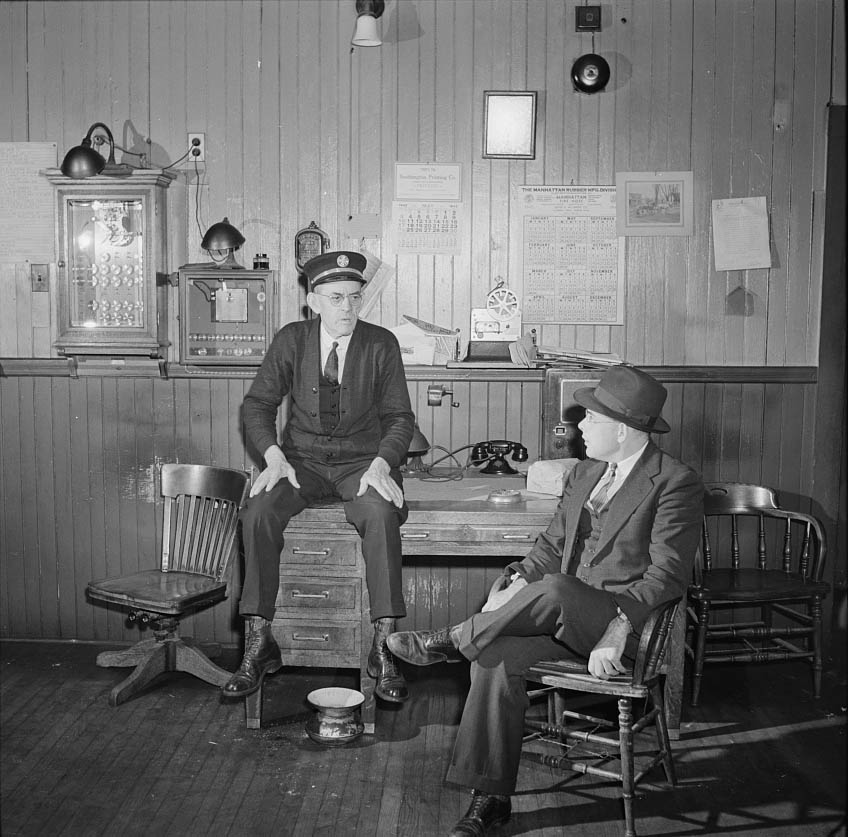
Thomas J. Murphy, chief of the fire department, and its only salaried member, chatting with one of the volunteers, 1942
Students of first aid, practicing artificial respiration, 1942
Dimitrios Giorgios, who came from Greece, runs a soda fountain.
Mrs. John Chimbor, one of the newer generations of Americans. She came from Iceland twenty years ago, 1942
Boys collecting paper for war conversion, 1942
Southington girls, members of the youth drum corps, 1942

The Memorial Day parade of 1942 passed through a town that was running at full wartime capacity. Factories stayed open. Workers stayed at their stations. The parade still moved down the main street, but the sparse crowds along the curb told the story of a community where the war had reorganized every priority.
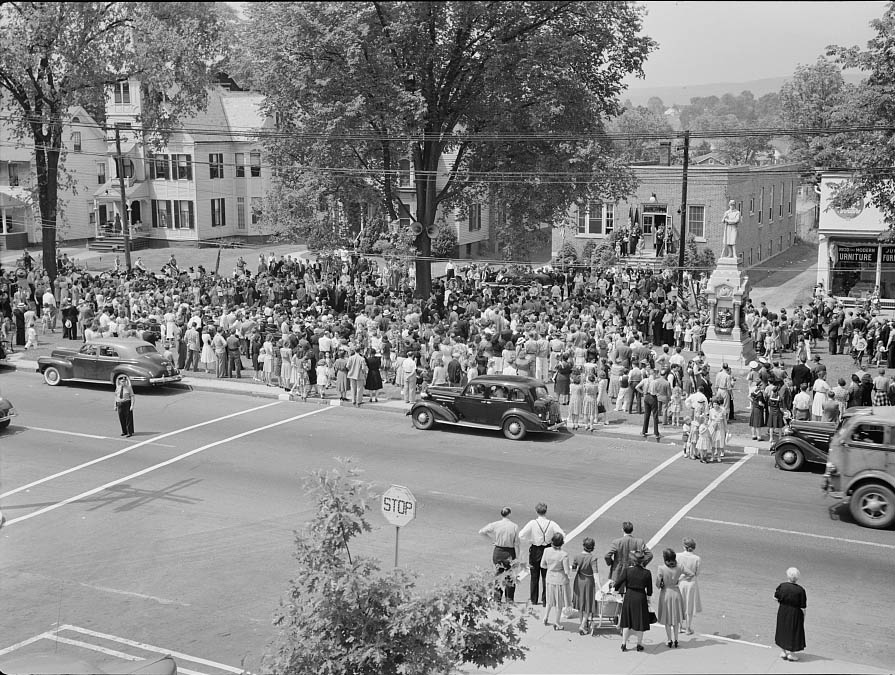
The Memorial Day parade moving down the main street.
School girls studying, 1942
An American town and its way of life, 1942
A class of young children, 1942
Worker in the Peck, Stow and Wilcox factory, 1942

Recreation in Southington had a distinctly multicultural character, shaped by the town’s immigrant communities. Bocce — an Italian game similar to bowling — was a popular outdoor sport, reflecting the strong Italian-American presence in town. Alongside bocce, residents enjoyed the amusement park, attended glee club recitals, and watched youth sports. These were the activities that filled the hours between work shifts and war news.
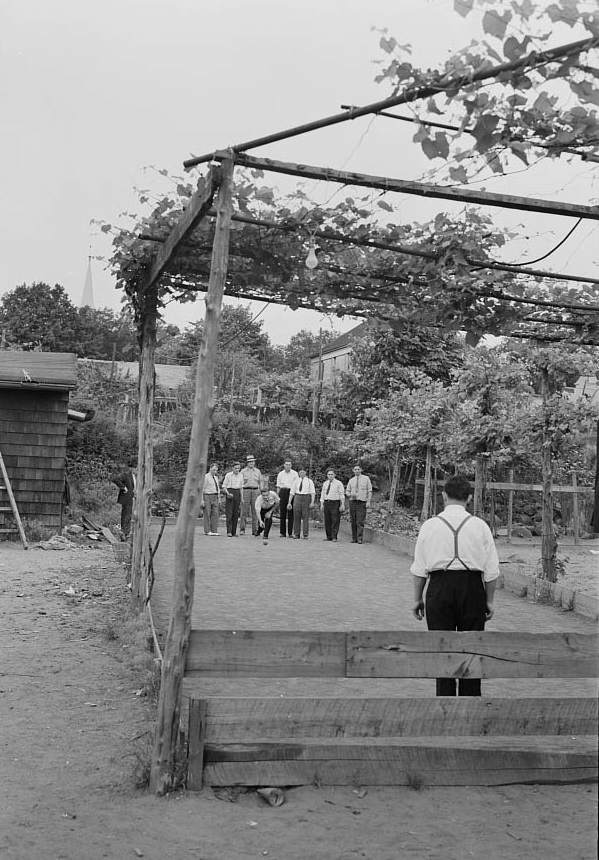
Bocci, an Italian game somewhat like bowling, is another popular outdoor sport in Southington, 1942
A meeting, 1942
A meeting, 1942
The Memorial Day parade moving down the main street.
The small number of spectators is accounted for by the fact that the town's war factories did not close, 1942
The small number of spectators is accounted for by the fact that the town’s war factories did not close, 1942
At the health center, 1942
Members of the youth drum corps, 1942
Class instruction ,1942

Law enforcement, civic meetings, and public institutions all continued operating normally throughout the war. Jacobs captured a group portrait of the policemen’s organization, a shot of the town court, and meetings of various civic bodies. These images reinforced the booklet’s central message: democratic life in Southington kept moving, even under the pressure of a global war.
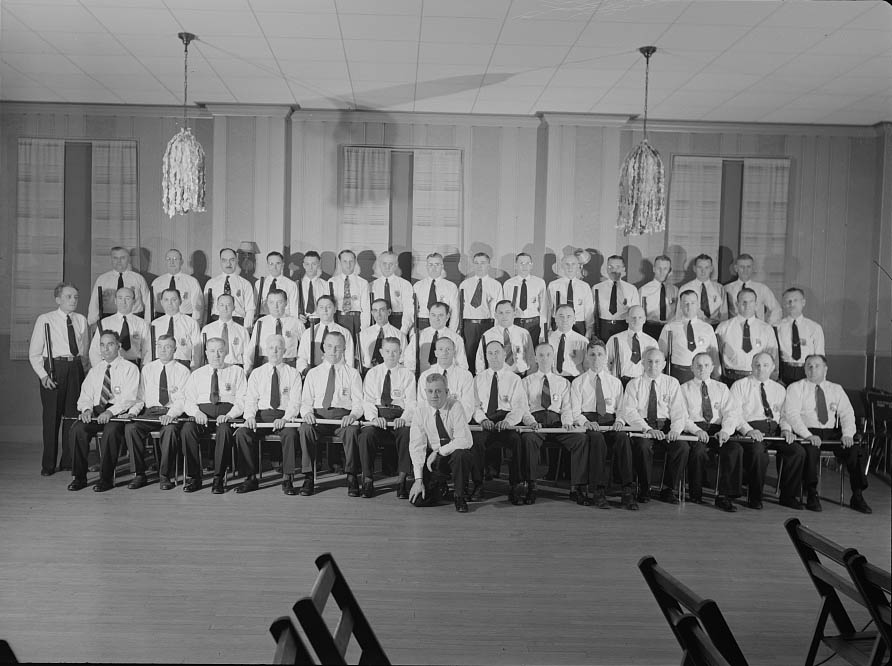
Group portrait of a policemen's organization, 1942
Group portrait of a policemen’s organization, 1942
At Beecher Street School, 1942
A group of women rolling bandages and preparing surgical dressings,1942
At Beecher Street School, 1942
Class instruction, 1942
School children pledging their allegiance to the flag, 1942
Boys collecting paper for war conversion, 1942
Southington school children staging a patriotic demonstration, 1942

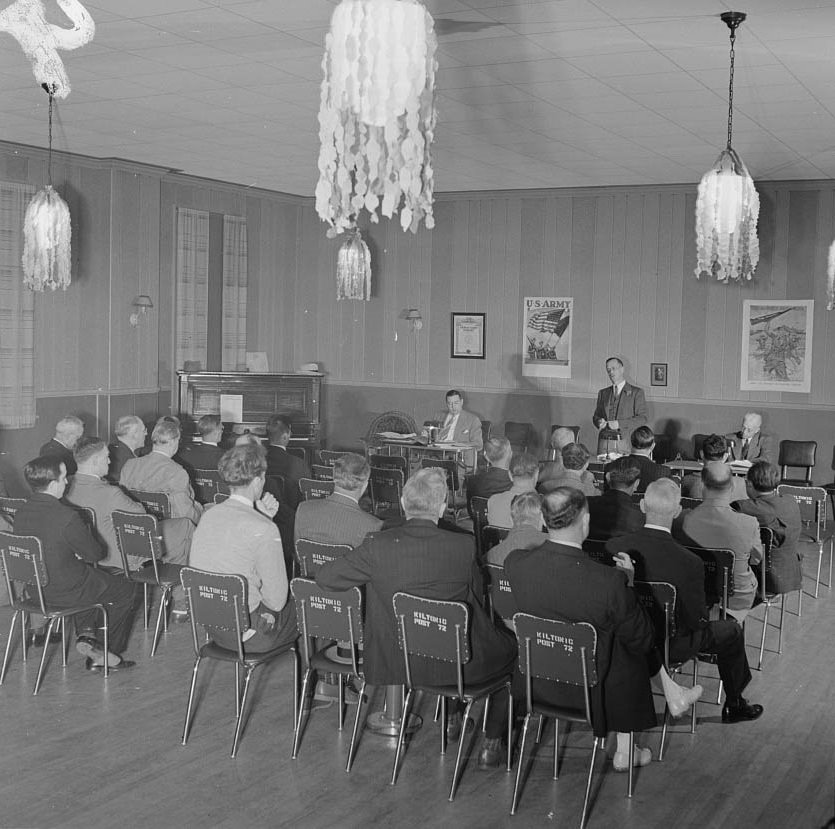
Southington’s 250 air raid wardens were a reminder that civil defense was taken seriously at the local level. They met weekly to coordinate their responsibilities — knowing who lived where, which buildings had which vulnerabilities, and how to direct people during an emergency. The wardens were ordinary residents who had taken on an extraordinary additional duty without pay.
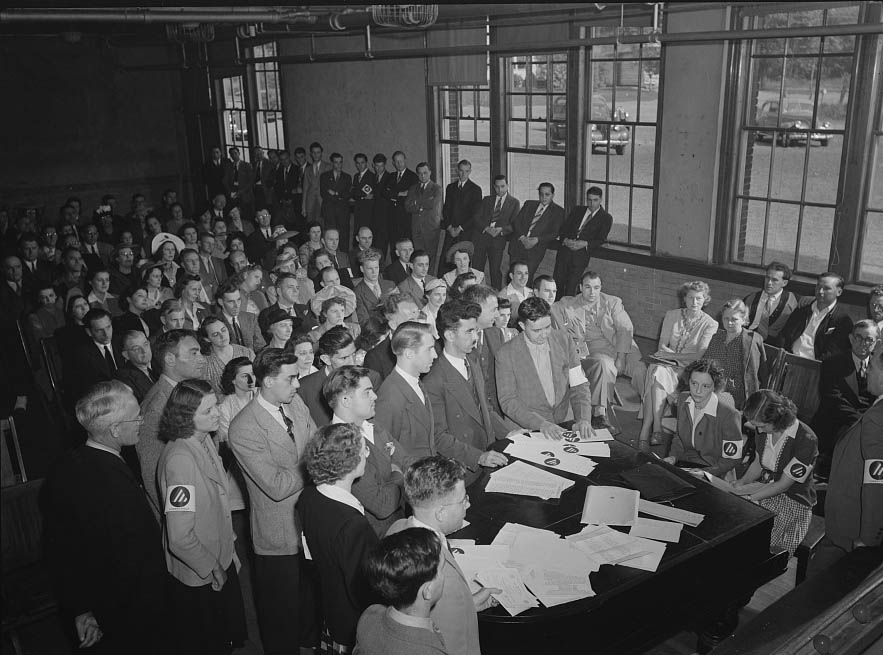
Some of Southington's 250 air raid wardens. They are attending one of the weekly meetings, 1942
Some of Southington’s 250 air raid wardens. They are attending one of the weekly meetings, 1942
Members of the youth drum corps, 1942
The Memorial Day parade moving down the main street, 1942
Class instruction, 1942
Southington school children staging a patriotic demonstration, 1942
A little girl is having her teeth fixed in the Center's modern dental clinic, 1942
A little girl is having her teeth fixed in the Center’s modern dental clinic, 1942
Citizens of Southington, 1942

The Red Cross nursing program in Southington produced a steady stream of trained volunteers. Graduation ceremonies were held where residents received certificates for completing the course. These newly trained nurses supplemented the town’s health infrastructure, which was already stretched by the demands of a wartime population with fewer professional medical resources available.
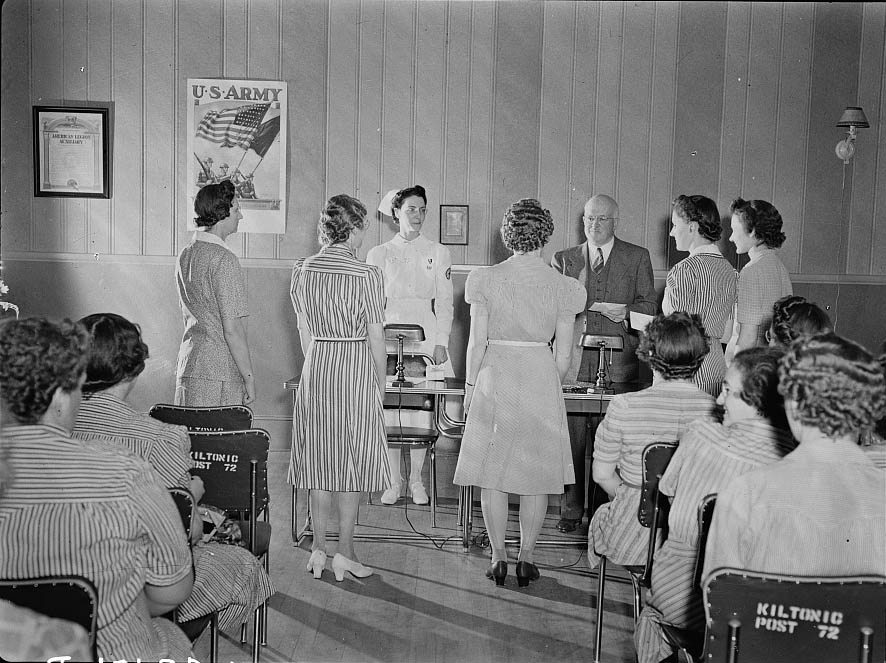
Graduates of a course in Red Cross nursing, receiving their certificates, 1942
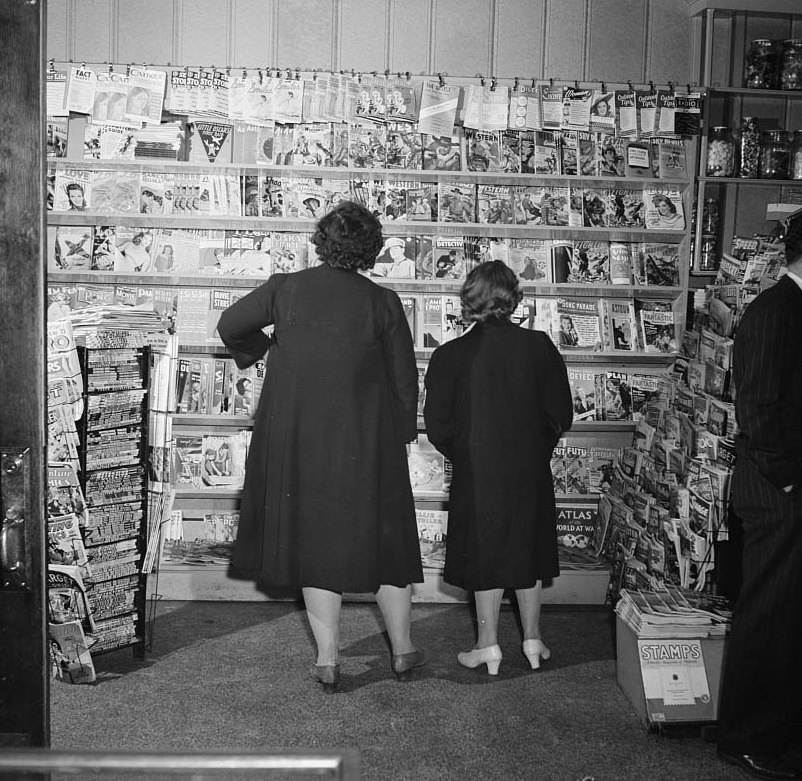
Where Southington folk buy their magazines, 1942
Class instruction, 1942
Citizens of Southington, 1942
Boys collecting paper for war conversion, 1942
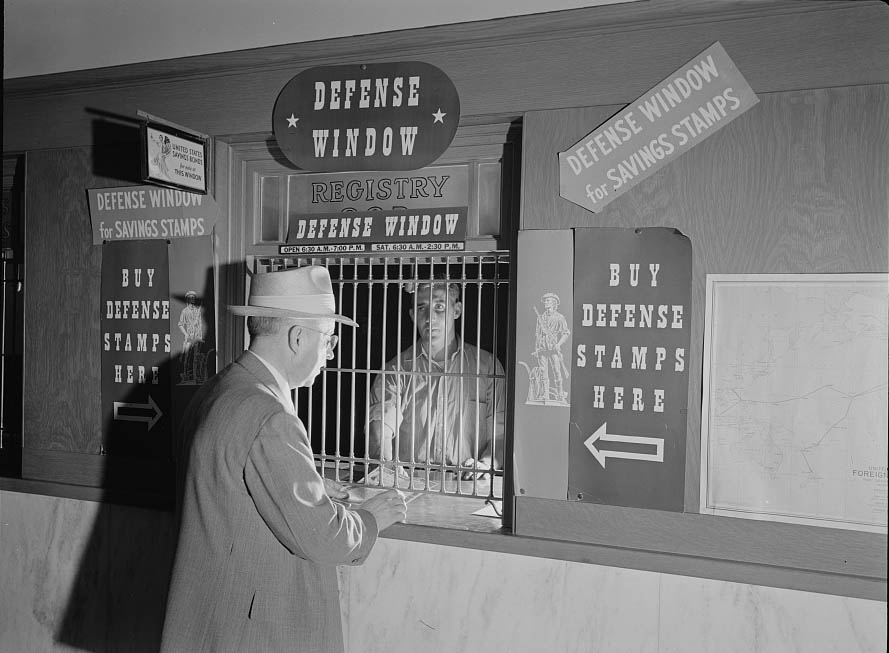
Post office, 1942
Post office, 1942
Class instruction, 1942

Religion remained central to community life. The vested choir sang at Sunday morning services, and on All Soul’s Day, the Catholic congregation gathered at Saint Thomas cemetery. These religious observances gave residents a place to process grief and anxiety in a year defined by both.
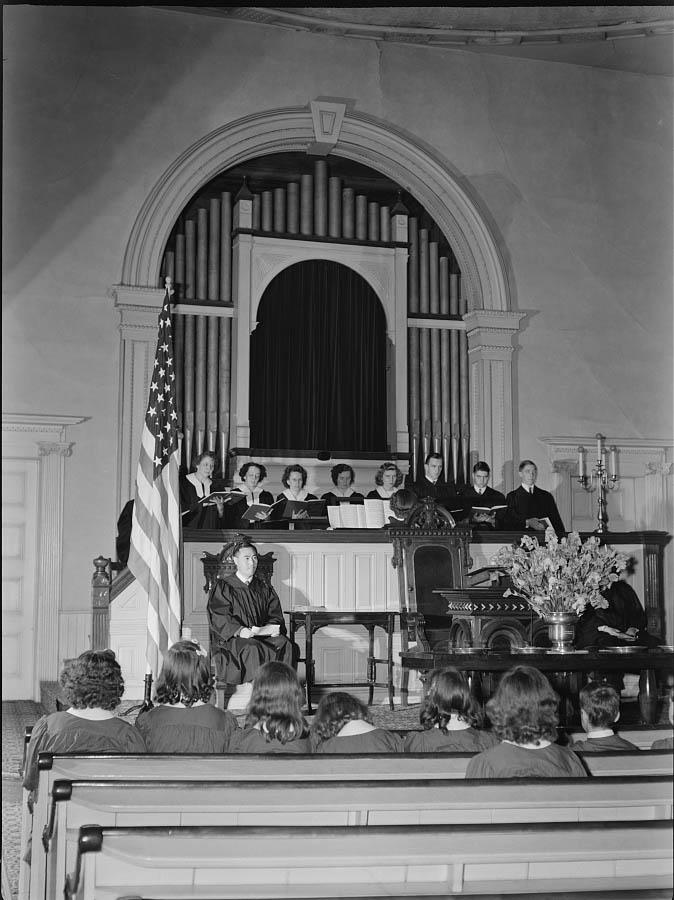
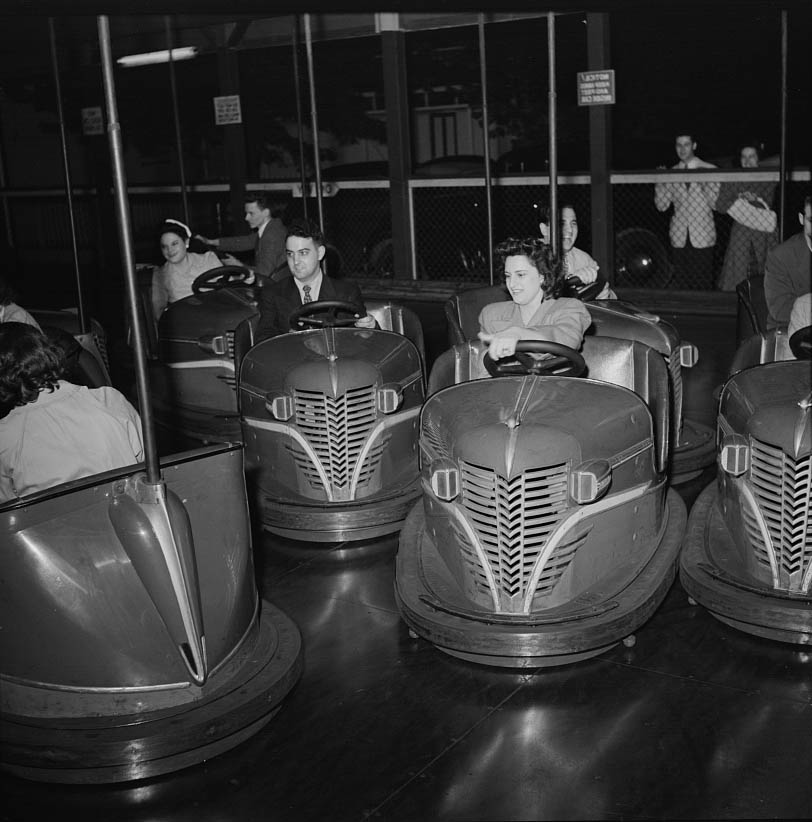
An American town and its way of life. The vested choir singing at a Sunday morning service, 1942
Amusement Park,1942
Amusement Park,1942
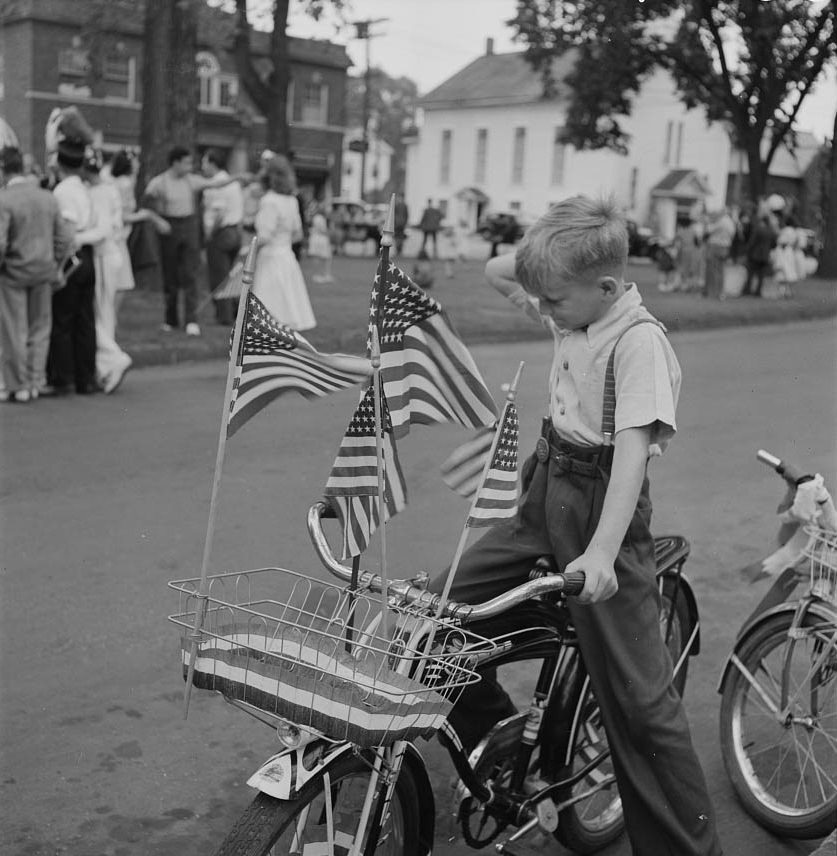
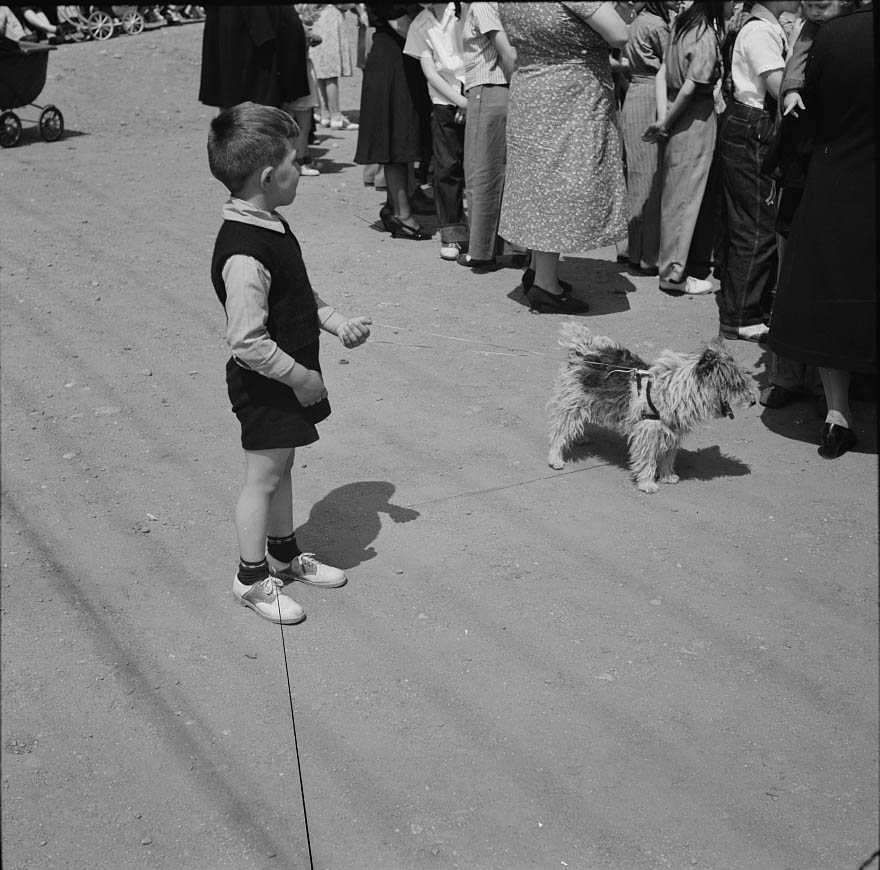
A small boy, 1942
A small boy, 1942
Red Cross mess hall, 1942
At the health center, the people of Southington may receive medical advice and a certain amount of medical care, 1942
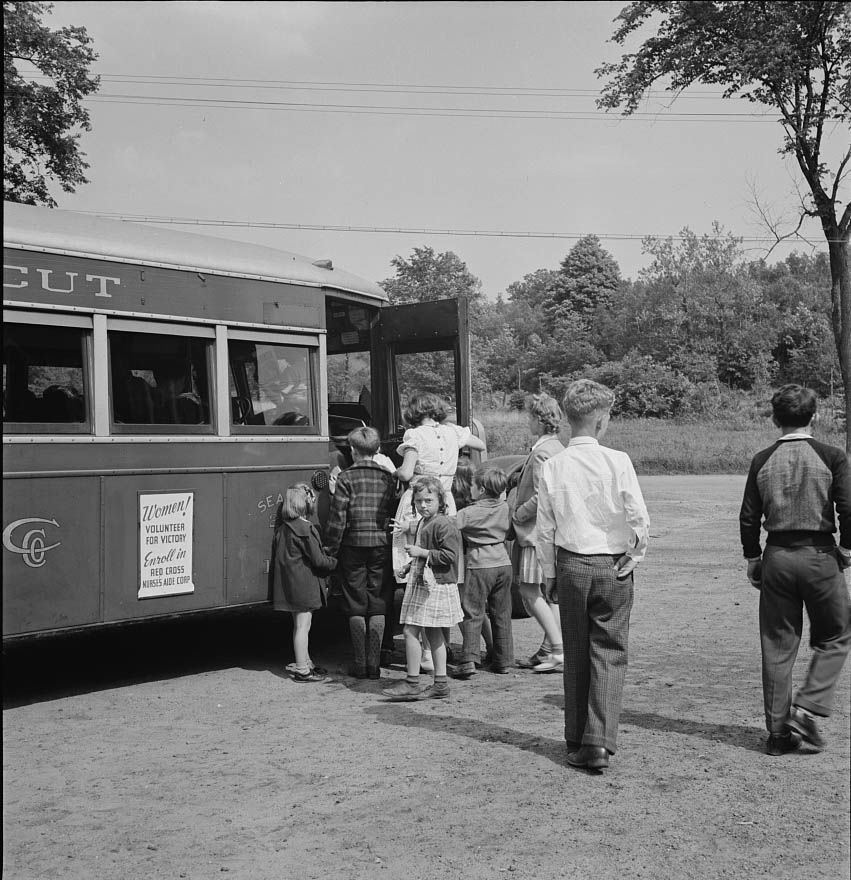
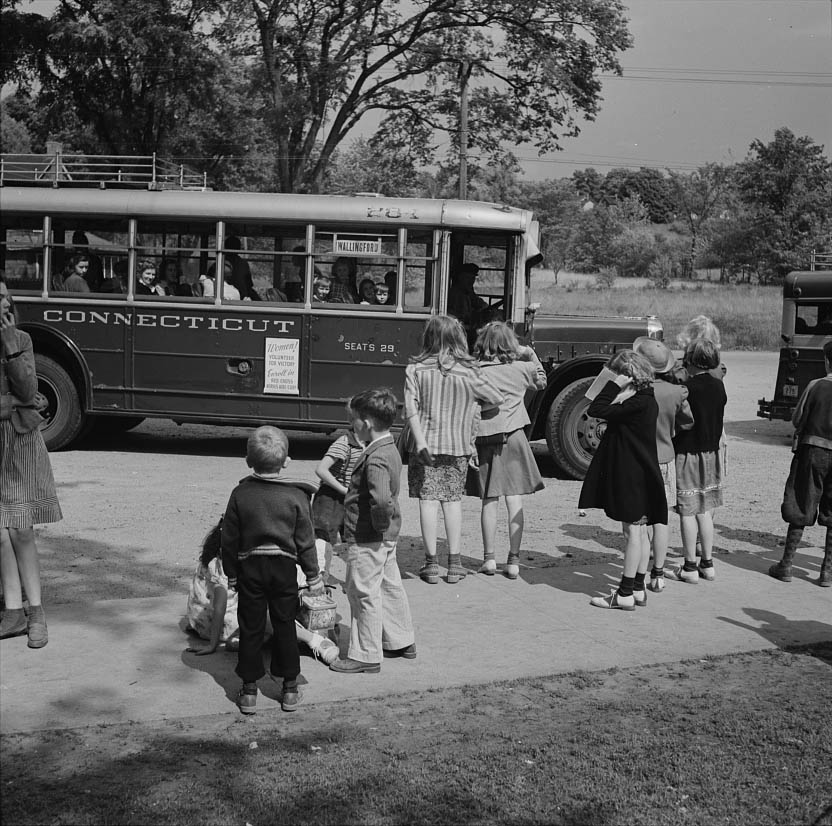
Bus and children, 1942
Shopping on Saturday nights, 1942
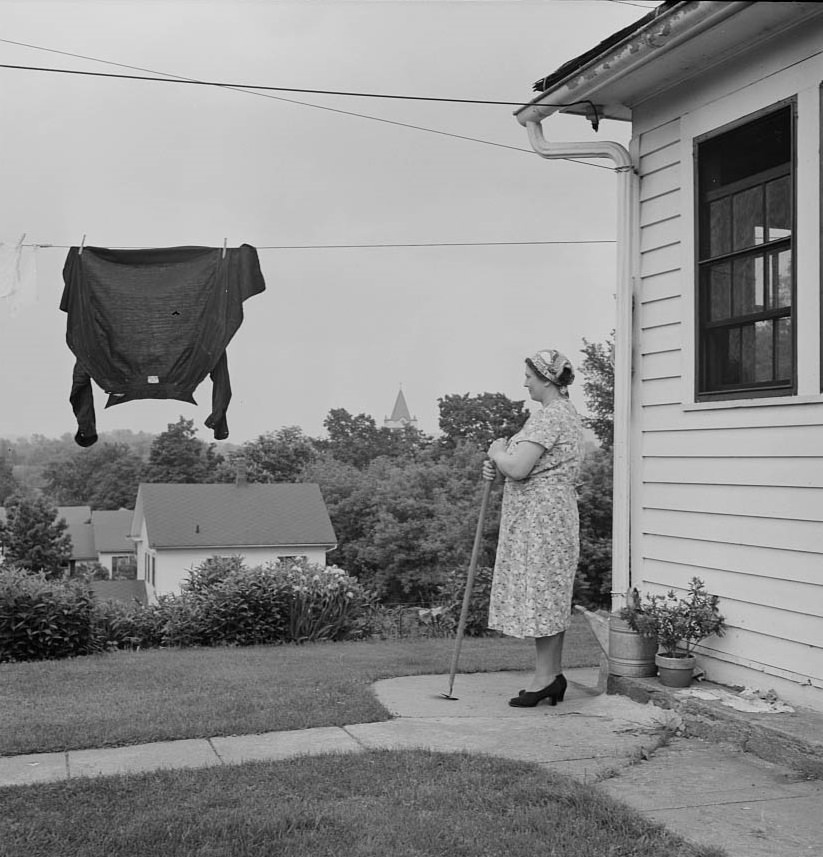
Mrs. John Chimbor, one of the newer generations of Americans. She came from Iceland twenty years ago, 1942
Post office, 1942
Post office, 1942
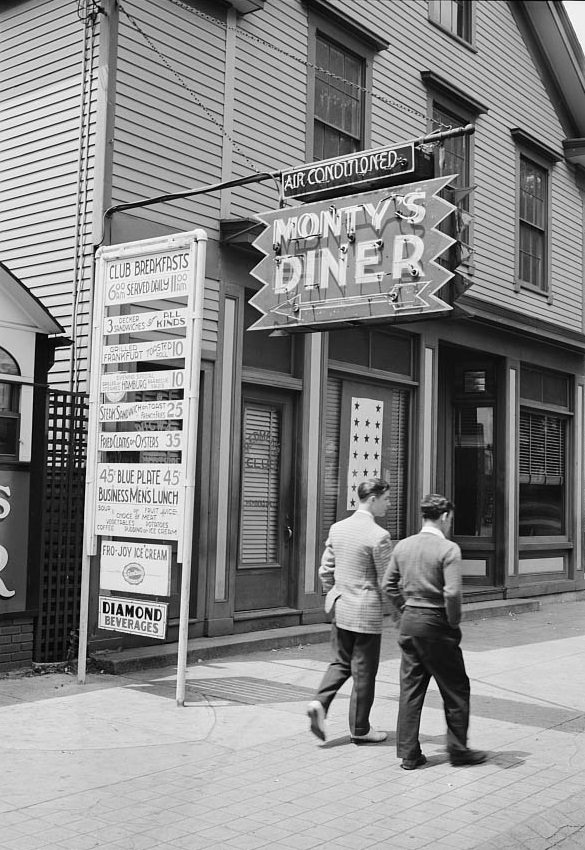
Monty's Diner,1942
Monty’s Diner,1942

Diners, magazine shops, and the post office were the informal gathering points of Southington. Monty’s Diner was one of those places where residents could sit down, share news, and feel some sense of normalcy. The post office held particular weight during the war — it was where letters to and from soldiers passed through, where families received news from overseas.
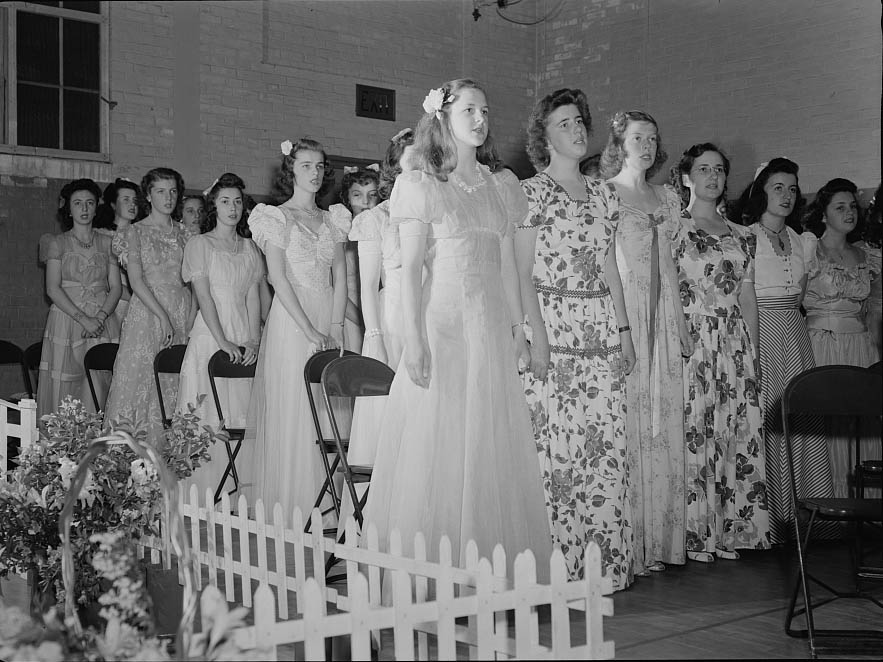
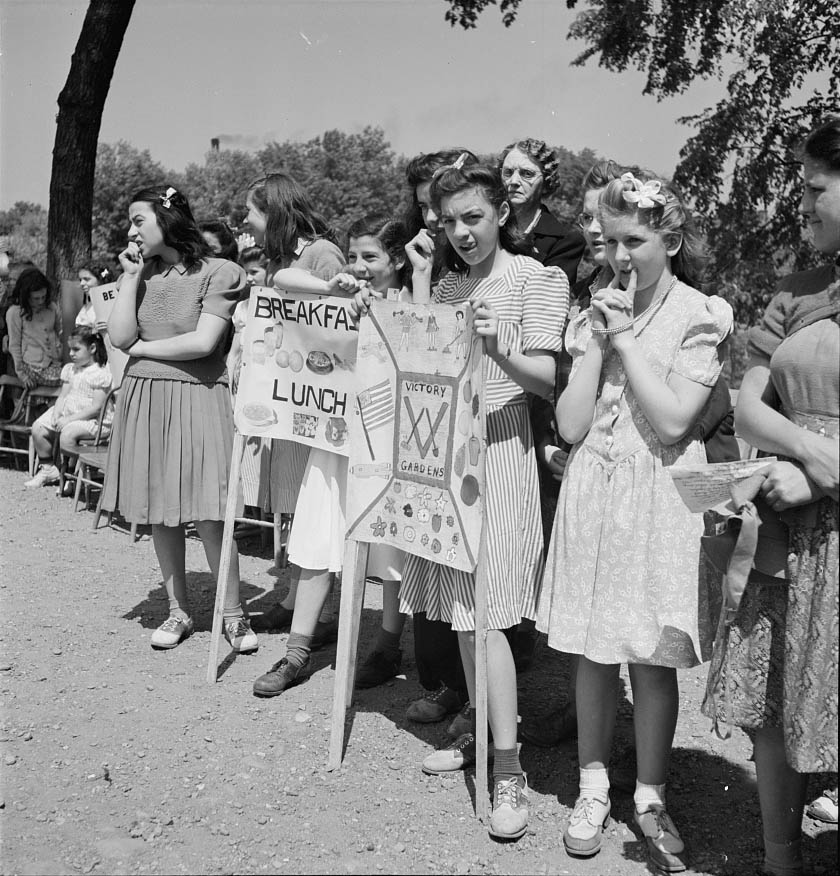
A highlight in the town's life is the annual girls' glee club recital,1942
A highlight in the town’s life is the annual girls’ glee club recital,1942
At Beecher Street School, whose student body consists half of Americans of Polish descent.
A group of children, 1942
Southington school children staging a patriotic demonstration, 1942
Members of the youth drum corps, 1942
Bus and children, 1942
Instruction in dress making, 1942
Kitchen scene, 1942
Kitchen scene, 1942
A little girl is having her teeth fixed in the center's modern dental clinic, 1942
A little girl is having her teeth fixed in the center’s modern dental clinic, 1942
The vested choir singing at a Sunday morning service, 1942
A class of young children, 1942
Members of the youth drum corps, 1942
At Beecher Street School, whose student body consists half of Americans of Italian descent and half of Americans of Polish descent.
Chief of police, 1942
Enjoyed this post? Get new ones in your inbox.

2 thoughts on “Fascinating Historical Photos of Life in Southington, Connecticut During WWII”

Leave a Comment

Your email address will not be published. Required fields are marked *

Share this Post 🥺

Please take a moment to share this content. Your support is greatly appreciated! 🙌🙏

Share this Post 🥺

Please take a moment to share this content. Your support is greatly appreciated! 🙌🙏
Scroll to Top
 
Hey Friend, Before You Go.. Please like & follow for more interesting content