
Hey There! Before You Go. 😧
Get the best vintage content straight into your inbox!

Don't worry, we don't spam

Paris in Wartime: The Propaganda Images of André Zucca

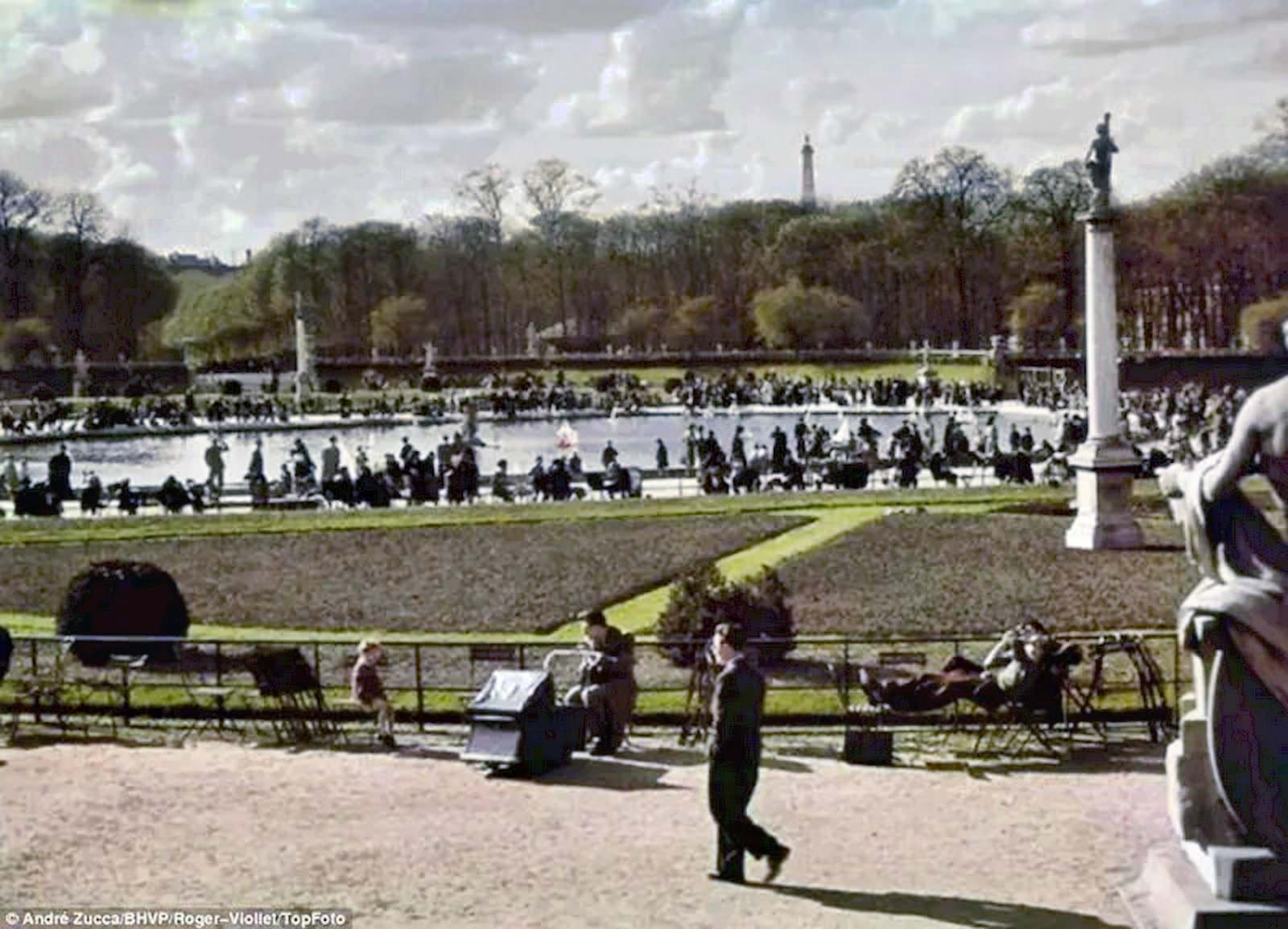
During the German occupation of Paris in World War II, a French photographer named André Zucca was hired to shoot images for Signal, a weekly propaganda magazine published by the German government. Signal was printed in multiple languages and distributed to German soldiers and civilians across occupied Europe. Its purpose was clear: to shape how people saw Nazi rule. Zucca was its eyes in Paris.
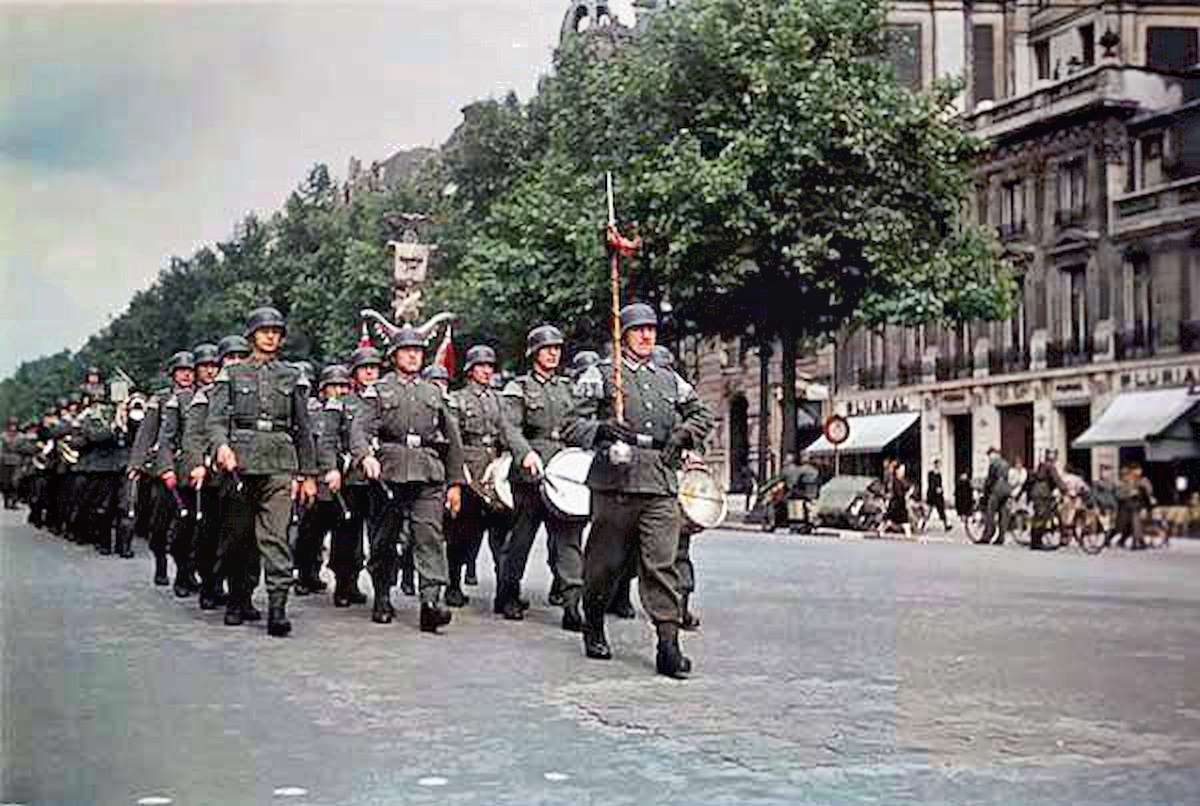
Stern-looking soldiers from the Wehrmacht march down one of the city's broad boulevards.
Stern-looking soldiers from the Wehrmacht march down one of the city’s broad boulevards.

Zucca’s photographs showed Wehrmacht soldiers marching through wide Parisian boulevards and standing guard outside German-controlled buildings. But the bulk of his work wasn’t focused on military power. It was focused on something more subtle — the appearance of normalcy.

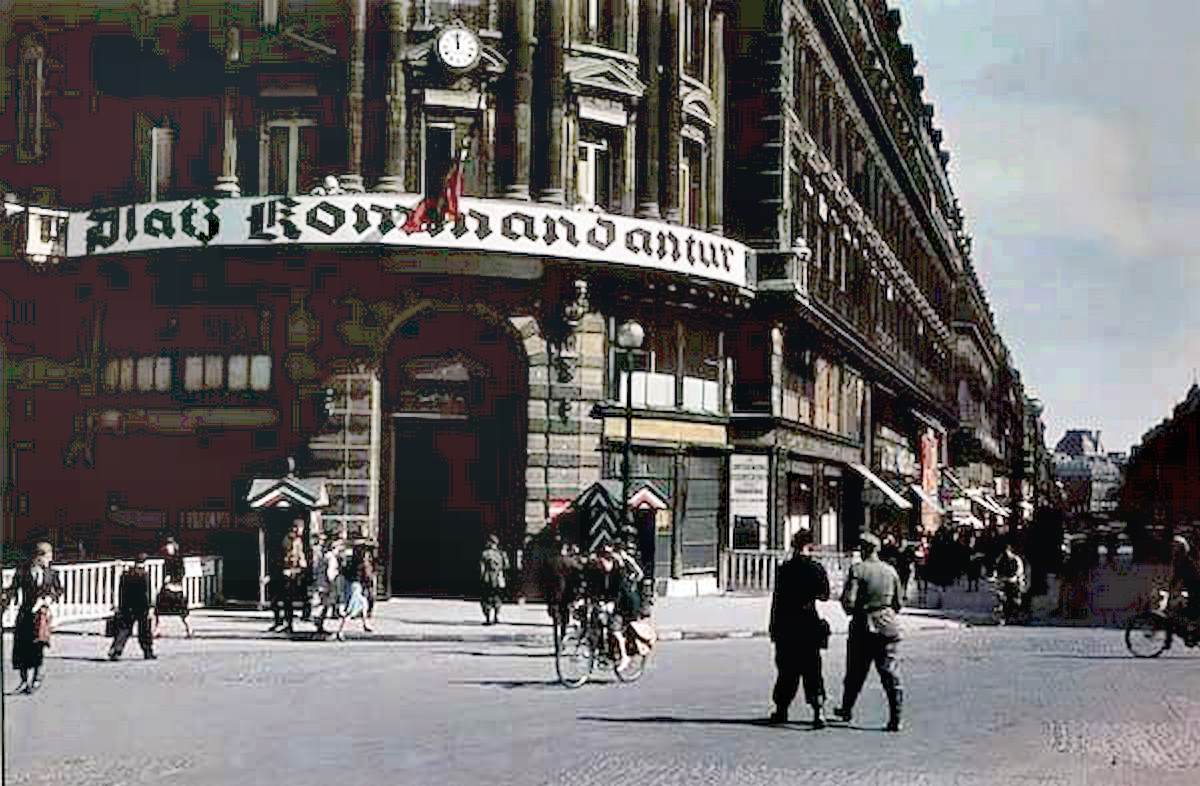
Guard posts stand outside a building the sign of which advertises it as an important spot for the occupying German army.

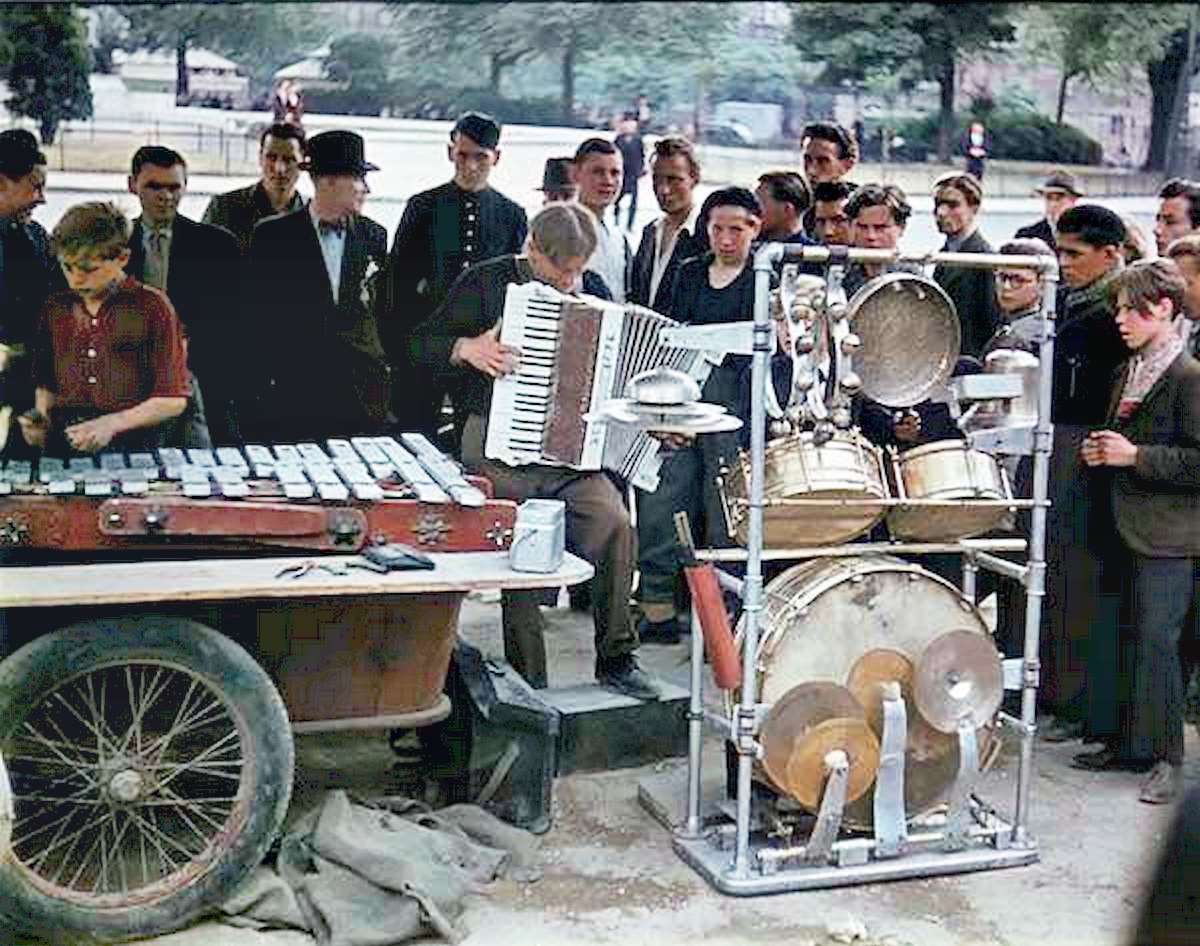
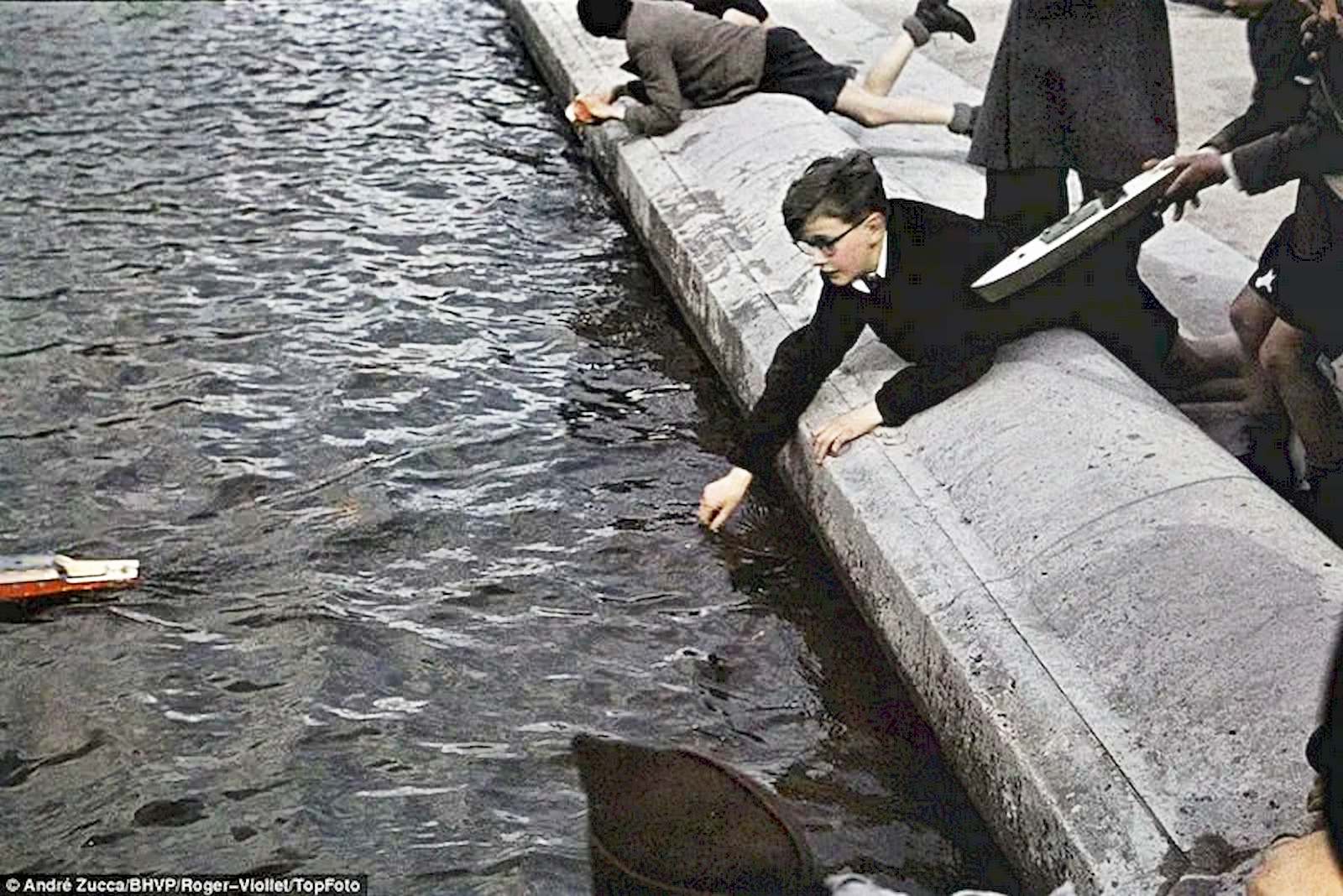
Signal’s editors wanted images that told a specific story: that life in occupied Paris was calm, orderly, and even pleasant. Zucca delivered exactly that. He photographed fashionable women, street musicians, families in the sun, and Parisians fishing along the Seine. The city in his photographs looks like it is thriving, not suffering under military occupation.

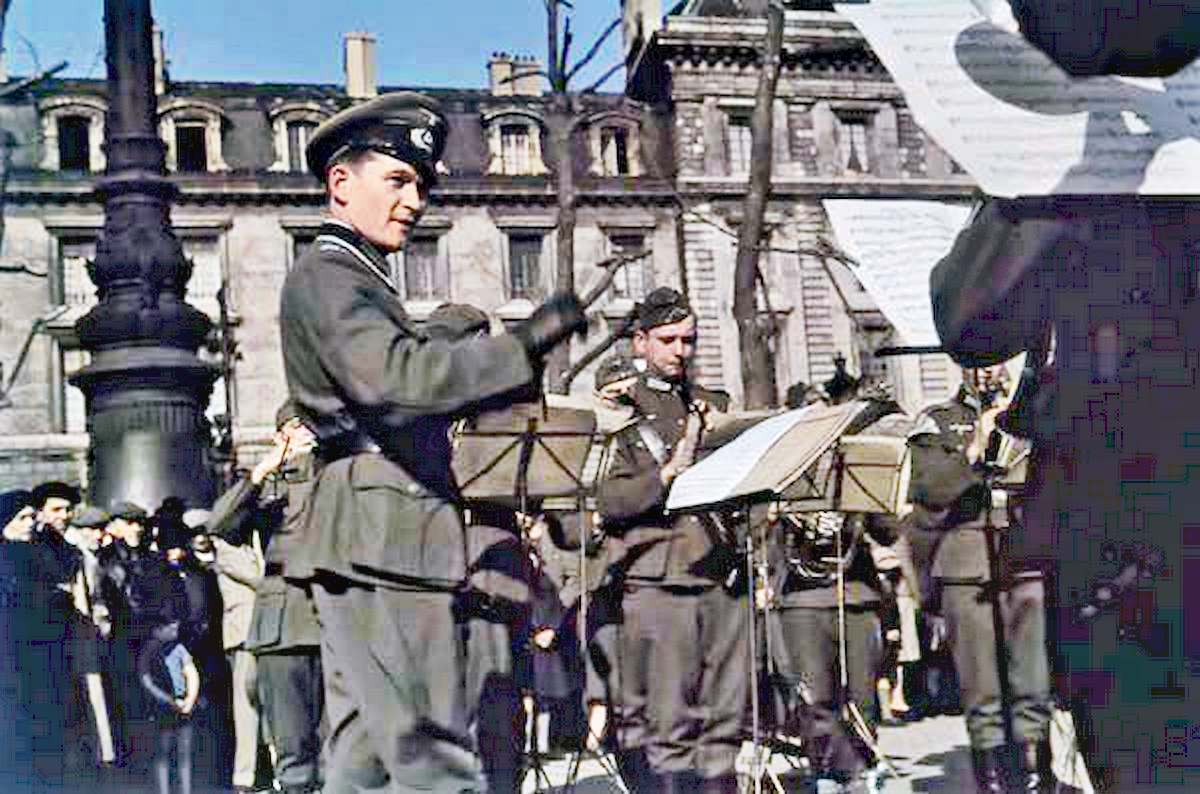
A crowd surrounds a traveling band as they play music in a Paris street.
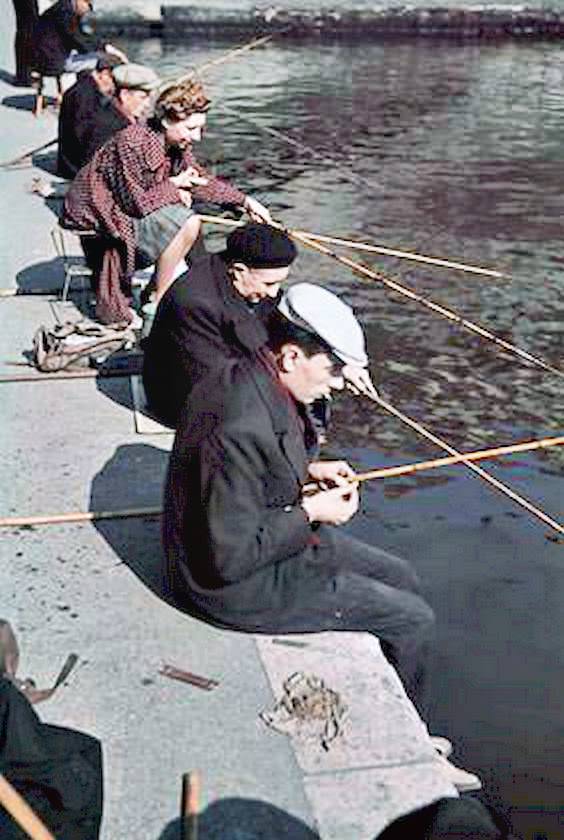
Parisians are shown fishing in the Seine.

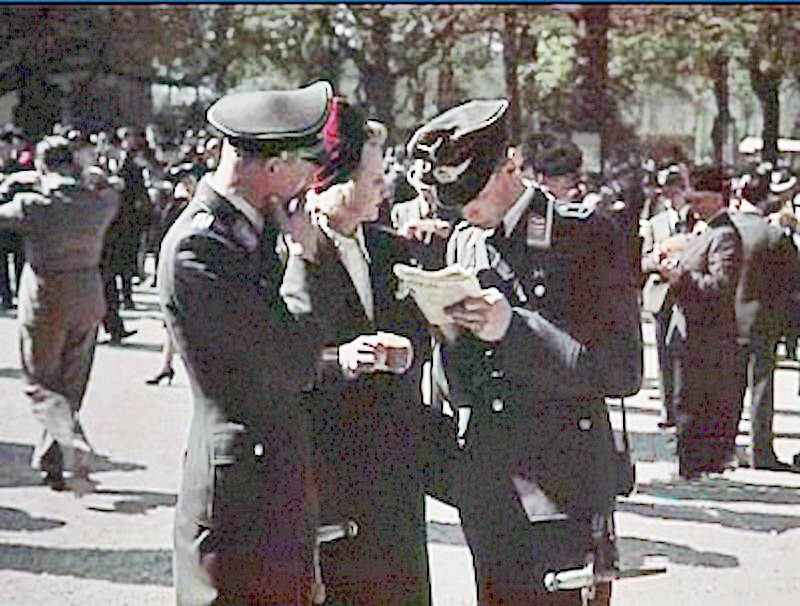
Many of Zucca’s images show German soldiers not as armed occupiers but as participants in everyday Parisian life — browsing markets, chatting with locals, and strolling past café terraces. Historians have pointed out that these scenes were carefully constructed to send a message to the world: France was not resisting, it was cooperating.

Officers from the Wehrmacht chat with a Parisian woman.
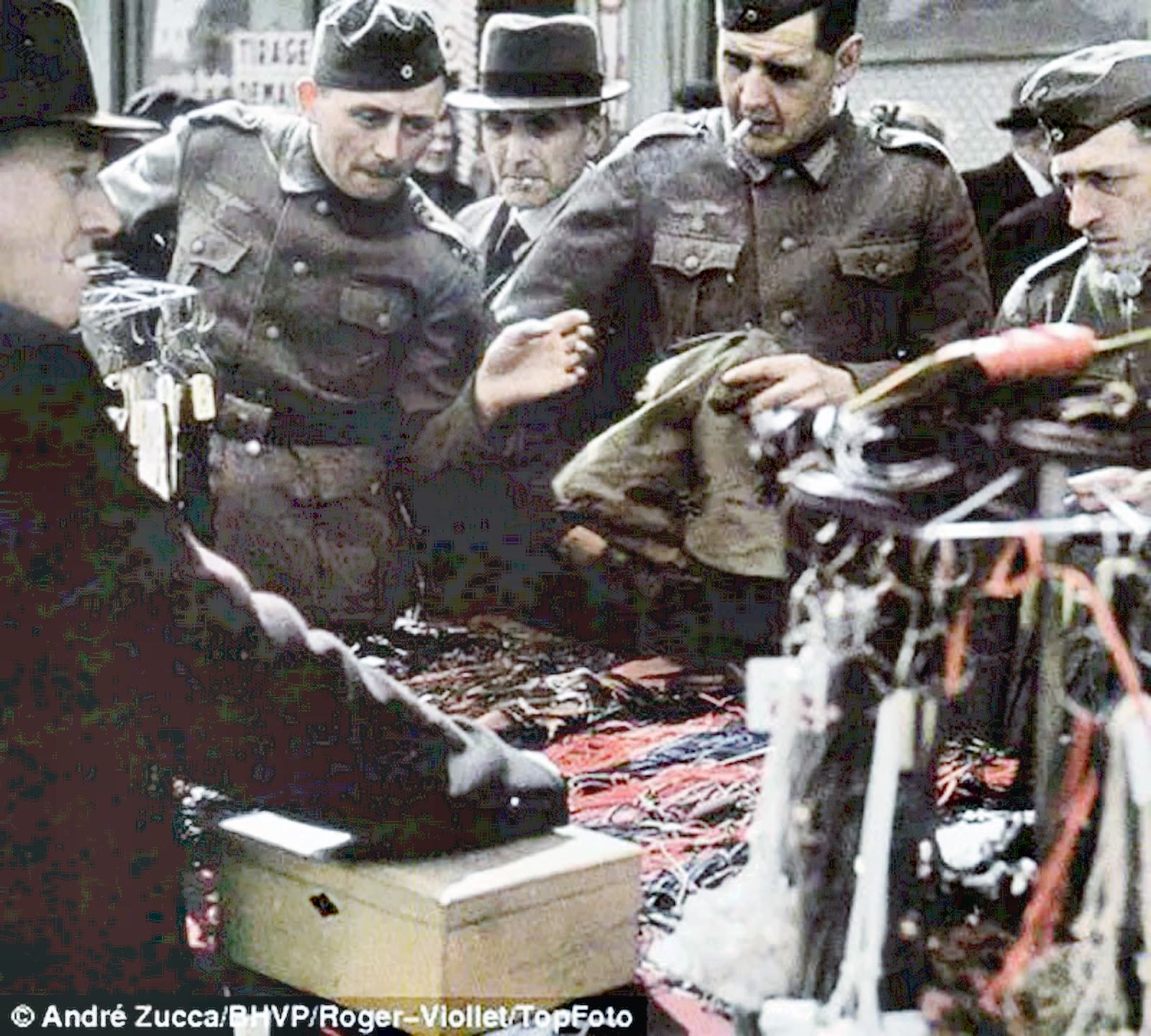
Nazi soldiers are shown participating in Paris life and are seen shopping at the market.
Historians say images such as this one of a Nazi soldier walking freely with Parisians was designed to show the world France was happy under occupation.

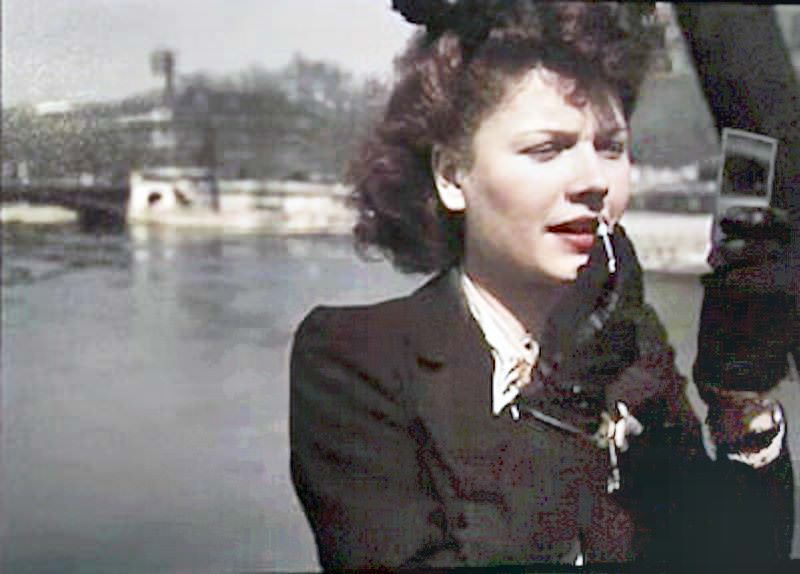
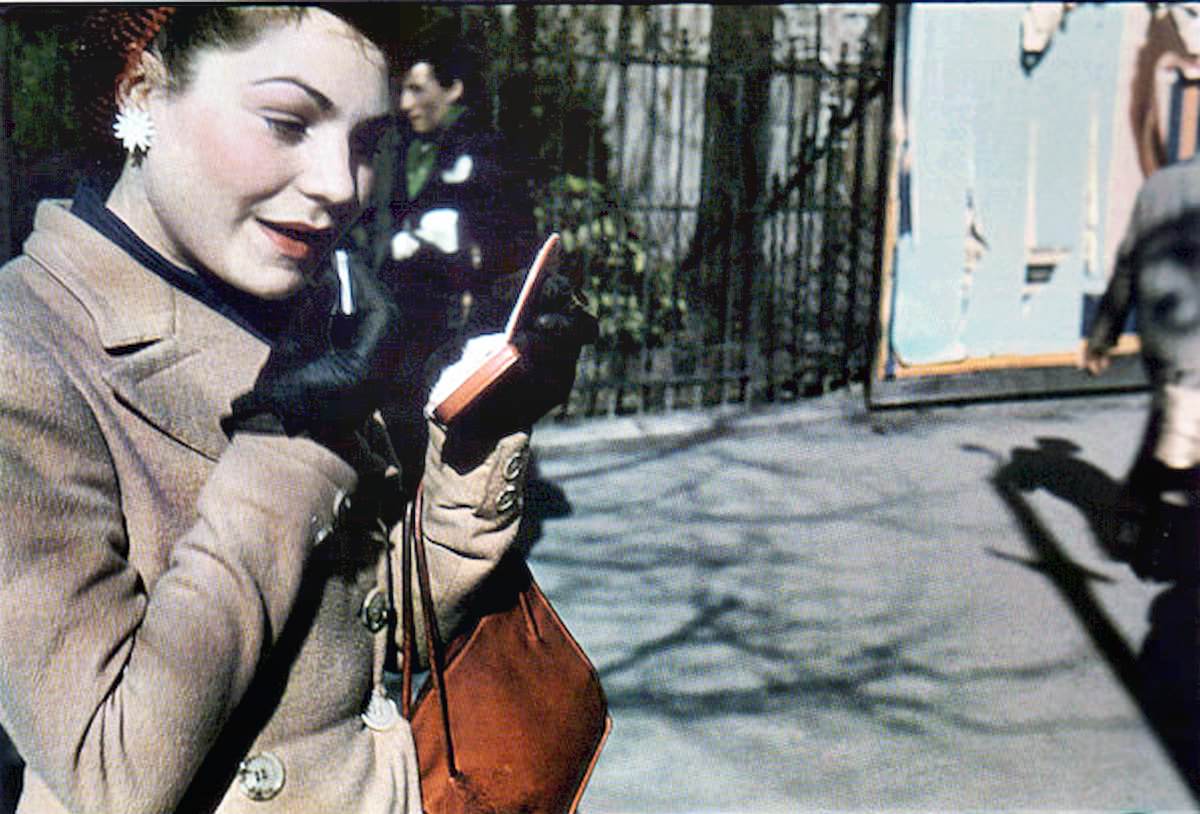
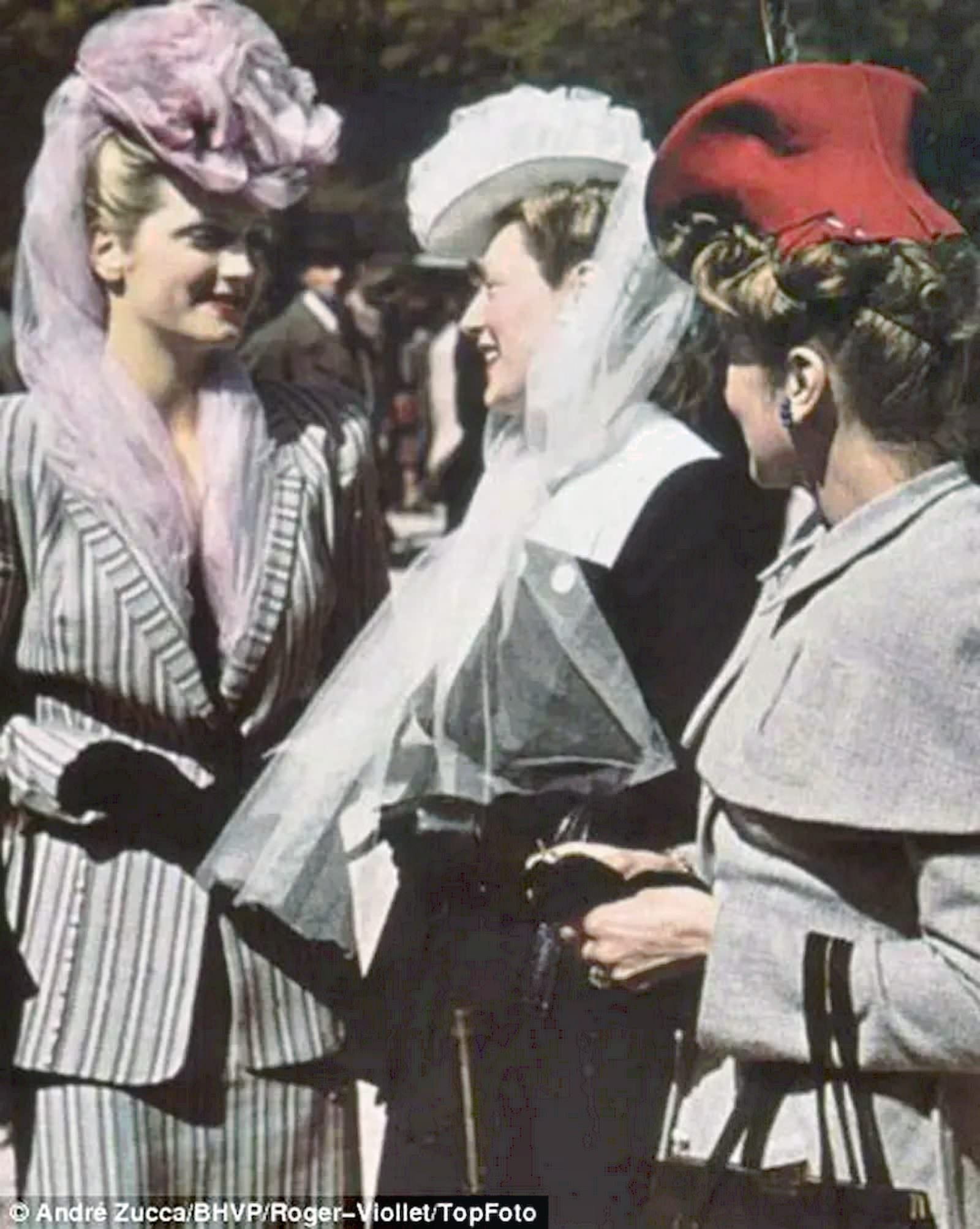
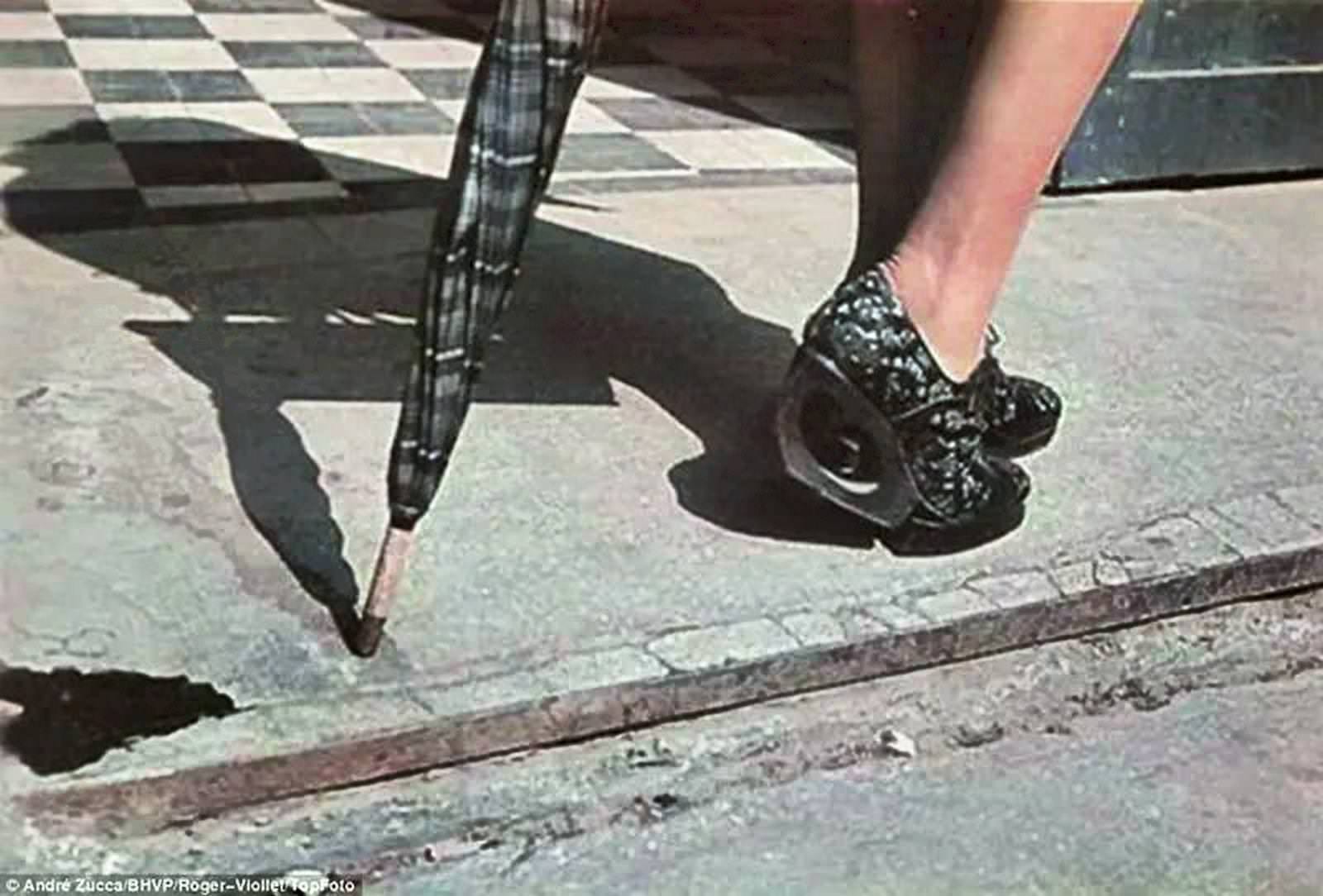
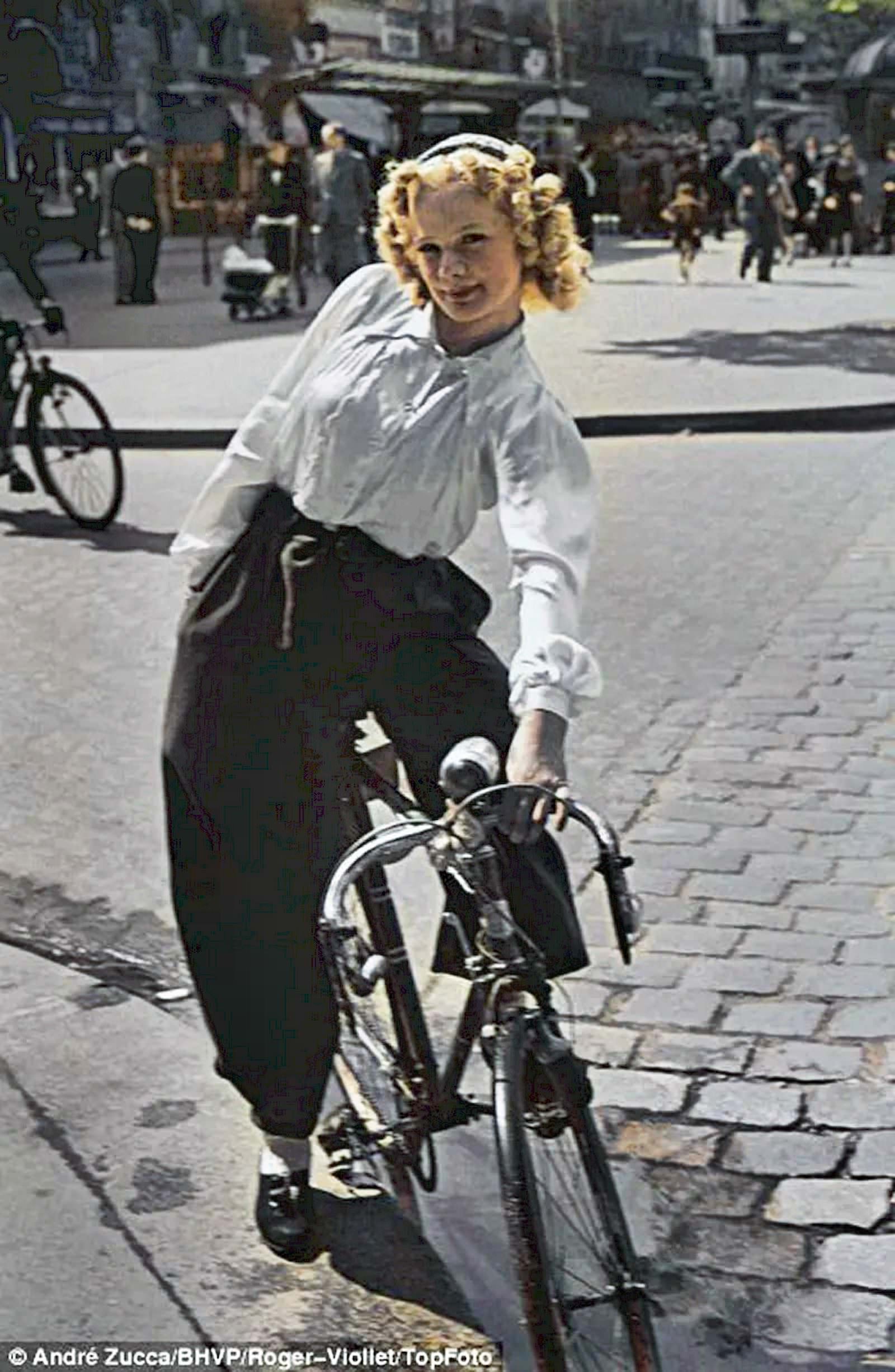
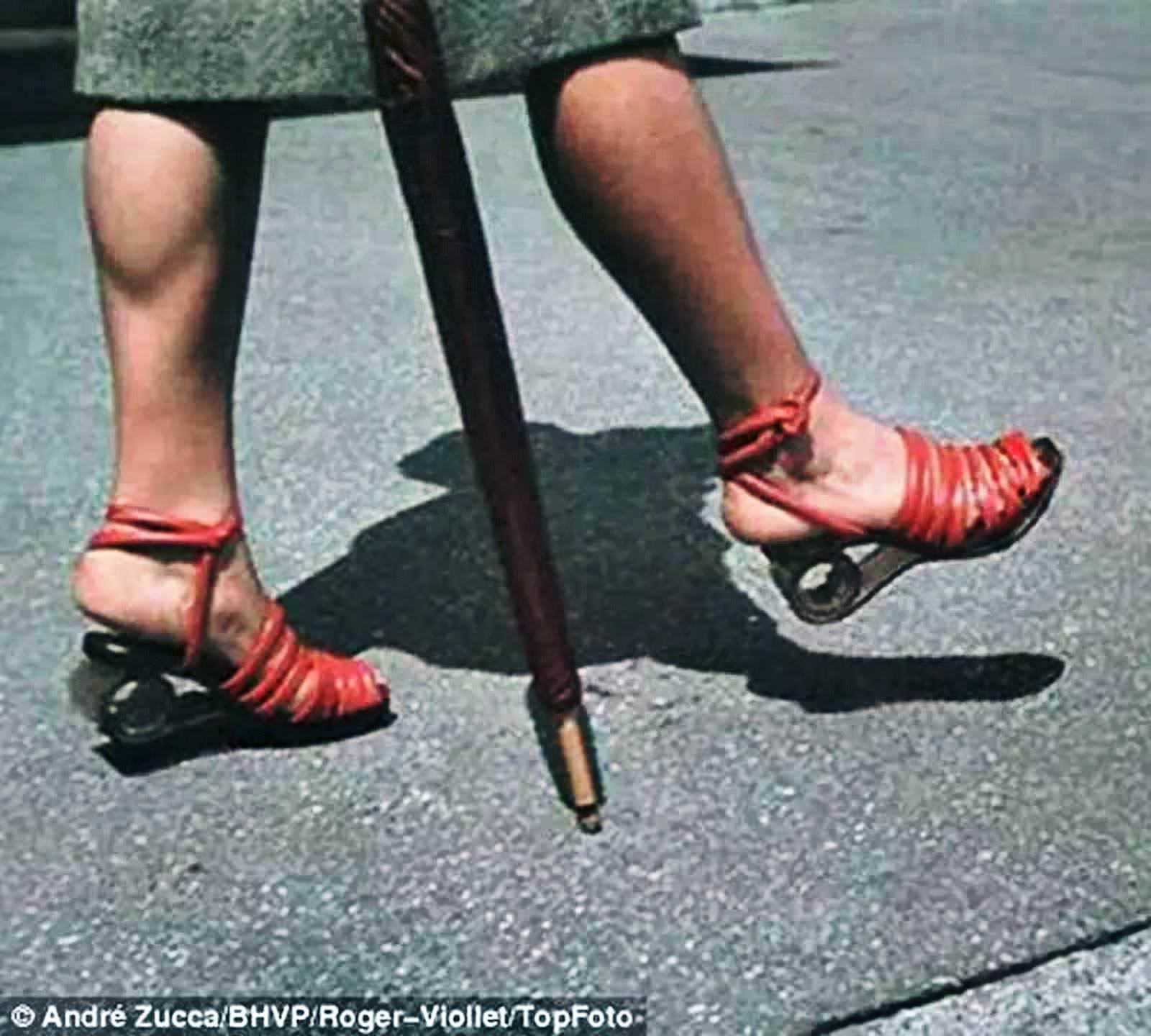
A recurring theme in the photographs is Parisian women dressed in high fashion. While rationing and hardship defined daily life for most people in occupied France, Zucca’s lens consistently found well-dressed women in stylish clothes, applying makeup and enjoying the summer weather. These images were a direct contrast to the reality that most Parisians actually lived.

The series is filled with fashionable women wearing stylish outfits and applying make-up, in stark contrast to hardships commonly associated with Nazi rule.
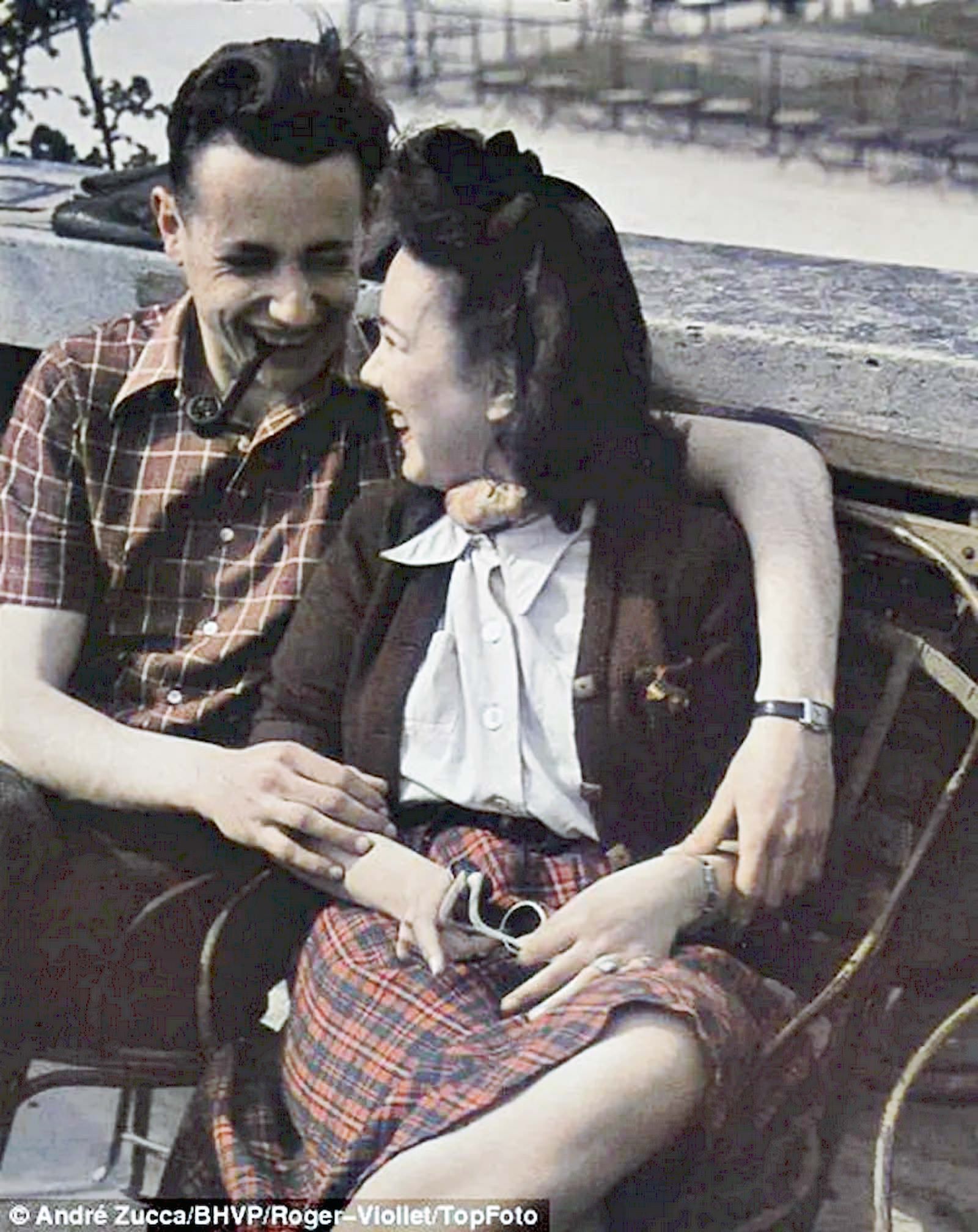
Zucca's photos show women dressed in the height of fashion and courting young lovers enjoying the French sunshine.
Zucca’s photos show women dressed in the height of fashion and courting young lovers enjoying the French sunshine.

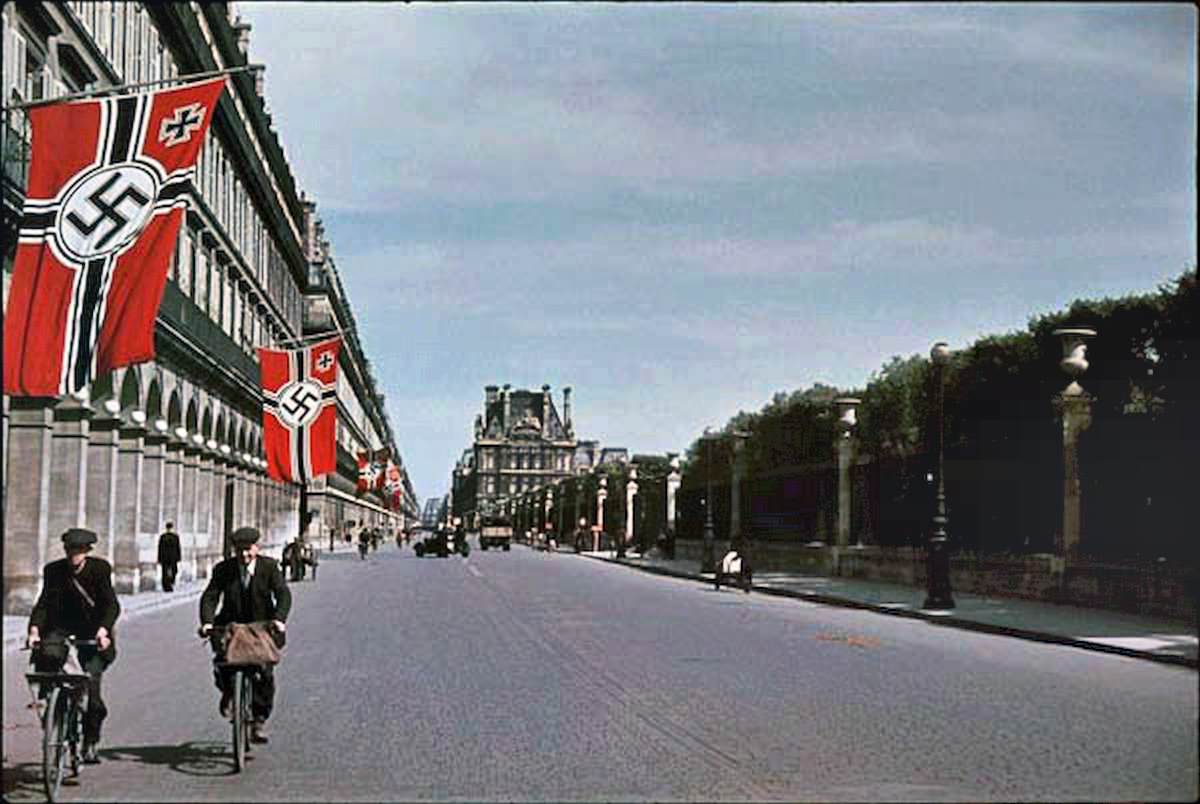
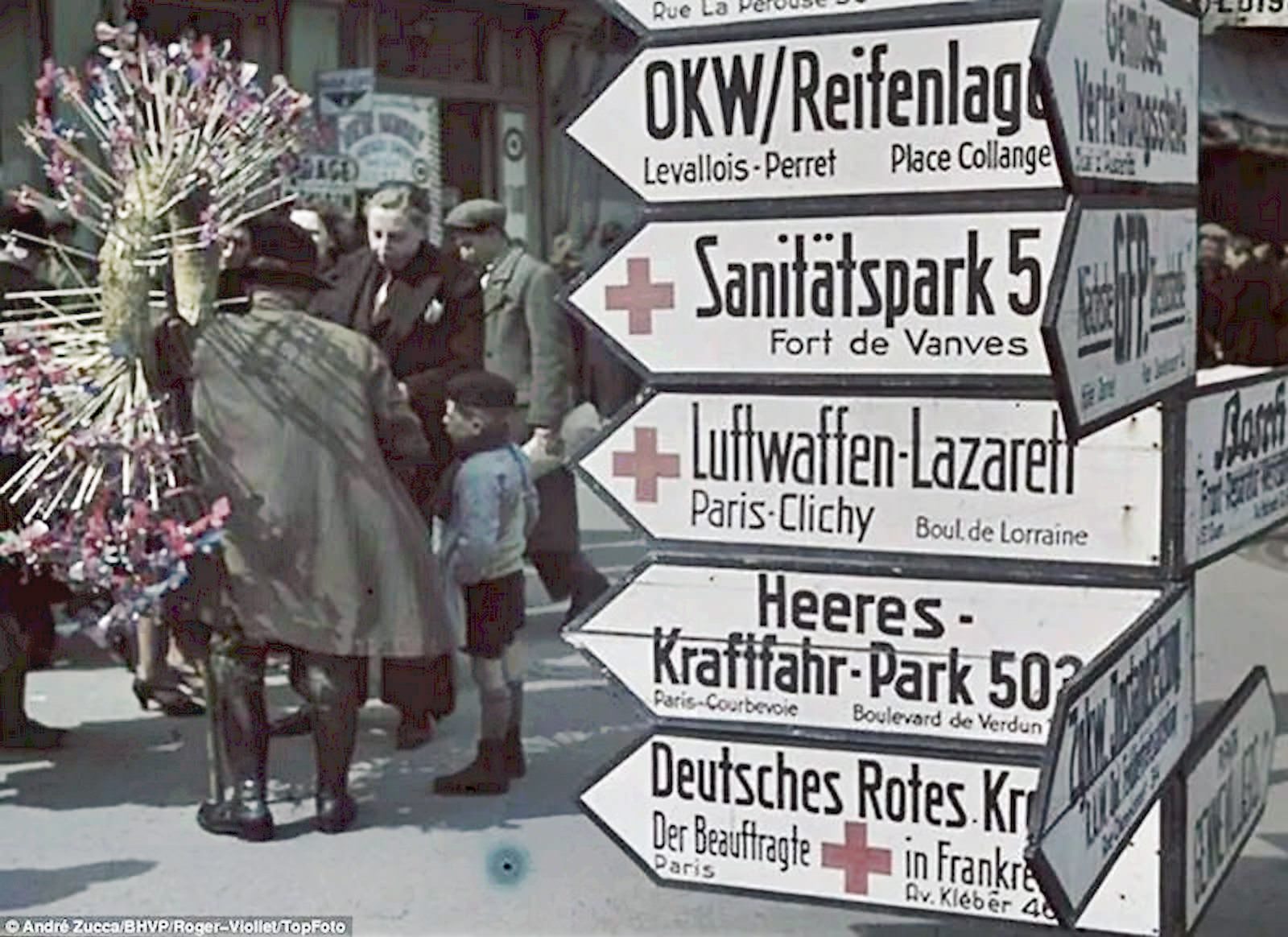
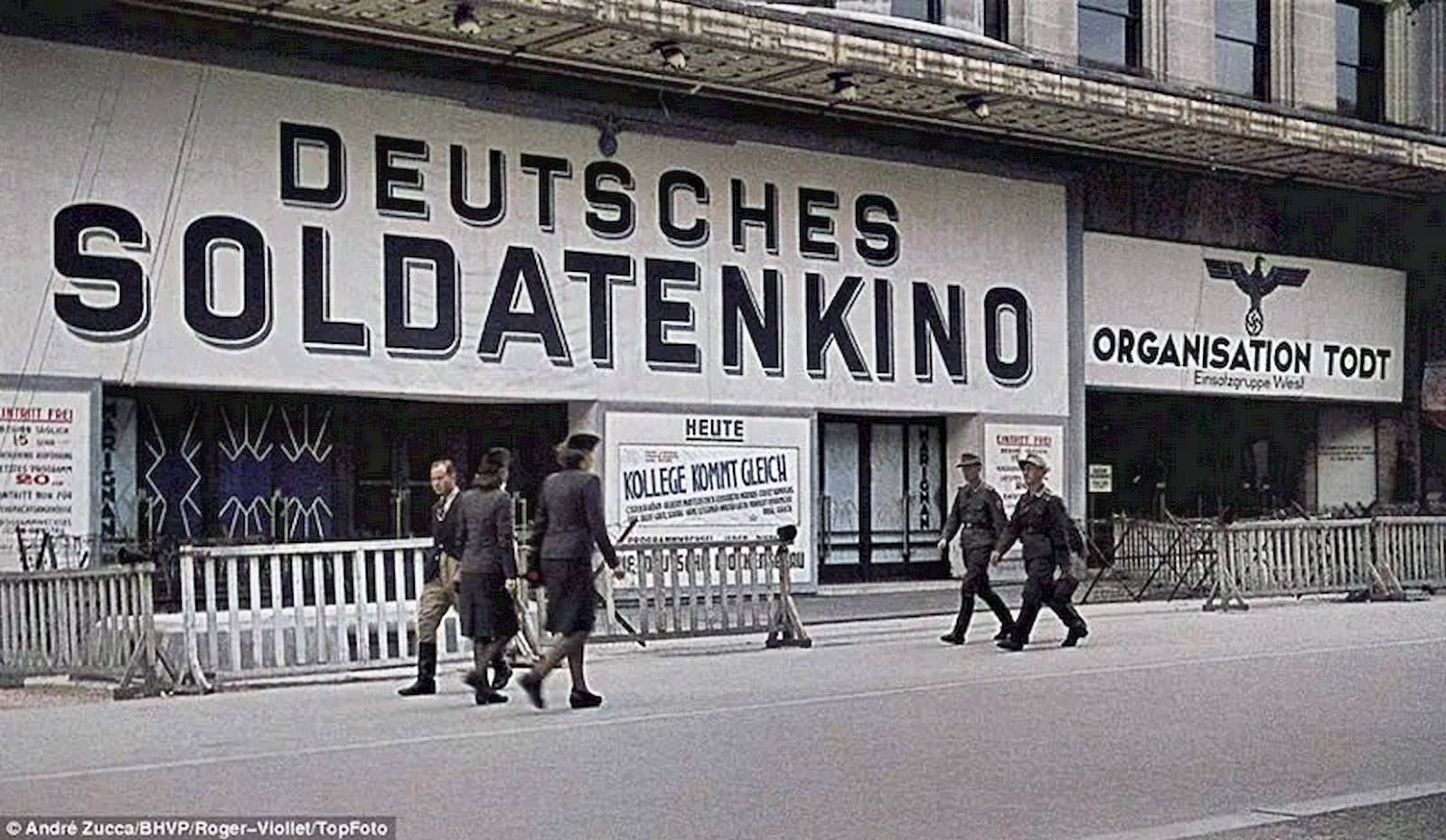
The occupation did leave visible marks even within Zucca’s carefully curated frames. Giant swastika banners lined Parisian streets. German-language signs replaced French ones, directing people to German military facilities. A theatre bore an imperial eagle and identified itself as a German soldiers’ cinema. These details appear in the photographs, though Signal framed them as signs of organized, stable governance.

Giant Swastikas line the streets of the French capital.
Street signs advertise locations of German facilities in Paris, with their French names written in smaller text beneath.
A theatre, which has an Imperial Eagle painted on its wall, proclaims itself as a German soldier's cinema (Deutsches Soldatenkino).
A theatre, which has an Imperial Eagle painted on its wall, proclaims itself as a German soldier’s cinema (Deutsches Soldatenkino).

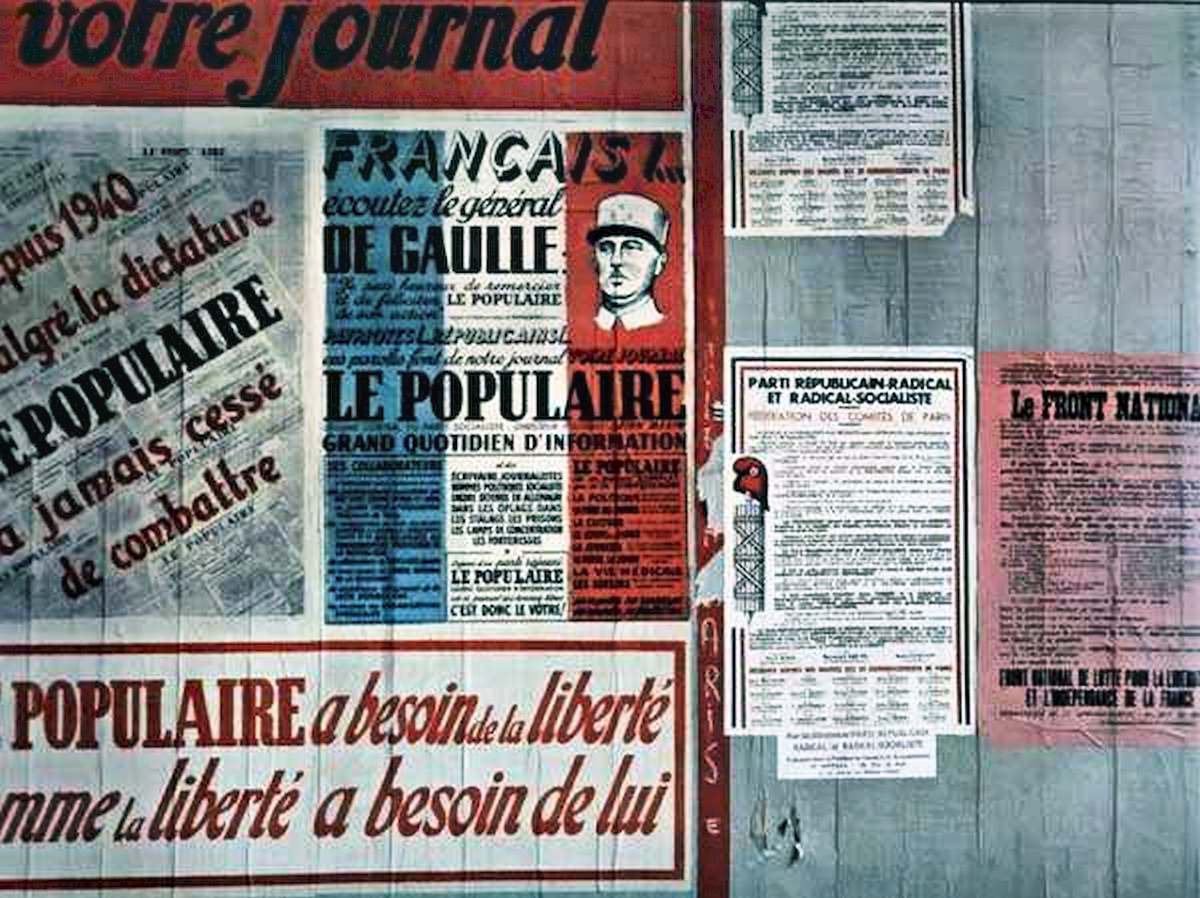
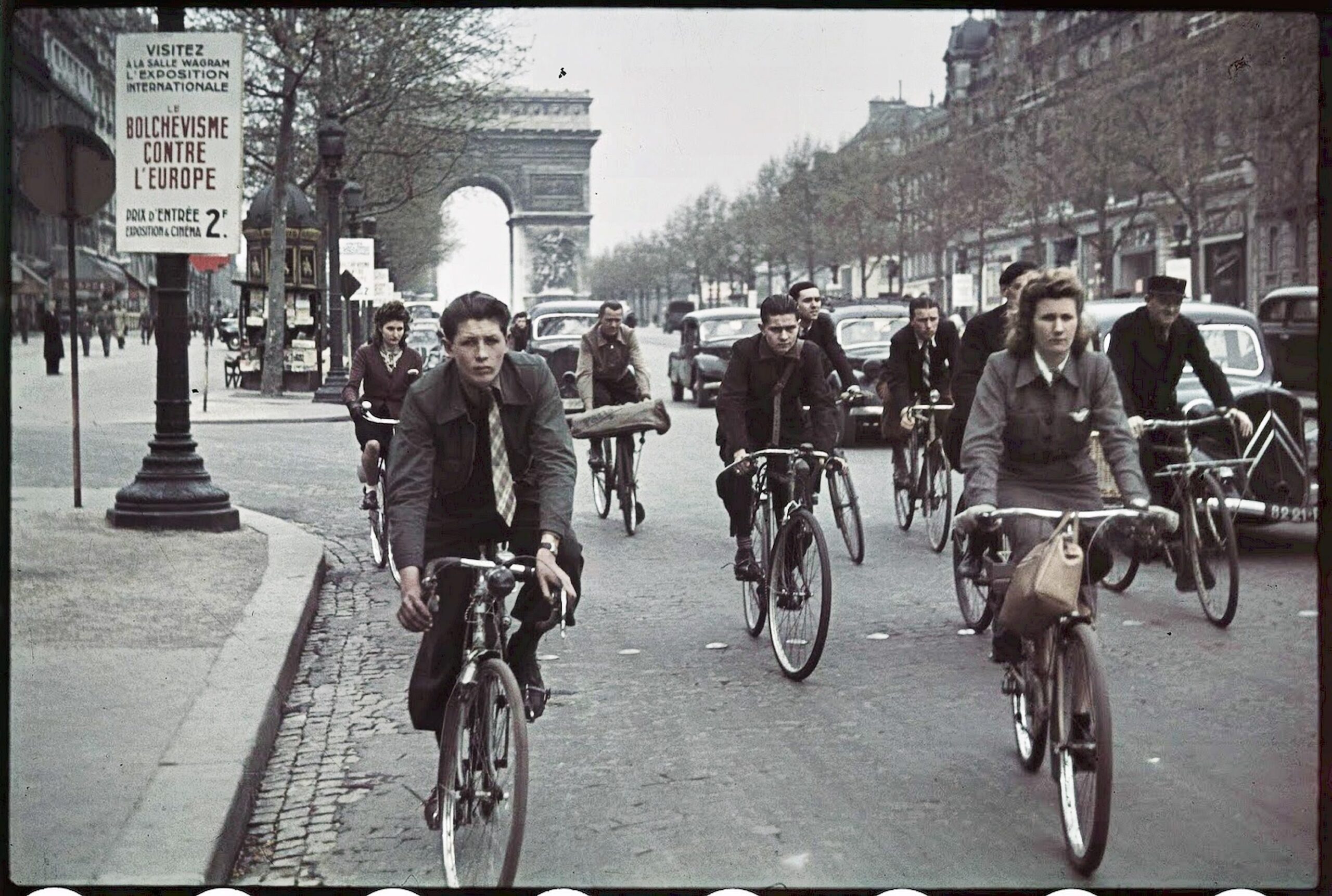
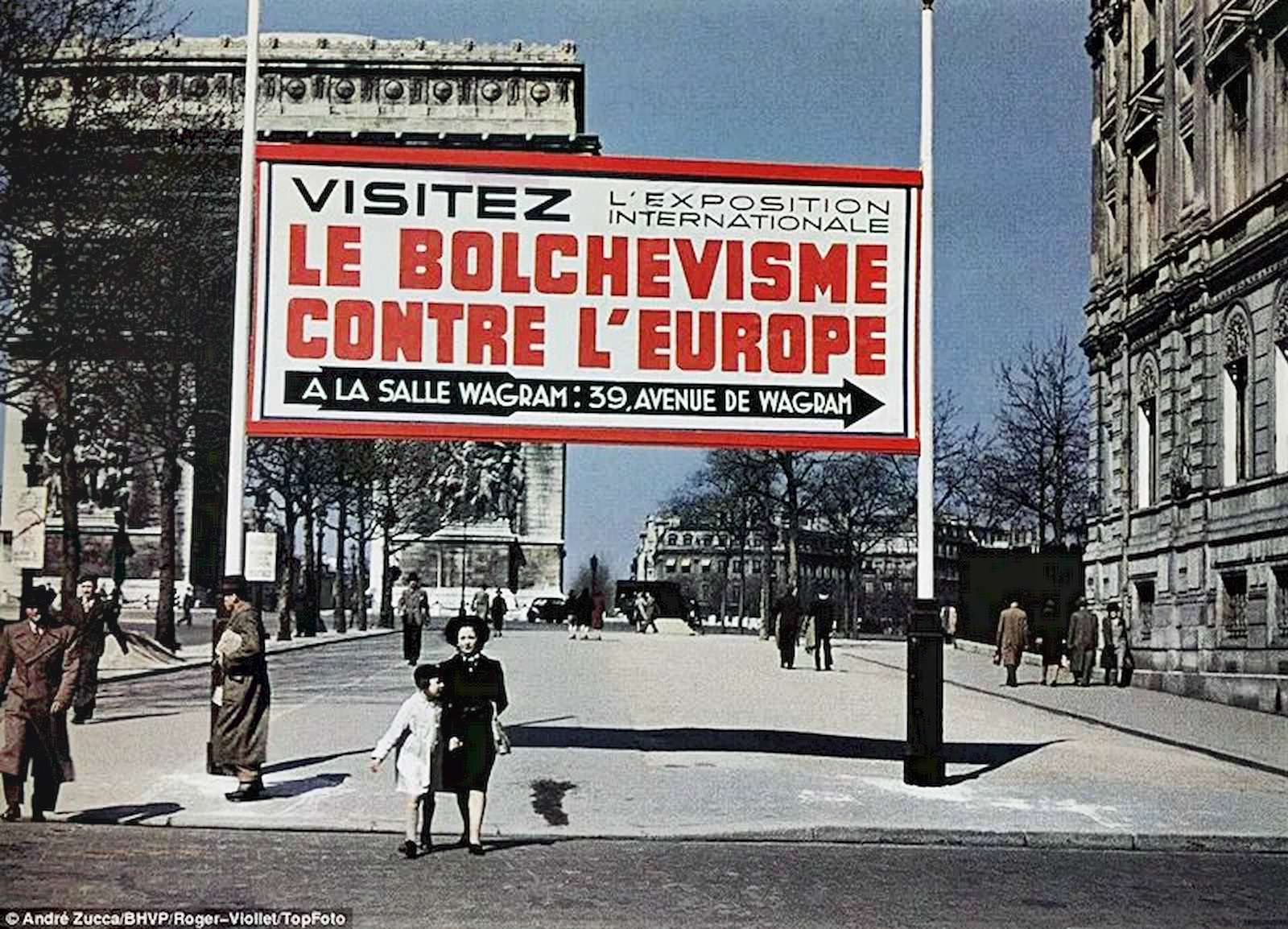
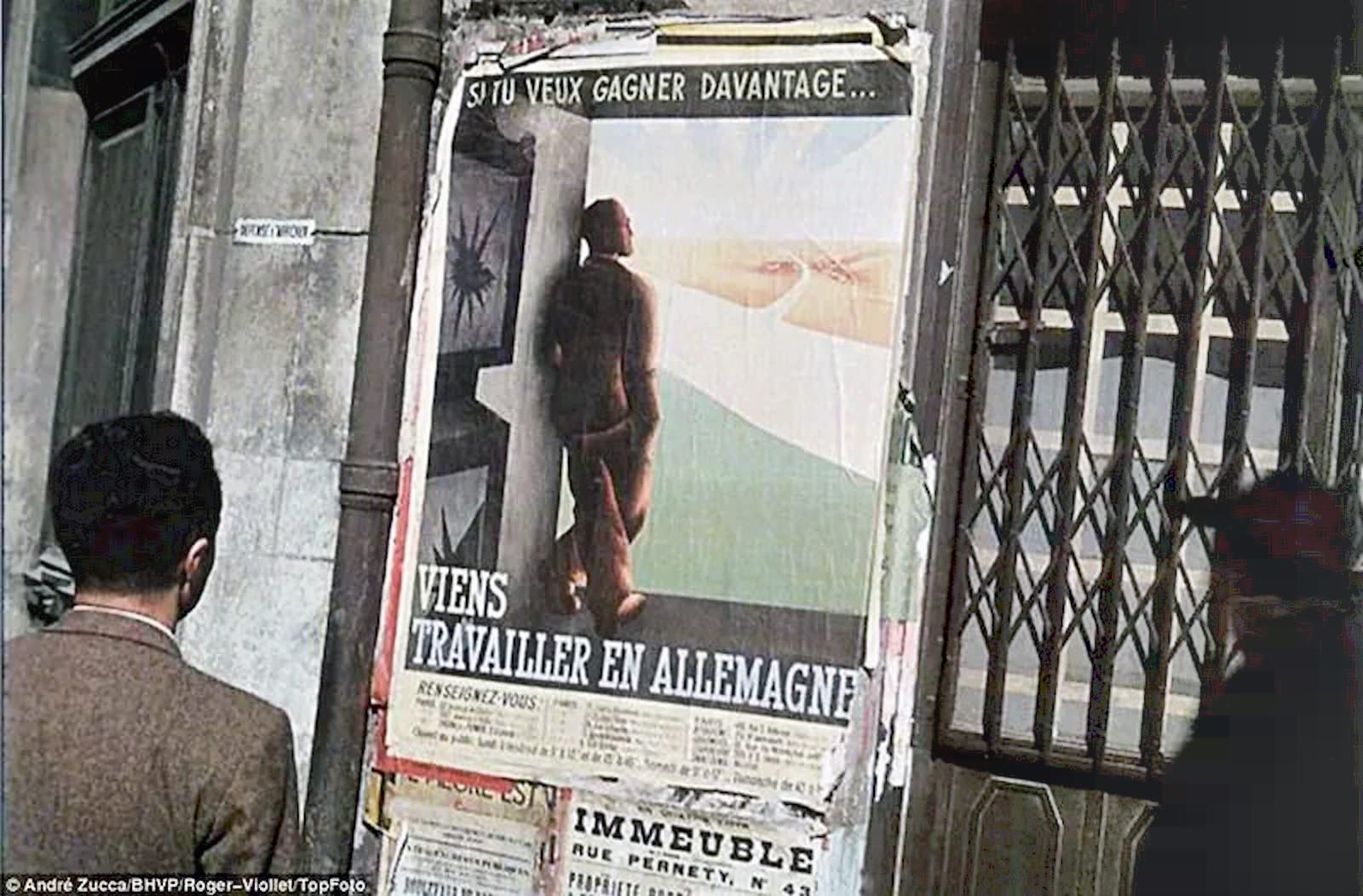
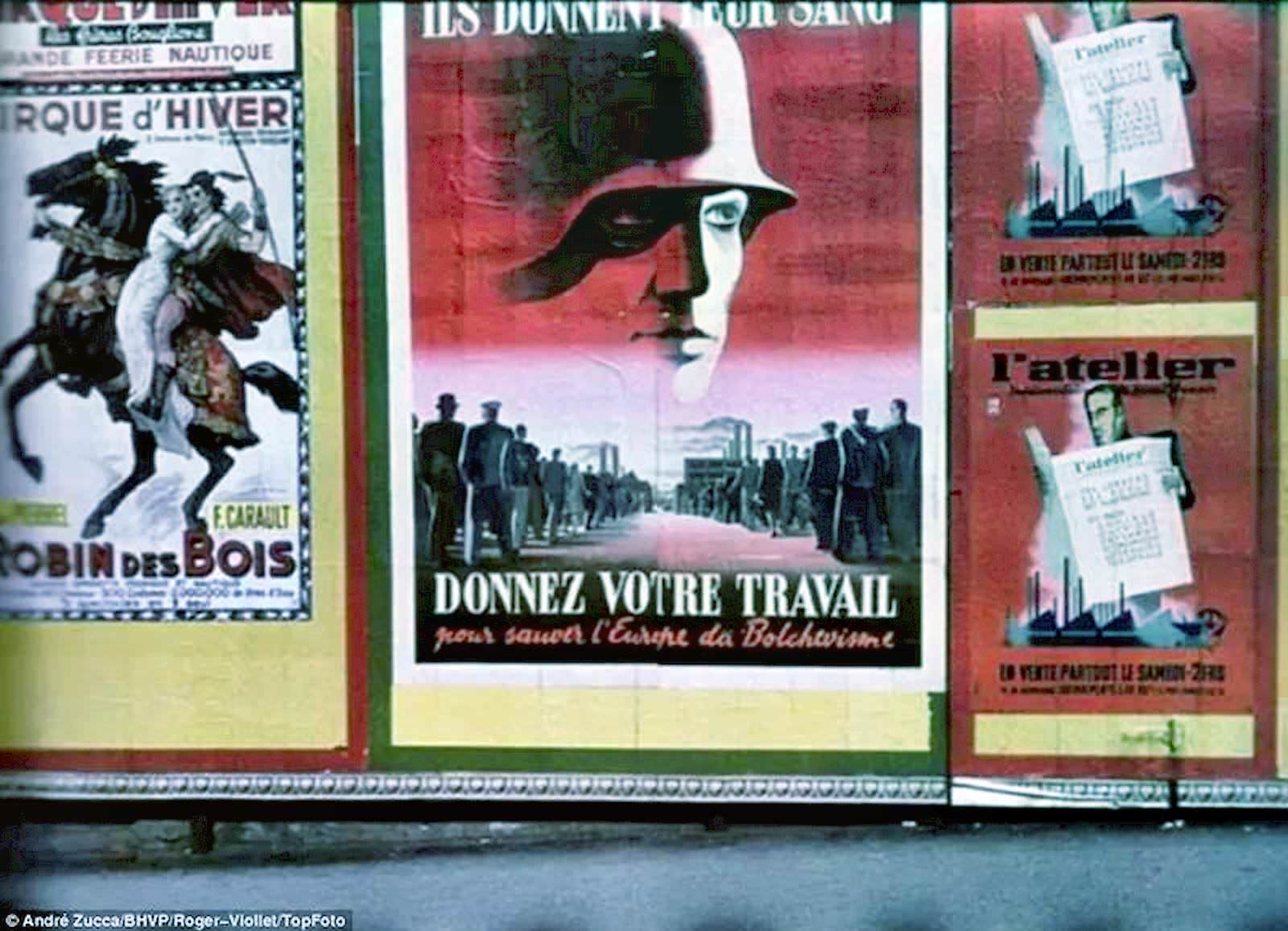
Propaganda posters also appeared throughout Zucca’s Paris. One advertised the 1942 “Europe Against Bolshevism” exhibition, organized by a Nazi front group called the Anti-Bolshevik Action Committee. Others urged French workers to seek employment in Germany, and one depicted soldiers alongside the slogan, “They give their blood — give your work to save Europe from Bolshevism.” These posters were real fixtures of occupied Paris, and Zucca photographed them directly.

A sign advertises Europe Against Bolshevism exhibition, held under the auspices of Nazi front organization the anti-Bolshevik Action Committee in Paris in 1942.
'If you want to earn more… come to work in Germany'.
‘If you want to earn more… come to work in Germany’.
'They give their blood – give your work to save Europe from Bolshevism'.
‘They give their blood – give your work to save Europe from Bolshevism’.

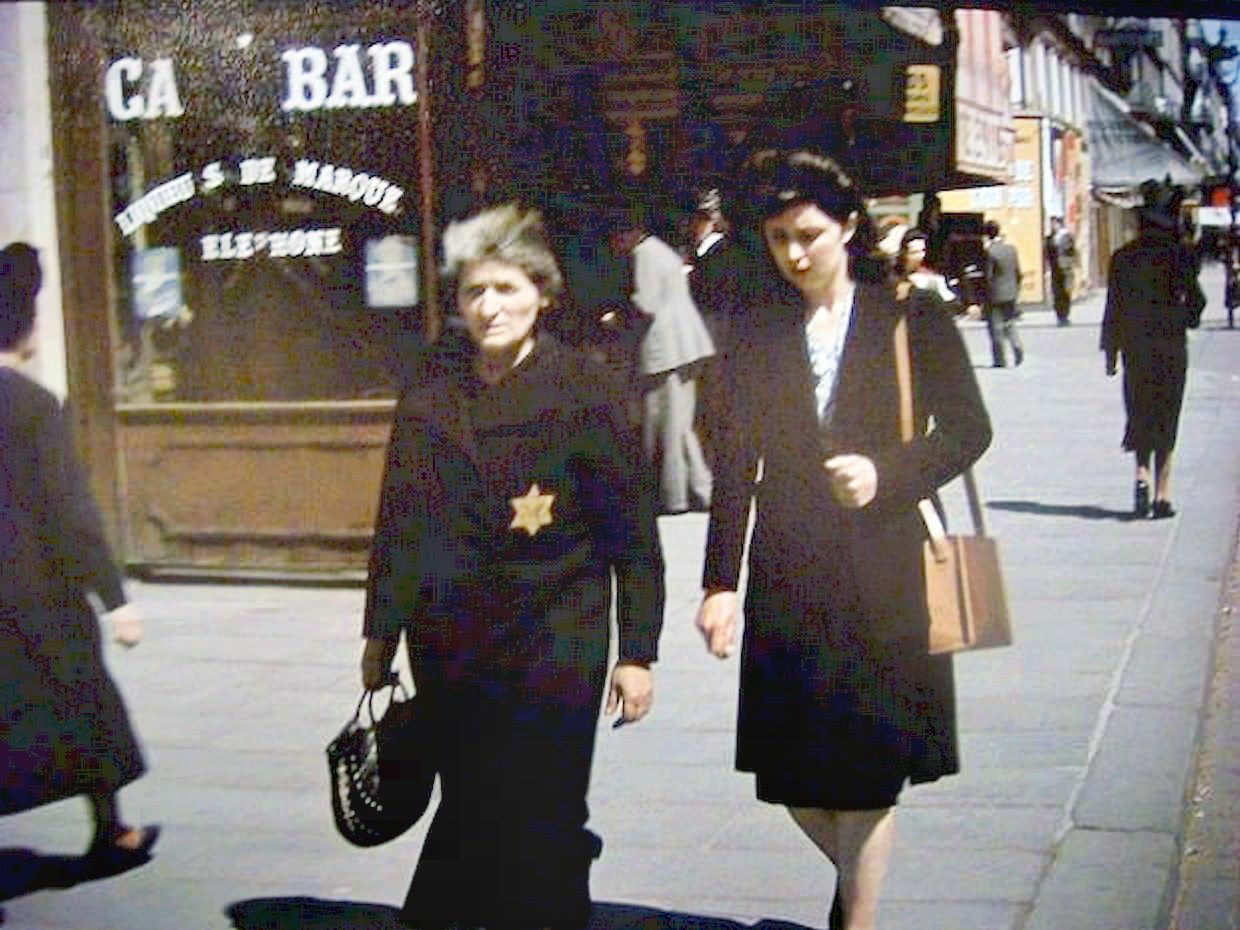
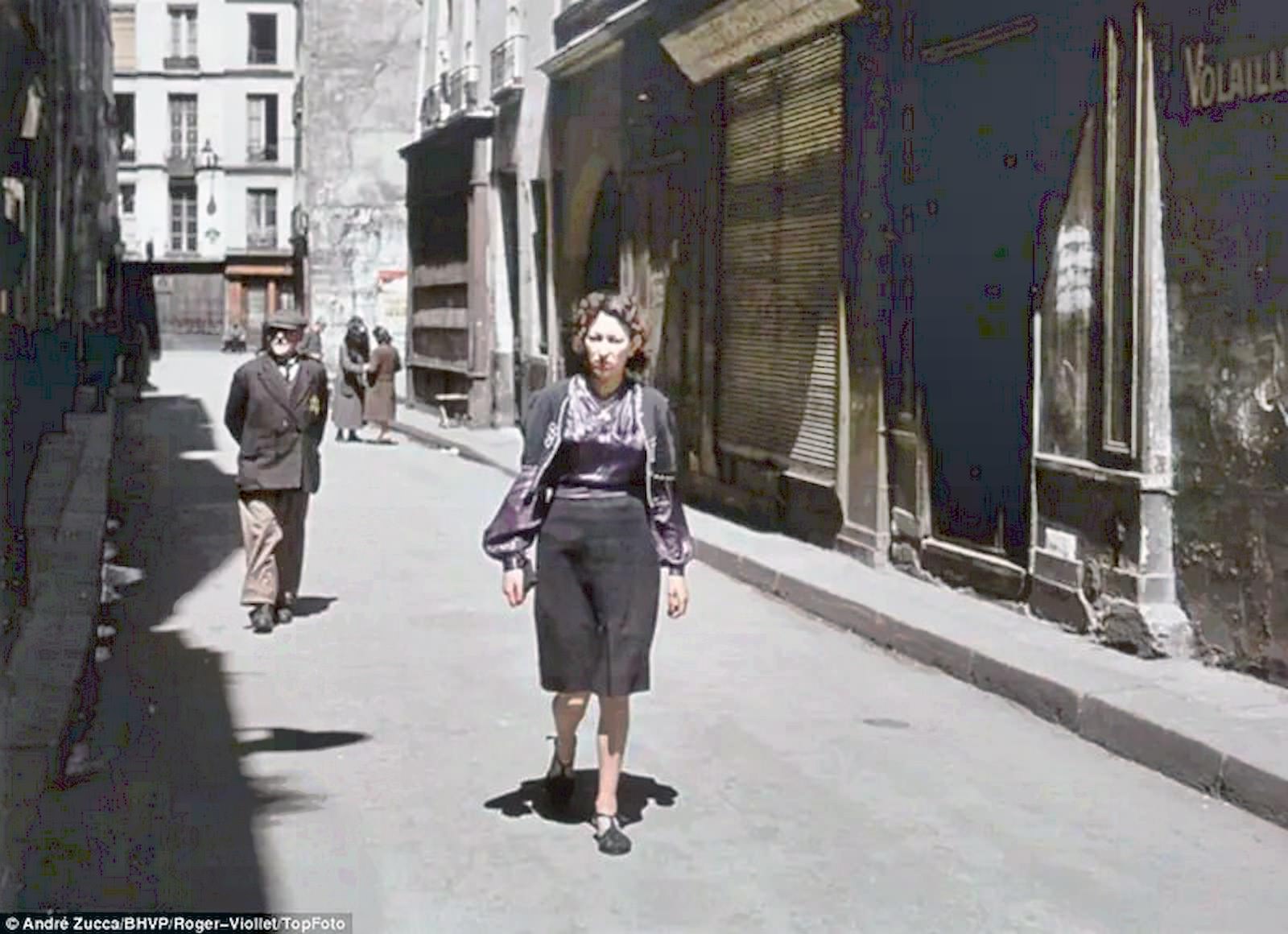
Some of Zucca’s photographs capture realities that Signal likely preferred to avoid. An elderly woman walks down the street wearing the yellow Star of David — the badge the Nazis forced all Jews to wear in public. Another image shows an older man also marked with the star. These photographs document the persecution that was happening in plain sight on the streets of Paris.

An elderly woman walks along the street wearing the yellow star that Nazis forced Jews to wear.
A woman walks a Parisian backstreet, in front of an older gentleman who is marked with the Star of David insignia that Jews were forced to wear.

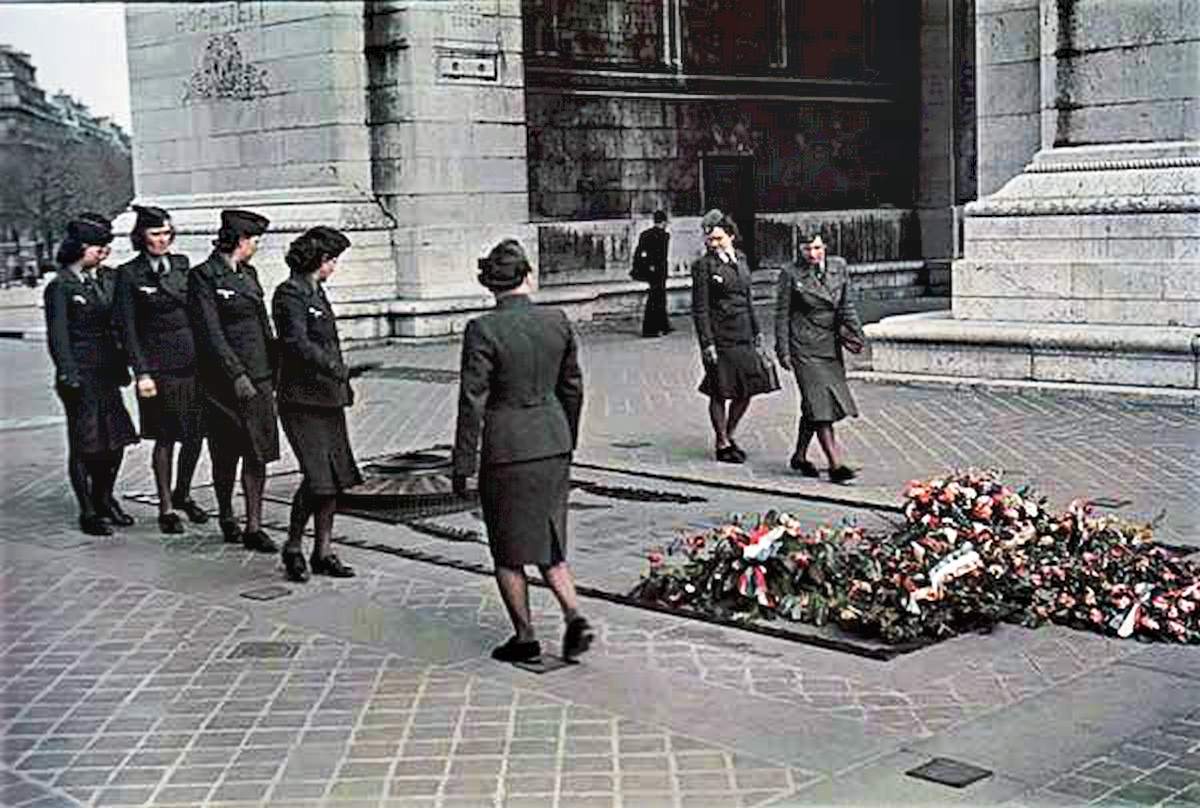
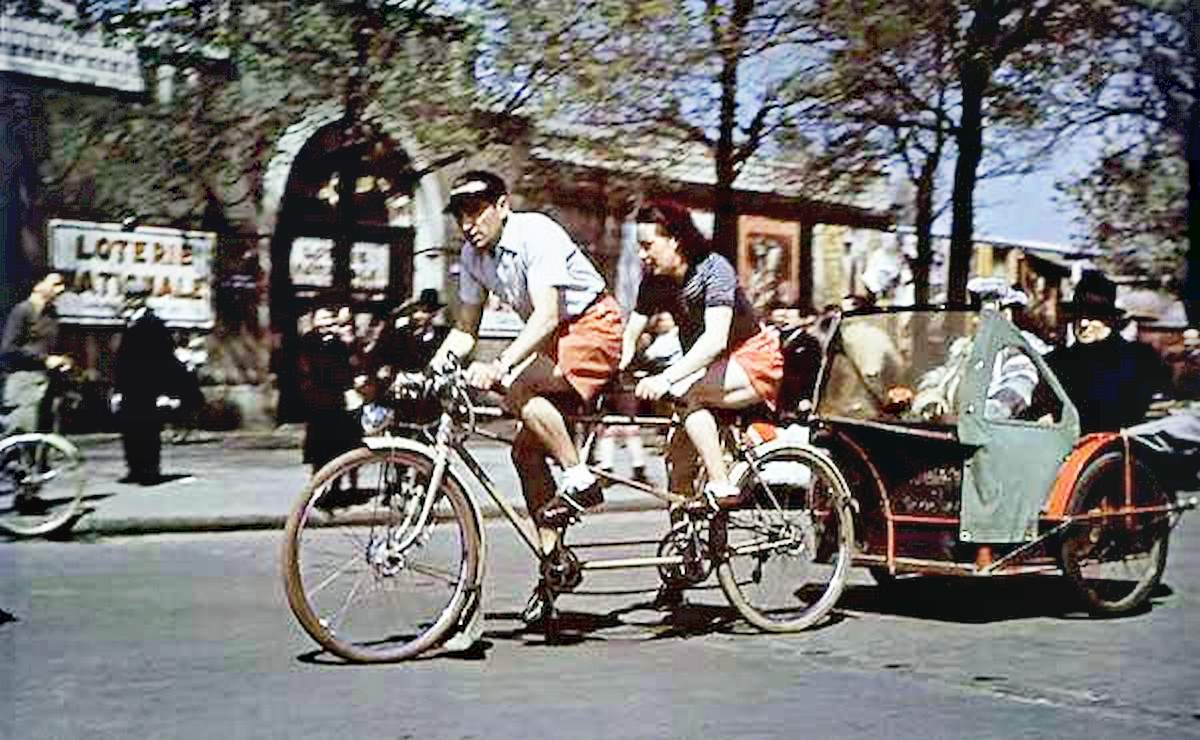
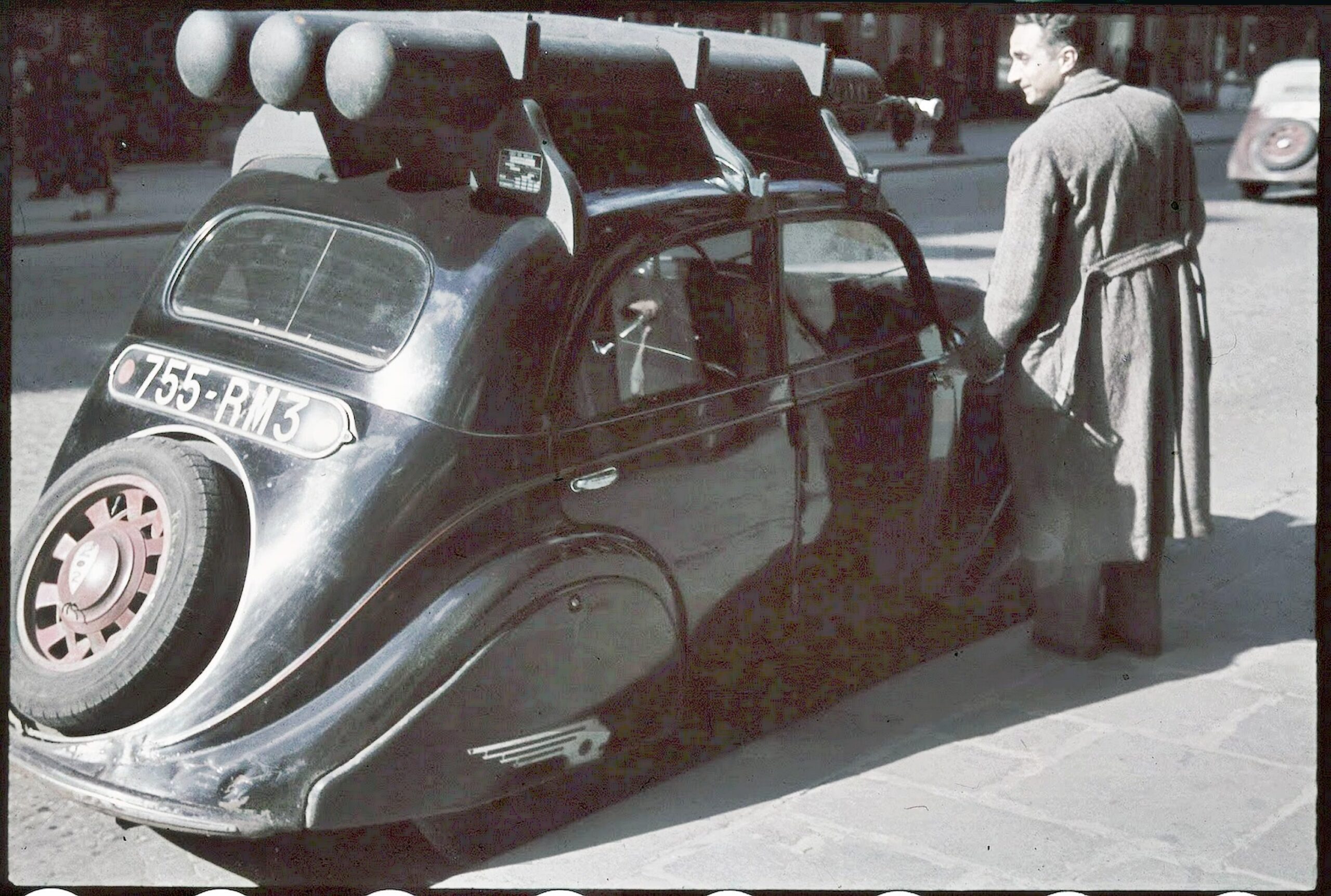
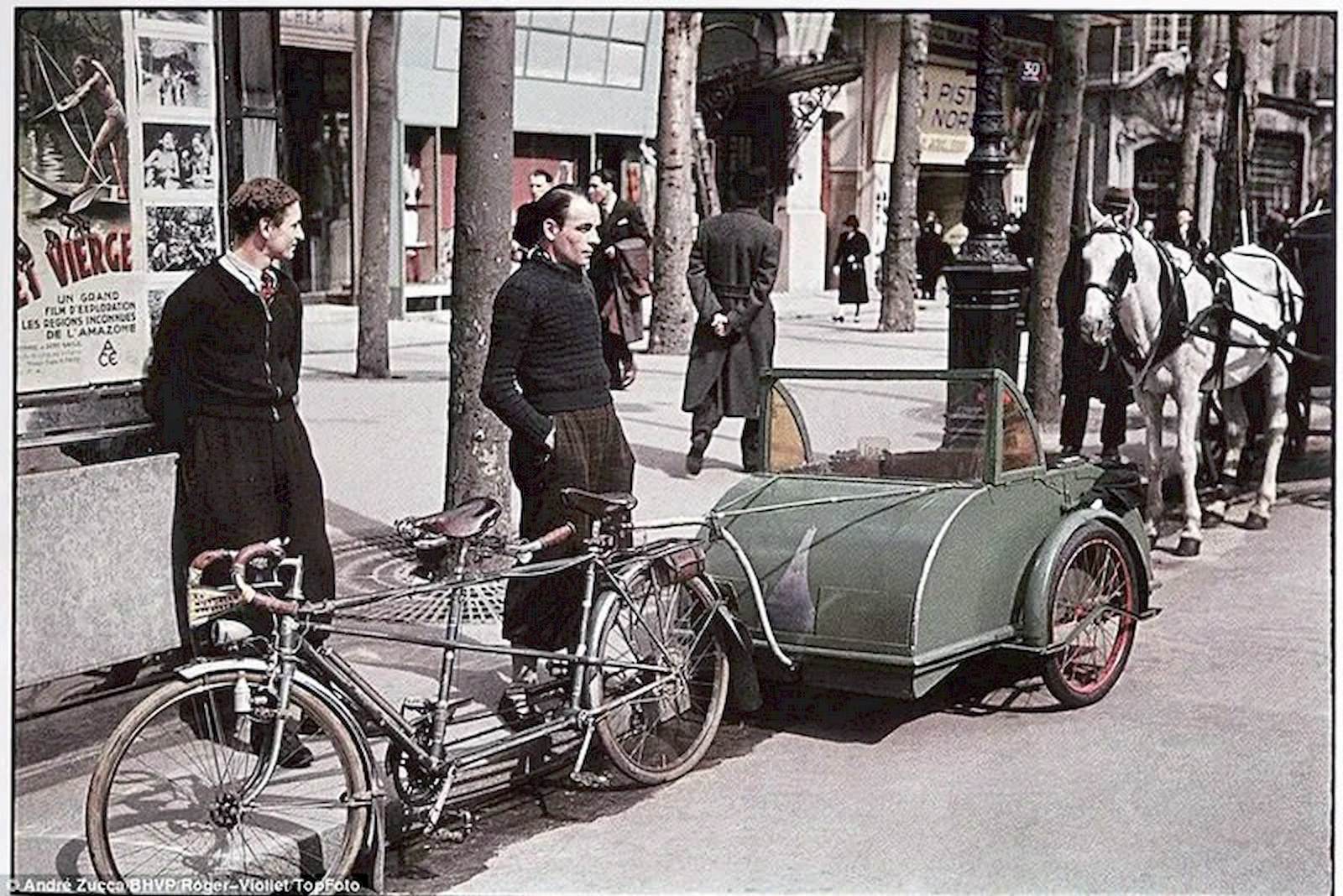
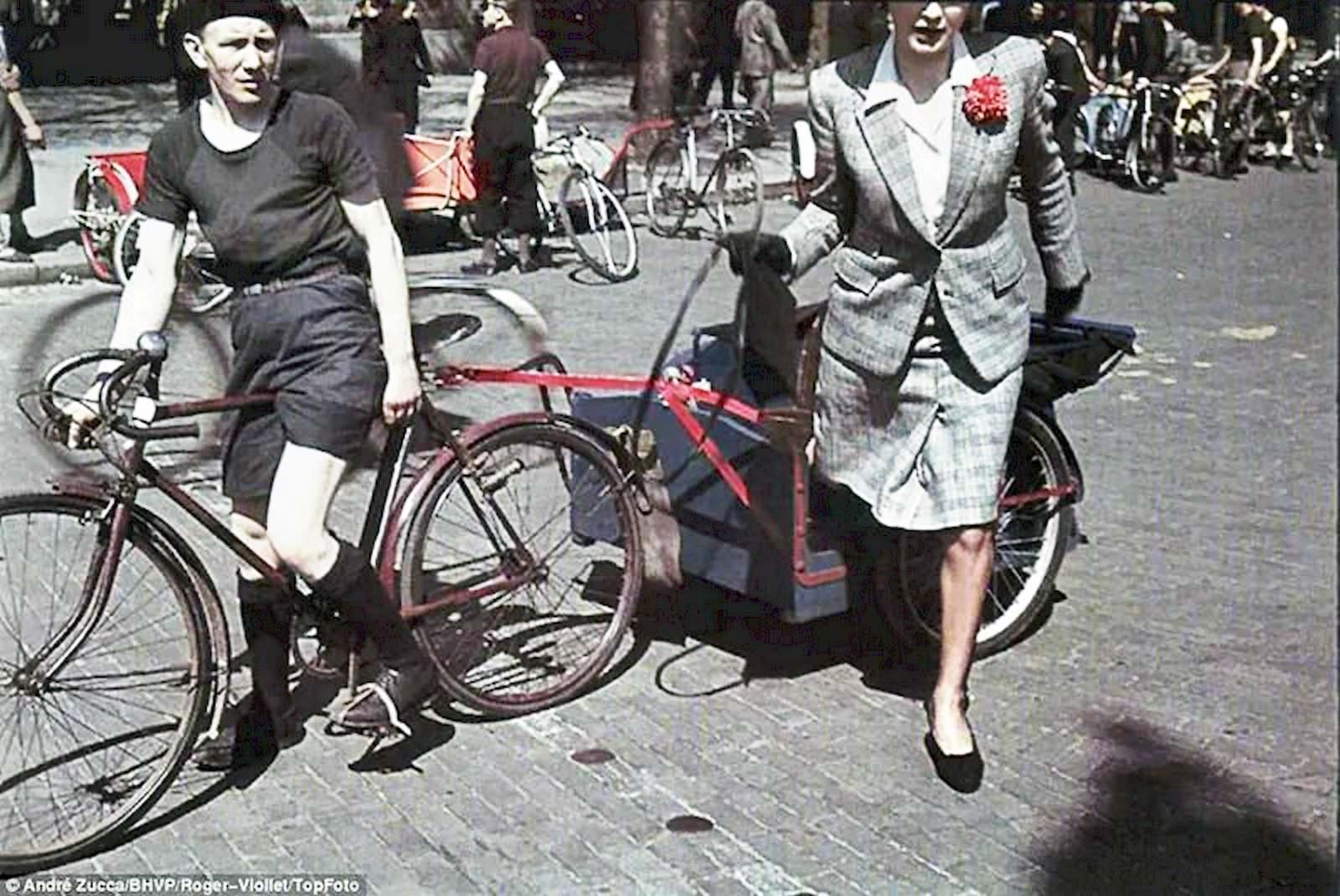
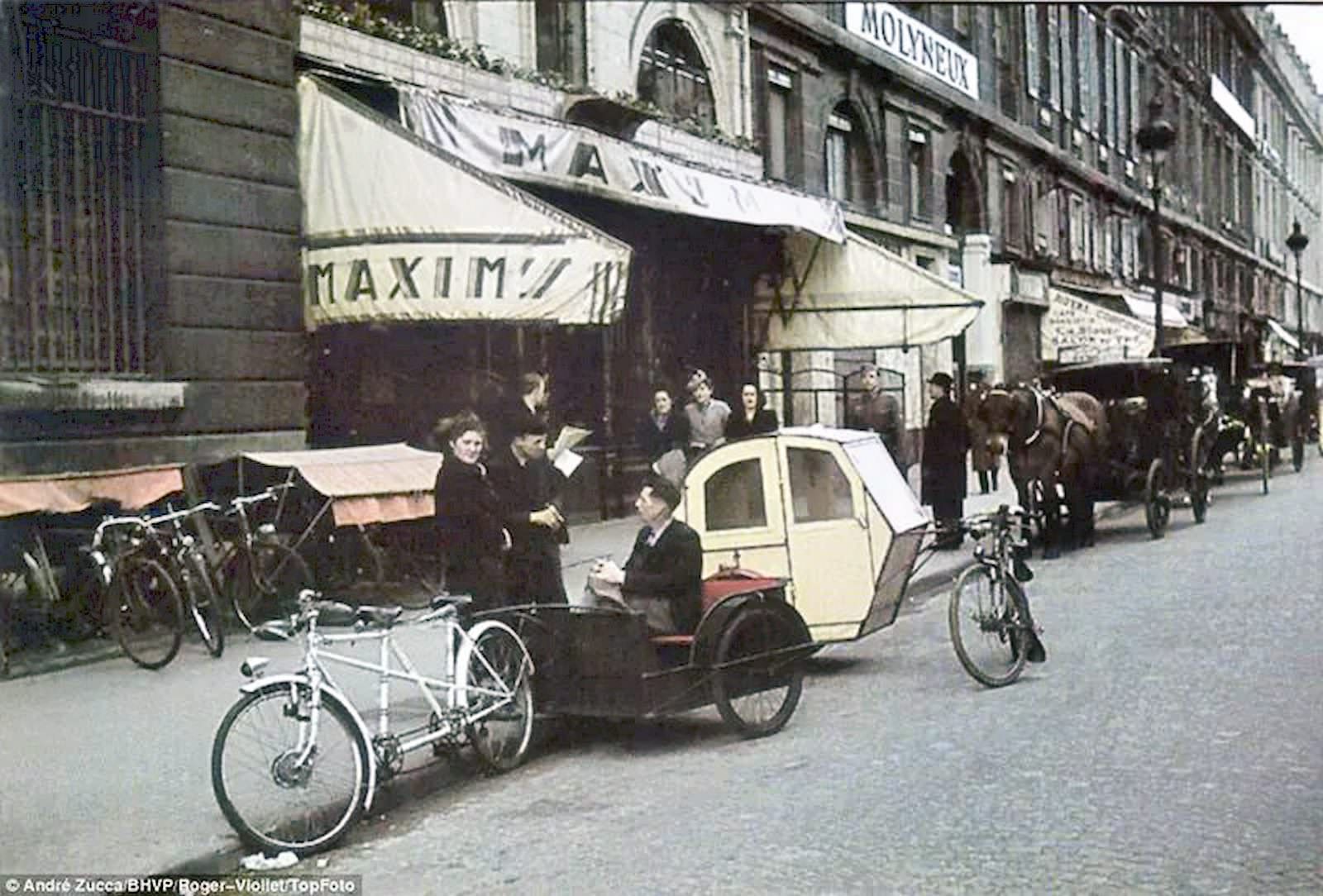
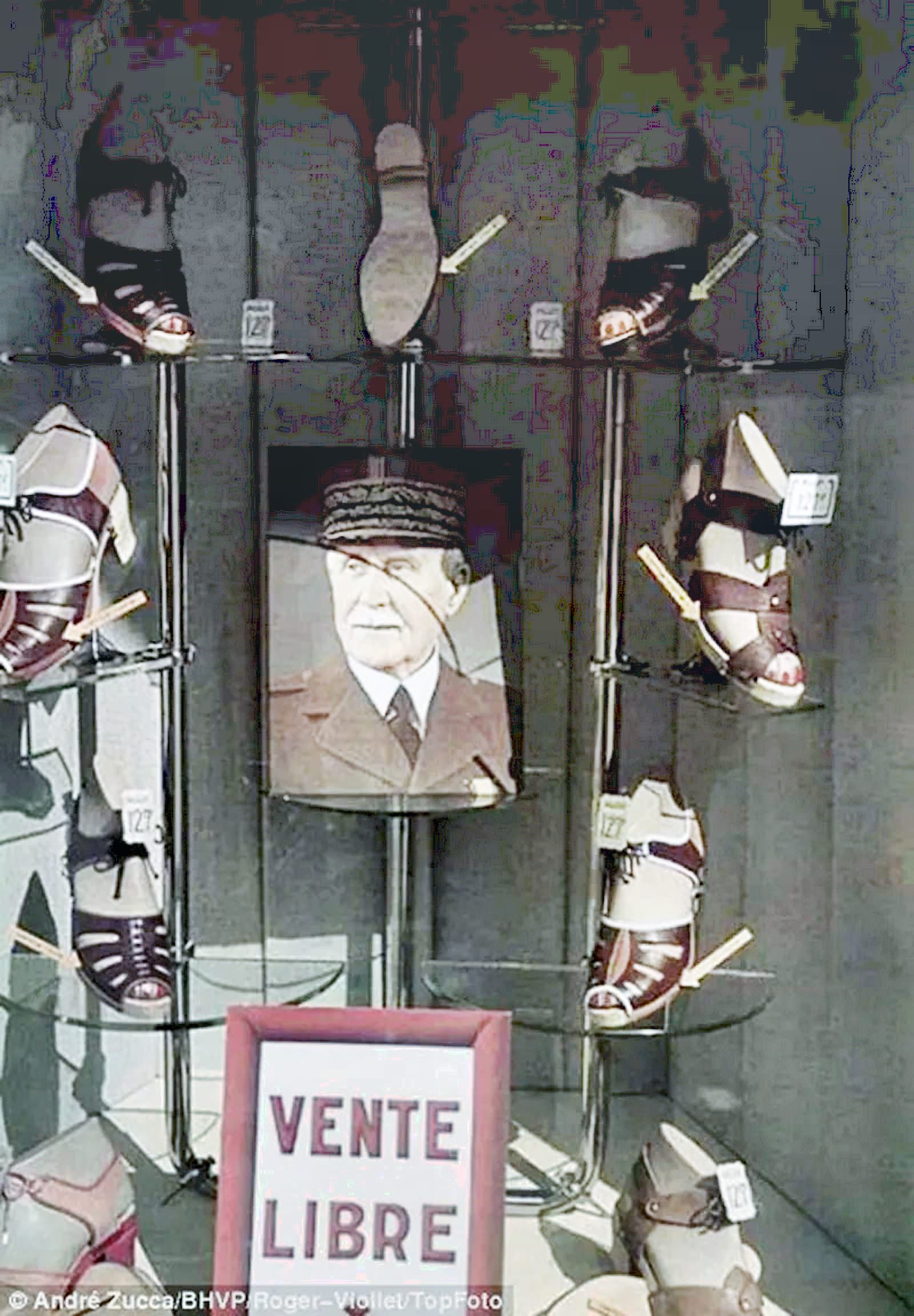
With petrol diverted to the German military, Parisians adapted their daily transport in visible ways. Bicycle taxis, tandem bicycles pulling carriages, and gas-powered vehicles all appear in Zucca’s images. A war memorial for those killed in the First World War — barely two decades earlier — appears in one photograph, with women in military-style uniforms standing before it. Marshal Philippe Pétain, the Vichy government’s leader and a First World War hero turned collaborator, even appeared as a centerpiece in a shoe shop window display.

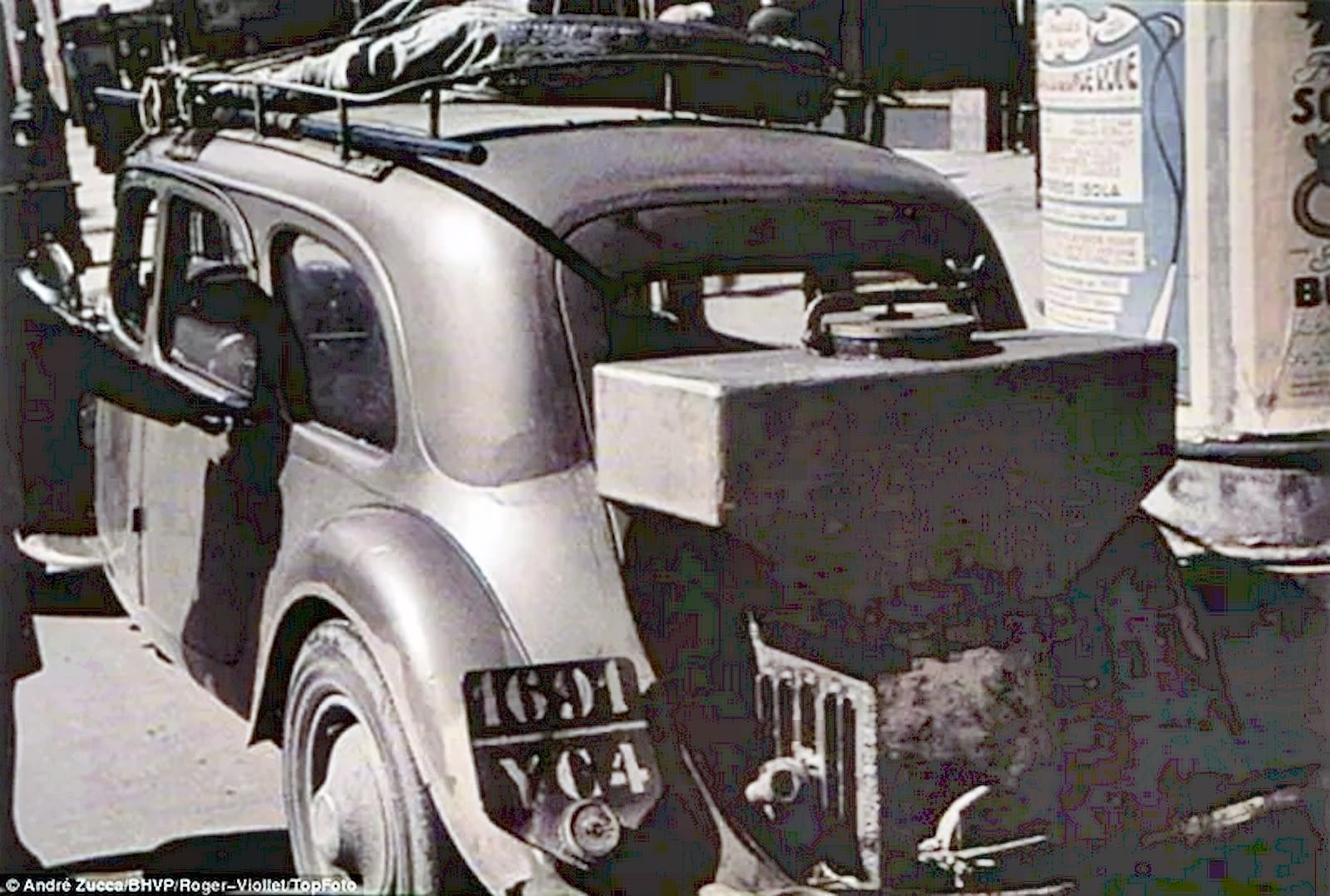
With most petrol diverted to German forces to run their tanks, ships, and planes, civilians were forced to find alternative sources of fuel for their vehicles.
Women in military uniforms look at a war memorial commemorating those killed in the First World War just over two decades earlier.
Marshal Philippe Pétain, a hero of the First World War who became the head of the Vichy government during the Nazi occupation, is the centerpiece in a shoe shop's window display.
Marshal Philippe Pétain, a hero of the First World War who became the head of the Vichy government during the Nazi occupation, is the centerpiece in a shoe shop’s window display.

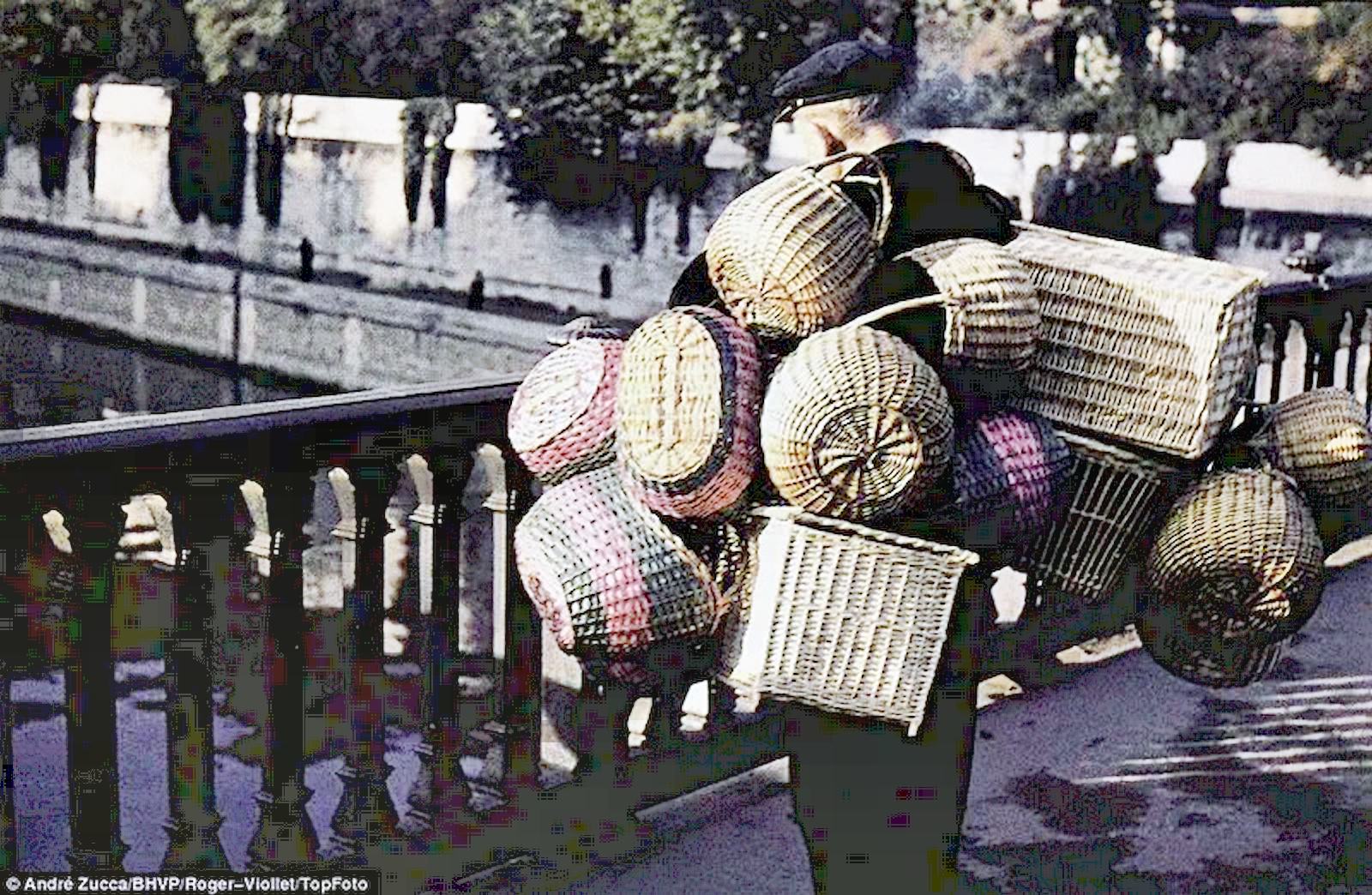
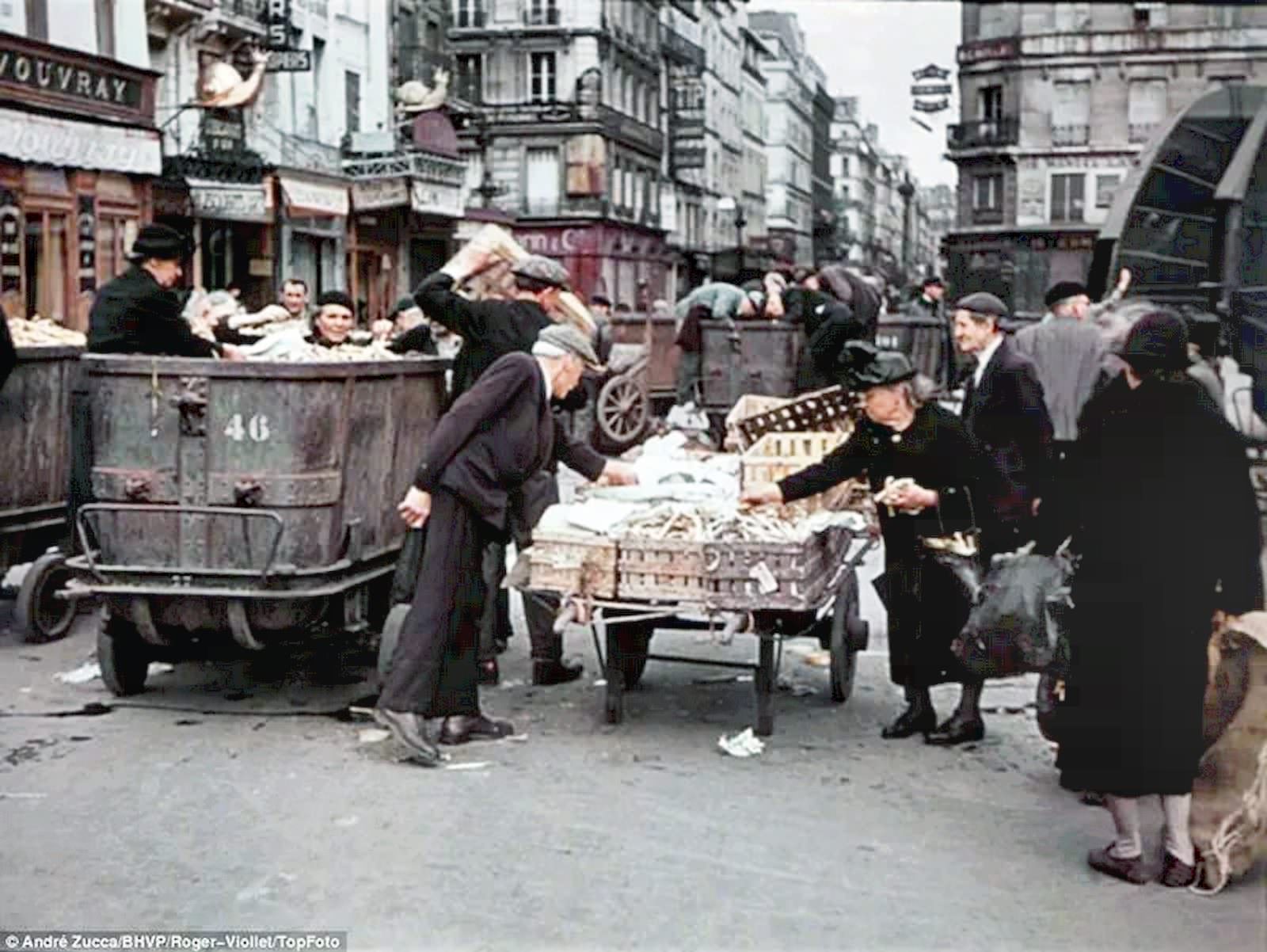
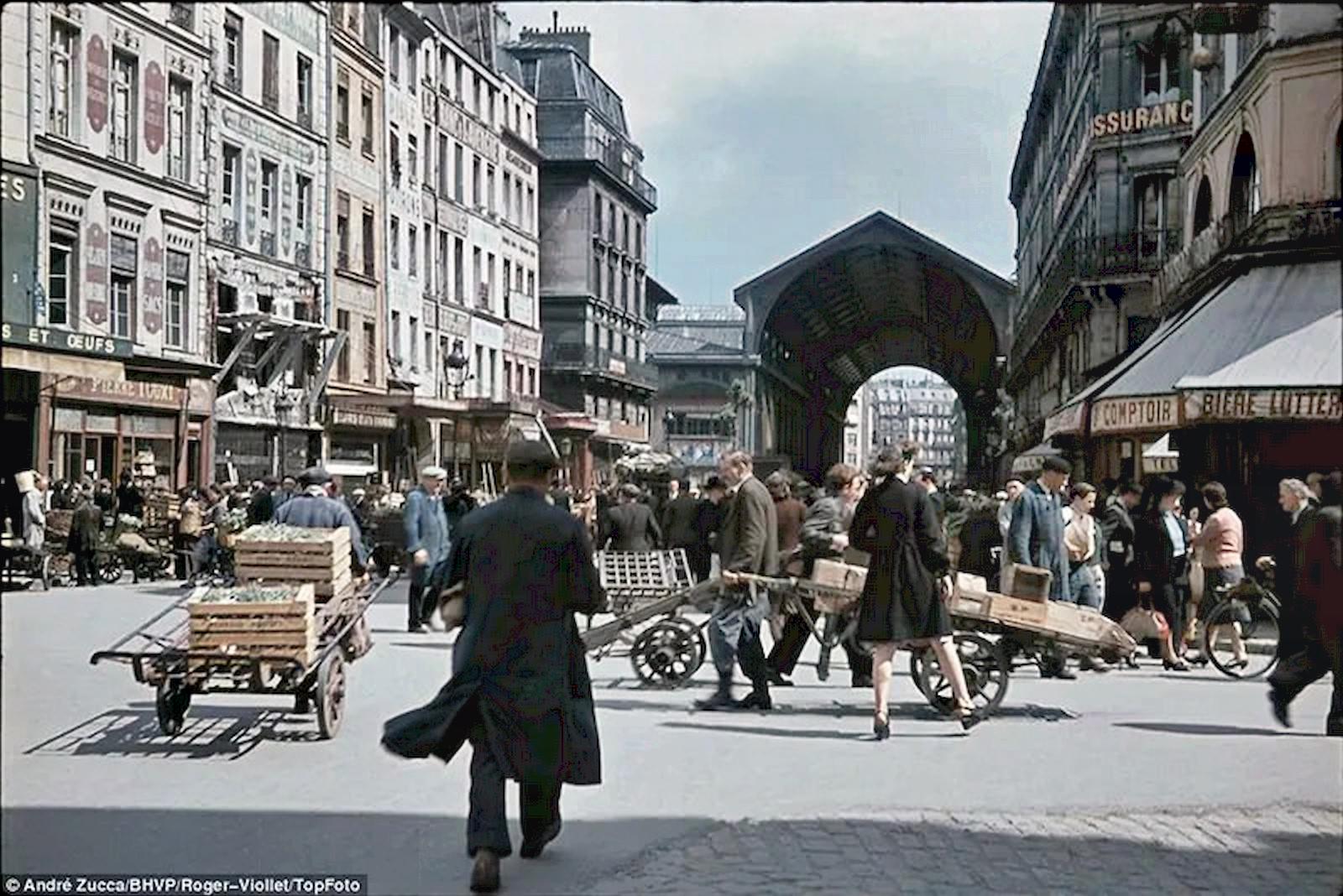
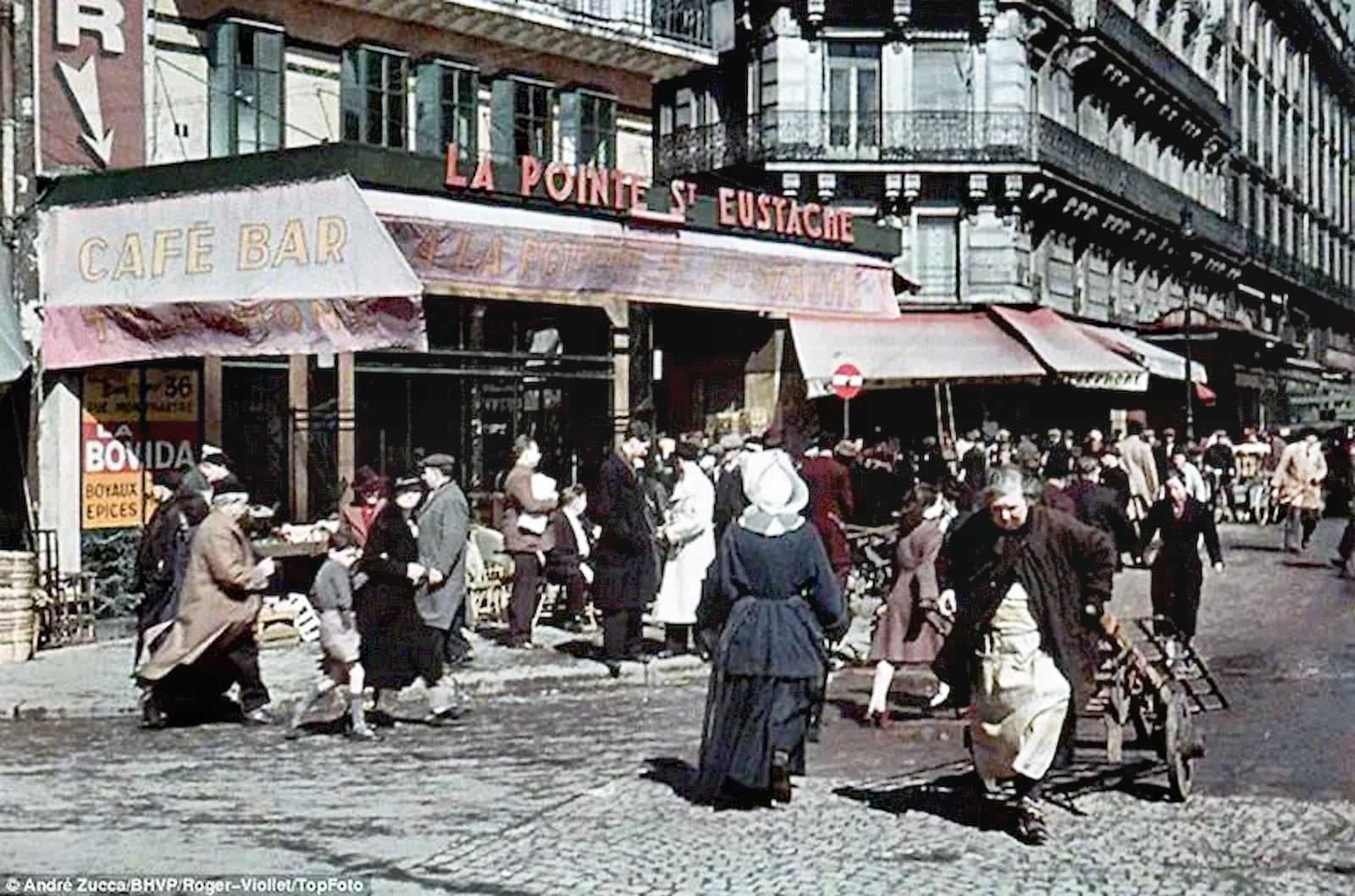
Not every corner of Zucca’s Paris looked polished. Some images show worn-looking men hauling carts through the streets, scruffy children, and poorer Parisians at run-down street markets. These glimpses appear alongside the glamorous ones, making the full archive a complicated document — part deliberate propaganda, part unfiltered record of a city living under foreign control.

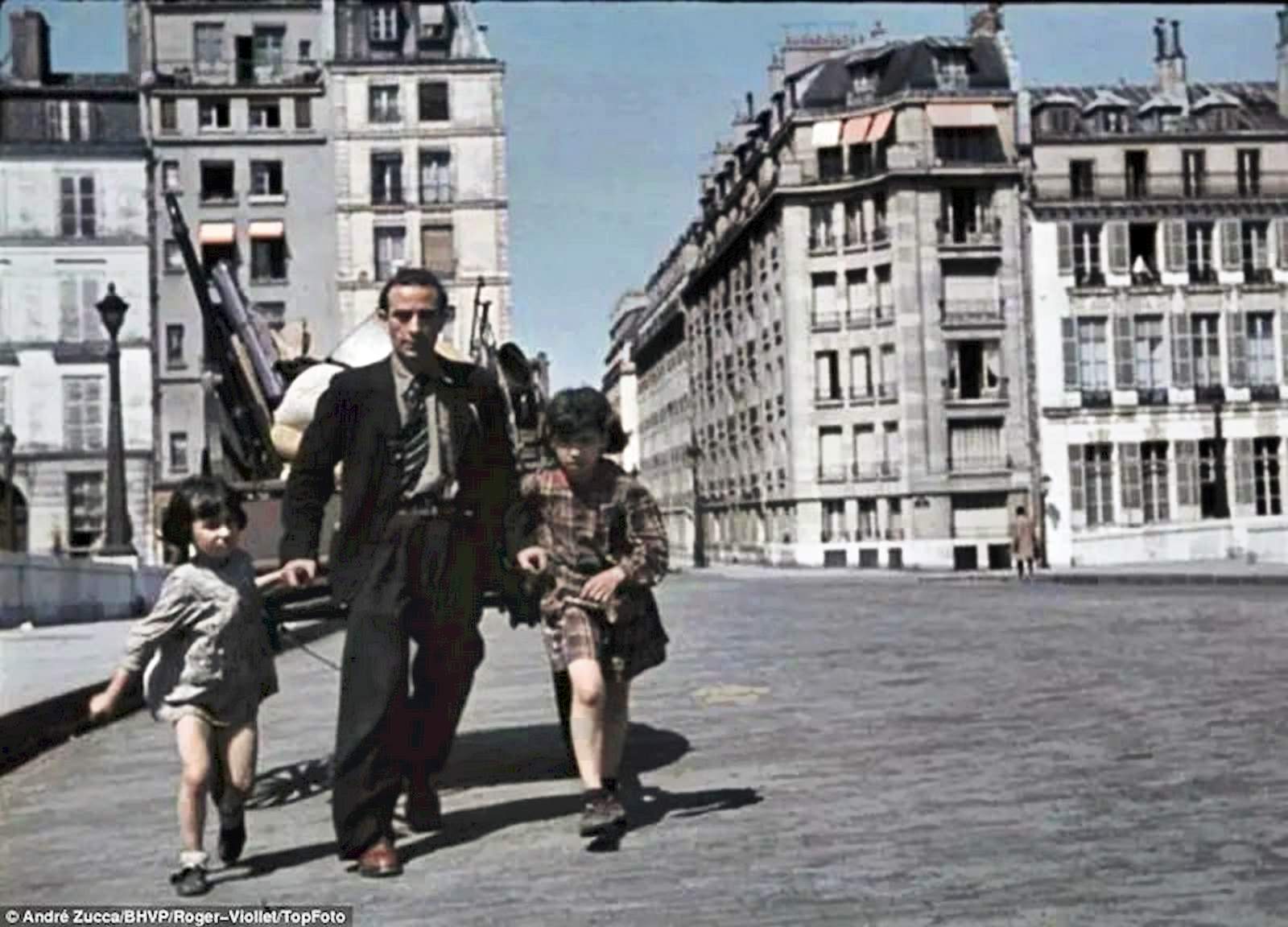
A harried-looking man with two scruffily dressed girls drags a cart through the streets of Paris.
Poorer-looking Parisians at a down-at-heel street market.
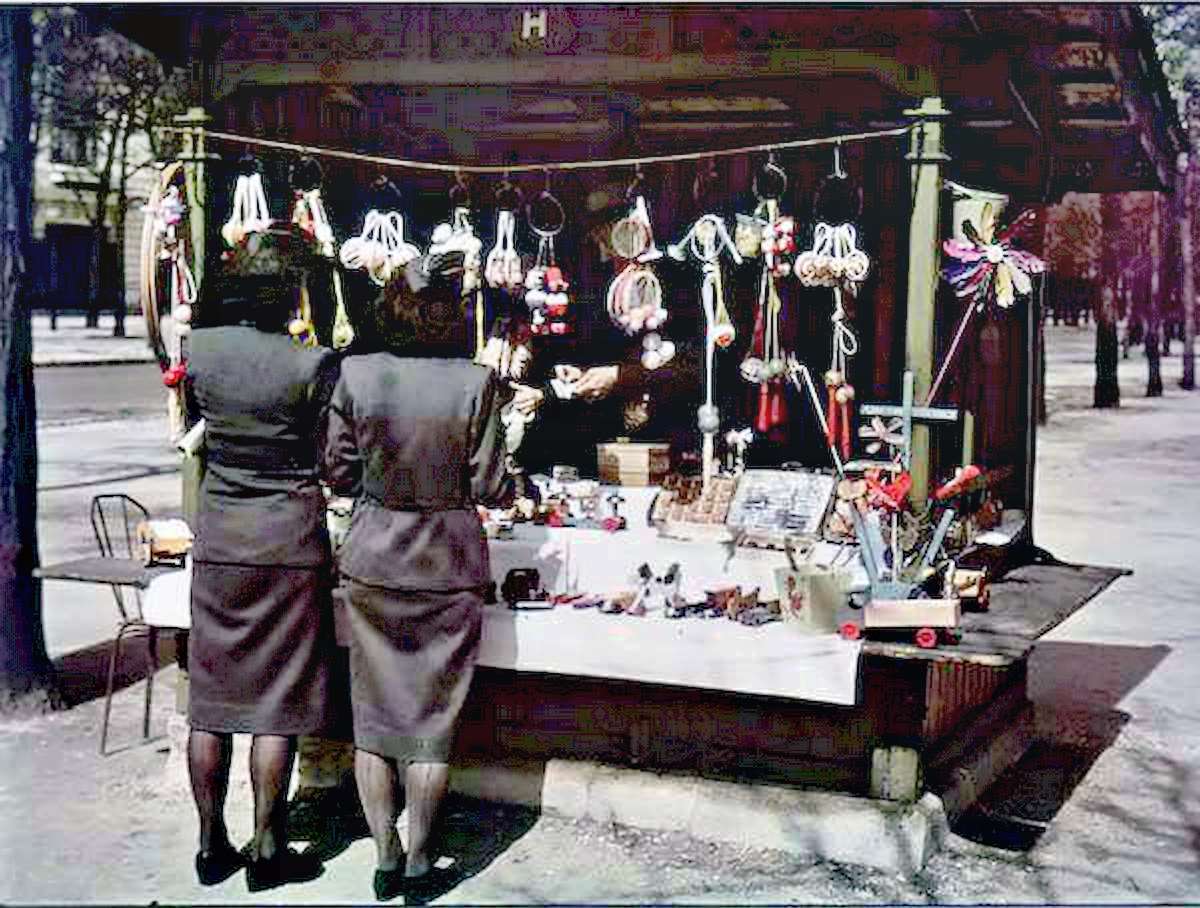
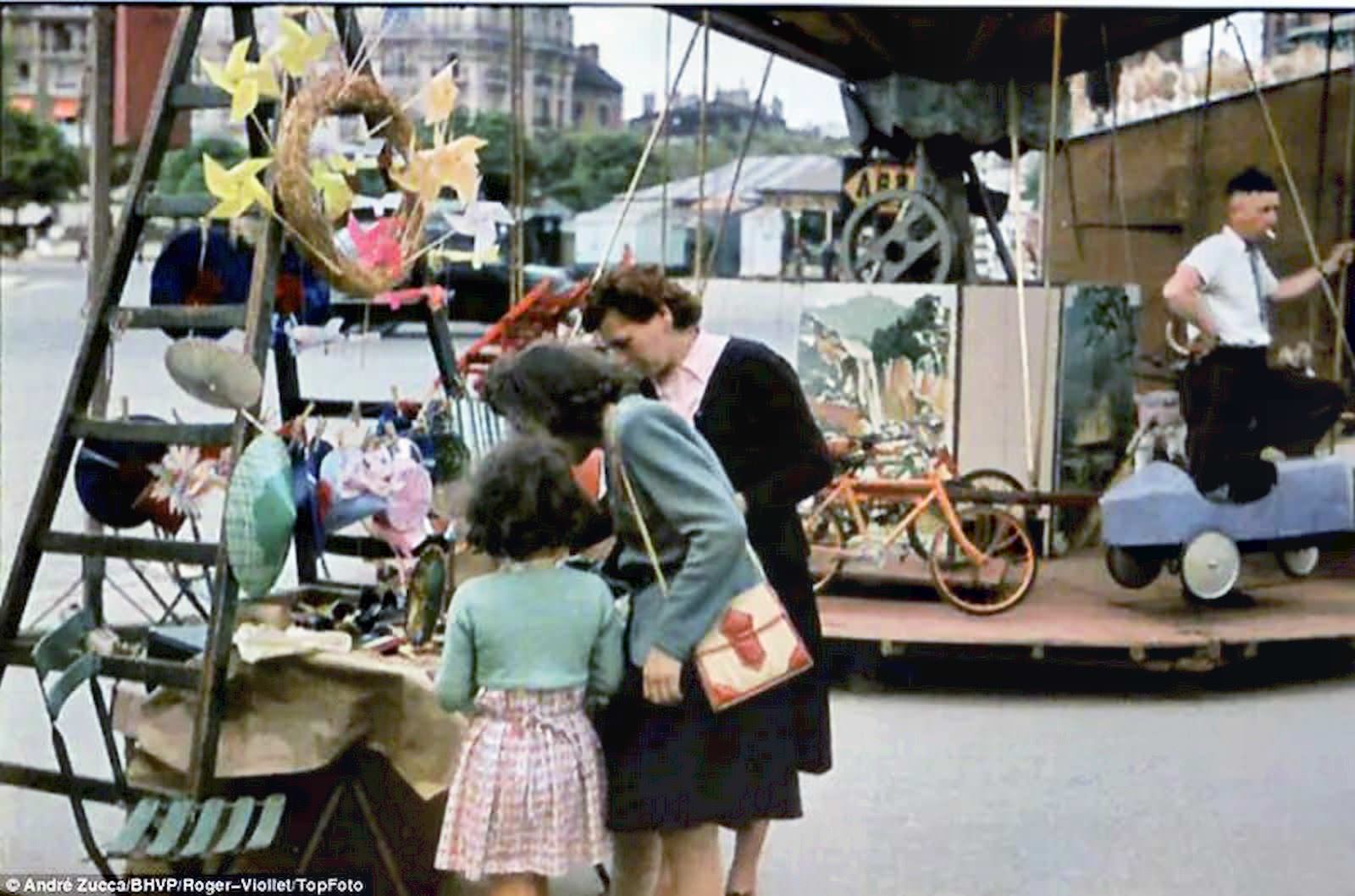
Two women in military-style uniforms shop at a stall selling toys.
A wealthy-looking man and woman ride in a cart pulled by two slim Parisians on a tandem bicycle.
The Nazis were shown as integrated into Paris life in Zucca's pictures.
The Nazis were shown as integrated into Paris life in Zucca’s pictures.
Paris in Wartime: The Propaganda Images of André Zucca
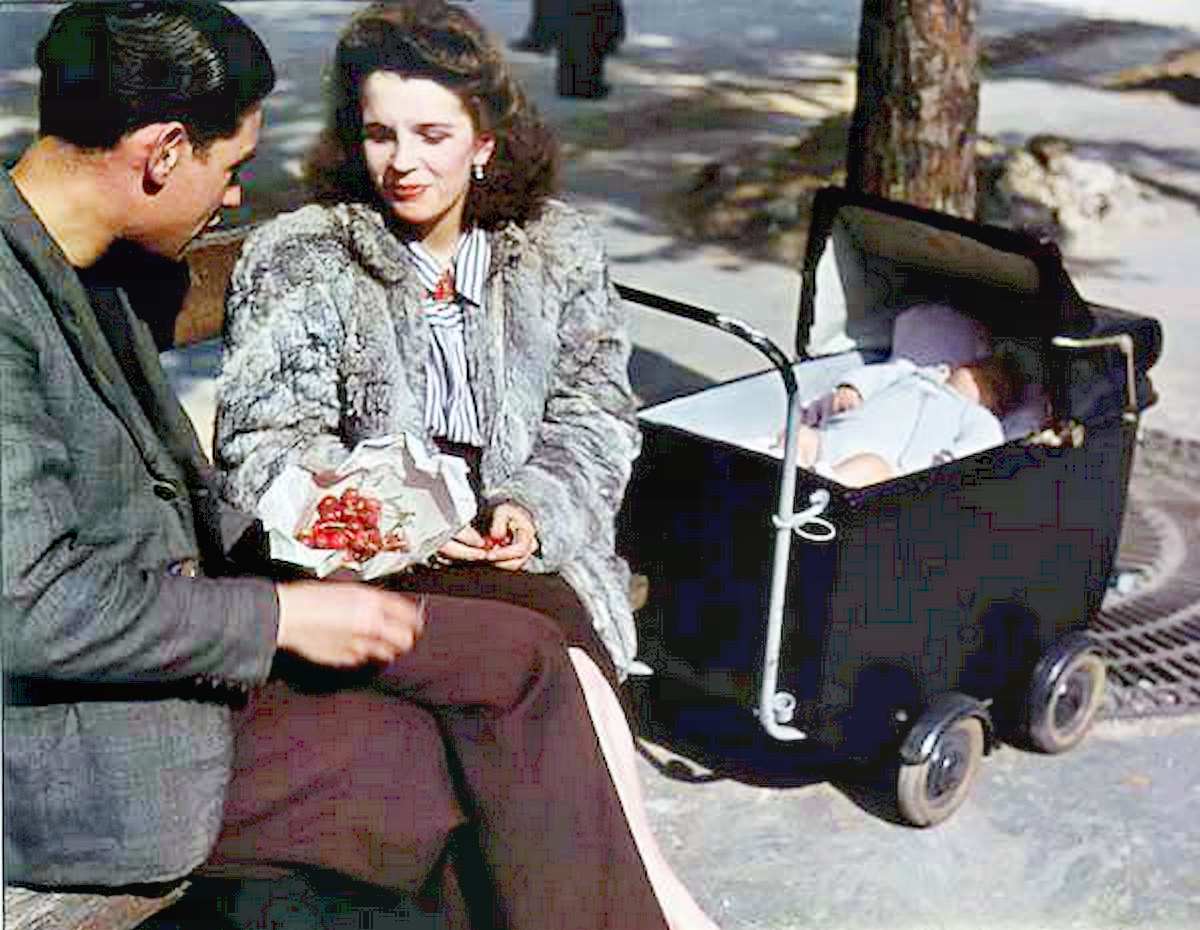
A young family, including a man of usual conscription age, sit in the sunshine eating cherries.
Paris in Wartime: The Propaganda Images of André Zucca
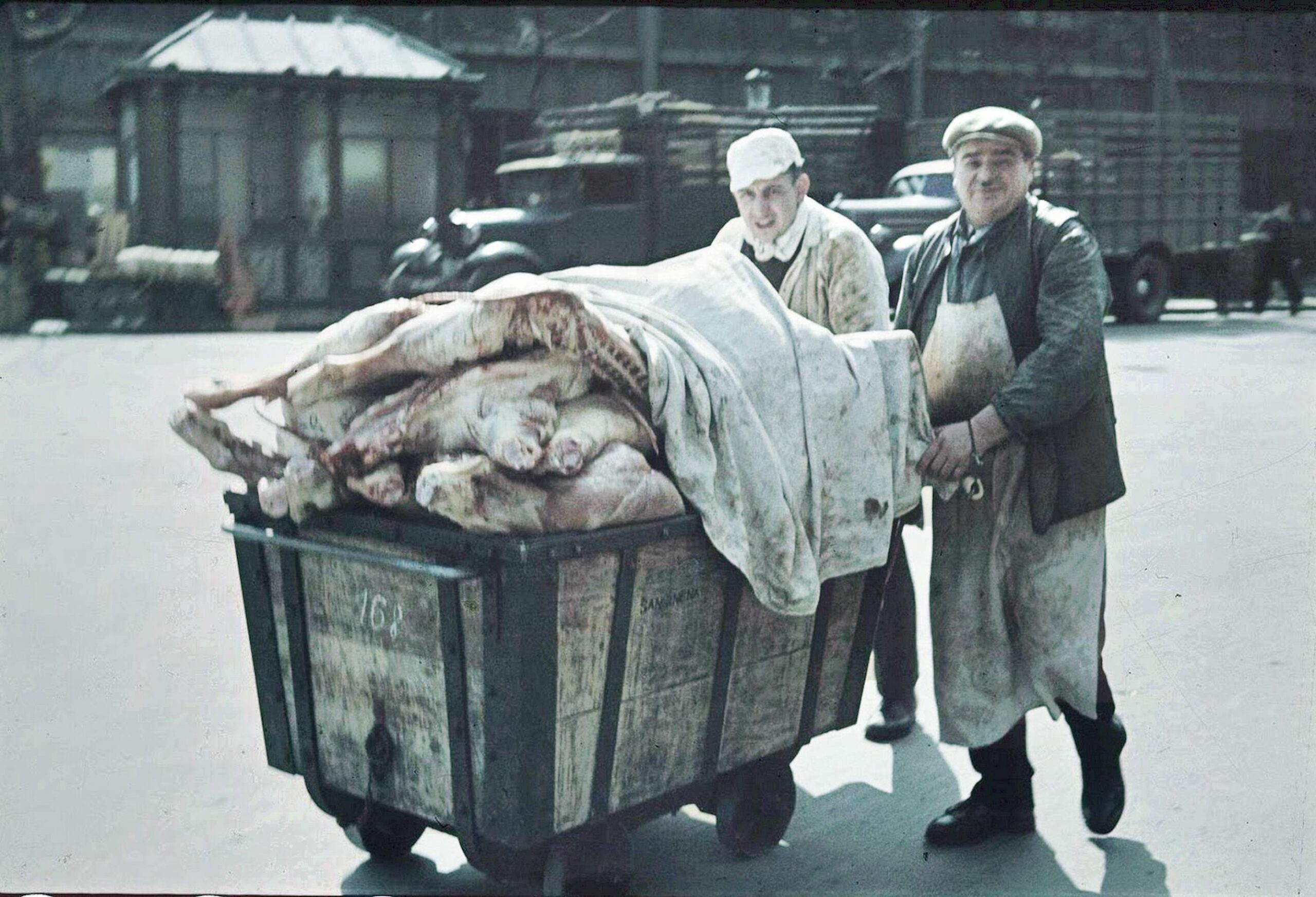
A cartload of meat.
A cartload of meat.
A car equipped to run on natural gas.
Parisians cycle past a poster for Nazi-sponsored Europe Against Bolshevism exhibition.
Paris in Wartime: The Propaganda Images of André Zucca
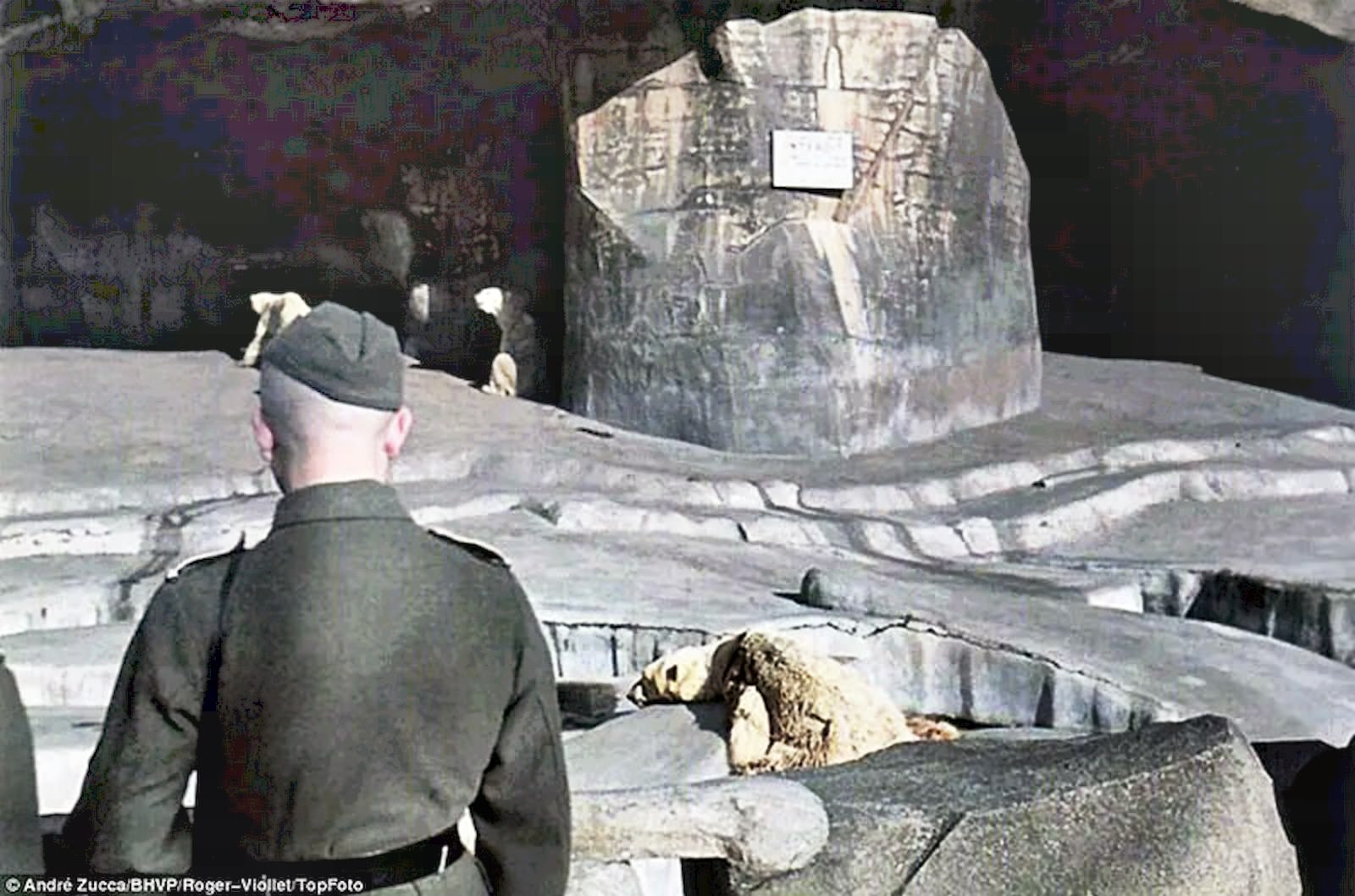
A German soldier looks on at lethargic-looking polar bears at the Ménagerie du Jardin des Plantes, Paris's famous zoo.
A German soldier looks on at lethargic-looking polar bears at the Ménagerie du Jardin des Plantes, Paris’s famous zoo.
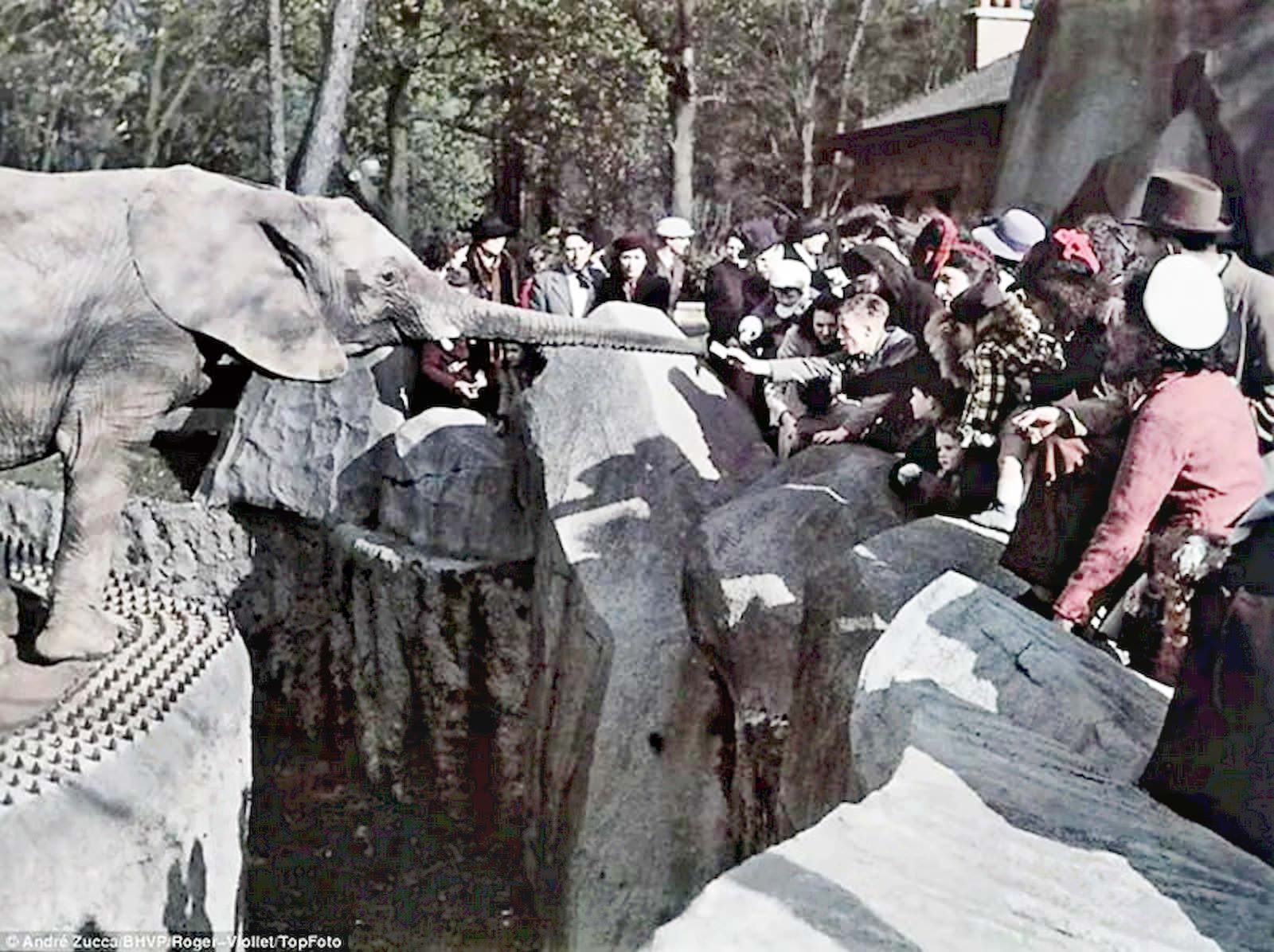
An elephant reaches across from its enclosure to take something from the hand of a youngster.
Two fashionably dressed young men stand by a tandem bicycle towing a carriage of sorts.
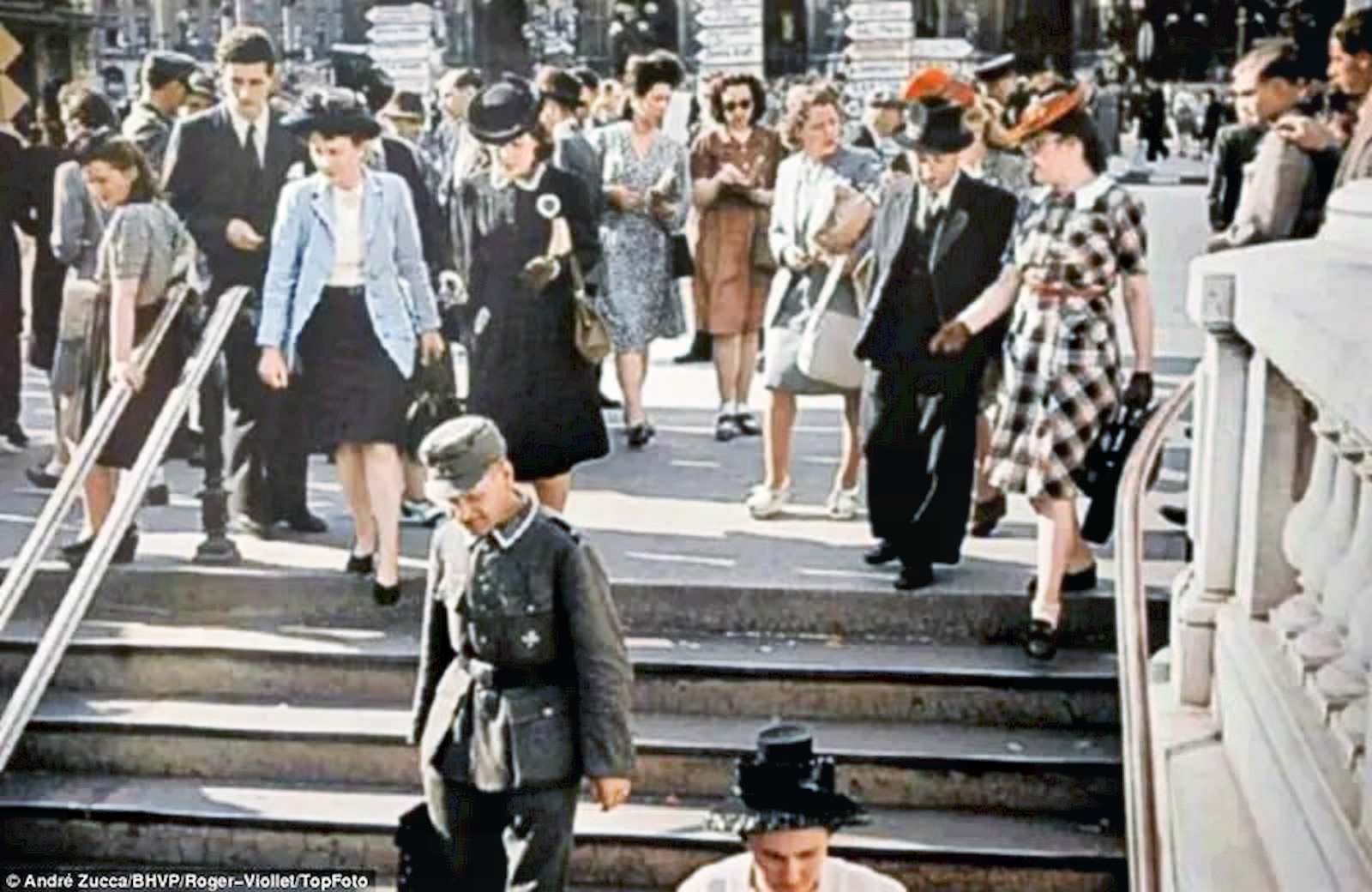
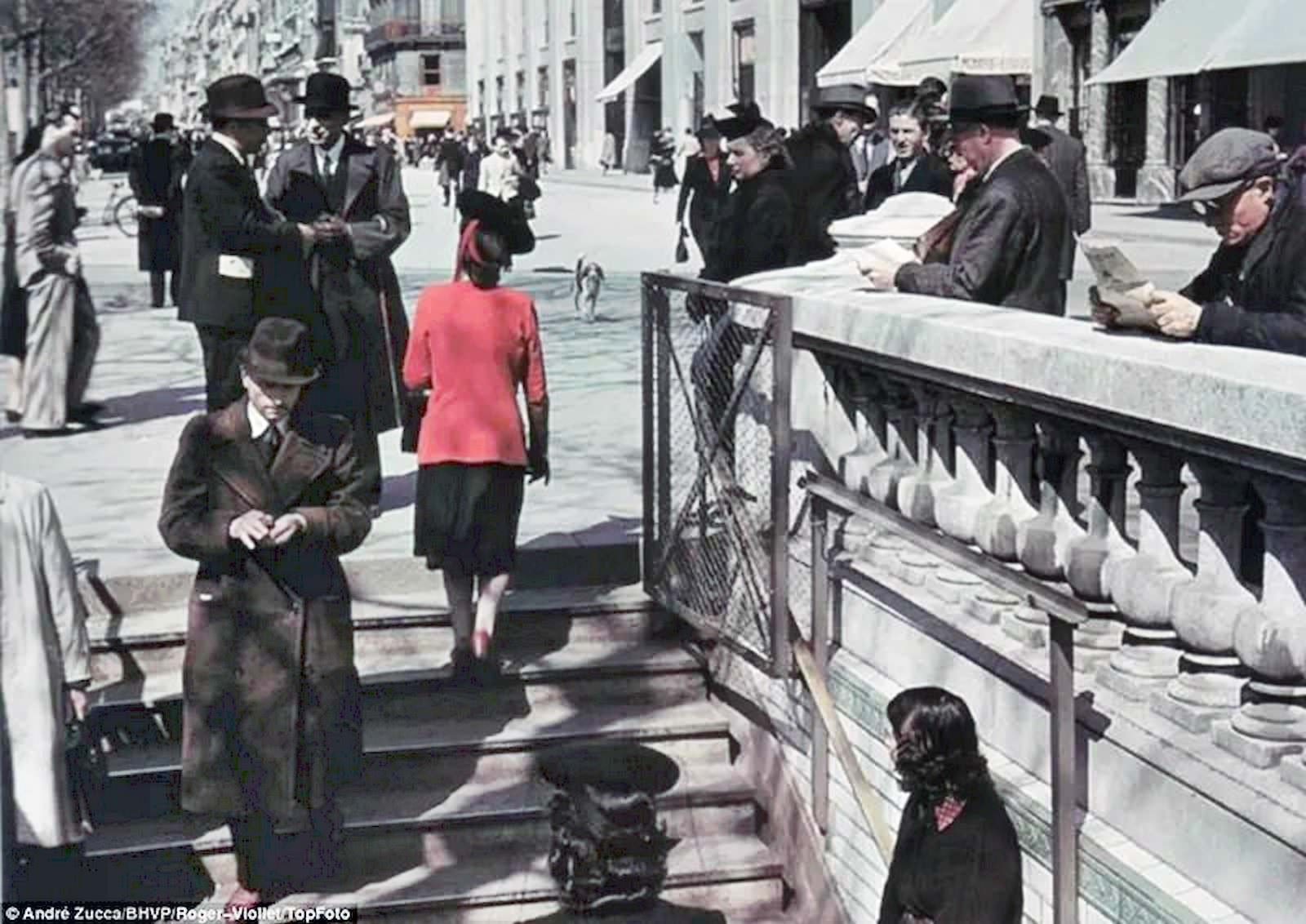
Parisians go about their business, walking down into a subway.
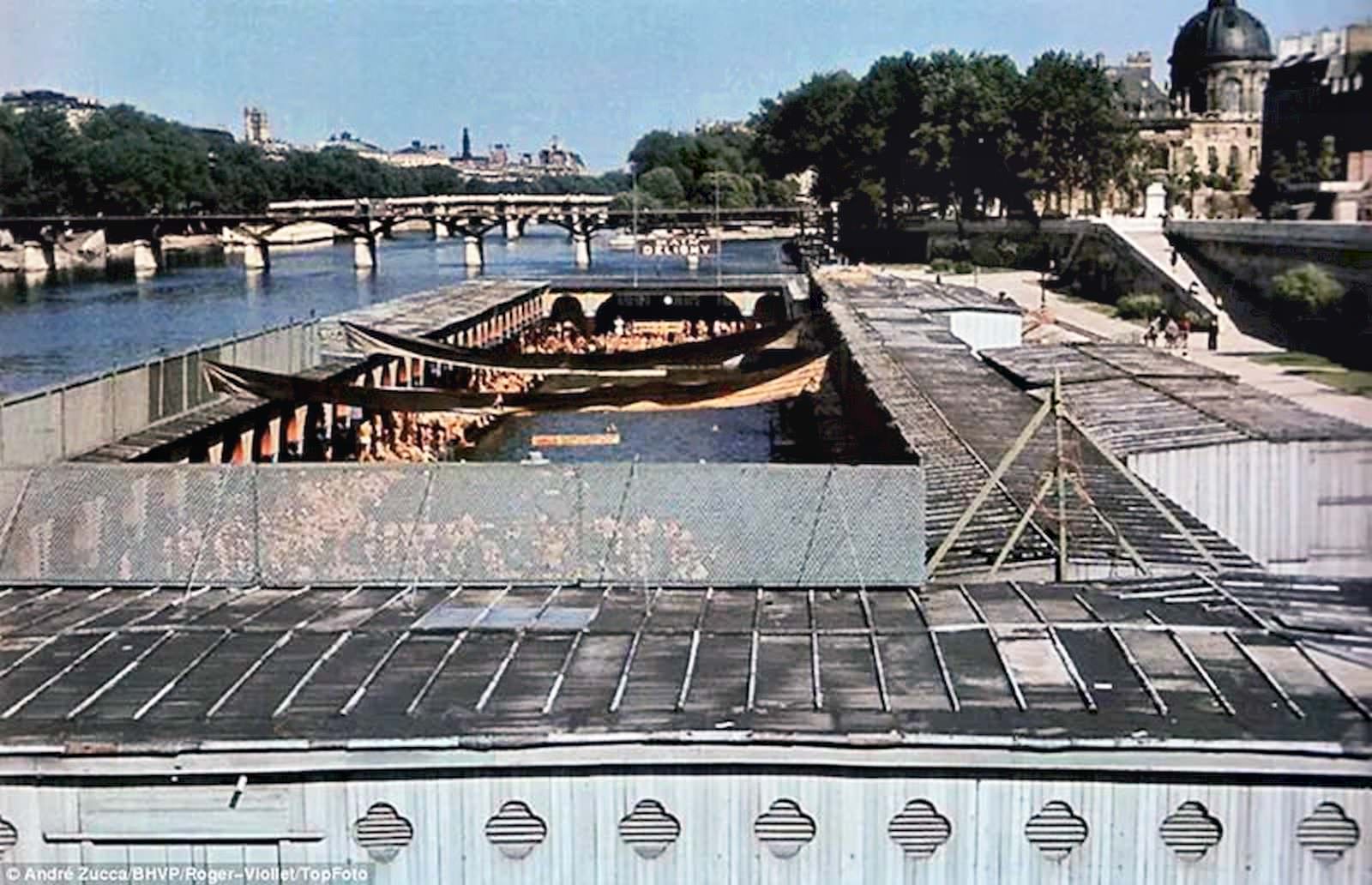
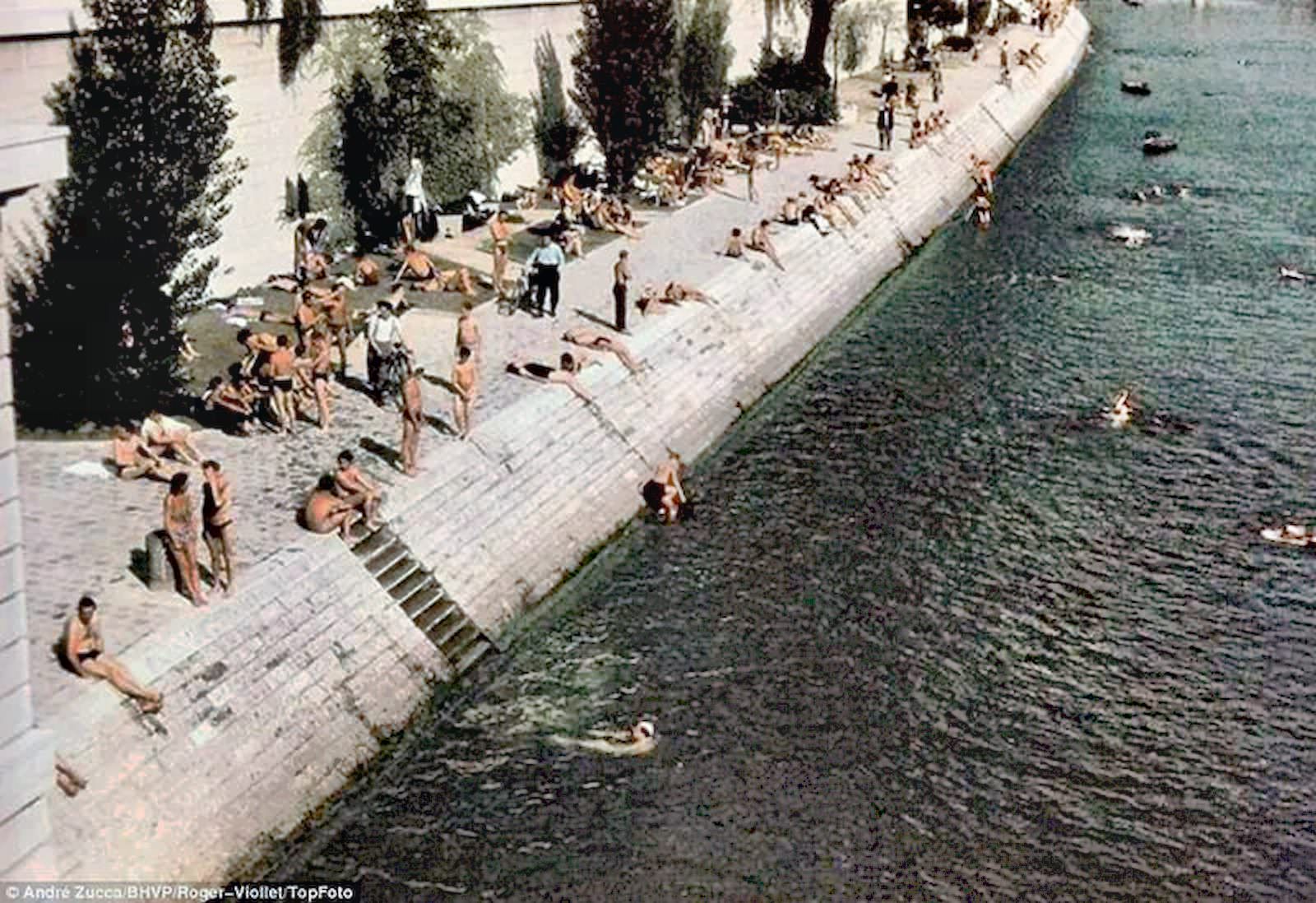
A part of the Seine is pontooned off into a swimming pool, which is filled with hundreds of Parisians grabbing a chance to cool off in the summer heat.
Paris in Wartime: The Propaganda Images of André Zucca
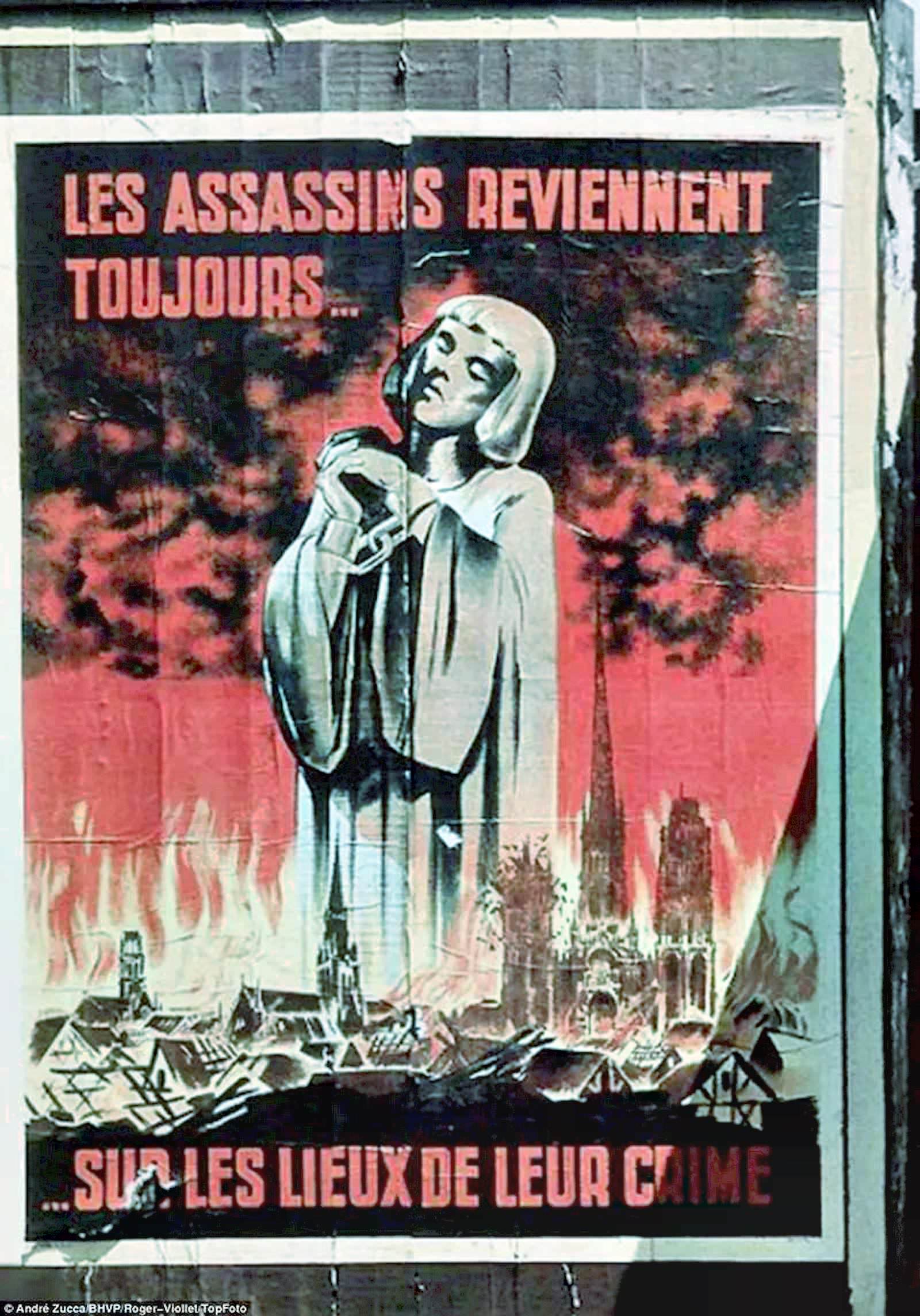
This poster, which reads 'Assassins Always Return to the Scene of their Crime', shows Joan of Arc kneeling in prayer, her hands manacled, while below her the town of Rouen burns.
This poster, which reads ‘Assassins Always Return to the Scene of their Crime’, shows Joan of Arc kneeling in prayer, her hands manacled, while below her the town of Rouen burns.
Paris in Wartime: The Propaganda Images of André Zucca
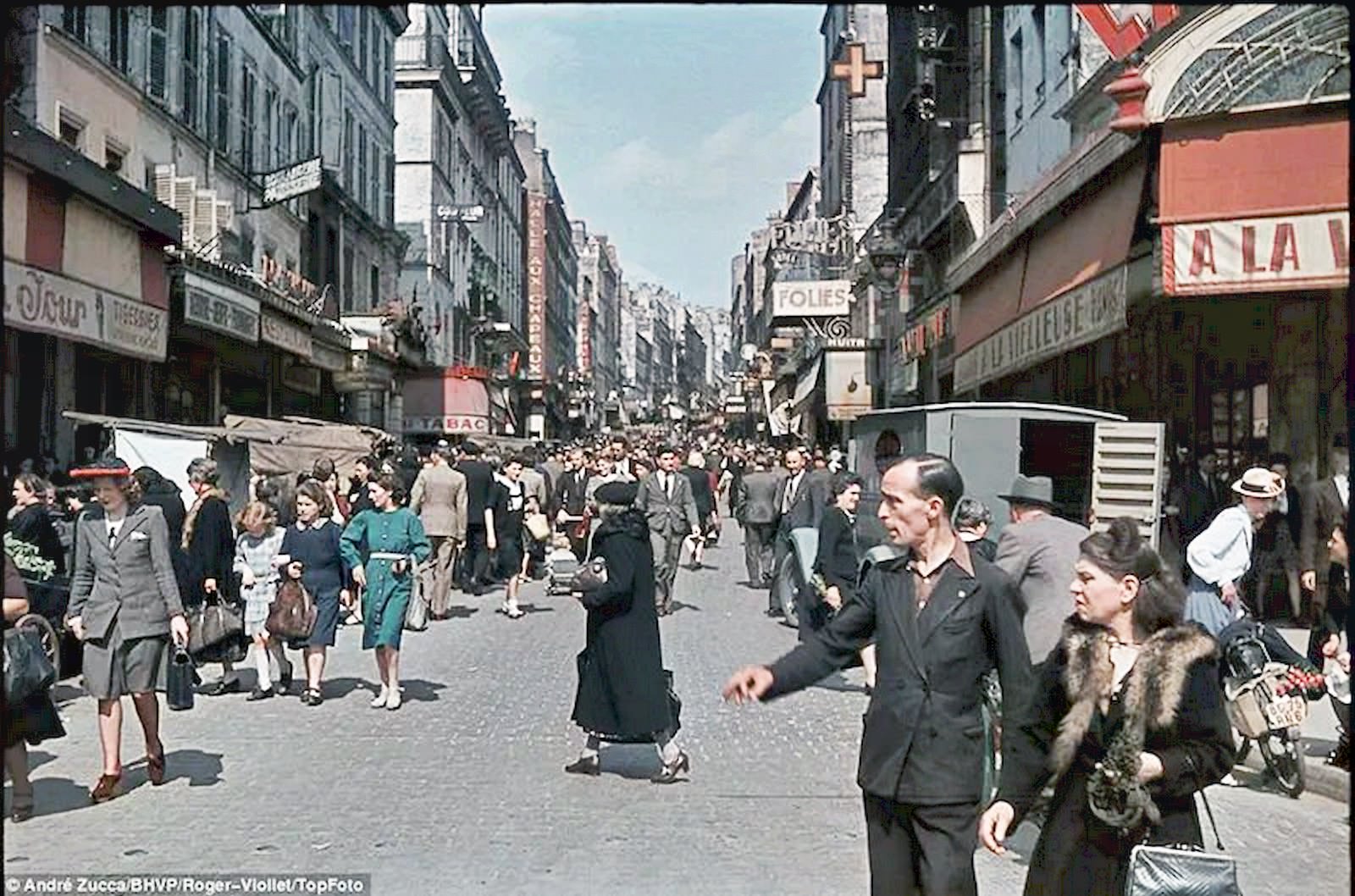
The majority of Zucca's images show Paris as a thriving, lively city filled with food, laughter, and young families.
The majority of Zucca’s images show Paris as a thriving, lively city filled with food, laughter, and young families.
Paris in Wartime: The Propaganda Images of André Zucca
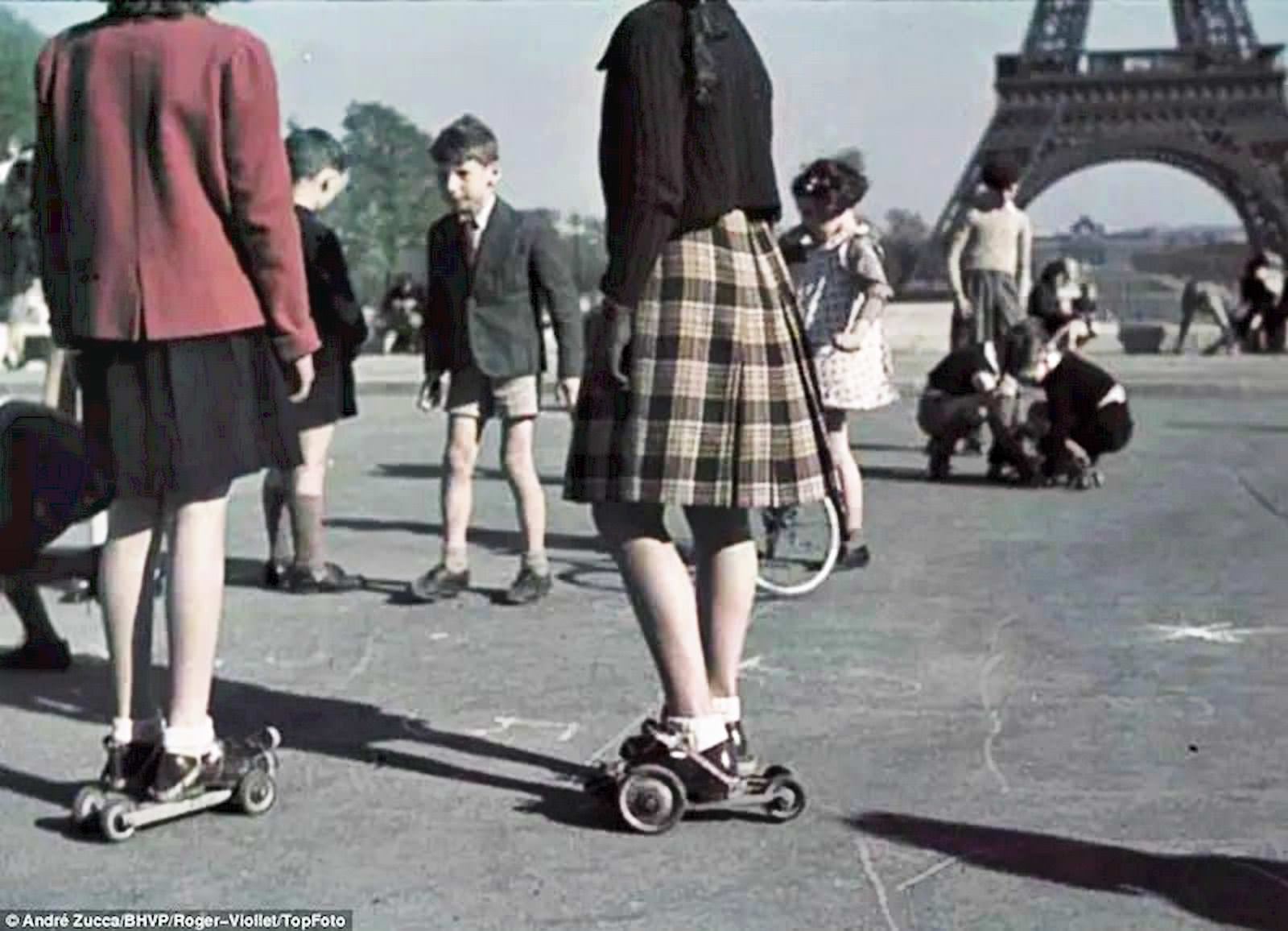
Girls and boys play in what appear to be the early forerunners of rollerskates against the backdrop of the Eiffel Tower on central Paris's Champ de Mars.
Girls and boys play in what appear to be the early forerunners of rollerskates against the backdrop of the Eiffel Tower on central Paris’s Champ de Mars.
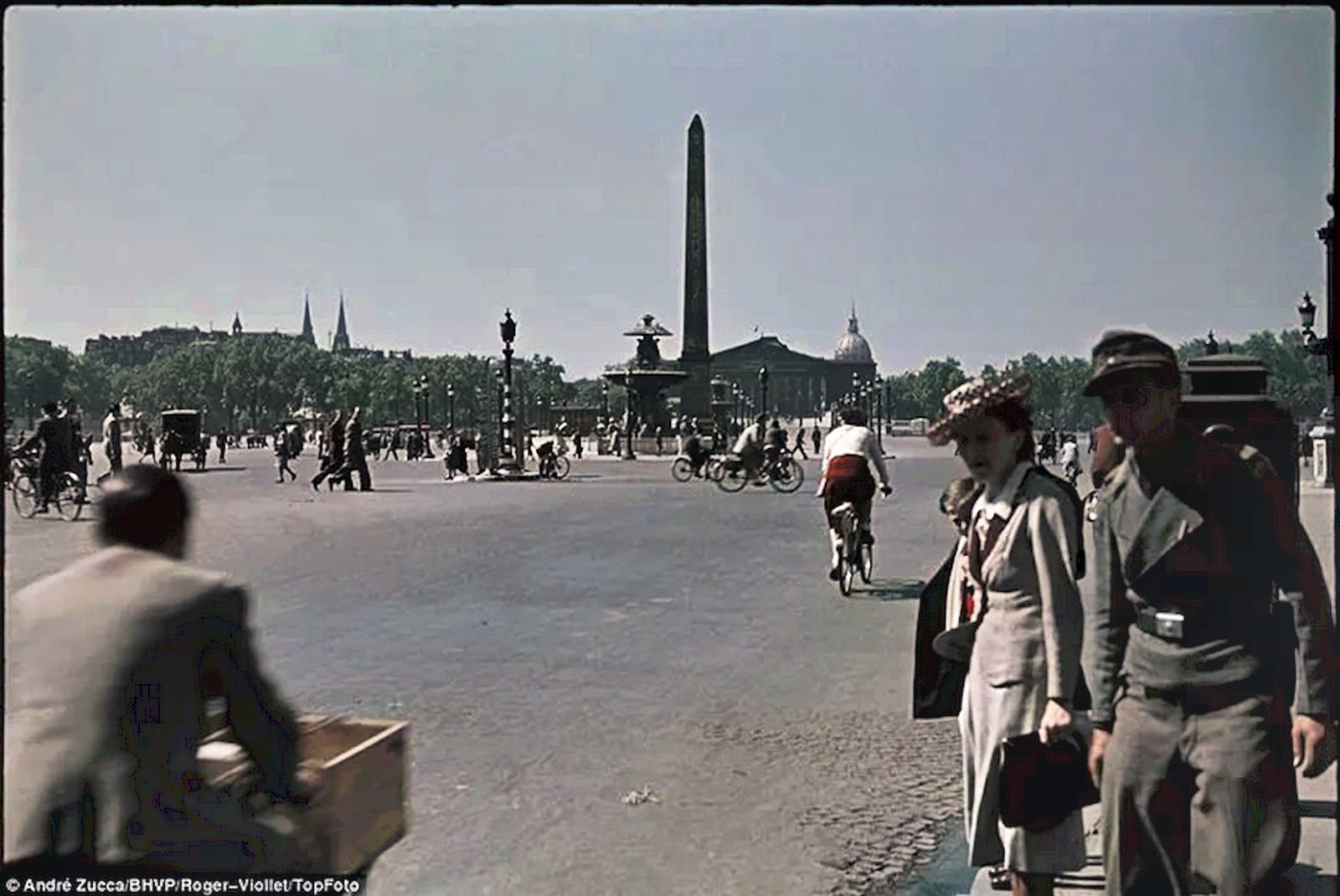
A soldier and civilians mill around near Cleopatra's Needle in the Place de la Concorde, one of three obelisks taken from Egypt and re-erected in Paris, London, and New York during the 19th Century.
A soldier and civilians mill around near Cleopatra’s Needle in the Place de la Concorde, one of three obelisks taken from Egypt and re-erected in Paris, London, and New York during the 19th Century.
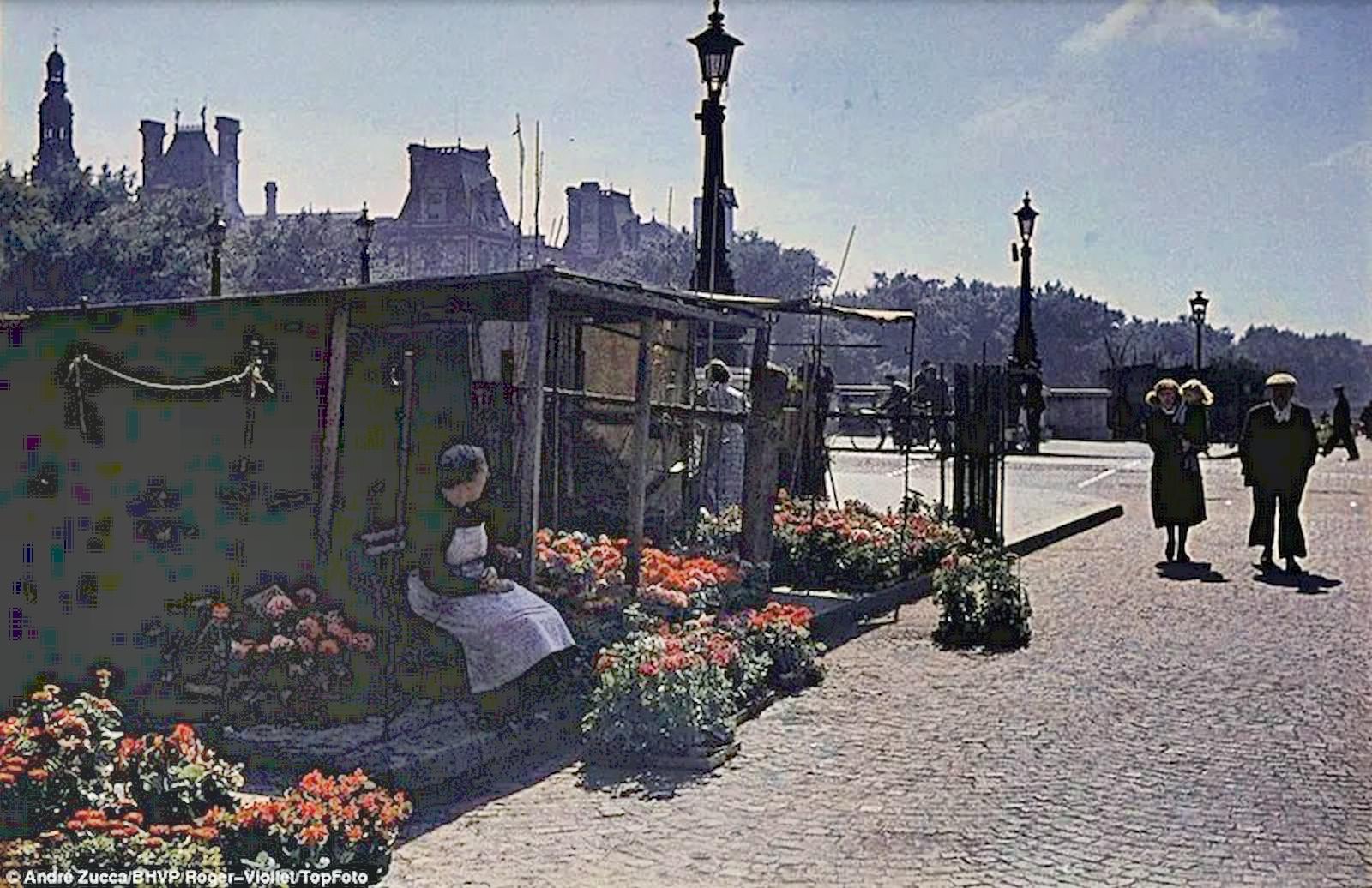
A flower seller sits outside her shop on a bright, sunny day.
Paris in Wartime: The Propaganda Images of André Zucca
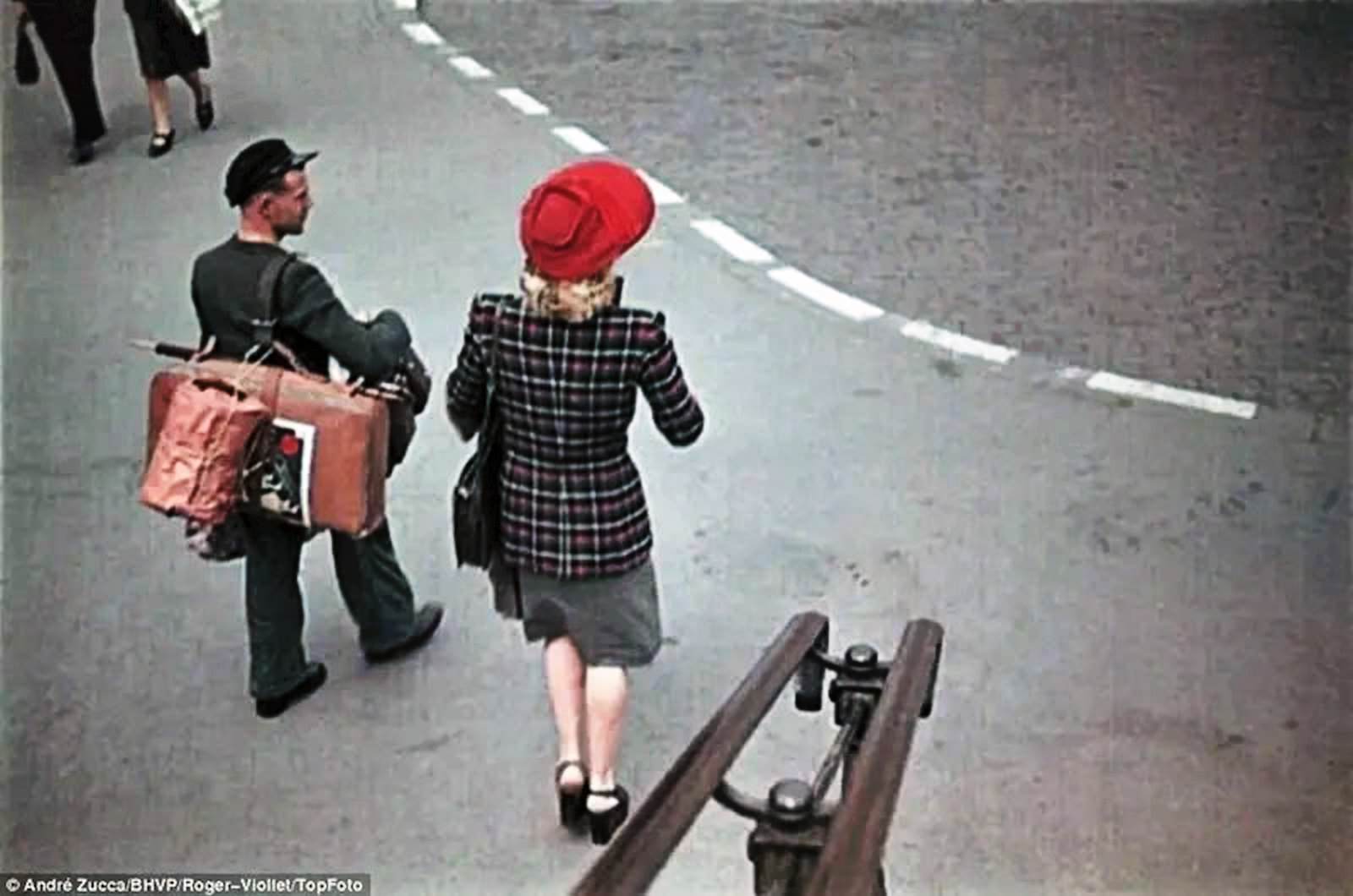
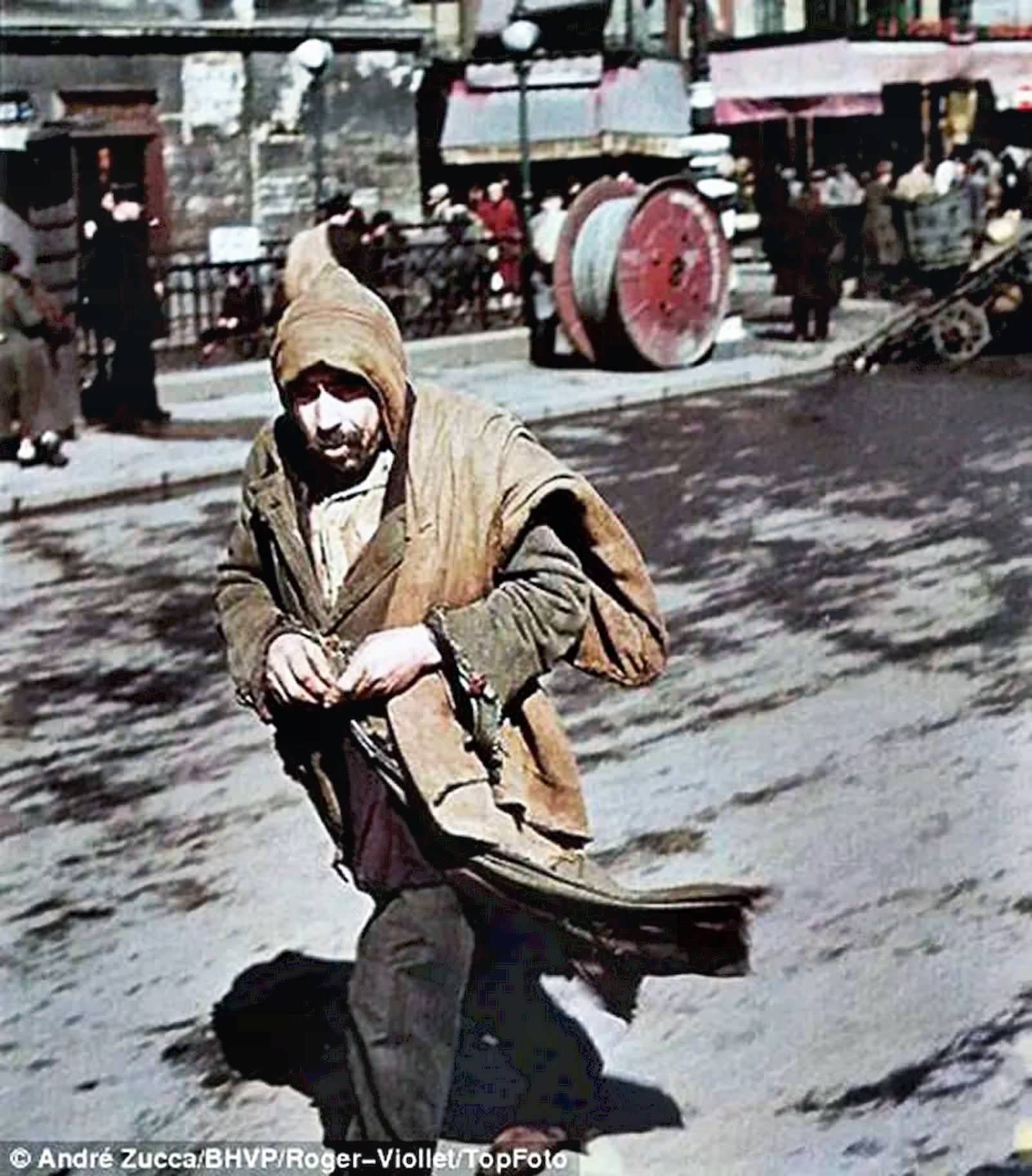
A man dressed in dirty clothes hurries along the road.
Paris in Wartime: The Propaganda Images of André Zucca
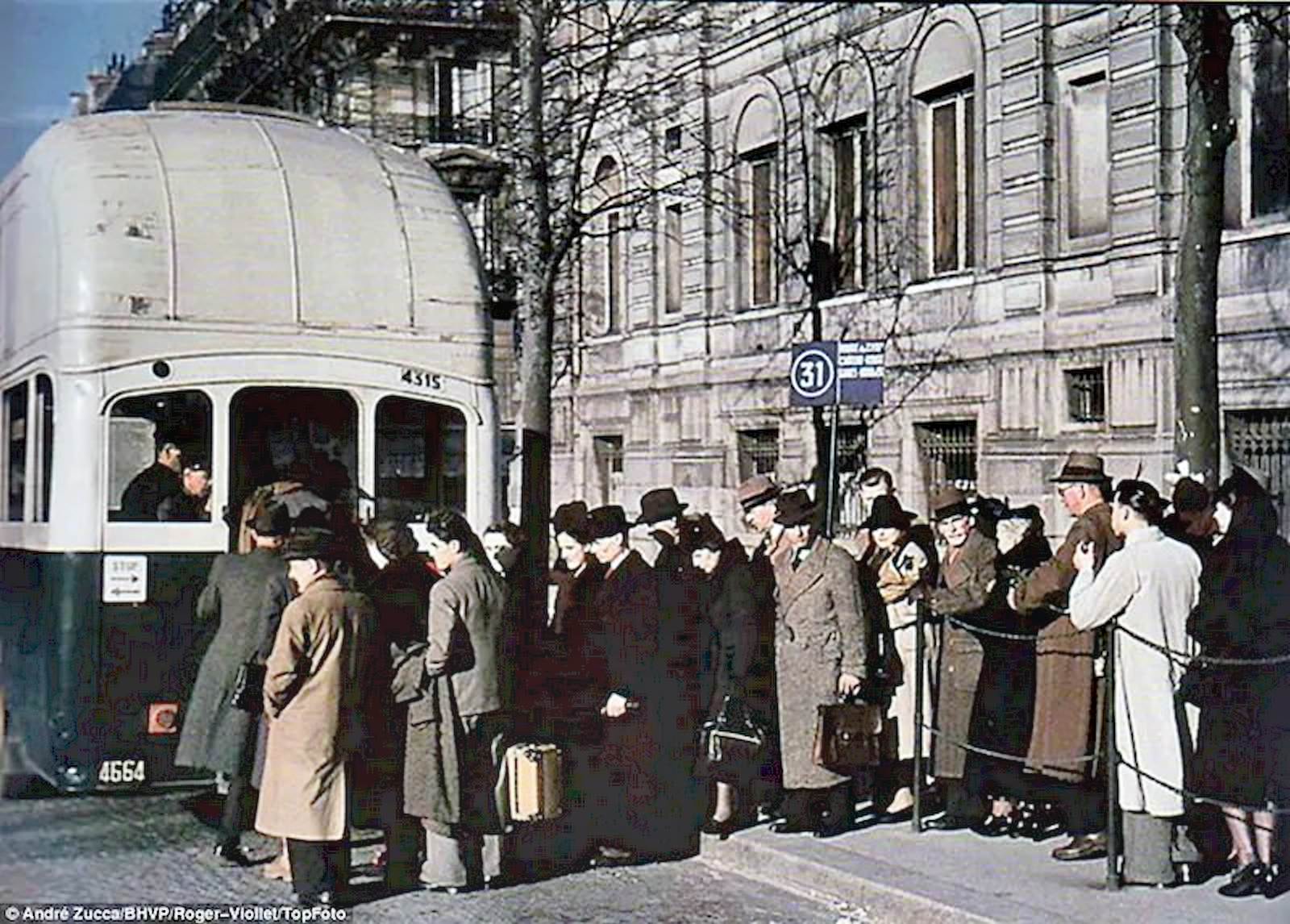
Parisian commuters queue to board a bus on a chilly early morning.
Paris in Wartime: The Propaganda Images of André Zucca
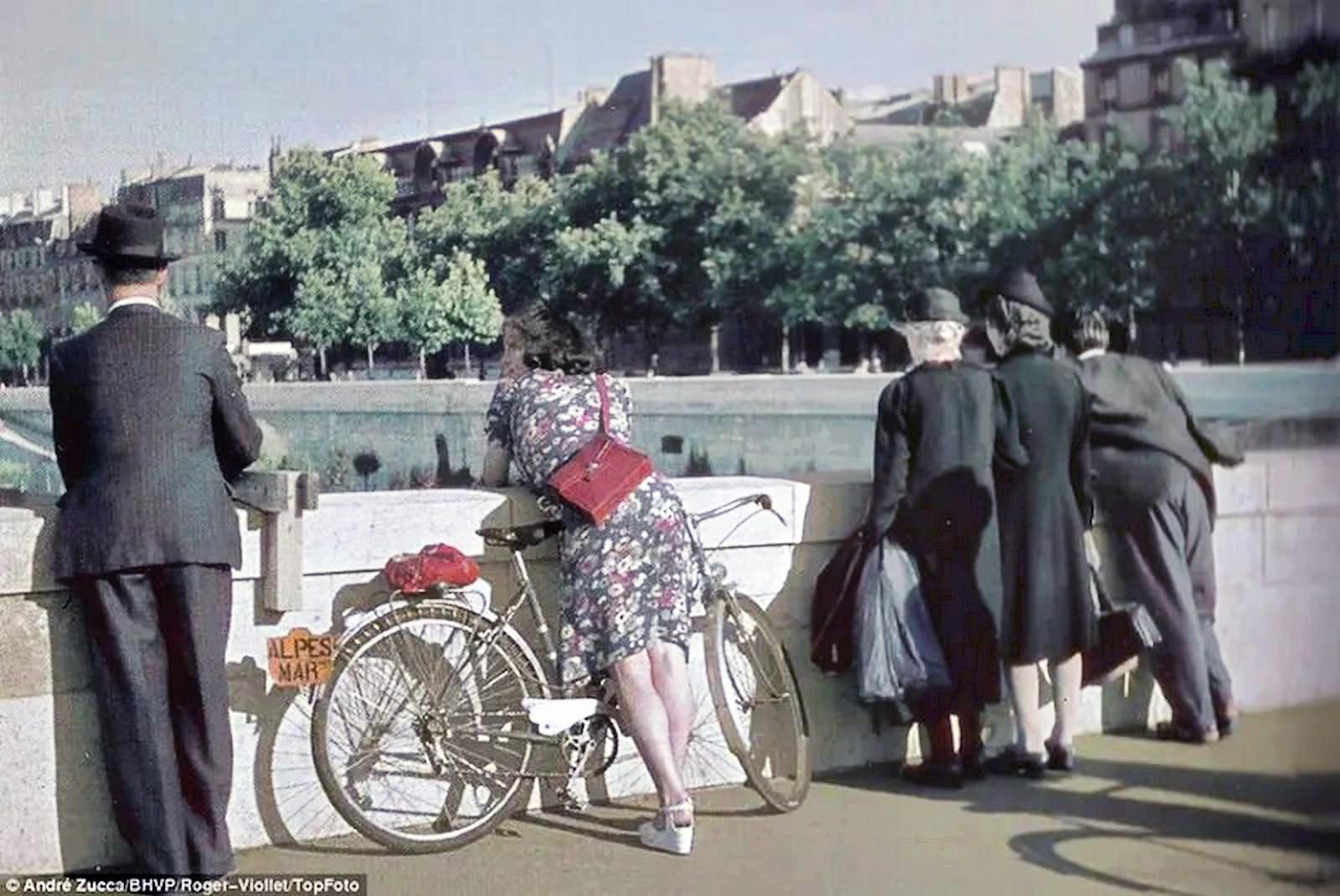
A shapely woman leaning over the side of the bridge is the focus of this photograph.
A smartly dressed woman steps from a bicycle taxi.
Paris in Wartime: The Propaganda Images of André Zucca
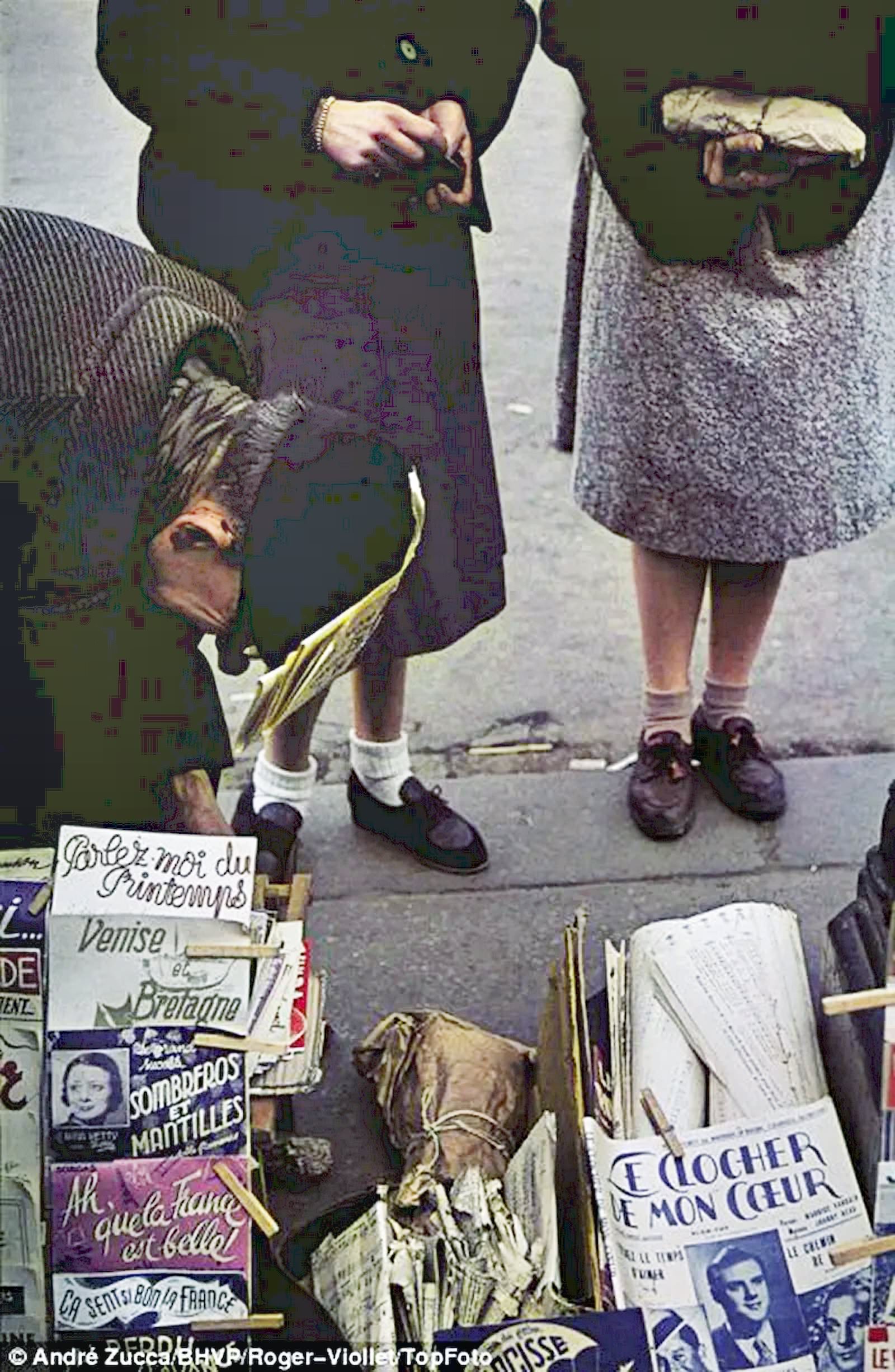
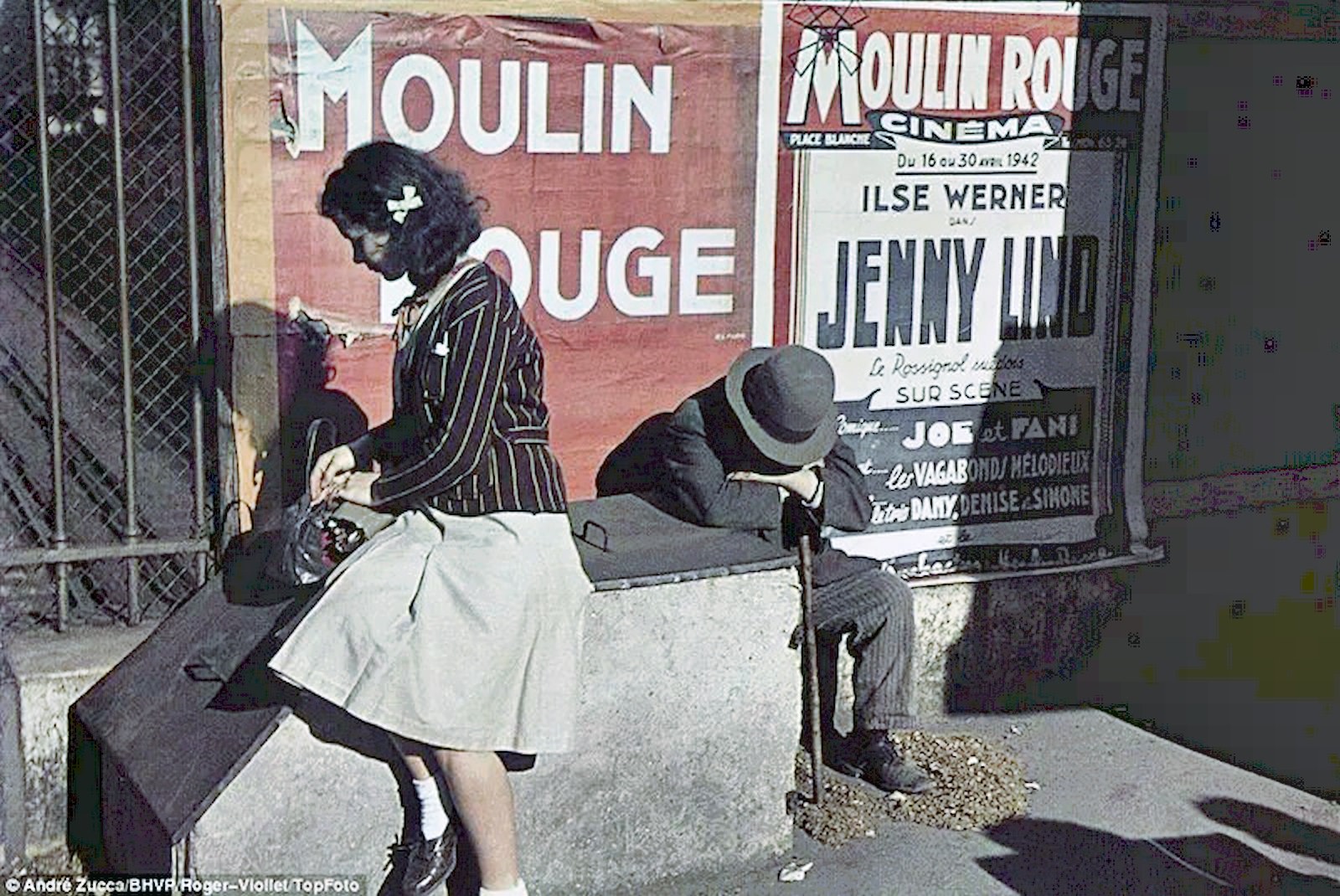
A young woman checks her handbag while a man sits slumped over a walking stick in front of posters for the City's famous Moulin Rouge cabaret.
A young woman checks her handbag while a man sits slumped over a walking stick in front of posters for the City’s famous Moulin Rouge cabaret.
Paris in Wartime: The Propaganda Images of André Zucca
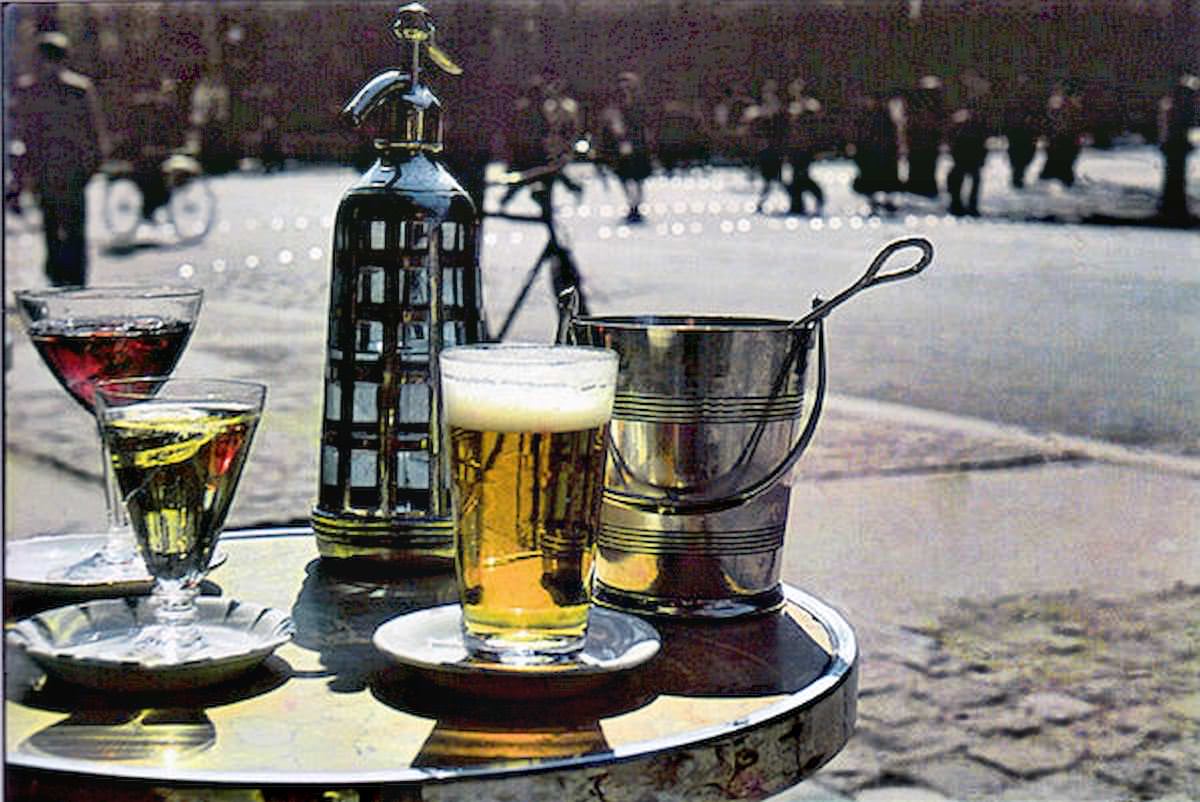
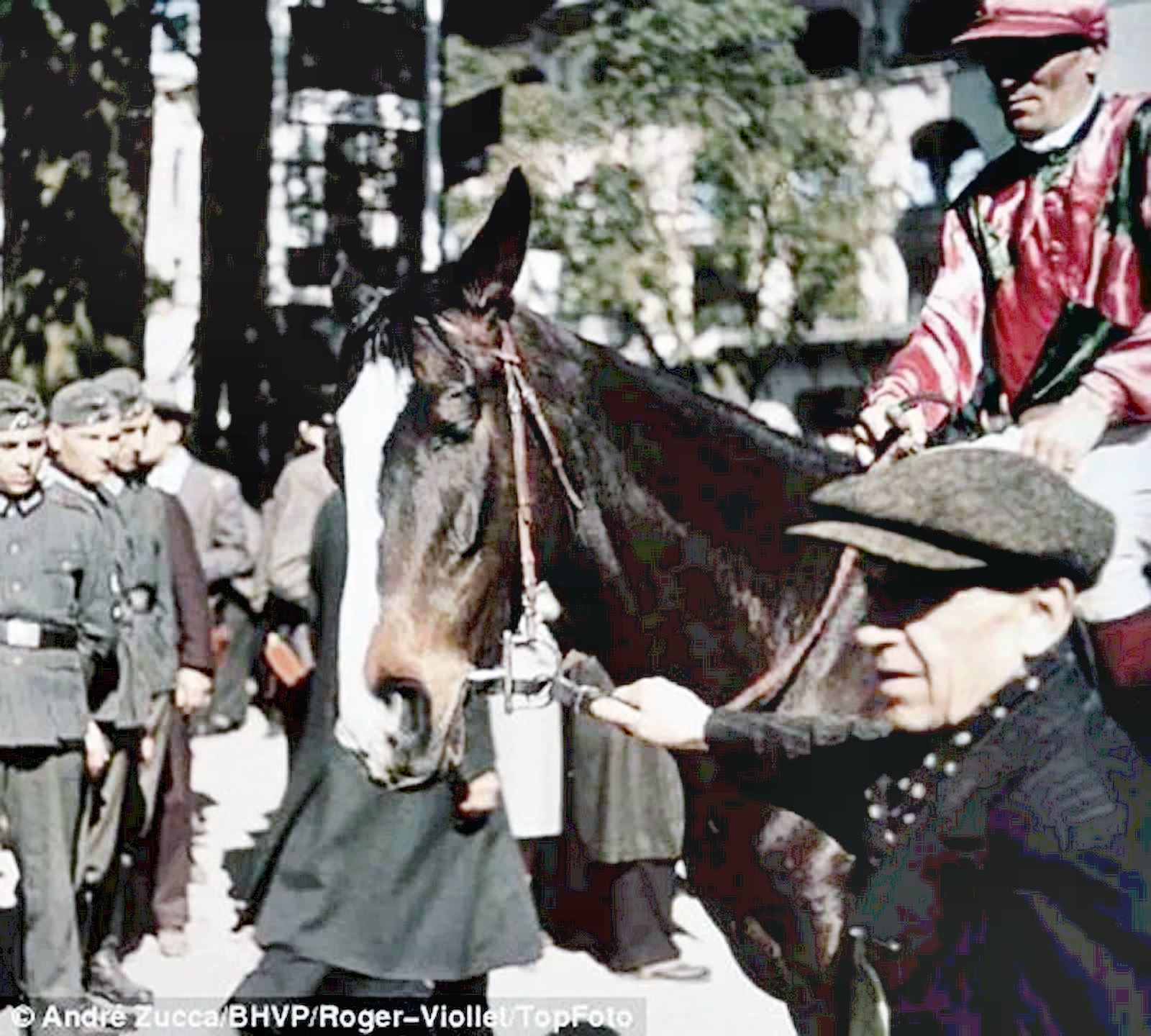
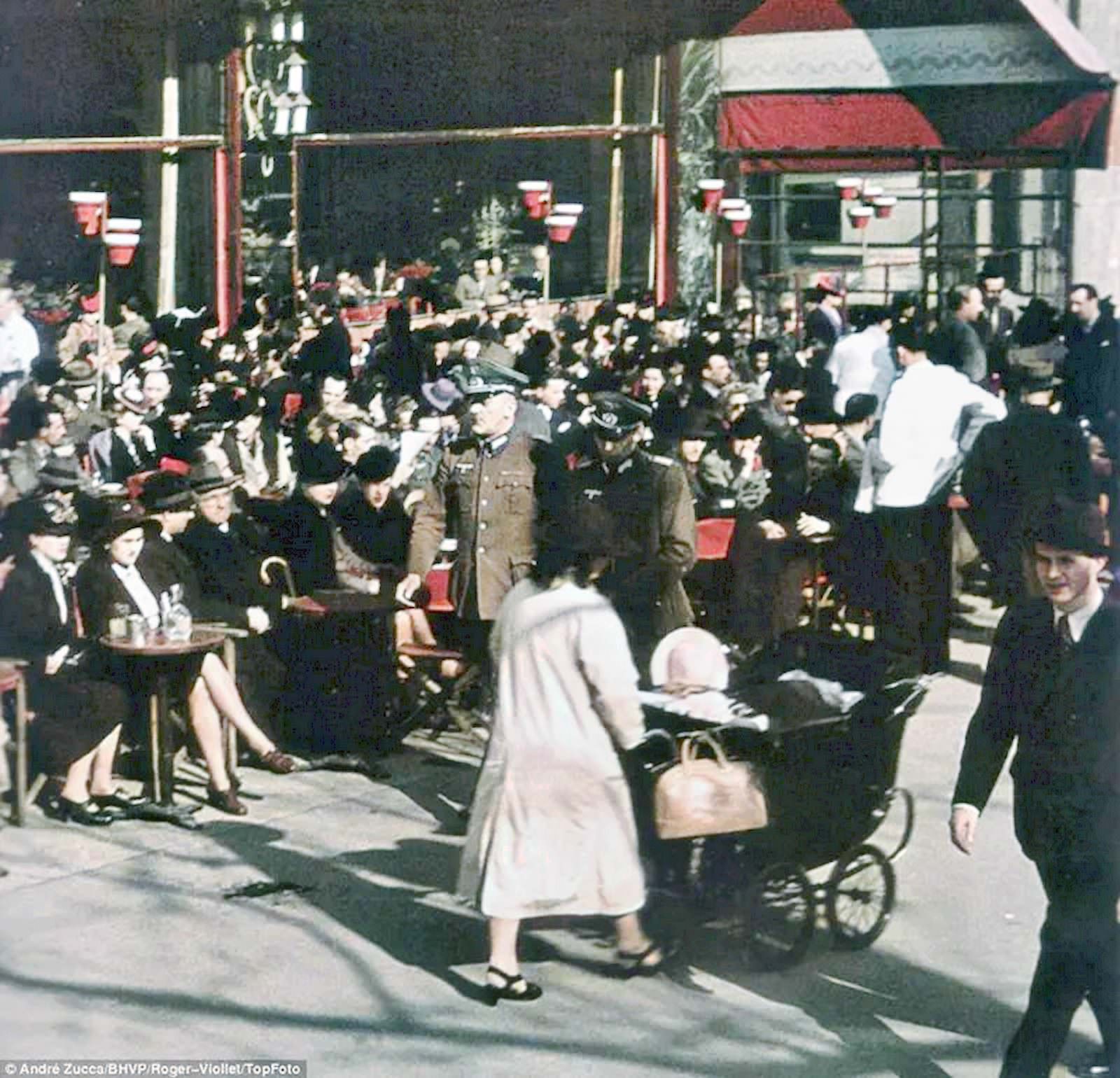
Senior-looking German army officers stroll past a crowd of French enjoying the afternoon in one of Paris's outdoor cafés.
Senior-looking German army officers stroll past a crowd of French enjoying the afternoon in one of Paris’s outdoor cafés.
Paris in Wartime: The Propaganda Images of André Zucca
Enjoyed this post? Get new ones in your inbox.

Leave a Comment

Your email address will not be published. Required fields are marked *

Share this Post 🥺

Please take a moment to share this content. Your support is greatly appreciated! 🙌🙏

Share this Post 🥺

Please take a moment to share this content. Your support is greatly appreciated! 🙌🙏
Scroll to Top
 
Hey Friend, Before You Go.. Please like & follow for more interesting content