
When the Great Depression hit the United States in 1929, it didn’t take long for the effects to reach Norfolk, Virginia. By the early 1930s, the city was feeling the full weight of the economic collapse. Norfolk had grown quickly during the 1920s, fueled largely by its busy port and shipping trade along the Chesapeake Bay. That growth came to a sharp halt as global commerce dried up, ships sat idle at the docks, and cargo movement slowed to almost nothing.
Manufacturing and retail took serious hits as well. Stores along Granby Street — the commercial backbone of downtown Norfolk — saw fewer customers. Businesses shut down. Unemployment climbed. Families who had settled in the city during the prosperous 1920s now struggled to pay rent and put food on the table. Some residents left Norfolk altogether, heading north or west looking for work. The city’s population dropped as a result.

Agriculture still moved through Norfolk even as the broader economy faltered. Farmers from the surrounding region continued to bring produce into the city by wagon, loading it onto rail cars for transport. This kind of local commerce kept some parts of the economy working, even at a reduced pace. Norfolk’s position as a regional hub for both shipping and agriculture gave it a small cushion that some inland cities lacked.


Ferry service remained an essential part of daily life in the Norfolk area throughout the decade. Residents and workers crossed the Elizabeth River regularly, connecting Norfolk to Portsmouth and the surrounding communities. The ferries were a practical lifeline — affordable transportation for working people who couldn’t afford other options. Even as finances tightened across the region, the ferry routes stayed active.


Granby Street was the center of public life in Norfolk. Military parades, civic events, shopping, and entertainment all happened along this corridor. In May 1932, a Navy March Memorial Day Parade drew crowds to the street, reminding residents of the deep connection between the city and the U.S. military. Norfolk’s Naval Station, established during World War I, continued to be a major employer and a stabilizing force in the local economy throughout the Depression years.


Public parades were a regular feature of life on Granby Street, drawing large crowds regardless of the economic climate. By 1939, Armistice Day — commemorating the end of World War I — was still celebrated with military processions down the same stretch of road. These events gave residents a reason to gather, and they reinforced Norfolk’s identity as a military city.


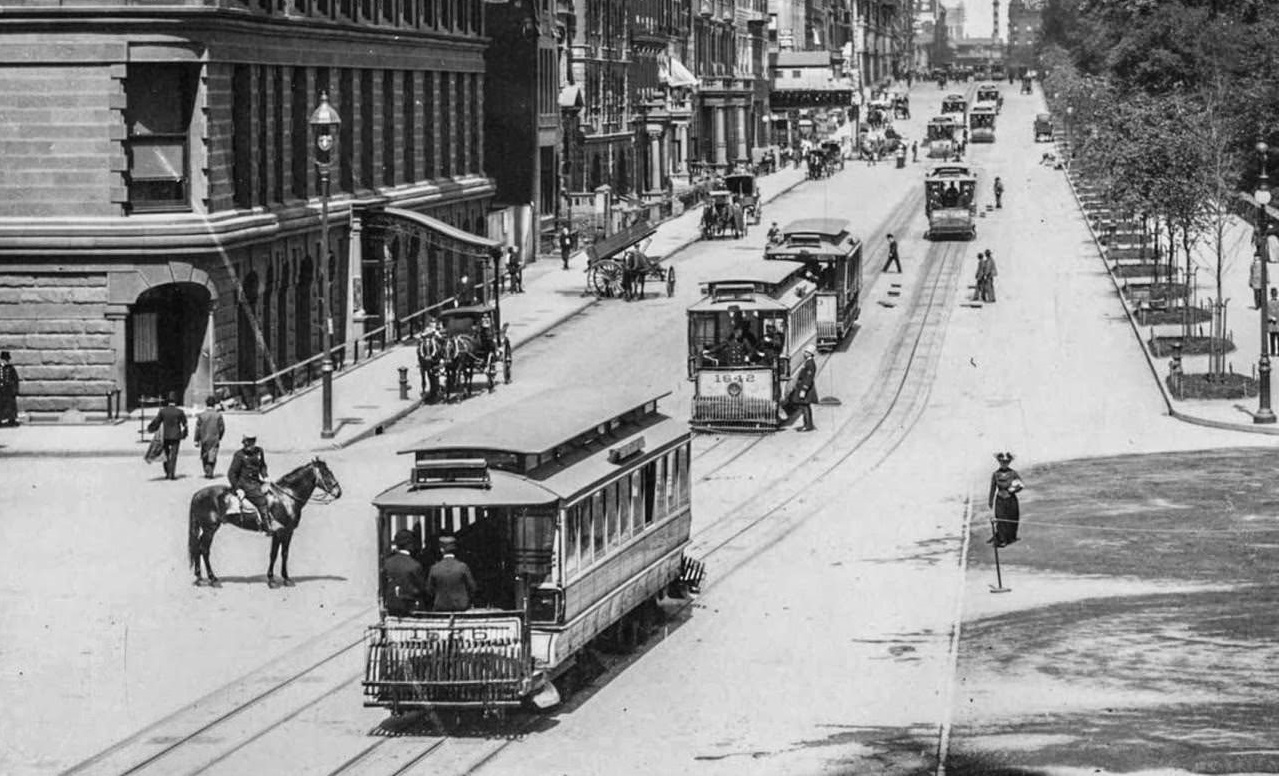
Streetcars ran through Norfolk’s downtown throughout the decade, connecting neighborhoods to the commercial center. The trolley system was central to how residents moved around the city, and the cars passed by some of Norfolk’s most recognizable landmarks, including the Monticello Hotel. For many working-class residents, the streetcar was the primary mode of getting to work, to the market, or to an evening out.


Despite the hard times, Norfolk’s entertainment scene didn’t disappear. Movie theaters remained popular because they offered affordable escape. The Norva Theater on Granby Street screened films throughout the decade, featuring major Hollywood stars on its marquee — Chester Morris in 1931, Gary Cooper in 1937. The Loew’s Theatre drew crowds on November 11, 1937, with a Humphrey Bogart film. These weren’t luxury outings; a movie ticket was one of the cheapest entertainments available, and theaters stayed packed even when people had very little money to spend.


The Granby Theater also drew attention with its marquee. In 1936, it screened a film about marijuana — part of a wave of sensationalist films circulating around the country during the Depression era. The Wells Theatre on Tazewell Street was another venue that anchored Norfolk’s entertainment district during this period.


The repeal of Prohibition in 1933 was a notable moment for Norfolk residents. Women took to the streets to publicly support the end of the alcohol ban, part of a nationwide push that finally succeeded when the 21st Amendment was ratified in December of that year. The image of women marching under a “We Want Beer” banner captured a real moment of public activism in the city.

That same year, a hurricane struck Norfolk and left significant damage in its wake. Granby Street flooded, and the area around the Monticello Hotel was submerged. Photographs from 1933 show water filling the streets — a reminder that natural disasters compounded the already difficult conditions residents were navigating during the Depression.


Beyond the storms, everyday commerce on Granby Street continued. Rice’s department store operated at the corner of Granby and Freemason Street, and the Monticello Arcade — a covered shopping passage — remained a fixture of downtown. These commercial spaces gave residents a sense of normalcy even as the broader economy remained unstable.


City Hall Avenue offered a view of Norfolk’s civic core. Looking east down the avenue, the City Hall building — later converted into the MacArthur Memorial — anchored the downtown skyline. Boush Street and the surrounding blocks reflected a city that still maintained its urban infrastructure, even as economic pressures mounted.


Residential Norfolk in the 1930s ranged from established historic neighborhoods to working-class blocks. The Freemason District, one of the city’s older neighborhoods, retained its historic houses throughout the decade. West Norfolk had its own distinct character, with residential streets that reflected the slower pace of life outside the commercial center.


The Navy YMCA served as an important gathering point for military personnel stationed in Norfolk. With a major naval base in the city, sailors and servicemen were a consistent presence throughout the decade. The YMCA offered them a place to rest, socialize, and access basic services — a significant role in a city so deeply tied to military life.

Not all of Norfolk’s 1930s life was defined by hardship or commerce. Ocean View Amusement Park remained open along the Chesapeake Bay waterfront, drawing families to its rides and attractions. The Rocket roller coaster, photographed in 1937, was one of the park’s main draws. Getting to Ocean View was made easy by the trolley terminal that served the park directly — a sign that leisure, even modest and affordable leisure, remained part of daily life.


In 1934, the Hagenbeck-Wallace Circus came to town and paraded down Granby Street — elephants, wagons, and performers moving through the heart of downtown Norfolk. Crowds lined the sidewalks to watch. Events like this one drew people out of their homes and into the streets, offering a brief break from the pressures of Depression life.

Nearby, Fort Monroe in Hampton stood as one of the region’s longest-active military installations. In 1936, it remained fully operational, a fixture of the coastal defense network and a significant employer for the Hampton Roads area. The Great Dismal Swamp to the south of Norfolk also remained a striking natural landmark throughout the decade — its ancient cypress trees photographed in November 1938, their roots standing in the dark water of one of the oldest swamps on the East Coast.





Depressing how much downtown sucks now compared to then.
There was that awkward moment when downtown Norfolk looked better during the Great Depression than in 2023…
That picture of the Wells theater can’t have been taken in the 1930s. The X rating didn’t exist until the MPAA started rating films in 1968.
They look like : What depression
That’s what I was thinking.
In the middle of the depression, Norfolk literally looked more advanced and lively 90 years ago. It’s time.
Bring back the electric trolleys!
So many people out walking around