Naples is the regional capital of Campania and the third-largest city in Italy, behind only Rome and Milan. Its historical center is the largest in Europe and has been designated a UNESCO World Heritage Site. The city carries its age openly — laundry strung between buildings, fish laid out on sidewalk tables, pastry shops tucked beside old stone churches. Just beyond the city’s edges sit some of the most significant ancient sites on the continent, including the Roman ruins of Pompeii and Herculaneum and the royal Palace of Caserta.
The city’s natural landscape is just as striking as its history. The coastline at Posillipo, the volcanic Phlegraean Fields, the small island of Nisida, and the looming presence of Mount Vesuvius all shape the geography around Naples. In the 1950s, that geography was the backdrop to a city still piecing itself back together after World War II.
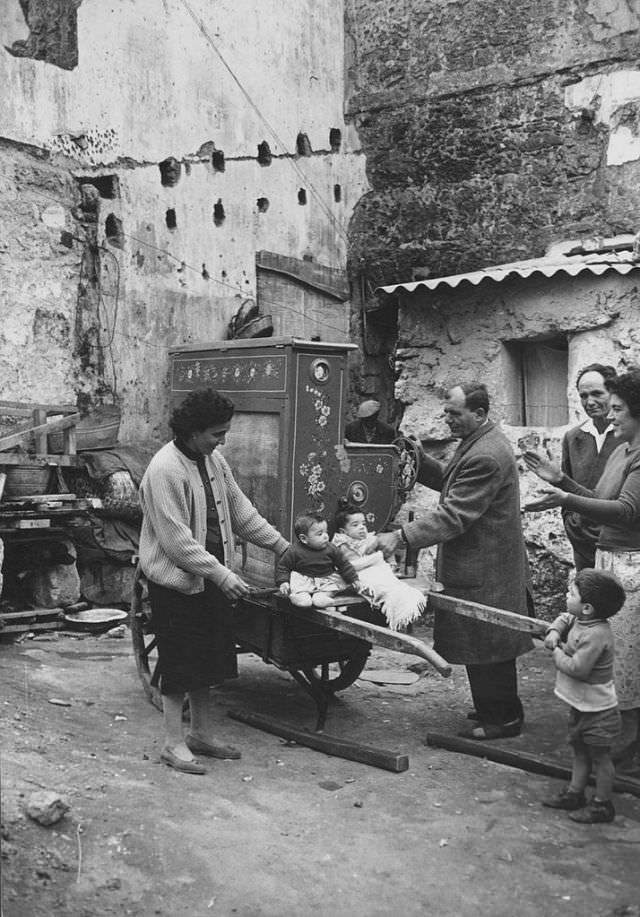
Naples had been poor before the war. The conflict made things significantly worse. The city suffered heavy Allied bombing and German occupation before liberation in 1943, and the years that followed brought widespread unemployment, food shortages, and deep social strain. The postwar recovery was slow and uneven, and much of the population lived in difficult conditions well into the 1950s.
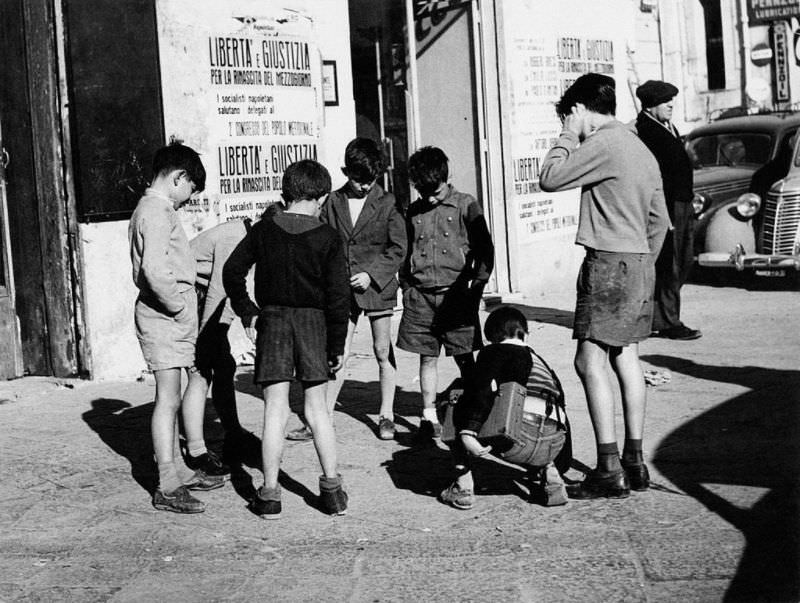
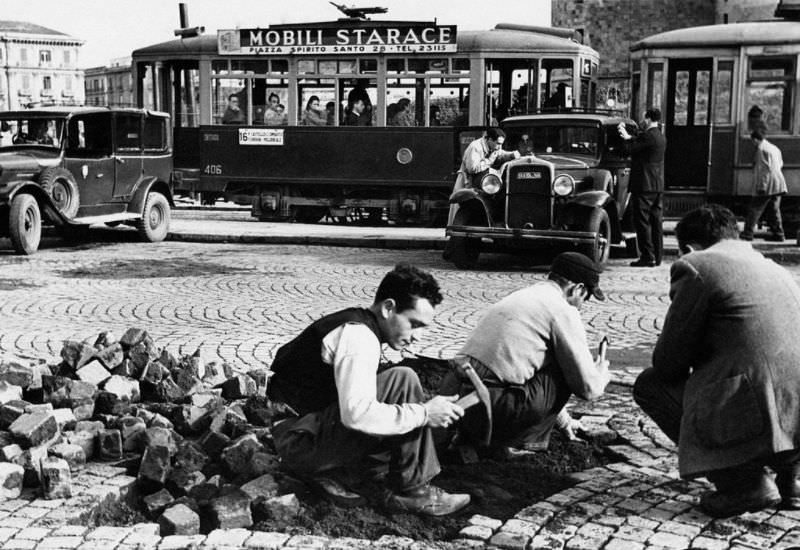
Education was a clear marker of that hardship. Schooling was compulsory until age 14, but only two out of every ten children actually completed middle school. For most families, keeping children in school meant giving up income they couldn’t afford to lose. Children were often put to work instead, contributing to household survival from a young age.
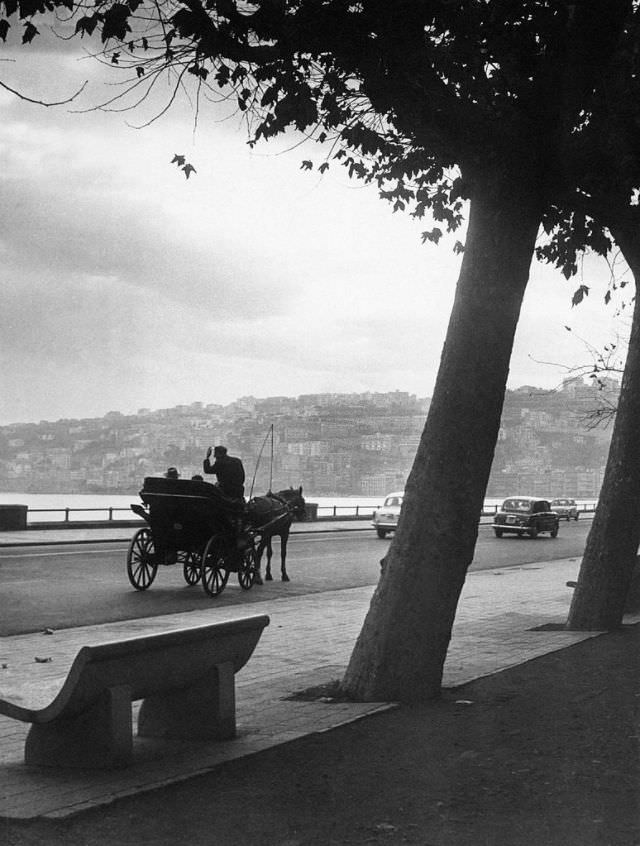
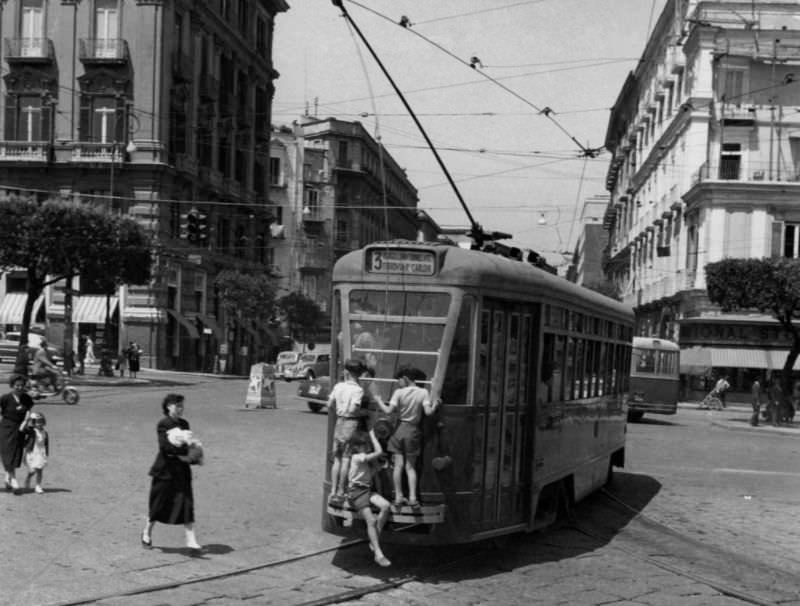
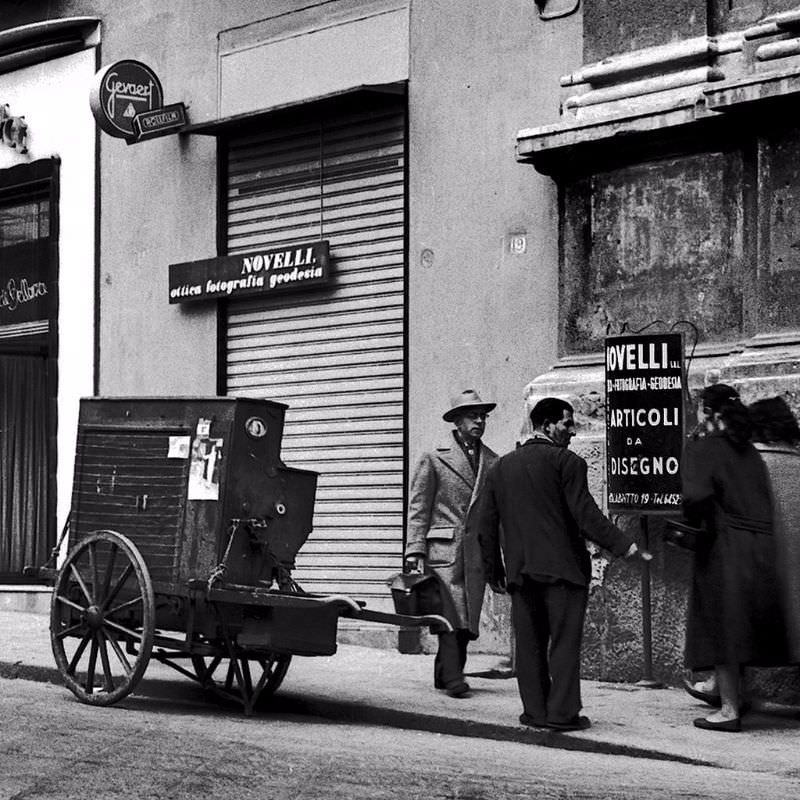
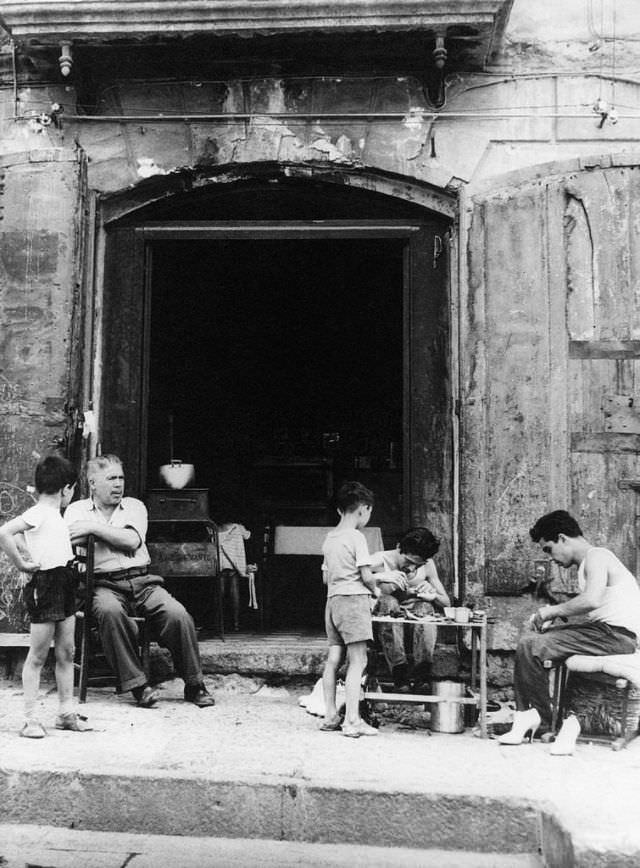
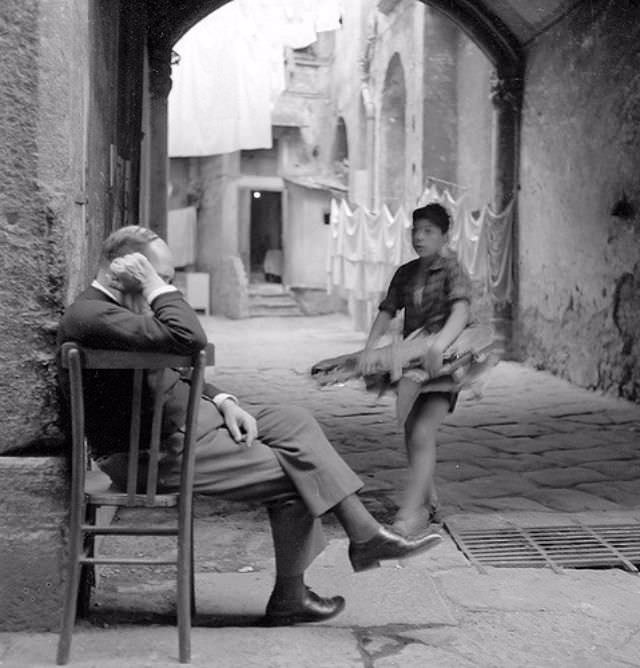
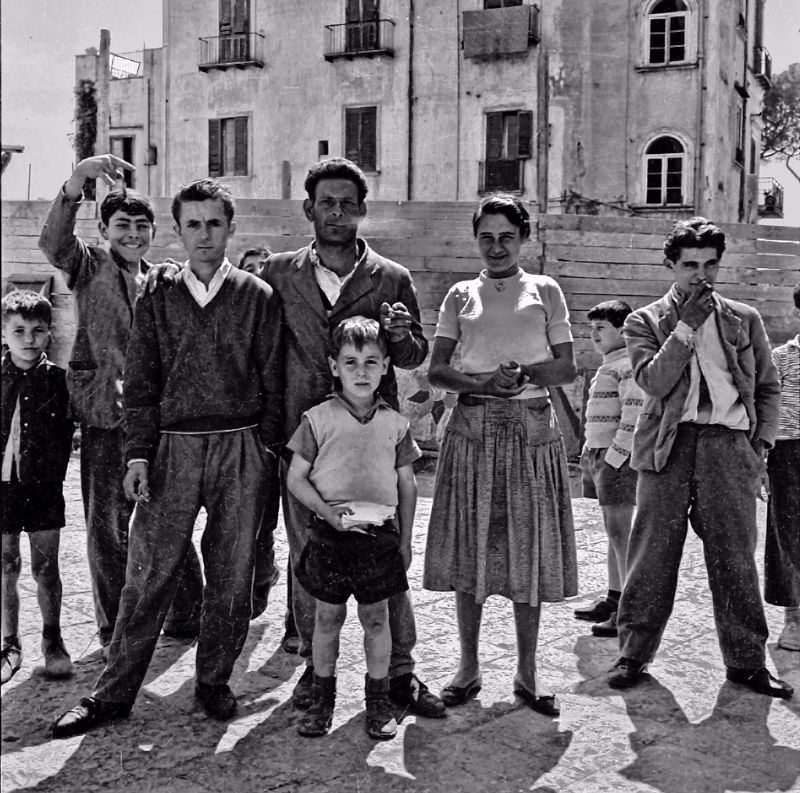
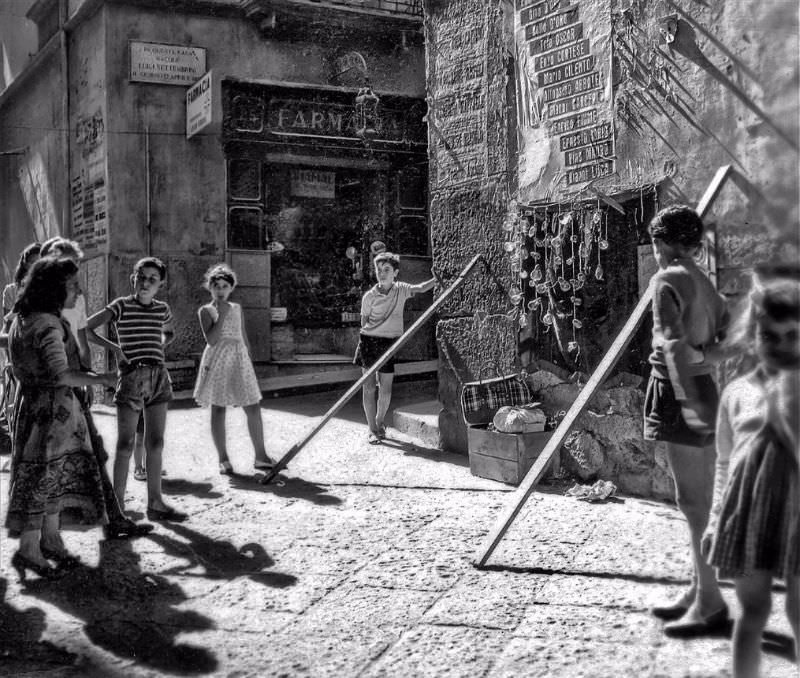
Street life in Naples during this era was dense and constant. The city’s narrow lanes, known as vicoli, were shared spaces where commerce, labor, entertainment, and domestic life all blurred together. Vendors sold food and goods from carts. Craftsmen worked in open doorways. Children played in the same alleys where adults conducted business.
Organized crime was deeply embedded in Neapolitan society. The Camorra, Naples’s homegrown criminal organization, had roots going back to the 19th century and remained a powerful force in the 1950s. Violence was not an abstract threat — it touched neighborhoods throughout the city, affecting both public spaces and private homes.
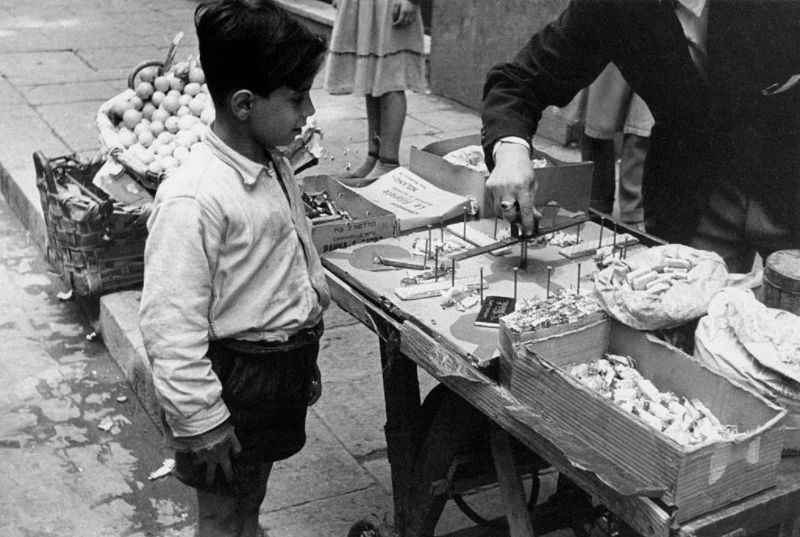
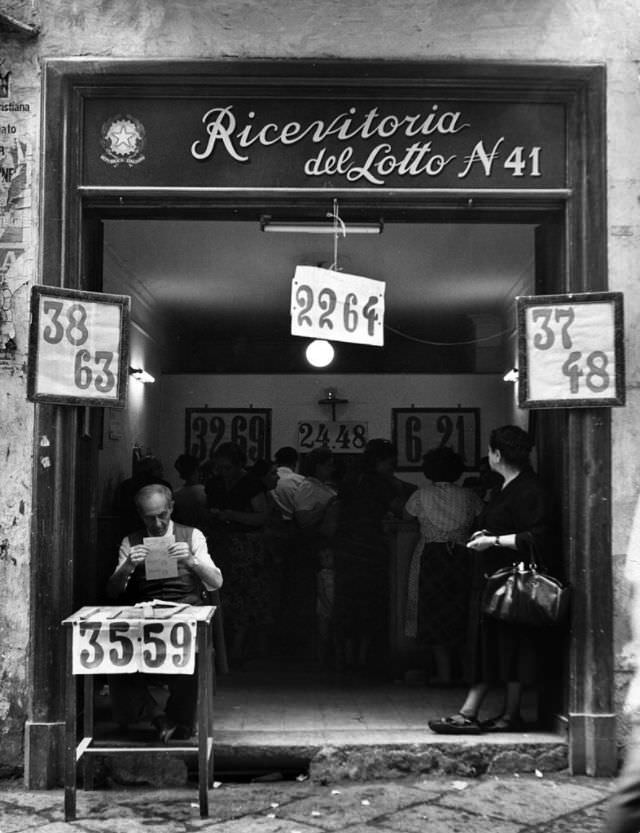
Gambling was part of the street economy. The state lottery held enormous appeal for people with few other means of improving their circumstances. Lotto betting shops were common fixtures in working-class neighborhoods, and informal games ran alongside the official ones. For many Neapolitans, a lottery ticket represented one of the only plausible paths to financial relief.
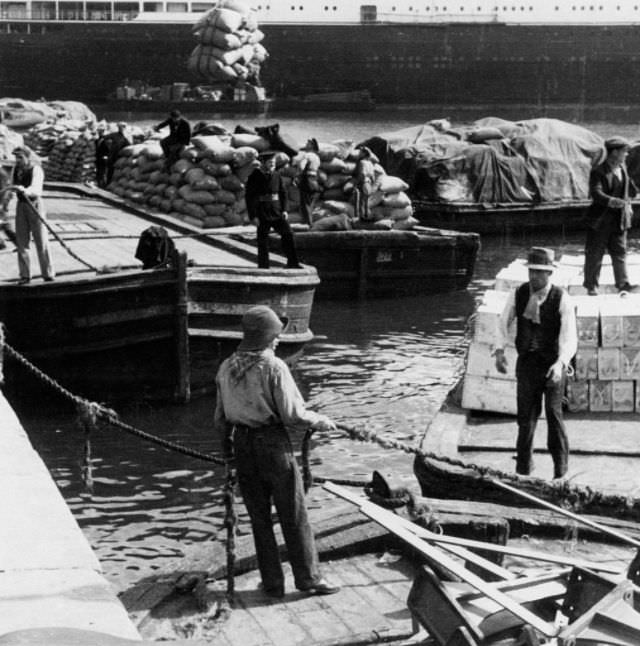
The port was a vital artery for the city. Naples had one of the busiest harbors in the Mediterranean, and the waterfront employed a significant portion of the male workforce. Dockhands, sailors, and traders moved through the port daily, and the harbor district had its own distinct rhythm separate from the residential neighborhoods inland.
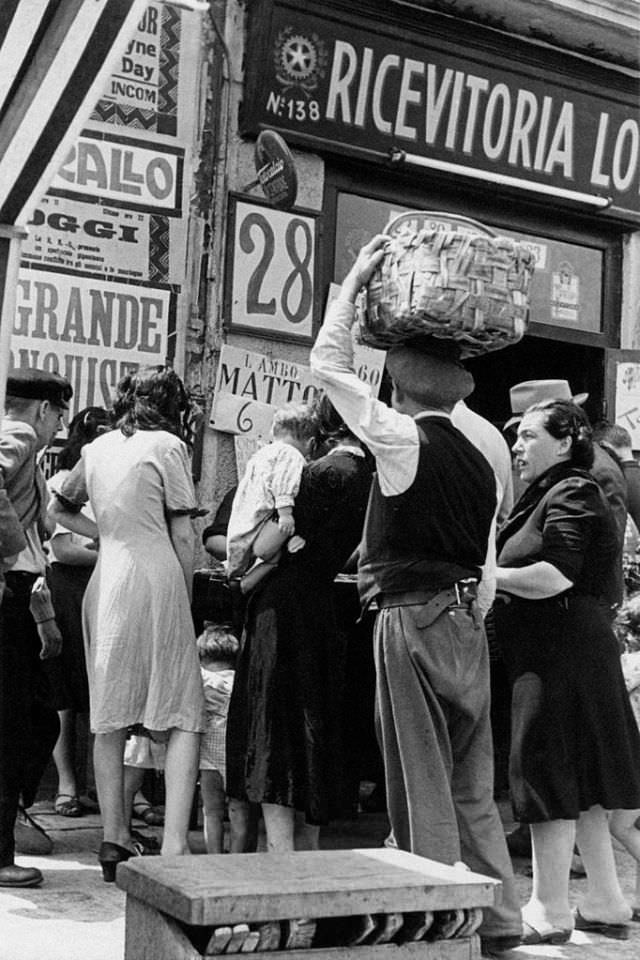
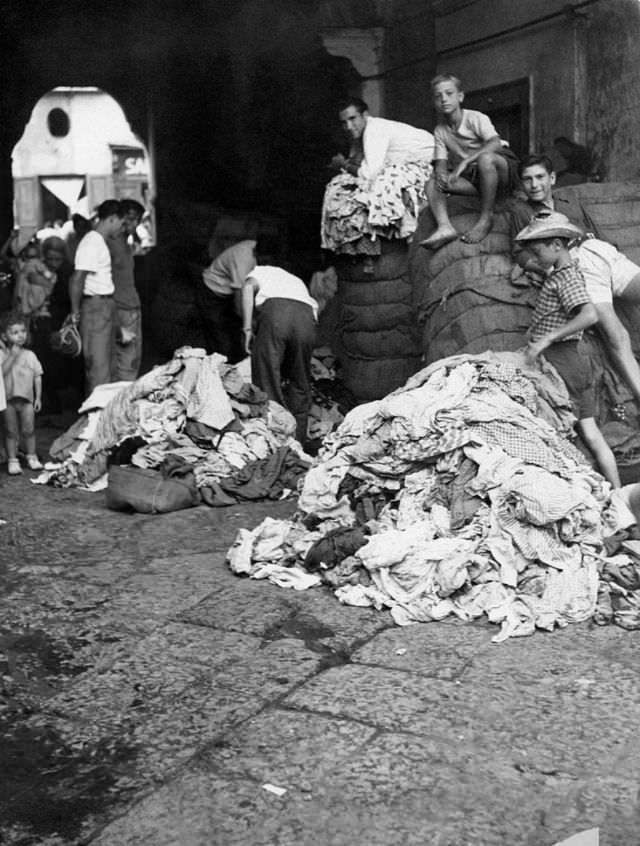
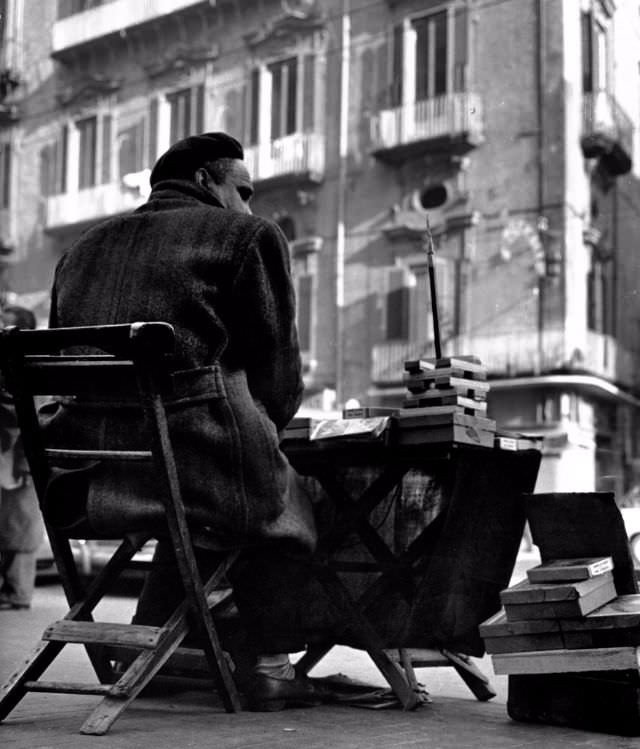
Second-hand markets were a staple of everyday commerce. Clothing, household items, and tools changed hands in open-air stalls across the city. For families with little money, these markets provided access to goods they otherwise couldn’t afford. Buying used rather than new was not a preference — it was a necessity.
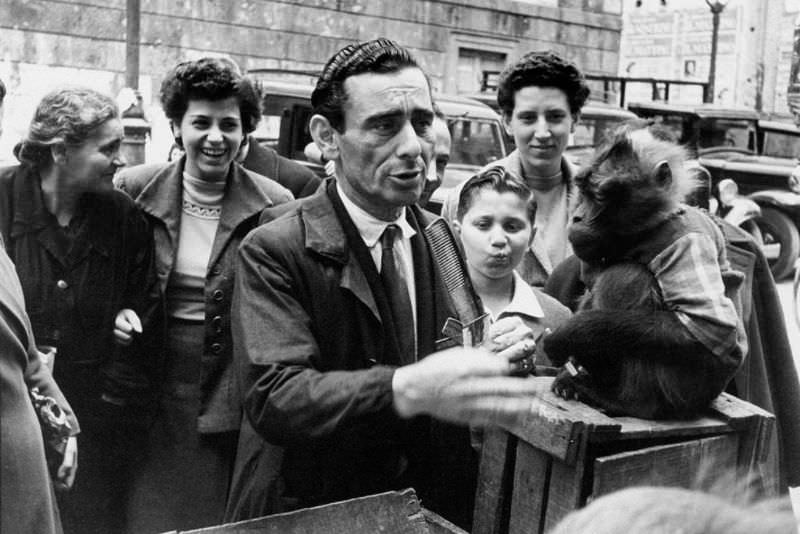
Street entertainment filled the gaps where formal venues didn’t exist or weren’t accessible. Organ grinders, monkey shows, and roving musicians drew crowds in public squares and busy thoroughfares. Palm readers set up in doorways and along sidewalks. These performers and vendors weren’t novelties — they were a working part of the city’s informal economy.
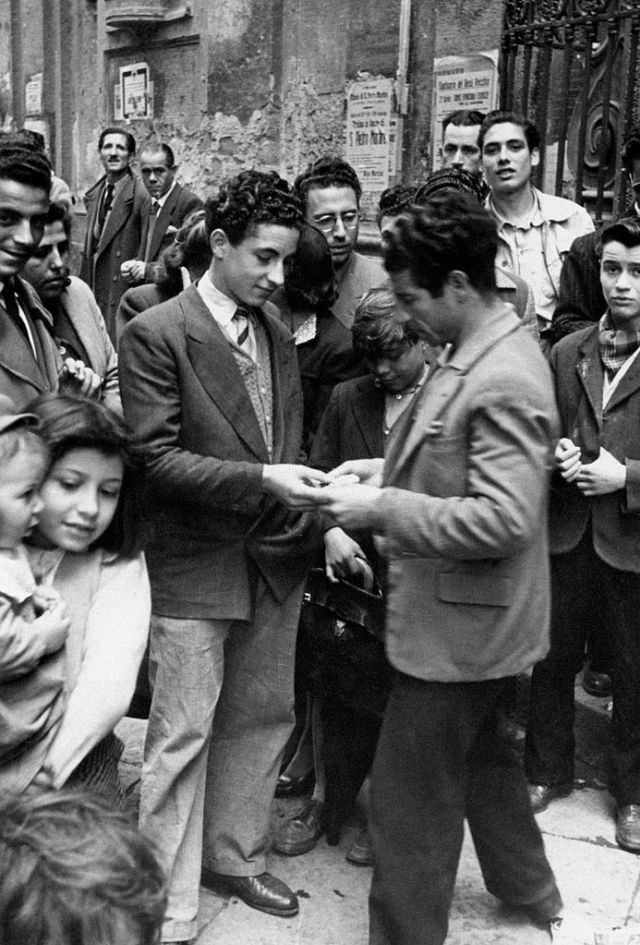
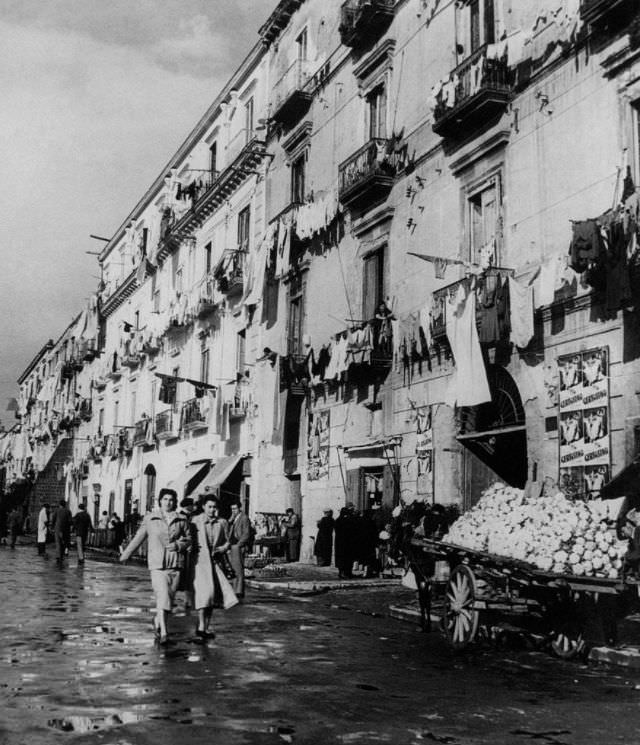
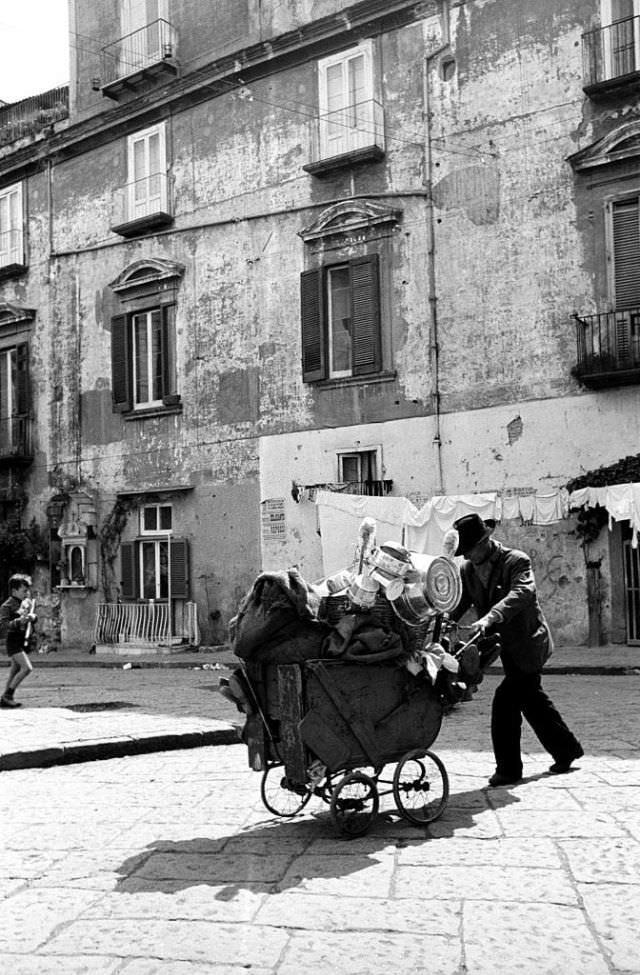
Peddlers with pushcarts and prams were a common sight throughout the city’s streets. They sold everything from produce to small household goods, navigating the same narrow alleys day after day. This kind of mobile vending required almost no startup capital, making it one of the most accessible forms of work for people with limited resources.
Street food was central to Neapolitan culture long before the 1950s, and the decade was no different. Vendors sold fried snacks, soups, and seasonal foods from portable setups along busy corridors. Eating in the street was practical and affordable — a meal bought from a cart cost far less than anything served indoors.
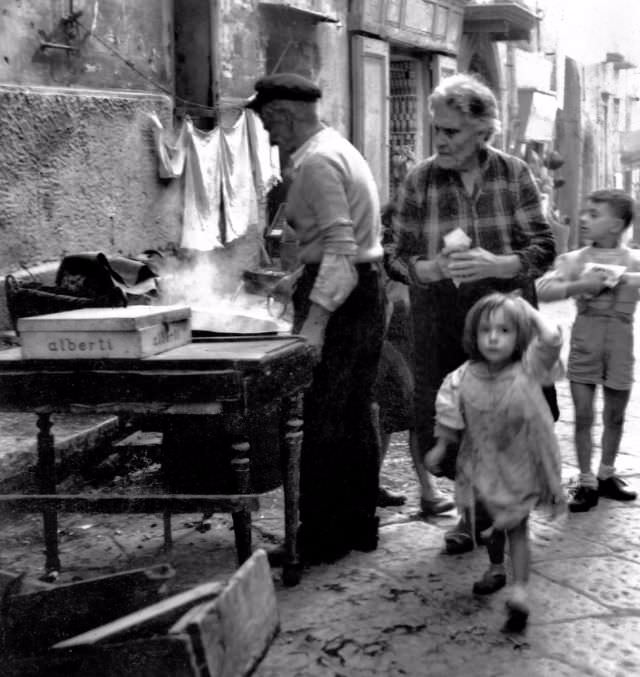
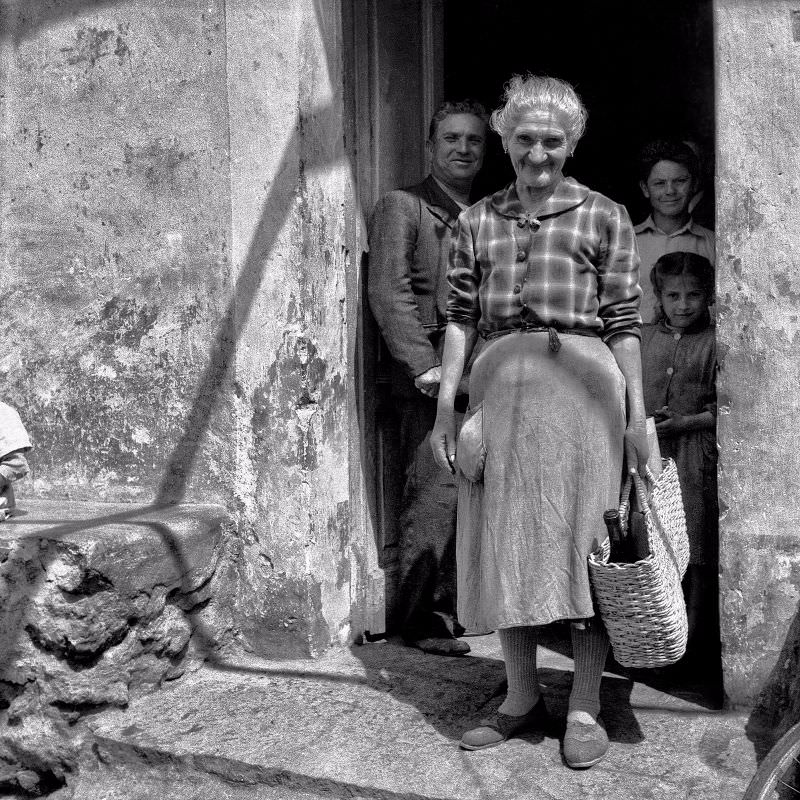
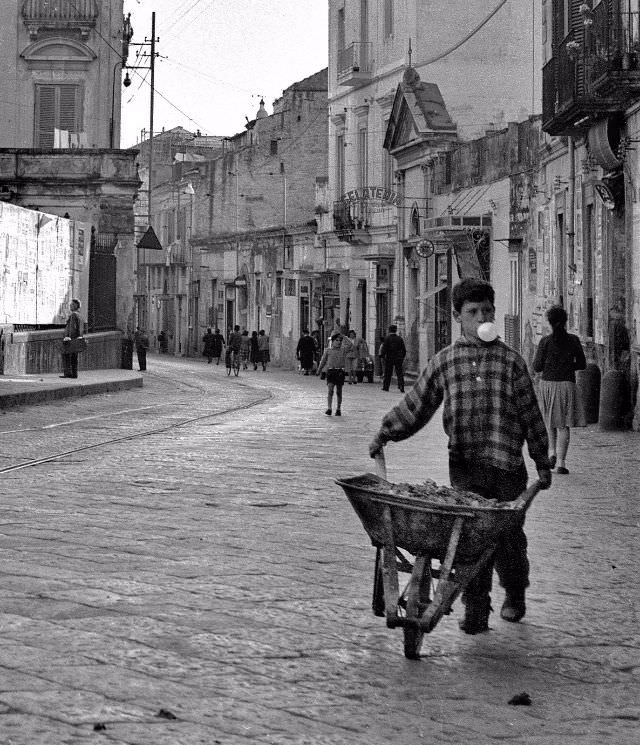
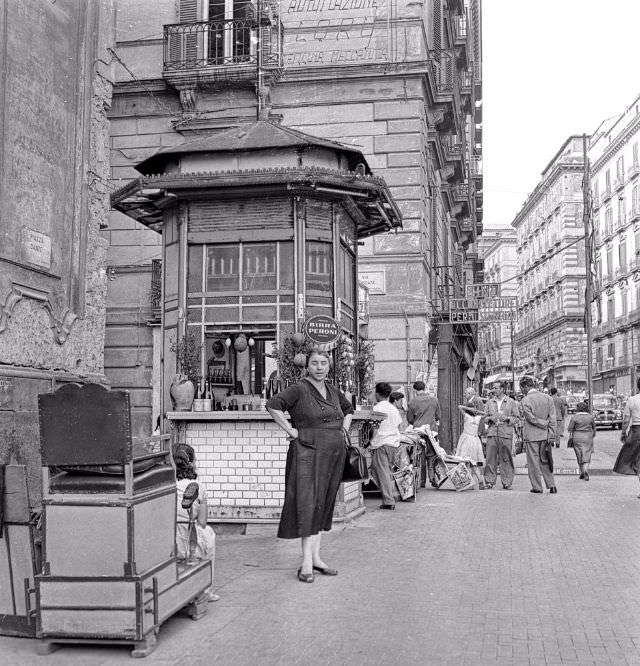
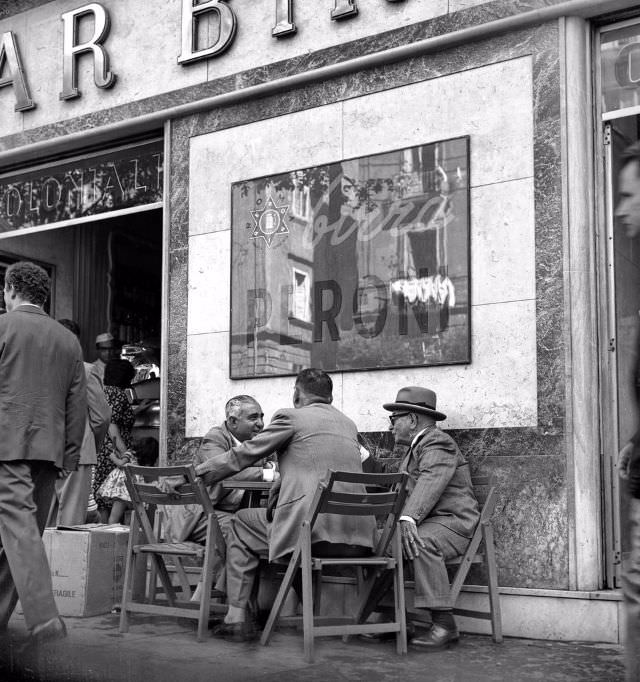
Despite the economic hardship, everyday life in Naples retained a visible texture and vitality. Bars served as social anchors in neighborhoods. People lingered in doorways and on stoops. Staircases in old residential buildings became informal gathering points. The physical structure of the city — dense, vertical, and tightly packed — naturally pushed people together.
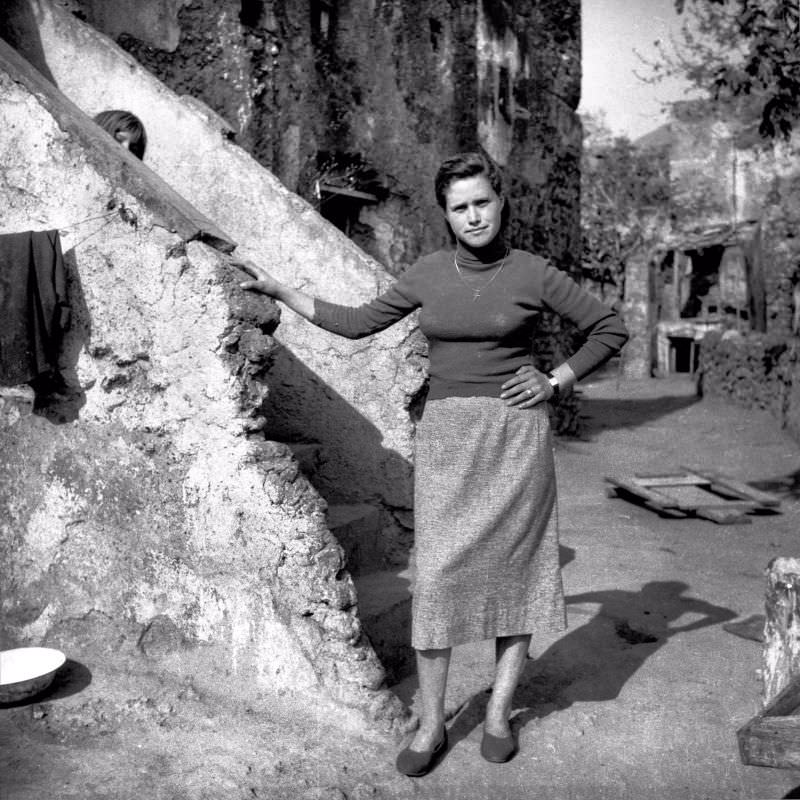
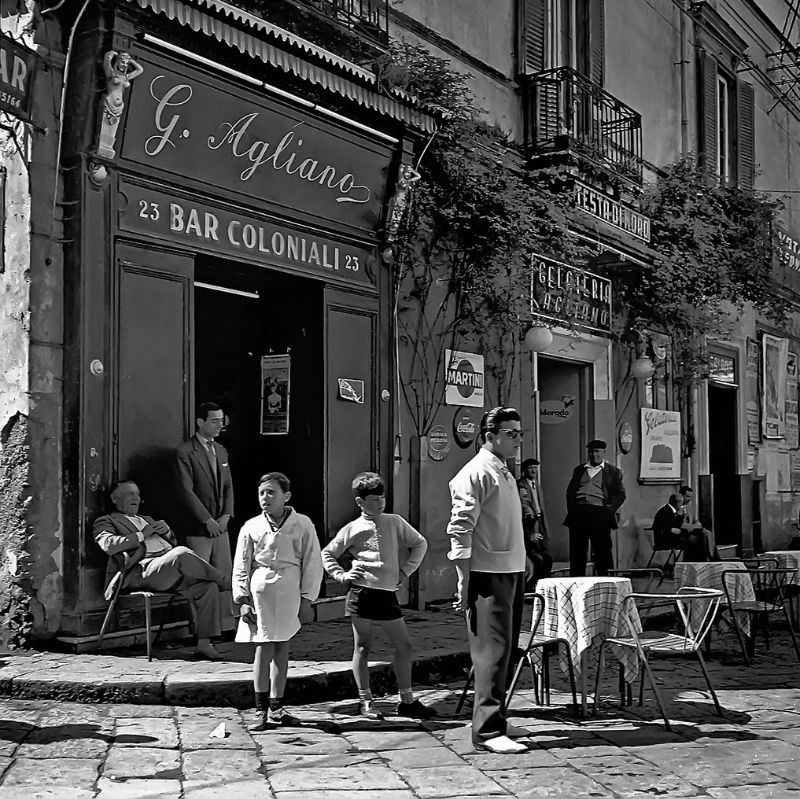
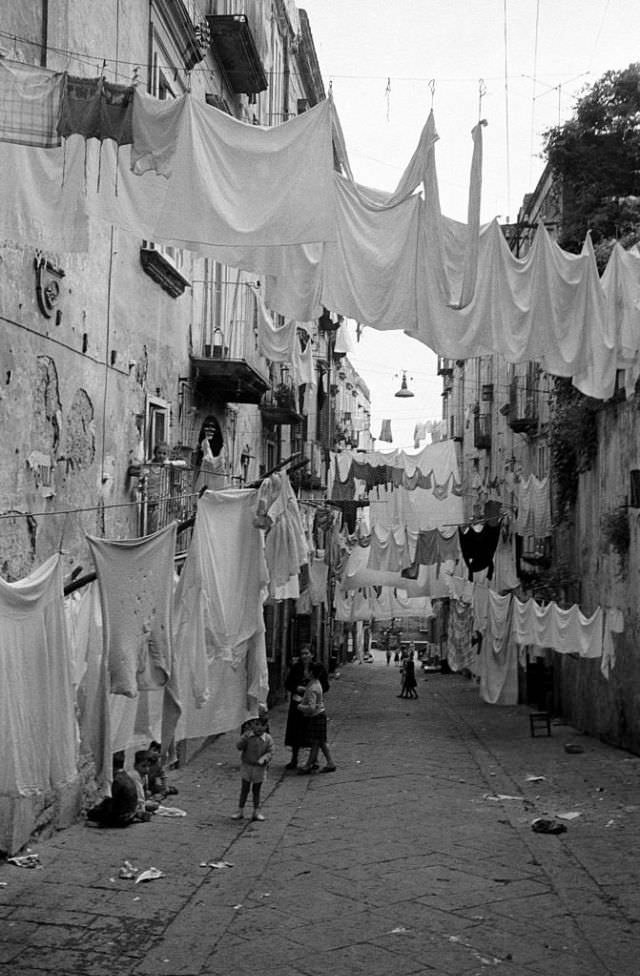
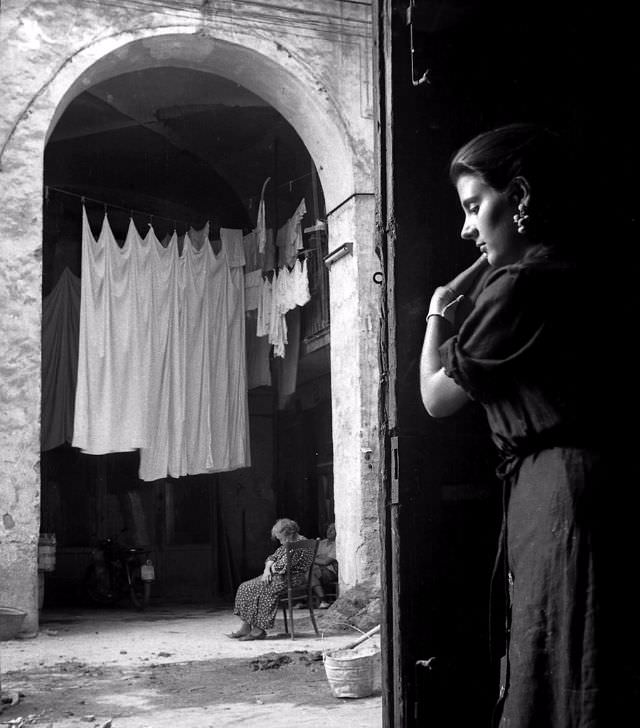
Laundry hung between buildings was one of the most recognizable features of Neapolitan streets. With no space for private drying areas in most working-class homes, lines were strung across alleyways from window to window. It was a practical solution to cramped living, and it became one of the defining visual signatures of the city.
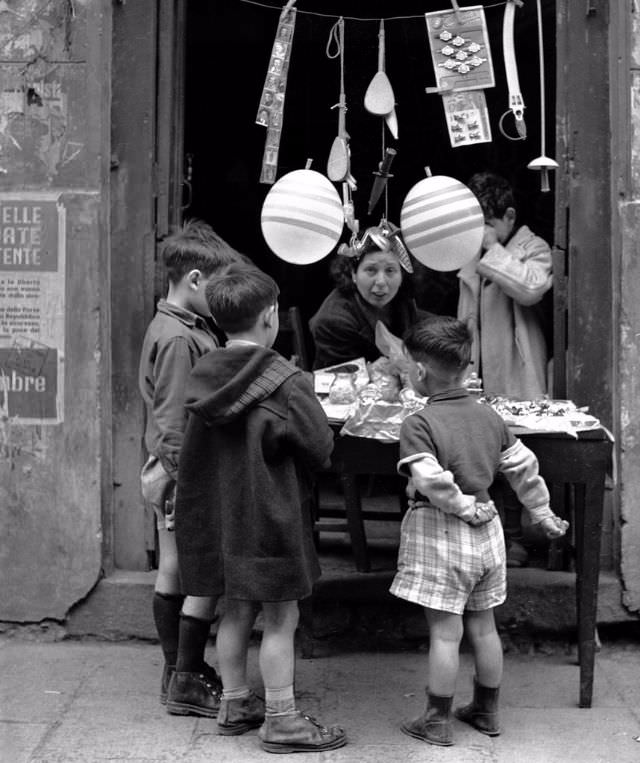
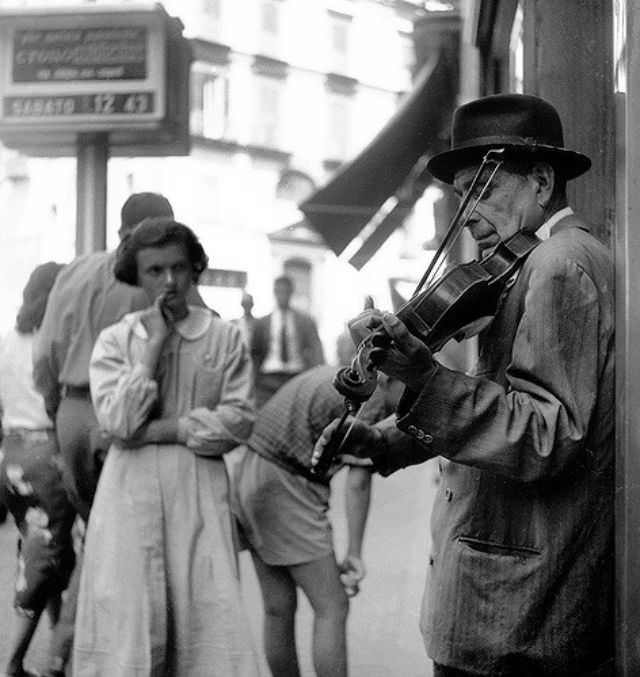
Music was woven into the fabric of daily life. Street violinists performed for passersby, sometimes for a few coins, sometimes simply as part of the neighborhood’s ambient sound. Naples had a long musical tradition, and even in lean times, instruments appeared in the streets, bars, and courtyards of the city.
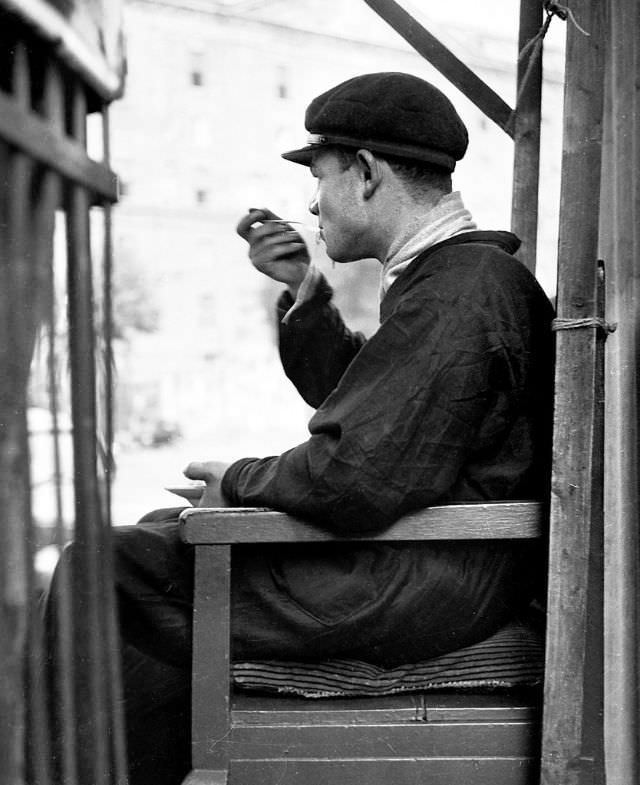
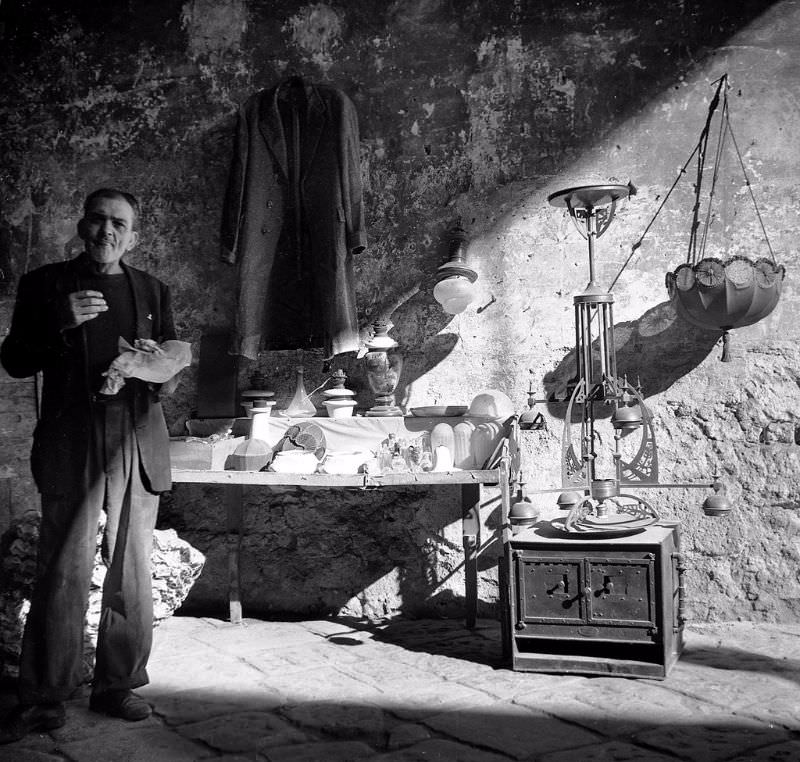
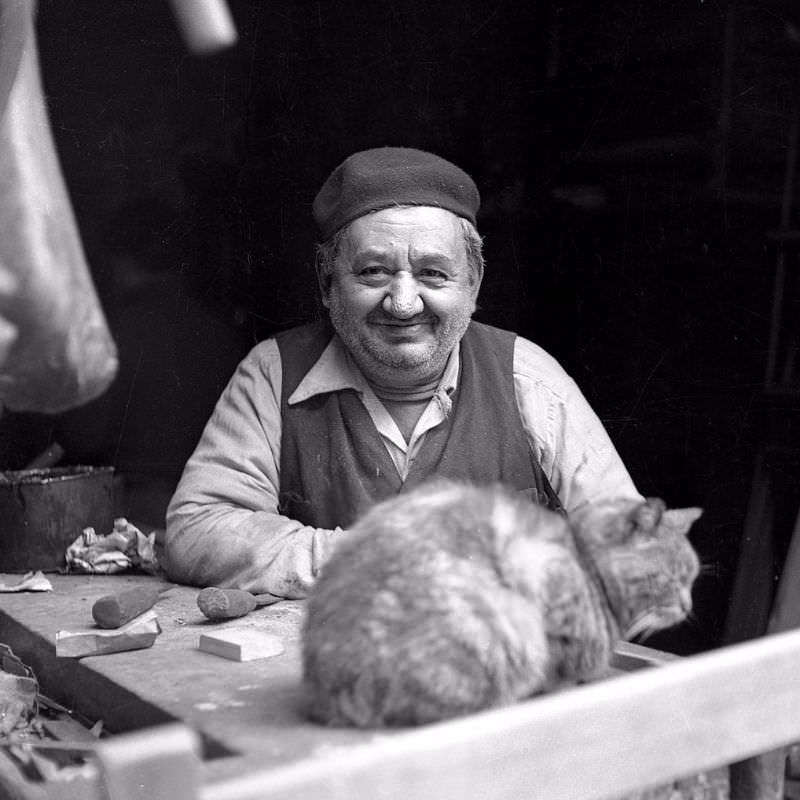
Shops of all kinds lined the streets of the Old Town. Antique dealers displayed their goods in cramped storefronts. Butcher shops opened directly onto the street, with cuts of meat hanging in the open air. Cats, a permanent fixture in Mediterranean urban life, took up residence near food stalls and market counters without any fuss from the vendors.
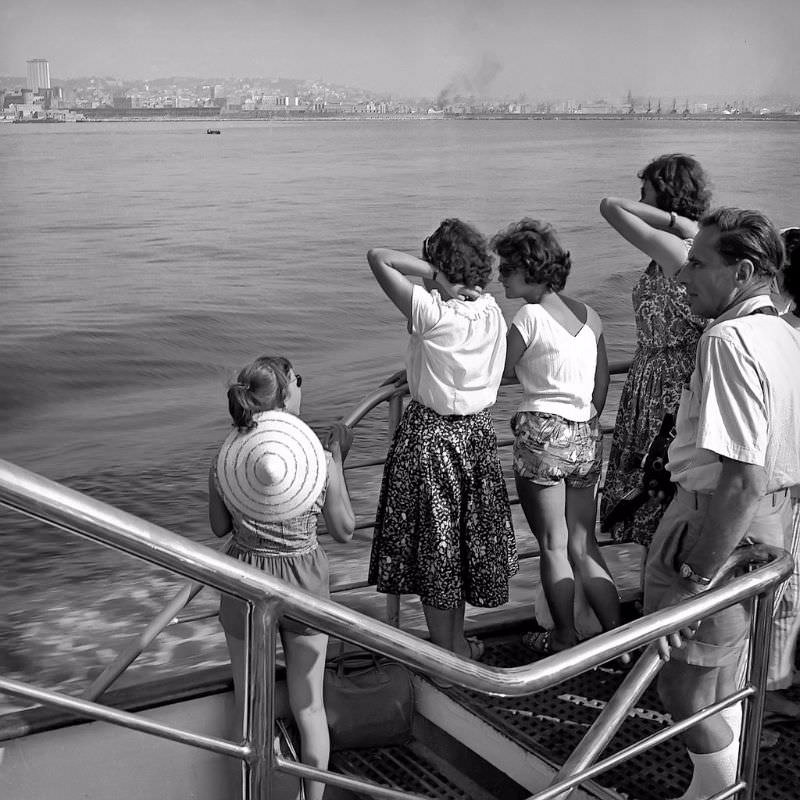
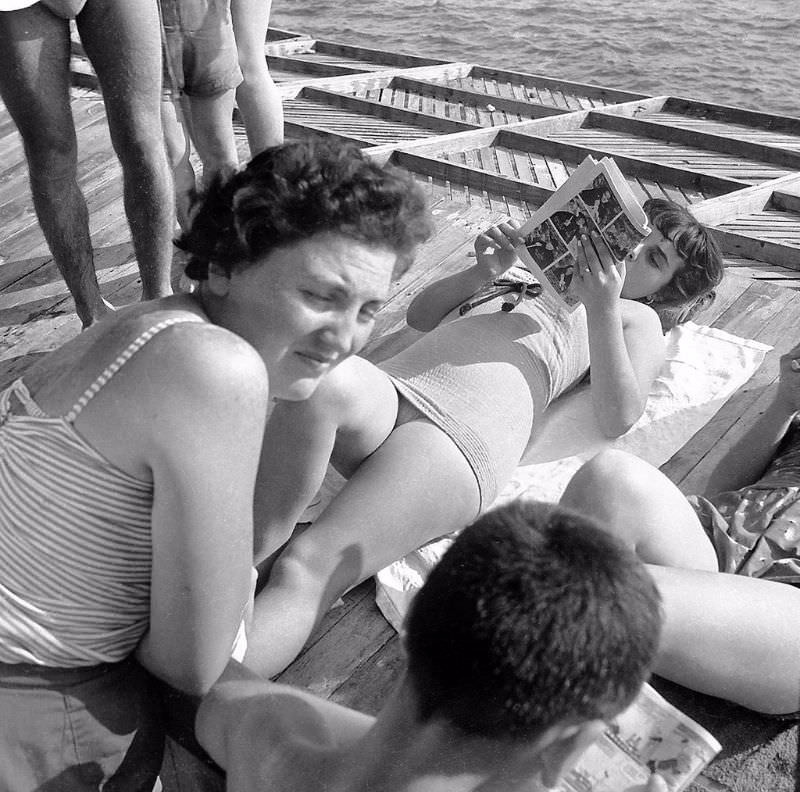
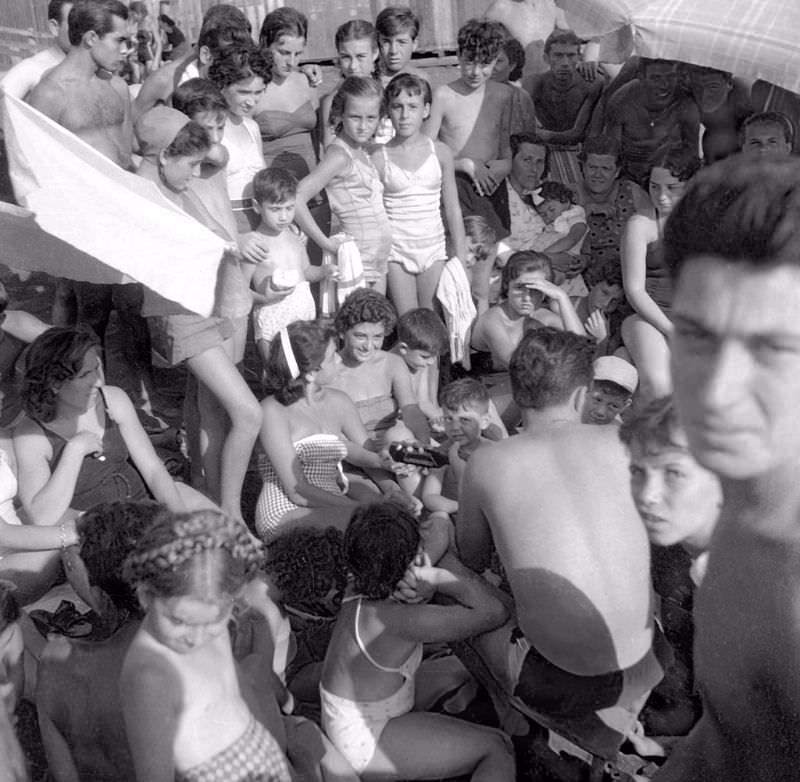
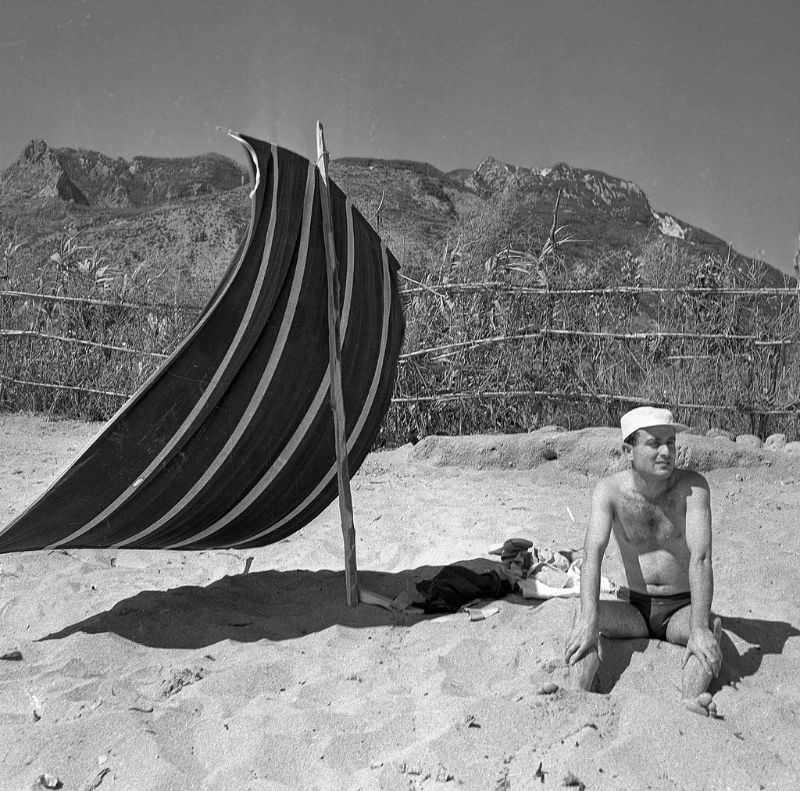
The beach was a free leisure space accessible to everyone, regardless of income. Naples’s long coastline drew families and individuals alike, and the seafront was a place where class distinctions flattened somewhat. On hot days, the waterfront filled with people seeking relief from the city’s dense, sun-baked streets.
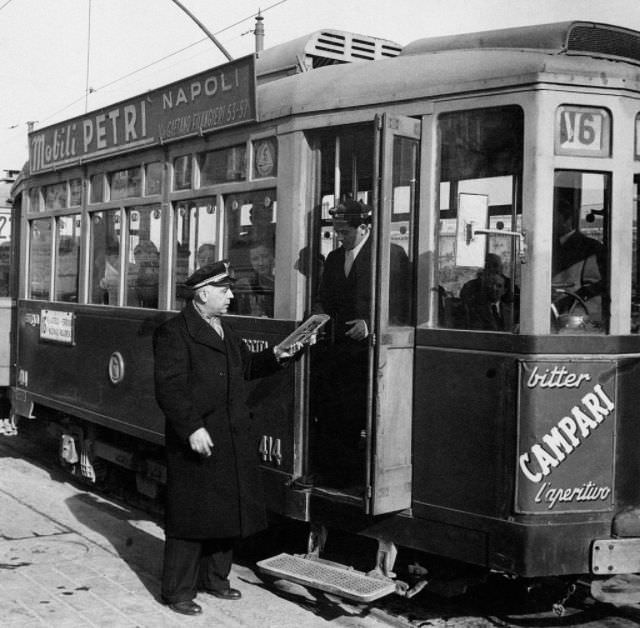
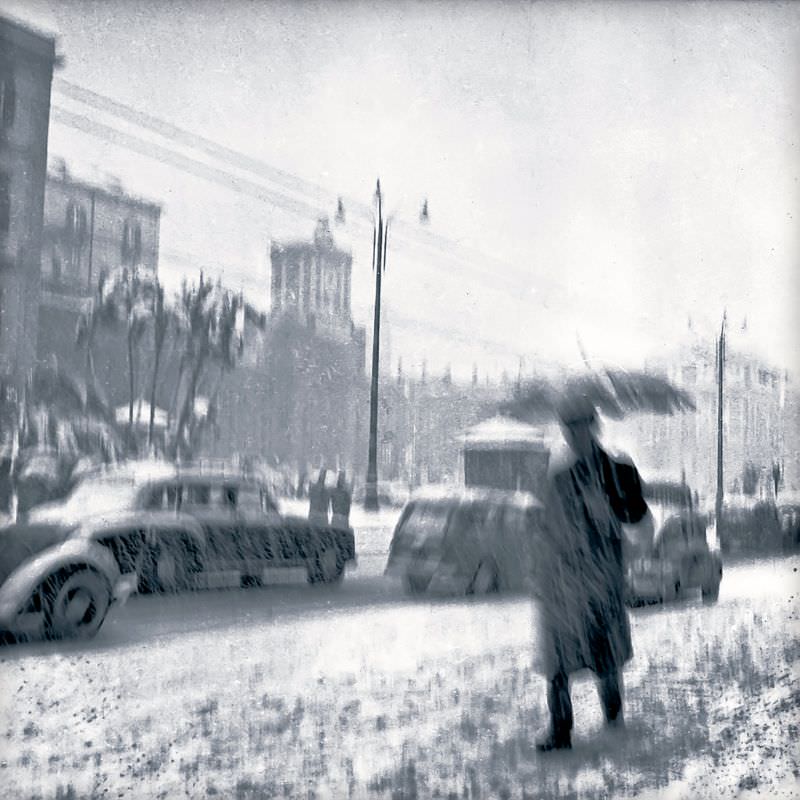
Public transport was heavily used throughout the city. Trams and buses carried workers, students, and shoppers across Naples, and ticket inspectors were a regular presence. Waiting for the bus was as much a social activity as a practical one — stops became brief gathering points where conversations started and news passed between neighbors.
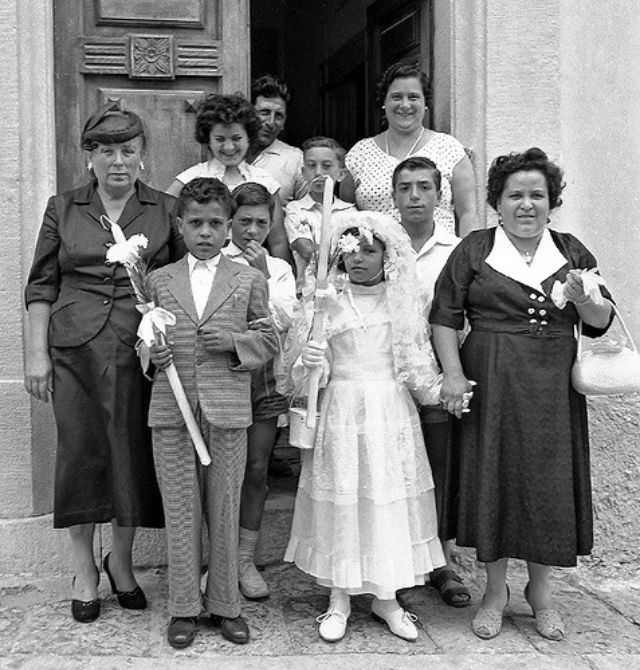
Artists were a consistent presence along the waterfront and in open squares. Painters set up their easels facing the bay, the coastline, or the streets themselves. Their work captured the same scenes that photographers were documenting — the boats, the buildings, the people moving through the city under the shadow of Vesuvius.
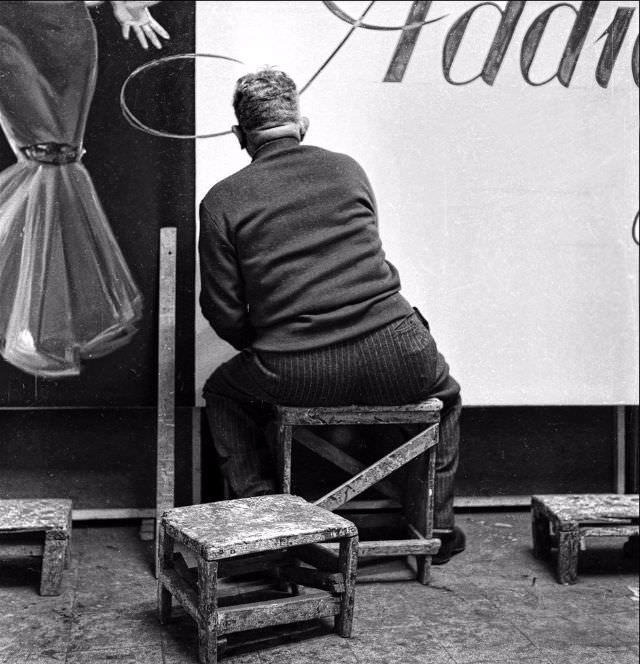
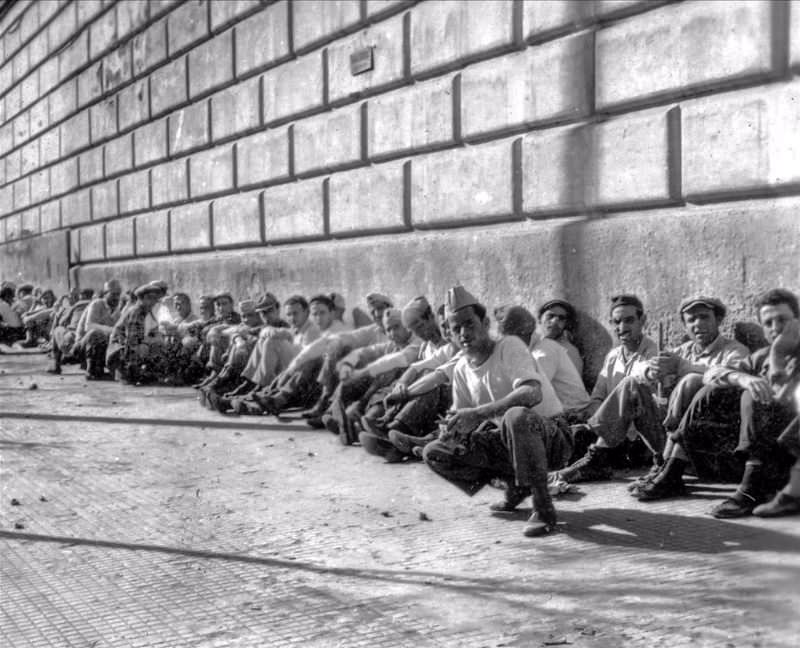
Manual labor defined much of the working day for a large portion of Naples’s population. Construction, loading, hauling, and craft work filled the hours from morning to dusk. Workers gathered at the harbor and on building sites, and their presence shaped the physical look of streets across the city throughout the decade.
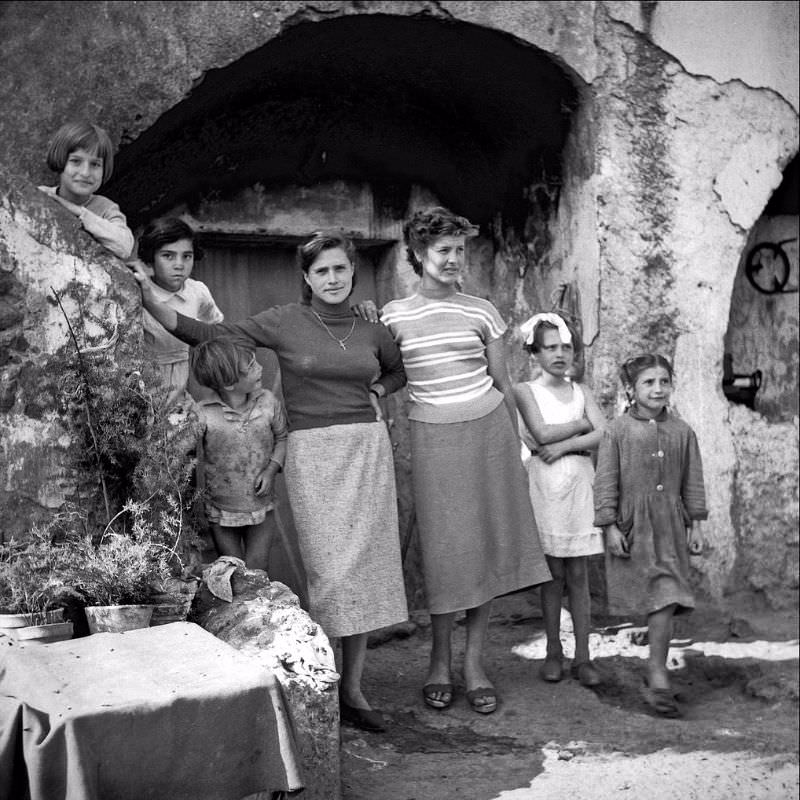
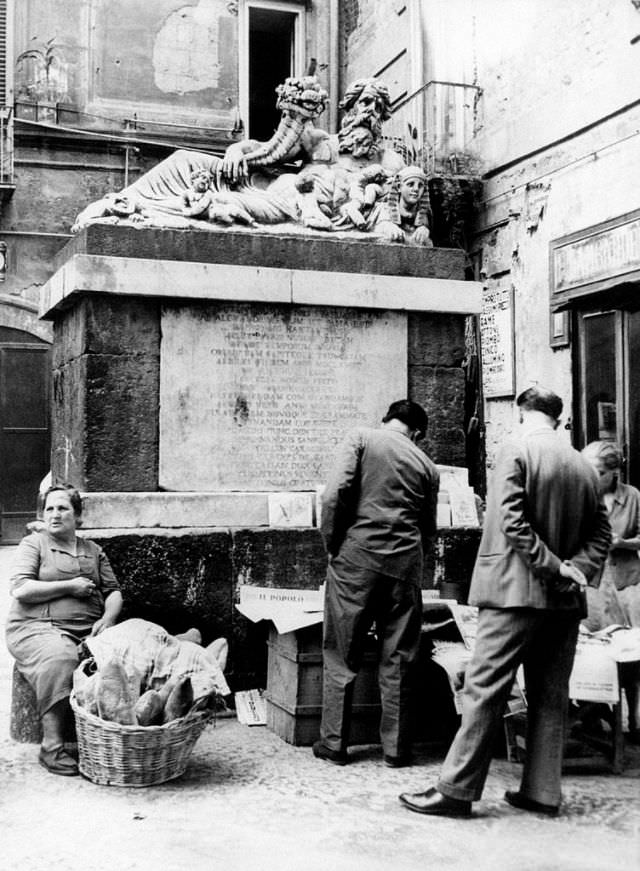
Statues and monuments from earlier centuries dotted the Old Town, standing in squares and at street intersections. Children played around their bases, and vendors set up nearby. These ancient landmarks were not fenced off or distant — they were simply part of the neighborhood, used and ignored in equal measure by the people who passed them daily.
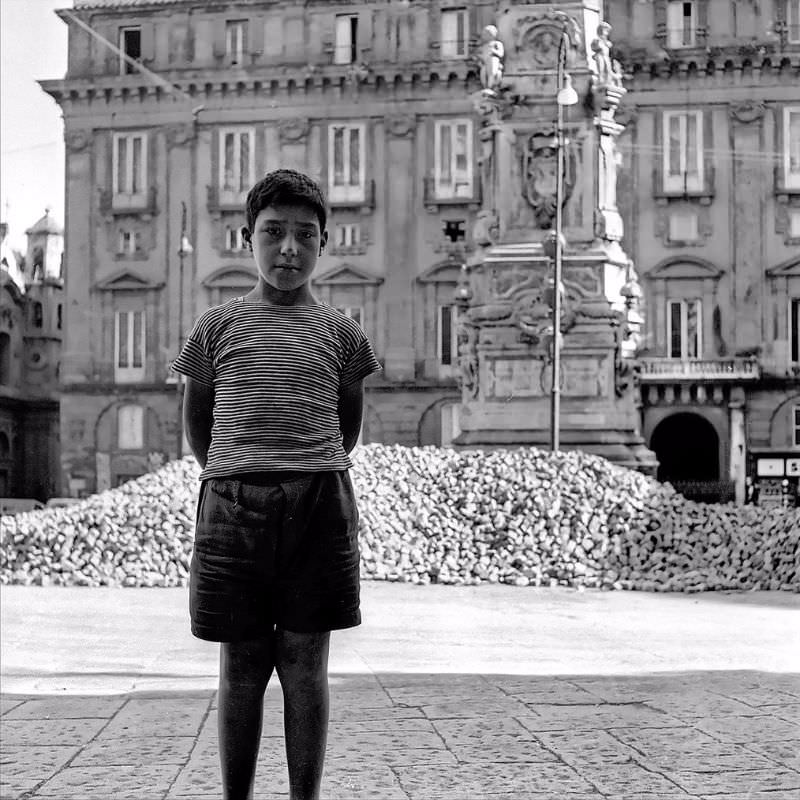
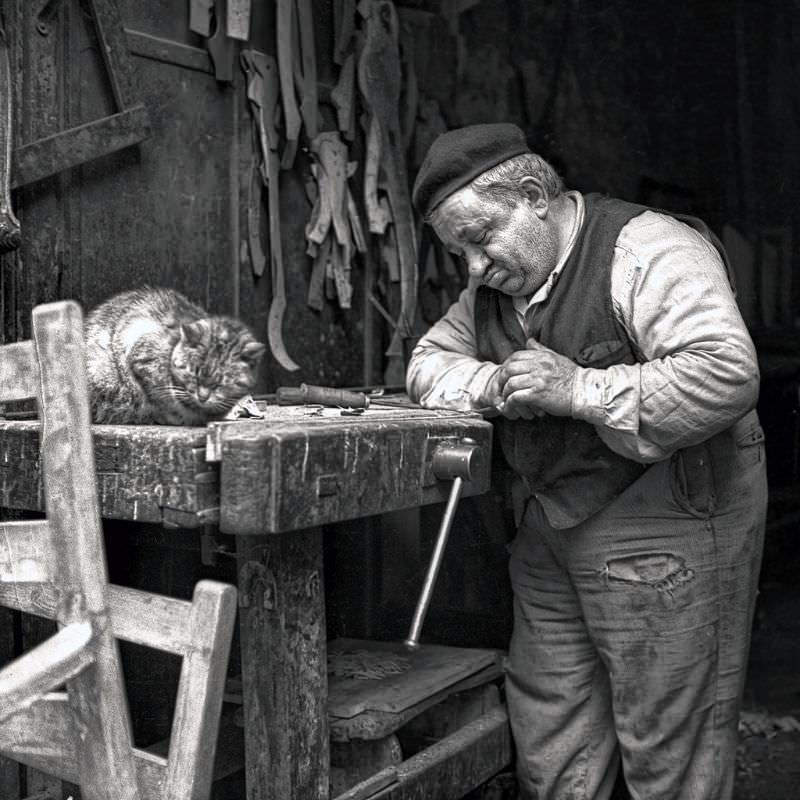
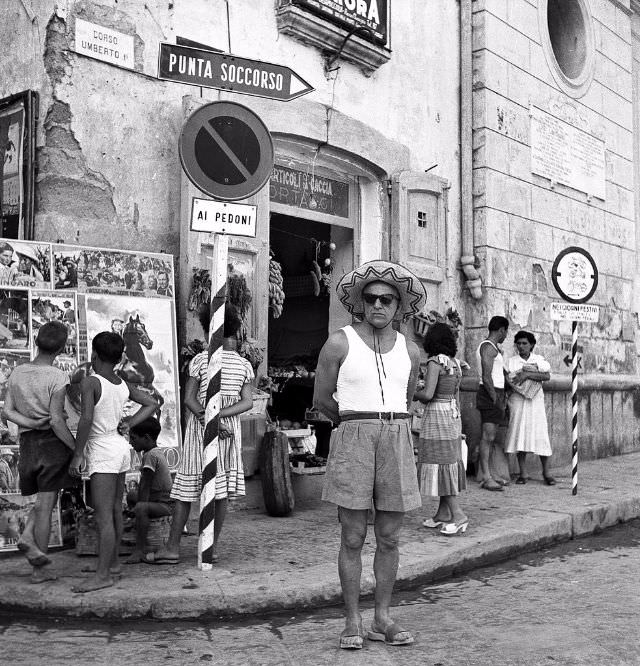
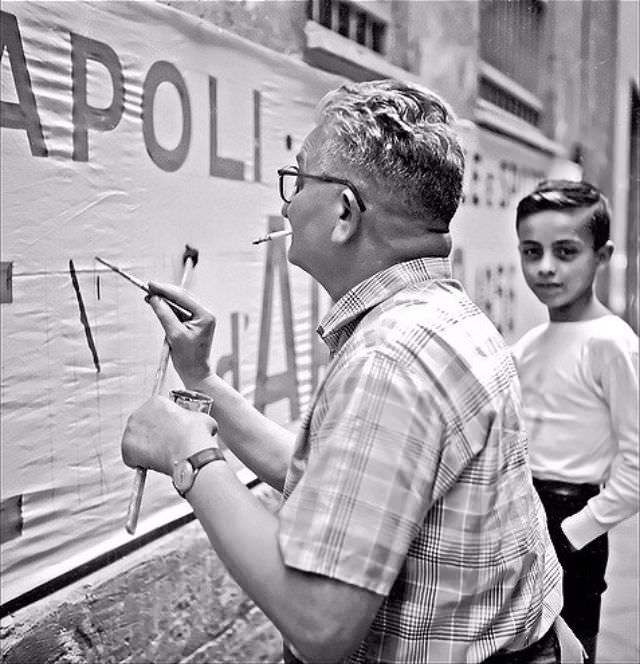
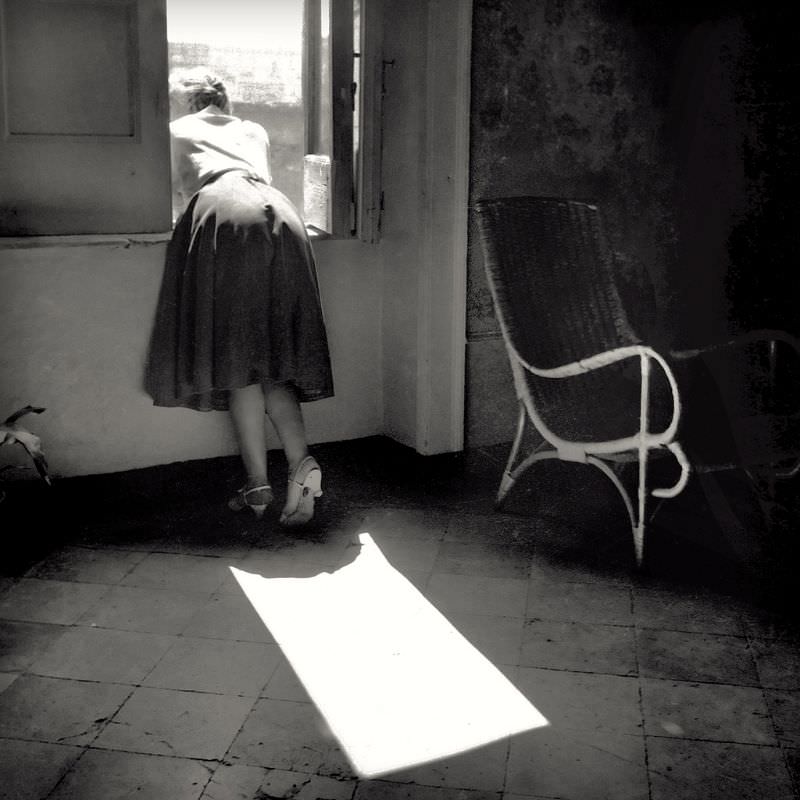
Ordinary moments played out against the city’s layered backdrop. Women leaned from windows to watch the street below. Families gathered for evening meals. Small stores — bookstalls, drink sellers, corner shops — served a steady flow of customers throughout the day. The city operated at a human scale, with most of daily life conducted on foot and in the open air.
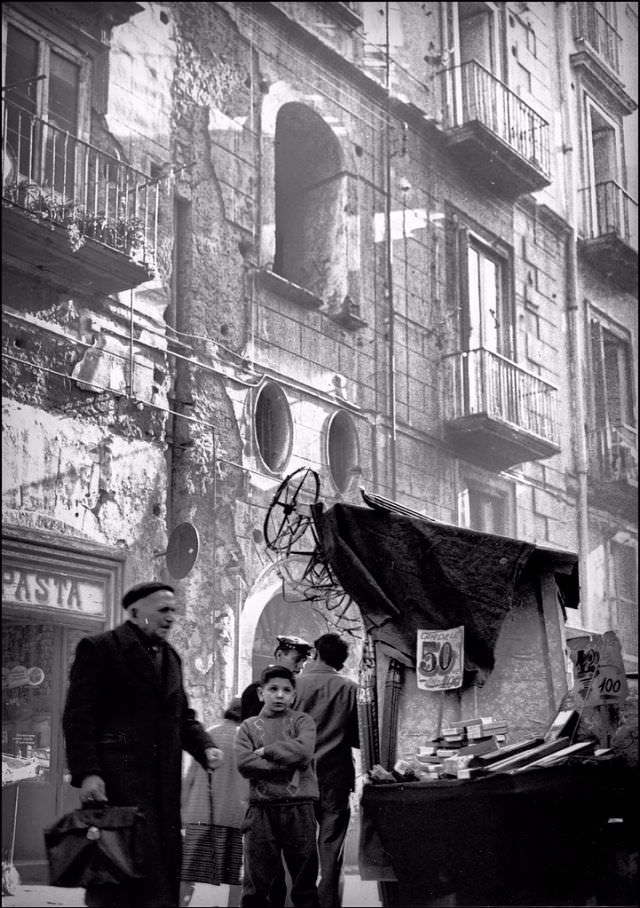
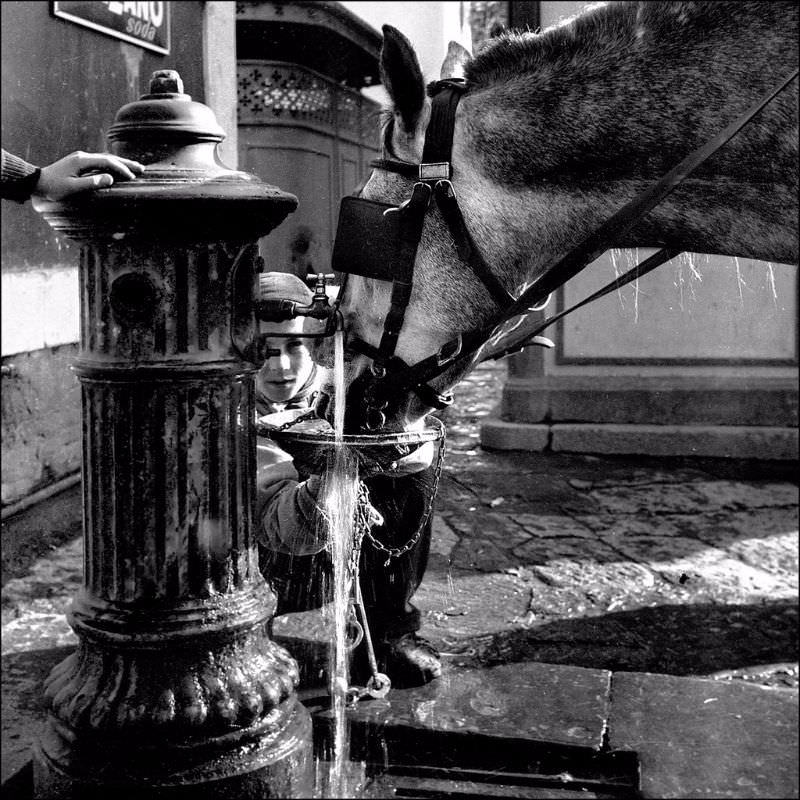
Horses still worked in the city in the 1950s, pulling carts through streets that had not yet been fully given over to motor vehicles. At water troughs placed along key routes, working animals stopped to drink while their handlers waited. It was a detail of urban life that would largely disappear by the end of the decade as motorized transport expanded.
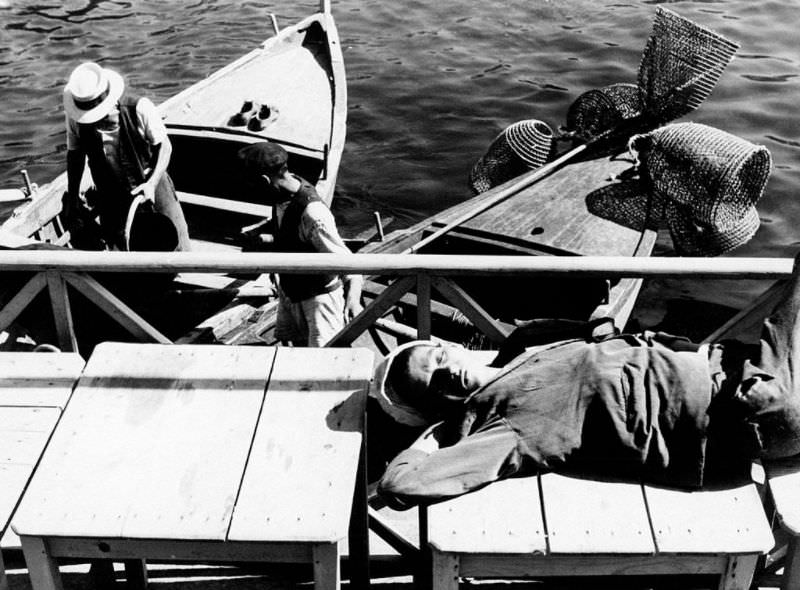
The sea remained a constant in Neapolitan life — a source of work, food, recreation, and identity. Ferries crossed the bay to the islands of Capri, Ischia, and Procida. Fishing boats moved in and out of the harbor at all hours. The water defined the city’s western edge and gave it a sense of openness that its tight inland streets did not.