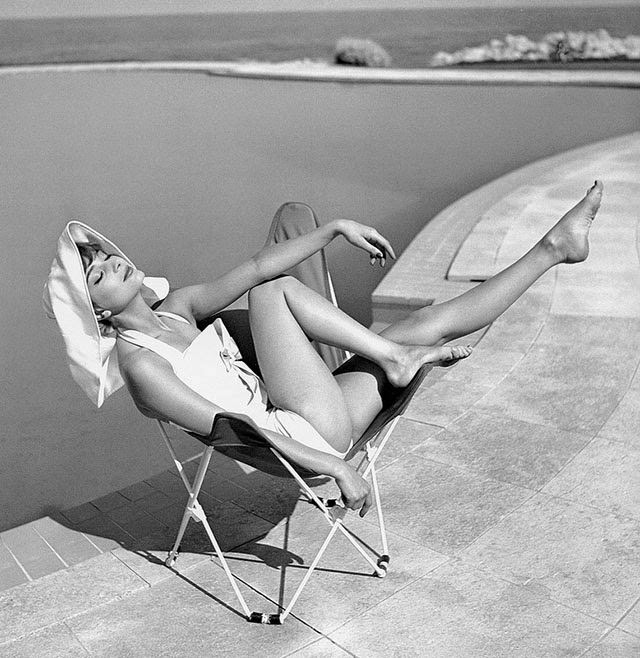
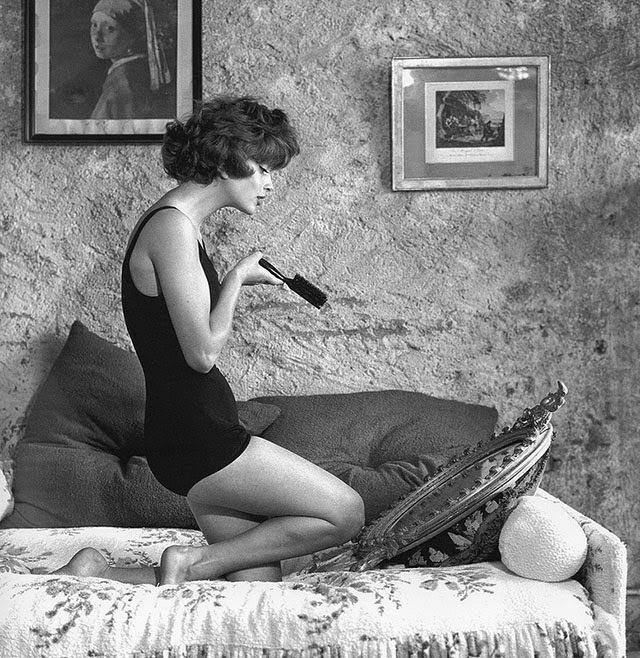
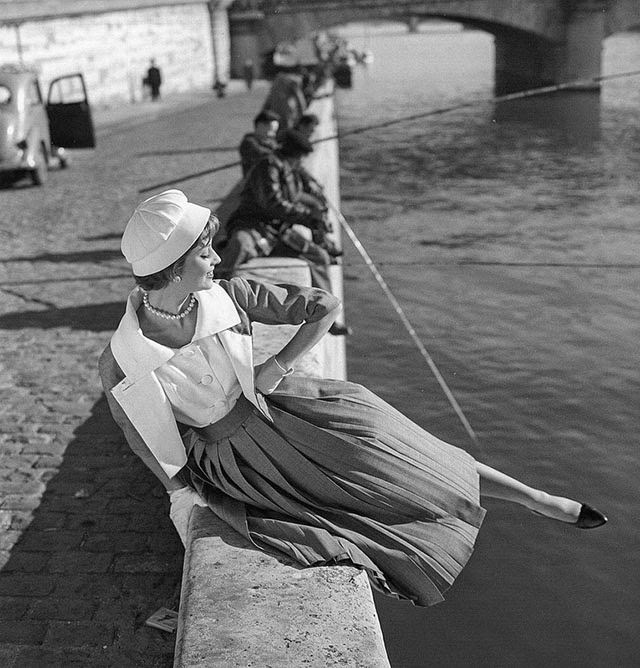
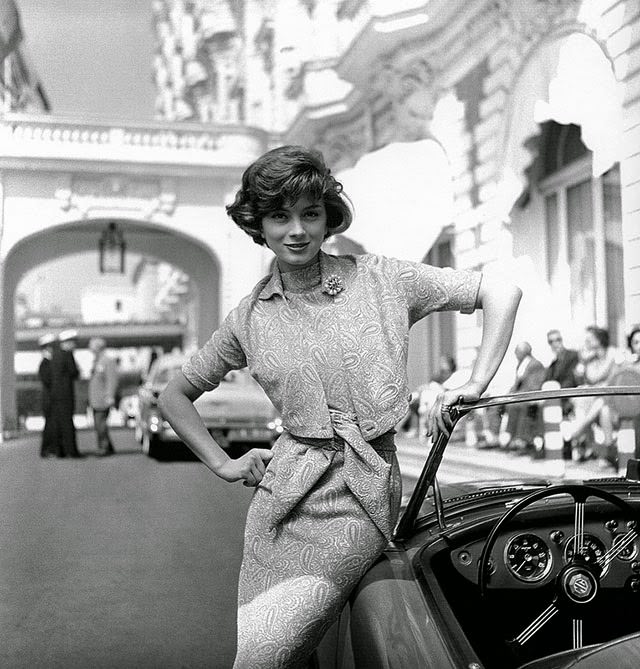
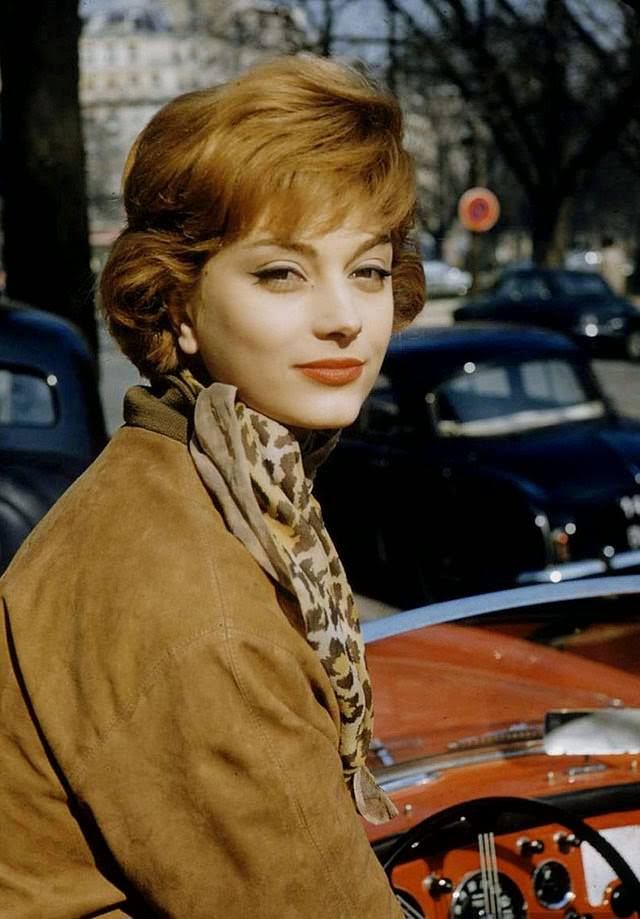
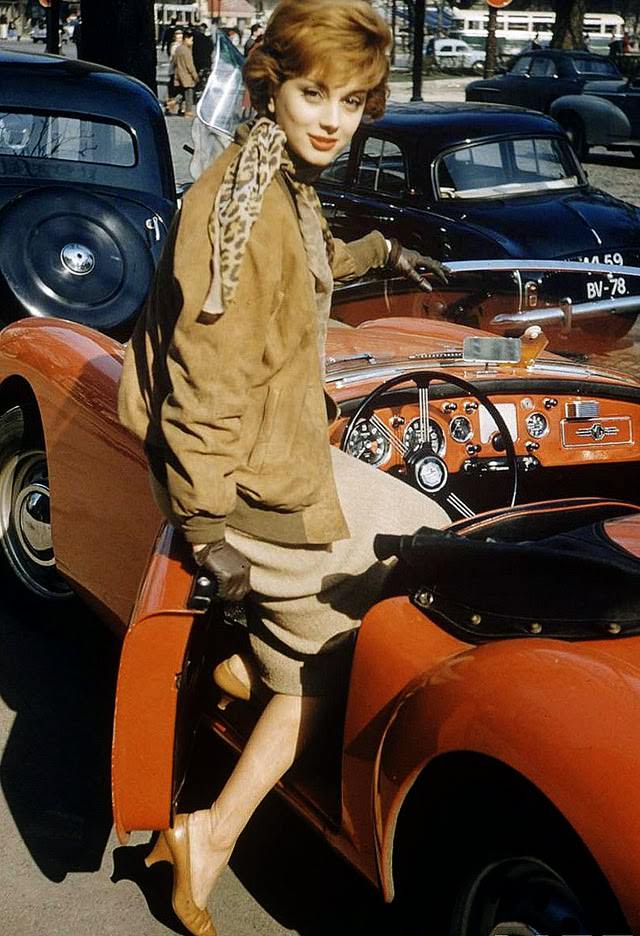
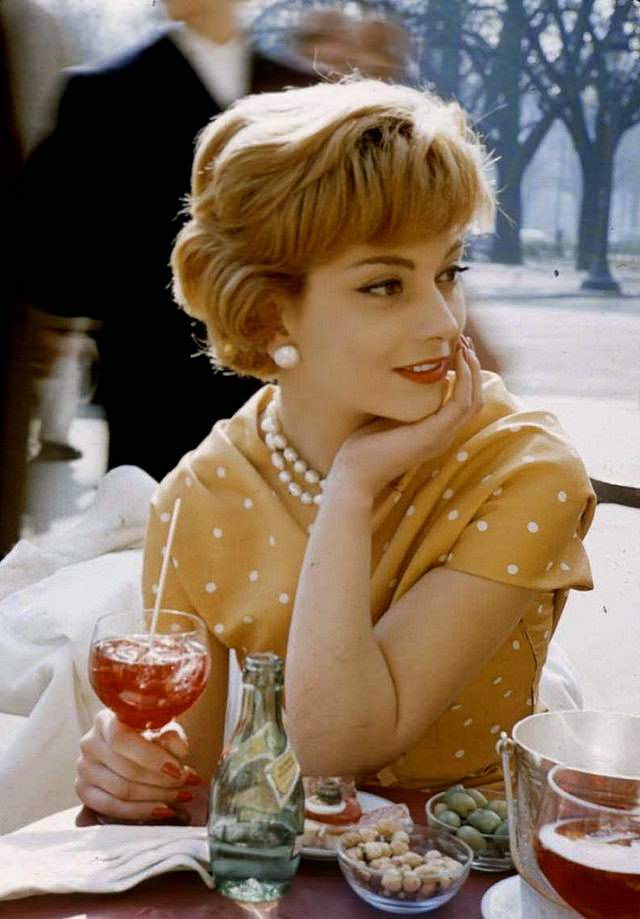
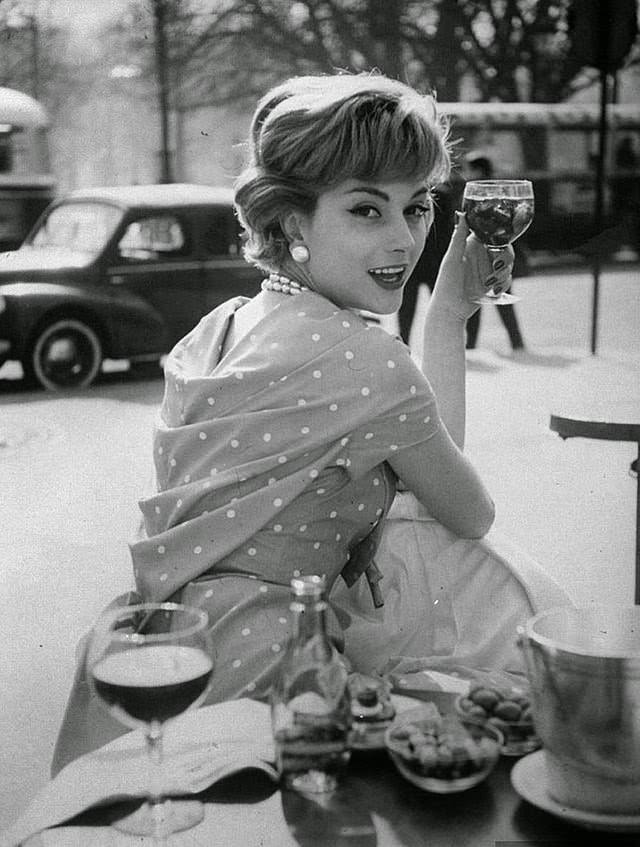
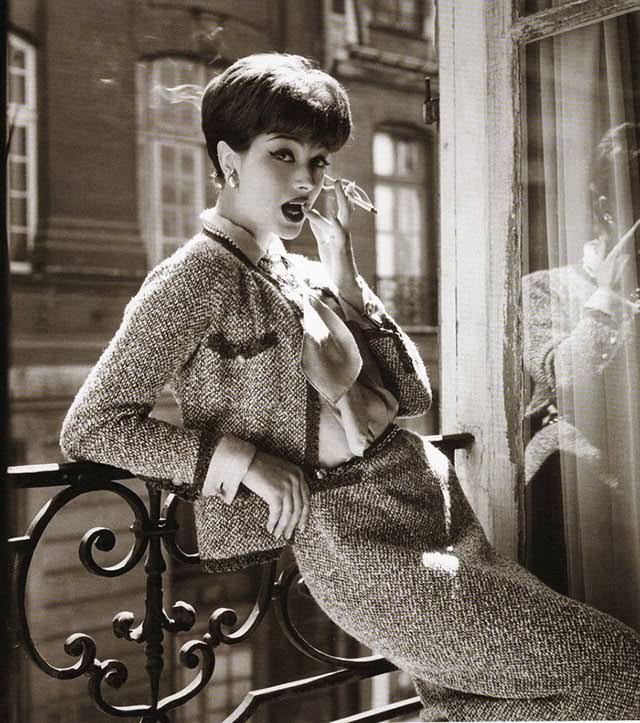
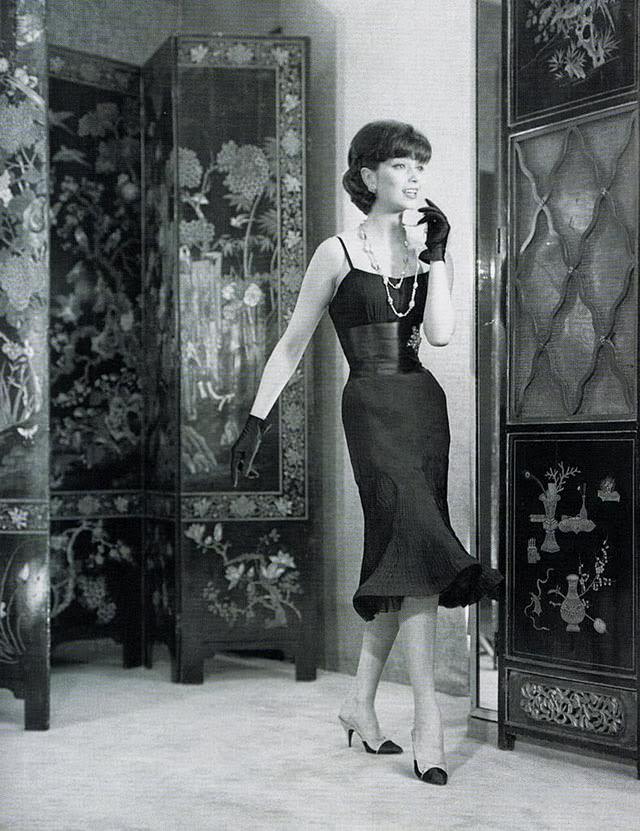
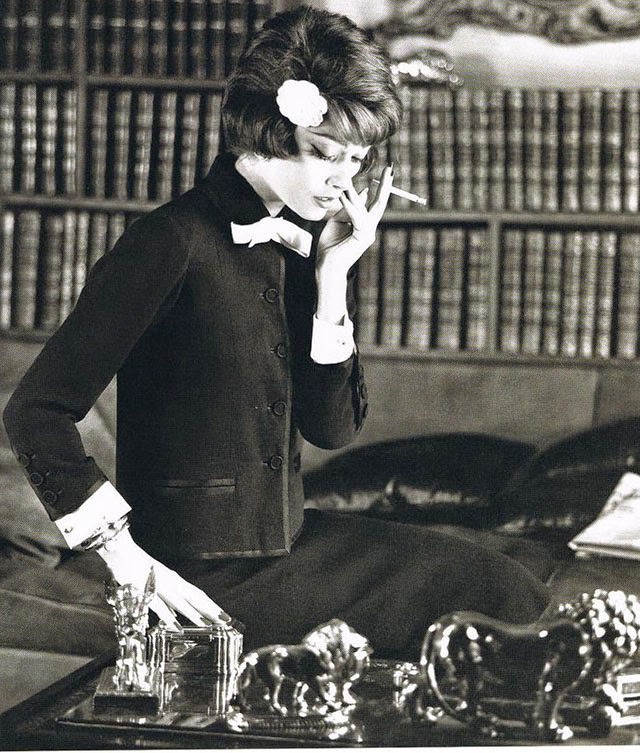
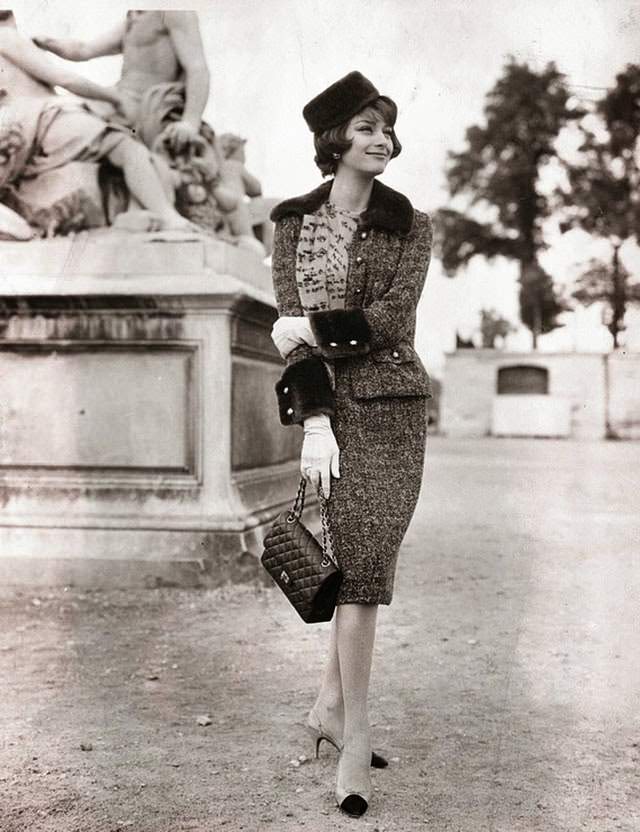
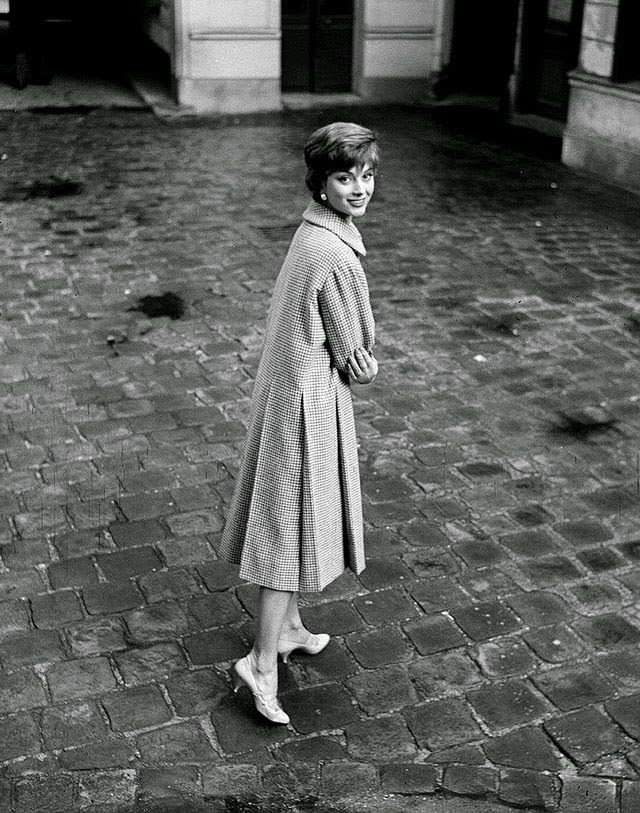
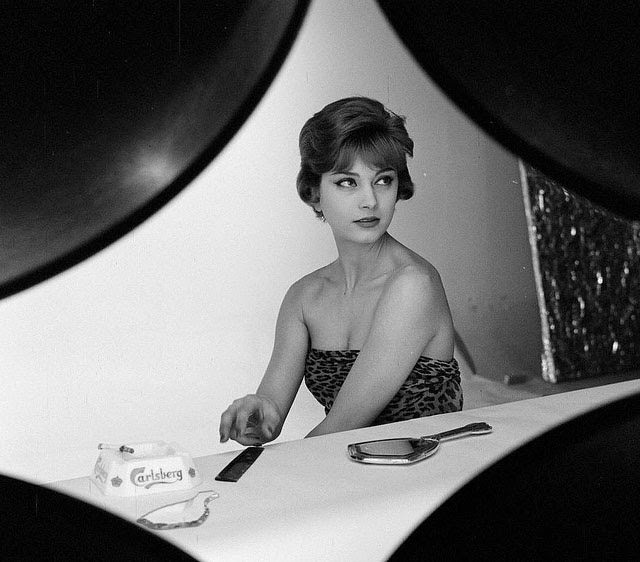
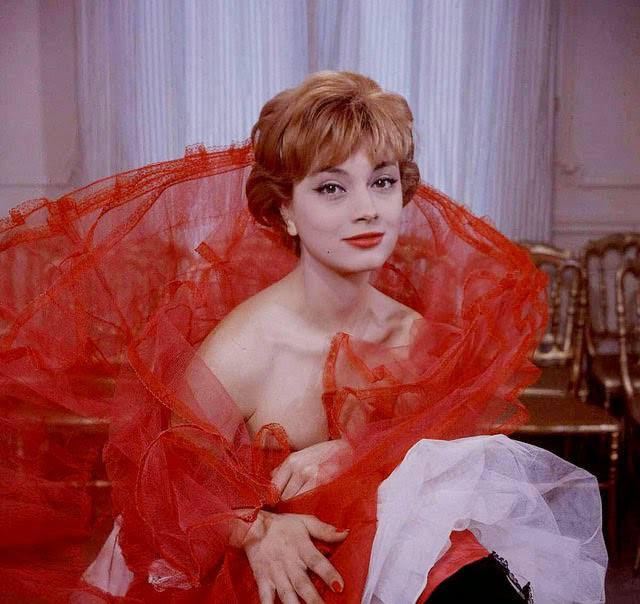
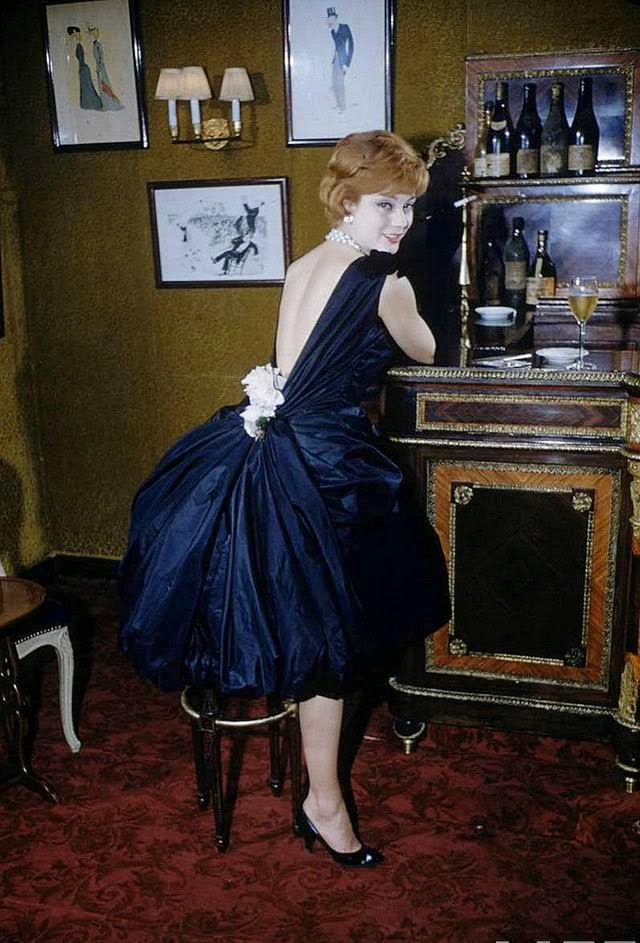
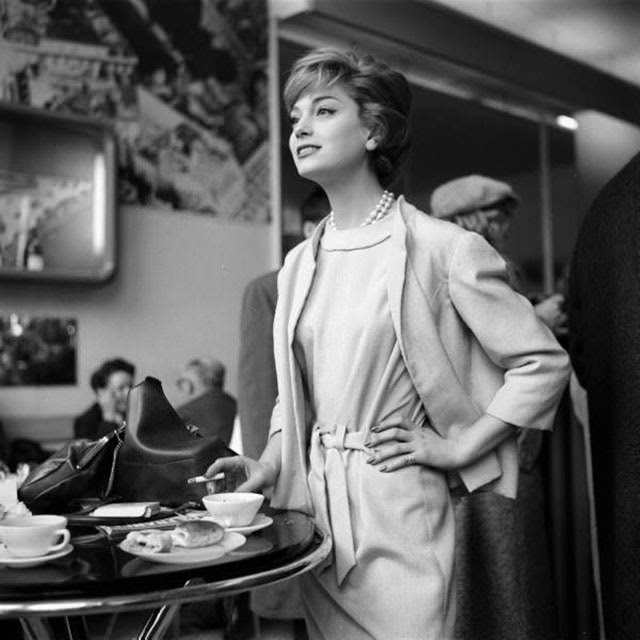
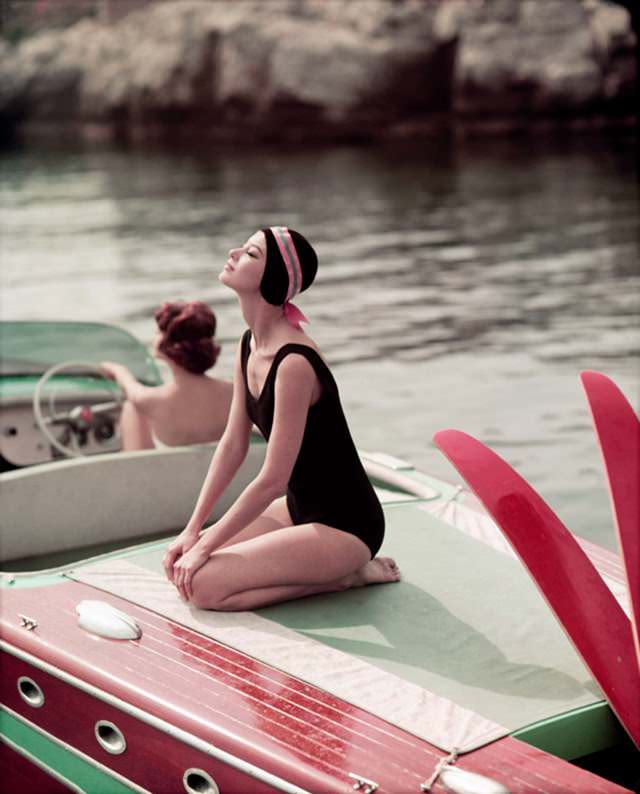
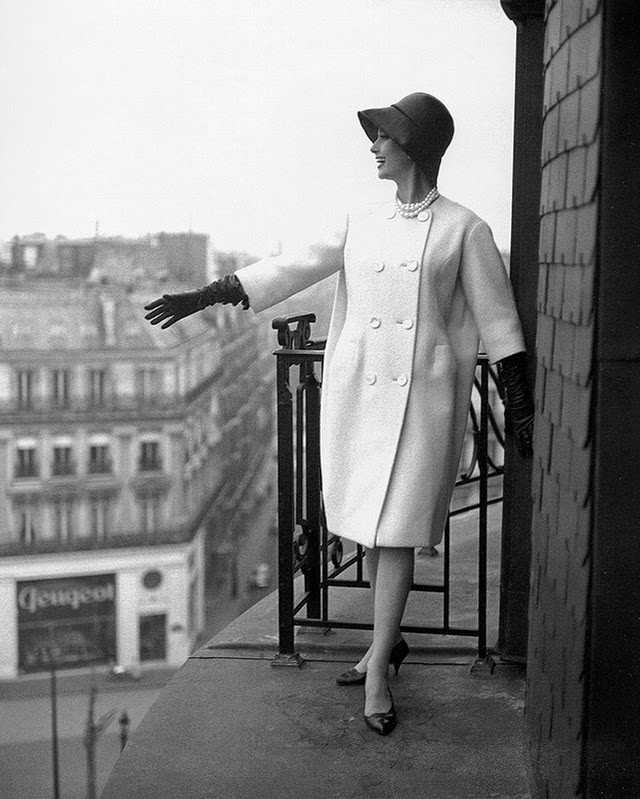
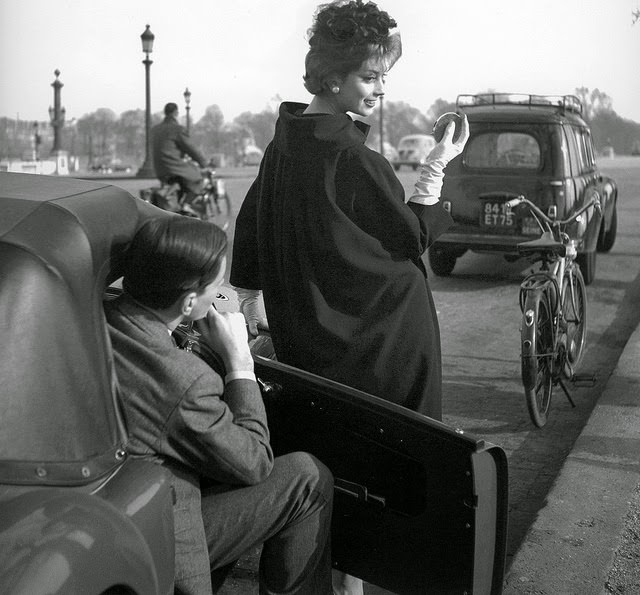
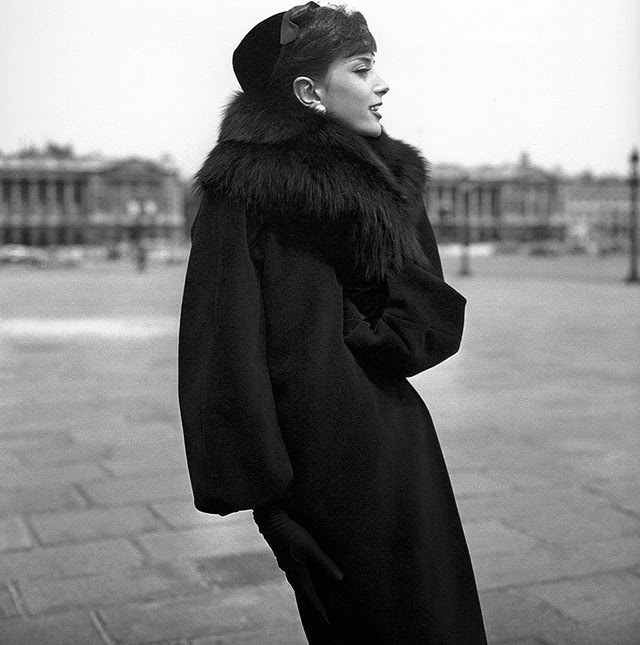
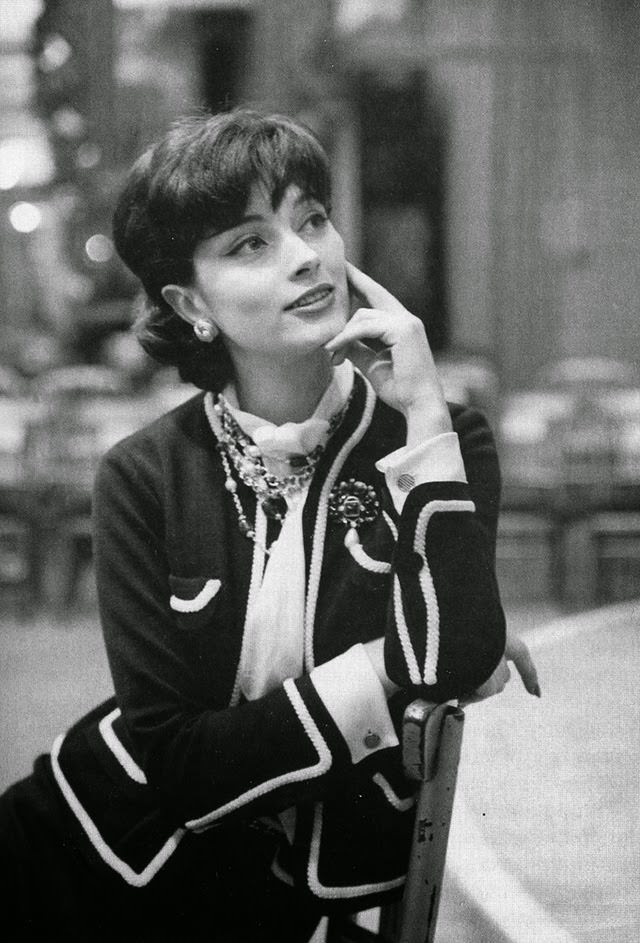
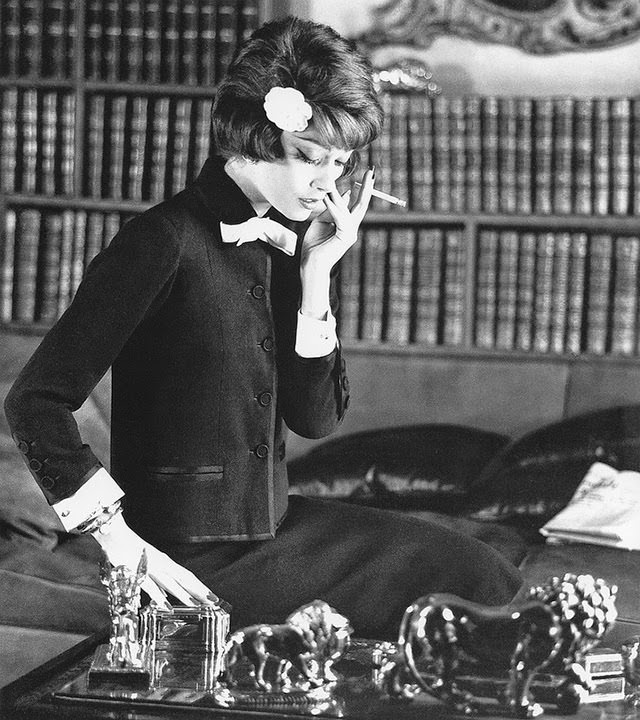
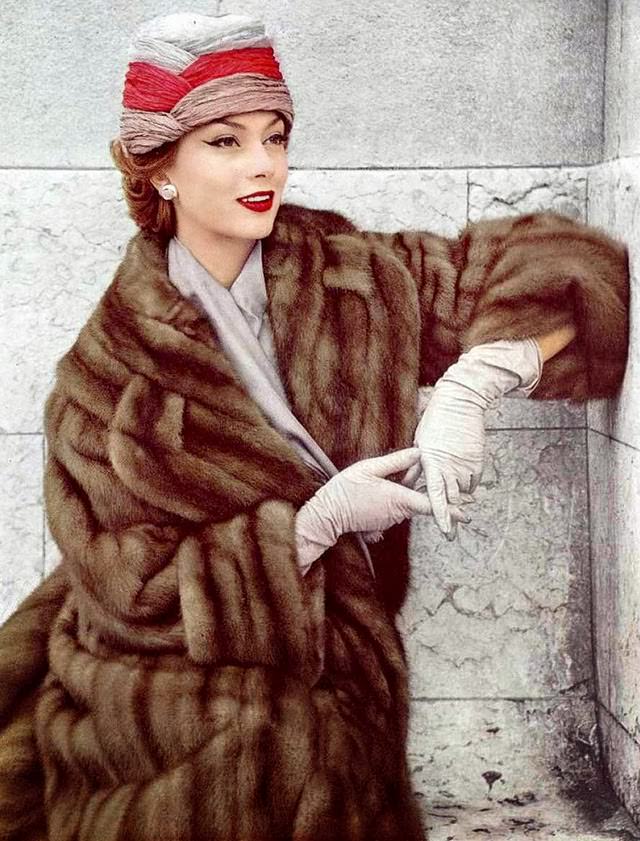
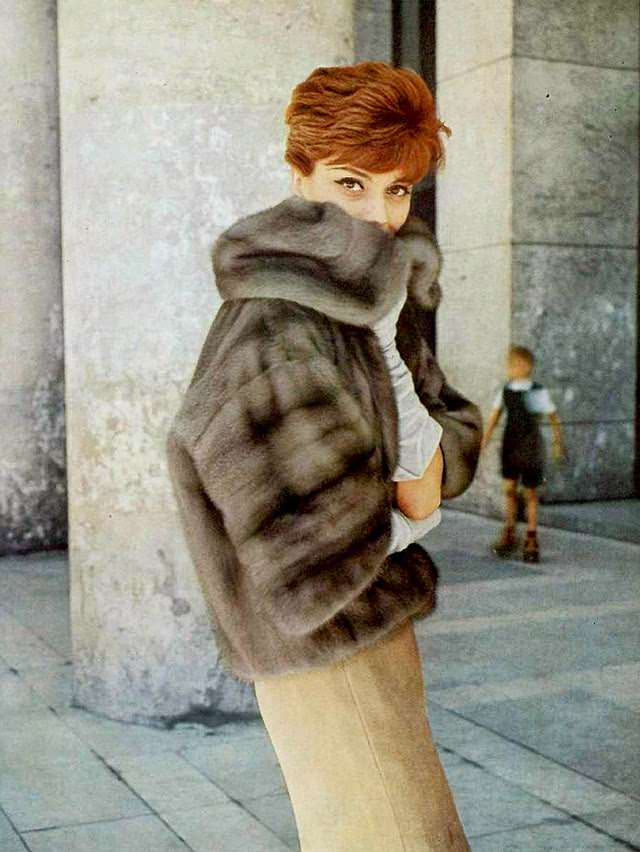
Marie-Hélène Arnaud began her career as the quintessential French model during the 1950s. She quickly caught the eye of Coco Chanel, who was looking for a fresh face to represent her fashion house. Chanel did not just hire her; she transformed Arnaud into the living image of the brand. Arnaud possessed a natural elegance and a slender figure that perfectly suited the boxy, tweed suits that Chanel made famous. She walked the runway with a cool, detached confidence that defined the high-fashion look of the era.
Her relationship with the designer went deeper than the typical model-employer bond. Coco Chanel viewed Arnaud as her “spiritual daughter” and alter ego, often dressing the young model in clothes that mirrored her own style. Journalists and photographers frequently noted the resemblance in their mannerisms. Arnaud spent her days at the studio on Rue Cambon, fitting garments and learning the precise movements that displayed the fabric to its best advantage. She became the public face of the fashion house, appearing in magazines across Europe and America.
Read more
The film industry soon took notice of her visibility and poise. In 1956, she made her screen debut in Mannequins of Paris. The role required her to play a character very close to her real life, allowing her to showcase the glamour of the French fashion world to cinema audiences. A year later, she starred in The Twilight Girls (1957), a drama that expanded her acting range beyond simple cameos. She balanced her time between film sets and fashion shoots, maintaining her status as a top cover girl while building a resume in cinema.
Her most significant acting role arrived in 1964 with the release of Fantômas. In this crime-comedy, she played Lady Beltham, a sophisticated and wealthy woman entangled in the plots of the mysterious villain Fantômas. The movie was a massive commercial success in France and abroad. Arnaud held her own alongside established stars like Jean Marais and Louis de Funès. Her performance cemented her image as a cool, mysterious beauty, fitting perfectly into the stylish aesthetic of 1960s French cinema.
Between her modeling and acting, Arnaud attempted to launch her own fashion label. She wanted to transition from wearing the clothes to creating them. She released a collection under her own name, aiming to capture the chic style she was known for. However, the business struggled to find a solid footing in the competitive Paris market. After this venture, she stepped back from the intense spotlight that had followed her since her teenage years.