Pat O’Reilly was born in 1925 in Essex, England, and came of age during a period that reshaped almost every corner of British life. By the time World War II ended, she had already begun finding her footing in the fashion world — not in front of a camera, but behind one. Her early role as a photographer’s assistant gave her a close-up education in how fashion images were made, a perspective most models never had.
Her move into modeling was almost accidental. When O’Reilly applied for an office job at Harper’s Bazaar in London, the magazine hired her on one condition: she would also model for them. That arrangement changed the course of her career entirely. Within a short time, she was appearing regularly in the magazine’s pages, wearing some of the most talked-about designs in British fashion.
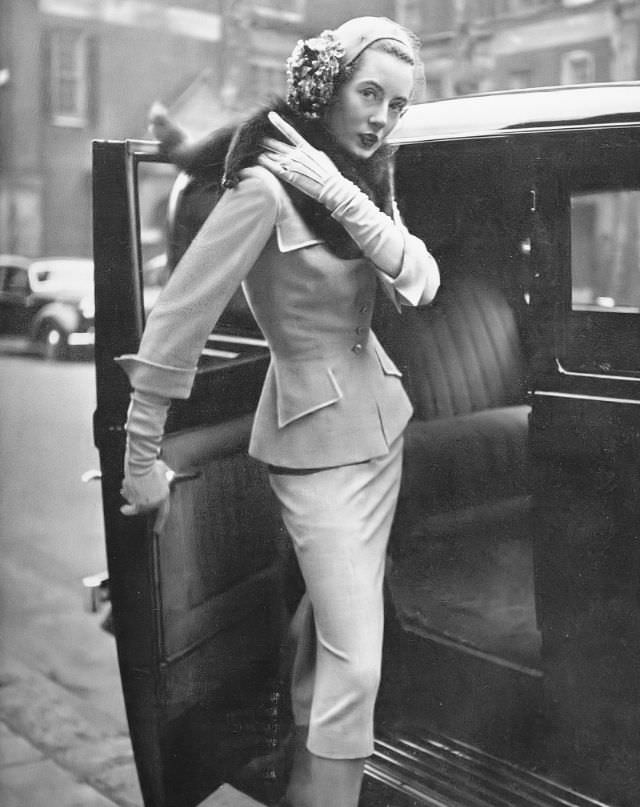
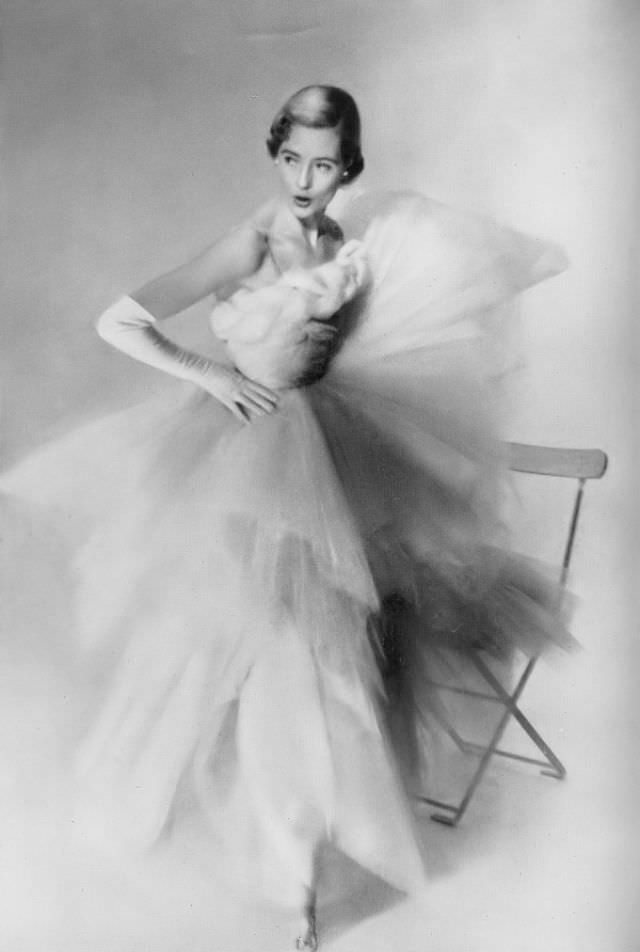
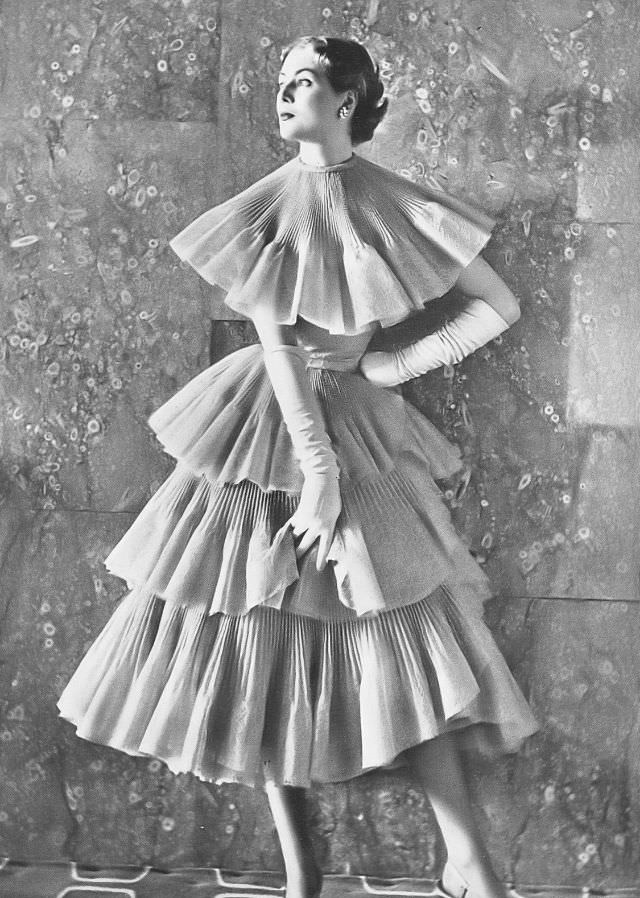
By March 1950, O’Reilly was already a recognizable face in Harper’s Bazaar UK. That same issue featured her in a dreamy pink tulle creation from Hardy Amies, one of the most prestigious names in British couture at the time. Amies dressed the Queen and dressed the pages of the country’s top fashion magazines — and O’Reilly wore his work with ease.
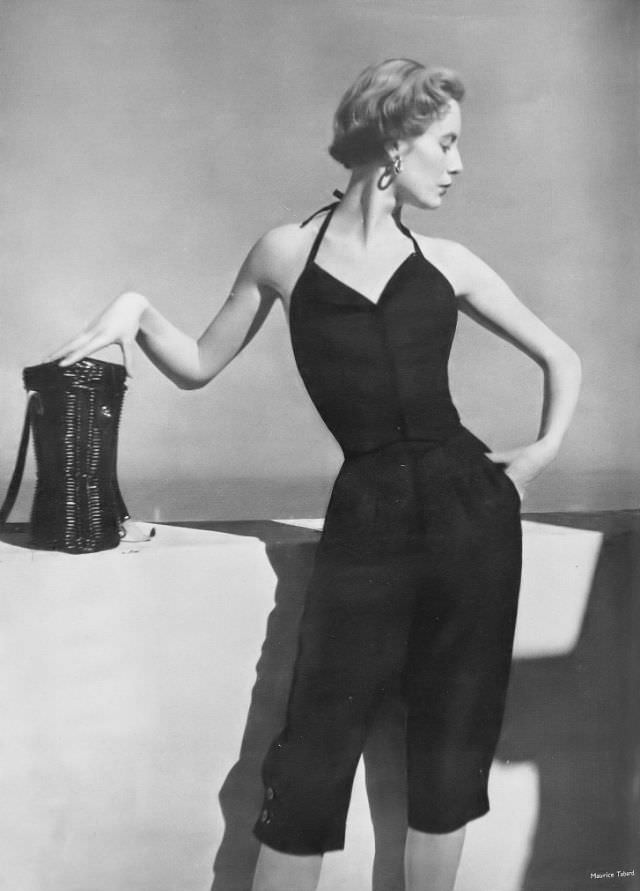
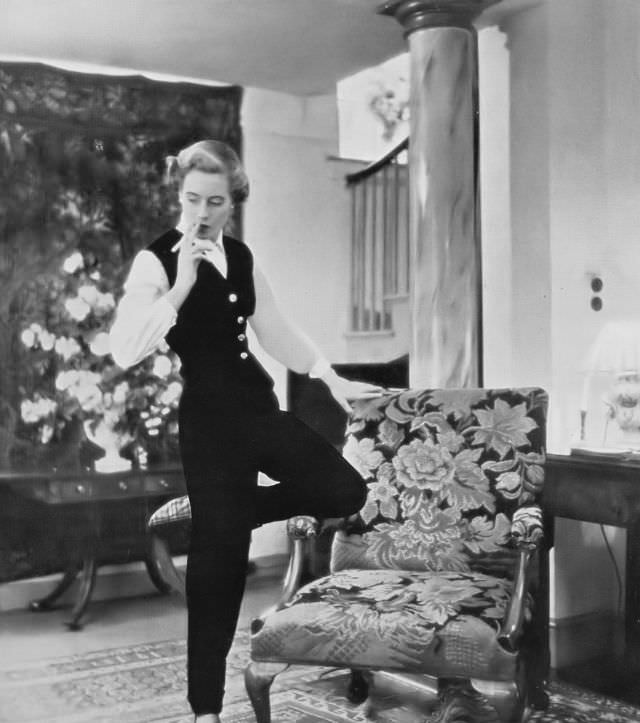
What set O’Reilly apart from many of her contemporaries was her range. She moved between relaxed summer separates and structured tailoring without missing a step. A June 1950 shoot saw her in black linen slacks and a halter top by Londonus — a casual, confident look that felt modern for its time.
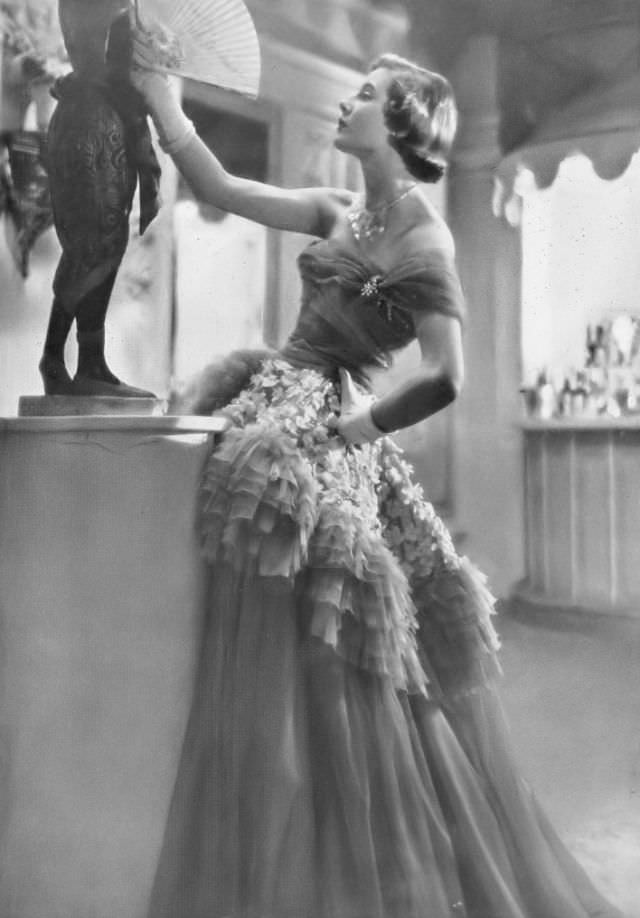
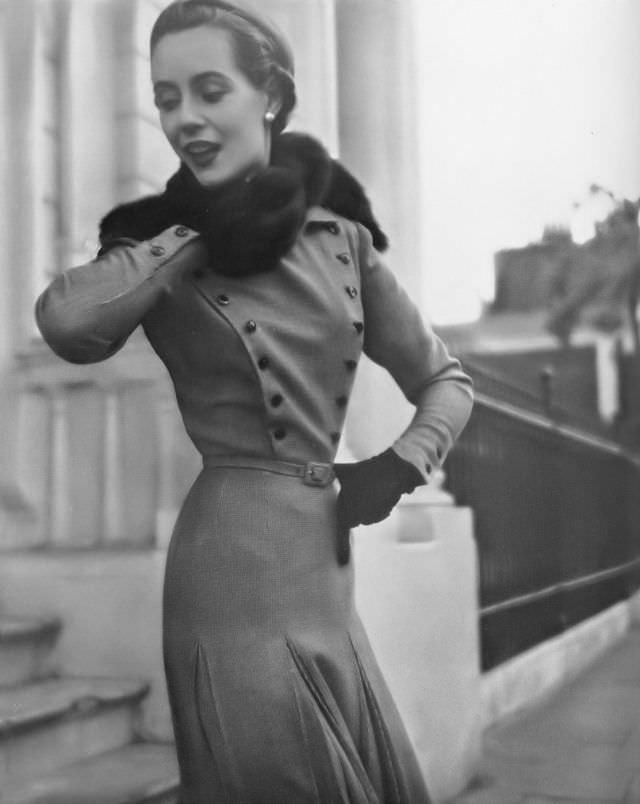
She also stepped out of the studio. A 1950 appearance at the Empress Club found her in a gray tulle ball dress by Joy Ricardo — a real-world setting that gave the image a sense of life beyond the fashion page. That same year, she modeled a high-neck tweed dress by Frederick Starke for the August issue, demonstrating her comfort with both formal eveningwear and sharp daywear.
The breadth of her 1950 editorial work alone tells the story of a model in demand across every season and every category. From a blue and white patchwork sundress by Ian Meredith in June to a cherry-colored silk chiffon dance-dress by Frank Usher in December, O’Reilly covered the full fashion calendar for Harper’s Bazaar.
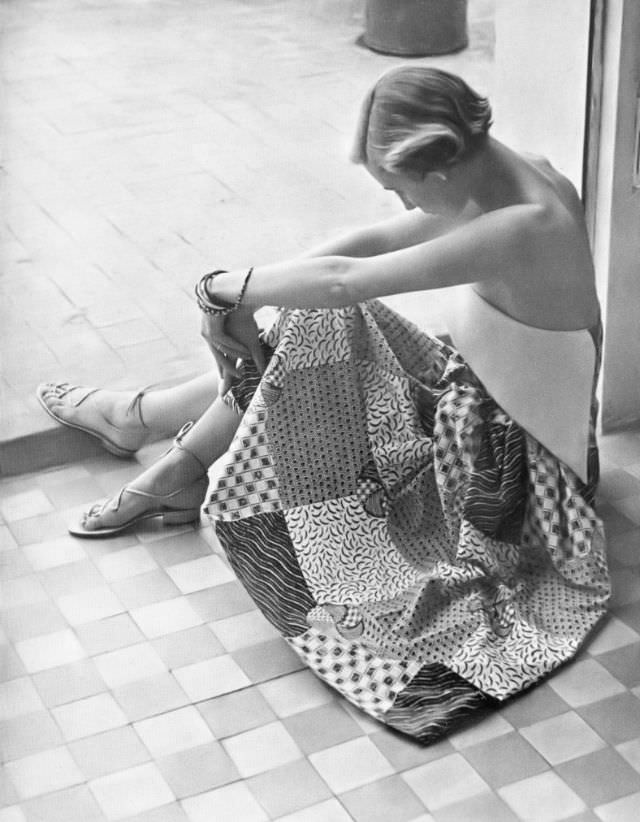
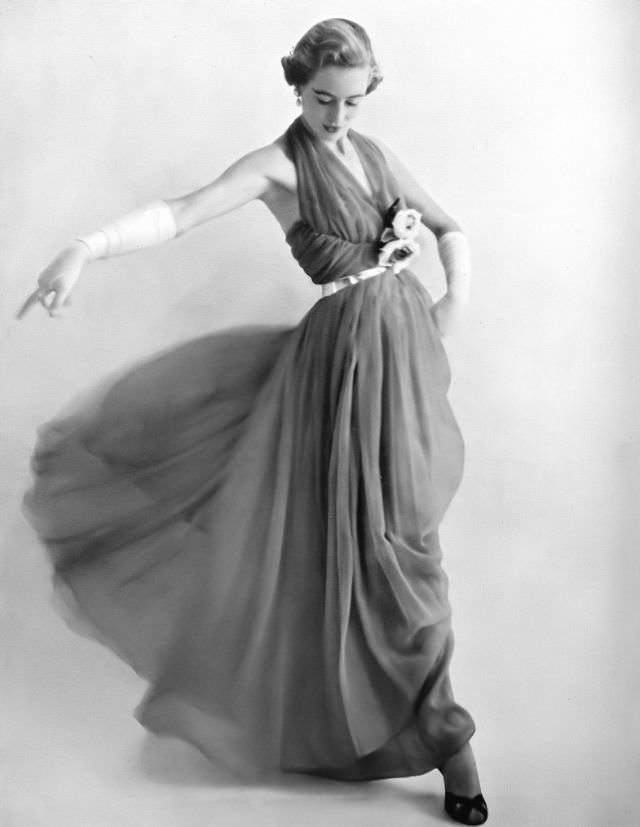
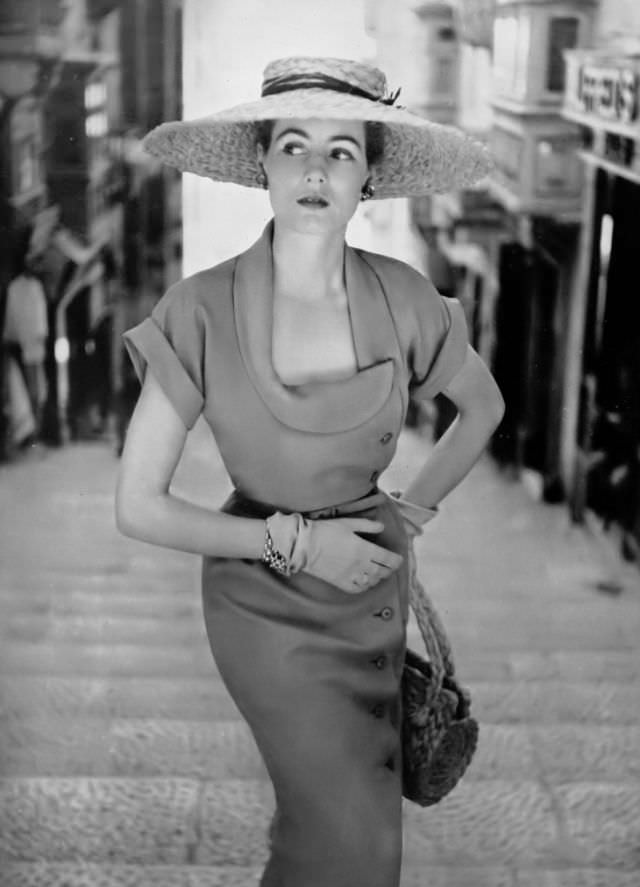
By 1951, O’Reilly’s assignments had expanded beyond London’s studios. A trip to Malta produced a striking set of images for the May issue, with O’Reilly photographed in a white piqué strapless dress by Harvey Nichols and a tangerine shantung dress by Dorville against the island’s sun-bleached backdrops. These location shoots were among the more ambitious fashion projects Harper’s Bazaar UK undertook during that period.
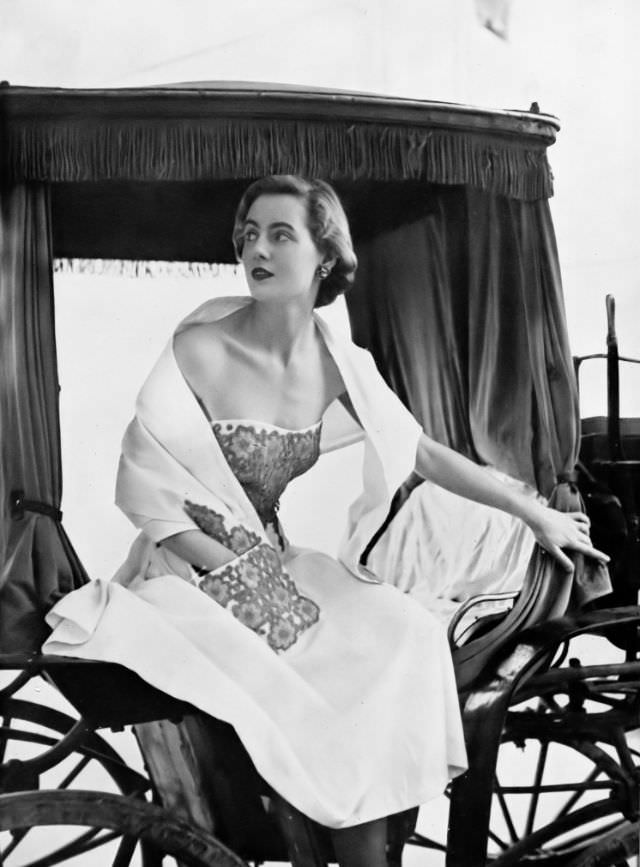
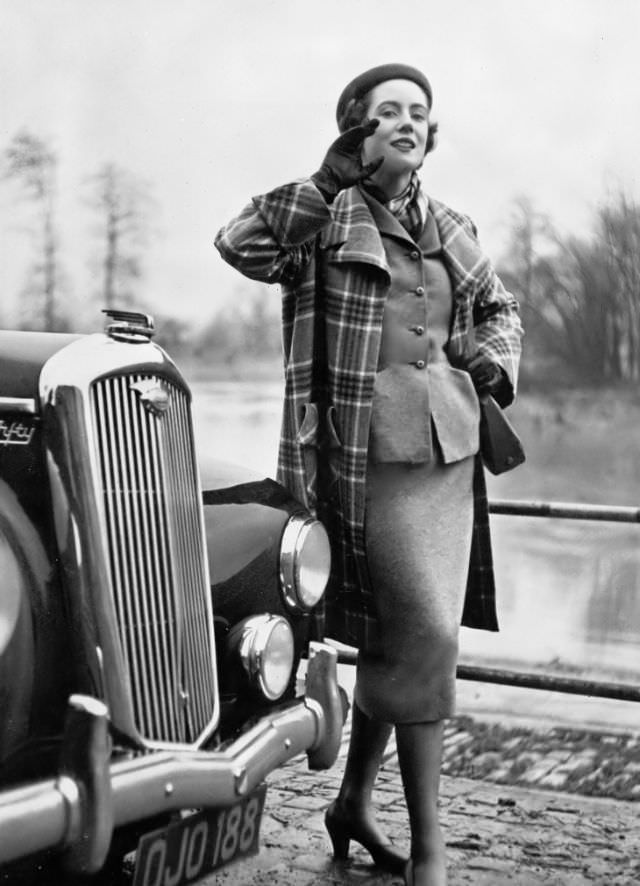
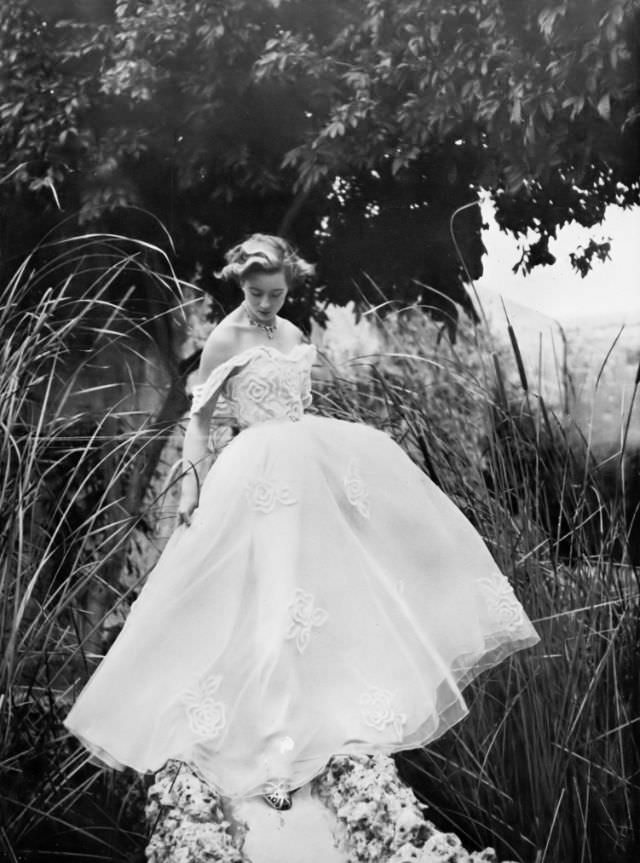
Back in London, her 1951 editorial work ranged from a gray tweed coat by Digby Morton in March to a lavender tulle evening dress by Elizabeth Henry in February. She also appeared in a Lovat tweed suit by Lachasse — a house known for its refined, country-inflected tailoring — and a mushroom-pink taffeta coat by Hardy Amies, returning once more to that prestigious label.
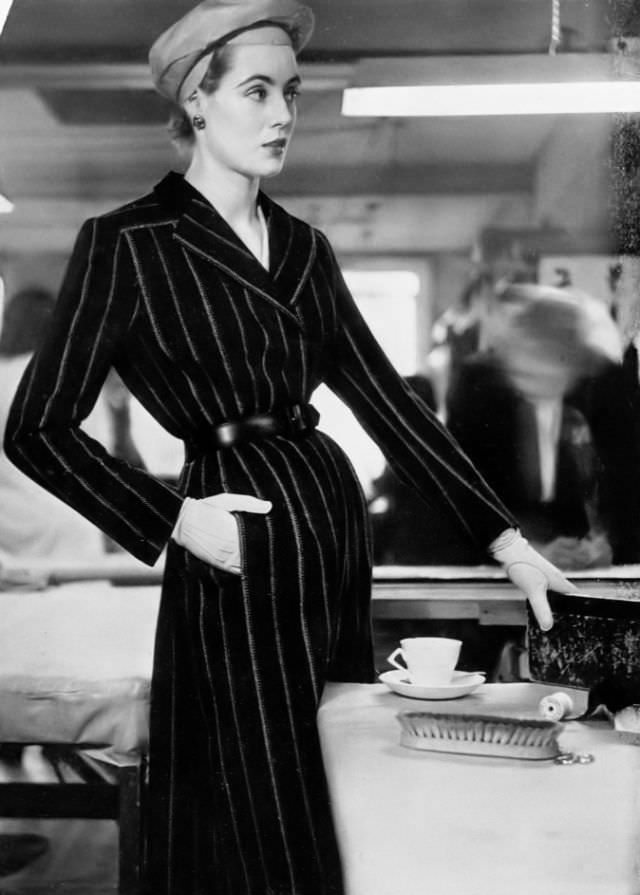
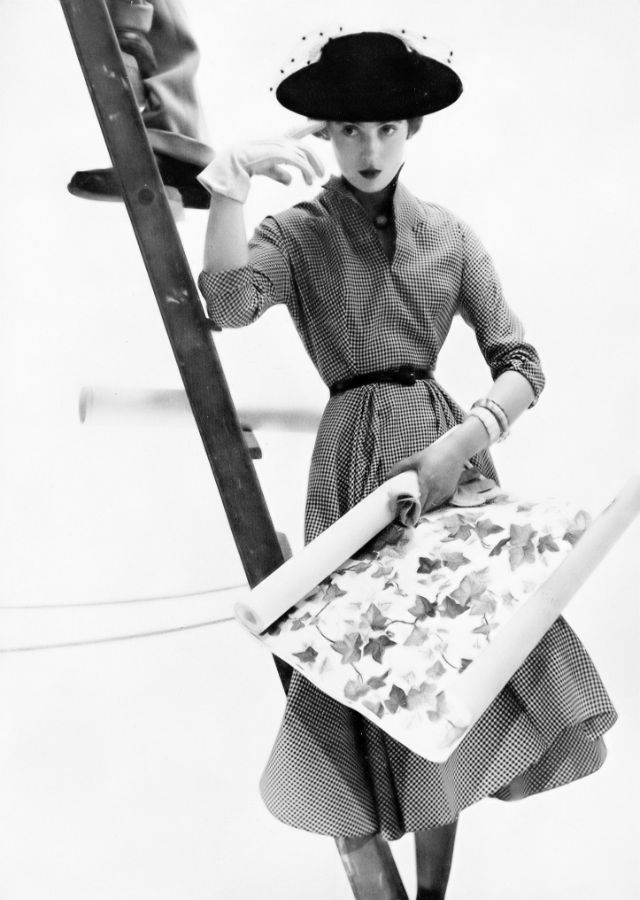
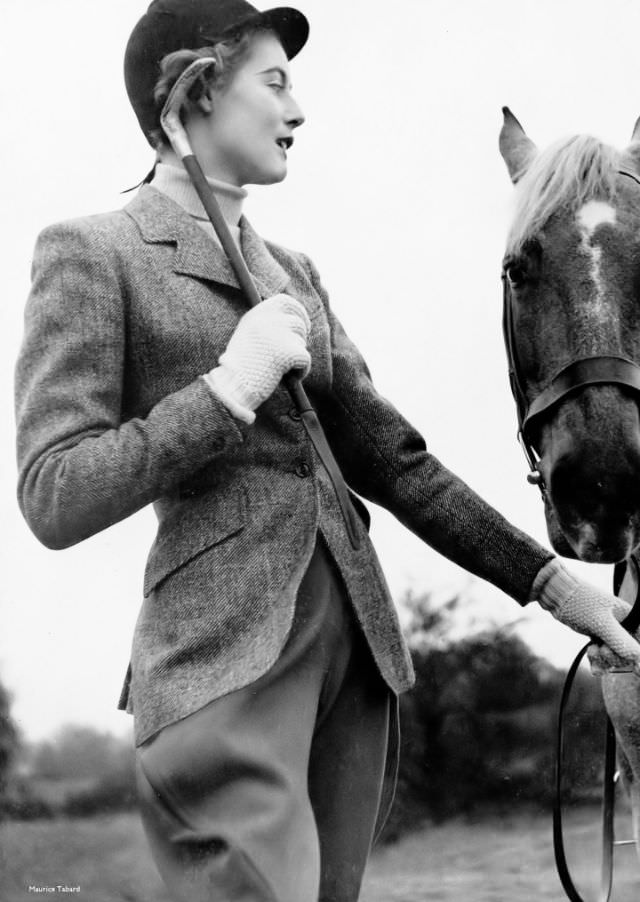
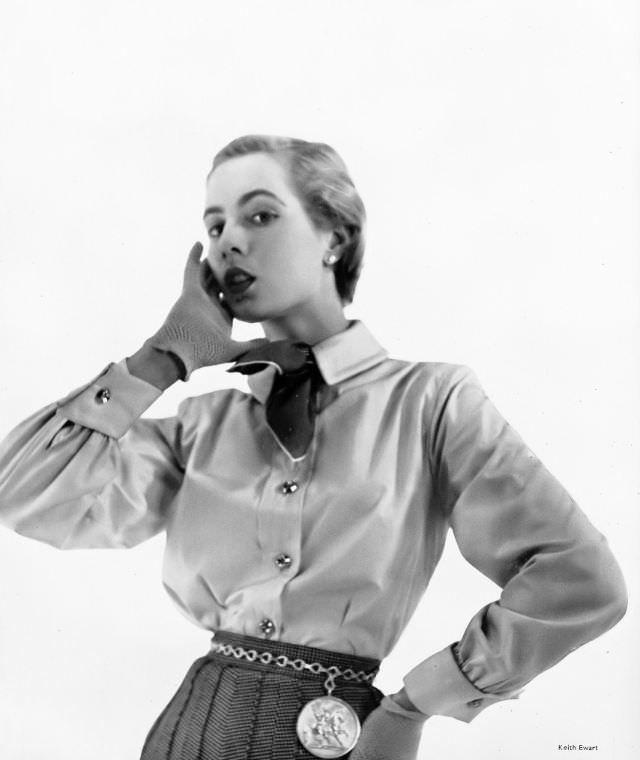
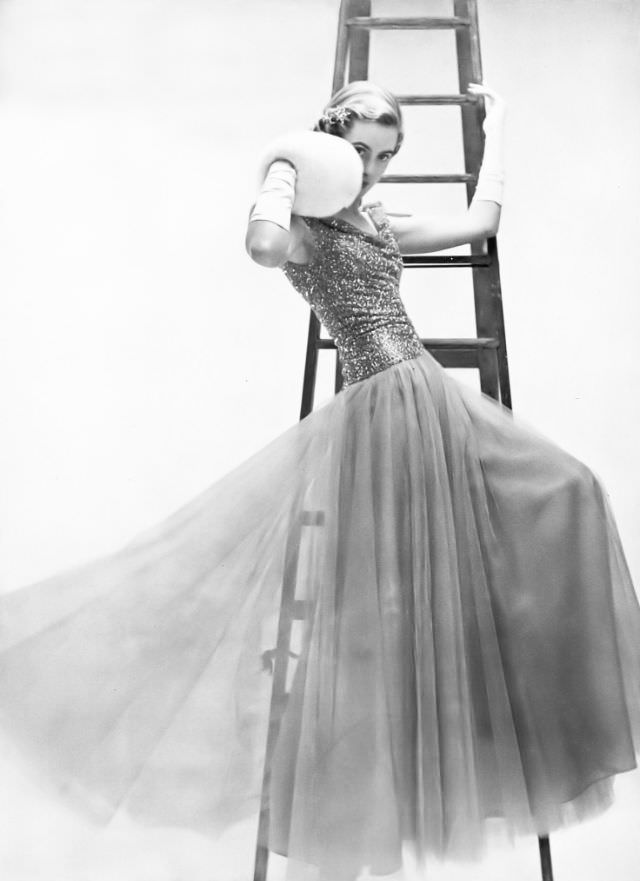
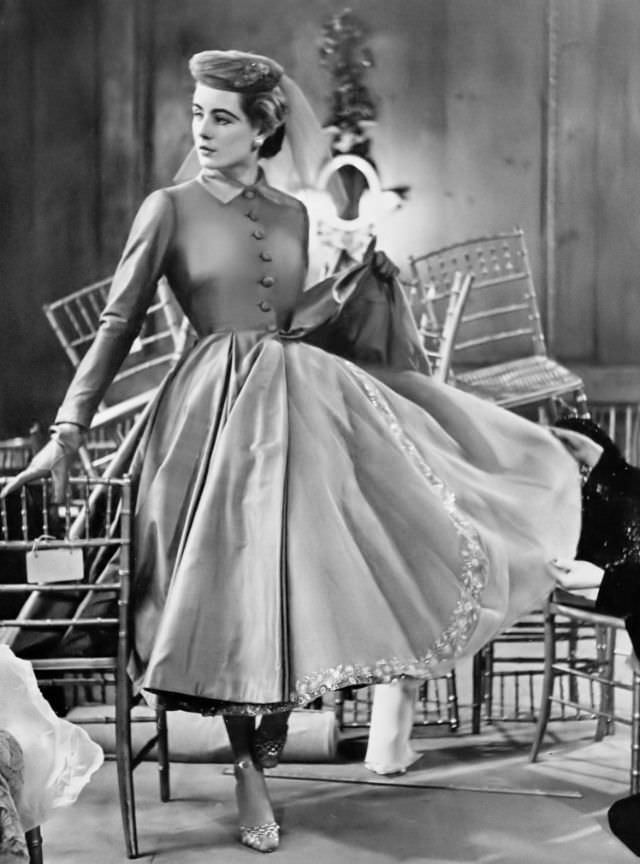
The latter half of 1951 brought more variety. November issues featured O’Reilly in reversible coats — one by Rima, another by Bradleys — a practical yet stylish category that was gaining traction with postwar consumers conscious of value and versatility. A December shoot put her in a green-flecked beige tweed suit by Spectator Sports, closing out the year on a grounded, tailored note.
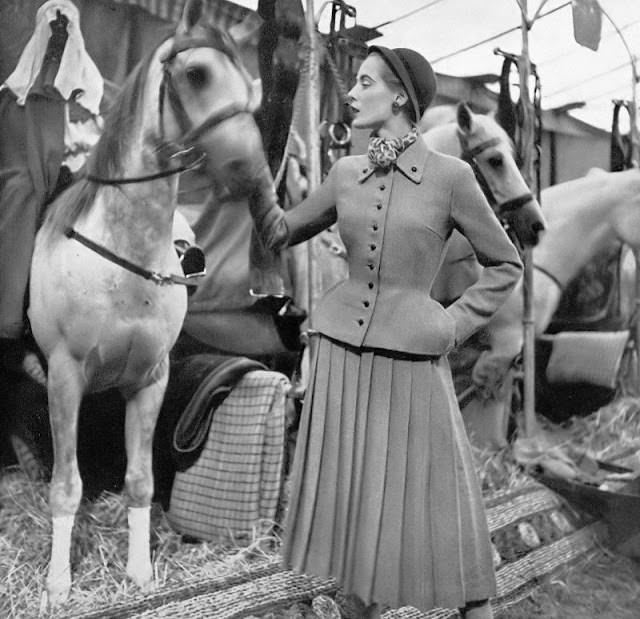
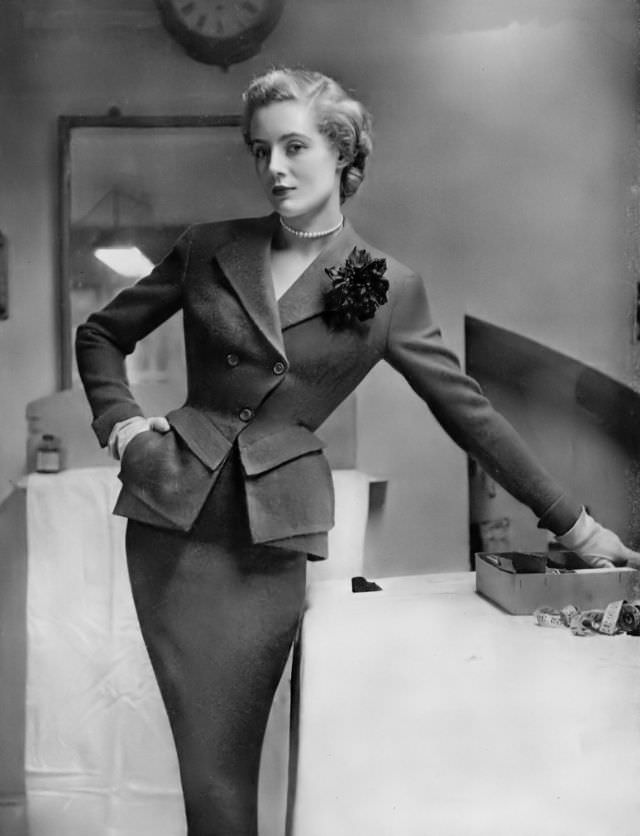
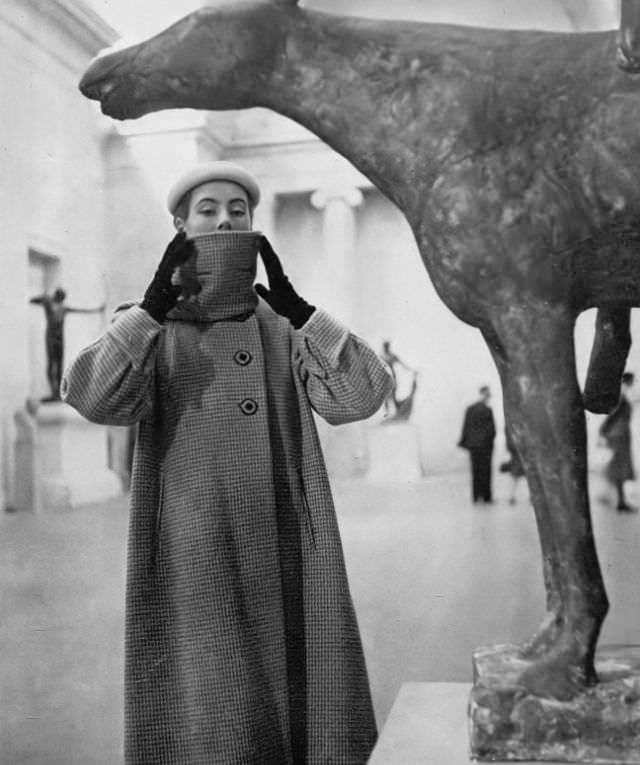
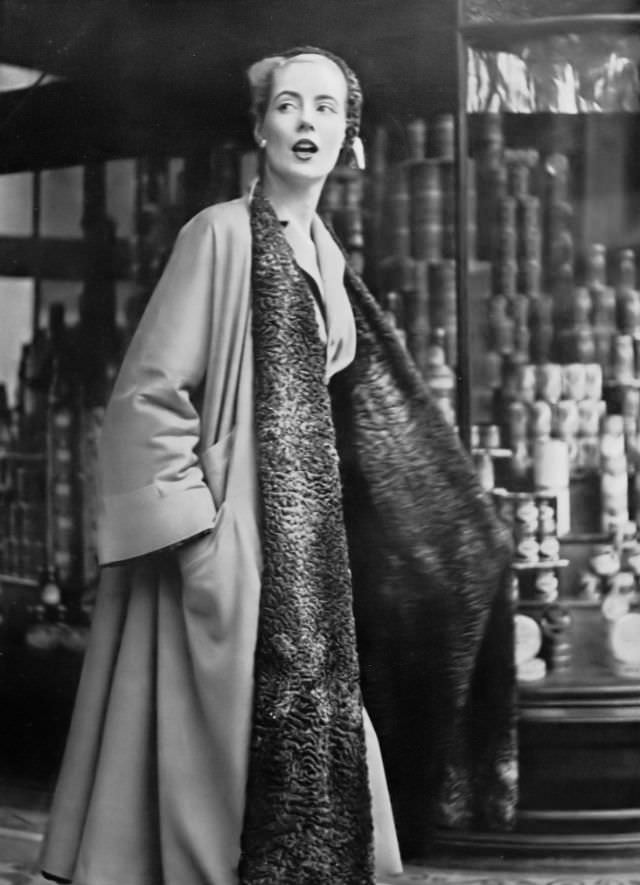
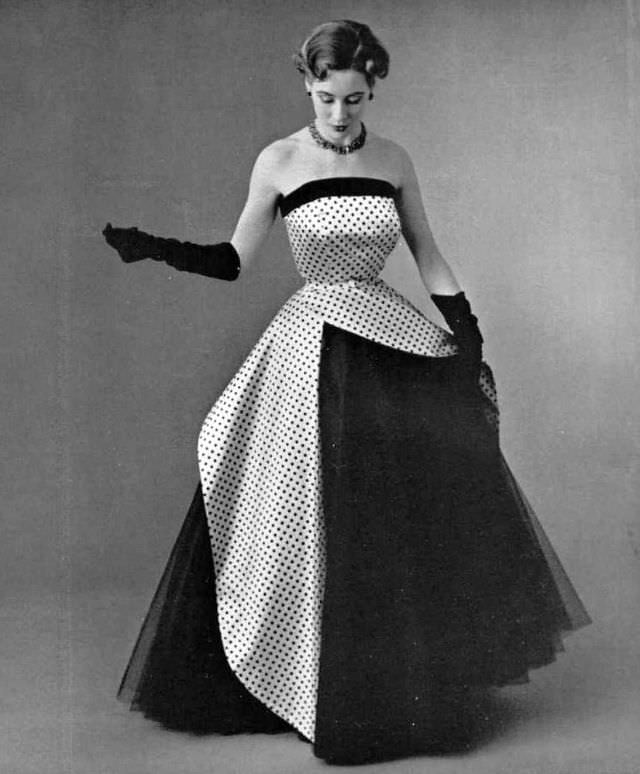
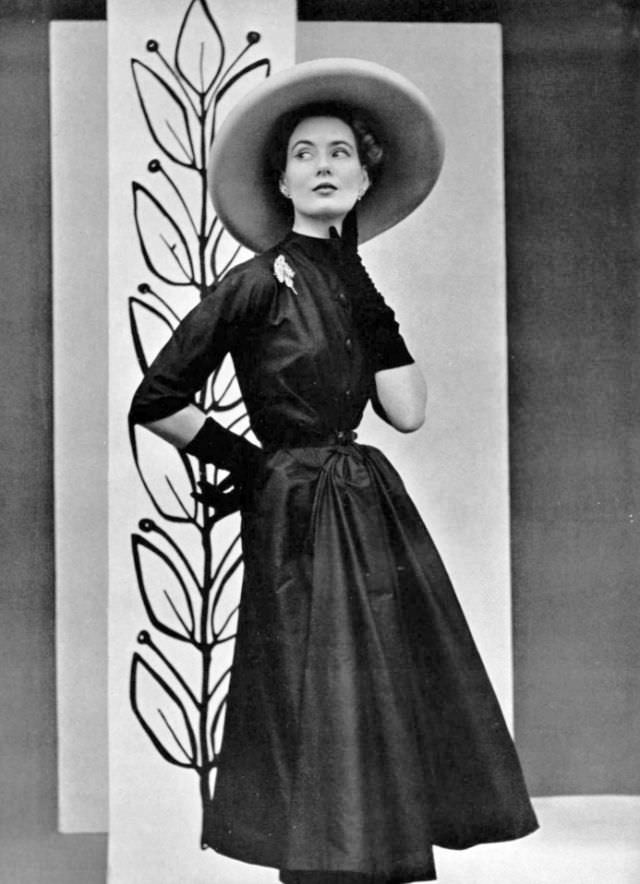
In 1952, O’Reilly’s editorial reach stretched across both London and Paris. She appeared in L’Officiel wearing a black raw silk afternoon dress by Madeleine de Rauch — a French house celebrated for its sportswear-influenced elegance. That same year, she modeled a lace evening gown by Germaine Lecomte and a white satin and navy tulle dress by Jean Patou, two of Paris’s most established couture names.
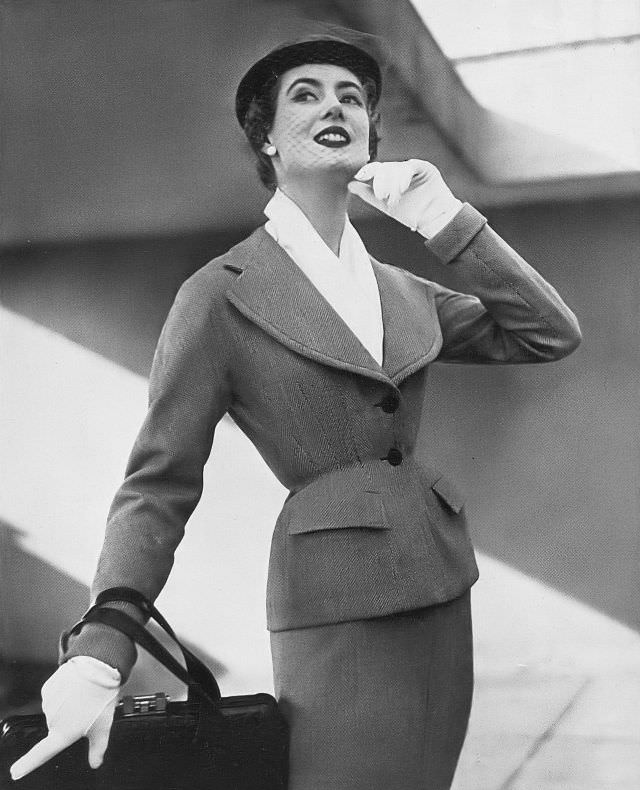
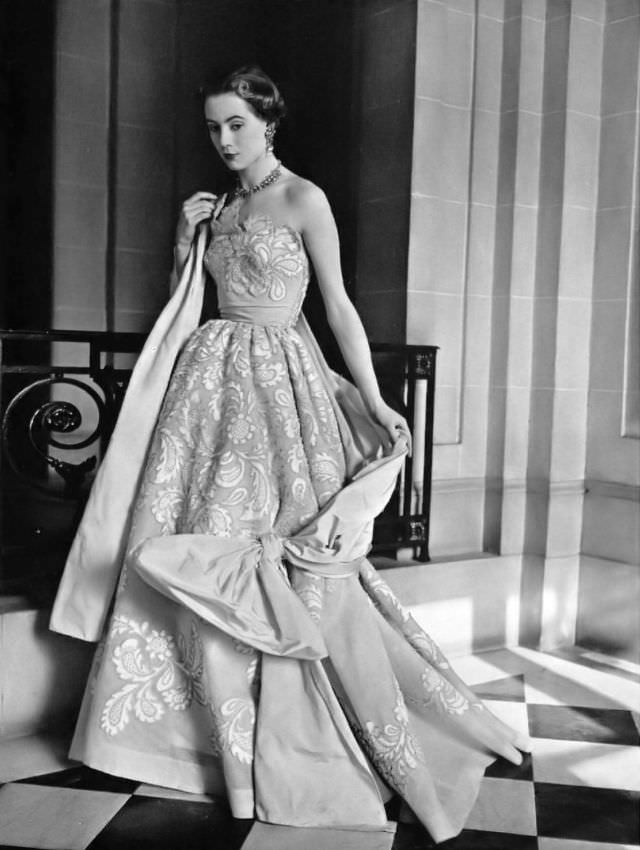
Her 1952 Harper’s Bazaar work continued to span the full fashion spectrum. Victor Stiebel’s ash-gray taffeta ball gown appeared in the October issue. Hardy Amies returned in September with a sea-green hopsack topcoat. A navy-blue rep suit by Spectator Sports anchored the July issue with crisp, no-nonsense tailoring. January 1952 even featured a dedicated hairstyle shot, with O’Reilly’s look styled by Riché — a sign of just how fully she embodied the complete editorial package.
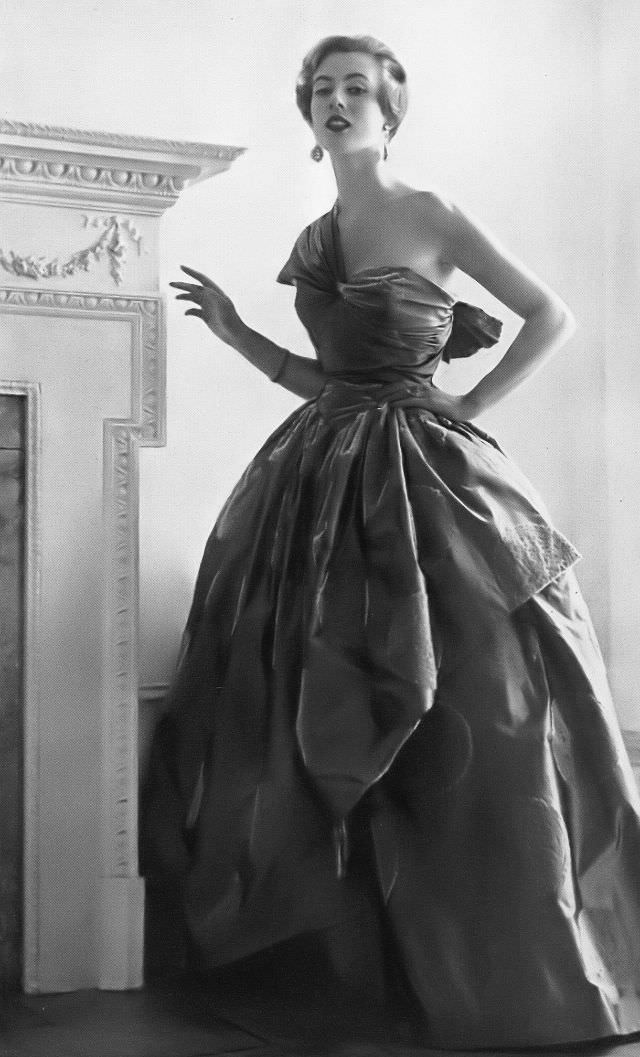
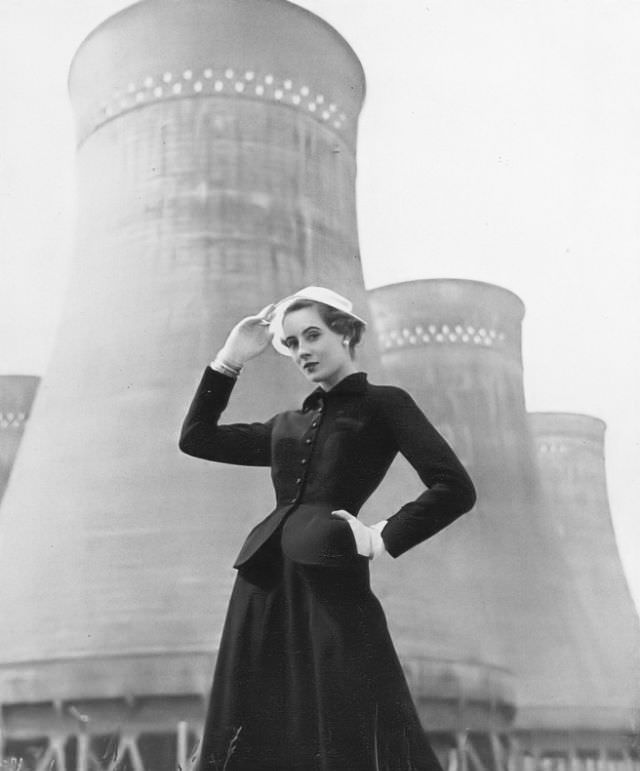
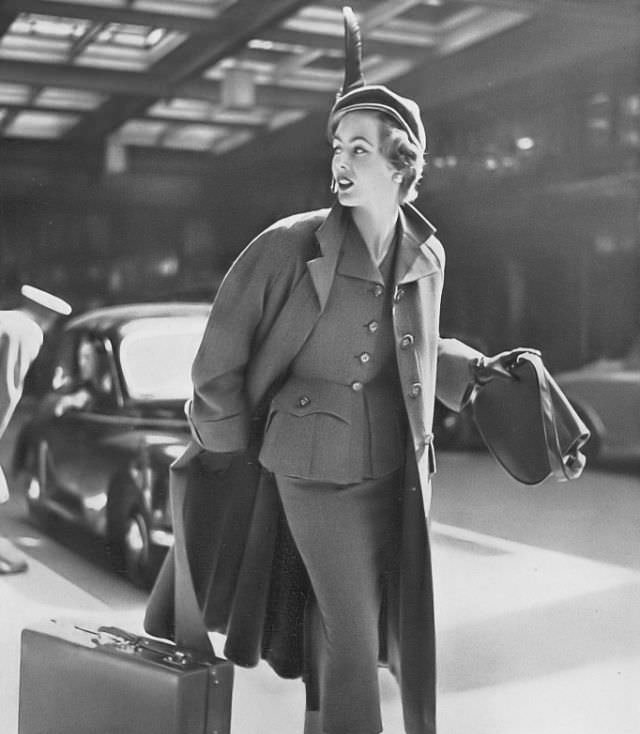
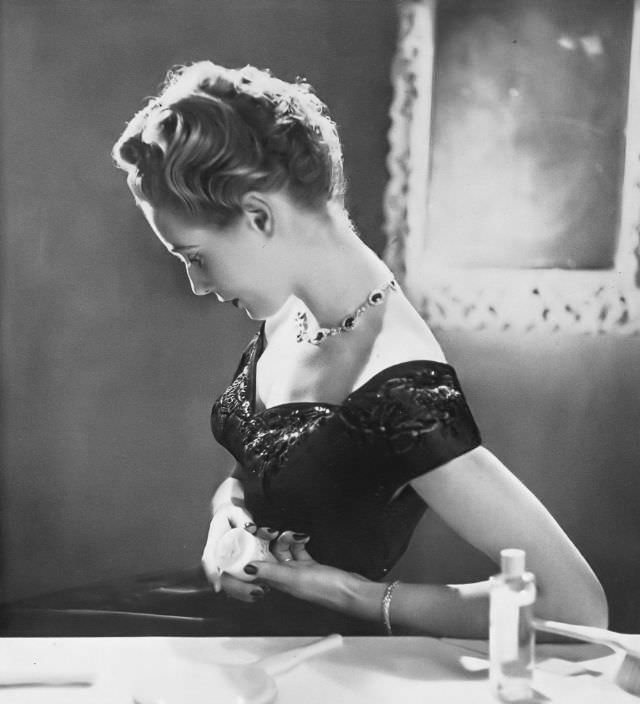
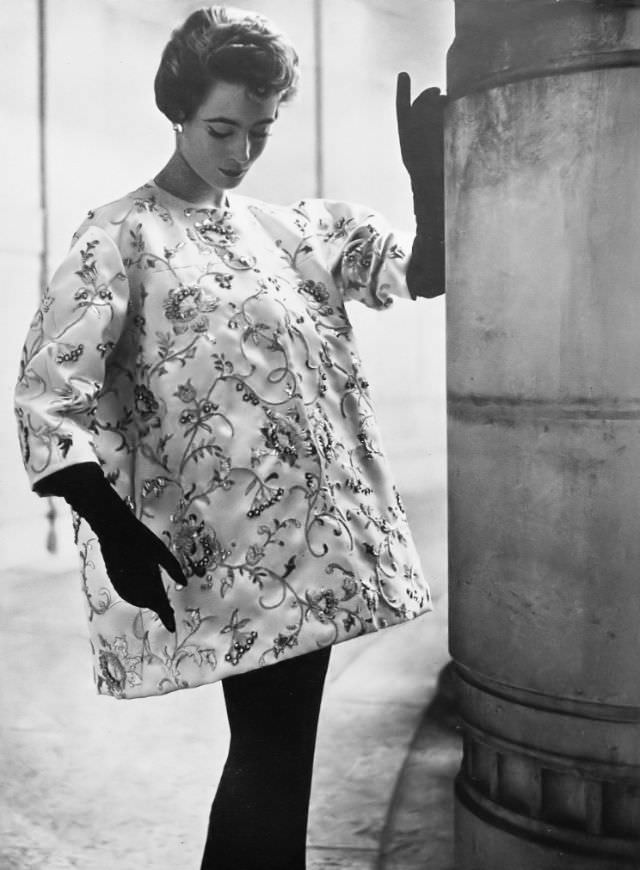
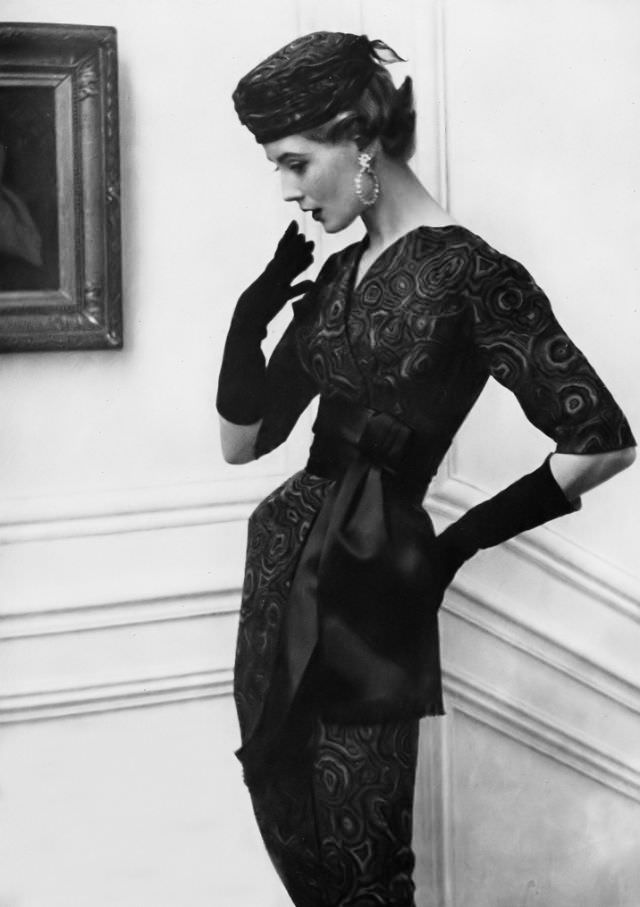
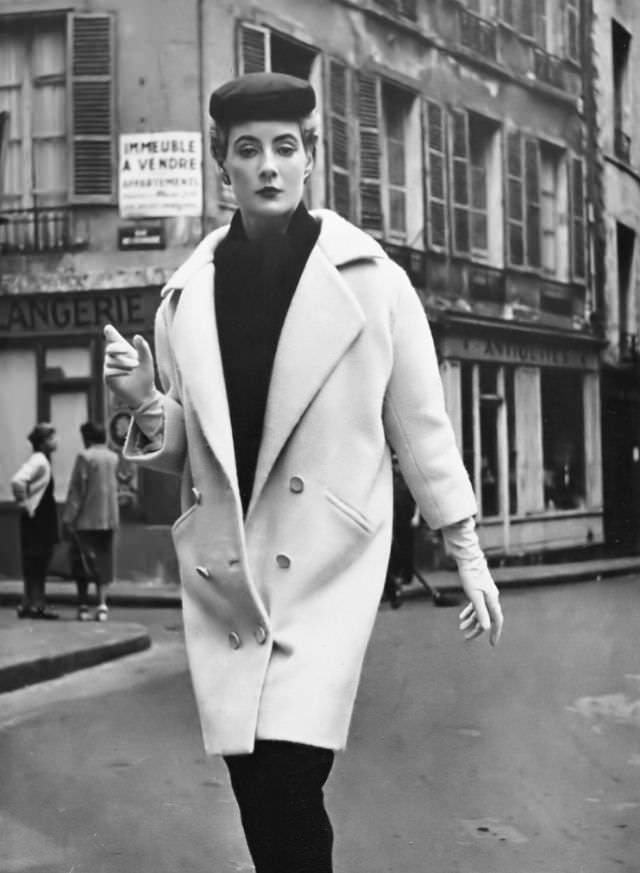
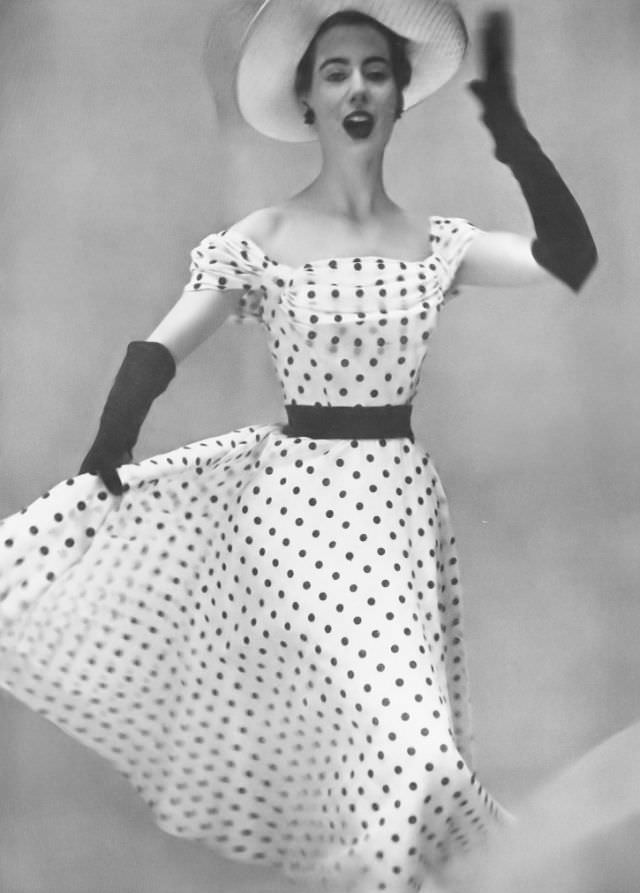
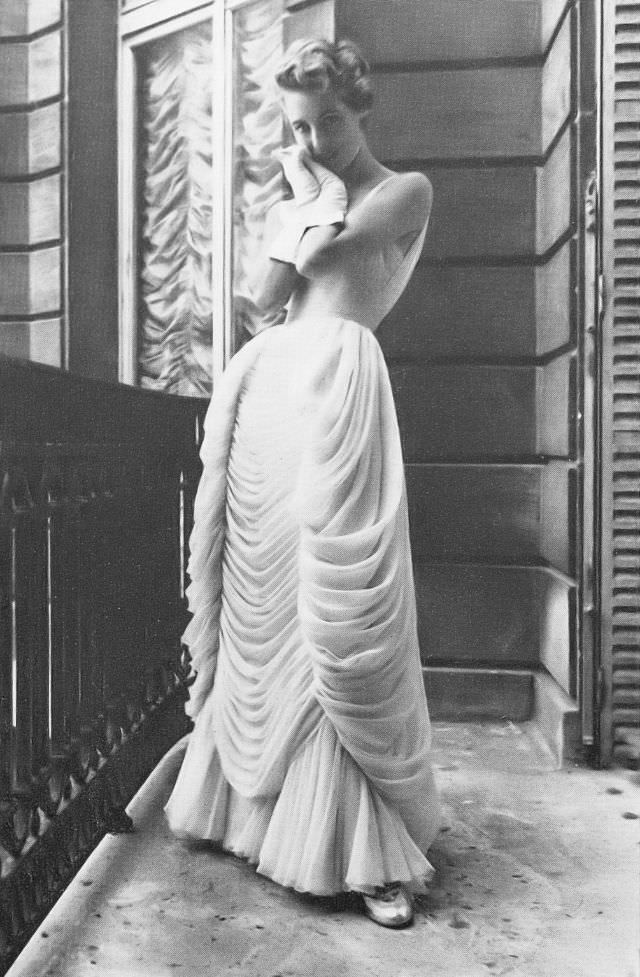
By 1953, O’Reilly was working with the biggest names in Paris couture. Balenciaga — widely regarded as the most technically skilled couturier of the twentieth century — dressed her in a white coat photographed in Paris and a white satin and black dress for the October issue. Pierre Balmain’s dawn-blue tulle gown and Jean Dessès’s pink chiffon gown both appeared in Harper’s Bazaar UK that September and October respectively. Jacques Fath’s tortoiseshell chiffon dress rounded out the year’s Parisian assignments.
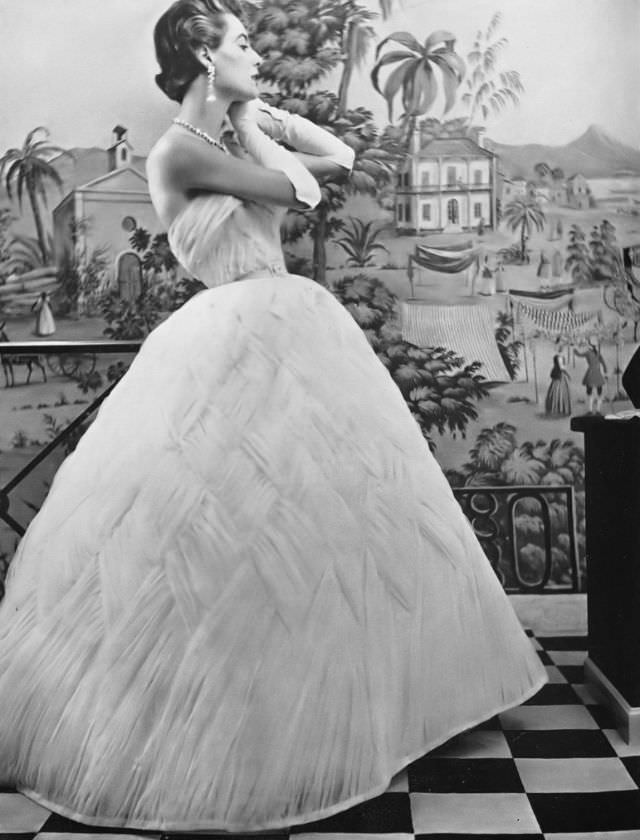
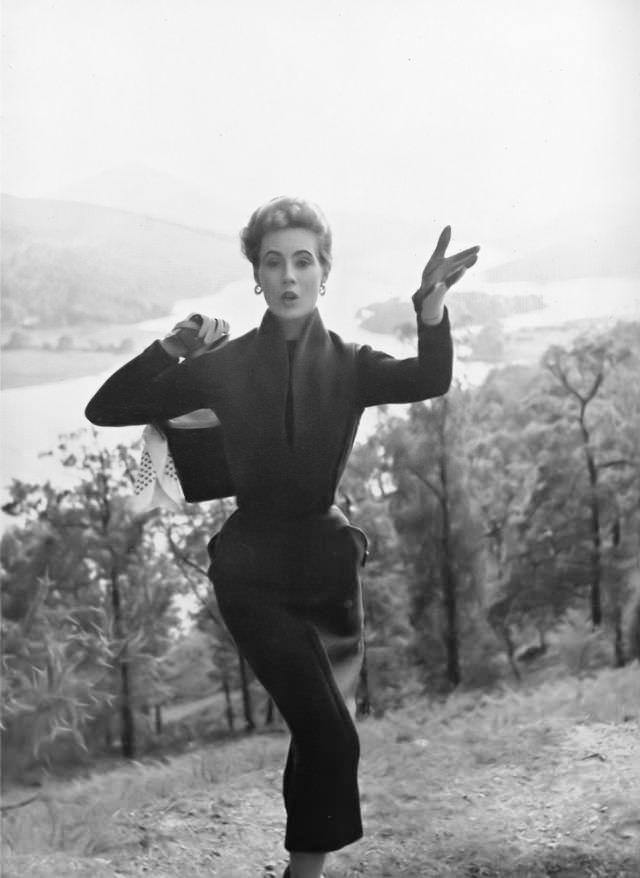
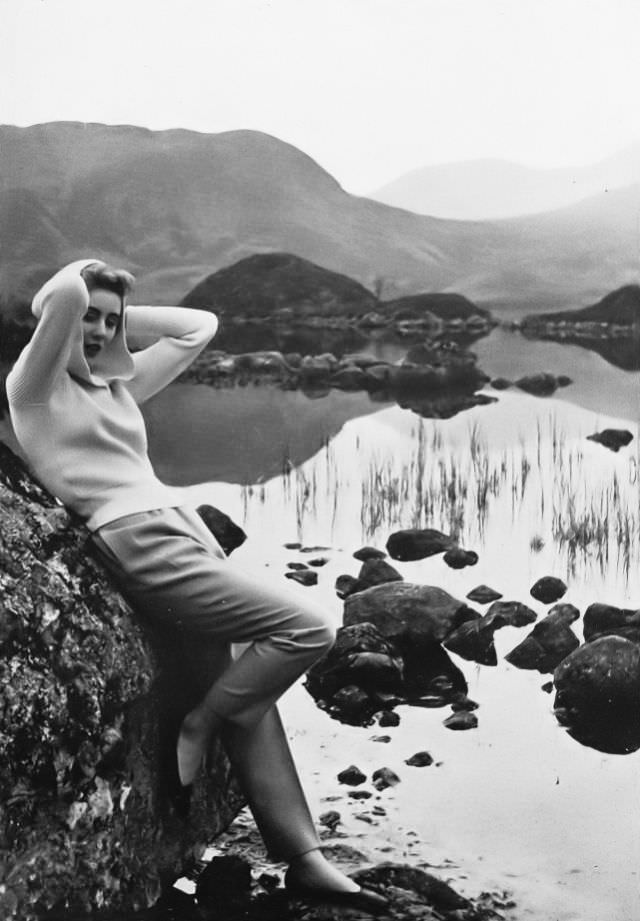
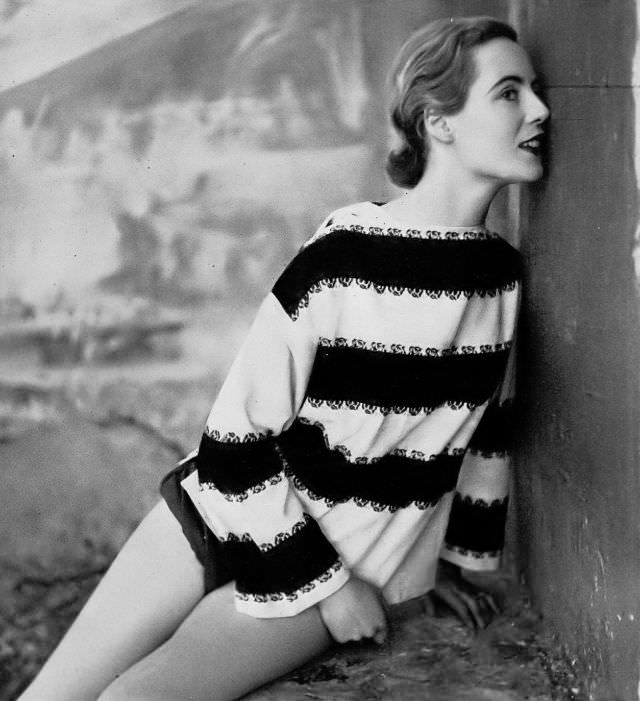
Scotland provided the setting for a rugged August 1953 shoot, where O’Reilly wore a red and brown tweed suit by Country Life alongside camel-hair slacks and a wool sweater by Jaeger. The contrast between those Scottish location shots and the Parisian couture images from the same year captures exactly the kind of range that kept O’Reilly in constant demand throughout the decade.