In 1959, a publication called Girl Watcher released its second issue. Elvis Presley dominated the radio, poodle skirts were everywhere, and pinup magazines lined newsstands across the country. Girl Watcher looked like many of them — women in swimsuits, cheerful layouts, bright colors. But the content inside was something else entirely.
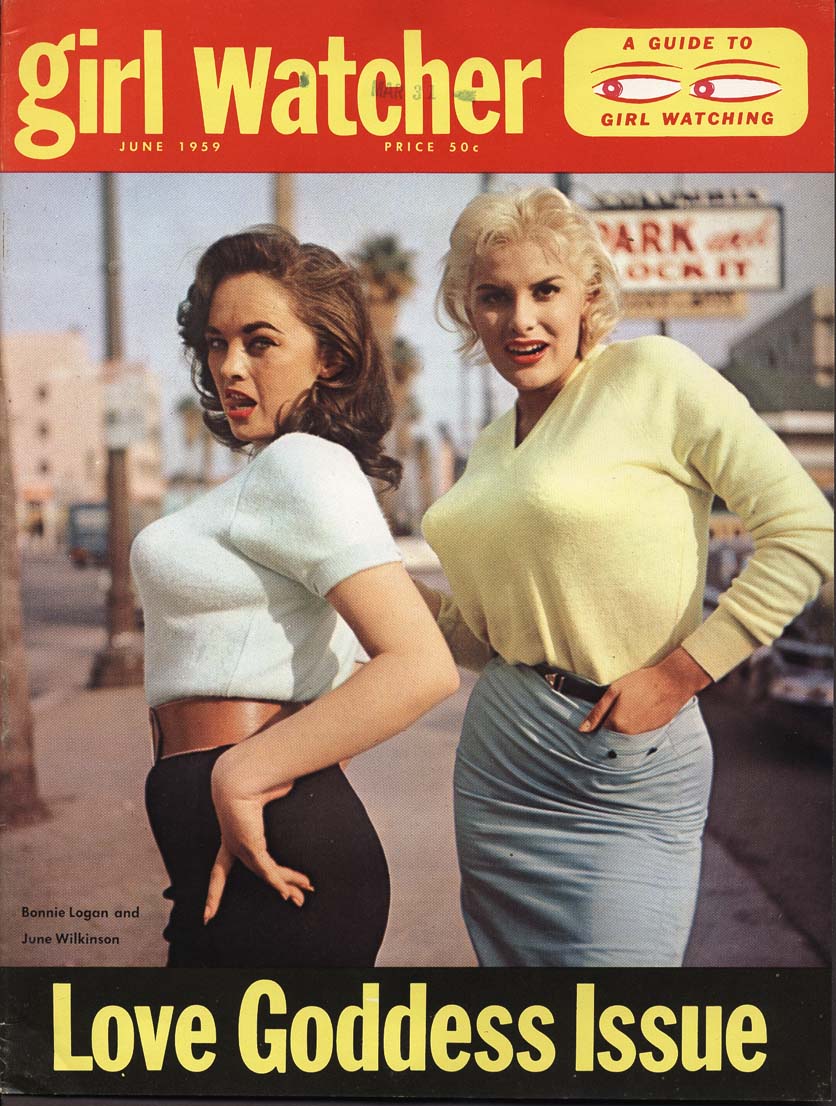
The magazine positioned itself as a lighthearted hobby guide for men who admired women from afar. Its full dedication set the tone immediately — this was a publication aimed squarely at men who viewed women as subjects to be studied, ranked, and pursued.
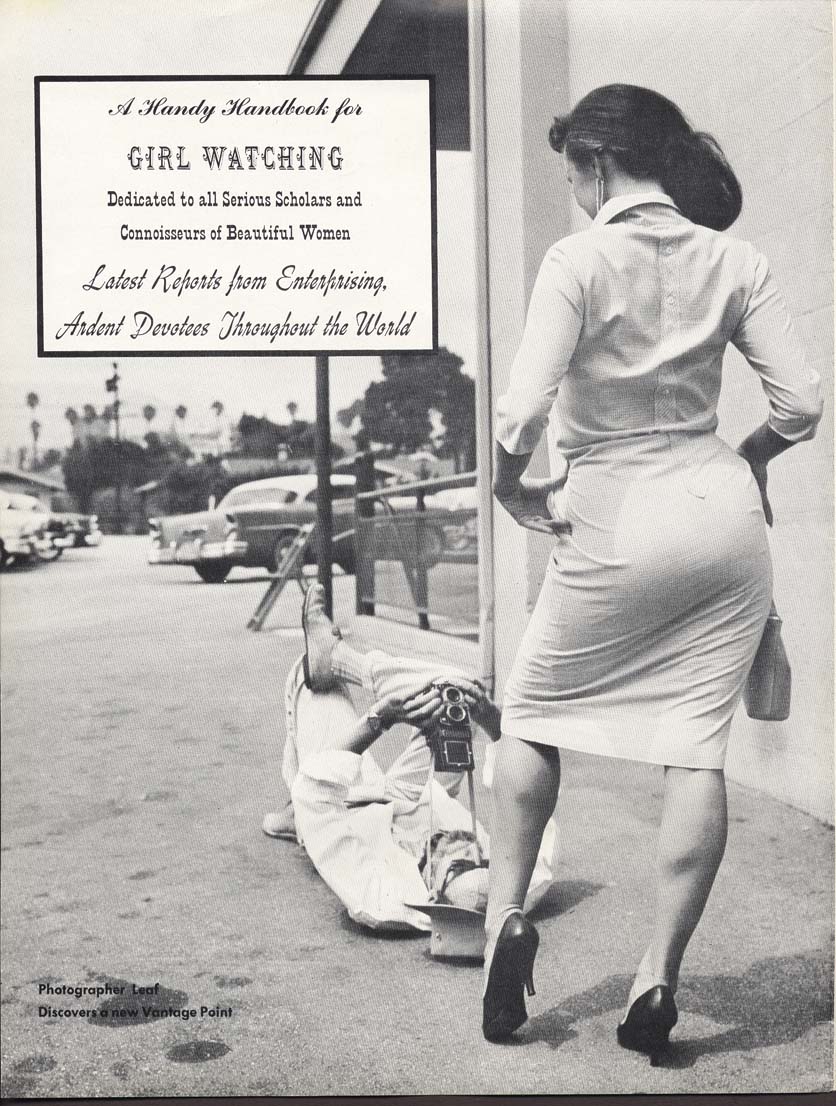
The magazine wasted no time promoting its own brand of so-called expertise. Special features promised readers insider knowledge on how to better engage in their “hobby.” The framing was always casual, always playful — as if what was being described was no different from birdwatching.
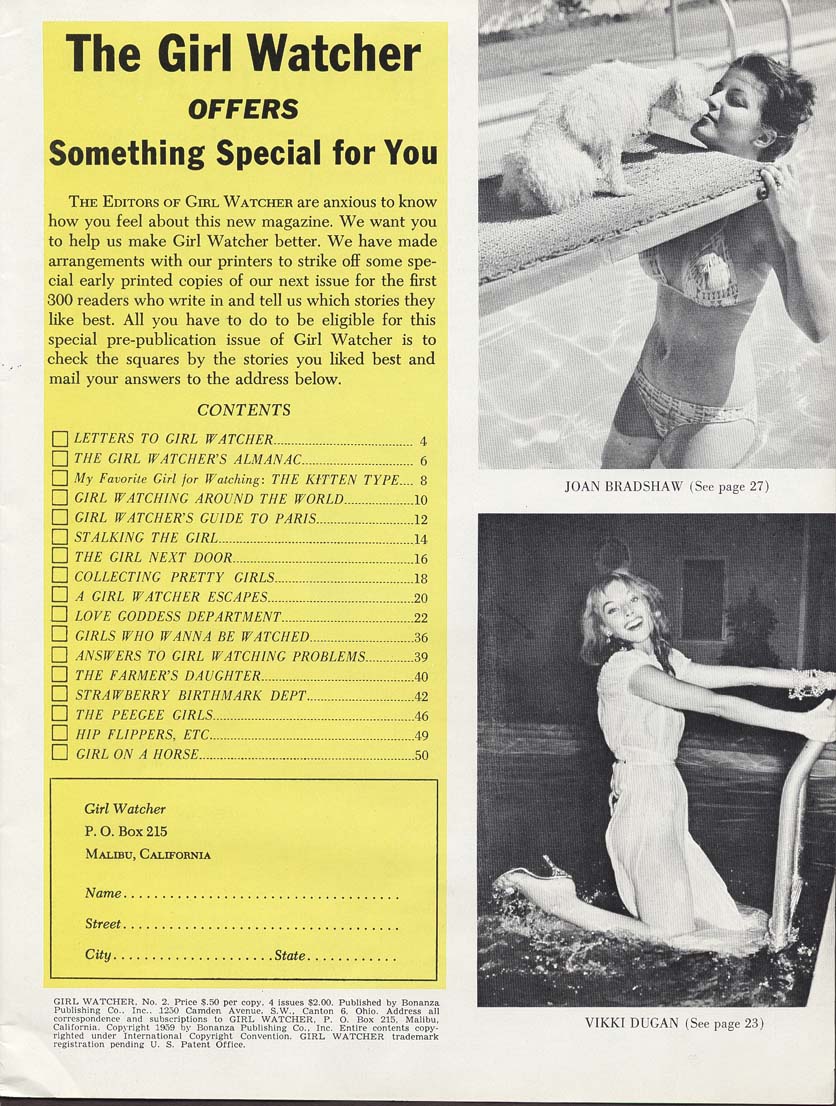
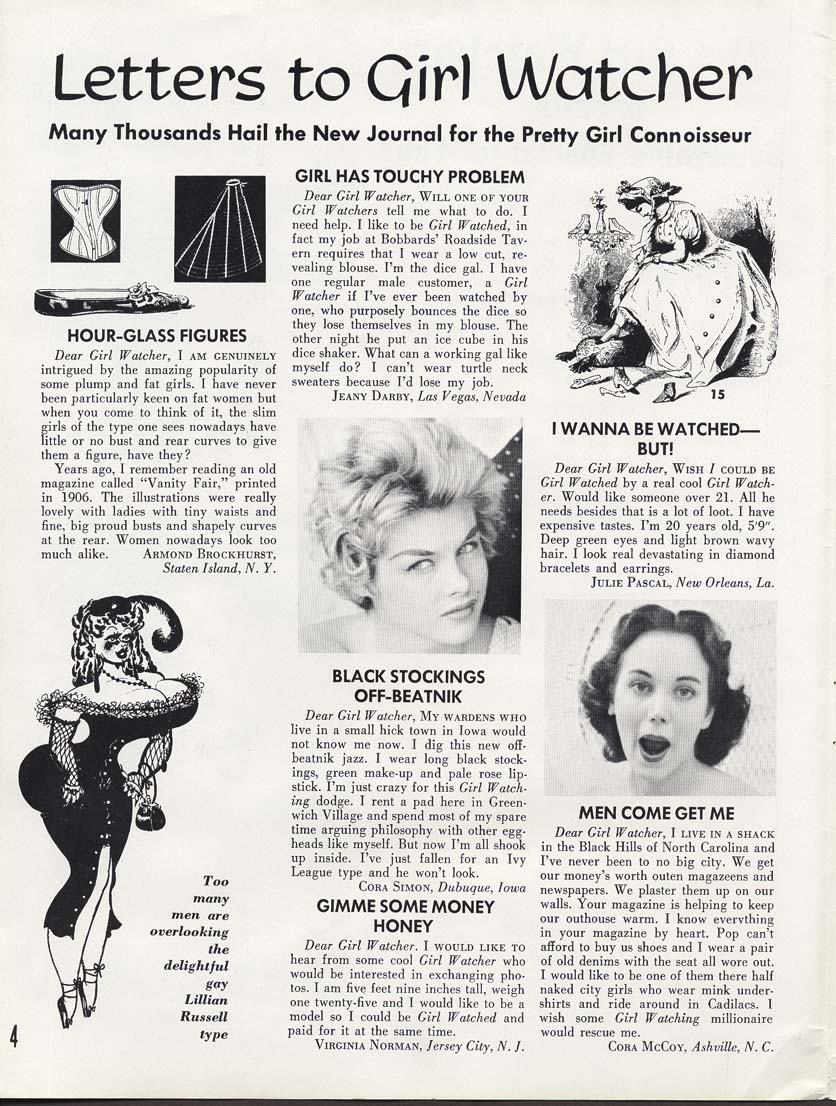
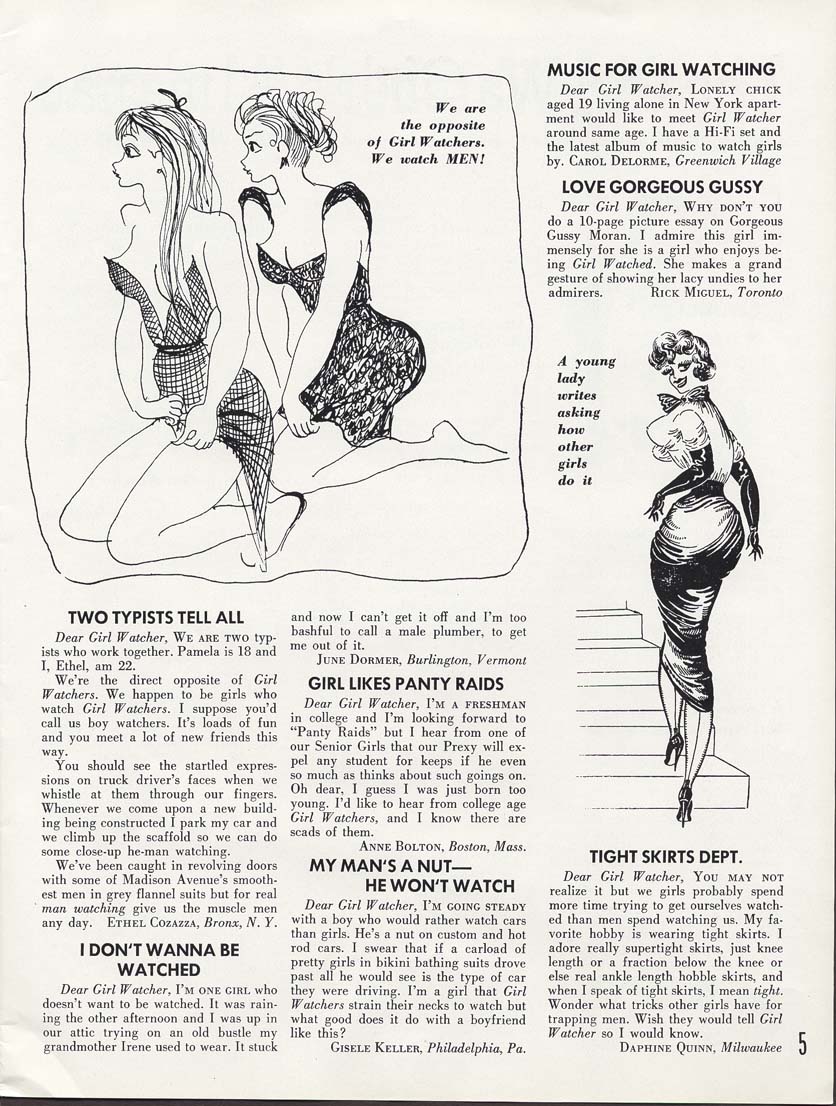
Reader letters were printed in the magazine, creating a community around the content. The topics ranged from commentary on women’s appearances to complaints and requests — all filtered through the same lens of men treating women as objects for public consumption and debate.
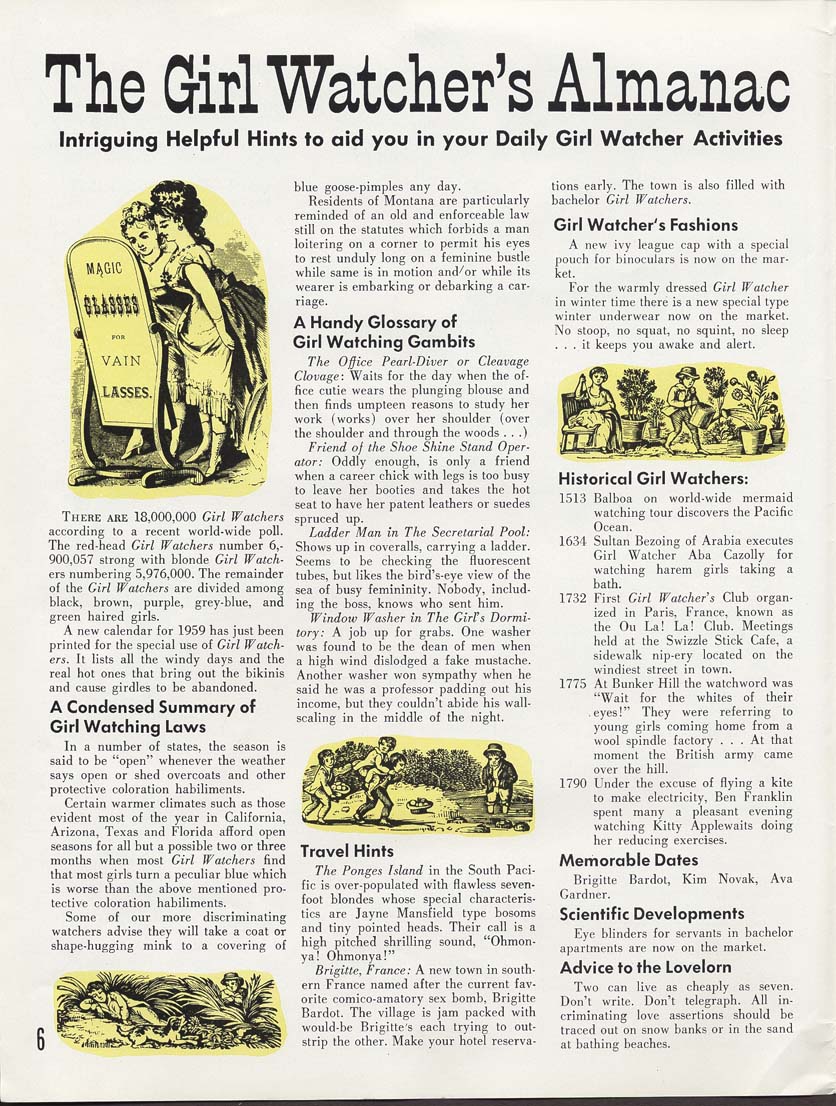
The magazine also published step-by-step “helpful hints” for daily girl-watching activities. These weren’t vague suggestions. They were practical instructions on how men should position themselves, where to go, and how to observe women without detection. The language treated it as skill-building.
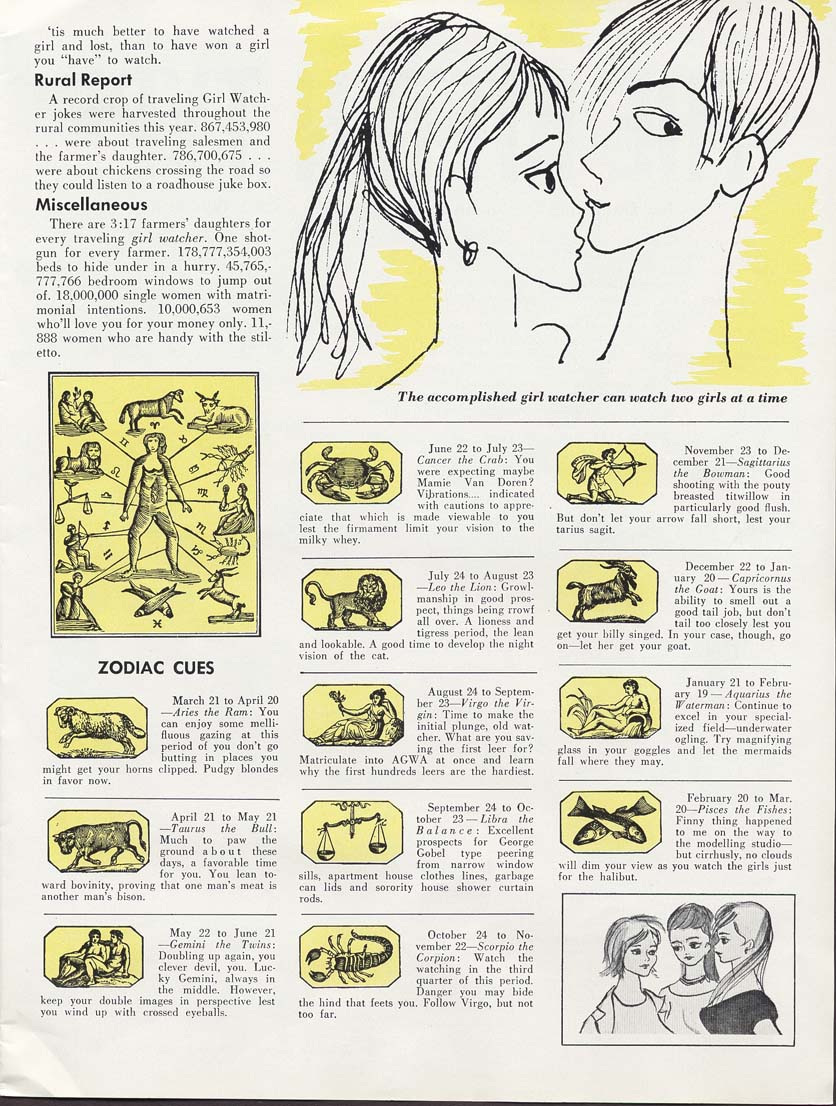
The magazine even used astrology as a tool, publishing zodiac-based guides that supposedly told men what type of woman they could expect to encounter based on star signs. It was one of many ways the publication dressed up surveillance of women as fun, structured entertainment.
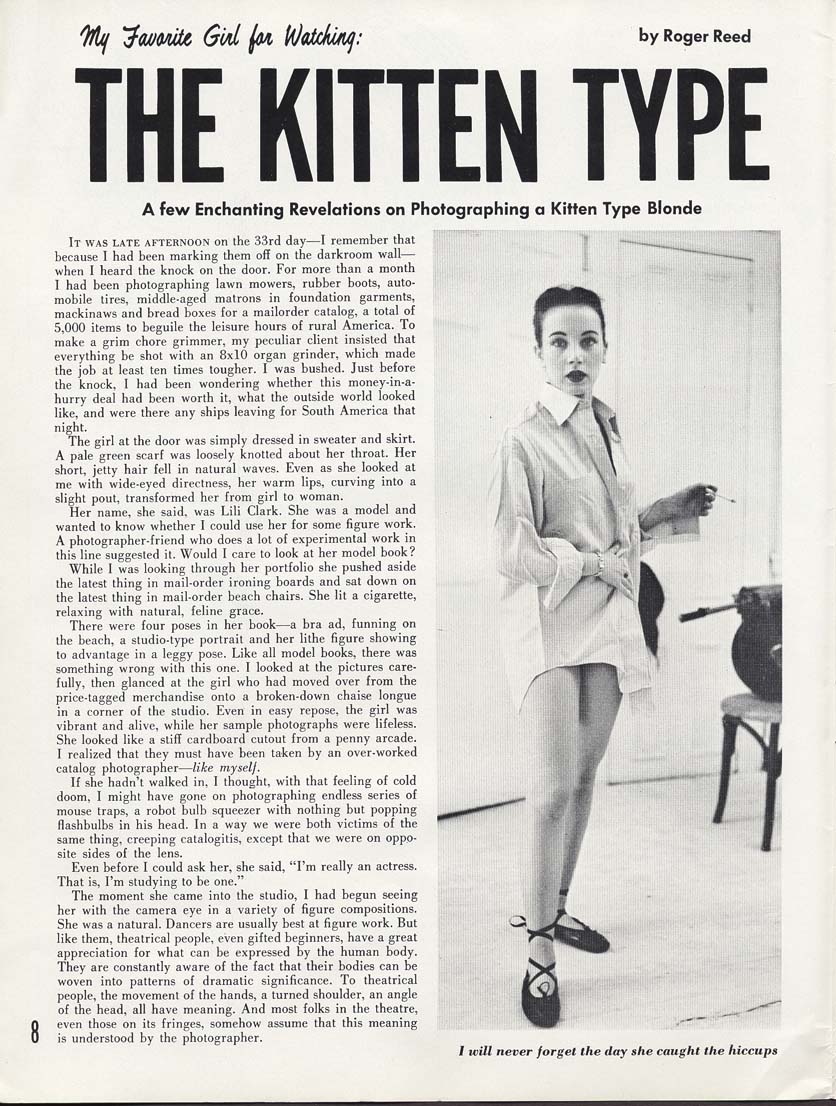
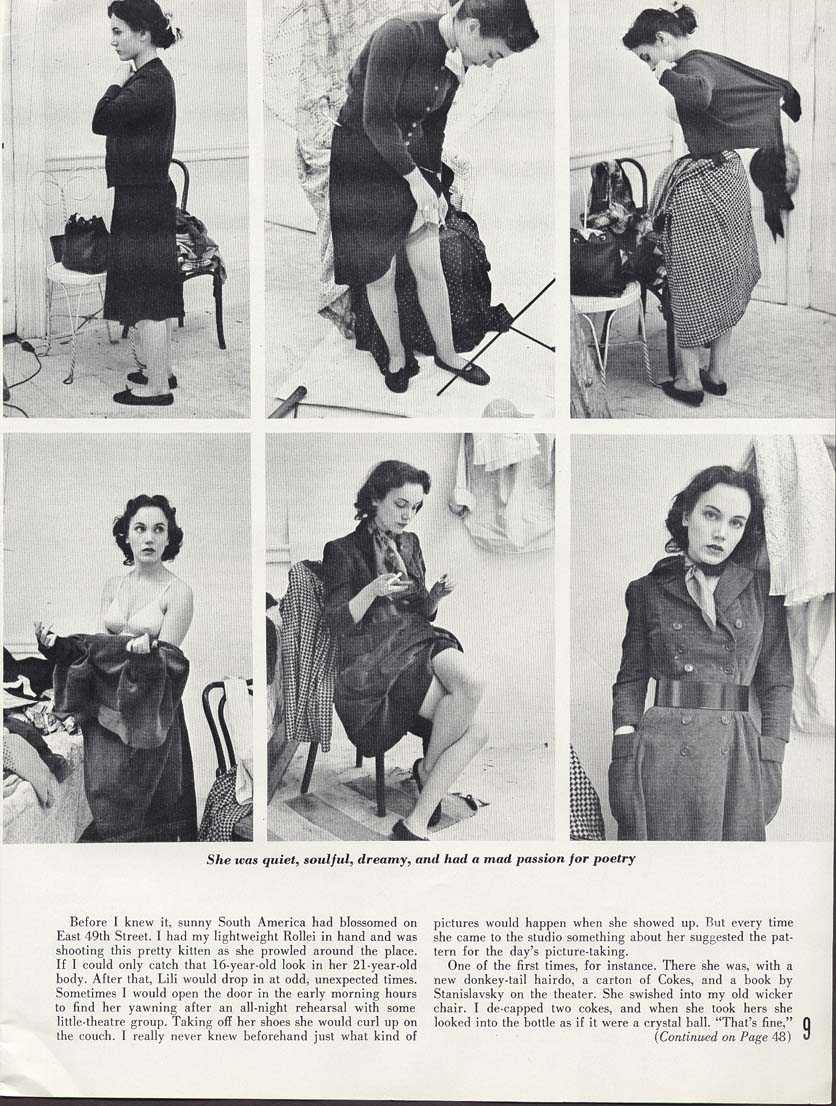
Women were sorted into categories and types throughout the magazine. Labels like “the kitten type” reduced real people to caricatures, making it easier to classify and “collect” them — language the magazine used openly and without irony.
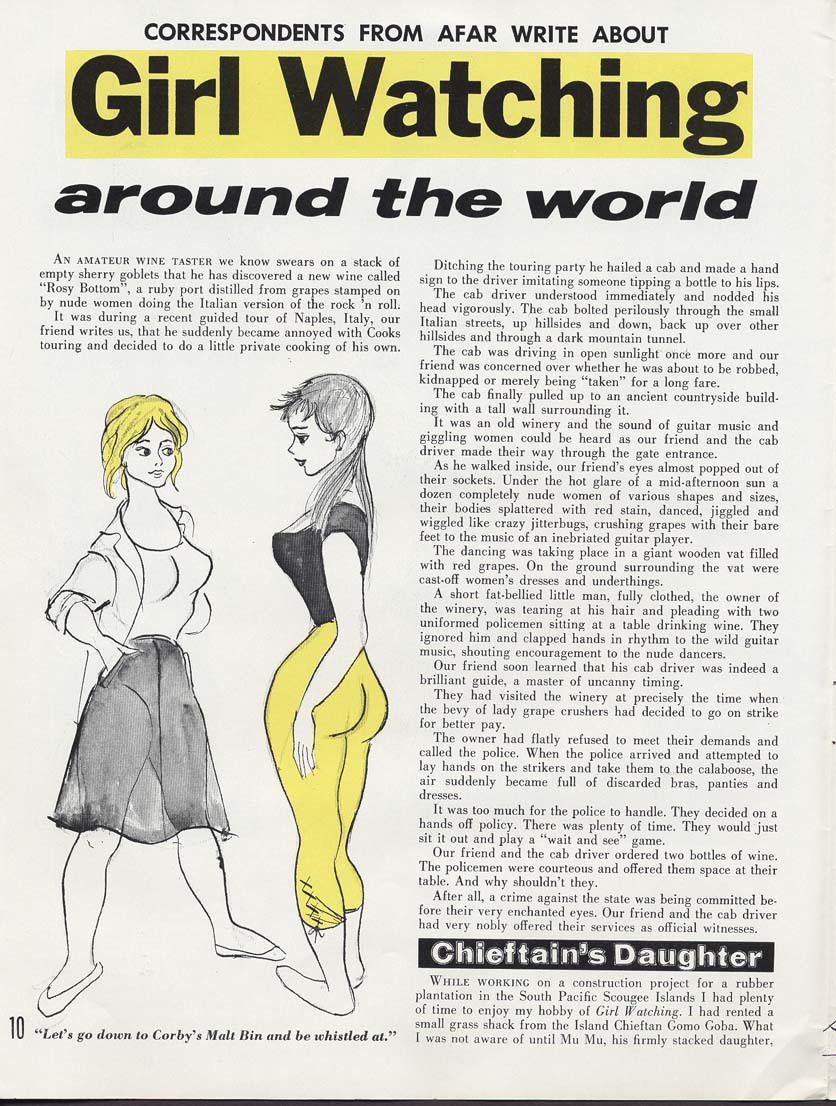
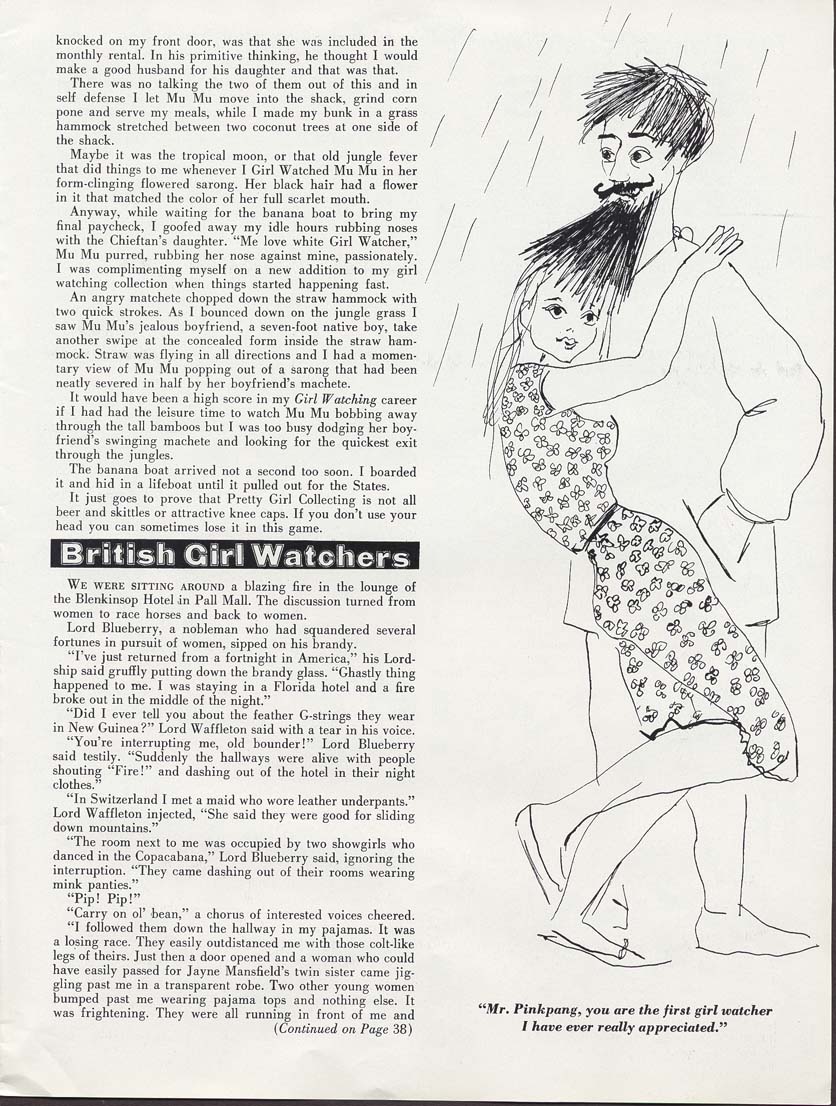
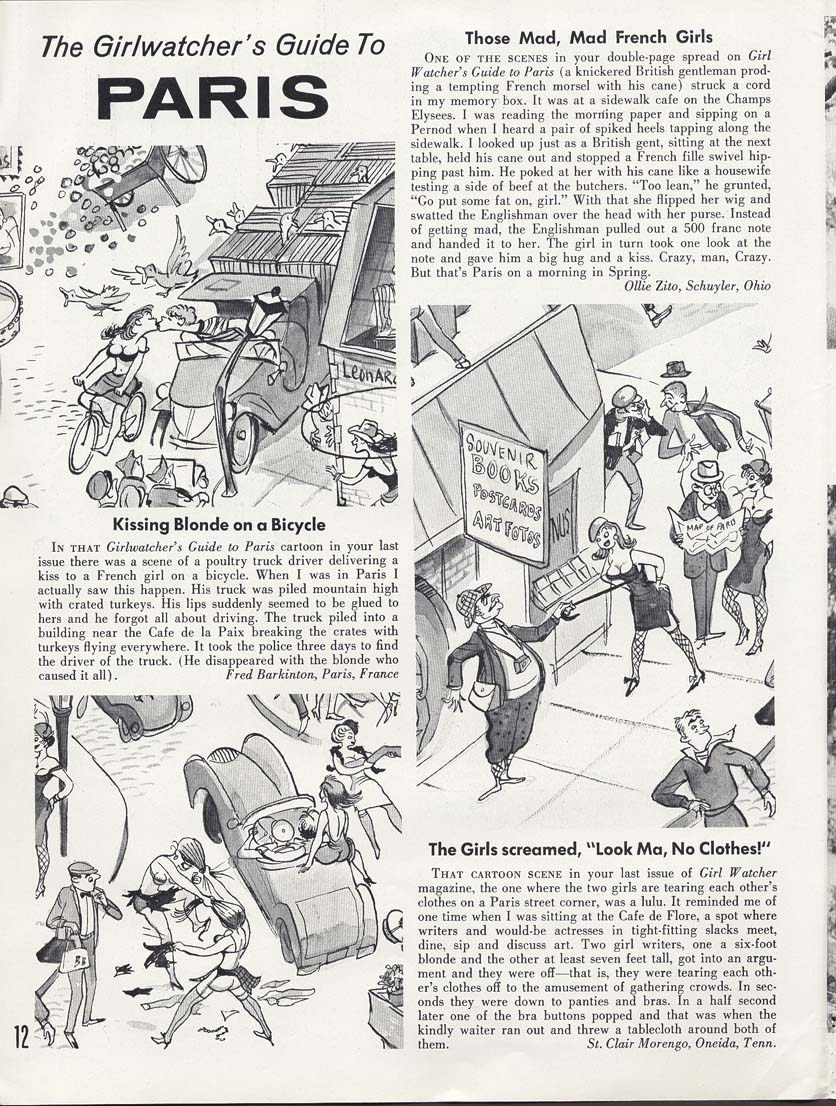
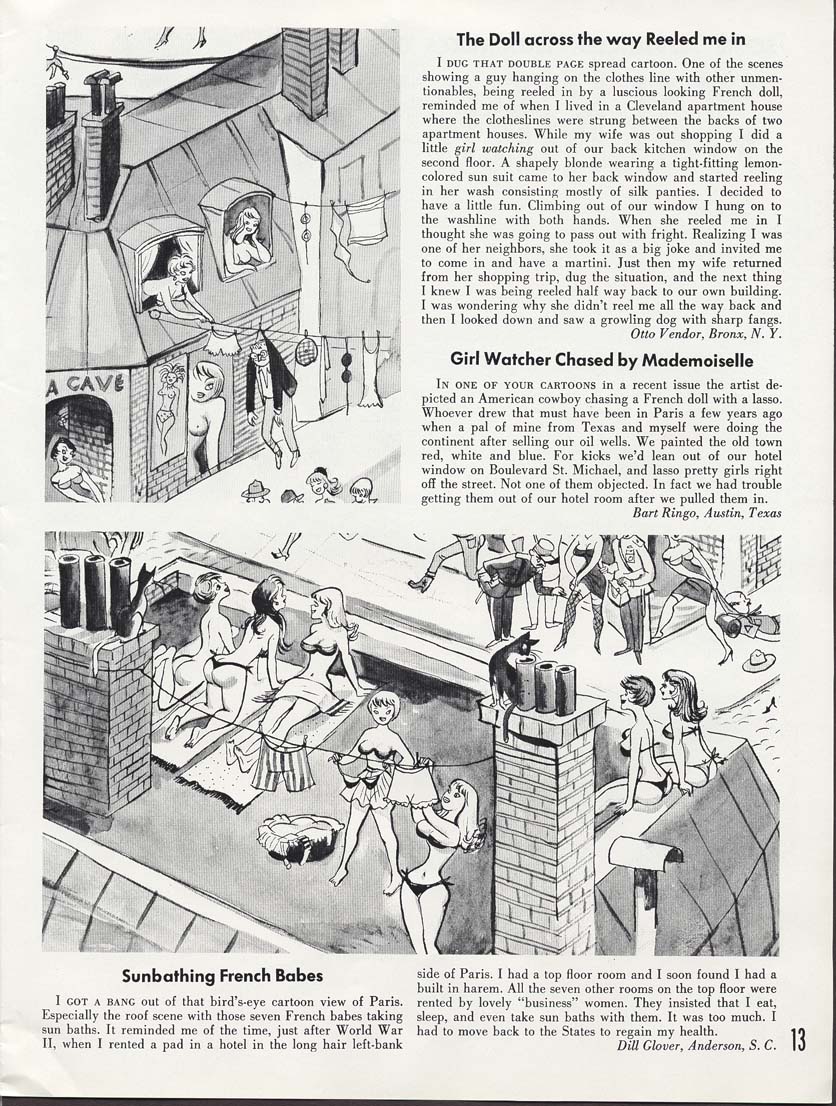
Girl Watcher didn’t limit its scope to American streets. It published international editions of its “field guides,” sending readers on imaginary tours across the globe to observe and rate women in other countries. The framing was touristic, but the intent was the same.
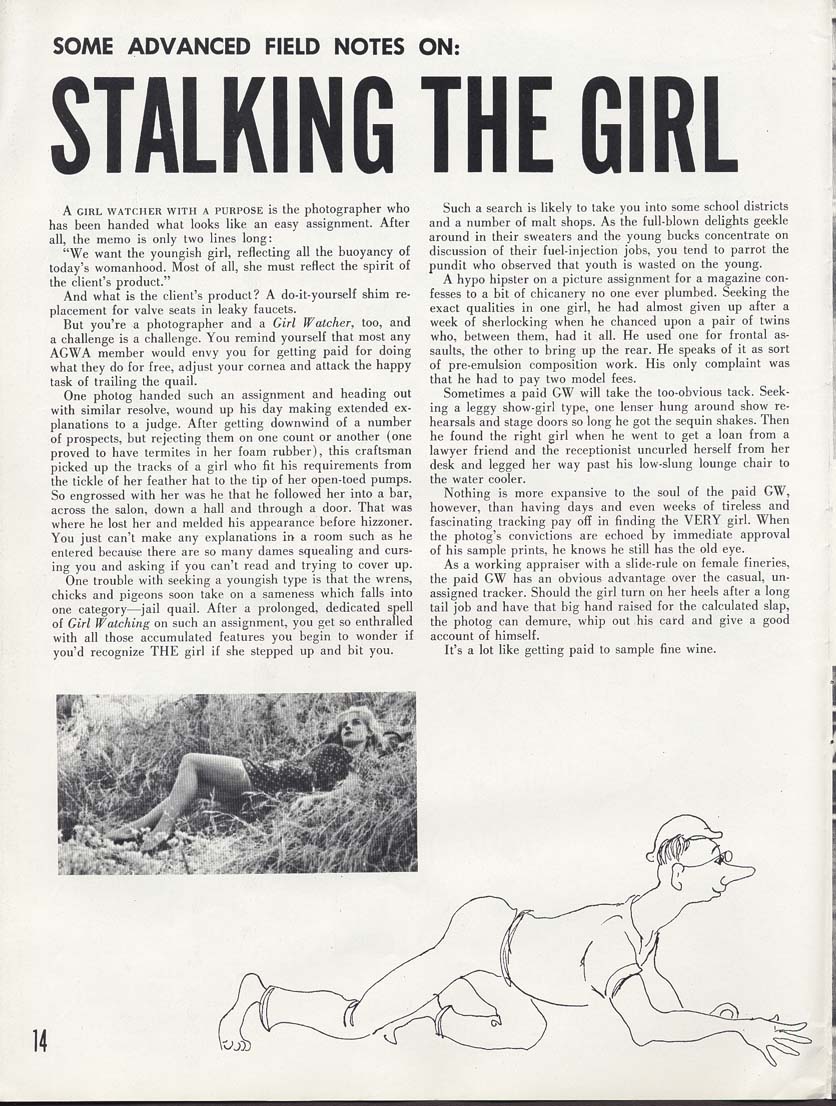
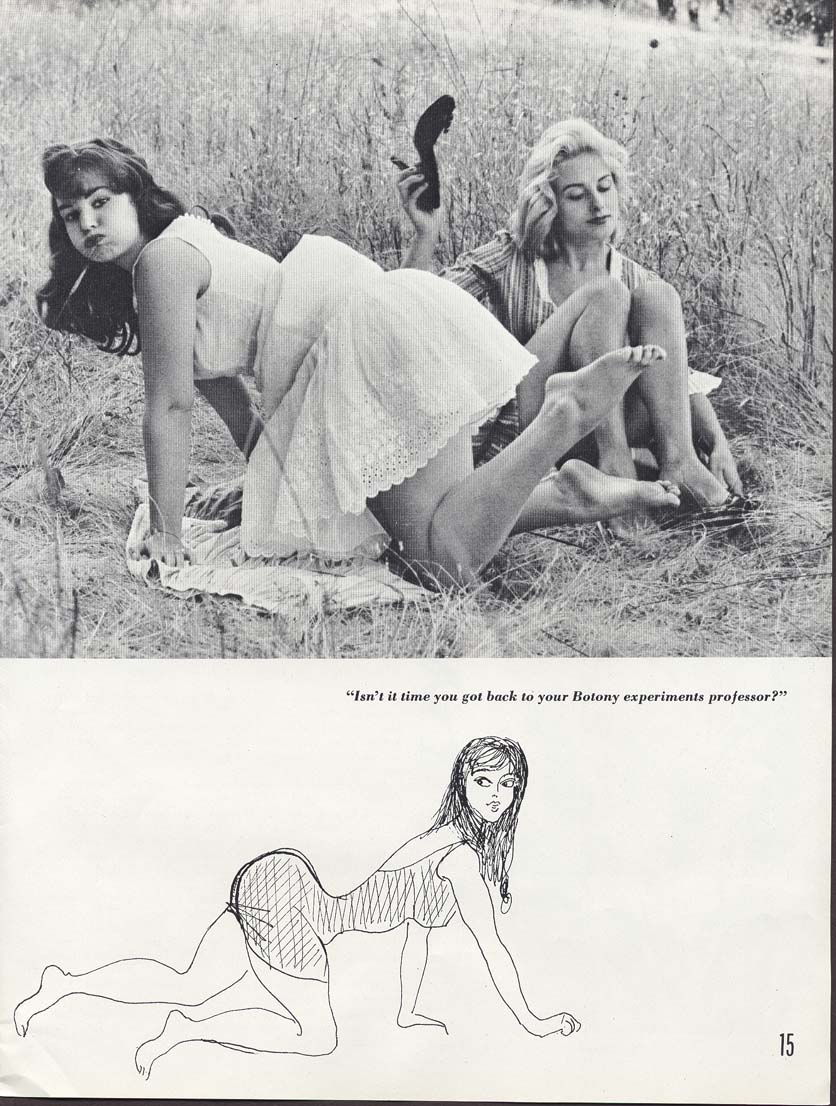
The most direct content in the magazine appeared in an article titled “Some Advanced Field Notes on Stalking The Girl.” The word “stalking” was used without hesitation. It laid out methods for following and tracking women, framed as the natural next step for a dedicated girl watcher who had mastered the basics.
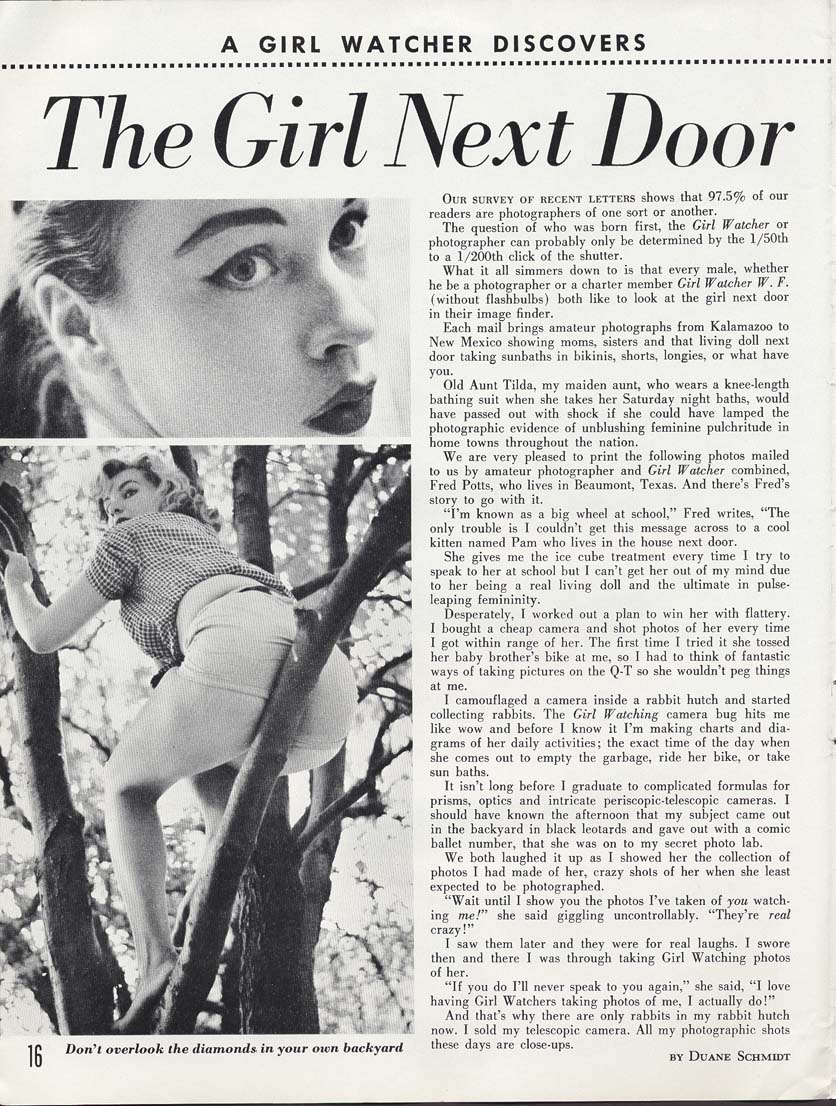
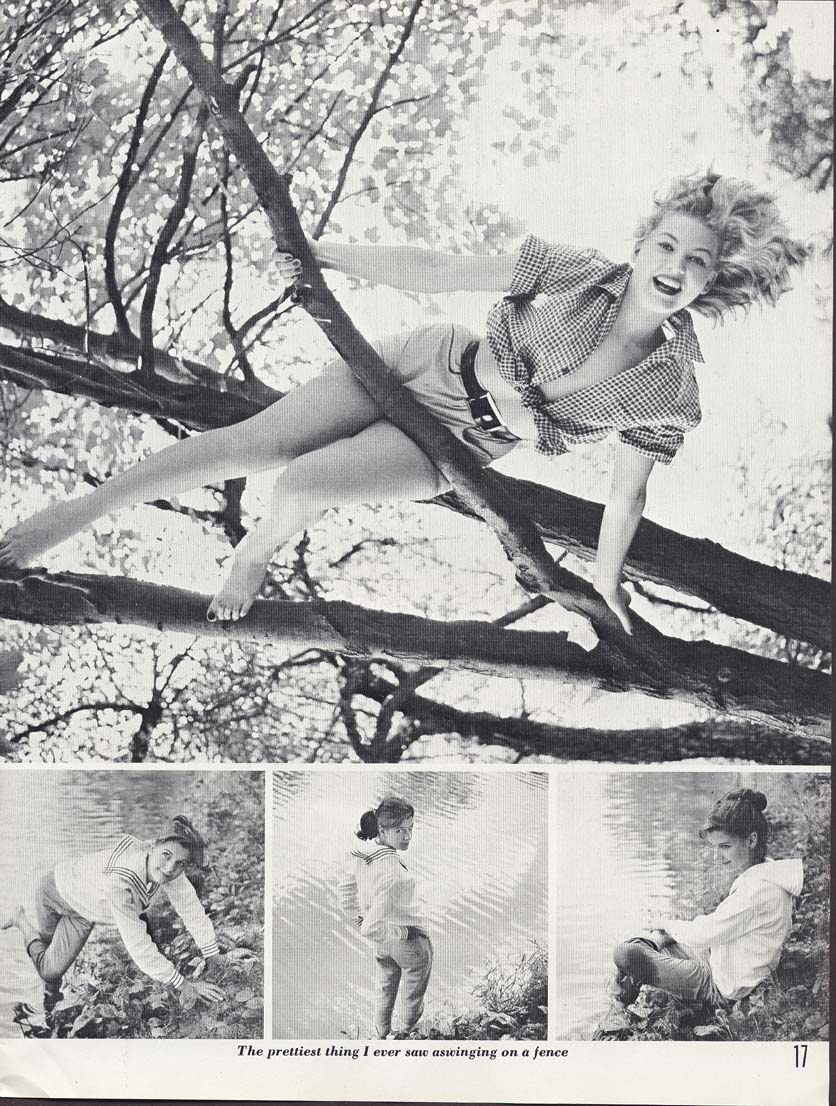
The “Girl Next Door” feature brought the subject matter closer to home — literally. Rather than distant strangers on city streets, this section focused on women in a reader’s own neighborhood, reinforcing the idea that no space was off-limits for observation.
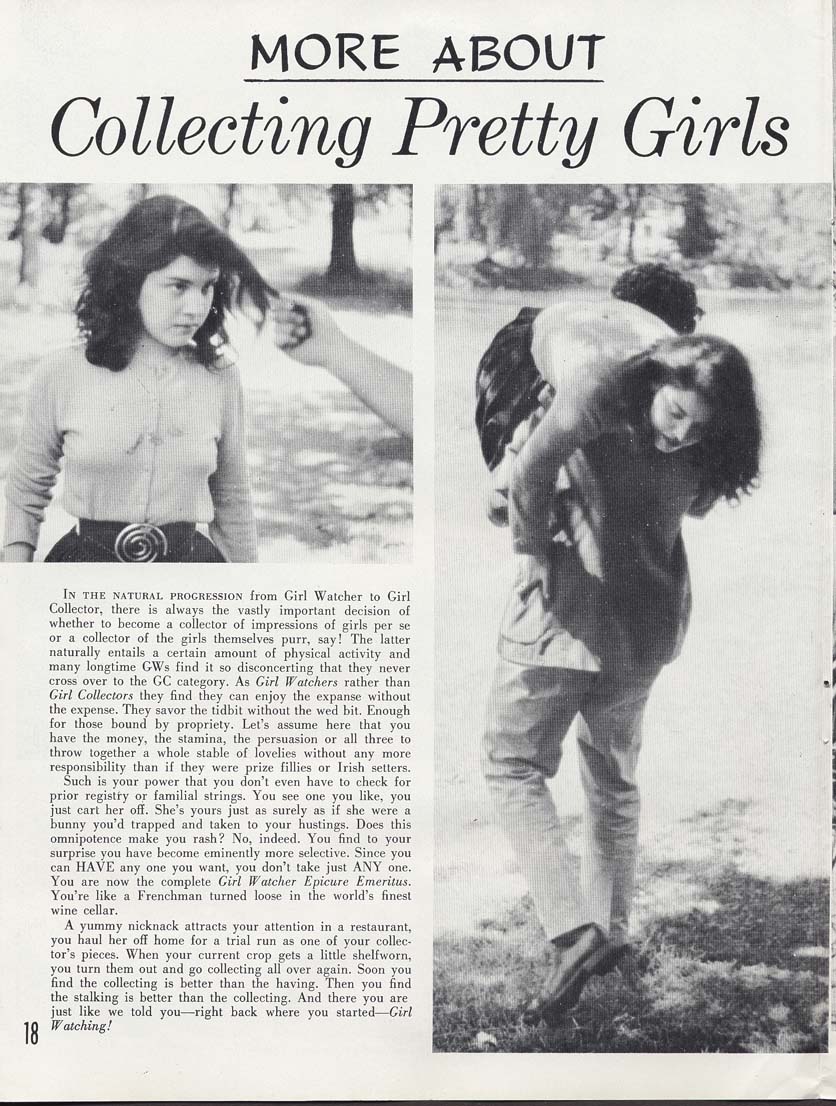
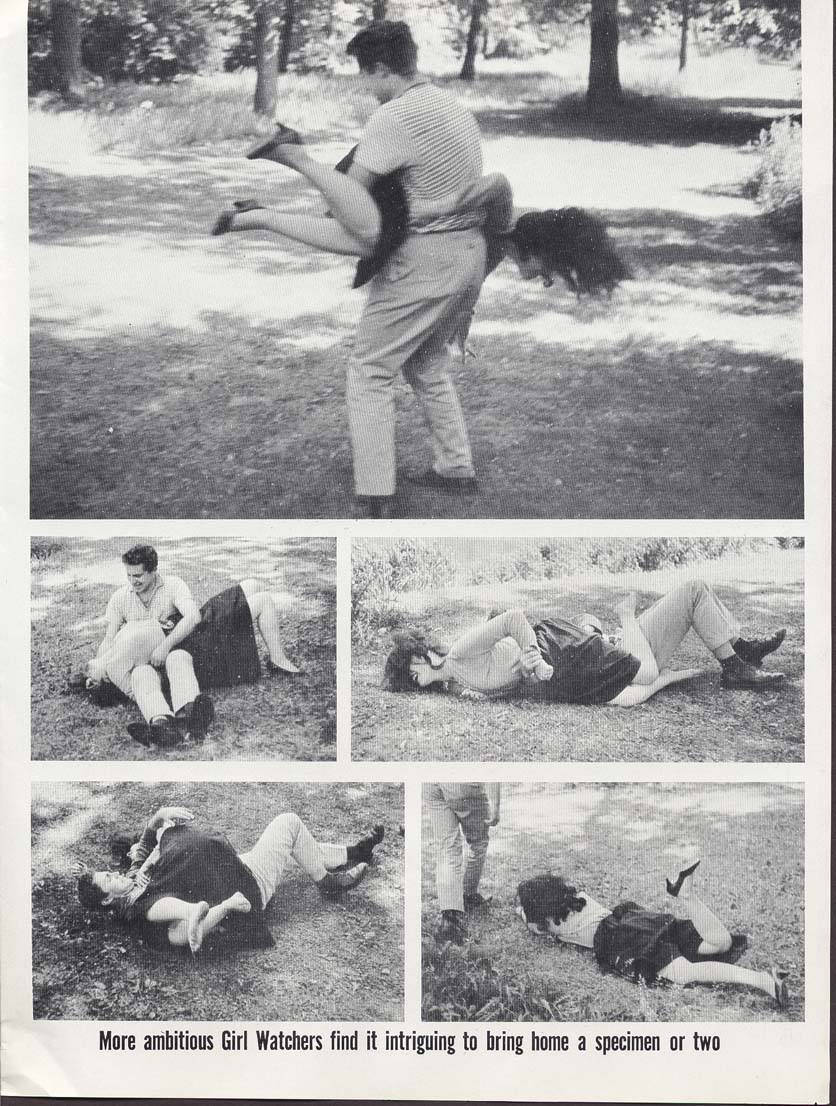
“Collecting Pretty Girls” was another feature that used the language of a hobby to describe something far more troubling. Collectors acquire things. The magazine applied that same framework to women — turning them into trophies to be sought, found, and added to a personal catalog.
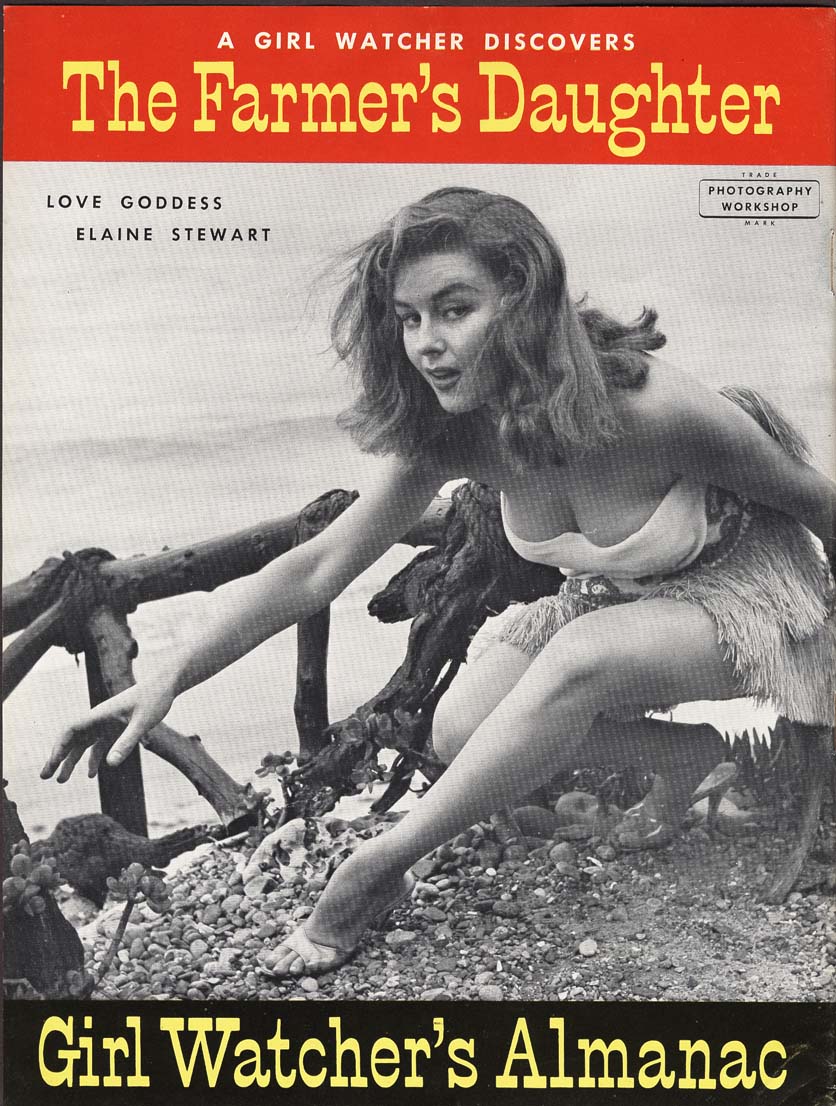
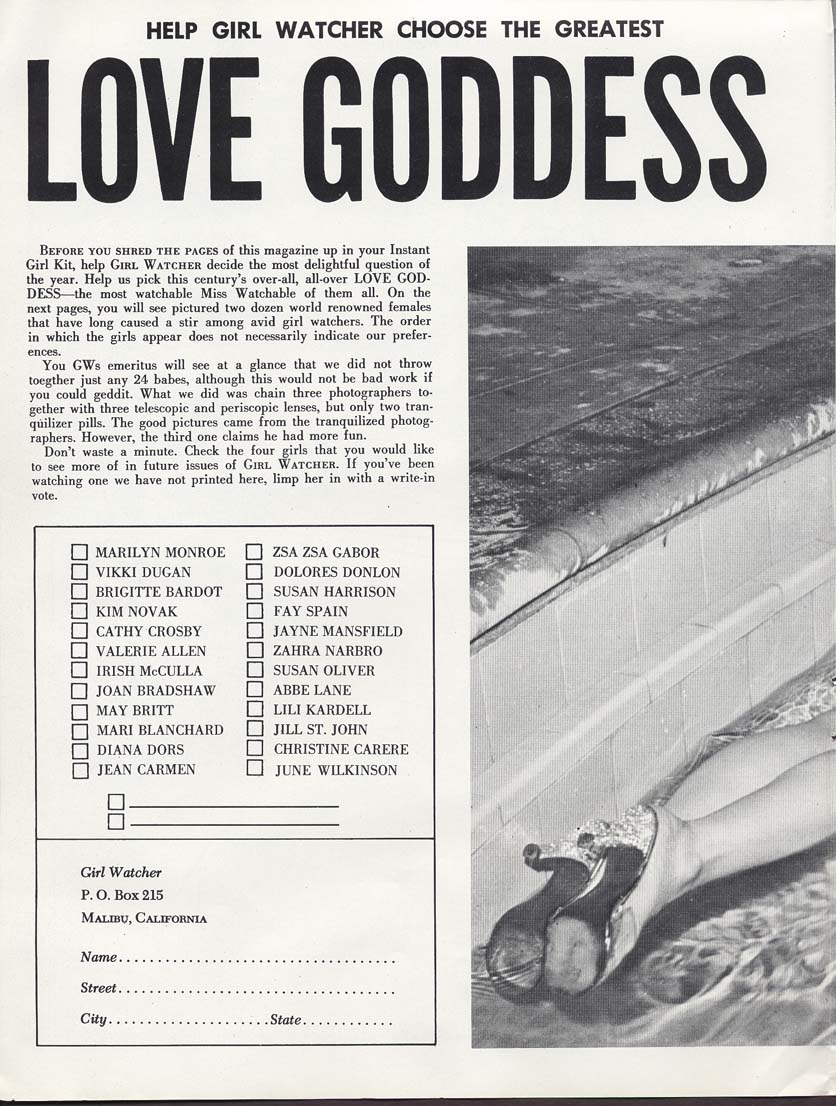
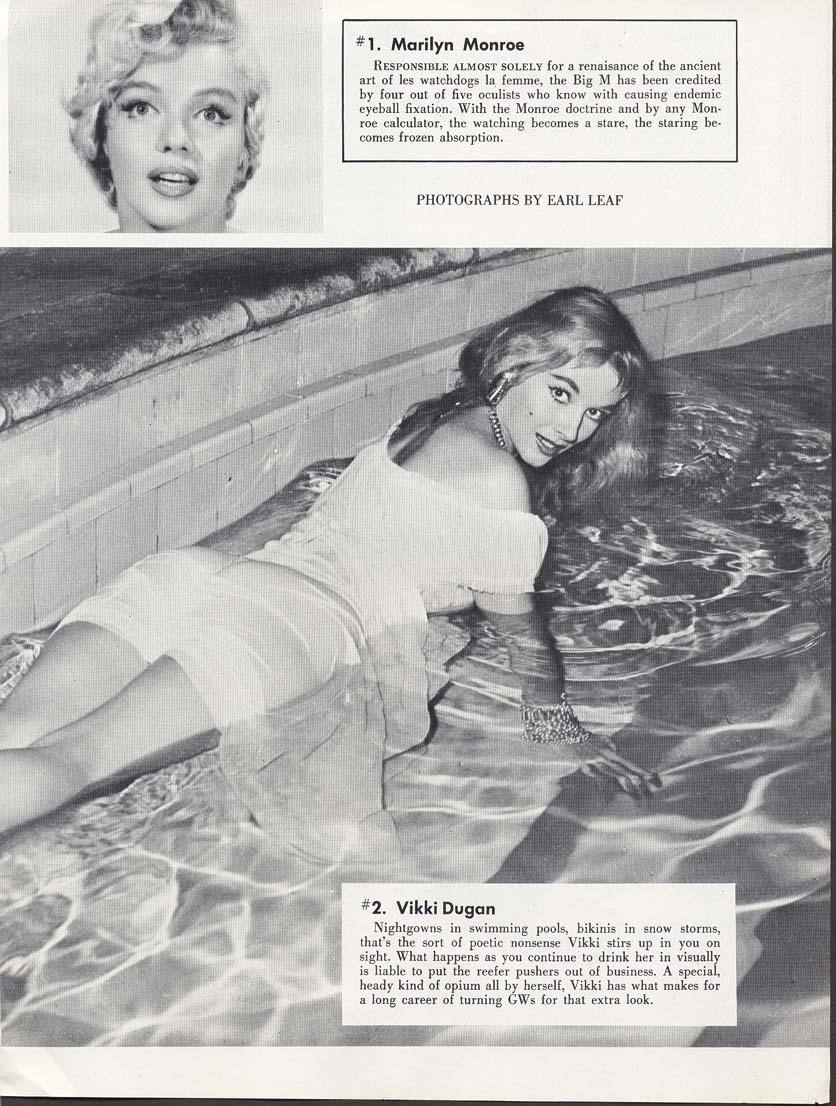
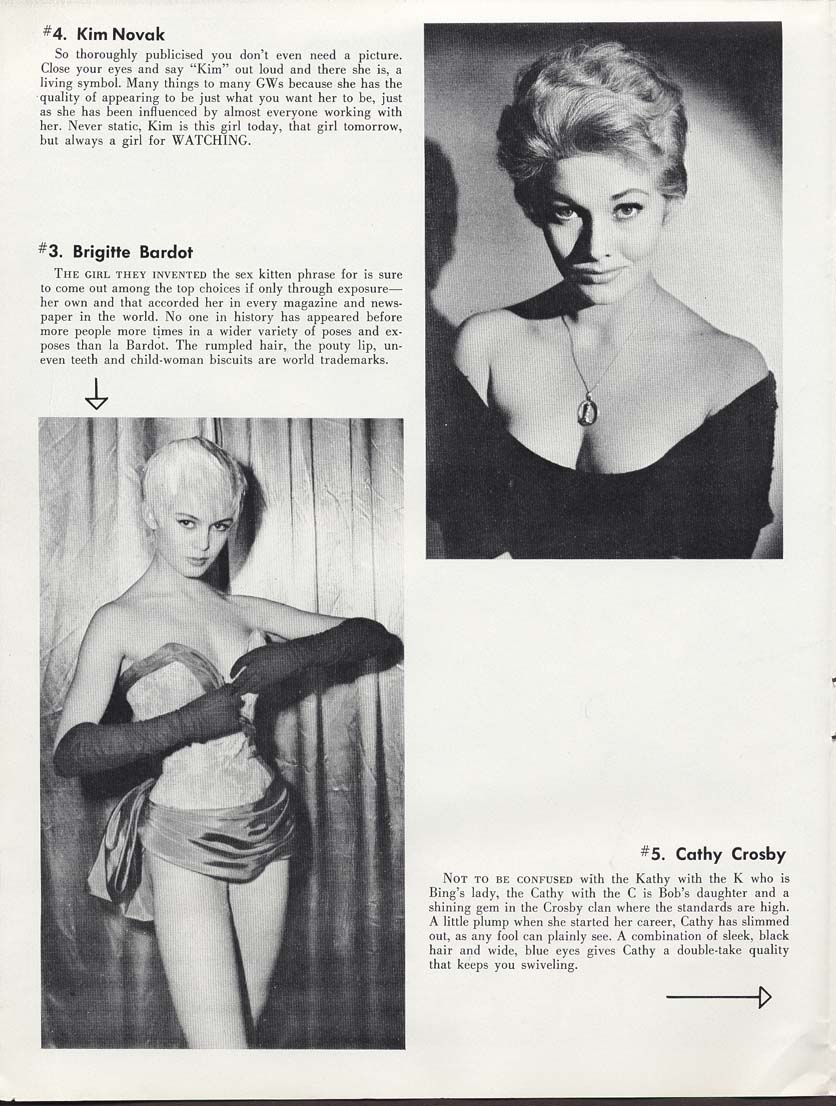
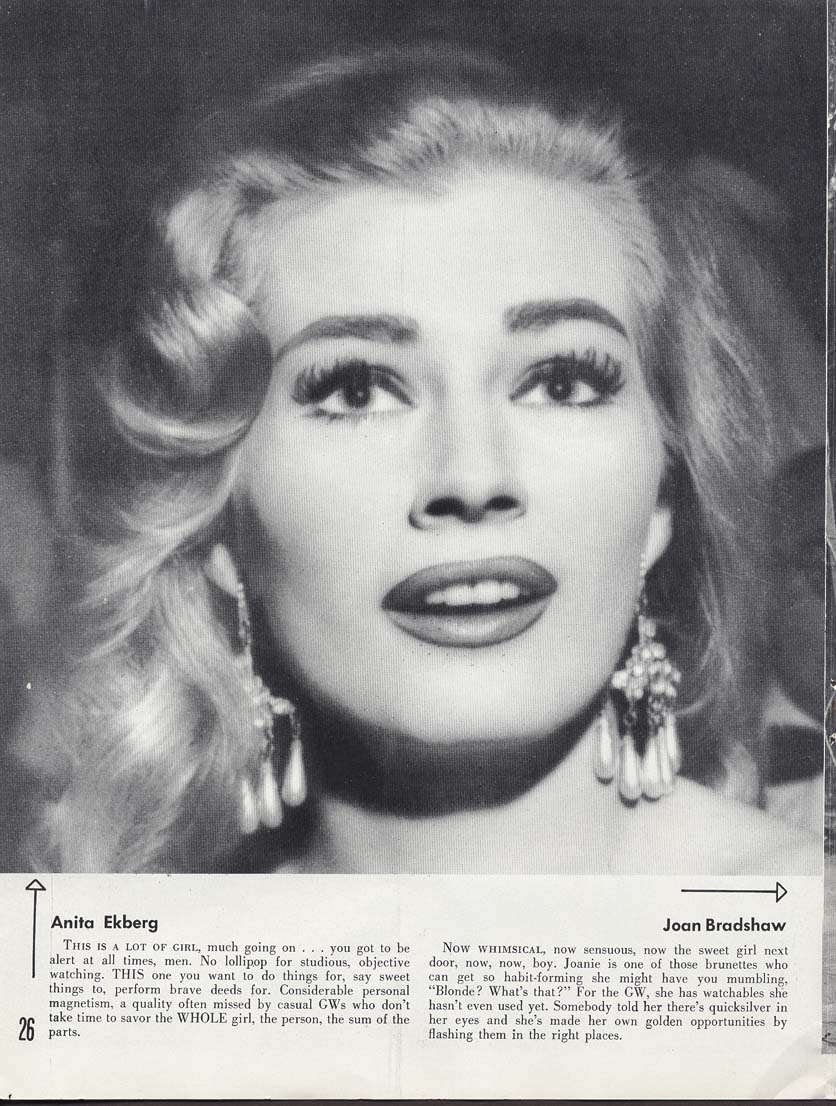
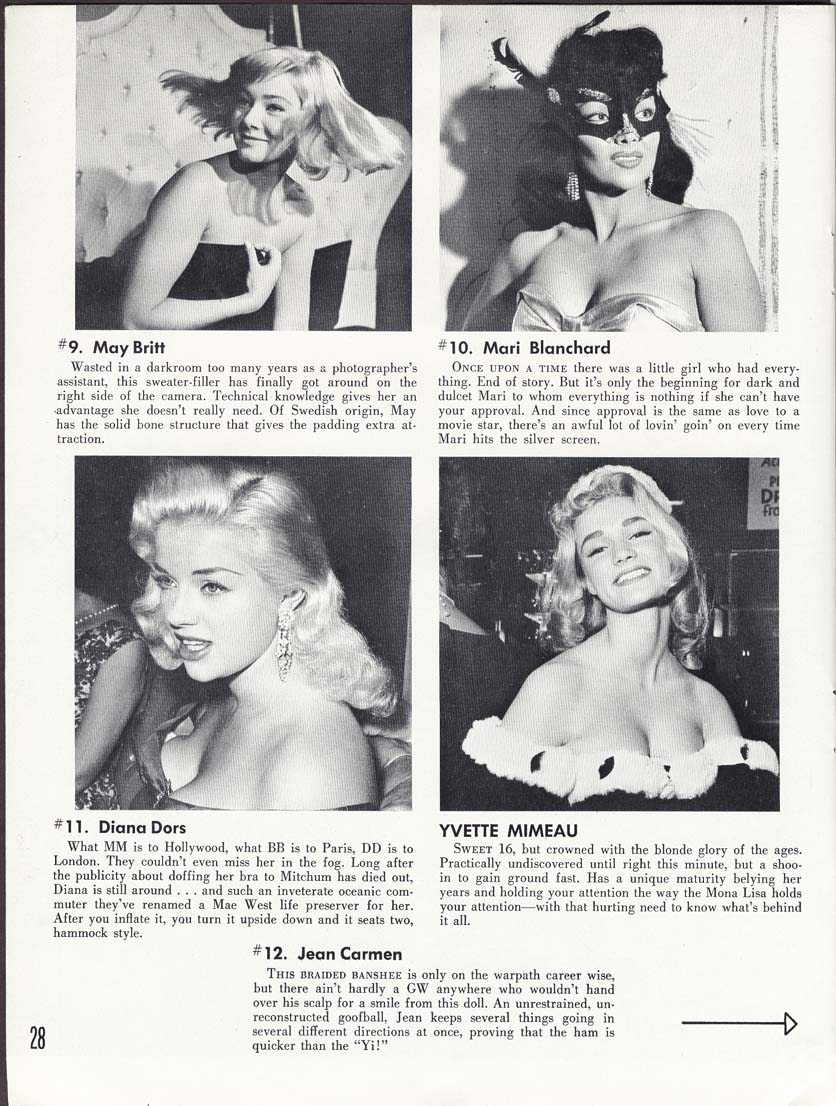
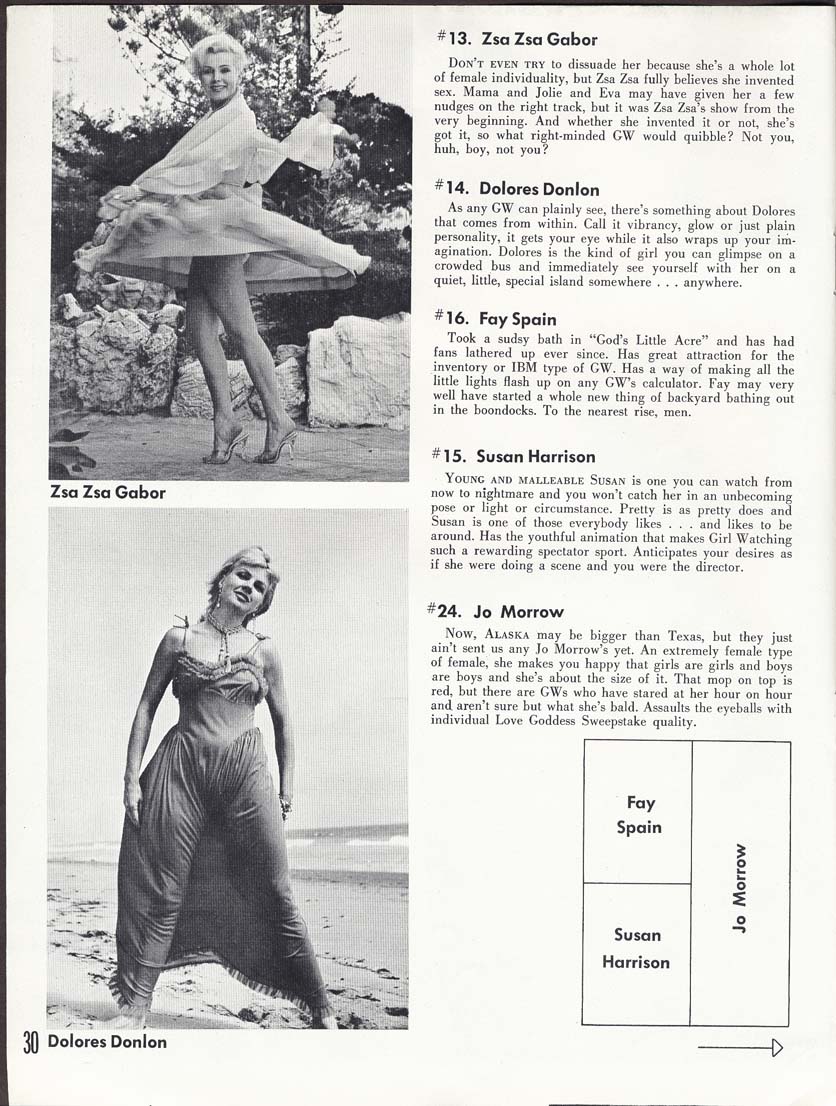
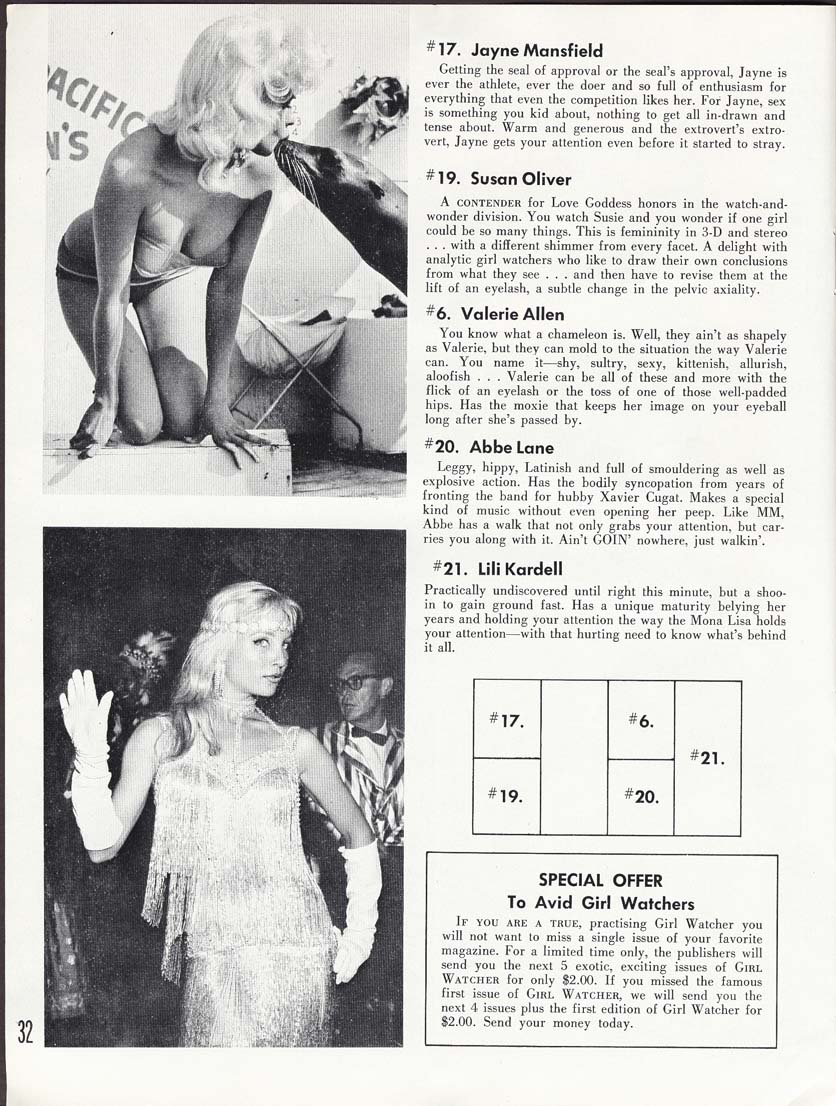
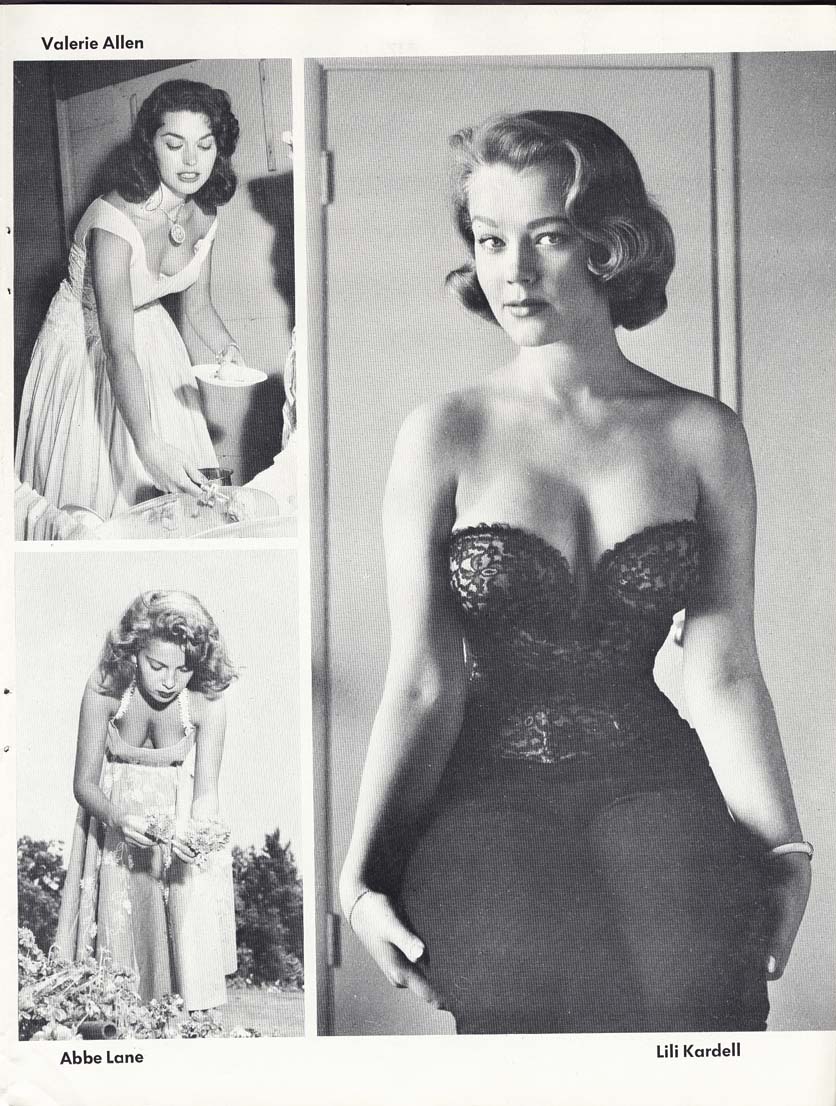
The magazine also ran a reader poll asking men to vote on the greatest “love goddess” of the era. Celebrities like Marilyn Monroe, Brigitte Bardot, Kim Novak, and Vikki Dougan were listed as candidates, turning famous women into a competition judged entirely by male approval.
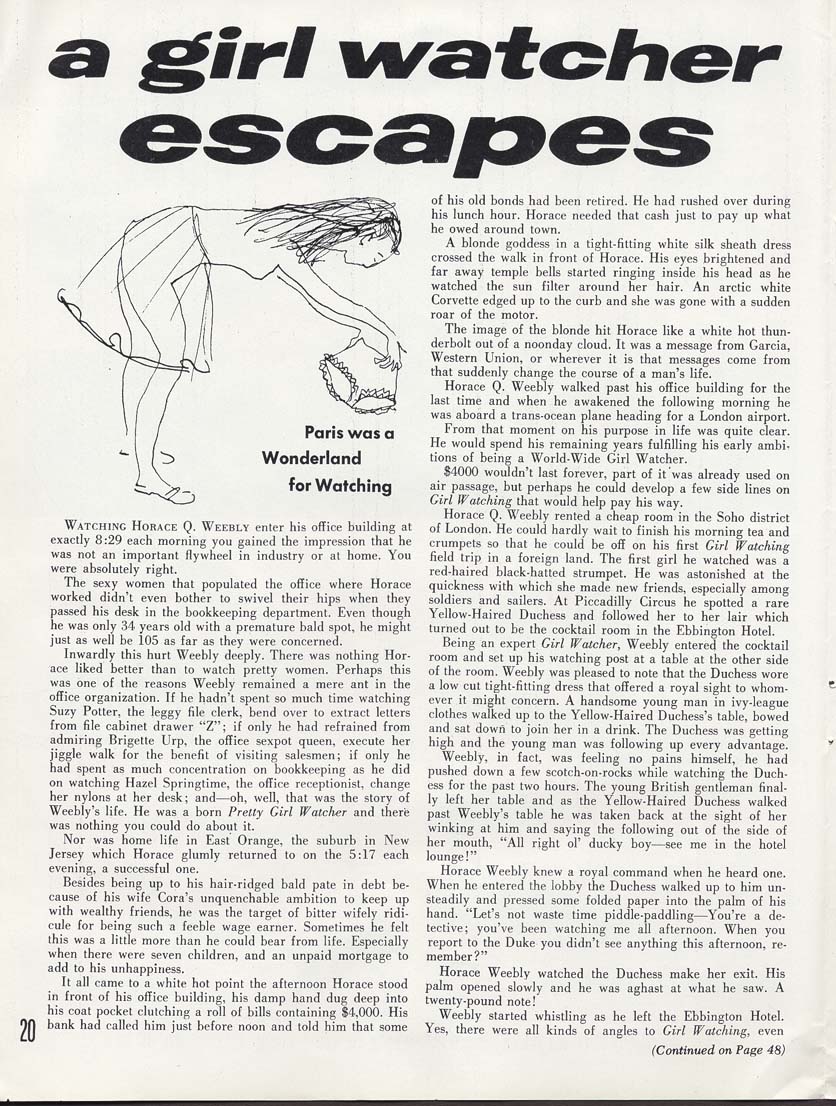
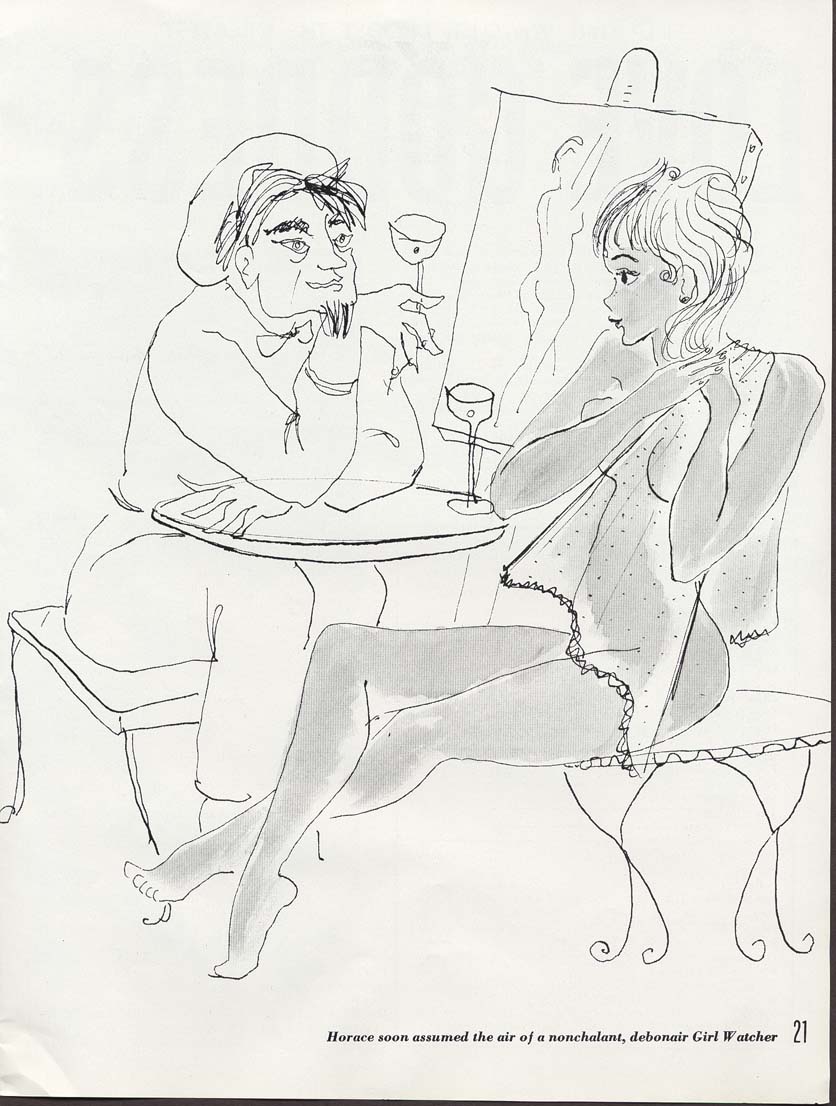
The creators styled Girl Watcher as a parody in the vein of Mad Magazine. The jokes, the fake academic language, the mock-serious “field notes” — all of it was meant to read as comedy. But the behavioral instructions were specific and actionable, not abstract.
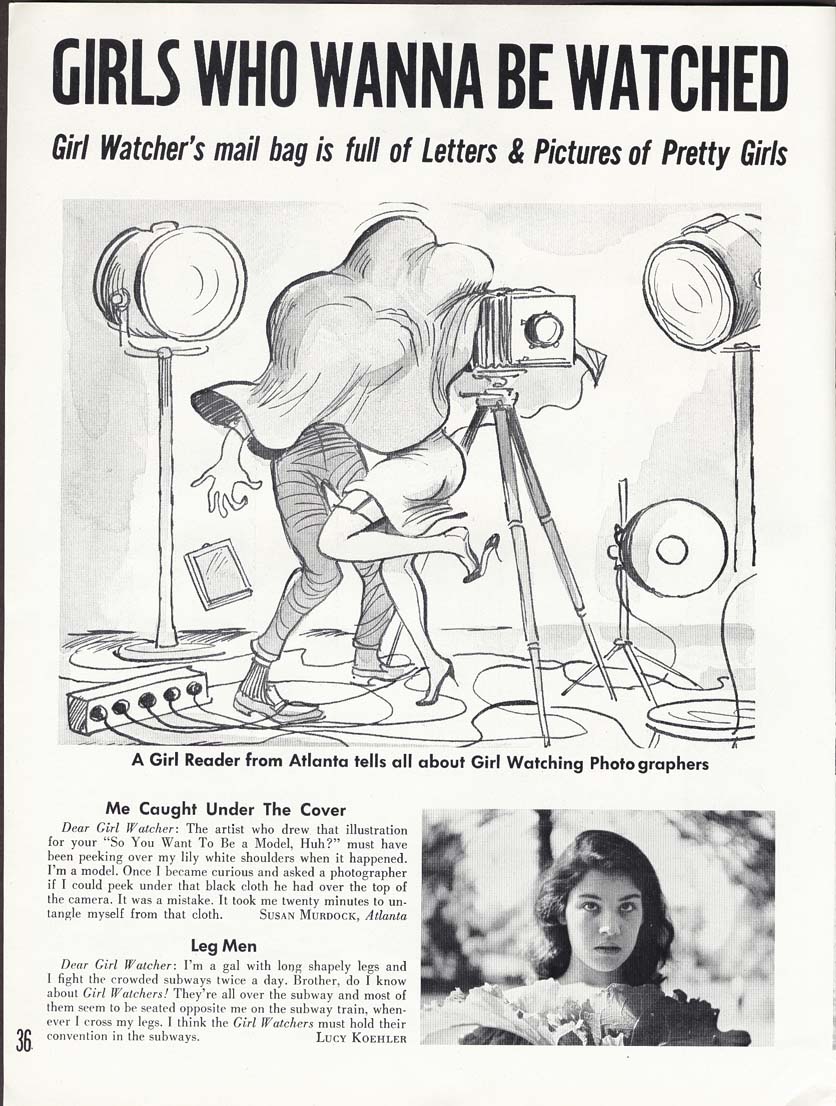
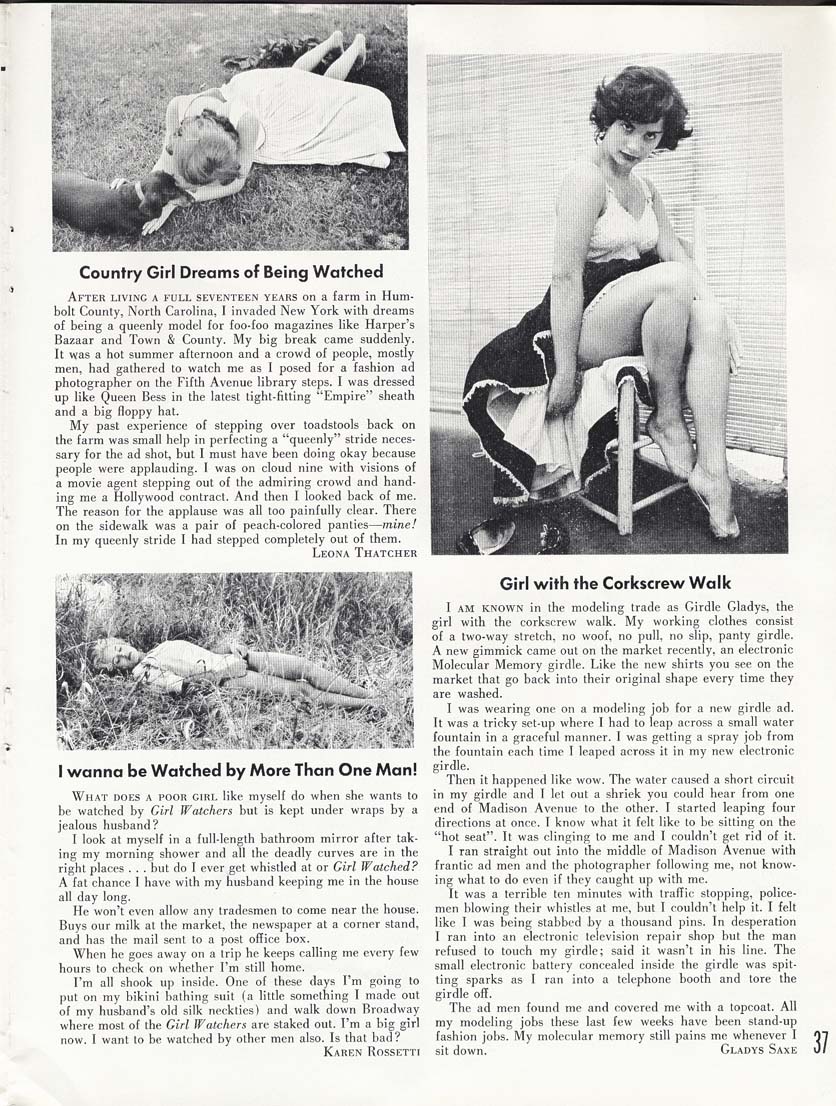
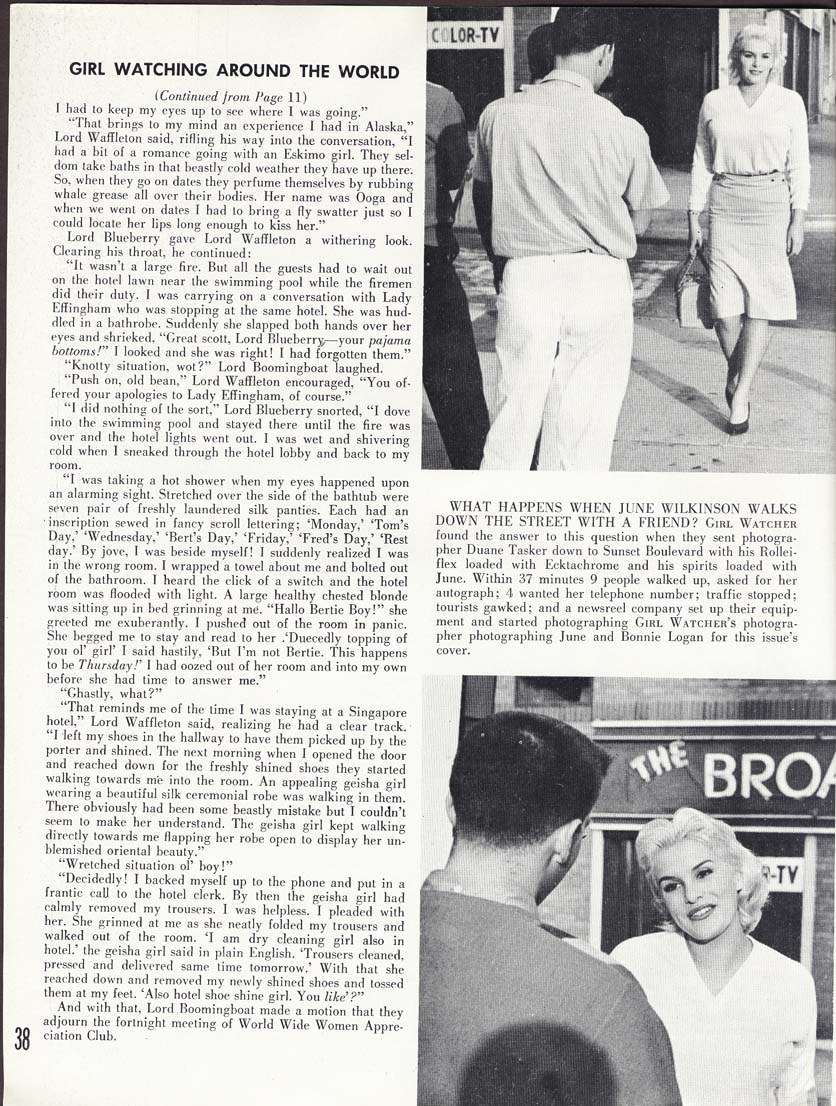
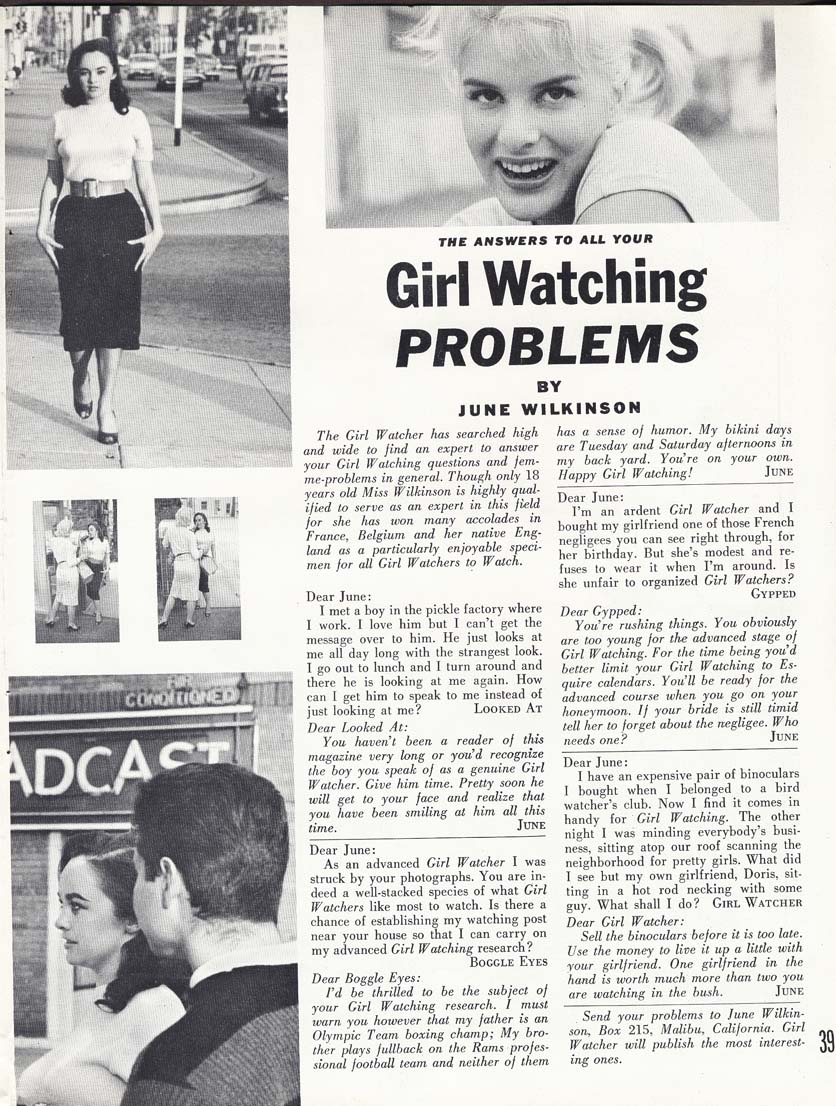
The magazine even offered an advice column of sorts — promising answers to readers’ “girl watching problems.” This reinforced the idea that the hobby required guidance, and that the magazine was the trusted authority on how to do it correctly.
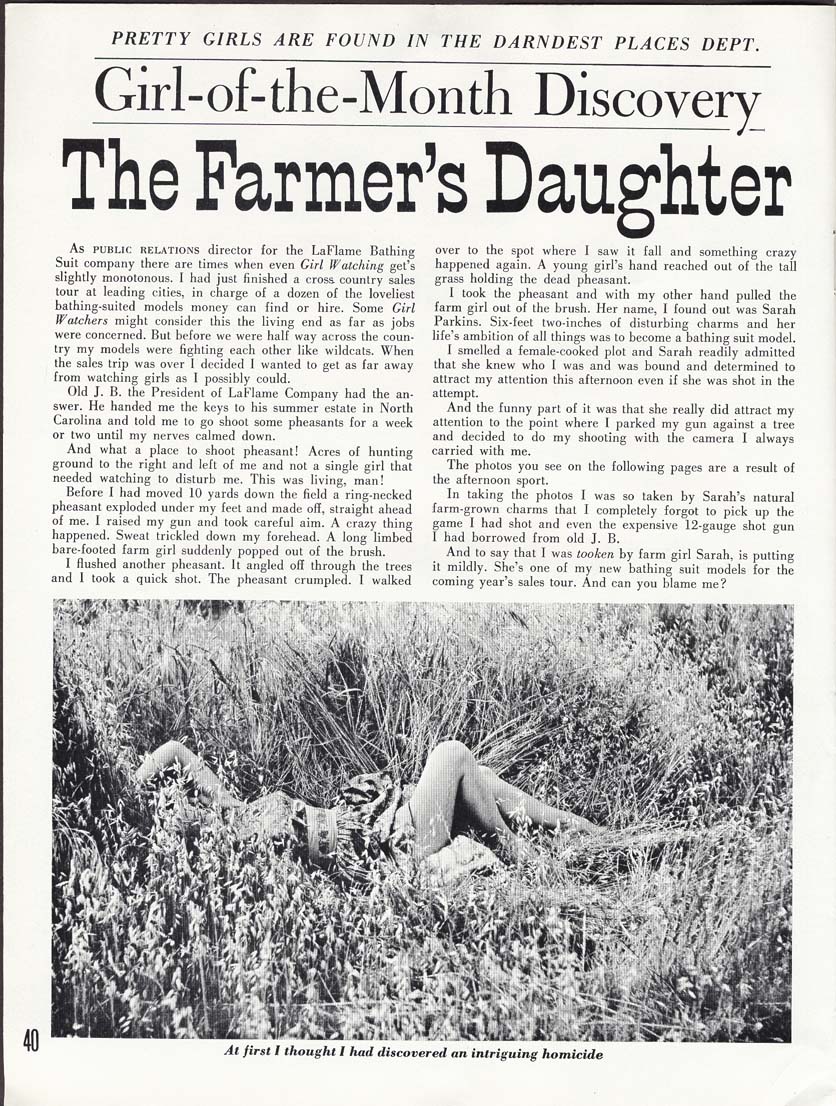
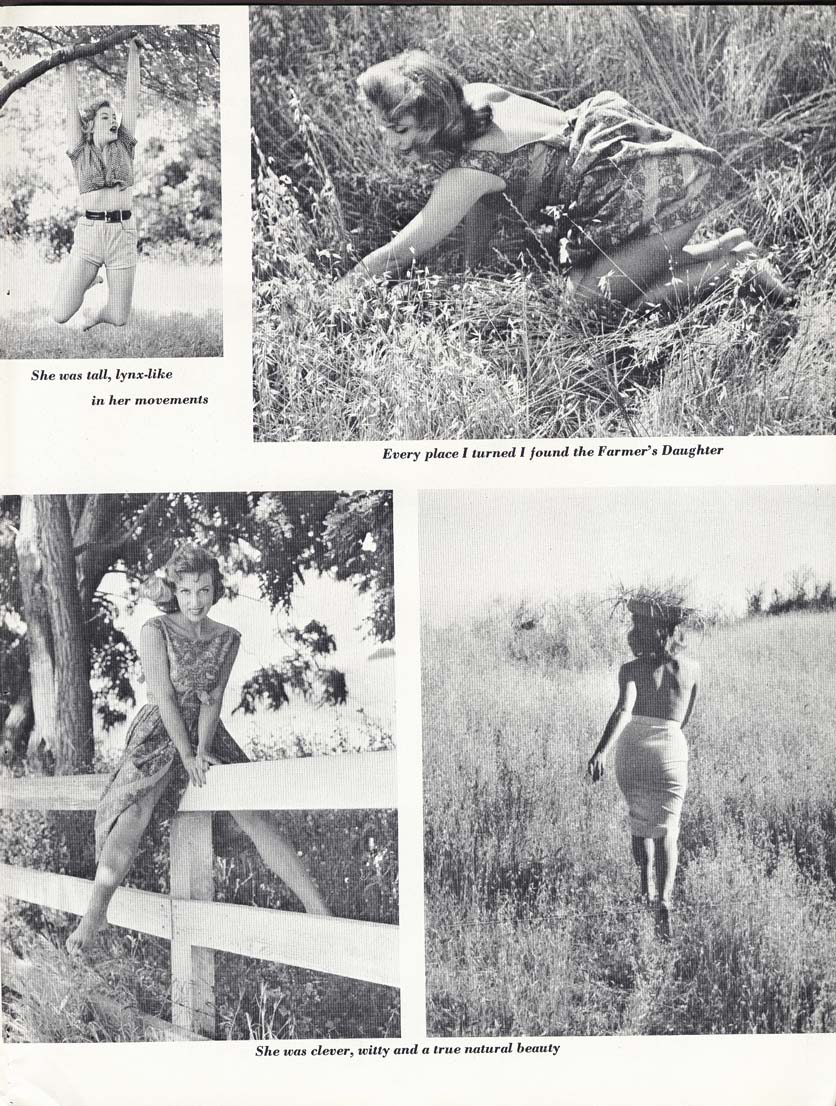
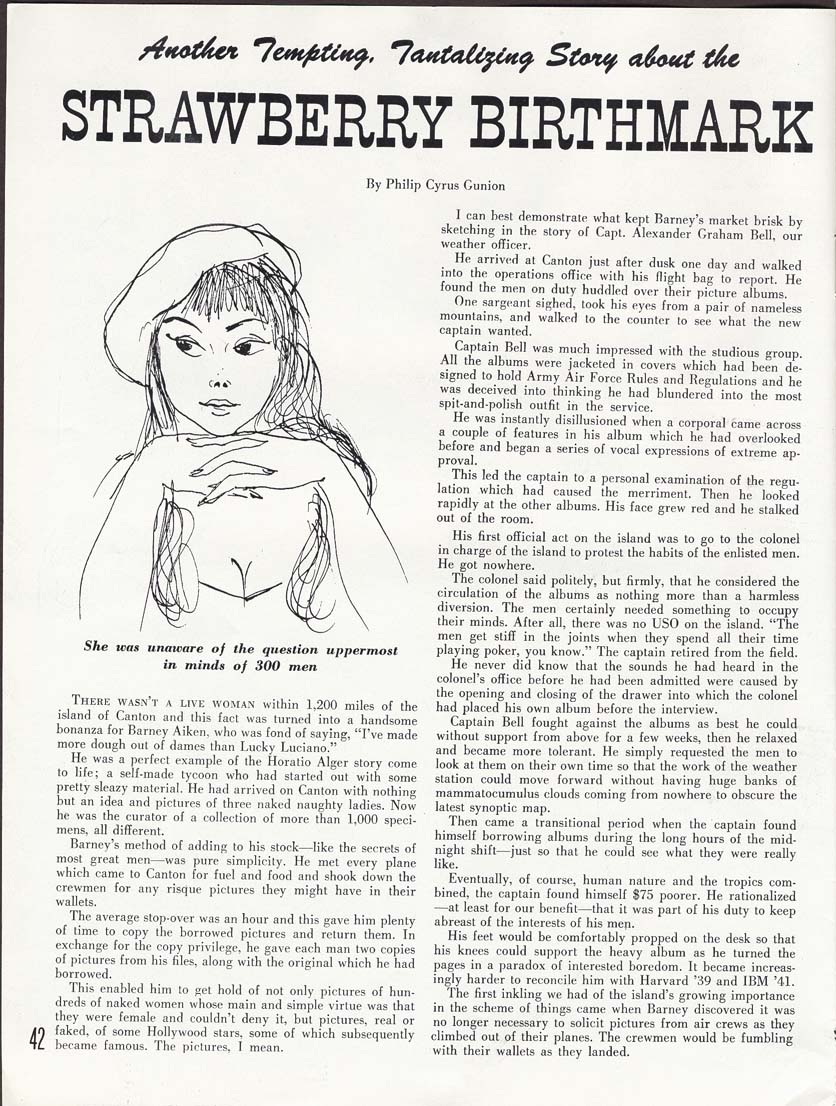
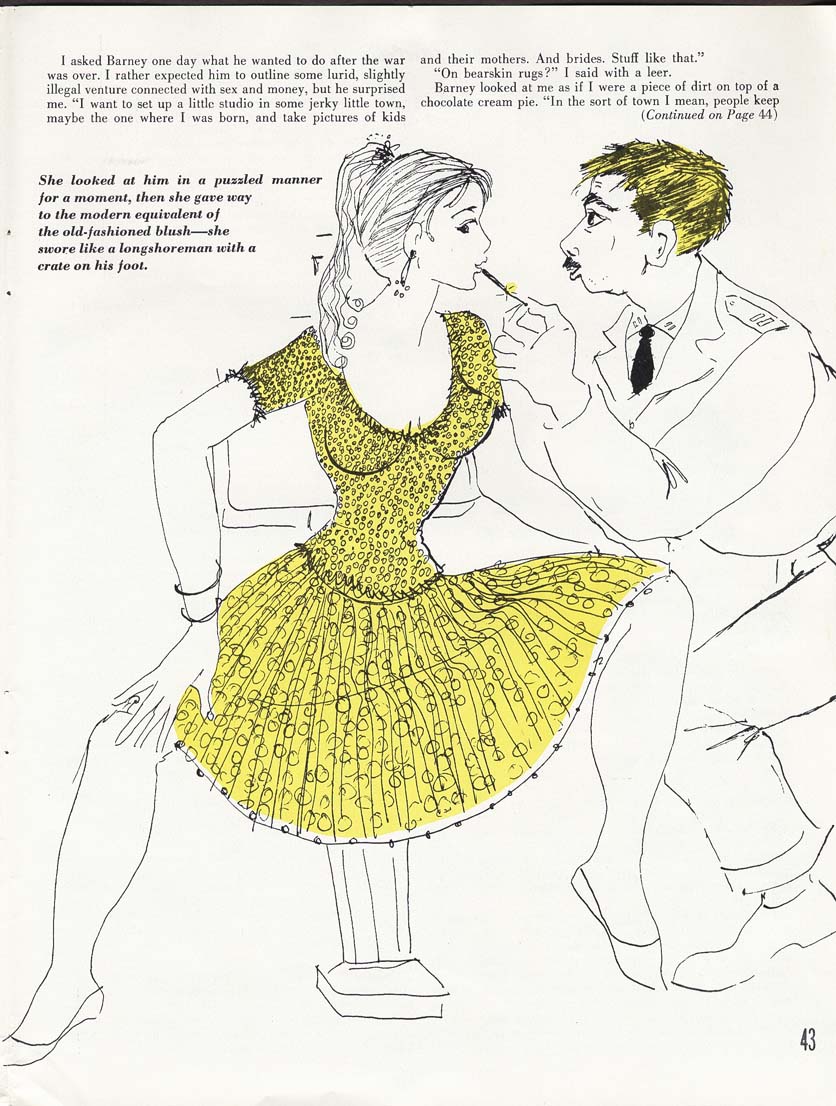
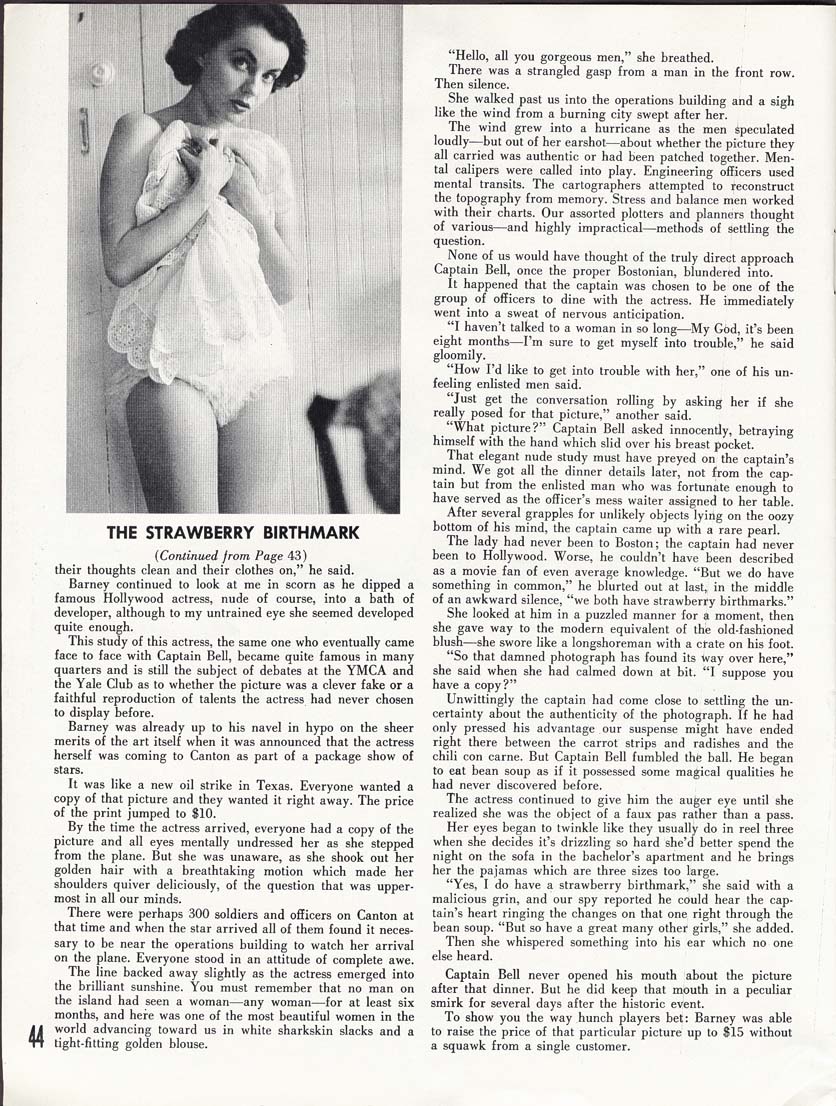
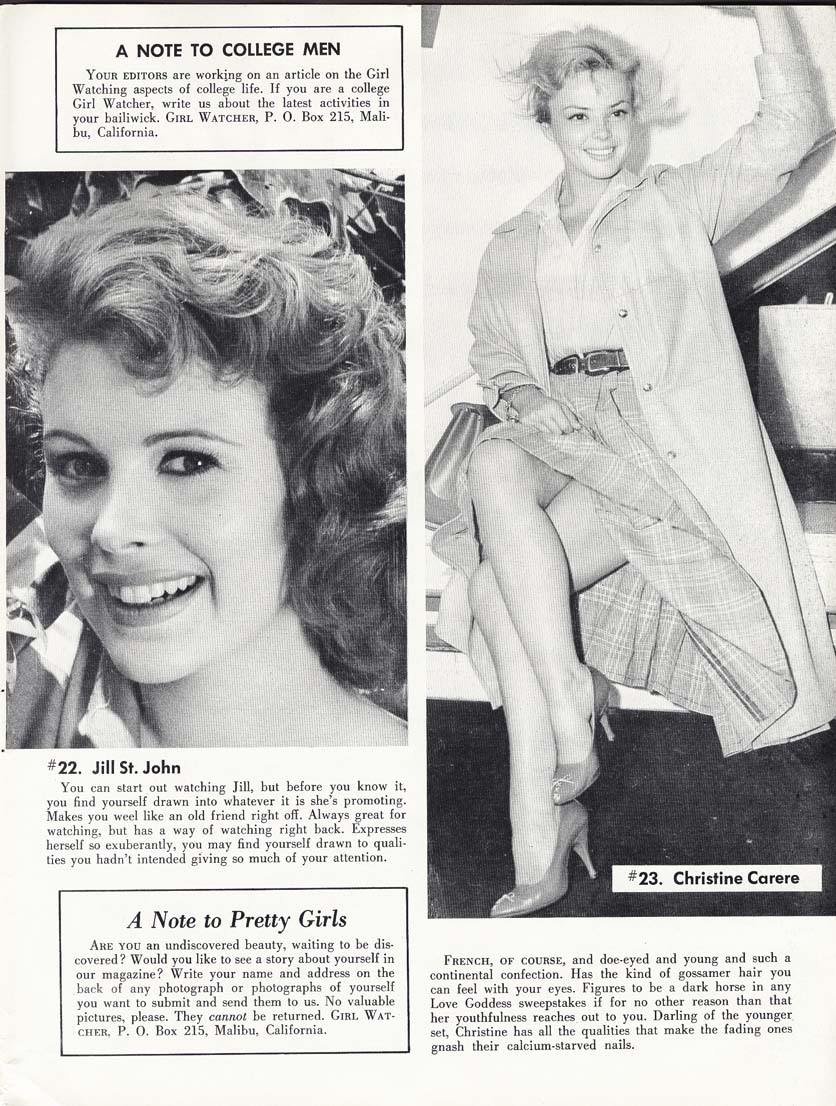
The 1950s operated under rigid gender norms. Women were largely expected to accept male attention as a compliment, and the broader culture provided little framework for naming unwanted observation as harmful. Girl Watcher sat squarely within that world — a product shaped entirely by the assumption that women existed to be watched.
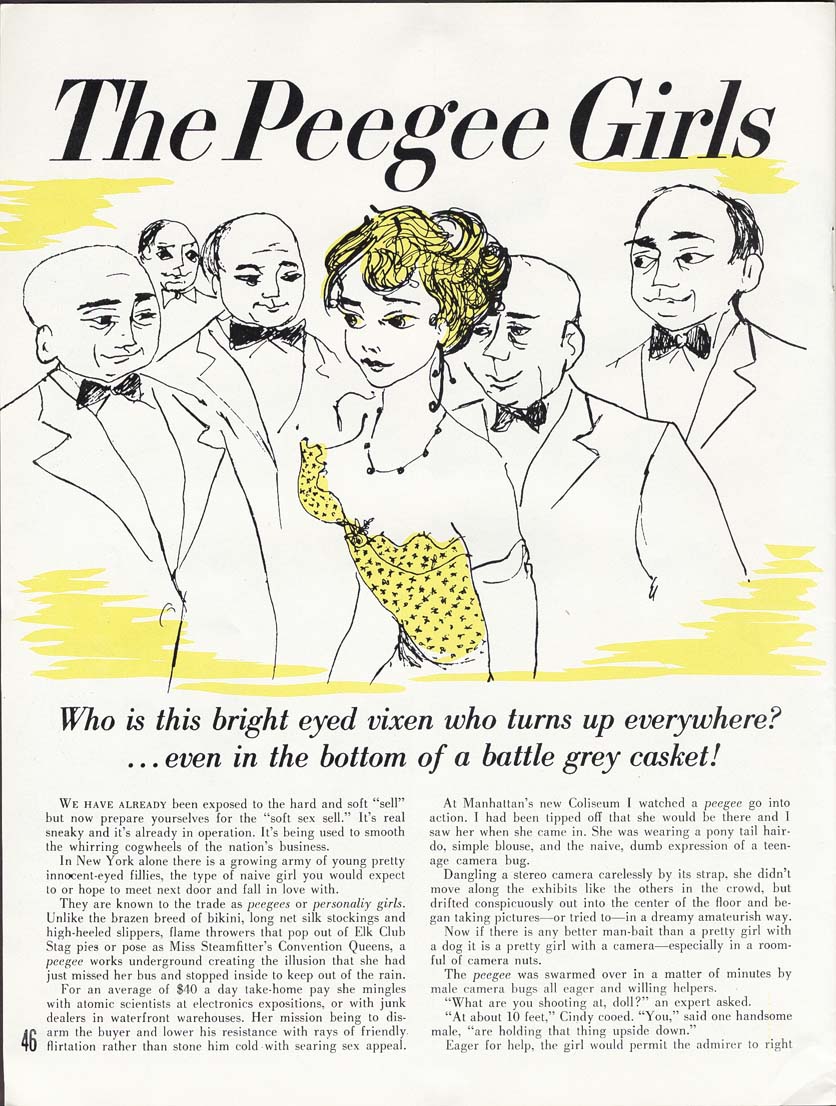
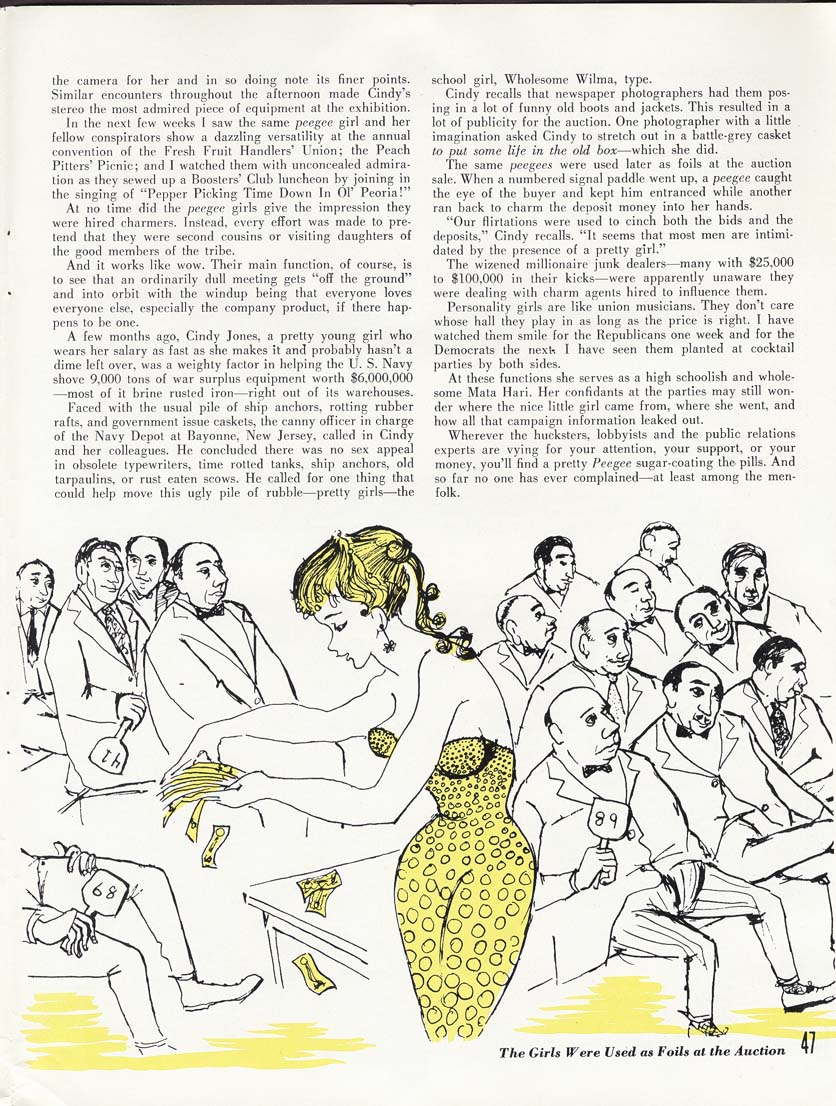
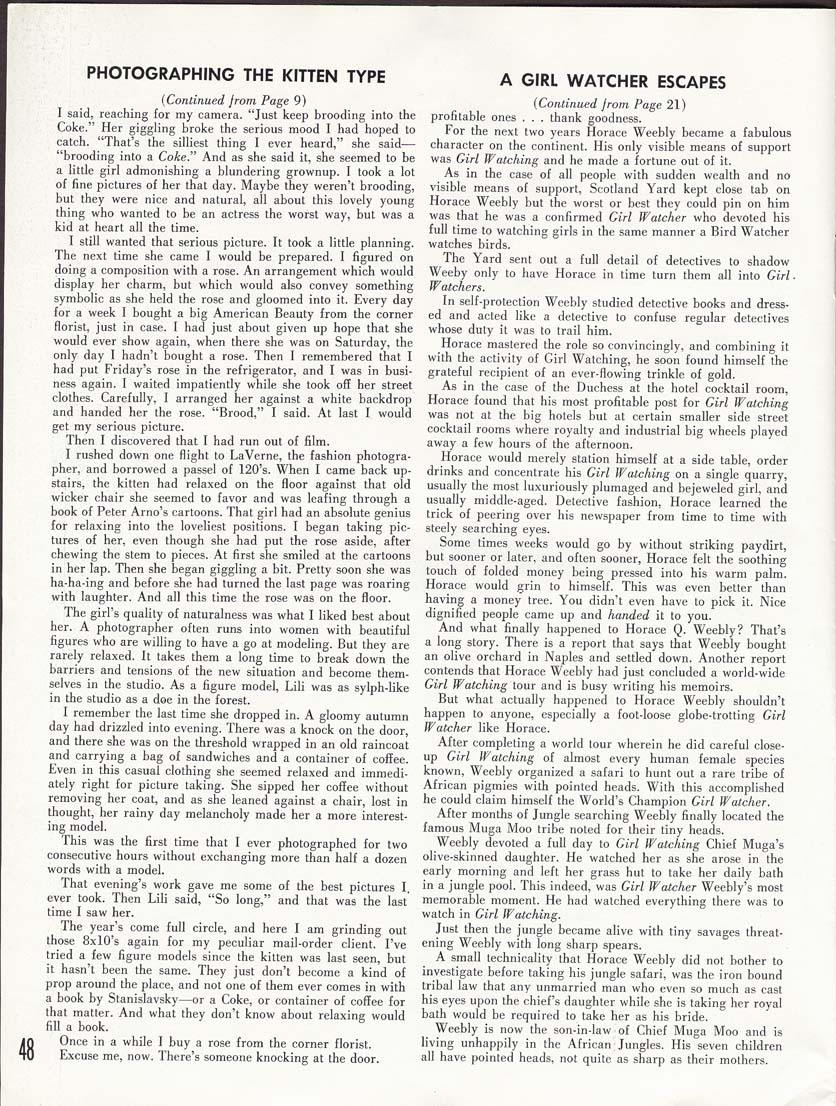
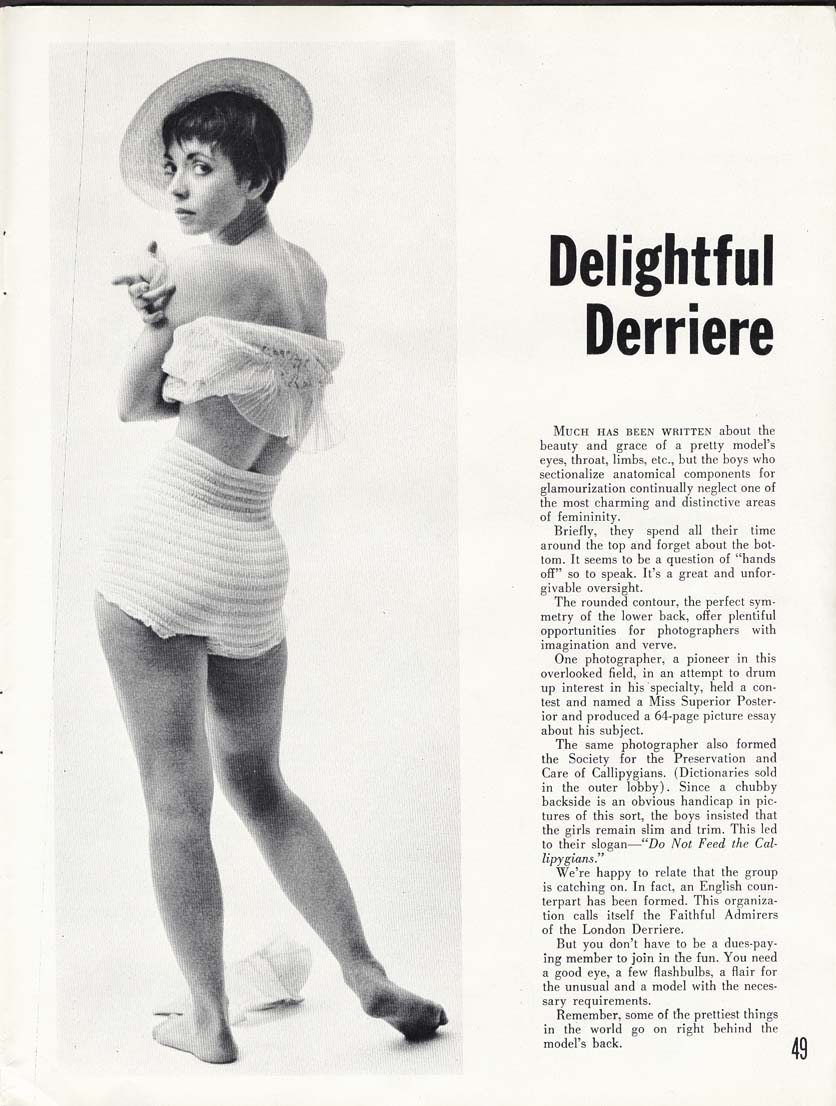
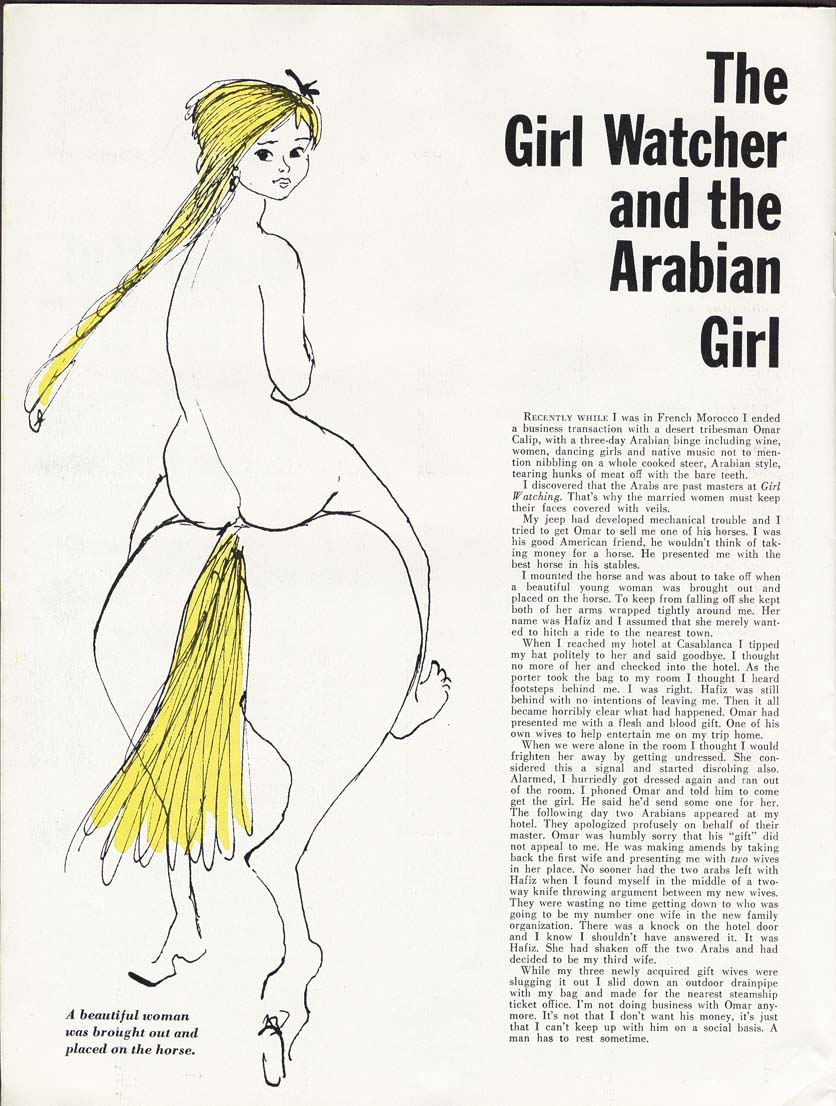
The magazine’s international content extended to features like “The Girl Watcher and the Arabian Girl,” which applied the same observational framework across cultural lines. Women from different countries were treated as exotic targets for the same brand of unsolicited male attention the magazine promoted throughout.