In the mid-to-late 1970s, Australian photographer John Goodman walked the streets of London with a camera and a sharp eye for detail. He was in his early twenties, drawn to microscopy, photography, and industrial archaeology. During his time in the city, he became a member of the Quekett Microscopical Club in London — a society with roots going back to 1865. His interests weren’t just scientific. He was equally fascinated by the physical texture of the city: its railway stations, street corners, pub signs, and forgotten spaces.
Goodman worked primarily with Leica cameras and film, sometimes pairing digital cameras with old Leitz lenses. The results were crisp, high-contrast black and white images that give these London scenes an almost timeless quality. He now lives in Melbourne, Australia, but the photographs he made between 1976 and 1978 remain a detailed record of a city in transition.
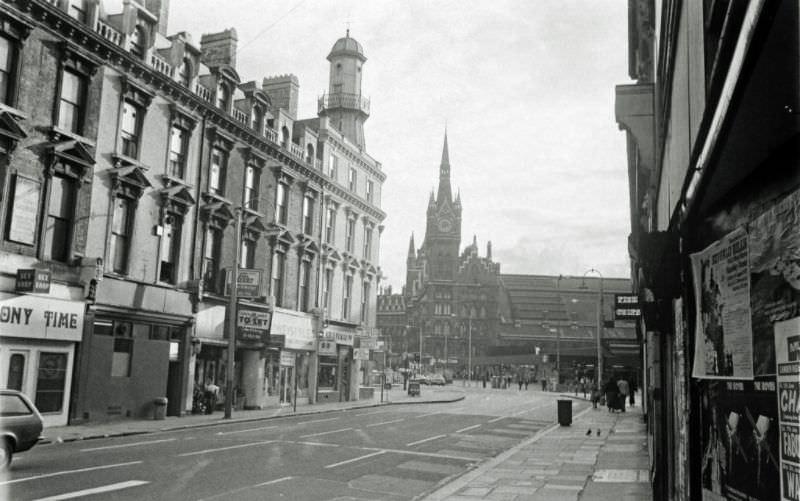
St. Pancras was one of the areas that drew Goodman’s lens repeatedly. The Gothic revival station building, which had fallen into disuse and was under serious threat of demolition throughout the 1960s and 70s, still stood — scarred but intact. Goodman photographed it from Pentonville Road, capturing its soaring Victorian silhouette against the grey London sky.
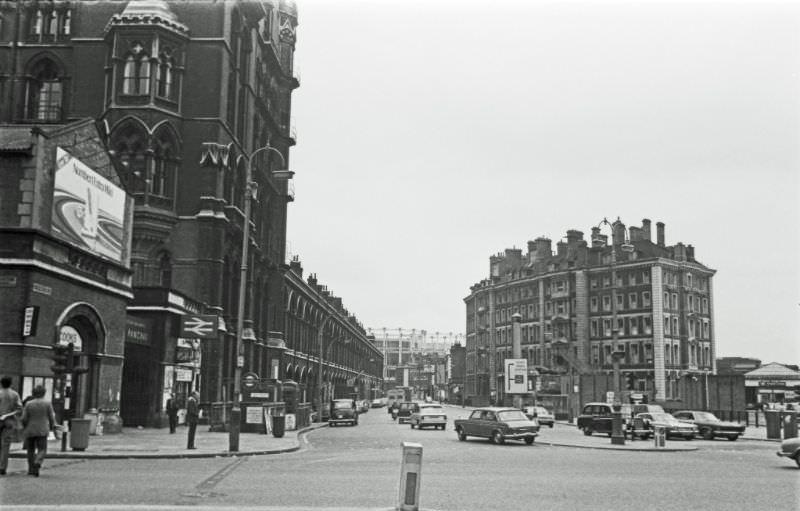
Away from the major landmarks, Goodman found just as much to photograph in London’s quieter residential streets. Great Western Road and the mews and garden squares of Notting Hill and Paddington offered a different kind of subject — terraced houses, parked cars, and the ordinary rhythm of neighbourhood life.
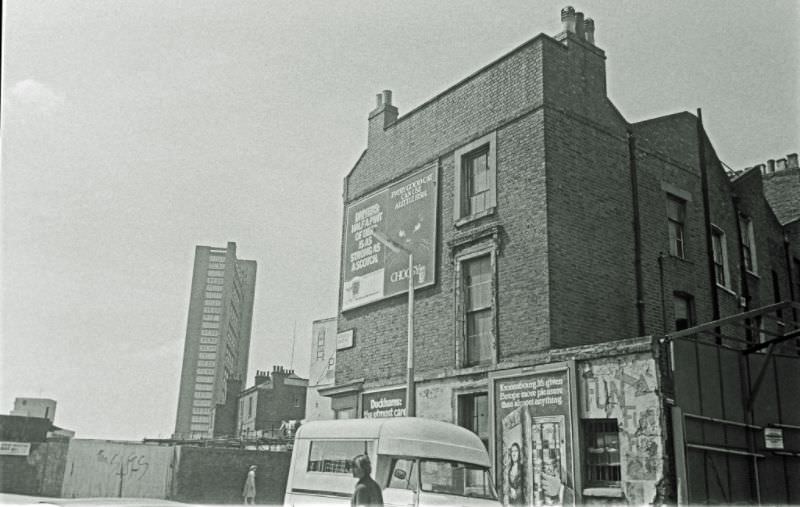
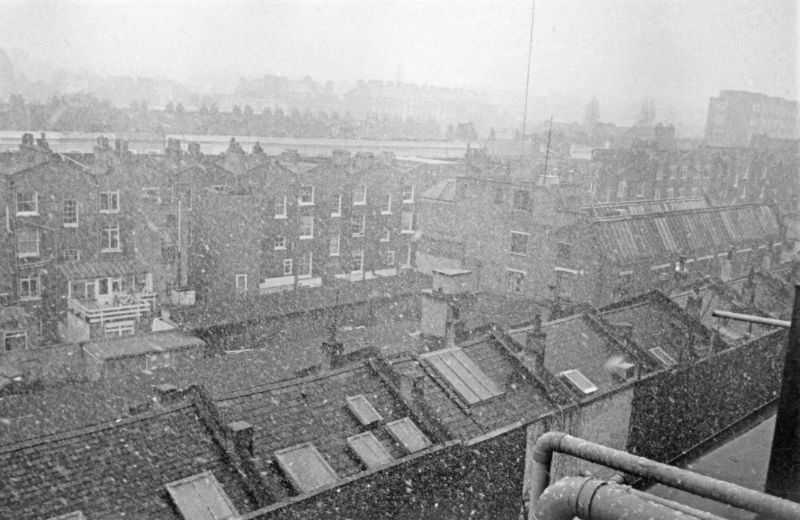
The winter of 1976/77 brought snowfall to the city. Goodman captured it settling over Colville Mews in Notting Hill, turning a modest back lane into something stark and still.
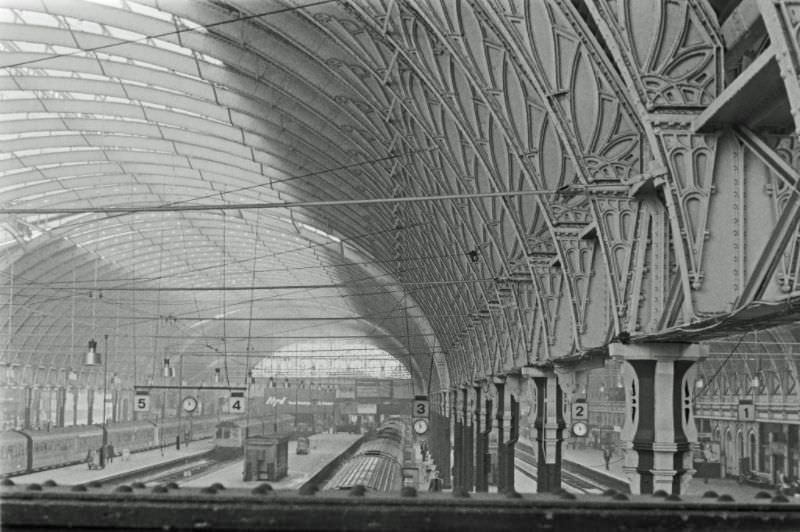
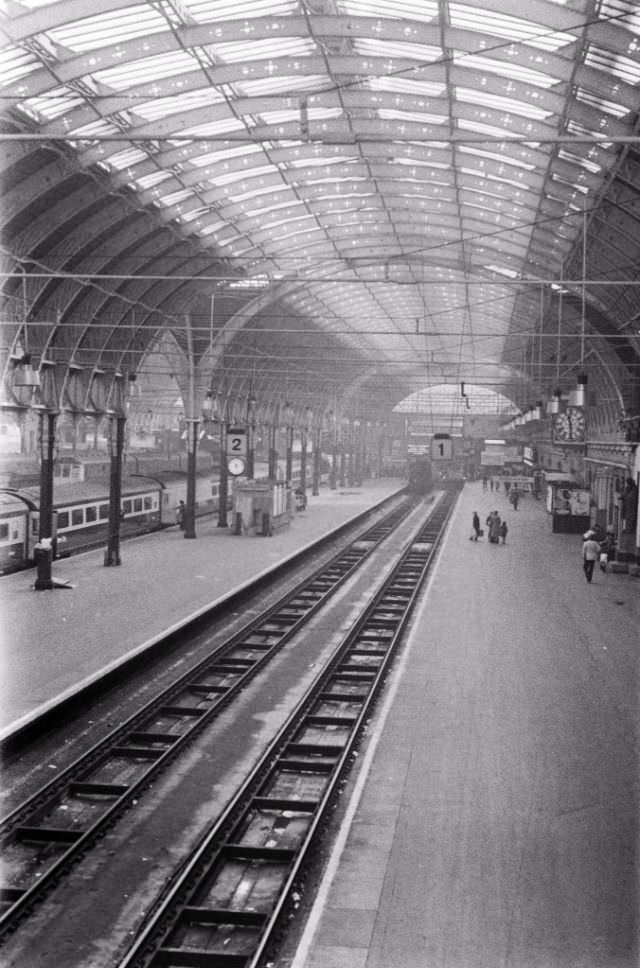
Paddington Station gave Goodman a rich set of subjects. The ironwork, the light falling through the roof, the platforms and their passengers — he returned to it more than once in 1976, producing several distinct images from the same space.
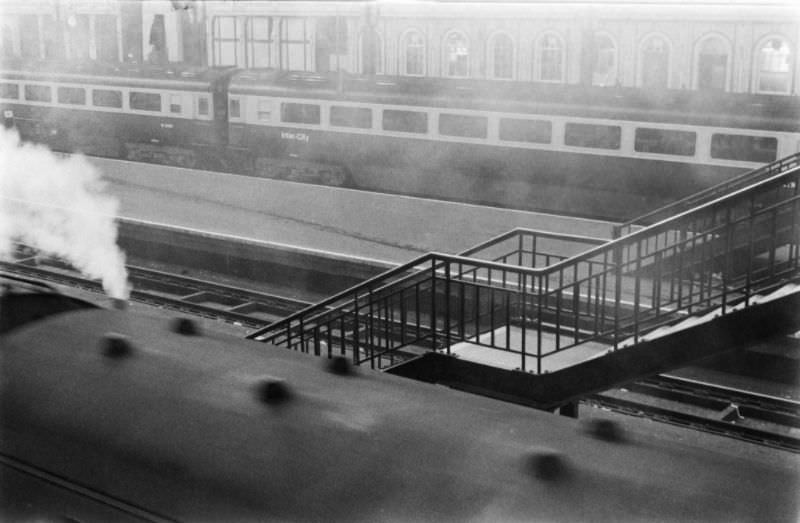
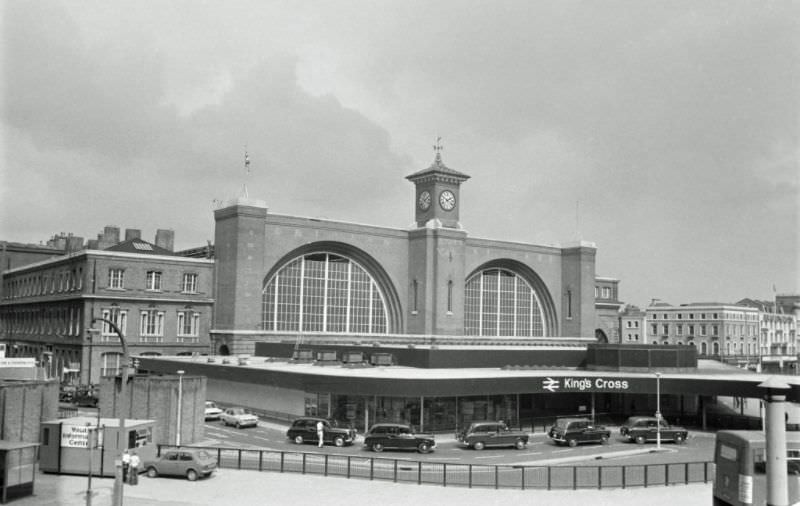
By 1977, Goodman had extended his range across the city. King’s Cross Station, just a short distance from St. Pancras, was another stop. Like its neighbour, it was a working Victorian terminus still operating in an era of diesel locomotives and changing rail economics.
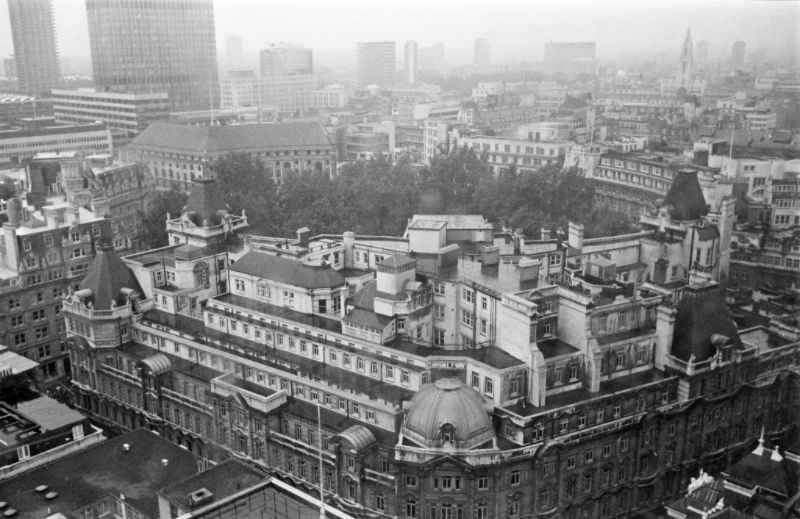
The City of London offered a different visual world. From 77 London Wall, Goodman looked out toward Finsbury Circus — a view that mixed post-war office blocks with older structures that had survived the Blitz.
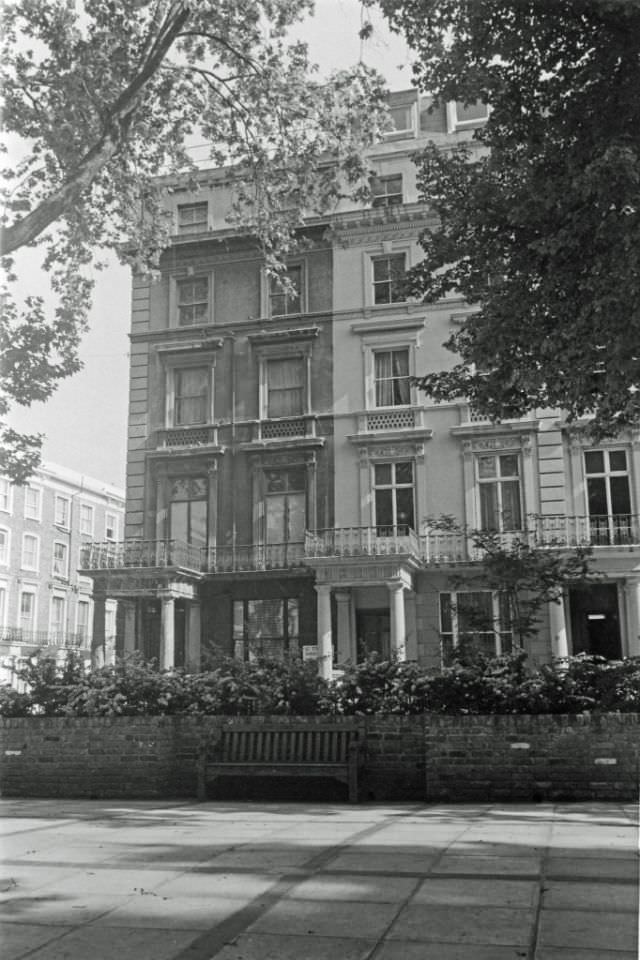
Back in west London, St. Stephen’s Gardens in W2 showed the quieter side of the city — a garden square typical of the area, with its stucco-fronted terraces and communal green space.
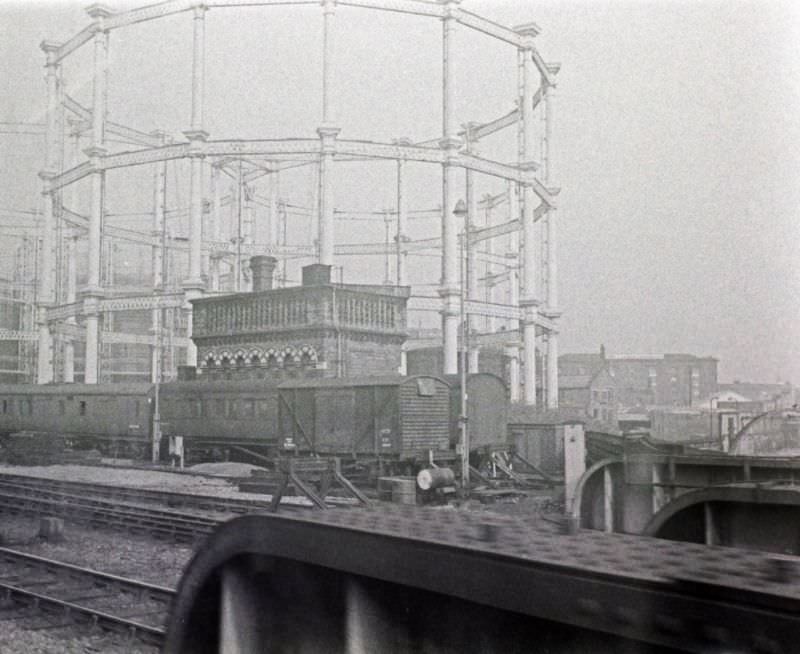
Goodman’s interest in industrial archaeology brought him to some of London’s more functional and overlooked structures. The gasometer near St. Pancras was one such subject — a massive iron cylinder used to store gas, a fixture of the Victorian urban landscape that most Londoners walked past without a second glance.
Islington’s North Road provided two contrasting pub subjects. The Lion Hotel and the Lamb Tavern stood along the same stretch, their painted signs and brick facades typical of the working-class pub culture that defined many of London’s inner-city neighbourhoods in the 1970s.
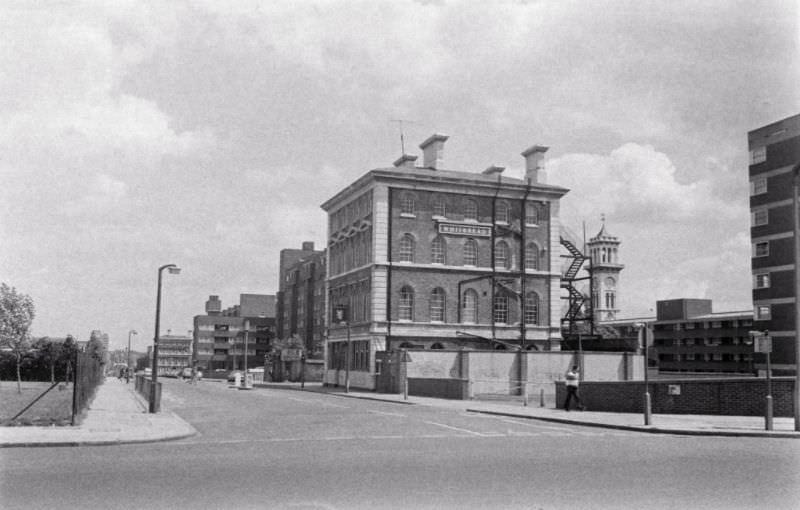
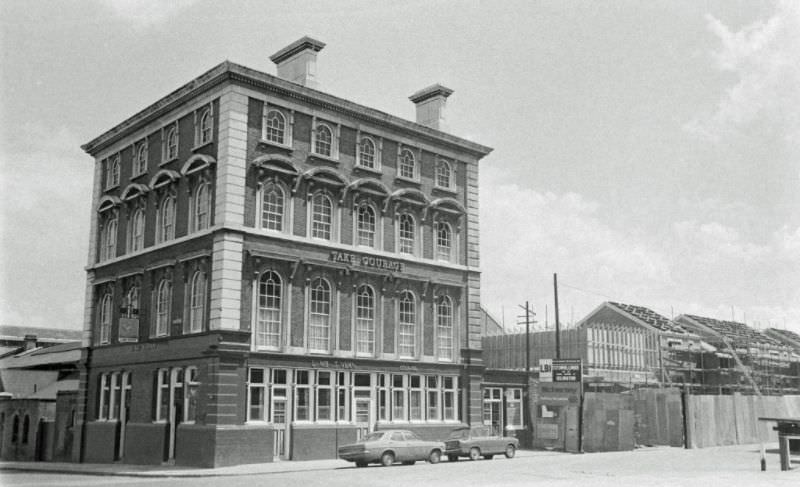
Market Road in Islington and its junction with York Way gave Goodman more street-level scenes. These corners of north London were unpretentious — not tourist destinations, but exactly the kind of places that reveal what a city actually looked like on an ordinary day.
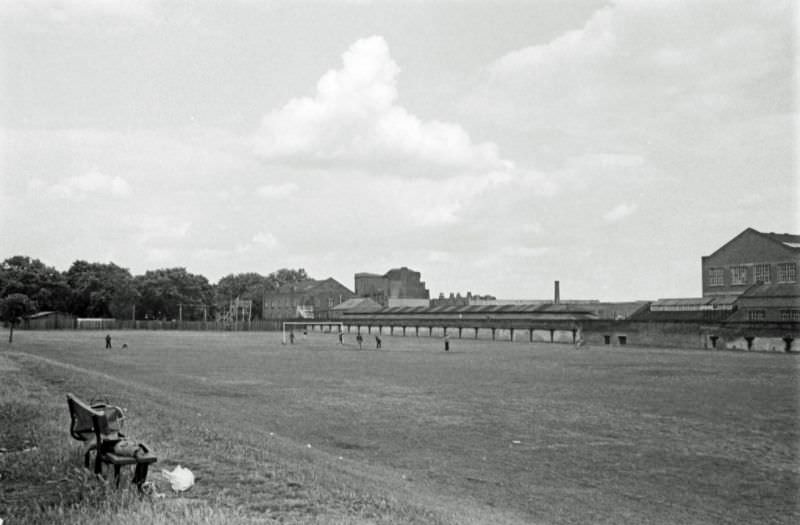
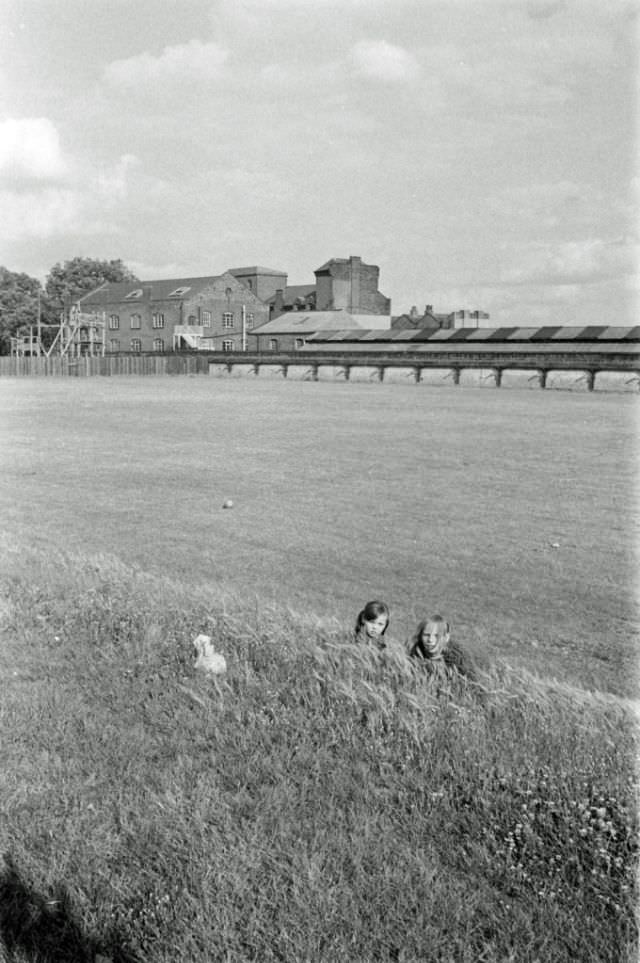
The St. Pancras area continued to appear in Goodman’s work throughout 1977. He photographed the station itself from multiple angles, as well as the surrounding streets, documenting a neighbourhood that was far from the polished regeneration it would later undergo.
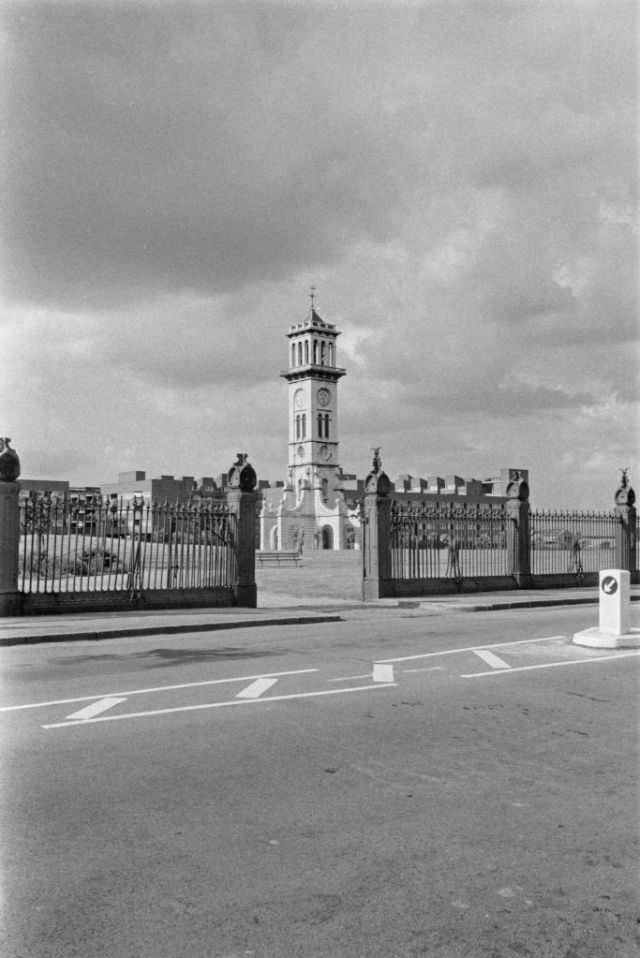
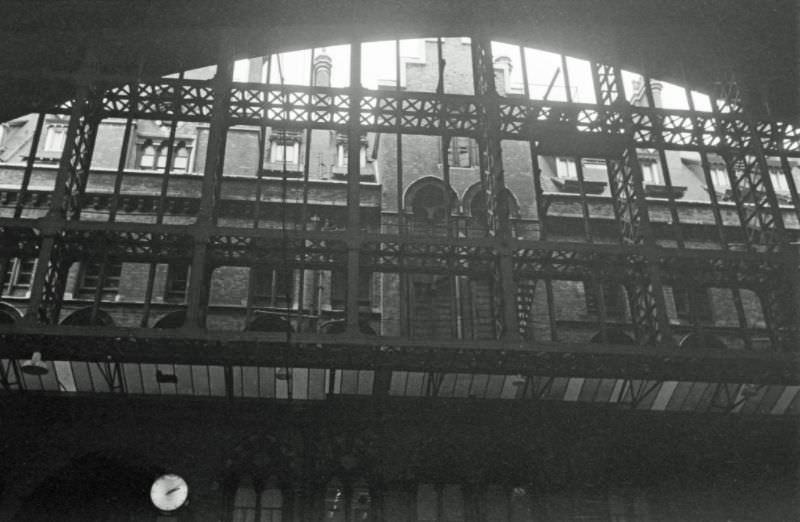
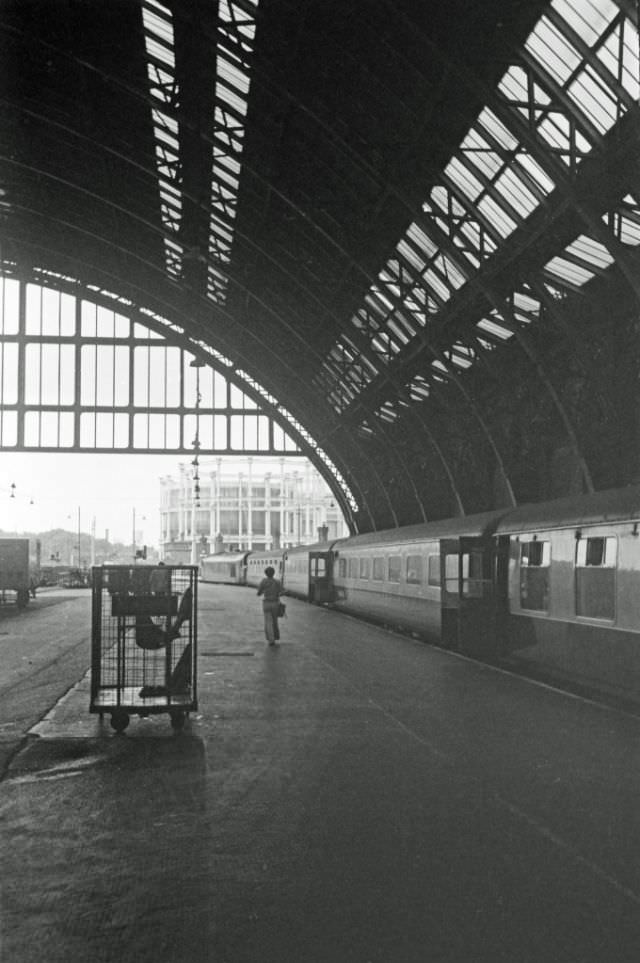
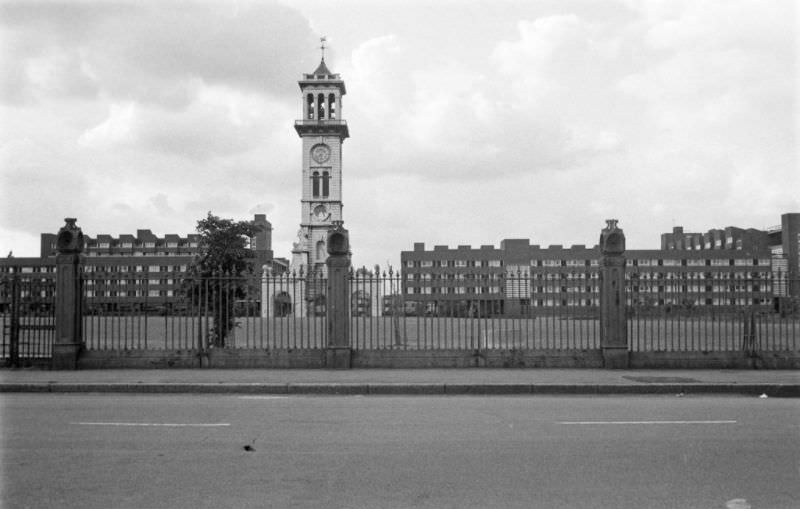
The Caledonian Market site in Islington had a long history as a livestock market before it closed in 1939. By the time Goodman photographed it in 1977, the site was largely empty, its market days long over and its grounds awaiting redevelopment.
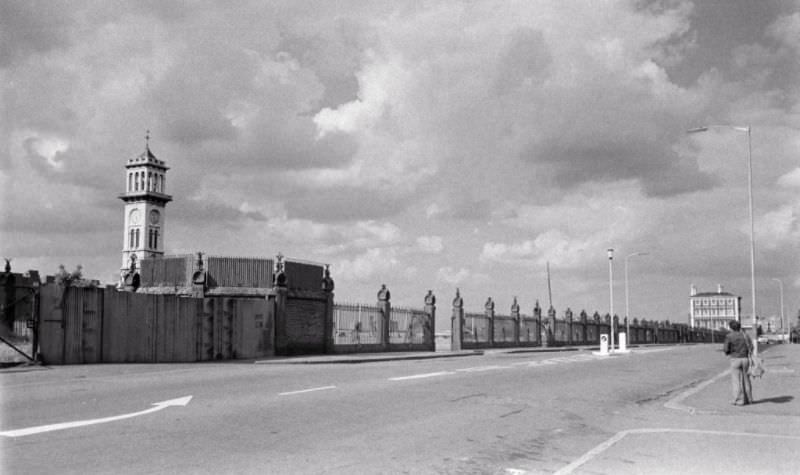
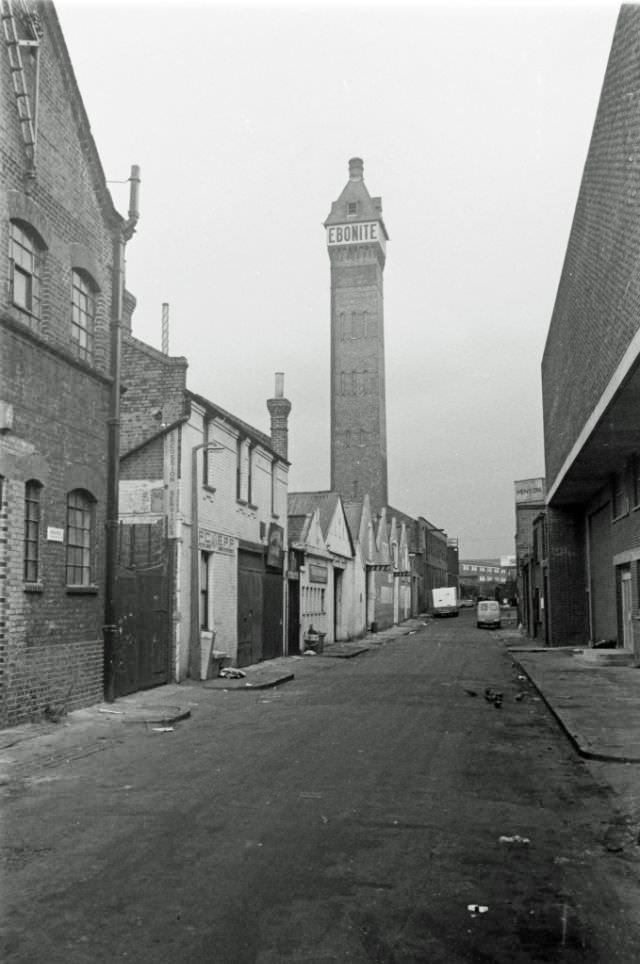
The Ebonite Tower — a distinctive industrial structure — was another subject that aligned with Goodman’s interest in London’s built and manufactured past.
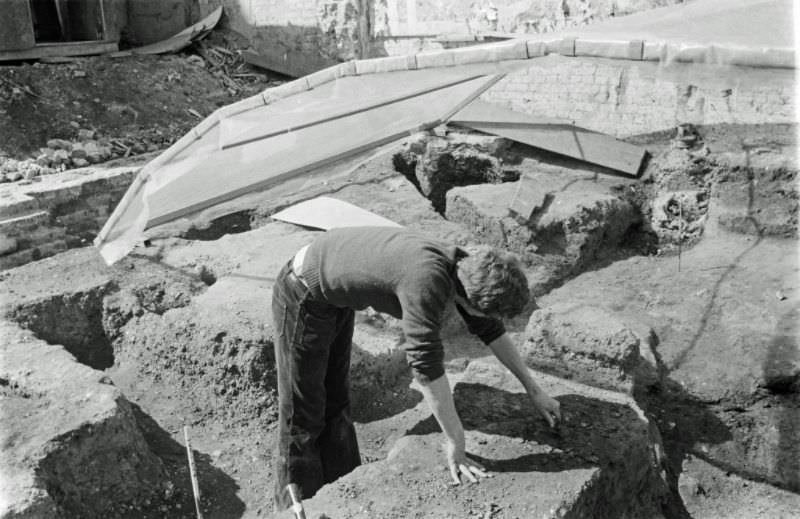
Near St. Paul’s Cathedral, Goodman turned his lens to active archaeological work in the City. London’s post-war rebuilding frequently unearthed Roman and medieval remains, and digs near St. Paul’s in the late 1970s were part of that ongoing process of uncovering the city’s layered history.
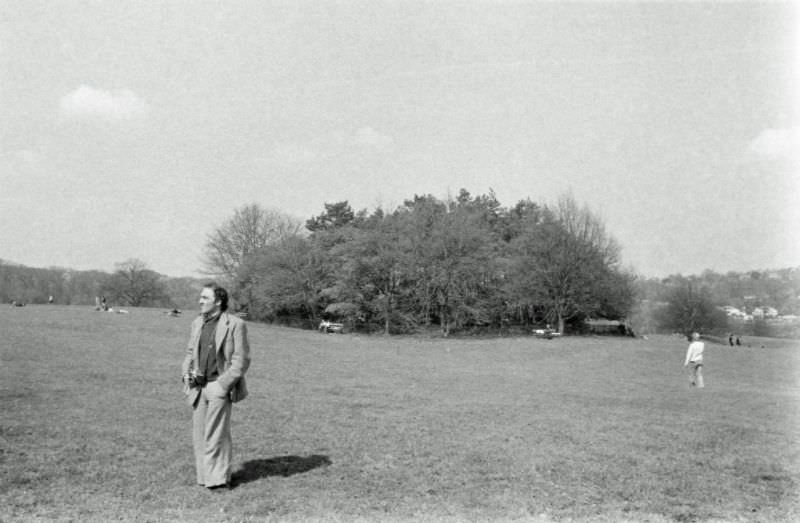
Hampstead Heath offered a very different atmosphere. Goodman photographed the tumulus on the heath — an ancient burial mound — from two angles. The heath’s open landscape and historical features sat in sharp contrast to the dense streets he photographed elsewhere.
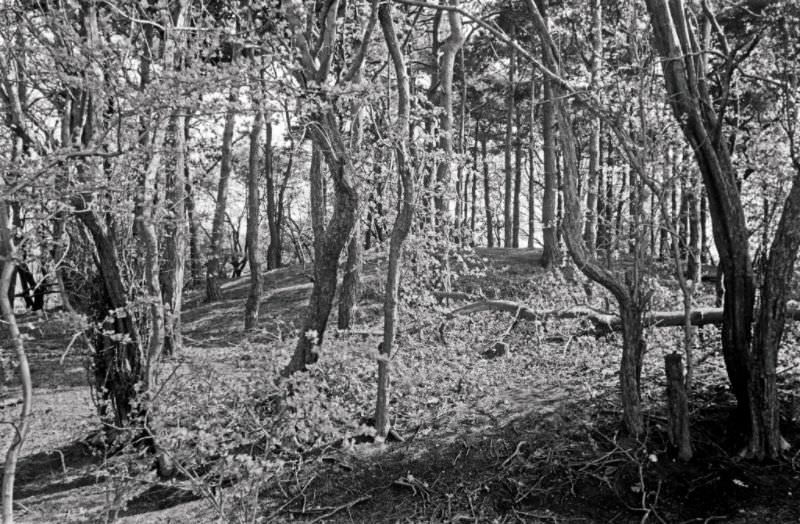
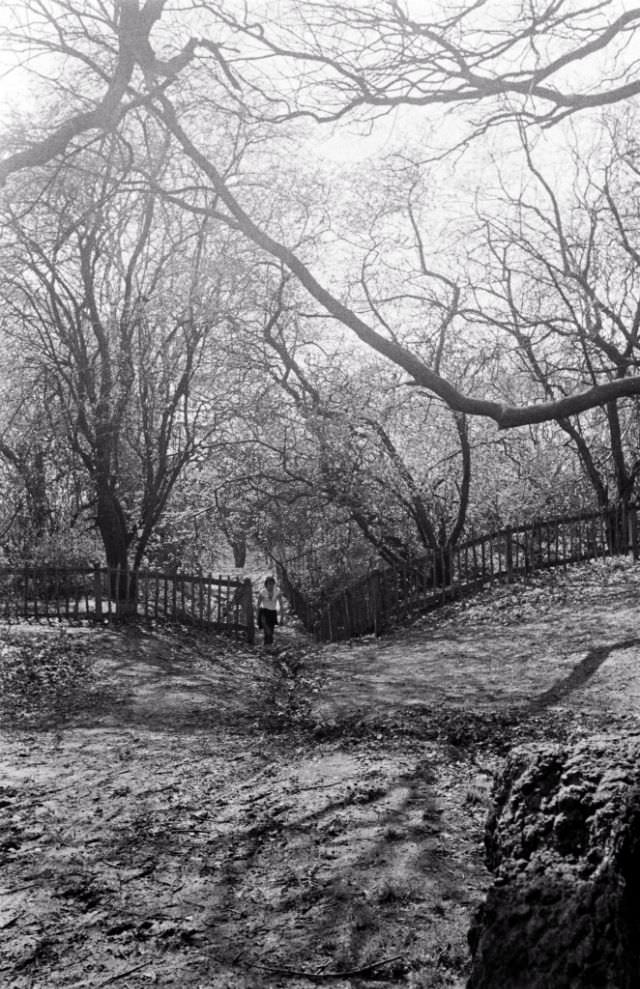
Back in Islington, Goodman photographed Caledonian Road opposite the Caledonian Estate and Northdown Street in N1 — two more slices of north London street life rendered in the same careful, unhurried style that runs through the entire collection.
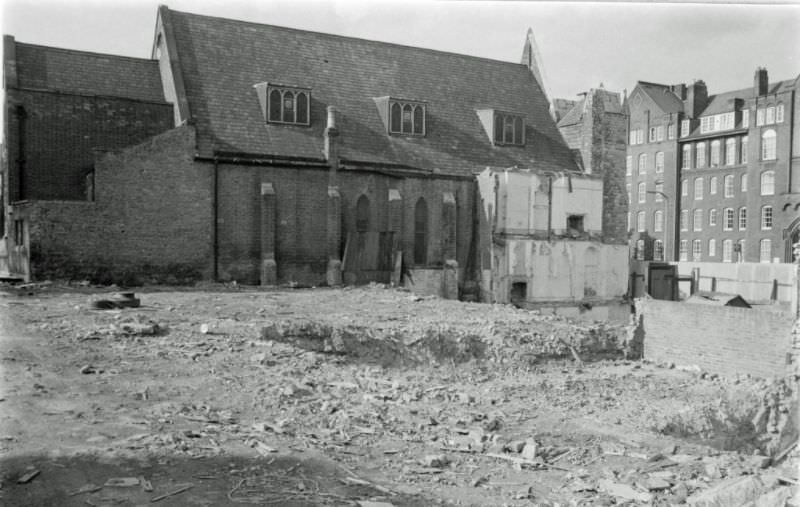
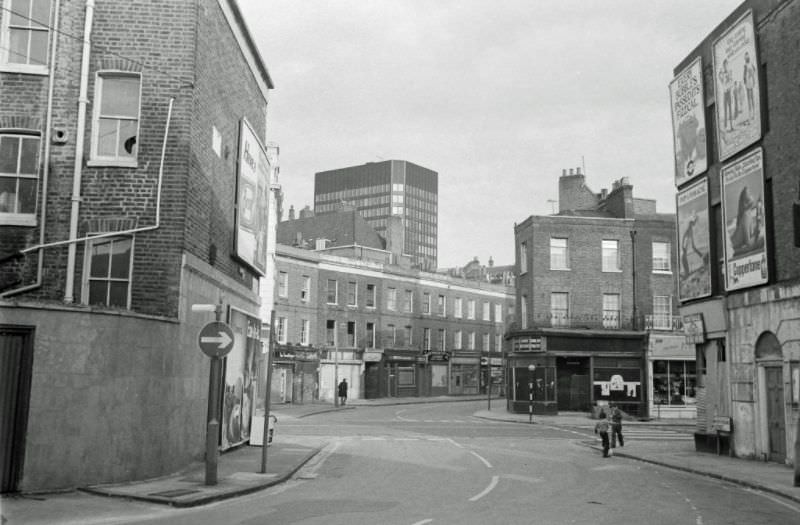
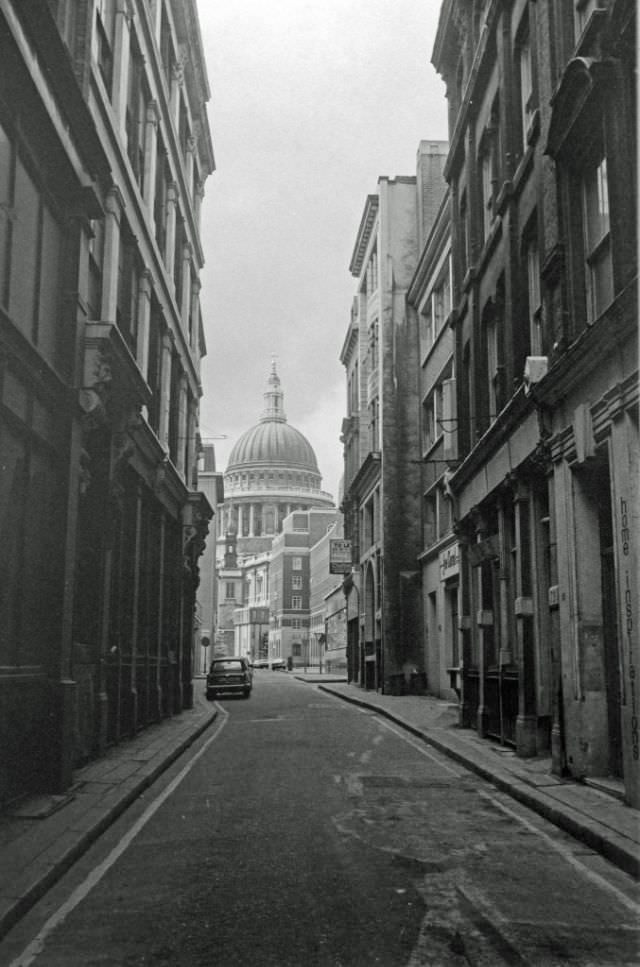
A quiet Sunday afternoon near St. Paul’s gave Goodman a view from Watling Street — one of London’s oldest roads, with Roman origins — looking toward the cathedral dome. The emptiness of the street made the scale of the dome all the more striking.
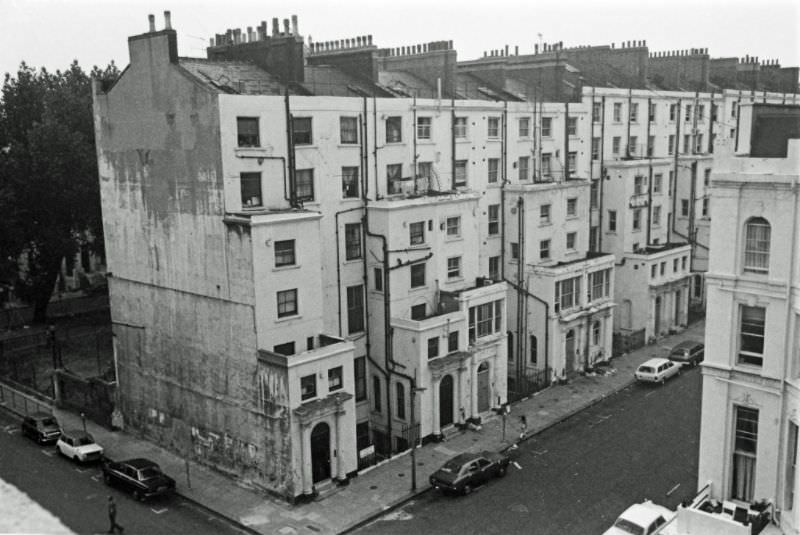
In Notting Hill, Goodman documented the rear of Powis Square — a garden square in W11 whose back-street side presented a much rougher face than its formal front. The area was still heavily working-class in the late 1970s, its large Victorian terraces divided into flats and bedsits.
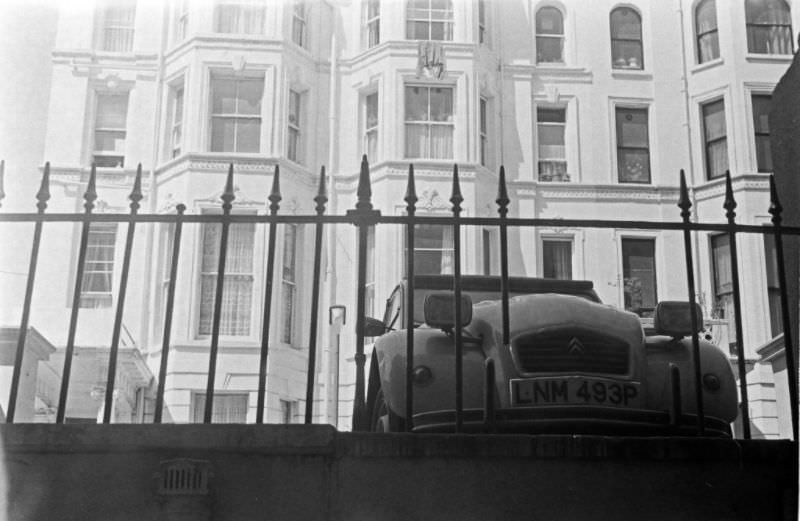
By 1978, Goodman was still moving through the same neighbourhoods. His final image in this series — a Citroën 2CV parked on Colville Terrace in Notting Hill — is a small but precise detail of the era. The 2CV was the car of choice for a particular kind of urban resident in late-1970s London, and its presence on this quiet terrace is as much a historical document as any of the buildings behind it.