These photographs offer a rare, vivid window into London during the 1960s. They were taken by an amateur photographer who lived in Byfleet, a village roughly 20 miles outside of the capital. He made regular trips into London by train, camera in hand, documenting the city’s streets, landmarks, and daily life in sharp, saturated color.
The tool that made it all possible was a Halina PET camera loaded with Ektachrome film. Ektachrome was a reversal film made by Kodak that allowed photographers to process their own slides — a major advantage for amateurs working without a professional darkroom. From the early 1940s onward, it became widely used by both hobbyists and professionals. National Geographic relied heavily on Ektachrome for color shoots in conditions where Kodachrome — another popular film stock — was simply too slow to work well. The result was rich, warm color that has held up remarkably well over the decades.
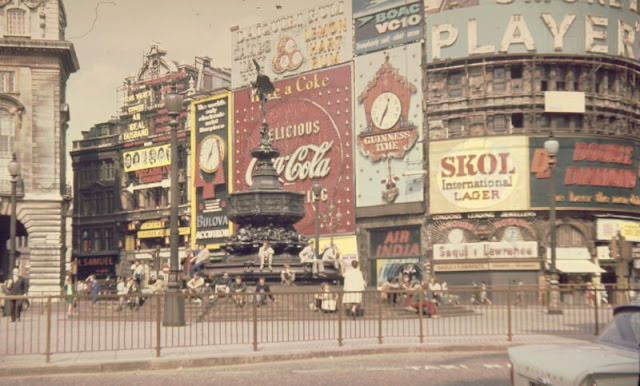
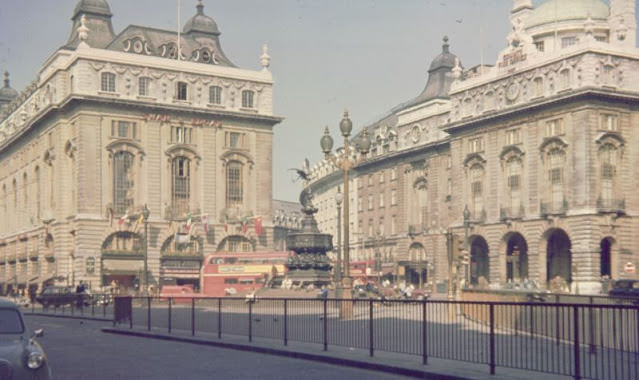
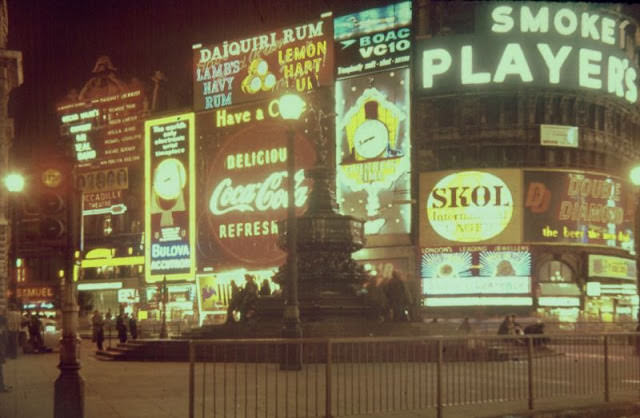
The collection begins in 1962 at one of London’s most iconic locations: Piccadilly Circus. These three shots — taken from the north side, the west side, and at night — show the junction in full swing, its advertisement boards glowing and its streets busy with traffic and pedestrians.
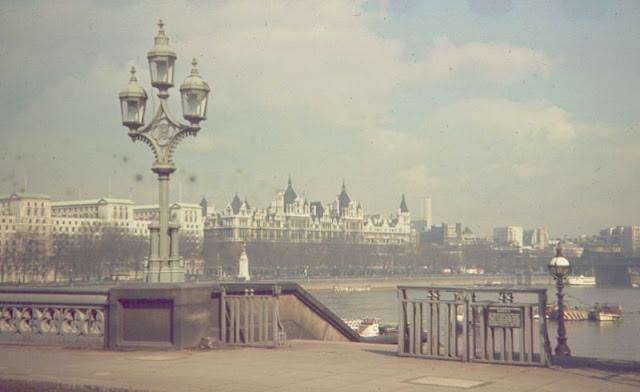
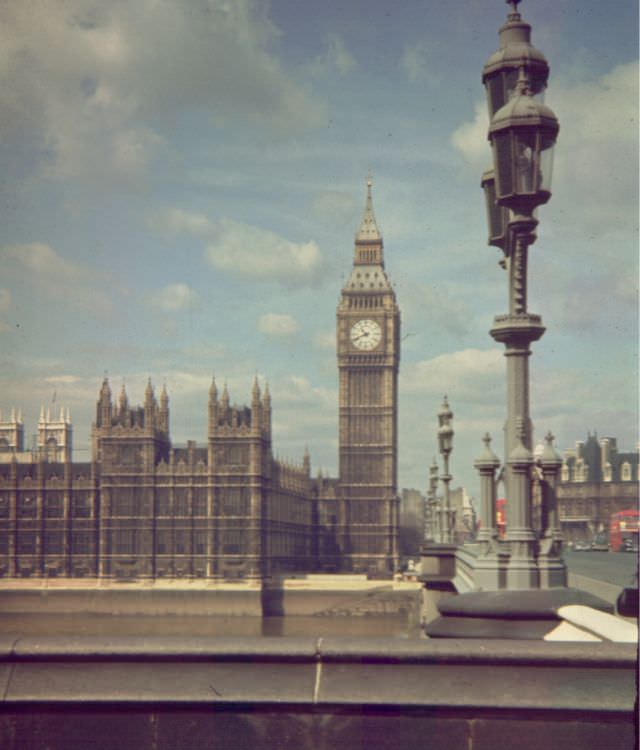
From Piccadilly, the photographer’s lens turned toward the Thames. The views from Westminster Bridge in 1962 capture the Victoria Embankment and the unmistakable silhouette of Big Ben rising above the river. These are working views of London — not posed or staged, but caught as the city simply existed.
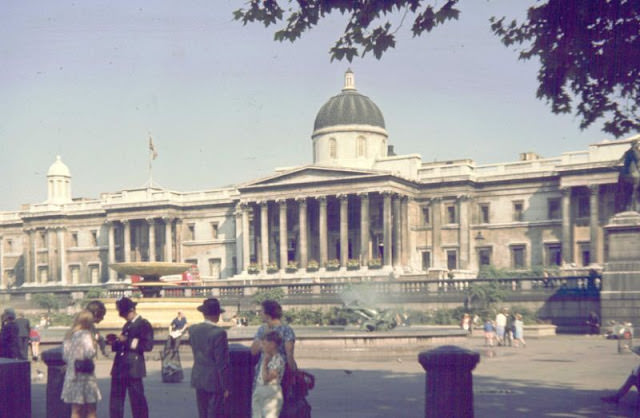
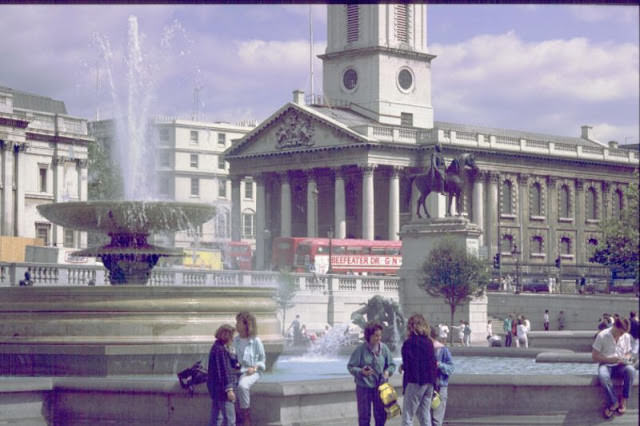
By 1965, the photographer was capturing Trafalgar Square in color that few people associated with that era of British photography. The National Gallery’s neoclassical façade and the steeple of St Martin-in-the-Fields appear crisp and warm against the open London sky.
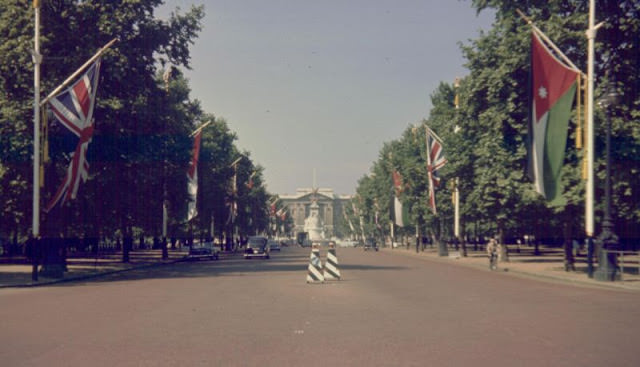
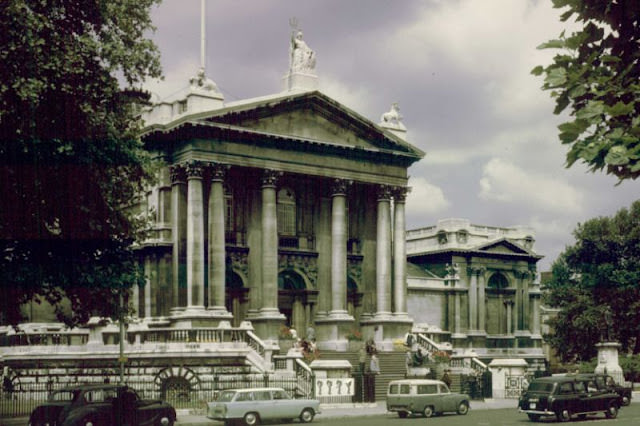
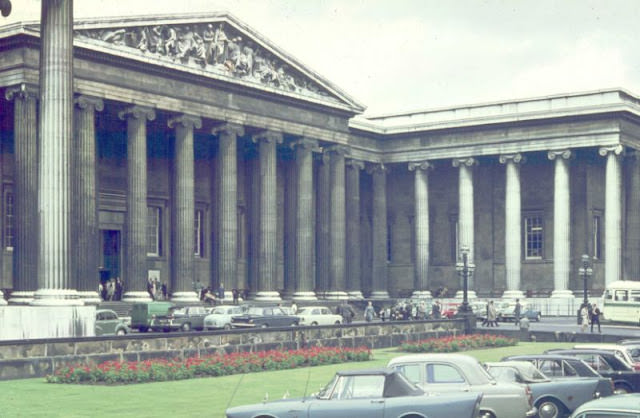
In 1966, the photographs take on a broader scope. One standout image shows The Mall during a Jordanian State Visit — the ceremonial route dressed for a royal occasion, flags lining the tree-bordered avenue leading toward Buckingham Palace. That same year, the photographer documented the Tate Gallery, the British Museum in Bloomsbury, and the Thames again from Westminster Bridge, this time catching a different mood along the river.
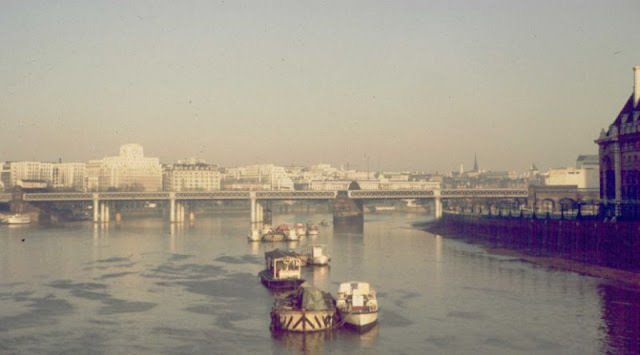
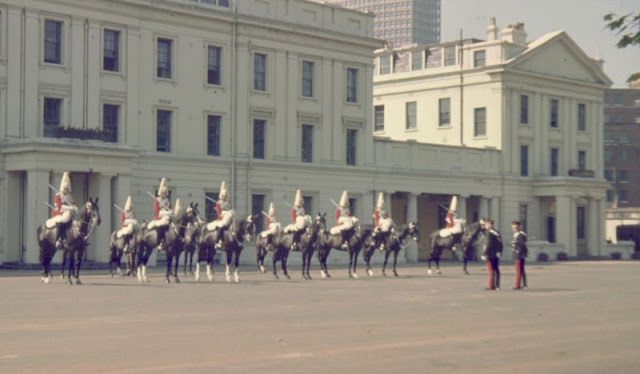
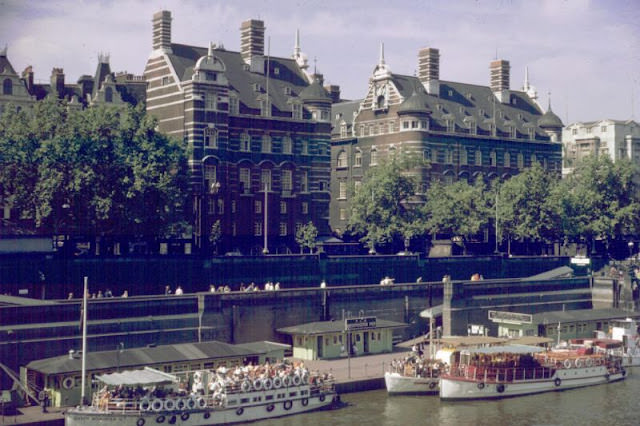
Also from 1966 are shots of Wellington Barracks on Birdcage Walk and New Scotland Yard along the Embankment — both institutions deeply tied to the mechanics of the British state, captured here in an era before major redevelopment changed their surroundings.
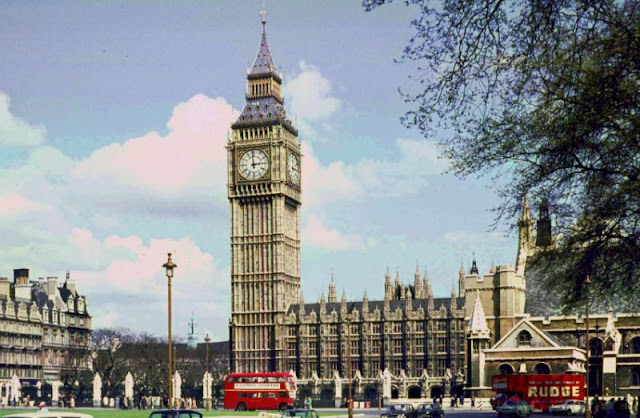
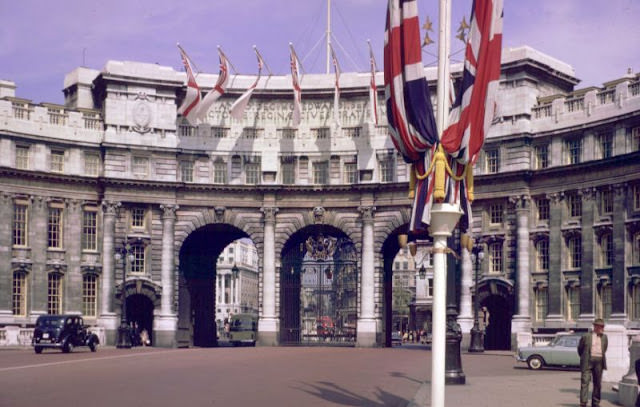
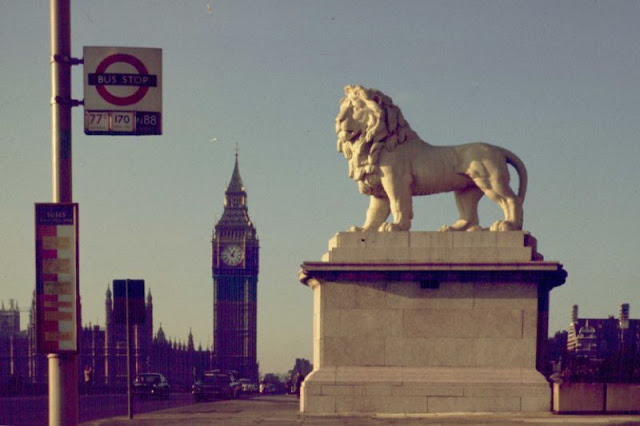
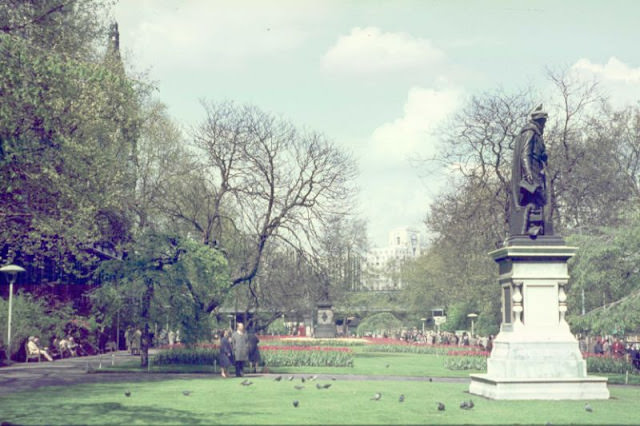
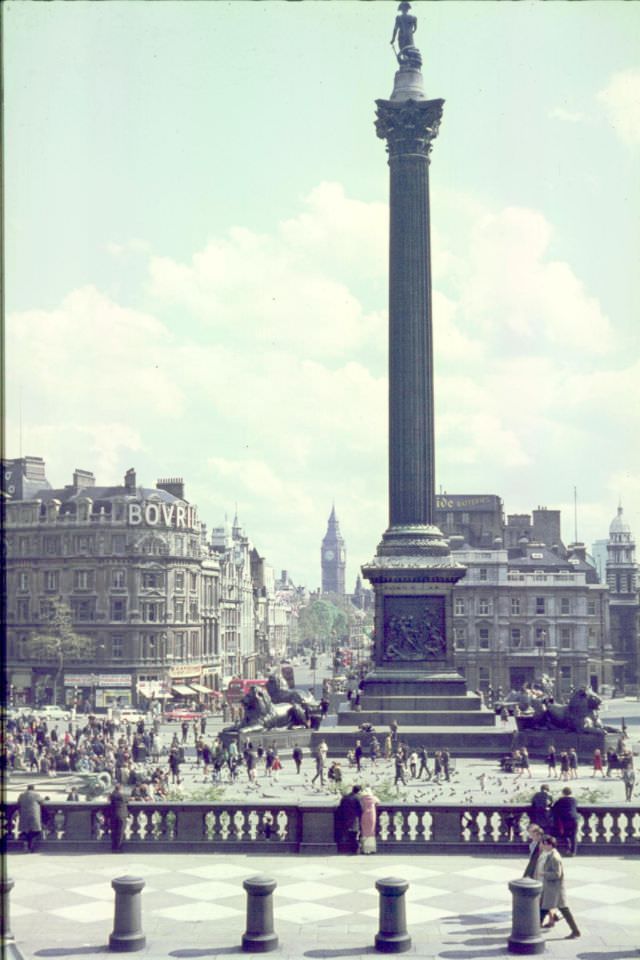
The year 1967 produced the largest share of images in this collection. Parliament Square, Admiralty Arch, and the stone lion at the Westminster Bridge bus stop all appear. The Embankment Gardens, Bond Street looking north, Nelson’s Column at Trafalgar Square, and the Royal Law Courts on the Strand fill out a thorough portrait of central London at mid-decade.
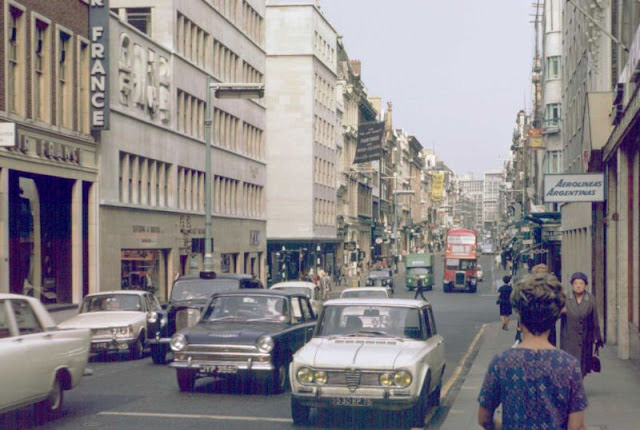
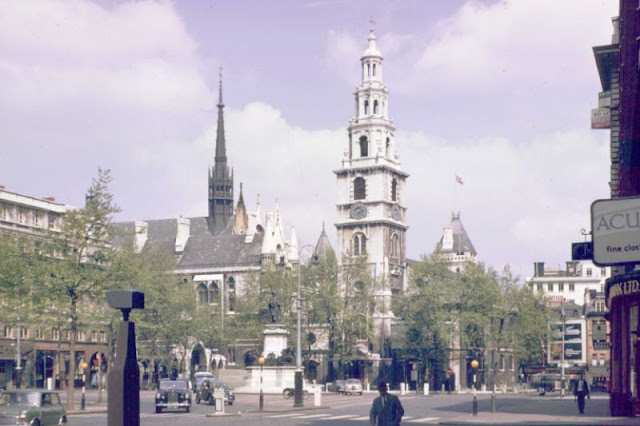
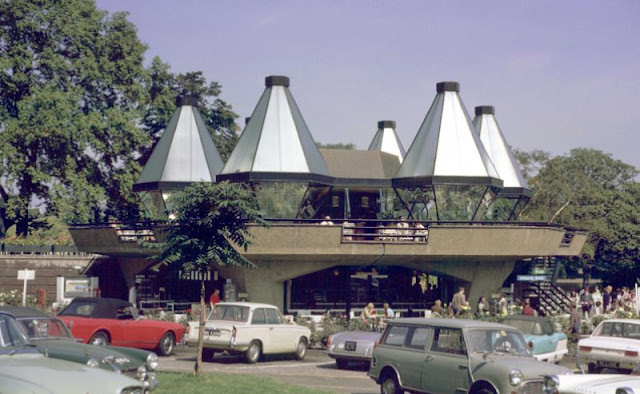
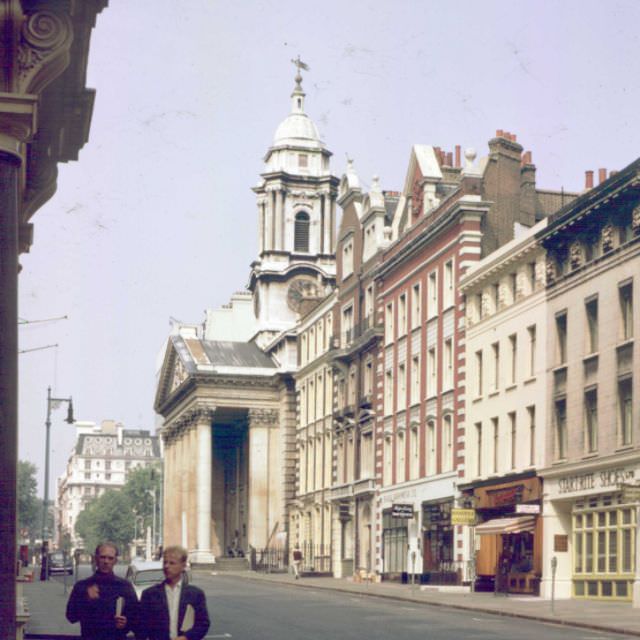
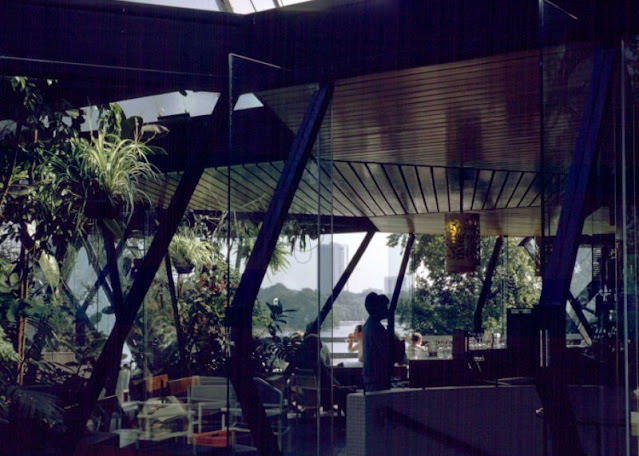
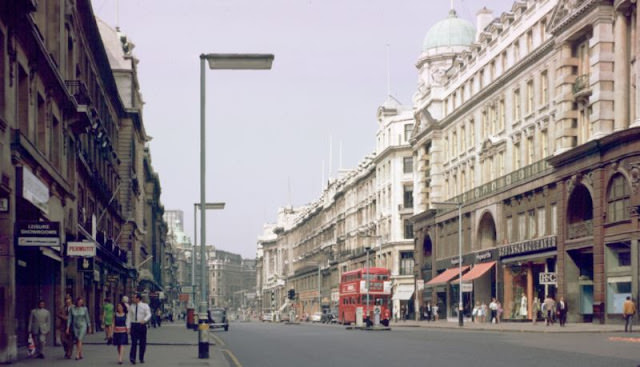
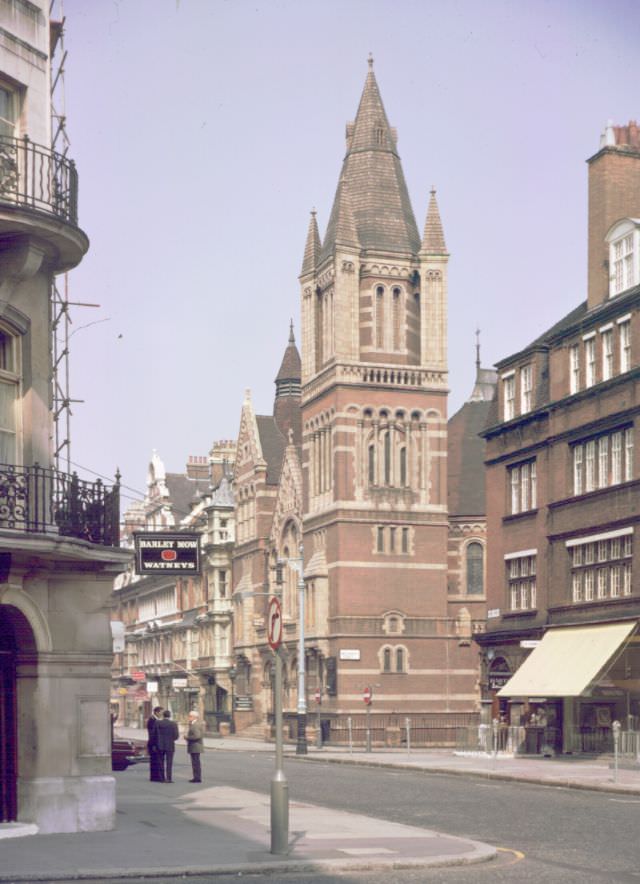
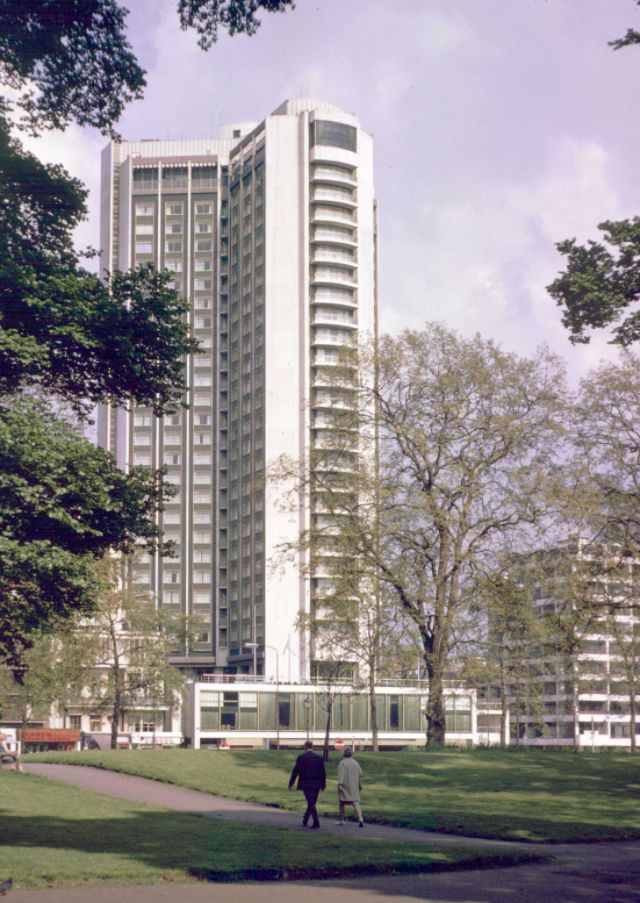
Hyde Park also features in the 1967 photographs. A shot of the restaurant inside the park shows the relaxed, open-air side of London life, while a view across the park toward the newly built Hilton Hotel on Park Lane puts the modern skyline in sharp contrast with the green space in the foreground. St George’s Church in Hanover Square and Regent Street looking north round out the year’s coverage, along with the Kings Weighhouse Church on Duke Street and the Hilton Hotel itself, shot from Park Lane.
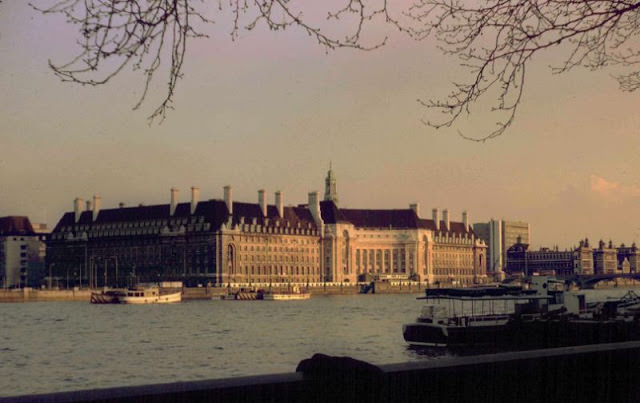
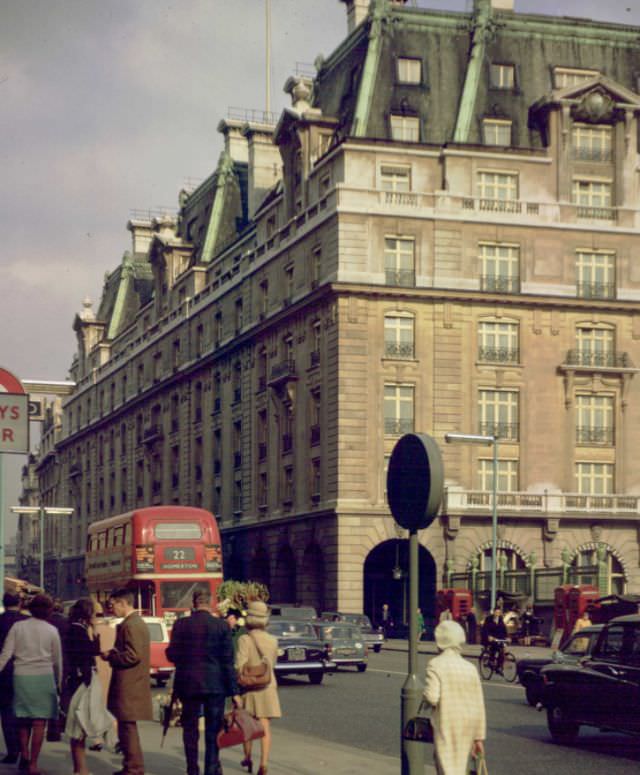
The collection’s final two images step into 1968 and 1970. County Hall, the grand building on the South Bank that served as the headquarters of the London County Council and later the Greater London Council, is photographed in 1968 with its familiar riverside presence. The set closes with the Ritz Hotel on Piccadilly in 1970 — a return, in spirit, to where the collection began, just a short walk from that busy circus photographed eight years earlier.