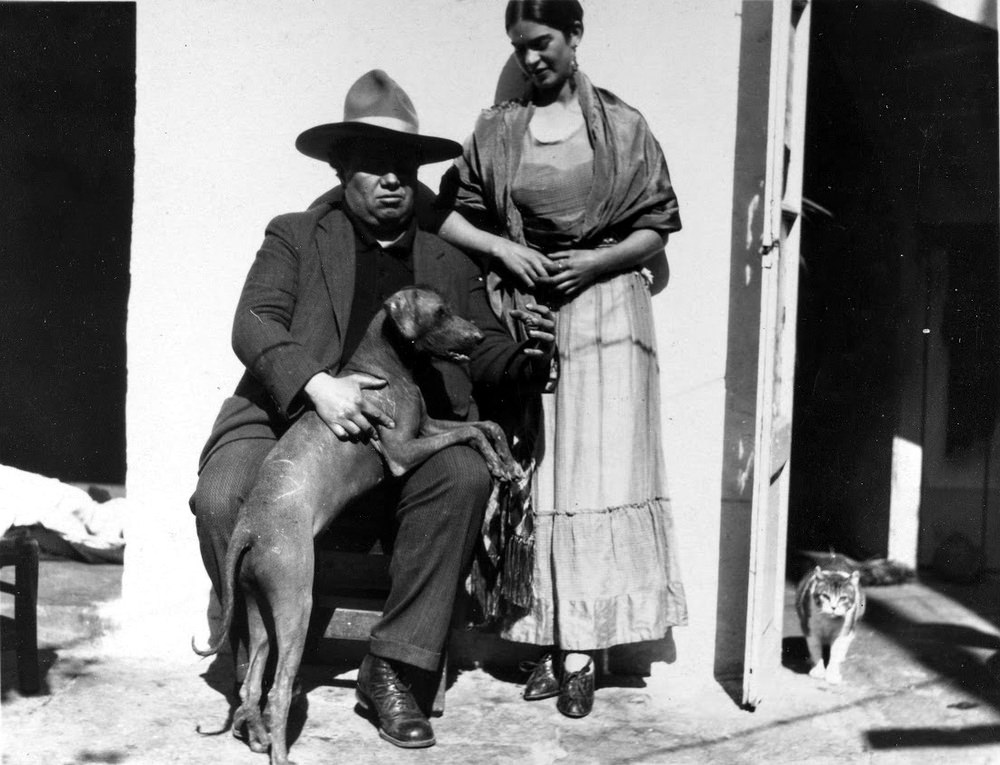
Frida Kahlo is best known for her striking self-portraits and her turbulent life, but one detail about her that often gets overlooked is her deep, personal bond with animals. She didn’t just keep pets — she surrounded herself with a whole menagerie of creatures and wove them directly into her art and identity.
Kahlo grew up in a politically charged, free-spirited household in Mexico City. Her mother was from Oaxaca, and her father was German. She began taking art lessons at a young age. Her childhood was marked by hardship — she contracted polio, which left one of her legs noticeably thinner than the other. Then, as a teenager, she was involved in a near-fatal bus accident that caused severe injuries and affected her health for the rest of her life.
Due to her ongoing health struggles, Kahlo was never able to carry a pregnancy to term. The animals she kept became a central part of her emotional world. She filled her home — the now-famous Casa Azul, or Blue House, in the Coyoacán neighborhood of Mexico City — with spider monkeys, cats, birds, and Xoloitzcuintli, the ancient hairless dogs of Mexico.
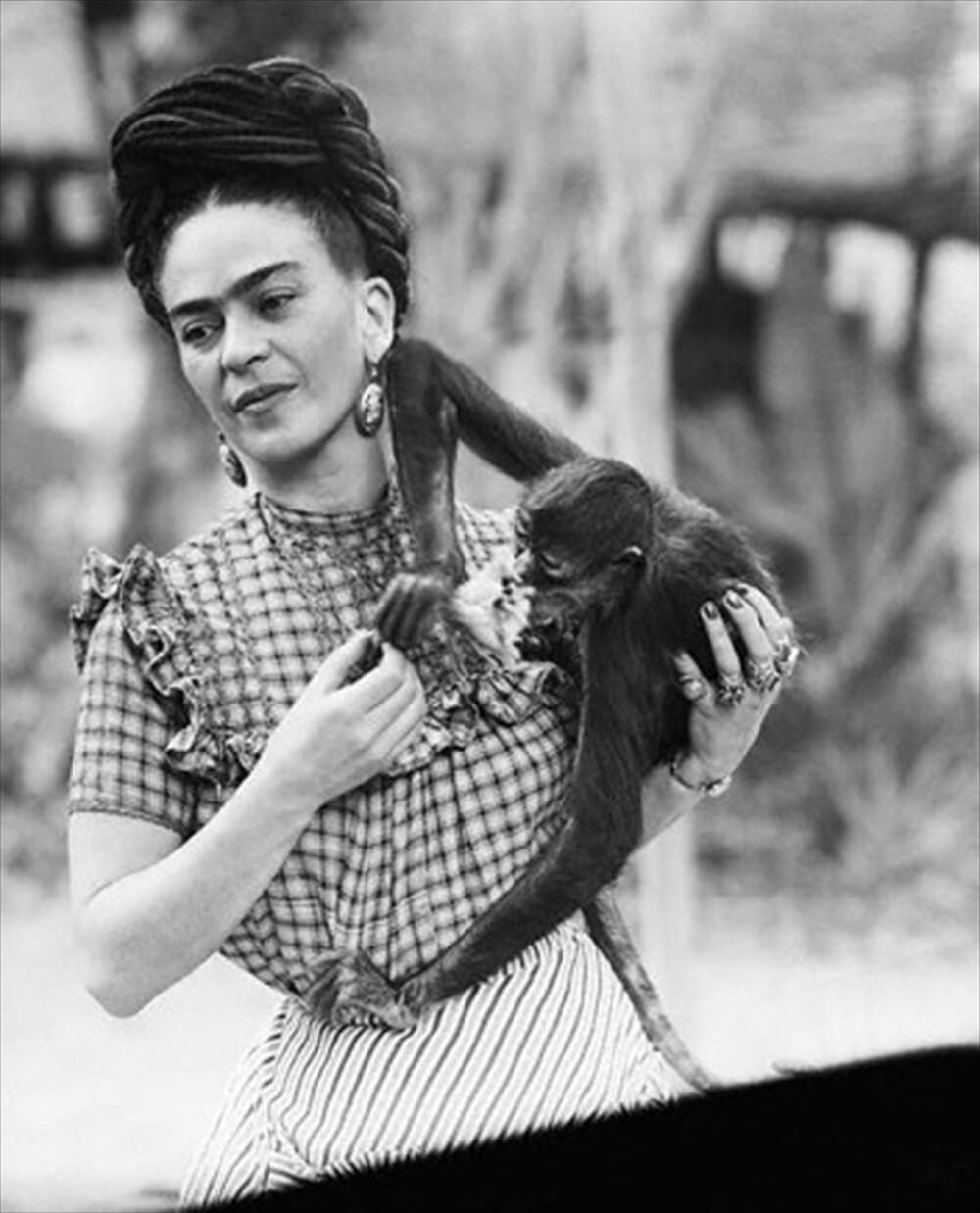
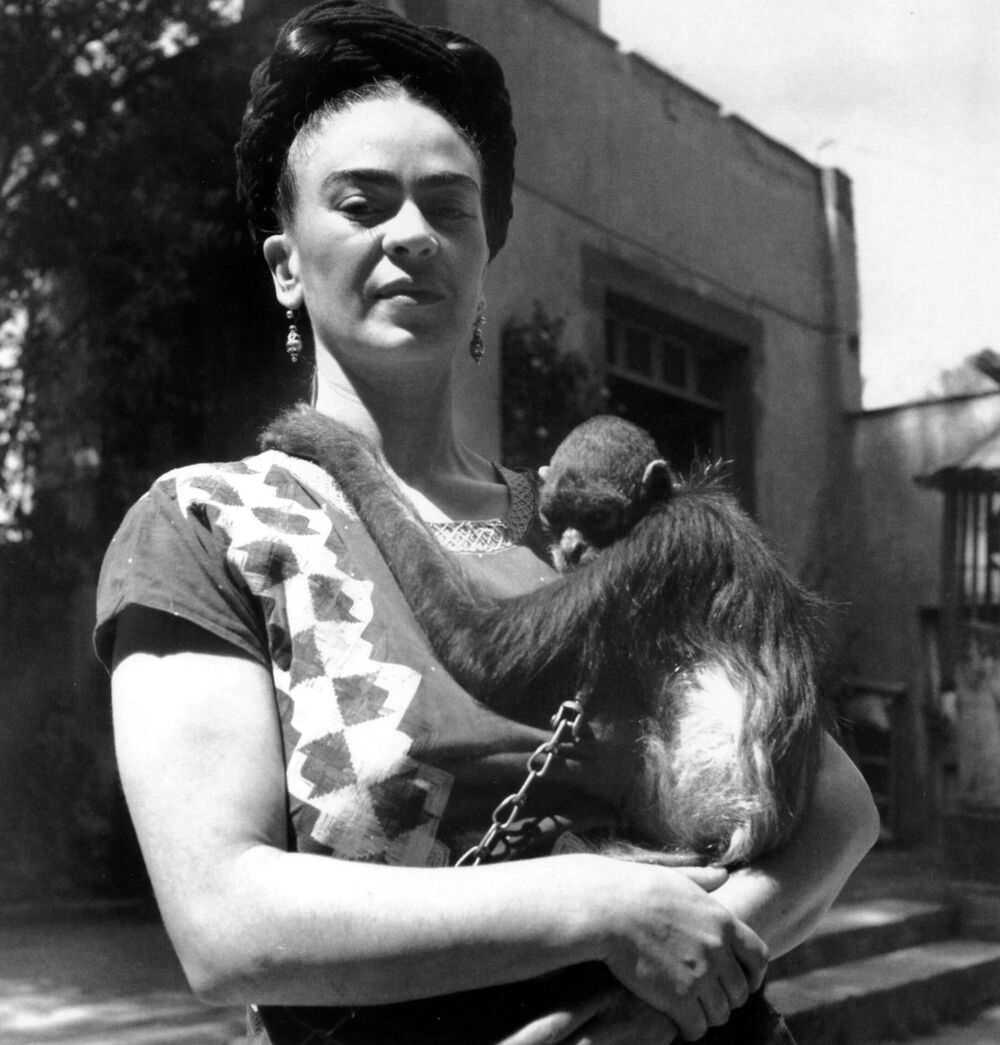
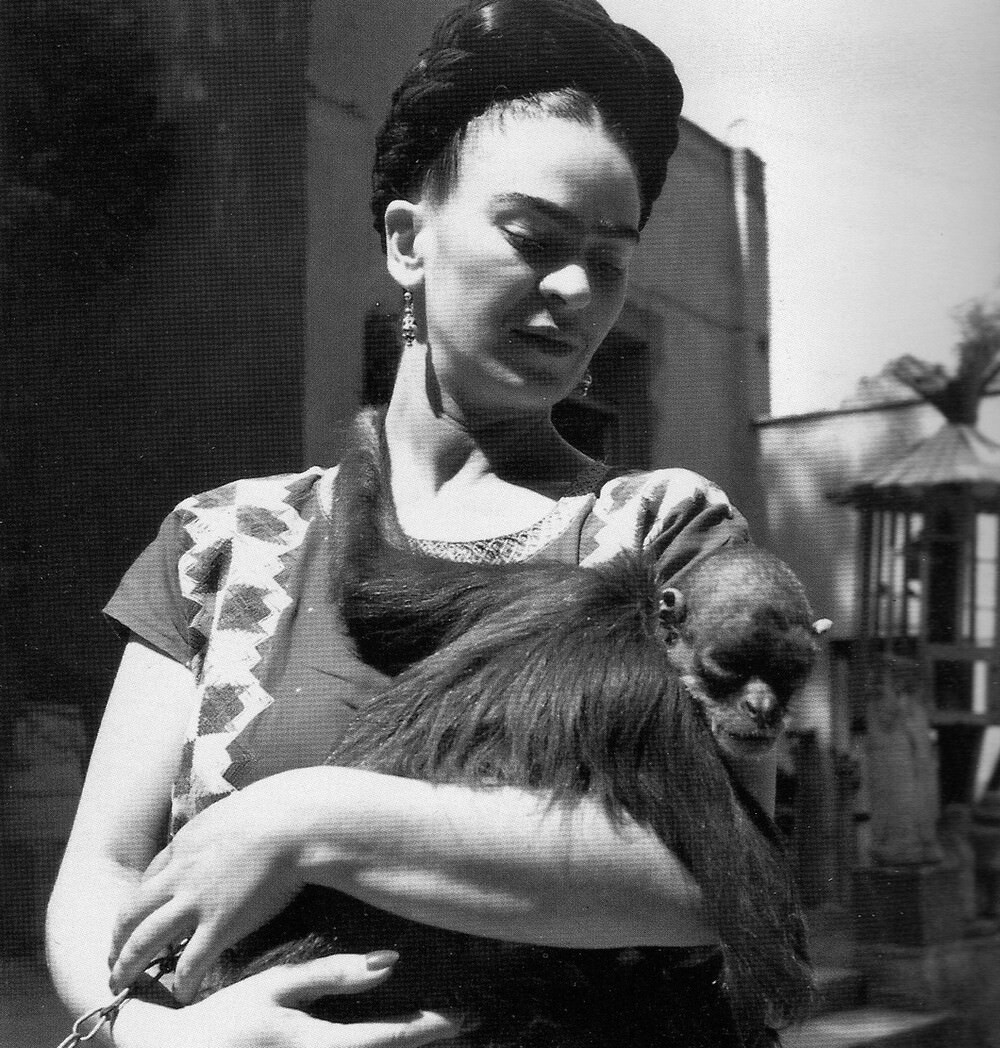
Out of the 181 paintings Kahlo completed in her lifetime, 55 were self-portraits. A number of those self-portraits featured her spider monkeys prominently, sitting on her shoulders or draped around her neck. Two of her most beloved monkeys were named Fulang Chang and Caimito de Guayabal. She painted them not as background elements or props, but as companions — positioned at the same level as herself.
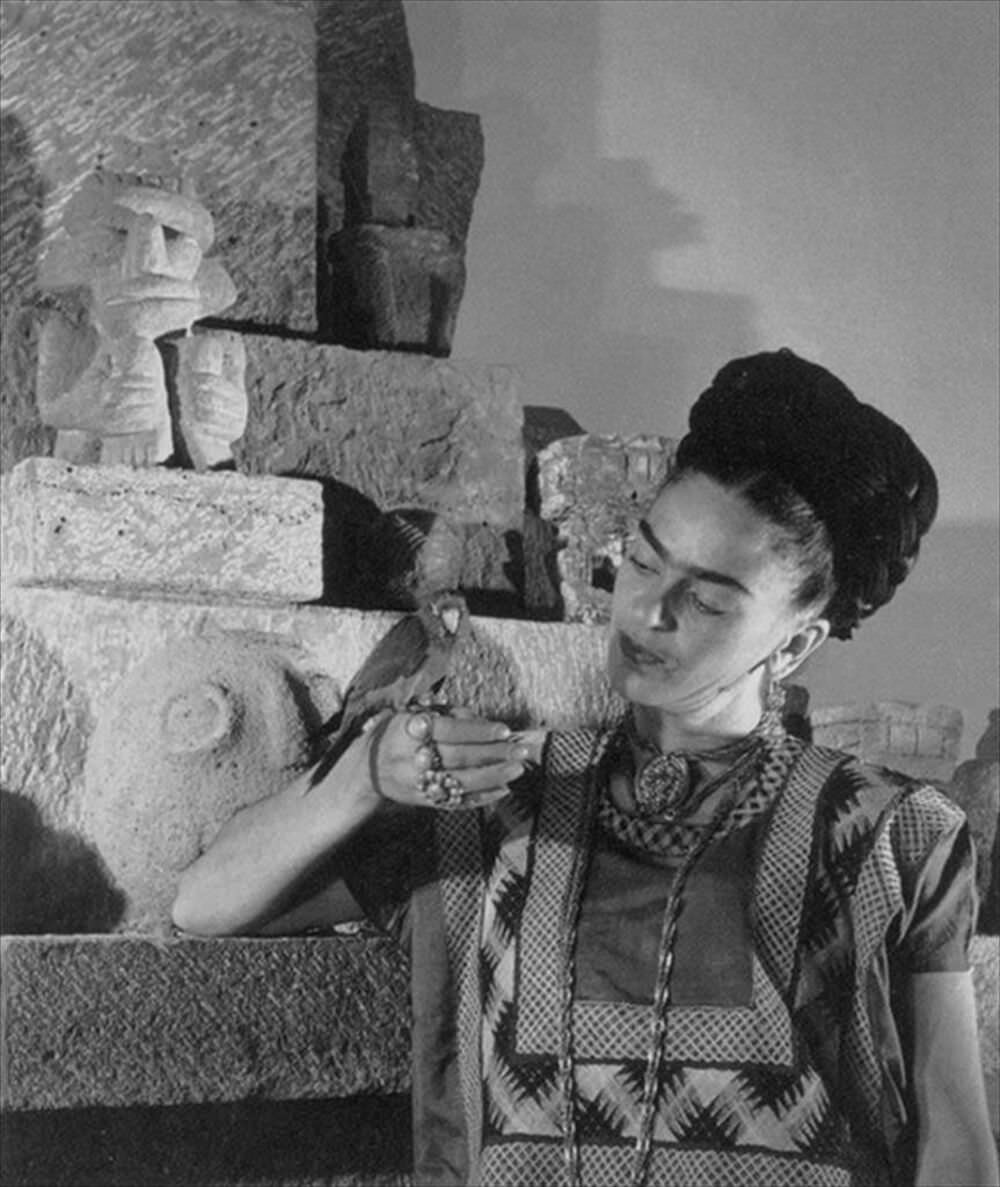
Kahlo’s connection to these animals wasn’t purely emotional. It was also deeply rooted in history and culture. She and her husband, muralist Diego Rivera, shared a fascination with Mesoamerican civilizations. They collected pre-Hispanic objects and studied early Mexican cultures closely. Several of the animals Kahlo kept were directly tied to Aztec and Mayan traditions.
In Aztec culture, monkeys were associated with fertility deities. The Xoloitzcuintli dogs held an even more specific role — they were believed to be guides for the dead through the underworld. Aztecs buried these dogs alongside their owners after death. In some ritual contexts, the dogs were sacrificed and consumed as part of the ceremony. Kahlo was well aware of this history when she kept these animals in her home.
Beyond monkeys and dogs, Kahlo also kept parrots and other birds at Casa Azul. The house itself was a living space built around the natural world — loud, colorful, and full of life. Visitors who came to see Kahlo often described the home as feeling more like a wildlife sanctuary than a traditional artist’s studio.
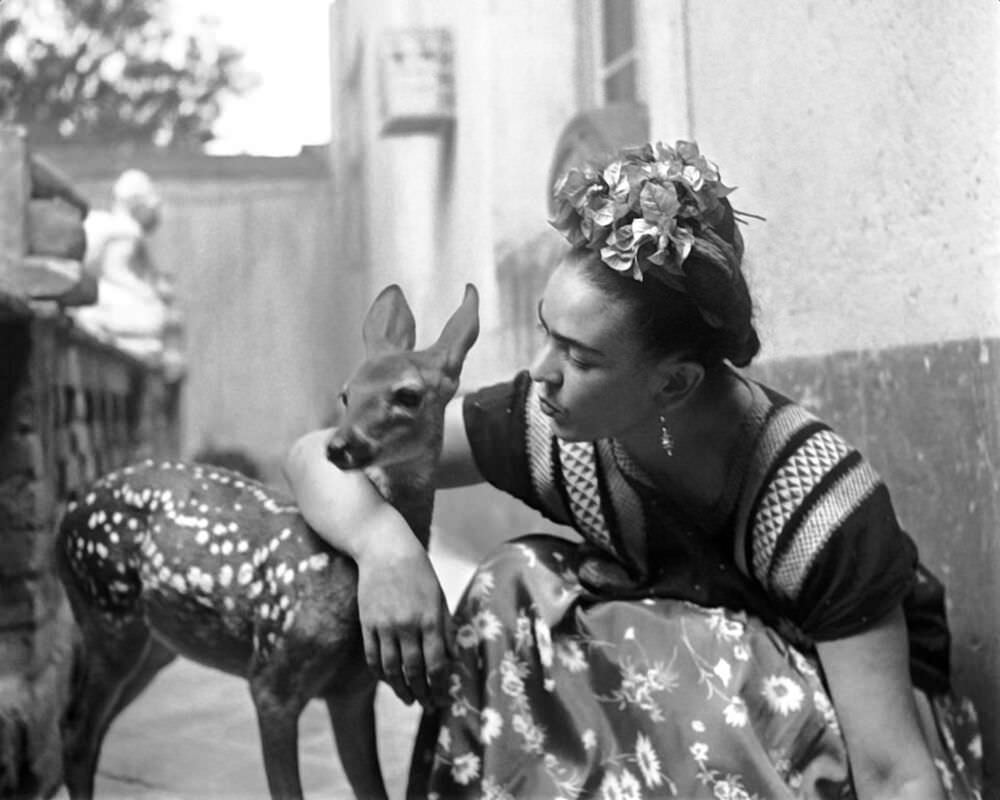
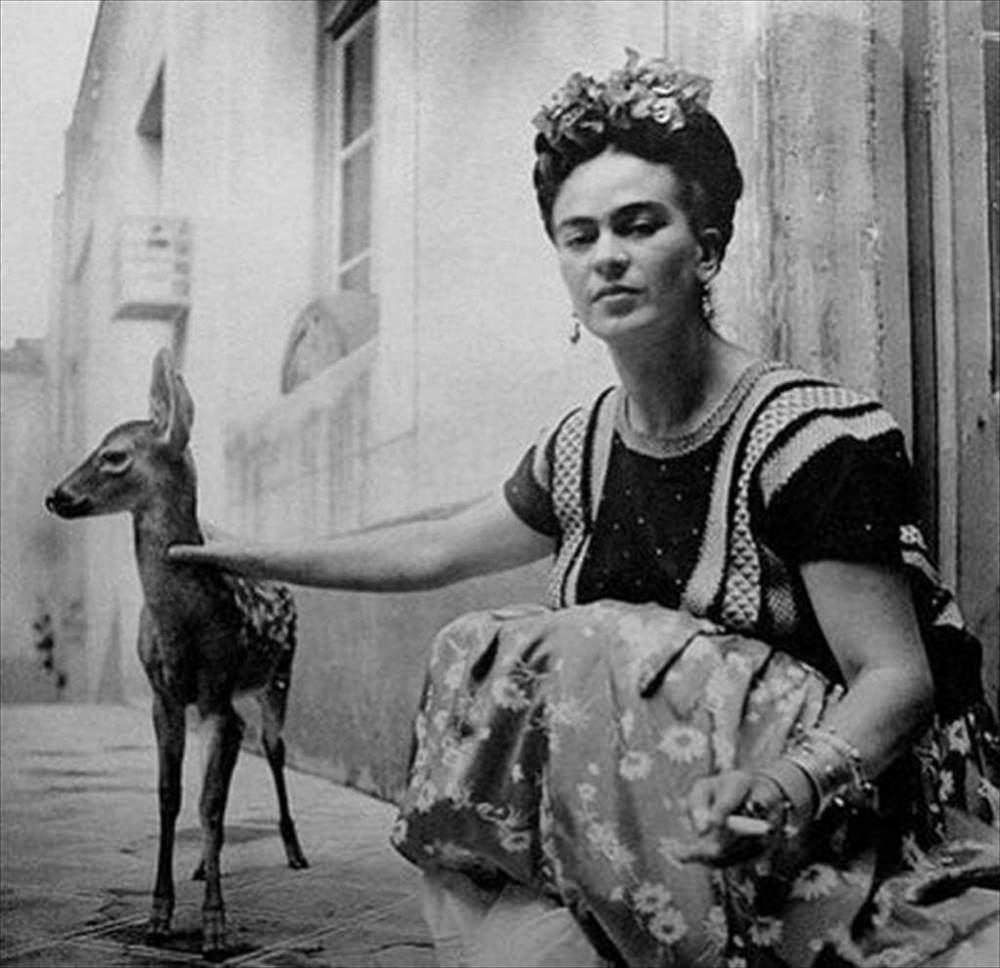
One of her other well-known animal subjects was a deer she named Granizo. Kahlo painted Granizo in a haunting 1946 work called “The Wounded Deer,” in which she placed her own face on the body of a young stag pierced by arrows. The painting is widely read as a reflection of her physical suffering, but the deer itself was a real animal she cared for at Casa Azul.
Kahlo’s personal life was complicated. She had multiple affairs with both men and women throughout her marriage to Rivera, and their relationship was marked by mutual infidelity. Yet in her art, she portrayed her animal companions with a kind of steadiness and loyalty that stood apart from the chaos of her personal relationships. She painted them as equals — sharing her space, her frame, and her story.
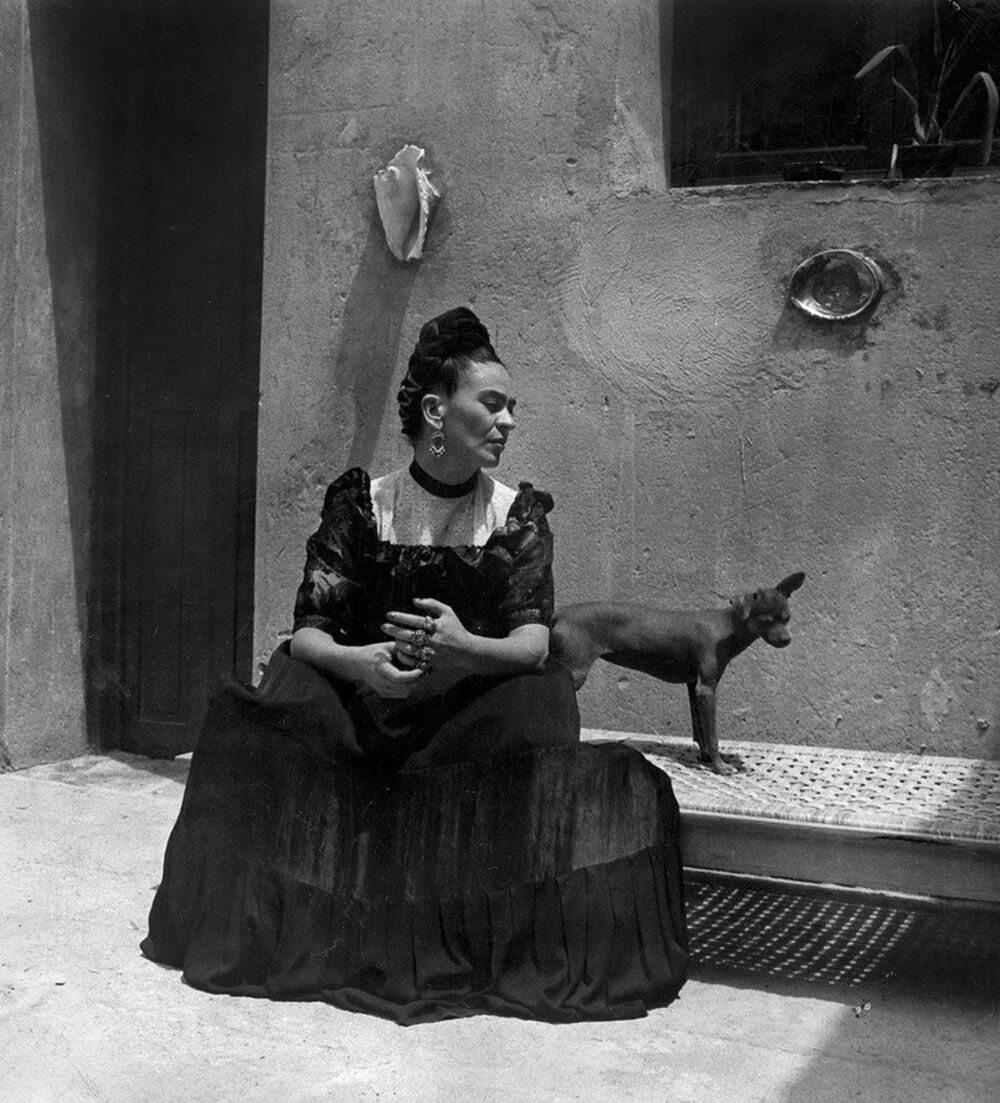
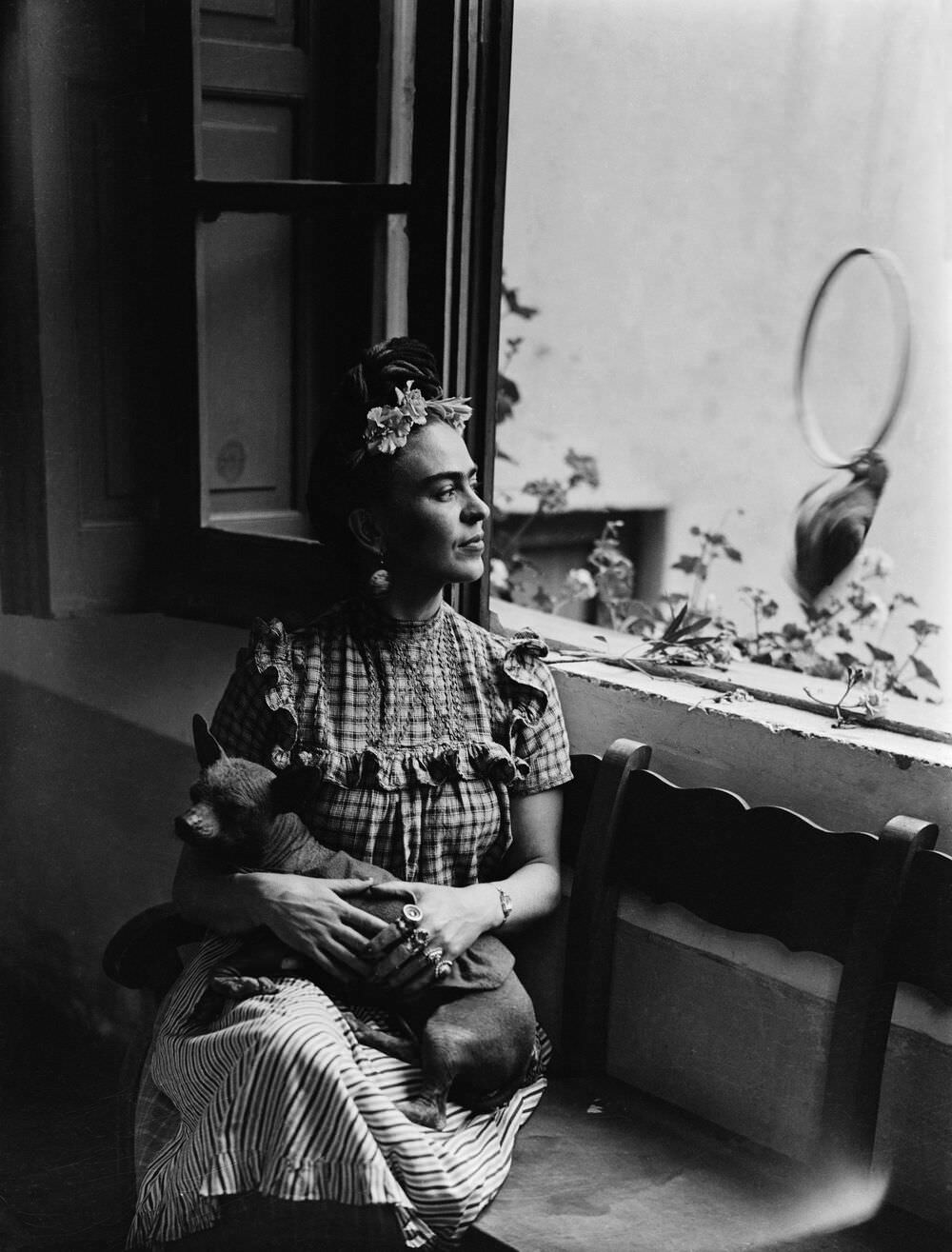
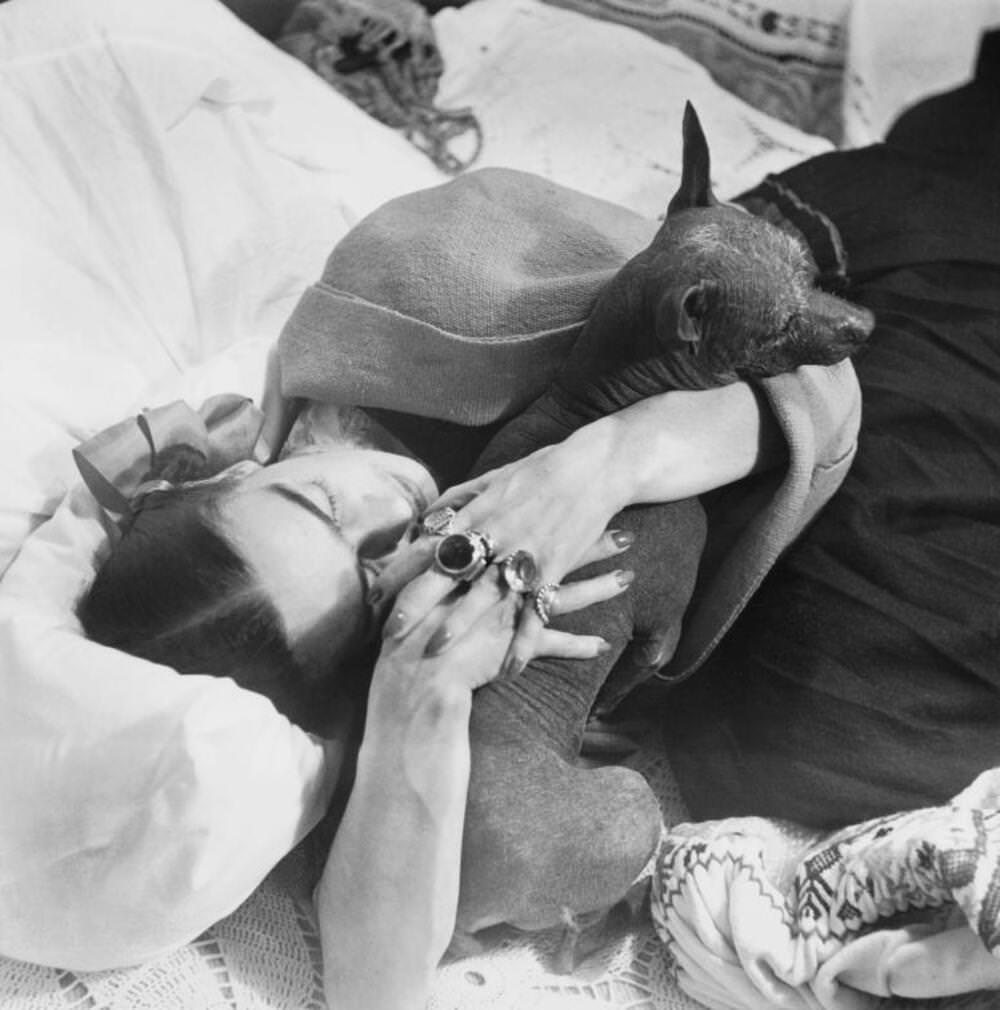
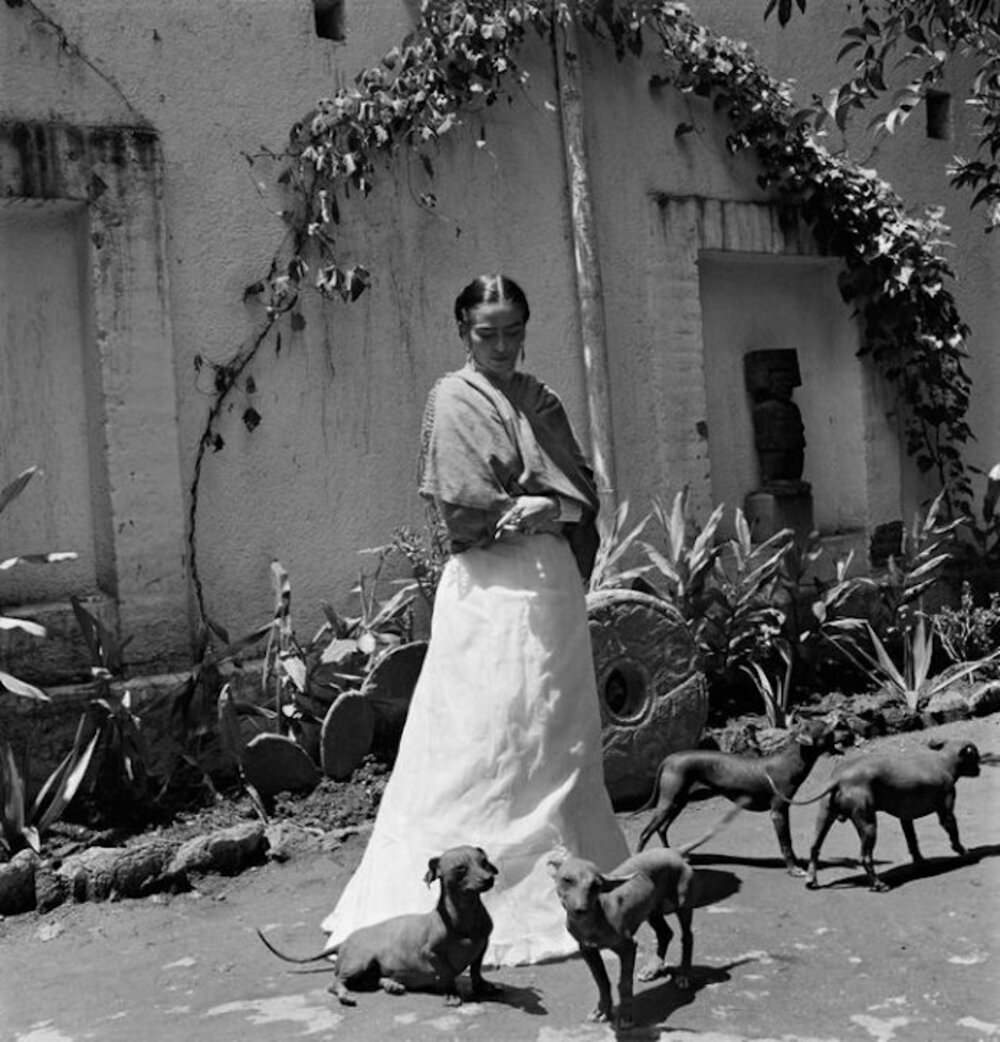
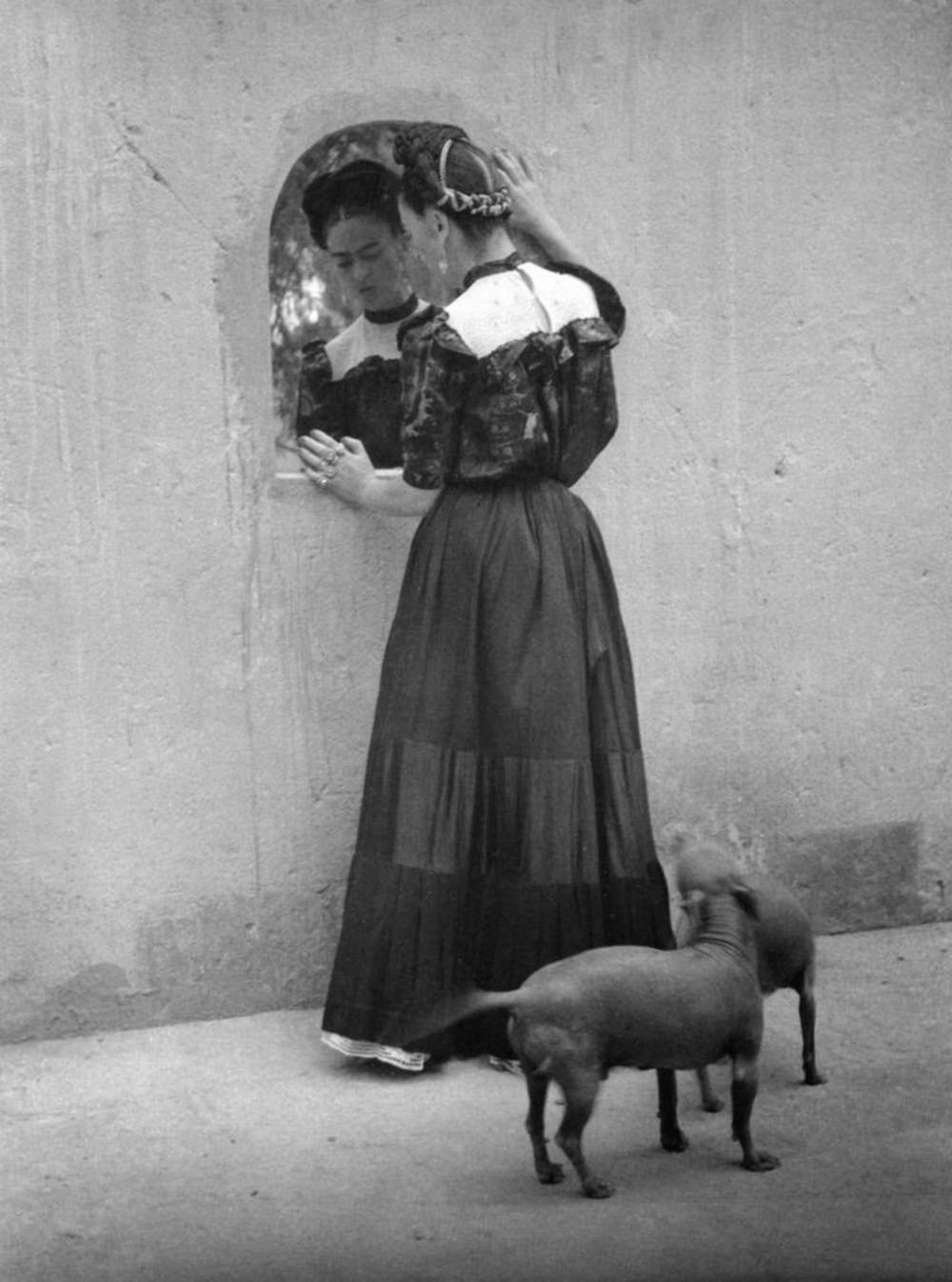
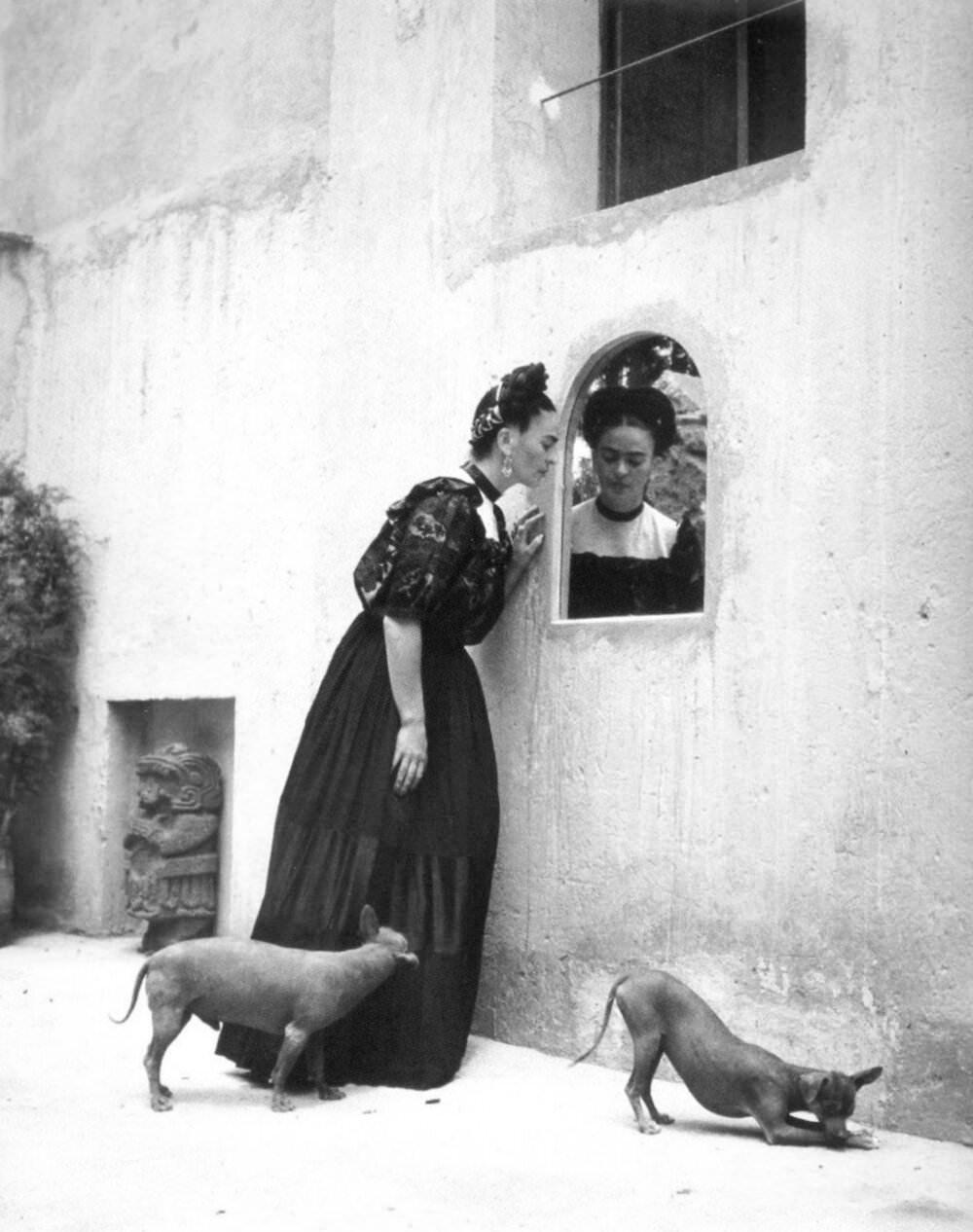
The Xoloitzcuintli dogs were particularly meaningful to her. This breed dates back thousands of years in Mexico and was already ancient by the time the Aztec empire rose. Their wrinkled, hairless appearance made them unusual-looking to outsiders, but to Kahlo, they were a direct living link to the pre-Hispanic world she admired. She kept several of them and included them in photographs taken at Casa Azul.
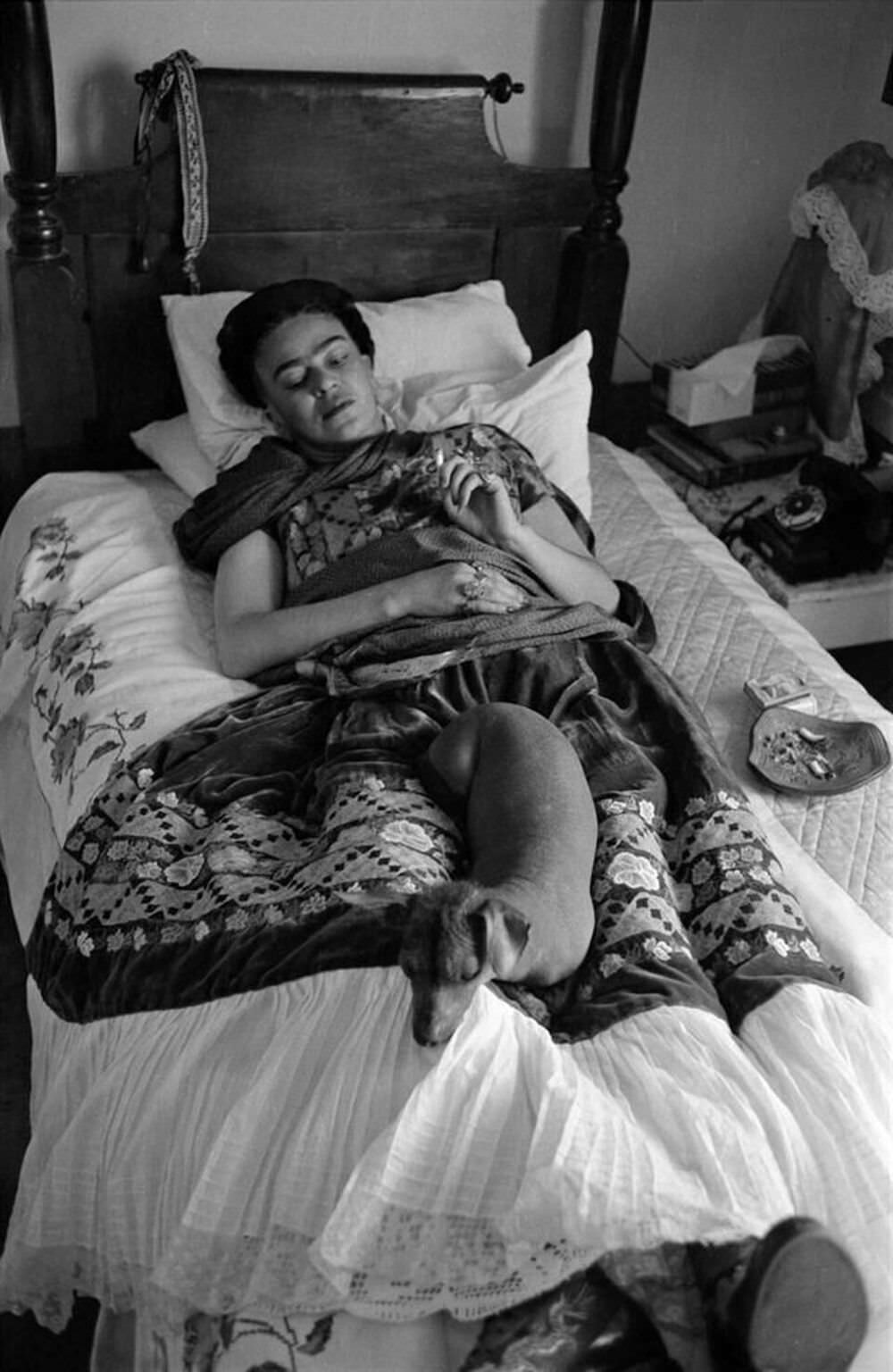
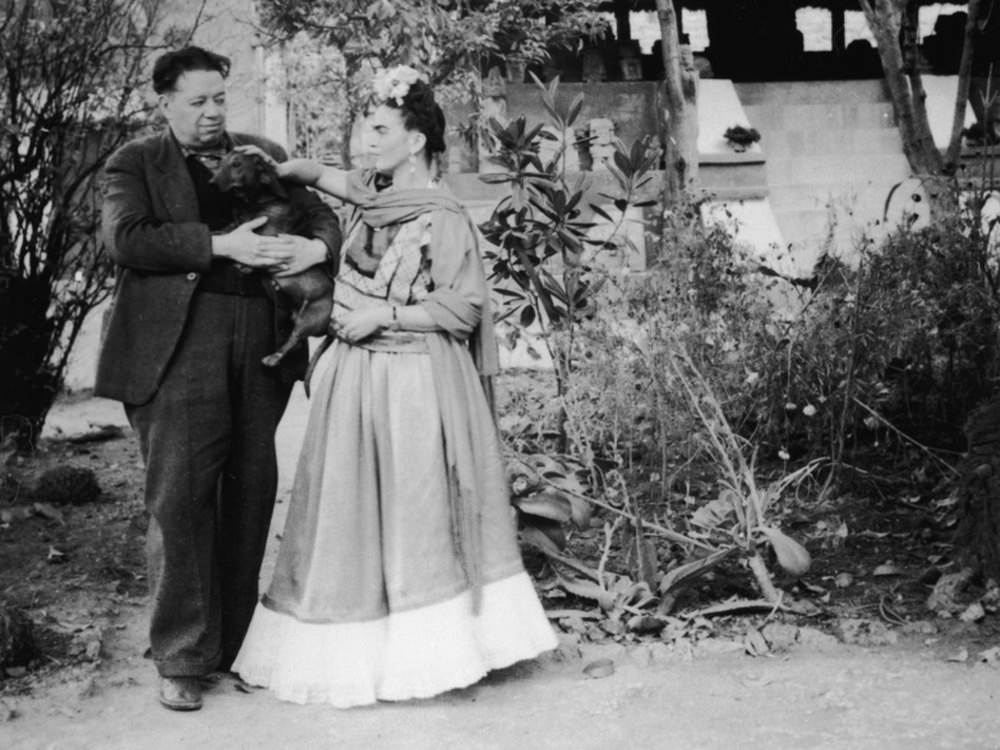
Photographs taken of Kahlo at home show her relaxed and natural with her animals in a way that formal portraits rarely captured. With a monkey on her shoulder or a dog at her feet, she looks genuinely at ease. These images offer a side of Kahlo that her self-portraits, as personal as they were, couldn’t fully convey.
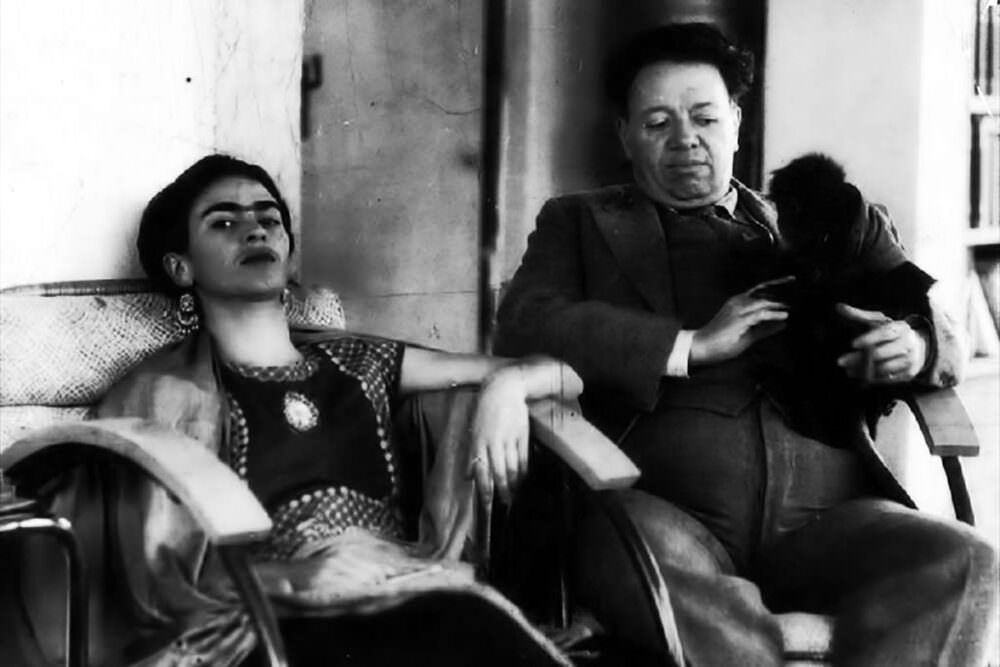
Animals gave Kahlo a language for expressing things that were difficult to put into words — pain, companionship, cultural identity, and the connection between life and death. Every creature she kept at Casa Azul meant something specific to her, and she made sure that meaning found its way into her work.