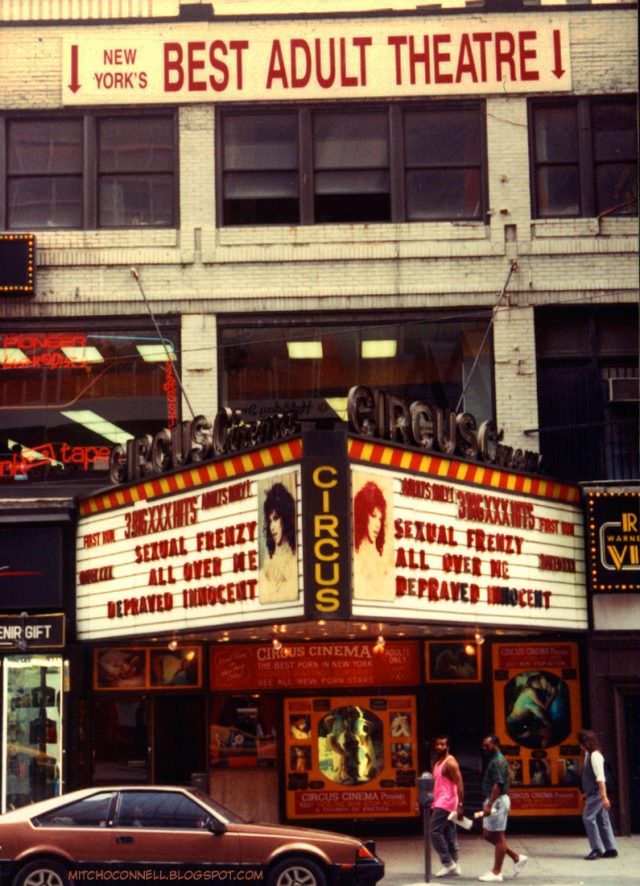
New York City’s 42nd Street in the 1980s was unlike anything you’d recognize today. It was loud, crowded, and unapologetically raw. Neon signs competed for attention above sidewalks packed with vendors, theatergoers, and hustlers alike. The street pulsed with an energy that was equal parts electric and chaotic.
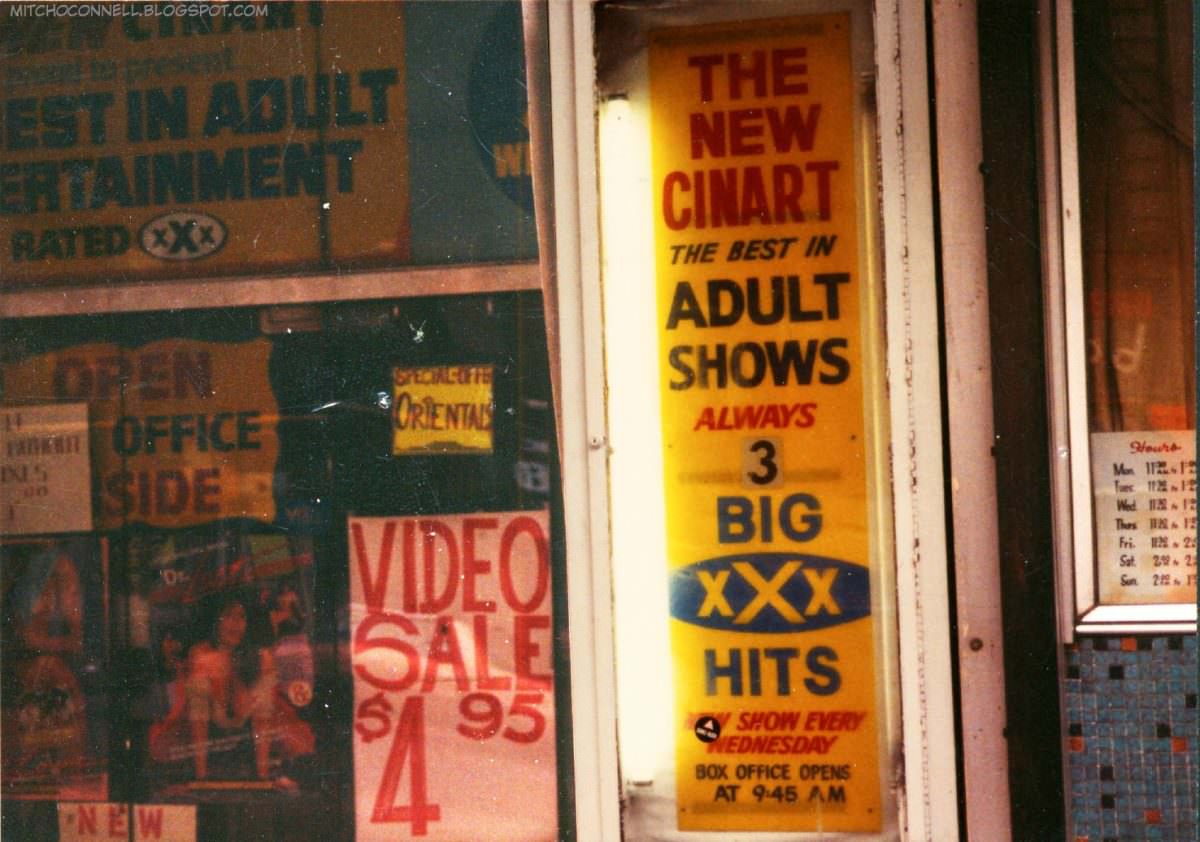
For much of the mid and late 20th century, the stretch of 42nd Street near Times Square was known for more than just entertainment. Peep shows, adult theaters, and street-level vice were fixtures of the block. It was a far cry from the tourist-friendly corridor it would later become. Yet for many New Yorkers, this was simply part of the city’s texture — rough, honest, and unmistakably real.
The southeast corner of 42nd Street and Broadway held a notable distinction: it served as the eastern terminus of the Lincoln Highway, the first road across the United States. That geographic fact made this corner one of the most historically loaded intersections in the entire country, even as its surroundings descended into what many called urban decay.
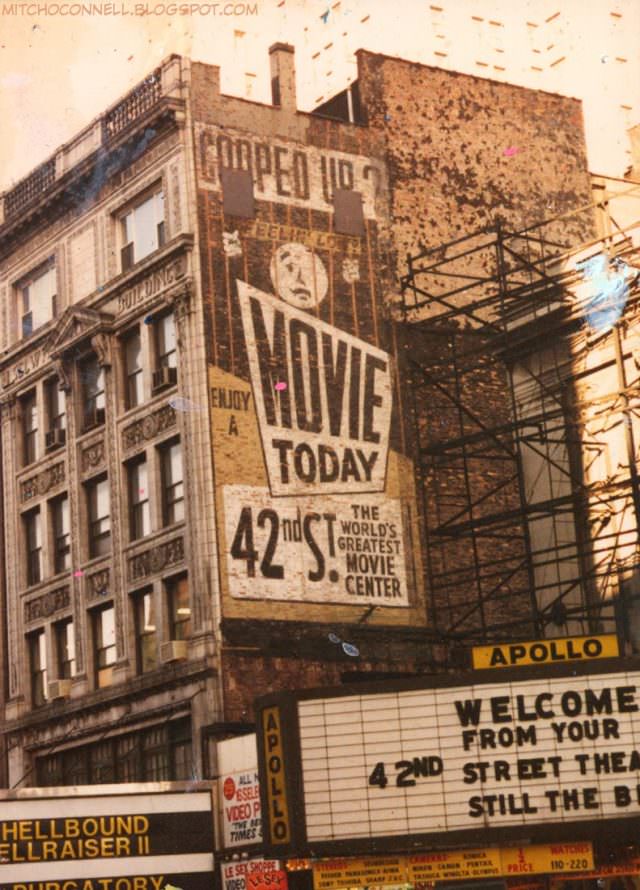
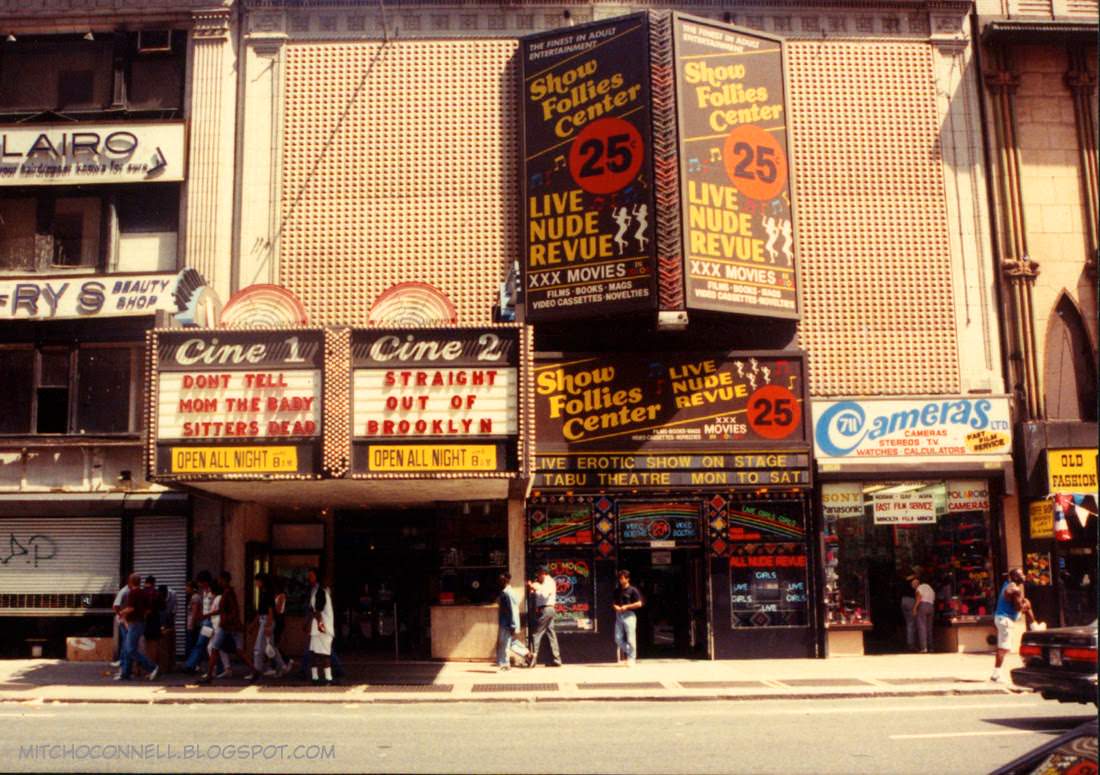
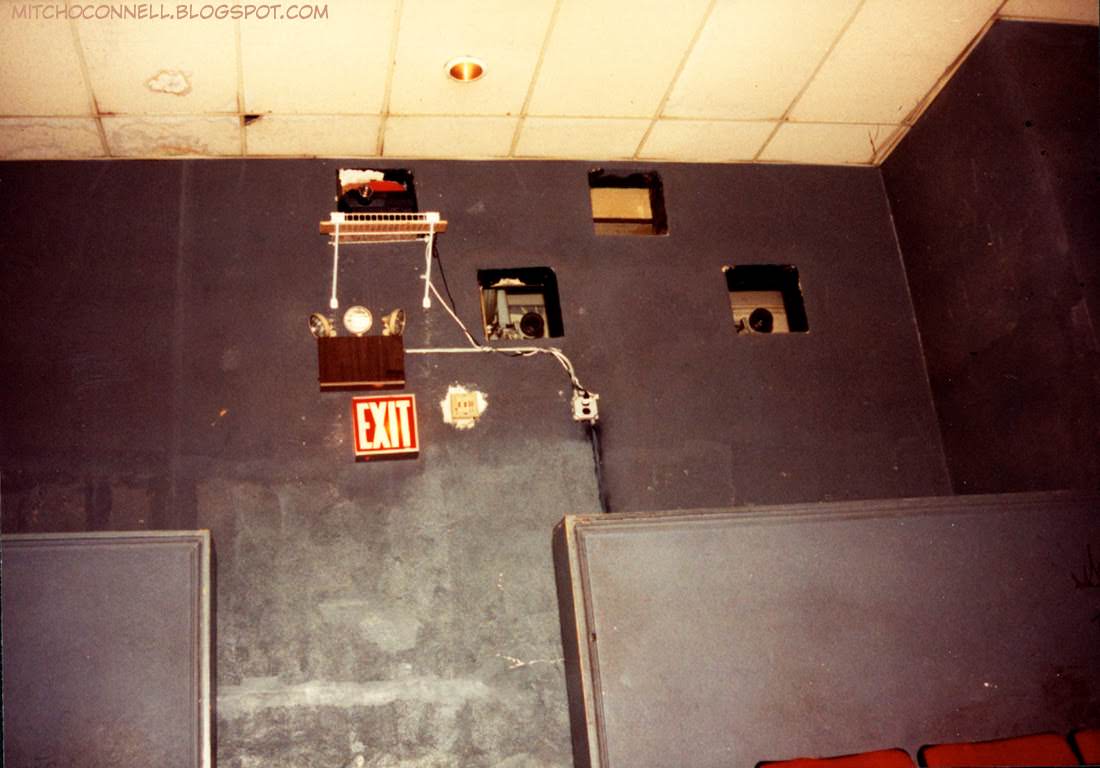
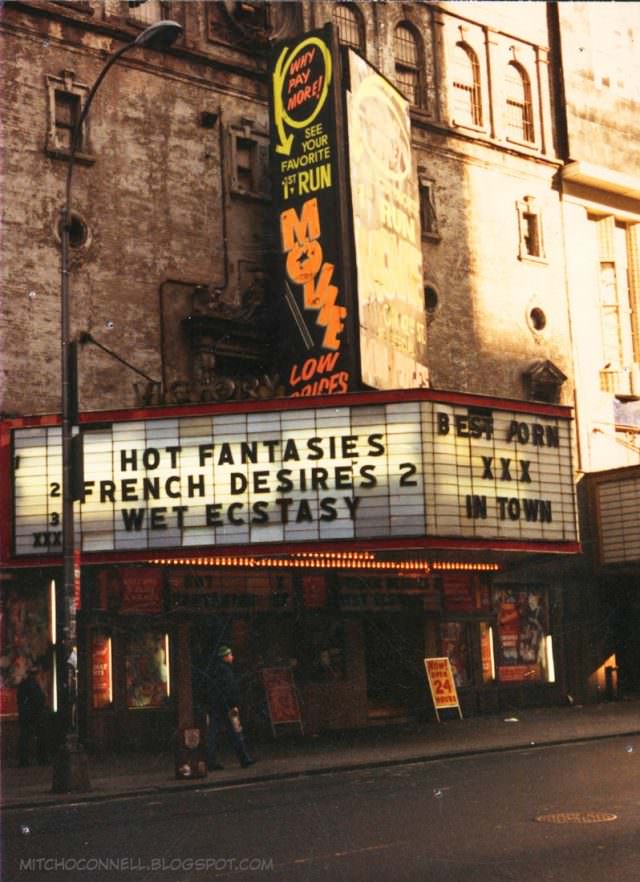
Theater had long defined 42nd Street’s identity. Before the mid-20th century, the block was home to some of New York’s most celebrated venues. By the 1980s, many of those grand old theaters had been converted into grindhouse cinemas or had simply fallen into disrepair. Marquees that once announced Broadway premieres now advertised B-movies and adult films.
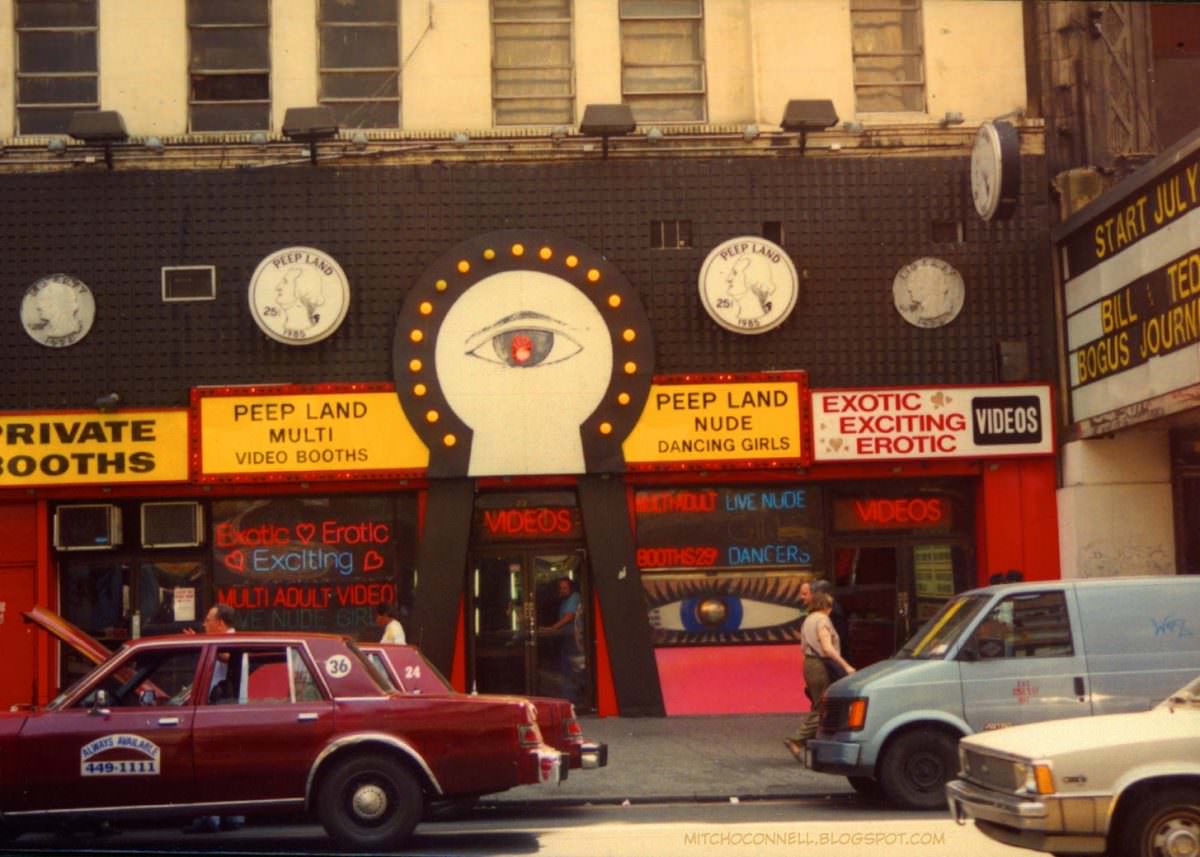
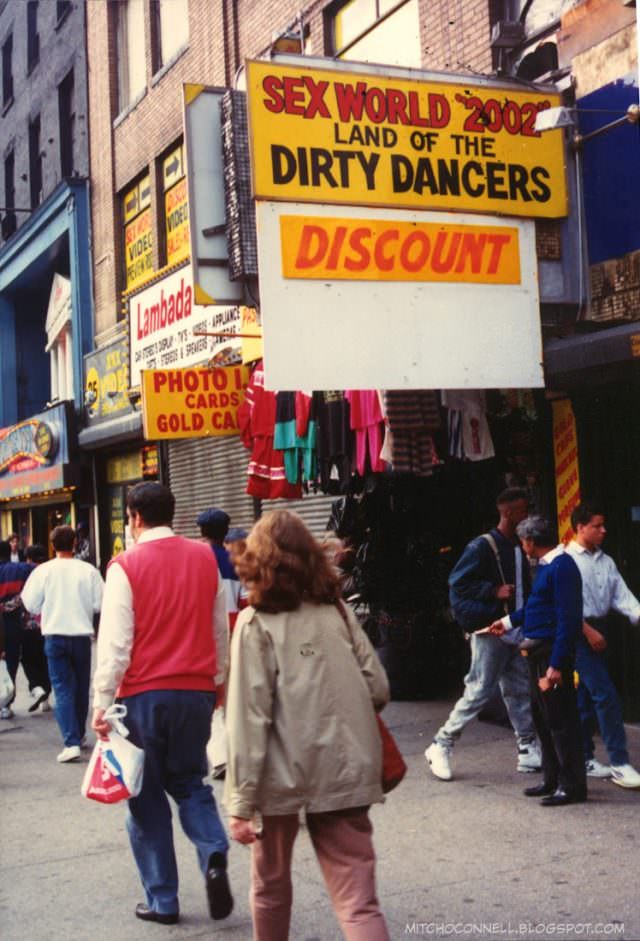
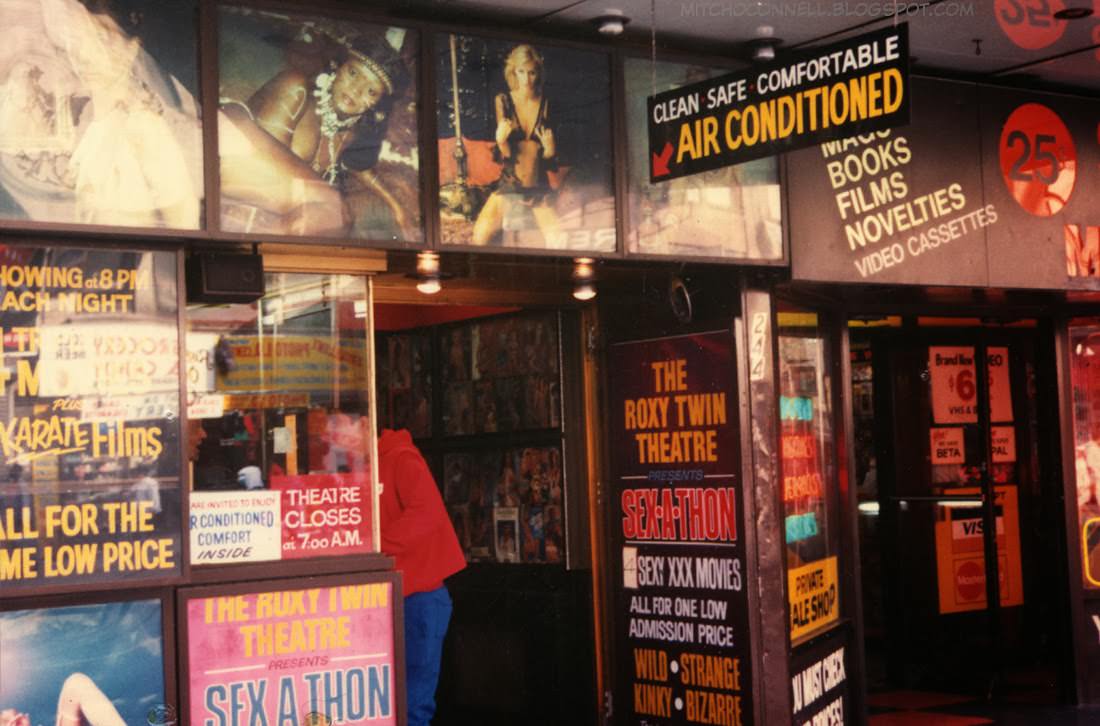
Street life on 42nd Street during this decade was dense and unpredictable. The sidewalks were rarely quiet at any hour. Tourists sometimes wandered in by accident, while regulars moved through the block with purpose. Vendors set up along the curbs, and the storefronts — arcade games, record shops, cheap eateries — gave the street a carnival-like feel that no amount of grit could fully diminish.
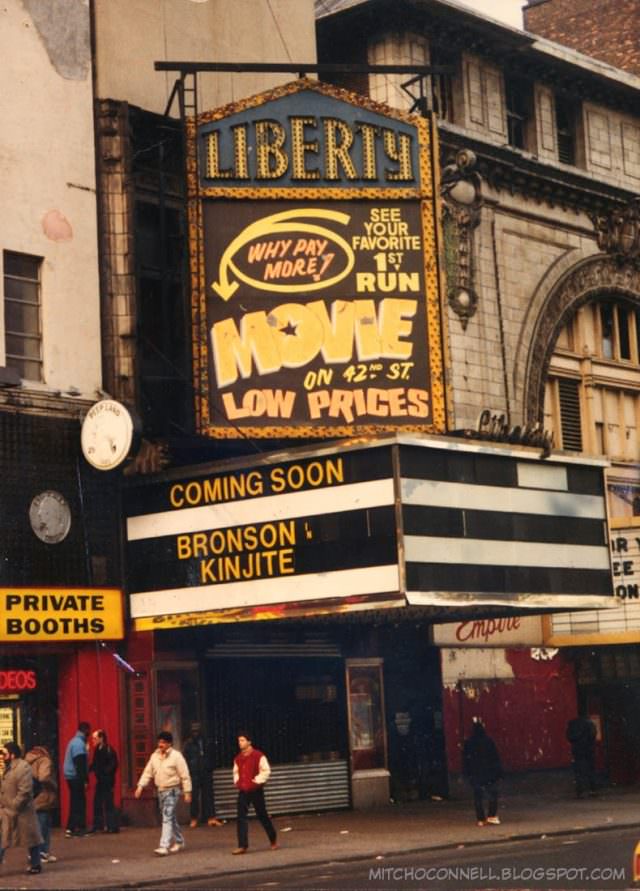
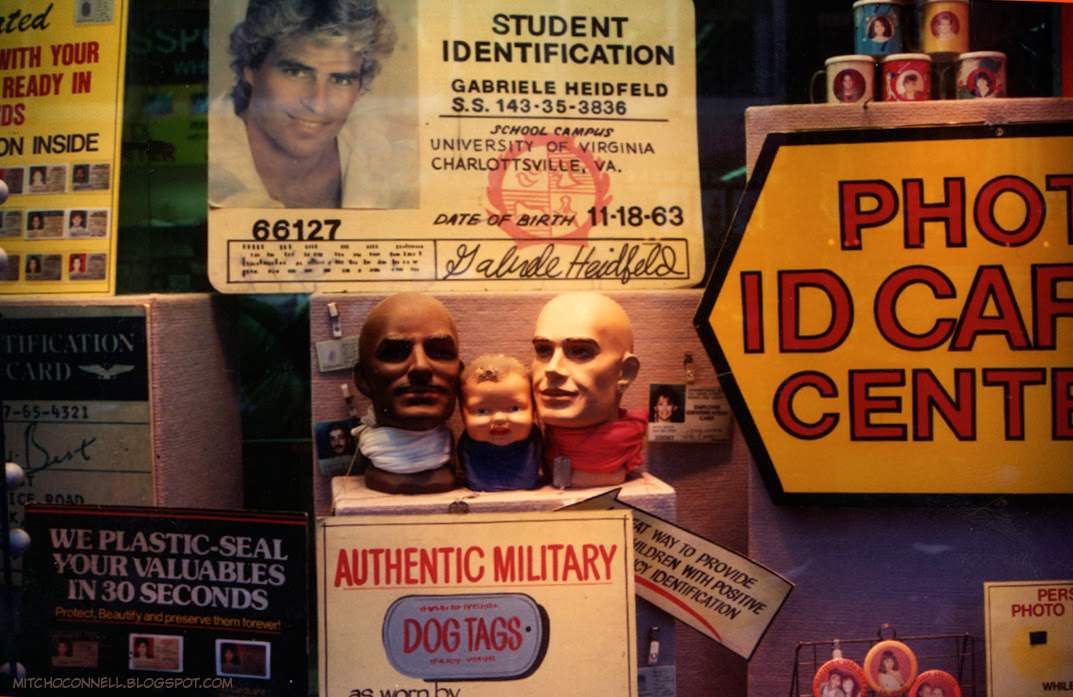
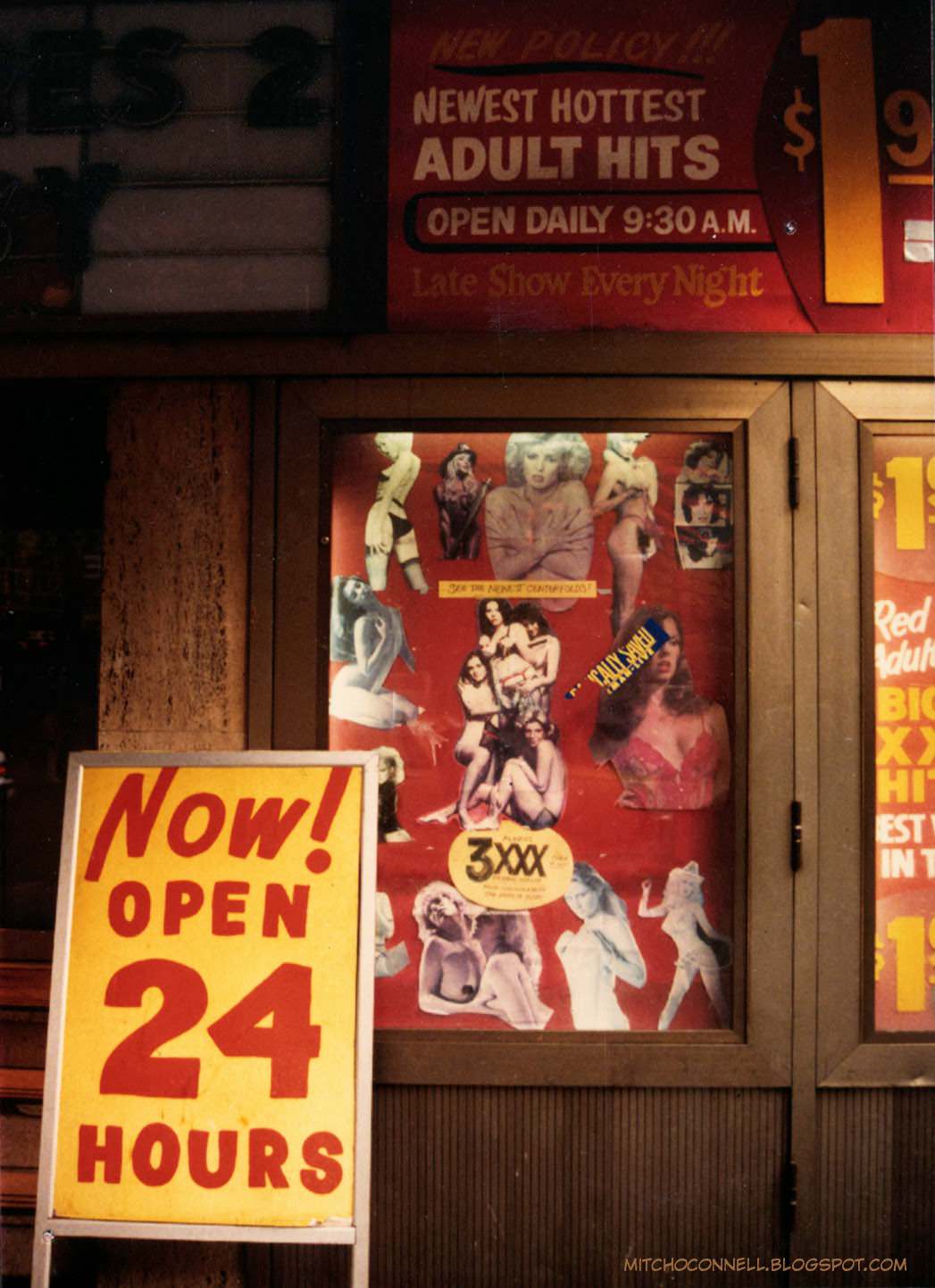
The signage alone told a story. Hand-painted lettering, flickering neon, and oversized movie posters blanketed nearly every visible surface. Photographers and filmmakers were drawn to the area for its visual intensity. The street had a look that couldn’t be manufactured — it simply existed, block by block, sign by sign.
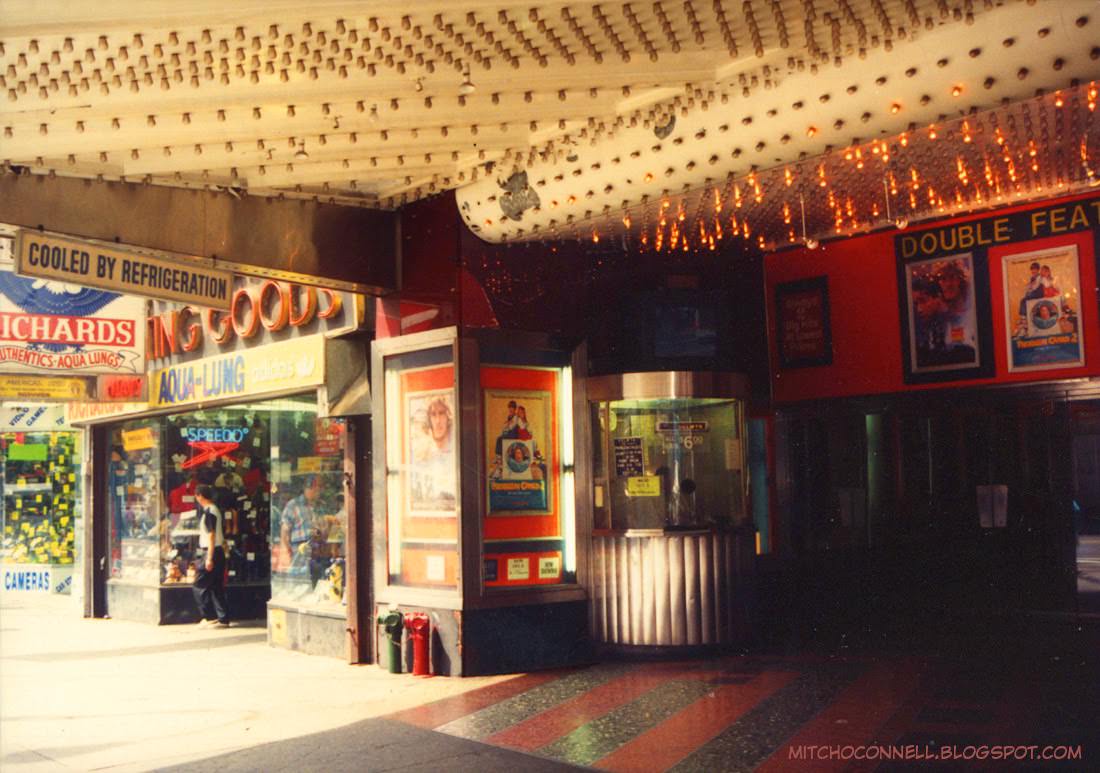
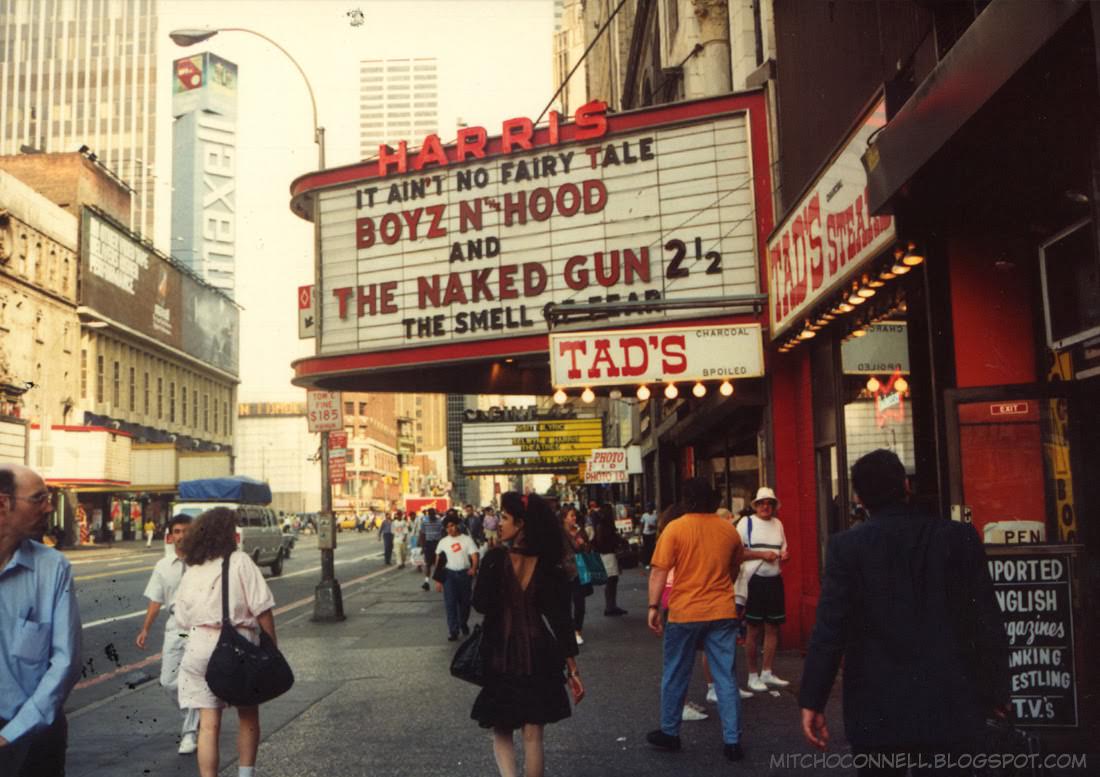
By the late 1980s, city officials and developers had begun pushing for change. The area’s reputation made it a target for urban renewal proposals that had circulated for years. Critics of the cleanup efforts argued that erasing the street’s rough character meant erasing something genuinely New York. Supporters pointed to crime statistics and the need to attract investment back to Midtown Manhattan.
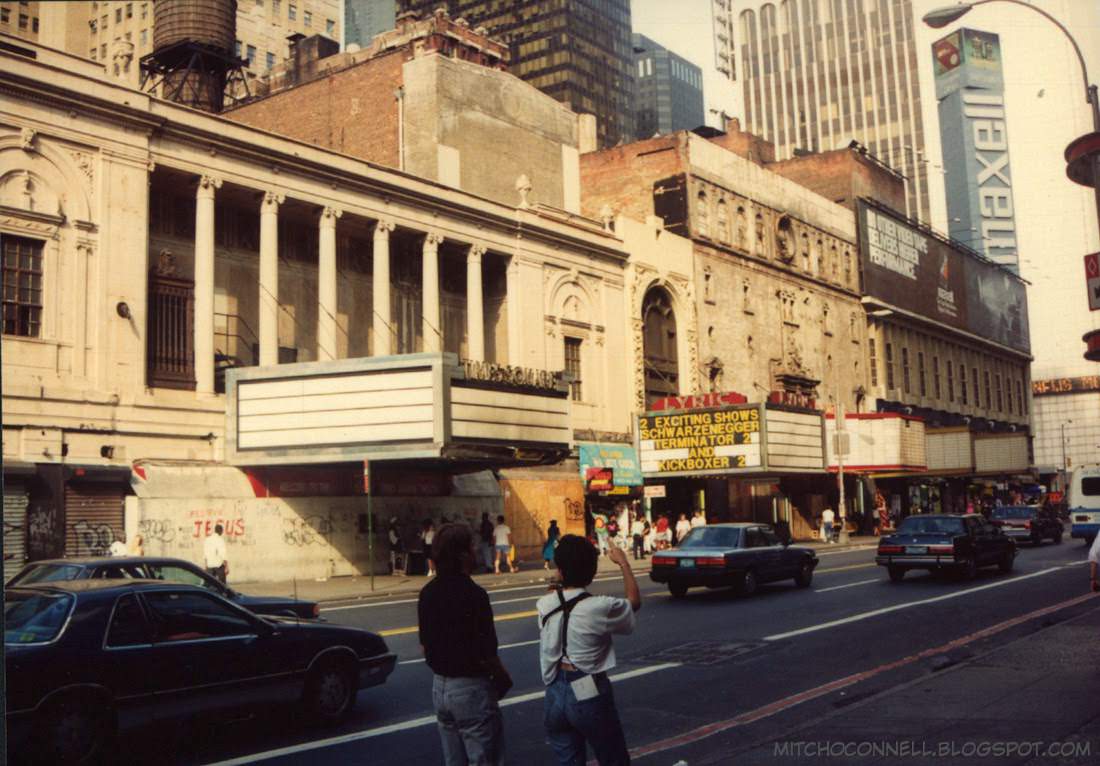
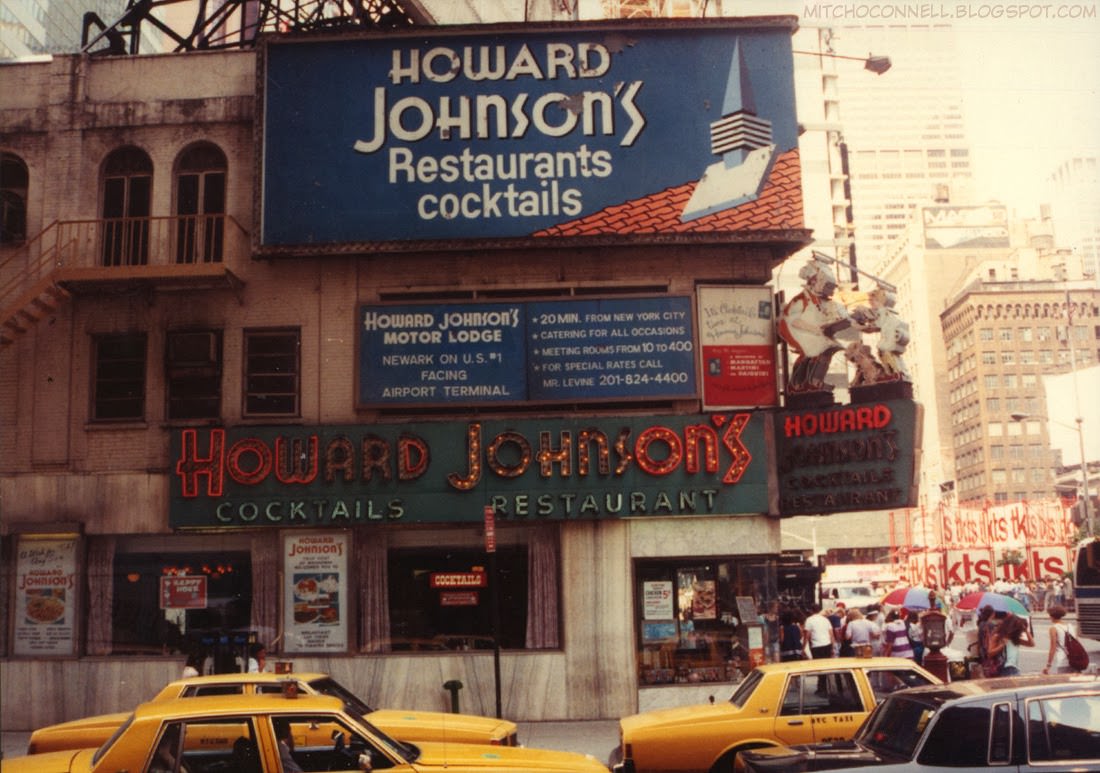
In 1990, the New York City government officially took over six historic theaters on the 42nd Street block. That move marked the beginning of the end for the street’s 1980s identity. Redevelopment followed steadily through the 1990s, bringing mainstream theaters, multiplex cinemas, chain restaurants, and hotels to a block that had looked entirely different just a decade before.
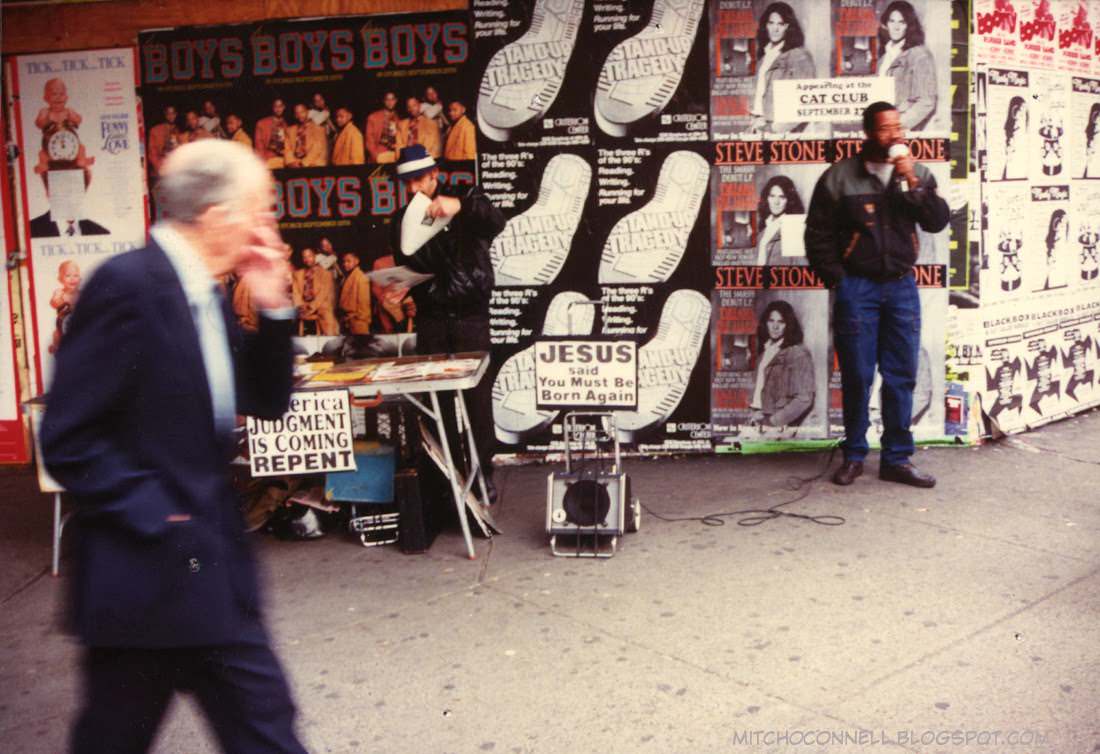
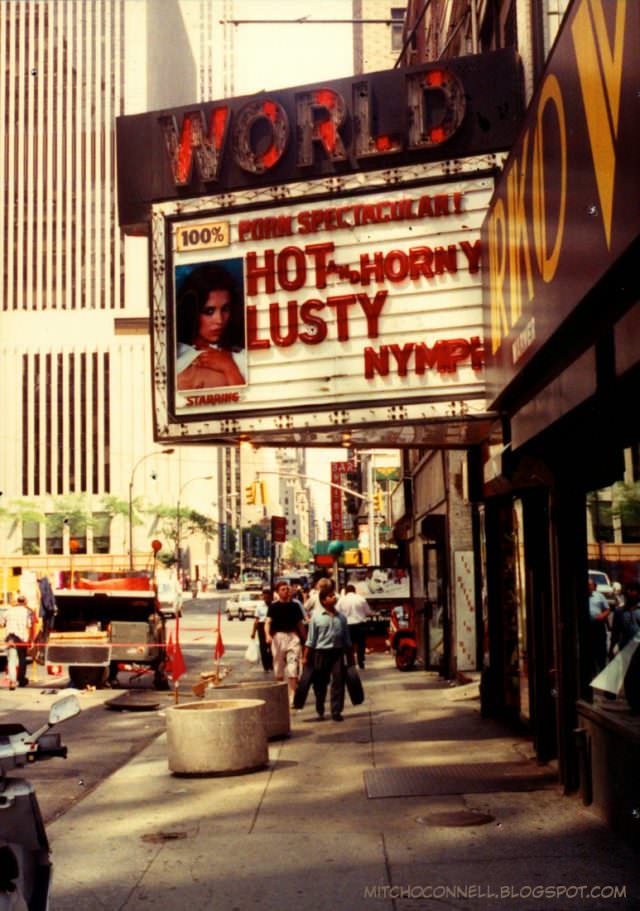
The photos from the 1980s capture a version of 42nd Street that no longer exists. They document a specific moment in the life of one of America’s most famous blocks — before the renovations, before the chain stores, and before Times Square became a destination engineered for mass tourism.
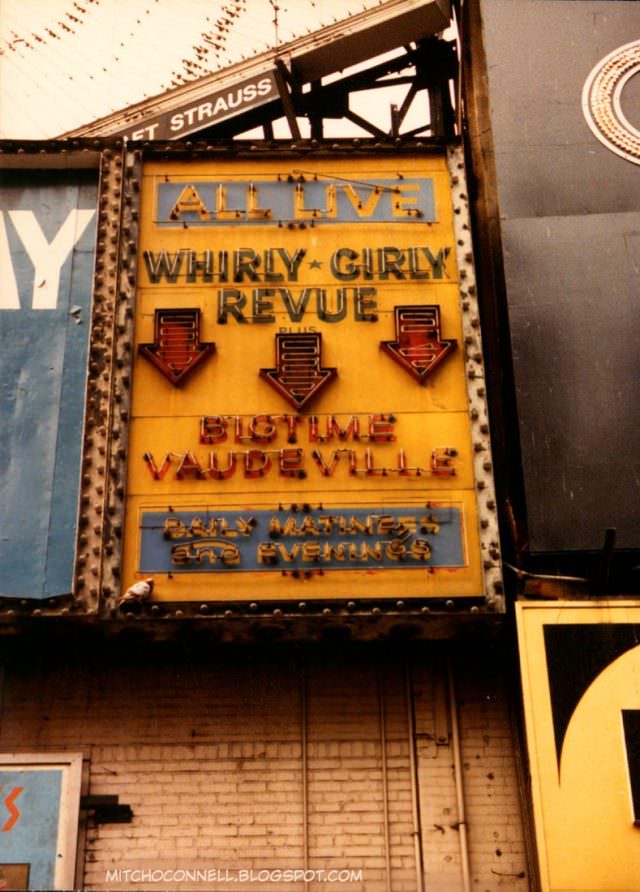
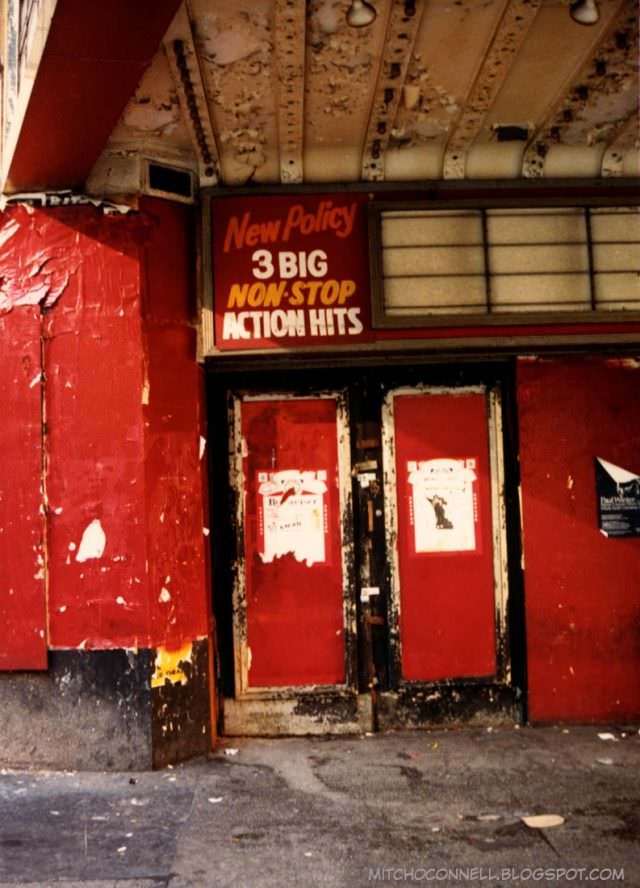
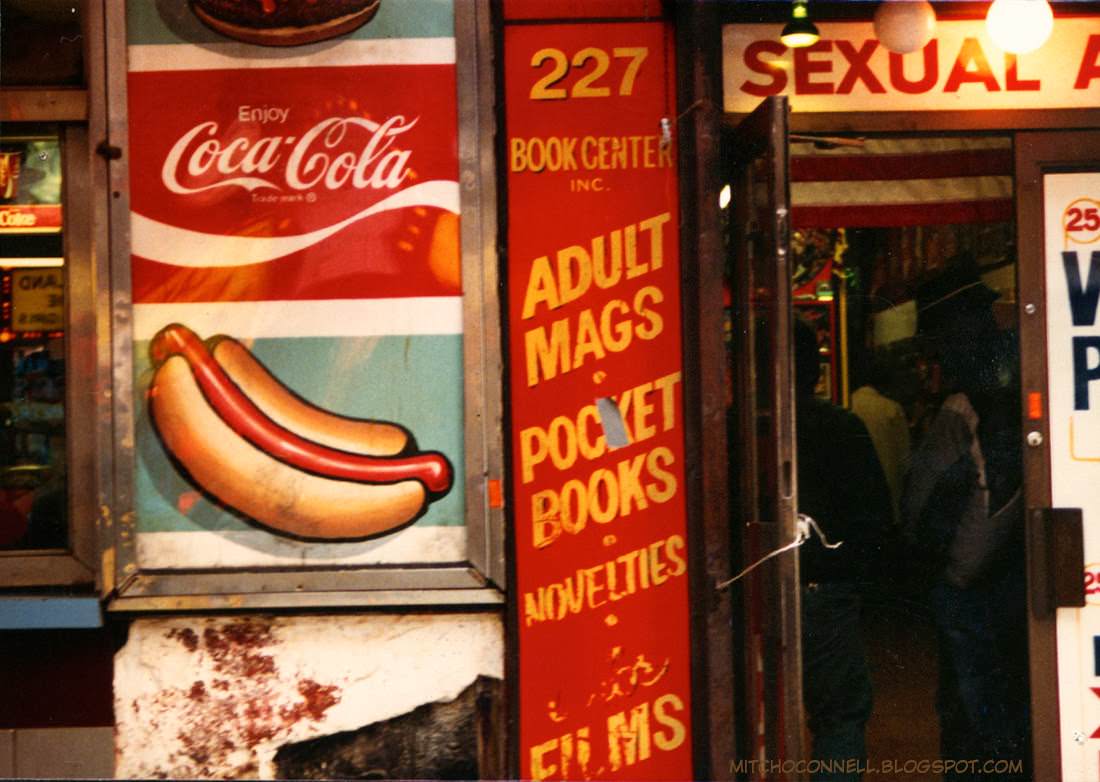
Every frame from this era reflects a city that was financially strained but culturally alive. New York in the 1980s was dealing with a fiscal crisis hangover, rising crime, and a crumbling infrastructure. Yet 42nd Street, for all its disorder, was never short on life. People came here every single day — for the movies, the music, the food, and sometimes just for the spectacle of it all.
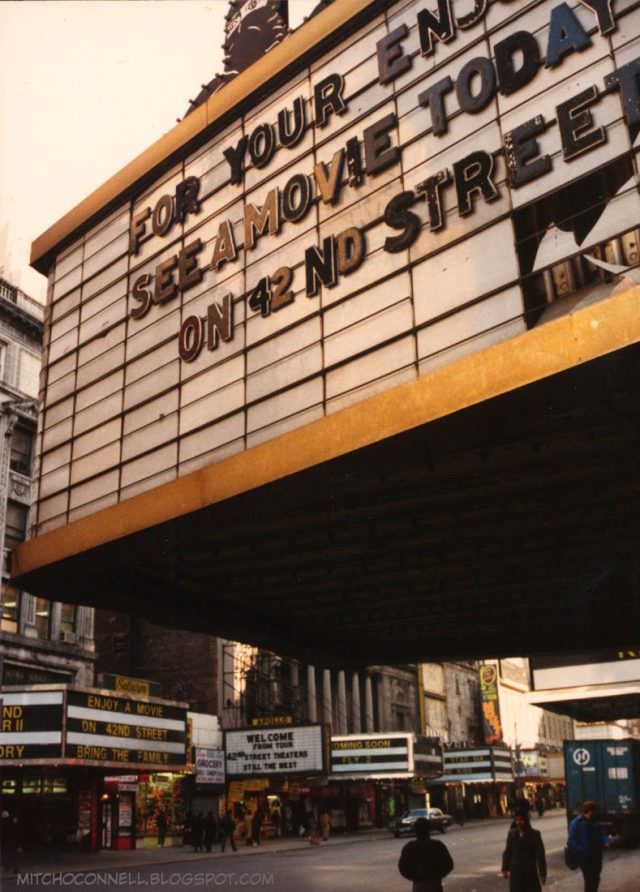
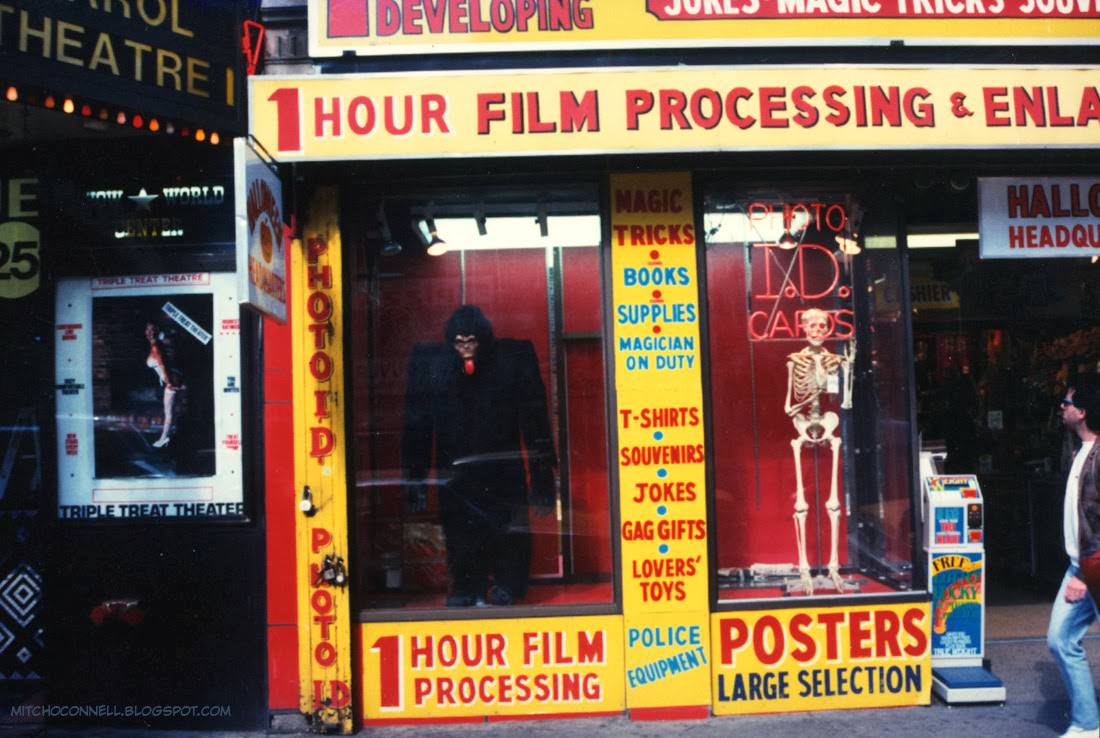
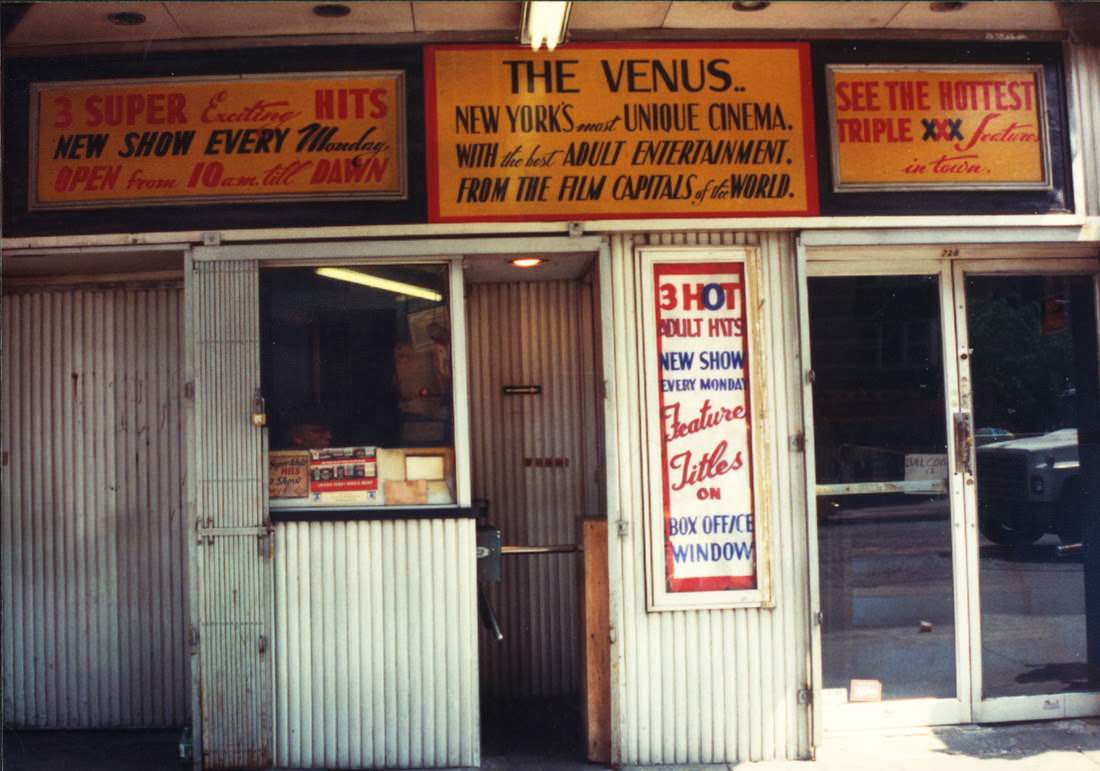
These photographs serve as a primary record of a street in transition. They show storefronts, theater marquees, street-level crowds, and the layered visual noise that made the block so distinctive. Historians, urban planners, and photographers continue to study this period as a defining chapter in New York City’s 20th-century story.