Before Bluetooth speakers, aux cords, or even cassette tapes, some drivers were spinning vinyl records behind the wheel. In the 1950s, built-in record players were a real feature offered in American cars — and for a brief window in automotive history, they were one of the most exciting options a buyer could add.
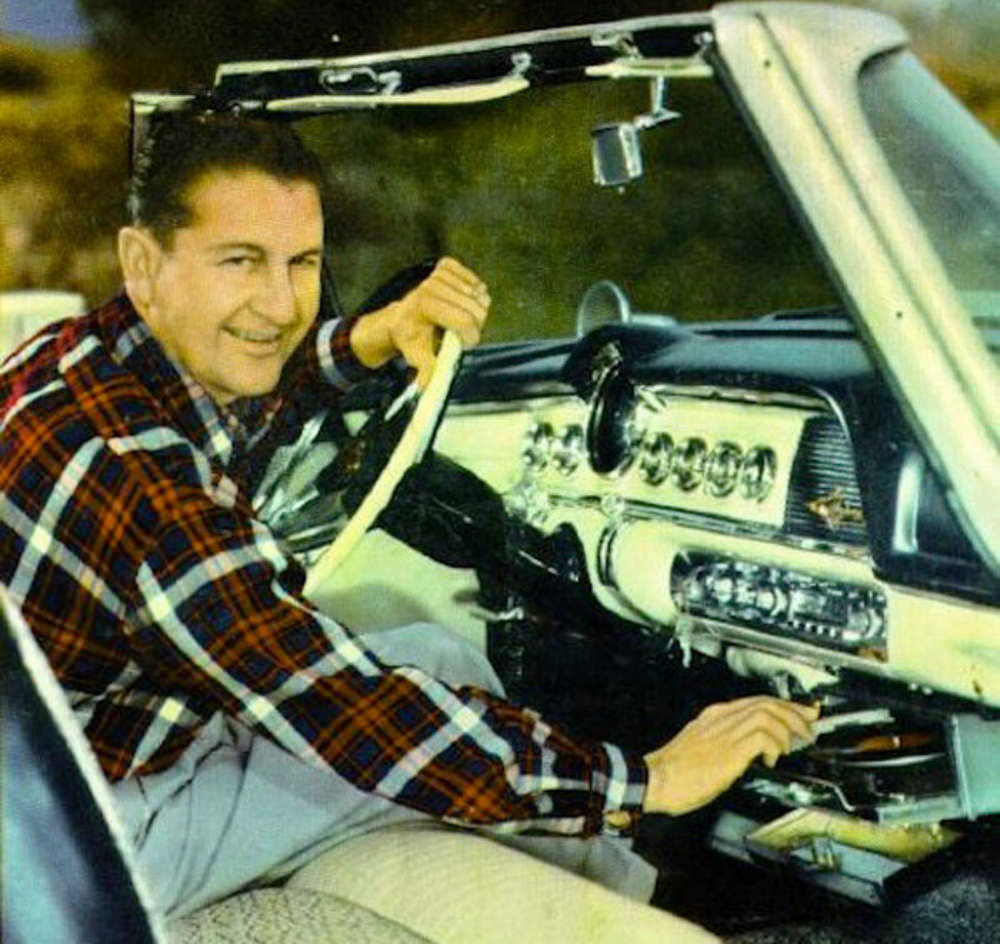
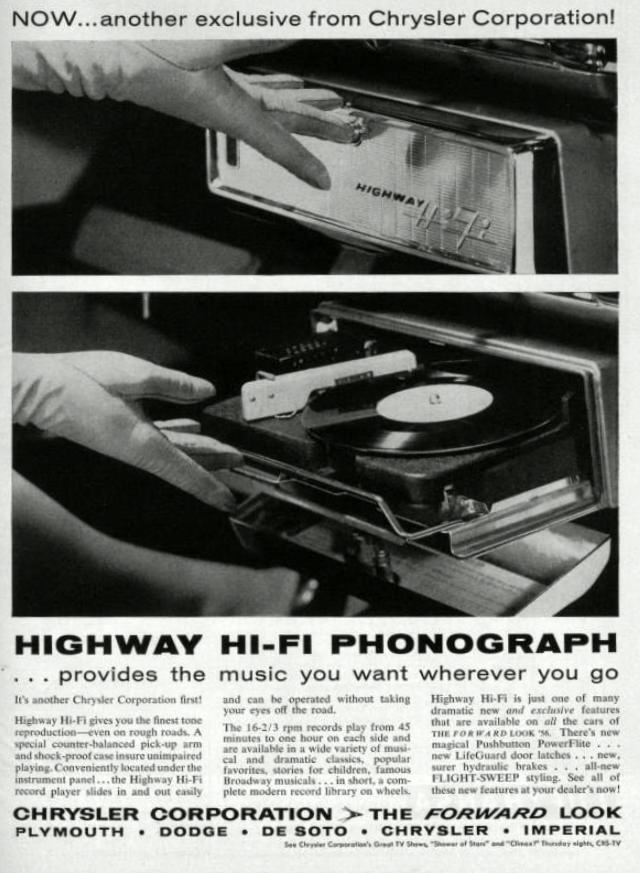
The idea sounds almost impossible to take seriously today. A vinyl record, spinning on a turntable, mounted inside a moving vehicle — but engineers genuinely solved for it. Columbia Records and Chrysler partnered in 1955 to produce the “Highway Hi-Fi,” a record player designed to fit under the dashboard of select Chrysler models. It played special 7-inch records at 16⅔ rpm, a slower speed that allowed each disc to hold around an hour of audio.
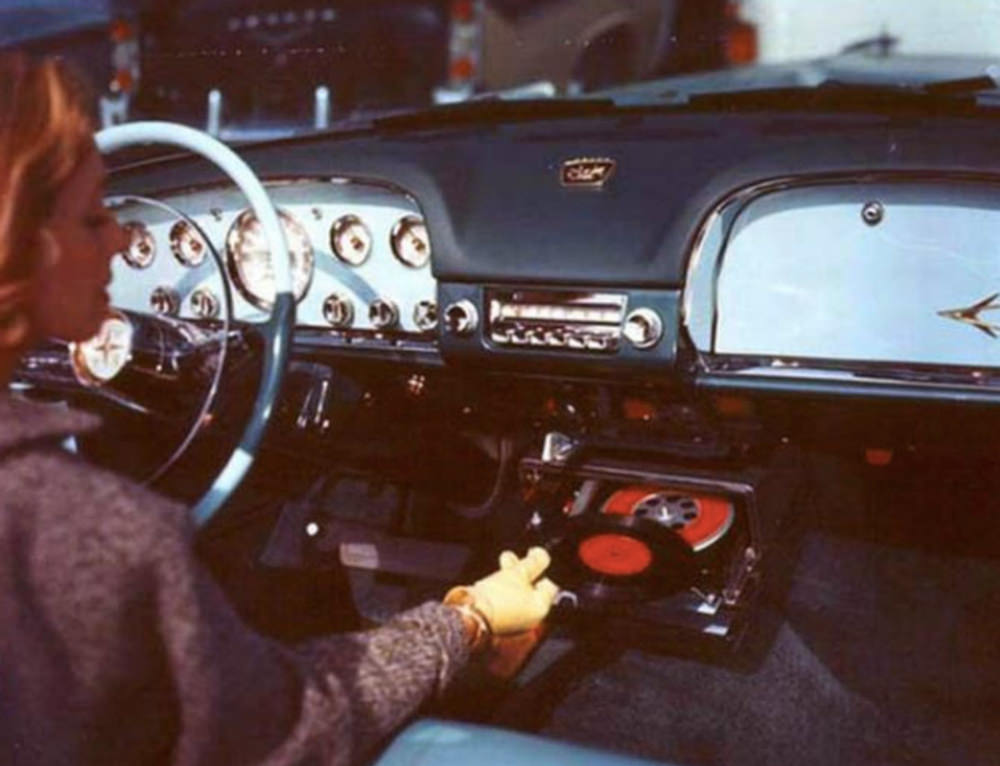
The Highway Hi-Fi used a custom record format that Columbia developed specifically for in-car use. Standard commercial records weren’t compatible. Columbia pressed a limited catalog of titles in this format — classical music, spoken word, and popular recordings — but the selection was never large enough to satisfy most buyers. This was one of the system’s earliest and most damaging drawbacks.
Chrysler offered the Highway Hi-Fi across several of its brands, including Dodge, DeSoto, and Plymouth. The unit was installed by dealers and retailed for around $200, which was a significant sum at the time. For context, a new entry-level car in 1955 could cost as little as $1,500, so this was far from a cheap add-on.
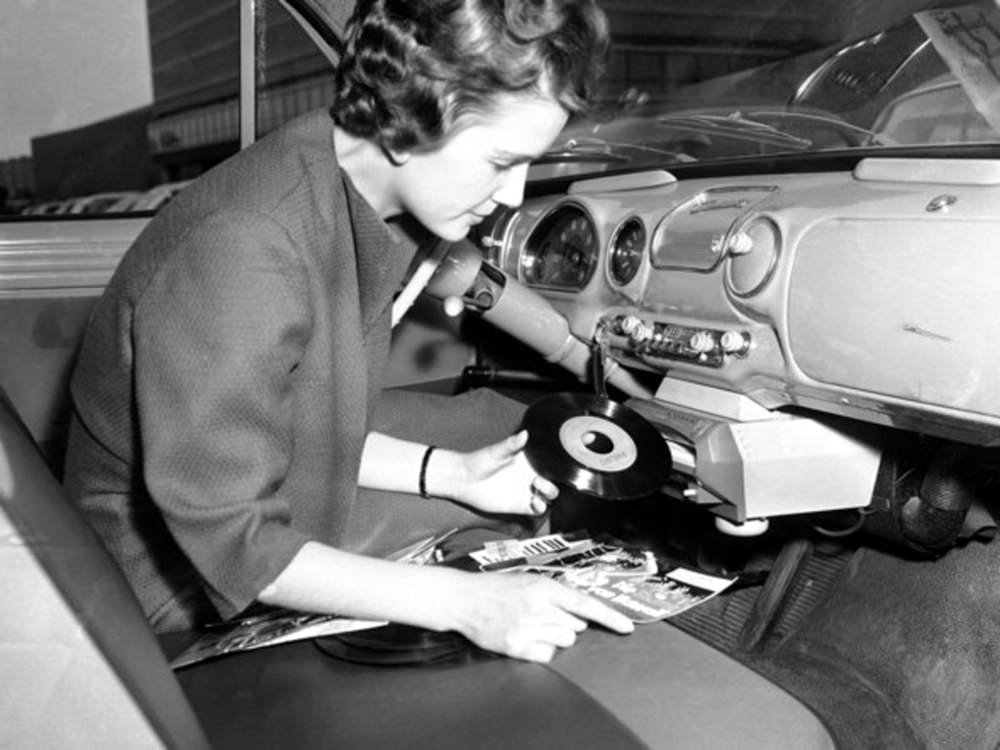
The engineering challenge at the heart of the whole concept was vibration. Roads in the 1950s were far from smooth, and a standard record needle would skip constantly over bumps and cracks. Columbia’s engineers designed a special tone arm with a very heavy stylus pressure to keep the needle in the groove. It worked well enough to prevent skipping — but that same heavy pressure wore records down quickly.
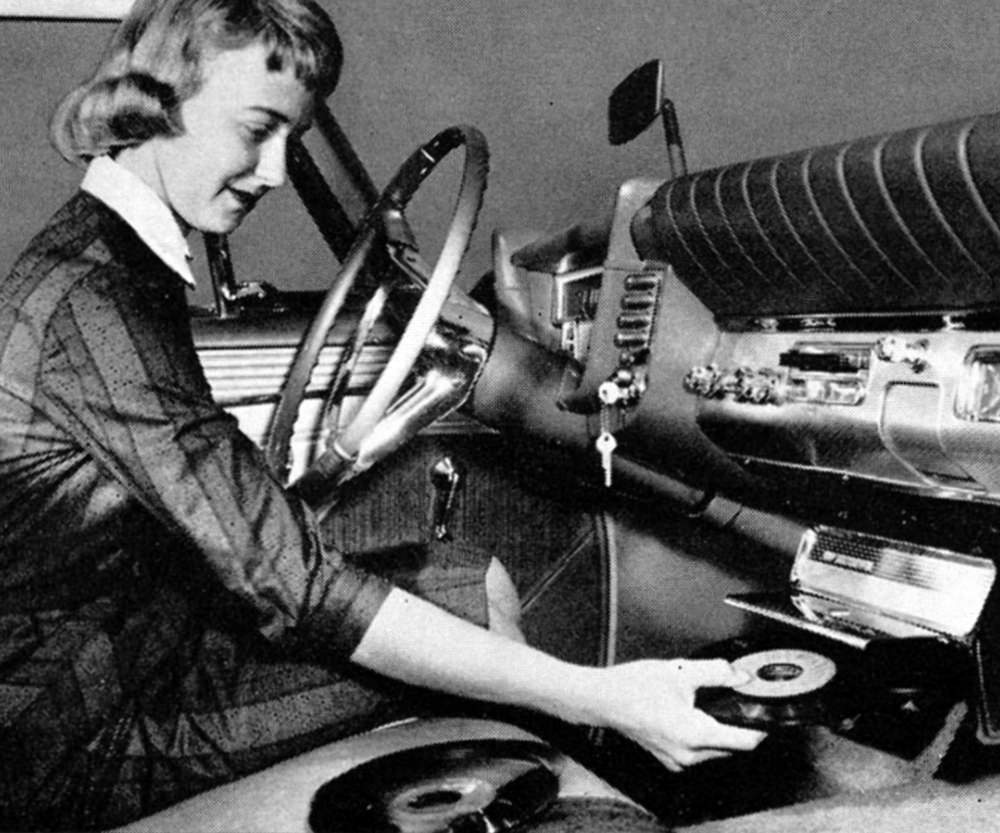
By 1956, RCA Victor entered the market with its own competing system called the “Victrola” car record player. Unlike the Highway Hi-Fi, the RCA unit played standard 45 rpm singles — the same records consumers already owned and bought at stores. This made it far more practical from a listener’s standpoint, but 45 rpm singles only held one song per side, meaning a driver needed to flip or swap a record roughly every three minutes.
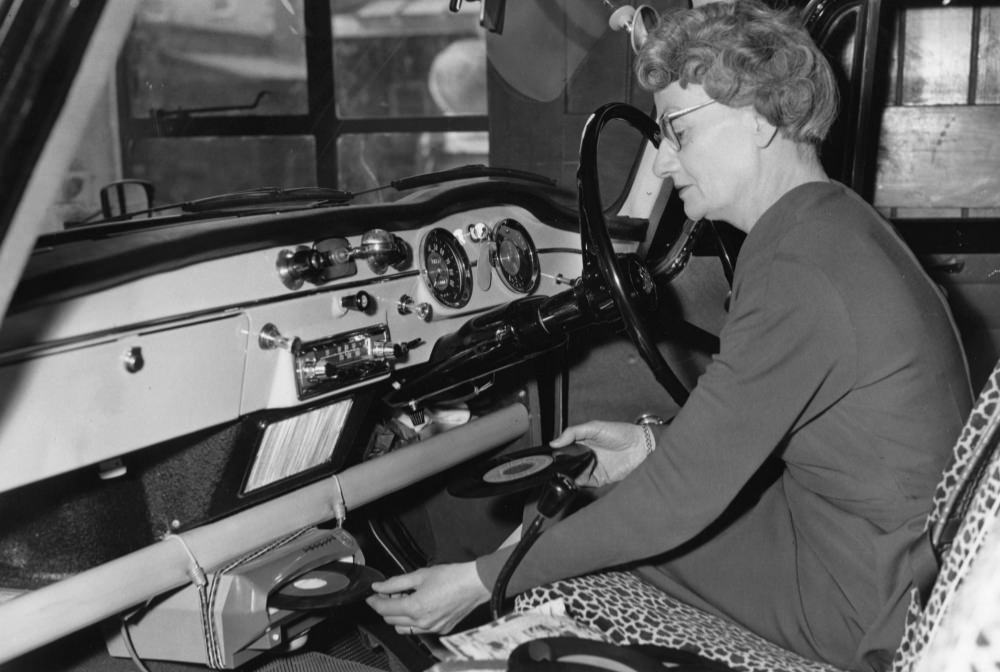
RCA partnered with Chrysler as well, and later with other automakers. The 45 rpm car player appeared as an option in several models through the late 1950s, mounted under the dashboard or in the center console. Changing a record while driving was a genuine hazard, and most drivers relied on passengers to handle disc-swapping duties.
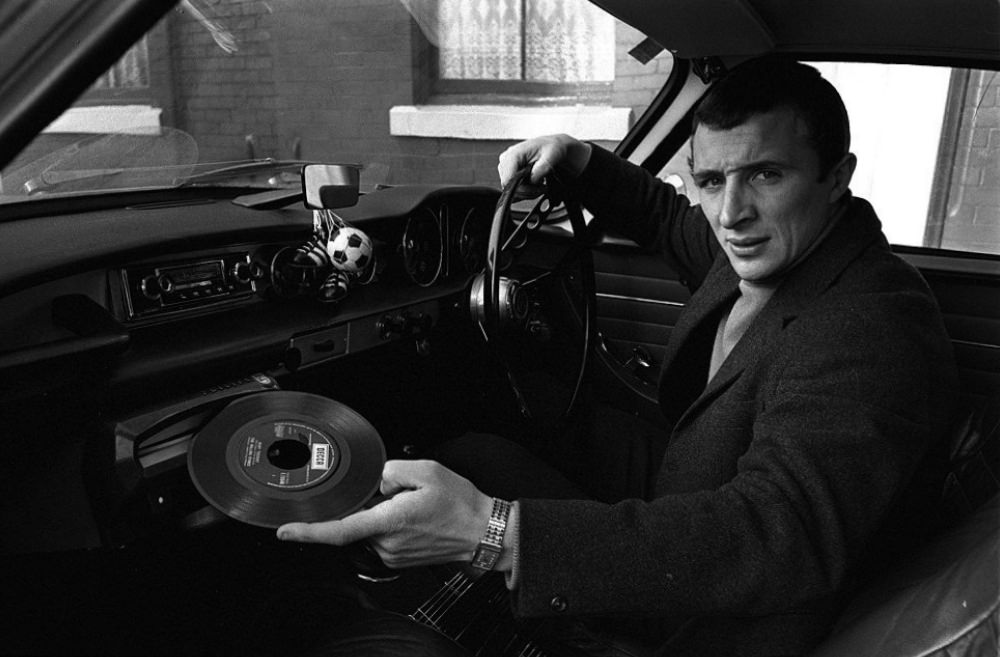
Despite the novelty and the engineering effort behind both systems, neither took off in a lasting way in the United States. The limited record library for the Highway Hi-Fi frustrated buyers. The constant disc changes required by the 45 rpm format made it impractical for solo drivers. Both systems also required careful handling in a setting — a moving car — where careful handling wasn’t always possible.
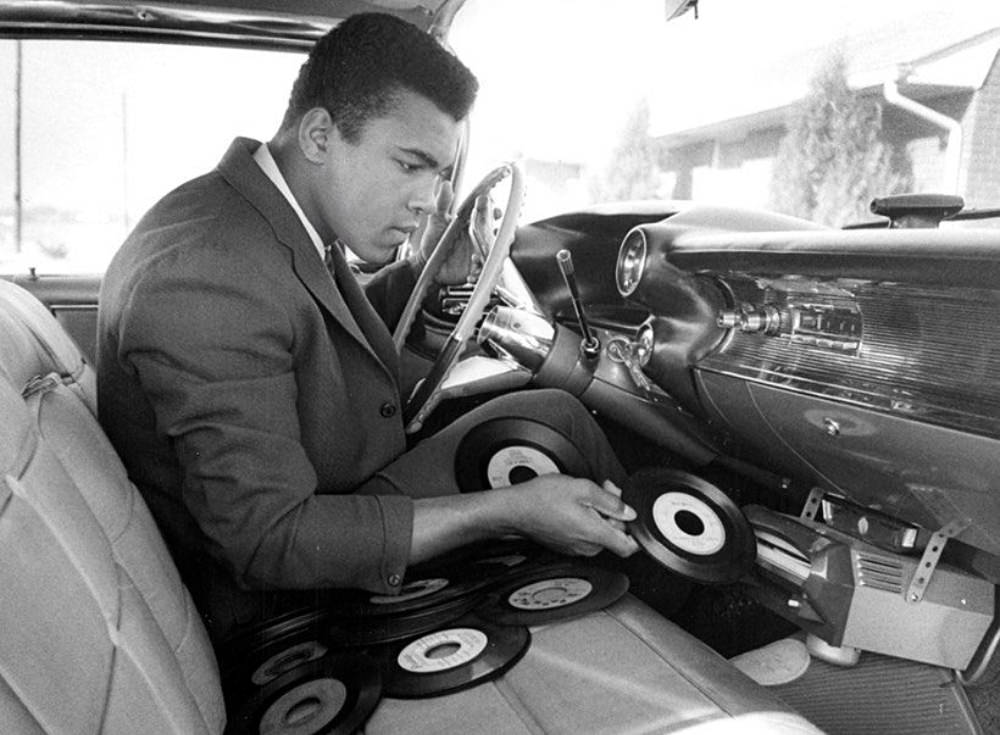
In Europe, the story played out a bit differently. Car gramophones, as they were often called there, continued to be sold as aftermarket accessories well into the 1960s. Several European manufacturers offered their own versions, and the devices found a market among enthusiasts who wanted music on the road before any other technology made it easy.
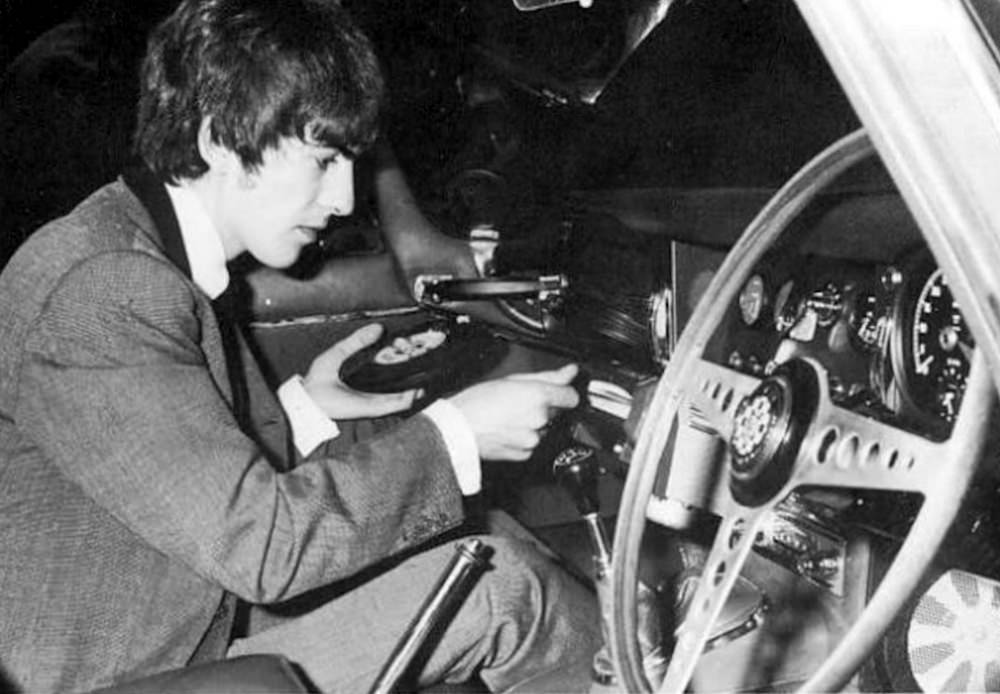
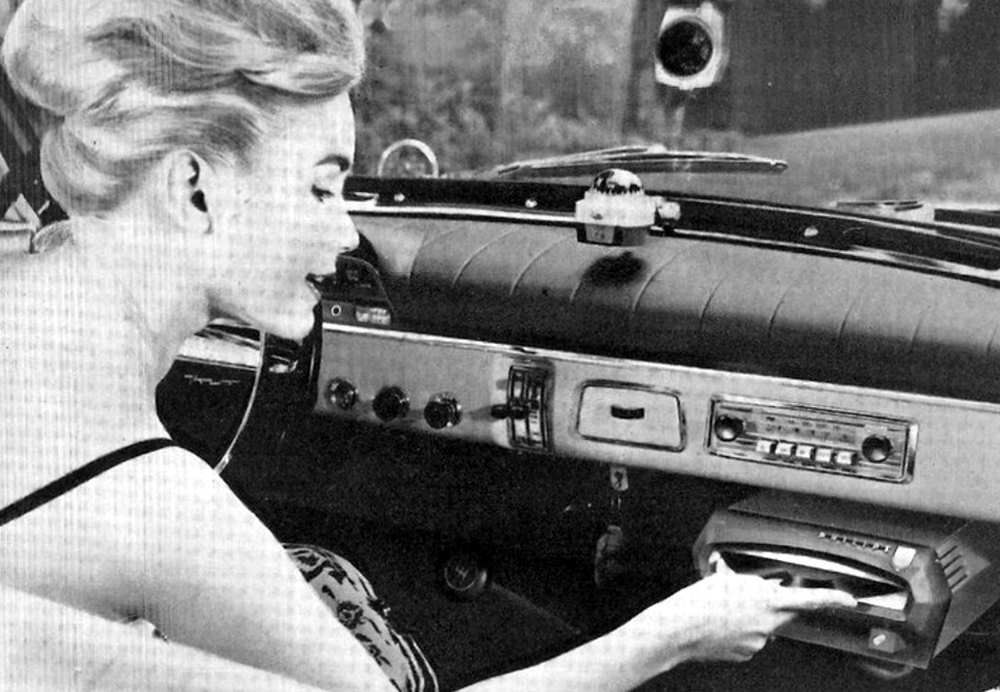
The Philips company produced one of the more well-known European car record players, designed to mount beneath the dashboard and play standard records. Like their American counterparts, these European units used weighted tone arms and anti-skip mechanisms to fight road vibration. The results were mixed — playback was generally acceptable on smooth roads, but rough surfaces still caused problems.
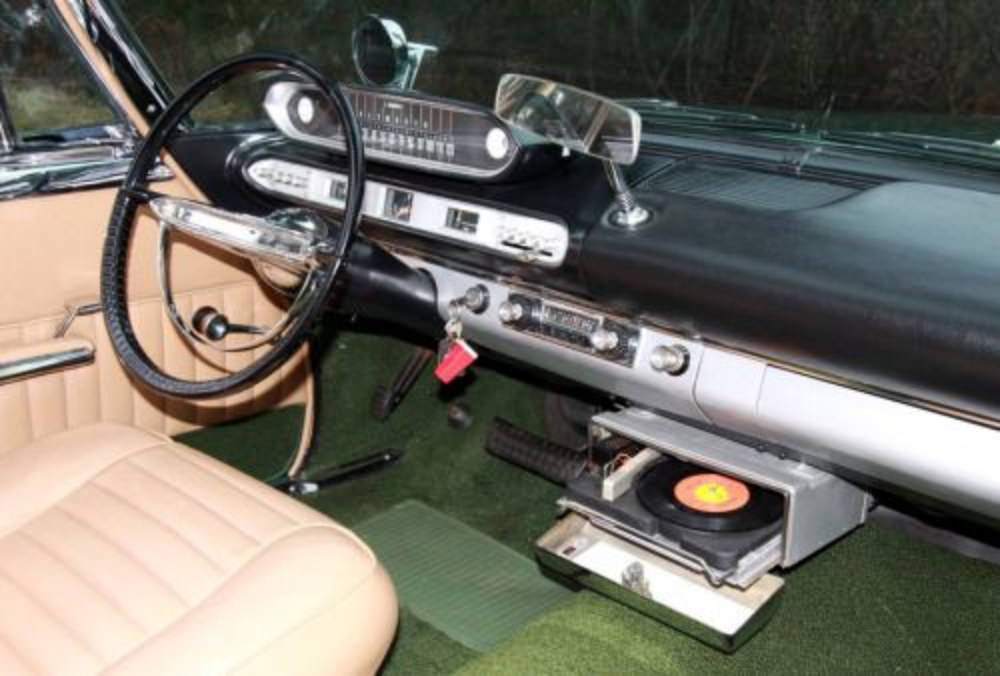
One consistent problem across all car record player systems was record wear. The heavy stylus pressure needed to prevent skipping put enormous stress on the grooves of each disc. A record played repeatedly in a car would show visible wear much faster than one played on a home turntable. Drivers who used these systems regularly burned through their record collections at a noticeable rate.
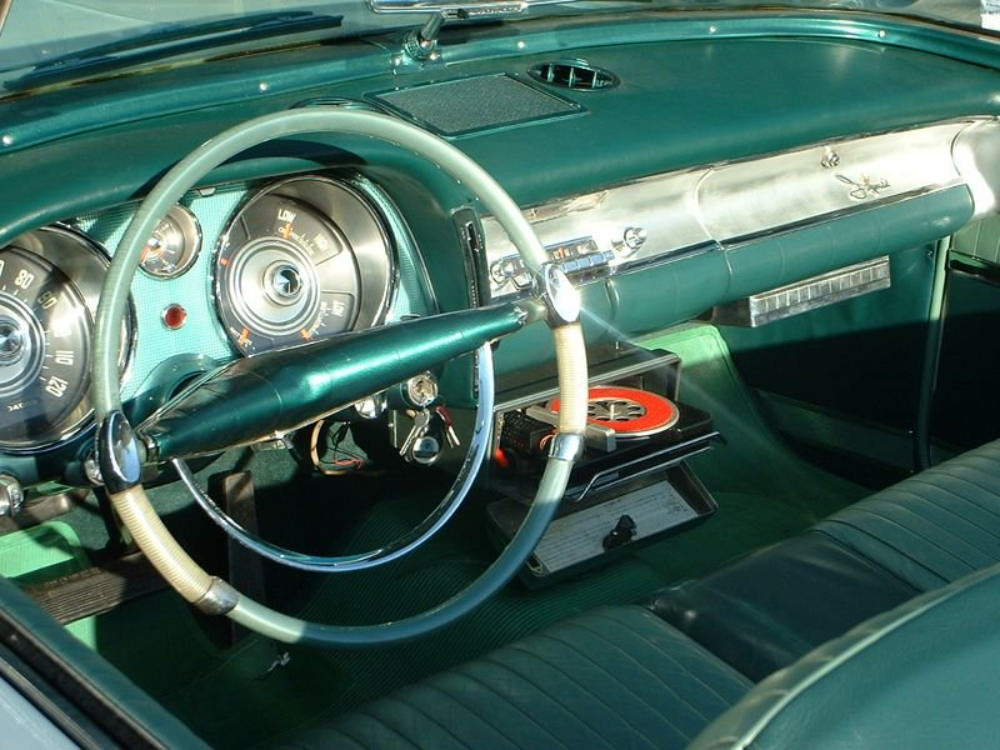
The car radio, which had been available since the early 1930s, remained by far the dominant in-car audio option throughout the record player era. Radios required no physical media, no changing of discs, and no concern about skipping. The Highway Hi-Fi and its competitors were luxury curiosities rather than genuine alternatives to broadcast radio.
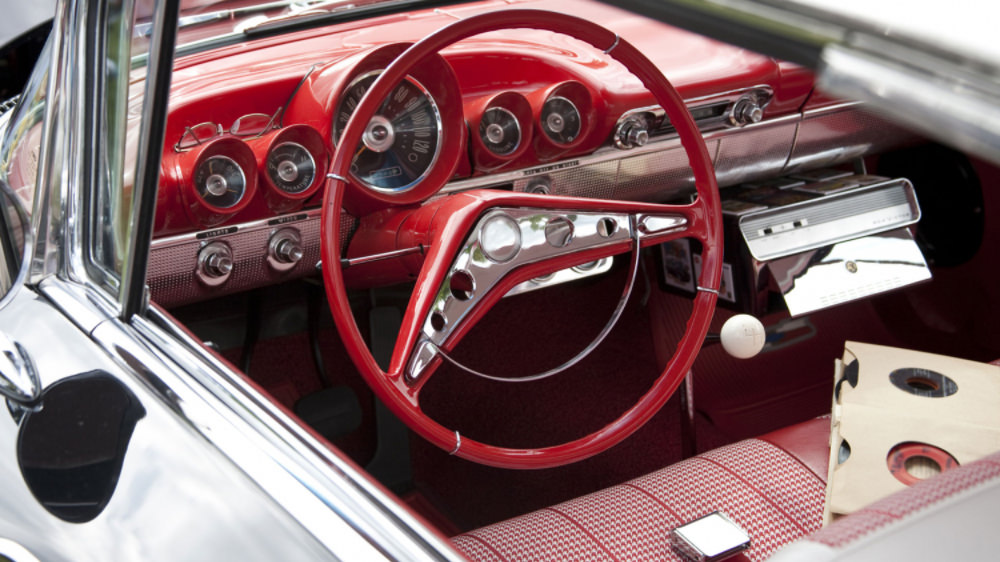
By the early 1960s, a new format began pushing car record players toward obsolescence. The four-track cartridge, and later the eight-track tape, offered a far more practical solution to in-car music. Tapes didn’t skip. They held far more music. They didn’t wear out from stylus pressure. The transition away from car record players was swift once tape technology became widely available.
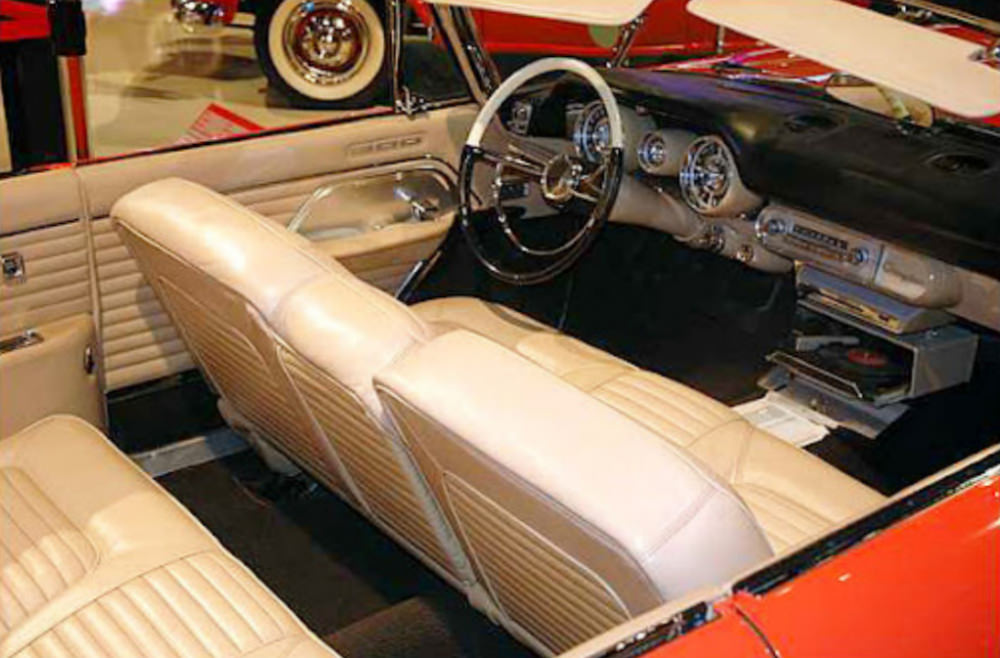
The Highway Hi-Fi ran for only a few model years before Chrysler quietly discontinued it. The complete system — player, tone arm, and a small selection of compatible records — is now a collector’s item. Working units in good condition are rare, largely because the mechanisms were delicate and the special-format records were pressed in limited numbers.
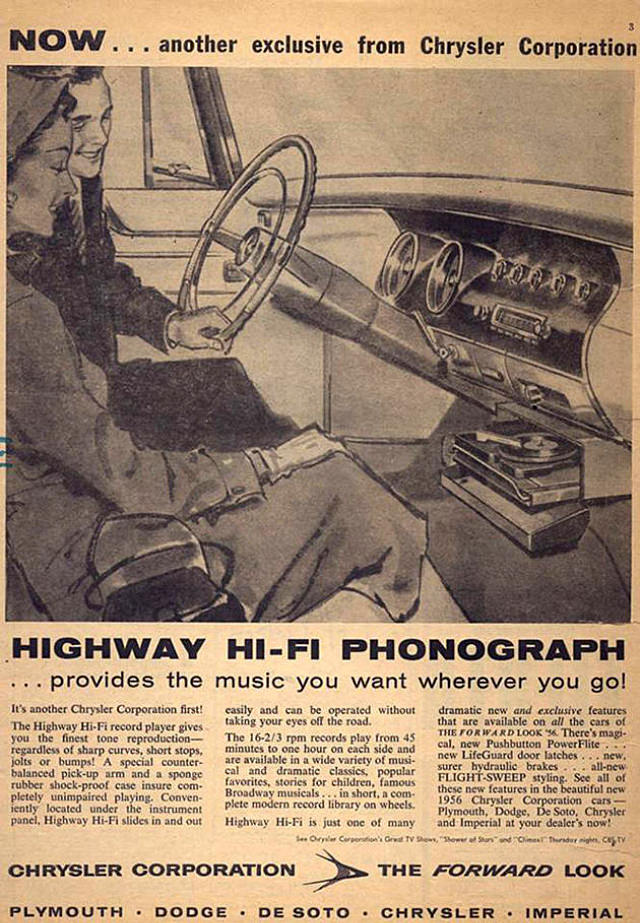
Car record players represent a short but genuinely inventive chapter in the history of consumer technology. Engineers in the 1950s tackled a problem — how to play vinyl in a moving vehicle — and built real, working solutions. The technology had real limitations, but it also proved that the appetite for music on the road was strong long before anyone had the tools to satisfy it cleanly.