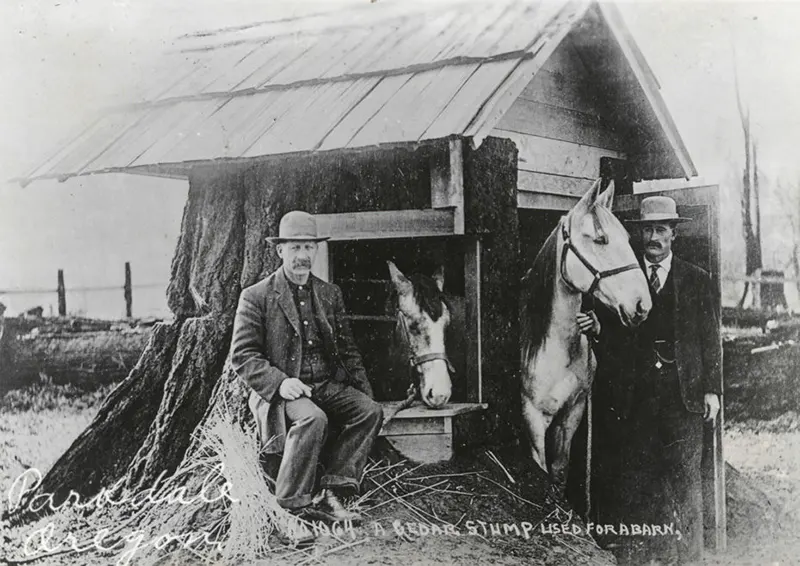
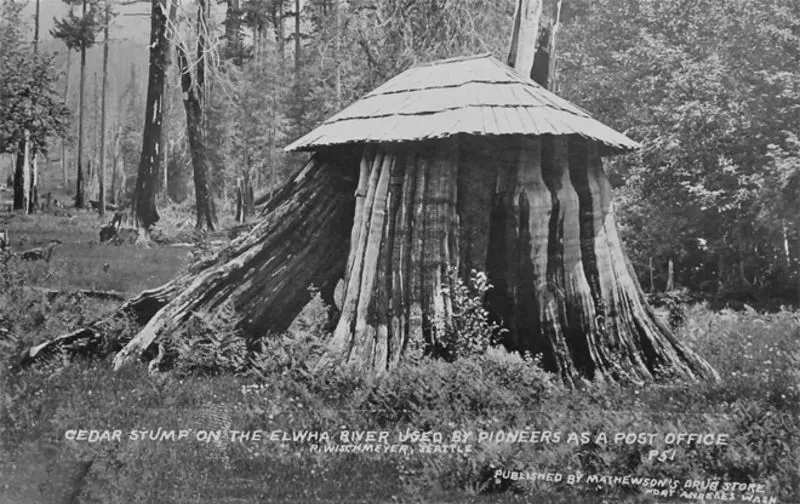
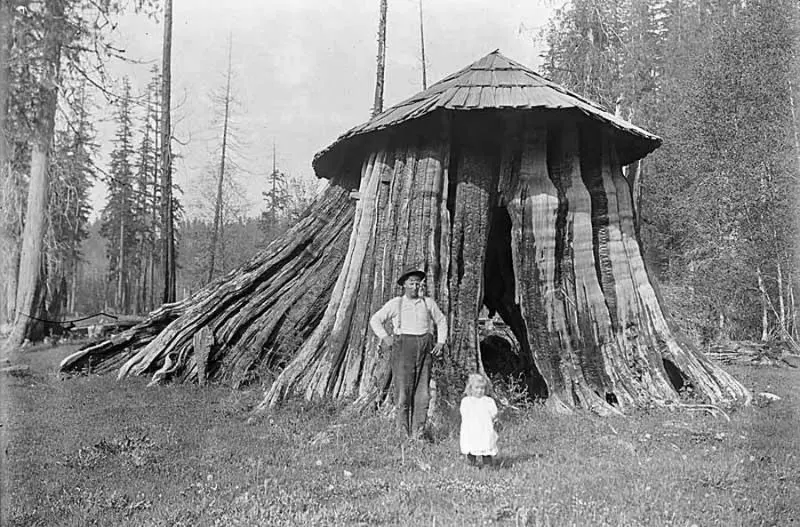
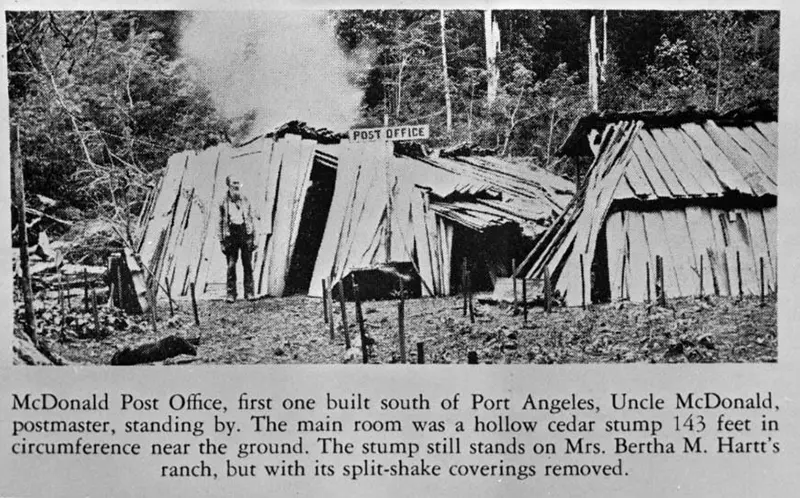
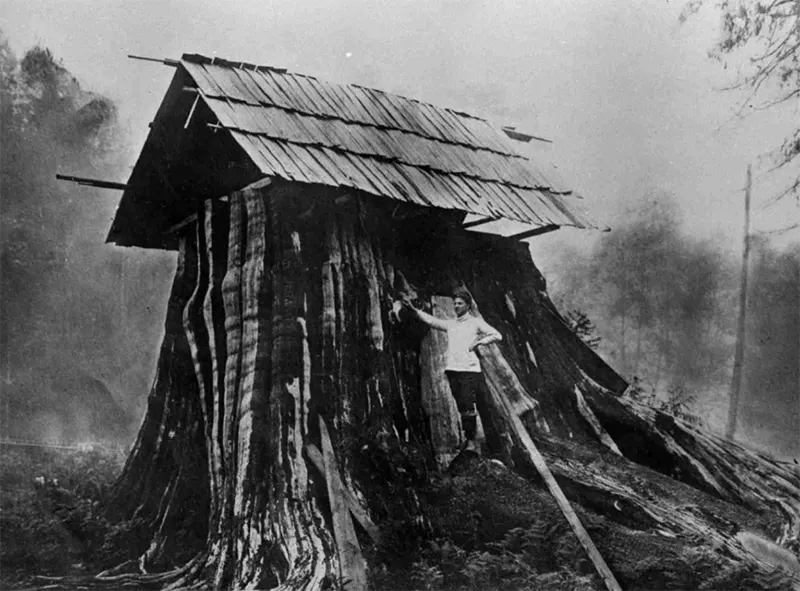
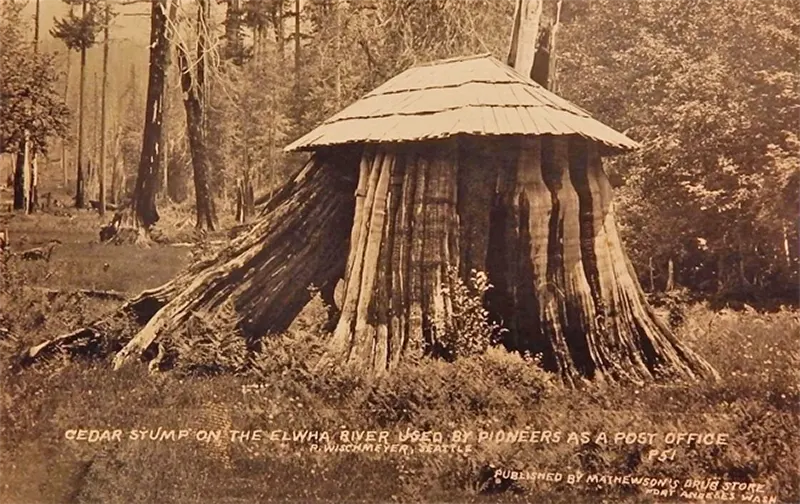
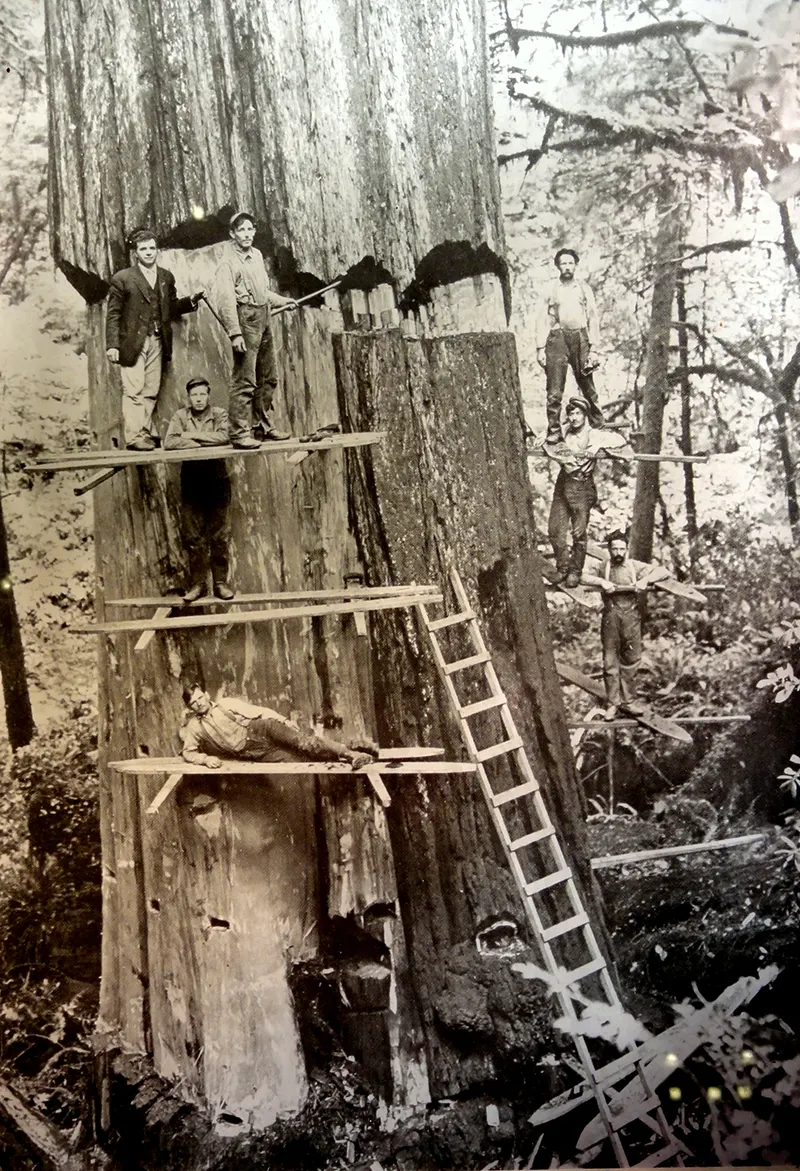
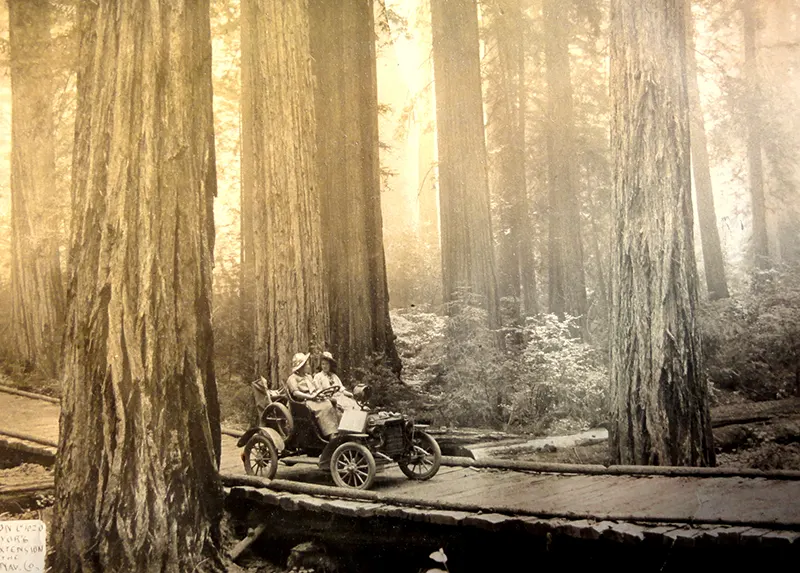
In the late 1800s and early 1900s, the Pacific Northwest was being transformed by one of the most aggressive logging operations the world had ever seen. Crews felled old-growth giants — Coast Redwoods and Douglas firs — that had stood for centuries. When these trees came down, they left behind stumps so enormous that people began to see them as something more than debris. They saw shelter.
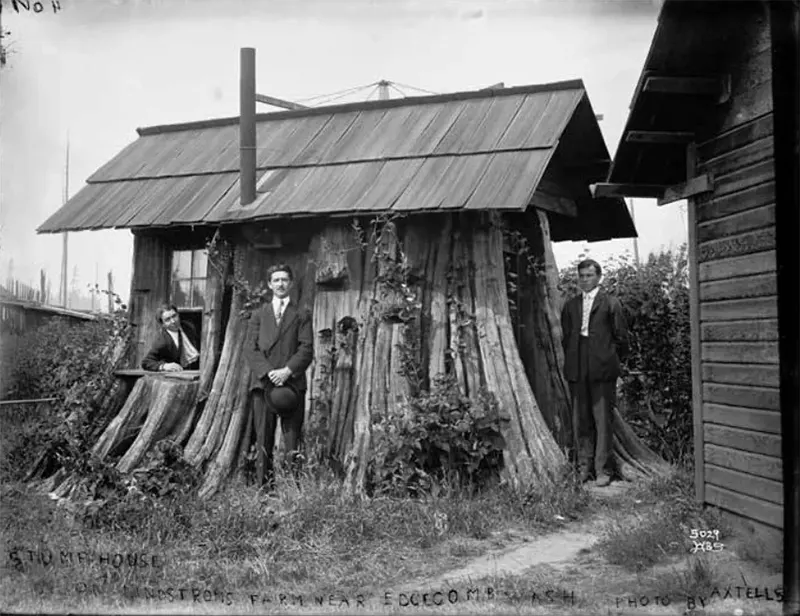
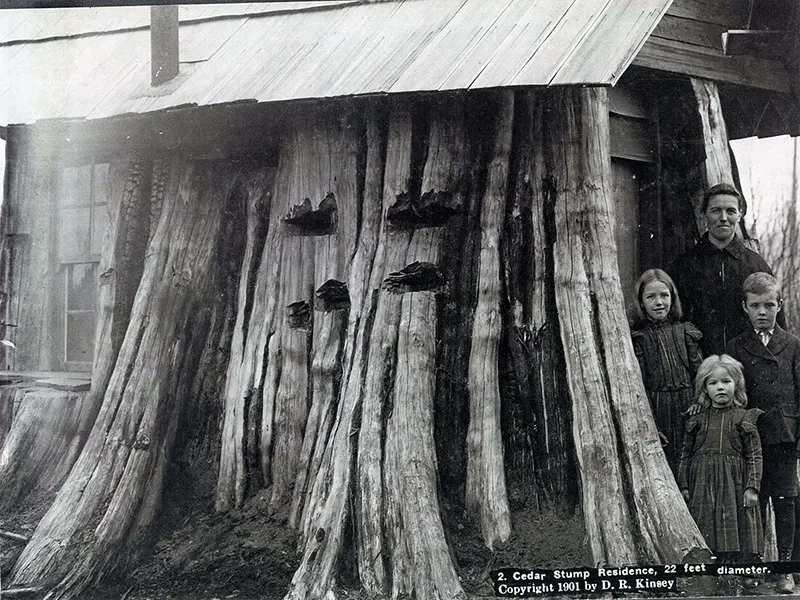
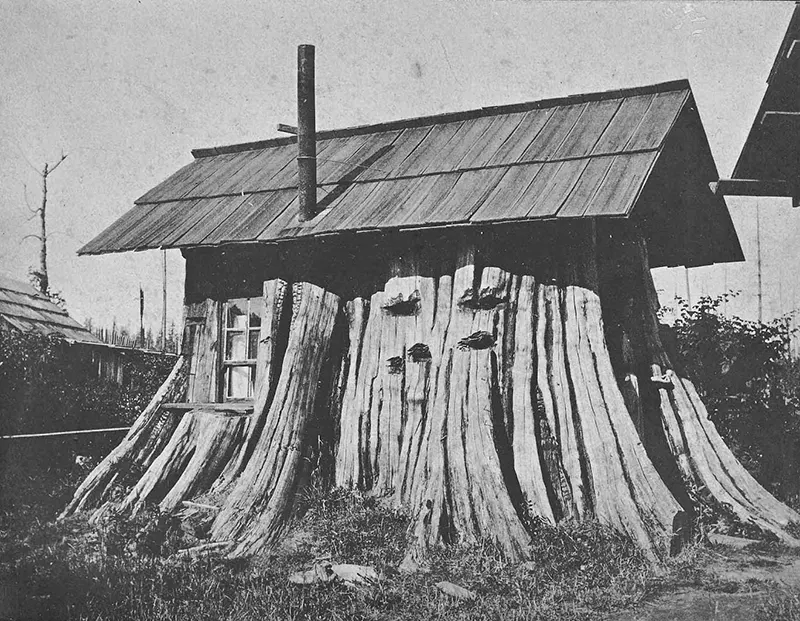
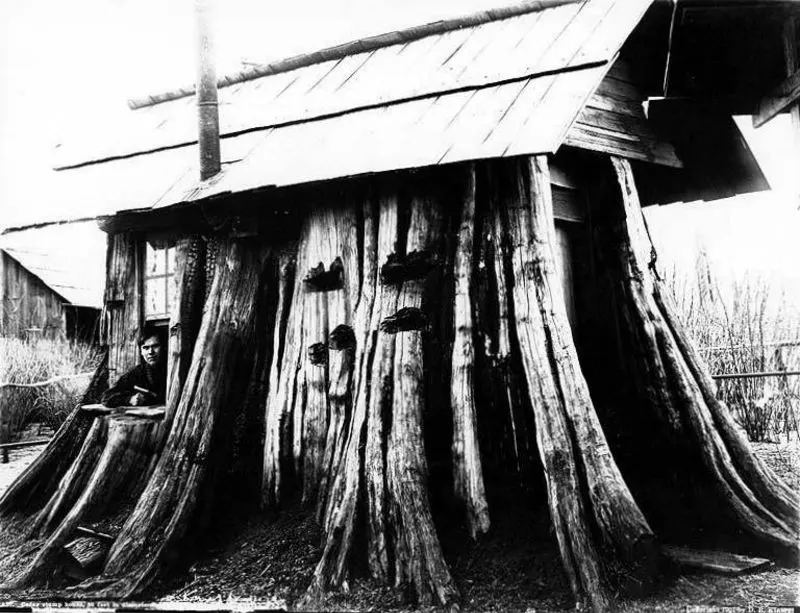
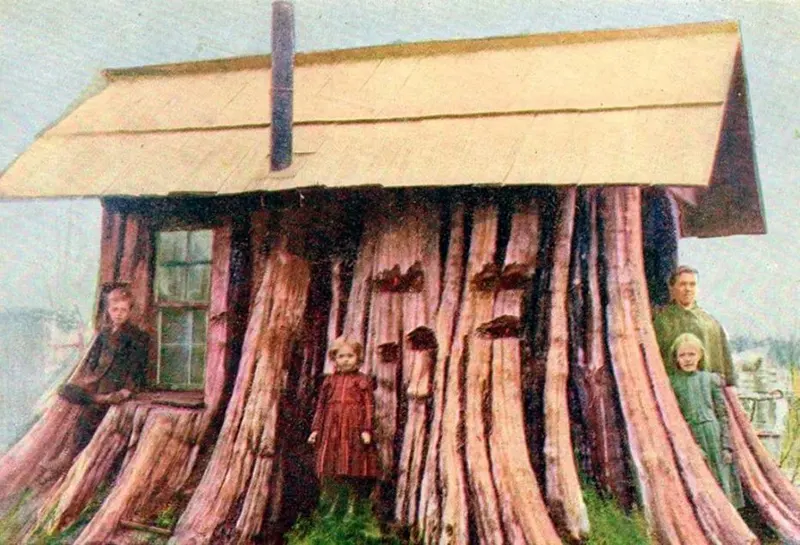
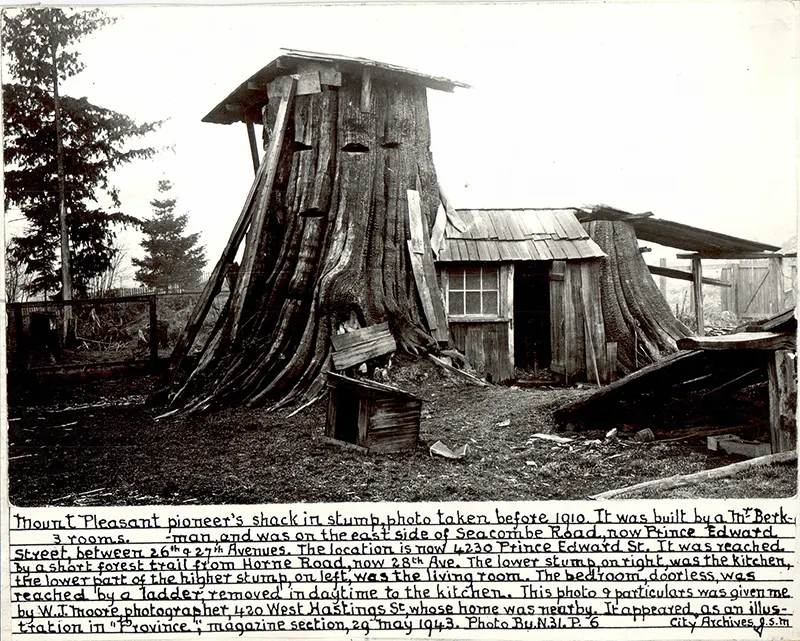
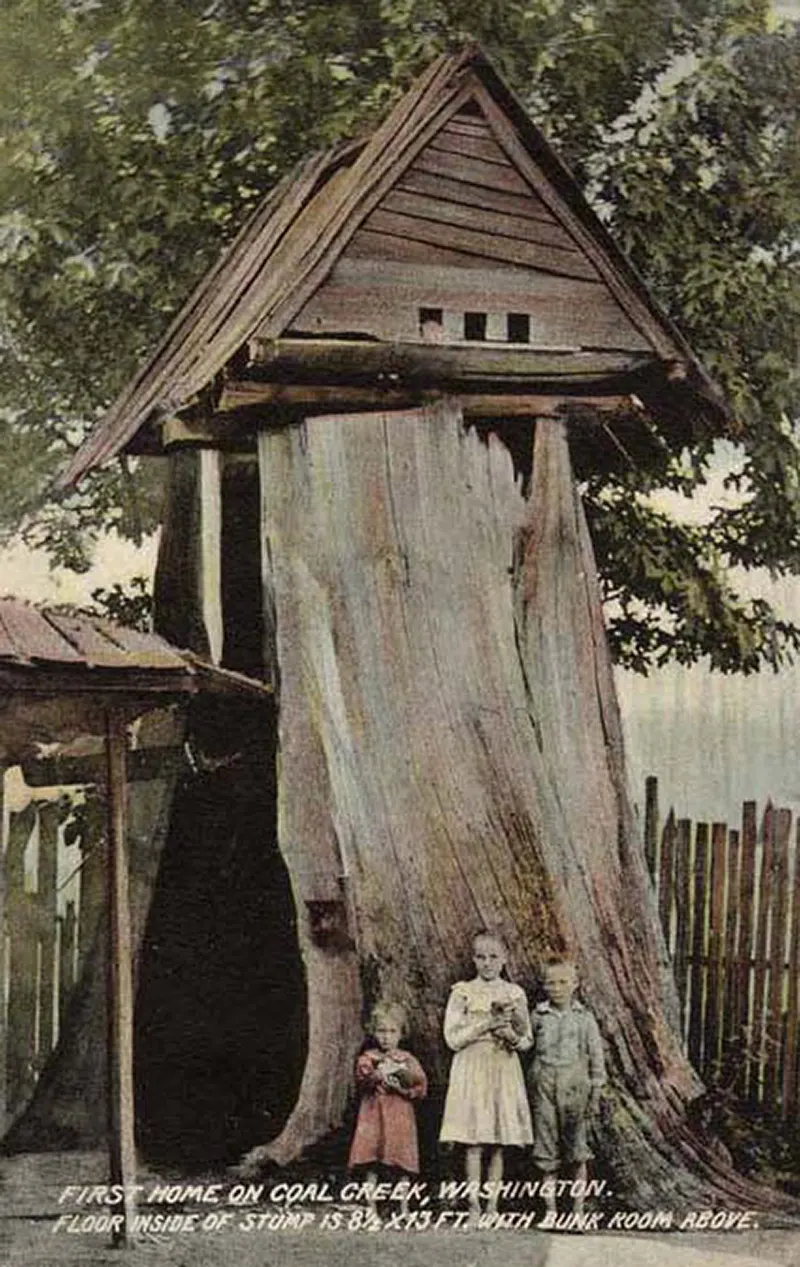
The logging industry created a ready supply of these massive stumps, and enterprising settlers wasted no time. Workers hollowed out the interior wood by hand — a slow, labor-intensive process — and shaped the space into a livable room. The results were surprisingly functional. Stump walls, sometimes several feet thick, provided natural insulation against the cold and damp Pacific Northwest climate.
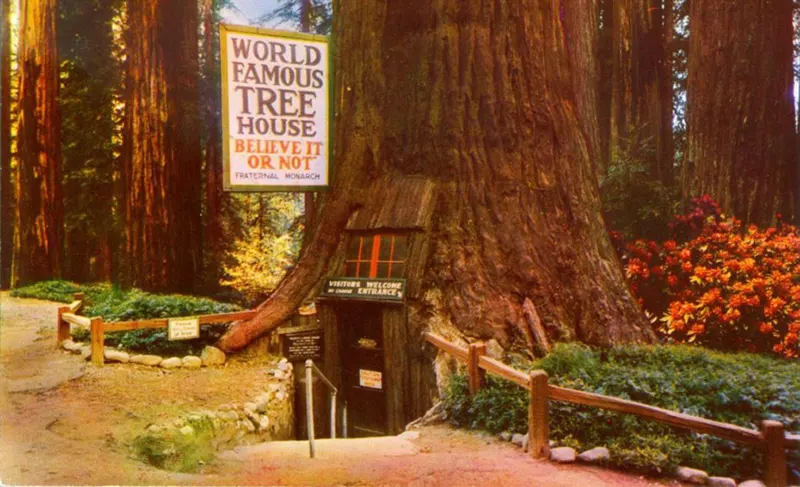
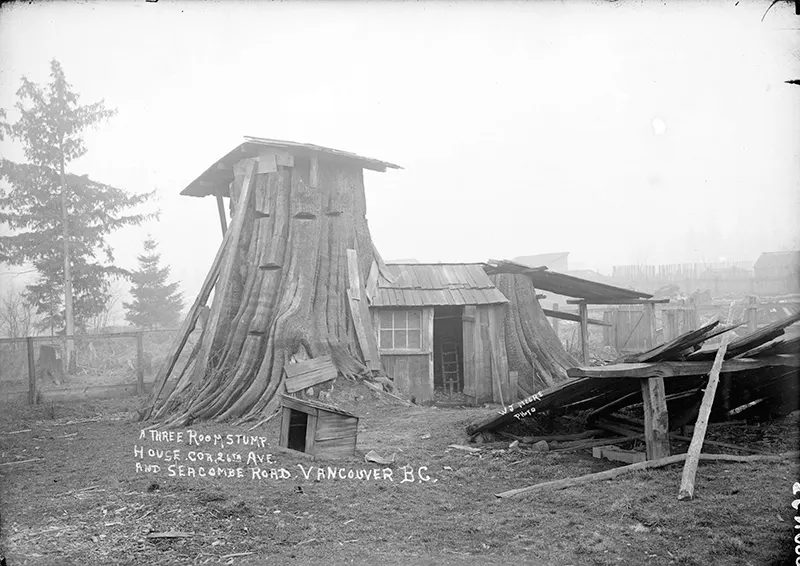
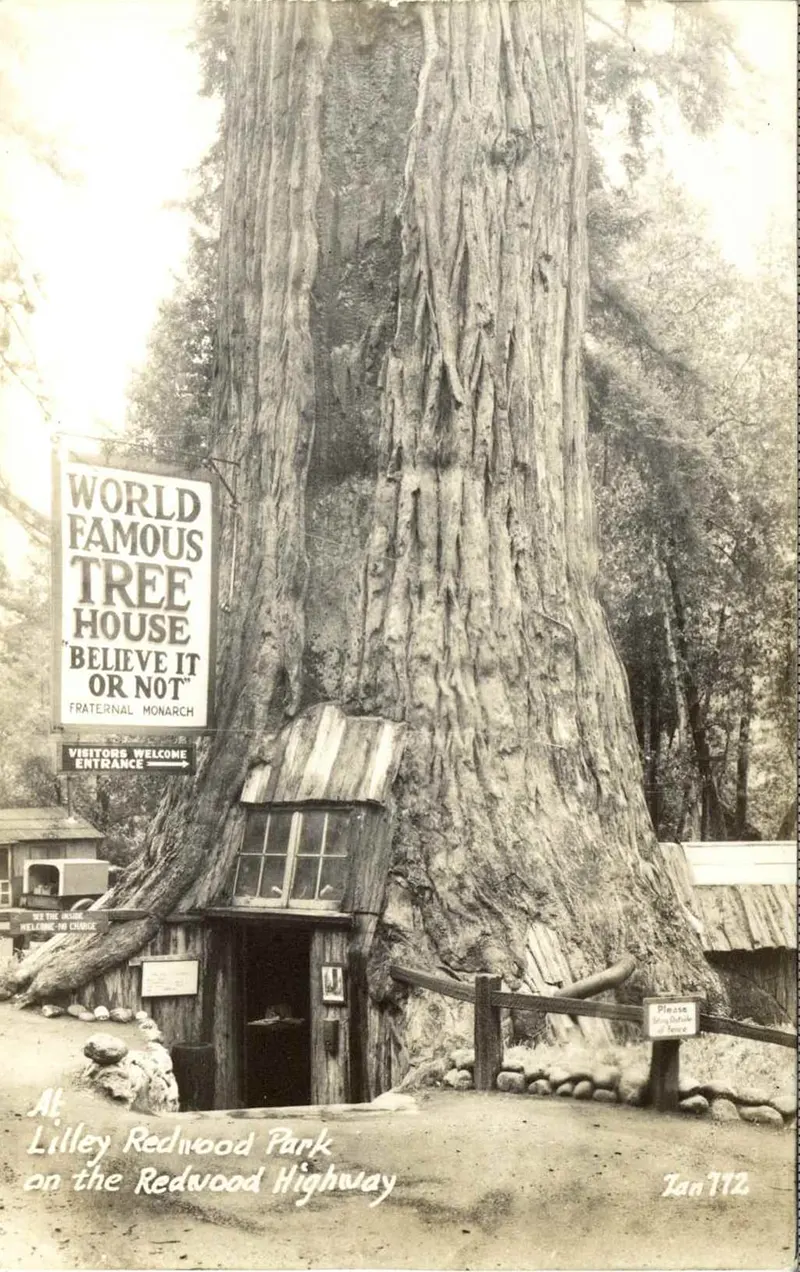
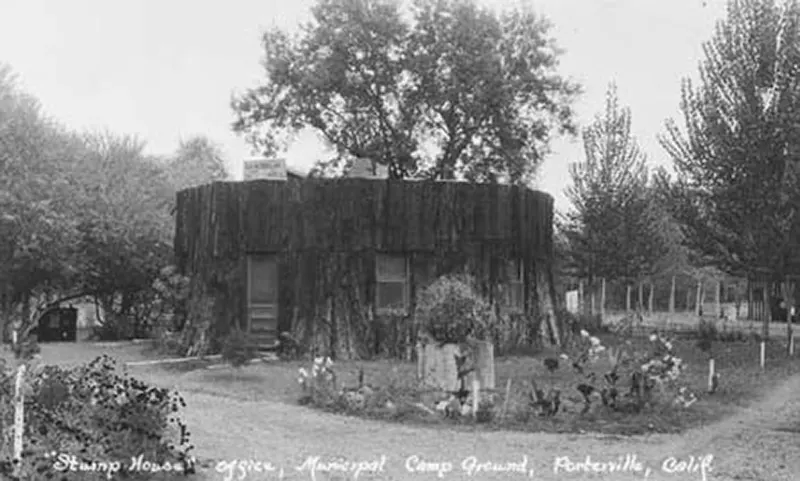
These homes weren’t uniform. Some had simple doors cut into the wood. Others featured windows, wooden roofs built on top of the stump, and even external staircases leading to upper levels. A few were divided into more than one room. The stump itself did the heavy structural work, while builders added only what was necessary to make the space livable.
California had some of the most storied examples. The Calaveras Grove, home to giant sequoias, drew attention as early as the 1860s. One stump there was hollowed out and fitted with an interior that drew visitors for decades.
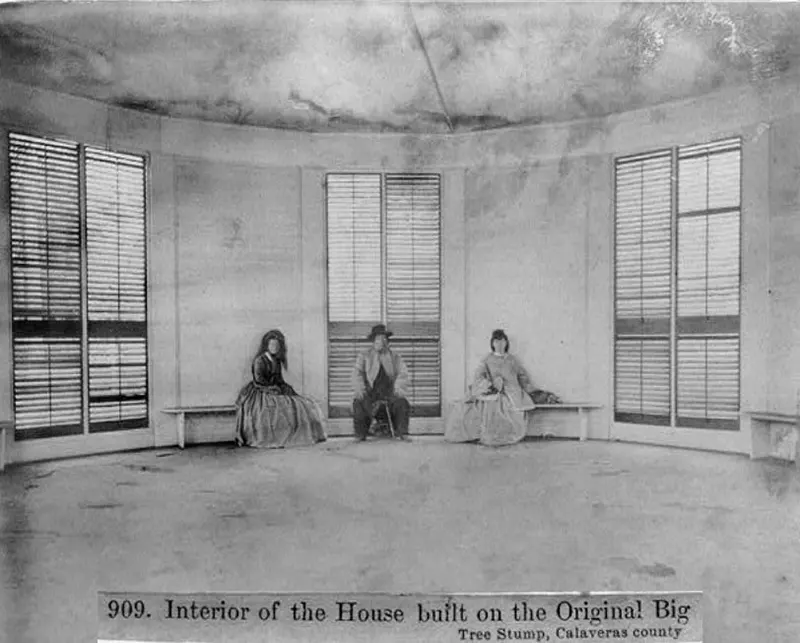
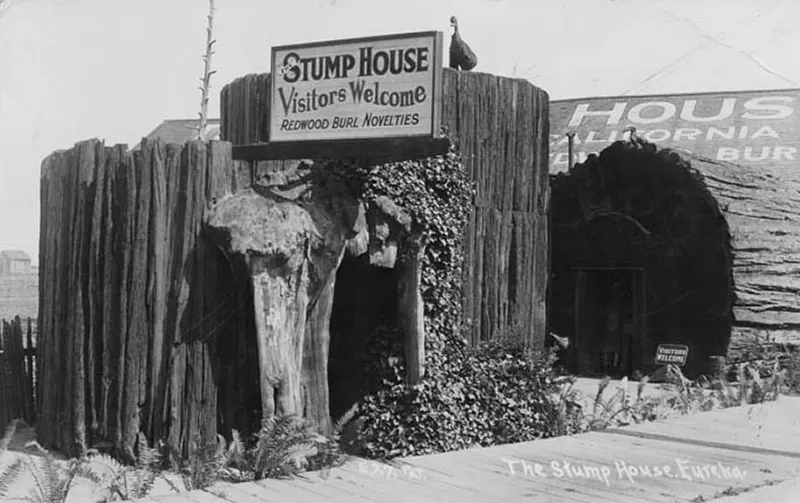
In Eureka, California, stump houses became a recurring sight. The region’s towering coastal redwoods provided stumps wide enough to stand inside comfortably. Several examples from Eureka were photographed across different decades, showing that this wasn’t a fleeting fad — it persisted well into the 20th century.
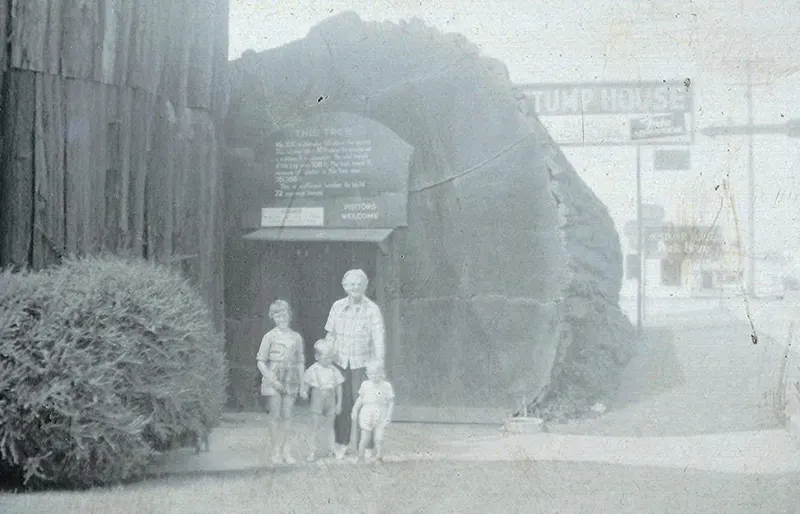
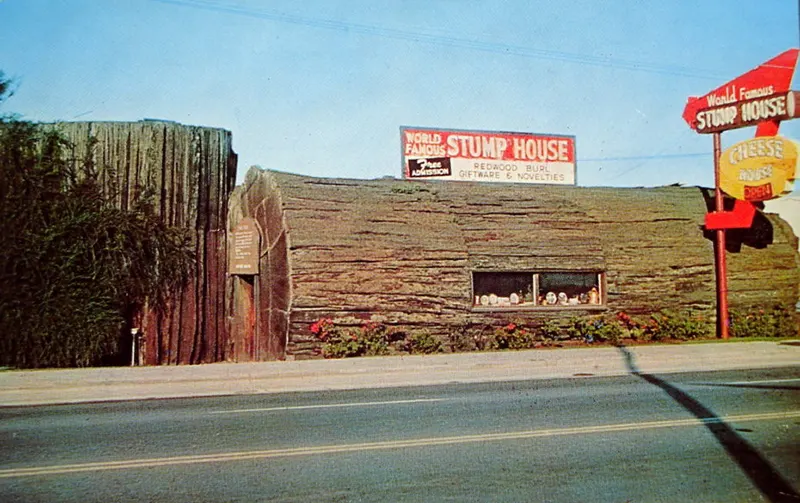
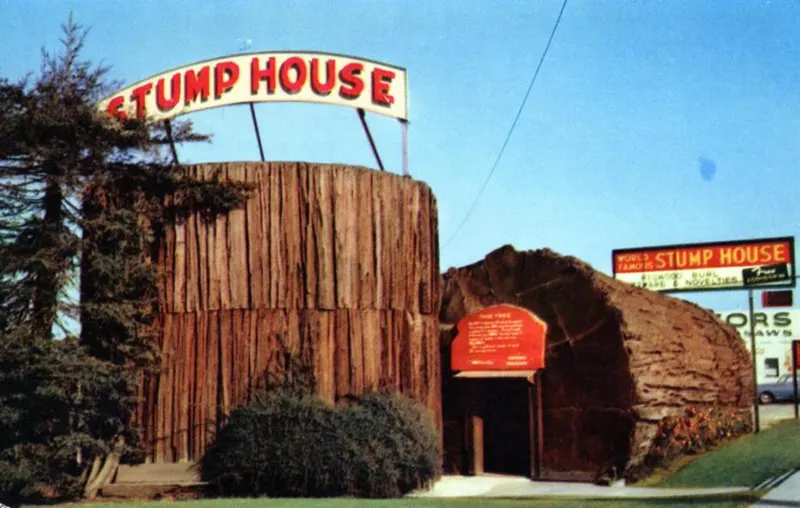
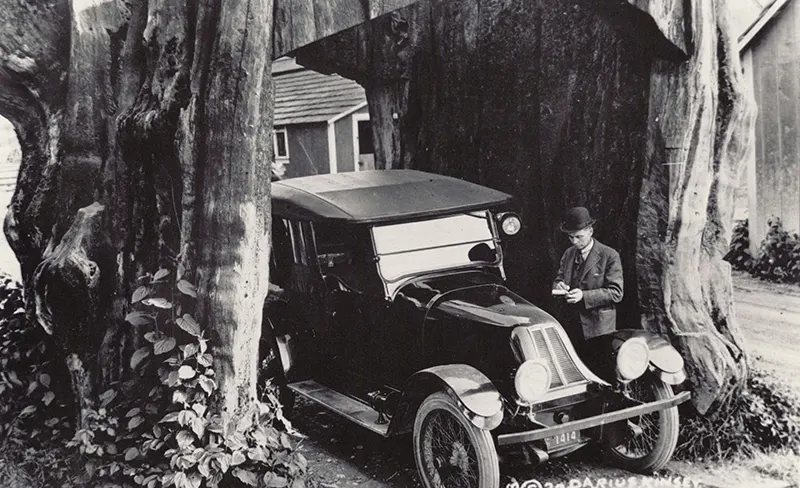
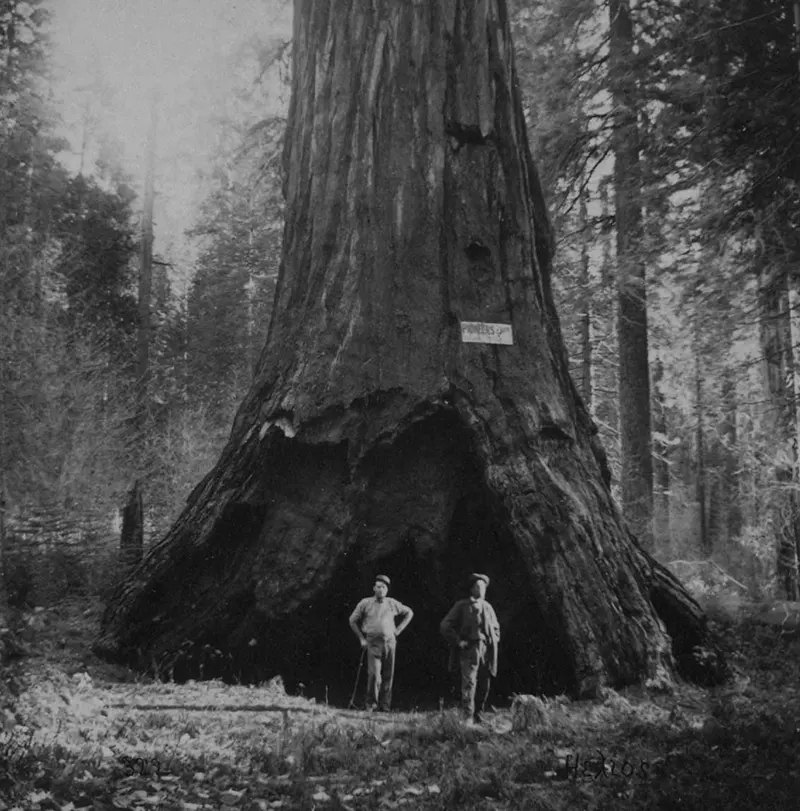
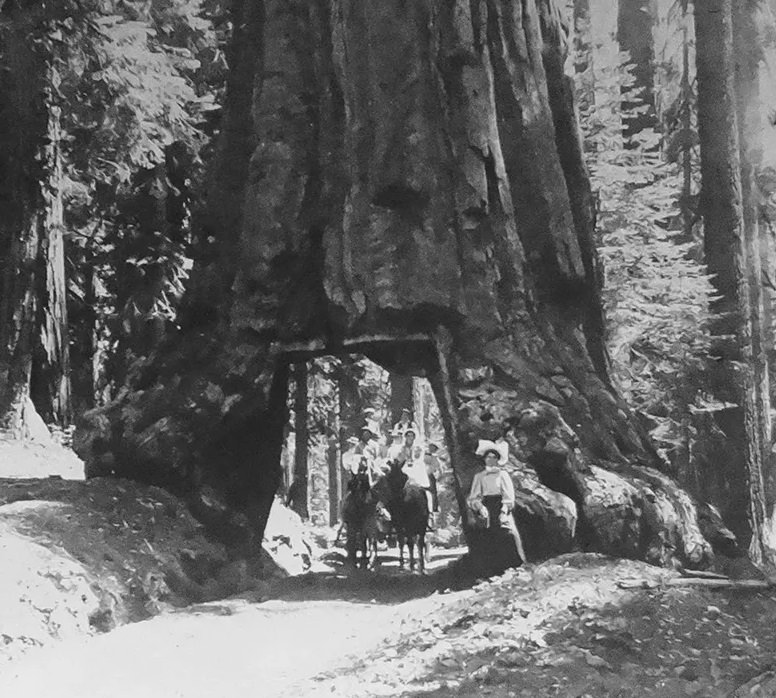
The trees that made these homes possible were staggering in size. The Pioneer’s Cabin tree in California’s Mammoth Grove stood 318 feet tall with a circumference of 75 feet. A tunnel was carved through its base wide enough for a horse and carriage to pass through. The Wawona Tree in Yosemite’s Mariposa Grove was another famous example — its tunnel drew tourists from the 1880s until the tree fell under heavy snow in 1969.
For loggers, miners, and homesteaders, stump houses offered fast, cheap shelter in a region that was being settled rapidly. Building materials were expensive and hard to transport into remote areas. A ready-made wooden shell sitting right on the land was a practical solution, not a curiosity.
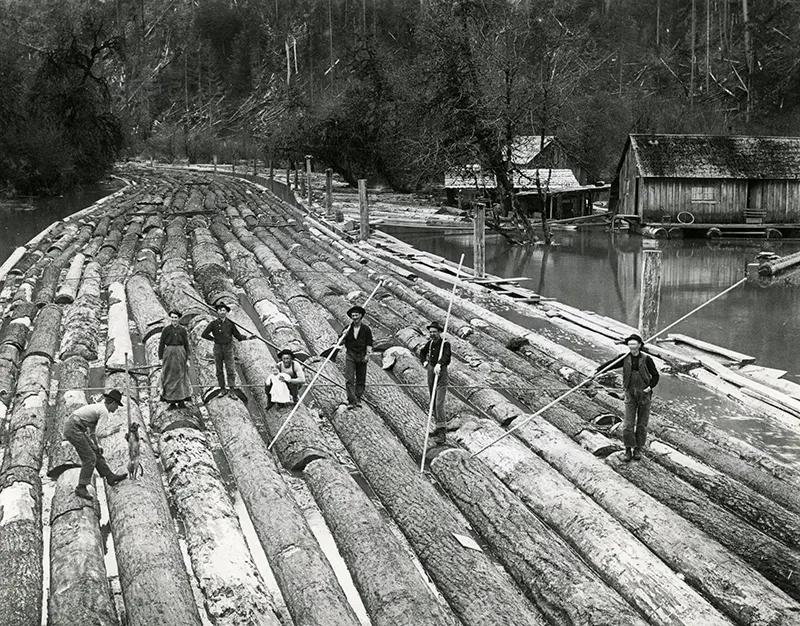
The scale of the logging industry that made all of this possible is hard to overstate. Crews didn’t just cut trees — they moved them in massive quantities. Logs were bound together into enormous rafts and floated down rivers to mills. The sheer volume of timber being harvested reshaped entire landscapes.
The stumps left behind were so wide that some were repurposed not just as homes but as road features. In Washington, a red cedar stump measuring 20 feet in diameter was incorporated directly into the Pacific Highway, with the road running straight through it.