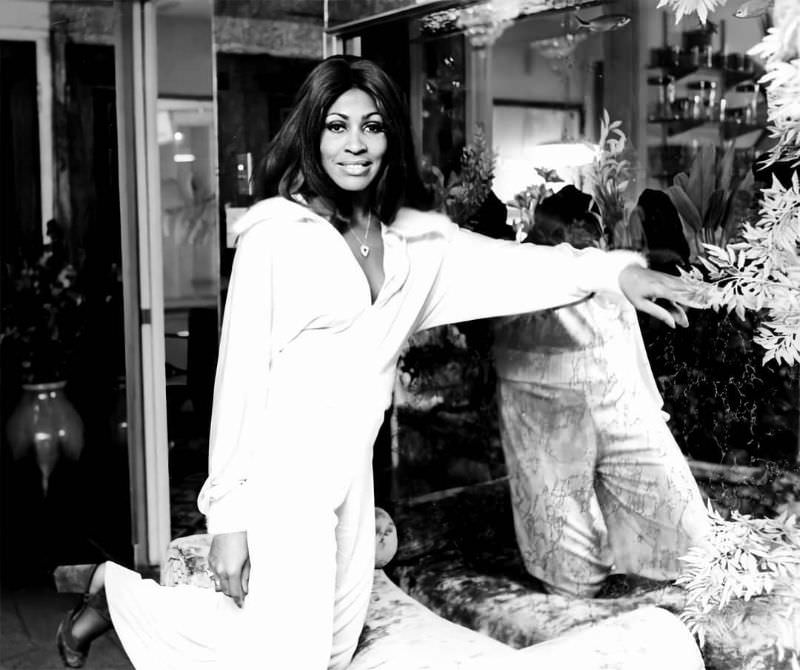

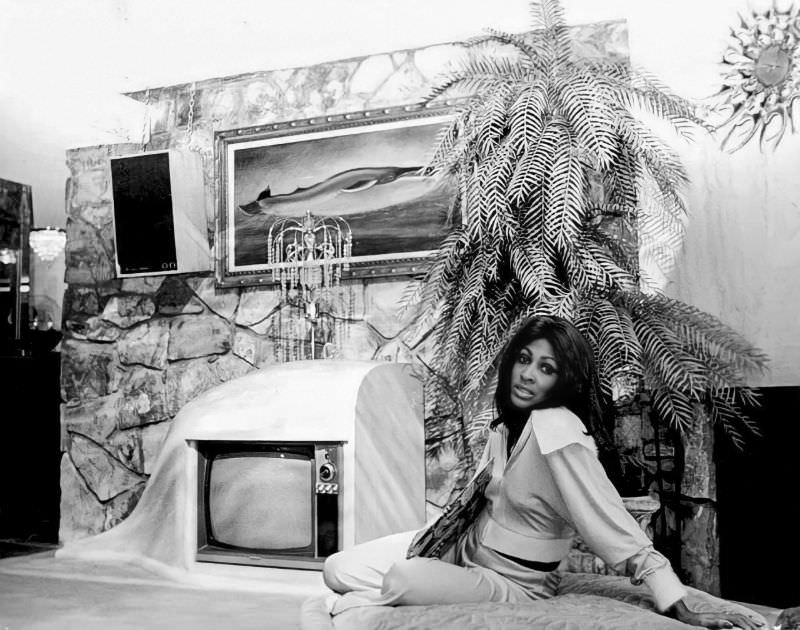
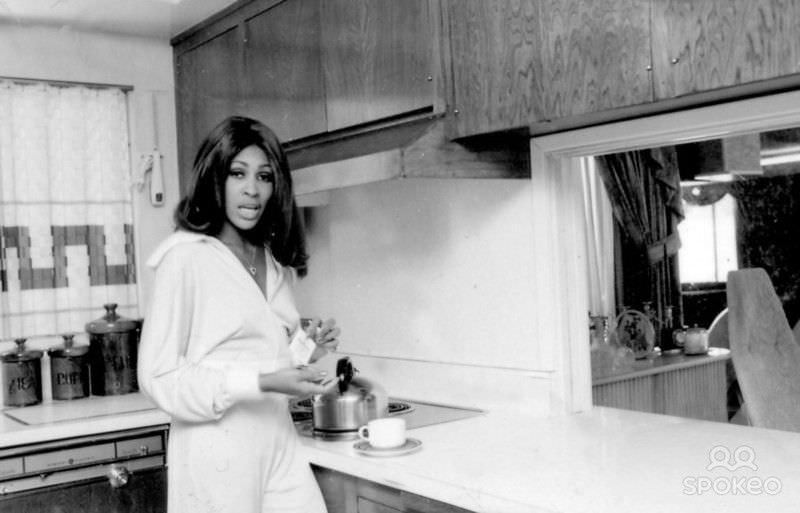
In 1972, photographers captured Tina Turner at her family’s mid-century home in View Park, California — a stylish Los Angeles neighborhood that had become one of the most affluent Black communities in the country. The house was a reflection of the Turners’ success at the time, filled with bold design choices and personal touches that made it stand out.
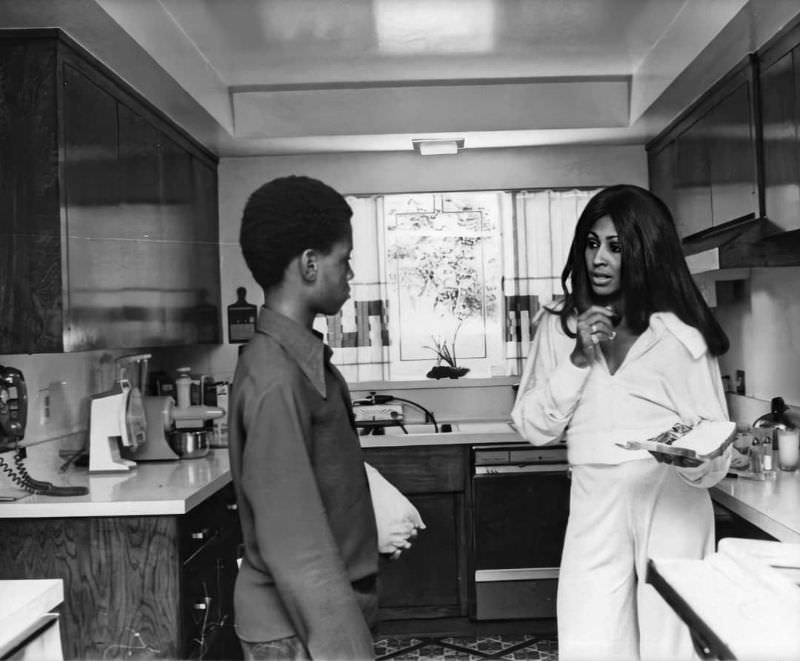
Ike Turner purchased the property in 1963, shortly after the couple relocated from East St. Louis, Illinois. The home became the center of their lives throughout the 1960s and into the 1970s, serving as both a family residence and a space that reflected their rising profile in the music world.
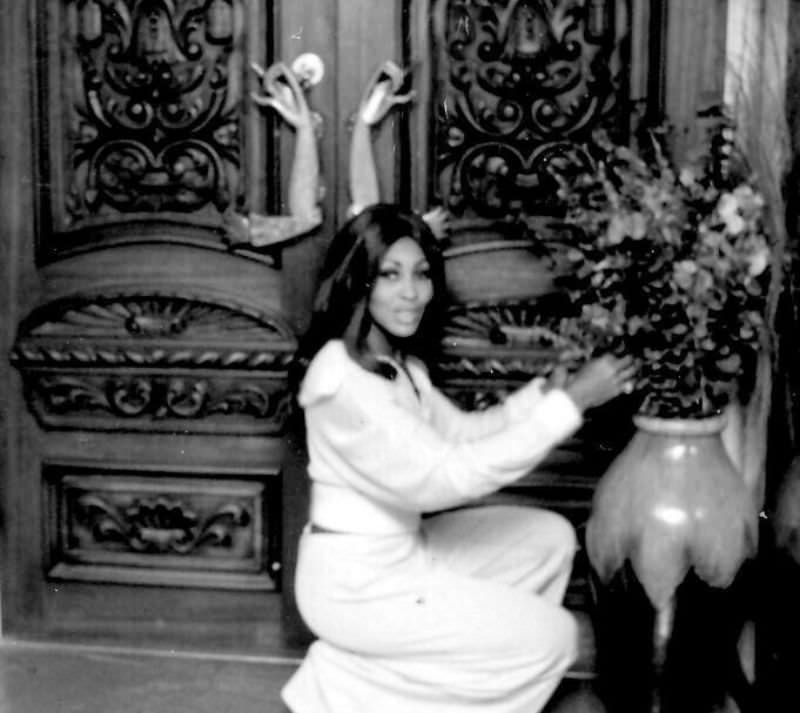
One of the most striking features of the home was its front door. Tina Turner’s hands were molded directly into the door handles — a deeply personal design detail that made the entrance unlike anything else. It was the kind of custom touch that set the house apart from typical mid-century properties in the area.
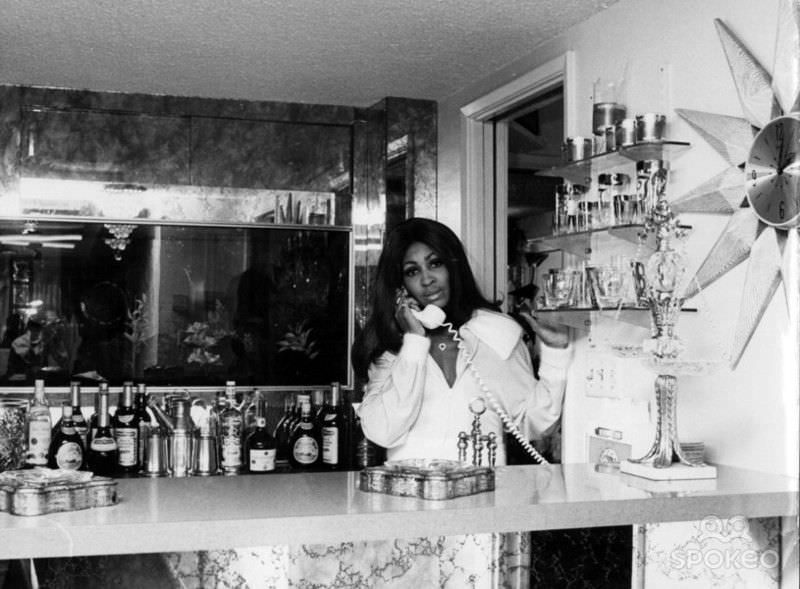
Inside, the home was just as distinctive. The family room featured a waterfall with a pond built into the space, creating an almost resort-like atmosphere indoors. A wet bar with a fish tank added to the bold, immersive feel of the interior design — elements that were very much in step with the lavish, expressive style of the era.

The couple divorced in the late 1970s, and Ike sold the property shortly after. What happened next is what makes this home especially notable in pop culture history. The house was so well preserved over the decades that filmmakers chose it as a primary location for the 1993 biopic What’s Love Got to Do With It, the film based on Tina Turner’s life story. Scenes set in the Turner household were shot on the actual property, not a studio set.

View Park itself was a deliberate choice for Black professionals and entertainers during that period. Situated in the hills above Inglewood and Culver City, the neighborhood offered large lots, architectural variety, and a sense of community that attracted musicians, athletes, and businesspeople. The Turners were among the most recognizable names to call it home.

The 1972 photographs offer a rare, unguarded look at Tina Turner’s domestic life during one of the most complicated periods of her career. The home itself — with its waterfall, fish tank, custom door handles, and mid-century bones — stands as a vivid time capsule of that moment.