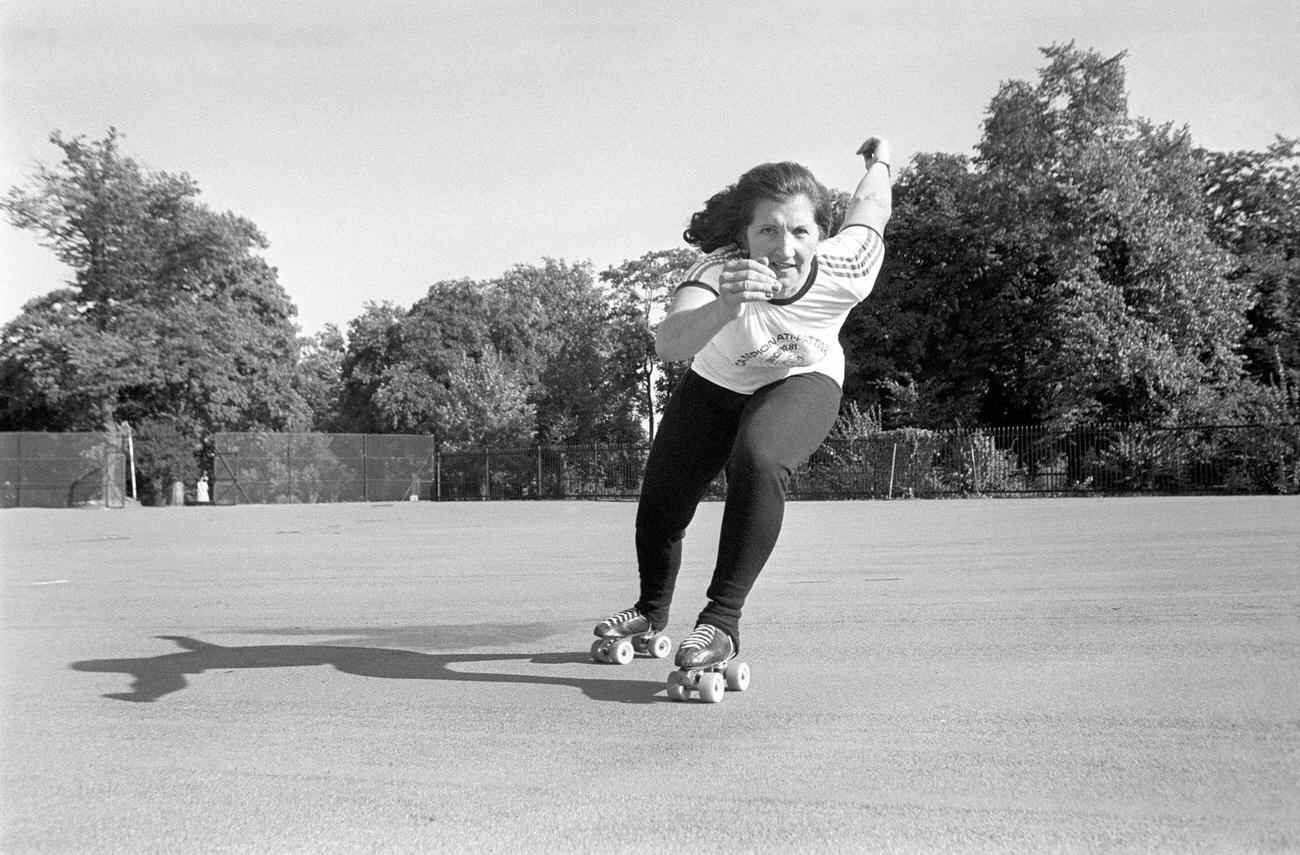
Roller skating has been rolling through history for well over a century. From city streets to purpose-built rinks, women and girls have been at the center of the story nearly every step of the way. The photos collected here span from 1910s Berlin to the neon-lit rinks of the 1980s, capturing a pastime that was never just about sport.
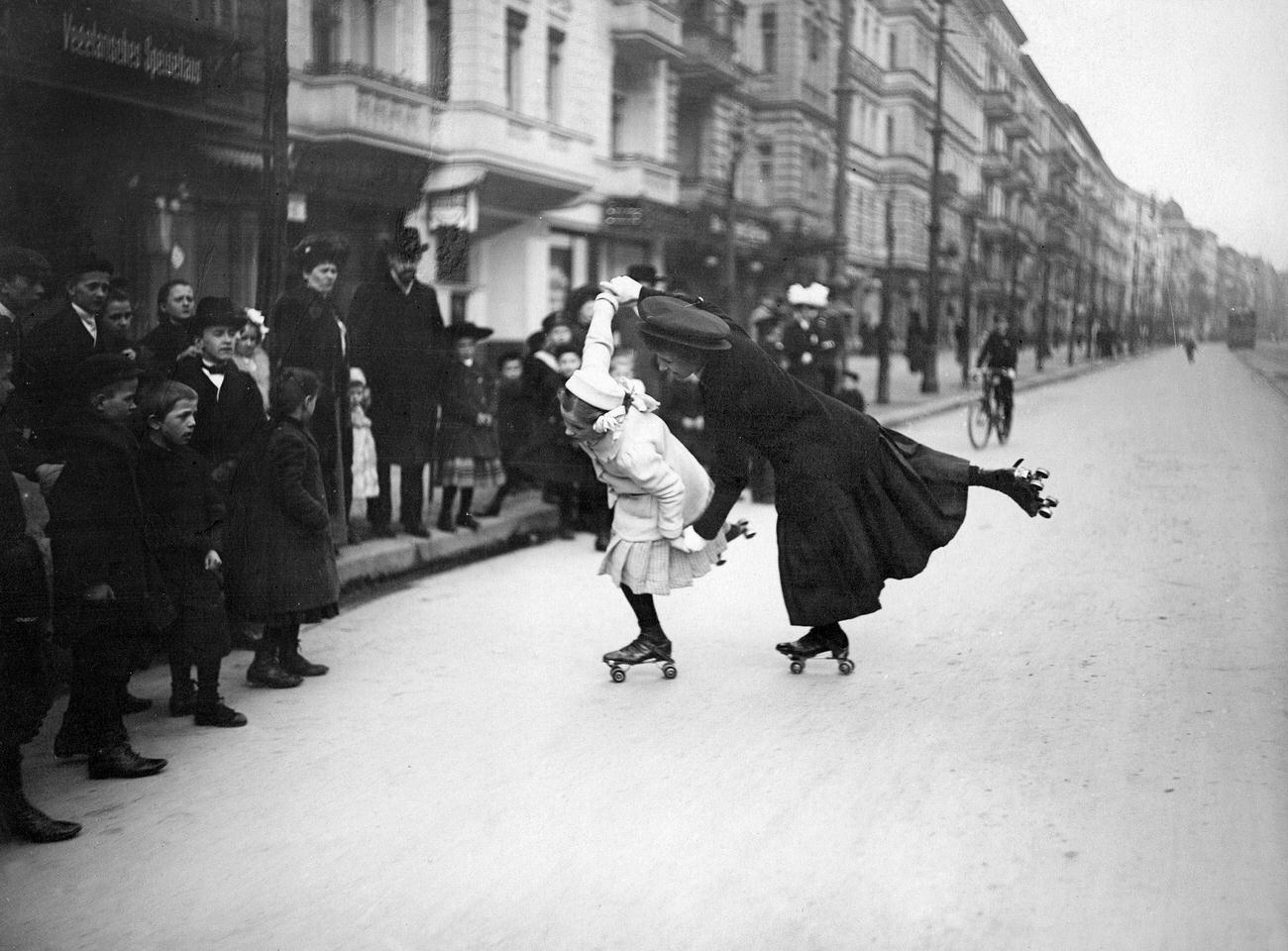
As the 20th century opened, roller skating shifted from a short-lived novelty into a genuine social force. Women in ankle-length dresses and wide-brimmed hats took to rinks and streets with a sense of freedom that was still rare in their daily lives. The rink was one of the few public spaces where women could move on their own terms, mix socially, and even court romance without strict supervision. That quiet freedom made it quietly radical.
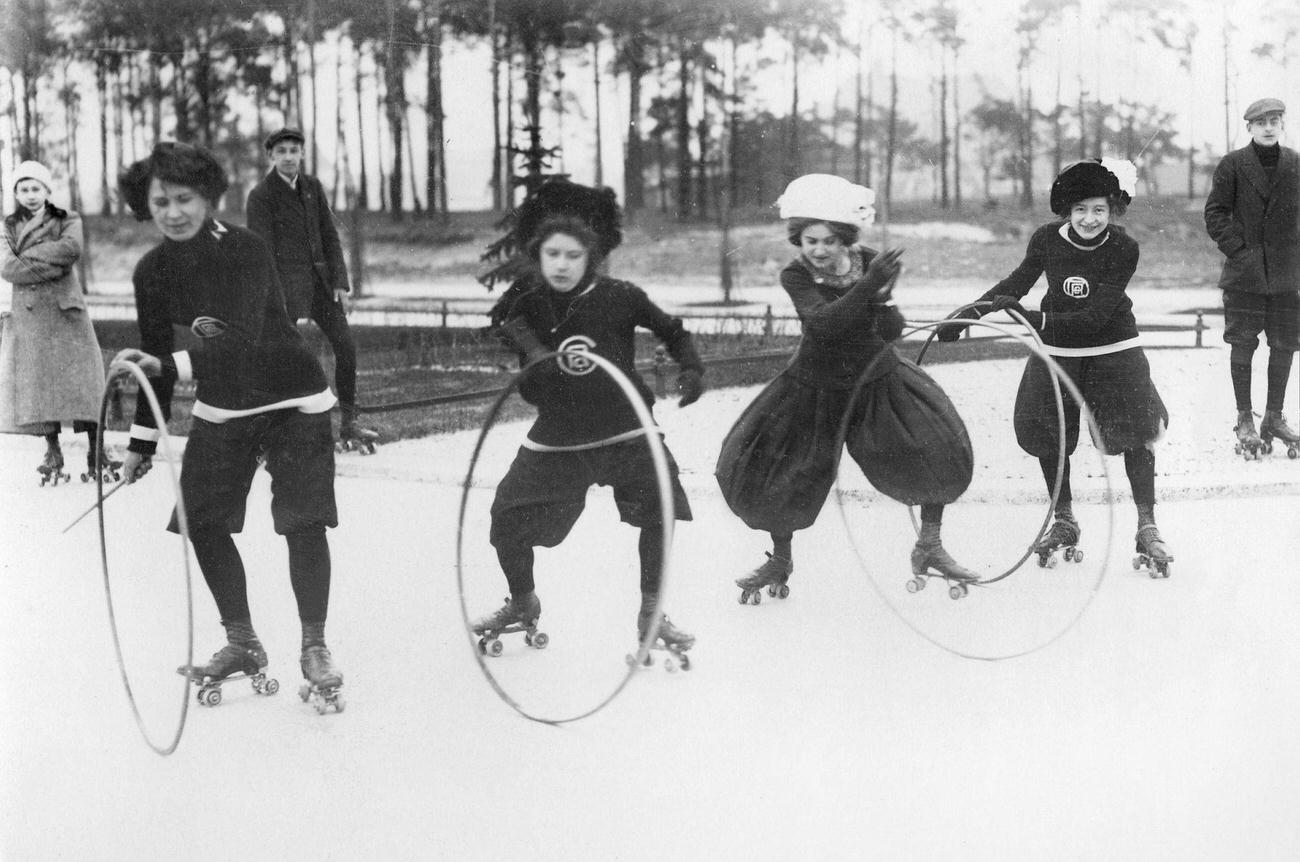
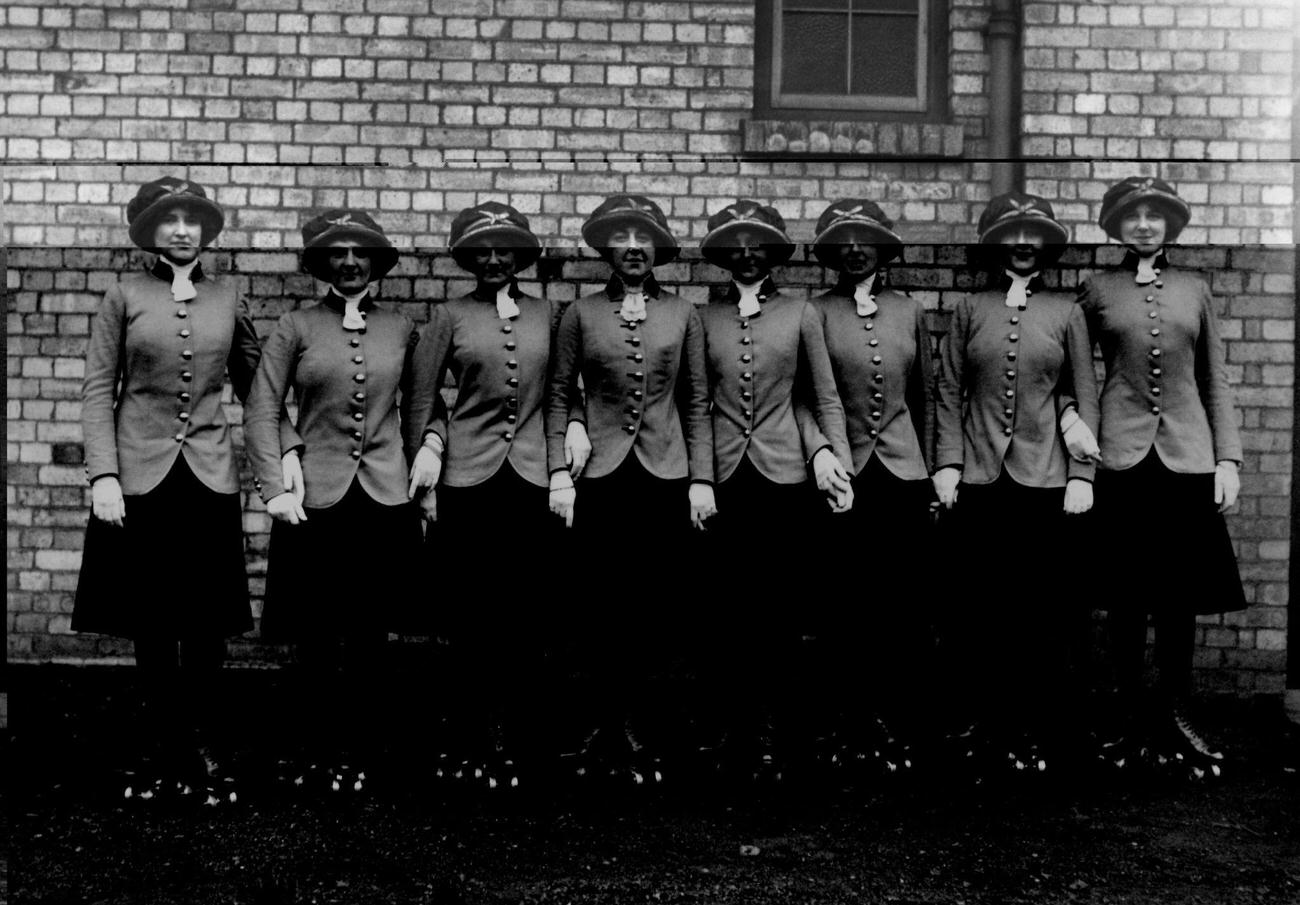
By 1912, organized clubs had formed across Europe. London’s Holland Park Rink hosted competitive teams, including dedicated floor girls whose role was to keep the skating surface clear and safe. These weren’t casual hobbyists — they were skilled, trained, and proud of it.
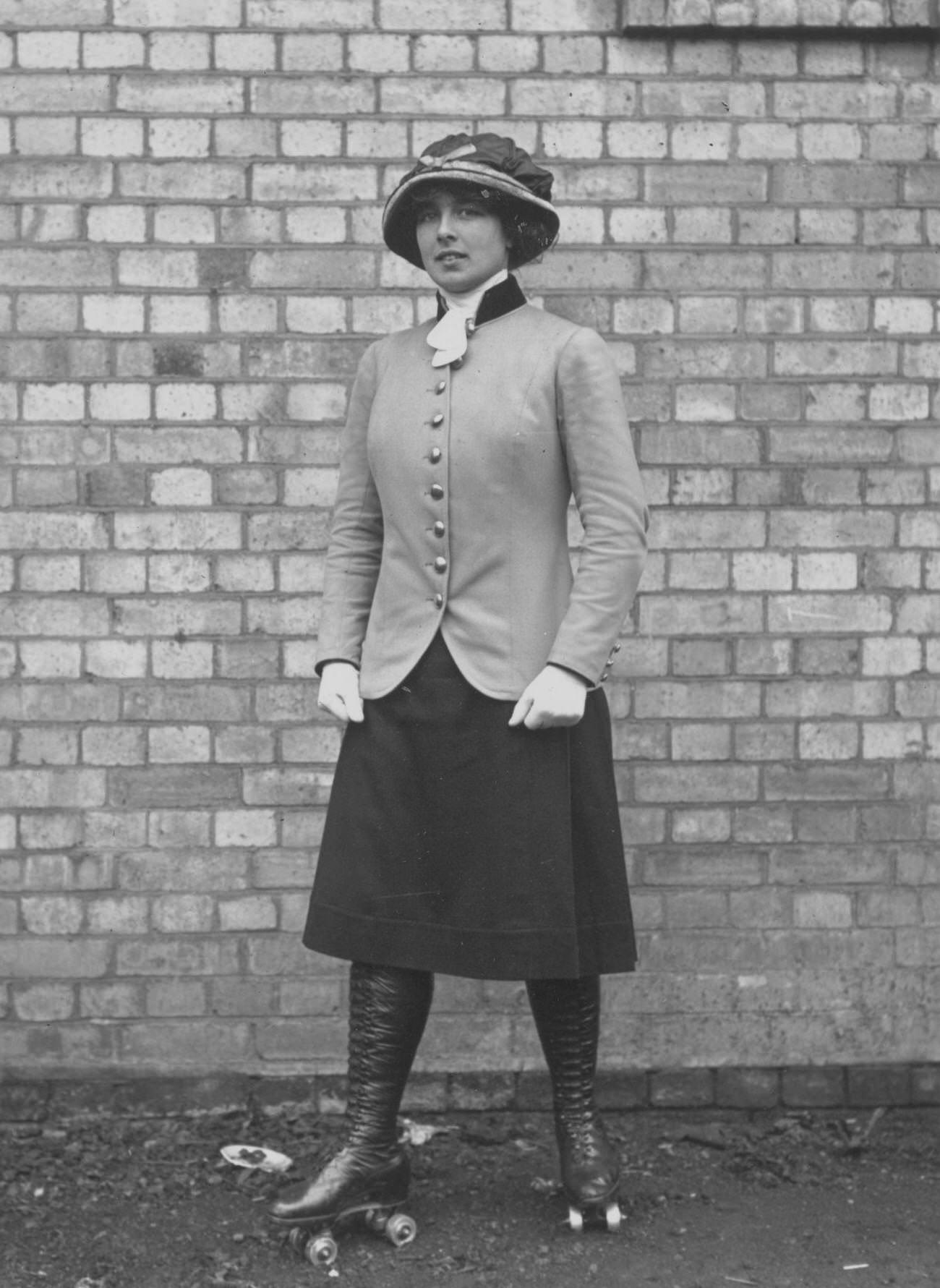
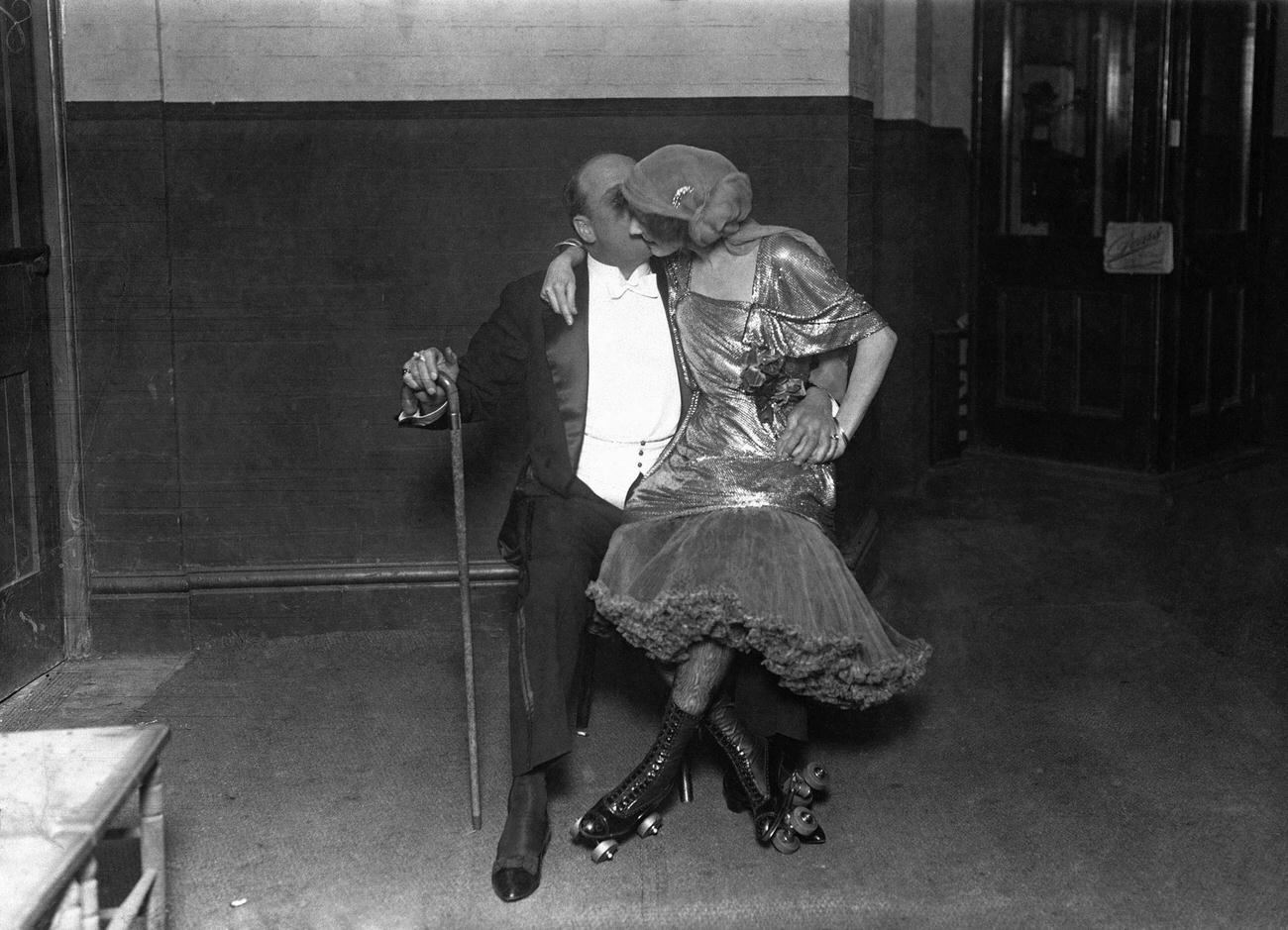
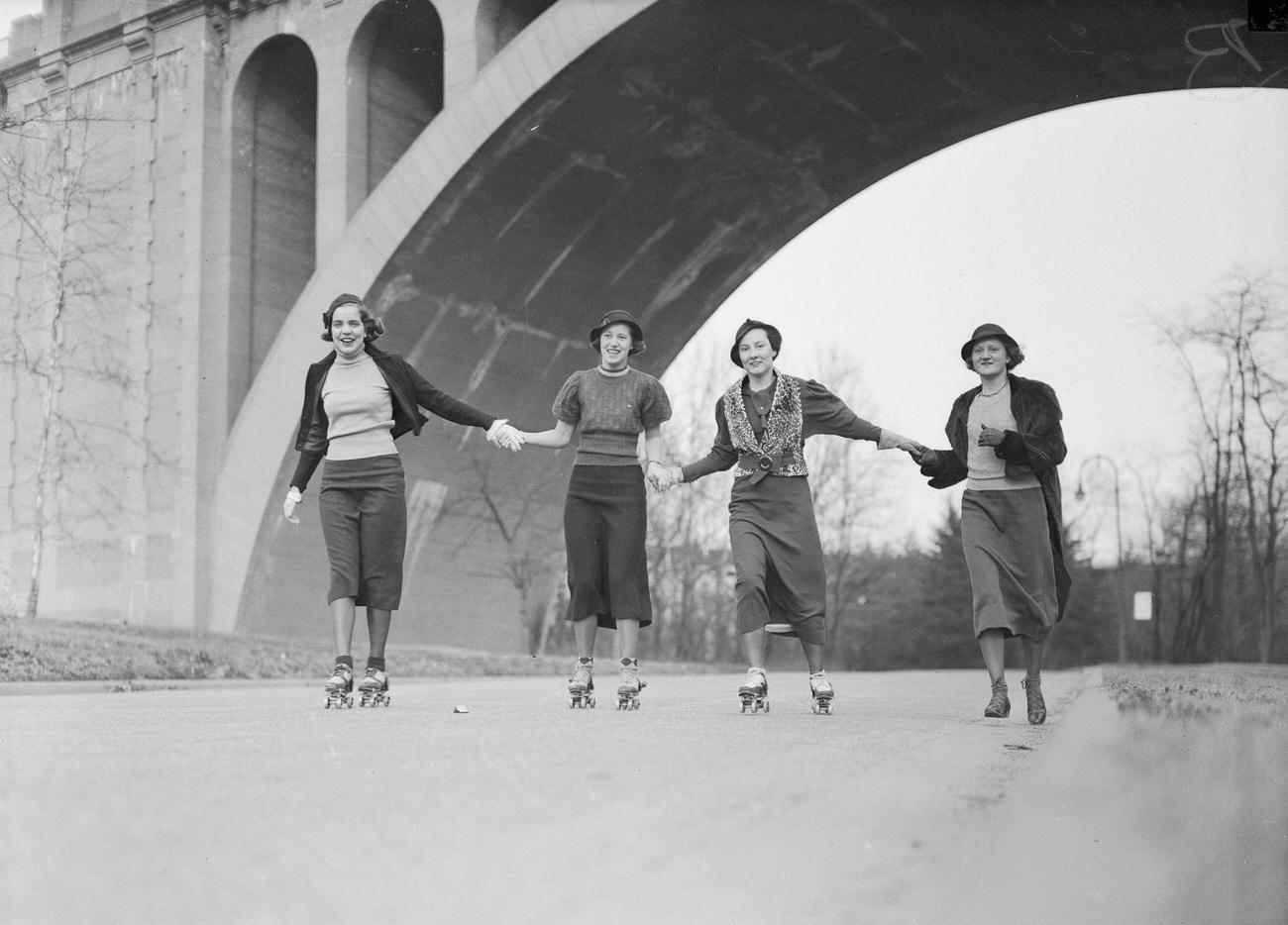
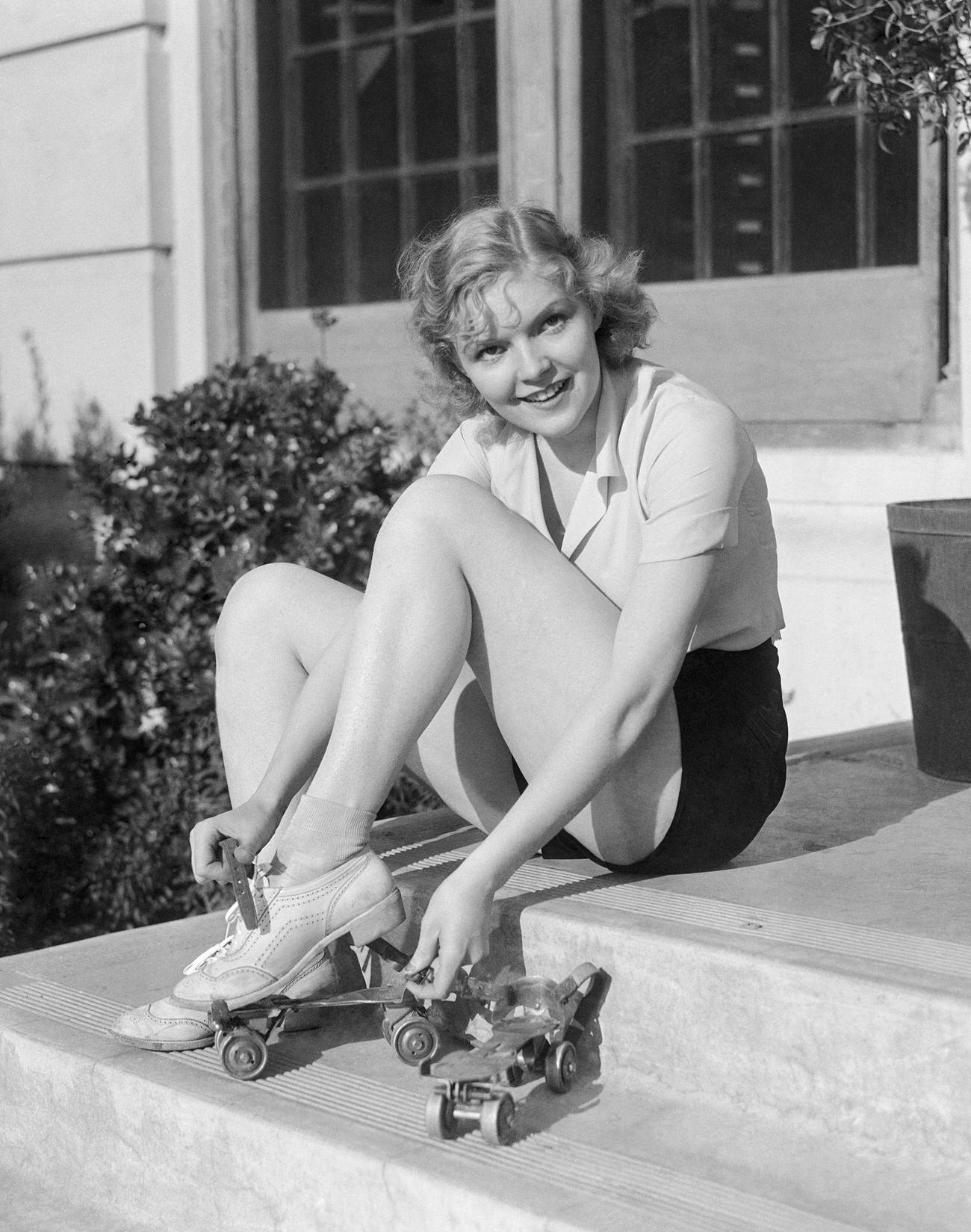
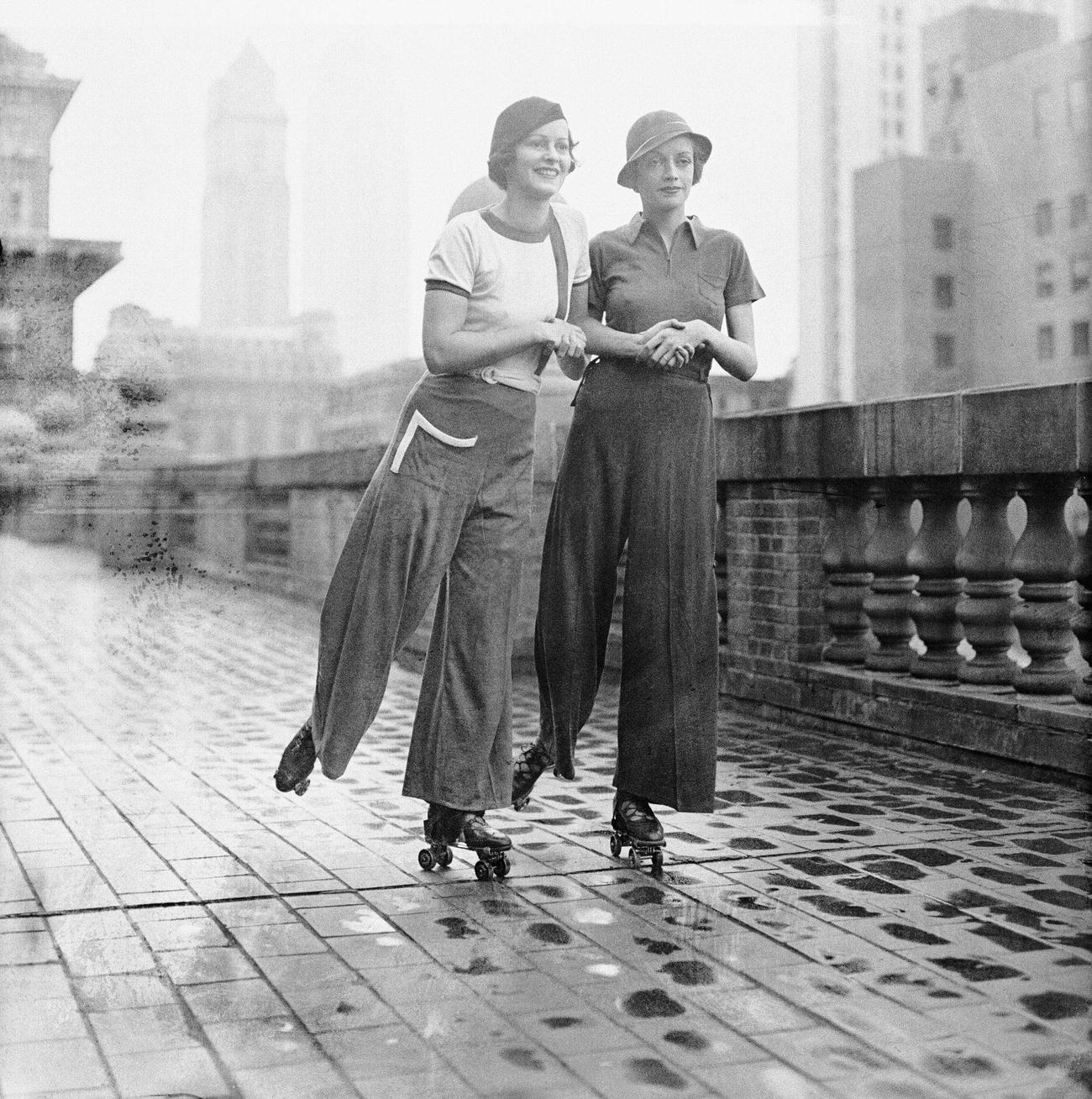
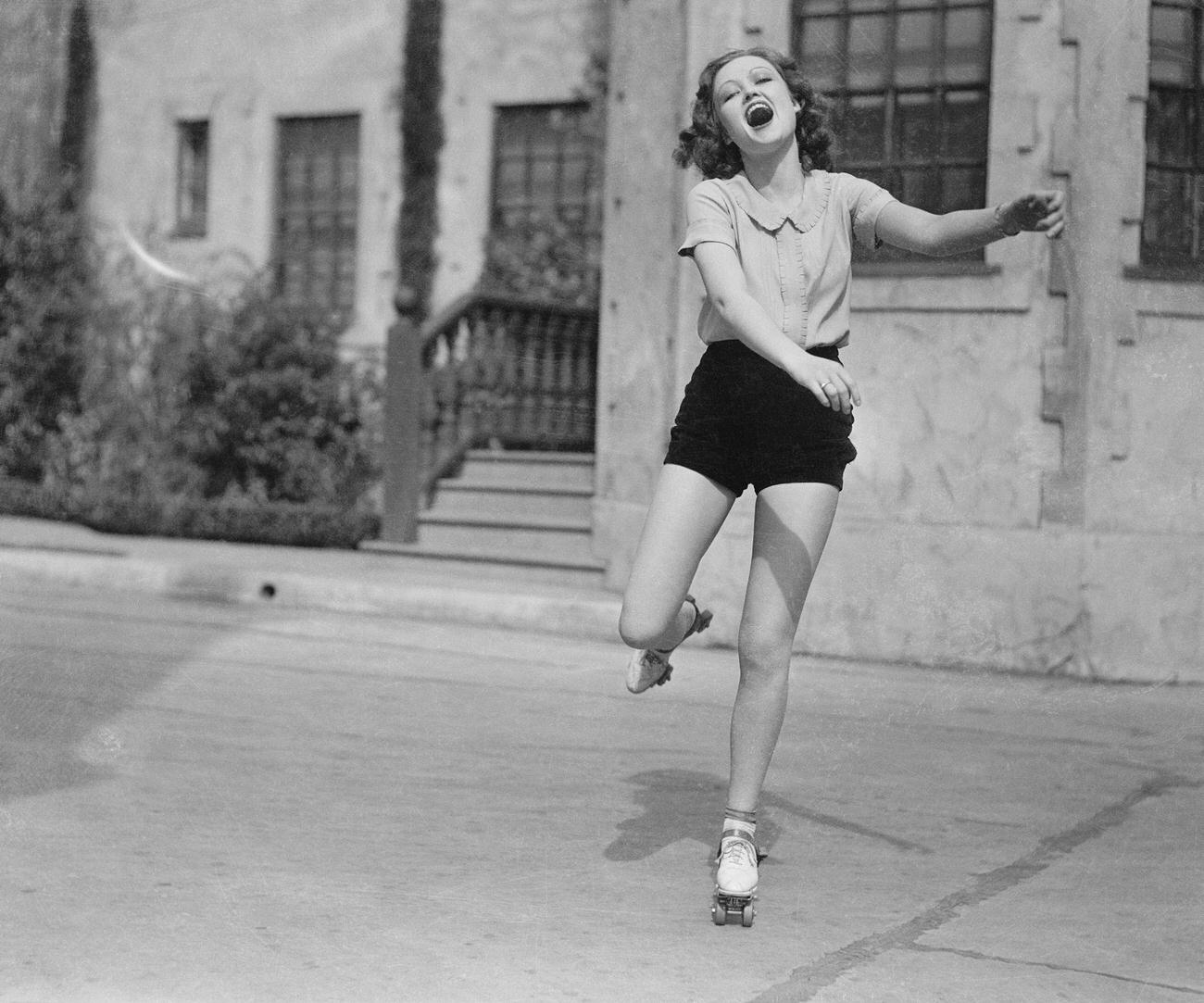
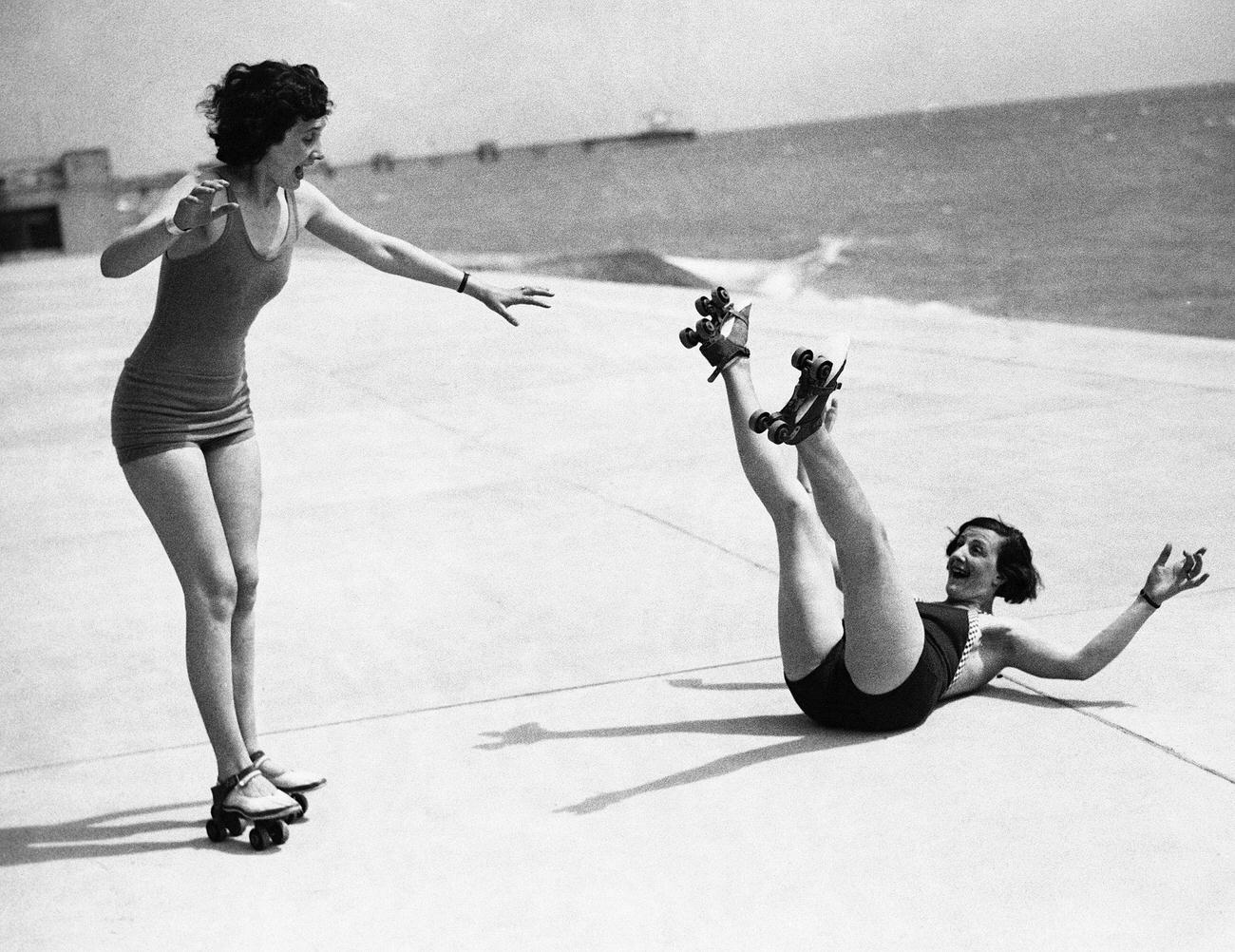
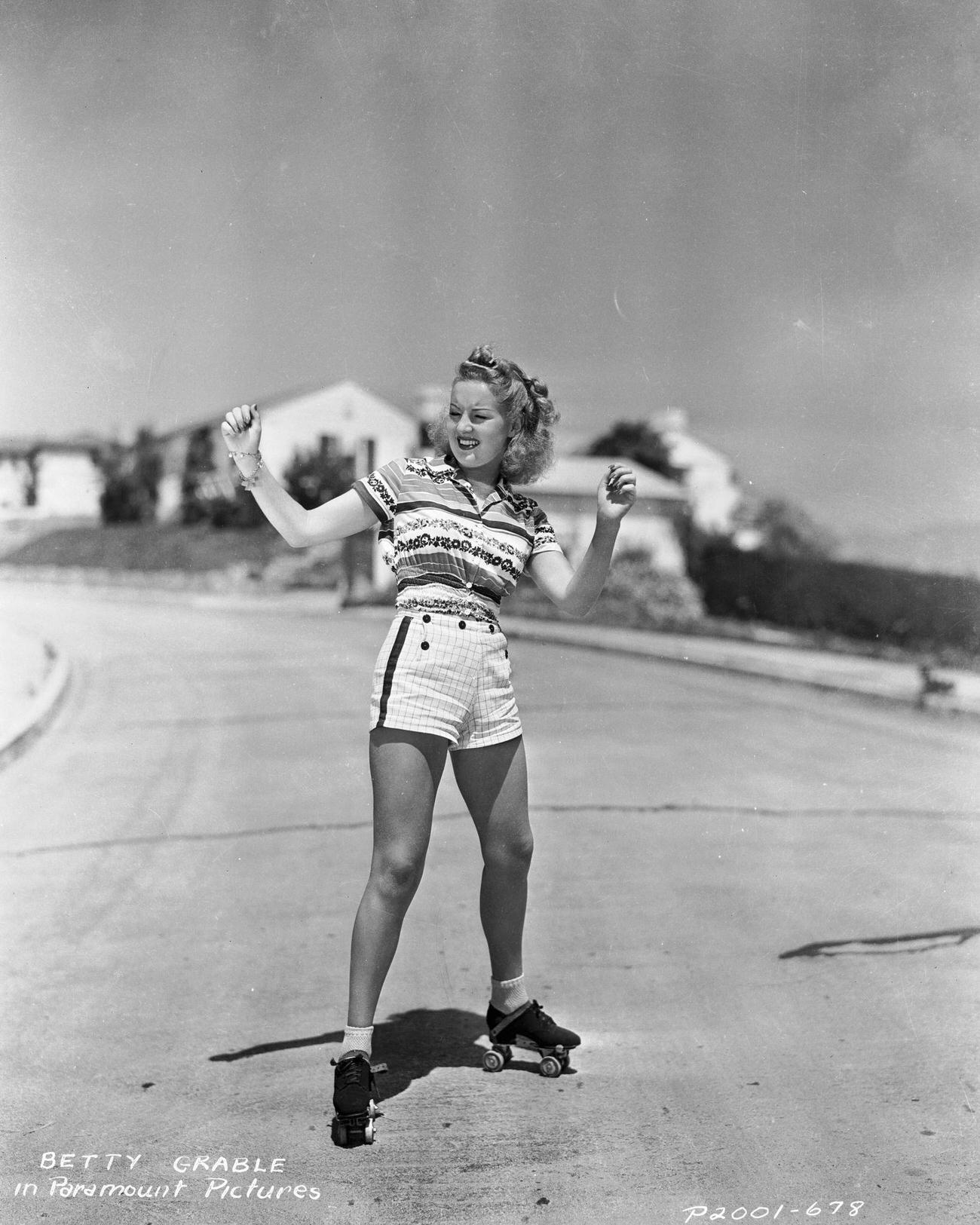
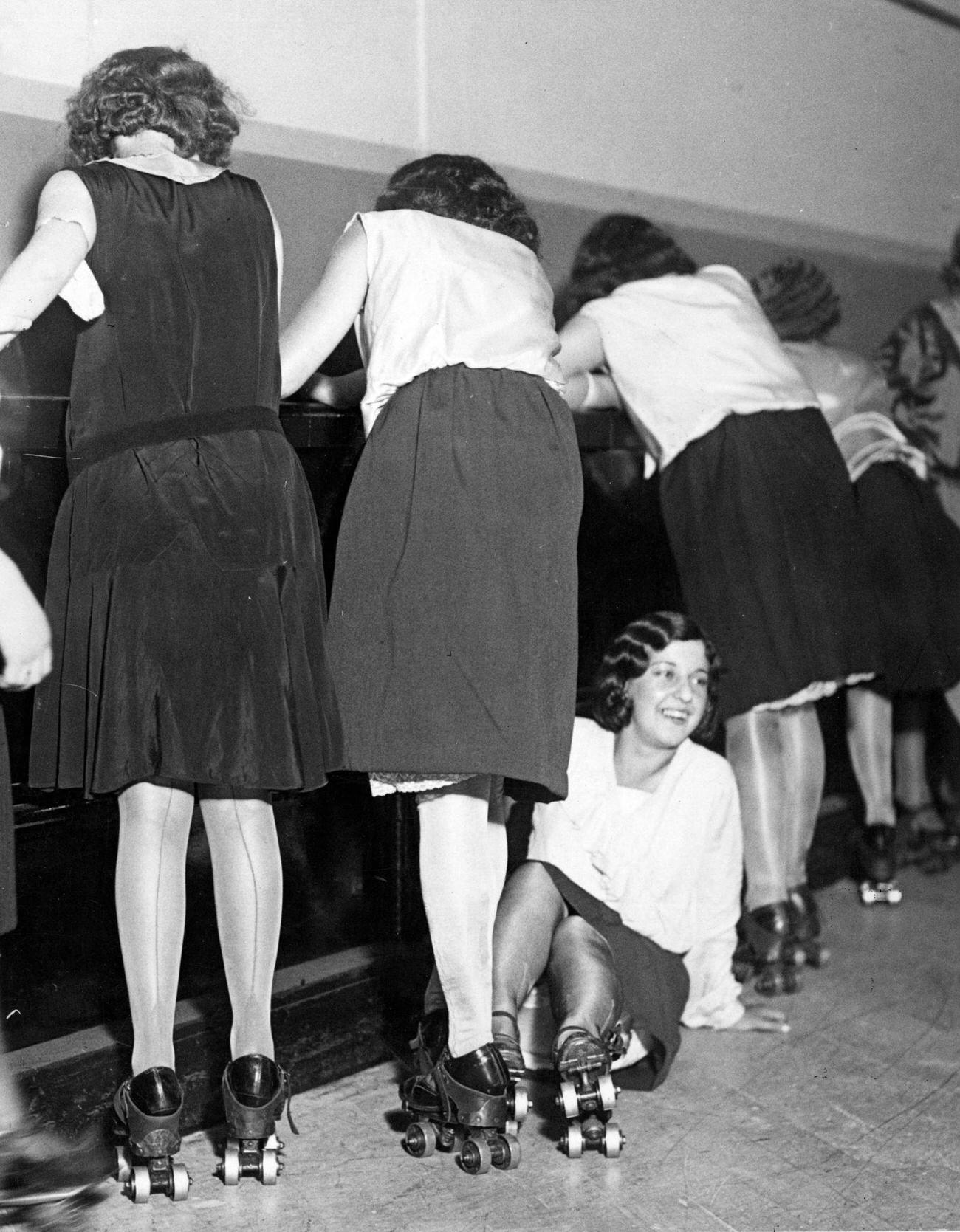
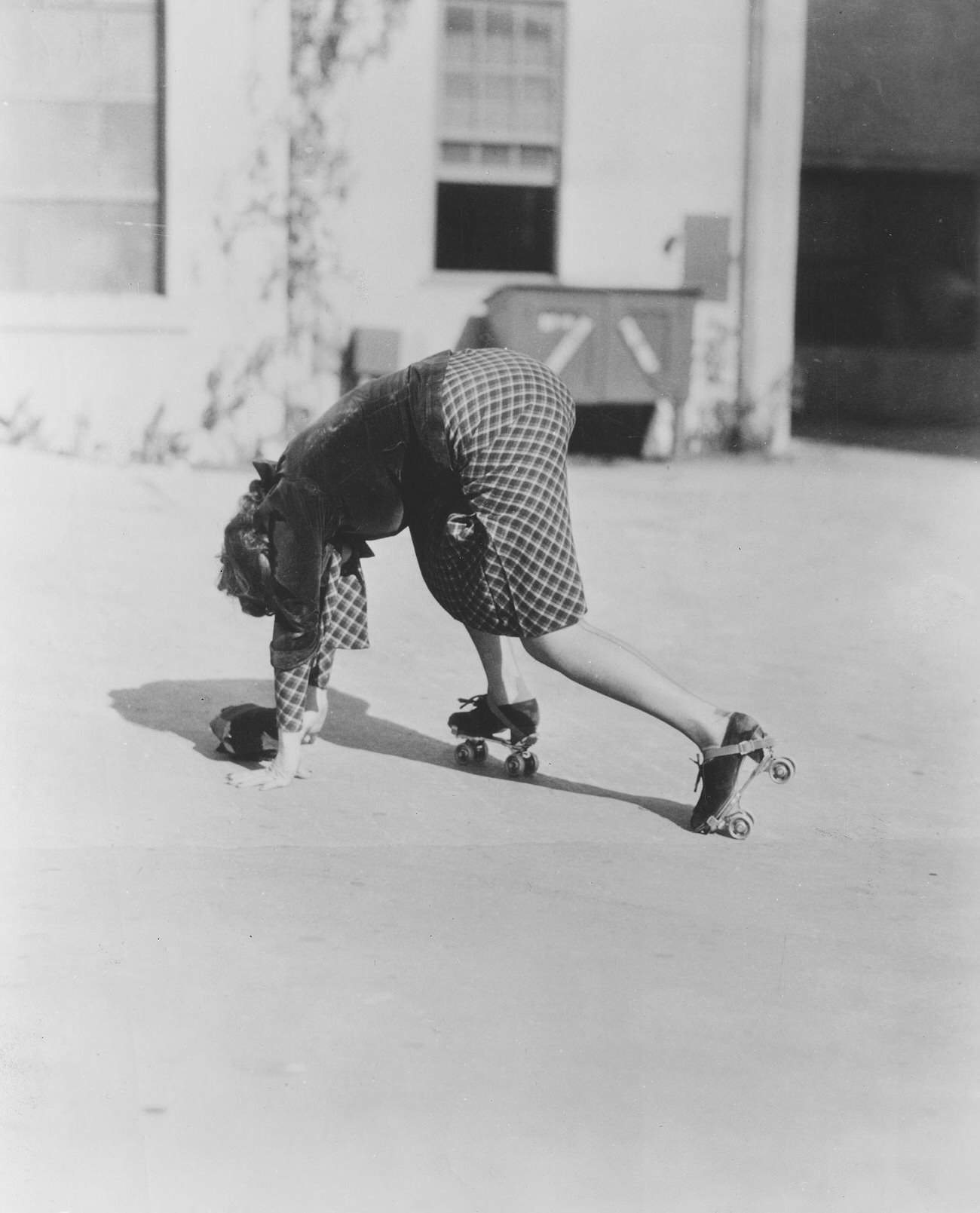
Through the 1930s, skating became woven into everyday American and European life. Celebrities posed on skates for cameras in Hollywood. Actress Betty Grable used skating as part of her fitness routine. In Washington D.C., children skated through Rock Creek Park. In New York, skating fashion shows drew crowds. The culture was spreading fast and crossing every class line.
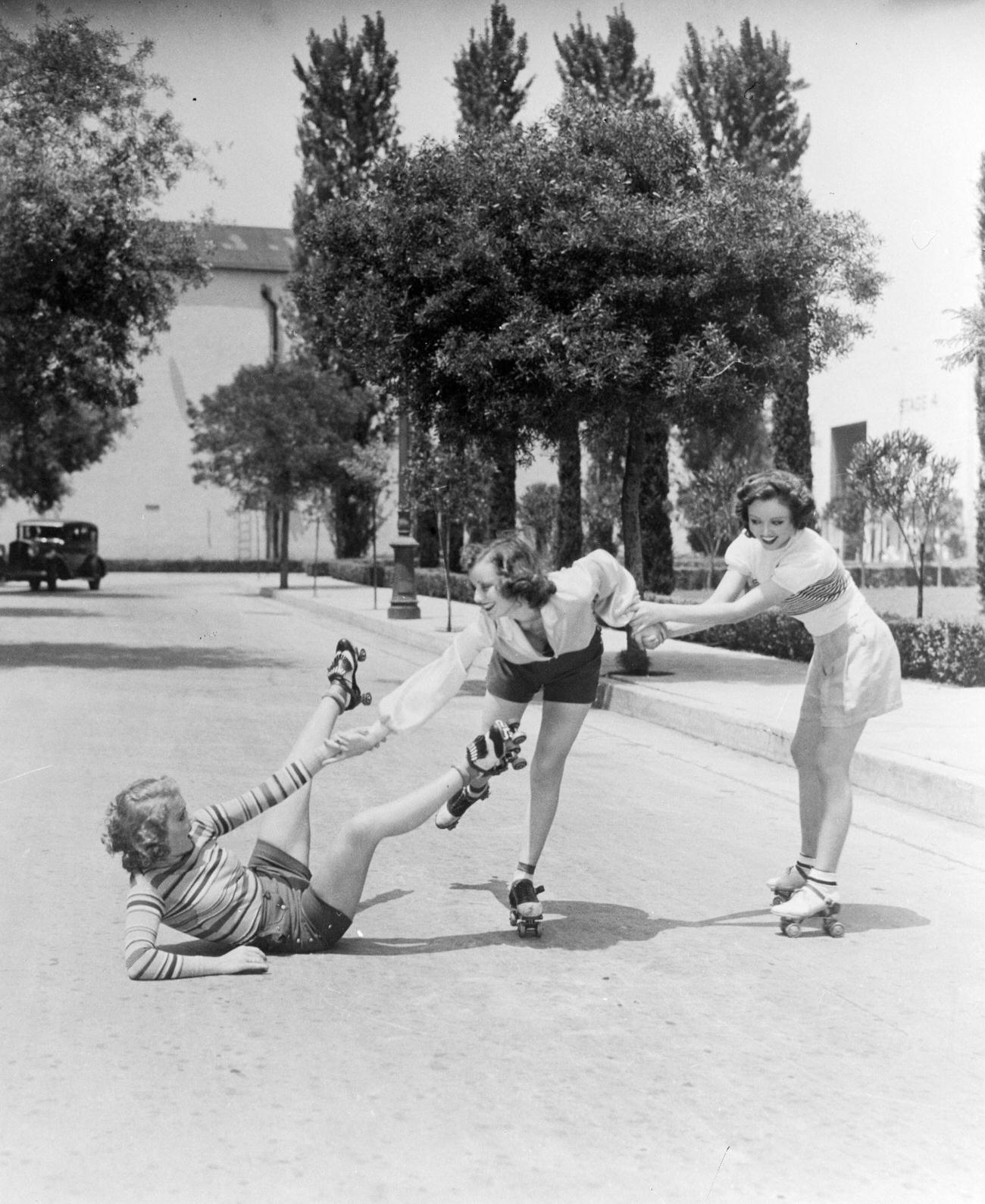
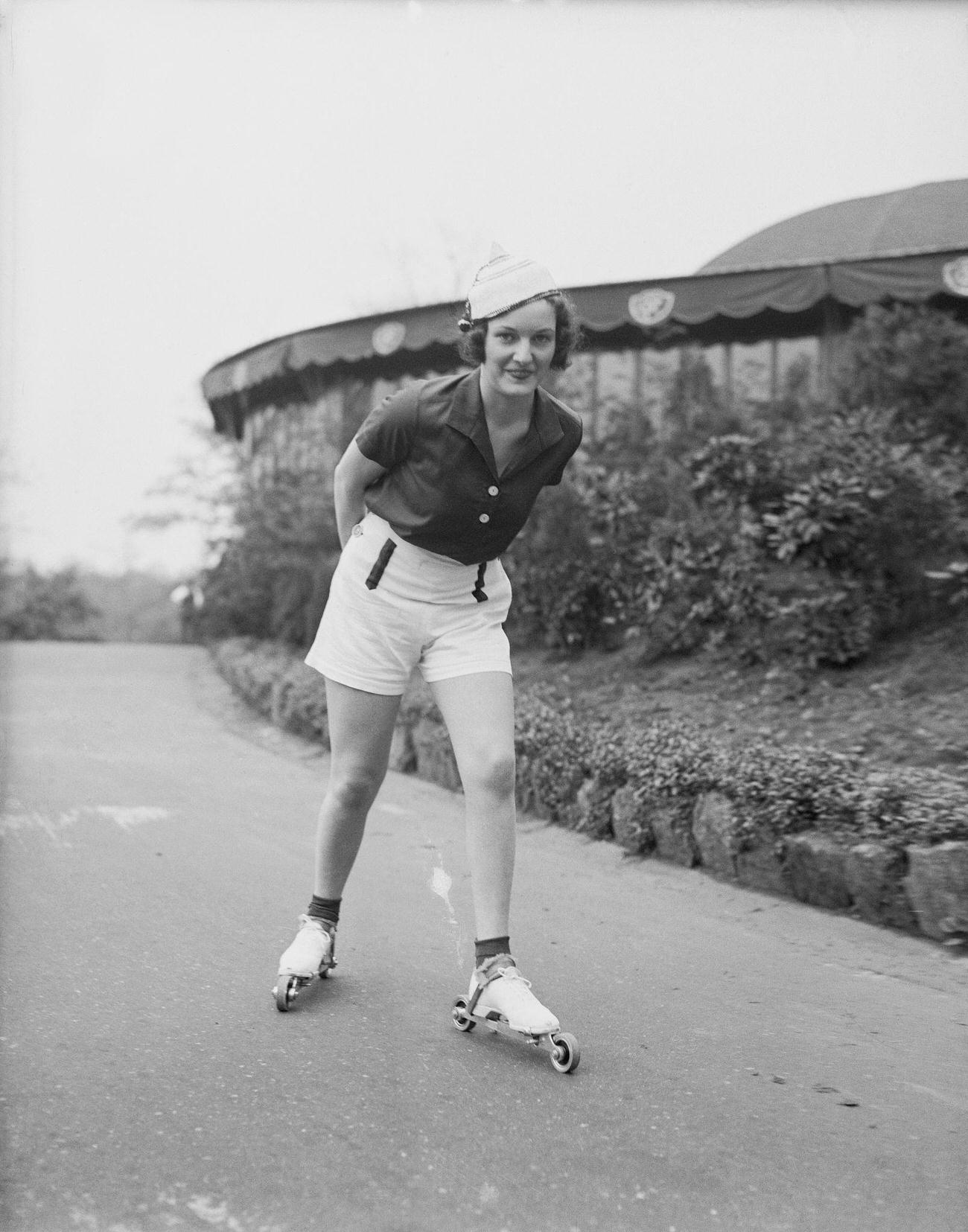
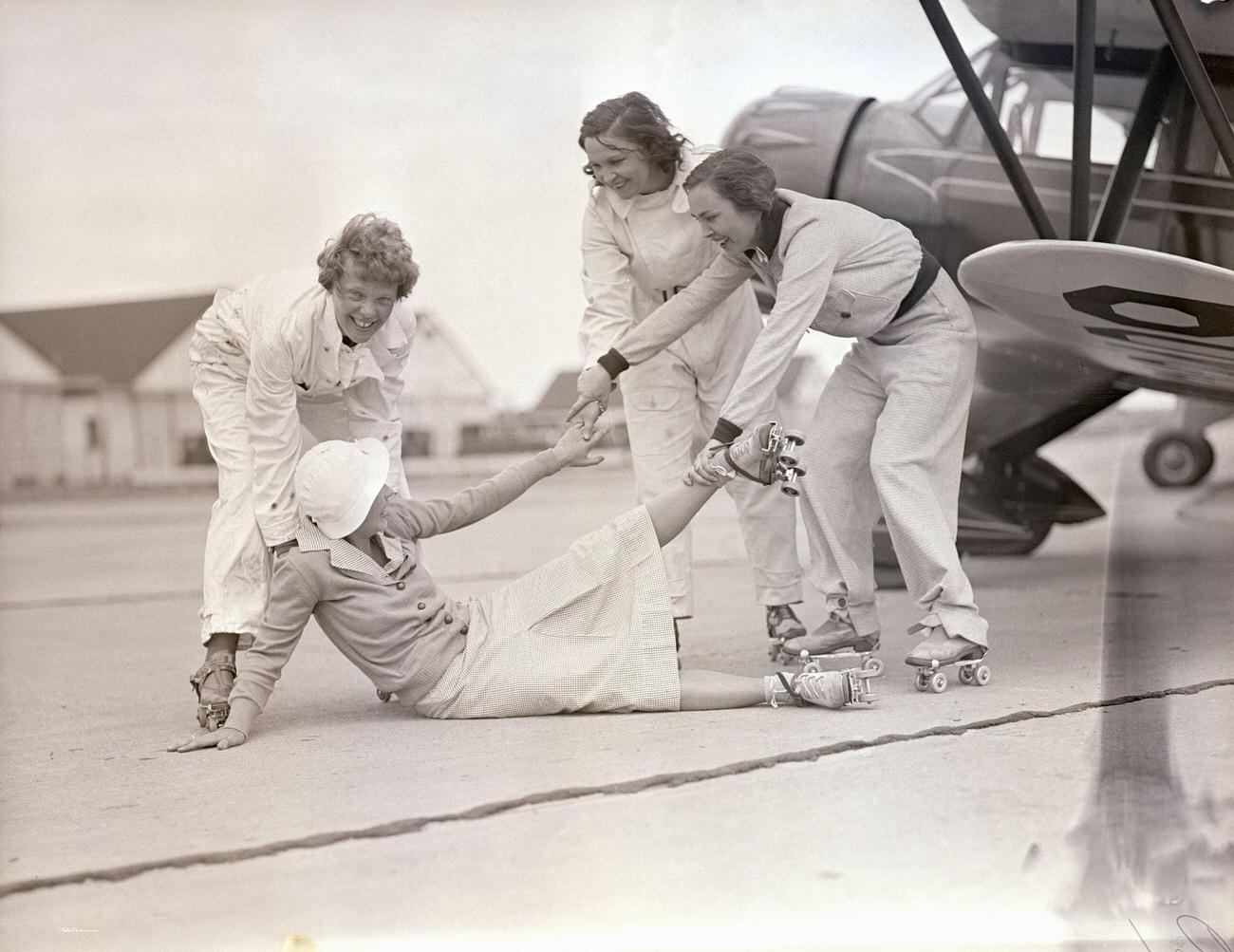
In 1933, aviator Amelia Earhart showed up at a skating event alongside fellow aviatrices, pausing to help a fallen skater. It was a small moment that said a great deal — the most adventurous women of the era were on wheels too.
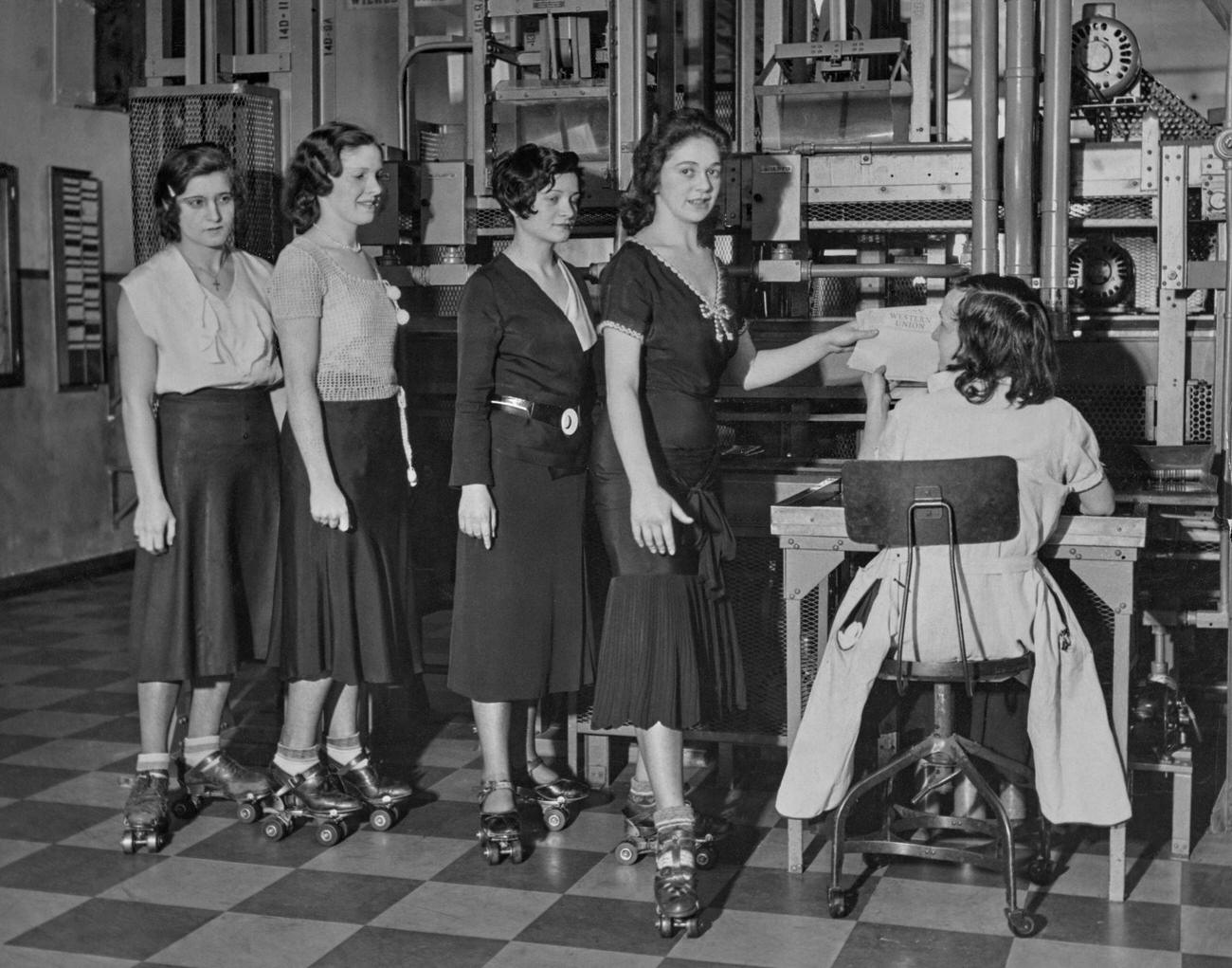
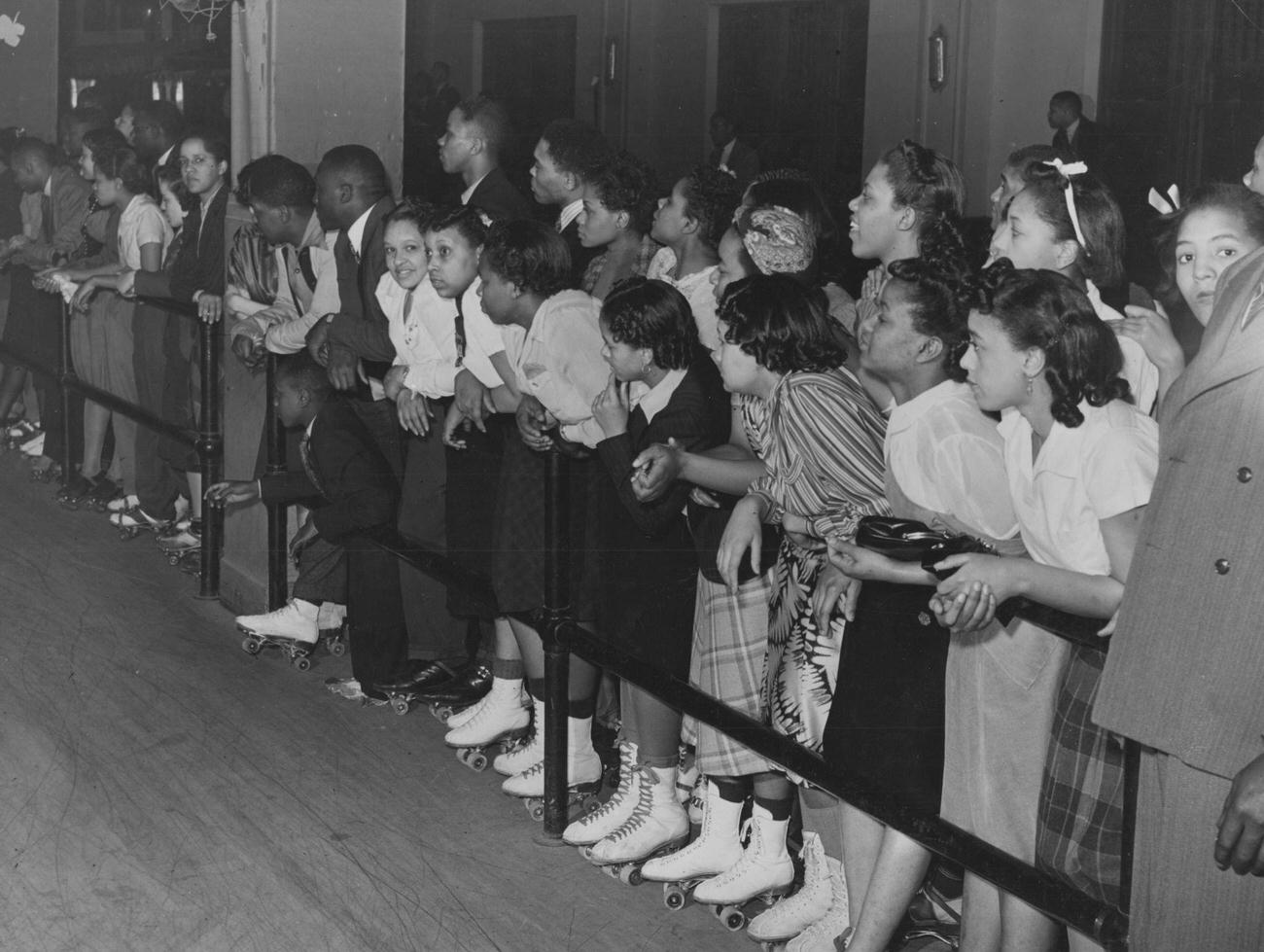
Skating wasn’t only leisure in 1935 New York — Western Union messengers used skates to speed deliveries through city streets. Meanwhile, African-American children in Chicago were photographed at skating events that same year, their participation a reminder that the rink, for all its social complexity, was a space that drew people from across the city.
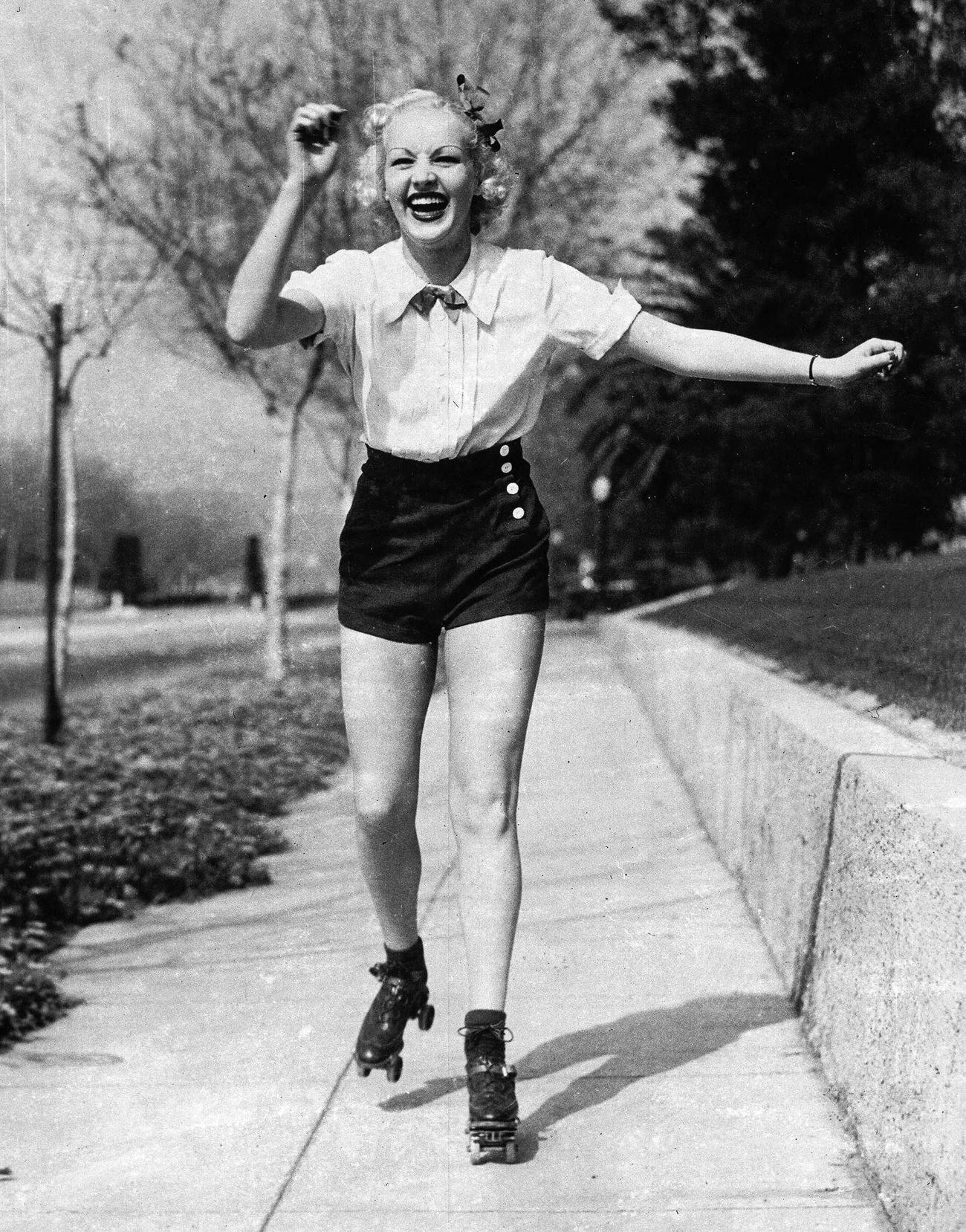
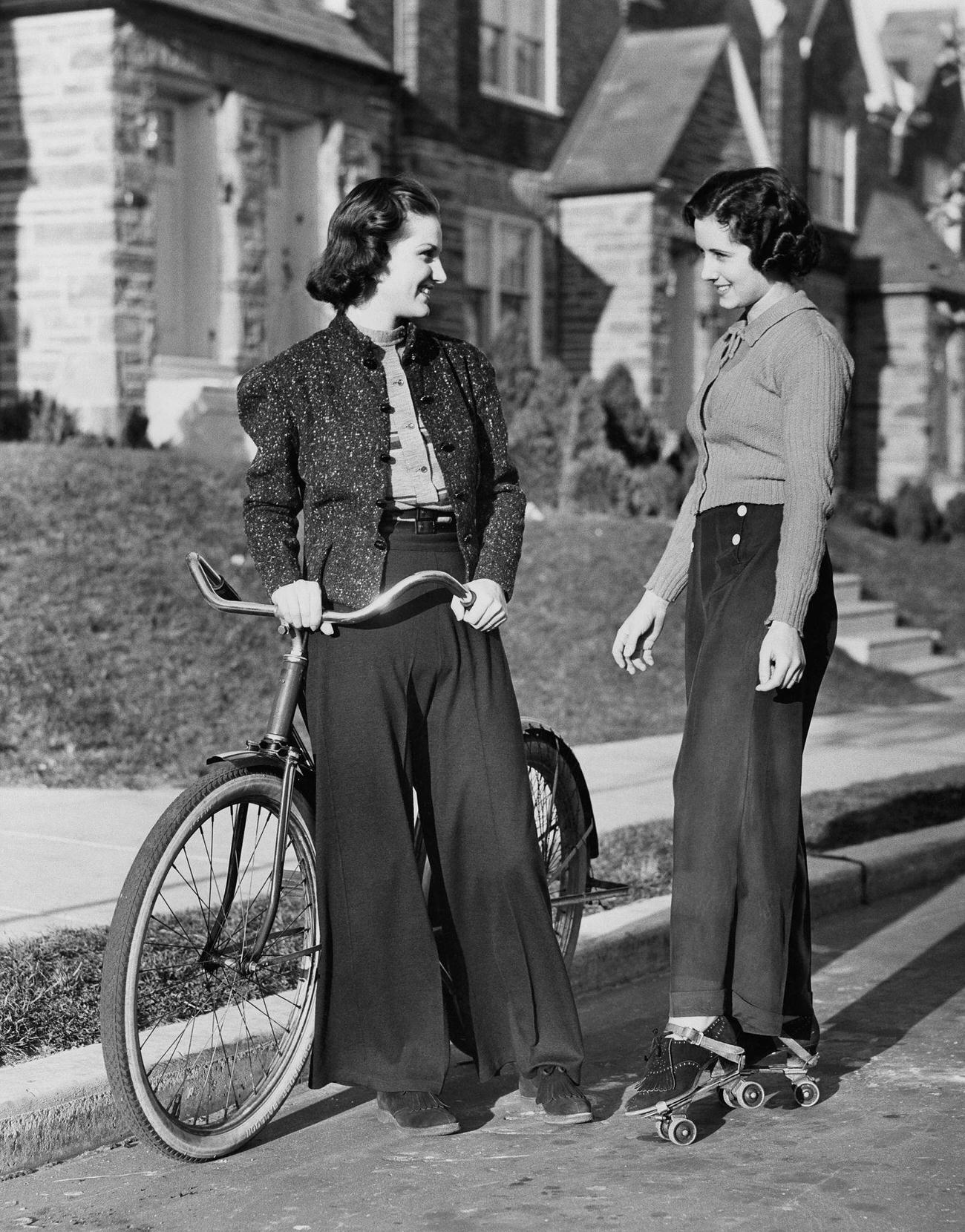
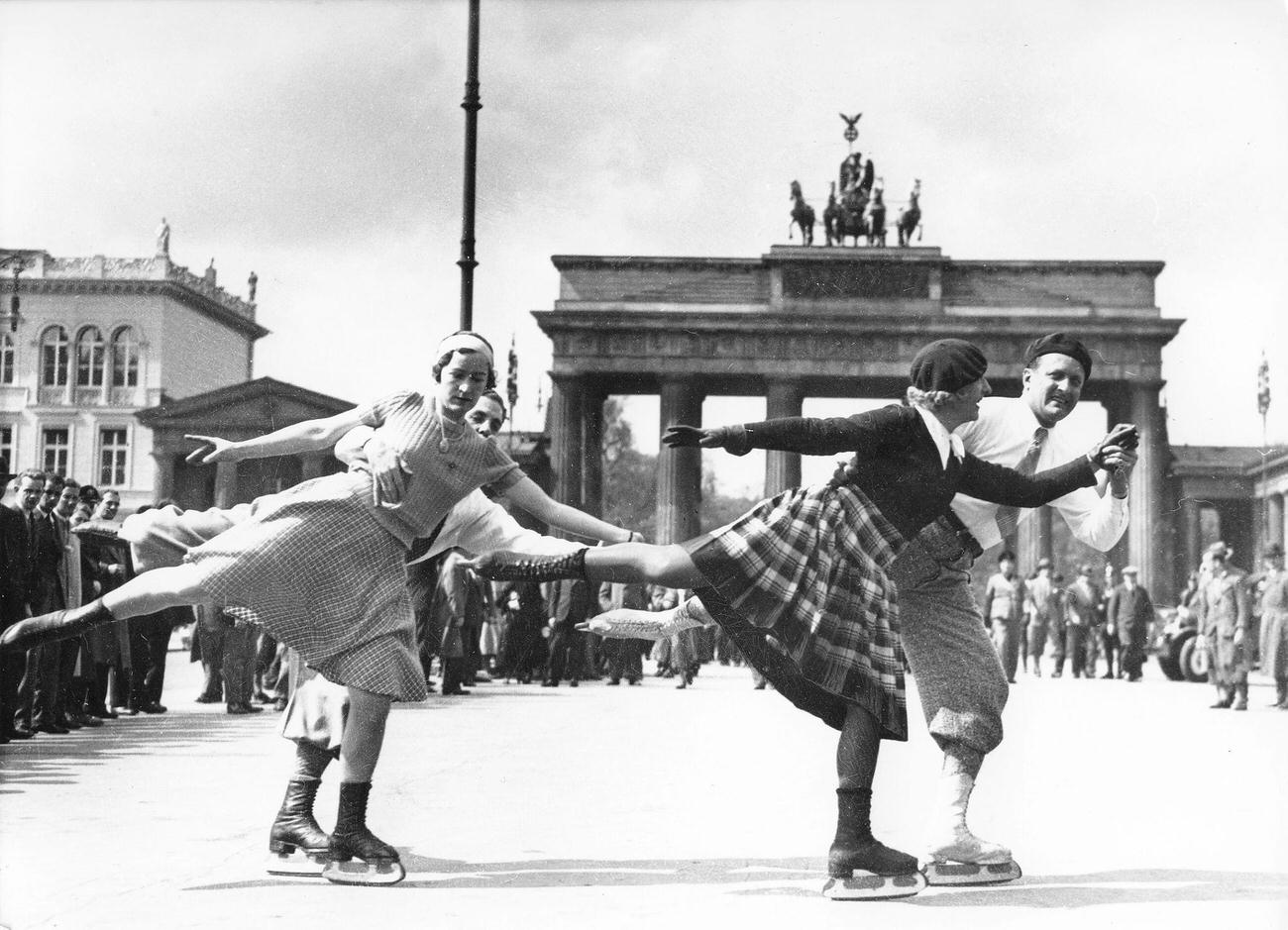
By the late 1930s, skating had gone international in a new way. Photographs from Berlin in 1937 show skaters gliding past the Brandenburg Gate. London’s Harringay Arena hosted speedway skating with full protective gear. The sport was serious enough by then to warrant specialized equipment and formal competition venues.
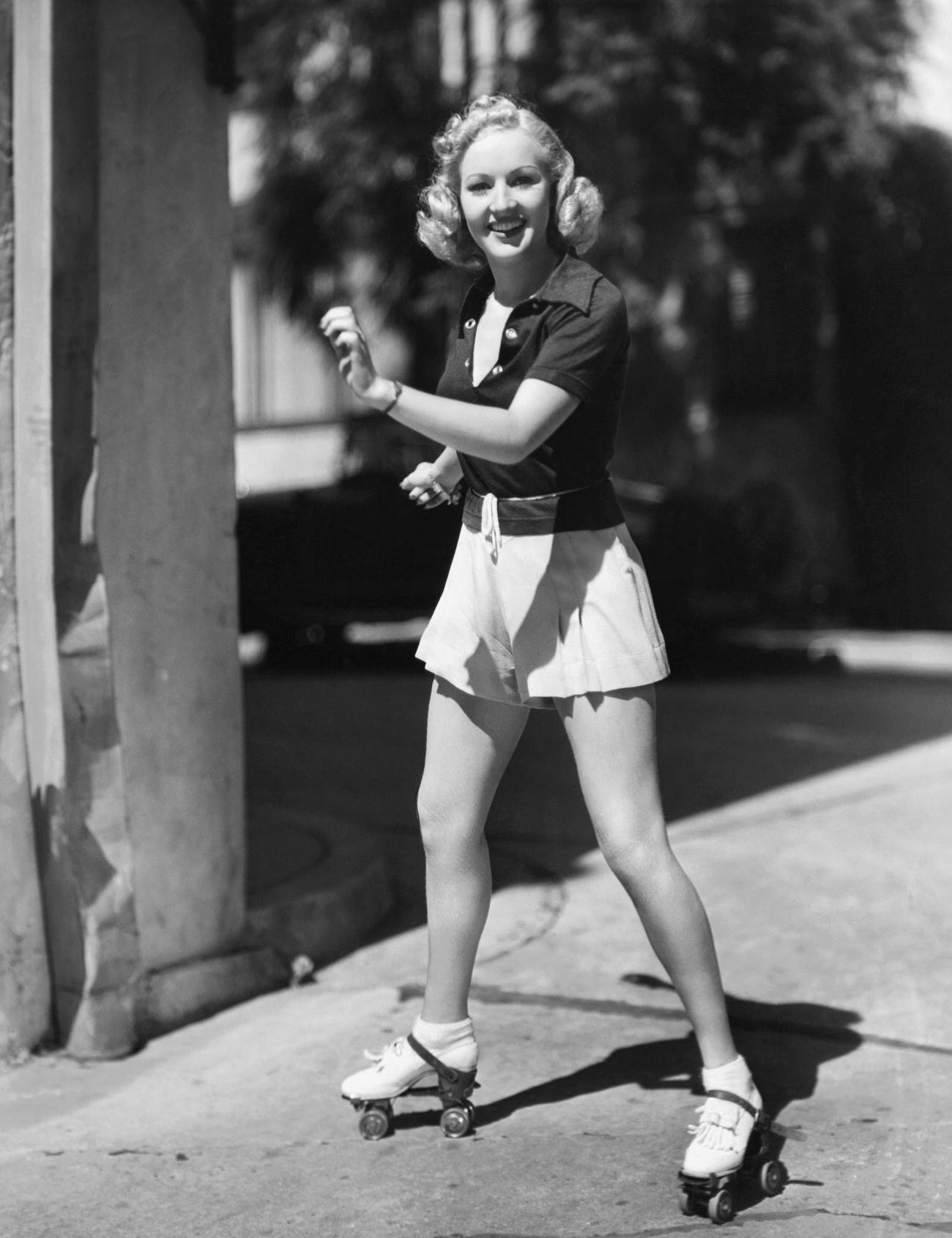
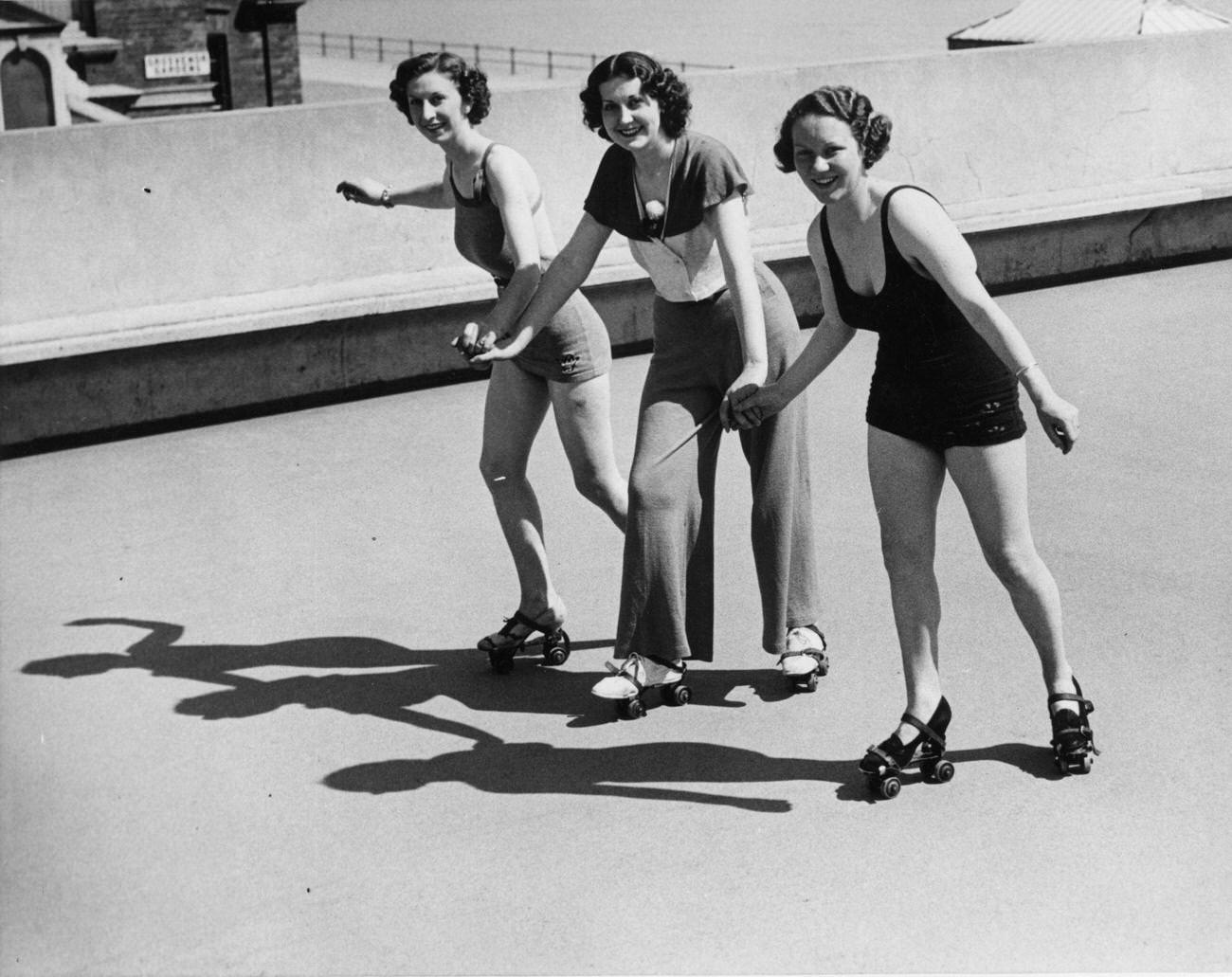
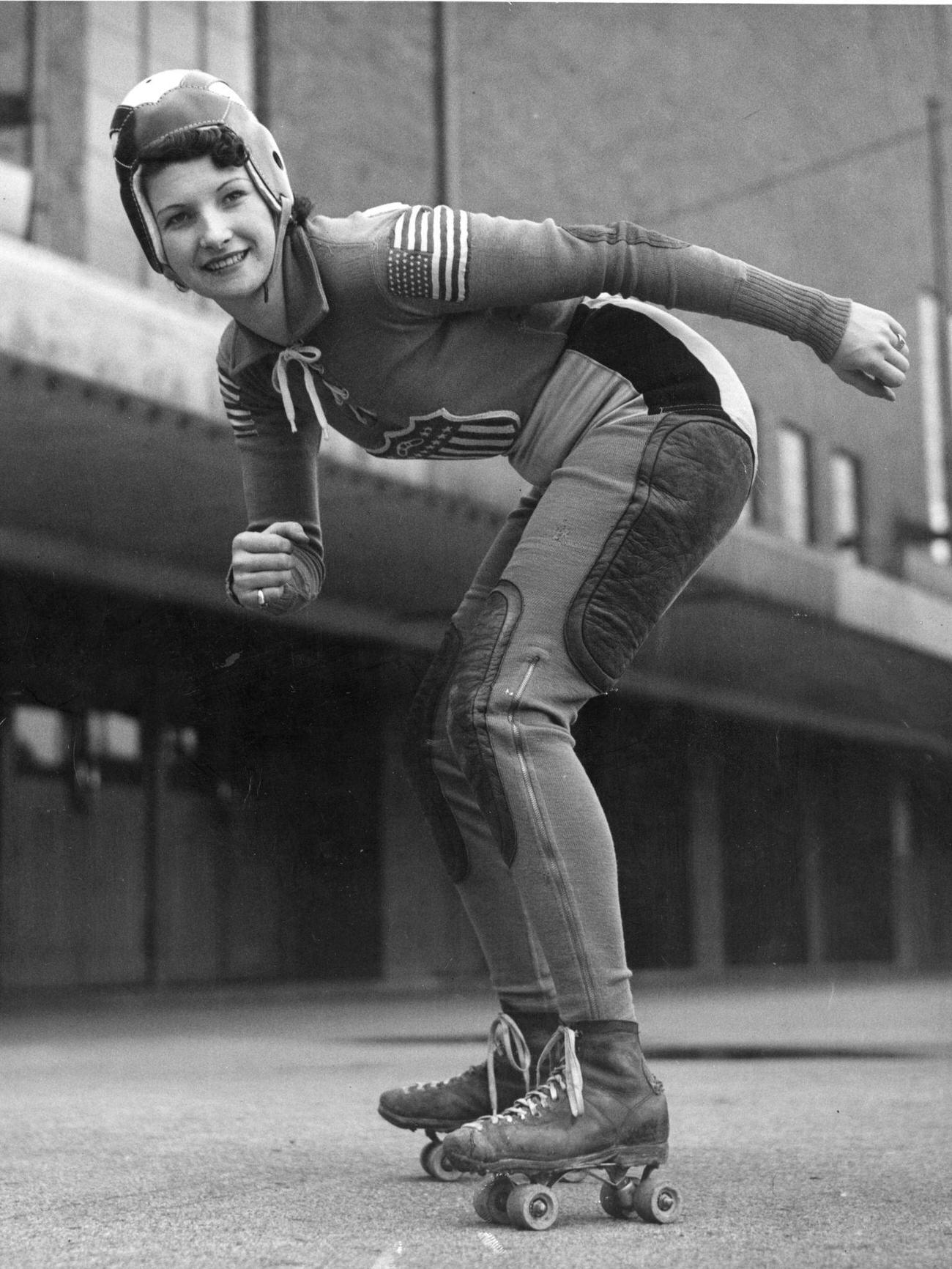
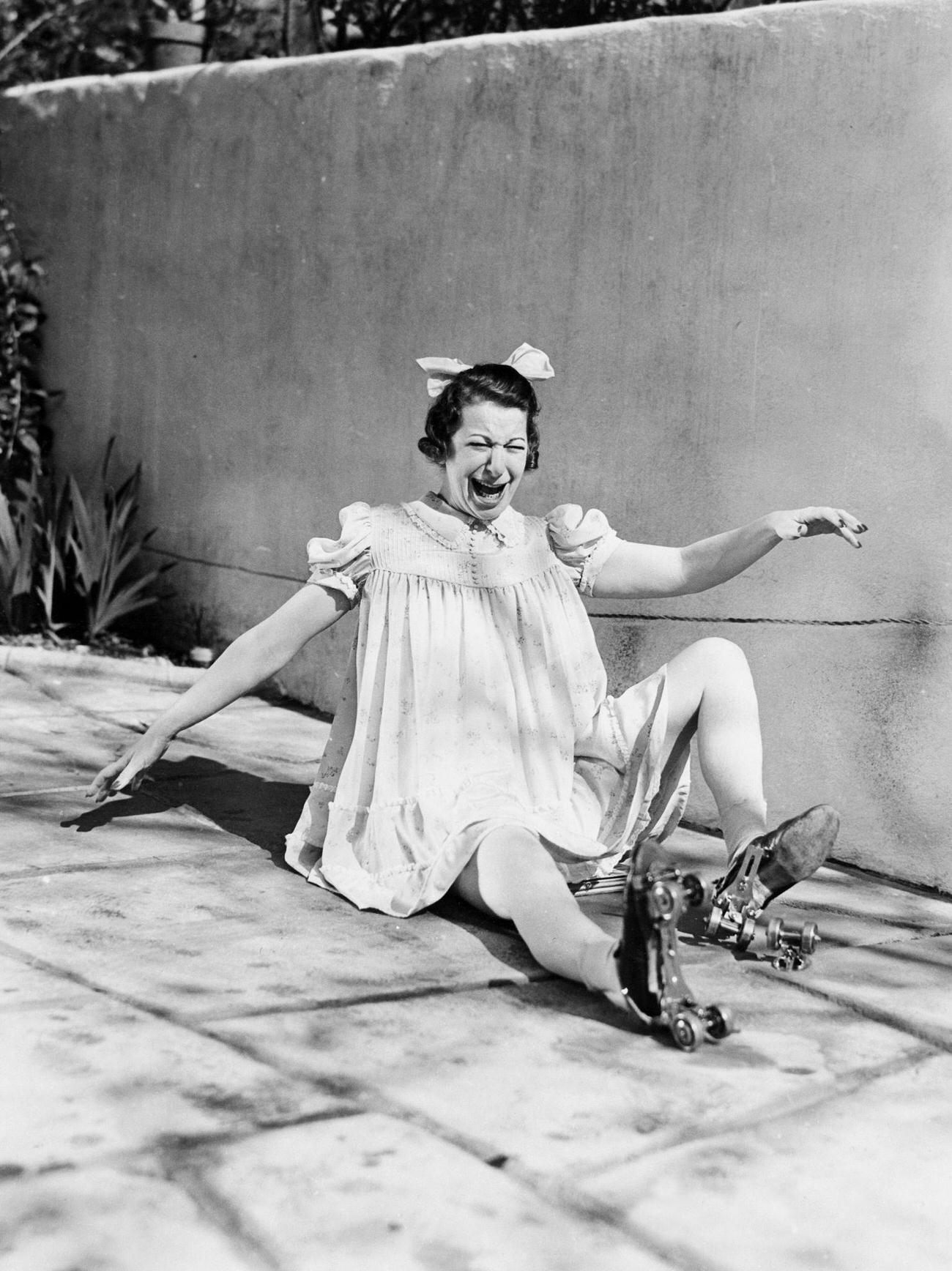
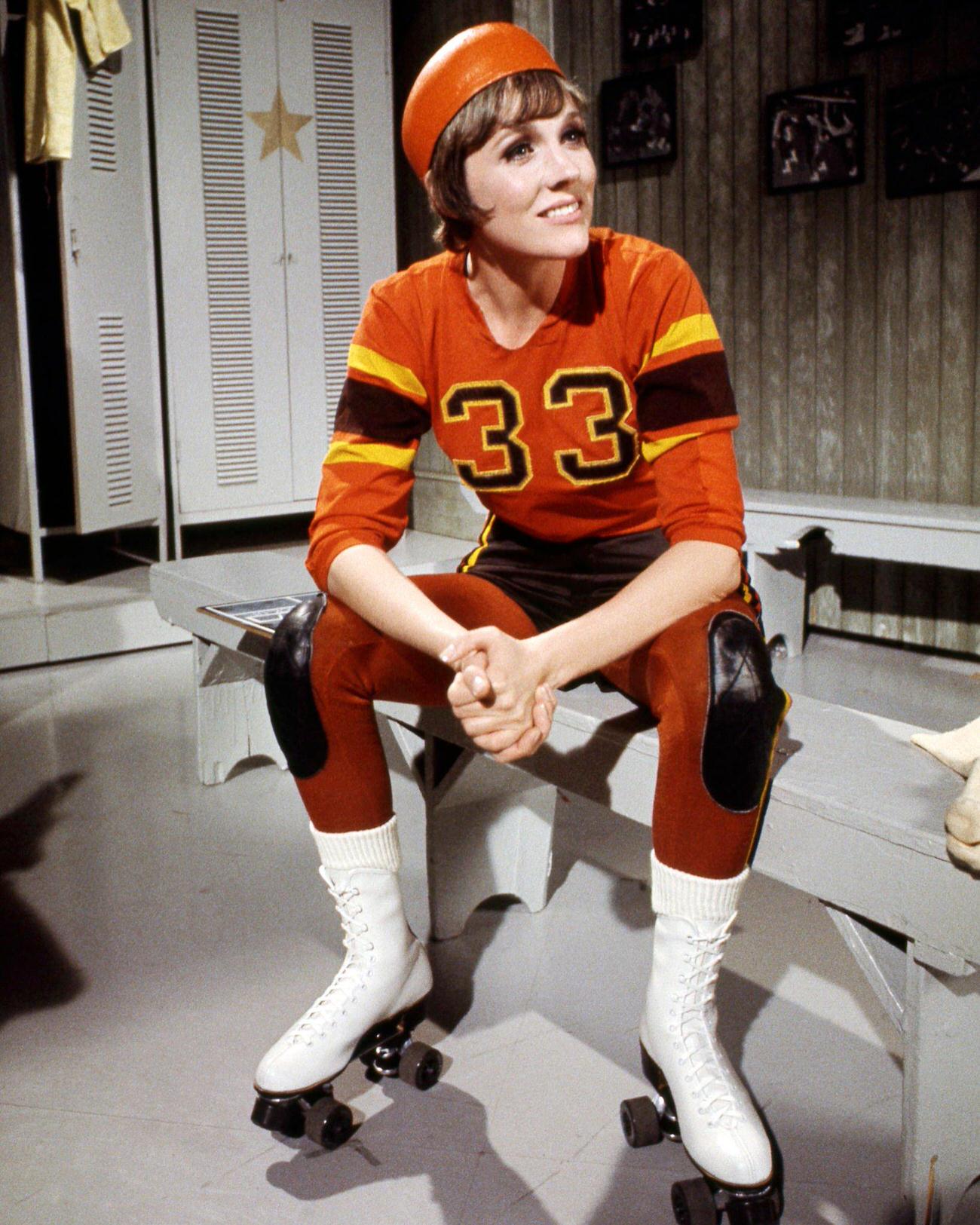
The 1940s brought a different energy. Roller Derby emerged as a full-contact, crowd-drawing spectacle, with women skating hard and fast on banked tracks. Champions like Gloria Nord built real fanbases. Comedian Fanny Brice played the character Baby Snooks in sketches involving skating falls, turning the rink into comedy fodder. Even the Gay Blades Arena in New York became a cultural landmark of the era.
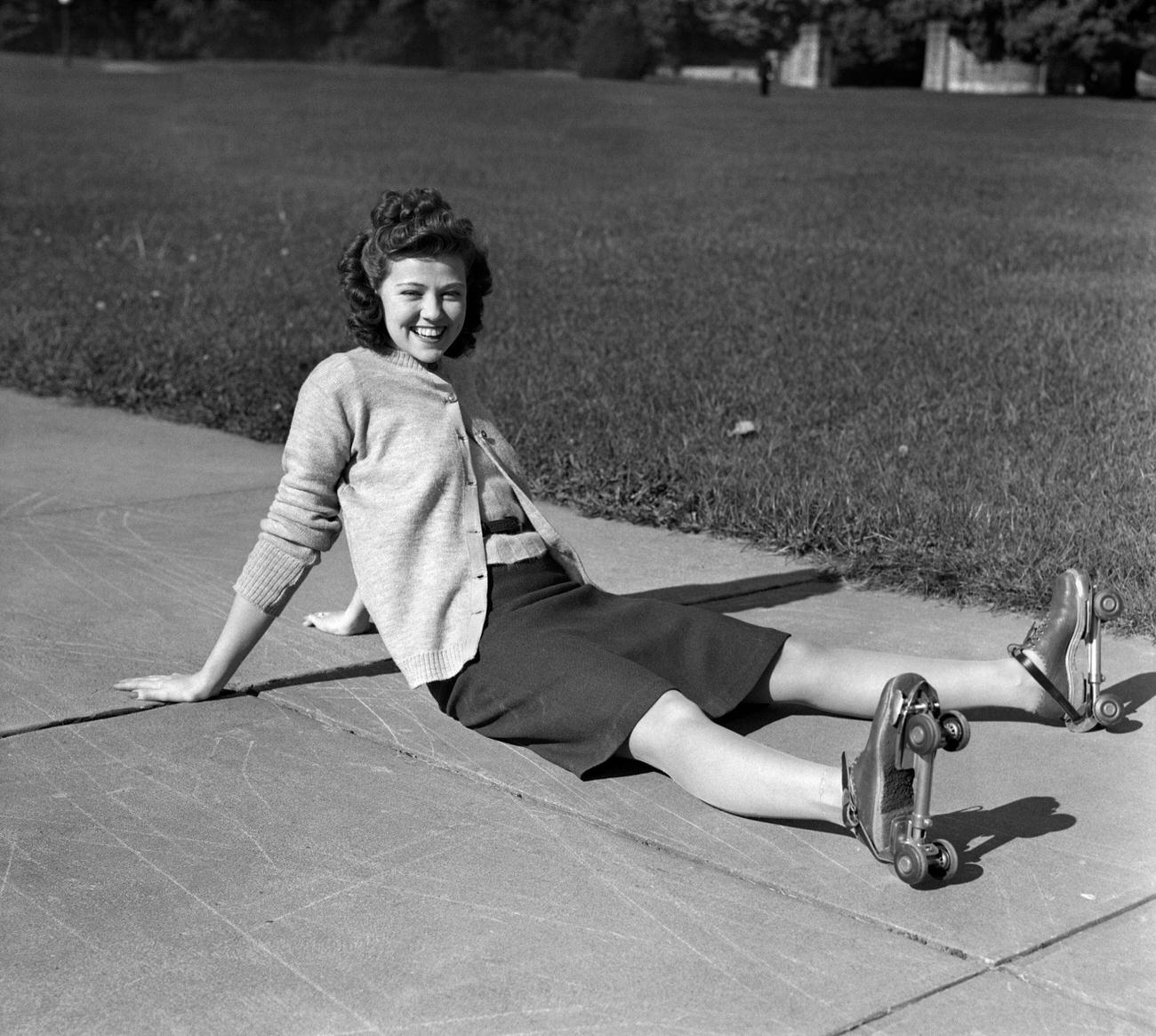
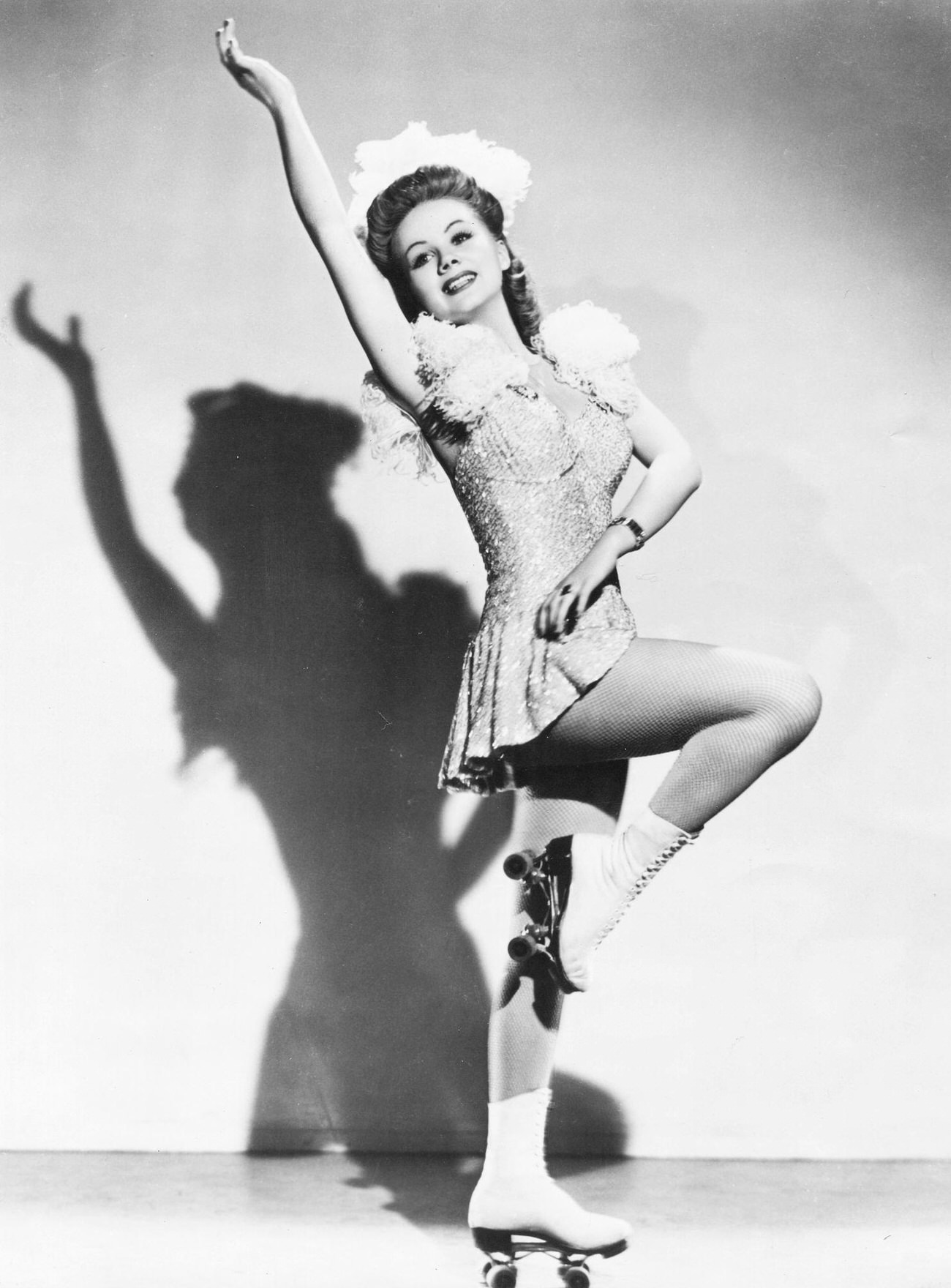
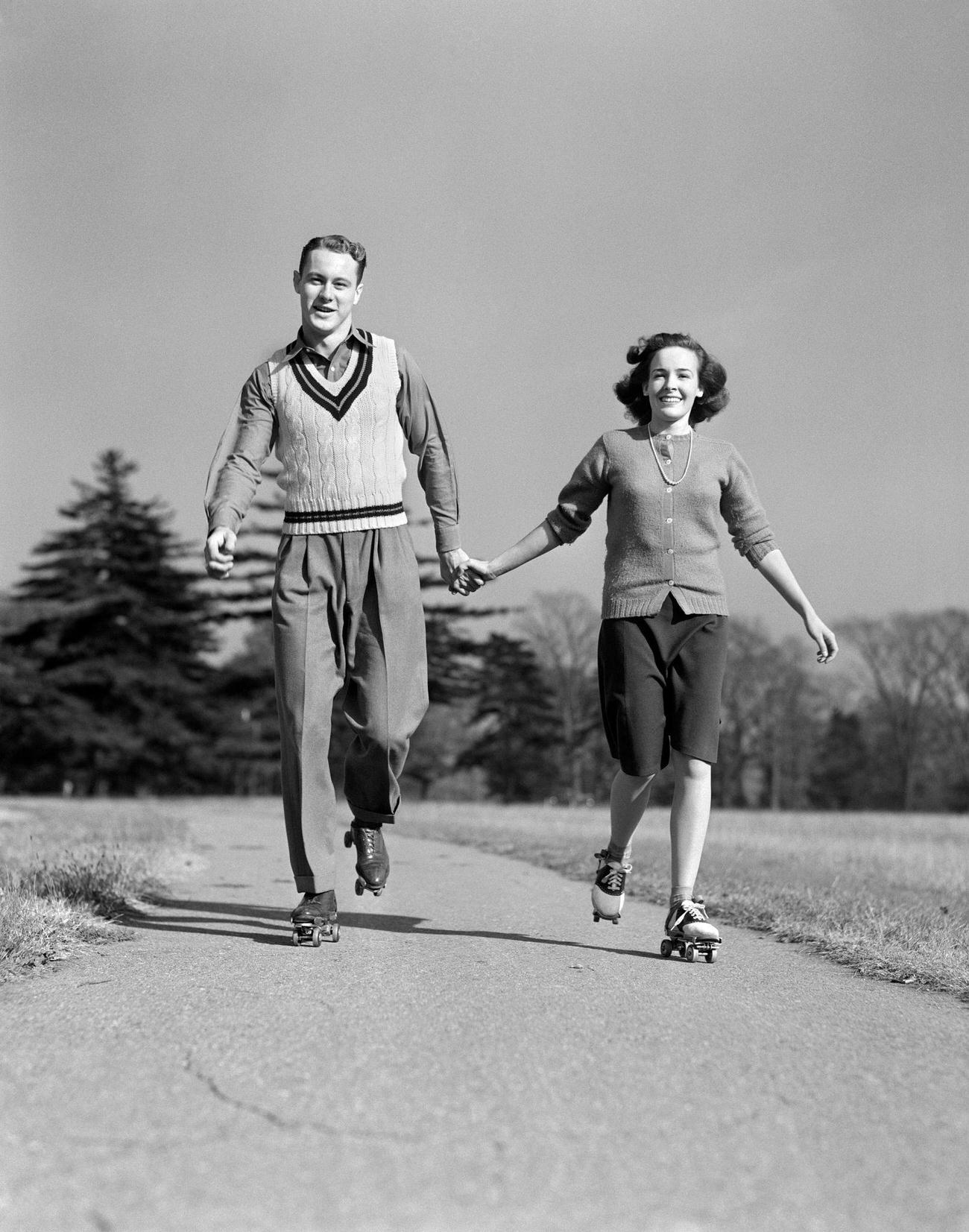
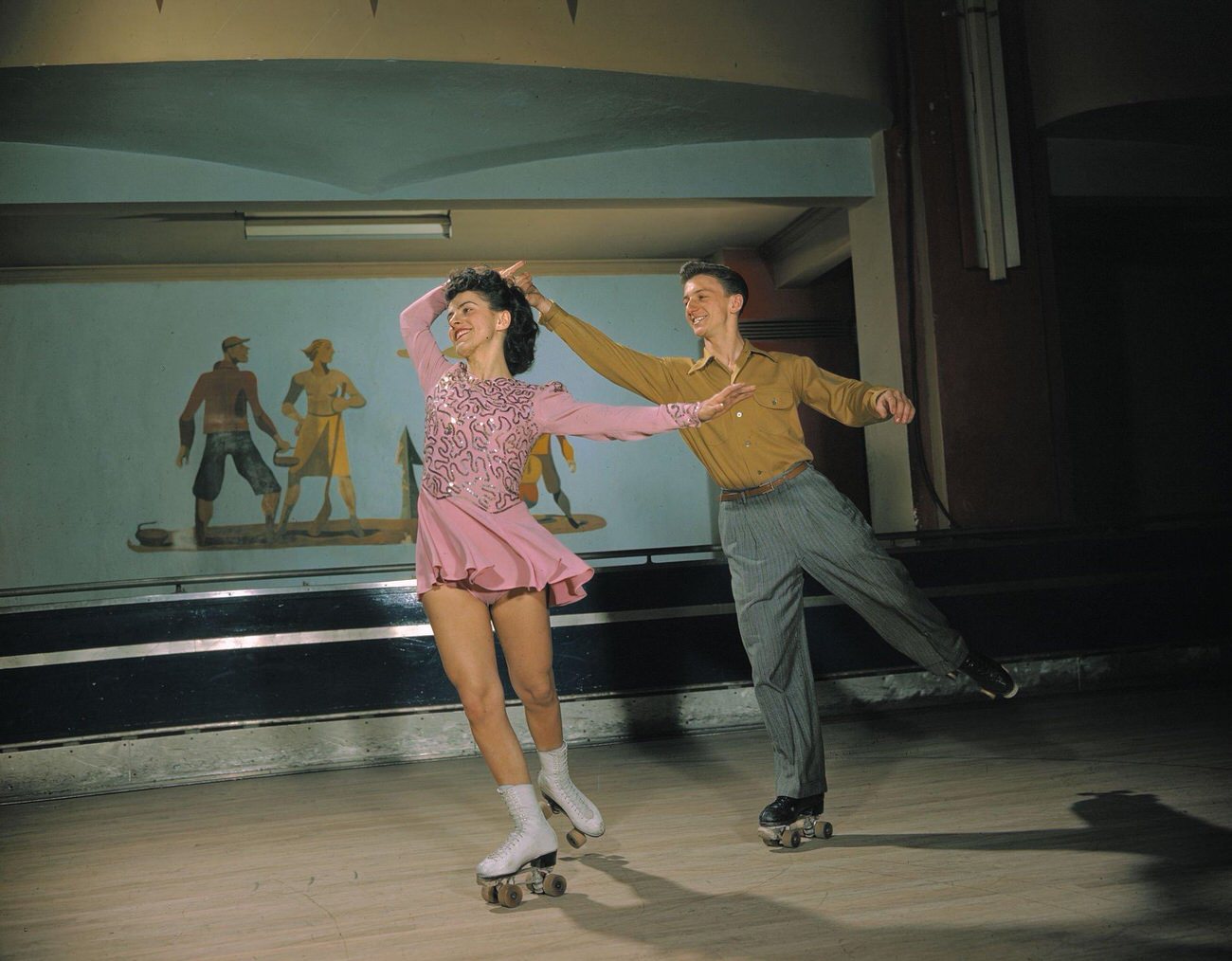
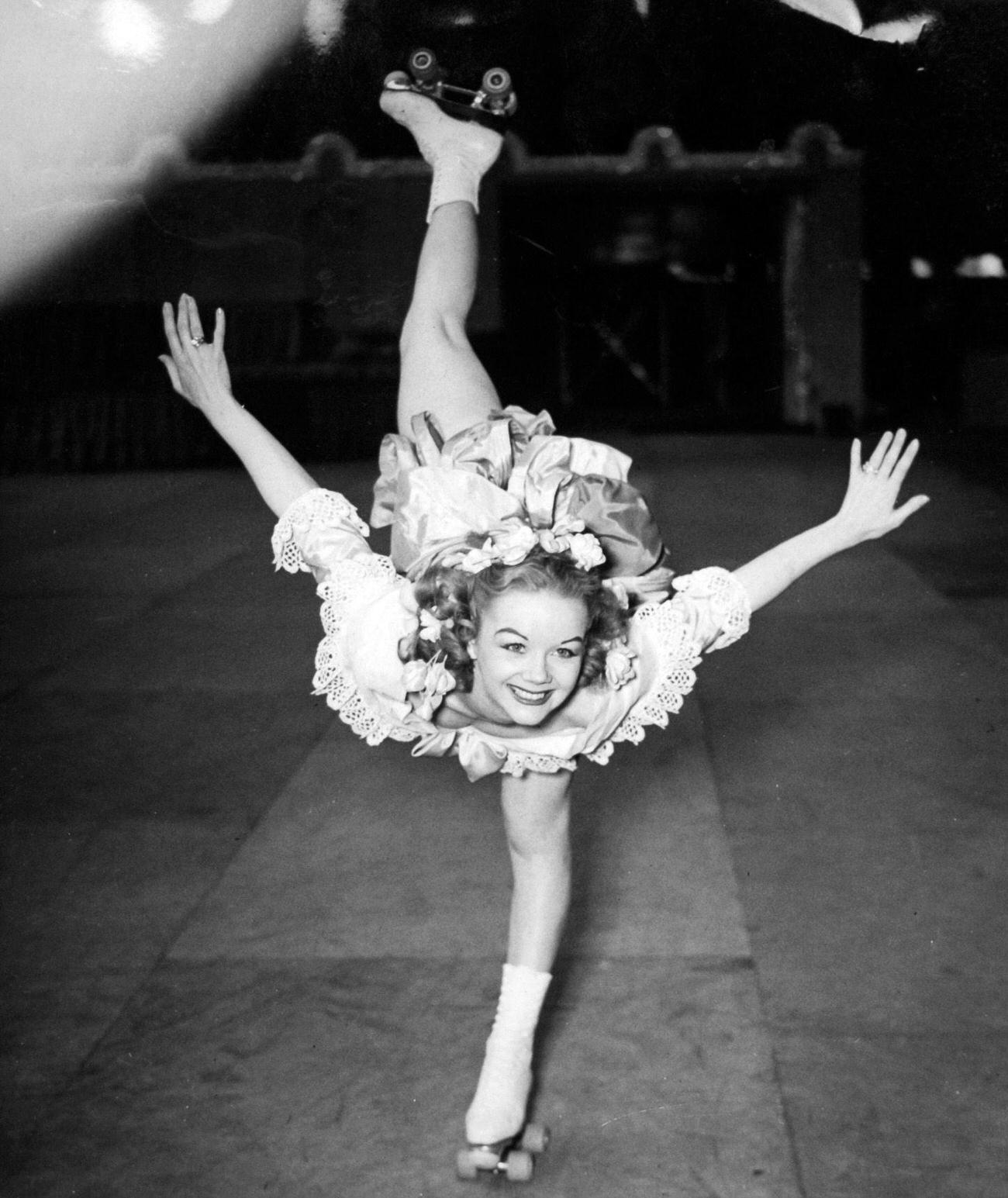
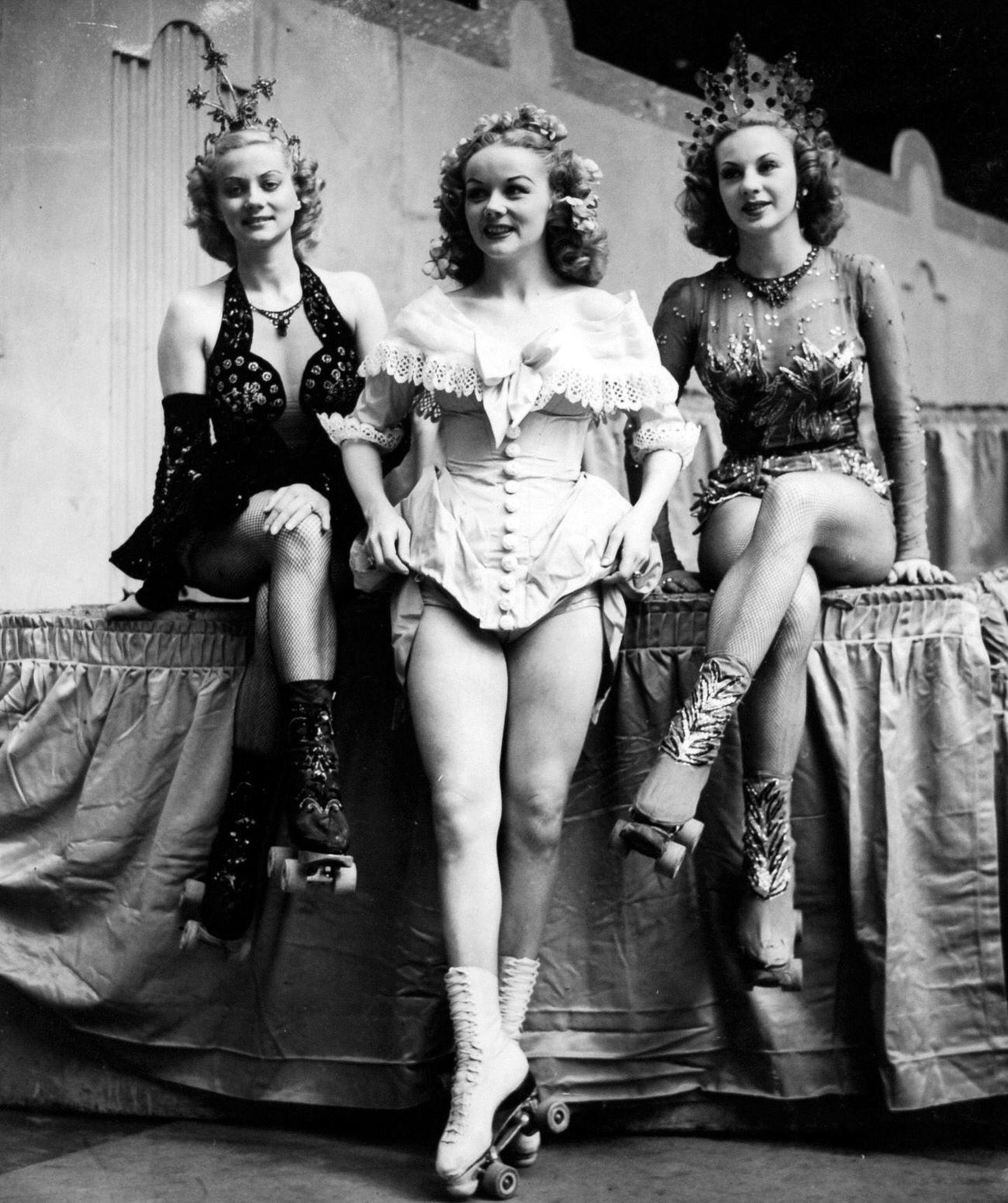
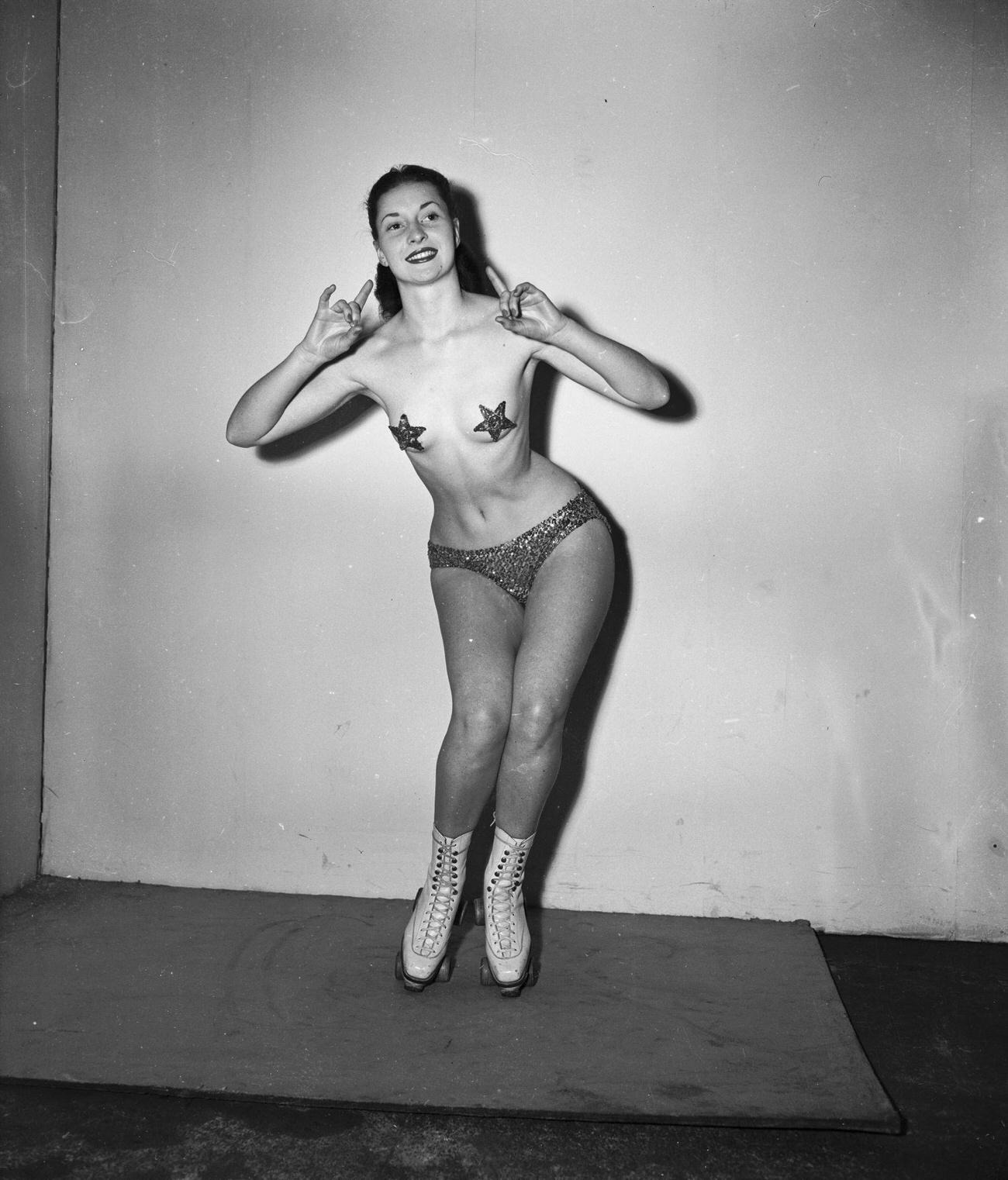
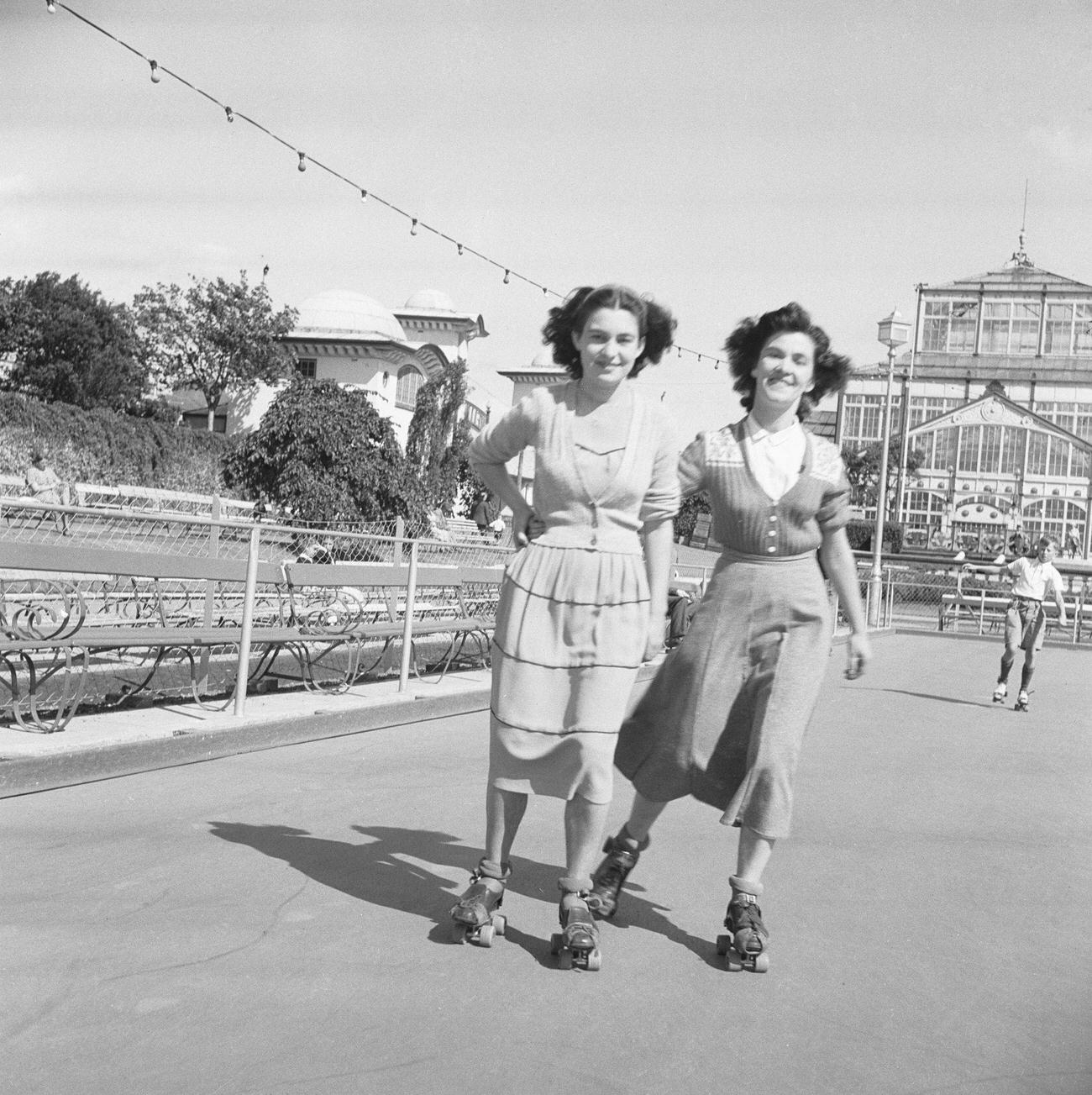
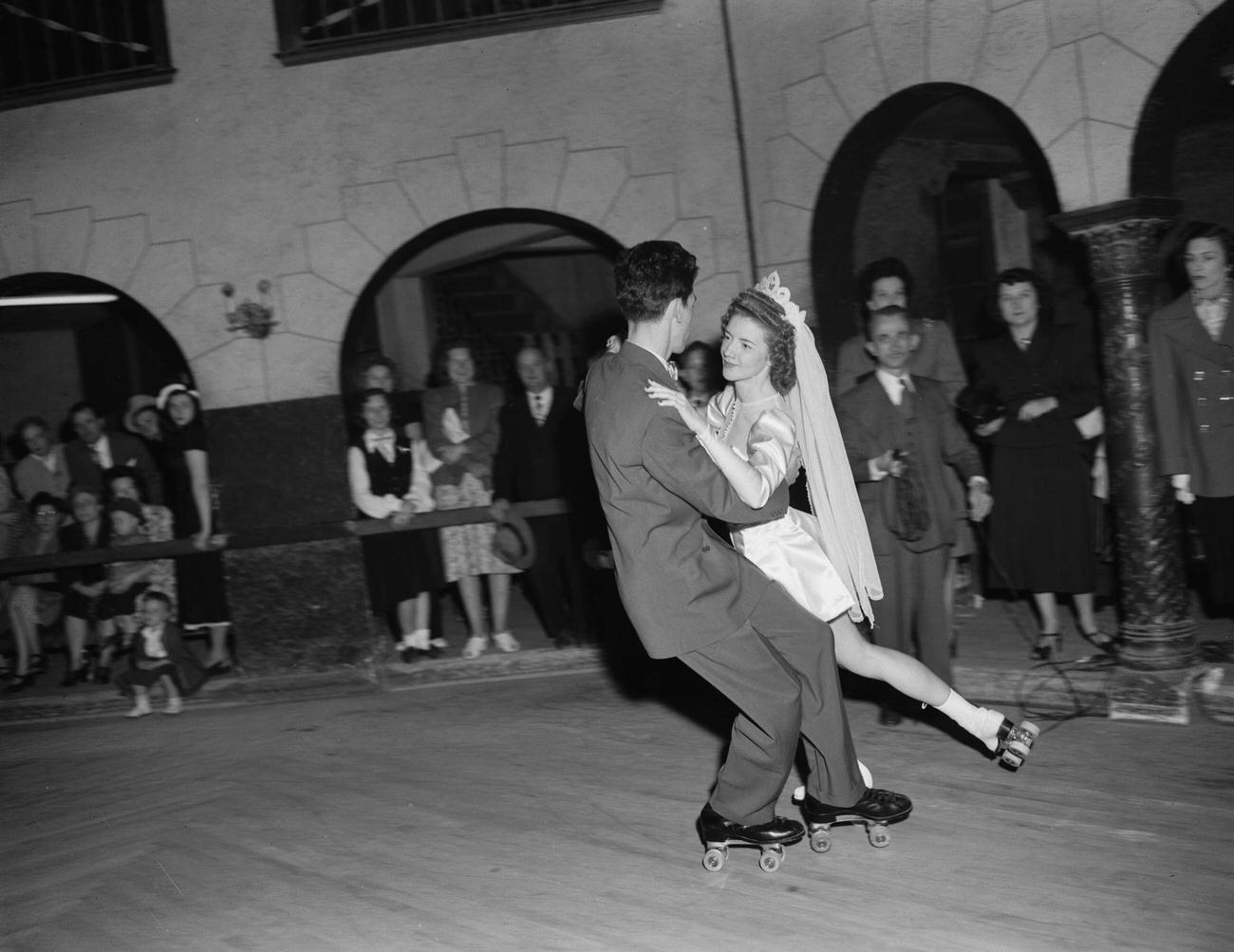
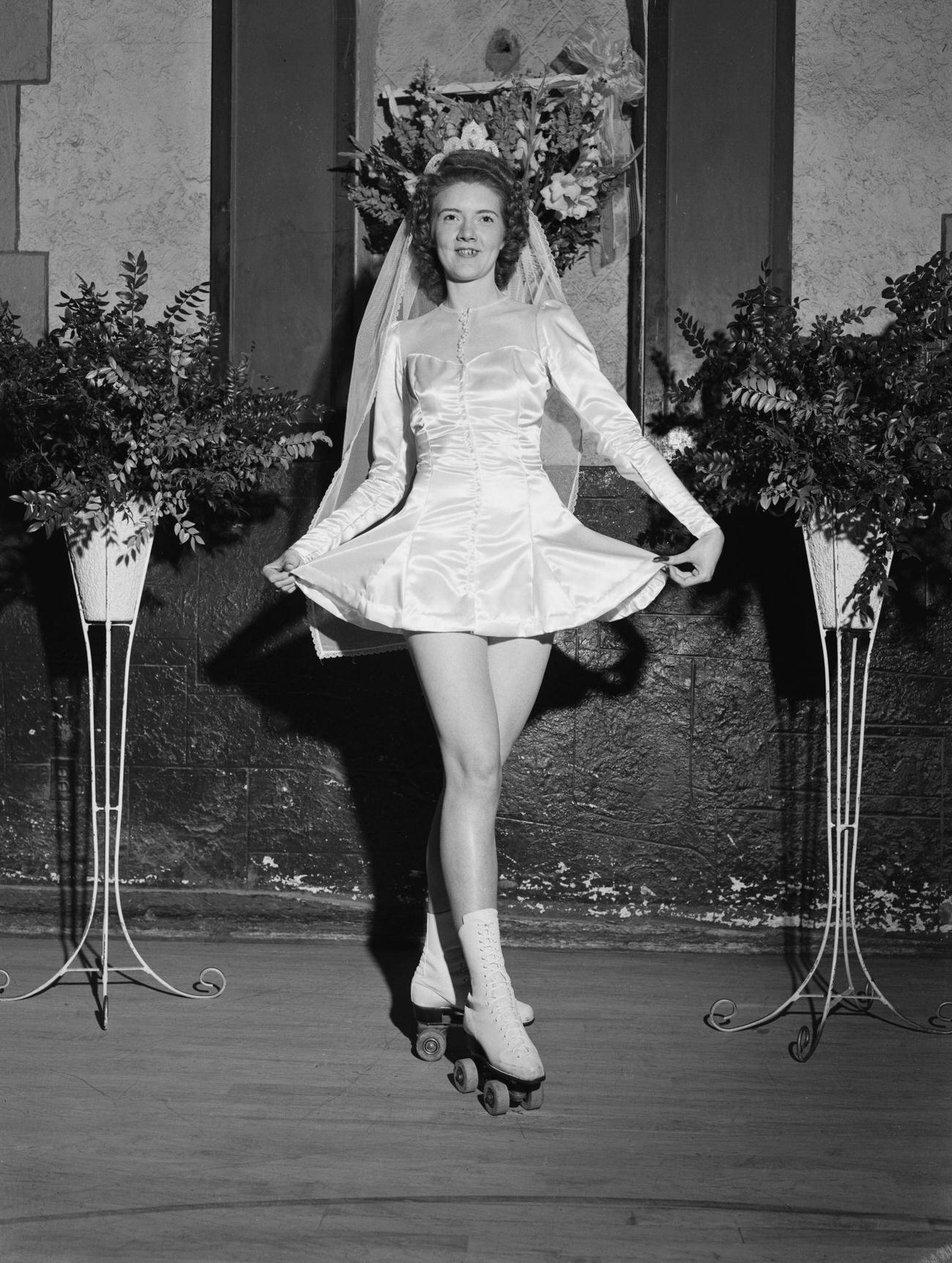
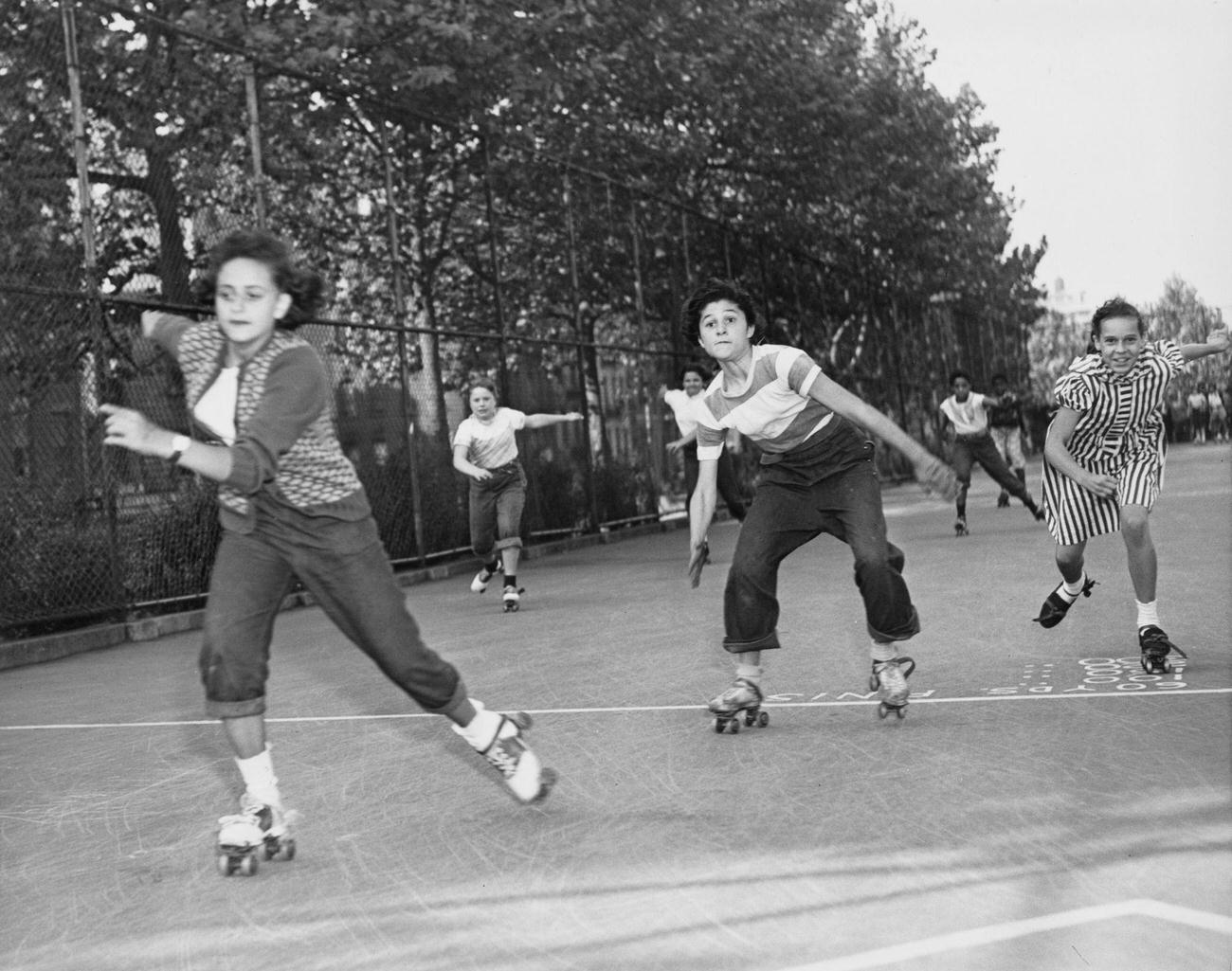
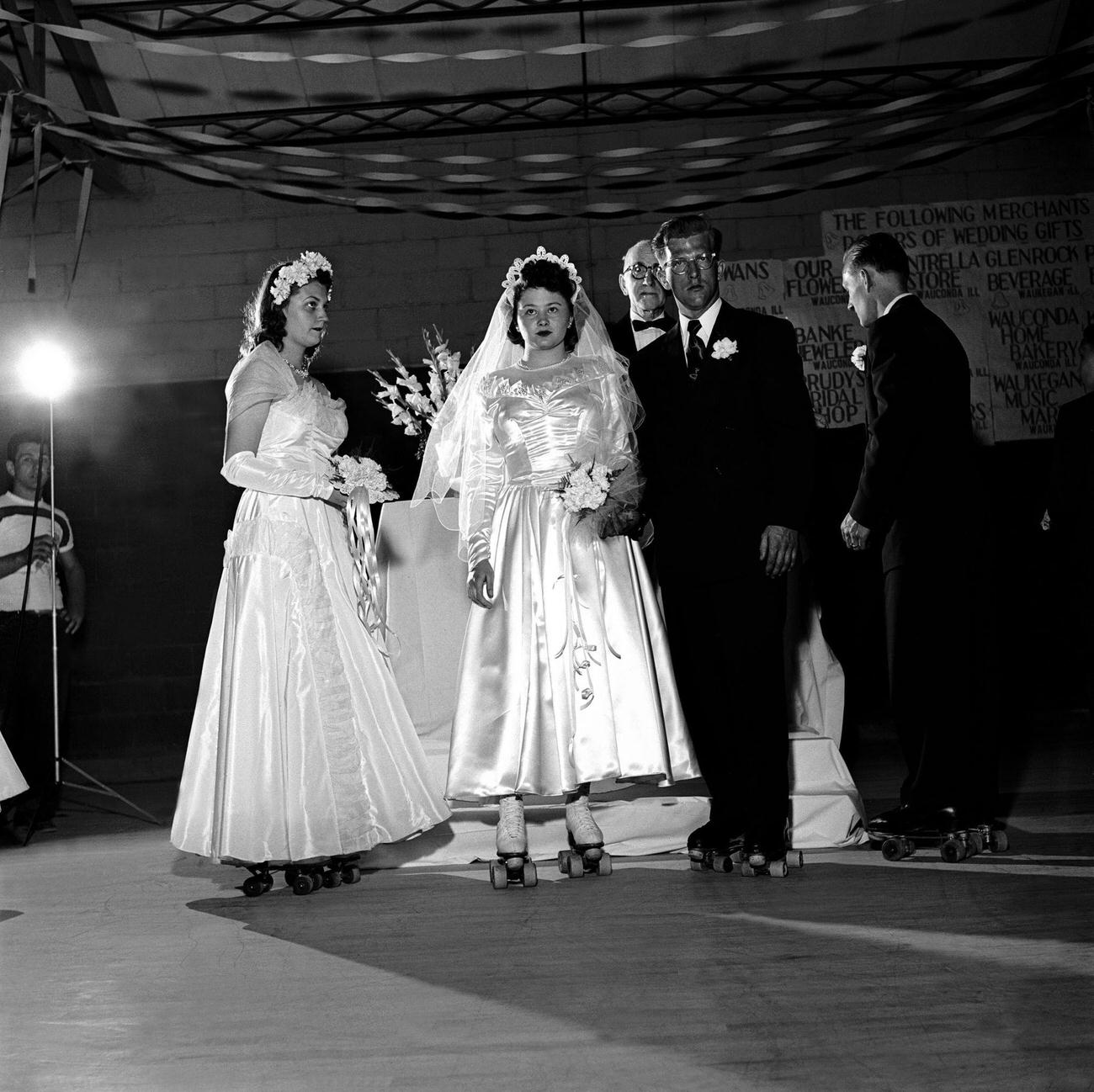
The post-war 1950s turned roller rinks into teen social hubs. Circle skirts, bobby socks, and scarves replaced the long dresses of earlier decades. Rock ‘n’ roll pumped through rink speakers, and teenagers showed up to skate, flirt, and dance. Some couples took it further — wedding parties in the United States and Chicago skated through their ceremonies on wheels. In New York’s Winged Skates contests, women competed in 75-yard sprints with full athletic seriousness.
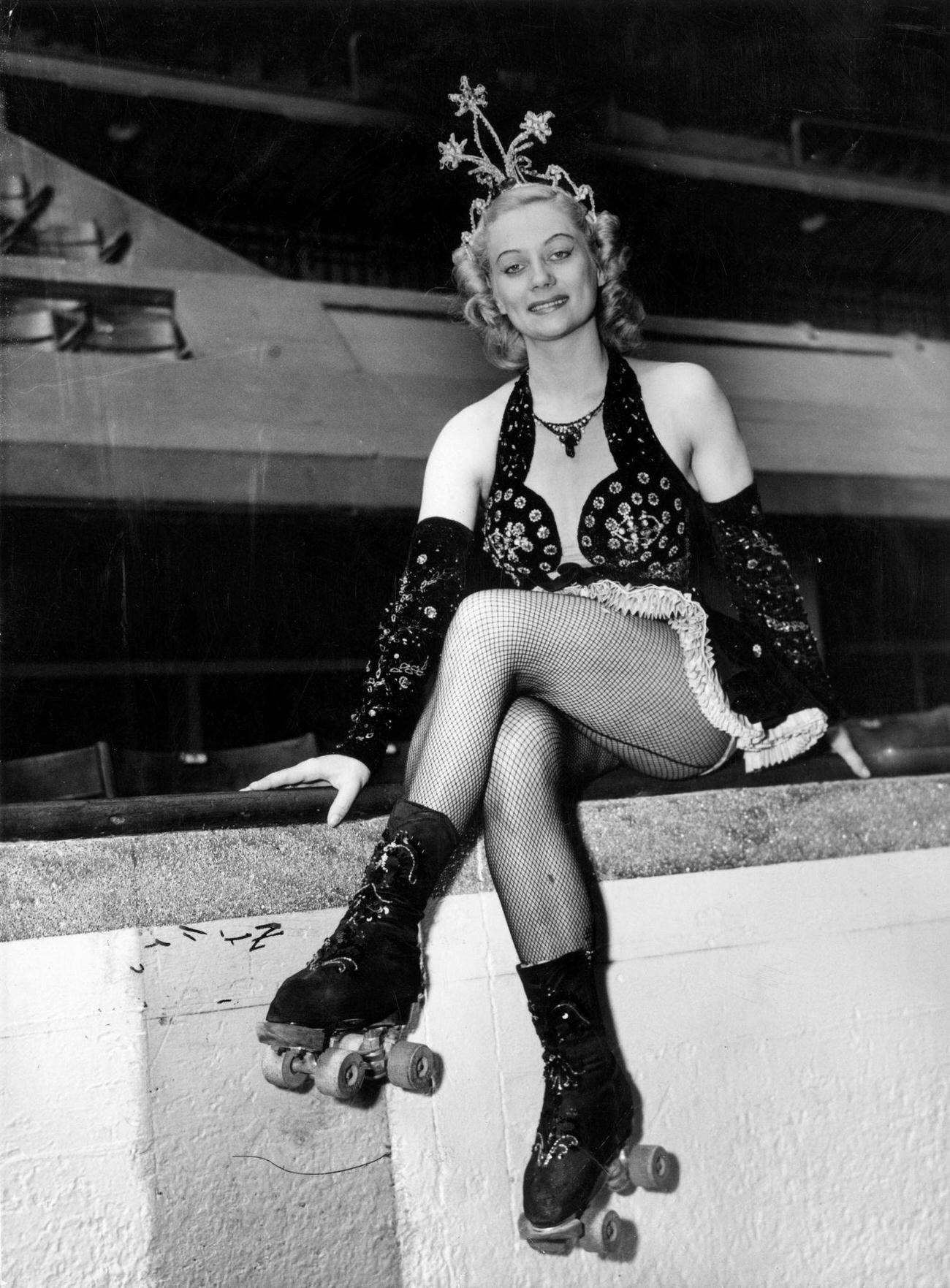
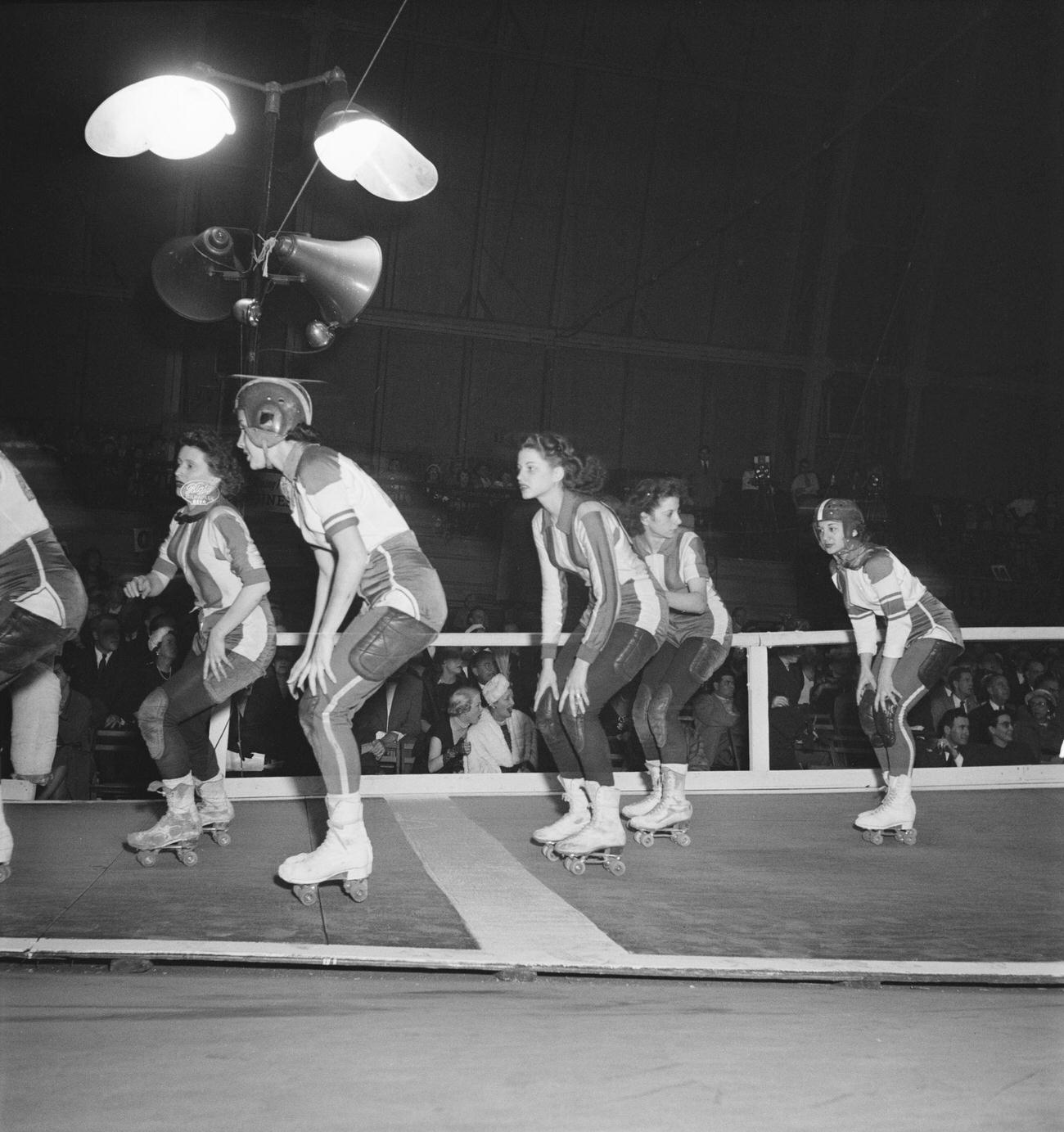
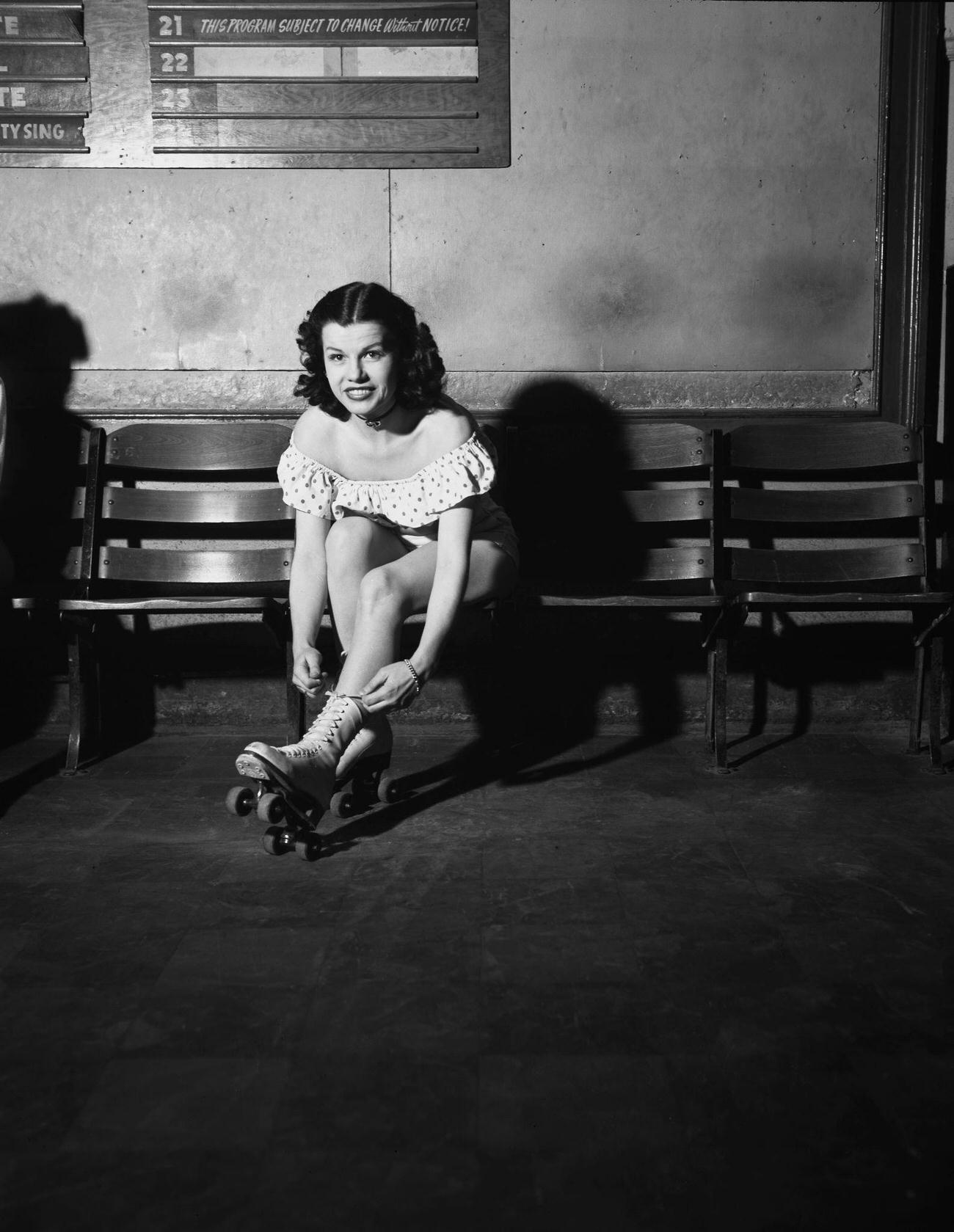
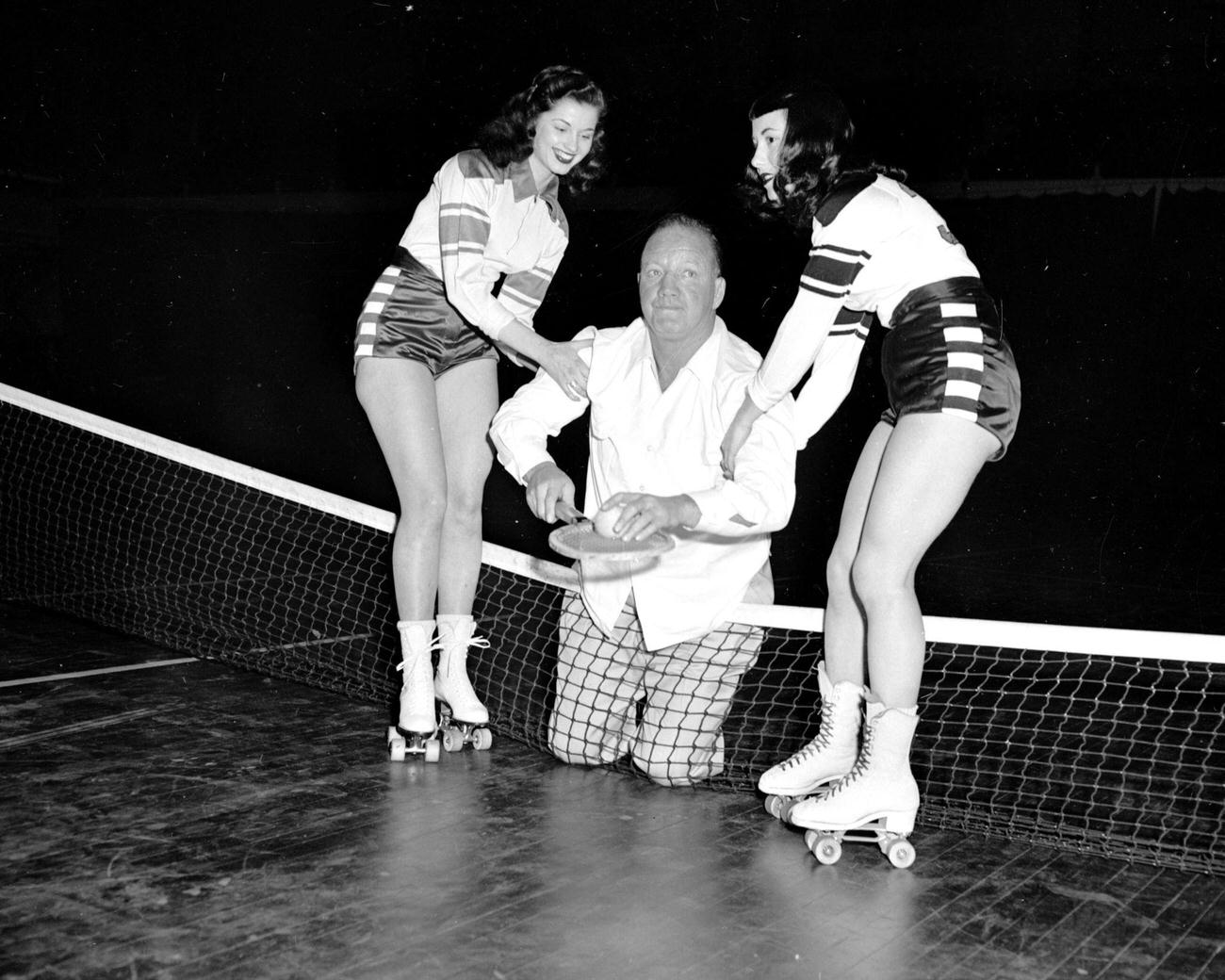
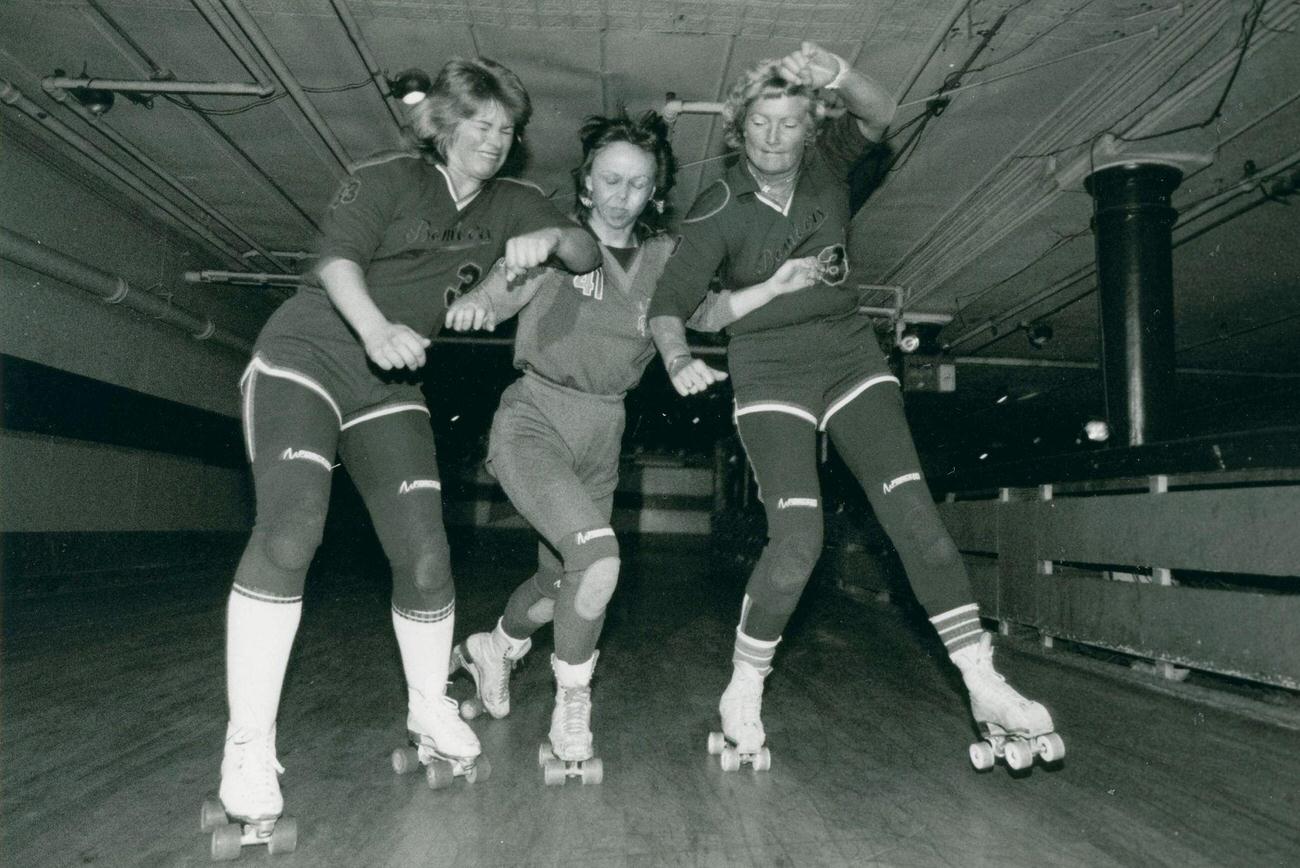
Roller Derby brought the New York Chiefs to London in 1953. Skaters like Joan Spangehl drew crowds to Haringey Arena, and local Brixton resident Betty Searle even joined America’s Hell Cats team. Back in the U.S., American Derby skater Monta Jean Payne was already a fixture on the circuit by the mid-1940s. These women were athletes in every sense — fast, physical, and unafraid of contact.
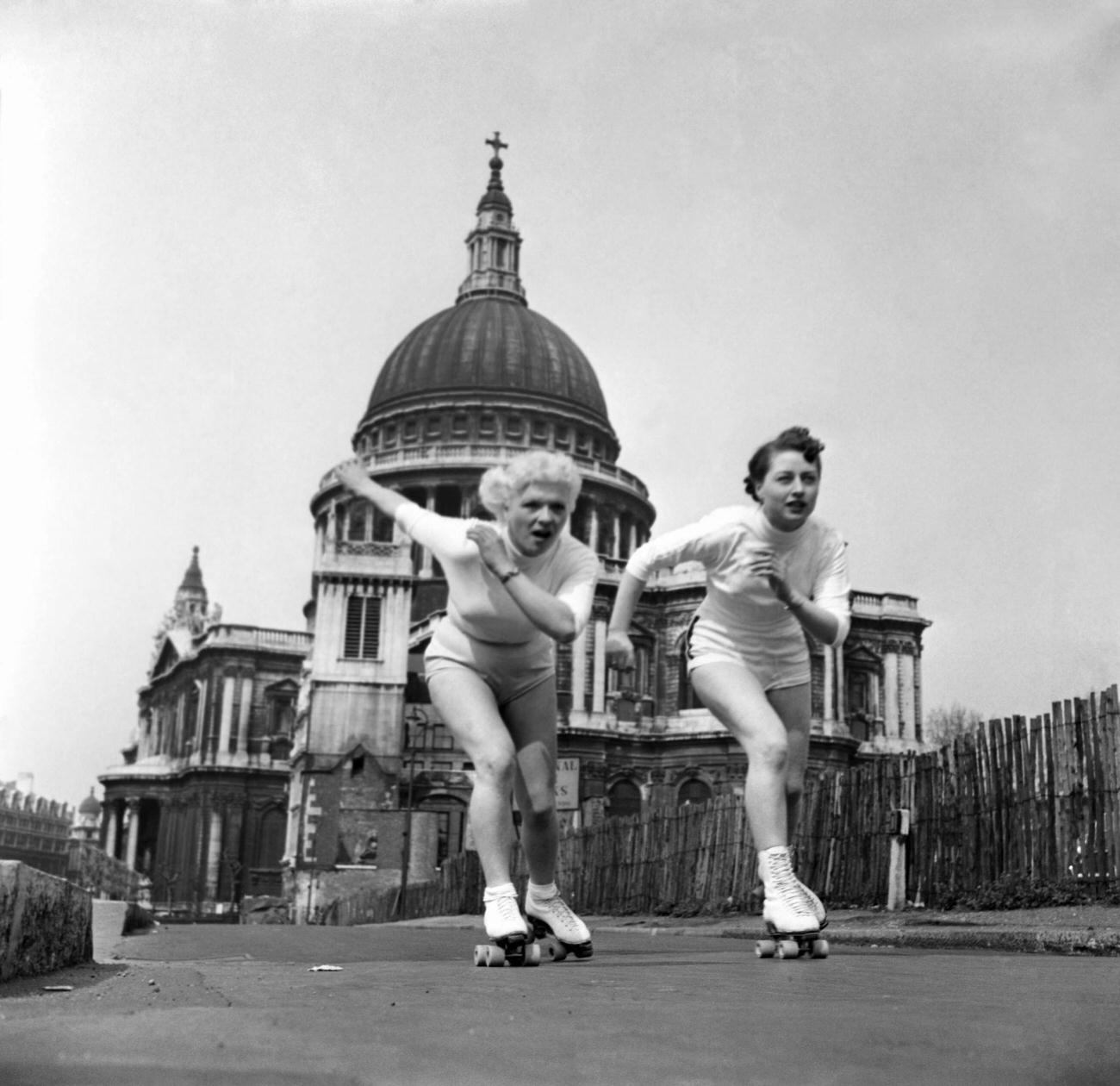
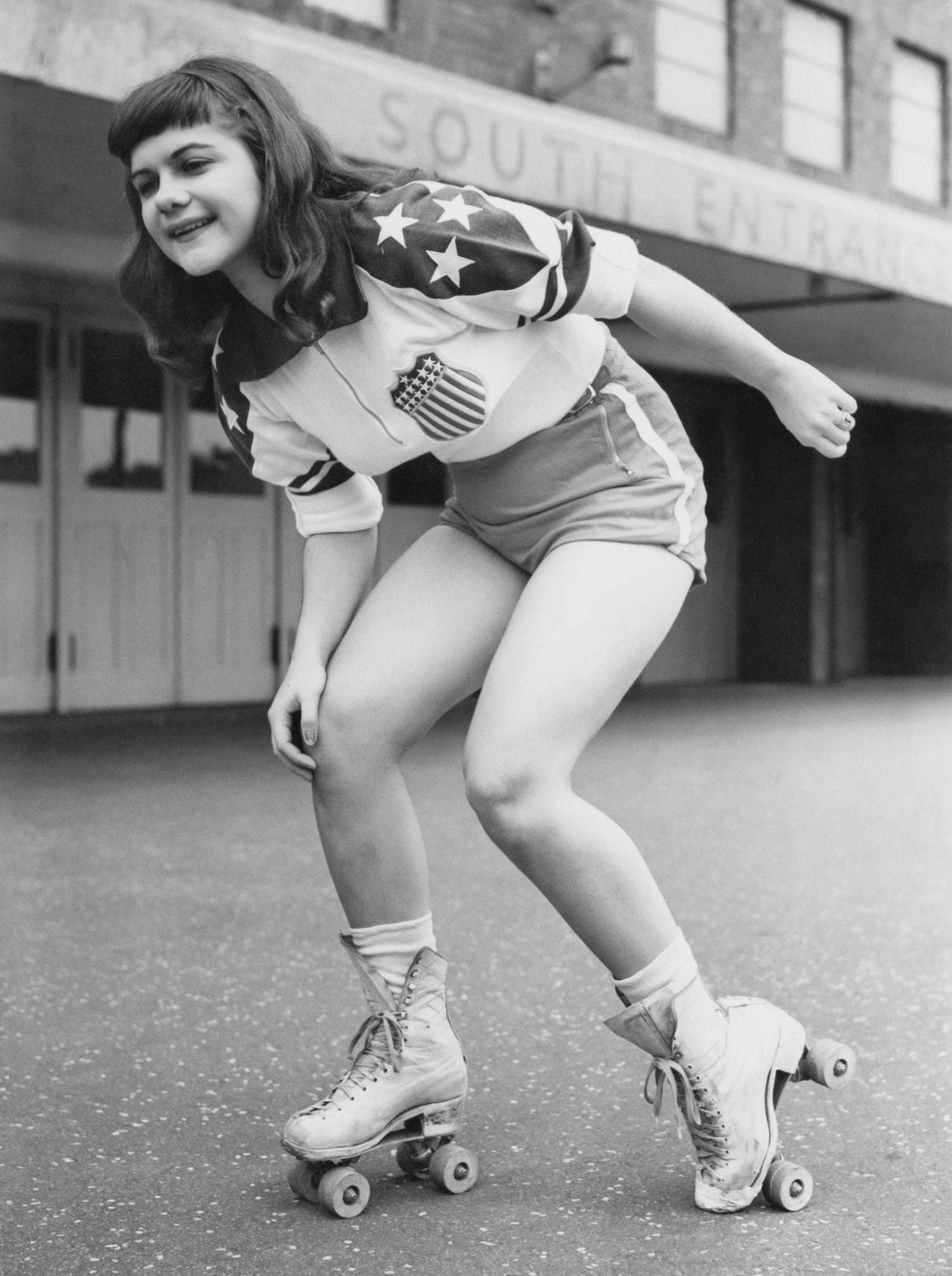
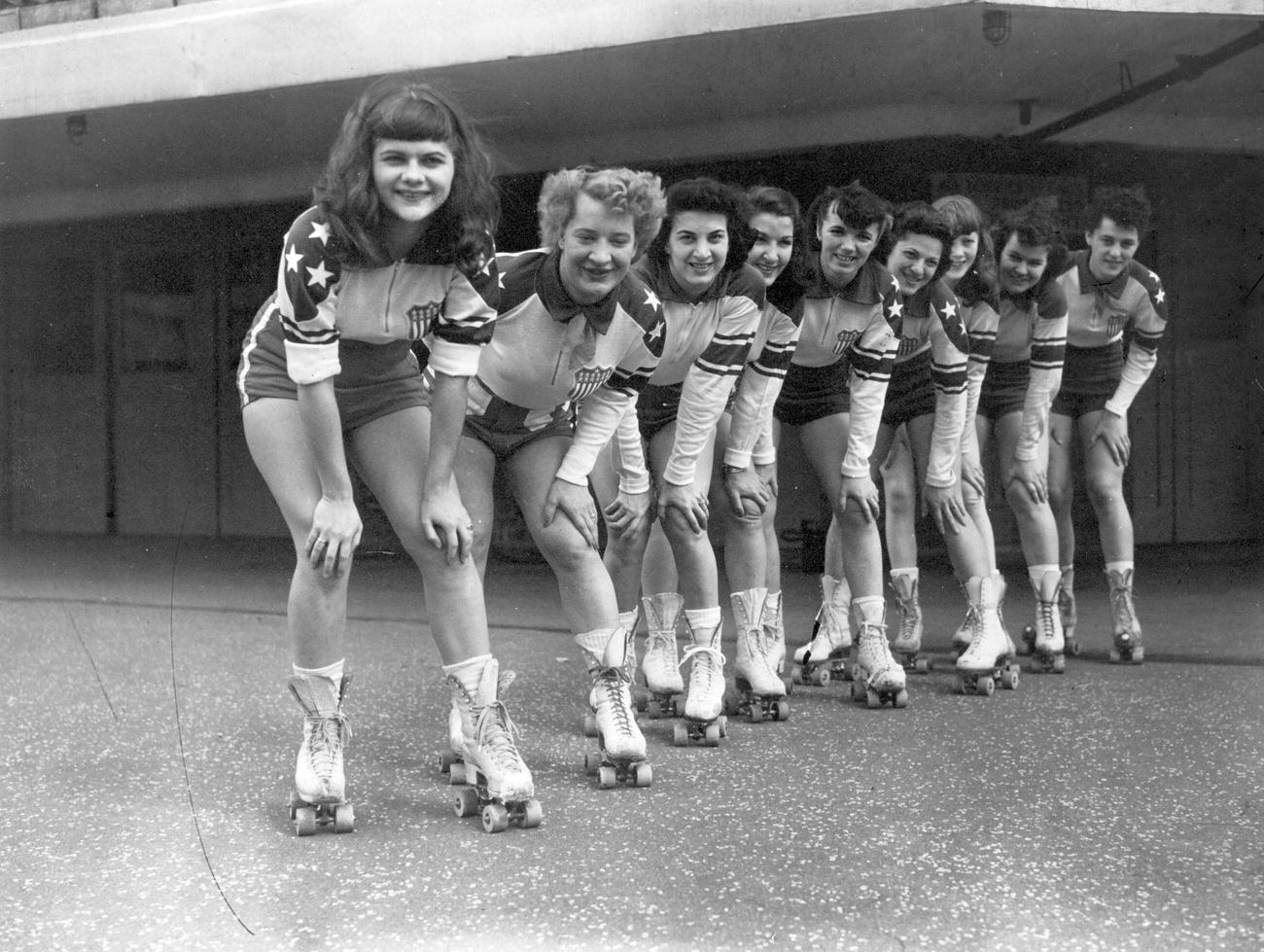
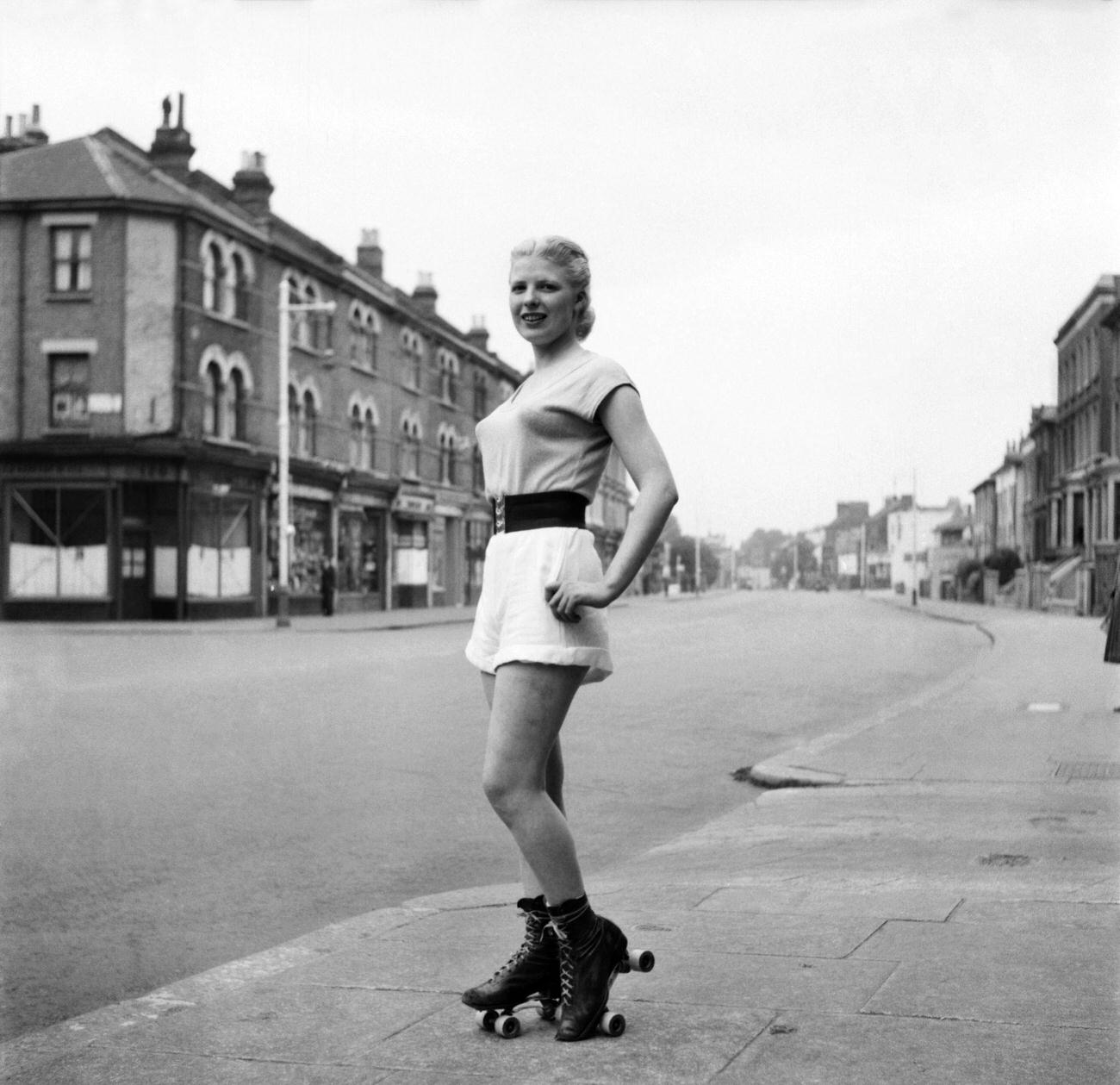
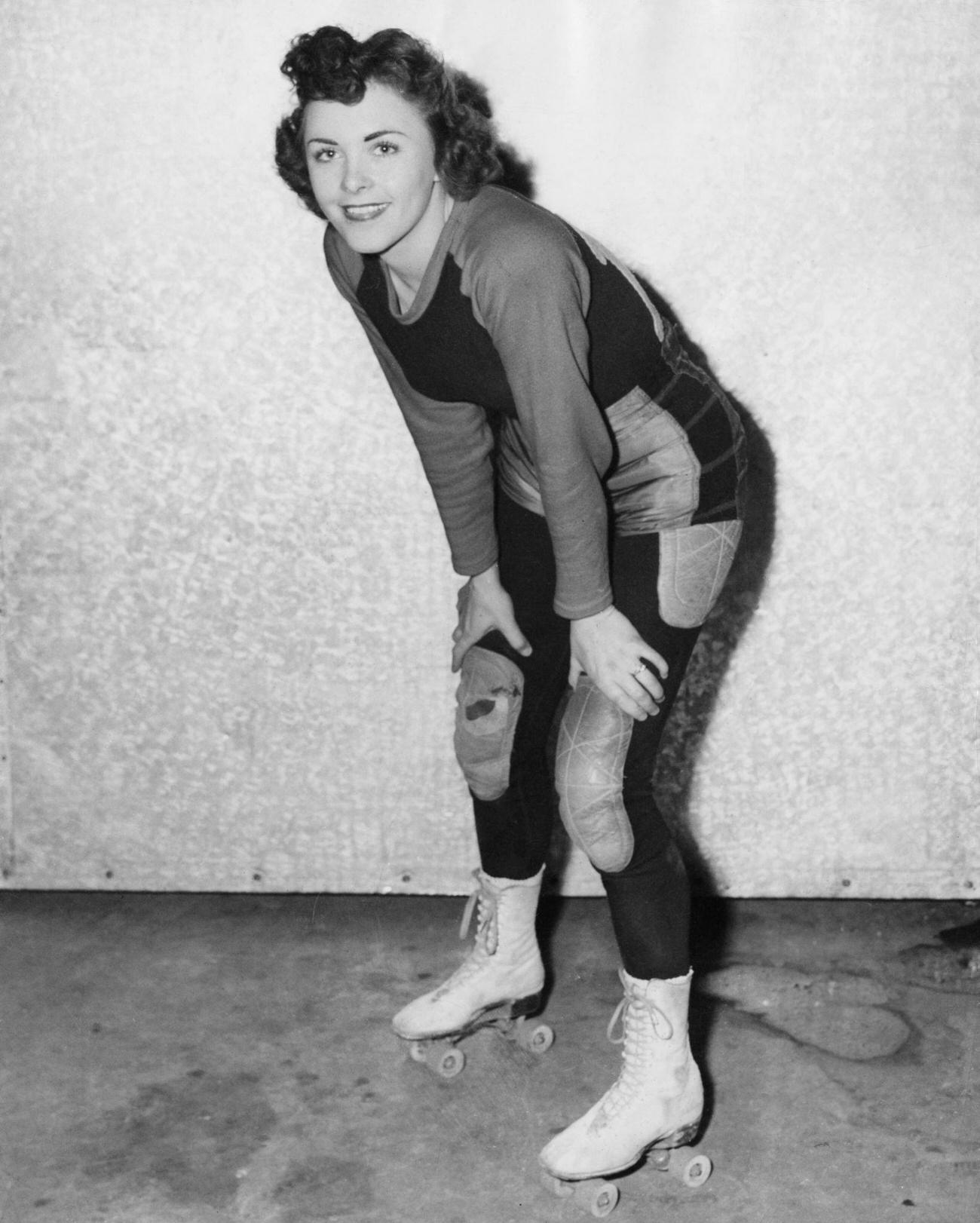
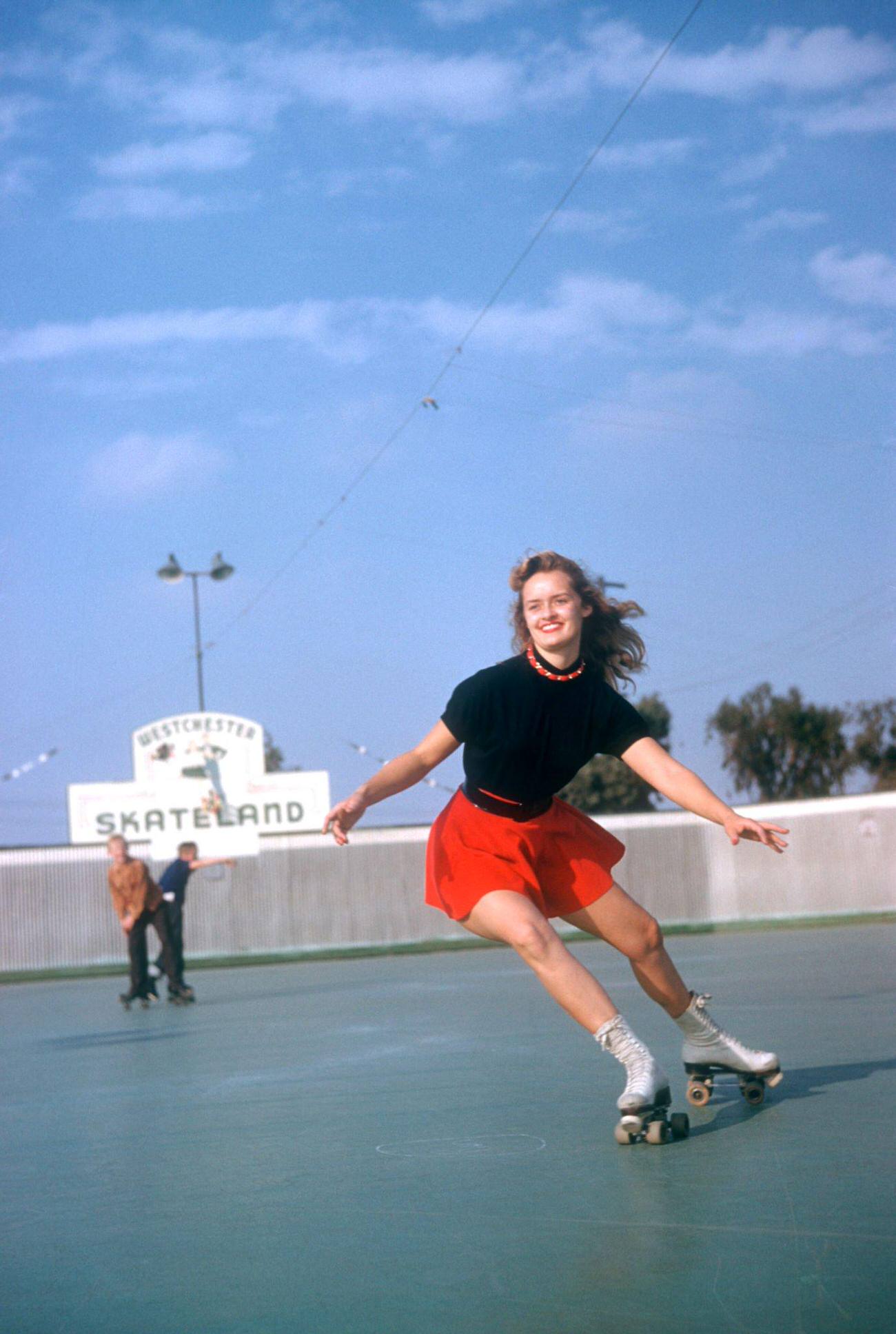
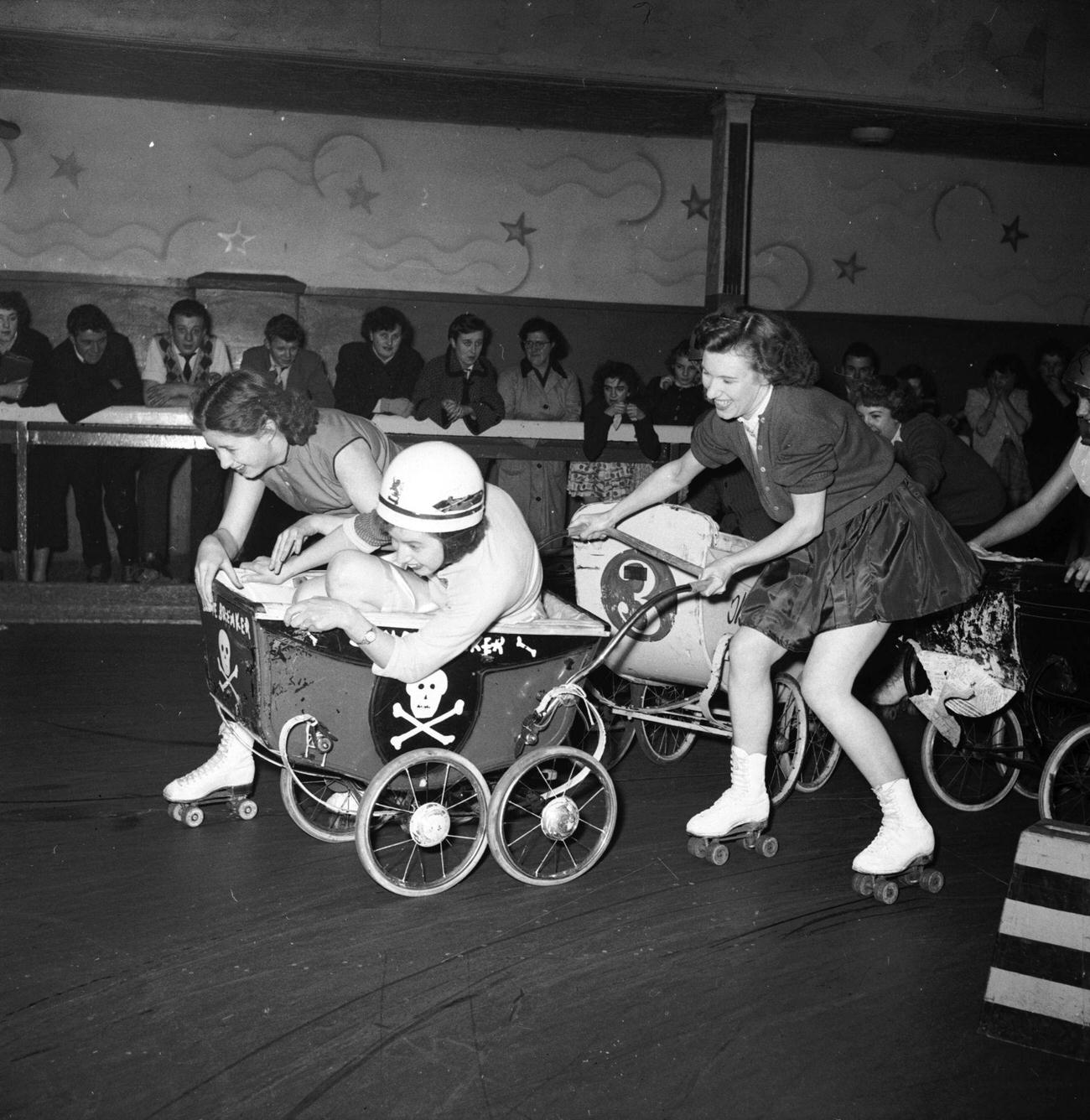
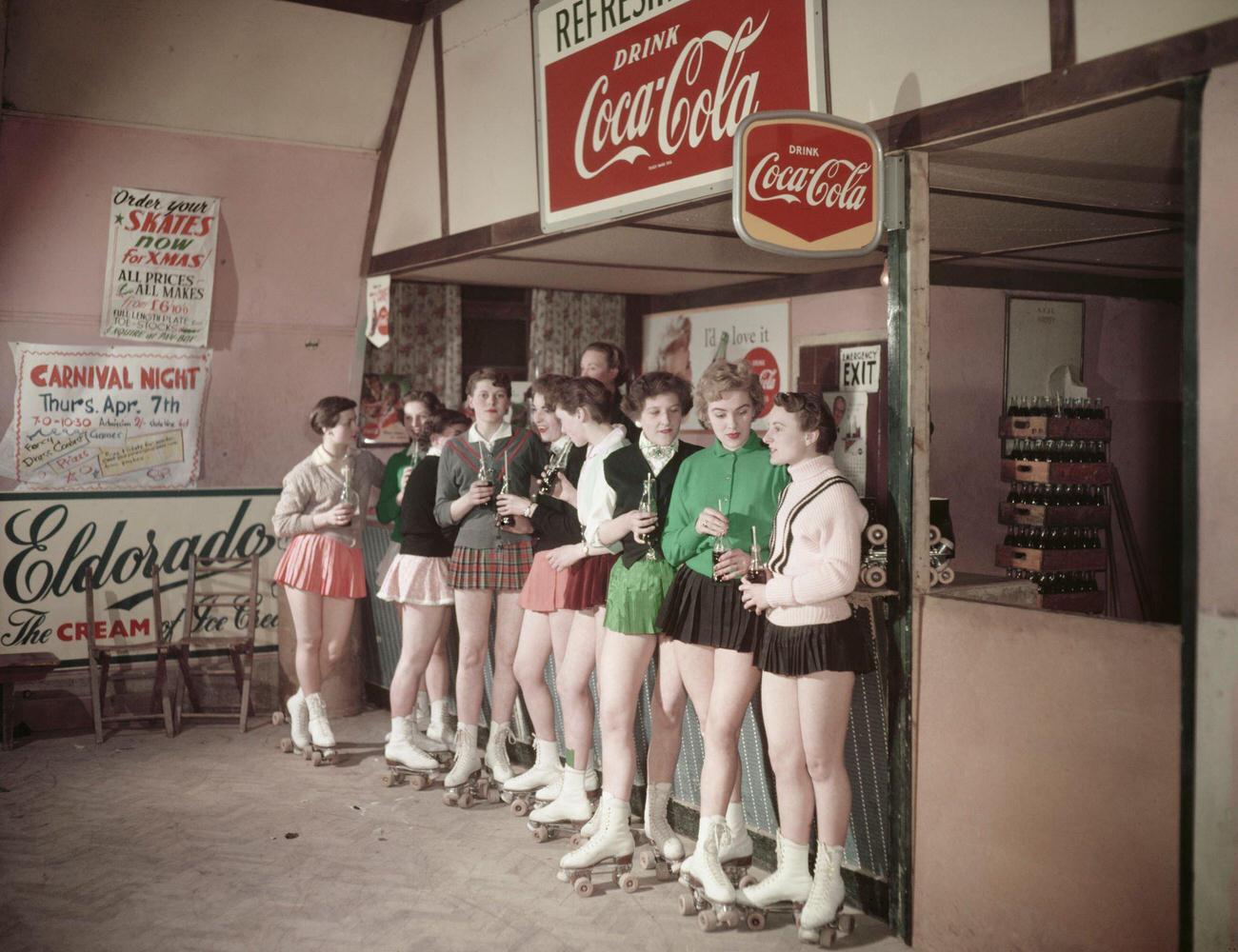
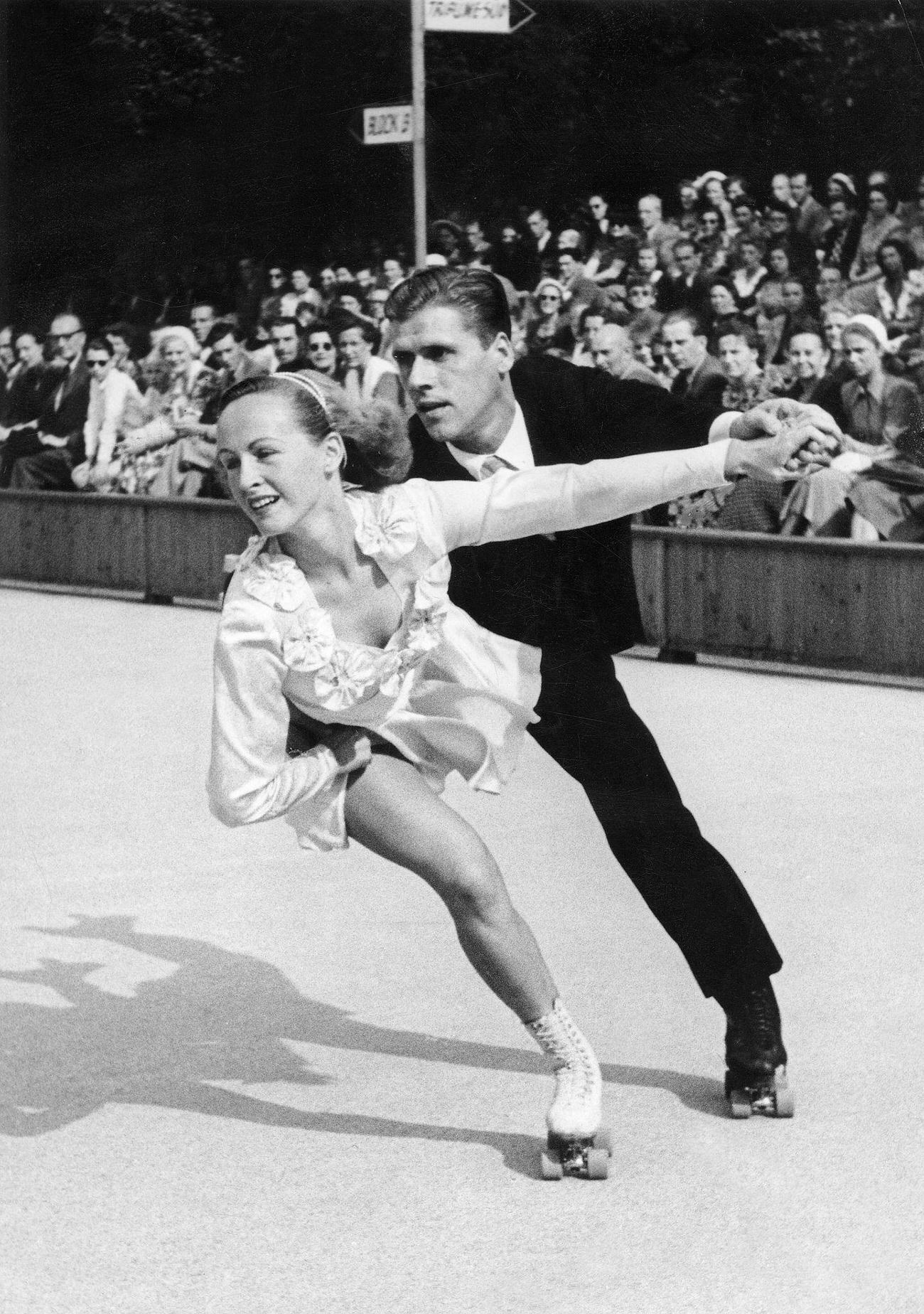
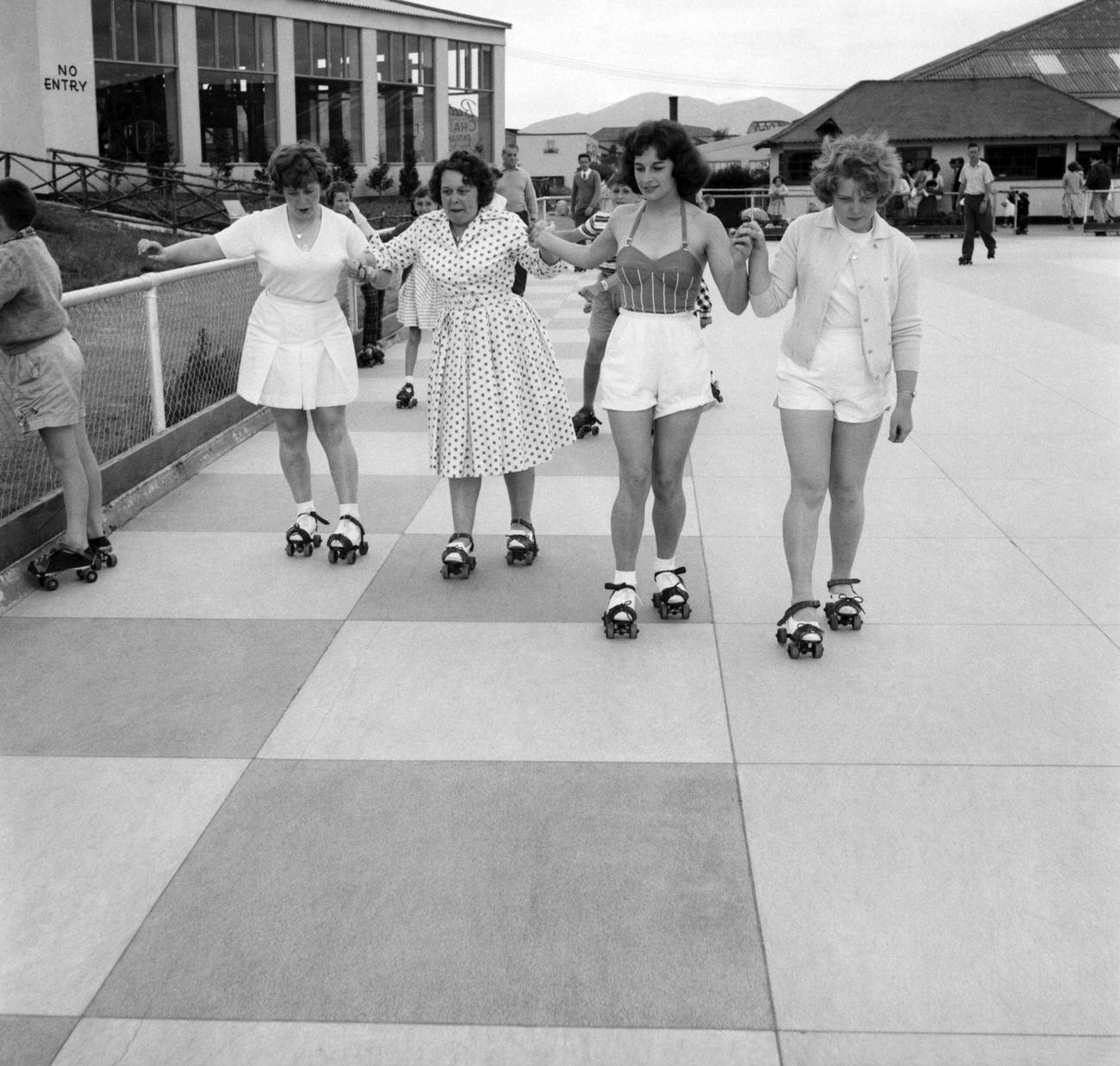
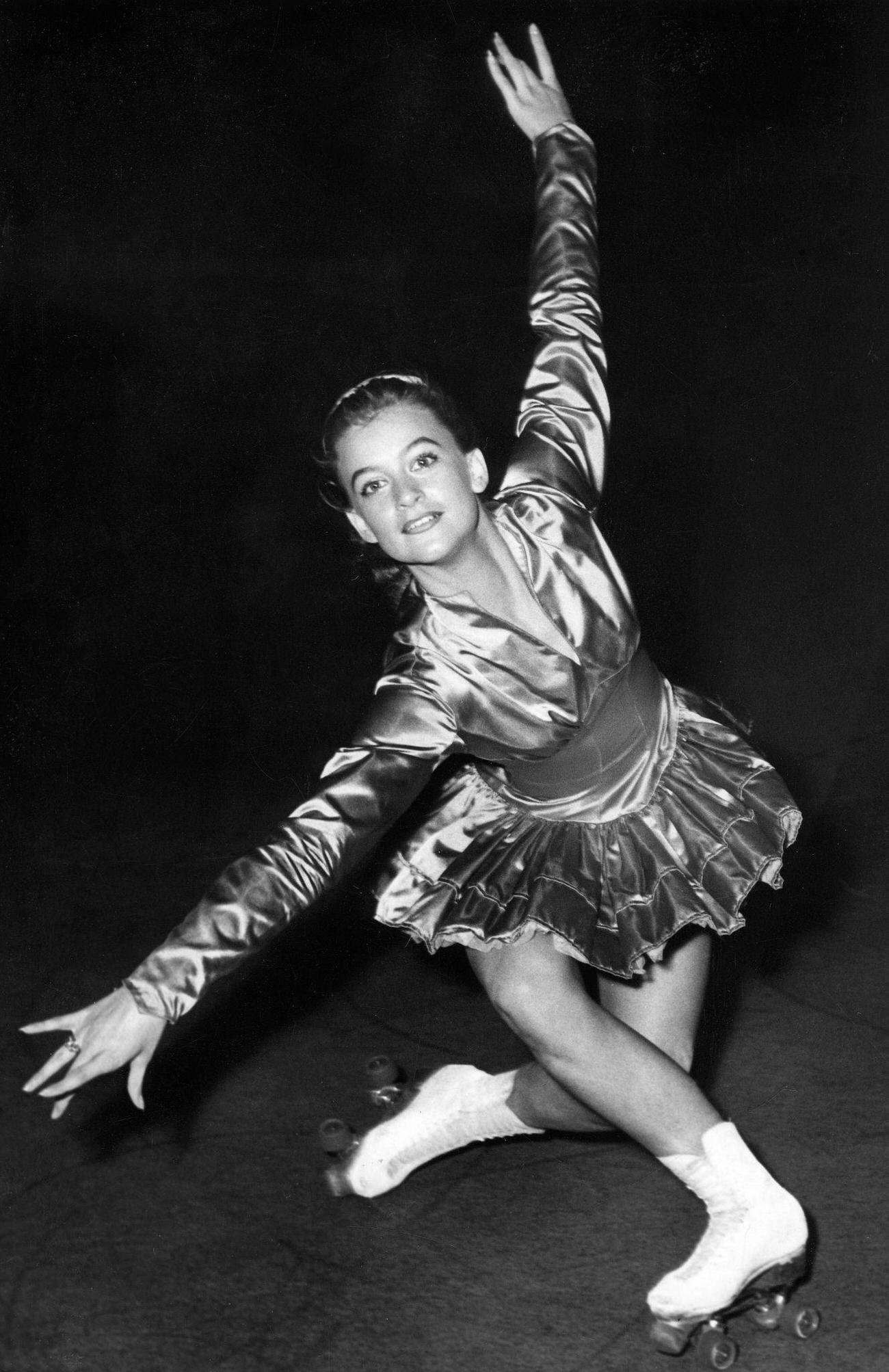
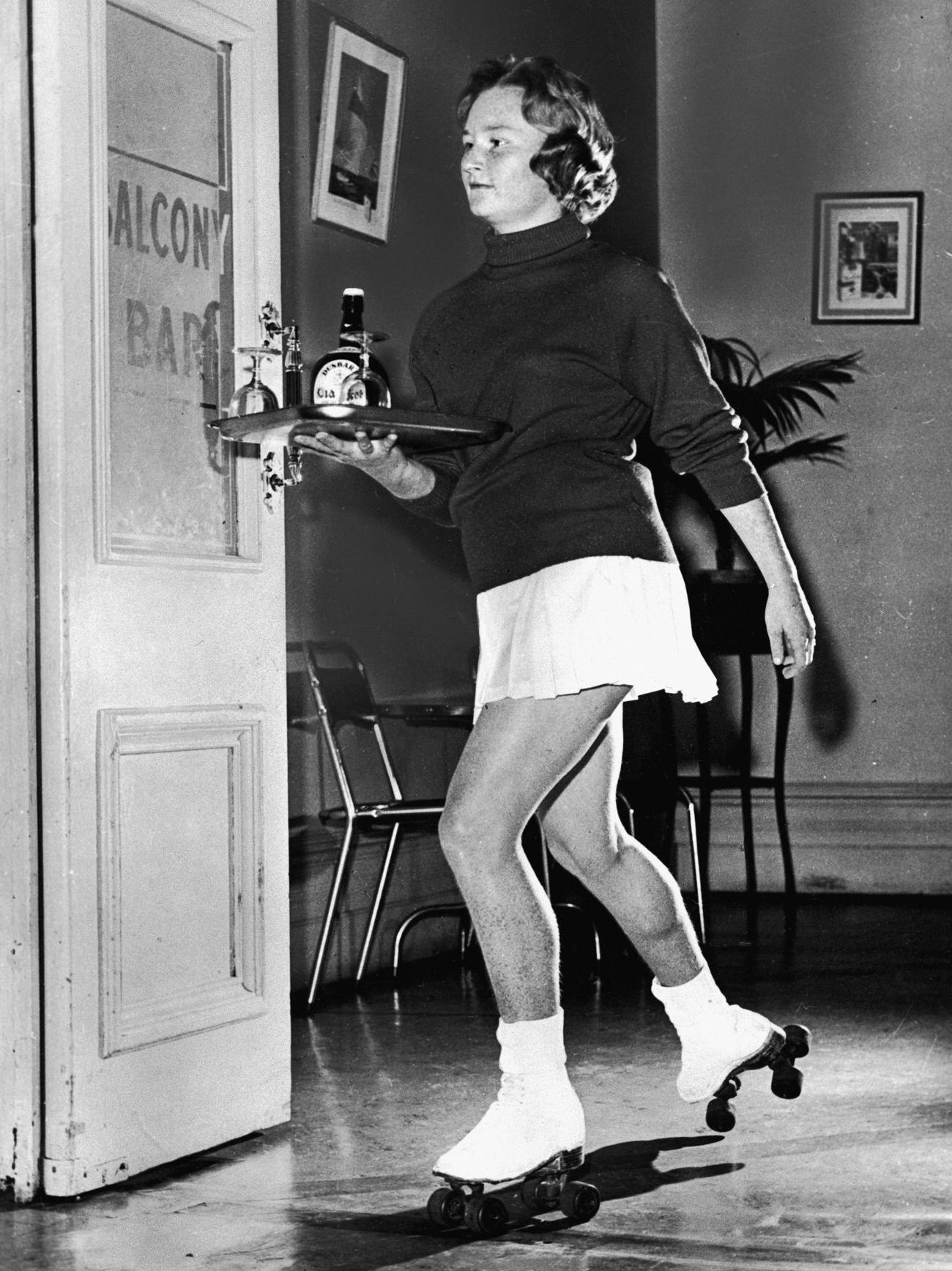
By 1957, skaters Ann Head and Grace Merrick were performing rock ‘n’ roll routines on skates in front of live audiences. Marika Kilius competed at the World Championships in Bologna in 1960. That same year, holiday rinks like the one at Butlins in North Wales drew everyday skaters like Nellie McGrail. In Perth, Australia, a hotel waitress delivered drinks on roller skates by 1963 — a practical and theatrical twist on the sport’s reach.
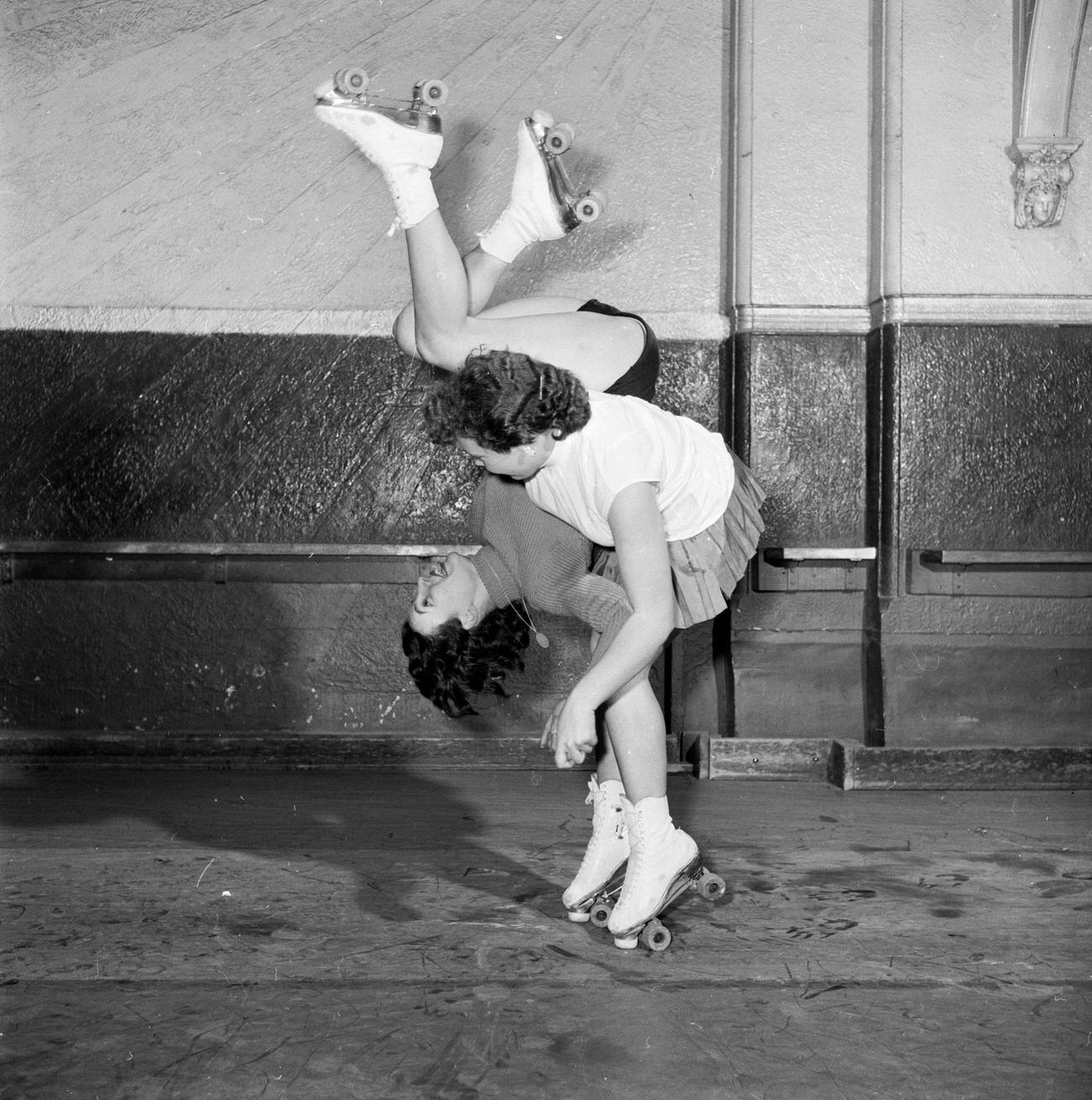
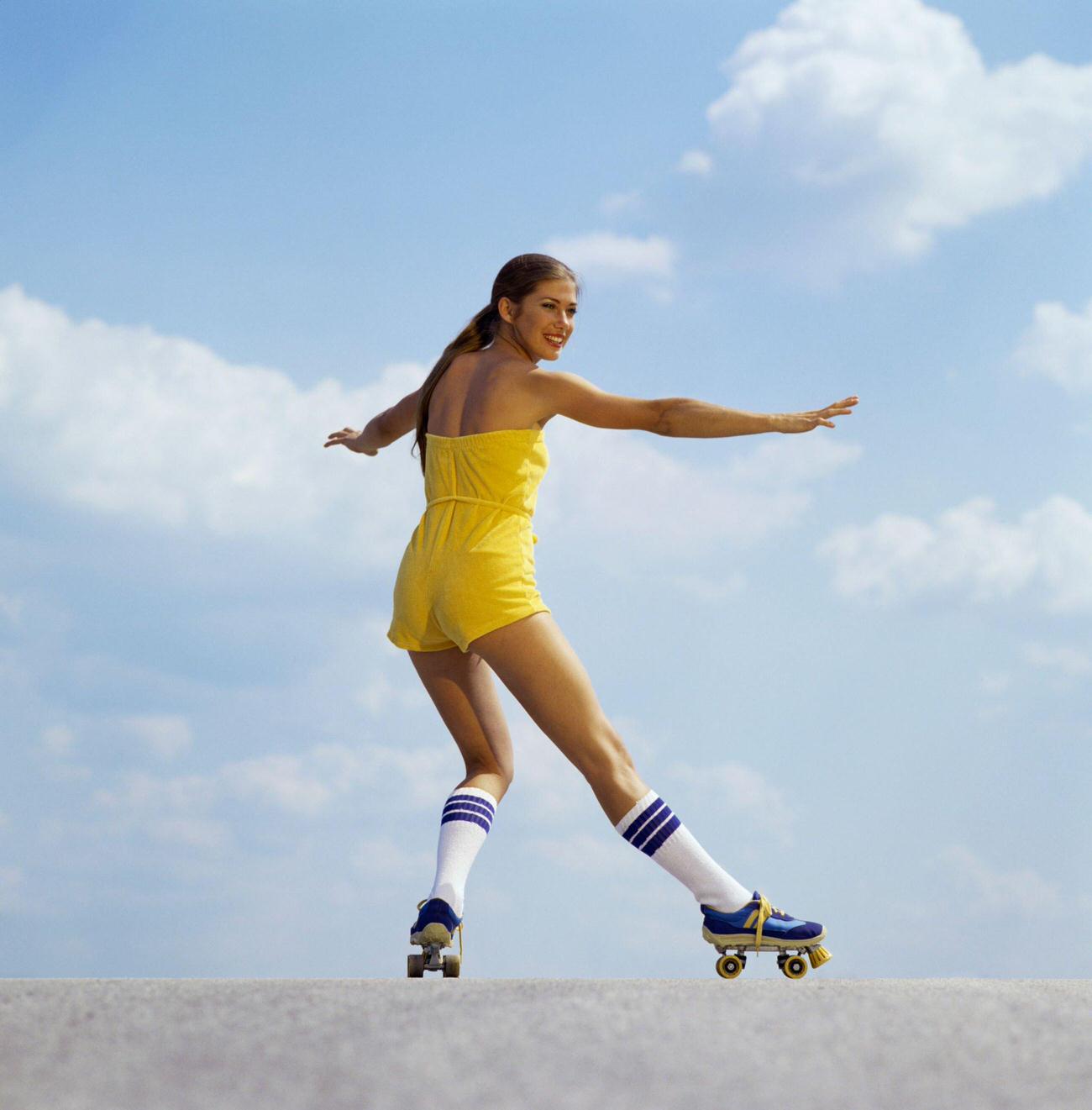
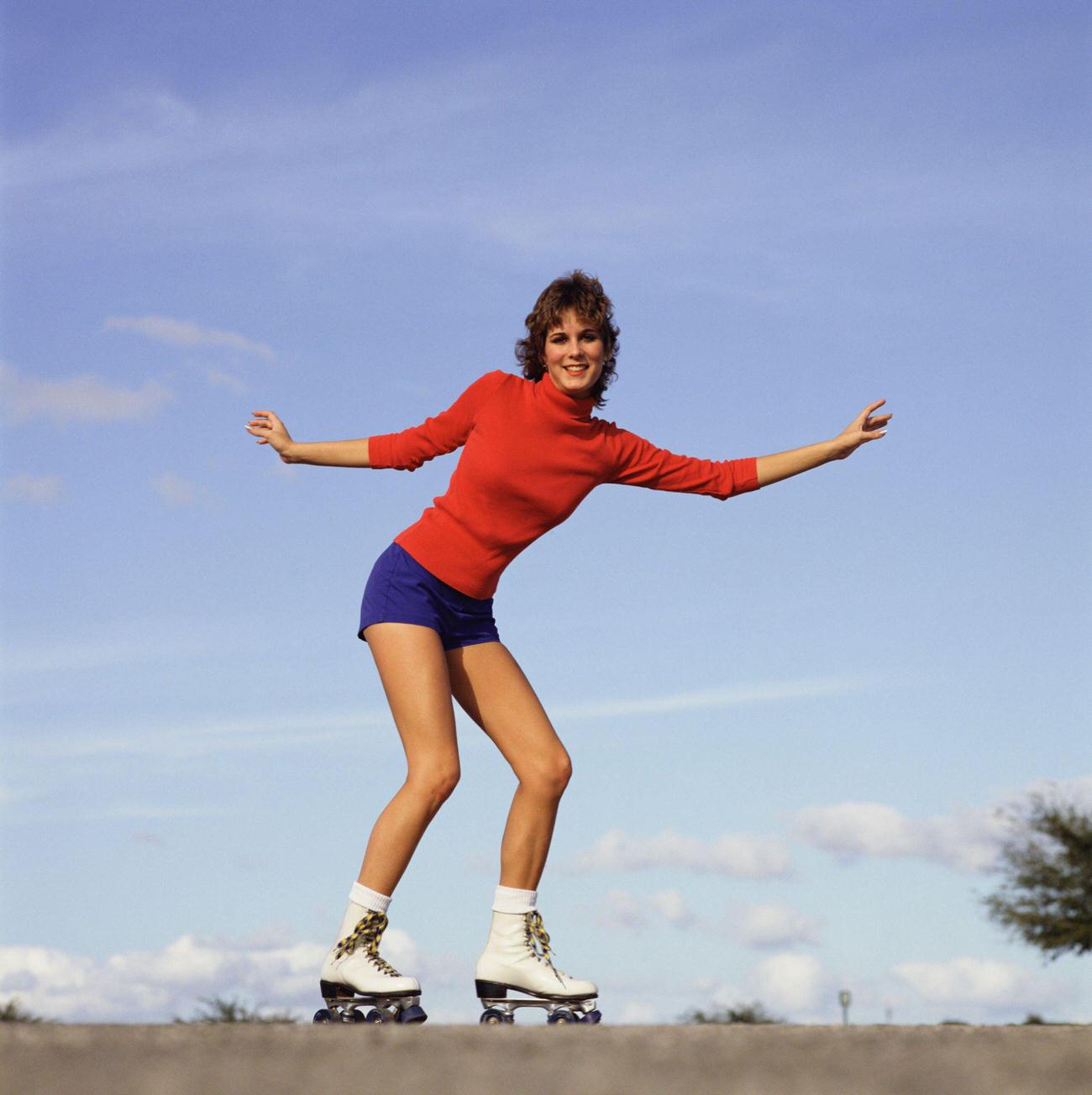
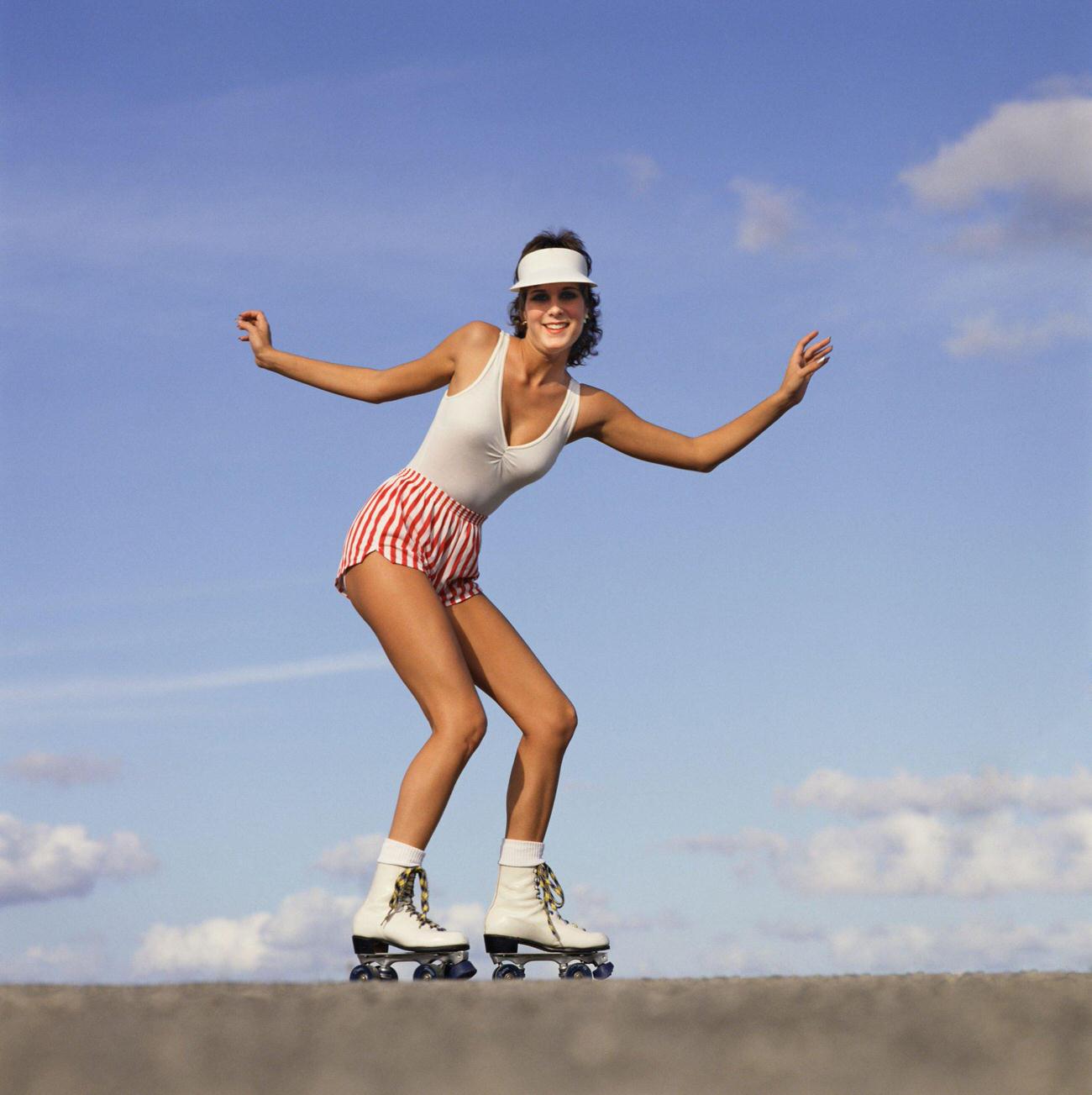
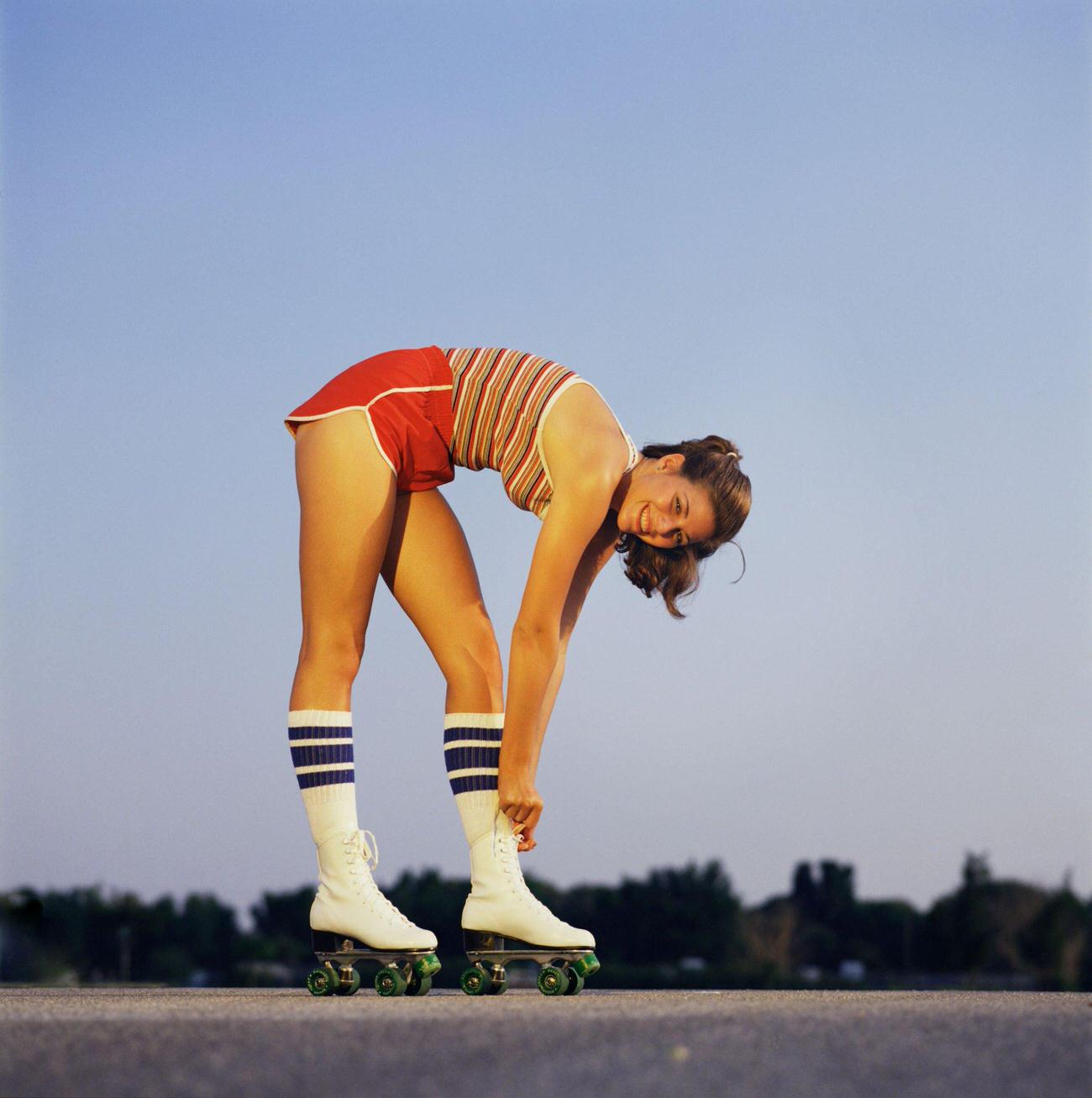
Fashion and skating merged visibly in 1967, when models were photographed skating in lavender dresses and crochet knit outfits for editorial shoots. The rink and the runway were finding common ground. By 1969, girls at school were skating during free periods, a sign that wheels had become as ordinary as a bicycle.
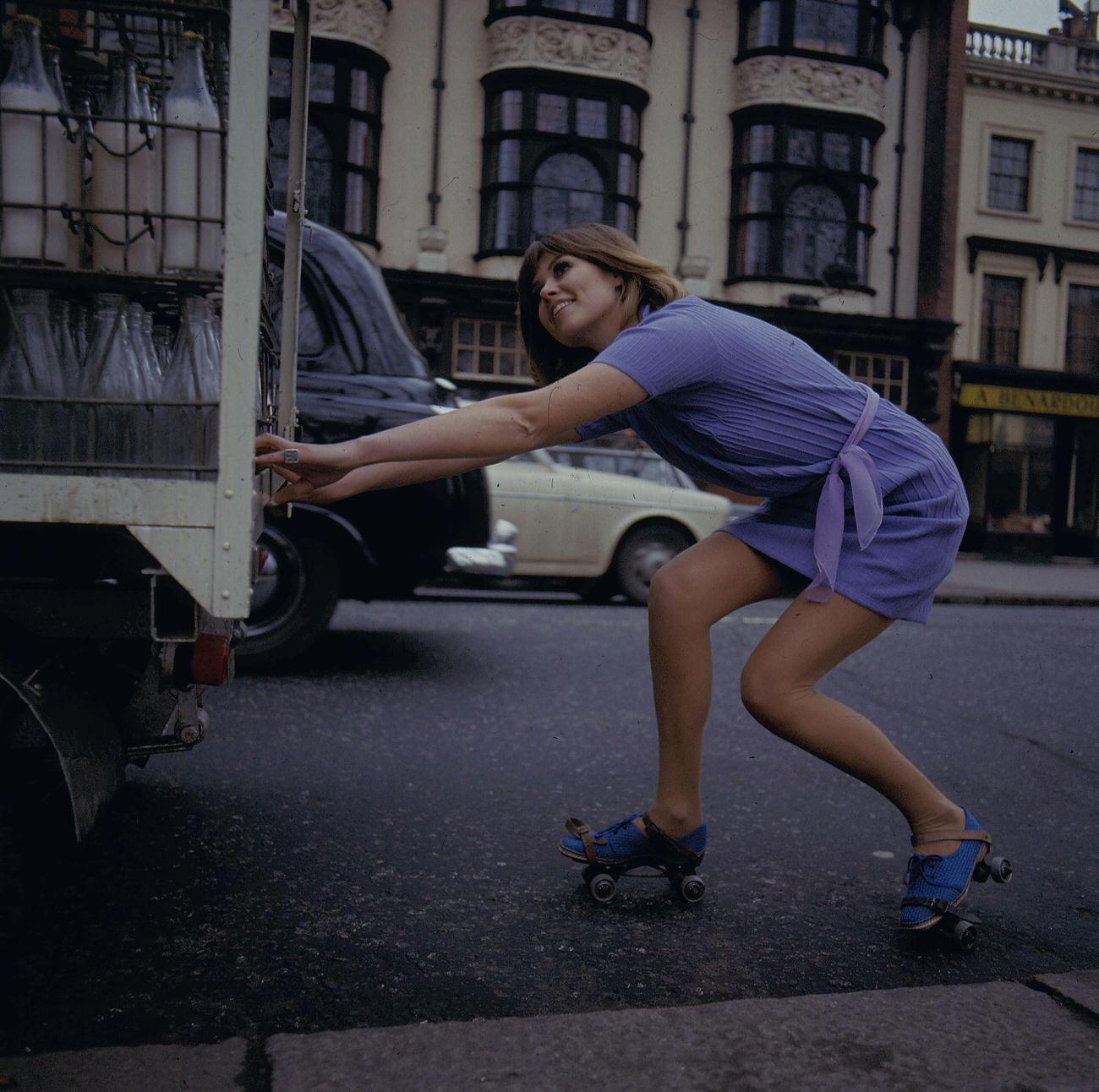
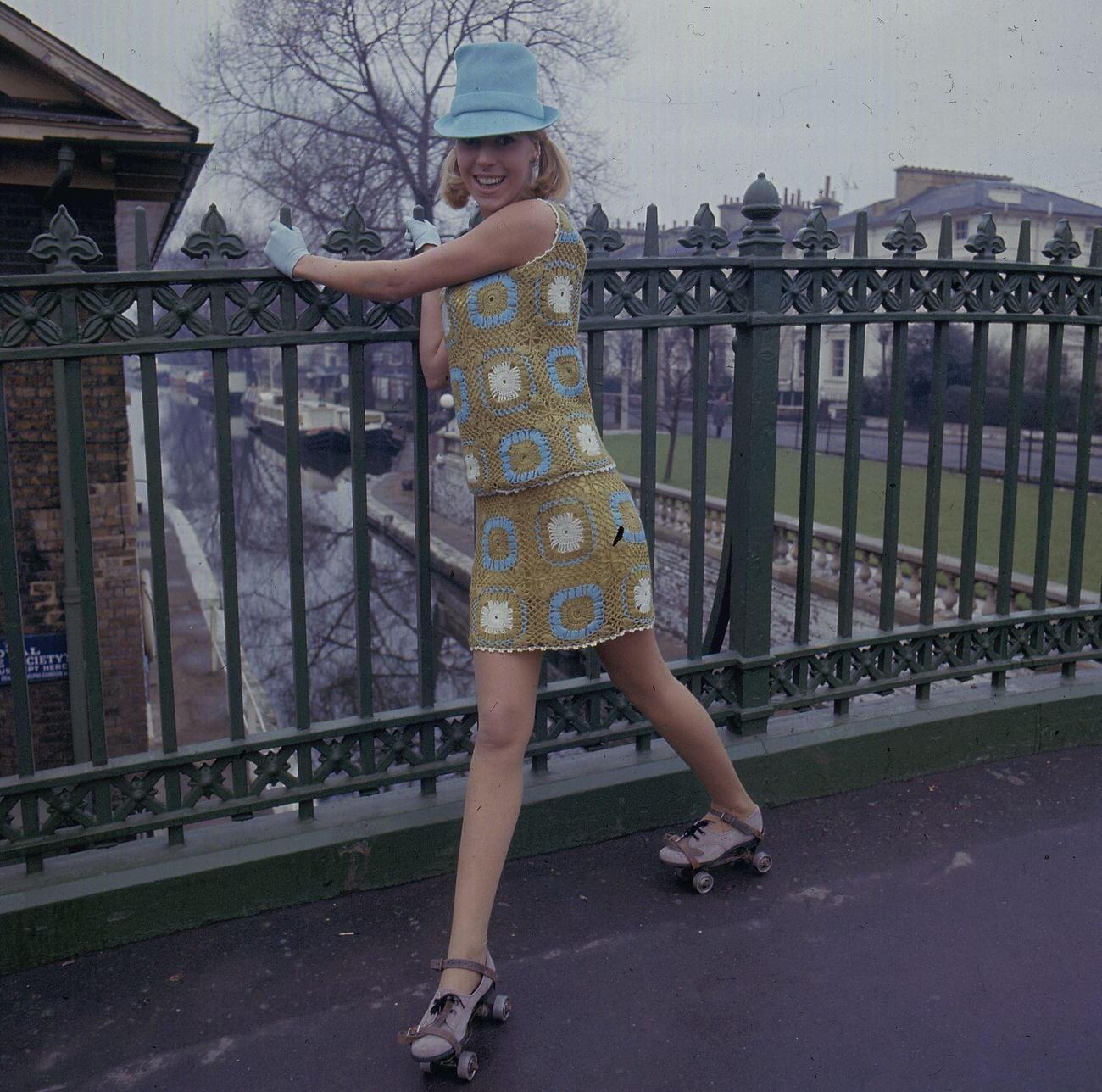
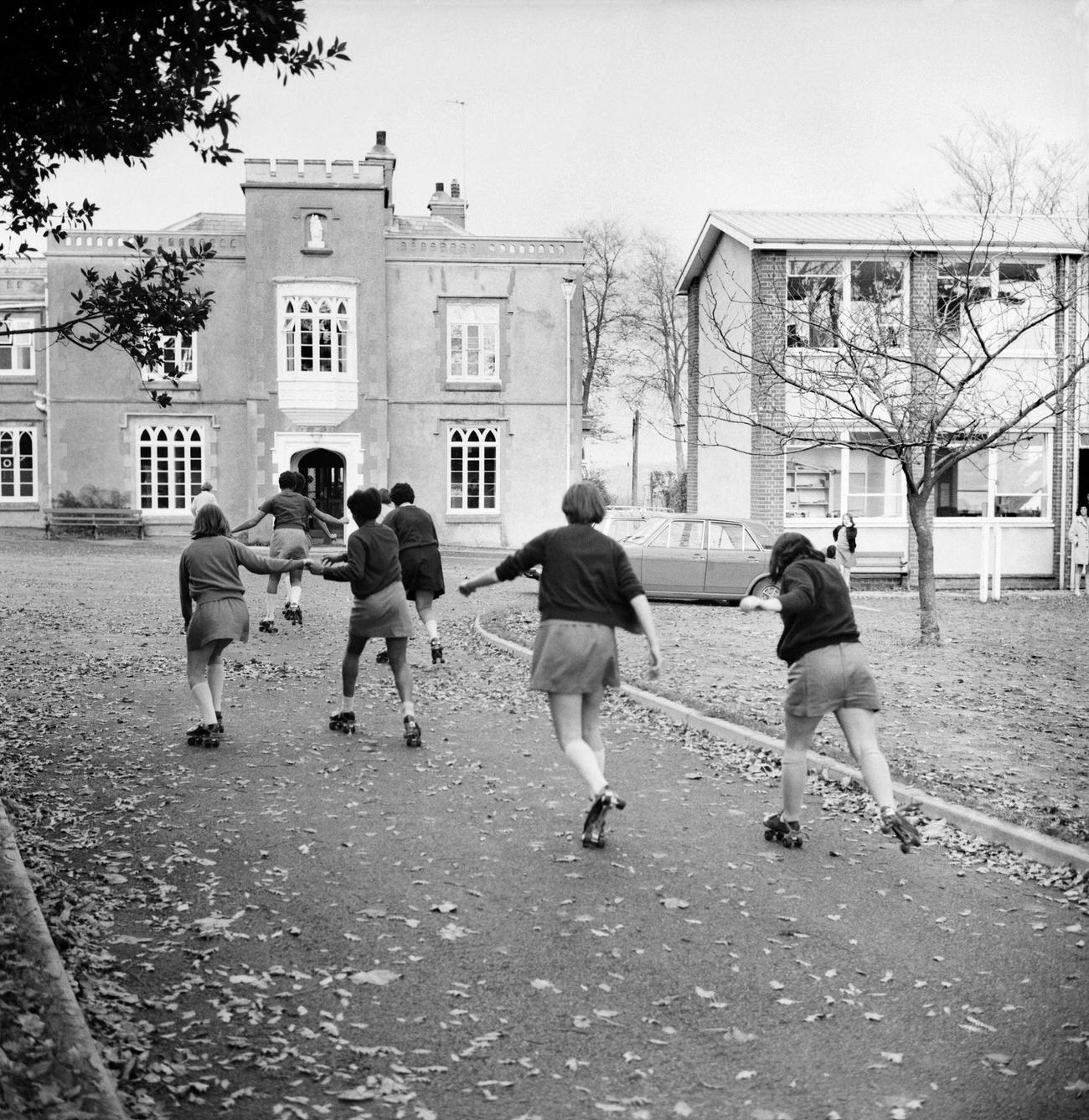
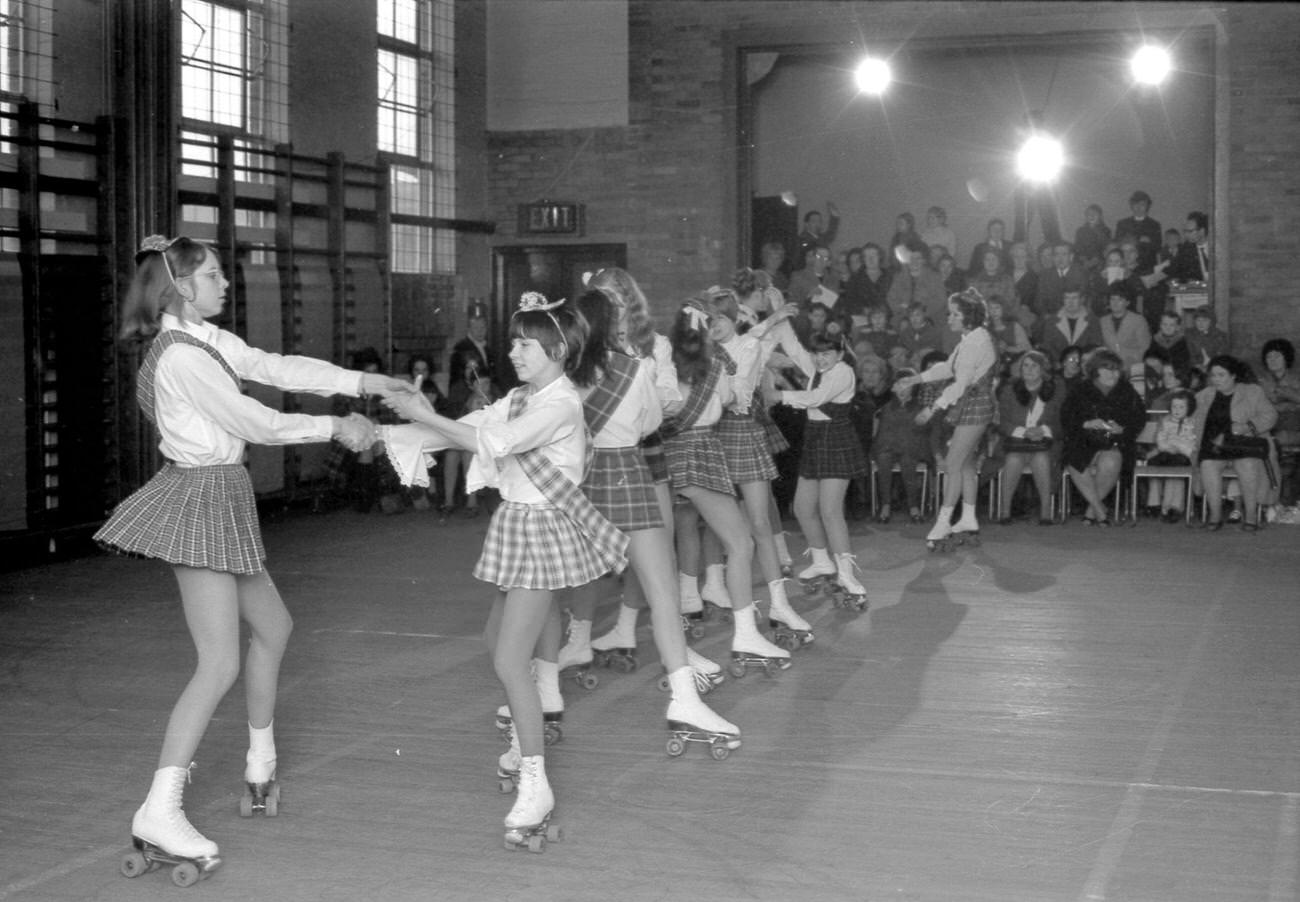
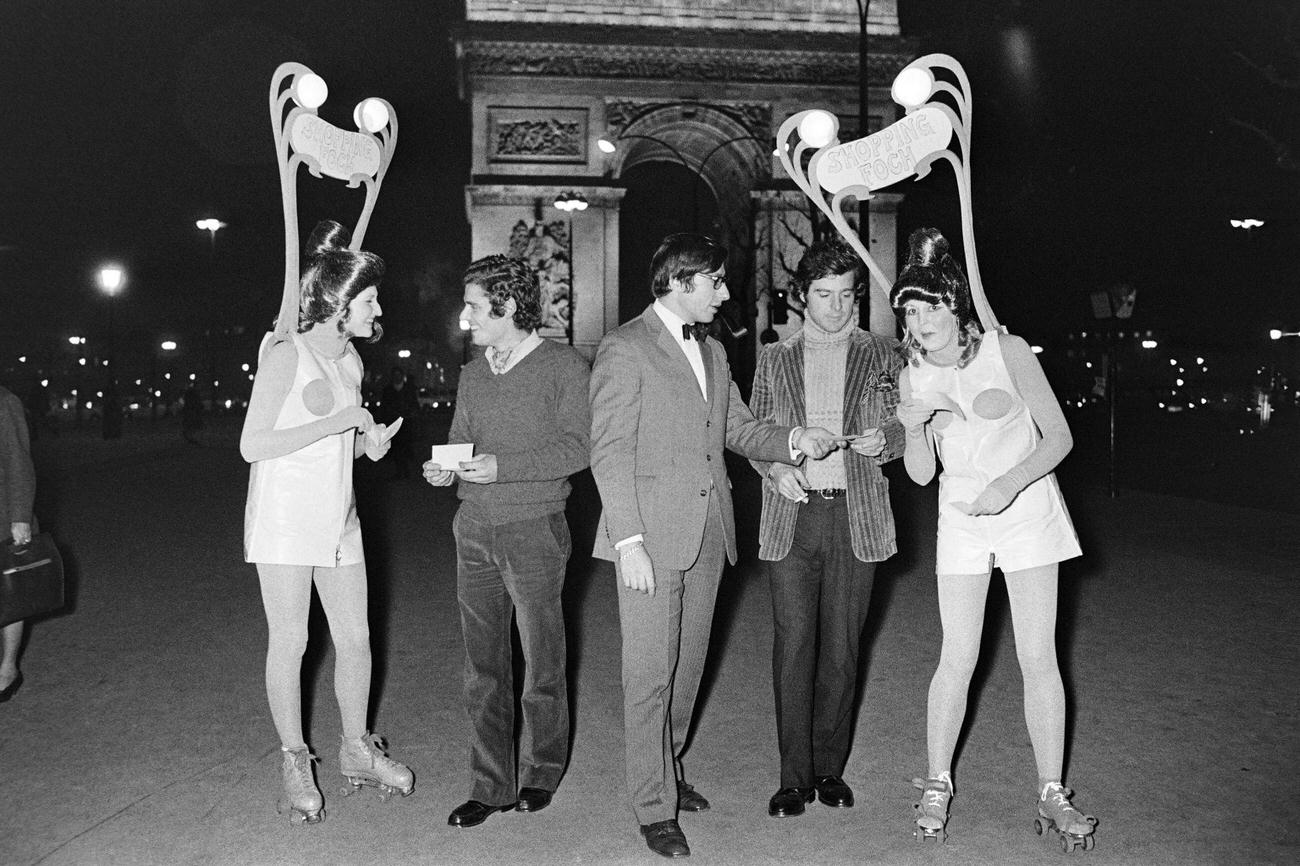
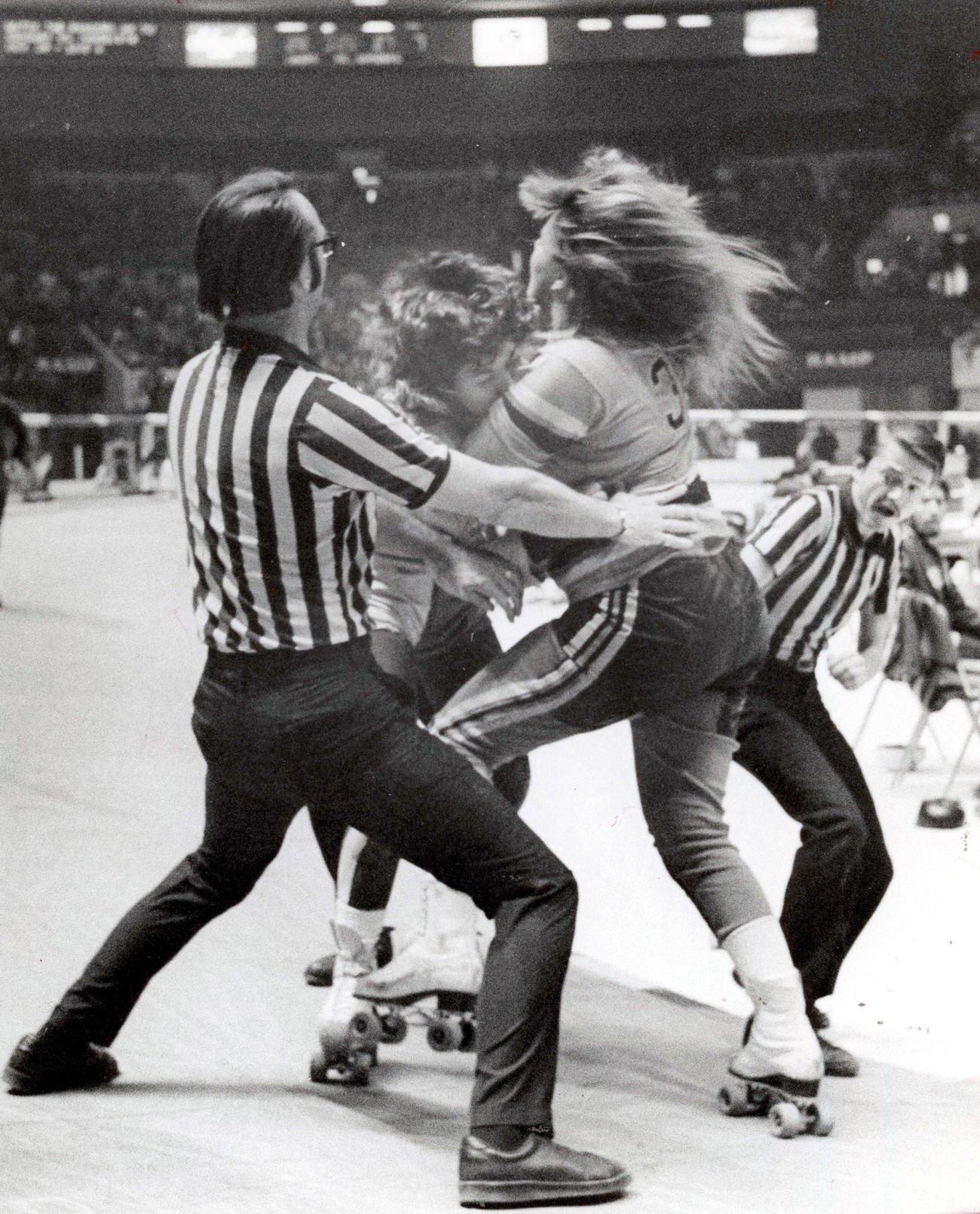
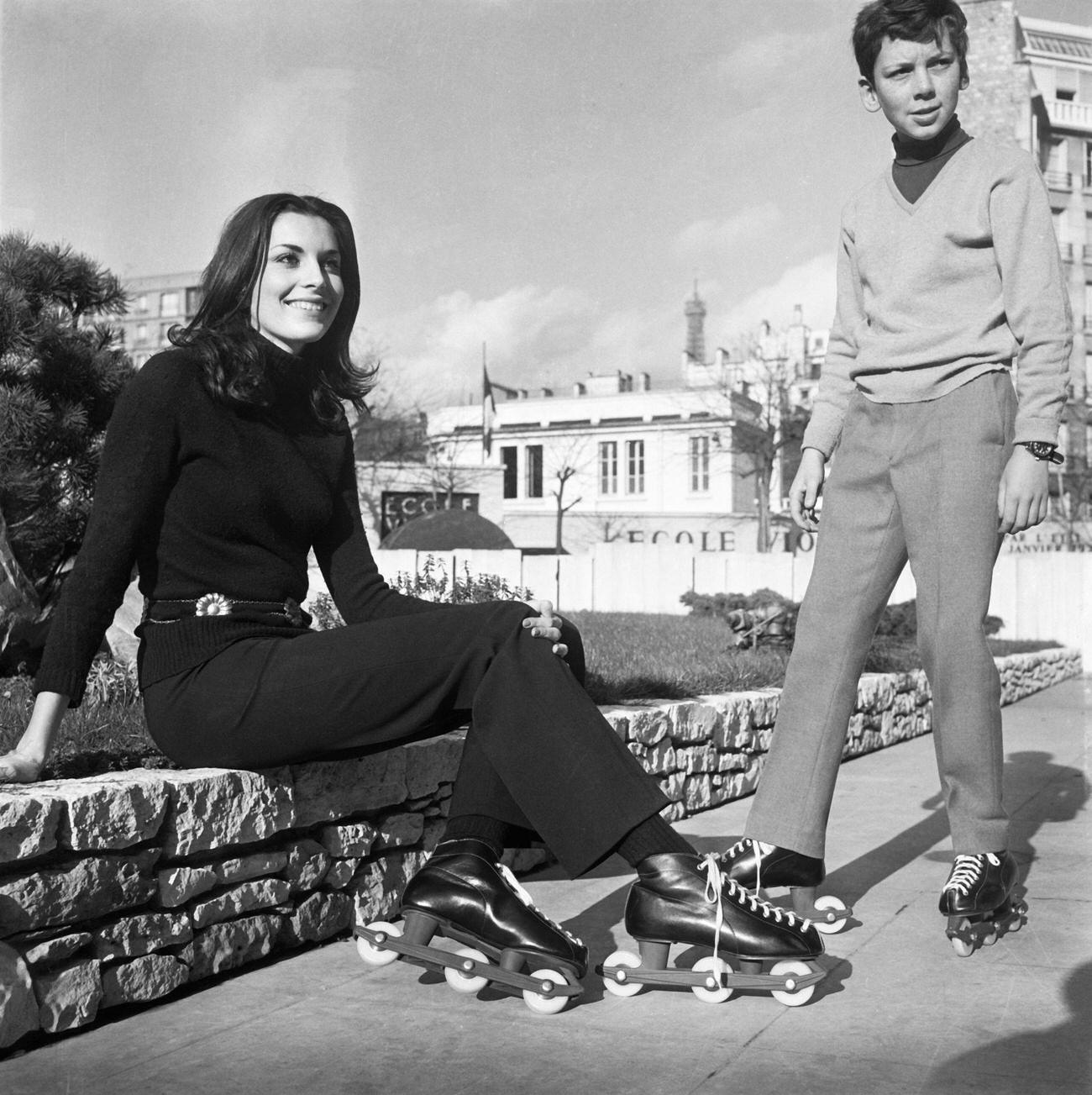
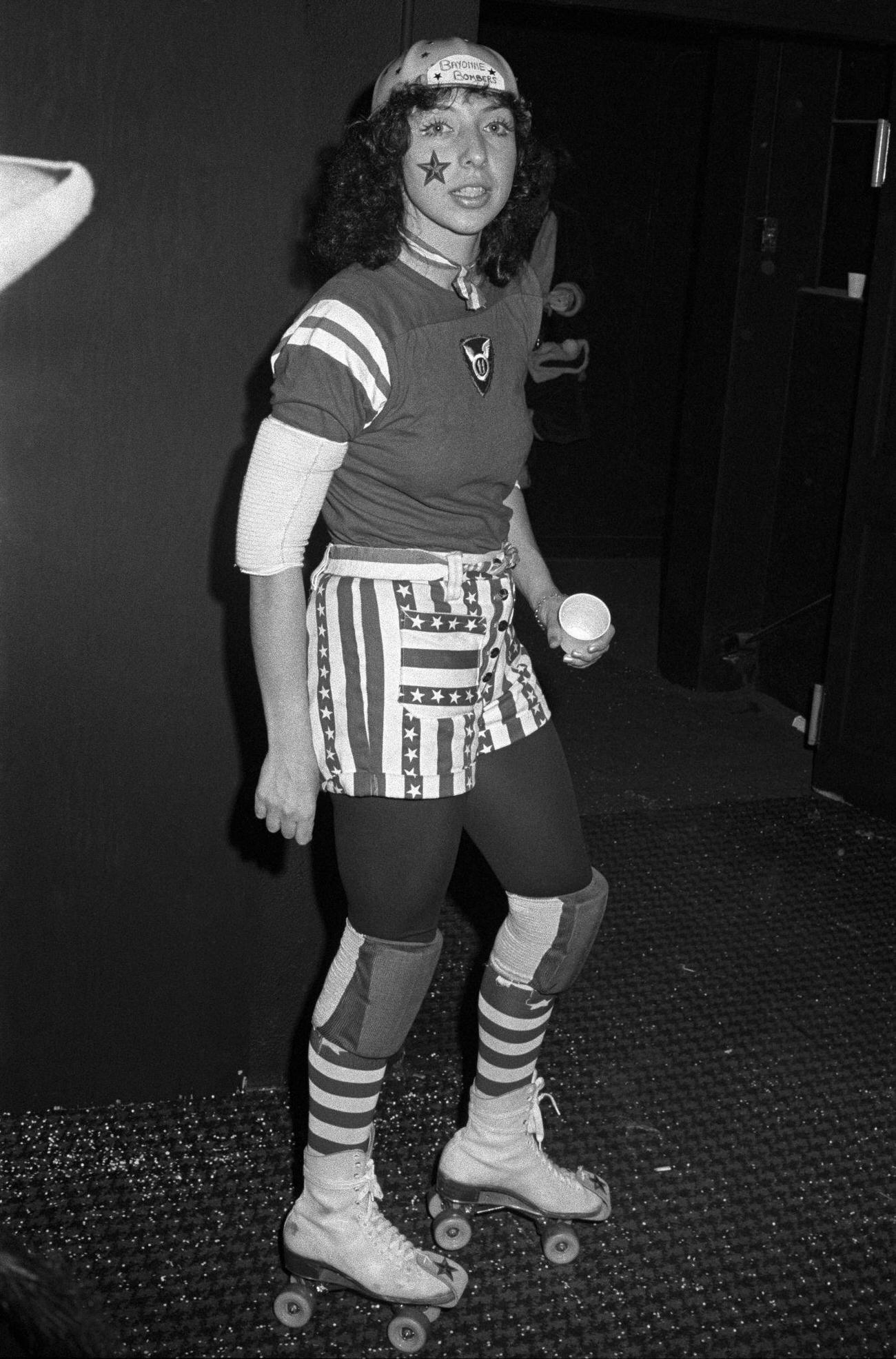
The 1970s transformed skating entirely. Disco took over the rinks. Lights, mirror balls, and funk music replaced the sock-hop atmosphere of the 1950s. In Coventry, the Canley Roller Skating Club performed in variety shows. In Paris, women on skates distributed flyers as “sandwich women.” At Madison Square Garden in 1971, a women’s Roller Derby match turned into a full brawl in front of a packed crowd.
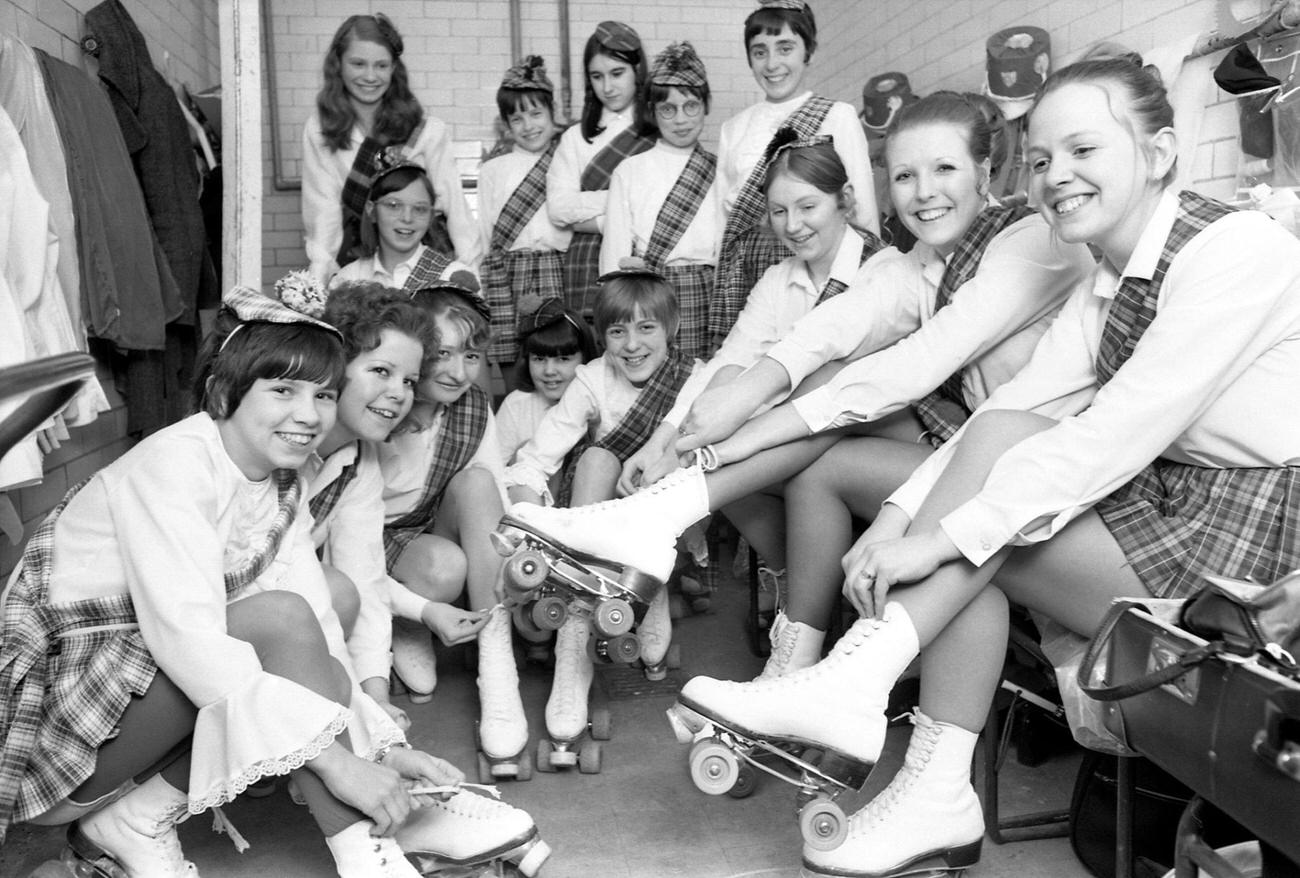
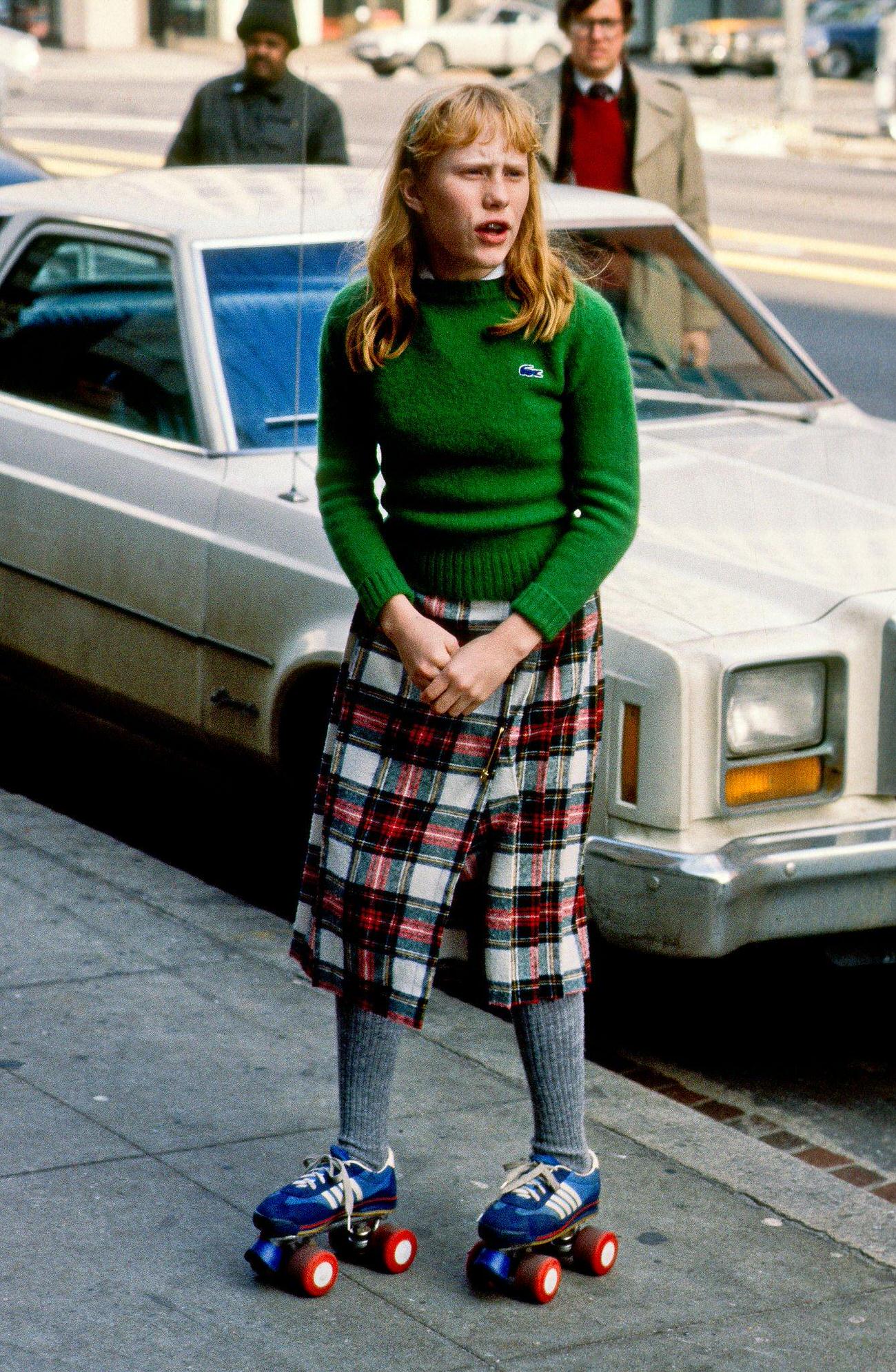
By the mid-1970s, celebrities were skating in public and loving it. Cher hit Venice Beach in a pink leather jacket. Mick Jagger and Jerry Hall skated together in New York. Amy Carter, daughter of President Jimmy Carter, skated to McDonald’s in Washington D.C. in 1979. Lynn Seymour, the Canadian ballerina, was photographed on skates in London. Skating had become the thing to be seen doing.
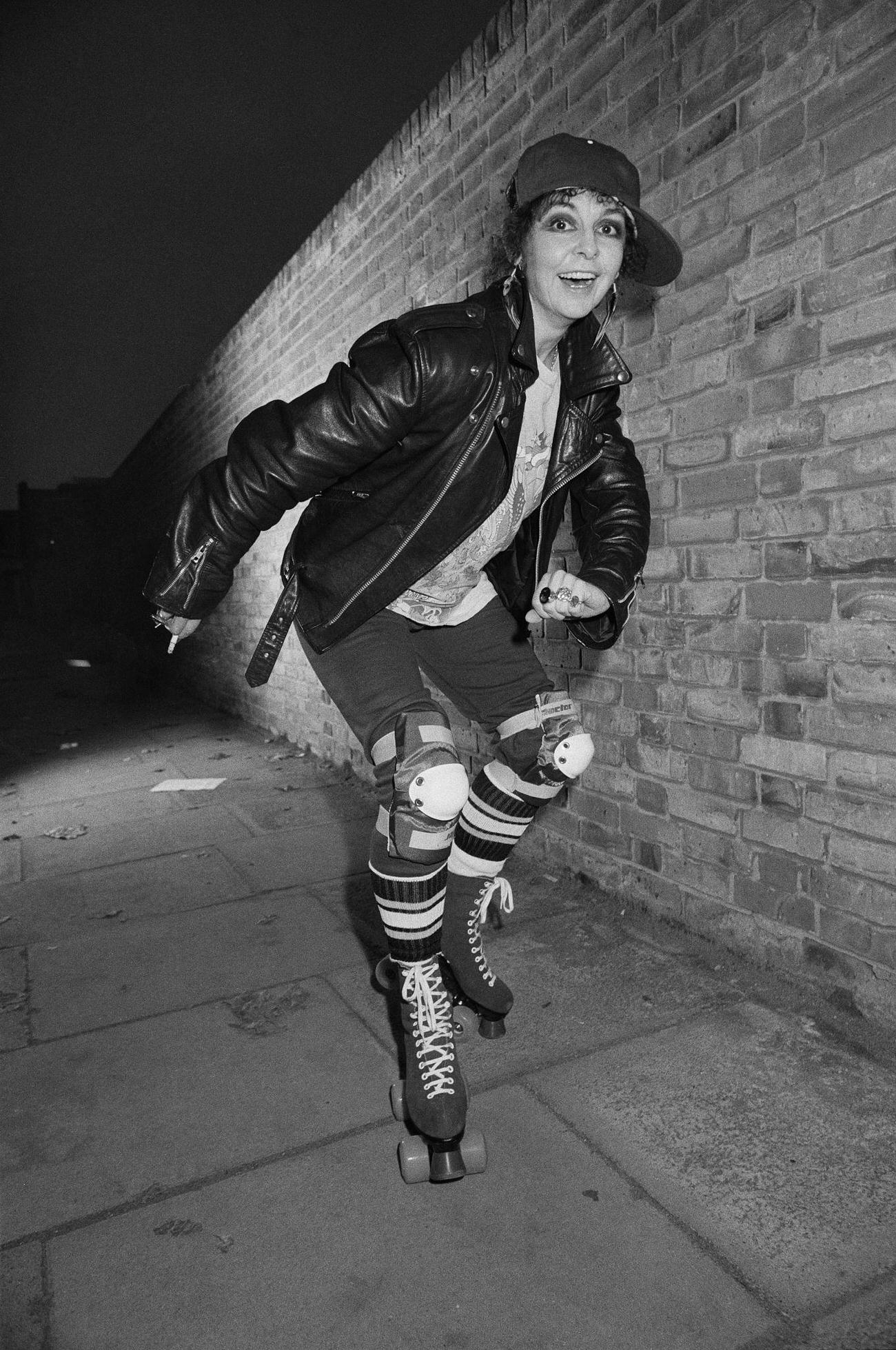
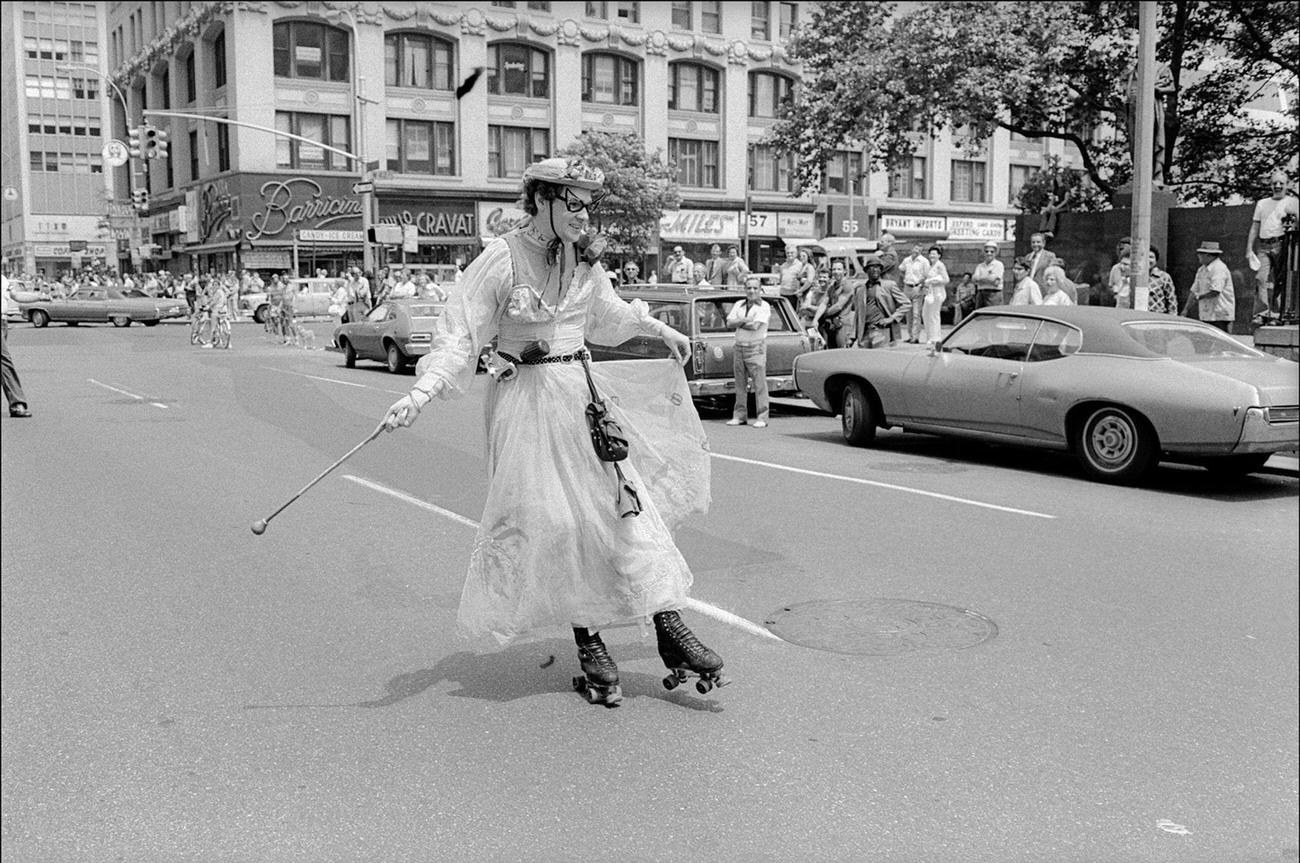
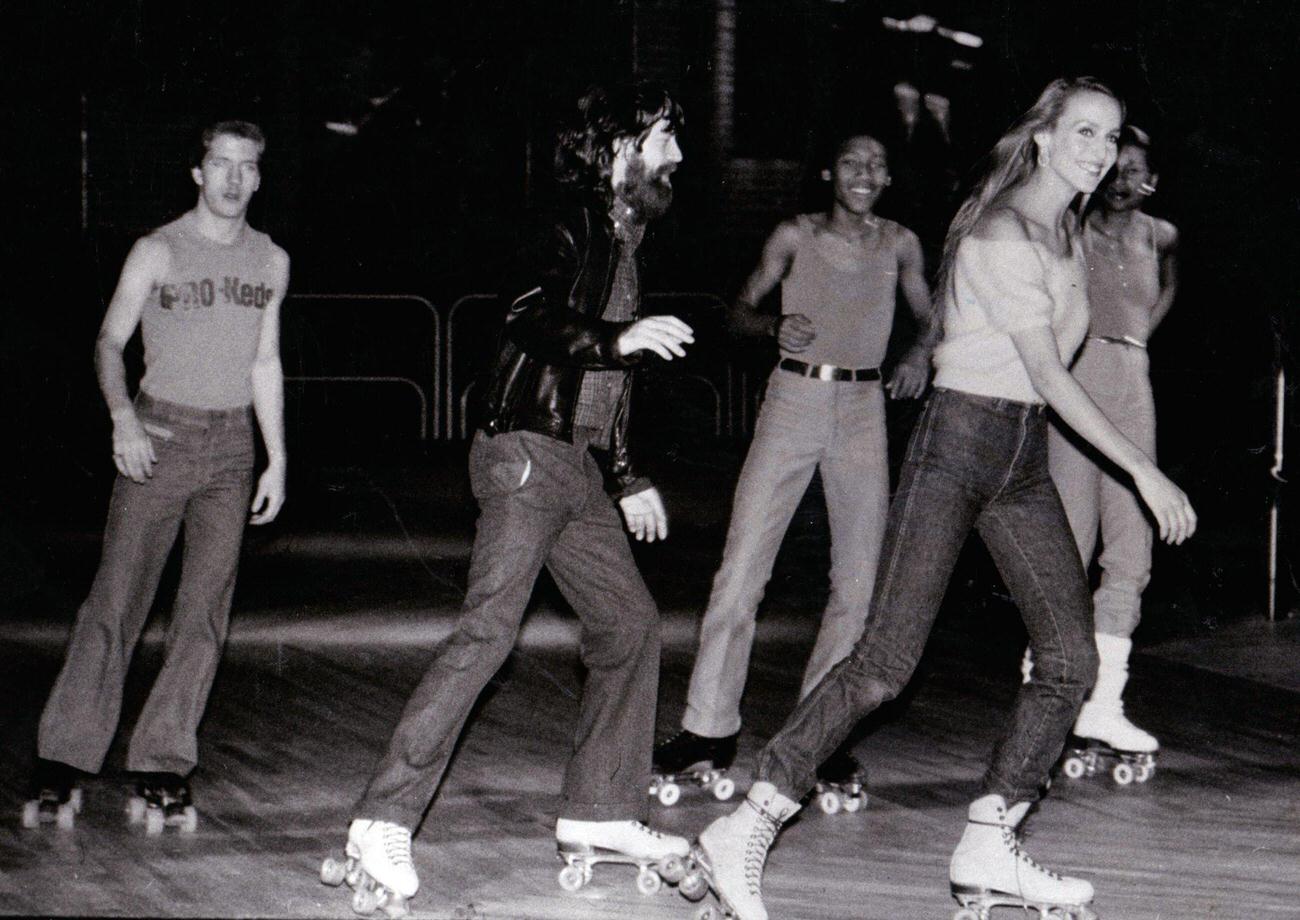
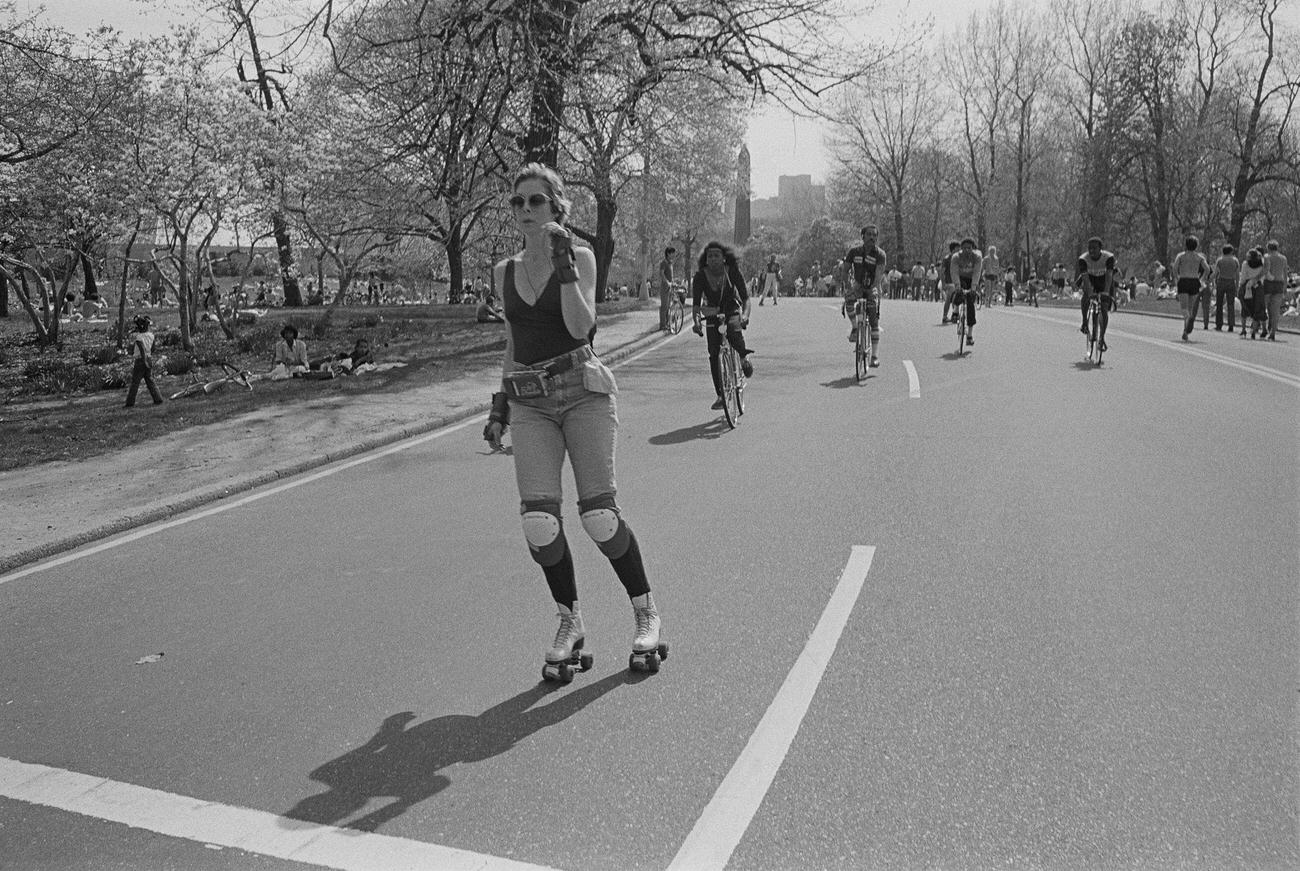
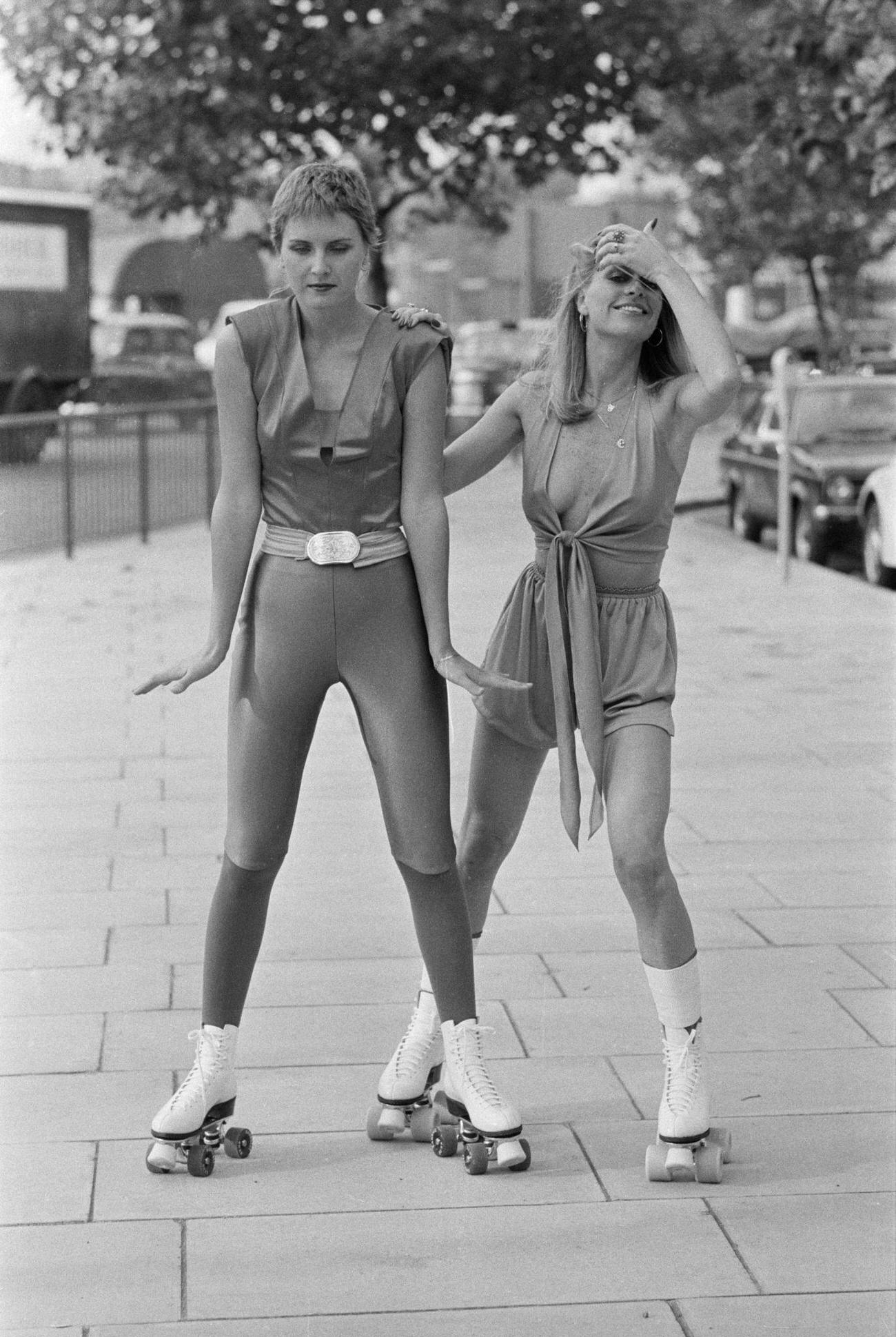
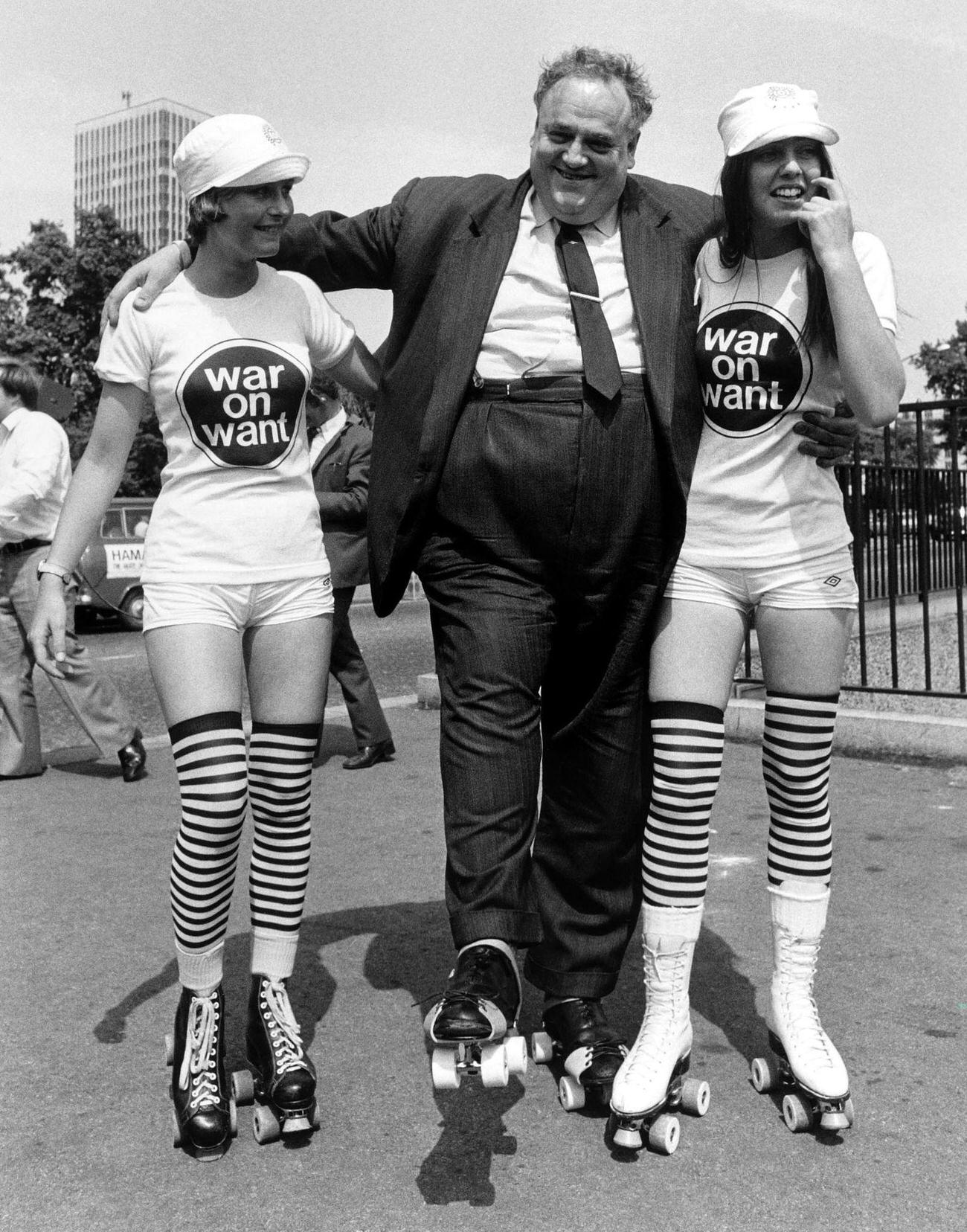
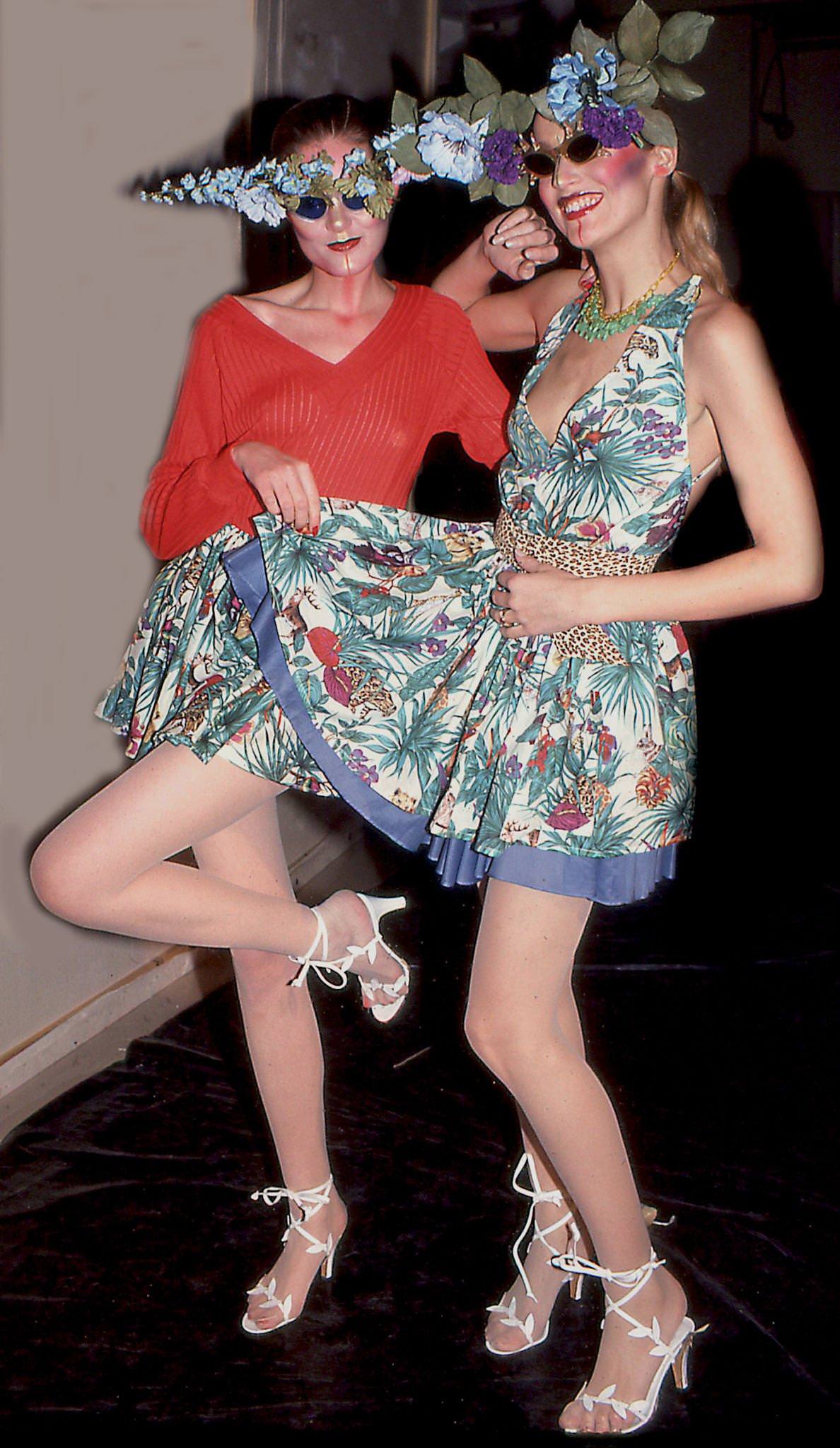
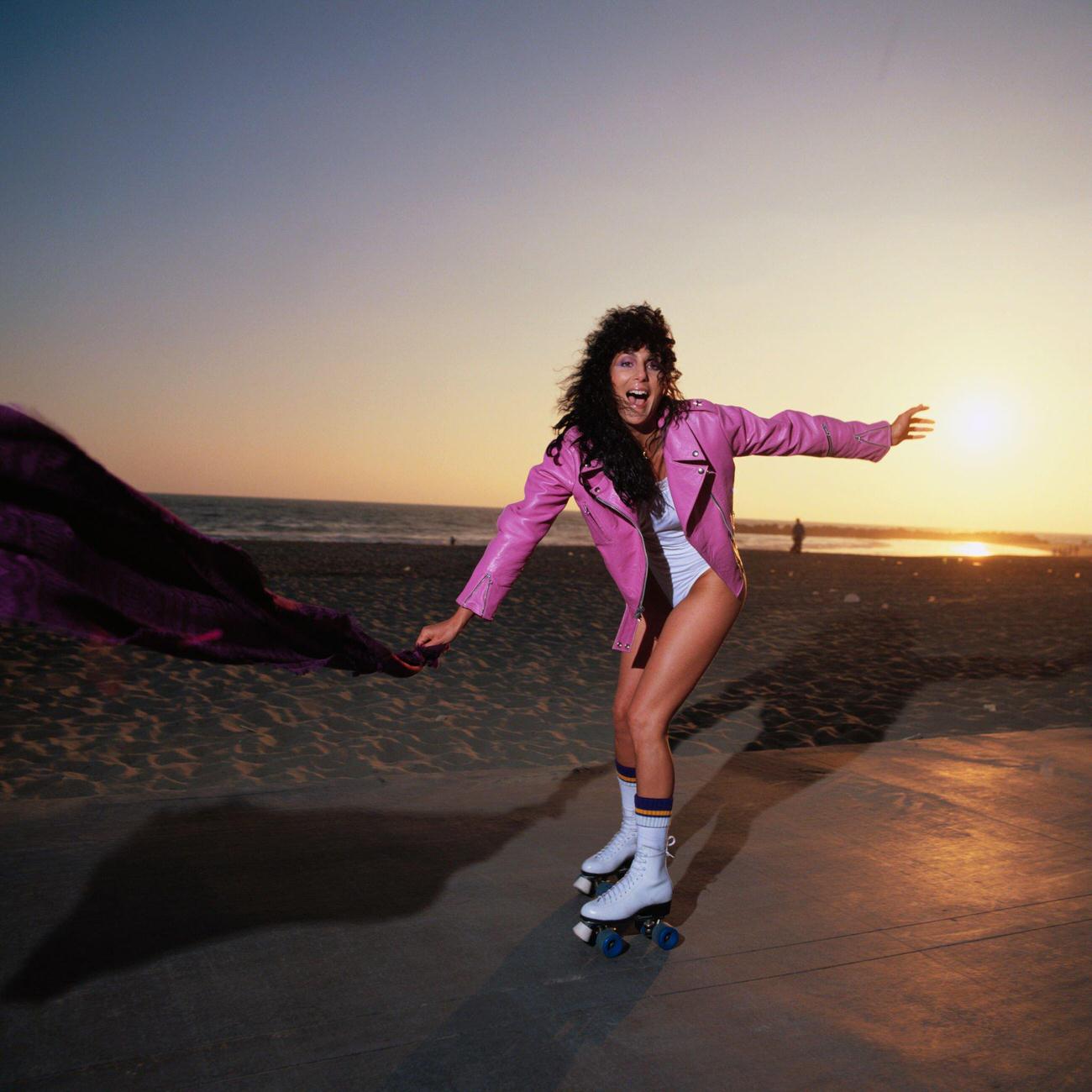
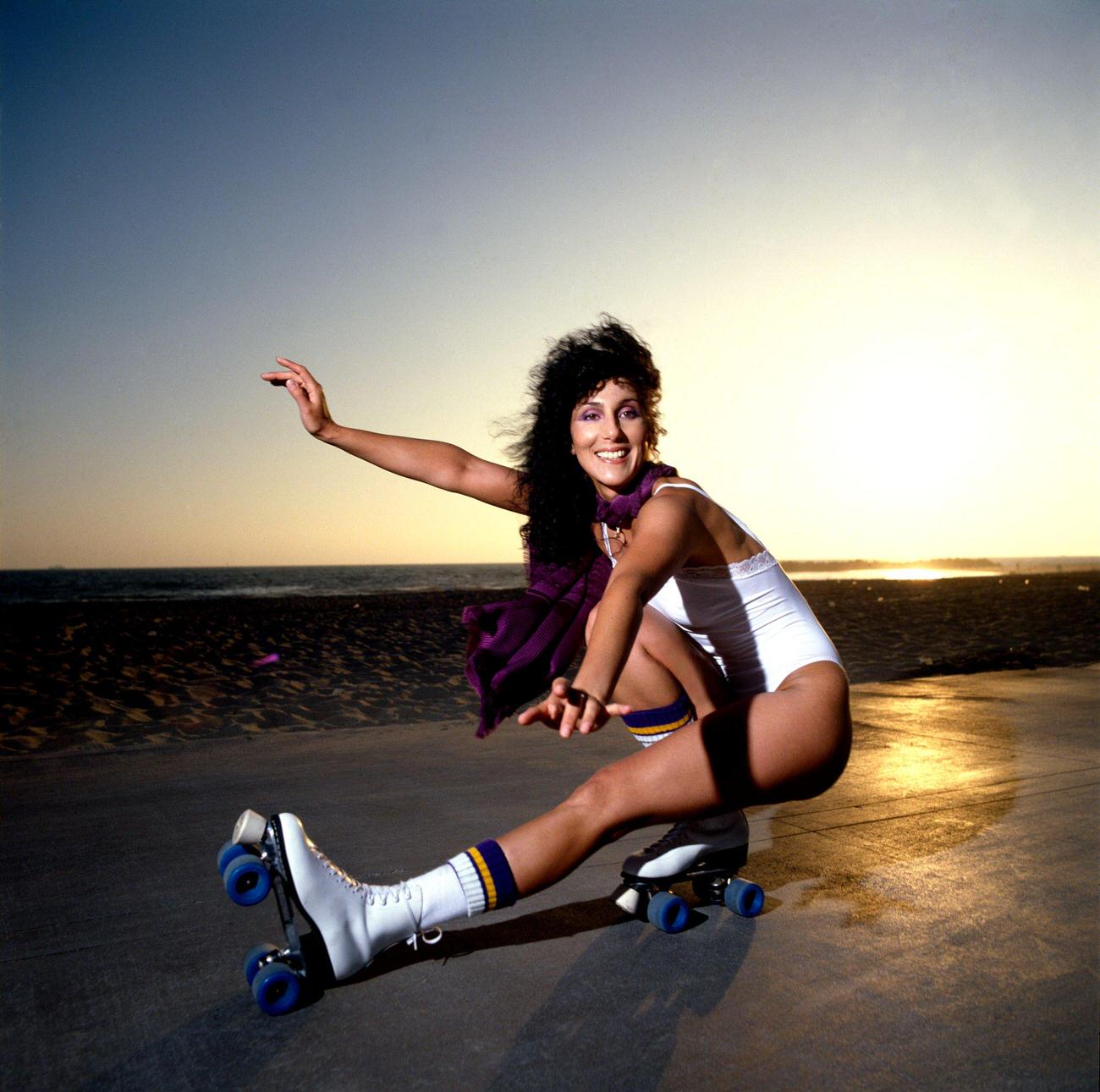
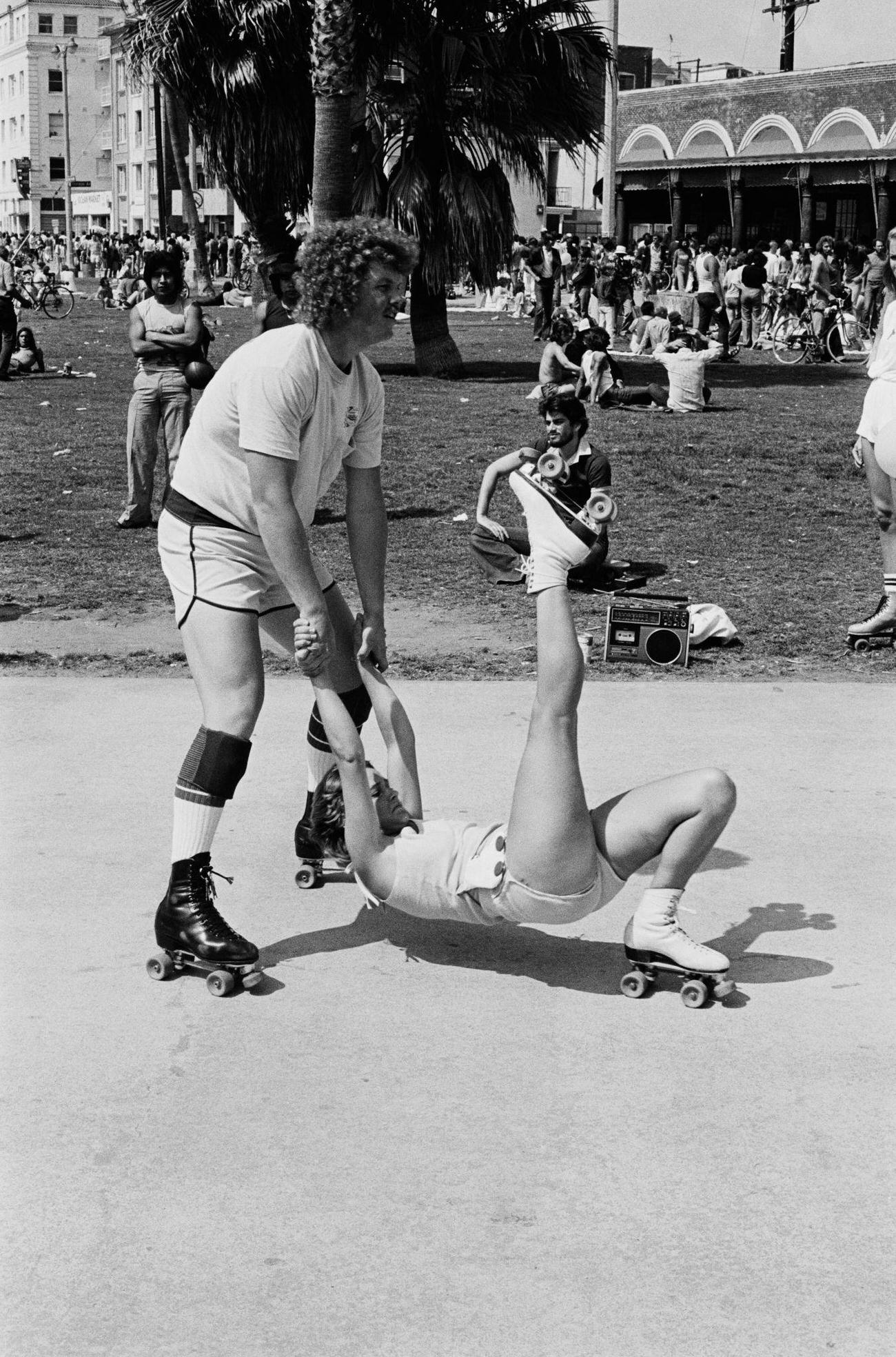
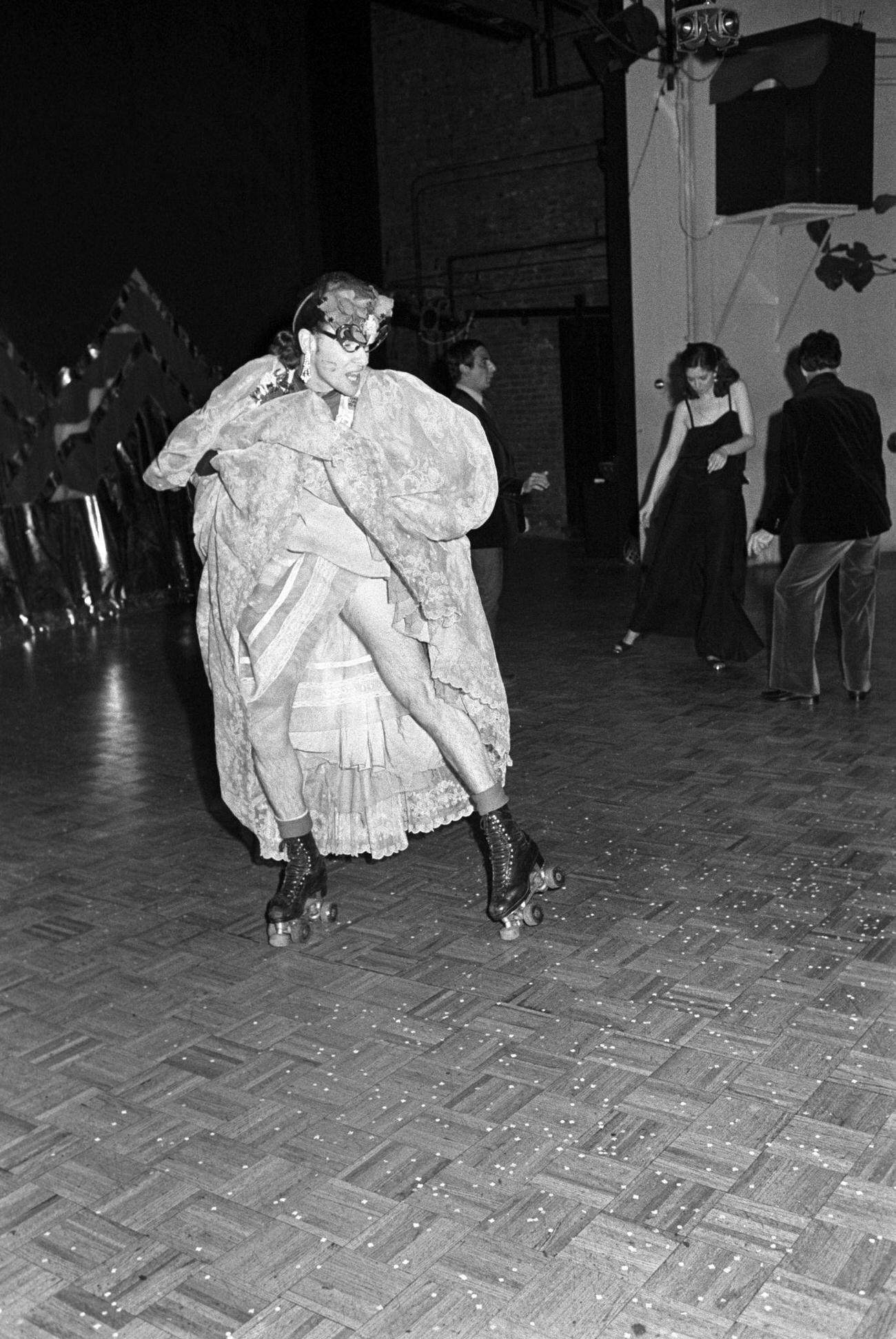
New York’s Roxy Roller Disco became the beating heart of the late-1970s skating scene. Professional roller disco dancers performed routines for crowds. At Venice Beach in Los Angeles, skaters drew audiences with slalom tricks along the boardwalk. Rollerena — a rollerskating drag queen — made Studio 54 their stage. Skating was intersecting with music, protest, fashion, and nightlife all at once.
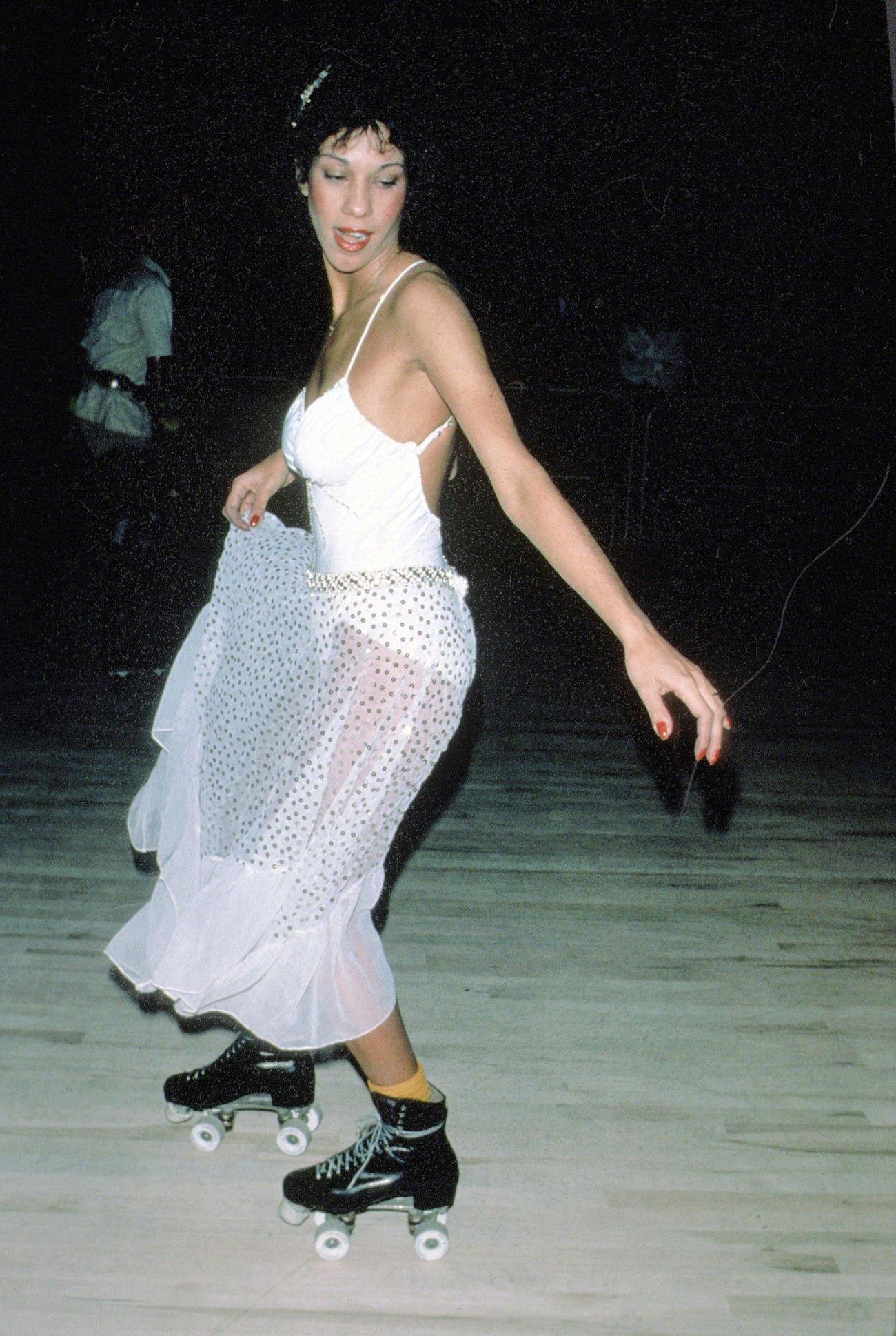
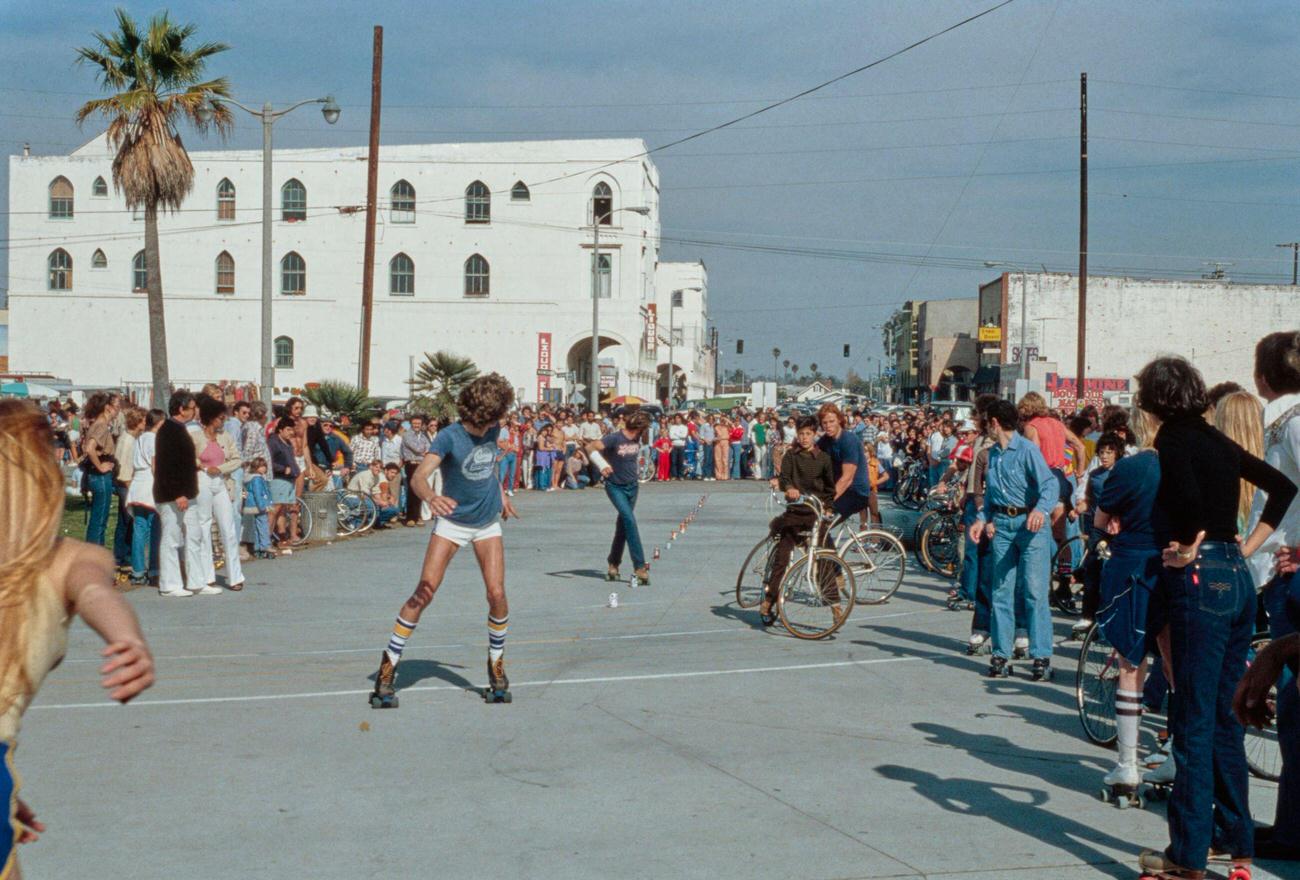
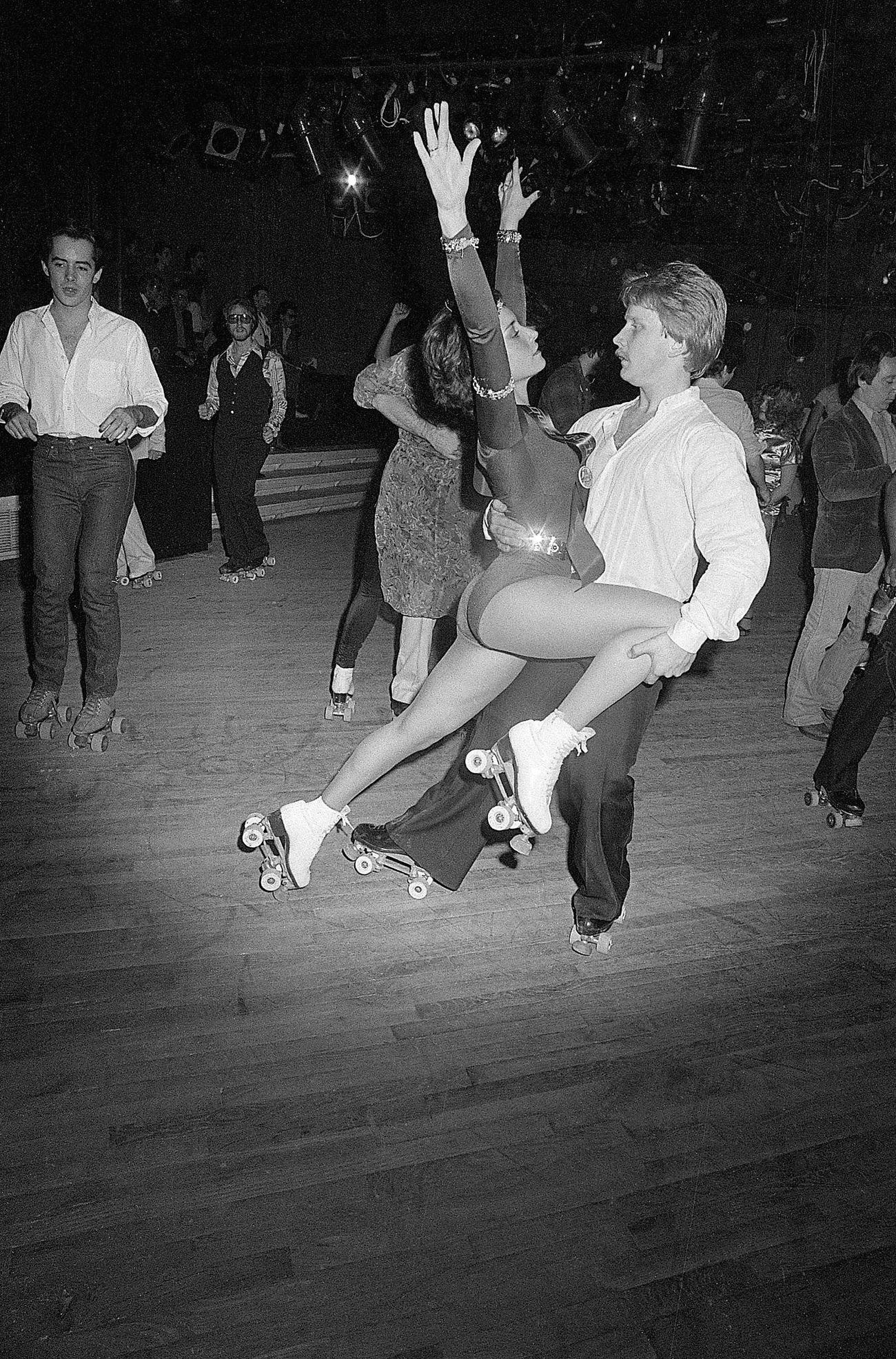
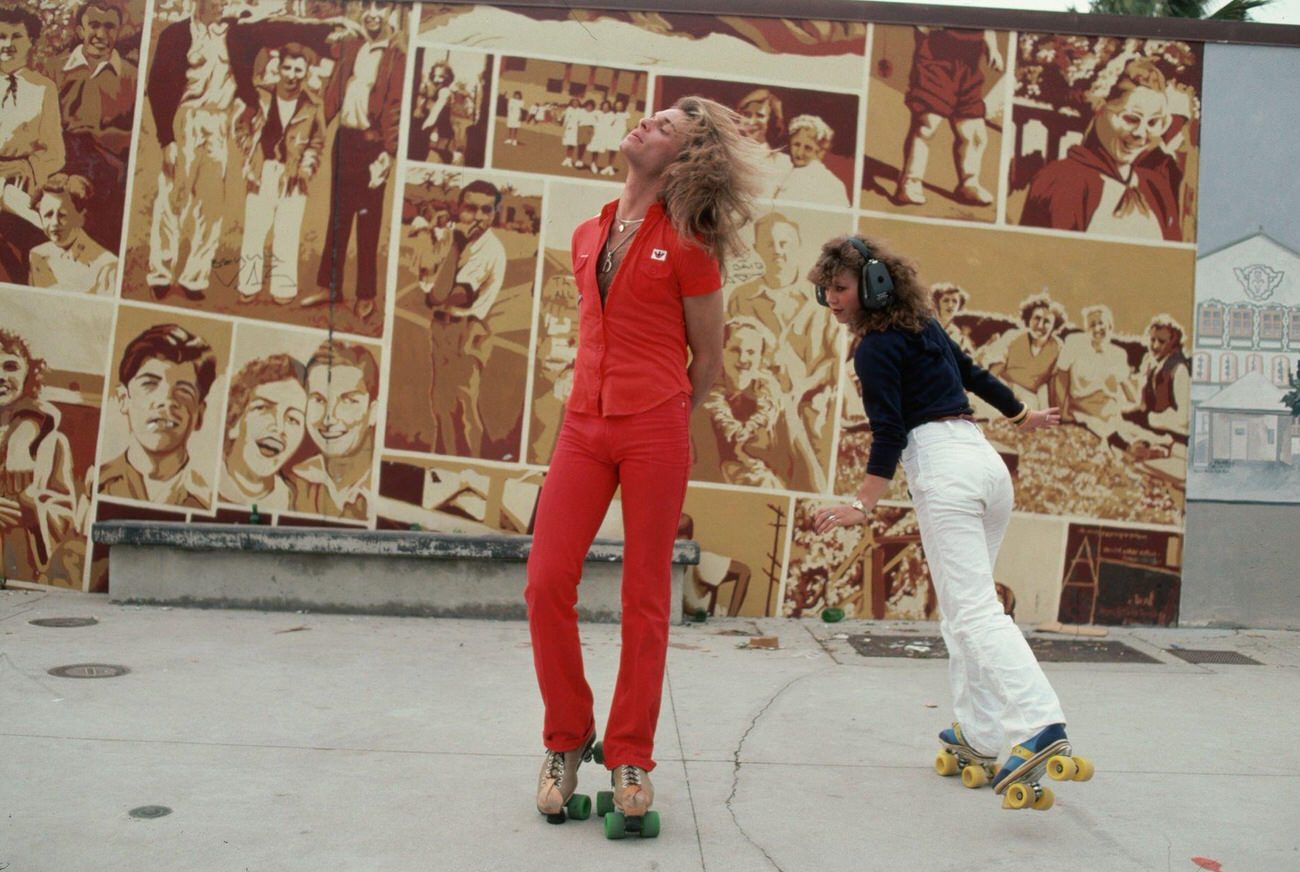
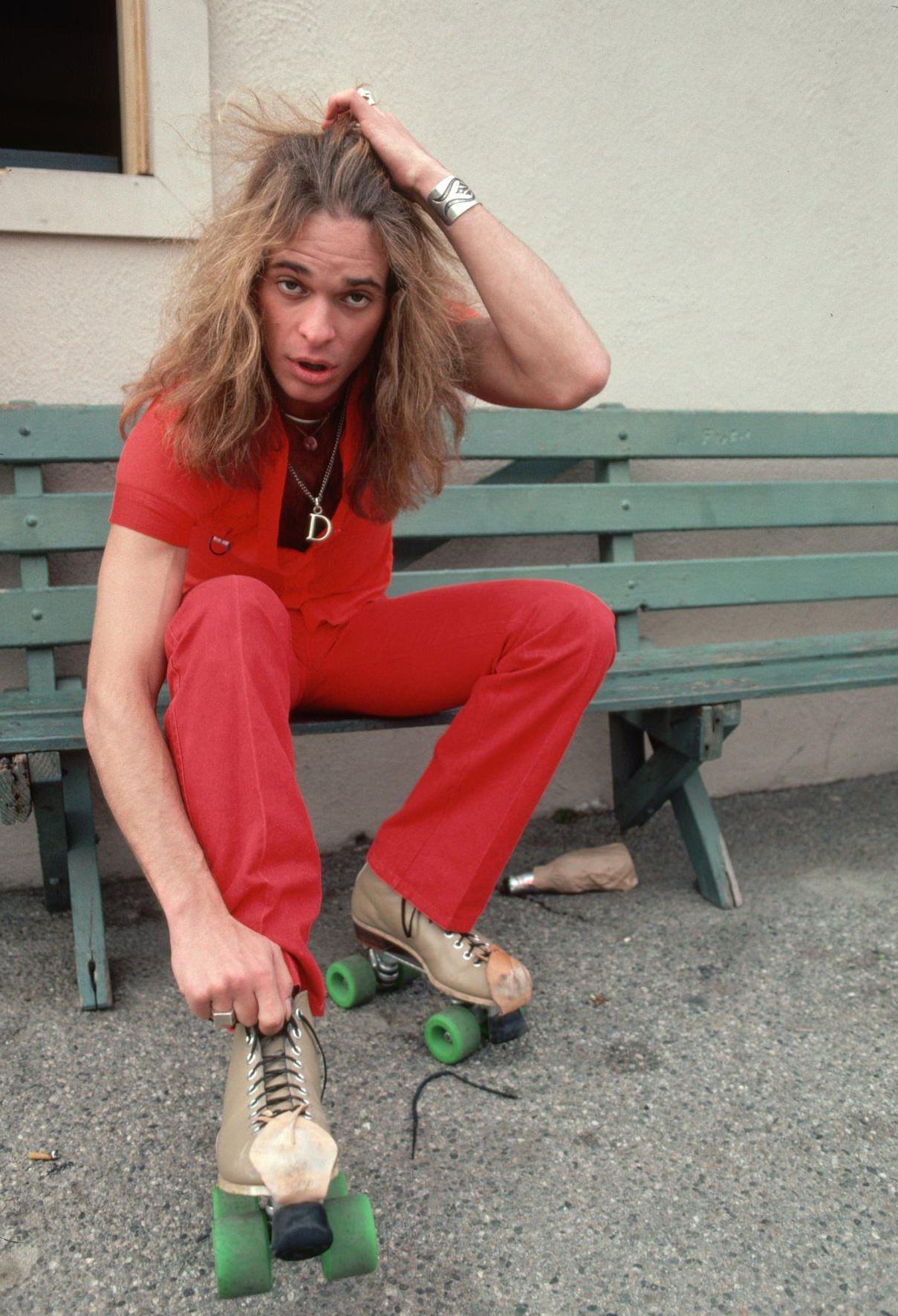
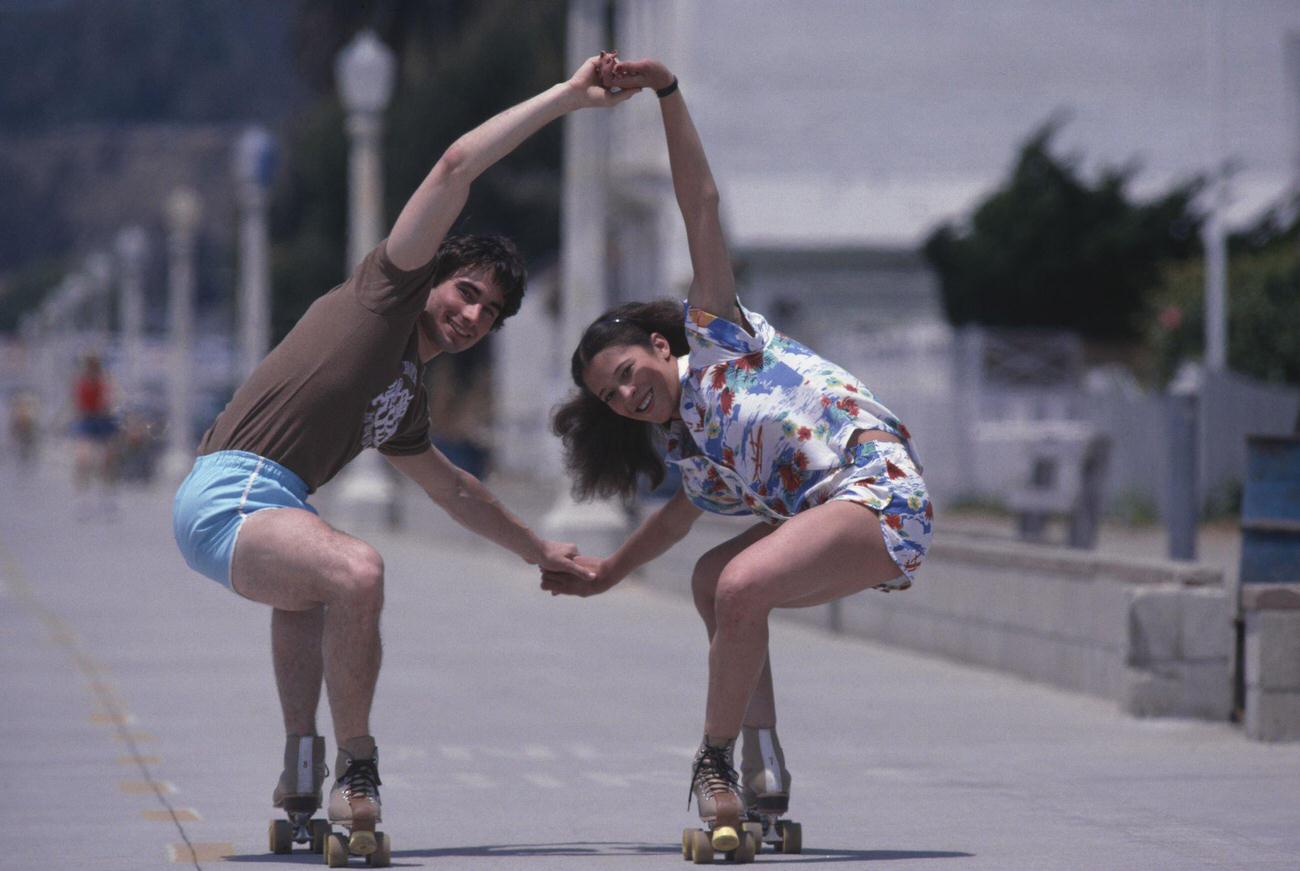
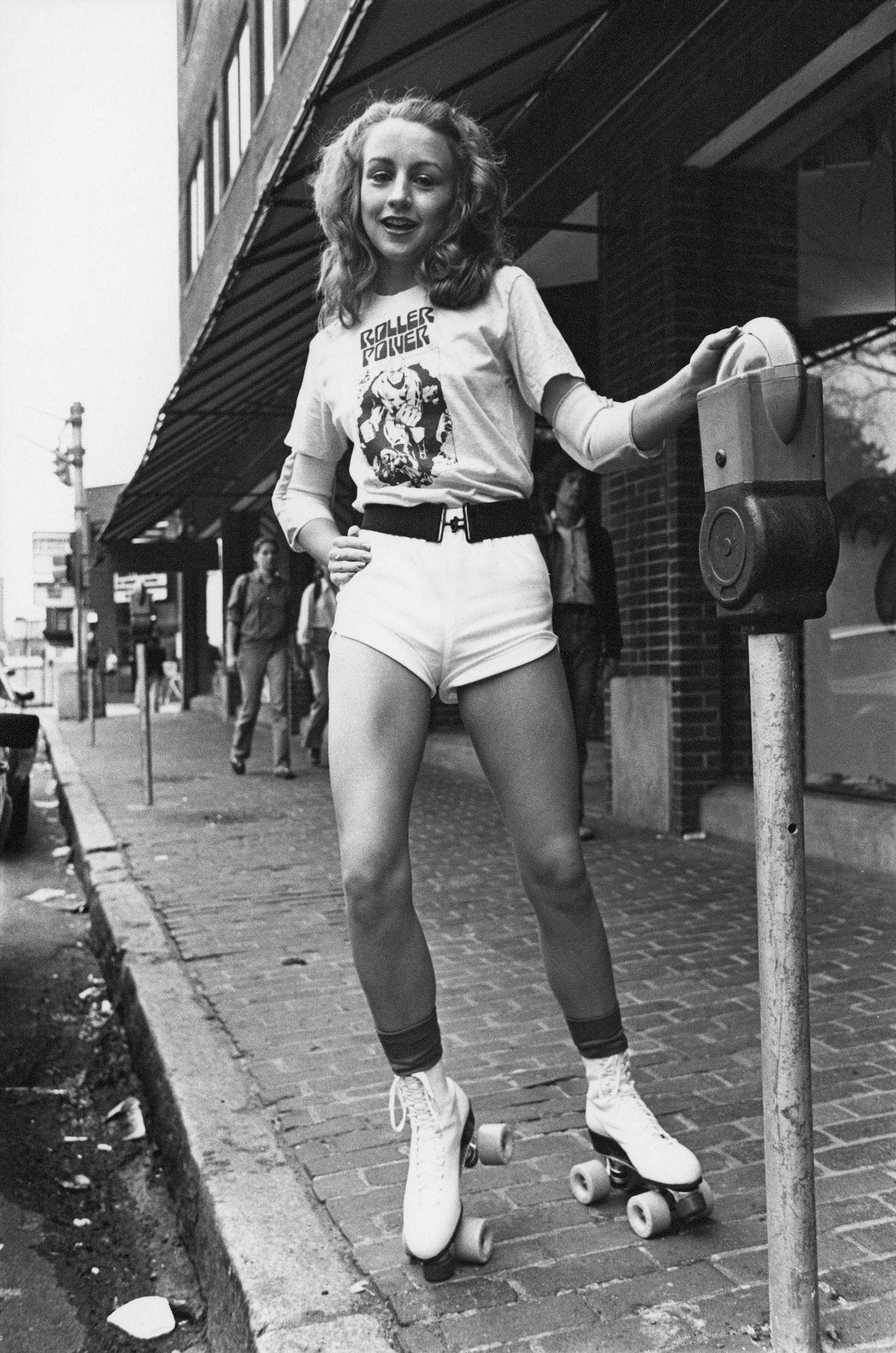
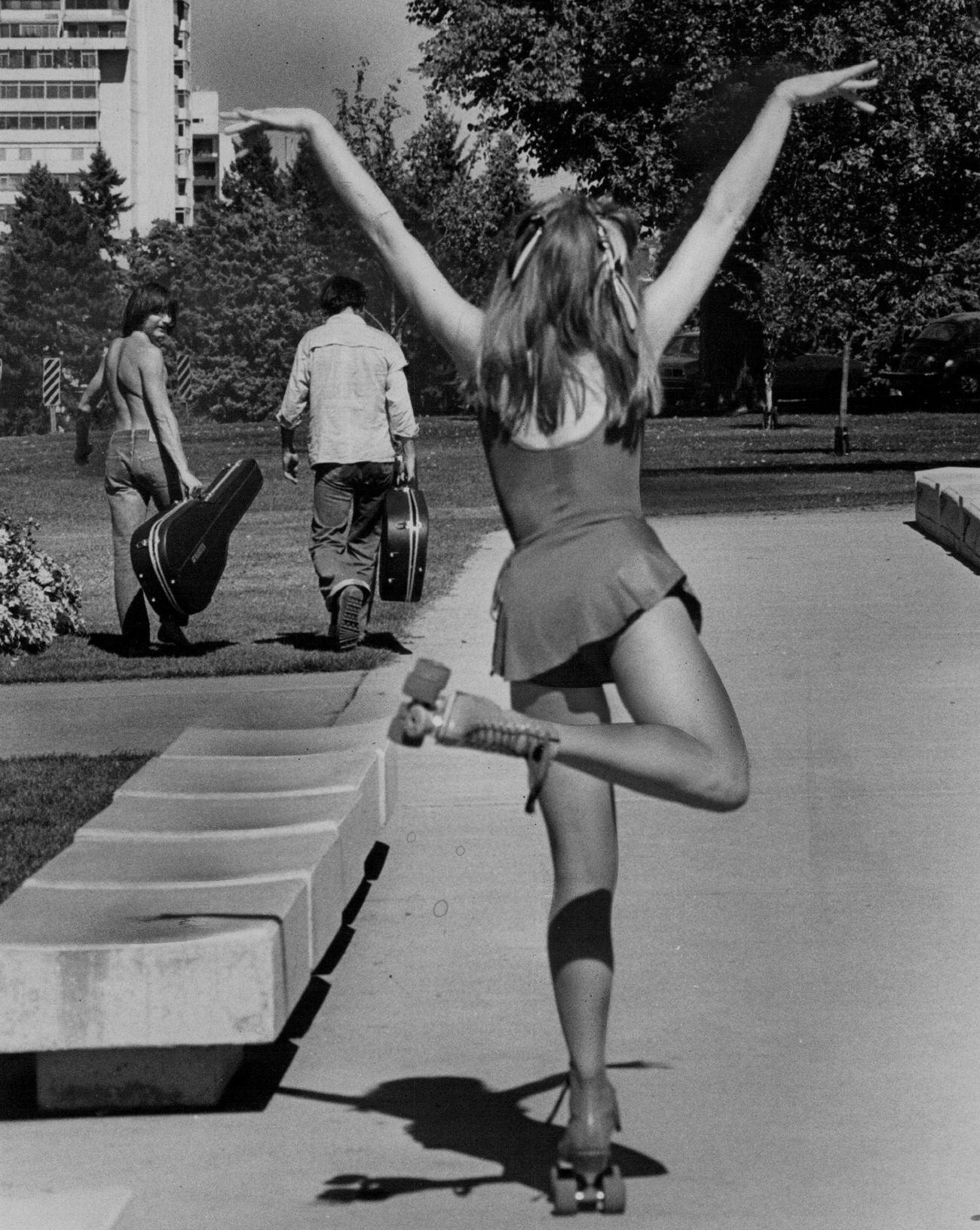
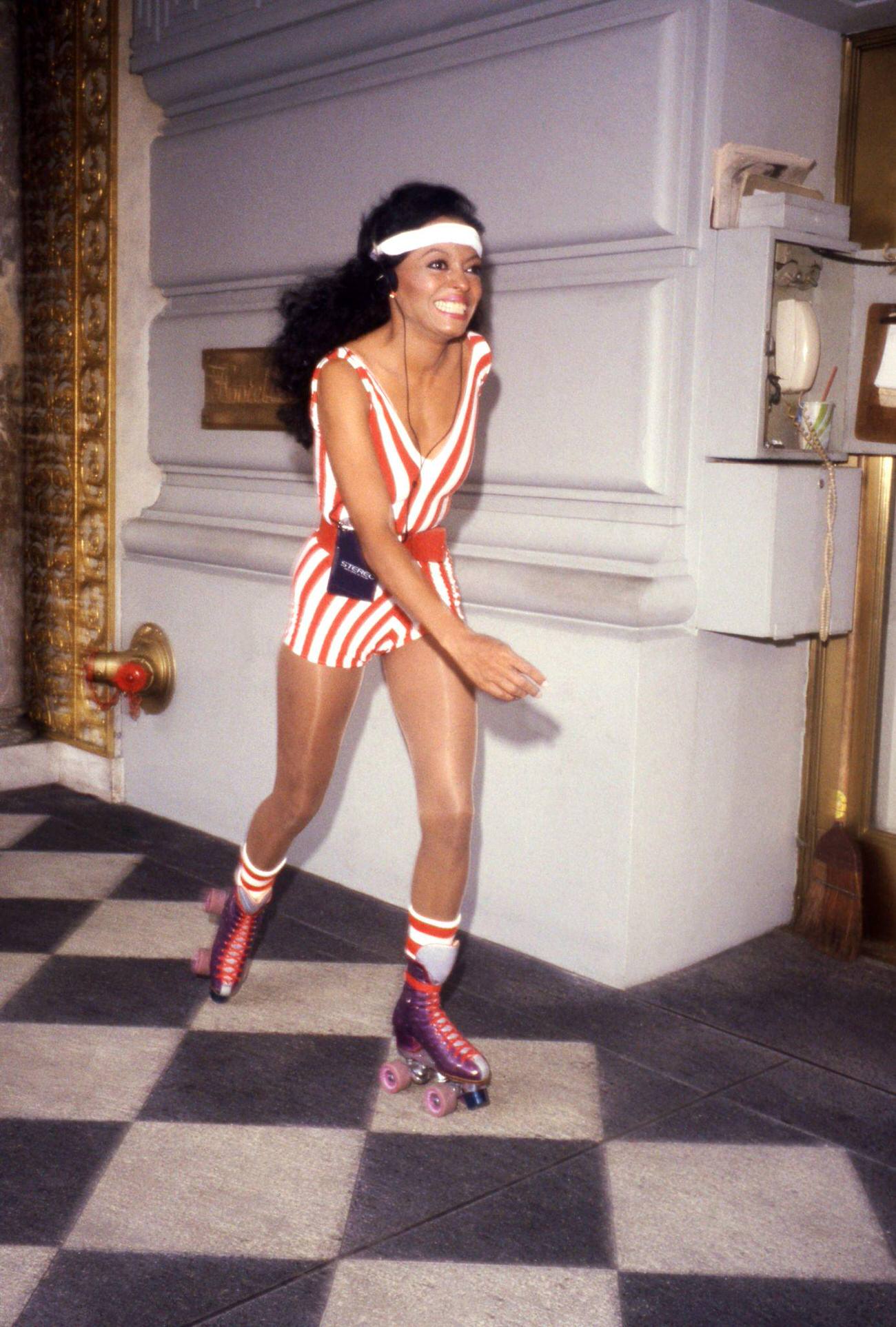
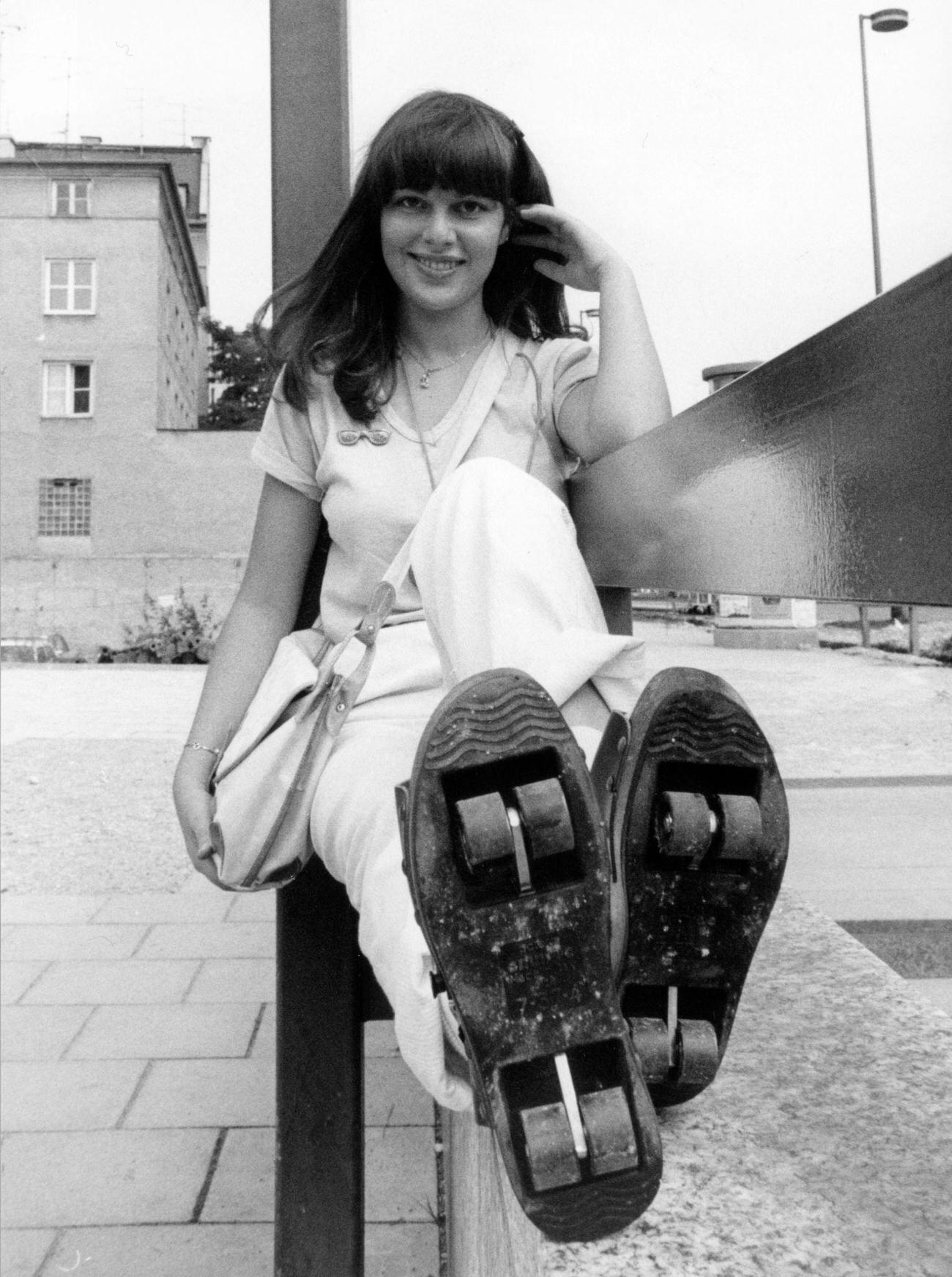
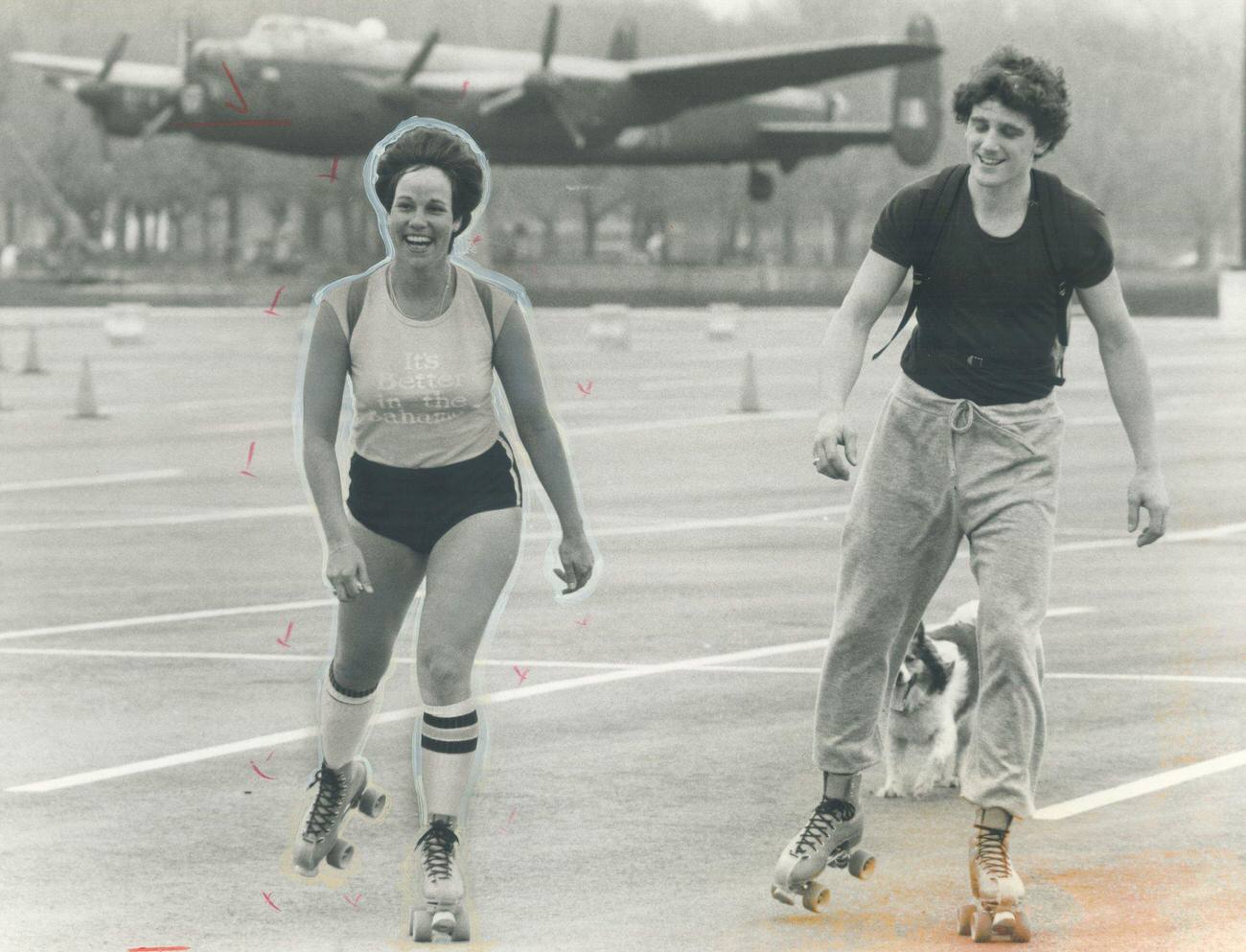
The 1980s arrived with more energy than ever. Venice Beach remained the outdoor capital of skating culture. Diana Ross was photographed skating in New York City. In Munich, Pop-Wheels rollerskates became a street fashion statement. The Roxy Disco in New York drew trios in spandex. Across North America, the craze spread — Canada held its own World Rollerskating Championships qualifiers by 1982, and Chloe Ronaldson claimed Britain’s quarter-mile sprint title that same year.
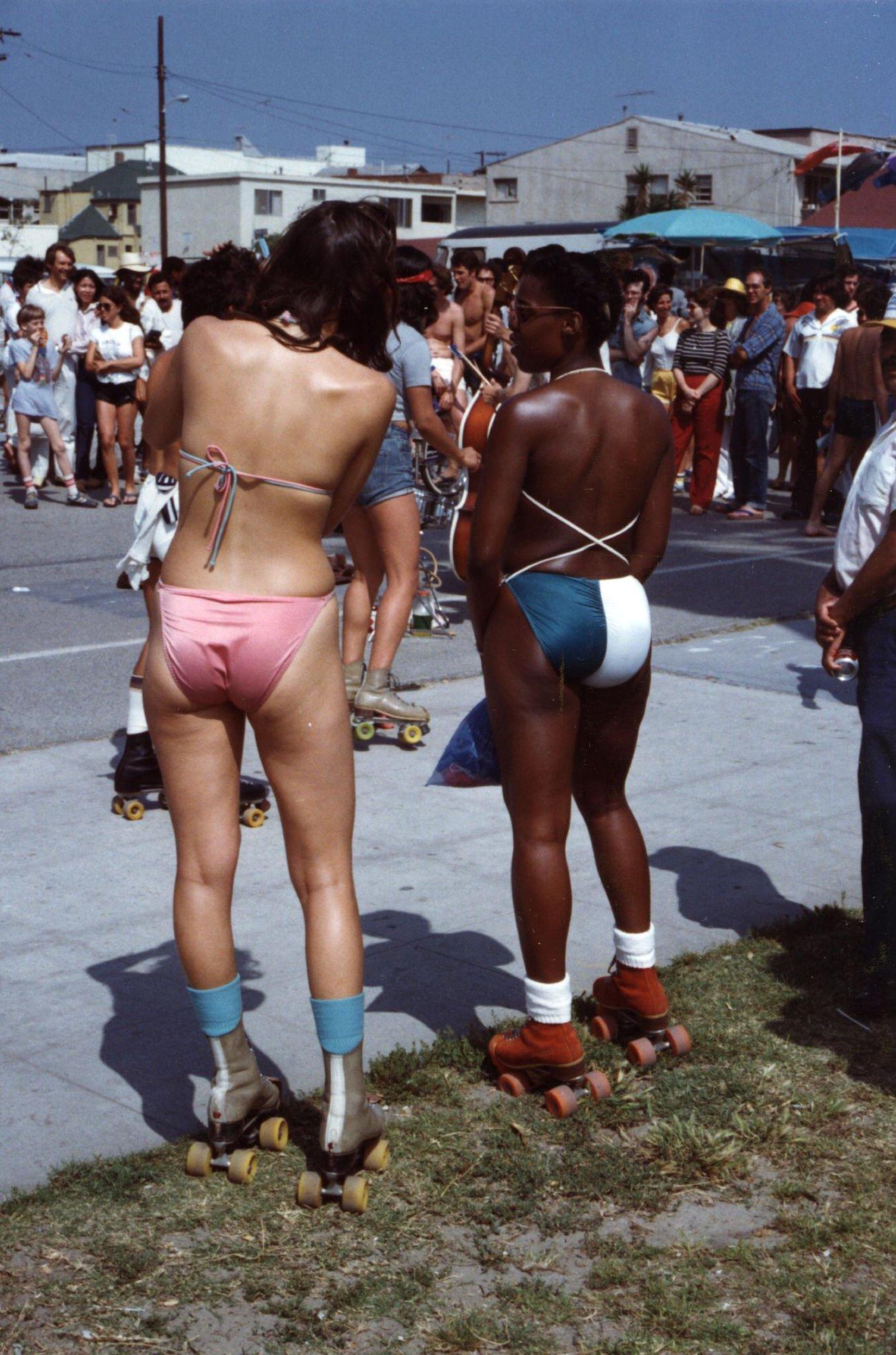
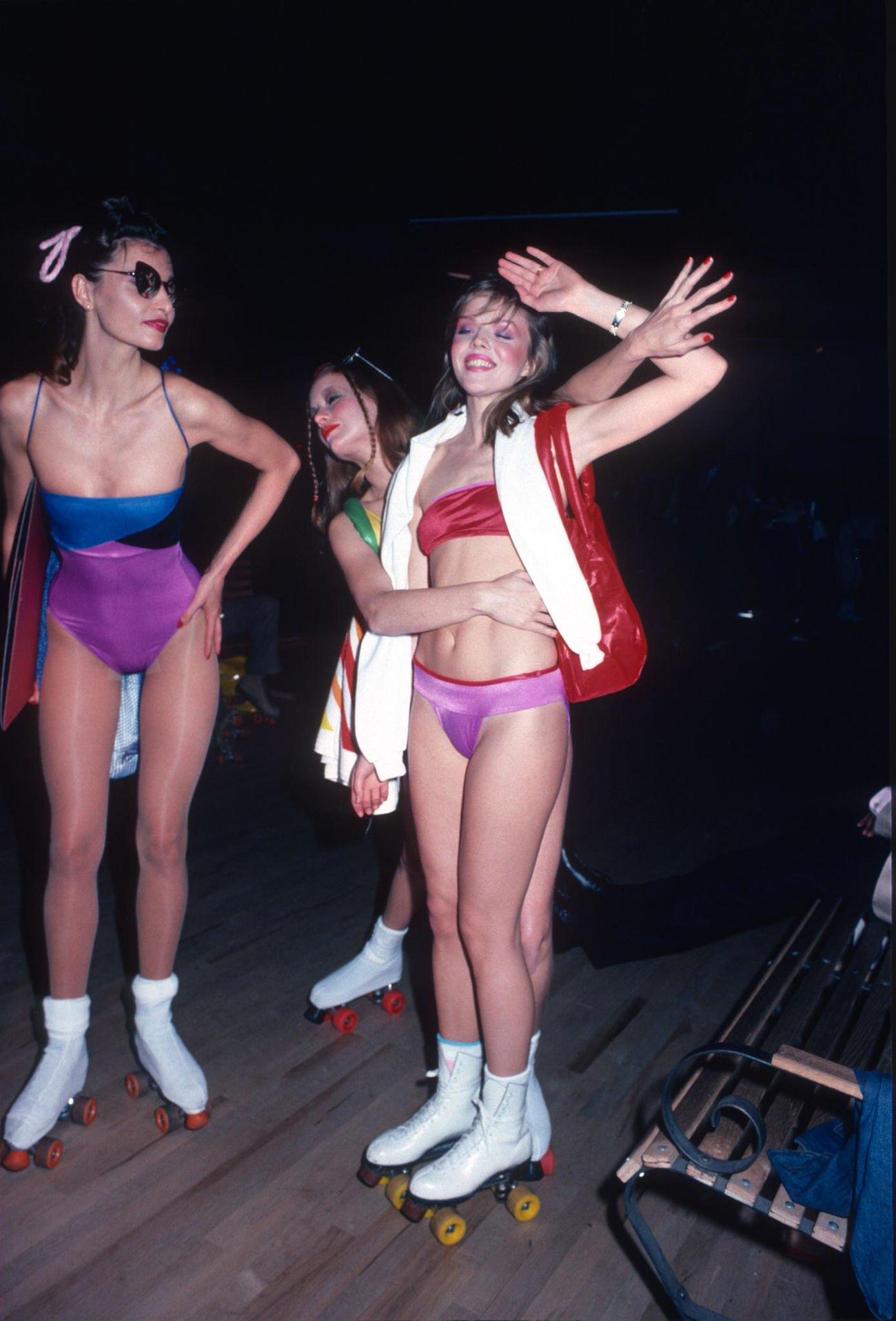
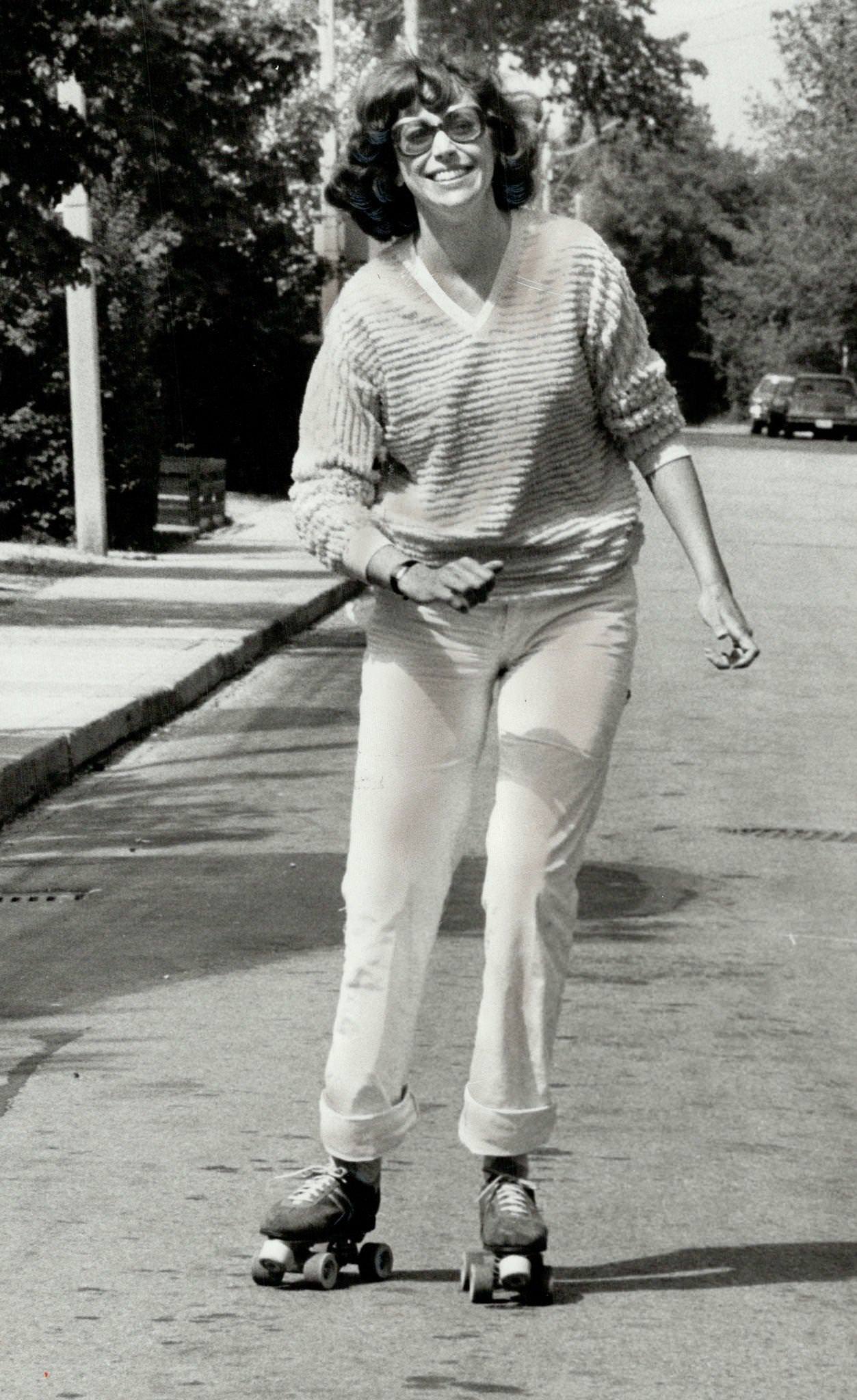
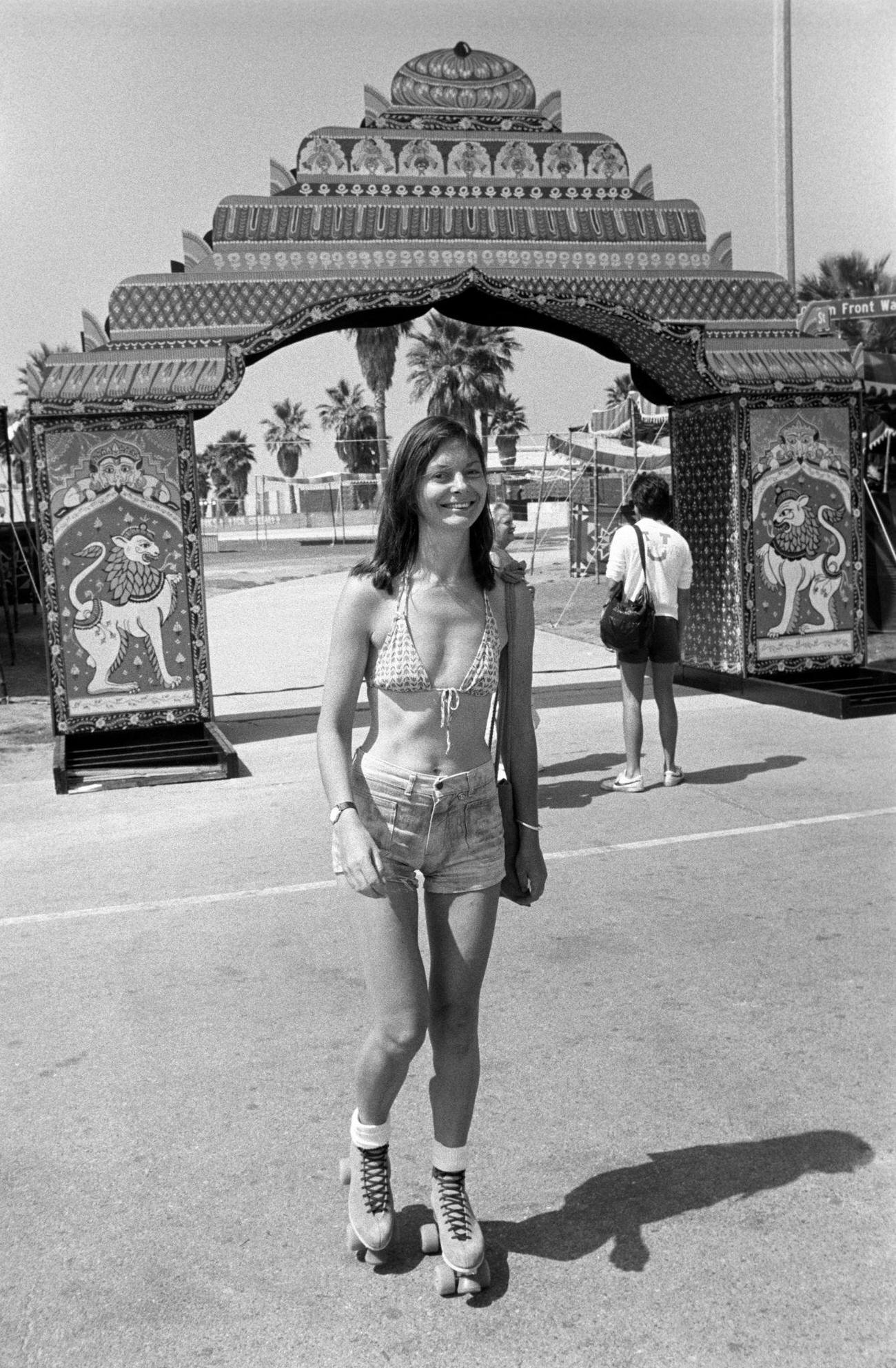
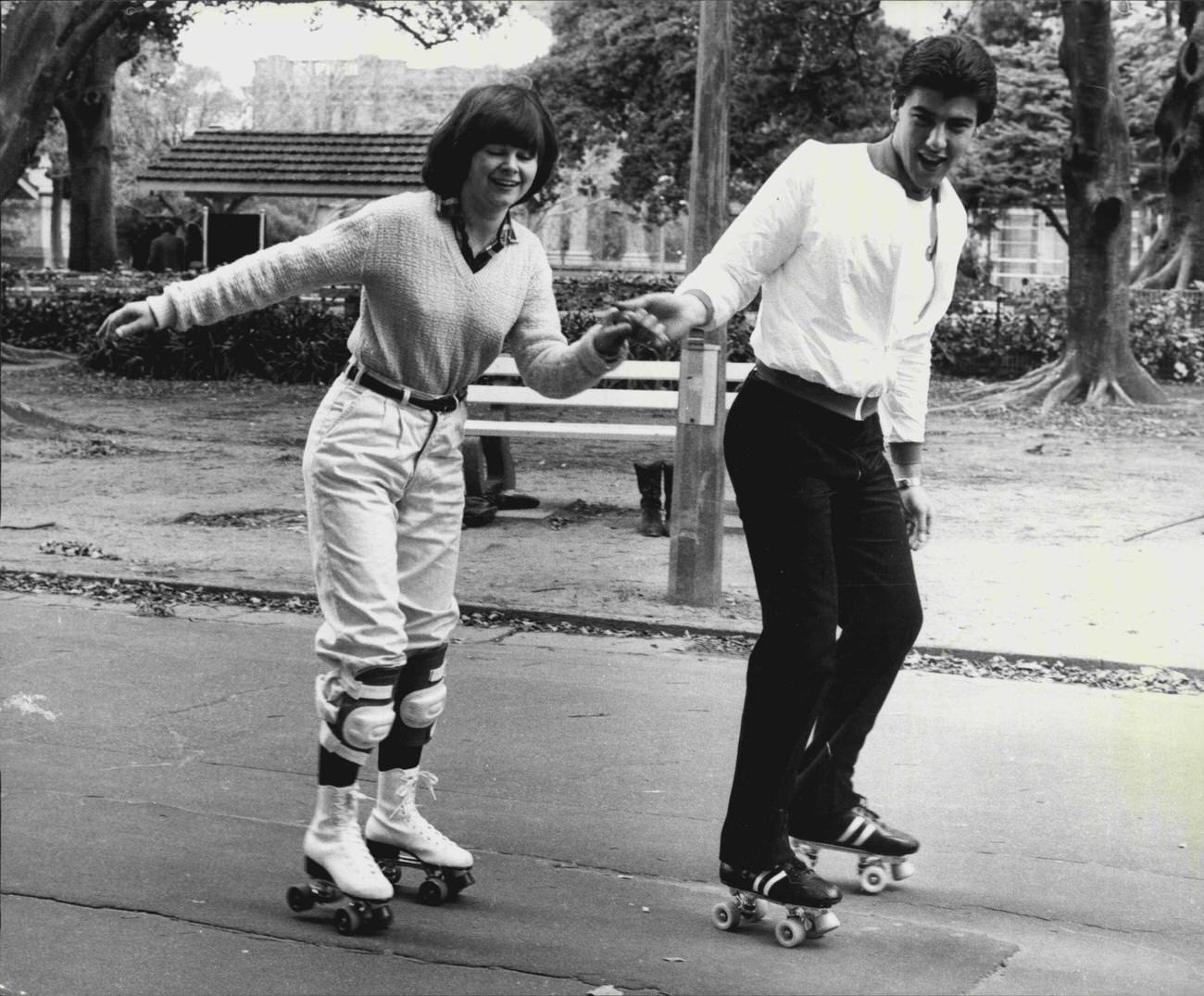
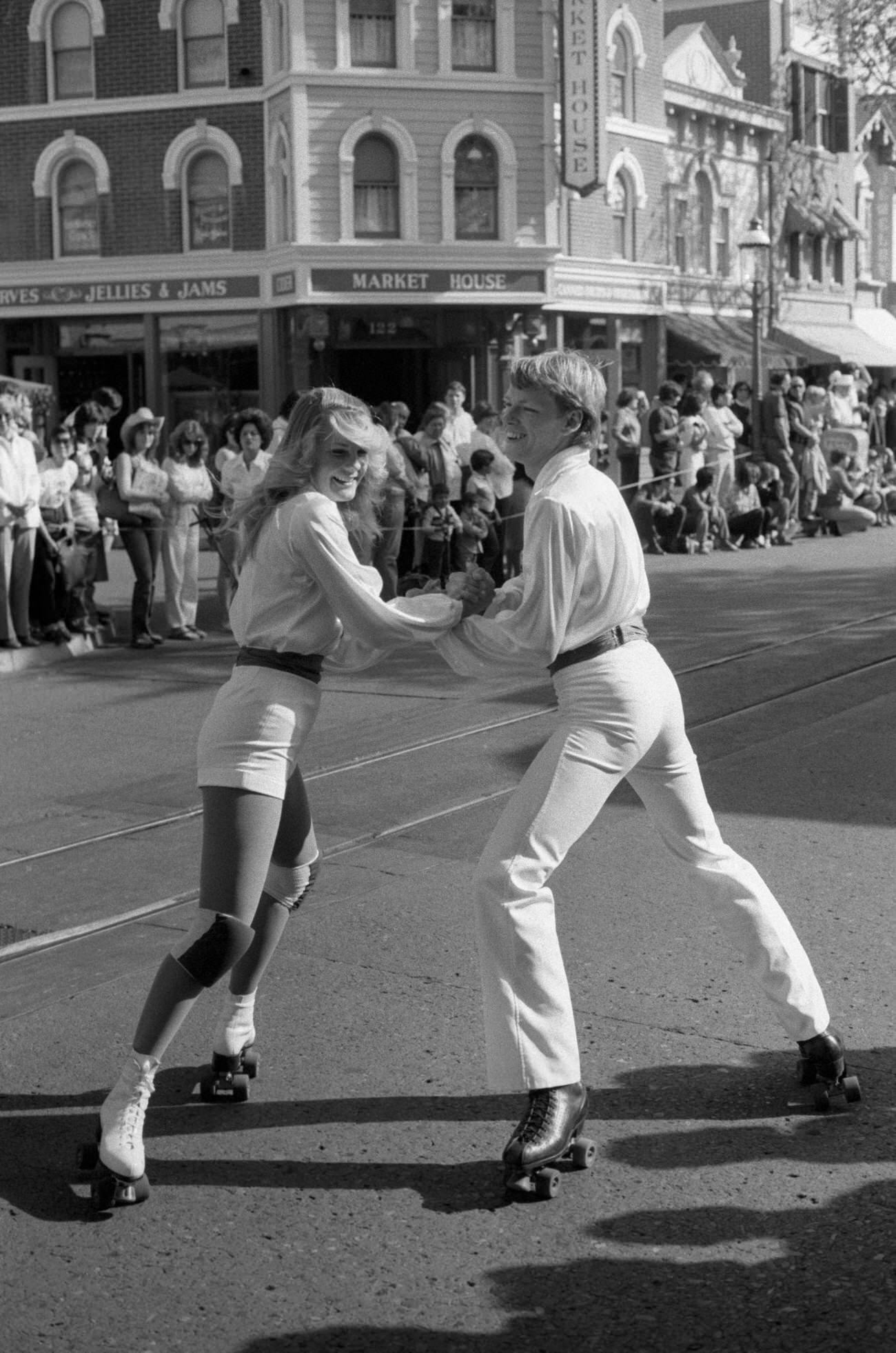
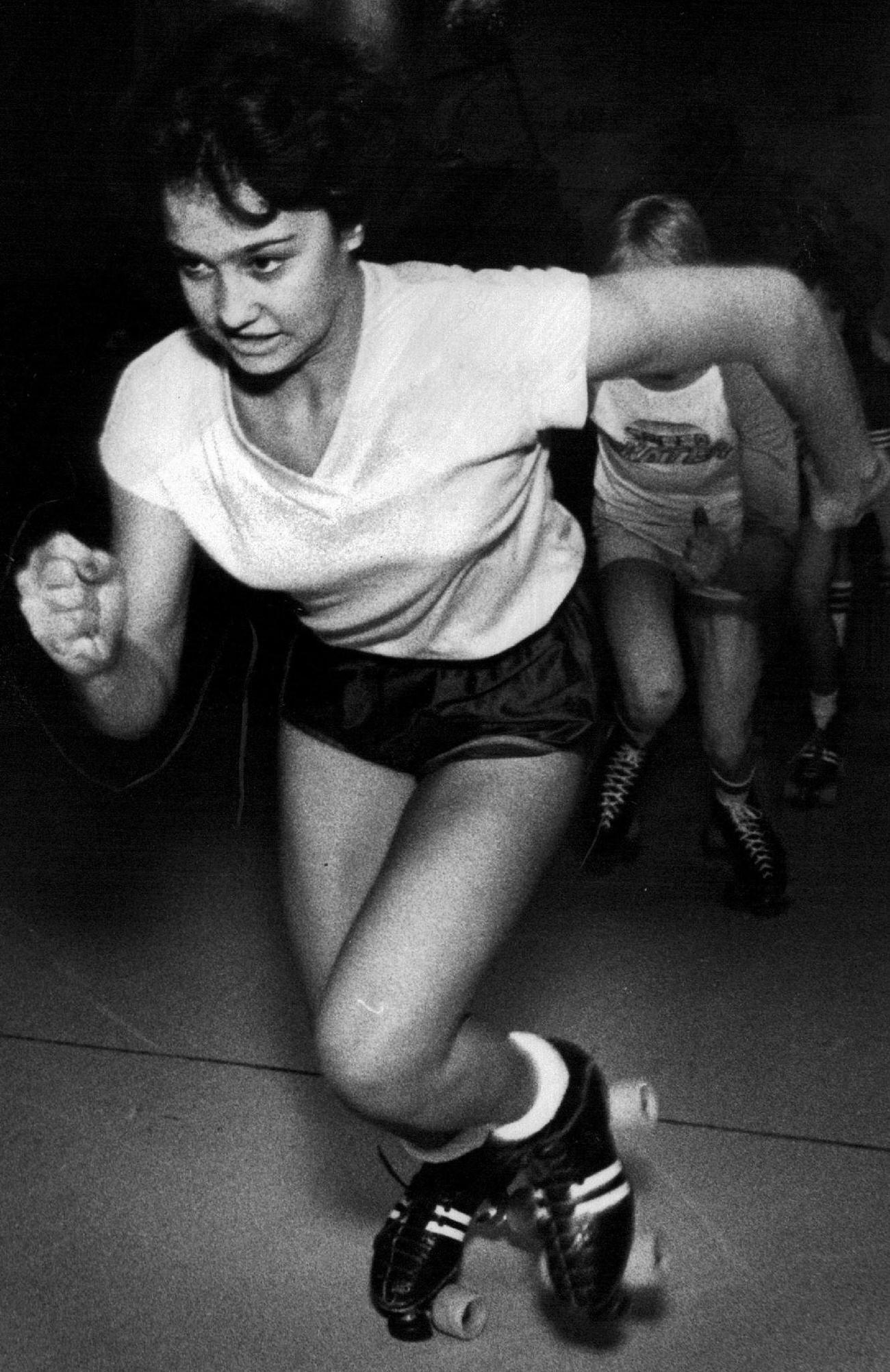
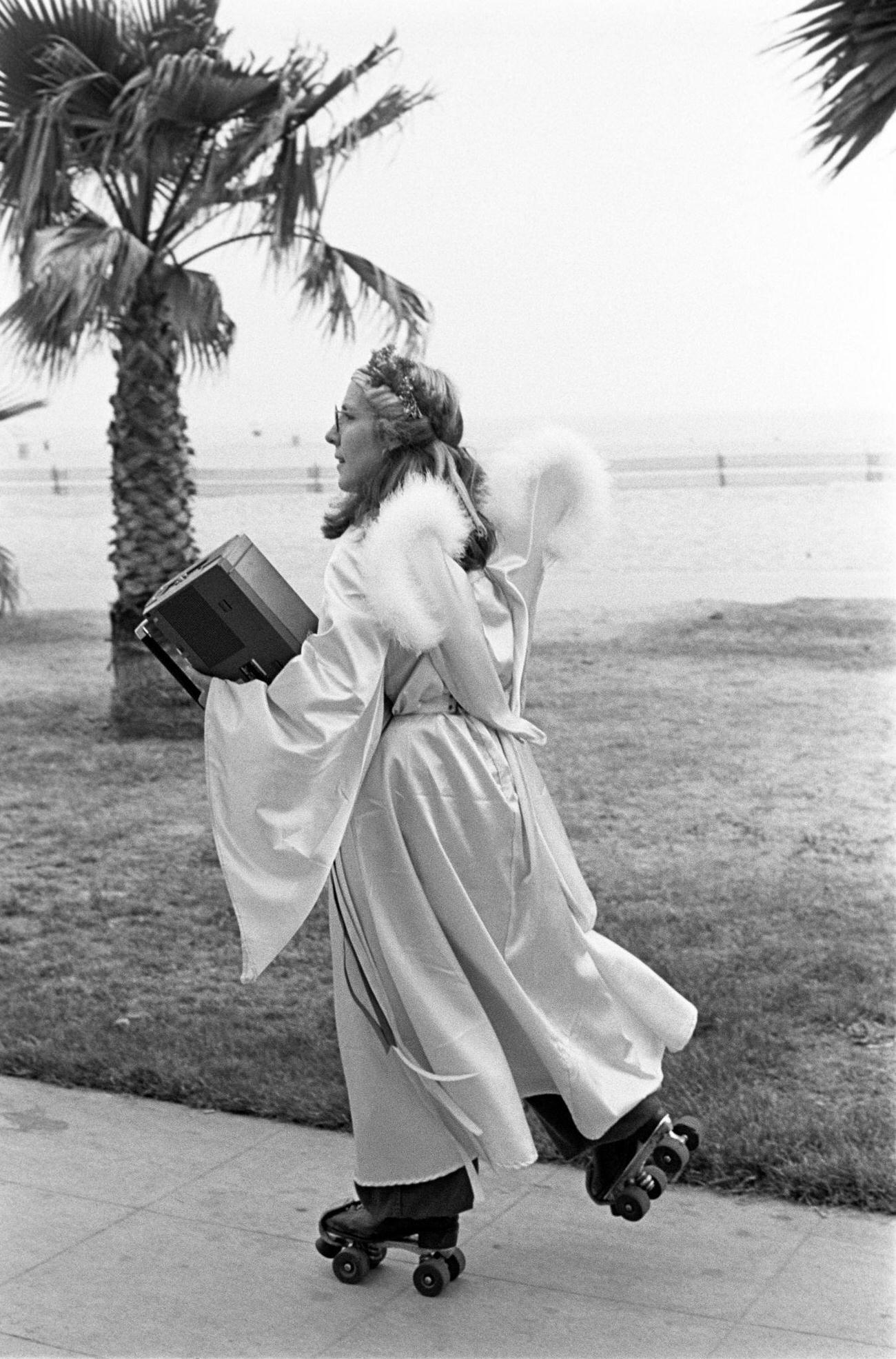
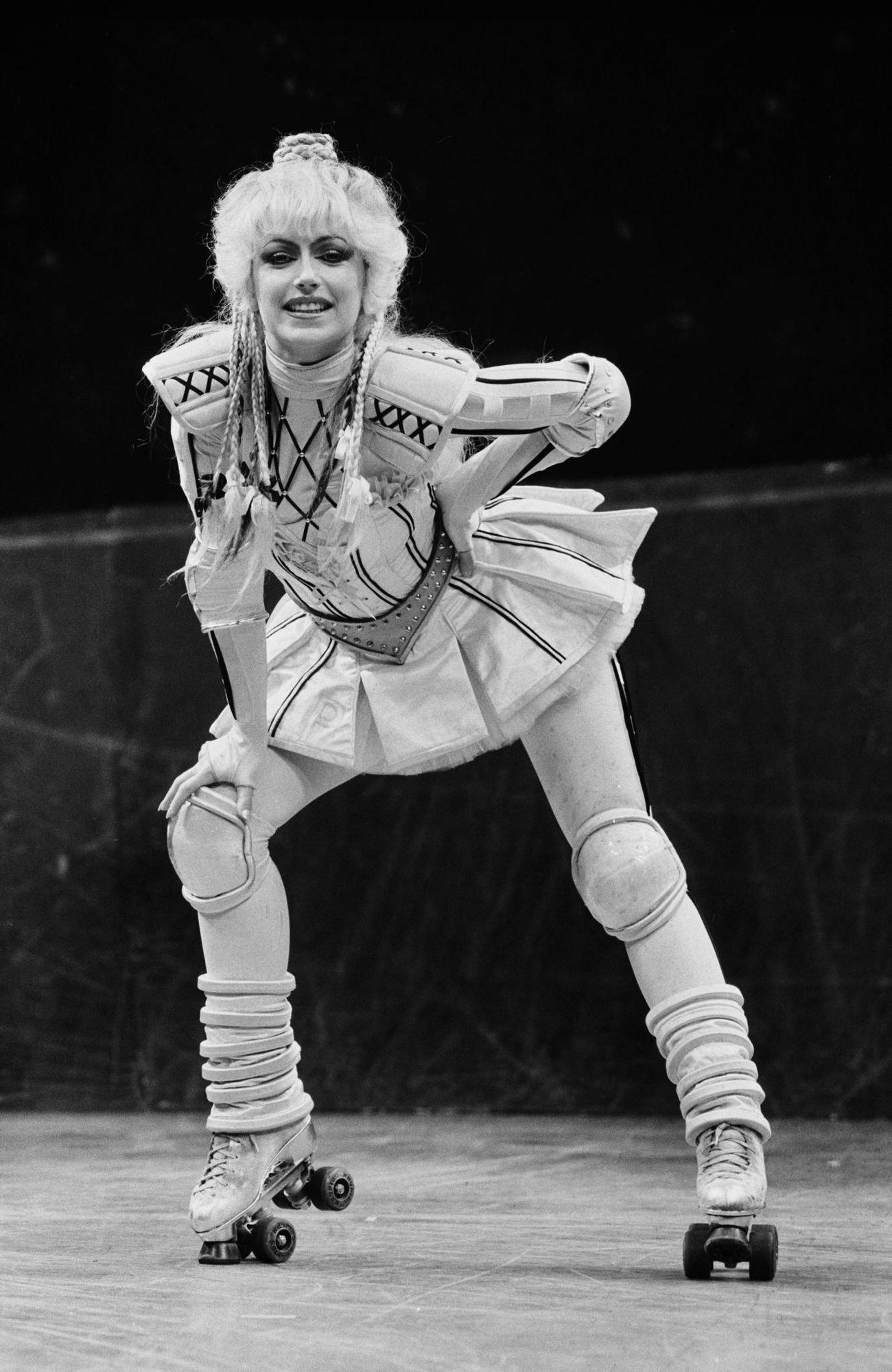
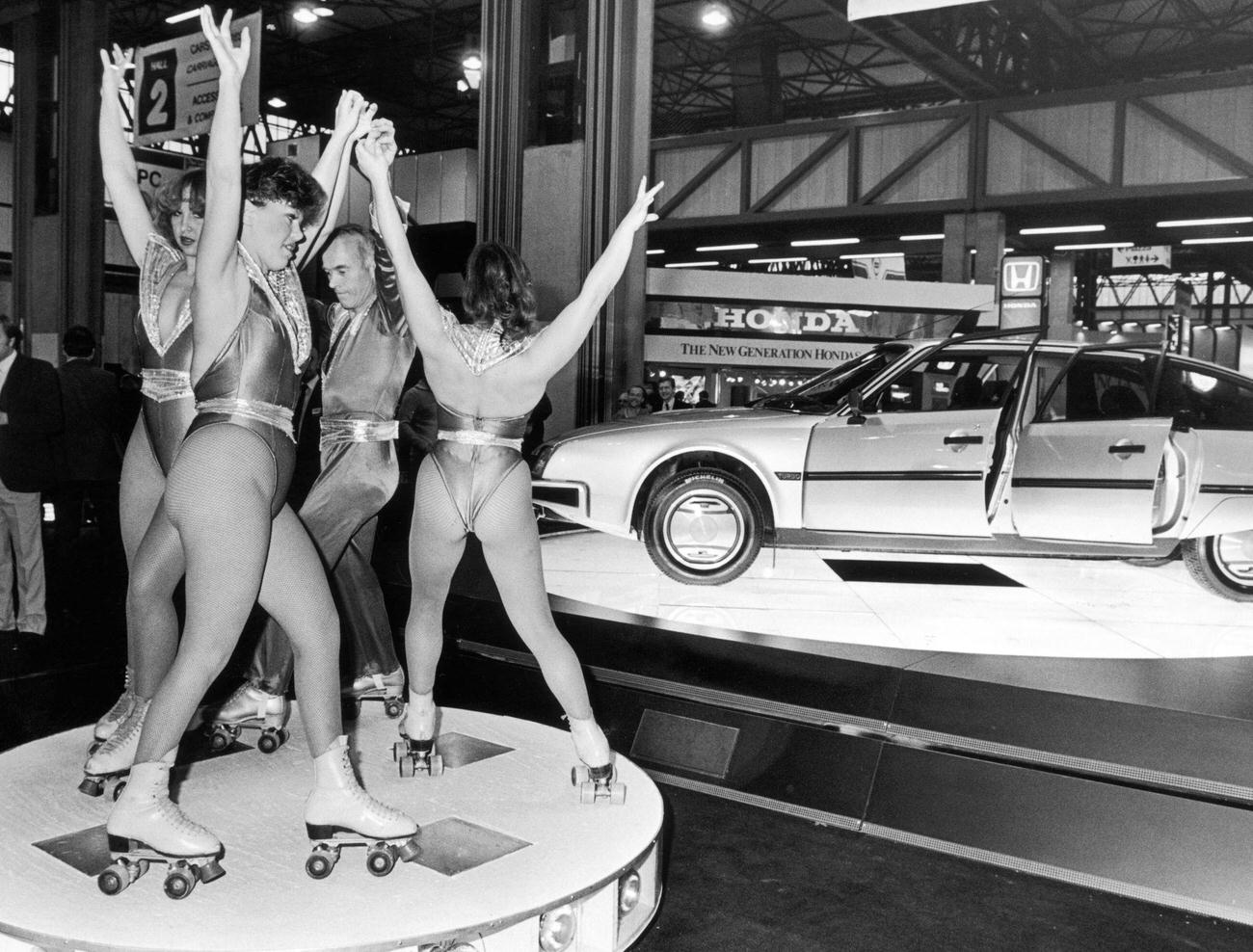
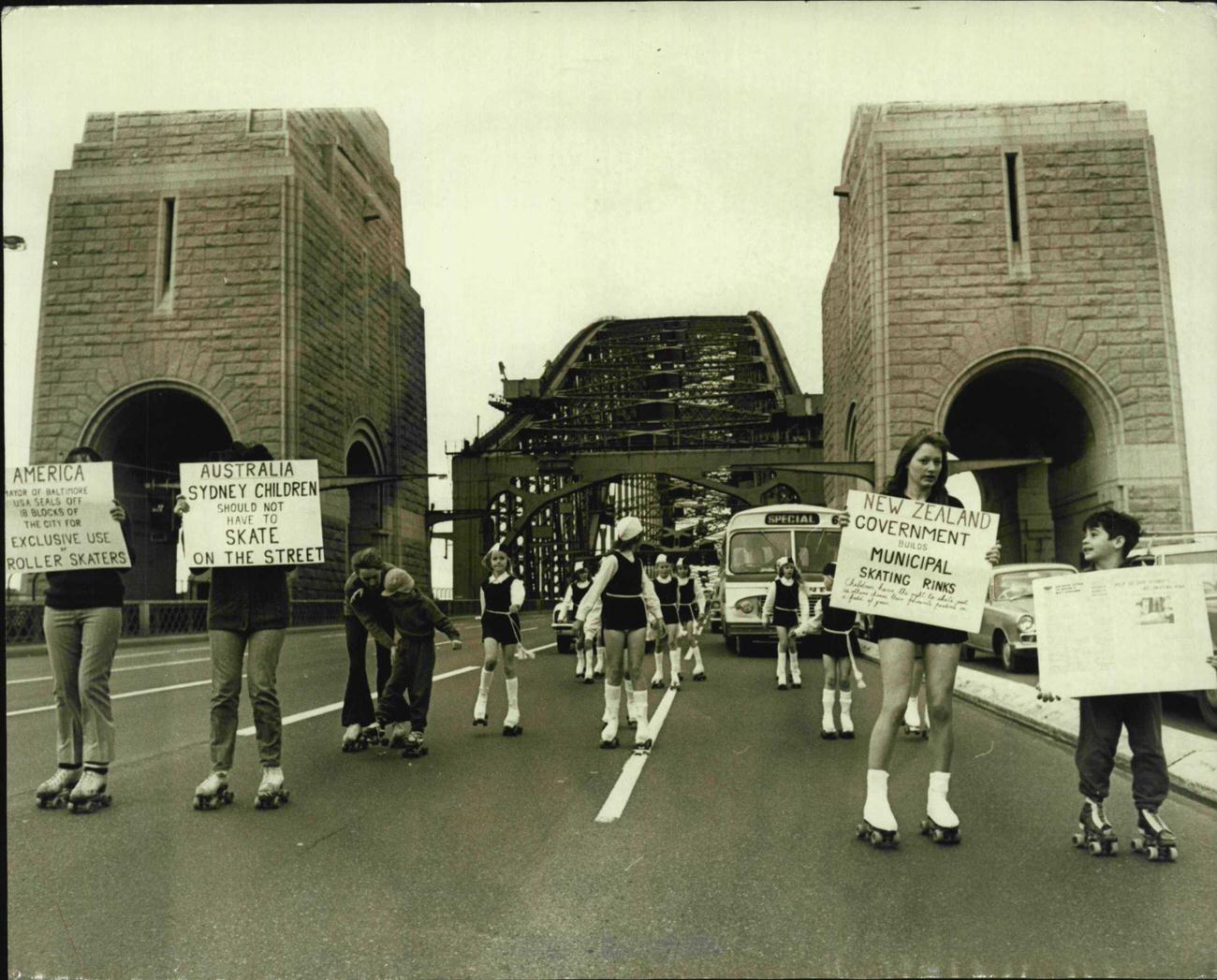
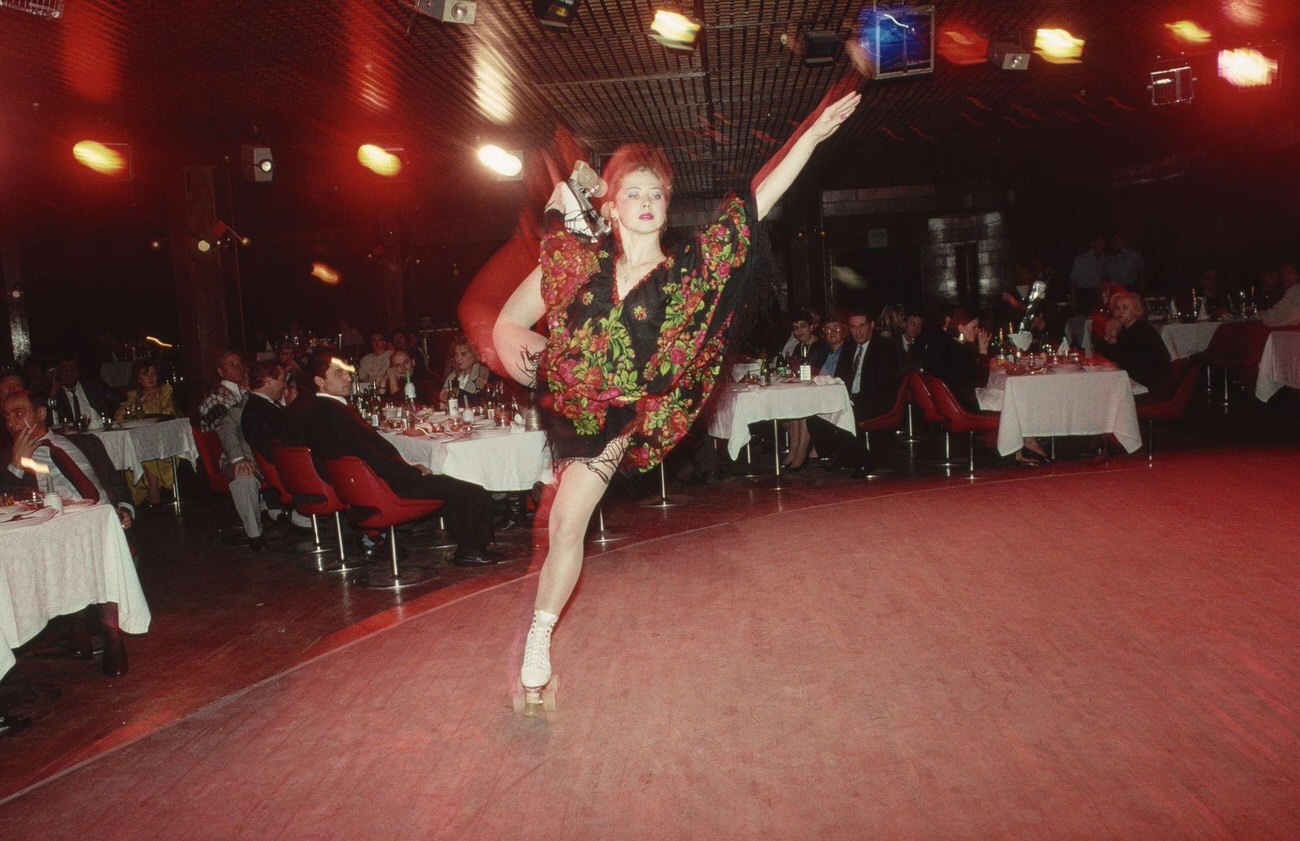
In Sydney in 1982, skaters staged a “Roll-In” protest on the Harbour Bridge. Catherine Bach, famous for The Dukes of Hazzard, was photographed on skates in Los Angeles. Roller Derby hit the Paradise Ballroom in Los Angeles in 1983 and Greenwich Village in 1986. Leotards, leg warmers, and synchronized routines defined the decade’s fitness-obsessed skating scene. The 1984 Motor Show even featured a live skating entertainment act.
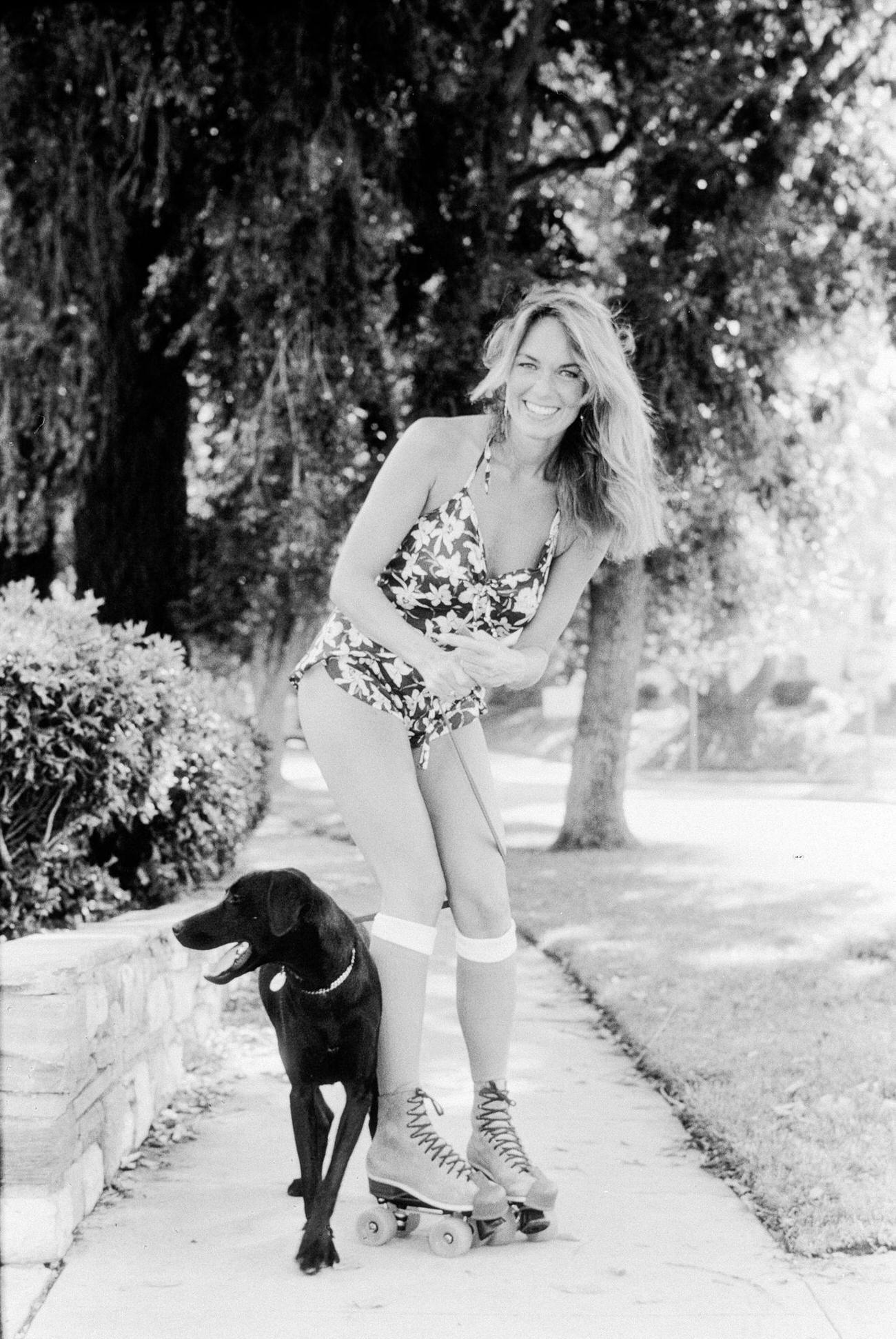
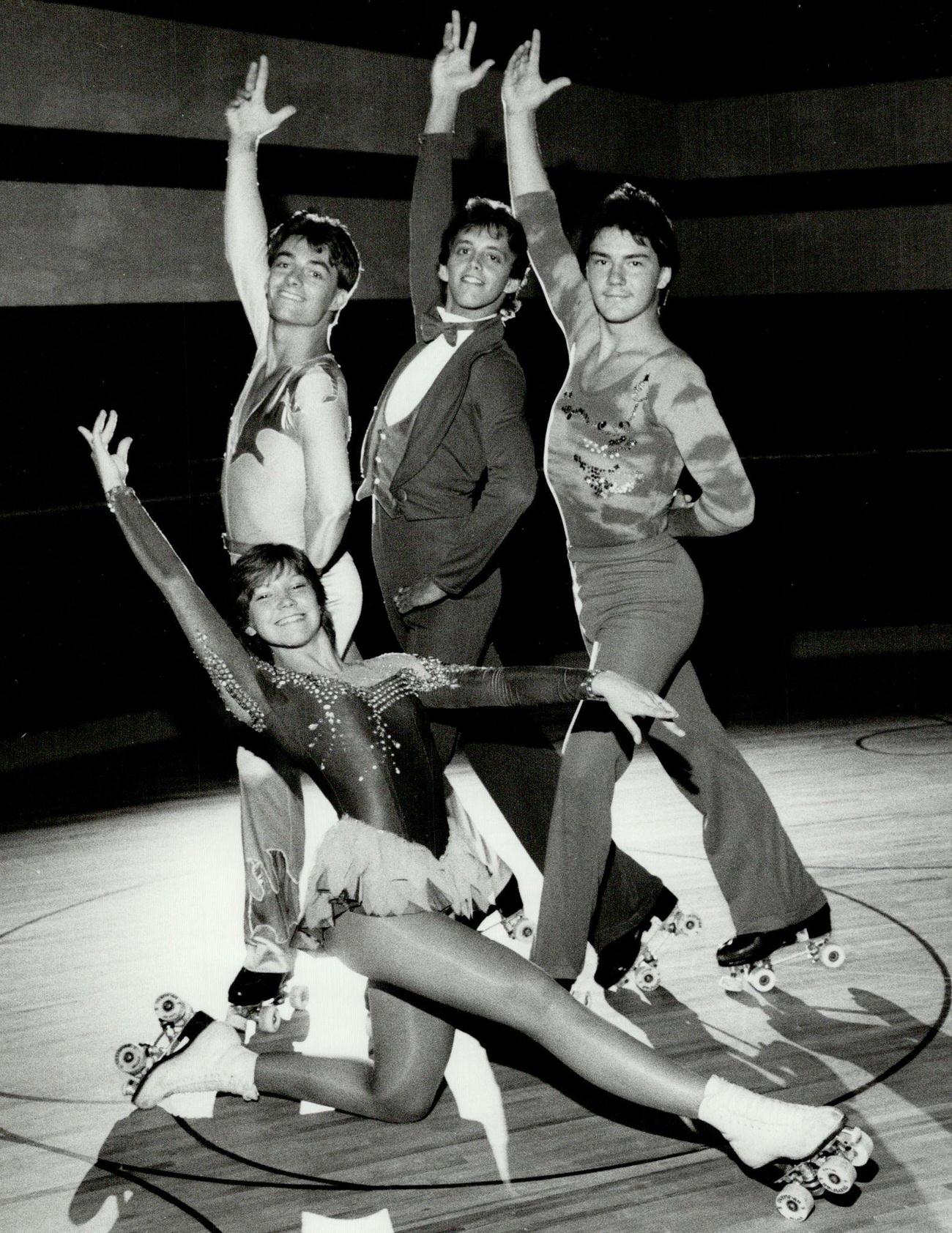
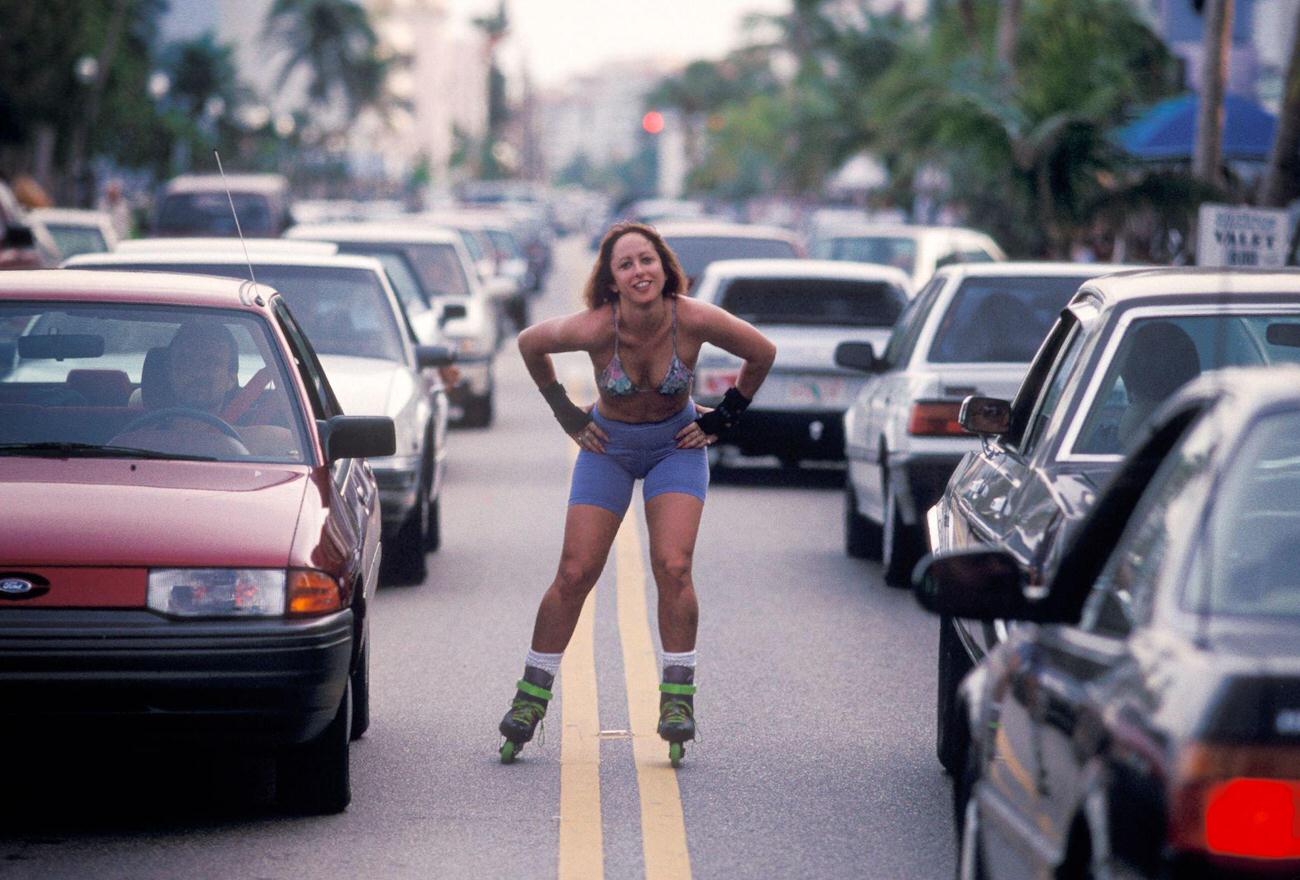
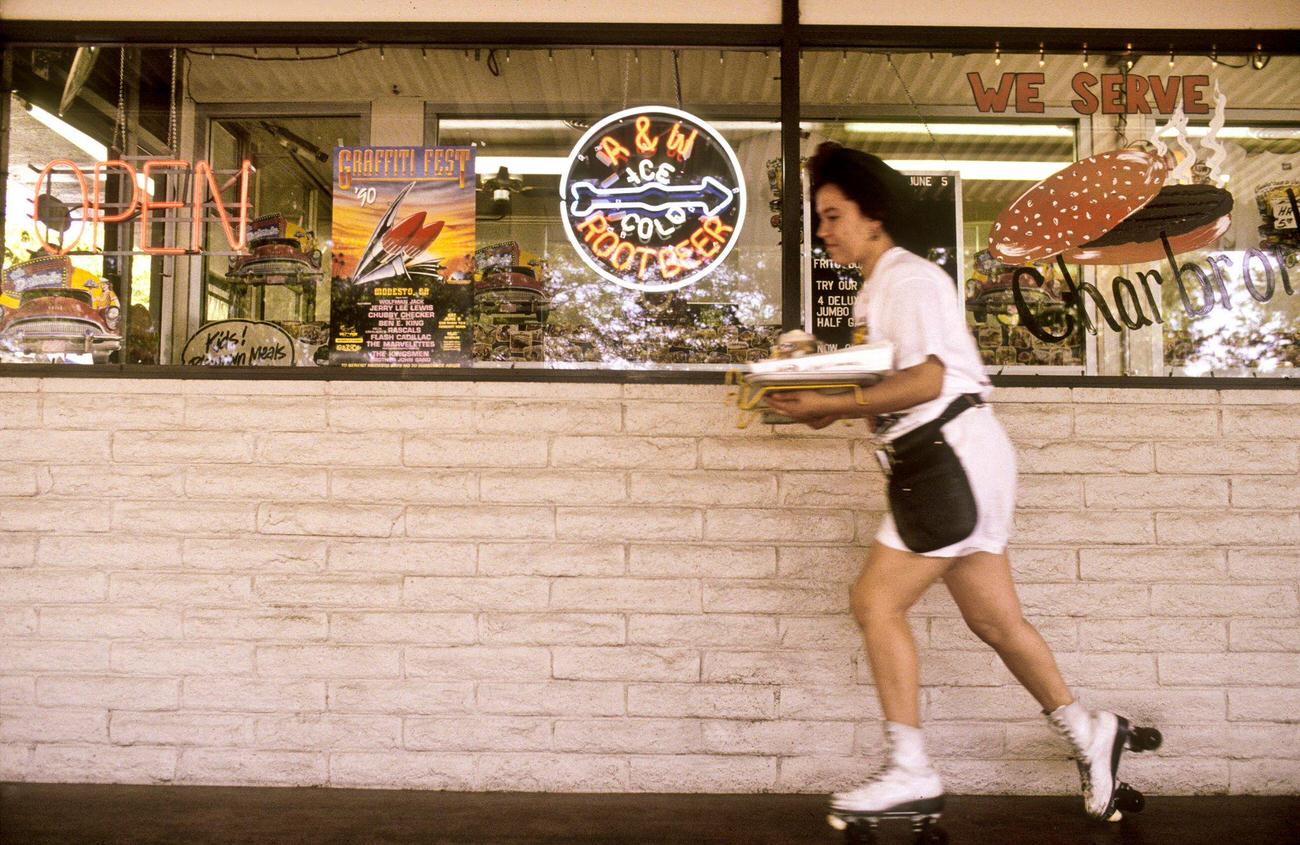
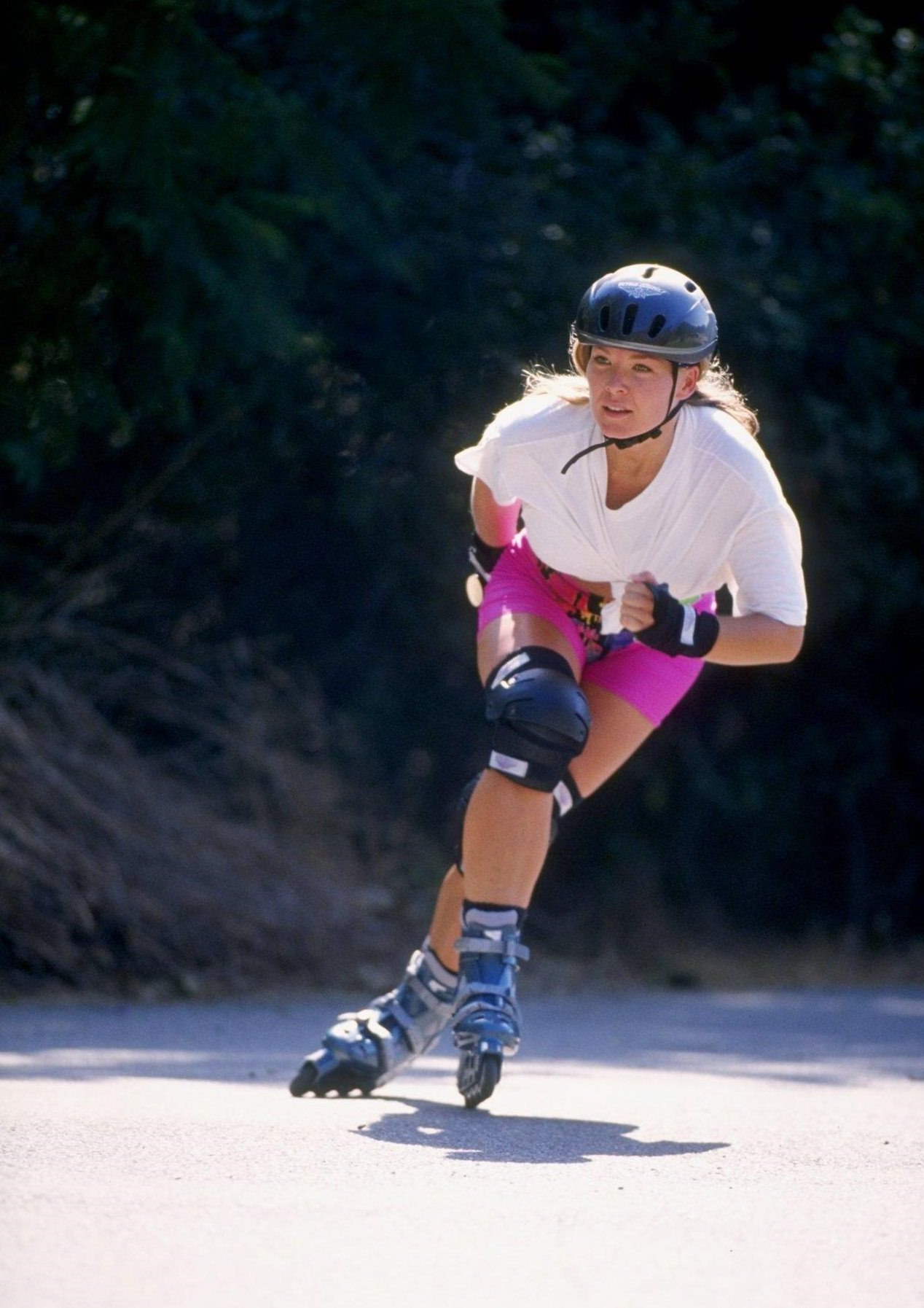
Into the 1990s, inline skates — rollerblades — replaced the four-wheel quad skate for many outdoor skaters. Women were photographed rollerblading through Miami traffic on South Beach in 1990 and cruising solo by 1994. Skating waitresses were still gliding through diners in Modesto, California. Kim Leeson had already brought skating to the West End stage in the long-running musical Starlight Express at the Apollo Victoria Theatre from 1984 onward. The wheels kept turning.