The Troubles: Historical Photos Depict Northern Ireland Conflict During The 1970s
4.5k Views
The Troubles was a decades-long political and sectarian conflict in Northern Ireland that lasted from the late 1960s until the Good Friday Agreement of 1998 — 33 years in total. More than 3,000 people died during that period, with 1,617 deaths recorded in Belfast alone. The roots of the conflict stretch back centuries, but the modern crisis grew directly from British rule over Ireland and the partition that followed.
In 1919, the Irish rose up against British rule. The result was the creation of an independent Irish state made up of 26 southern counties. But six counties in the northeast — collectively known as Northern Ireland — remained part of the United Kingdom. That division left two deeply opposed communities sharing the same territory: unionists, who were mostly Protestant and wanted to remain part of Britain, and nationalists, who were mostly Catholic and sought reunification with the Republic of Ireland. By 1969, the tension had broken into open violence, and the British Army was deployed to restore order.
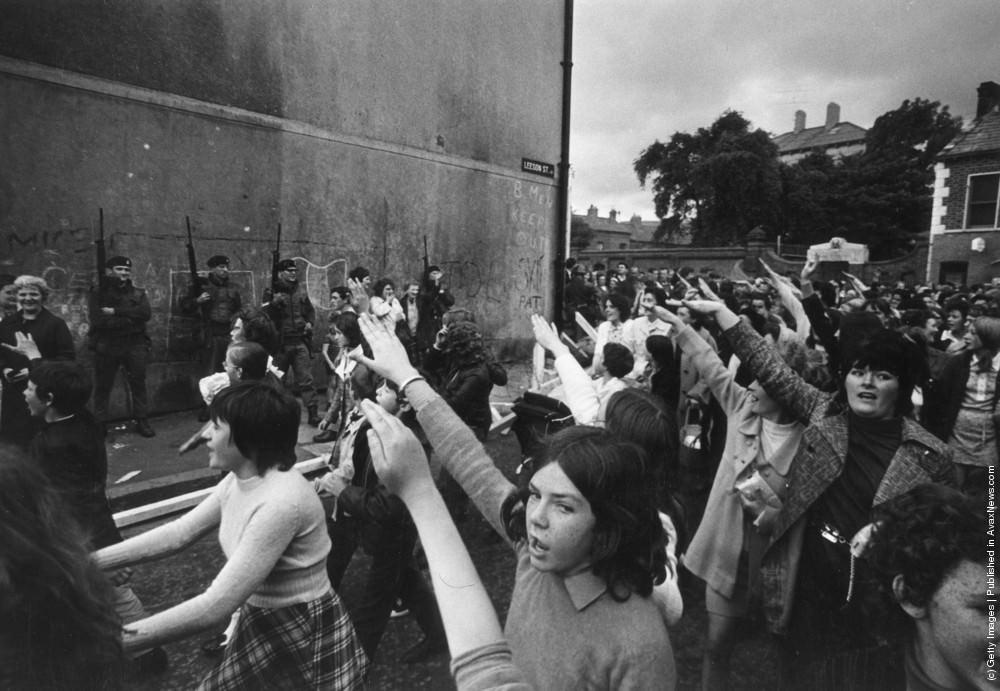
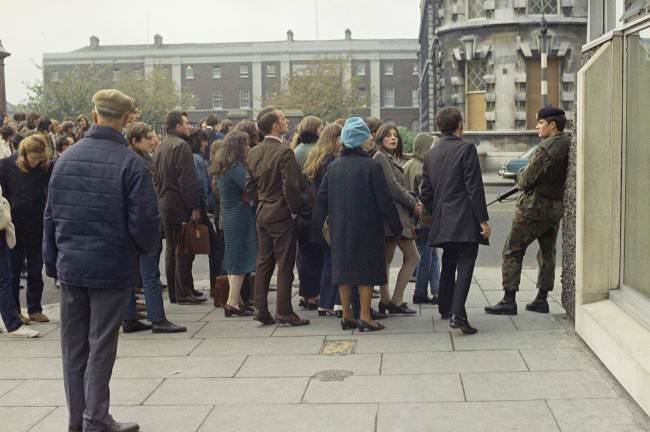
A crowd of demonstrators passing British soldiers in Leeson St. in the Falls Road area of Belfast, July 1970.
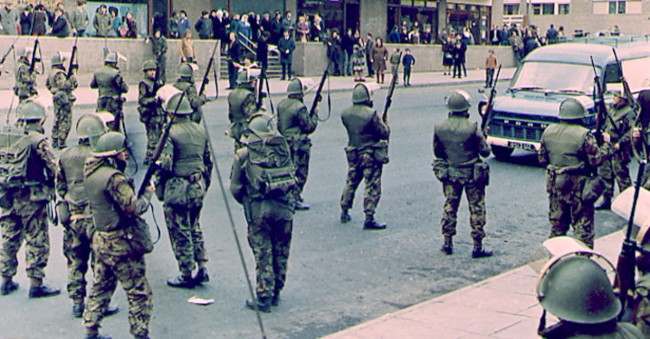
The Falls Road in west Belfast became one of the most contested stretches of ground in the conflict. In July 1970, the British Army imposed a curfew on the area — a move that killed five Catholics, wounded 60 others, and left many homes destroyed. Soldiers flooded the streets, searching houses and detaining residents. The operation hardened nationalist opposition to the British military presence and fueled recruitment into the Irish Republican Army.
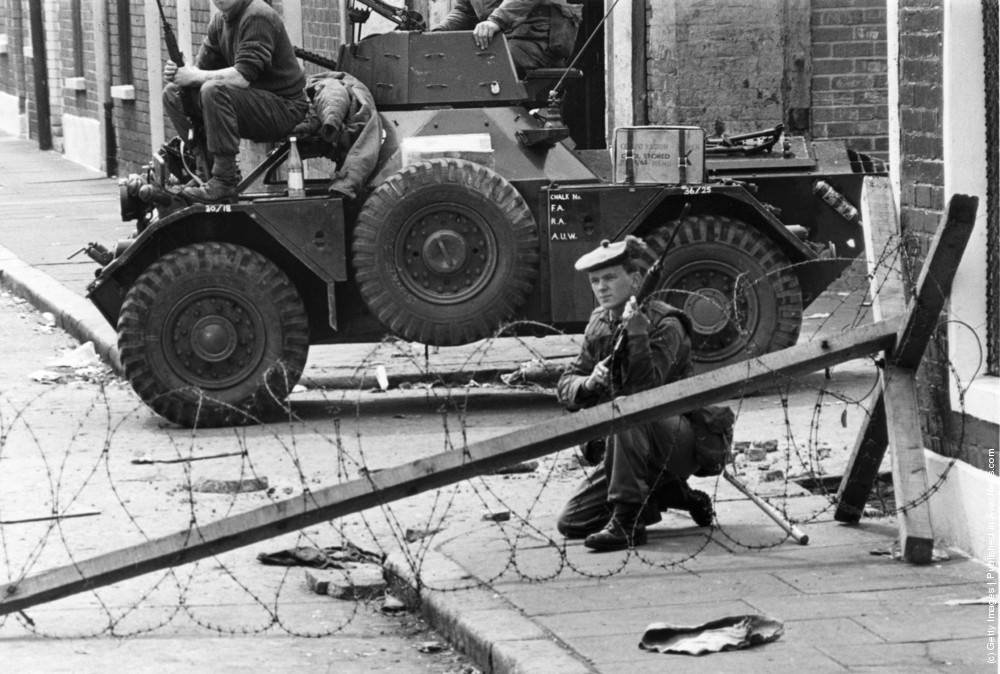
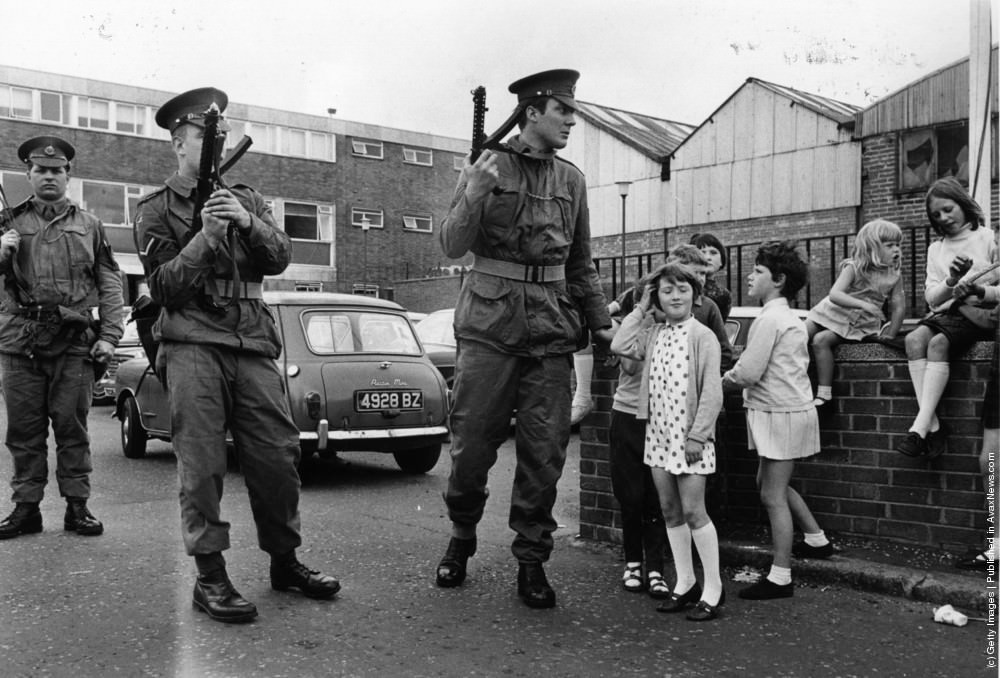
Armed British troops take up defensive positions on the Falls Road, 4th July 1970. 5 Catholics were killed, 60 injured and many homes devastated when the British Army imposed a curfew in the Falls Road.
Armed British soldiers impose a curfew on the Falls Road in Belfast, July 1970.
British soldiers impose a curfew on the Falls Road in Belfast, July 1970.
Armed British soldiers impose a curfew on the Falls Road in Belfast, July 1970.
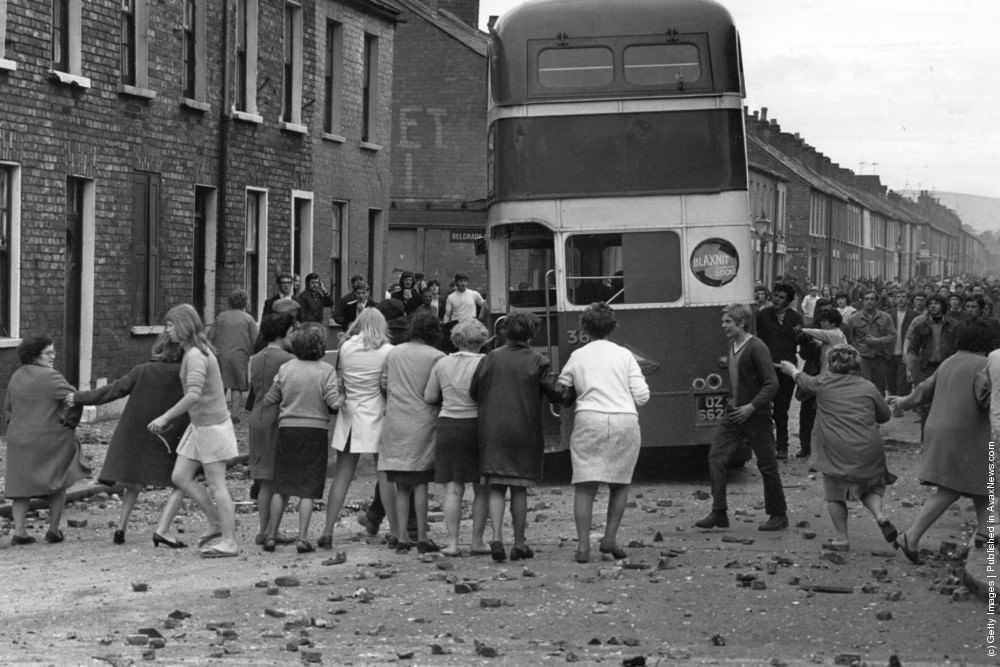
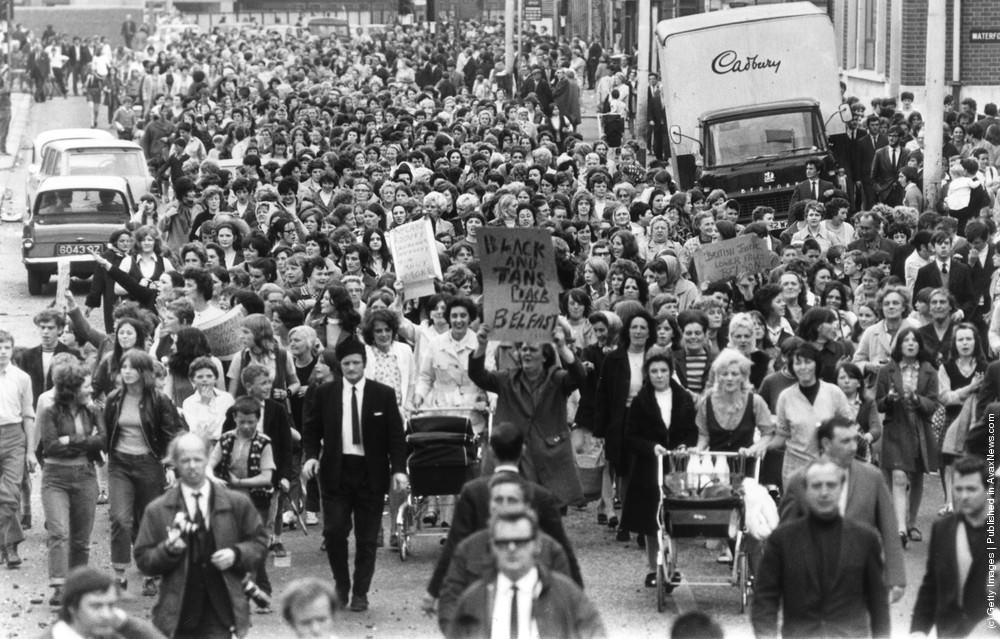
A commandeered bus is driven backwards through a picket of women who want the violence to end during riots on the Falls Road, Belfast, 3rd July 1970.
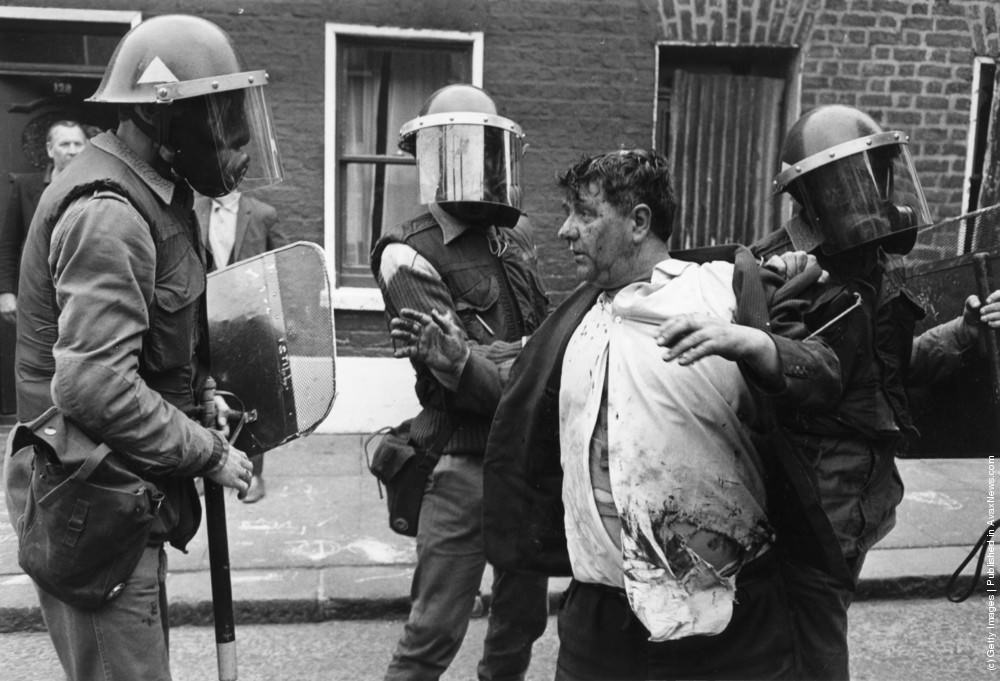
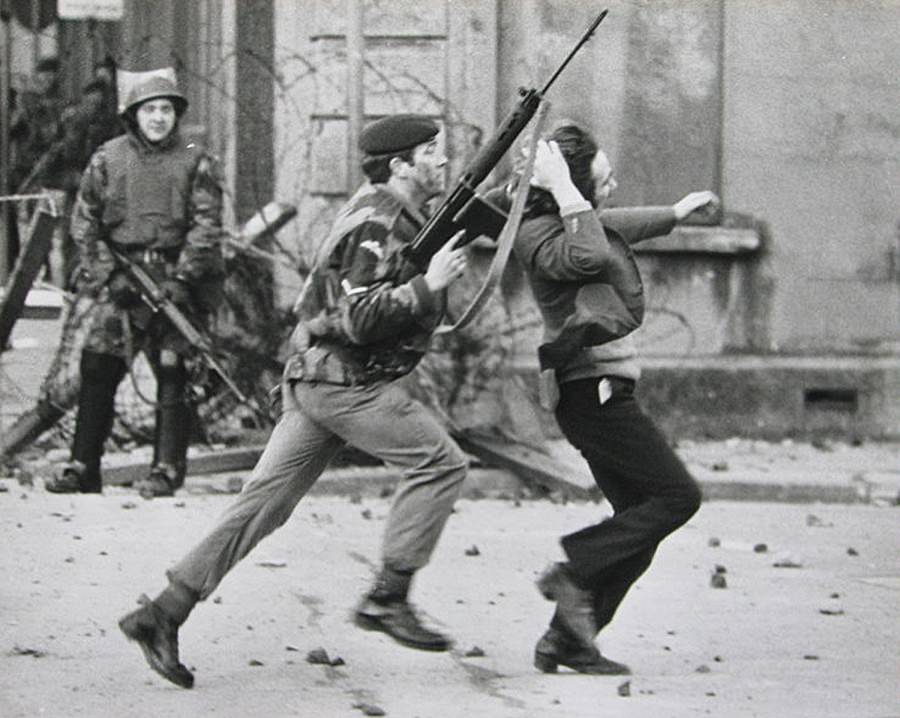
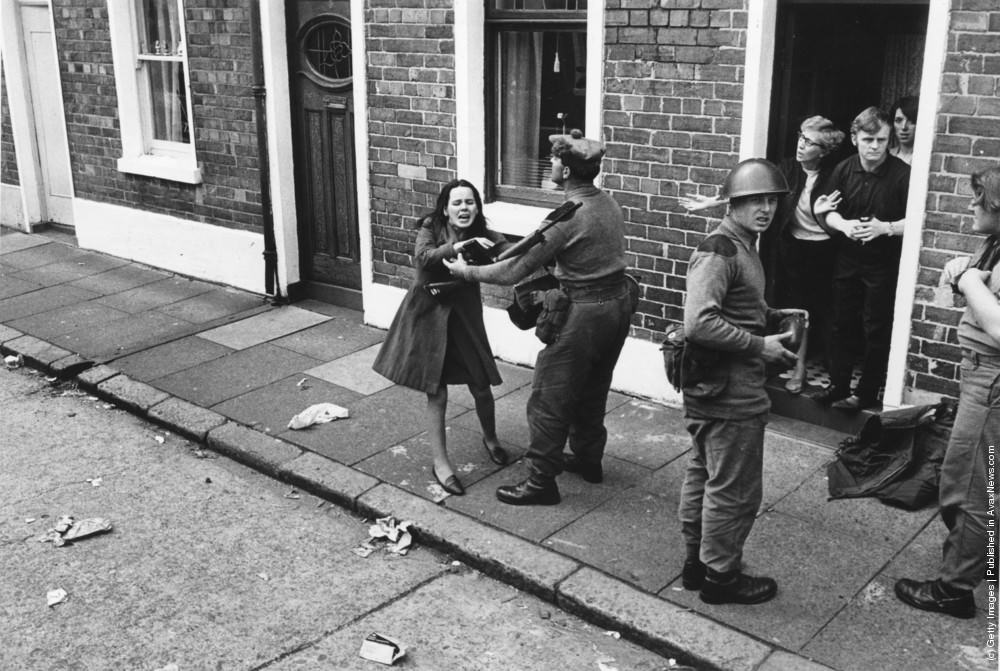
Armed British soldiers restrain a young civilian in the streets of Belfast, 3rd July 1970.
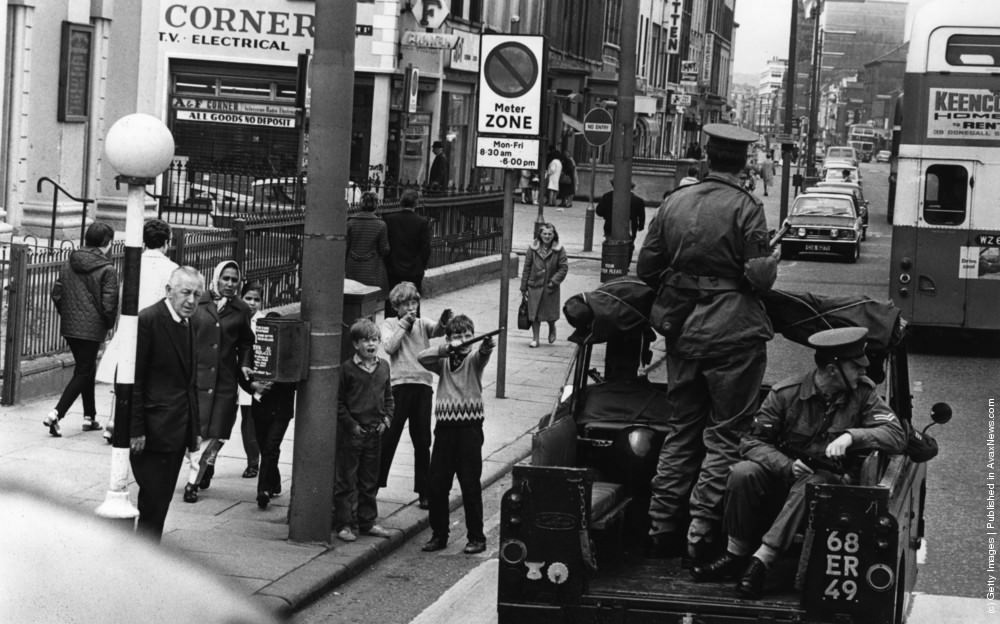
Children mocking an Army patrol in Belfast, July 1970.
Civil rights marchers in Belfast demonstrating against British policy in Northern Ireland, 10th July 1970.
By 1971, the violence had escalated sharply. Bombings, shootings, and riots became routine. In February of that year, rioters set fire to buses and used them as burning barricades. A timber yard fire in Belfast’s dockland burned for three hours and lit the sky above the city. In the New Lodge Road area, a crowd of around 200 people set cars, vans, and lorries alight after an army scout car struck and killed a five-year-old girl.
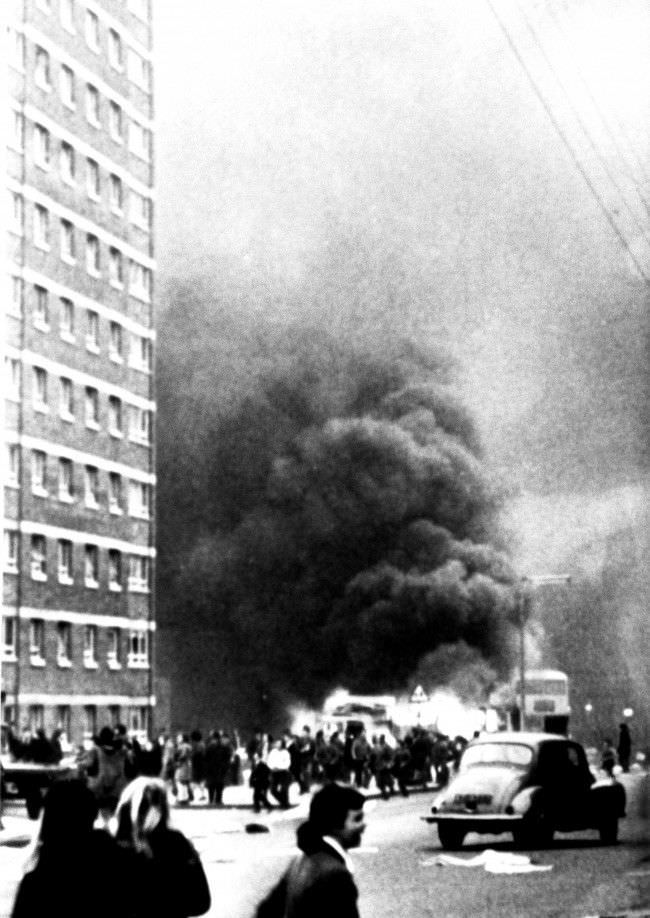
Vehicles burn in the New Lodge Road area of Belfast when a crowd of about 200 set fire to cars, vans and lorries after an army scout car ran over and killed a five-year-old girl. 8 Feb, 1971
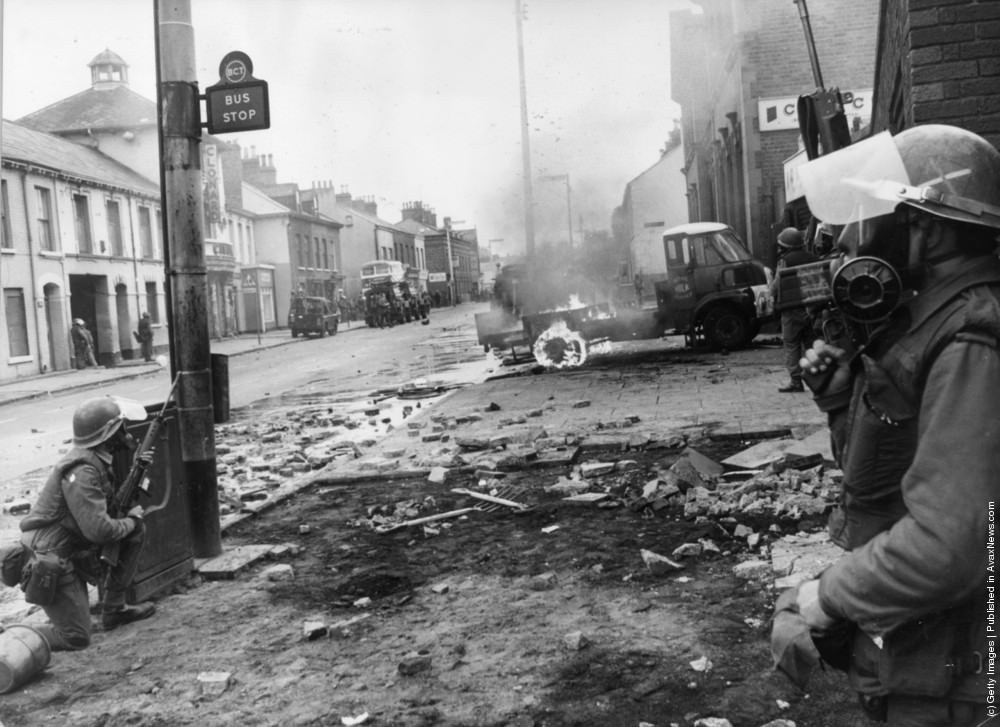
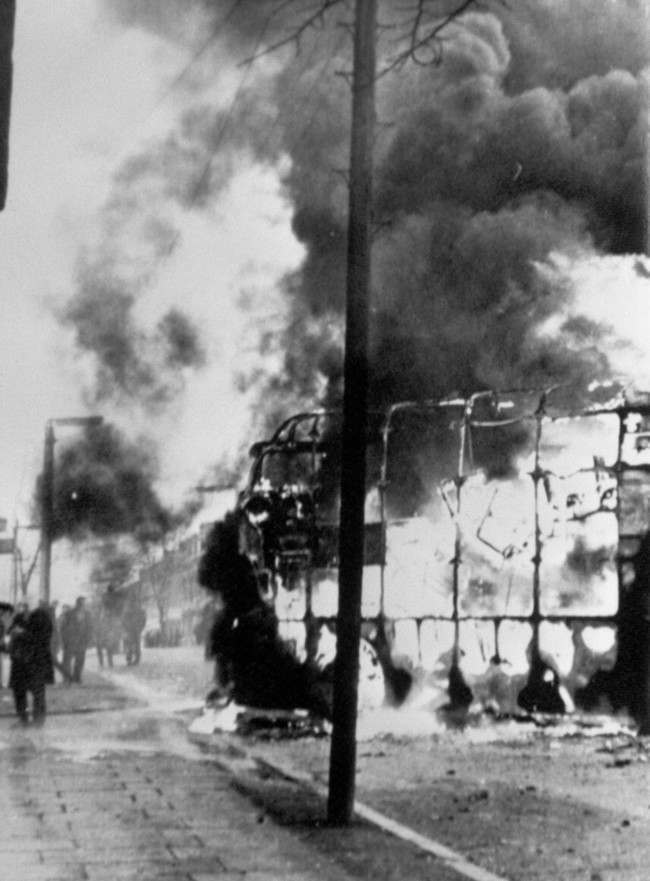
Flames leap into the air from a double decker bus when rioters used it as a blazing barricade in the Roman Catholic Falls Road area of Belfast. Violence broke out in Springfield Road after police and troops carried out an arms. 3 Feb, 1971
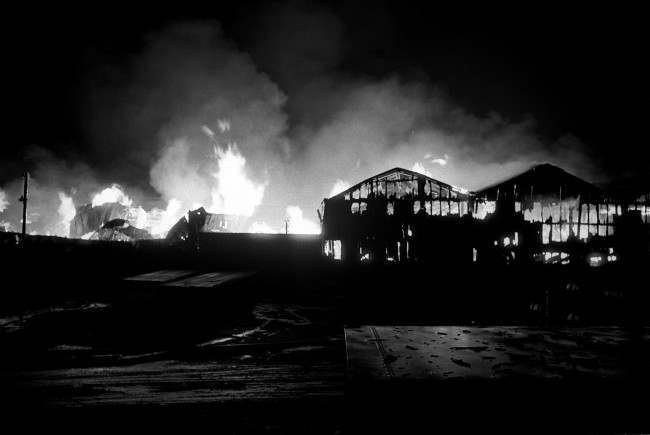
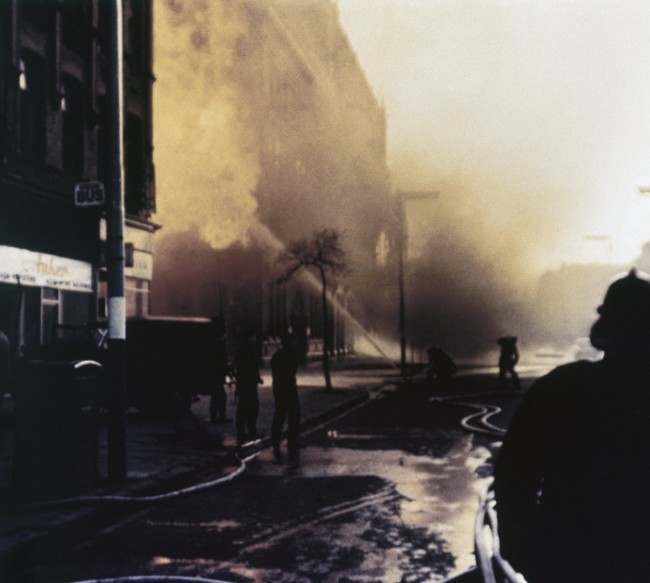
At the height of the blaze, flames leap from a 12-acre timber yard in Belfast’s dockland. The fire raged for three hours before it was brought under control. 10 Feb, 1971
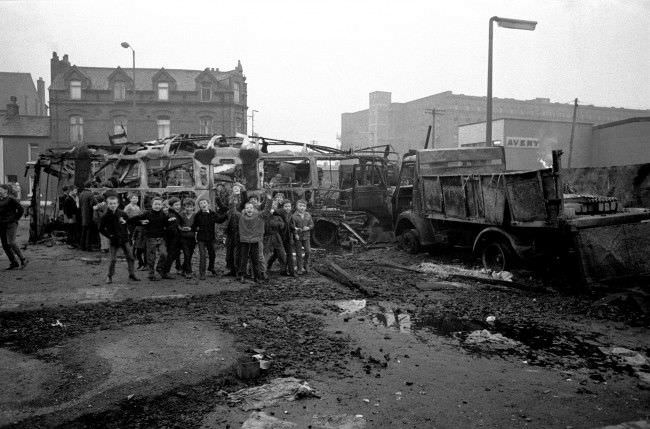
Schoolboys cheer adn chant from a pile of burnt-out busses and lorries in the aftermath of the riots. 9 Feb, 1971
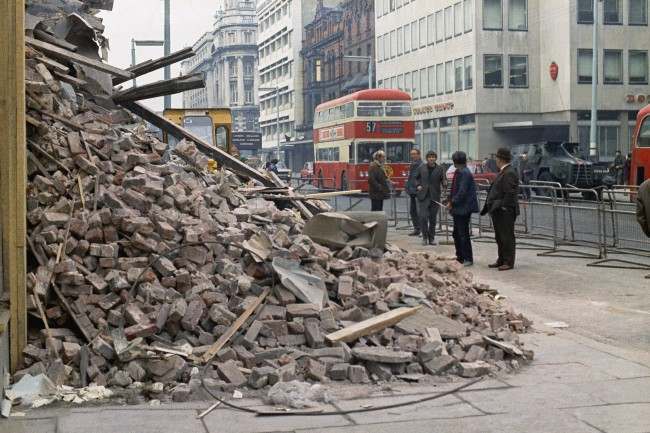
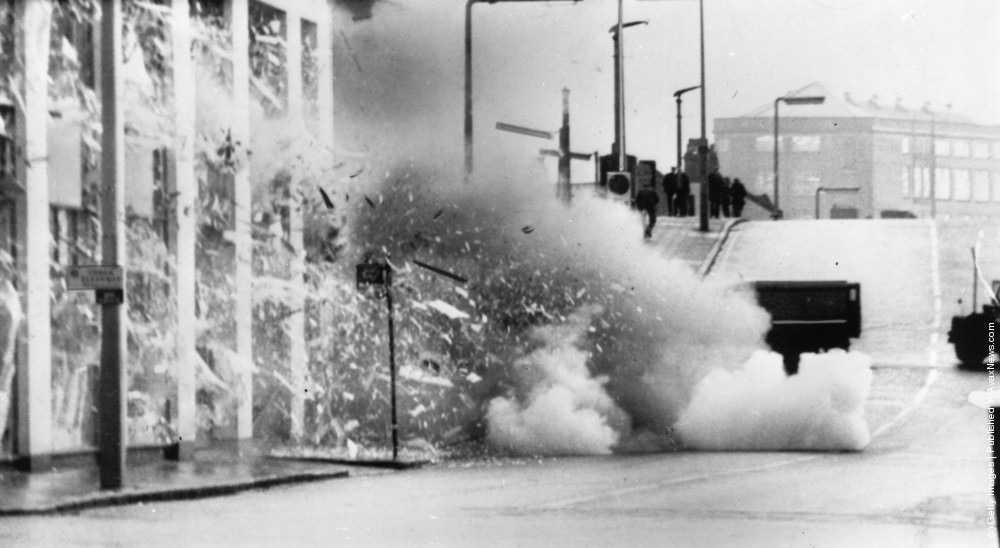
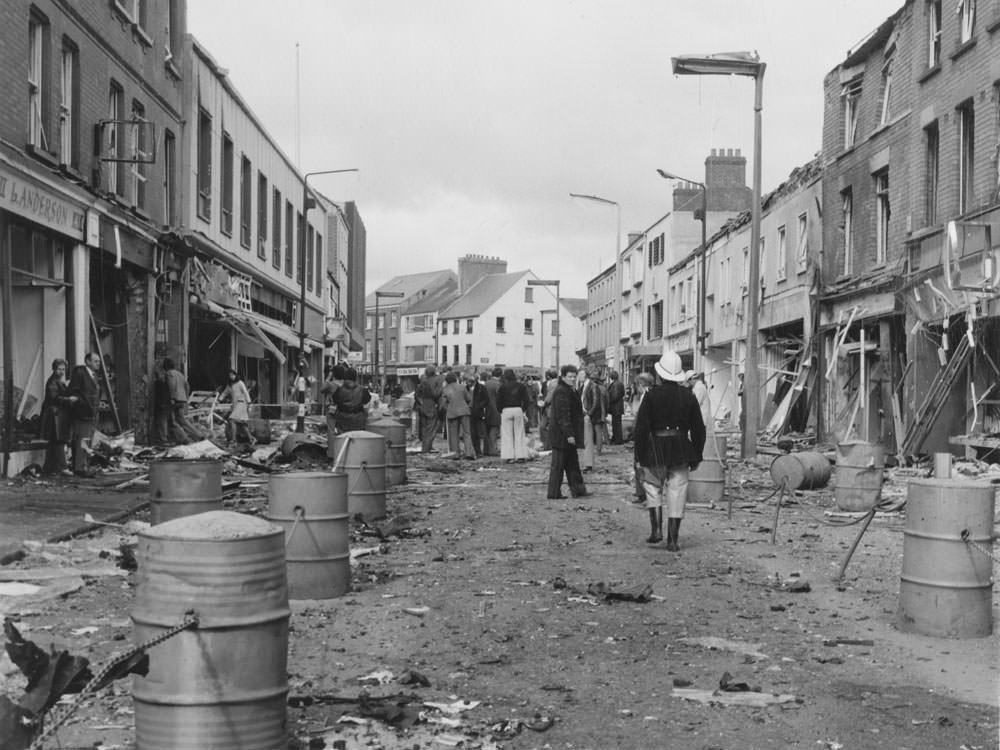
Bomb attacks struck commercial and civilian targets across Belfast throughout 1971. A supermarket on Cavehill Road was destroyed. The North Street Arcade had eight shops wrecked in a single blast. The Red Lion Bar bombing on November 2 killed two people and injured more than thirty. A police station on Chichester Road was gutted by an explosion that killed a police inspector. Army bomb disposal teams worked constantly, detonating suspected devices in city streets and dealing with booby traps.
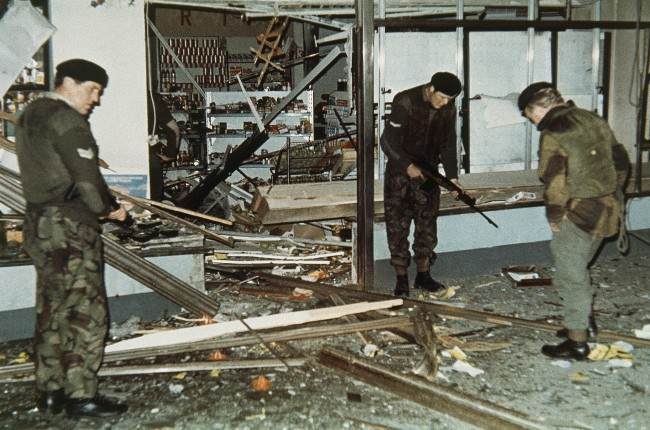
British troops sift through the ruins of a supermarket after a bomb exploded in Cavehill Road, Belfast, Northern Ireland in 1971.
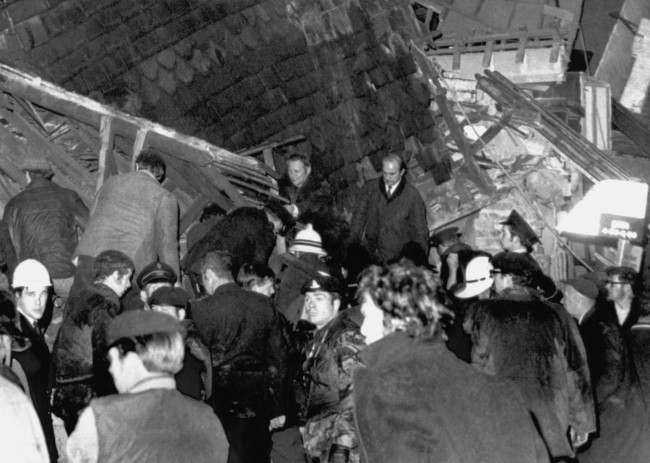
Rescuers search the wreckage of the Red Lion Bar in Belfast, Northern Ireland, where a terrorist bomb, killed two and injured over thirty persons on November 2, 1971.
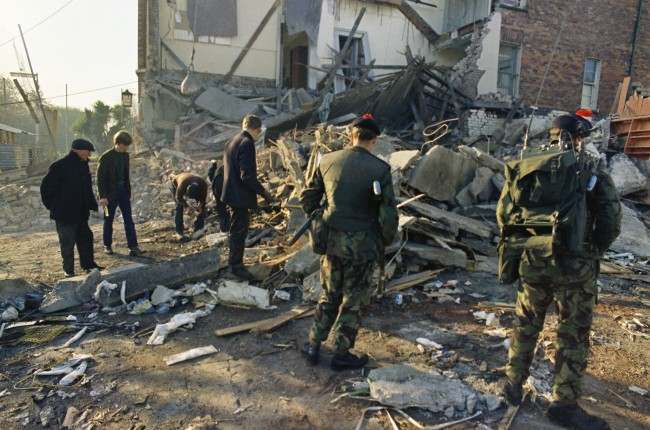
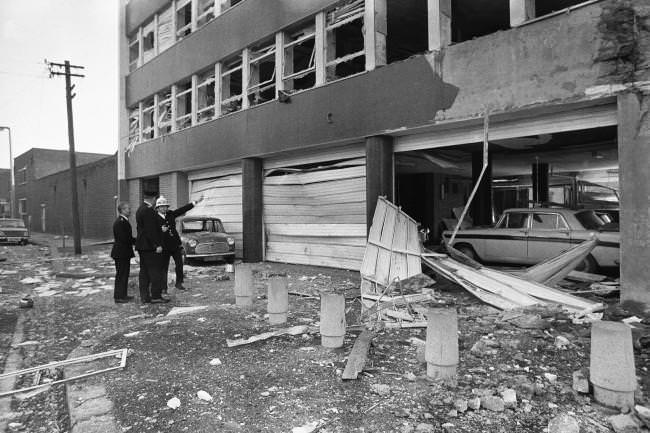
Devastation at a bomb damaged police station in Chichester Road, Belfast, Northern Ireland in November 1971, in which a police inspector died.
The aftermath of the North Street Arcade in the city center of Belfast, Northern Ireland after it was hit by a bomb blast which wrecked eight shops, shown Nov. 6, 1971.
Security men examine the damage caused by a terrorist bomb detonated in the Youth Employment Office in Belfast, Northern Ireland on Nov. 2, 1971.
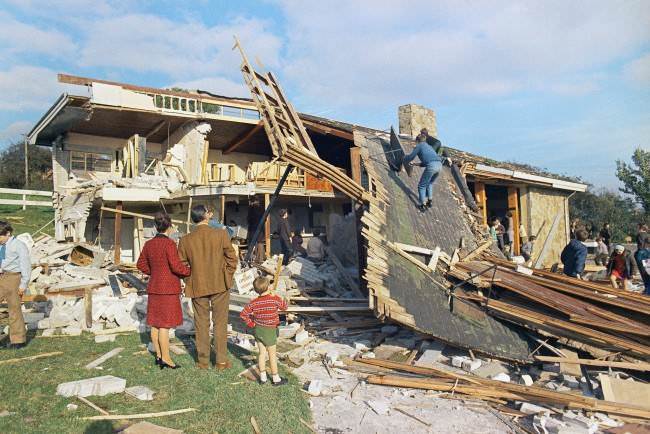
Wreckage left by a terrorist bombing at the Hunting Lodge Inn in Andersontown, Belfast, Northern Ireland in 1971.
A factory building on fire in Belfast, Northern Ireland in 1971.
A British soldier stands guard as bystanders wait to get a view of operations by the army bomb disposal squad in Northern Ireland on Nov. 11, 1971 after an explosive device had been planted near the city centre.
A car explodes after troops carried out a controlled explosion of a suspected bomb in Belfast, 17th November 1971.
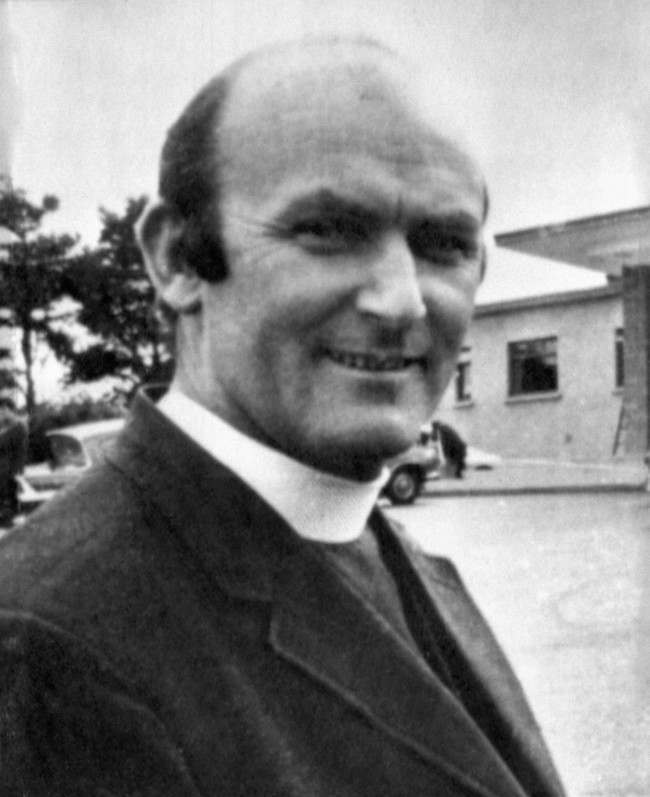
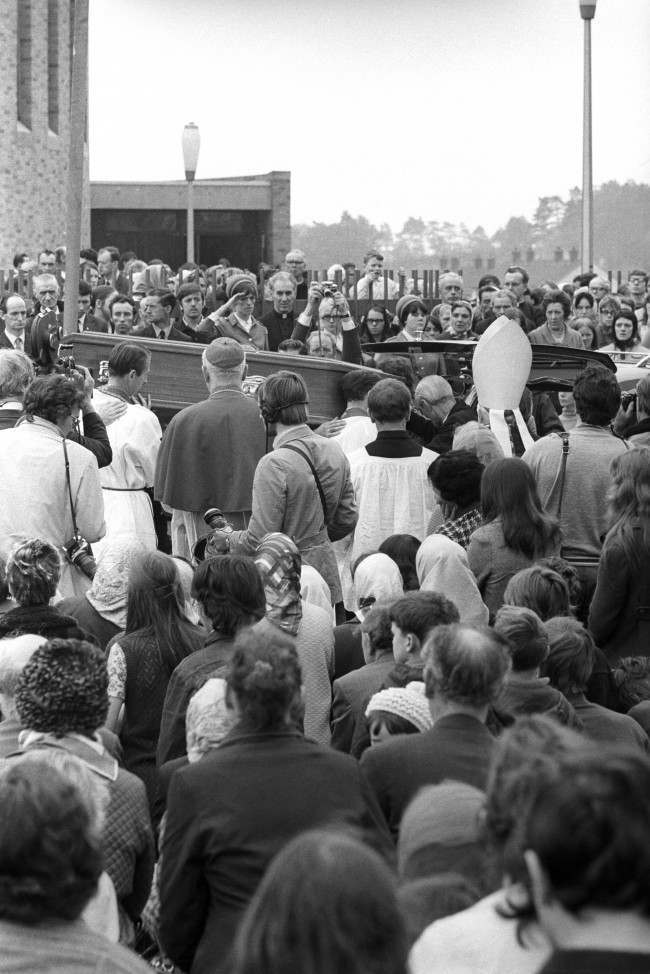
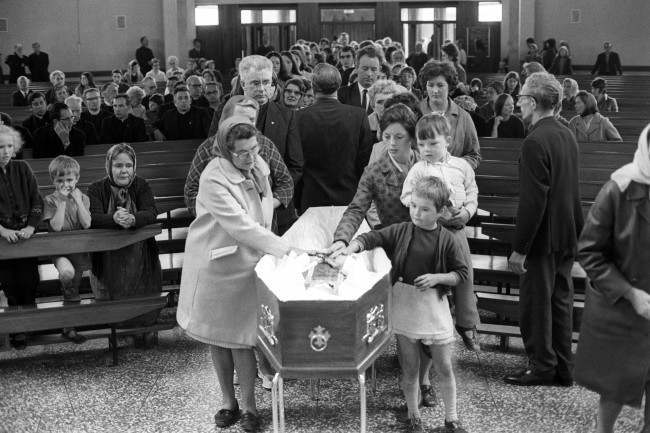
The human cost extended to those trying to help. Father Hugh Mullan, a 37-year-old Catholic priest and curate of St. John’s on Falls Road, was shot and killed on August 10, 1971, while attempting to administer last rites to a wounded parishioner. His death came in the immediate aftermath of the British government’s announcement of internment — the policy of detaining suspected IRA members without trial. Hundreds of mourners attended his Requiem Mass at Corpus Christi Roman Catholic Church on the Ballymurphy estate.
Father Hugh Mullan, 40, of St John’s Presbytery, Falls Road, the priest who was shot and killed when administering the last rites to a casualty in riots near the Ballymurphy estate earlier today, 10 Aug, 1971
People of Ballymurphy estate pay their respects to Reverend Hugh Mullan as his coffin leaves Corpus Christi Roman Catholic Church after Requiem Mass.
Mourners file past the coffin of Father Hugh Mullan, at Corpus Christi Roman Catholic Church on the Ballymurphy estate after Requiem Mass, 11 Aug, 1971
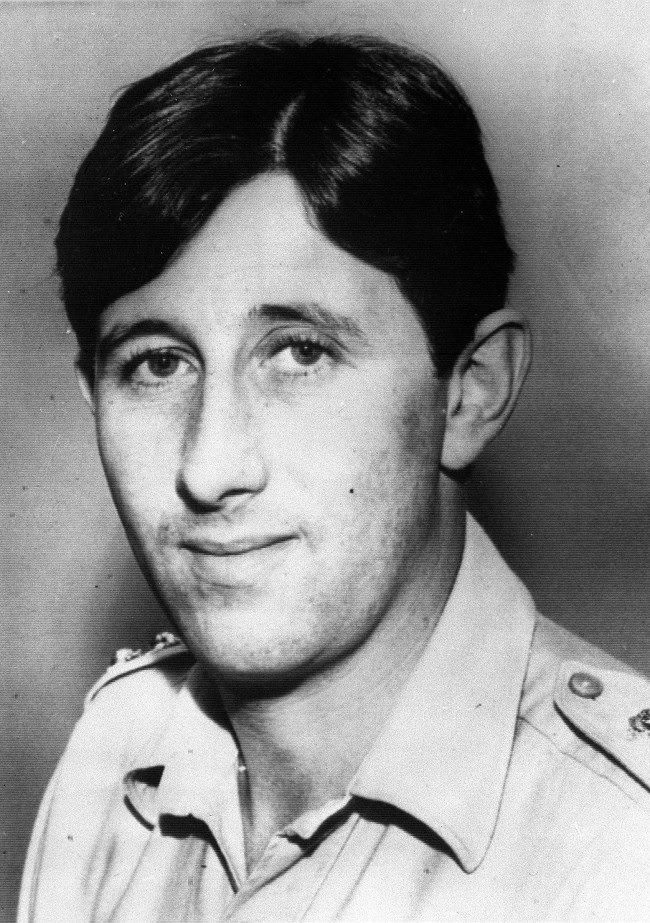
Army bomb disposal experts faced extreme danger on every call. Captain David Stewardson, 29, a Royal Army Ordnance Corps disposal expert, died in a Belfast hospital on September 9, 1971, from wounds he suffered when a booby trap bomb detonated while he was defusing it. He was one of many soldiers killed performing that role throughout the conflict.
Captain David Stewardson, 29,who was a Royal Army Ordnance Corps Disposal expert died in a Belfast hospital of bomb blast wounds after a booby trap bomb he was defusing exploded. 9 Sep, 1971
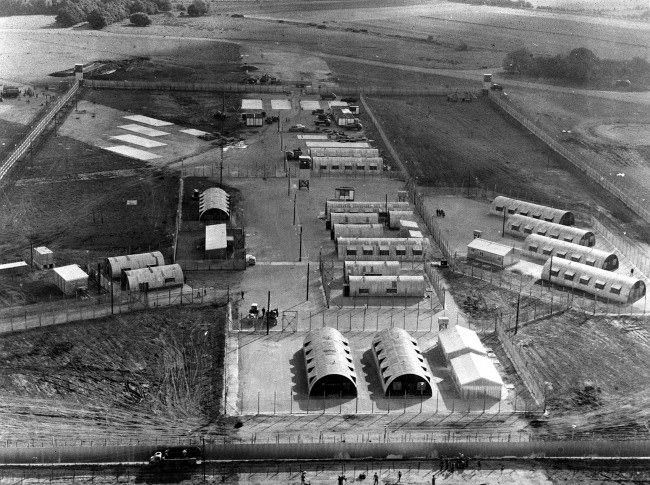
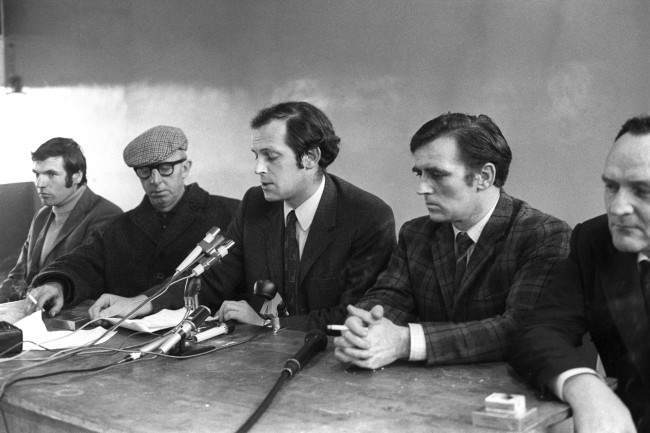
Internment without trial, introduced in August 1971, was one of the most divisive policies of the entire conflict. Hundreds of men were arrested and held at Long Kesh, a former World War II airfield that had been converted into a detention camp. The camp’s hutments were fitted with central heating, but its existence as a site of detention without charge became a major rallying point for nationalist opposition. Joe Cahill, the Provisional IRA’s chief in Belfast, held a press conference in a school gymnasium in Ballymurphy shortly after internment began, publicly rejecting the British Army’s claim that the IRA had been nearly defeated.
This former airfield is now the internment camp for IRA detainees. The hutments now have central heating and other modern amenities. The camp is called Long Kesh. The airfield was built 30 years ago and used by bombers taking off for Germany.
Joe Cahill (centre) school gym Ballymurphy northern ireland speaking talking, chief of the Provisionals in Belfast, who during Press conference refuted claims made by the army a few hours earlier that the IRA were virtually beaten, 13 Aug, 1971.
Joe Cahill, chief of the Provisionals in Belfast, at a Press conference held in a school gymnasium in Belfast’s Ballymurphy district and is attended by several leading members of the Republican movement, who heard an anonymous spokesman of the IRA deny the Army’s claims of virtual victory.
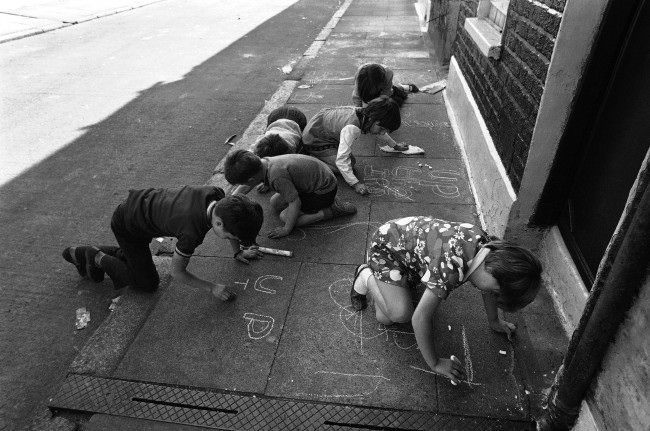
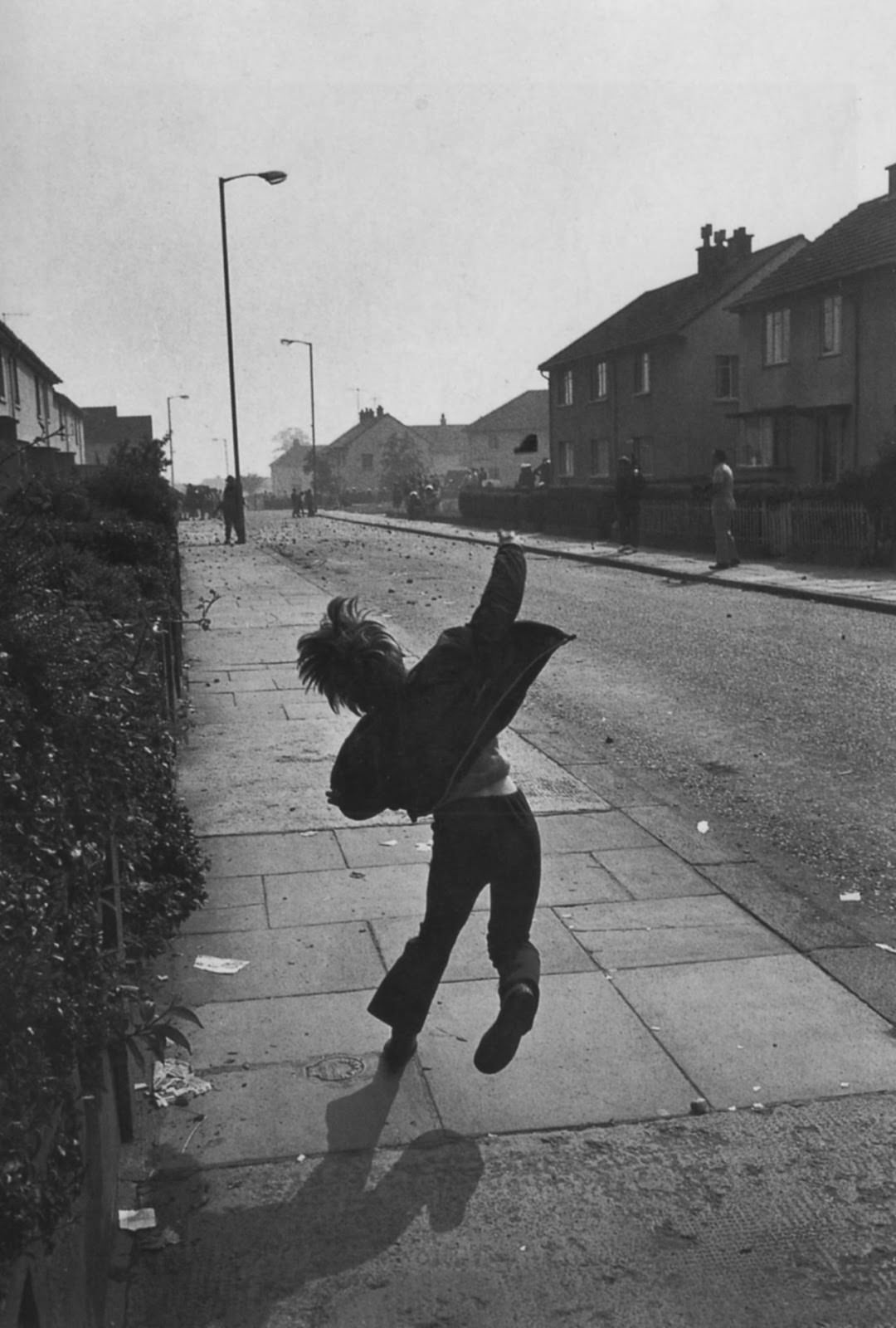
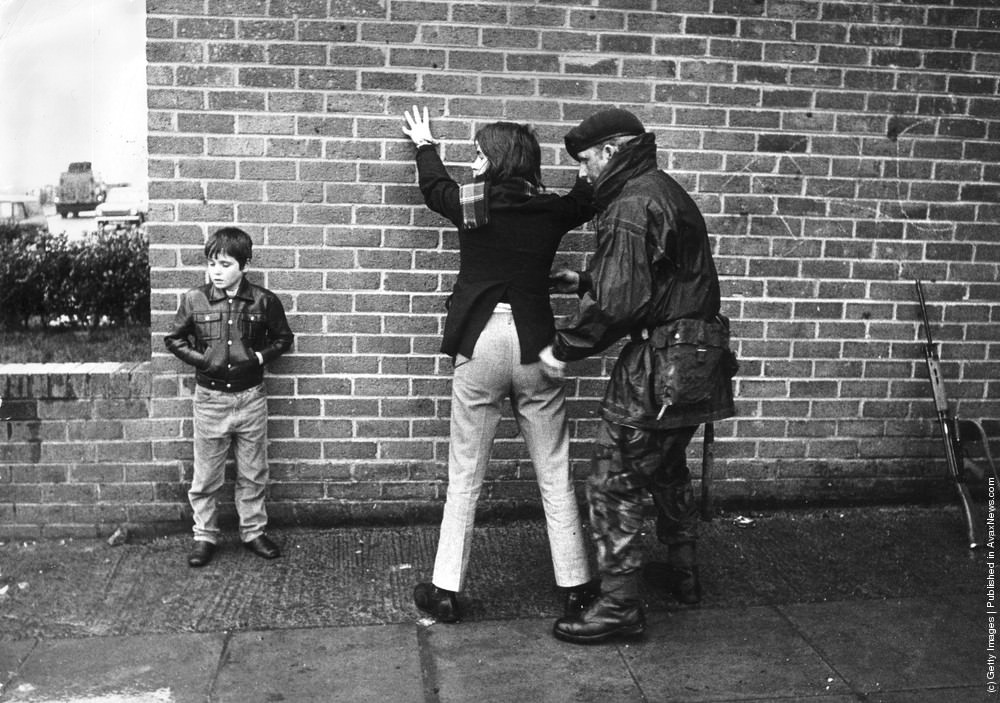
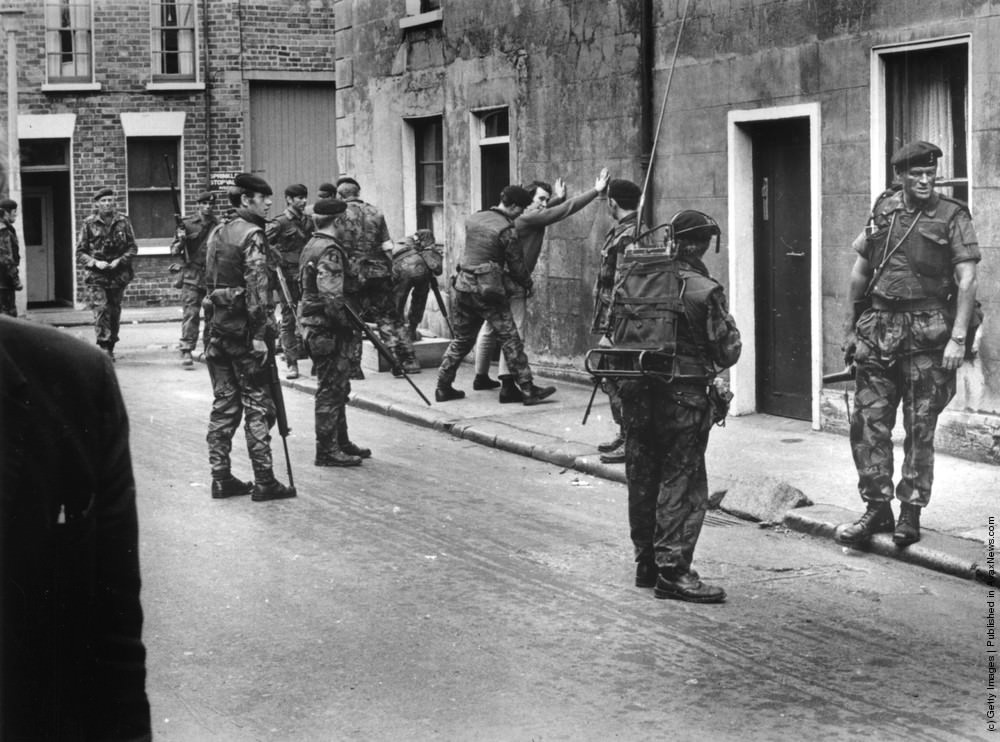
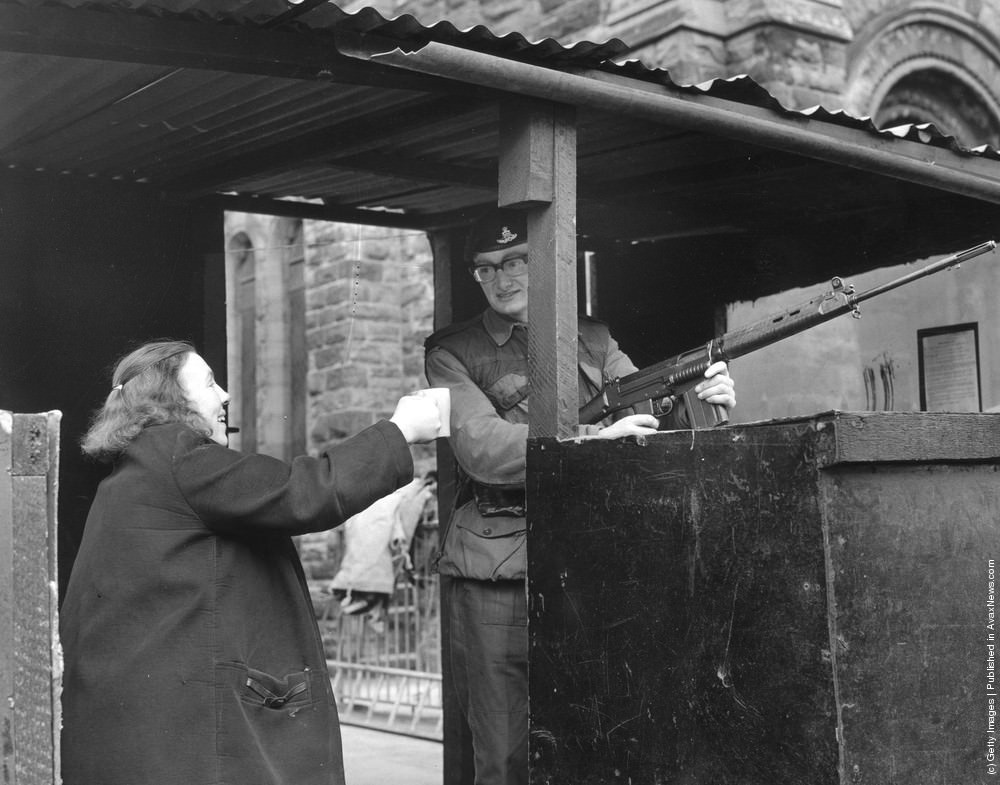
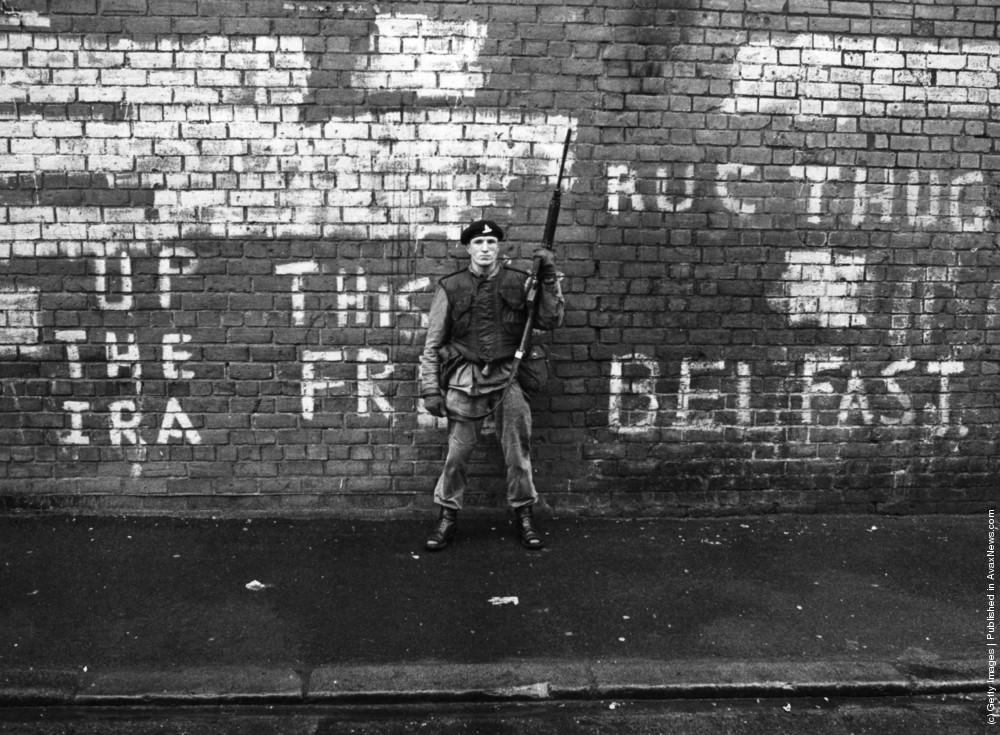
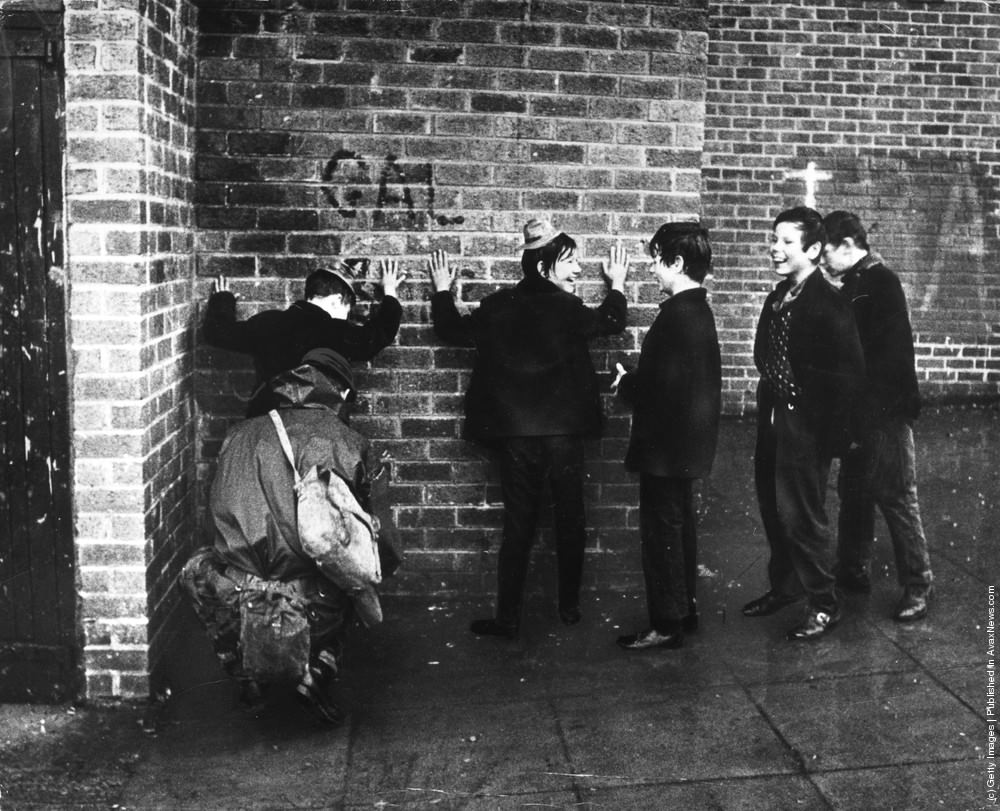
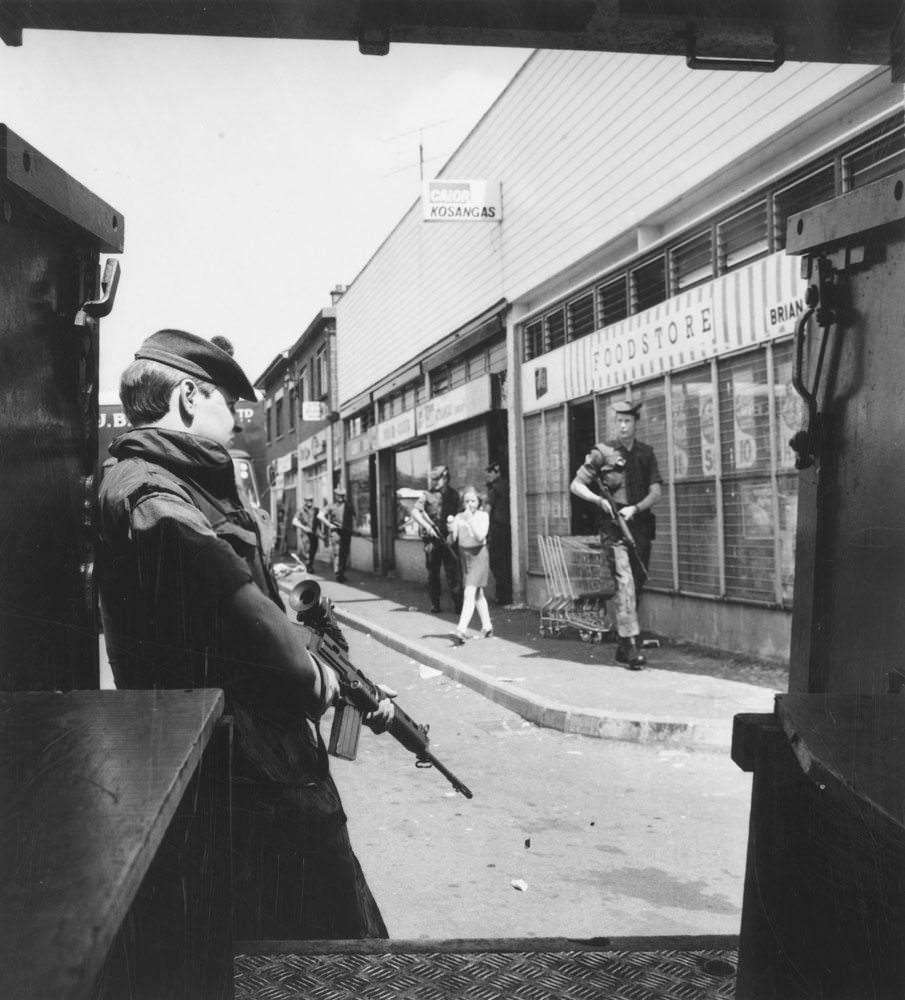
Street-level enforcement by British troops became a constant feature of daily life in nationalist neighborhoods. Soldiers searched civilians, patrolled alleyways, and manned checkpoints throughout Belfast and Derry. Children drew IRA slogans in chalk on pavements. Others threw stones at army patrols. Some residents responded to the soldiers with hostility, while others offered small gestures of normality — a woman on one Belfast street handed a cup of tea to a soldier at a checkpoint.
Children drawing pro Irish Republican Army notes with chalk on the pavement, such as Up the IRA, in Leeson Street in Belfast, Northern Ireland on August 17, 1971.
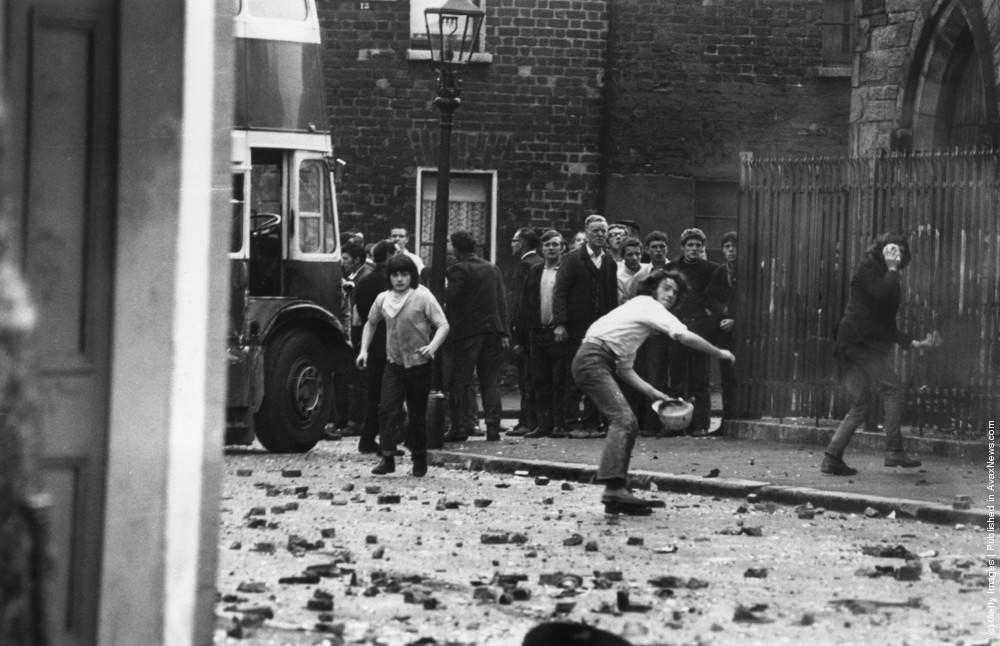
Boy throwing stones at British soldiers in Northern Ireland, 1971.
A British soldier searching a Belfast teenager, 1971.
British troops searching a civilian in Belfast, 12th August 1971.
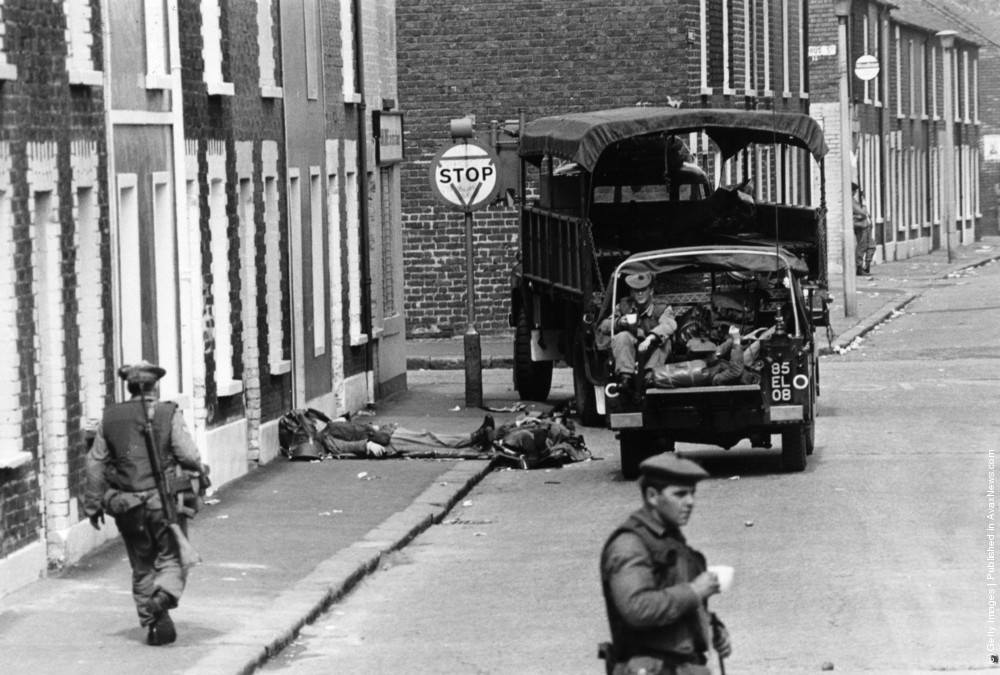
A woman offers a cup of tea to a soldier manning a check point in a Belfast street, 20th April 1971.
An armed British soldier on patrol in Belfast, 24th March 1971.
Schoolboys giggling while a soldier searches them in a street in the Ardoyne area of Belfast, 7th December 1971.
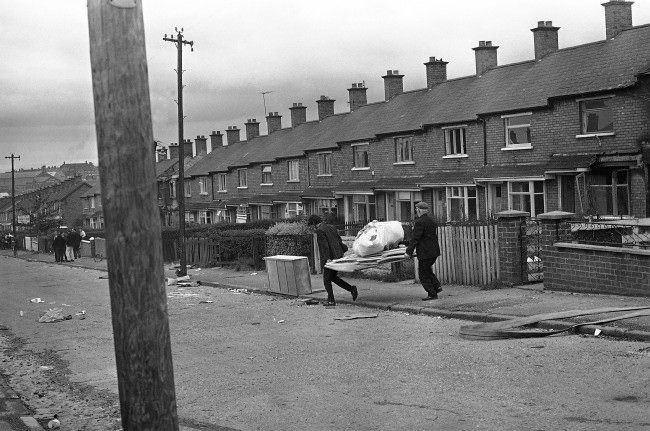
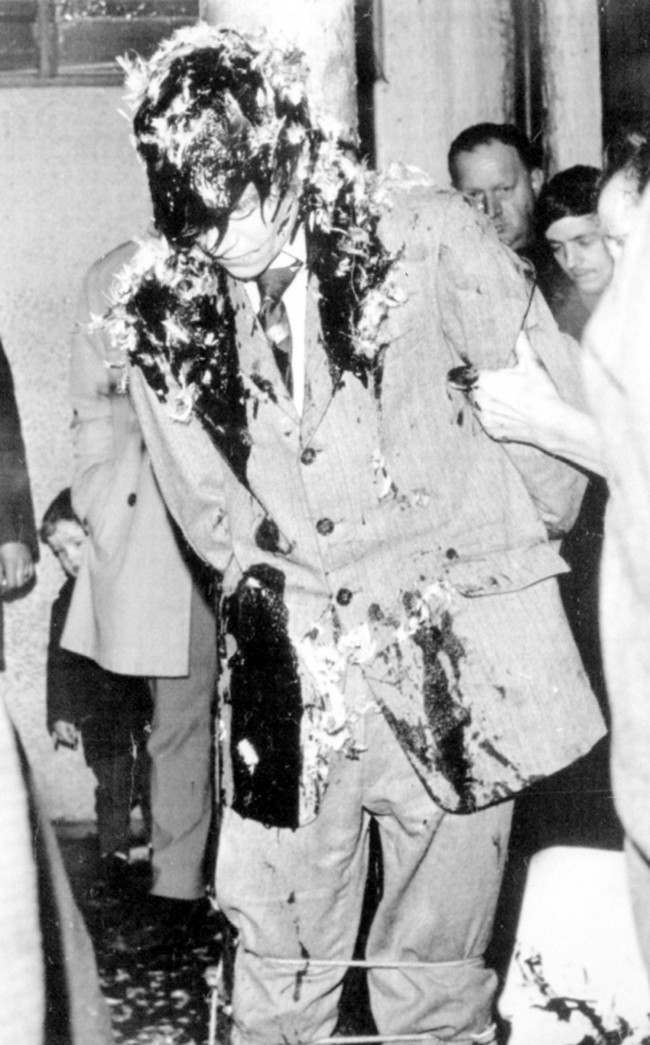
The Ardoyne area saw its own surge of fear and displacement in August 1971. Protestant families moved belongings out of their homes under threat of being burned out, joining the tens of thousands of people across Belfast who were forced to relocate as neighborhoods fractured along sectarian lines. Punishment beatings and public humiliations by paramilitary groups also took place. In January 1971, a youth was tarred, feathered, and tied to a lamp post on Falls Road — one of three such incidents in a single 24-hour period.
With the fear of being burnt out, Protestant householders move some of their belongings from a street in the Ardoyne area of Belfast, Northern Ireland on August 10, 1971.
A youth tarred and feathered tied to a lamp post in the Falls Road area of Belfast. He is one of three who received such treatment in the past 24 hours. 10 Jan, 1971
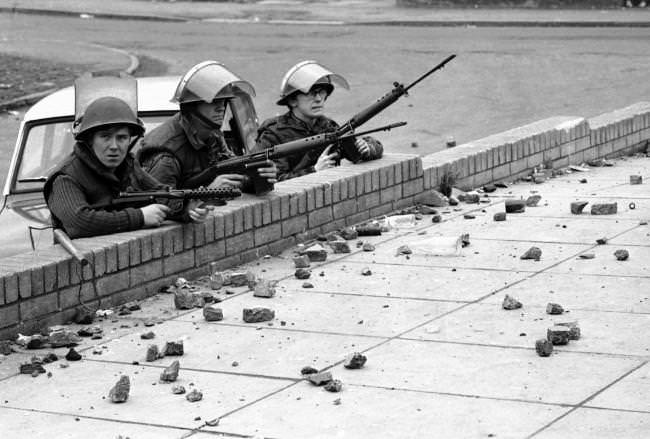
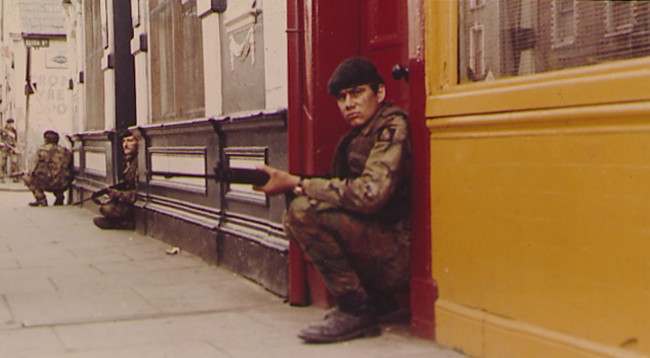
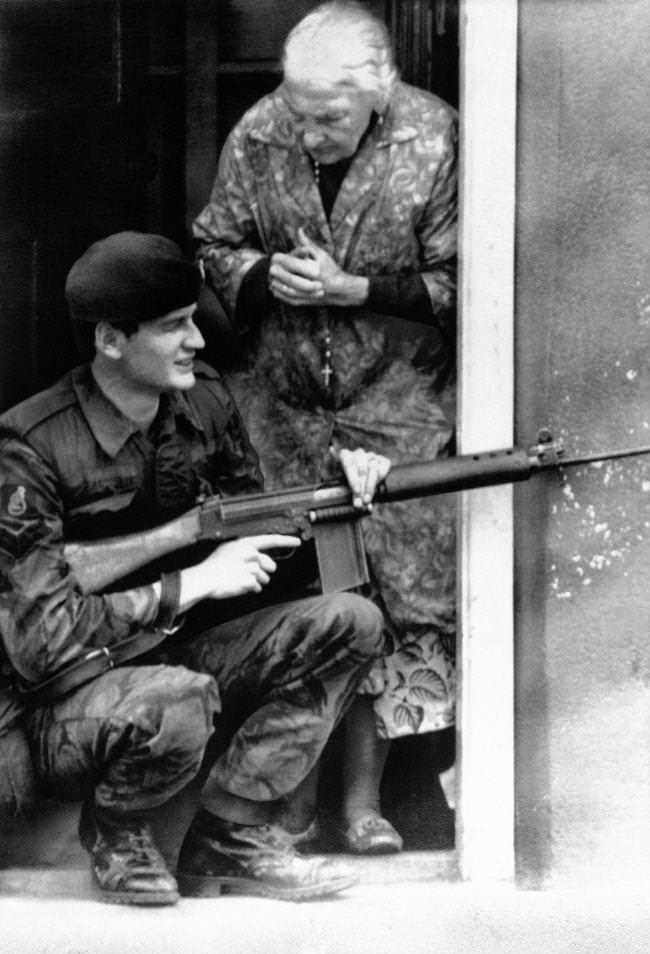
Soldiers operating in Belfast’s market district faced sniper fire and used shop doorways and walls as cover. In November 1971, three British soldiers sheltered behind a wall in the Andersonstown area during riots that followed the shooting of two policemen. One was armed with a Stirling sub-machine gun. An elderly woman who discovered a British Army sharpshooter on her doorstep in the same period reacted with visible shock, a rosary around her neck.
Three British soldiers, two armed with automatic rifles, and man at left with a Stirling sub-machinegun, shelter behind a wall in the Andersonstown area of Belfast, Northern Ireland on Nov. 1, 1971, during riots which followed the shooting of two policemen.
British troops take up positions in the doorways of shops near Eliza street, in the markets area of Belfast, a short distance from the city centre of Northern Irelands capital. Area was the scene of continued bitter fighting as British forces clashed with elements of the Irish Republican Army provis
An old woman, a rosary dangling from her neck, clasps her hands on finding a British Army sharpshooter on her door step in Belfast’s market area as troops flushed out snipers barricaded in bakery in Northern Ireland capital on August 11, 1971.
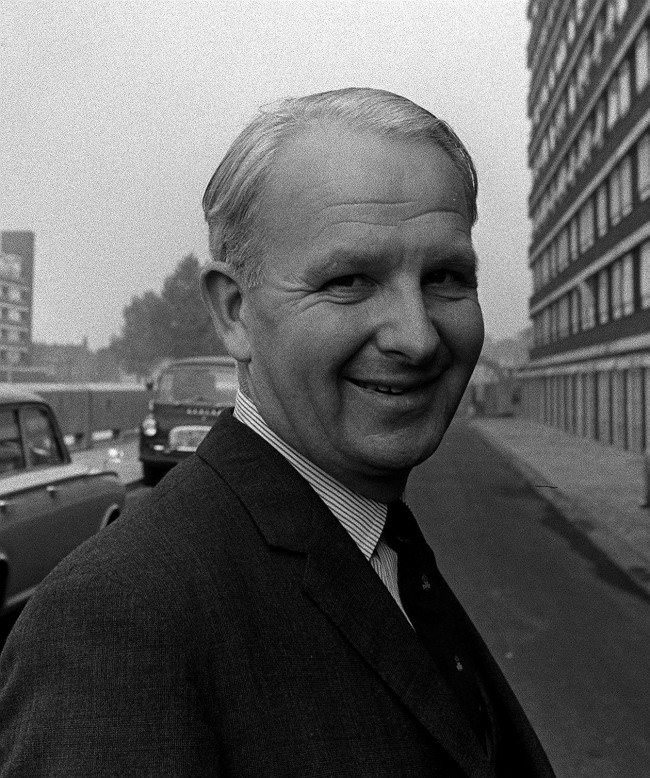
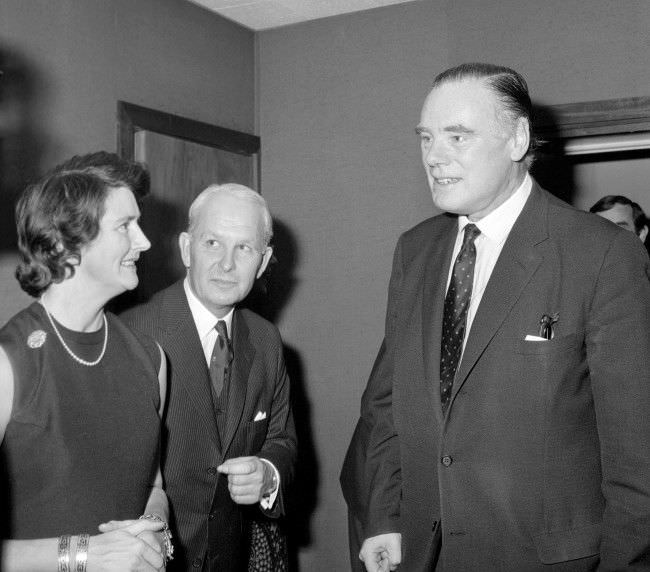
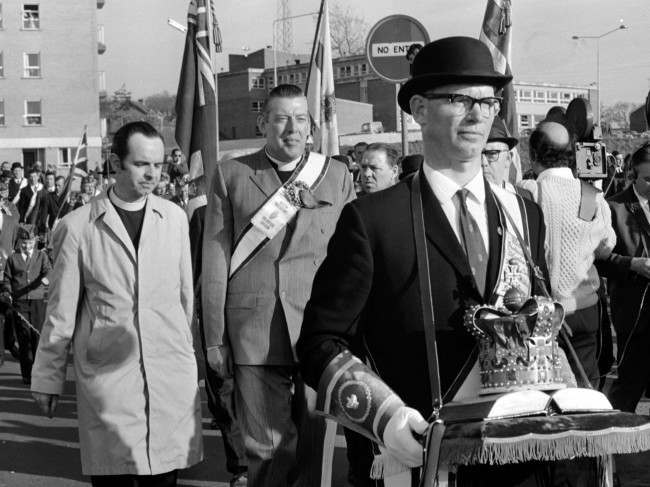
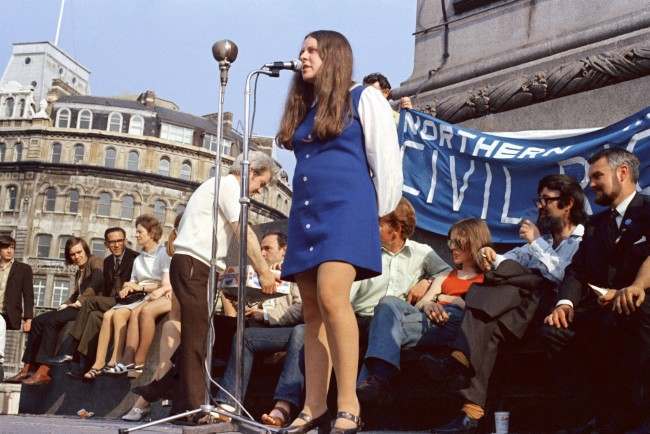
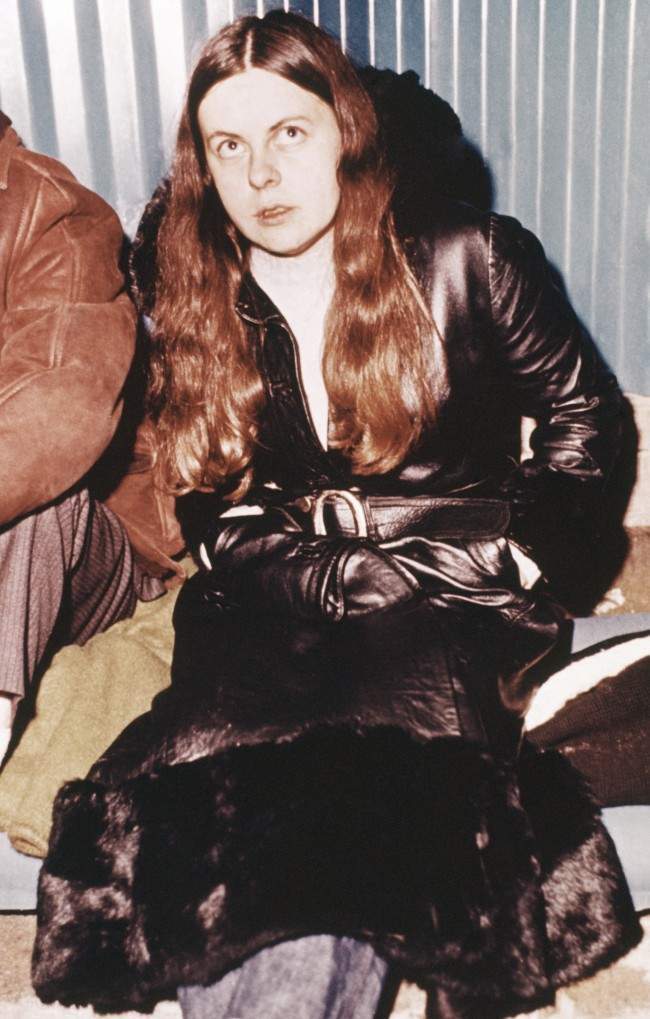
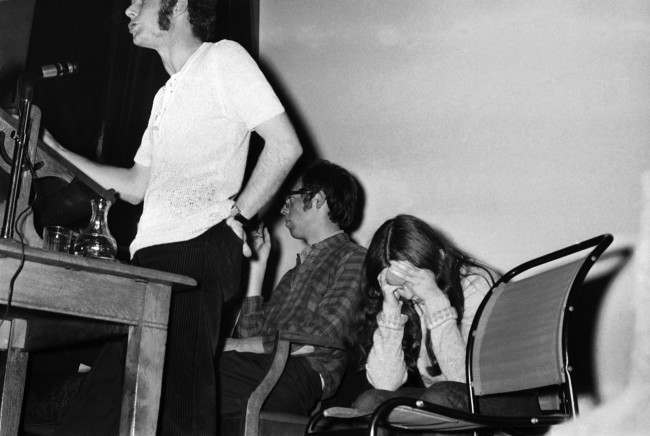
Political figures on both sides of the divide were active throughout this period. Brian Faulkner served as Northern Ireland’s Prime Minister and was responsible for introducing internment. Reverend Ian Paisley, the prominent Protestant unionist leader, led the Protestant Easter March through Armagh in April 1971, with British troops standing guard along the route. Bernadette Devlin, the 24-year-old Member of Parliament for Mid-Ulster, took the nationalist cause to London. She staged an all-night protest outside 10 Downing Street in October 1971 and addressed students at the London School of Economics, urging them to show solidarity with the people of Northern Ireland. Earlier that same year, she spoke at a civil rights rally in Trafalgar Square.
Brian Faulkner, Northern Ireland Prime Minister and the man faced with the task of ending the eruption of terrorism, street fighting and bloodshed in the Province
Prime Minister of Northern Ireland Brian Faulkner and his wife Lady Lucy Faulkner during a private reception at the Ulster office with Mr Reginald Maulding
Protestant leader Reverend Ian Paisley, behind crown bearer, leads the Protestant Easter March through Armagh, Northern Ireland, while British troops stand guard on Easter Saturday, April 10, 1971.
Bernadette Devlin, 24-year-old member of Parliament for Mid-Ulster, who has announced that she is soon to have a baby, addresses a political protest meeting in London’s Trafalgar Square by the Northern Ireland Civil Rights Movement, July 11, 1971.
Bernadette Devlin, Member of Parliament for Mid-Ulster, during her all-night picked of Number Ten Downing Street, London on Oct. 20, 1971.
Breaking away from her 48 hour vigil outside No. 10 Downing Street, Bernadette Devlin, Member of Parliament for Mid-Ulster, went to the London School of Economics, on Oct. 20, 1971
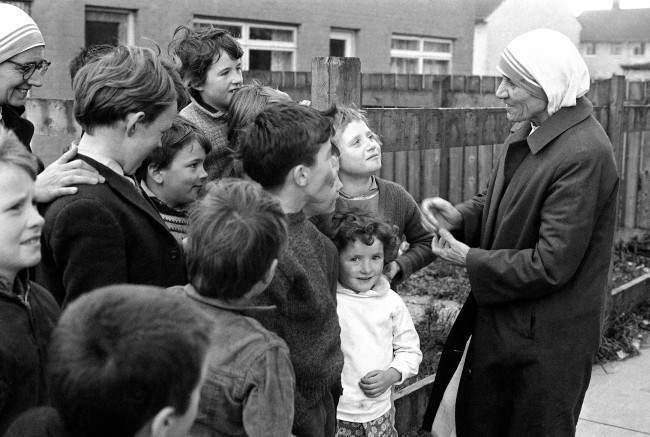
In November 1971, Mother Teresa arrived in Belfast to begin a mission in the city. She was photographed meeting local children — a striking image in the middle of one of Northern Ireland’s most violent periods. That same month, traffic near the Catholic Unity Flats was forcibly halted by republican extremists armed with clubs during the funerals of Catholic riot victims.
Mother Teresa making friends with Belfast children, where she is to start a mission in Belfast, Northern Ireland on Nov. 6, 1971.
British troops straddle a main road near the Catholic Unity flats in Belfast, Northern Ireland
The conflict continued into 1972 with no sign of slowing. On January 30 — Bloody Sunday — British soldiers arrested demonstrators in Derry during a civil rights march. That day, 14 civilians were shot dead by the British Army’s Parachute Regiment. In March 1972, an IRA car bomb on Donegal Street in Belfast killed six people and injured 146. The Official IRA declared an unconditional ceasefire later that year, but the Provisional IRA fought on.
British soldier arrests a demonstrator in Derry on Bloody Sunday 1972.
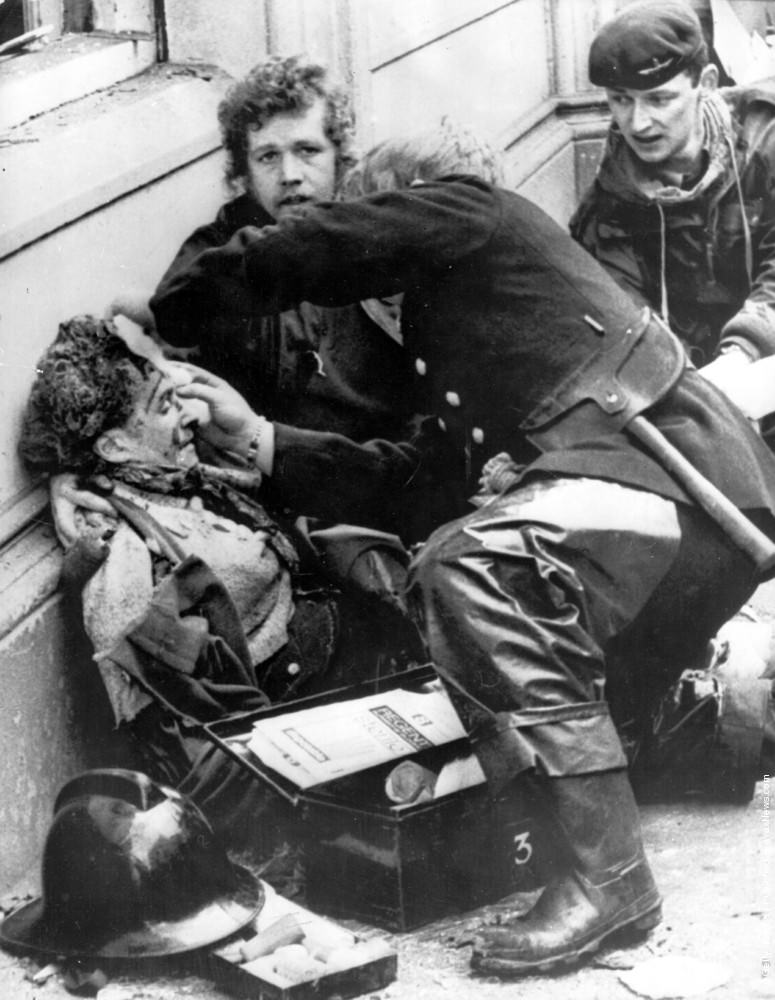
Firemen tend to a wounded victim of an Irish Republican Army car bomb explosion in Donegal Street, Belfast. The blast killed 6 people and injured 146, 1972.
The aftermath of a terrorist bombing, 1972.
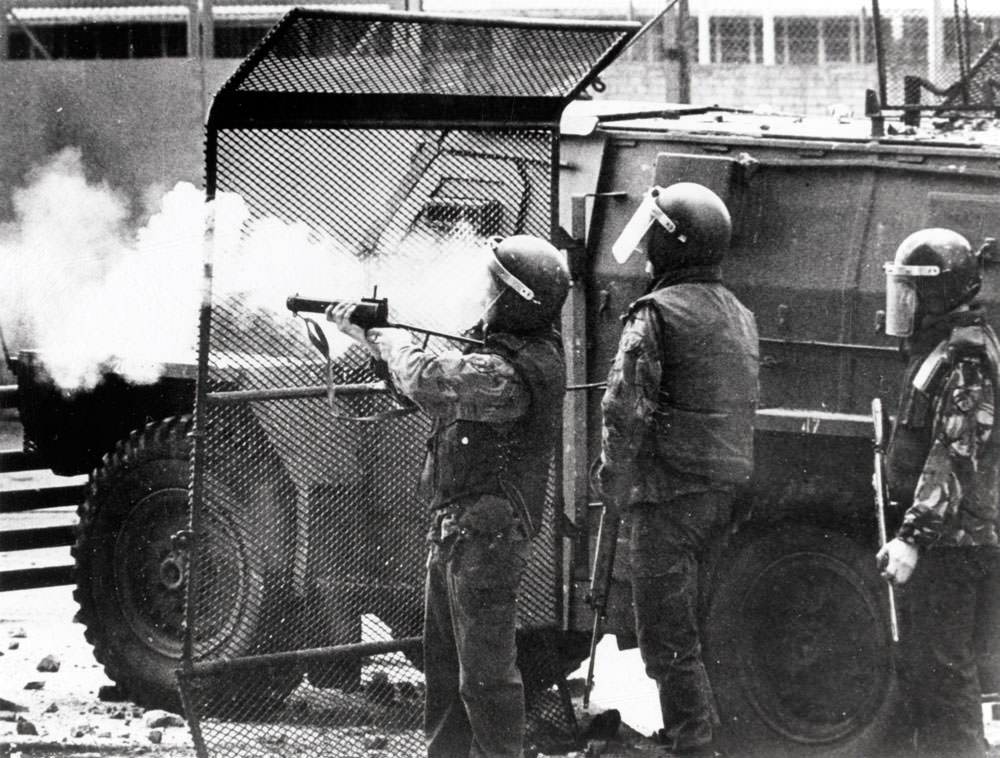
A soldier fires off a baton round, Northern Ireland, 1972.
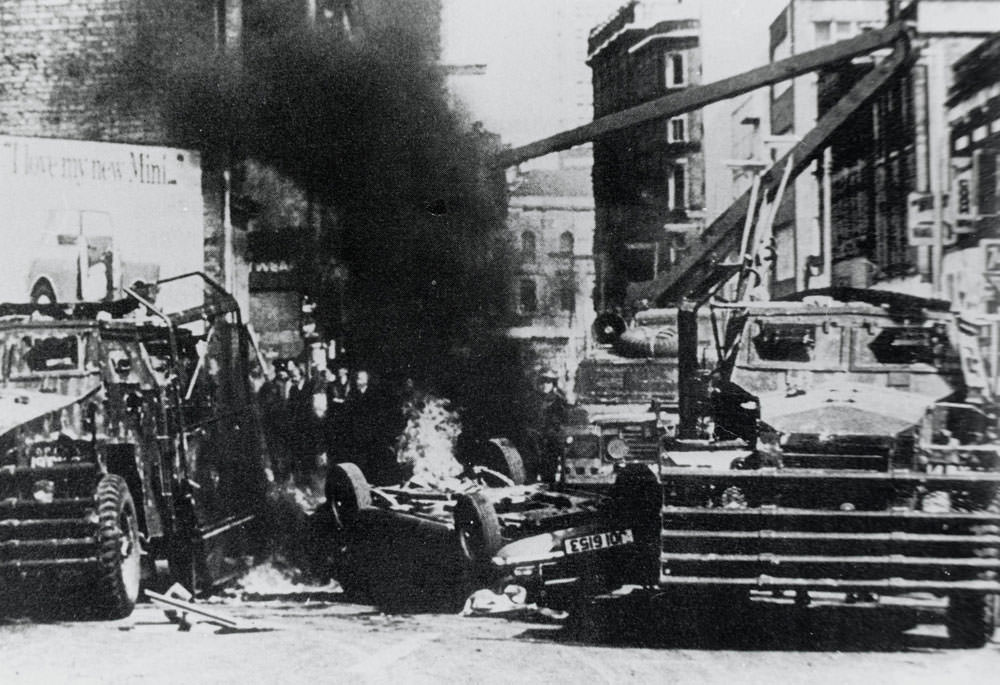
A British Army Humber Pig passes through a burning barricade, 1972.
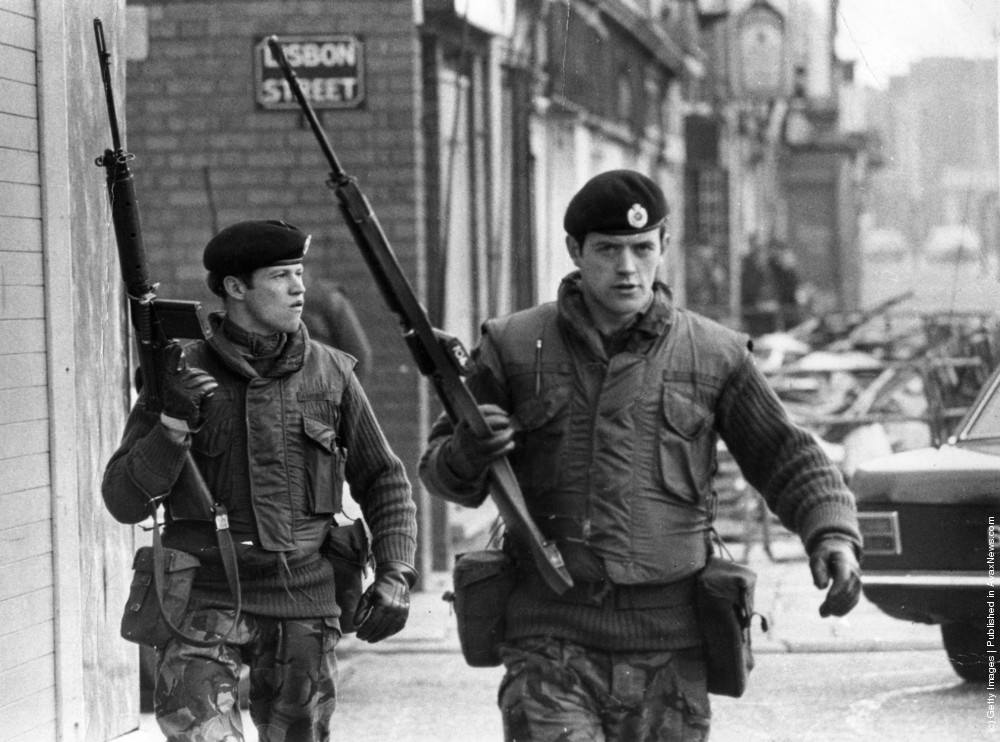
Armed British soldiers on patrol in Lisbon Street, Belfast, during the Official IRAs unconditional ceasefire, 1972.
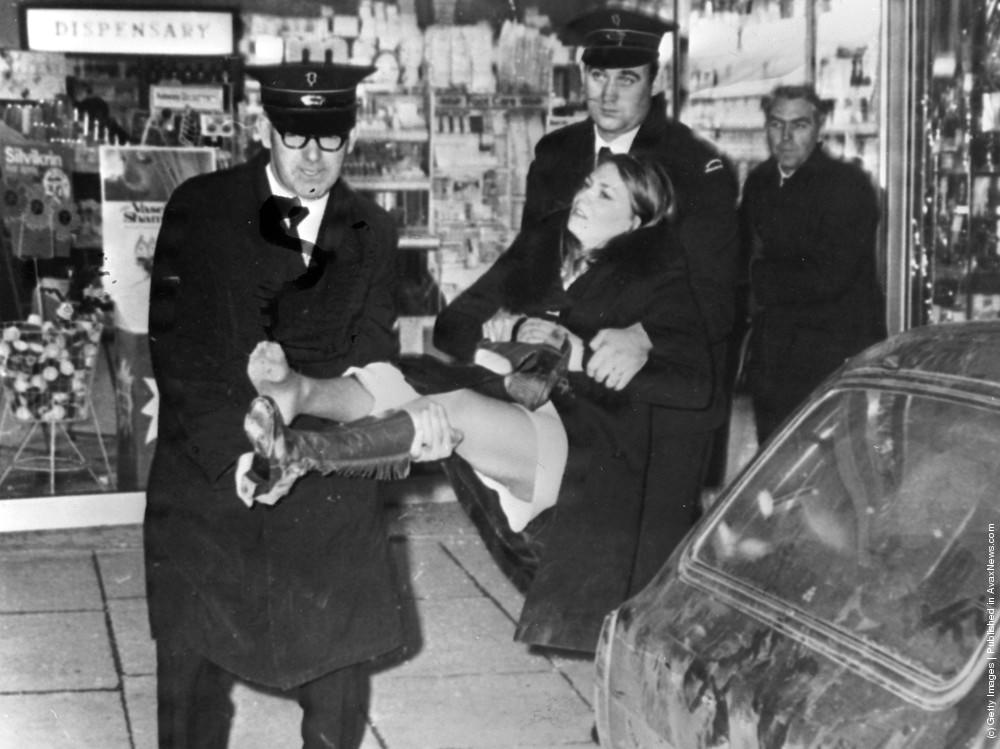
A young woman injured during a shooting incident in Belfast is carried out of a chemists shop by ambulance men, 28th November 1971.
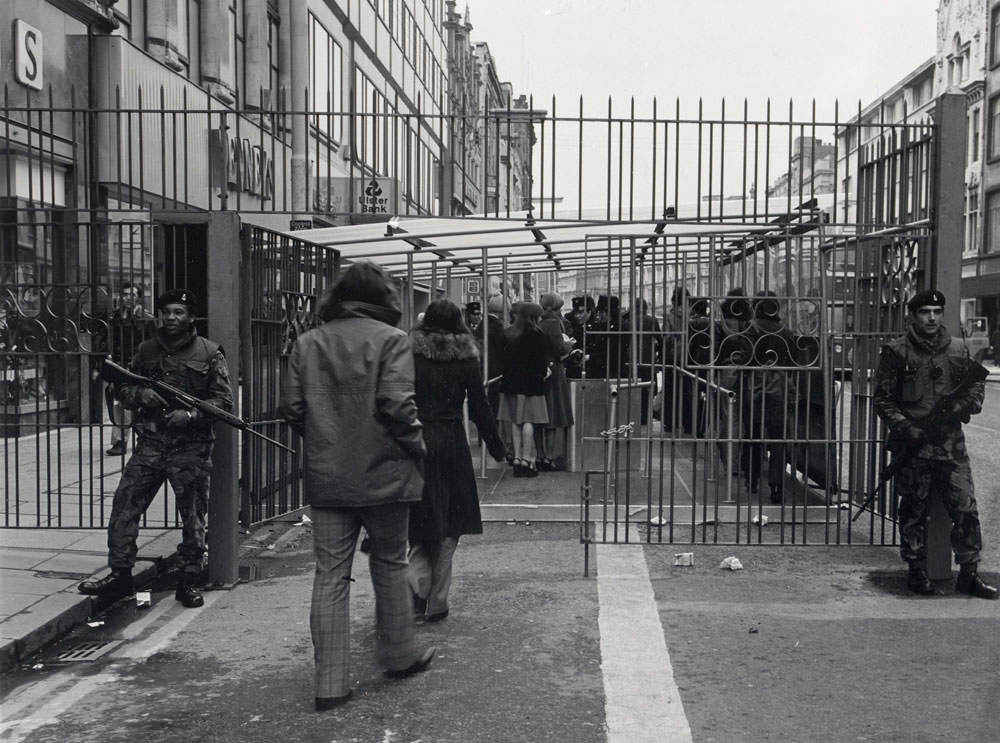
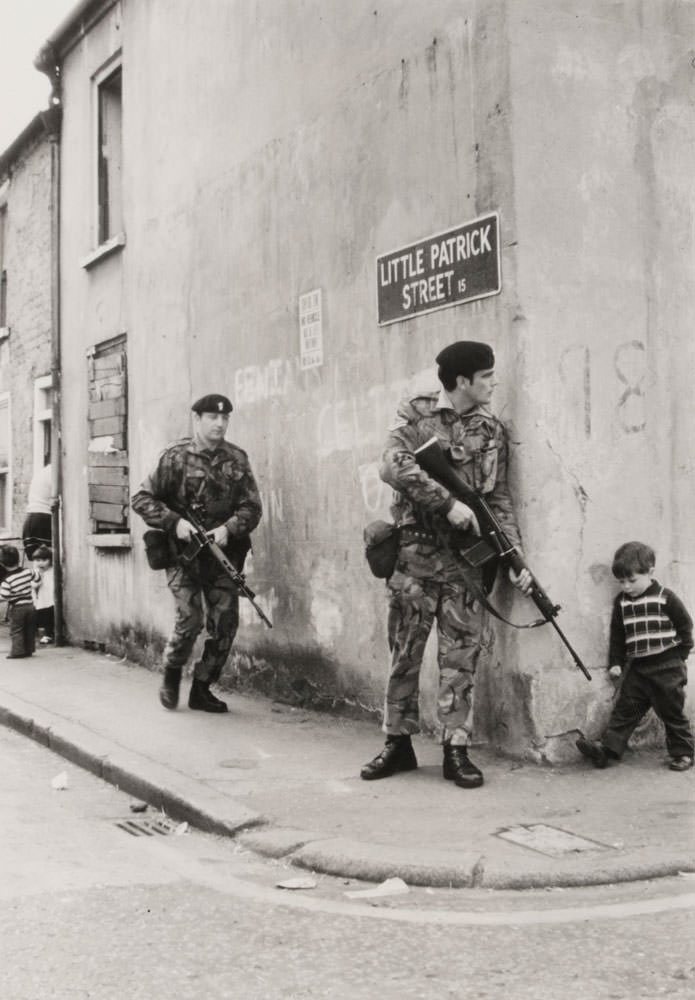
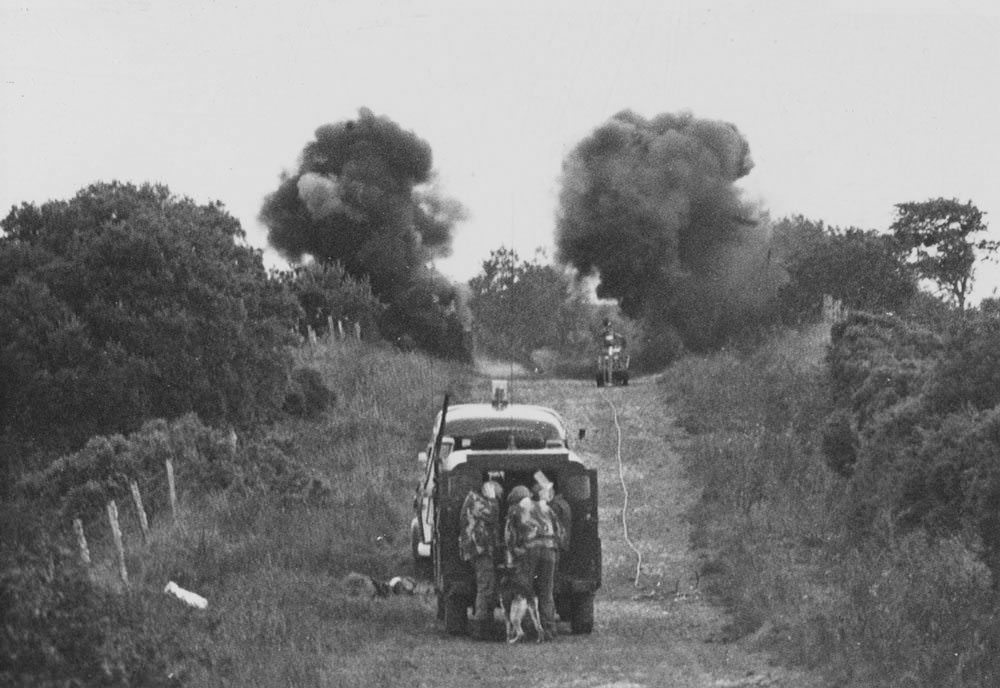
By 1973 and into the mid-1970s, the British Army’s footprint in Northern Ireland had grown into a permanent and heavily fortified presence. Soldiers from multiple regiments rotated through the province. The Gordon Highlanders patrolled city streets. The Worcestershire and Sherwood Foresters manned watchtowers in Crossmaglen, deep in South Armagh — one of the most dangerous postings of the entire conflict. Explosive ordnance disposal teams worked near the Irish border and in towns like Omagh, where a 660-pound ammonium nitrate bomb was defused in 1974.
Members of the Gordon Highlanders on patrol, 1973.
British soldiers man a checkpoint, Belfast, 1973.
On patrol in Little Patrick Street, Belfast, 1973.
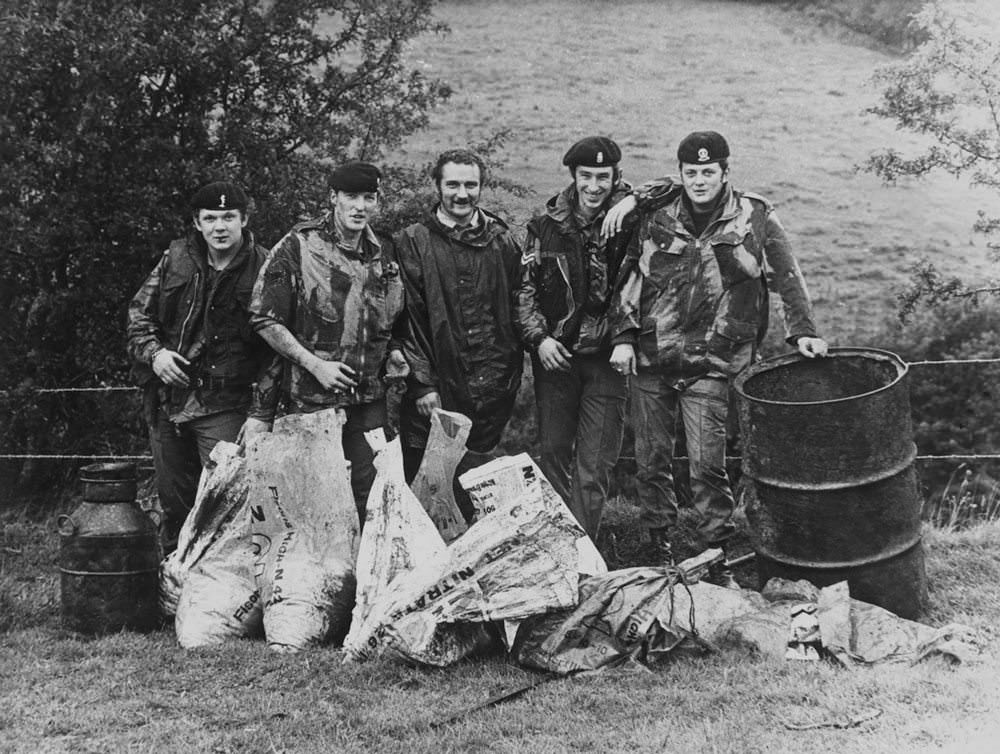
Members of 321 Explosive Ordnance Disposal Company, Royal Army Ordnance Corps, detonate a device near the Irish border, 1975.
Members of 321 Explosive Ordnance Disposal Company, Royal Army Ordnance Corps, with a defused 660lbs ammonium nitrate bomb, Omagh, 1974.
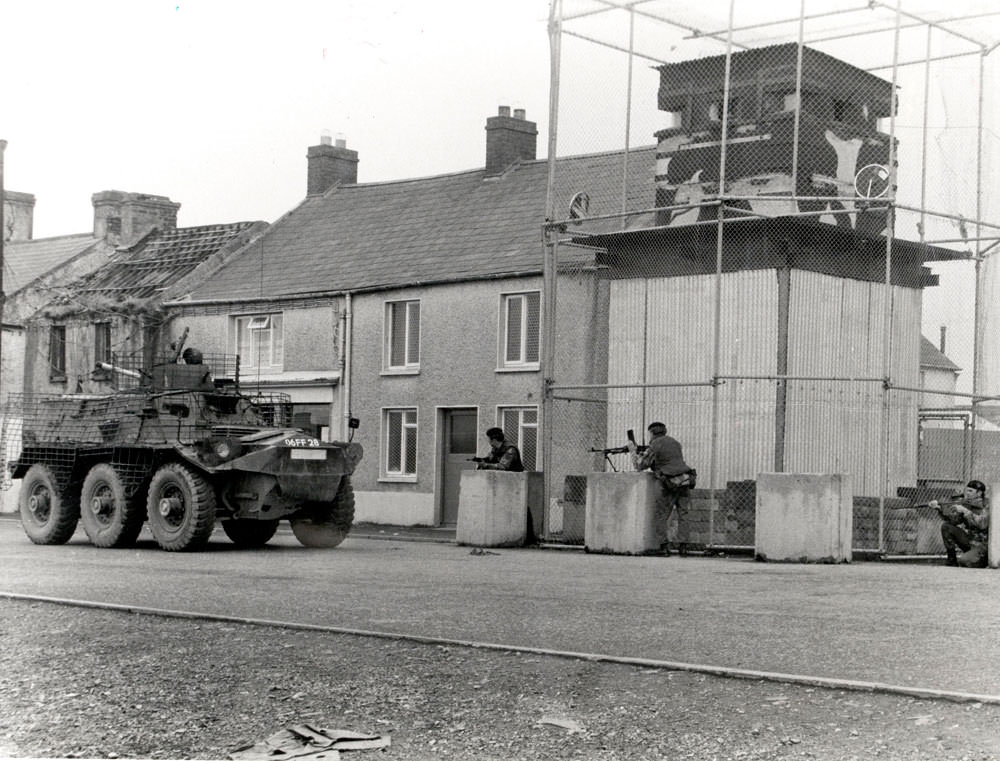
Soldiers from 1st Battalion The Worcestershire and Sherwood Foresters Regiment, man a watchtower in Crossmaglen, South Armagh, 1977.
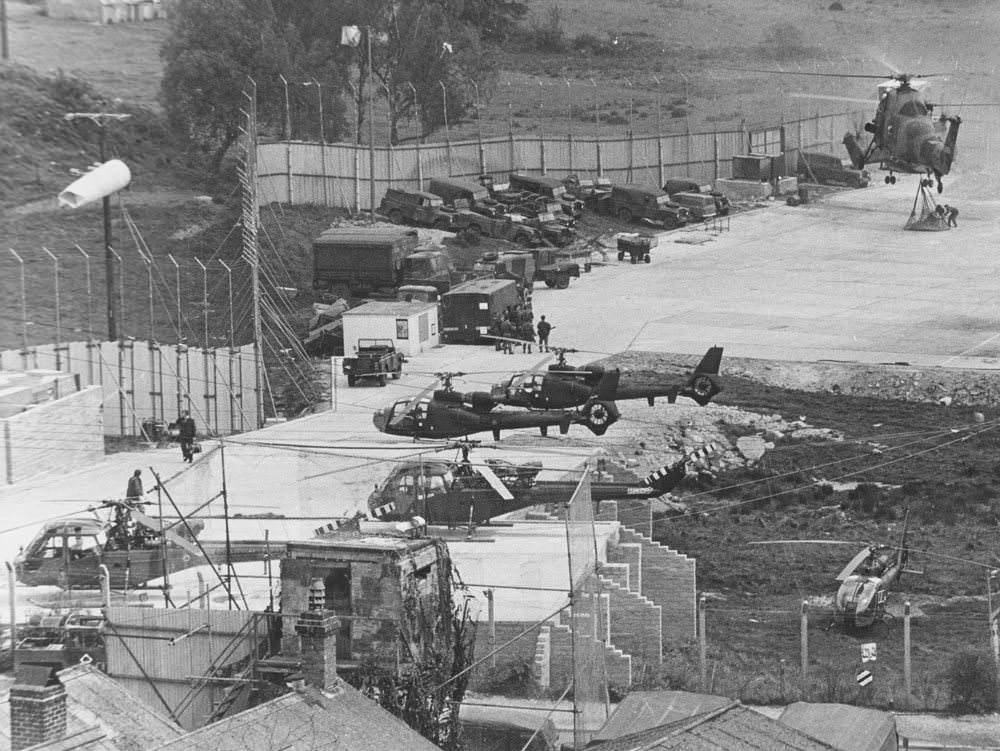
A British Army base in South Armagh, 1977.
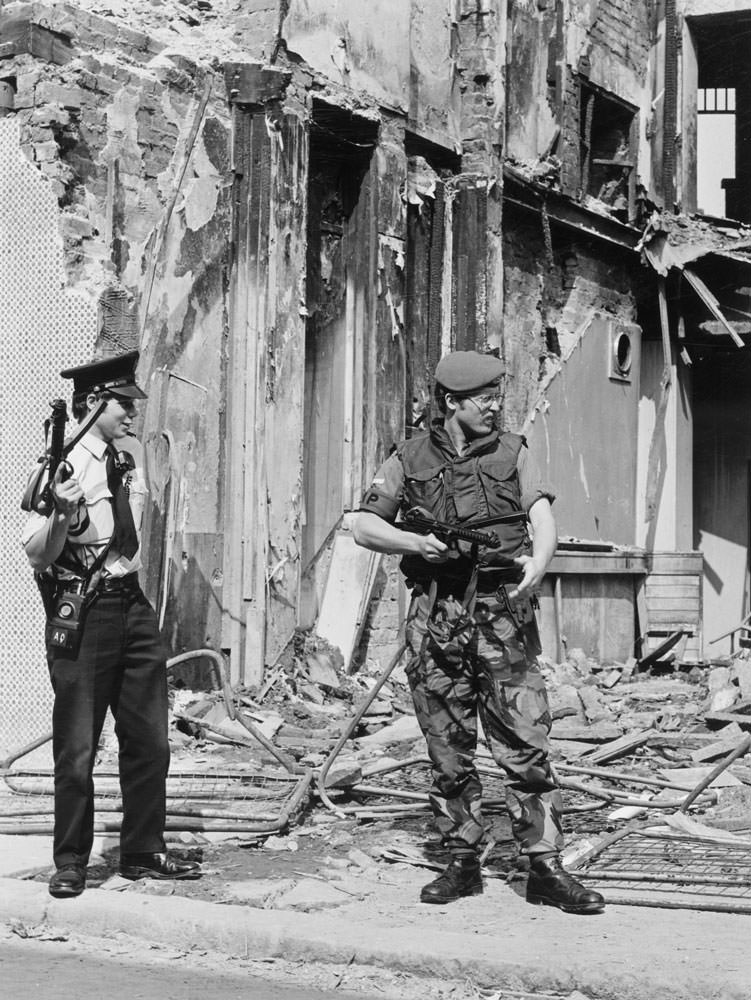
An RUC officer and Royal Military Policeman stand guard by a bombed building, 1979.
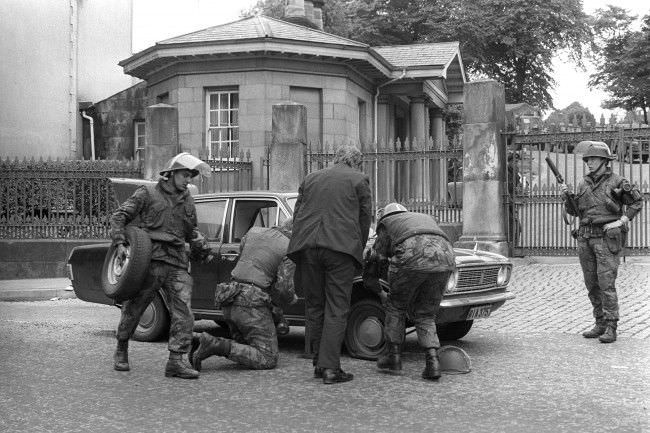
Soldiers changing a flat tyre on a car outside an Army base in Londonderry.
Sincere, friendly, curious, ambitious, enthusiast. I'm a content crafter and social media expert. I love Classic Movies because their dialogue, scenery and stories are awesome.