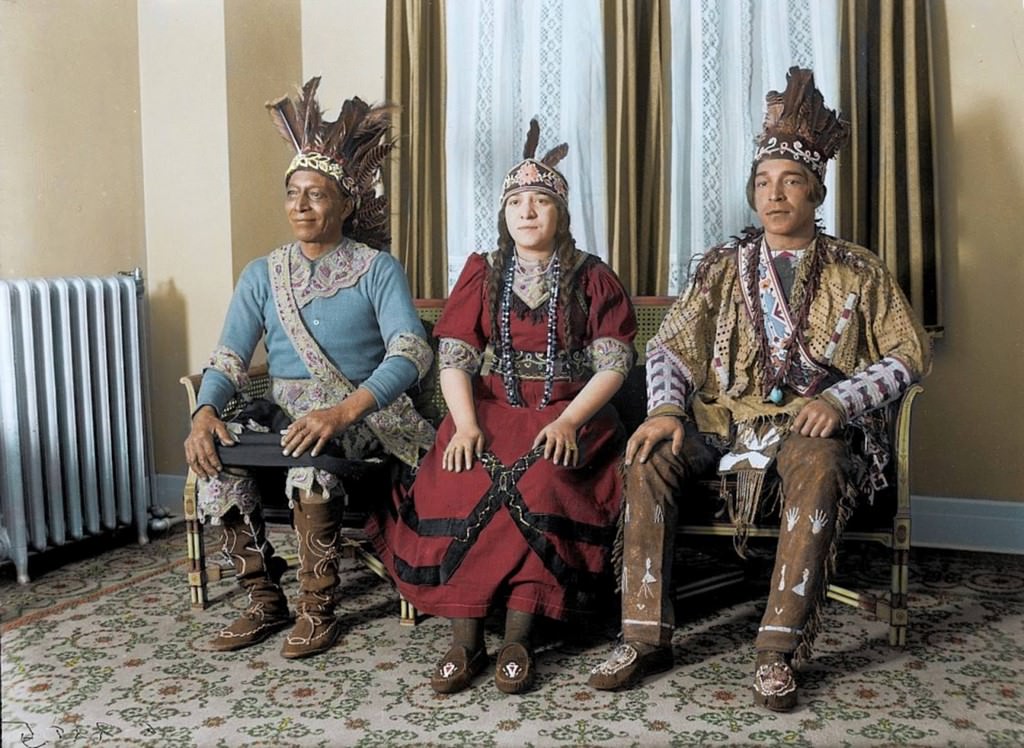
On June 2, 1924, President Calvin Coolidge signed the Indian Citizenship Act into law — a bill that finally granted full U.S. citizenship to all indigenous peoples, including members of Native American tribes. The law is also known as the Snyder Act. Before this moment, Native Americans had lived on American soil for thousands of years yet held no formal standing as citizens of the country that had been built around them.
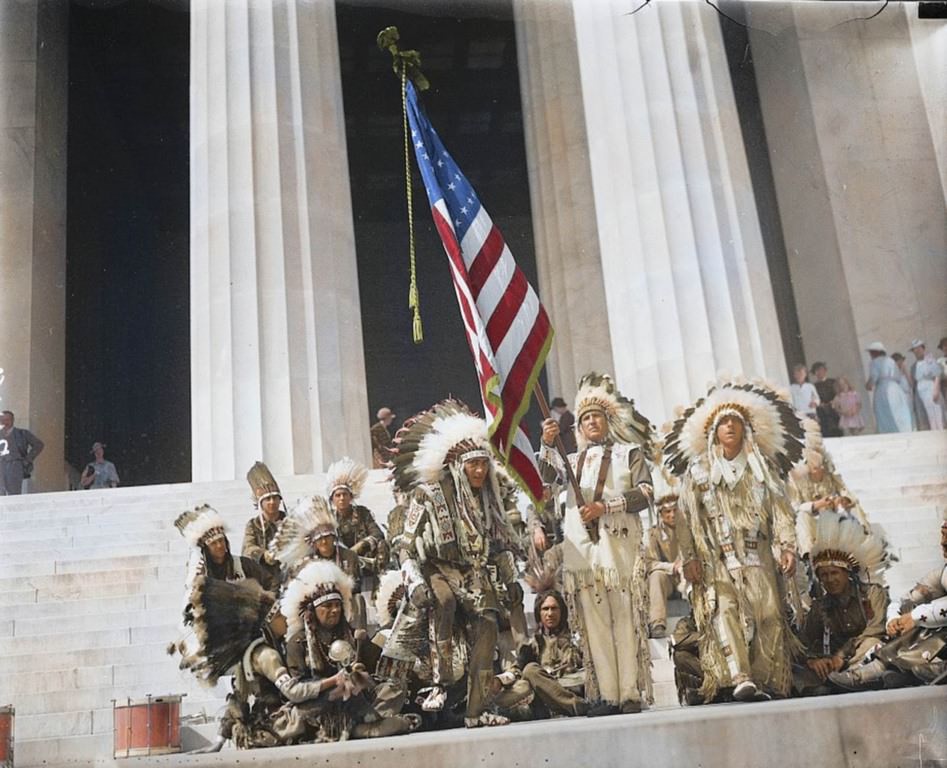
The act came in large part as recognition of the enormous sacrifice Native Americans made during World War I. Thousands of Native men had volunteered and served in the U.S. armed forces during the war, despite having no citizenship and no legal protections. Their service on the battlefield made the denial of citizenship at home impossible to ignore. Congress acted, and Coolidge put his signature on the bill.
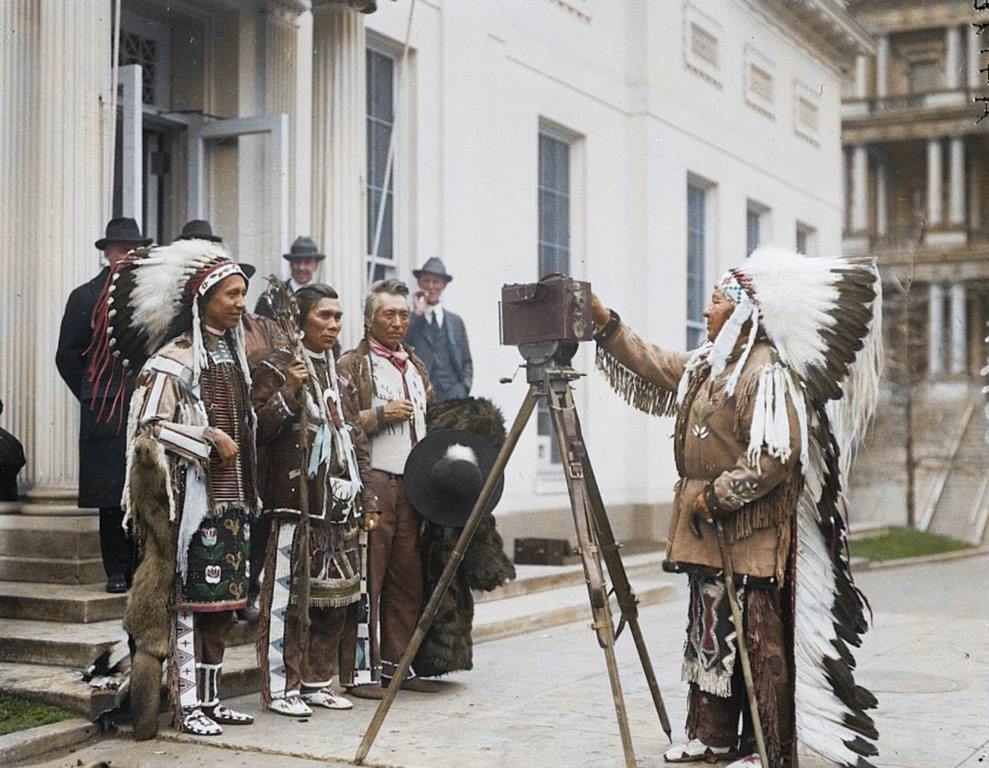
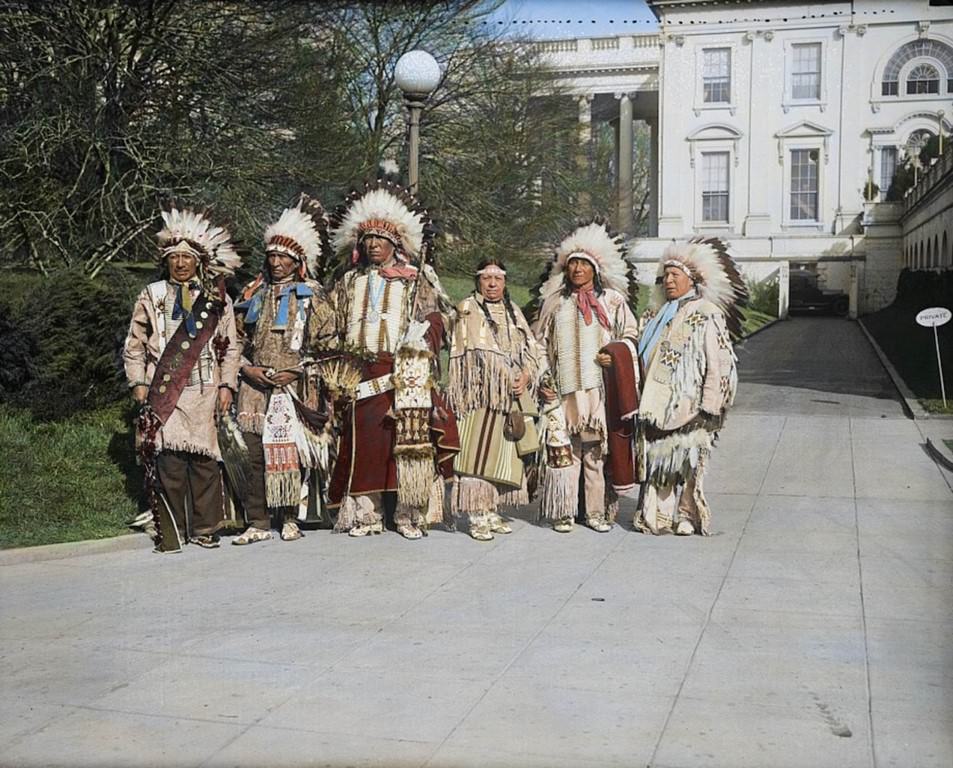
In the years surrounding the act, Native American leaders, elders, men, women, and children traveled to Washington D.C. to meet with the president and his staff. These visits were both symbolic and political. Tribal representatives came dressed in traditional attire, bringing their identities and cultures directly to the seat of American power. The photographs taken during these visits are among the most striking historical records of the era.
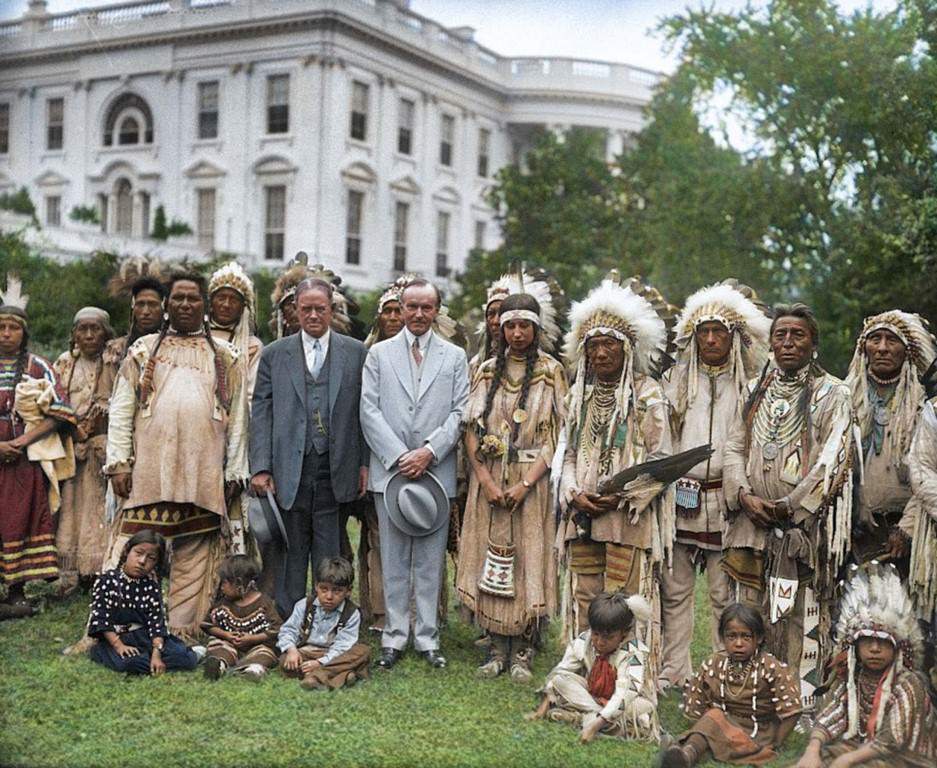
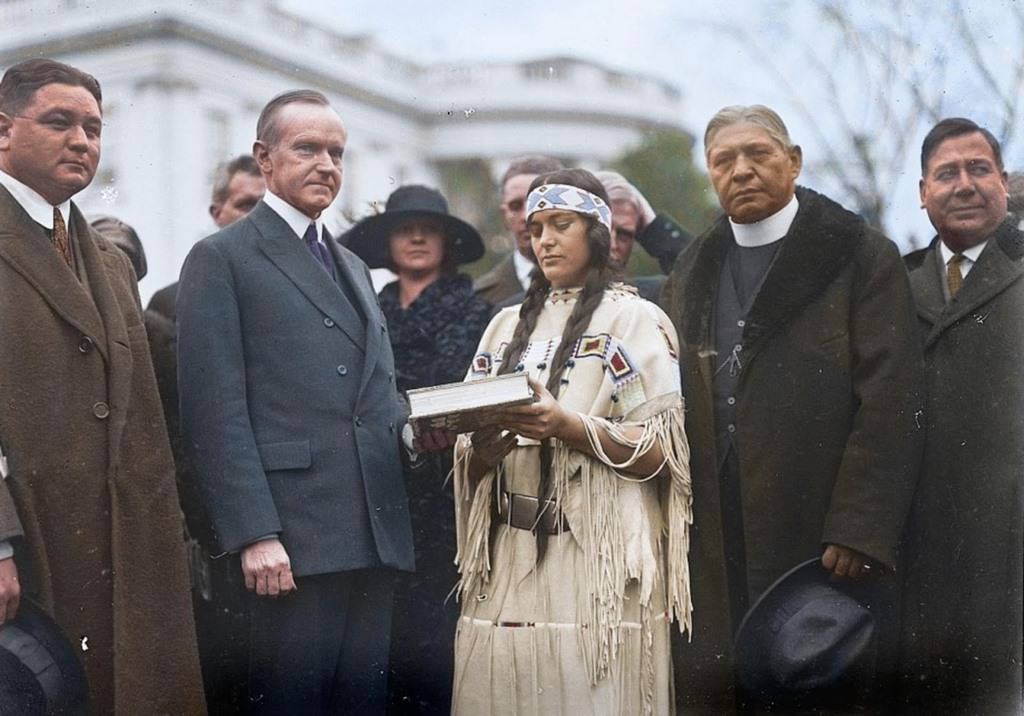
President Coolidge met directly with tribal representatives on multiple occasions around the signing of the act. These meetings were not ceremonial photo opportunities alone — tribal leaders used the access to discuss the practical realities their communities faced. The White House lawn became a setting for a rare and direct exchange between the U.S. government and the people whose land it had been built upon.
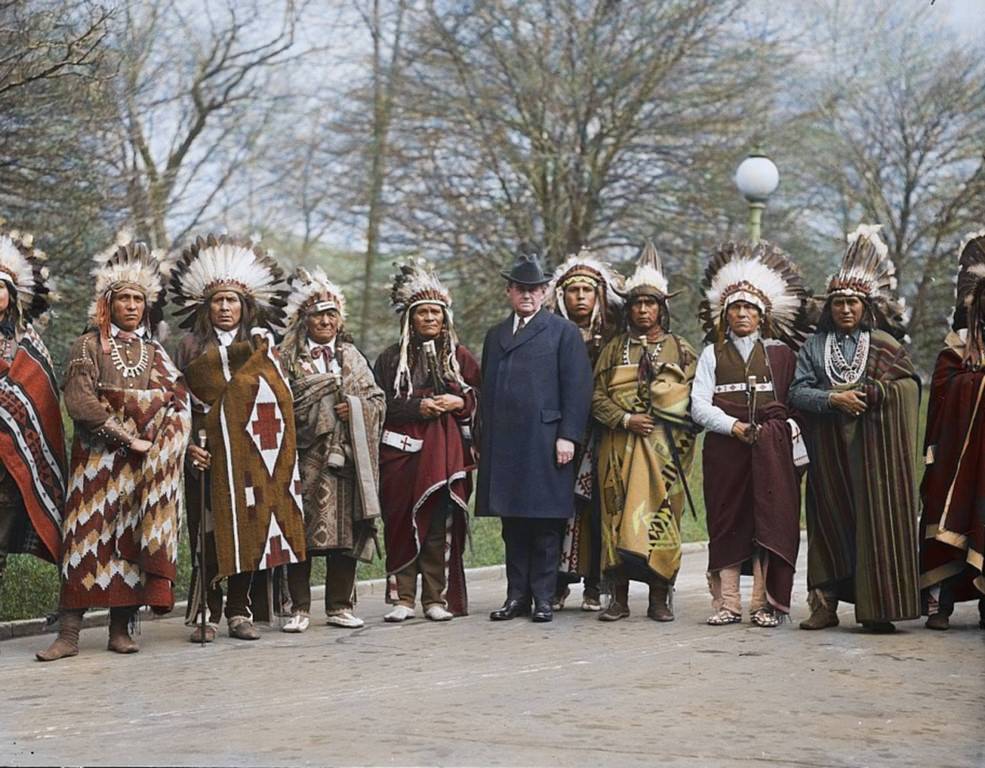
Despite the landmark nature of the act, its real-world impact was severely limited at first. Several states used discriminatory laws to block Native Americans from actually exercising their right to vote. Tactics varied — some states declared Native Americans wards of the government and therefore ineligible, while others used literacy tests, poll taxes, or residency requirements designed specifically to disqualify tribal members. Full voting rights in practice would take decades more to secure across every state.
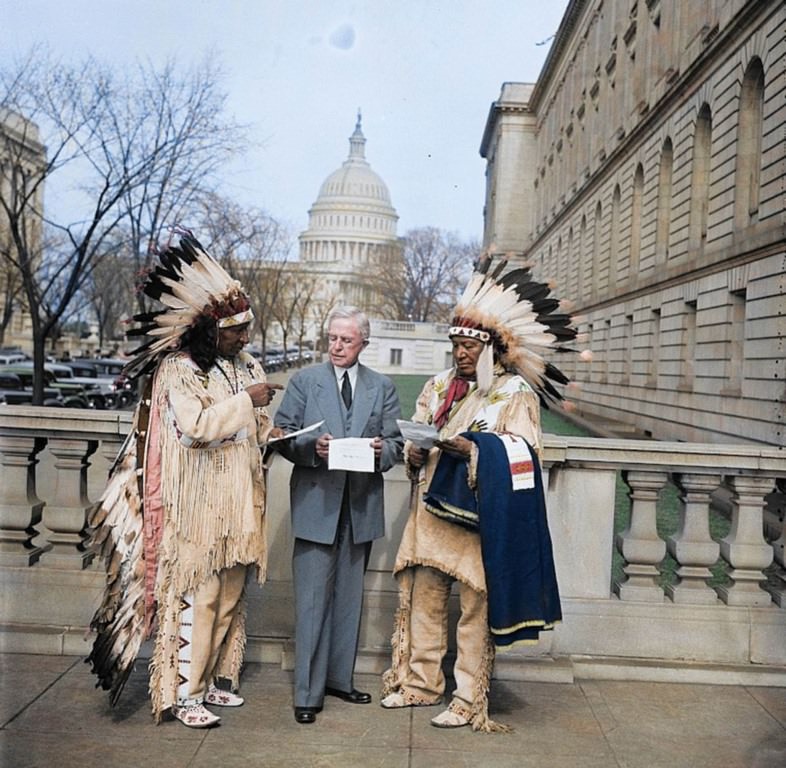
The conversations happening at the White House during this period went beyond celebration. Two elders meeting with a member of Coolidge’s staff, for instance, were not simply posing for history — they were pressing for the rights that the act was supposed to guarantee. Policy discussions like these reflected the ongoing effort to translate a signed law into lived reality.
Women were also a visible and active presence in Washington during this time. Native American women made the journey to the capital and stood on the White House grounds as witnesses and participants in this political moment. Their presence pushed back against the common tendency to frame Native American political life as exclusively male.
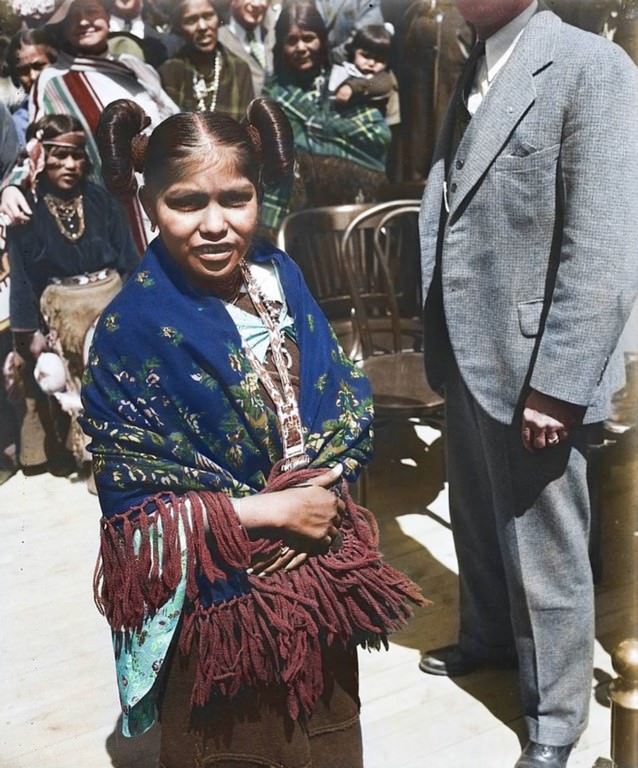
Entire families made the trip in 1924. Men, women, and children came together to stand before President Coolidge and his administration. For many families, this was the first time they had traveled to the nation’s capital. The journey itself was a statement — a declaration that Native peoples were not simply subjects of American law but active participants in shaping it.
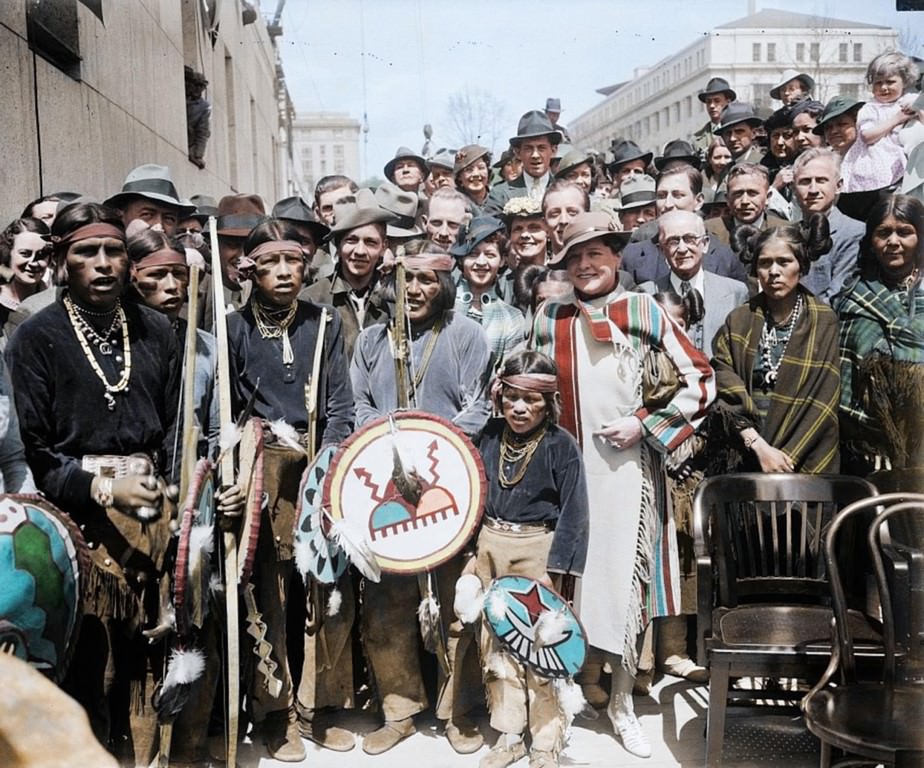
For the women who traveled to Washington in 1924, the signing of the Indian Citizenship Act was a specific cause for gathering. These women came to mark the moment and bear witness to a legal change that affected every member of their communities. The photographs of them in Washington document not just a trip, but a turning point.
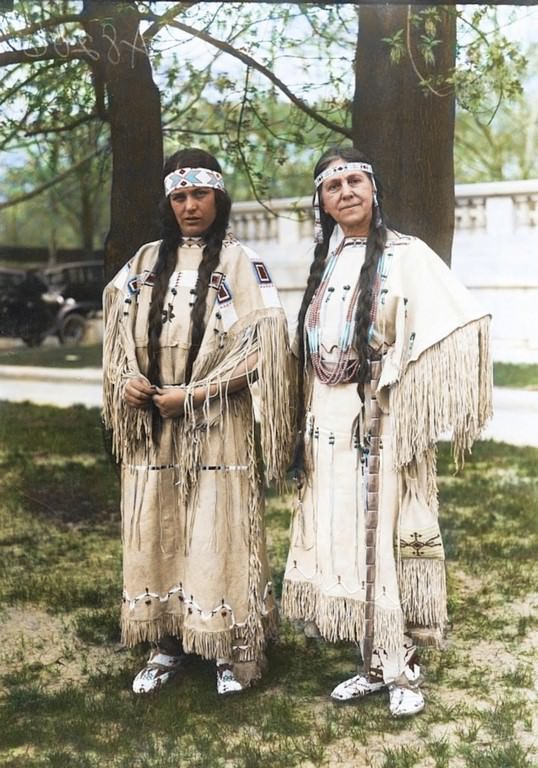
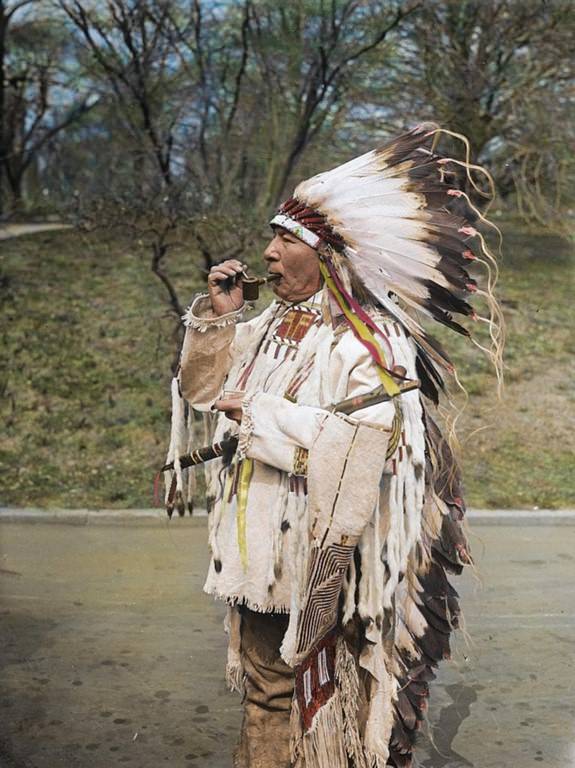
The elders photographed in the mid-1920s had lived through decades of U.S. government policies aimed at erasing Native culture, displacing tribes from their land, and dismantling tribal governance. For an elder photographed around 1925, citizenship was not an abstraction — it came at the end of a lifetime defined by the absence of it.
Before the act was even signed, Native leaders were already meeting with the Coolidge administration to shape what the legislation would look like. In 1923, a Native American woman was photographed meeting directly with President Coolidge — one year before the act became law. These pre-signing meetings show that the Indian Citizenship Act was the result of years of direct advocacy, not simply a gift handed down by Congress.
The photographs from this era stretch beyond the 1920s, with some group portraits dating as far back as 1915. These earlier images show Native Americans documenting themselves and their communities on their own terms, years before the citizenship debate reached its peak. Together, the full collection of photographs from this period captures a community that was deeply engaged with the political world around them — and determined to be seen within it.