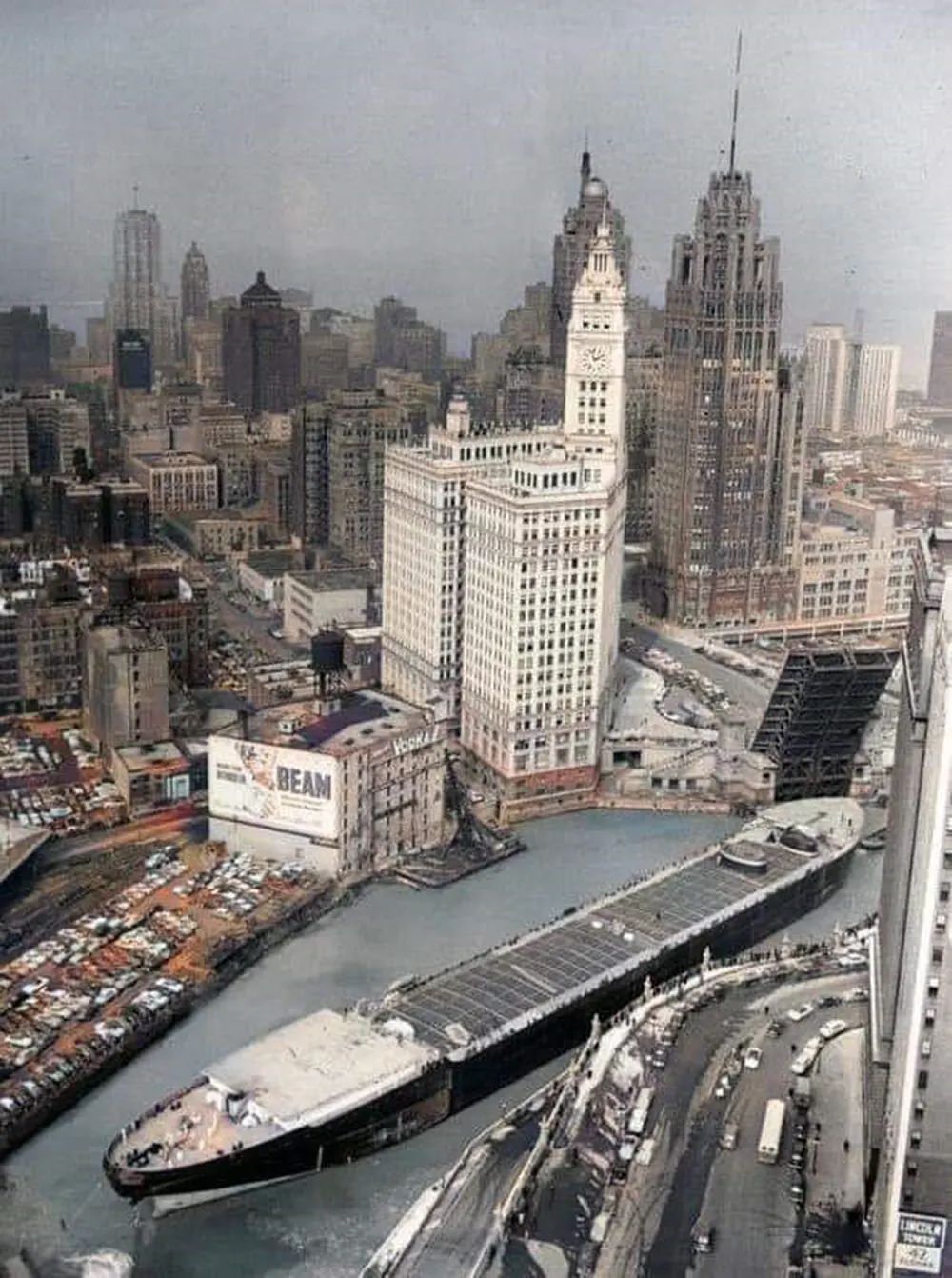
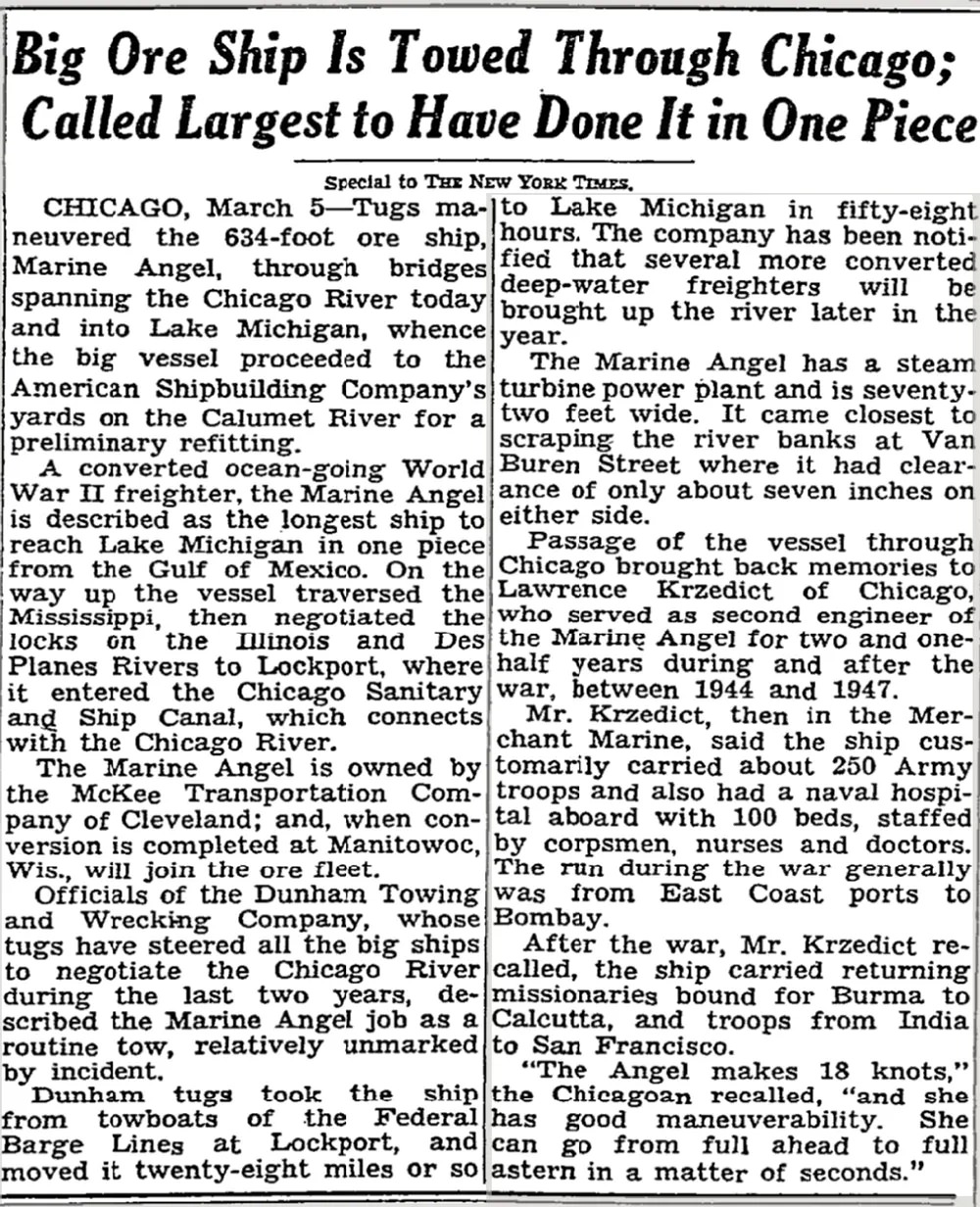
On March 5, 1953, a 634-foot freighter named the Marine Angel was towed through the Chicago River, cutting straight through the heart of one of America’s busiest cities. The Chicago River is a network of canals and channels winding through Chicago, Illinois. It serves as a route for transportation, a source of drinking water, and a space for recreation. Dozens of bridges cross it at various points, many of them bascule-style drawbridges that swing open to let vessels pass. Getting a ship the size of the Marine Angel through that corridor was no small task.
The Marine Angel was originally built in 1945 by Sun Shipbuilding and Drydock Co. as a fast troop transport. After the war, the vessel was acquired by American Steamship Co. and Boland & Cornelius for use on the Great Lakes. Before the 1953 journey, the ship went through a major retrofit at Maryland Drydock Co. that included a 123-foot lengthening and a completely new bow. When the work was done, she measured 634 feet long and 70 feet wide — a massive vessel by any standard.
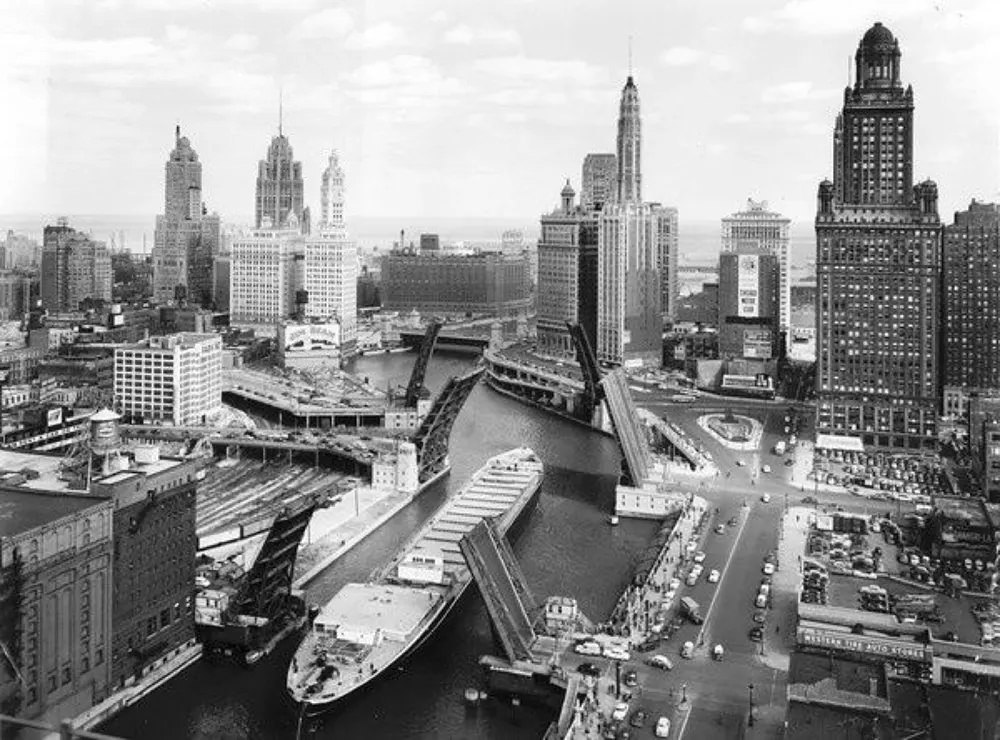
Towing a ship that size through an urban river required precise coordination. The clearances along the route were extremely tight. At Van Buren Street, the Marine Angel had only seven inches of space on each side. Seven inches. That left almost no room for error as tugboats carefully guided the hull through the narrow passage.
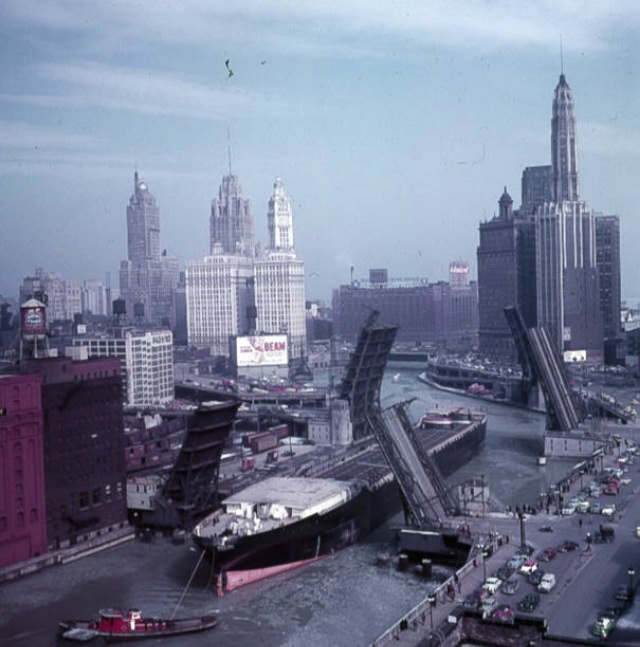
As the Marine Angel moved through the city, crowds gathered along the riverbanks and on the bridges overhead to watch. The sheer scale of the ship moving through downtown Chicago made for an extraordinary sight. She passed under bridge after bridge, each one raised just enough to let her through.
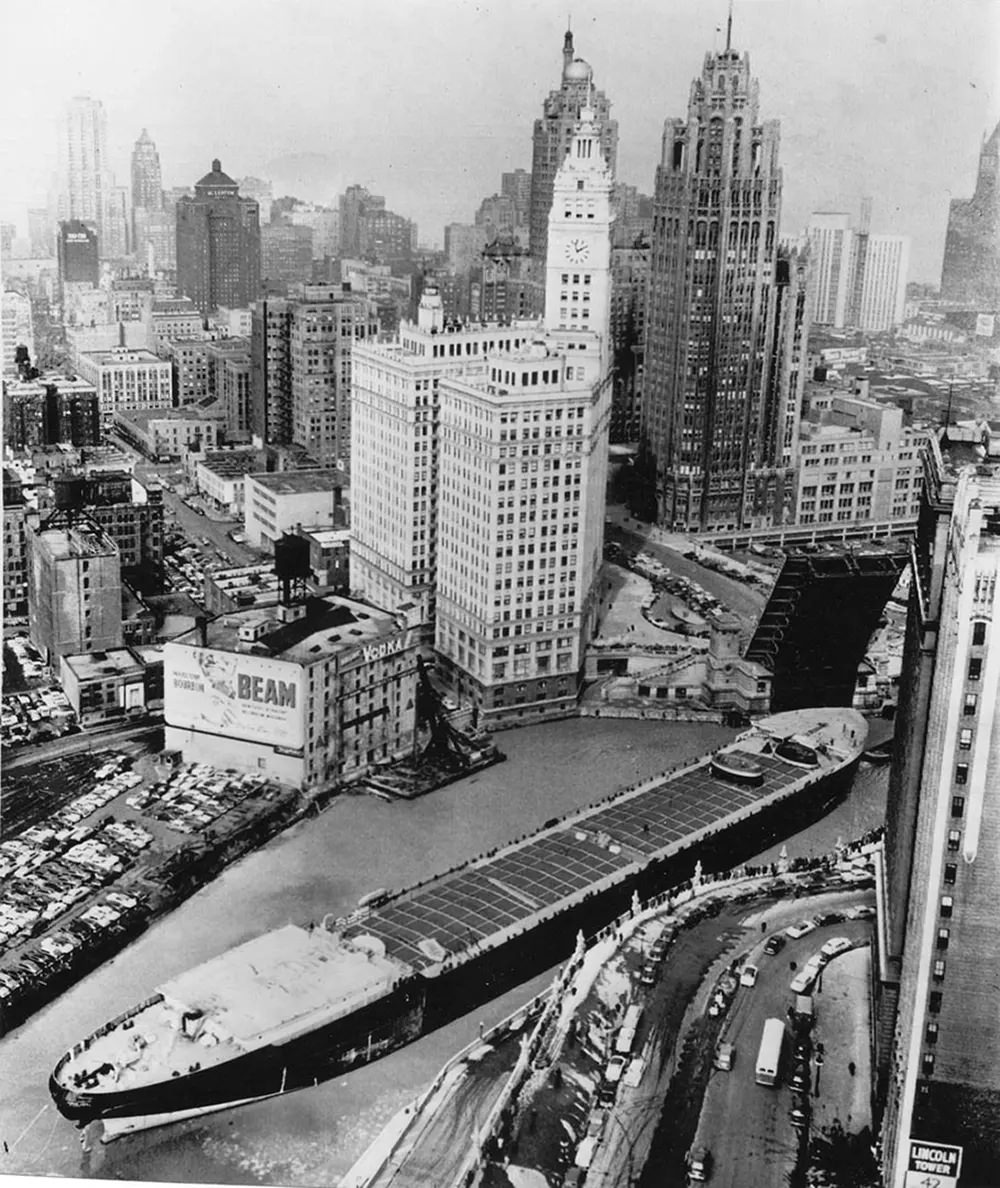
Officials described the operation as a “routine tow,” but the reality was far more complex. The journey had begun a day earlier on the Chicago Sanitary & Ship Canal, passing through outer bridges before reaching the river proper. Each bridge presented its own challenge, and the tugboats had to manage the ship’s momentum carefully through every turn and narrow stretch.
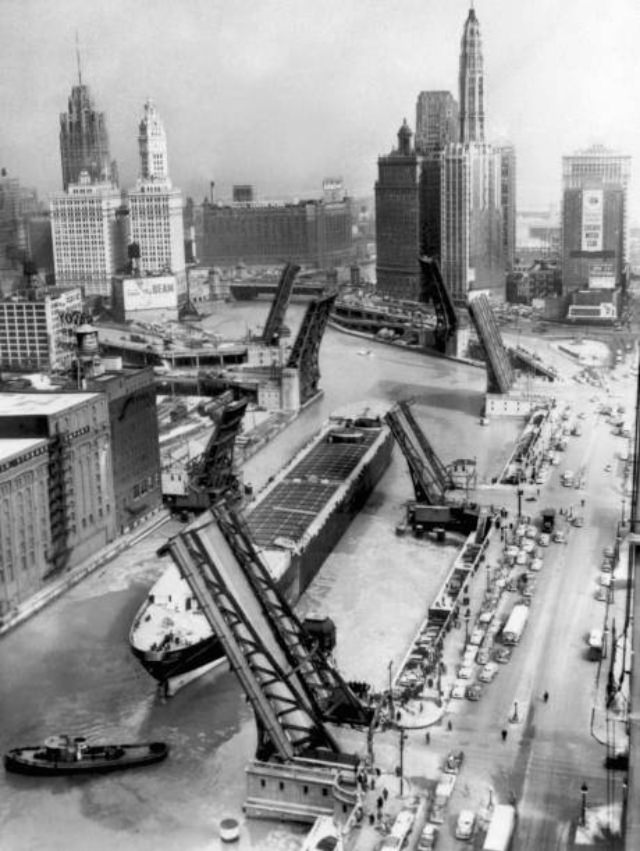
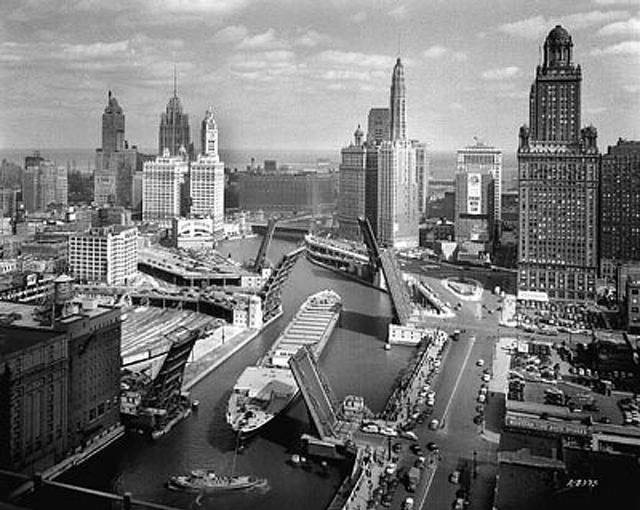
By March 6, the Marine Angel was approaching the downtown core. The skyline of Chicago rose on both sides as the massive freighter moved slowly through the channel, dwarfing everything around her at water level.
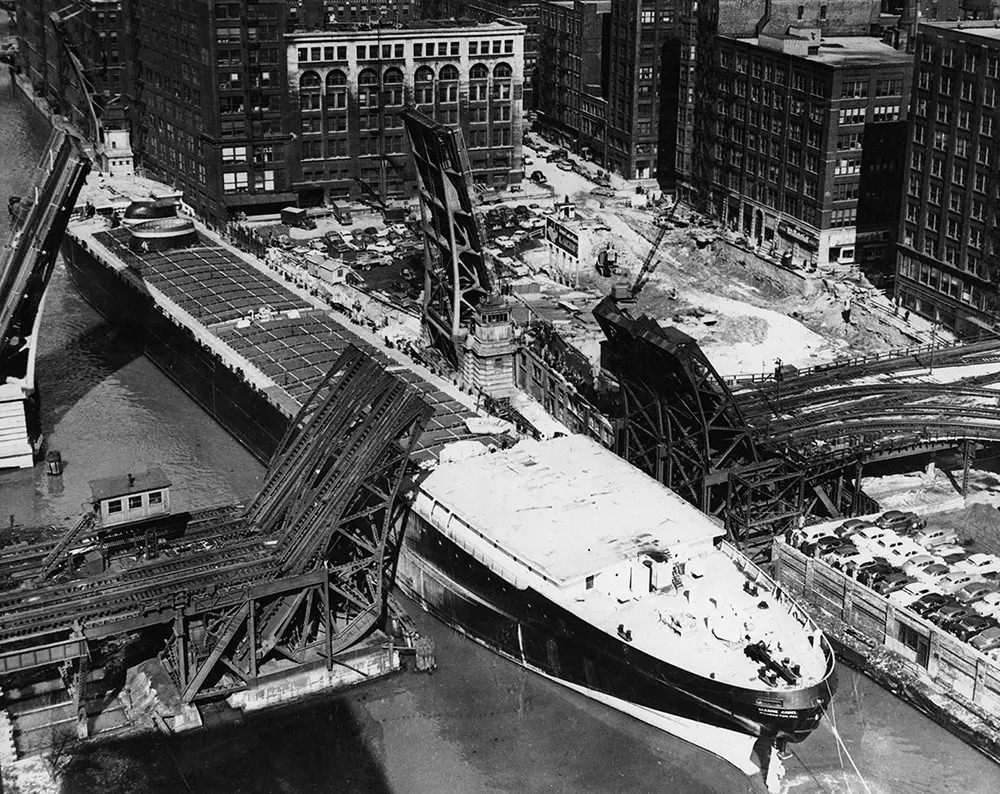
The Steamer Tug Reiss was one of the vessels responsible for guiding the Marine Angel along the route. Powerful tug operations like this required experienced crews who understood the river’s currents, bridge timing, and the behavior of a large hull in confined water.
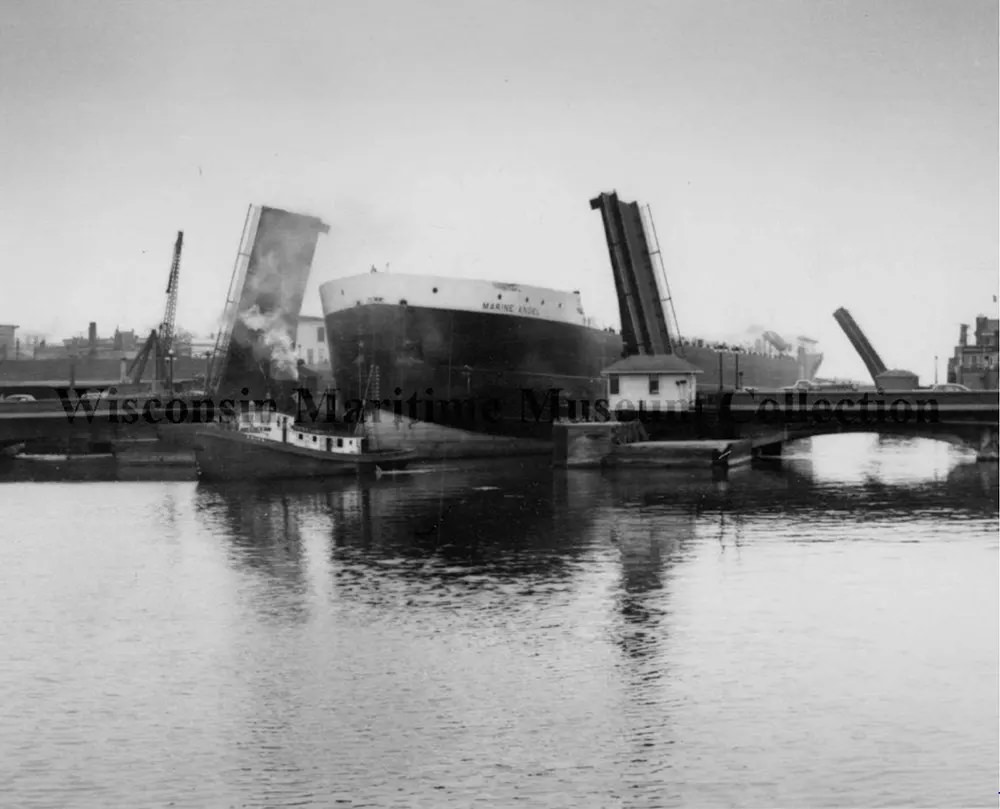
The Marine Angel’s passage through the Cicero Avenue Bridge on the Chicago Sanitary & Ship Canal on March 4 marked one of the early milestones of the trip. This stretch of the canal system was wide enough to handle the vessel, but it gave crews a preview of what the tighter river sections ahead would demand.
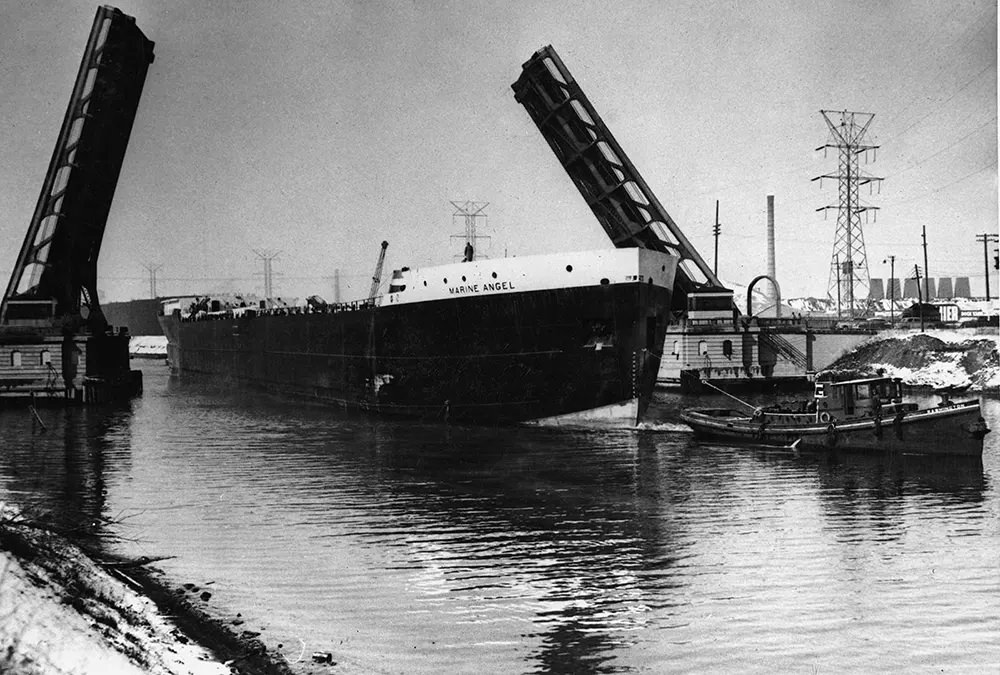
The final obstacle came at the lock separating the Chicago River from Lake Michigan. Standard lock procedures require a vessel to fit entirely within the lock chamber with both gates closed. The Marine Angel, at 634 feet, was 34 feet longer than the lock’s 600-foot length. Standard procedure was not an option. The lockmaster opened the riverside gate and the ship was eased in until her bow nearly touched the lakeside gate. Heavy hawsers — thick mooring cables — ran from the ship’s winches to mooring posts along the lock walls. The crew then opened the lakeside gate, exposing the ship to the full force of Lake Michigan’s onrushing water. The Marine Angel’s winches strained against the current, holding the vessel steady until the riverside gate could be closed behind her. With both gates secured and the water pressure controlled, the ship was free to continue into Lake Michigan.
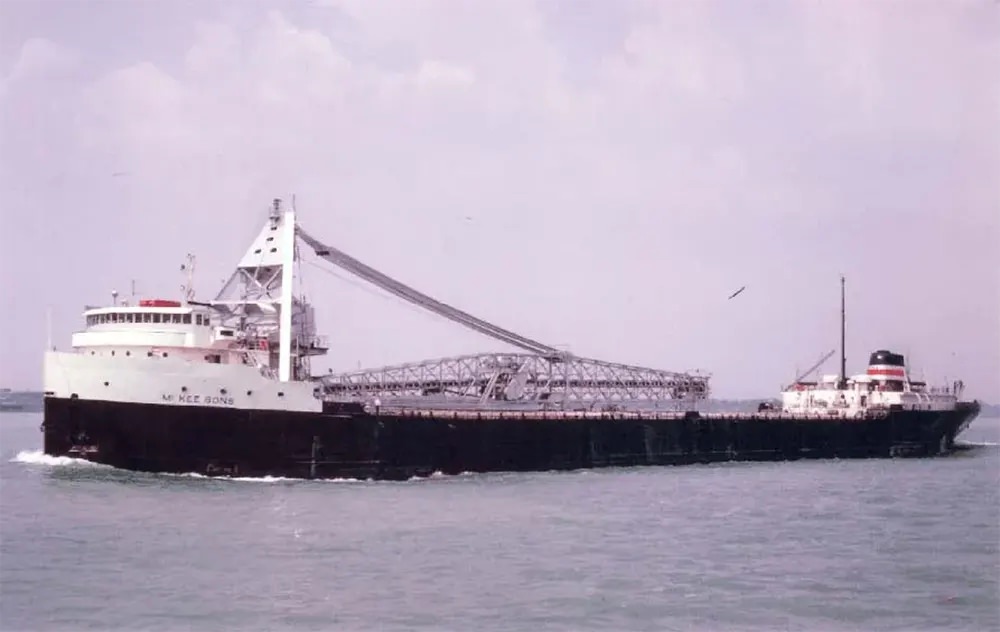
The story of the Marine Angel’s journey did not end with her arrival on the Great Lakes. After entering service, the vessel was eventually renamed the McKee Sons. She became a familiar sight on the lakes throughout the 1950s and beyond.