Indonesia entered the 1970s in the middle of a dramatic political and economic shift. President Sukarno, who had led the country since independence, had been placed under house arrest in March 1968. By signing the Supersemar — a transfer of key presidential powers — he handed authority to General Suharto. From that point forward, Suharto moved quickly to reverse many of Sukarno’s policies and steer the country in a new direction.
One of the first changes was repairing Indonesia’s relationship with neighboring countries. Indonesia and Malaysia settled their disputes, and Indonesia rejoined the United Nations. In 1967, Indonesia also played a central role in founding the Association of Southeast Asian Nations, better known as ASEAN — a regional bloc that would shape Southeast Asian diplomacy for decades.
On the economic front, Suharto’s government restructured Indonesia’s foreign debts through negotiations and secured international aid. New regulations simplified business activity, and a foreign investment law passed in 1967 opened the door to private capital. The results came quickly. Inflation dropped, the national currency — the rupiah — stabilized, and manufacturing expanded at a fast pace. Petroleum production also climbed as international energy companies partnered with the state oil firm Pertamina to tap Indonesia’s oil reserves.
Suharto ran for president in both 1971 and 1978 and won each time without opposition following parliamentary elections. His grip on power was firm, but not without friction. Before his third term in 1978, the government shut down sections of the press and arrested student leaders who had been organizing protests. While development spread across the archipelago, many people outside Java felt that the island at the center of national power still received preferential treatment.
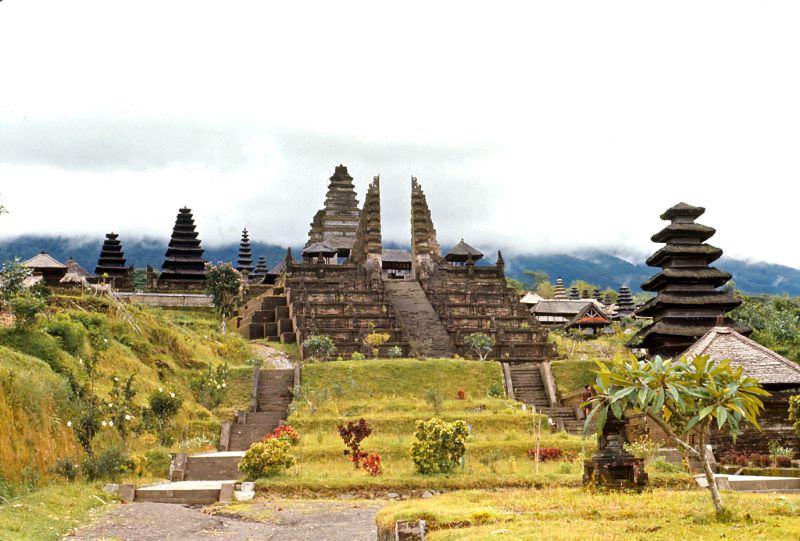
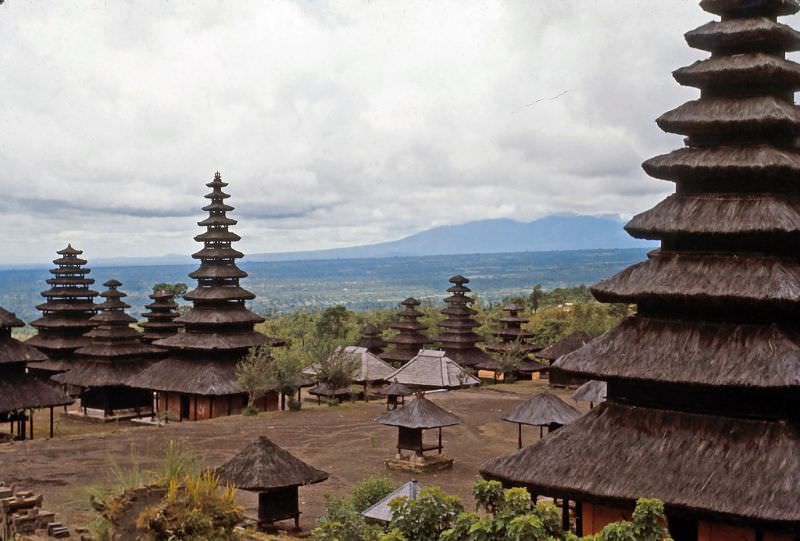
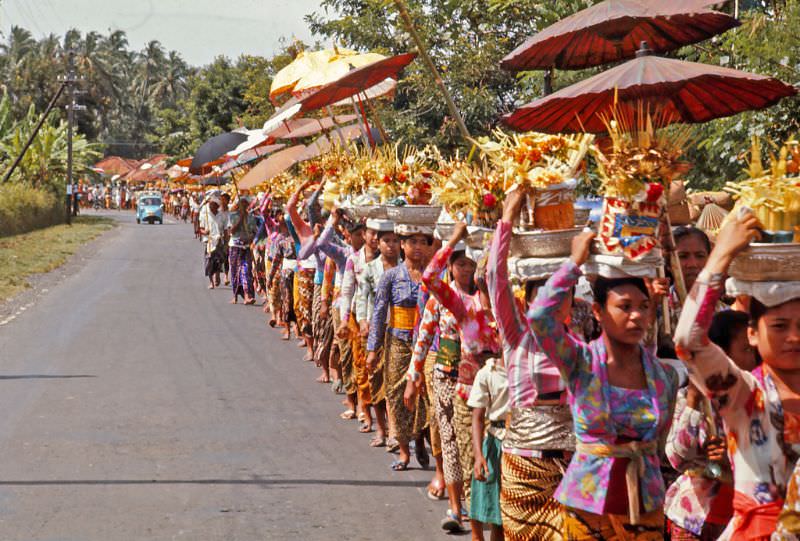
Bali was one of the most visually striking parts of Indonesia during this era. The island’s sacred sites drew both pilgrims and visitors from far away. The Besakih Temple complex, perched high on the slopes of Mount Agung, stood as the most revered Hindu temple on the island. Ceremonies there were elaborate affairs involving hundreds of worshippers, offerings, and traditional dress.
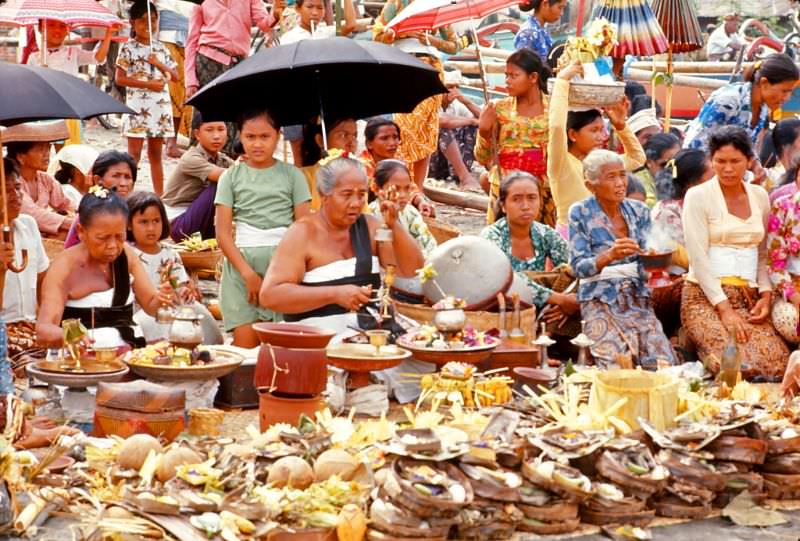
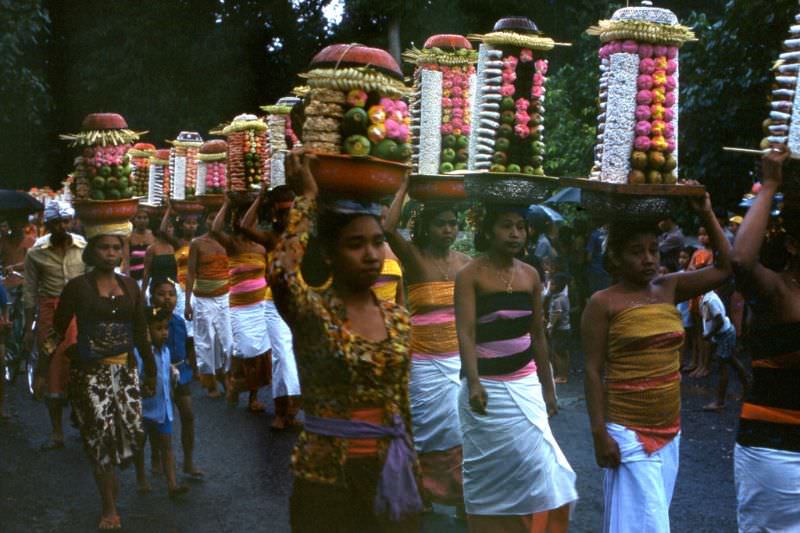
Religious ceremony was woven into daily life across Bali. At Sanur, processions moved from inland villages to the beach, where offerings were made to the sea. These were not tourist performances — they were deeply held rituals that marked the Balinese Hindu calendar throughout the year.
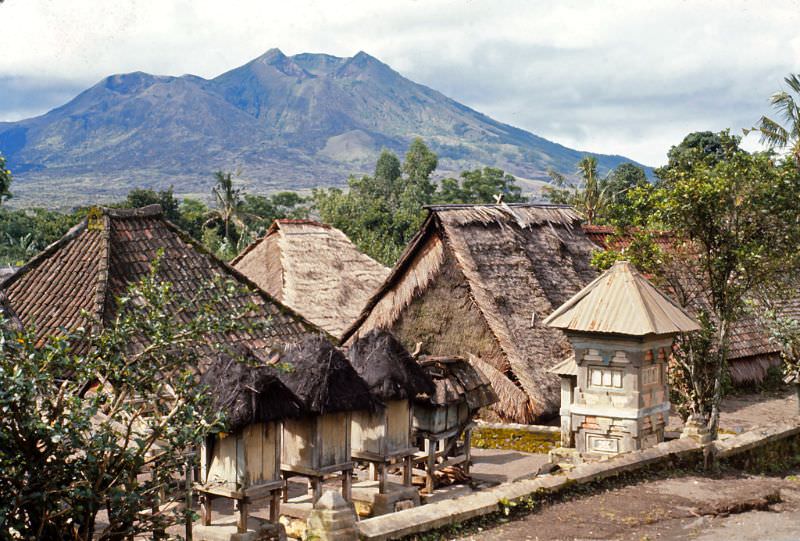
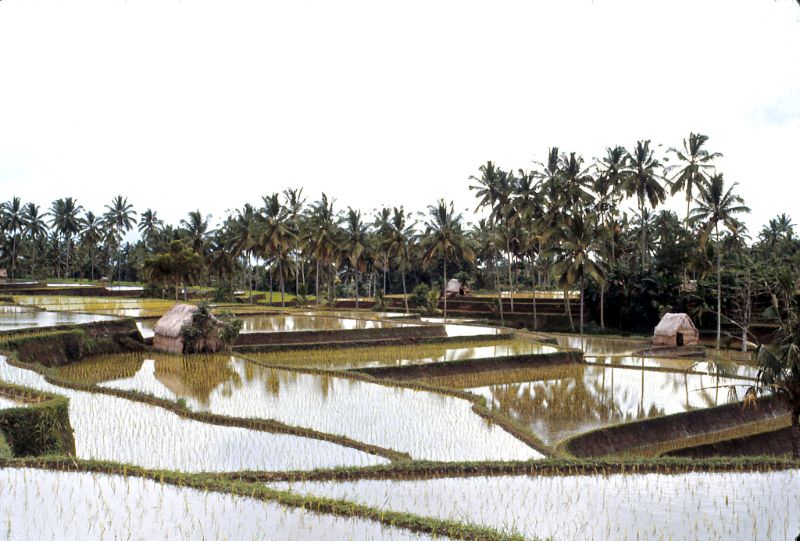
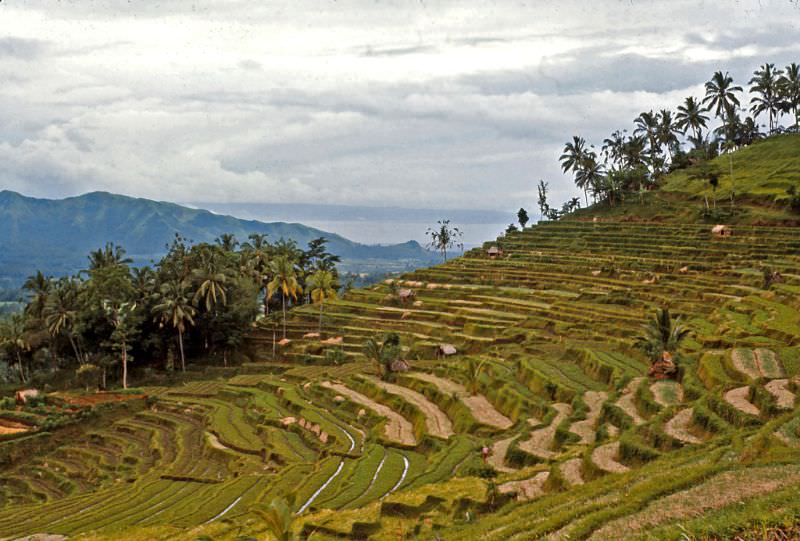
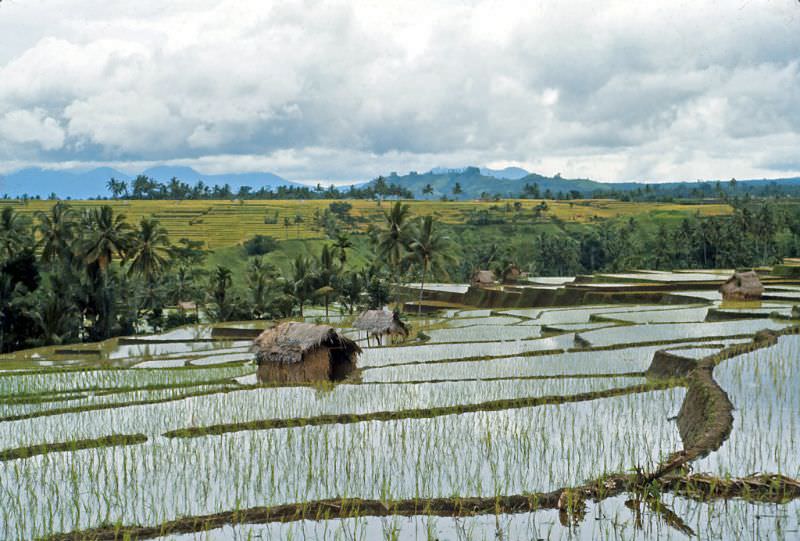
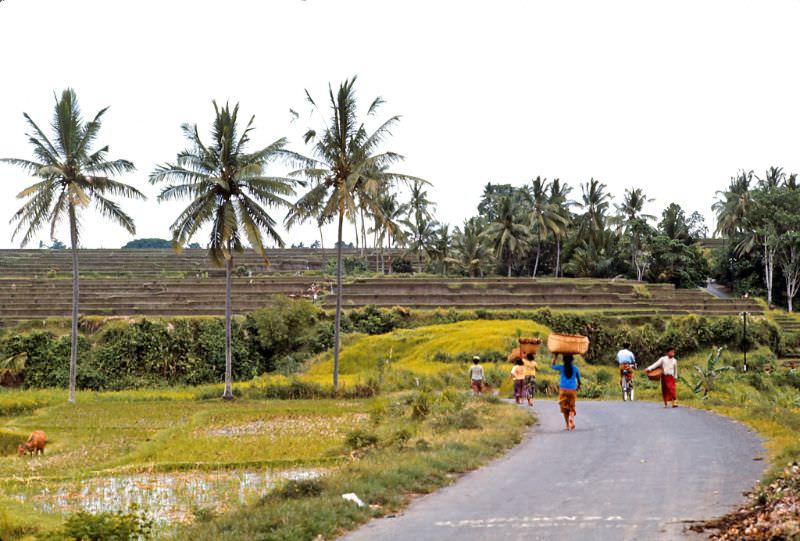
The villages around Klungkung, once the seat of Bali’s most powerful royal dynasty, retained a strong sense of traditional life. Rice fields terraced the hillsides, and daily rhythms revolved around farming, temple duties, and craft work. Klungkung’s royal court had long been a center for Balinese painting and weaving, and those traditions continued into the 1970s in the surrounding villages.
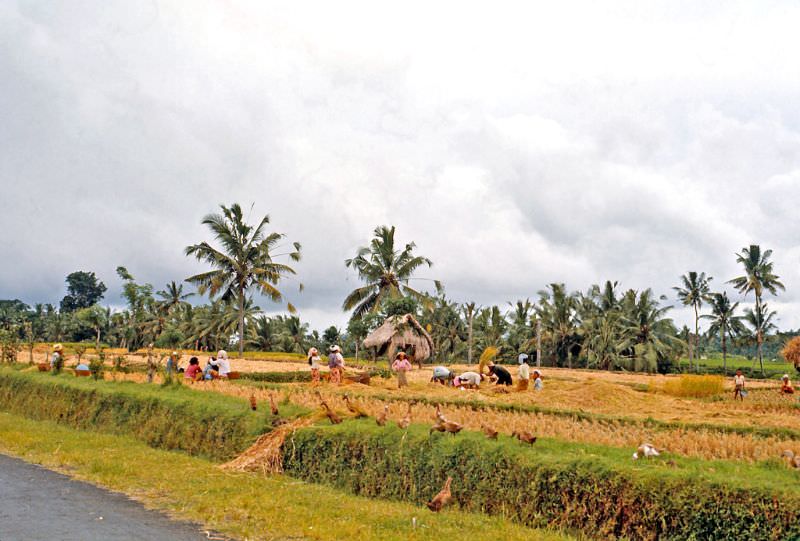
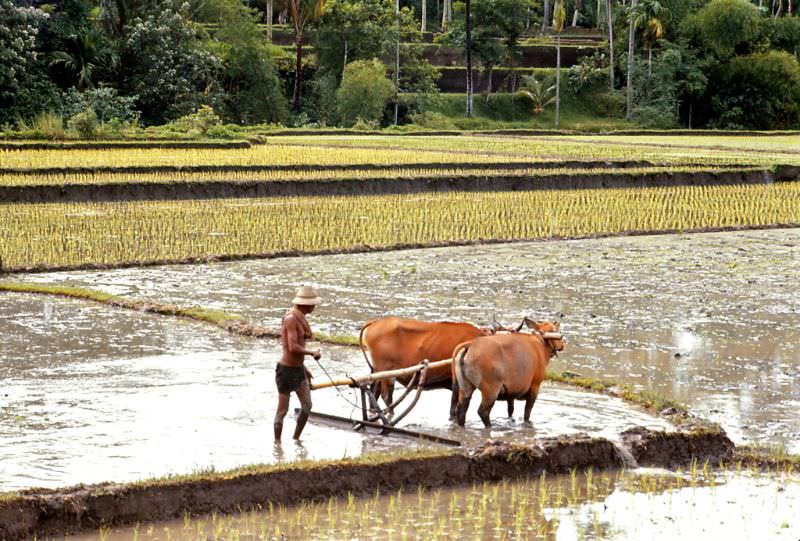
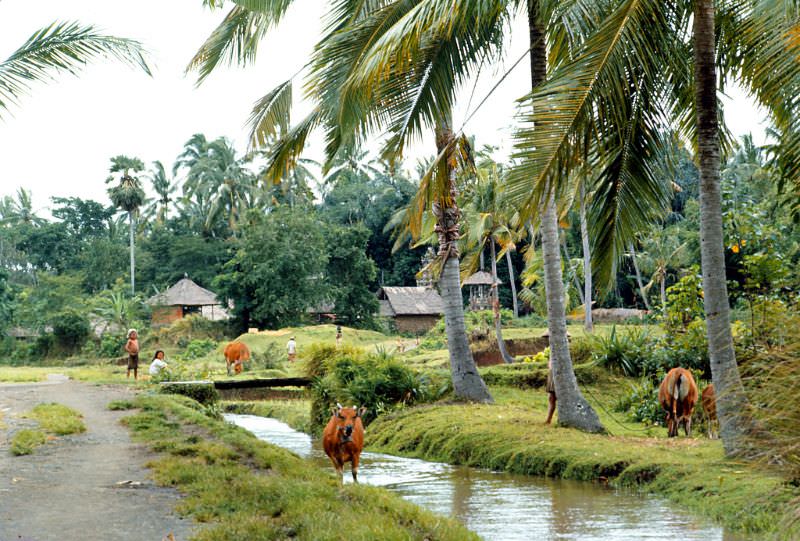
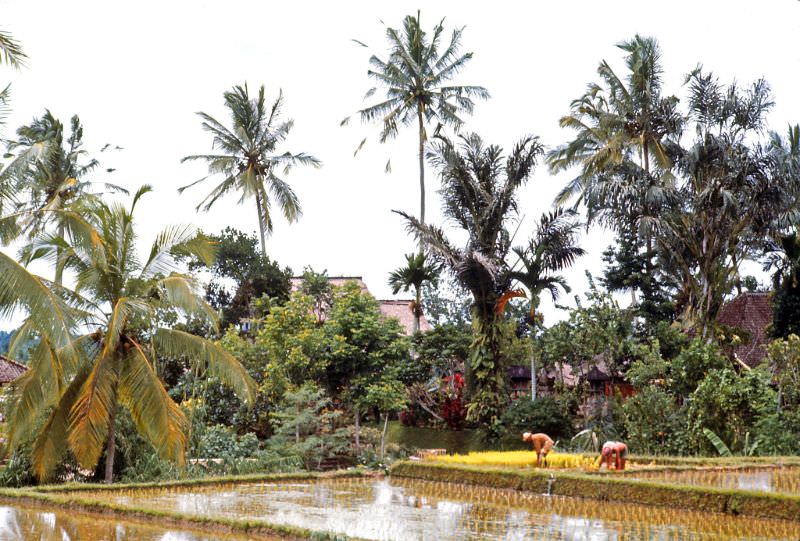
Ubud, set among the terraced rice paddies of central Bali, was already known as the island’s artistic heart. Painters, woodcarvers, and dancers were active in and around the town. In the 1970s, Ubud had not yet become the international destination it later grew into — it was still a working village where art and agriculture existed side by side.
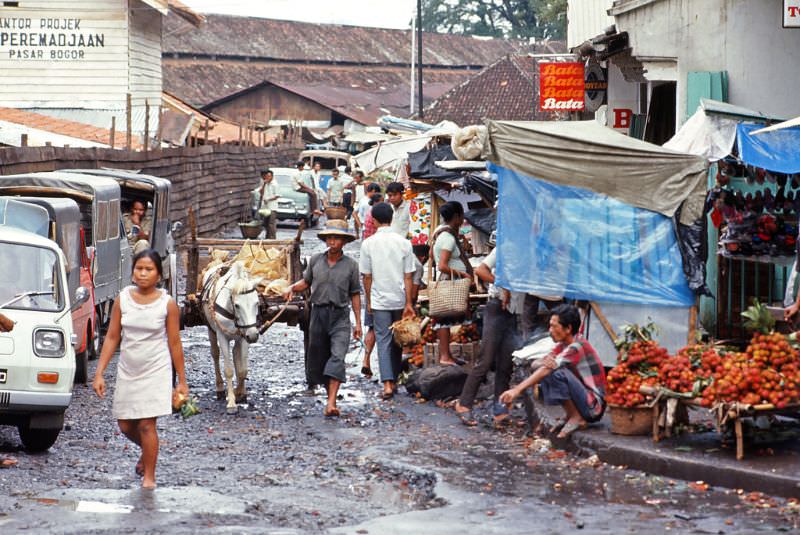
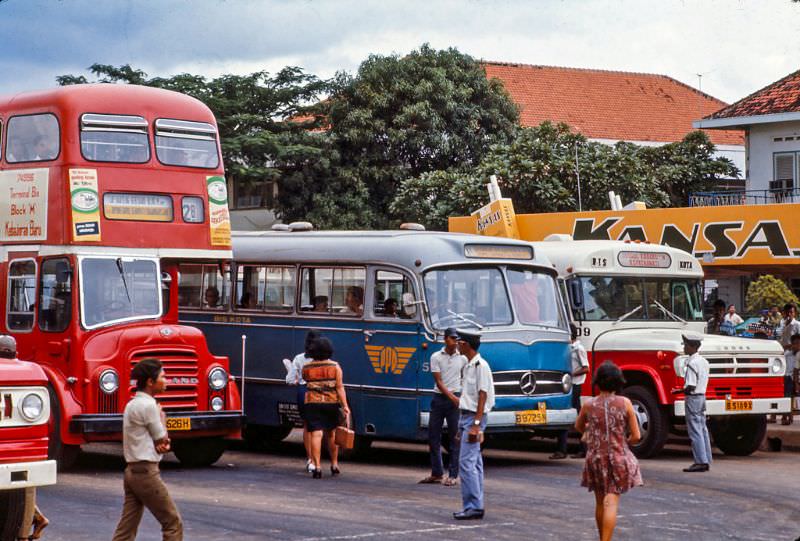
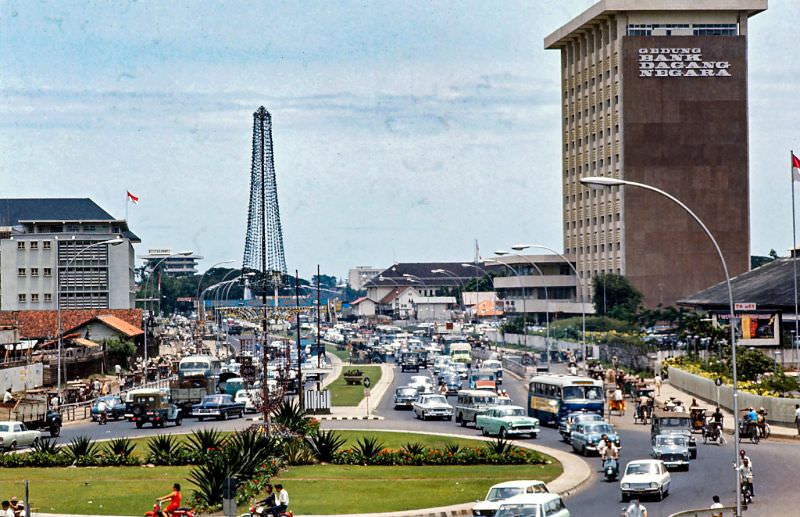
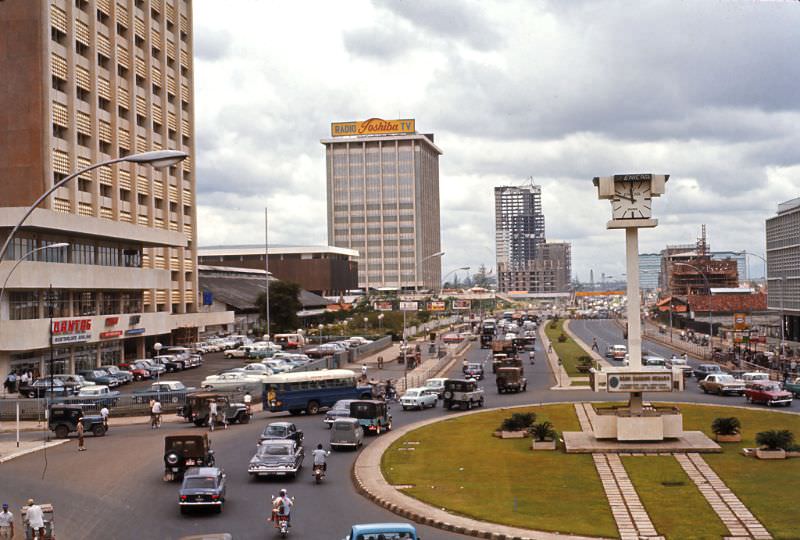
While Bali captured much of the imagery of the era, Java remained the political and economic engine of the country. Bandung, Indonesia’s third-largest city, was a center of industry and education. Jakarta — still commonly spelled Djakarta in many Western publications of the time — was the sprawling capital where old and new Indonesia collided on every street corner.
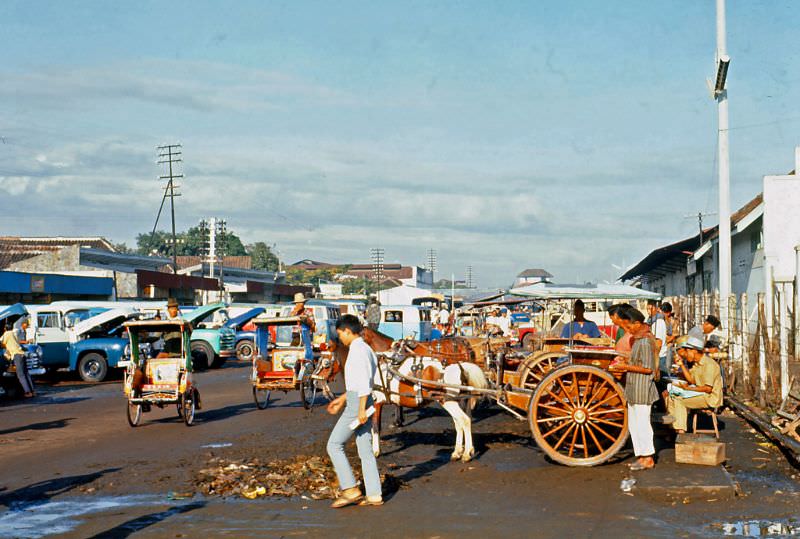
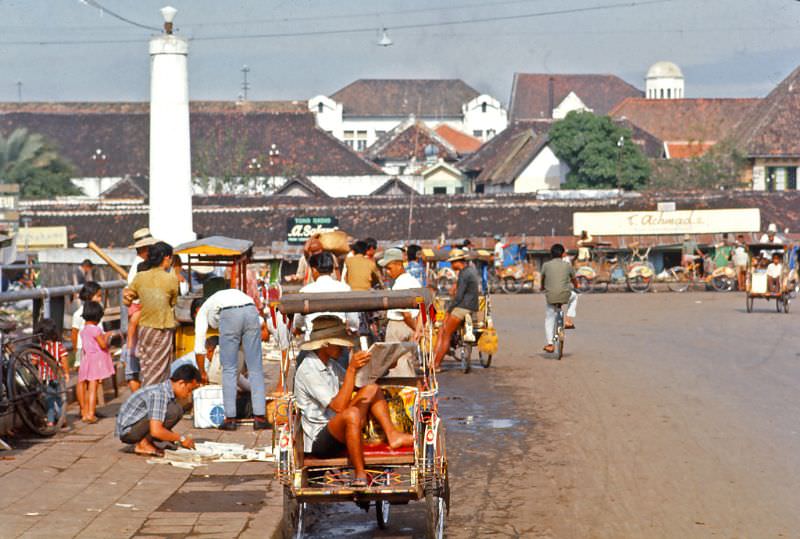
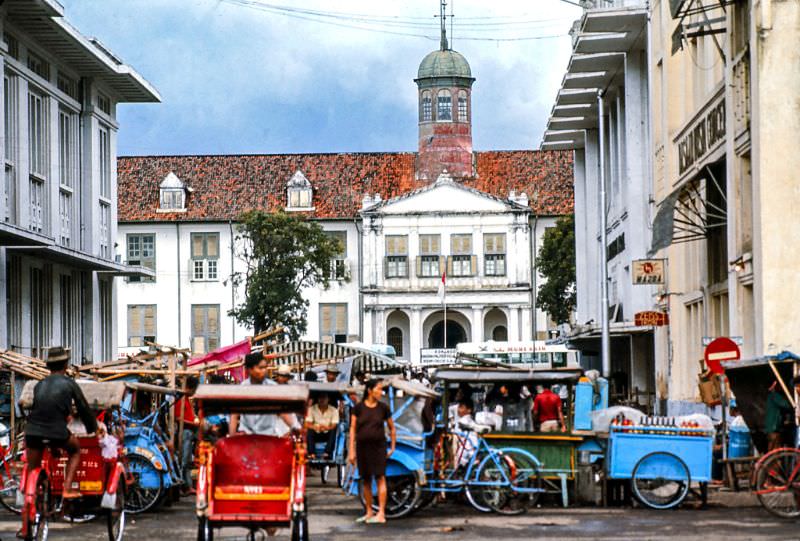
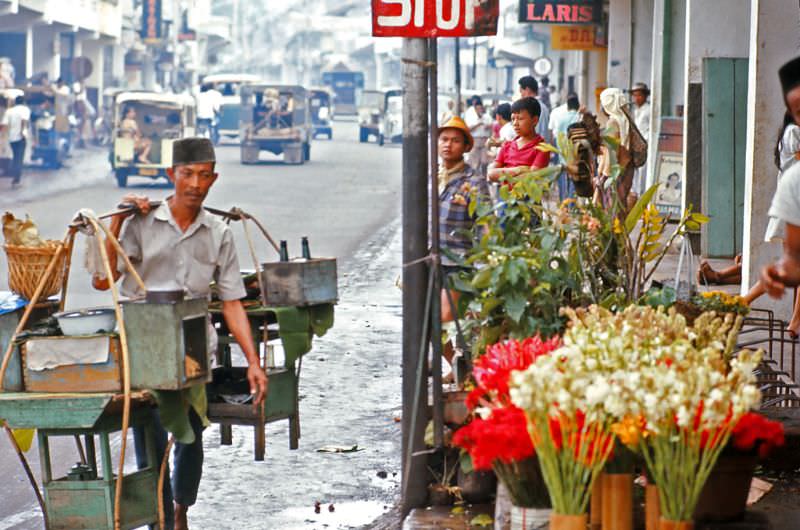
Jakarta’s Kota district, the old Dutch colonial city center, was still a busy transit hub in the 1970s. The Kota railway station served commuters and long-distance passengers alike. Nearby, Chinatown — known locally as Glodok — buzzed with commerce. Its narrow lanes were lined with shops, food stalls, and trading houses that had operated for generations.
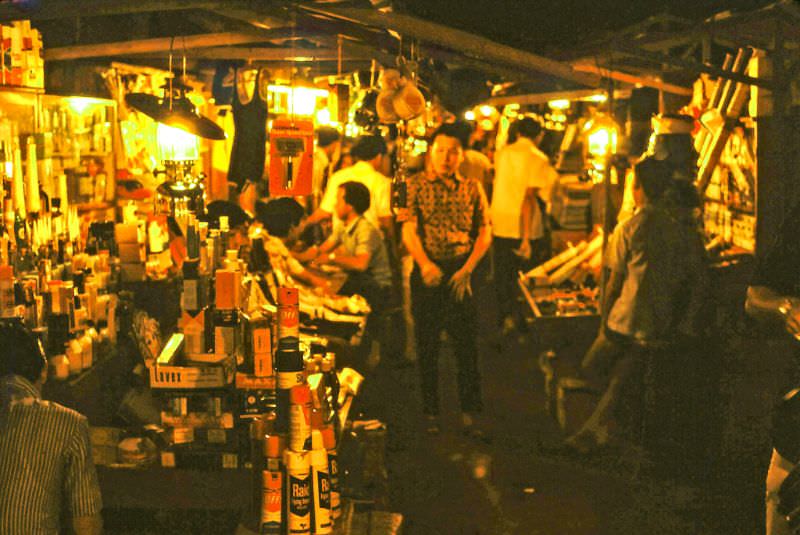
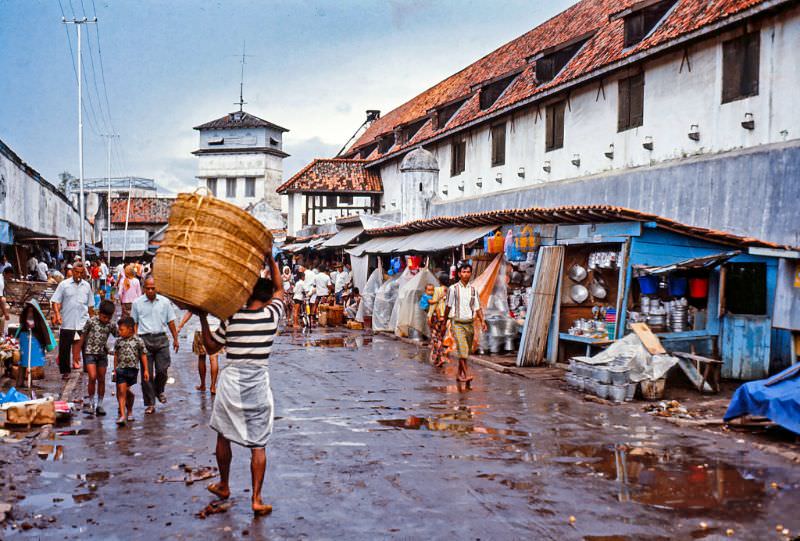
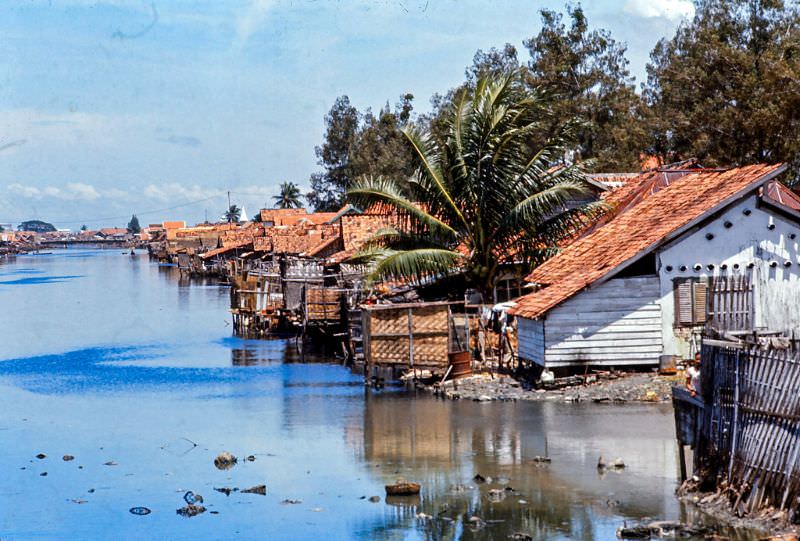
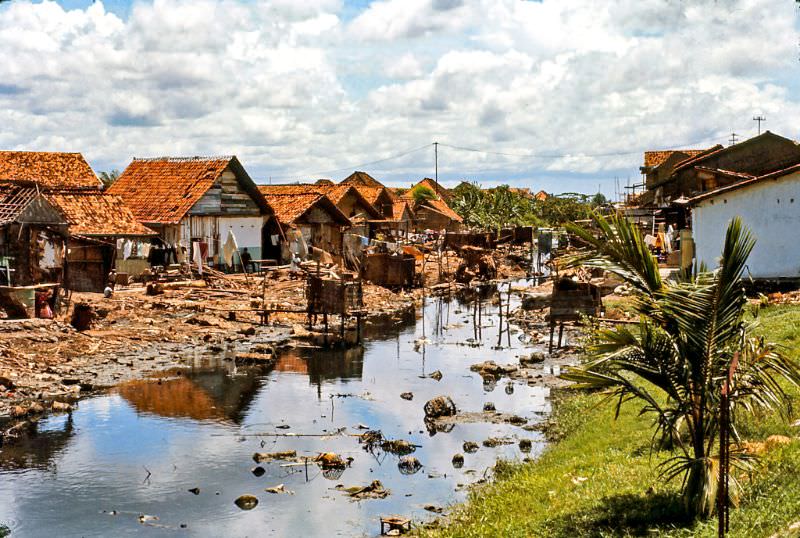
Tanjung Priok, Jakarta’s main port, handled the flow of goods that kept the capital running. Ships carrying rice, petroleum products, and manufactured goods moved through the harbor. As Indonesia’s economy opened up under Suharto’s investment laws, the volume of trade through Priok grew steadily throughout the decade.
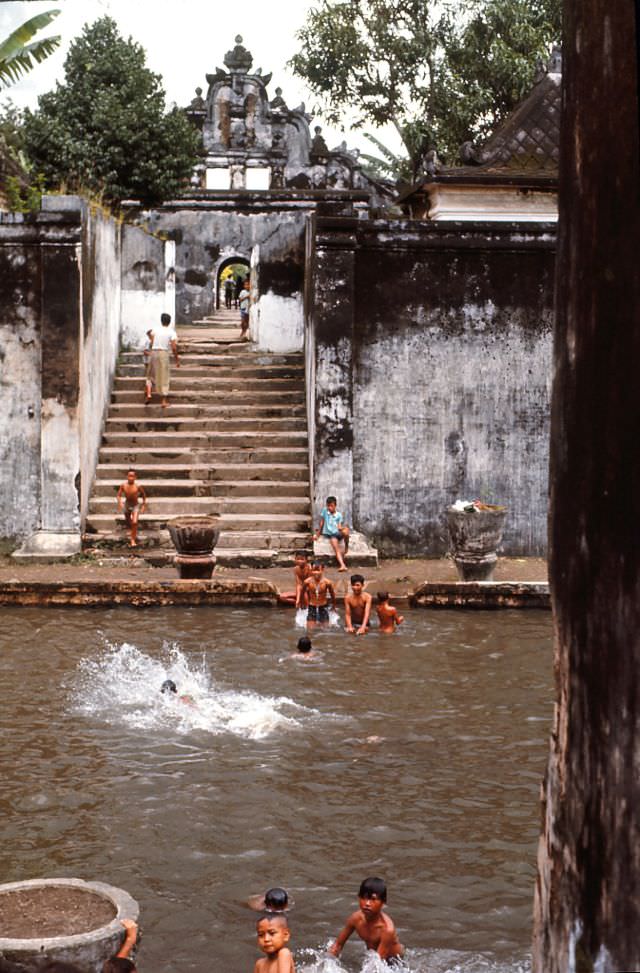
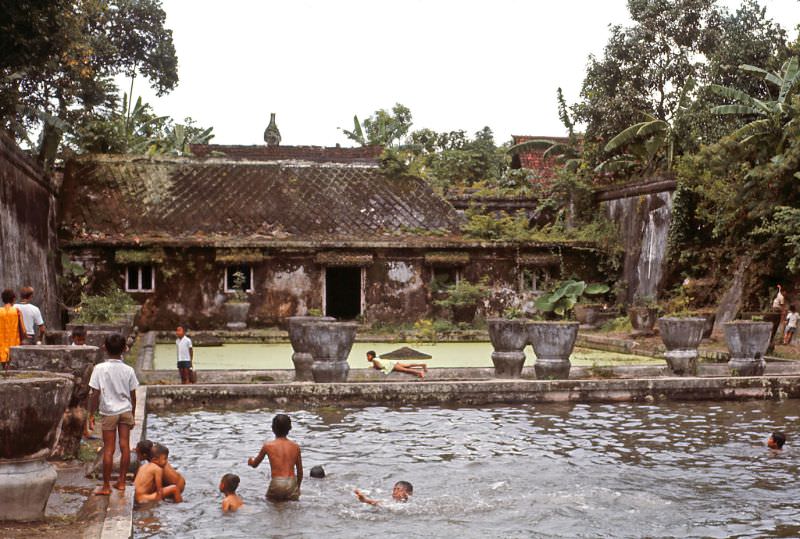
Further inland on Java, the ancient sites of Yogyakarta — known locally as Jogja — drew visitors and scholars. The Djogja Water Castle, built by the Sultanate of Yogyakarta in the 18th century, was a complex of pools, pavilions, and bathing areas that still stood in various states of preservation. Borobudur, the 9th-century Buddhist monument northwest of Yogyakarta, was one of the largest Buddhist temples in the world. In the 1970s, a major UNESCO-backed restoration project was underway to stabilize and preserve it.
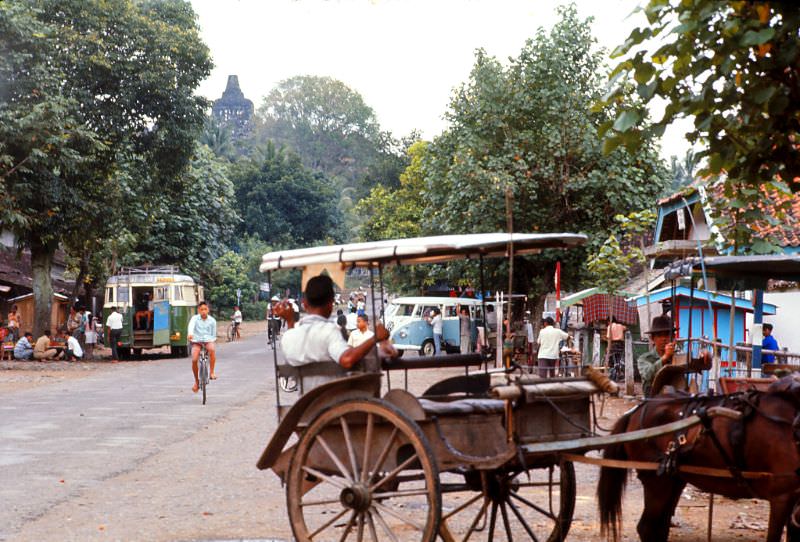
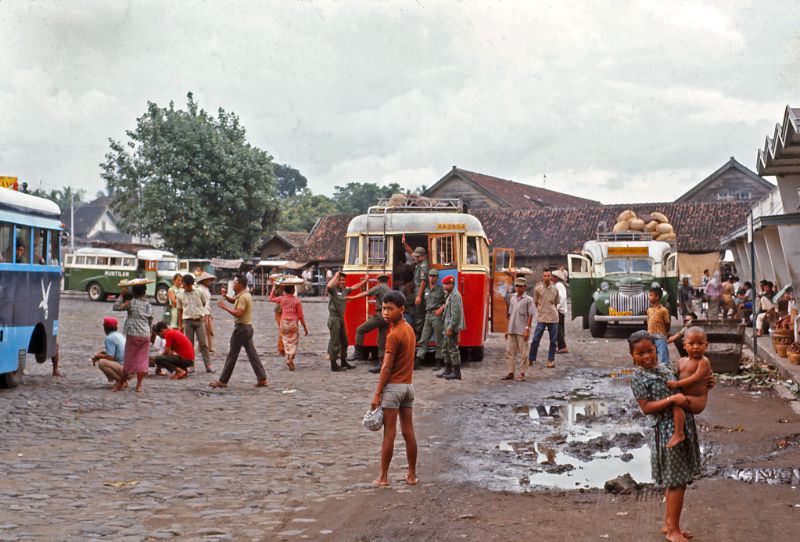
The Prambanan temple complex, also near Yogyakarta, was another major Hindu monument from the same period as Borobudur. Its towering stone spires dedicated to the Trimurti — Brahma, Vishnu, and Shiva — rose above the surrounding plain. In the town of Jogja itself, life moved at its own pace, with becak (cycle rickshaw) drivers, street food sellers, and batik traders filling the streets.
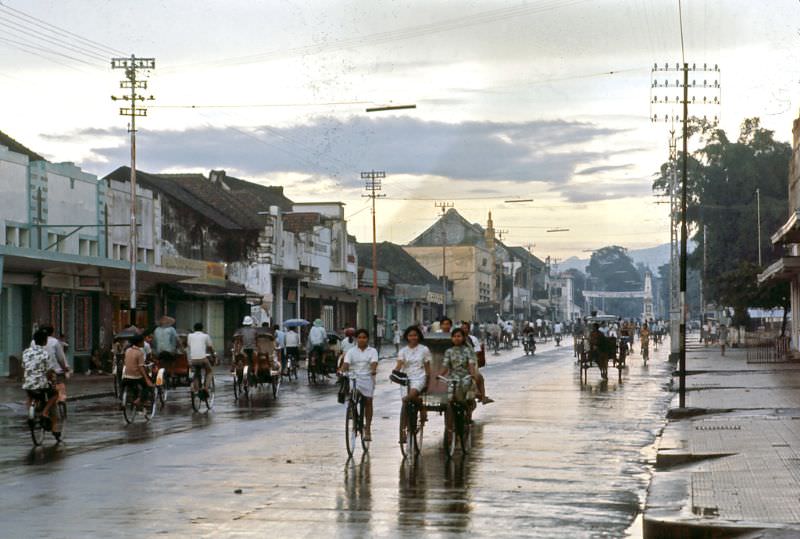
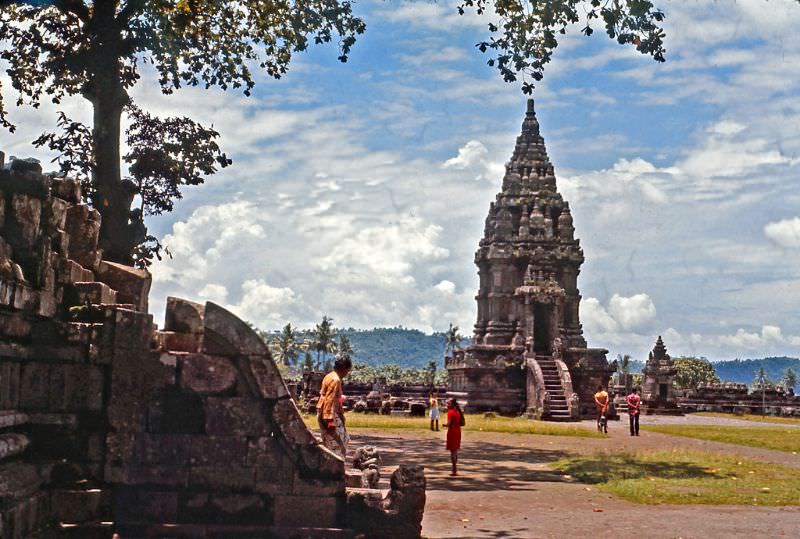
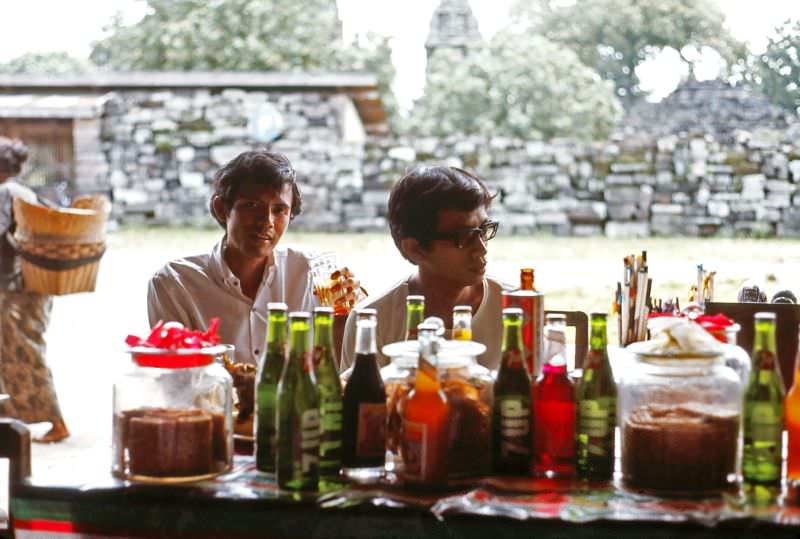
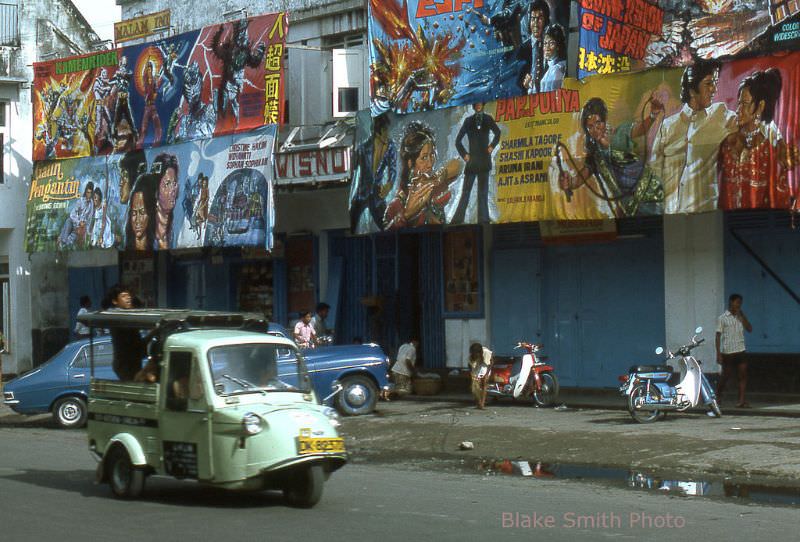
Back on Bali, the southern beach town of Denpasar was beginning its transformation from a quiet administrative center into a more active commercial hub. Colorful hand-painted movie billboards lined its streets, advertising the latest Indonesian and international films at local cinemas. The downtown area mixed government buildings with markets and small shops serving the local population.
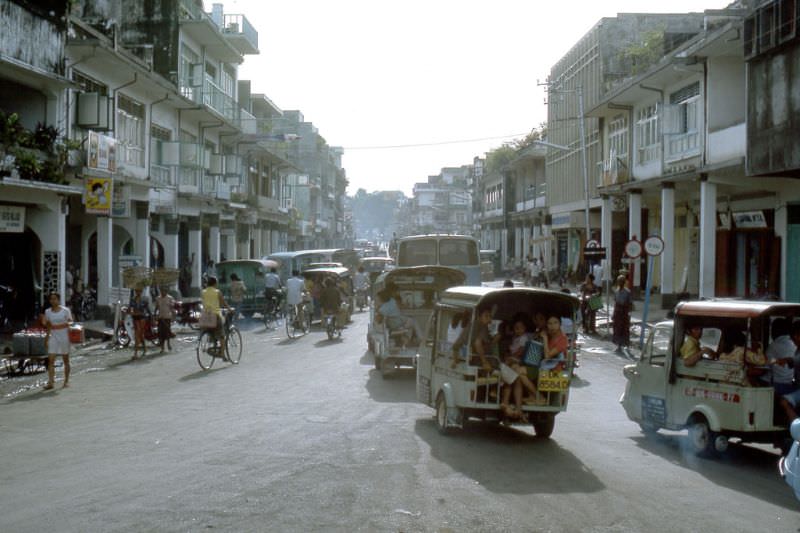
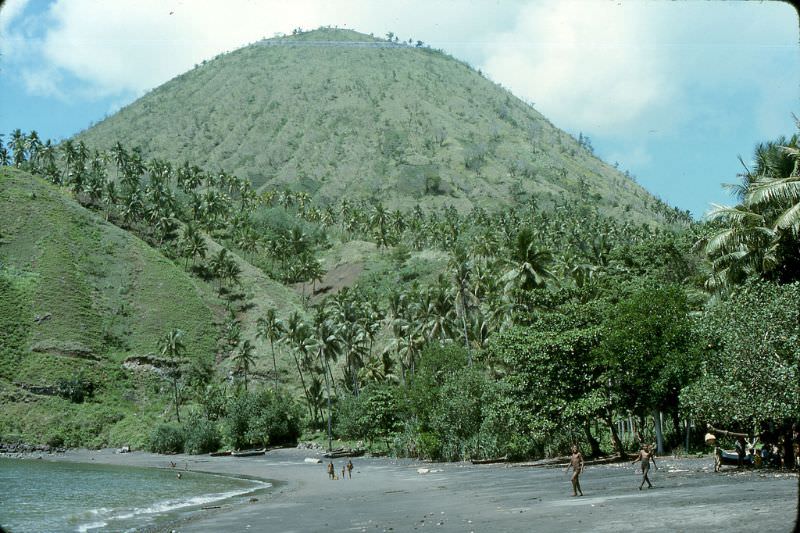
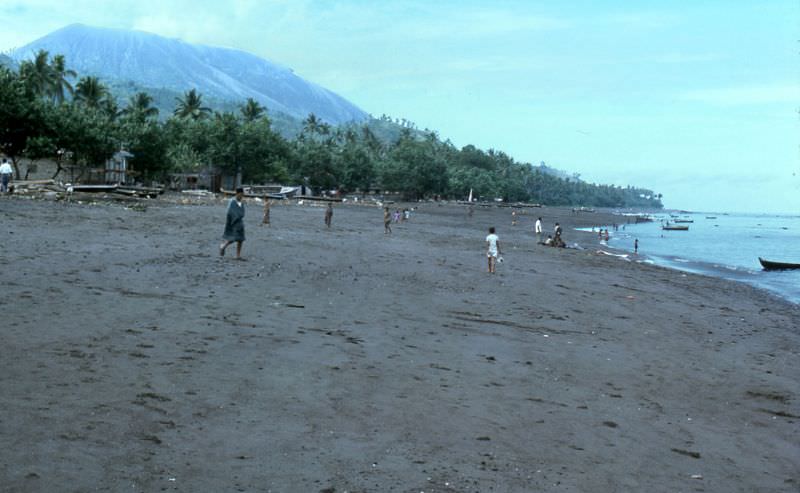
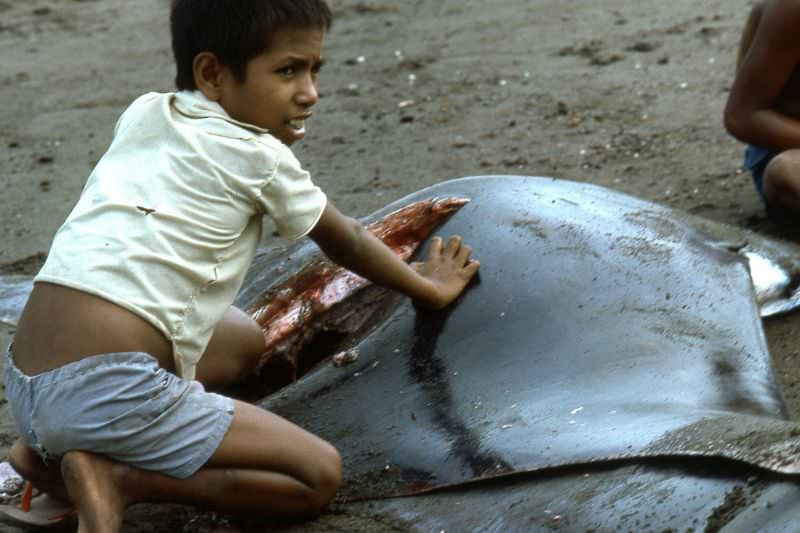
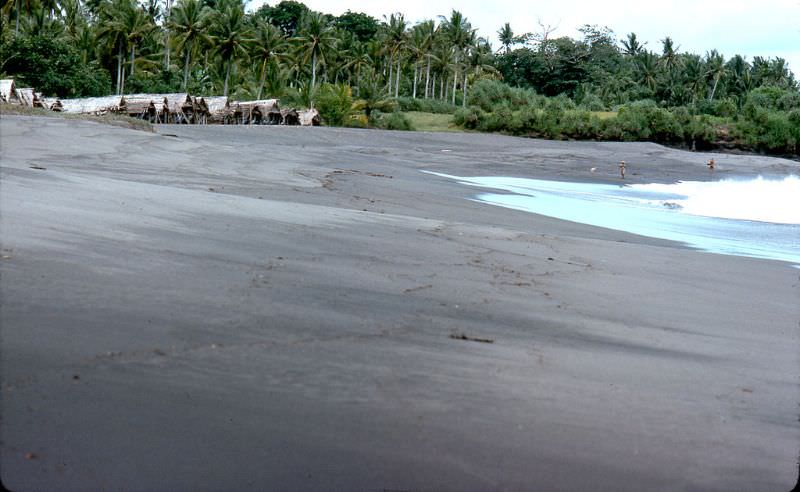
East of Bali, the island of Flores offered a very different picture of Indonesian life. The coastal town of Ende sat along a black-sand shoreline shaped by volcanic activity. Fishing was the backbone of the local economy, with men heading out in traditional boats and returning with large catches. A photograph from the era shows a young boy from Flores standing beside a manta ray hauled ashore — a vivid reminder of just how rich those waters were.
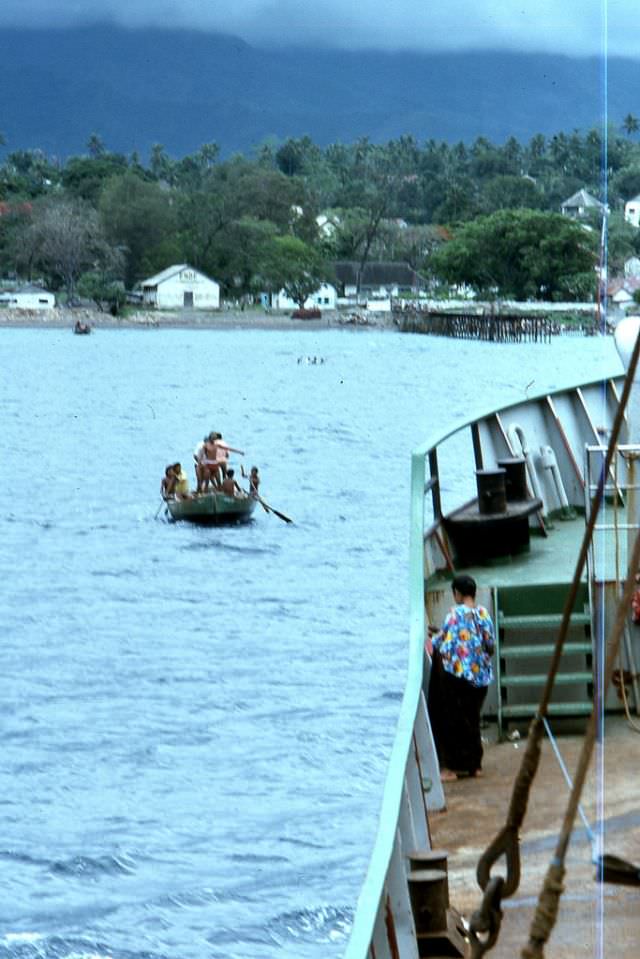
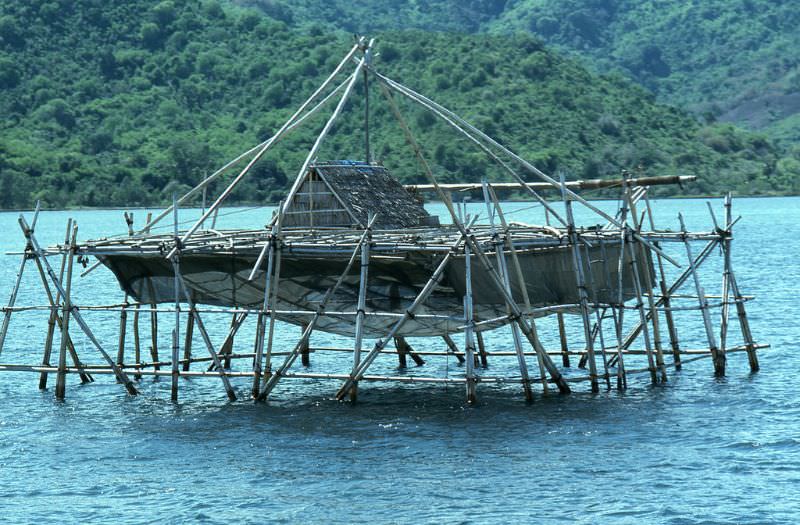
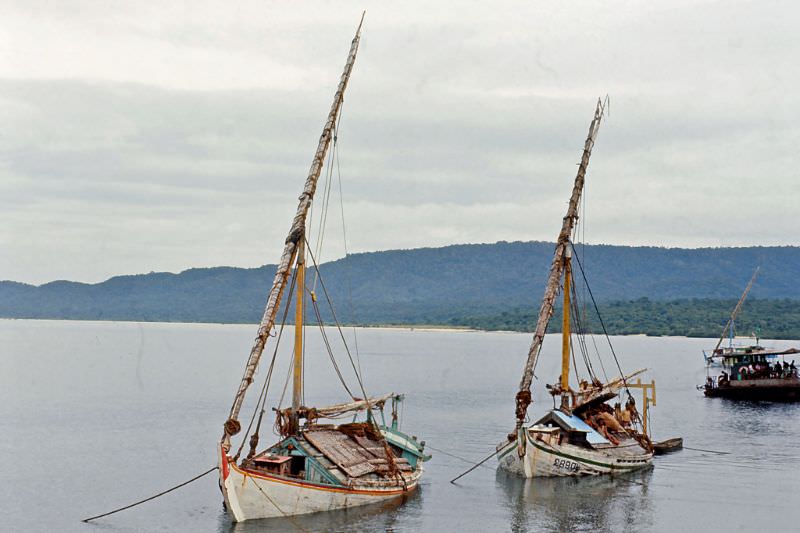
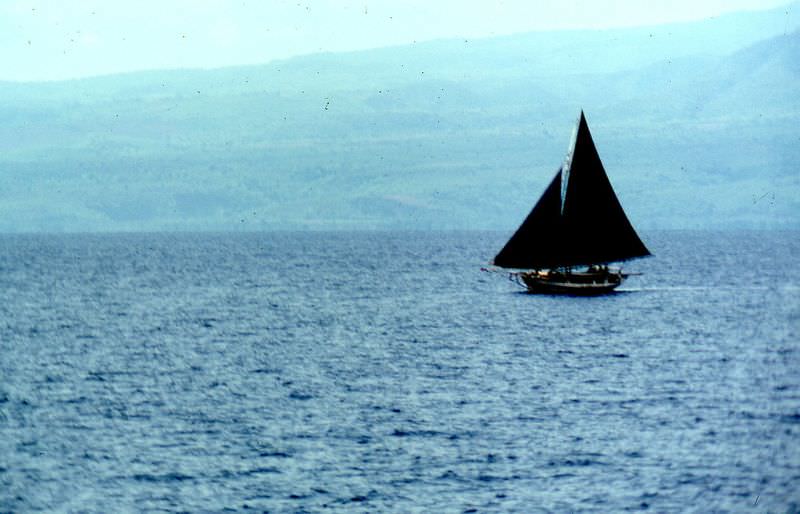
The seas around the eastern islands were active with traditional vessels. Makassar sailboats — large wooden ships with distinctive rigging — moved cargo and passengers between islands that had little road infrastructure. Near Timor and Sumbawa, these boats were a primary form of long-distance transport. The people living across this stretch of eastern Indonesia maintained ways of life that had changed little over centuries.
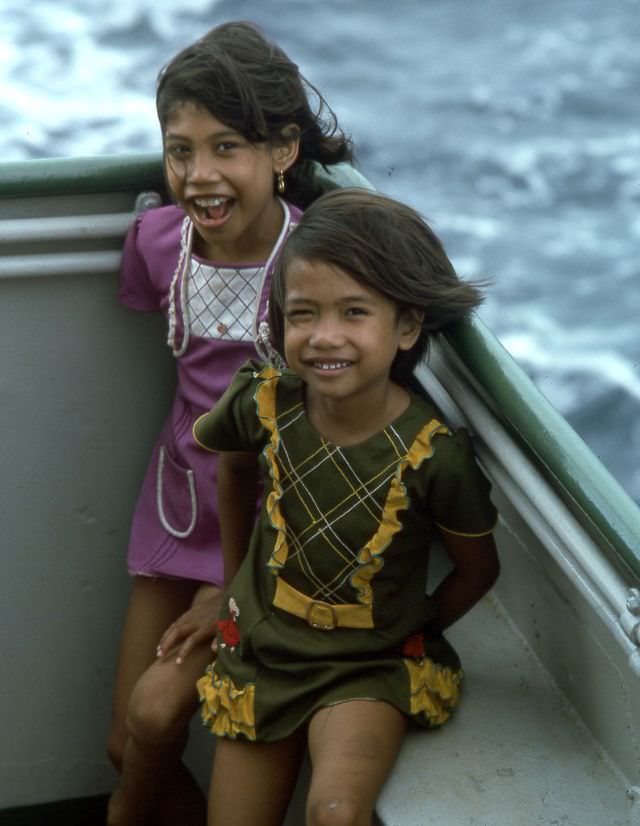
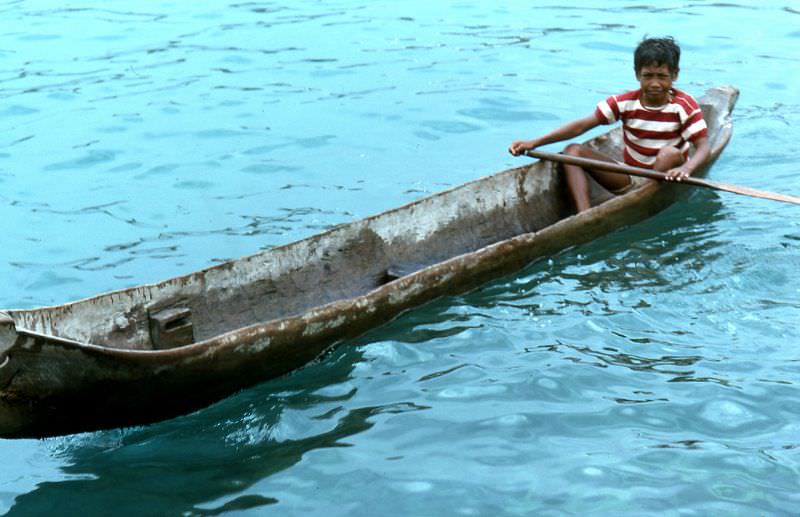
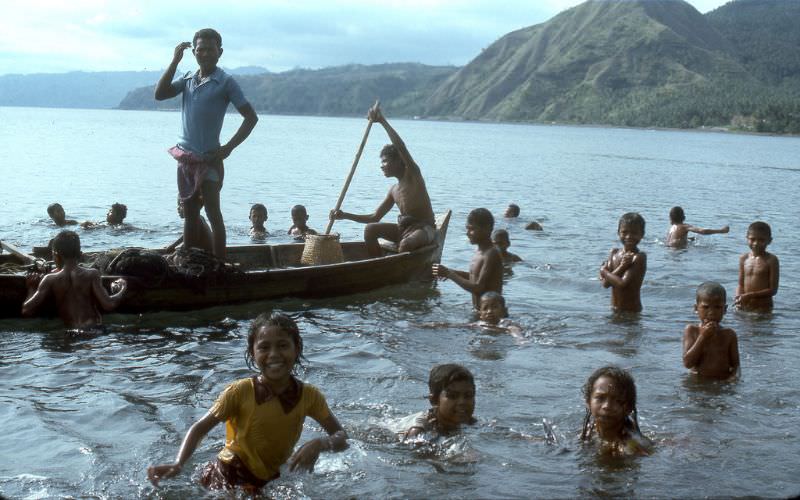
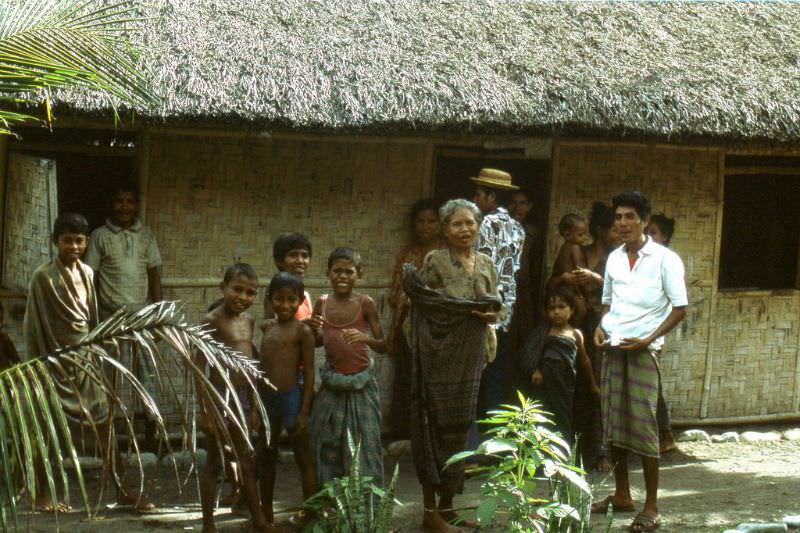
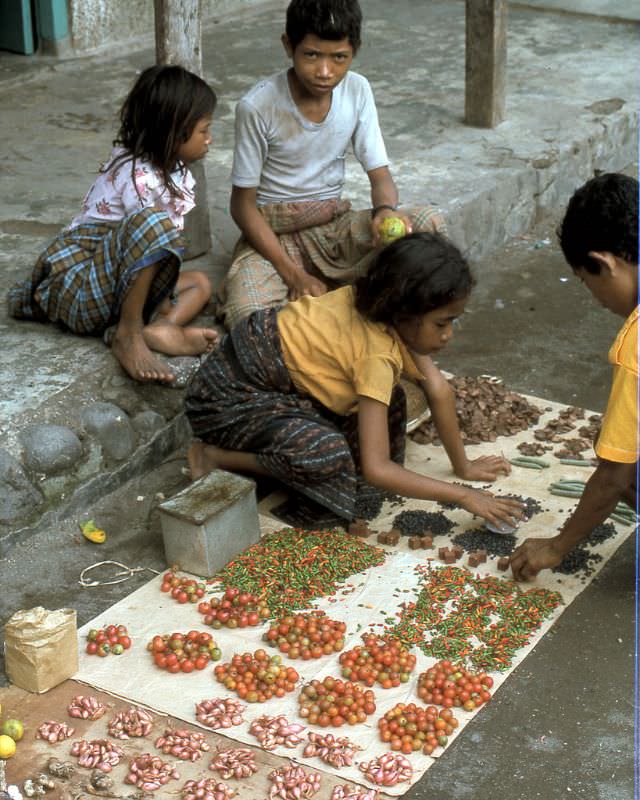
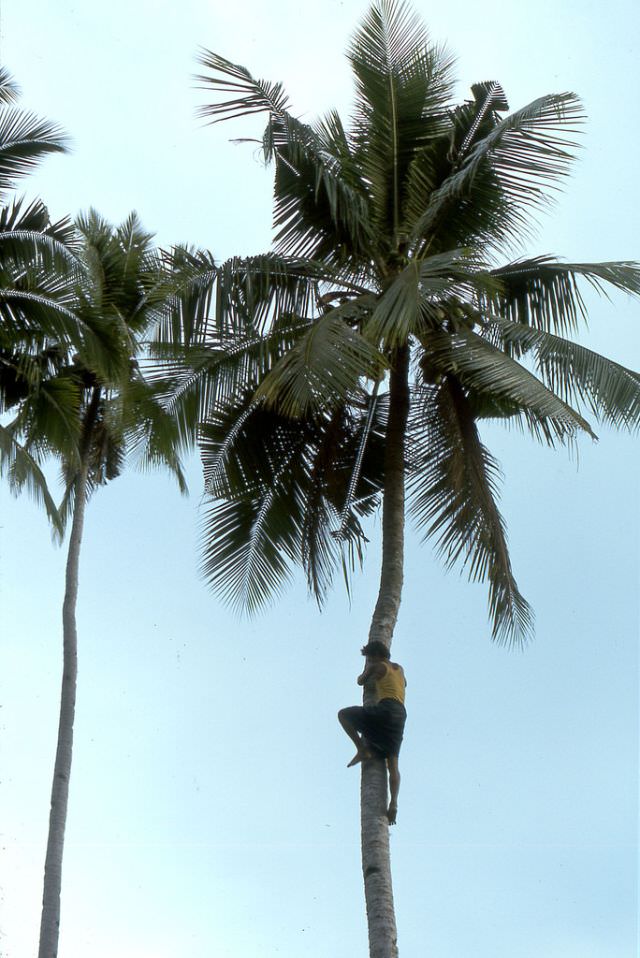
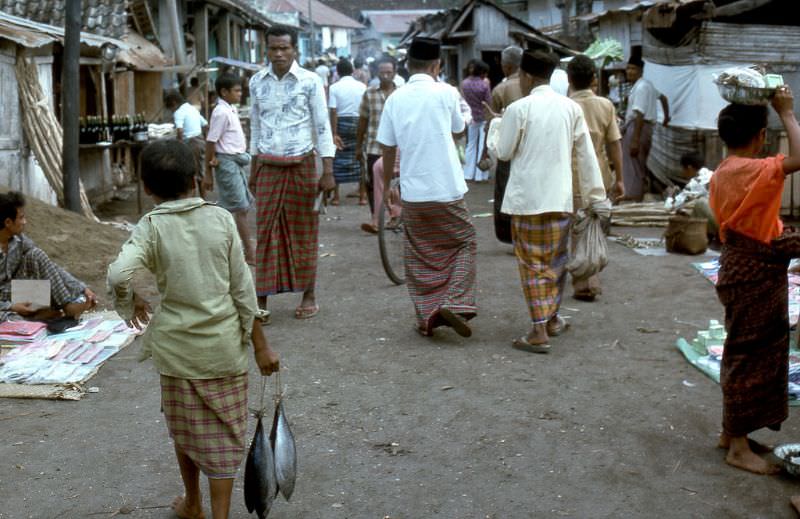
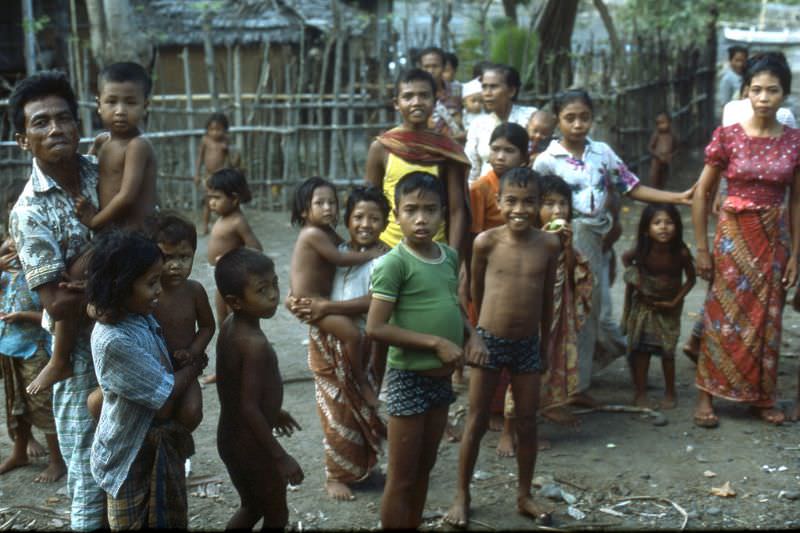
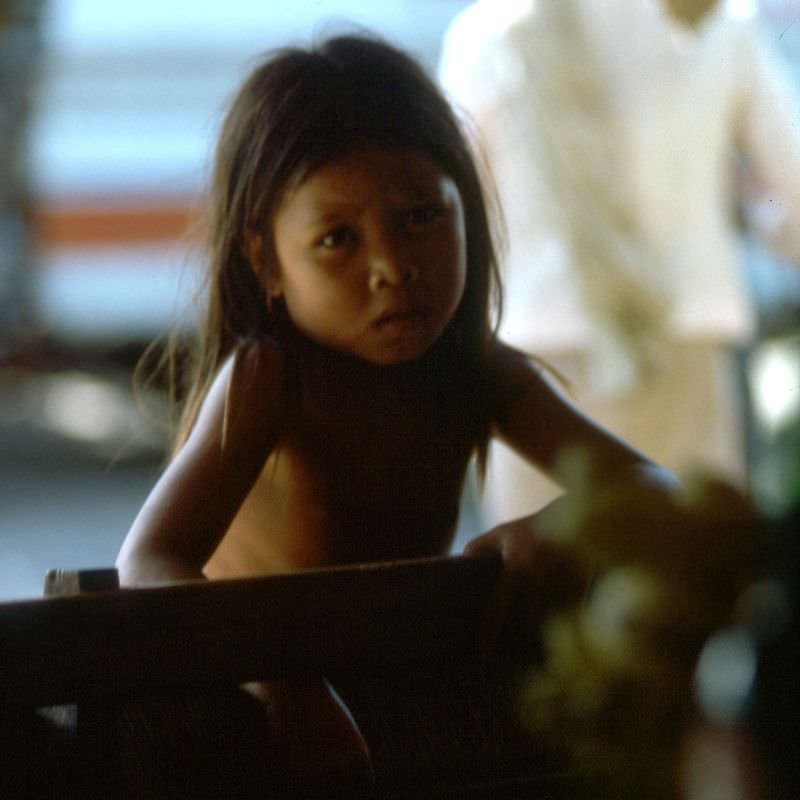
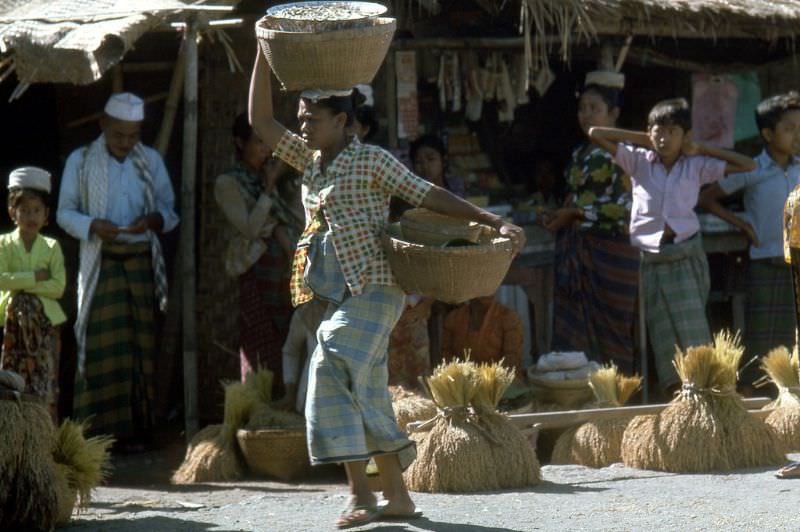
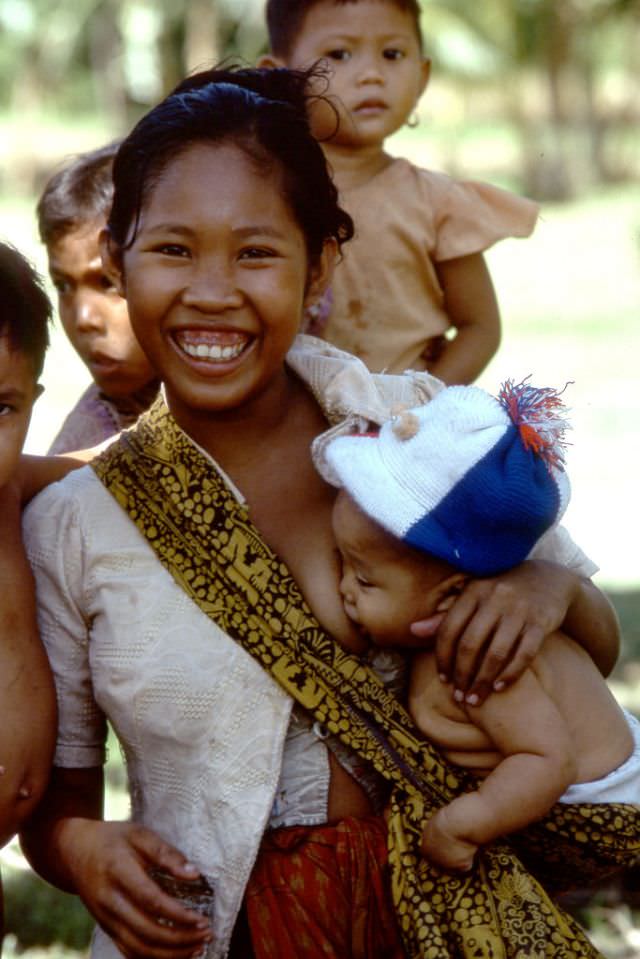
Lombok, the island directly east of Bali, had its own distinct character. Predominantly Muslim and home to the indigenous Sasak people, Lombok’s markets, gatherings, and family scenes from the 1970s reflected a quieter, less visited corner of the archipelago. Women carried goods on their heads, children gathered at community events, and young mothers went about their daily routines in villages far from any tourist track.
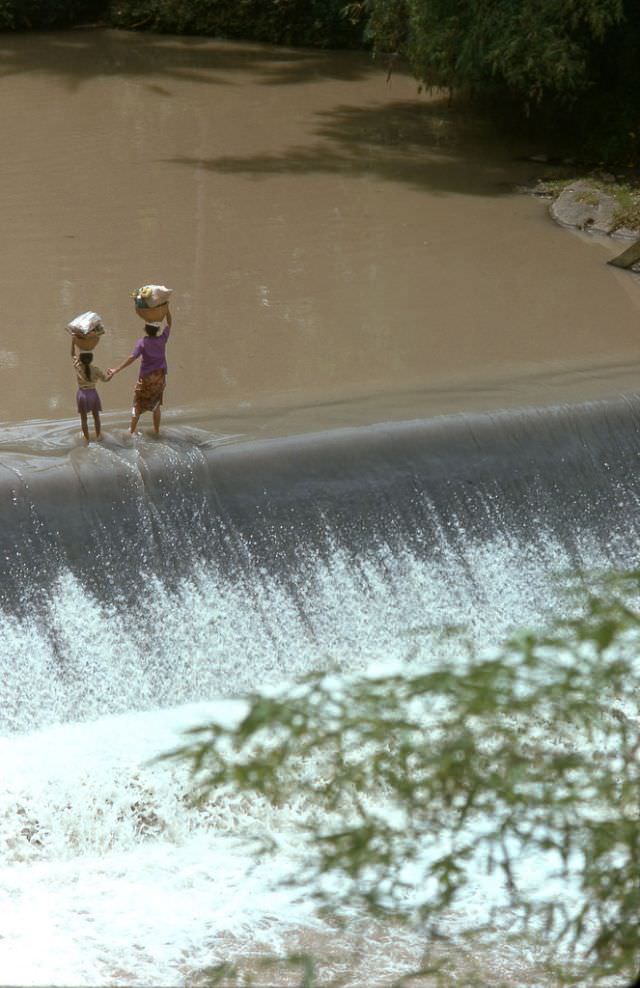
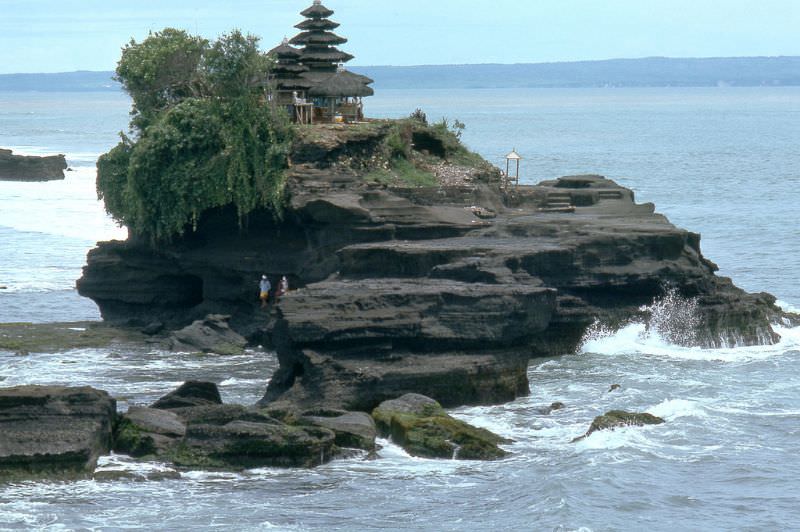
On Bali’s southwestern coast, the sea temple of Tanah Lot rose from a rocky outcrop just offshore. The site was — and remains — one of the most photographed in all of Indonesia. In the 1970s, the paths leading to it were still simple dirt tracks. A mother leading her young daughter across a narrow levy near Tanah Lot captured the unhurried pace of rural Balinese life at the time.
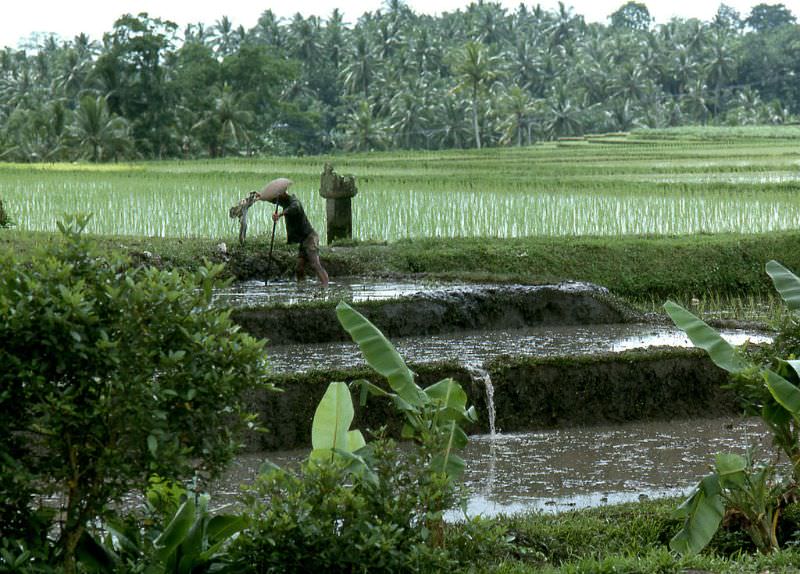
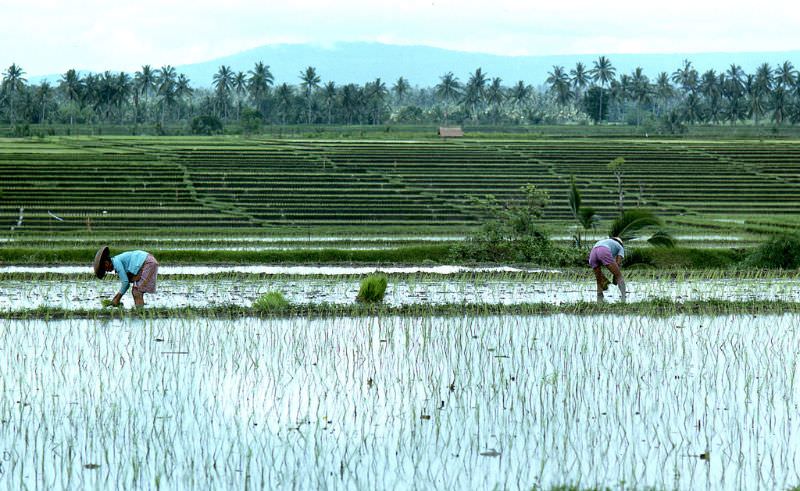
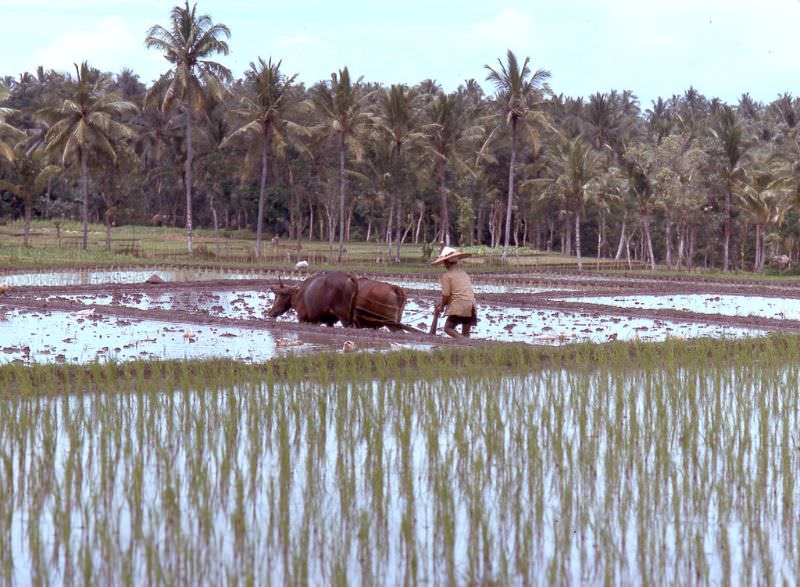
Rice farming was the foundation of the Balinese economy. The island’s famous subak irrigation system — a network of water temples and canals — organized the growing seasons and kept the terraced paddies productive. Workers bent over flooded fields, transplanting seedlings and tending crops by hand. The mud-tilling process before planting was heavy work, often done with the help of cattle.
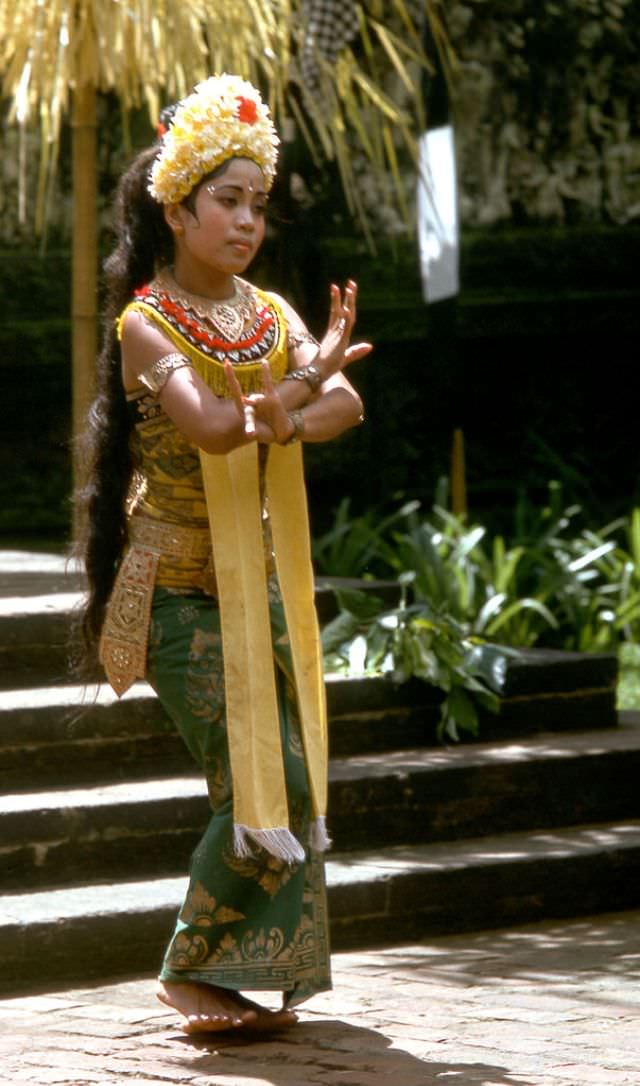
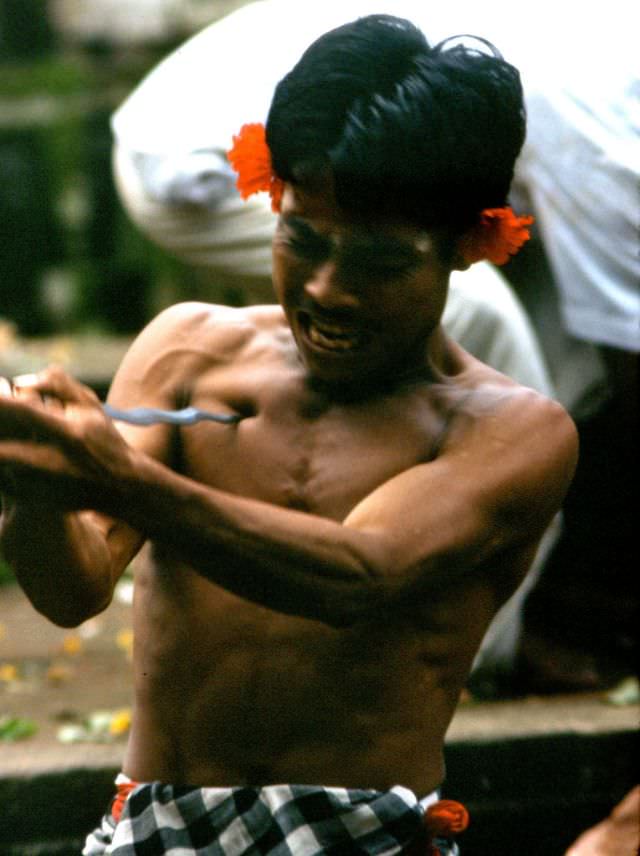
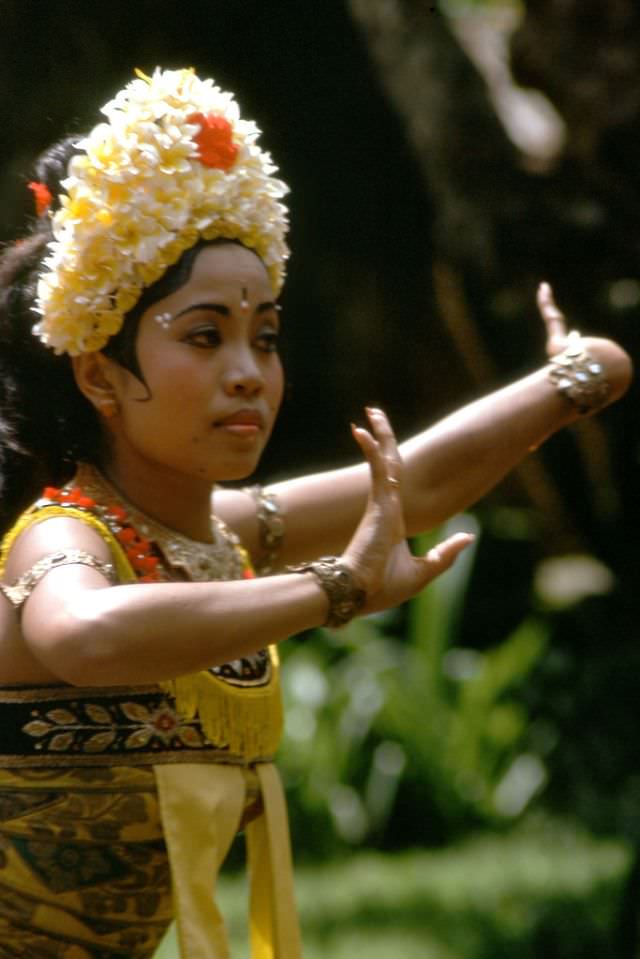
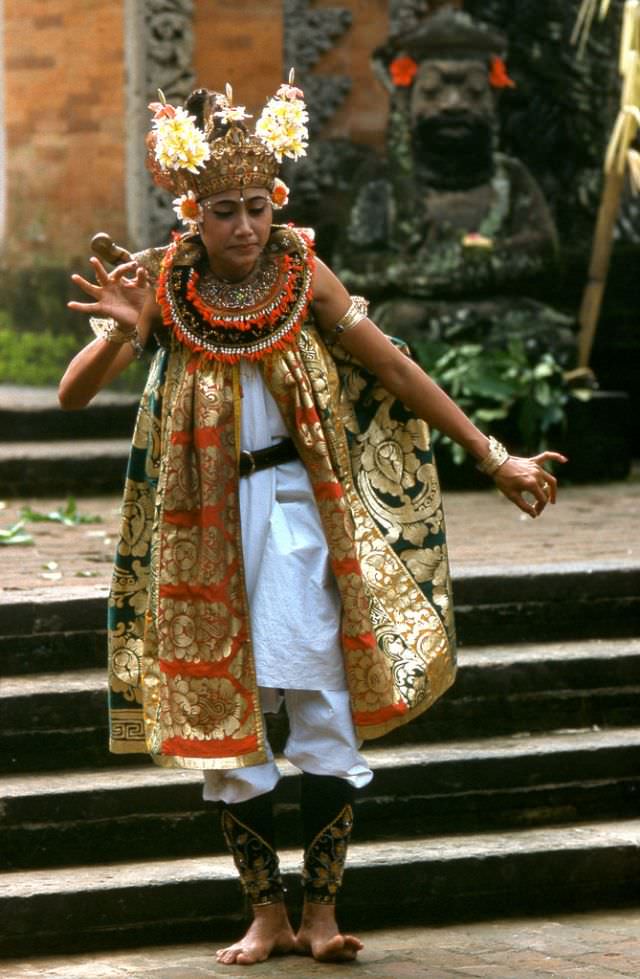
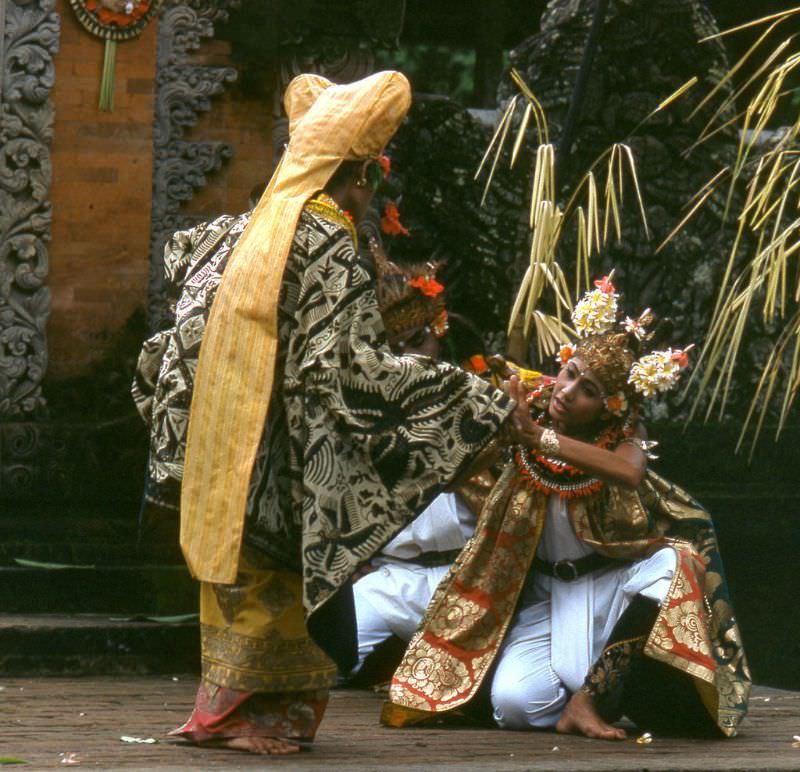
Dance was an inseparable part of Balinese cultural life. Performances told stories drawn from Hindu epics like the Ramayana and the Mahabharata. Dancers trained from childhood, learning precise hand gestures, eye movements, and footwork. At Kuta Beach, performances drew local audiences and the growing number of foreign visitors who were beginning to arrive on the island. The costumes were elaborate — layered gold cloth, carved headdresses, and painted faces that could take hours to prepare.
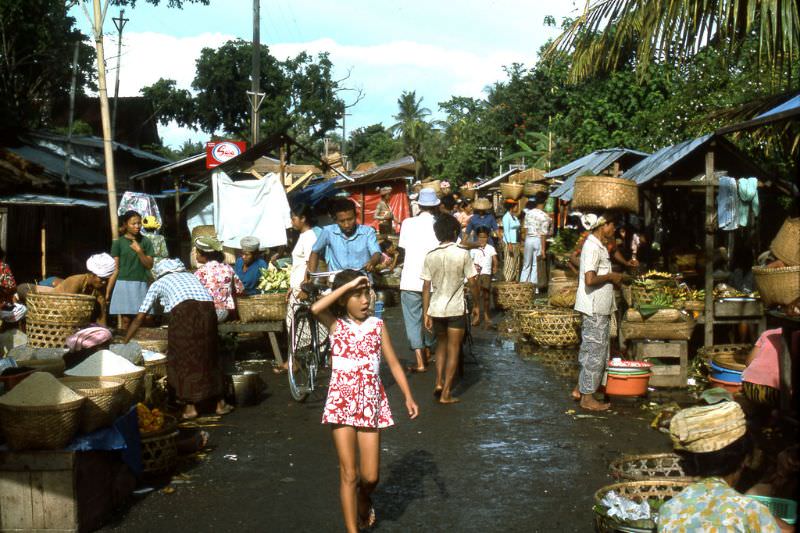
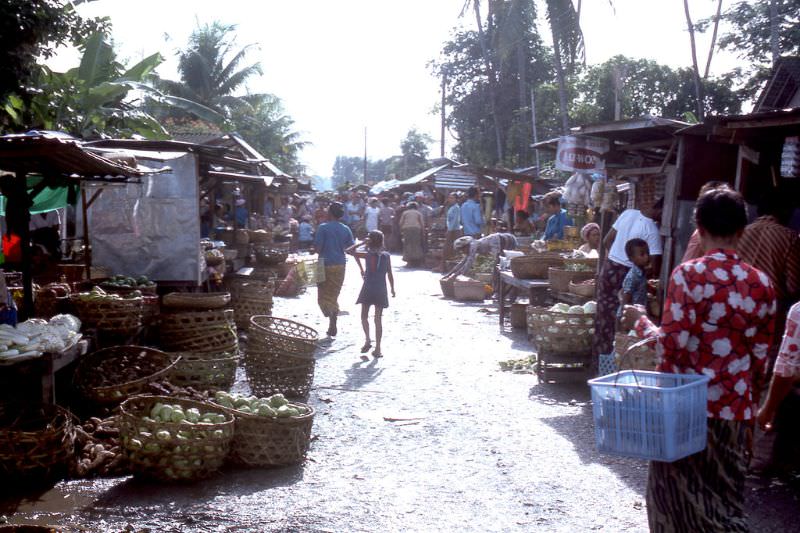
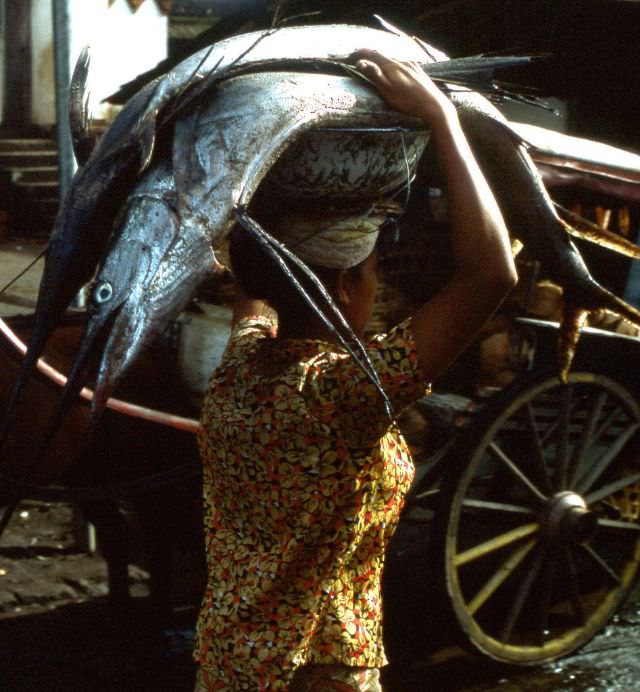
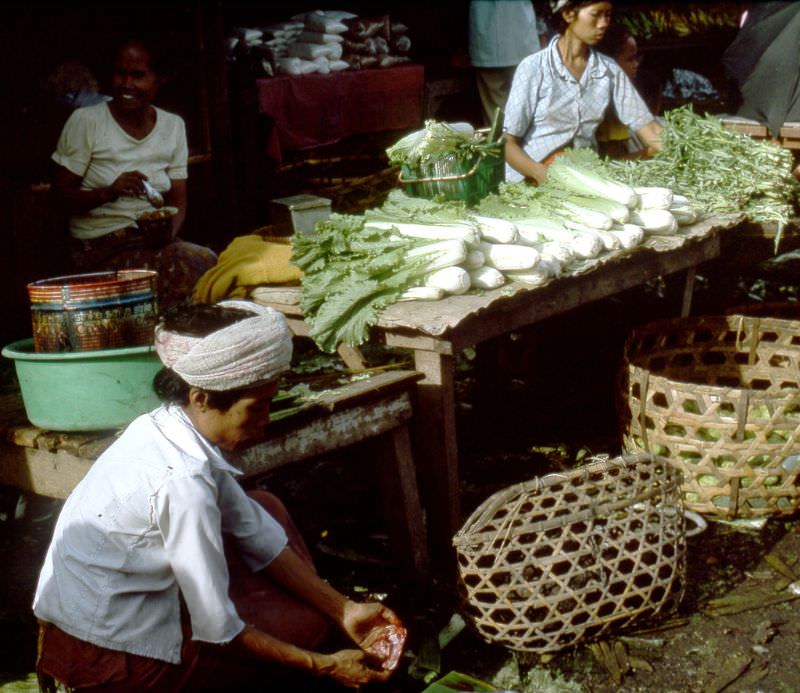
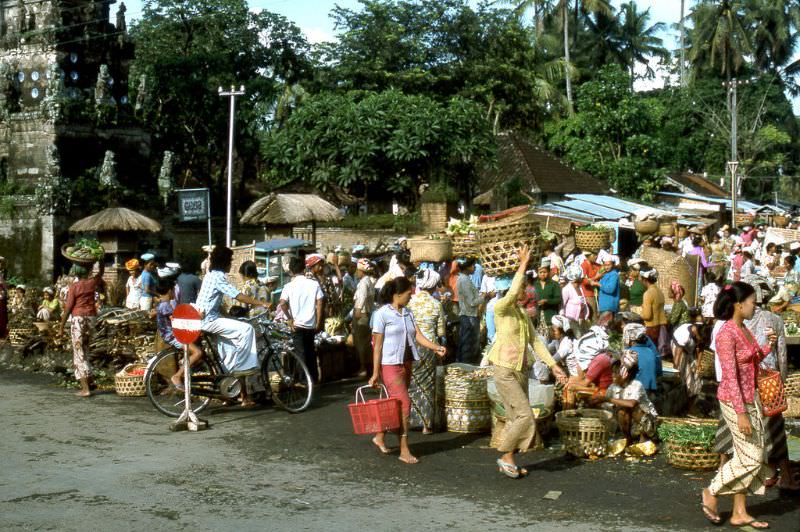
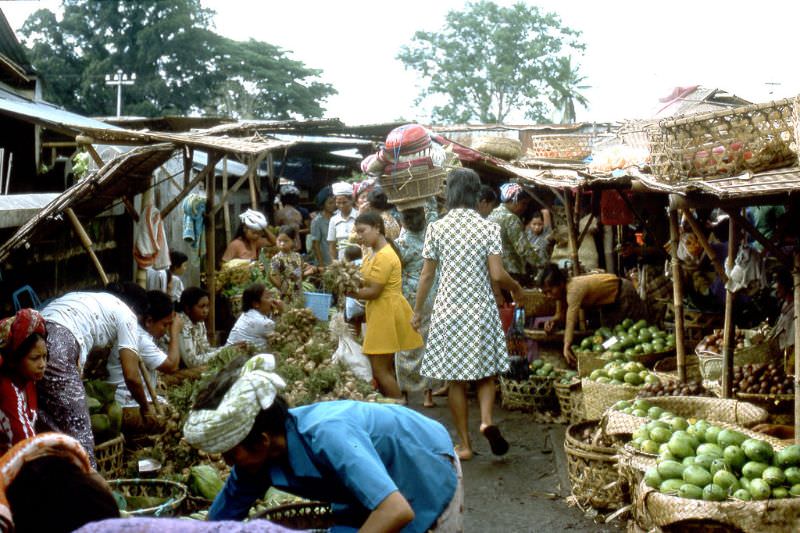
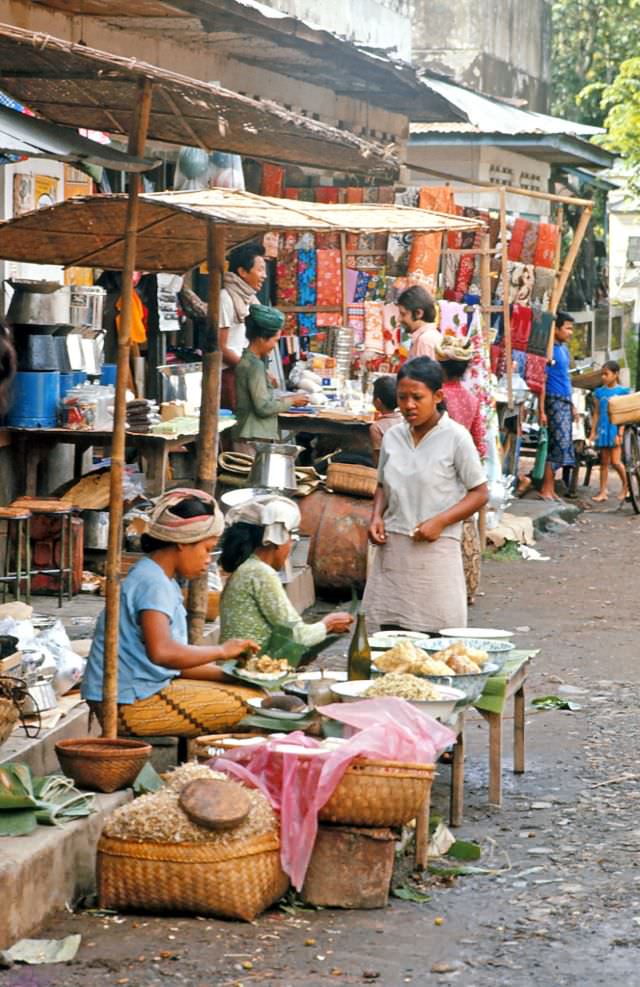
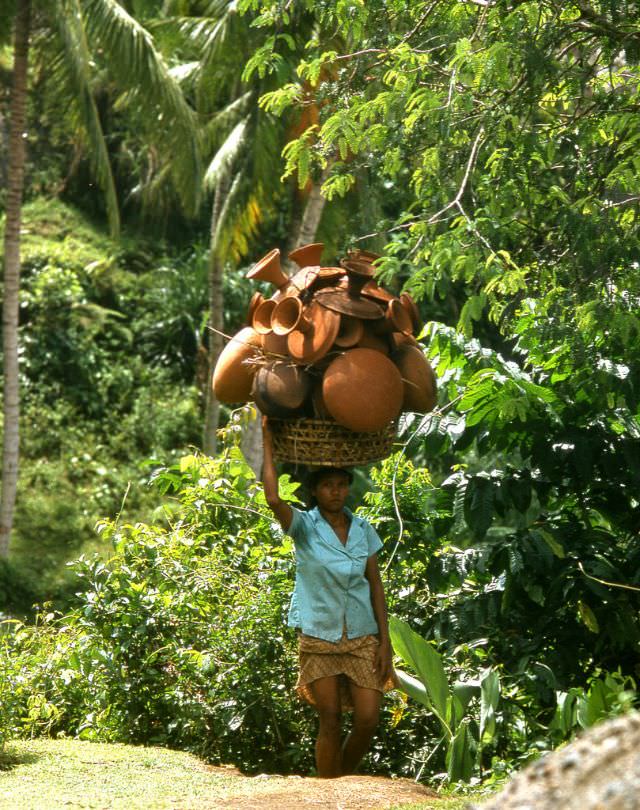
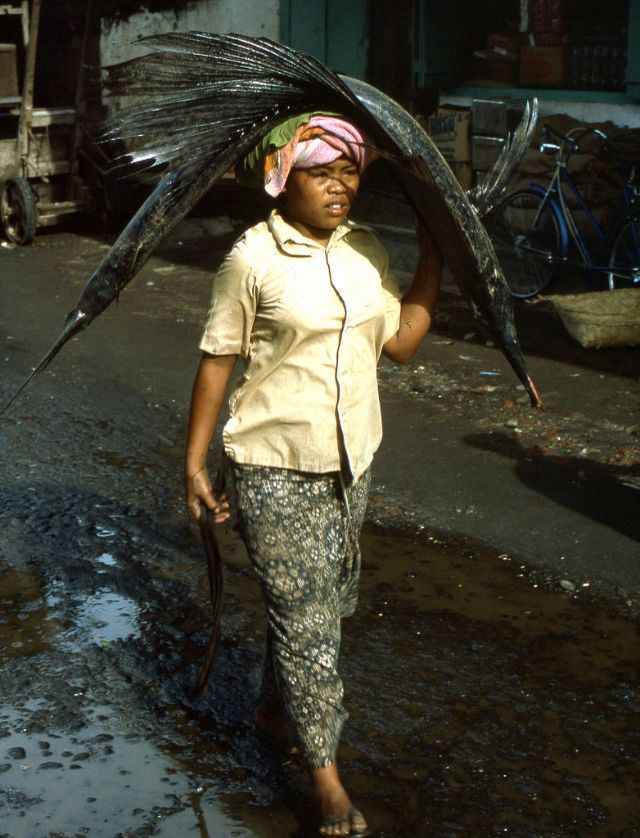
Balinese markets were daily events in villages across the island. Women walked long distances to sell and buy goods, balancing enormous loads on their heads — pottery, fish, fruit, and vegetables. A Balinese woman carrying two swordfish on her head to a market near Kuta was a common enough sight that it barely drew a second glance from locals, even if it astonished outsiders.
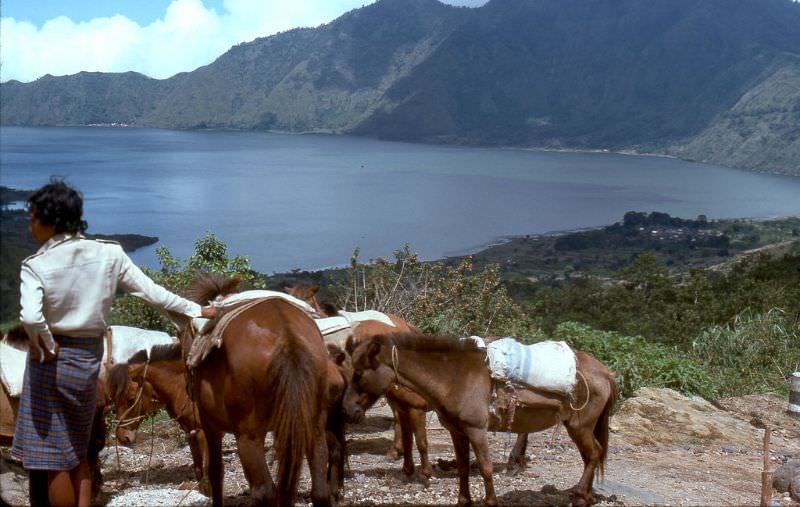
Lake Batur, the volcanic crater lake in the highlands of central Bali, was already a popular lookout point by the 1970s. Vendors and hawkers positioned themselves along the rim to sell souvenirs and food to anyone who stopped. The lake itself sat inside the large caldera of Mount Batur, an active volcano that had last erupted in 1963, destroying several villages on its slopes.
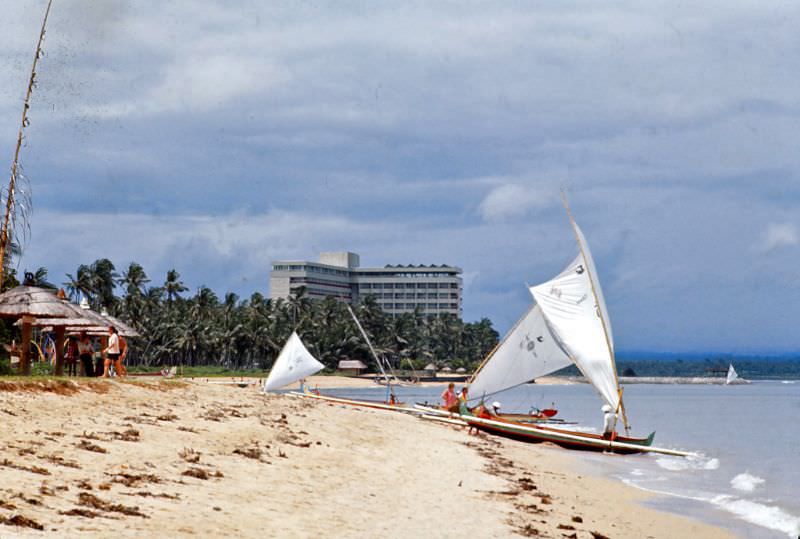
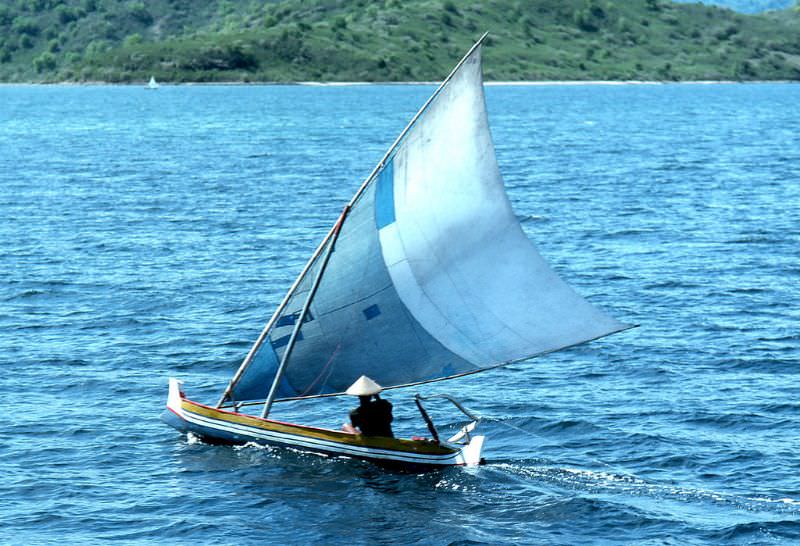
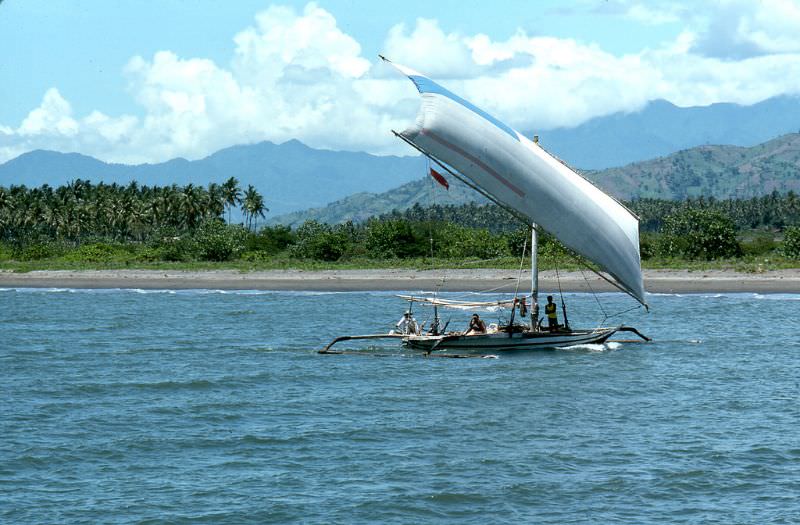
Off the coast, traditional sailing vessels moved quietly through the water. Balinese fishermen still used outrigger boats fitted with sails, hauling lines far from shore. These were not antiques kept alive for show — they were working vessels that families depended on. The sight of a painted sail against the blue of the Bali Sea was an everyday scene in coastal villages.
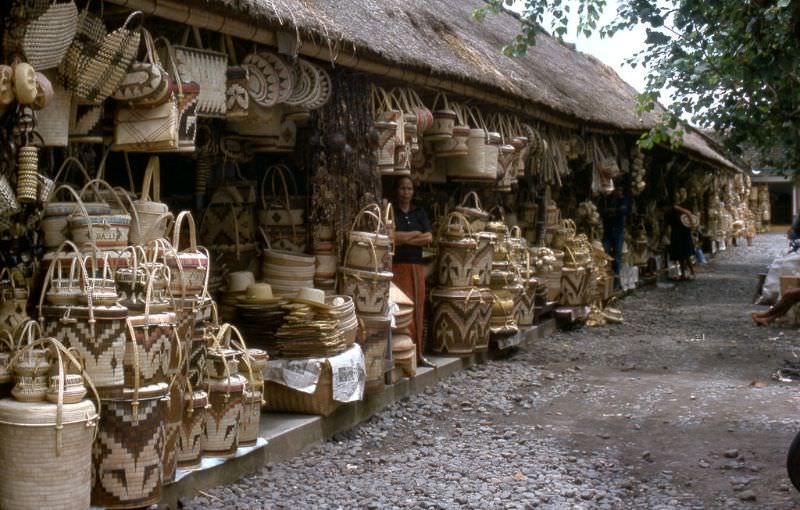
Kuta Beach in the 1970s was beginning its slow shift from a quiet fishing village into a destination. Street markets near the beach sold woven baskets, sarongs, and fresh produce. Jalan Legian, which would later become one of Bali’s most recognizable commercial streets, was still lined with modest stalls. The mix of local vendors, farmers bringing goods from inland, and the occasional foreign visitor defined the market scene of that decade.