By the late 1930s, the Great Western Railway had earned a firm reputation as the finest way to travel across England. Its roots stretched back to 1832, when Bristol merchants recognized the urgent need for a rail link to London. They turned to Isambard Kingdom Brunel, one of Britain’s most celebrated engineers, and by 1835 the Great Western Railway had received official approval to begin construction. From the very beginning, the ambition was clear: this line would outshine every rival in both comfort and speed.
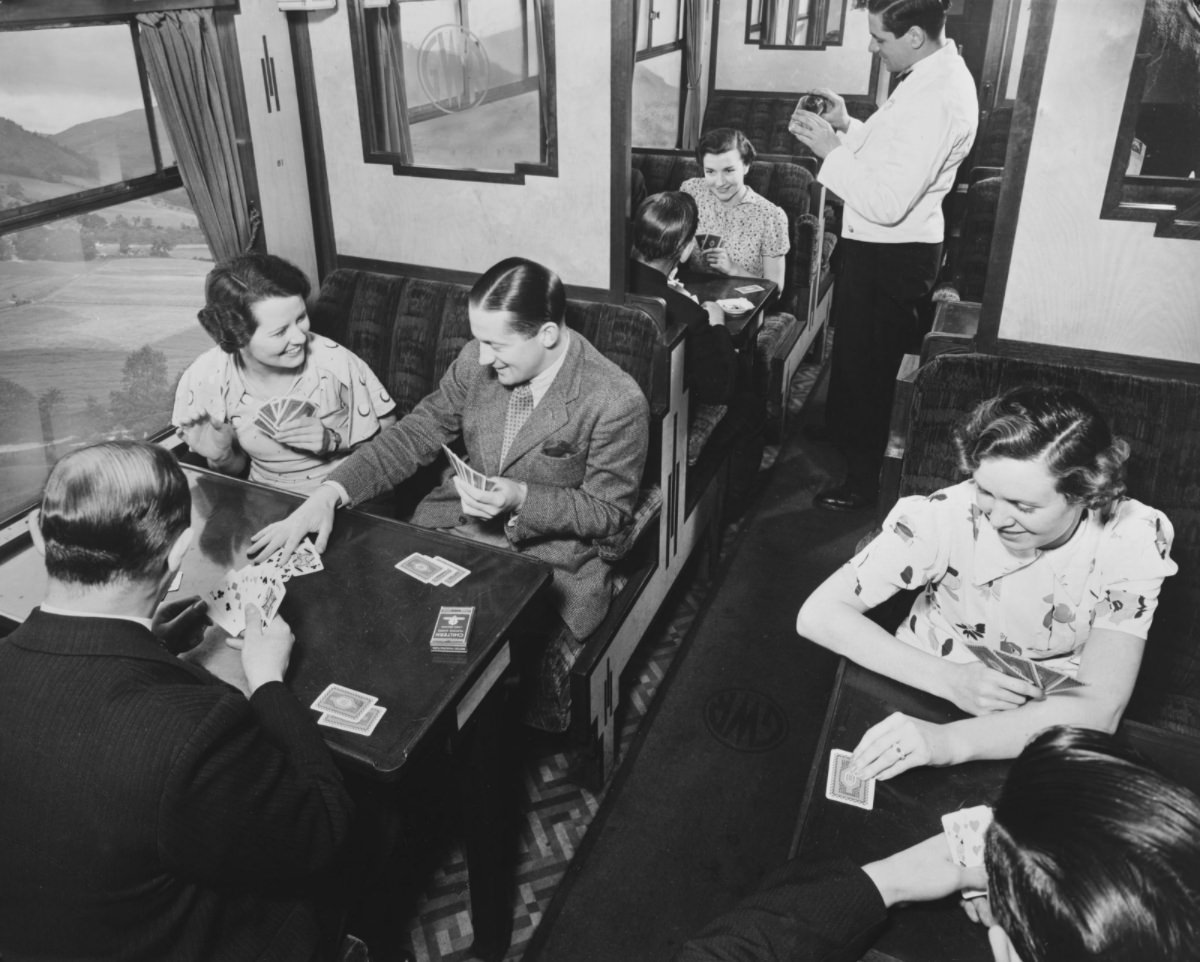
The railway was built to serve passengers heading to some of England’s most popular holiday destinations — Bristol, Plymouth, Paignton, and Penzance among them. By 1938 and 1939, many of the photographs documenting life on board were taken for the railway’s own promotional materials, including the 1939 ‘Holiday Haunts’ brochure produced with Fox Films. Several of these images were shot in the Swindon works yard, with scenic backgrounds added purely for visual effect.
One of the standout features for passengers was the buffet car — a relatively new concept in rail travel at the time. Rather than waiting until they reached their seat, travellers could stop at the buffet and order drinks or snacks right away. The car was designed with a service counter at one end and small tables at the other, giving it the feel of a smart café on wheels.
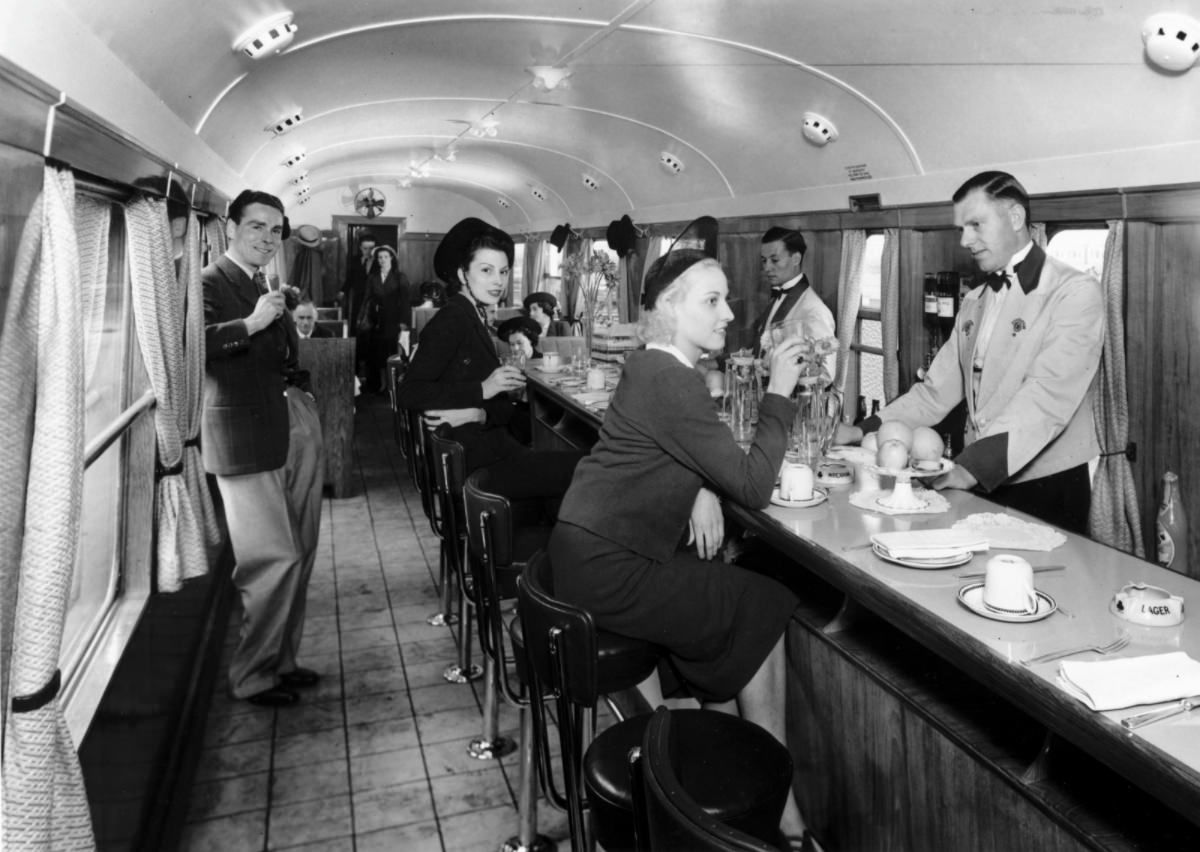
The buffet bar attracted a lively crowd. Passengers gathered around the counter, drinks in hand, before heading to their carriages. It was a social space as much as a practical one, and photographs from September 1938 show it well-used and animated. The atmosphere was relaxed, a sharp contrast to the more formal dining cars further down the train.
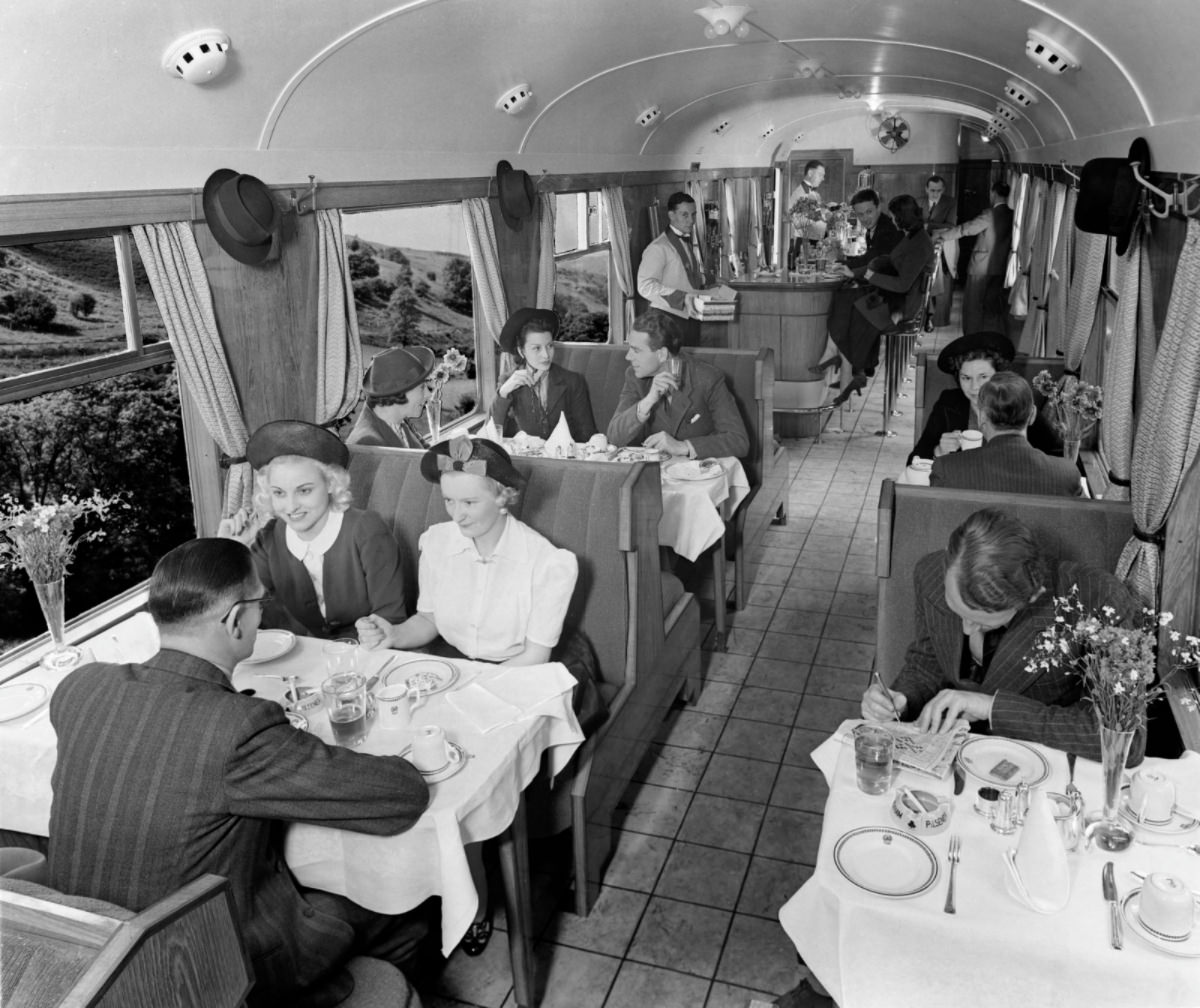
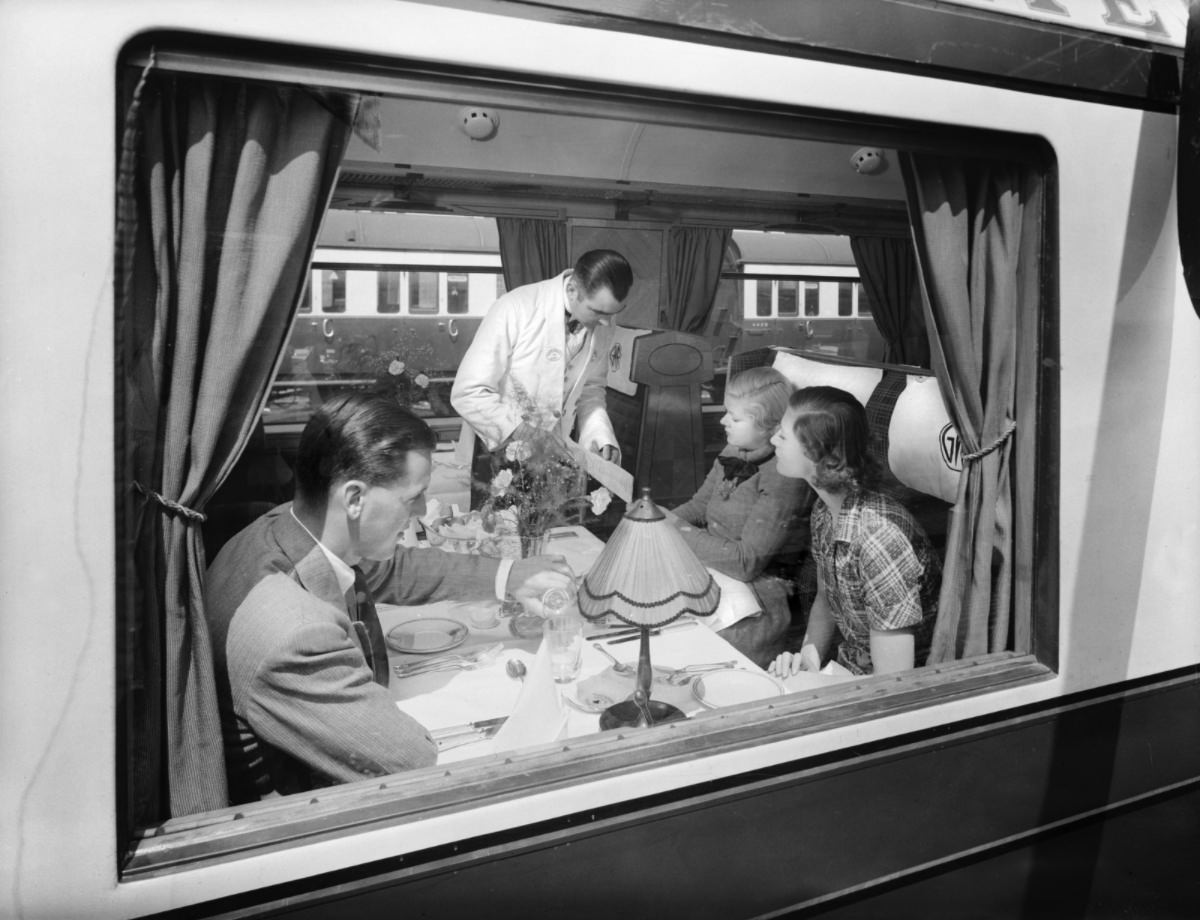
For those who wanted a full sit-down meal, the first-class dining car offered something considerably more elaborate. Passengers could order a three-course meal — including a roast dinner — for around 3/6, which amounts to just 18.5 pence in today’s decimal currency. Drinks and additional snacks were available alongside the main menu. The cars themselves were elegantly fitted out, with crisp tablecloths and attentive service that matched what one might expect from a quality restaurant on dry land.
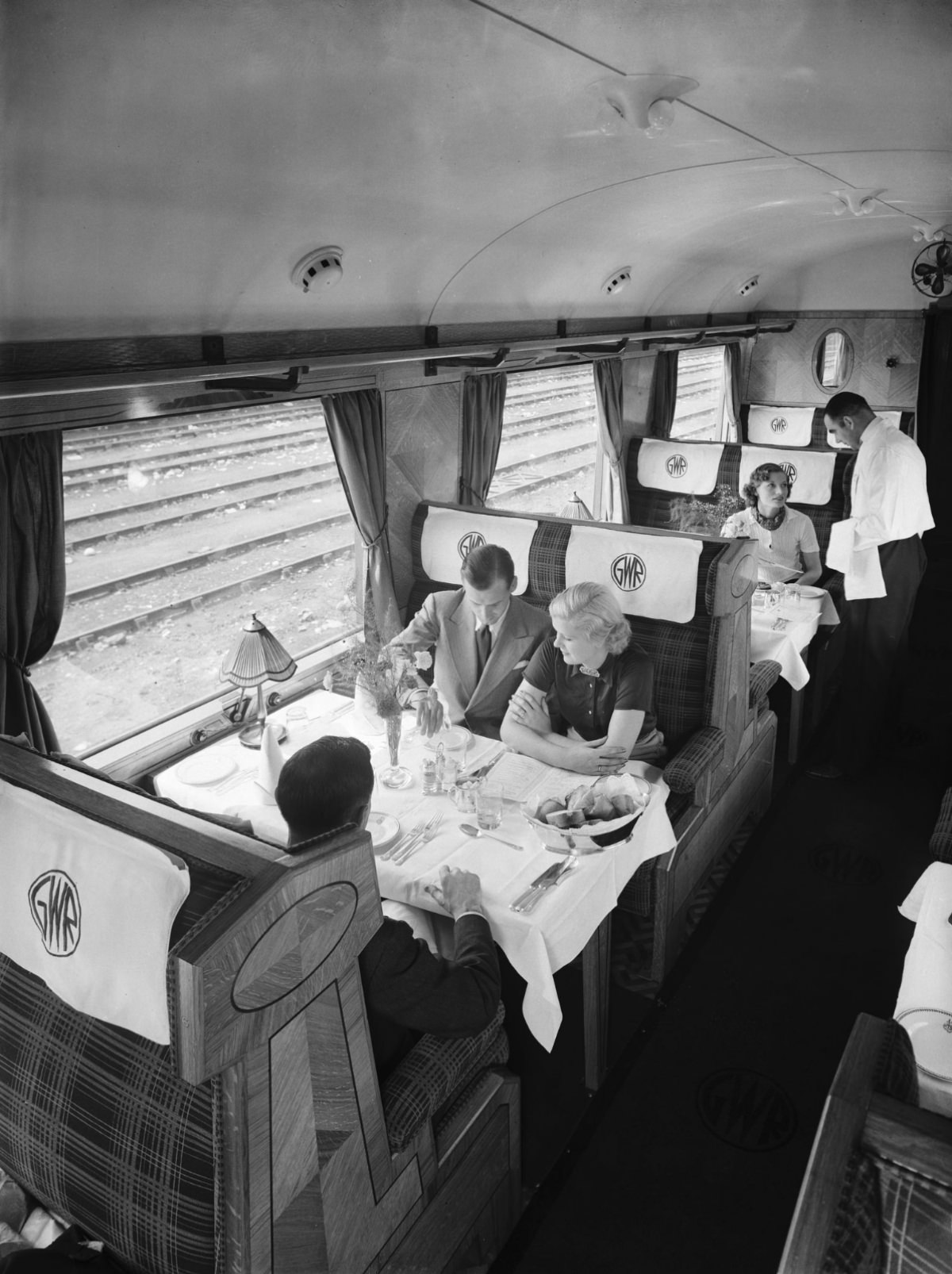
The dining car drew a well-dressed clientele. Men in suits and women in smart travelling clothes filled the seats, and the overall atmosphere was one of quiet, unhurried refinement. The journey itself became part of the holiday, not simply a means of getting from London to the coast.
Beyond dining, first-class carriages offered noticeably wider seats and a more spacious layout than their third-class counterparts. The gap between the two classes was significant. Third-class passengers sat in tighter quarters, though they still found ways to pass the time on longer journeys. Card games were a common sight, with small groups gathered around shared tables, making the most of the hours on the rails.