Competitive eating has a longer history than most people realize. The first recorded pie-eating contest took place in Toronto in 1878, but the sport truly took off in the early 20th century. The industrial revolution had quietly transformed the food supply. Refrigeration, canning, and improved farming methods made food far more plentiful than in any previous era. With more food available, the idea of eating large amounts quickly shifted from scandalous to entertaining.
In an age before widespread electricity and commercial entertainment, local fairs across the United States leaned heavily on eating contests to draw crowds. These events were cheap to organize, easy to understand, and reliably drew both competitors and spectators. Early contests centered on local crops — corn, watermelon, and apples were all common subjects. Over time, pies became the dominant food of choice, showing up at county fairs, school events, Navy ships, and even world’s fairs.
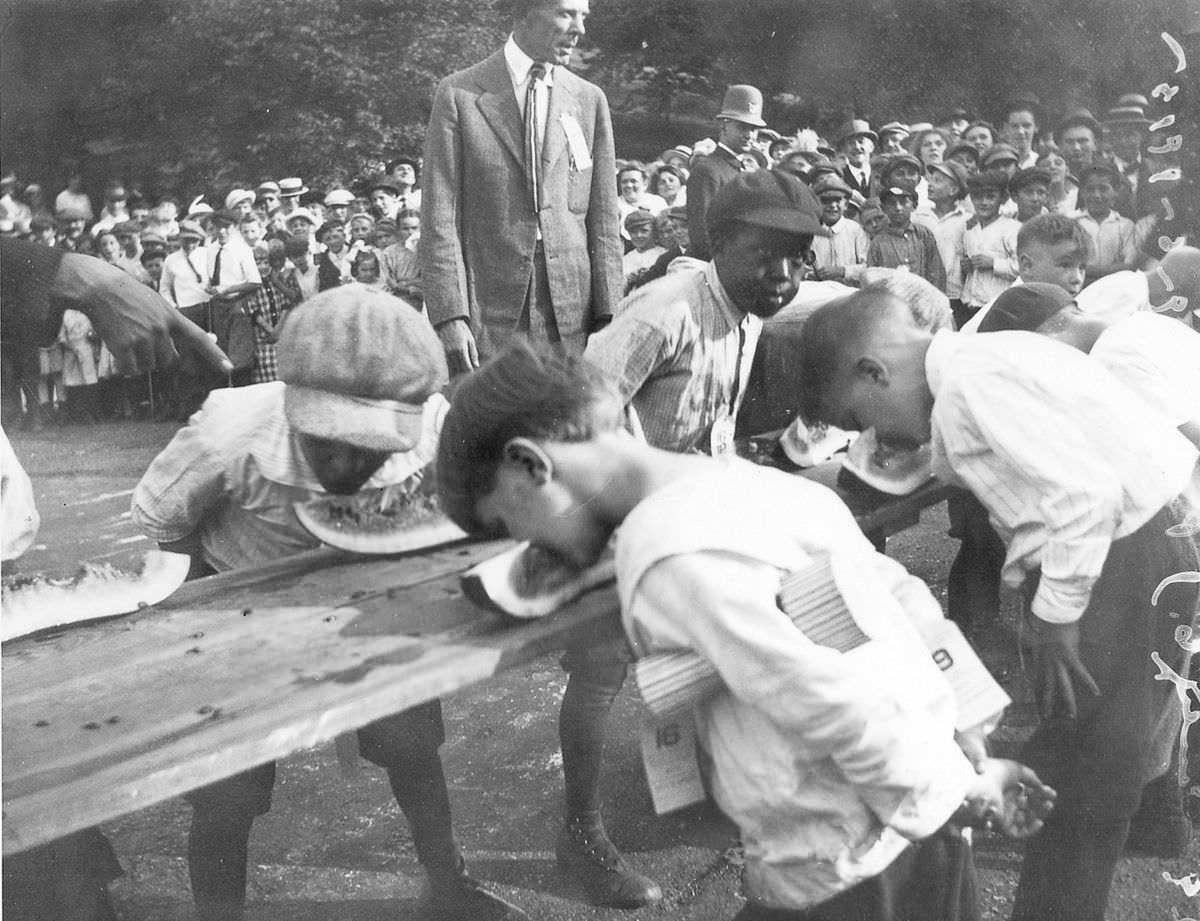
One of the earliest photos in this collection captures a watermelon-eating contest in Cincinnati, Ohio, at the height of summer in 1915.
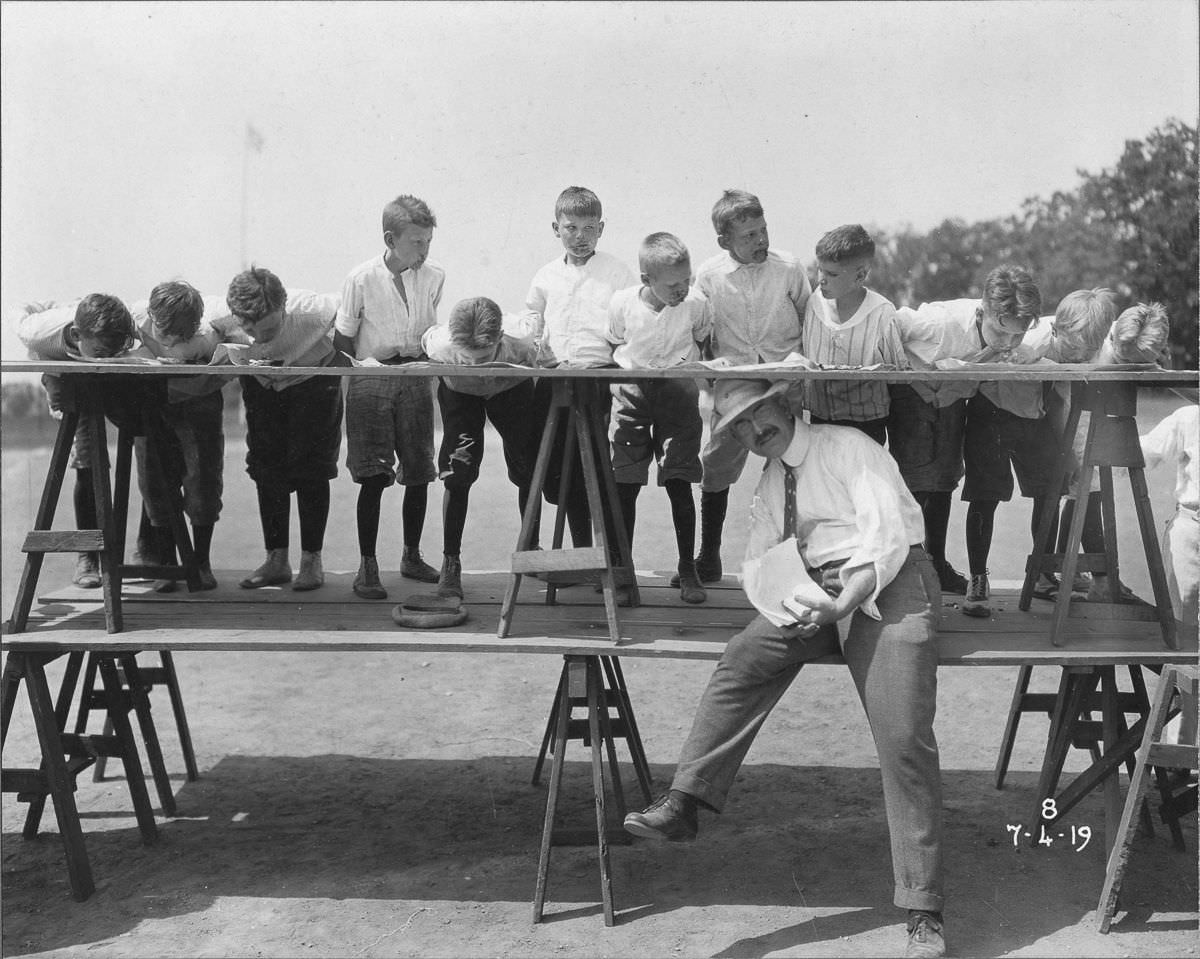
Eating contests weren’t limited to adults. Children were regular participants, and youth competitions drew some of the most enthusiastic crowds. On the Fourth of July, 1919, young competitors faced off in a pie-eating contest, making it part of the holiday celebration.
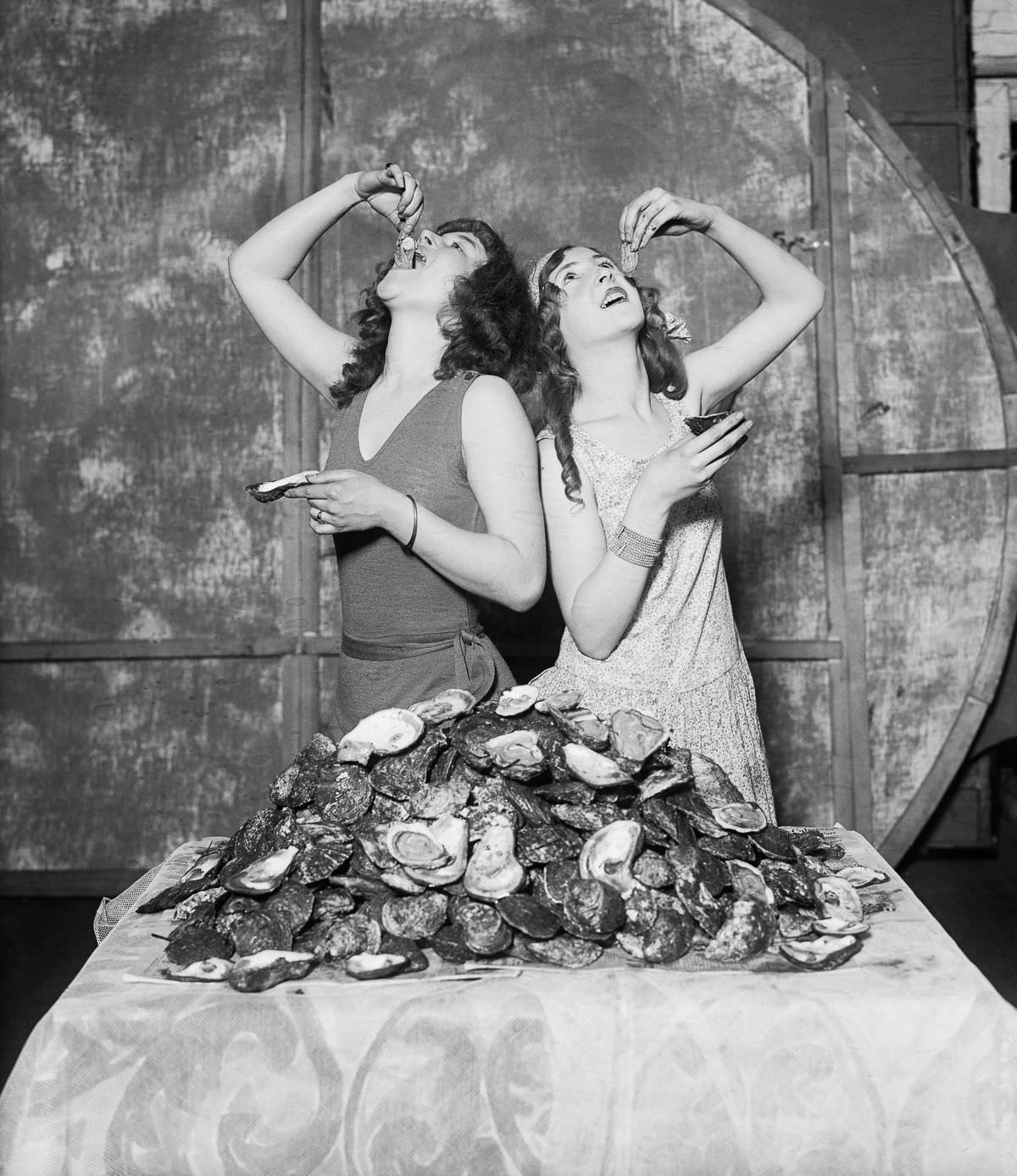
Not every contest involved pie. In 1920, sisters Lois and Ruth Waddell entered the Great Oyster Eating Contest and together consumed a combined total of 204 oysters. When they finished, they were crowned winners — an extraordinary feat that made headlines at the time.
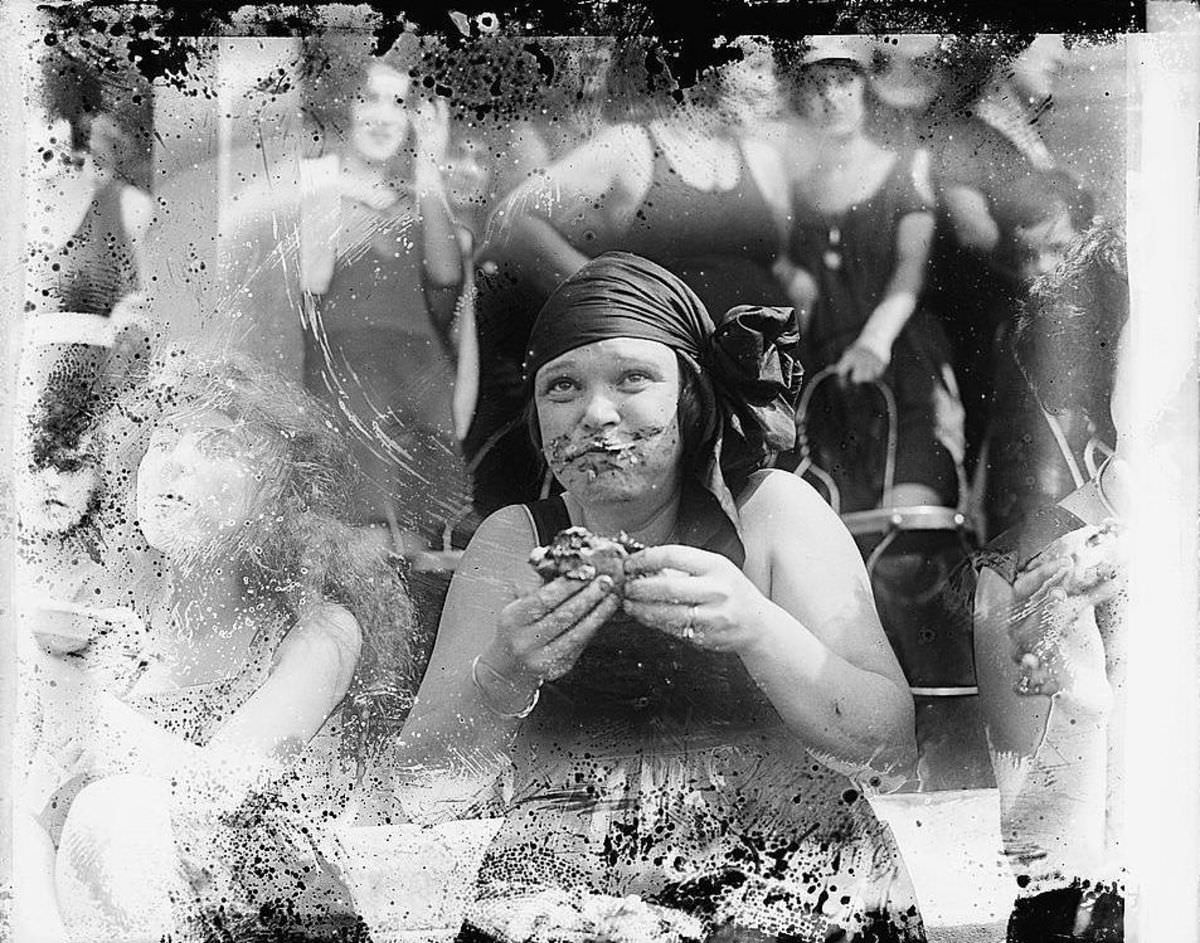
Pie-eating contests had been a fixture at county festivals since the turn of the twentieth century. During World War I, American military regiments even organized eating contests among soldiers as a morale booster. By 1921, the events had spread to urban settings like Washington, D.C., where a contest was held at the Tidal Basin.
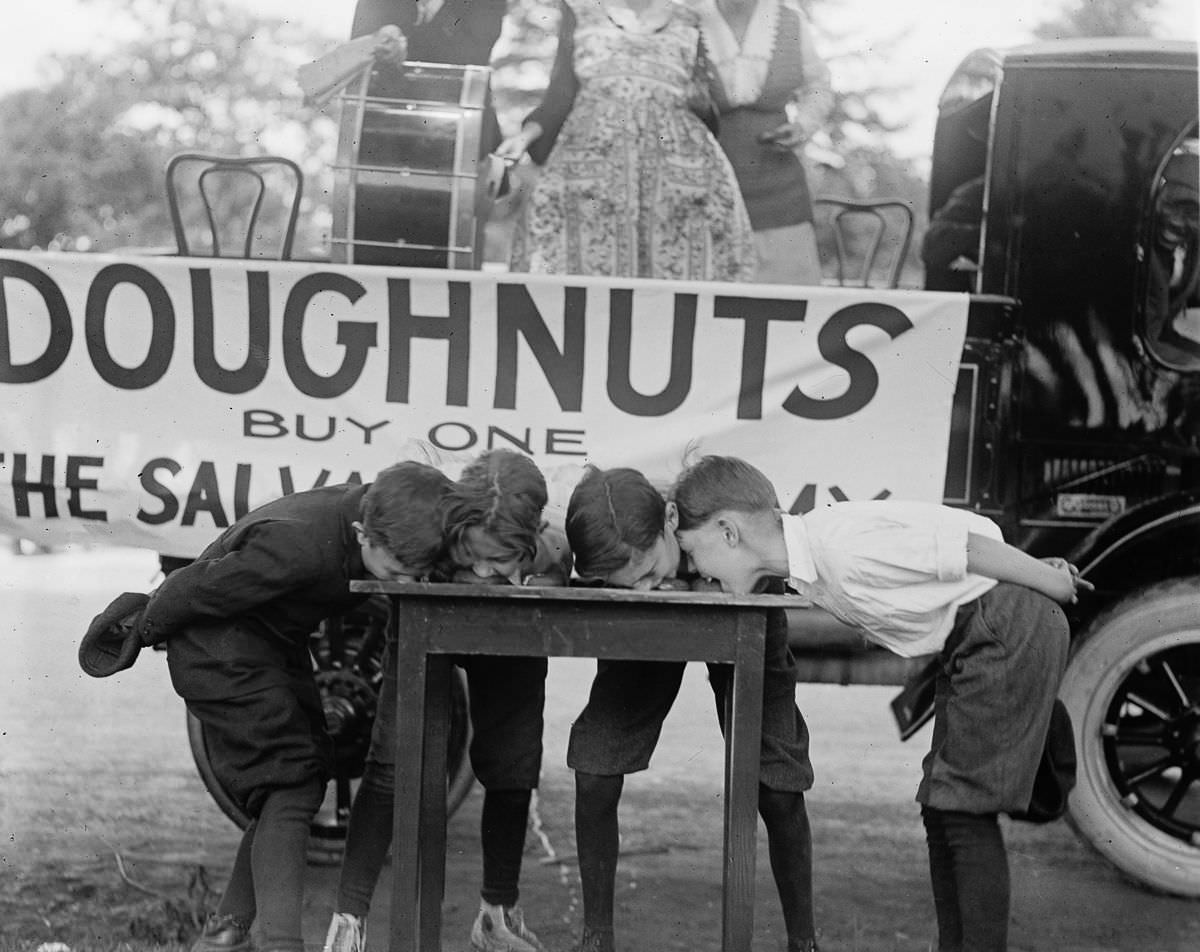
The Salvation Army got in on the action in May 1922, hosting a doughnut-eating contest for young competitors. Four youngsters lined up, each determined to be the fastest to finish.
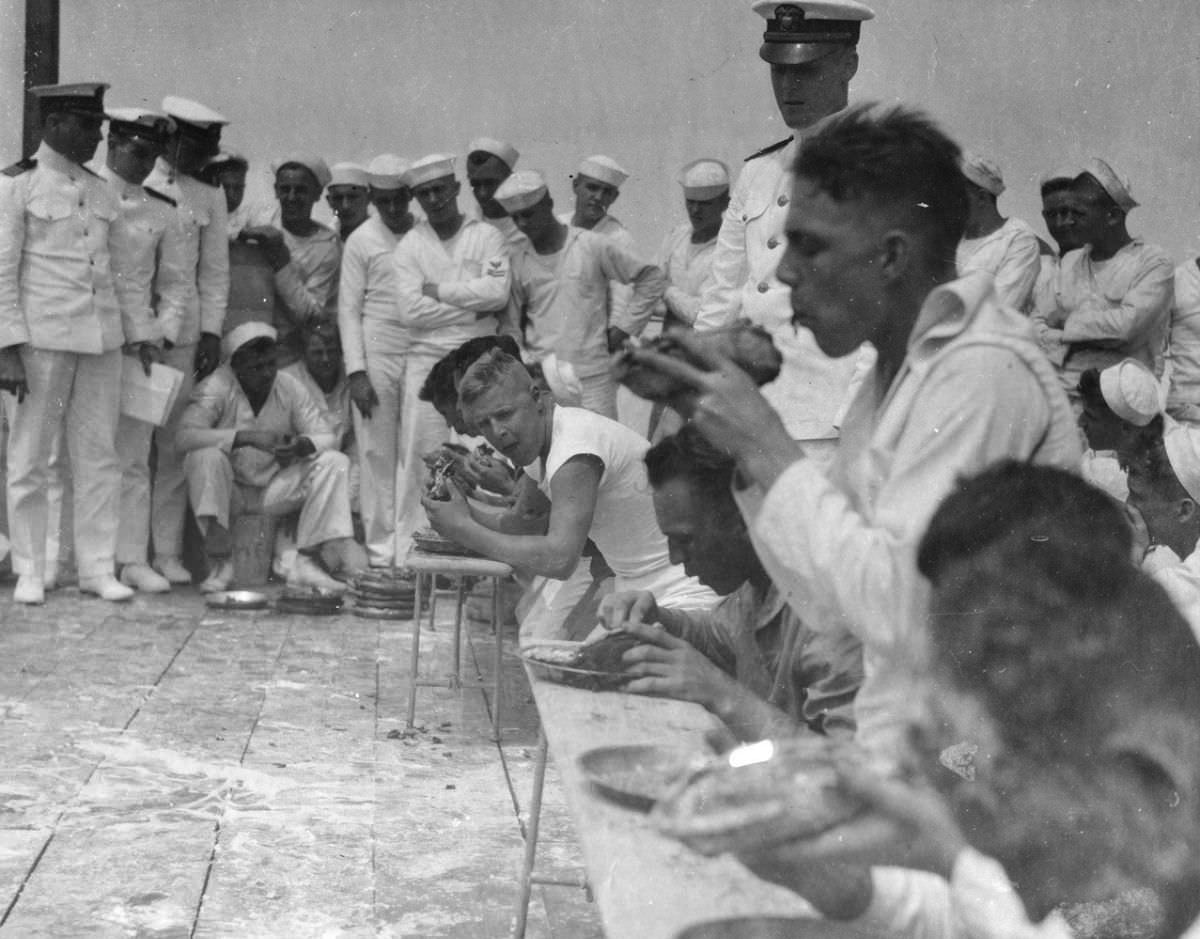
Even the U.S. Navy participated. Sailors aboard a Navy ship in 1922 sat down in front of a row of pies and competed against one another, turning a simple food into a competitive event far from any county fairground.
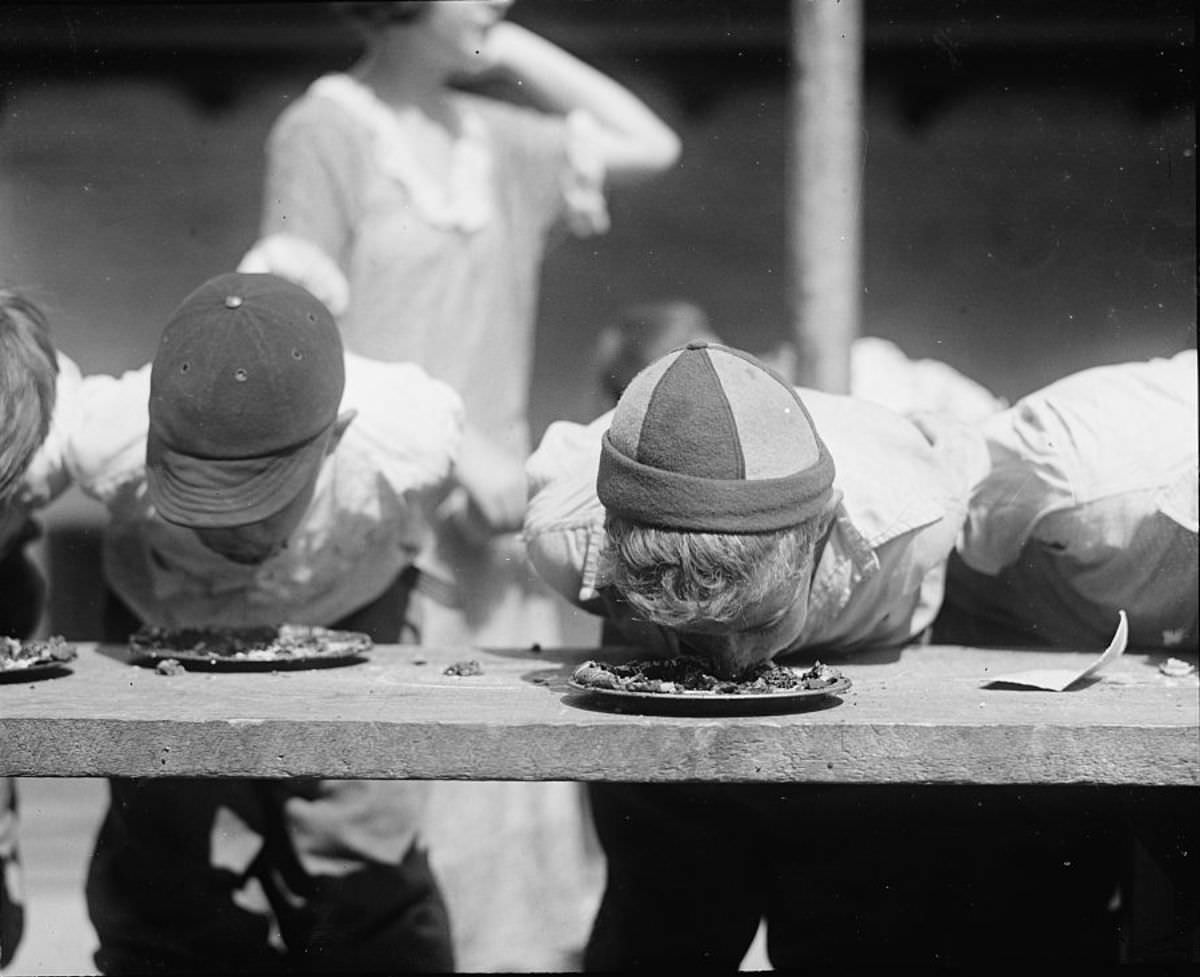
Schools also hosted eating contests regularly. In 1923, students at Jefferson School in Washington, D.C., participated in a hands-free pie-eating contest, dunking their faces directly into the pies.
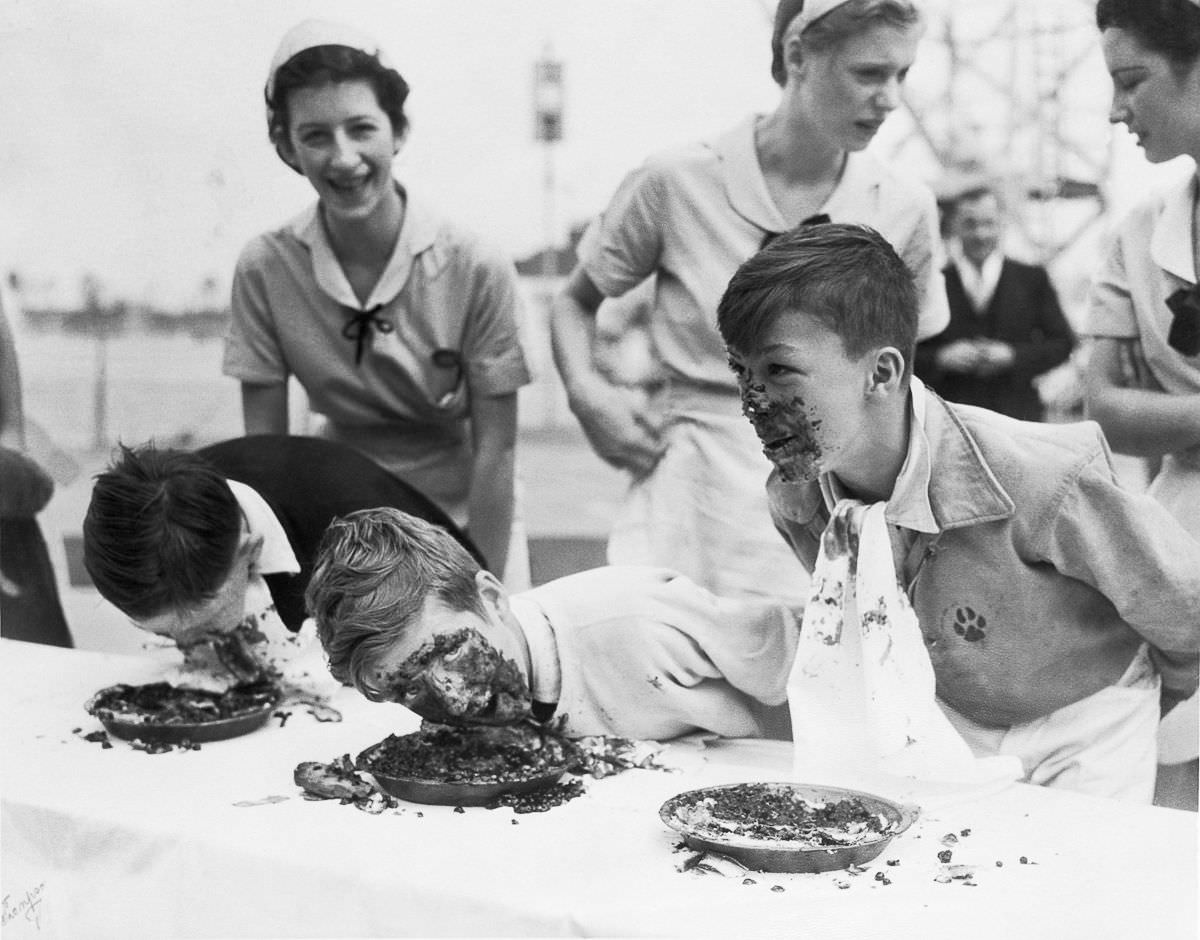
By the 1930s, eating contests had grown large enough to appear at major national events. The 1934 World’s Fair in Chicago included a pie-eating contest, placing competitive eating on the same stage as some of the most celebrated exhibitions of the decade.
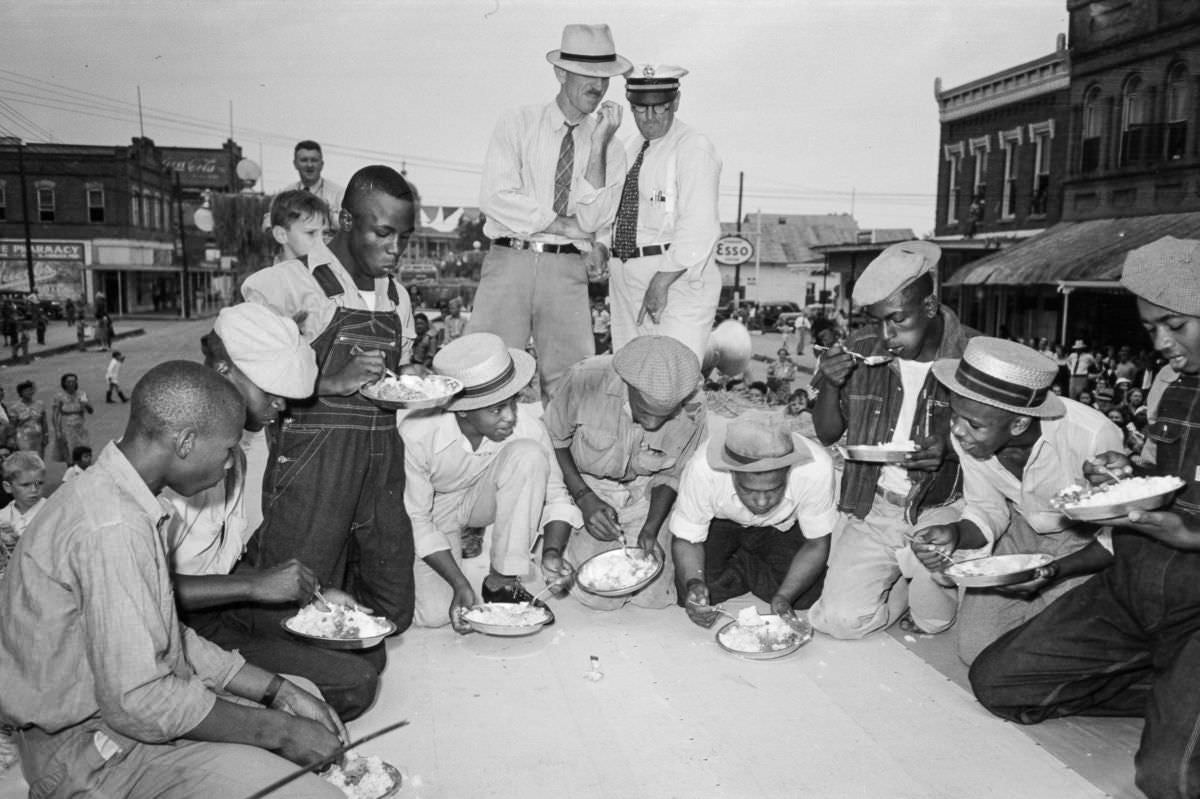
Regional identity played a big role in what people ate competitively. In Crowley, Louisiana — a town known as the rice capital of America — the National Rice Festival featured its own eating contest in 1938, celebrating the local crop in the most direct way possible.
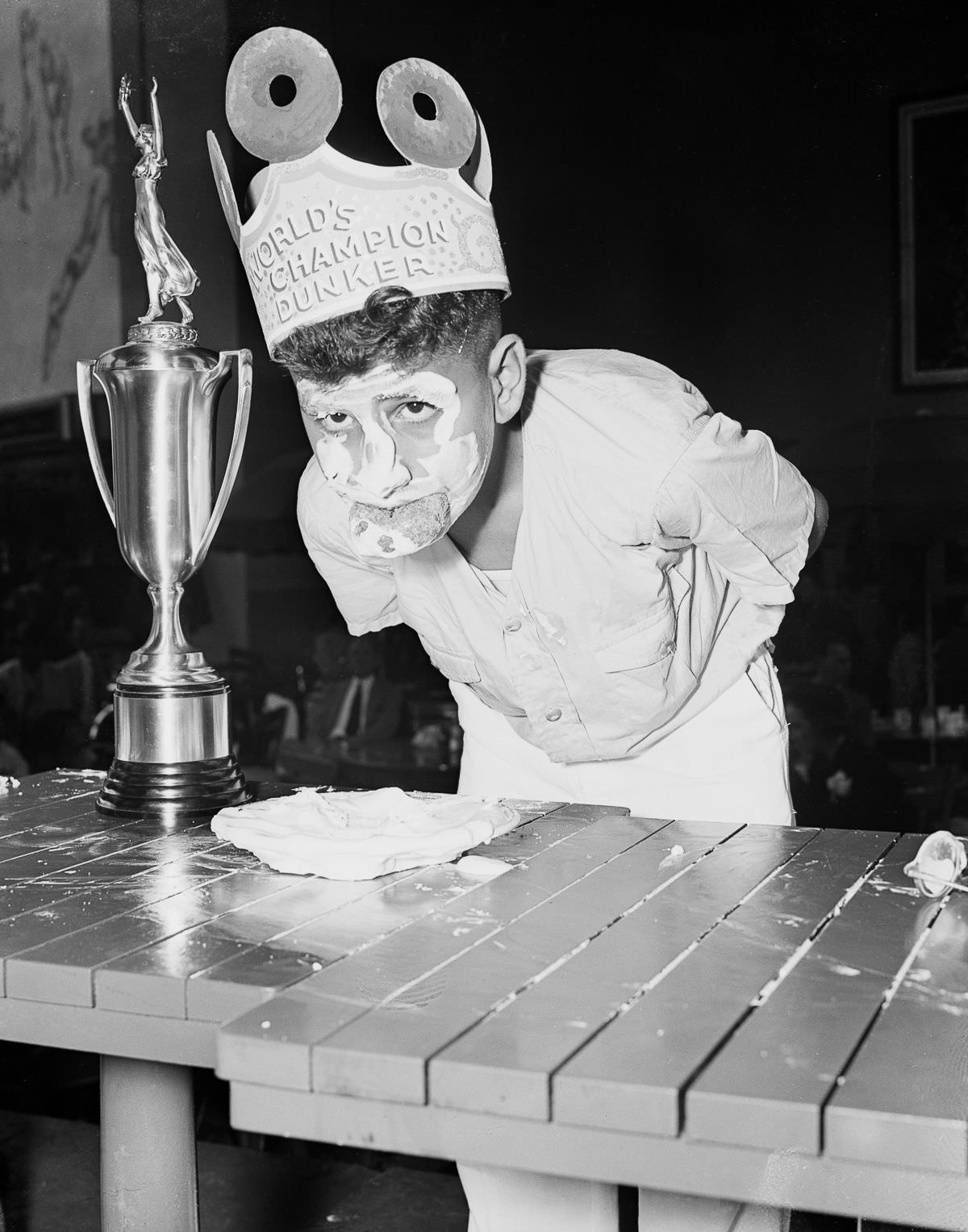
Doughnut dunking became its own competitive discipline. In 1939, twelve-year-old Joseph Rubolotta of New York was crowned world champion doughnut dunker at a formal competition, a title that was taken seriously enough to earn a photograph.
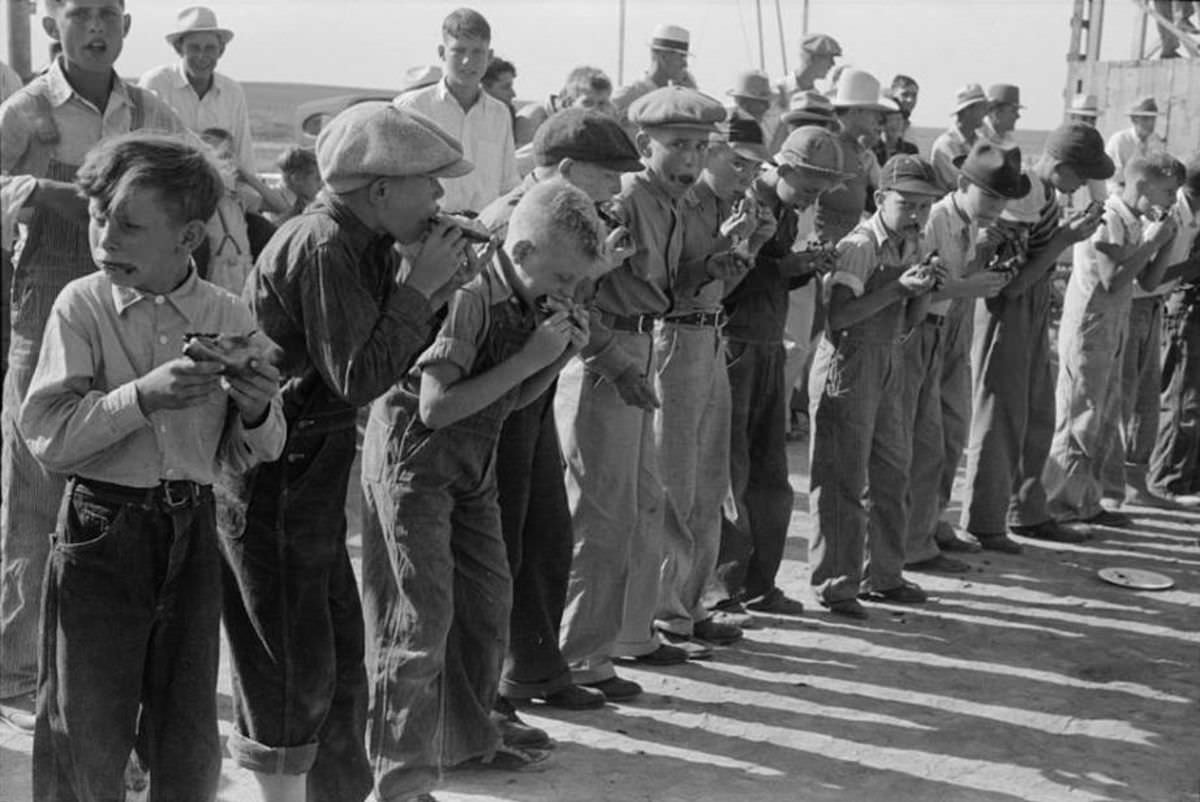
That same year, a 4-H Club fair in Cimarron, Kansas, hosted its own pie-eating contest, keeping the tradition alive in rural America where agricultural fairs remained a cornerstone of community life.
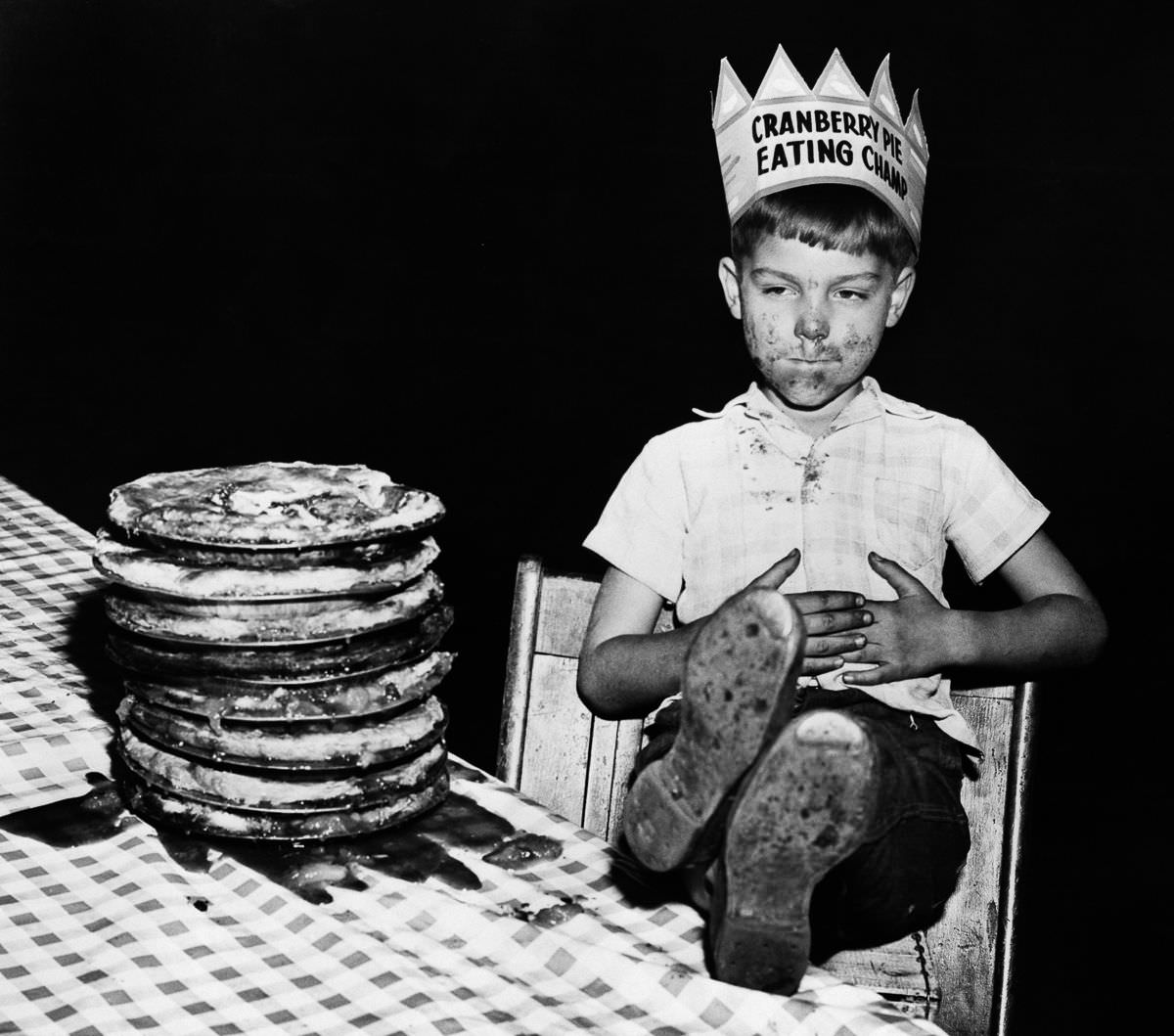
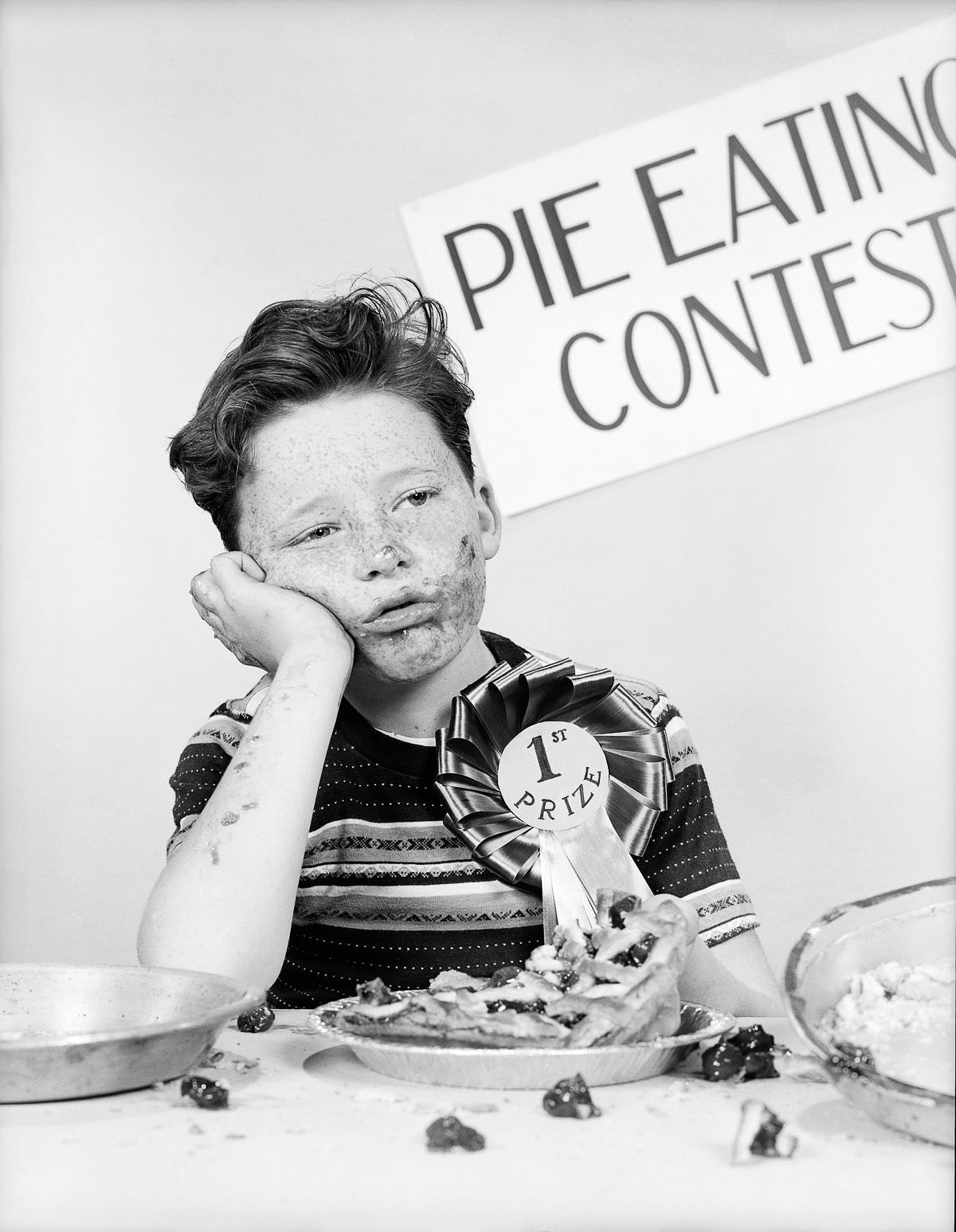
The late 1940s produced some of the most memorable individual performances in early competitive eating history. In 1948, six-year-old Richard Baranski ate a 10-inch cranberry pie in just 15 seconds — a result dramatic enough that two separate photographs were taken to document the moment.
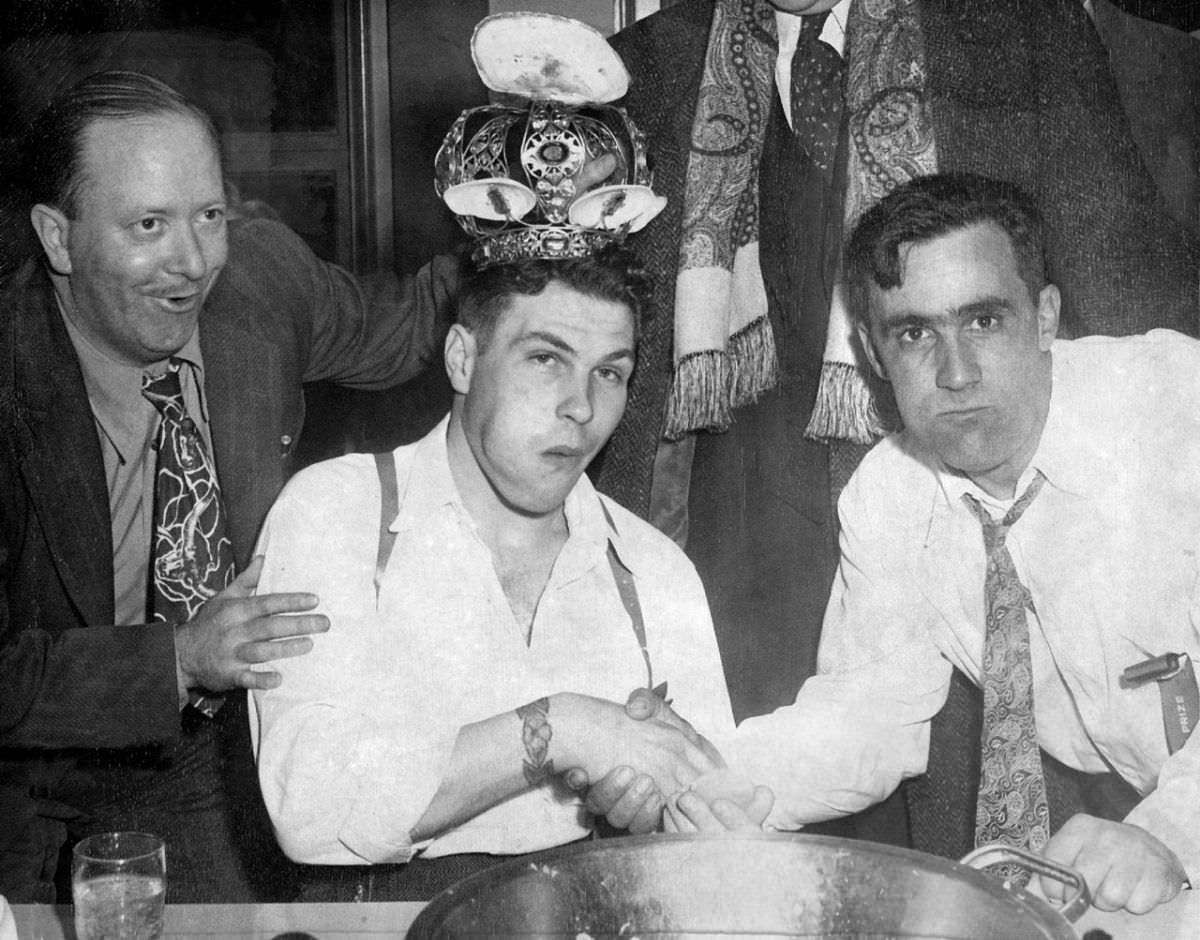
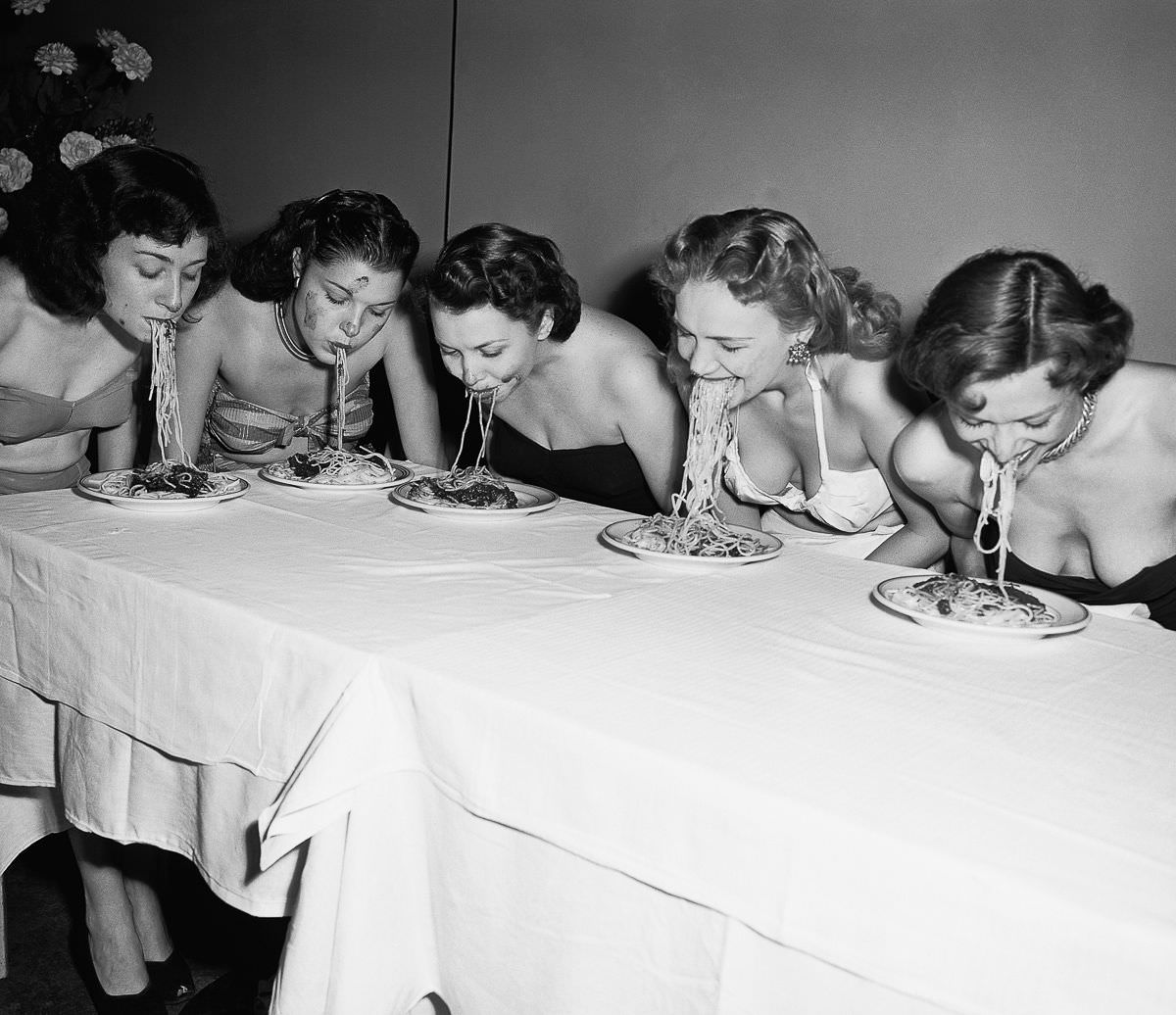
Also in 1948, a clam-eating contest at Ivar’s Restaurant on the Seattle waterfront produced the first-ever World Champion Clam Eater. Richard Watson, a local cab driver, gulped down 110 clams in 10 minutes to claim the title. That same year, Broadway show girls competed in a hands-free spaghetti-eating contest — a reminder that by the late 1940s, restaurants and entertainment venues regularly used eating contests to attract customers and generate buzz.
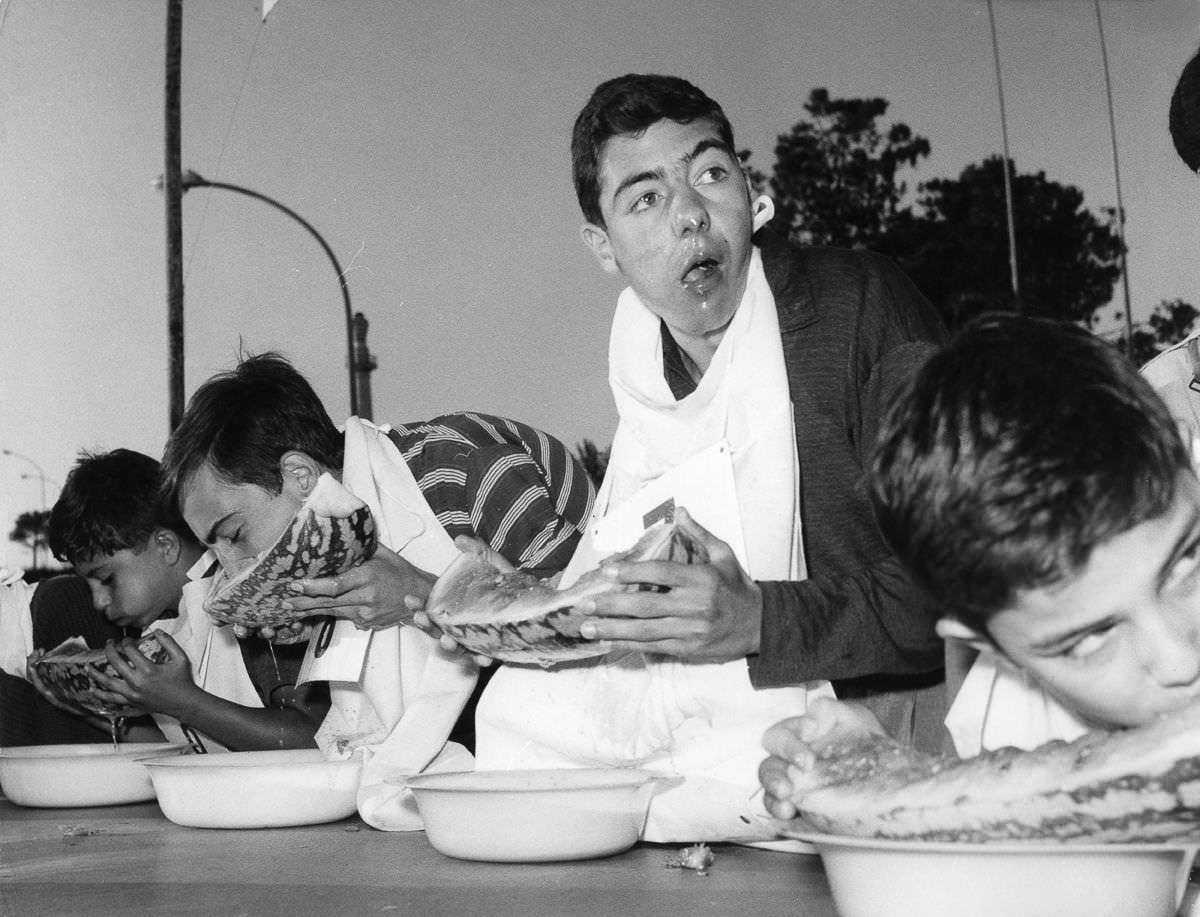
Eating contests weren’t unique to the United States. In 1950, a watermelon-eating contest took place in Rome, Italy, showing that the concept had spread well beyond American fairgrounds.
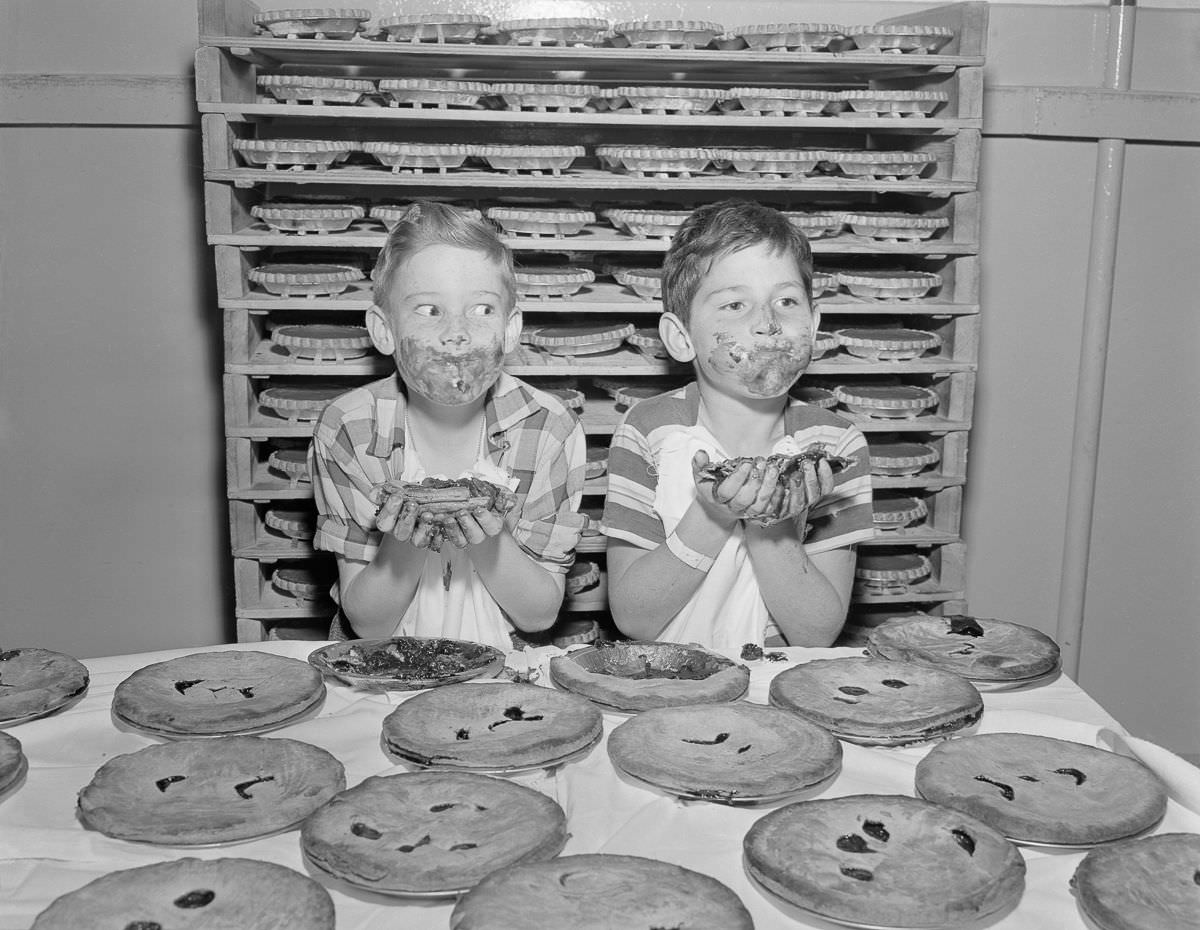
Back in the U.S., young competitors prepared seriously for events. Boys practiced their technique ahead of a pie-eating contest at the Los Angeles Food Show in 1950, treating the event with the same focus a young athlete might bring to a track meet.
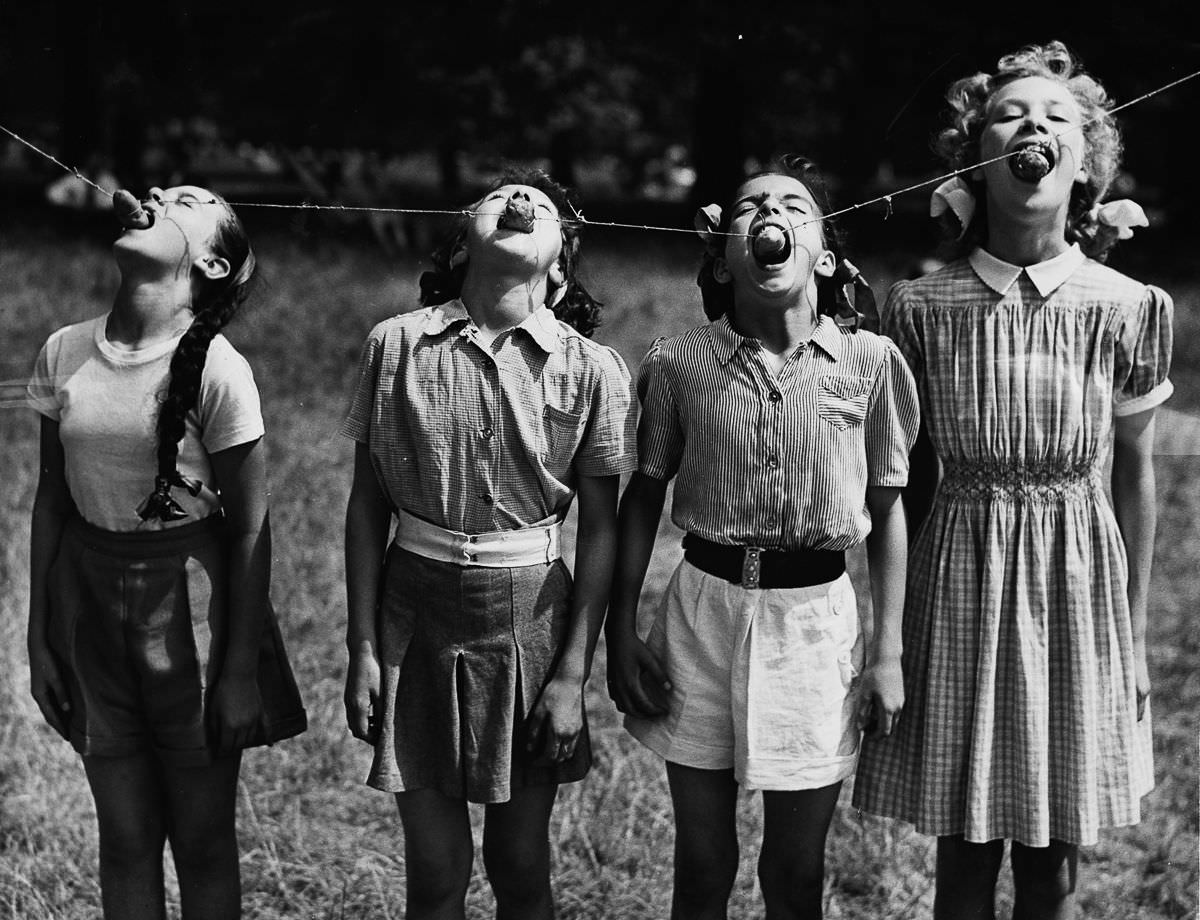
British students came up with their own creative twist in 1952. Rather than eating food off a plate, London students attempted to eat potatoes that were hung on a line — a format that added a physical challenge on top of the eating challenge.
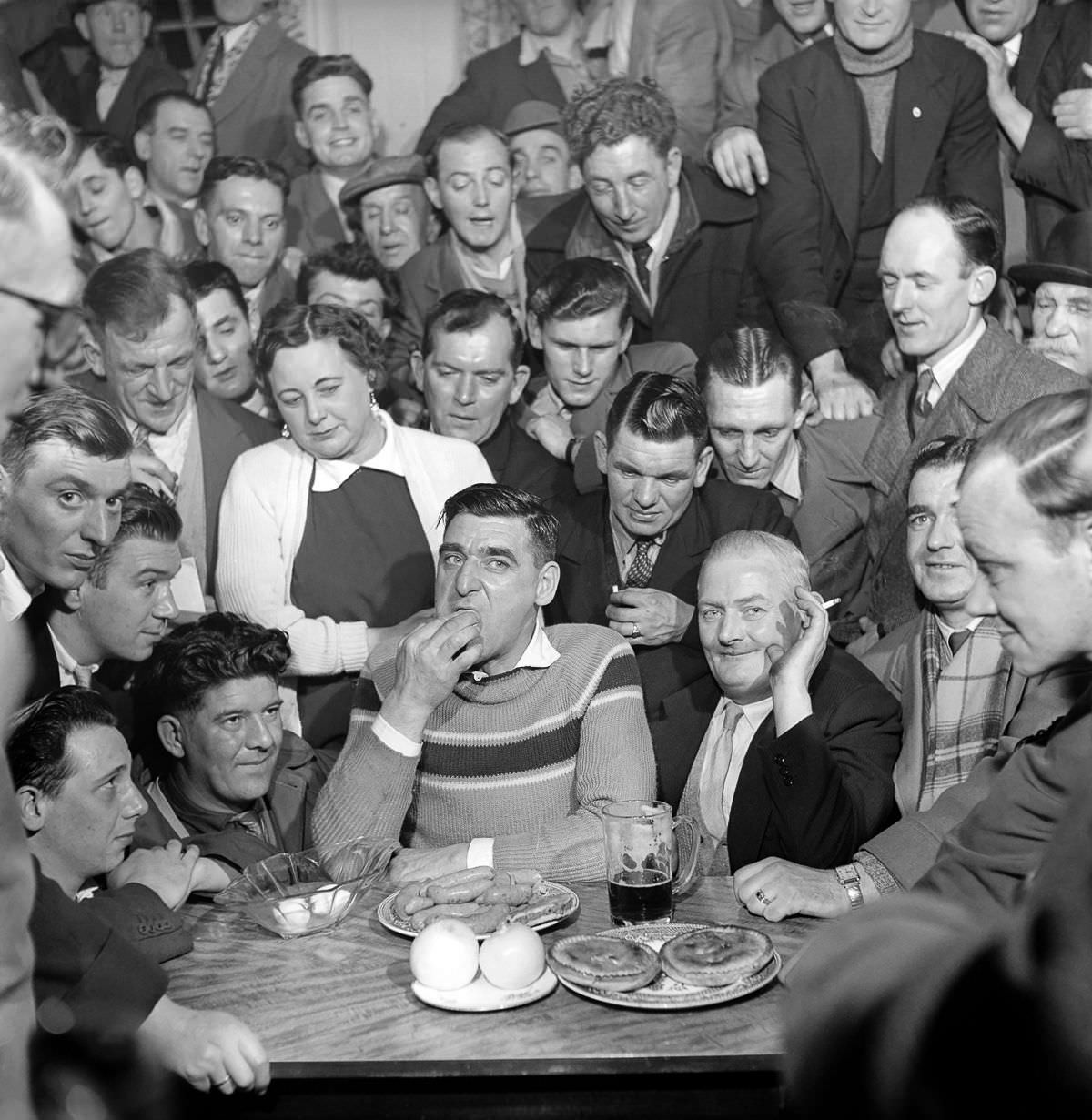
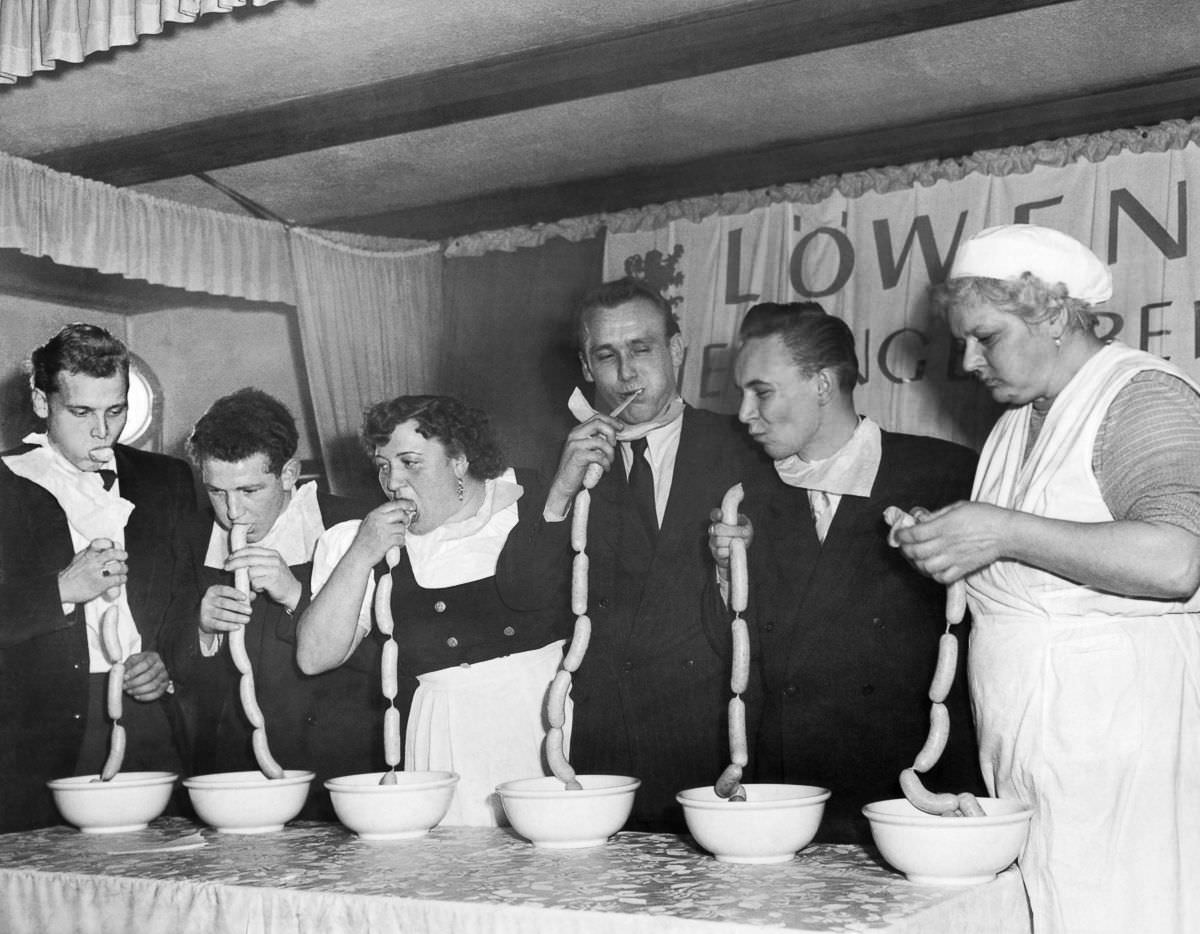
That same year in Munich, Germany, a sausage-eating contest drew serious competitors. The winner, standing second from the left in the photograph, consumed 15 sausages in one minute and 45 seconds.
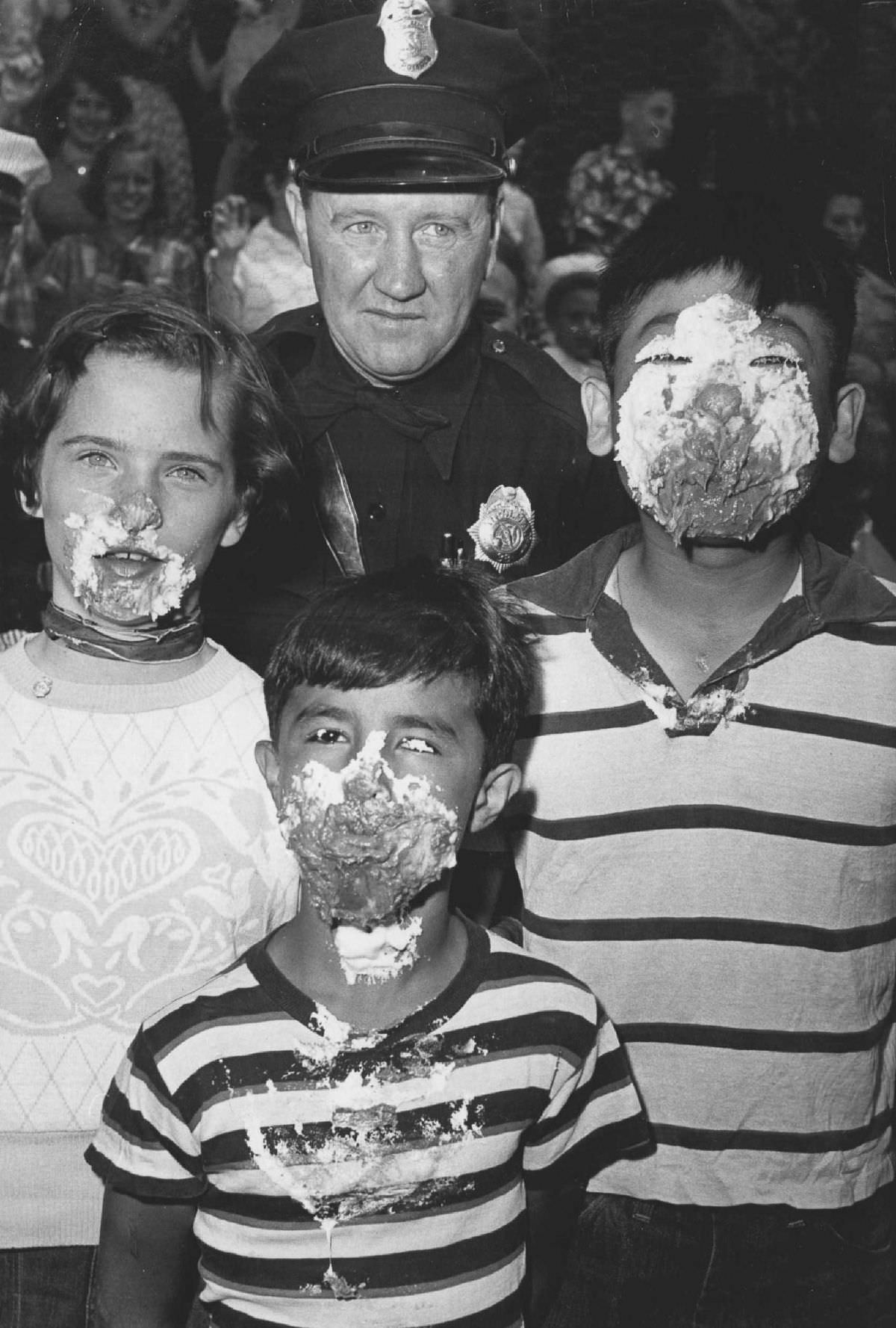
Law enforcement wasn’t above joining the celebration. In 1954, Denver Patrolman Joe Hale posed with the winners of a local pie-eating contest, a lighthearted moment that shows how embedded these events were in everyday community life.
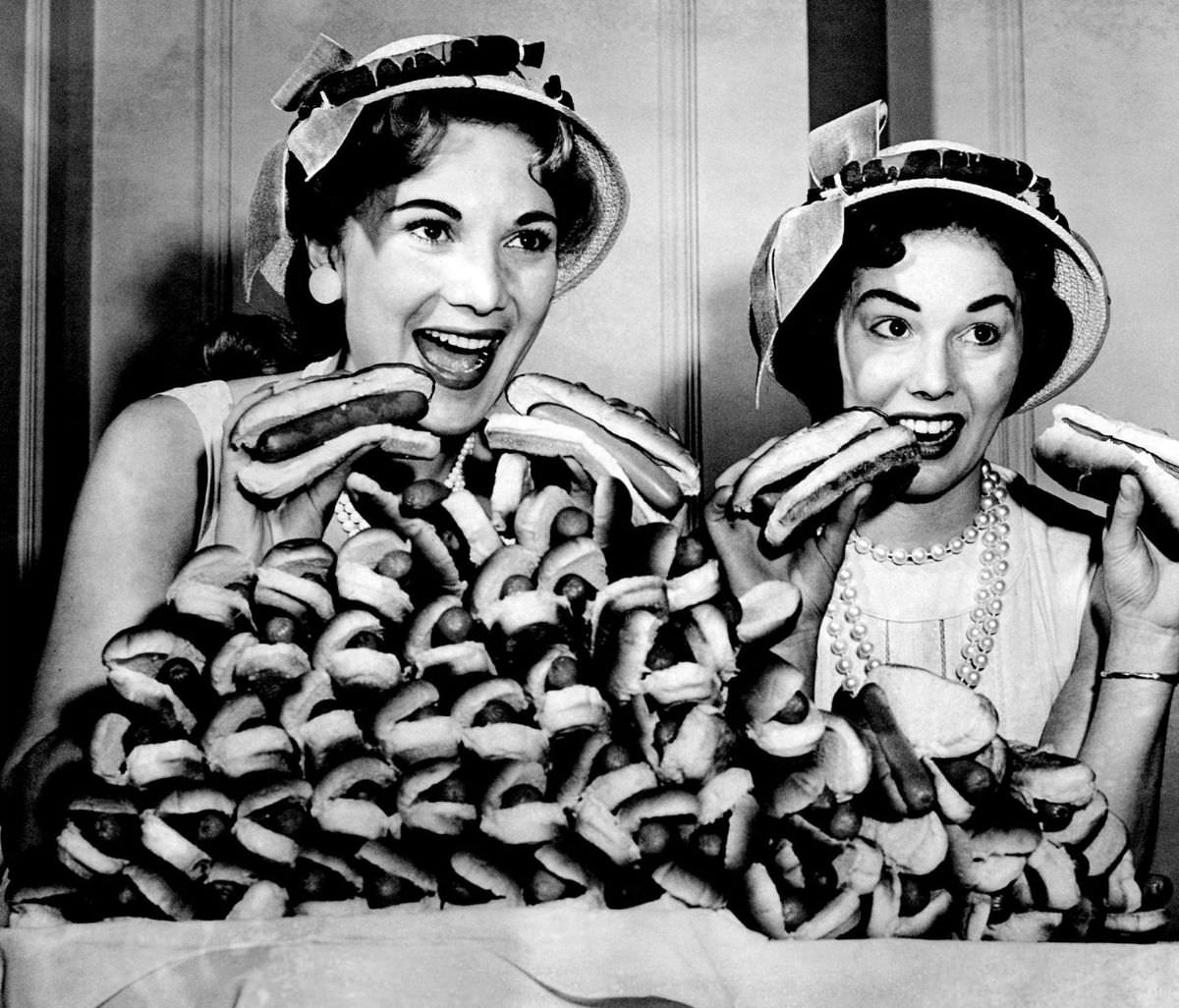
By 1957, promotional events had grown more elaborate. During National Hot Dog Month in Chicago, Marion Todd and Marge Kraus posed with a plate holding 60 hot dogs — the number that represented what the average American consumed in a year. Their hats were decorated with hot dogs smothered in mustard.
The photographs from this era capture more than just people eating quickly. They document a form of public entertainment that thrived in towns and cities across multiple countries for decades — watched closely by spectators who showed up just to see who would finish first.