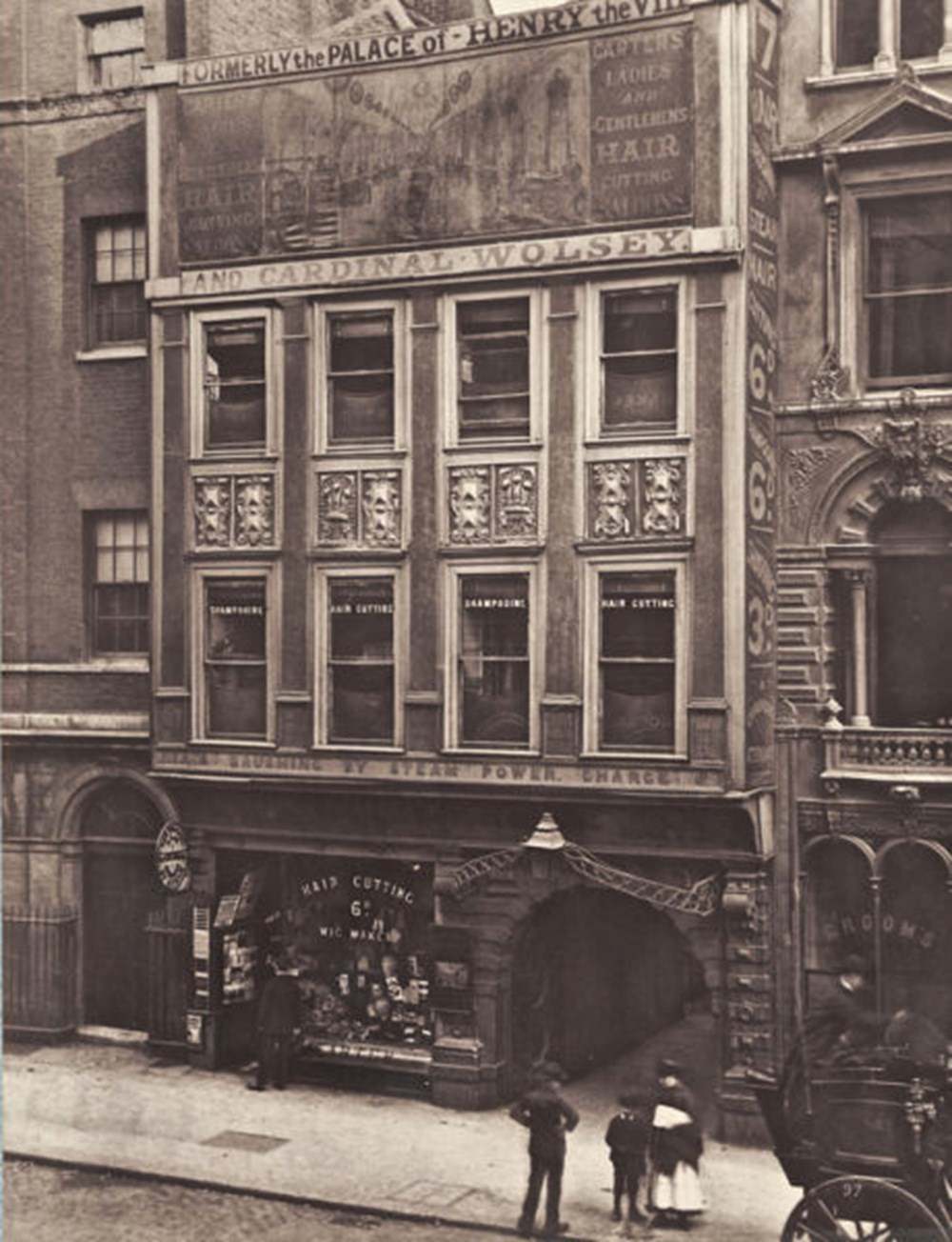
London today is a city of constant noise and motion — packed streets, crowded tube platforms, and buildings stacked shoulder to shoulder. But the photographs collected here tell a different story. Taken in the late 19th century, they show a London that is eerily quiet. Streets that are normally associated with foot traffic and commerce stand nearly empty. The few figures who appear — a woman turning a corner, a man glancing back over his shoulder — feel almost accidental, as if they wandered into the frame by chance. These images are not staged emptiness. They reflect the reality of early photography, which required long exposure times that blurred or erased most moving people. What remains is a city stripped down to its bones.
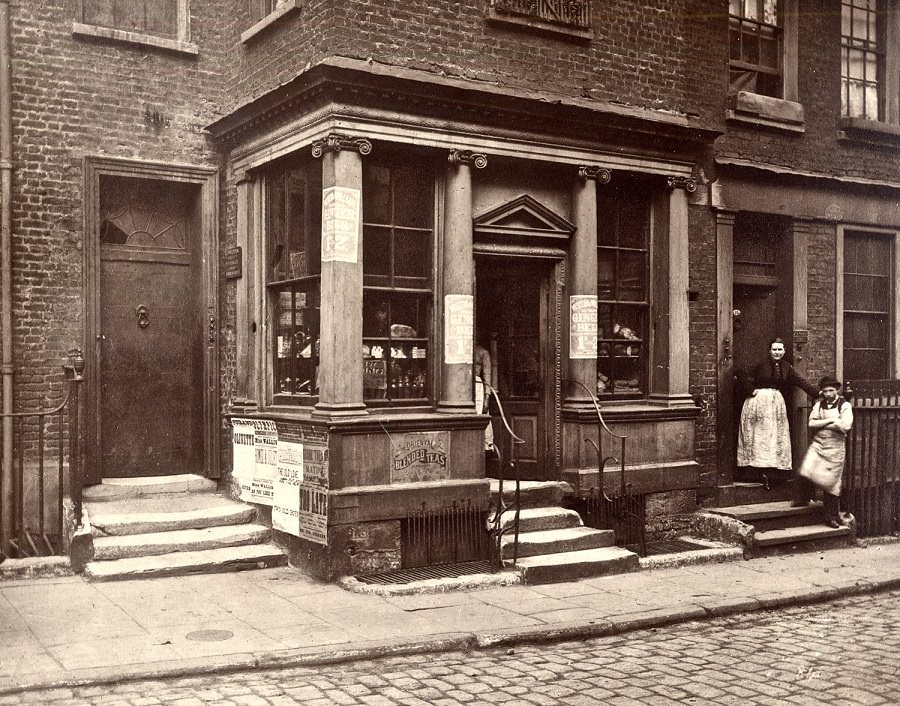
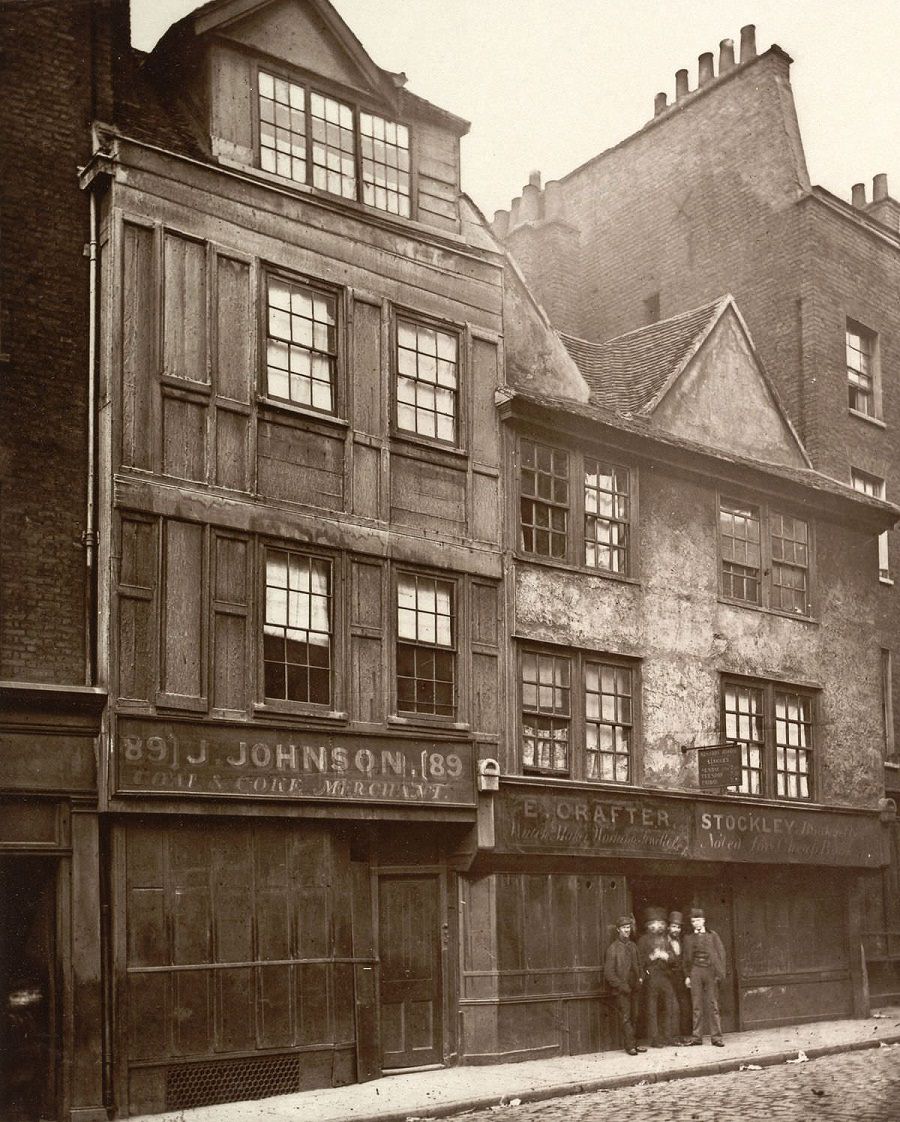
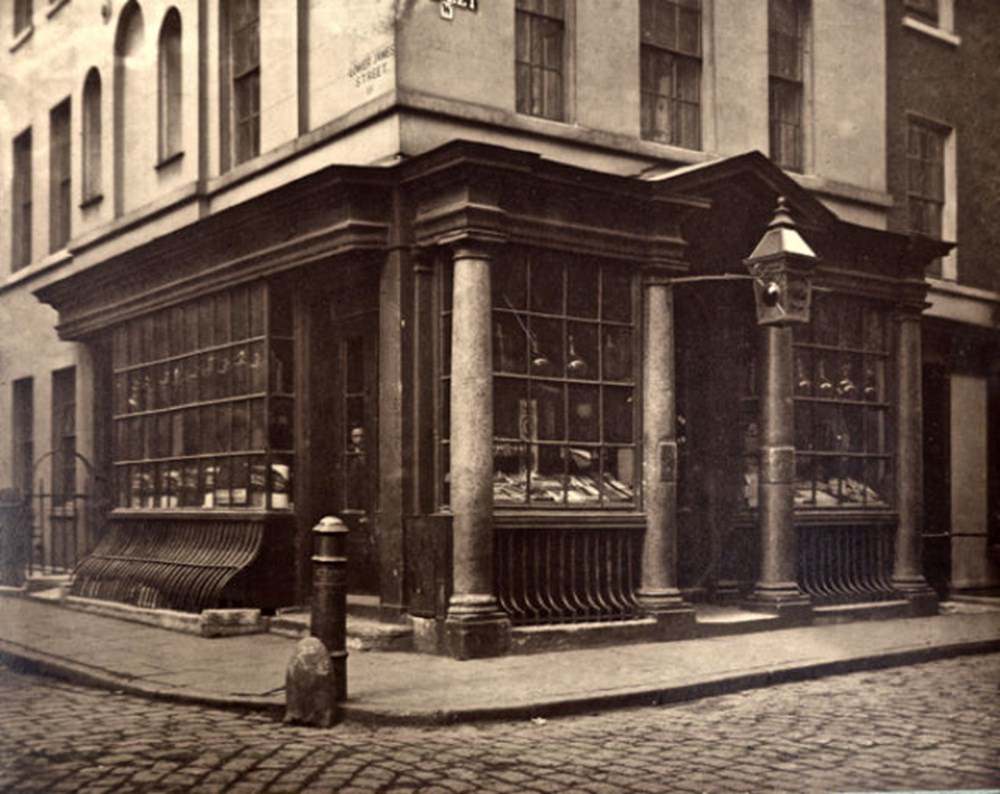
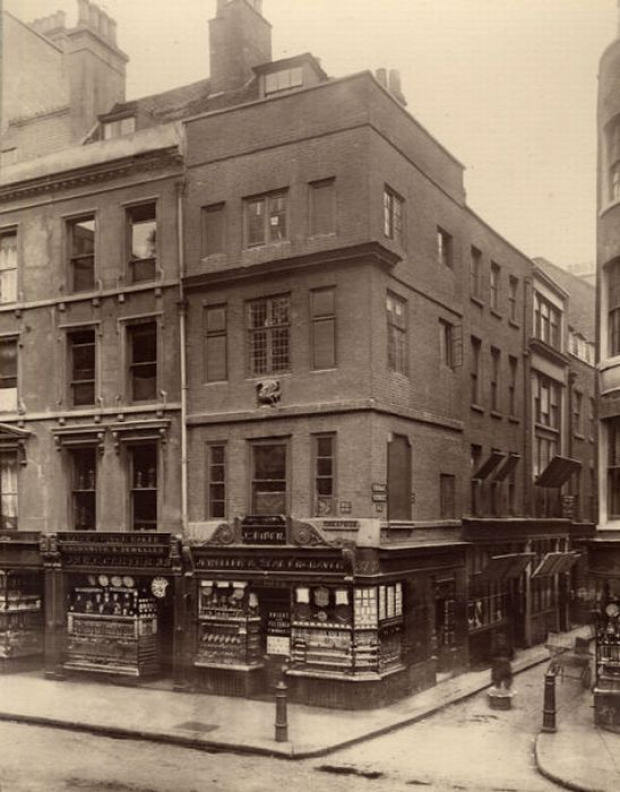
Shop fronts like this one were common across Victorian London. Tea merchants, chemists, butchers, and drapers lined the city’s commercial streets. The signage was bold and hand-painted, designed to catch the eye of passersby in an age before electric lighting or printed advertising boards. Many of these businesses were family-run and occupied the same premises for decades. Today, almost none of the original storefronts survive in the same form.
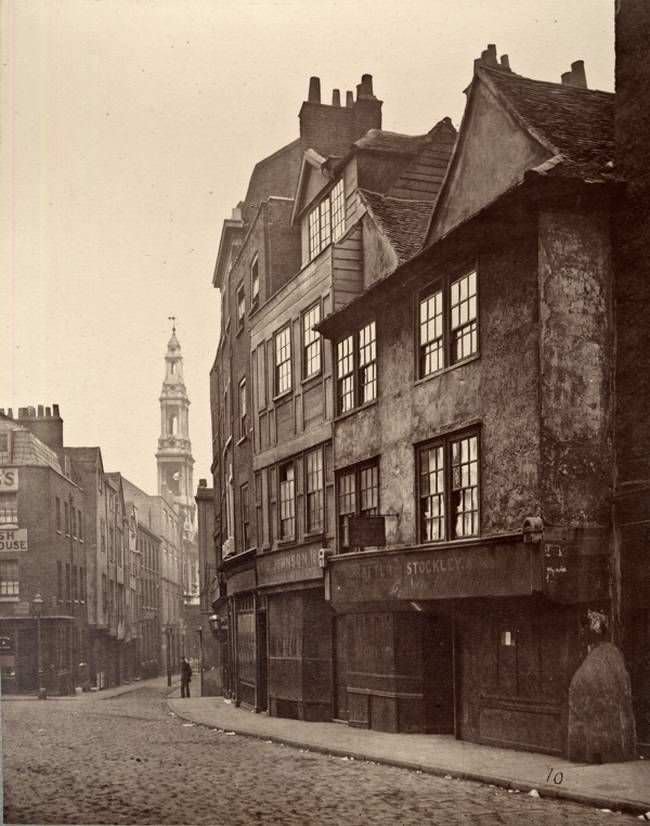
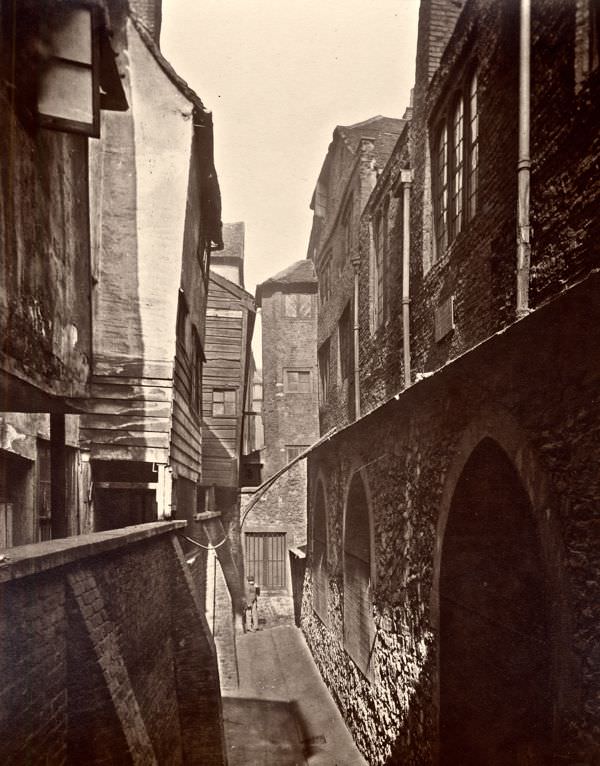
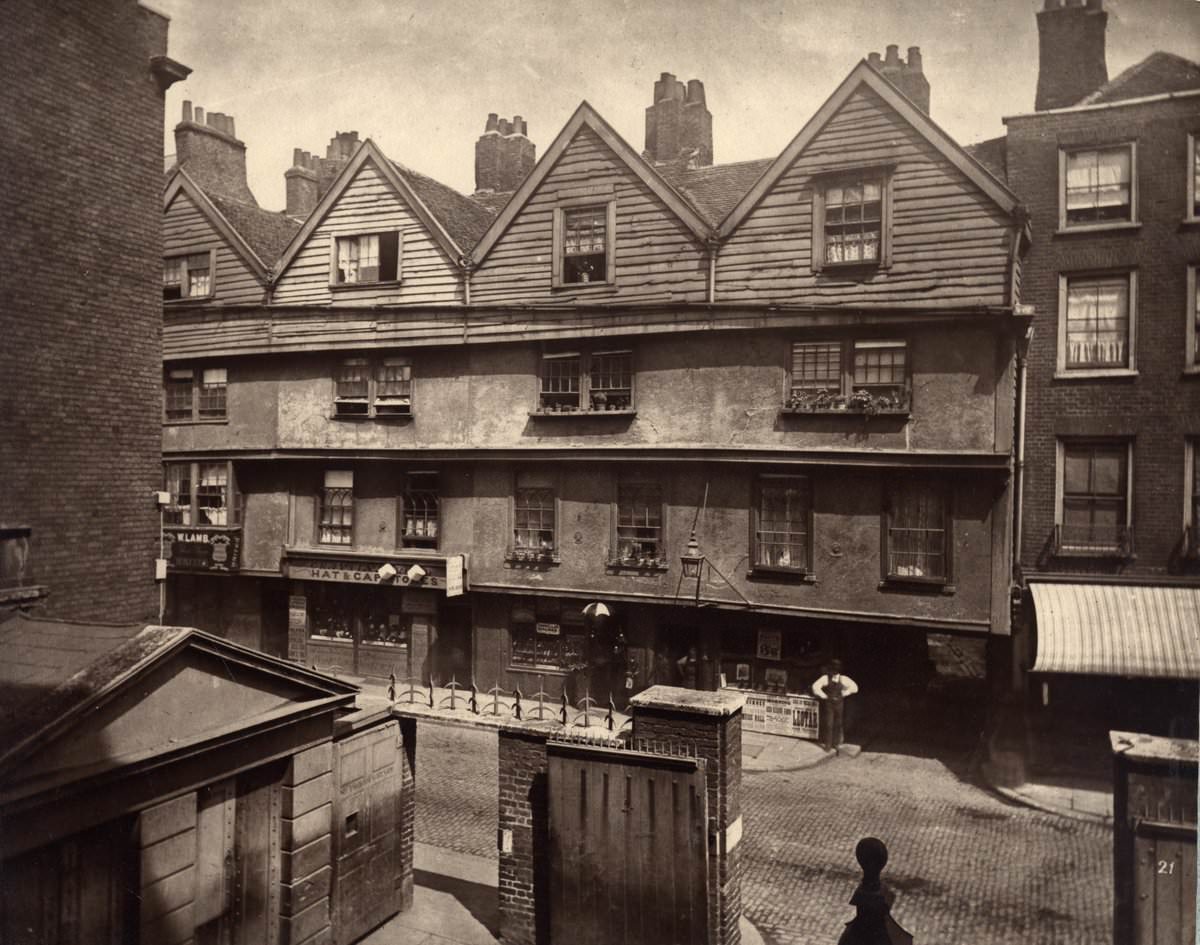
Lambeth in the 1870s was a working-class district south of the Thames. Yards and alleys behind old houses served as shared outdoor spaces for residents — places where children played, laundry was hung, and daily life spilled out of cramped interiors. The Palace Yard shown here carries an air of age even by Victorian standards. The brickwork, the uneven ground, and the heavy shadows suggest a building that had already seen several generations come and go. Wych Street, not far from the Strand, had a similar character — narrow, winding, and dense with old timber-framed buildings.
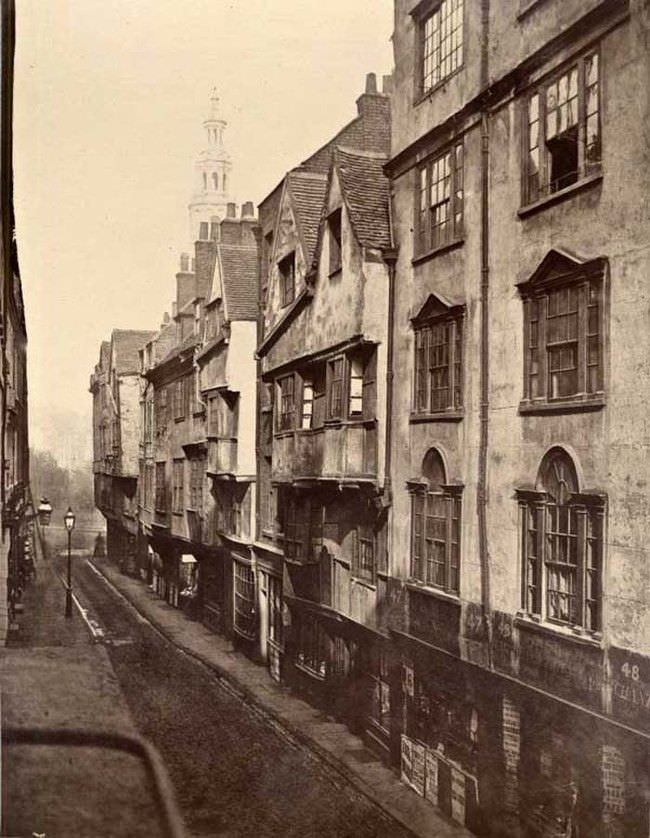
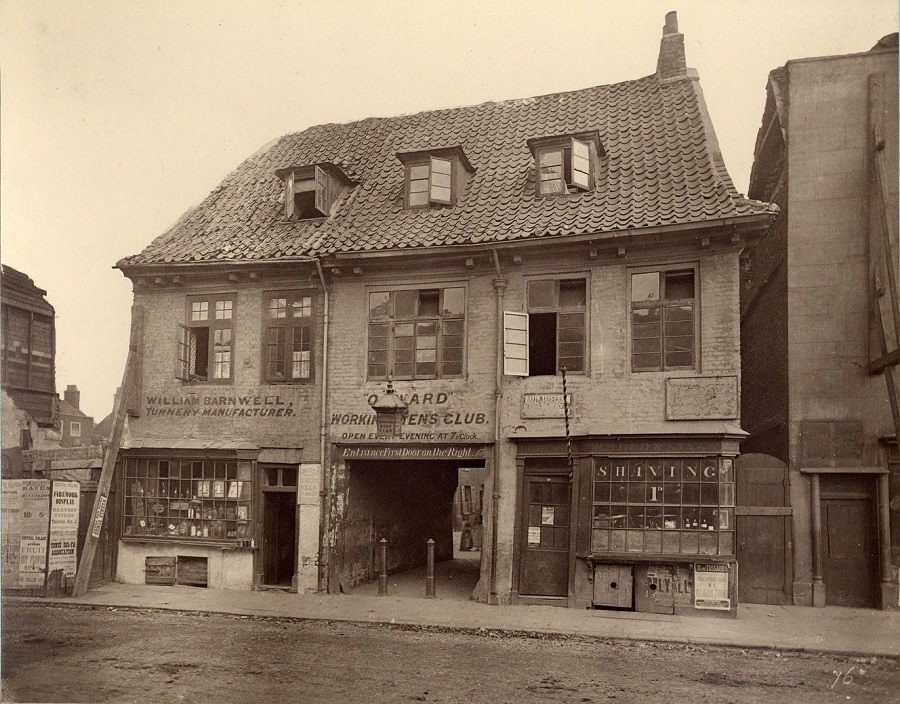
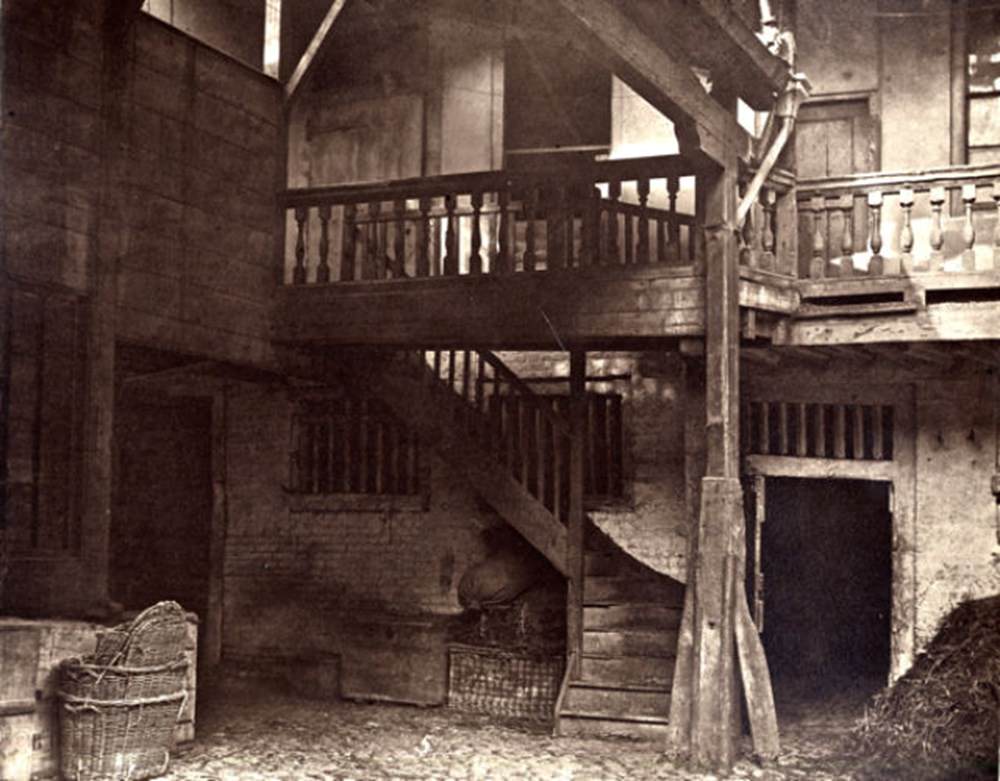
Wych Street was demolished in the early 20th century to make way for the Aldwych road scheme. At the time these photographs were taken, it was one of the last remaining medieval street layouts in central London. The Oxford Arms on Warwick Lane was another such relic — a galleried coaching inn of the type that had once been common throughout the city. By 1875, coaching inns had largely been made obsolete by the railways, and many were already falling into disrepair or being used for other purposes.
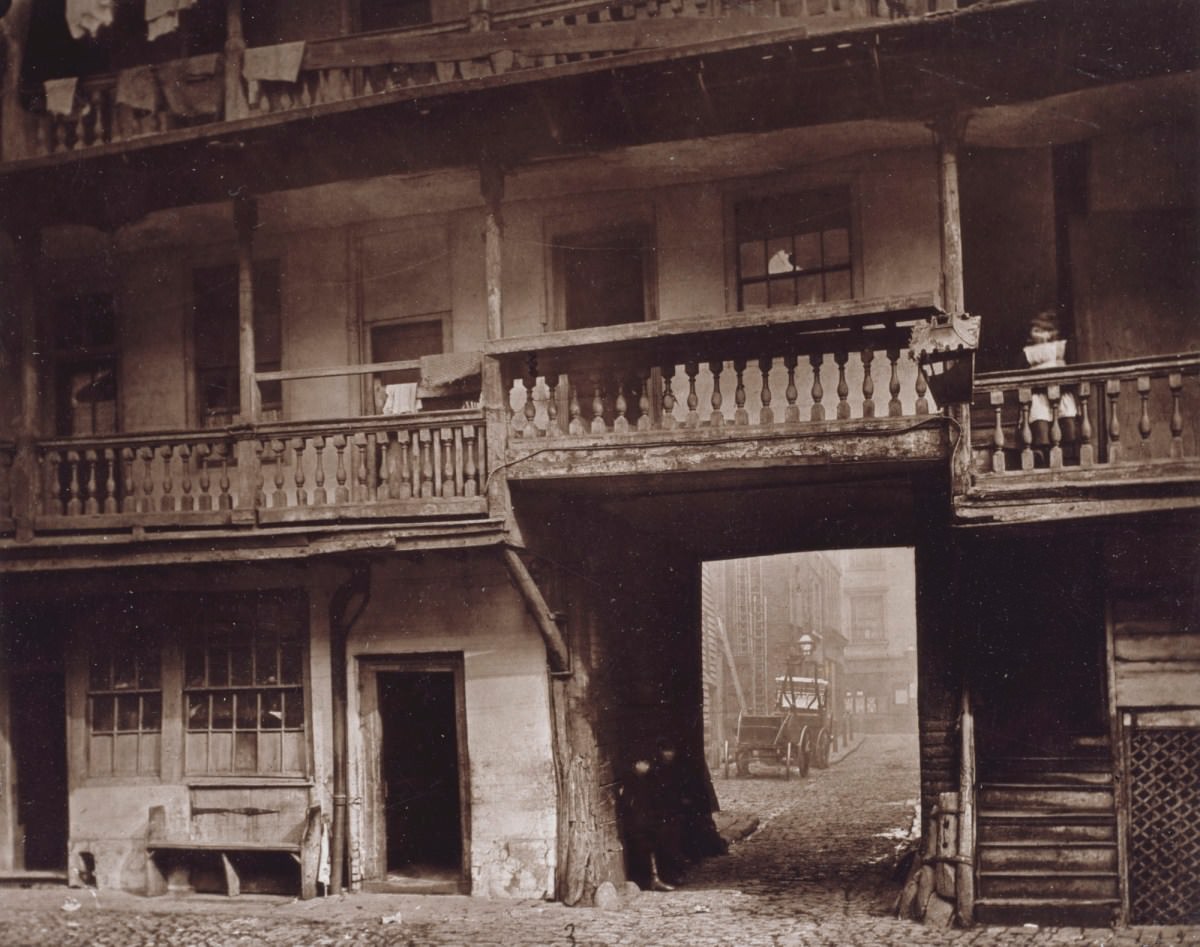
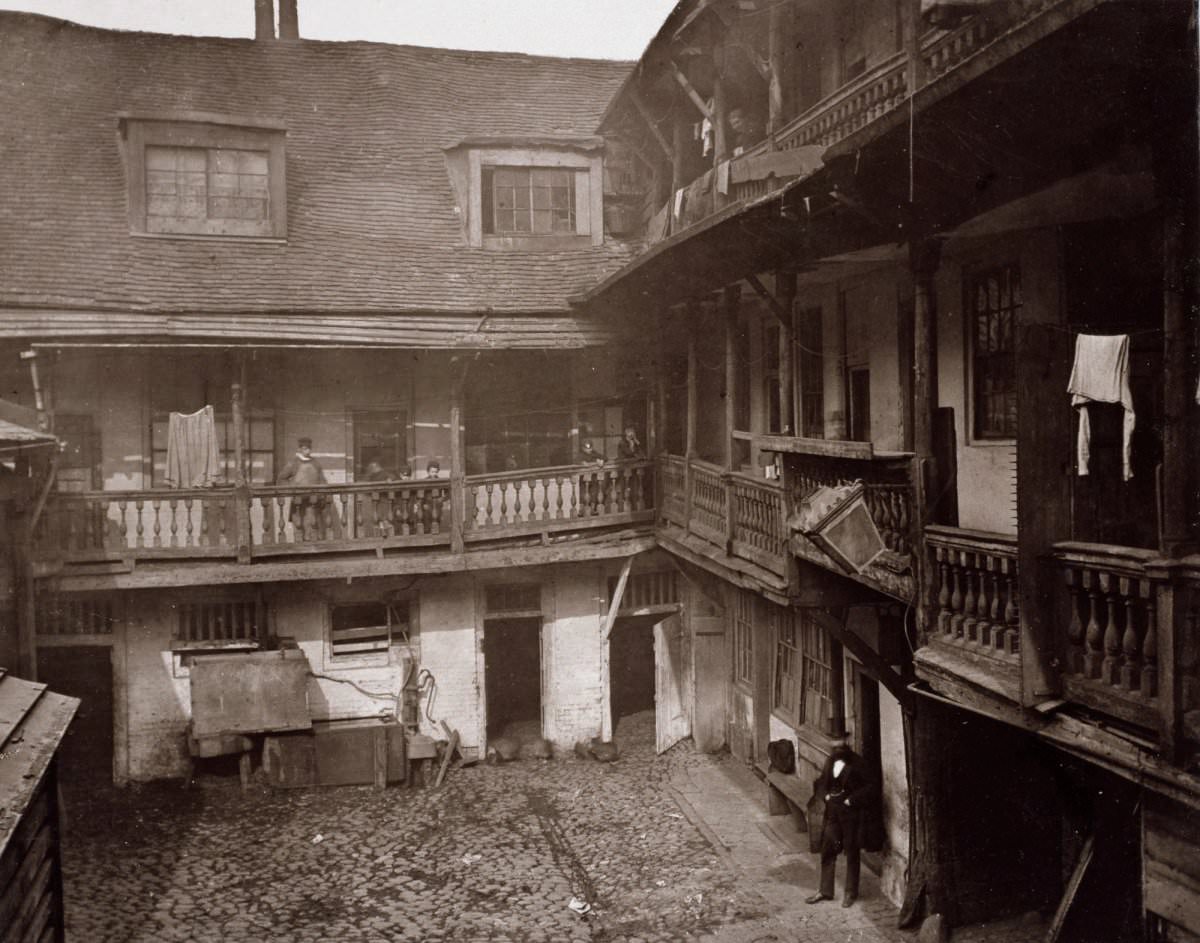
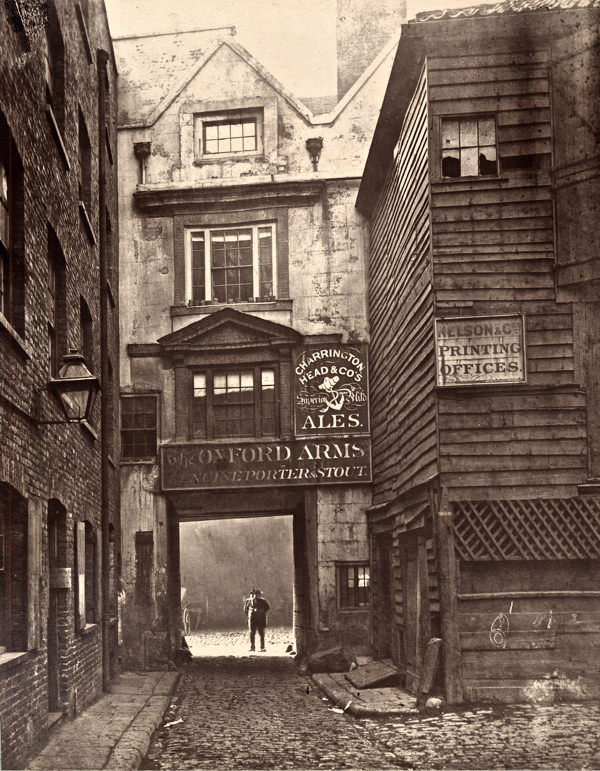
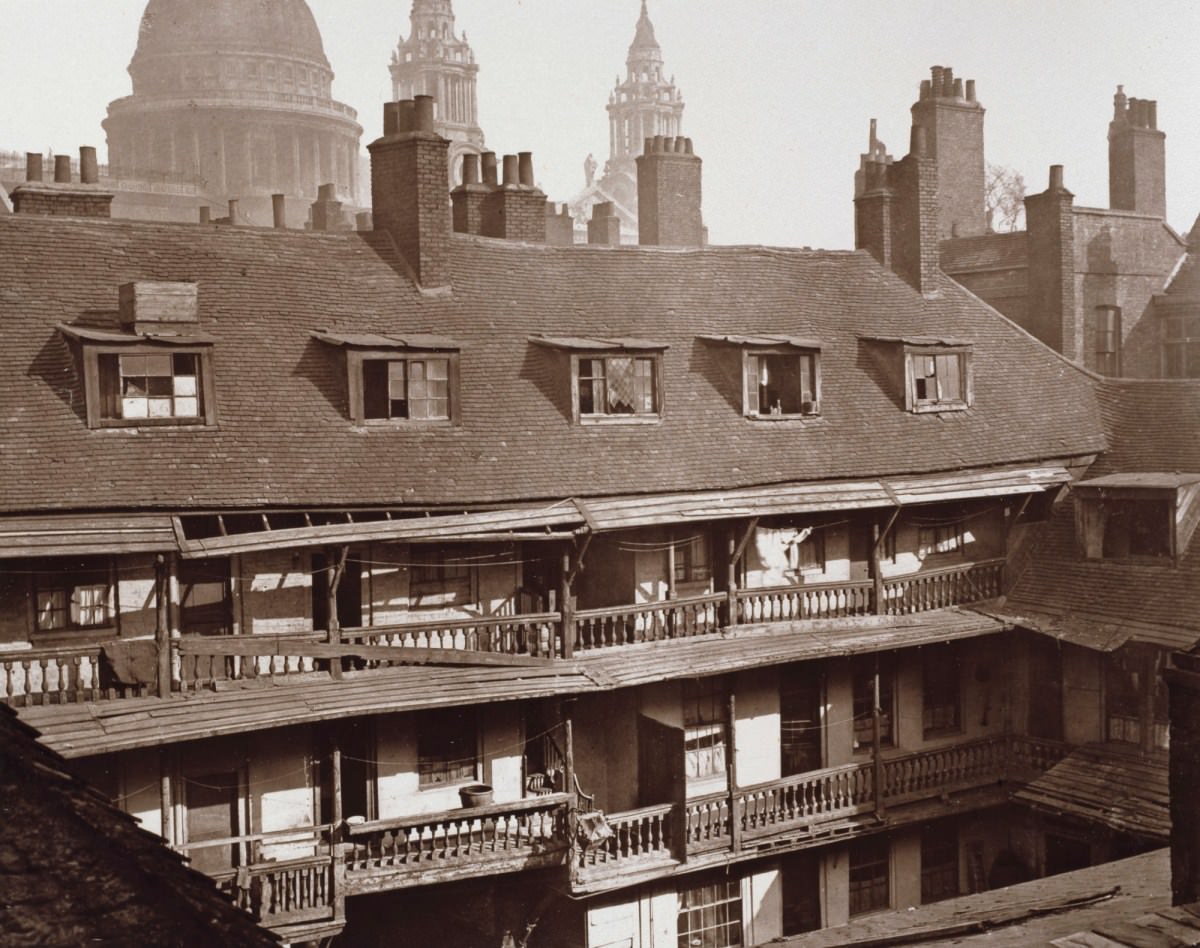
The Oxford Arms on Warwick Lane was one of the last surviving galleried inns in London when these photographs were taken. Its wooden balconies wrapped around a central courtyard — the same design that Shakespeare-era theatres borrowed for their galleries. By 1878, the inn was demolished. These photographs are among the only detailed visual records of its final years. The figures caught in the frames — children peering down from the balcony, men loitering in the shadows below — give a sense of the building still being lived in and used, even as its days were numbered.
Drury Lane ran through the heart of one of London’s most densely populated and poverty-stricken areas in the 19th century. The street was known for its theatres, but the surrounding lanes and courts were packed with tenements. A relaxed gathering on the street, or a man pausing to look back at the camera, captures a rare moment of stillness in a neighborhood that was otherwise relentlessly busy and overcrowded.
St Bartholomew’s in Smithfield is one of London’s oldest surviving churches, founded in 1123. By the time this photograph was taken in 1877, the area around it had been a meat market for centuries. Smithfield Market still operates today, making it one of the few Victorian-era landmarks that has retained its original function. The back of the church, away from the main thoroughfare, offered the quiet that the photographer was clearly seeking.
Gray’s Inn Lane connected the legal district around Gray’s Inn with the commercial sprawl of the city. The street had a dual character — professional and residential at its northern end, increasingly rough toward the south. A chemist’s shop at the corner of Lower James Street and Brewer Street in Soho would have been a familiar sight in any Victorian neighborhood. Chemists in this era sold remedies, poisons, and preparations that would later be regulated or banned outright. The man peering from the window adds a watchful, almost suspicious quality to an otherwise mundane street corner.
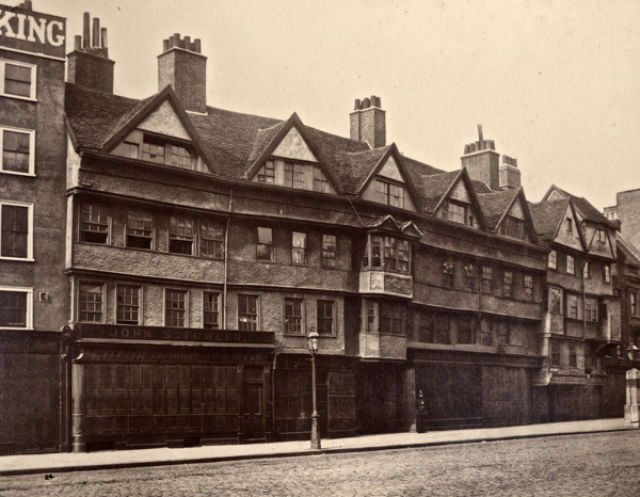
A lone Metropolitan Police officer on High Holborn in 1878 represents a force that was still relatively young. The Met had been founded in 1829, and by the 1870s, uniformed officers patrolling commercial streets were a fixed part of London’s daily rhythm. High Holborn was a major east-west route through the city, lined with businesses and legal chambers. Barnard’s Inn, just off Holborn, was one of the old Inns of Chancery — a legal institution that had been functioning since the 15th century. By the late Victorian era, it had lost its legal role and its buildings were being used for other purposes.
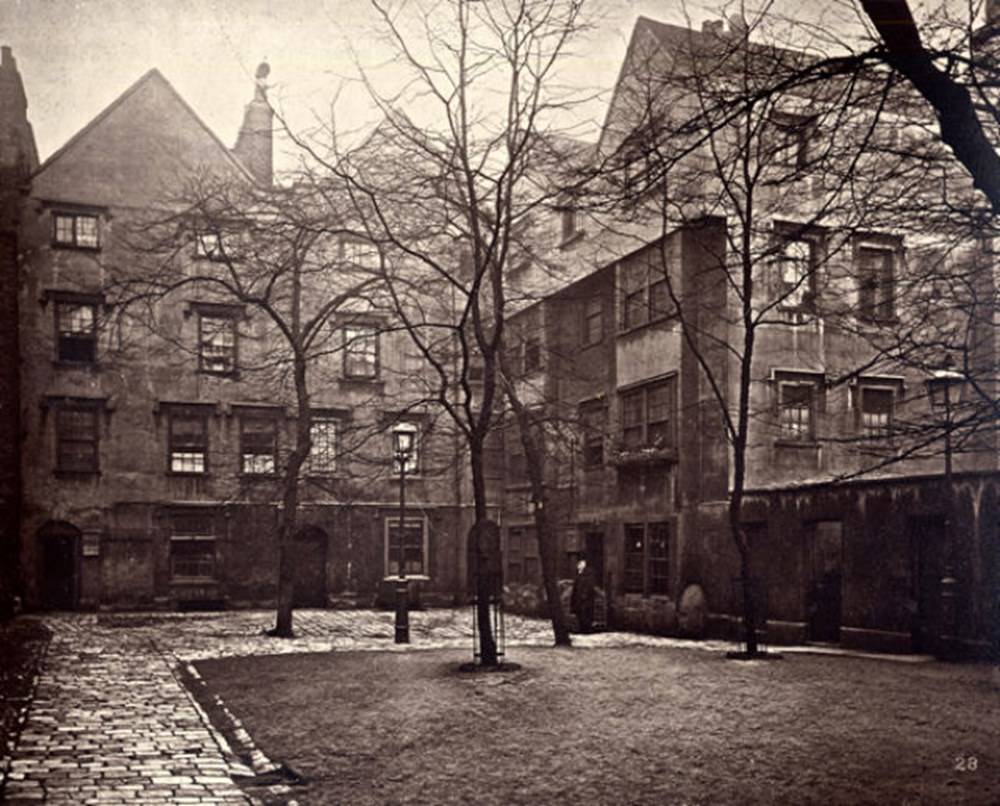
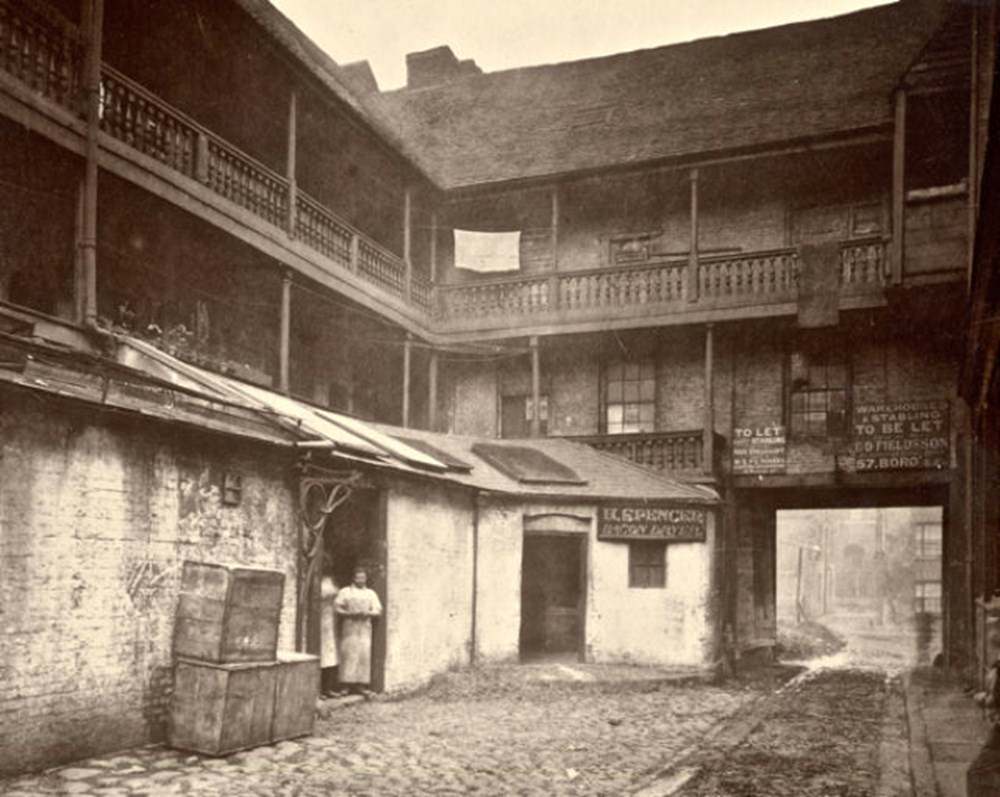
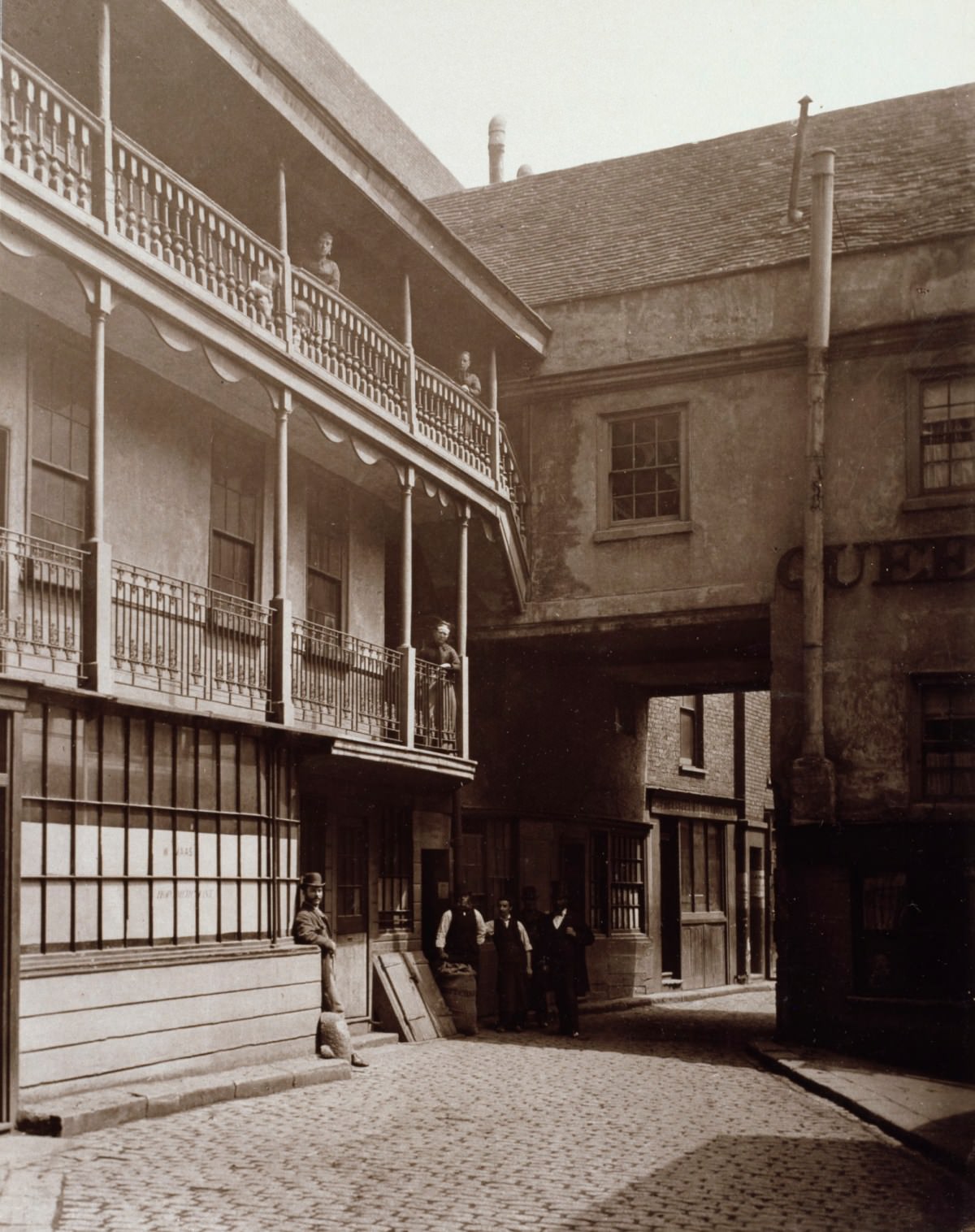
Inn yards like those at the White Hart and Queen’s Inn were transitional spaces — neither fully public nor fully private. Coaches had once clattered in and out of them daily, but by the 1870s, many had gone quiet. Aldgate, at the eastern edge of the old City of London, sat at the boundary between the financial district and the East End. It was a crossing point — both geographically and socially — and its streets reflected that mix.
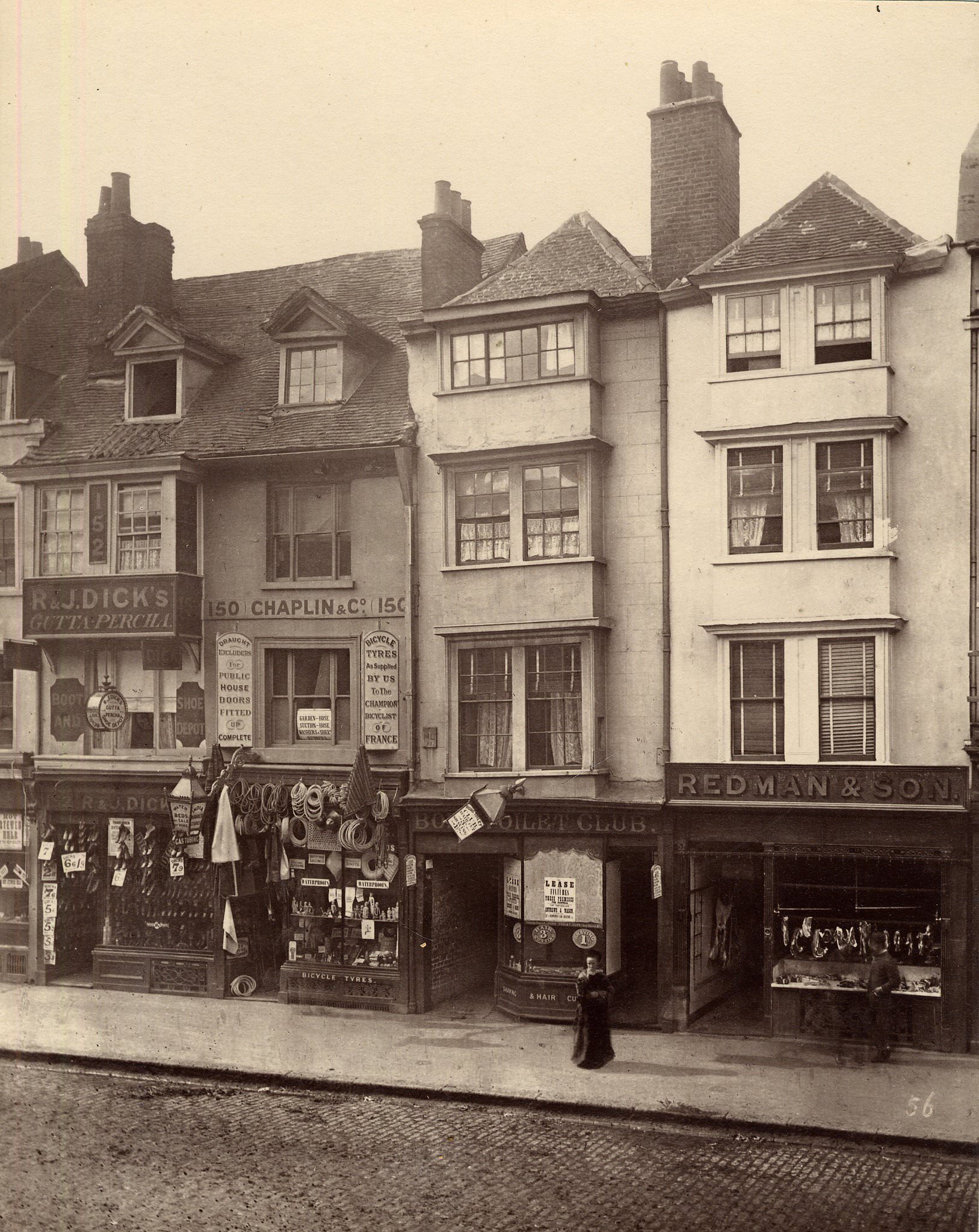
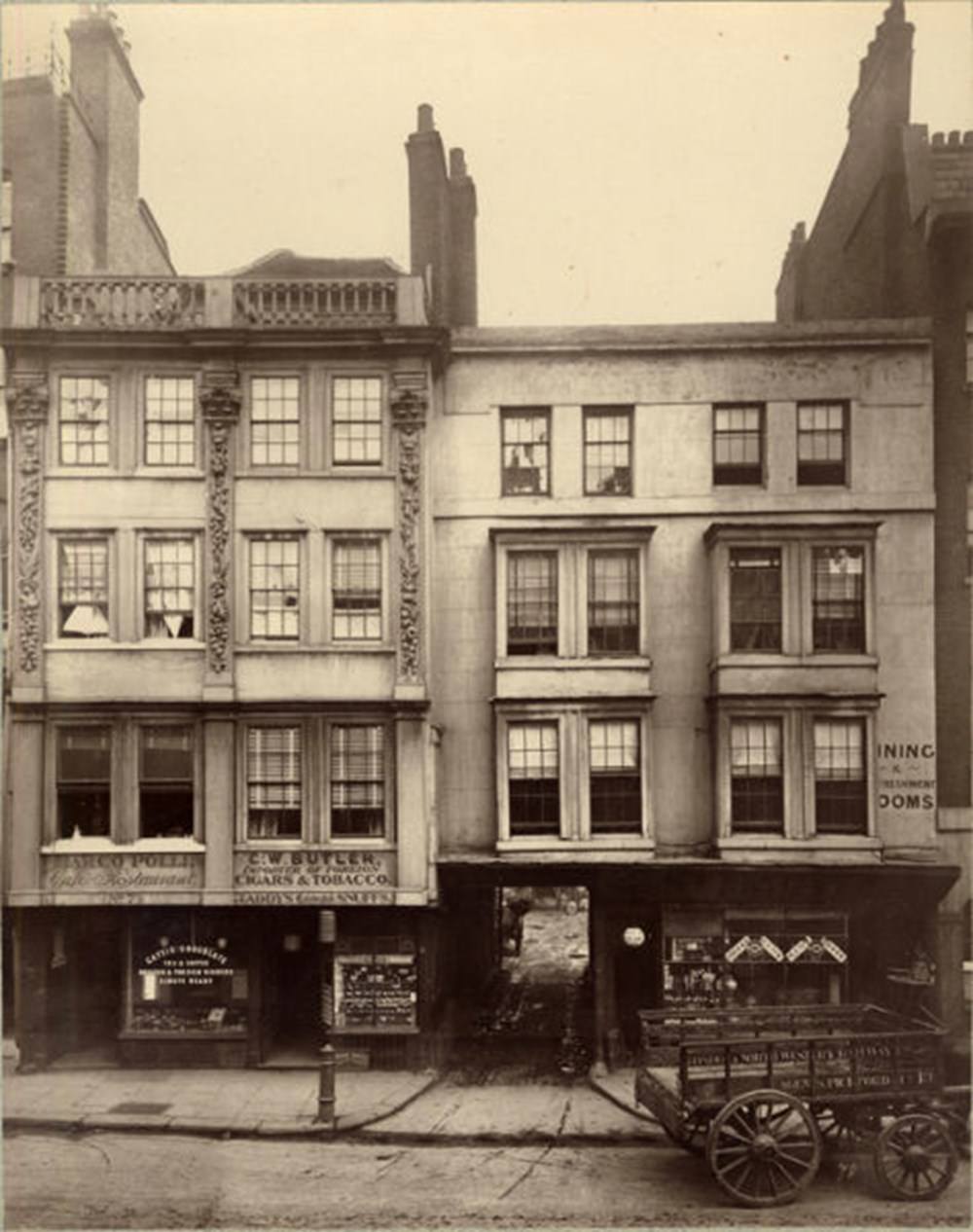
Borough High Street in Southwark was one of the oldest roads in London, the main route south from London Bridge since Roman times. A butcher’s shop on this street would have been a working trade establishment serving the local community. Cheapside, further north in the City, was one of the most important commercial streets in medieval and early modern London. By the Victorian era it remained a major thoroughfare, and a porter setting down his basket at the corner of Friday Street captures the physical labor that kept the city’s goods moving.
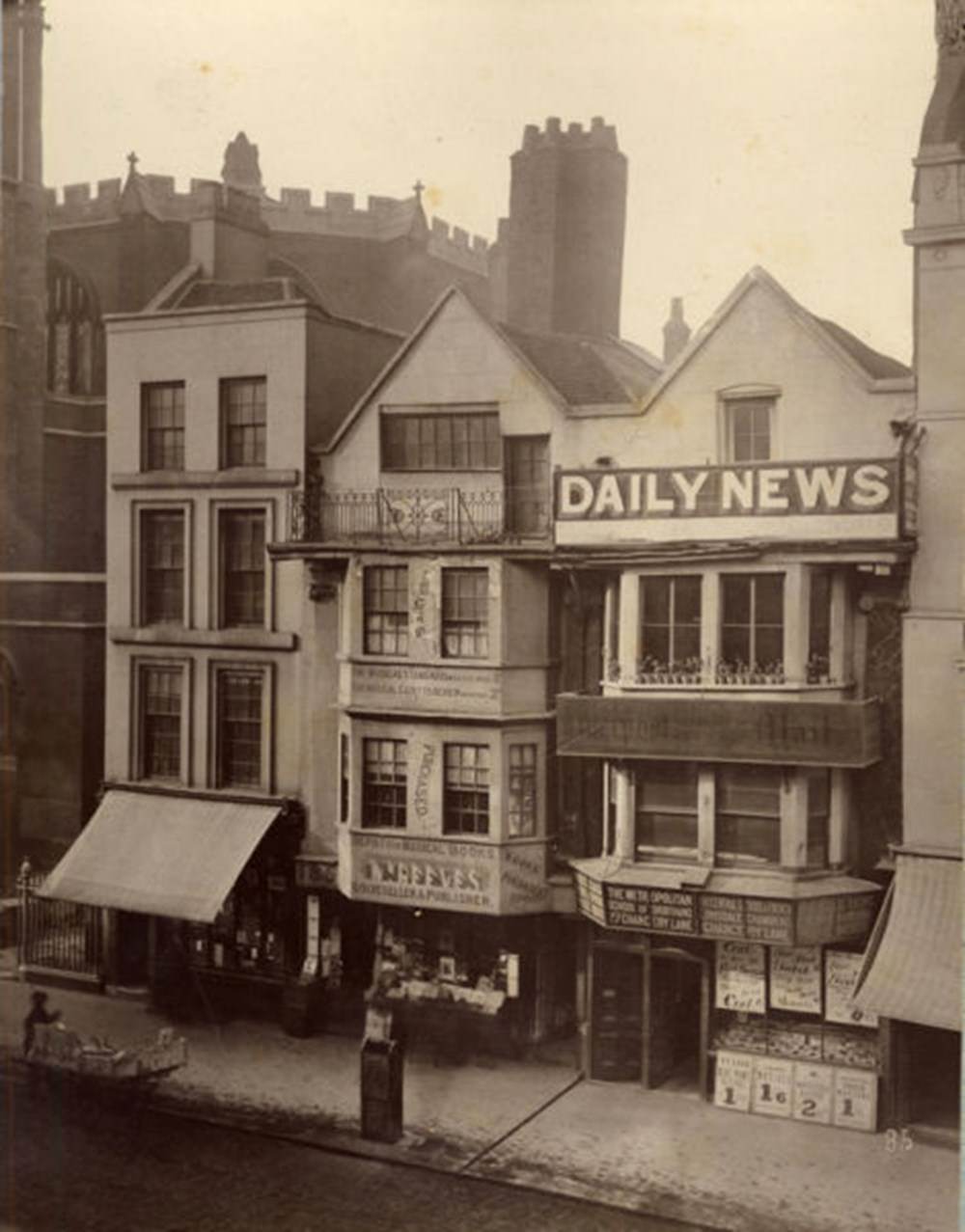
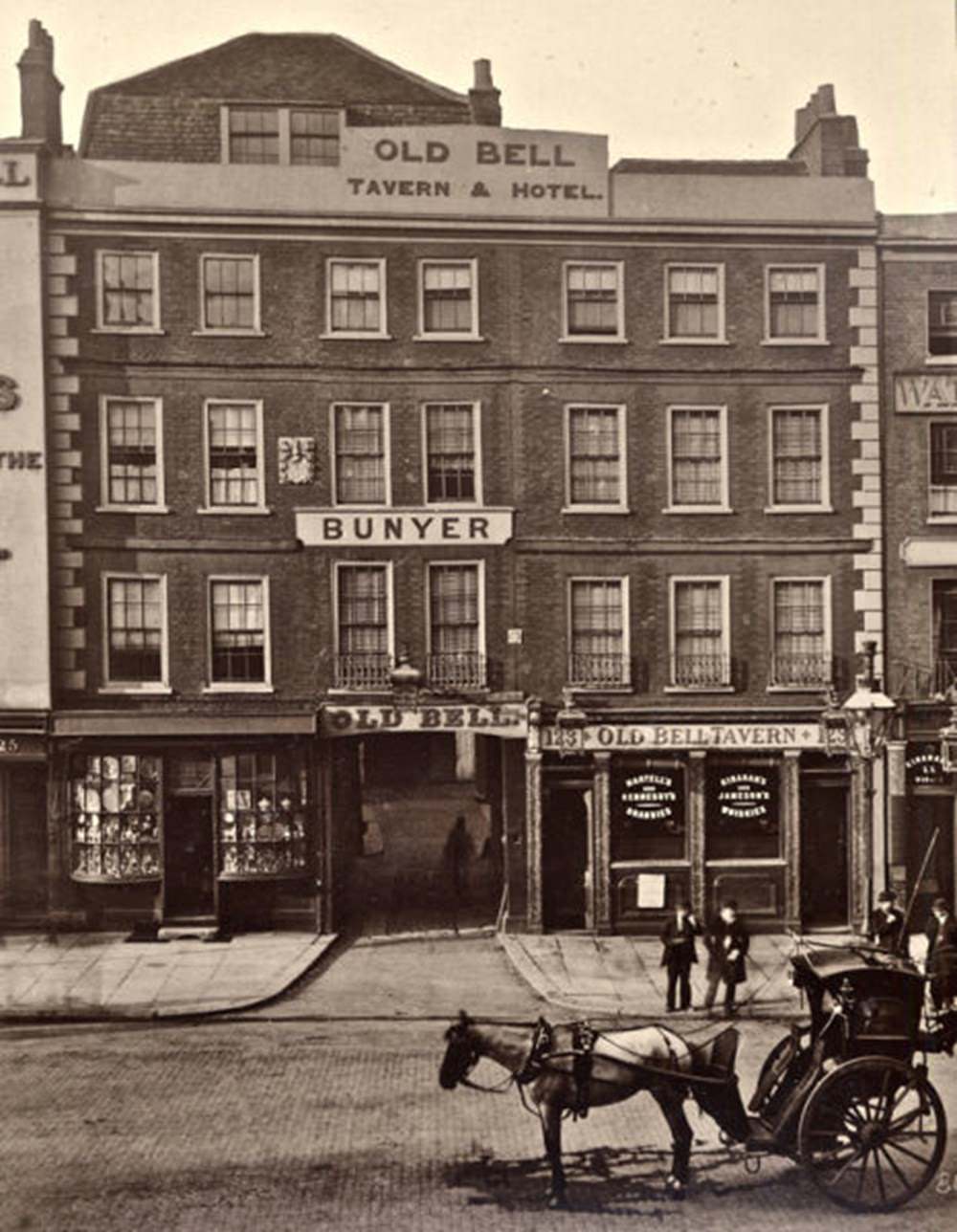
Fleet Street was the center of London’s newspaper industry long before it became synonymous with British journalism in the 20th century. In the 1870s, printers, publishers, and lawyers shared the street in roughly equal measure. The Old Bell on Holborn was one of many coaching-era taverns that survived well into the Victorian period, serving the foot traffic of one of London’s busiest roads.
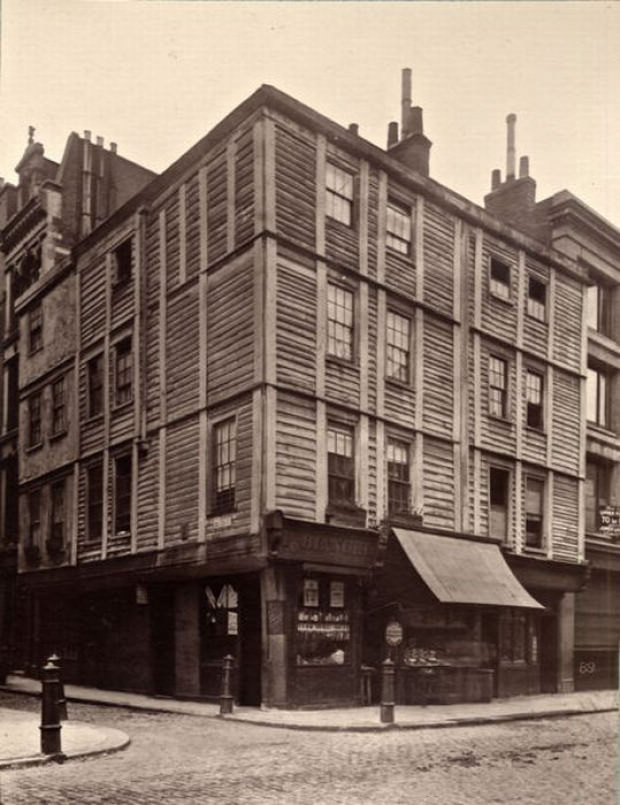
The corner of Fore Street and Milton Street sat in the Cripplegate area, north of the old City walls. Lawrence Pountney Hill, with its distinctive Georgian doorways, was a quiet residential street despite its proximity to the commercial center. The carved stonework and solid wooden doors in photographs like these represent a standard of building quality that has largely disappeared from London’s streetscape.
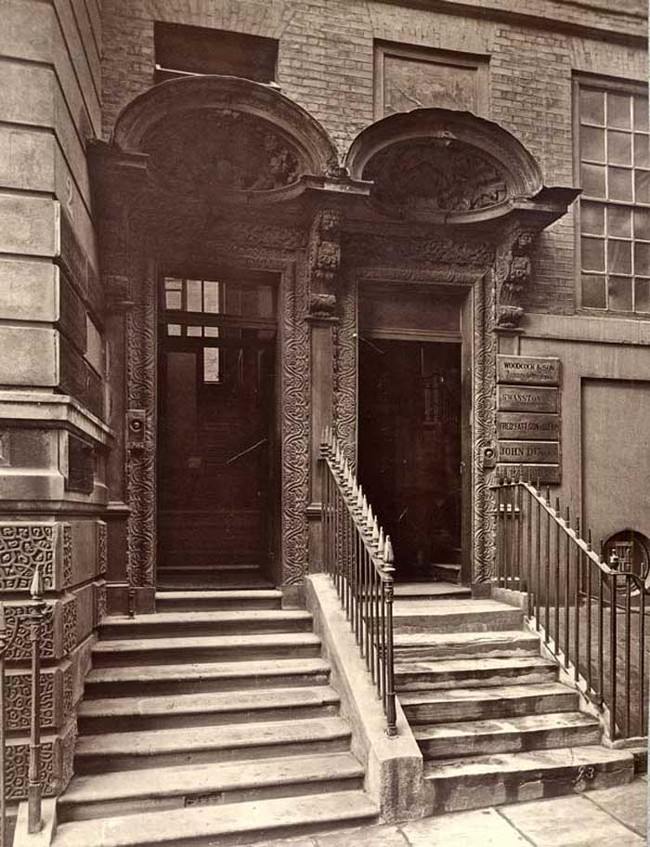
The Inner Temple on Fleet Street is one of the four Inns of Court — the professional associations that have trained and admitted barristers in England since the 14th century. Its entrance gate led into a complex of buildings, courtyards, and gardens that formed a city within the city. A conversation at the entrance captures two figures paused at the threshold between the busy public street and the enclosed legal world beyond. Many of the streets and structures visible throughout these photographs no longer exist. Road-widening schemes, wartime bombing, and post-war redevelopment erased whole sections of Victorian London. What these photographs preserve is not just architecture, but the texture of a city that has otherwise vanished.