Every holiday season brings out the best of family cooking traditions — warm pies, handed-down cookie recipes, and roasts that fill the whole house with a familiar smell. But flip through old holiday magazines and recipe cards from the mid-20th century, and you’ll find a very different story. For decades, home cooks and food brands alike were obsessed with one particular idea: shaping savory food into Christmas trees. Not sweet food. Not dessert. We’re talking tuna, shrimp, processed meat, and pickles — all molded, stacked, or arranged into festive cones. Nobody knows exactly why this trend took hold, but it did, and it held on for a surprisingly long time.
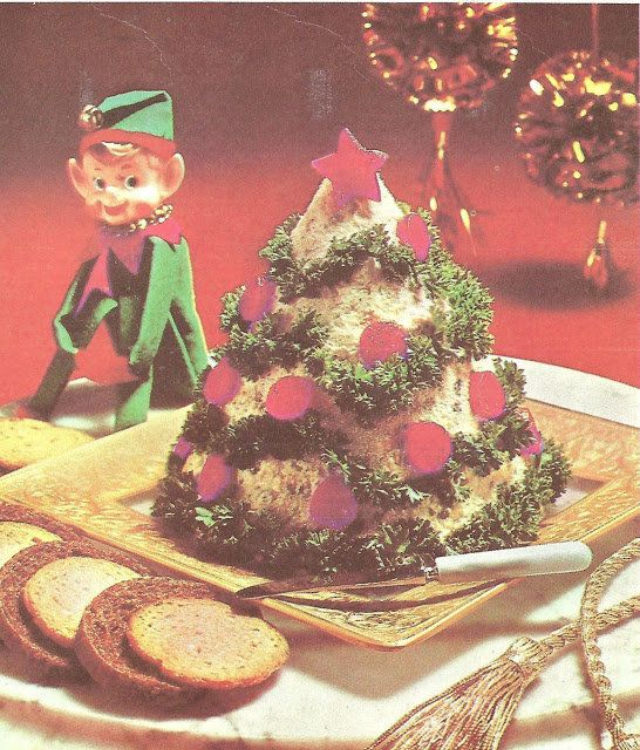
The tuna Christmas tree was one of the earliest and most committed entries in this bizarre genre. Canned tuna mixed with mayonnaise and various seasonings was packed into a tree-shaped mold, chilled until firm, then decorated with olive slices, pimento strips, or parsley sprigs to look like ornaments and garland. It was served cold as a centerpiece appetizer. The idea was that guests would scoop into it with crackers.
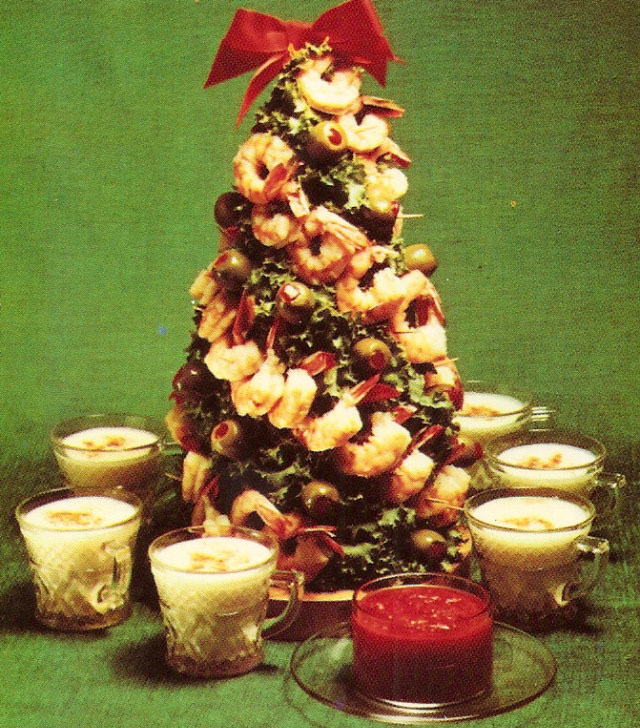
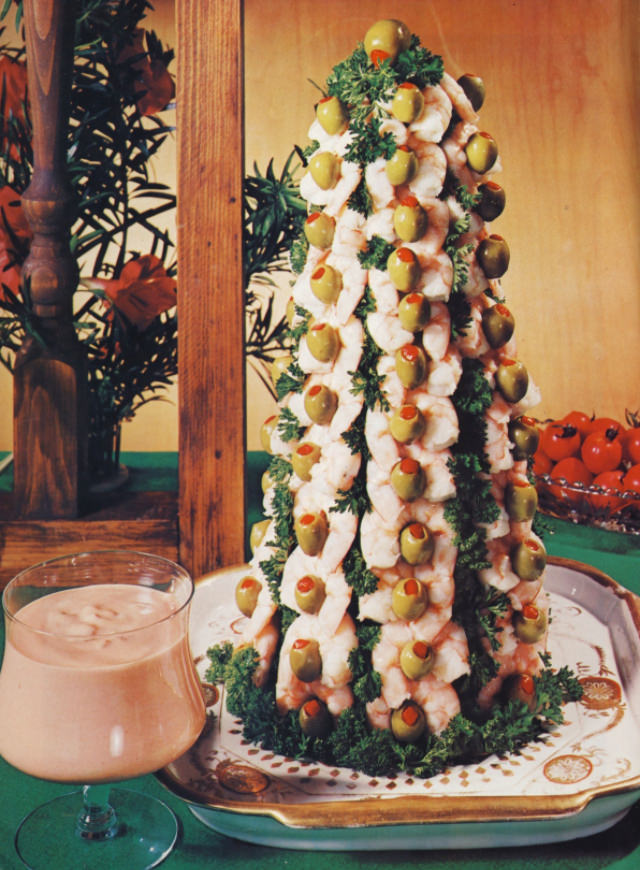
Seafood was a recurring theme in these retro holiday spreads, and shrimp got its own tree treatment. Shrimp were arranged in overlapping rows on a cone-shaped frame, building up from a wide base to a pointed top. A small shrimp or a sprig of parsley typically crowned the top. A bowl of cocktail sauce sat nearby for dipping. Visually, it was one of the more ambitious attempts to marry presentation with party food.
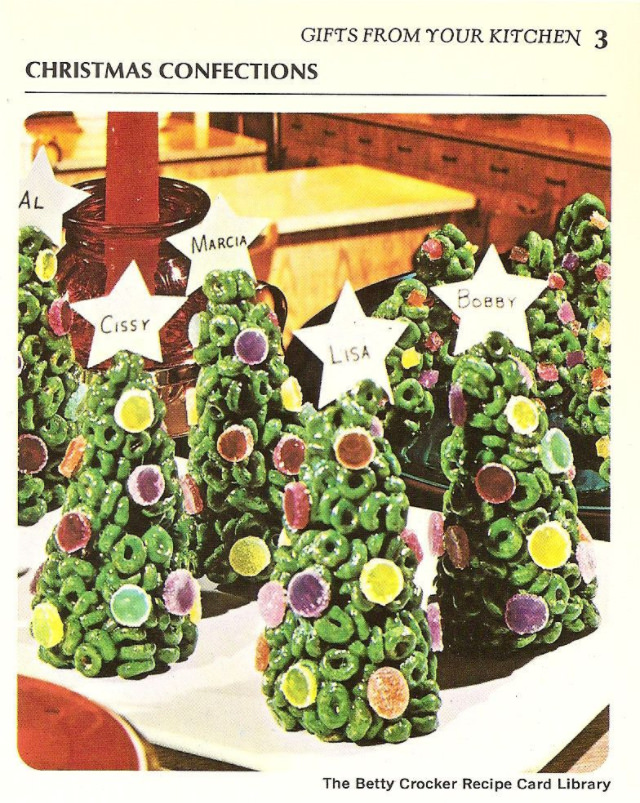
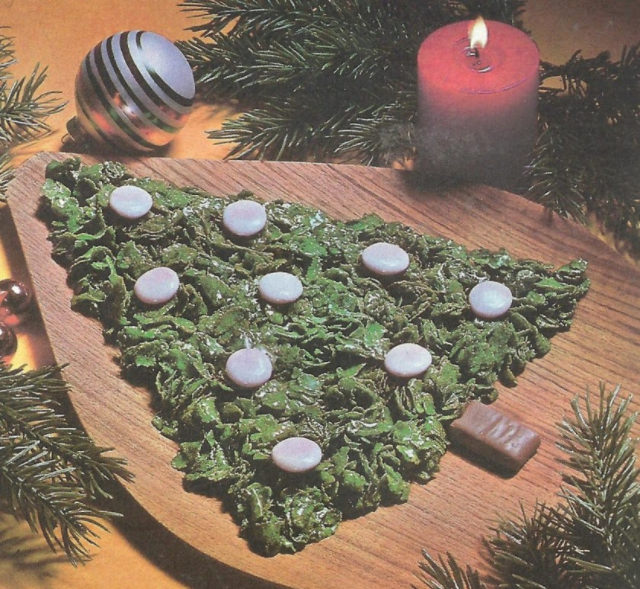
Not all of the old holiday recipes leaned savory. Candy and confection makers got in on the tree-shaped trend too, producing elaborate sugar and chocolate creations sold in seasonal tins and boxes. Some of these were genuinely delightful — brittle, fudge, and hand-dipped chocolates cut or molded into tree shapes. These Christmas confections represent the more cheerful end of the mid-century holiday food spectrum, even if the packaging and presentation feel outdated today.
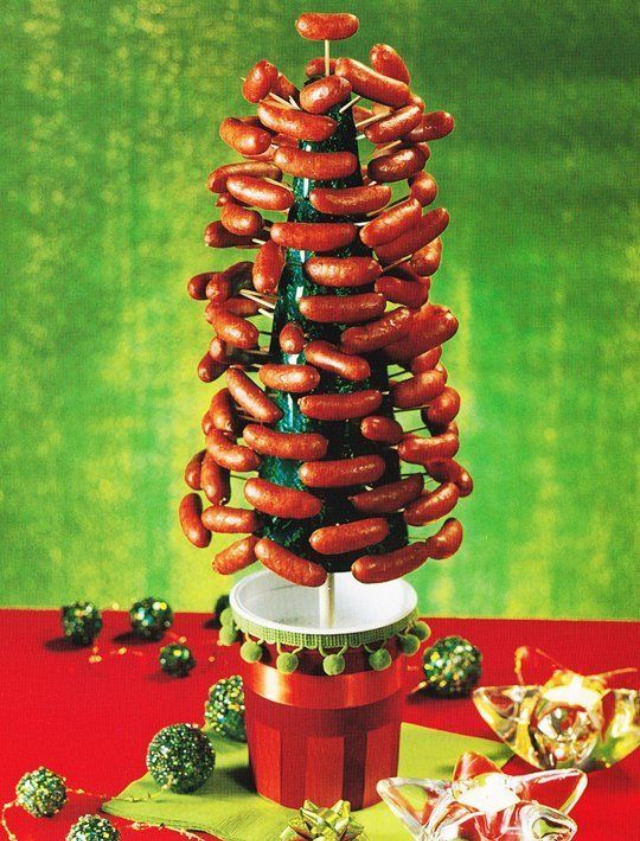
Back on the savory end of things, the cocktail weenie tree was a fixture at holiday parties throughout the 1960s and 1970s. Little smoked sausages were skewered with toothpicks and pushed into a Styrofoam cone covered in foil or green cellophane, creating a tree shape made entirely of processed meat. A small flag or star toothpick typically served as the tree topper. This one actually persists in some households even now, though it’s rarely presented as a centerpiece the way it once was.
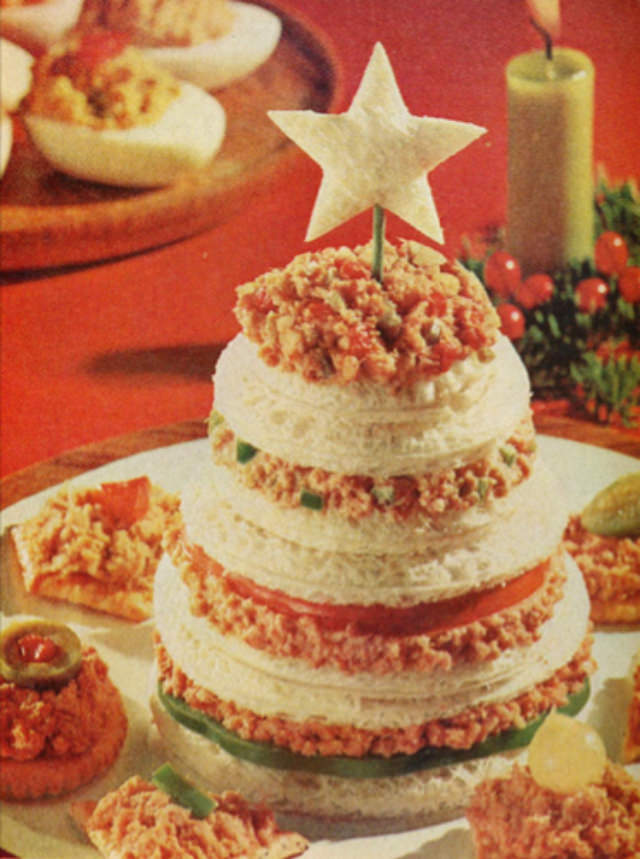
Deviled ham was a pantry staple in mid-century American kitchens, sold in small cans and used as a spread for sandwiches and crackers. At Christmas, recipe developers pushed it further — shaping the spread into a tree on a serving platter, frosting it with cream cheese to create a snowy effect, and garnishing it with olive pieces and pimento. The Deviled Ham Sandwich Tree was meant to be scooped onto bread or crackers, served as a holiday appetizer with drinks before the main meal.
Puff pastry and crescent roll dough gave rise to another version of the Christmas tree recipe that was slightly more palatable to modern tastes. Strips of dough were layered or twisted into a tree shape on a baking sheet, sometimes stuffed with cheese, herbs, or spinach, then baked golden brown. The Flaky Christmas Tree was a step up from cold fish molds and processed meat cones, and versions of it still show up on food blogs today — though the vintage originals came with considerably more butter and considerably less irony.
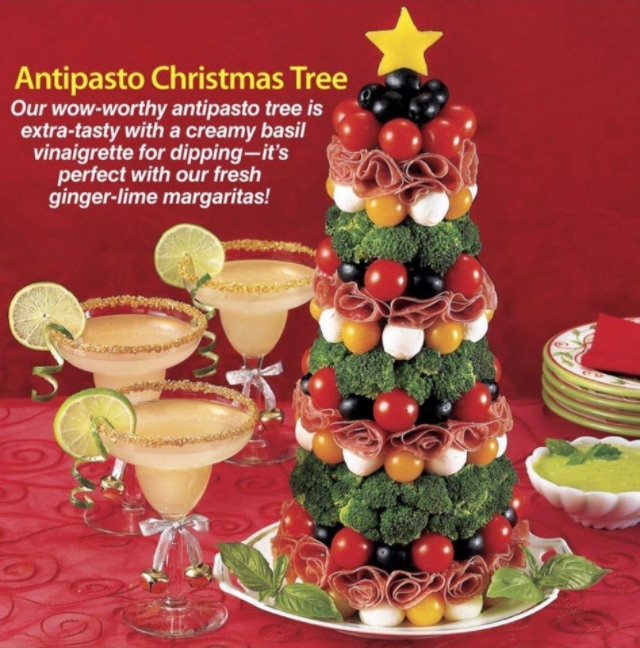
Antipasto platters have always been a reliable party spread, but some ambitious hosts in the mid-20th century decided a flat arrangement wasn’t festive enough. The antipasto Christmas tree took olives, rolled salami, marinated artichoke hearts, roasted peppers, and cubed cheese and arranged them in a strict triangular tree shape on a large platter, complete with a breadstick trunk. It was labor-intensive, and it demanded the kind of patience that most holiday hosts were running short on by December 24th.
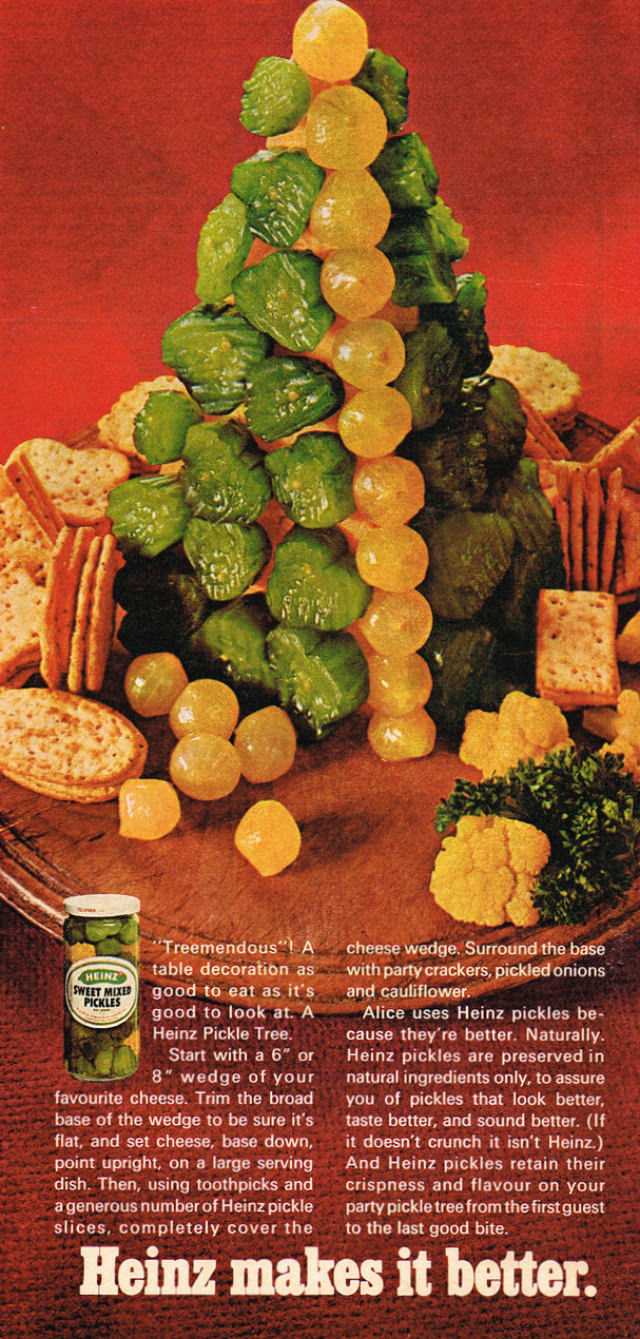
Heinz got directly involved in the Christmas tree food trend with a pickle-based version that leaned into the brand’s most famous product. Gherkins and pickle slices were arranged into a tree shape, often on a toothpick frame or alongside crackers and cold cuts. The Heinz Pickle Christmas Tree appeared in branded recipe booklets distributed to households during the holiday season, part of a broader mid-century tradition of food companies publishing their own cookbooks to drive product sales.
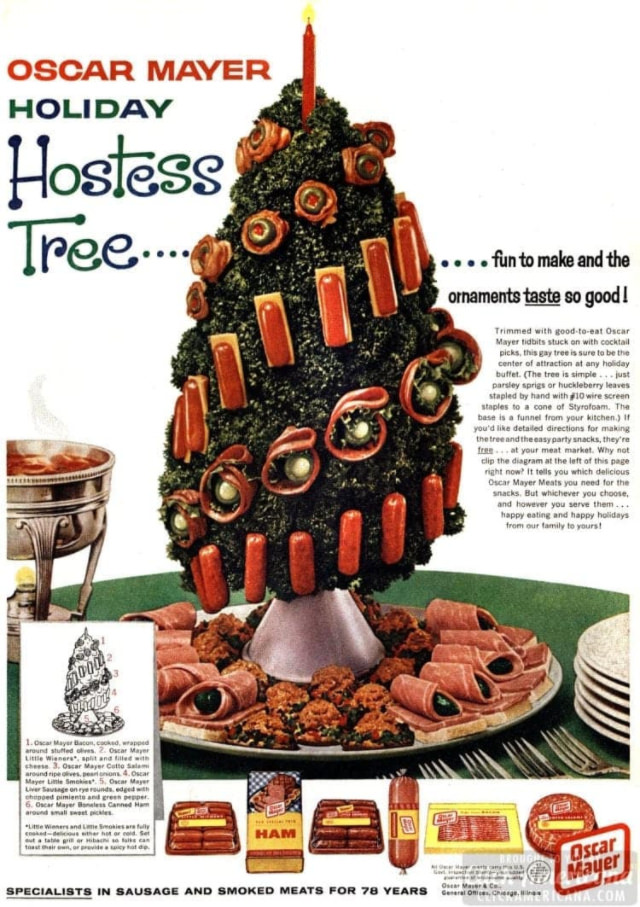
Oscar Mayer joined the competition with their own branded holiday creation. The Oscar Mayer Holiday Hostess Tree used the company’s cold cuts and luncheon meats — rolled, folded, and stacked into a cone shape — as a party centerpiece. Branded recipe cards featuring the Hostess Tree were distributed through grocery stores and printed in women’s magazines, positioning processed deli meat as a sophisticated holiday party option. The target audience was the mid-century hostess who wanted to impress guests with minimal cooking time.
The Eggnog Shrimp Christmas Tree stands as one of the more bewildering combinations in this entire collection. Eggnog, a sweet and spiced dairy drink, was used as a base or glaze element in a shrimp-forward tree-shaped dish — a pairing that manages to sound both wrong and very much of its era at the same time. This recipe was a product of the mid-century tendency to combine ingredients that had no business being near each other, all in the name of novelty and festive presentation. It is, mercifully, one of the hardest of these trends to find revived anywhere today.