Ross Siragusa founded the Admiral Corporation in 1934 with a clear goal: bring radio and television into every American home at a price families could actually afford. Siragusa was an Italian immigrant who drew inspiration from two giants of the era — Guglielmo Marconi, who invented the radio, and Nikola Tesla, who developed the foundational concepts behind television. Those two names shaped the direction of his entire company.
The Great Depression of the 1930s, rather than halting Siragusa’s ambitions, gave him an opening. After attending the 1933 World’s Fair and seeing a television prototype firsthand, he threw himself into manufacturing portable radios — affordable, reliable, and well-built. While the radio business grew, he kept a close watch on where television technology was heading.
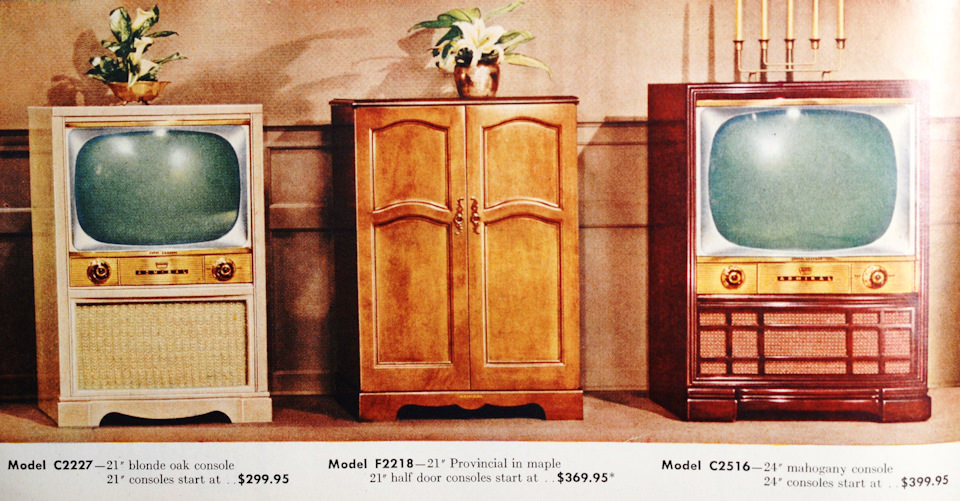
World War II brought lucrative government contracts that further strengthened Admiral’s finances. By 1948, the company was ready to add televisions to its product line. The growth that followed was extraordinary. Within just a year and a half, Admiral’s factories across the country were producing 15,000 television sets per day — a full quarter of the entire industry’s output.
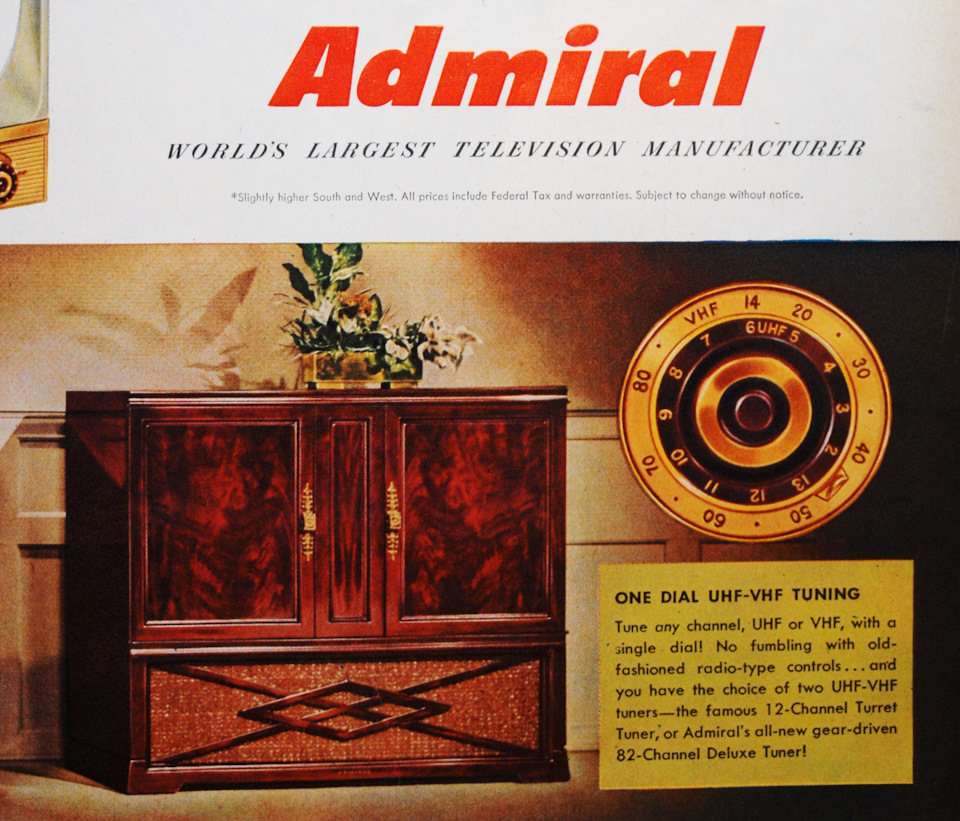
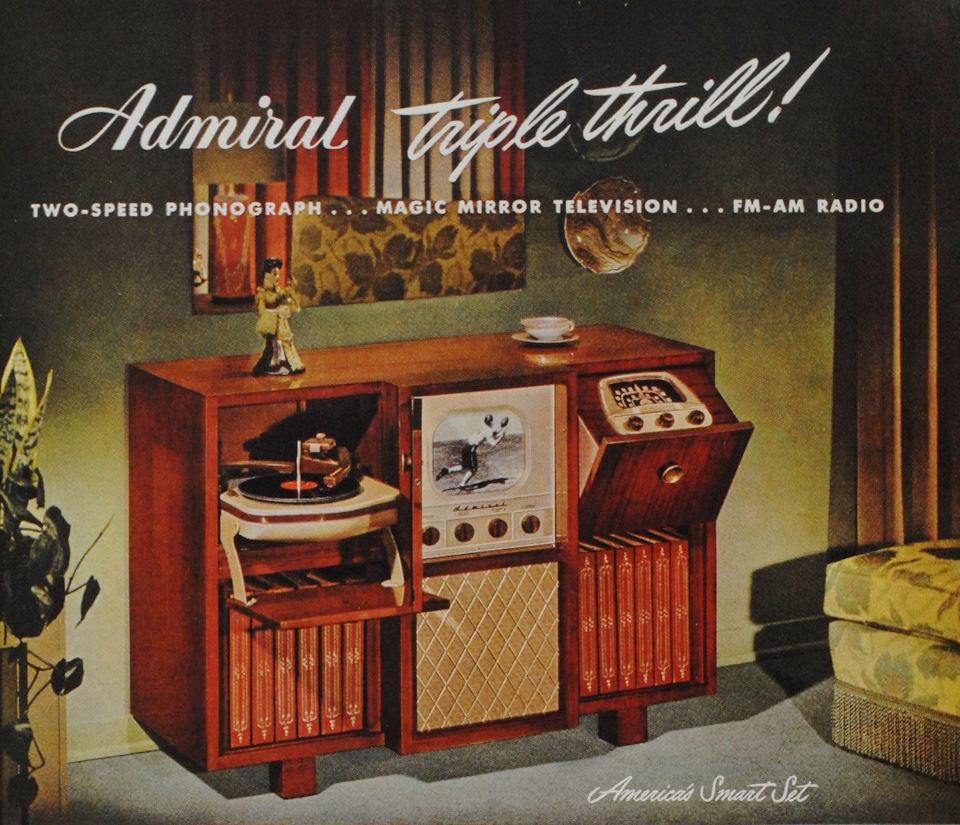
Admiral was also among the first American companies to produce color televisions, putting it well ahead of most competitors. As the 1950s arrived, the company expanded further into major home appliances like refrigerators. Admiral and General Electric stood apart as the only American brands to establish themselves successfully in both consumer electronics and home appliances at the same time.
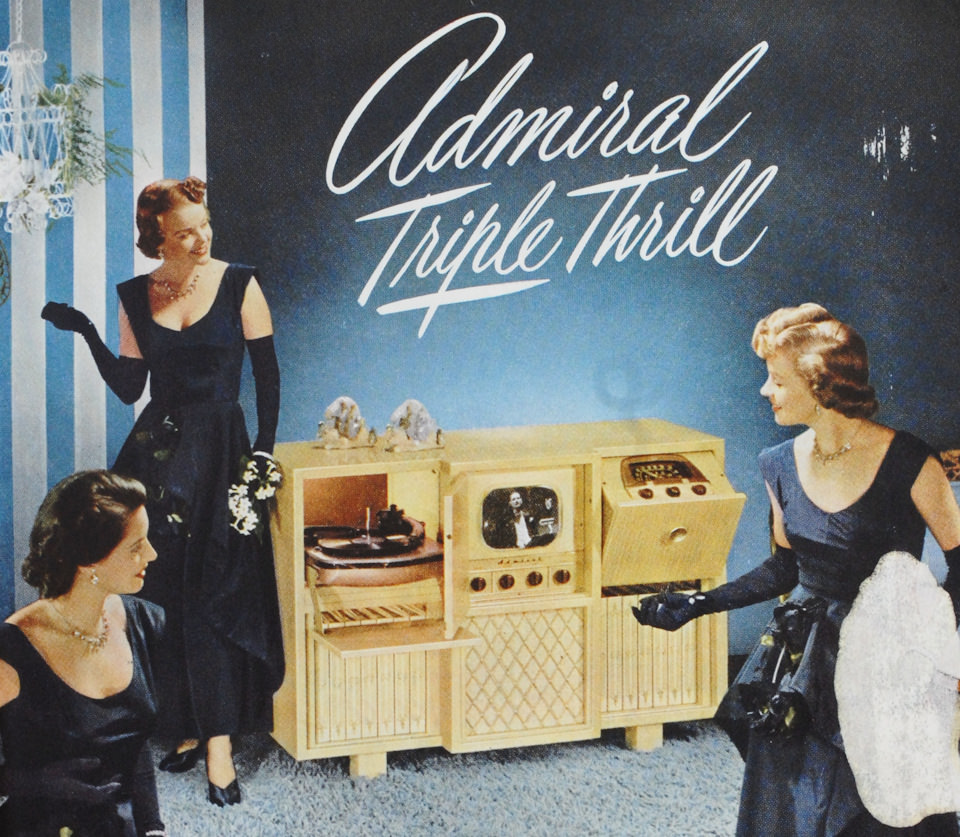
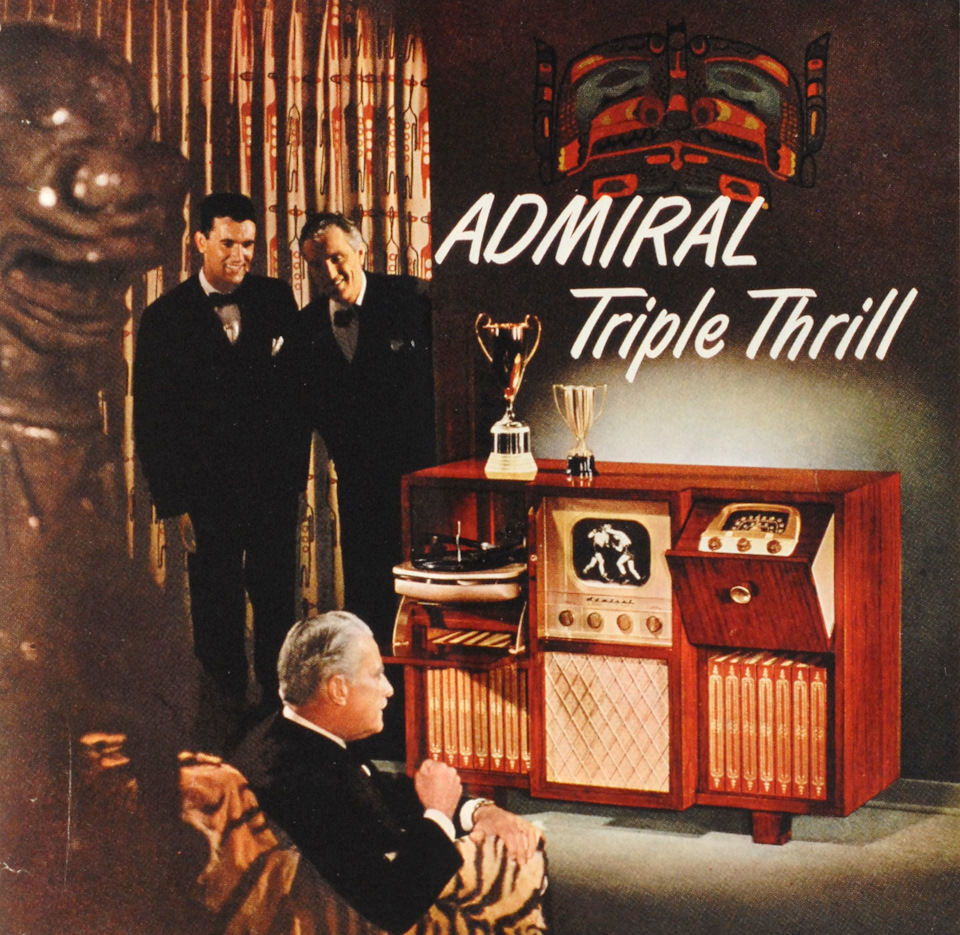
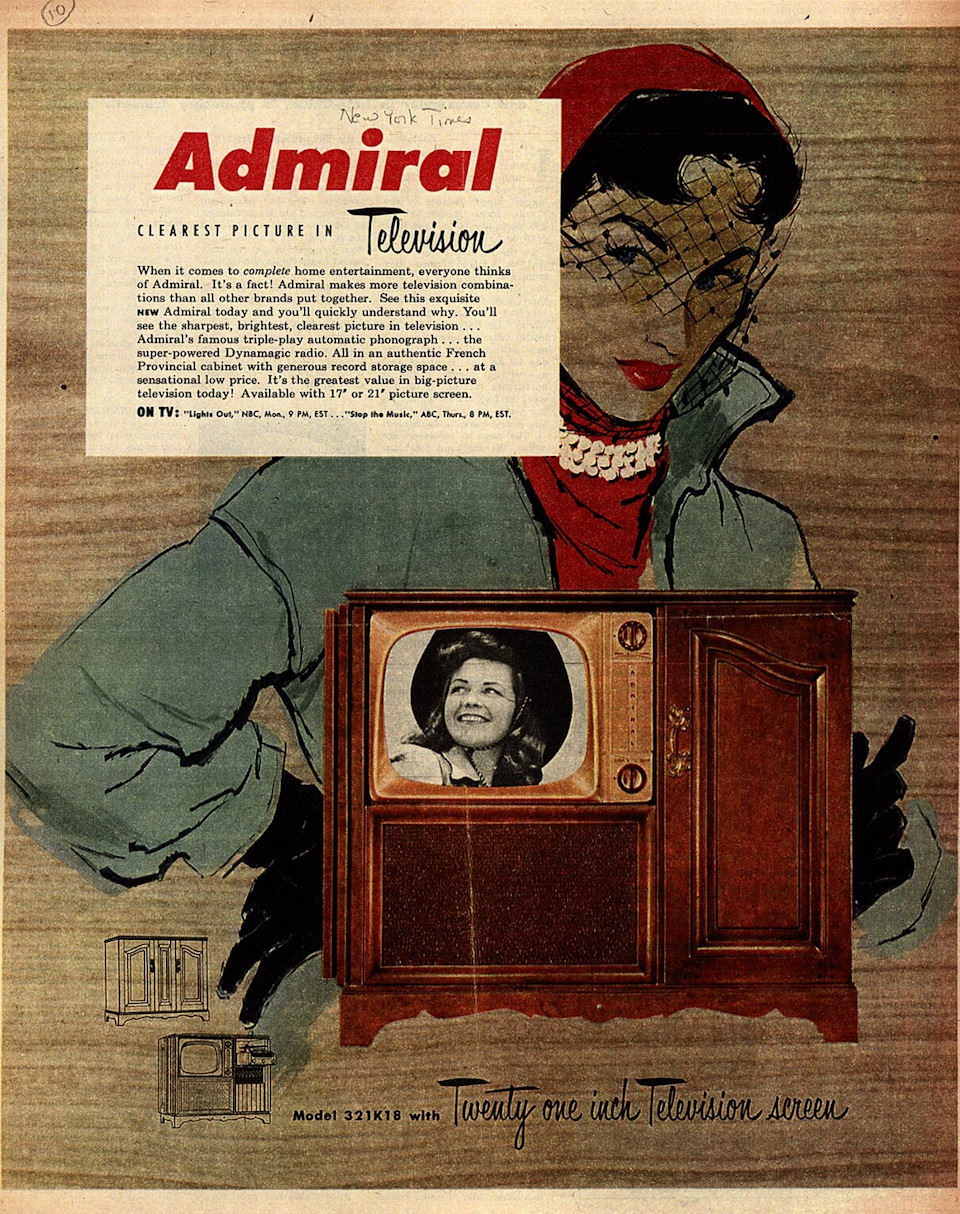
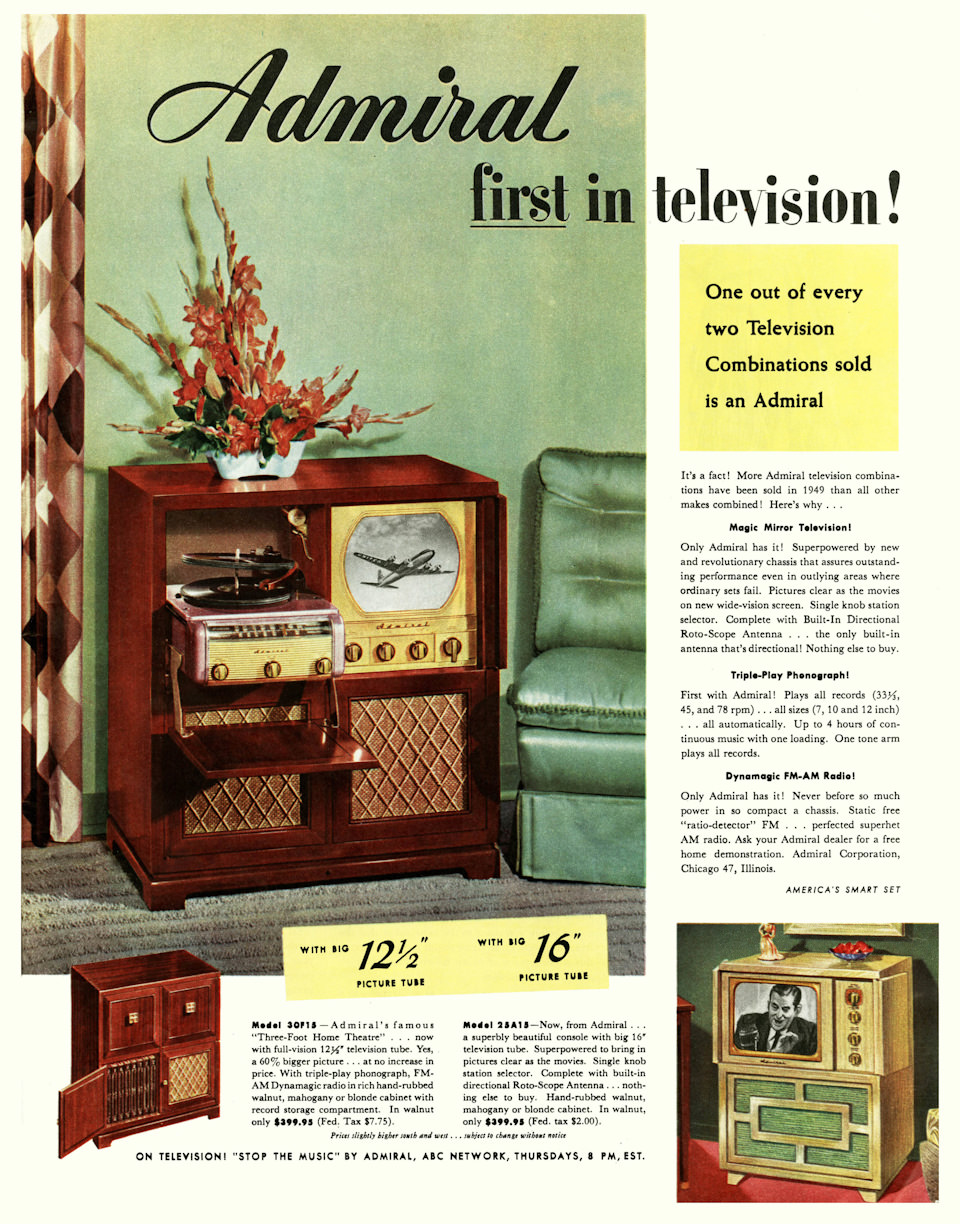
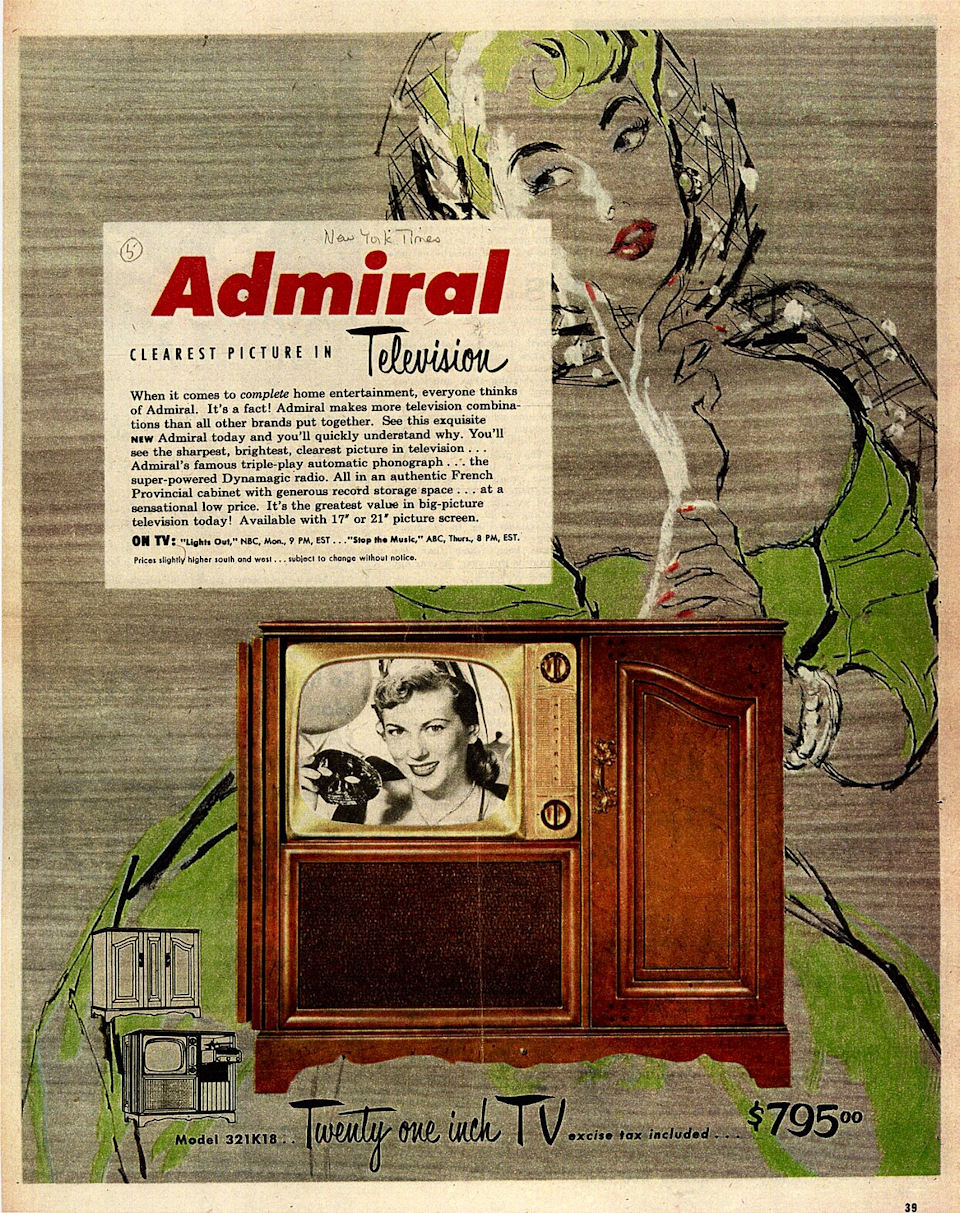
The 1950s ads Admiral ran were a direct reflection of post-war America. Families had money to spend, and they wanted the newest, most modern things for their homes. Admiral’s advertisements leaned hard into that mood. They featured bright colors, clean designs, and images of happy American families gathered around sleek television sets. The message was simple: this TV belongs in your living room.
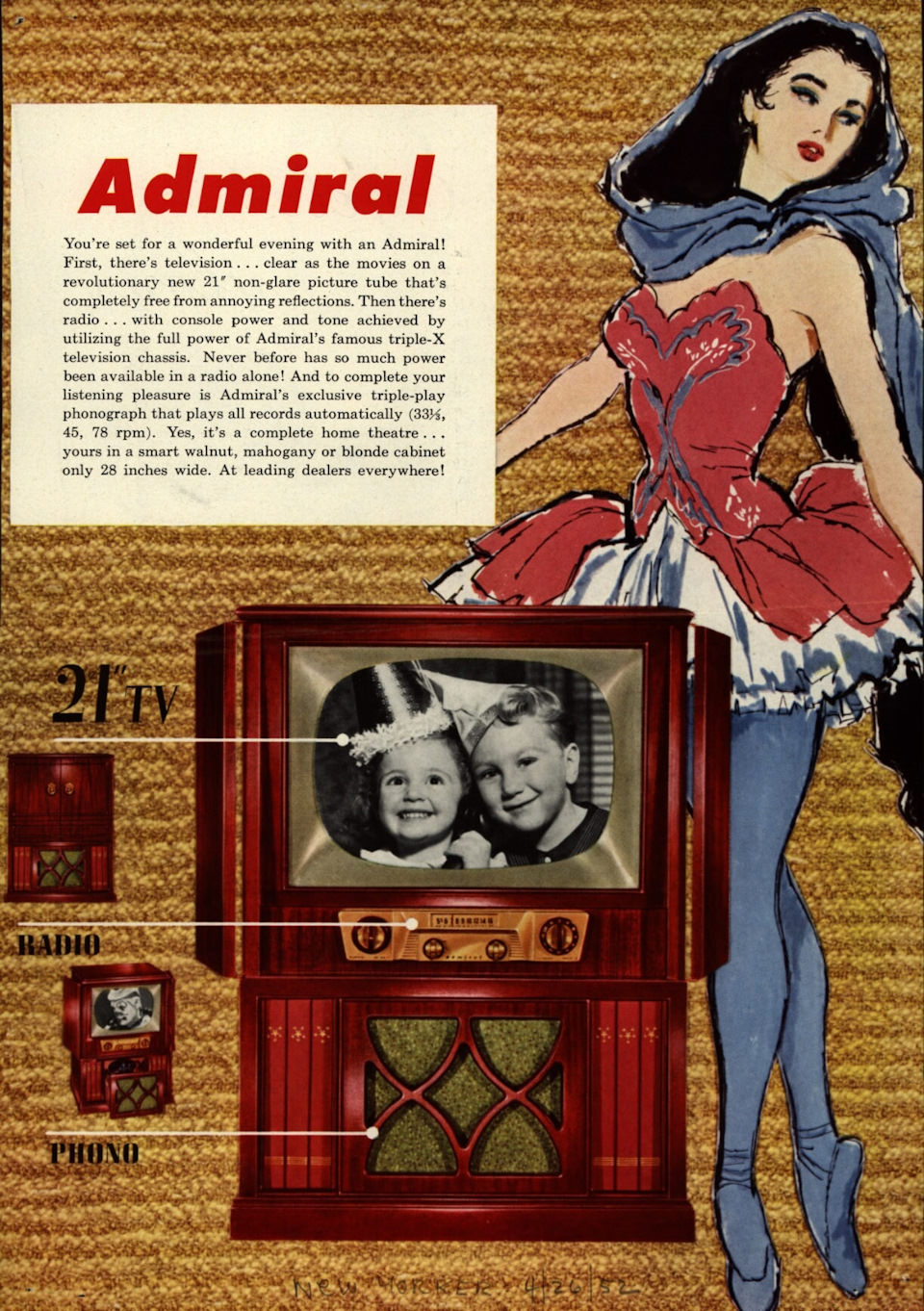
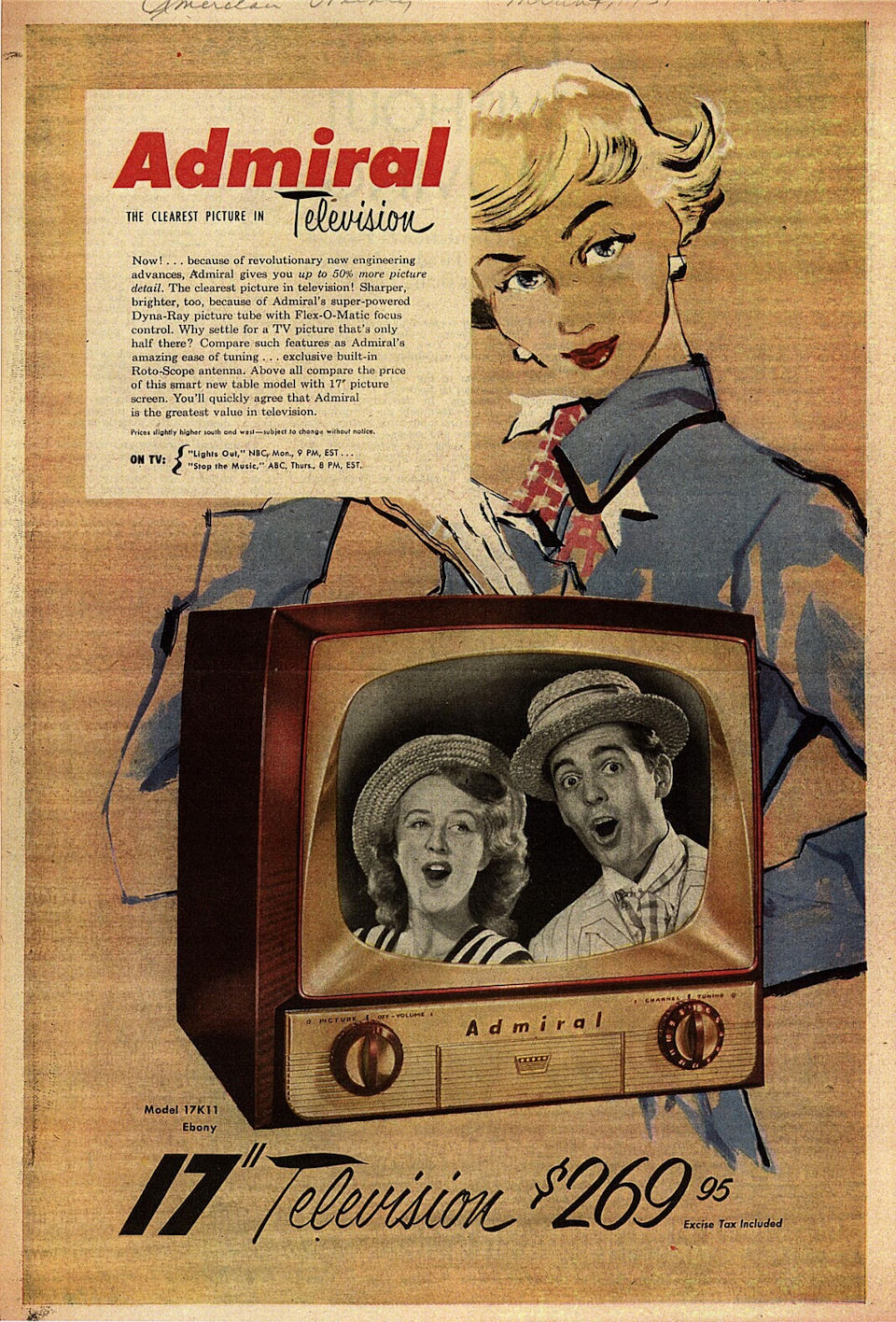
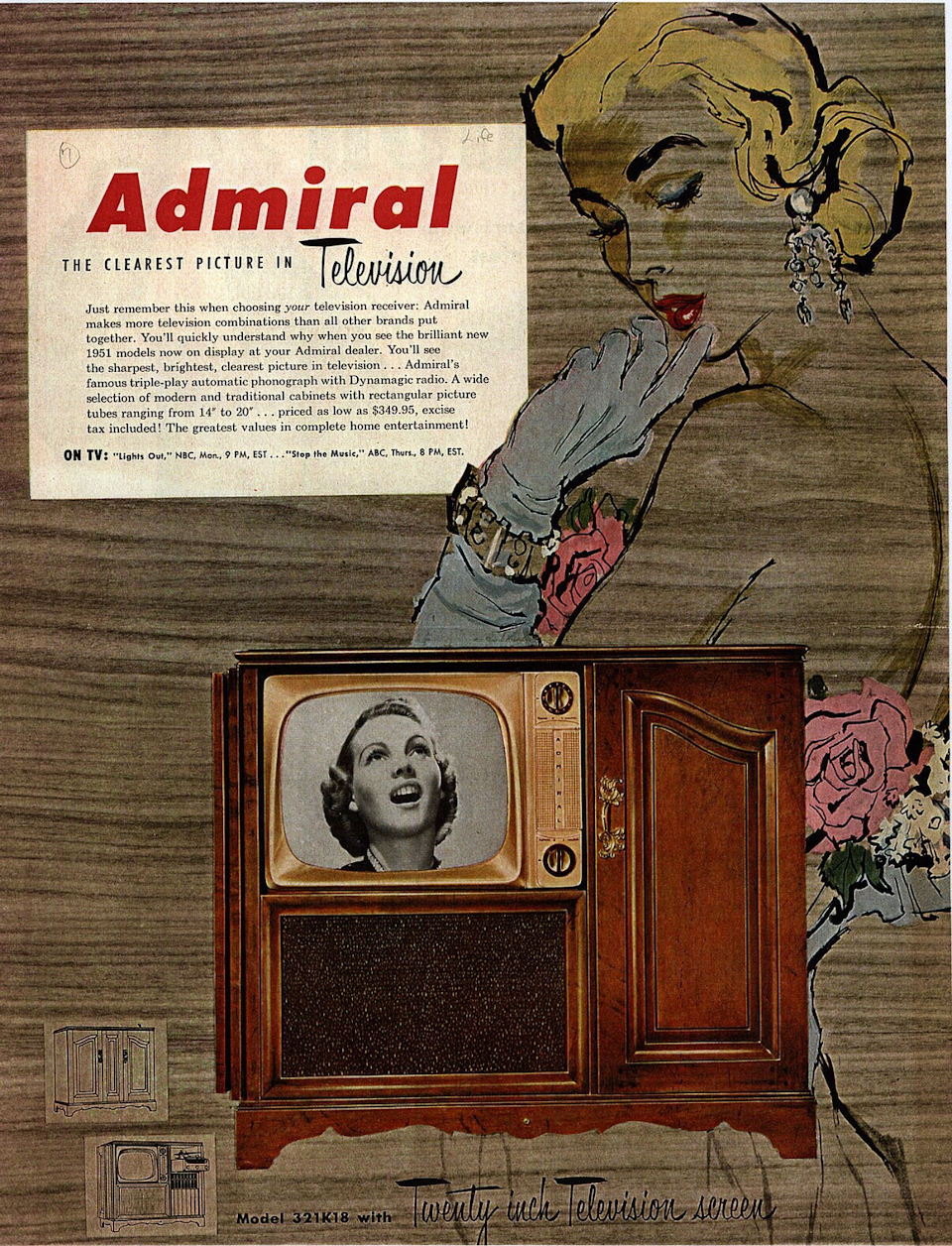
The ads promoted specific features that mattered to buyers — sharp picture quality, strong sound, advanced color display, and stylish cabinet designs that looked good as furniture. Admiral didn’t just sell a television; it sold a vision of modern home life. The copy was punchy and direct, built around phrases that stuck in the consumer’s mind and made the products feel essential rather than optional.
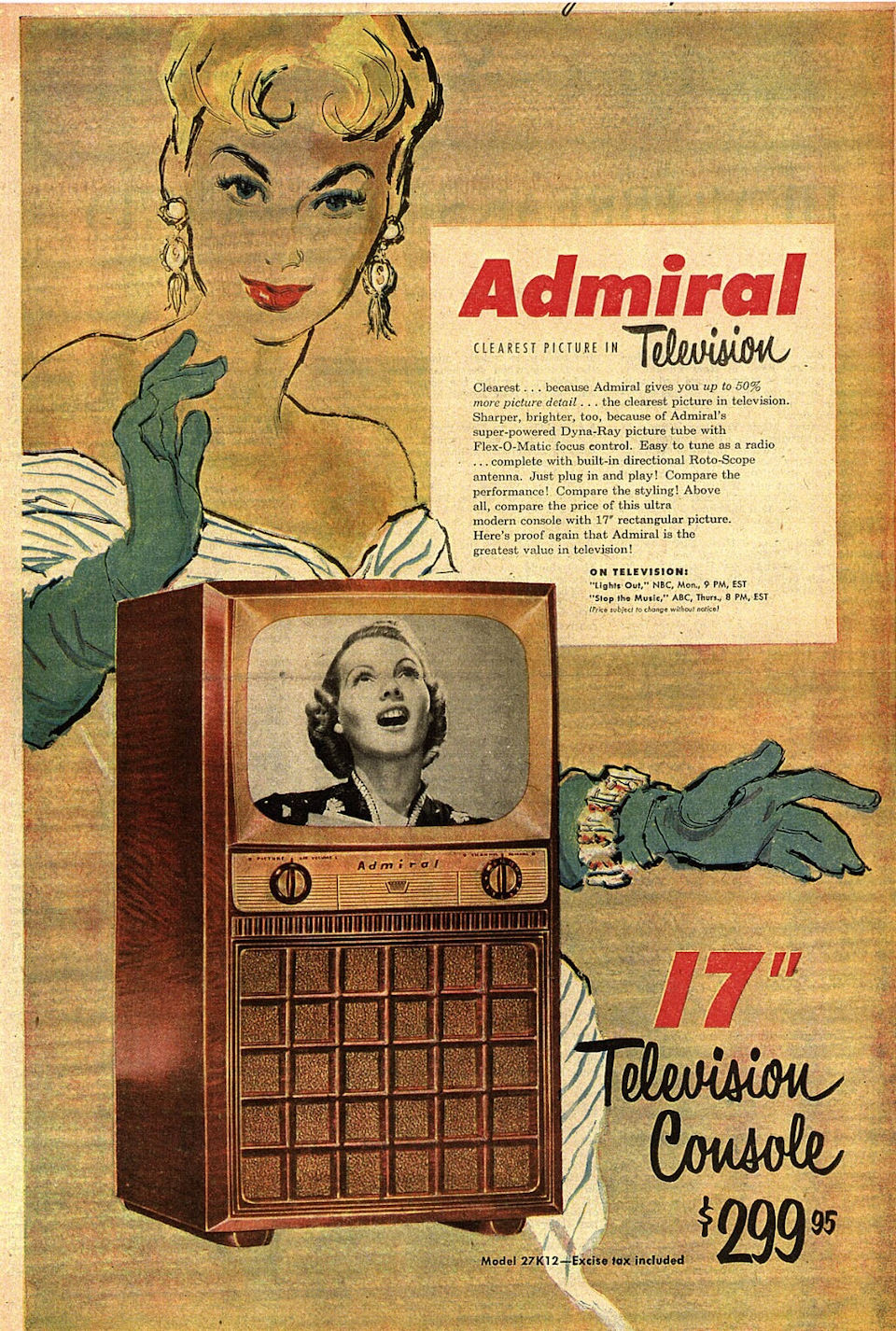
In the mid-1950s, Admiral pushed beyond American borders by acquiring the Marconi factory in England. The move gave the company a manufacturing base in Europe and connected it, symbolically at least, to the inventor who had first inspired Siragusa decades earlier. It was a major step for a company that had started out making affordable radios during the Depression.
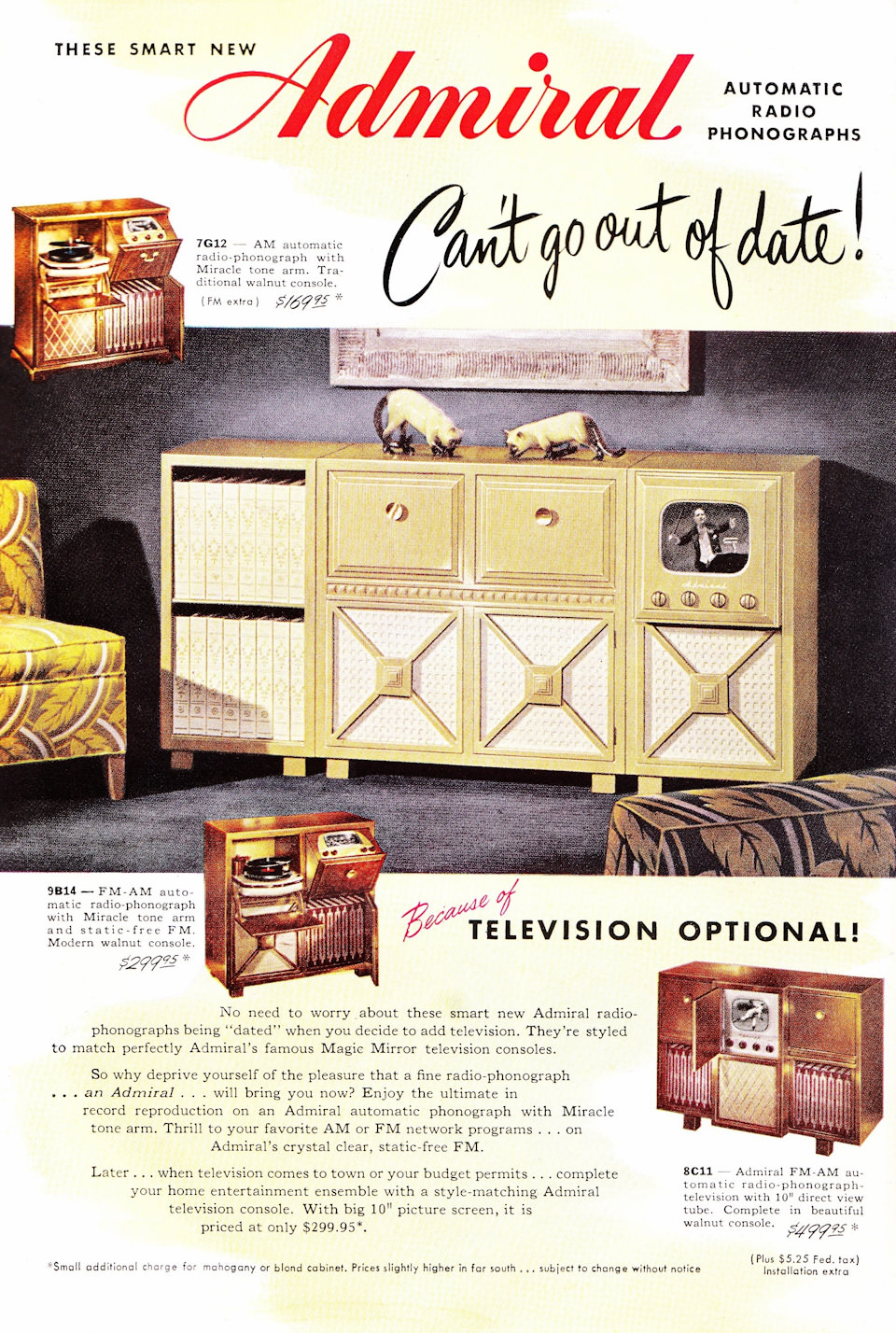
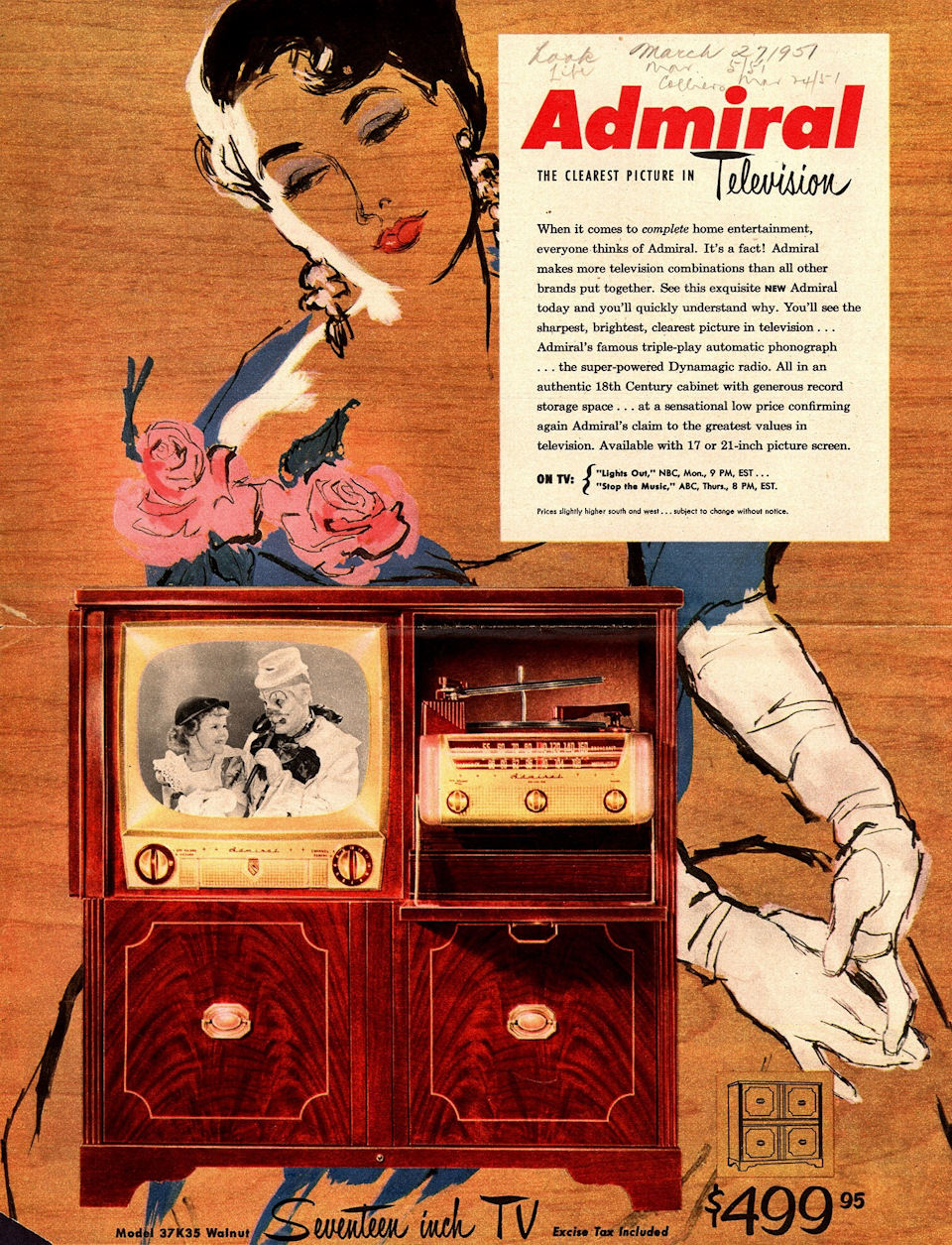
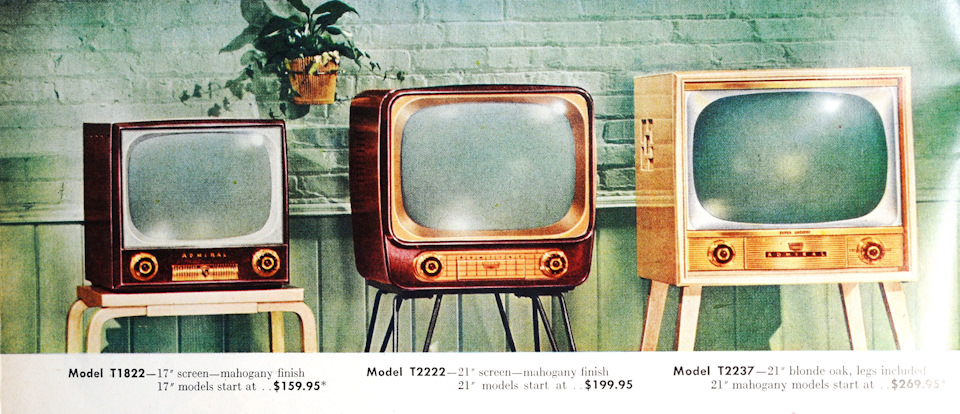
Back in American living rooms, Admiral TVs were a fixture. There were no remote controls — children hopped up from the couch to change the channel or adjust the dial when a parent asked. The television was the centerpiece of the room, and Admiral worked hard in its advertising to make sure its sets were the ones families wanted sitting there.
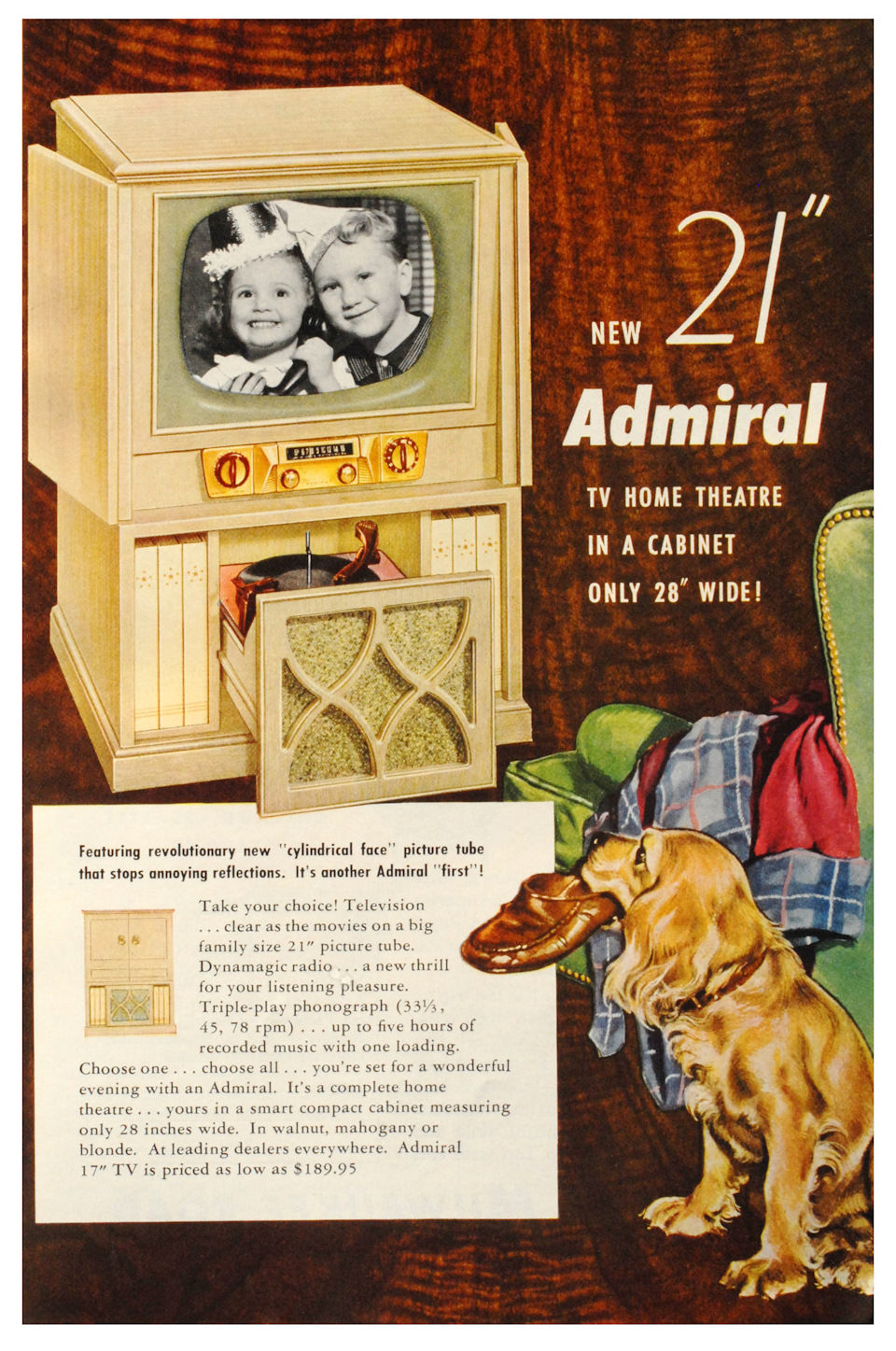
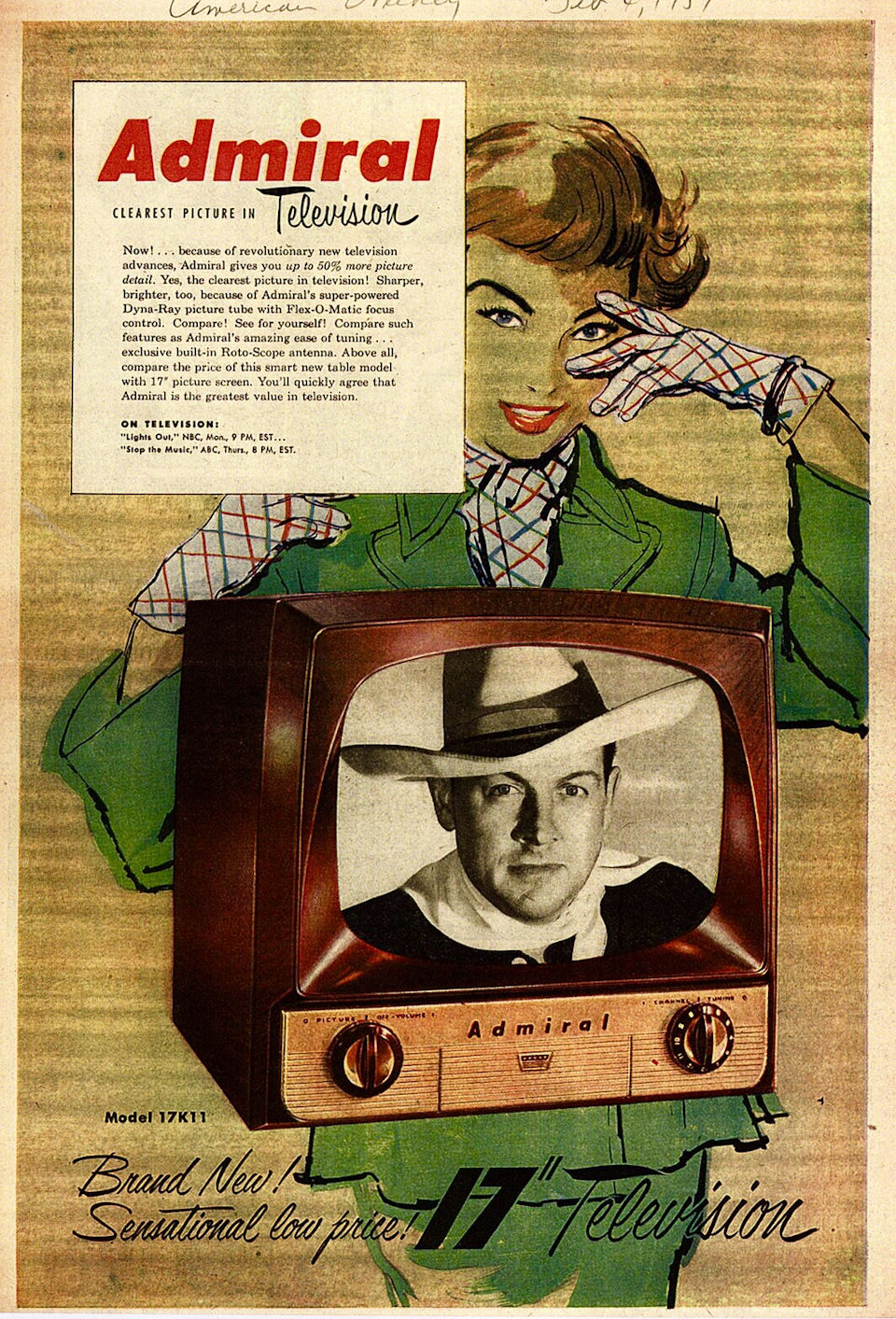
These vintage ads are detailed historical records. They show exactly how a major American company spoke to consumers at a specific moment in time — what it promised, what it emphasized, and what it believed buyers cared about most. Each ad is a small window into the consumer culture of 1950s America.