
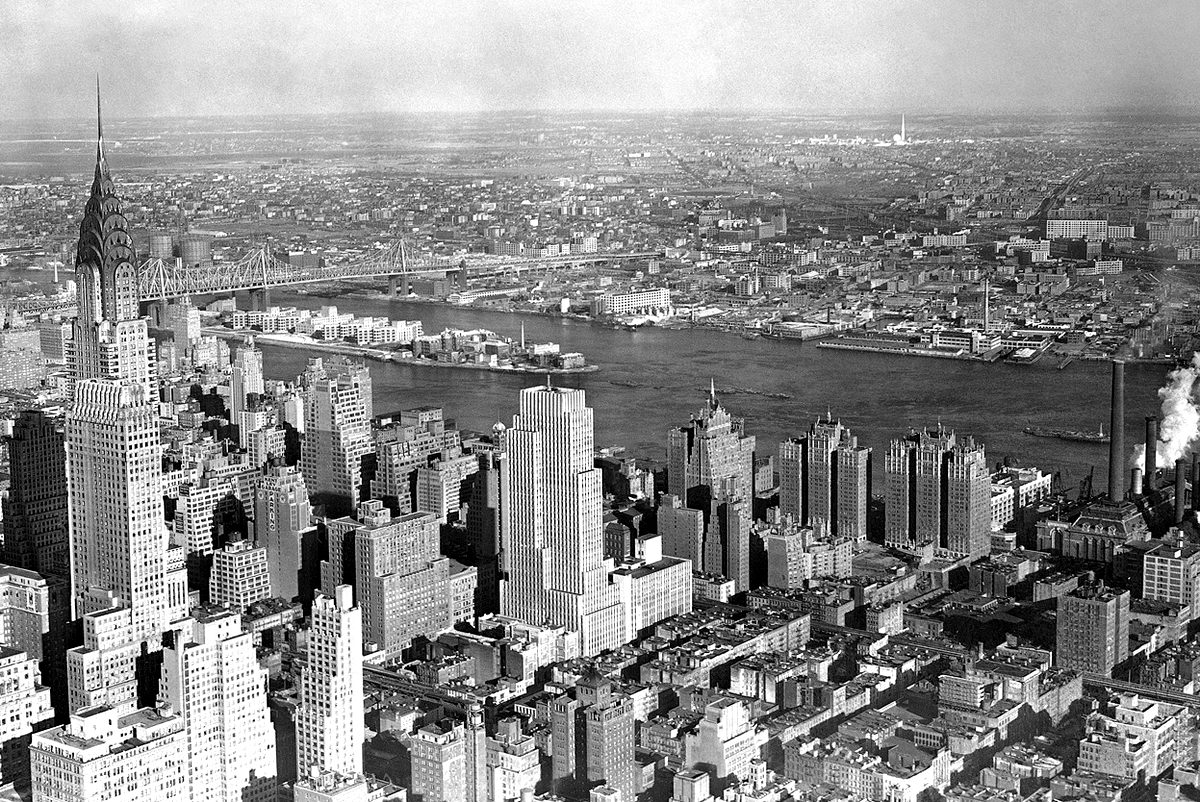
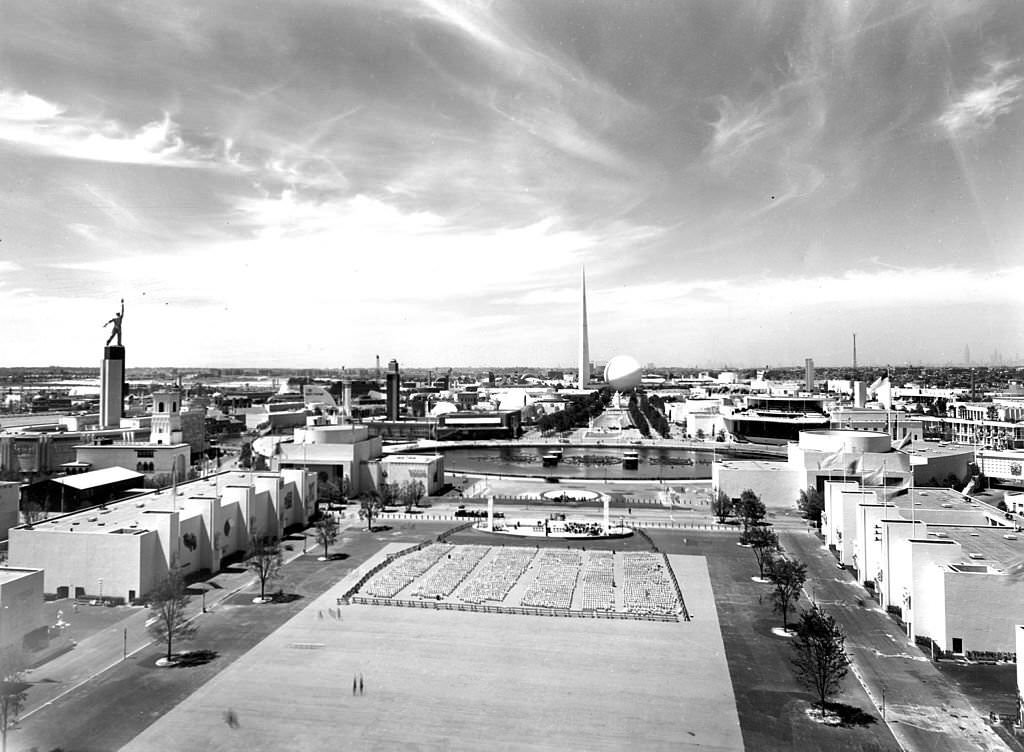
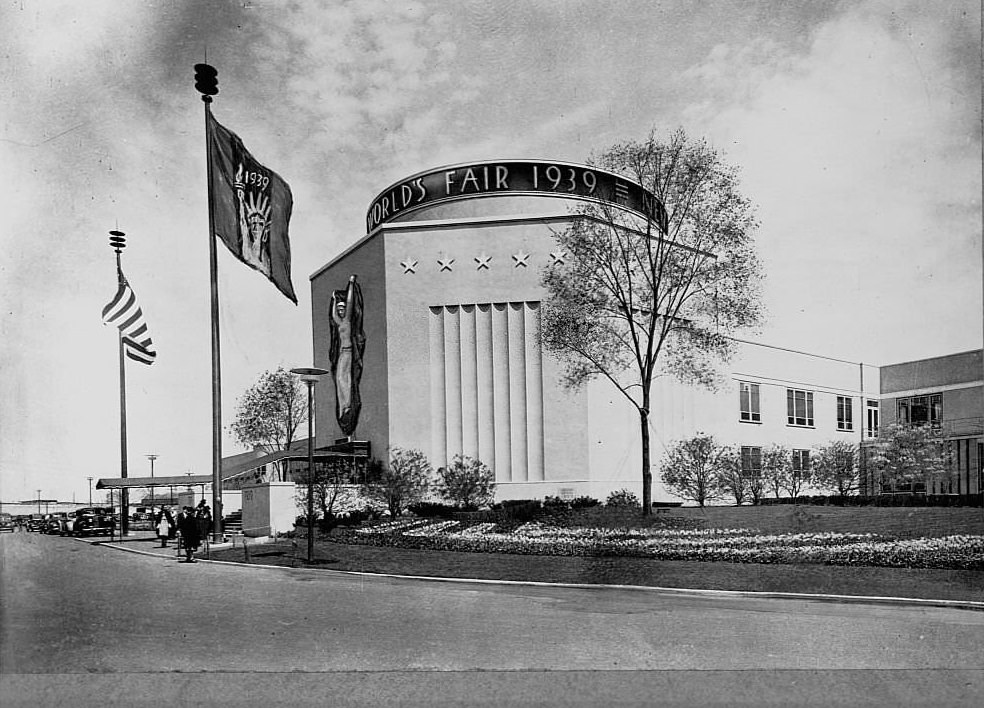
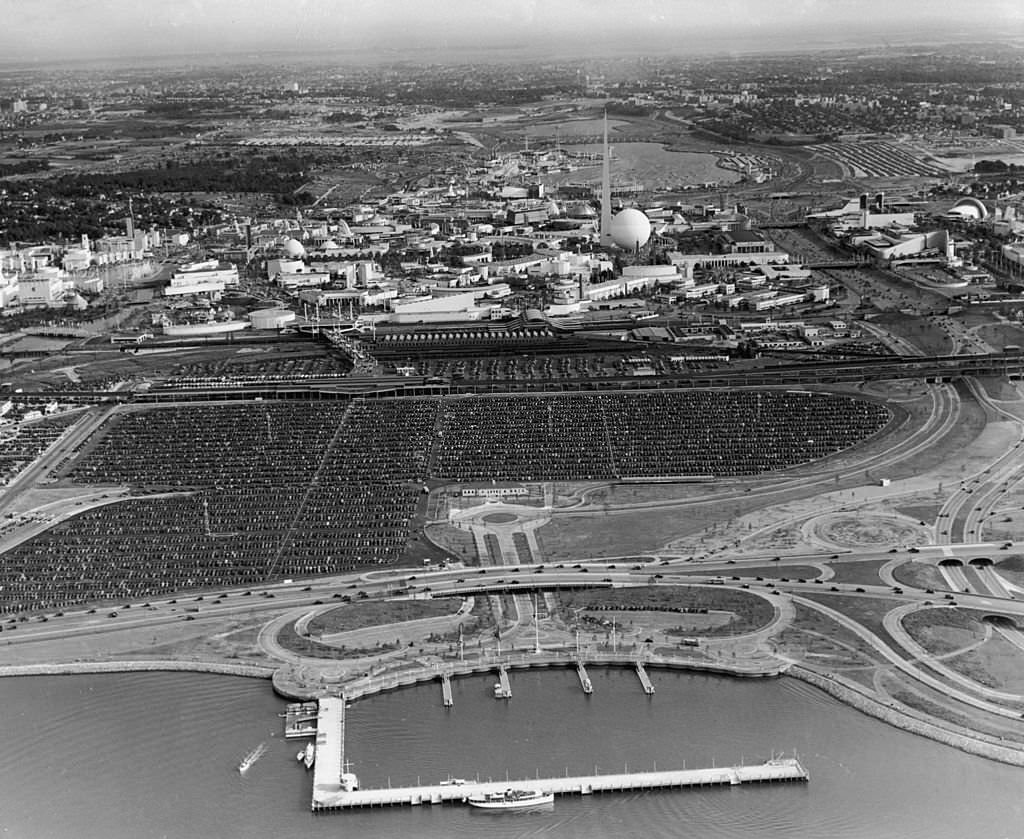
The year 1939 marked 150 years since George Washington’s inauguration in New York City, the nation’s first capital. To honor that milestone—and to declare a bold vision for the future—New York opened its World’s Fair on April 30 of that year. Themed “The World of Tomorrow,” the event became the second-largest and second-most expensive American world’s fair in history, surpassed only by St. Louis’s Louisiana Purchase Exposition of 1904. Developers transformed 1,200 acres in Queens—formerly a massive ash dump—into a gleaming showcase of architecture, technology, and imagination.
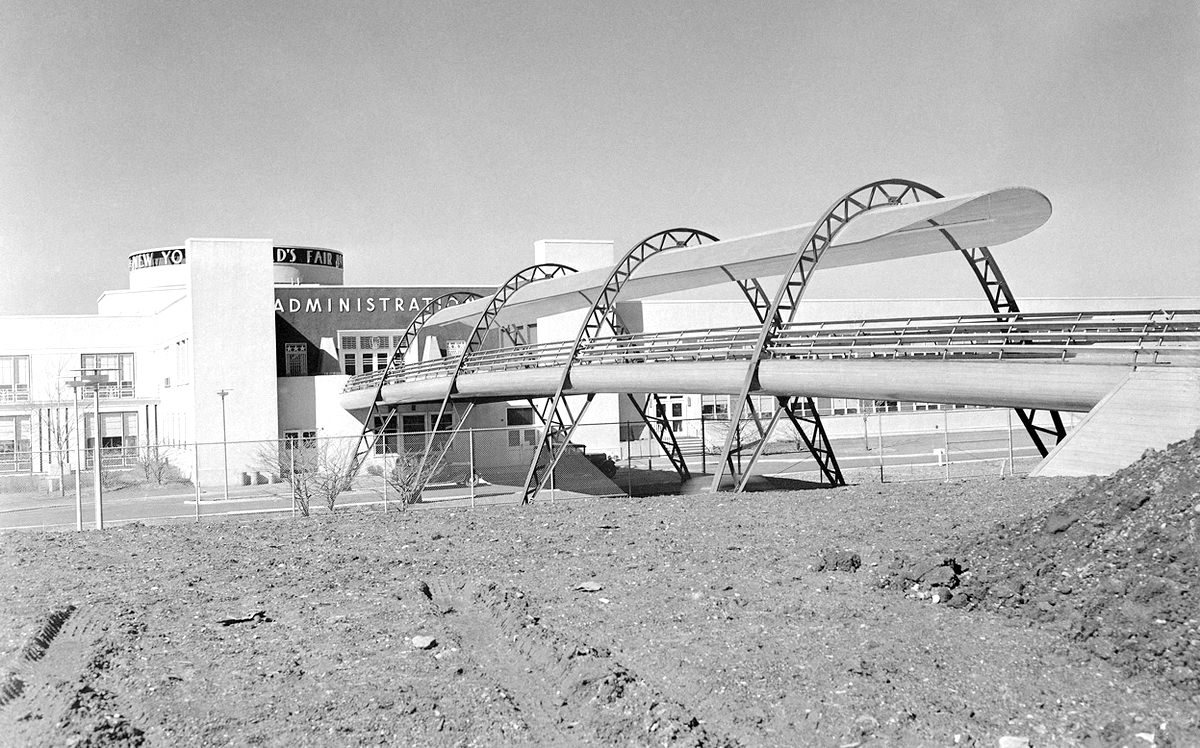
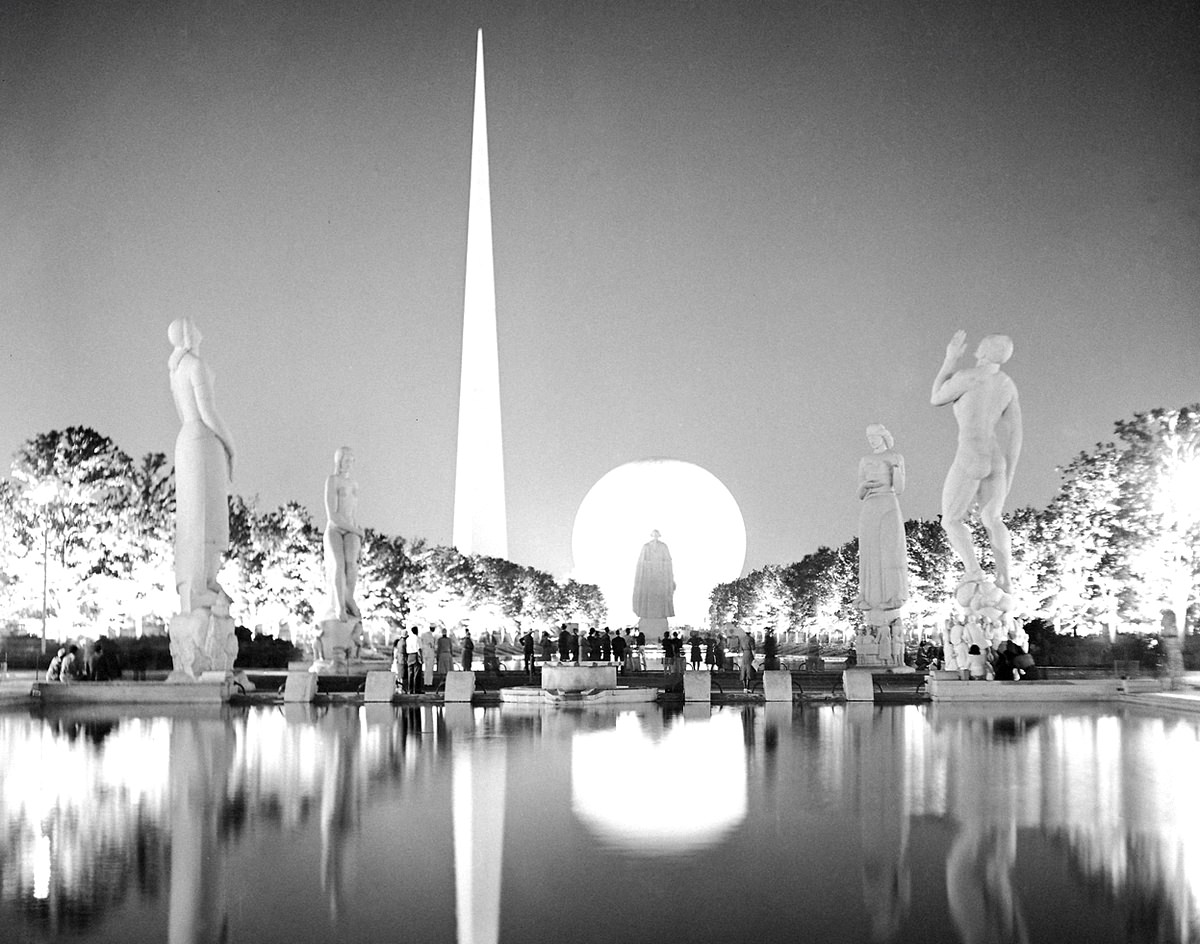
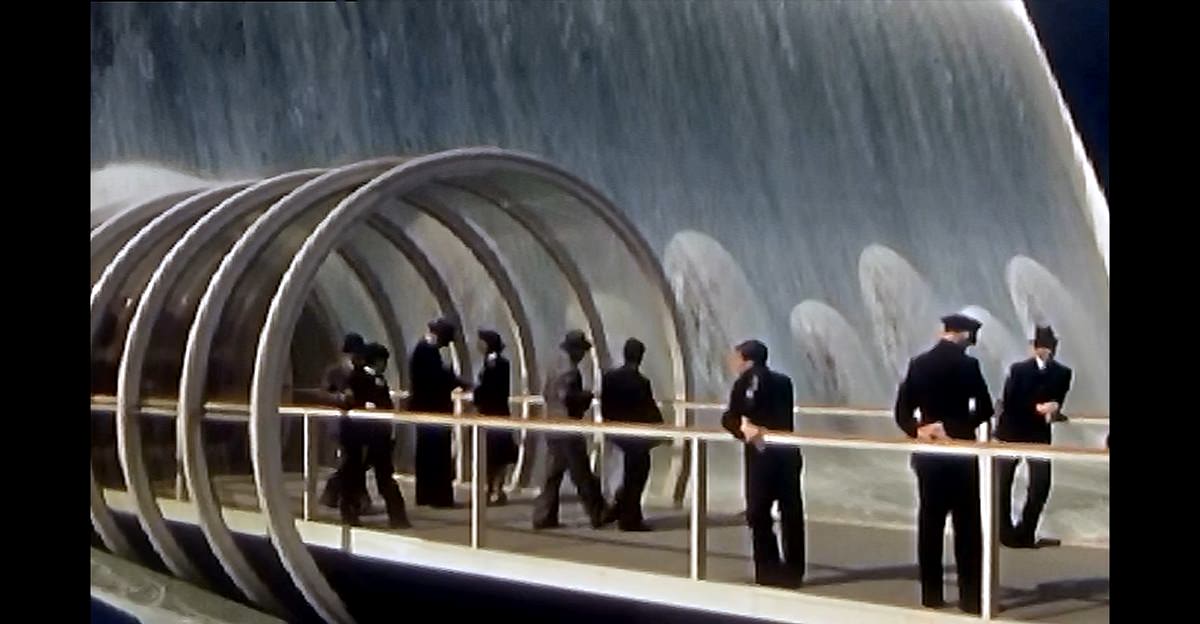
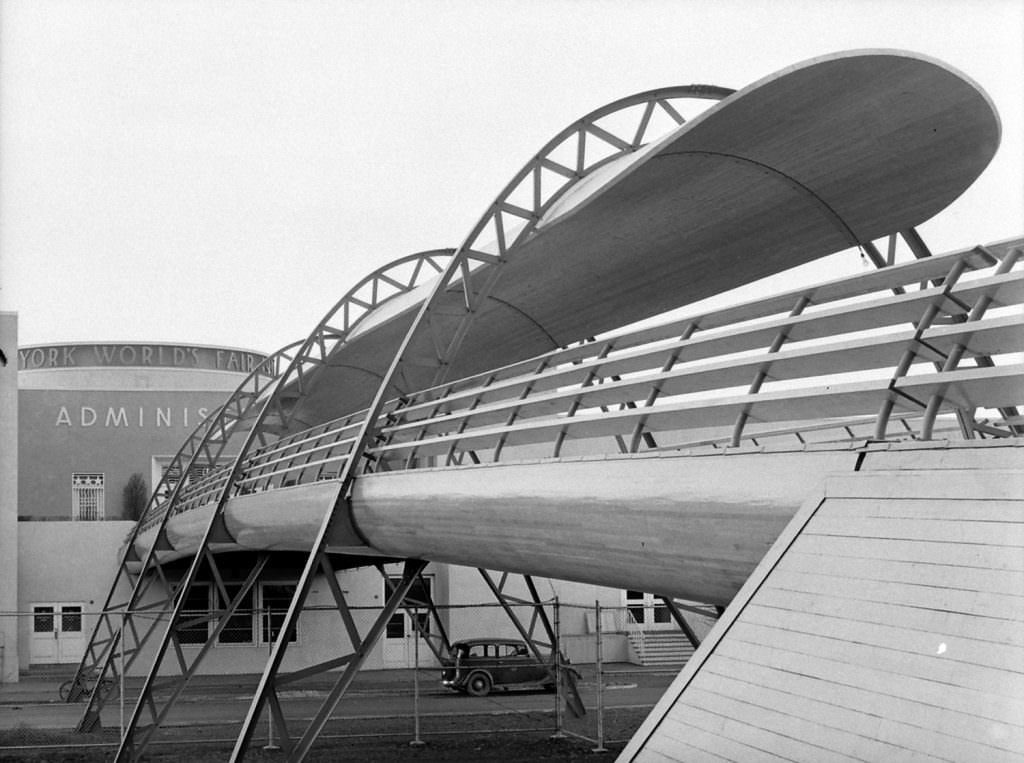
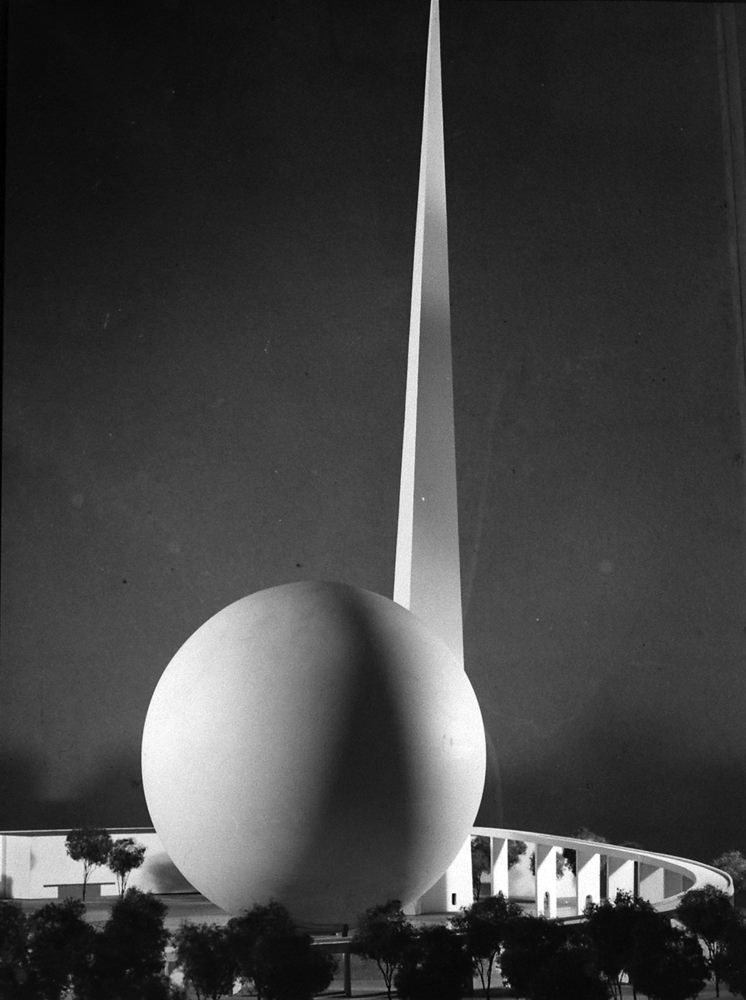
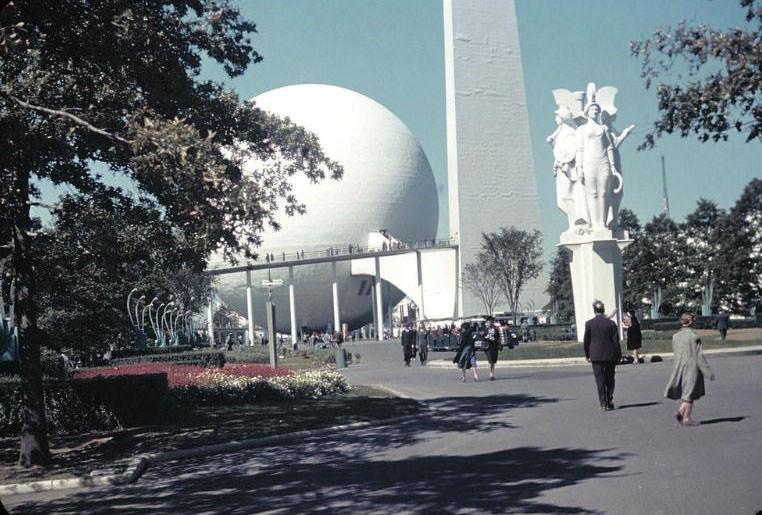
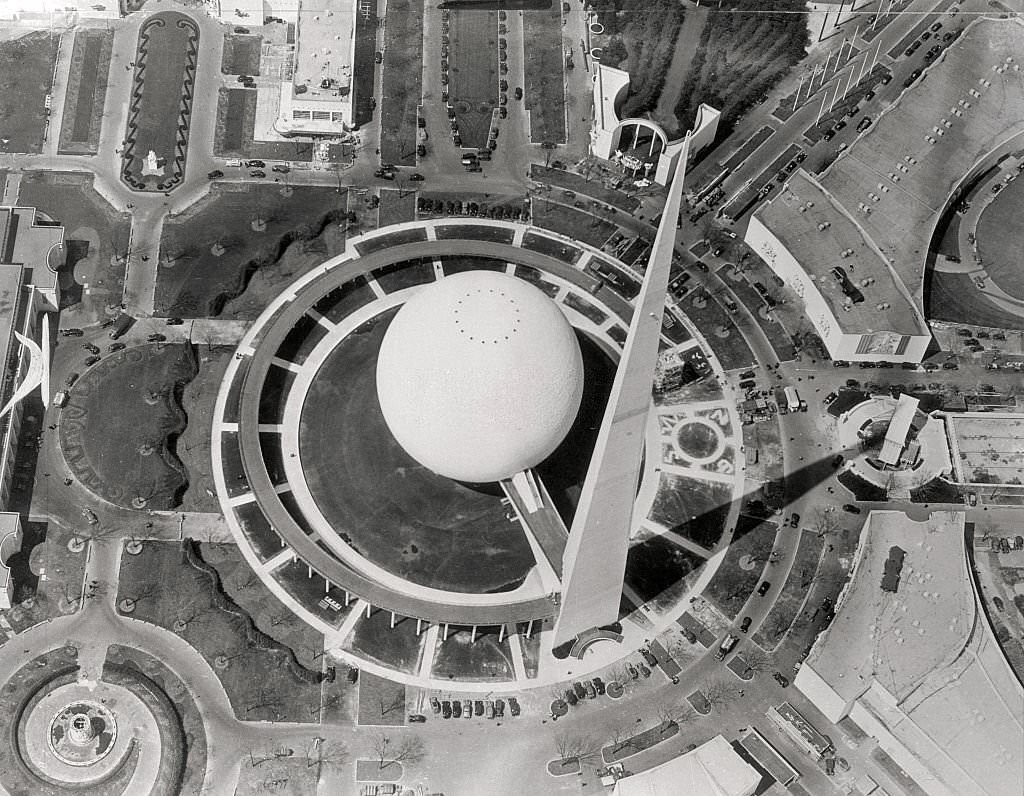
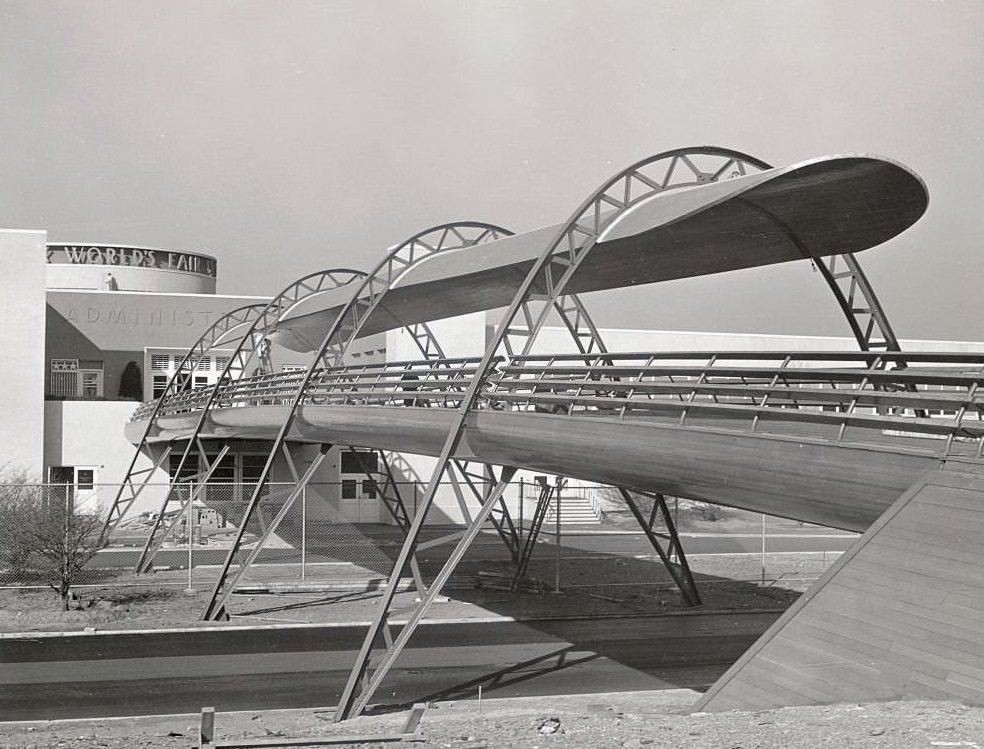
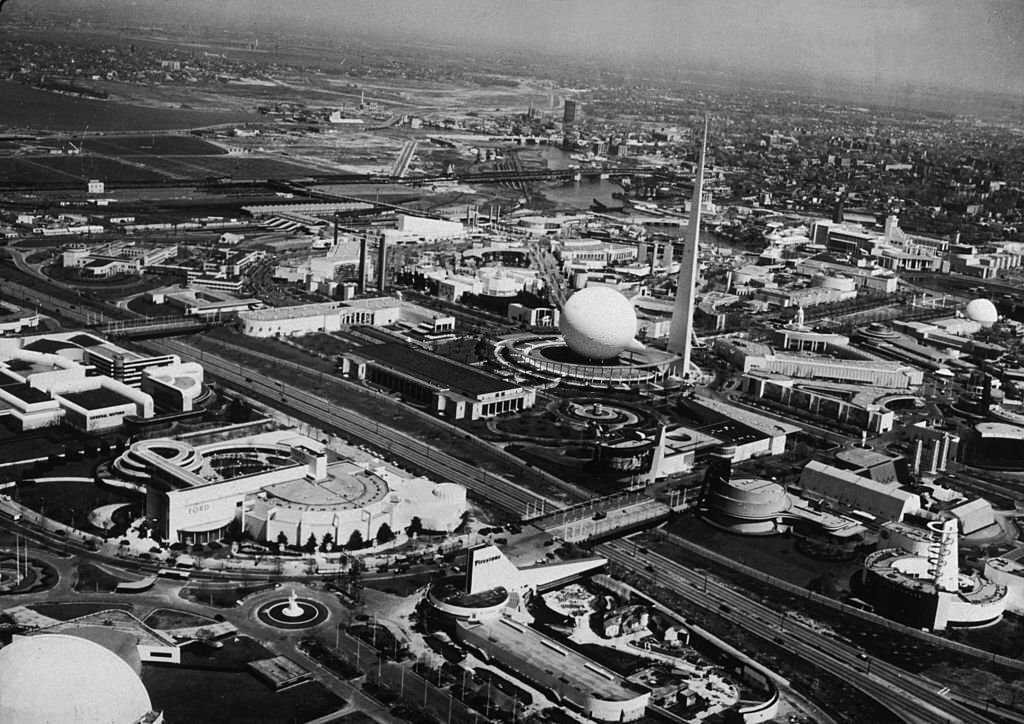
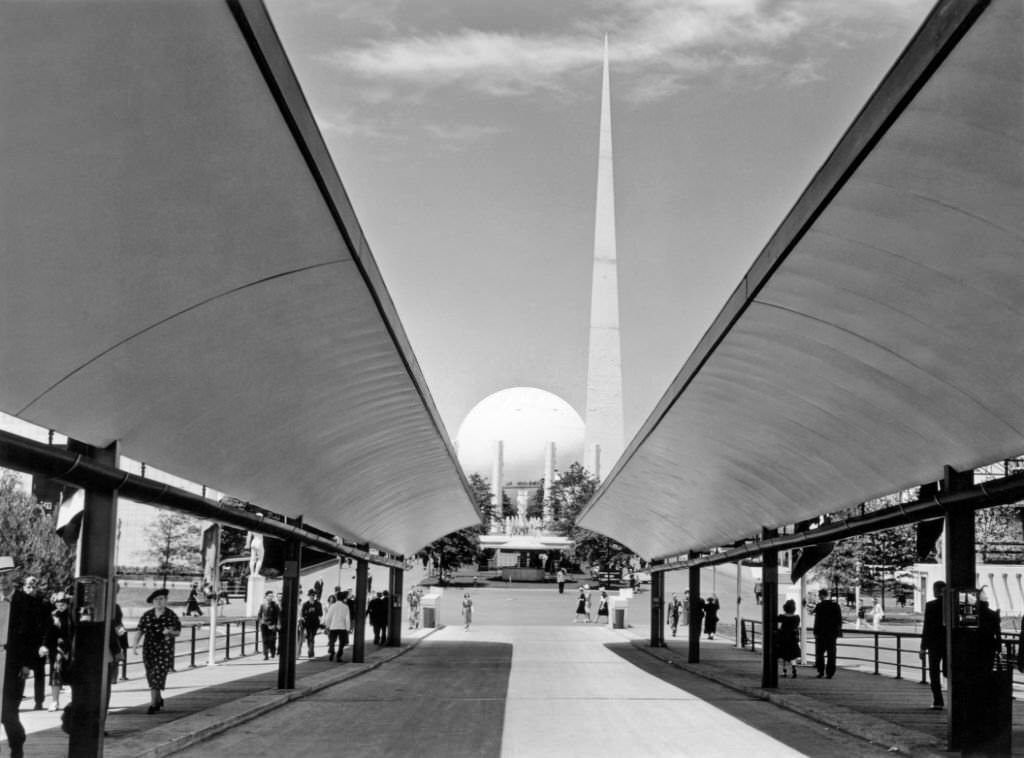
Governments, corporations, civic groups, and smaller organizations from around the world filled the fairgrounds with pavilions and exhibitions. At the heart of it all stood the Theme Center, designed by architects Wallace Harrison and Max Abramovitz. It consisted of two all-white monumental structures: the Trylon, a soaring triangular spire, and the Perisphere, a massive sphere that visitors entered via moving stairs. Inside the Perisphere was Democracity—a diorama of a utopian city of the future that became the Fair’s defining symbol. Visitors exited via a curved walkway called the Heliline.
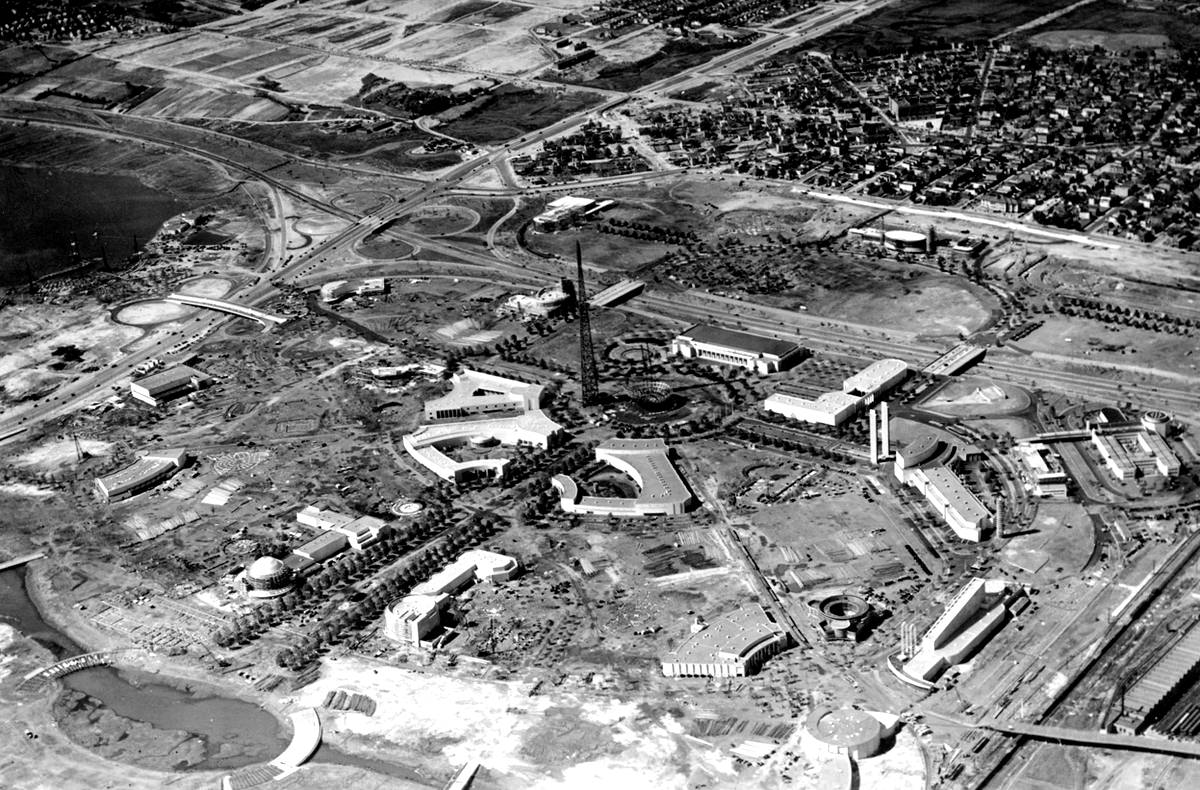
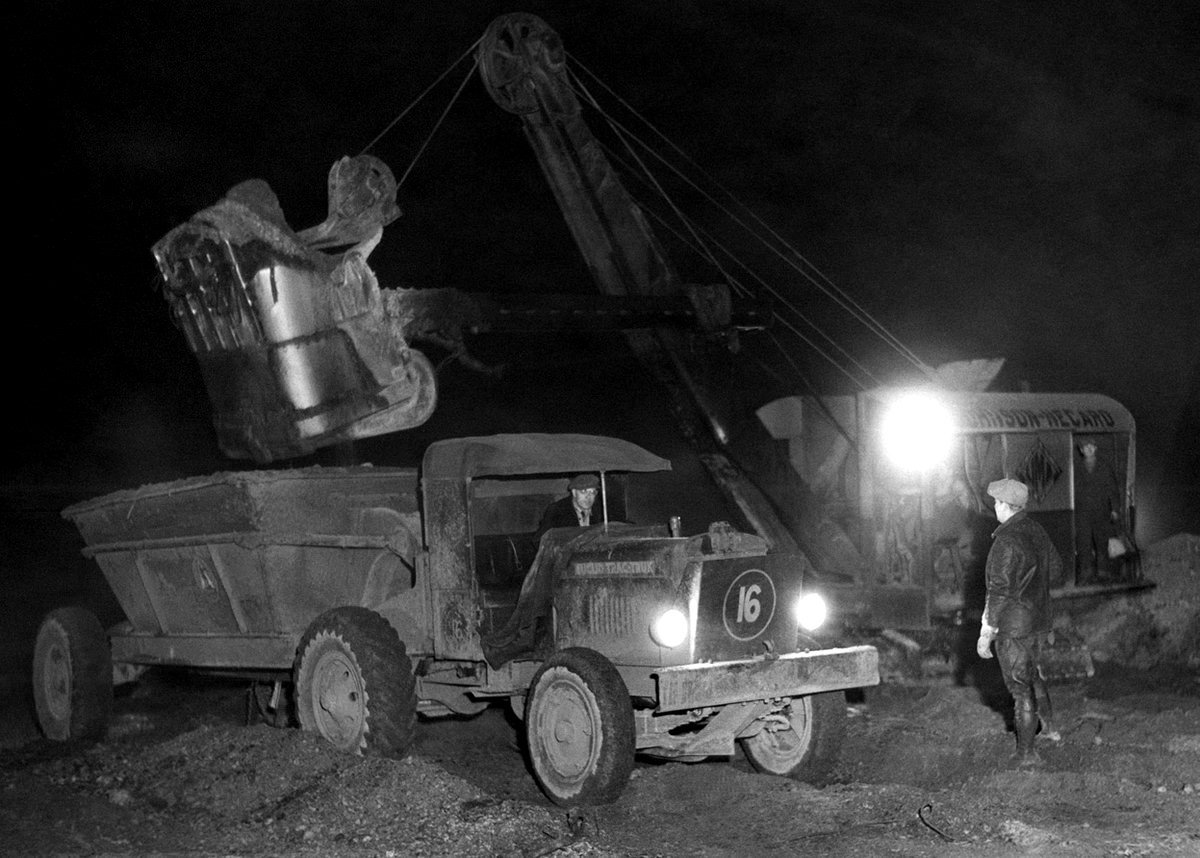
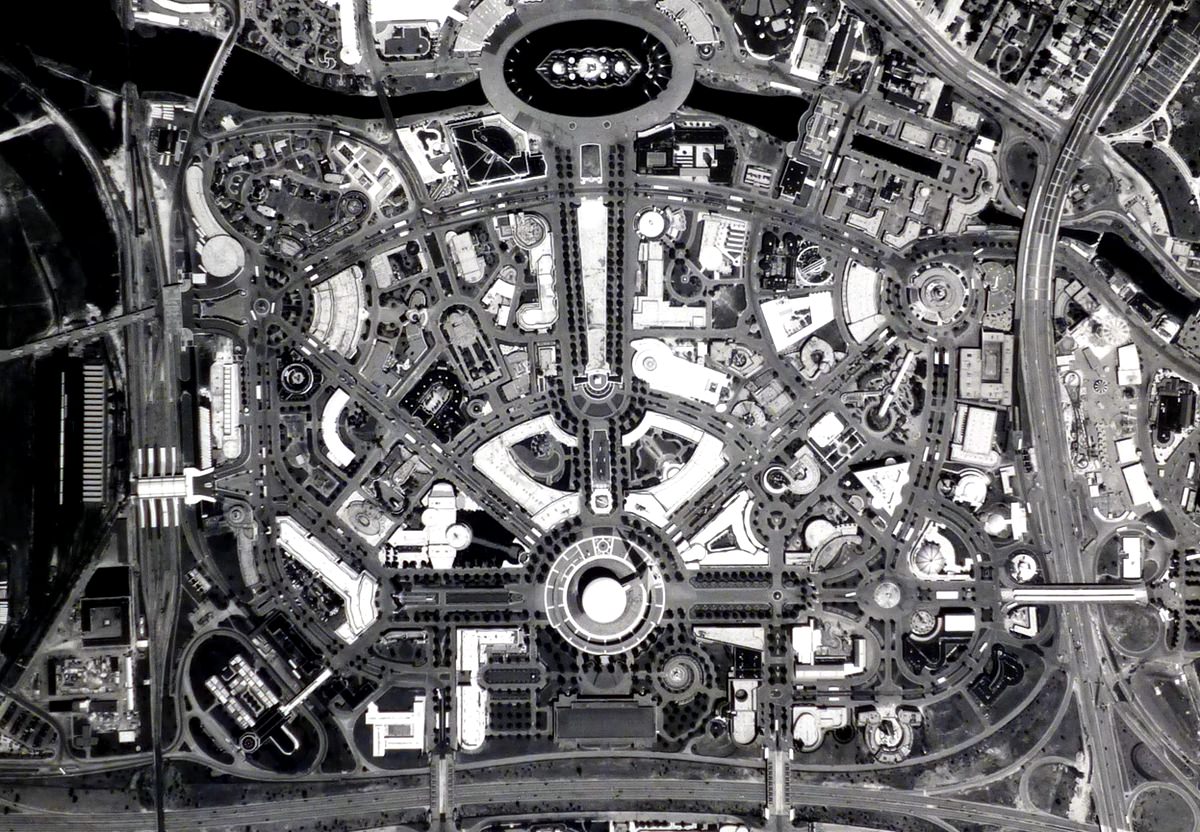
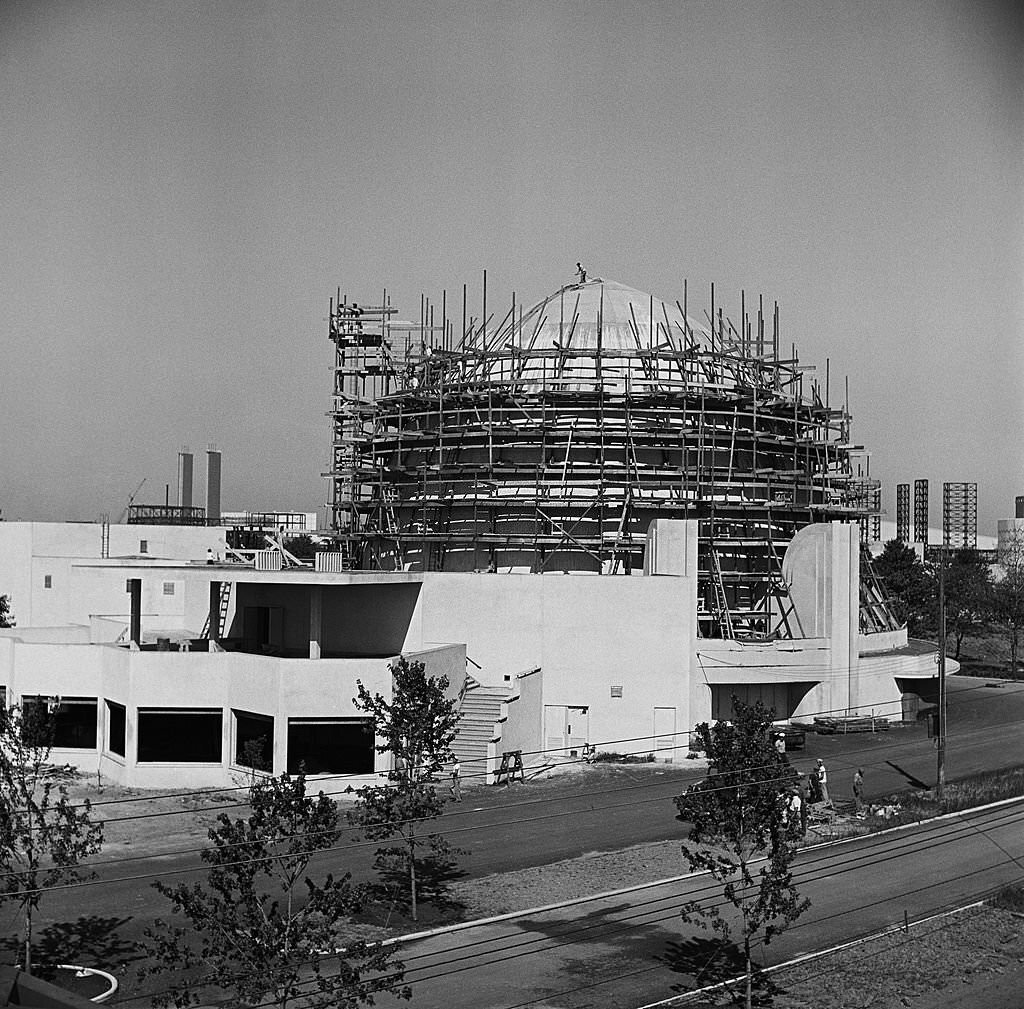
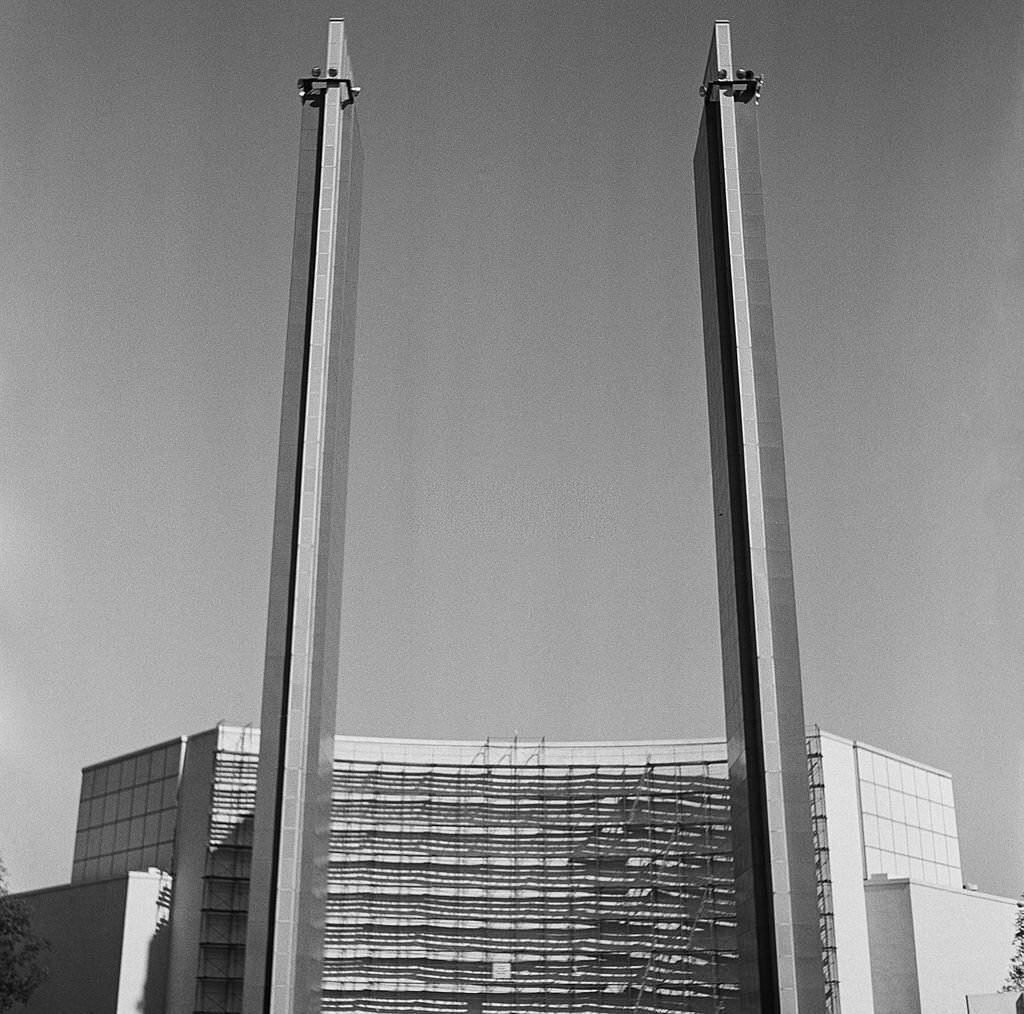
Construction of the fairgrounds was a massive undertaking that began years before opening day. Workers labored around the clock—literally, in shifts covering the full 24-hour day—to fill in land and erect structures across the sprawling Queens site. Corporate and government sponsors pushed architects to be creative and experimental. Building designs, materials, and furnishings broke from tradition at every turn. Several zones were arranged in a semicircular pattern radiating outward from the Theme Center, and five of the seven zones featured dedicated “Focal Exhibits” housed in their own buildings.
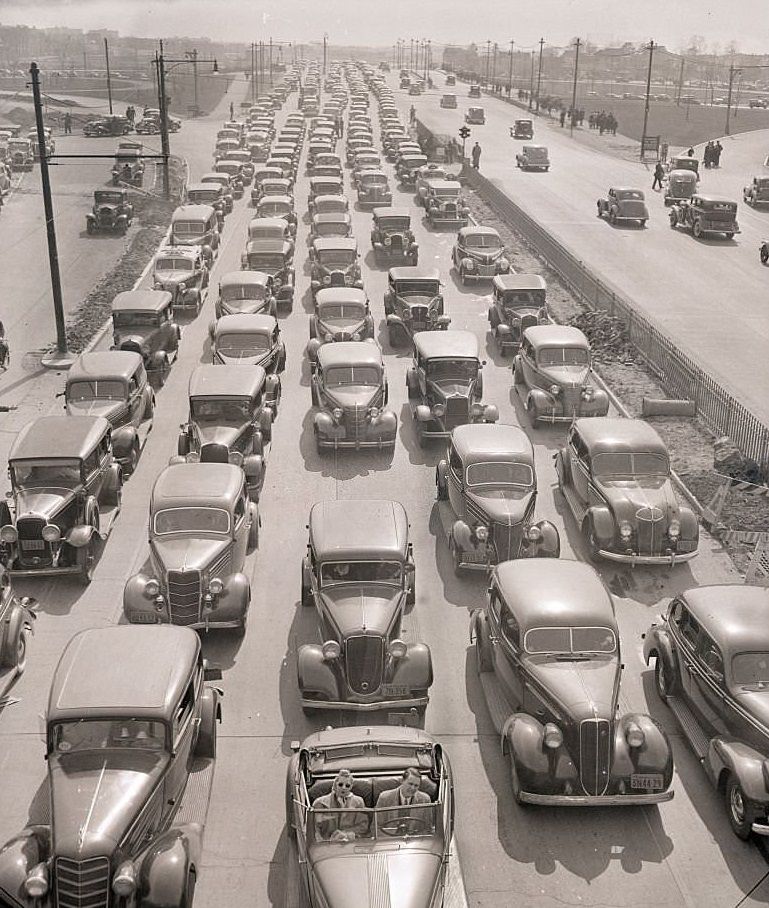
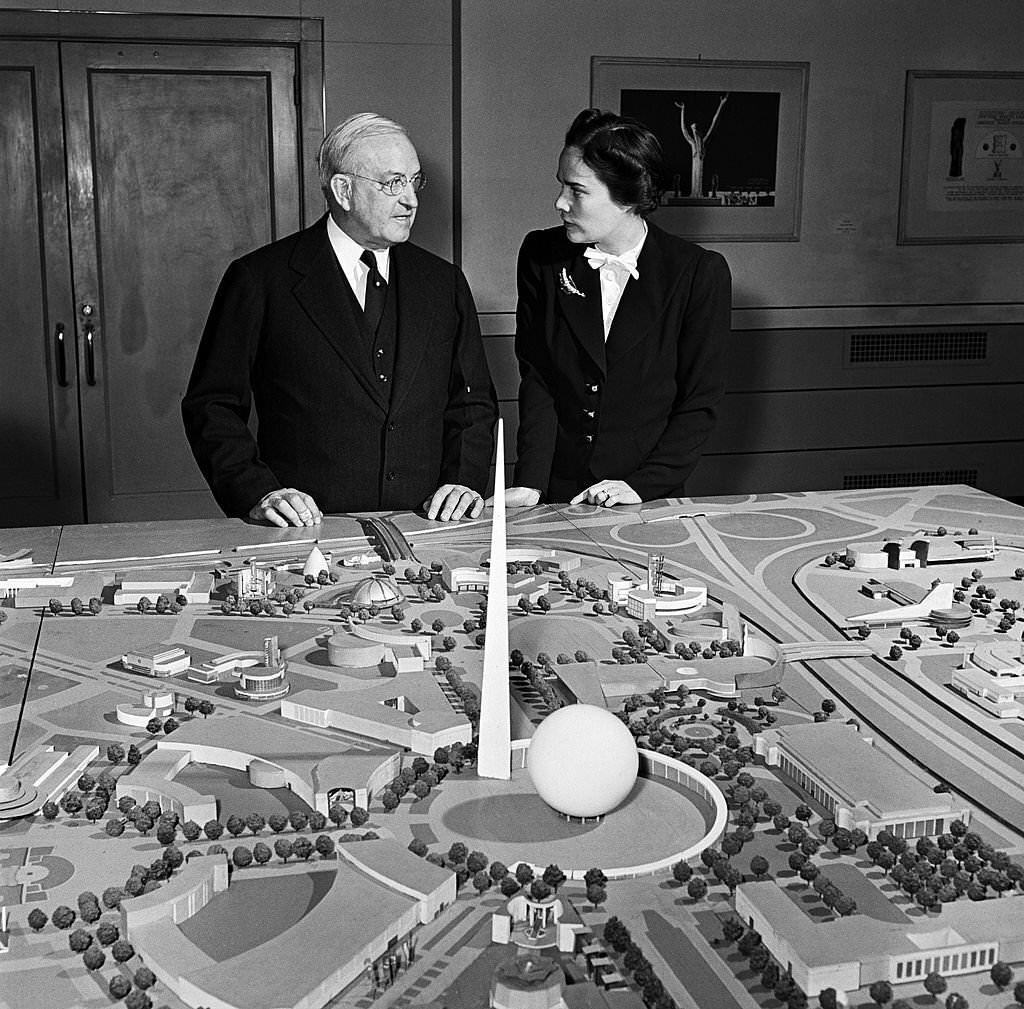
Even before the gates opened, the Fair was generating excitement. Architectural models circulated publicly, giving people a preview of what was being built. Some exhibits were still under construction when the Fair opened on April 30, 1939—yet 206,000 people showed up on the first day alone. Over the course of two full seasons, 44 million people passed through the gates to take in everything the Fair had to offer: marionette shows, thrill rides, girlie shows, and spectacular aquatic performances.
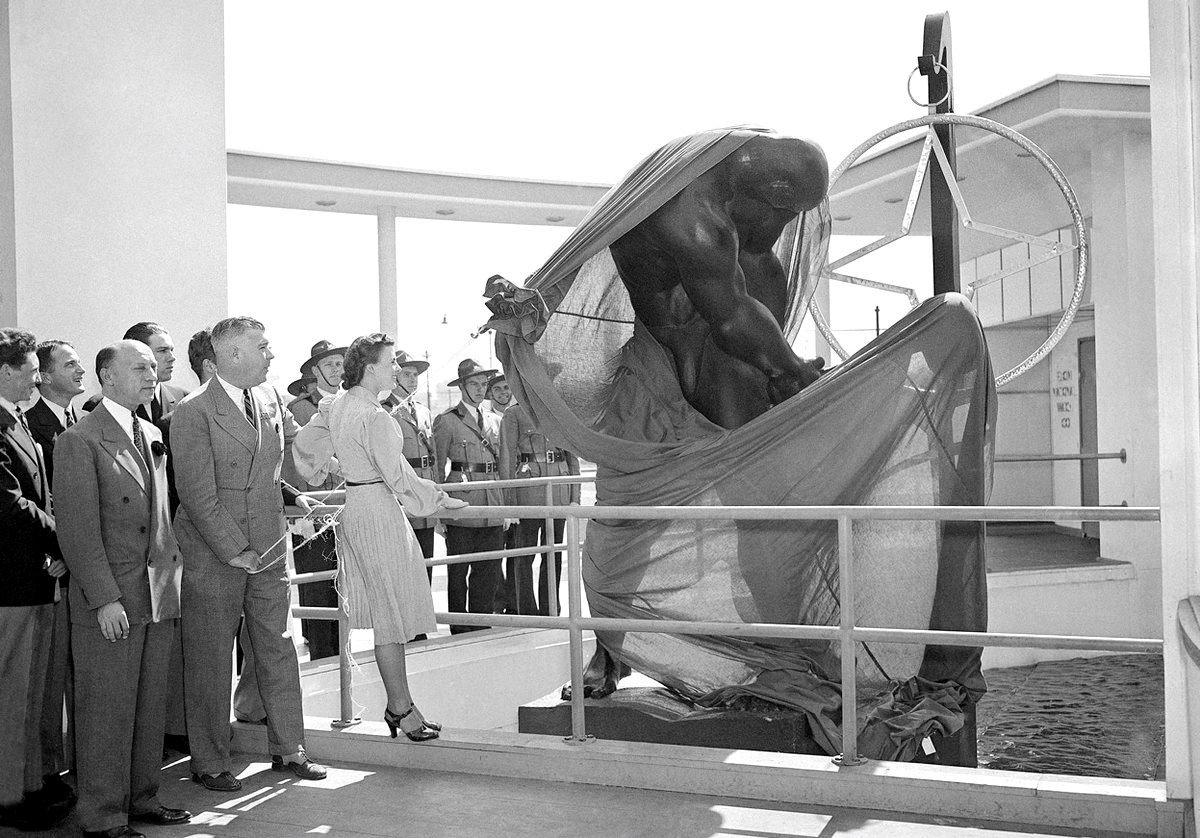
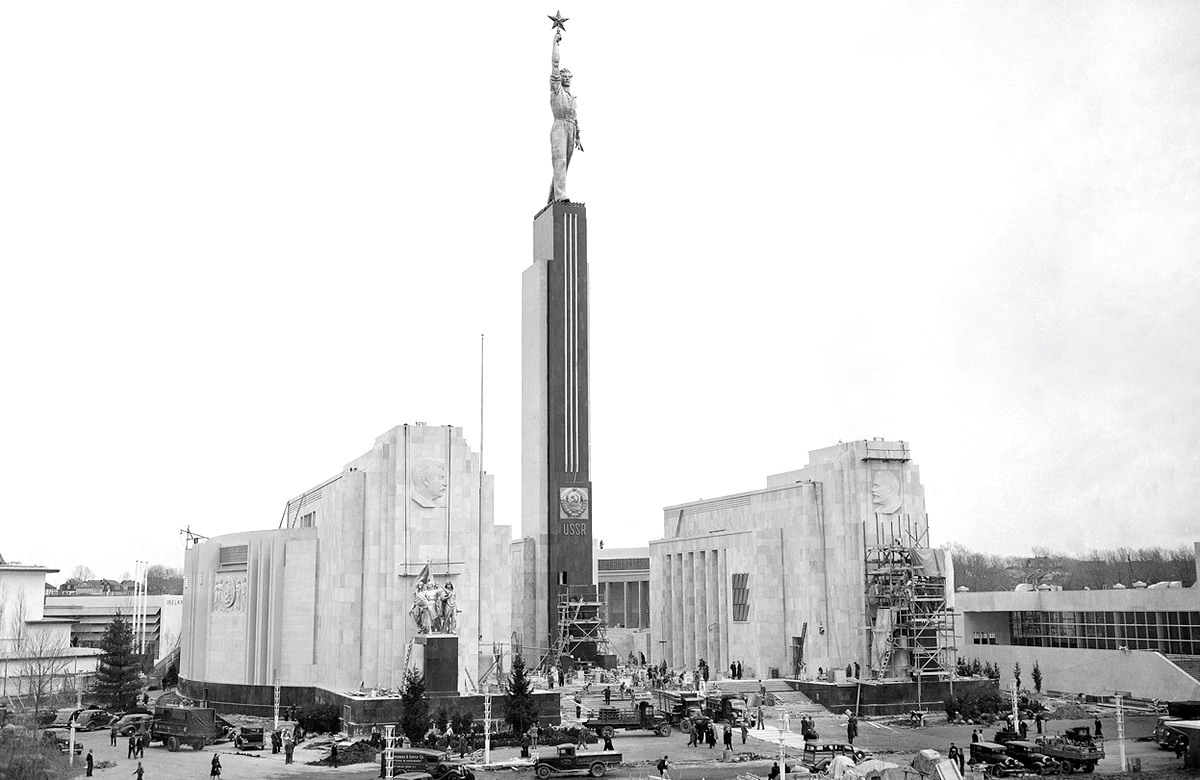
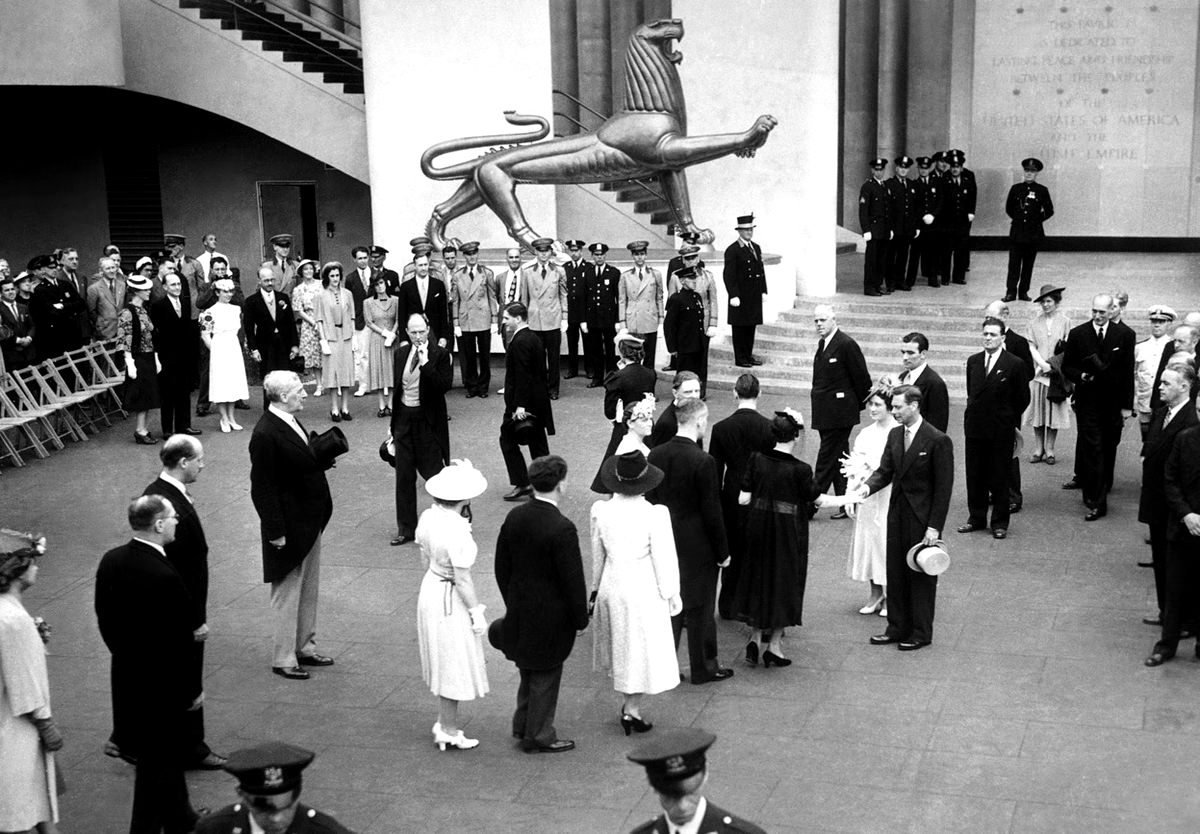
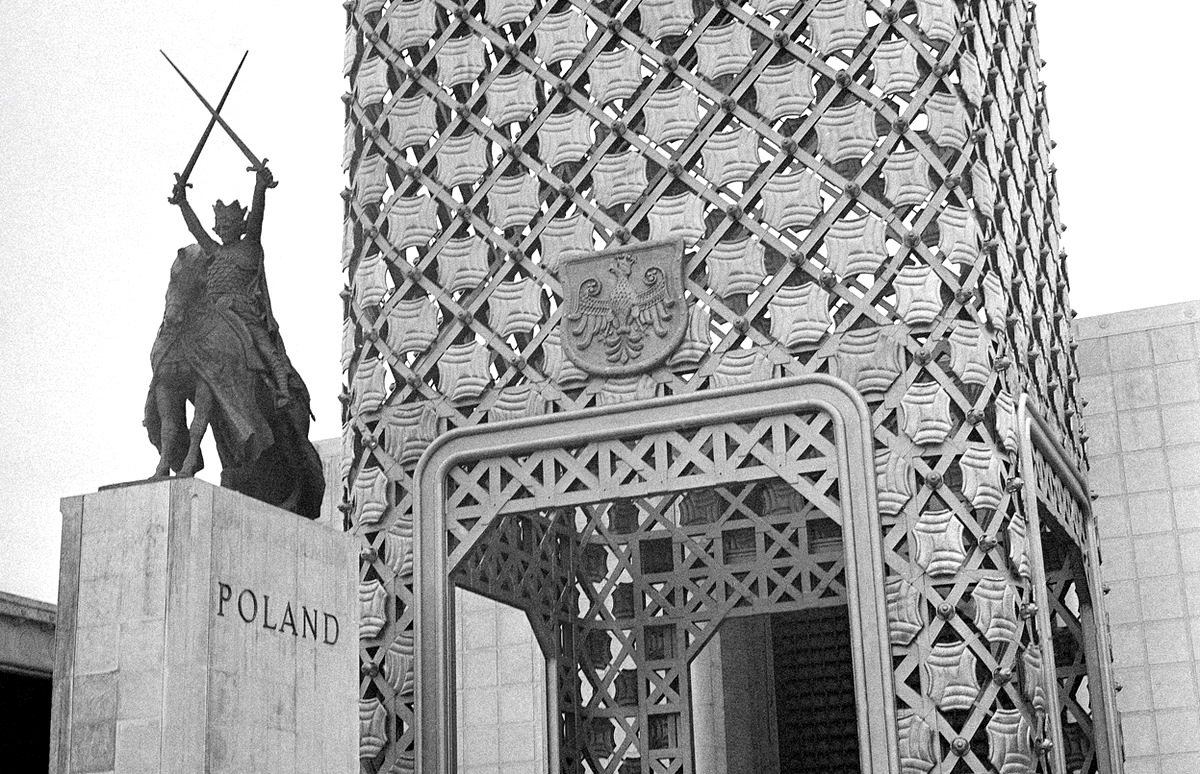
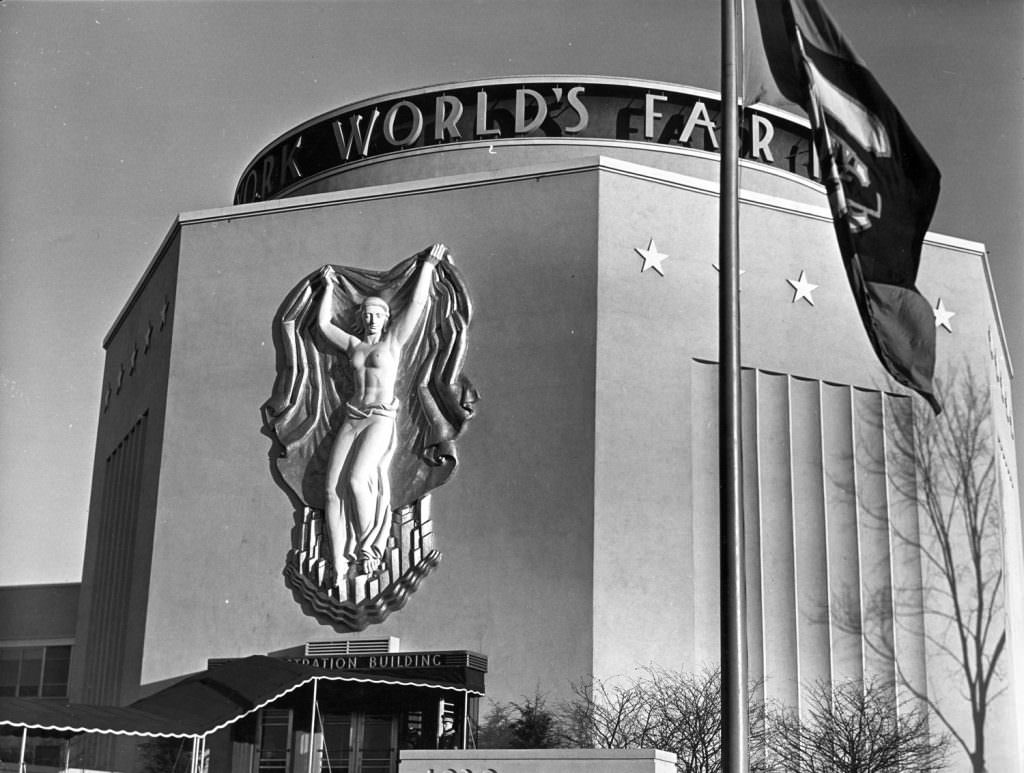
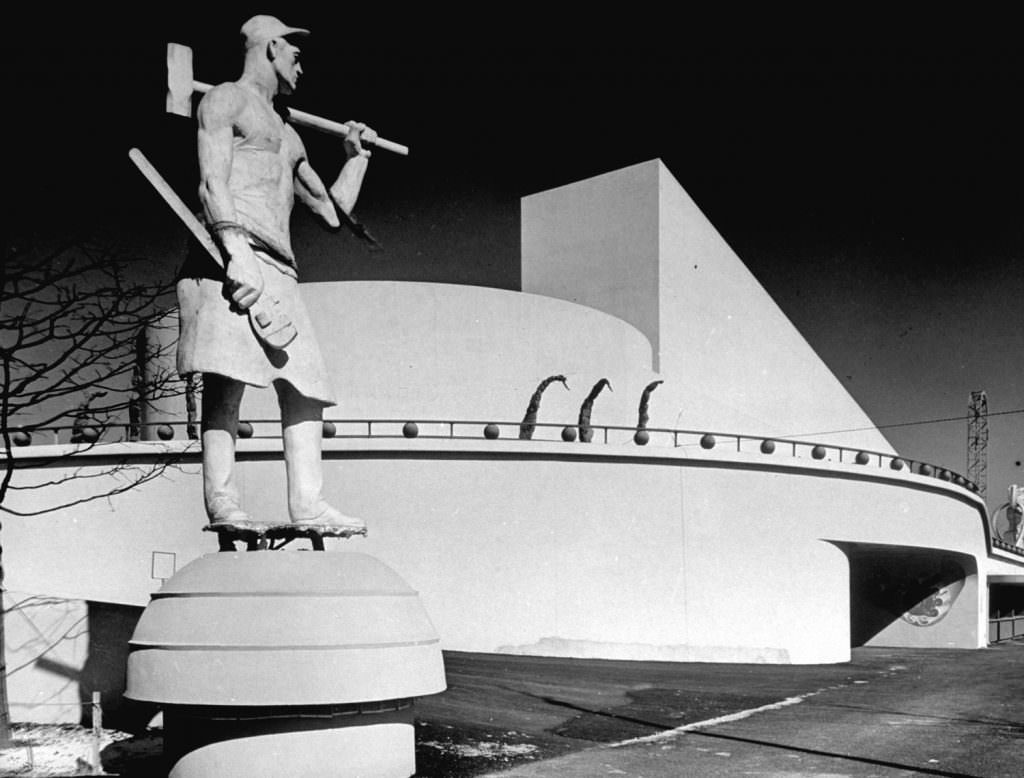
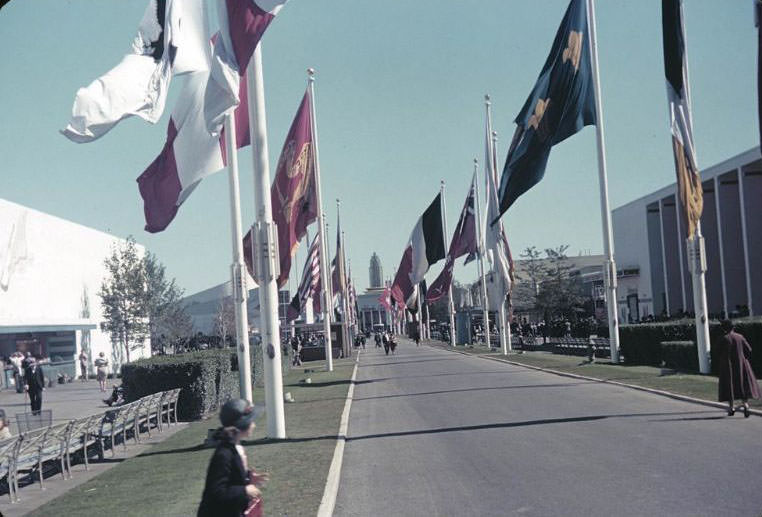
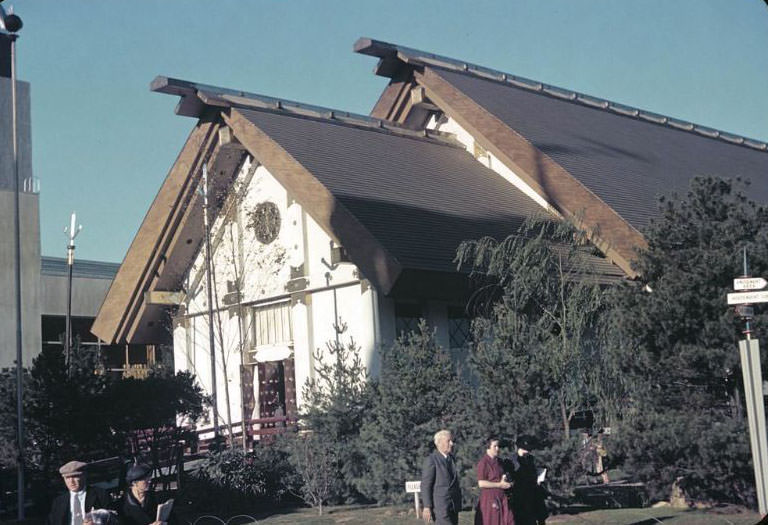
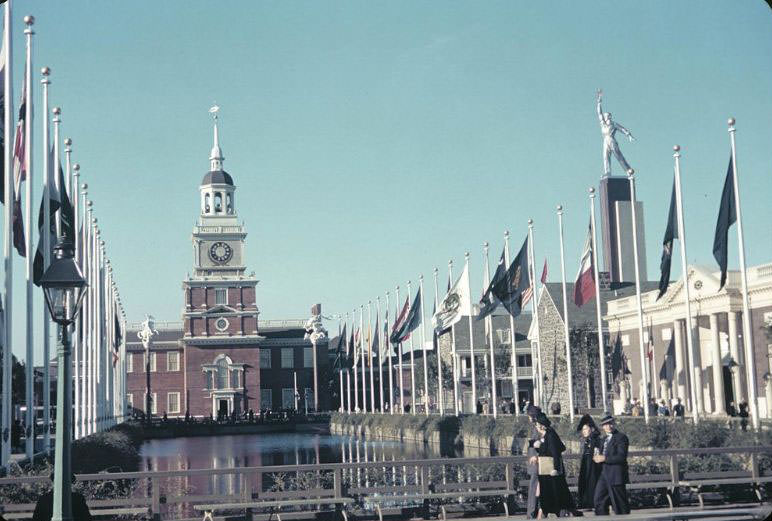
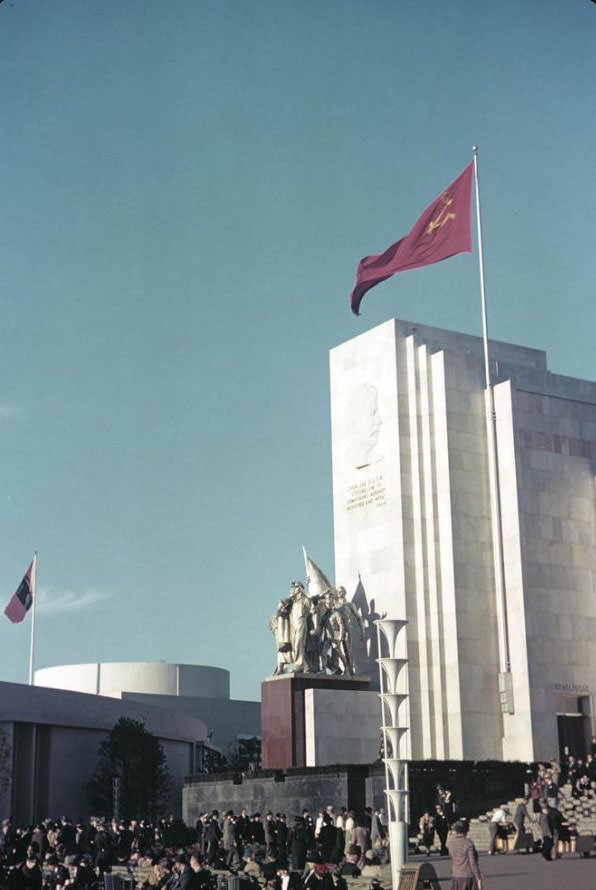
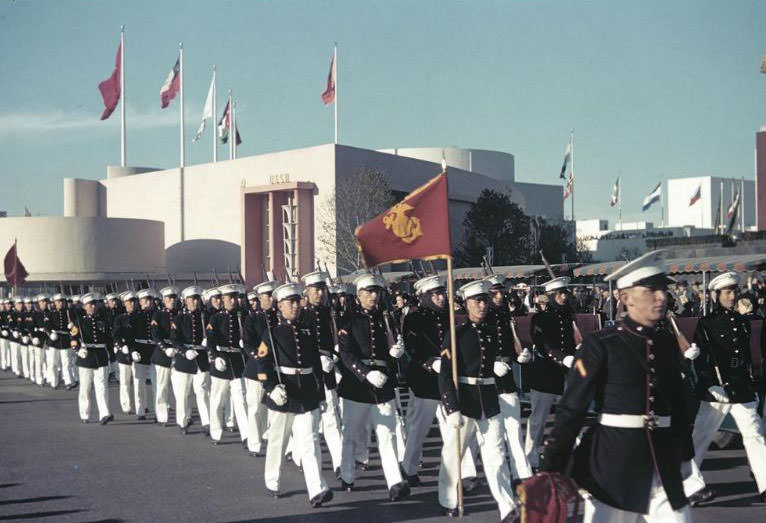
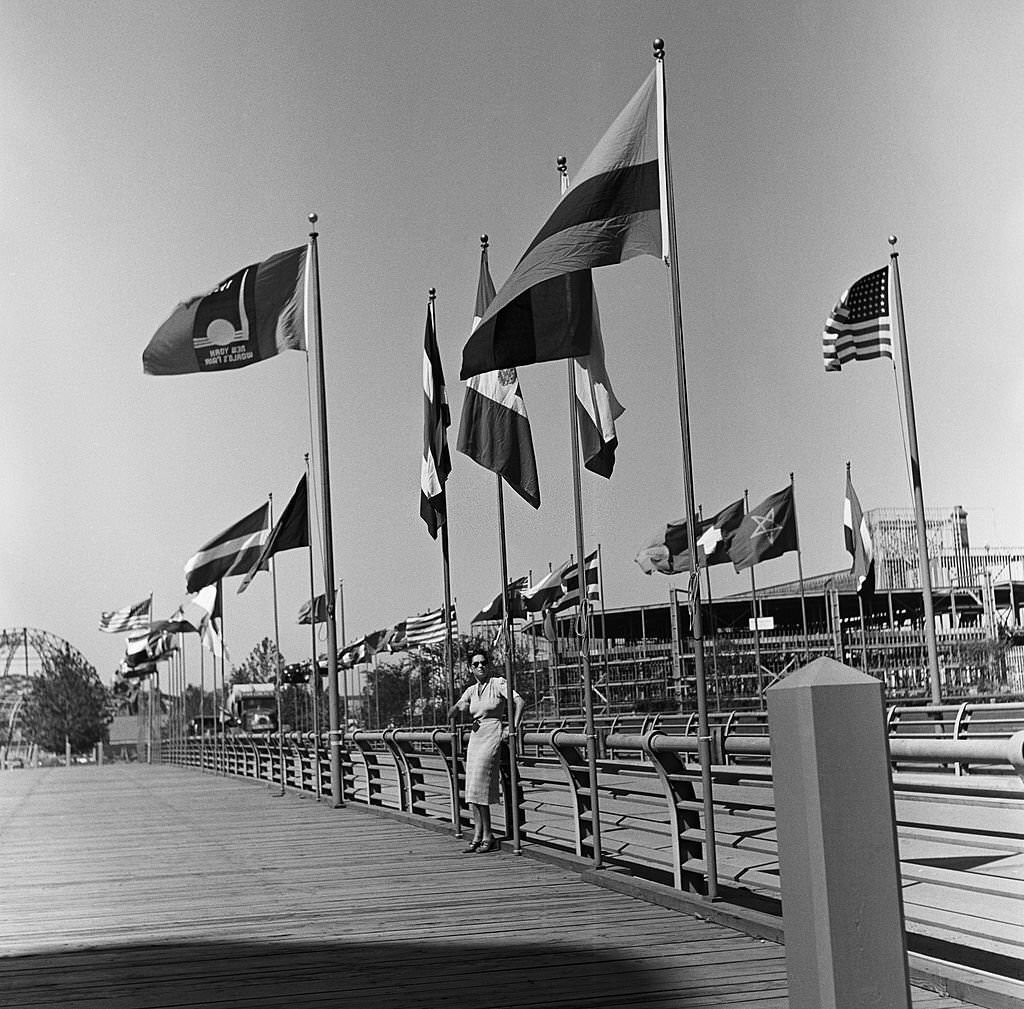
Nations from across the world built pavilions that reflected their culture and ambitions. The Soviet Union erected a towering structure topped with a massive statue of a worker, while Poland’s pavilion drew visitors with its distinct design. Japan set up its pavilion directly next to the Soviet one. The British Pavilion hosted one of the Fair’s most talked-about moments when King George VI and Queen Elizabeth visited on June 19, 1939—the first time a reigning British monarch had set foot on American soil.
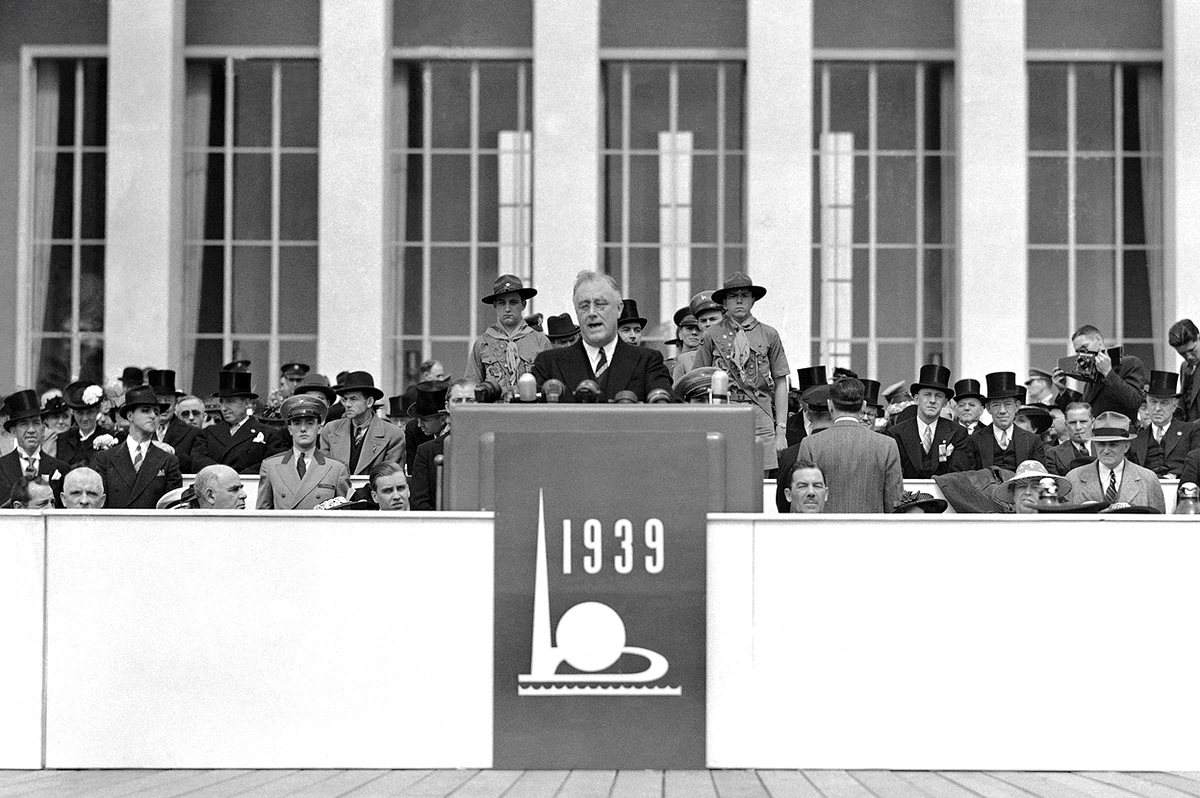
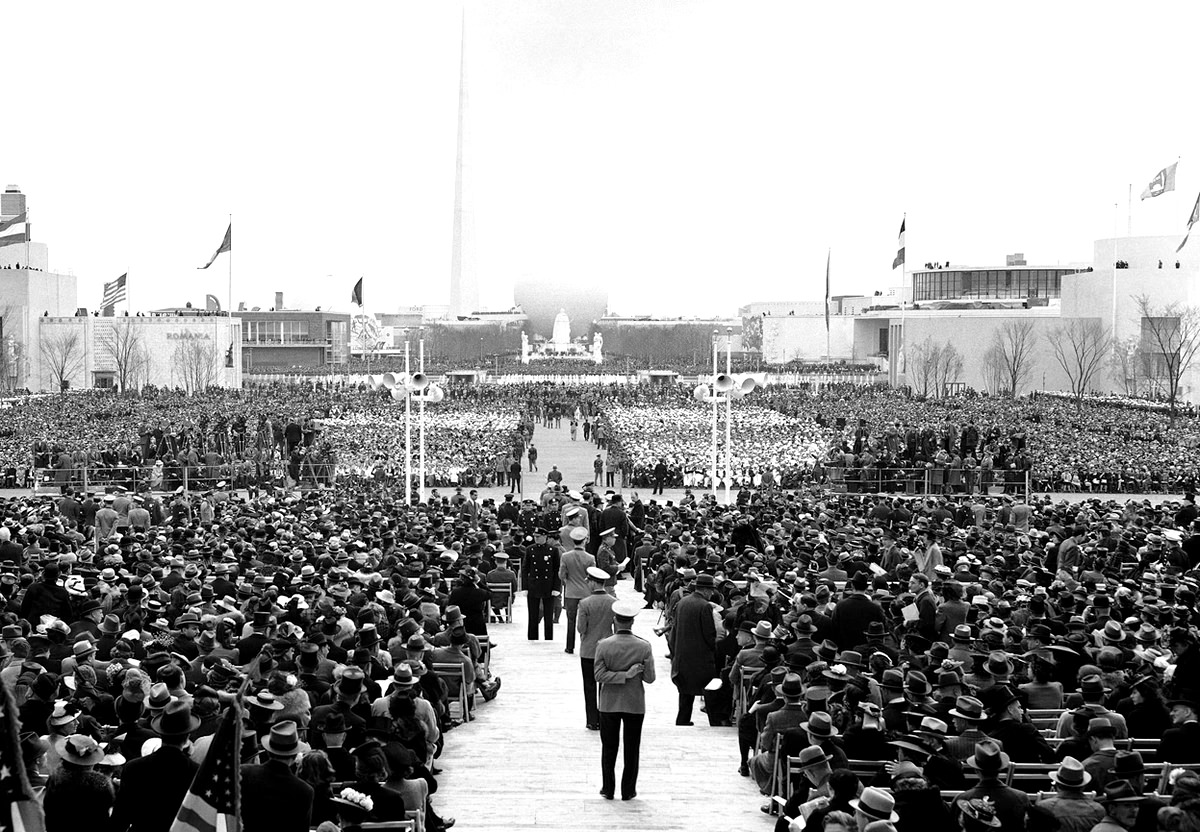
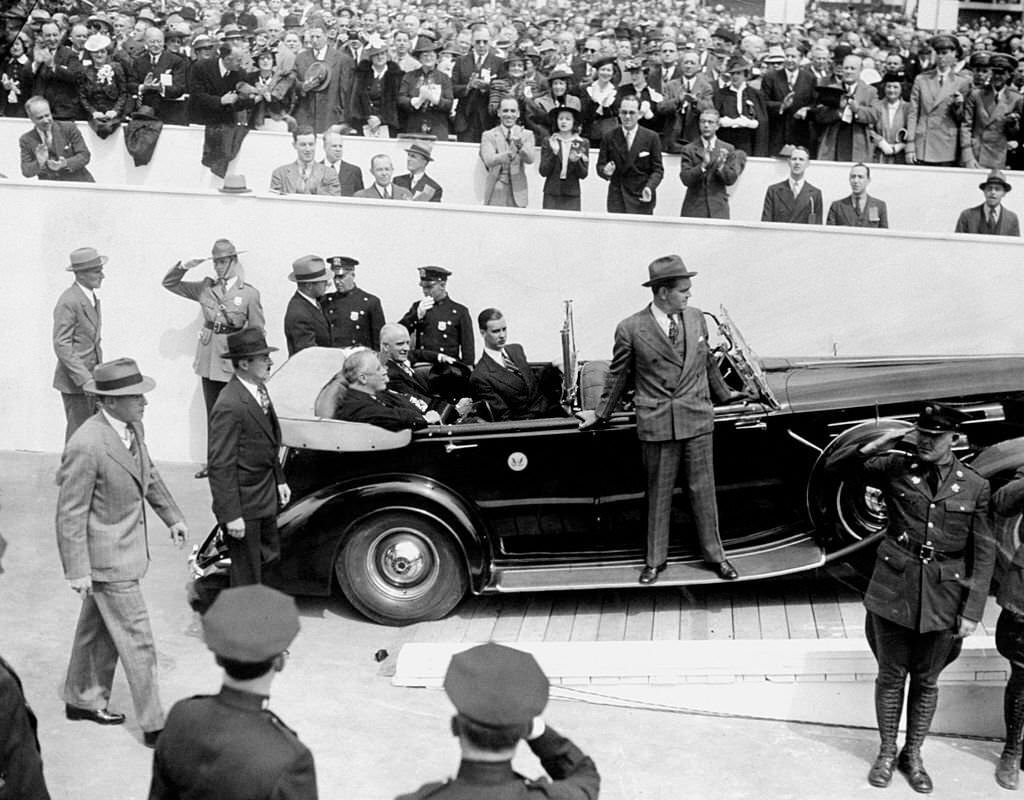
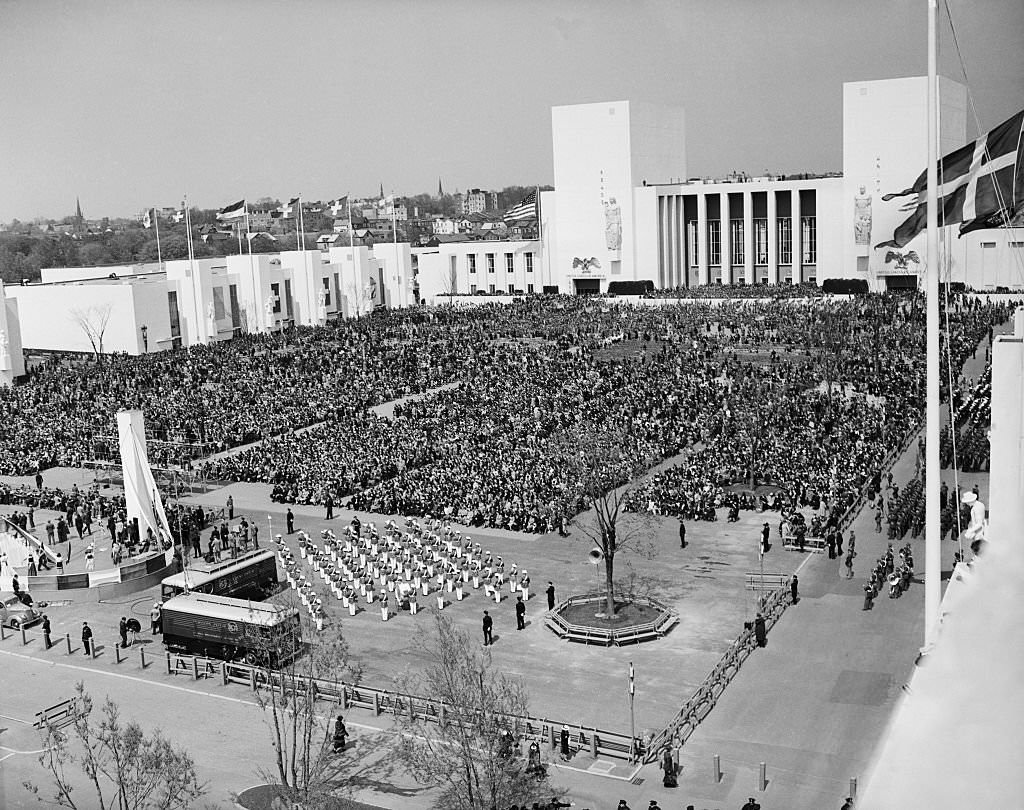
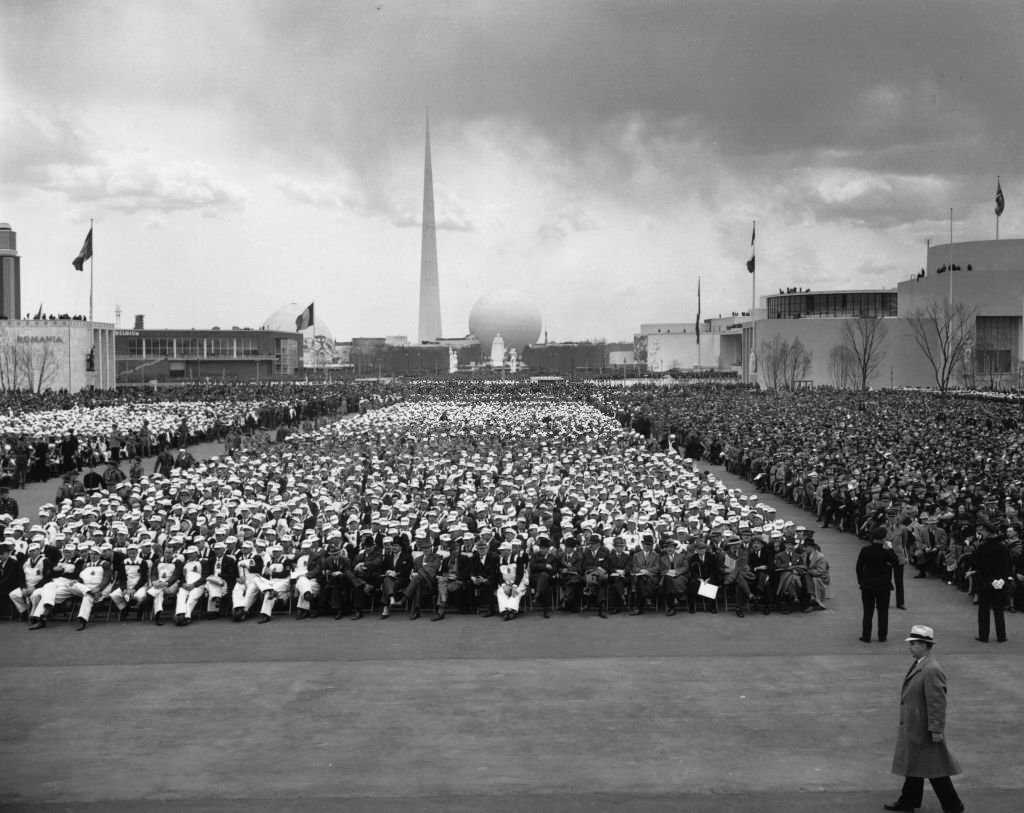
President Franklin D. Roosevelt delivered the opening speech on April 30, 1939, flanked by Boy Scouts as he addressed a crowd of 35,000 gathered in the Court of Peace. He declared that America had “hitched her wagon to a star of good will” and expressed hope for peace among nations—a message that carried particular weight with war already brewing in Europe. Approximately 1,000 visitors watched his speech live on around 200 televisions scattered throughout the fairgrounds, marking one of the earliest large-scale uses of broadcast television in American history.
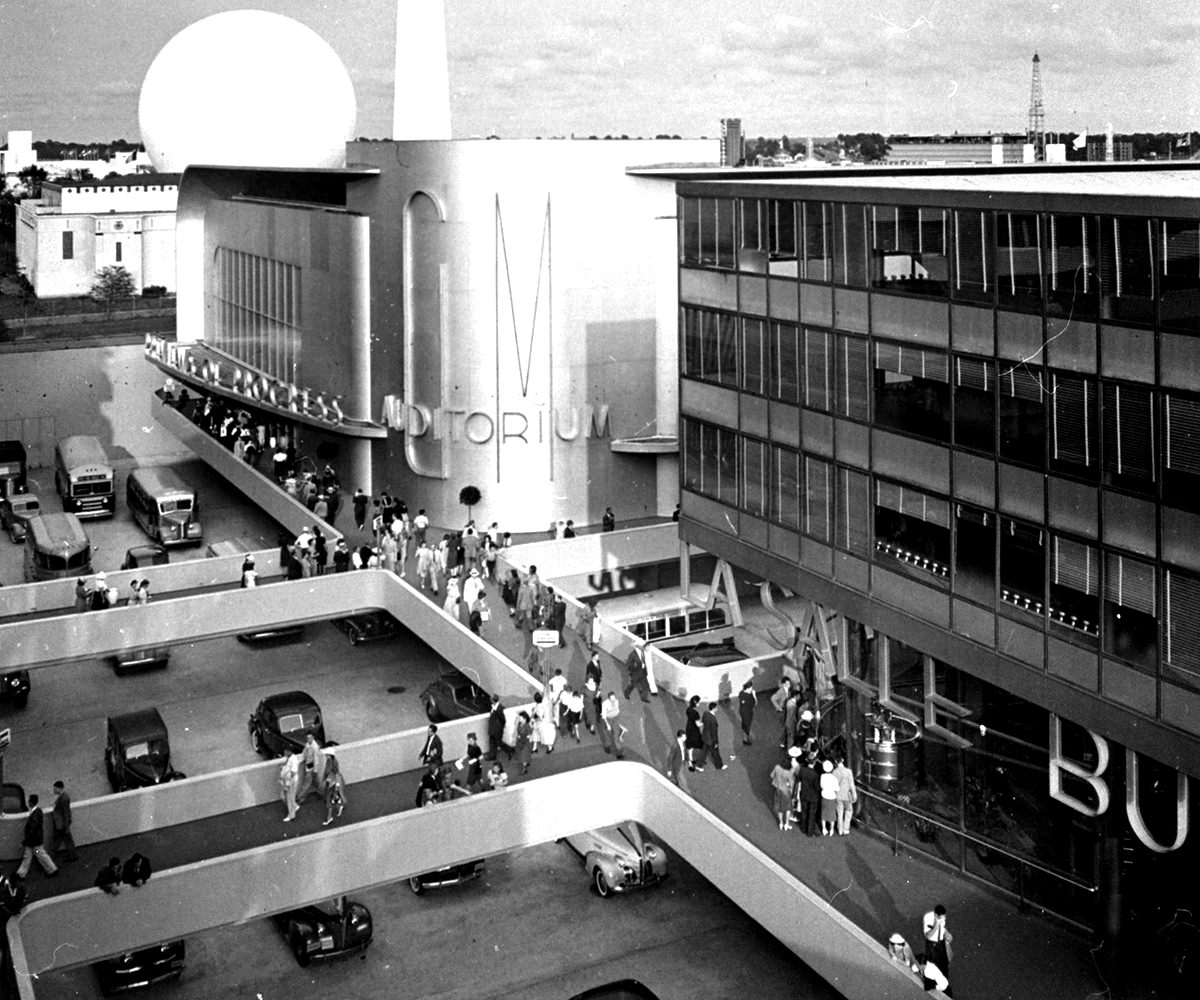
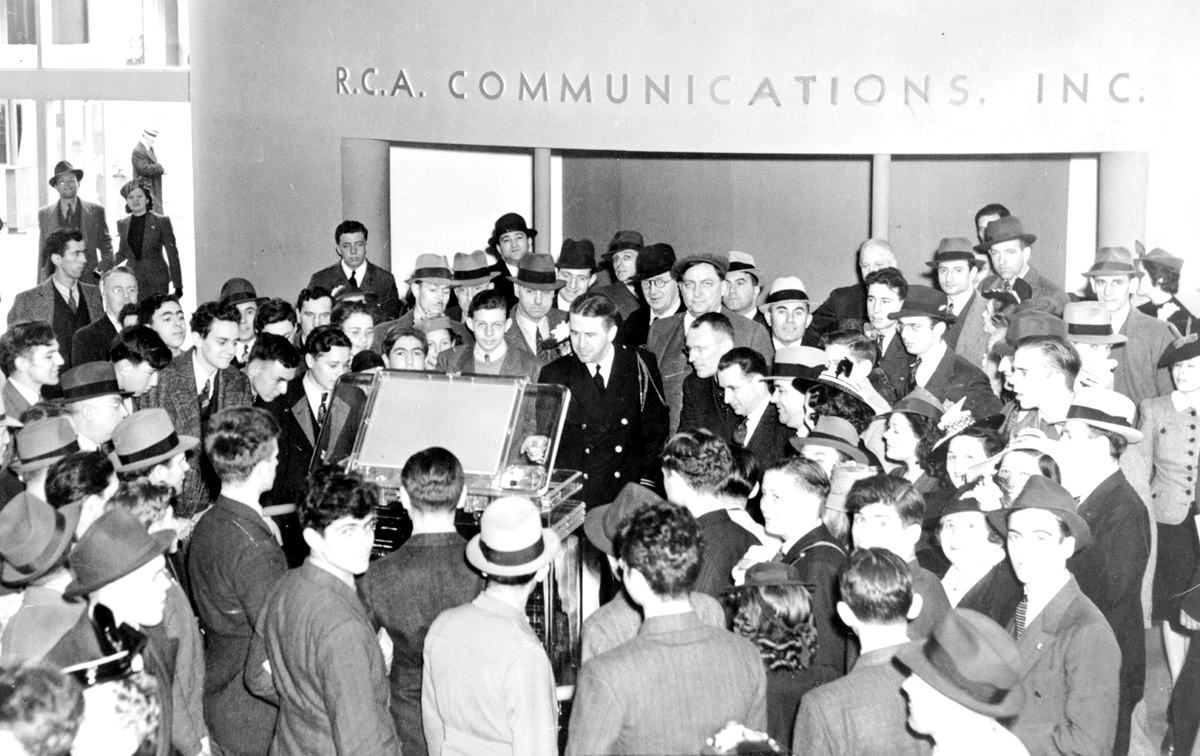
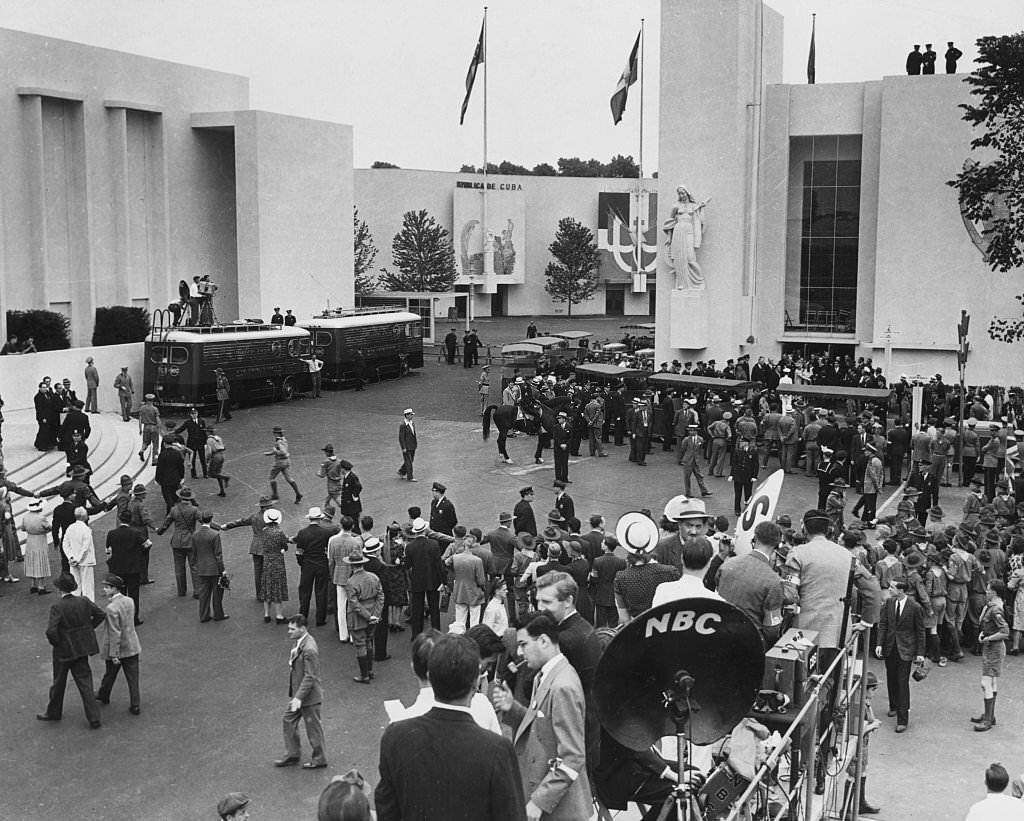
Television was more than just a tool for broadcasting Roosevelt’s speech—it was an exhibit in its own right. The RCA pavilion drew large crowds to see television receivers up close, and NBC’s mobile transmitters captured live footage of the royal visit. The dedication of the RCA Building was even beamed eight miles through the air to receivers at Radio City in Manhattan, giving New York reporters what one photographer described as “a foretaste of the future.” The Fair was essentially television’s public debut to a mass American audience.
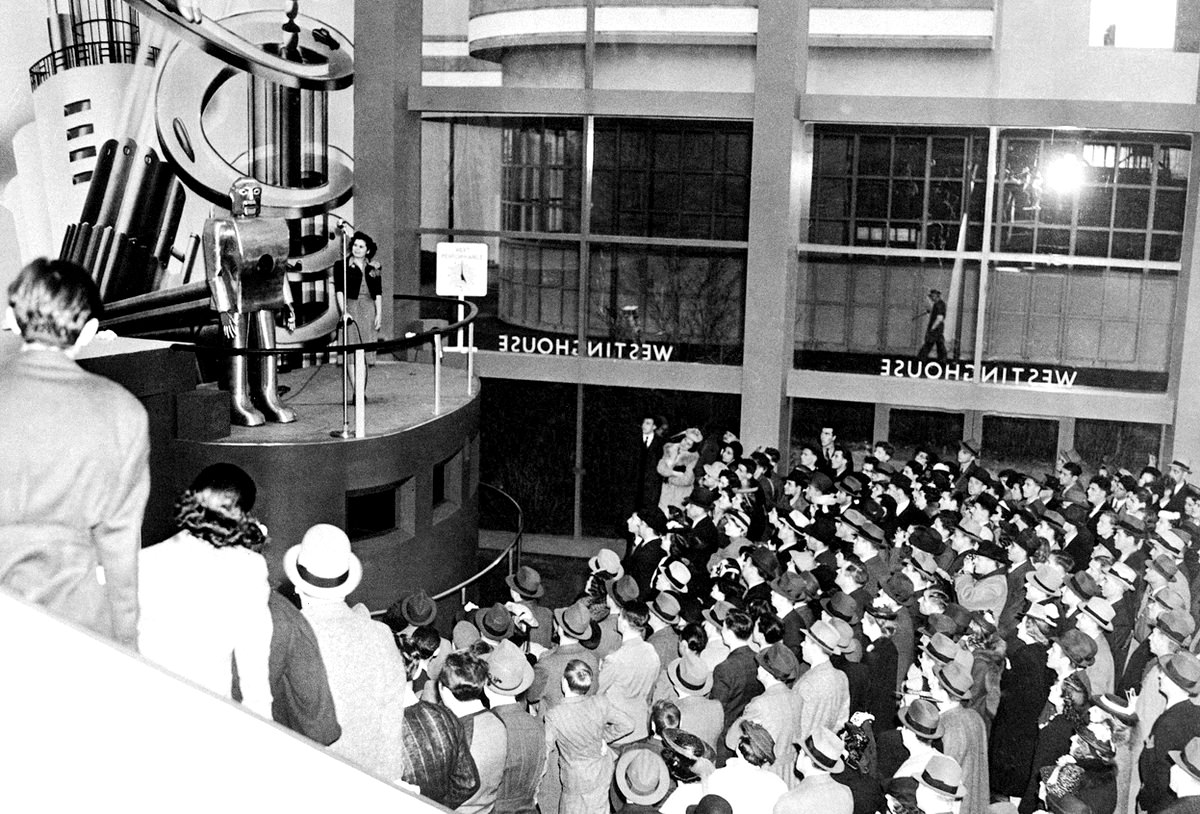
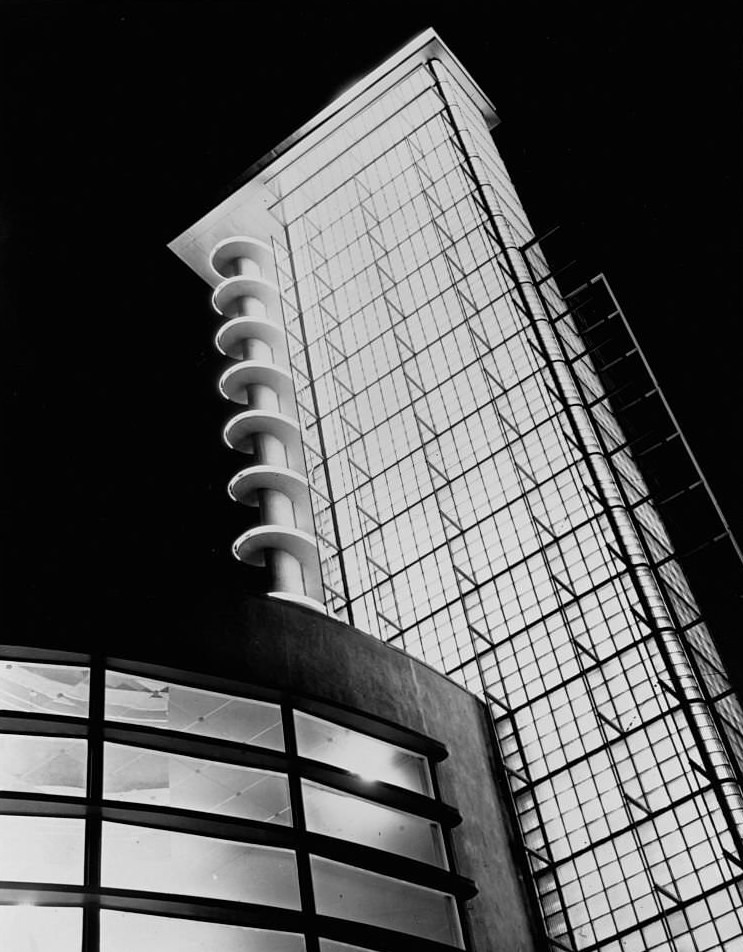
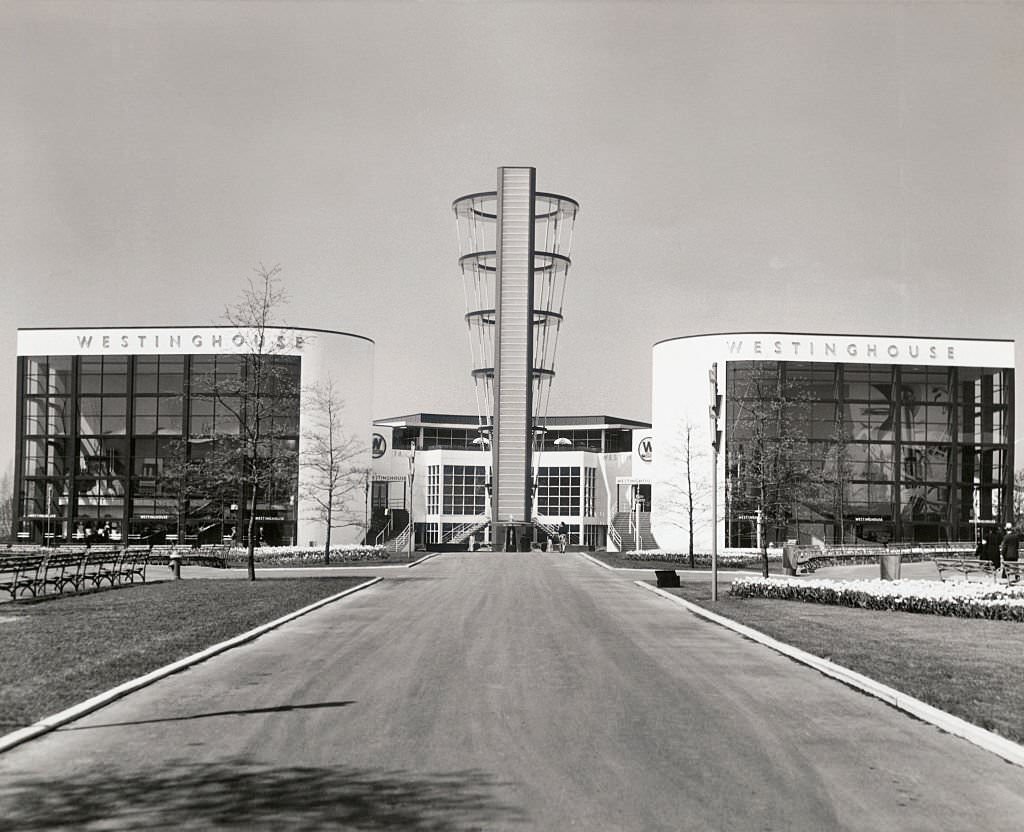
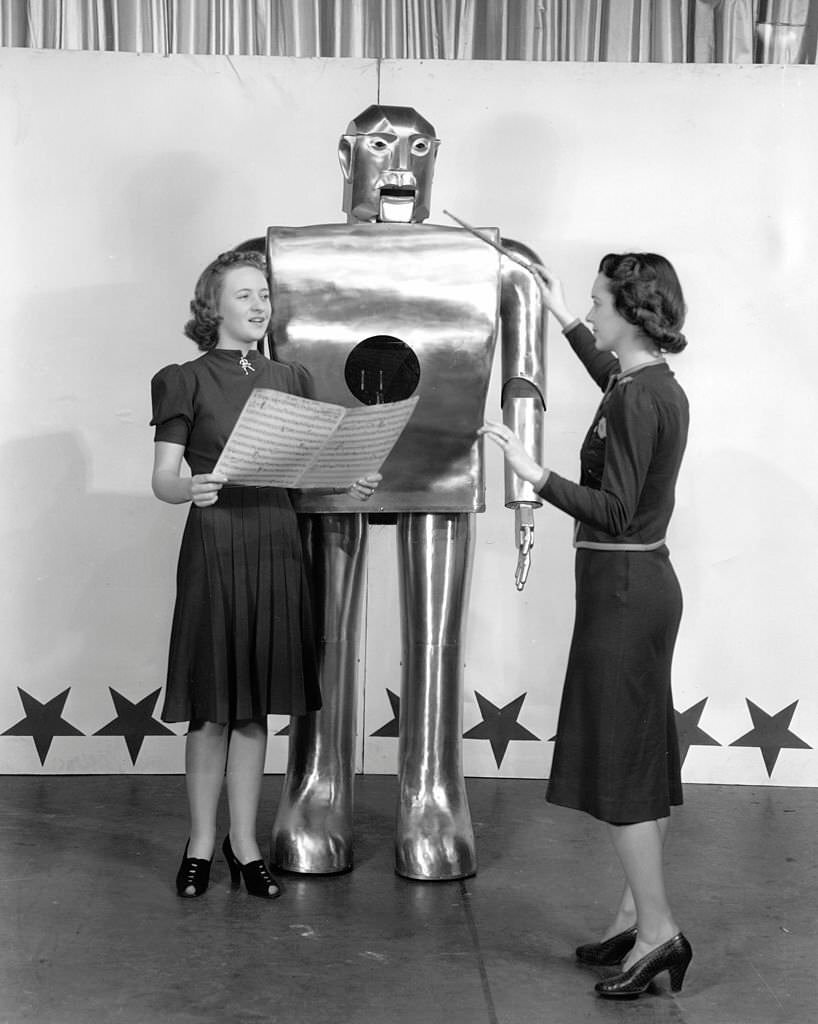
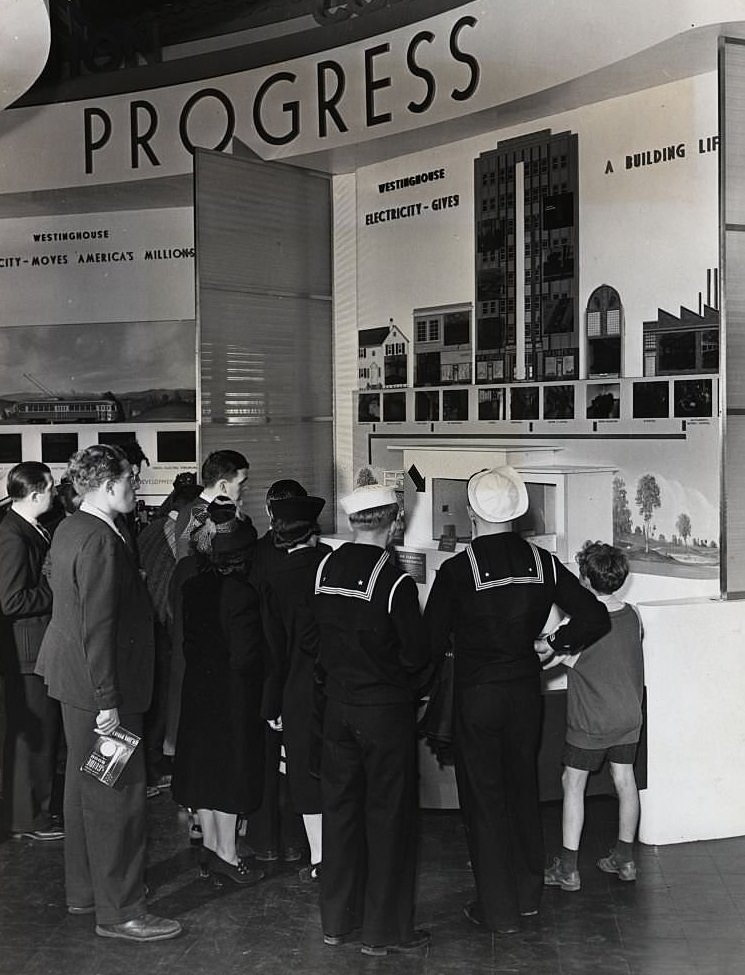
The Westinghouse Building was one of the Fair’s most popular destinations. Its Hall of Electrical Living drew crowds six people deep on the sidewalks outside, all straining to watch Elektro—a seven-foot-tall robot capable of walking, talking, smoking a cigarette, and performing dozens of mechanical tricks. Westinghouse also buried the now-famous Time Capsule beneath Flushing Meadows on September 23, 1938, not to be opened until the year 6939—five thousand years in the future. Inside, workers placed everyday items including a Mickey Mouse watch, a Gillette safety razor, a kewpie doll, a dollar bill, a pack of Camel cigarettes, and millions of pages of text on microfilm. Seeds from a dozen common crops—alfalfa, barley, carrots, corn, cotton, flax, oats, rice, soybeans, sugar beets, tobacco, and wheat—were also sealed inside.
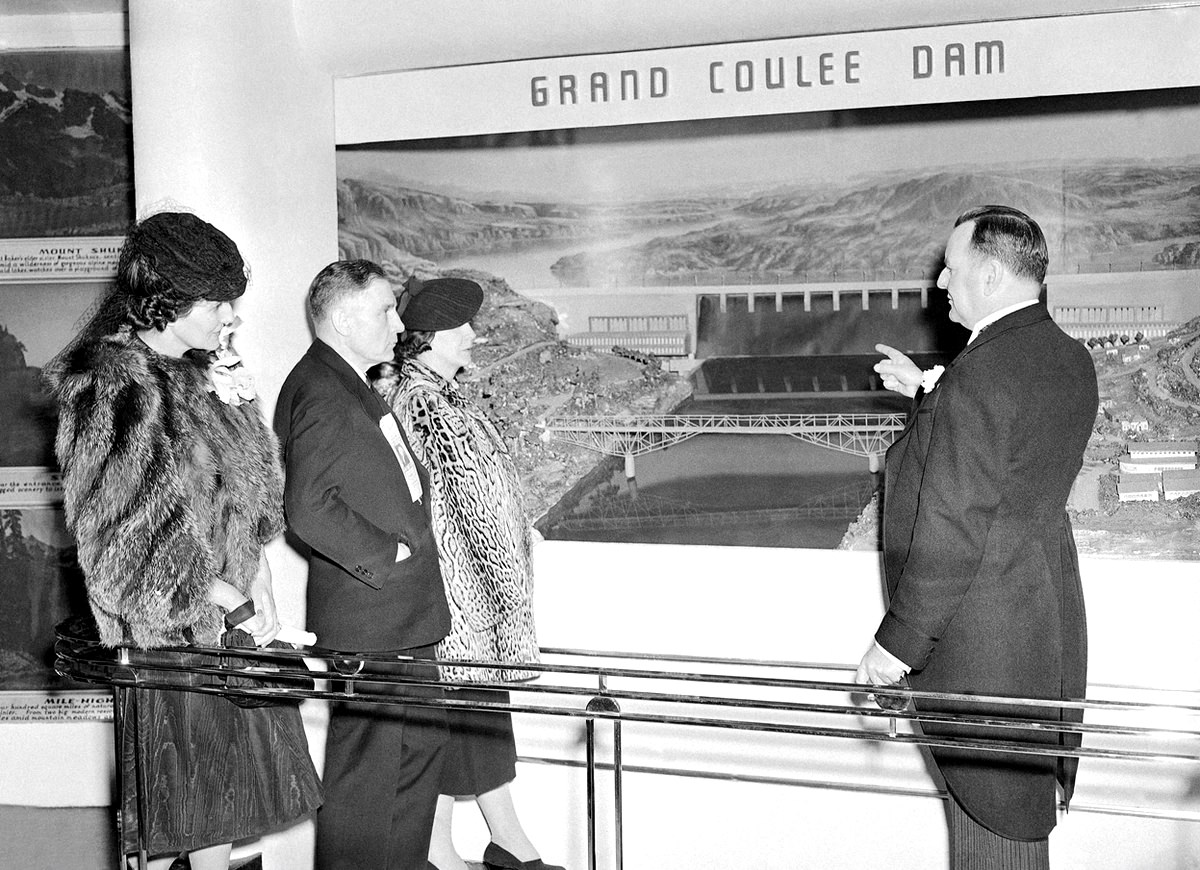
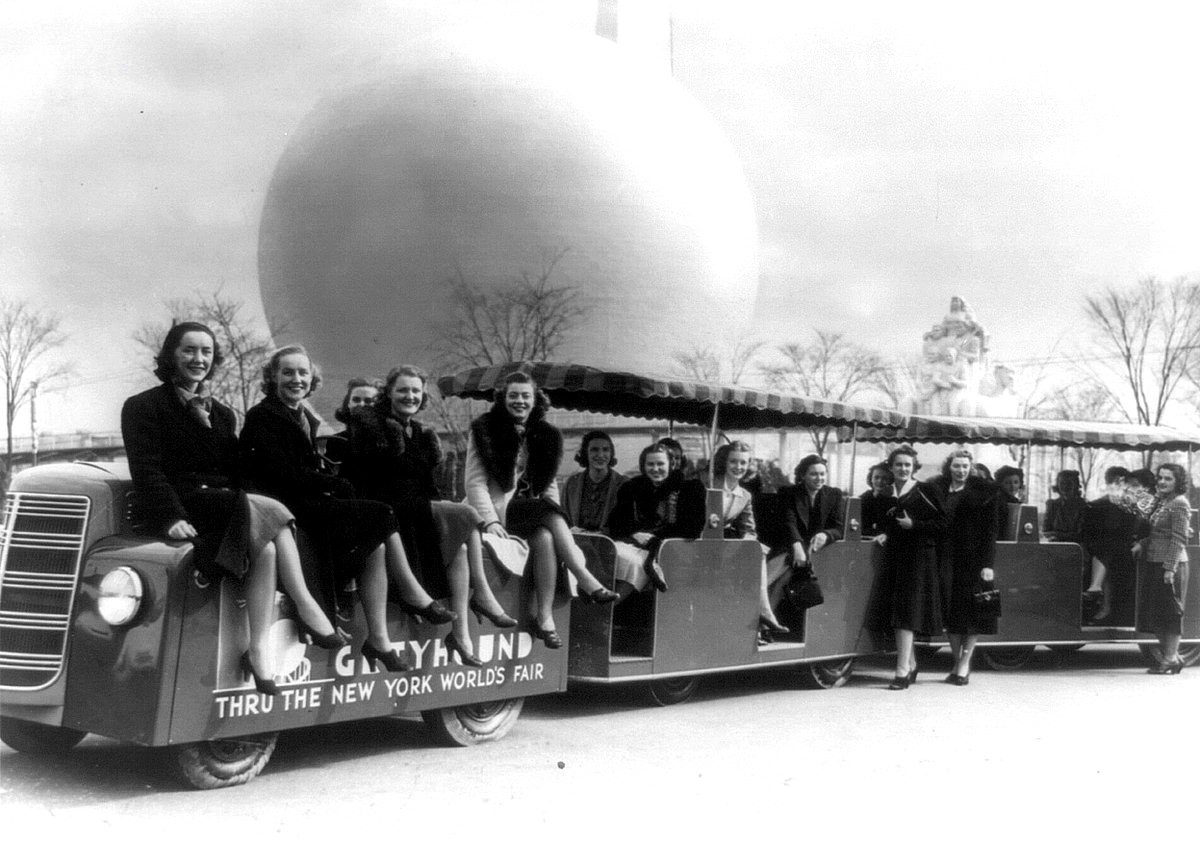
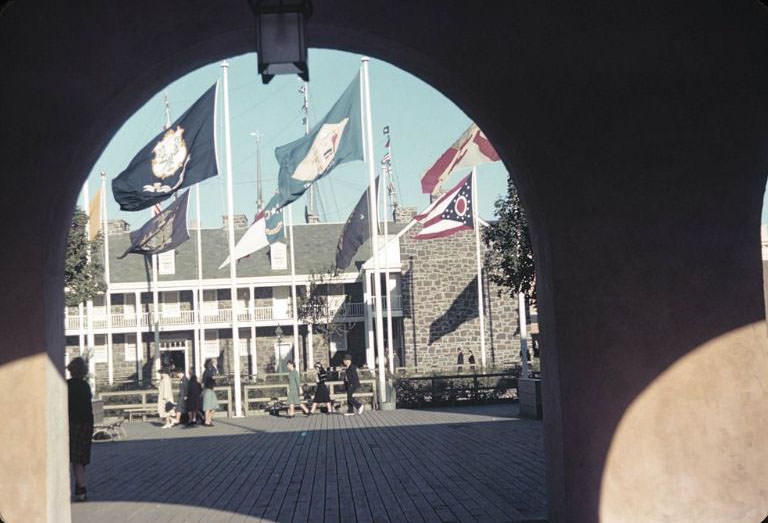
State and regional exhibits filled the Court of States with dioramas, models, and demonstrations of local industry and achievement. Washington State showcased a detailed diorama of the Grand Coulee Dam, while other states brought their own signature displays. The fairgrounds hummed with activity at every hour, and staff ferried visitors between pavilions on small tractor trains that wound through the vast grounds.
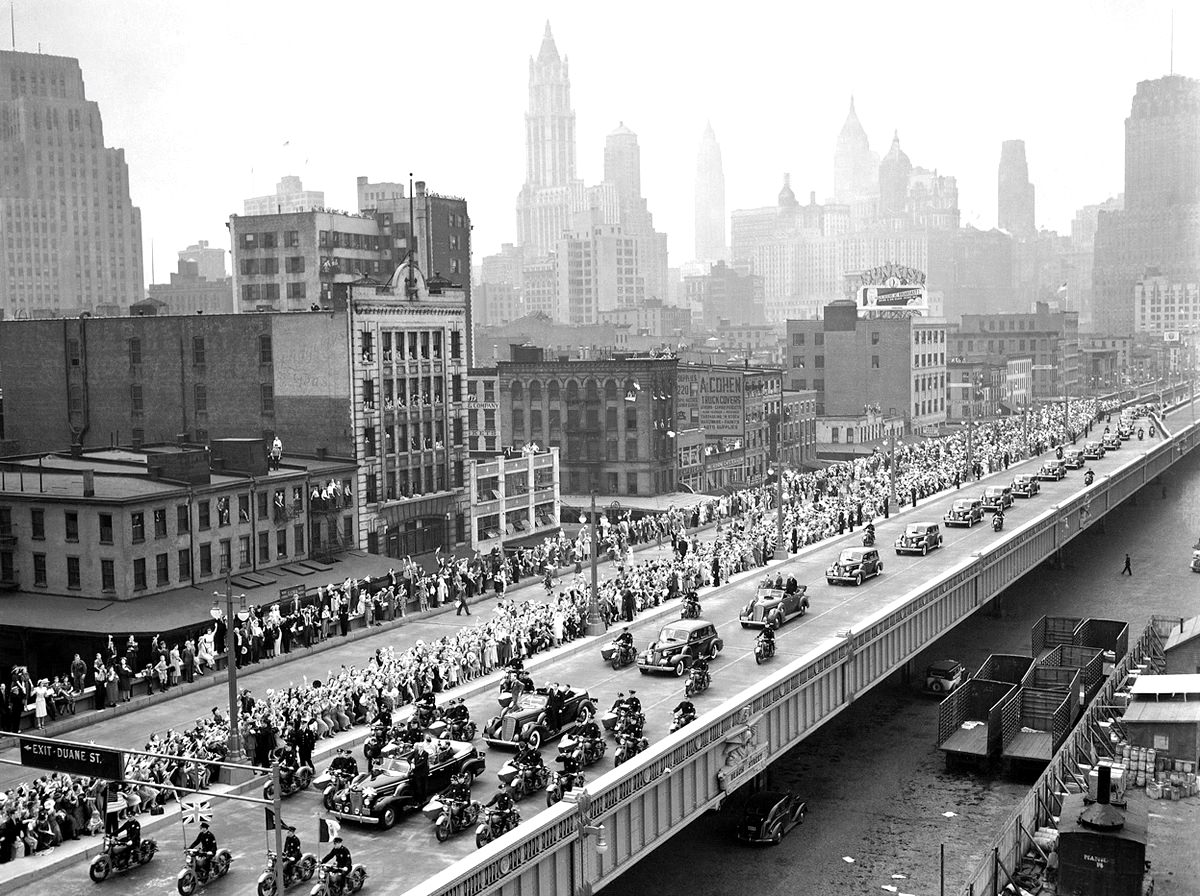
The royal visit in June 1939 brought enormous crowds and press attention. King George VI and Queen Elizabeth were escorted by a score of New York motorcycle police, with security personnel standing guard on the running boards of the royal car. NBC’s mobile television transmitters captured the moment live. Inside the British Pavilion, the royal couple received presentations and toured the exhibits—a gesture of Anglo-American friendship at a moment when the world was edging toward war.
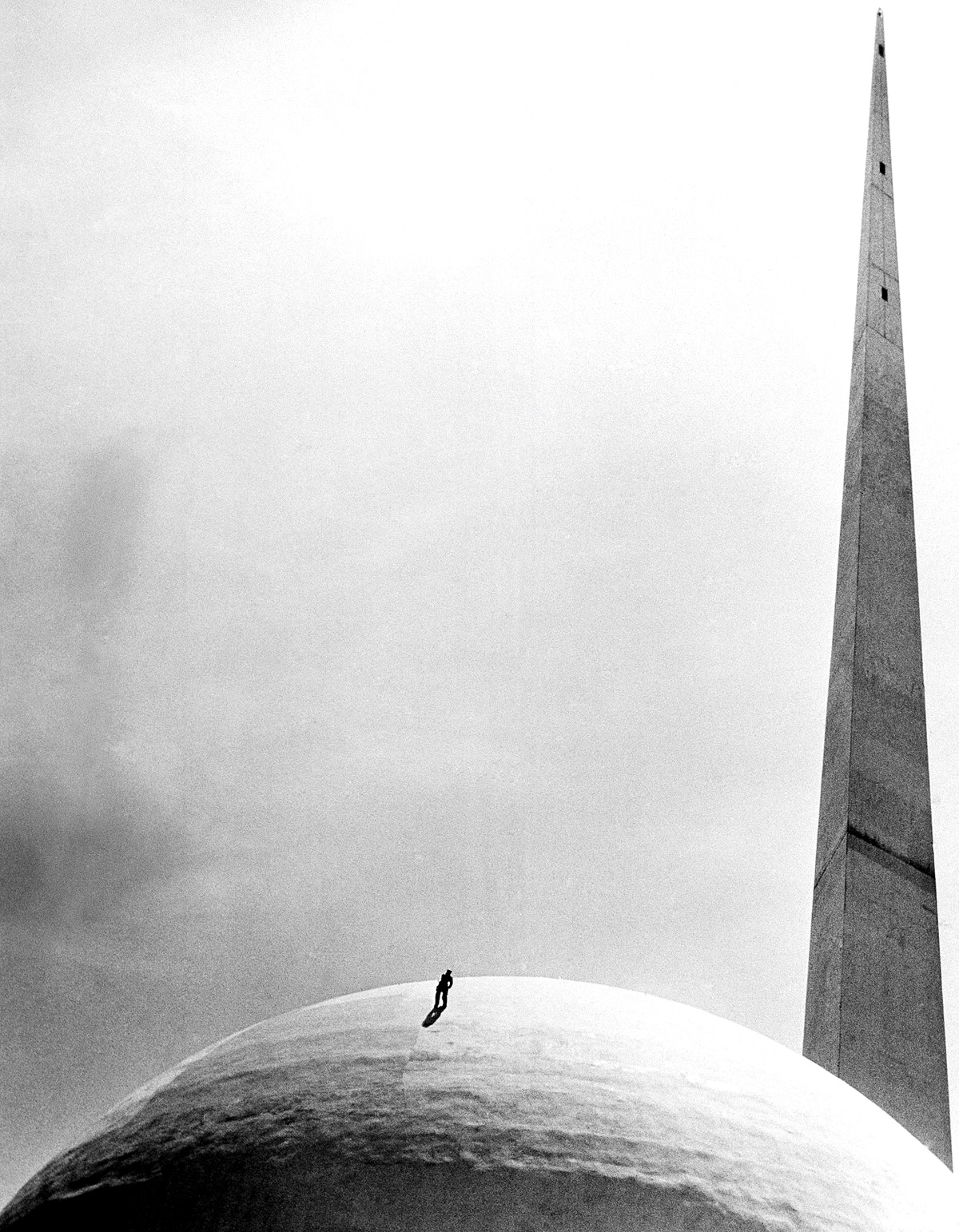
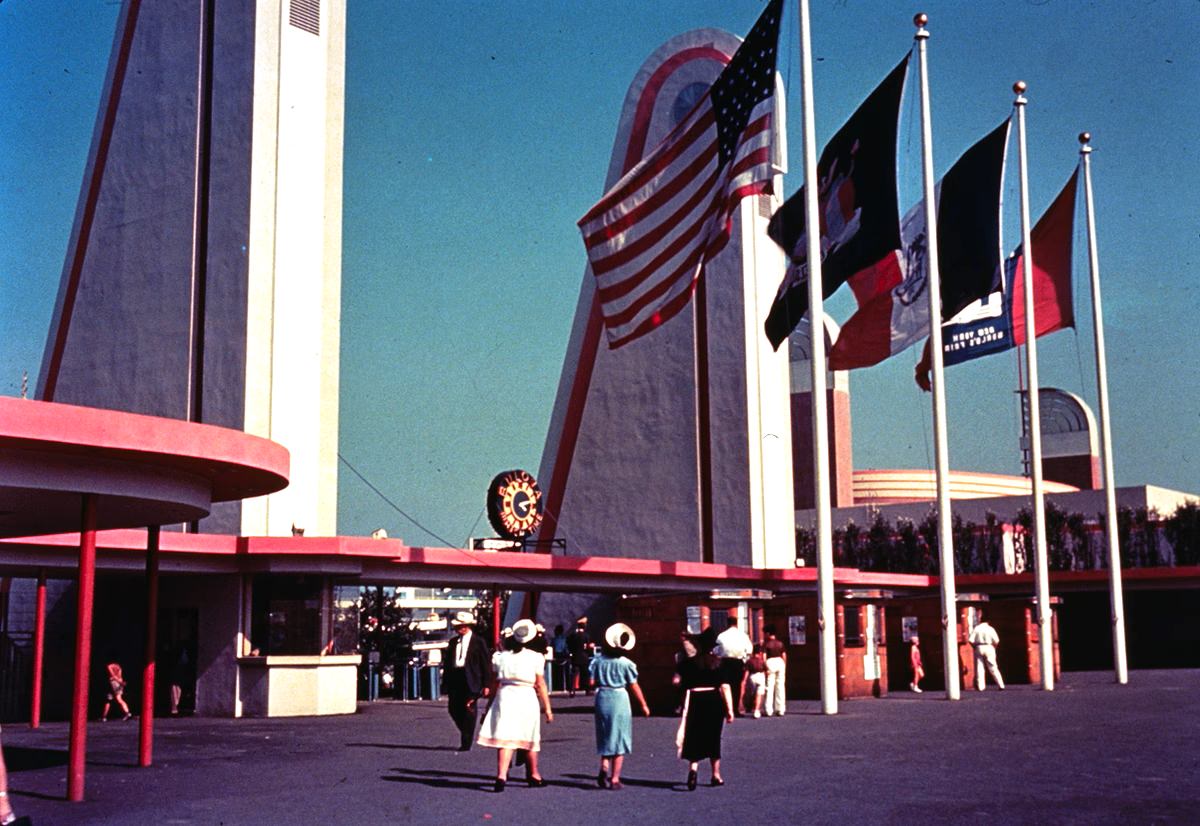
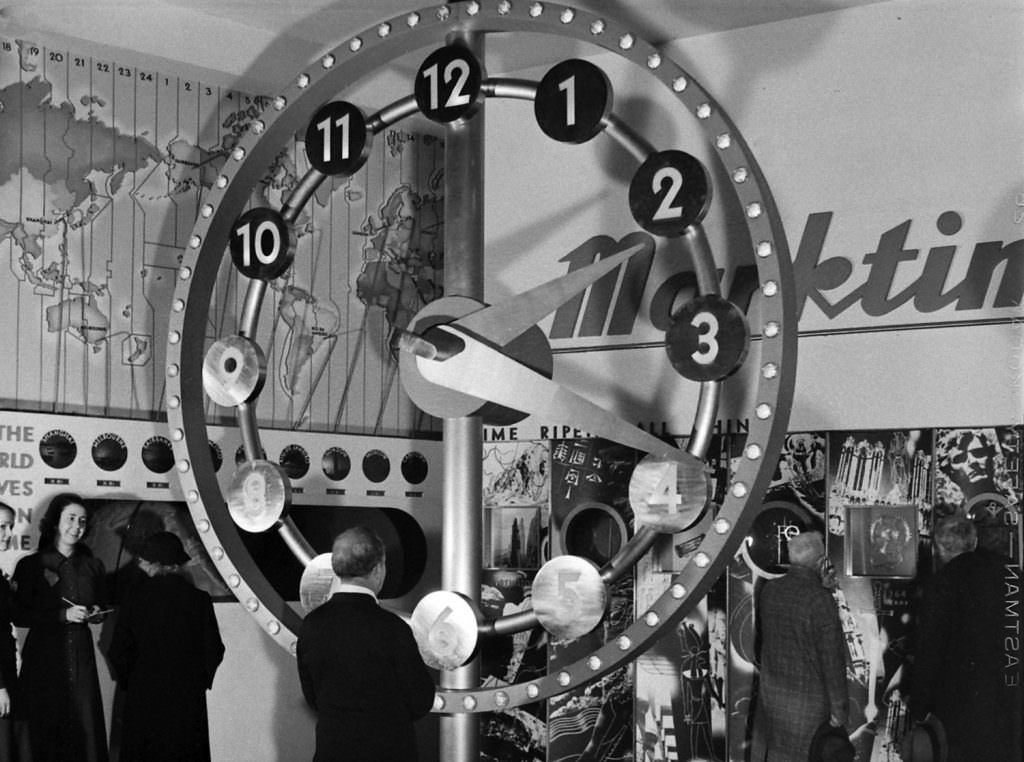
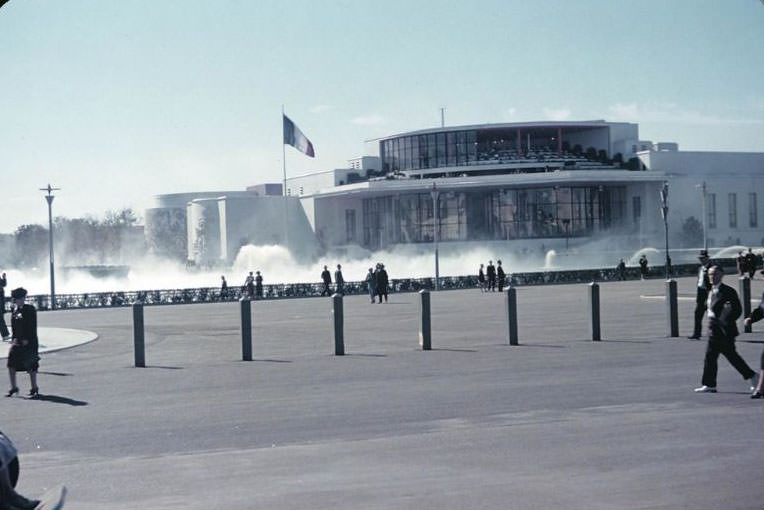
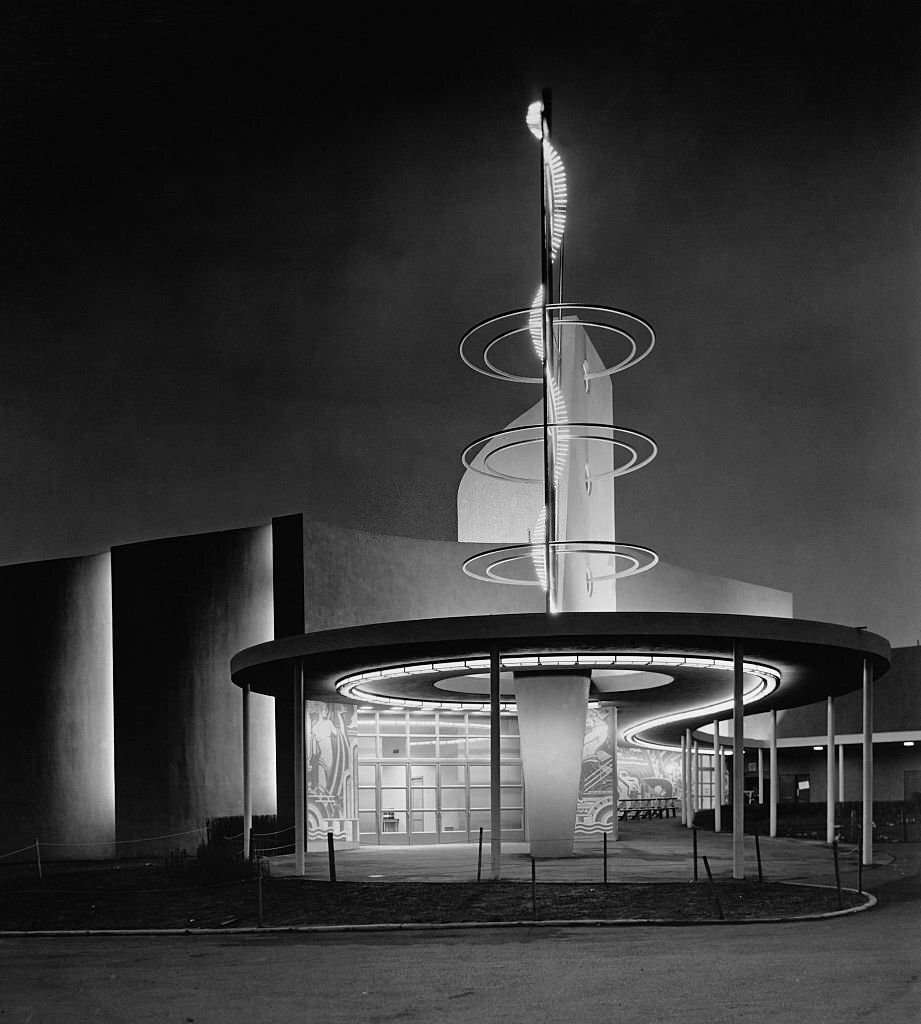
Maintaining the fairgrounds was an ongoing effort. Workers repainted the Perisphere, kept the lagoons lit with dramatic lighting effects, and ensured the dozens of corporate exhibits ran smoothly day after day. The Fair’s color scheme was bold and modern—captured vividly in photographs of the Corona Gate with its Bulova clock and the brightly lit night views of buildings and fountains that transformed Queens into something otherworldly after dark.
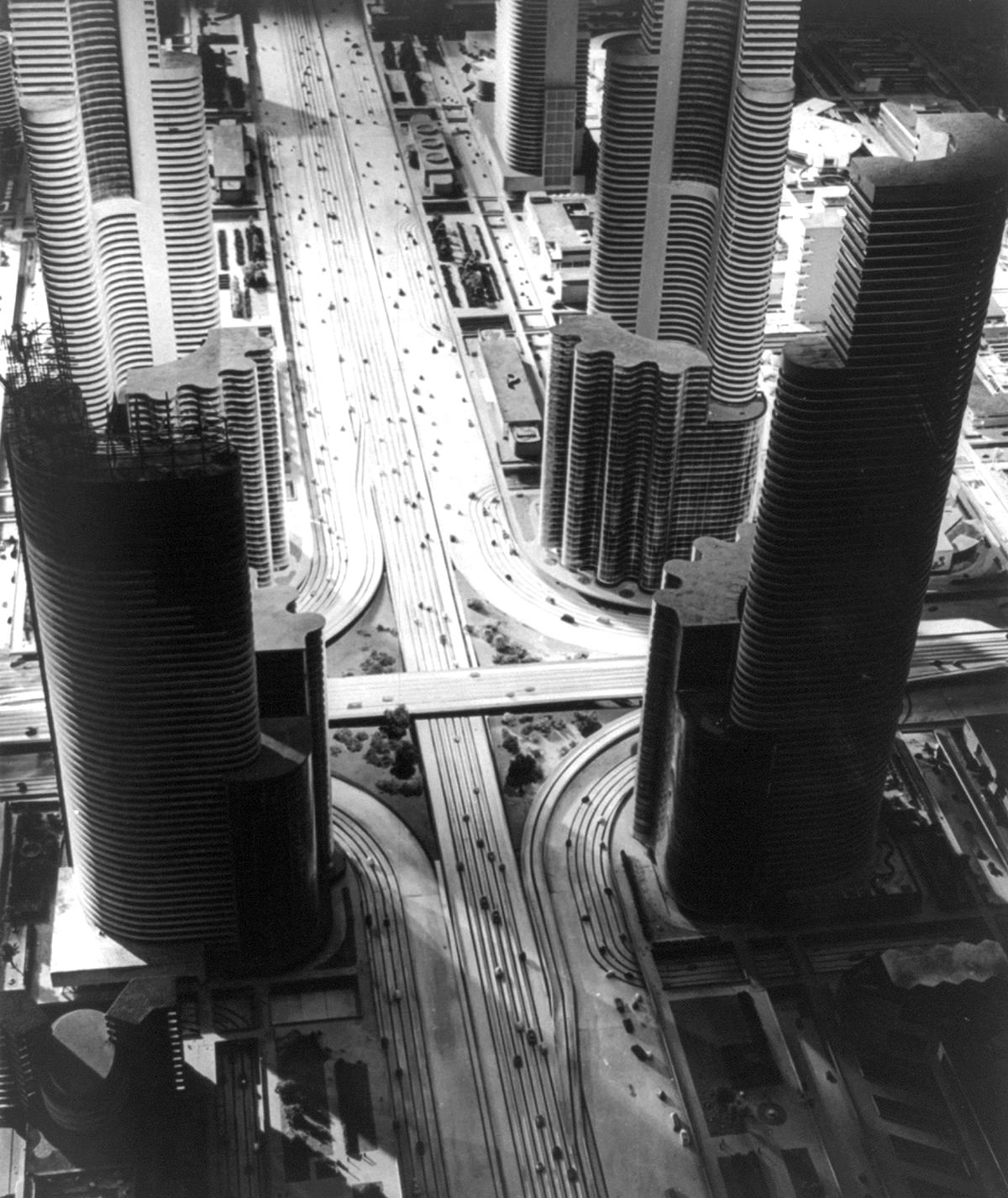
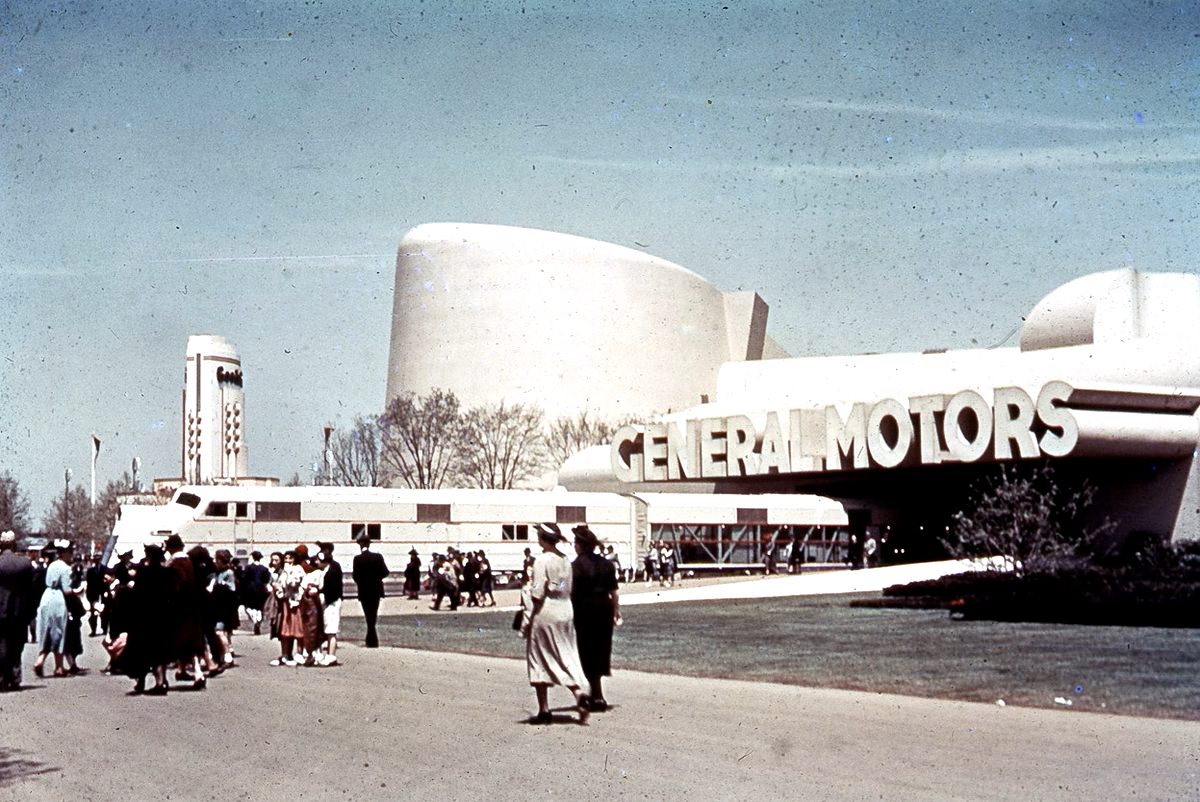
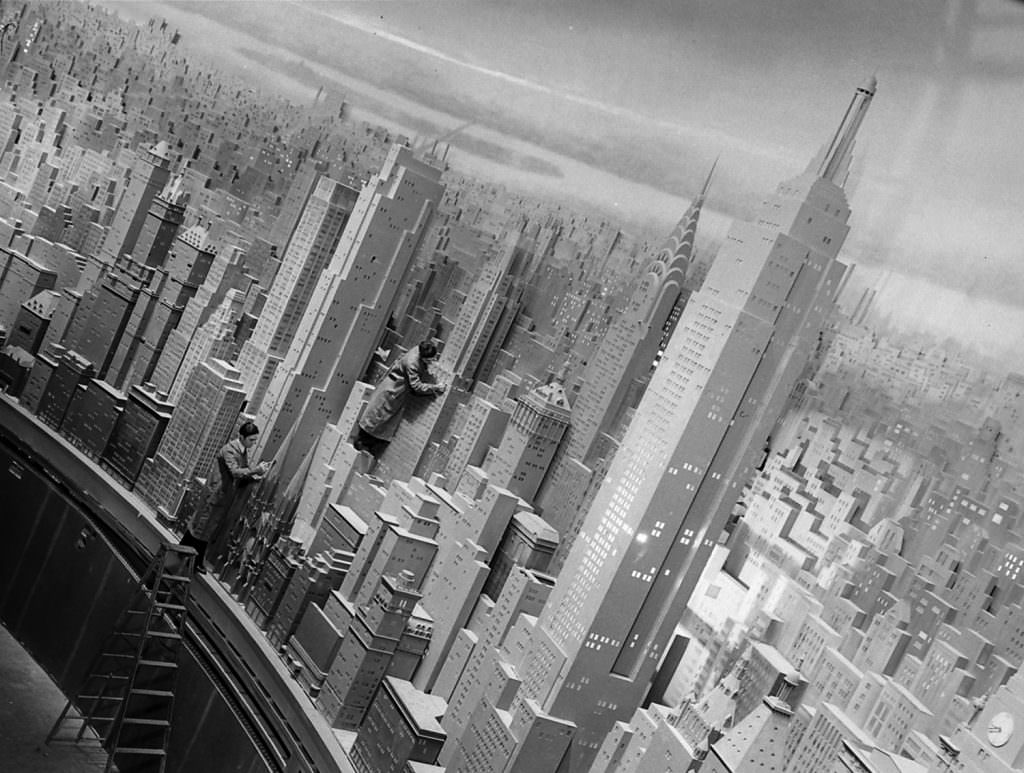
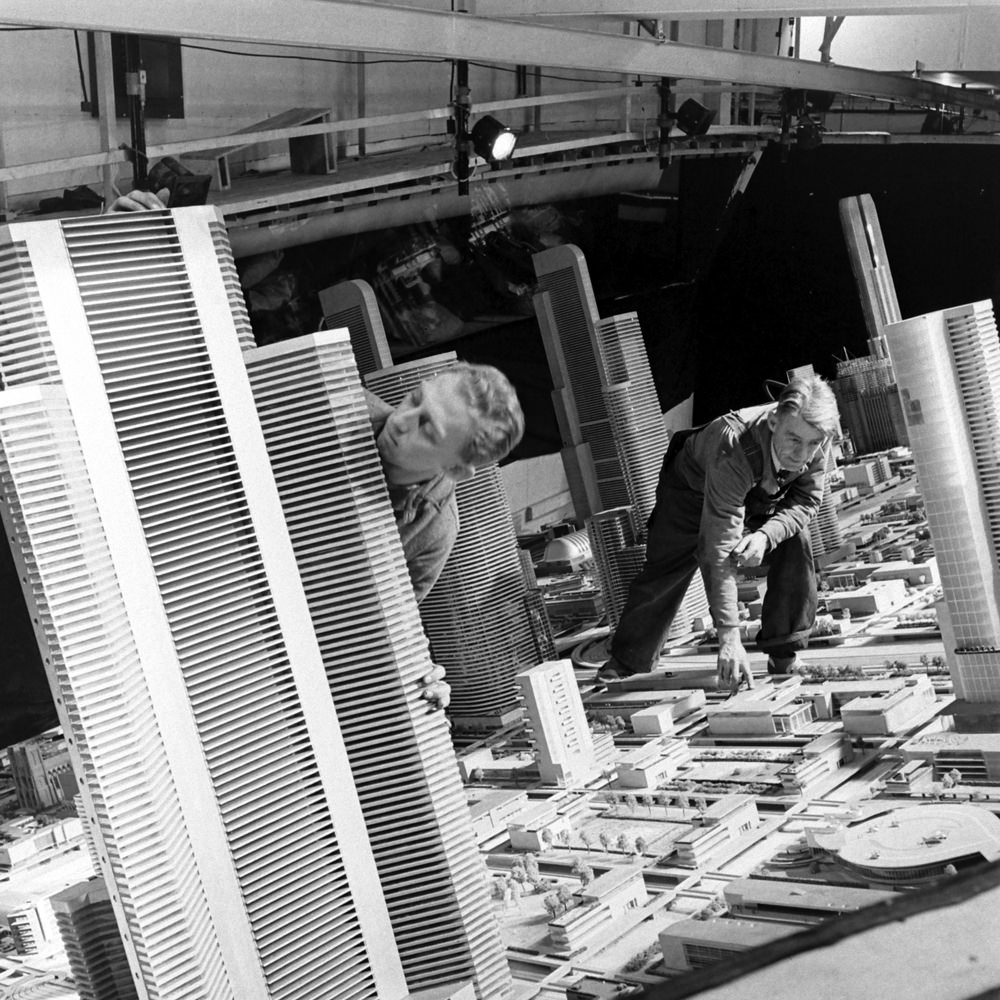
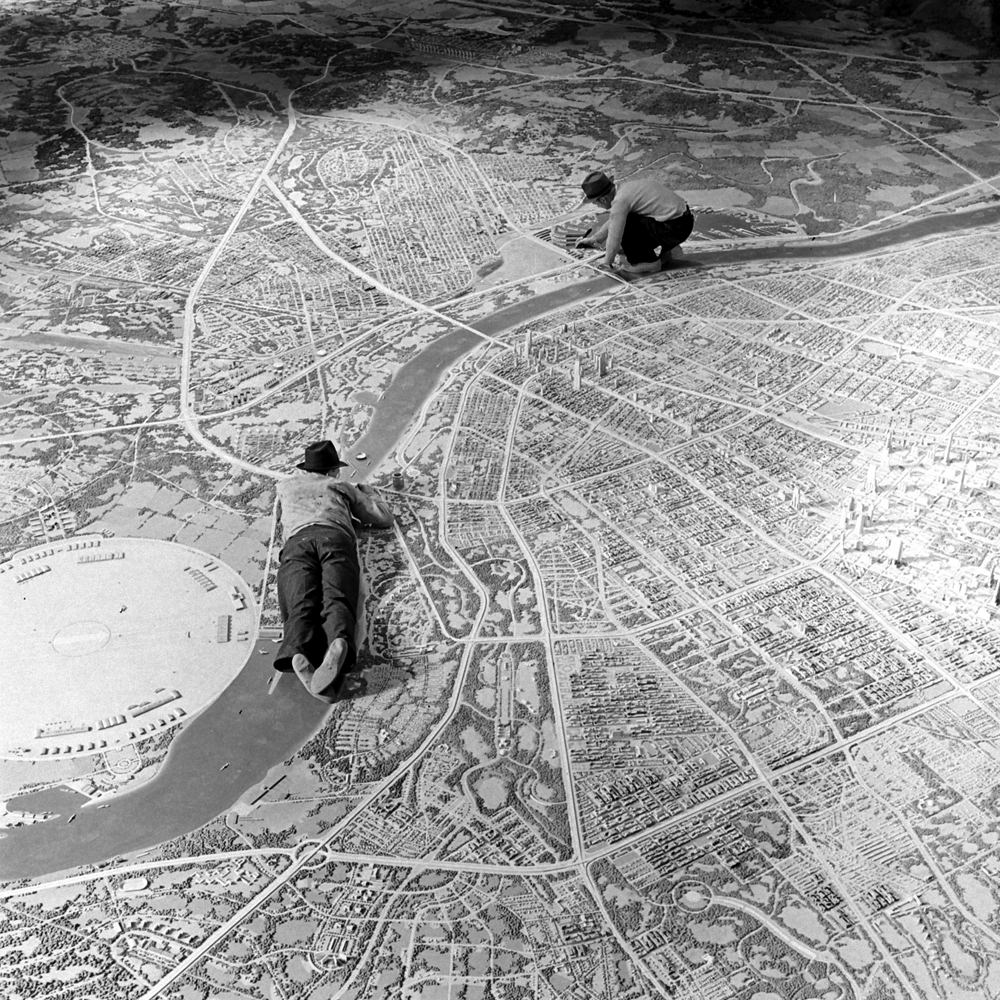
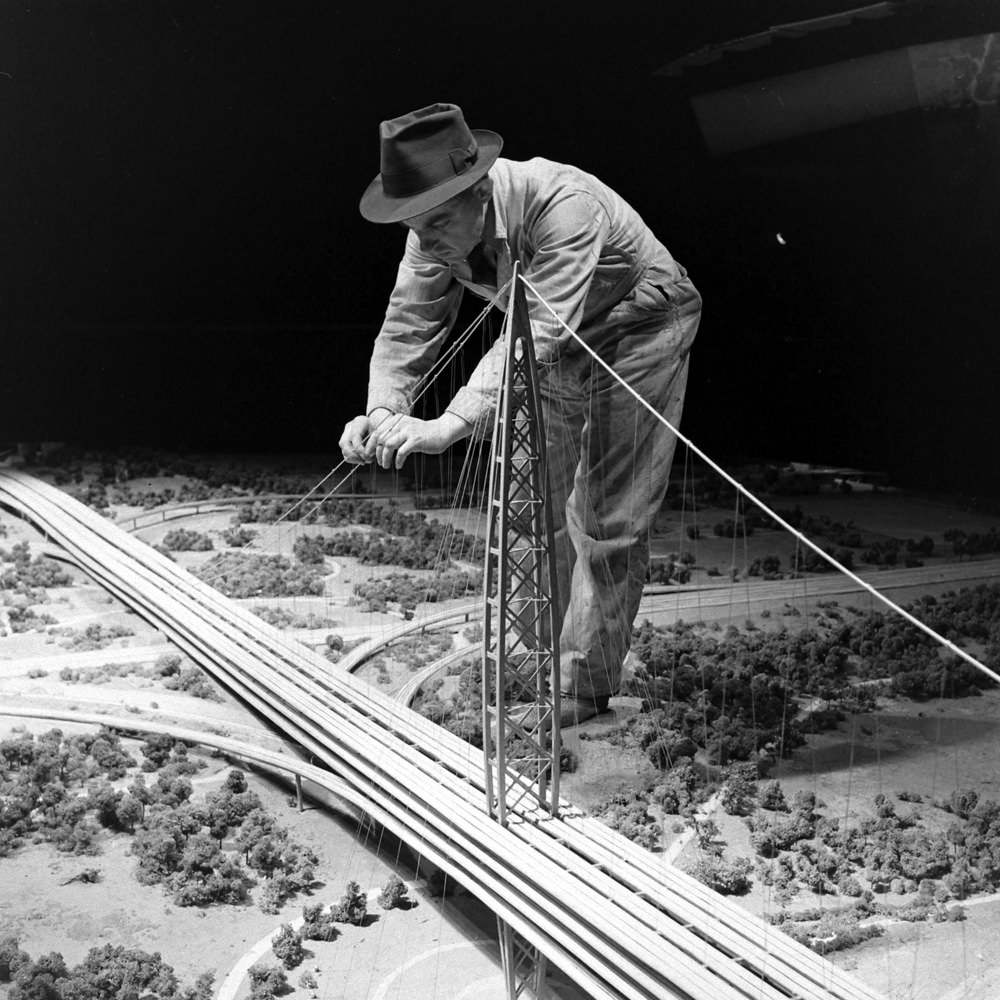
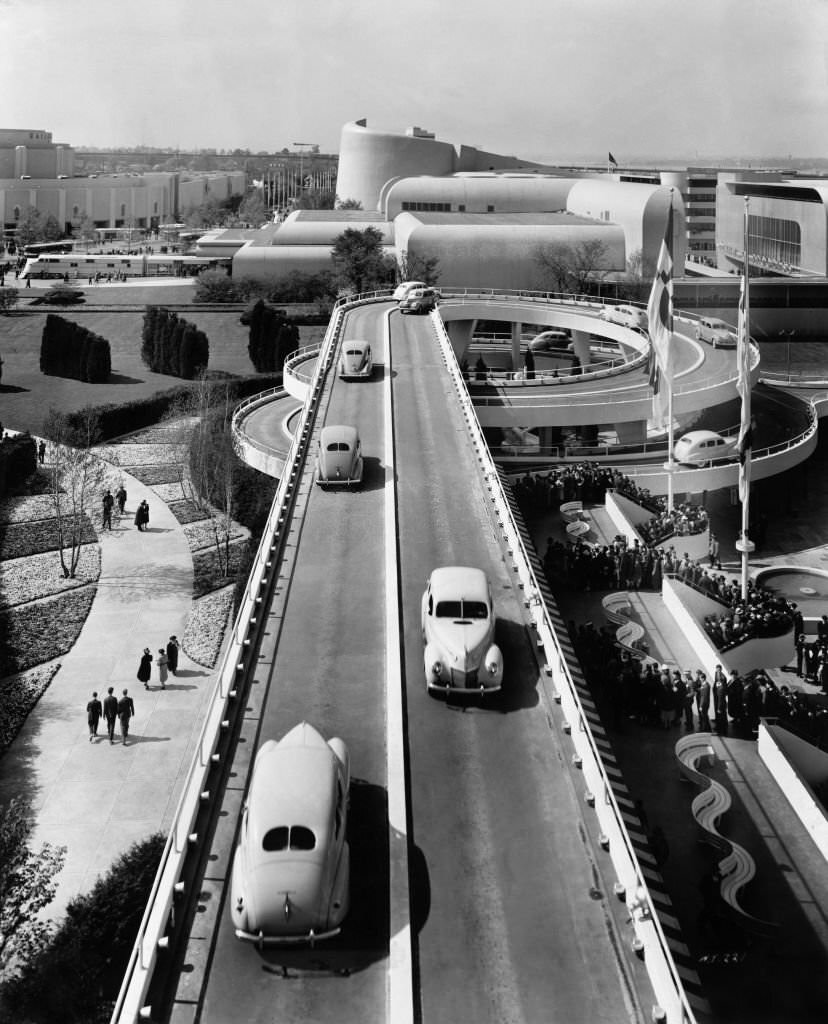
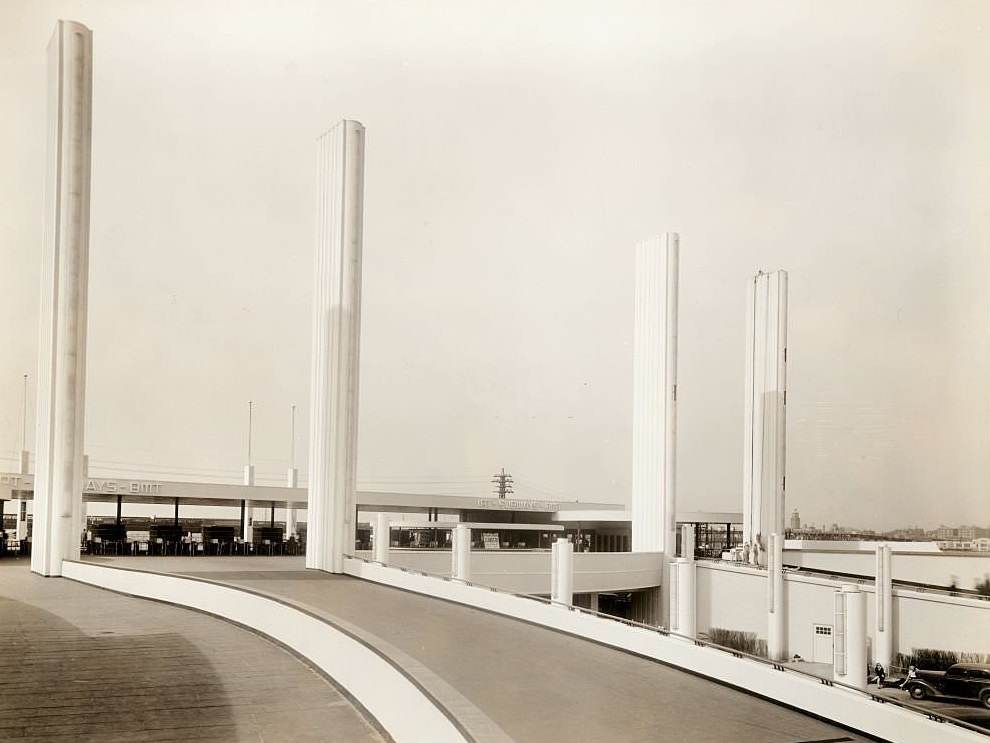
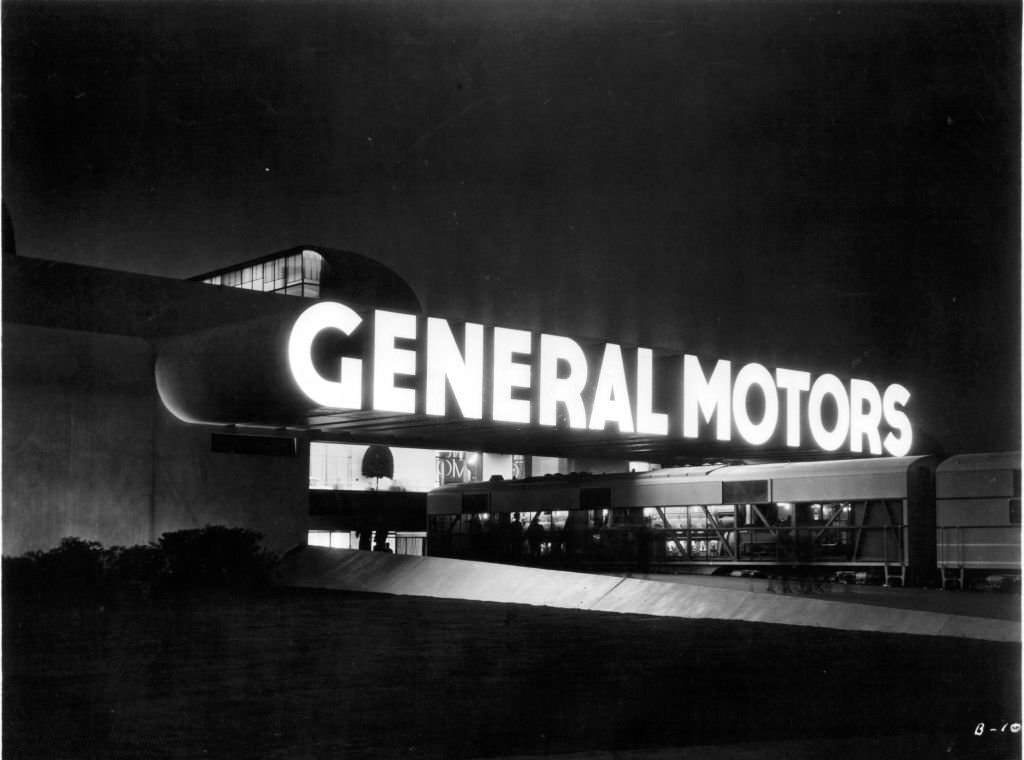
General Motors drew nearly 25 million visitors to its exhibit—more than half the Fair’s total attendance. The centerpiece was Futurama, designed by industrial designer Norman Bel Geddes. It presented a massive model of what America might look like in 1960: widely spaced skyscrapers, double-decked streets filled with moving cars, green parks, and rooftop landing pads for helicopters and autogyros. Visitors rode in moving chairs suspended above the model as a narrator described the vision. It was the single most popular exhibit at the entire Fair. Ford answered with its own “Road of Tomorrow”—an elevated highway of cork and rubber composition on which visitors could ride actual Ford vehicles.
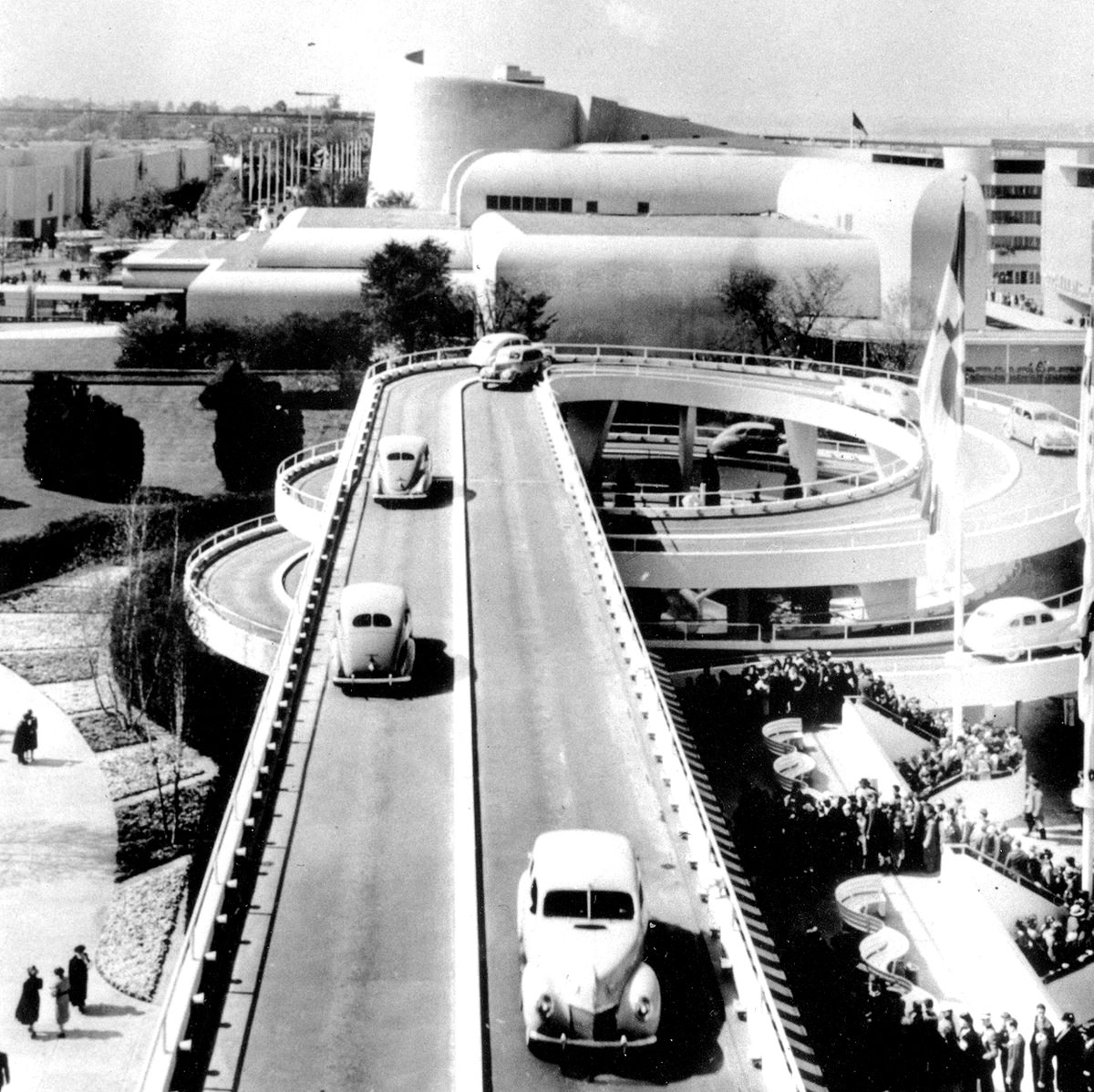
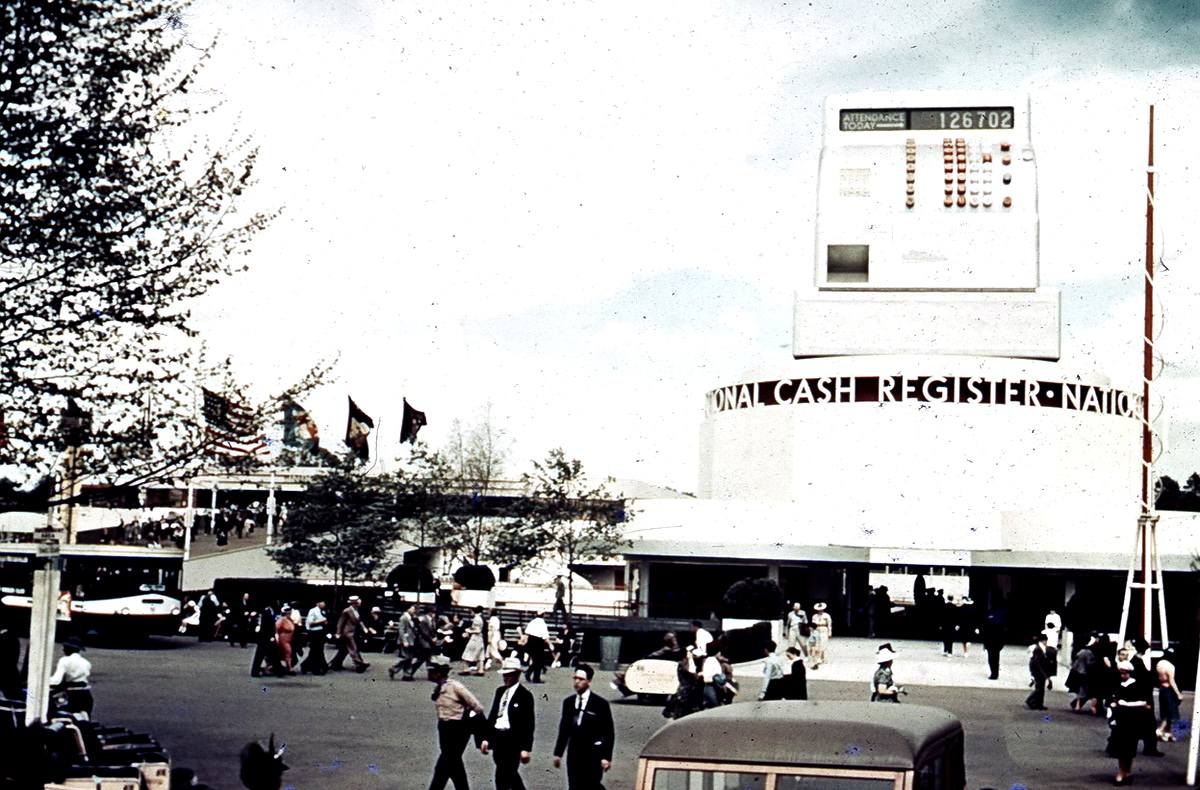
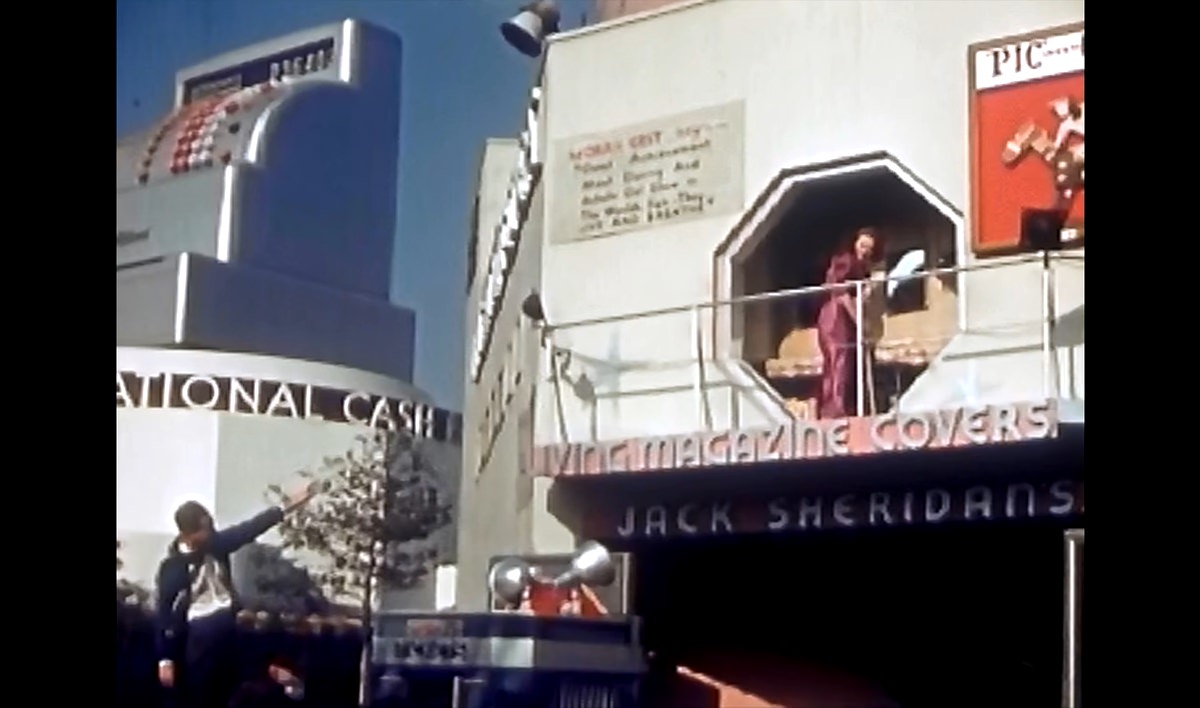
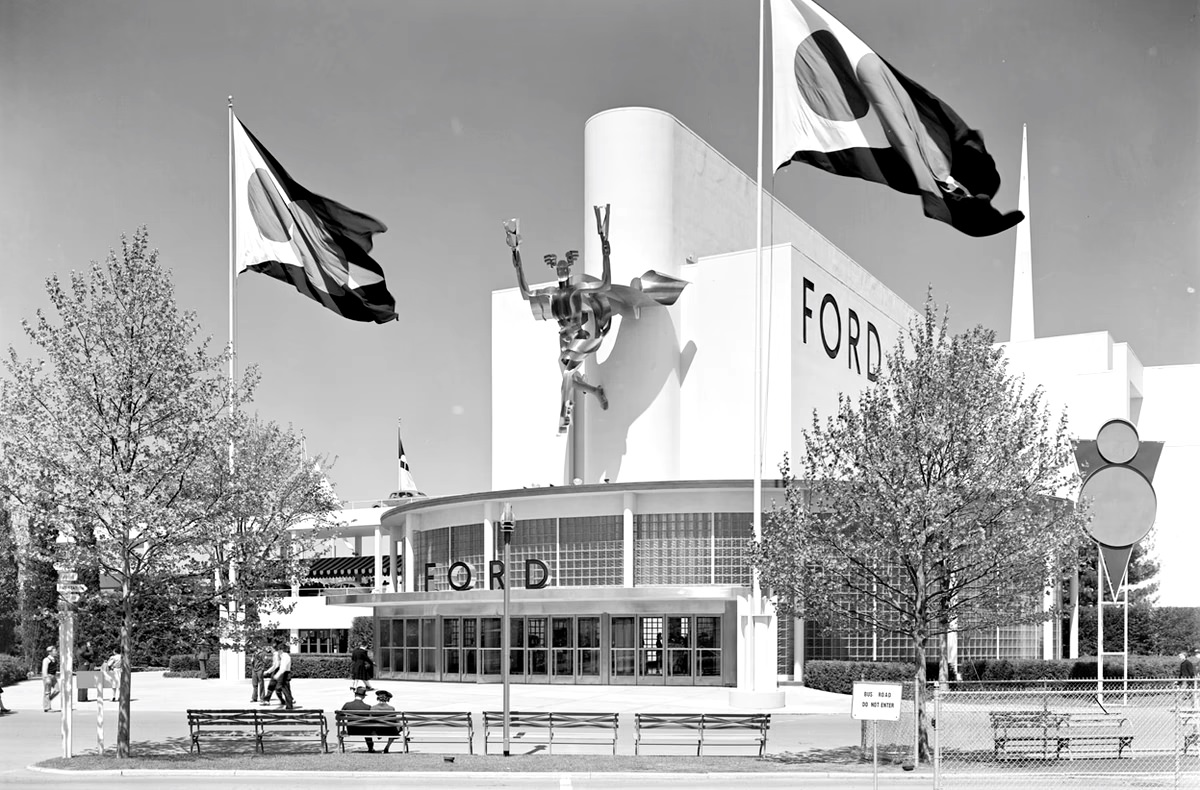
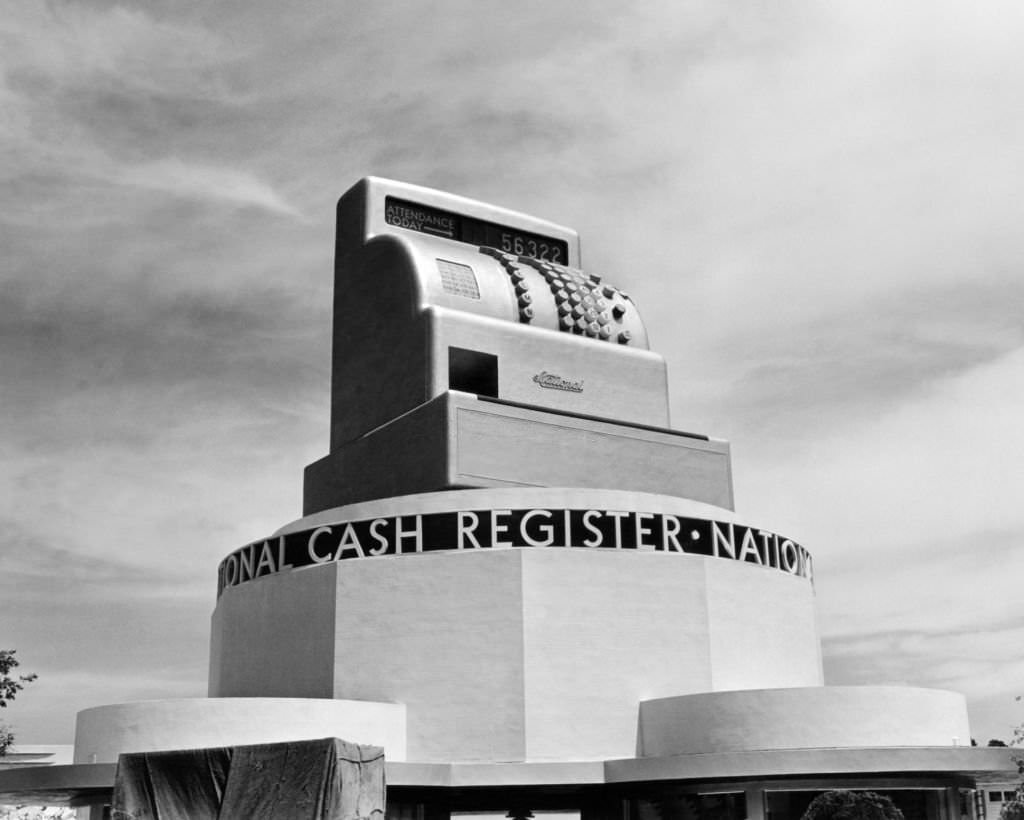
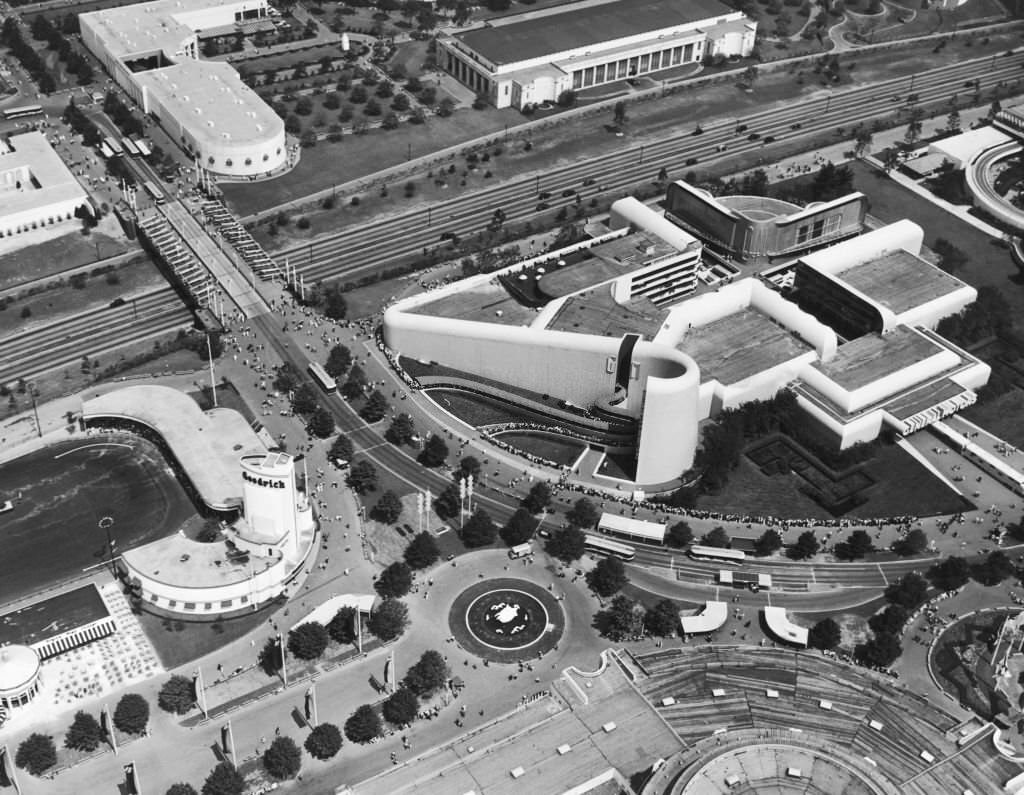
Ford’s pavilion was one of the most elaborate on the grounds. The automaker displayed the raw materials that went into its vehicles, showed off its manufacturing process, and filled the space with working demonstrations. The entrance alone was a spectacle. Nearby, the National Cash Register Building featured a giant functional cash register that tallied the day’s Fair attendance—a number that clicked upward in real time for all to see.
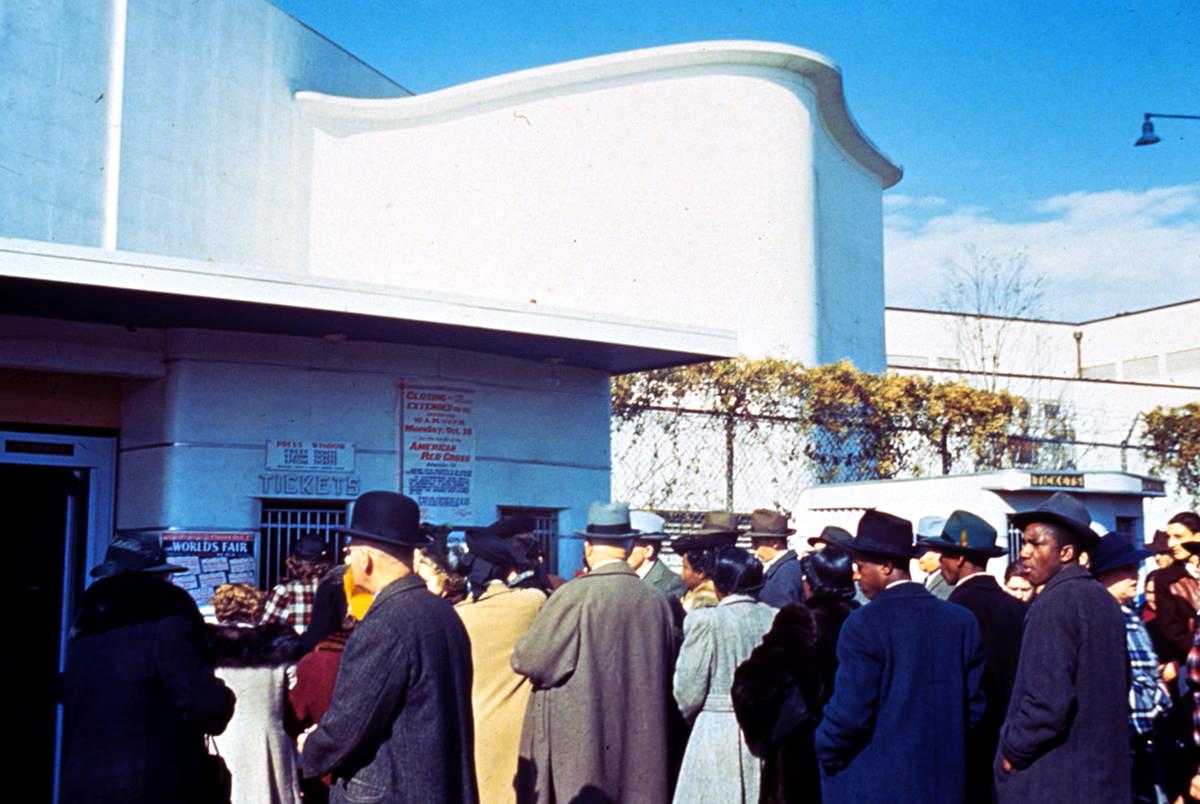
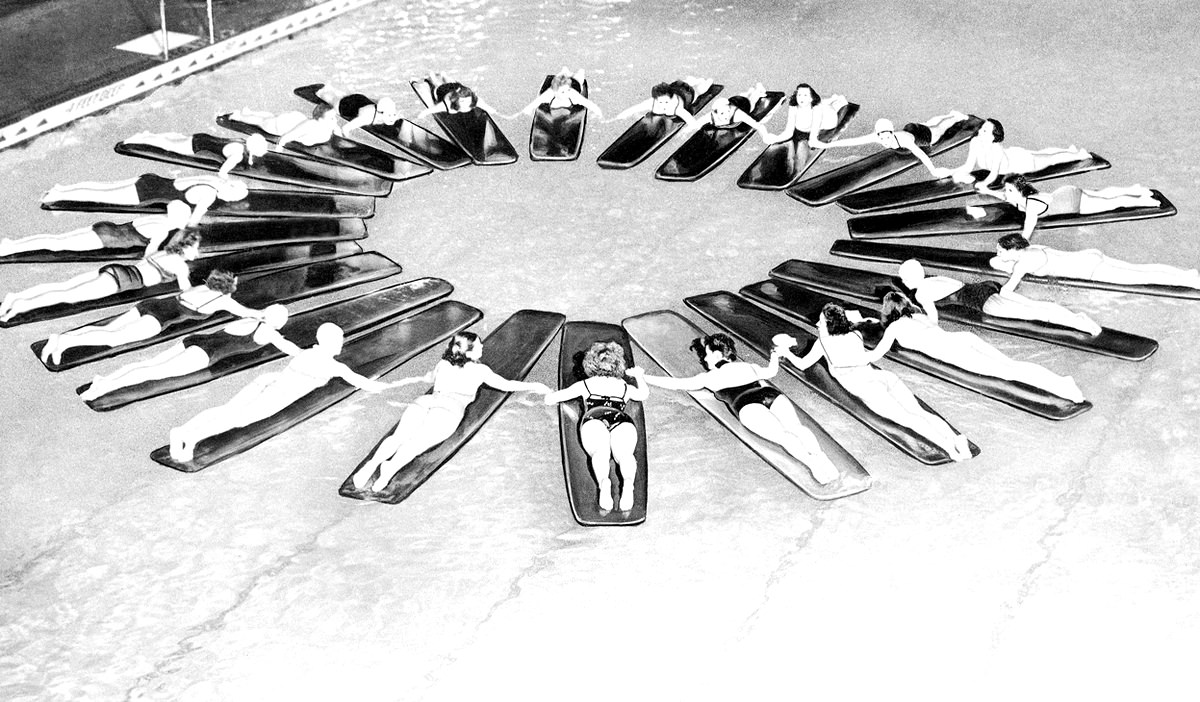
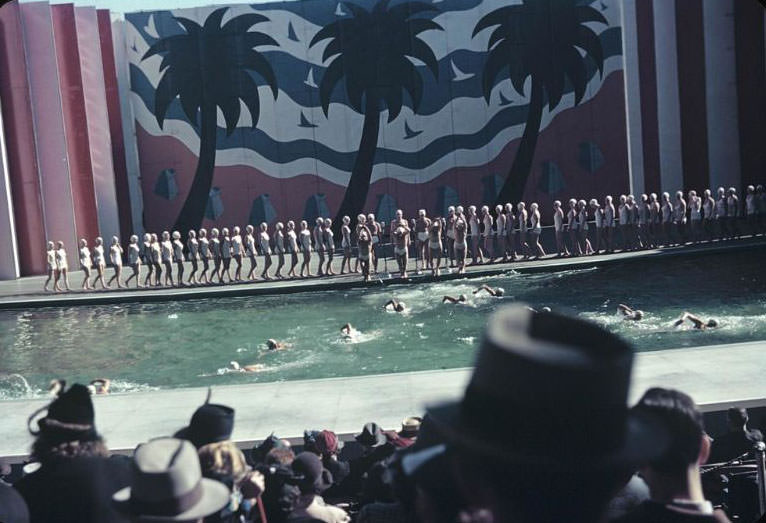
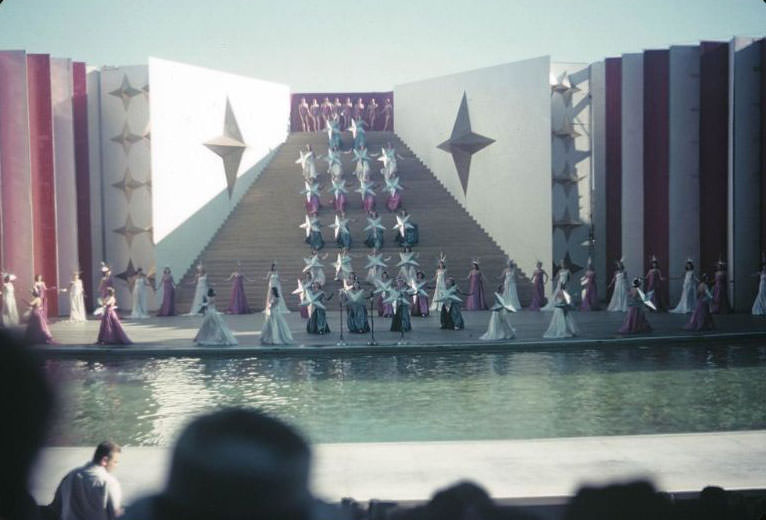
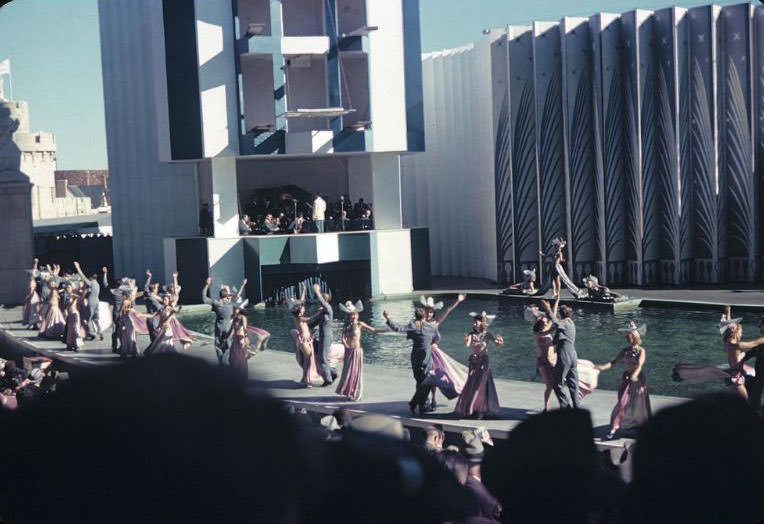
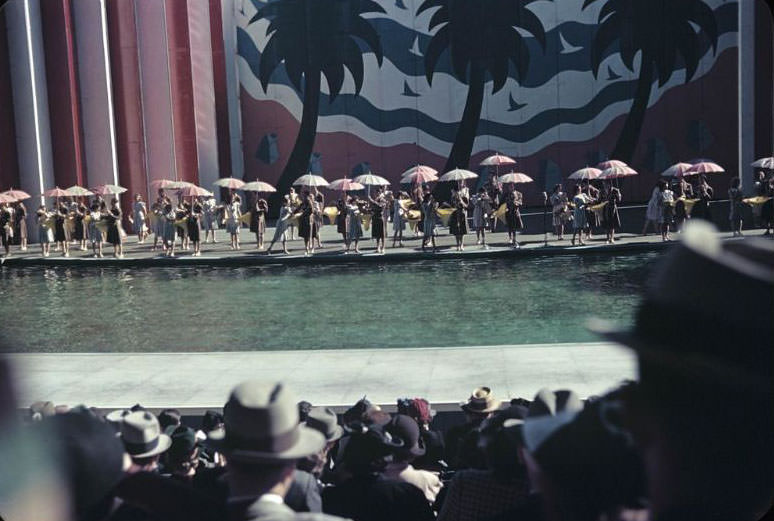
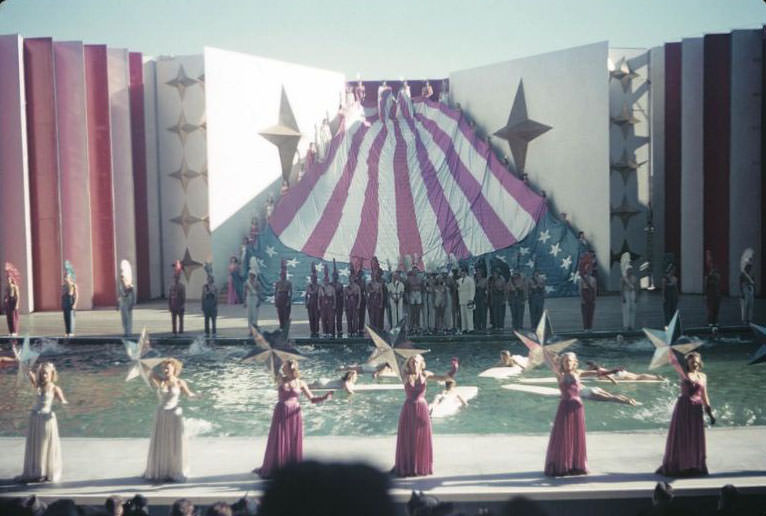
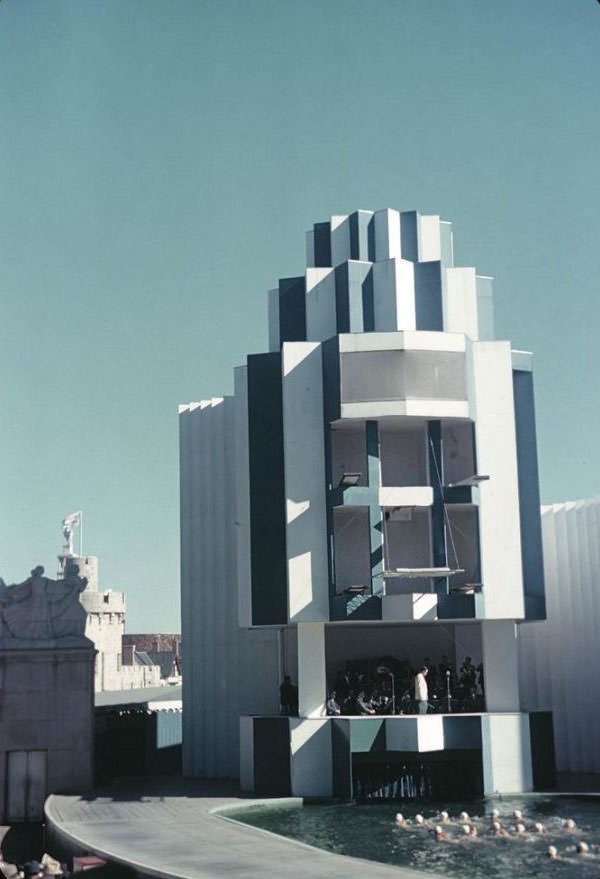
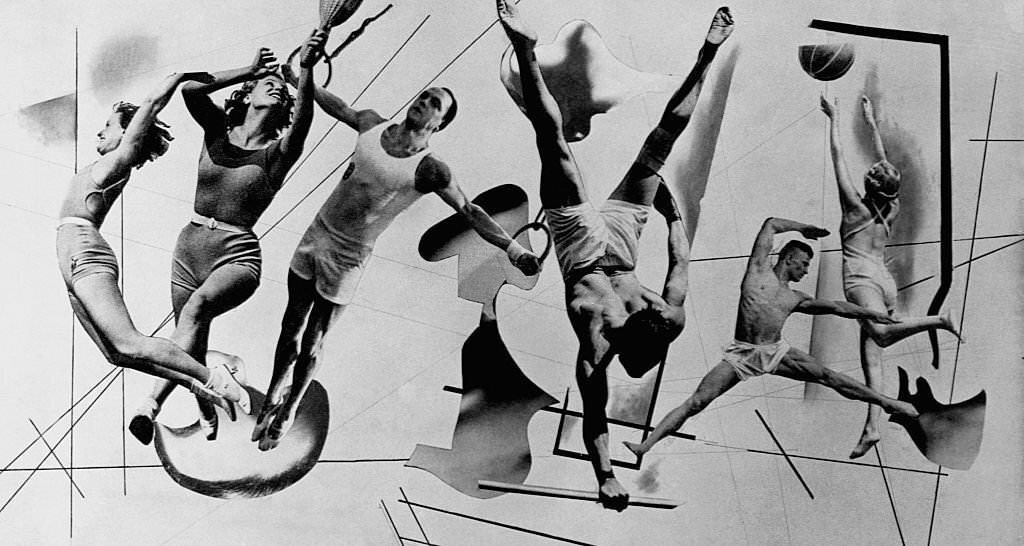
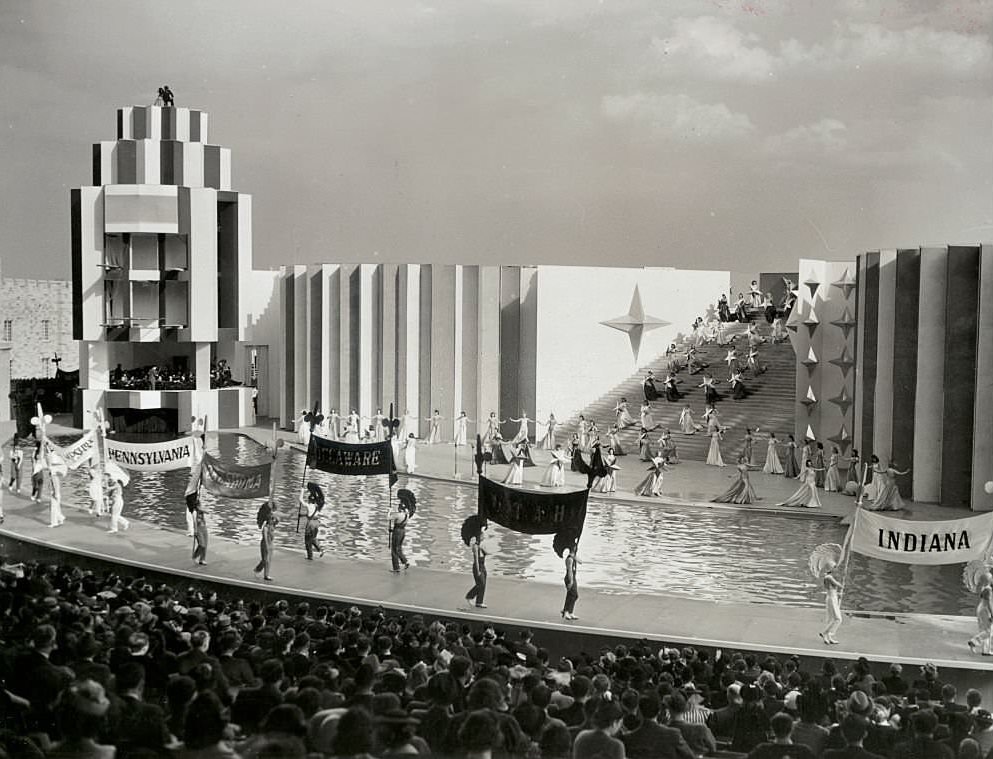
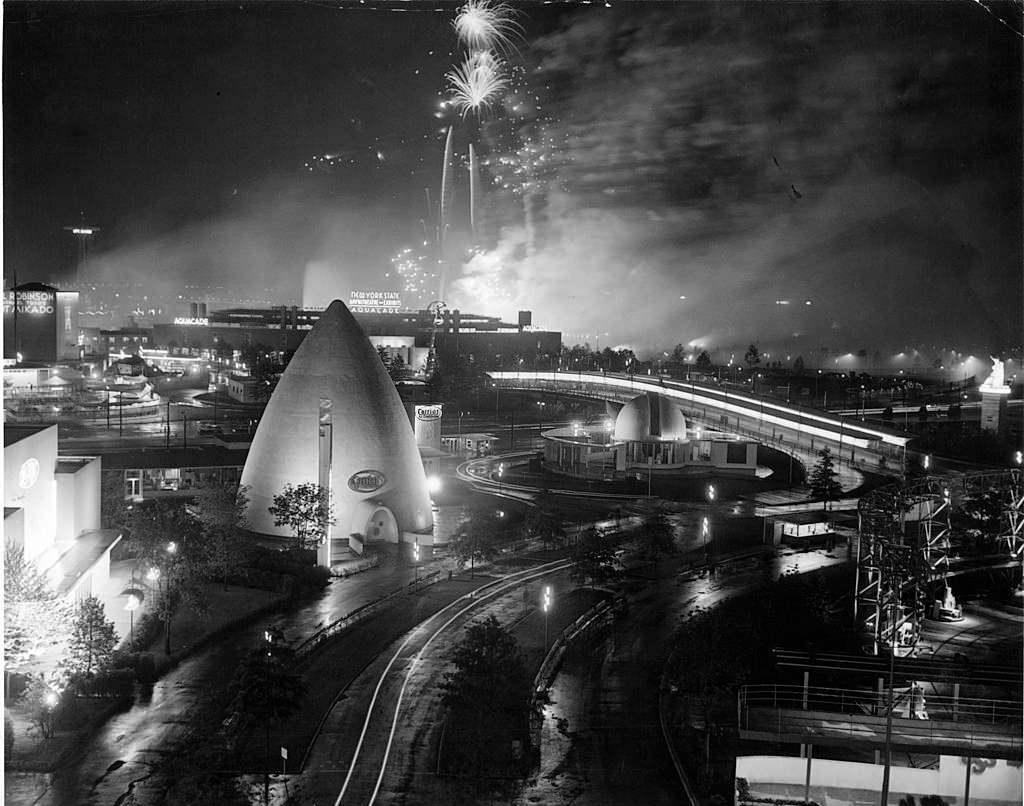
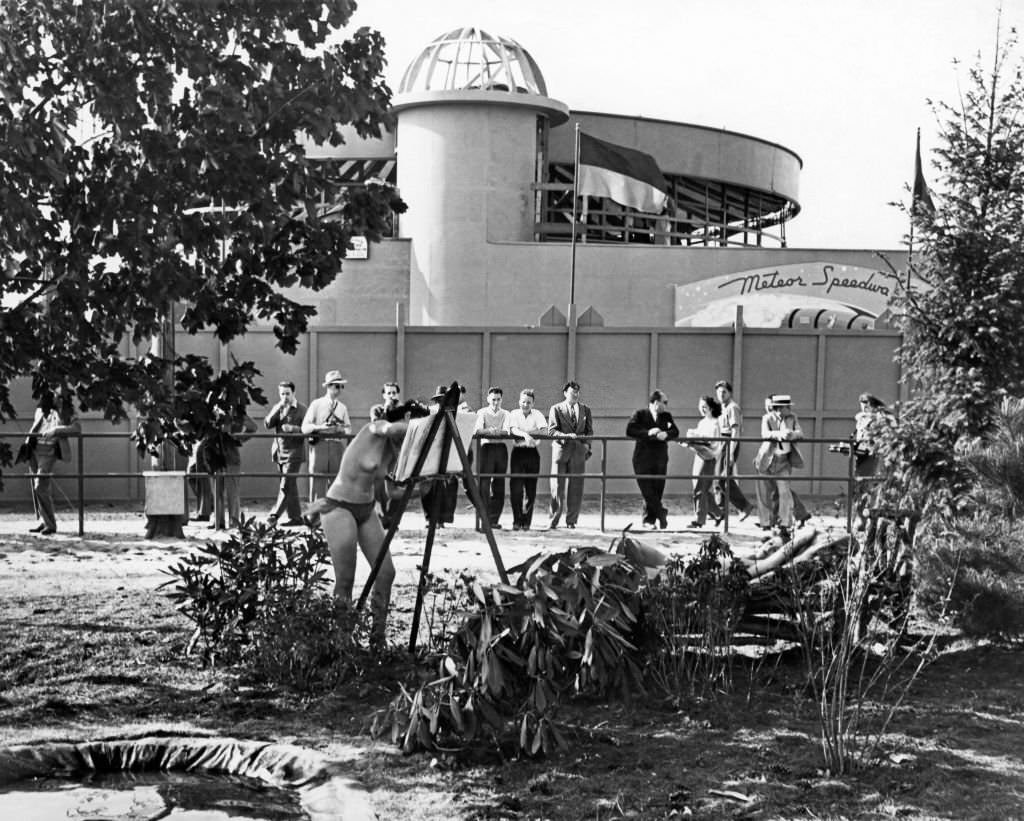
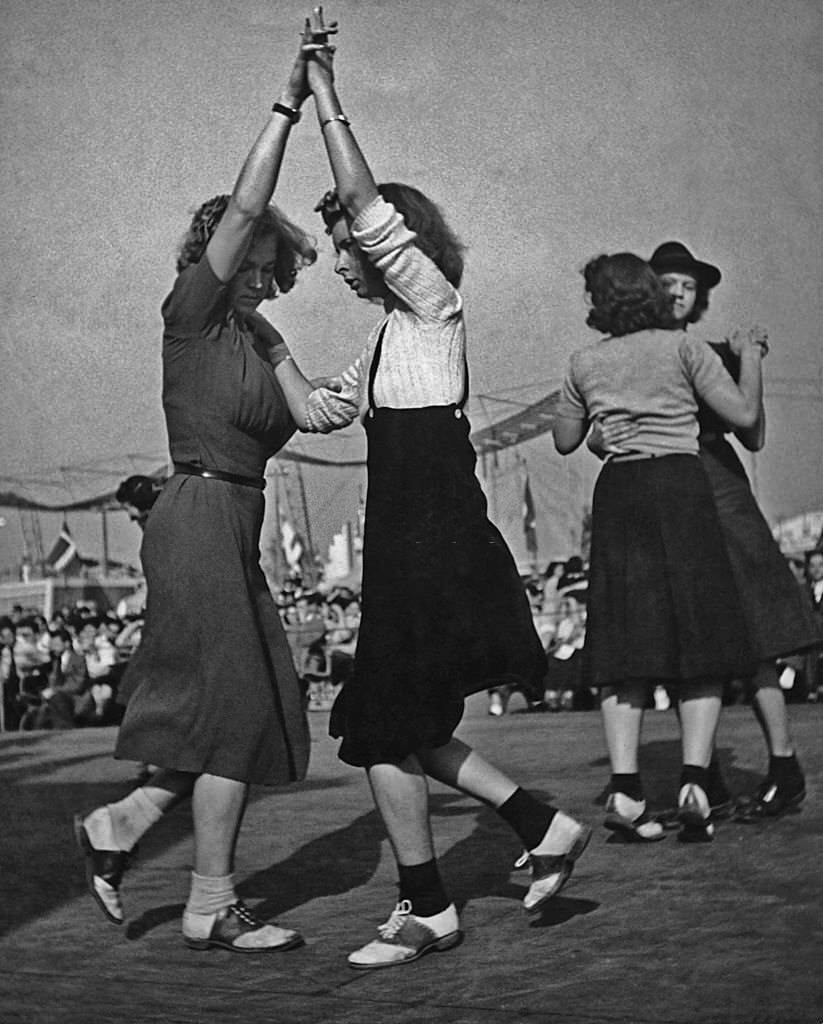
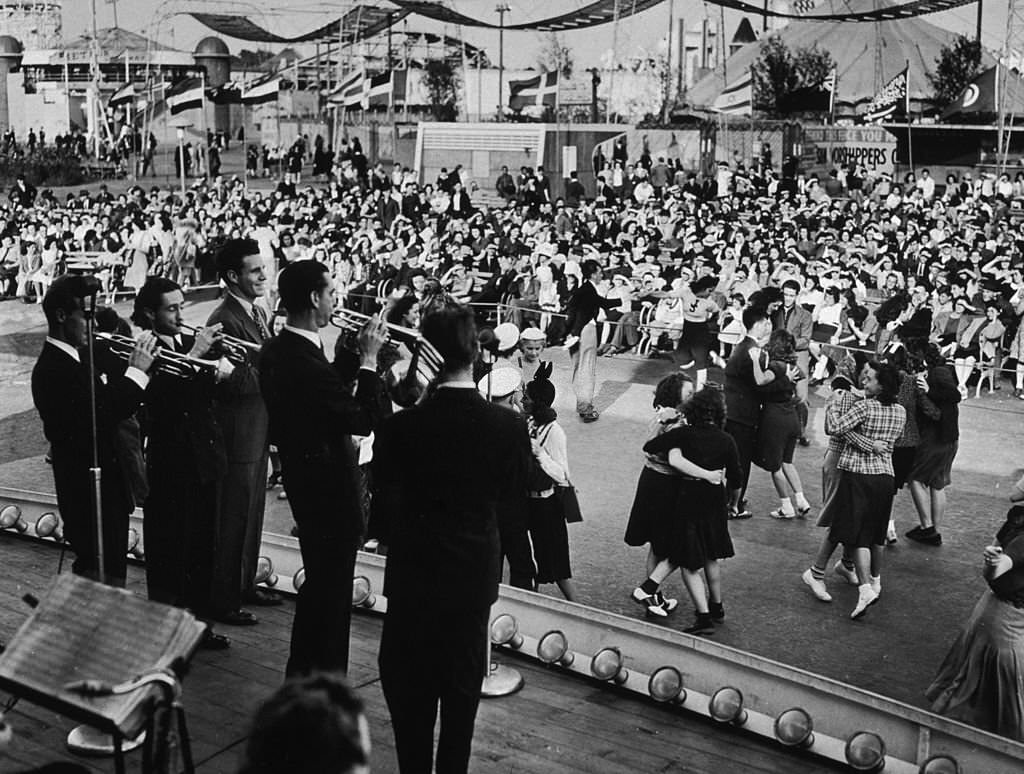
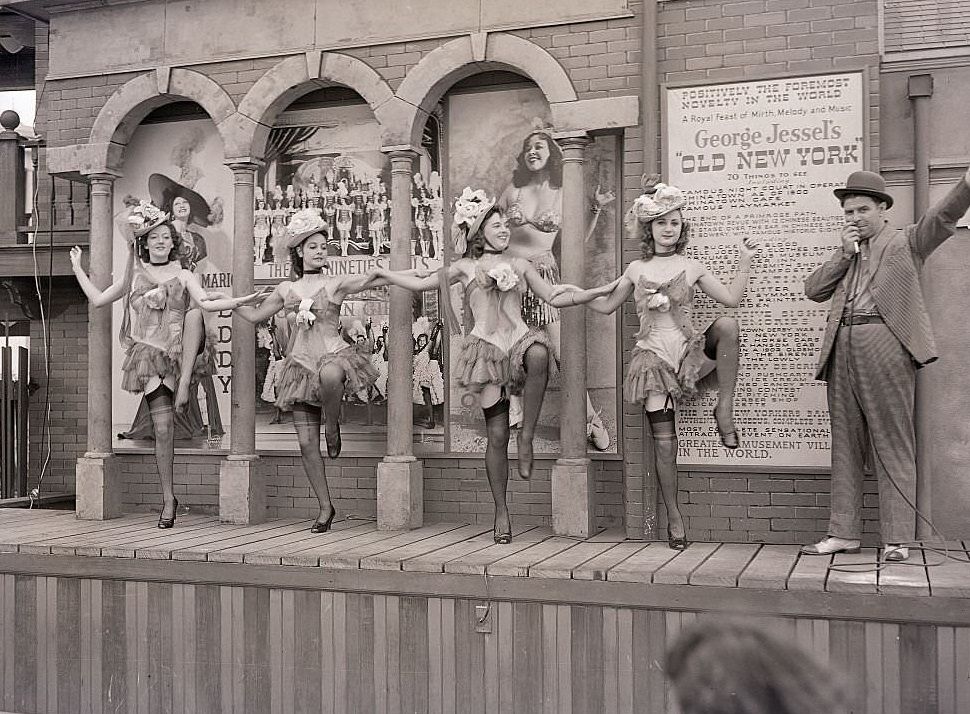
Not every exhibit was about technology or industry. The fairgrounds offered plenty of entertainment. Billy Rose’s Aquacade at the Marine Amphitheater packed in audiences for elaborate water shows featuring synchronized swimmers and divers. Jack Sheridan’s “Living Magazine Covers” charged admission for visitors to photograph topless models posed on sets designed to look like magazine covers. George Jessel ran a “Old New York” cabaret. Jitterbug dancers, marionette performances, and outdoor stage shows with actors in period costume rounded out the entertainment options.
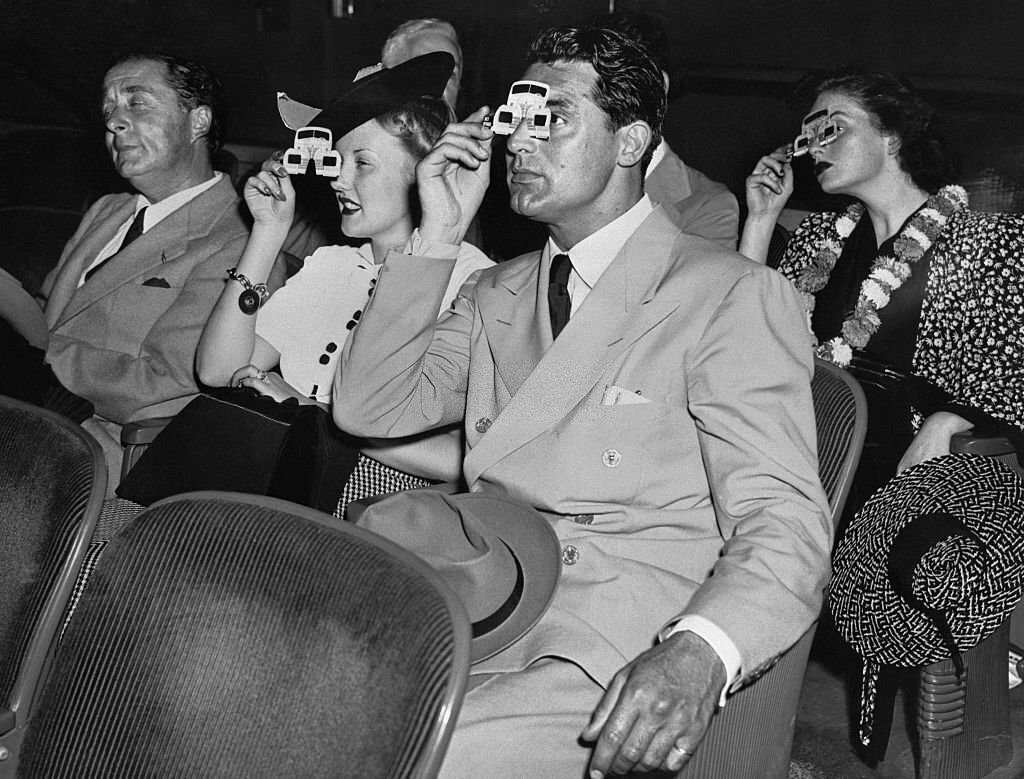
The Ford Motor Building stood as one of the more visually striking corporate structures on the grounds, its entrance a bold statement of modern design. Inside, visitors moved through displays showing the materials—glass, rubber, steel, and more—that came together to build an automobile. Cary Grant and actress Phyllis Brooks were among the celebrities spotted at the Fair, photographed at the Chrysler Building’s Polaroid movie presentation.
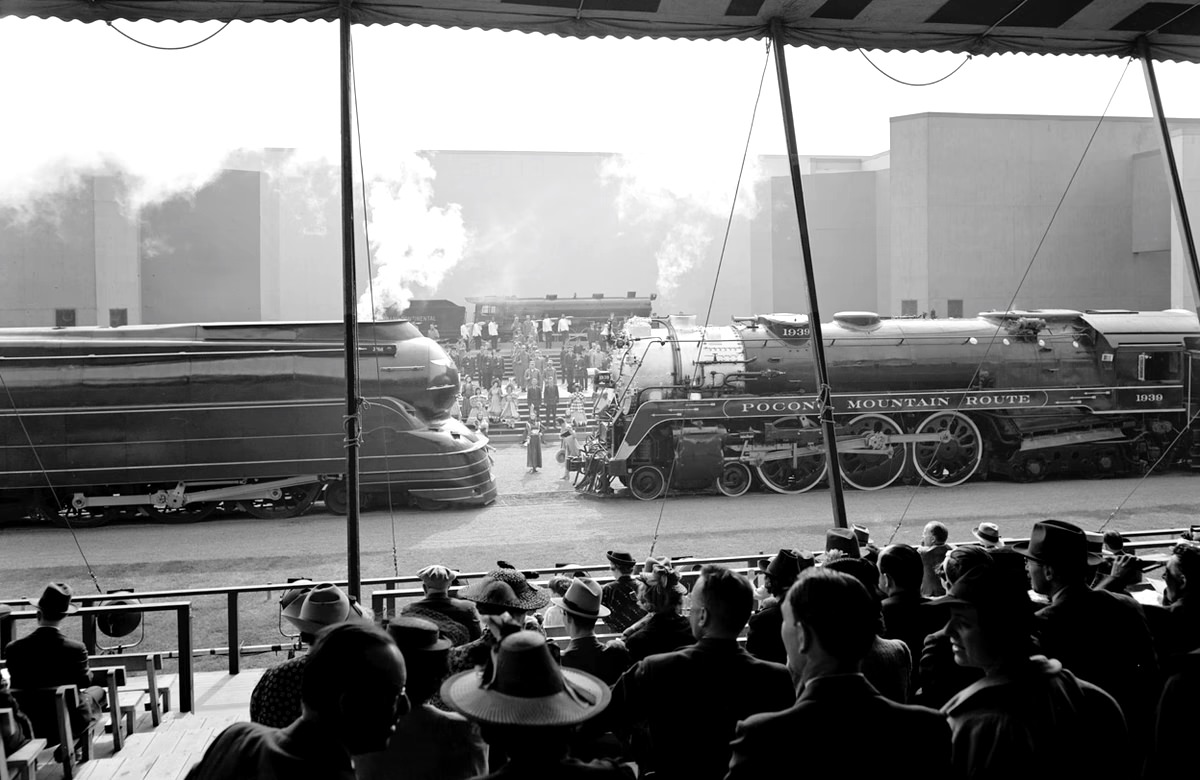
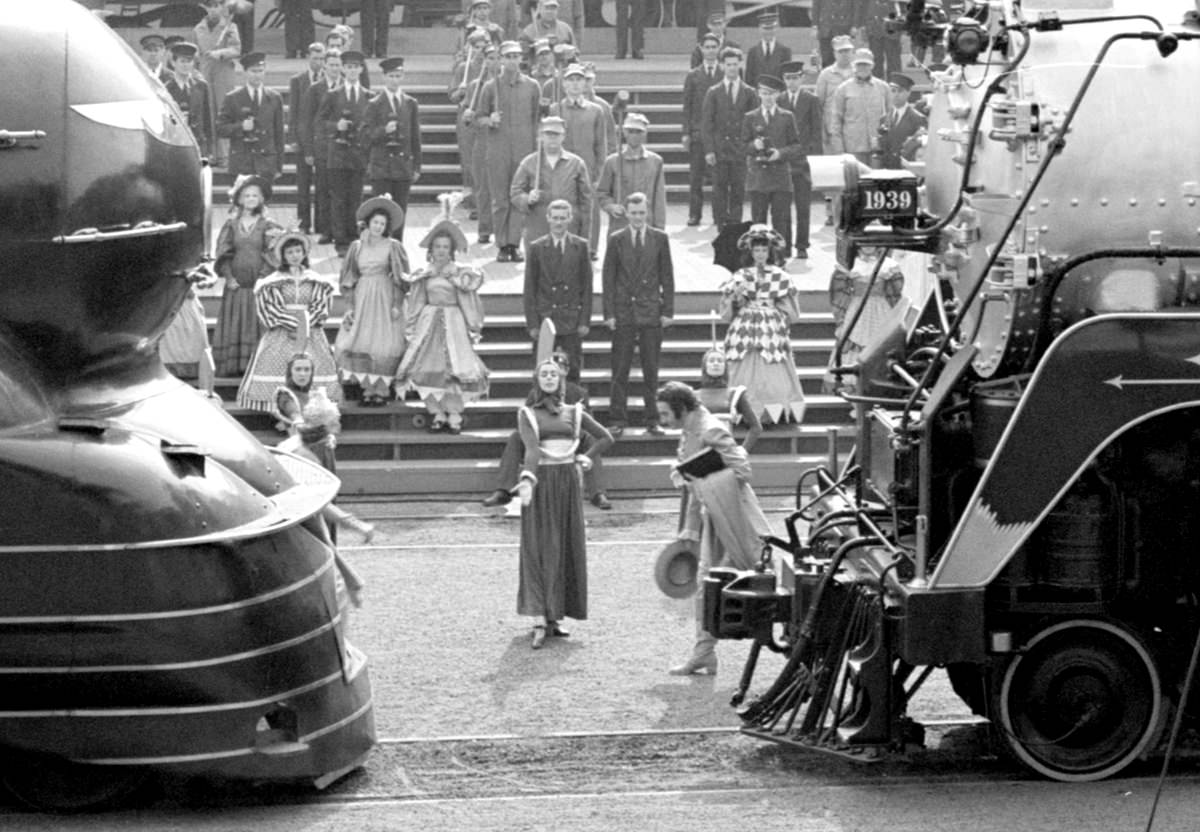
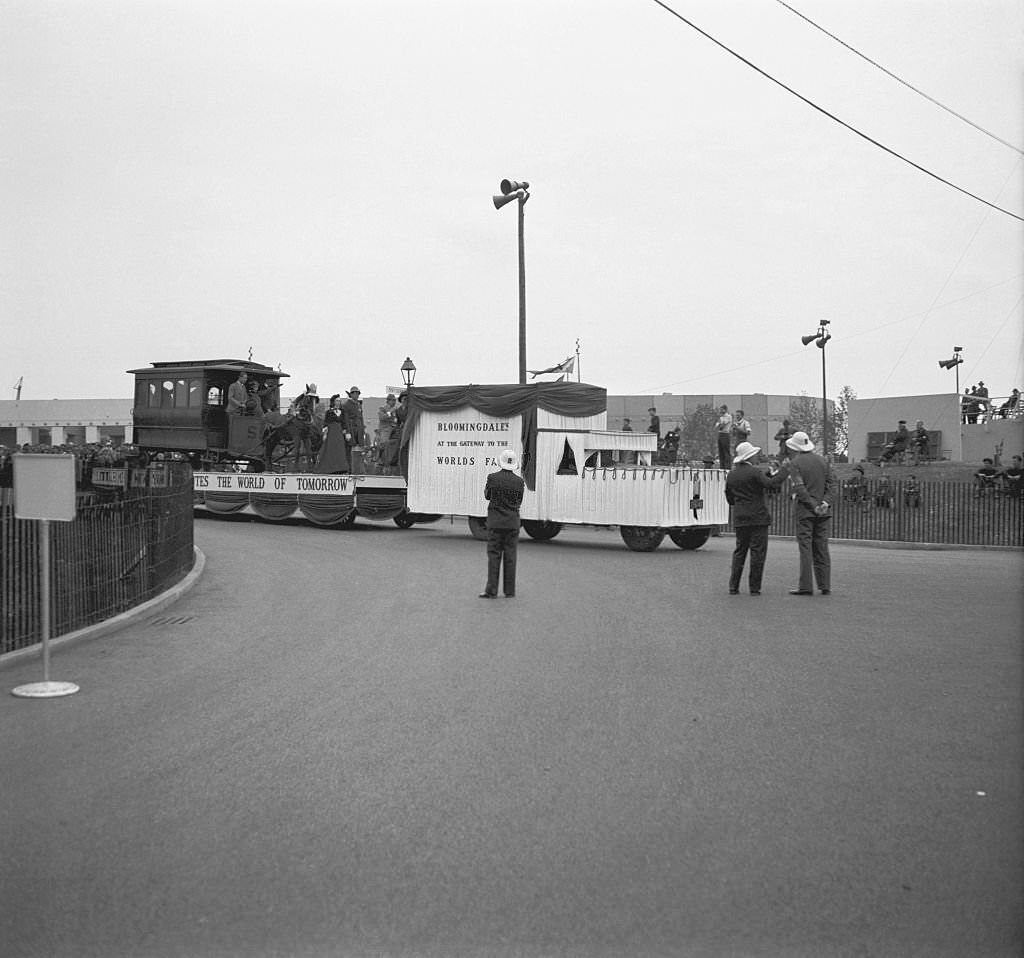
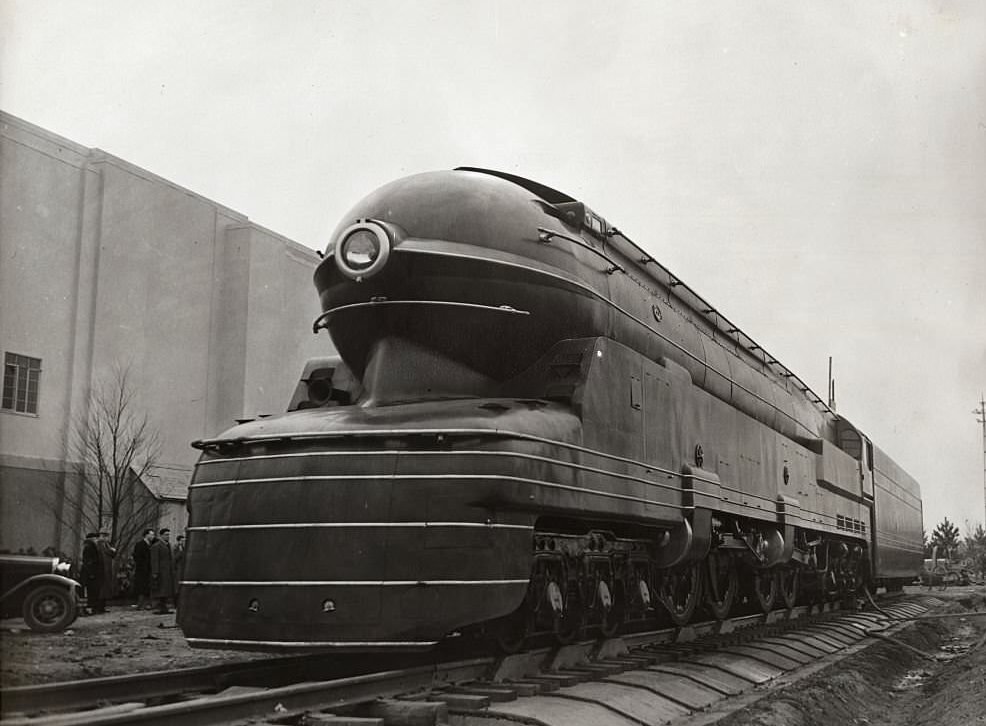
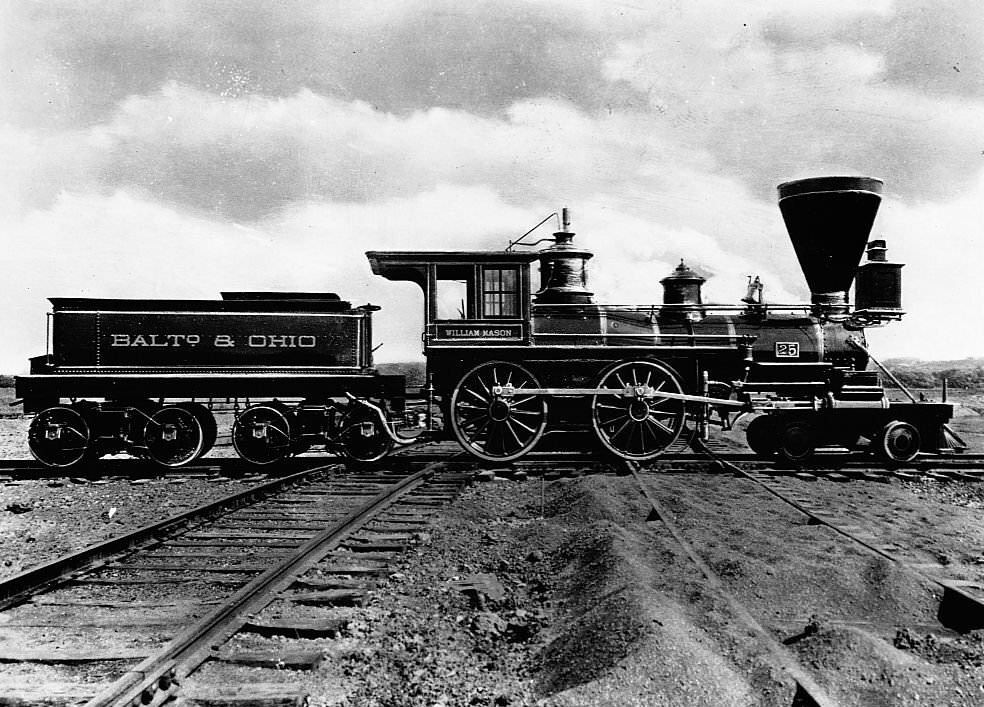
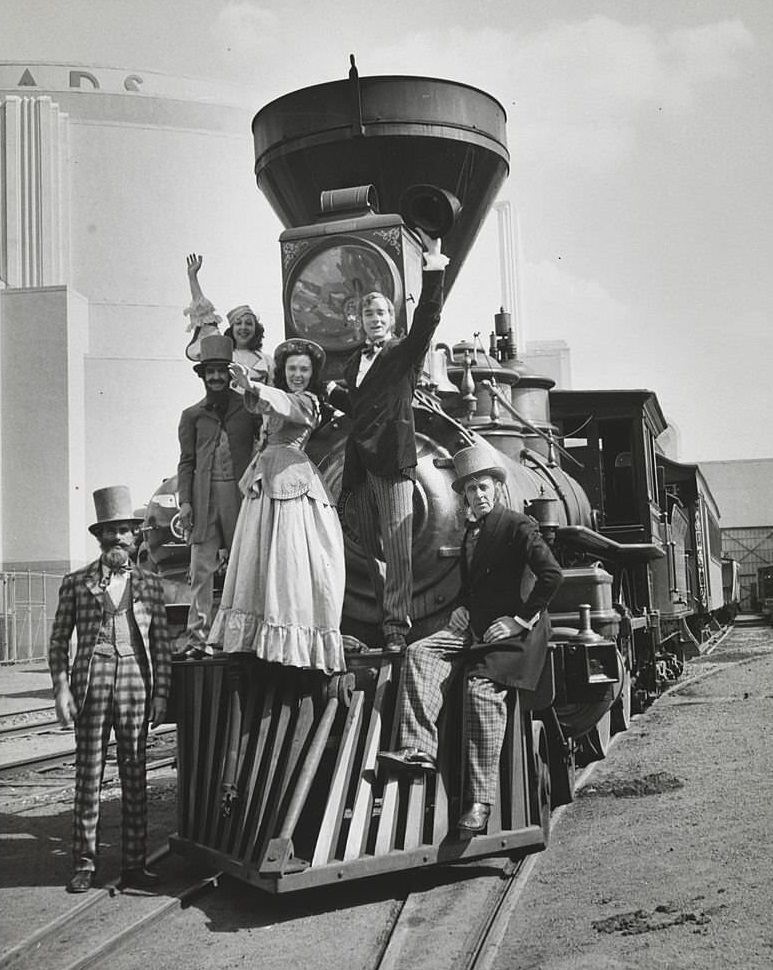
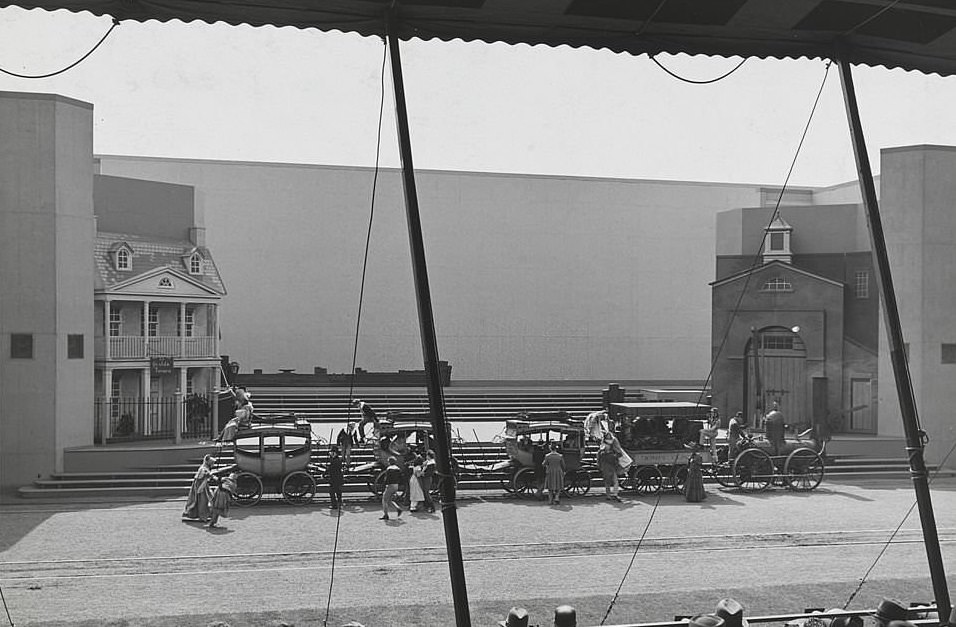
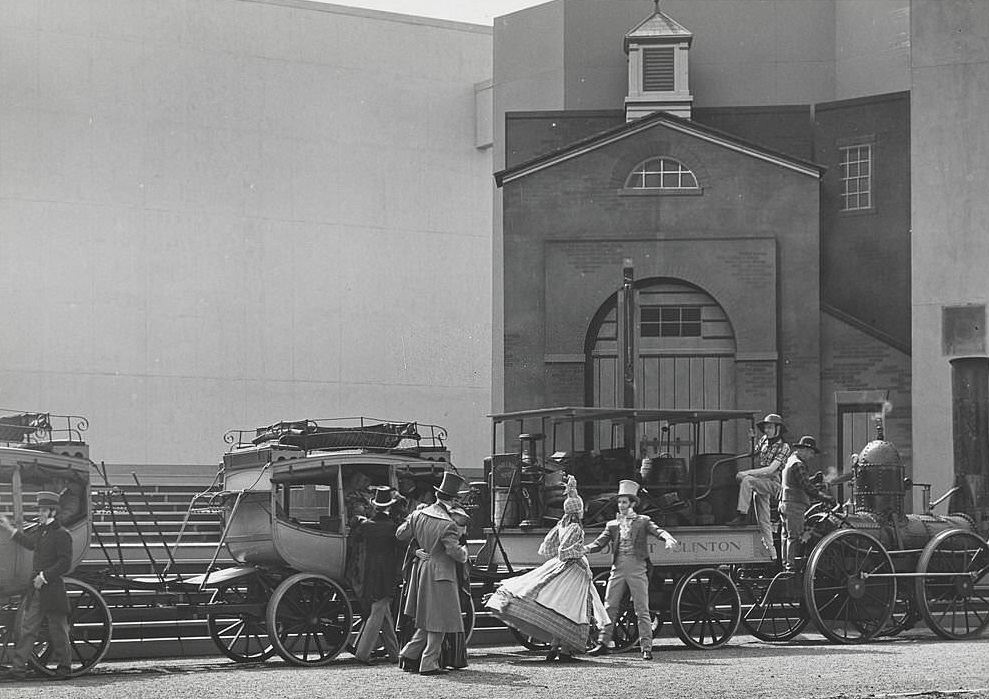
The Fair hosted its own pageants and live performances, including a railroad pageant on May 27, 1939 that dramatized the history of American transportation. The show closed with a “woman of the future” bringing together performers representing past and present eras—a fitting metaphor for everything the Fair stood for. Staff members transported visitors across the grounds on tractor trains, and Ozzie Nelson performed with his band at the amusement area while couples danced on the open-air floor.
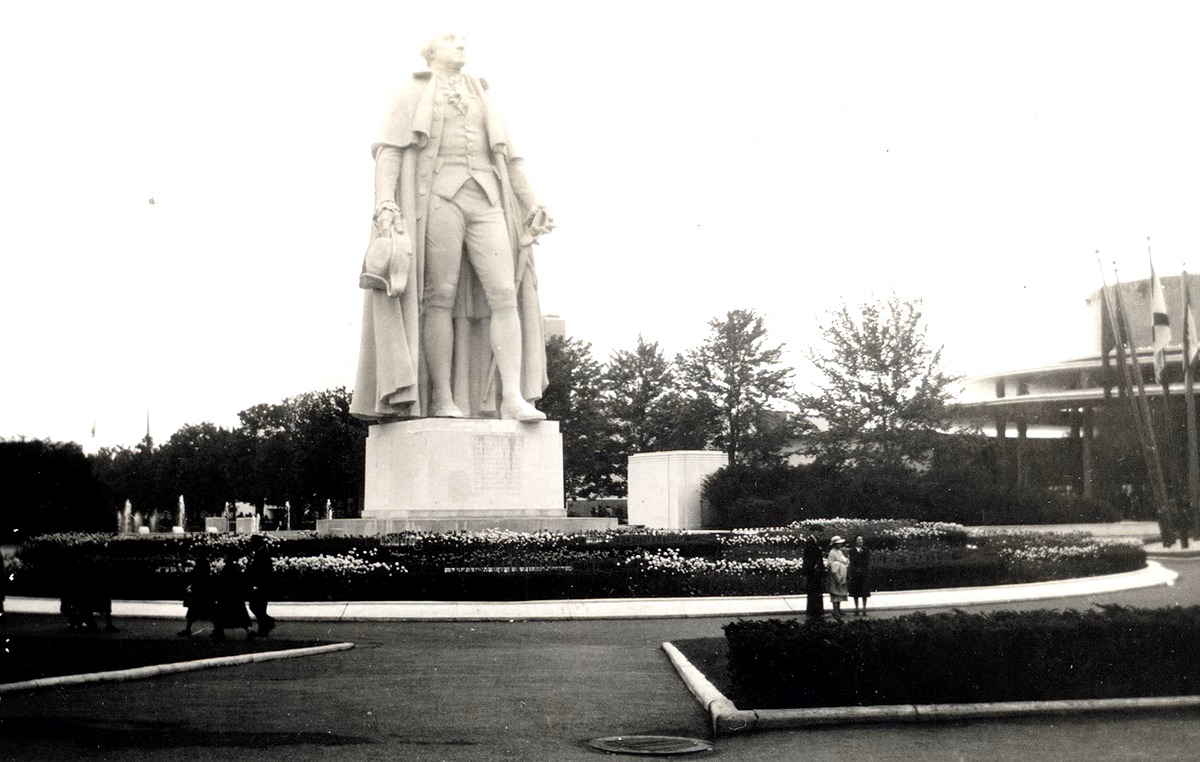
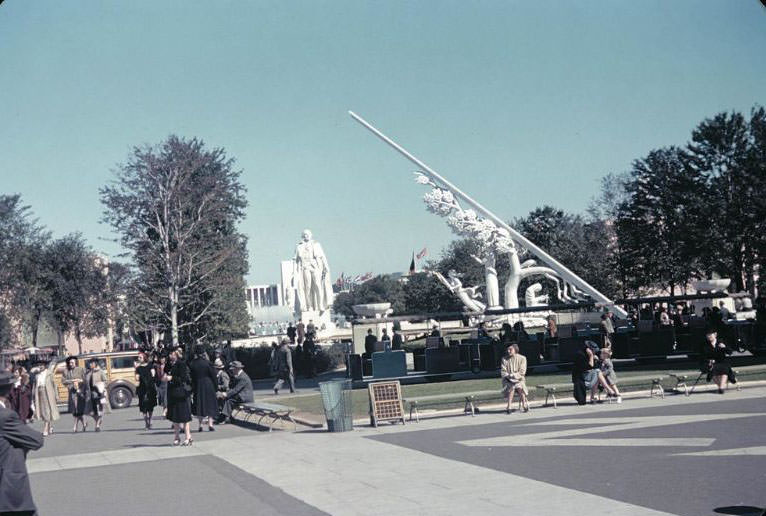
The statue of George Washington on the fairgrounds served as a prominent reminder of why 1939 had been chosen for the Fair. Standing on the 150th anniversary of Washington’s inauguration in New York City, it anchored the historical significance of the event even as the exhibits all pointed forward. At night, the statue’s silhouette was set dramatically against the lit Perisphere, creating one of the Fair’s most photographed scenes.
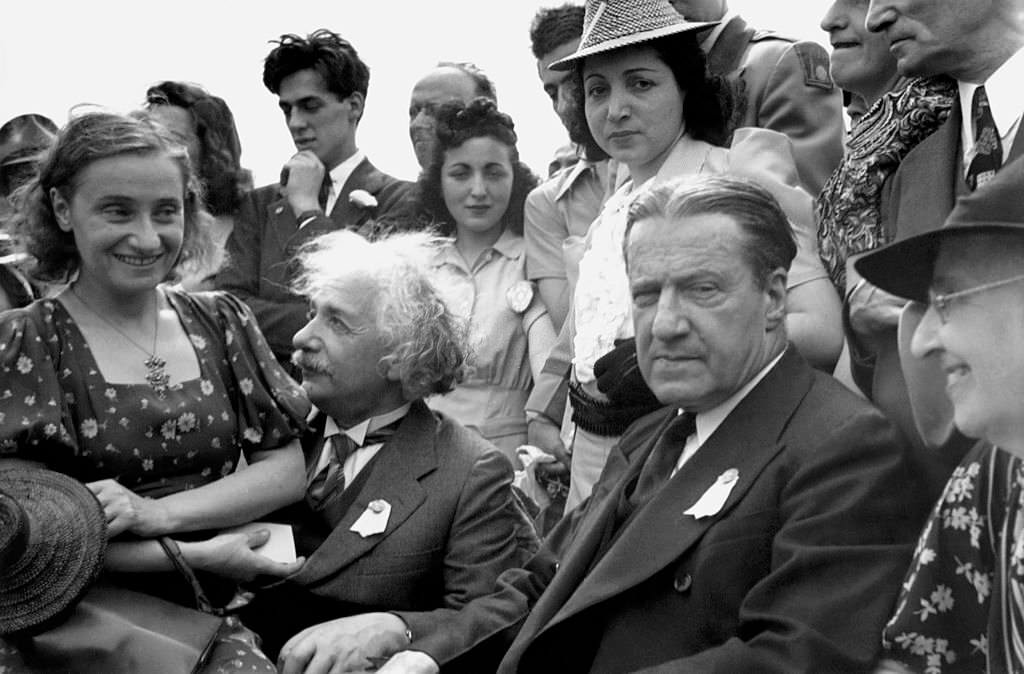
The General Motors Building was among the largest structures on the grounds, and its Futurama exhibit extended the building’s footprint considerably. The neighboring B.F. Goodrich Tire Building could be seen from the GM complex. Between the two corporate giants, the industrial zone of the Fair gave visitors a clear sense of what American manufacturing looked like—and where it intended to go. Albert Einstein attended the opening of the Jewish Pavilion, photographed in the stands with his stepdaughter, sculptor Margot Einstein, on his lap.
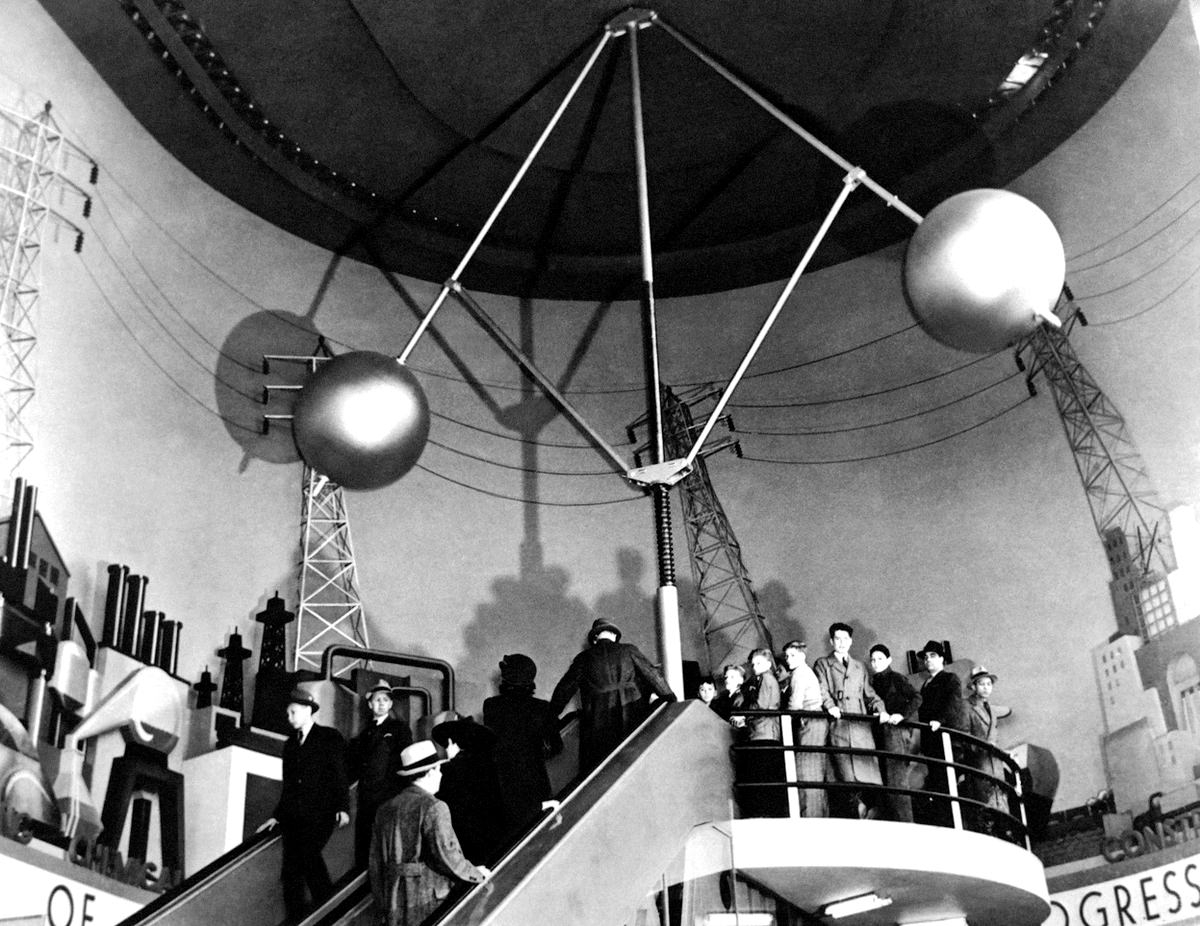
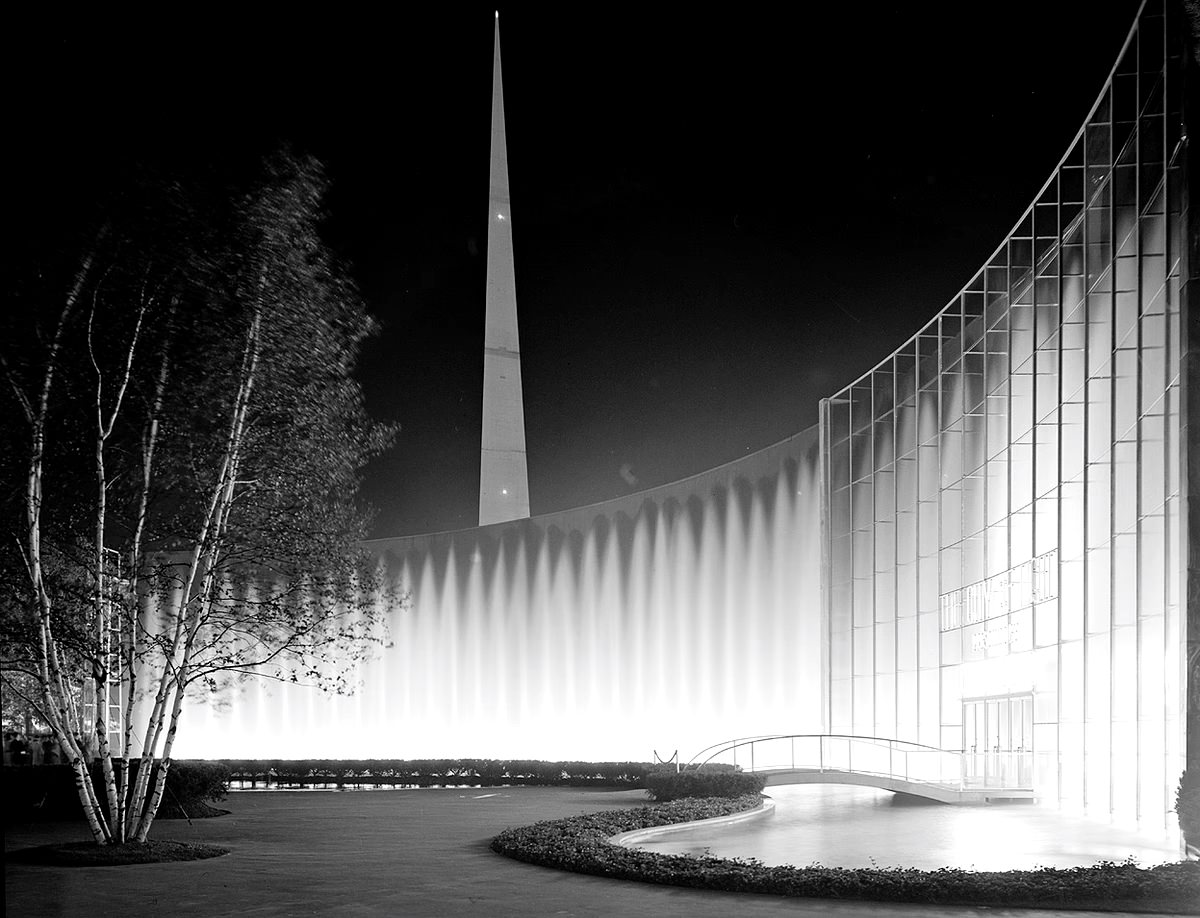
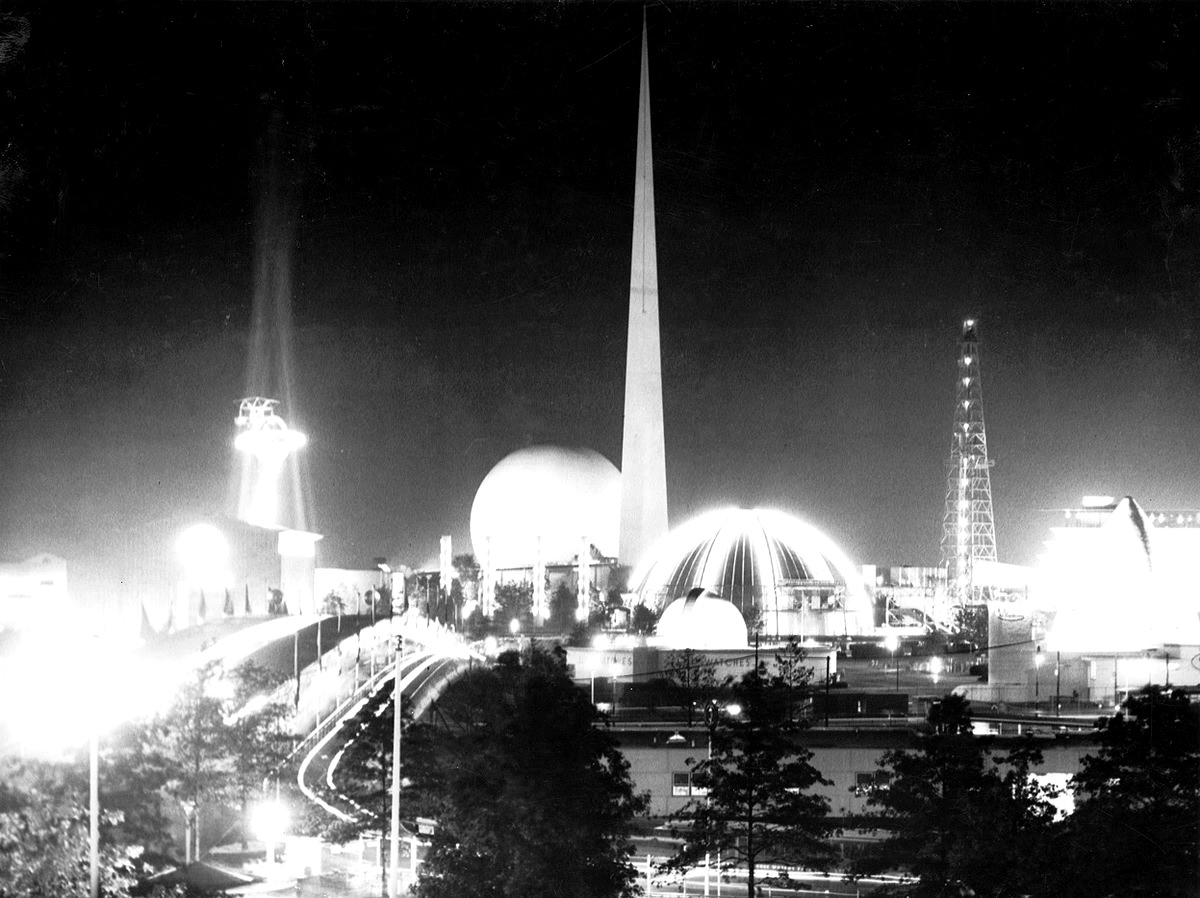
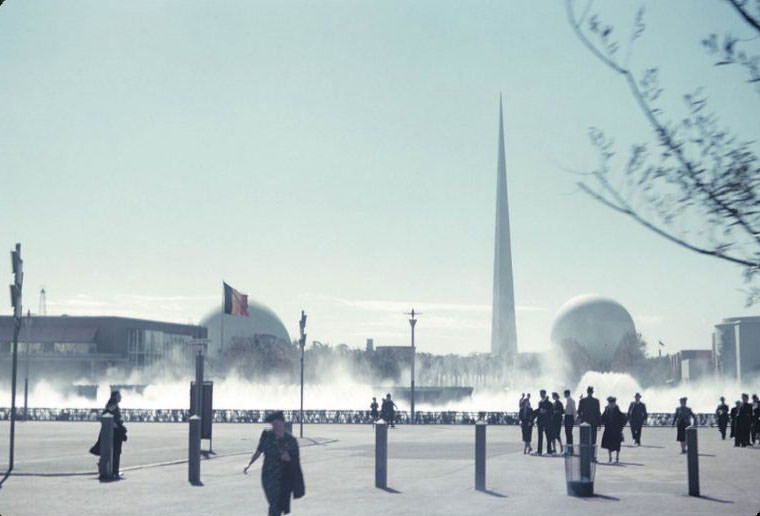
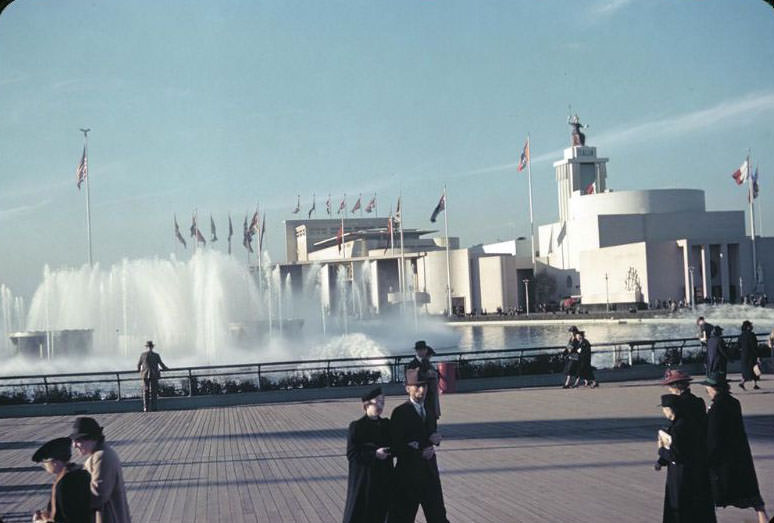
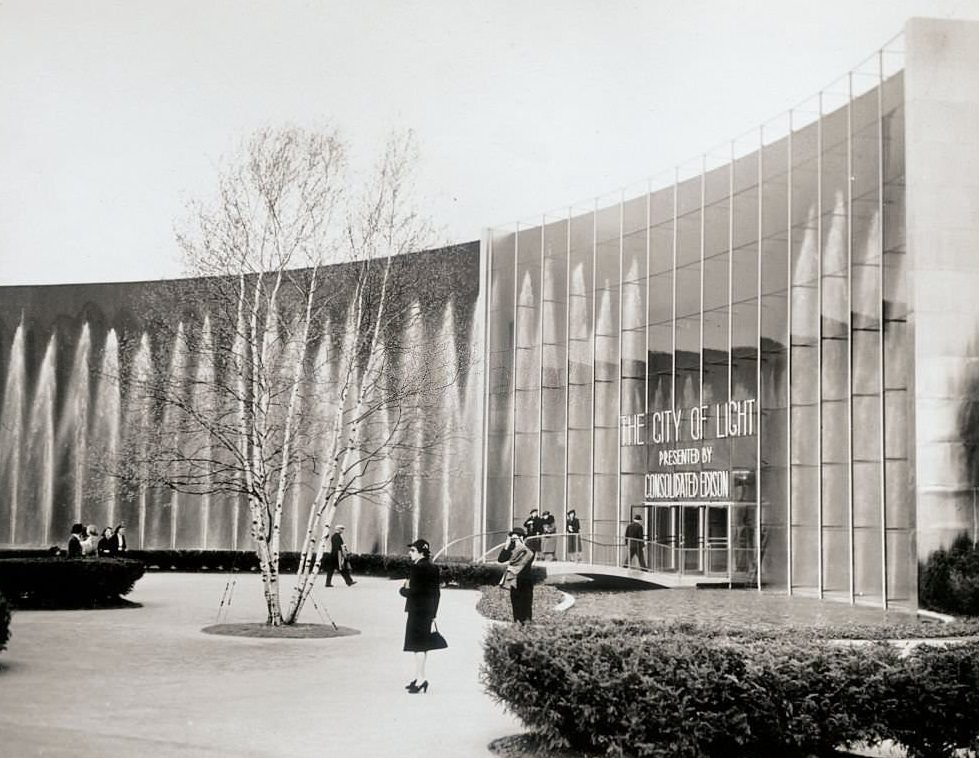
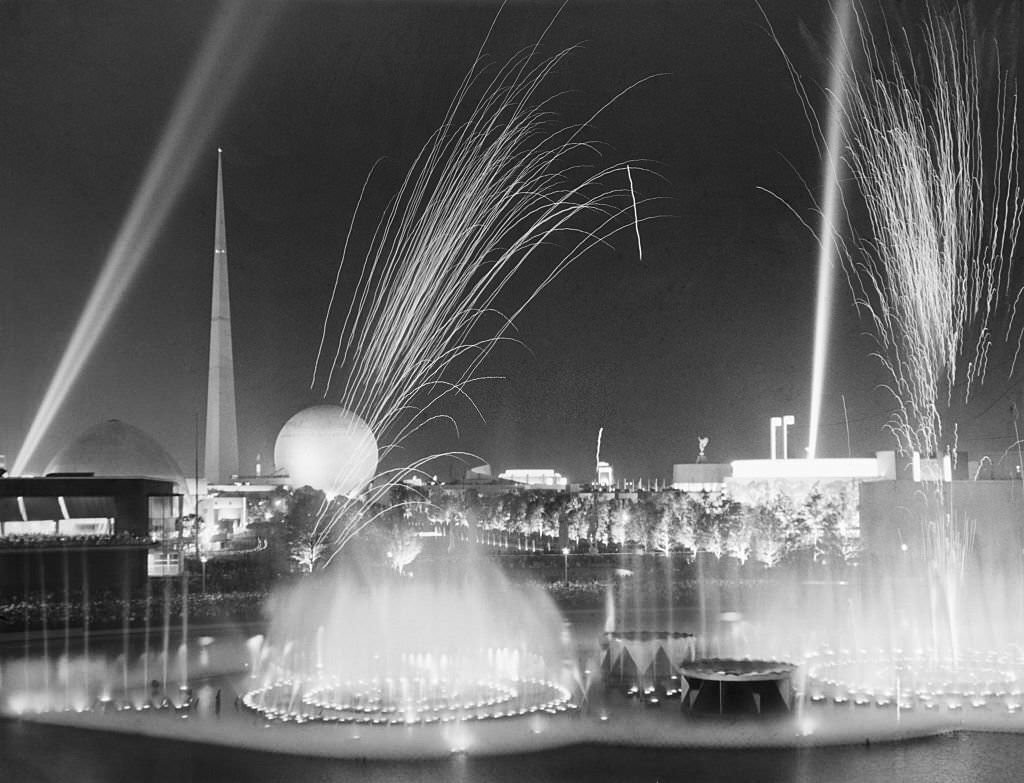
By night, the Fair transformed into something spectacular. Floodlights bathed the Trylon and Perisphere in white light, the Consolidated Edison fountains shot colored water into the air, and the General Electric Building glowed from within. Consolidated Edison’s “City of Light” exhibit used a vast diorama of New York City to show exactly how electrical power was generated and distributed—then dimmed the lights to demonstrate what the city would look like without it. The effect reportedly drew gasps from audiences every time.
When World War II broke out in September 1939—just four months into the Fair’s first season—the effects were immediate. Pavilions from Axis-occupied nations were directly impacted, and the atmosphere of optimism was impossible to fully maintain. Poland, whose pavilion had drawn steady crowds, was invaded by Germany before the Fair’s first season closed. Several European nations that had intended to participate in the second season were unable to do so.
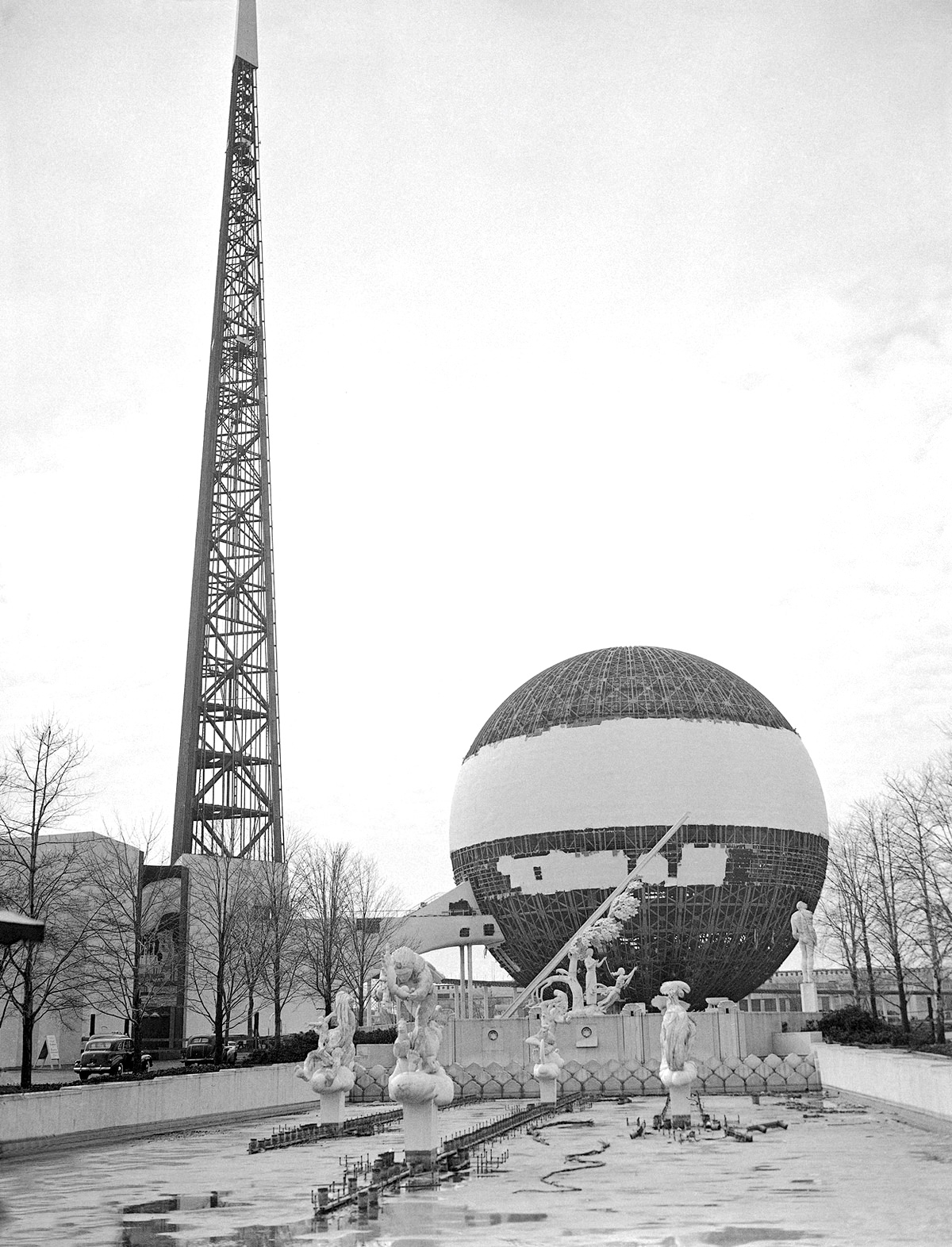
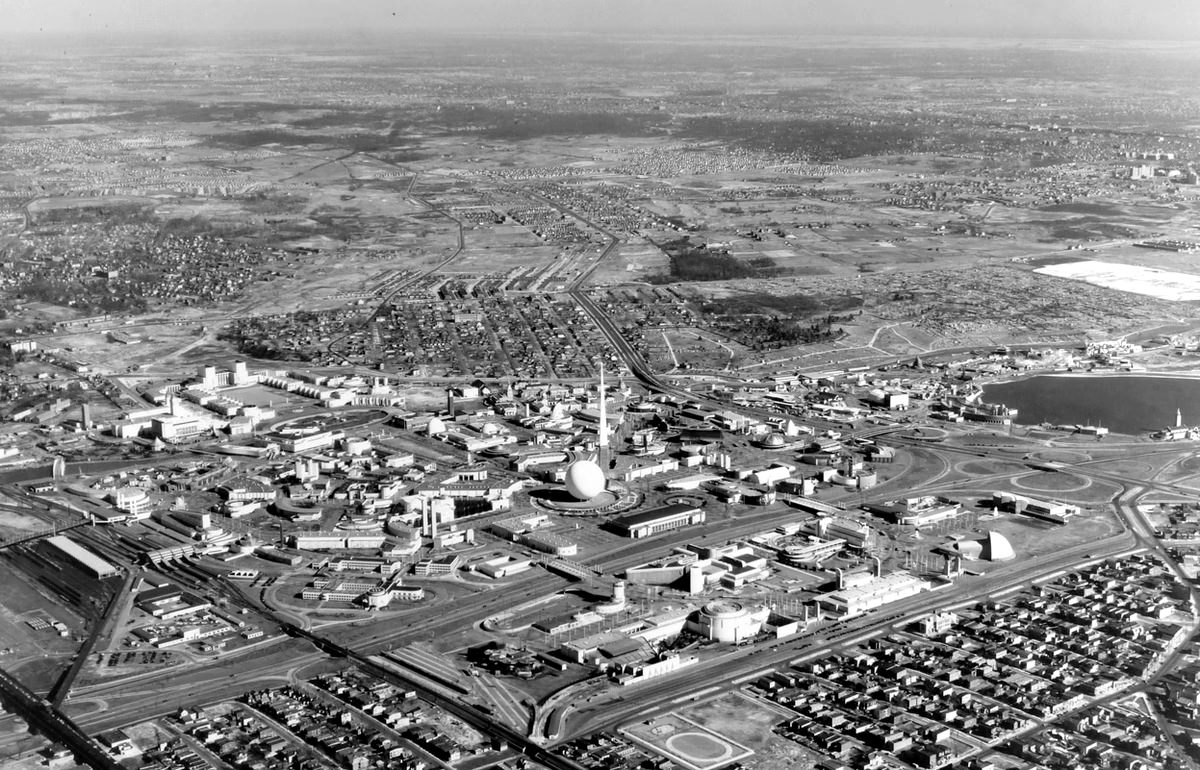
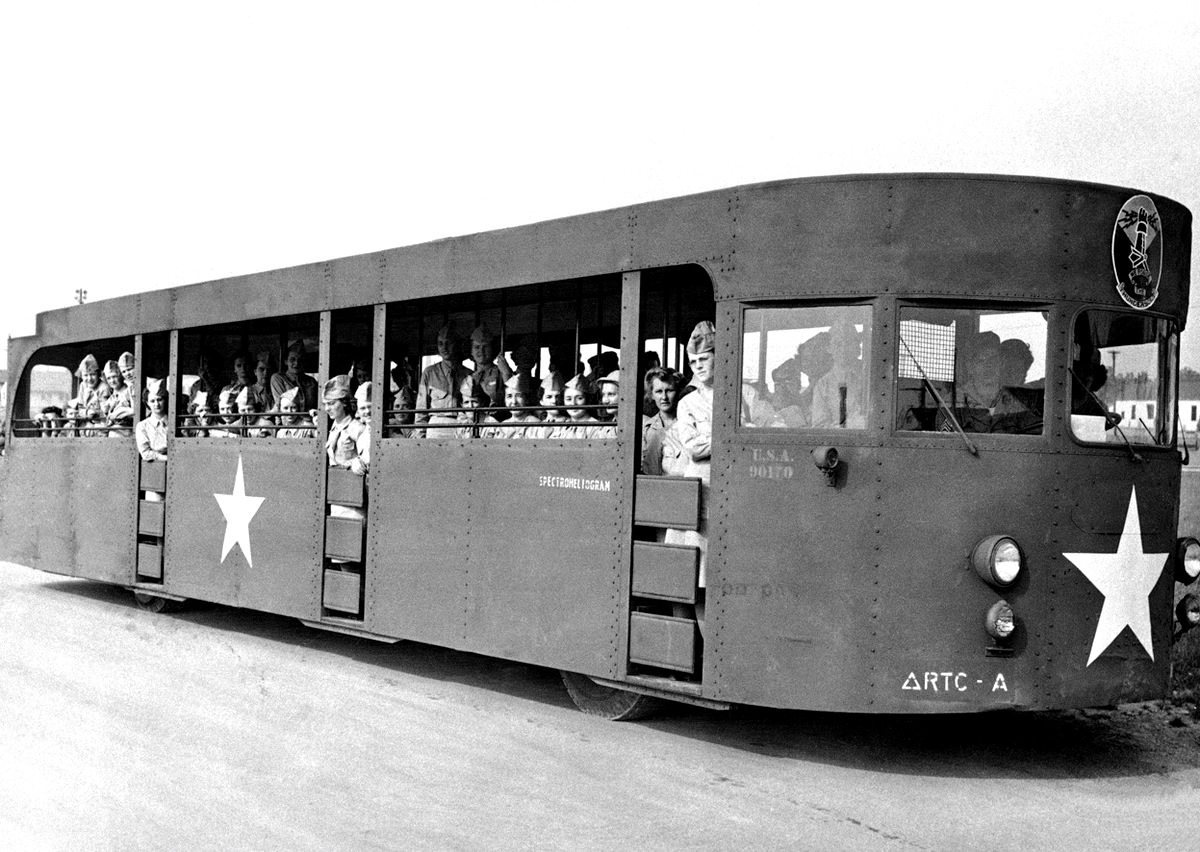
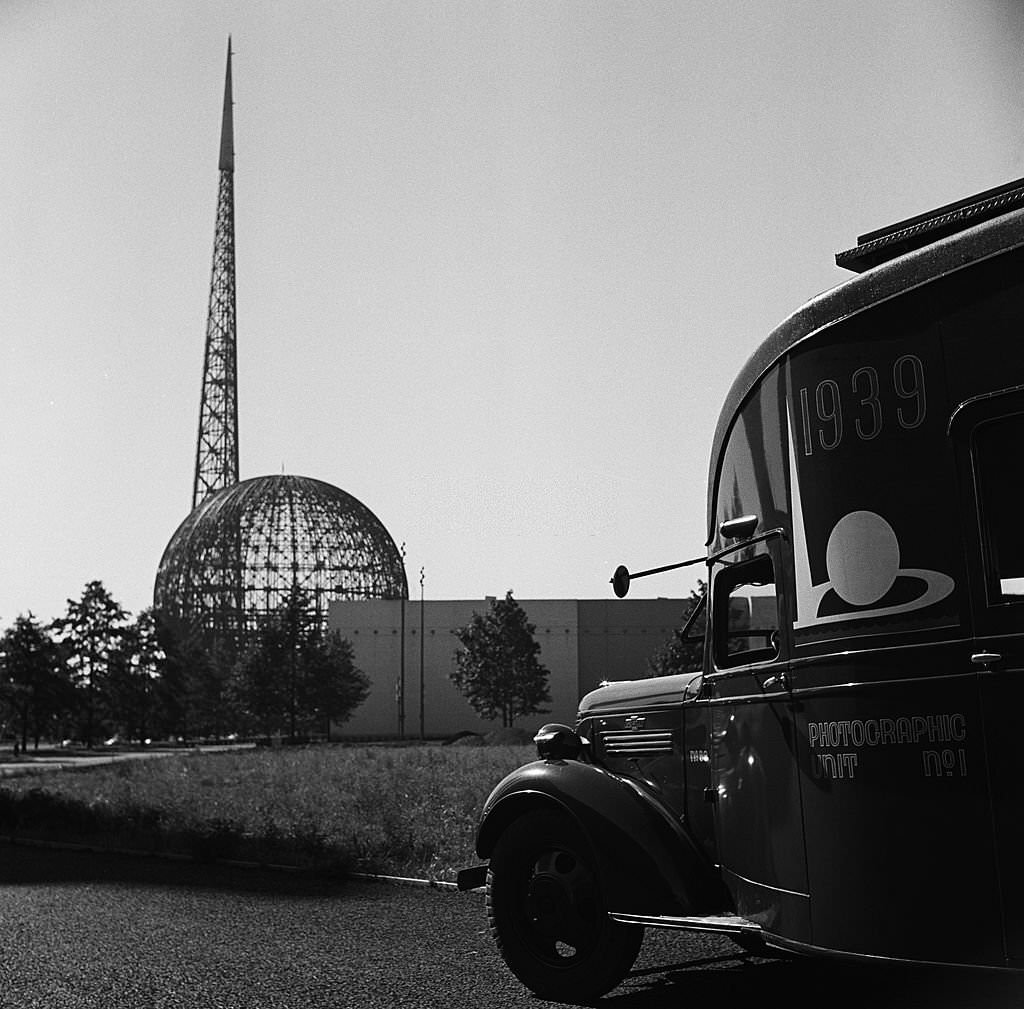
The Fair ran a second season in 1940, closing on October 27 of that year. Budget overruns had accumulated throughout both seasons, and the event ended as a financial failure. In early 1941, the iconic Trylon and Perisphere were dismantled, their steel sent to support the American war effort. Many other structures were demolished or removed as well, though some buildings were preserved and repurposed for the 1964–1965 World’s Fair held on the same Flushing Meadows grounds. A former excursion bus from the Fair—the “Spectroheliogram”—ended up at Fort Knox, Kentucky, repurposed to shuttle WAACs to and from work at the armored force replacement training center.
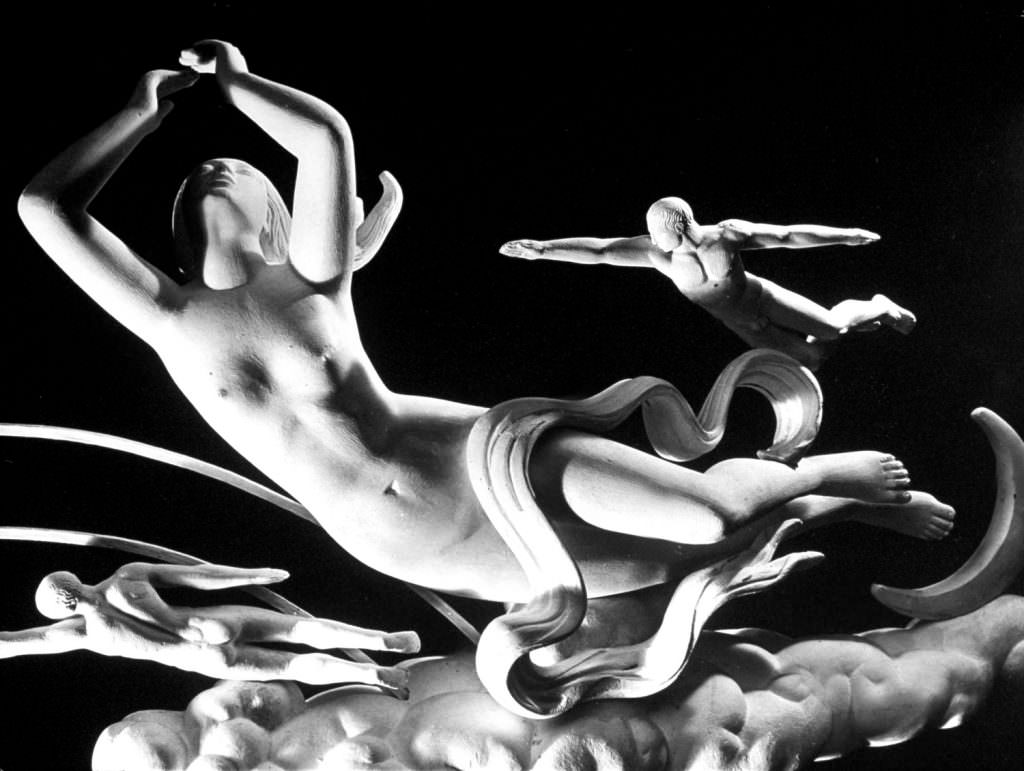
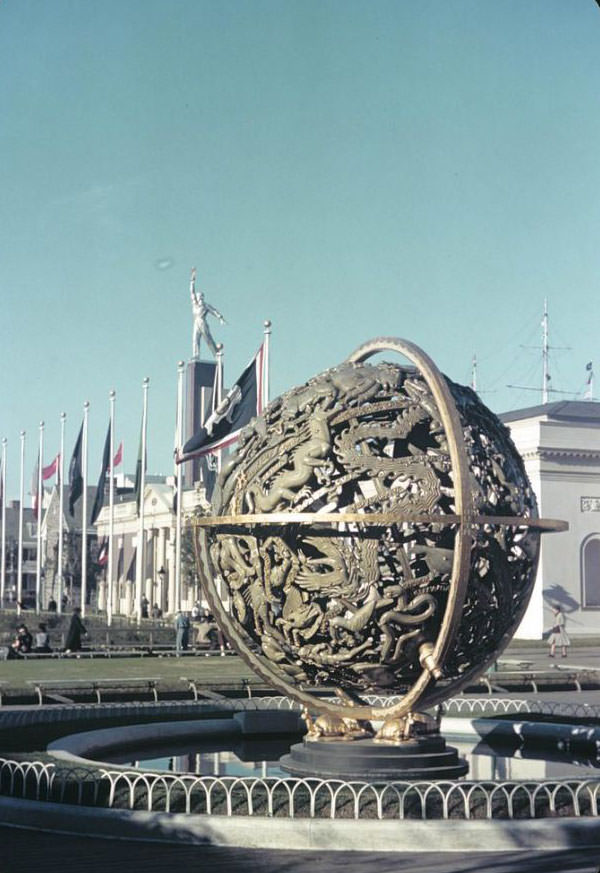
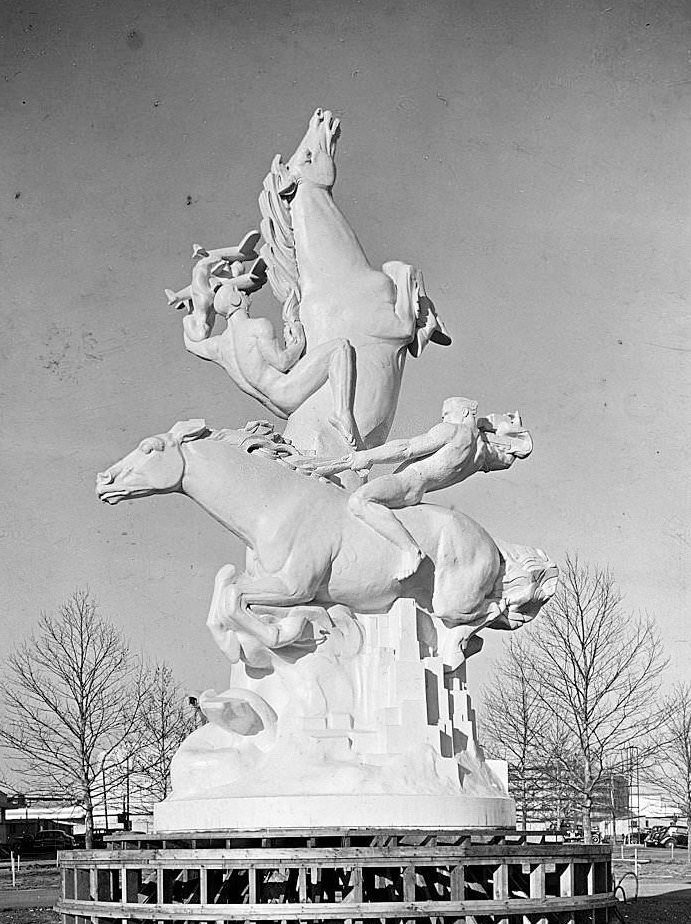
The architectural ambition of the Fair extended to its sculpture as well. Paul Manship—the same artist who created the golden Prometheus at Rockefeller Center—produced the sculpture “Night” for the 1939–1940 Fair. His models for the piece were photographed and circulated widely. Across the grounds, dozens of commissioned artworks decorated buildings, fountains, and public spaces, making the fairgrounds as much an outdoor gallery as an exposition.
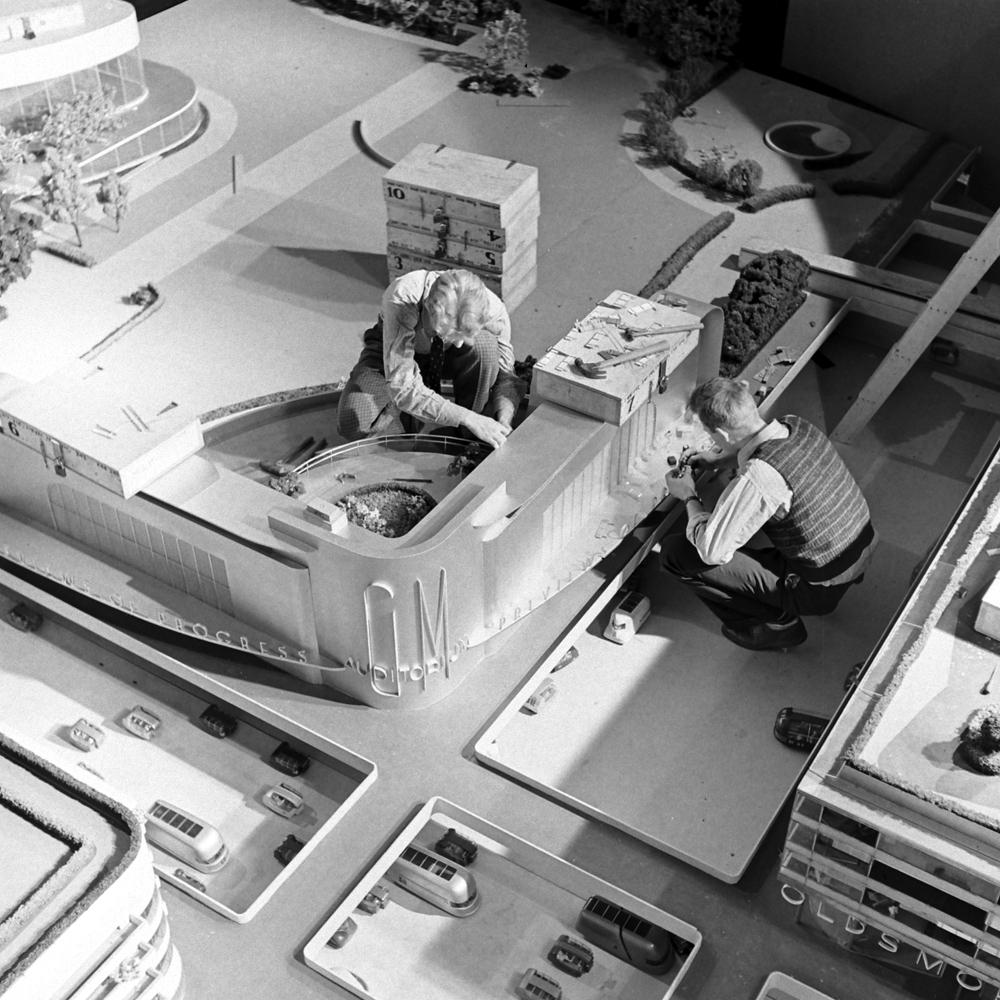
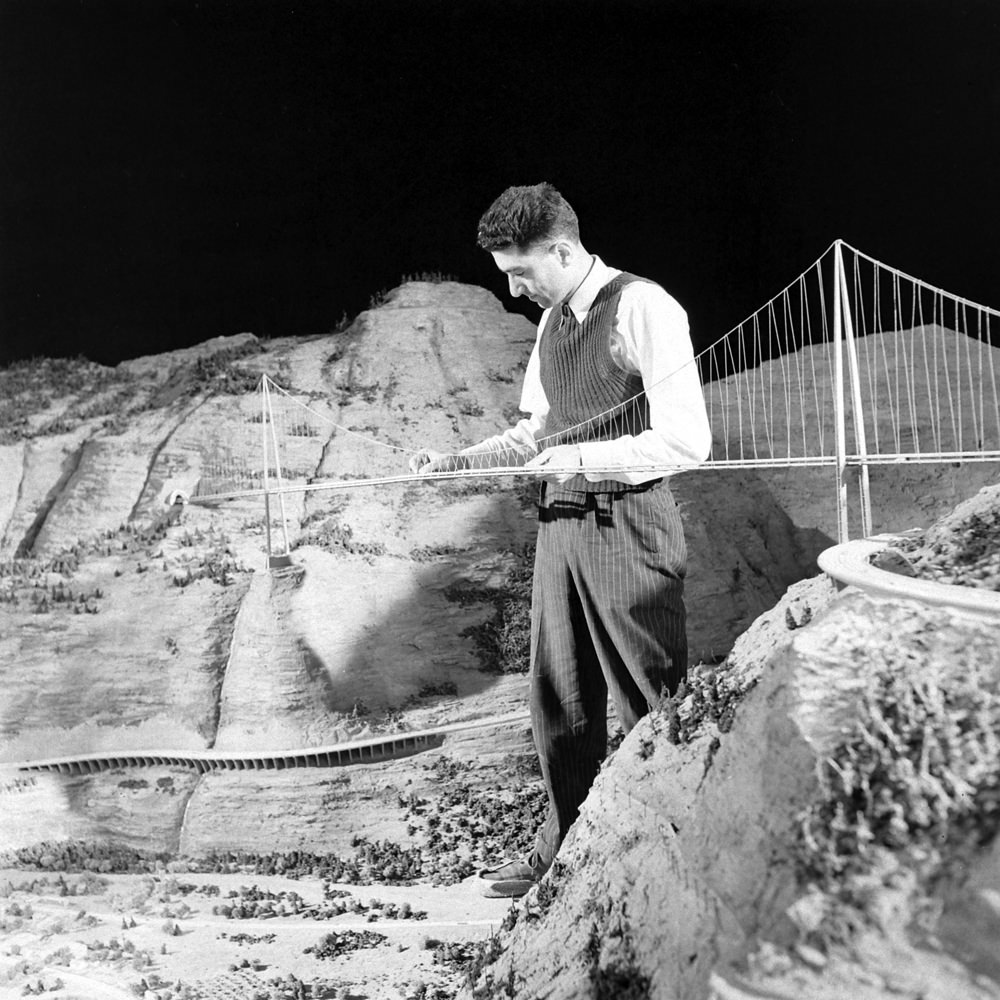
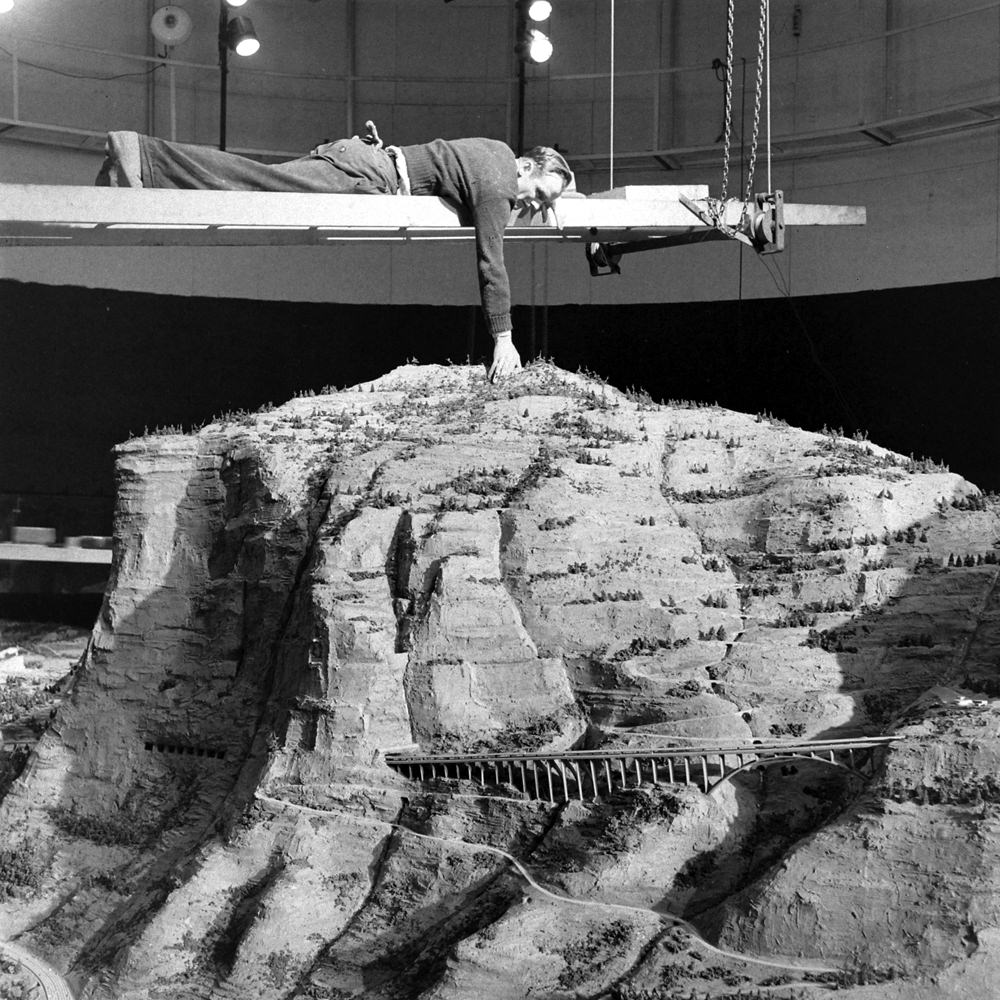
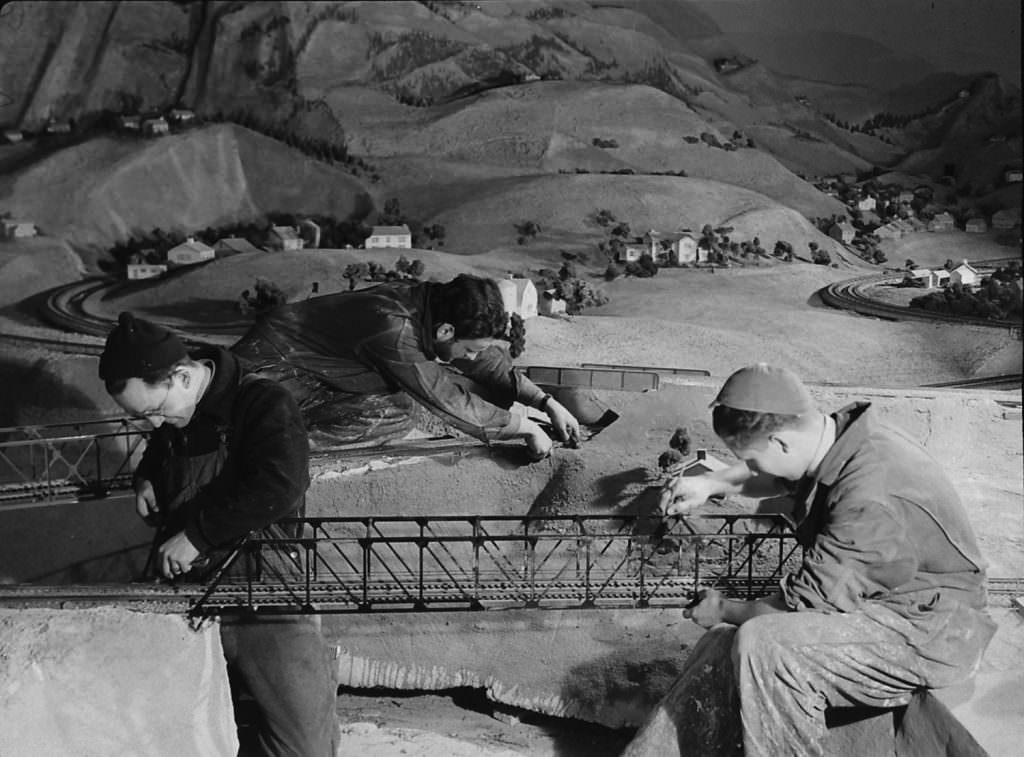
The weeks before opening day were filled with the final stages of construction and preparation. Craftsmen worked on enormous dioramas and detailed architectural models of “the city of the future.” The scale of what was being built was unlike anything the site—or much of America—had ever seen before. Teams worked on the General Motors Futurama model right up until the Fair opened, fine-tuning one of the most ambitious exhibit installations in world’s fair history.
Ford’s pavilion offered several distinct displays, each designed to connect visitors to the automobile-making process. Raw materials—ore, rubber, glass—were laid out alongside finished components, making the complexity of manufacturing tangible for ordinary fairgoers. The Ford Motor Company’s presence at the Fair was a direct challenge to General Motors’ dominance of visitor attention, and the two corporate exhibits together defined the industrial ambition of the event.
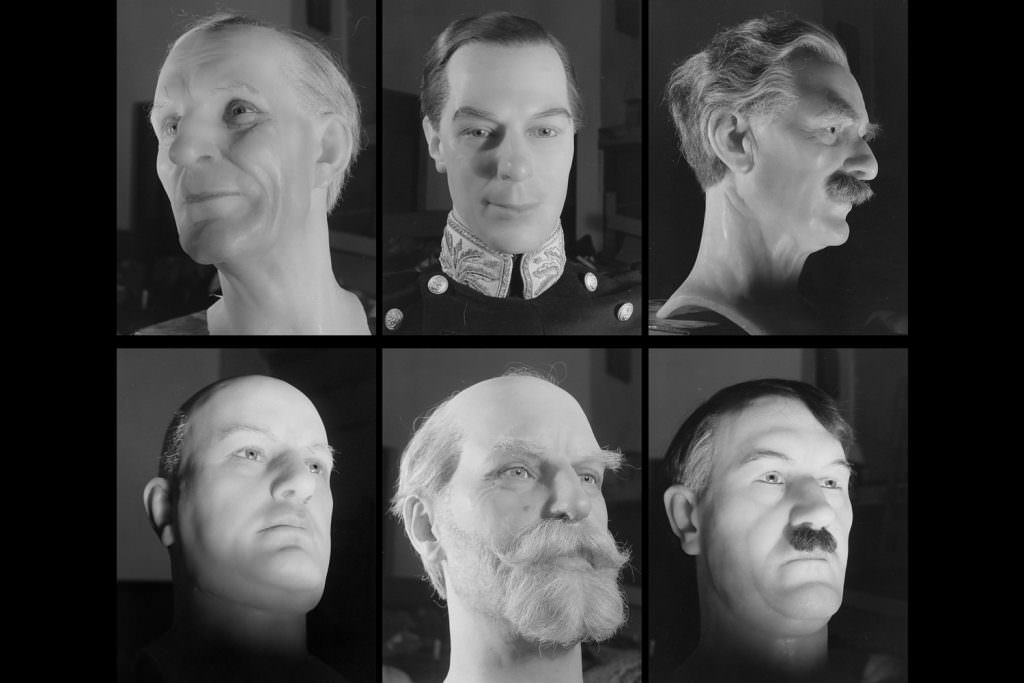
Among the more unusual attractions was a wax museum that displayed likenesses of notable figures of the era—including Supreme Court Chief Justice Charles Evans Hughes and Adolf Hitler, displayed side by side. The Fair also hosted “Superman Day” on July 3, 1940, featuring an athletic contest and a public appearance by a performer in the Superman costume. Ray Middleton, who served as a judge for the contest, is often mistakenly credited with wearing the Superman suit that day—he did not, though he participated in a live radio broadcast connected to the event.
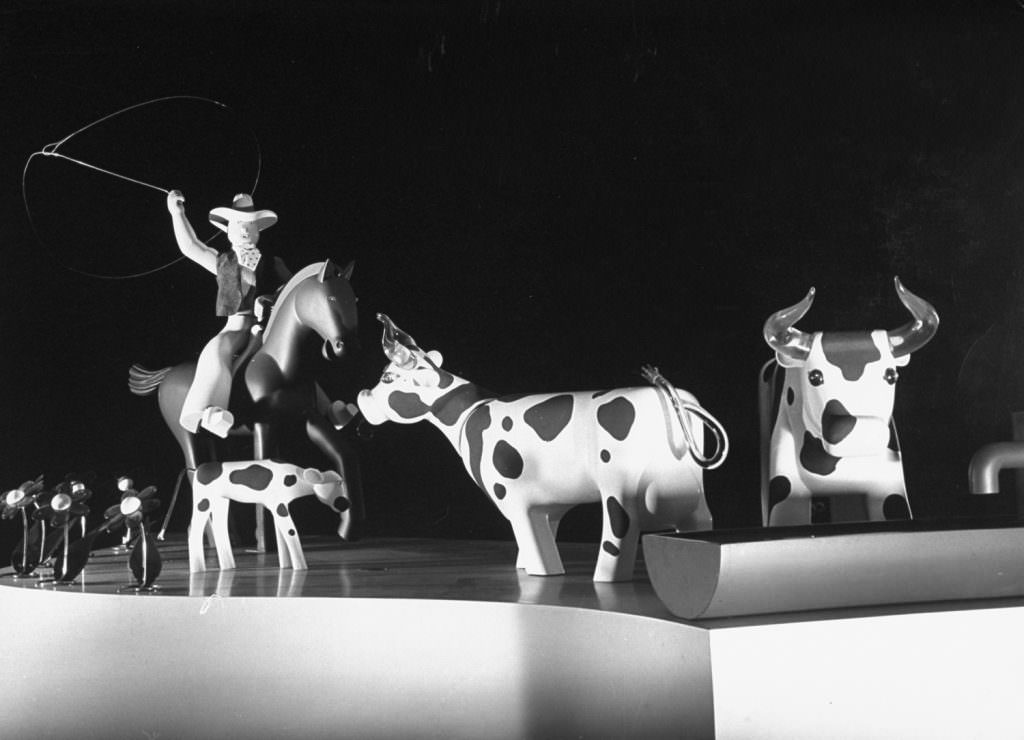
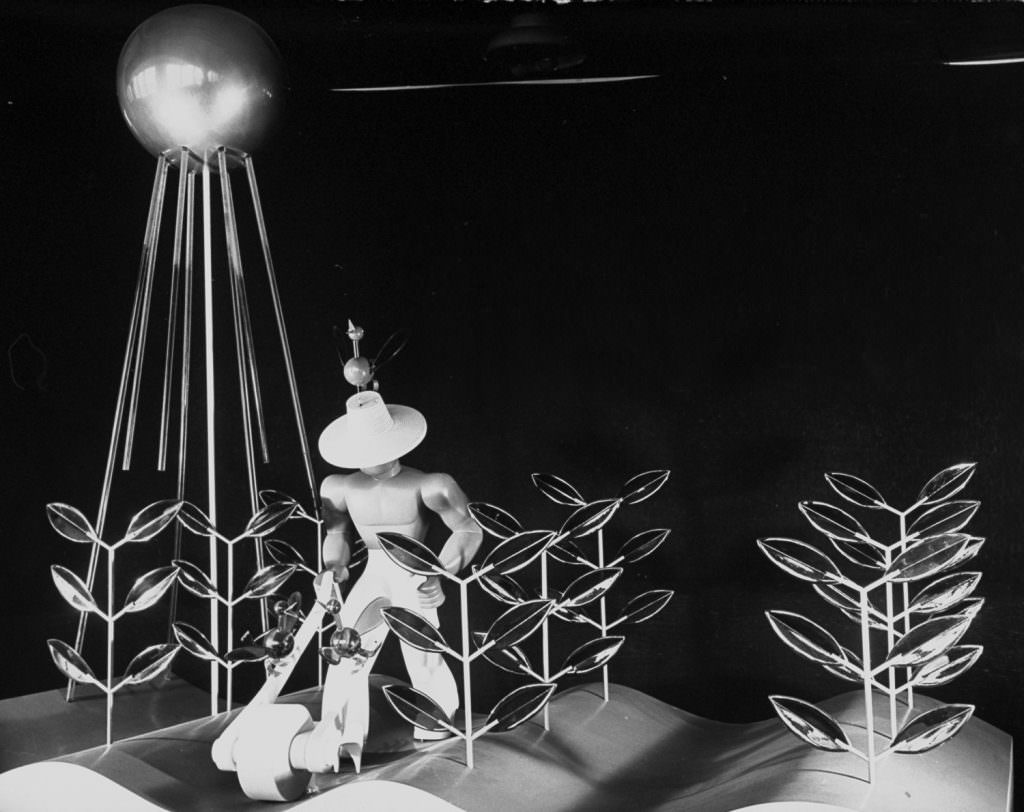
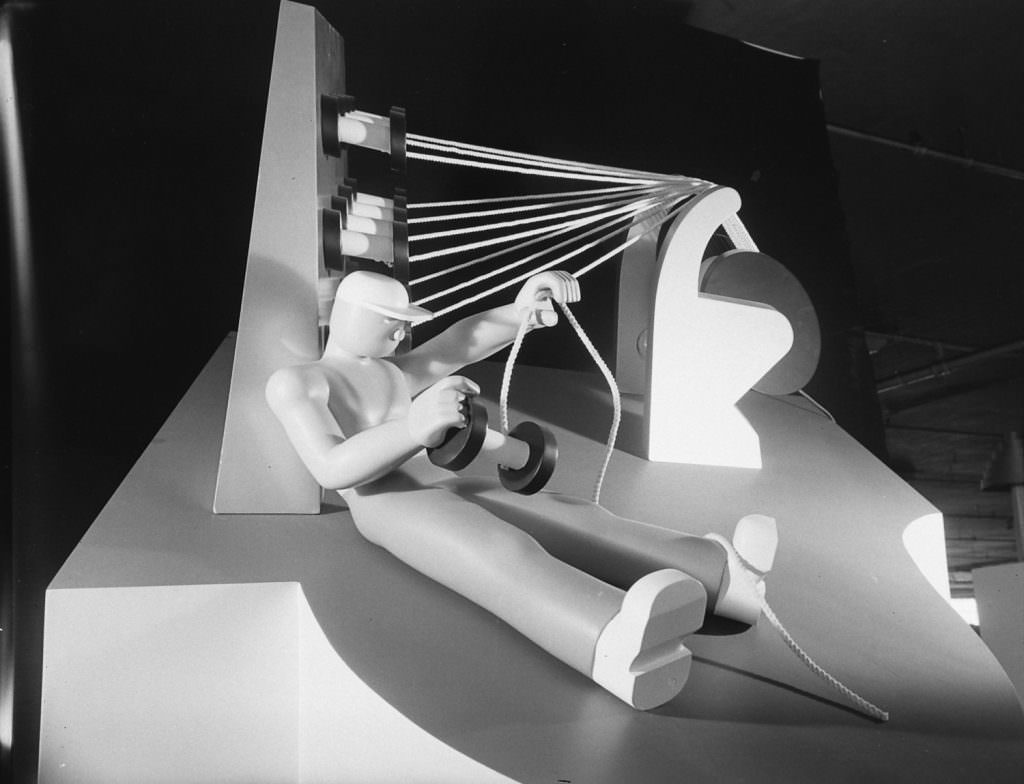
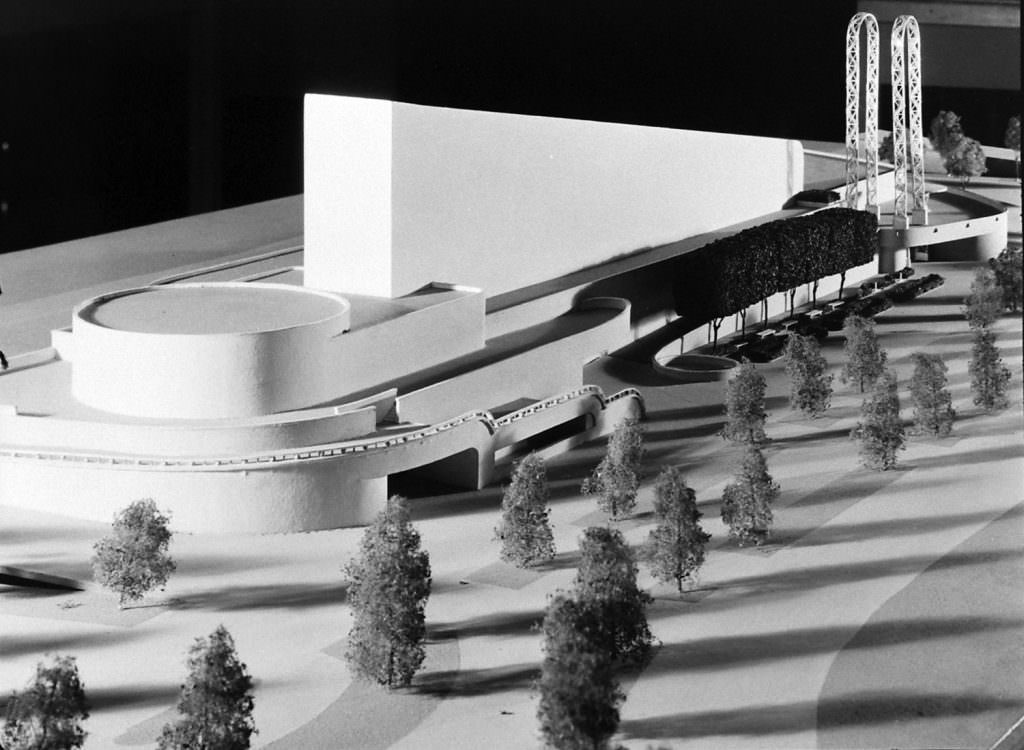
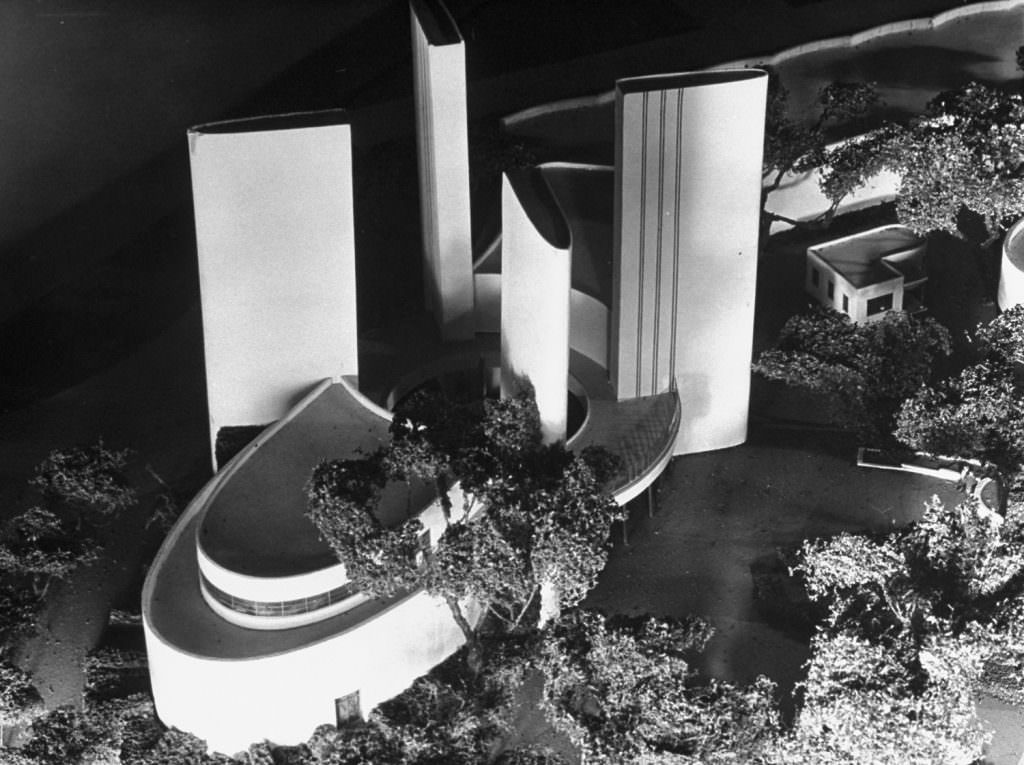
The architectural models produced for the Fair ranged from sweeping civic buildings to specialized structures like a textile center. Each model was painstakingly detailed, giving planners and the public a clear sense of what the finished buildings would look like. The Fair’s architectural ambition pushed American design forward, with corporate sponsors actively encouraging architects to experiment with new materials and forms.
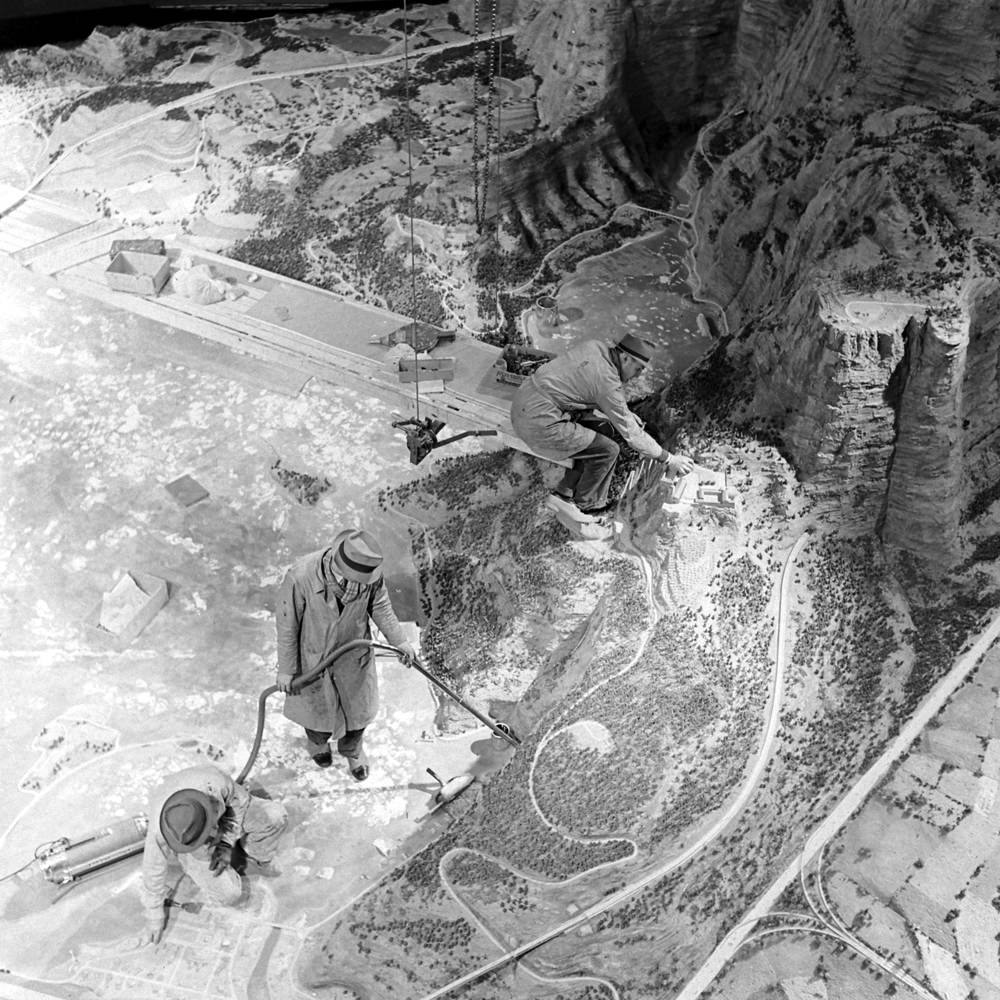
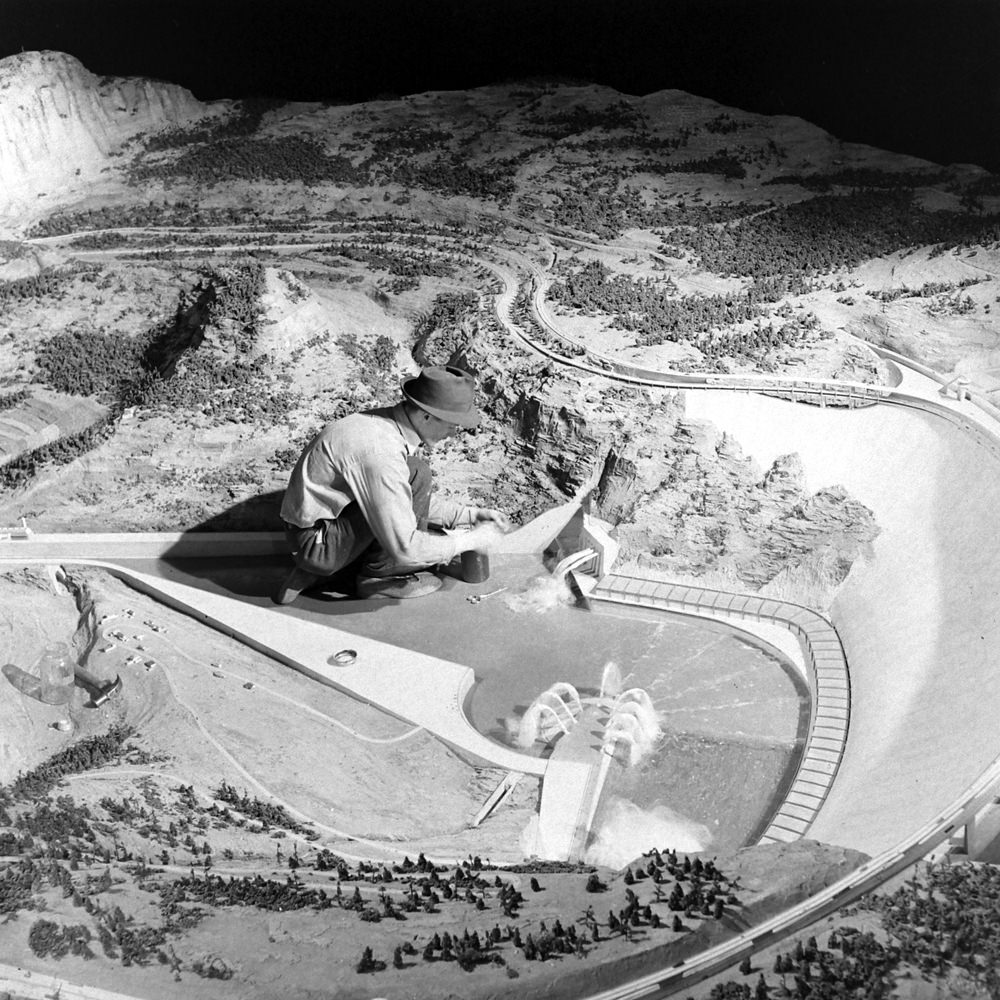
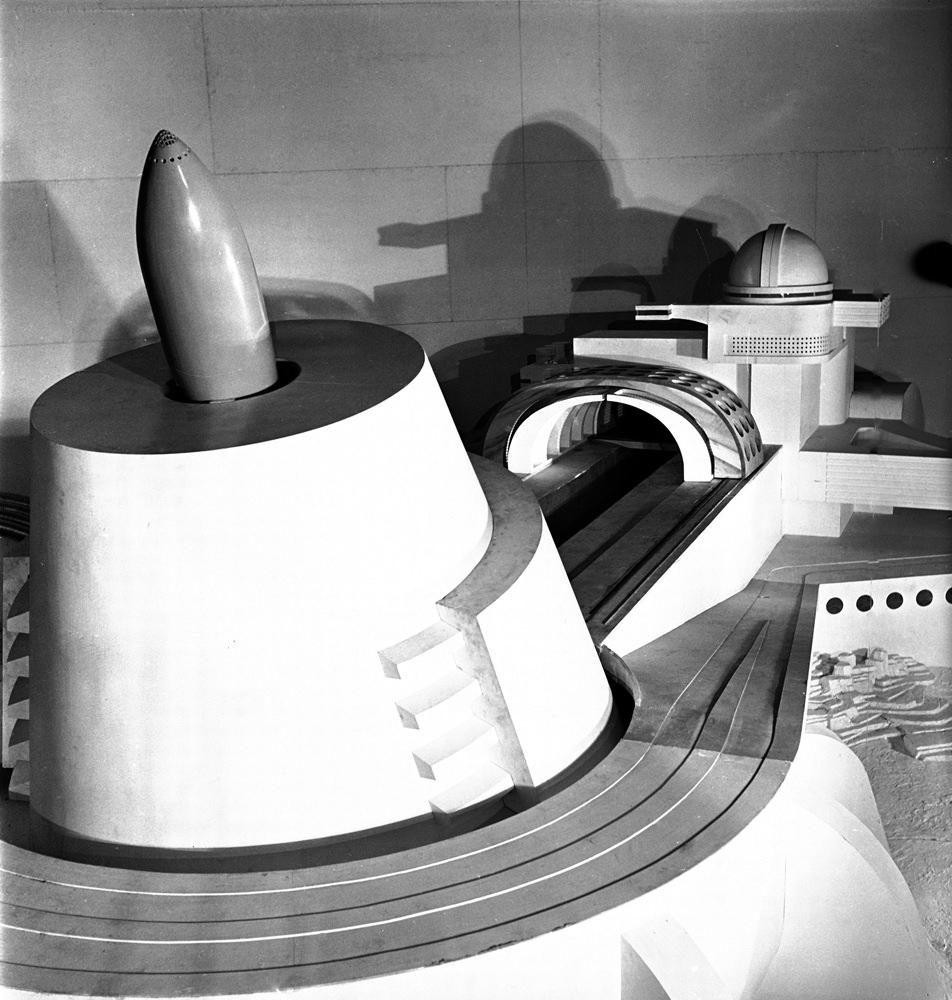
The Trylon and Perisphere were the two most photographed structures at the entire Fair. Together they made up the Theme Center—a symbol of modernity and ambition that appeared on posters, postcards, and souvenirs sold across the country. The Heliline walkway curving down from the Perisphere gave visitors a sweeping view of the surrounding fairgrounds as they exited. From the Heliline, the sheer scale of what had been built on the former ash dump became fully visible.
Billy Rose’s Aquacade was one of the most commercially successful shows at the entire Fair. Performed at the Marine Amphitheater, the production featured synchronized swimmers, divers, and elaborate choreography set to live music. The venue seated thousands and sold out repeatedly across both seasons. Its success helped define the entertainment zone of the Fair as something distinct from the corporate and government pavilions.
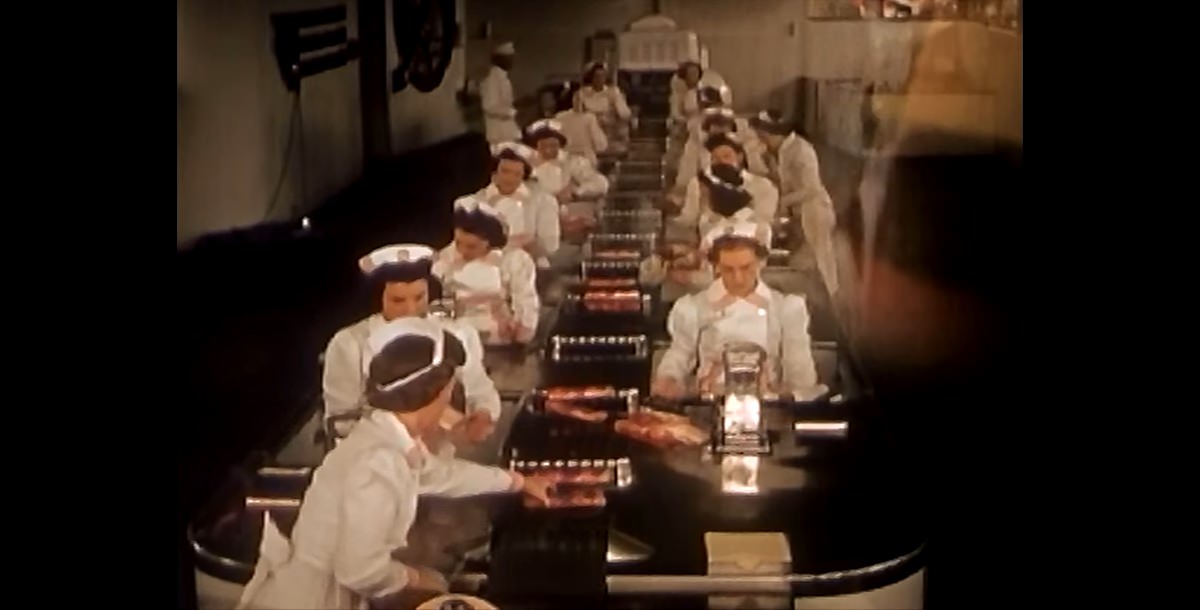
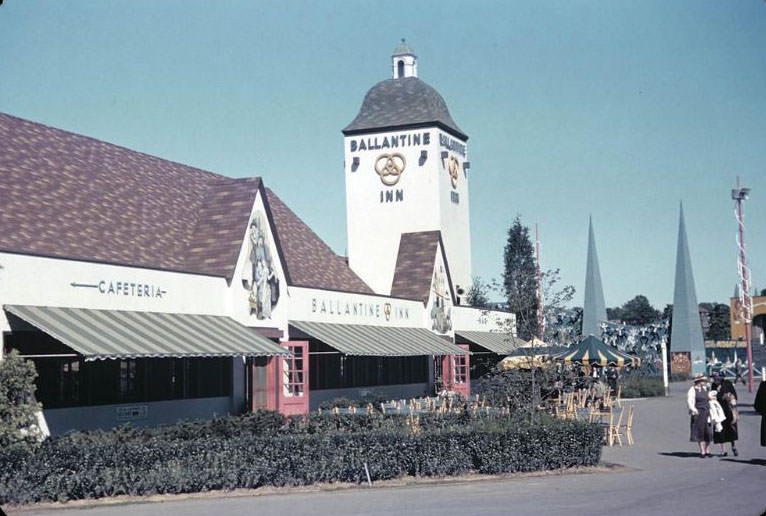
Food and drink were woven into the Fair’s commercial fabric. The Ballantine Inn was one of several branded hospitality venues on the grounds. Swift Premium Meats ran a working exhibit showing modern bacon-packaging techniques. Restaurants, cafes, and food stands of all kinds served the tens of thousands of daily visitors, and national brands used the Fair as a marketing platform to reach a concentrated audience unlike any other in the country.
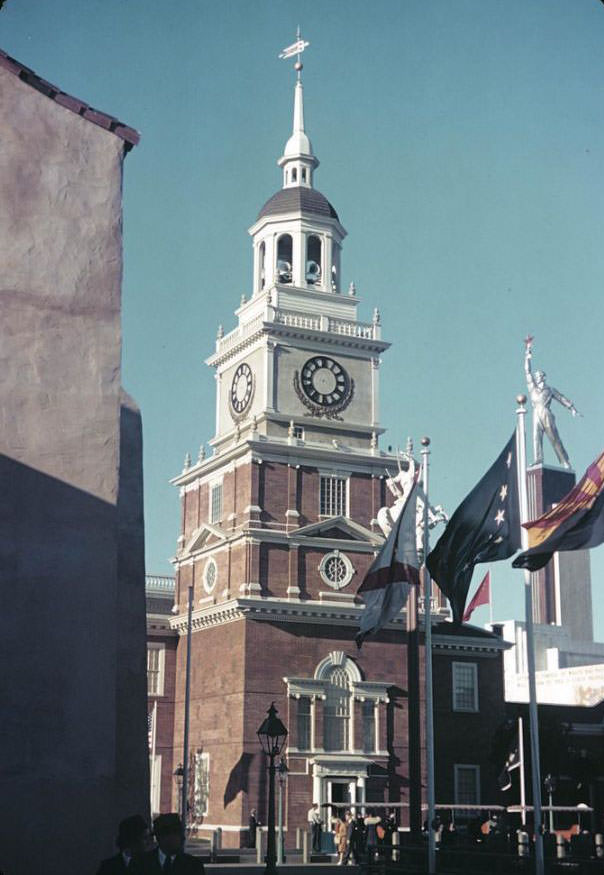
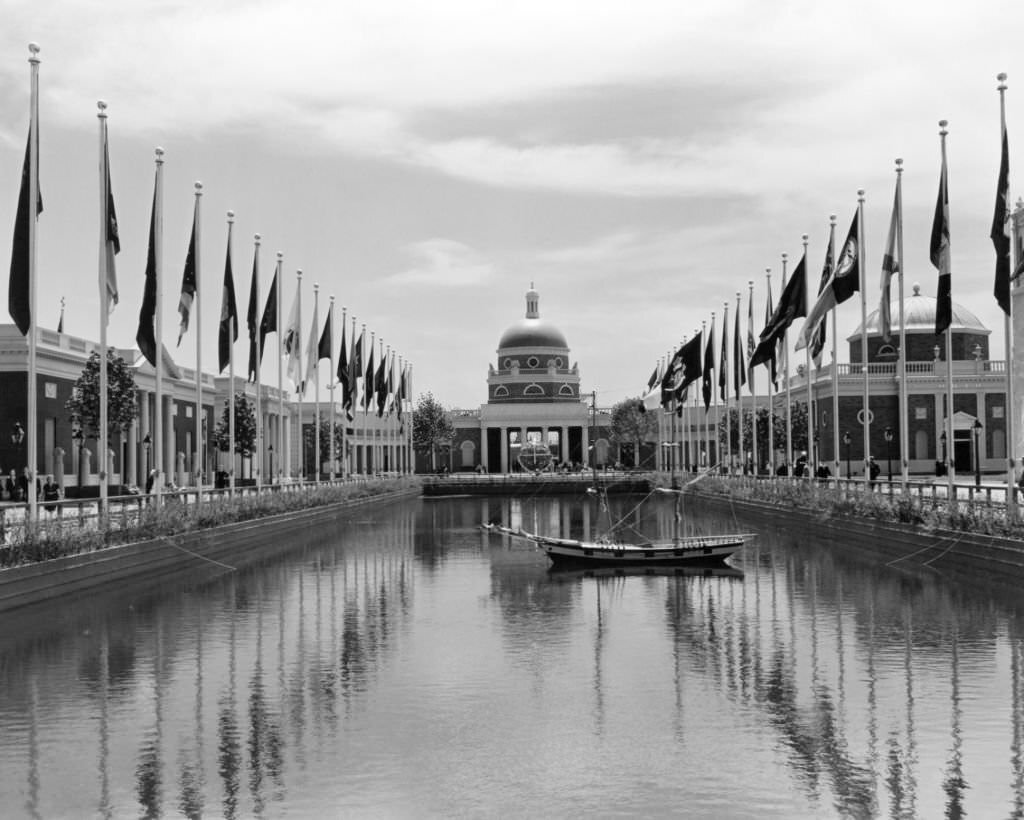
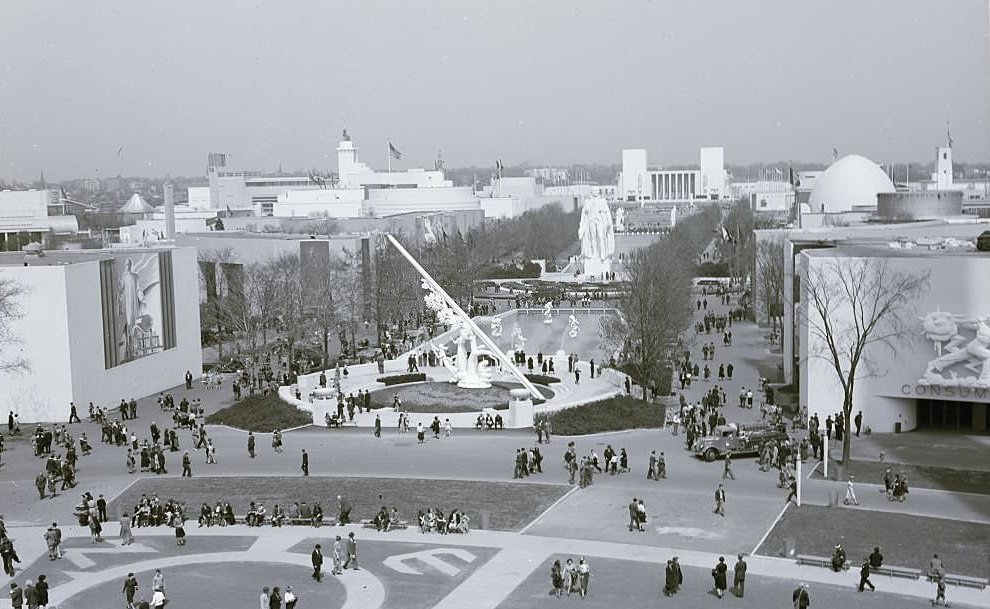
The Court of Peace and the Court of States were two of the Fair’s major organizing axes. The George Washington statue anchored one end, flanked by the “Time and Fates of Man” sundial and with the United States Federal Building rising in the background. State buildings lined the Court of States, with the Soviet Pavilion’s tower visible above several of them—a constant visual reminder of the international scope of the event.
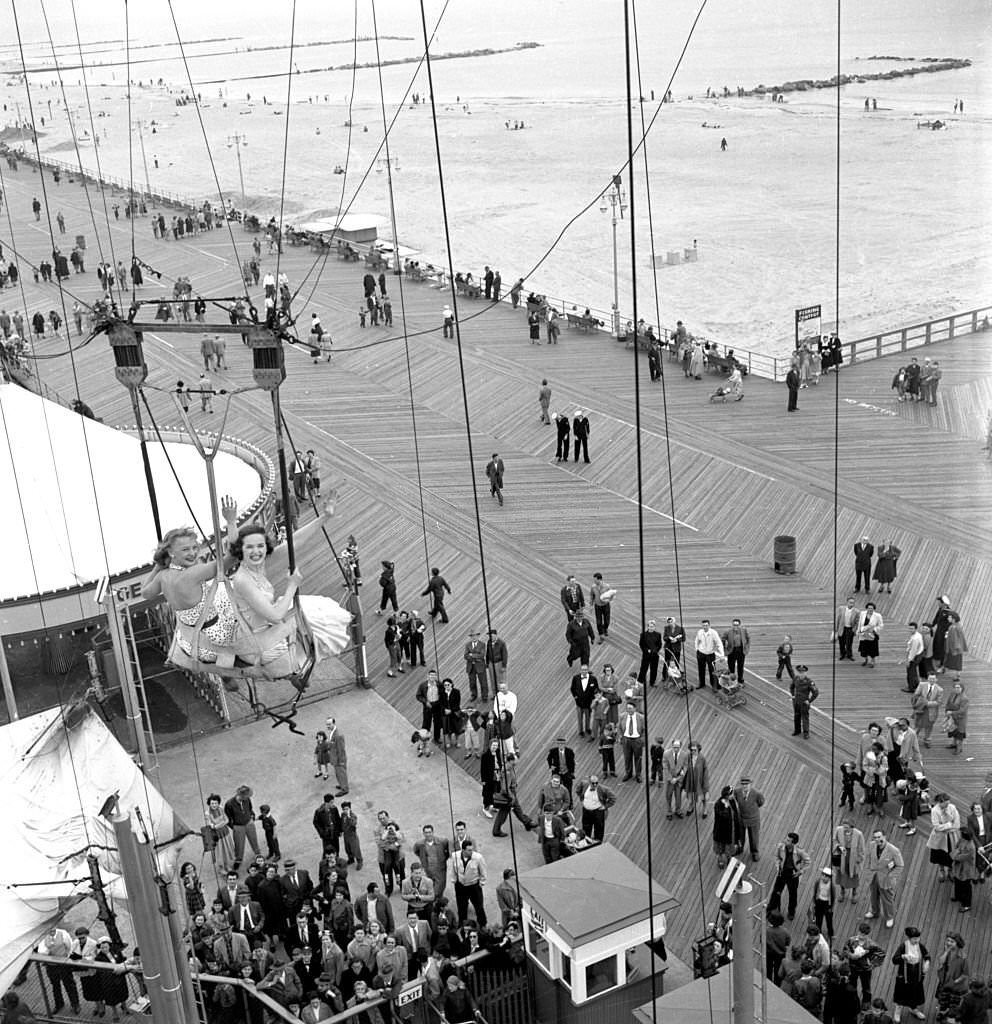
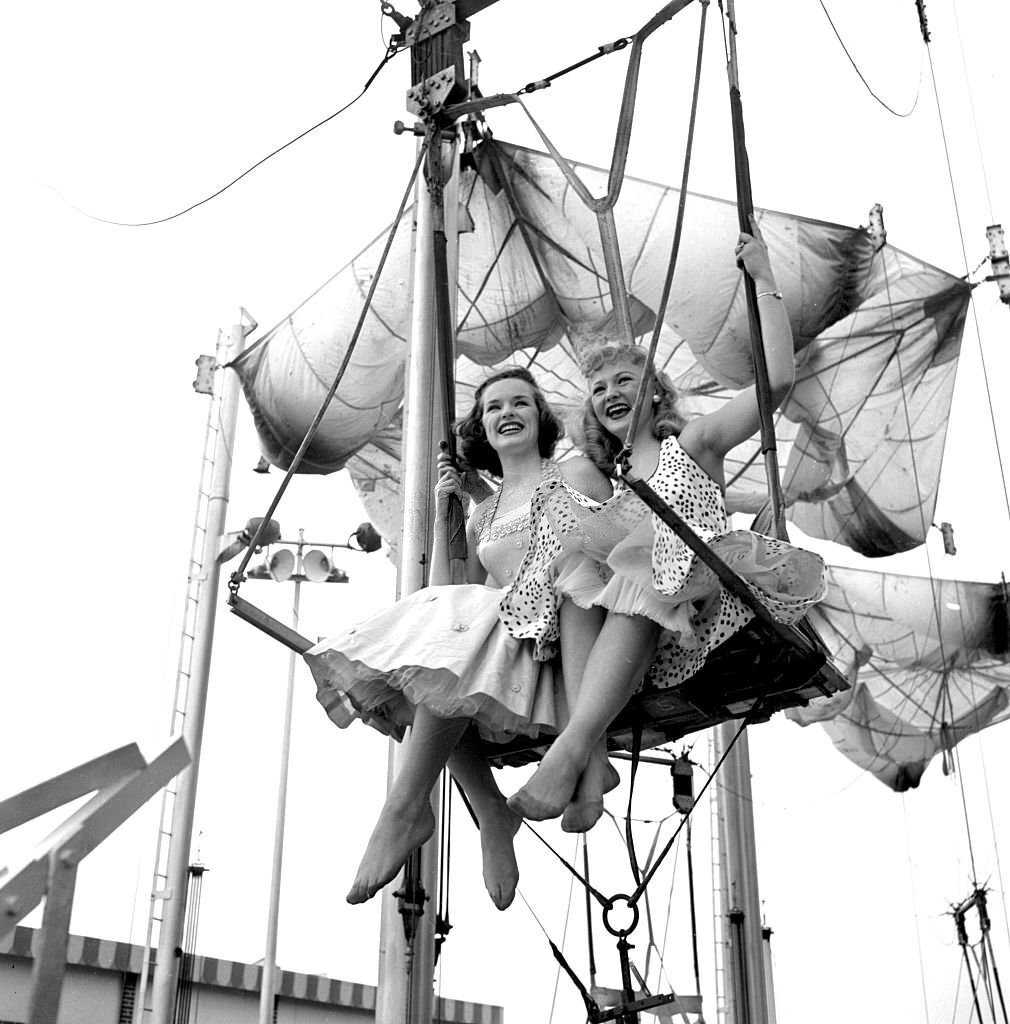
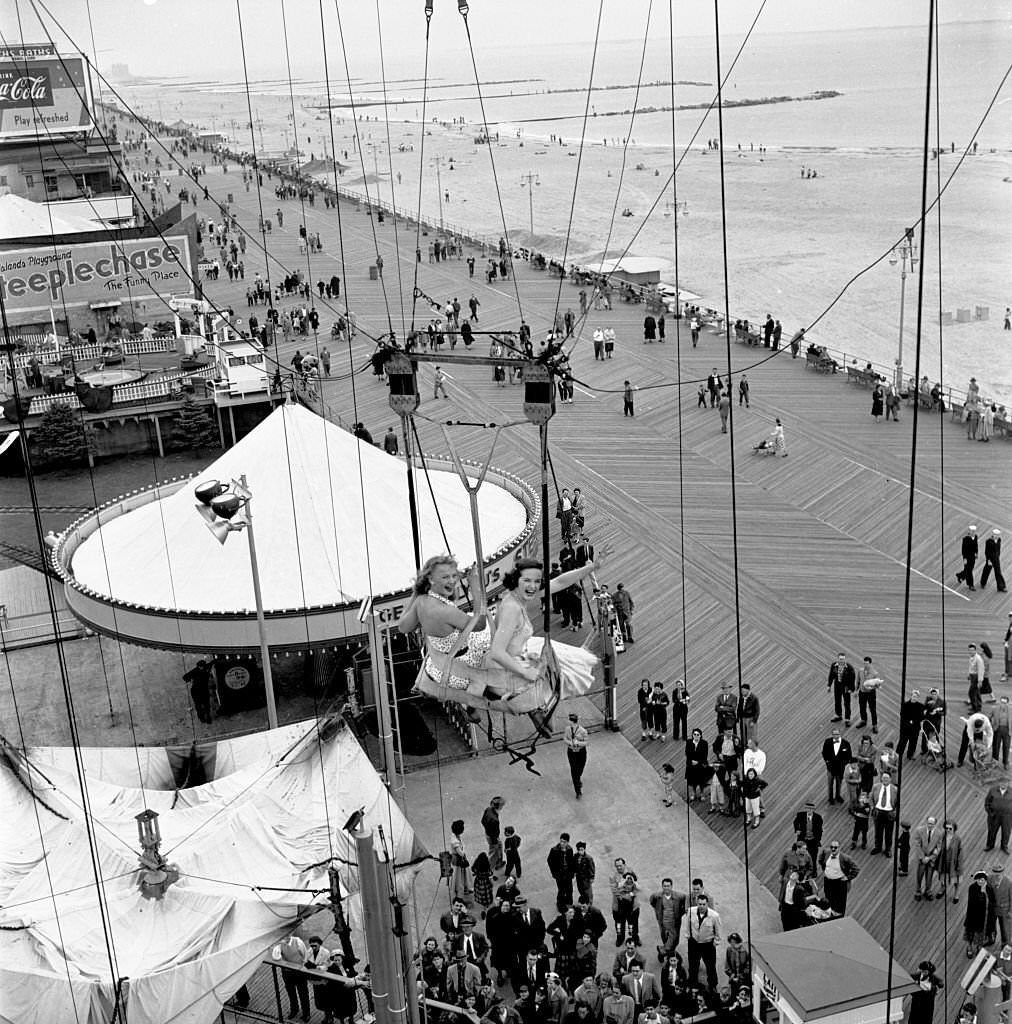
The 1964–1965 World’s Fair was built on the same Flushing Meadows site, and crowds turned out in force for that event as well. Several structures from the 1939 Fair had been preserved specifically to serve the later exposition. The Parachute Jump ride, originally built for the 1939 Fair, was later relocated to Steeplechase Park at Coney Island, where it continued to operate for years—later becoming a landmark in its own right.
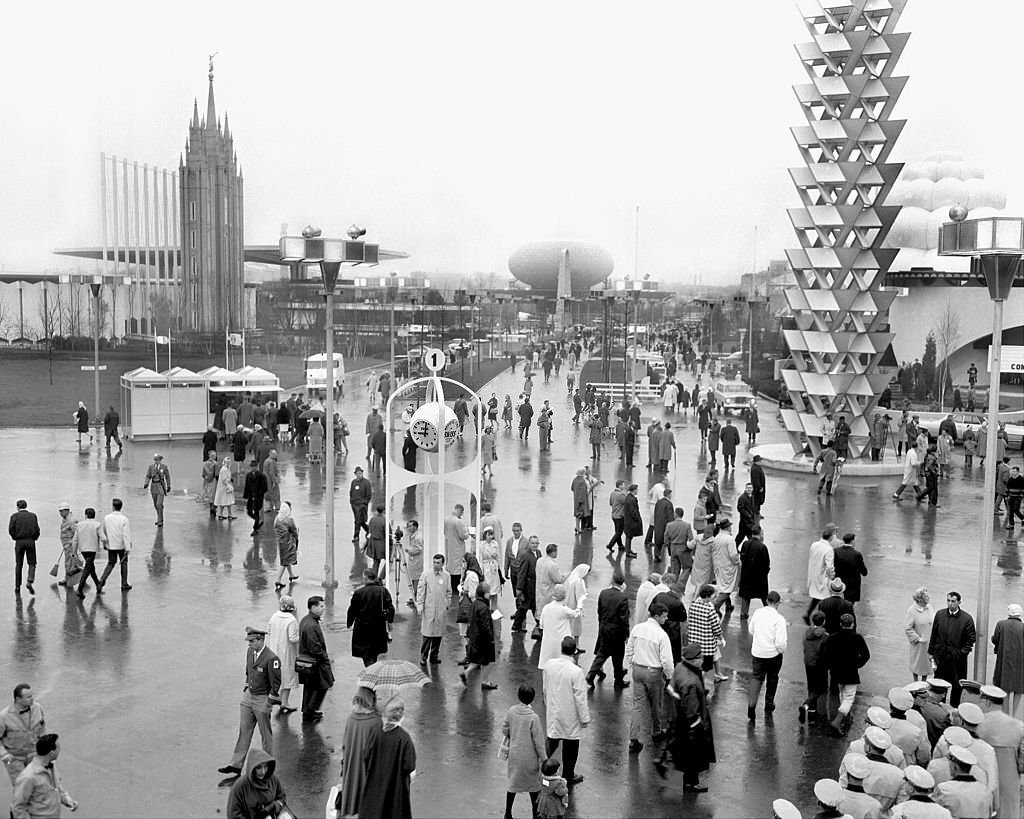
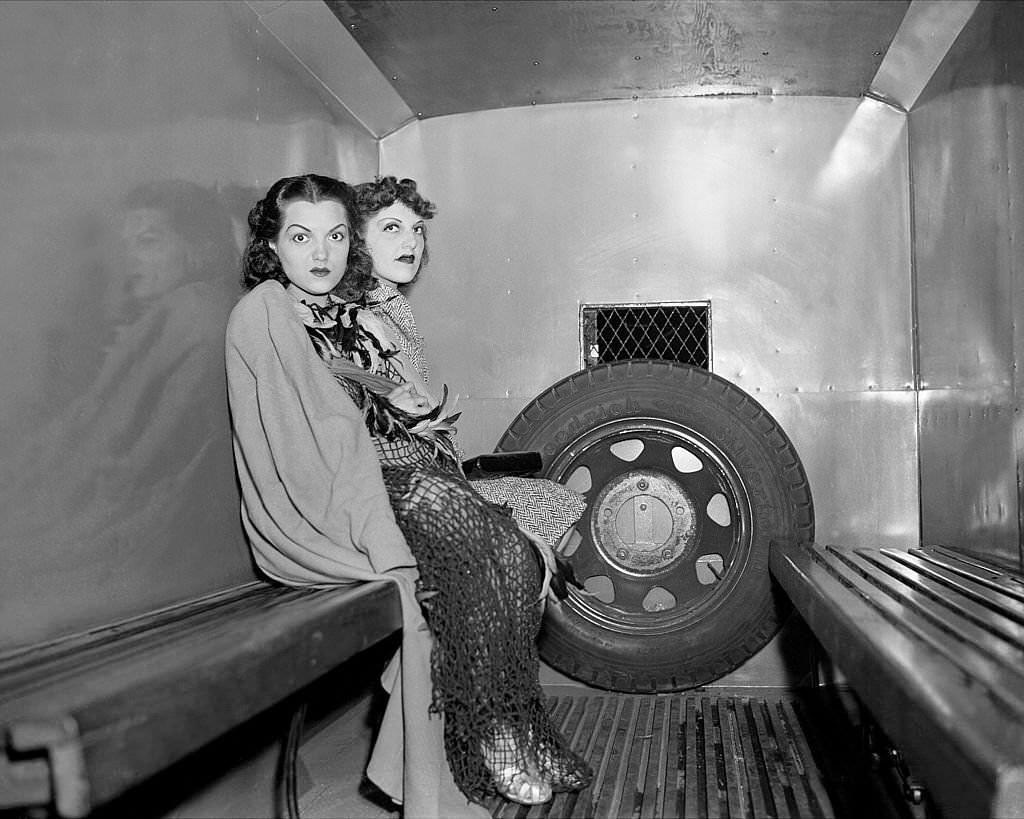
Celebrities mixed with everyday visitors across the fairgrounds. Cary Grant and Phyllis Brooks were photographed at the Chrysler Building’s Polaroid film presentation. Albert Einstein sat in the stands at the opening of the Jewish Pavilion. Two dancers—Dolores Irwin and Marge Berk—were arrested on the night of May 31, 1939, and were photographed sitting in a patrol wagon. The Fair attracted performers, politicians, royalty, scientists, and millions of ordinary Americans, all drawn by the same promise: a look at the world of tomorrow.
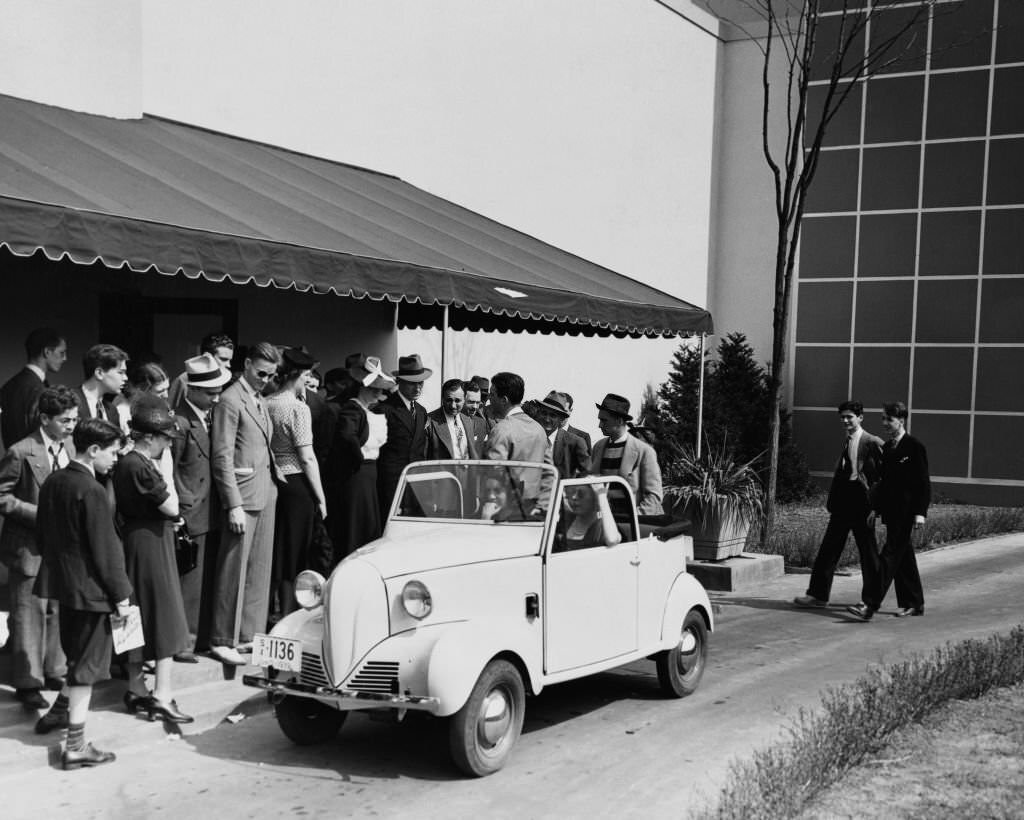
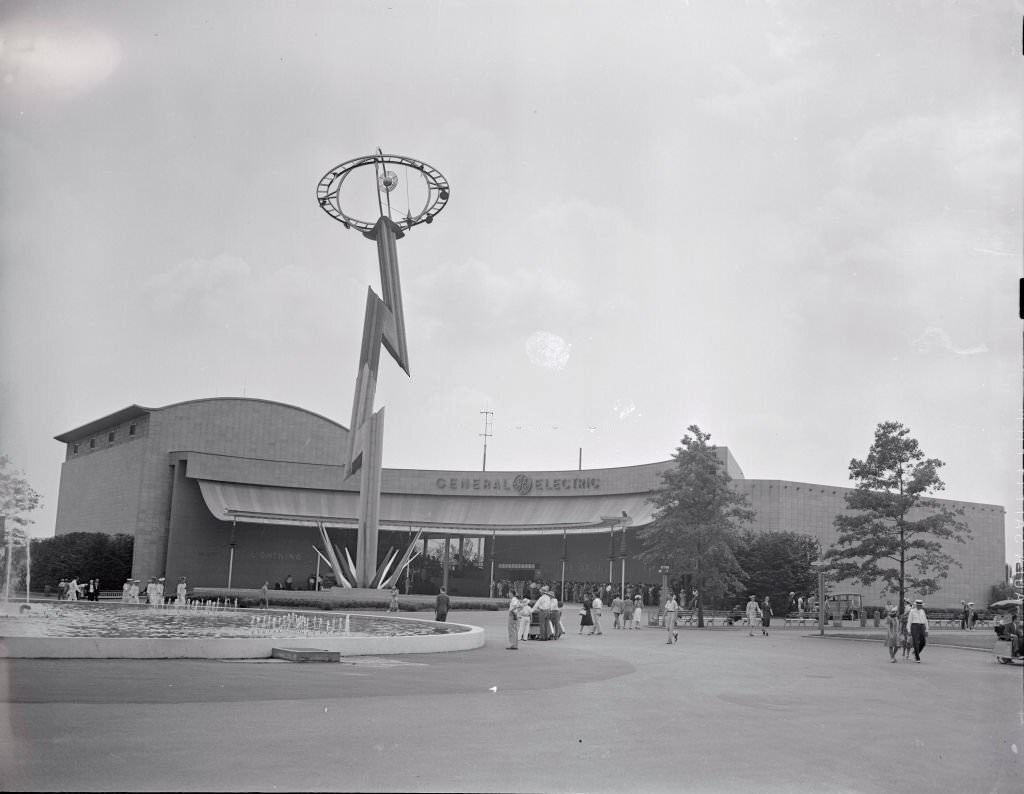
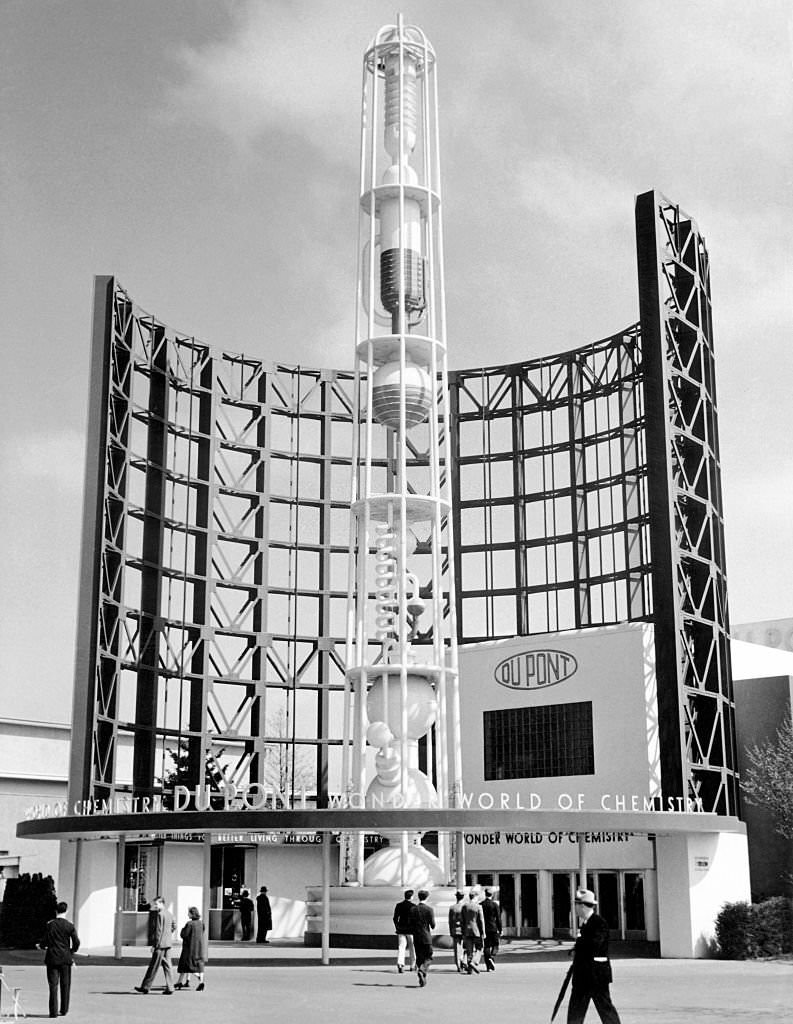
Smaller innovations competed for attention alongside the massive corporate exhibits. The Crosley small car—a four-person vehicle with just two cylinders, capable of 50 miles per gallon of gas and priced at $350—was displayed as an example of economy-minded engineering. The General Electric Exhibit showed off the company’s power distribution technology in a building where decorative design concealed the industrial hardware inside. The Du Pont Building highlighted the company’s growing chemical and synthetic materials work, including nylon, which had been publicly introduced just the year before.





I went to the Fair with my parents—-but I remember very little about it.
I used to like those “special” light blue trains which were run on the 7 line for many years.
Love when these things get posted because I just send them to my father who went to it since he grew up nearby.