On November 11, 1918, the guns of the First World War finally fell silent. Germany formally surrendered, and every nation involved agreed to stop fighting while the terms of peace were worked out. The war had lasted more than four years and left nine million soldiers dead and 21 million wounded. Civilian deaths from disease, starvation, and war crimes pushed the total toll to roughly 40 million people. The armistice did not mean peace was fully settled — that came later, when Germany and the Allied nations signed the Treaty of Versailles on June 28, 1919. That treaty placed punishing terms on Germany, destabilized Europe, and set the stage for a second world war just two decades later.
But on that November morning in 1918, most people were not thinking about the future. They were flooding into the streets. In Britain, France, the United States, and beyond, crowds poured out of homes, offices, and barracks the moment the news arrived. Flags waved. Strangers embraced. Soldiers who had spent years in mud-filled trenches allowed themselves, for the first time, to believe they were going home. The photographs taken in those hours and in the weeks that followed tell the story of a world exhaling after years of unimaginable pressure.
Cardiff-based electrician Royston Leonard painstakingly colorized these images, bringing black-and-white archival photographs into vivid, full-color life. His work makes the people in these pictures feel immediate — less like figures from a history book and more like someone you might recognize. The scenes range from jubilant street celebrations to quiet, sobering moments of grief and loss.
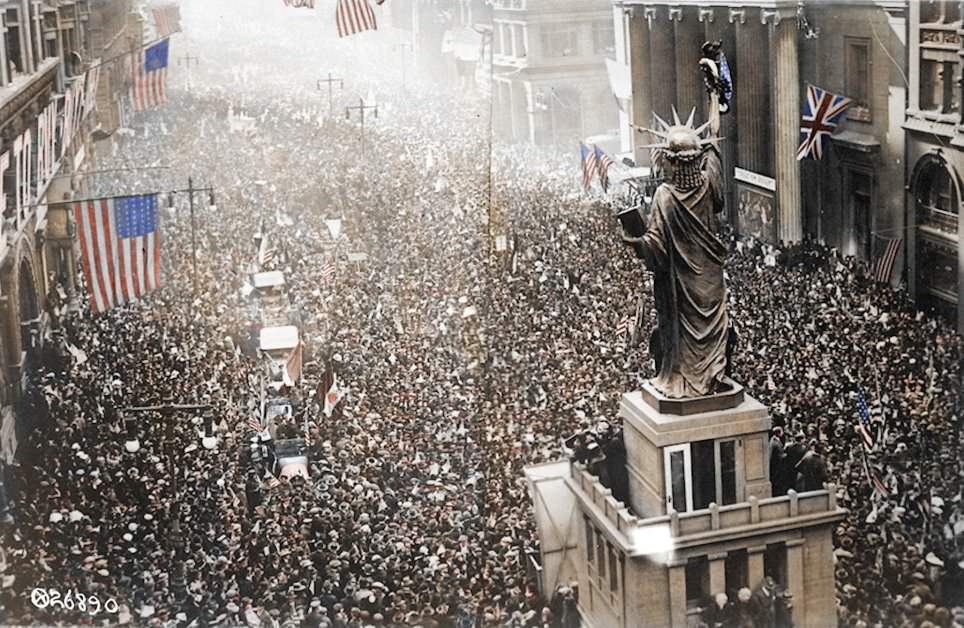
Philadelphia erupted the moment the armistice was announced. Crowds packed the streets on November 11, 1918, in scenes that played out across every major American city. The United States had entered the war in April 1917 — late compared to the European powers — but American troops had fought hard on the Western Front in the final months of the conflict. The relief felt that morning was total.
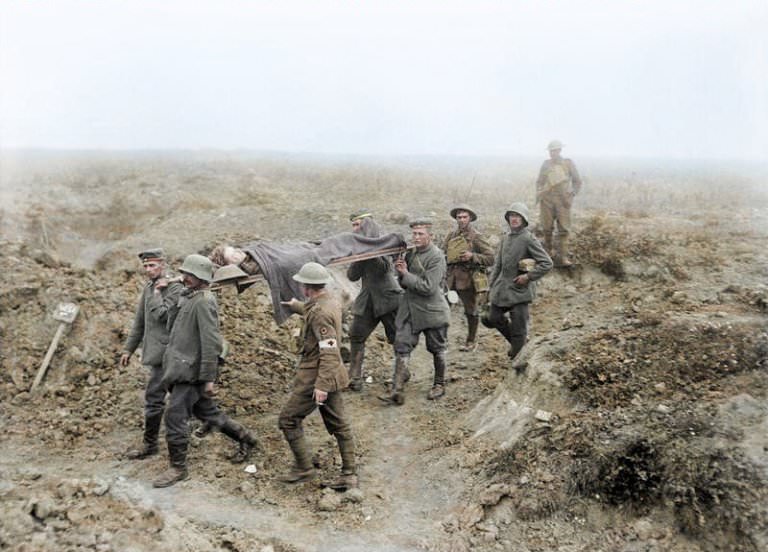
Not every story from this period was one of celebration. Captain Benjamin H. Geary of the East Surrey Regiment was carried on a stretcher by German prisoners of war at Achiet-le-Petit in August 1918 — just months before the armistice. Geary had already earned the Victoria Cross, Britain’s highest military honor, earlier in the war. The image is a stark reminder that fighting continued right up to the final weeks, and that wounds — physical and otherwise — did not stop when the shooting did.
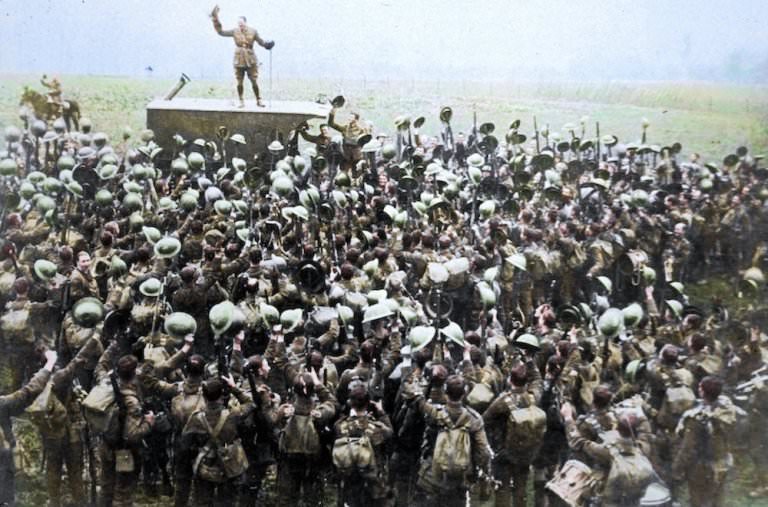
Along the Western Front, the news spread fast. Officers gathered their men and made the announcement officially, though many soldiers had already heard it through word of mouth. The reaction captured in these photographs is genuine — men who had endured years of artillery barrages, gas attacks, and life in the trenches suddenly faced the fact that it was over. Some wept. Many simply stood in disbelief before the celebrating began.
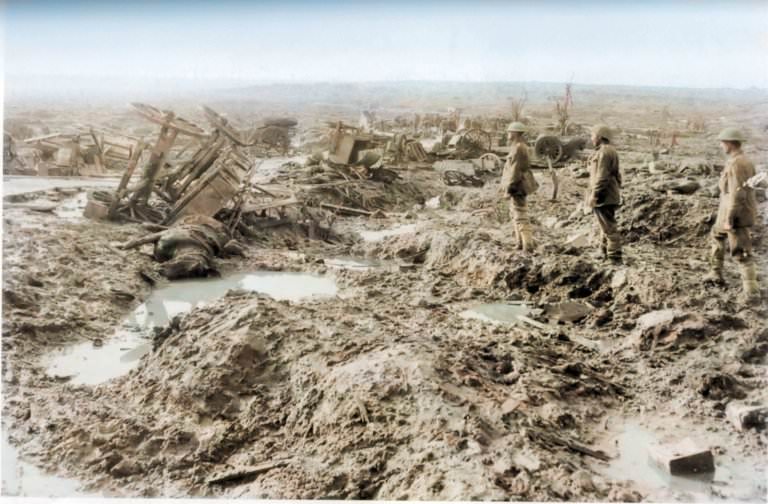
What the soldiers surveyed around them told the full story of the war’s destruction. Across the Western Front, the landscape had been torn apart. Wagons lay overturned in the mud. Shell craters pocked the earth in every direction. Entire villages had been reduced to rubble. Soldiers who had fought through this terrain knew better than anyone the scale of what had just ended.
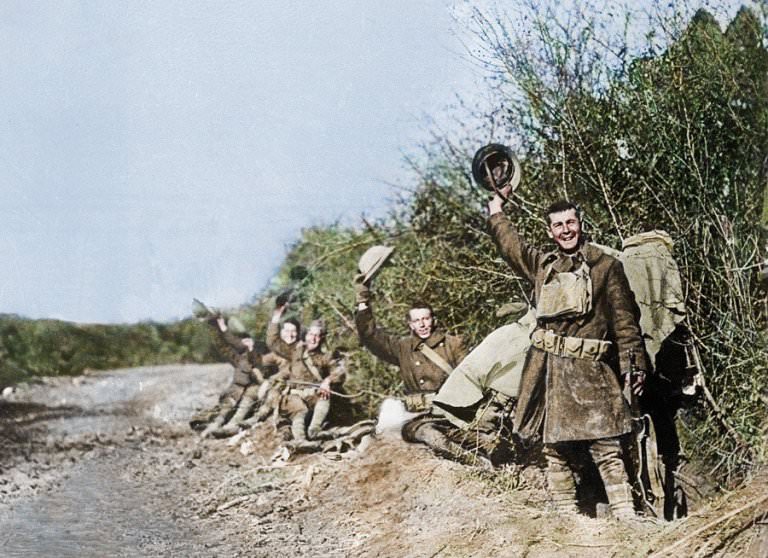
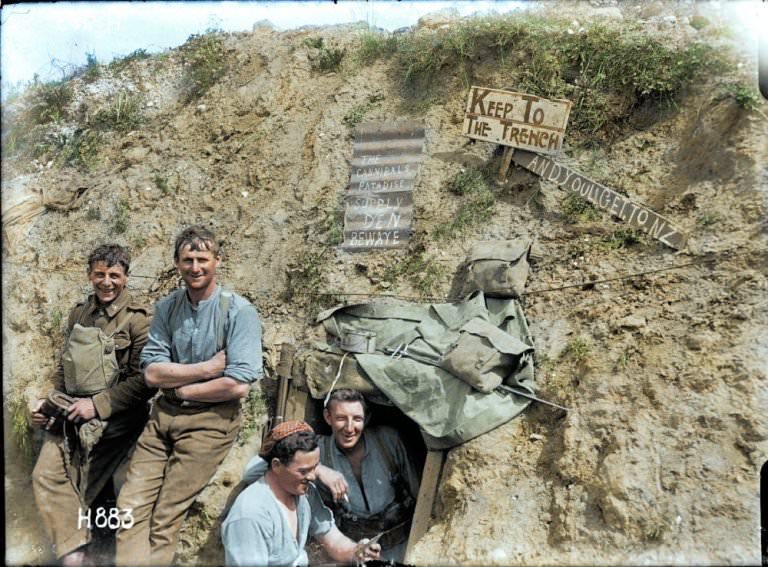
Troops from across the British Empire had fought in the Great War, including large numbers from New Zealand, Canada, Australia, and South Africa. New Zealand alone lost more than 18,000 men — a staggering figure for a country with a small population. The New Zealand soldiers photographed laughing in their trench on the Western Front represent those who made it through. Behind every smiling face in these images is the knowledge that many friends and fellow soldiers did not.
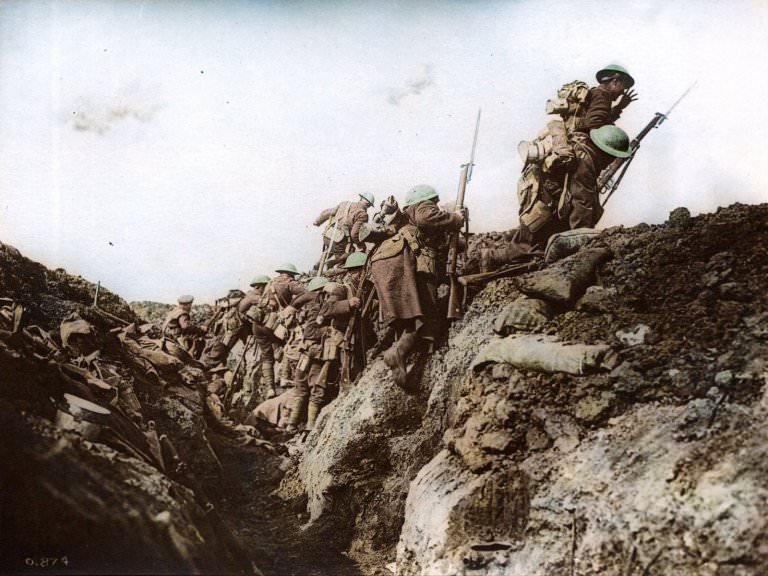
Going over the top — charging out of a trench toward enemy lines — was one of the most dangerous acts a soldier could be ordered to perform. Canadian troops did this repeatedly throughout the war, earning a fierce battlefield reputation. Canada’s military contribution grew significantly after conscription was introduced in 1917. By the war’s end, over 60,000 Canadians had been killed.
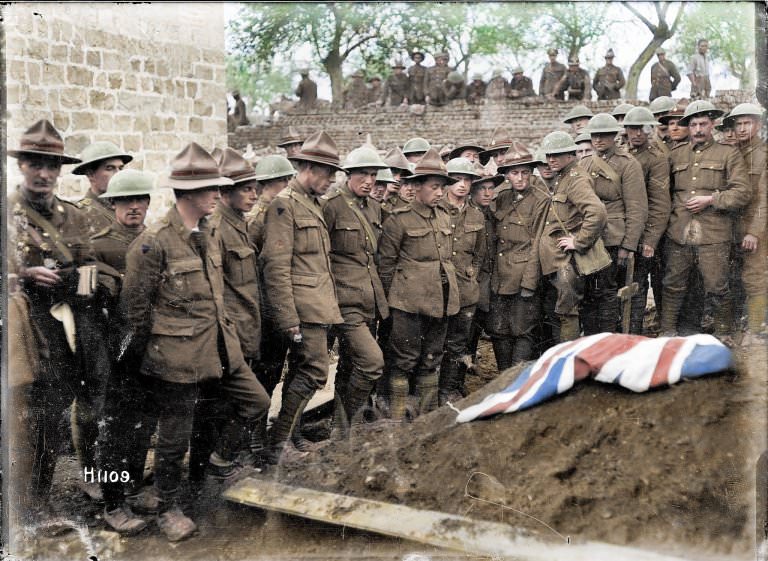
Sergeant Henry Nicholas of New Zealand was awarded the Victoria Cross for his actions in battle in France. He was killed in action on October 23, 1918 — less than three weeks before the armistice. His funeral, photographed in France, stands as one of the war’s most sobering images. Thousands of men died in those final weeks, right up to the last hours of fighting.
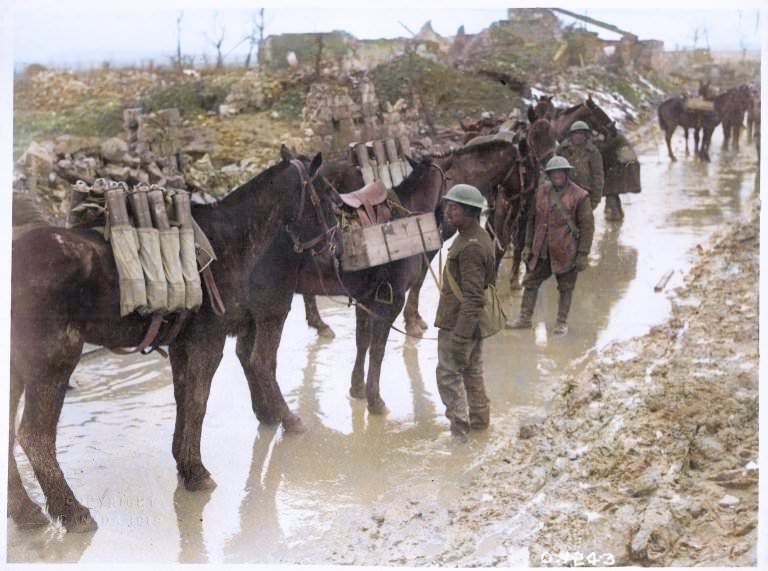
Horses played a critical and often overlooked role in WWI logistics. The Canadian Field Artillery relied on them to haul guns, ammunition, and supplies across terrain that vehicles could not always navigate. By the end of the war, an estimated eight million horses had died in the conflict due to shellfire, disease, and exhaustion. The soaking, burdened animals photographed at Neuville St. Vaast in April 1917 were part of a supply chain that kept armies in the field.
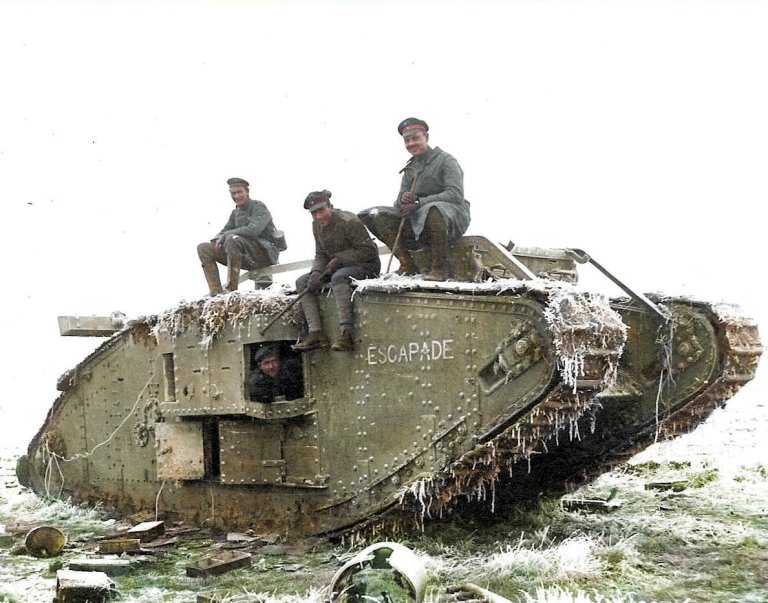
Germany entered the war as one of Europe’s most powerful military forces. German soldiers were well-equipped and fought on multiple fronts simultaneously. By 1918, however, the combined pressure of the Allied advance, a naval blockade that starved Germany of resources, and internal political unrest forced the German military to accept defeat. The armistice was signed not on a battlefield but in a railway car in the Forest of Compiègne, France.
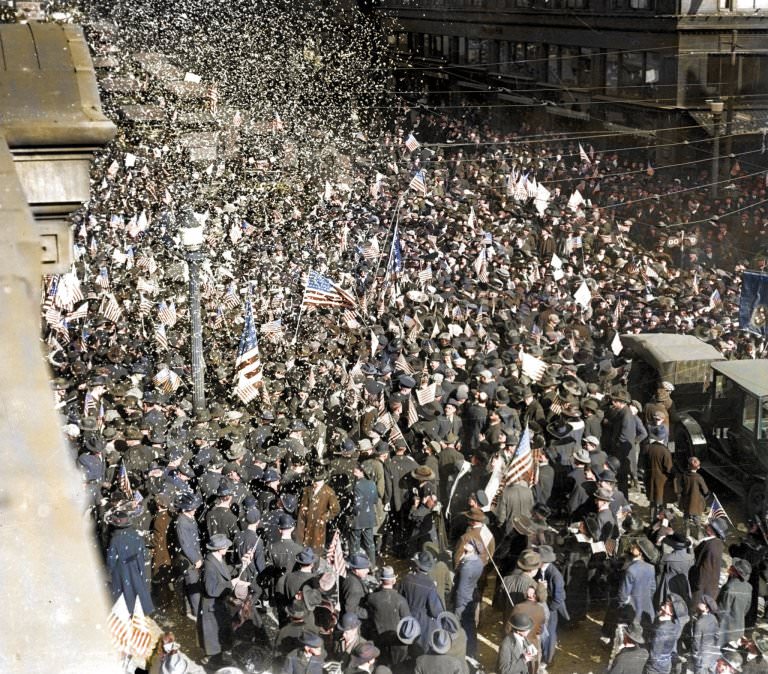
New York City celebrated with particular intensity. Ticker tape rained down from office buildings. Crowds flooded Times Square and the surrounding streets. America had joined the war in April 1917 after years of attempted neutrality, spurred by German submarine attacks on American ships and the interception of the Zimmermann Telegram — a German proposal for Mexico to attack the United States. By the armistice, over 116,000 American soldiers had died.
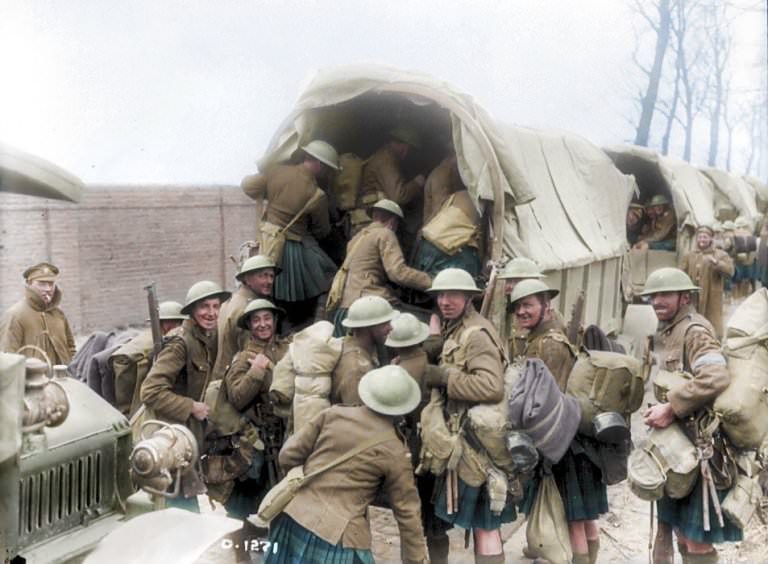
Scottish regiments served throughout the war and became known for their toughness and distinctive uniforms. The kilts worn into battle were not just tradition — they were a source of identity and pride in units where morale was constantly being tested. Scotland lost a higher proportion of its male population in WWI than almost any other part of Britain. The smiles on these soldiers’ faces as they prepared to leave the battlefield speak to a relief that had been years in the making.
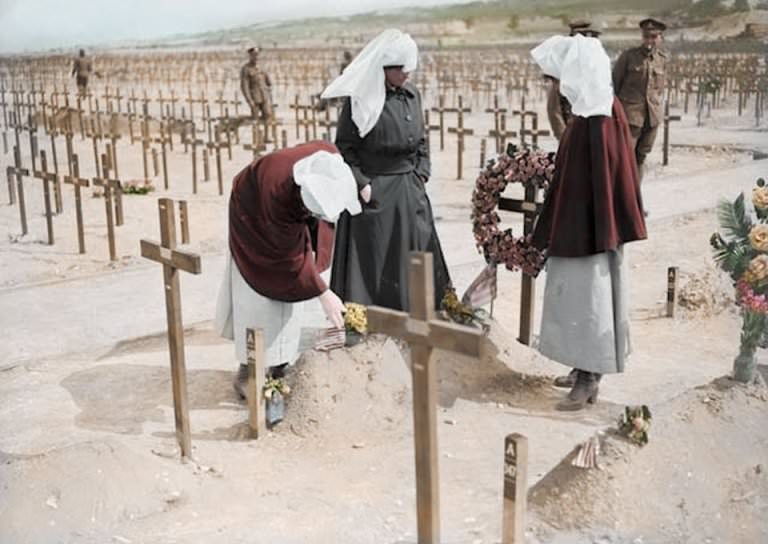
Mass graves were a grim feature of the Western Front, where the scale of casualties made individual burial impossible in many cases. Nuns and other religious figures were among those who tended to the fallen, laying wreaths and providing what dignity could be offered. The total number of military and civilian casualties in WWI reached around 40 million. Fields that had been farmland before 1914 became permanent cemeteries, many of which still stand across Belgium and northern France today.
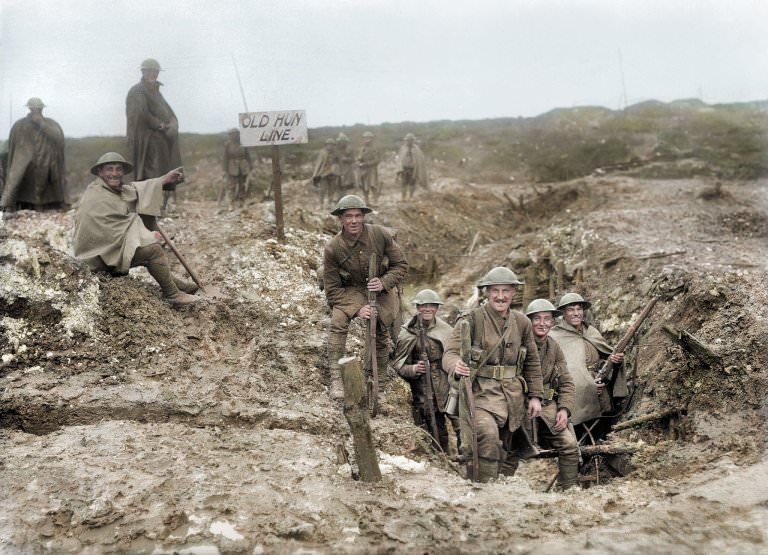
The Battle of the Somme, fought from July to November 1916, became one of the bloodiest battles in human history. On its first day alone, the British Army suffered nearly 60,000 casualties, including around 20,000 killed. The trench line captured from the Germans — marked by the sign reading ‘the old hun line’ — represented ground paid for with an extraordinary cost. By the time these soldiers marched out smiling, they were walking through land that had been soaked in blood for years.
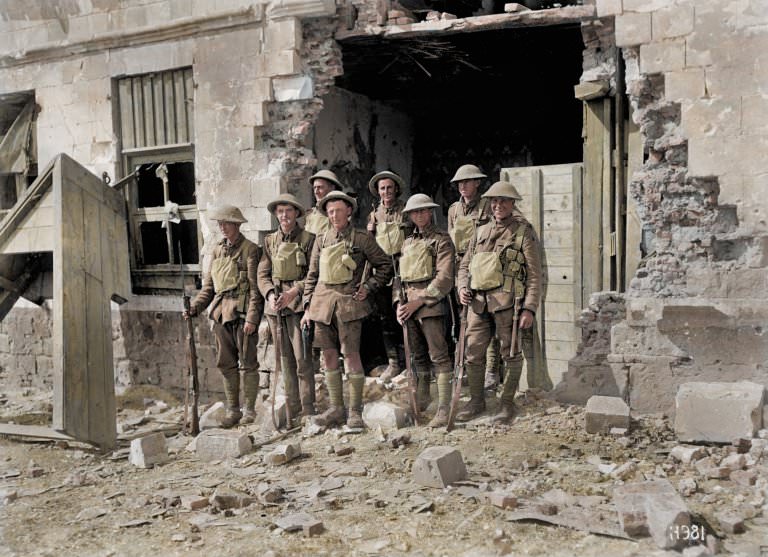
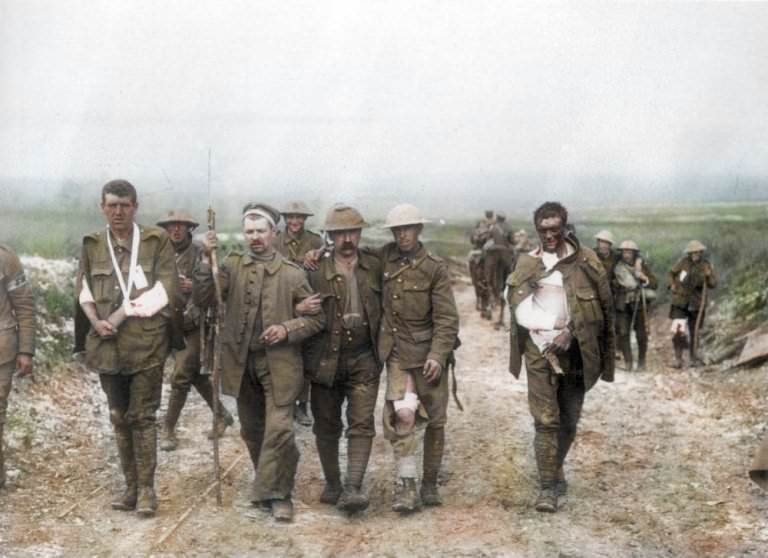
During the Battle of the Somme in July 1916, the fighting around Bazentin Ridge produced casualties on both sides. In this photograph, a German prisoner assists wounded British soldiers toward a dressing station near Bernafay Wood. Dressing stations were forward medical posts where soldiers received basic treatment before being transported further behind the lines. The image shows one of the small, practical moments of humanity that existed alongside the war’s enormous brutality.
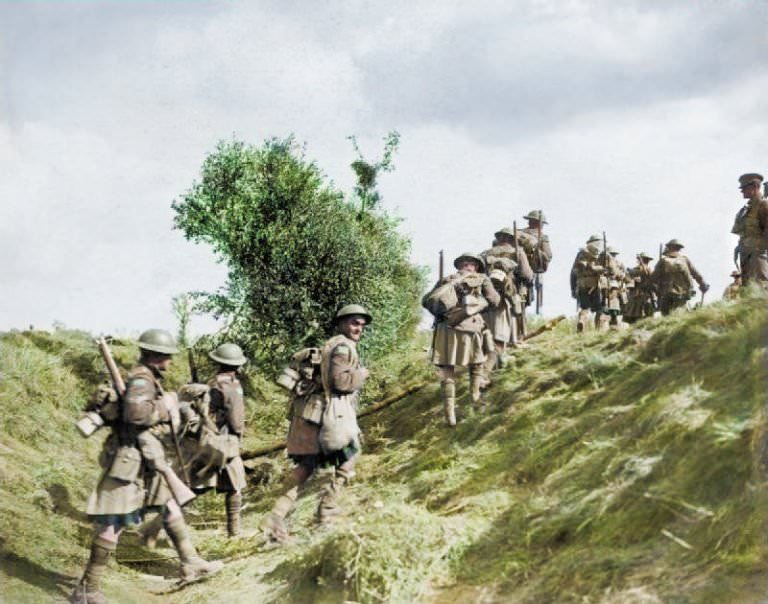
The Battle of the Canal du Nord in September 1918 was part of the final Allied push that broke German resistance on the Western Front. Canadian and British forces, including Scottish units, crossed the partially drained canal and smashed through German defenses in one of the most tactically complex operations of the war. This offensive was part of the Hundred Days Offensive — the sequence of Allied attacks that ultimately forced Germany to seek an armistice.
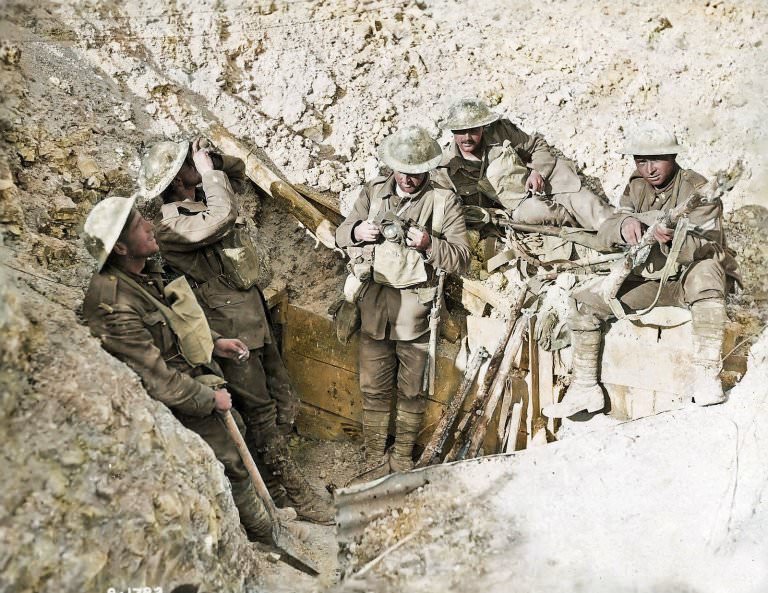
Between offensives, soldiers spent enormous amounts of time simply waiting — cleaning weapons, smoking, writing letters, and trying to stay dry in trenches that were often flooded with mud and water. Canadian troops captured many kilometers of German trenches during the final months of the war, and the quiet moments captured in photographs like this one contrast sharply with the violence that surrounded them on every side.
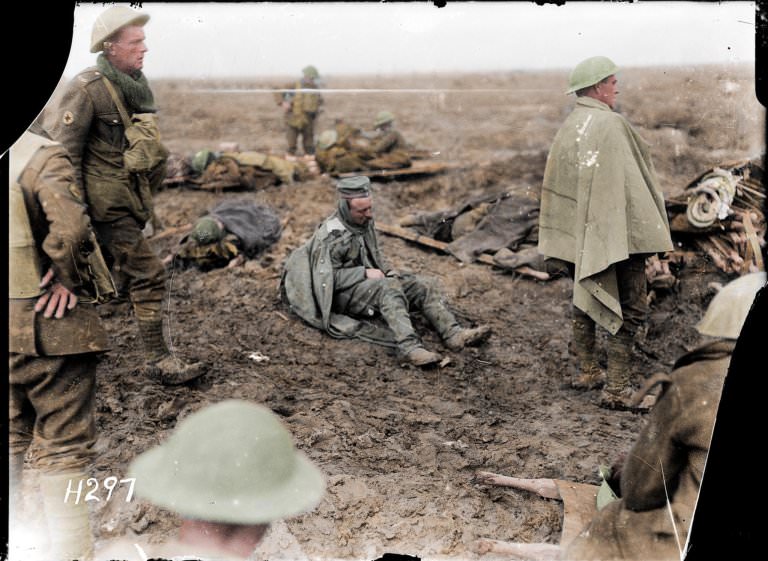
The Battle of Verdun, fought from February to December 1916, was one of the longest and most devastating battles of the entire war. French and German forces sustained a combined total of over 700,000 casualties over ten months of fighting for a stretch of French territory. The French military’s determination to hold Verdun at all costs defined the battle. The phrase used at the time — “They shall not pass” — became a rallying cry for the French nation.
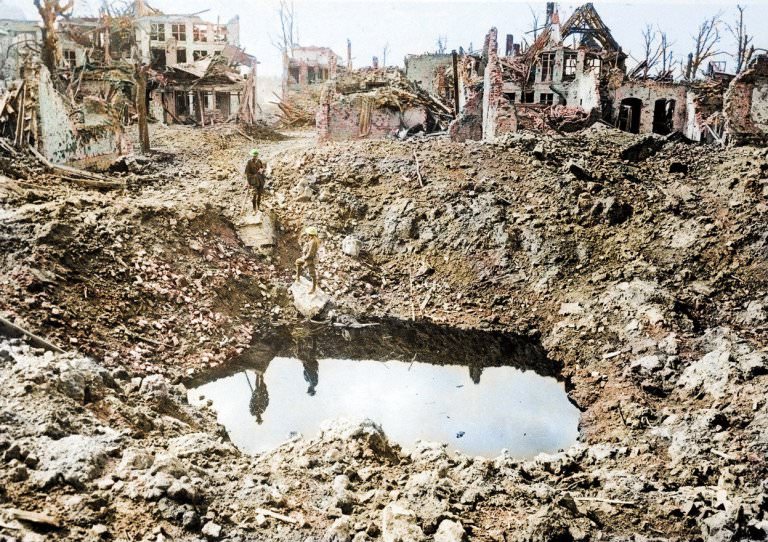
Ypres, Belgium, was the site of three major battles during the war and was reduced to near-total ruin by sustained German artillery bombardment. The shell craters left behind were enormous — some large enough to swallow buildings. A single crater photographed there in October 1917 measured 75 yards in circumference. The town itself was almost completely destroyed. After the war, Ypres was rebuilt, and the Menin Gate memorial there lists over 54,000 Allied soldiers whose remains were never found.
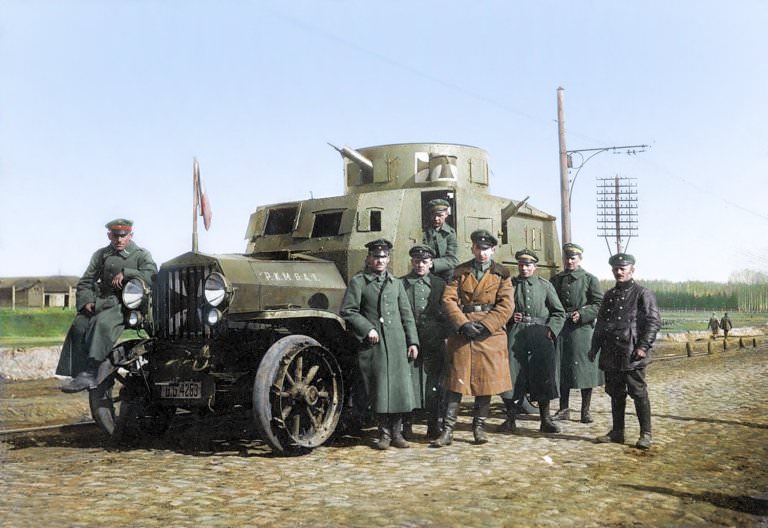
In the spring of 1918, German forces were active on the Eastern Front in Ukraine following Russia’s exit from the war after the Bolshevik Revolution. The Treaty of Brest-Litovsk, signed in March 1918, ended the war between Germany and Russia and allowed Germany to shift troops westward for one final offensive push. That push — the Spring Offensive of 1918 — ultimately failed, and by autumn, Germany’s military position had collapsed entirely, bringing the war to its close on November 11.