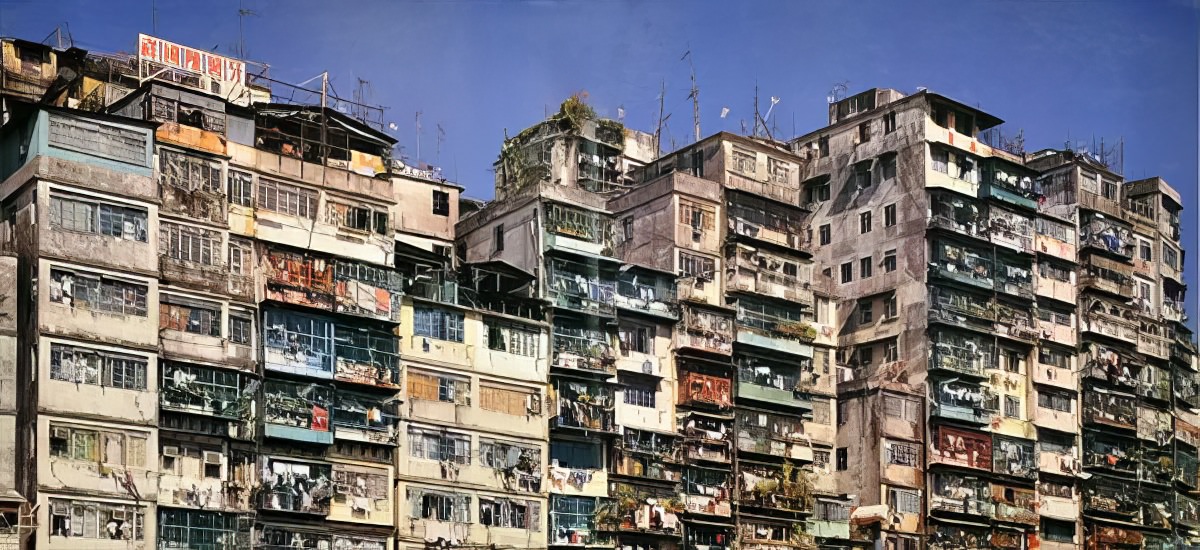
Kowloon Walled City was one of the densest places ever to exist on Earth. Packed into just 6.4 acres of land in Hong Kong, it housed nearly 50,000 people at its peak. Towers rose 14 stories high, corridors ran dark and narrow between buildings that shared walls, and the whole structure hummed with its own economy, its own rules, and its own sense of order. Its story begins not in the 20th century, but nearly a thousand years earlier.
During the Song Dynasty (960–1279), the site served as a military outpost, built to guard against pirates and foreign threats. After the First Opium War, the 1842 Treaty of Nanking handed Hong Kong Island to Britain, but the Walled City stayed under Chinese control. Then, in 1898, Britain leased the surrounding New Territories for 99 years — yet the treaty specifically excluded the Walled City. This left a small patch of land that was technically Chinese soil sitting inside British-controlled Hong Kong.
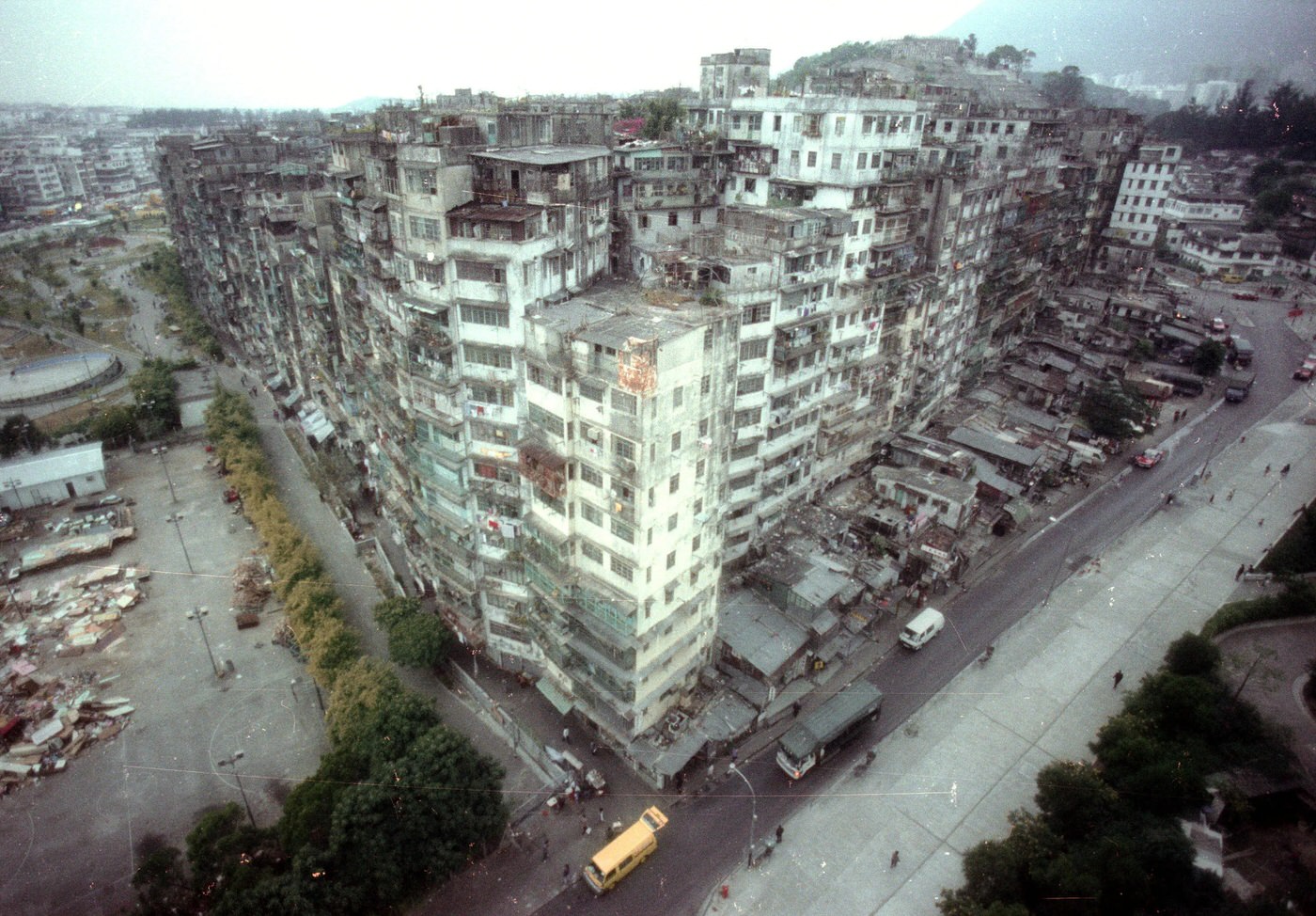
That legal gray area defined everything that followed. Neither government exercised clear authority over the enclave, and the resulting confusion left it largely ungoverned for decades. When Japan occupied Hong Kong during World War II, the Walled City fell into neglect. After the war ended, squatters moved into the abandoned buildings, and the population began climbing rapidly through the 1950s.
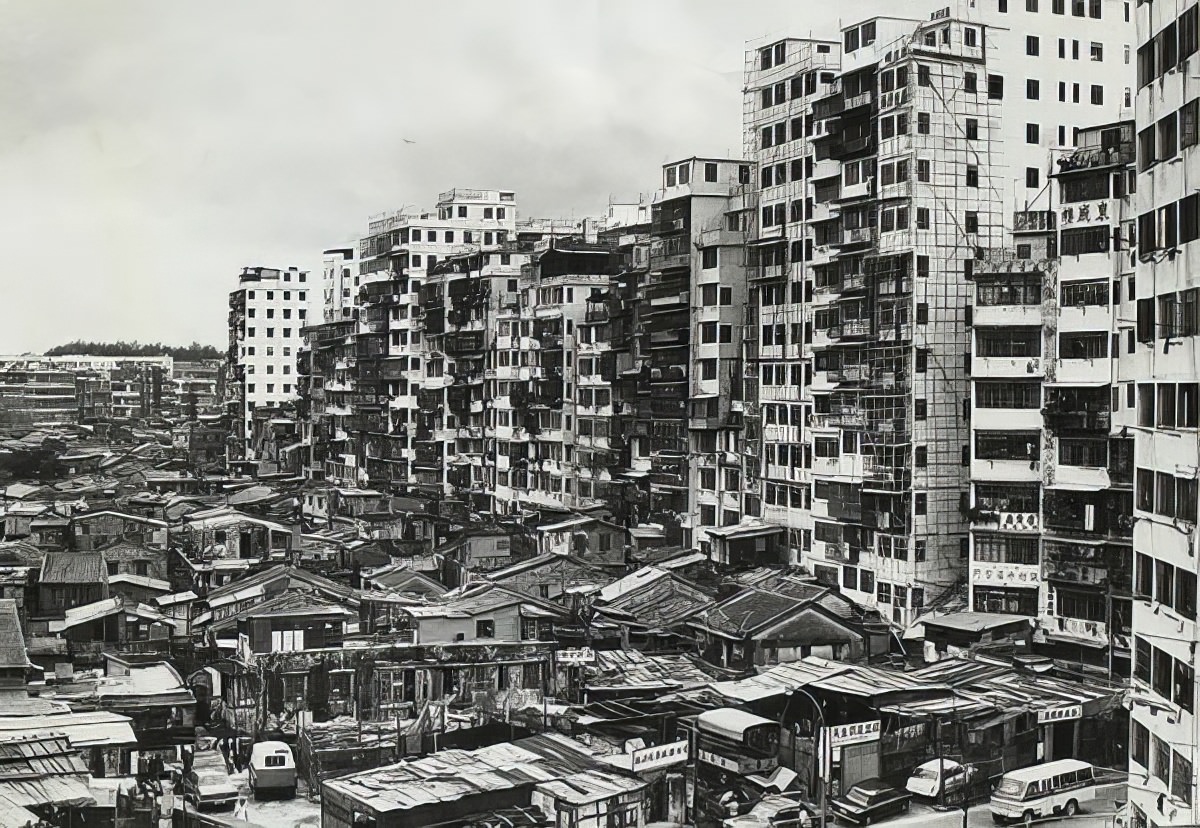
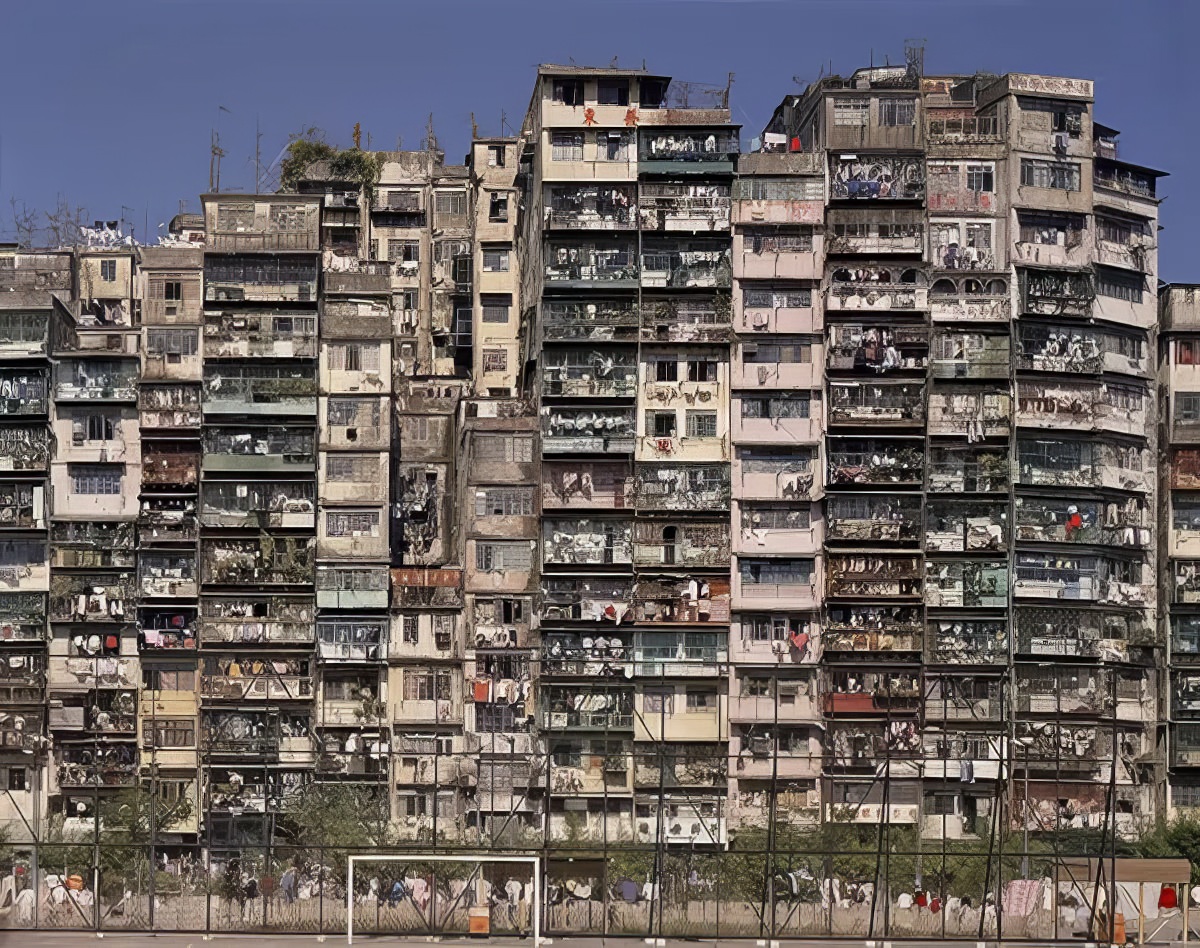
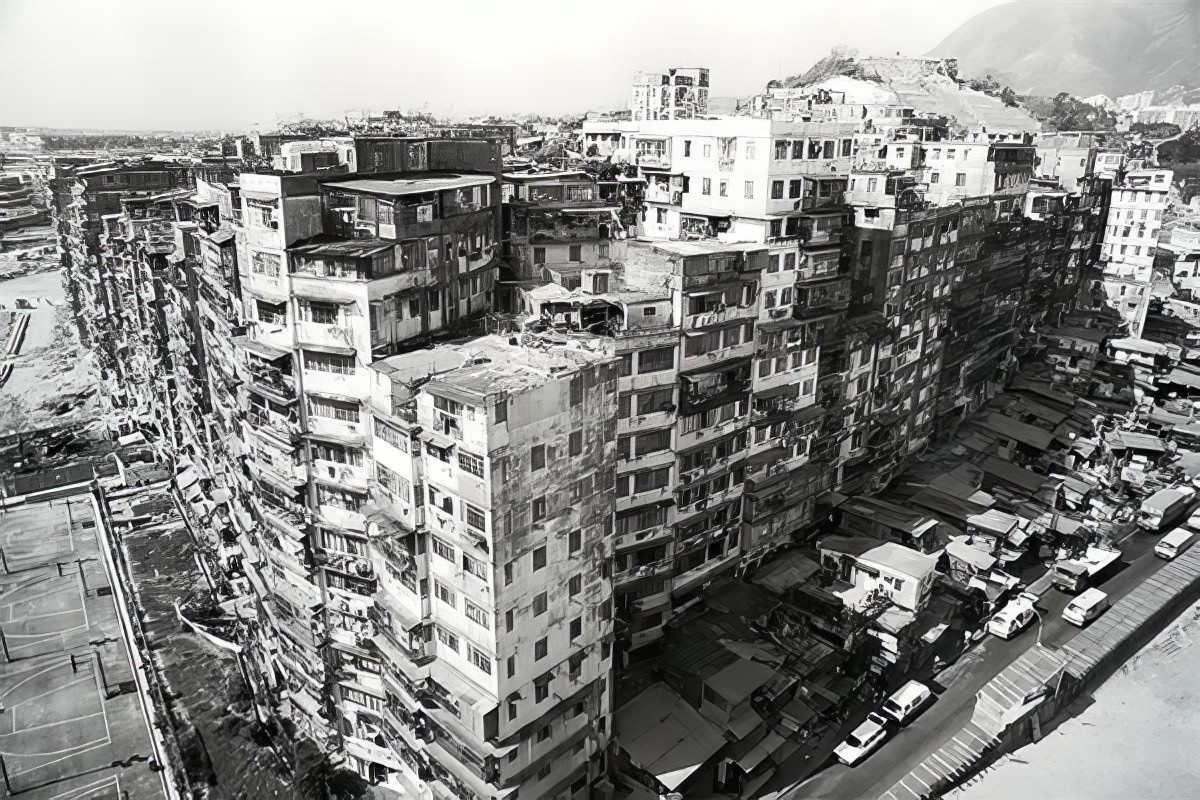
With no planning authority enforcing building codes or zoning laws, construction went in every direction. Buildings grew upward and outward, sharing walls with their neighbors, connected by improvised walkways and staircases. The south side of the city showed this vertical growth clearly as early as 1975, when structures were already pushing toward the maximum height that would later be formally enforced.
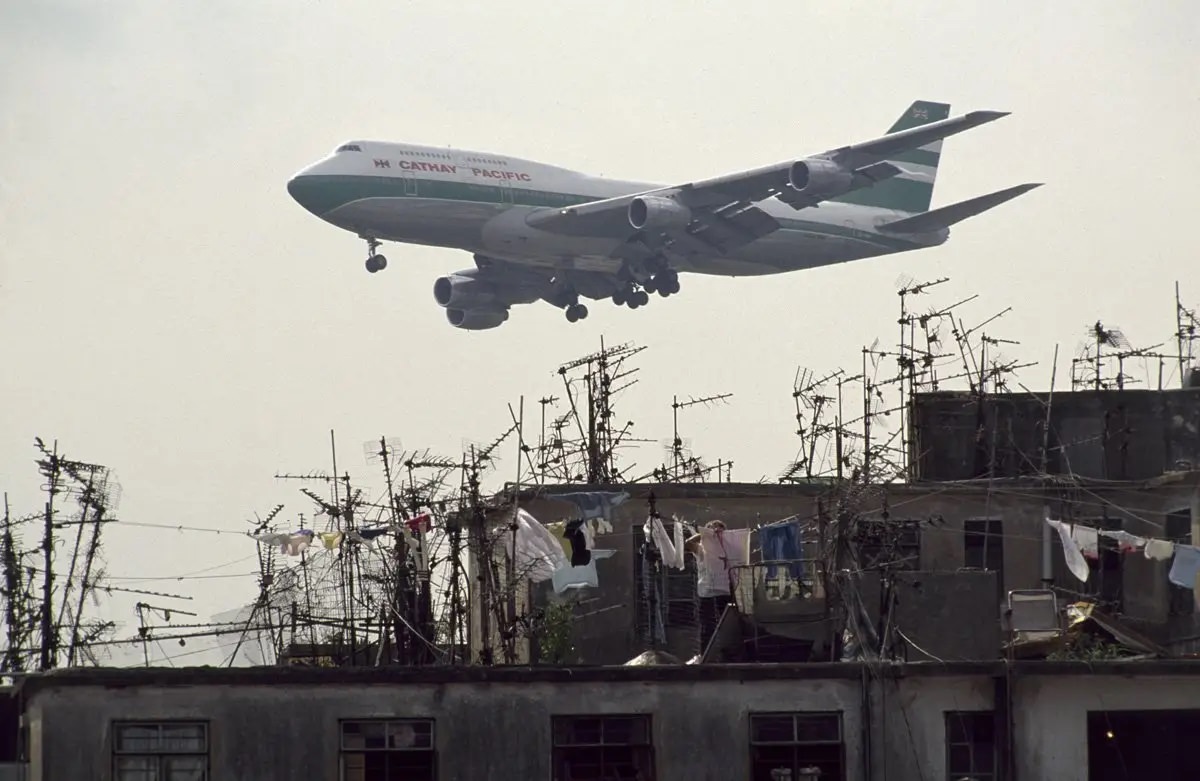
One firm limit did apply to the skyline. Because the Walled City sat near Kai Tak Airport, aviation authorities enforced a strict height cap of 14 stories — the one external rule that shaped the city’s physical form.
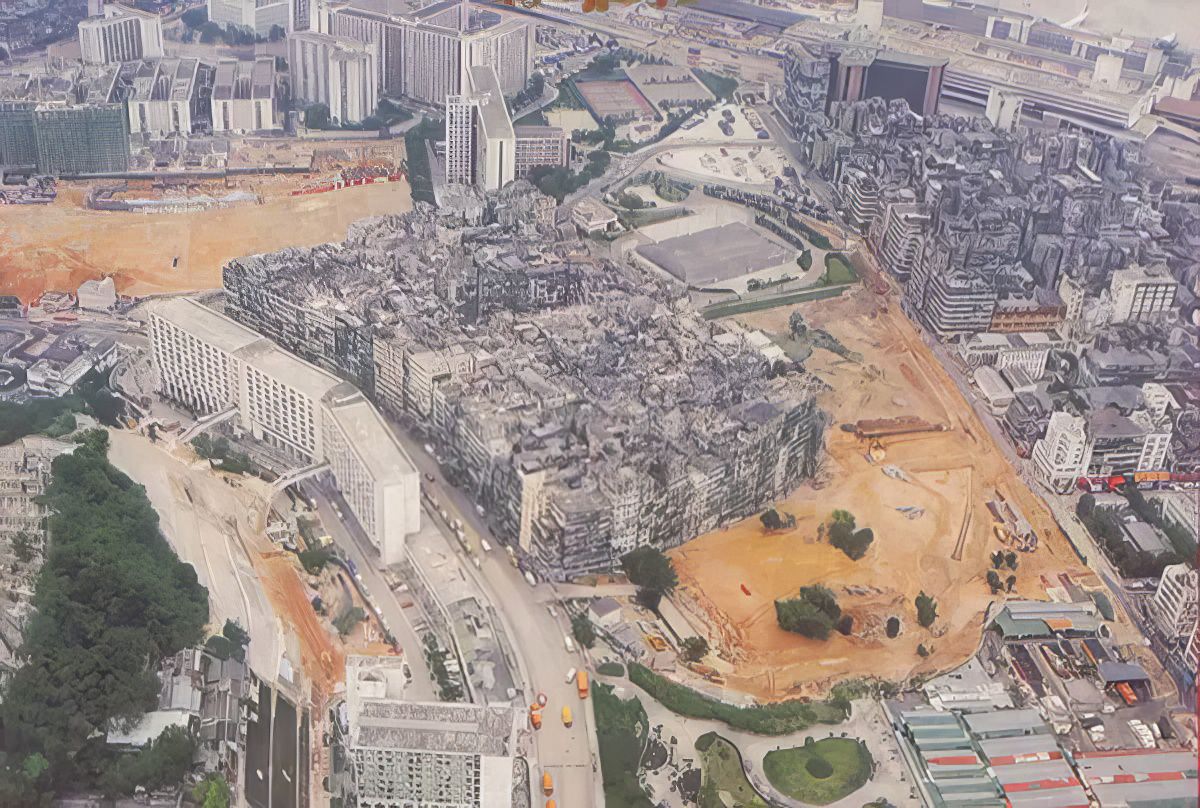
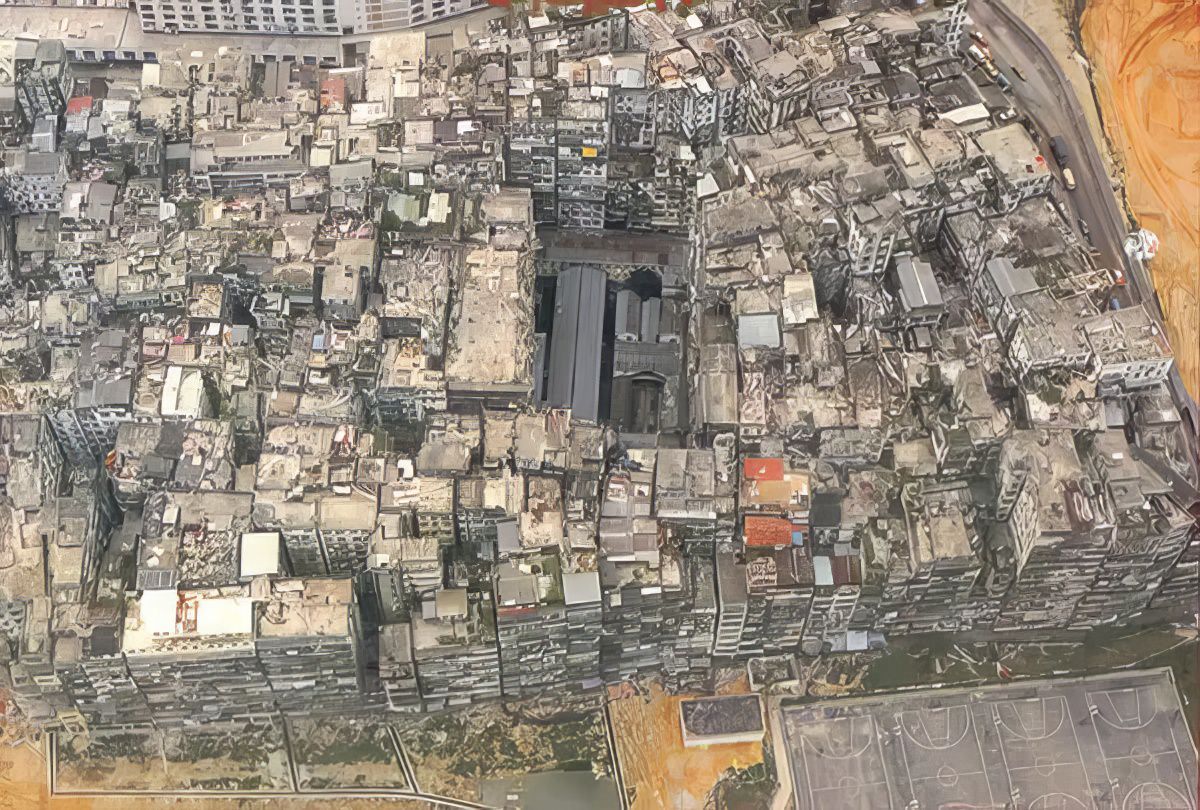
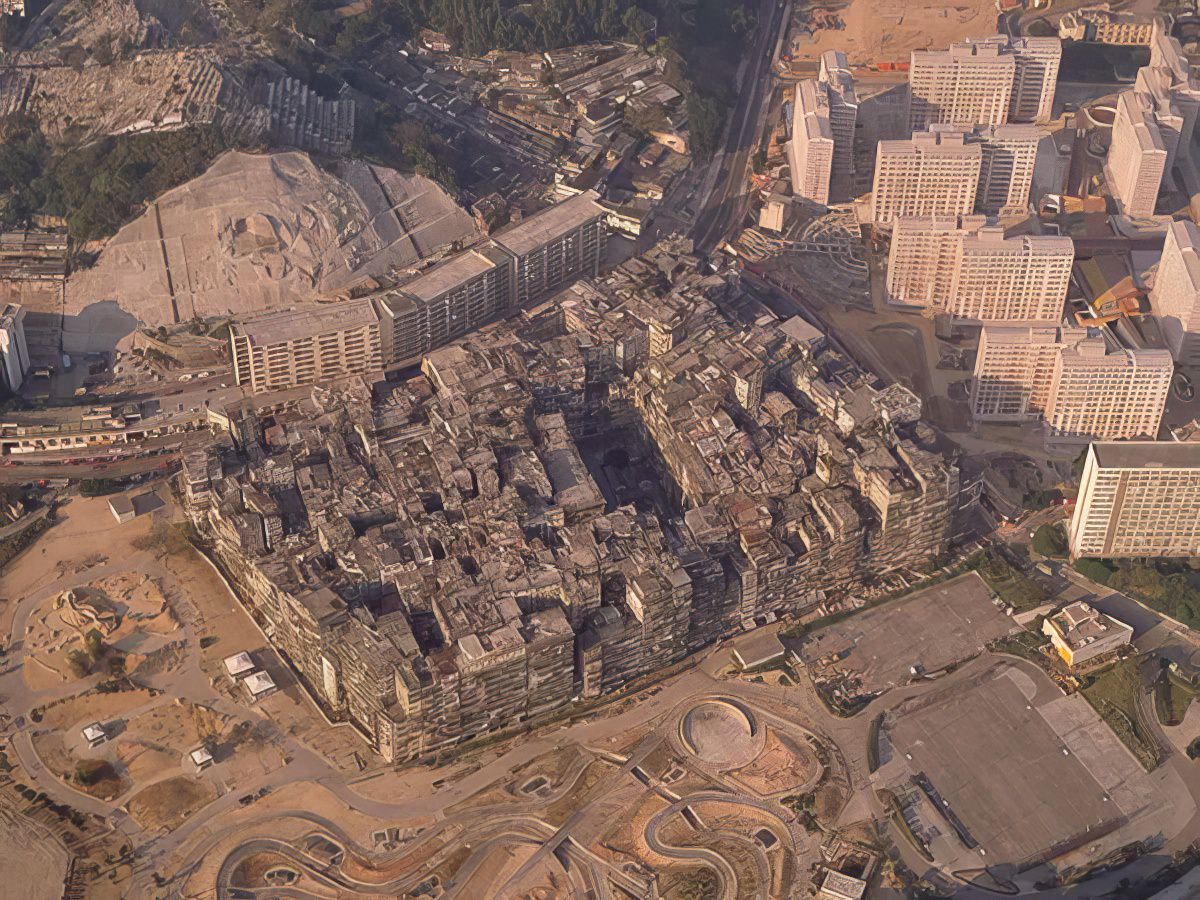
By 1989, the result was a structure unlike anything else in the world. Viewed from above, it resembled a single enormous organism rather than a collection of individual buildings.
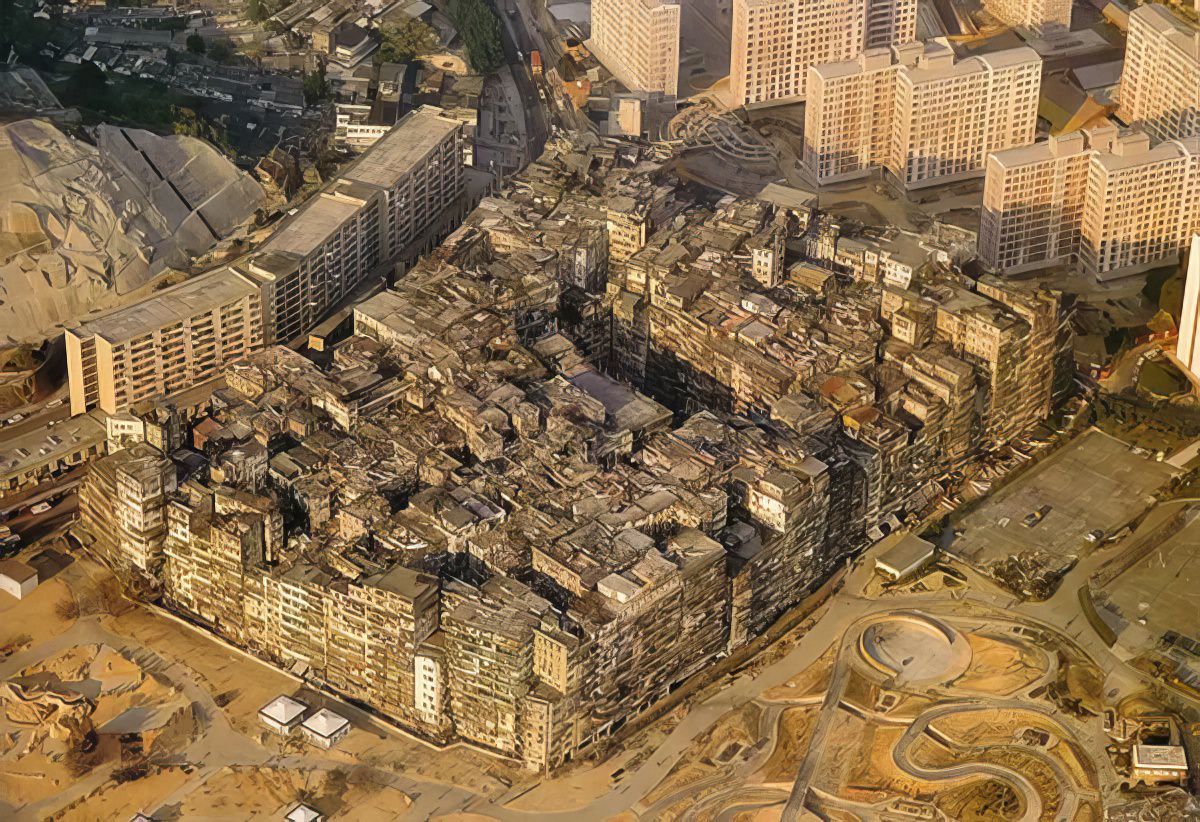
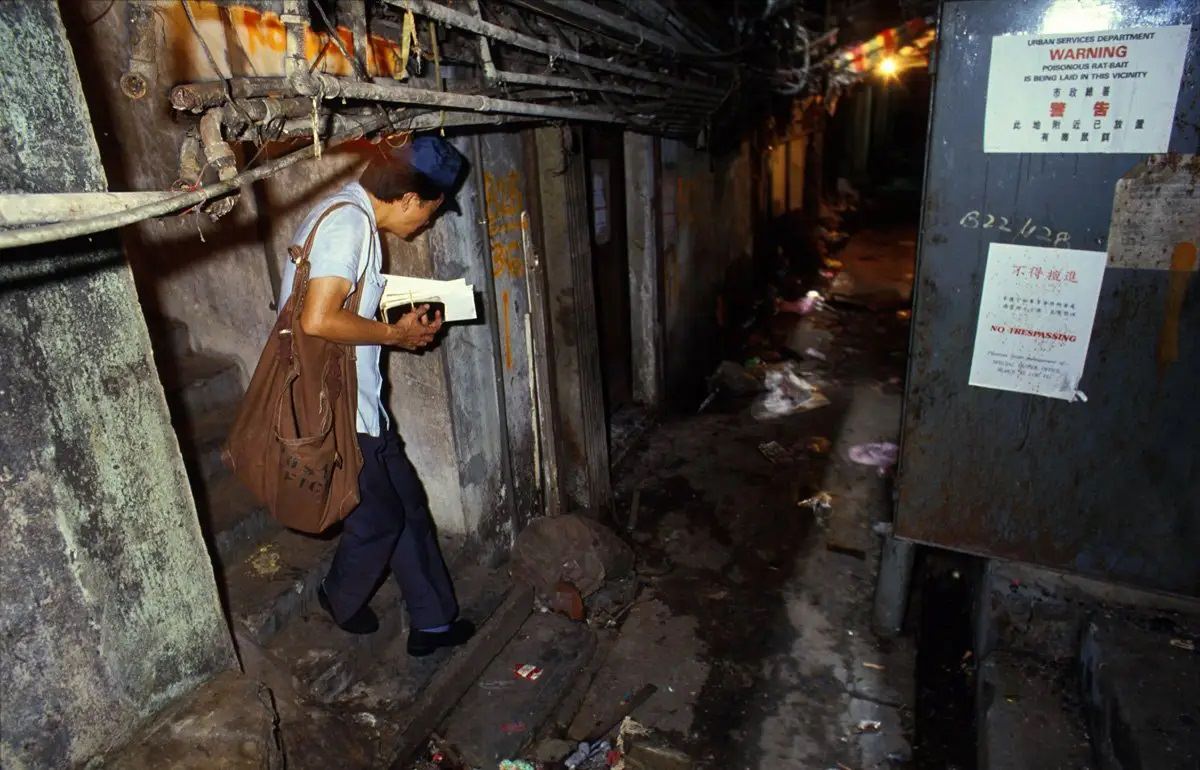
Life inside the Walled City was defined by tight spaces and near-total darkness at the lower levels. The buildings were so closely packed that sunlight rarely reached the ground. Residents navigated a maze of corridors that wound between structures, and the sense of enclosure was constant.
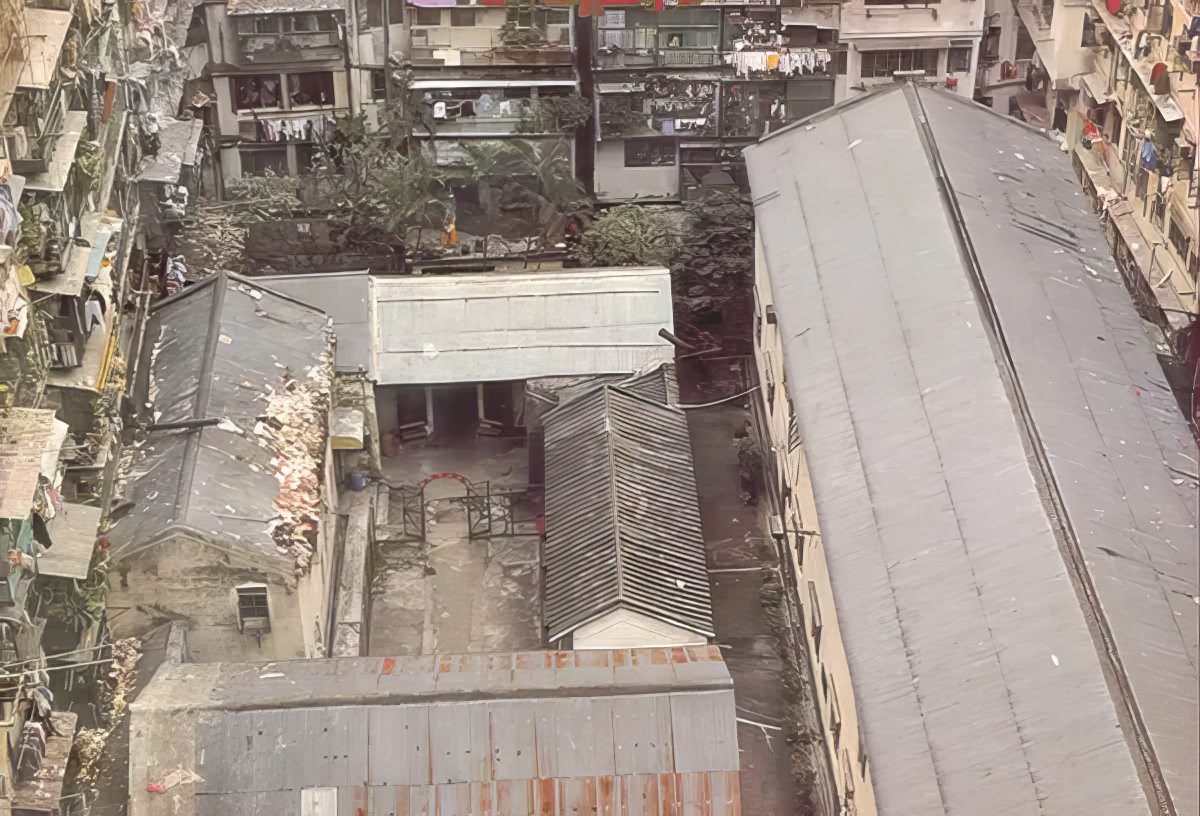
The rooftop was one of the few places where open sky was actually visible. Up there, residents could find space to breathe, dry laundry, or simply step away from the compressed world below.
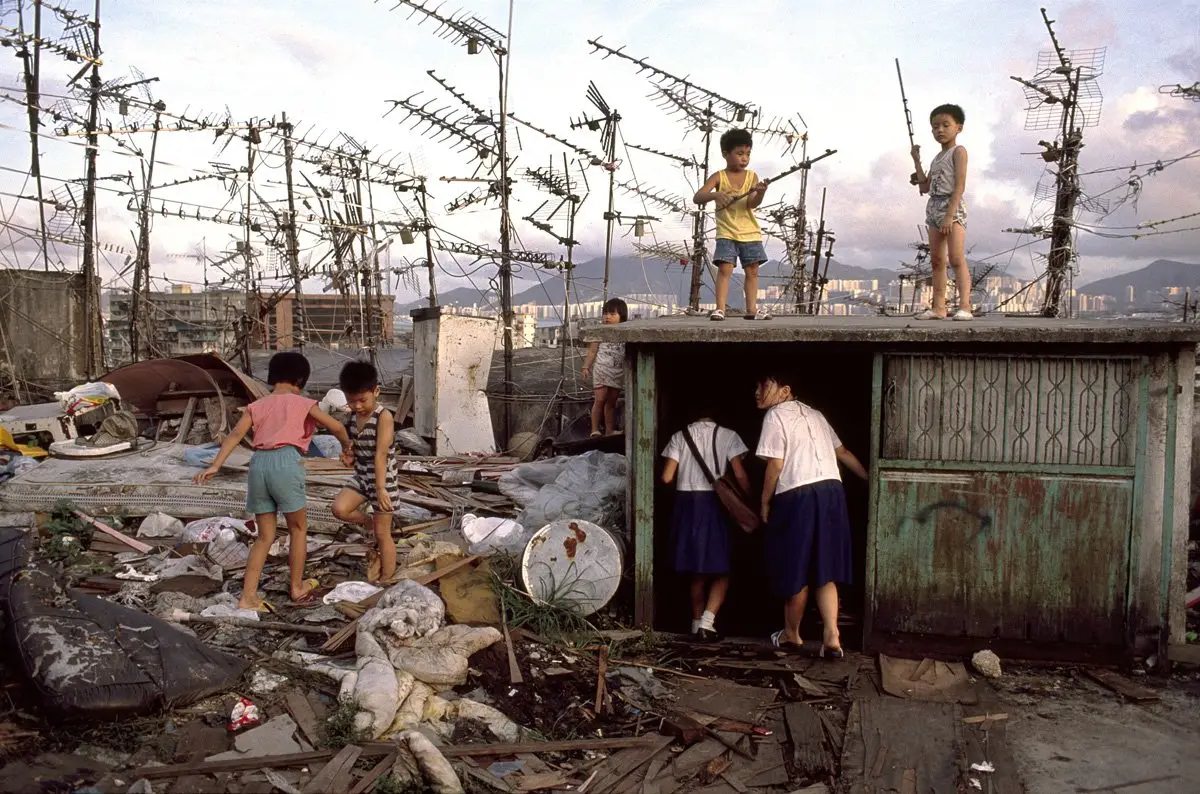
The city also had a playground at its edge — a small but telling sign that families built real lives there, not just survival situations. Children grew up inside the Walled City, went to school, played, and formed friendships in the same narrow corridors their parents worked in.
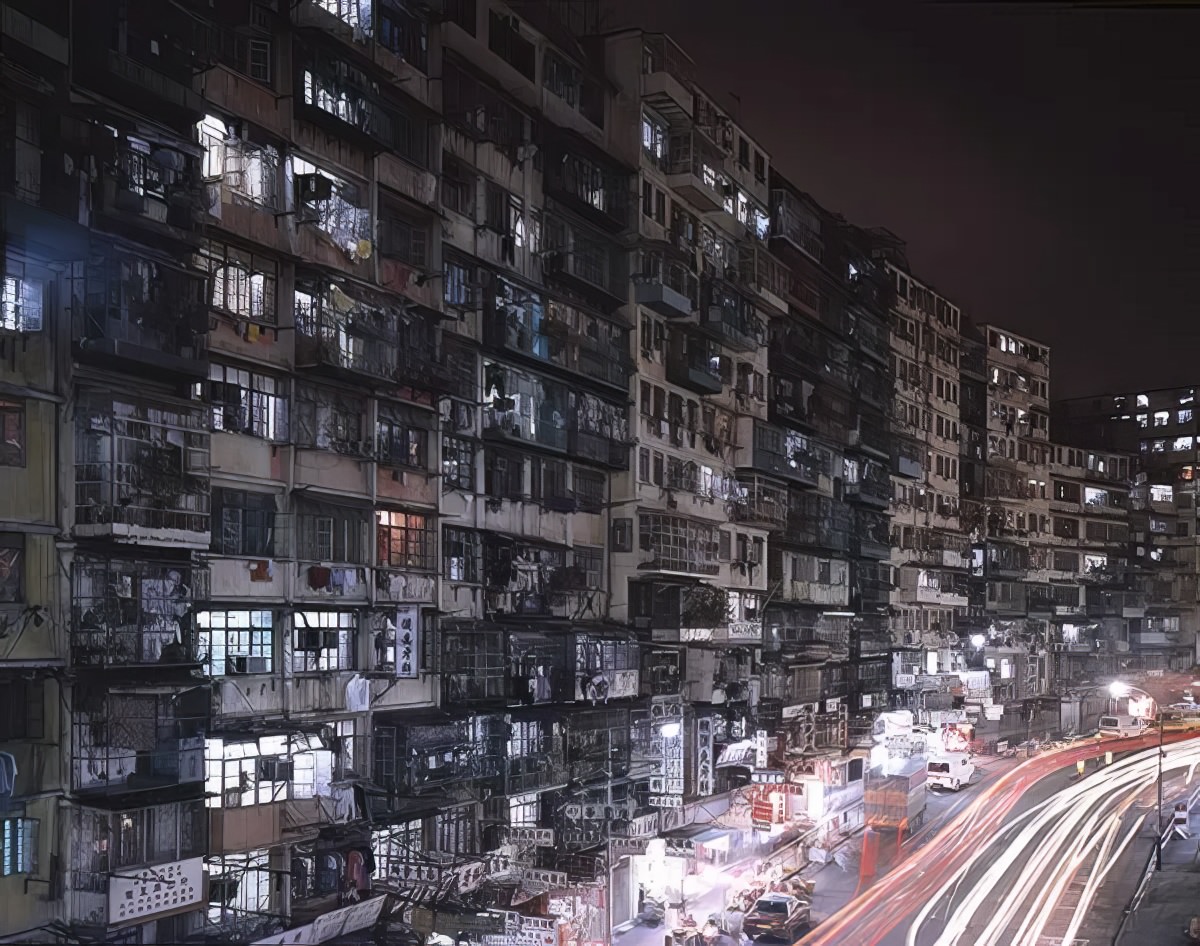
Getting around meant sharing tight alleyways with neighbors, vendors, and workers at all hours. At night, the outer edges of the city took on a different character — lit by signs and storefronts, the streets stayed active well after dark.
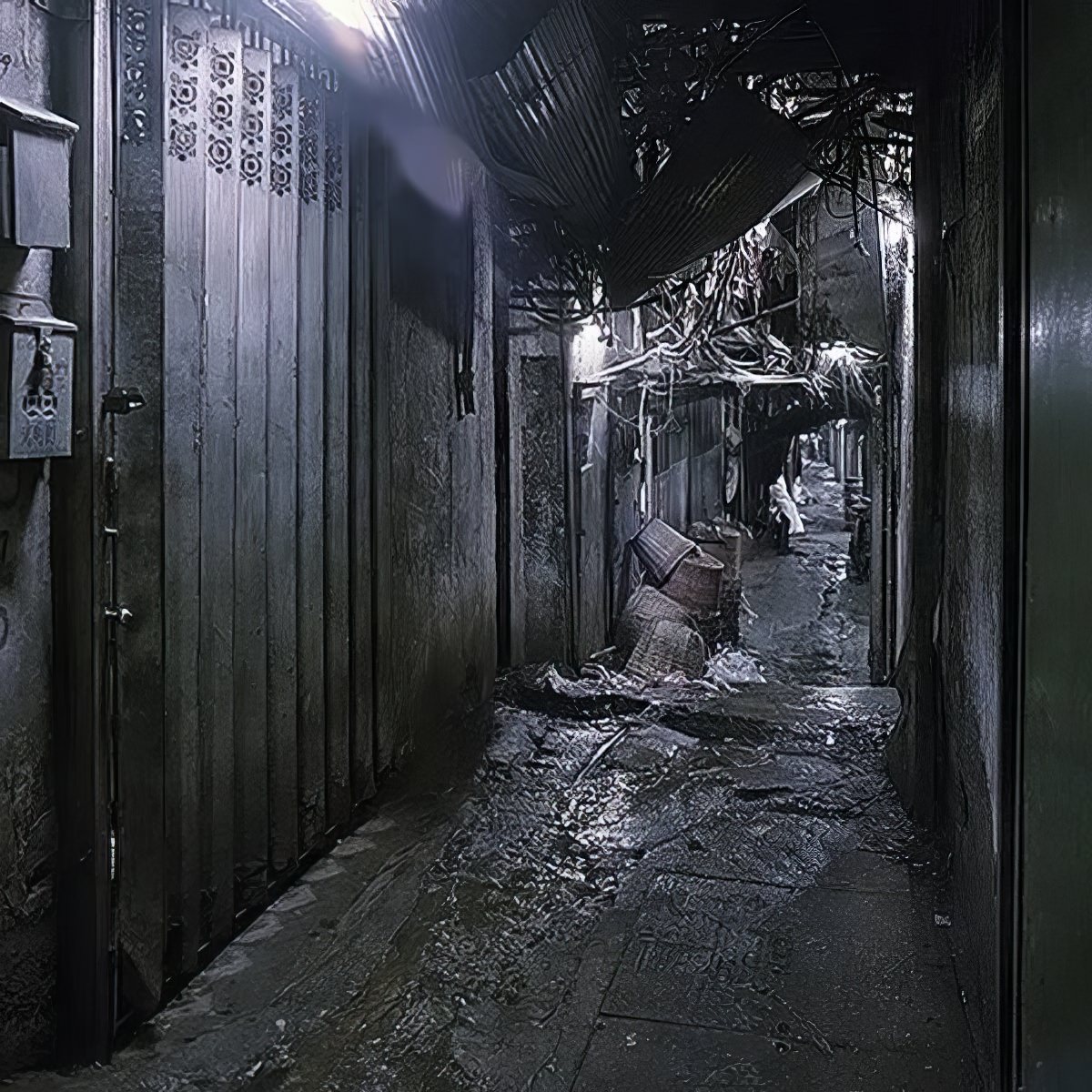
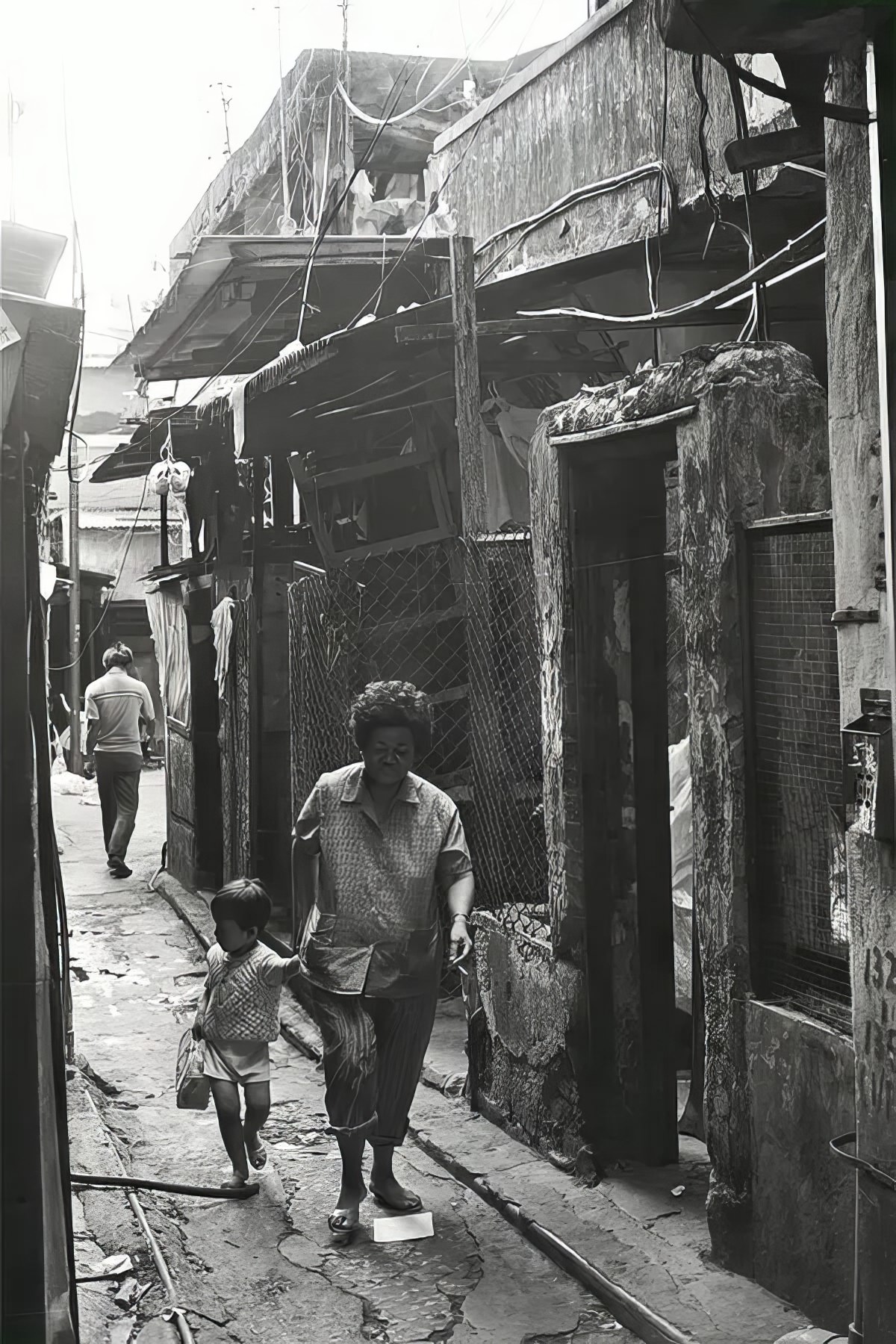
Inside the deeper corridors, the alleyways were narrow enough to touch both walls with outstretched arms. These passages connected every part of the structure, forming a web of routes that residents learned by memory.
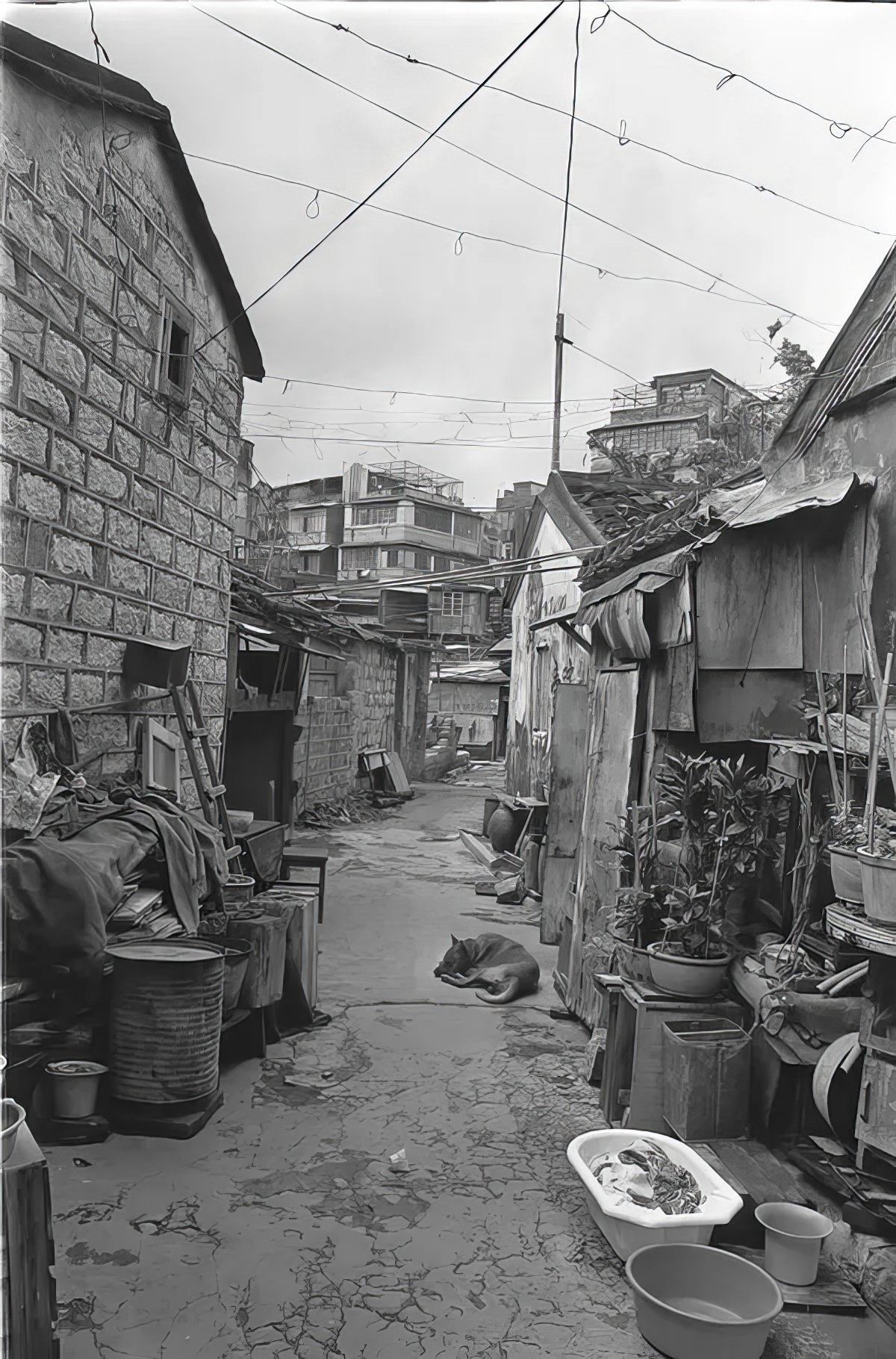
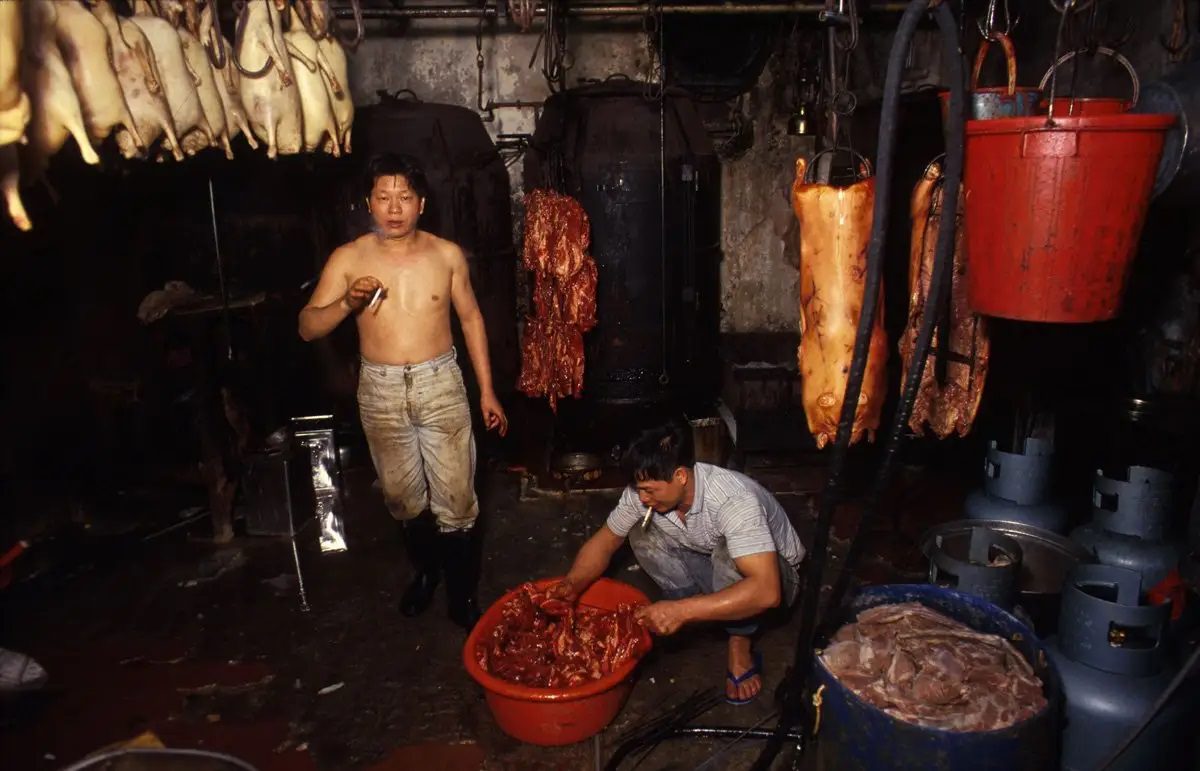
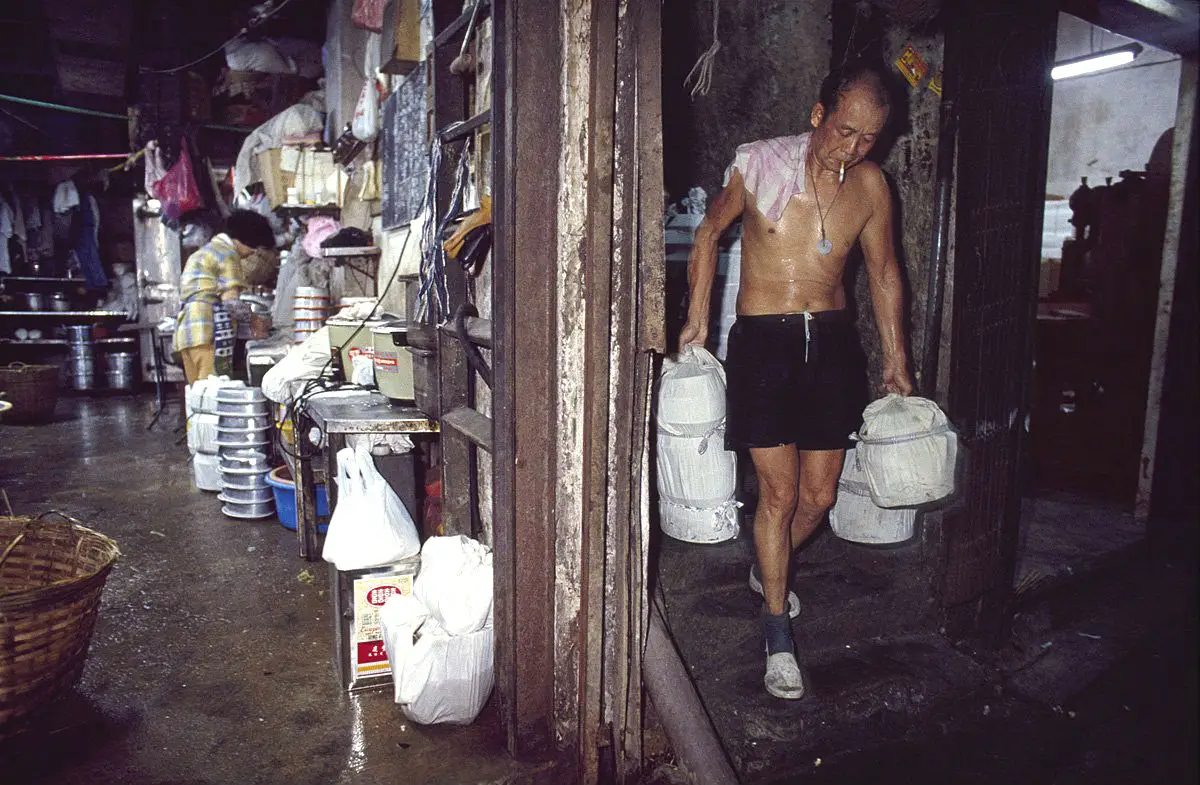
The Walled City’s economy was driven by small businesses and home-based manufacturing. Residents operated food stalls, noodle factories, textile workshops, and plastics manufacturing operations — all within the same cramped buildings where they slept. Hui Tuy Choy opened his noodle factory inside the Walled City in 1965, running it without any oversight from health, fire, or labor authorities.
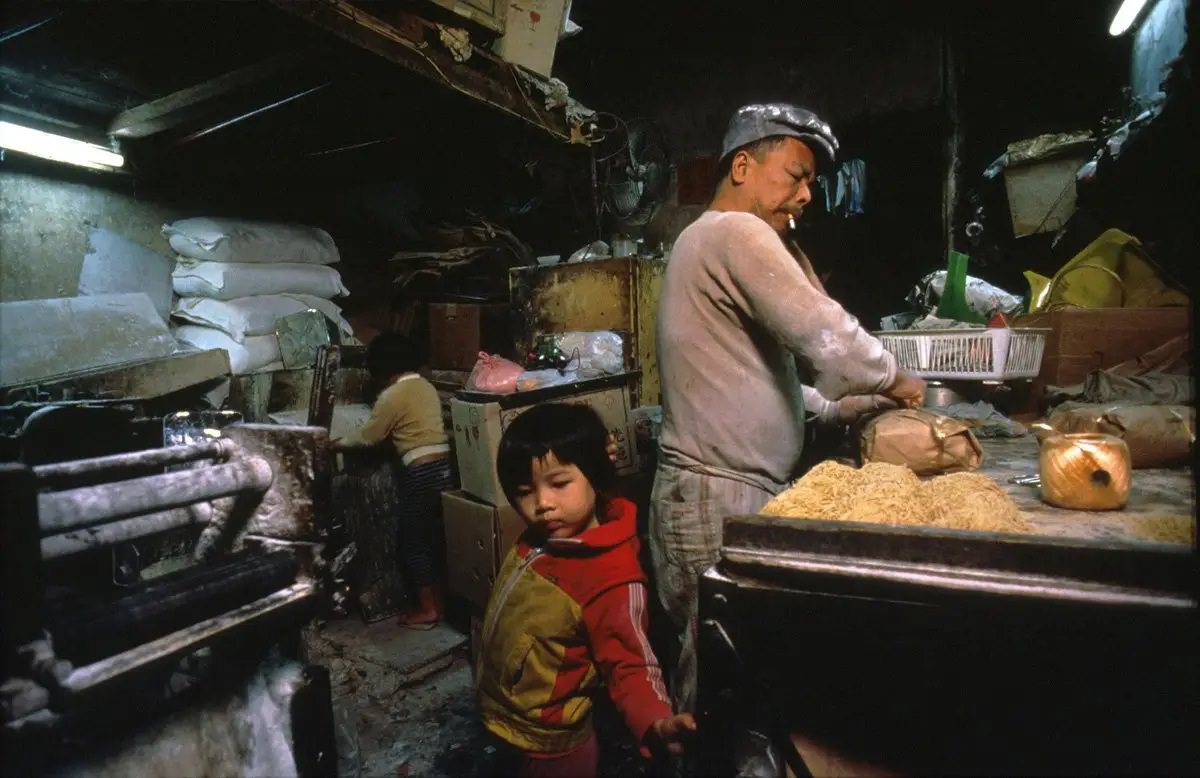
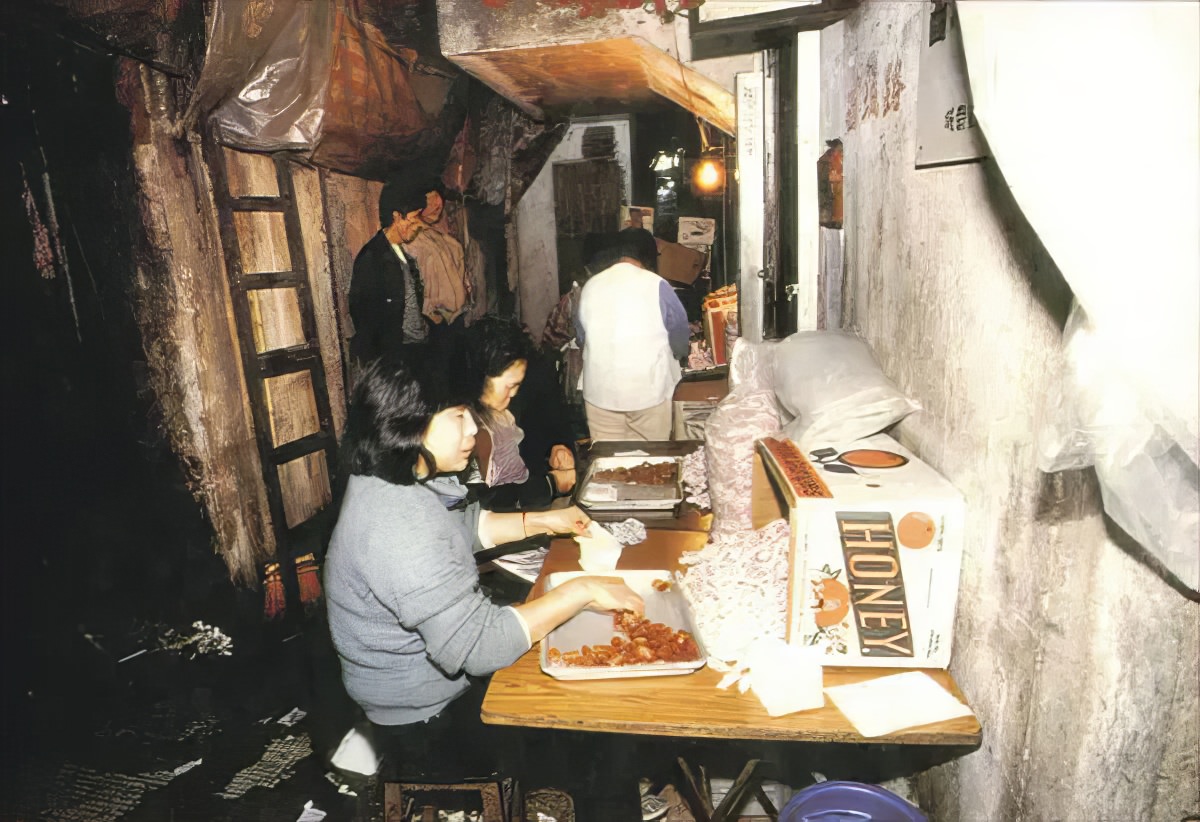
Food production was one of the city’s most active industries. Women worked in kitchen spaces preparing food for sale, turning residential corners into production floors.
Restaurants operated in the same compressed spaces, serving customers in rooms that doubled as kitchens and dining areas. The food business, like everything else in the Walled City, ran on very little space and a great deal of improvisation.
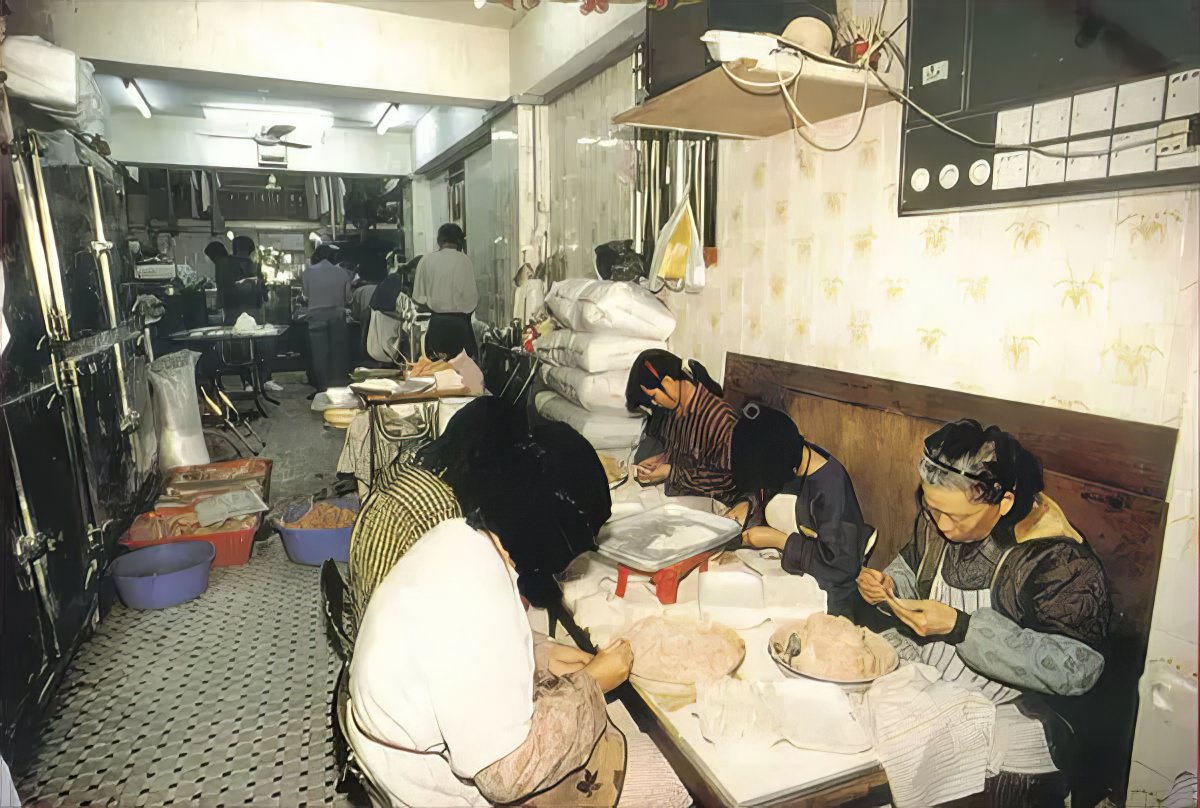
In-house manufacturing extended well beyond food. Textile and plastics production filled workshop spaces throughout the city, with families running operations from within their own apartments.
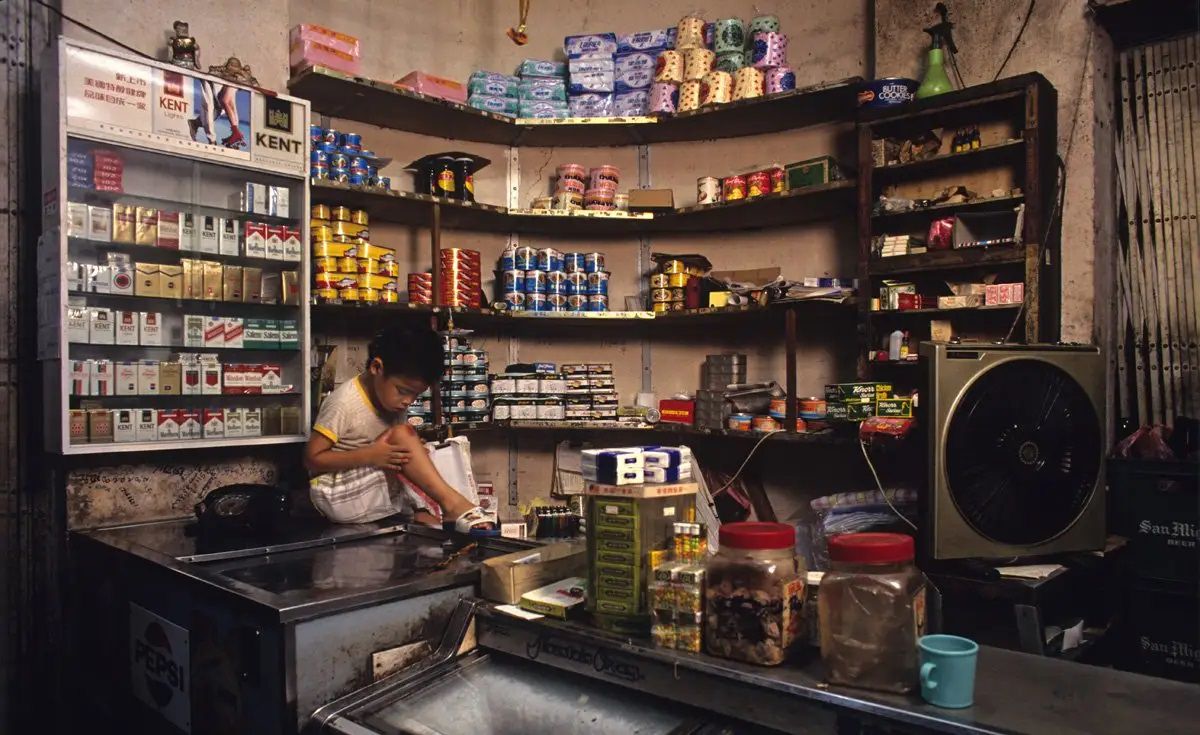
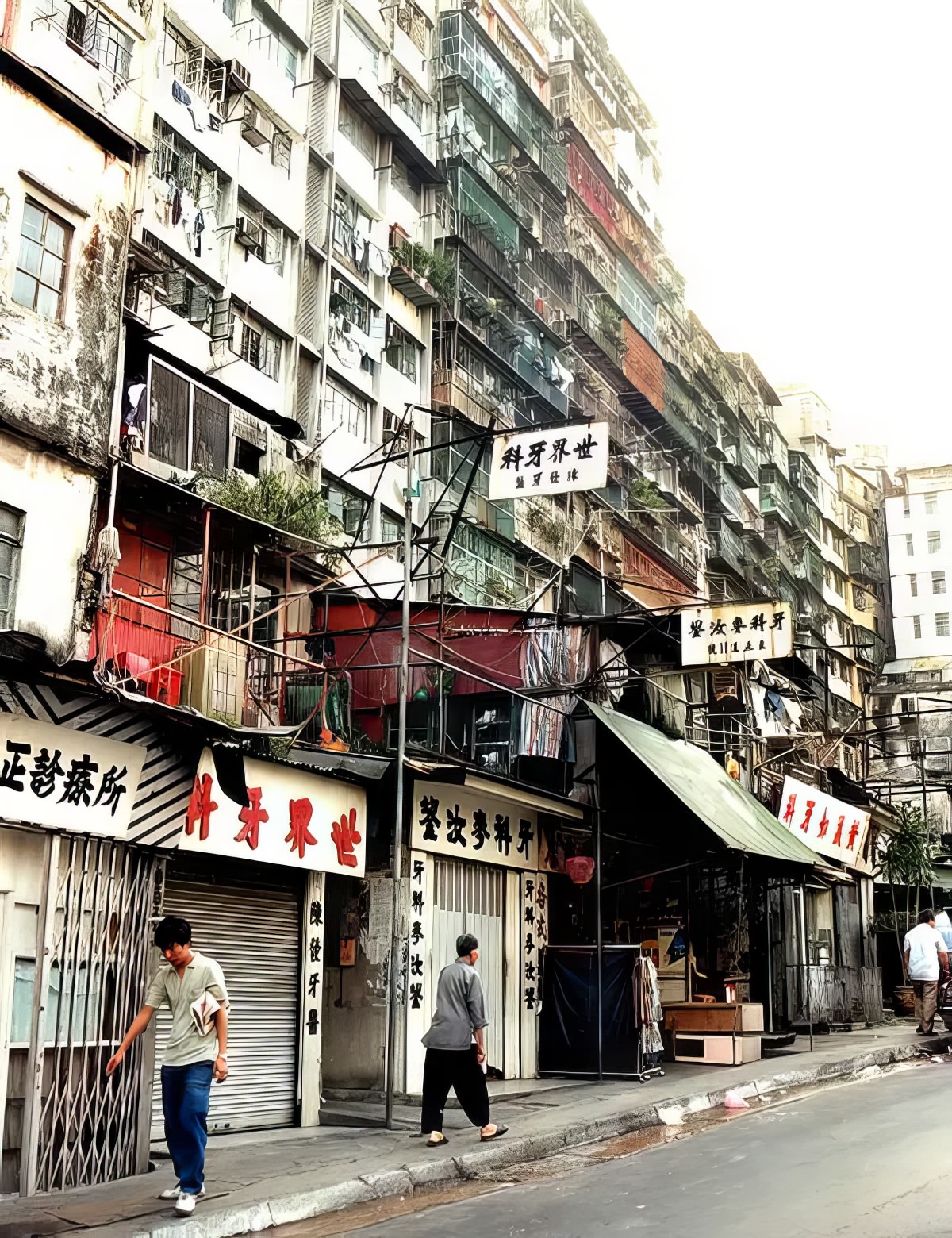
Medical and dental services were also offered inside the Walled City, often by practitioners who lacked formal qualifications but charged prices that residents could actually afford. Along one outer edge in 1991, a row of dental clinics operated side by side, advertising their services with hand-painted signs.
Water access was a persistent challenge. There was no centralized plumbing system. Residents relied on makeshift wells and rooftop tanks, and fetching water by hand was a daily task for many households.
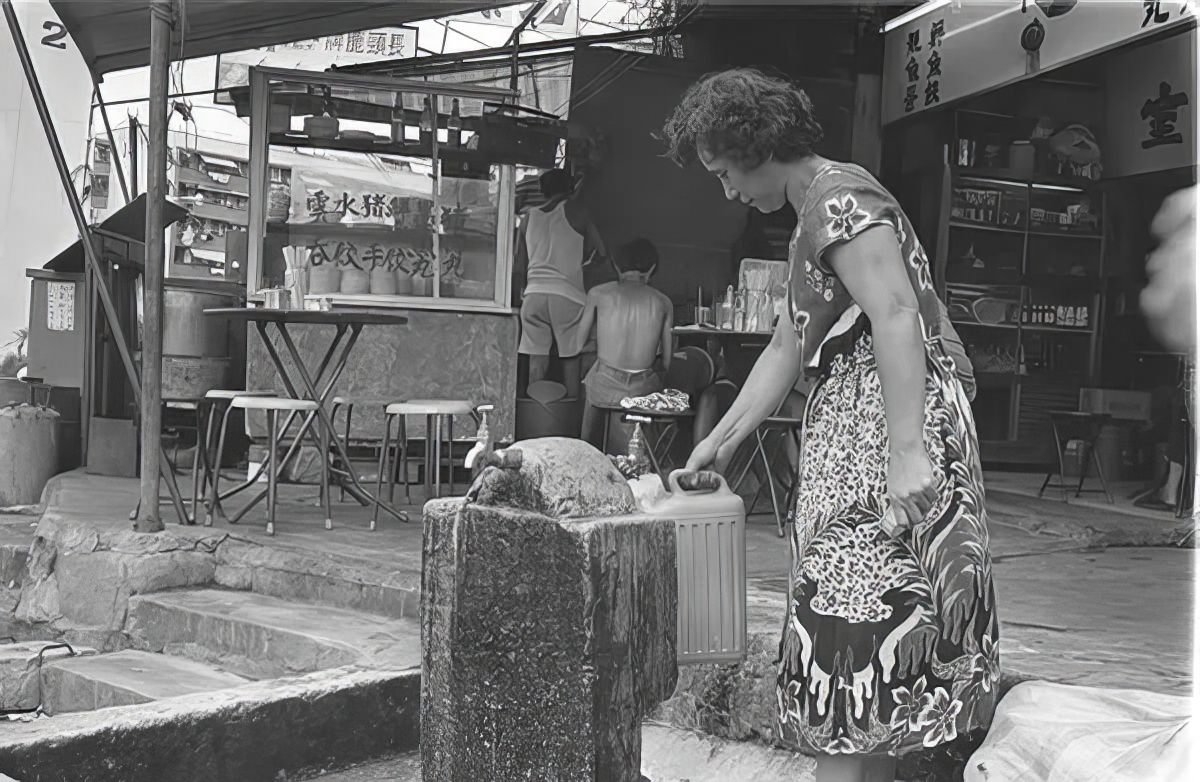
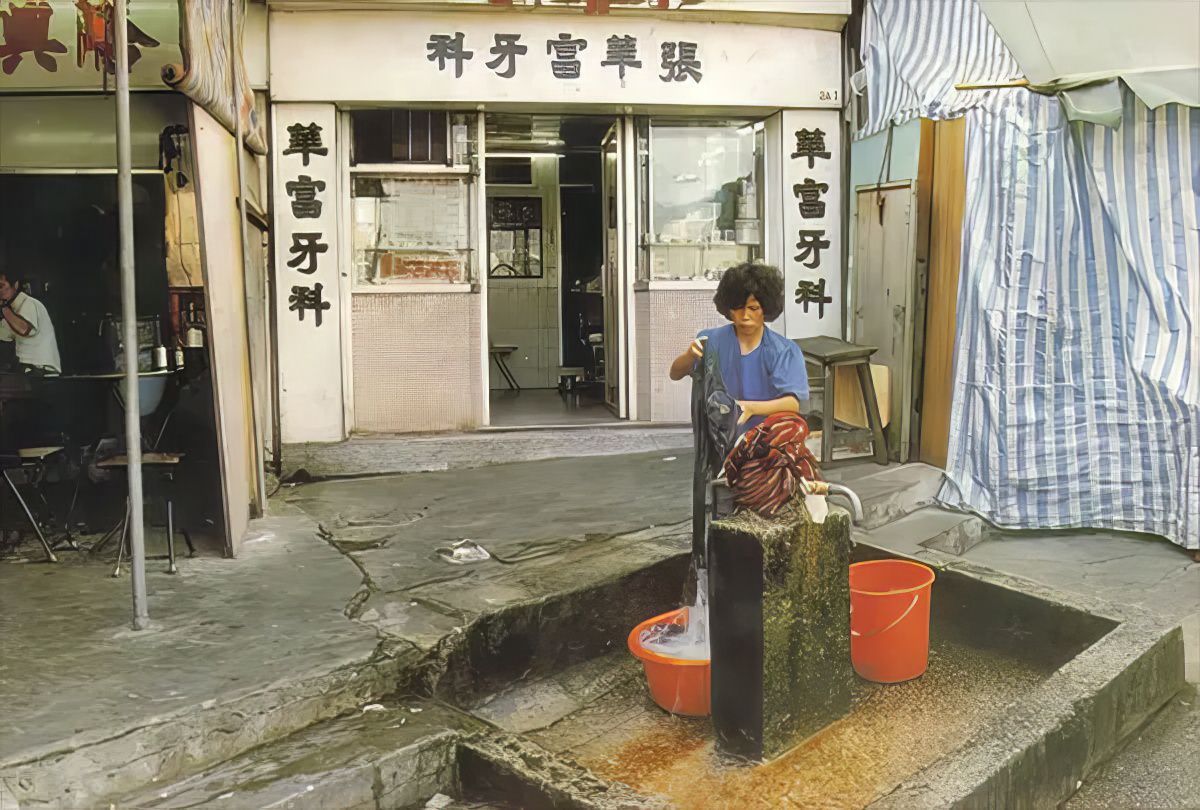
Sanitation conditions throughout the Walled City were poor. Health and safety codes did not apply, and waste disposal was a constant struggle. Pipes and wires ran through walls and ceilings without any systematic layout, creating hazards that residents simply learned to live around.
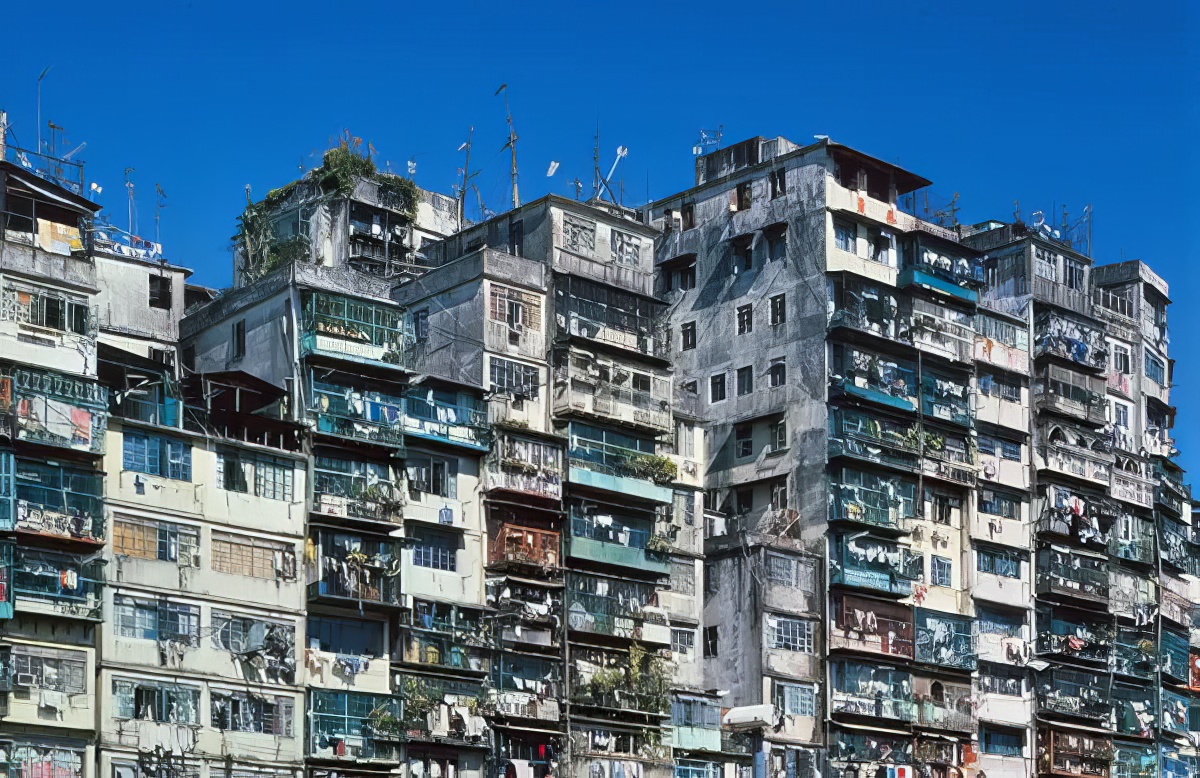
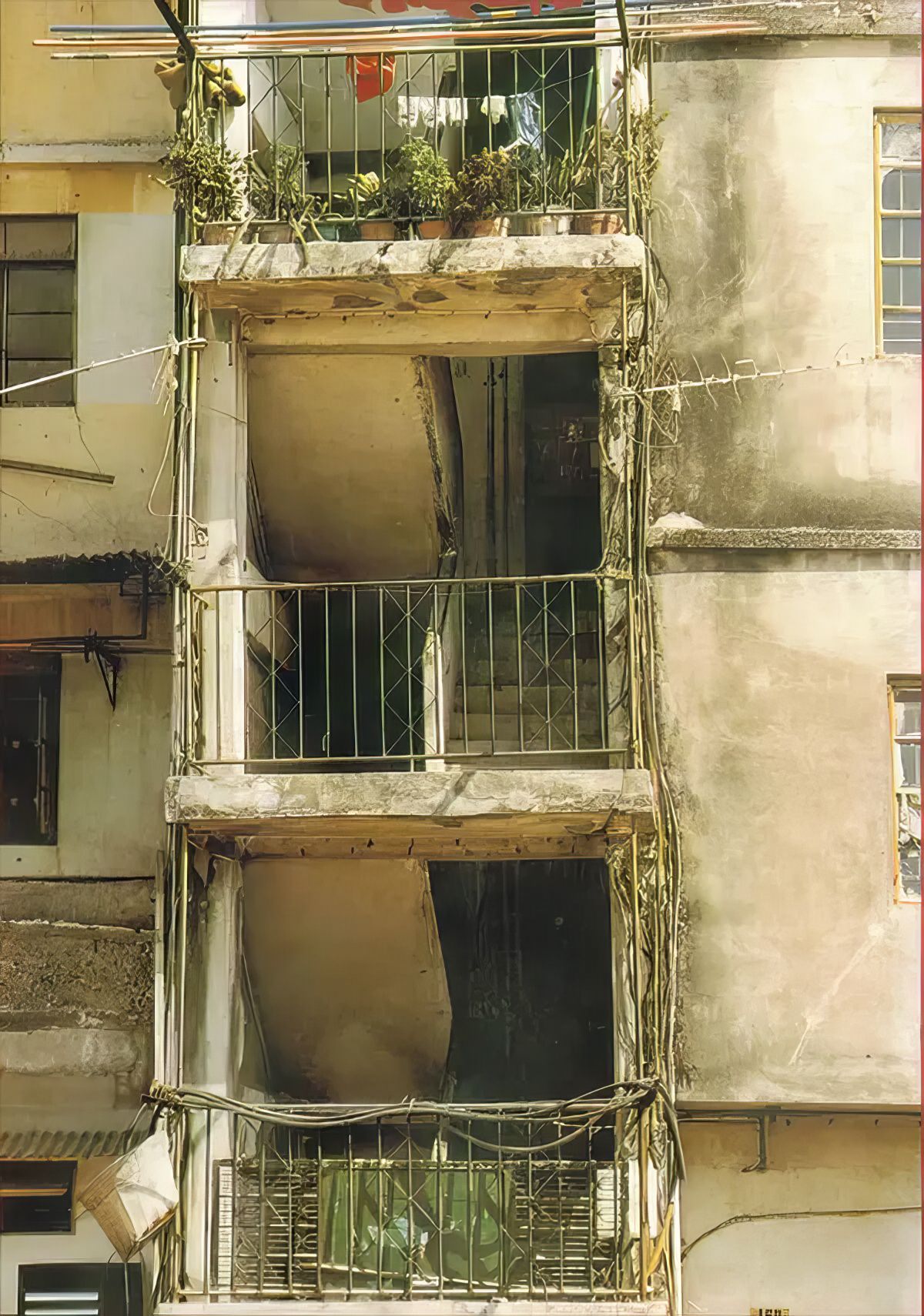
Balconies jutted out from building faces, crowded with drying laundry, plants, and household items. In a place where interior space was measured in square feet, the balcony was valuable real estate.
At the center of the Walled City stood a structure that had once housed the Chinese administrative office. It was a remnant of the enclave’s formal Chinese governance — a function that effectively ceased long before the buildings around it had grown so tall.
The city’s early years were marked by serious criminal activity. Triad gangs controlled drug trafficking, gambling operations, and prostitution within the enclave. The absence of police enforcement made it fertile ground for organized crime. Over time, however, community organizations and local leaders established informal systems of order, and many residents lived out their daily lives largely untouched by the criminal activity operating around them.
For the tens of thousands of people who lived there, the Walled City provided something that was hard to find elsewhere in Hong Kong — affordable housing and a community that looked after its own. Many residents had no other options, and within those close quarters, they built something that functioned despite every obstacle stacked against it.
The sense of belonging that grew inside the Walled City was real, even if the conditions were difficult. For people who had arrived with nothing and had nowhere else to go, it was a place that accepted them.
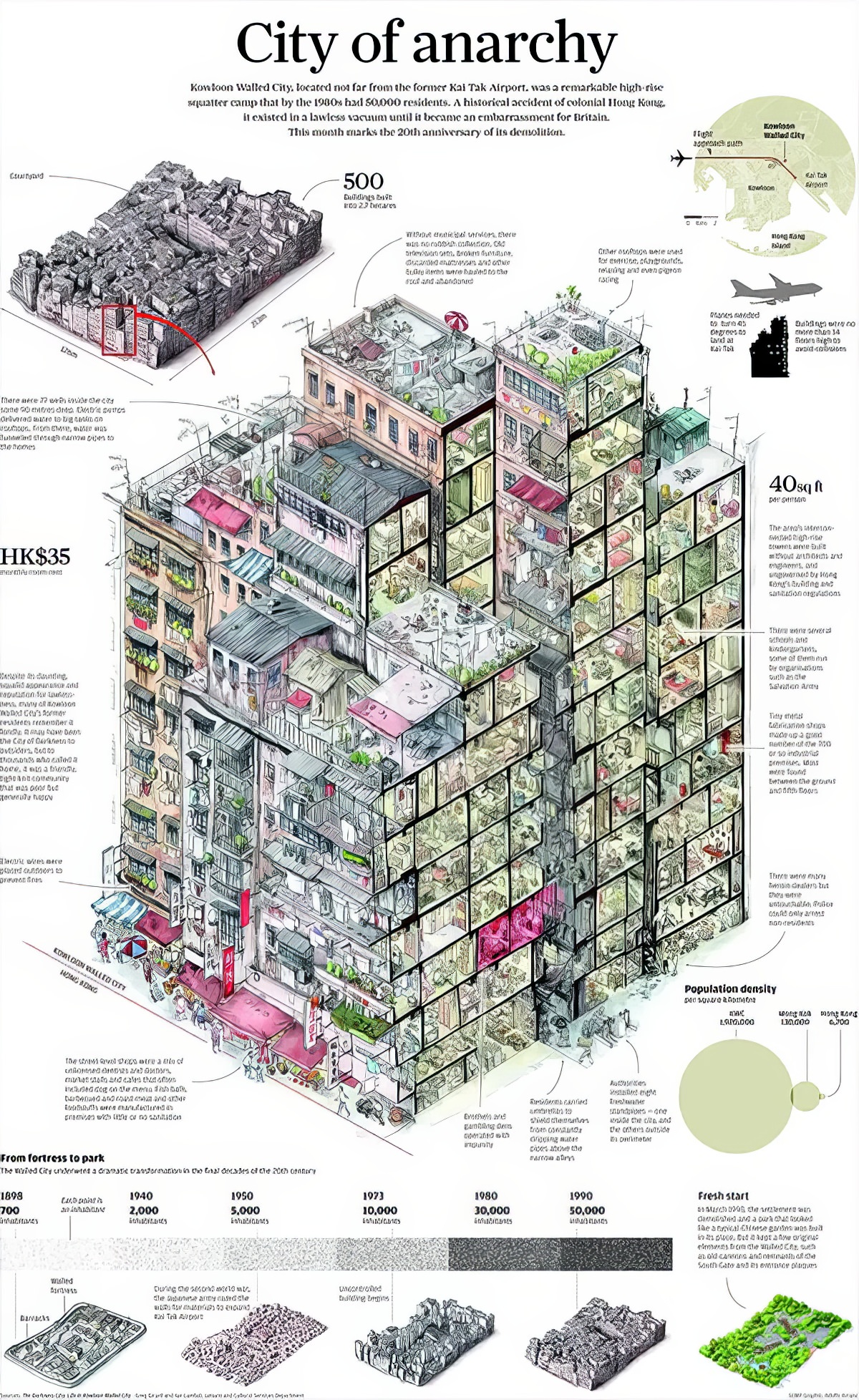
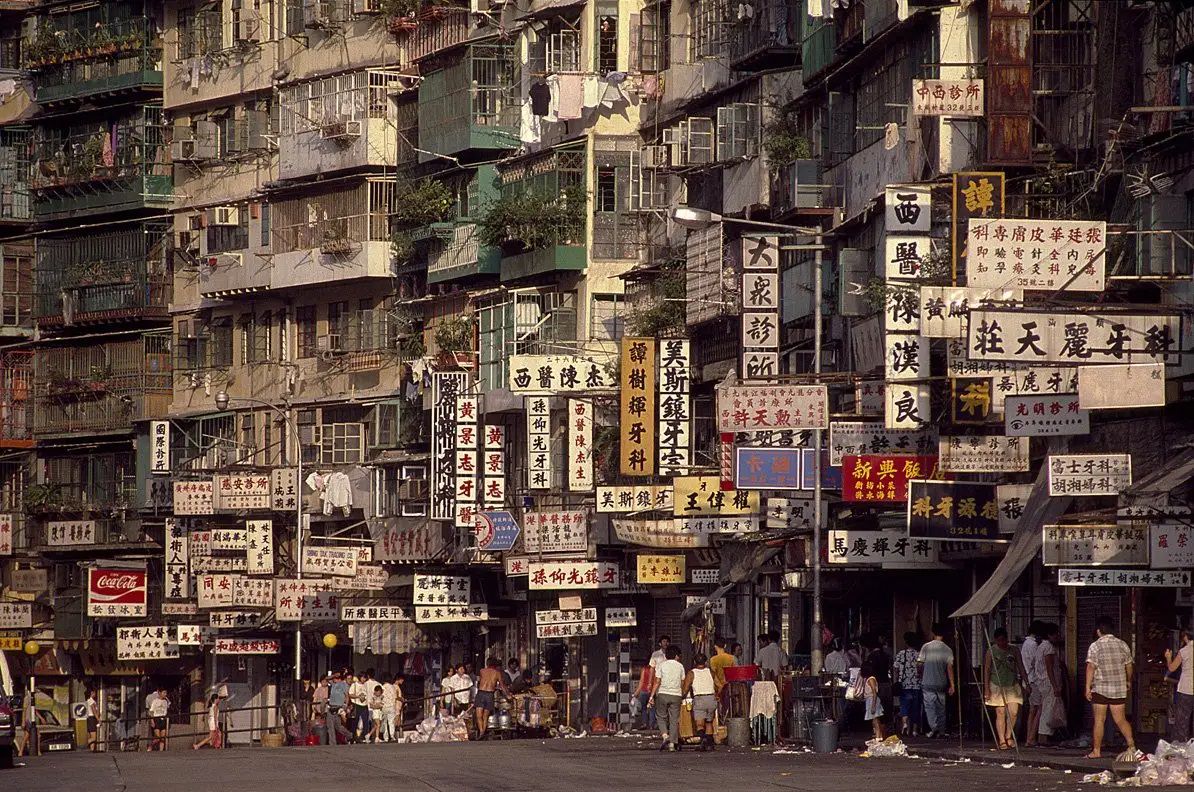
By the 1980s, the British and Chinese governments had grown increasingly uncomfortable with the Walled City’s existence. Its conditions and lawless reputation stood in sharp contrast to the modernizing city around it. In 1984, the Sino-British Joint Declaration settled Hong Kong’s future, agreeing that the territory would return to Chinese sovereignty in 1997. As part of the broader arrangement, both governments committed to clearing and demolishing the Walled City.
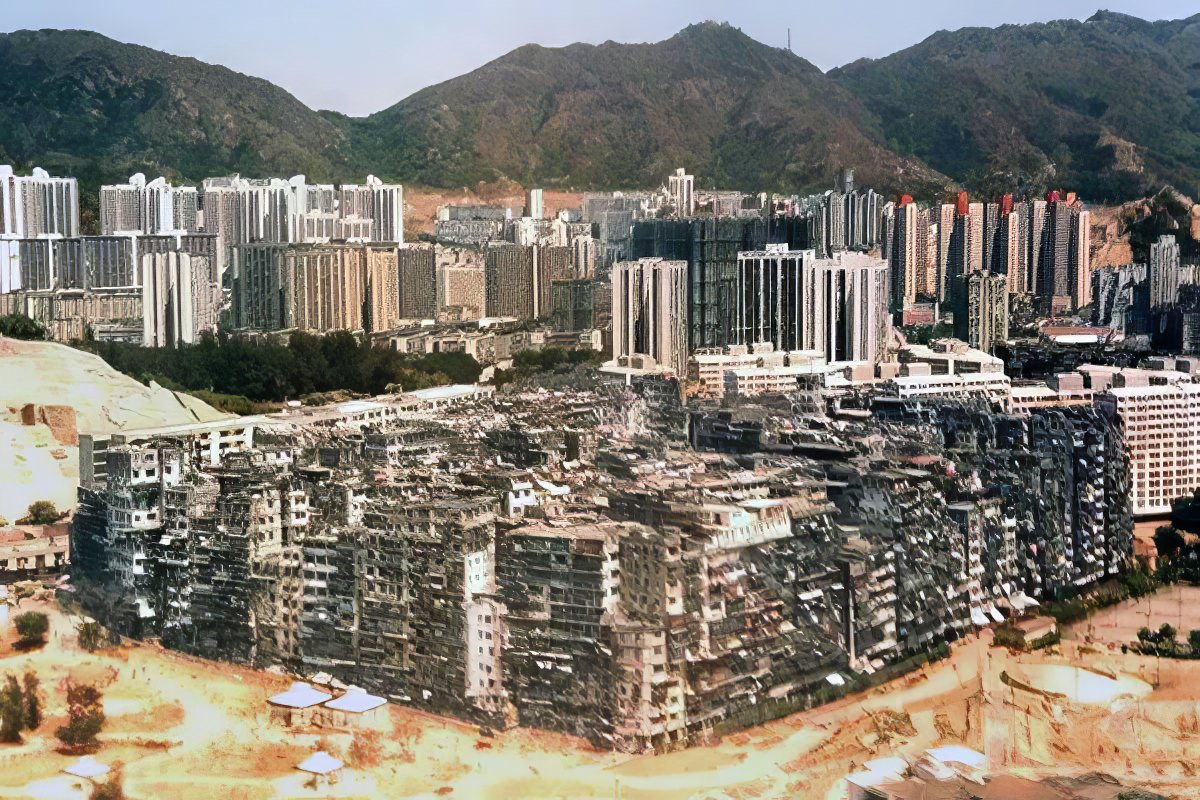
The eviction process started in 1987. Residents received compensation and were offered rehousing in other parts of Hong Kong. By 1992, the clearance was complete, and the outer edges of the city began to show the first signs of what was coming.
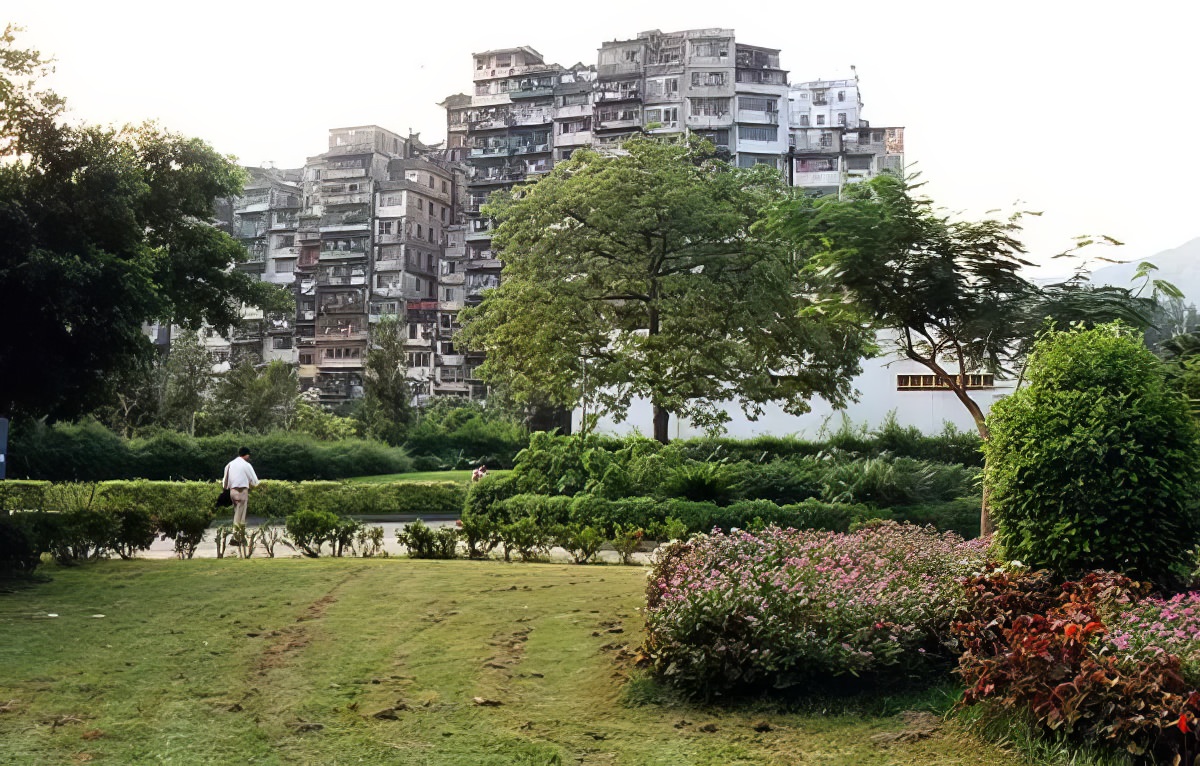
Demolition presented a significant logistical challenge. The buildings were so deeply interlocked that dismantling them required careful, methodical work rather than a simple teardown. The process stretched over more than a year.
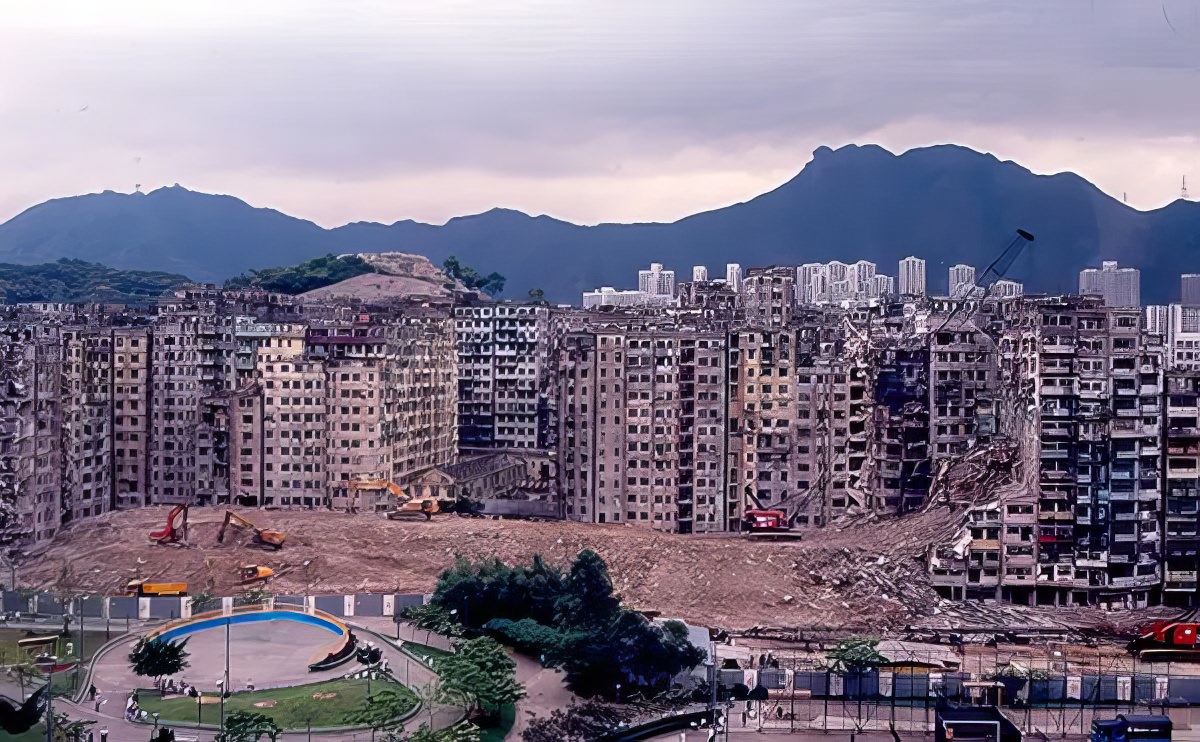
Demolition was completed in 1993, and the site was cleared for redevelopment. In its place, Kowloon Walled City Park opened in 1995. The park preserved a small number of historical artifacts from the site and included a scale model of the Walled City near its entrance — a reference point for what had stood there before.
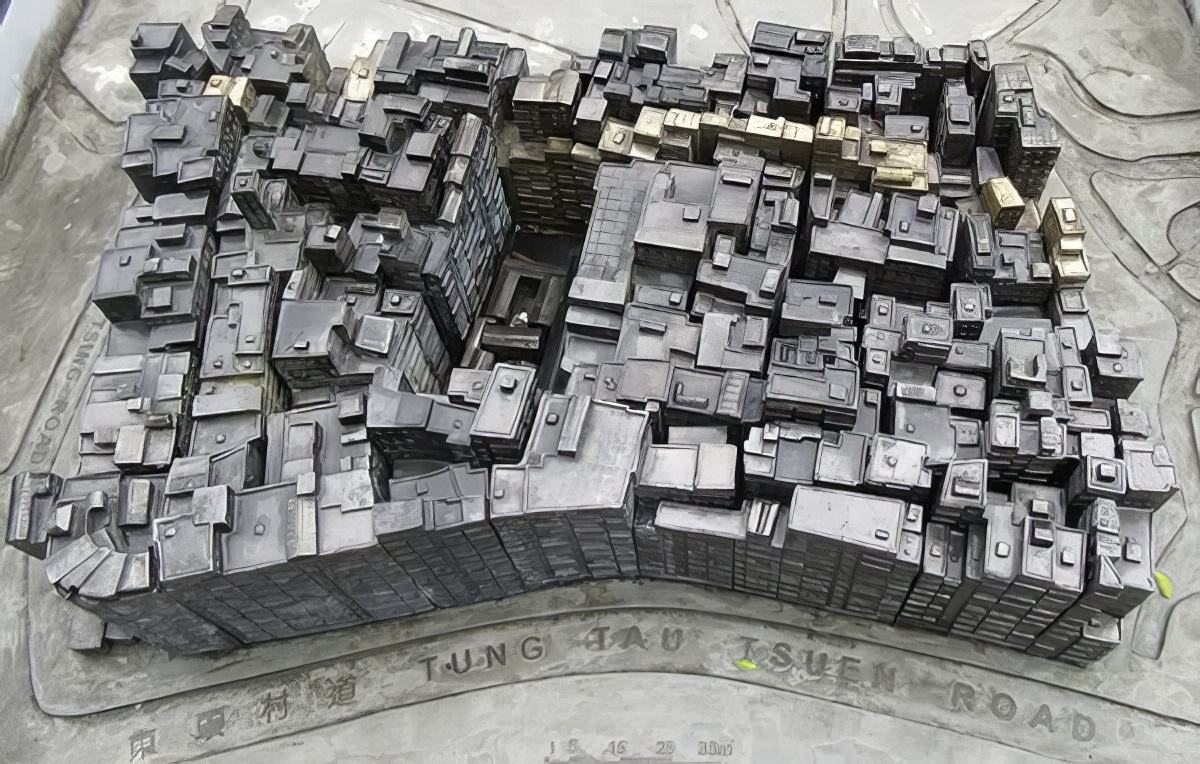
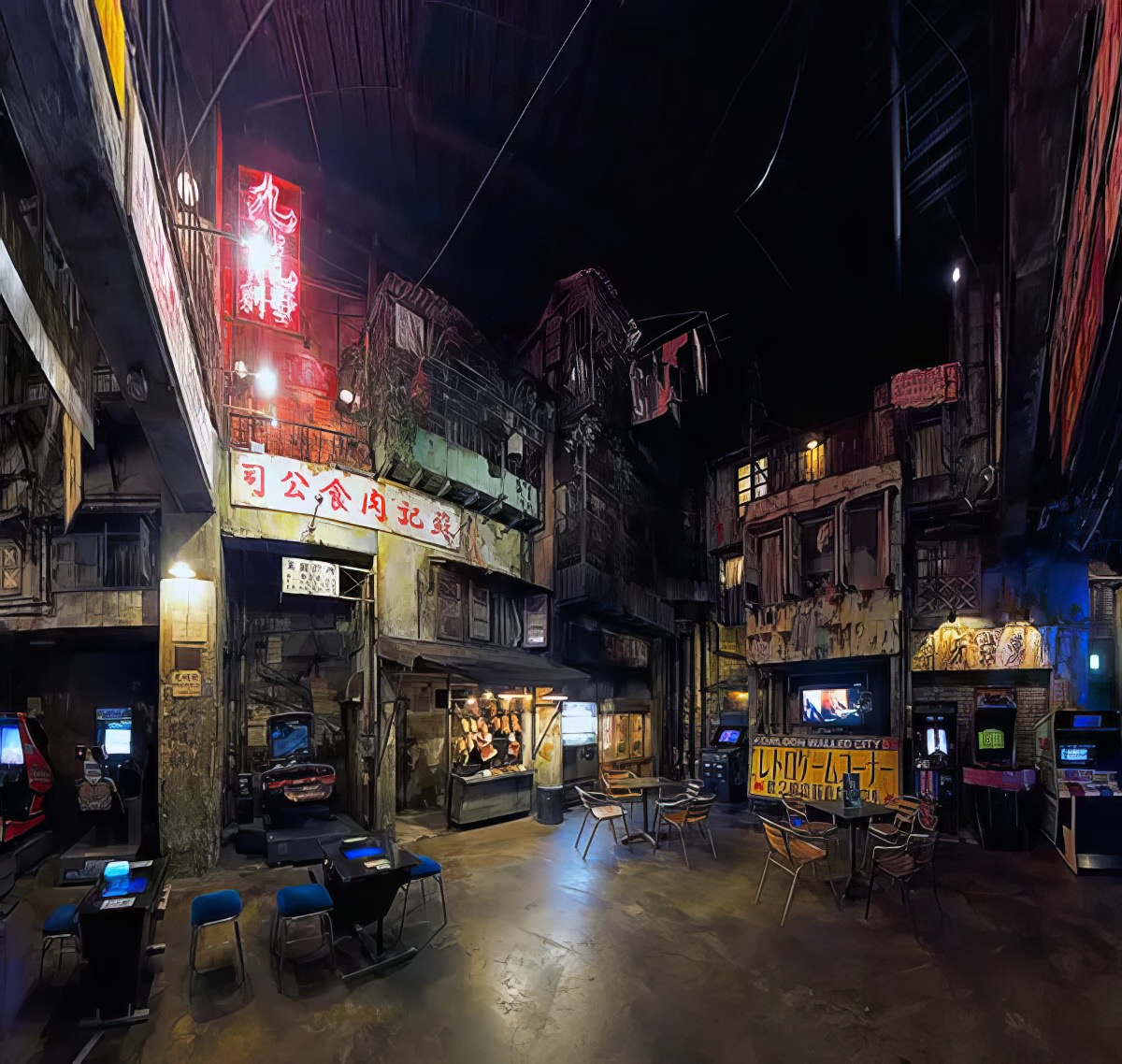
The Walled City left a deep enough mark on popular culture that it continued to inspire creative works long after the buildings came down. A Japanese arcade called Warehouse Kawasaki was built around a Kowloon Walled City theme, recreating the visual atmosphere of its cramped, layered interior for a different kind of audience.