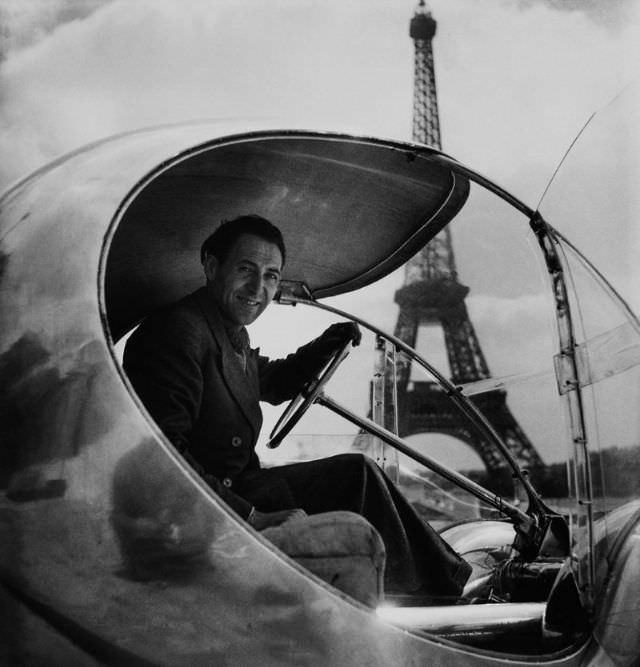
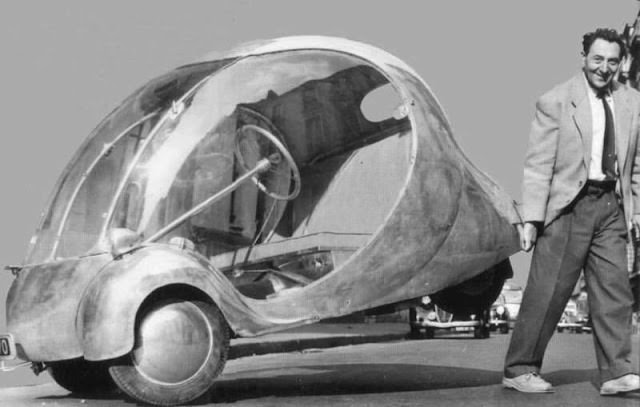
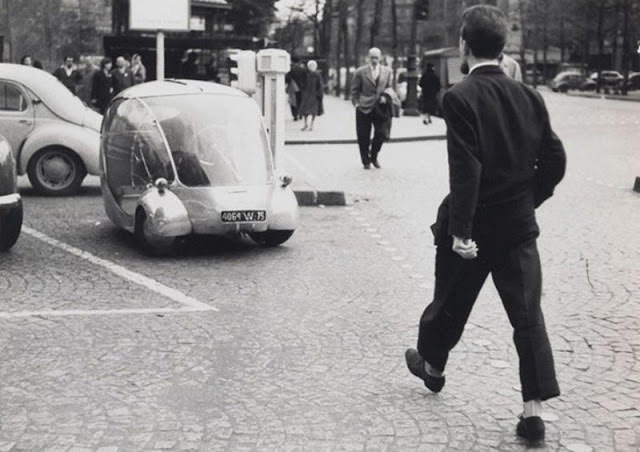
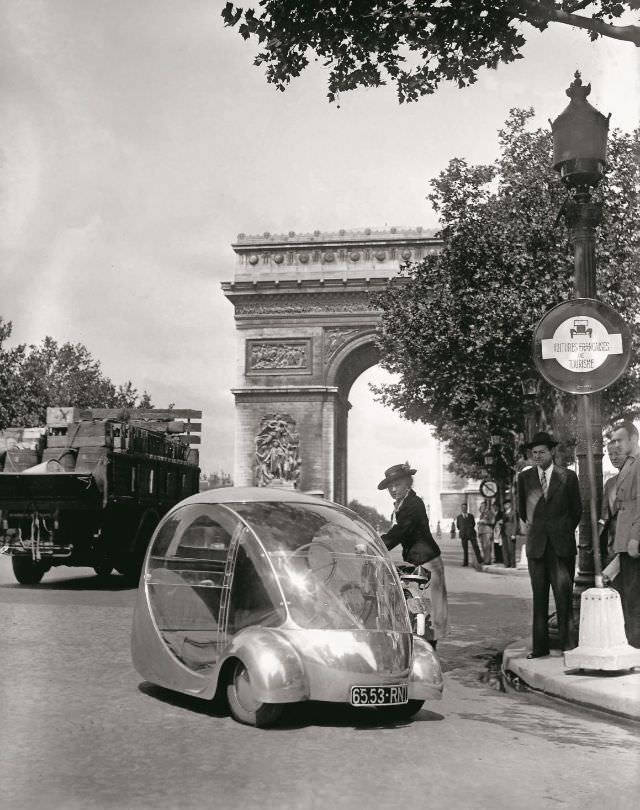
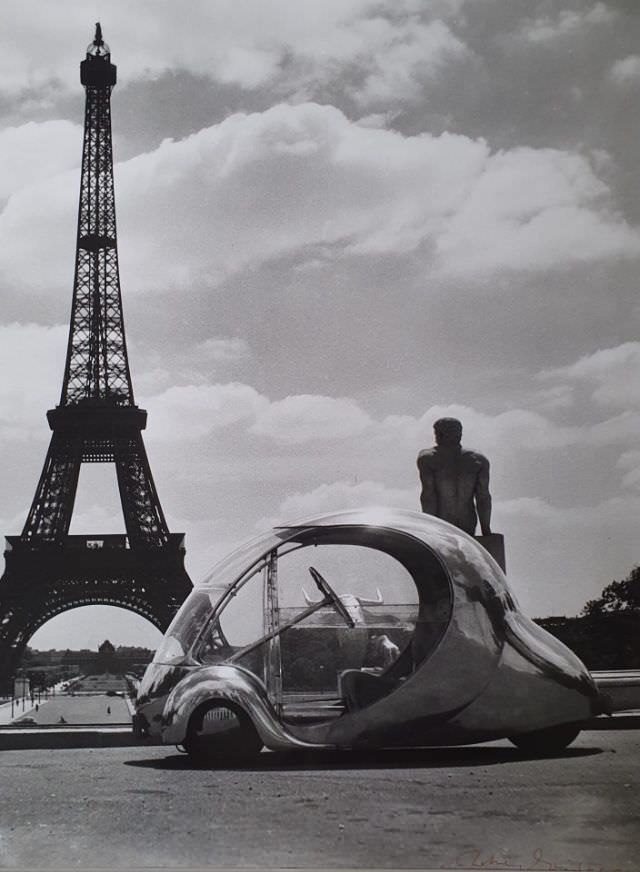
In 1942, while German forces occupied France and strict fuel rationing strangled everyday life, a French designer quietly built one of the most unusual vehicles ever to roll on four wheels. He called it L’Œuf électrique — The Electric Egg.
Paul Arzens was born in 1903 and spent his career pushing the boundaries of industrial design. He first sketched the concept for L’Œuf électrique in 1938, taking visual cues from interwar cyclecars and the natural curves of an egg or a water droplet. The design sat on paper for four years. When the German military administration took control of France’s fuel supply, Arzens finally had a practical reason to build it.
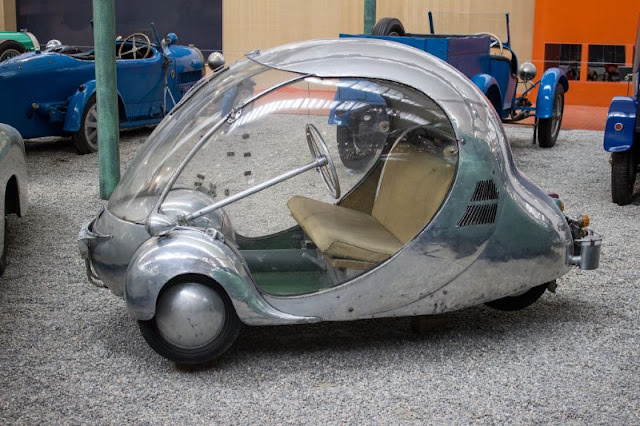
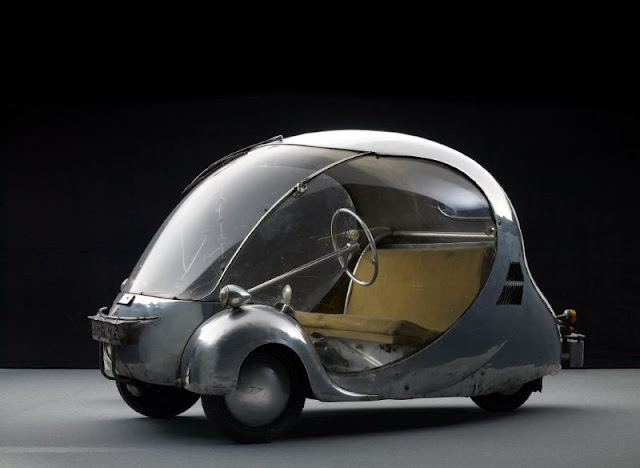
The body was a rounded sphere of aluminum, shaped to look almost biological. Beneath it sat a chassis built from Duralinox tubing — a lightweight aluminum alloy. The windscreen and doors were made from curved Plexiglass, giving the car a seamless, bubble-like appearance unlike anything on French roads at the time.
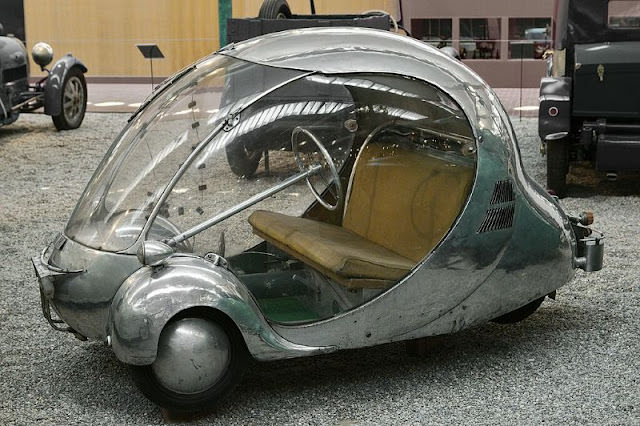
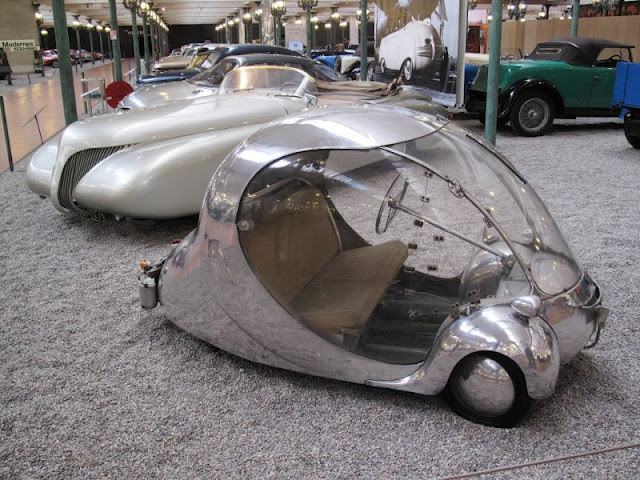
The entire vehicle weighed about 350 kilograms, or 770 pounds. Most of that weight came from the five 12-volt batteries packed beneath the bench seat. Each battery had a capacity of 250 ampere-hours and weighed 60 kilograms on its own. Together, they powered an electric motor that pushed the car to a top speed of 70 kilometers per hour — about 43 miles per hour.
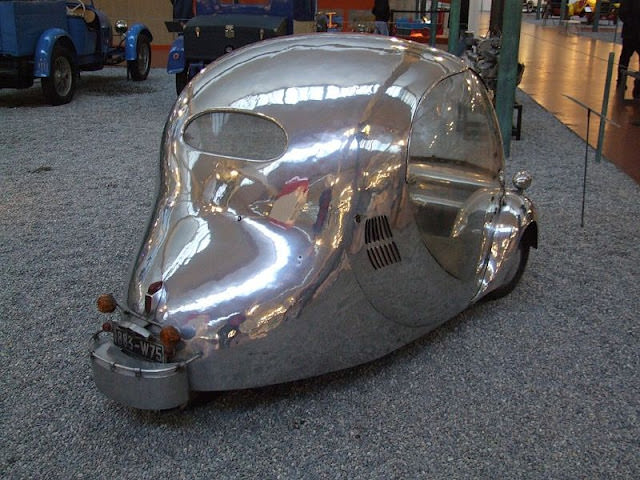
For a wartime workaround, the range was remarkable. L’Œuf électrique could travel up to 100 kilometers, or 62 miles, on a single charge. In an occupied city where gasoline was nearly impossible to obtain legally, that range made it genuinely useful rather than just a curiosity.
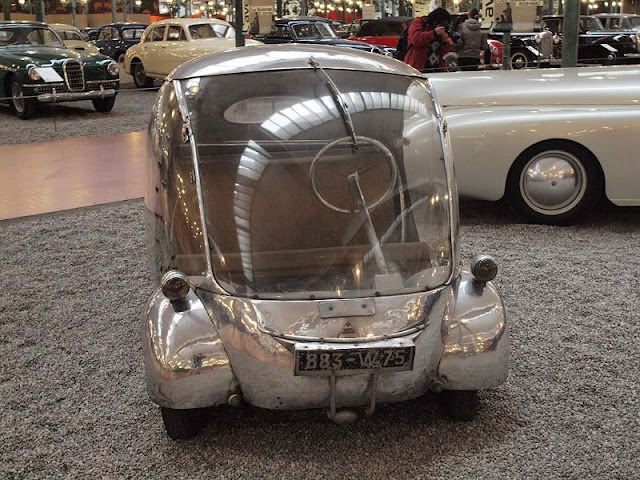
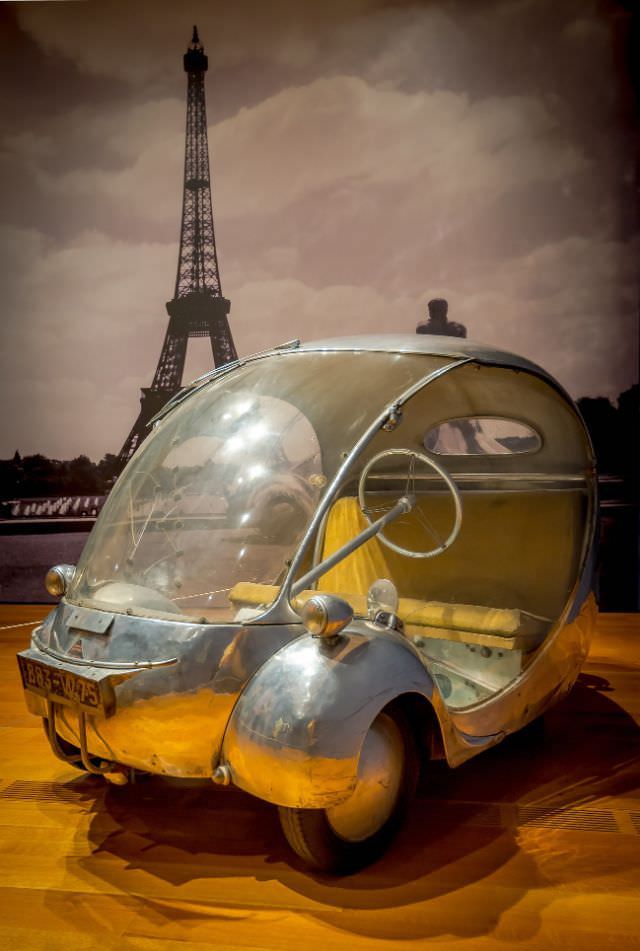
Once the war ended and fuel rationing lifted, Arzens swapped out the electric motor. He replaced it with a 125 cc Peugeot single-cylinder petrol engine producing 5.5 horsepower. That change pushed the top speed up to 80 kilometers per hour, or 50 miles per hour. The egg-shaped body stayed exactly as designed.
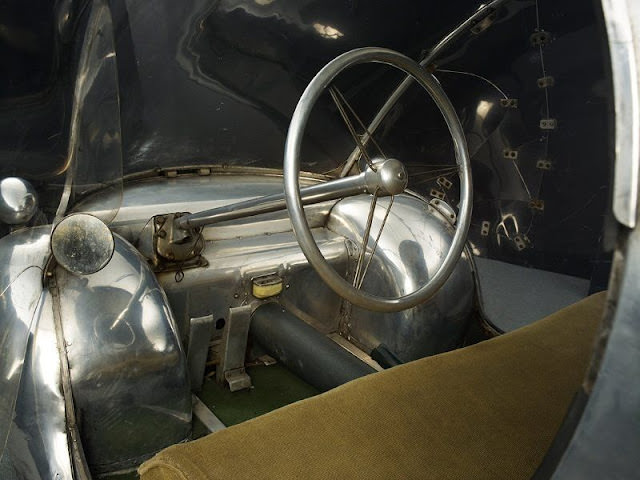
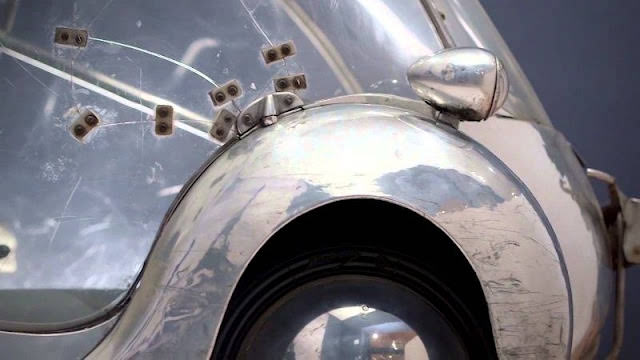
The Musée des Arts et Métiers in Paris acquired L’Œuf électrique in 1993, recognizing it as a significant piece of French engineering and design history. The vehicle is now displayed at the Cité de l’Automobile in Mulhouse, Alsace.