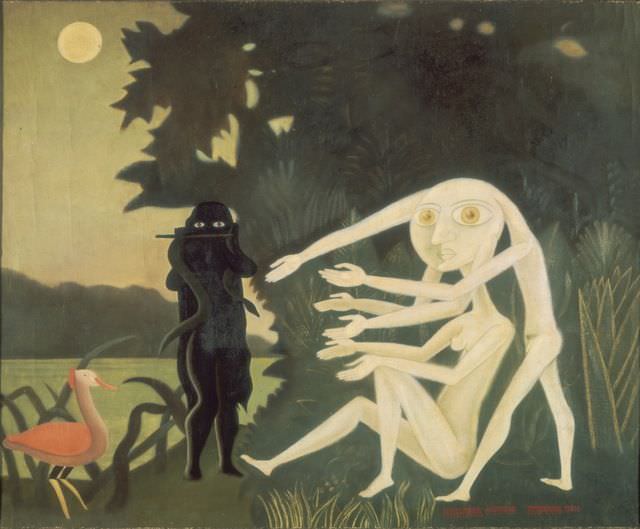
Victor Brauner was a Romanian painter and sculptor whose work stands among the most distinctive output of the Surrealist movement. Born in 1903 in Piatra Neamț, Romania, he developed an artistic voice that was entirely his own — one that pulled from folklore, dreams, religion, philosophy, and anthropology all at once. His use of color was bold and personal, and his imagery often felt as though it came from a world operating by its own strange logic. He moved fluidly between ideas and influences, and that restlessness kept his work alive with tension and mystery.
Brauner began his career working in Impressionist and Expressionist styles, but he quickly pushed beyond those boundaries. By the late 1920s, he was engaging with every major avant-garde current running through European art. He arrived in Paris in 1930, settling in the same building as Yves Tanguy and Alberto Giacometti — two figures central to the Surrealist world. That environment was charged with artistic experimentation, and Brauner absorbed it fully. He became formally connected to the Surrealist group and remained one of its key figures across both the pre-war and post-war periods. His early work from this Paris period shows him already shaping his own visual language.
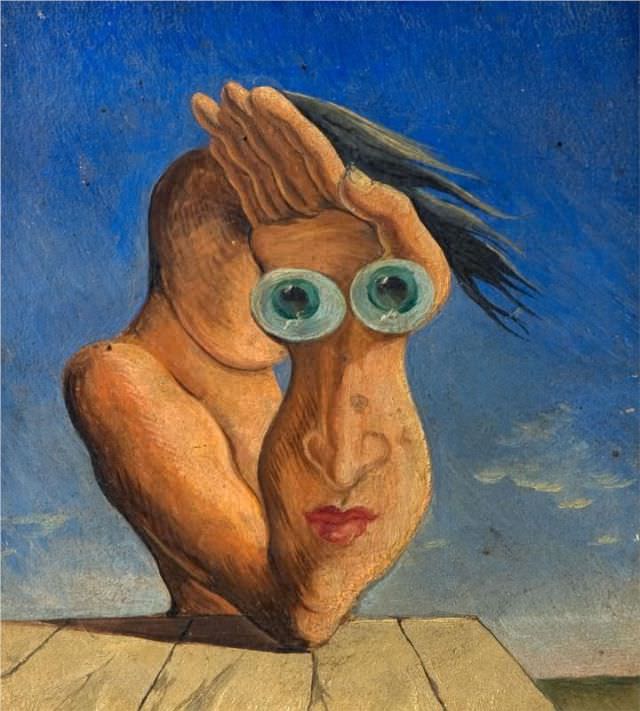
The early 1930s were a period of rapid development for Brauner. He was producing work at a striking pace, experimenting with form and subject matter in ways that set the tone for everything that followed. His 1931 self-portrait is a direct look into how he saw himself as an artist — confrontational, layered, and unafraid of the strange.
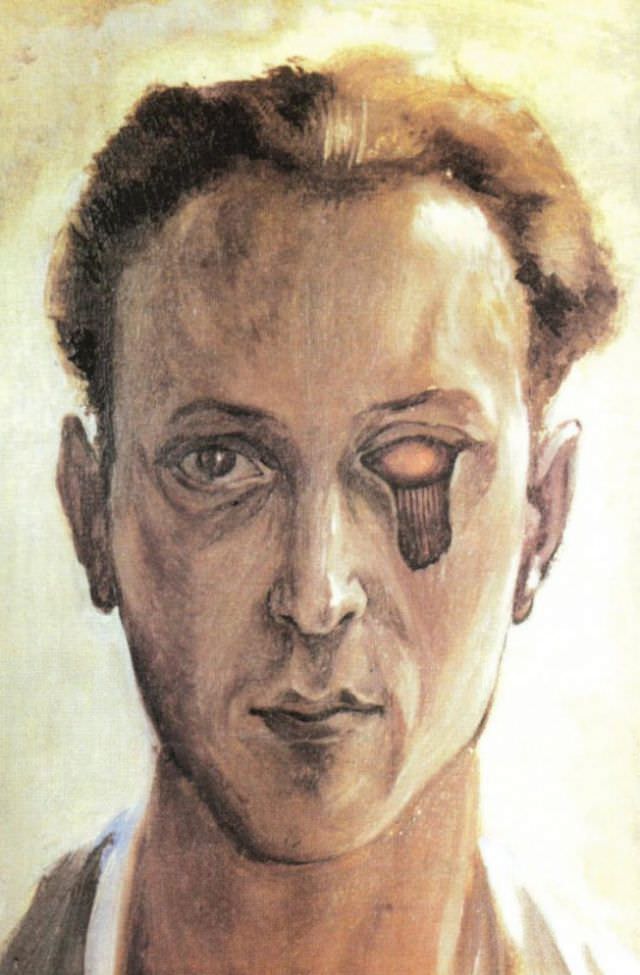
That same year, Brauner painted Suicide at Dawn — a work that reflects the darker edge of Surrealist preoccupations. Surrealism was never purely playful; it drew on the unconscious mind, and the unconscious carries violence, dread, and death alongside beauty. Brauner leaned into that openly.
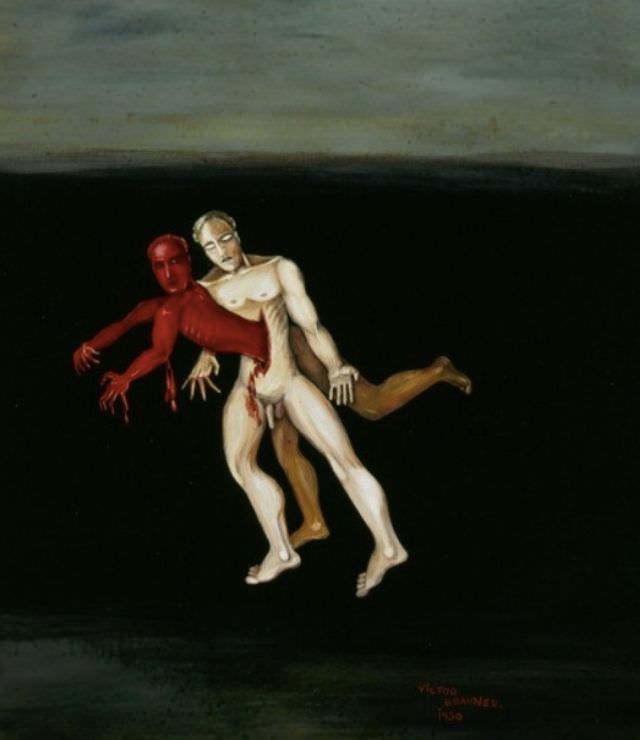
Also from 1931 is Brauner’s portrait of Benjamin Fondane, the Romanian-French Jewish philosopher and poet who was a close figure in Parisian intellectual circles. Fondane would later be murdered at Auschwitz in 1944. Brauner’s portrait of him carries the weight of that history, even if it couldn’t have been known at the time of its making.
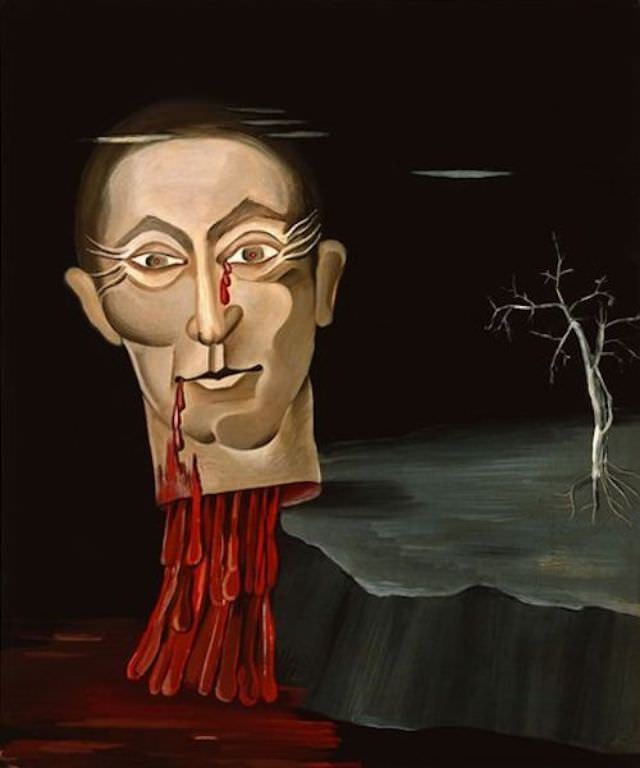
By 1932, Brauner’s imagery was growing more complex and overtly metaphysical. Works like The Reappearance of Hypergenesis signal his deep interest in transformation — in the body changing, multiplying, or breaking apart. These weren’t random images. They reflected his readings in mysticism and his fascination with forces that exist beyond ordinary perception.
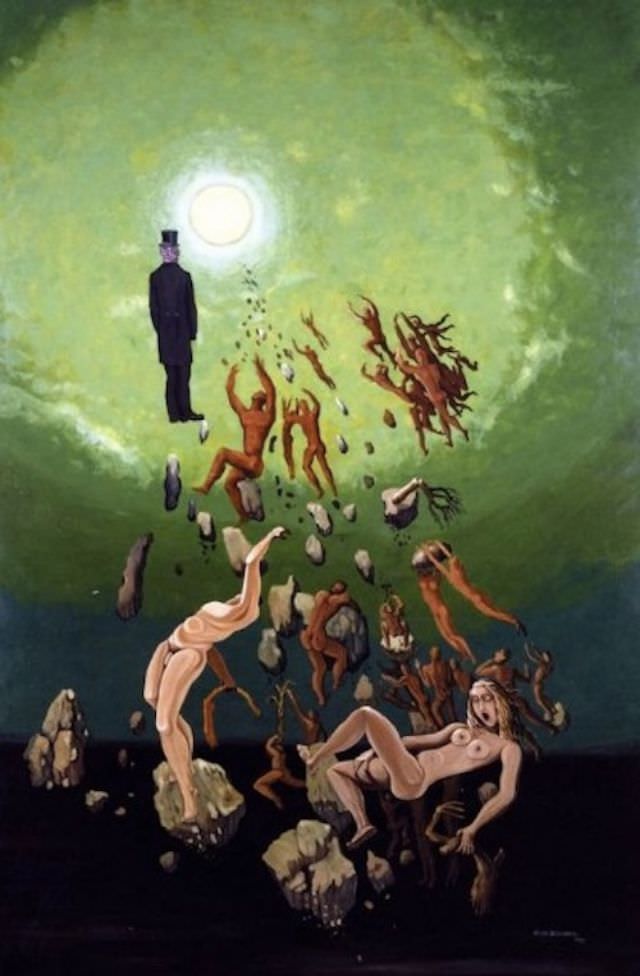
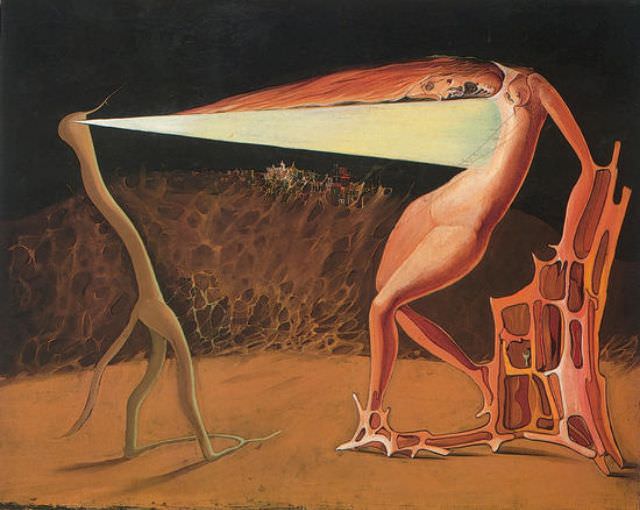
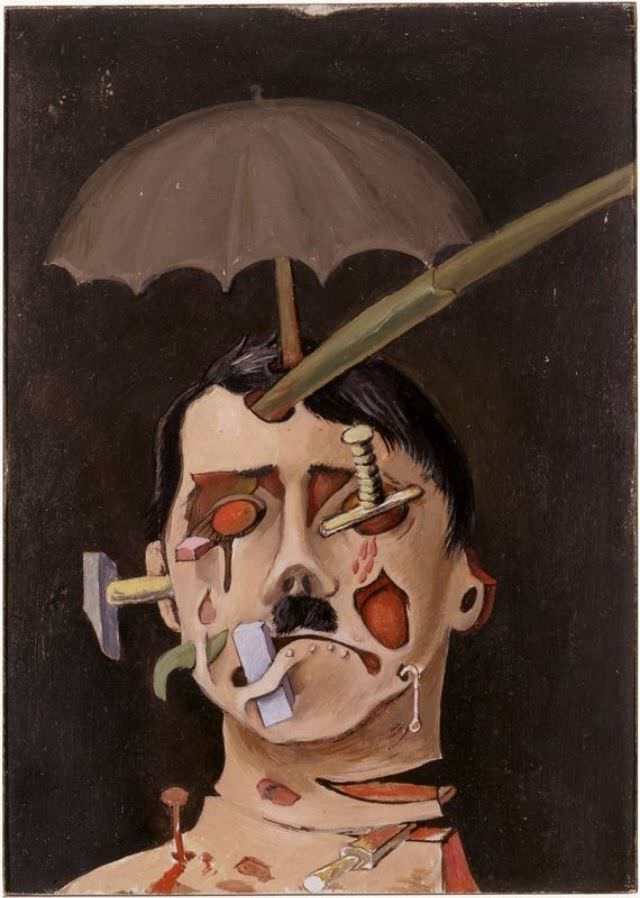
In 1934, Brauner painted a portrait of Hitler — a striking act given the political moment. By this point, the Nazi party had seized full control of Germany, and Europe’s Jewish communities were already under serious threat. Brauner, who was Jewish, chose to engage with this directly through his art. The painting is an act of confrontation, placing the dictator within a Surrealist framework that strips away the propaganda and exposes something more grotesque.
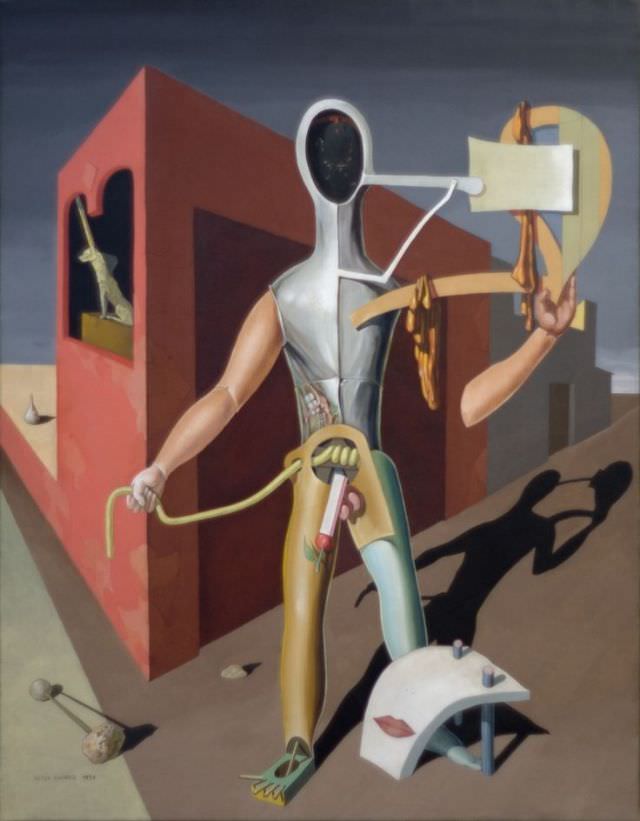
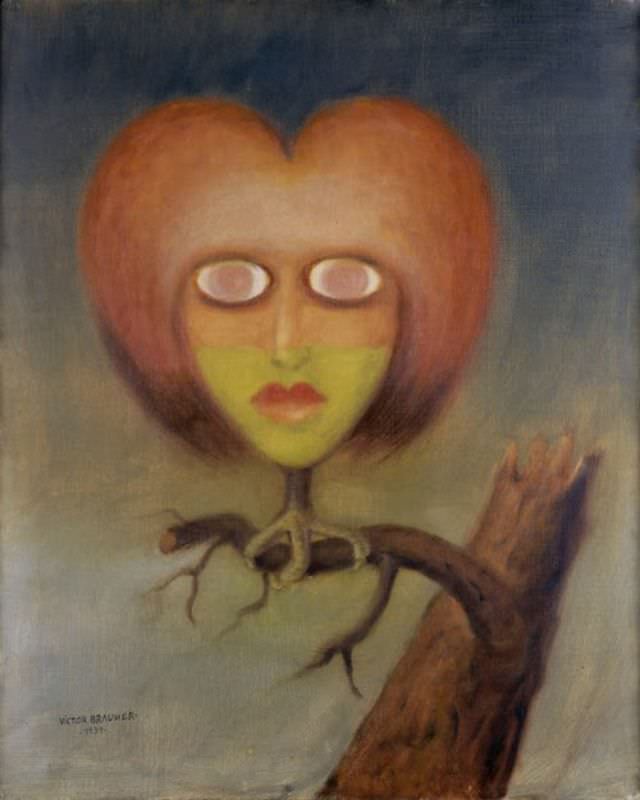
The late 1930s were turbulent years, both for Europe and for Brauner personally. He returned to Romania in 1938 for a series of exhibitions, but the worsening political climate across the continent made that trip temporary. He came back to France, where the threat of war loomed over everything. His paintings from this period — including The Last Trip and Trio from 1937 — carry an unmistakable unease.
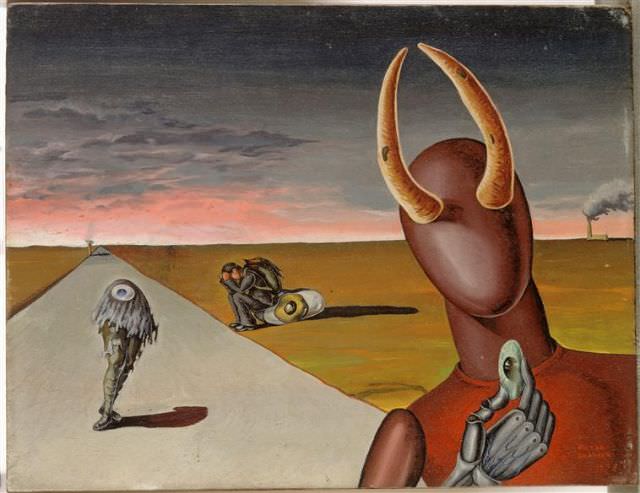
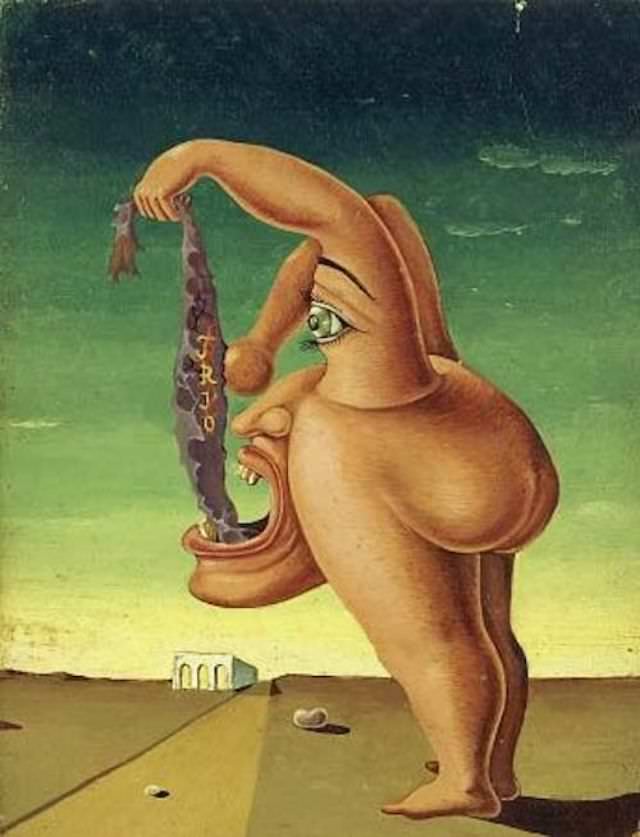
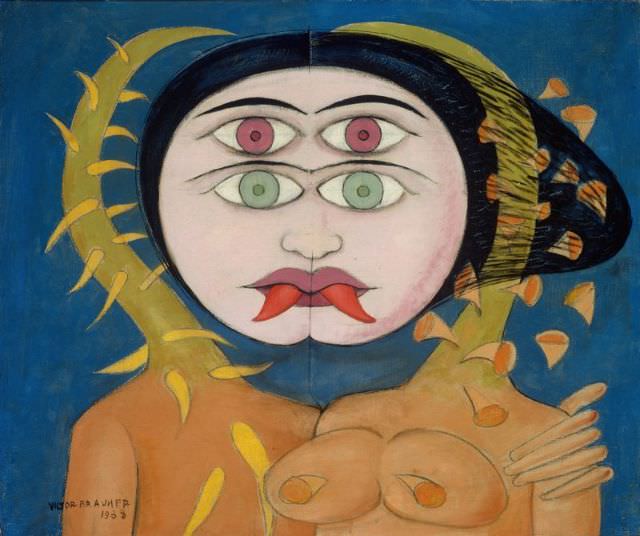
As 1938 unfolded, Brauner’s work continued to deepen in its exploration of duality and spiritual symbolism. Several paintings from this year deal with themes of convergence — two becoming one, or one splitting into two. His 1938 Gemini painting reflects this directly, using the zodiac sign as a framework for examining human doubleness and contradiction.
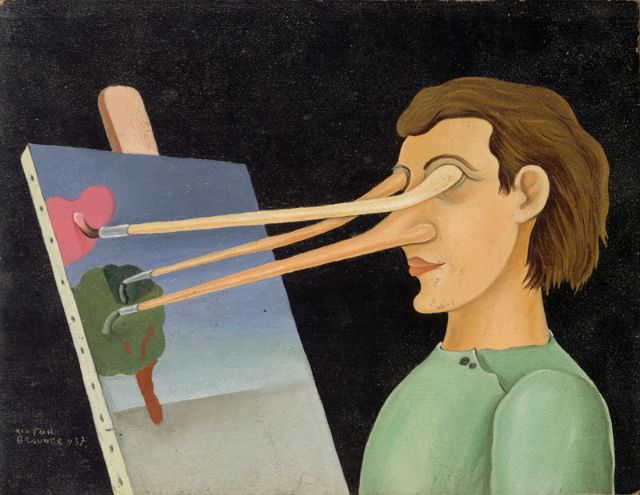
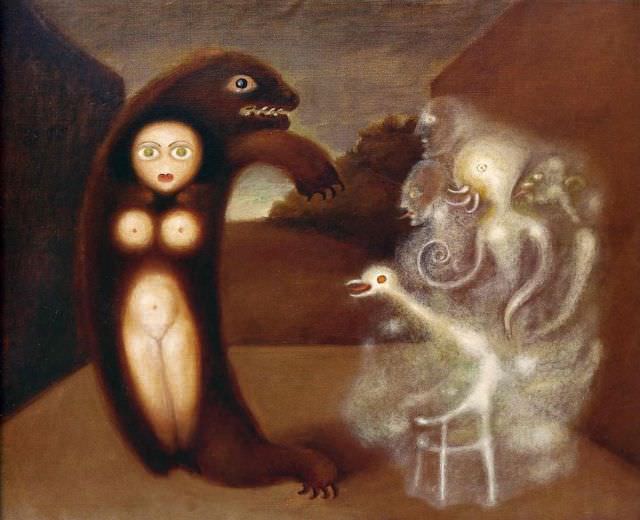
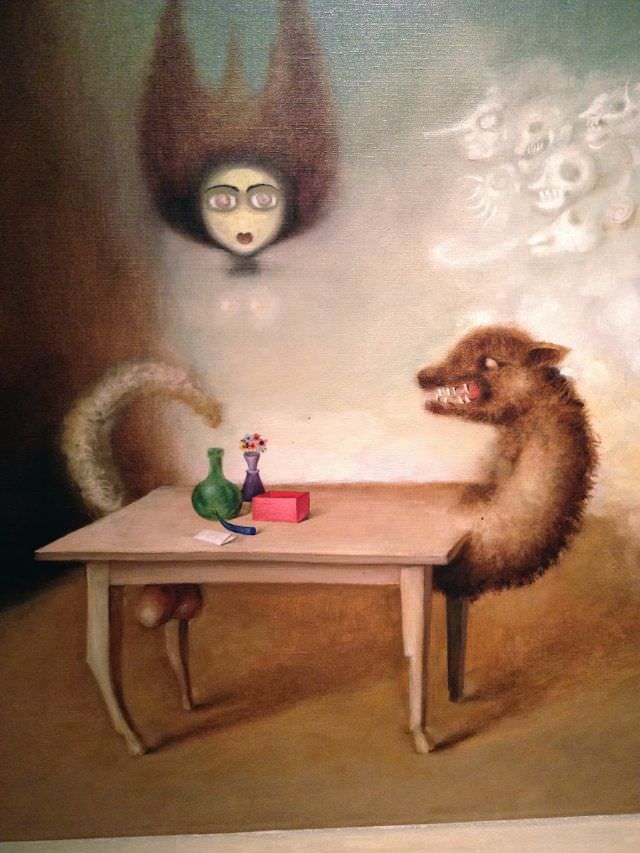
By 1939, Brauner was producing some of his most psychologically intense work. Chimera draws on ancient mythology — the chimera being a fire-breathing monster composed of parts from different animals — and uses it to explore hybrid identities and the fear of the unknown. Psychological Space, from the same year, deals more directly with the mind itself as a physical territory, a place with walls and corridors and hidden rooms.
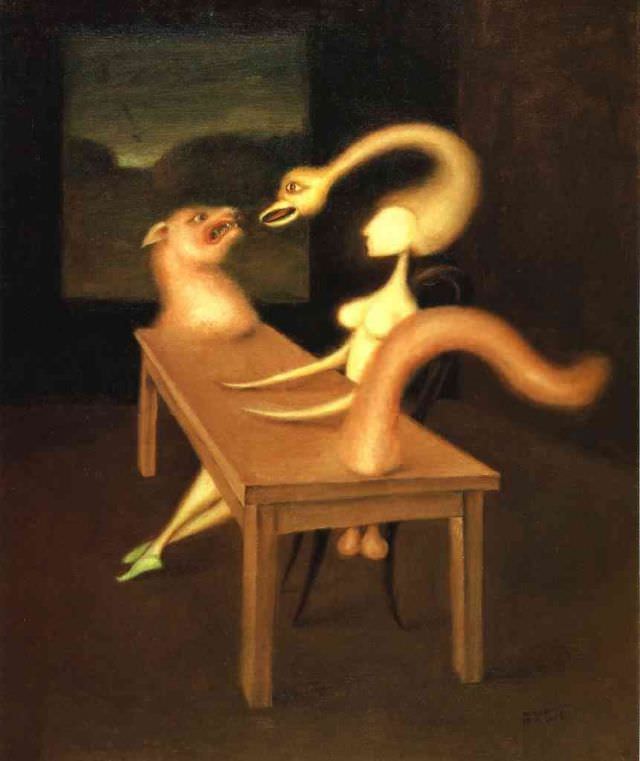
When France fell to Nazi Germany in 1940, Brauner’s situation became dangerous. As a Jewish man without French citizenship, he was at serious risk. He went into hiding in the French Alps, where he had no access to conventional art supplies. Rather than stop painting, he improvised — using wax and whatever materials he could find. The works he created in hiding are among his most raw and direct. Extreme Reconciliation, painted in 1941, comes from this period and carries the marks of those conditions.
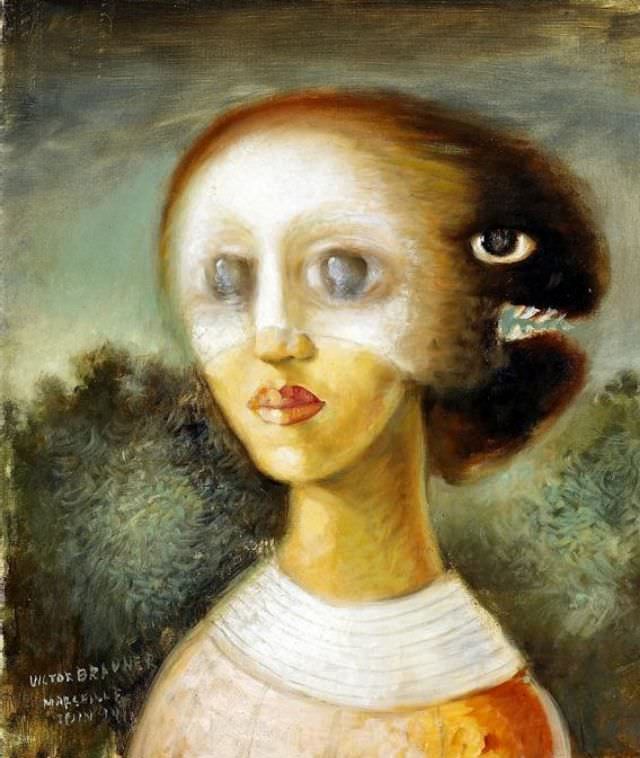
In 1942, still in hiding, Brauner painted Mythotony. The title fuses myth and tone — suggesting a kind of mythological sound or resonance. The painting reflects his continued engagement with ancient stories and esoteric systems even under the most difficult circumstances. He was cut off from the wider art world but not from his own interior world, and that kept his output remarkable.
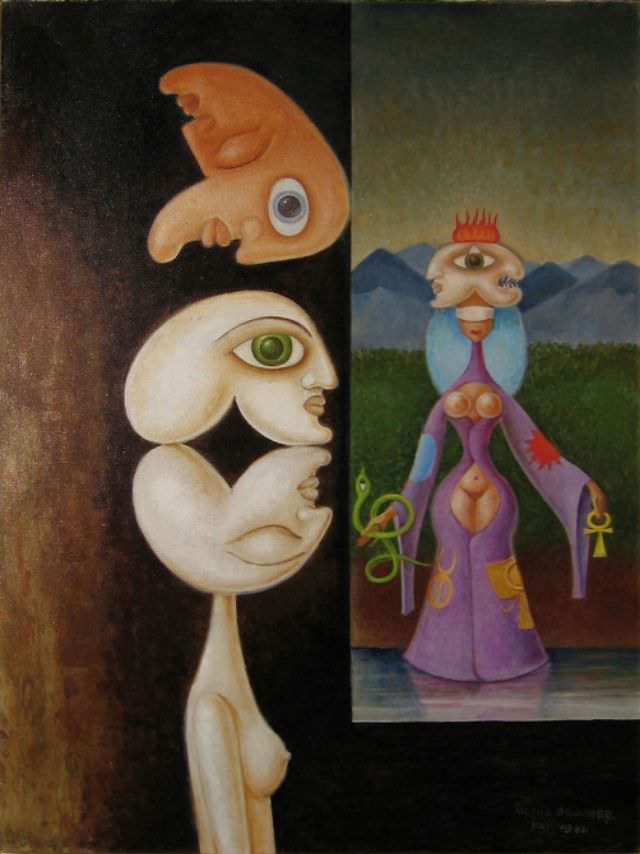
After the war ended, Brauner returned to Paris and reconnected with the Surrealist circle. The Encounter, painted in 1946, marks this return — a meeting across space or time, a reunion with something lost. Through the late 1940s, 1950s, and into the 1960s, he continued to develop his imagery, drawing ever more deeply on mythology, magic, and occult symbolism. In 1966, the year of his death, France selected him to represent the country at the Venice Biennale — a recognition of how central he had become to French and European art.