
On the evening of May 17, 1995, residents of San Diego, California, heard something no city street is built for — the grinding roar of a 50-ton military tank rolling through their neighborhoods. The man behind the controls was Shawn Nelson, a 35-year-old Army veteran whose life had collapsed around him over the previous several years. What followed was a 23-minute rampage that crushed cars, knocked out power for thousands, and ended with Nelson dead on a highway median.
Nelson was born in California in 1959 and served in the U.S. Army from 1978 to 1980 before being discharged for disciplinary reasons. After leaving the military, he worked as a plumber and built a modest life. But through the late 1980s and into the 1990s, nearly everything went wrong. His parents died. His marriage ended in divorce. A motorcycle accident left him with chronic pain. His plumbing business failed, drowning him in debt. A malpractice lawsuit he filed against a hospital went nowhere. By 1995, he was unemployed, addicted to methamphetamine, and watching his home edge toward foreclosure. He had also been diagnosed with mental health problems that went largely untreated.
The California National Guard Armory on Muñoa Drive in San Diego’s Kearny Mesa neighborhood was not a hard target to breach. The gate was unlocked. Parts of the surrounding fence had no barbed wire. Nelson walked onto the facility grounds that evening without being stopped. His years in the Army had given him enough knowledge of military vehicles to find and start an M60A3 Patton tank stored on the lot. The tank’s weapons — a 105mm cannon, a 12.7mm anti-aircraft gun, and a 7.62mm machine gun — were not loaded. Nelson didn’t need them. The tank itself was weapon enough.
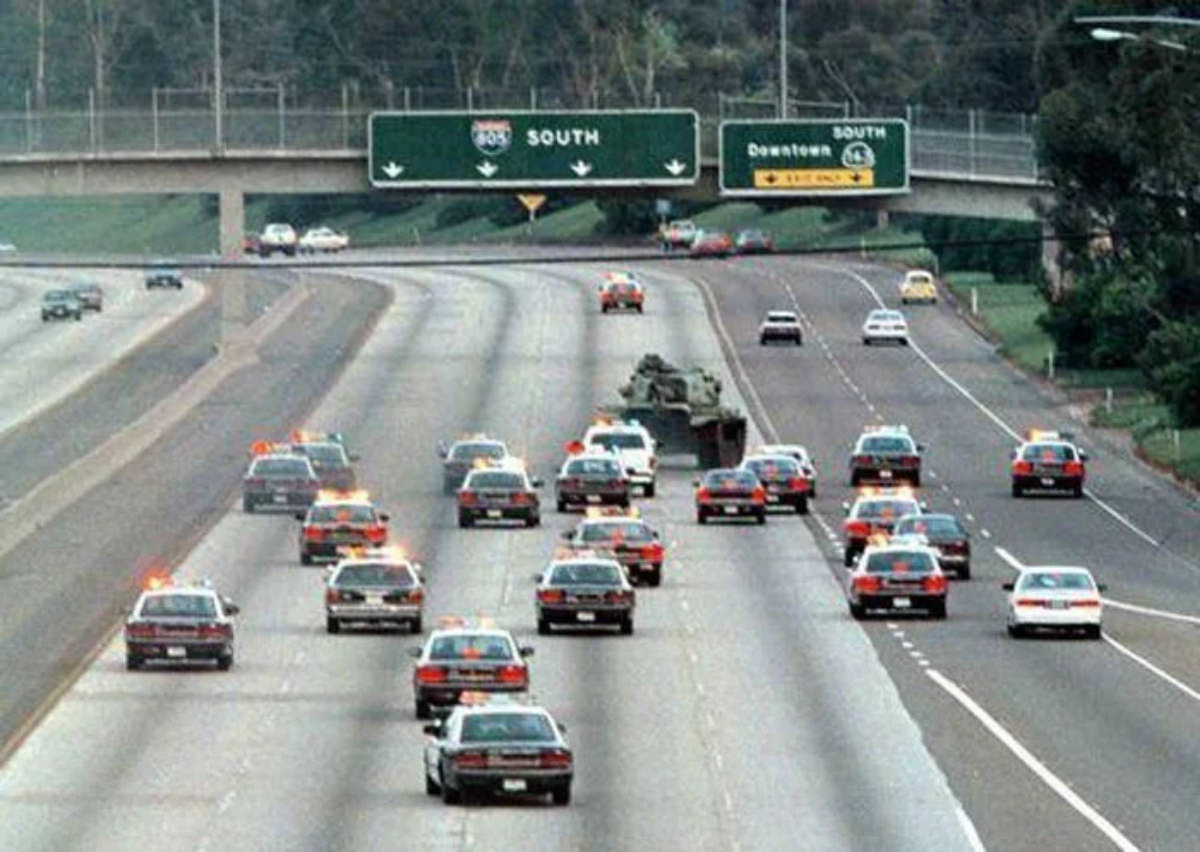
Police and the California Highway Patrol scrambled to respond, but there is very little a patrol car can do to stop a 50-ton tank. Officers followed Nelson through the streets of Clairemont, watching as he steered the massive machine over parked cars, through fire hydrants, and into utility infrastructure. He crushed 40 vehicles in total. Power lines snapped and transformers blew, cutting electricity to more than 5,100 homes and businesses. Remarkably, no one on the street was killed or seriously injured during the rampage itself. Nelson stayed on city roads for several miles before merging onto Interstate 805 and then turning onto State Route 163.
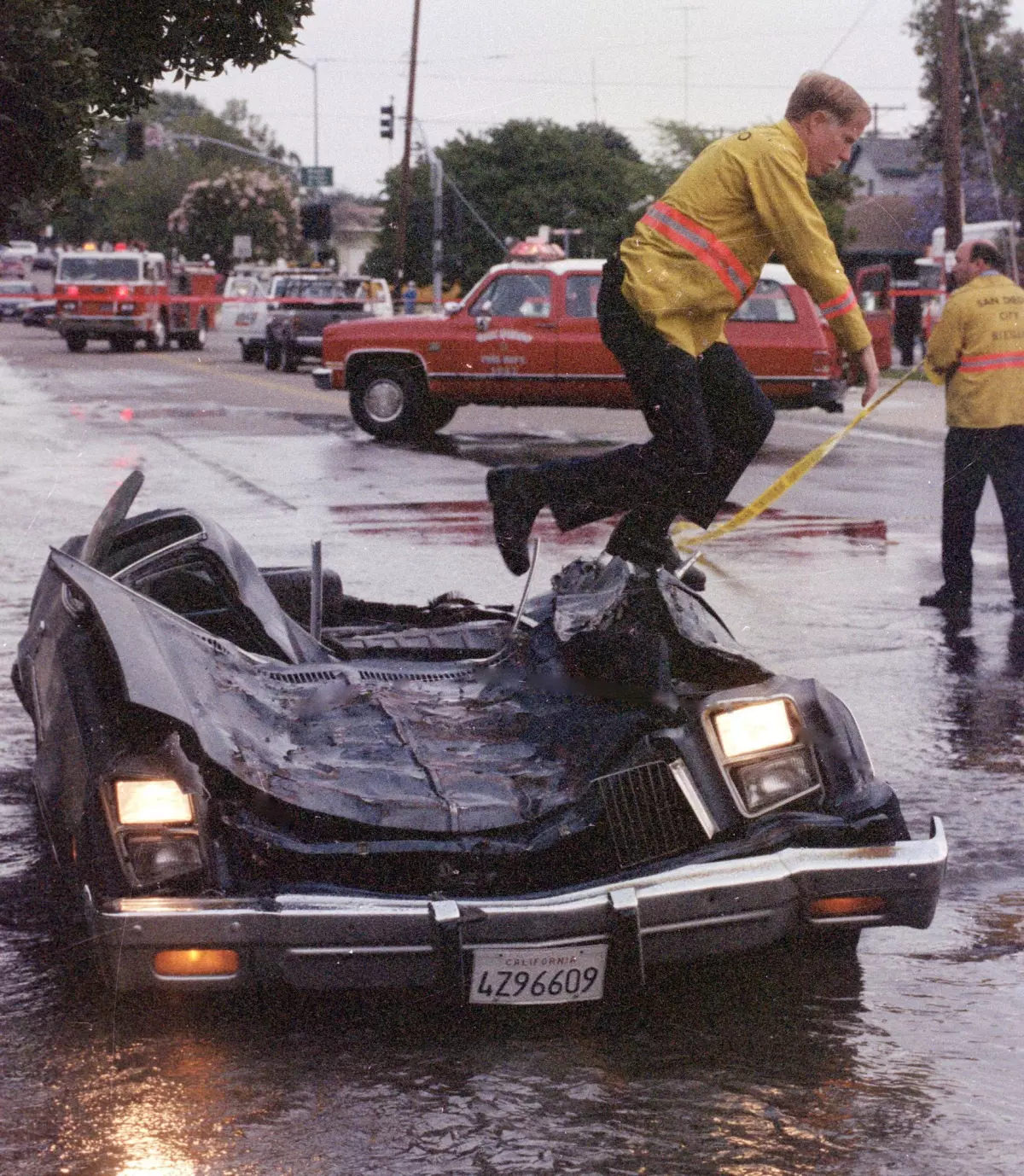
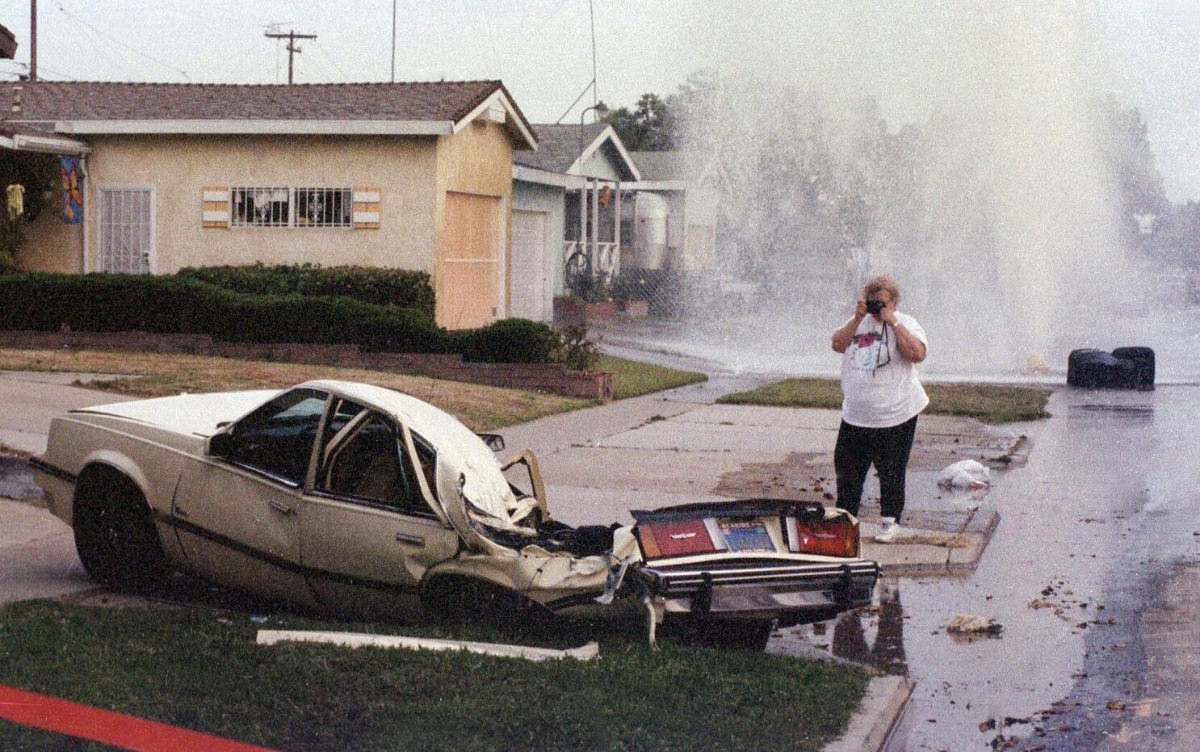
The destruction Nelson left behind was not subtle. Cars were flattened to a fraction of their original height. Entire sections of road were torn up by the tank’s steel treads. Residents who had parked on the street returned to find their vehicles reduced to scrap. The scale of the physical damage made clear just how little stood between a main battle tank and total destruction of anything in its path.
The rampage came to a halt on State Route 163, where Nelson tried to knock down a pedestrian overpass and then drove the tank onto a raised concrete median. The treads lost traction and the tank became stuck, its hull grinding into the barrier as Nelson rocked the vehicle back and forth trying to free it. The engine strained but the tank didn’t move. Nelson was immobilized in the middle of a freeway with a growing number of police officers surrounding him.
Officers faced a situation with no easy answers. The tank’s hatch was sealed in combat lockdown mode. They couldn’t communicate with Nelson. Tear gas was considered, but using it while the hatch was closed was pointless, and if the tank broke free while gassed, officers would have no way to re-enter it. They also didn’t know whether Nelson was armed with a personal weapon inside the hull. Four officers climbed onto the tank’s exterior while it rocked beneath them and went to work on the hatch with bolt cutters.
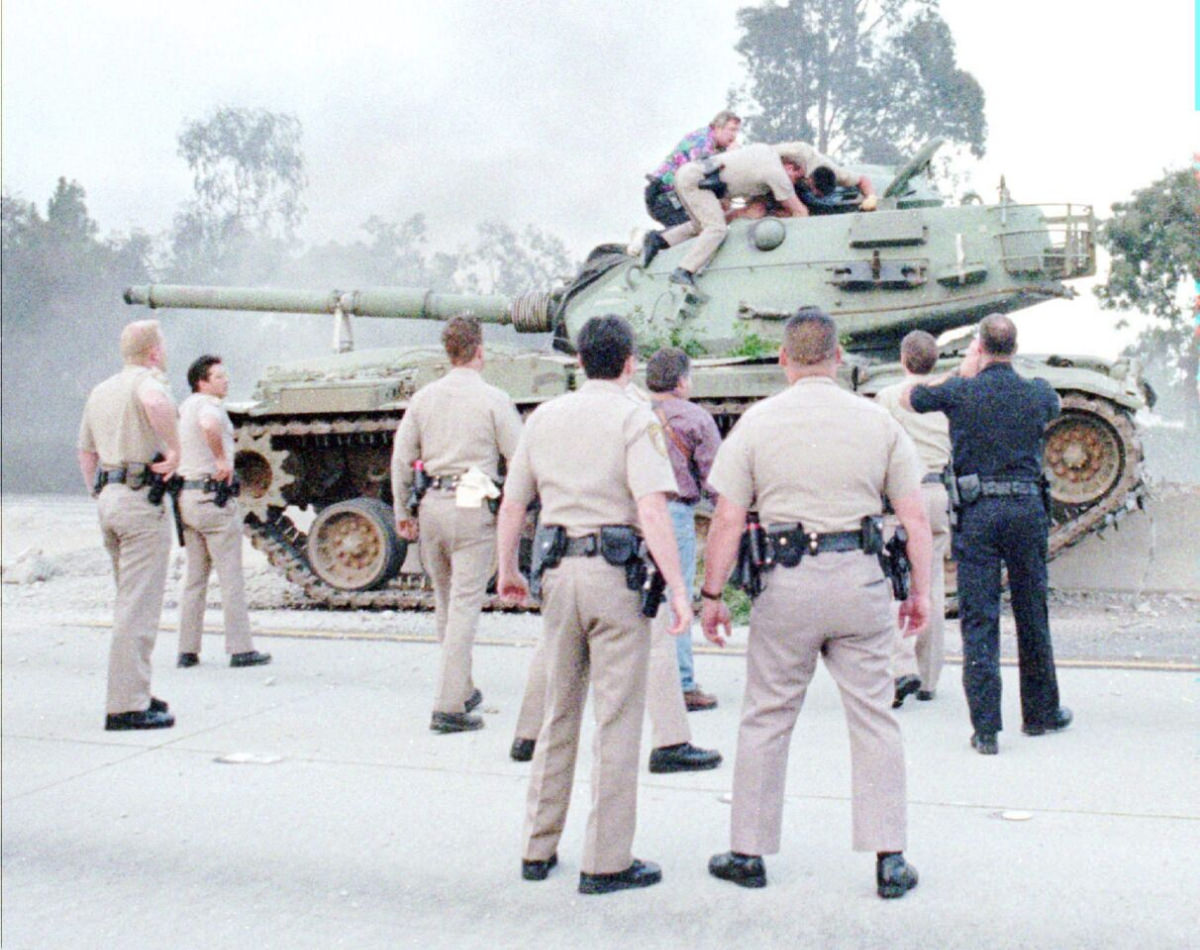
Once the hatch opened, officers ordered Nelson to surrender. He refused. He kept trying to free the tank, rocking it and working the controls. With the vehicle still potentially mobile and the officers exposed on its hull, one officer fired a single shot. The bullet struck Nelson in the neck. He was pulled from the tank by paramedics and rushed to a hospital, where he was pronounced dead.
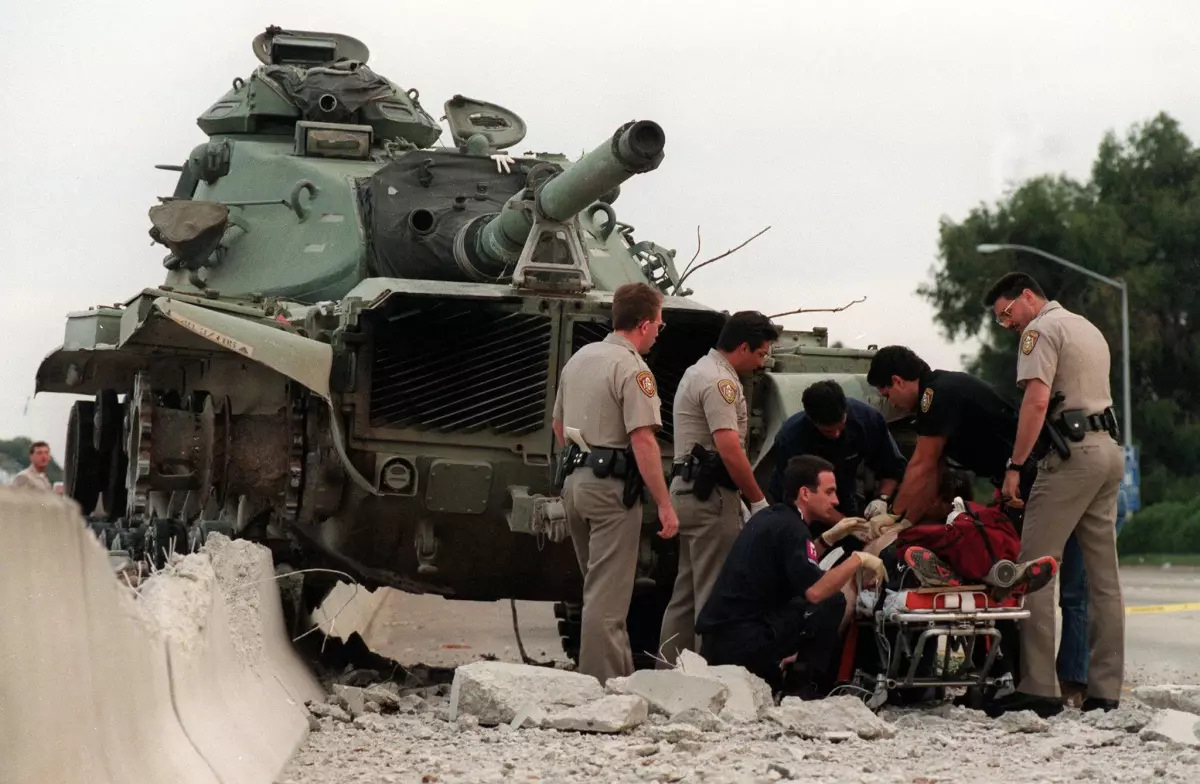
The use of lethal force drew scrutiny in the days that followed. Nelson’s friends and some members of the public argued that negotiators or tear gas could have been used earlier in the situation. The San Diego Police Department defended the decision, pointing to the active danger the tank posed and Nelson’s refusal to stop or comply with commands. The officers on the hull had no safe exit if the tank broke free.
The California National Guard faced its own reckoning after the incident. Security at the Kearny Mesa armory had been dangerously loose — especially given that the Oklahoma City bombing had occurred less than a month earlier on April 19, 1995, putting military facilities across the country on heightened alert. The Guard was found legally negligent for the security failures. The state of California paid compensation to the owners of damaged vehicles and property. In response, the Guard tightened security at its armories and moved its armor inventory to more secure installations where access could be better controlled.
The entire rampage — from the moment Nelson drove through the armory gate to the moment the tank went motionless on Route 163 — lasted roughly 23 minutes. In that time, one man in a stolen tank caused damage across several square miles of a major American city, exposed serious gaps in military facility security, and forced law enforcement into a confrontation that had no precedent in modern urban policing.

I remember watching this on TV — hoping it would drive past my home.
I was not a bright child.
I remember this too. I worked at Pacific Honda at the time. I was home by the time he went through the area. Glad I was, that was too crazy.
Damn, never knew about this. I moved to SD in 1998. Video brought back memories of that Robertos taco shop on Convoy.
I was at the LV rec after the chase ended on tv went to play soccer. That Mary birch sharp cam from Fox 5. Is pointing in the area where the above tank picture was taken. Also I think that tank is at the national guard on display in front of the building behind Kearny high school. Crazy, the place where the tank was taken from.
This was the day I moved to San Diego. What a country!!