By the time the 1930s arrived, the cafes of Paris had already built a reputation as the beating heart of the city’s social life. Artists, writers, laborers, and philosophers had long shared the same marble tabletops and wicker chairs. But this new decade brought a different kind of energy. The world outside was shifting — and the cafes shifted with it.
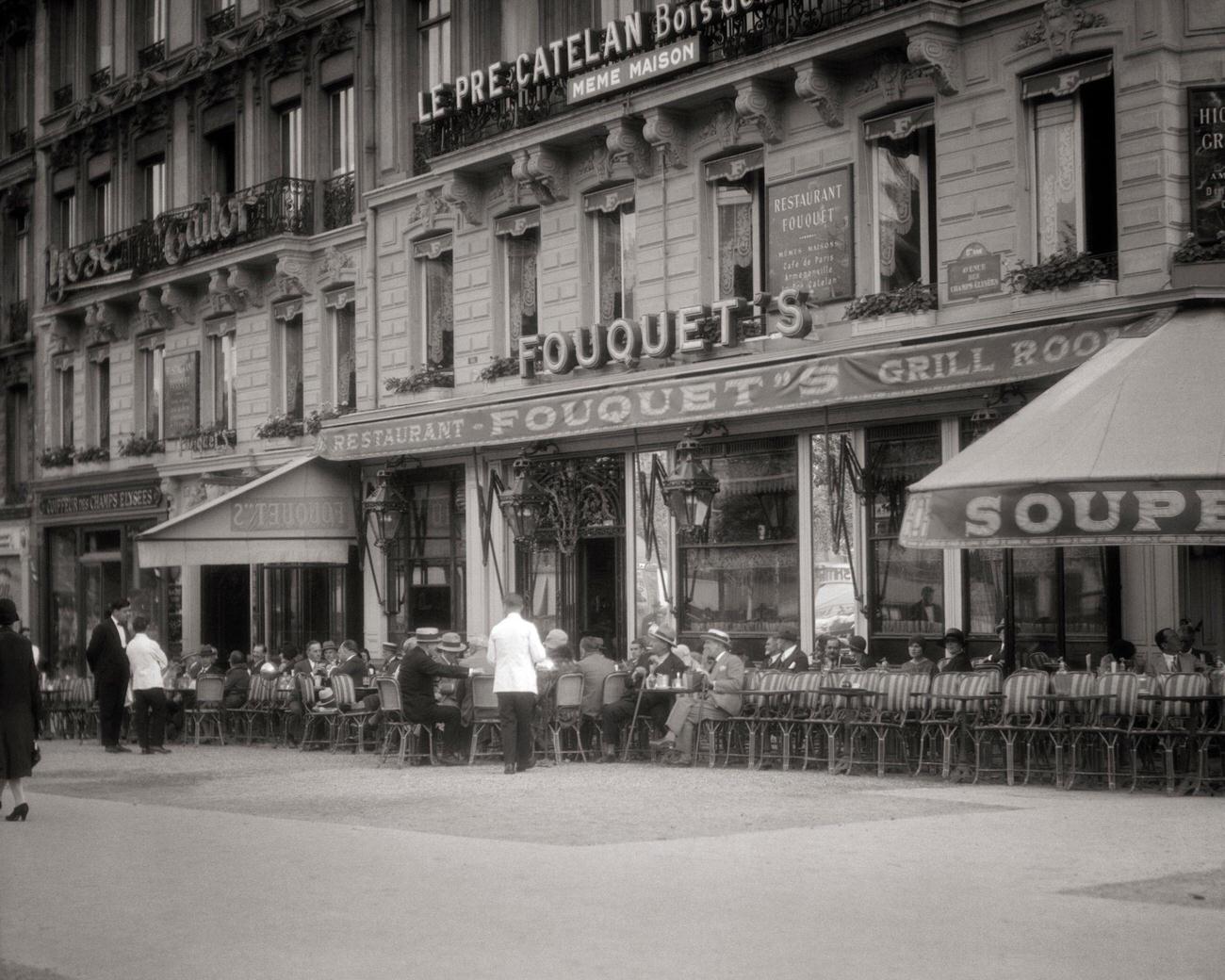
The Great Depression cast a long shadow over Europe. Paris was not spared. Businesses across the city felt the pinch of economic hardship, and some cafes saw their regular crowds thin out. Yet many establishments actually drew more patrons during this period, not fewer. For a few francs, a person could sit for hours over a coffee or a glass of wine. Cafes remained one of the most affordable places to spend time, and for many Parisians, they became a refuge from the anxieties of daily life.
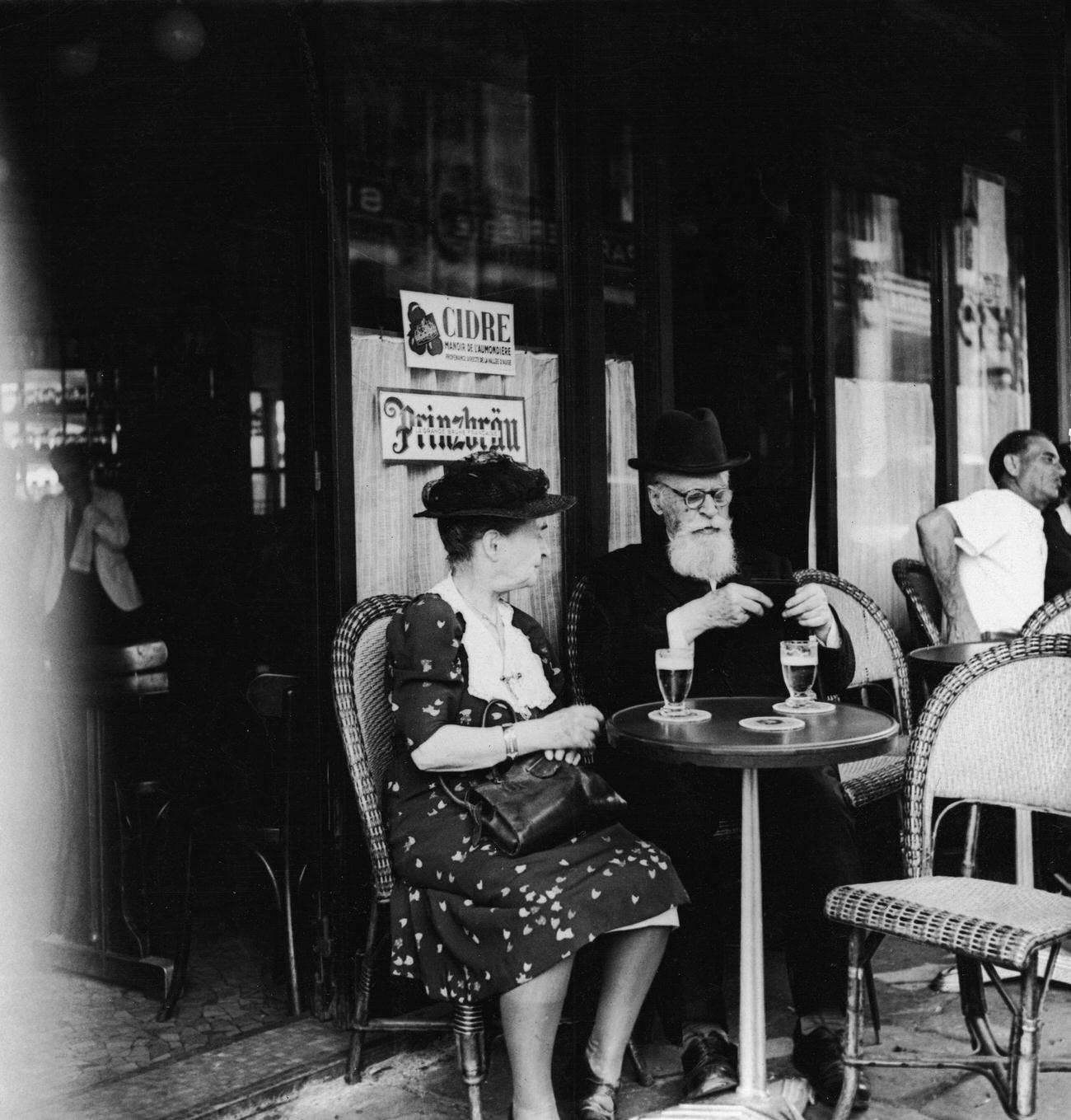
This economic pressure also changed who was sitting at the tables. The 1920s cafe scene had been dominated by a relatively tight circle of artists and expatriates. The 1930s brought a broader cross-section of society through the doors — working-class men and women, tradespeople, and ordinary Parisians mixing with the intellectuals and creatives who had always called these places home.
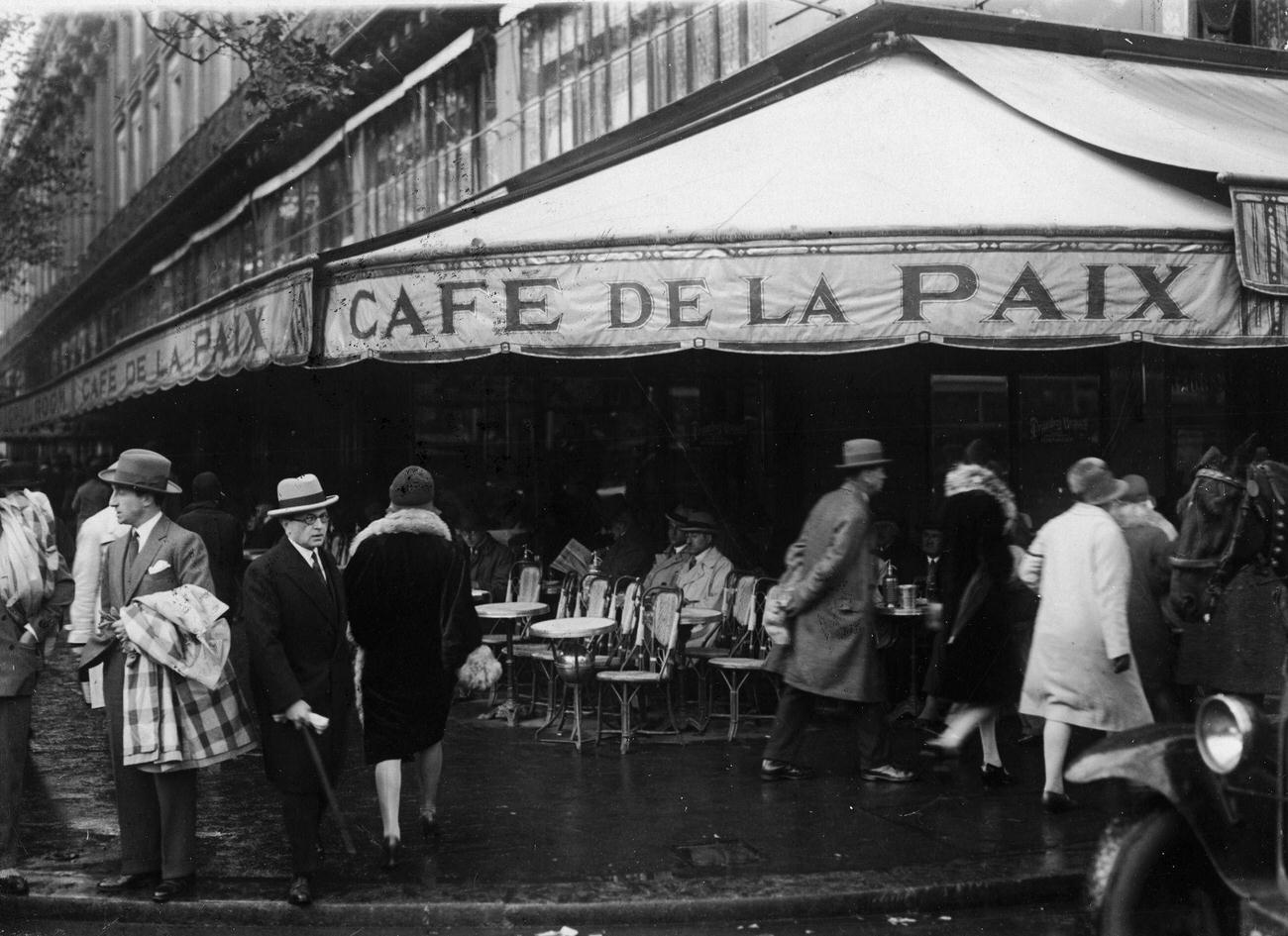
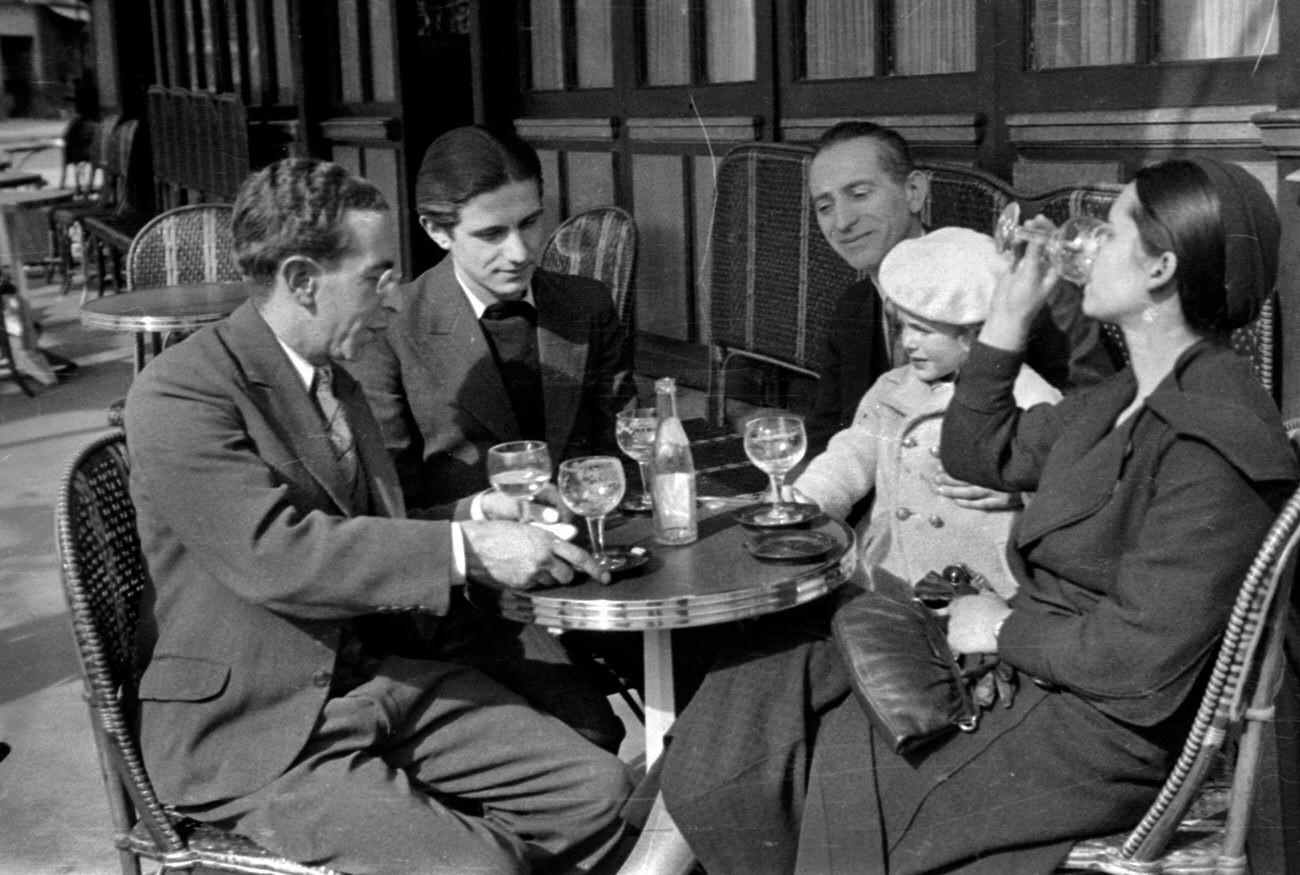
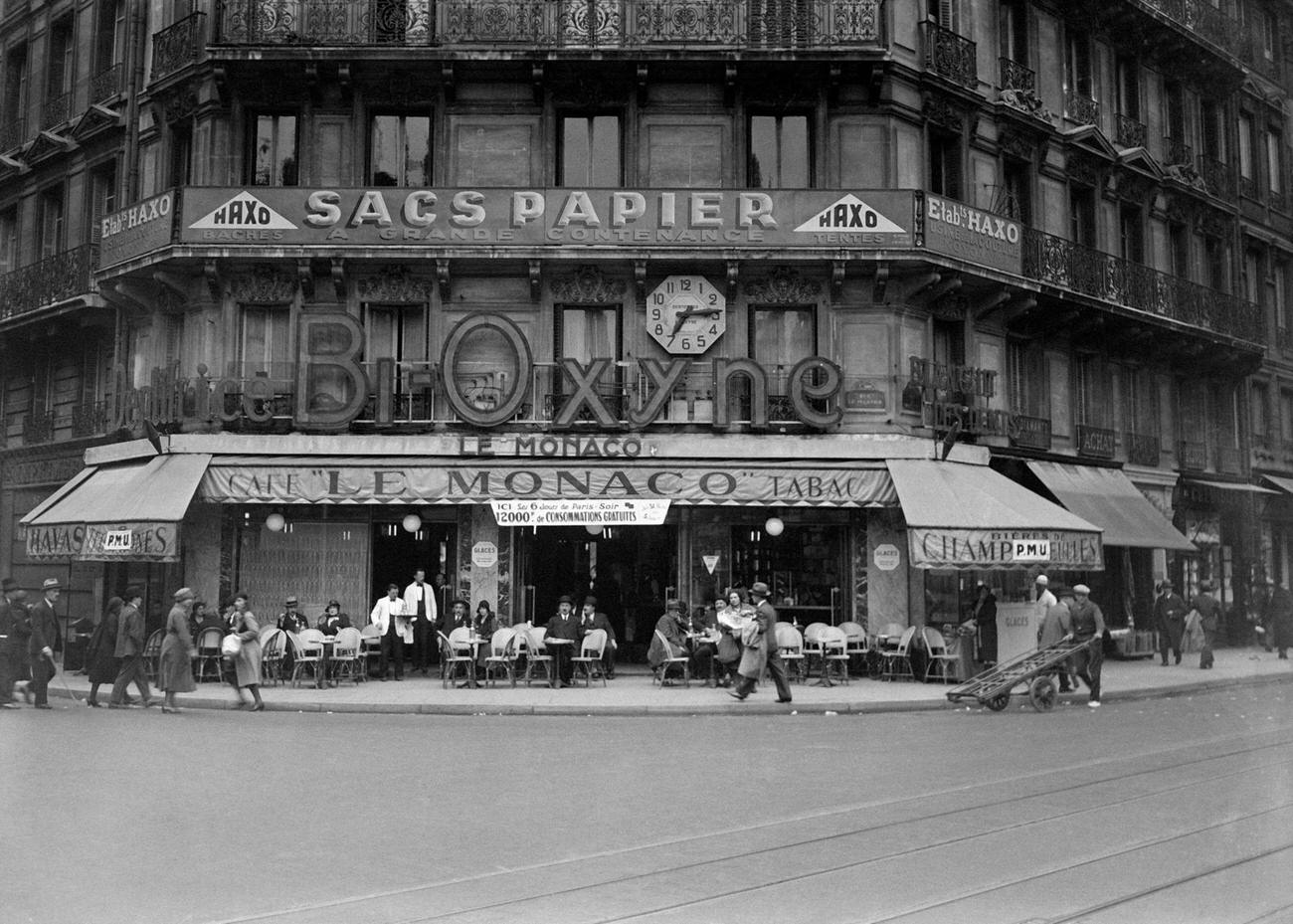
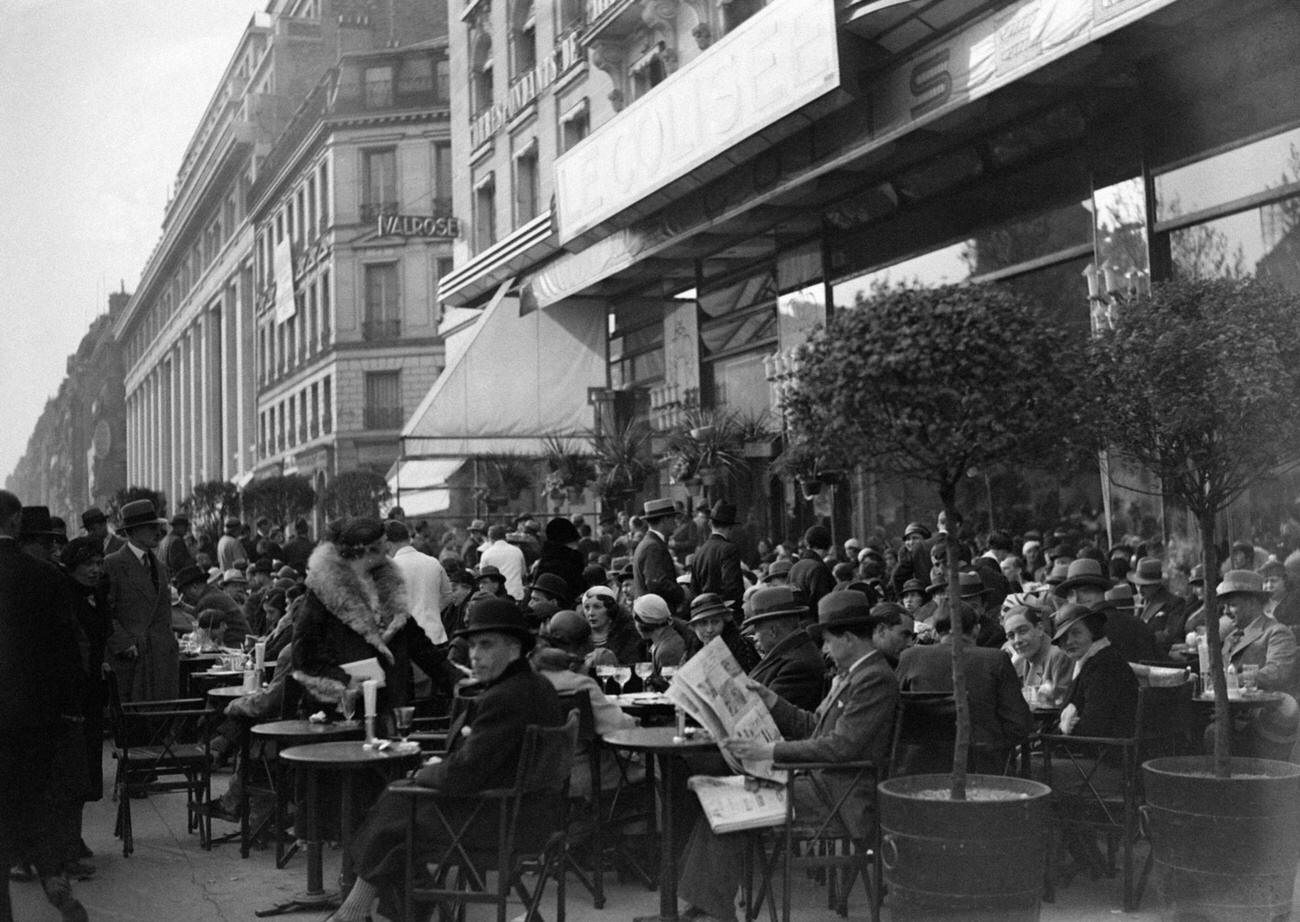
The terraces were a defining feature of Parisian cafe culture. Rain or shine, Parisians occupied the pavement chairs with a kind of stubborn loyalty. The terrace was not just a place to sit — it was a stage. People watched the street, debated the news, and kept tabs on the world passing by. Photos from 1930 already show terraces full of life, the tables pressed close together, waiters weaving between them with practiced ease.
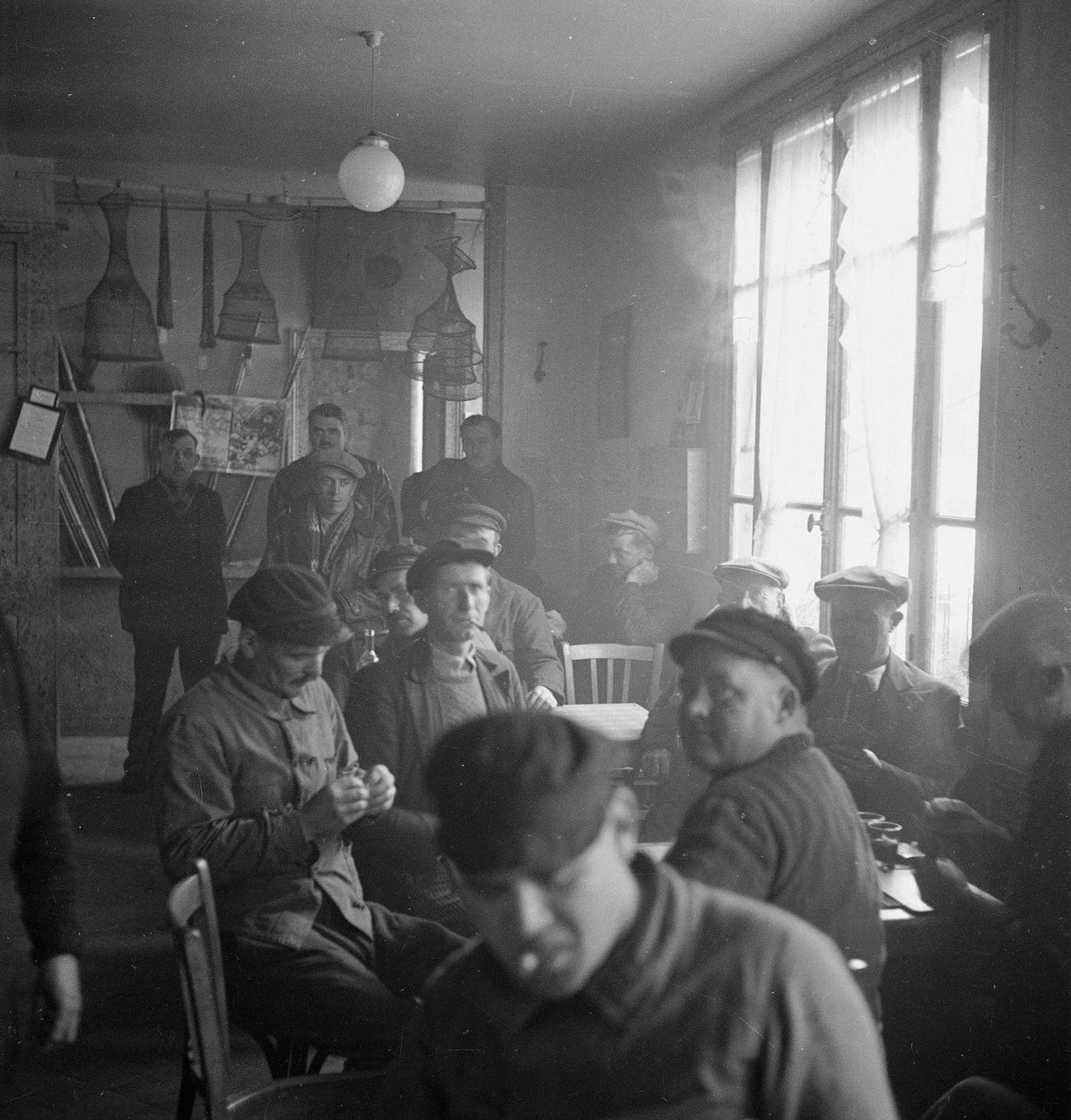
Cafes weren’t exclusive to Paris’s grand boulevards. Across France, working men — fishermen, barge workers, and laborers — gathered in local establishments after long days on the water or the docks. These cafes were simpler, stripped of the glamour of Montparnasse, but they served the same social function: a place to rest, talk, and belong.
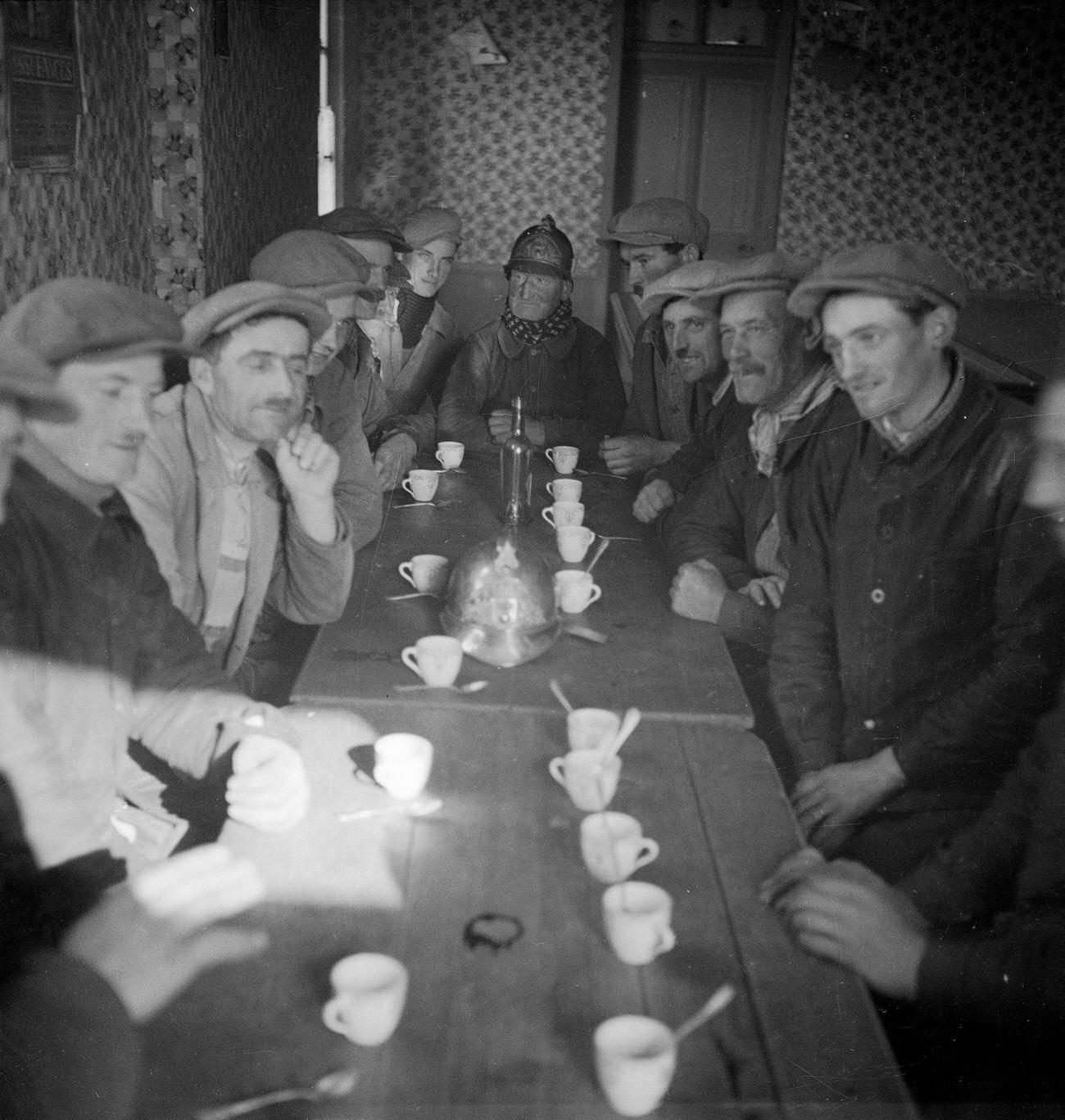
Cafes regularly hosted gatherings that went beyond casual conversation. Community celebrations, small ceremonies, and organized meetings took place over drinks and food. A 1935 photo captures a cafe gathering held in honor of a local fireman — a reminder that these spaces functioned as community halls for people who had none.
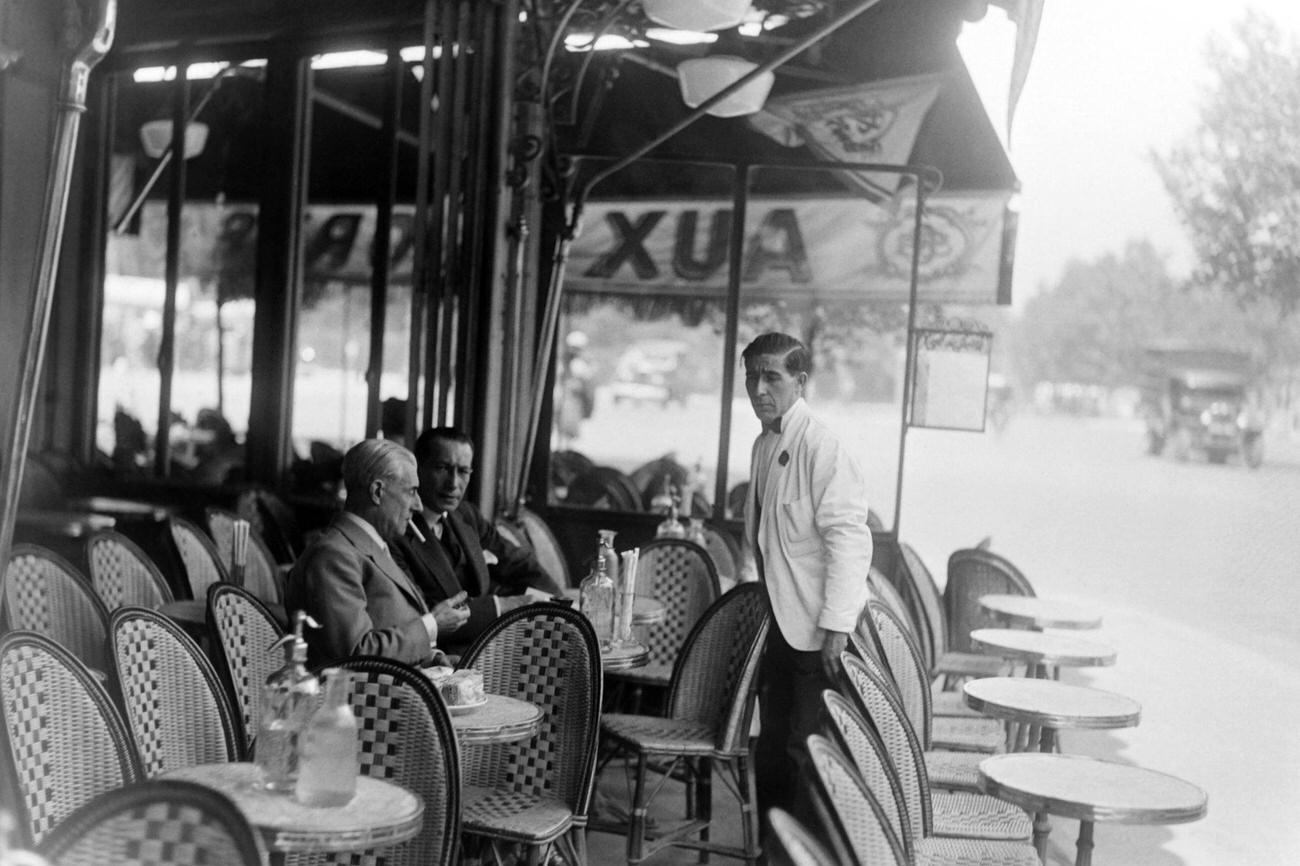
Creative figures remained a constant presence throughout the decade. Composer Maurice Ravel was photographed at a cafe terrace in 1930, a year before his health began to decline. Pablo Picasso, Ernest Hemingway, and Henry Miller continued to frequent their favorite haunts. Their presence kept the cafes connected to the artistic tradition that had defined the previous decade, even as the conversations around them grew heavier.
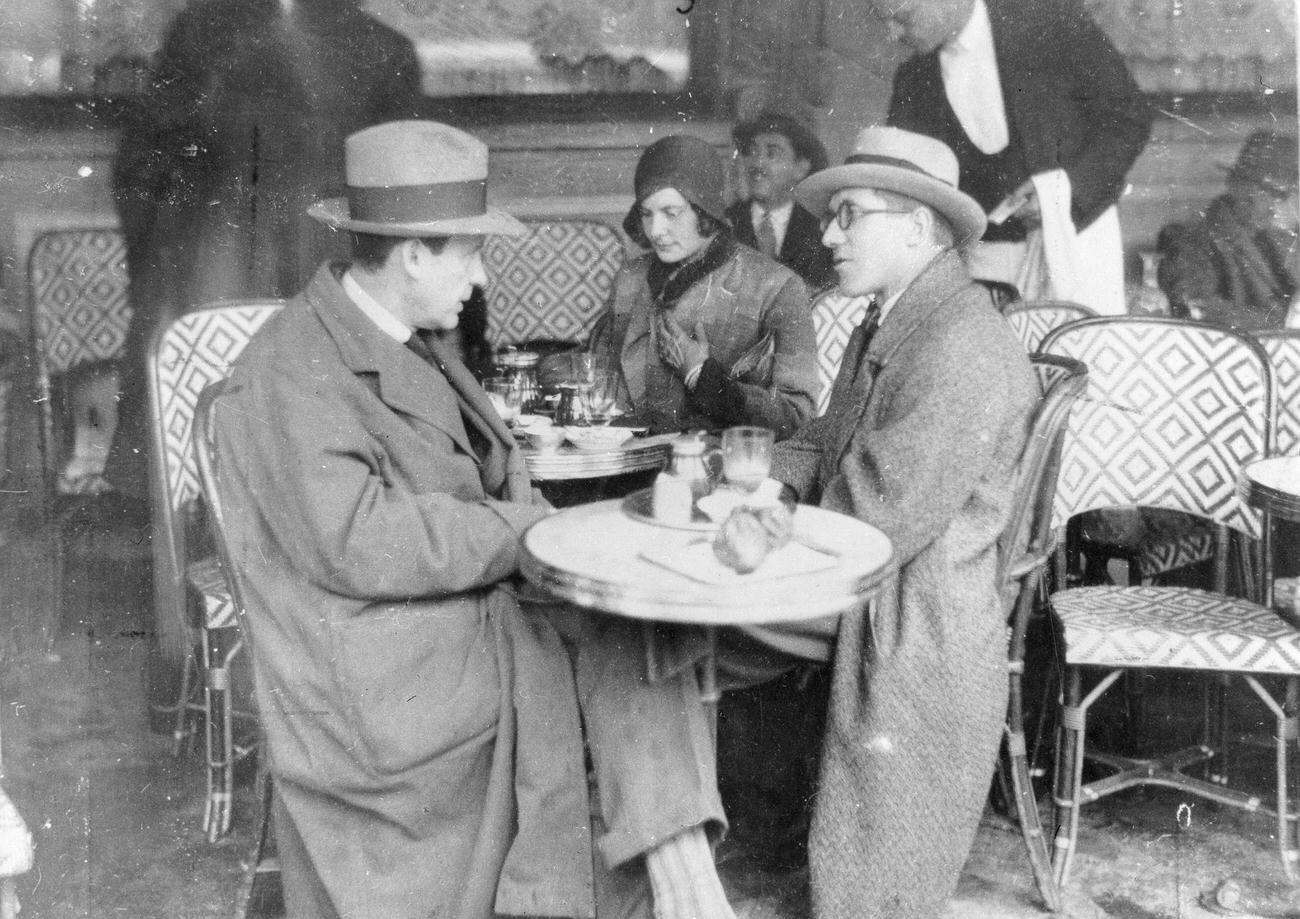
In 1930, two of the most influential architects of the modern era — Walter Gropius and Le Corbusier — were photographed together at a Parisian cafe. Both men were reshaping how buildings looked and how cities functioned. Their meeting at a cafe table was entirely fitting. Paris in the 1930s was where ideas about modernism, politics, and art collided in real time.
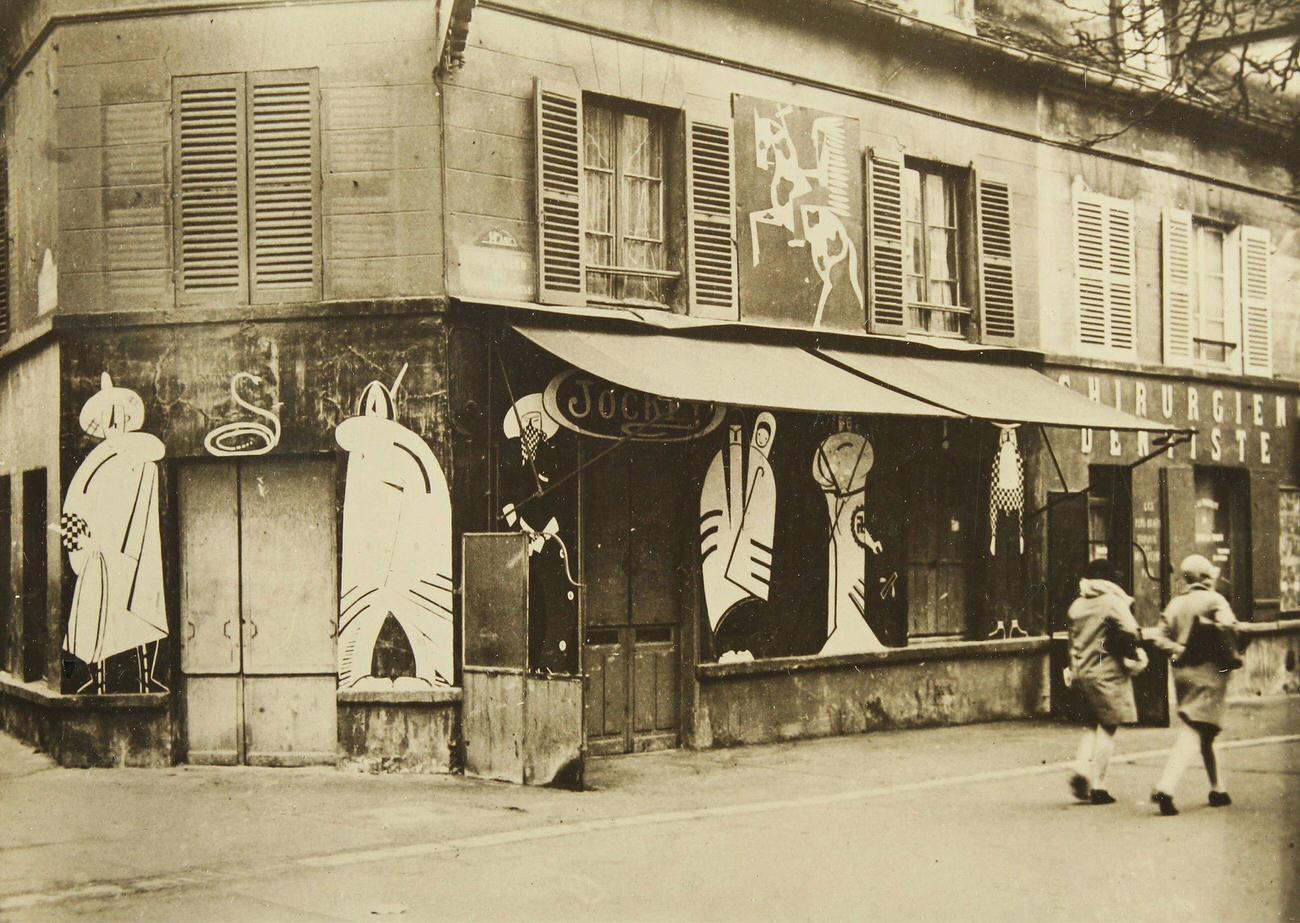
Montparnasse remained a magnet for American art students throughout the 1930s. The Jockey Café was one of their go-to spots — a place where young Americans studying in Paris could find community, drink cheaply, and absorb the creative atmosphere of the neighborhood. Montparnasse had been drawing foreign artists since the early twentieth century, and even as the decade grew darker, the arrondissement held onto its bohemian character.
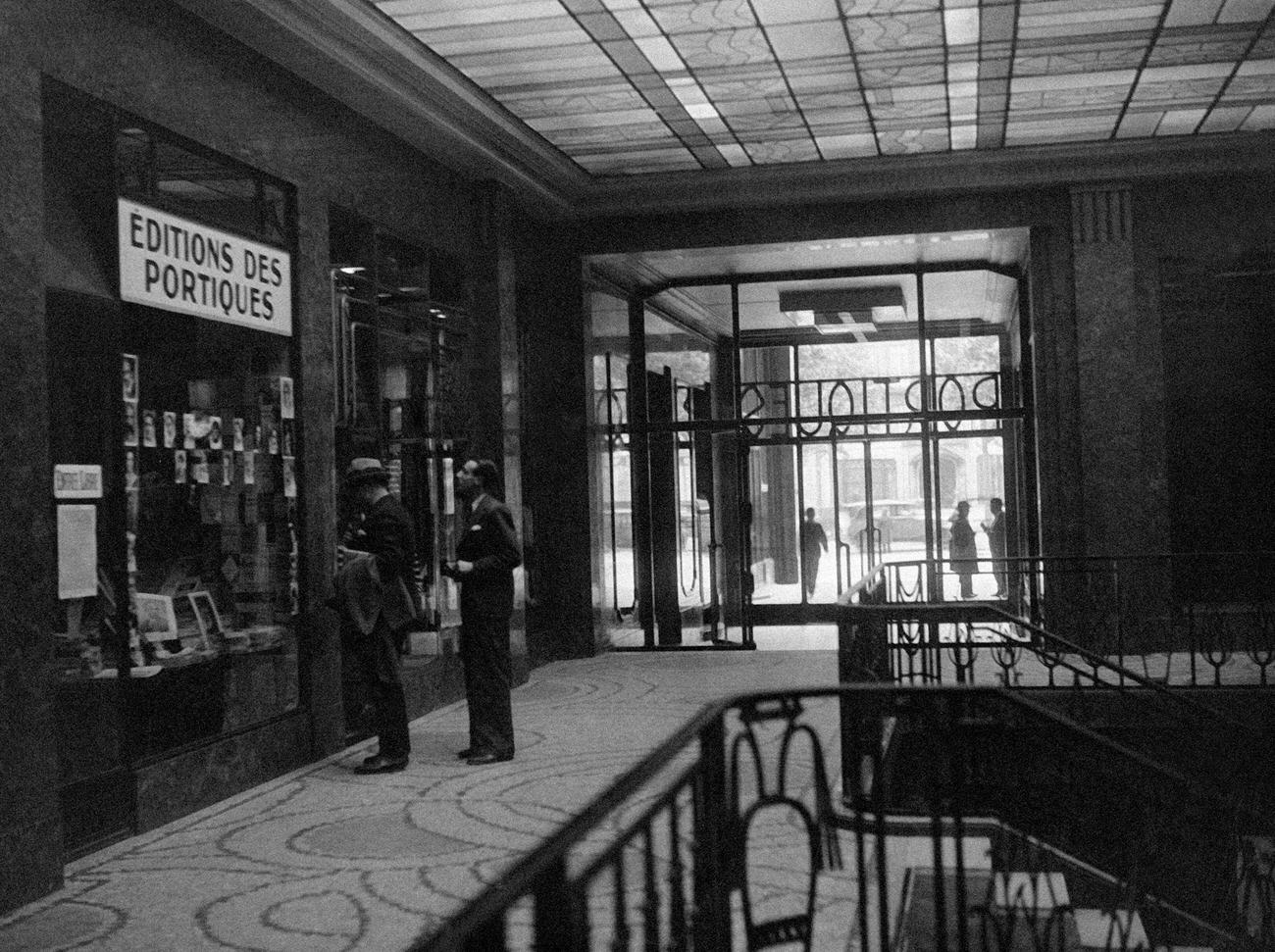
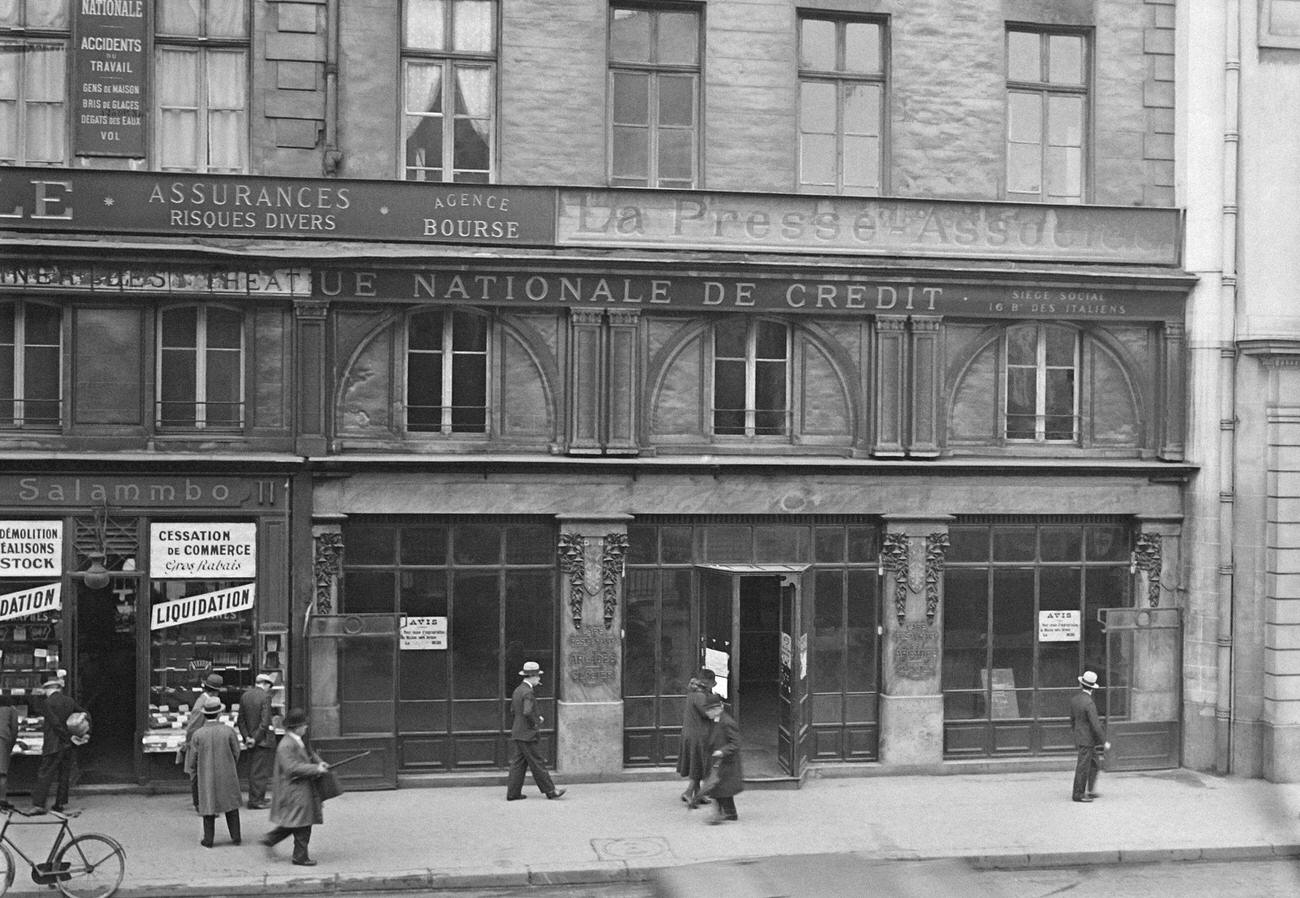
The architecture of Parisian cafes in the 1930s reflected the city’s broader design sensibility. Many establishments kept their ornate facades and traditional interiors intact — carved wood, frosted glass, brass fixtures. Others moved toward cleaner, more modernist lines. The Café des Arcades, positioned near the Place de la Bourse, typified the grander institutional style that defined cafes near the city’s financial and civic centers.
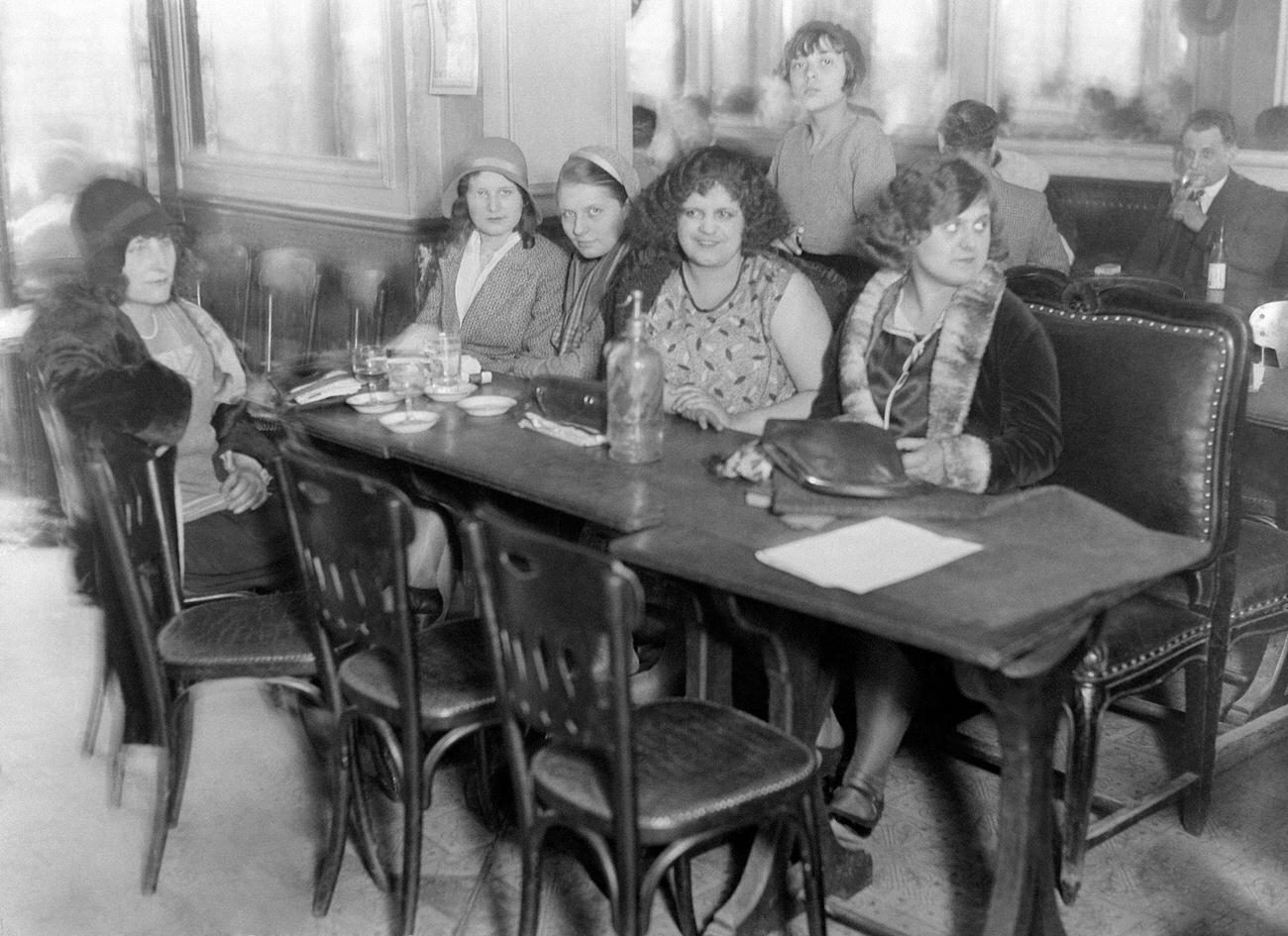
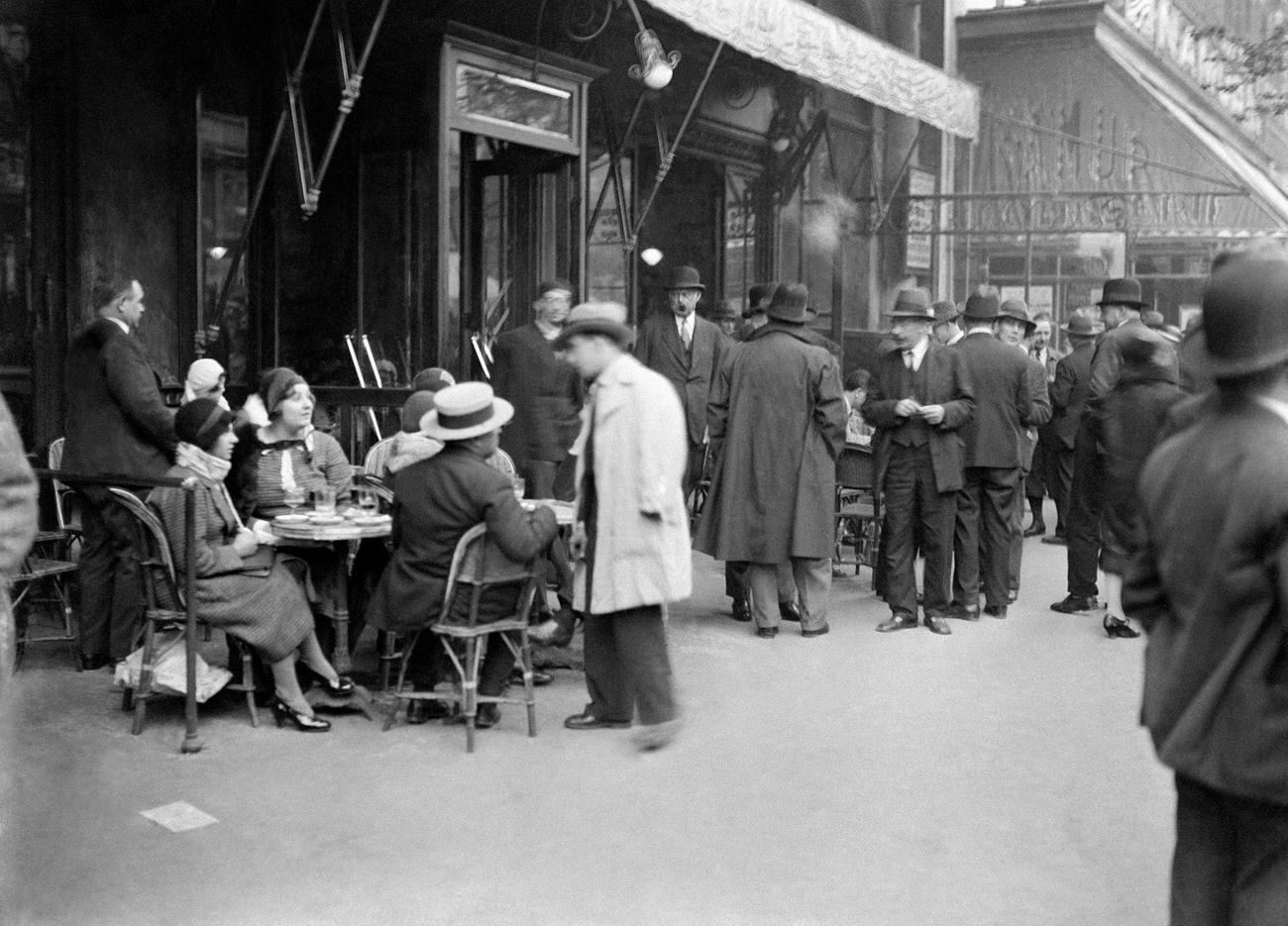
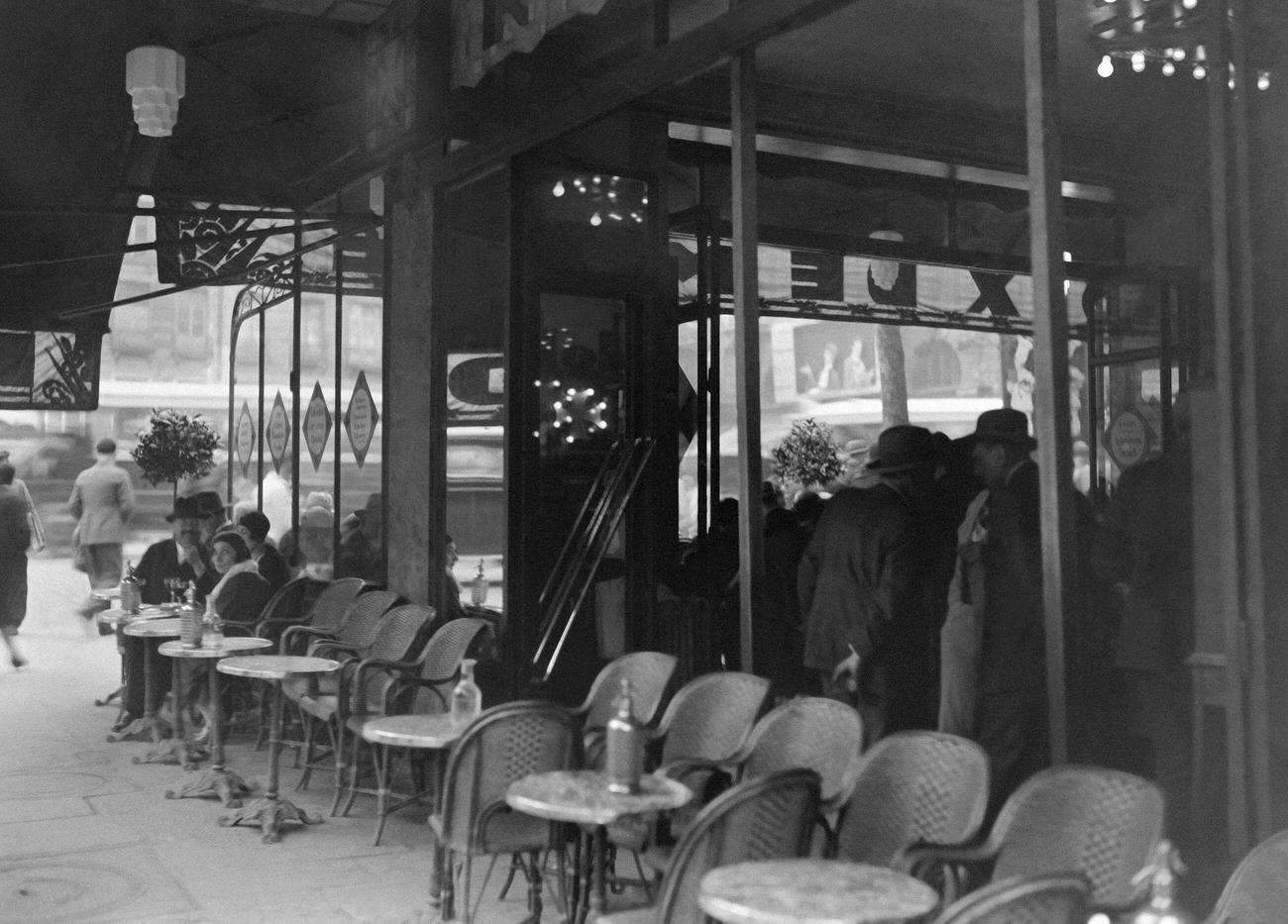
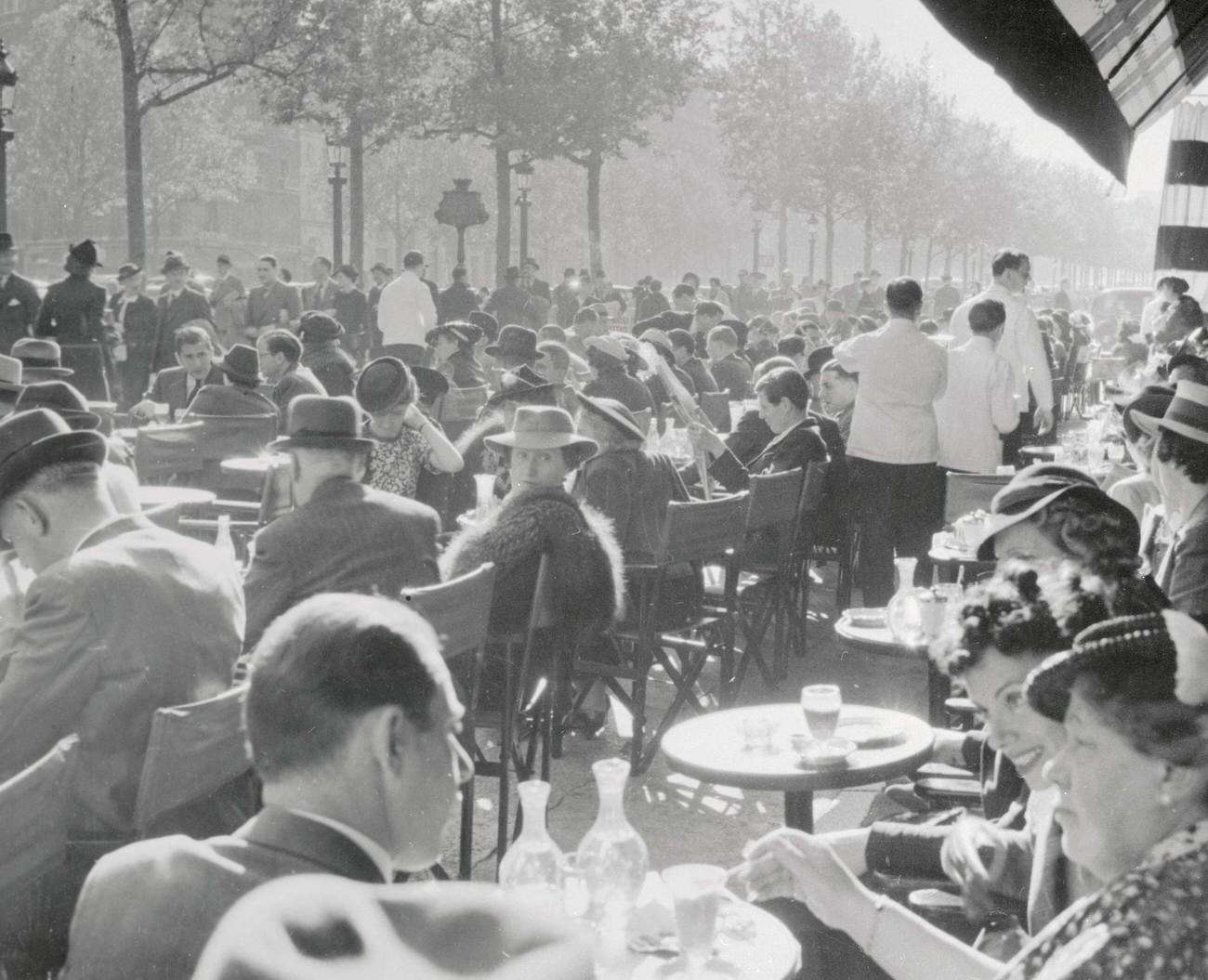
Early 1930s street-level photographs show terraces alive with Parisians going about their routines. Couples sat close together. Older men read newspapers alone. Groups of friends argued over small glasses of wine. The terrace was democratic in this way — anyone who could afford a drink had a seat and a view of the world.
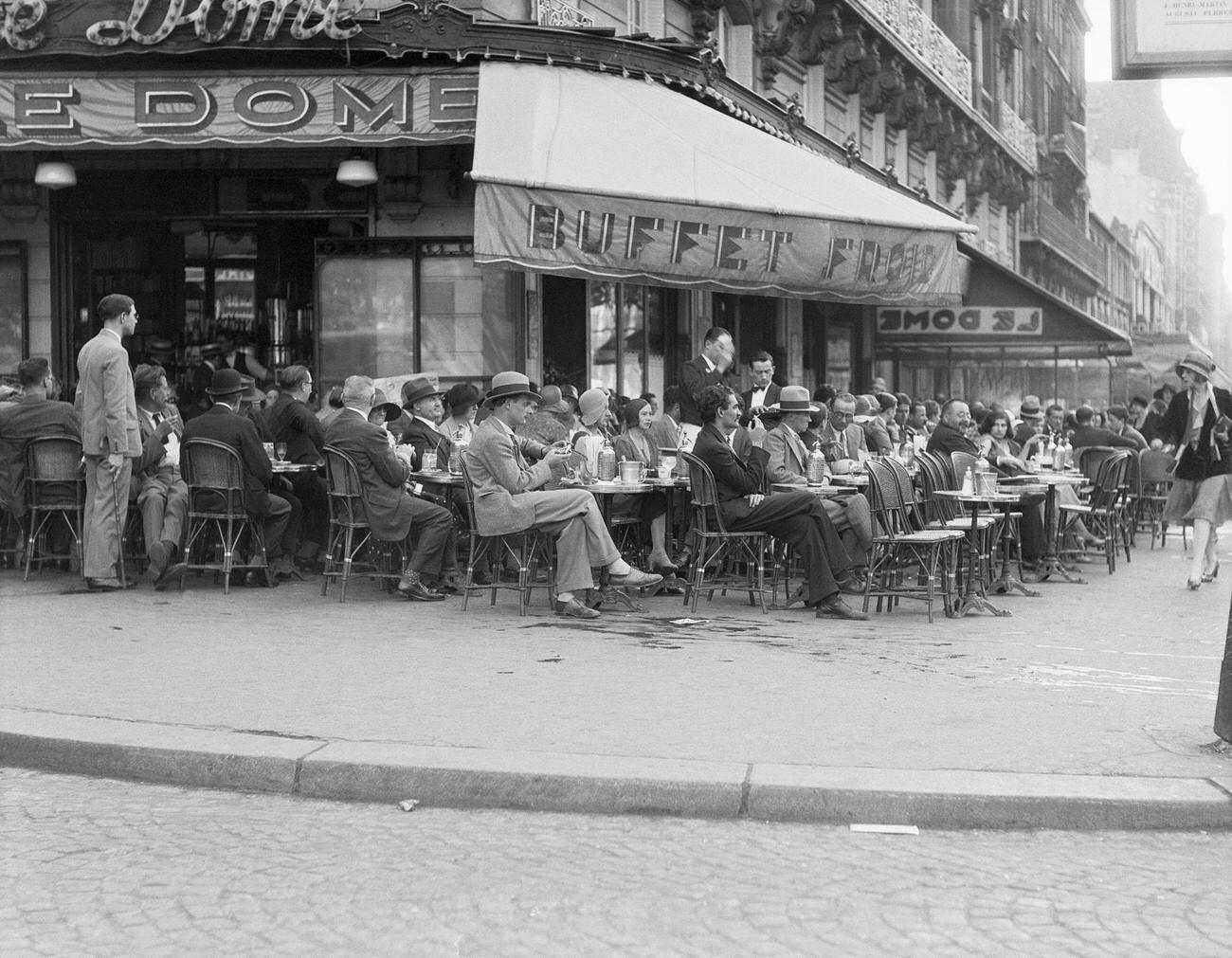
Café Le Dôme in Montparnasse was one of the most storied addresses in the city. Since the early 1900s it had drawn painters, poets, and intellectuals from across Europe and the Americas. In the 1930s, Le Dôme continued drawing a loyal crowd, its interior and terrace recognizable from dozens of photographs and memoirs of the era.
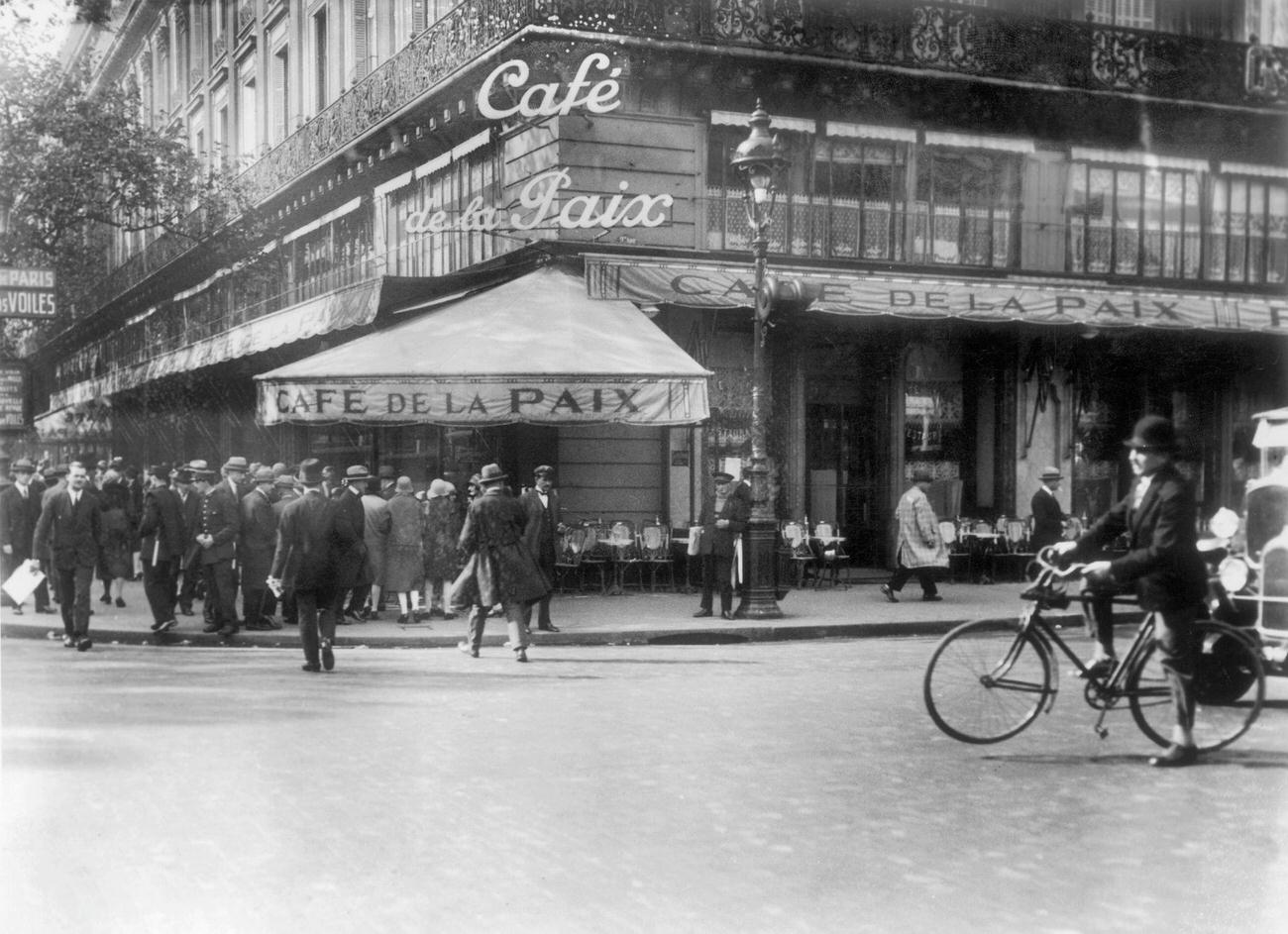
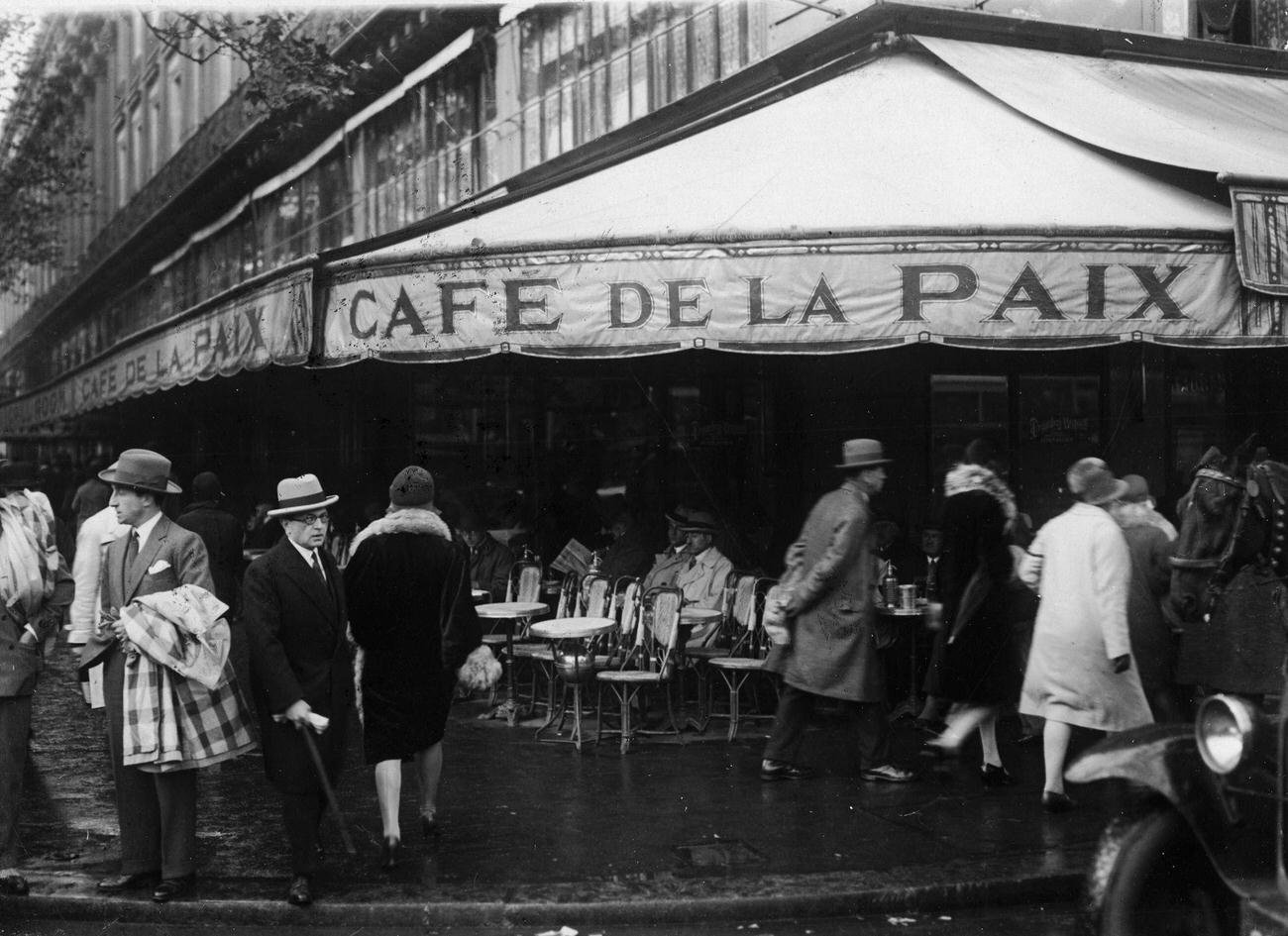
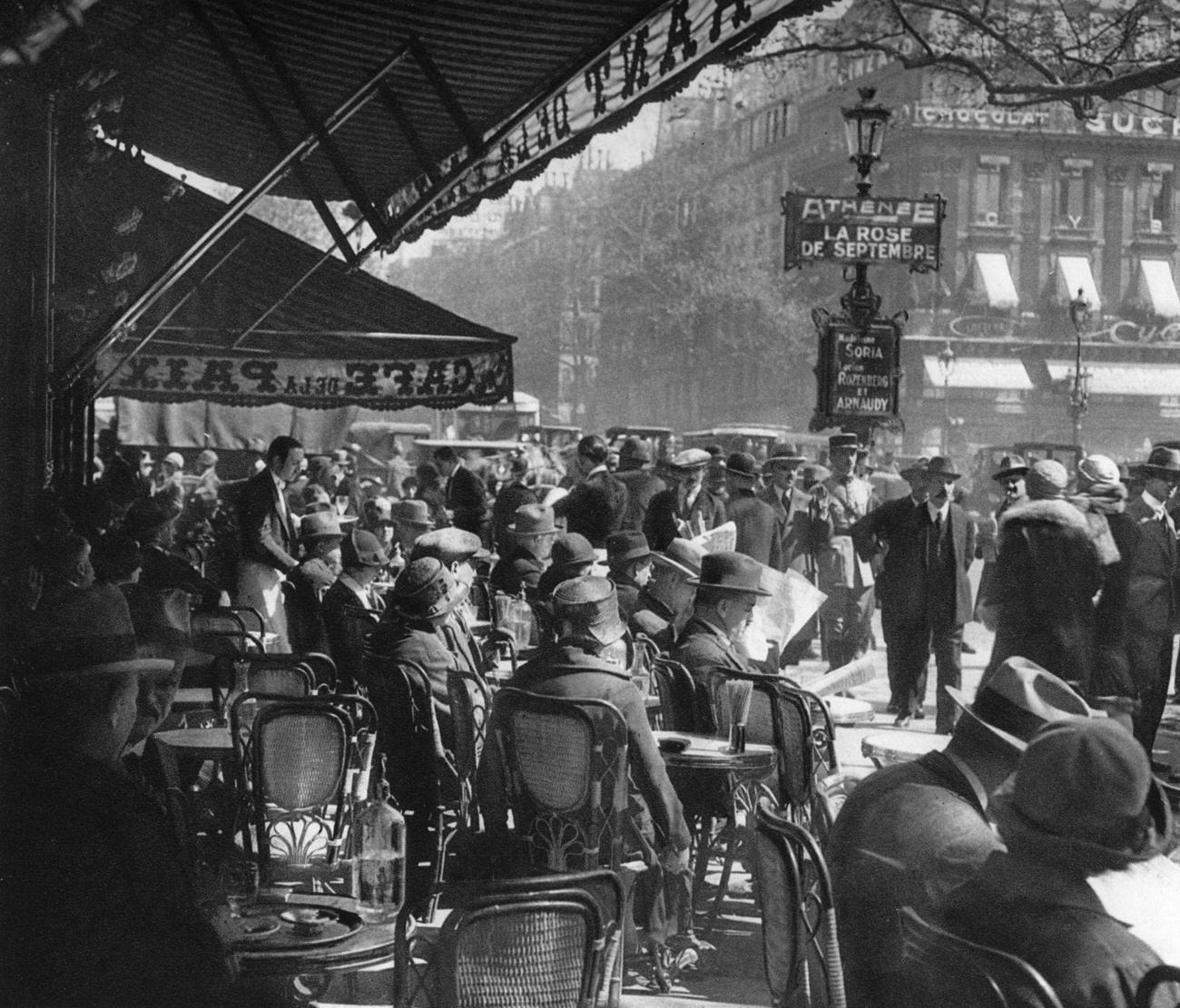
The Café de la Paix, positioned at the Place de l’Opéra, was one of the most photographed cafes in the city. Its grand terrace and prime location on one of Paris’s busiest intersections made it a landmark in its own right. Built in the 1860s, by the 1930s it had become almost symbolic — a place where the city’s history and its present moment seemed to meet.
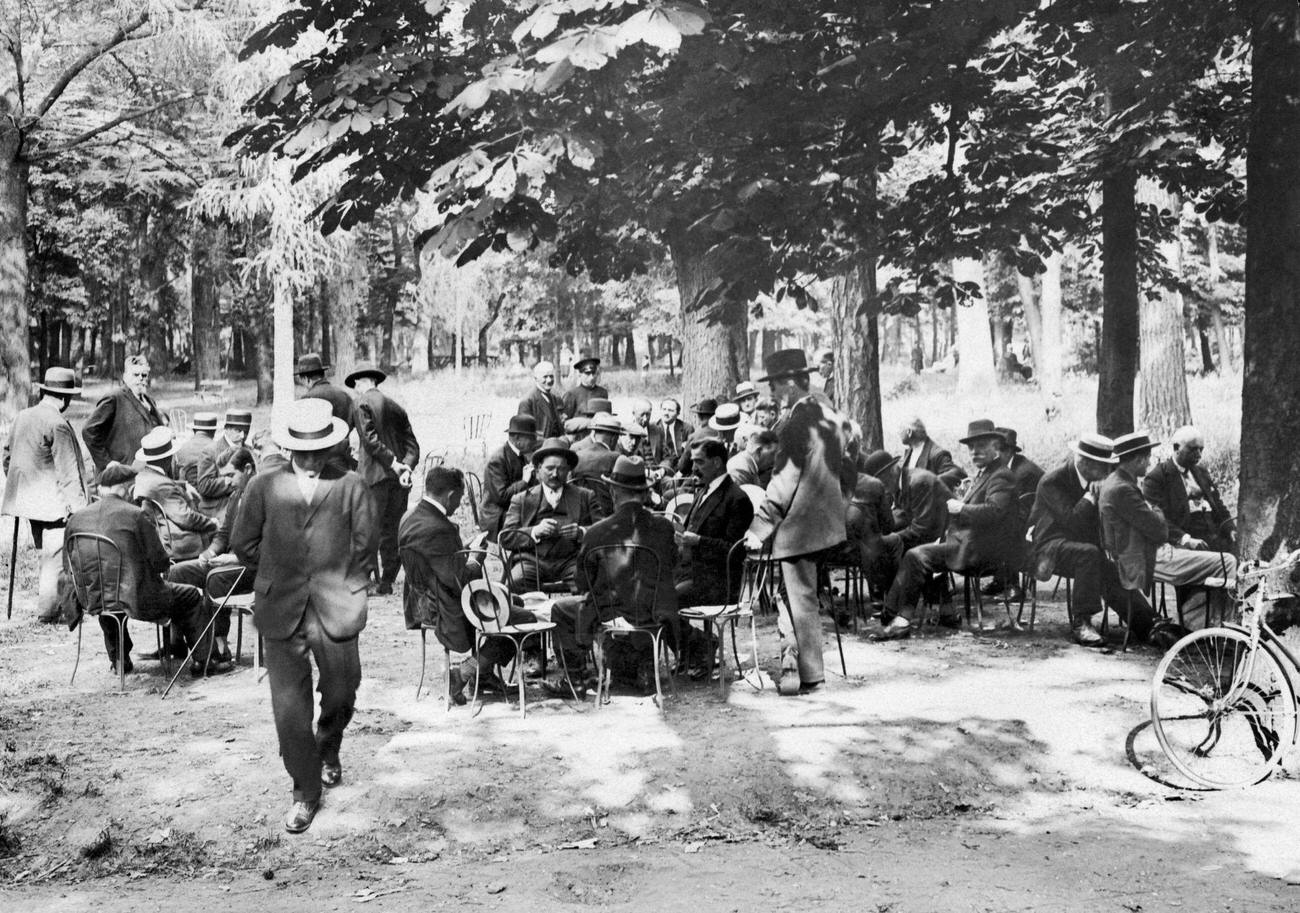
Not every Parisian cafe was a grand boulevard institution. Smaller neighborhood spots — like the little coffee house tucked into the Bois de Boulogne — served the city’s parks and quieter districts. These modest establishments catered to families out for a Sunday walk, park workers, and locals who wanted something uncomplicated.
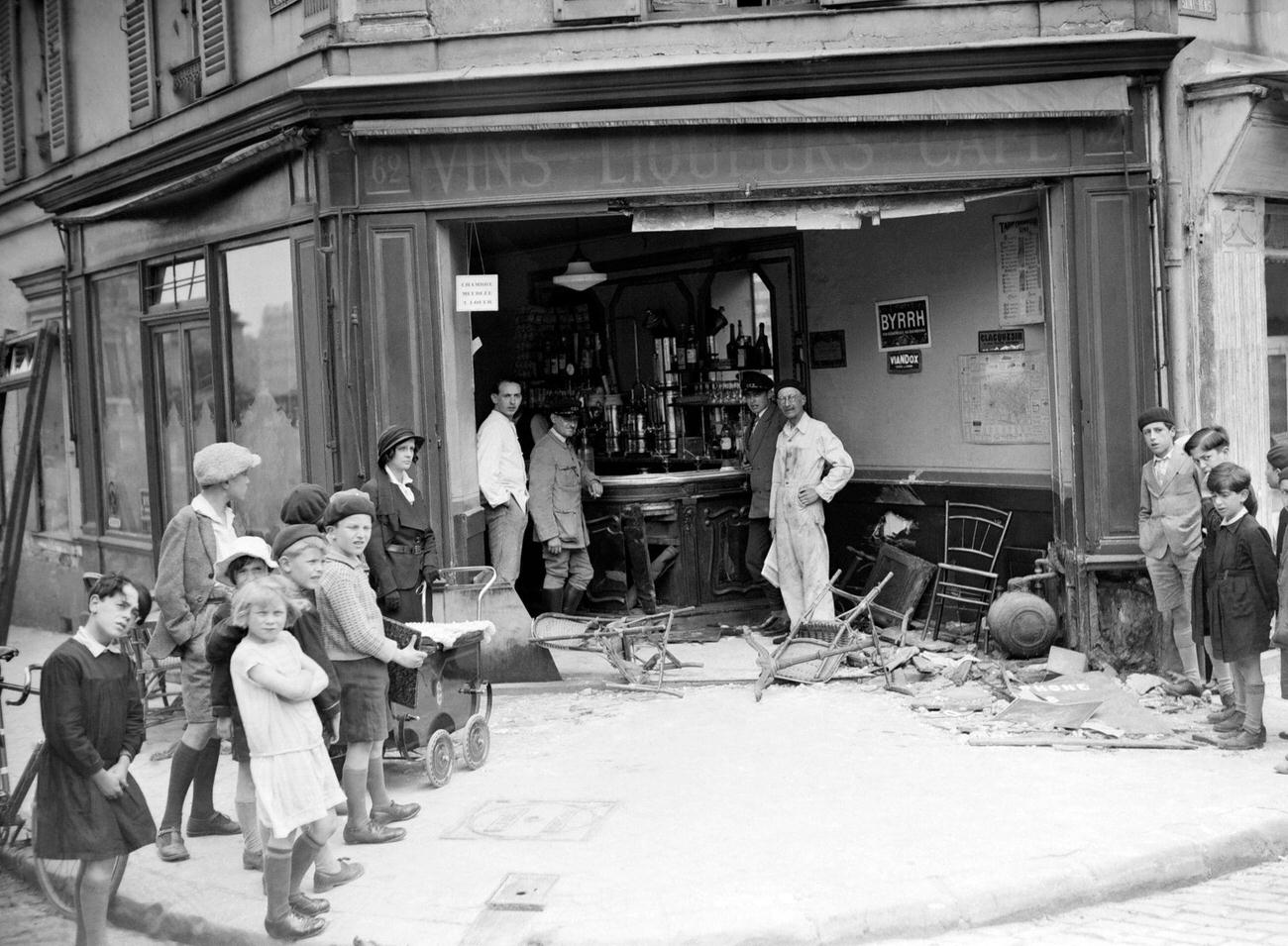
Cafes were not immune to disaster. In 1930, a truck collided with a cafe in Colombes, a working-class suburb of Paris. The wreckage left behind showed just how physically central these buildings were to their neighborhoods — built right at the edge of the street, they bore the full force of whatever the road brought their way.
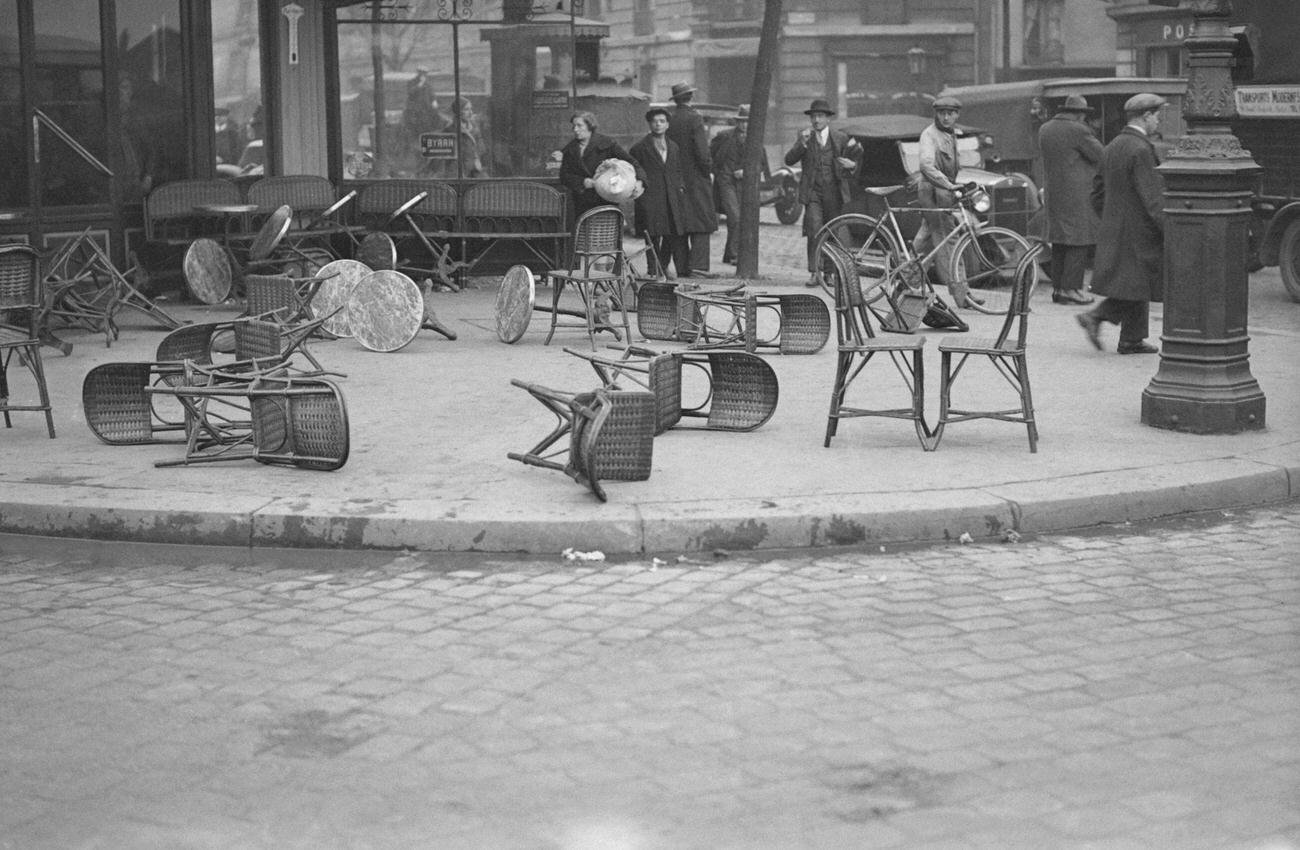
Political tensions occasionally turned violent inside the very spaces where they were debated. On March 6, 1930, a clash left overturned chairs and broken windows at a Parisian cafe. The 1930s were a decade of rising political extremism across Europe, and Paris was not insulated from that unrest. Cafes — which had become staging grounds for ideological argument — sometimes bore the physical consequences.
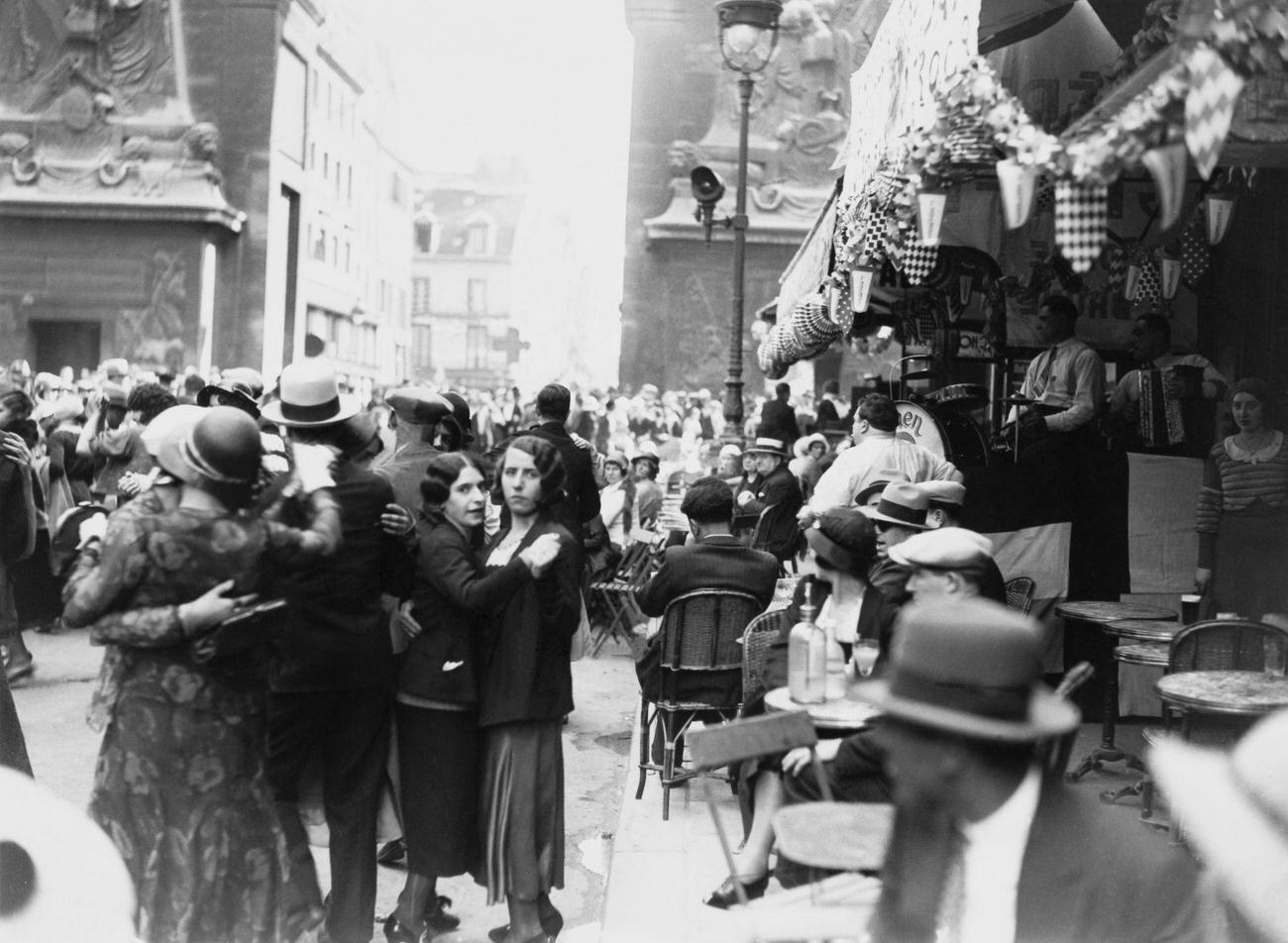
Bastille Day on July 14 transformed the city’s cafes into extensions of the street party. Tables spilled further onto the pavement, drinks flowed freely, and the line between indoor and outdoor dissolved completely. The national holiday was one of the few occasions when the cafe’s usual social codes relaxed entirely, and the city celebrated as one.
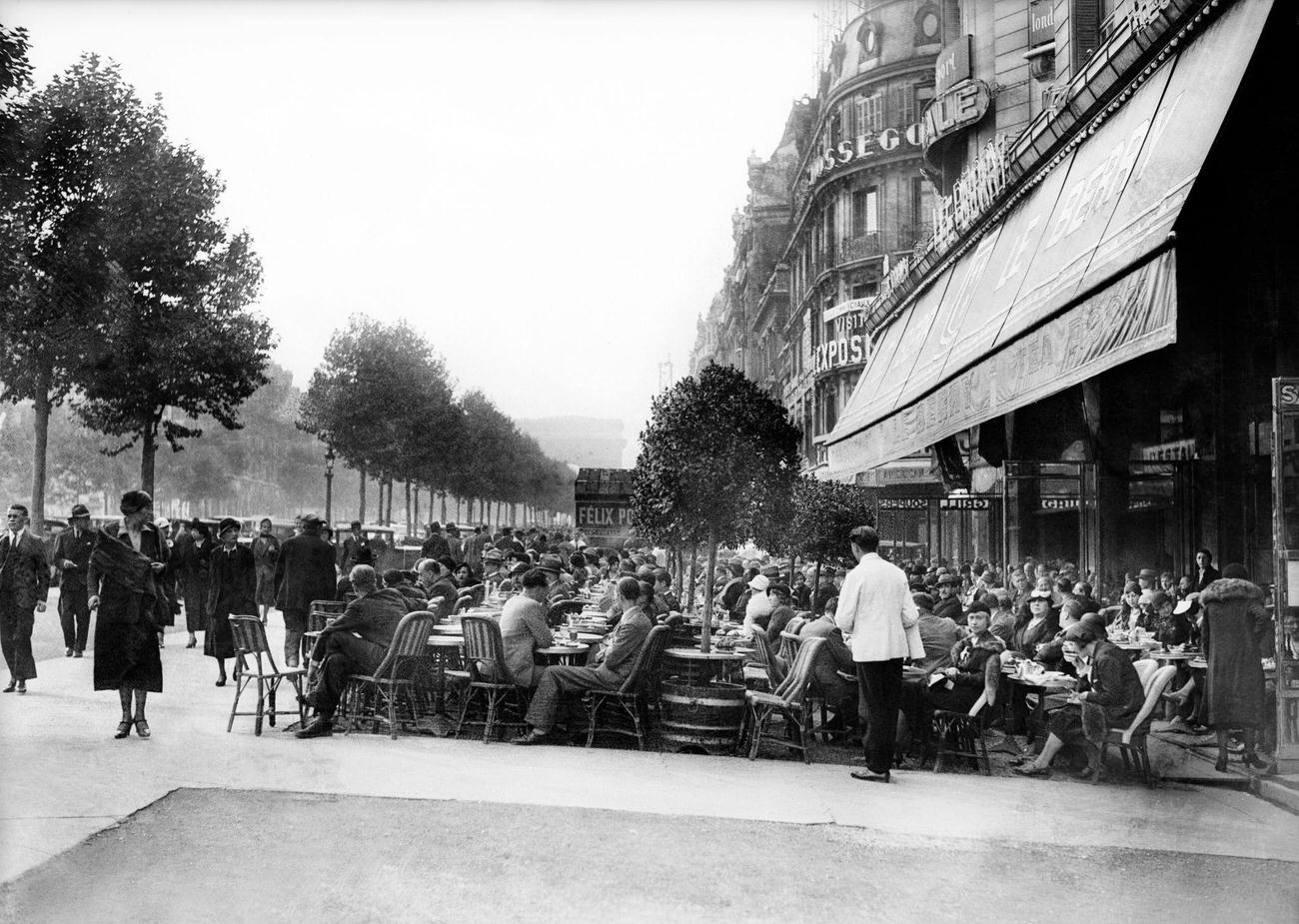
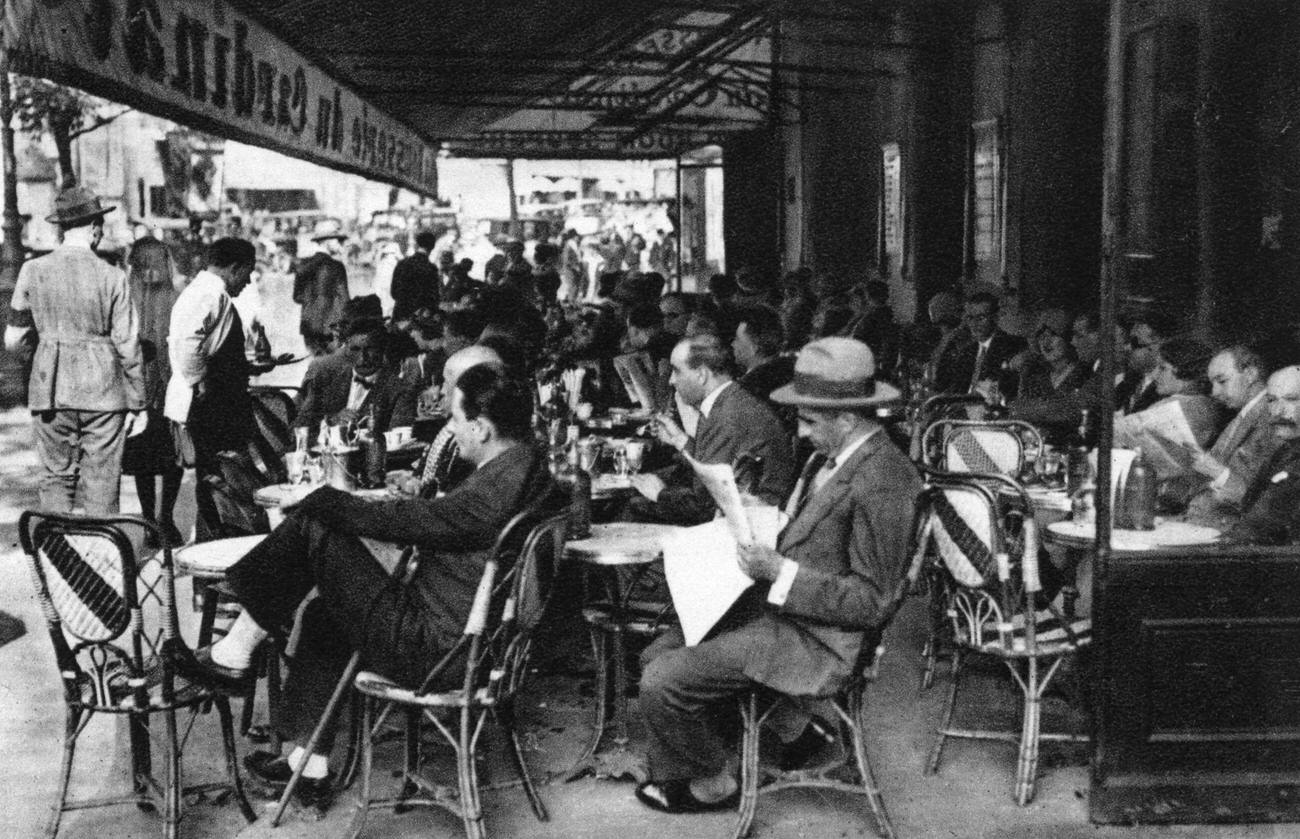
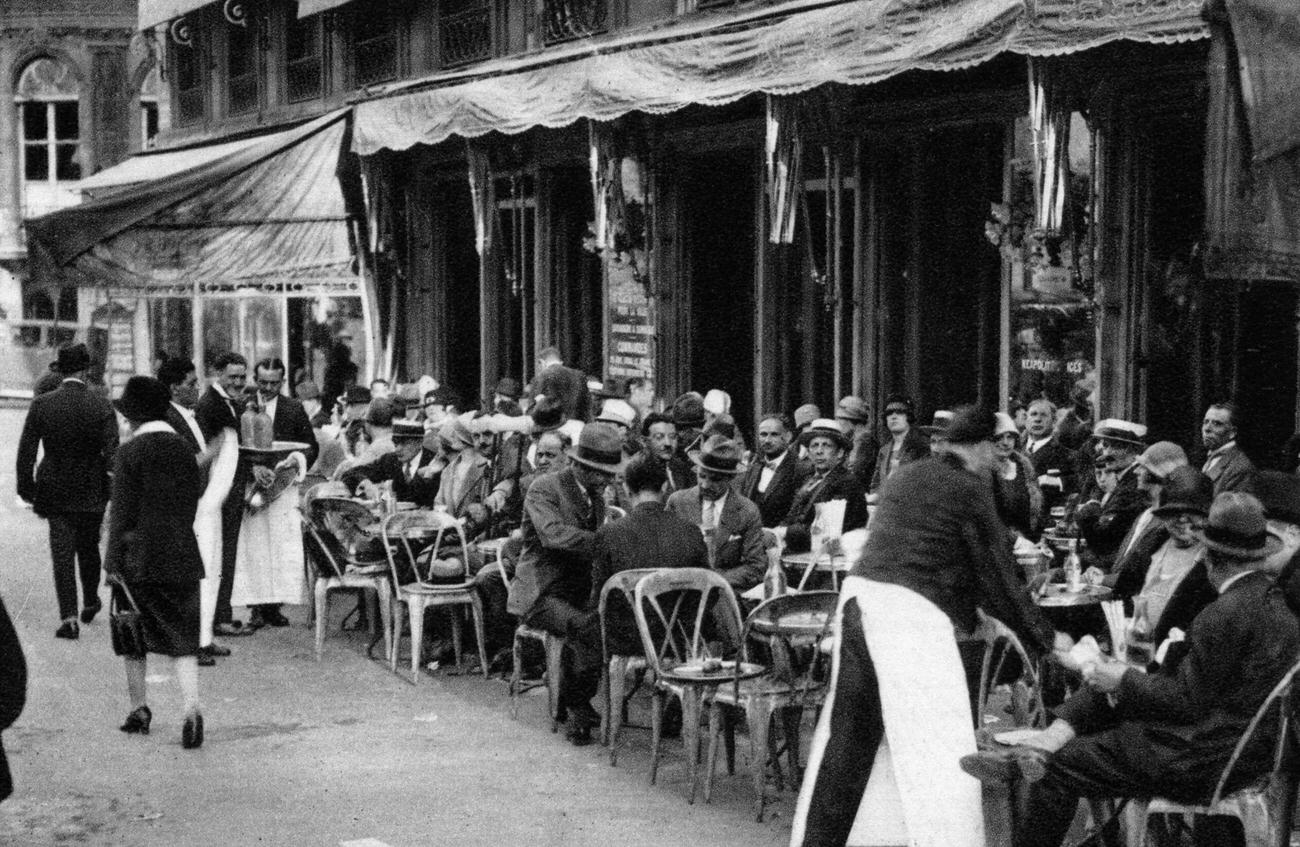
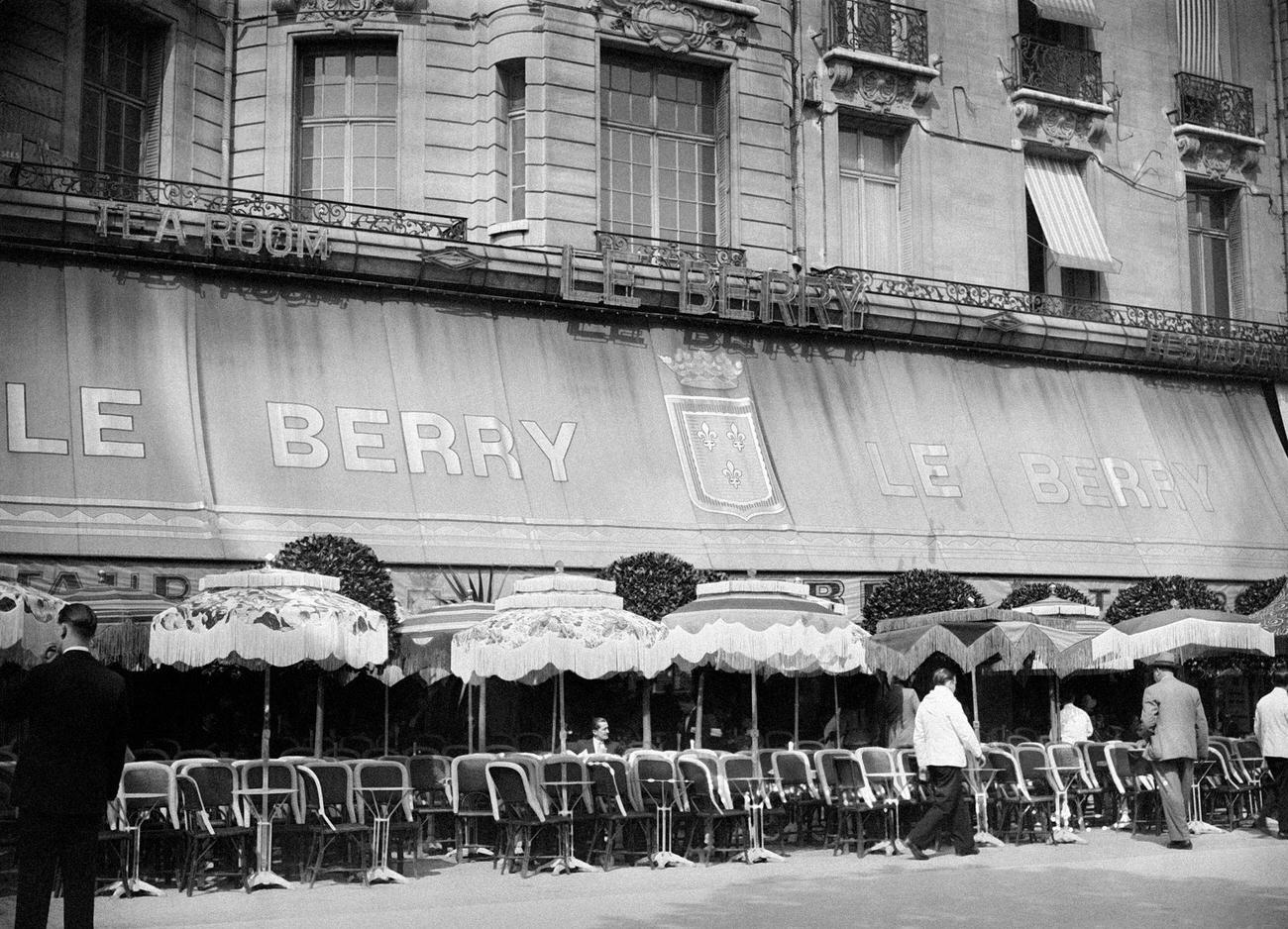
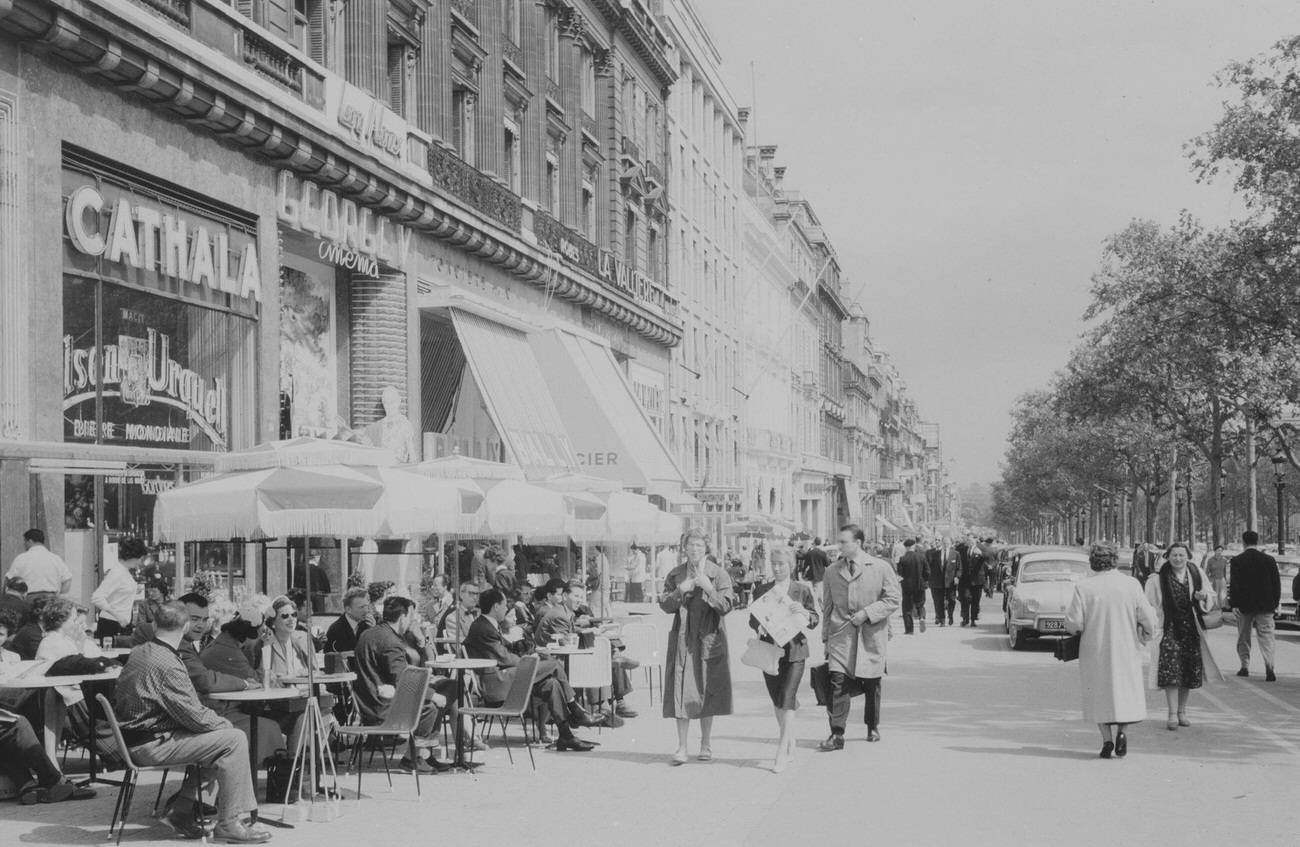
By 1931, the effects of the Depression were being felt more acutely. Yet photographs from that year show Parisian pavement cafes still drawing steady crowds. The Champs-Élysées establishments like Cafe De Berri held onto their clientele — some old regulars, some newcomers drawn in by necessity as much as habit.
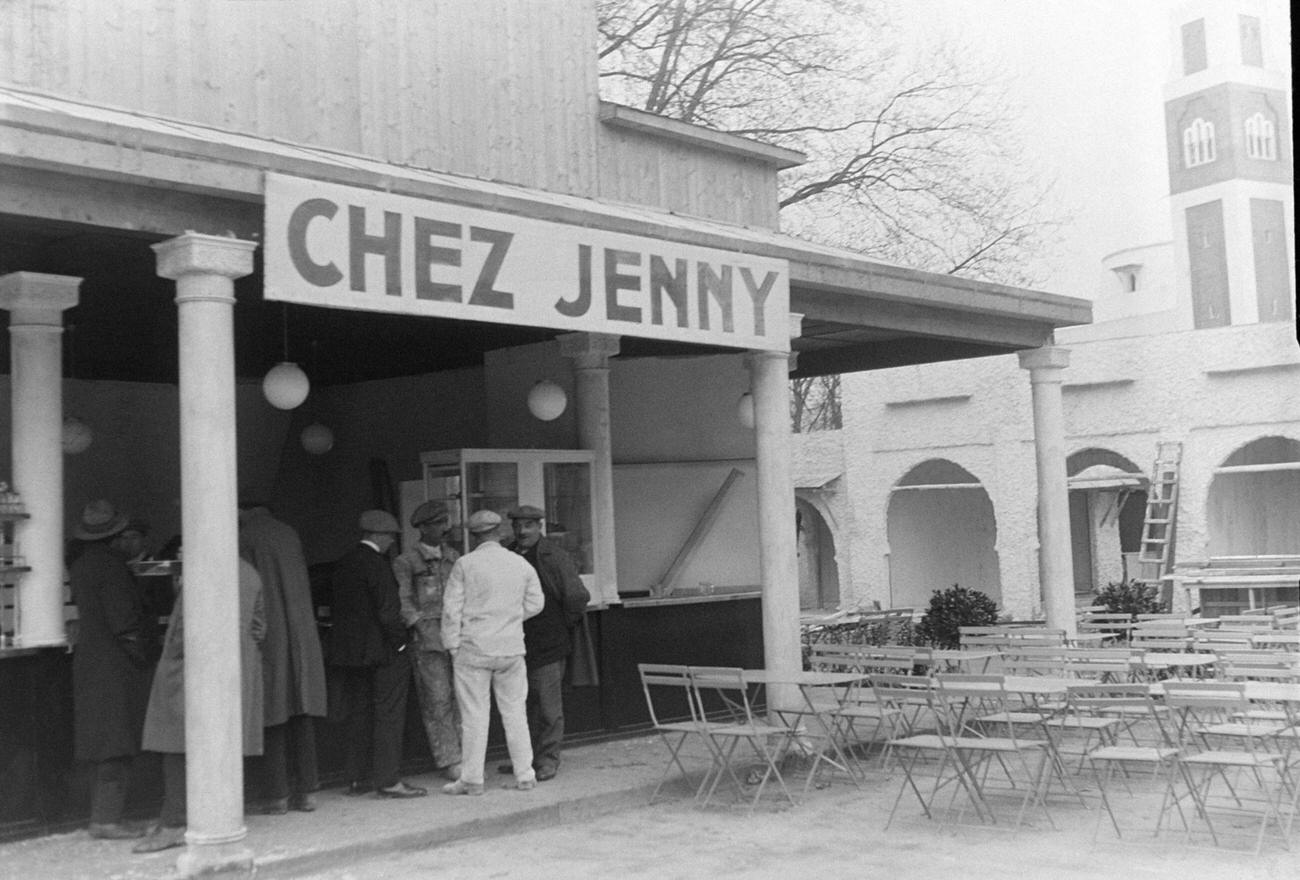
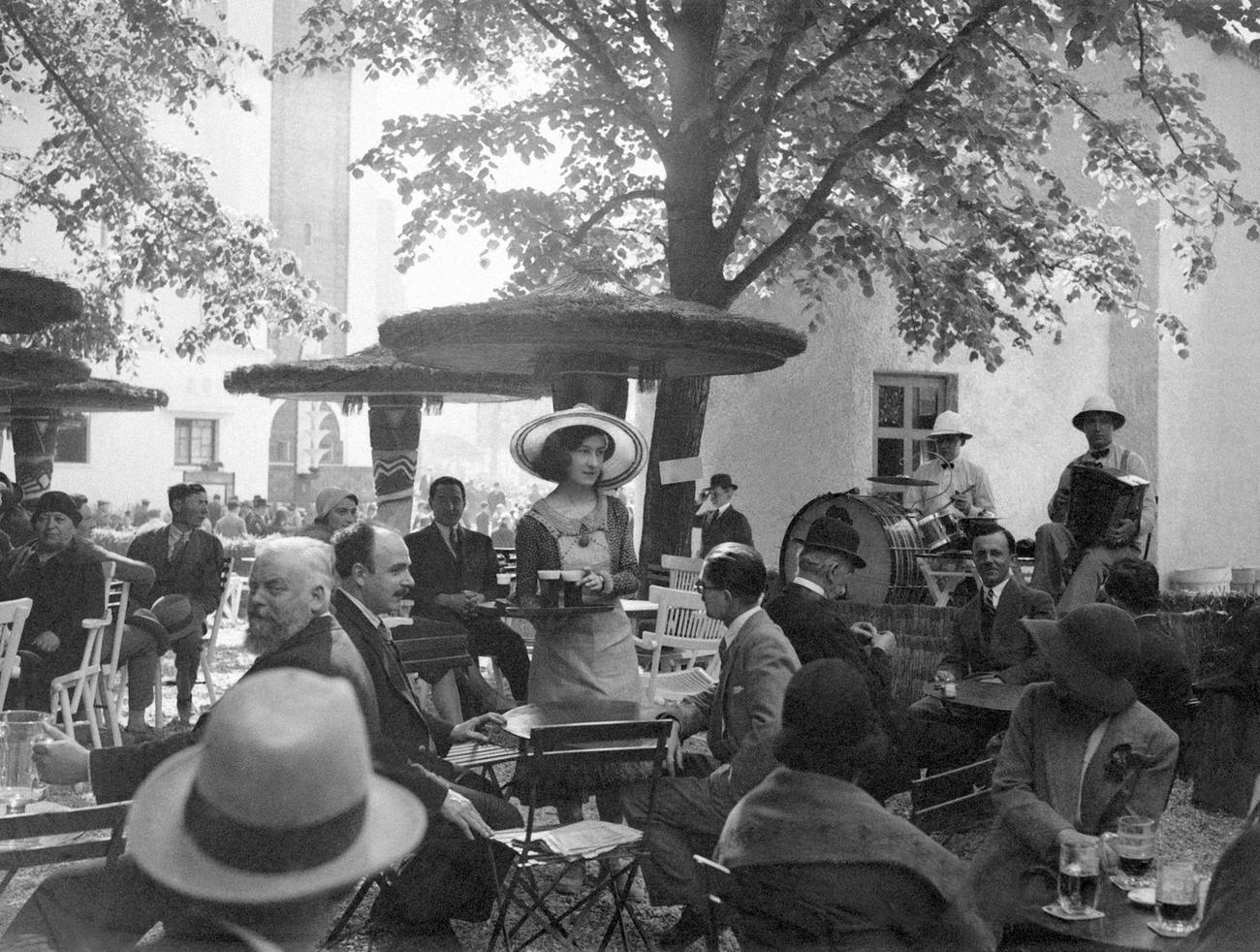
The 1931 Colonial Exposition, held at the Bois de Vincennes, brought millions of visitors to Paris. Cafes were set up throughout the exposition grounds to serve the crowds. ‘Chez Jenny’ was among them — a familiar name transplanted into the fairground atmosphere of an event that drew over 8 million attendees over its six-month run.
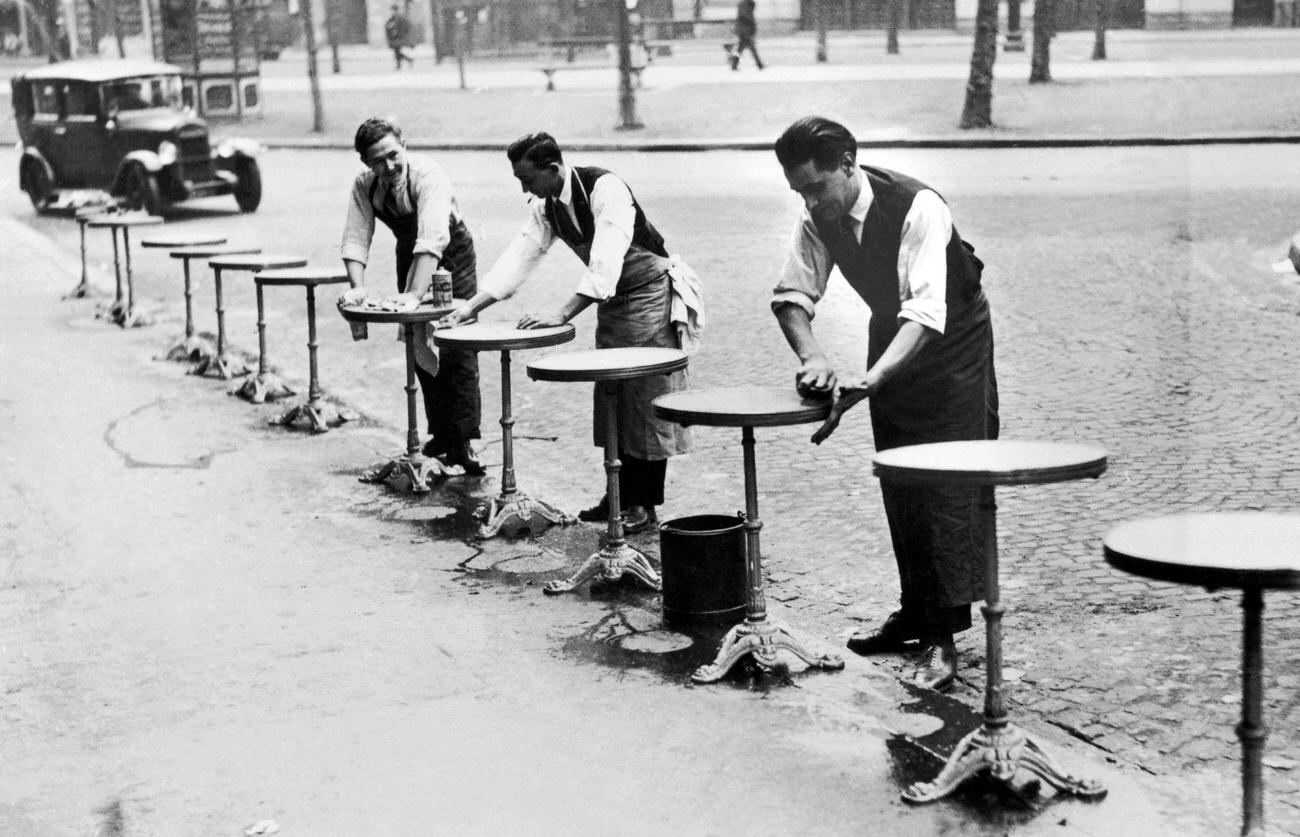
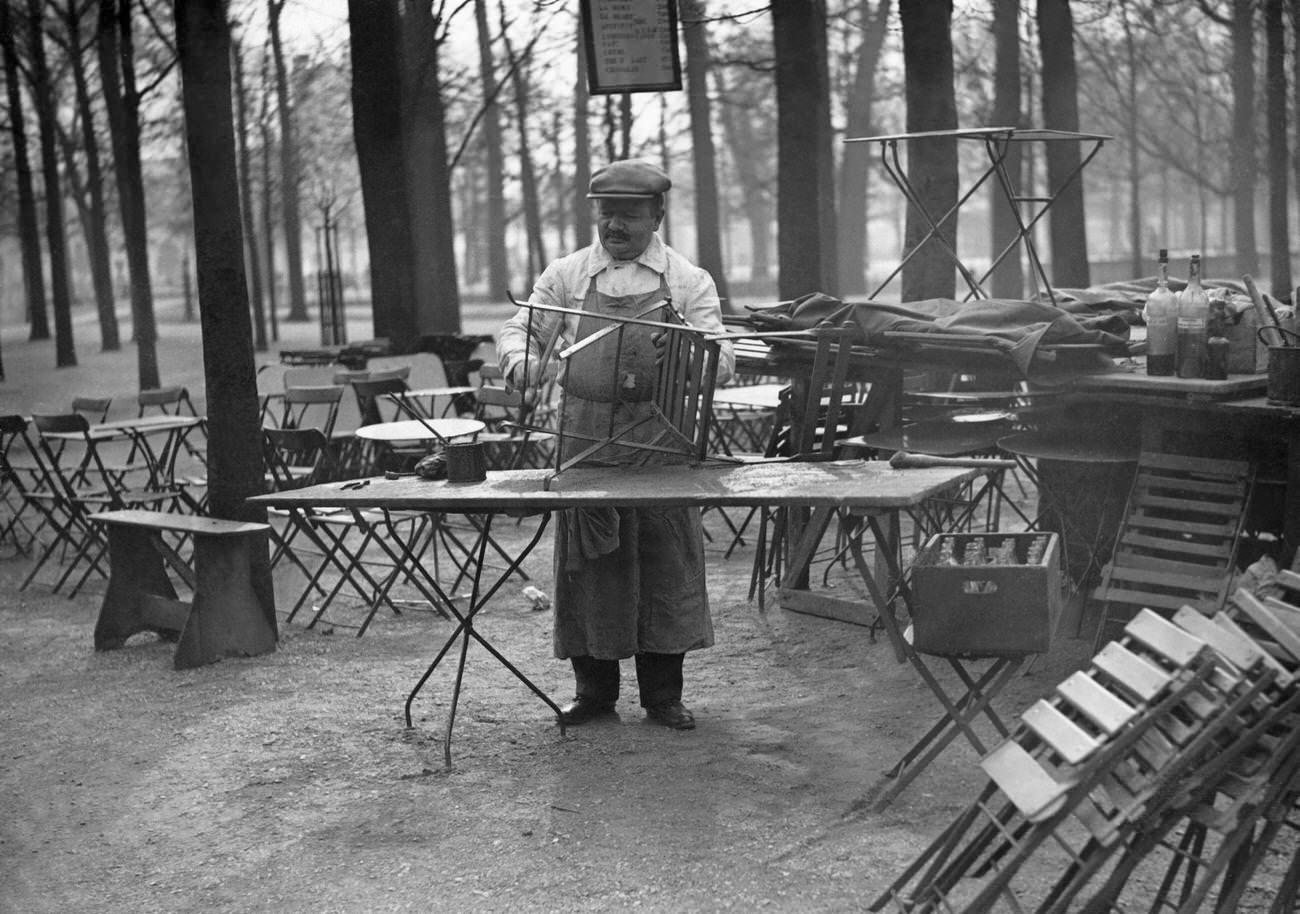
Behind every busy terrace was a daily routine of preparation and upkeep. Tables were wiped down, chairs were set out, awnings were cranked into position. The Tuileries Gardens cafe, photographed being readied for reopening in spring 1932, represented this quieter side of cafe life — the labor that made the leisure possible.
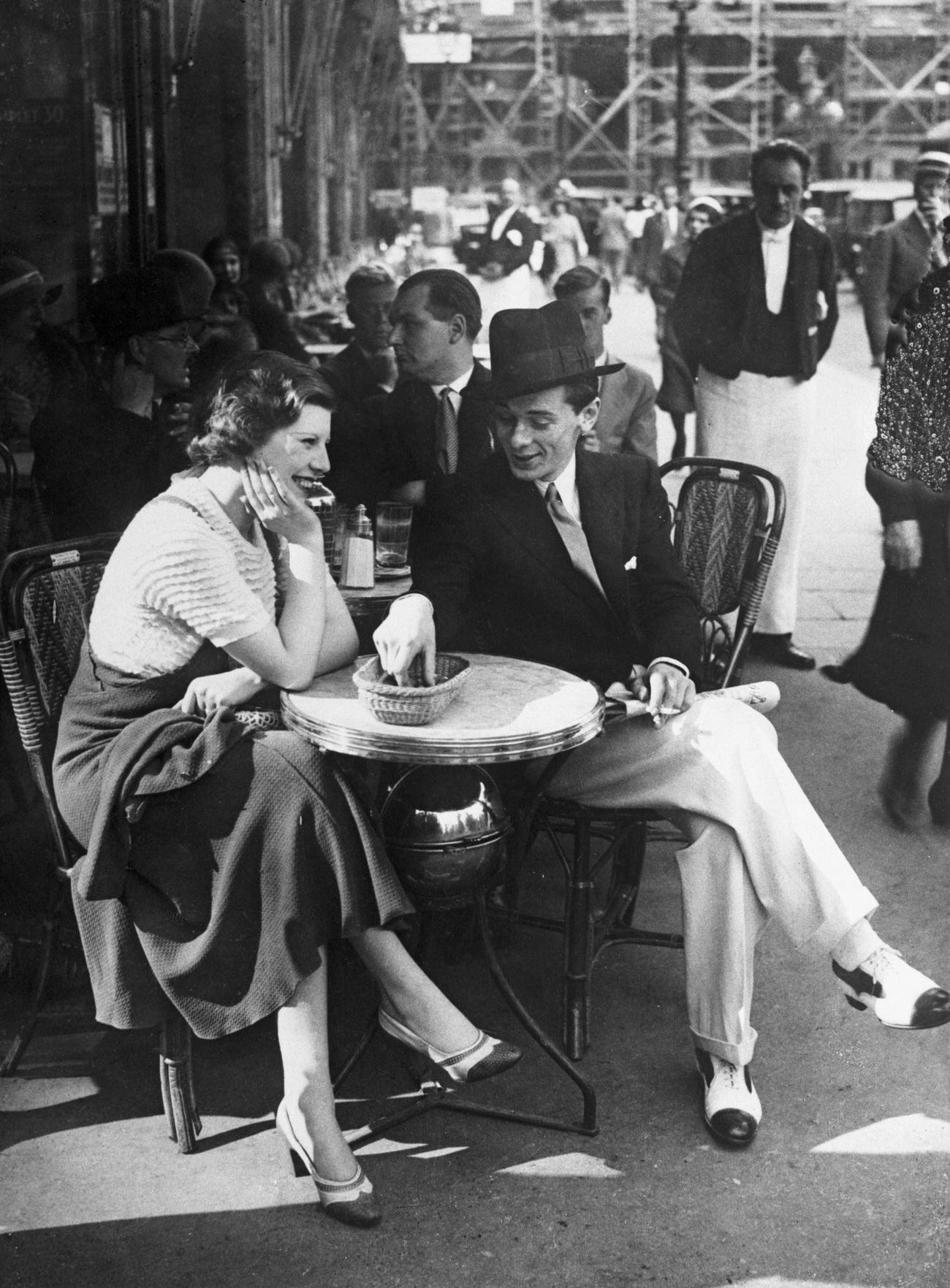
The political diversity of cafe patrons in 1930s Paris was not always comfortable. In August 1932, John Amery — a British fascist who would later be executed for treason in 1945 — was photographed with his fiancée Una Wing at a Paris cafe. His presence in the city was unremarkable at the time. Paris’s cafes drew people from across the political spectrum, including figures whose beliefs would later put them on the wrong side of history.
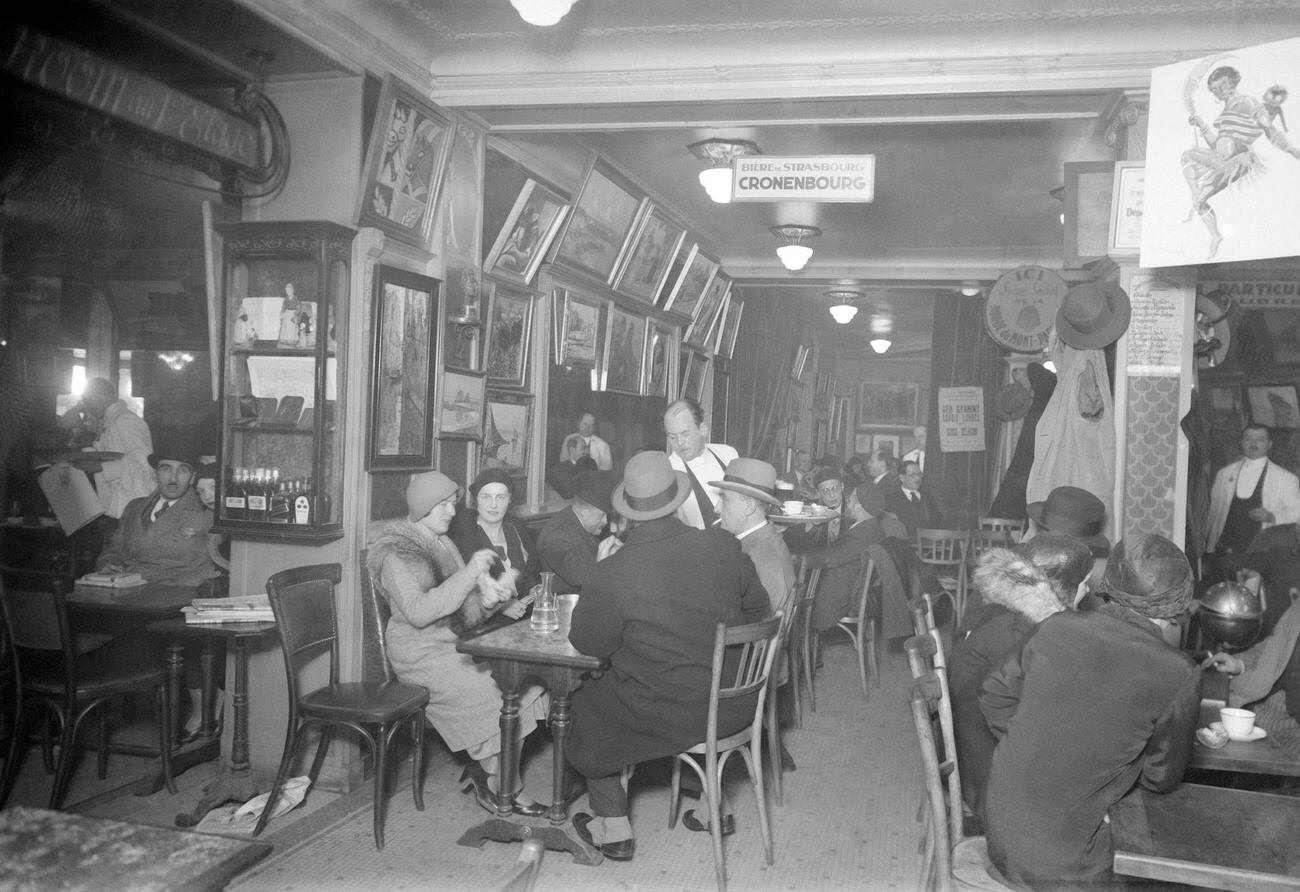
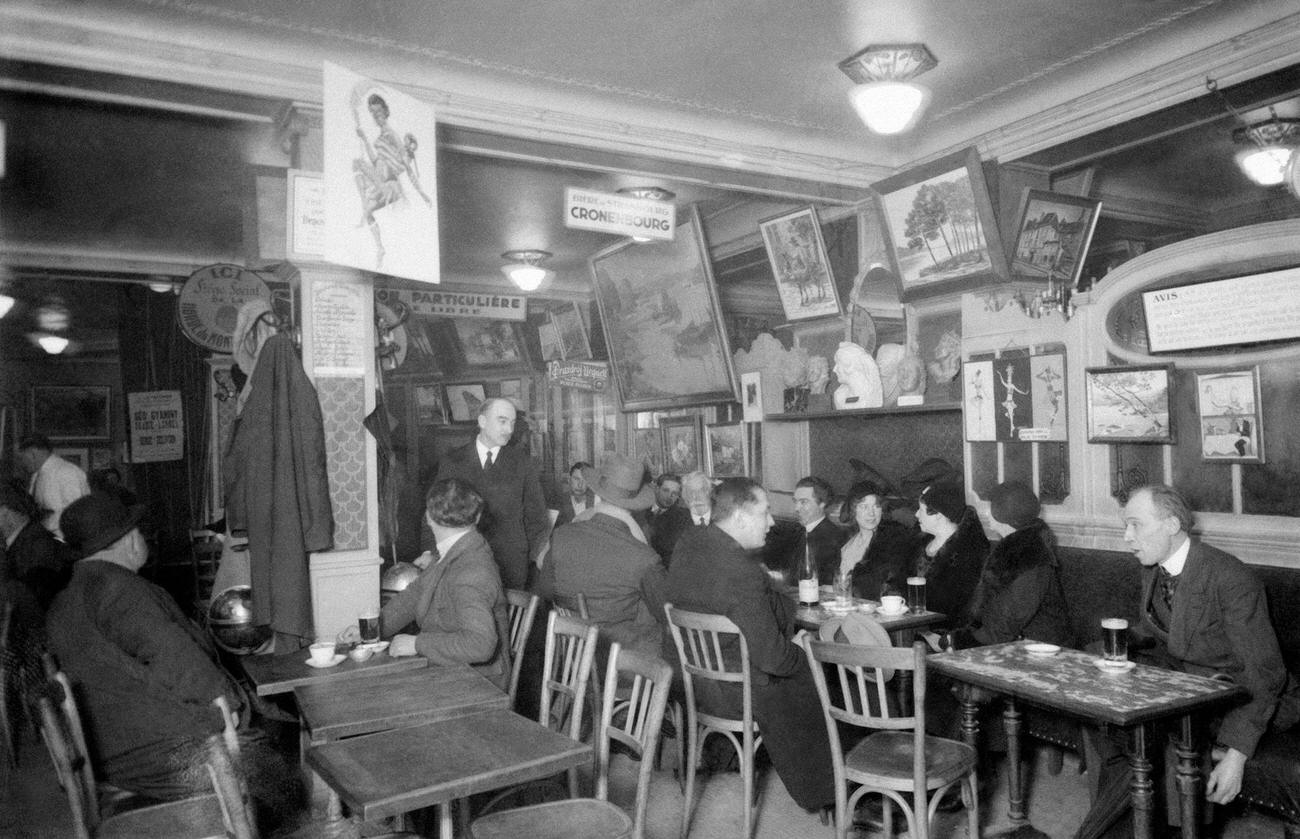
The Café de la Rotonde on the Boulevard du Montparnasse was one of the neighborhood’s defining institutions. Founded in 1911, it had hosted Lenin, Trotsky, Picasso, and Modigliani in earlier decades. By 1933, its fame was established, and it continued drawing artists and intellectuals who wanted to sit where so many others had sat before them.
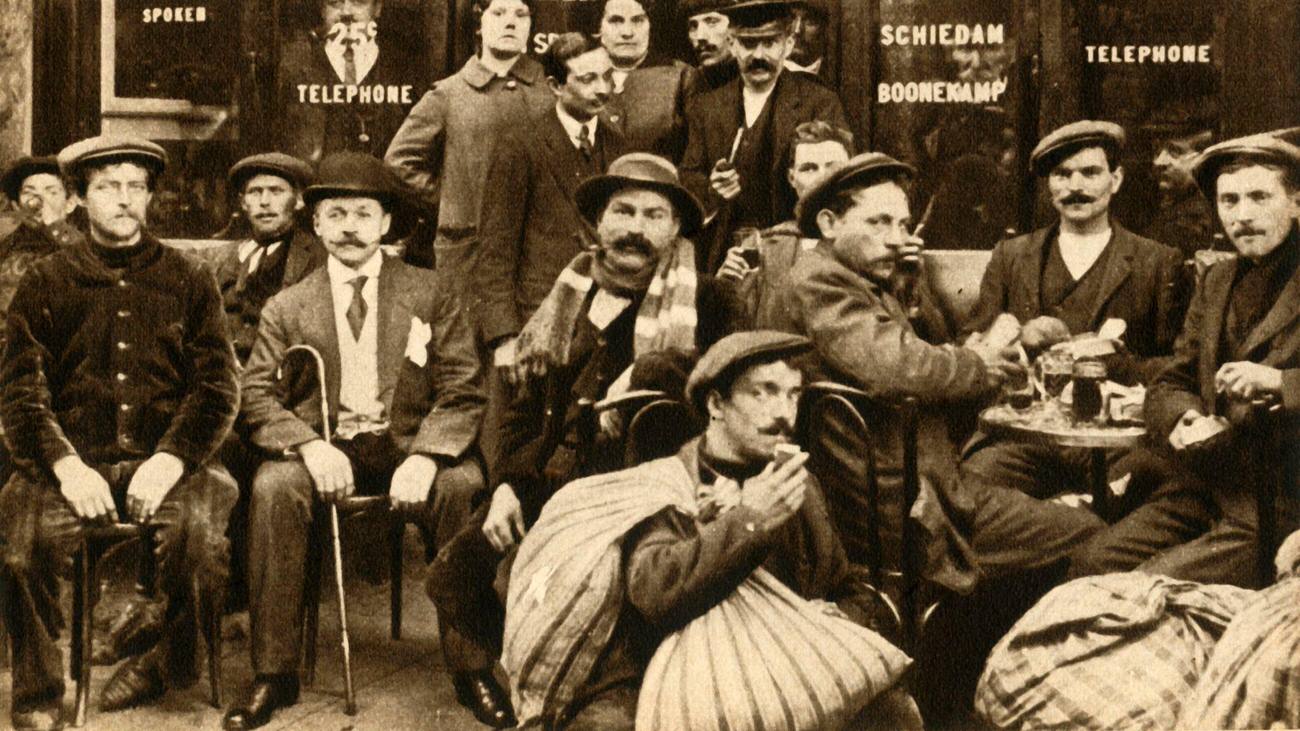
Some photographs from the 1930s looked back even further. A 1933 image of refugee field-workers at a Paris cafe was identified as depicting a scene from the World War I era, nearly two decades earlier. Its re-circulation in 1933 spoke to a city still processing its past — and beginning to worry that history was preparing to repeat itself.
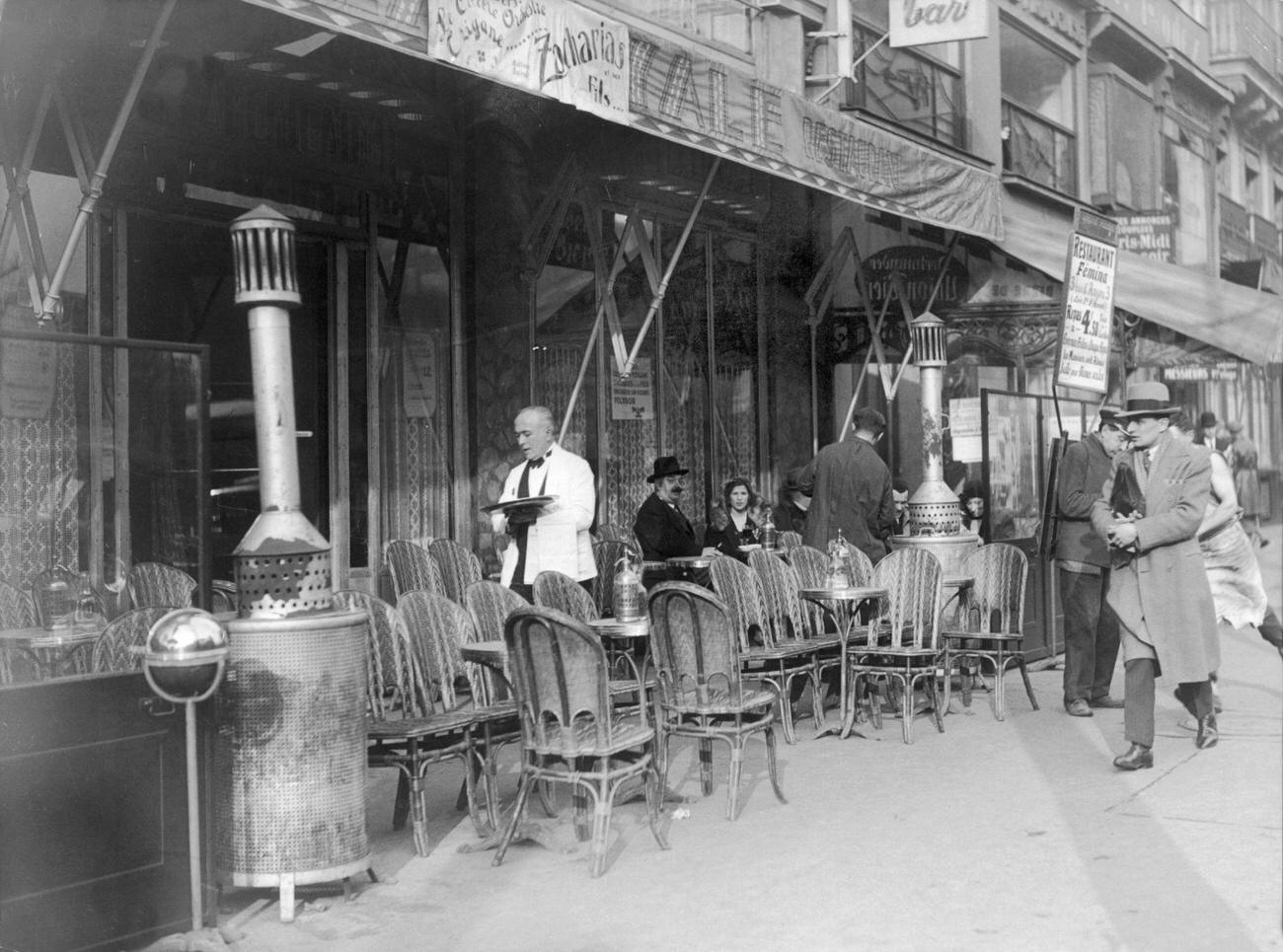
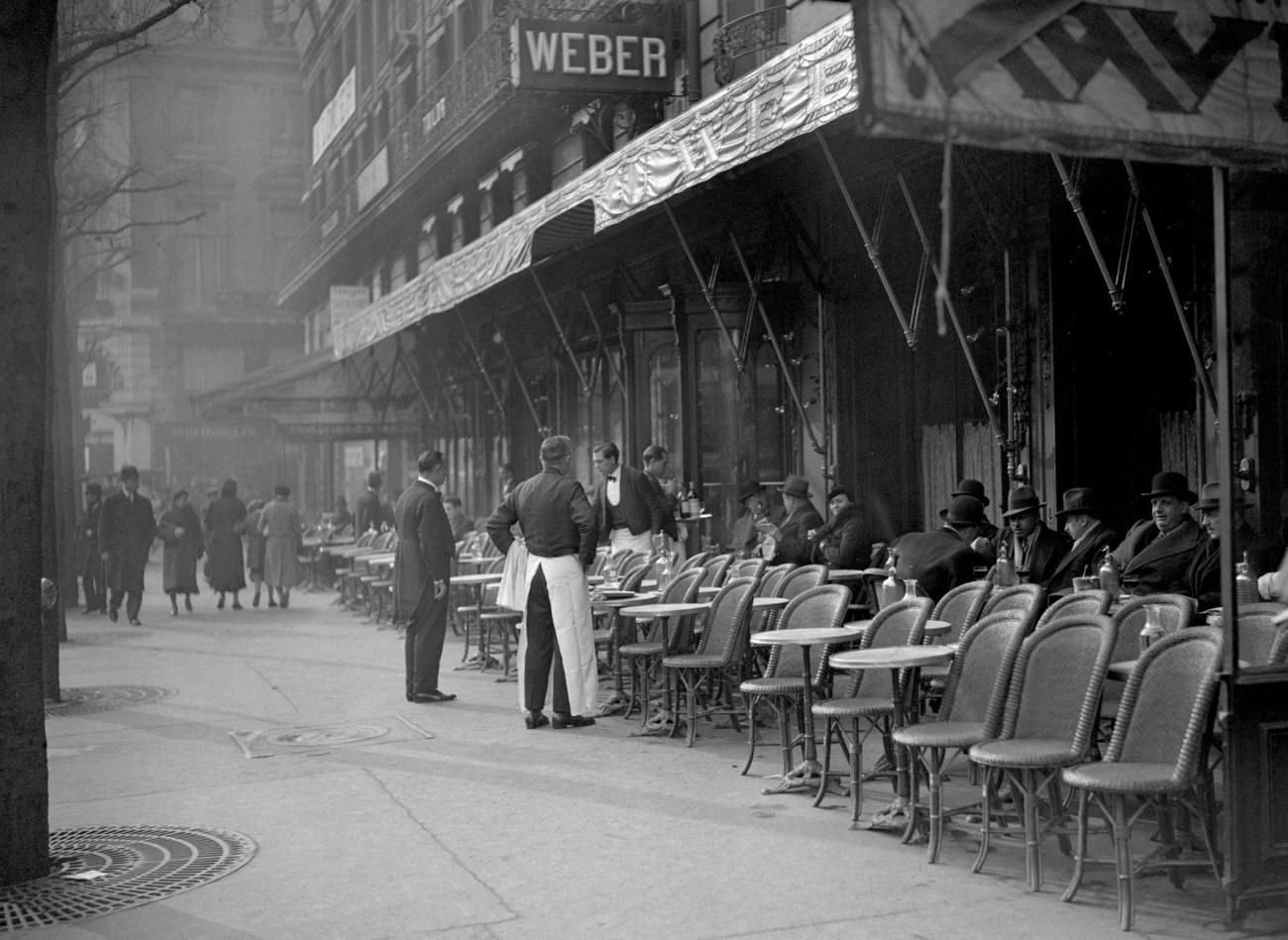
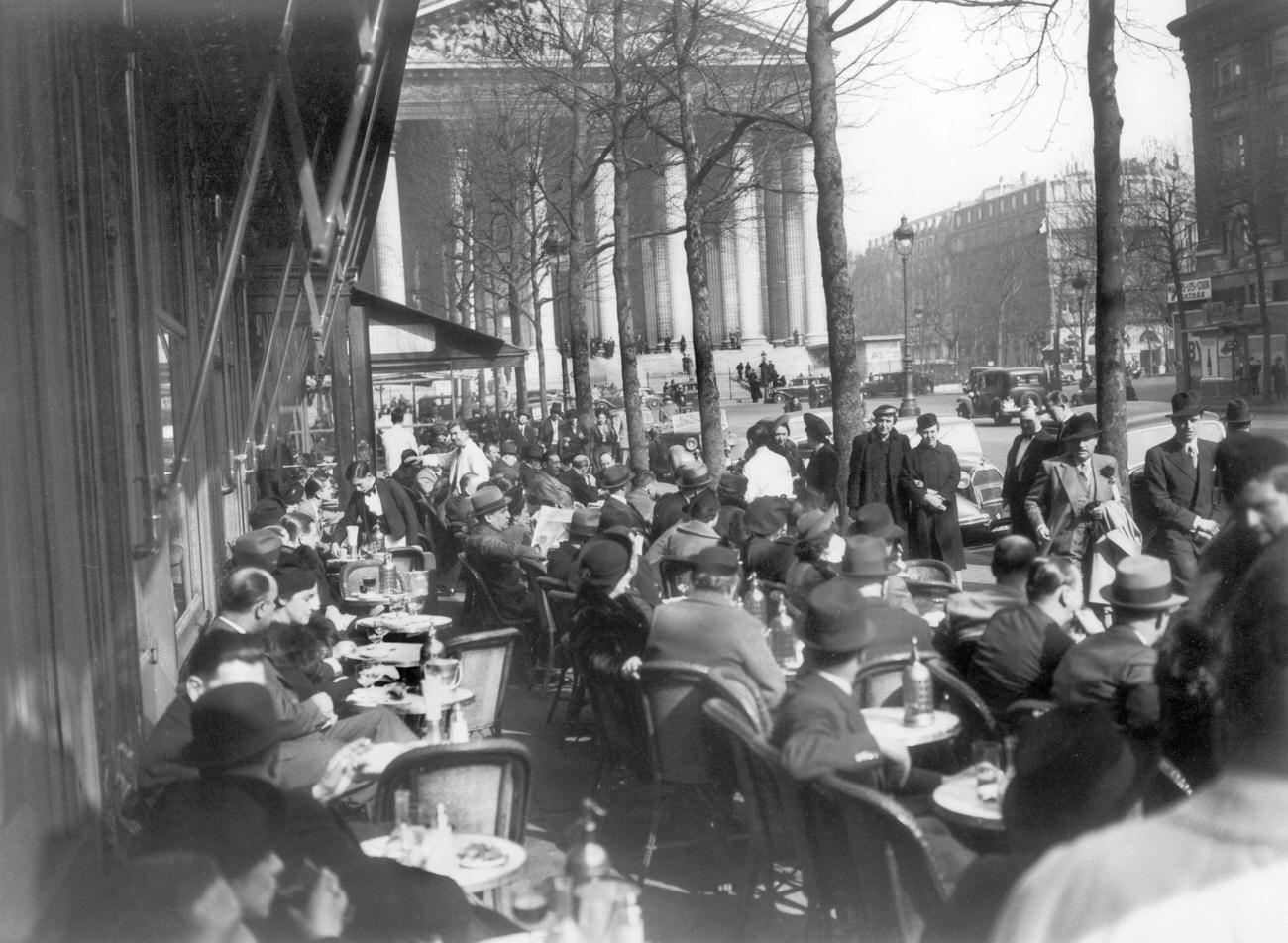
Winter did not empty the terraces. Photographs from January 1933 show cafe-goers bundled in coats and scarves, seated outside in the cold. Some establishments provided braziers or heating to extend the outdoor season. Cafe Weber on Rue Royale, with its elegant address near the Place de la Madeleine, was among those that kept its terrace active even through the coldest months.
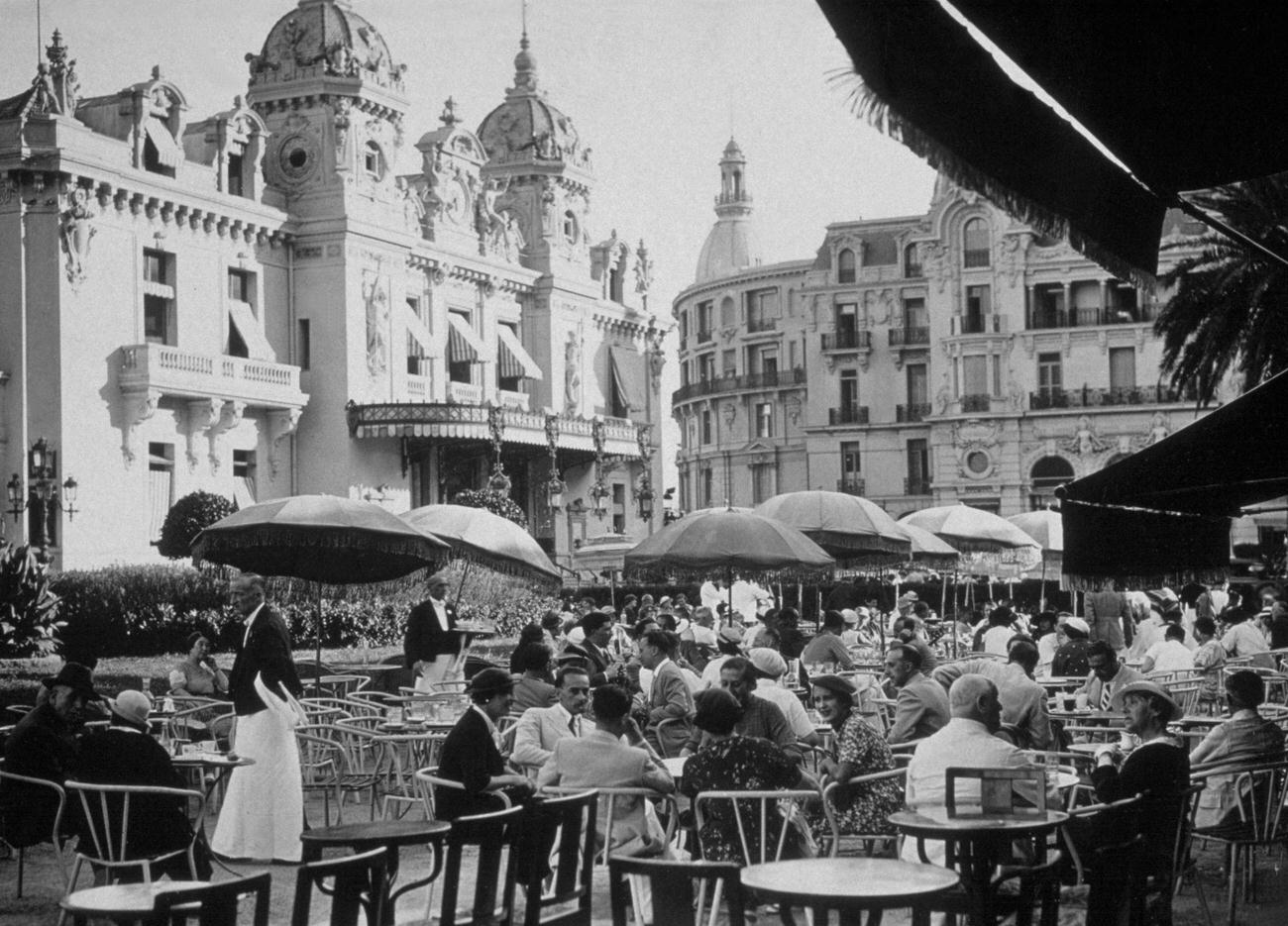
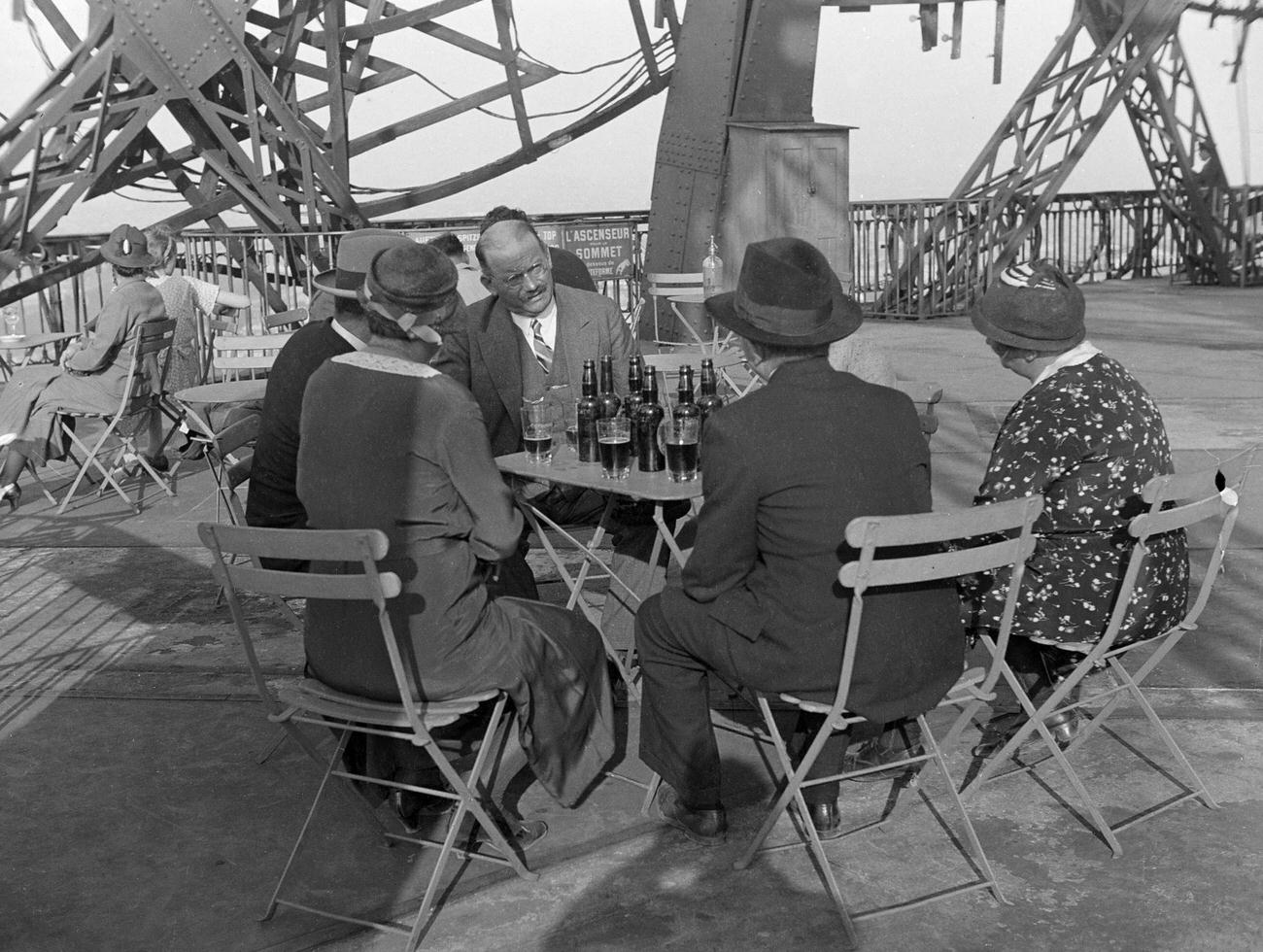
Tourism remained a consistent part of the cafe economy. Visitors from Britain, America, and across Europe came to Paris seeking the culture and atmosphere they had read about. By 1934, the Eiffel Tower’s surrounding cafes were well-established stops on any tourist’s itinerary — places to rest, take in the view, and feel briefly like a Parisian.
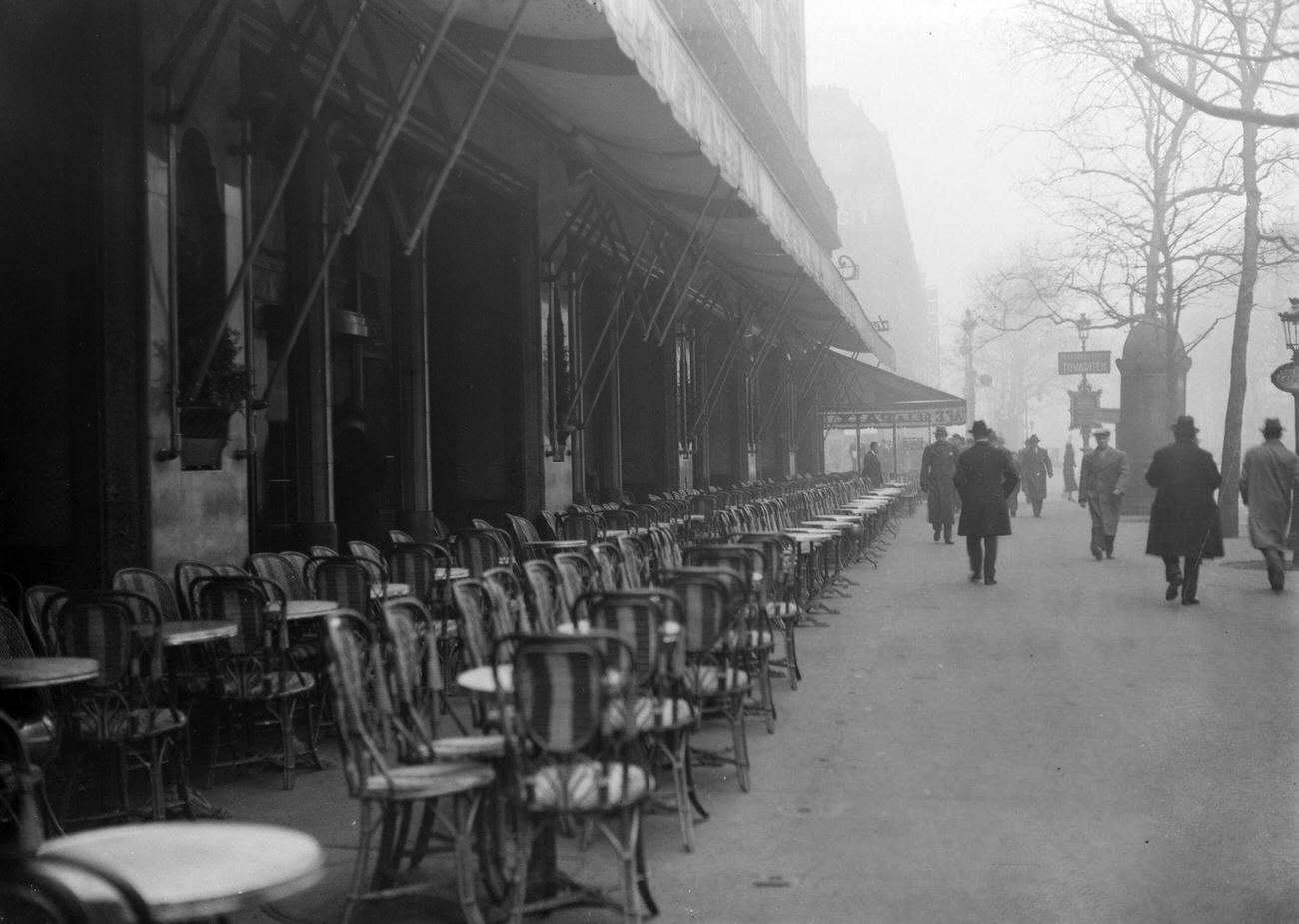
February 1934 was a turbulent month for Paris. On February 6, far-right leagues rioted near the Chamber of Deputies, leaving fifteen dead and hundreds injured. The political crisis that followed shook the French government. A photograph of the Café de la Paix terrace completely deserted that same month captured the atmosphere — streets emptied, the usual rhythms of city life interrupted by fear and instability.
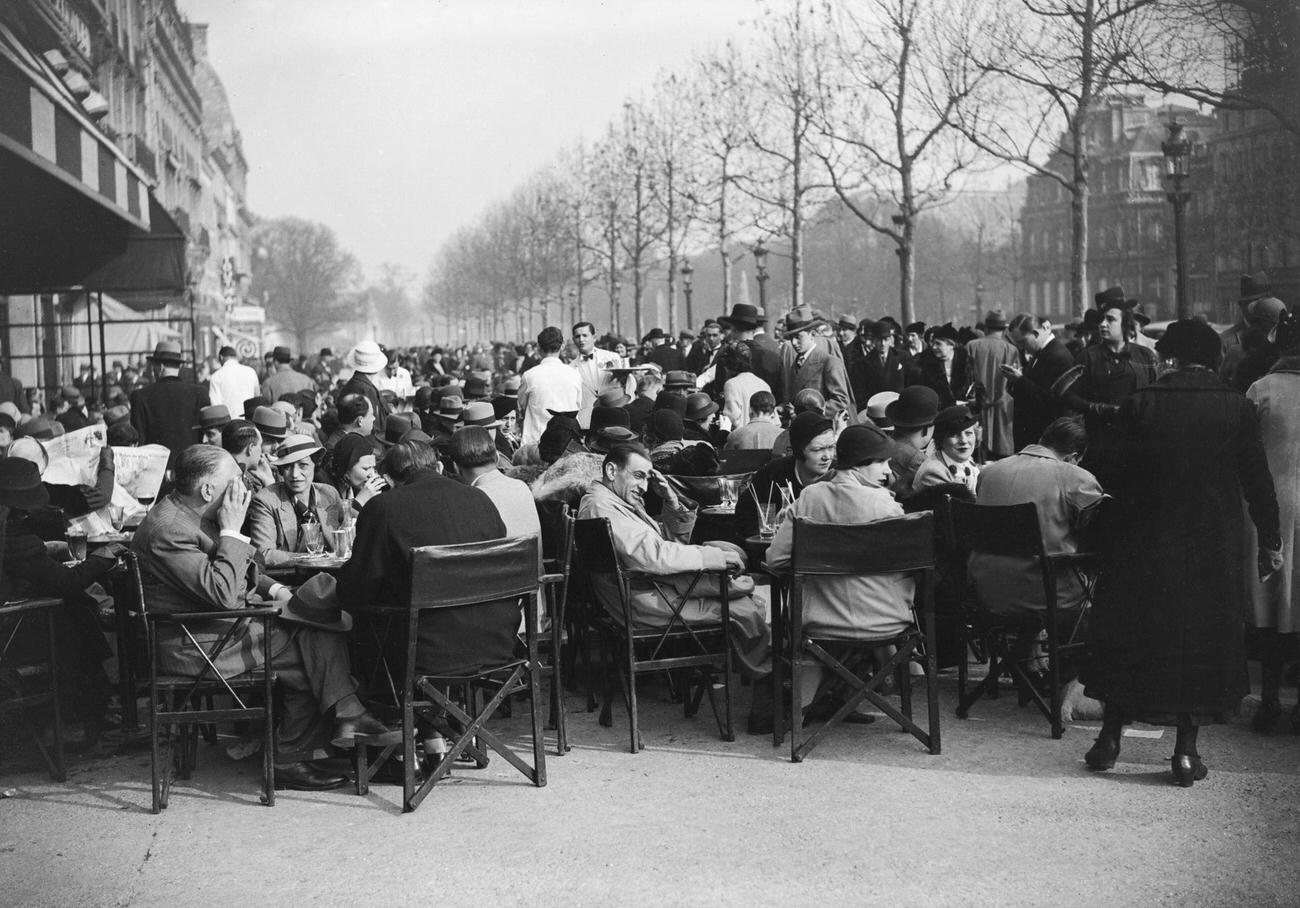
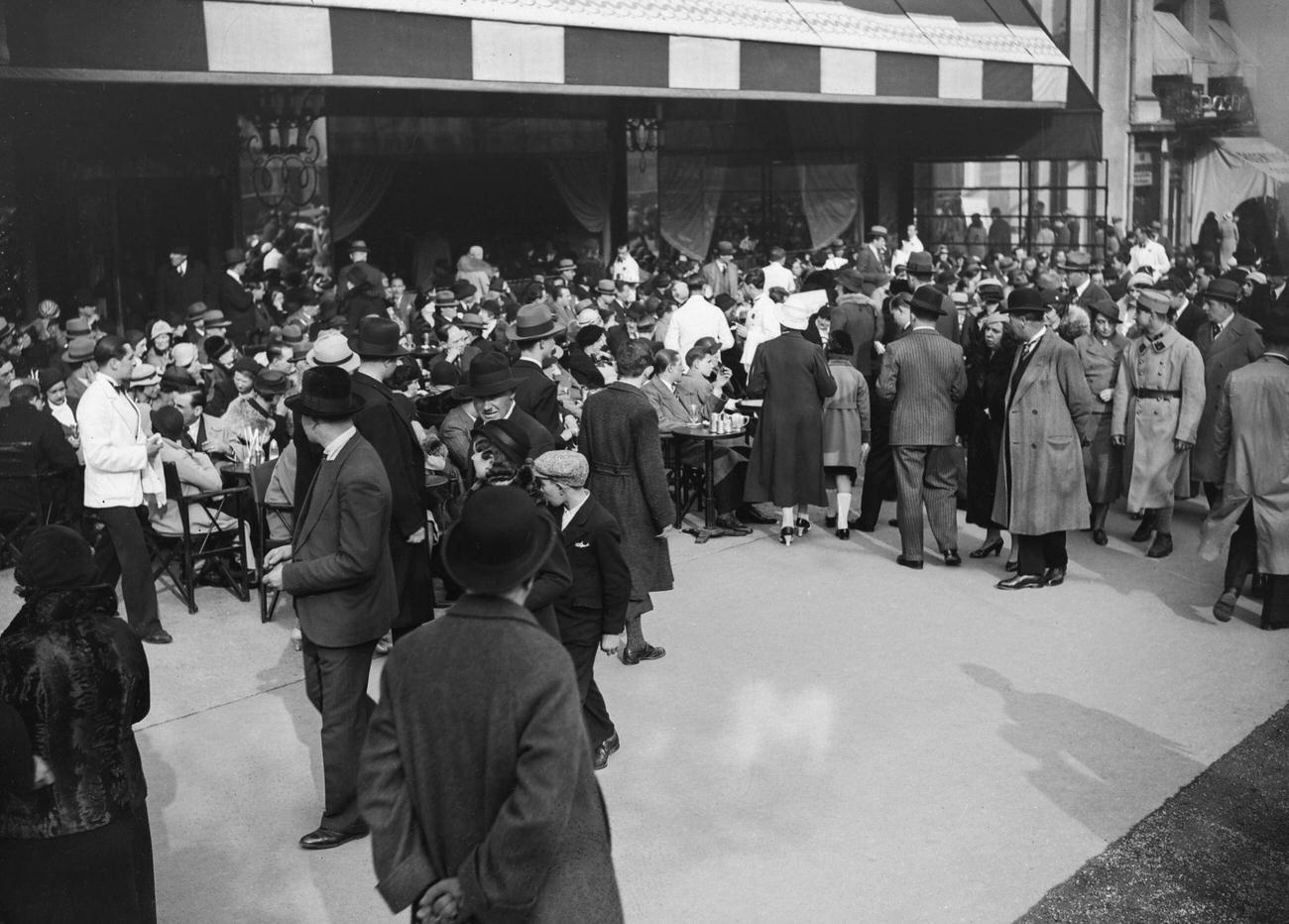
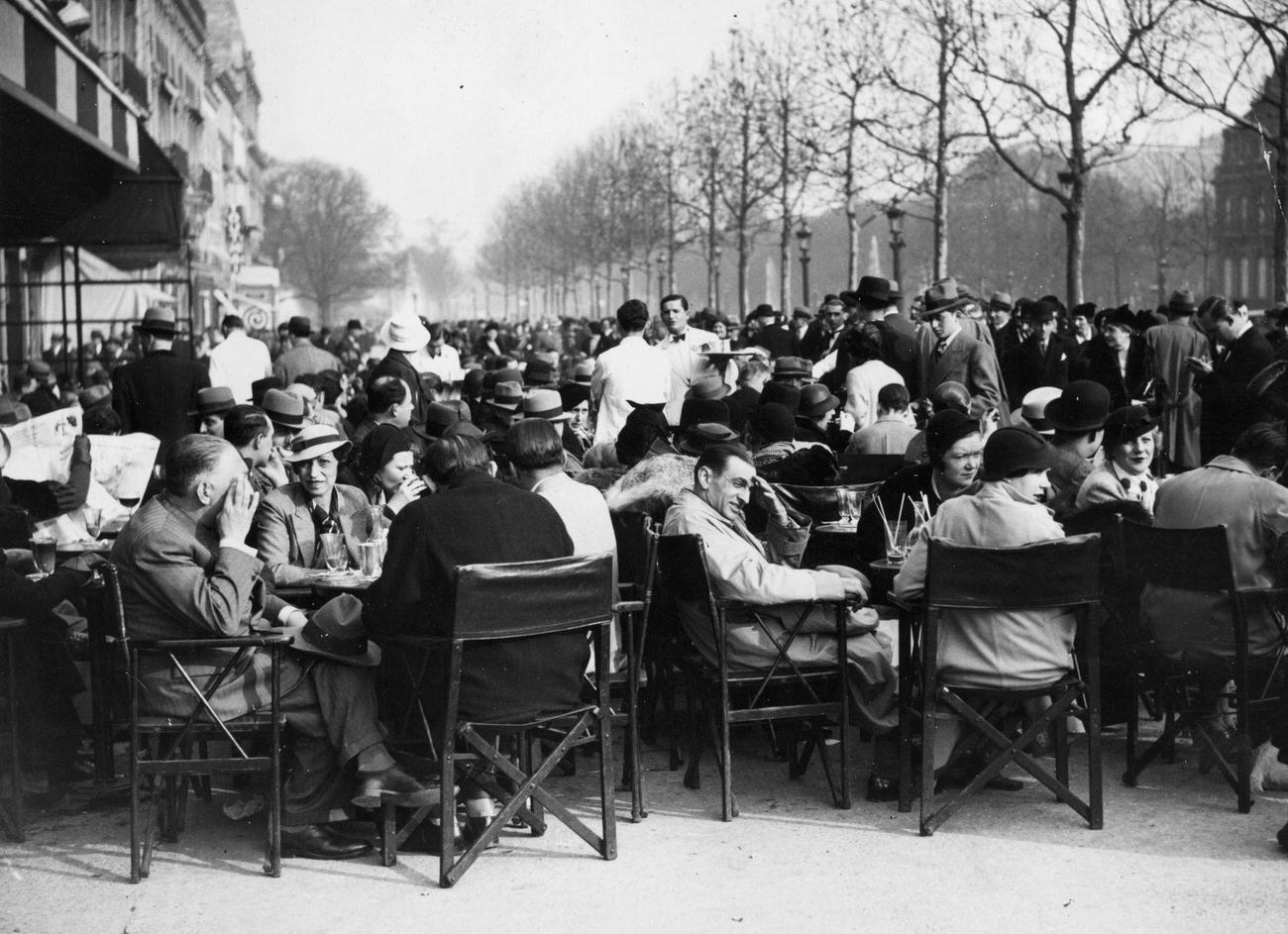
Two months after the February riots, the terraces were packed again. On Easter weekend — April 2 and 3, 1934 — crowds filled the Champs-Élysées cafes in the spring sunshine. Paris had a way of reasserting its normalcy. The terraces filled and emptied with the seasons and the crises, and then filled again.
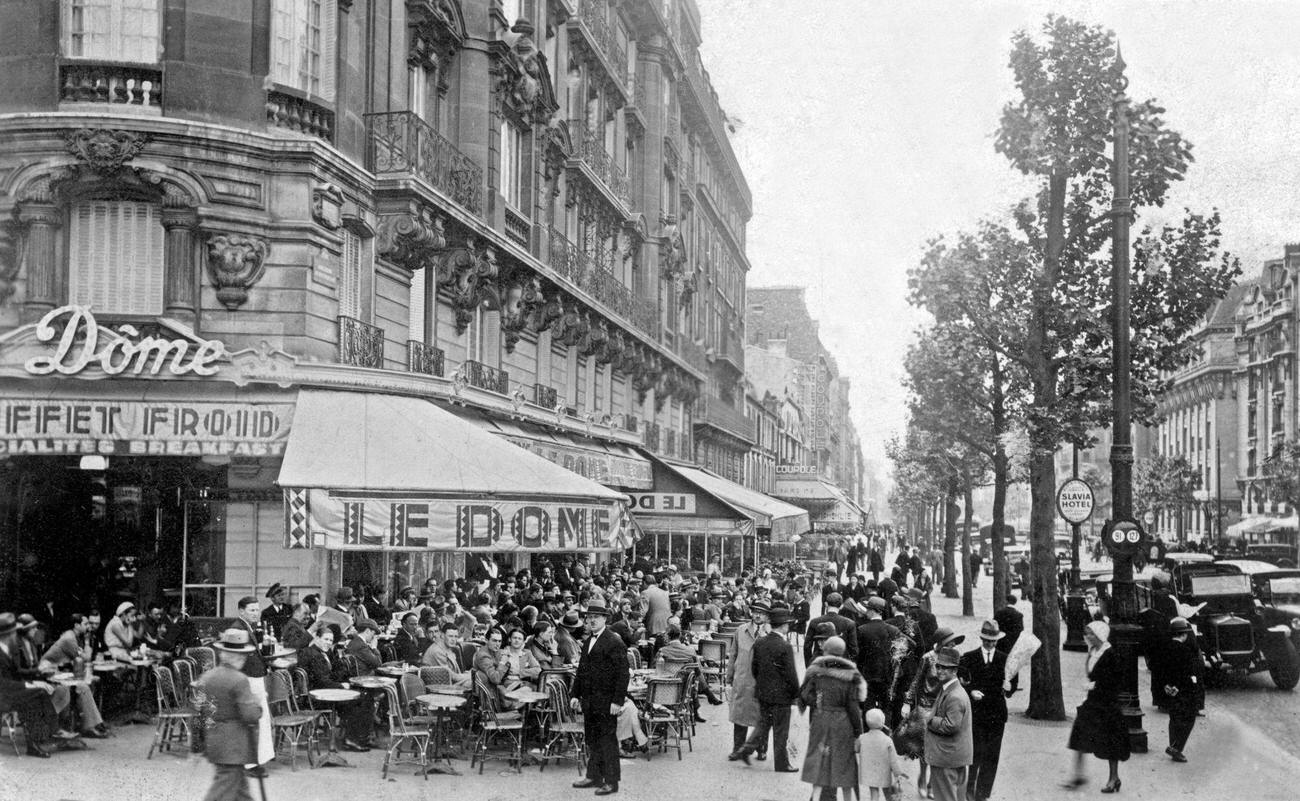
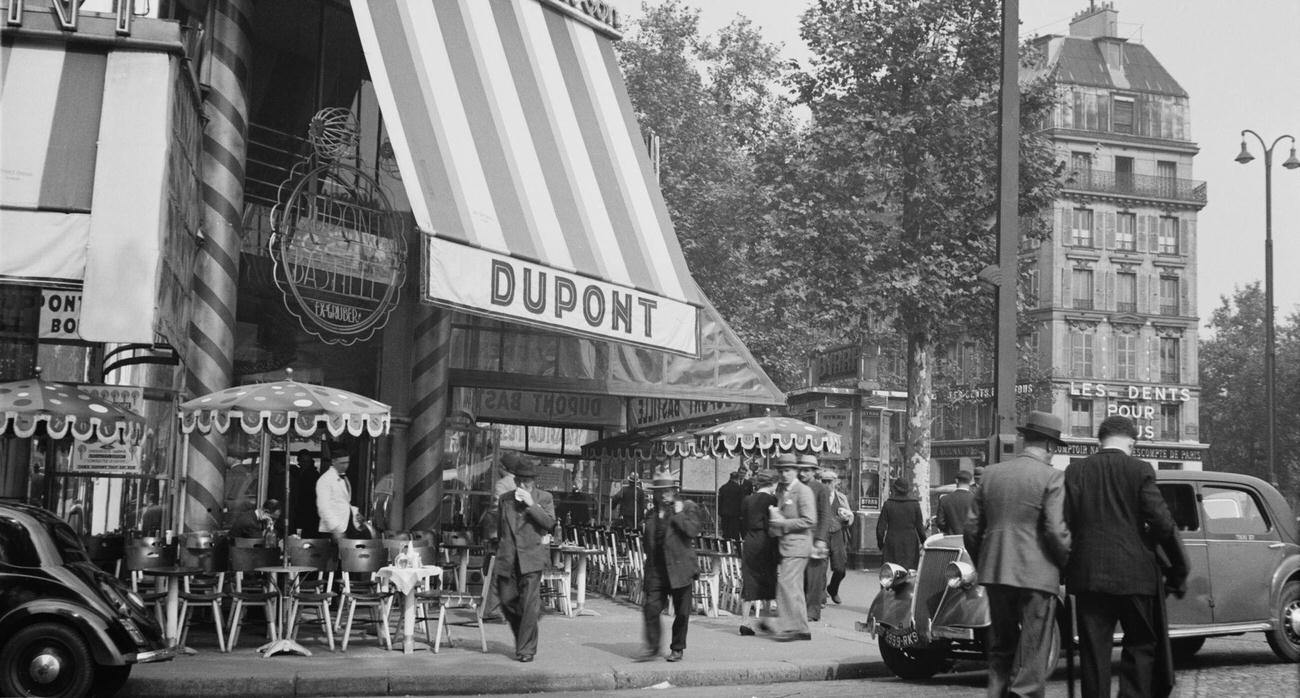
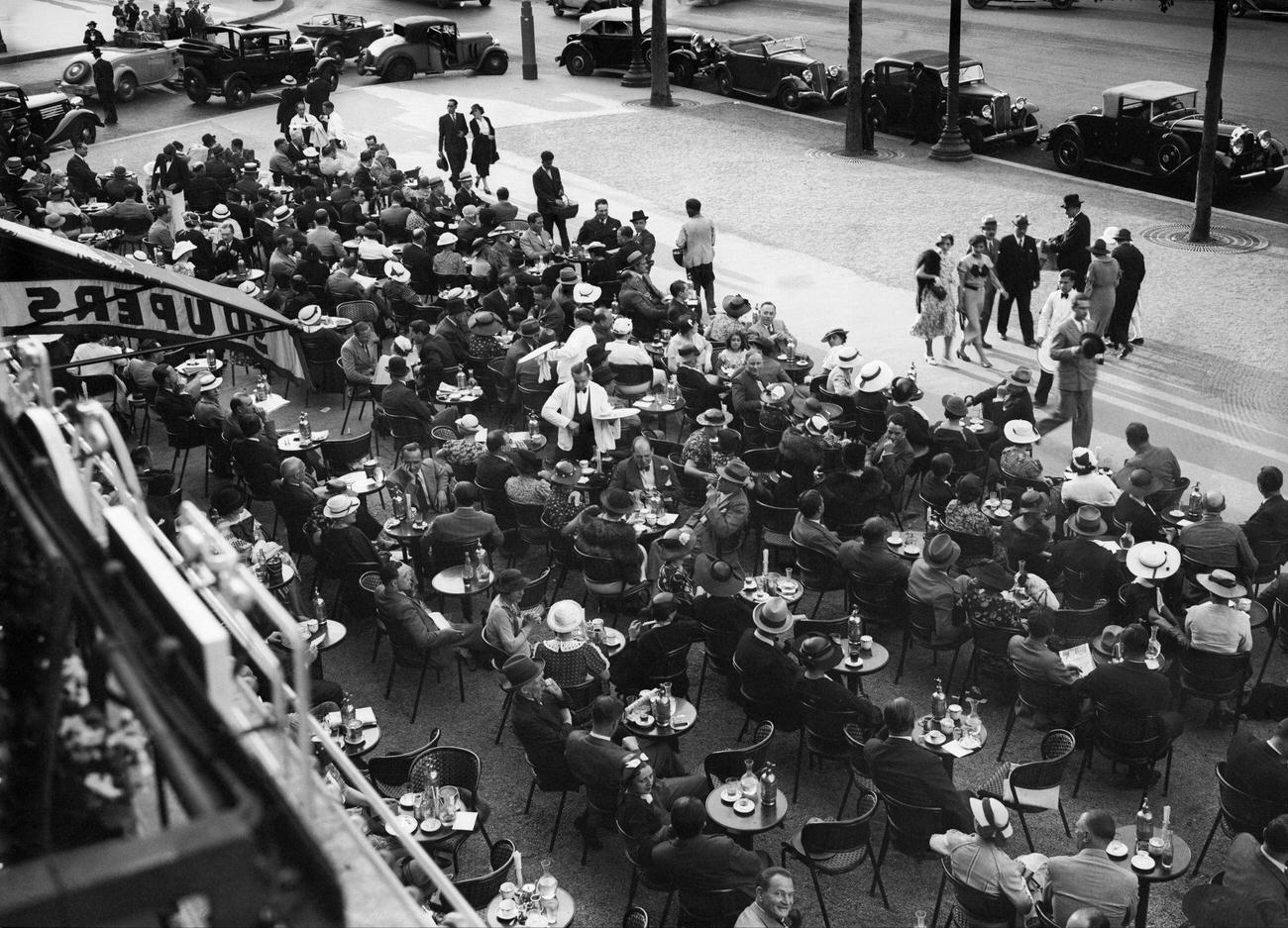
By the mid-1930s, Parisian cafes had become subjects of postcards and tourist photographs as much as news images. Le Dôme appeared on souvenir cards sold across the city. The cafe had transcended its function as a place to eat and drink — it had become a symbol of Paris itself, reproduced and exported around the world.
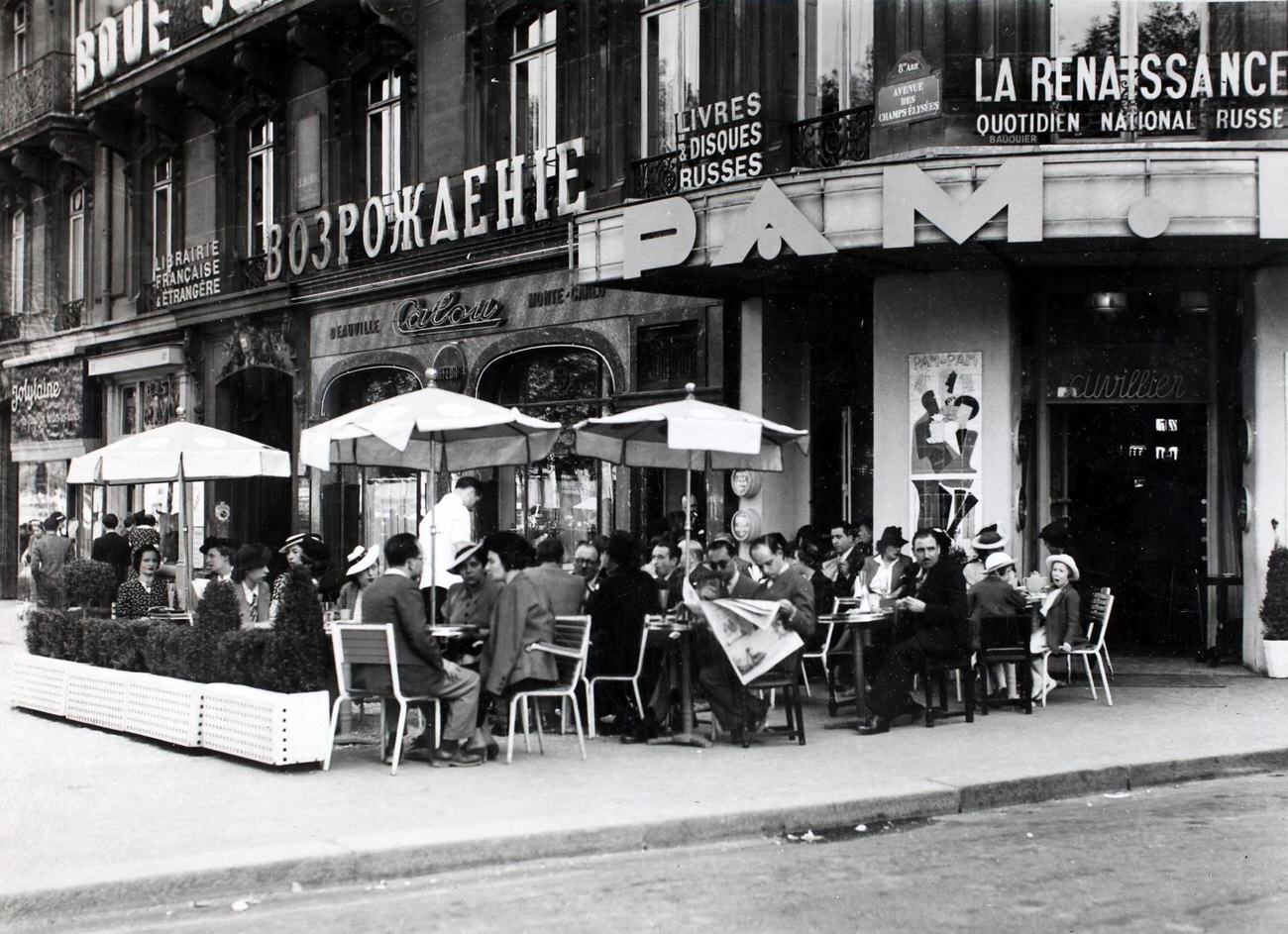
Paris in the 1930s was home to large communities of political exiles and refugees, particularly Russians who had fled after the 1917 revolution. The Pam Pam open-air cafe on the Champs-Élysées sat next to a Russian bookshop — a combination that spoke directly to this community. Cafes in Paris’s Russian émigré neighborhoods served as cultural anchors, places where language, memory, and community could be preserved far from home.
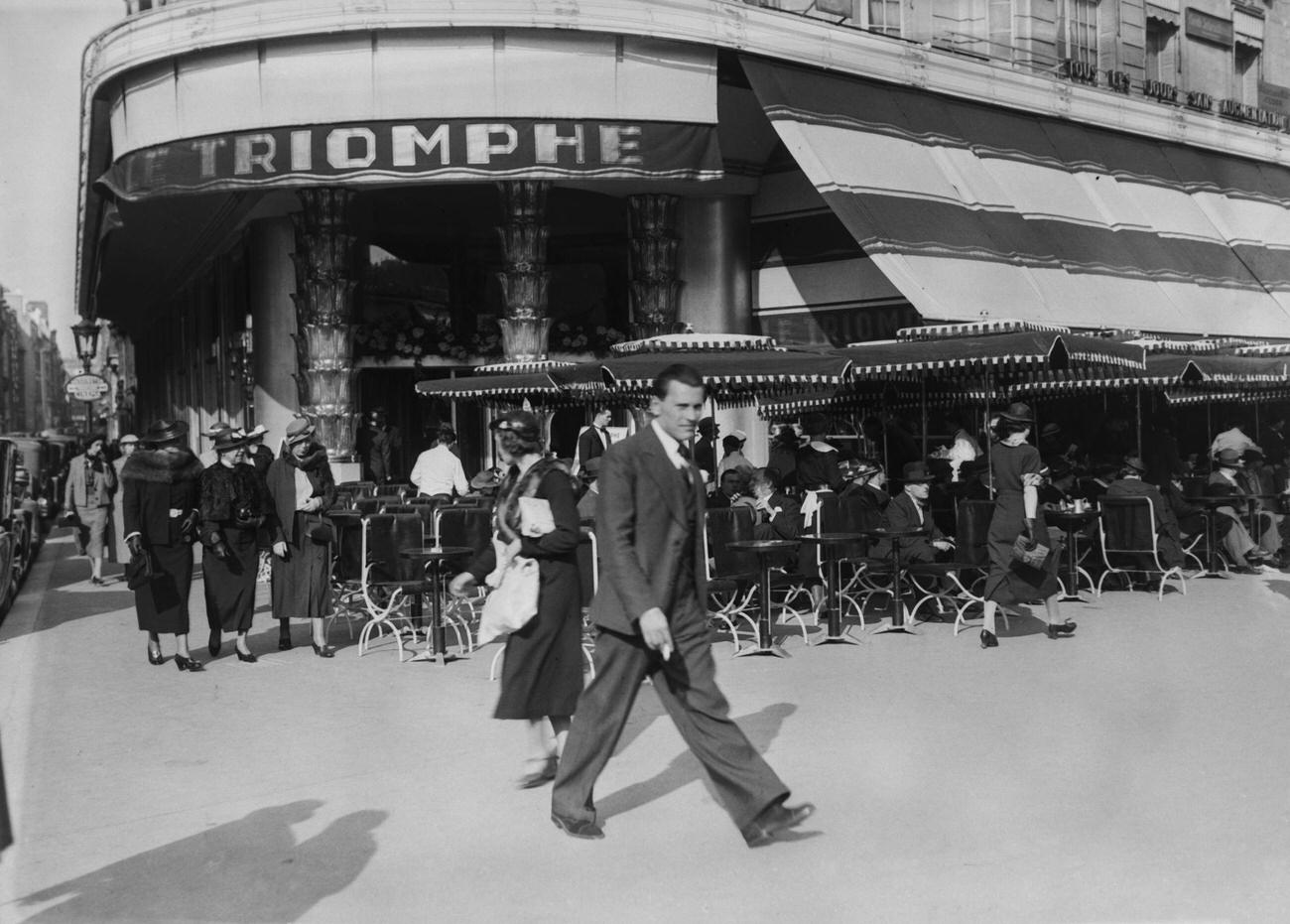
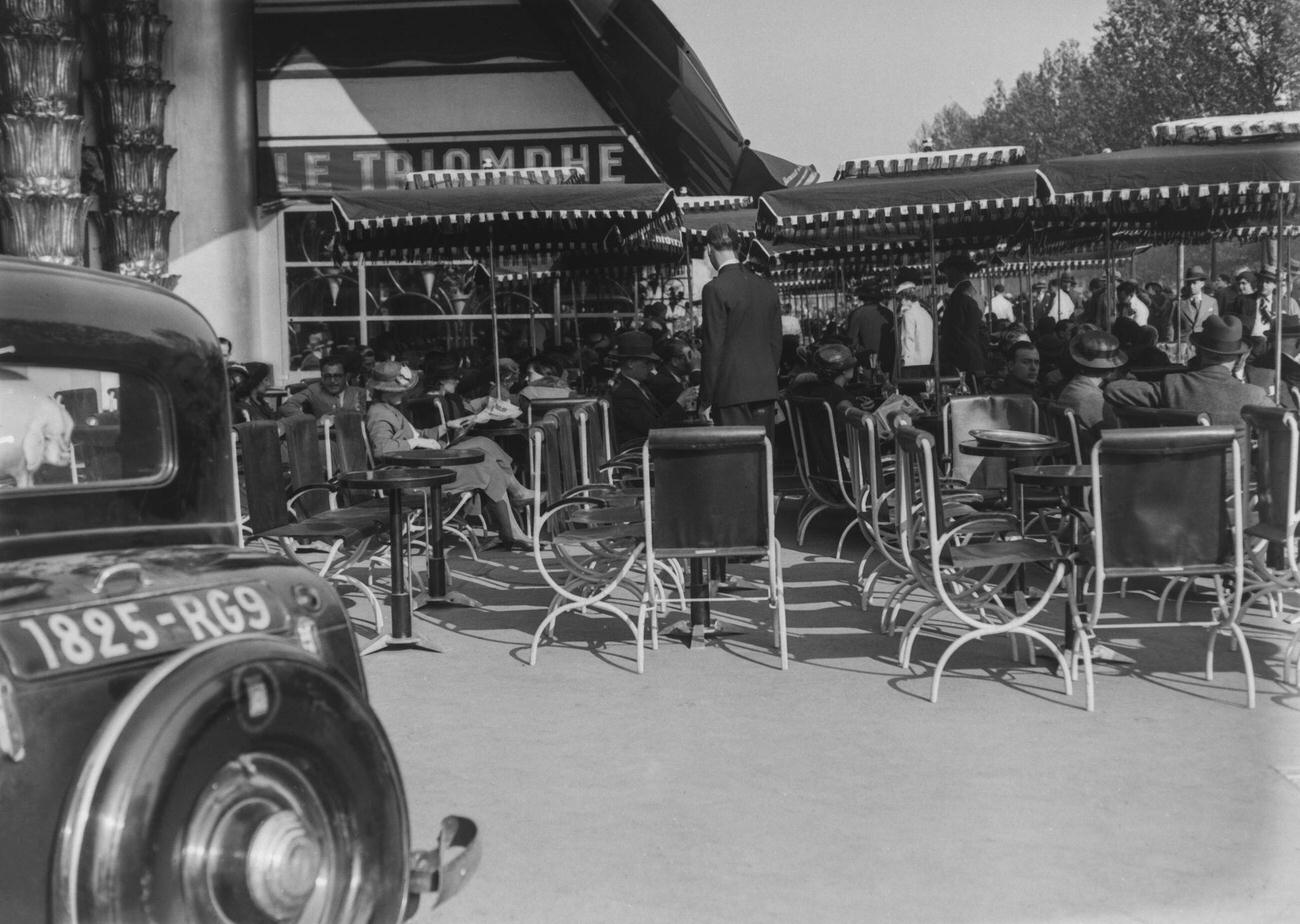
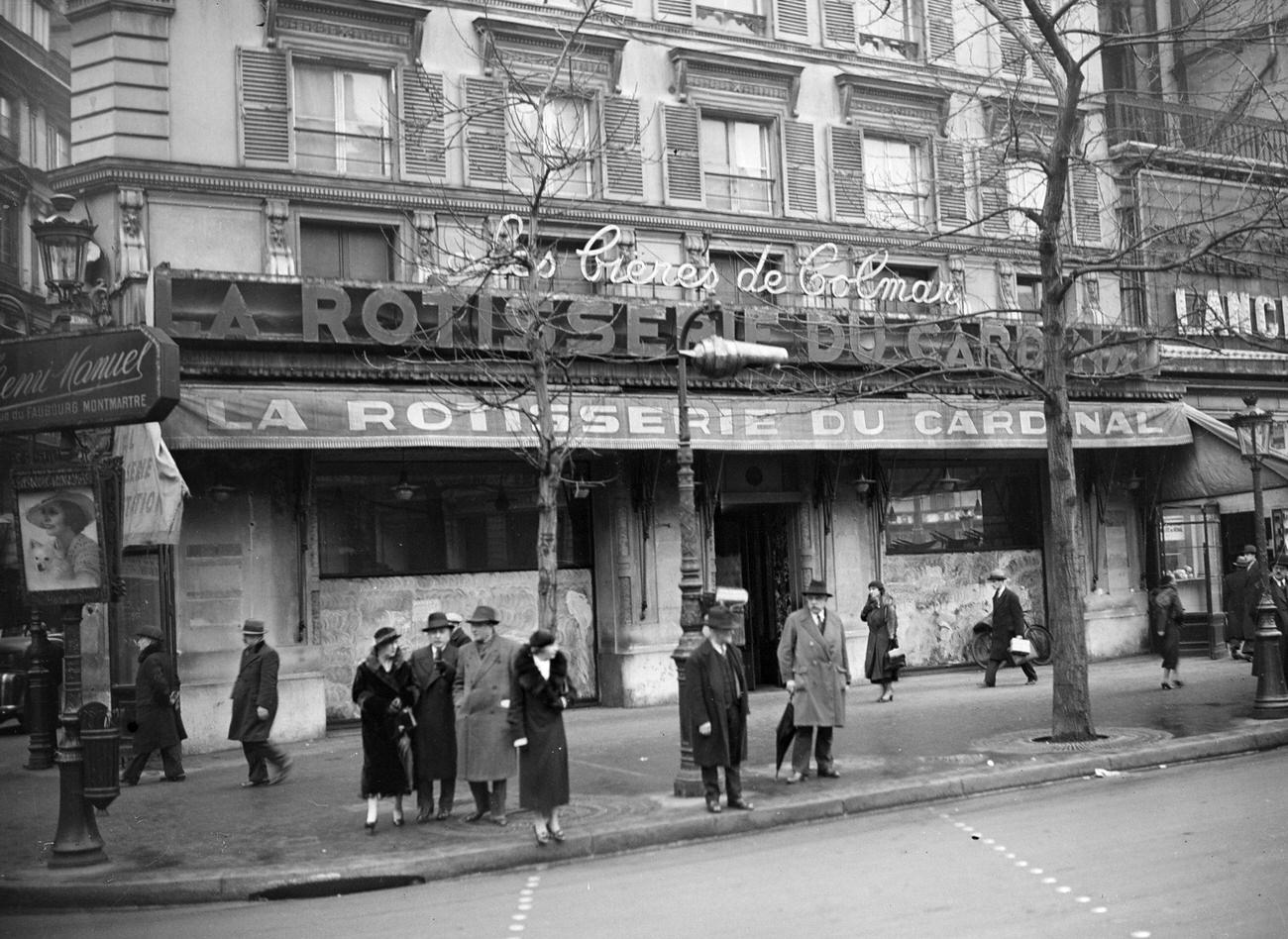
Not every cafe survived the decade. On February 2, 1935, La Rotisserie du Cardinal on the Paris boulevards closed its doors. The economic pressures of the Depression claimed establishments that had served the city for years. Each closure left a gap in the neighborhood it had occupied — a corner or a stretch of pavement that suddenly had one less reason to gather.
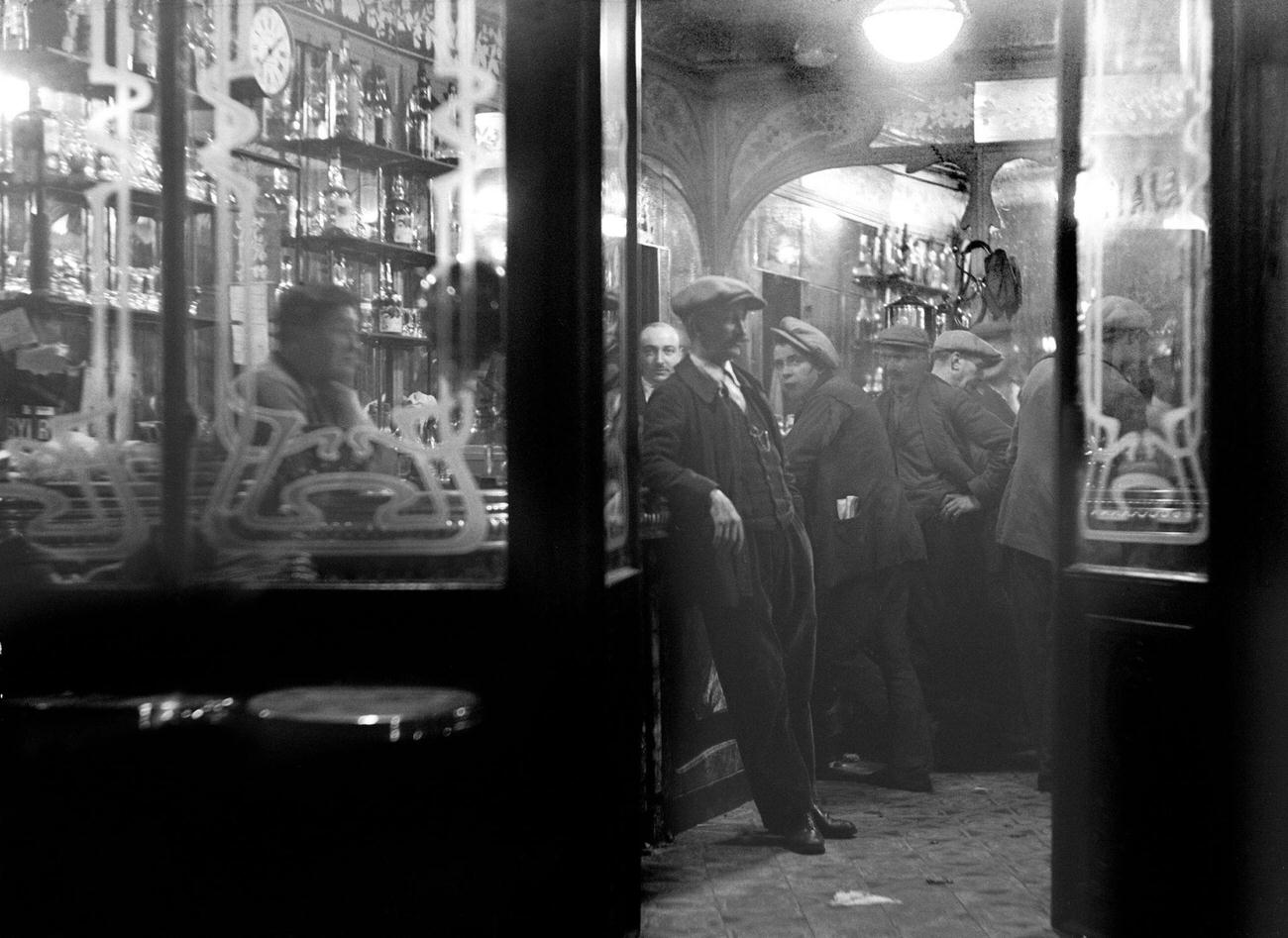
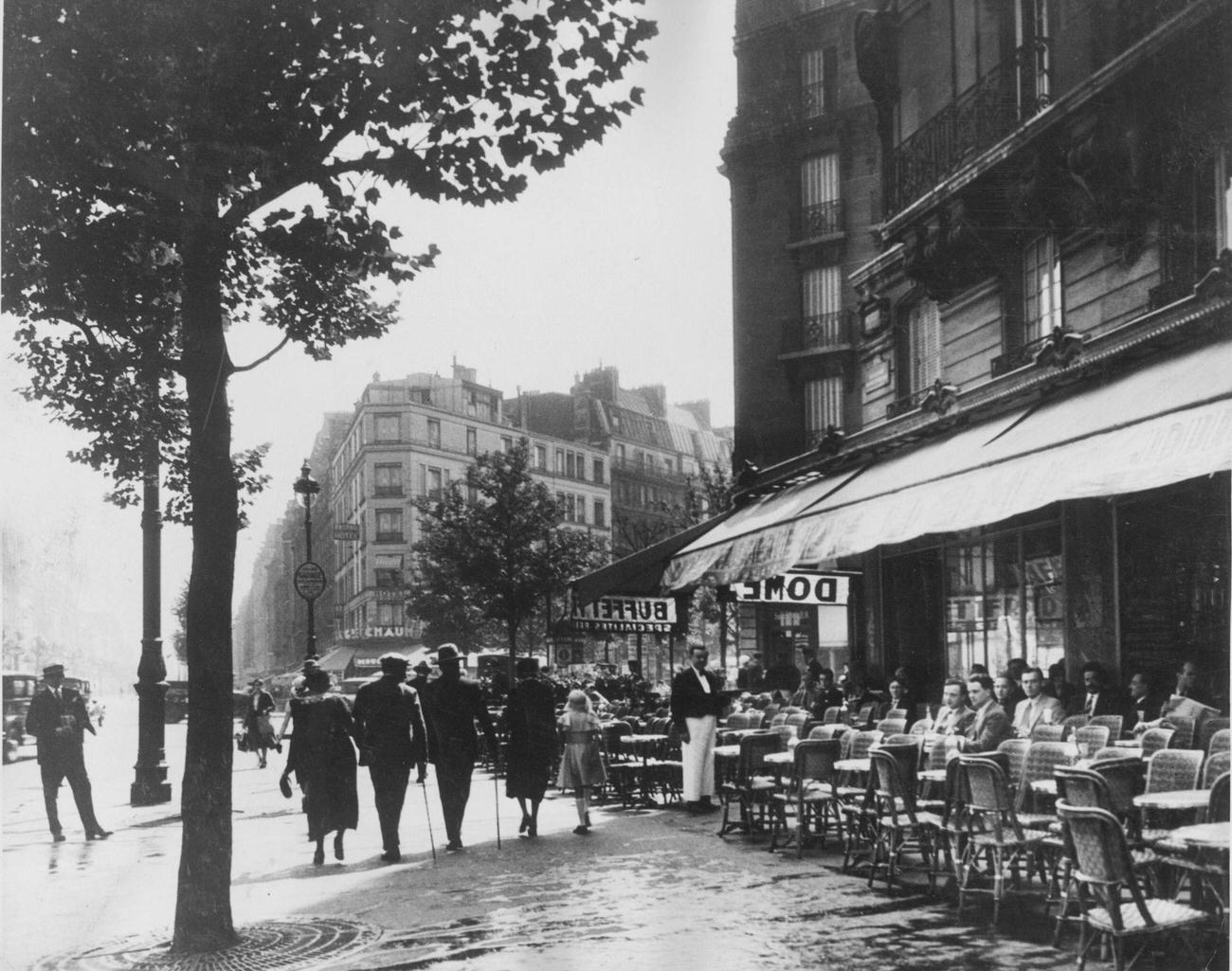
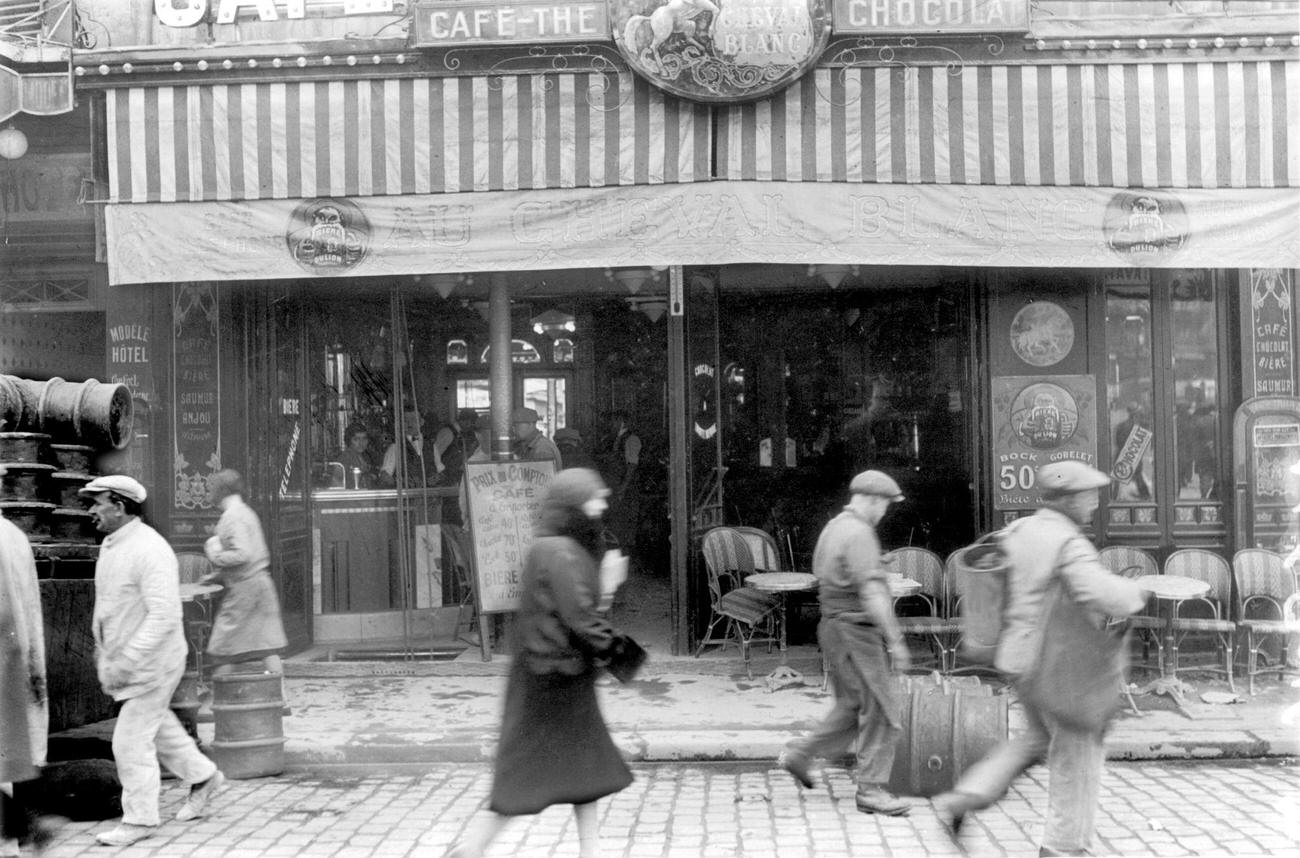
The Halles district — Paris’s central market neighborhood — had its own cafe culture, shaped by the rhythms of the market. Workers arrived in the early hours, and the cafes opened to meet them. By mid-morning, when the market wound down, the same establishments shifted to serve a different crowd. The ‘typical street cafe’ photographed in September 1936 showed this everyday side of Parisian cafe life — ordinary, unhurried, unremarkable in the best possible way.
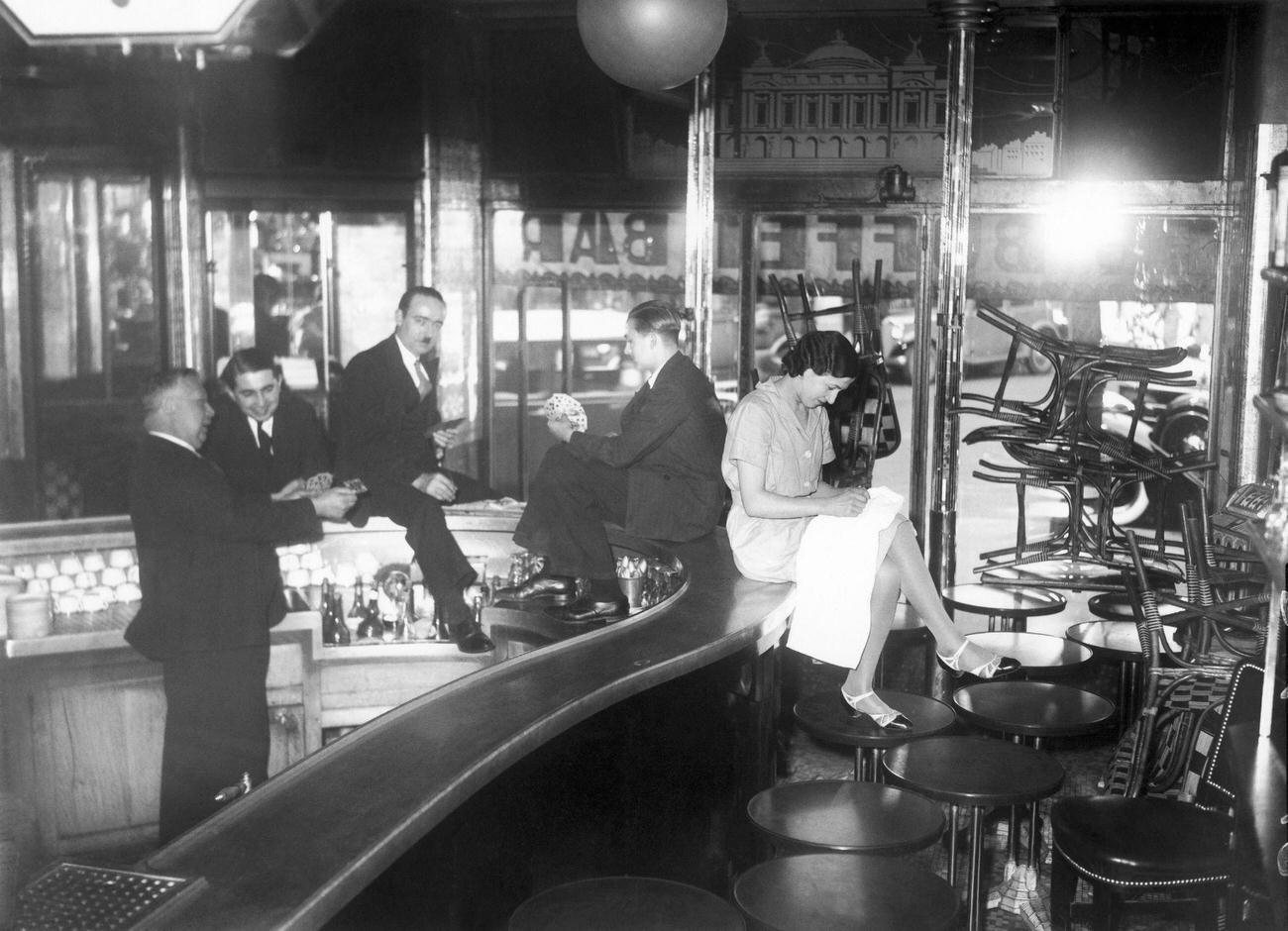
The summer of 1936 was a watershed moment for French labor. The Popular Front government, elected in May, introduced the Matignon Agreements, which guaranteed paid leave and the 40-hour workweek. Waves of strikes swept through Paris. On October 3, 1936, cafe and restaurant employees walked out, demanding fair wages and the protections now enshrined in law. The strike made visible the workers who kept the terraces running — the waiters and kitchen staff whose labor underpinned the city’s famous cafe culture.
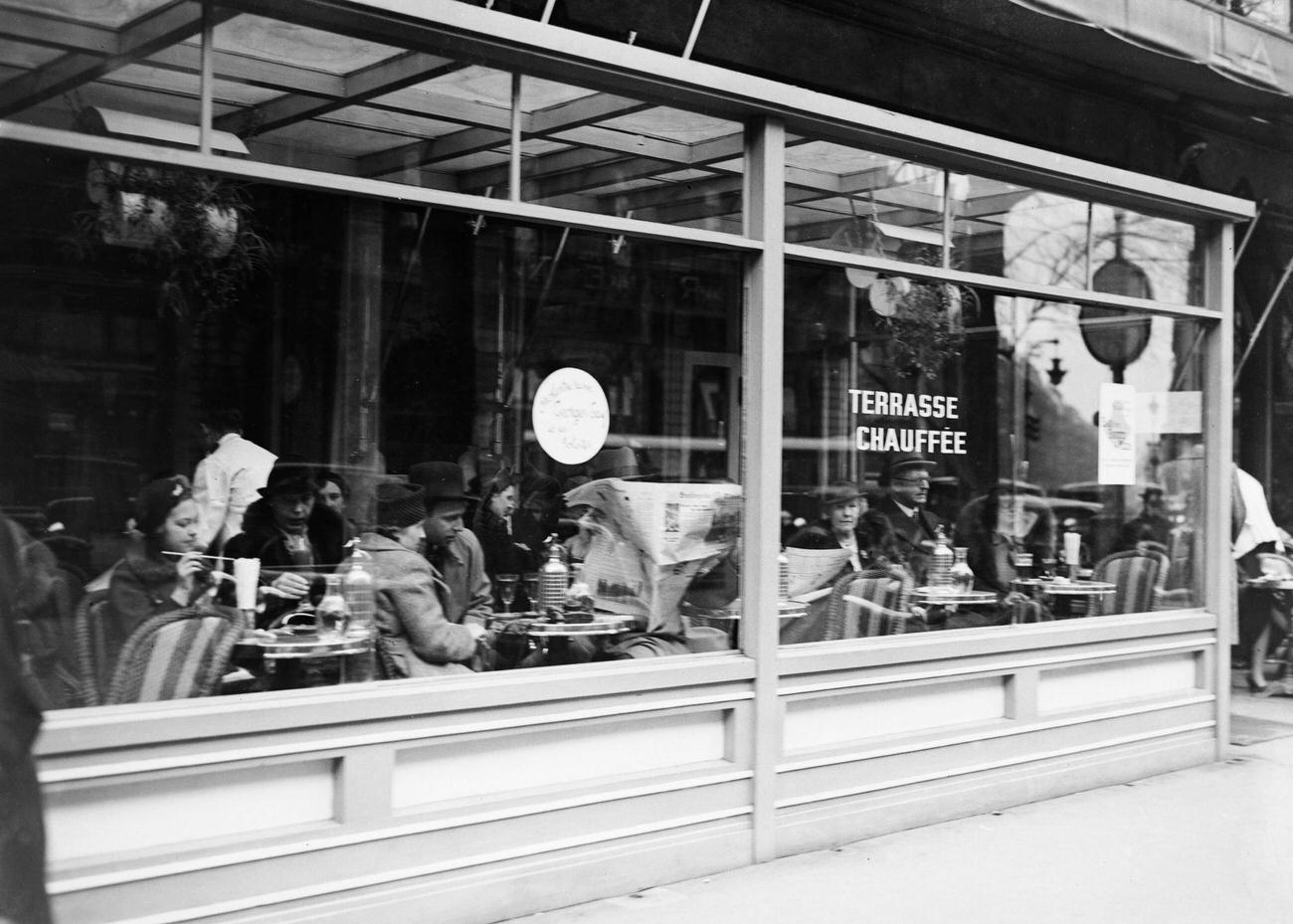
By 1937, the year of the Paris International Exposition, the city was putting its best face forward to the world. Cafes along the major boulevards were busy with international visitors. Some establishments had invested in covered, heated terraces — a practical innovation that extended the outdoor season and gave patrons shelter without sacrificing the open-air atmosphere that made Parisian cafes distinctive.
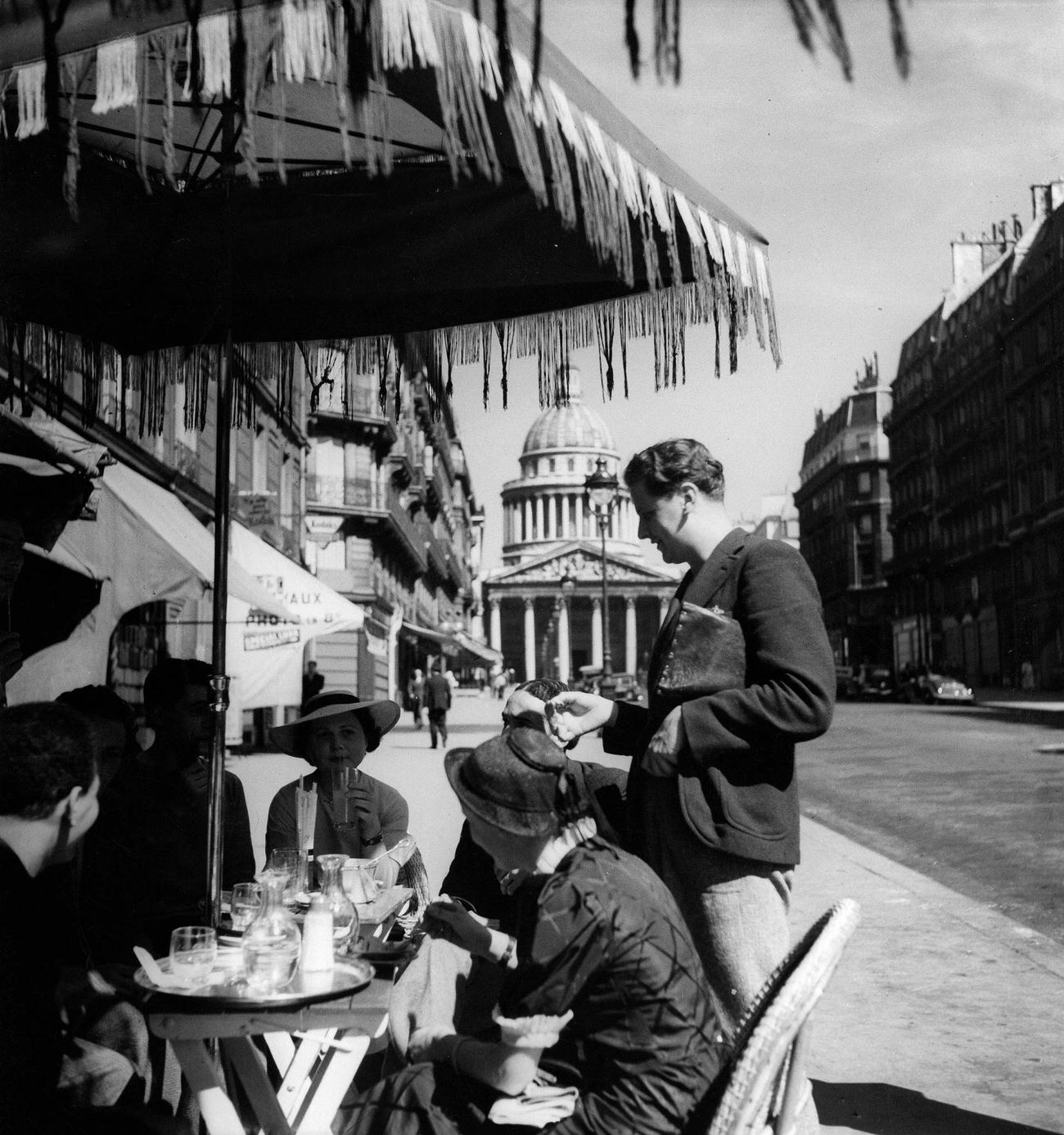
Cafe Capulade, near the Place de la Contrescarpe in the Latin Quarter, was a student institution. On March 18, 1938 — just days after Germany annexed Austria — students packed its tables. The Anschluss had sent a shock through European capitals, and Paris’s university cafes buzzed with alarm. For students who had grown up hearing about the last war, the news from Vienna felt like a starting gun.
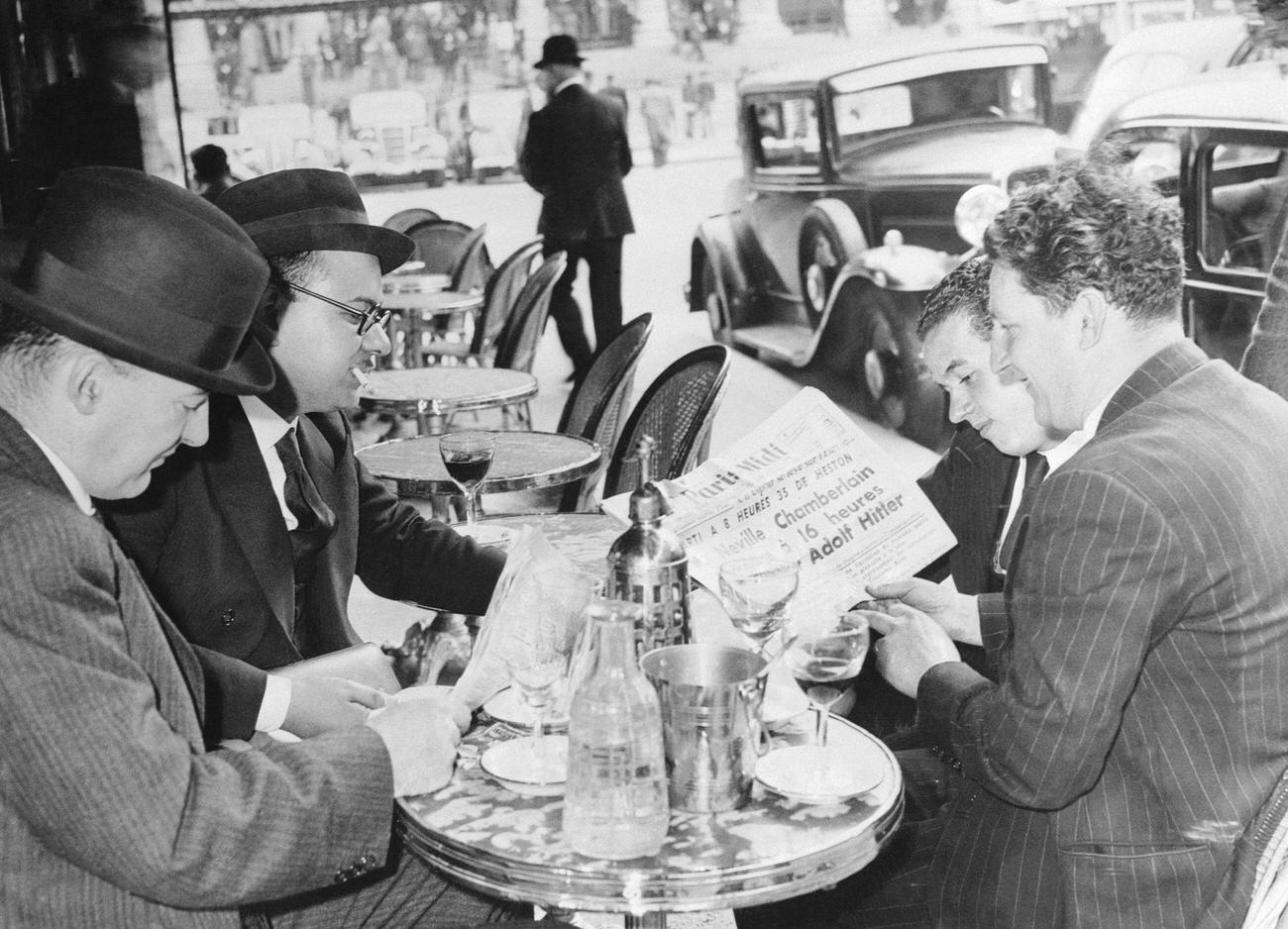
As 1938 wore on, the political conversations in Parisian cafes grew more urgent. The Munich Agreement in September briefly quieted fears of immediate war, but the relief was short-lived. By the late 1930s, photographs show cafe patrons hunched over newspapers, gesturing at headlines, and arguing in low voices. The discussions that had once centered on art and literature had turned almost entirely to the question of war.
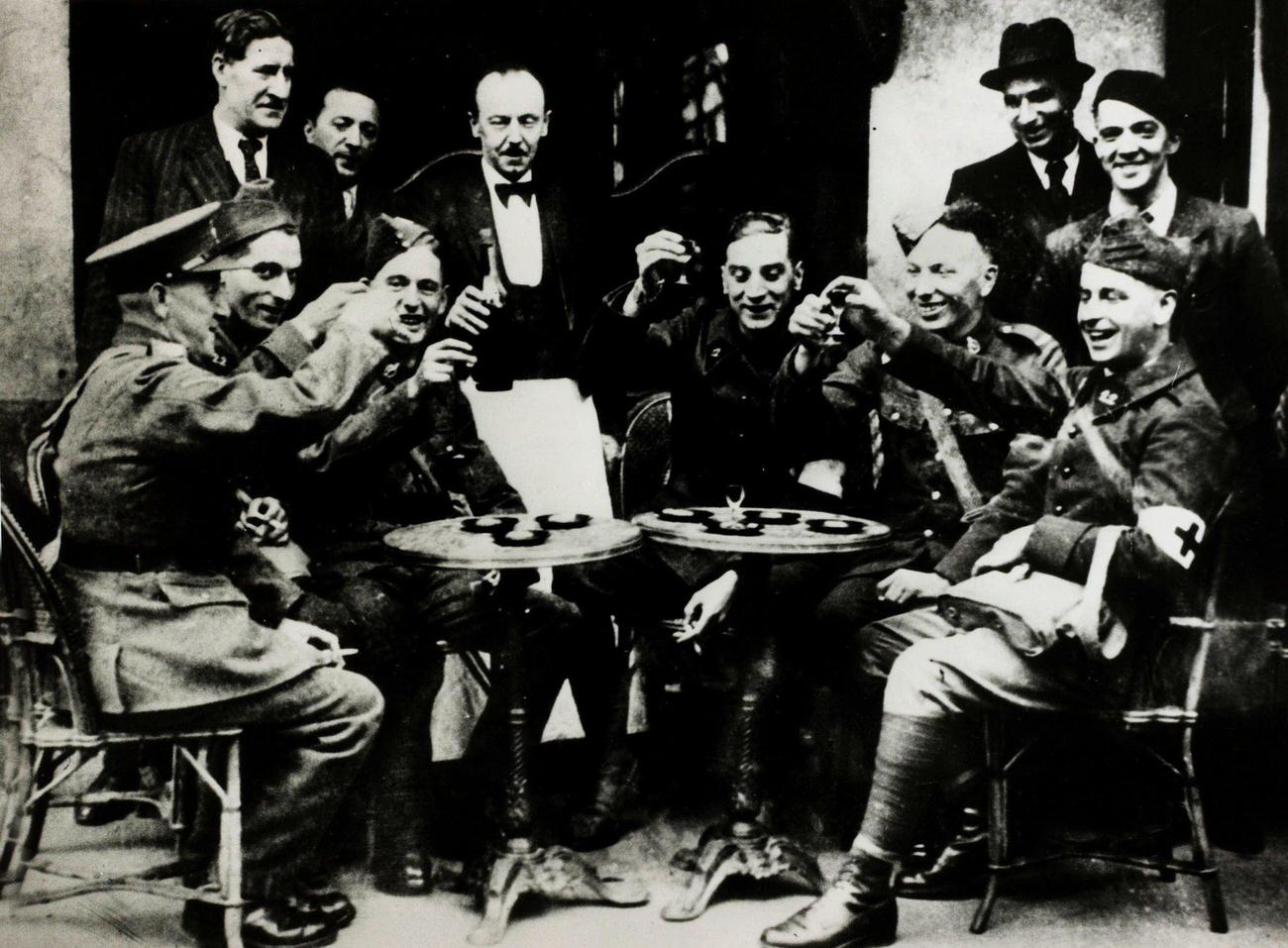
When France and Britain declared war on Germany in September 1939, Allied soldiers appeared on the streets of Paris. A photograph from that year shows French and British troops raising glasses together at a Paris cafe — a toast that carried equal measures of defiance and uncertainty. The cafes that had spent a decade absorbing the world’s anxieties now sat at the edge of the conflict that had been building all along.
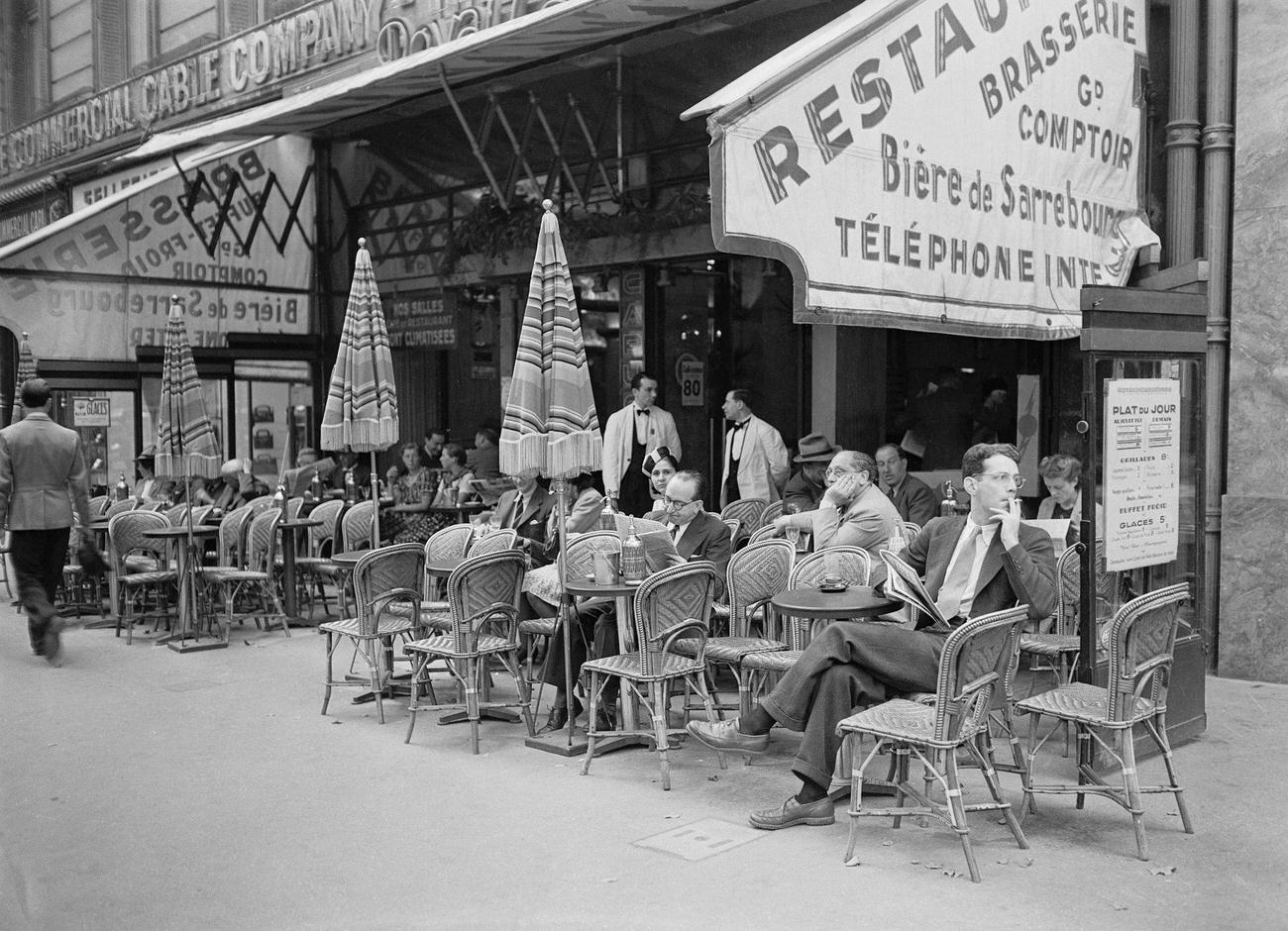
Even in the final months before the war reshaped the city, the sidewalk cafes of Paris retained their familiar look. Chairs faced outward toward the street. Waiters moved between tables. Newspapers were folded and refolded. The city’s cafe culture had absorbed the Depression, the strikes, the riots, and the rising dread of another European war — and it still looked, from the outside, exactly like itself.