In 1935, French photojournalist Gaston Paris turned his lens on the bustling funfairs of Paris, producing a vivid body of work that captures an often-overlooked slice of everyday life in interwar France. Paris (1903–1964) was a sharp-eyed documentarian, and these photographs reflect both his technical skill and his instinct for human detail. The crowds, the performers, the games, the caravans — he caught it all with an intimacy that few photographers of his era matched.
For most of the 1930s, Gaston Paris served as the sole salaried photographer at VU, the influential weekly magazine founded by Lucien Vogel in 1928. Working alongside renowned names such as André Kertész, Robert Capa, Man Ray, Germaine Krull, Martin Munkacsi, and Laure Albin-Guillot, he developed a bold visual style. He also contributed surrealist-influenced photo series to Detective magazine from the 1930s through the 1950s, illustrating stories of gangsters and femmes fatales. After his death, the Roger-Viollet agency acquired his entire archive, preserving this remarkable collection for posterity.
The Parisian funfair was a central part of working-class leisure culture in the 1930s. Events like the Foire du Trône drew enormous crowds from across the city and its surrounding areas. These fairs offered an escape — rides, games, sideshow acts, food vendors, and live music all packed into a charged, noisy atmosphere. Gaston Paris documented both the spectacle and the quieter, behind-the-scenes reality of the people who made it run.
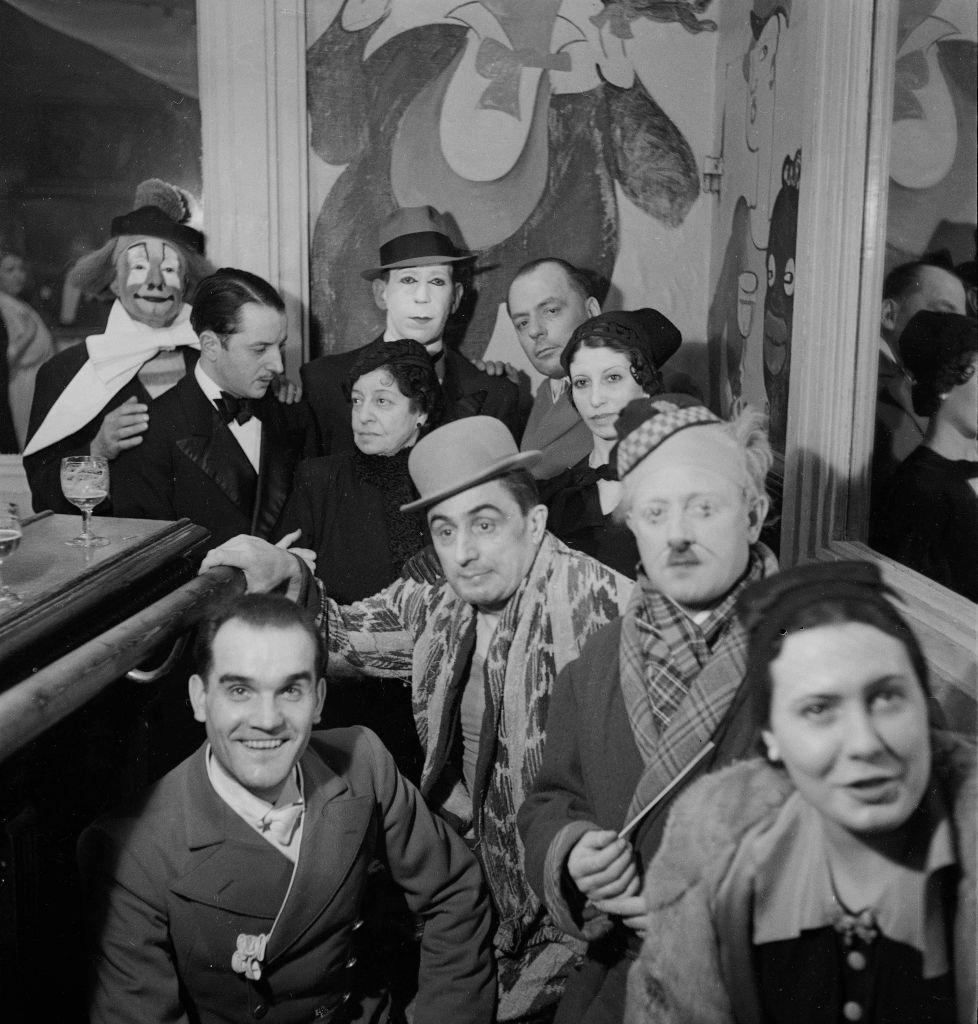
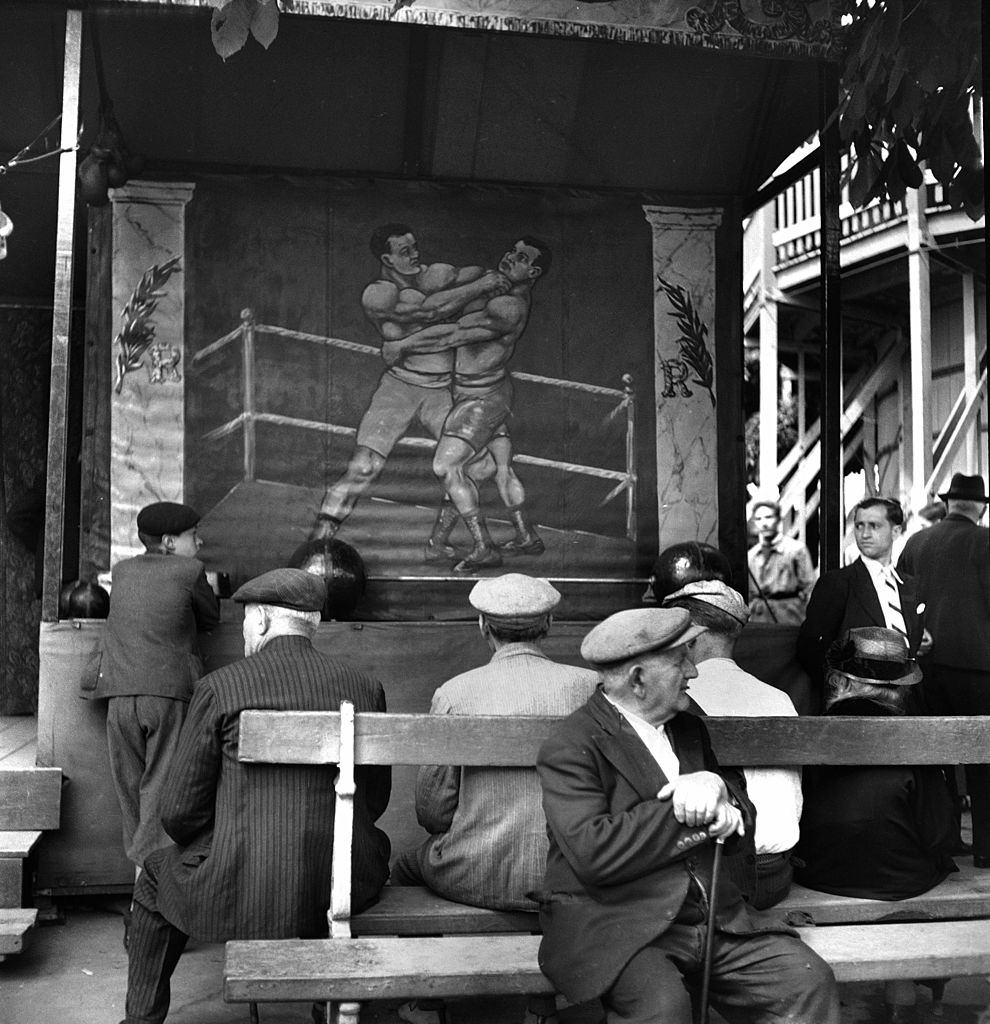
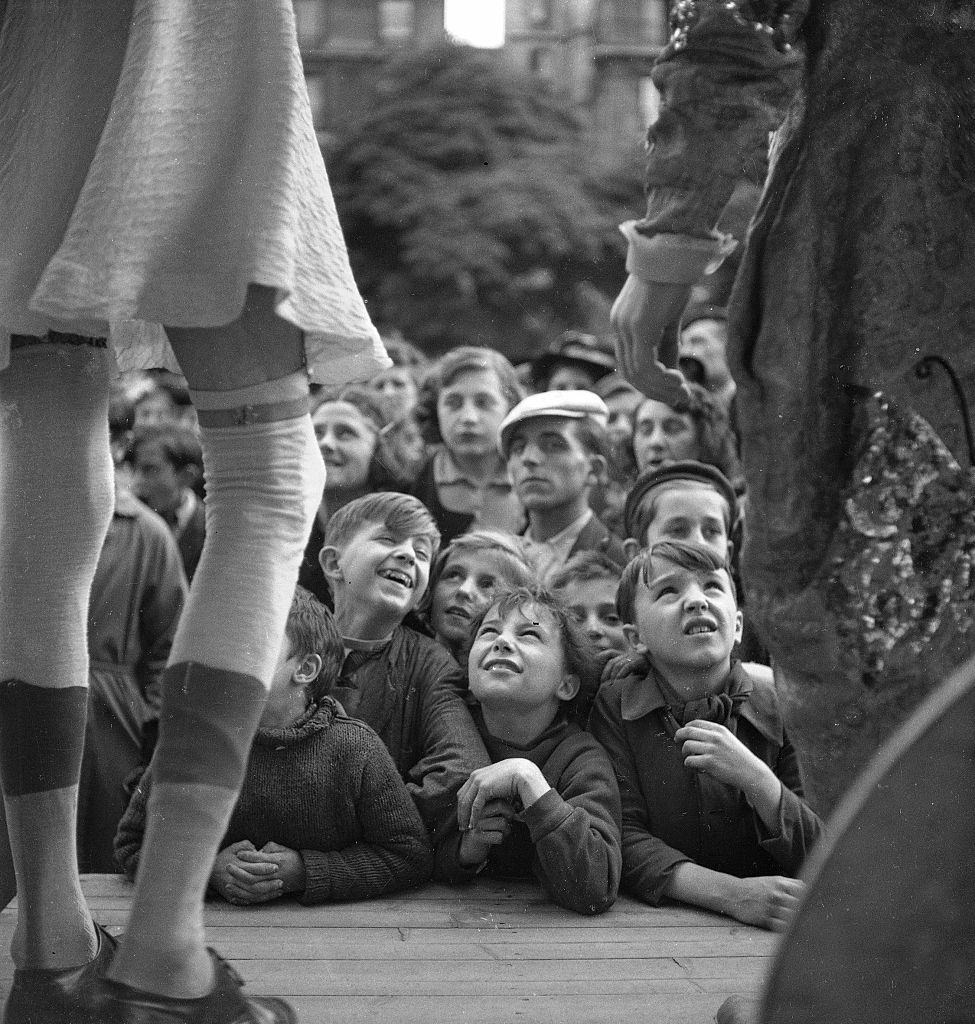
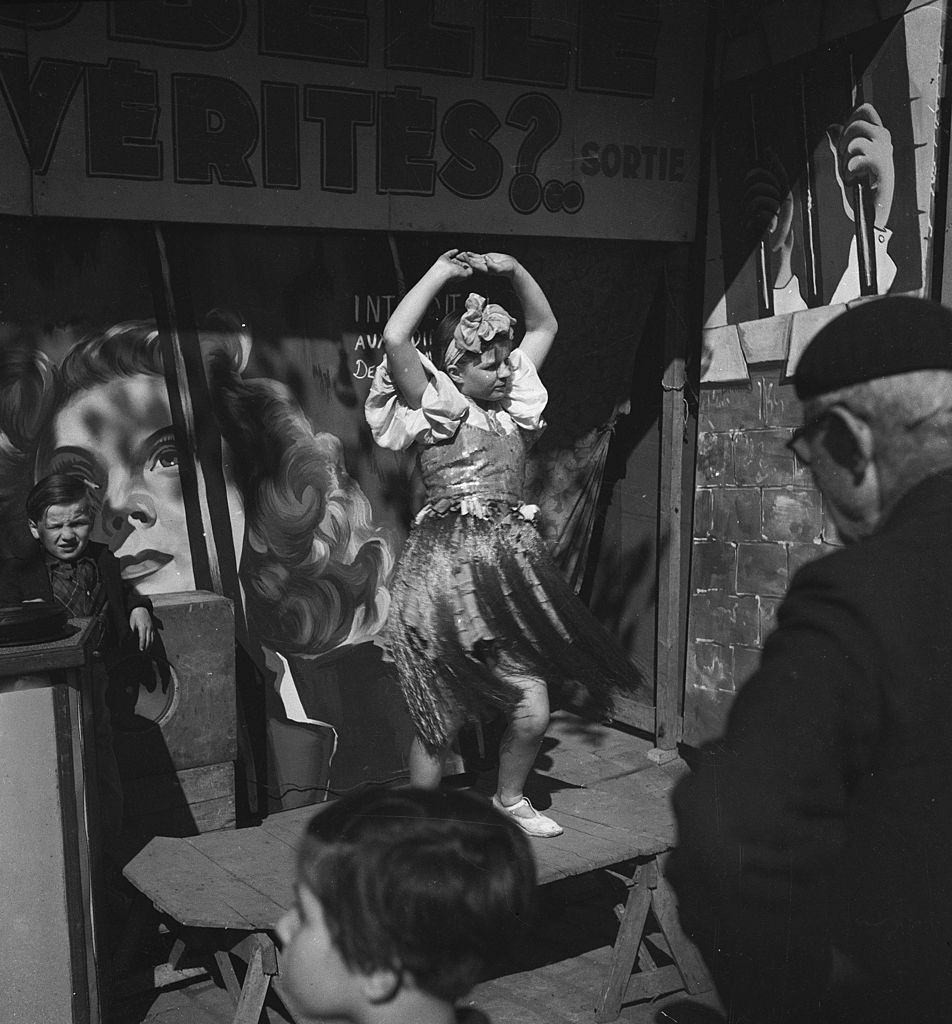
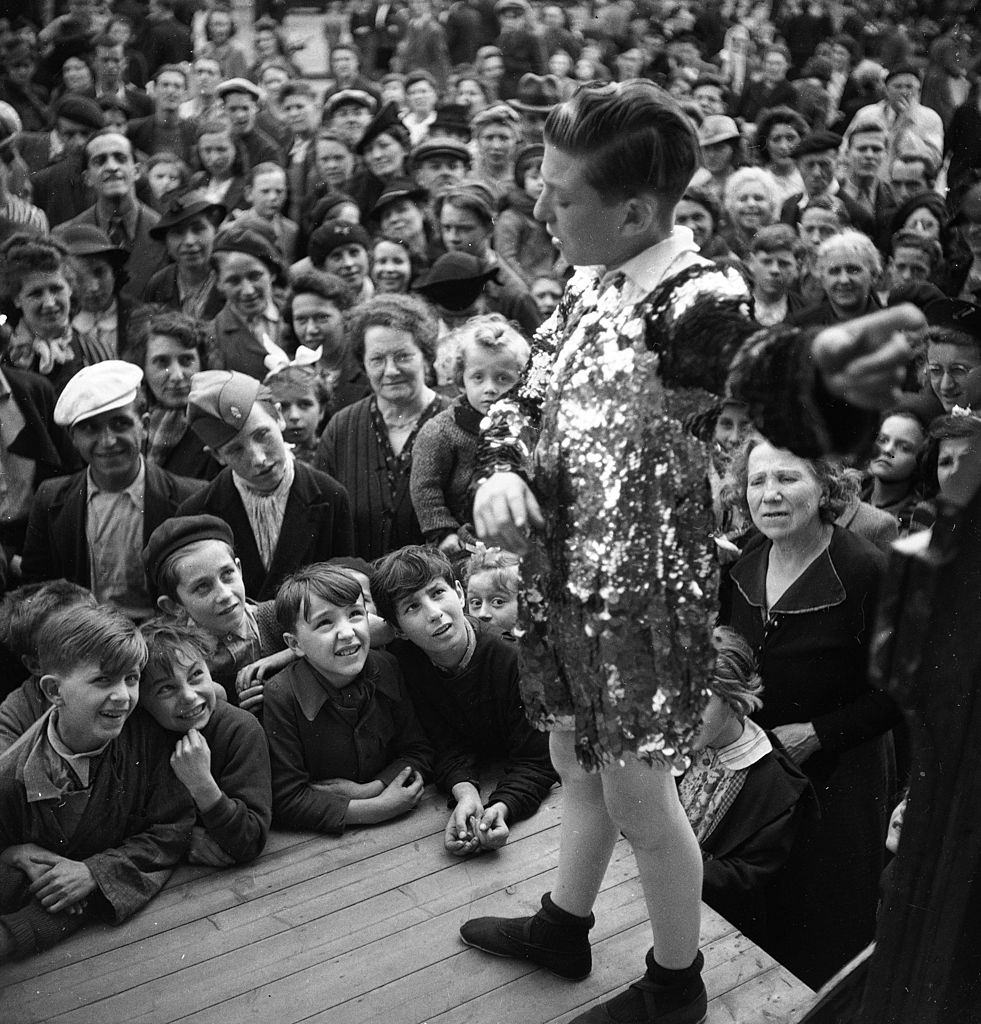
The audiences at these fairs were wide-eyed and packed in tight. Working men, women in their best dresses, and curious children all pushed toward the stalls and stages. Paris captured these crowds not as a mass, but as collections of individual faces — each person reacting to the spectacle in their own way.
The fairground workers themselves were a community apart. Many traveled from town to town, living and working in close-knit groups. Paris spent real time among them, photographing them not just on stage or at their stalls, but in candid, unguarded moments that reveal their day-to-day lives.
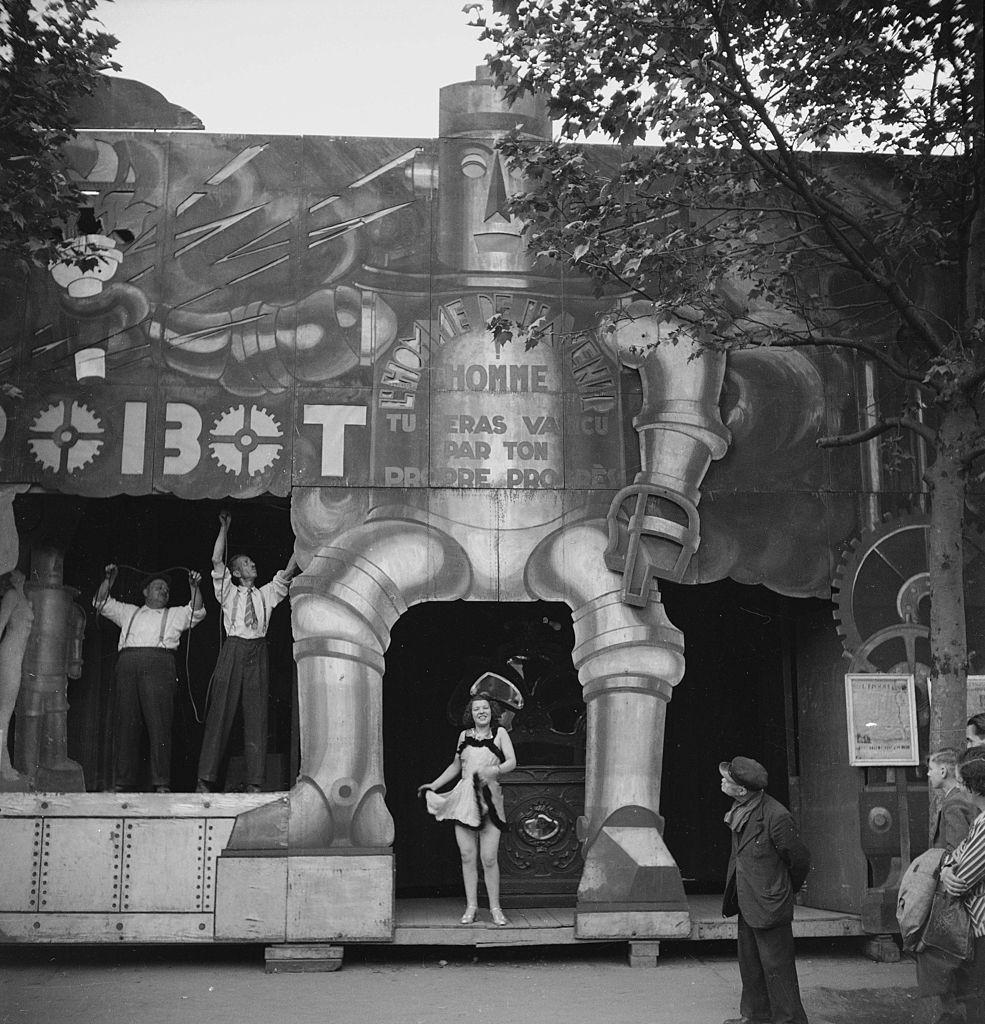
Women are a constant presence throughout this series — as fairgoers, as performers, and as workers. Paris photographed them with directness, neither romanticizing nor reducing them to mere background figures.
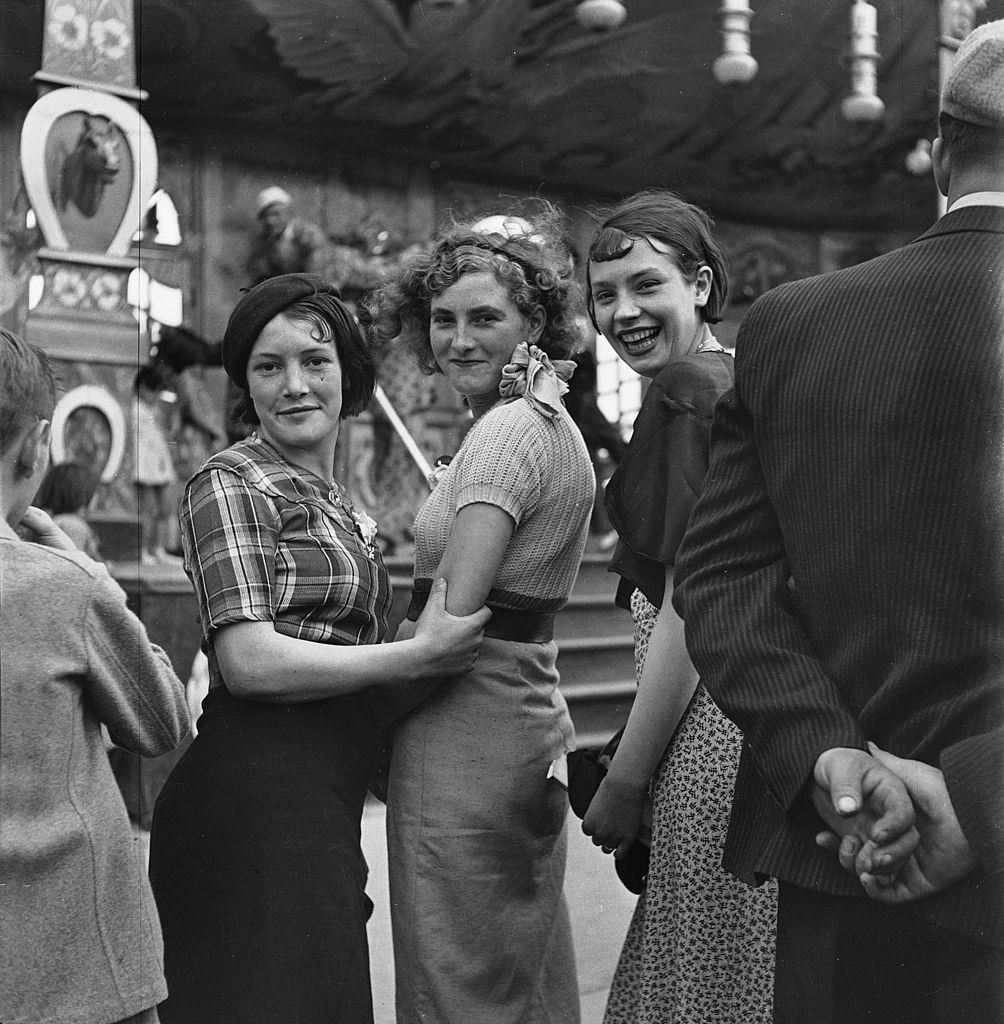
Funfairs weren’t limited to Paris’s grand central venues. Smaller, village-level attractions also drew their share of spectators, offering a simpler but equally lively version of the main city fairs.
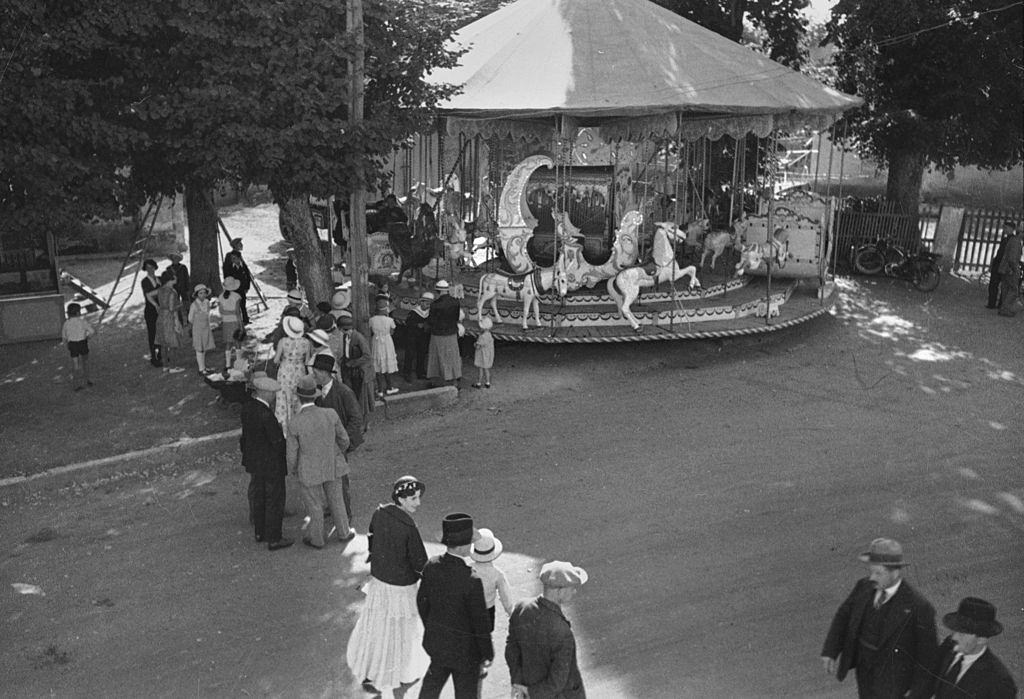
Classic carnival games were a staple of these events. Stalls where players tried to win prizes by tossing rings or knocking over bottles drew steady streams of competitors. The fish-and-bottle game was one of the more popular attractions, combining simple rules with the lure of a prize.
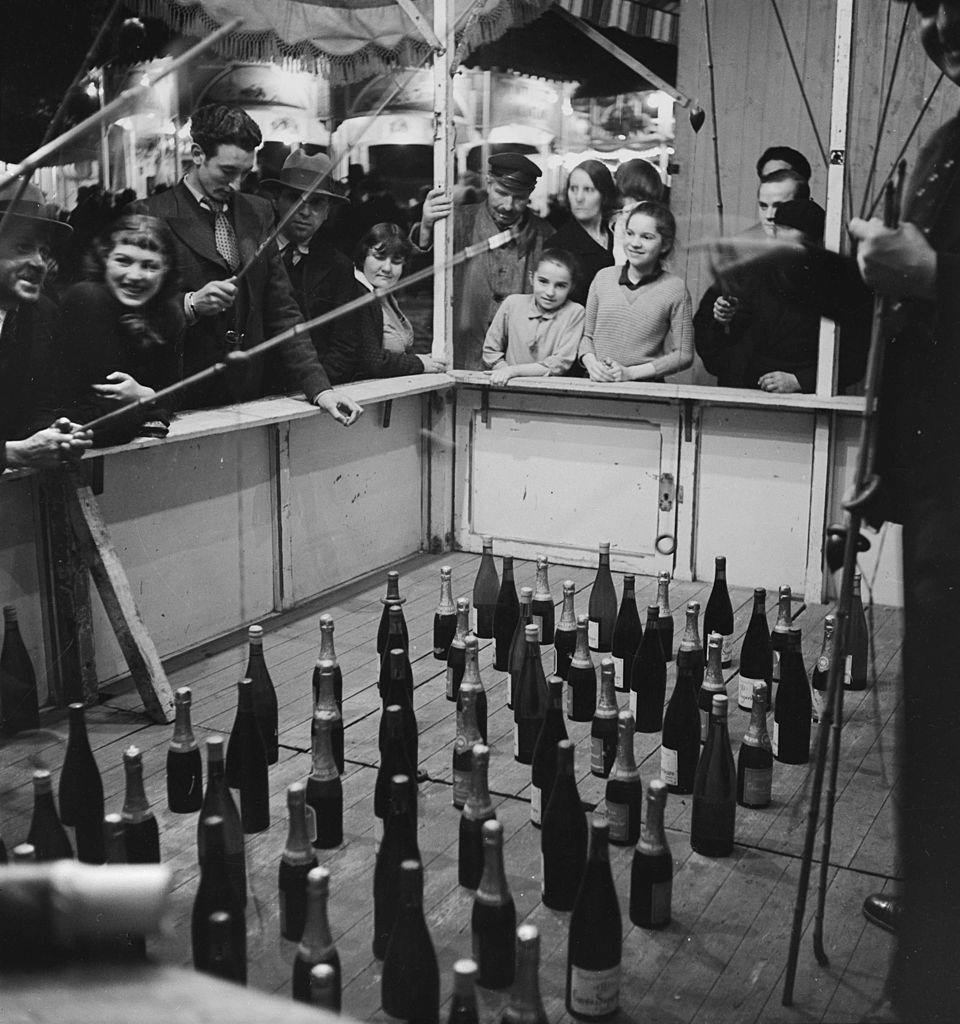
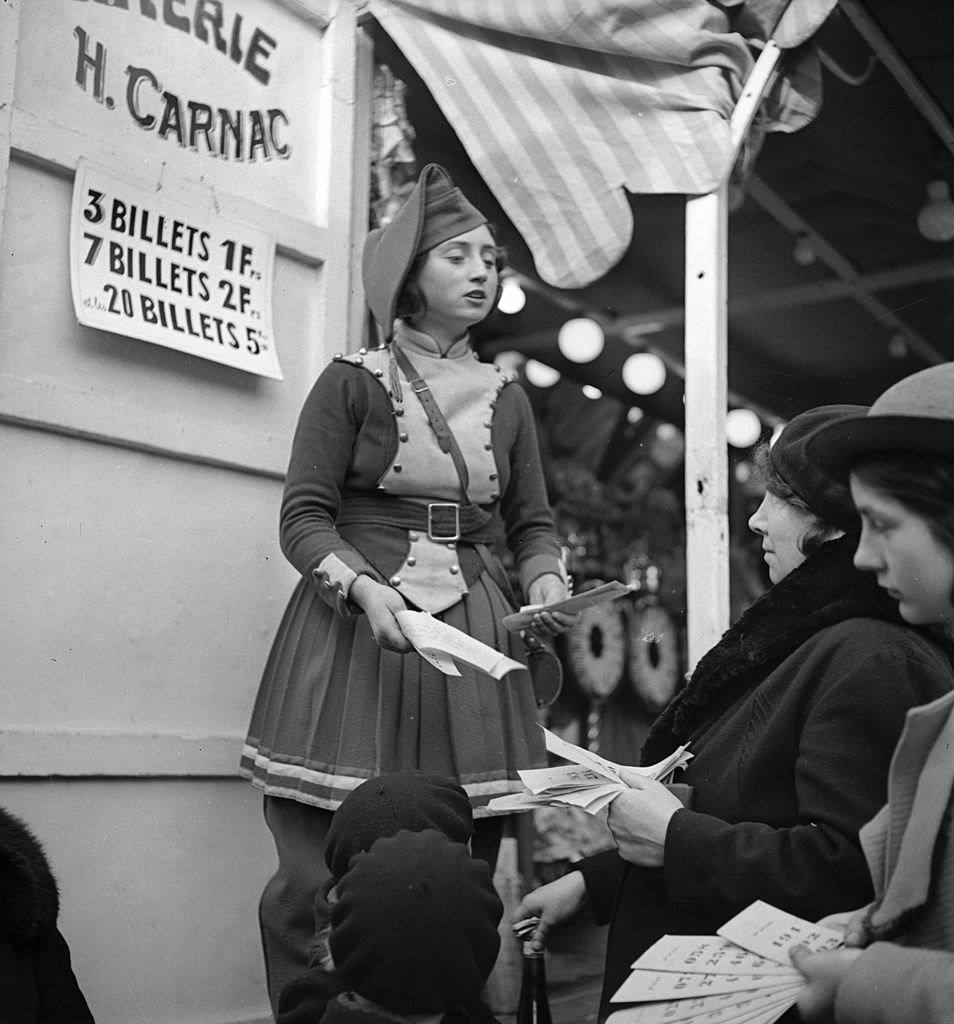
Lottery stalls were another major draw. For just a few centimes, a fairgoer had the chance to walk away with a prize, and the lottery operators knew exactly how to reel in a crowd with loud calls and flashy displays.
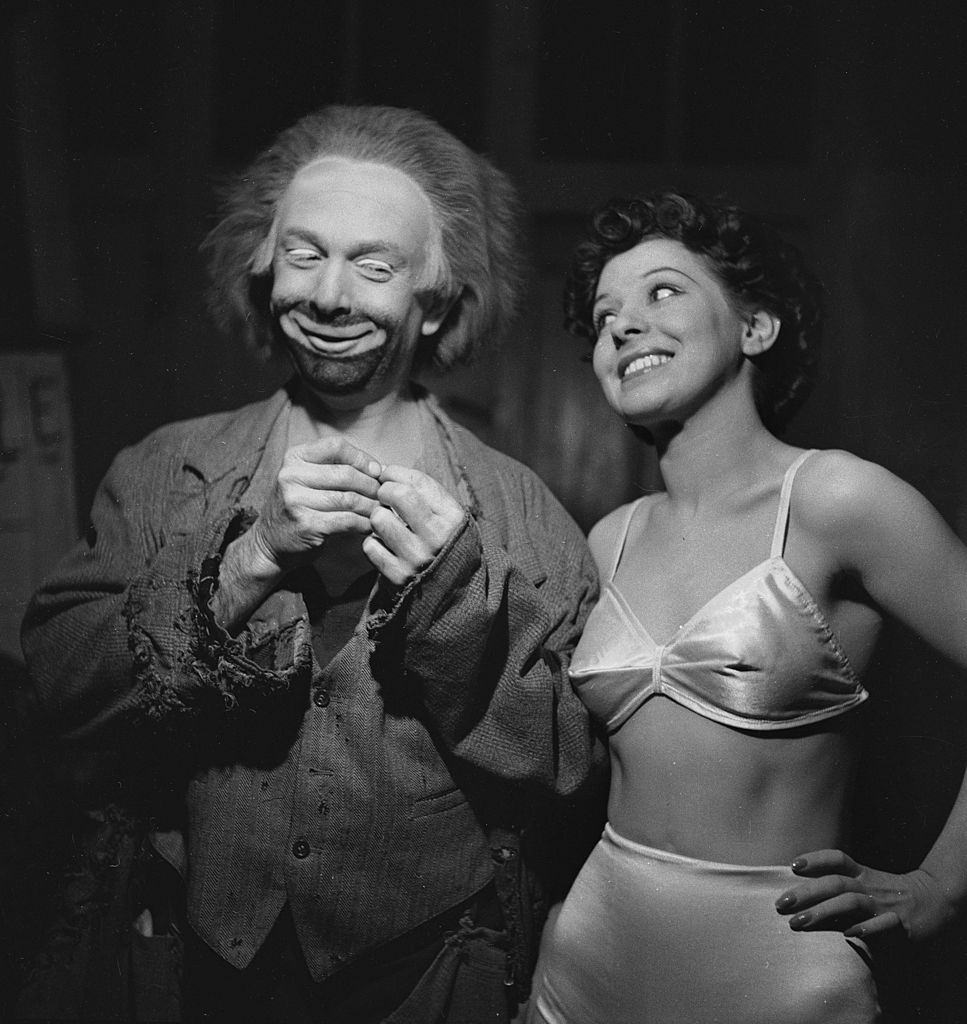
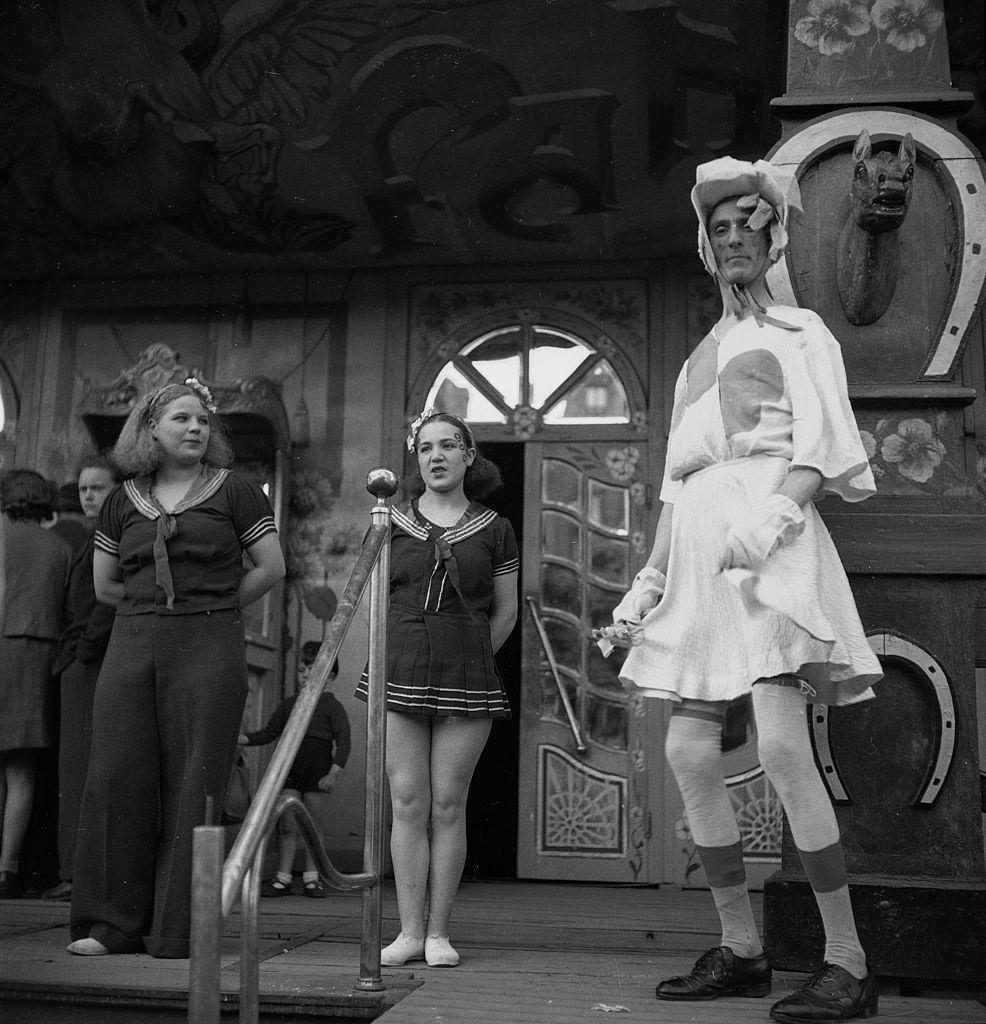
Behind the painted fronts and bright lights, the fairground workers had a backstage world of their own. Paris photographed performers in their dressing rooms — spaces that were cramped, practical, and entirely unglamorous, a stark contrast to the theatrical fronts they presented to the public.
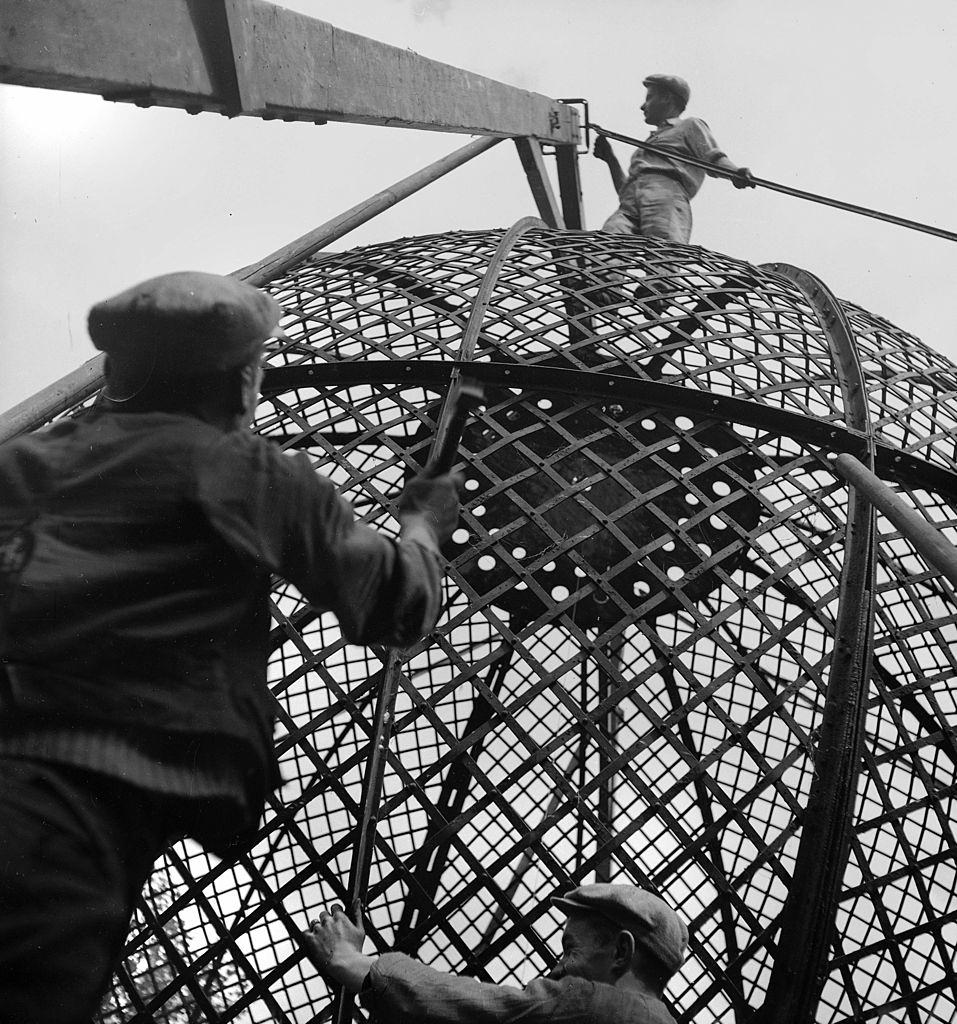
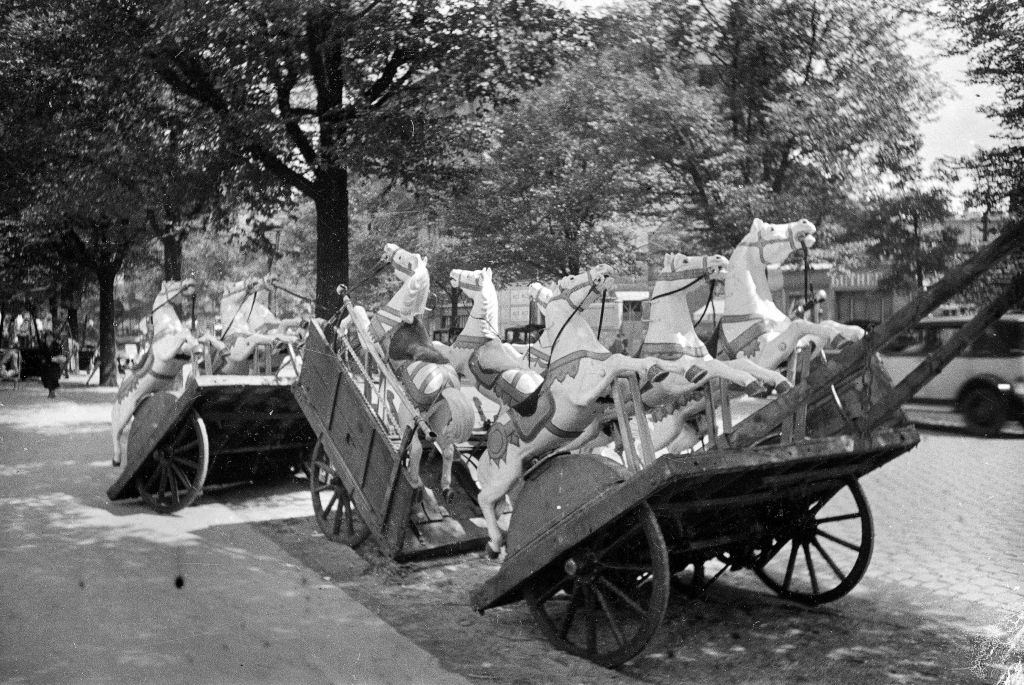
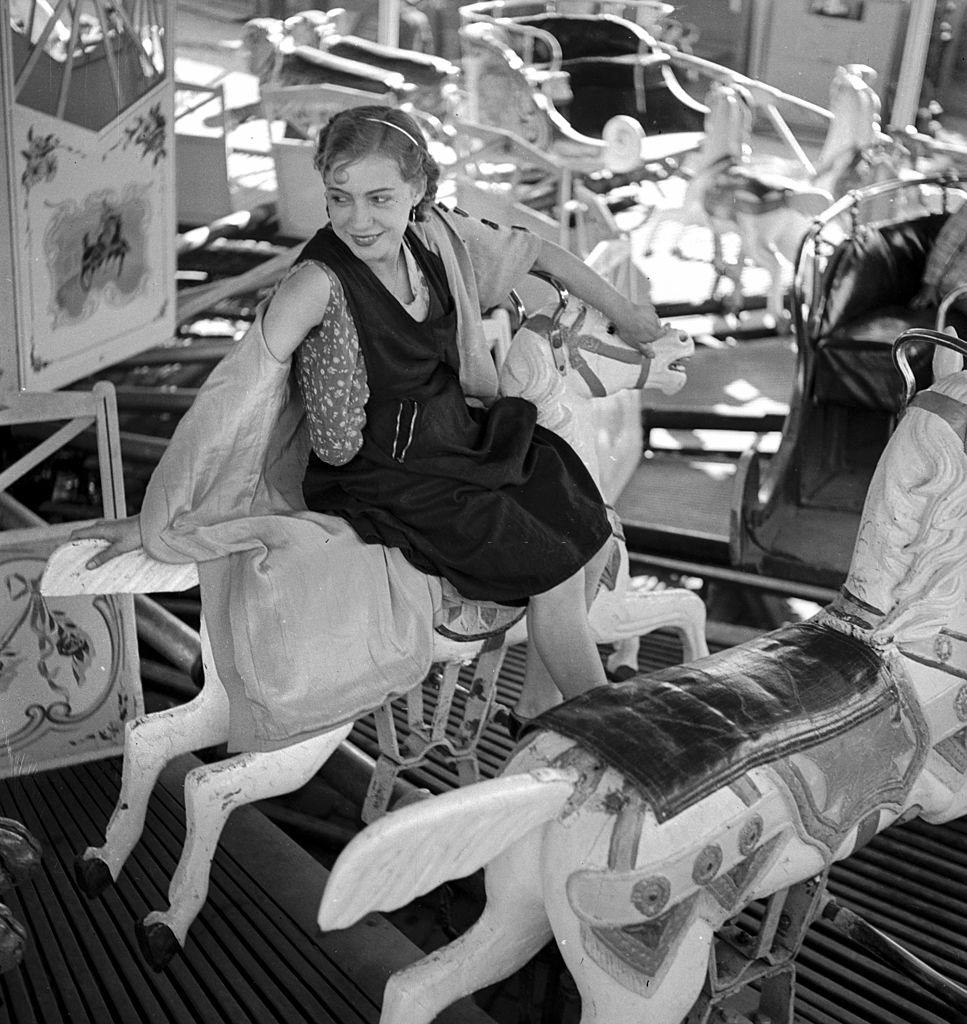
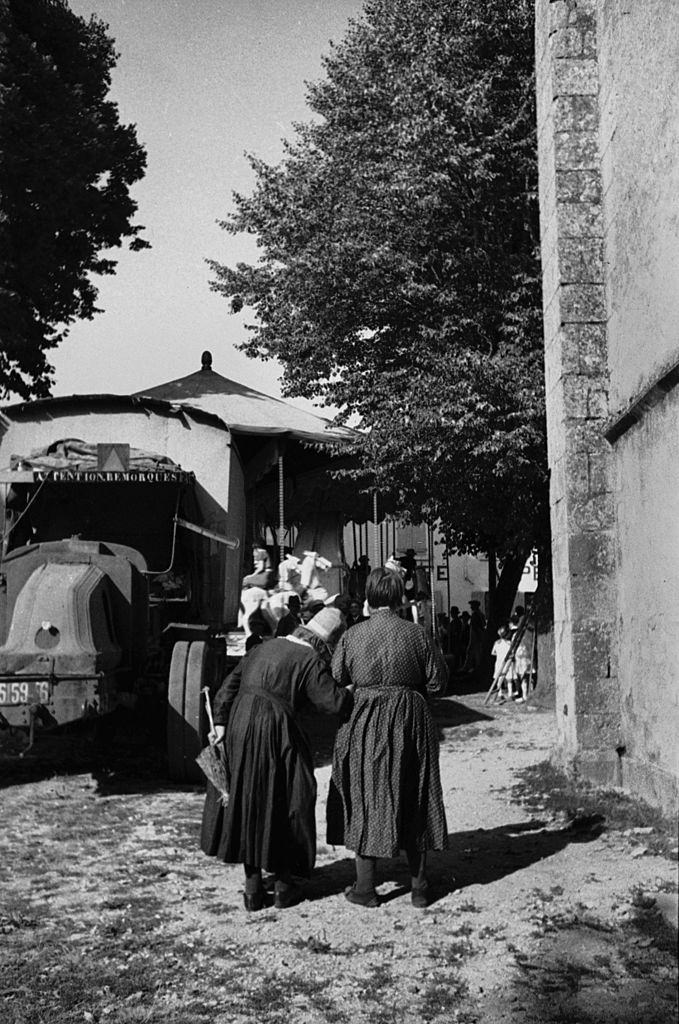
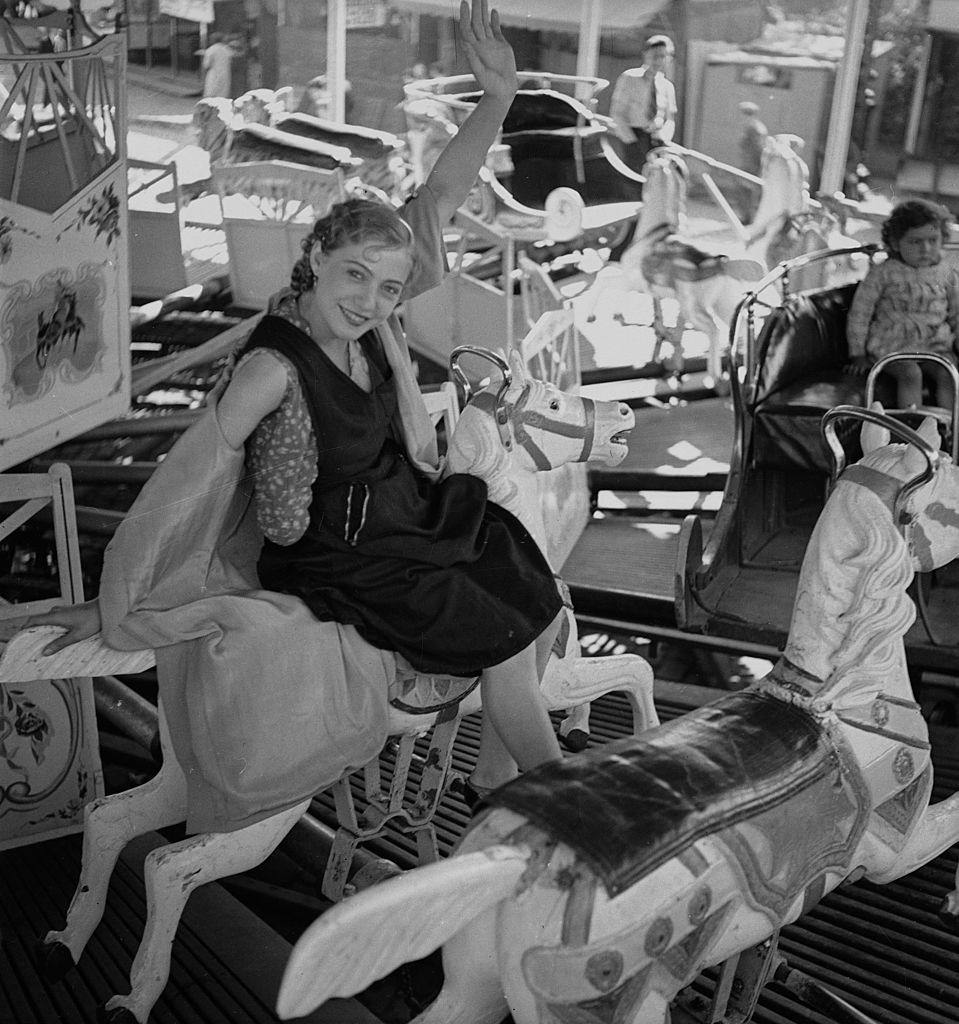
The roundabout — or carrousel — was a fixture at every major fair. Children and adults alike climbed onto the painted horses and mechanical seats as the ride spun and the music played. These machines were often elaborately decorated, and their operators maintained them with obvious pride.
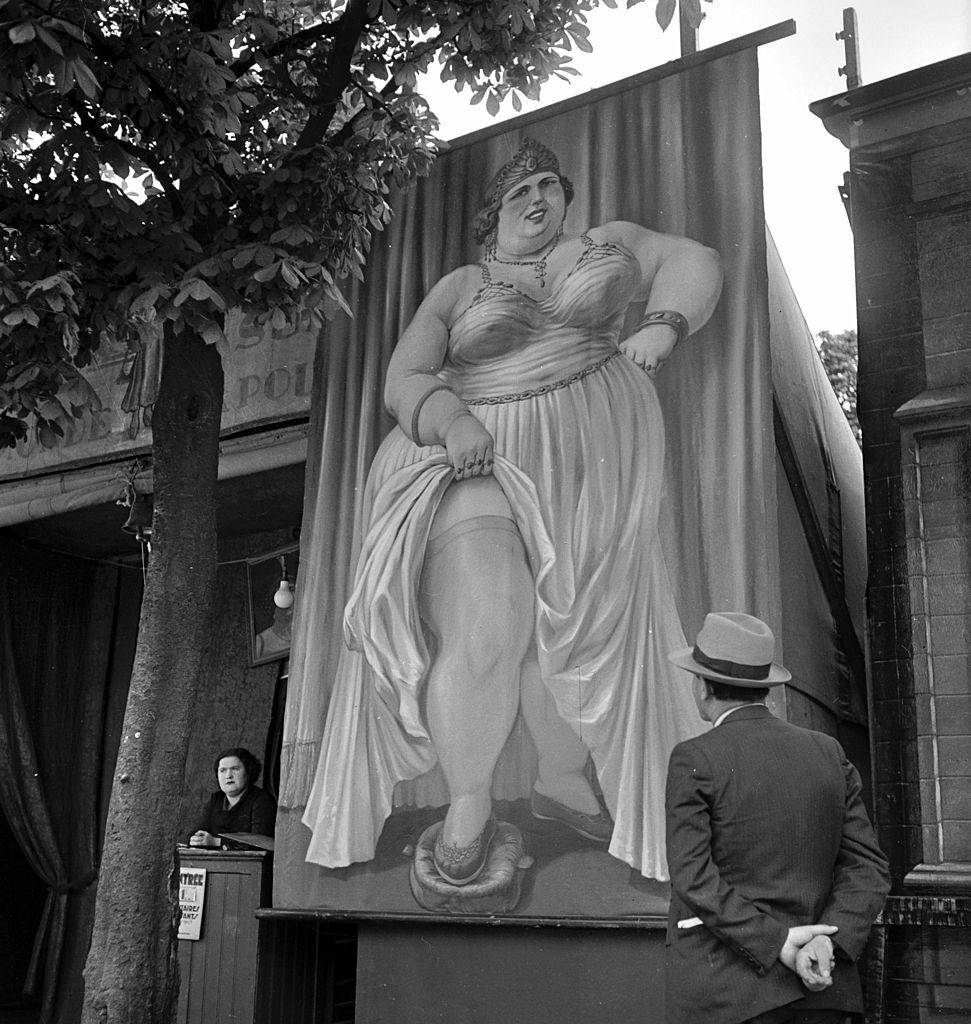
Sideshow acts were a defining feature of 1930s funfairs, and some were designed to shock or astonish. One such act featured a performer billed as “the largest society woman” — a common type of sideshow attraction that played on public curiosity about bodies and extremes.
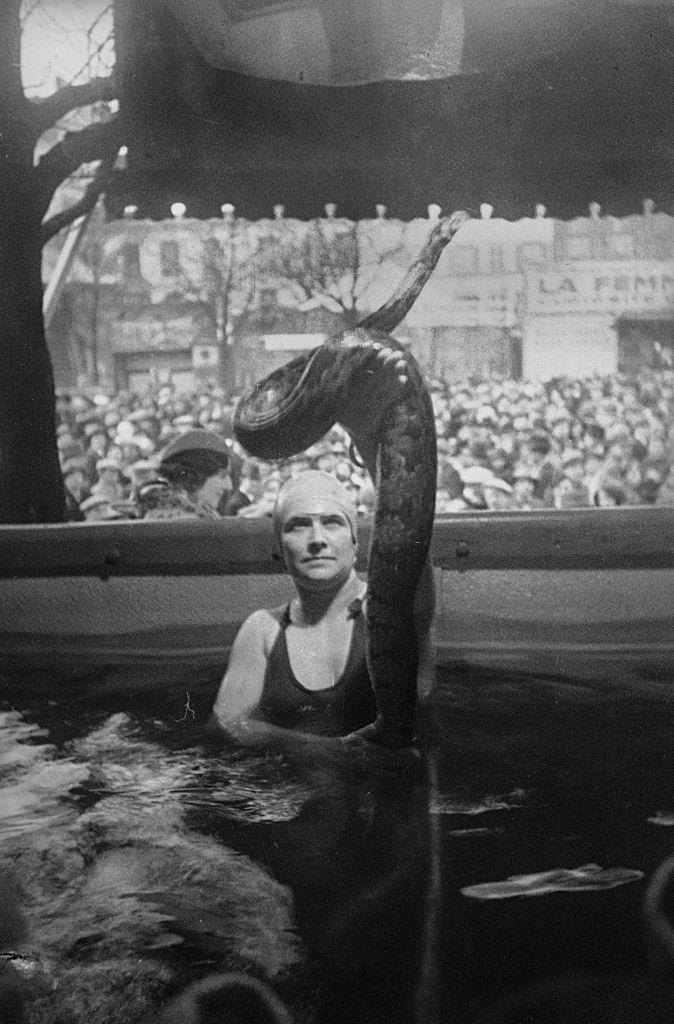
Snake acts were another sideshow staple. Performers handled live snakes in front of crowds, combining danger with theatrical flair. Paris photographed one such performer with the same matter-of-fact directness he brought to all of his subjects.
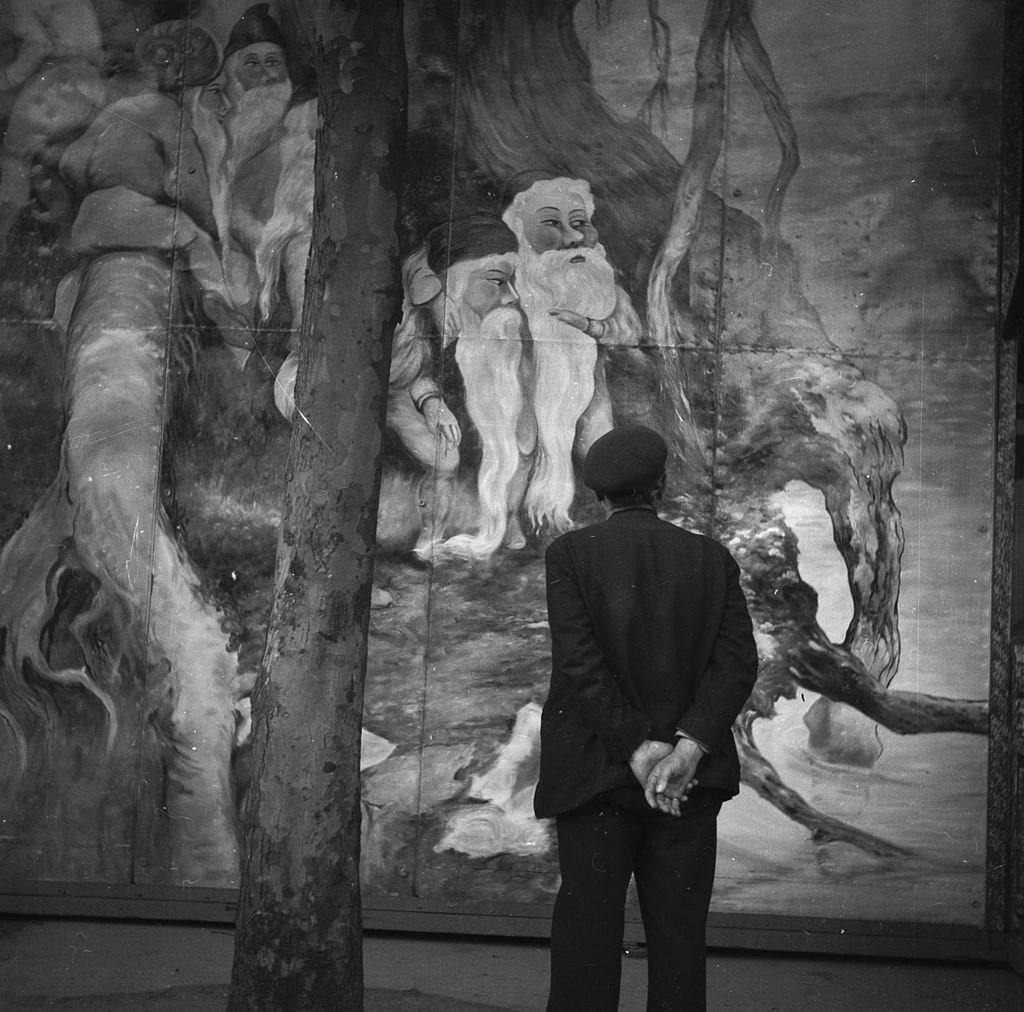
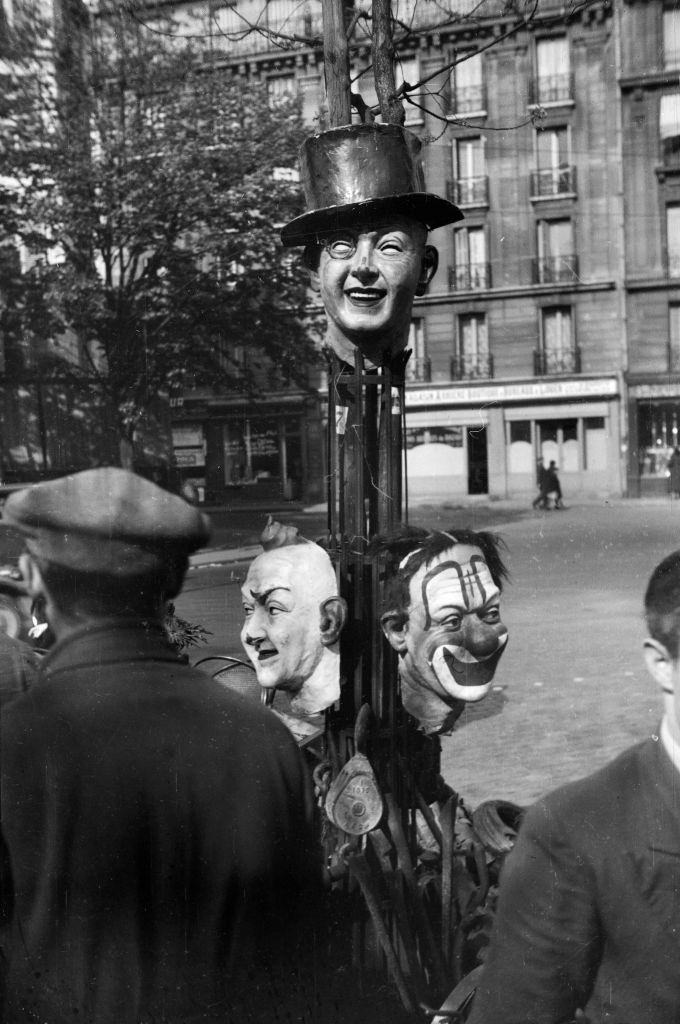
Masks and novelty goods were sold throughout the fairgrounds, adding to the carnival atmosphere. Rows of painted masks hung at stalls gave the fair an almost theatrical quality, and Paris captured their eerie, expressive faces with a knowing eye.
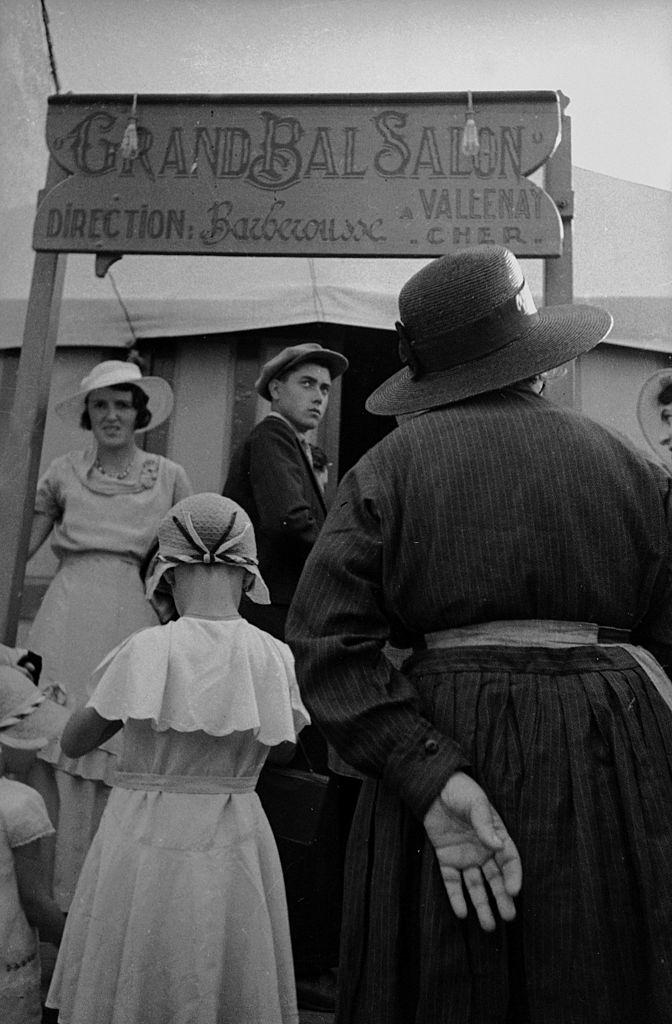
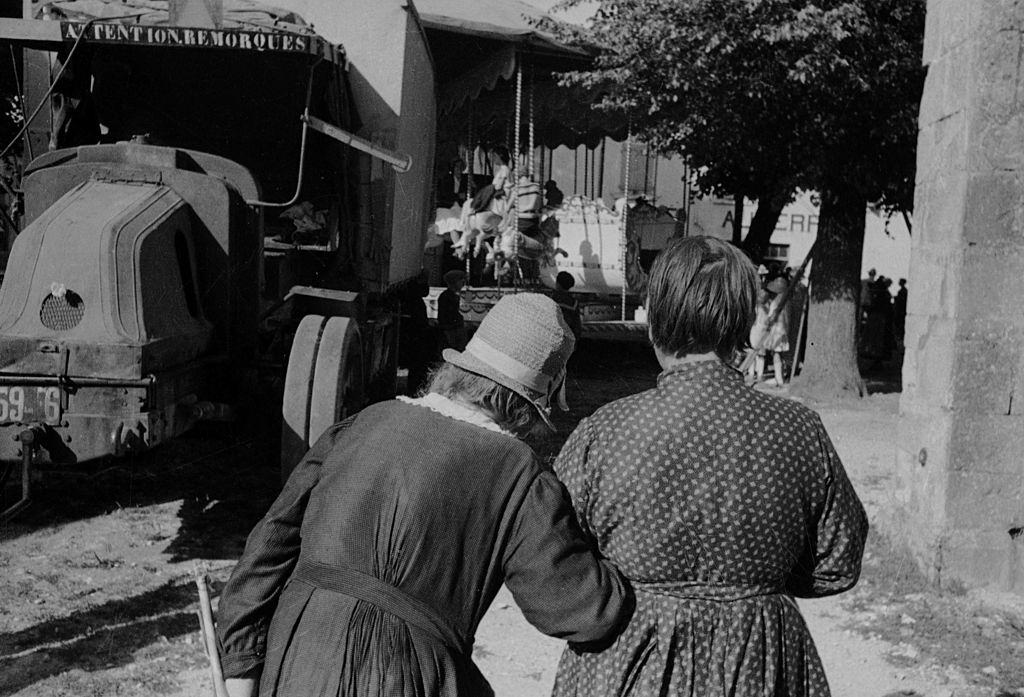
The journey to the fair was itself part of the occasion. Groups of women dressed up for the outing, treating it as a social event as much as an entertainment. Paris caught these moments of anticipation — people en route, excited and dressed for the day.
The fairground community was a tight world with its own customs and hierarchies. Families often passed the trade down through generations, and the caravans and equipment they traveled with were both their livelihood and their home.
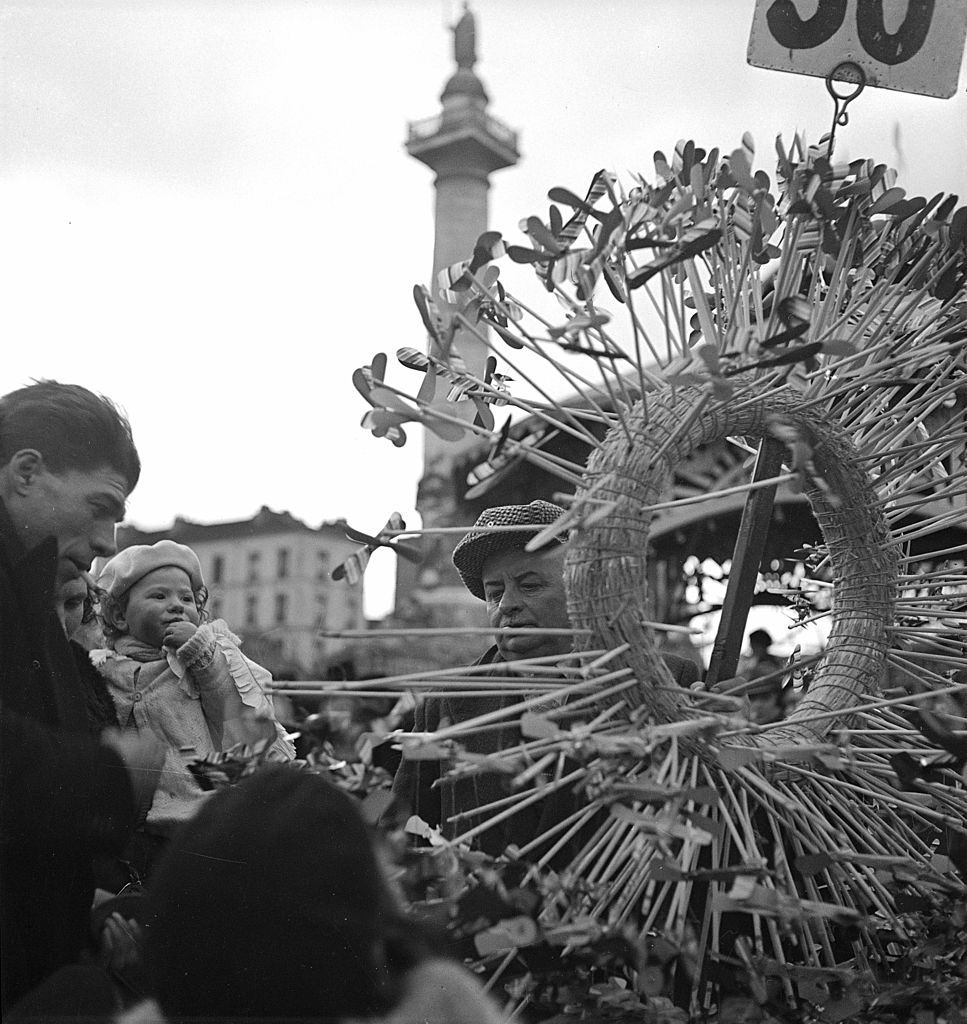
One of Paris’s most specific locations in this series was the Foire du Trône, one of Paris’s oldest and most beloved annual fairs. At its toy stalls, vendors — known as hawkers — called out to passers-by, dangling brightly colored toys to attract children and parents alike.
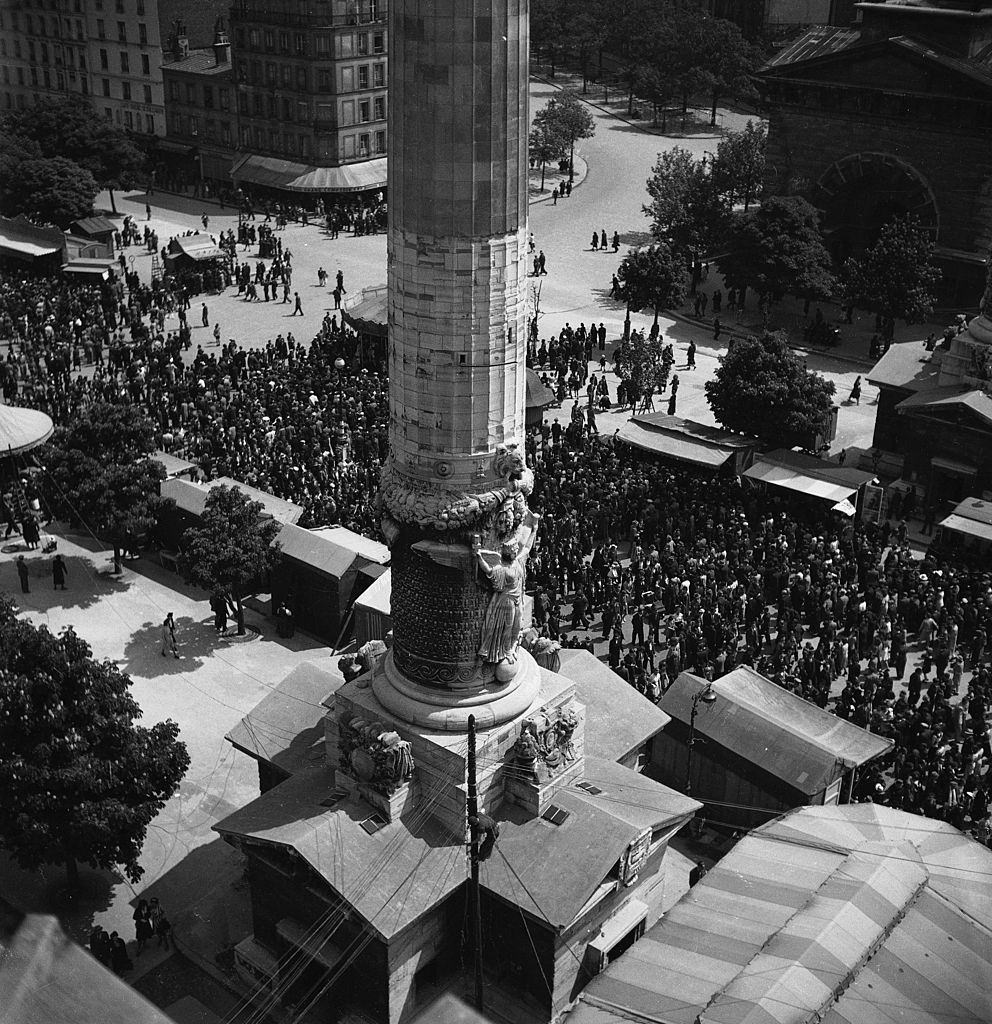
The crowds at these events were thick with energy. Paris composed his crowd shots carefully, selecting moments where the collective mood of the audience was readable — laughter, concentration, amazement, waiting.
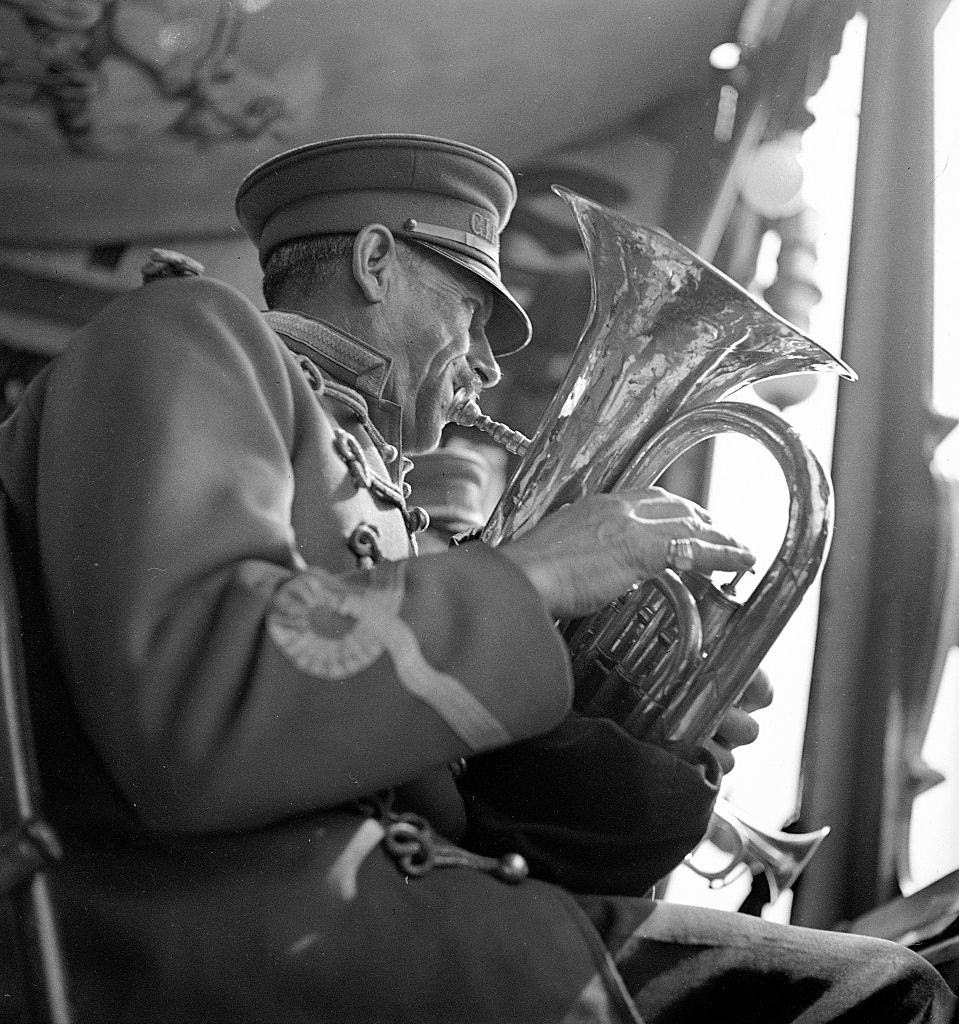
Live music was part of every fair’s atmosphere. Musicians played on open platforms, filling the air between the noise of the rides and the chatter of the crowd. These were working musicians, not stars — men doing a job with practiced ease.
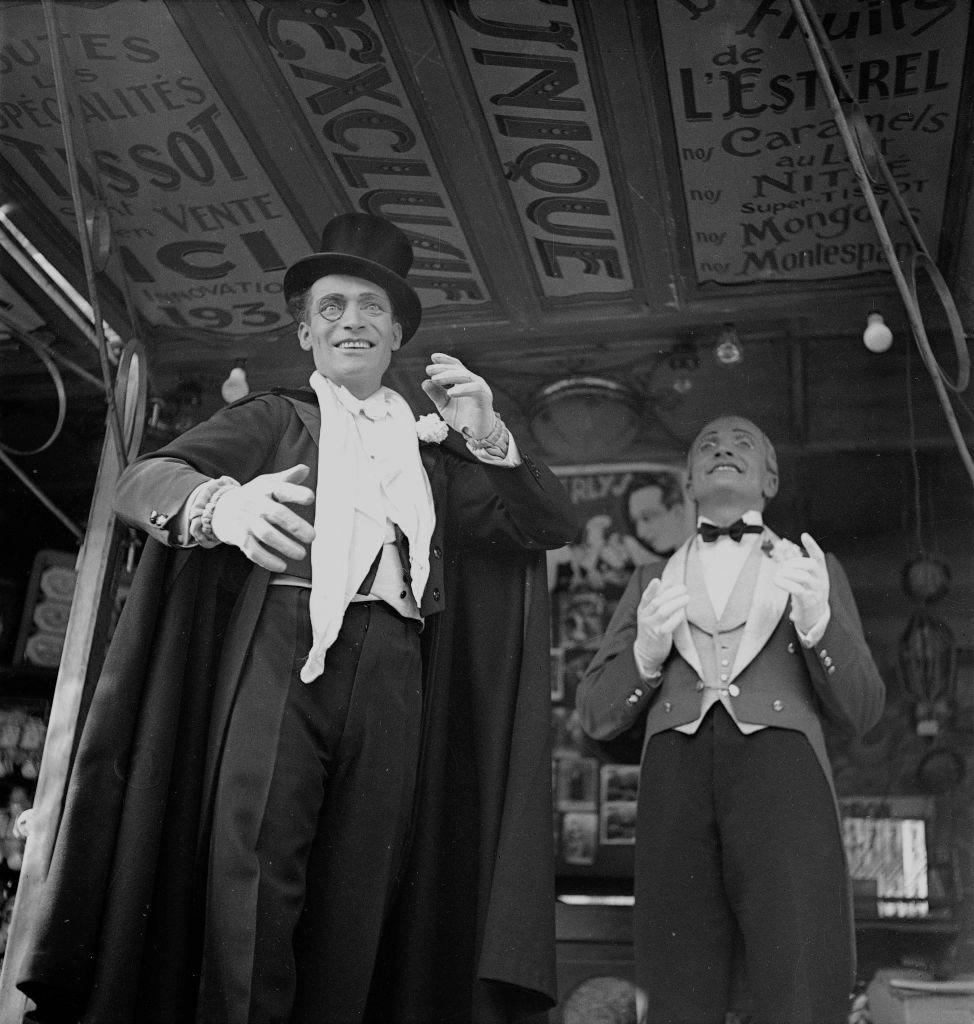
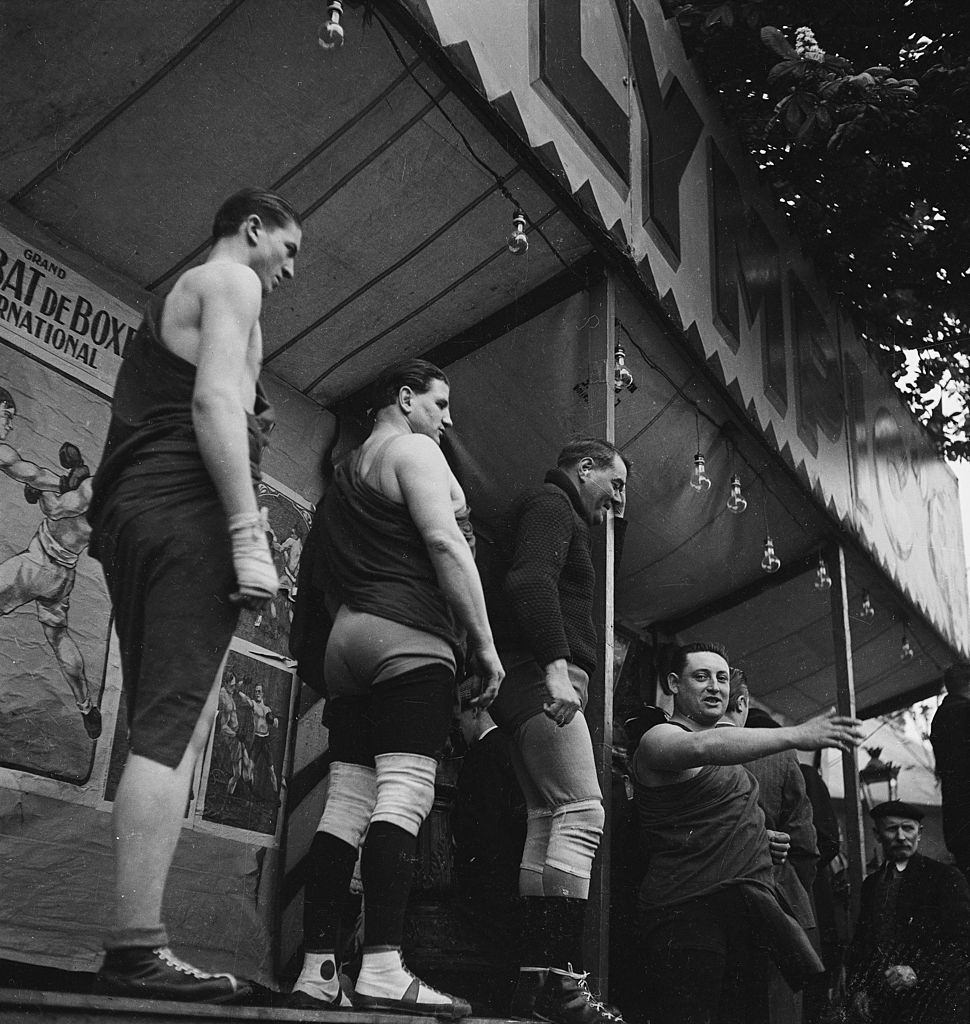
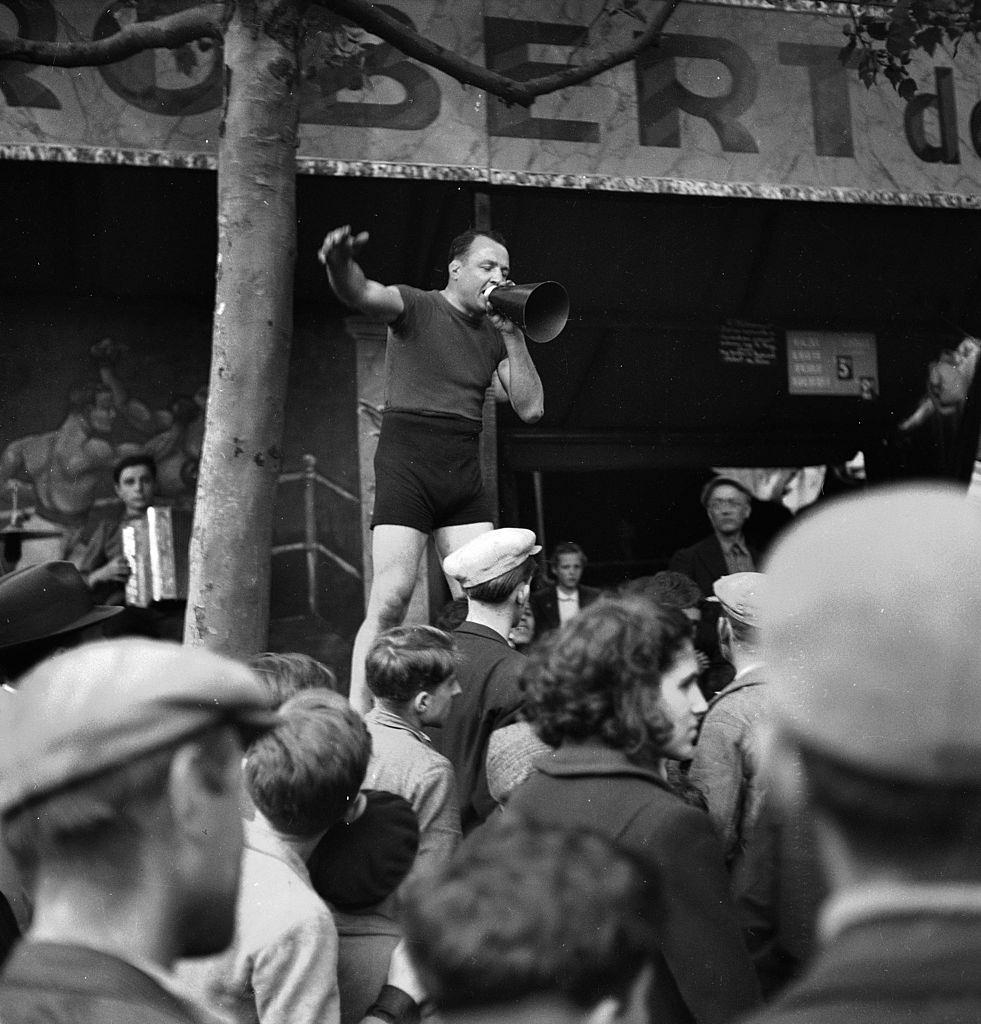
The Foire du Trône drew visitors from across Paris, and its atmosphere was distinct from smaller neighborhood fairs. Larger rides, more elaborate stalls, and bigger crowds made it the signature fair of the city’s calendar.
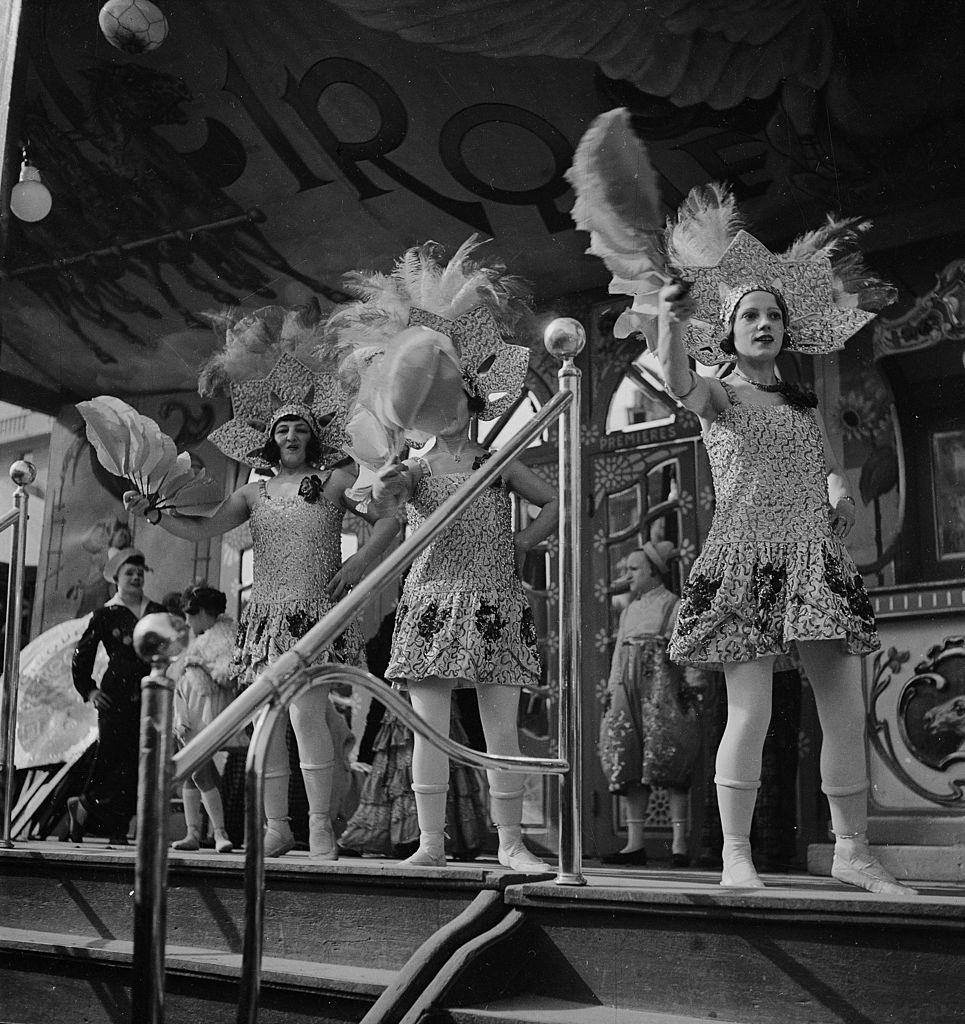
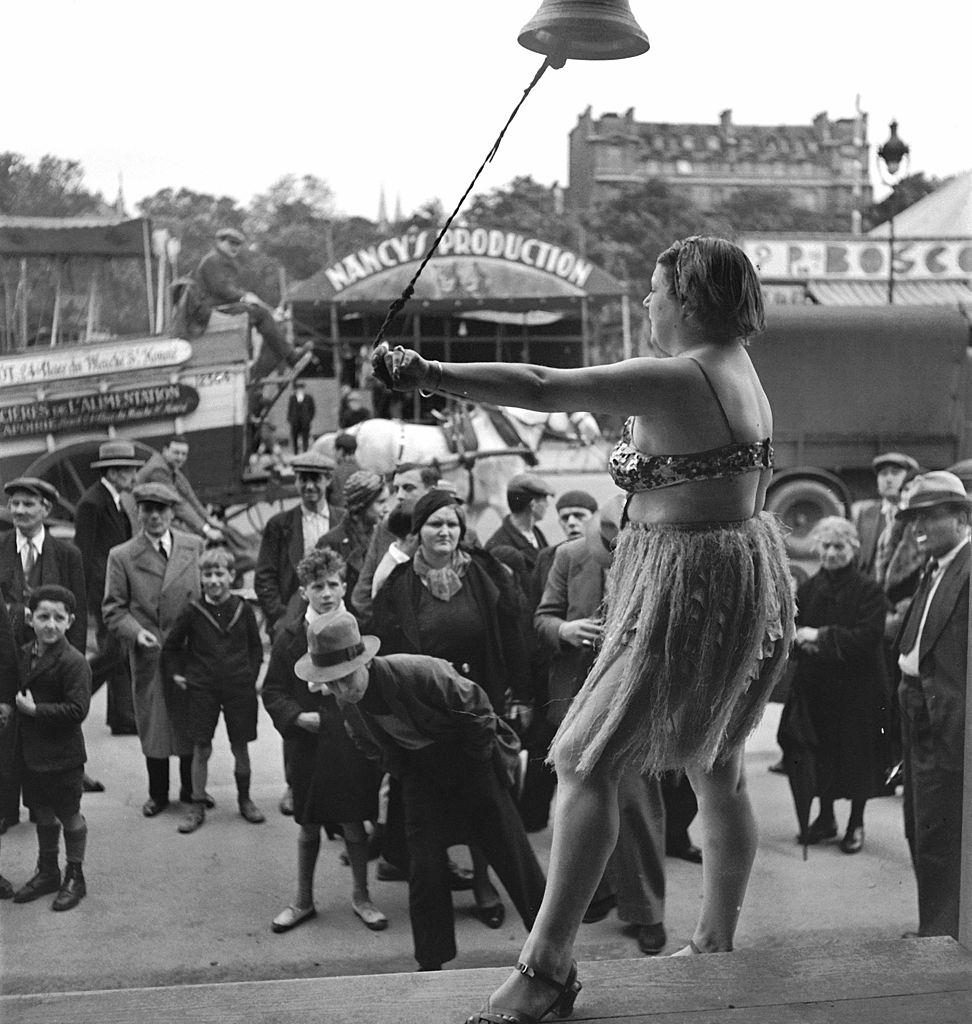
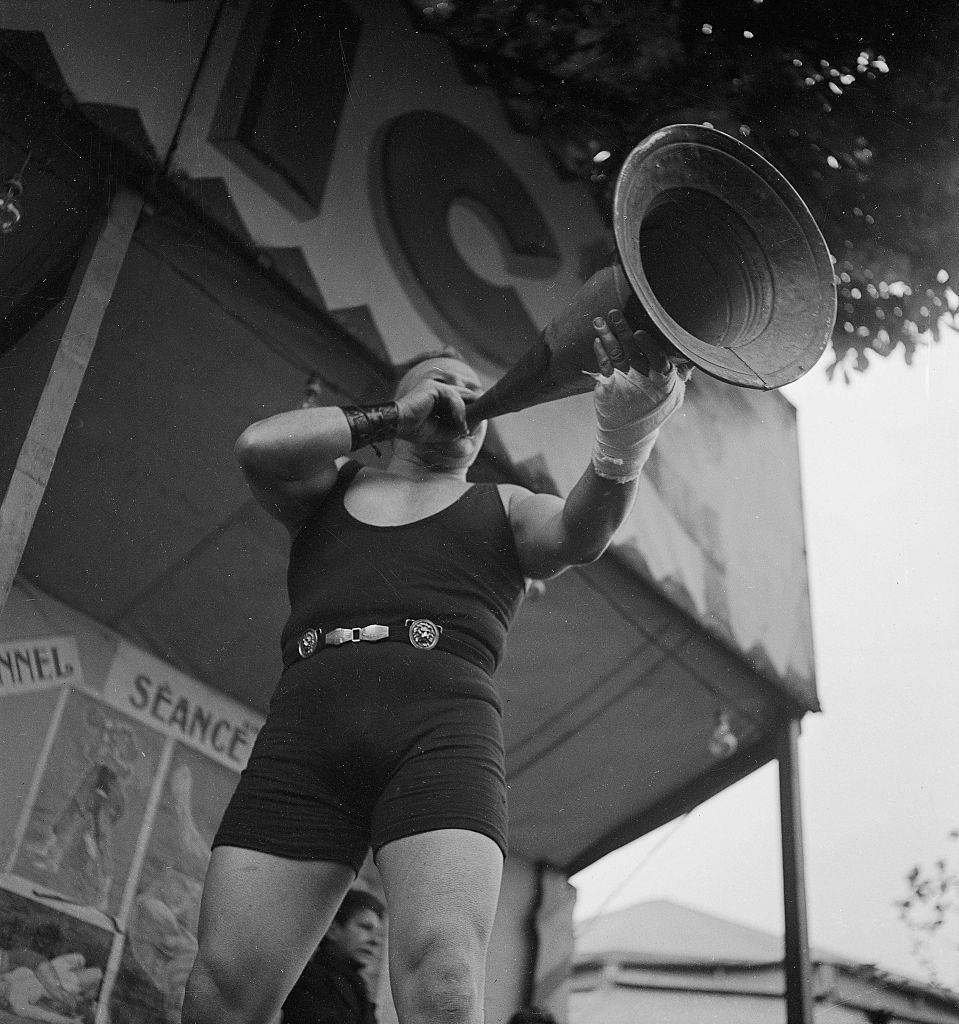
Parades were used to pull crowds toward specific acts and stalls. Performers and operators staged brief, loud outdoor displays to draw foot traffic, and Paris photographed several of these moments of public theater with an eye for the energy they generated.
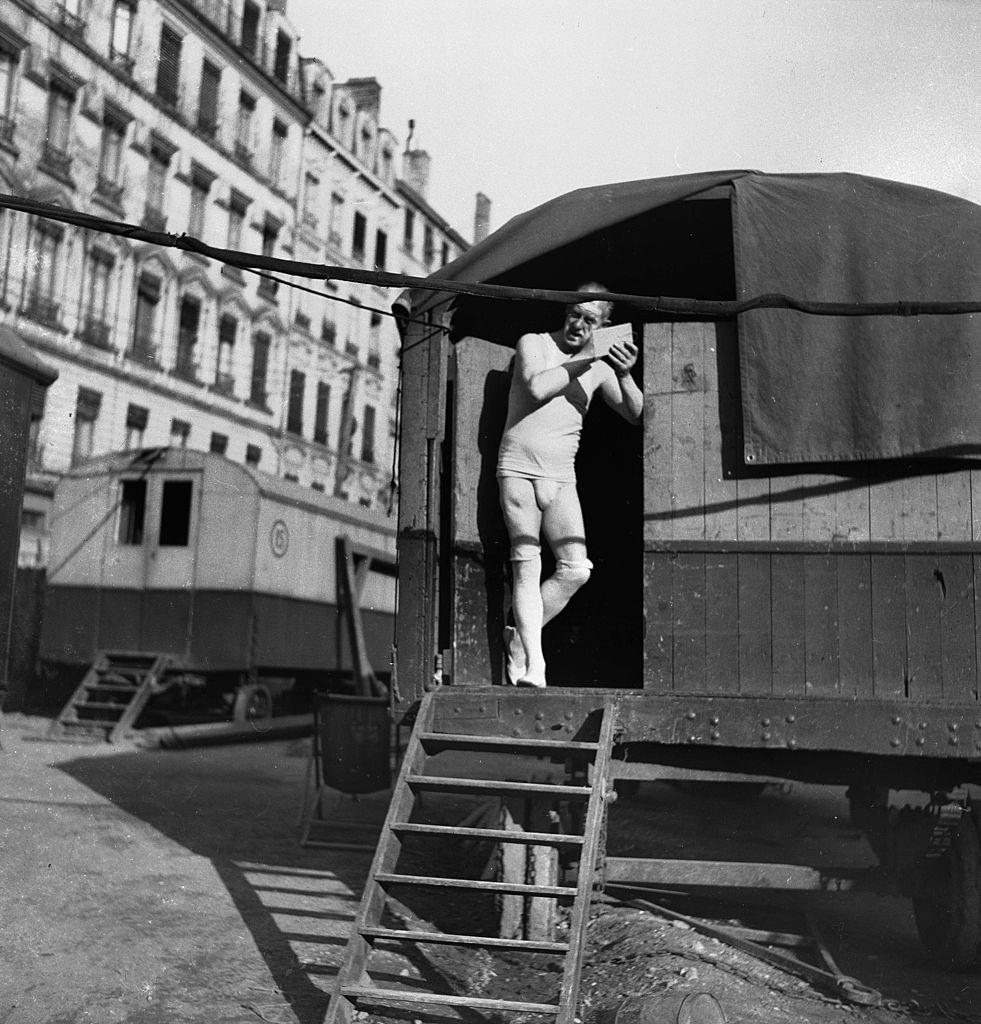
The caravan was the base of operations for traveling fairground families. Paris photographed people at the entry of their caravans — threshold moments that sit between the public world of the fair and the private world of the worker.
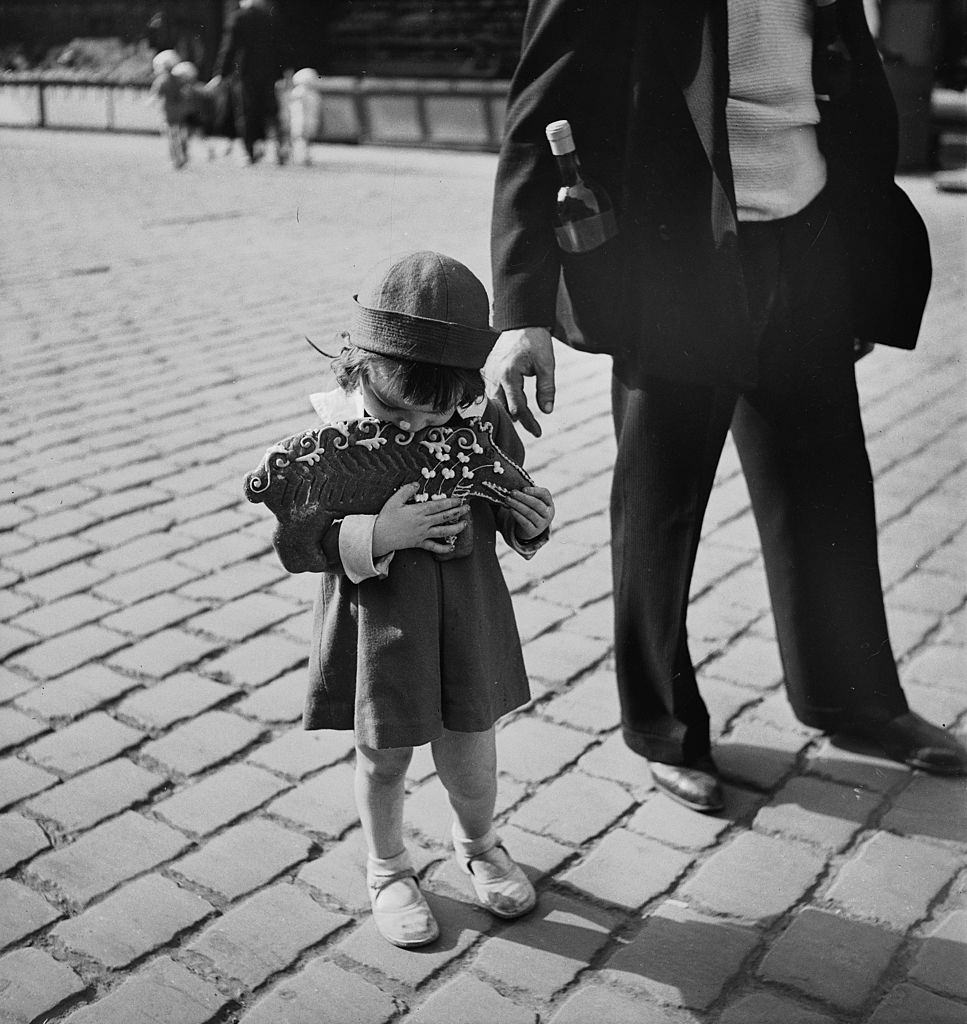
Food was central to the fair experience. Gingerbread — pain d’épices — was a classic French fairground treat, and Paris captured a child holding a piece, one of the series’ quieter and more tender images.
Among the more unusual images in the series is a photograph of wooden horses loaded onto a handcart — the mechanical and decorative pieces of a carousel being moved from one location to another. It’s a reminder that the spectacle of the fair had to be built and broken down again and again, by hand, by the same people who ran it.