The Qing Dynasty was the last imperial dynasty in Chinese history, ruling from 1644 to 1912. It was only the second time in China’s long history that the Han people were not in power. The Manchurian forces, known as the Manchu, defeated the ruling Ming Dynasty in 1644, and Emperor Shunzhi formally established Qing rule over China. From that point forward, life for the Han majority changed drastically under their new rulers.
The Manchu imposed strict cultural demands on the Han population. Han men were required to shave the front of their heads and wear their remaining hair in a long braid — a style tied to Manchu tradition — or face execution. Han intellectuals who dared criticize the ruling class through their writing were also put to death. The Han were pushed out of Beijing’s political centers, stripped of the influence they had held for centuries.
Social life under the Qing became increasingly conservative. Women’s purity was treated as a matter of public concern, and widows were discouraged — sometimes prevented — from remarrying. Many men refused to take widows as wives. As a result, the suicide rate among widows rose sharply. Special homes were established to house widows, keeping them isolated from male contact. This rigid social order shaped daily life from the family unit all the way to public culture.
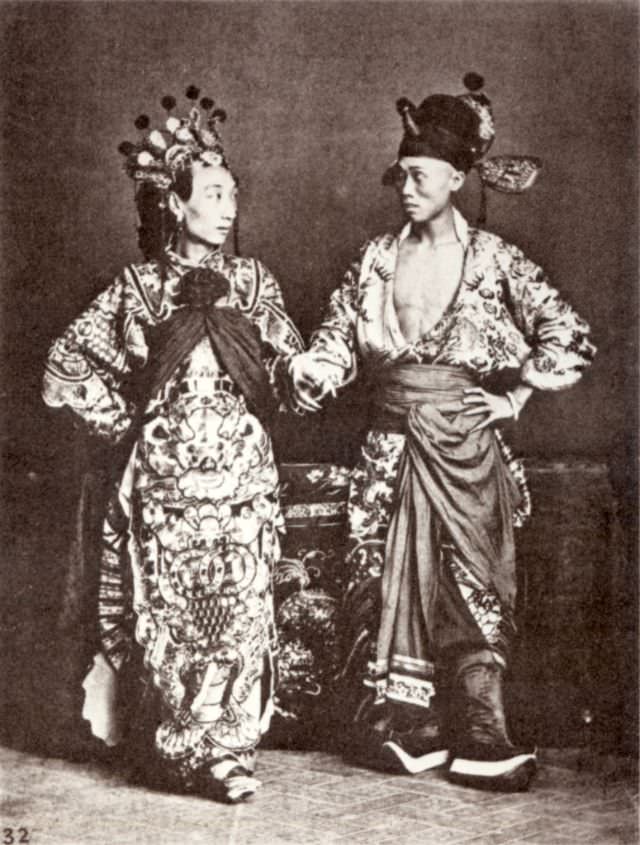
The arts were not spared from the Qing’s conservative grip. Plays and literature deemed subversive or offensive were banned outright. Theaters were shut down. Books were regularly confiscated and destroyed. The government kept a tight hold on what could be written, performed, or read — leaving little room for artistic freedom or political commentary.
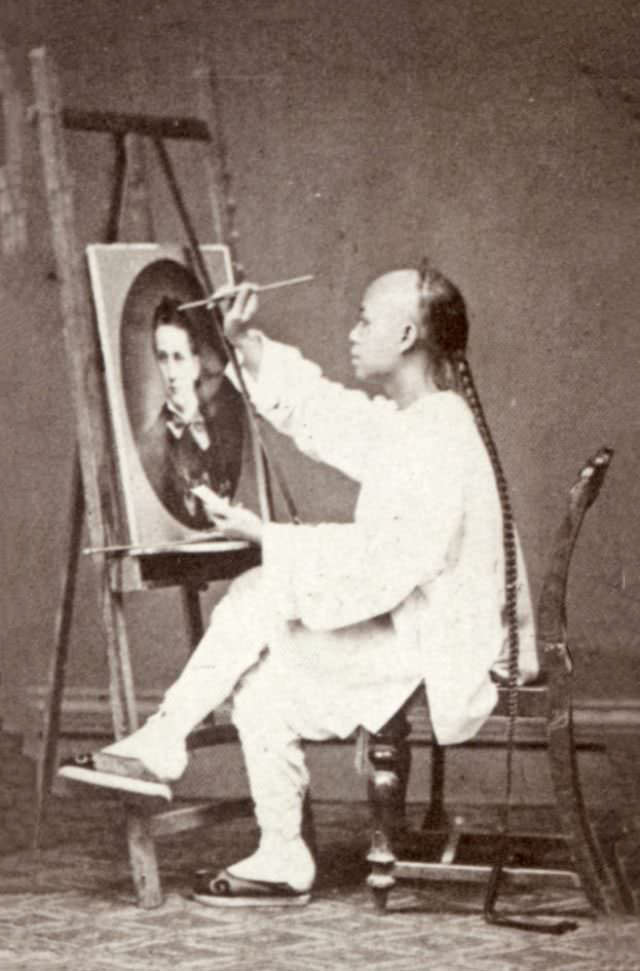
Despite political repression, commerce continued to thrive across China’s major cities. Canton — present-day Guangzhou — was one of the most active trading hubs in the country, and Hong Kong was growing rapidly as a port city under British control following the First Opium War. Artists, merchants, tradesmen, and translators all formed the backbone of China’s urban economy during this period.
China had used opium as a medicine for centuries, but by the 18th century it had spread as a recreational drug with devastating consequences. Britain, which had colonized India — a major opium producer — flooded Chinese markets with the drug. The Qing government’s attempts to stop the opium trade led to the First Opium War, fought between China and Great Britain from 1839 to 1842. China lost, and the resulting treaties forced significant territorial and trade concessions.
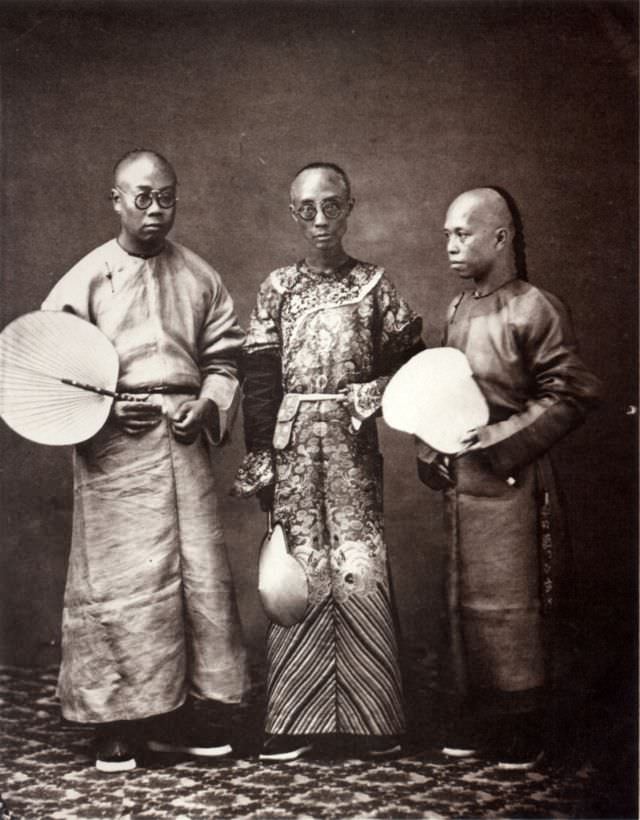
The Second Opium War, fought from 1856 to 1860, brought further humiliation. Allied British and French forces pushed deep into Chinese territory, eventually sacking the Old Summer Palace in Beijing. China was forced to sign a new round of unequal treaties, opening more ports to foreign trade and granting greater privileges to Western powers on Chinese soil. Translators, as seen in photographs from Canton in 1861, played a critical role as intermediaries between Chinese officials and foreign merchants during this turbulent period.
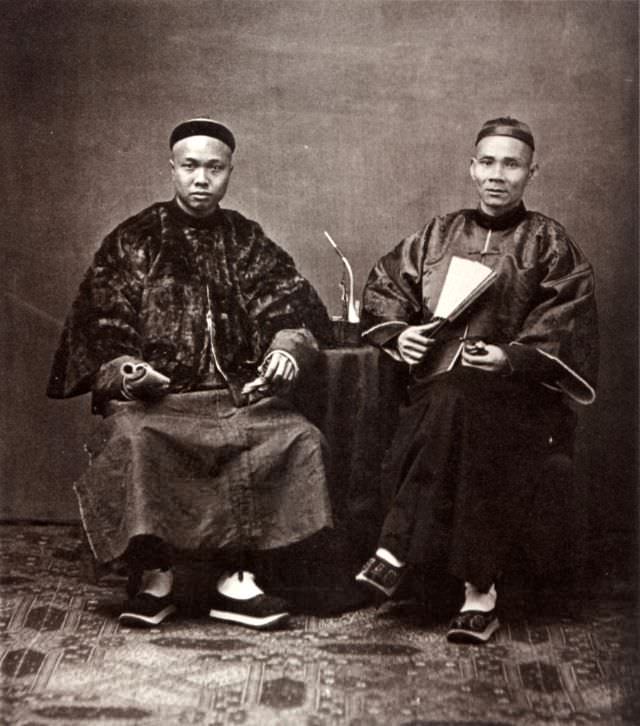
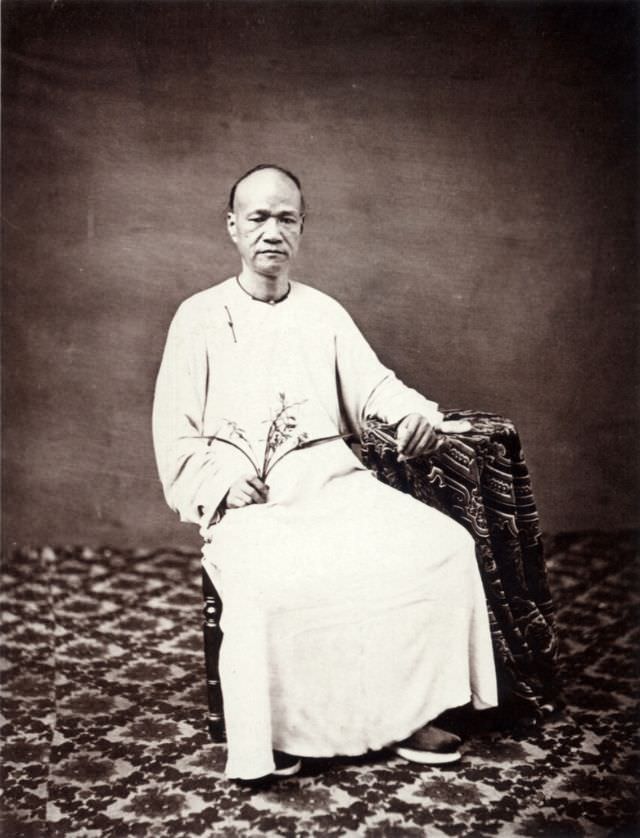
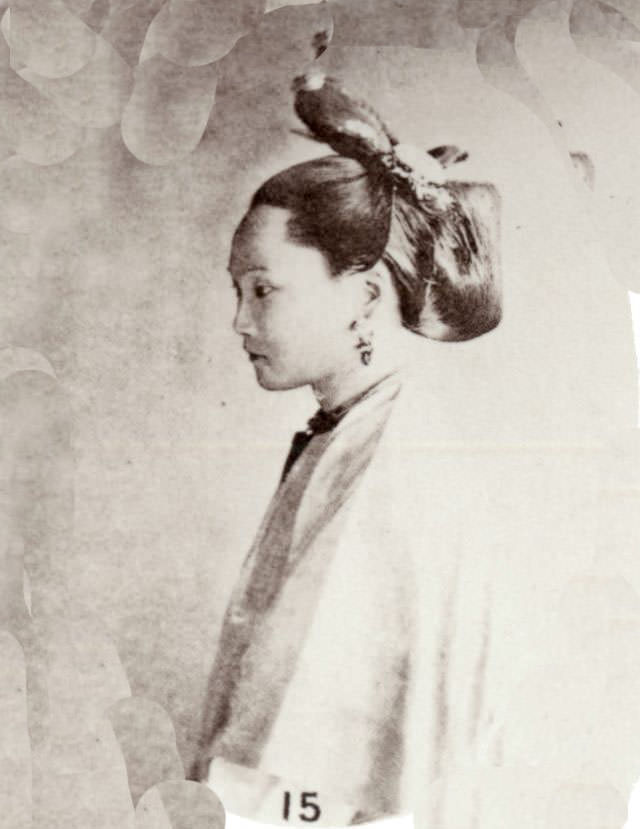
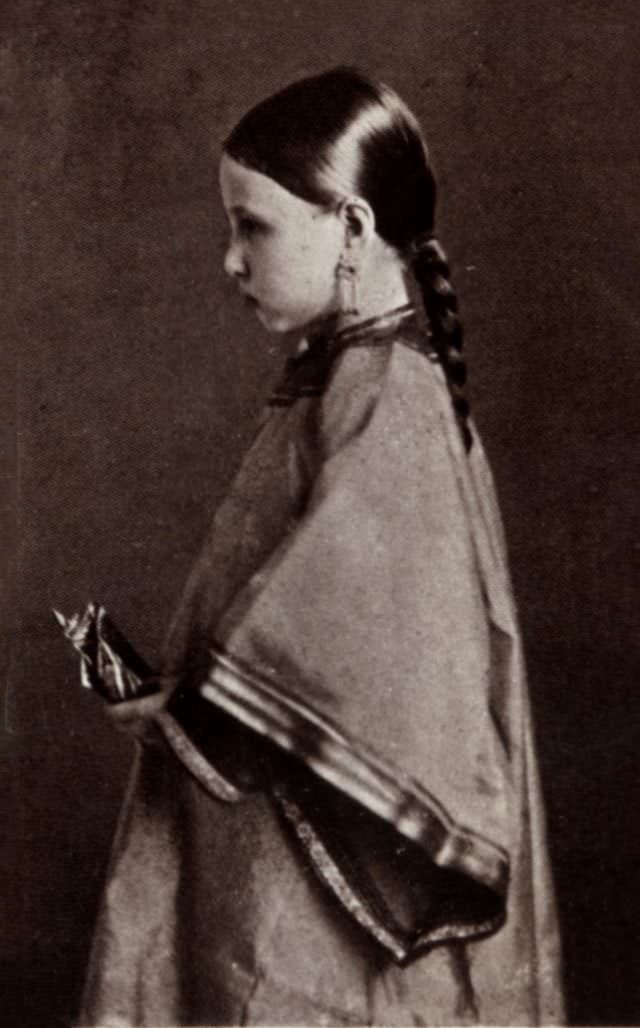
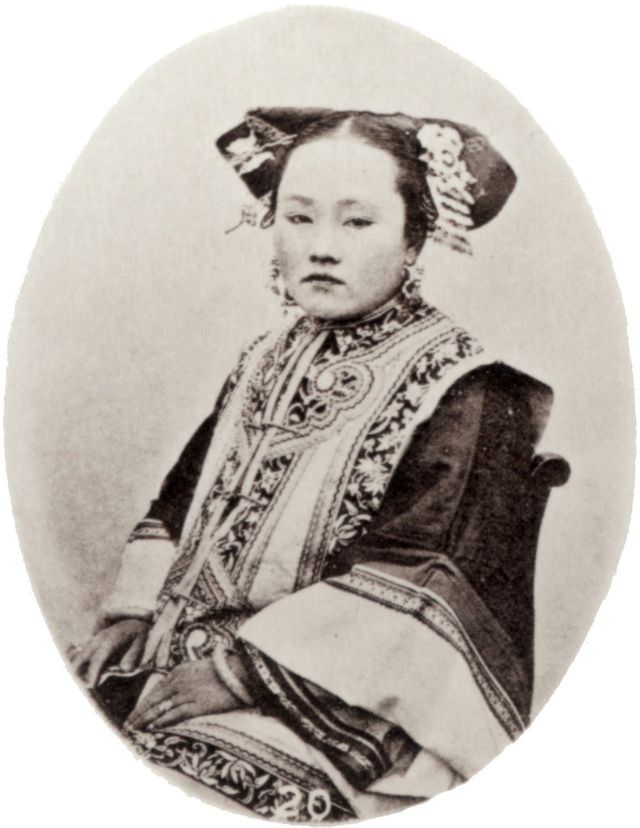
The Manchu ruling class maintained a distinct identity separate from the Han population. Manchu and Tatar women, for example, did not practice foot binding — the painful tradition common among Han women — and dressed differently from their Han counterparts. These distinctions in dress, custom, and social role were visible markers of the ethnic divide that ran through Qing society.
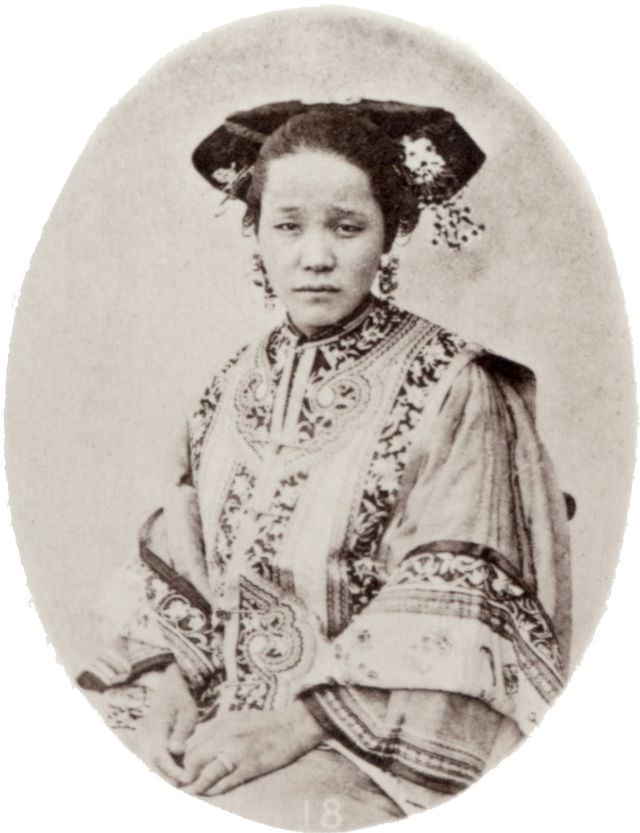
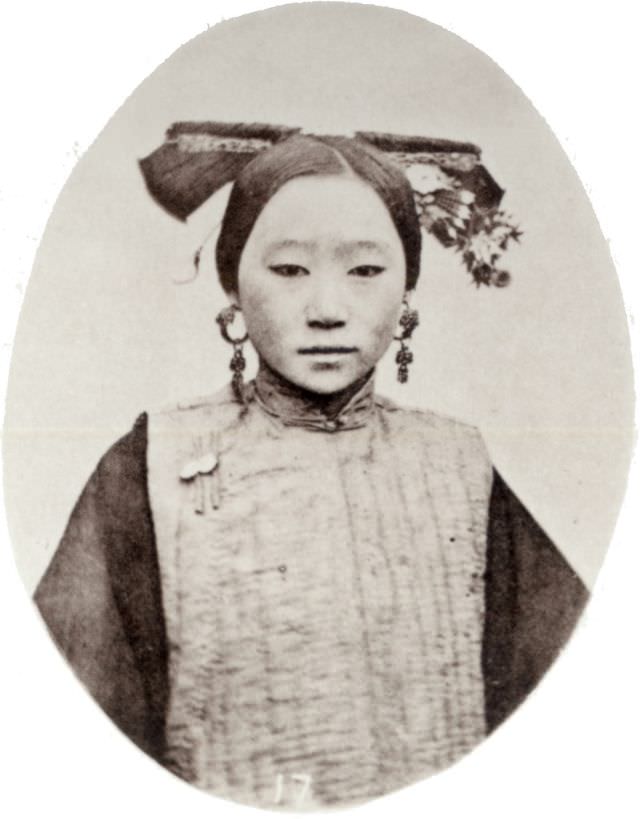
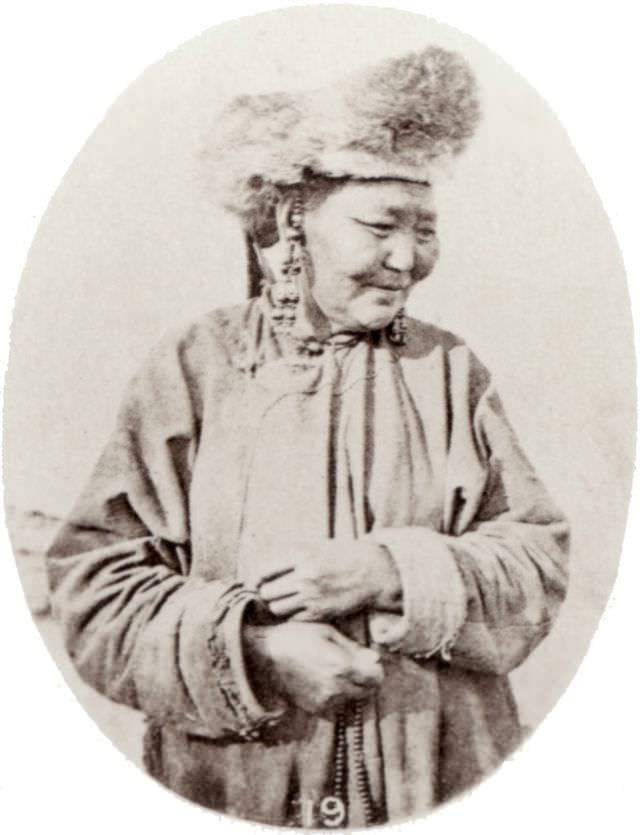
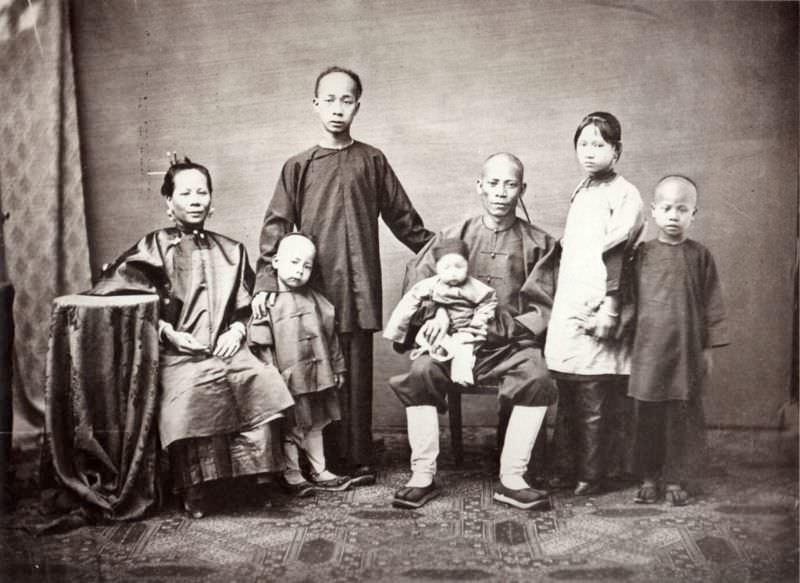
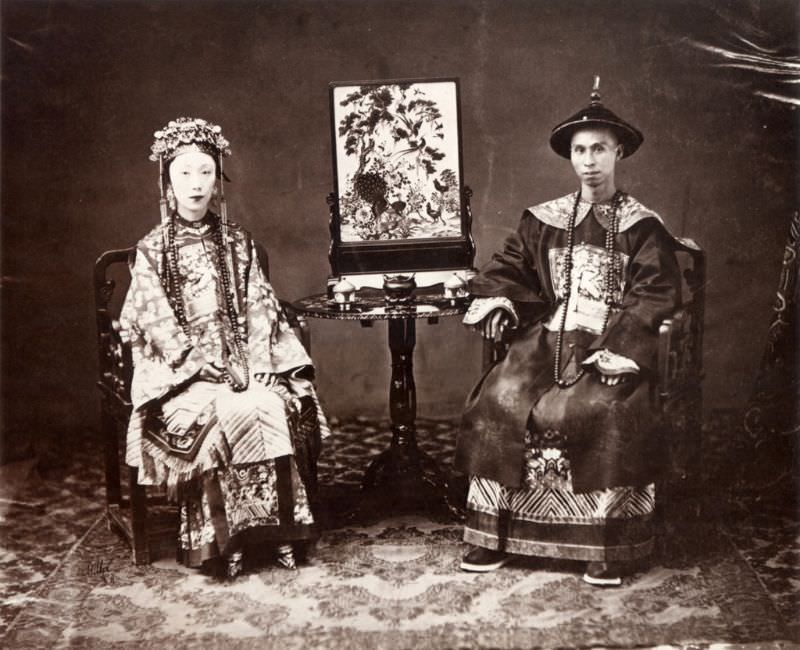
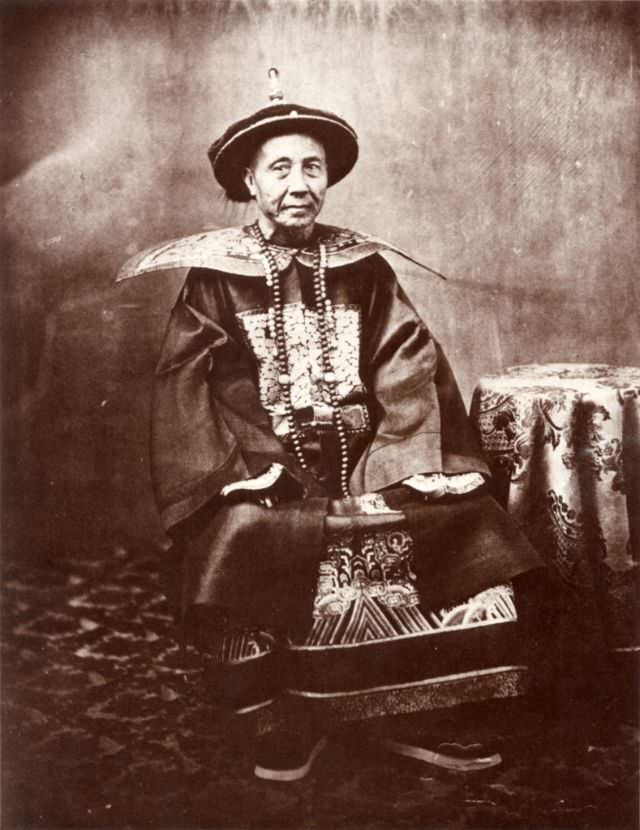
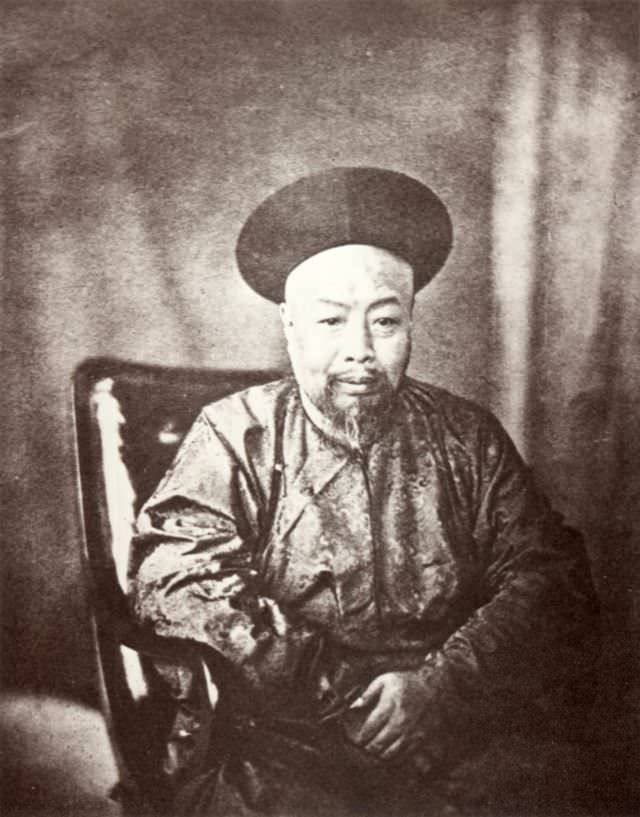
Mandarins — government officials who held administrative power under the imperial system — were among the most photographed subjects of this era. Their rank determined their clothing, accessories, and the size of their households. A mandarin’s position required years of study and passing rigorous imperial examinations. Many were photographed with their families, offering a glimpse into the privileged world of Qing officialdom.
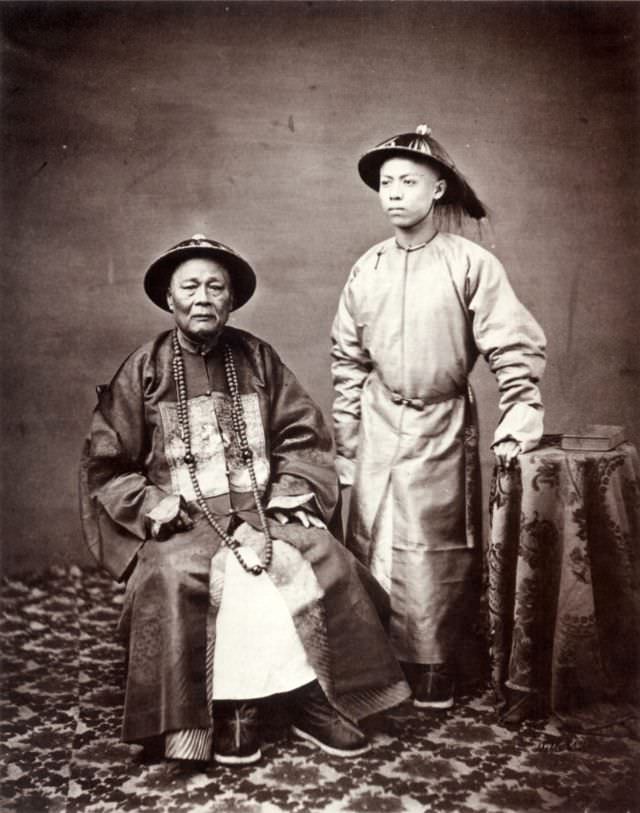
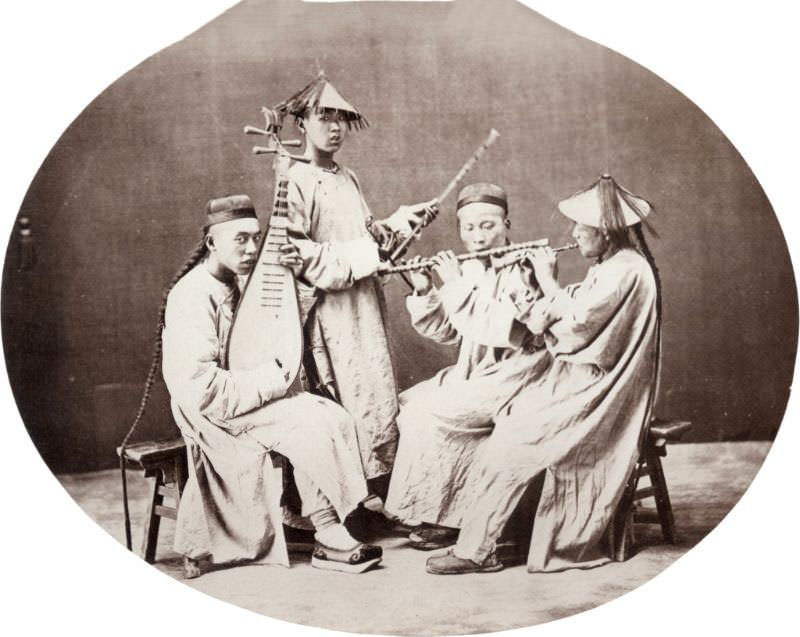
Shanghai and Canton were two of the most photographed cities during the 1860s, drawing Western photographers eager to document Chinese life for audiences back home. Shanghai had become a major international settlement after the First Opium War, with foreign districts operating almost independently from Chinese authority. The city’s mix of cultures made it one of the most dynamic — and photographed — places in Asia at the time.
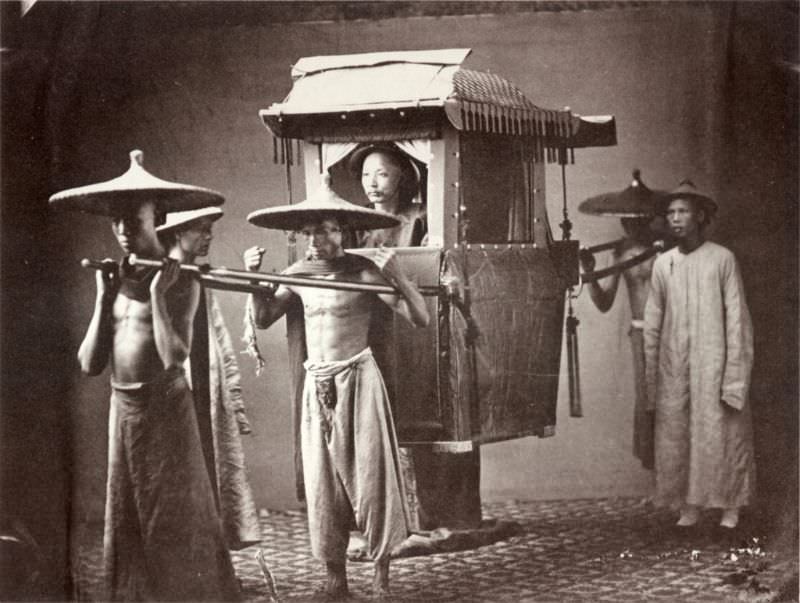
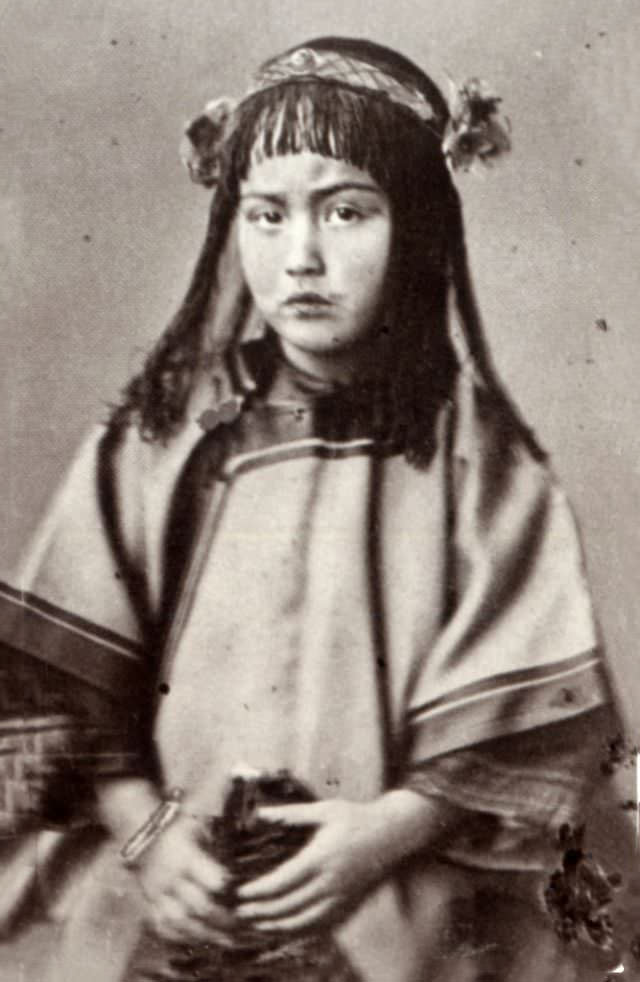
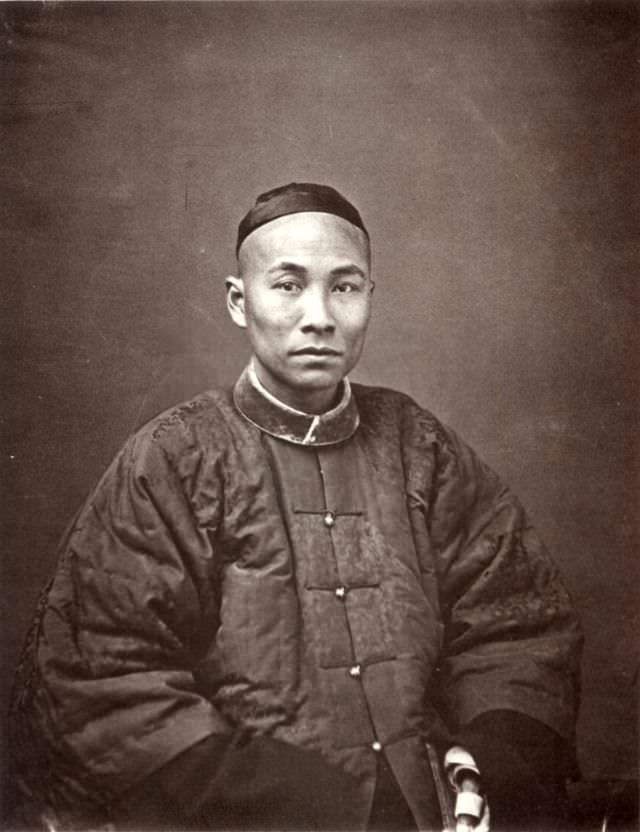
Photography itself was a new technology in China during the 1860s, introduced largely through Western contact. Early photographers — many of them foreign — traveled to major Chinese cities to capture portraits of locals from every level of society. Their images documented not just faces, but clothing, hairstyles, and the visual rhythms of daily life across different classes and ethnic groups.
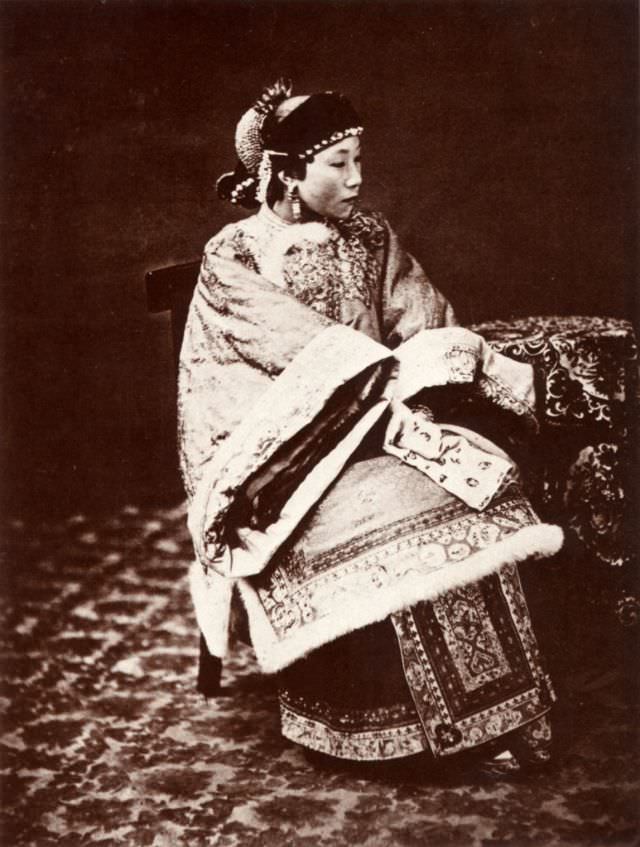
High-ranking officials governed vast territories during the Qing era. The Governor-General of Kwangtung and Kwangsi, for example, oversaw two of China’s most strategically important southern provinces, including the city of Canton and its surrounding trade networks. These officials served as the Qing emperor’s direct representatives in the provinces and held enormous power over local populations.
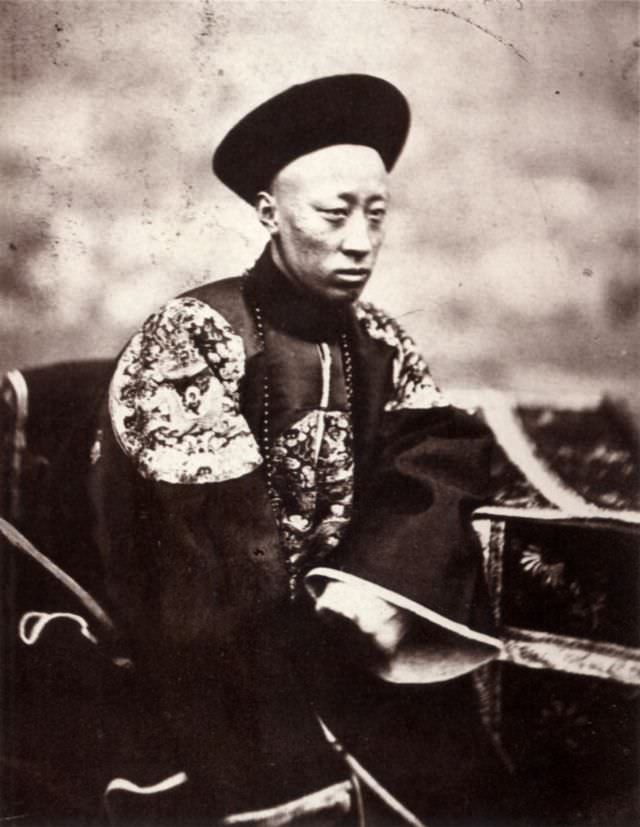
The end of the Second Opium War was formally marked by a deeply symbolic moment. On November 4, 1860, Prince Kung — the Qing emperor’s brother and chief negotiator — formally surrendered to the allied forces in Peking. The photograph taken that day stands as one of the most significant images from the era, capturing the moment the Qing Dynasty acknowledged military defeat at the hands of Western powers.
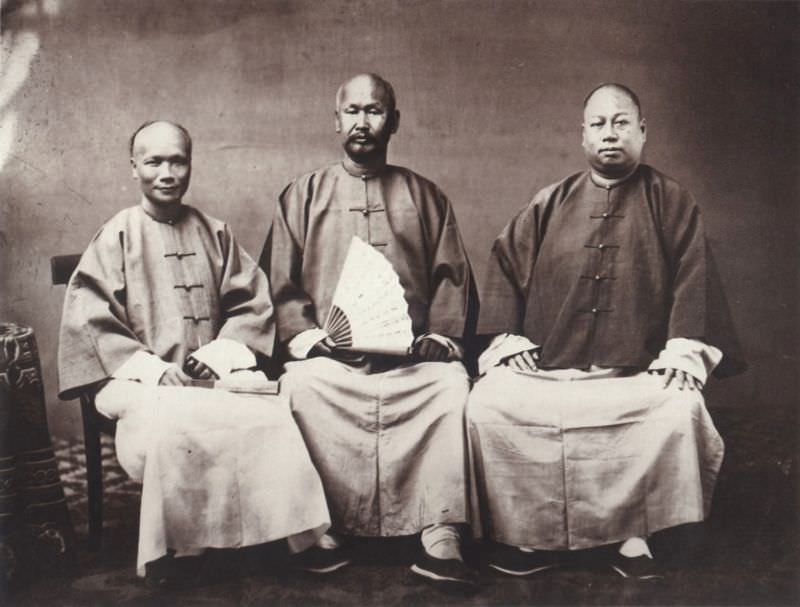
Canton’s role as a trade city made it a focal point for both Chinese commerce and foreign diplomacy. The Viceroy of Canton held one of the most powerful regional positions in the empire, responsible for managing trade relations, maintaining order, and enforcing imperial decrees in southern China. Photographs of Canton’s officials and merchants from the late 1850s and early 1860s show a city caught between tradition and the pressures of foreign influence.
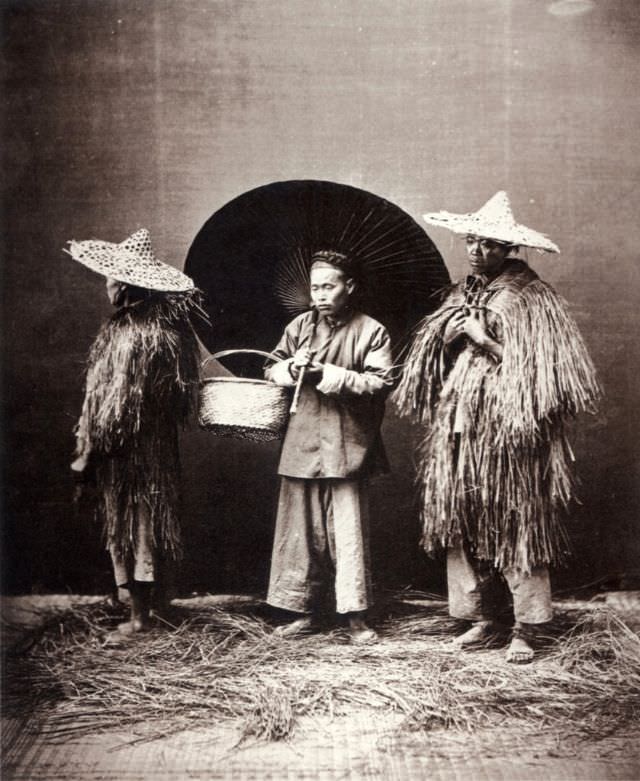
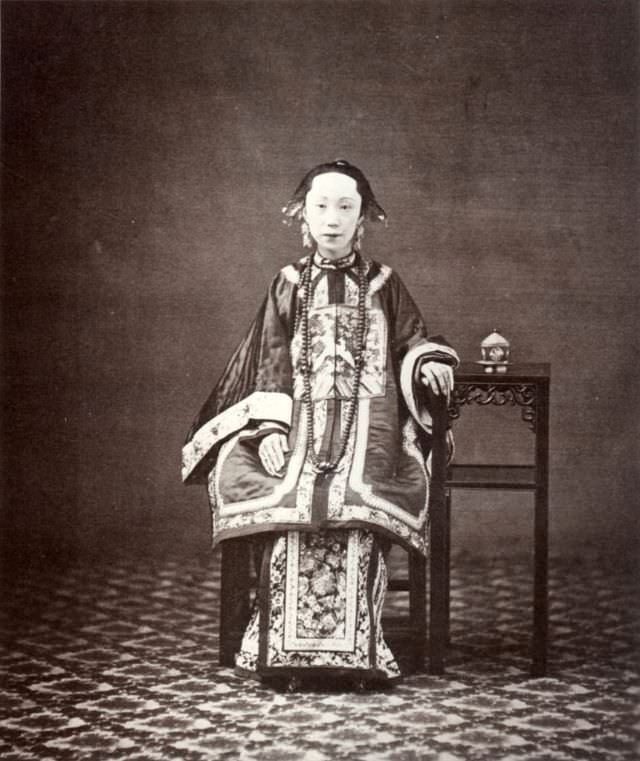
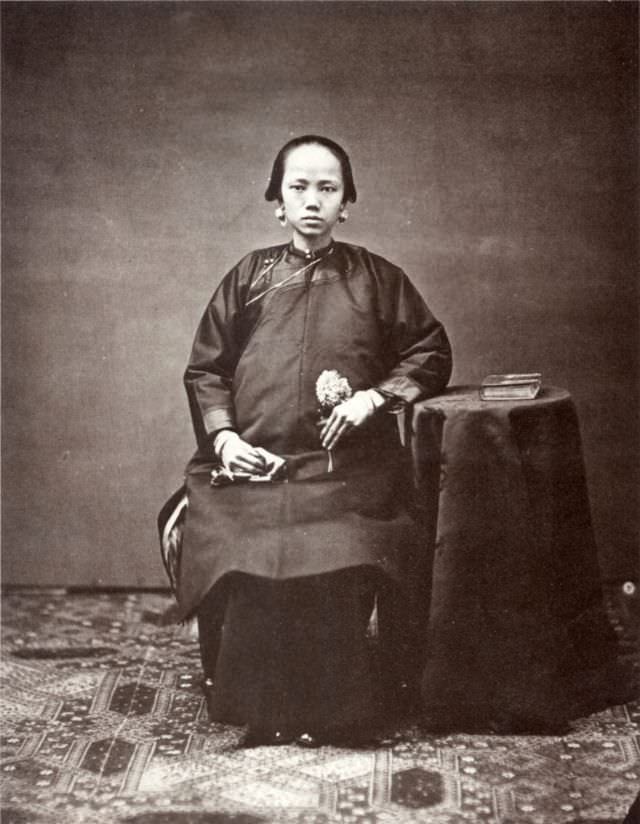
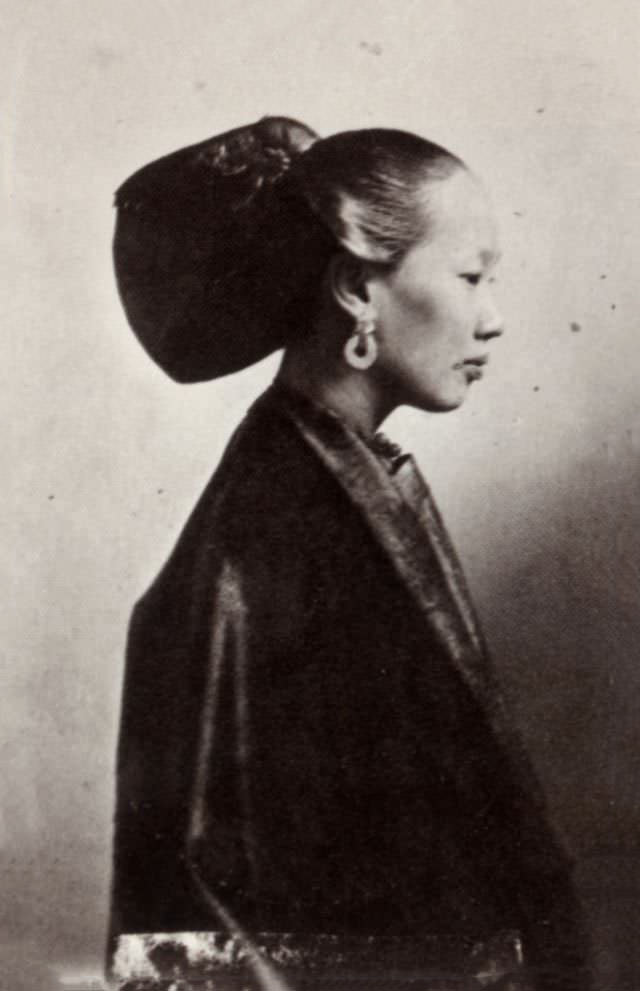
Women across different regions of China dressed and styled themselves according to local custom and social class. Women in southern China, including Canton and the Swatow region, wore distinct clothing that set them apart from women in northern cities like Peking or Shanghai. Class differences were equally visible — the wife of a mandarin dressed in fine silks while working-class women wore practical, simpler garments suited to physical labor.
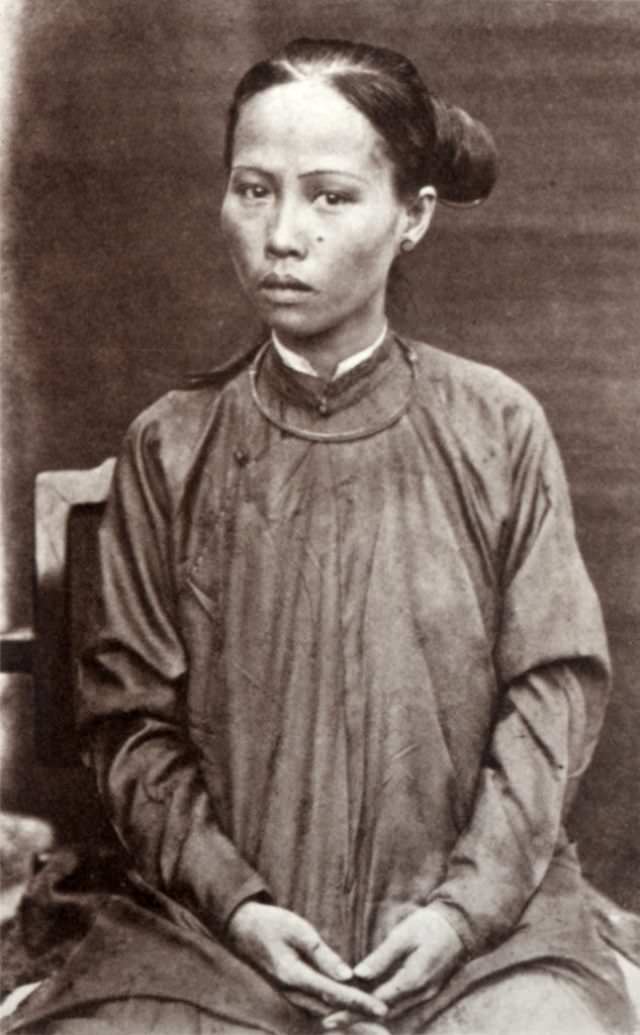
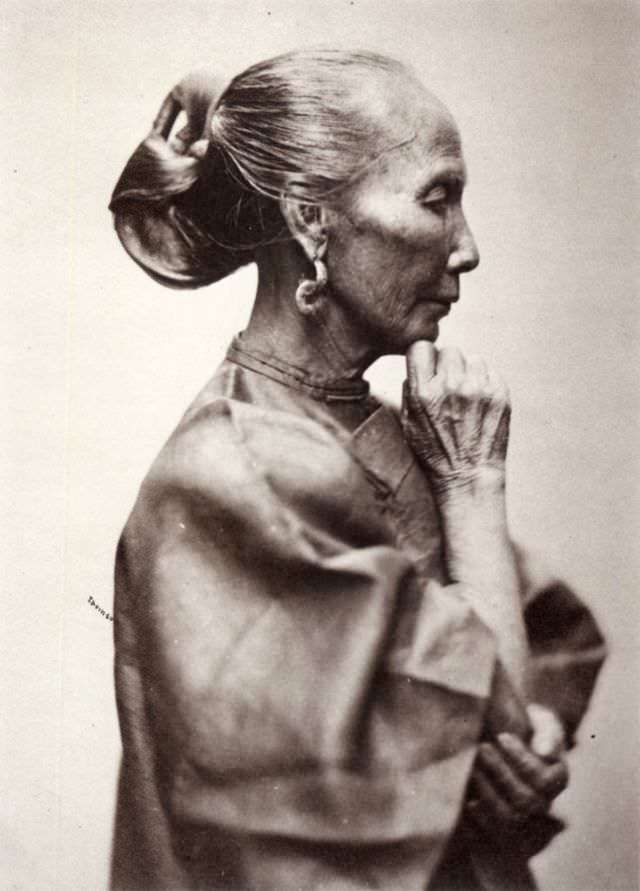
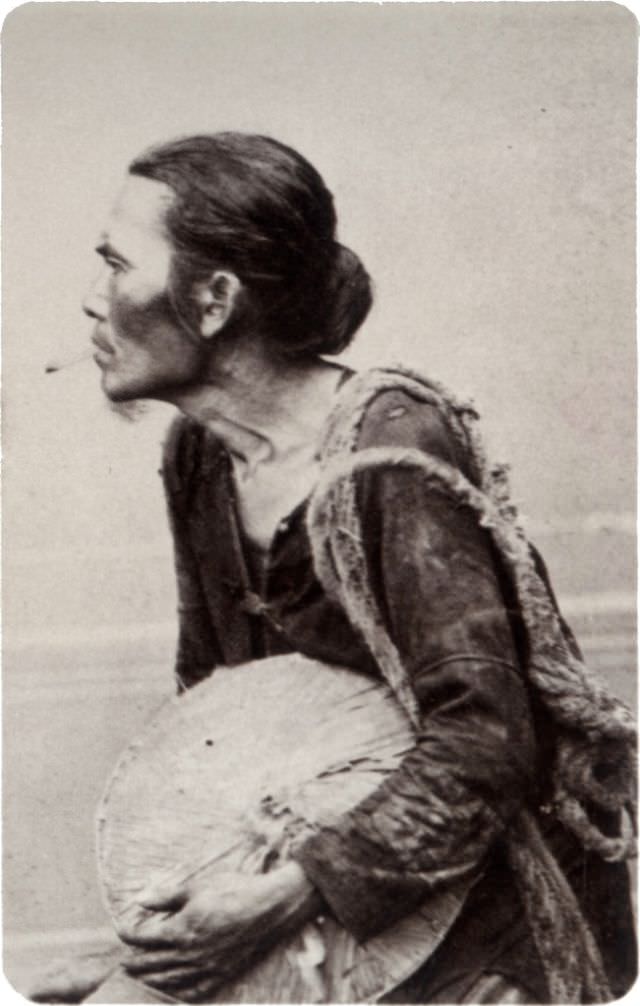
The Qing Dynasty finally collapsed in 1911, brought down by a revolutionary movement that had been building for years. Sun Zhongshan — also known as Sun Yat-sen — founded the Revive China Society in Hawaii in 1894 after receiving a Western education. The organization later relocated to Hong Kong and worked to organize opposition to Qing rule. Their efforts ultimately succeeded in ending more than 260 years of Manchu imperial rule over China.
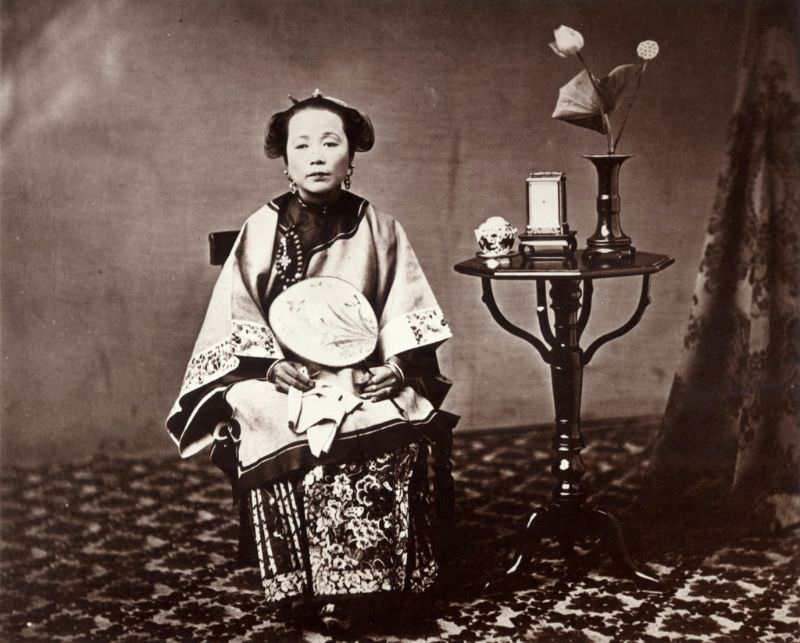
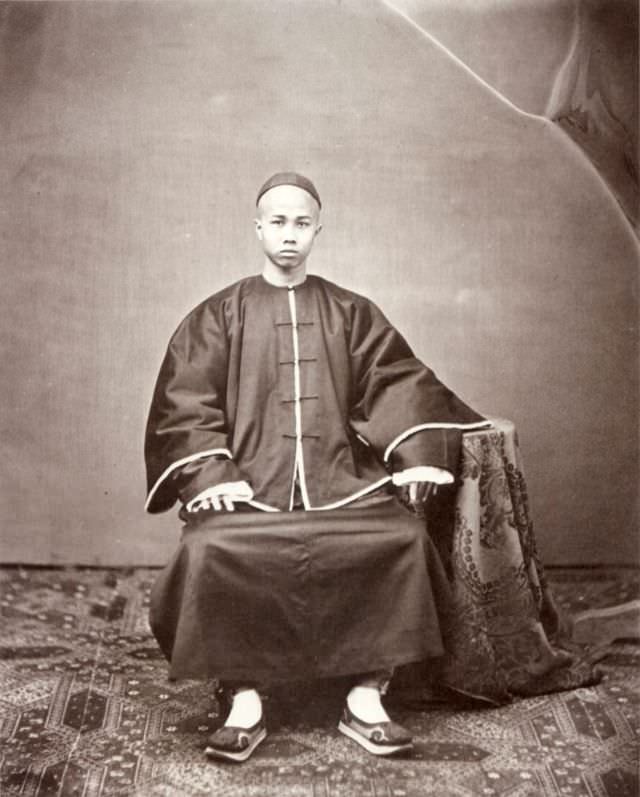
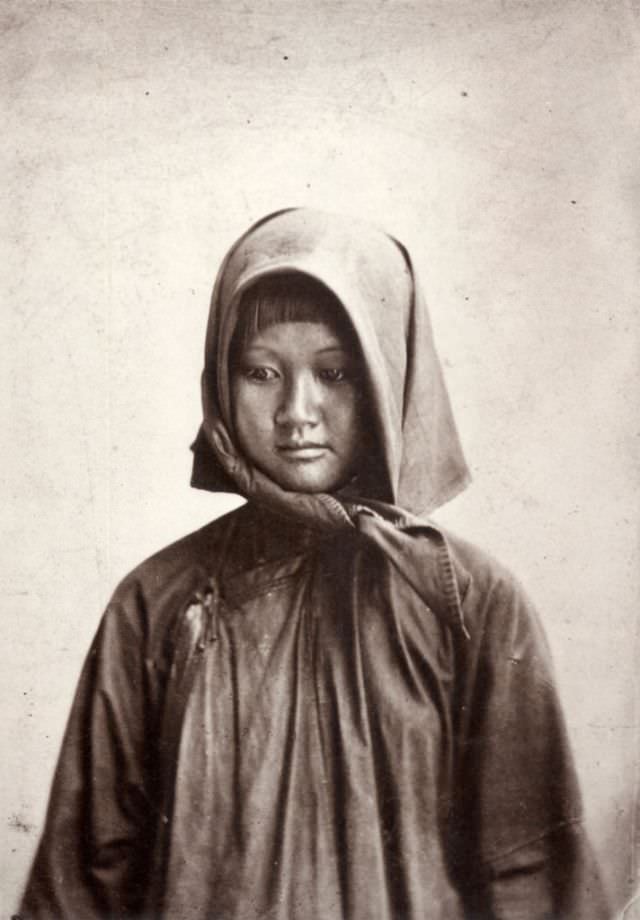
The photographs collected here — taken between 1858 and 1868 — span the most turbulent decade of the Qing Dynasty’s later years. They show China at a crossroads: still operating under centuries-old imperial customs while being forced open by foreign military power and trade. From Canton shopkeepers and Shanghai musicians to high court officials and working-class families, these images capture the full spectrum of Chinese life during one of history’s most consequential periods.