In 1973, Paris became the backdrop for one of rock music’s most recognized album covers. David Bowie was wrapping up work on his seventh studio album, ‘Pin Ups,’ recorded at Château d’Hérouville with producer Ken Scott following the close of the Ziggy Stardust Tour. The album was a collection of covers paying tribute to Bowie’s favorite 1960s tracks. But what ended up defining it most was a single photograph.
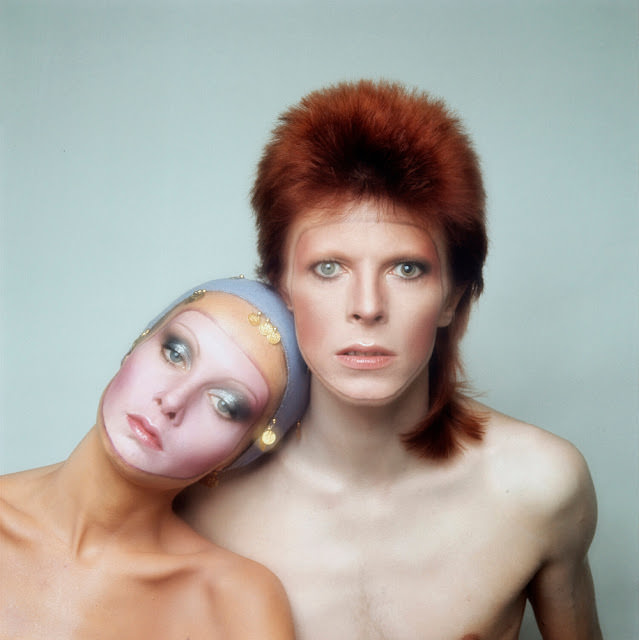
The photo shoot was organized by Justin de Villeneuve, Twiggy’s manager and partner at the time. The plan was straightforward: photograph Bowie and Twiggy together for a Vogue magazine feature. What de Villeneuve didn’t anticipate was a serious visual problem. Twiggy had just returned from a holiday in the Bahamas with a deep golden tan, which clashed sharply against Bowie’s naturally pale complexion. A standard shoulder shot would have looked unbalanced and jarring.
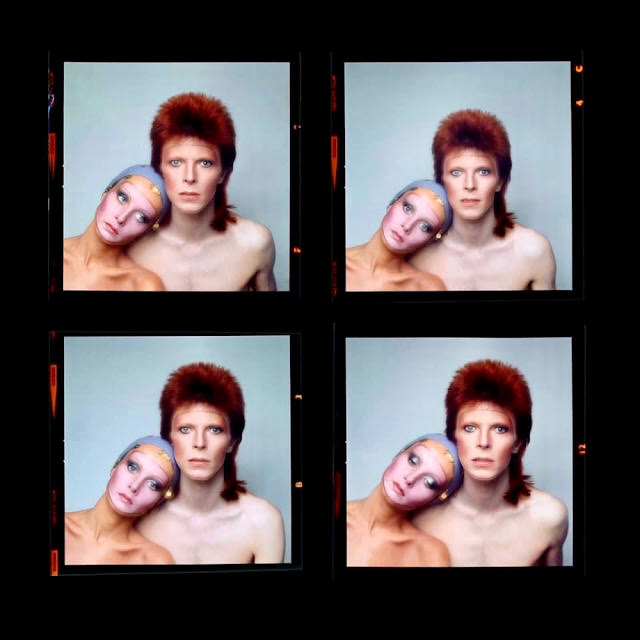
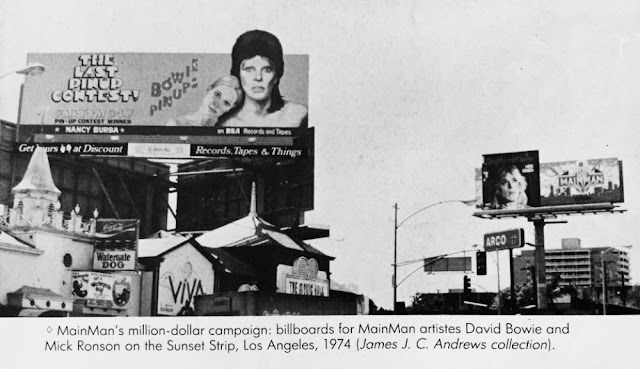
Makeup artist Pierre La Roche solved the problem with a bold idea. He designed complementary face masks for both subjects, bringing their skin tones into visual harmony. The result was striking. Twiggy stares directly into the camera with wide, steady eyes, while Bowie’s gaze drifts past the lens entirely, giving the image an eerie, detached quality. The asymmetry between them — one grounded, one absent — created an unsettling tension that made the photo impossible to ignore. When de Villeneuve showed Bowie the test Polaroids, Bowie immediately wanted the image for the ‘Pin Ups’ sleeve. Vogue, which had commissioned the shoot, was not pleased. But the deal was made, and the photo became the cover. There is one unusual detail. Bowie’s management ran a contest in Los Angeles where the winner’s face would replace Twiggy’s in the final artwork. As a result, the version of “Twiggy” on the actual album cover is not Twiggy herself. She described the finished image in her autobiography as “enigmatic and strange” and named it one of her favorite photographs.