Hey There! Before You Go. 😧
Get the best vintage content straight into your inbox!

Don't worry, we don't spam

Historical Photos of People Wearing Gas Masks During the 1920s and 1930s

World War One introduced poison gas as a battlefield weapon, and it changed how people thought about war forever. Chlorine, phosgene, and mustard gas were all used against soldiers. Mustard gas was particularly feared — it was nearly impossible to detect and caused severe injuries or death hours after exposure. When the war ended in 1918, the fear did not.

Through the 1920s, military units continued training with gas masks and breathing equipment. Mine rescue teams also relied on similar gear underground, where toxic gases were a constant danger. Testing equipment and refining techniques became routine work for safety crews in both military and industrial settings.
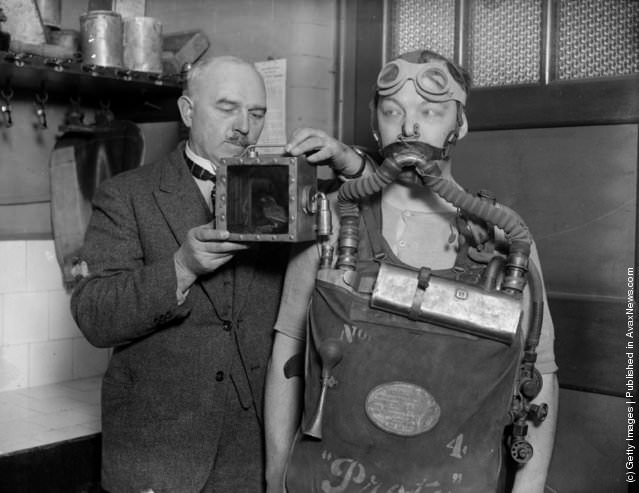
A canary testing gas toxicity for a mine rescue worker, 1925.

Canaries were used in mines as an early warning system — their sensitivity to toxic gases made them living detectors. Mine rescue workers carried them into dangerous areas before entering themselves. The practice was standard procedure, not a novelty.
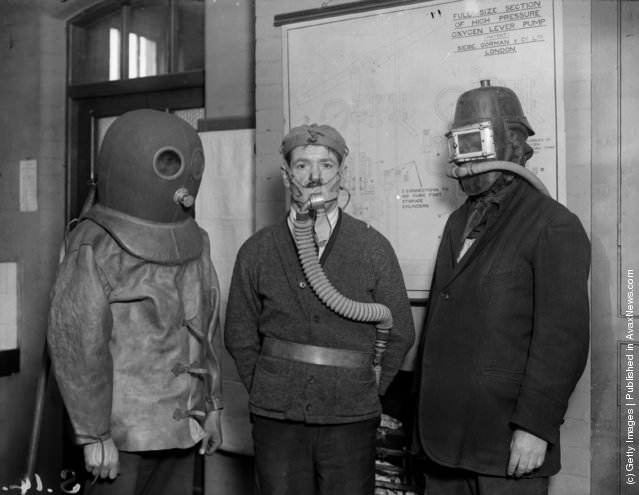
Workers demonstrating different types of mine rescue gas masks, 1925.

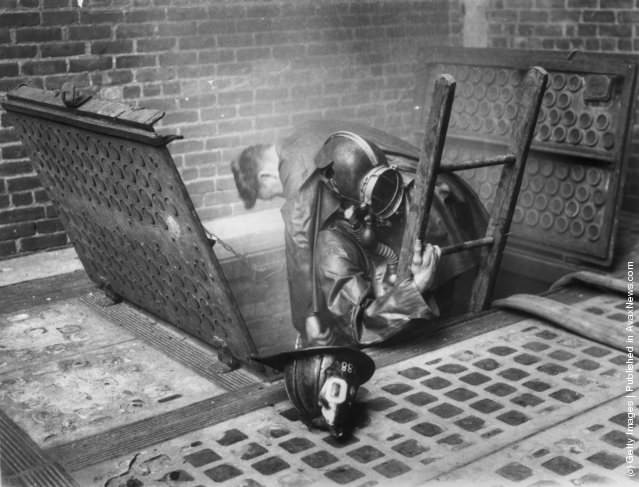
By the late 1920s, fire brigades across Britain began incorporating gas mask training into their drills. Firemen needed to operate in smoke-filled and potentially toxic environments, making proper breathing apparatus essential. London’s fire service was among the first to formalize this kind of training.
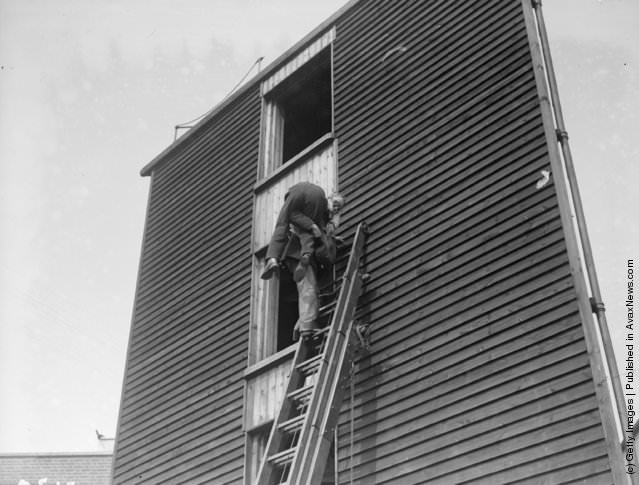
A fireman rescuing someone during a gas mask class for London firemen, 1928.
Two firefighters emerging from a smoke-filled vent, 1929.

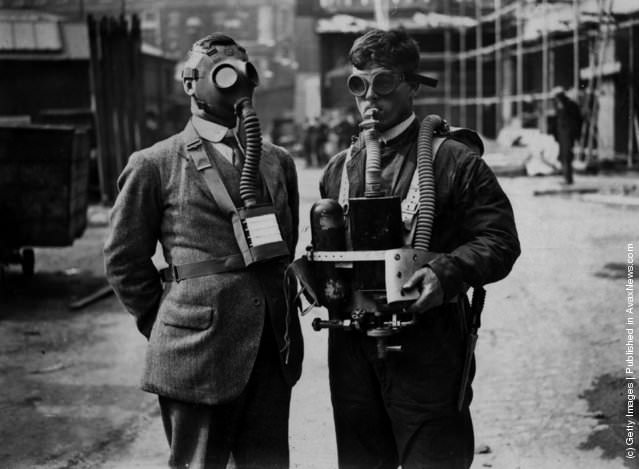
Public exhibitions also brought gas masks into the civilian eye. Events like London’s Shipping and Engineering Exhibition displayed a wide range of breathing apparatus to the general public, making the technology visible and familiar outside of military contexts.
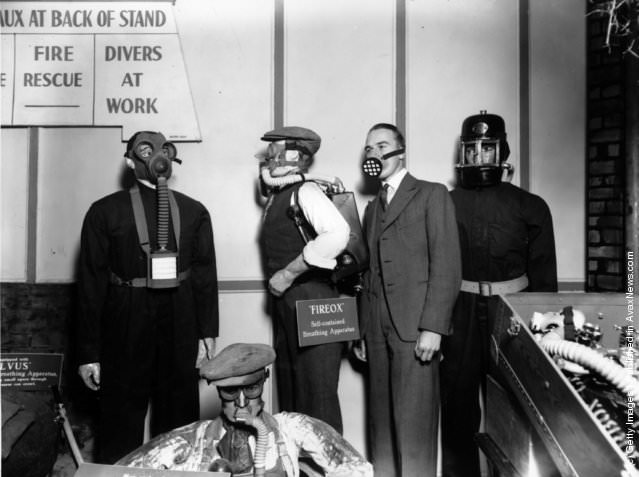
A selection of breathing apparatus at the Shipping and Engineering Exhibition, London, 1930.
A gas mask and diving mask demonstrated at the Engineering & Machinery Exhibition, London, 1929.

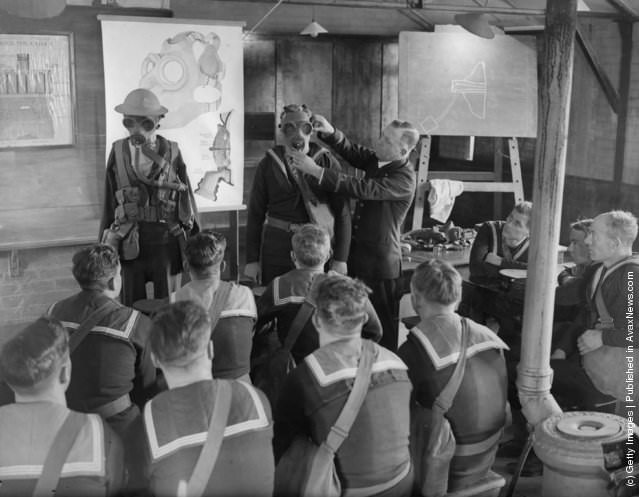
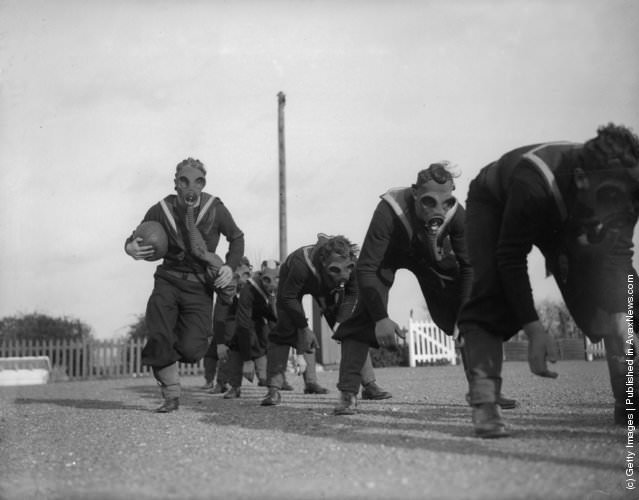
As Europe’s political tensions sharpened in the early 1930s, military gas mask training intensified. The Royal Marines drilled in full gear inside simulated trenches. The Royal Navy ran a dedicated Anti-Gas School at Portsmouth, where sailors practiced wearing masks during physical activity and classroom instruction alike.
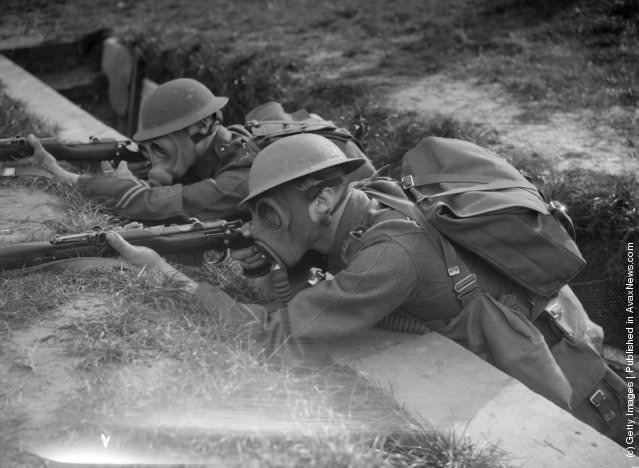
Royal Marine recruits practicing trench warfare in gas masks, 1933.
Royal Navy seamen playing ball games in gas masks at the Anti-Gas School, Portsmouth, 1934.
Royal Navy seamen learning gas warfare at the Anti-Gas School, Portsmouth, 1934.

Mine rescue brigades continued to develop and display their equipment throughout the mid-1930s. Fire brigades across Britain and Europe similarly expanded their training programs, bringing in outside inspectors and foreign counterparts to compare techniques and standards.
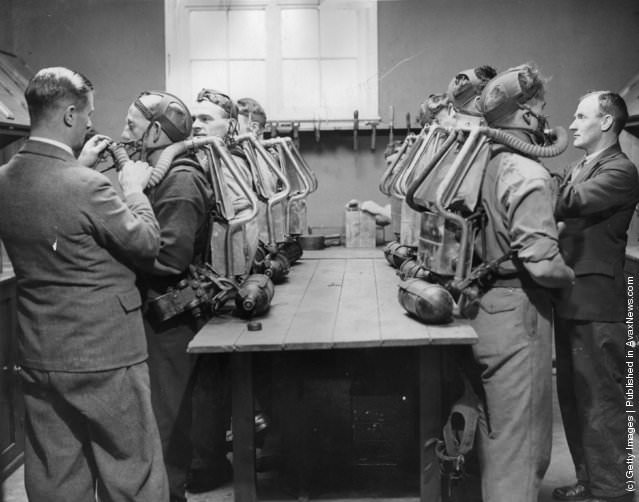
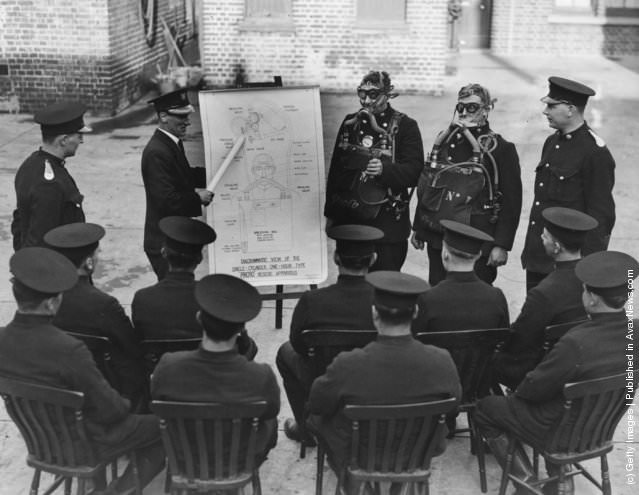
A mine rescue brigade with breathing apparatus, 1934.
A fire-fighting class given by the Brighton Fire Brigade, 1934.

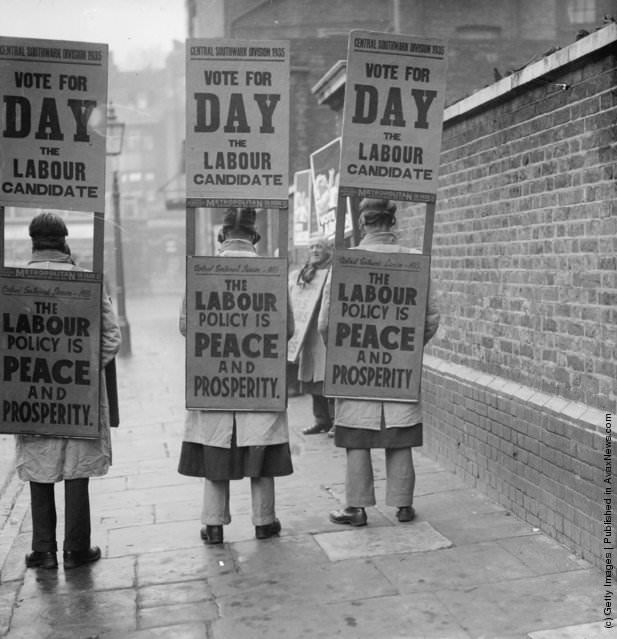
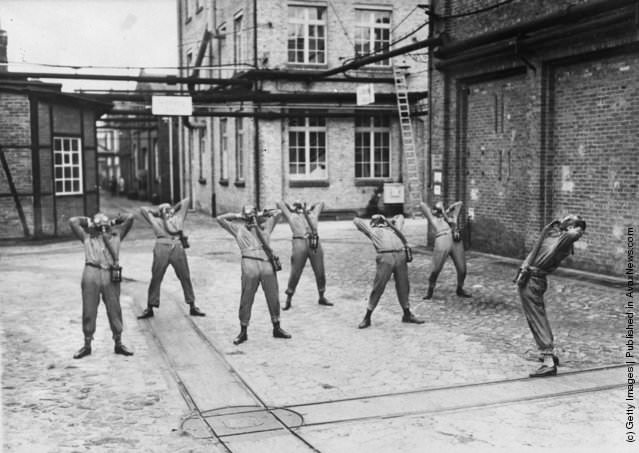
By 1935, gas mask use had spread into nearly every corner of public life. Civilian gas attack demonstrations were staged in London, with nurses treating mock patients while wearing full masks. Workers wore them in factory yards. Pest control crews used them around historic landmarks like Winchester Cathedral. Even political campaigners showed up in gas masks to drive home an anti-war message.
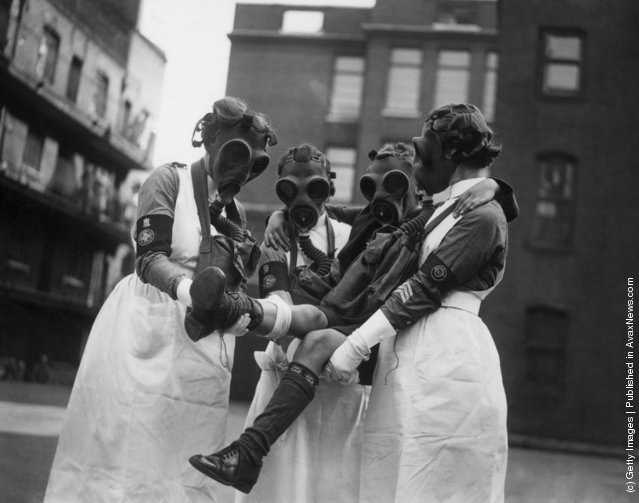
Nurses in gas masks attending a patient during a gas attack demonstration in London, 1935.
Men wearing gas masks exercising in a factory yard, 1935.
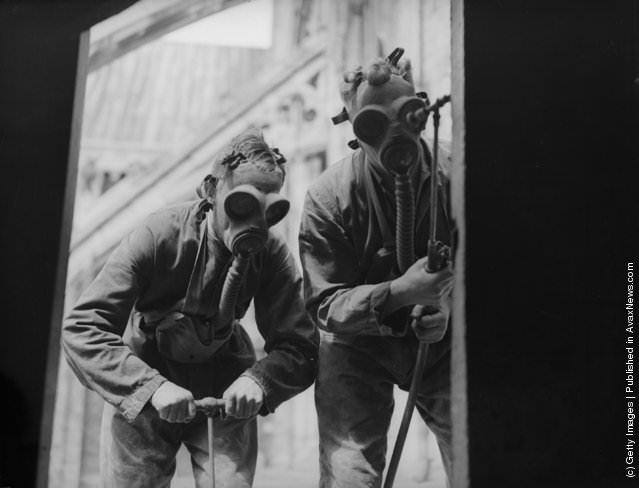
Pest control men in gas masks spraying insecticide around Winchester Cathedral, 1935.
Labour supporters electioneering in gas masks, promoting "Vote Labour," 1935.
Labour supporters electioneering in gas masks, promoting “Vote Labour,” 1935.

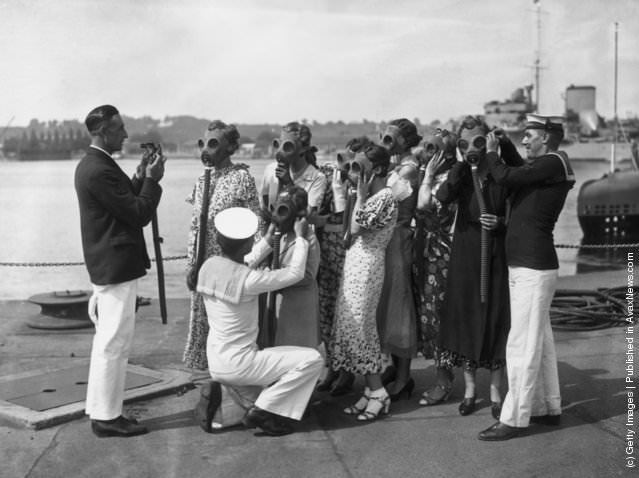
Children and young visitors were brought directly into the experience. At Kingston Barracks in Surrey, soldiers escorted young people through gas chambers so they could understand firsthand what protection was needed. Sailors at Chatham fitted gas masks on civilian visitors during Navy Week rehearsals — normalizing the equipment for a general audience.
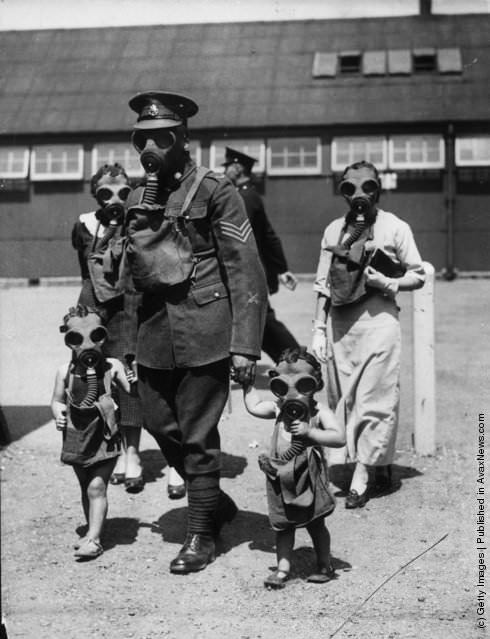
A soldier escorting young visitors to gas chambers at Kingston Barracks, Surrey, 1935.
Sailors fitting gas masks on visitors at Chatham, England, during a Navy Week rehearsal, 1935.

The threat was not purely theoretical. In 1935, Italy used mustard gas against Abyssinian forces during its invasion of Ethiopia. Abyssinian soldiers trained with gas masks in Addis Ababa in anticipation of chemical attacks — a direct consequence of real warfare happening in real time.
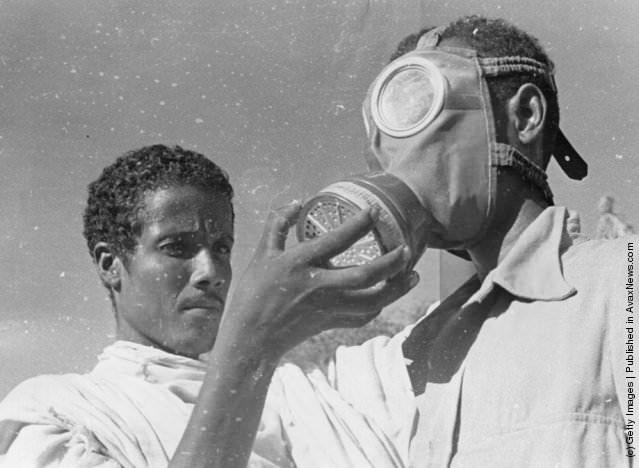
An Abyssinian soldier wearing a gas mask during training in Addis Ababa, 1935.
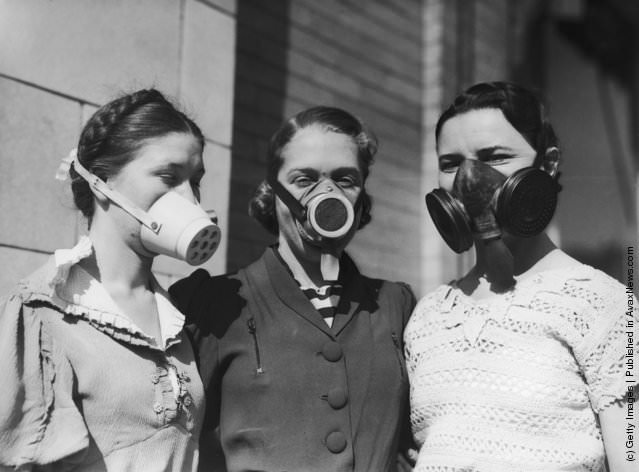
Girls modeling dustbowl masks, 1935.

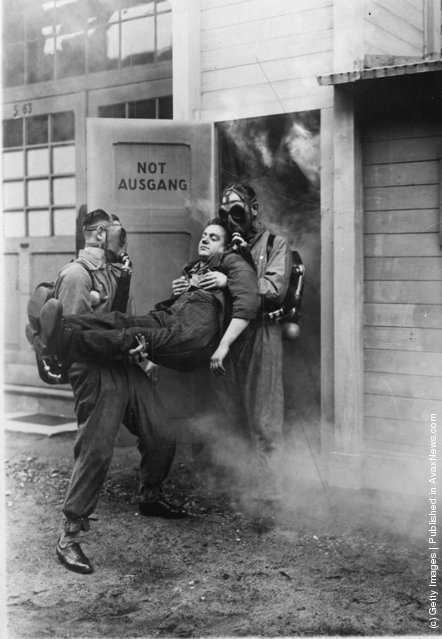
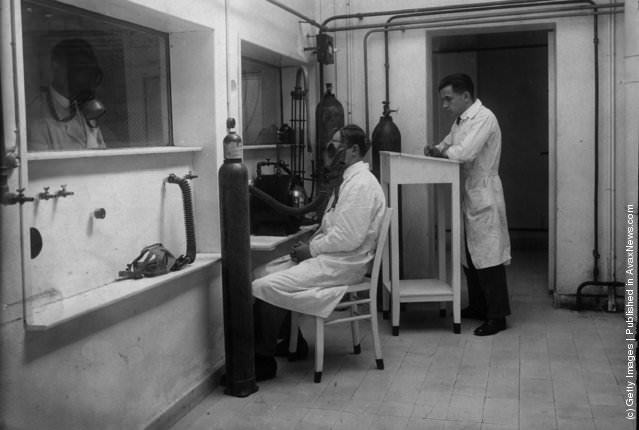
In Germany, rearmament under the Nazi government brought military gas mask training into public view. Soldiers drilled in masks during motorcycle maneuvers, and factory workers tested safety equipment as part of civil defense preparations. Emergency rescue drills were staged, showing masked teams carrying casualties through marked exits.
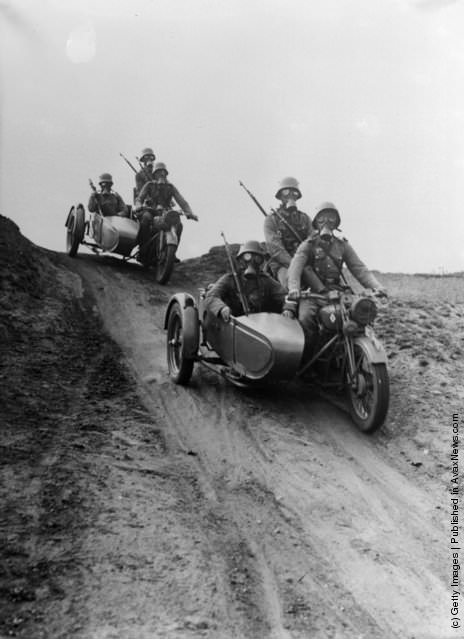
German soldiers in gas masks riding motorcycles during maneuvers, 1936.
Workers testing safety equipment in a German factory, 1935.
Men wearing gas masks carrying a man out of a door marked "Not Ausgang," 1935.
Men wearing gas masks carrying a man out of a door marked “Not Ausgang,” 1935.

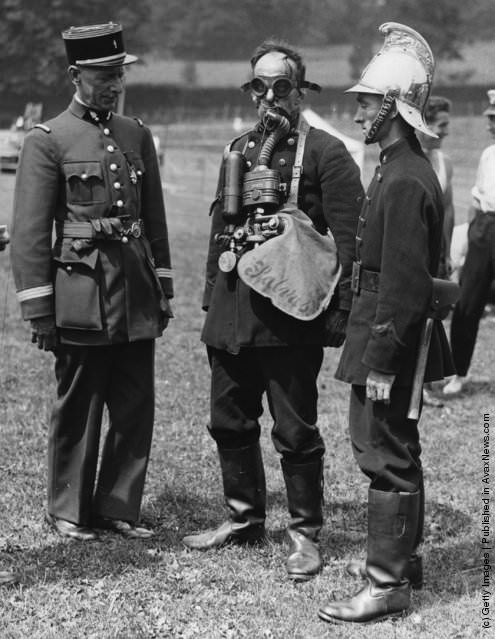
Britain’s Air Raid Precautions (ARP) department moved forward with formal civil defense planning in 1936, testing portable sirens and coordinating public readiness. Fire brigade inspections brought international observers to British stations, reflecting the shared urgency felt across Europe as the decade neared its end.
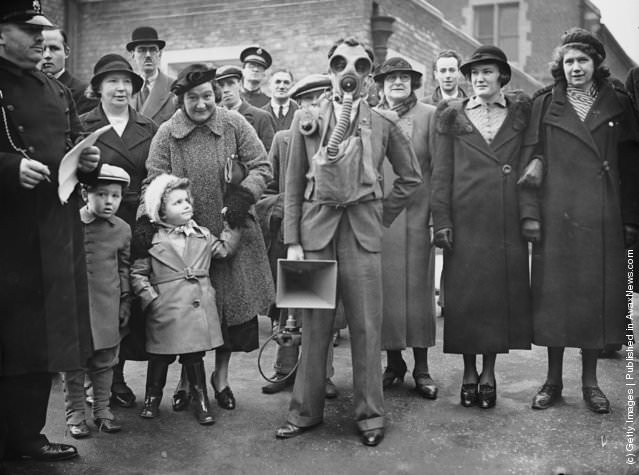
Air Raid Precautions Department testing a portable siren at Hendon, 1936.
Captain Edouard Vigne inspecting the British Fire Brigade in Hastings, 1935.

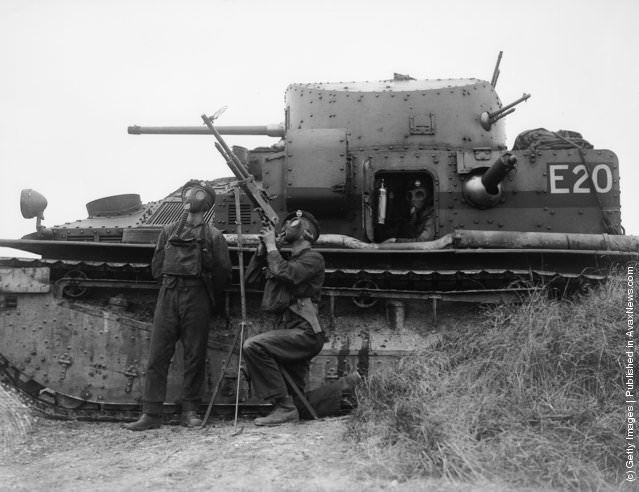
British troops had been preparing for chemical warfare long before the 1930s buildup. Scots Guards were fitted with gas masks before deploying to China in 1927. Soldiers ran maneuvers in full masks as early as 1928. The gear that had saved lives in the trenches was now a permanent fixture of military readiness worldwide.
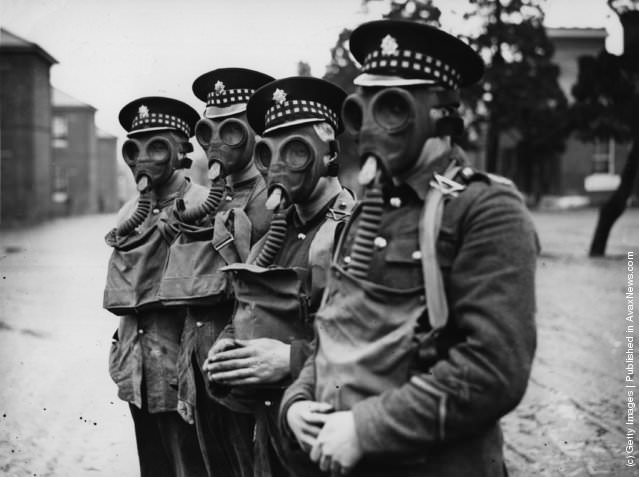
Scots Guards trying on gas masks before sailing to China, 1927.
British soldiers wearing gas masks during maneuvers, 1928.
Enjoyed this post? Get new ones in your inbox.

Leave a Comment

Your email address will not be published. Required fields are marked *

Share this Post 🥺

Please take a moment to share this content. Your support is greatly appreciated! 🙌🙏

Share this Post 🥺

Please take a moment to share this content. Your support is greatly appreciated! 🙌🙏
Scroll to Top
 
Hey Friend, Before You Go.. Please like & follow for more interesting content