
Omaha, Nebraska was founded in 1854 and named after the Omaha tribe, a Native American people who had long inhabited the region along the Missouri River. From its earliest years, the city grew into a major center for manufacturing, transportation, and trade. By the 1880s, Omaha was widely considered the fastest-growing city in the United States, and it had already established itself as one of the world’s leading livestock markets. Thousands of immigrants poured into the city to take jobs at the Union Stockyards and slaughterhouses concentrated in South Omaha.
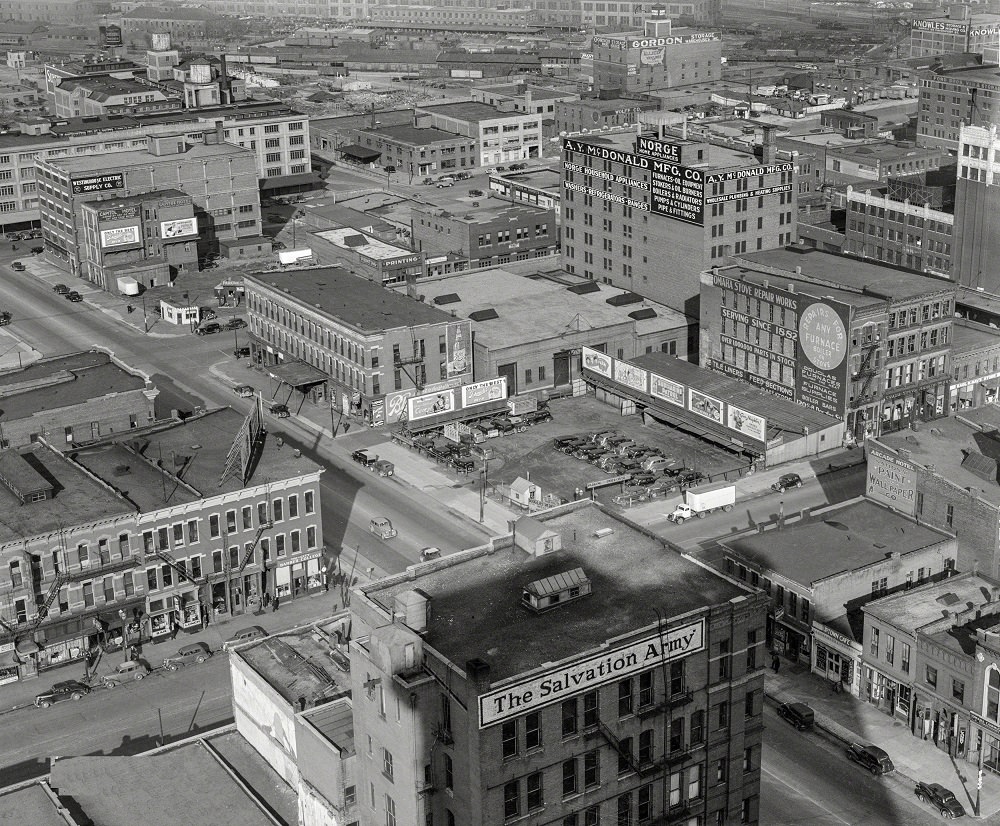
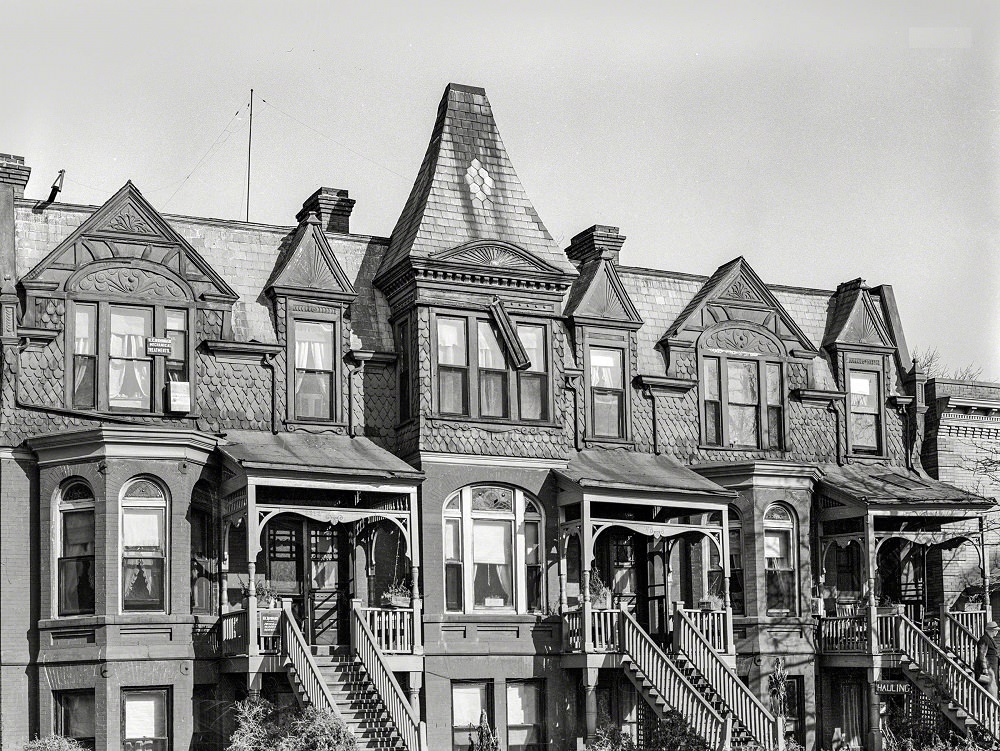
The early 20th century brought rapid development to Omaha. New residential communities took shape across the city, and cultural institutions began to grow alongside the industrial economy. But the Great Depression of the 1930s hit Omaha hard. Unemployment climbed, businesses struggled, and families faced real hardship. The federal government stepped in with relief programs and funded public works projects that helped keep the city afloat during its most difficult years. These photographs, taken in November 1938 by photographers working during that era, capture Omaha at a turning point — battered by hard times but still very much alive.
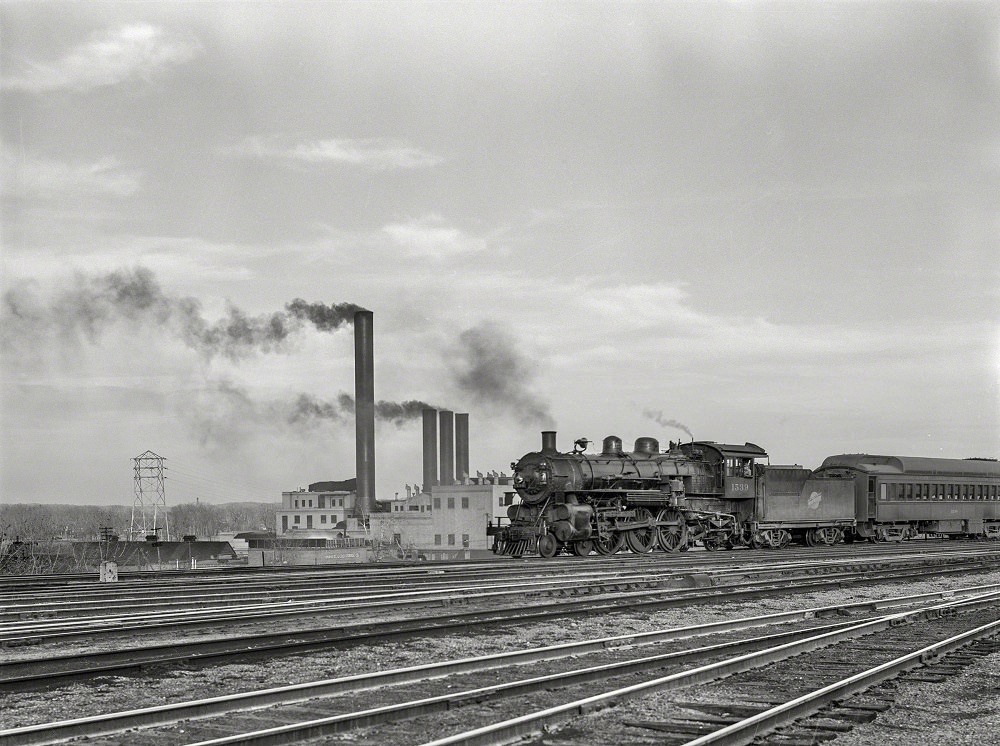
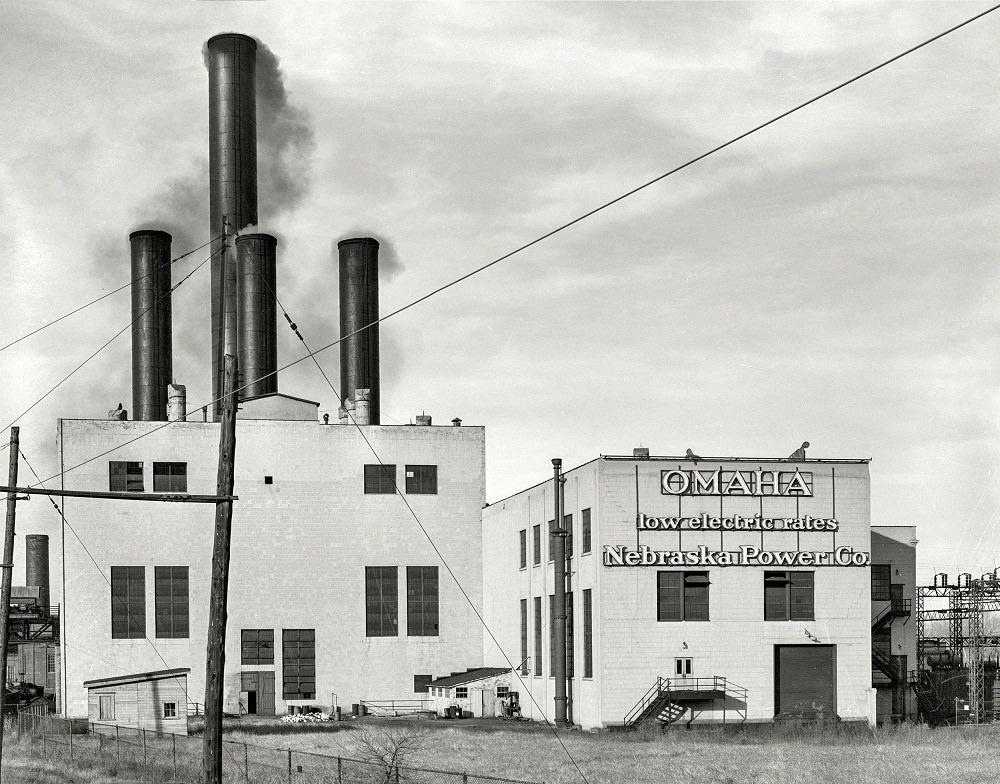
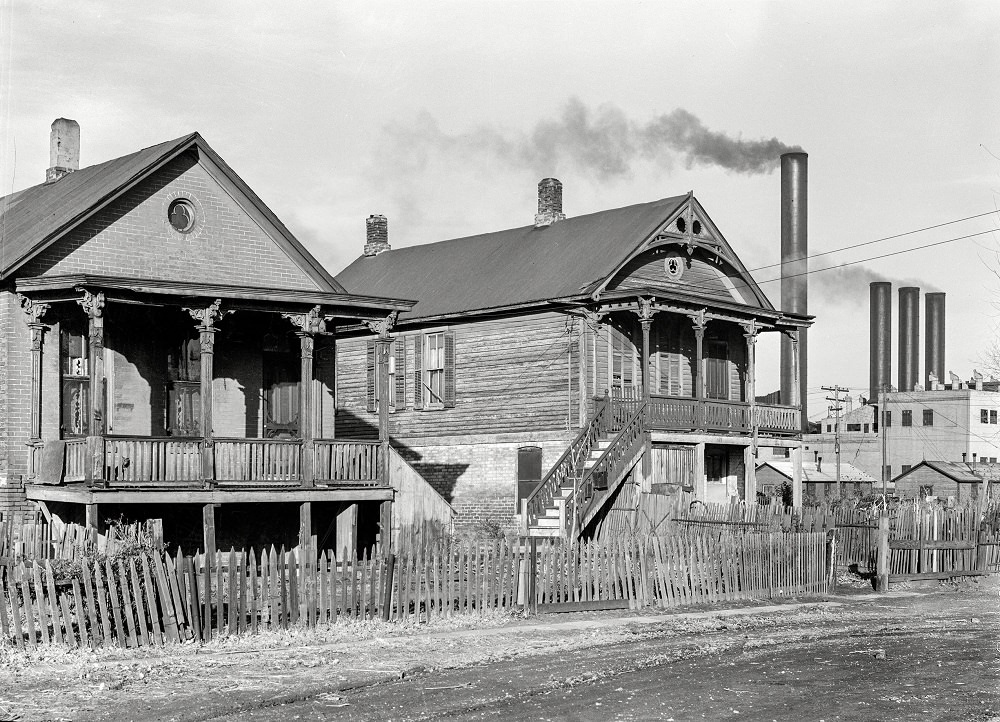
Power and rail were the twin engines of Omaha’s industrial strength. The Nebraska Power Company supplied electricity to the city and its industries, while the railroad yards moved goods and people across the country. Omaha sat at a critical junction in the national rail network, and that position made it indispensable to commerce throughout the Midwest. The Union Pacific, in particular, had deep roots in the city going back to the transcontinental railroad era.
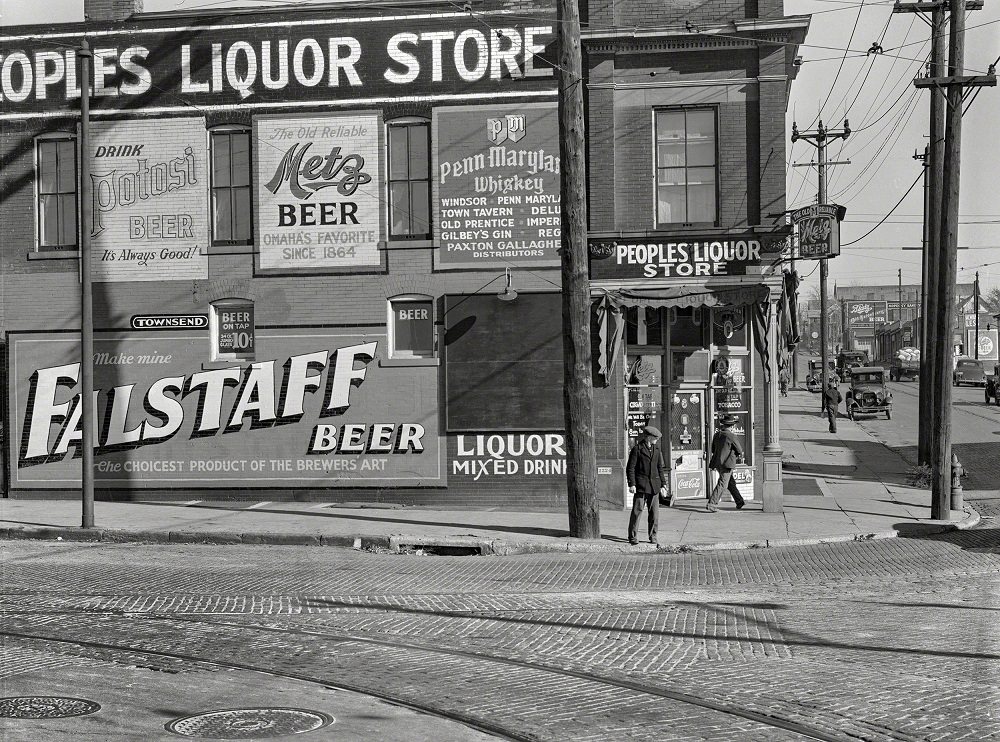
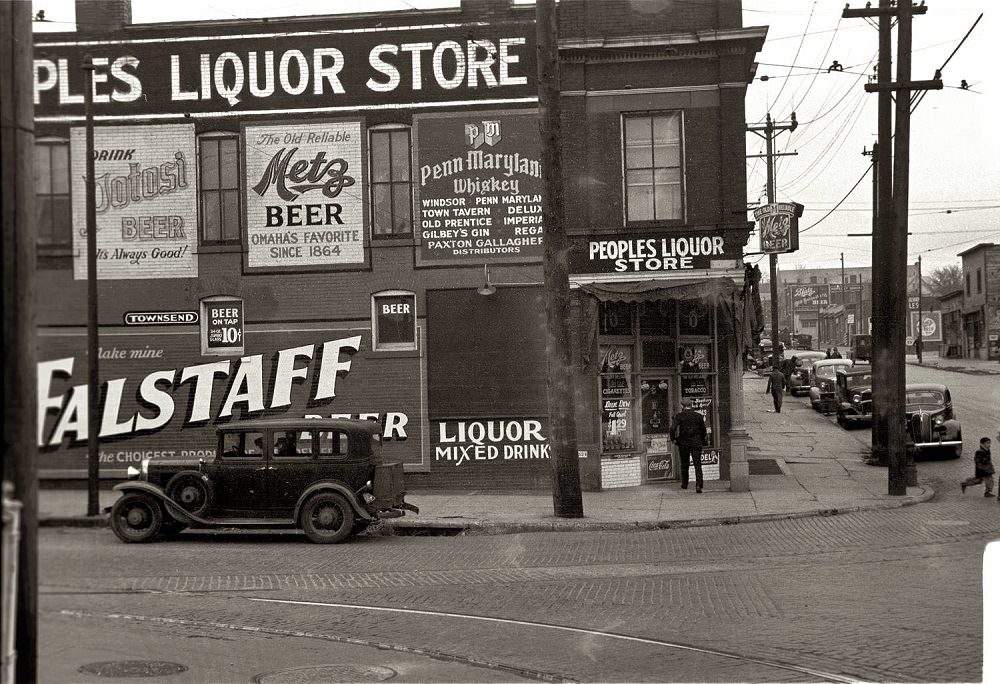
South Omaha was its own distinct world. The neighborhood grew up around the meatpacking industry, and at its peak it was home to one of the densest concentrations of slaughterhouses and processing plants in the country. The Cudahy Packing Company was one of the biggest employers in the area. Saloons, liquor stores, and rooming houses lined the streets near the plants, serving the workers who lived and spent their wages close to where they labored. The culture of South Omaha was rough, working-class, and shaped almost entirely by the rhythms of the stockyards.
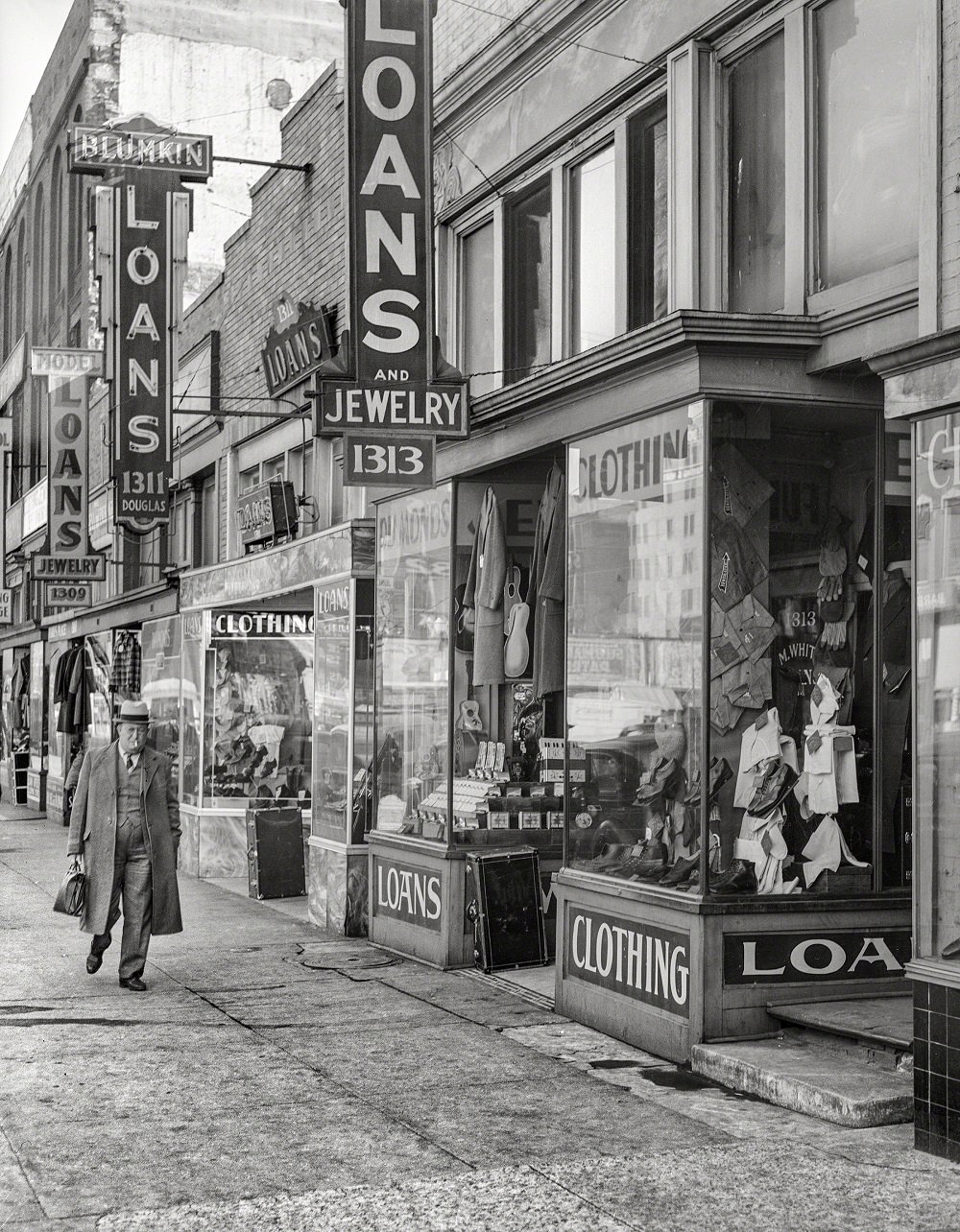
Lower Douglas Street tells a clear story about life in Depression-era Omaha. Loan companies clustered along this stretch, catering to workers and residents who needed cash to get by between paychecks — or when there were no paychecks at all. Flophouses offered cheap overnight shelter to men who had no permanent home. The storefronts here served people at the economic margins, and the street itself had a reputation as one of the harder parts of the city.
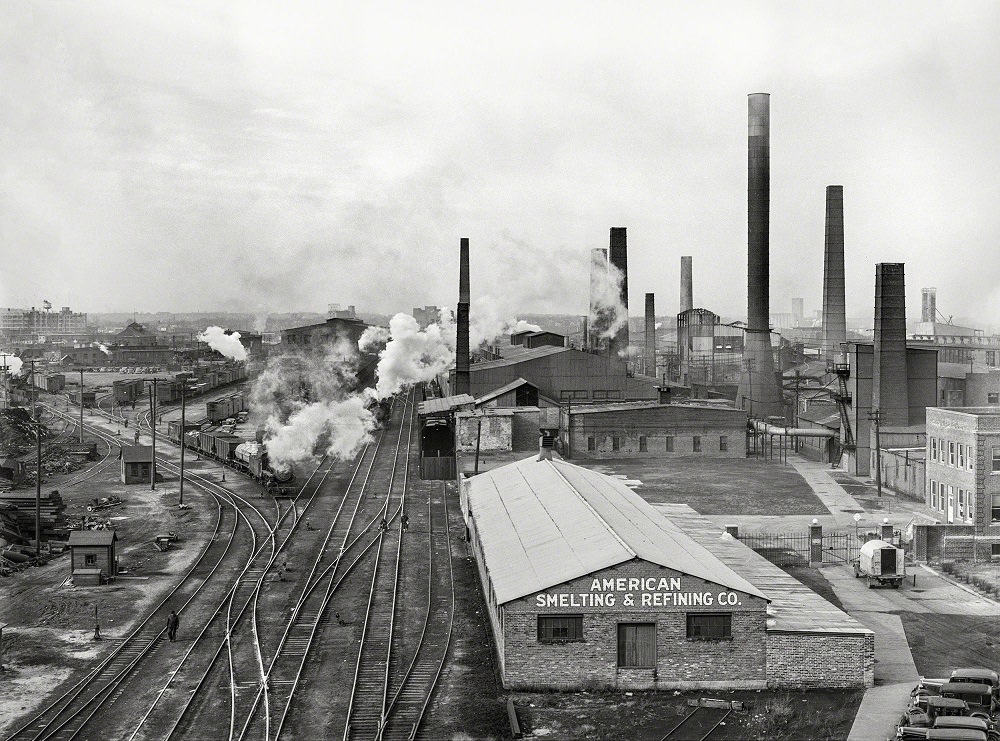
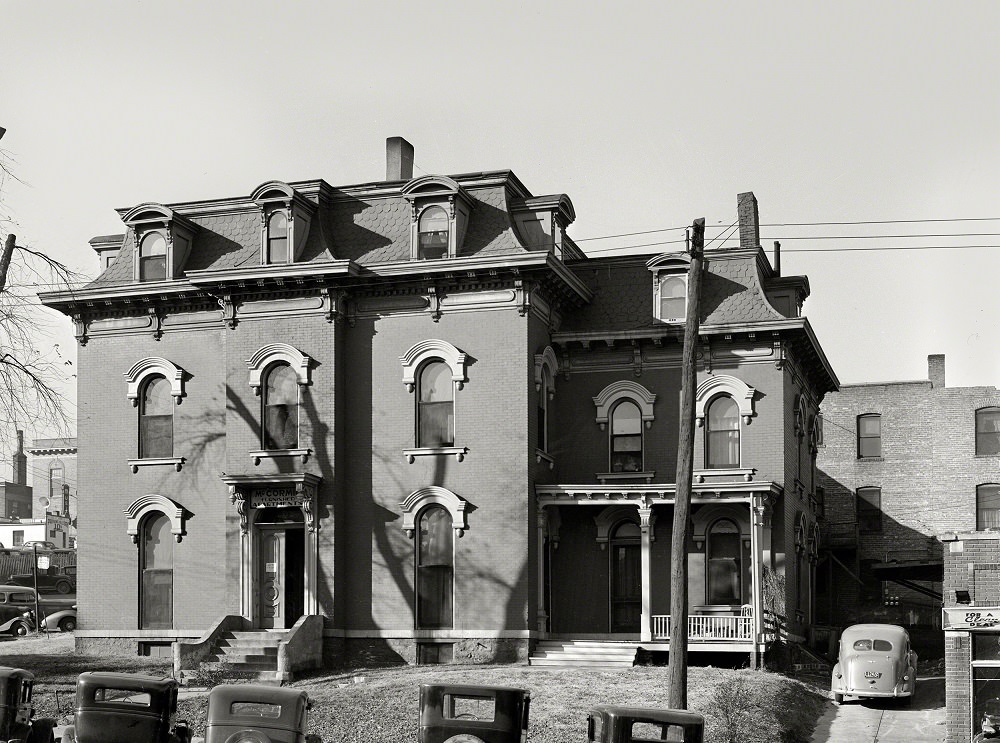
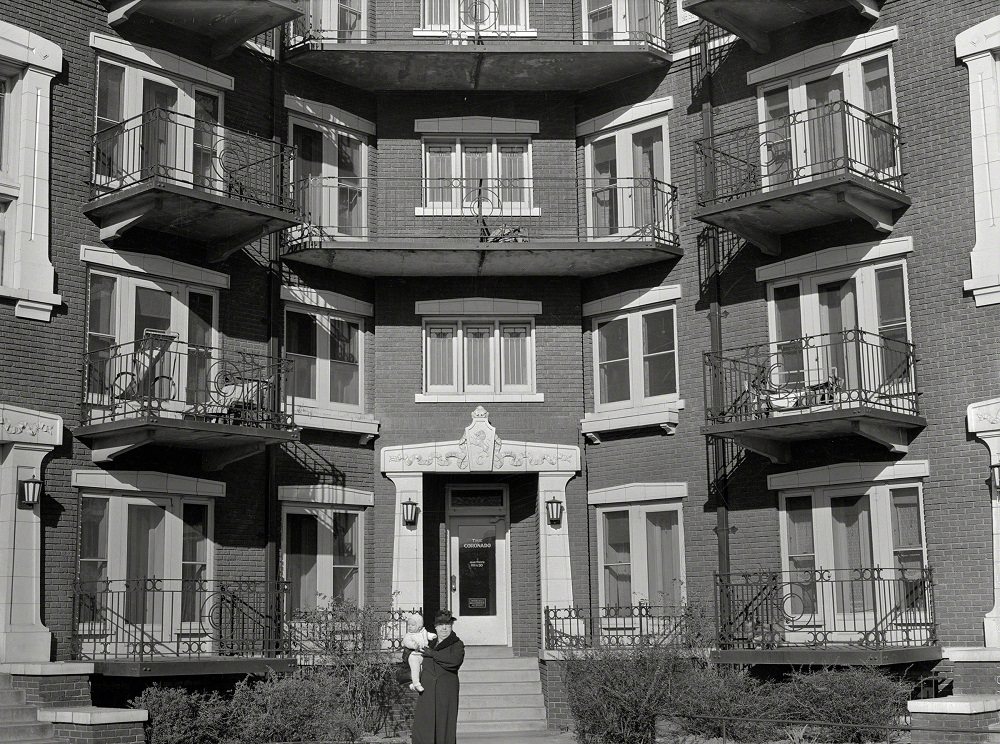
Omaha was home to the largest smelting furnace in the world at the time, a testament to the scale of industrial activity that had taken root in the city. Beyond meatpacking and rail, heavy industry played a significant role in the local economy. Rooming houses nearby provided basic accommodation for workers who had arrived in the city looking for employment — many of them single men who traveled where the work was.
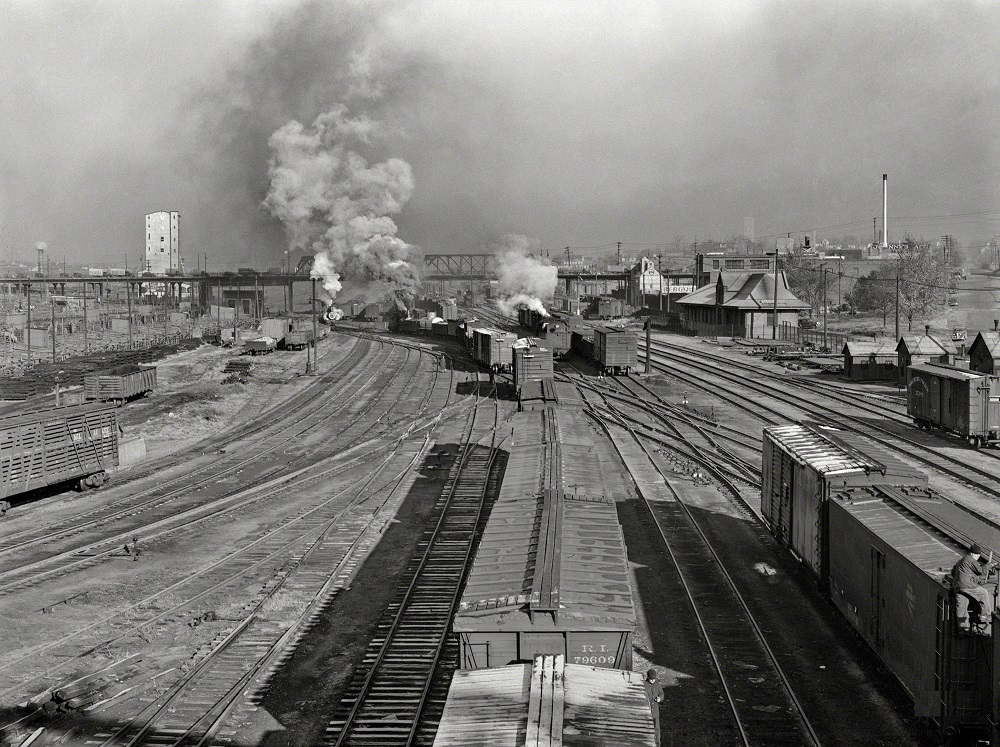
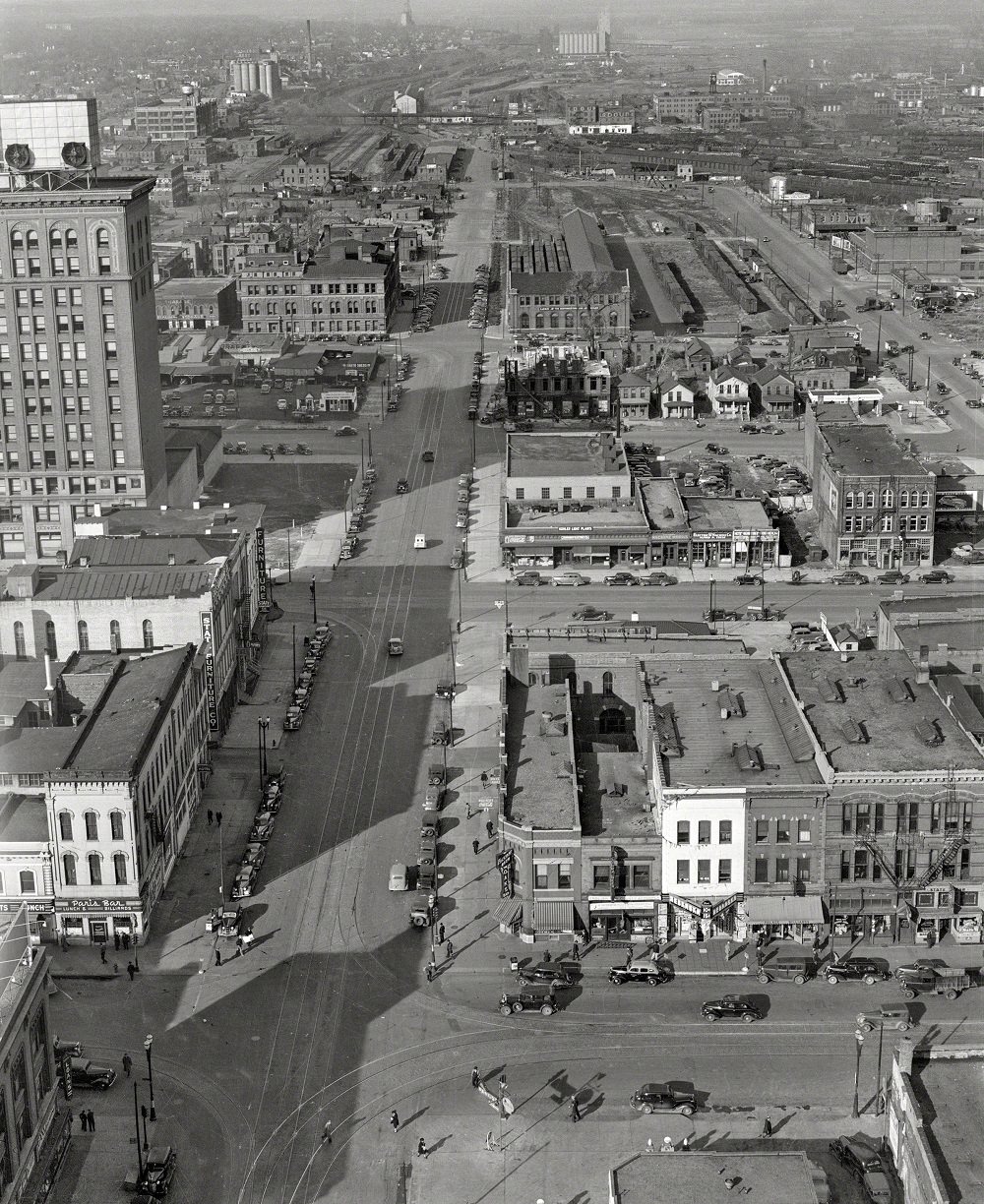
Omaha earned its identity as the “Gateway to the West” honestly. The city sat on the eastern bank of the Missouri River, directly across from Council Bluffs, Iowa, and for generations it served as the launching point for westward expansion. Settlers, soldiers, traders, and laborers all passed through on their way further into the continent. By the 1930s, that frontier energy had transformed into something more permanent — a city of rail yards, stockyards, power plants, and packed urban streets.
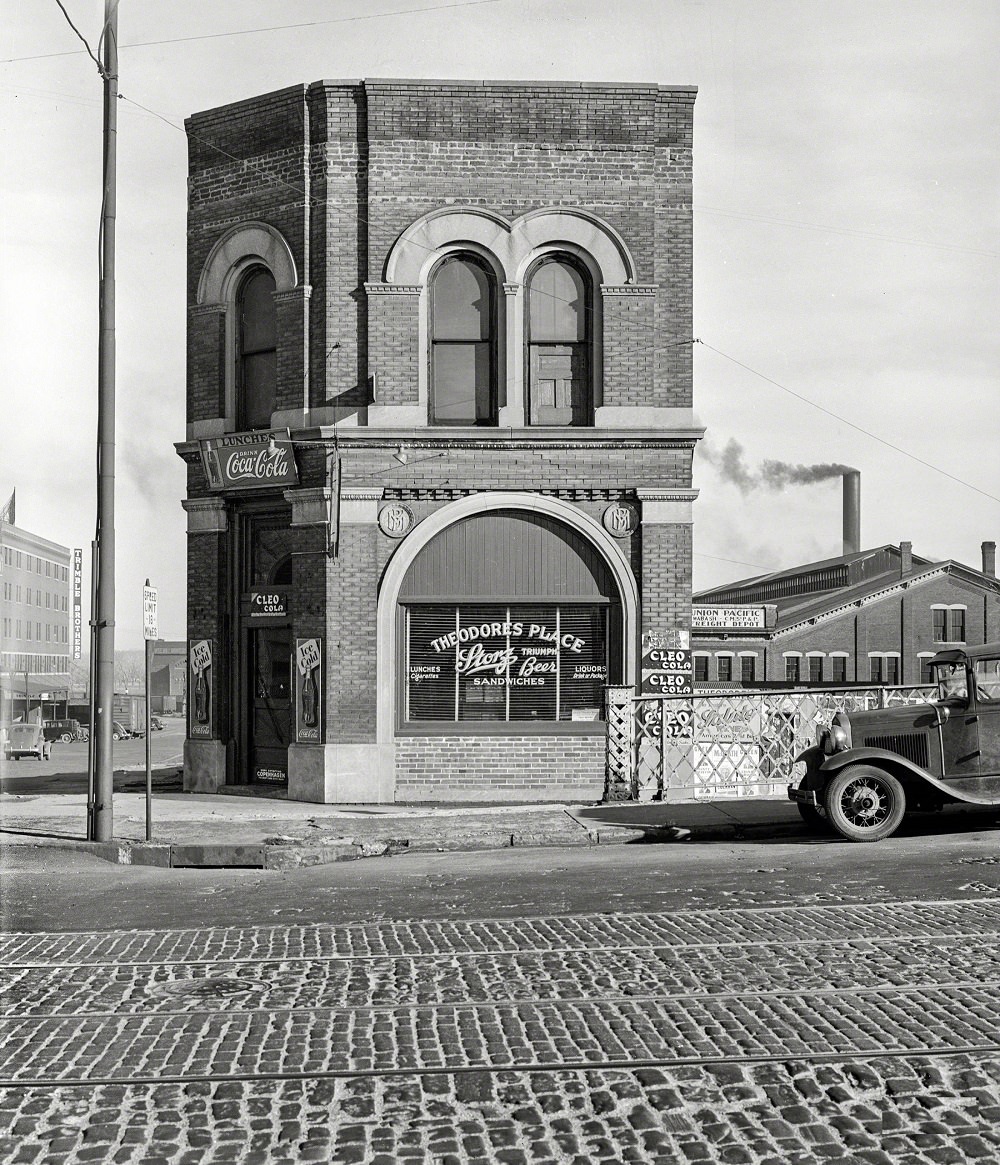
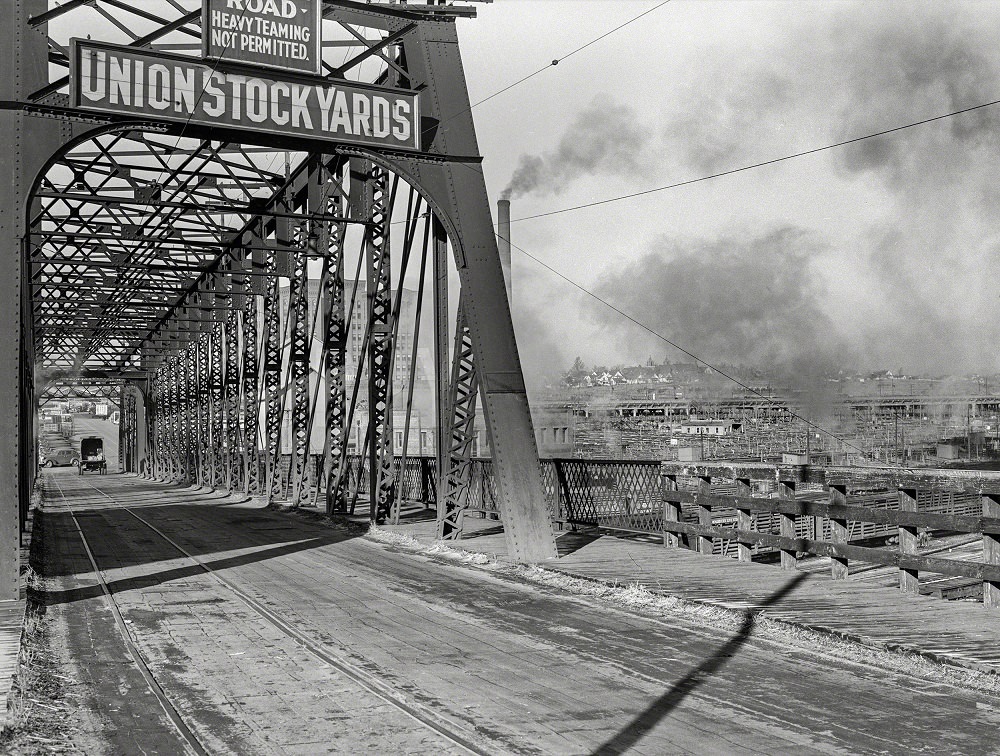
The Union Stockyards were the heart of Omaha’s economy for decades. At their peak, the yards handled millions of cattle, hogs, and sheep each year, making Omaha one of the most important livestock markets in the world. The stockyards generated enormous economic activity — not just in the slaughterhouses themselves, but in the surrounding businesses that fed, housed, and served the workers and traders who filled the district daily.
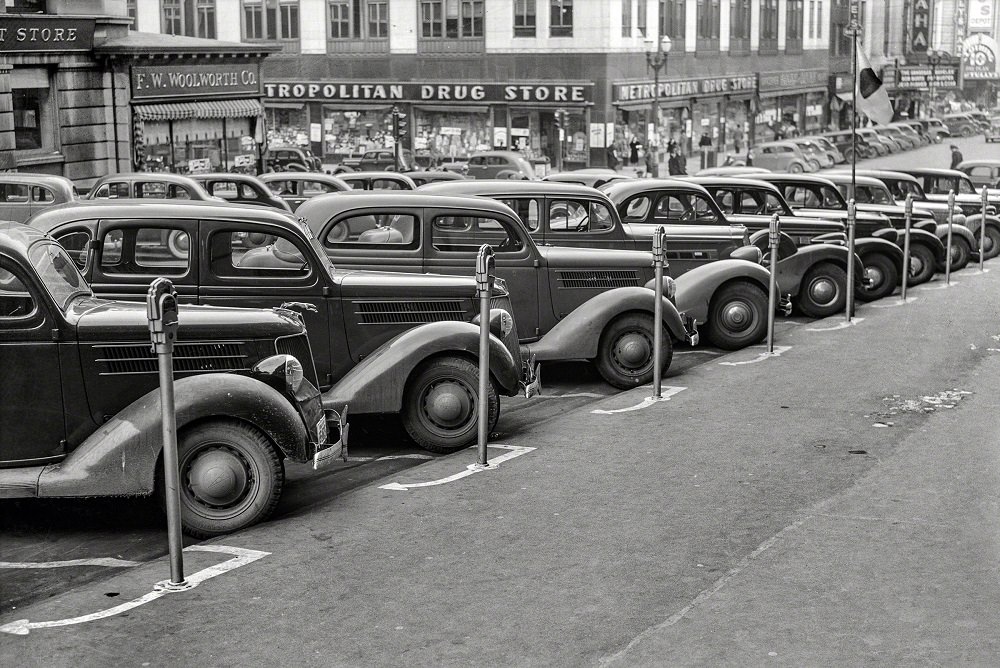
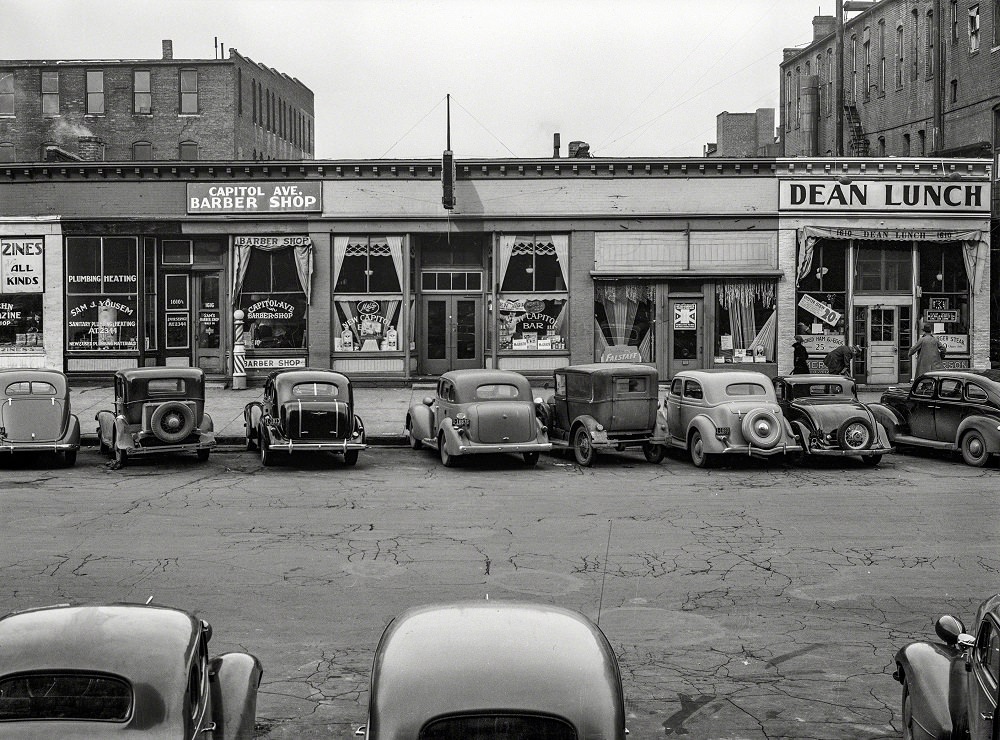
Downtown Omaha in 1938 still had the look of a busy commercial city. Cars lined the streets in diagonal parking spots along metered spaces — a relatively new feature of city life at the time, as parking meters had only been introduced in American cities a few years earlier. Capitol Avenue and the surrounding blocks held storefronts, businesses, and the kind of street-level activity that defined urban America in the late Depression years.
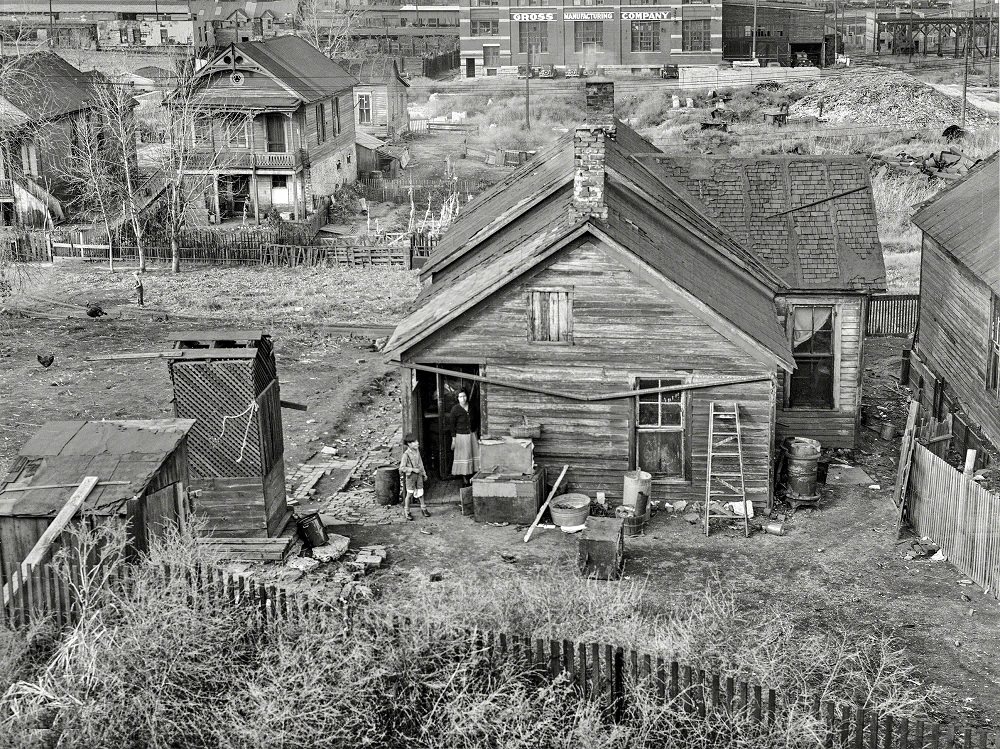
Many working-class families in Omaha lived in close proximity to the railroad tracks and industrial facilities. Houses built near the Nebraska Power Company plant placed residents in direct contact with the noise, smoke, and activity of the city’s industrial infrastructure. The line between residential and industrial space was thin in much of Omaha’s geography during this period.
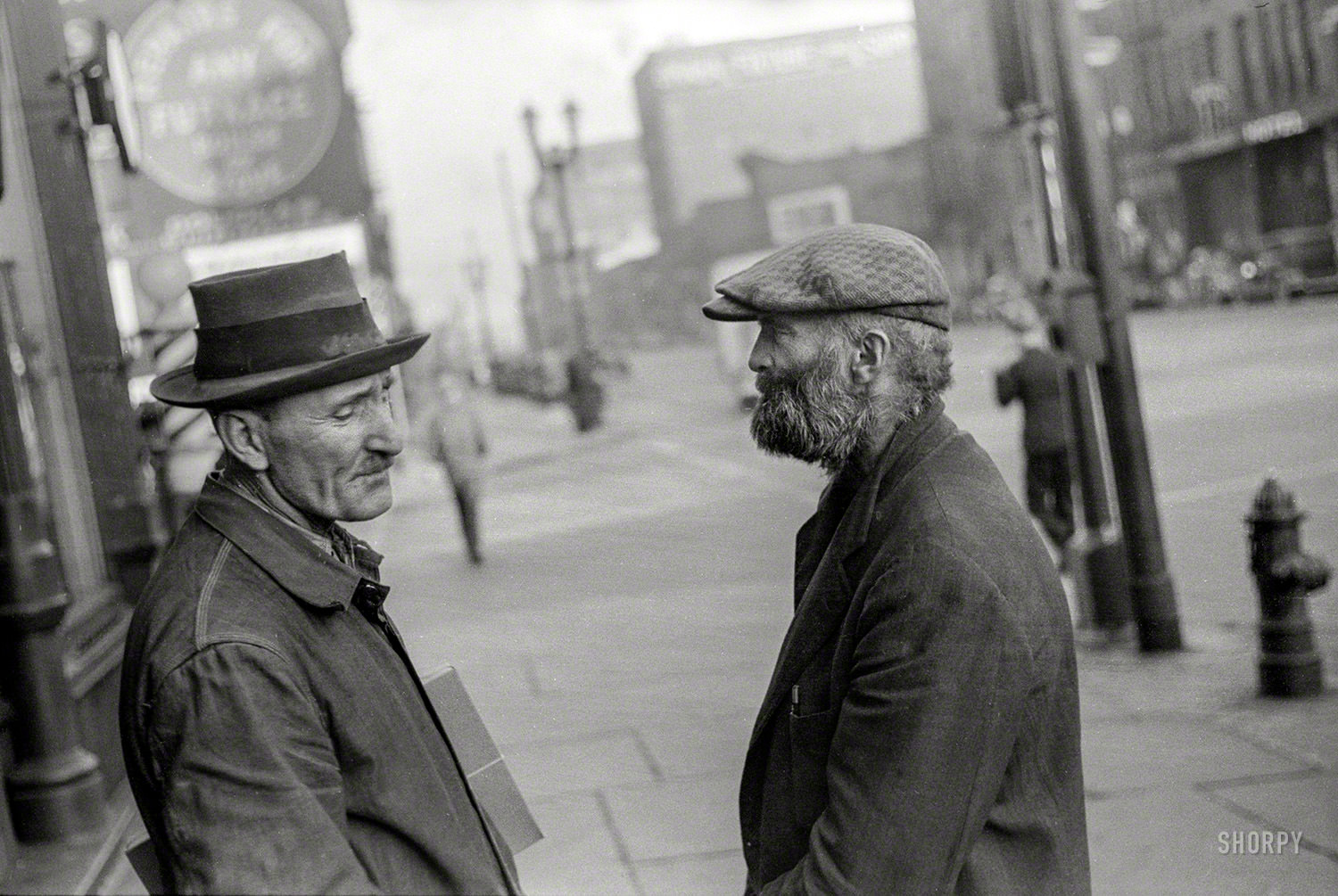
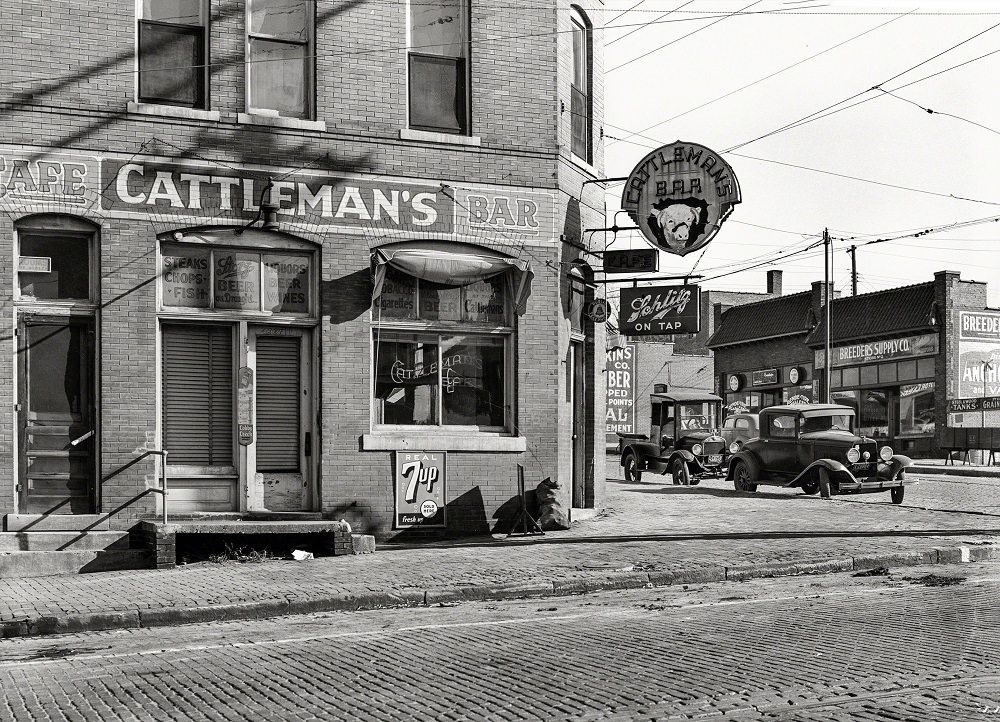
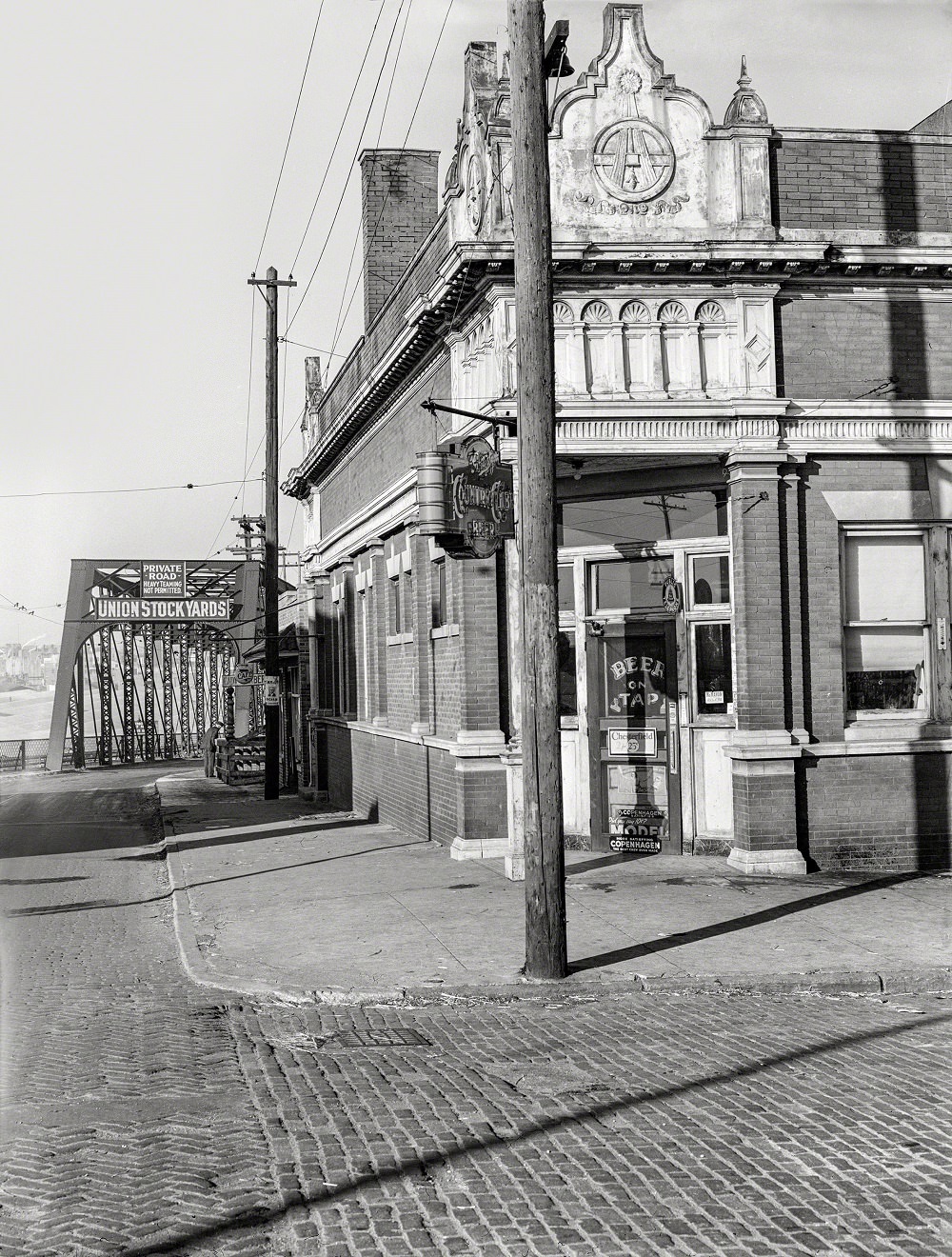
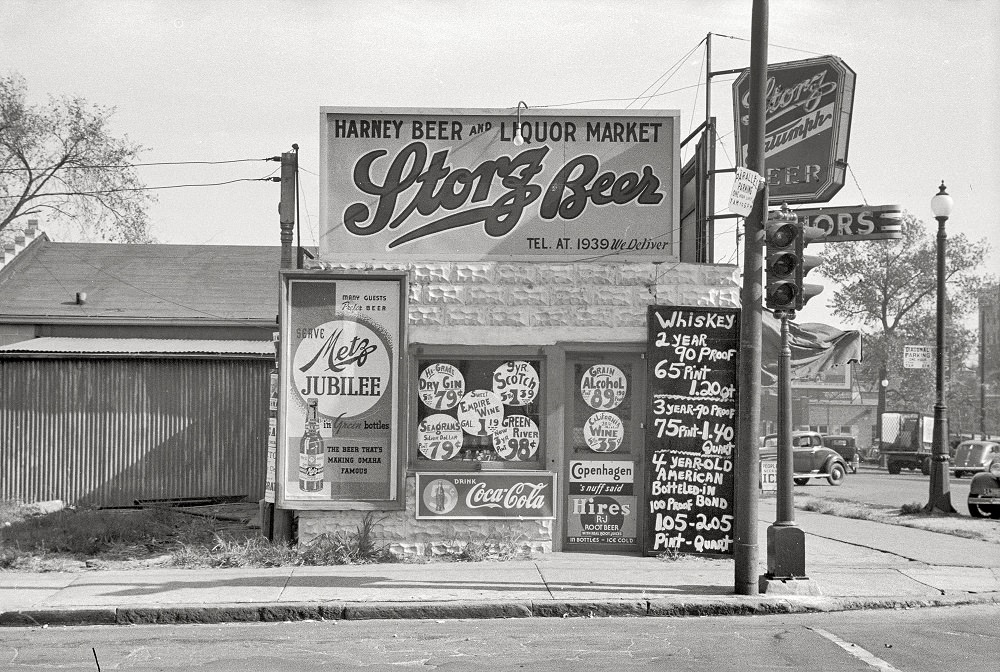
Saloons were a fixture throughout South Omaha and the areas near the stockyards. After Prohibition ended in 1933, bars and liquor stores reopened across the country, and in Omaha’s working-class neighborhoods they quickly became central social spaces. For stockyard workers finishing long, physically demanding shifts, the saloon was where the day ended. Signs advertising liquor stores competed for attention on nearly every block near the yards.
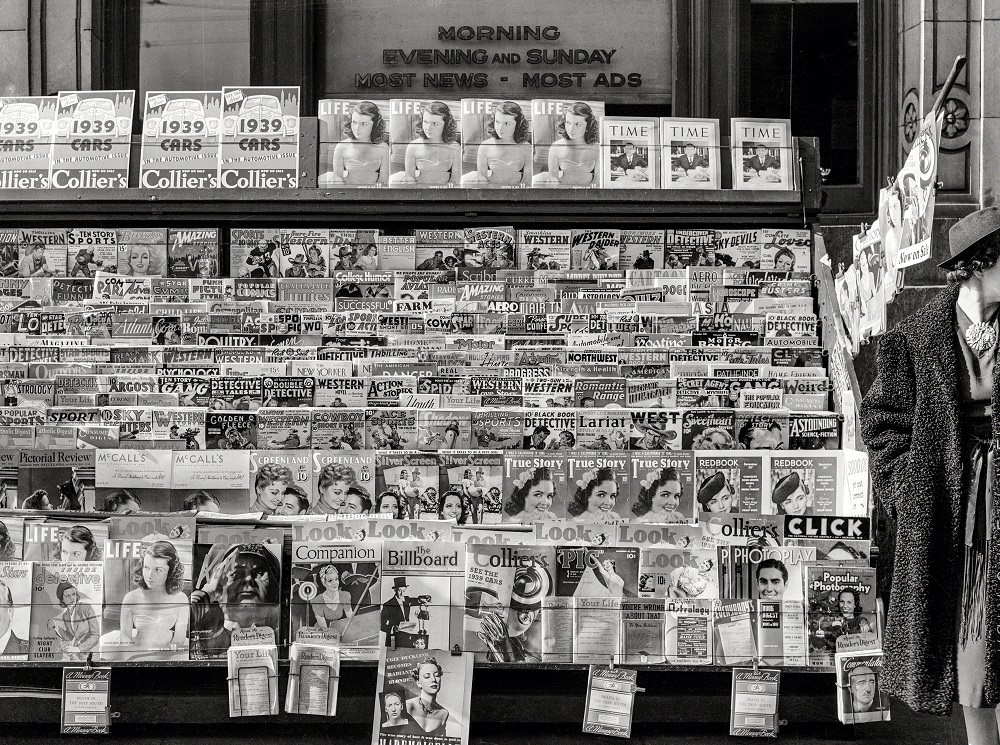
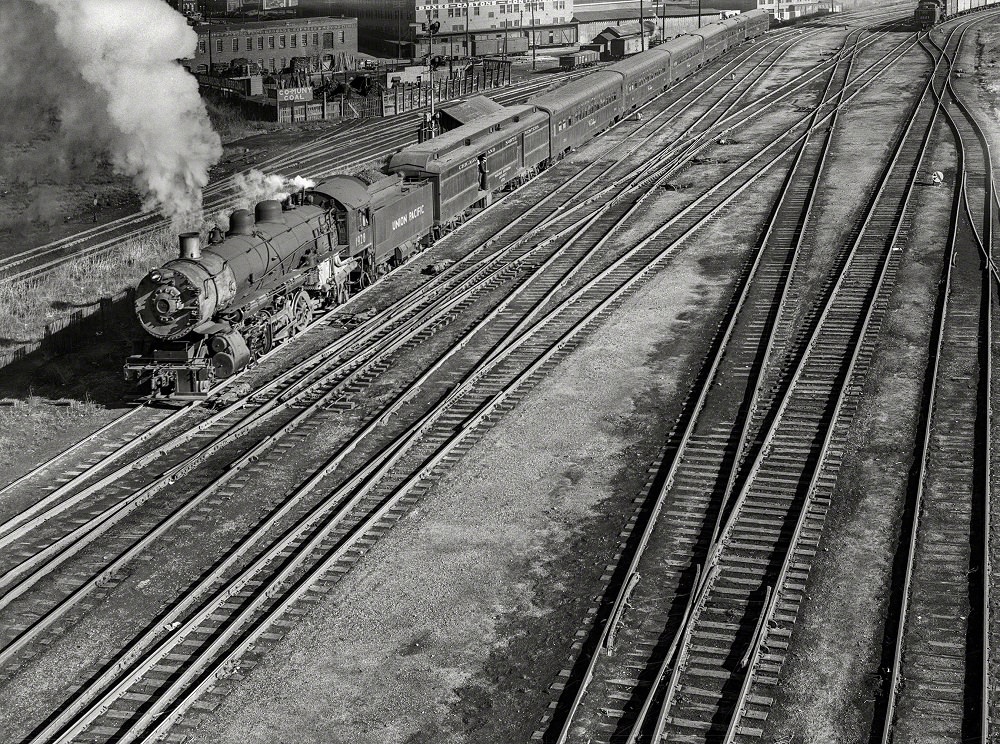
The Union Pacific Railroad had its headquarters in Omaha, and the company’s yards were a sprawling feature of the city’s landscape. Freight moved through these yards constantly, connecting Omaha to markets and cities across the country. The railroad employed thousands of Omaha residents and was one of the primary reasons the city had grown as fast and as large as it did in the 19th and early 20th centuries.
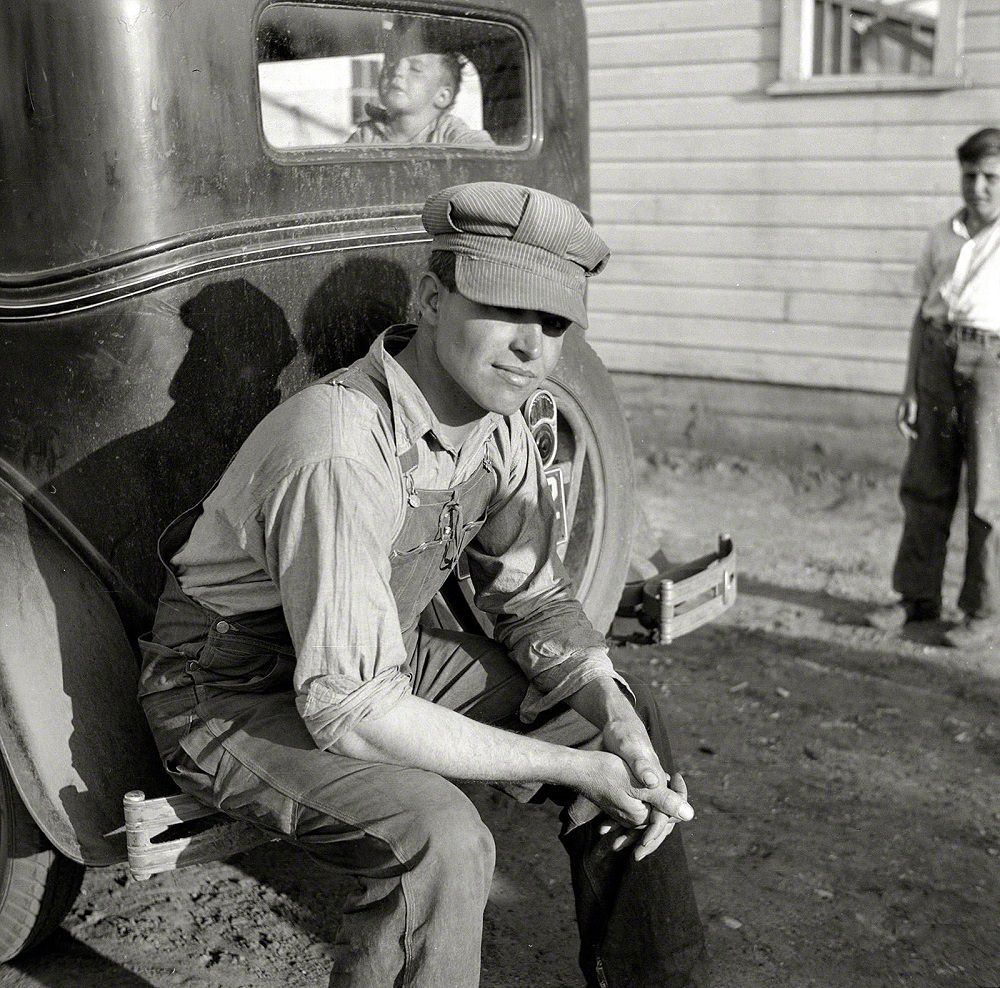
Outside of the city proper, Douglas County still held farmsteads that connected Omaha to its agricultural surroundings. Nebraska’s economy depended heavily on farming, and the counties surrounding Omaha served as a reminder that the city’s stockyards and meatpacking plants were part of a much larger agricultural system stretching across the Great Plains. A 1936 photograph of one of the first settlers on the Douglas County farmsteads captures that connection to the land.
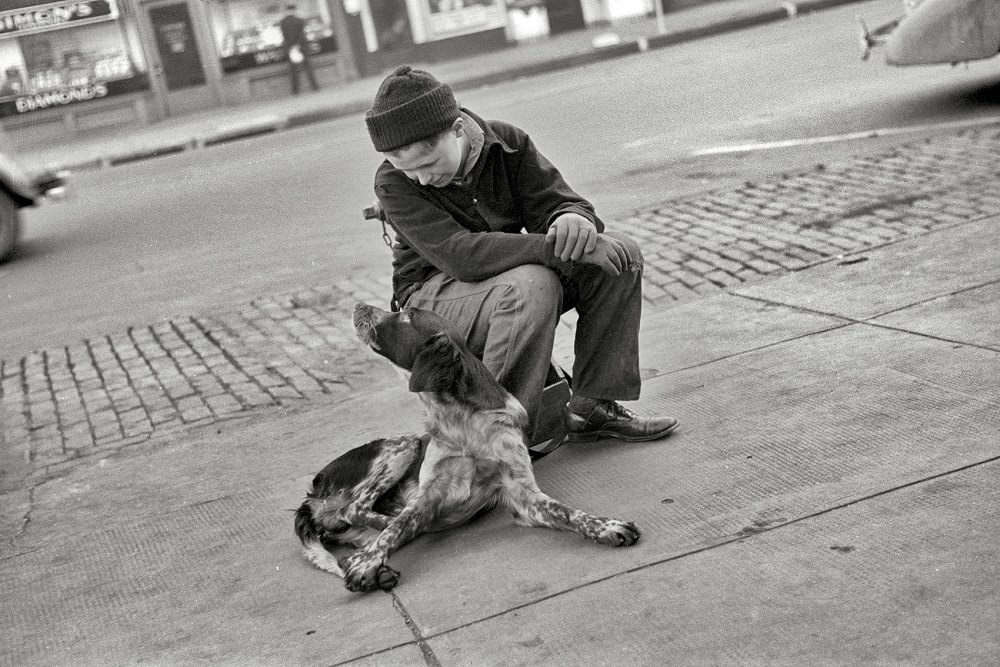
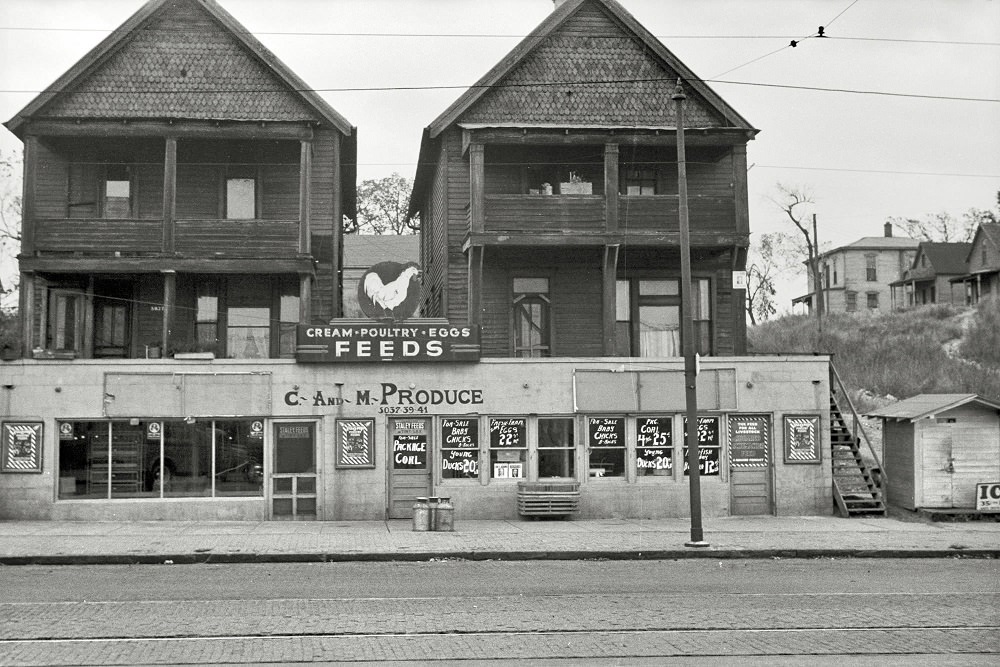
Everyday life continued in Omaha even during the hard years of the Depression. Children played in the streets and alleys of working-class neighborhoods while their parents struggled to keep the family housed and fed. South Omaha retained its dense, immigrant-heavy character well into the 1930s, with communities of Czech, Polish, Lithuanian, and other European immigrants living and working alongside one another in the shadow of the stockyards.
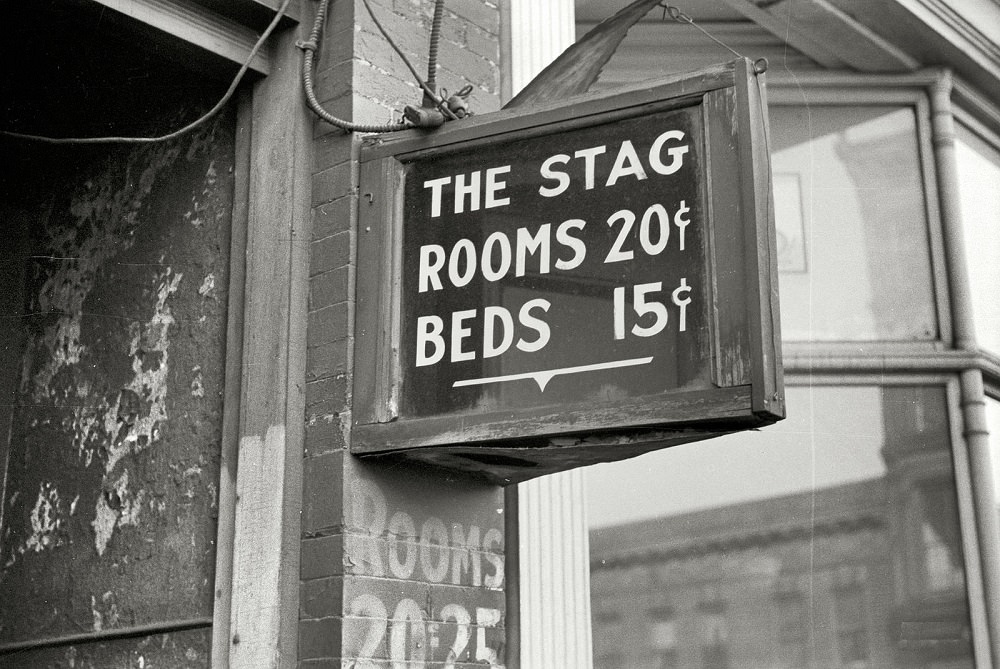
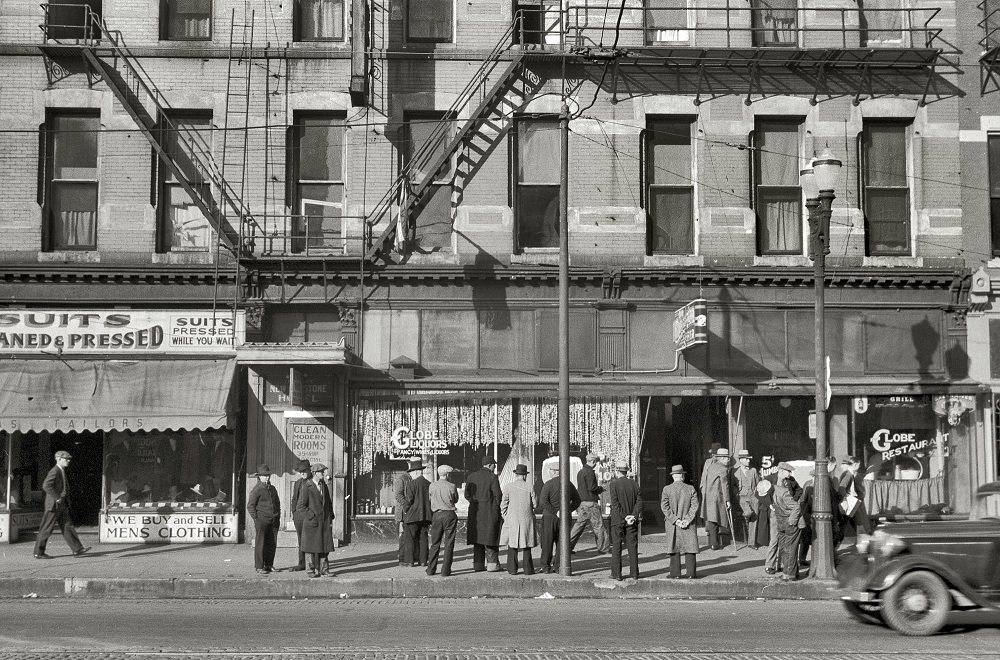
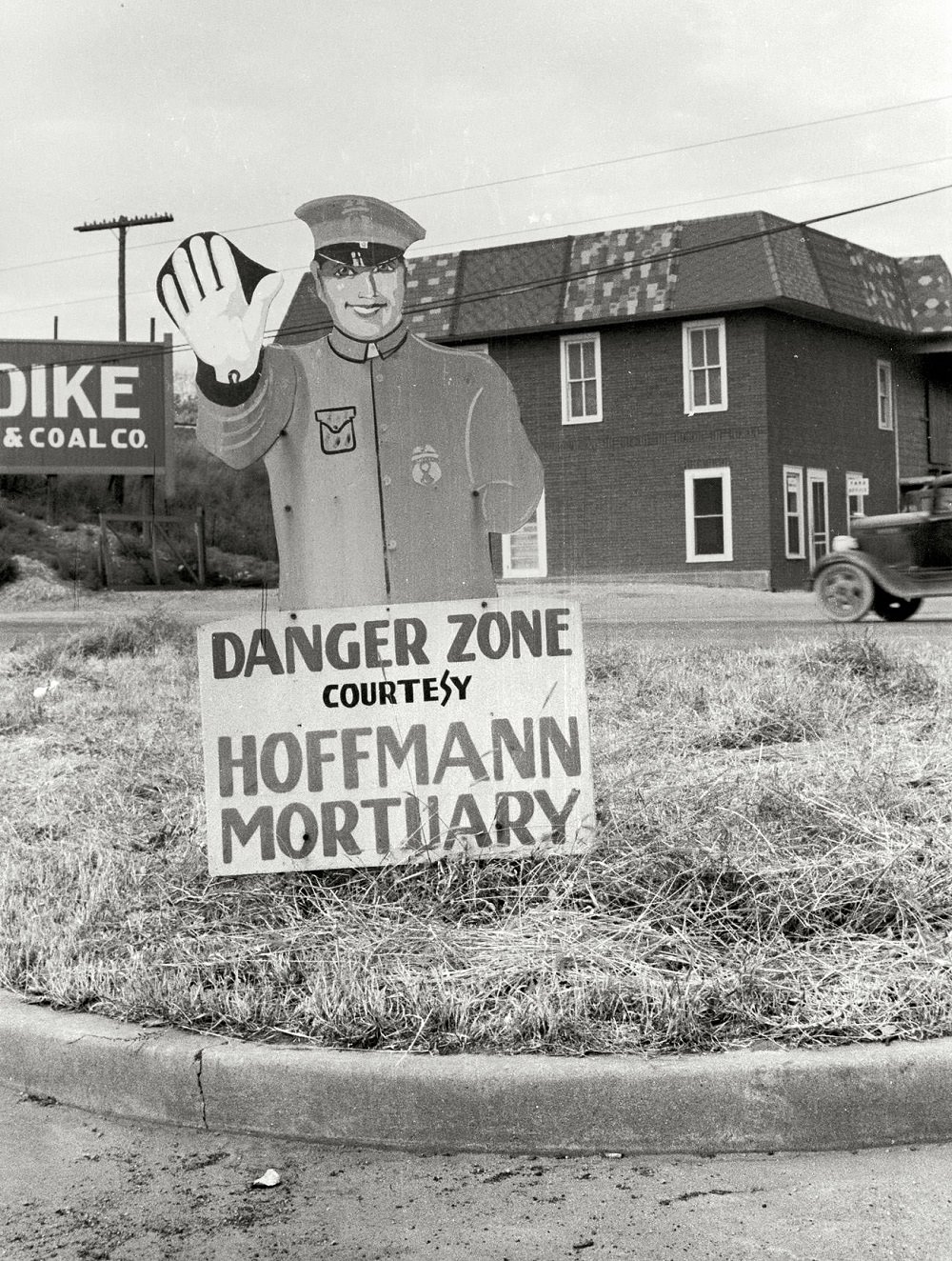
Certain areas of Omaha carried a reputation for danger. Signs and street scenes recorded by photographers in 1938 documented parts of the city that were defined by poverty, transience, and the kind of urban desperation that the Depression made more visible. Flophouses on lower Douglas Street provided bare-bones shelter for unemployed men who had nowhere else to go — a common sight in American cities throughout the 1930s.
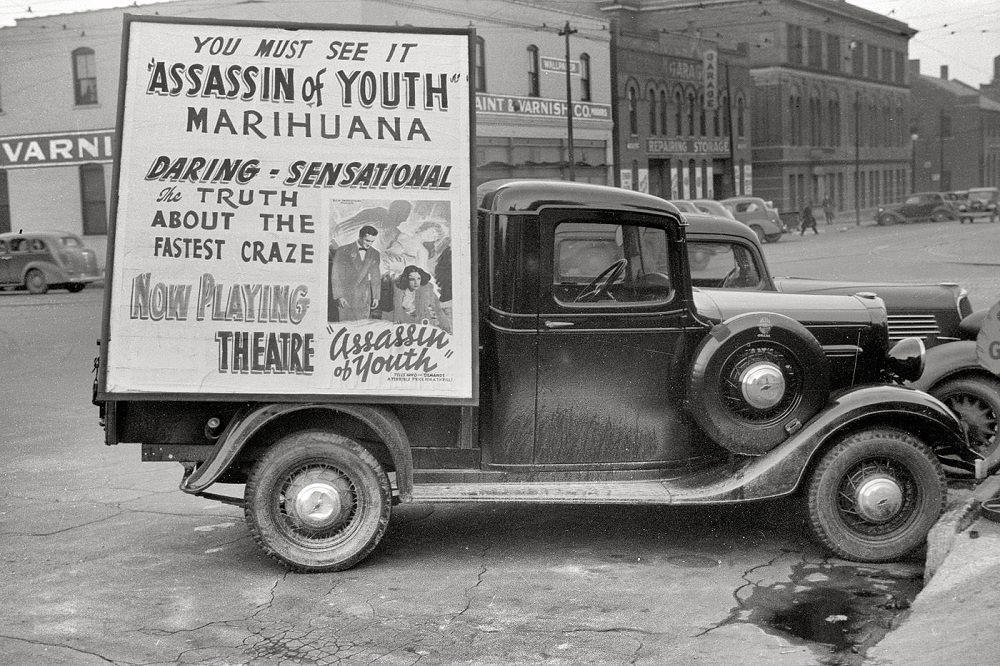
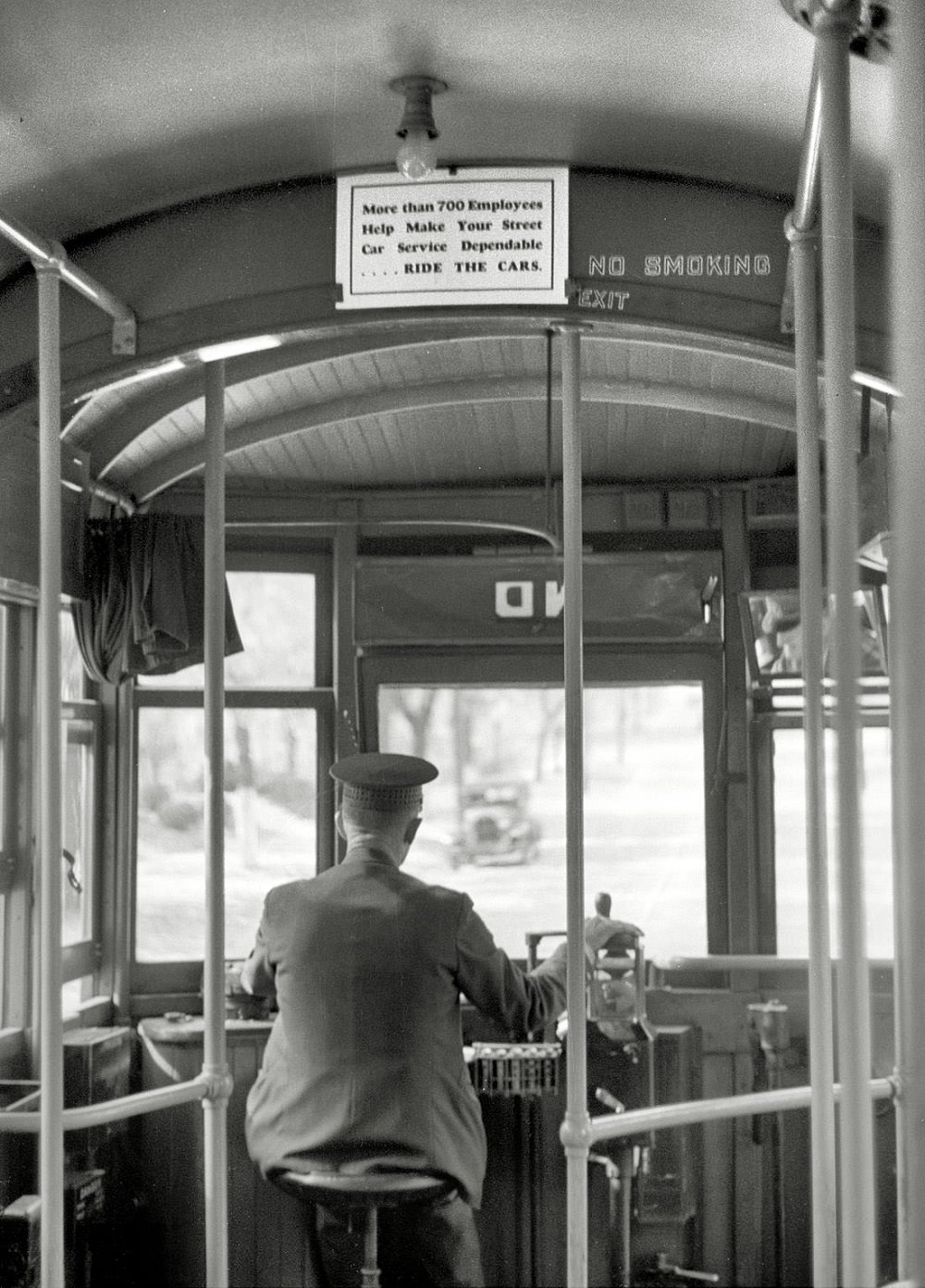
Not everything in 1938 Omaha spoke to hardship. A truck carrying a movie poster through the city’s streets is a reminder that entertainment was still part of daily life. The 1930s were the golden age of Hollywood, and movies offered Americans an affordable escape from the difficulties of the Depression. Streetcars were still a primary mode of public transportation in Omaha, and the city’s motormen navigated the rails that ran through the heart of the urban grid.
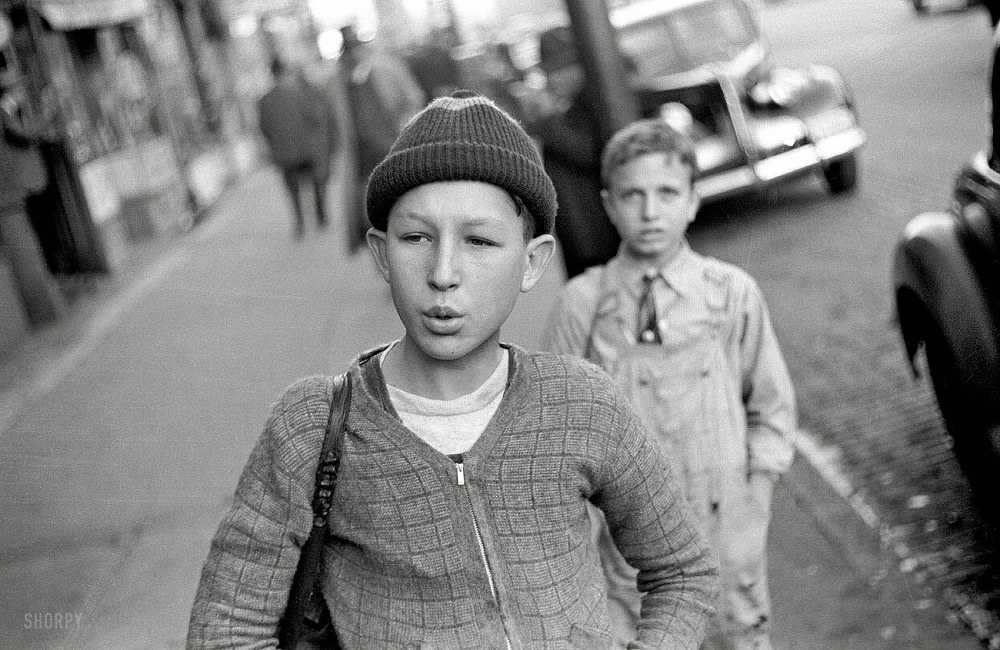
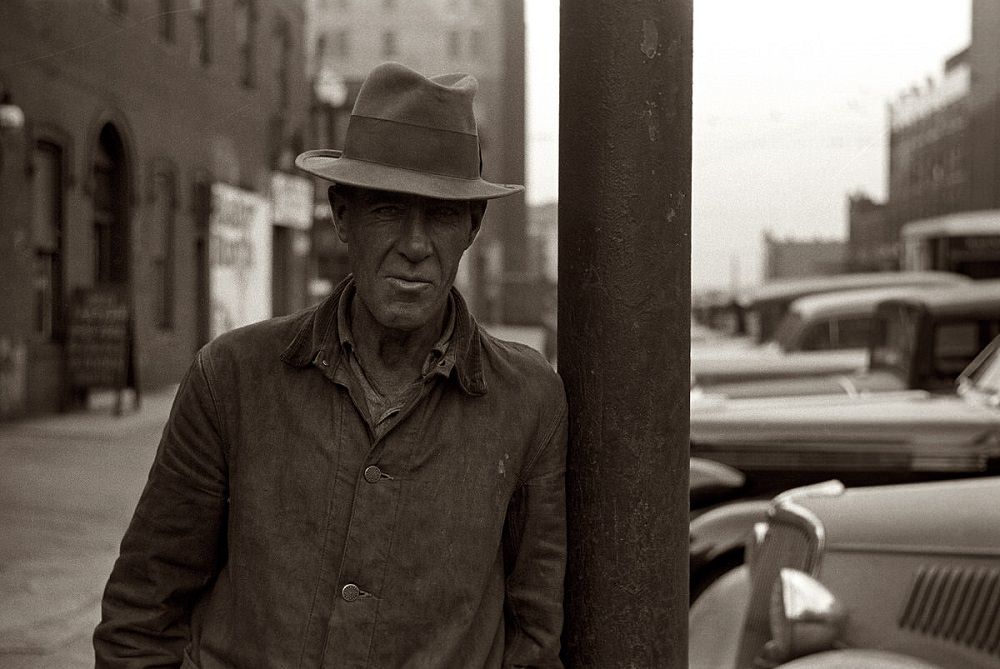
Unemployment was a visible reality on Omaha’s streets in 1938. Men who had lost their jobs — in the yards, the plants, or the railroads — could be found standing on corners or sitting along the storefronts of lower Douglas Street. The federal relief programs had helped, but they had not ended joblessness. A photograph of an unemployed man taken in November 1938 puts a direct human face on the statistics of the Depression.
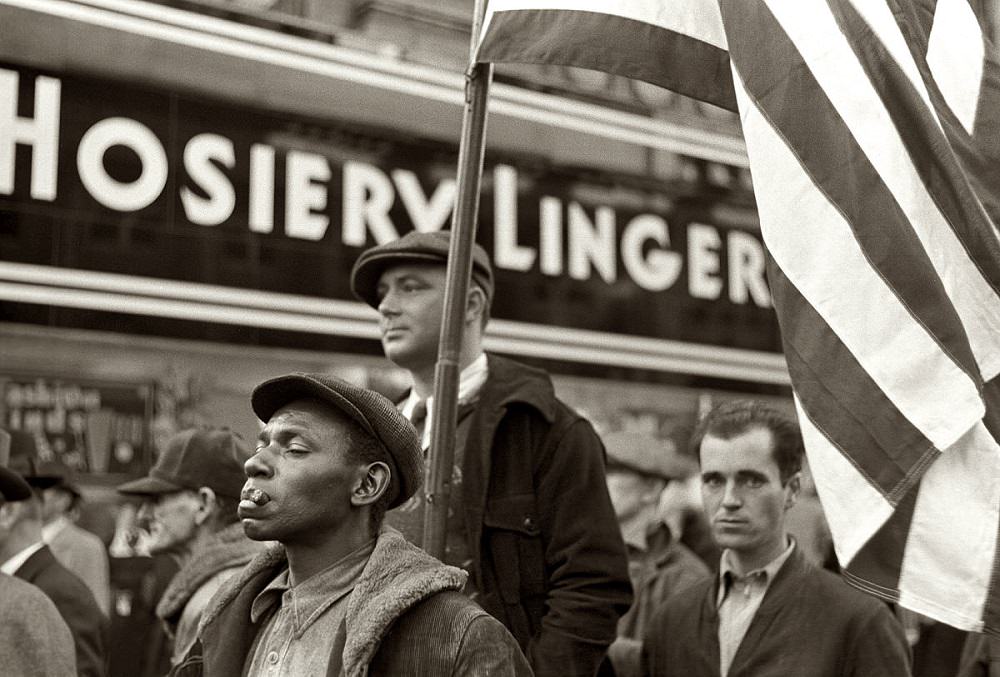
Armistice Day — now known as Veterans Day — was a major public observance in 1938. The holiday marked the end of World War I on November 11, 1918, and twenty years later it was still commemorated with parades and public gatherings across the country. Omaha residents turned out to watch the parade that November, lining the streets as veterans and civic groups marched through the city. It was one of the last Armistice Day observances before the world was pulled into another global war.
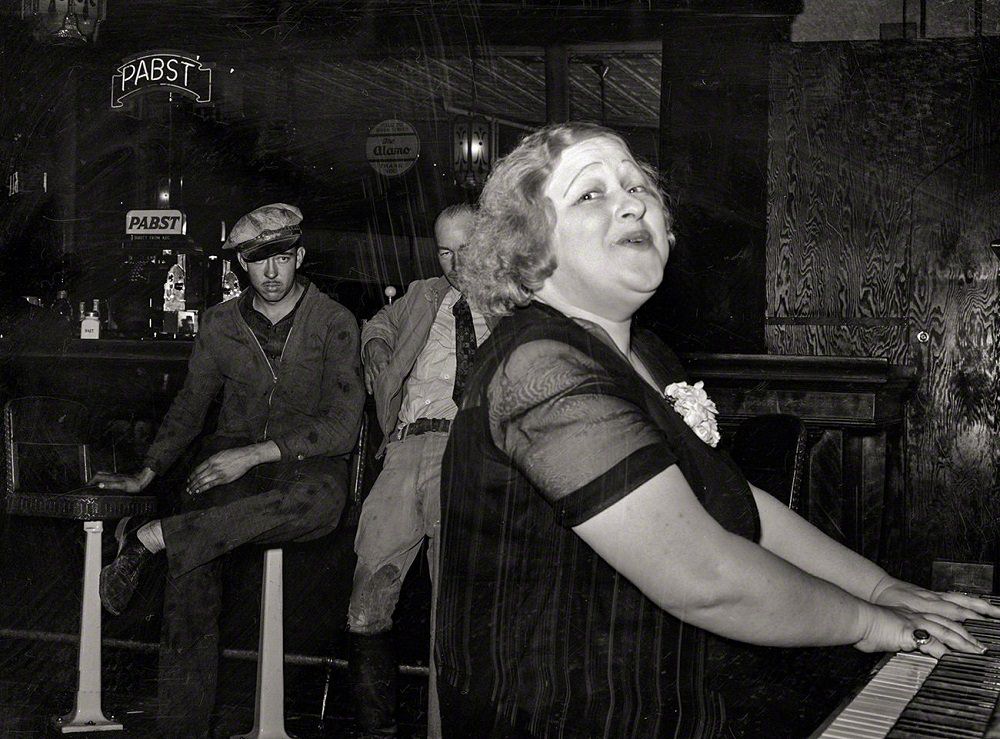
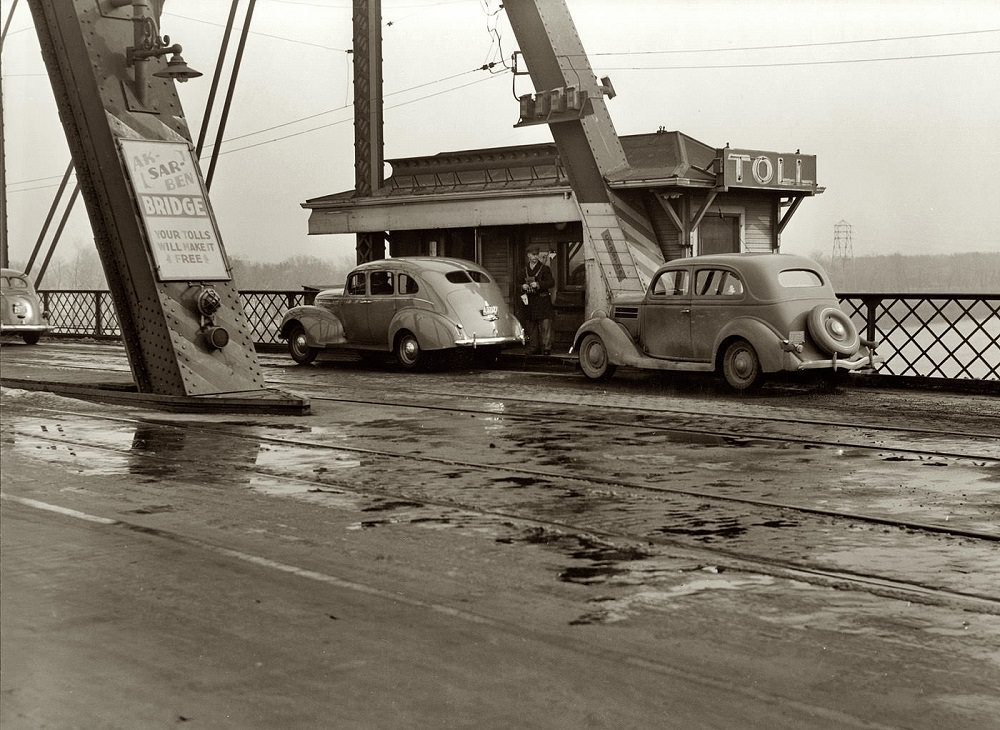
The Ak-sar-ben toll bridge — “Nebraska” spelled backwards — crossed the Missouri River between Omaha and the Iowa side, serving as a key link between the two states. The bridge handled both commercial traffic and commuters, and it reflected Omaha’s role as a regional hub connecting the Midwest’s eastern and western halves. Entertainment was also present in the region, as documented by a photograph of Mildred Irwin, a saloon singer working in North Platte that same autumn of 1938.





That smelting plant poisoned the shit out of the city. For a hundred years their unfiltered smoke stacks blew lead and other metals across the town. They dumped their coal waste and smelting waste right into the river. The EPA was formed in the 70s, rather than clean it up. they shut it down. Tons of dirt were hauled out and they laid down a rubber liner they could build on top of the site. And they use super fund money to clean lead contaminated dirt out of yards all over the eastern half of the city. It was a different time!
My mom remembers fishing off of/next to the pipe dumping waste into the river. She also remembers the neighborhood kids chasing the ddt truck in the summer. No idea how she doesn’t have cancer yet.
I love this stuff. I did a family tree on the folks that lived in my 1915 built home and found some photos of the folks that lived here between the 1920s through 1940s.
Photos of vintage Omaha are my Roman Empire. Also has anyone been to Broncos on Pacific and 120th? They have walls covered in pics of Omaha from this time. They also have killer burgers
Great collection of photos! But I gotta throw a little shade ….. Good to see The State hasn’t changed it’s view on weed since 1938 🤣
Some great shots, presumably by John Vachon, that I hadn’t actually seen before.