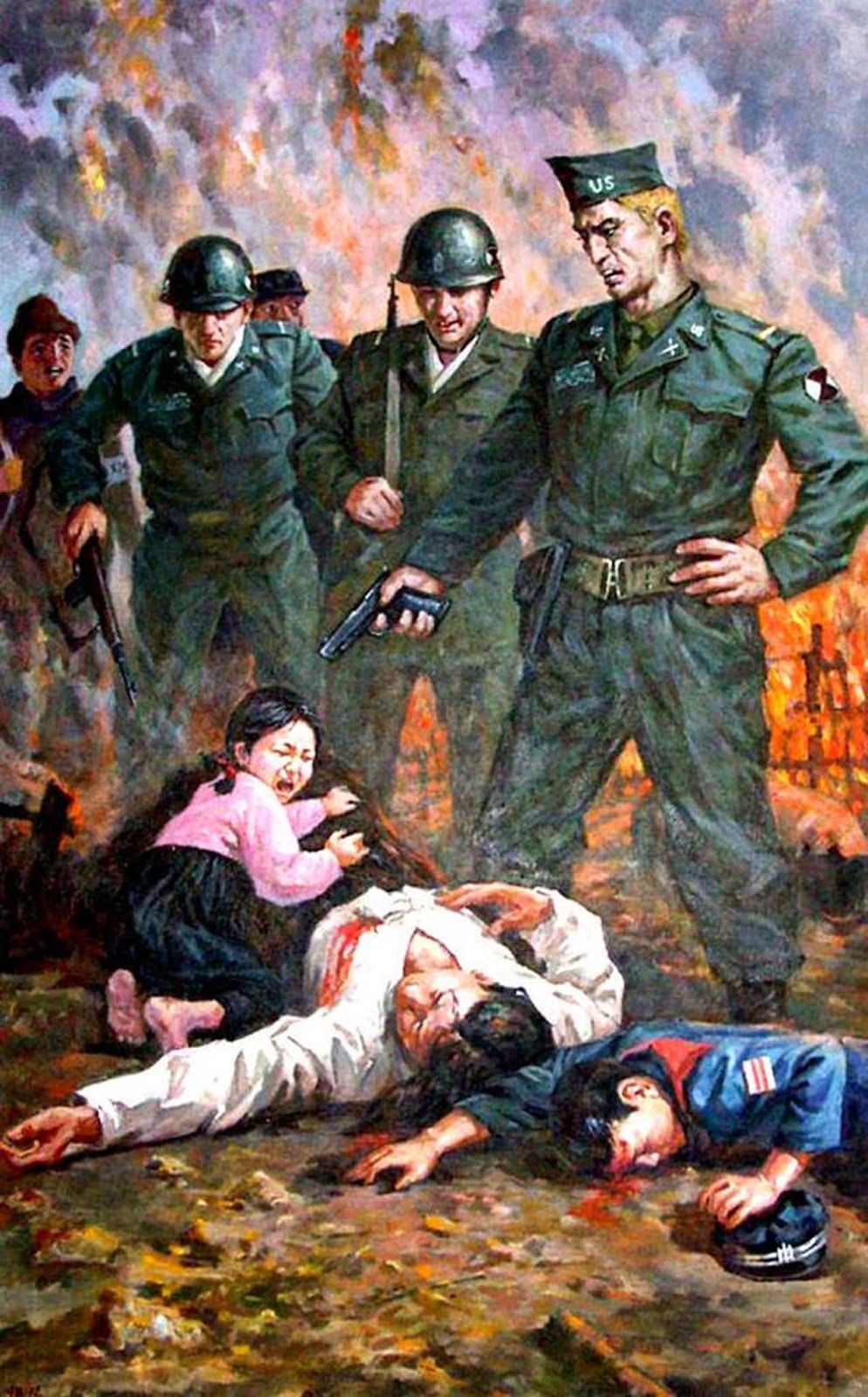
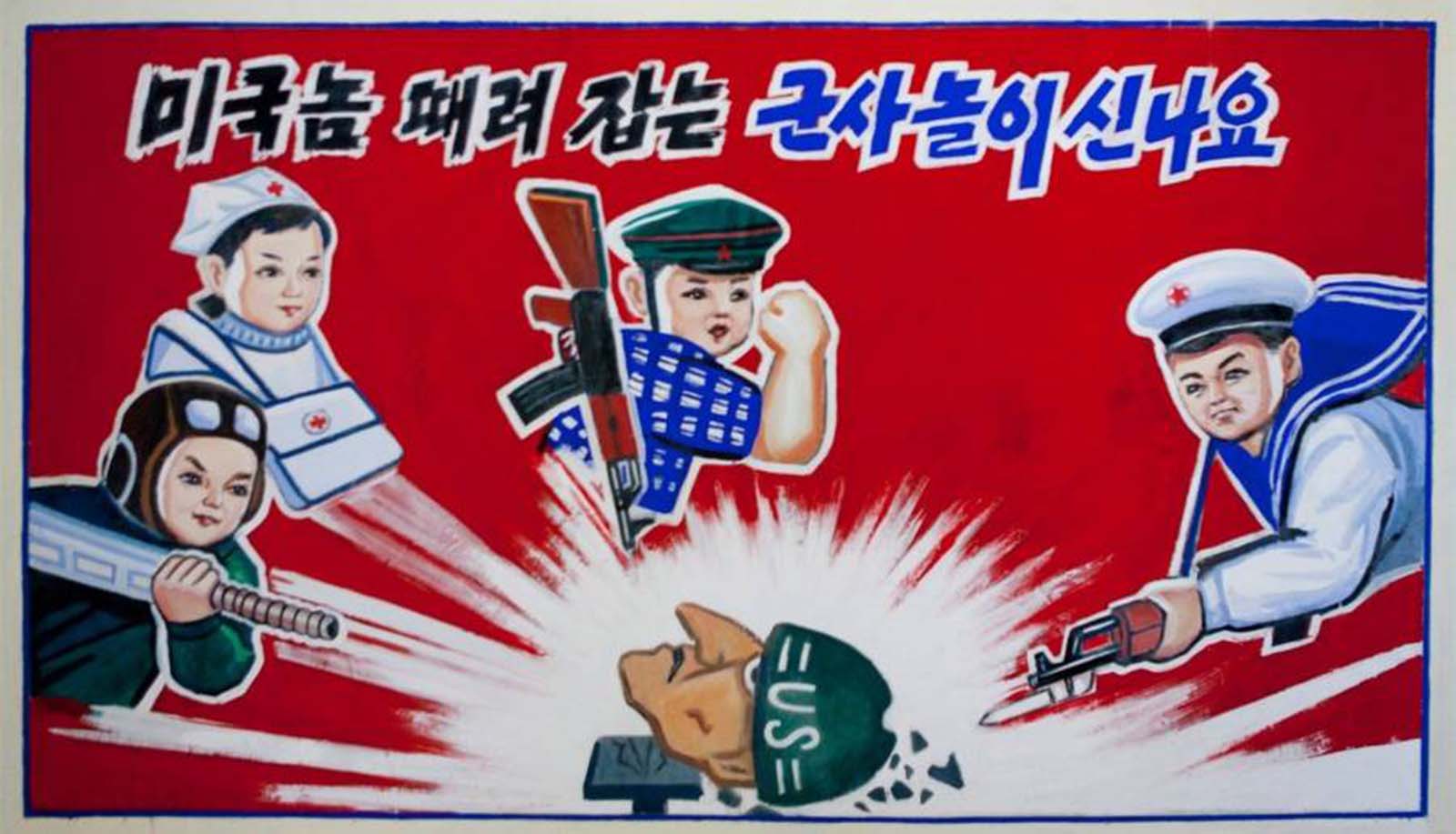
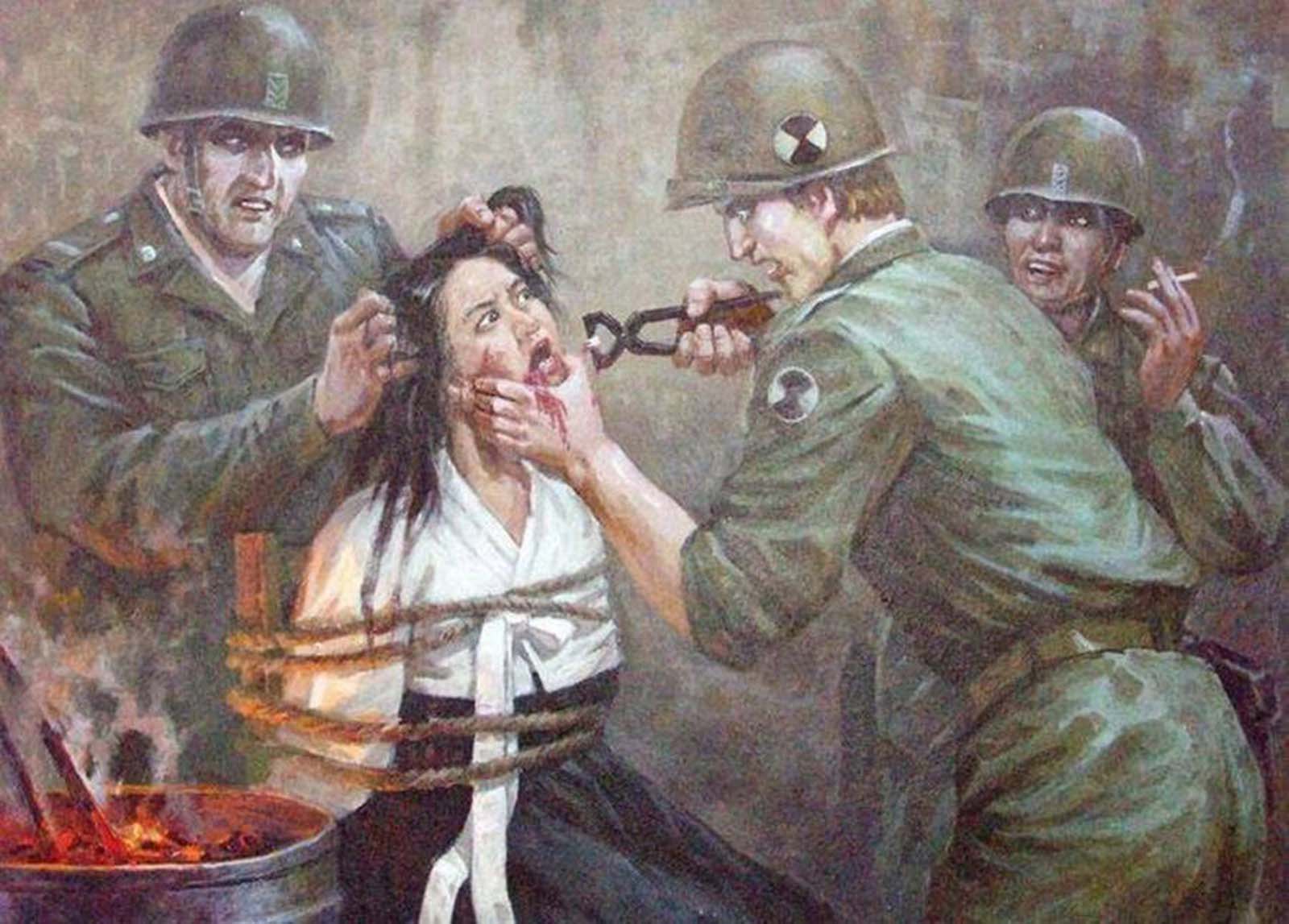
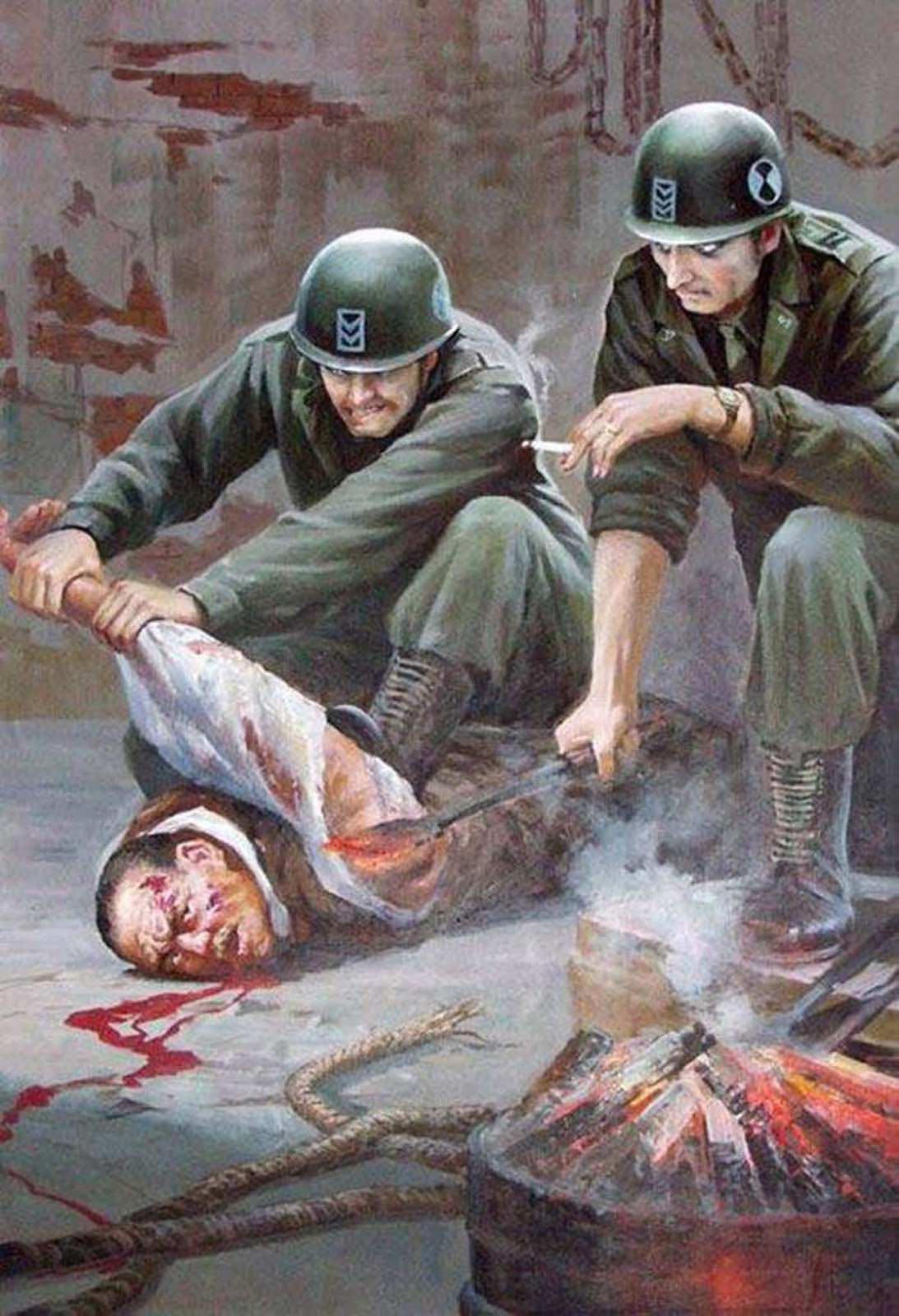
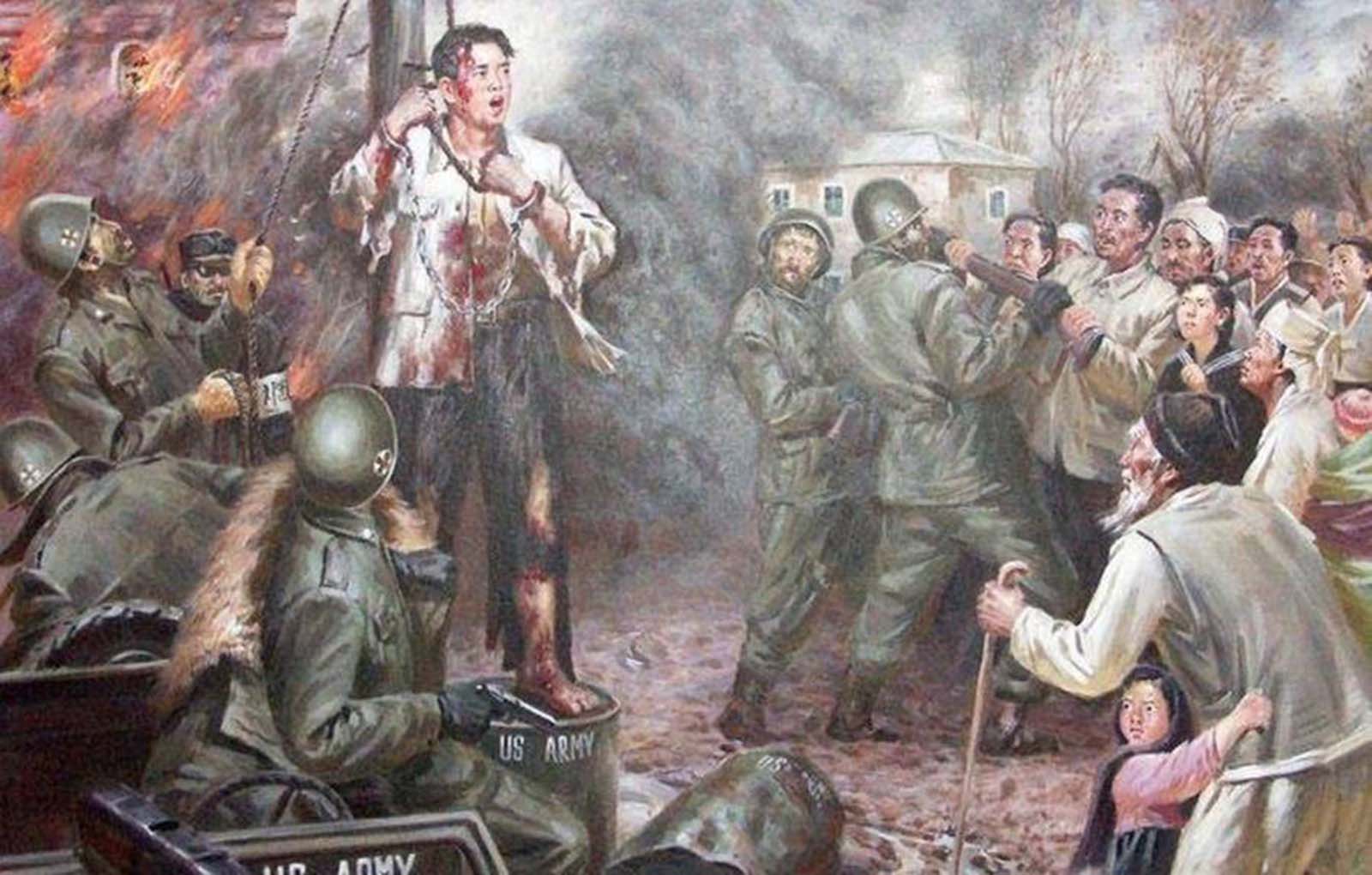
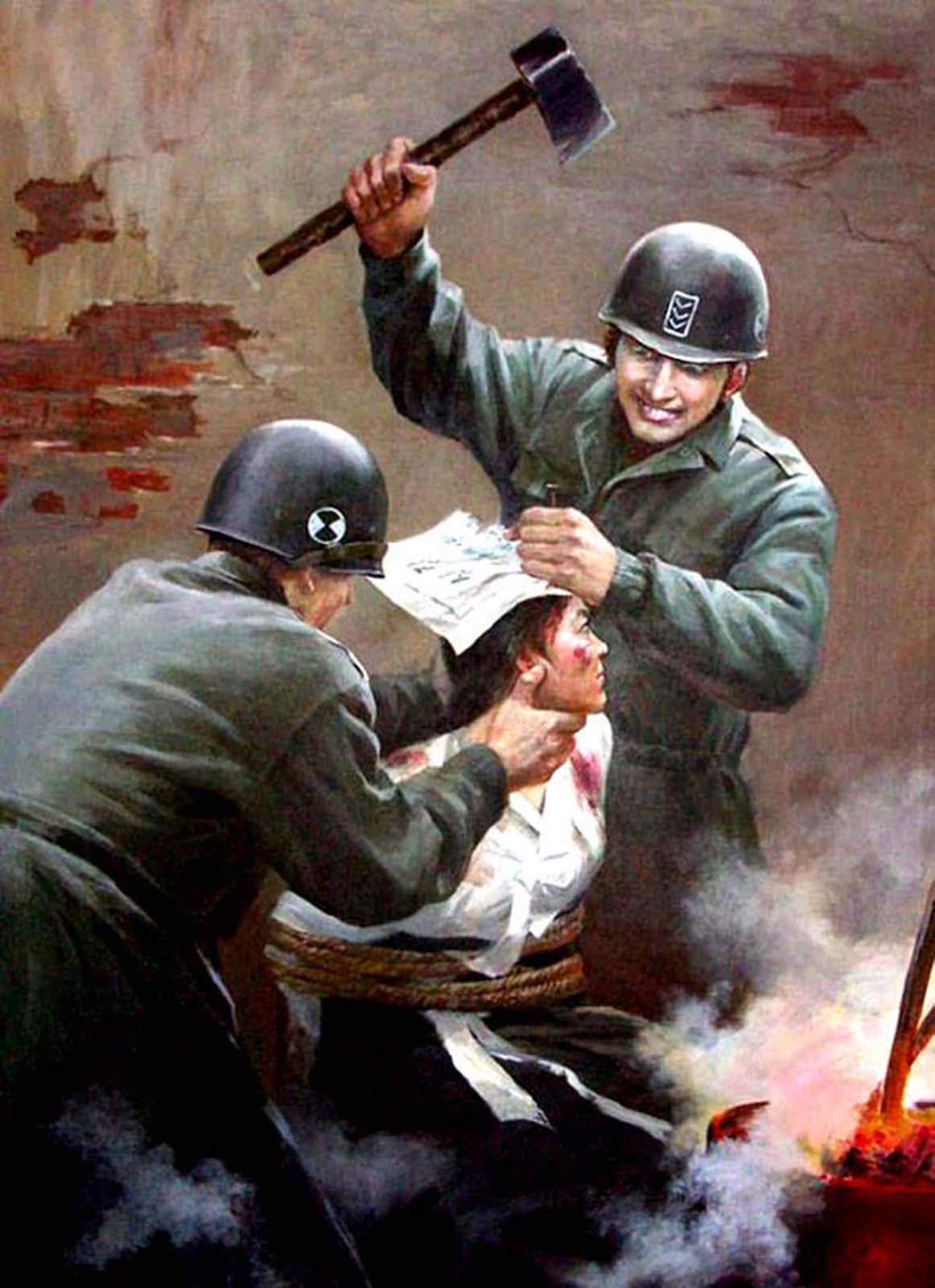
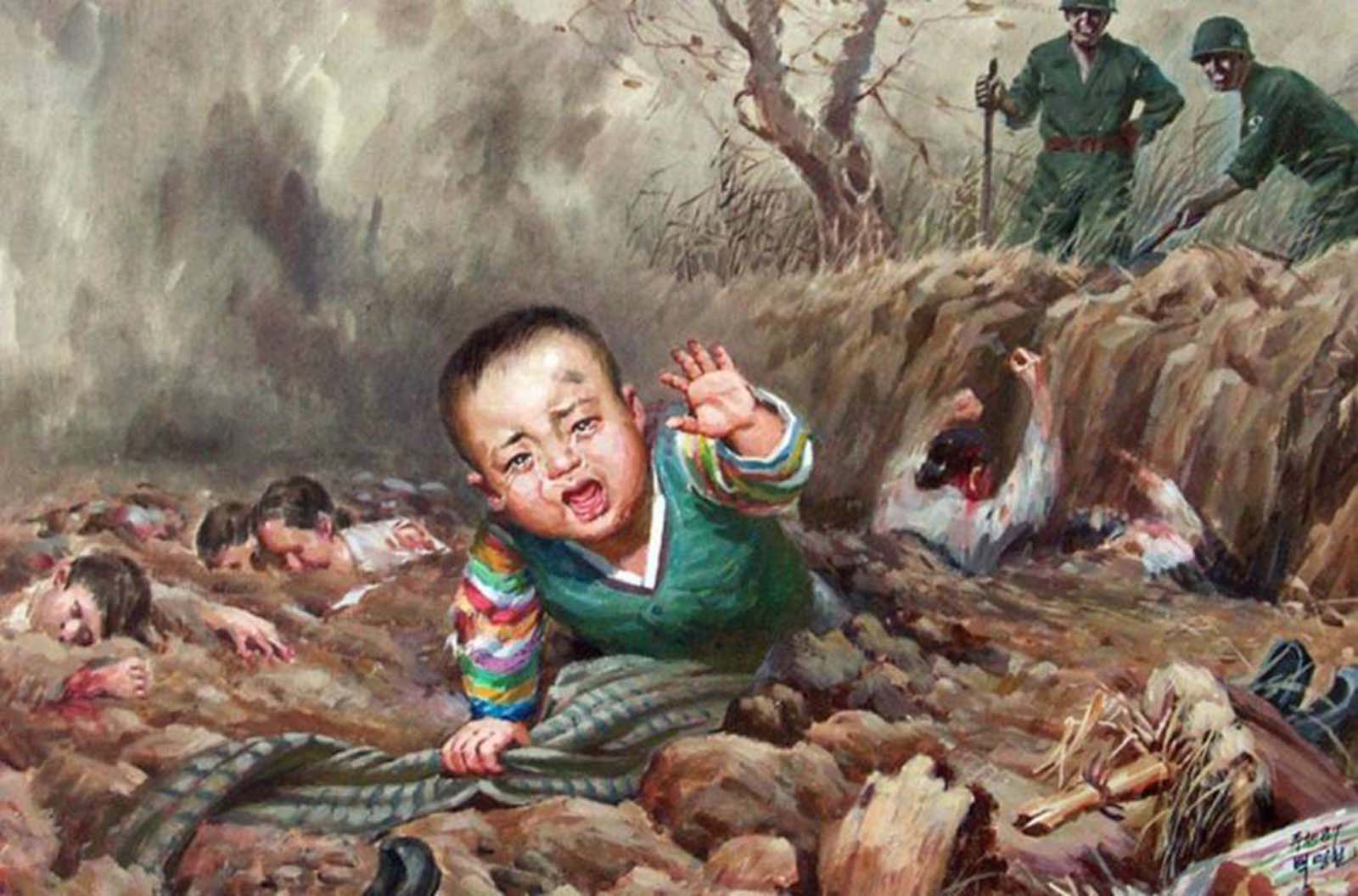
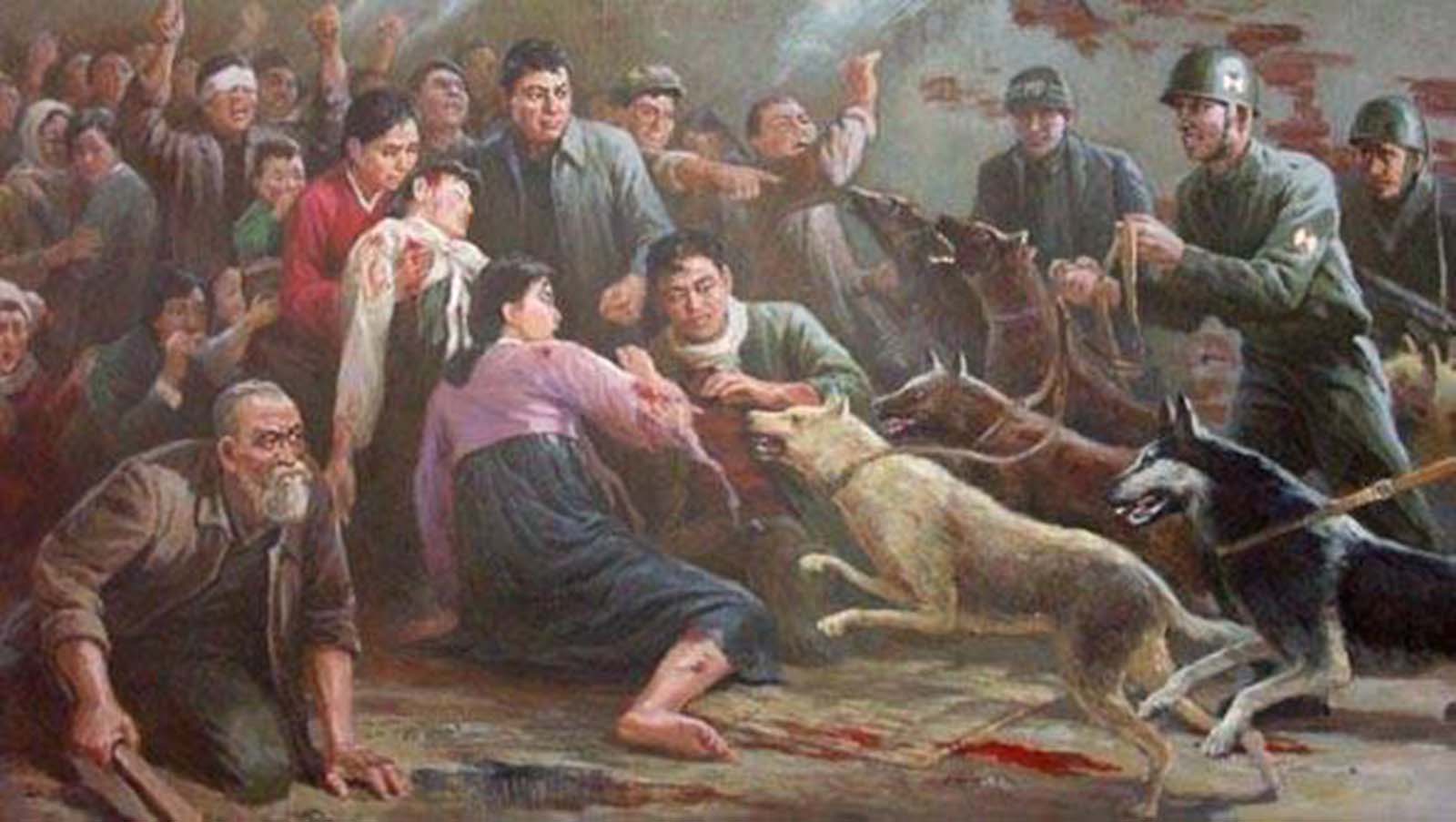
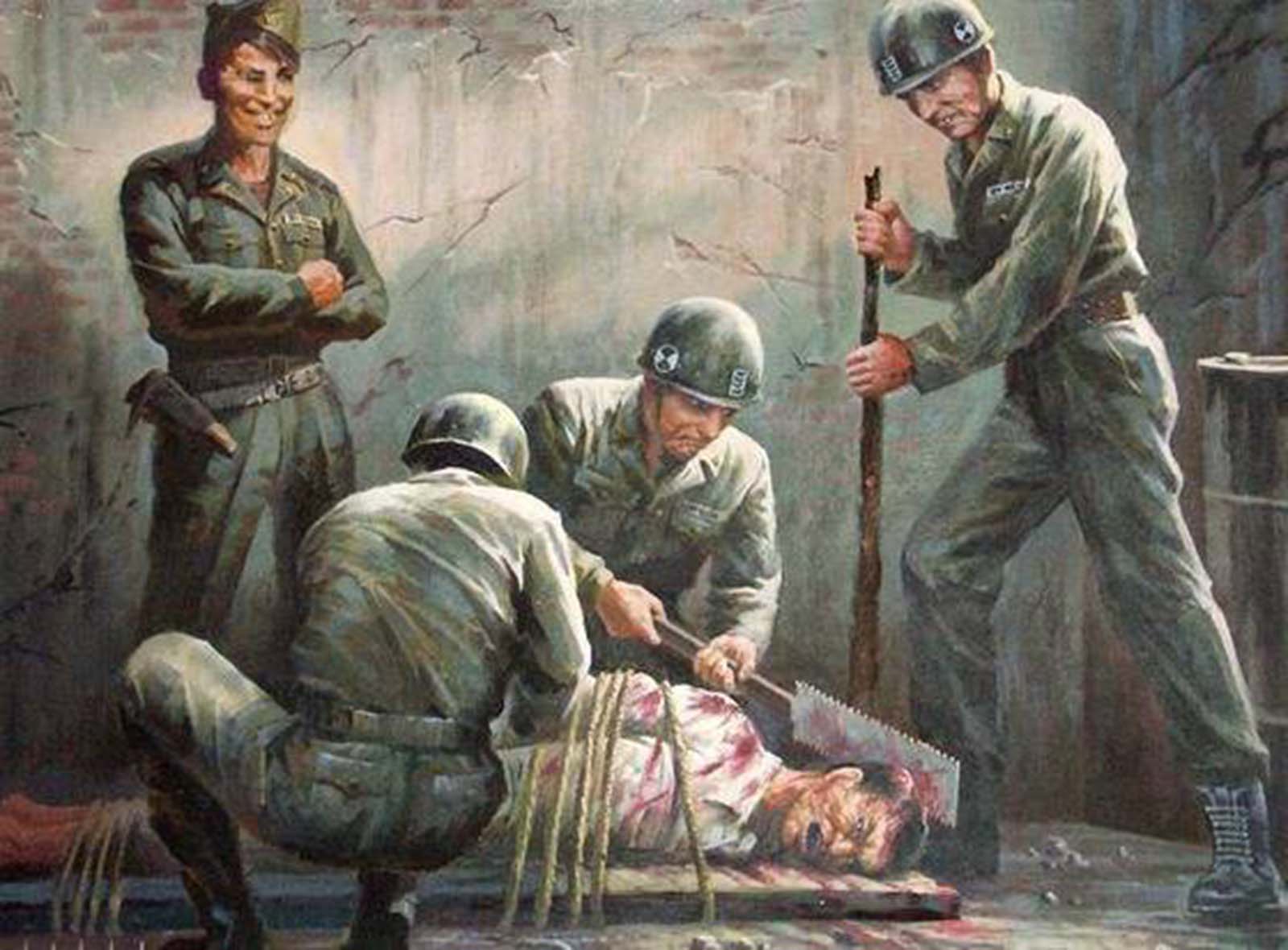
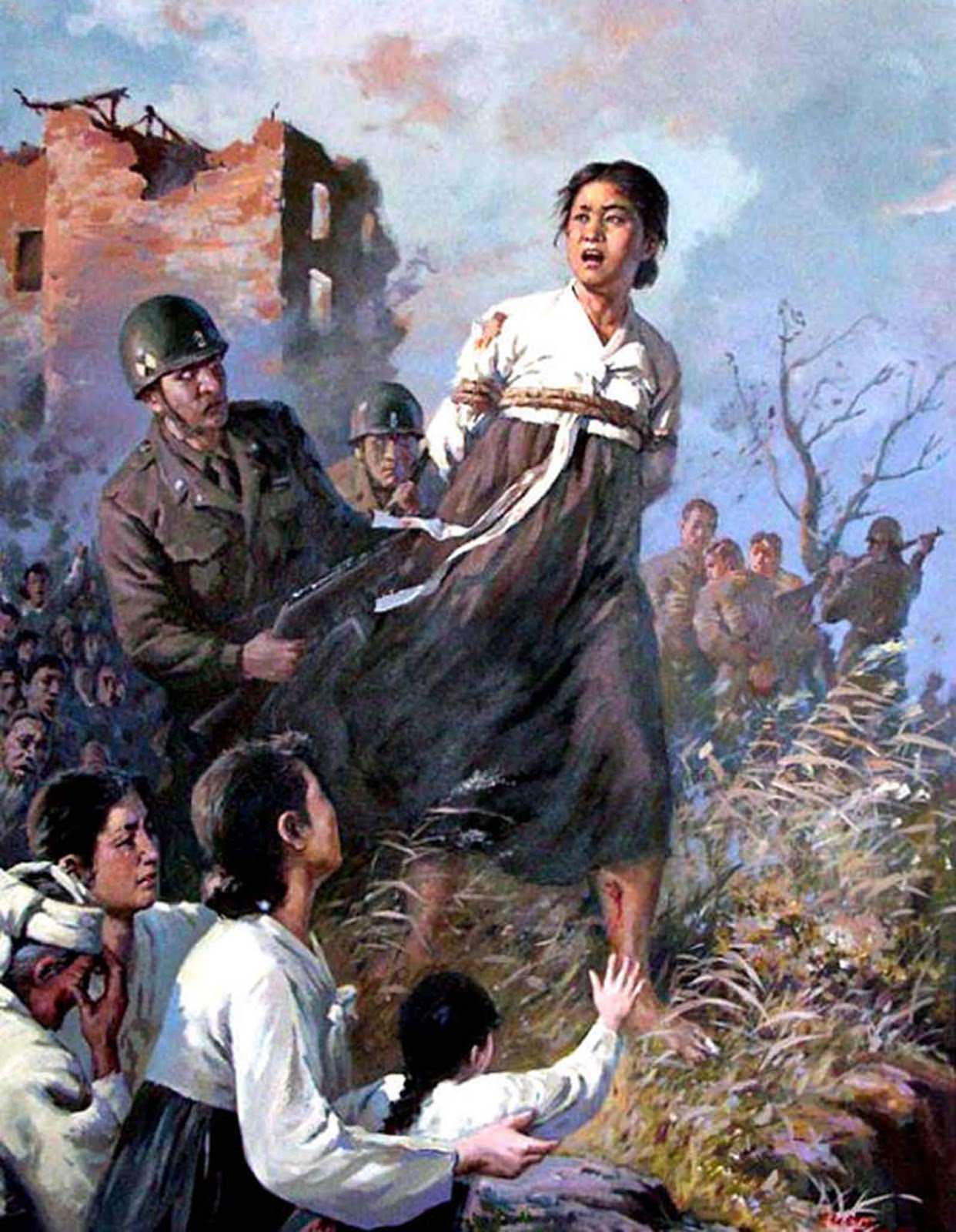
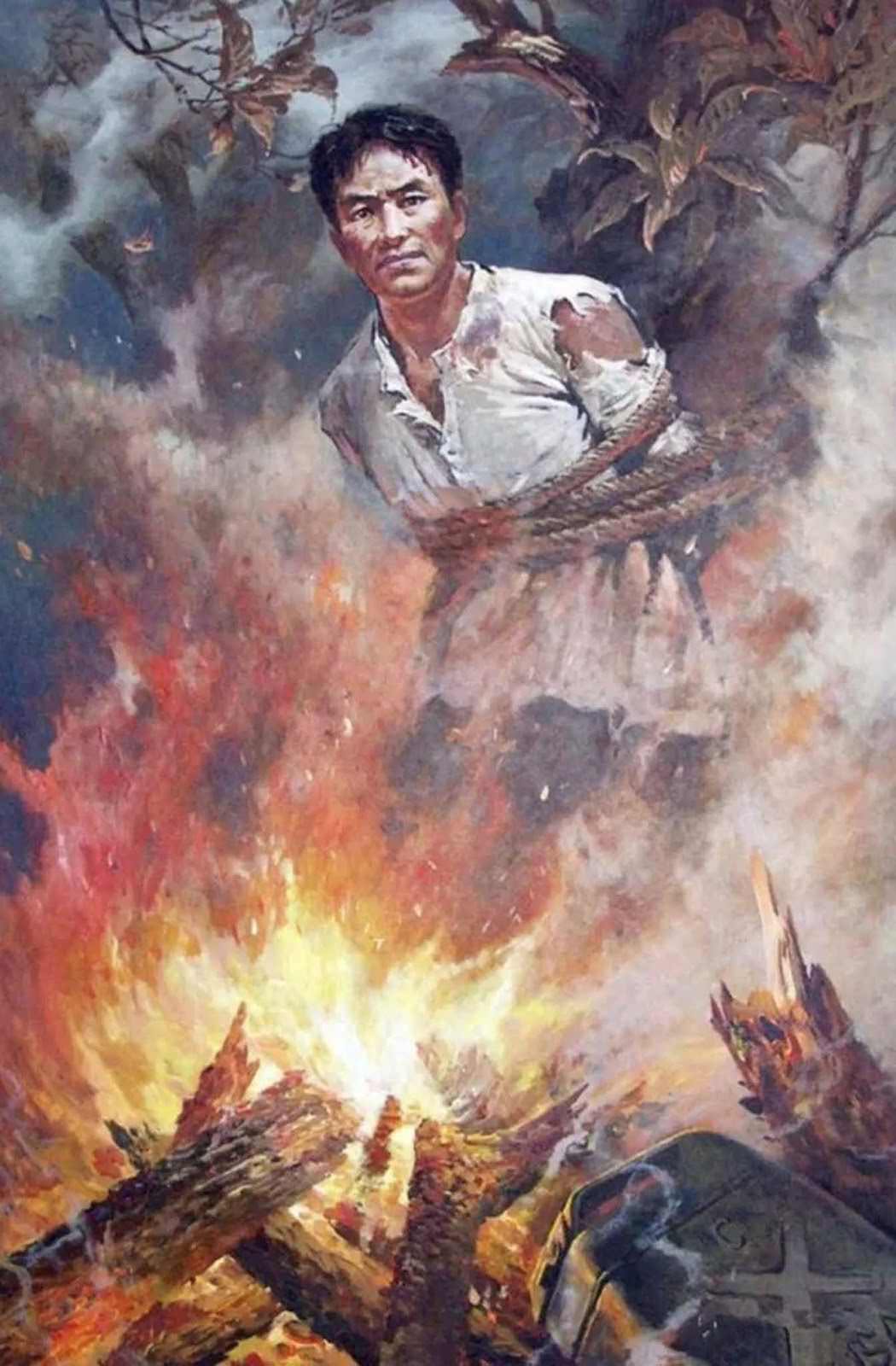
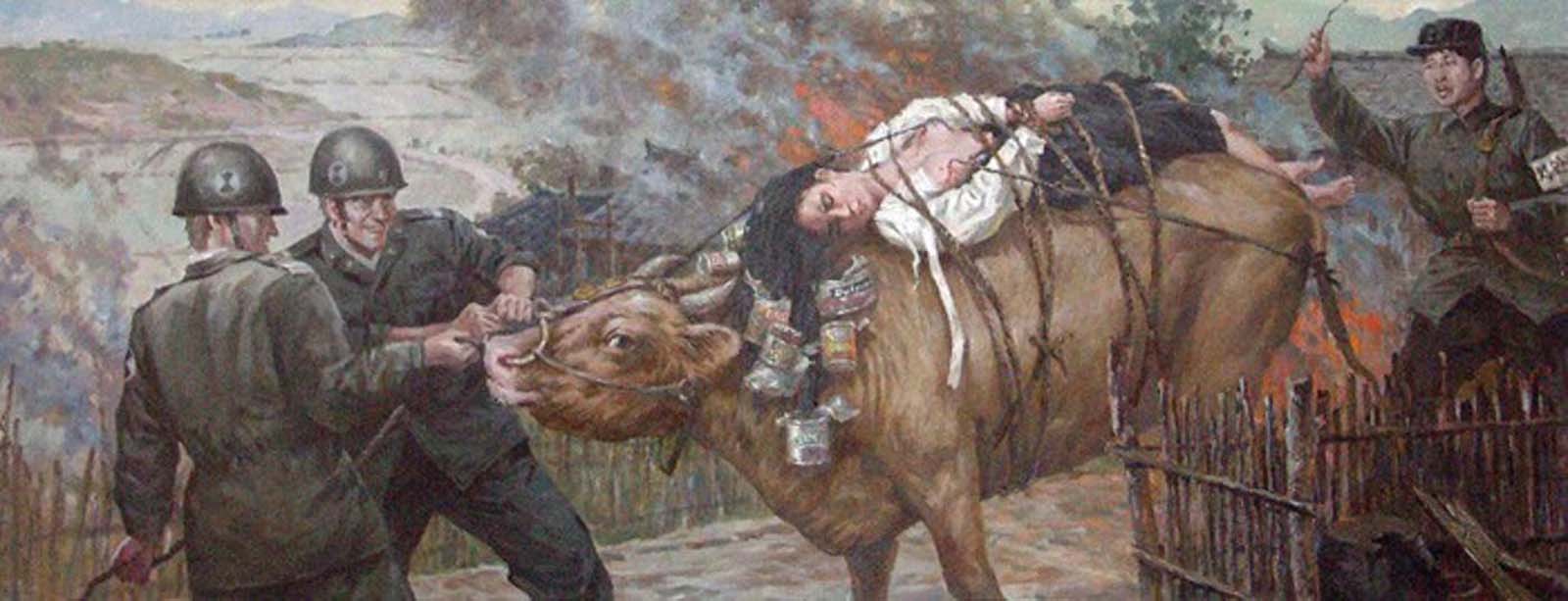
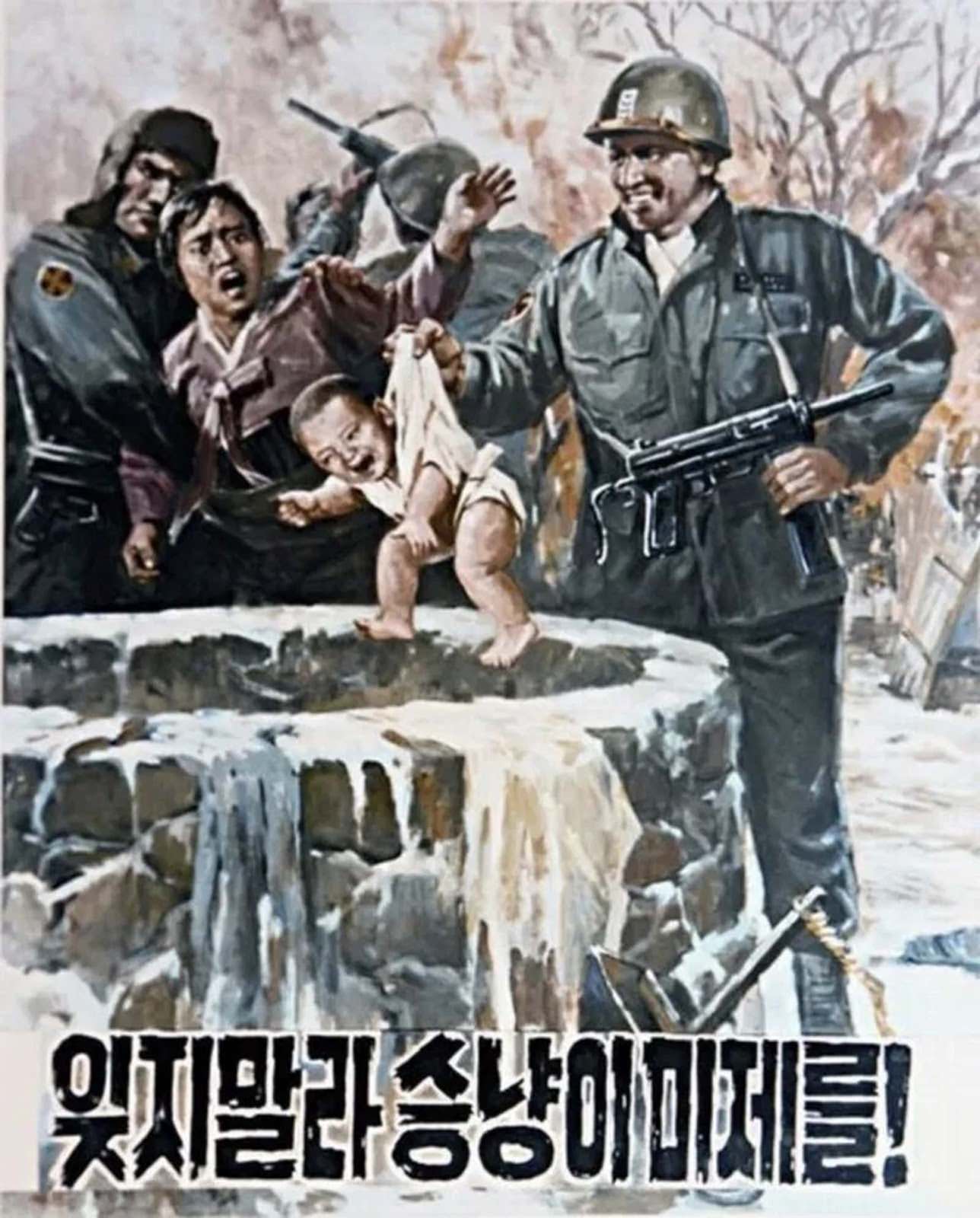
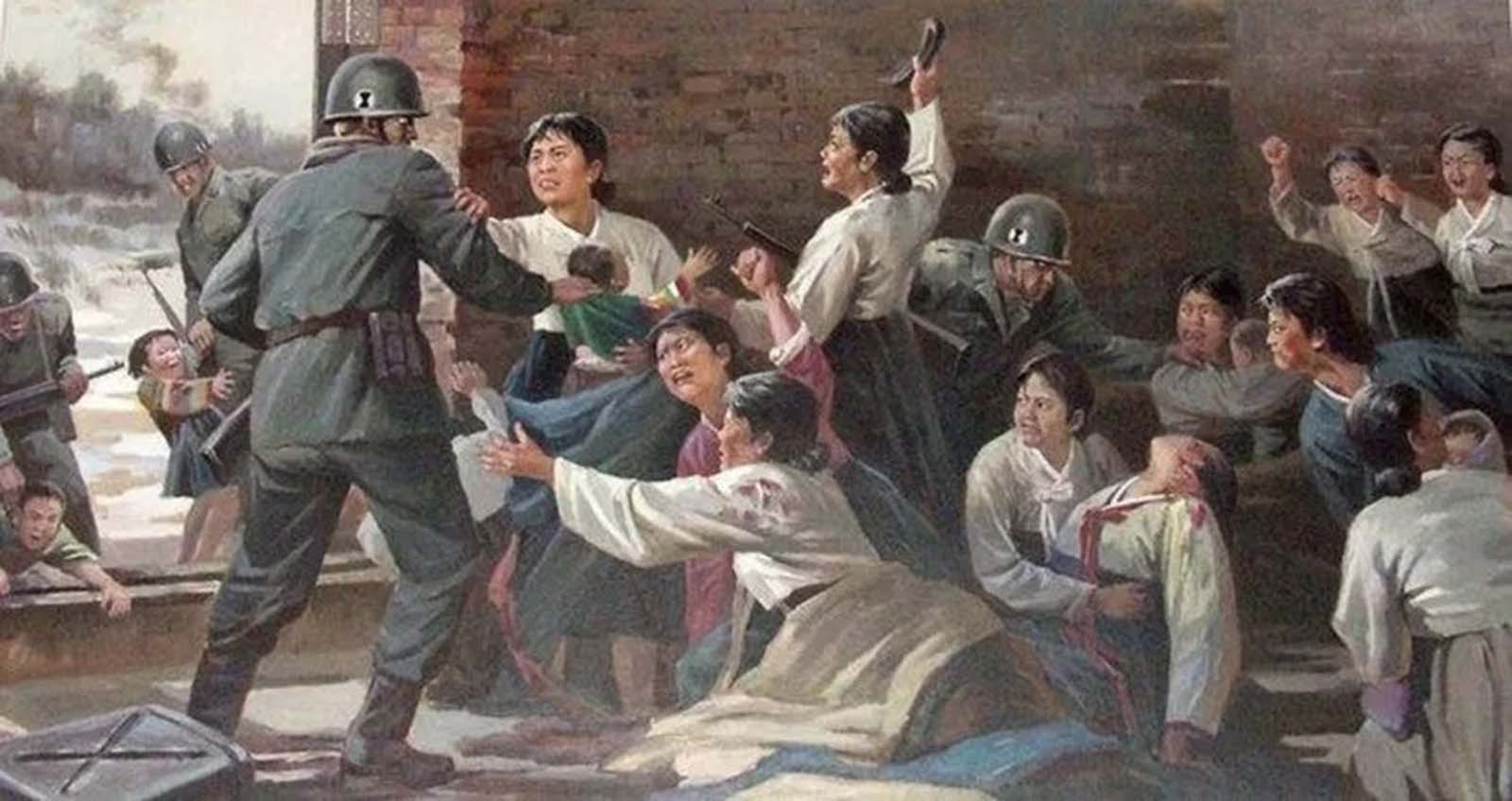
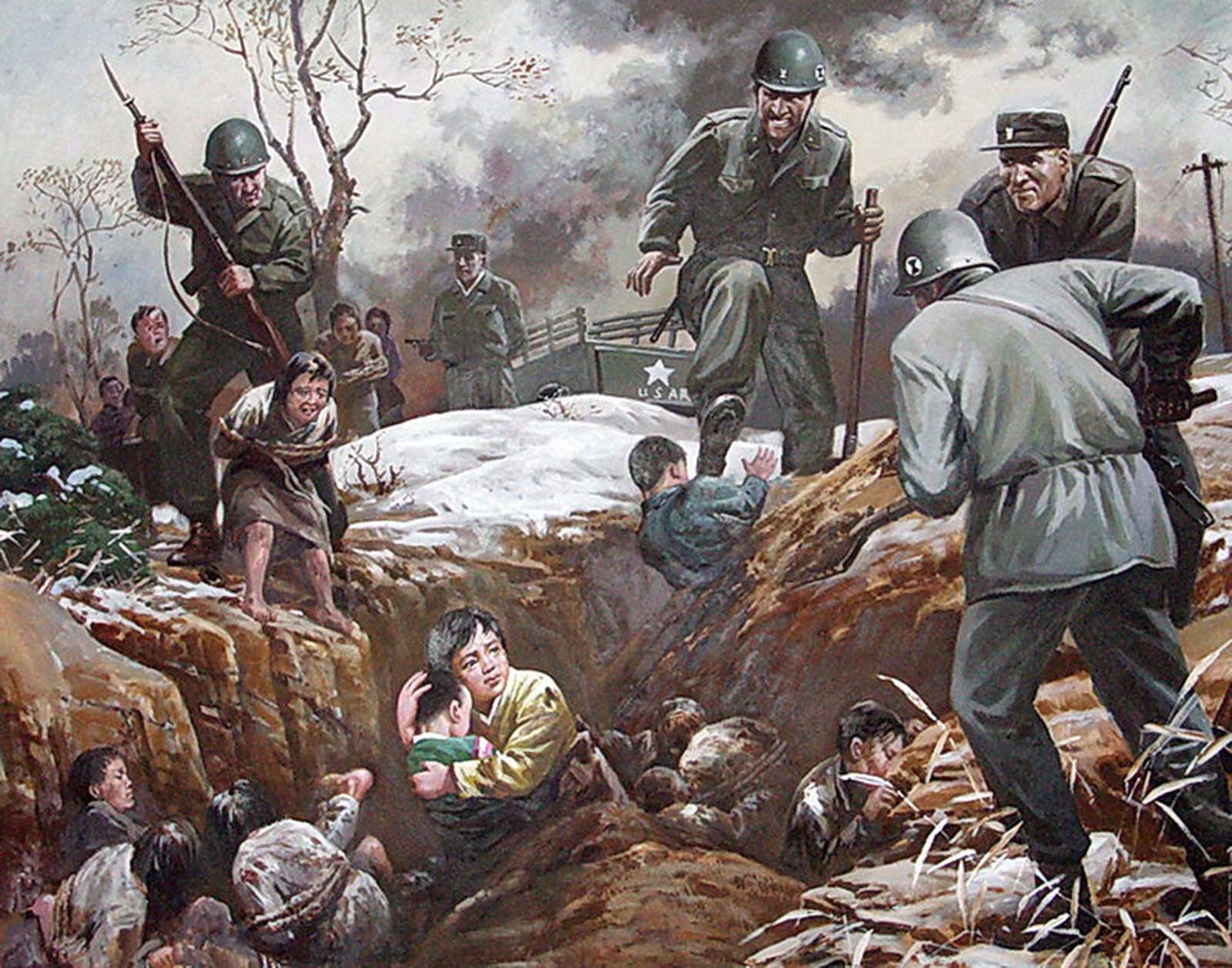
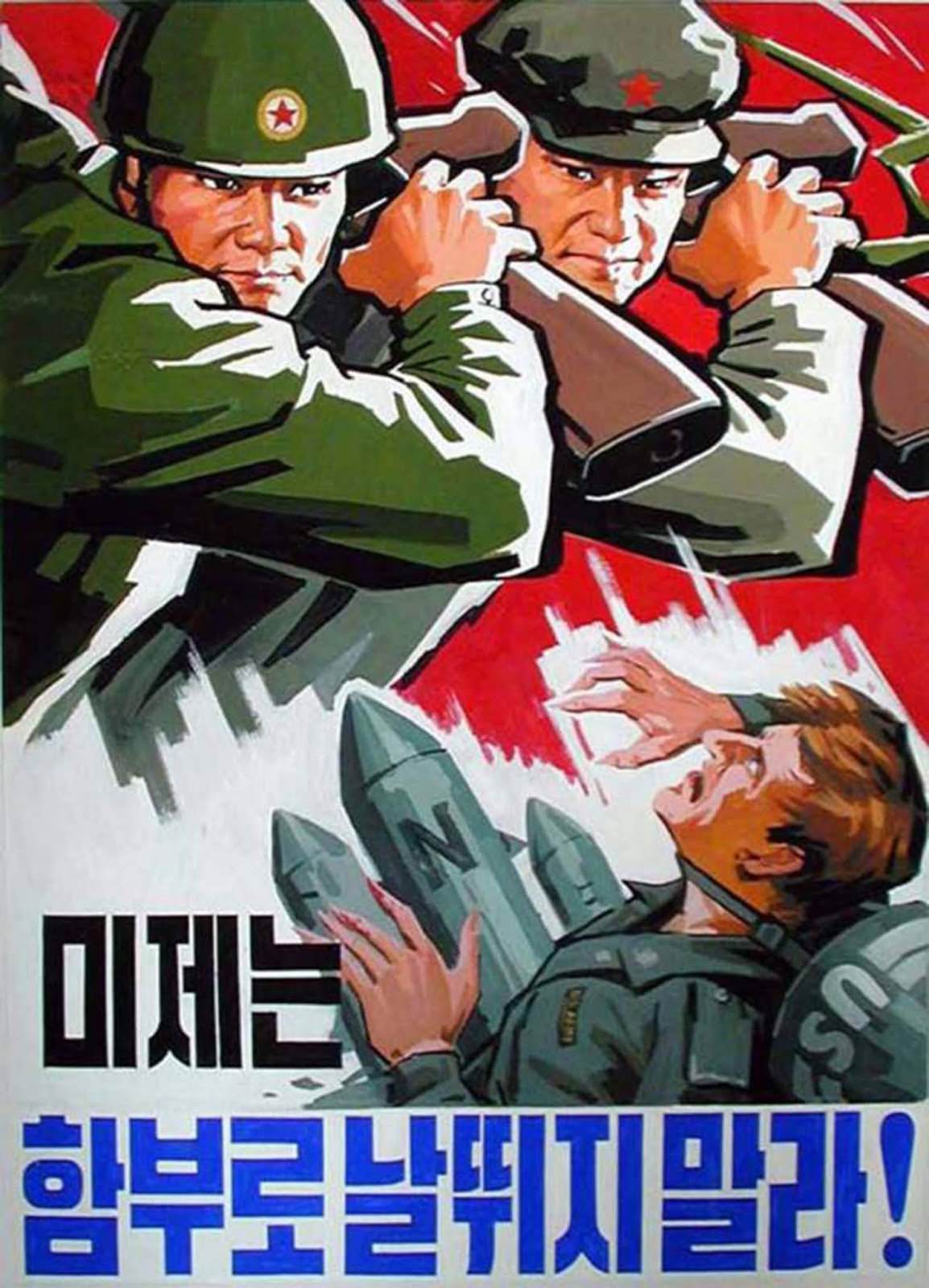
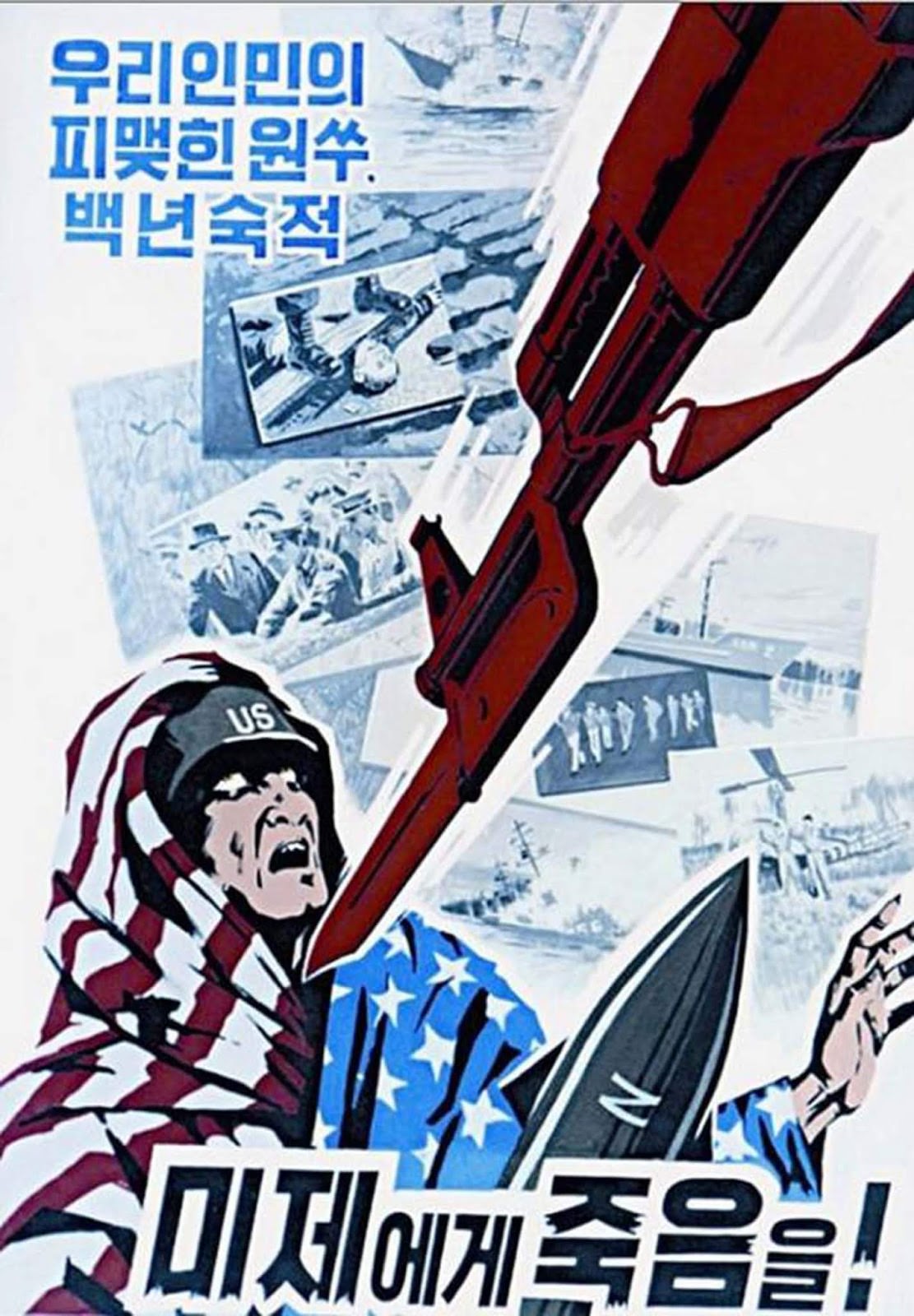
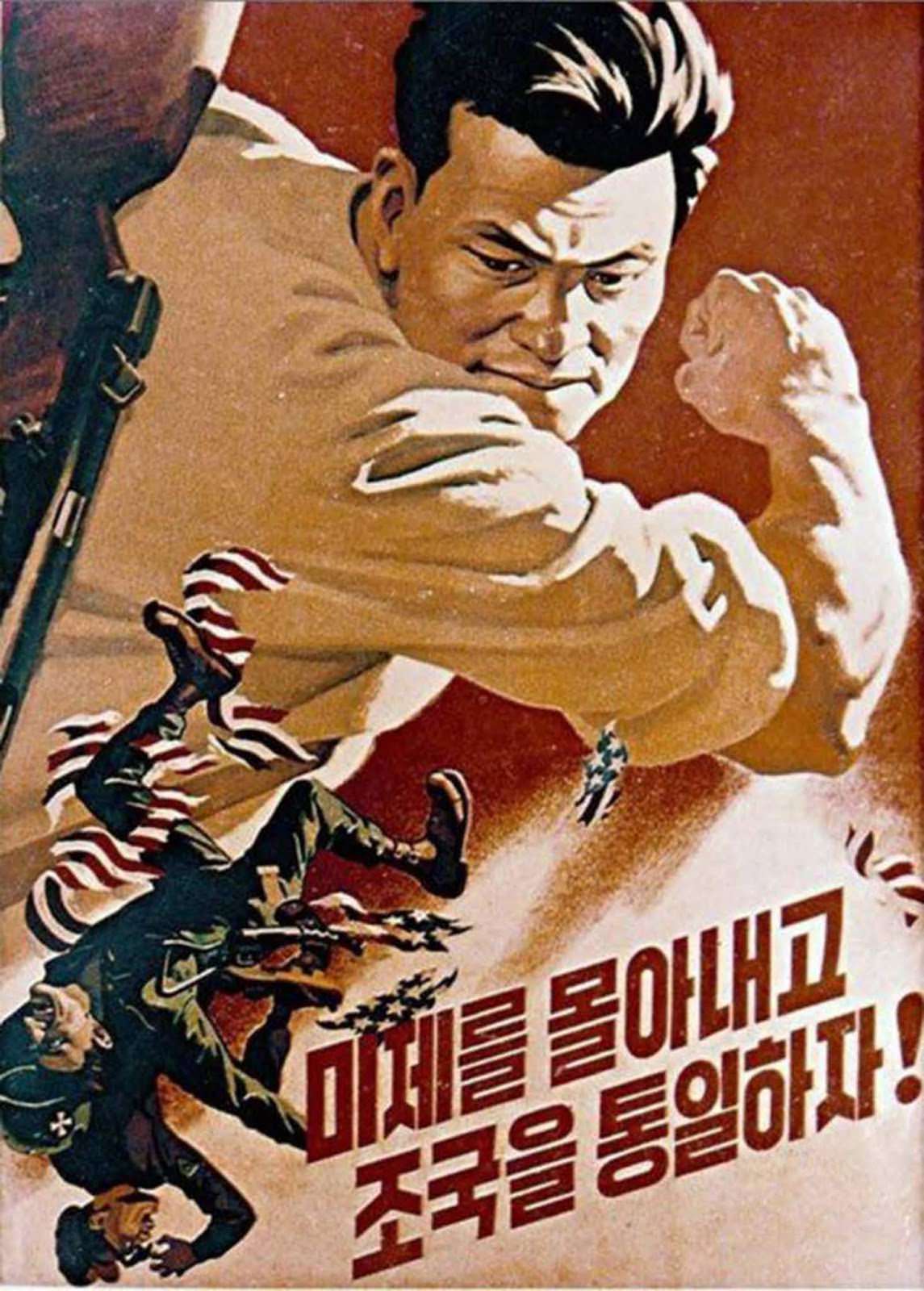
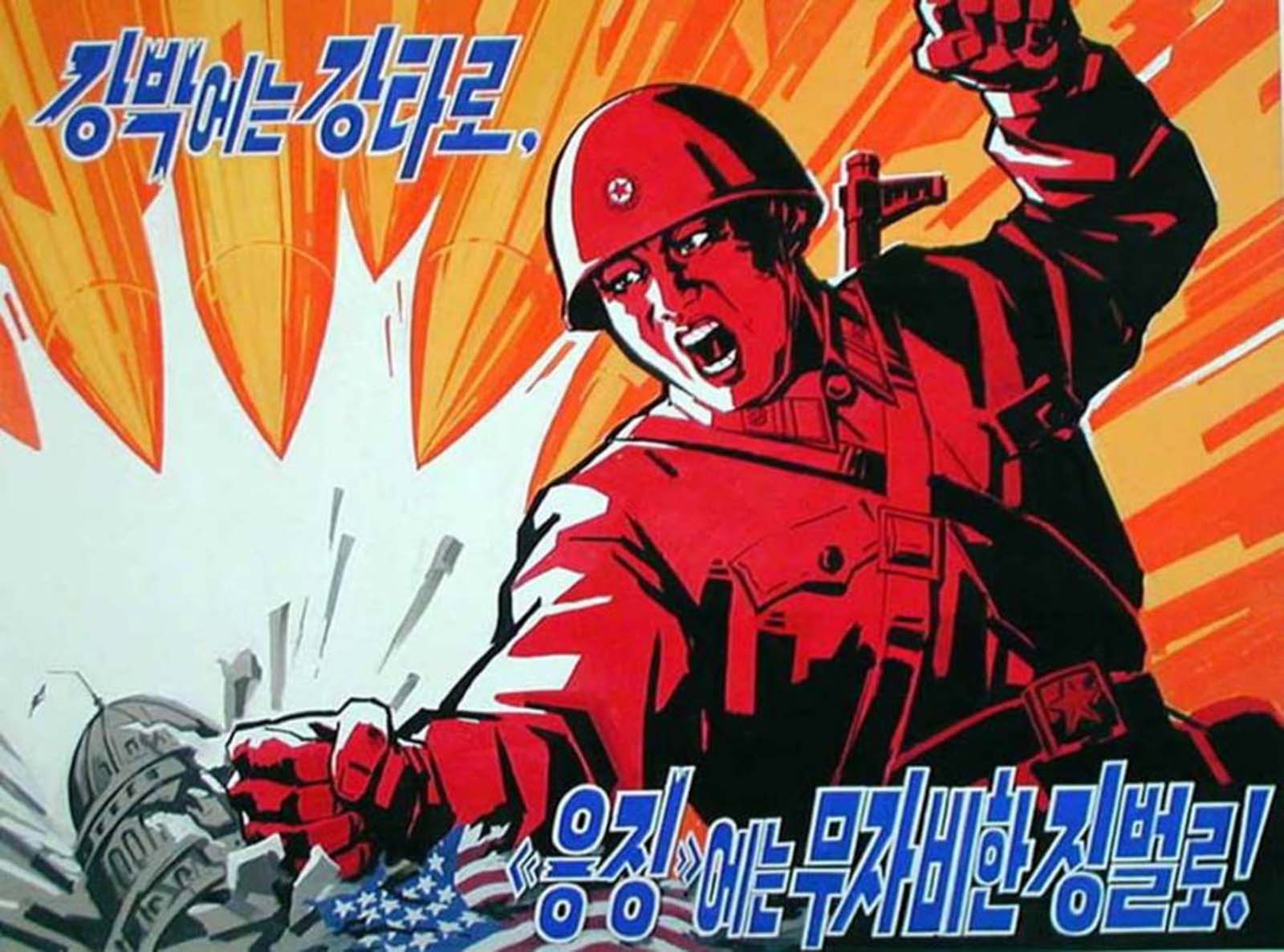
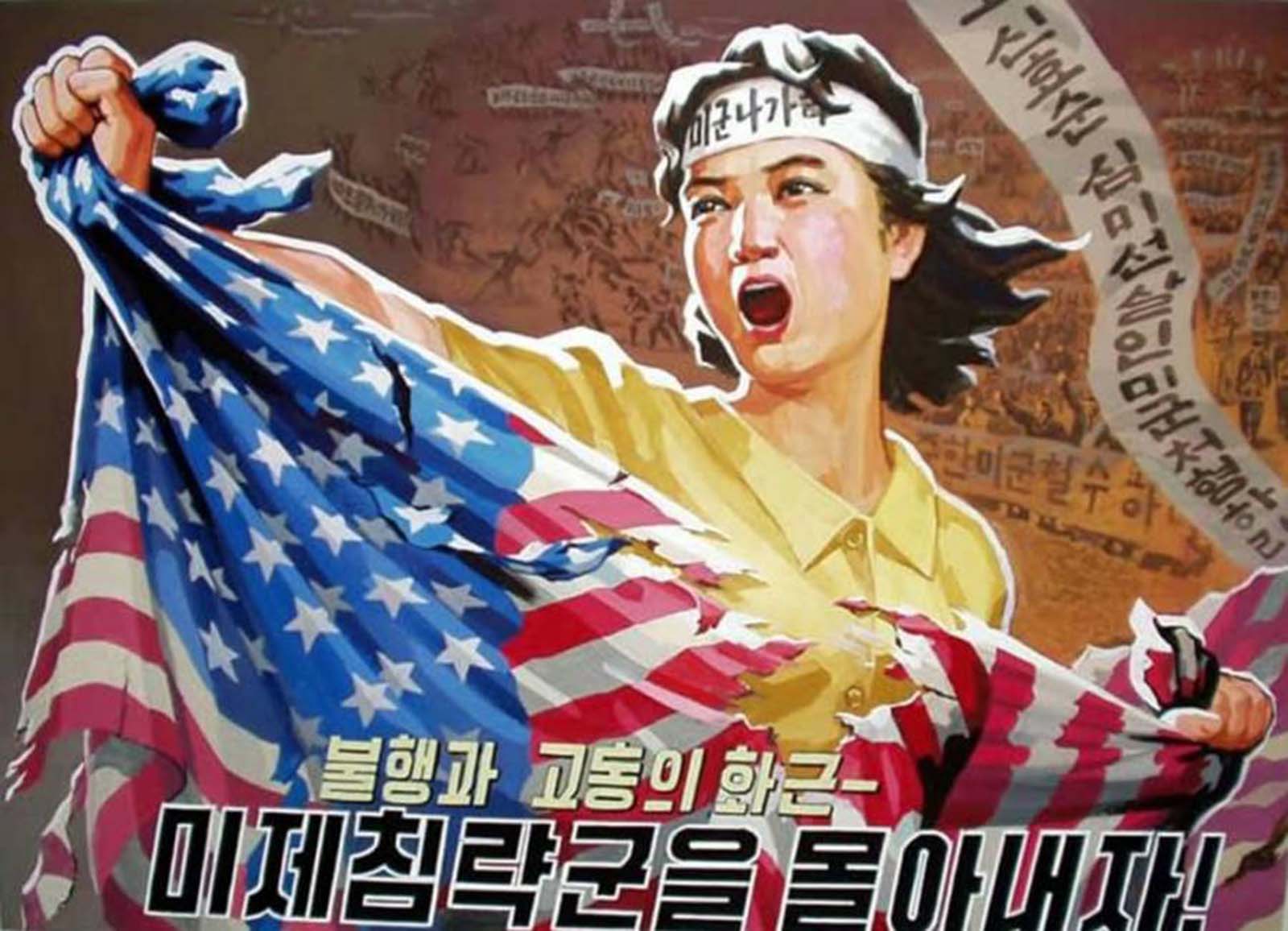
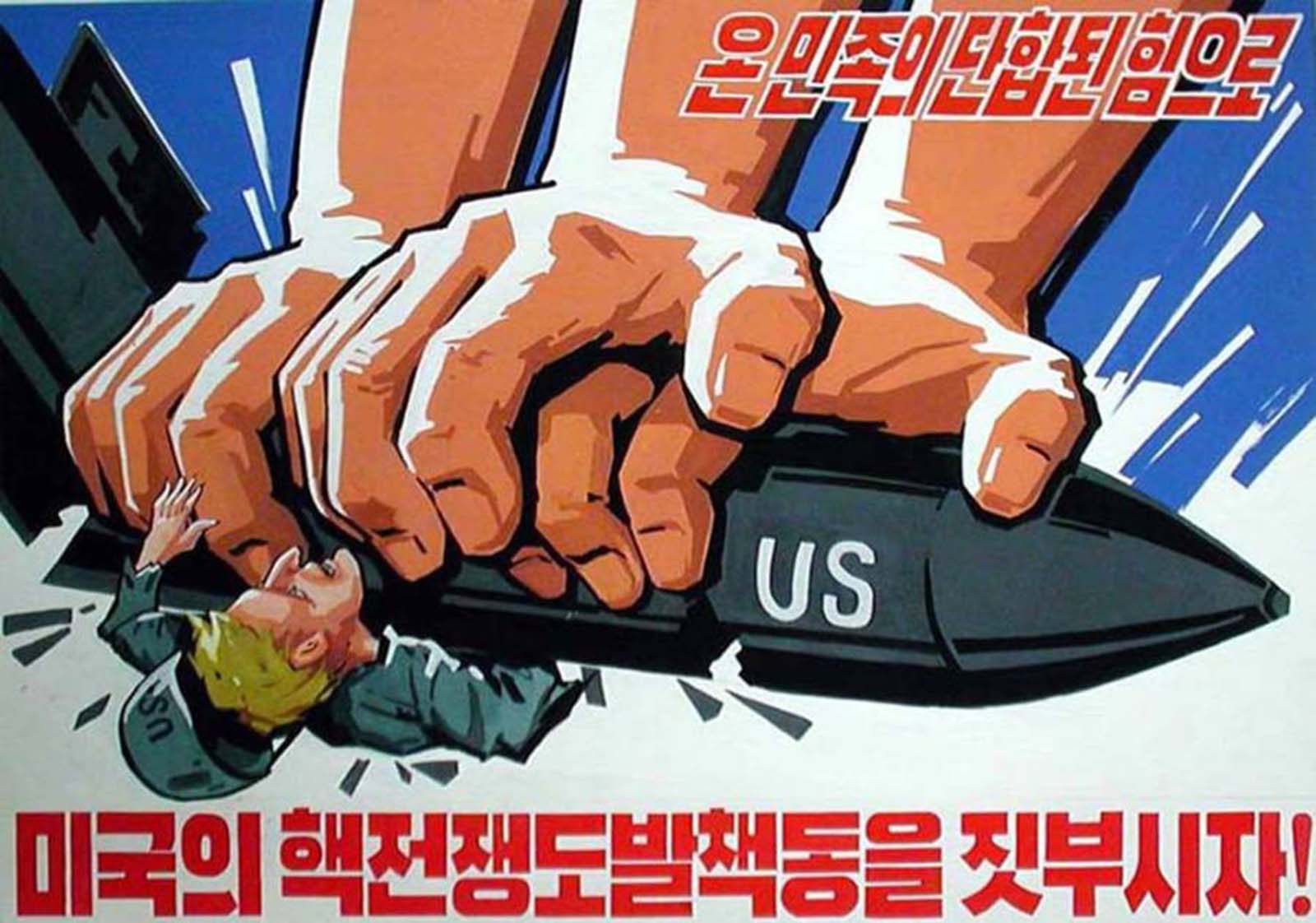
These propaganda posters depict communist propaganda against America. These haunting posters show American troops pulling out teeth, torturing civilians, and burning people alive. In 1950, North Korea invaded South Korea; the war began on 25 June 1950. The United States joined the war in July in favor of South Korea. The battle was short, but it set the stage for decades of tension among North Korea, South Korea, and the United States. It also paved that path for the Soviet-American cold war. During the war, the United States dropped approximately 635,000 tons of explosives on North Korea, including 32,000 tons of napalm. The war destroyed Korea, between three to five million people were killed, and 70% of them were civilians. North Korea lost 25% of its population because of years of American bombing.
North Korea leader Kim Il-sung created propaganda campaigns against the United States and depicted Americans as bloodthirsty murders carrying out the genocide of the North Korean people. Even when the war was over, Kim continued to portray the US as a warmonger itching to re-engage in the conflict. The North Korean government created the Sinchon Museum of American War Atrocities, which explicitly feature the mass murder and slaughtering of North Koreans by the Americans in the Korean war via paintings and photos. Here below are some examples of the anti-American North Korean propaganda art.