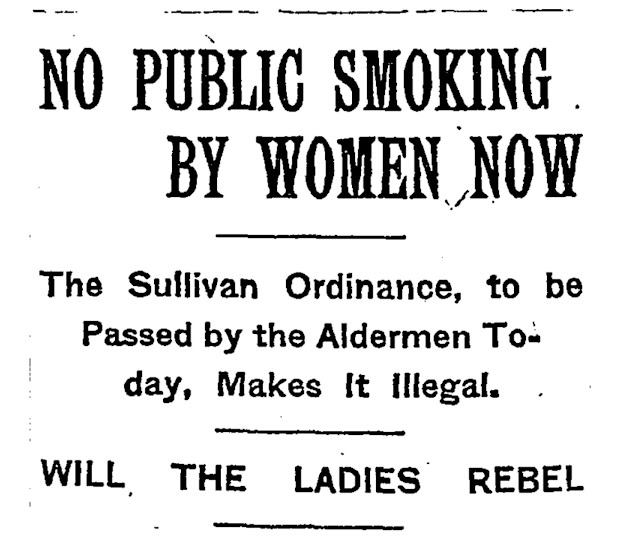
In January 1908, New York City witnessed a significant legal development with the passage of the Sullivan Ordinance. This law made it illegal for women to smoke in public places. Named after Alderman Timothy “Little Tim” Sullivan, who proposed it, the ordinance reflected the societal norms and gender attitudes of the early 20th century.
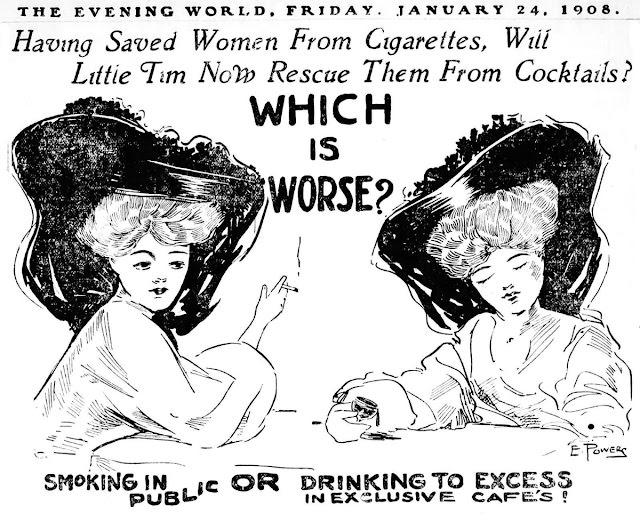
The decision to ban women from smoking in public was unanimously voted on January 21, 1908, by the Committee on Laws of the Board of Aldermen. This move was indicative of the prevailing views on public decorum and the role of women in society. The ordinance placed the onus of enforcement on business owners, requiring them to prevent women from smoking in their establishments.
Alderman Timothy “Little Tim” Sullivan’s Role
Alderman Timothy Sullivan, known as “Little Tim,” was the key figure behind the proposal of this ordinance. Despite never having seen a woman smoke in public, Sullivan was reportedly repulsed by the idea. His stance and subsequent action highlight the moral and social codes imposed on women during this era.
Katie Mulcahey’s Defiance and Arrest
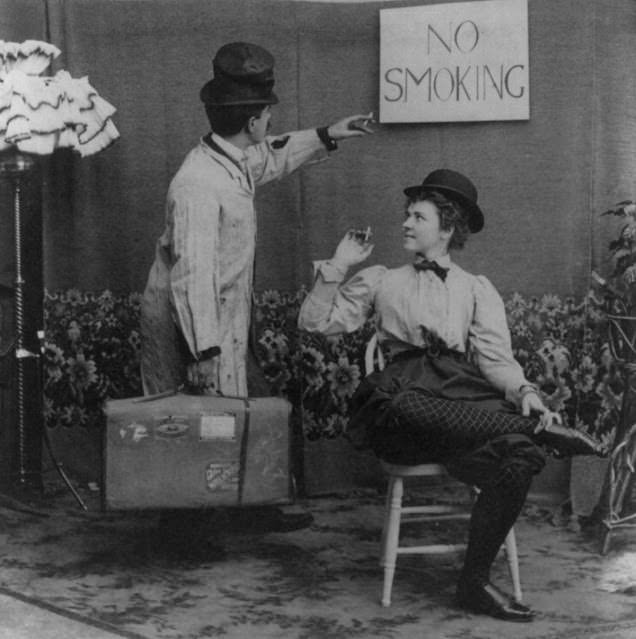
The day after the ordinance was enacted, on January 22, Katie Mulcahey became the first and only person to be cited for violating it. She was fined $5 for smoking in public and arrested for refusing to pay the fine. Mulcahey’s response to the judge, “No man shall dictate to me,” became a notable quote reflecting her defiance against the ordinance, which was ambiguously worded and did not explicitly mention fines or directly ban women from smoking in public.
Katie Mulcahey was released the following day. Within two weeks of its enactment, Mayor George B. McClellan Jr. vetoed the Sullivan Ordinance. The mayor’s action was a critical turn in this short-lived legal episode, showcasing the complexities and controversies surrounding the law.
The saga surrounding the Sullivan Ordinance and Katie Mulcahey had an unintended consequence. Following the incident, New York’s chief legal officer declared that women could smoke freely in public. This statement, though not a formal law, represented a significant shift in the legal interpretation of women’s rights in public spaces.
Precedent Set by the Sullivan Ordinance
The Sullivan Ordinance and its subsequent repeal set a precedent regarding laws that allowed women the same public freedoms as men. It unintentionally became a point of reference in the broader movement for women’s rights, illustrating the societal push towards gender equality in public life.
The incident involving the Sullivan Ordinance occurred during a period of increasing advocacy for women’s rights in the United States. The early 20th century was marked by significant efforts towards achieving gender equality, with the women’s suffrage movement gaining momentum. The events surrounding the ordinance were reflective of the broader societal changes underway.
Women’s Suffrage Movement and the Right to Vote
A little over a decade after the Sullivan Ordinance episode, women in the United States were granted the right to vote with the ratification of the 19th Amendment in 1920. This milestone was the culmination of a long-fought battle by women’s rights activists and marked a significant victory in the quest for gender equality.