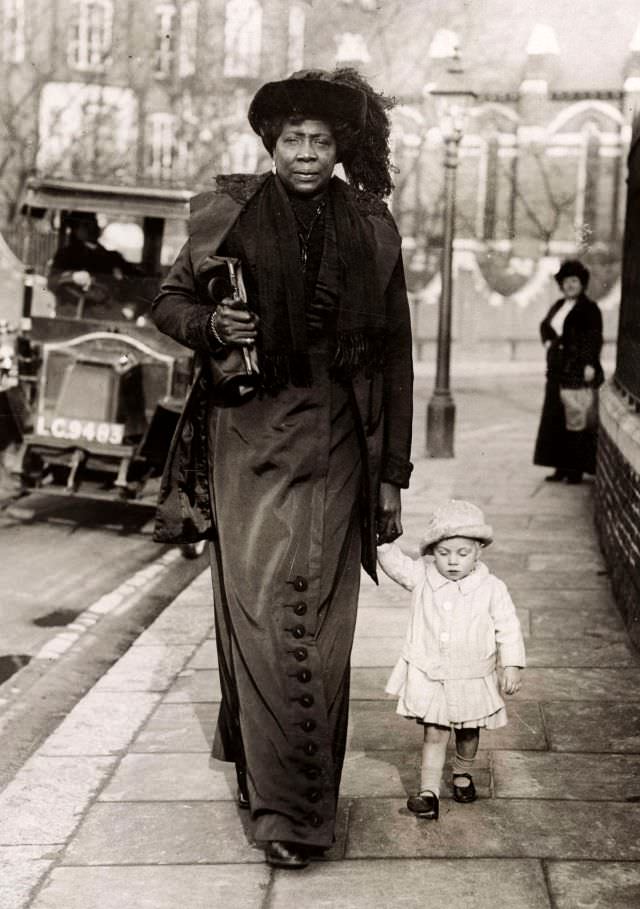
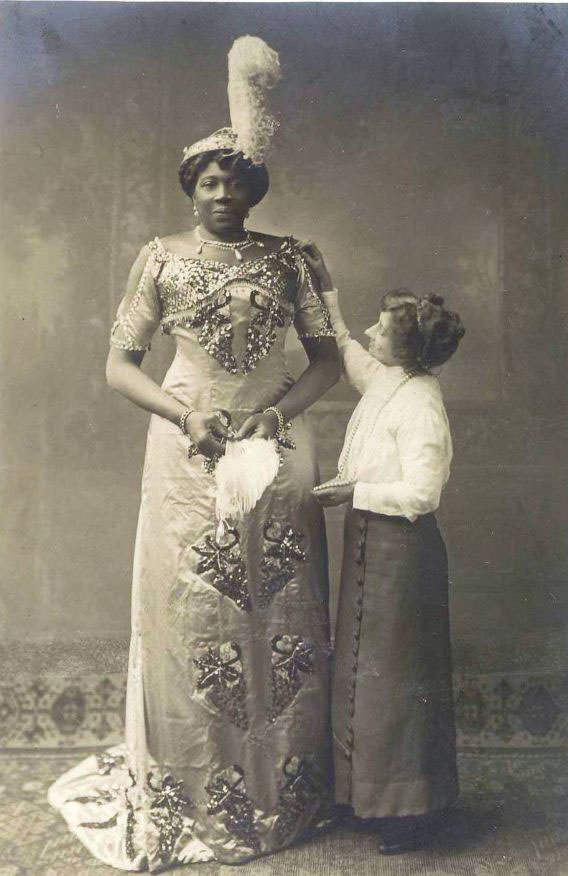
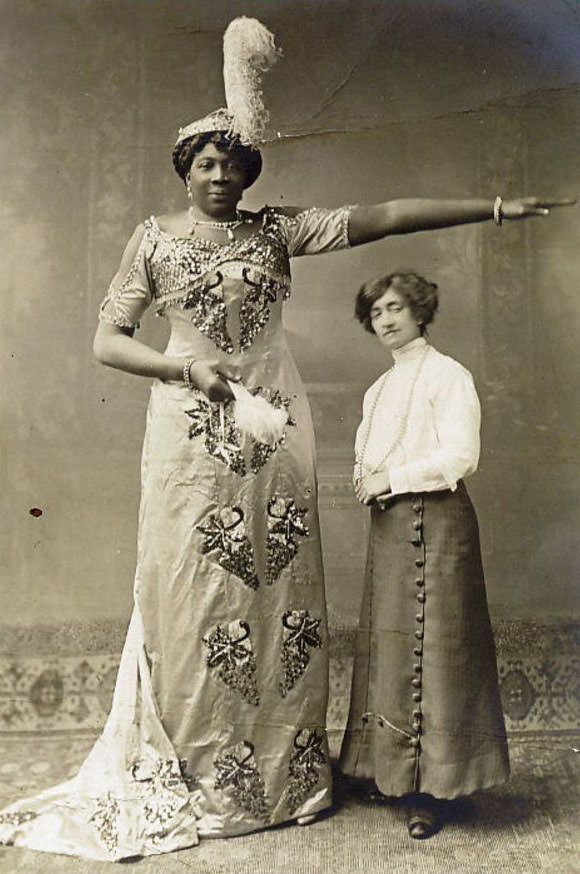
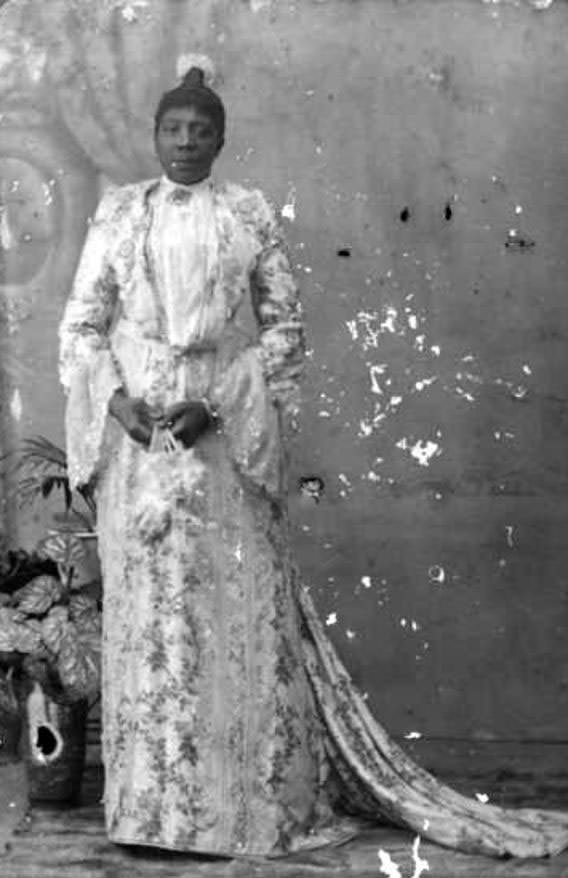
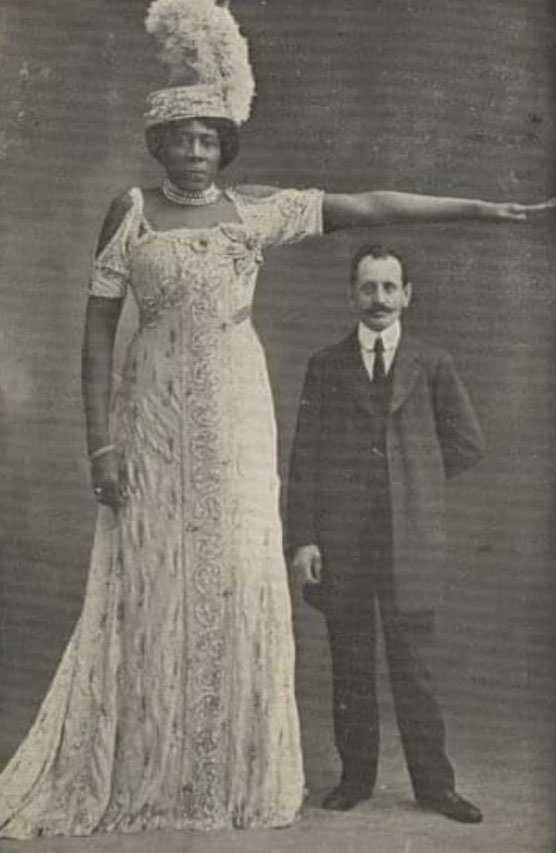
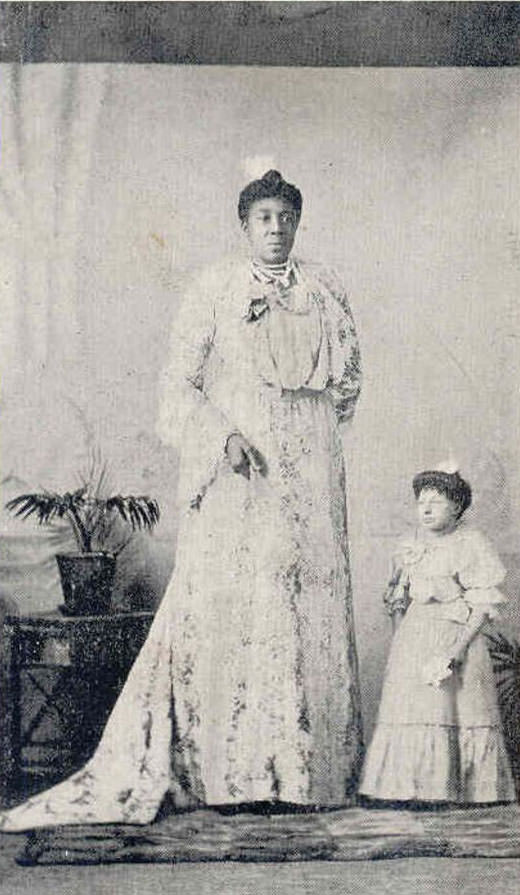
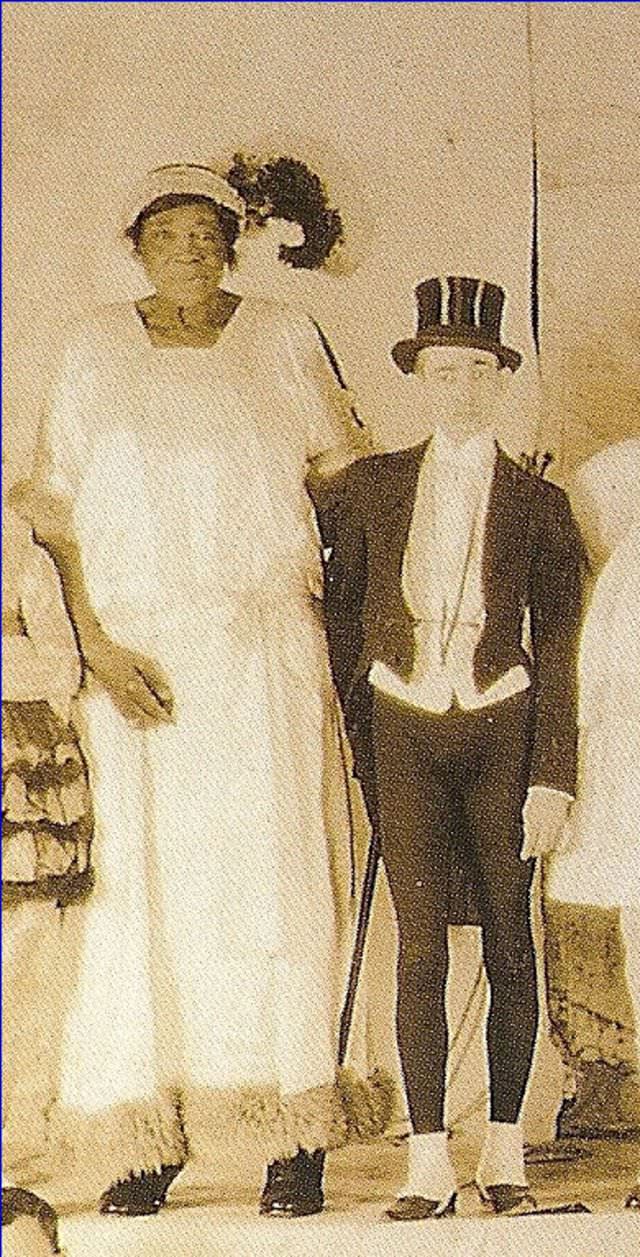
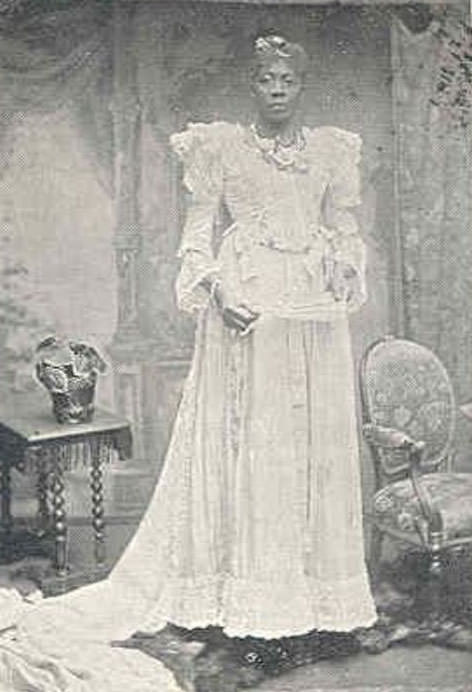
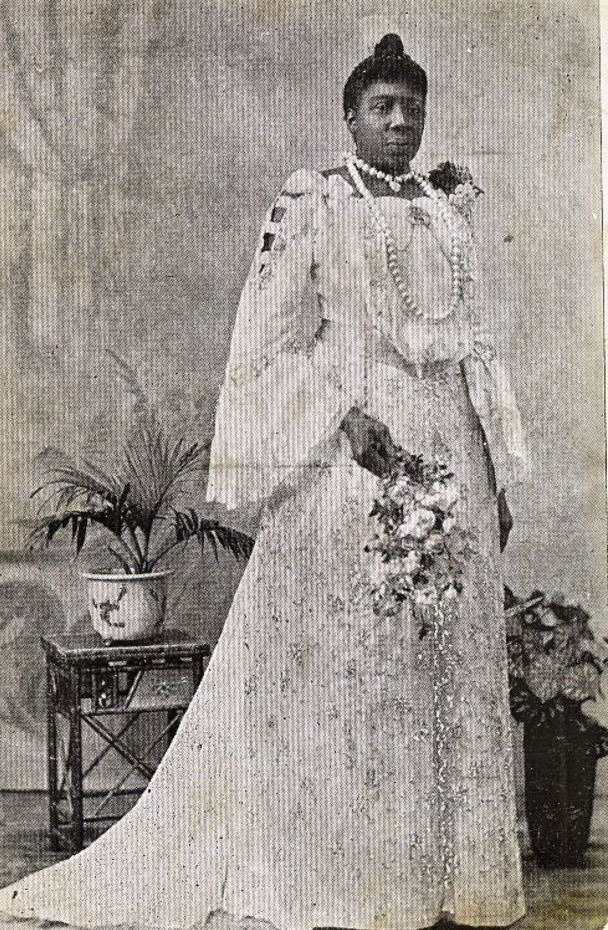
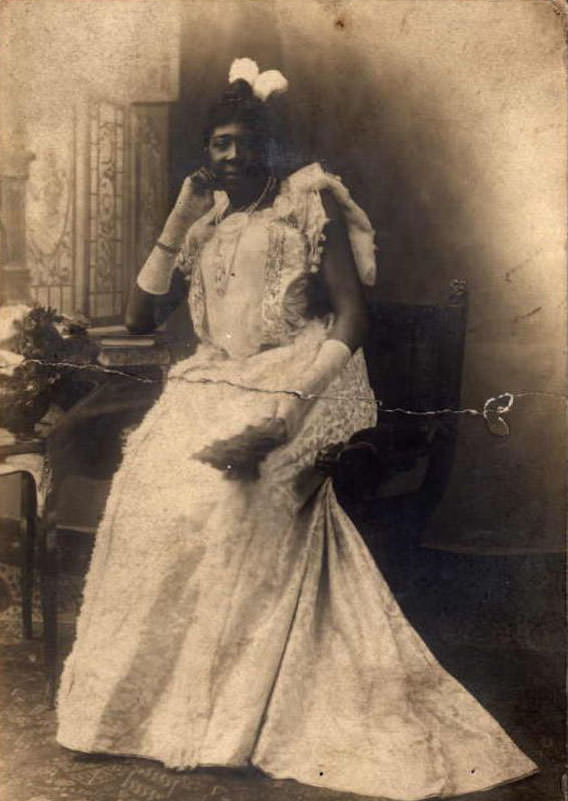
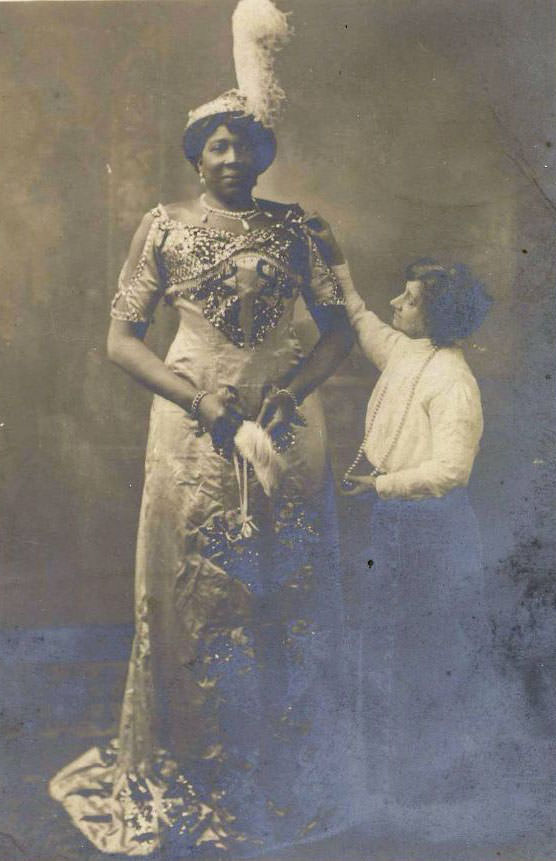
MME Abomah, also known as Ella Williams or the African Giantess, was a performer in the late 19th and early 20th centuries. Born Ella Grigsby in October 1865, she grew up in the aftermath of the American Civil War, narrowly avoiding being born into slavery due to the 13th Amendment being ratified shortly before her birth. Ella came to work for Elihu and Harriet Williams when she was a teenager, and she took their surname as her own.
Ella’s career as a performer began when she was discovered by Frank Bostock, a showman who specialized in exotic animals and people. Bostock signed Ella up for a tour of the British Isles, recognizing that her act would not go over well in the United States at the time due to the presence of another giantess performer named Ella Ewing. Racism was less pronounced in Europe than in the United States, so Ella found greater success on foreign soil. Her act involved displaying her great size and strength, which she attributed to her African ancestry. She was billed as “MME Abomah, the African Giantess,” and her performances included lifting heavy weights, bending iron bars, and carrying people on her shoulders. Ella was said to be over 7 feet tall and to weigh over 300 pounds, although these figures were likely exaggerated for effect. Ella’s performances were popular with audiences, and she became a sensation in Europe. She traveled extensively throughout the continent, performing in France, Germany, Belgium, and other countries. She also performed for royalty, including King Leopold II of Belgium and Queen Victoria of England.
Despite her success as a performer, Ella’s personal life was marked by tragedy. She had two children, both of whom died in infancy. She also suffered from health problems, including rheumatism and heart disease. In addition, Ella’s relationship with Frank Bostock was fraught with difficulties. Bostock was known for exploiting his performers, and Ella was no exception. She later sued him for breach of contract and won, but the experience left her embittered.
Ella’s career as a performer declined in the early 20th century, and she eventually retired from the stage. She lived out the remainder of her life in relative obscurity, although she did briefly return to the spotlight in 1929 when she was featured in a newspaper article. She passed away in 1932 at the age of 67.
Today, MME Abomah is remembered as a pioneering figure in the world of performance, and her story serves as a reminder of the complex history of race and entertainment in the late 19th and early 20th centuries. While her performances were undoubtedly exploitative and played into harmful stereotypes of African people, they also represented a form of agency and empowerment for Ella herself.