Hey There! Before You Go. 😧
Get the best vintage content straight into your inbox!

Don't worry, we don't spam

Rare and Interesting Midget Cars from the 1920s and 1930s

The term “midget car” covered a surprisingly wide range of tiny vehicles in the early twentieth century. Some were purpose-built racers. Others were cheap, practical machines for everyday roads. A few were little more than novelties. What they shared was their remarkably small size — and the public fascination that came with it.
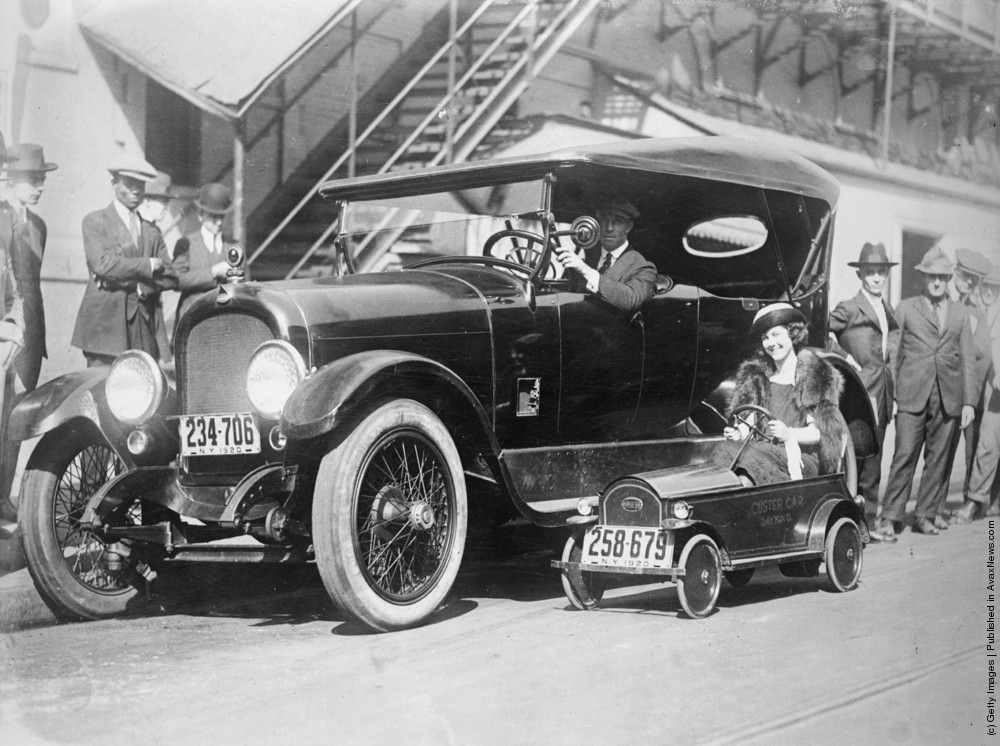
"Custer" the smallest car in the US. 1920.
“Custer” the smallest car in the US. 1920.

By the early 1920s, small cars were already turning heads. The Custer, photographed in 1920, was billed as the smallest car in the United States. Around the same time in Britain, the MG Midget was making a name for itself on trial courses and in competition, driven by enthusiasts willing to push lightweight machinery to its limits.
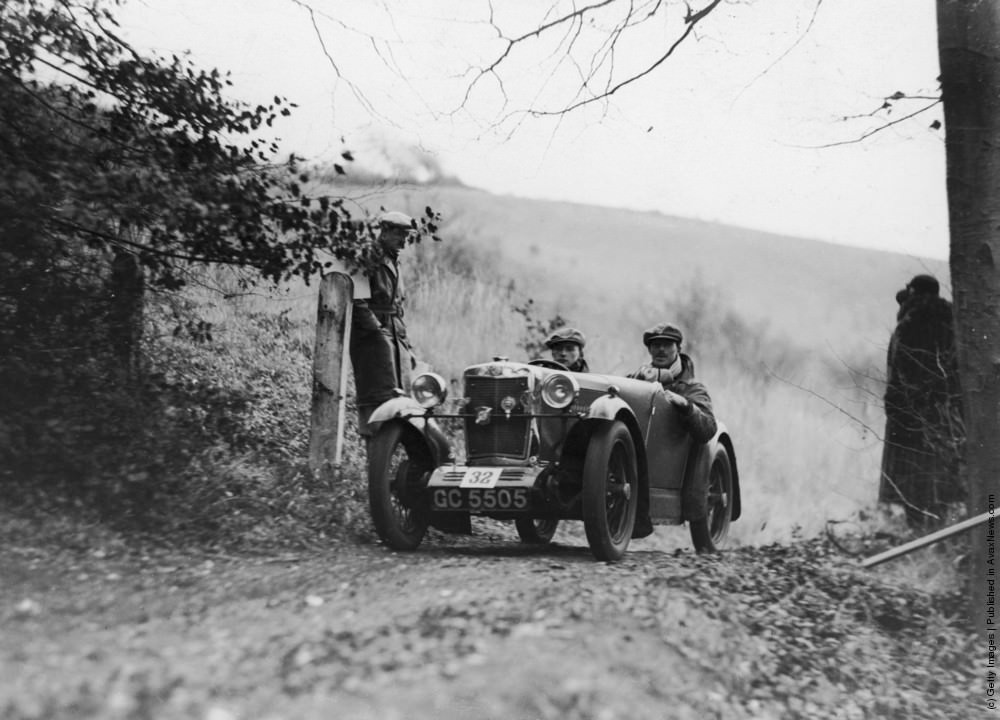
J B Carver driving his MG Midget racer at Grinders Glade during the Inter-Varsity Motor Trial. 1925.

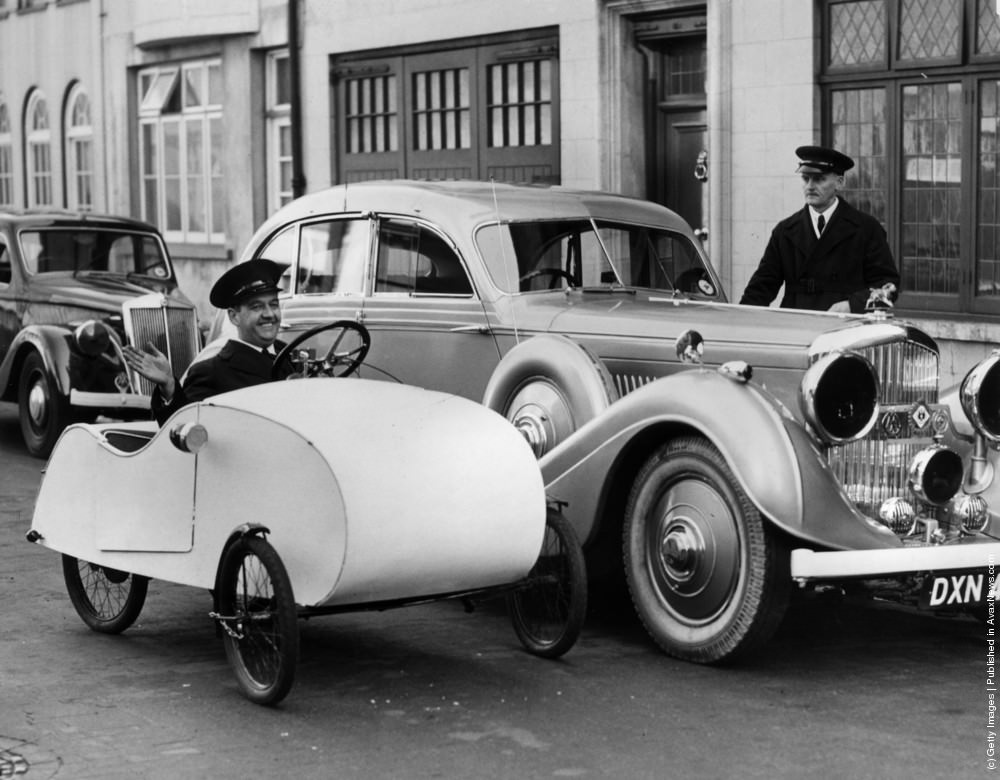
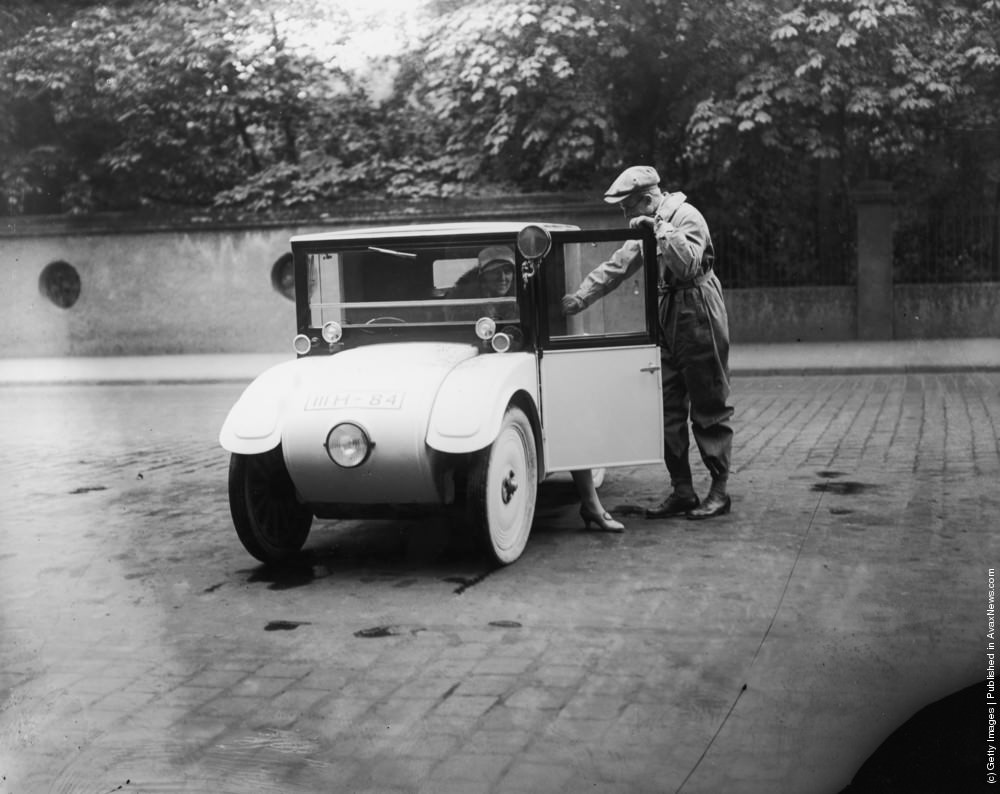
Miniature cars weren’t confined to racetracks. On the streets of London, tiny vehicles shared the road with double-decker buses, creating a stark visual contrast that photographers frequently captured. In Germany, the Hanomag Kommissbrot — named for its resemblance to a loaf of army bread — offered an economical alternative to full-sized automobiles. Priced at around £100, it delivered strong fuel mileage thanks to its compact build.
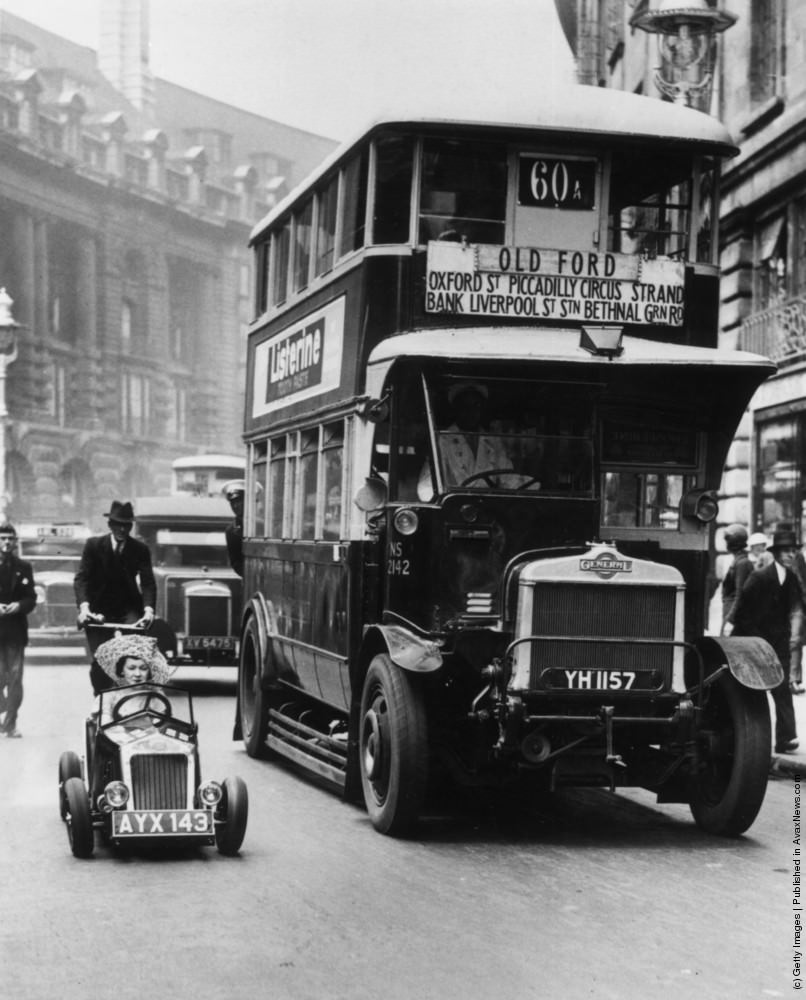
A bus and a midget car in a London street. Circa.
A German Hanomag Kommissbrot motor car costs ?100 and gives good mileage per gallon of petrol because of its size. It is named because of its similarity to a loaf of army bread. 1928.

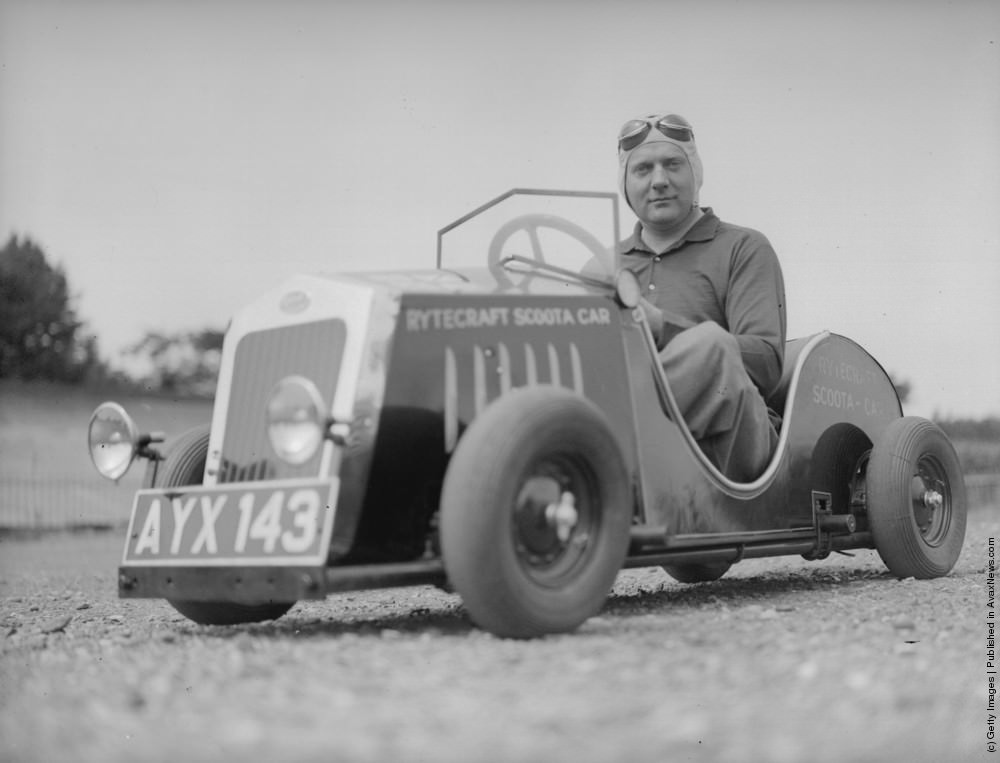
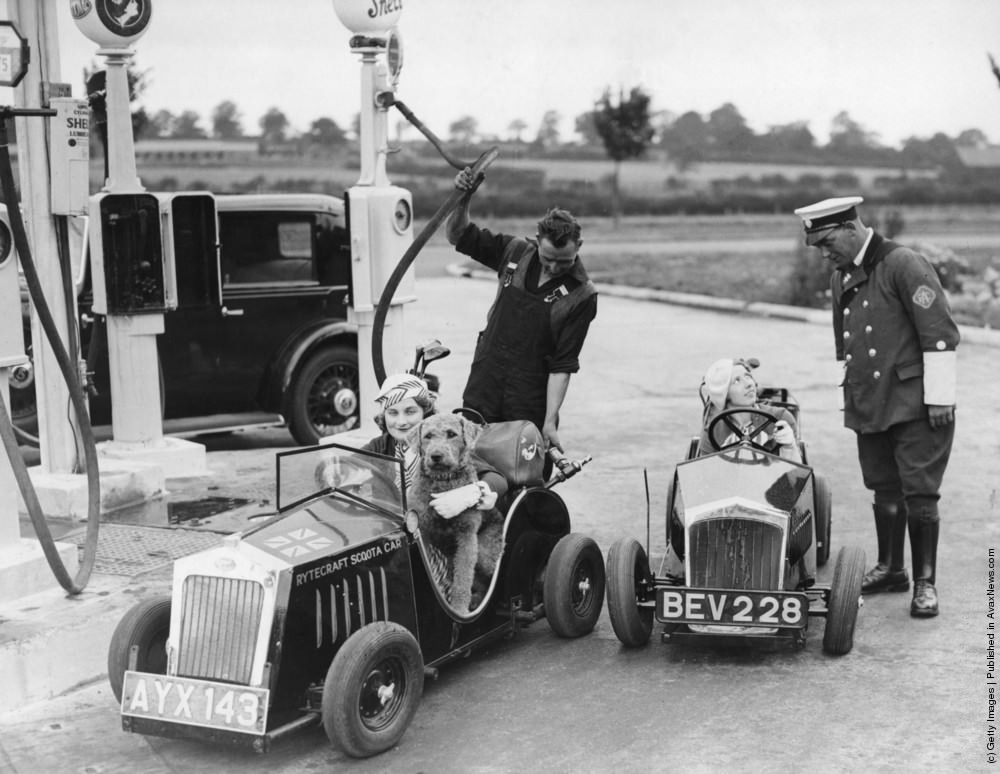
The mid-1930s brought a wave of British-made miniature cars that captured public imagination. The Rytecraft Scootercar, designed by J.W. Shillam, was one of the most visible. Fully road-licensed and retailing at around £70, it reached speeds of 50 mph on just one horsepower. Eton College boys were photographed test-driving them in 1934, and Shillam himself was regularly seen demonstrating the little machine around London.
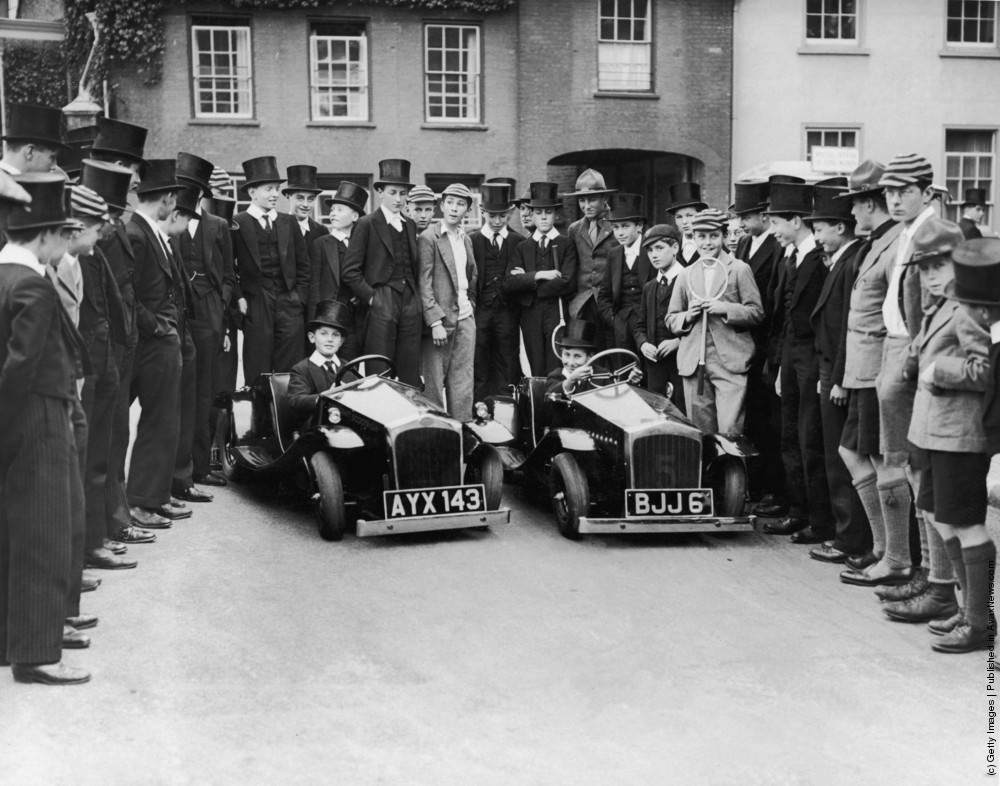
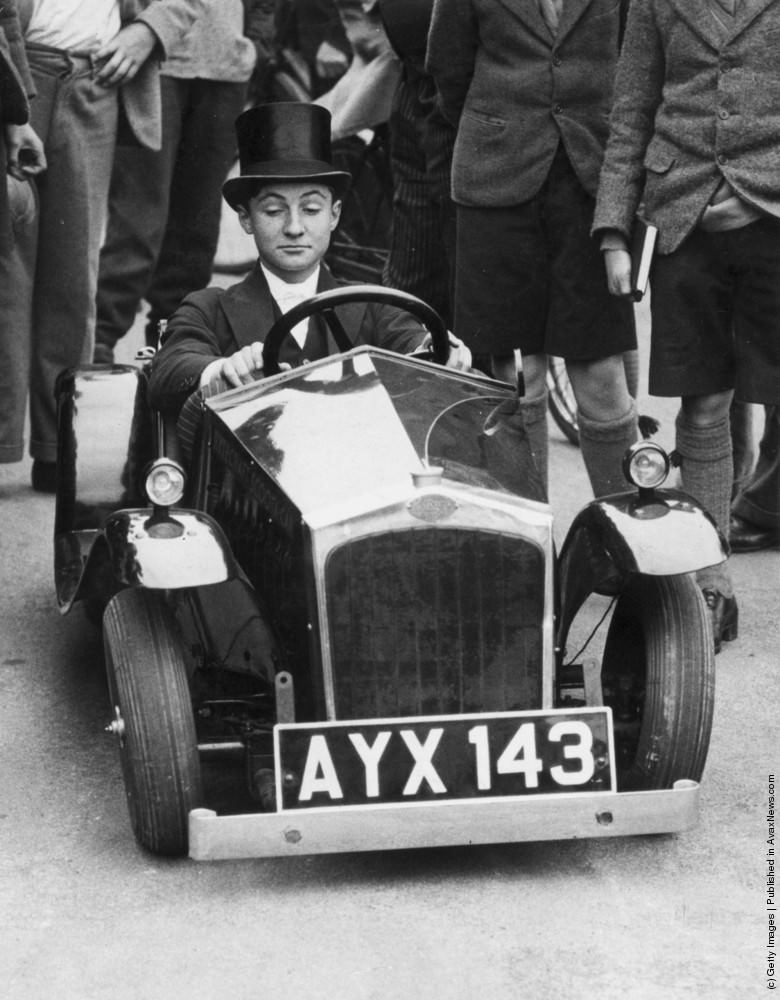
Pupils at Eton College watch two of their peers driving midget Rytecraft Scootercars. 1934.
A young Etonian test drives the world's smallest car during a demonstration at Eton College. 31st October 1934.
A young Etonian test drives the world’s smallest car during a demonstration at Eton College. 31st October 1934.

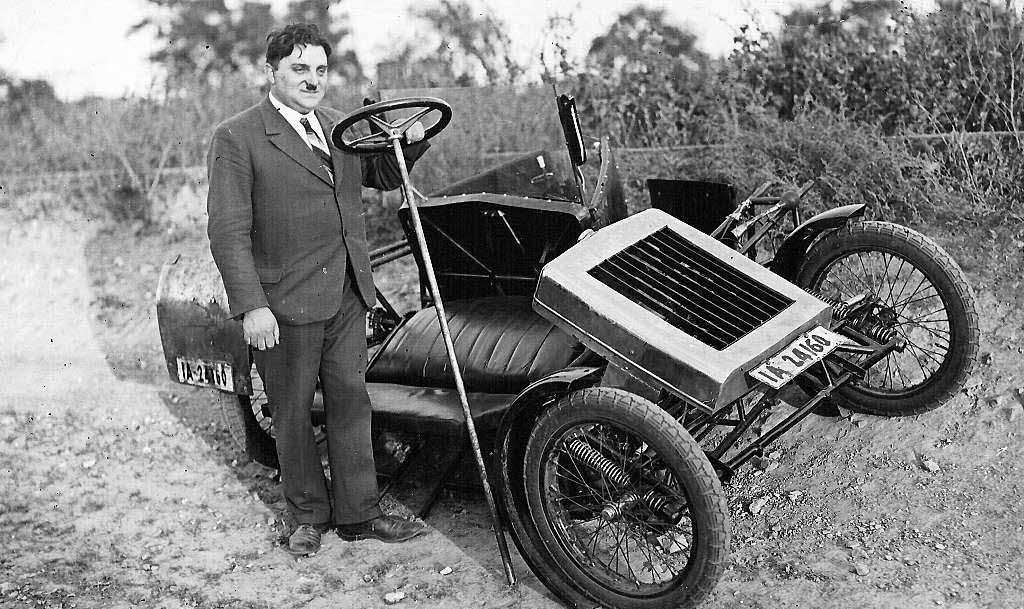
Not all small cars stayed on four wheels. The Whitwood monocar, tested in Ealing in 1934, ran on just two wheels and measured 7 feet 8 inches in length. Despite its unusual design, it reached 94 mph during trials — a genuinely impressive figure for any car of the era, let alone one that narrow.
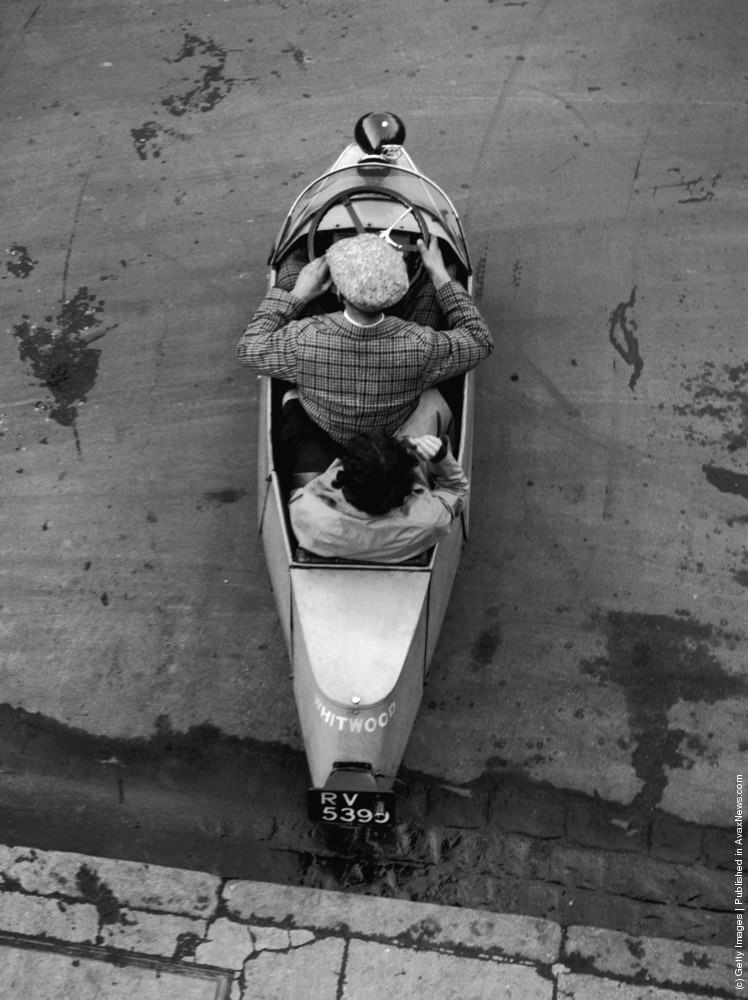
The Whitwood two-wheel, two-seater "monocar" in Ealing, London. The 7 foot 8 inch long vehicle reaches speeds of 94 mph. 1934.
The Whitwood two-wheel, two-seater “monocar” in Ealing, London. The 7 foot 8 inch long vehicle reaches speeds of 94 mph. 1934.

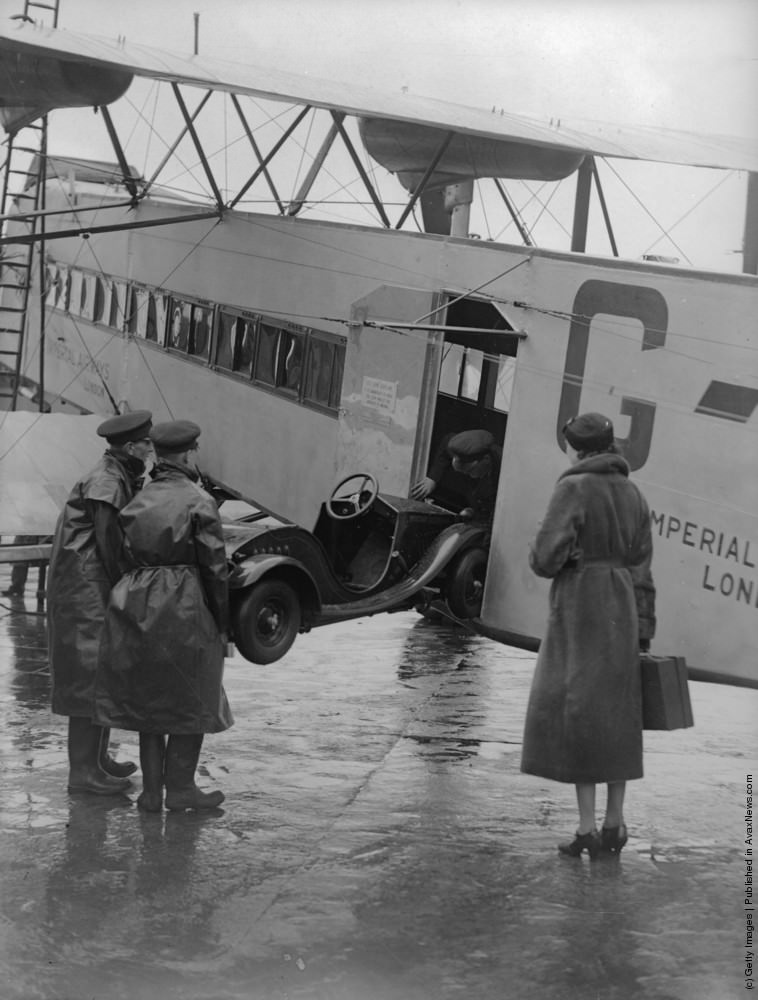
Tiny cars found all sorts of practical uses. A London florist used a one-horsepower miniature to deliver flowers to customers in November 1934, drawing curious glances from pedestrians. Meanwhile, Rytecraft vehicles small enough to be loaded onto an aircraft were flown from Croydon Airport to Paris, demonstrating just how compact these machines really were.
A tiny one-horsepower car being used by a florist for delivering blooms to customers attracts some attention on the London roads. 17th November 1934.
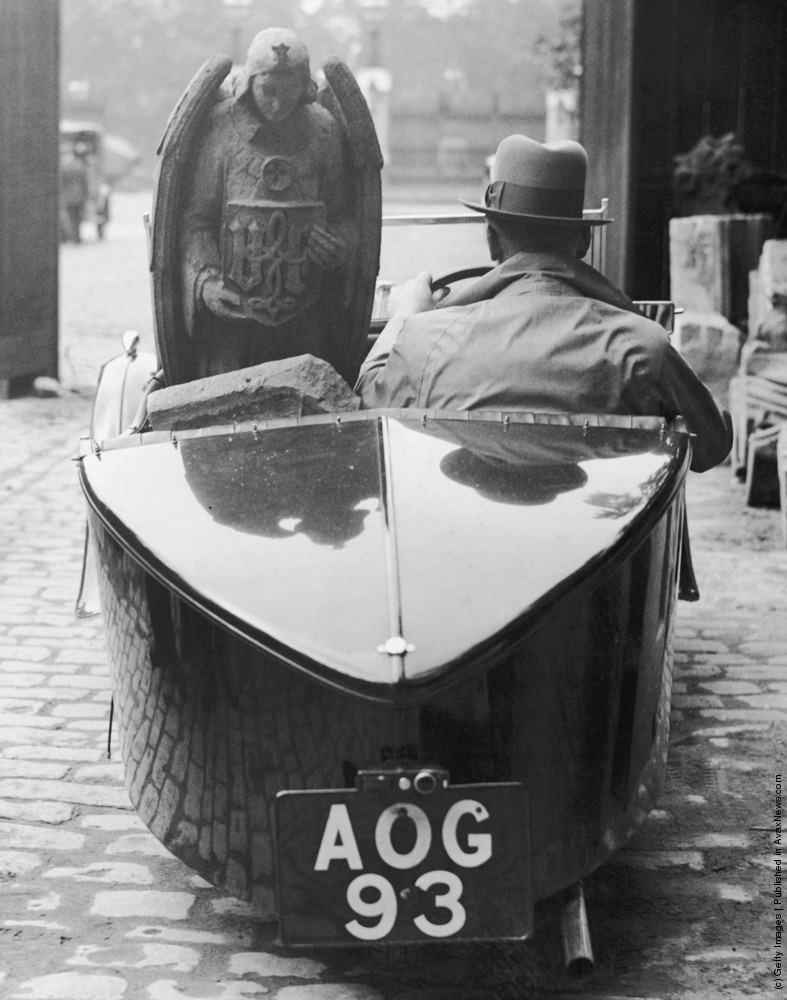
A motorist leaving the Houses of Parliament in London with an angel for which he has paid ten guineas. 1934.
Shillan's miniature Rytecraft car being loaded onto a plane at Croydon Airport, London, for transport to Paris. December 1934.
Shillan’s miniature Rytecraft car being loaded onto a plane at Croydon Airport, London, for transport to Paris. December 1934.
Mr Shillan driving his Rytecraft scoota-car. June 1934.

The Whitwood monocar continued to attract press coverage through December 1934. Its two-wheeled layout and extreme speed set it apart from every other small vehicle on British roads at the time. At filling stations near Barnet, one-horsepower Shillam cars were a regular sight, their drivers stopping alongside RAC motorcyclists as if the juxtaposition were perfectly normal.
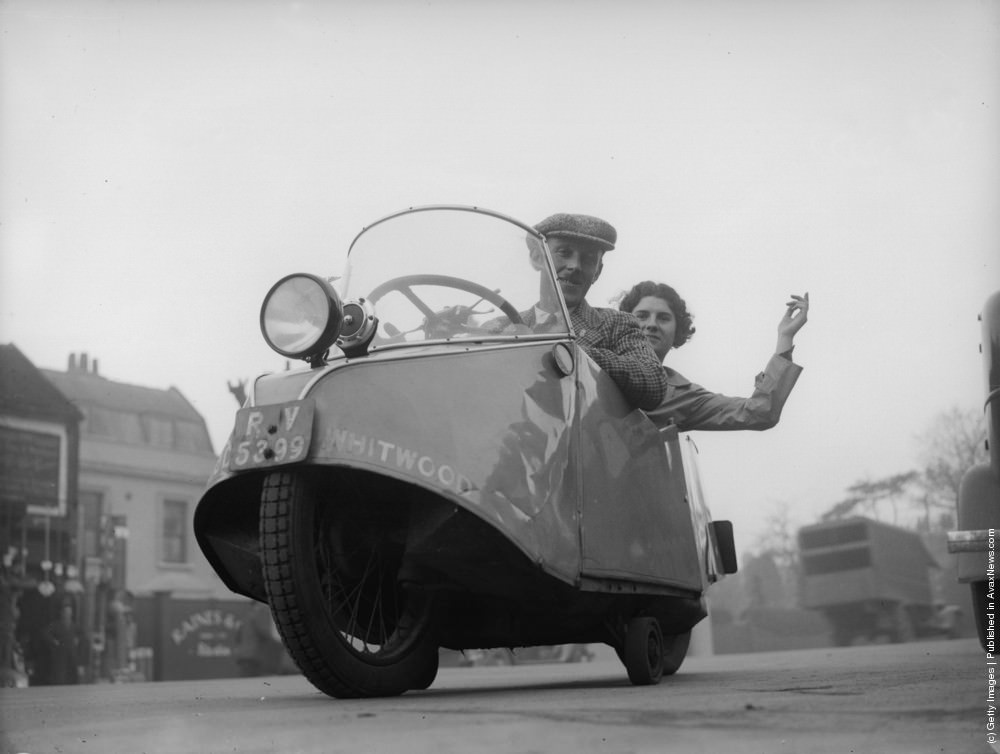
The "Whitwood", a two wheeled motor car built to meet the demands of modern traffic. 7ft 8ins long and 2ft 3ins high, it has reached a speed of 94mph during trials. 10th December 1934.
The “Whitwood”, a two wheeled motor car built to meet the demands of modern traffic. 7ft 8ins long and 2ft 3ins high, it has reached a speed of 94mph during trials. 10th December 1934.
Two drivers in one horsepower cars at a filling station near Barnet, one having her tank filled and the other talking to an RAC motorcyclist. The cars, designed by J W Shillam, are fully licensed for the road and retail at £70. 4th August 1934.

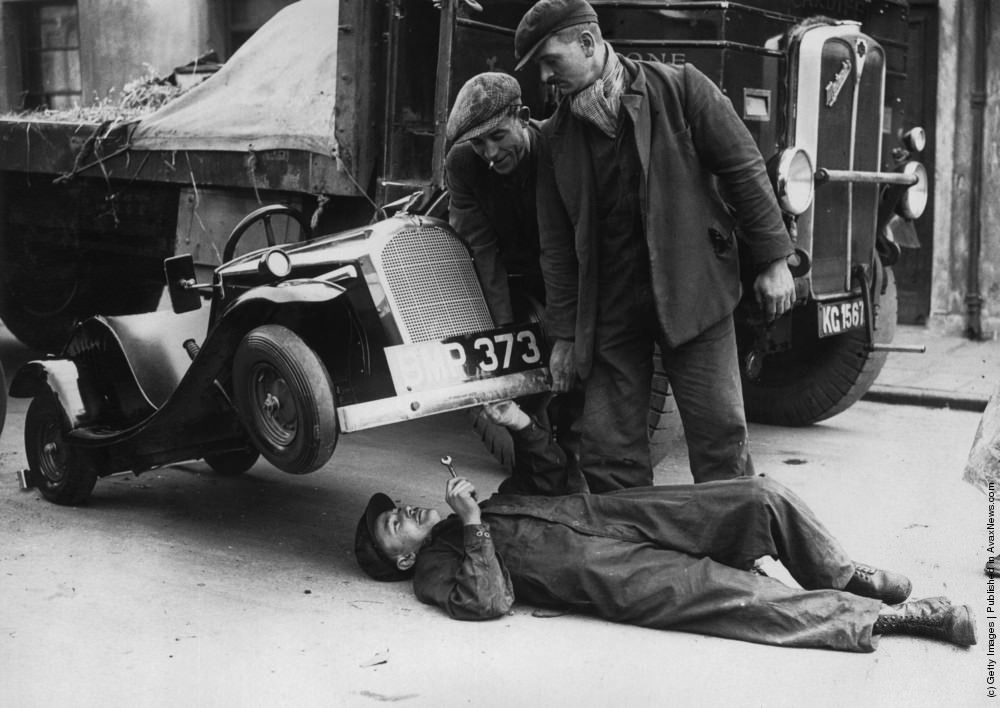
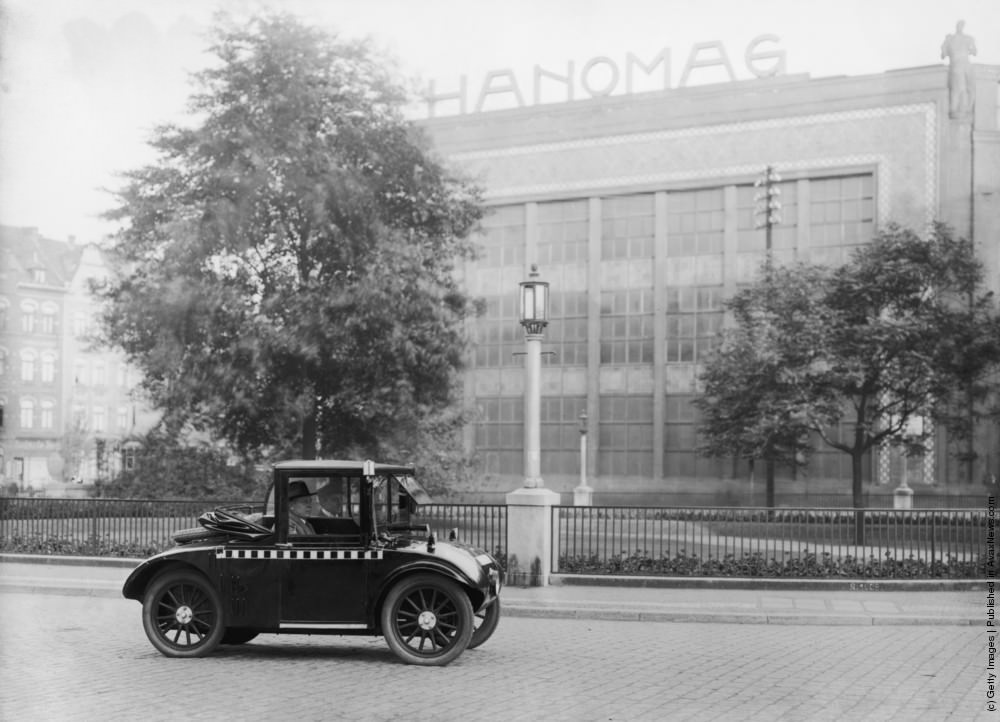
The miniature car craze even reached Hamleys on Regent Street, where a toy MG Midget attracted young admirers in November 1934. By 1935, the Hanomag Kommissbrot was still in production, photographed outside its manufacturer’s headquarters. In Cardiff, mechanics servicing one-horsepower midget cars skipped the car jack entirely — a couple of people could simply lift the front of the vehicle by hand.
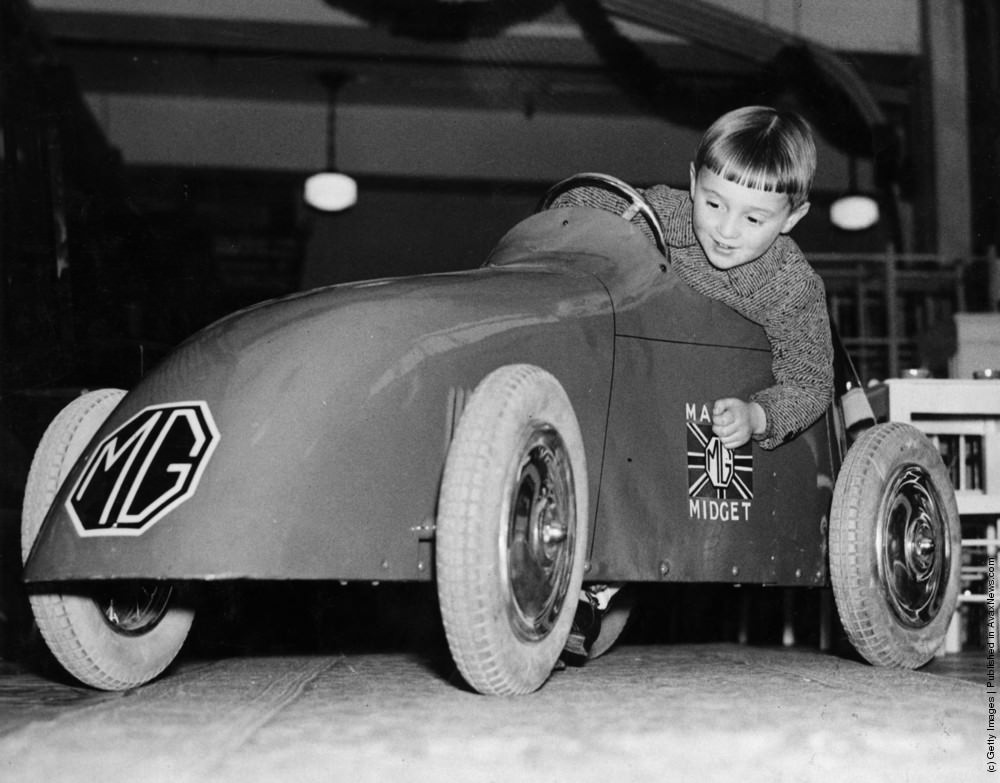
A young boy trying out a toy MG Midget car at the famous toy shop Hamleys, on Regent Street, London. 18th November 1934.
A midget Hanomag Kommisbrot car outside the manufacturer's headquarters. 1935.
A midget Hanomag Kommisbrot car outside the manufacturer’s headquarters. 1935.
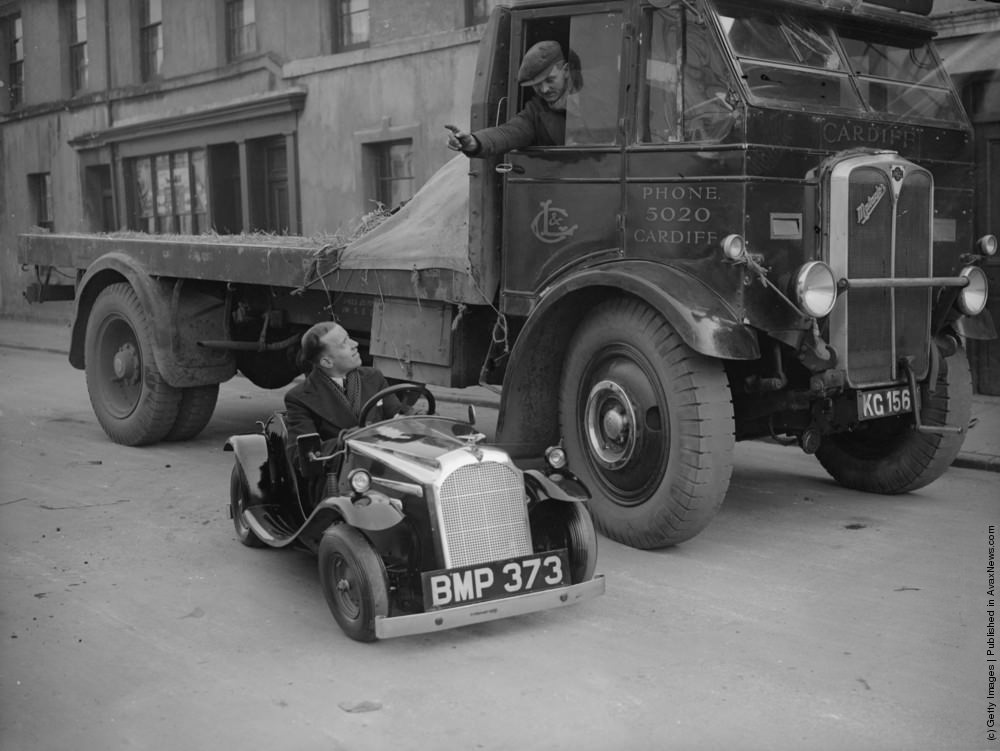
Instead of using a car jack to carry out repairs on a one horsepower midget car, a mechanic in Cardiff simply gets a couple of helping hands to lift up the front of the vehicle. Midget cars are on sale for around £70 and achieve a top speed of about 50 miles per hour. 11th February 1935.

One of the most remarkable stories from 1935 involved C.W. Cooper of Surbiton, who built a miniature racing car for his young son John. Fitted with a 1.25 horsepower two-stroke engine, it topped 52 mph. John Cooper would later go on to found the Cooper Car Company, which dominated Formula One racing in the late 1950s. His father’s homemade racer was where it all began.
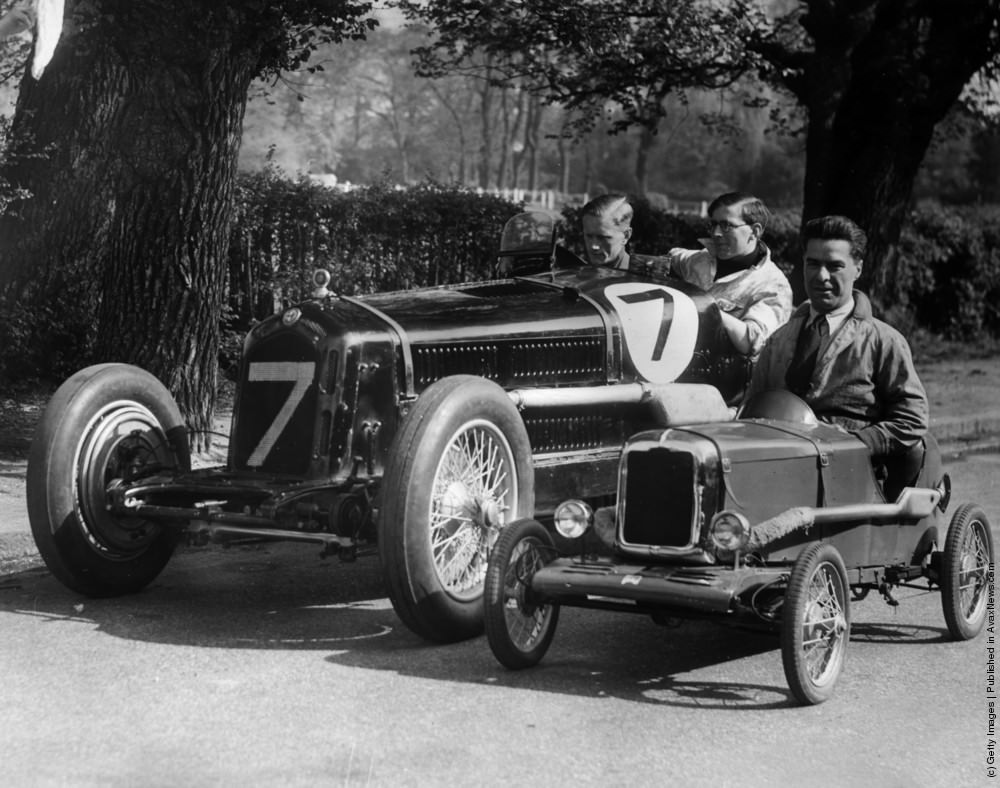
Dwarfed by a full-size car, Mr C W Cooper of Surbiton drives the miniature racing car which he built for his son John. The tiny vehicle is fitted with a 1.25 horsepower two-stroke engine, and can travel up to 52 miles per hour. 27th May 1935.
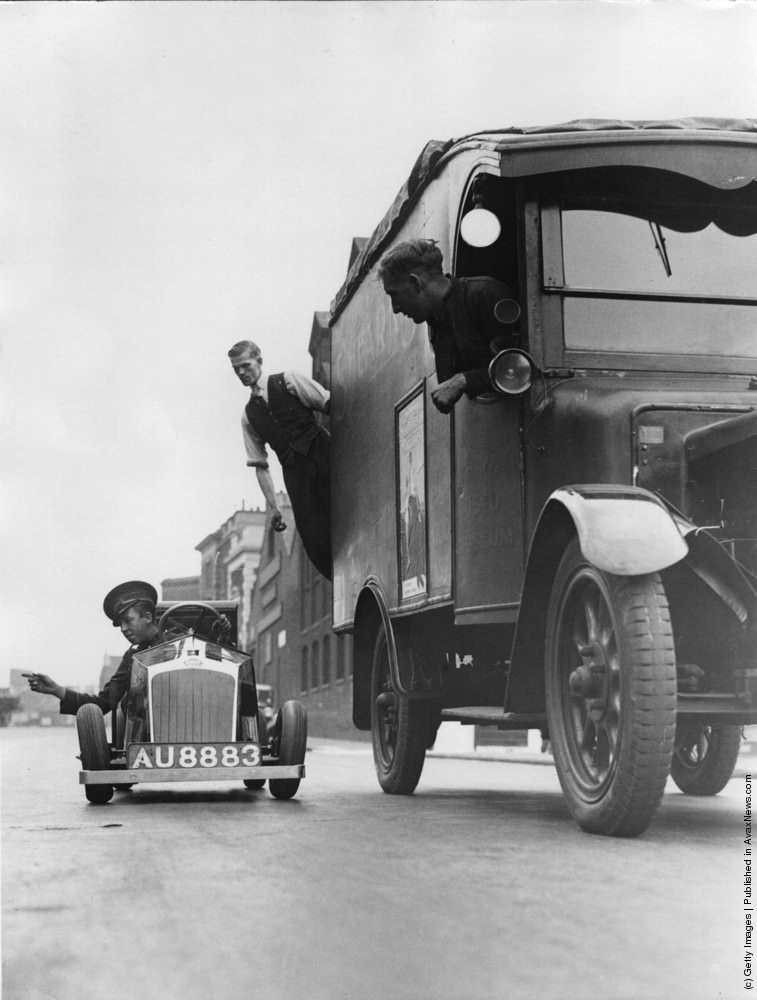
A lorry driver talking to the driver of a midget car in Cardiff. February 1935.

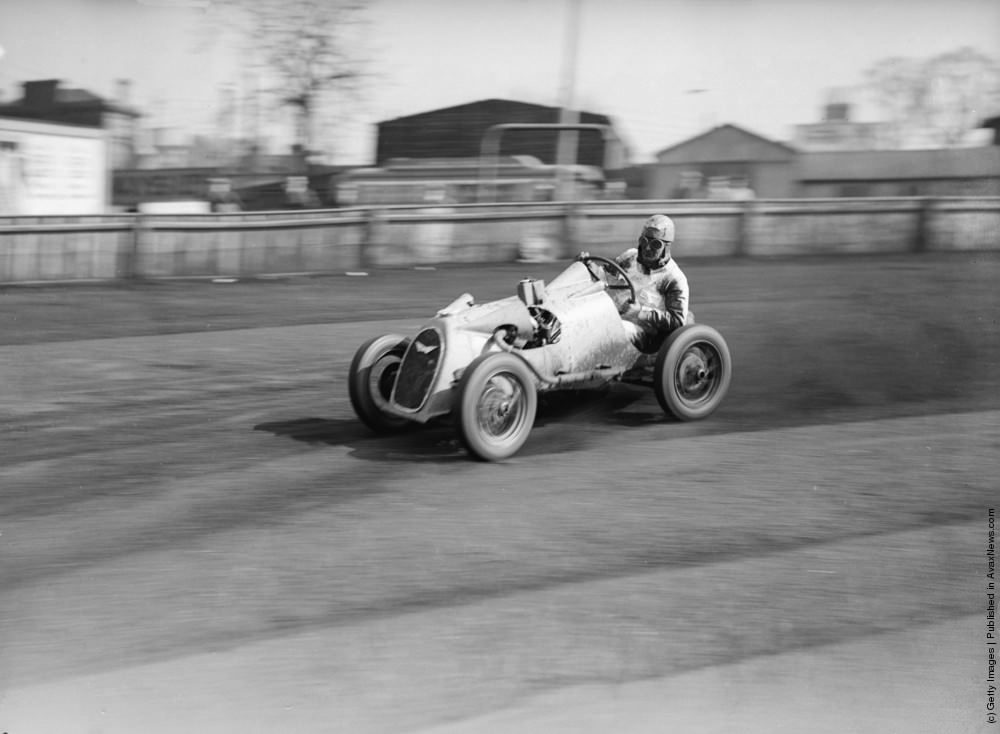
Midget car racing had its own champions in Britain by 1935. Jean Reville held the title of Midget Car Speedway Champion of Great Britain, driving “Palmer’s Special” — a car just 5 feet long and 3 feet 6 inches wide, powered by a 9 horsepower engine. His car “the Gnat,” claimed to be the world’s smallest racing car, received a full overhaul ahead of a Jubilee meeting at White City, London.
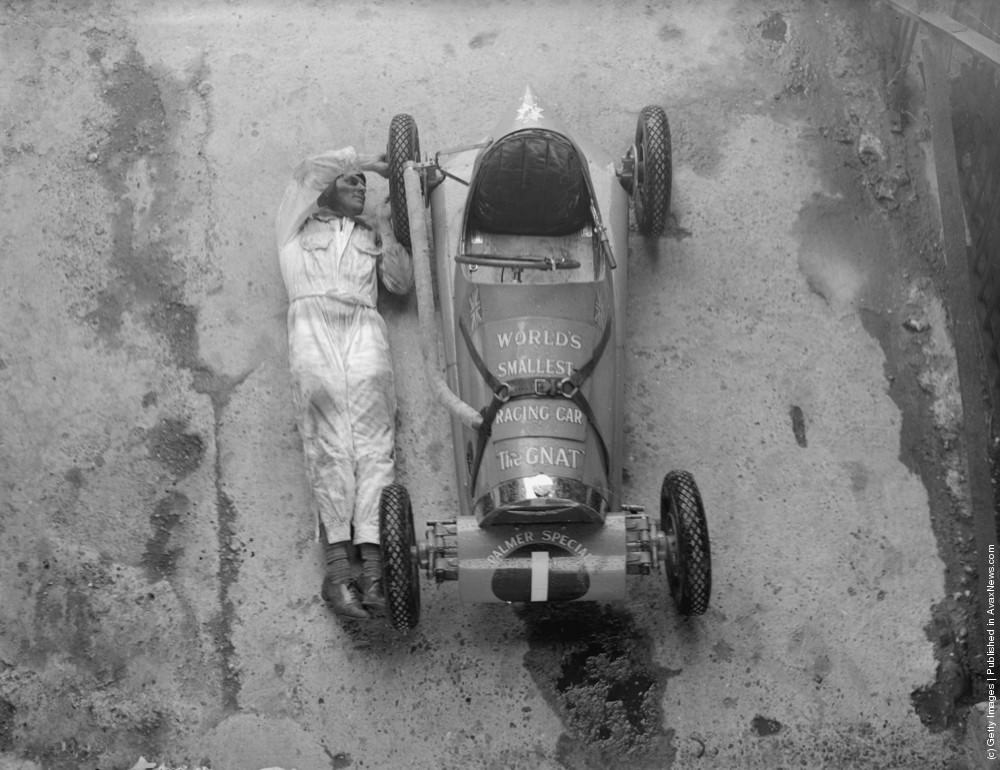
The length of an adult male, Jean Reville's midget car, "the gnat" (claimed to be the world's smallest racing car) being given an overhaul by a mechanic in preparation for a Jubilee meeting being held at White City, London. 16th April 1935.
The length of an adult male, Jean Reville’s midget car, “the gnat” (claimed to be the world’s smallest racing car) being given an overhaul by a mechanic in preparation for a Jubilee meeting being held at White City, London. 16th April 1935.
Midget car speedway champion of Great Britain Jean Reville breaks the four lap record at Lea Bridge speedway in his midget car "Palmer's Special". The tiny car is 5 feet long and 3 ft 6 inches wide and it runs on a 9 horsepower engine. 10th April 1935.
Midget car speedway champion of Great Britain Jean Reville breaks the four lap record at Lea Bridge speedway in his midget car “Palmer’s Special”. The tiny car is 5 feet long and 3 ft 6 inches wide and it runs on a 9 horsepower engine. 10th April 1935.
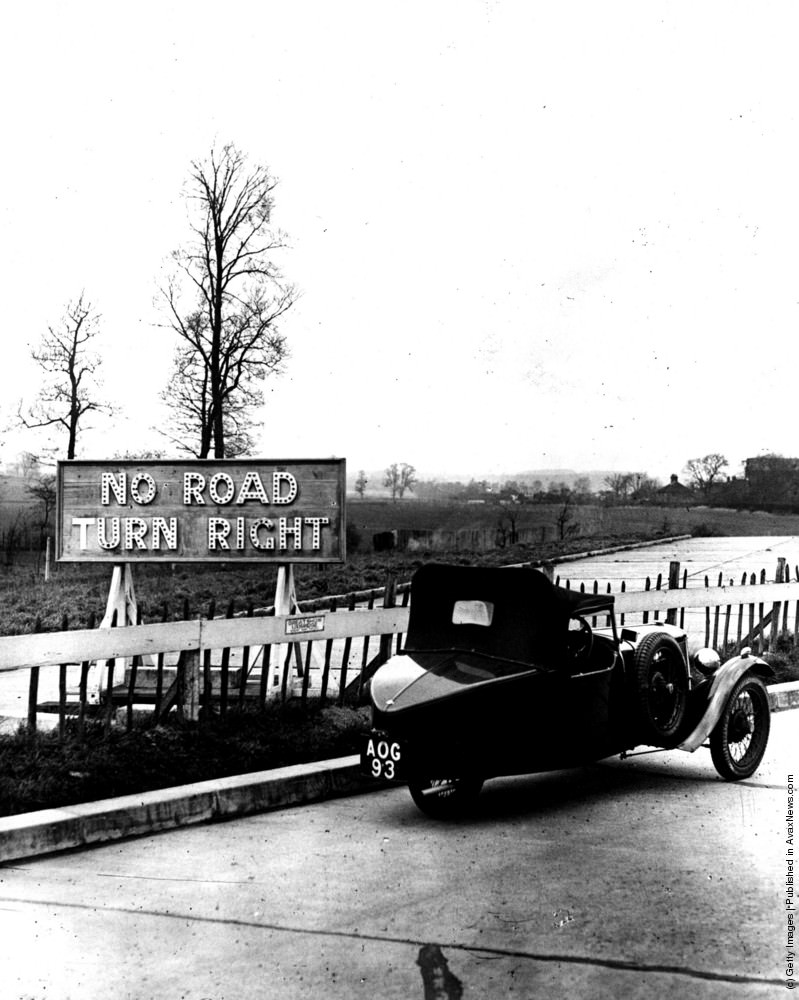
A three-wheeled car passes a sign where the London North Orbital road will be constructed at West Hyde Lodge near Rickmansworth. 22nd February 1935.

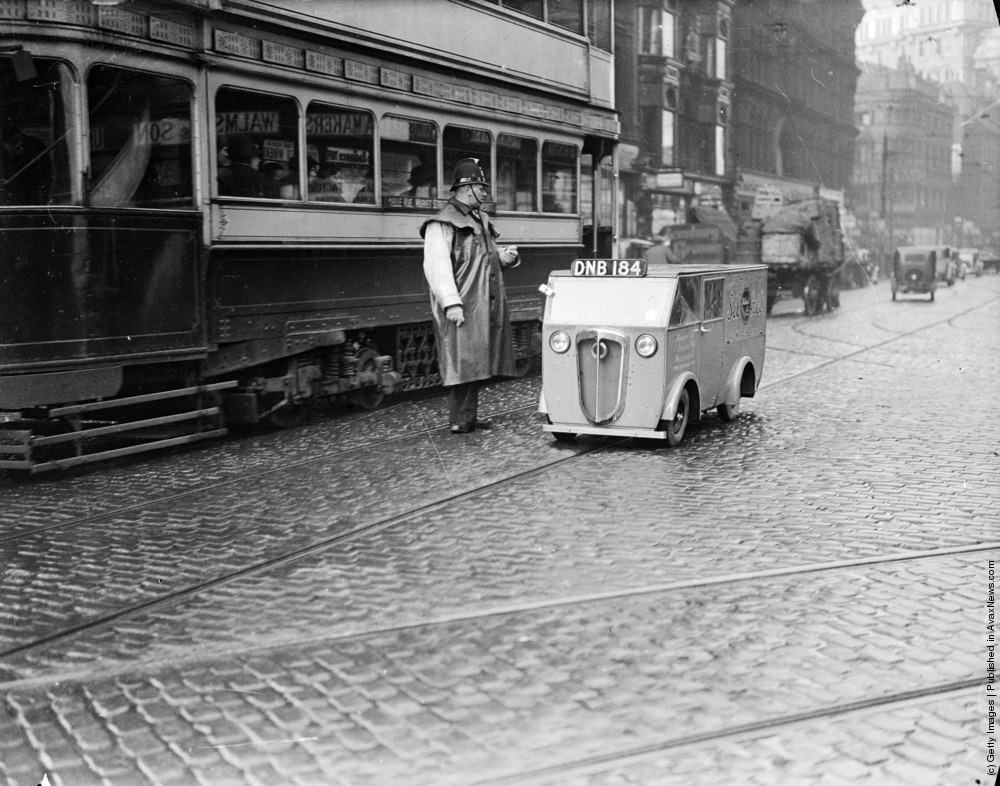
The Rytecraft brand continued to evolve. By April 1936, the British Motor-Boat Manufacturing Company was demonstrating a new 2.5 horsepower Scoota Car capable of carrying two people at up to 45 mph. A year later, the Rytecraft van appeared on the streets of Manchester — Britain’s smallest van, running 80 miles to the gallon and carrying nearly 600 pounds of cargo at up to 50 mph.
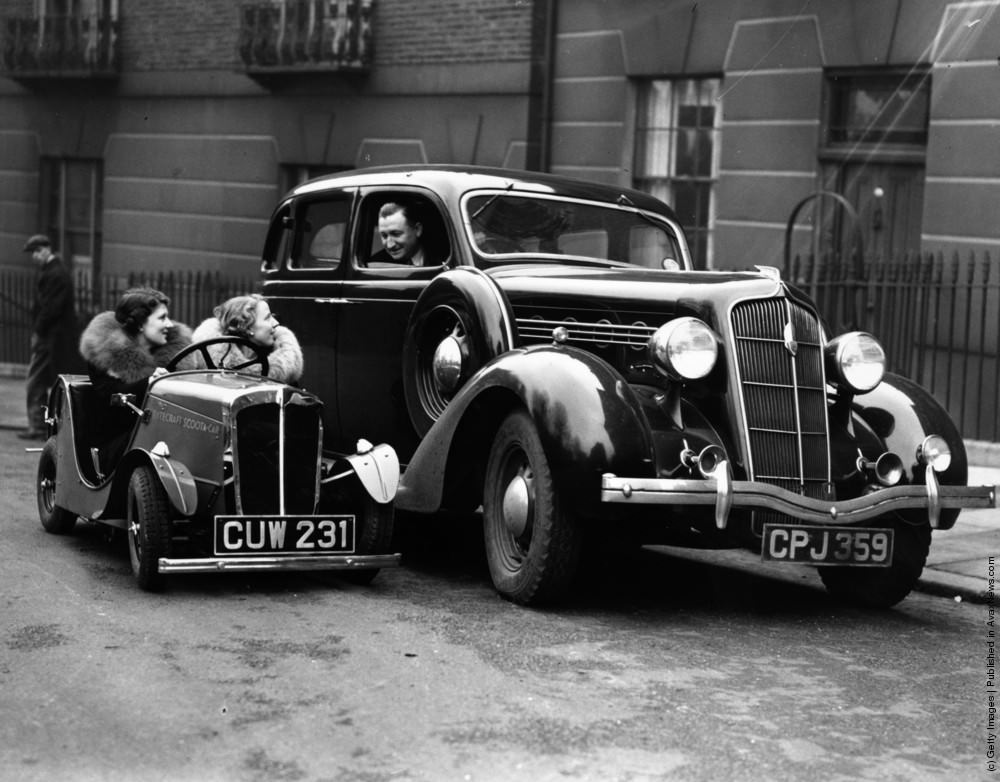
Two women sit in a newly-designed 2 1/2 hp Scoota car, made by the British Motor-Boat Manufacturing Company, at demonstrations at Britannia House. The little car, which can carry two people at speeds up to 45mph, is dwarfed by an ordinary-sized vehicle. 2nd April 1936.
A tiny Rytecraft van, Britain's smallest, travelling along Deansgate in Manchester. The vehicle is powered by a 2 1/2 hp engine, travels 80 miles on a gallon of petrol, carries nearly 600 pounds and has a top speed of 50 mph. 17th February 1937.
A tiny Rytecraft van, Britain’s smallest, travelling along Deansgate in Manchester. The vehicle is powered by a 2 1/2 hp engine, travels 80 miles on a gallon of petrol, carries nearly 600 pounds and has a top speed of 50 mph. 17th February 1937.

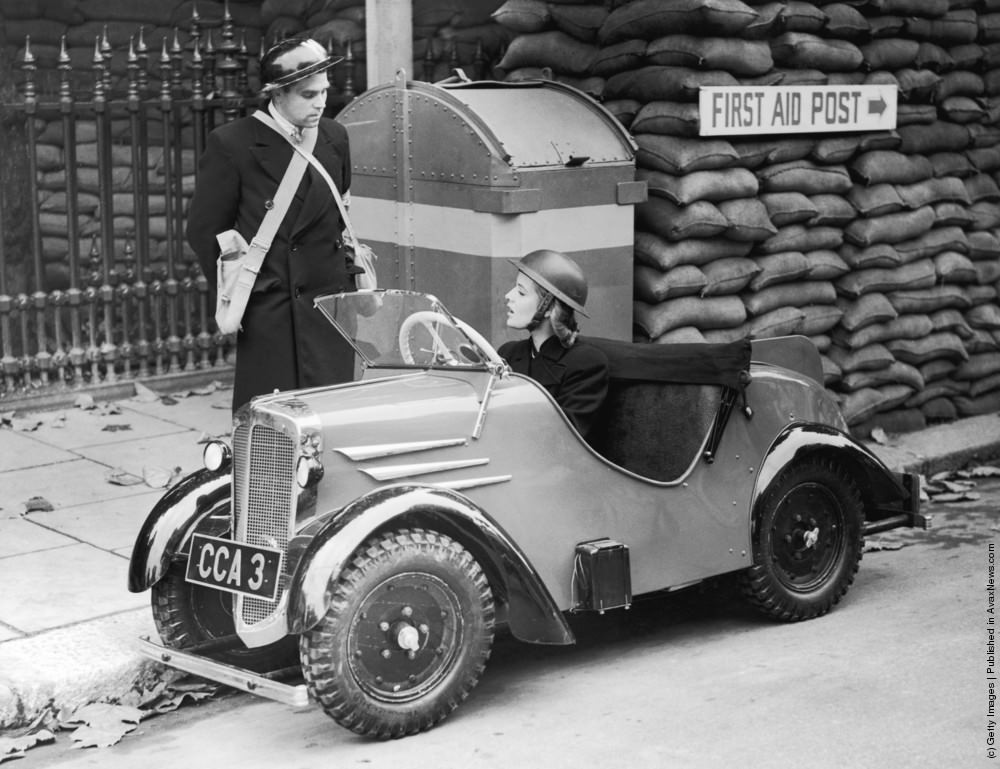
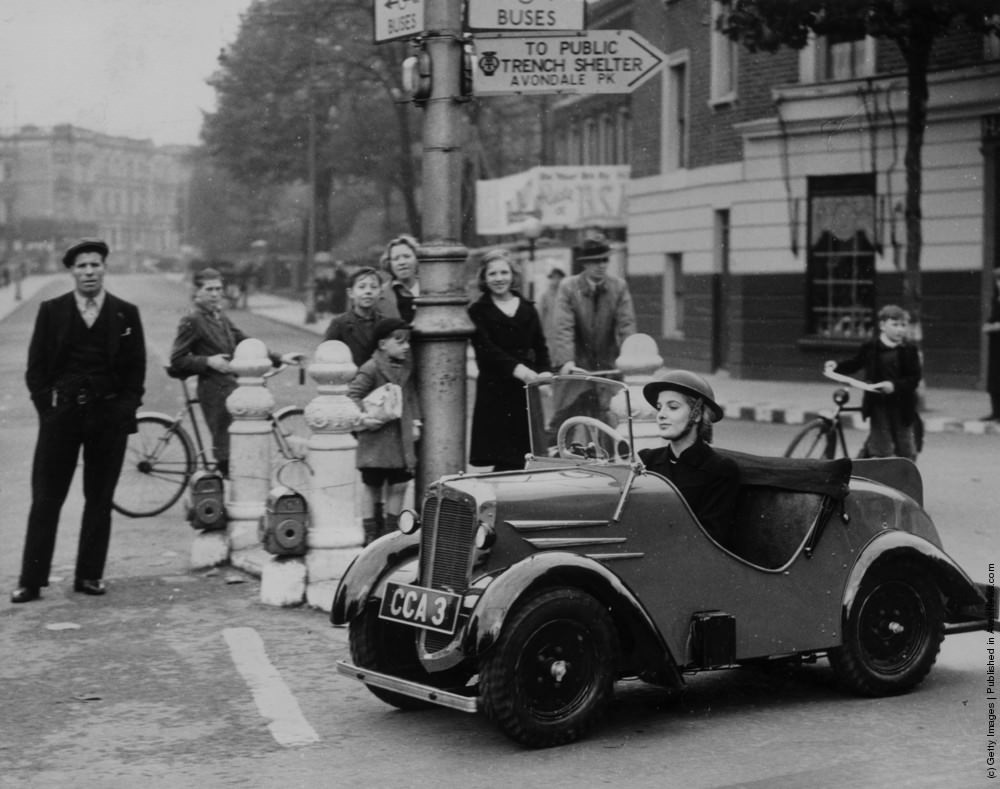
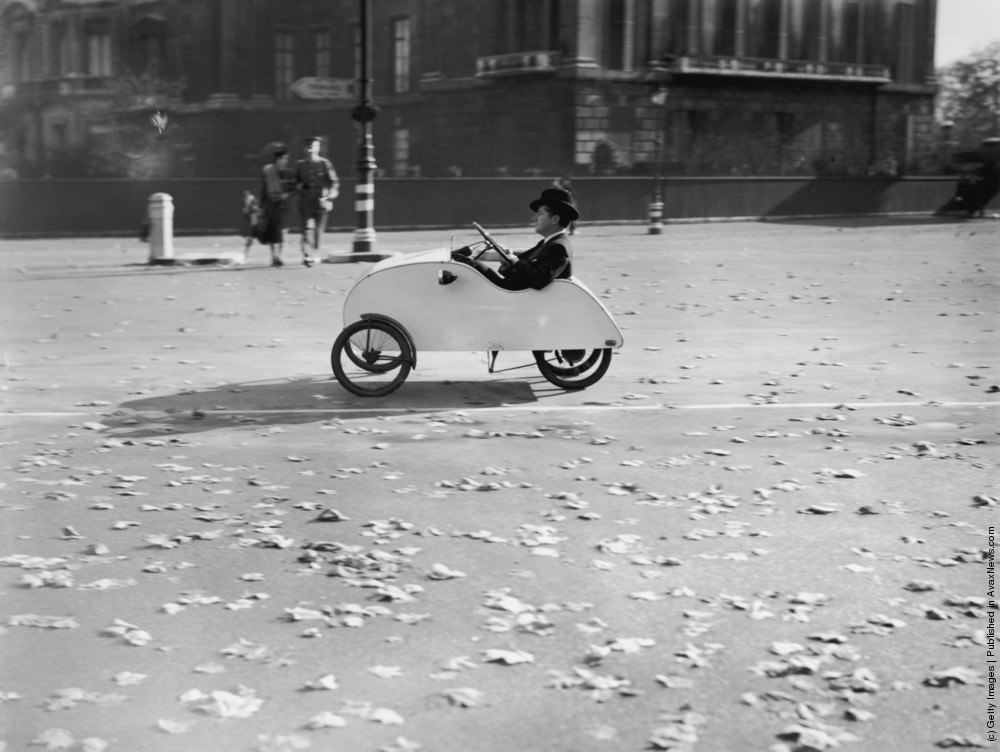
Rytecraft cars reached well beyond working-class buyers. In June 1937, the Maharajah of Nawanagar — Sir K.S. Digvijaysinhji — purchased a Rytecraft Special for his daughter Princess Harshad Kunverba to use on his Surrey estate. By 1939, with wartime petrol rationing taking effect, miniature cars took on a new role. The pedal-powered Velocar appeared in Hyde Park as a practical response to fuel shortages, while Rytecraft midget cars were pressed into service by air raid wardens.
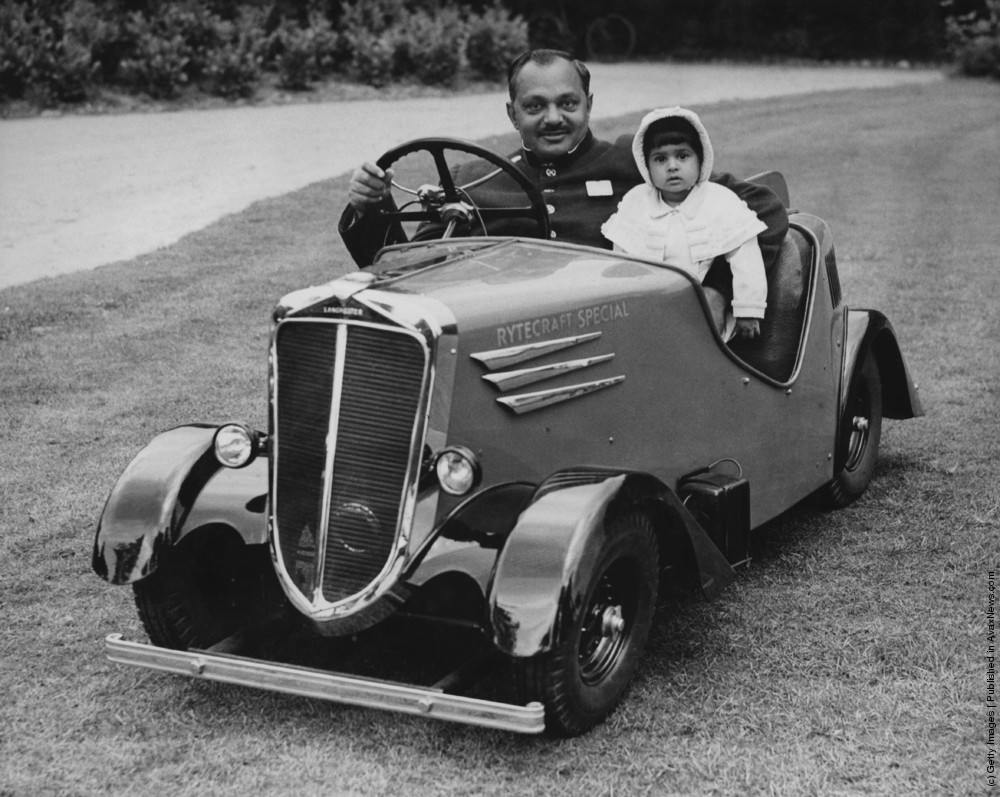
Sir K.S. Digvijaysinhji (1895–1966), the Maharajah of Nawanagar, with his daughter Princess Harshad Kunverba in a Rytecraft Special midget car on the Maharajah's estate near Dorking, Surrey. The Maharajah has bought the car for his daughter for use on the estate when she is out with her nurse. 22nd June 1937.
Sir K.S. Digvijaysinhji (1895–1966), the Maharajah of Nawanagar, with his daughter Princess Harshad Kunverba in a Rytecraft Special midget car on the Maharajah’s estate near Dorking, Surrey. The Maharajah has bought the car for his daughter for use on the estate when she is out with her nurse. 22nd June 1937.
A tiny "Velocar" with "double-pedal" movement is showing its paces in Hyde Park, London, solving the problem of wartime petrol rationing. 1939.
A tiny “Velocar” with “double-pedal” movement is showing its paces in Hyde Park, London, solving the problem of wartime petrol rationing. 1939.
An air raid warden arrives at a shelter in a Rytecraft midget car. 1939.
A tiny Velocar makes its way down the road in Hyde Park, London, dwarfed by the parked cars alongside. This pedal-powered "one manpower" vehicle is one small answer to the problem of petrol rationing. 5th November 1939.
A tiny Velocar makes its way down the road in Hyde Park, London, dwarfed by the parked cars alongside. This pedal-powered “one manpower” vehicle is one small answer to the problem of petrol rationing. 5th November 1939.
A woman driving the new solution to the problem of wartime petrol rationing, the midget car. This tiny vehicle can cover eighty miles on a gallon of petrol and achieves speeds of up to 45 miles per hour. 26th October 1939.
Enjoyed this post? Get new ones in your inbox.

Leave a Comment

Your email address will not be published. Required fields are marked *

Share this Post 🥺

Please take a moment to share this content. Your support is greatly appreciated! 🙌🙏

Share this Post 🥺

Please take a moment to share this content. Your support is greatly appreciated! 🙌🙏
Scroll to Top
 
Hey Friend, Before You Go.. Please like & follow for more interesting content