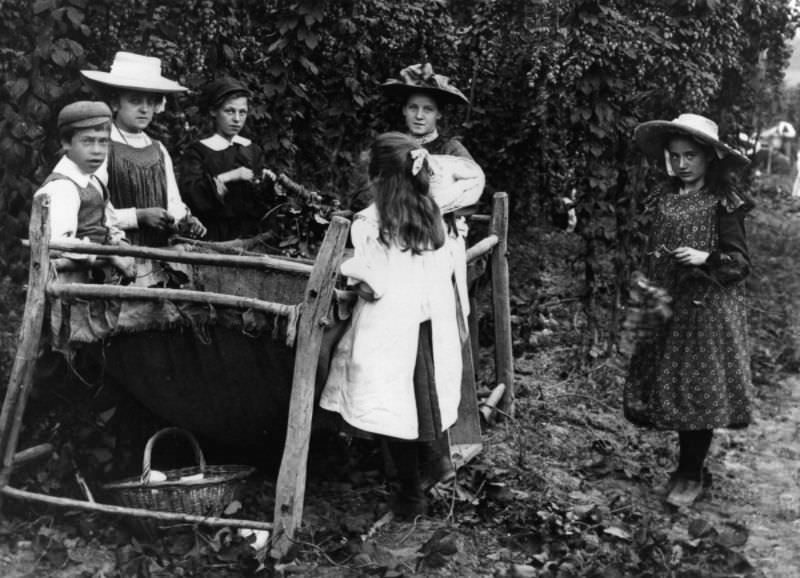
Kent earned its title as the “Garden of England” for good reason. The county’s rich soil, enclosed field systems, and ready supply of wood for poles and charcoal for drying made it the perfect place for growing hops. In fact, the first English hop garden was established near Canterbury as early as 1520. Hops — the flowers of the Humulus lupulus plant — are used primarily to add bitterness, flavor, and stability to beer, and can also produce floral, fruity, or citrus aromas. Only female hop plants are used in commercial production.
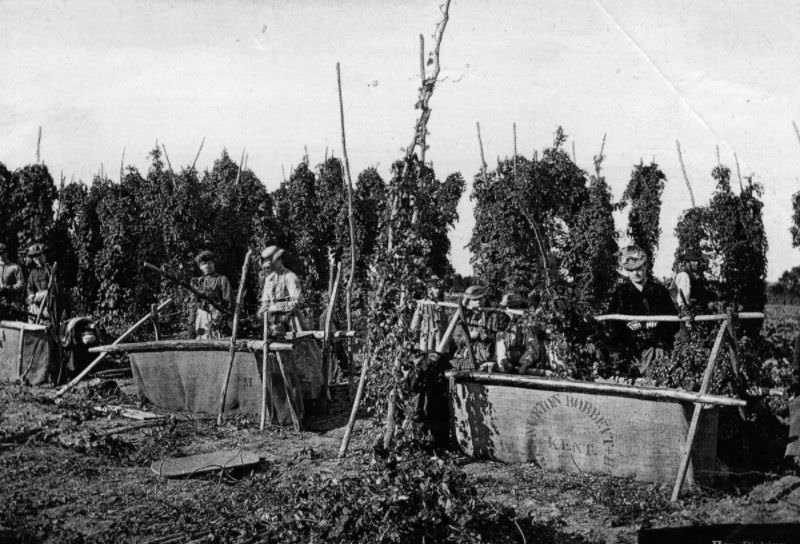
Kent farmers of that era were among the wealthiest in England, and that financial strength allowed them to invest heavily in hop cultivation. Around 1875, a man named Henry Butcher developed a simple but effective method for training hops — guiding the vines up poles and wires — that became widely used across the county. The hop gardens that resulted were a defining feature of the Kentish landscape for generations.
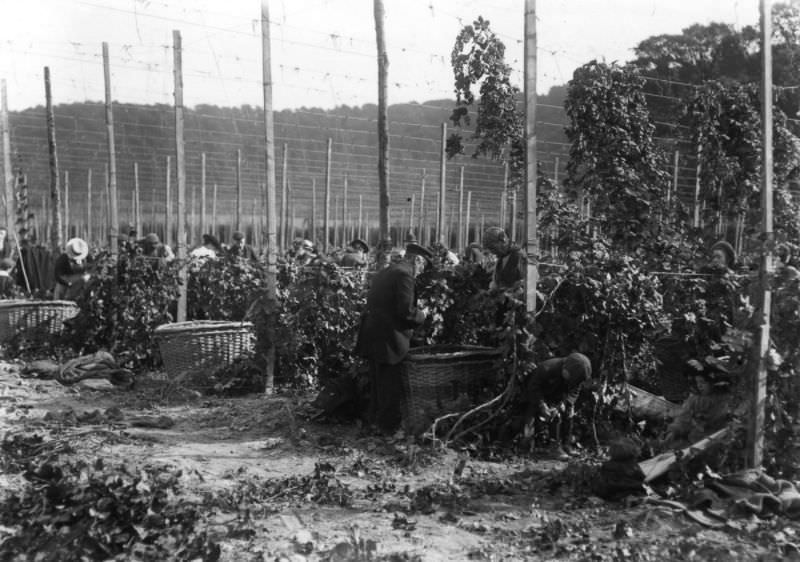
Harvesting hops in September was an urgent, labor-intensive job. The crop’s value depended entirely on picking it quickly and at exactly the right time. This created a massive seasonal demand for workers that local communities simply could not meet on their own. As far back as the mid-17th century, records noted that “strangers came a-hopping” in Kent, meaning outside workers were already being brought in. By the peak of the industry, more than 80,000 people poured into Kent every autumn from London alone, according to the British Hop Association.
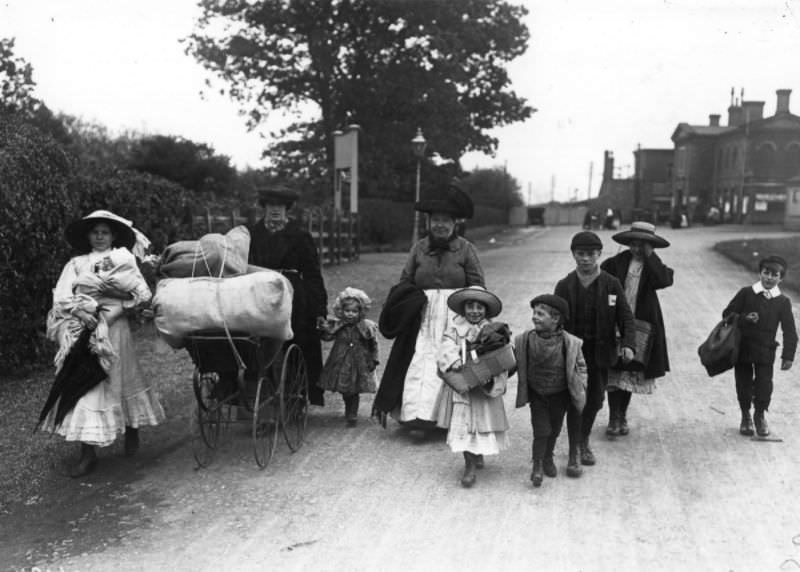
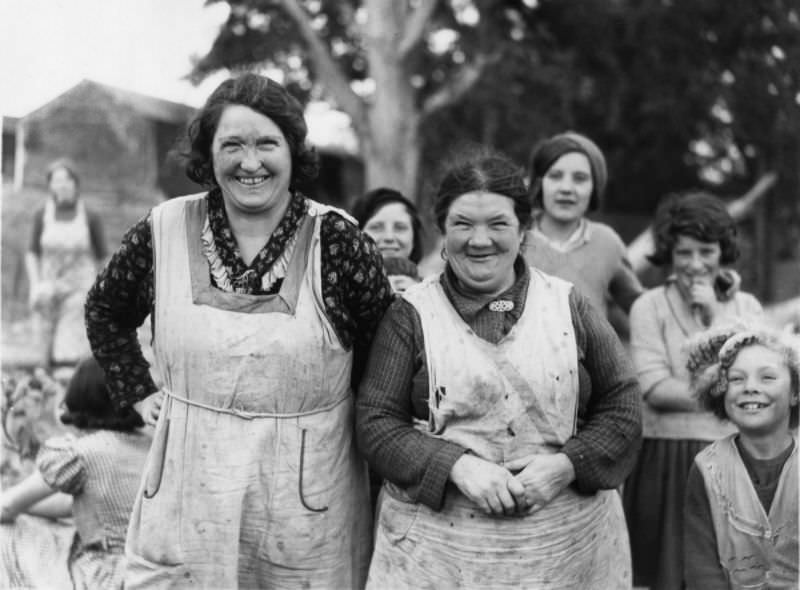
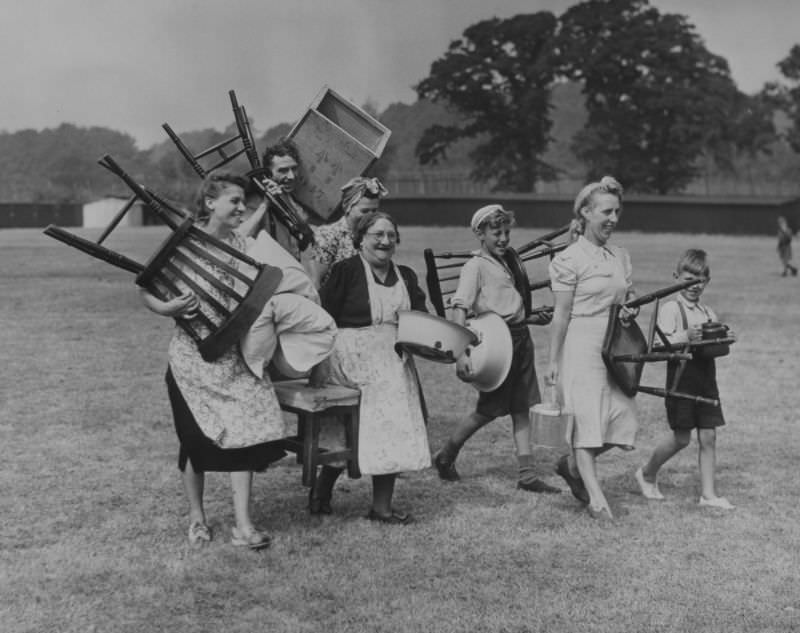
For many London families, the annual hop-picking trip to Kent was both a source of income and a rare opportunity to leave the city. Entire families made the journey together — men, women, and children. They packed their belongings onto carts or took the train from London’s Victoria Station, traveling to the fields where they would live and work for several weeks.
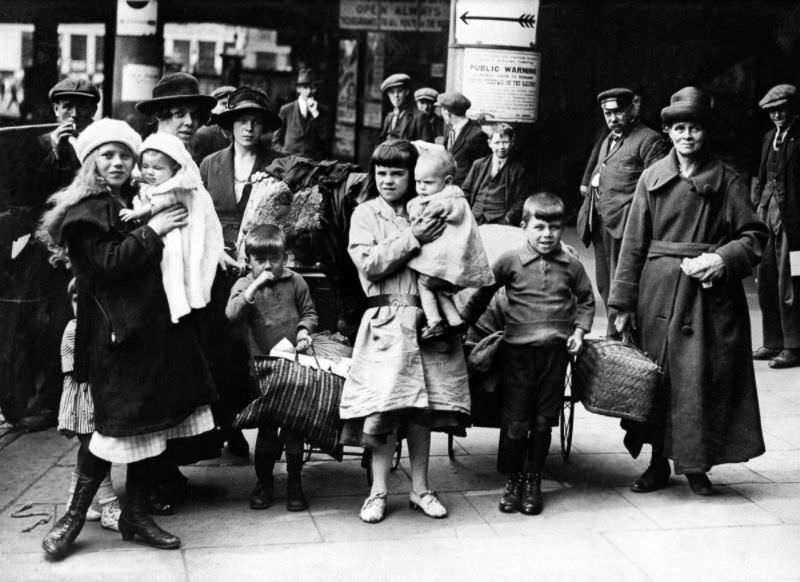
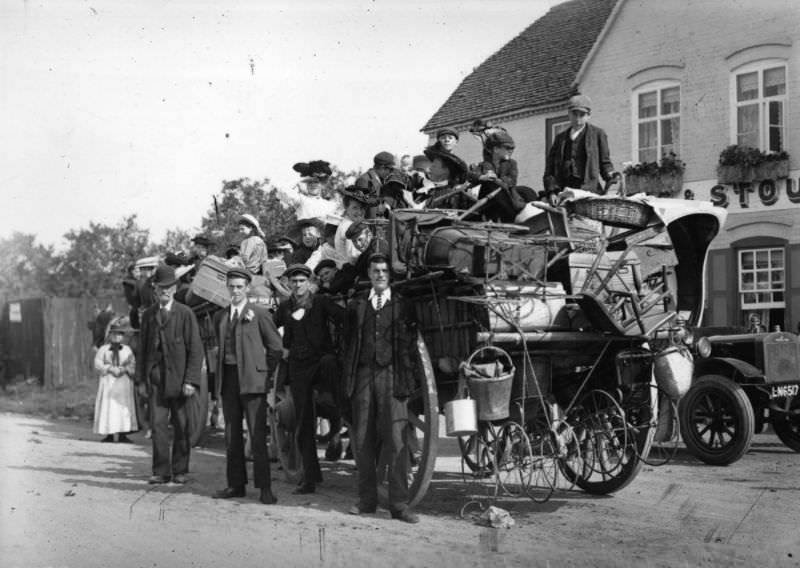
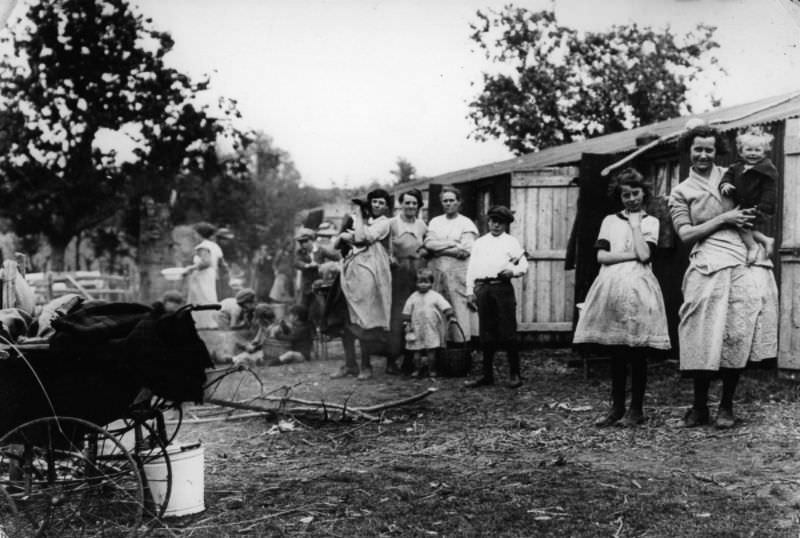
Once they arrived, hop pickers set up in temporary camps on or near the farms. Housing was basic — often simple huts or barns converted for seasonal use. Families moved in with furniture and cooking supplies, turning these rough quarters into functional living spaces for the duration of the harvest.
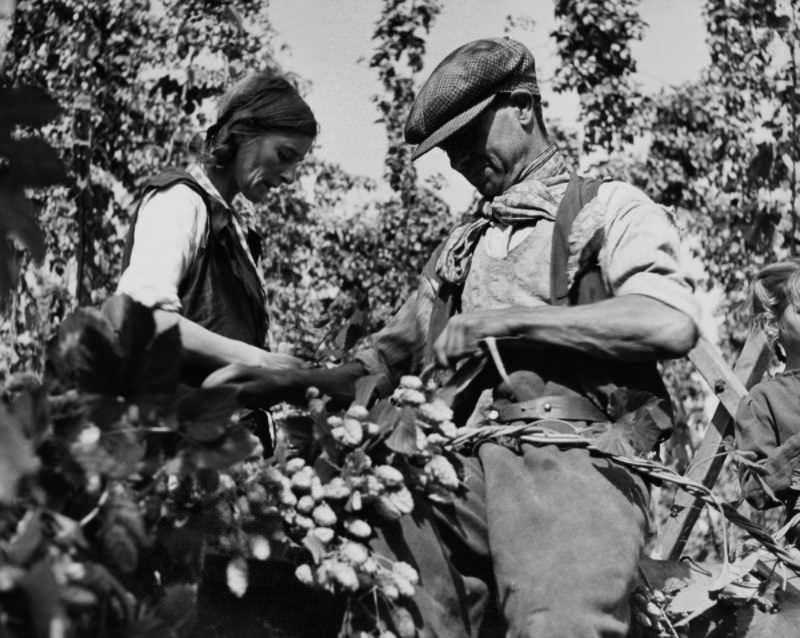
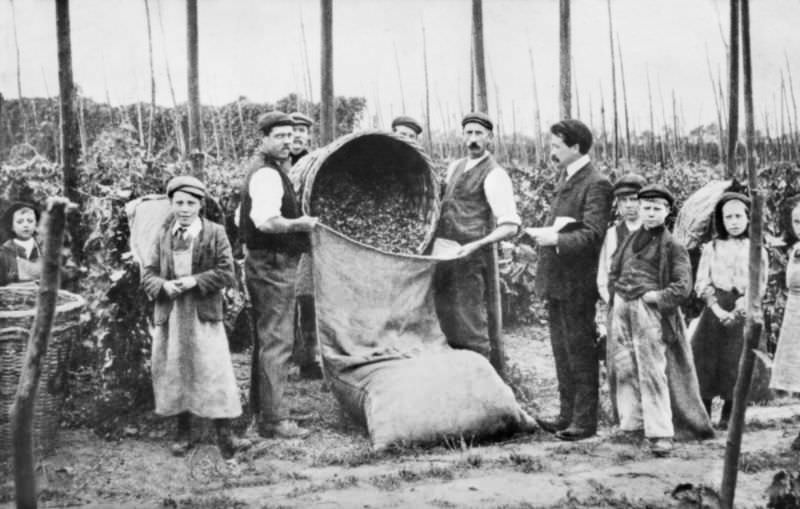
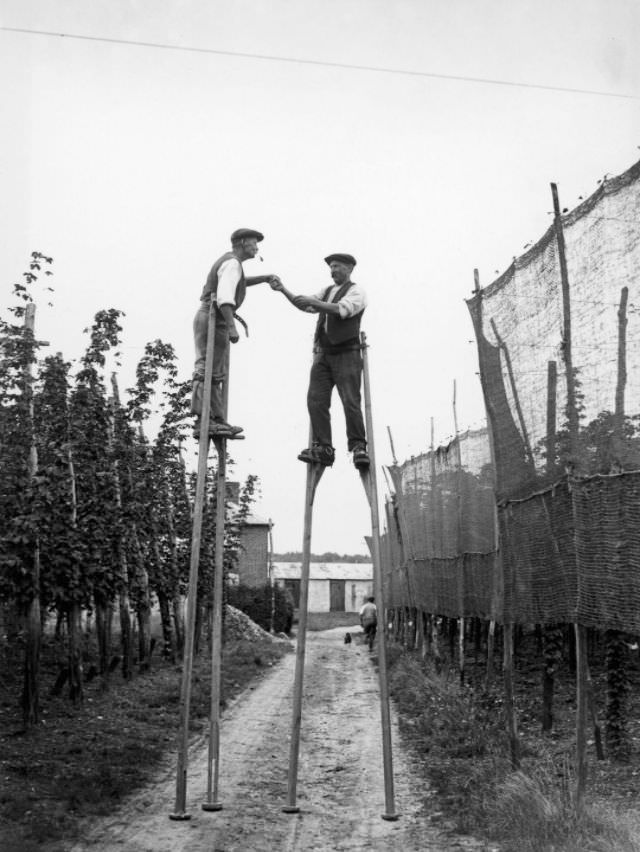
Work in the hop fields was physical and relentless. Pickers stripped the hop bines by hand, filling large baskets or bins with the flowers. At the end of each picking session, a tally man would count and record each worker’s yield — a system that determined their pay. On the farms, workers on stilts moved through the tall hop rows to manage and tie the higher vines.
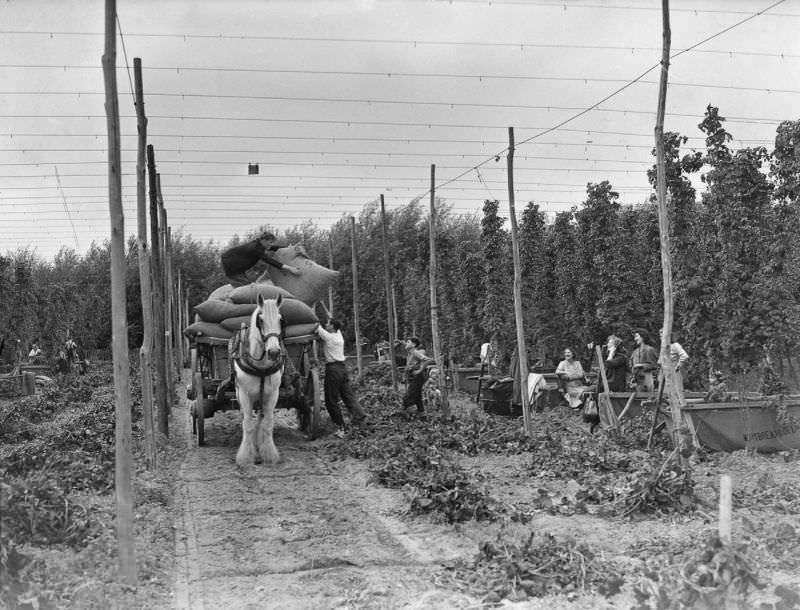
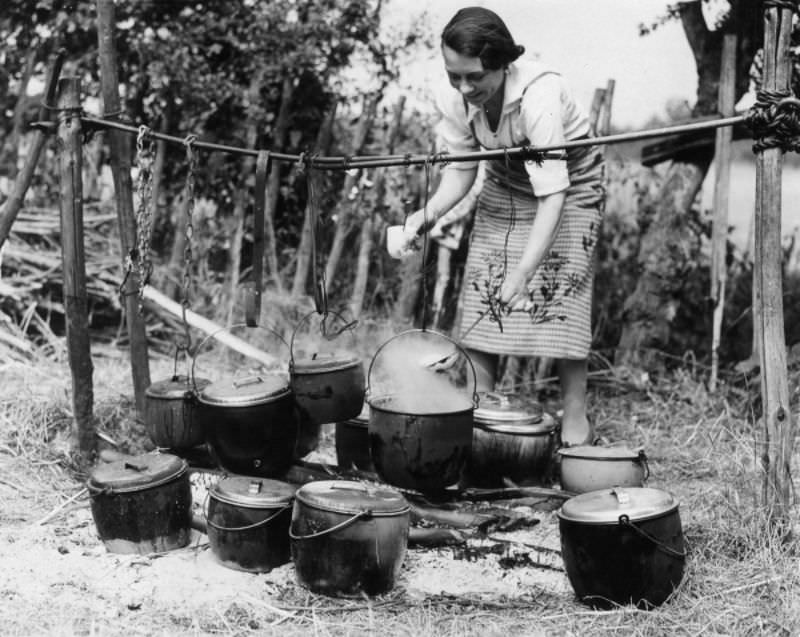
Large hop farm operations, like those at Whitbread’s farm in Beltring and Paddock Wood, employed hundreds of workers at a time. These farms were well-organized and, by the 1930s and 1940s, included camp kitchens where workers were fed during the long harvest days.
The camps attracted not just workers and their families, but also social and religious organizations who saw an opportunity to serve the seasonal community. Franciscan friars and nuns were a regular presence at Paddock Wood, organizing church services and walking among the pickers’ children. The Salvation Army also set up operations in the camps, caring for children while their parents worked in the fields.
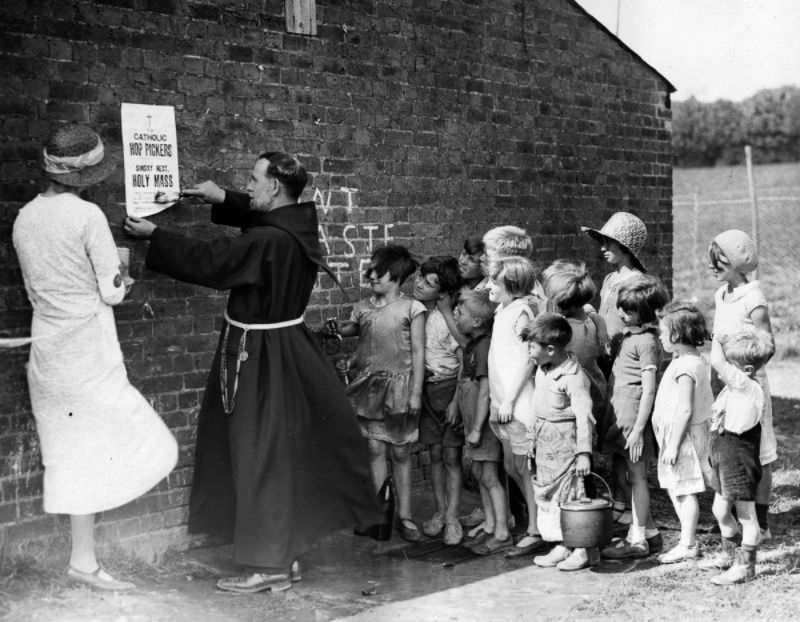
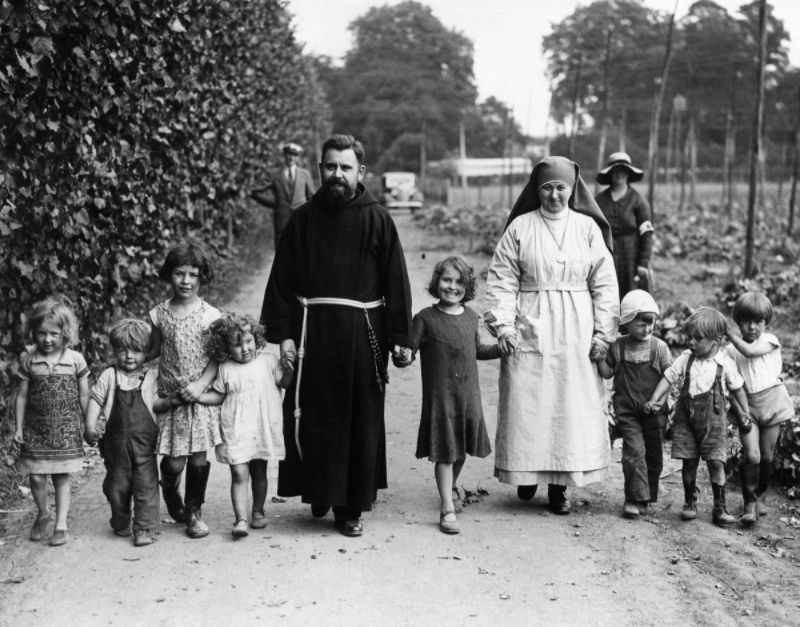
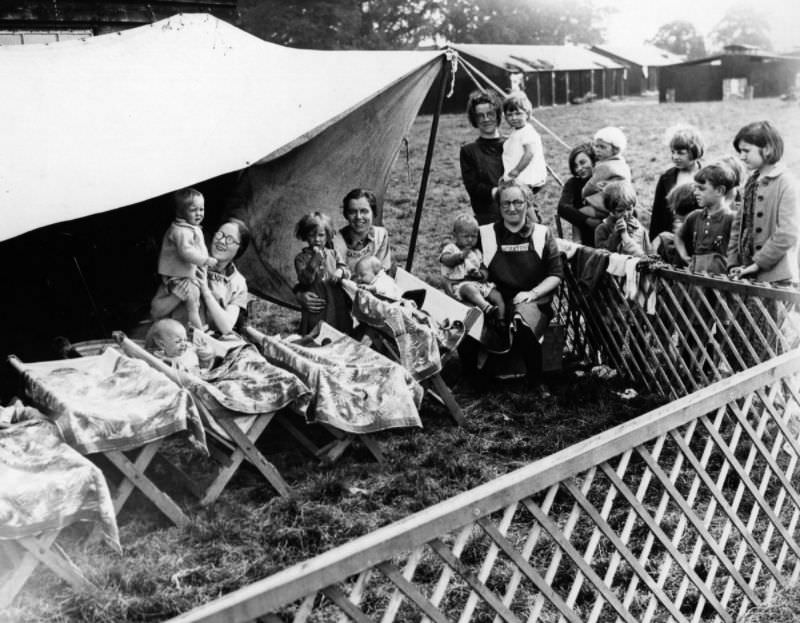
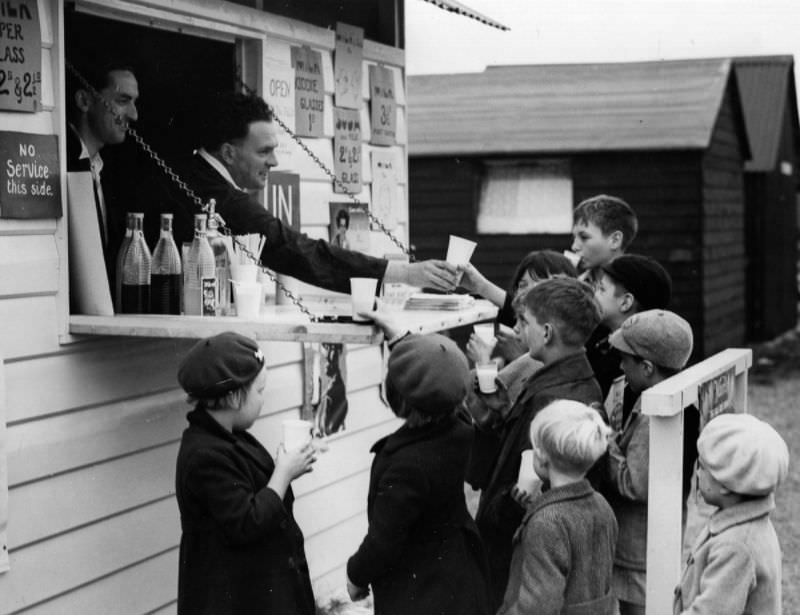
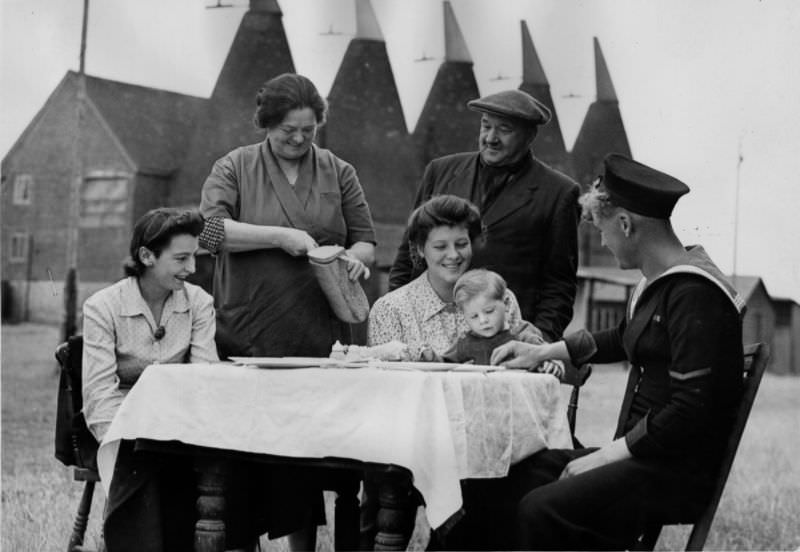
Children were a constant presence in the hop-picking camps. While adults worked the fields, younger children stayed nearby — some helping with lighter tasks, others simply part of the daily rhythm of camp life. Welfare efforts extended to keeping children fed and occupied, including organized refreshment stops near the fields.