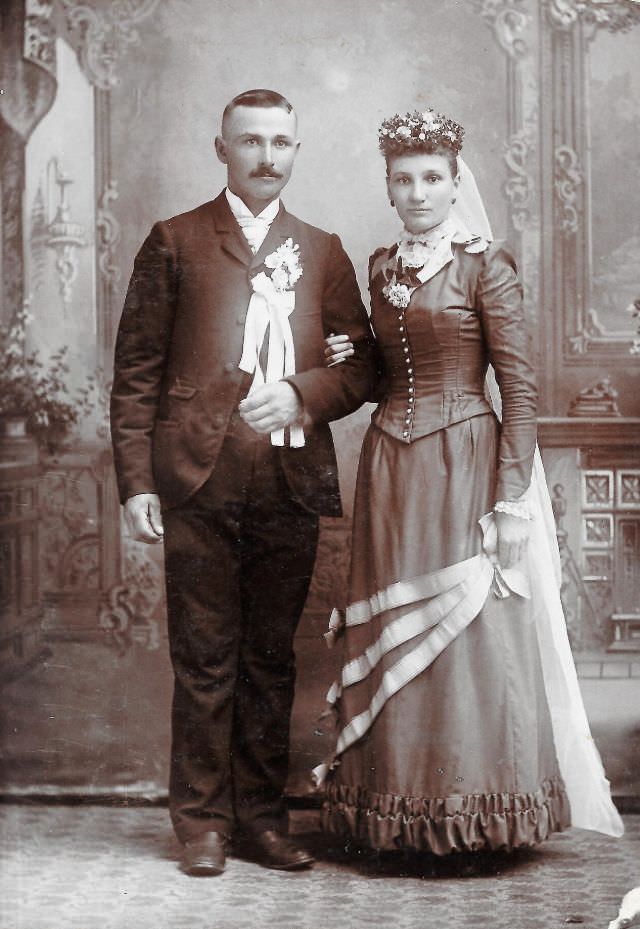
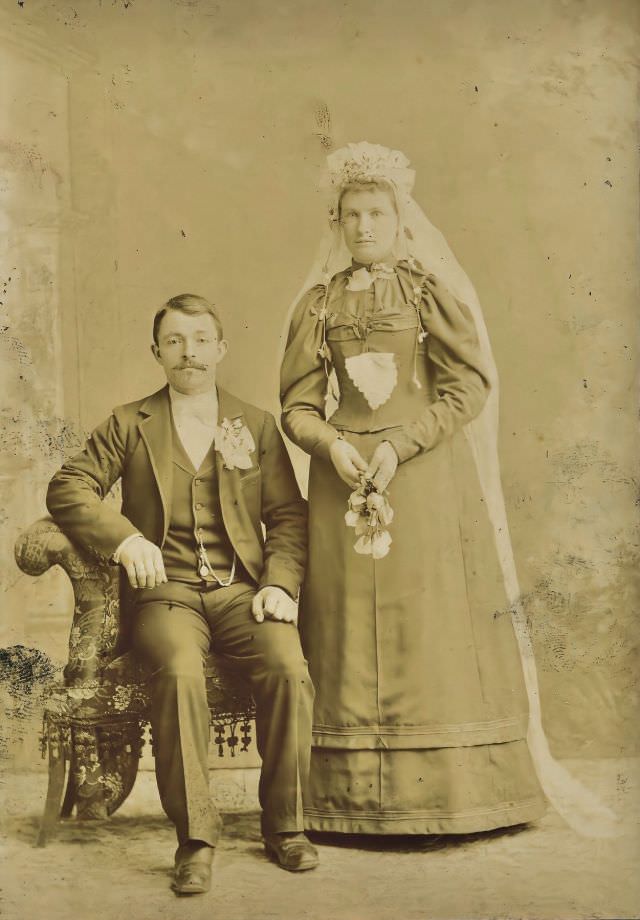
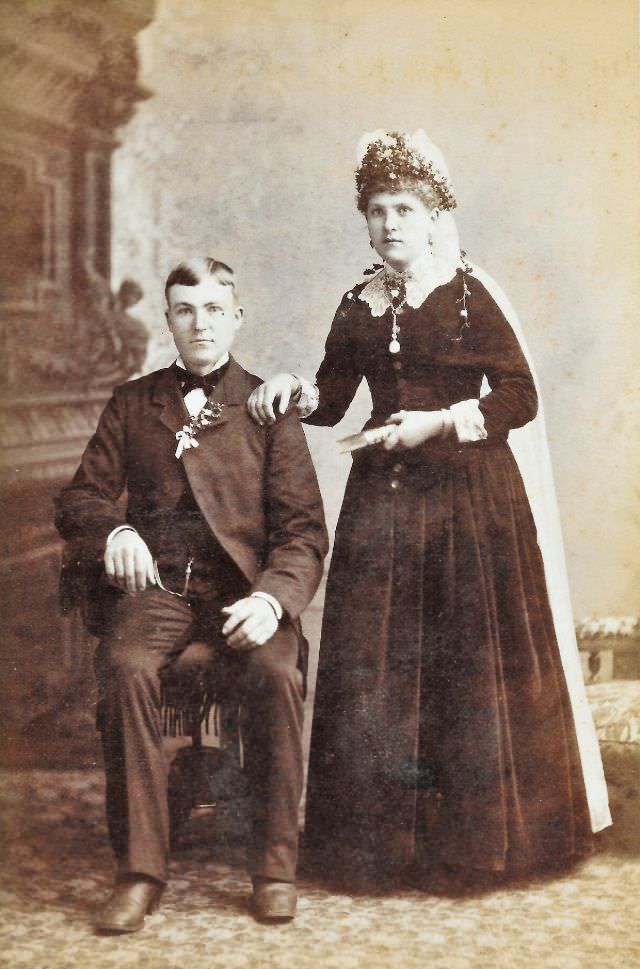
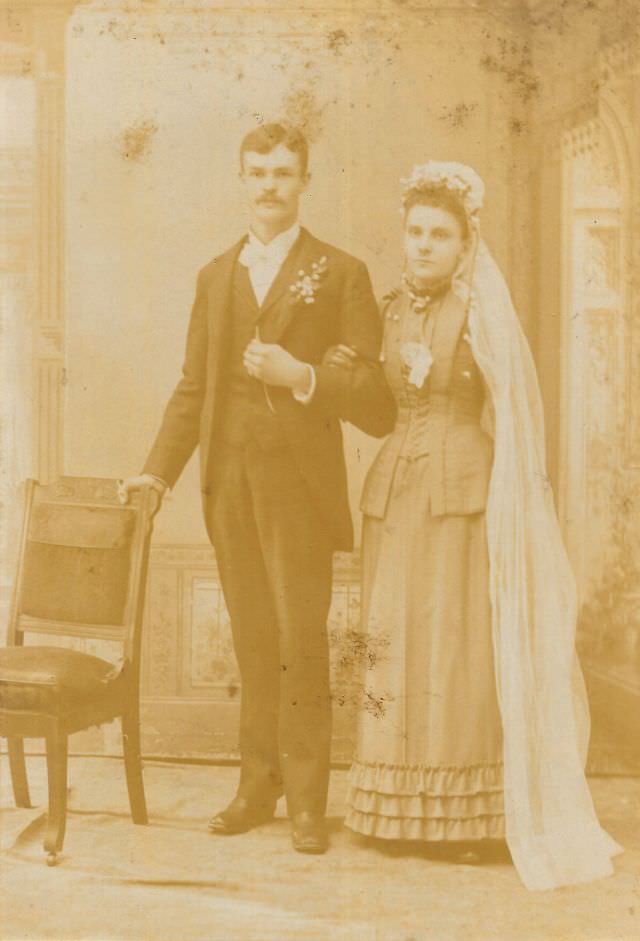
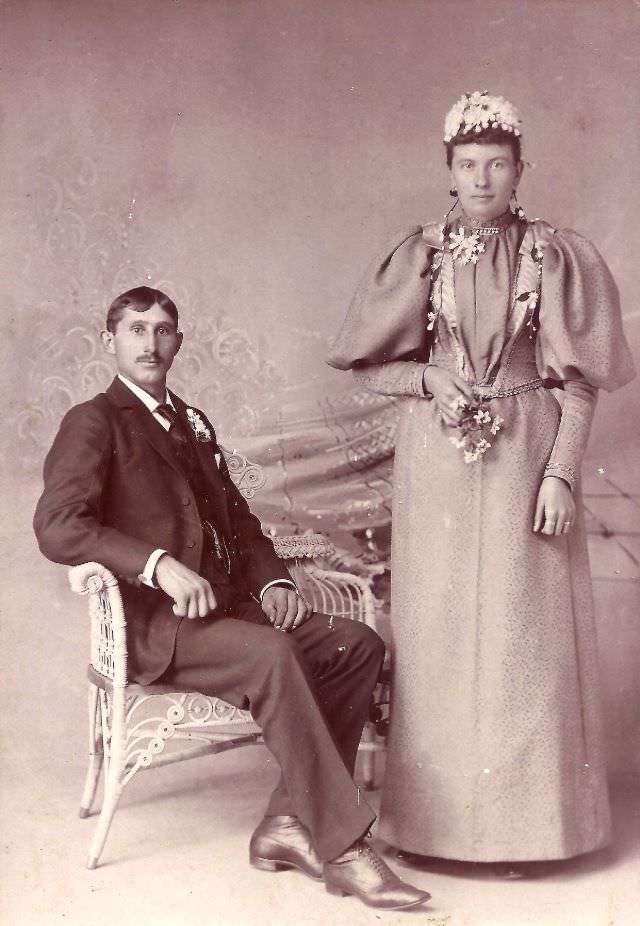
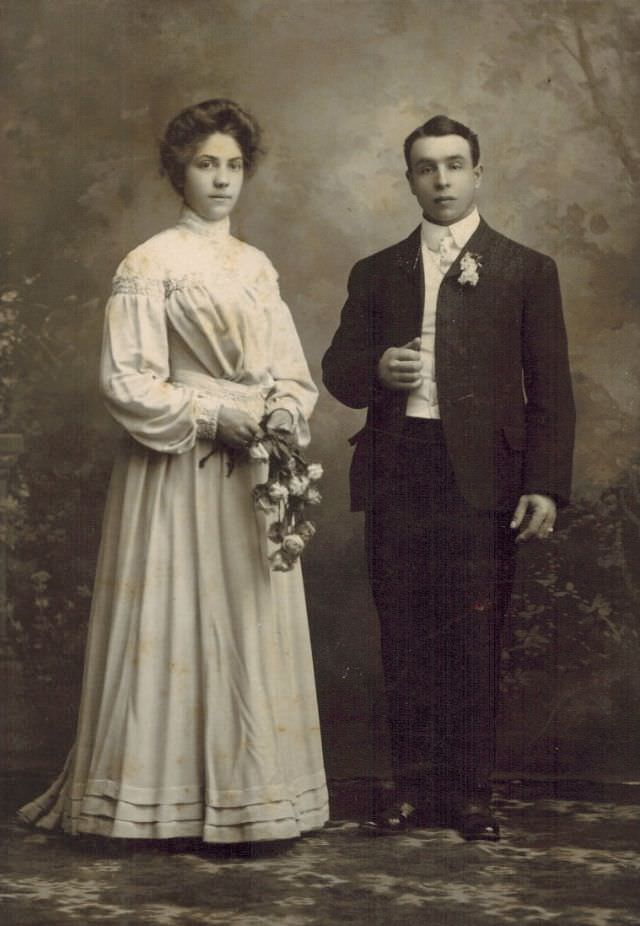
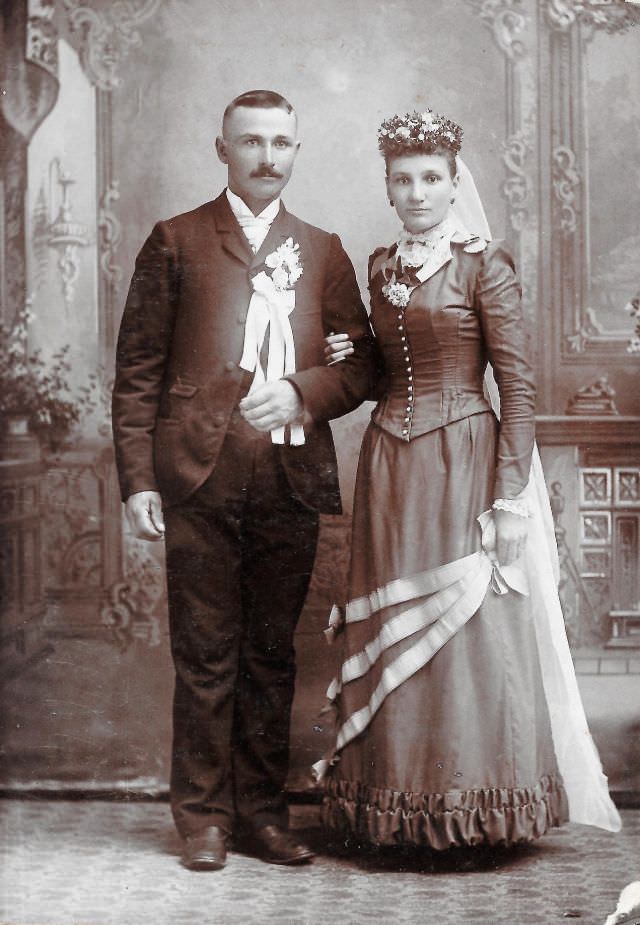
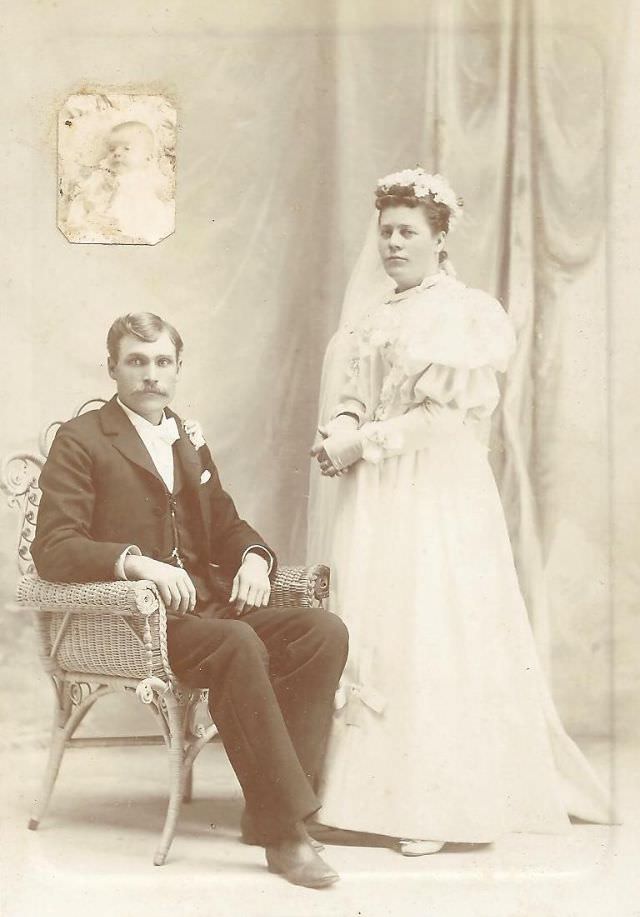
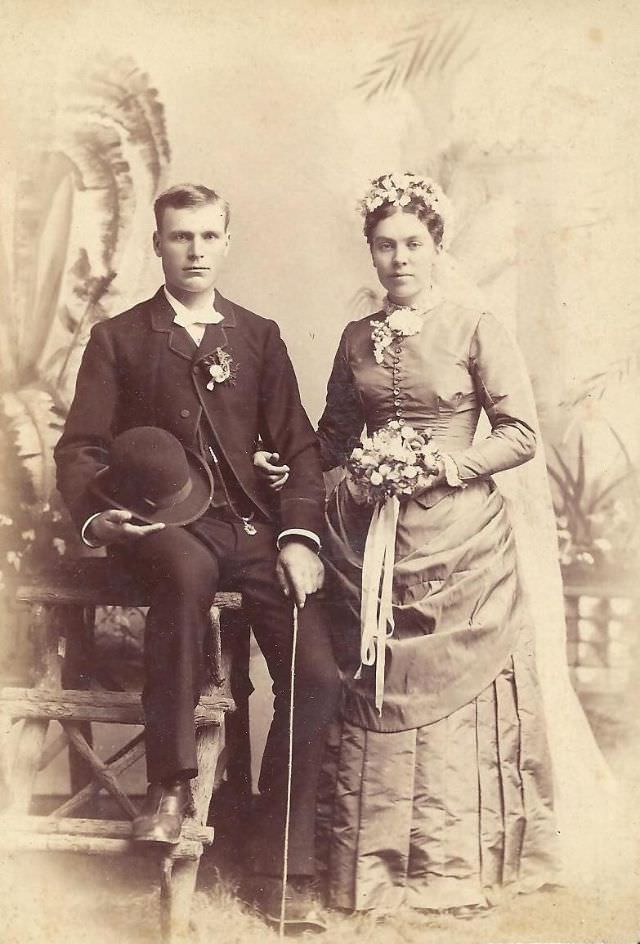
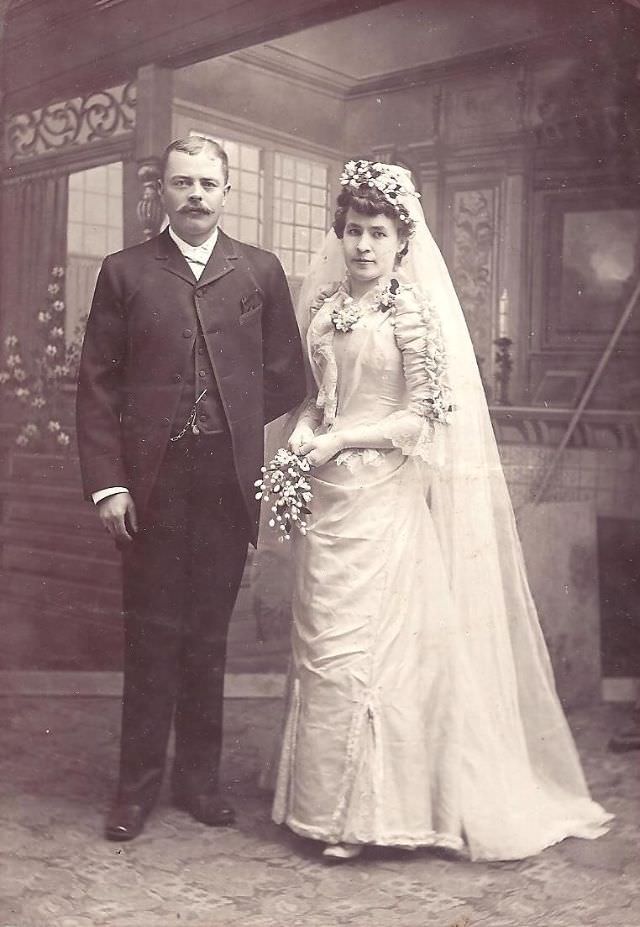
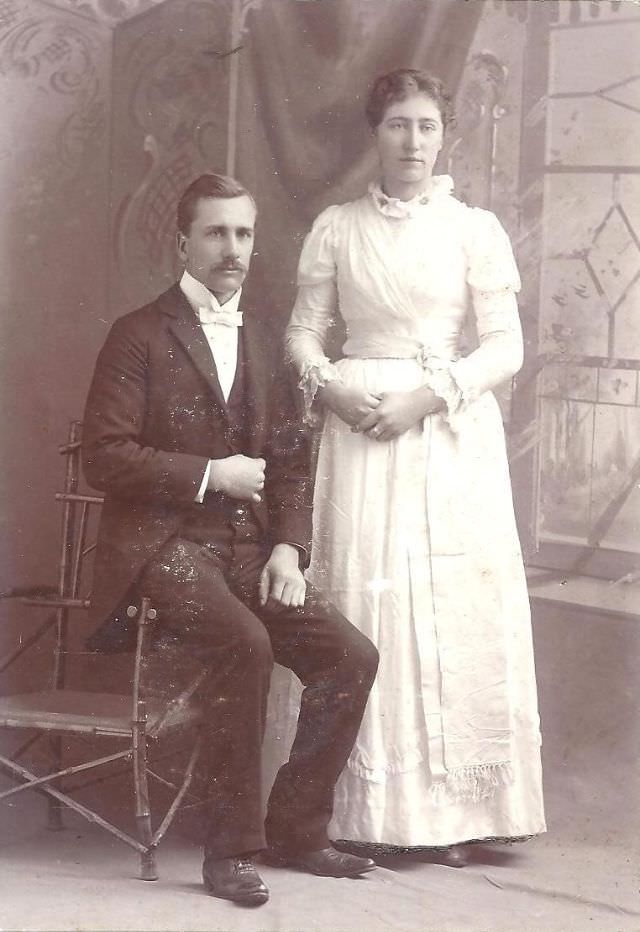
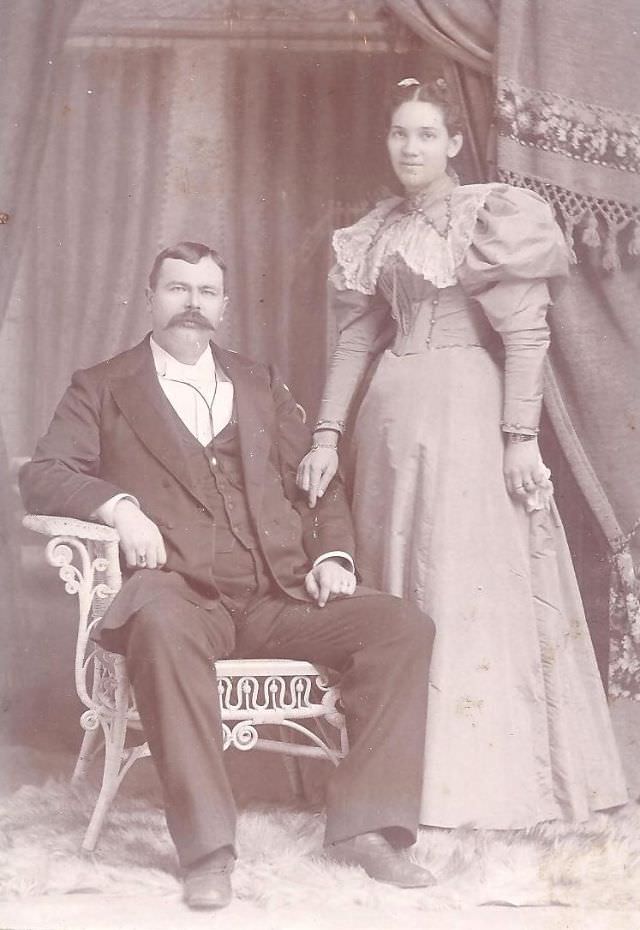
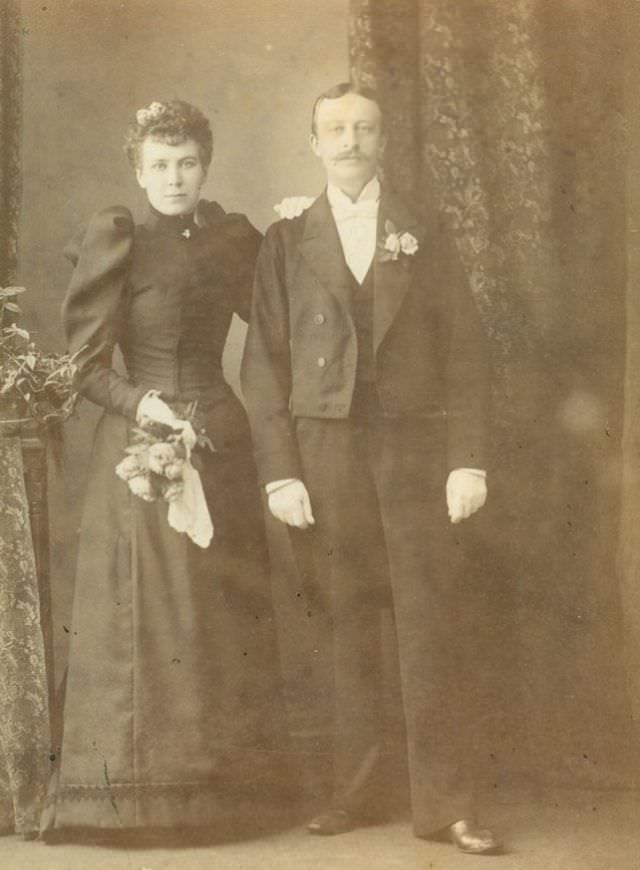
In Victorian England, the wedding day held a place above all other events in a woman’s life. Girls were raised from childhood with the expectation that marriage was their primary goal. When the day finally arrived, it was a major occasion not just for the bride, but for her mother and the entire family. The photographs that survive from this era offer a rare, direct look at how these couples dressed, posed, and presented themselves on one of the most important days of their lives.
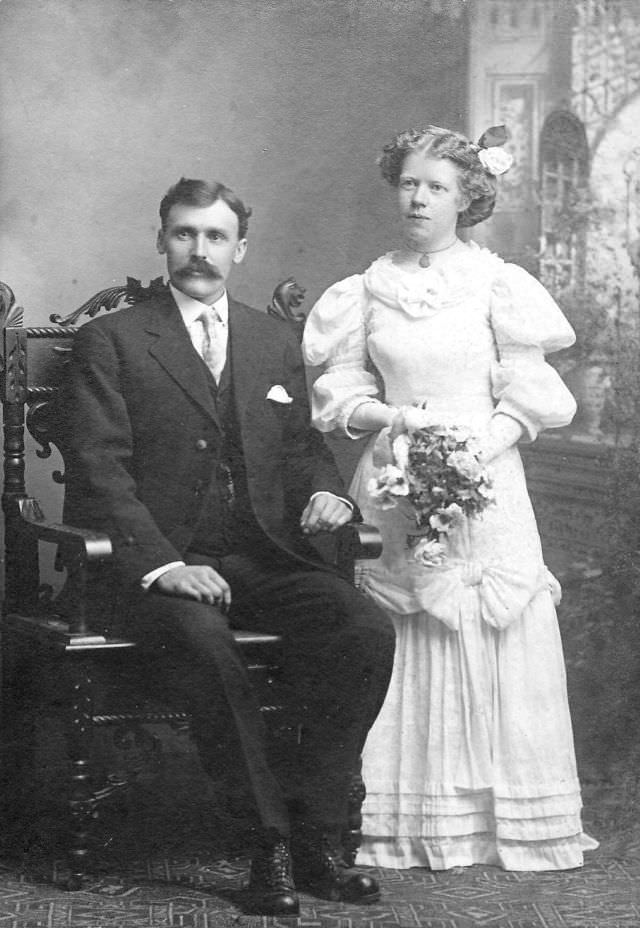
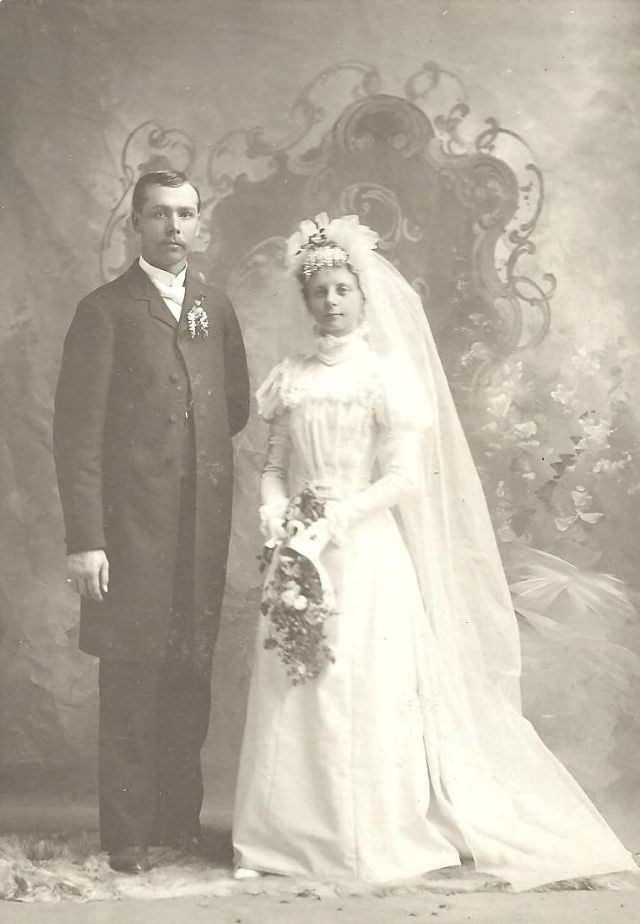
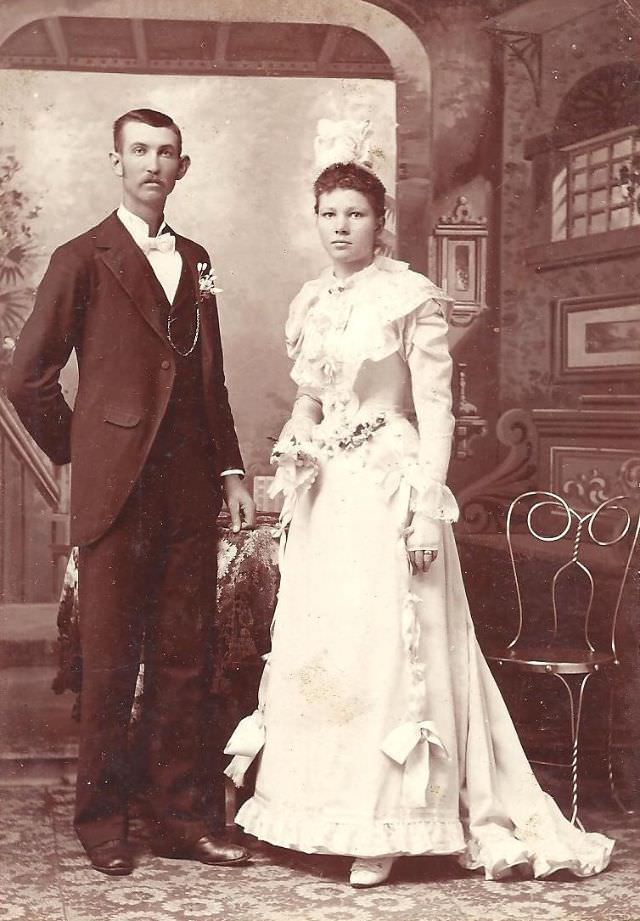
Victorian weddings followed many of the same basic customs we recognize today. There was a formal ceremony, carefully chosen attire, and the gathering of family. Many traditions that started during the Victorian era are still practiced now. The style and color of the wedding dress is one of the most obvious examples. White and off-white gowns became the standard after Queen Victoria wore a white lace dress at her own wedding in 1840, setting a trend that spread across Britain and beyond.
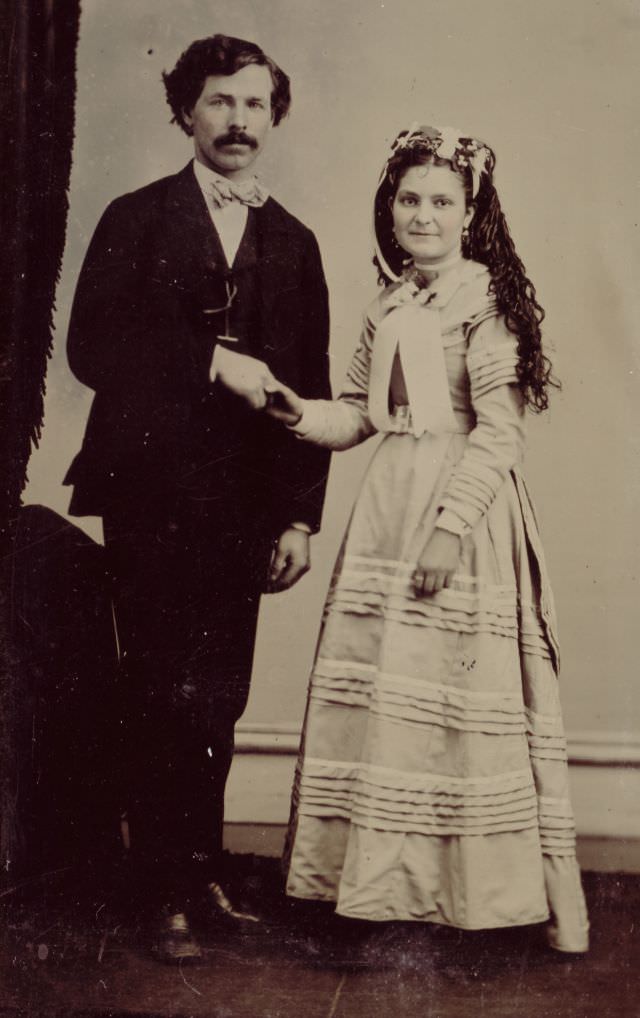
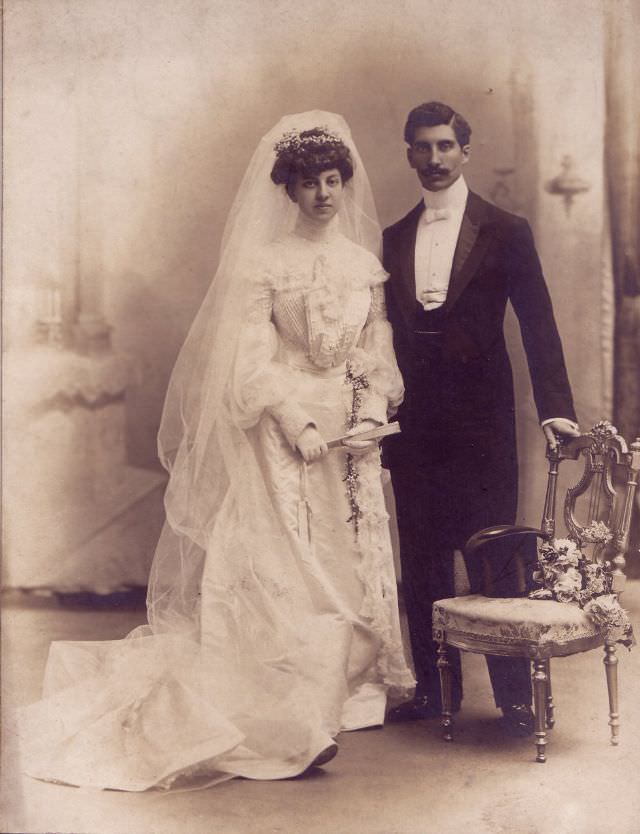
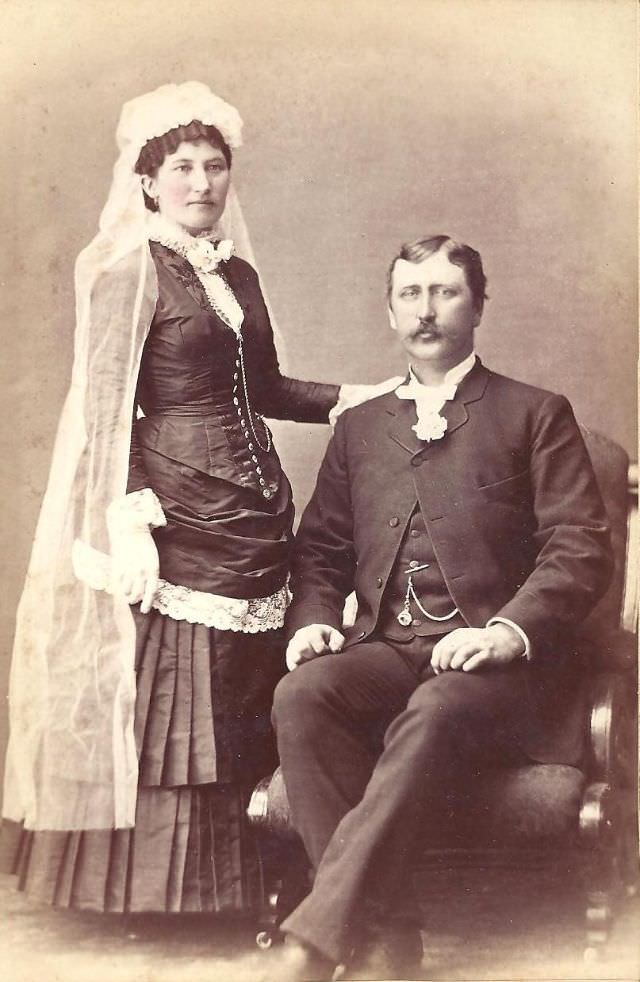
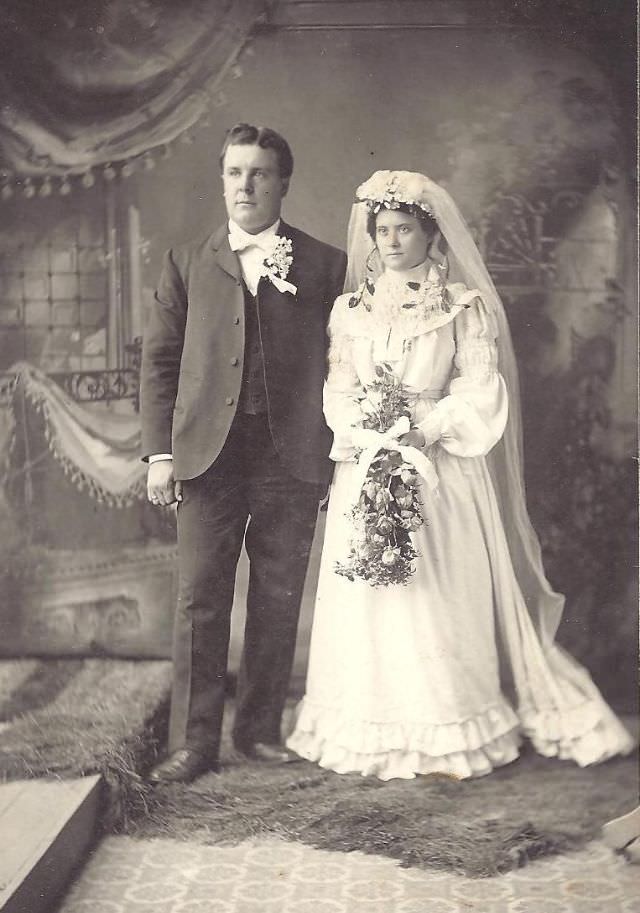
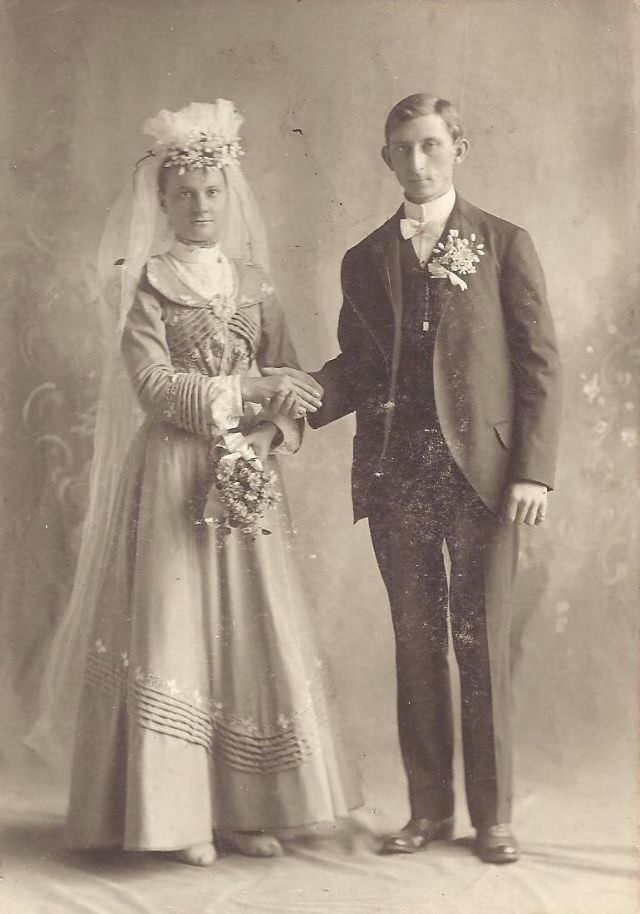
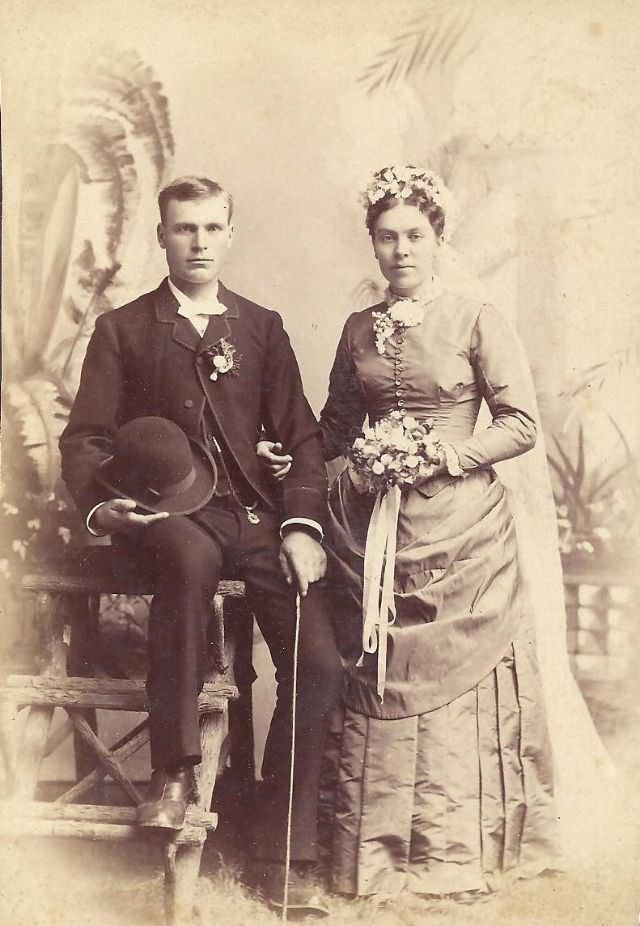
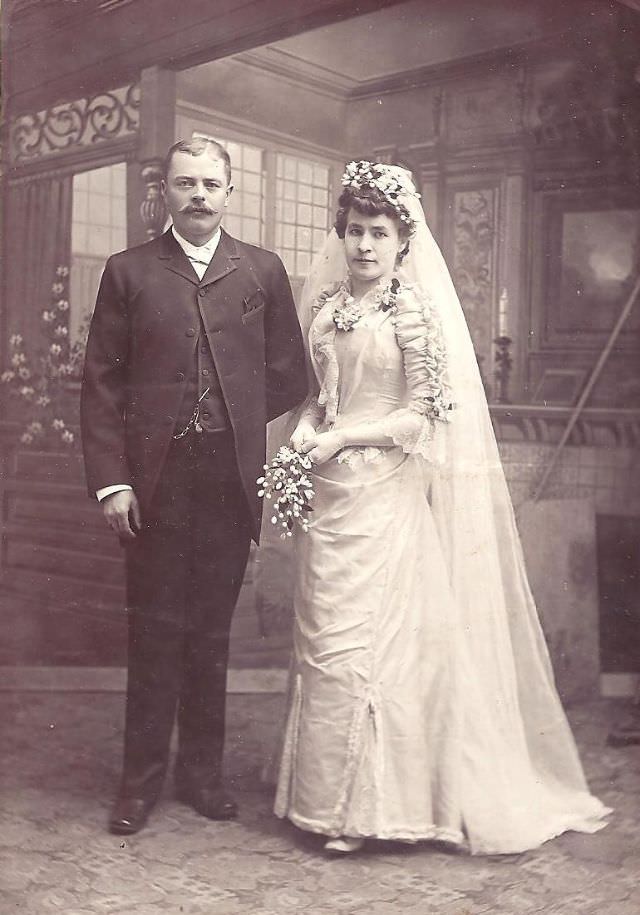
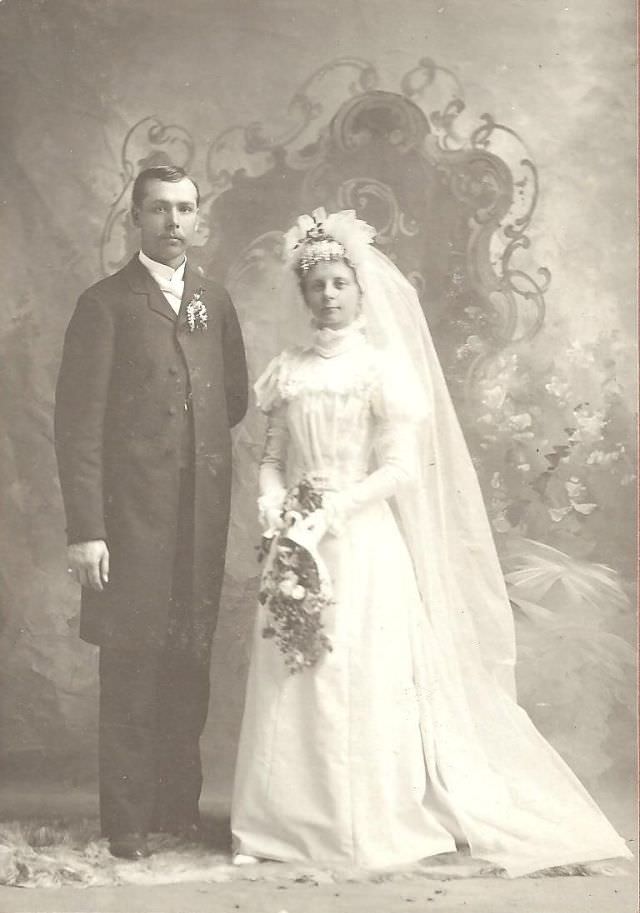
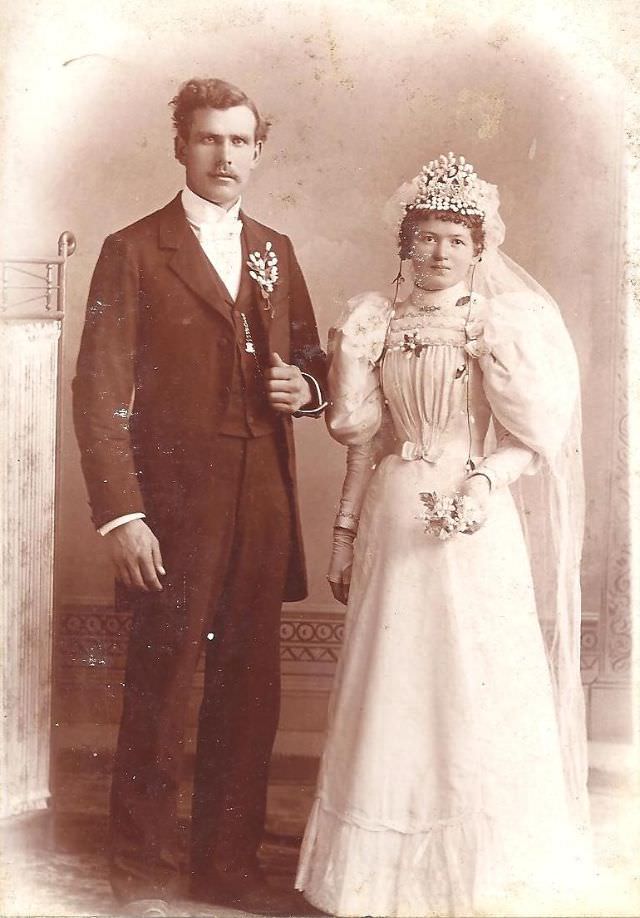
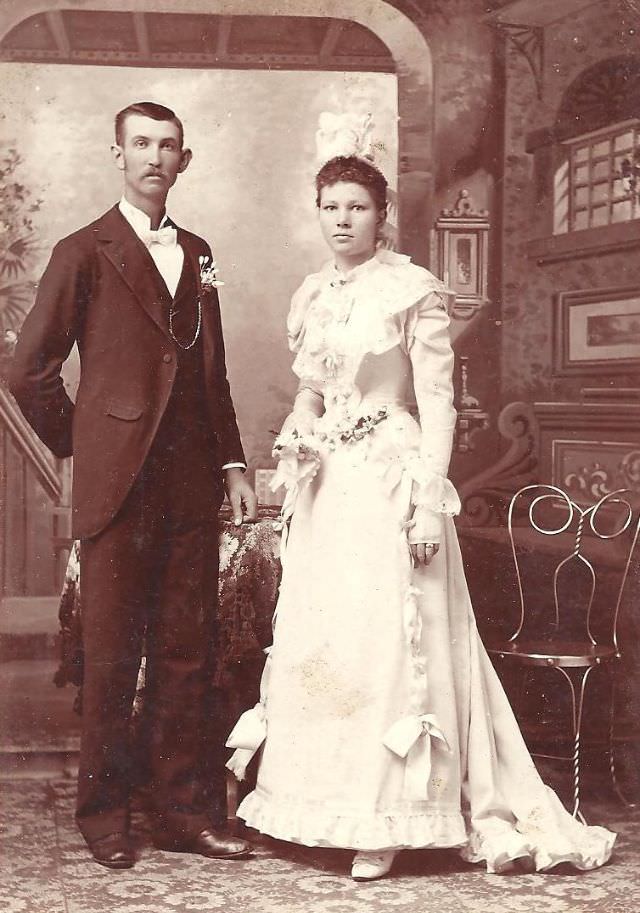
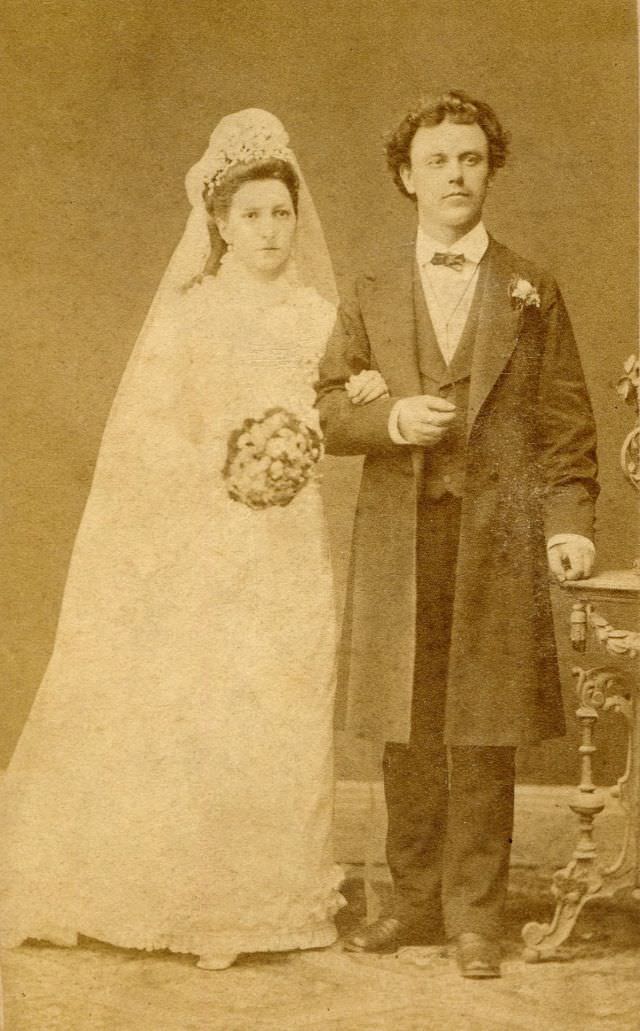
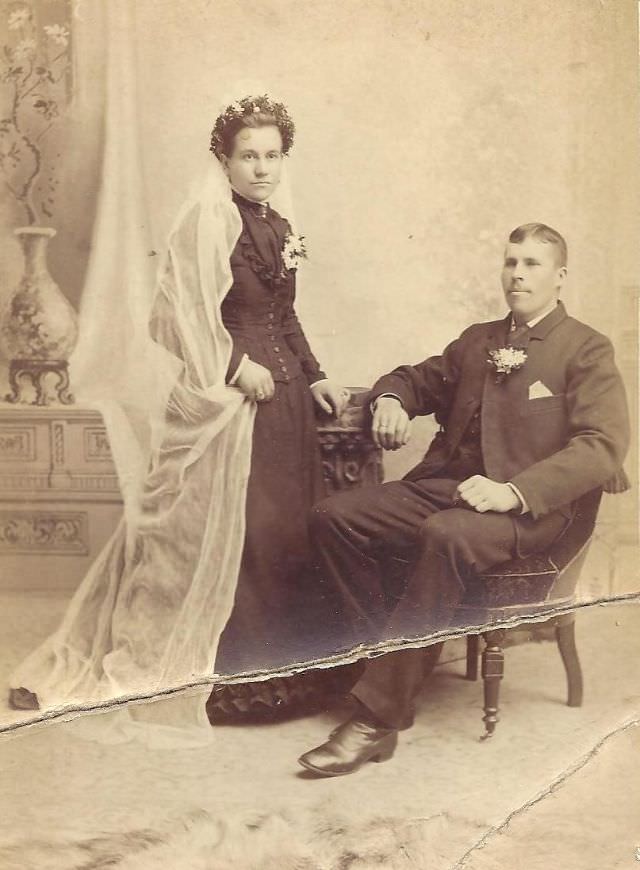
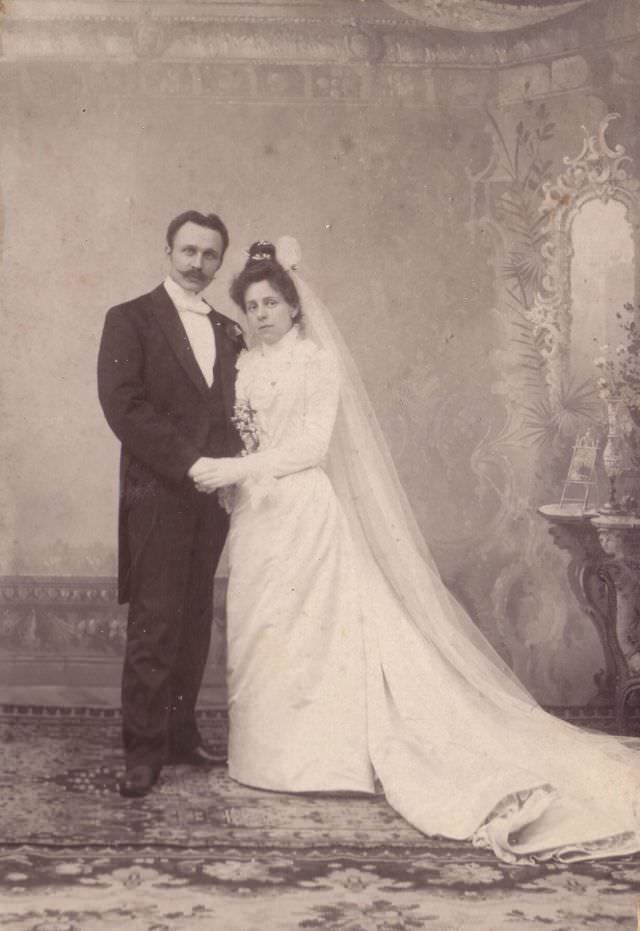
The construction of a Victorian wedding dress was detailed and precise. Bodices were fitted closely to the body, emphasizing a narrow waist. Skirts were long and full, often supported underneath by layers of petticoats or structured underpinnings. The fabrics used were chosen for their texture and appearance — silk, linen, lace, gauze, tulle, organdie, and cashmere all appeared in bridal gowns of the period. Lace in particular was a prized material, and a bride who could afford Belgian or Honiton lace was considered especially well-dressed.
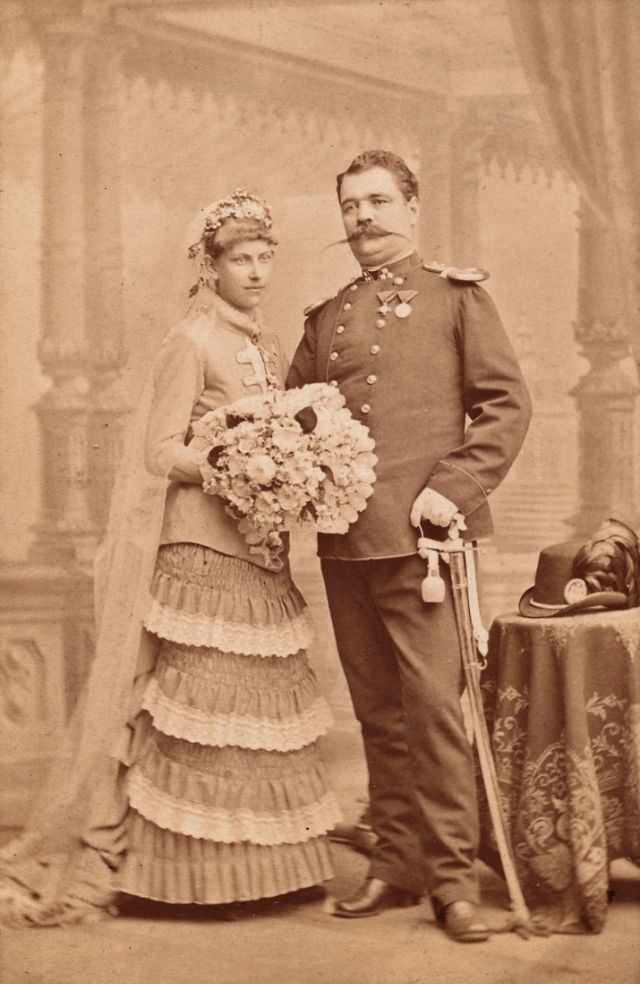
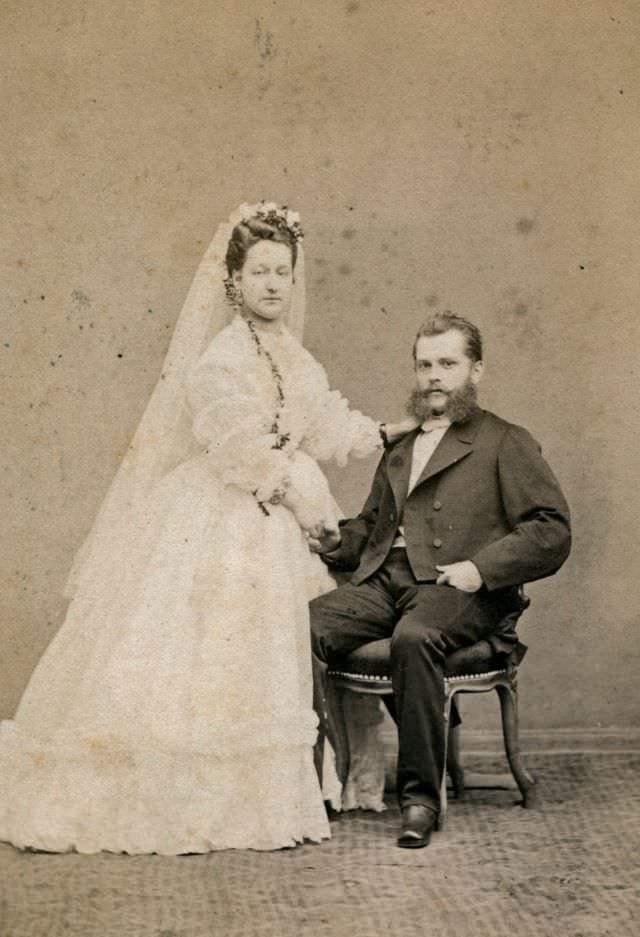
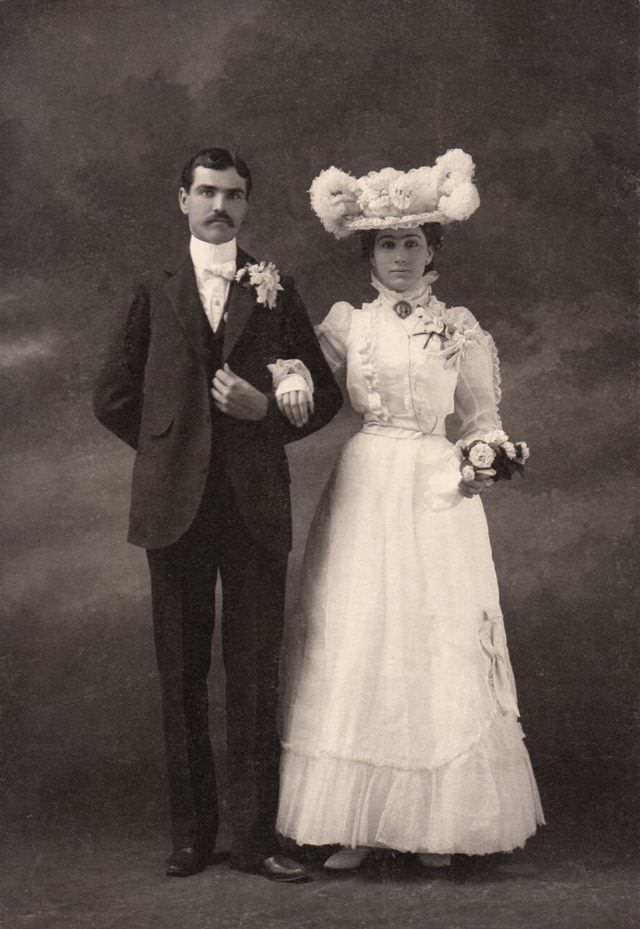
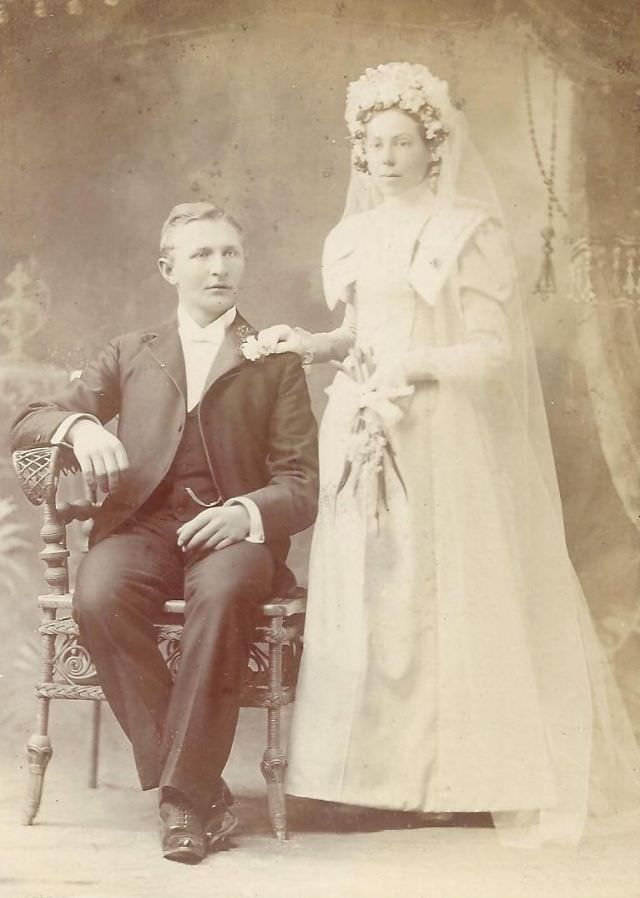
Brides also wore veils, gloves, and floral accessories. Flowers were worked into the hair and carried in bouquets, with orange blossoms being a popular choice because they symbolized purity and happiness. Shoes were typically low-heeled and made from silk or satin, dyed to match the gown.
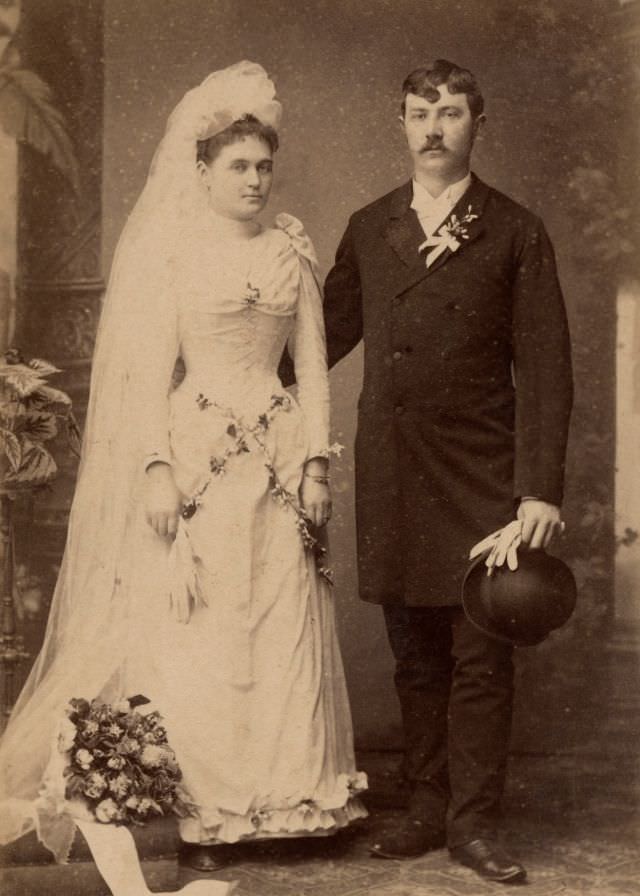
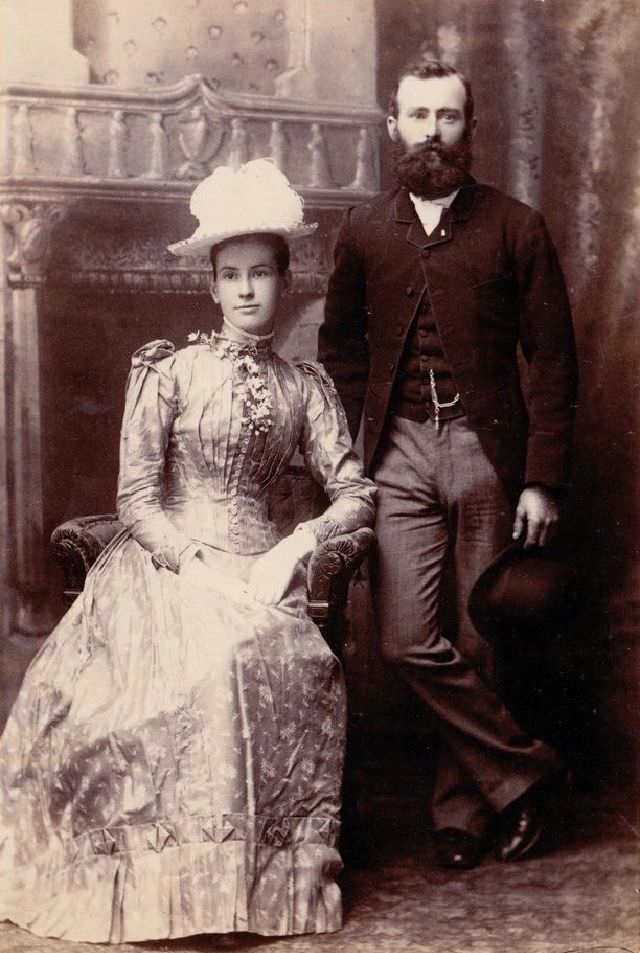
Grooms were equally attentive to their appearance. The most common choice for a Victorian groom was a blue frock coat, a style that was formal without being as severe as black. Frock coats were cut to the knee, worn with matching or contrasting trousers, and paired with a waistcoat. Flowers — usually a single bloom or small spray — were pinned to the lapel. Top hats and white gloves completed the look.
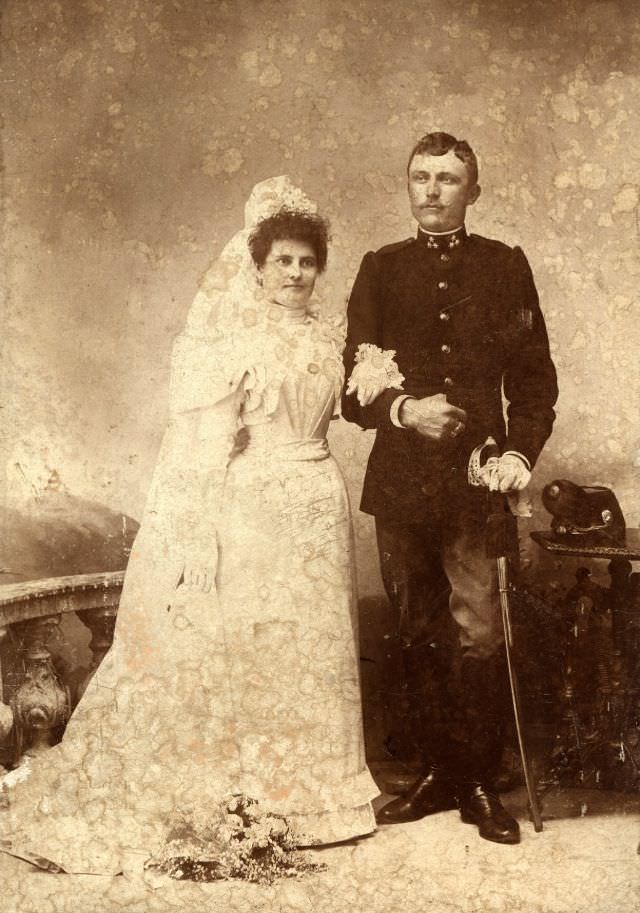
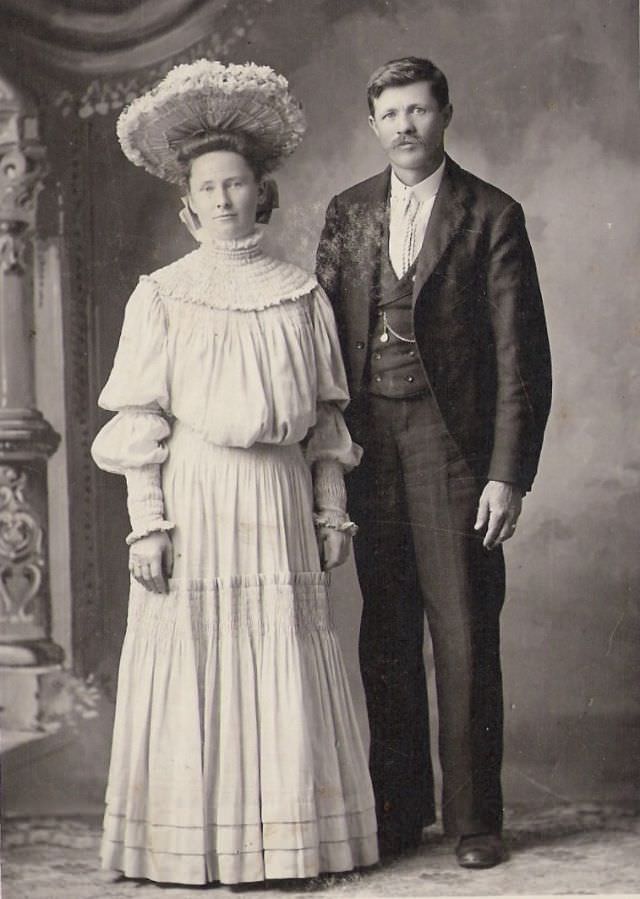
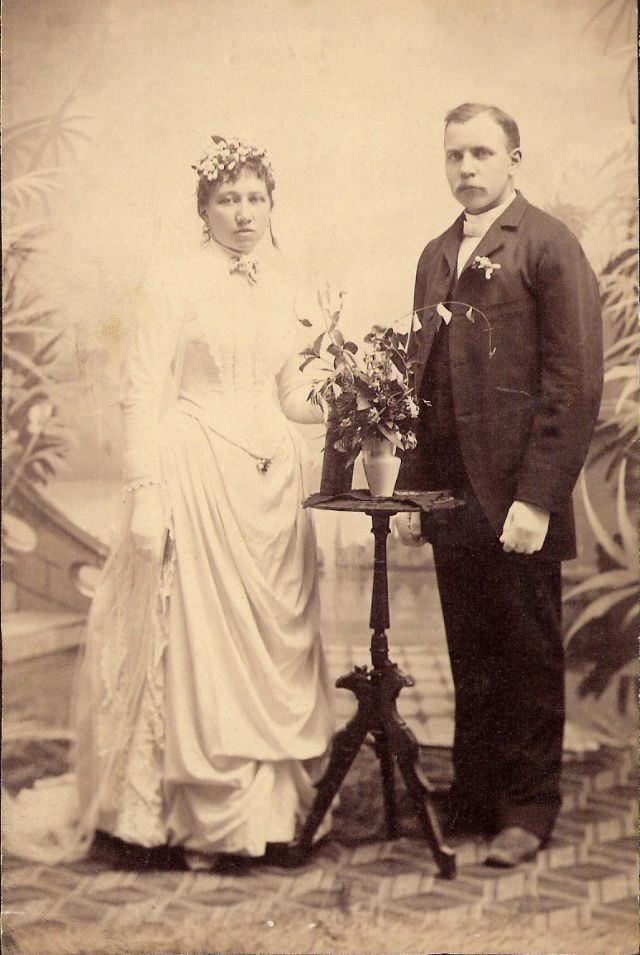
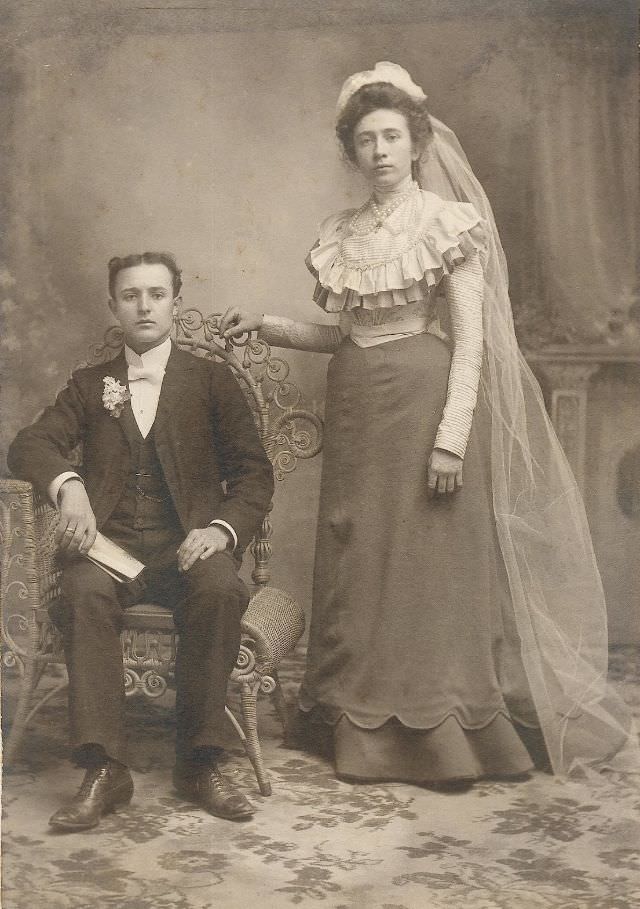
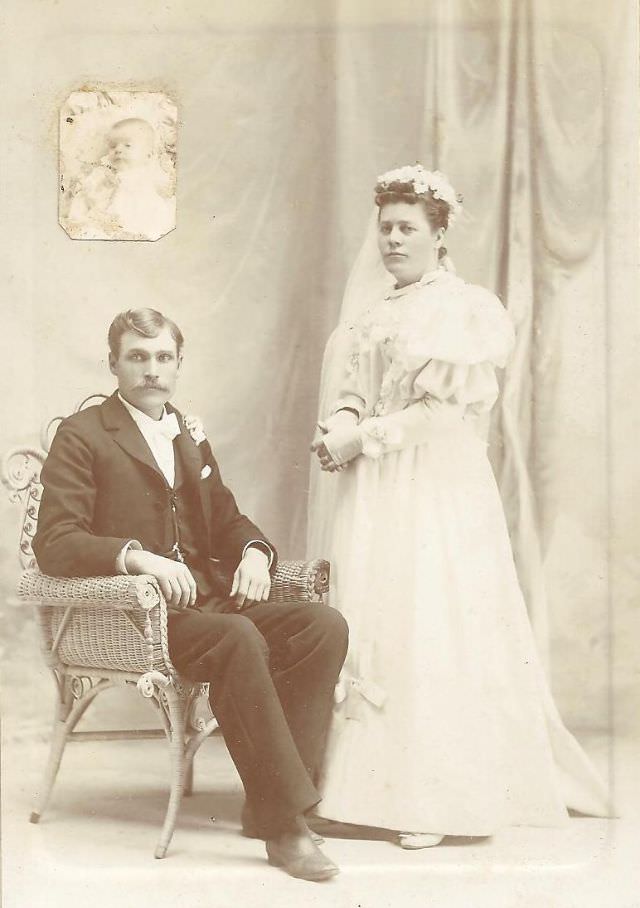
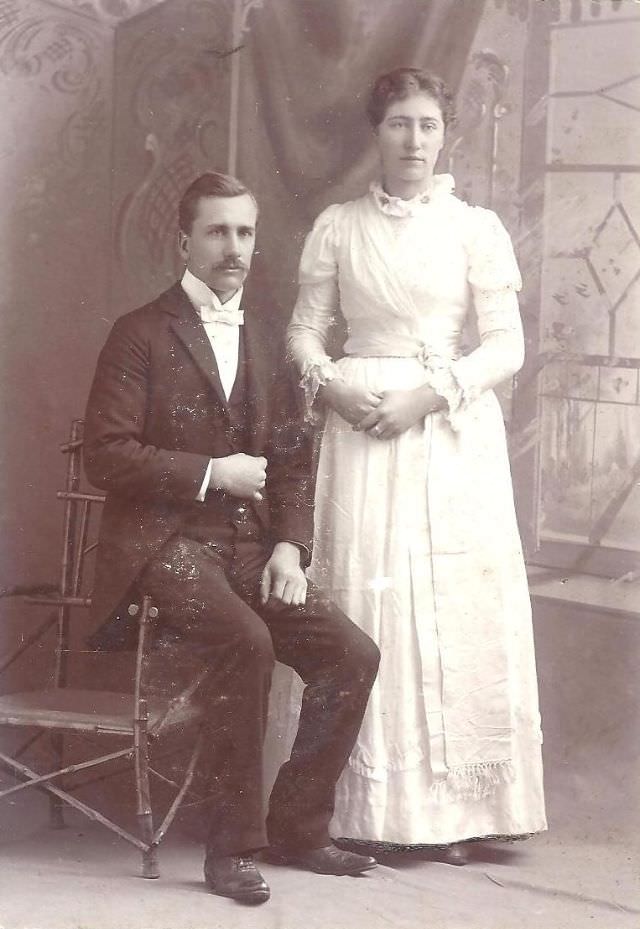
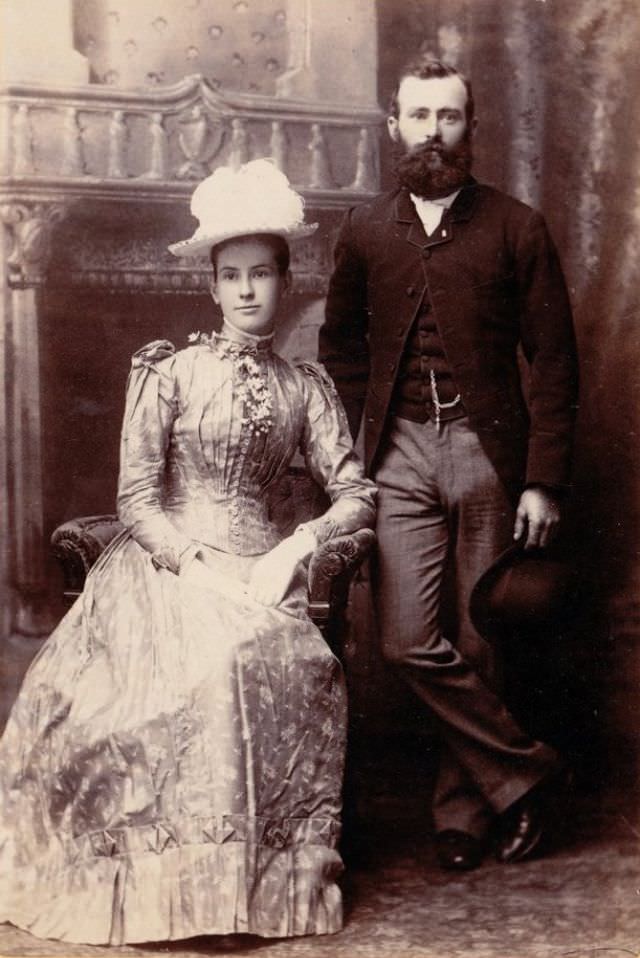
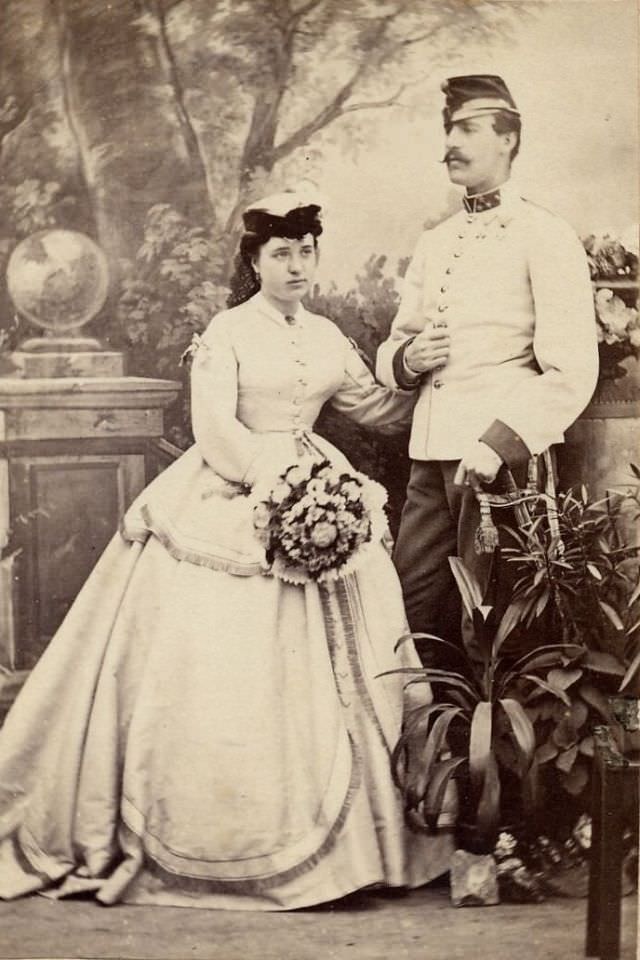
Wedding photography became possible during the Victorian era thanks to the development of early photographic processes. By the 1850s, having a wedding portrait taken was becoming more common among middle and upper-class families. These sittings took place in a photographer’s studio, where couples posed against painted backdrops and were lit by natural light from large windows. Because exposure times were still relatively long, couples had to remain very still, which is why so many Victorian wedding portraits look so serious and composed.
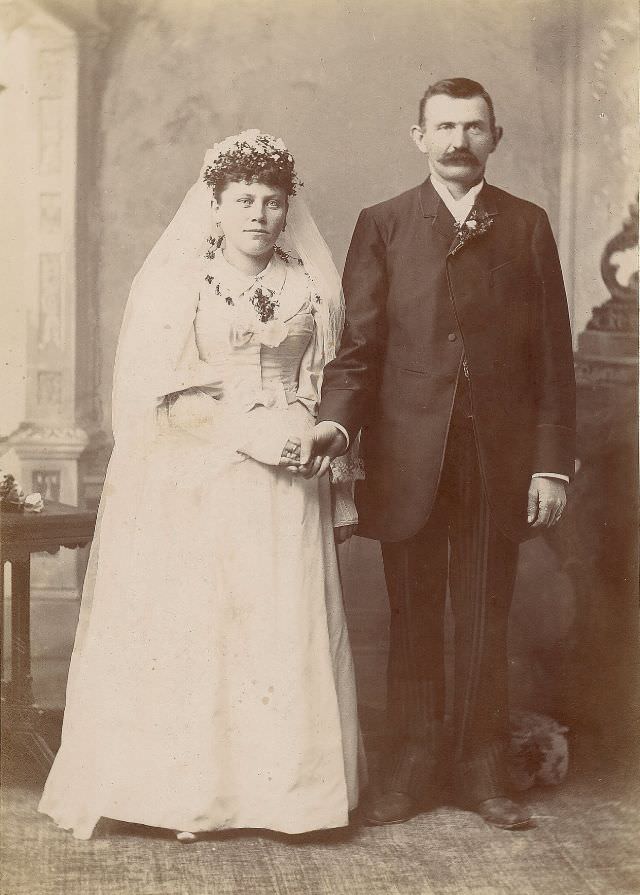
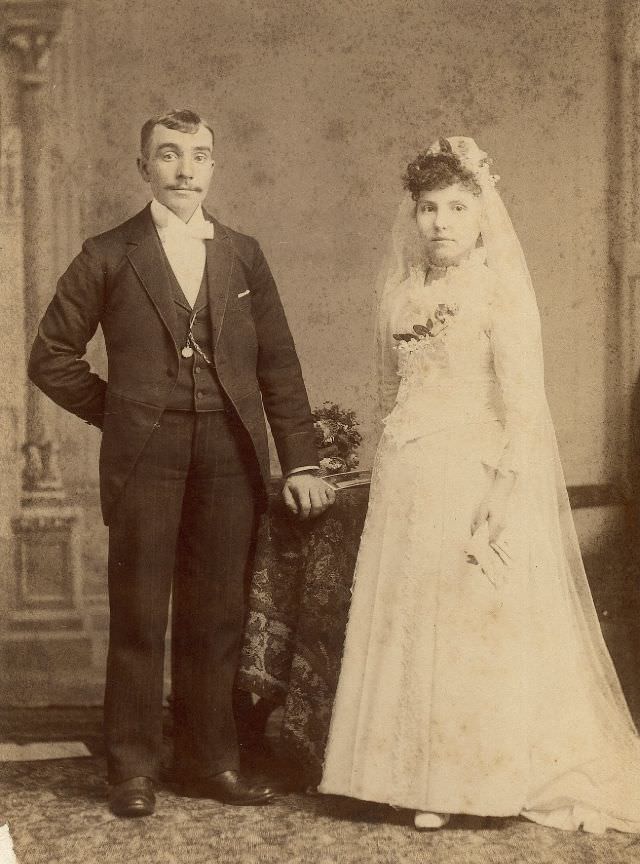
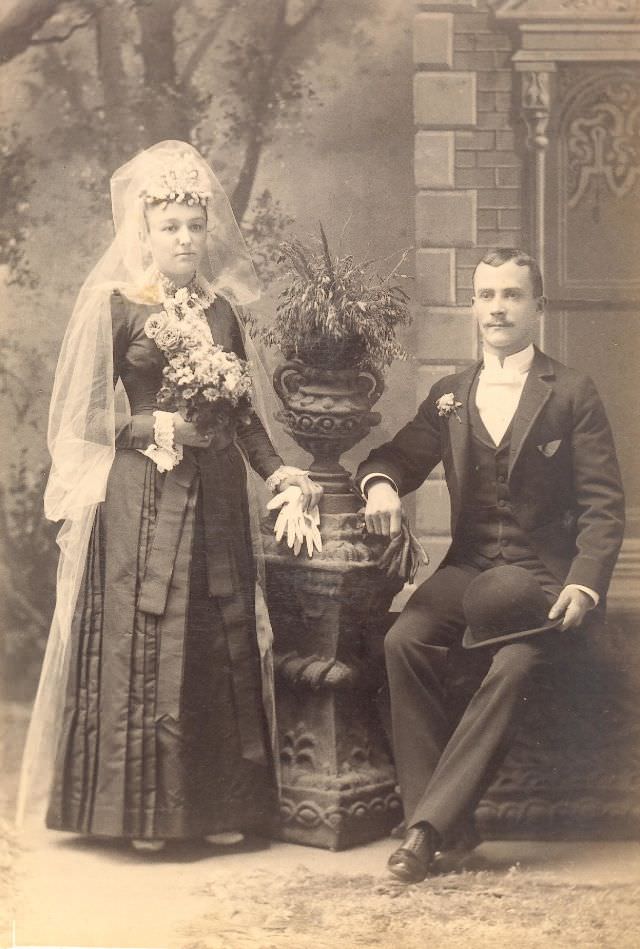
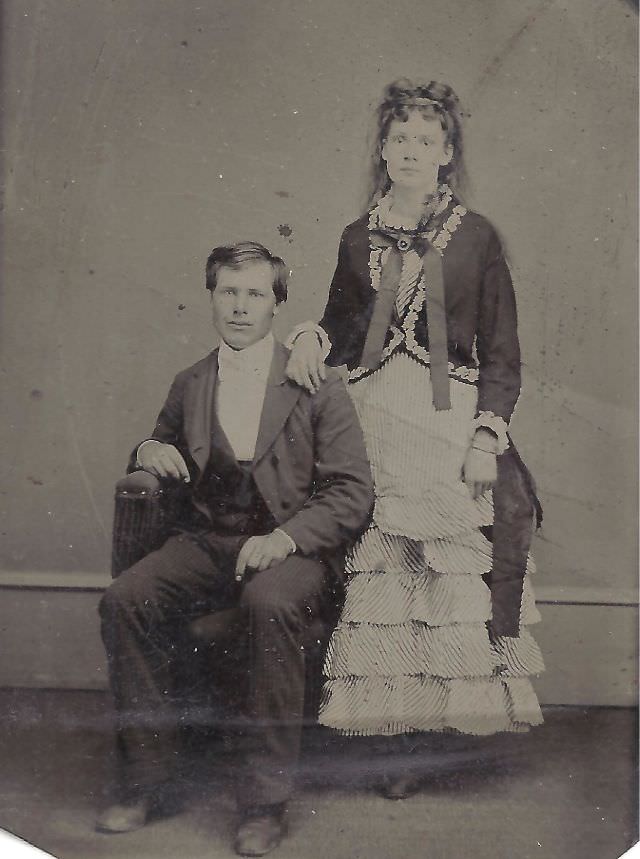
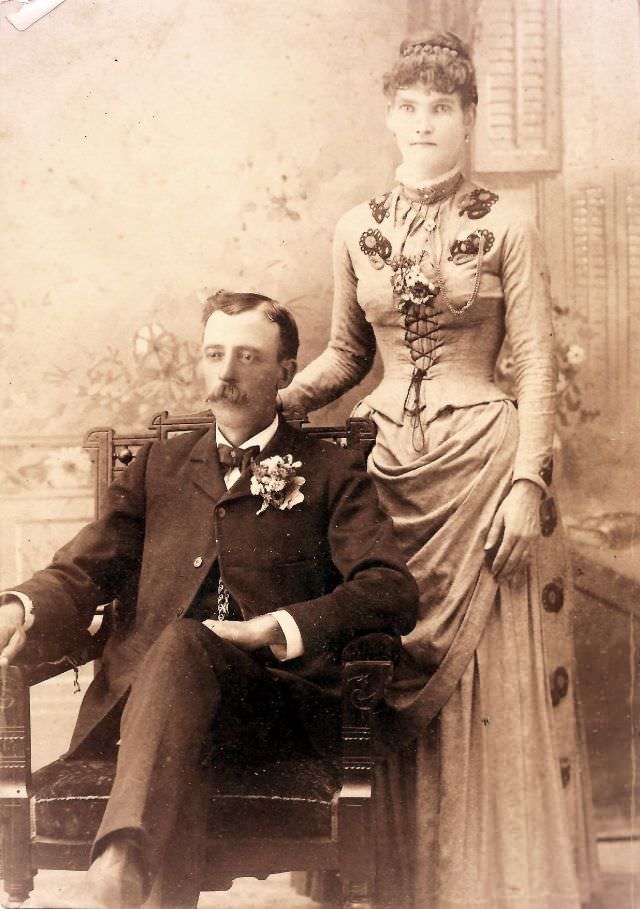
The poses themselves were deliberate. The bride often sat while the groom stood beside or behind her, one hand resting on her shoulder or on a nearby piece of furniture. This arrangement was a visual signal of the social structure within marriage — the man as a standing, active figure and the woman as a seated, settled one. Props like books, flowers, or draped fabric were used to fill the frame and add visual balance.
Wedding receptions during the Victorian era were held at the bride’s family home or a hired venue. The wedding breakfast — as the post-ceremony meal was called regardless of the time of day — featured tiered cakes coated in white icing, which was itself a symbol of wealth since refined white sugar was expensive. Guests threw rice or rose petals at the departing couple, a tradition tied to wishes for fertility and good fortune.
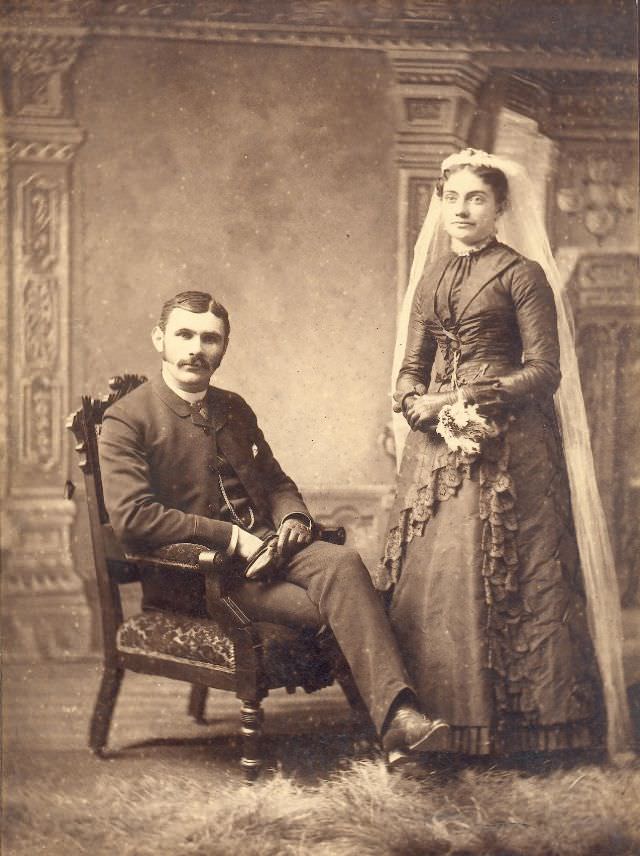
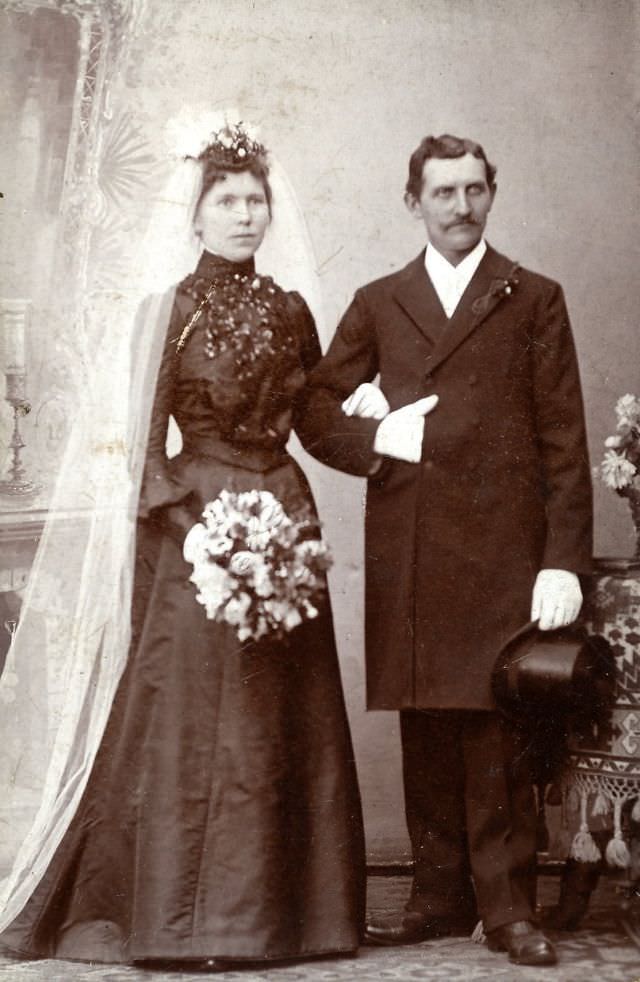
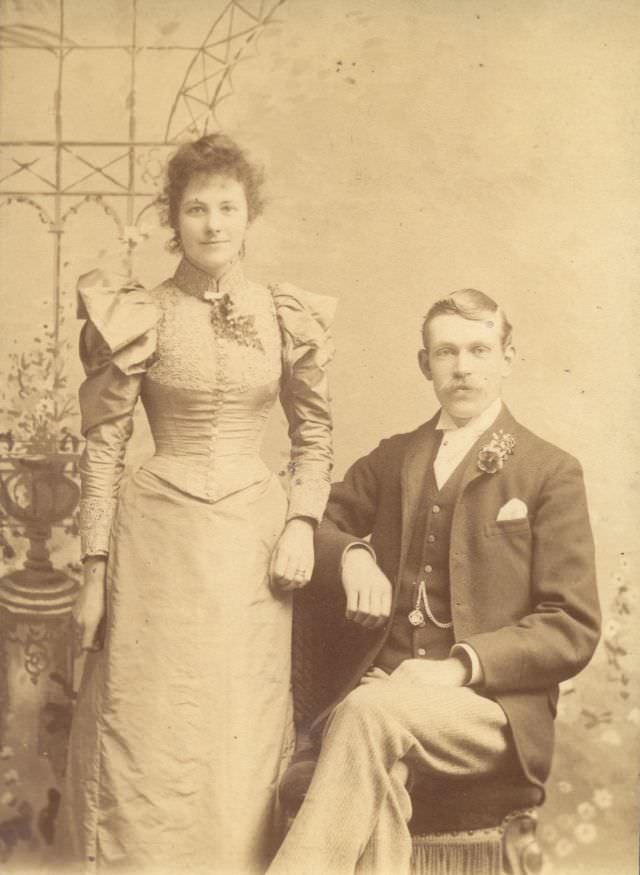
Class played a significant role in how Victorian weddings were carried out. Wealthy families staged elaborate events with large wedding parties, dozens of guests, and custom-made gowns. Working-class couples had far simpler ceremonies. The bride might wear her best dress rather than a dedicated wedding gown, and the celebration would be small and local. Yet both groups understood the ceremony as a serious and binding social event.
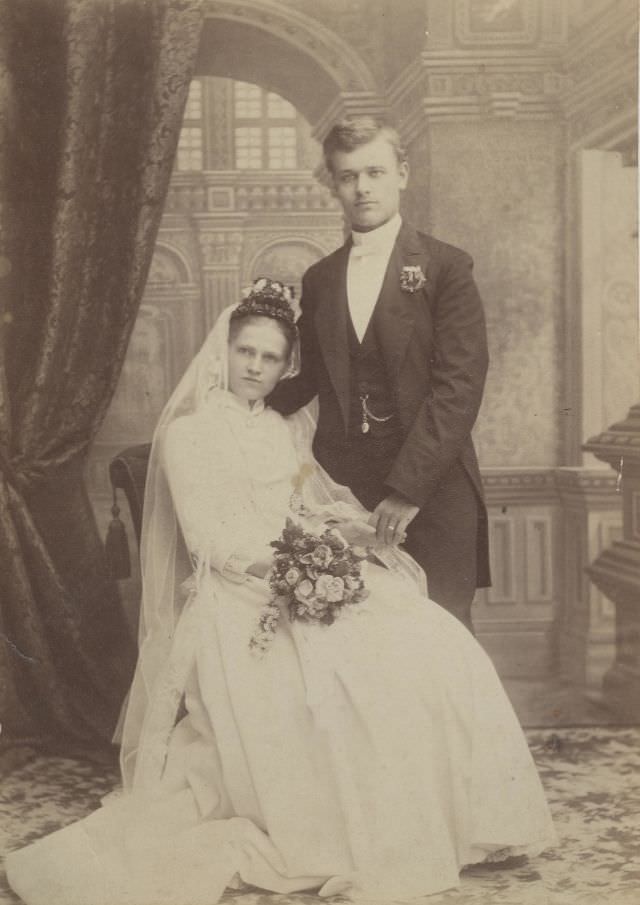
Bridesmaids were a standard part of Victorian weddings, and they dressed to complement the bride rather than match each other exactly. Their gowns were typically lighter in color and simpler in cut than the bride’s. Flower girls, page boys, and a maid of honor were also common participants in wealthier ceremonies. The groom’s side was represented by a best man and groomsmen, who helped manage the logistics of the day.
The church ceremony was central to nearly all Victorian weddings. Marriage was a religious institution first and a social one second. Banns — public announcements of the intended marriage — were read aloud in church on three consecutive Sundays before the wedding. This gave the community a chance to raise any objections. The Church of England presided over most weddings, though nonconformist and Catholic ceremonies also took place, particularly after the Marriage Act of 1836 made civil registration mandatory.
Honeymoons became fashionable among the upper and middle classes during the Victorian period. Newly married couples would travel by train to a seaside resort or the countryside for a week or two. The concept of a private trip for just the couple — separate from family — was relatively new at the time, and it signaled a shift in how marriage was understood: not just as a family or financial arrangement, but as a personal bond between two people.
The wedding ring held the same symbolic weight in Victorian times as it does today. Gold bands were standard, worn on the left hand. Engagement rings, which became more elaborate as the century progressed, often featured gemstones set in gold or silver. Diamonds became increasingly popular after significant diamond deposits were discovered in South Africa in the late 1860s, which made the stones more available and somewhat more affordable.
Victorian marriage was also a legal and financial transaction. When a woman married, her legal identity merged with her husband’s under a doctrine called coverture. She could not own property, enter contracts, or keep her own earnings independently. The Married Women’s Property Acts of 1870 and 1882 began to change this, giving women the right to own and control their own property after marriage — a significant legal shift by the standards of the time.
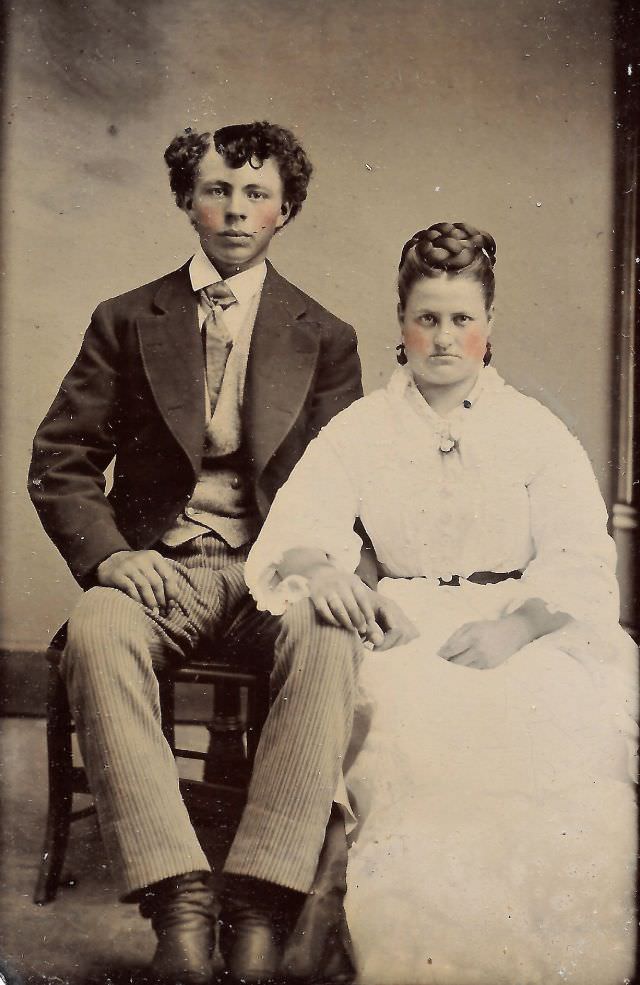
The average age of marriage for Victorian women was around 25, which was somewhat older than popular perception suggests. Men typically married in their late 20s. Marriages between very young teenagers, while not unheard of, were not the norm. Most couples had known each other through social circles, family introductions, or community events before marrying.
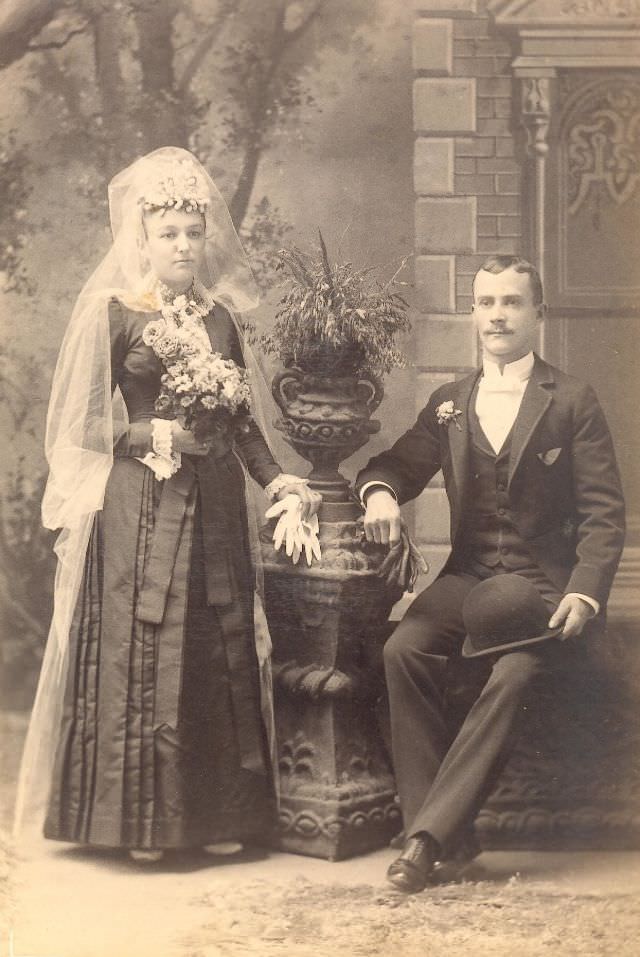
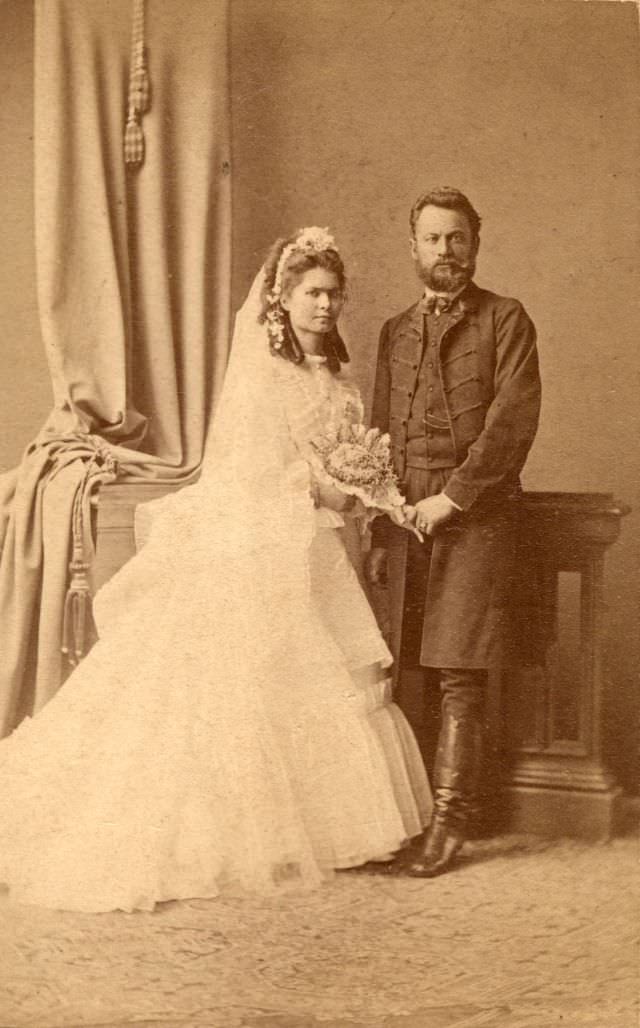
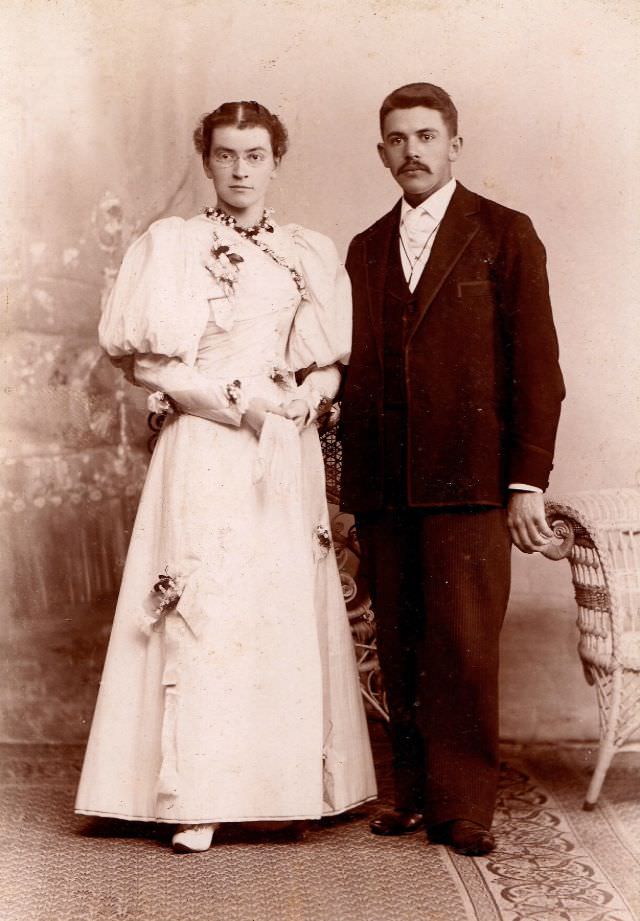
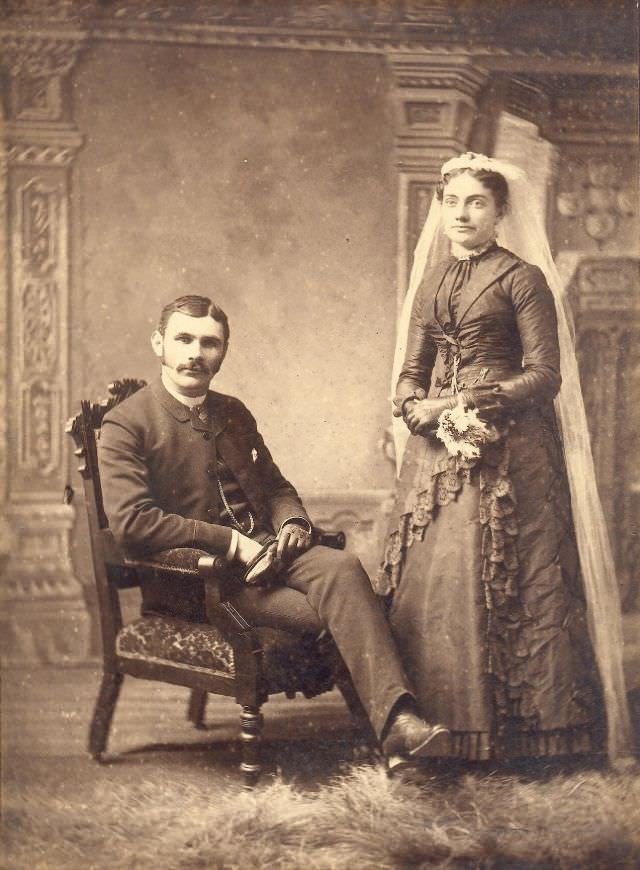
Floral symbolism was taken seriously in Victorian weddings. Different flowers carried specific meanings, and brides chose their bouquets accordingly. Myrtle stood for love and marriage, ivy for fidelity, and rosemary for remembrance. Orange blossoms, as noted, were among the most popular choices for bridal flowers and were often incorporated into the headdress as well as the bouquet. A sprig from the bride’s bouquet was sometimes planted after the wedding as a living memento.
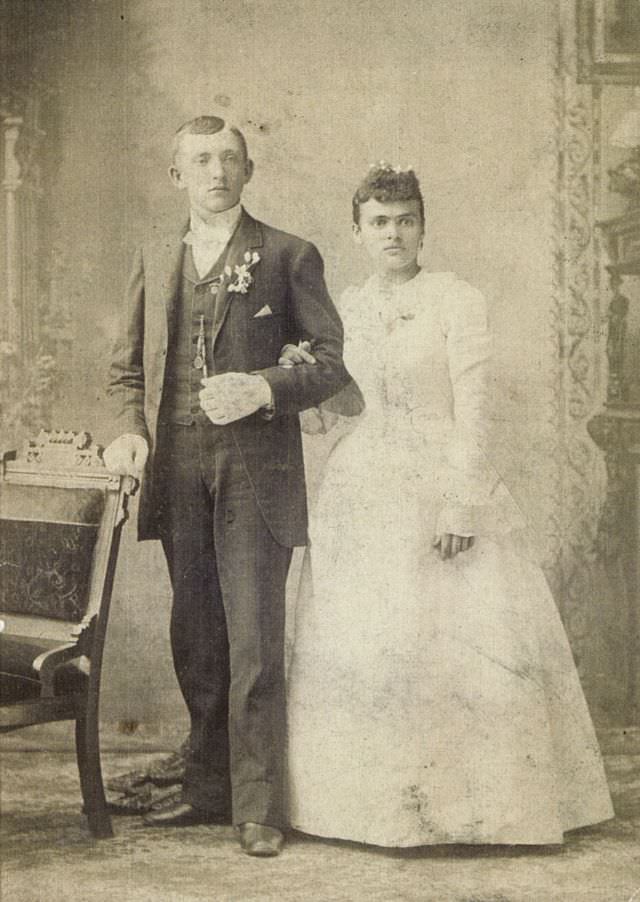
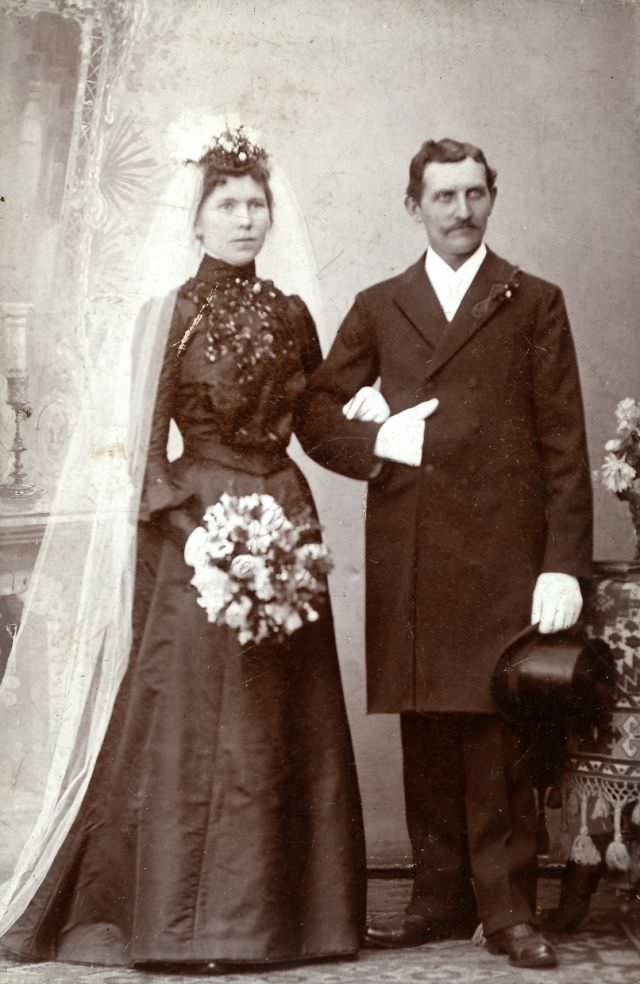
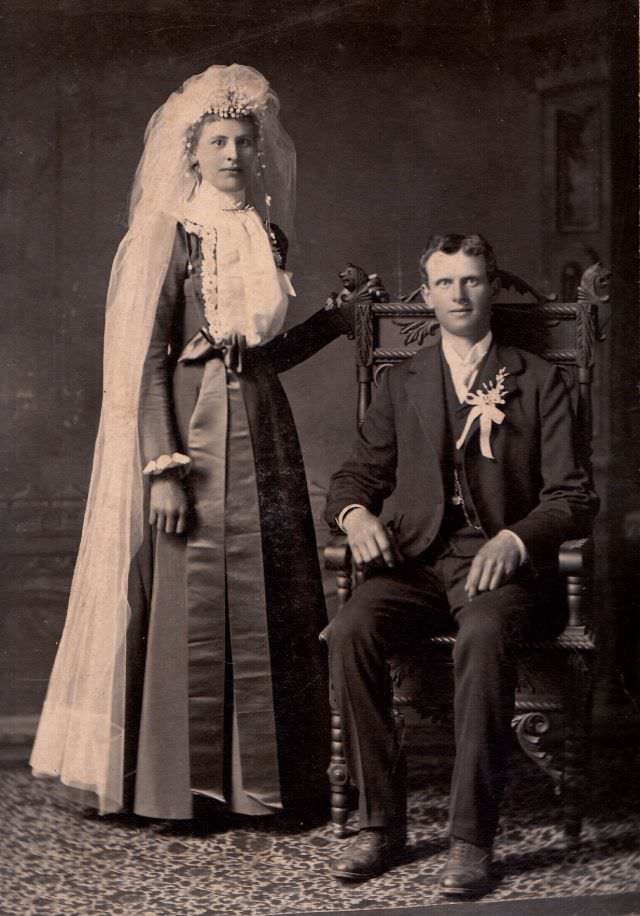
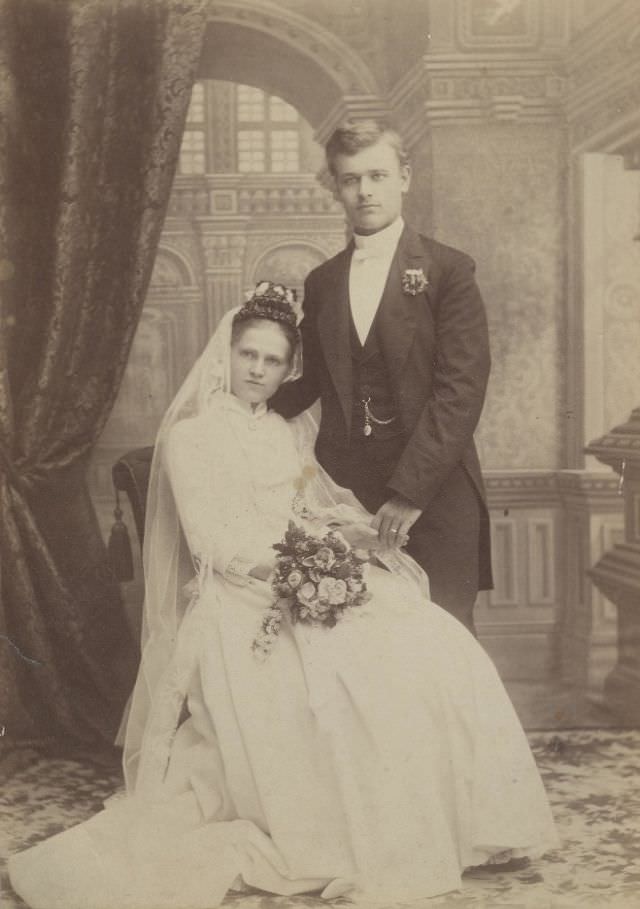
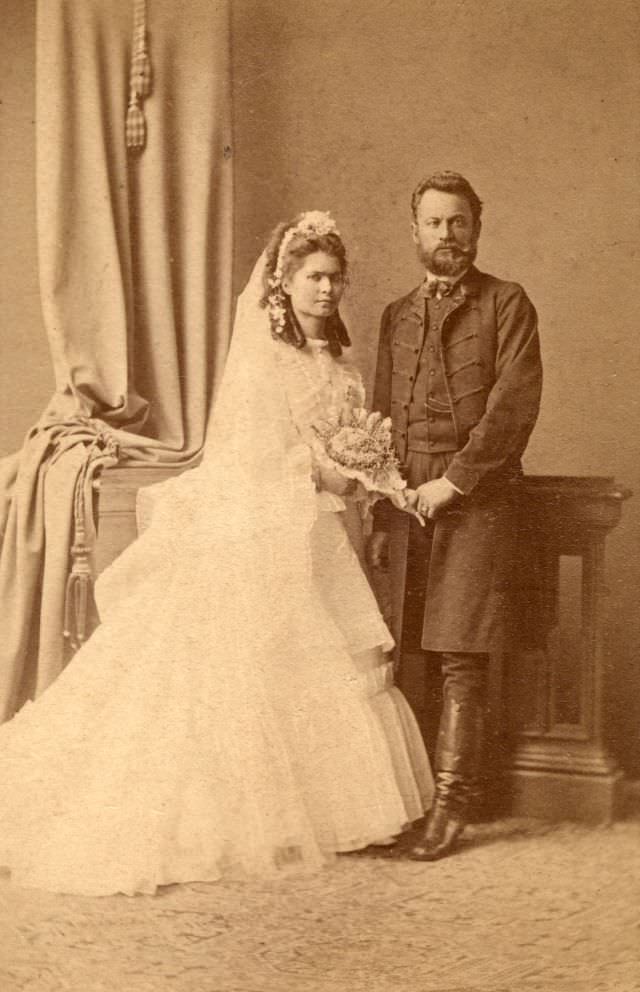
Photography studios competed for wedding business by advertising in local newspapers and offering package deals that included multiple prints in different sizes. The carte de visite — a small photographic card roughly the size of a business card — was enormously popular during the Victorian era. Wedding portraits were often produced in this format so that copies could be given to relatives. Families collected these cards in special albums kept in the parlor.
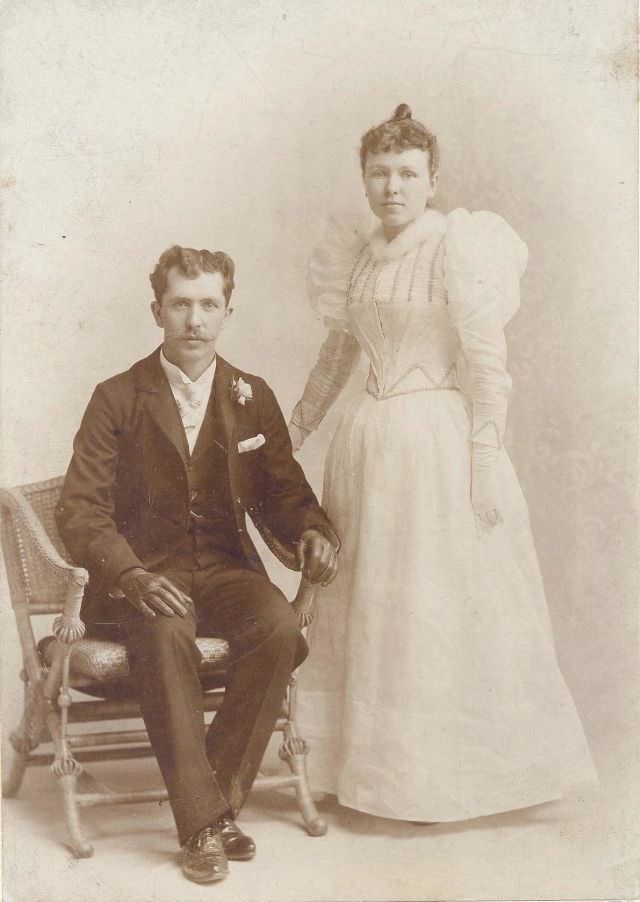
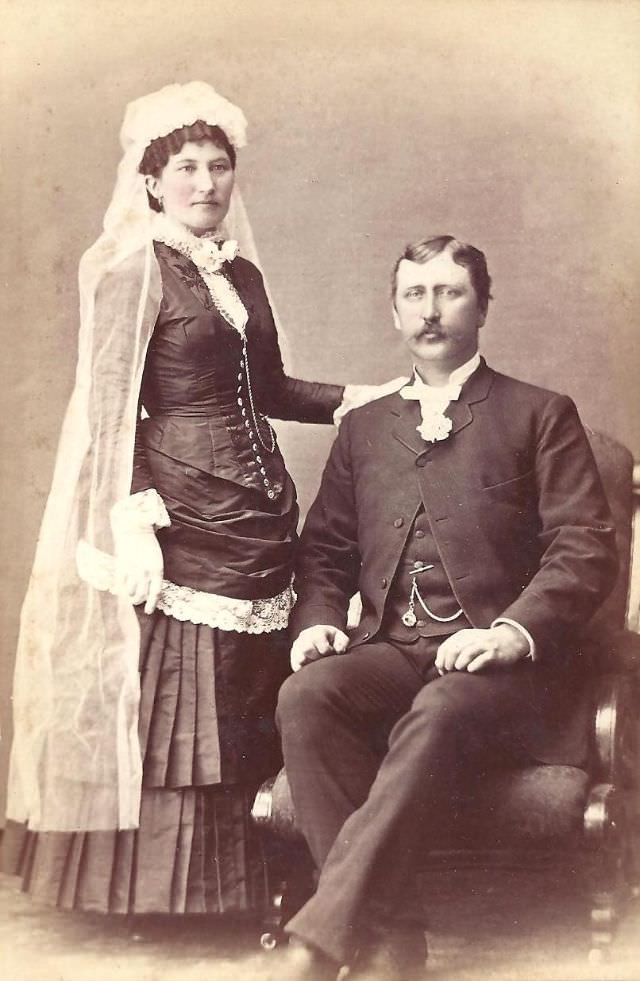
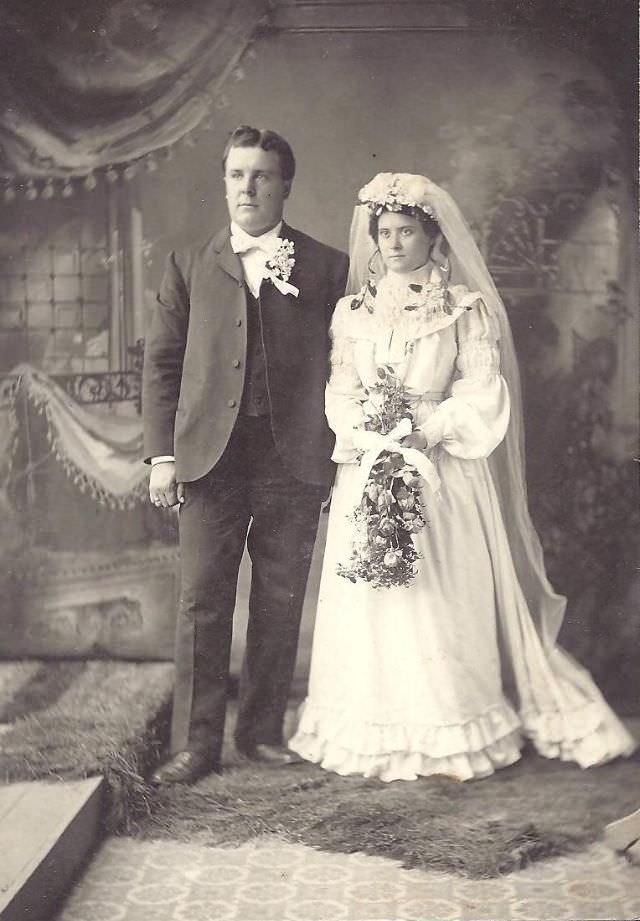
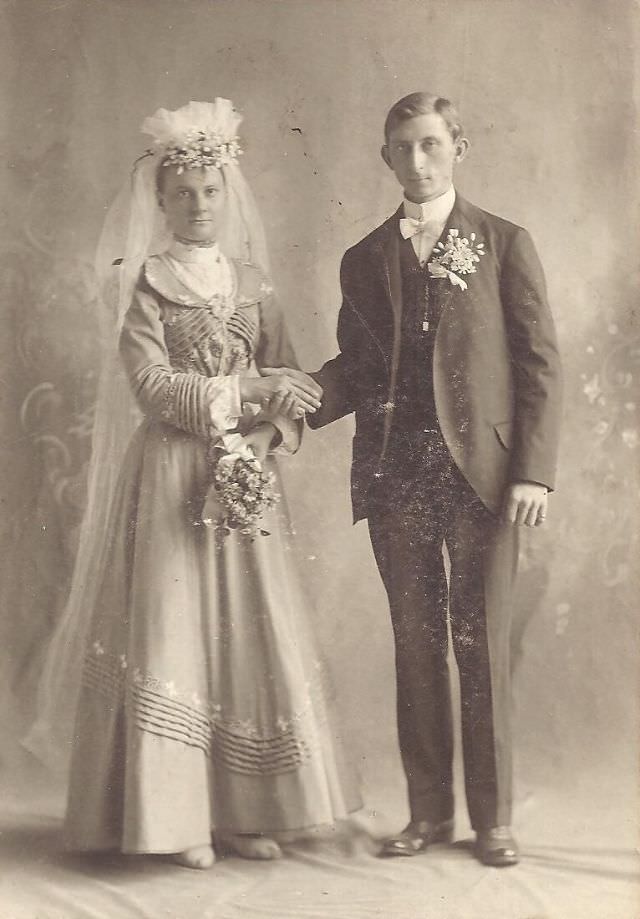
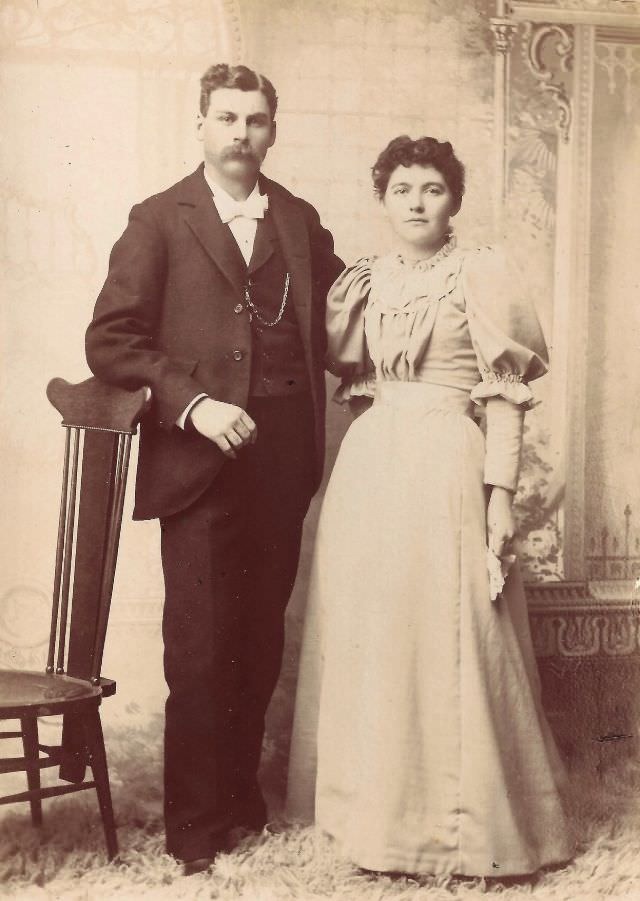
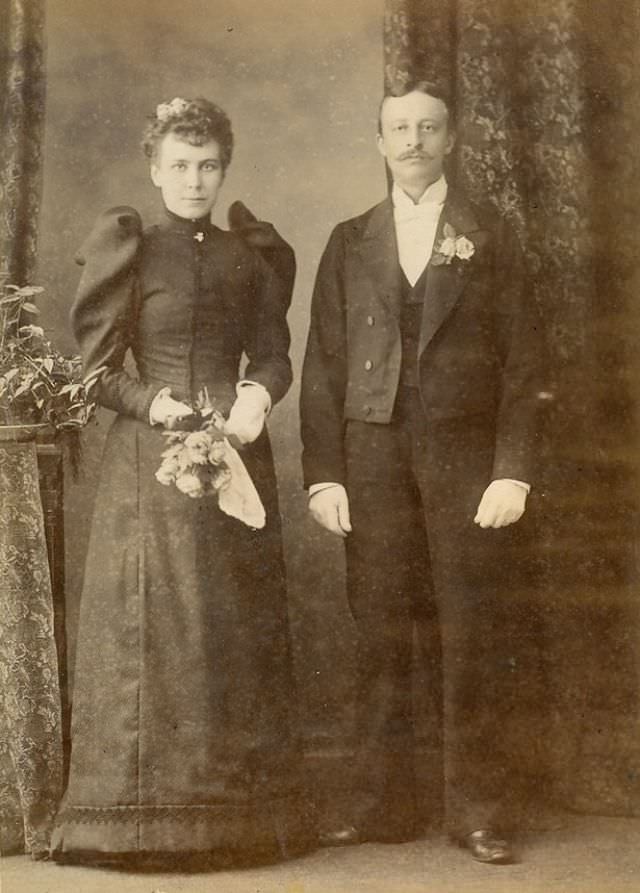
The groom’s suit evolved over the course of the Victorian era. Early in the period, blue frock coats with decorative lapels were the clear standard for formal occasions including weddings. By the 1880s and 1890s, black and dark grey morning coats were becoming more fashionable, particularly in urban settings. The shift reflected broader changes in men’s fashion as the century progressed toward a more restrained and formal aesthetic.
Wedding gifts were given by guests, though the practice was less standardized than it is today. Common gifts included household items, linens, silverware, and decorative objects. Wealthy guests might give jewelry or larger pieces of furniture. Gift-giving was guided by the expectation that the new couple was setting up a household together for the first time.
The wedding cake was a centerpiece of the Victorian reception. Rich fruitcakes layered with marzipan and white royal icing were the standard. The white icing — made from refined sugar — was specifically called “bride cake” icing and served as a visible marker of the family’s financial standing. Tiered cakes became fashionable in the second half of the 19th century, with each tier diminishing in size toward the top. The uppermost tier was sometimes saved and used at the christening of the couple’s first child.

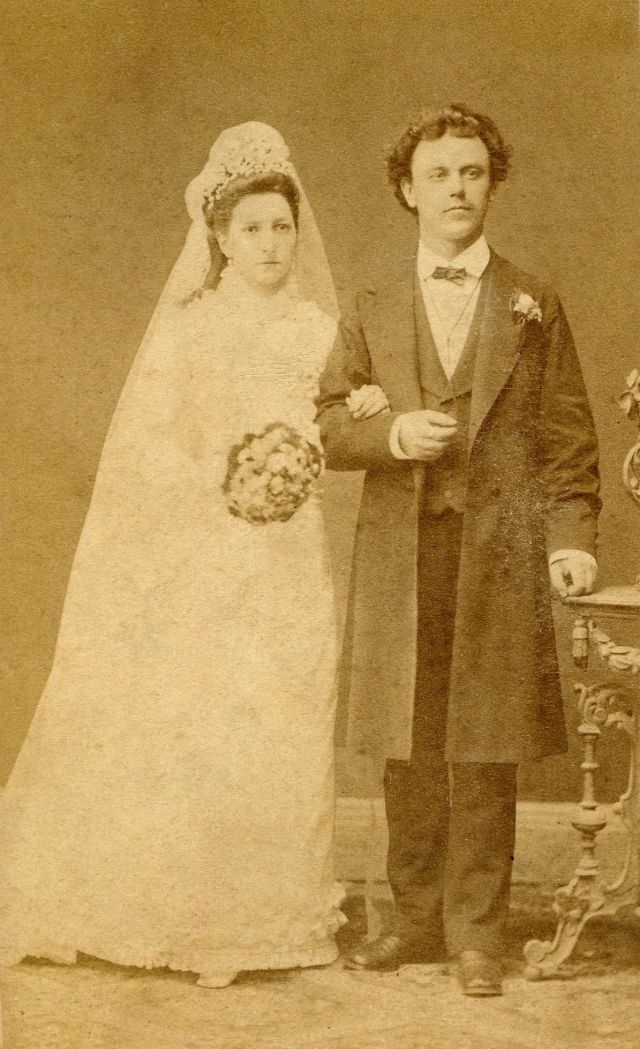
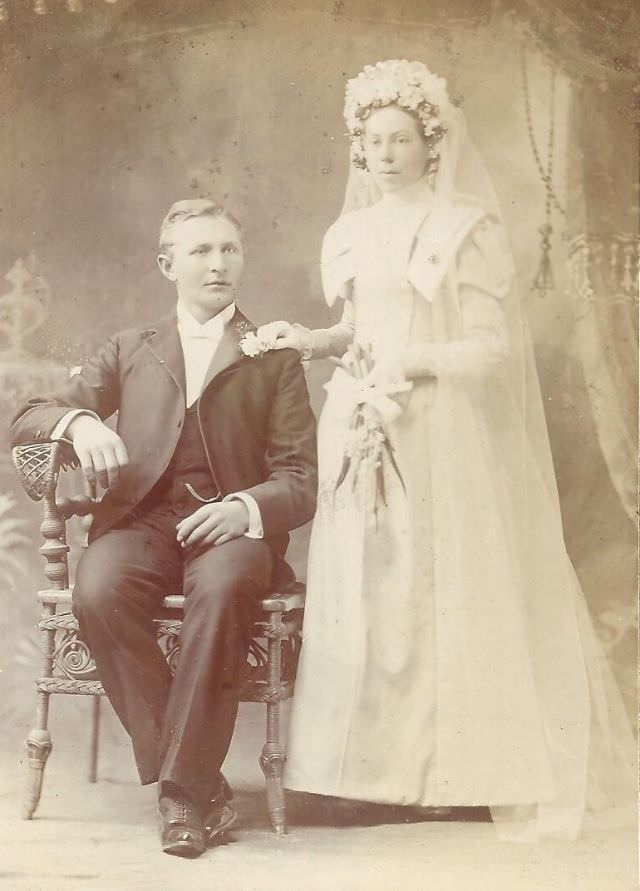
The role of the mother of the bride was significant in Victorian wedding planning. She managed most of the arrangements, from selecting the venue and catering to overseeing the guest list. The father’s role was to walk the bride down the aisle and formally give her away to the groom — a ritual that reflected the legal transfer of guardianship from father to husband. These roles were deeply embedded in the social expectations of the time.
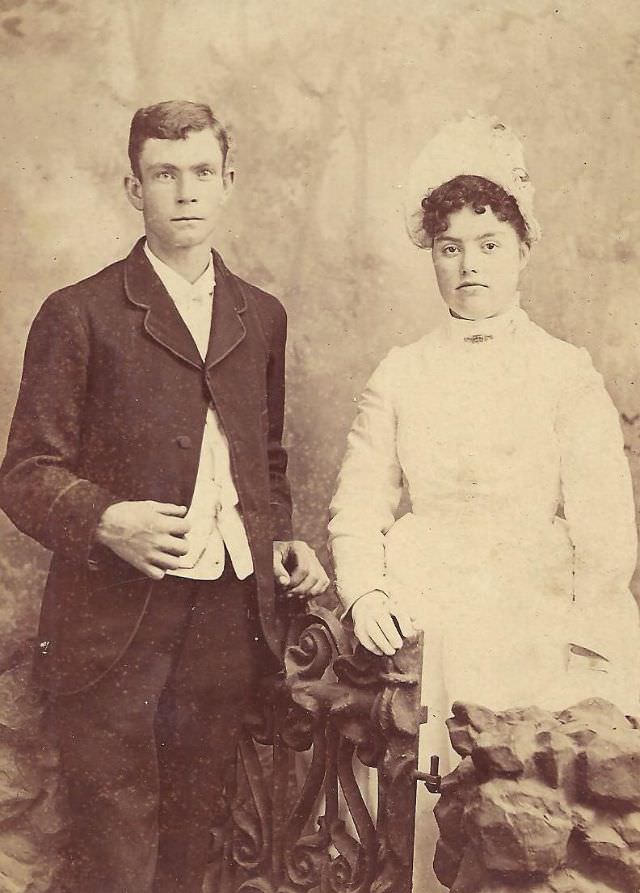
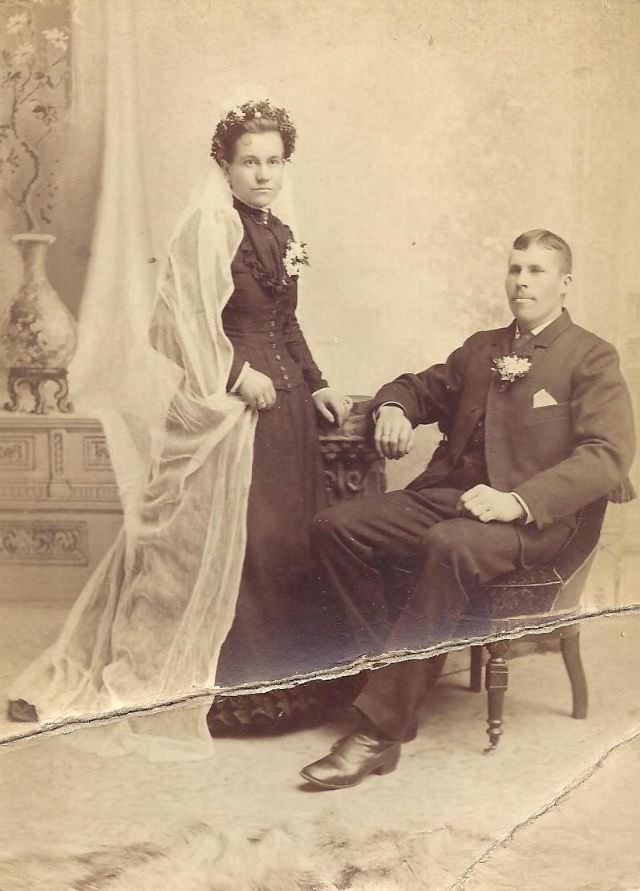
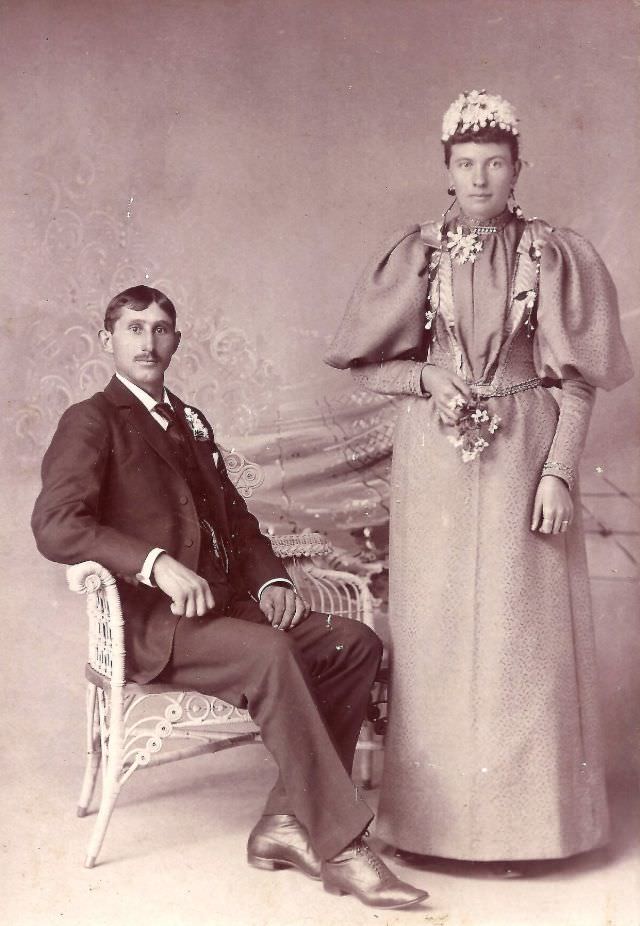
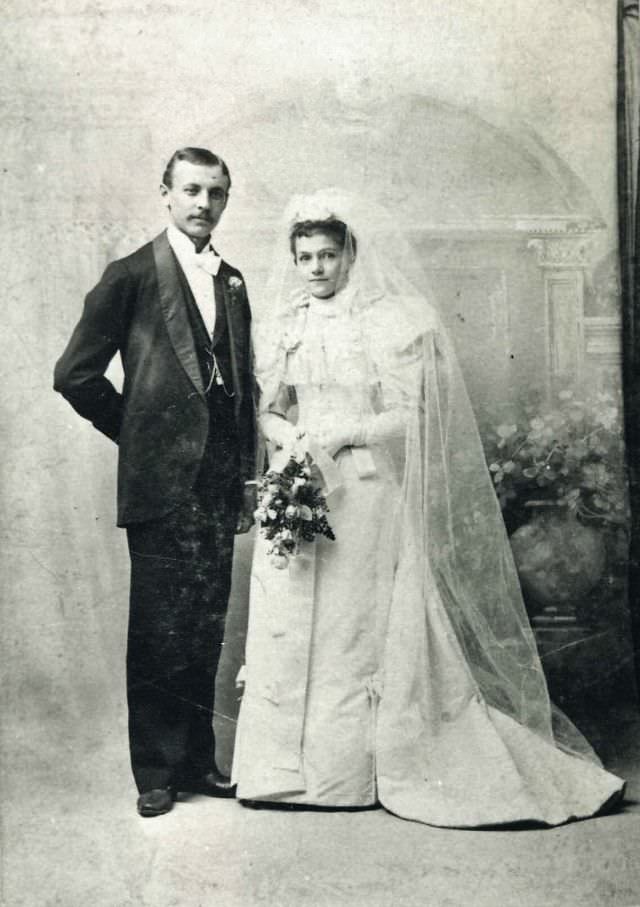
Looking at these photographs now, what stands out is the combination of formality and individuality. Each couple dressed within the conventions of the time, yet the details — the cut of a sleeve, the choice of fabric, the angle of a veil — varied from one portrait to the next. These were real people, dressed for one of the most significant days of their lives, standing still long enough for a camera to record them.