Not every home in postwar America had a spare bedroom. Families were growing, apartments were small, and overnight guests were a regular fact of life. Simmons had an answer for all of it — and they made sure everyone knew about it through some of the most colorful print advertising of the 1950s.
In April 1940, the Simmons Mattress Company introduced the Hide-A-Bed. The concept was straightforward but genuinely clever: a sofa that looked like any other piece of living room furniture until you needed it to be something more. Remove the cushions, pull the handle, and a spring-loaded metal frame unfolded to reveal a full-sized bed hidden inside the couch frame. By day it was seating. By night it was a proper place to sleep.
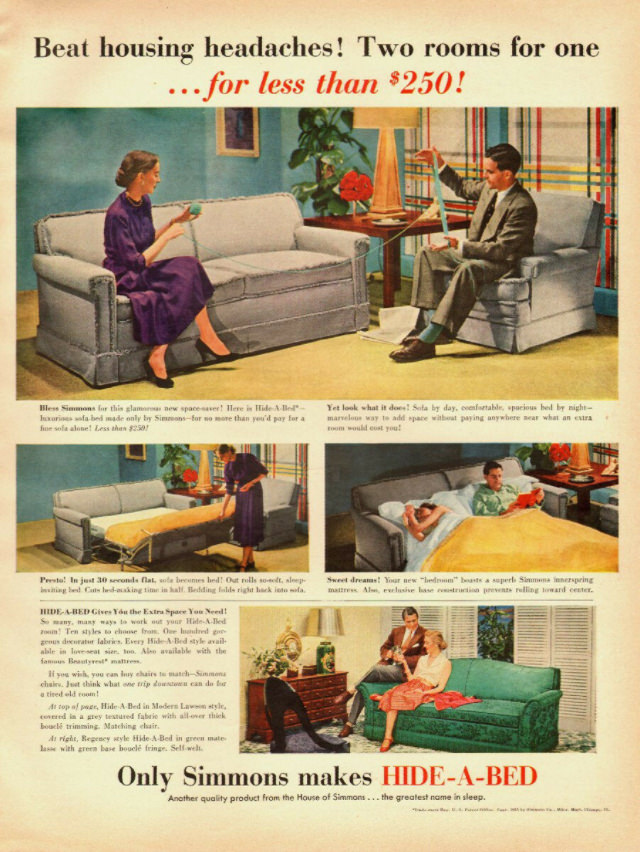
The design was a natural fit for the 1950s American home. The postwar housing boom brought millions of families into new suburban houses and urban apartments, many of which were built with efficiency in mind rather than extra square footage. A dedicated guest room was a luxury not everyone could afford. The Hide-A-Bed solved the problem without sacrificing style in the living room.
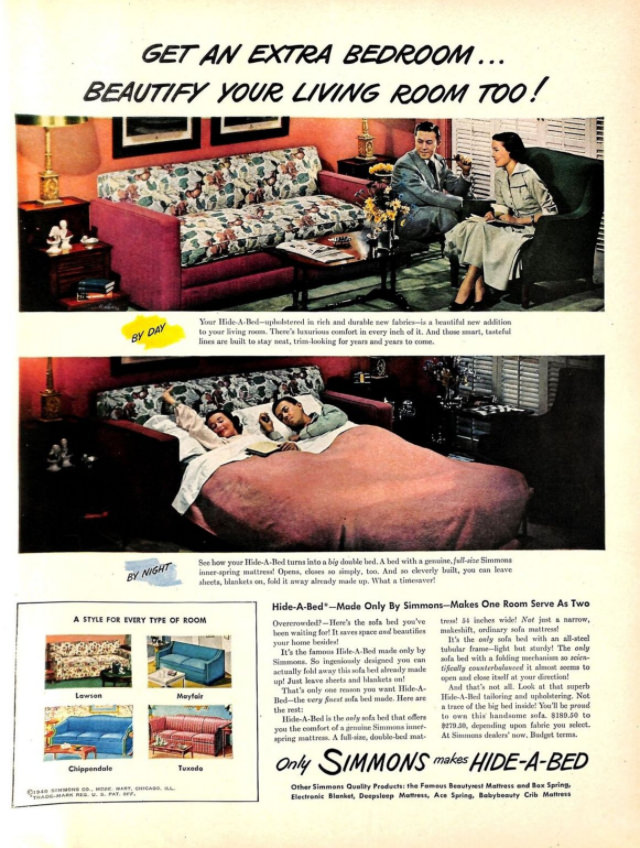
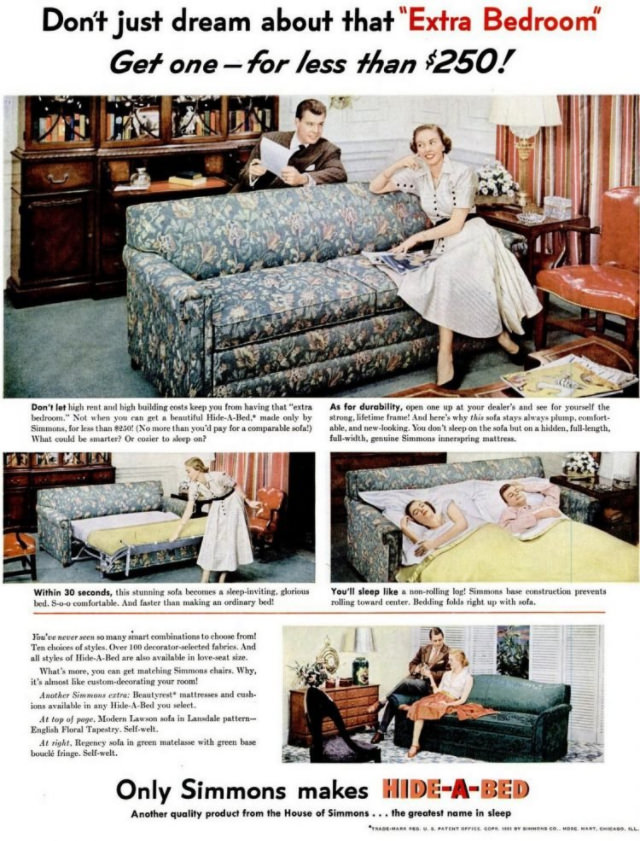
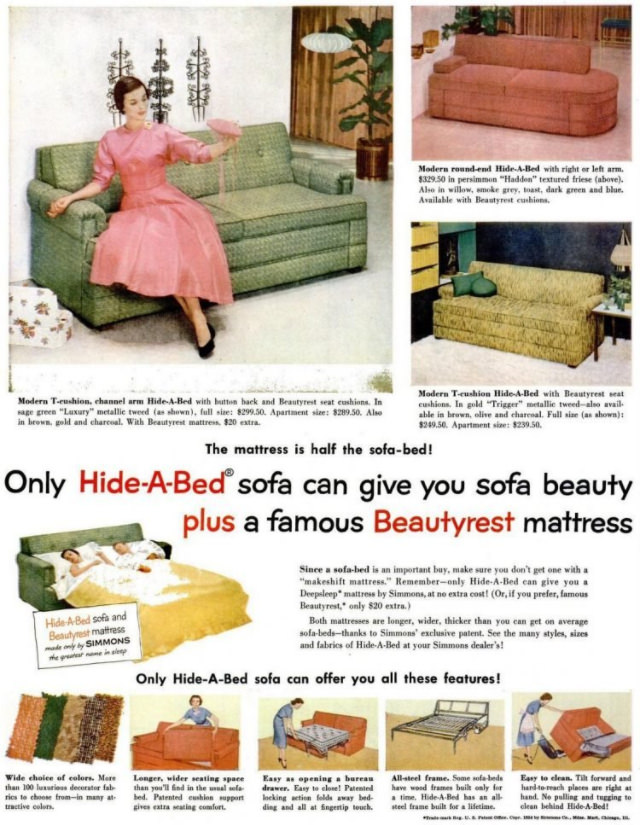
Simmons leaned hard into print advertising to get the word out. Their ads ran in major magazines and newspapers throughout the decade, targeting homemakers and young couples setting up their first homes. The ads were bright, optimistic, and packed with detail — showing the sofa in stylish living room settings, often with a smiling family or a pair of well-rested guests.
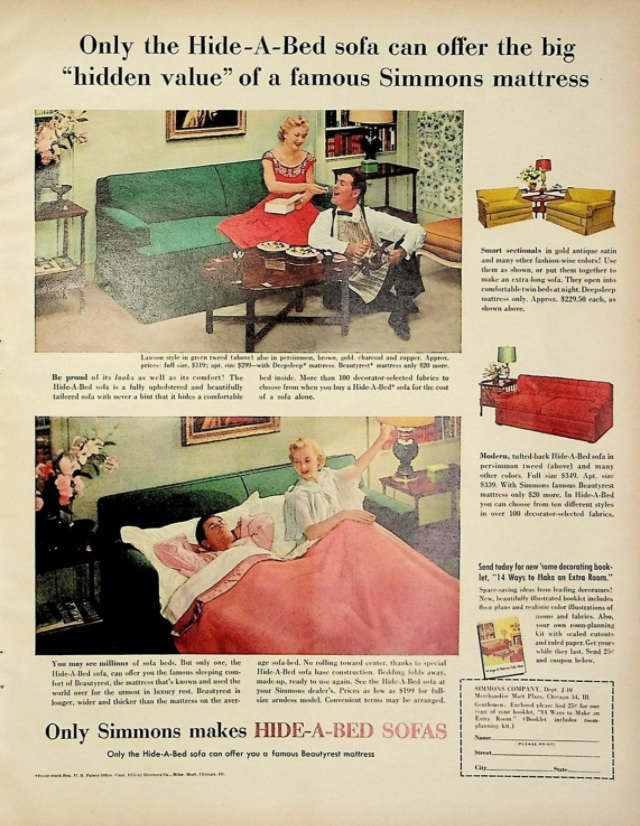
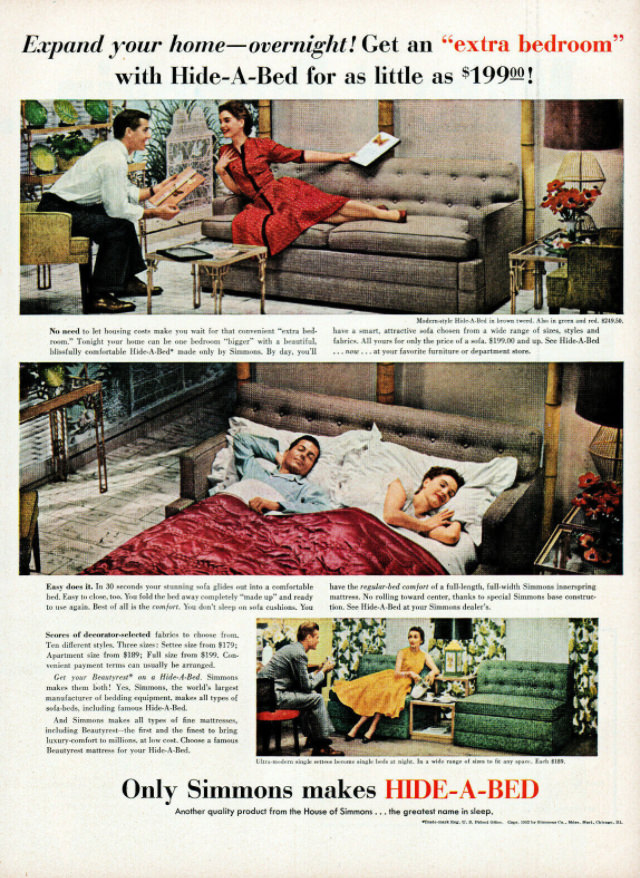
One of the key selling points Simmons pushed was the mattress itself. Unlike folding cots or improvised sleeping arrangements, the Hide-A-Bed used a real mattress — and as the product line grew, buyers had options. Twin, full, and queen sizes were available. Customers could also choose between standard innerspring, air, or foam mattresses depending on their budget and comfort preferences.
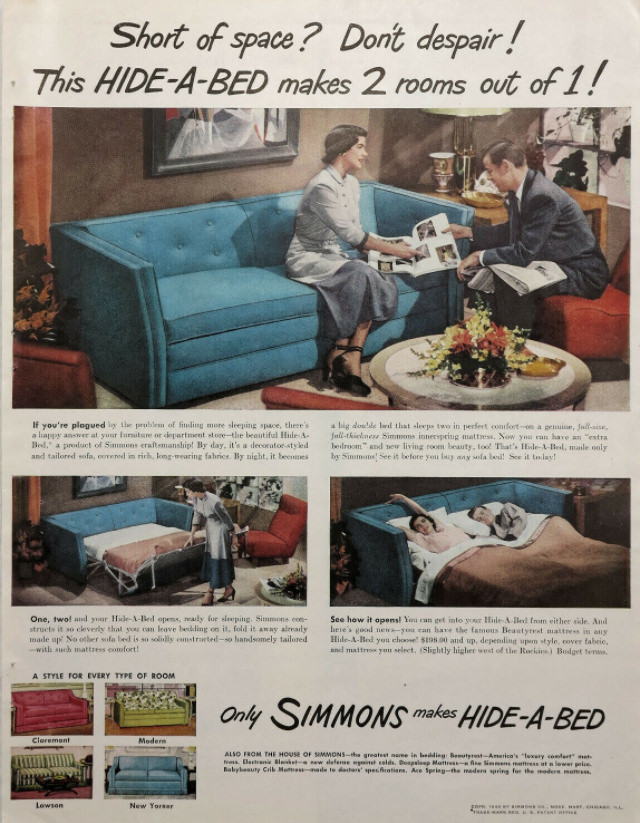
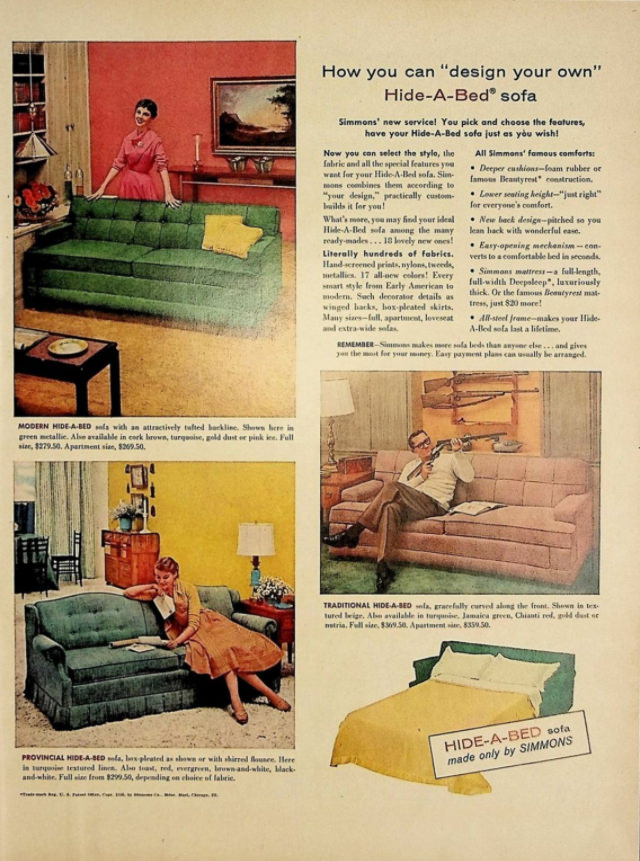
The ads frequently emphasized the seamless transformation from sofa to bed. Copy often pointed out that guests would sleep just as well on a Hide-A-Bed as they would in a traditional bedroom — a bold claim that Simmons backed up with its reputation in the mattress industry. The company had already built trust with American consumers through decades of selling beds, and that credibility carried over directly to the Hide-A-Bed.
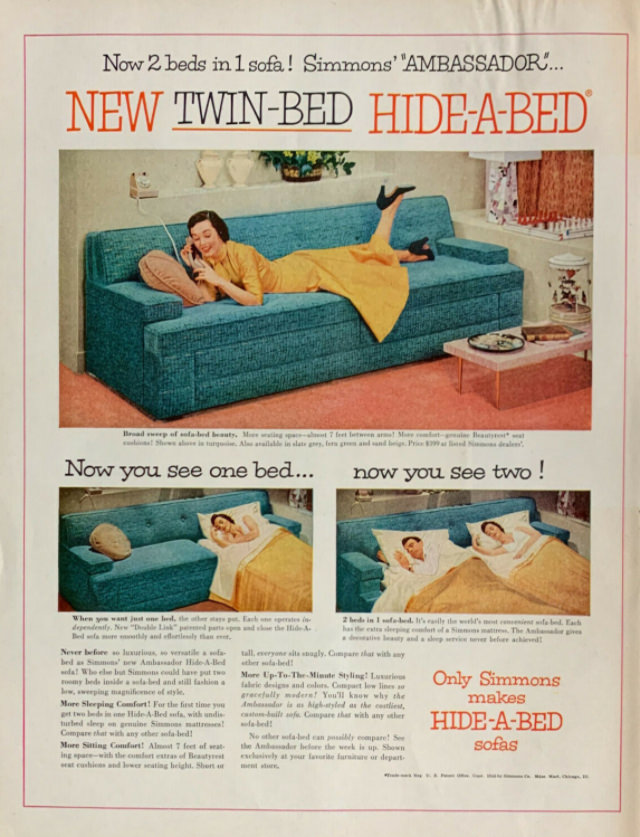
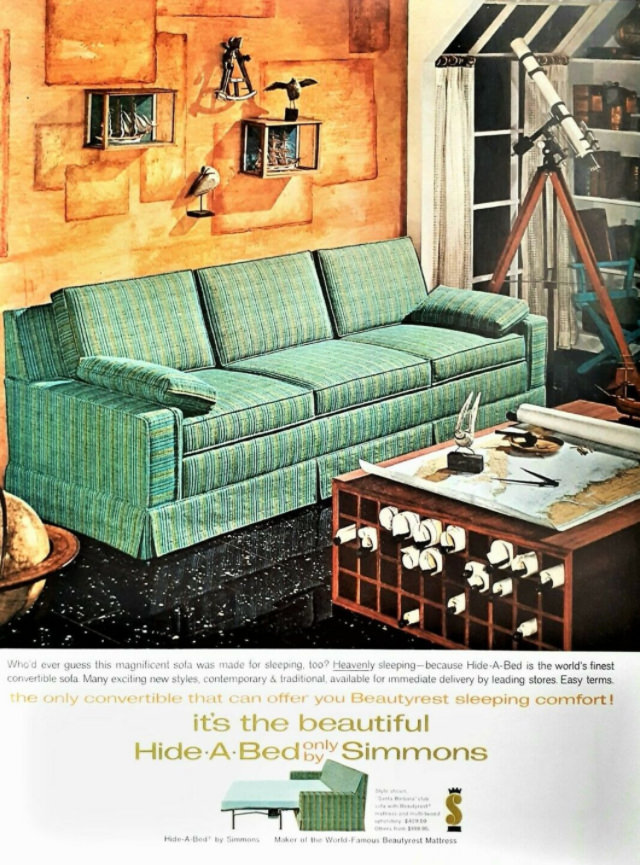
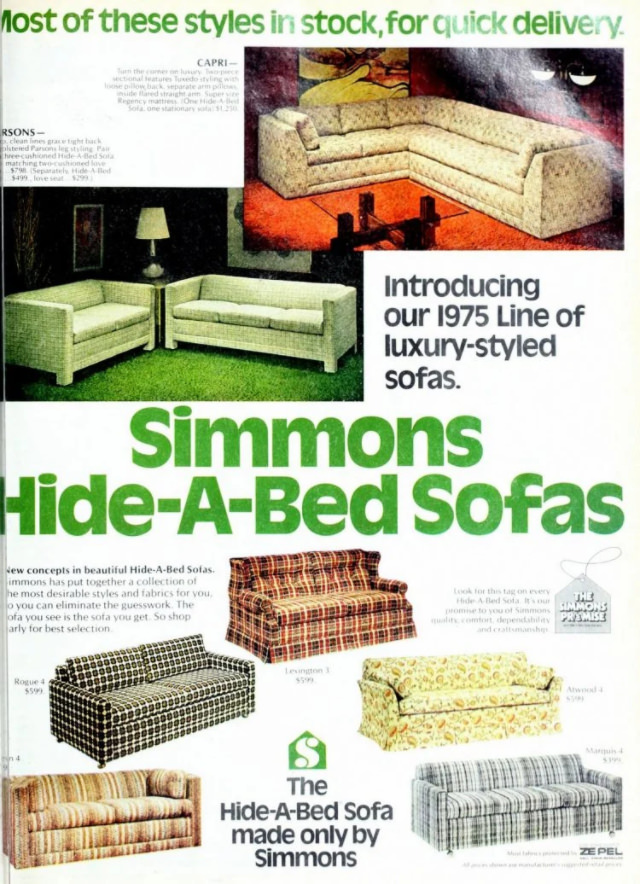
Style was never an afterthought in these ads. Simmons offered the Hide-A-Bed in a wide range of upholstery fabrics and frame designs so it would blend into a well-decorated room. The 1950s consumer cared deeply about the appearance of their home, and a piece of furniture that looked out of place or purely functional wouldn’t sell. Simmons made sure their sleeper sofa looked the part even when it was just a sofa.
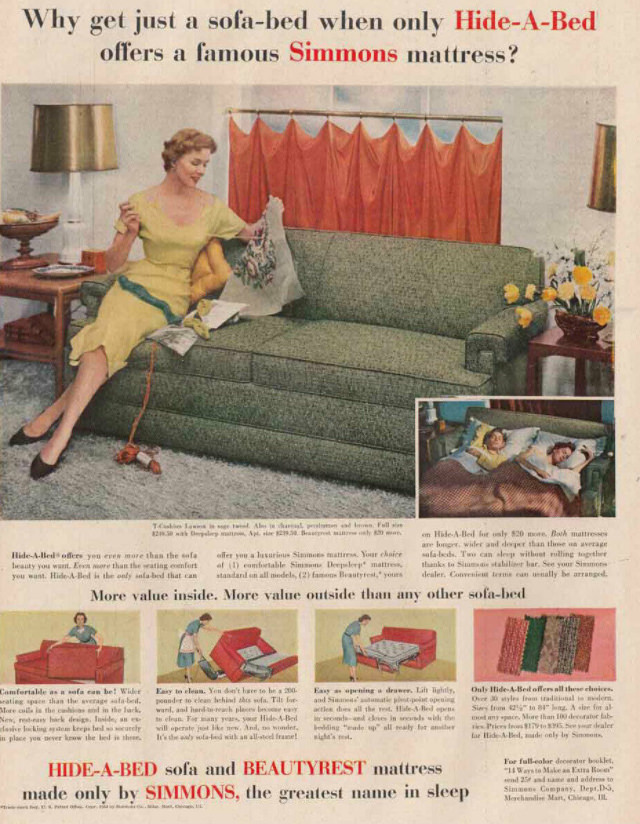
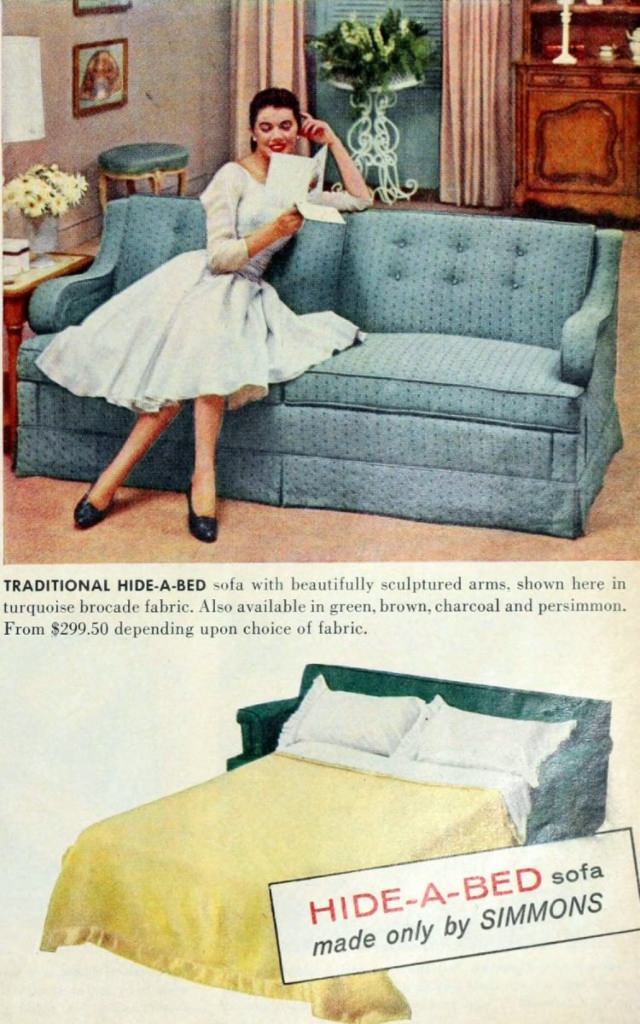
The spring-loaded frame mechanism was a genuine engineering achievement for its time. Earlier fold-out furniture had been clunky and difficult to operate. Simmons refined the hinge and frame system so that one person — typically the homemaker the ads were addressed to — could open and close the bed without help. That ease of use became a consistent theme across years of advertising.
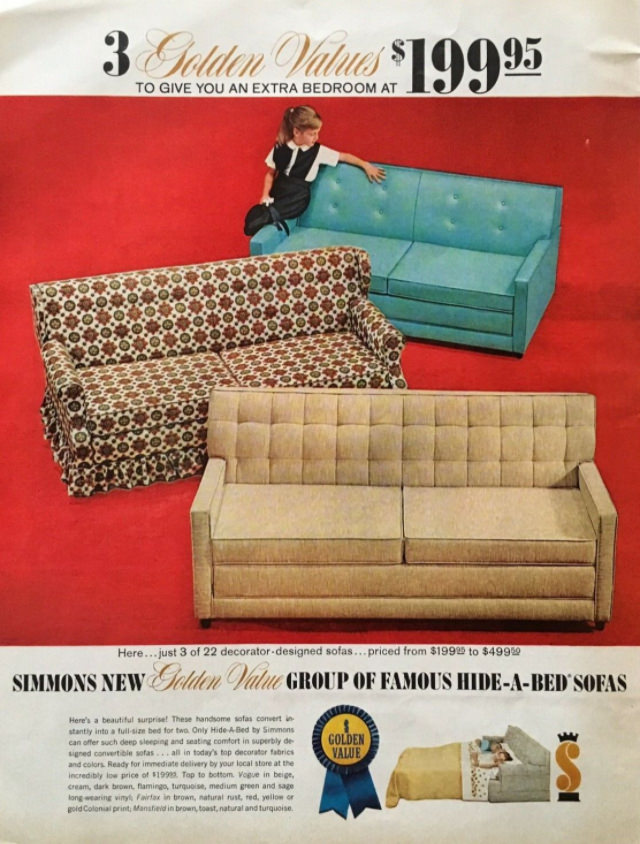
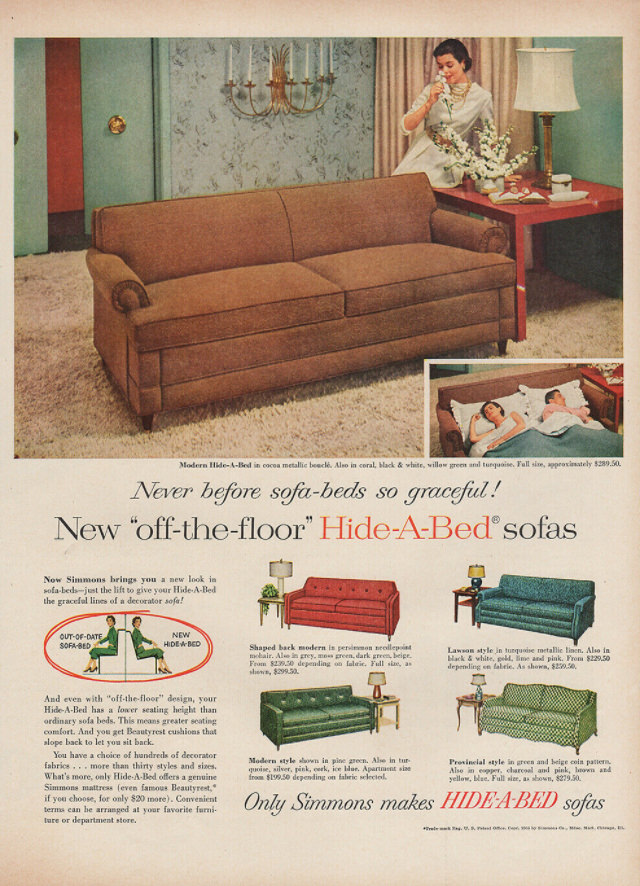
Pricing and financing terms showed up in many of the ads as well. The Hide-A-Bed was a premium product, and Simmons knew that some buyers needed encouragement to make the purchase. Installment plans were common in 1950s retail, and furniture was no exception. Ads sometimes listed monthly payment amounts alongside the retail price to make the sofa feel more accessible.
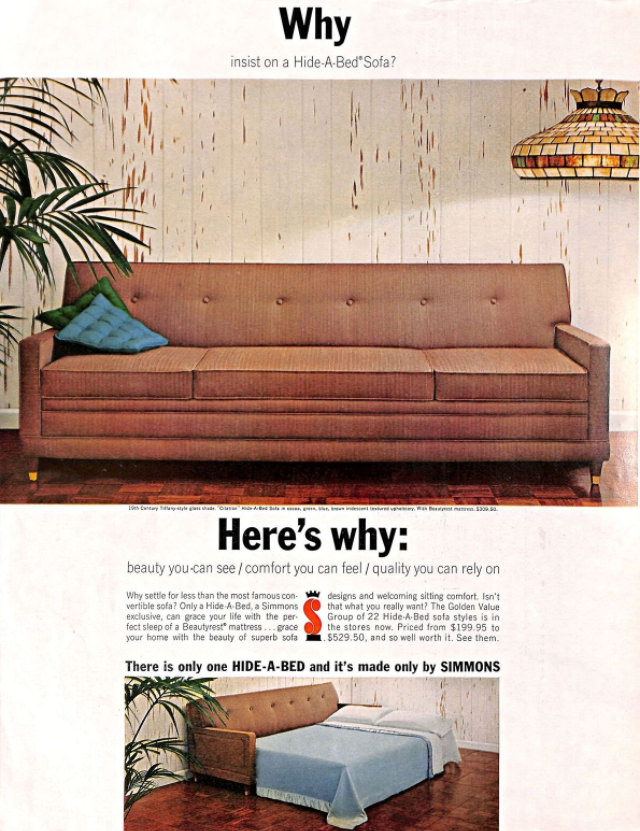
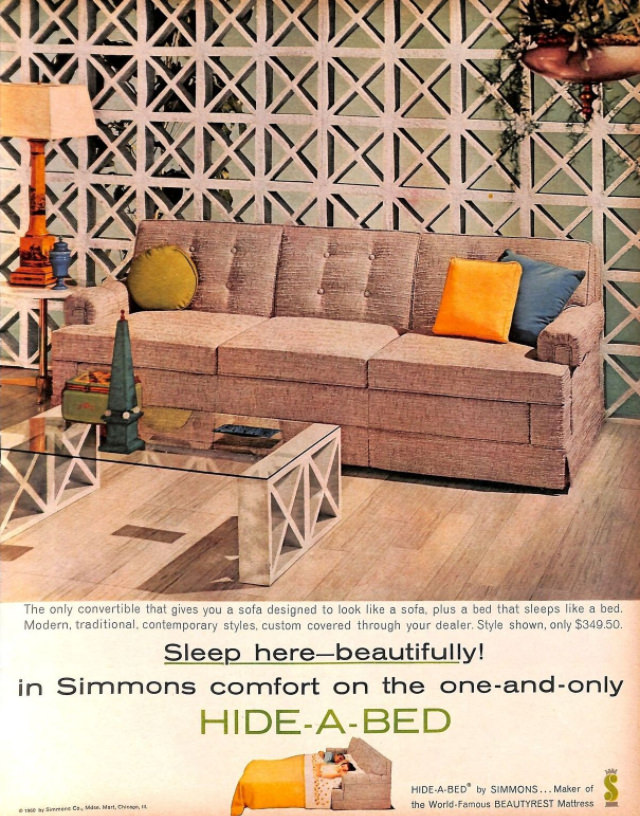
Dealers were a big part of the Simmons strategy too. Many ads directed readers to their local furniture store or department store, where a Hide-A-Bed could be seen and tested in person. The in-store demonstration was powerful — watching the sofa fold out into a bed made the product’s value immediately obvious in a way a magazine page alone could not.
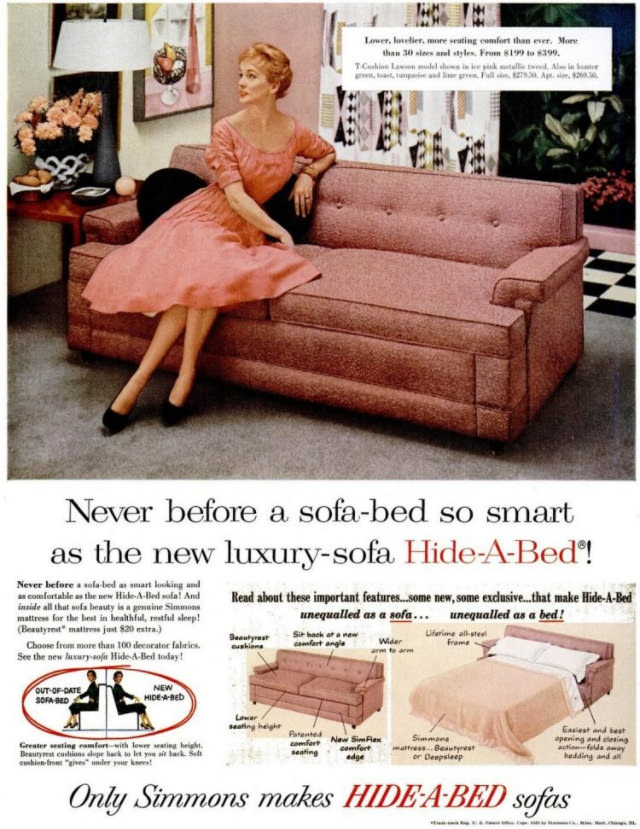
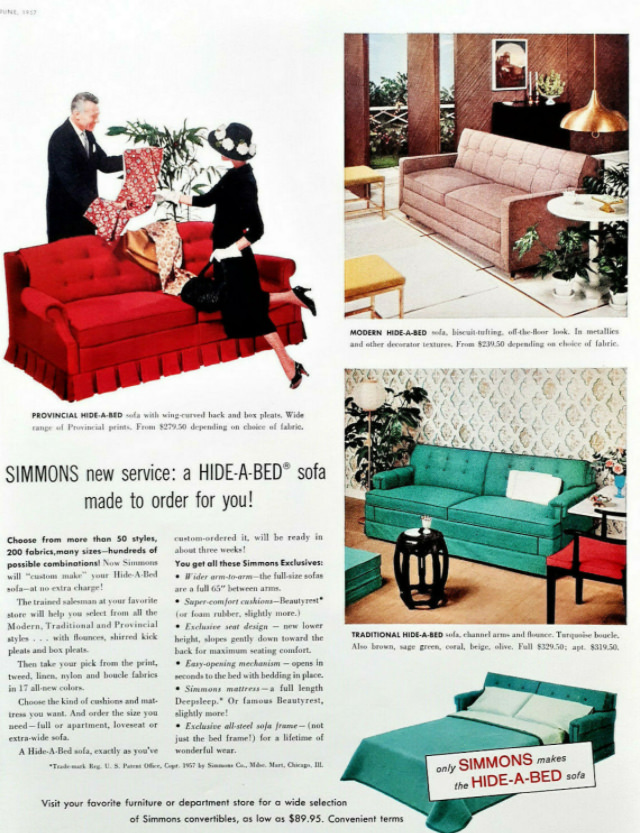
Looking at these ads today, the 1950s visual language is unmistakable. The color palettes, the hand-drawn illustrations, the typography, and the cheerful domestic scenes all place them firmly in their era. But beneath the period style, the core pitch is timeless: here is a practical solution to a real problem, and it looks good doing it.
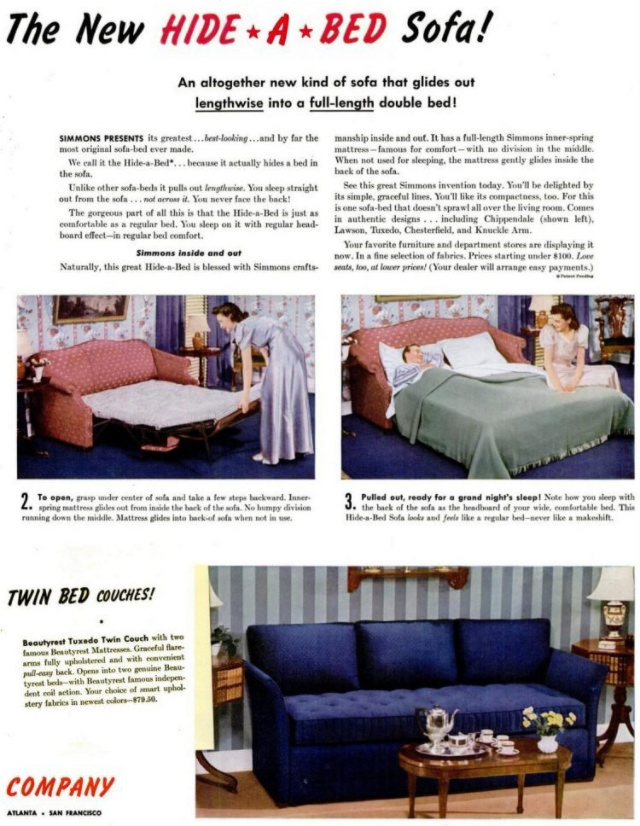
Simmons protected the Hide-A-Bed name as a trademark, and the brand became so well known that many Americans used it as a generic term for any sleeper sofa, regardless of who made it — a sign of just how thoroughly the product had embedded itself in everyday life.