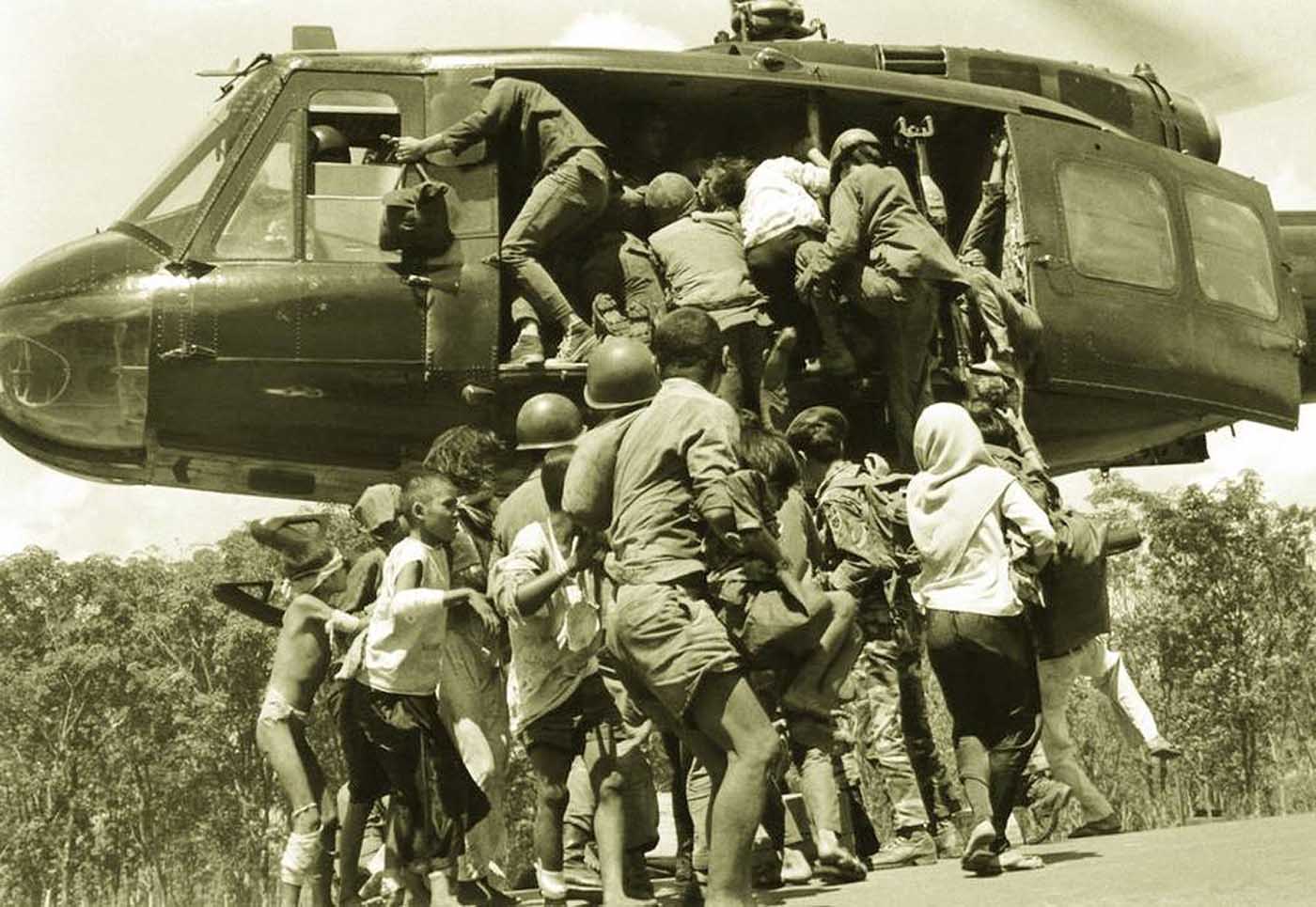
By the last days of April 1975, South Vietnam was collapsing fast. North Vietnamese forces were closing in on Saigon, and the United States had run out of time. What followed over April 29th and 30th was one of the most chaotic and remarkable rescue operations in military history — a massive helicopter airlift that would become the largest of its kind ever conducted. It had a name: Operation Frequent Wind.
The U.S. Embassy in Saigon and its Defense Attaché Office had spent weeks preparing for this moment. They distributed a booklet called Standard Instructions and Advice for Civilians in an Emergency — known as SAFE — to American citizens in the city. The booklet included a map of Saigon marking the exact pickup points to use when the signal came. That signal was unmistakable. Armed Forces Radio broadcast a coded message: “The temperature in Saigon is 105 degrees and rising,” followed immediately by the Bing Crosby song “White Christmas.” When those words hit the airwaves, everyone who had read the SAFE booklet knew exactly what to do.
American helicopters began landing on the roof of the U.S. Embassy in Saigon once every ten minutes. The rooftop was never designed for this kind of traffic, but the crews made it work. Each helicopter, built to carry around ten people, was loaded with up to five times that number. Men, women, and children clutched their belongings as they were rushed aboard and ferried out to waiting U.S. Navy warships positioned offshore in the South China Sea.
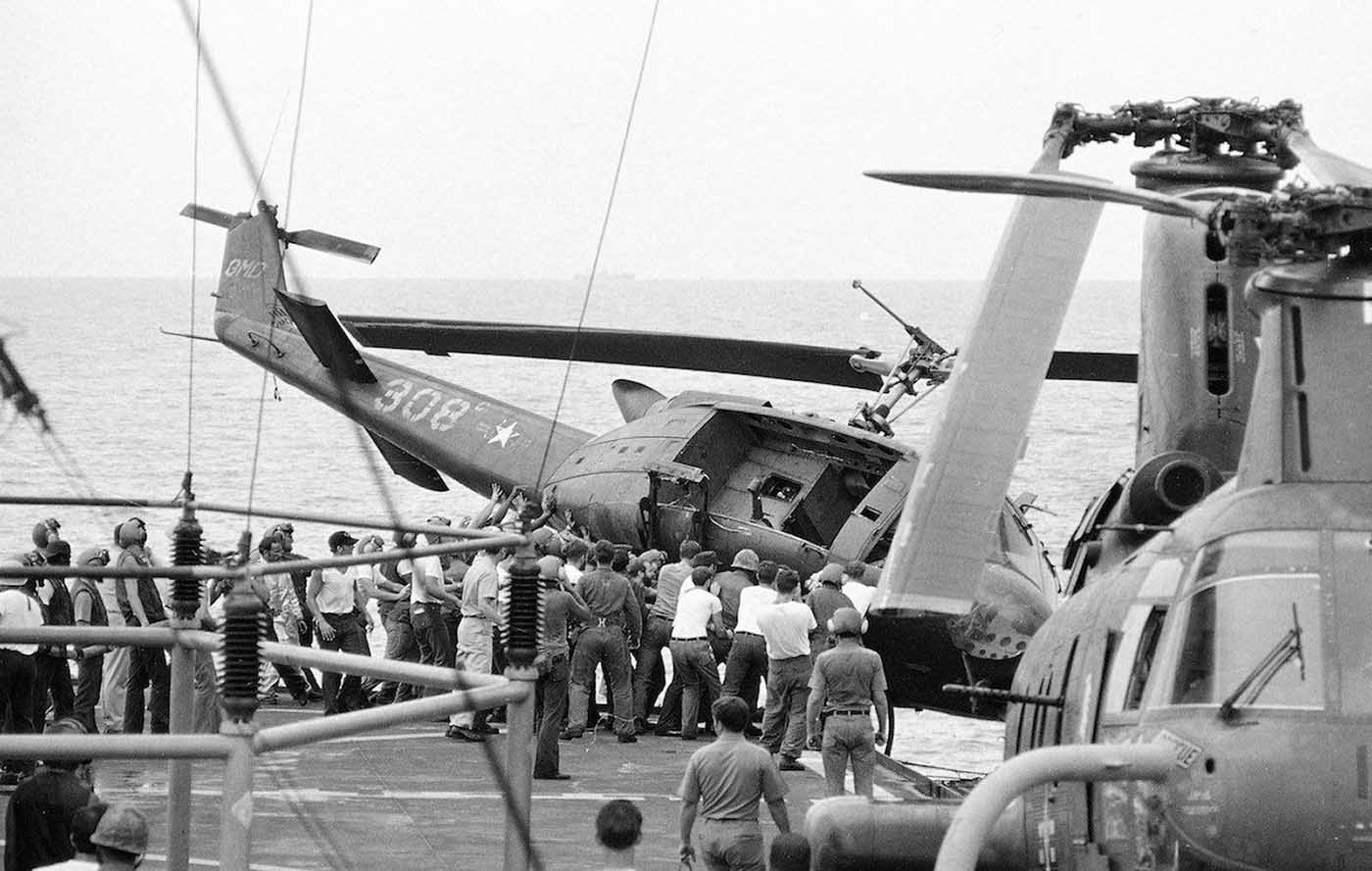
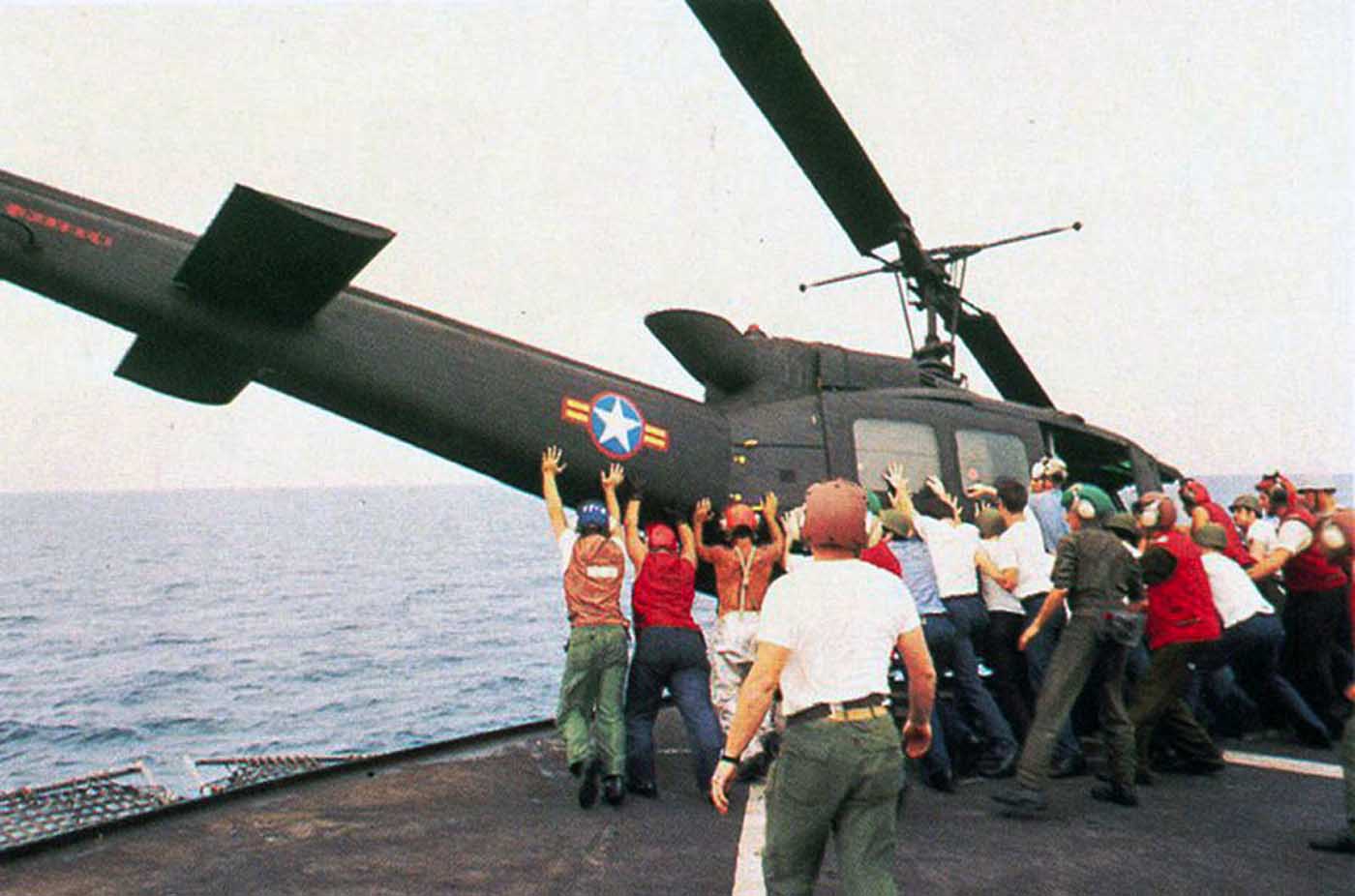
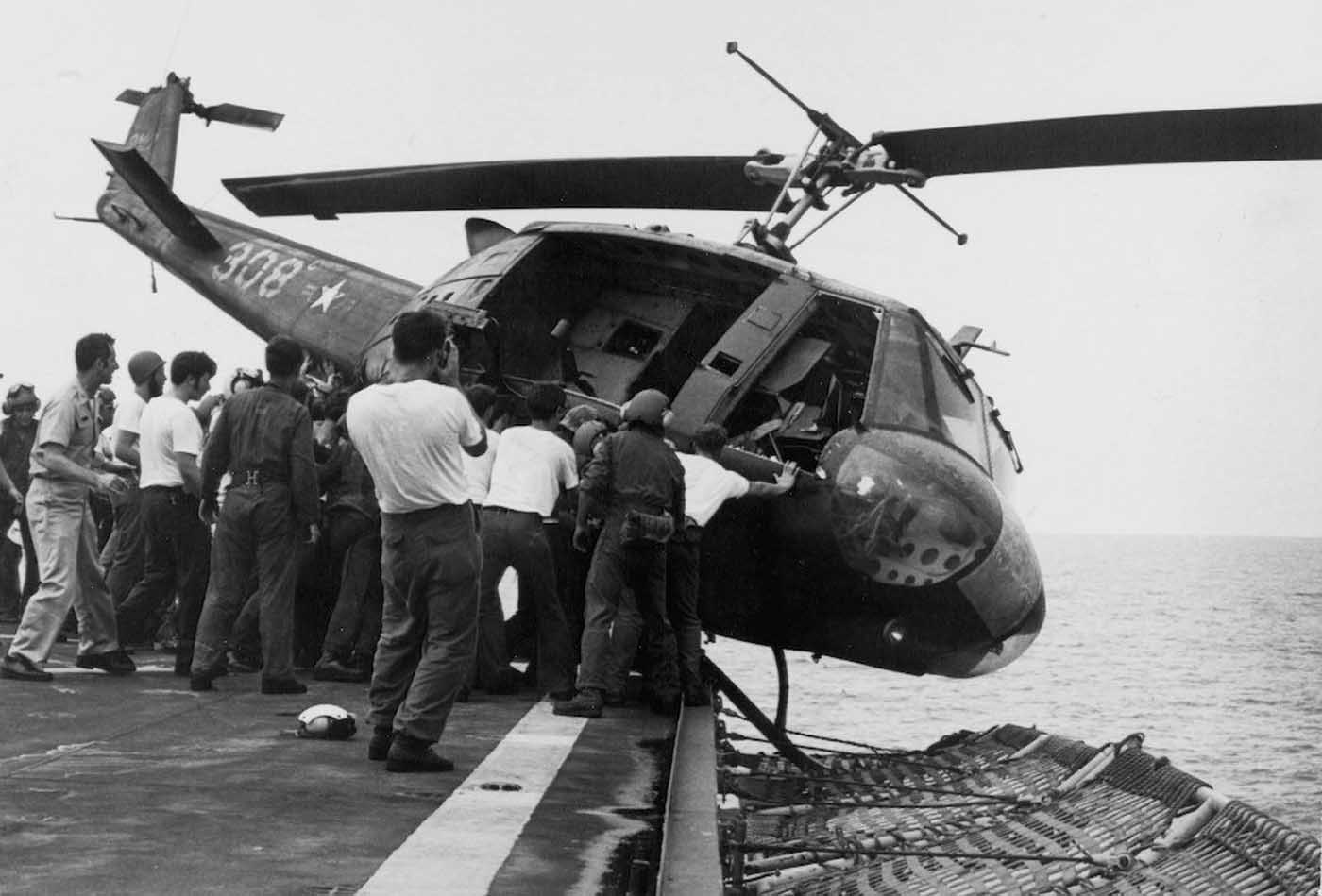
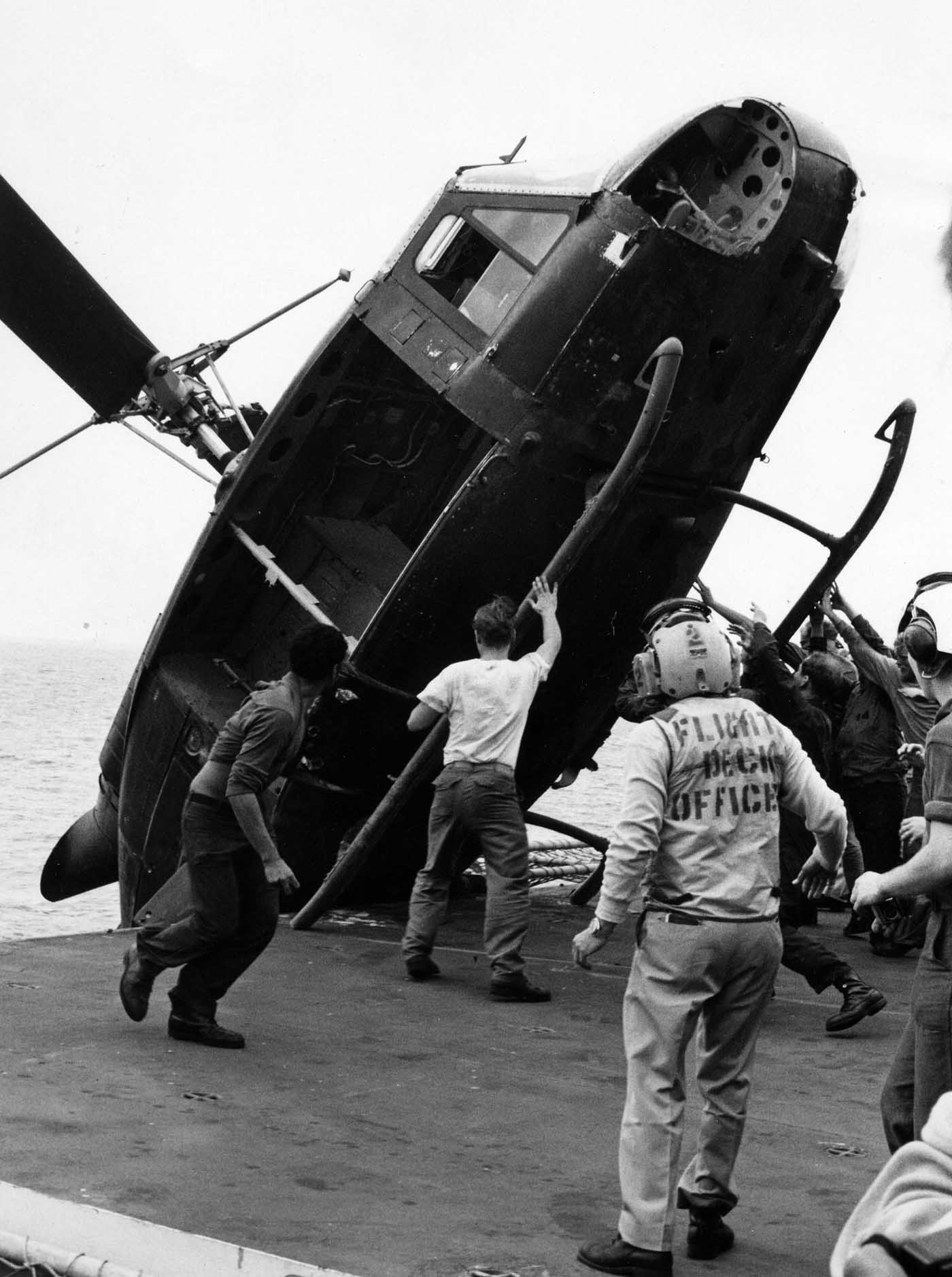
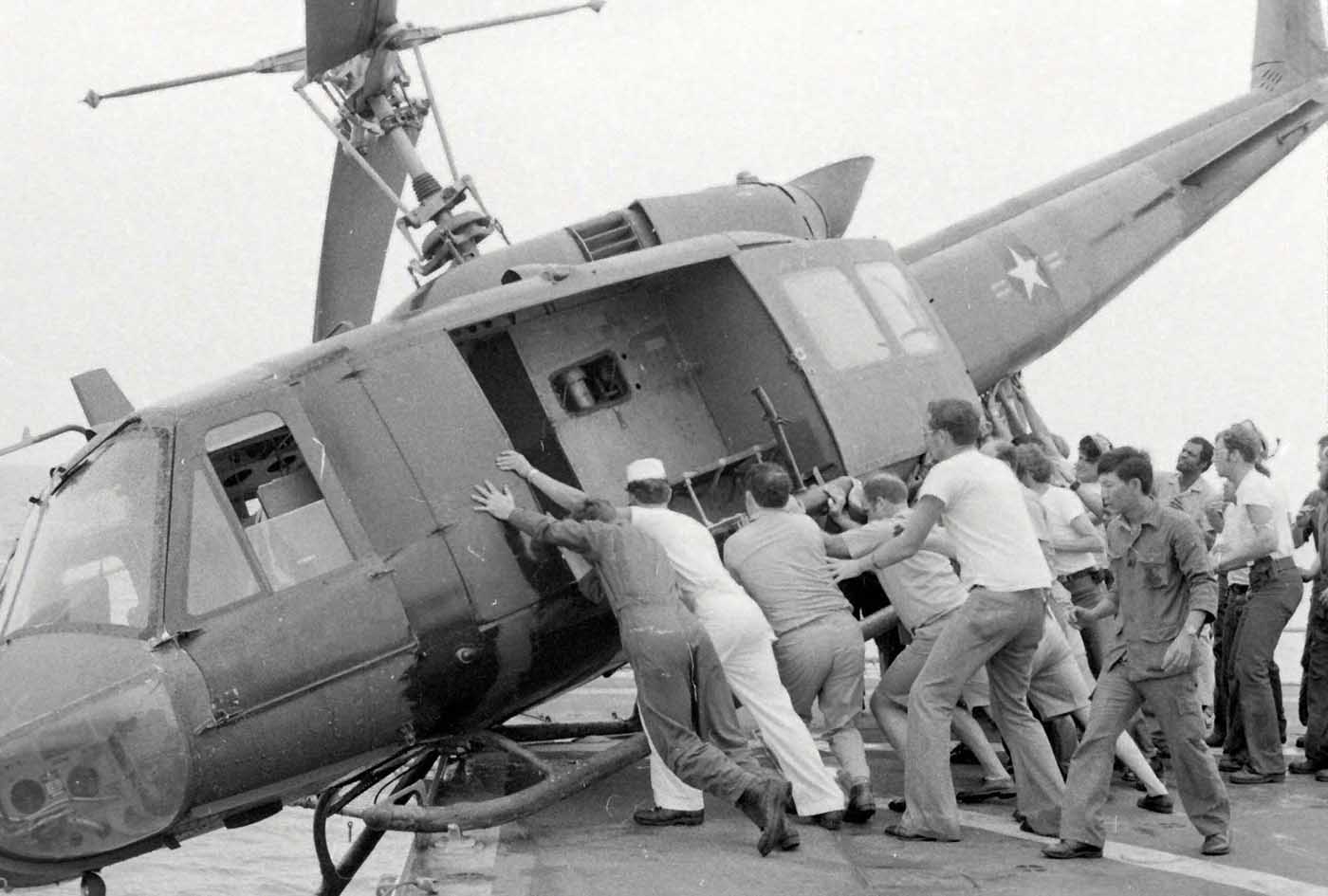
The warships themselves quickly became overwhelmed. The flight decks of aircraft carriers like USS Okinawa and USS Hancock filled up with helicopters that had nowhere to go. Every inch of deck space was critical — without it, incoming aircraft carrying more evacuees had no place to land. The U.S. military made a decision that shocked many observers at the time: they began pushing the helicopters overboard into the sea.
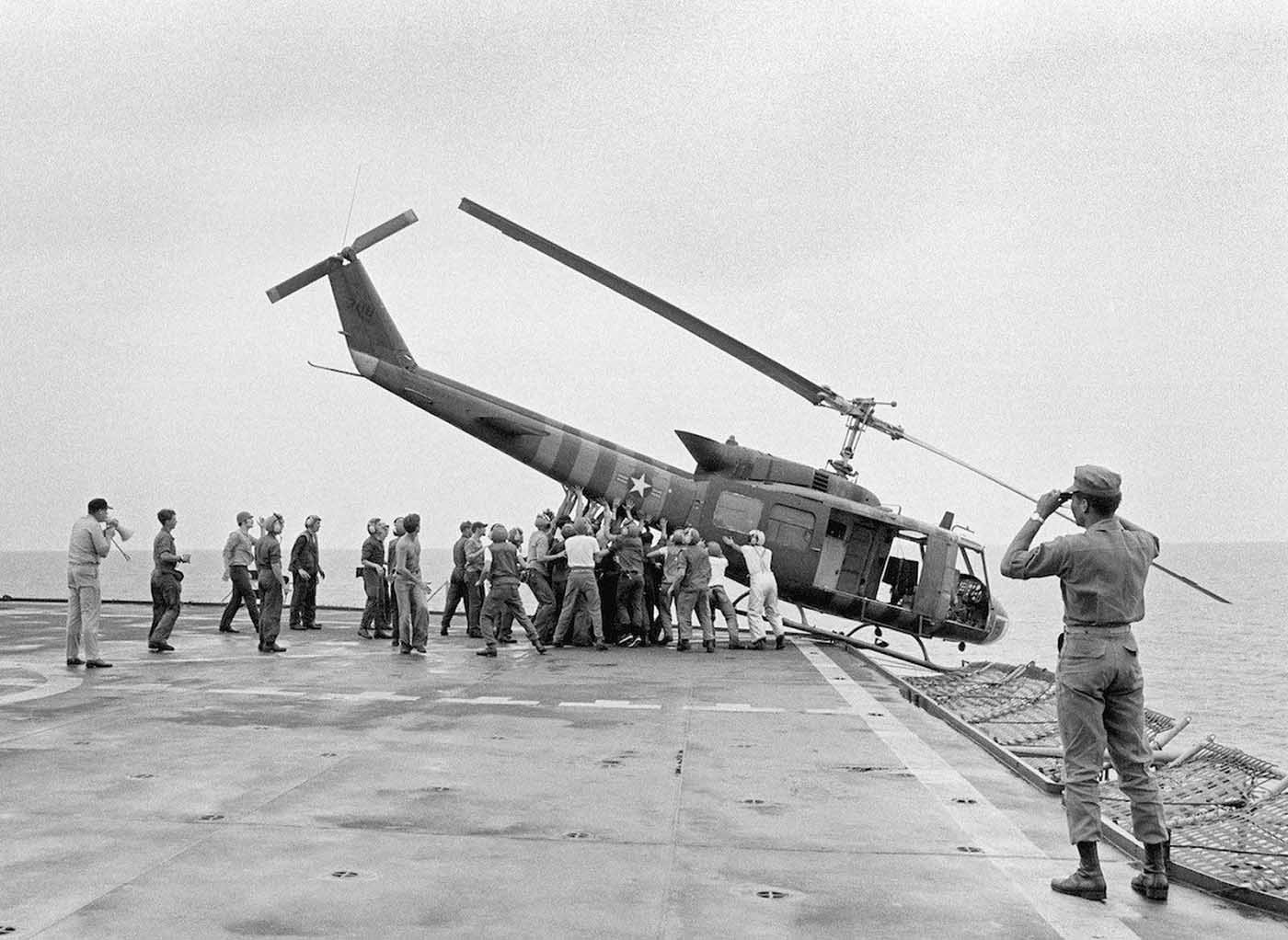
The logic behind the decision was straightforward. Aircraft carriers had no room to park the growing number of helicopters. The parked aircraft were blocking incoming flights still packed with refugees. On top of that, many of the helicopters on deck technically belonged to South Vietnam — not the U.S. military — so American property was not being destroyed. The machines had also become a safety hazard to ongoing flight operations. Clearing the deck meant more lives could be saved. There was no hesitation. Roughly $10 million worth of helicopters went into the water.
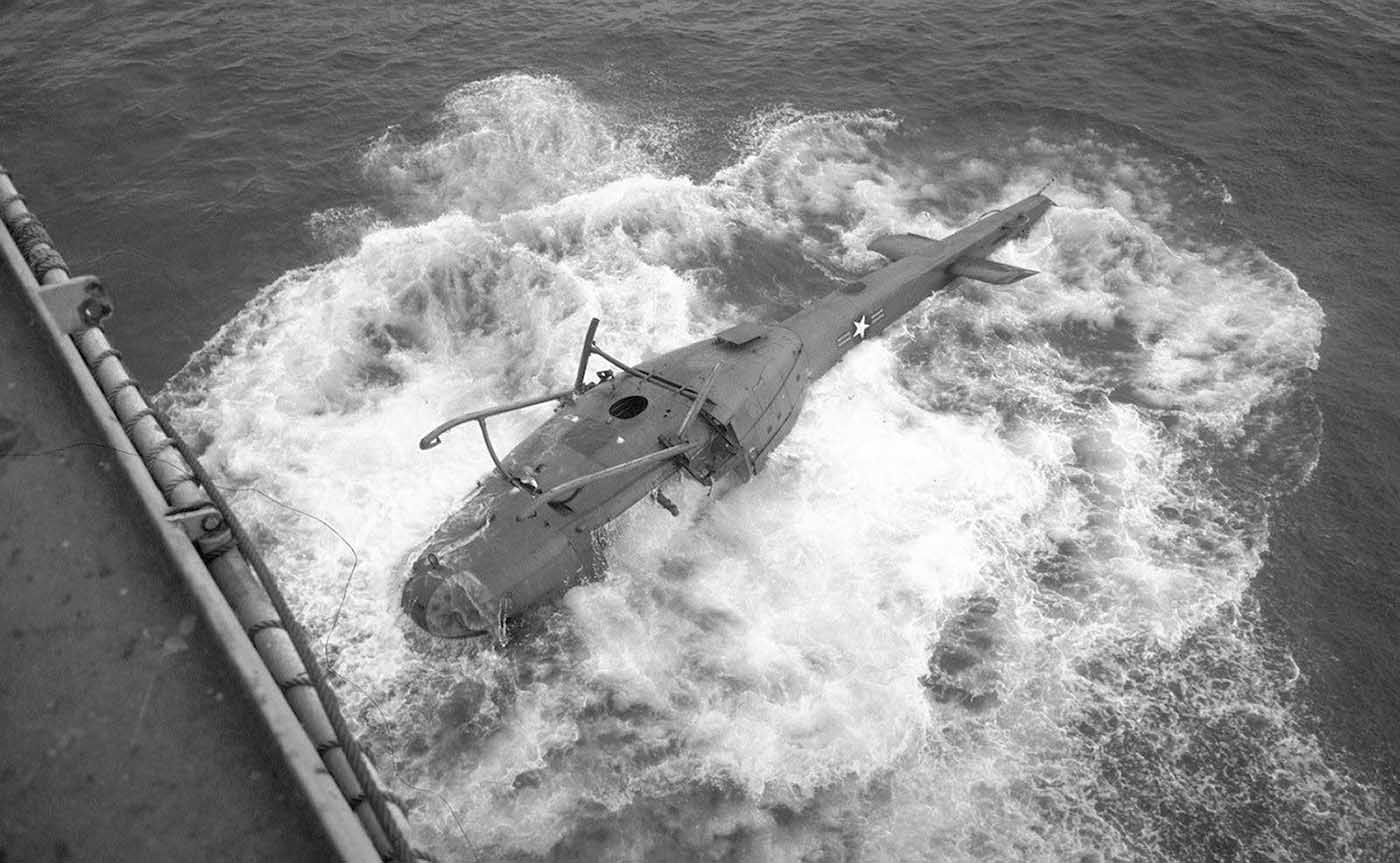
Some pilots received orders to ditch their helicopters directly into the sea after dropping off their passengers. They would fly their aircraft to a safe distance from the ships, set them down on the water, and then be pulled out by rescue crews. It was a deliberate sacrifice of expensive military hardware to keep the evacuation moving.
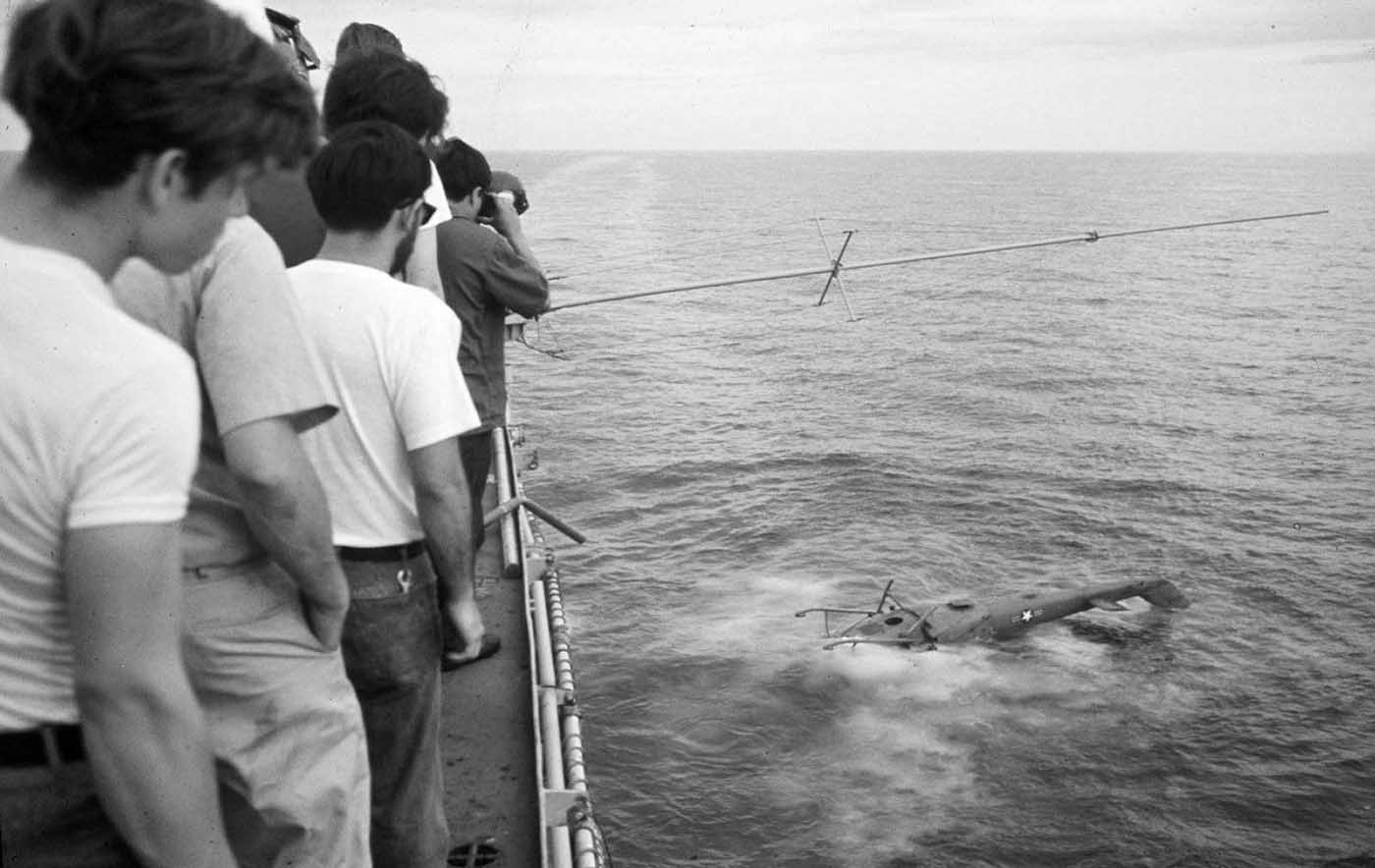
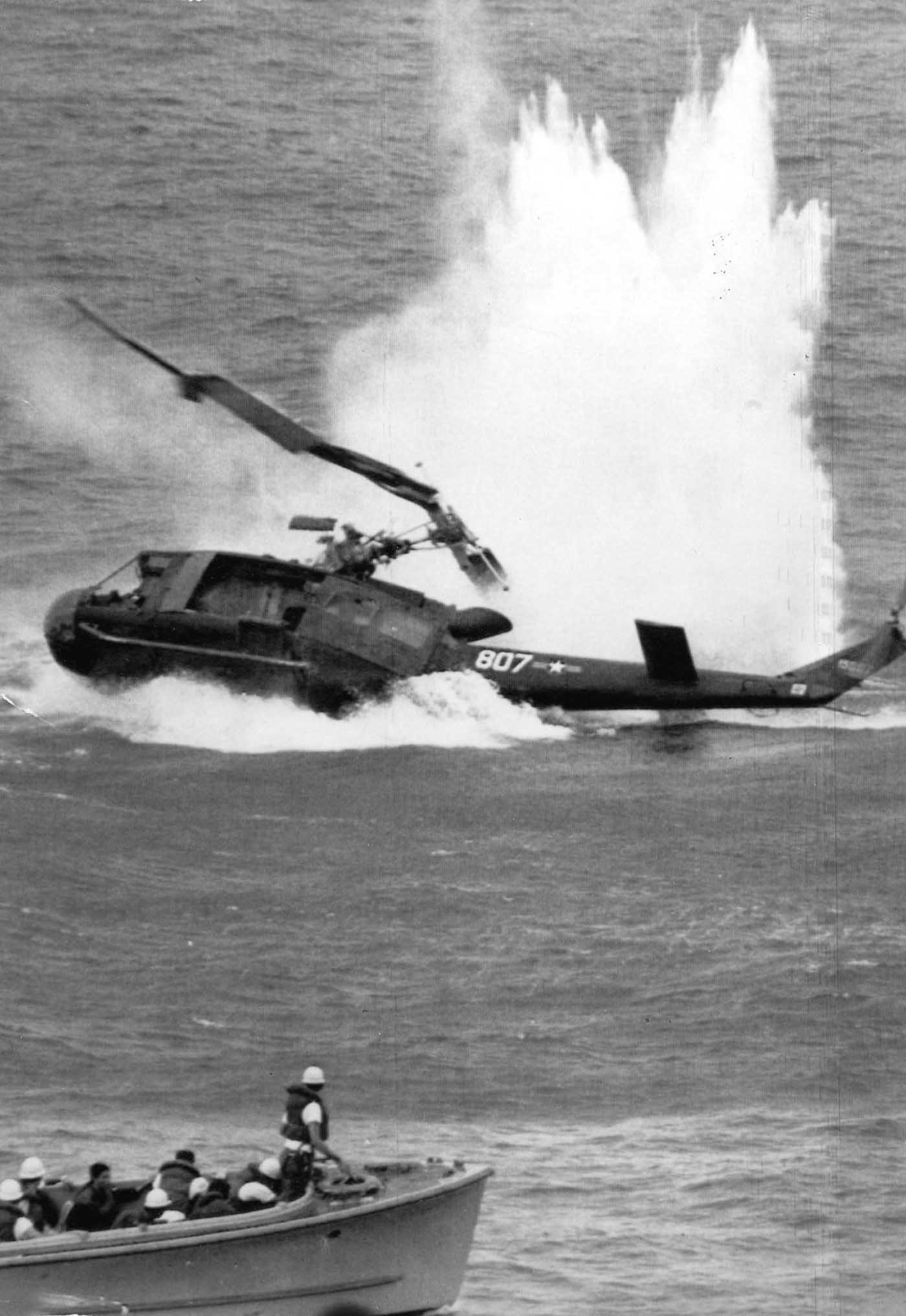
The sight of helicopters being shoved off the edge of a carrier deck became one of the defining images of the Vietnam War’s end. Crew members used whatever was available — forklifts, muscle, and sheer urgency — to push the aircraft overboard and clear space for the next wave of flights.
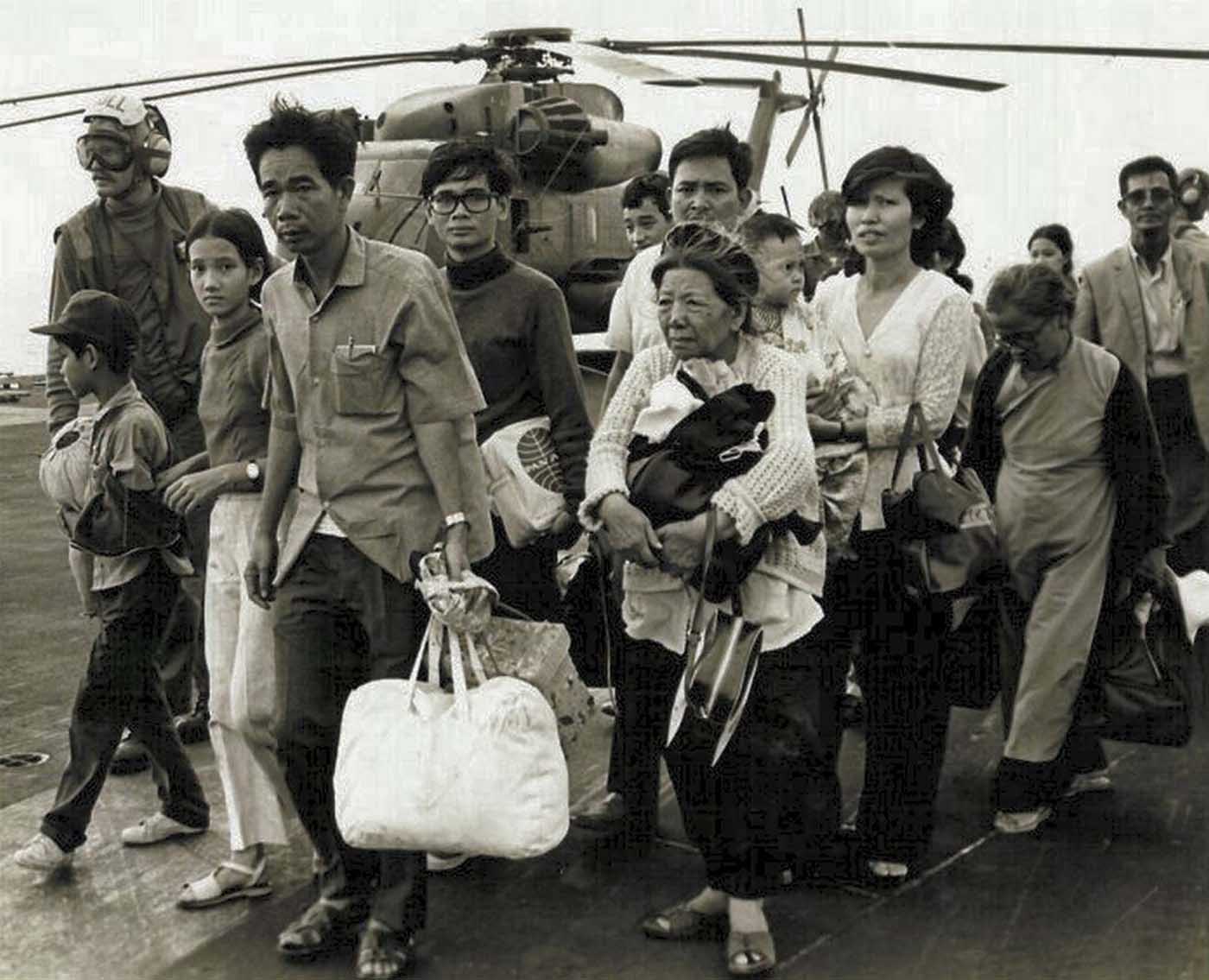
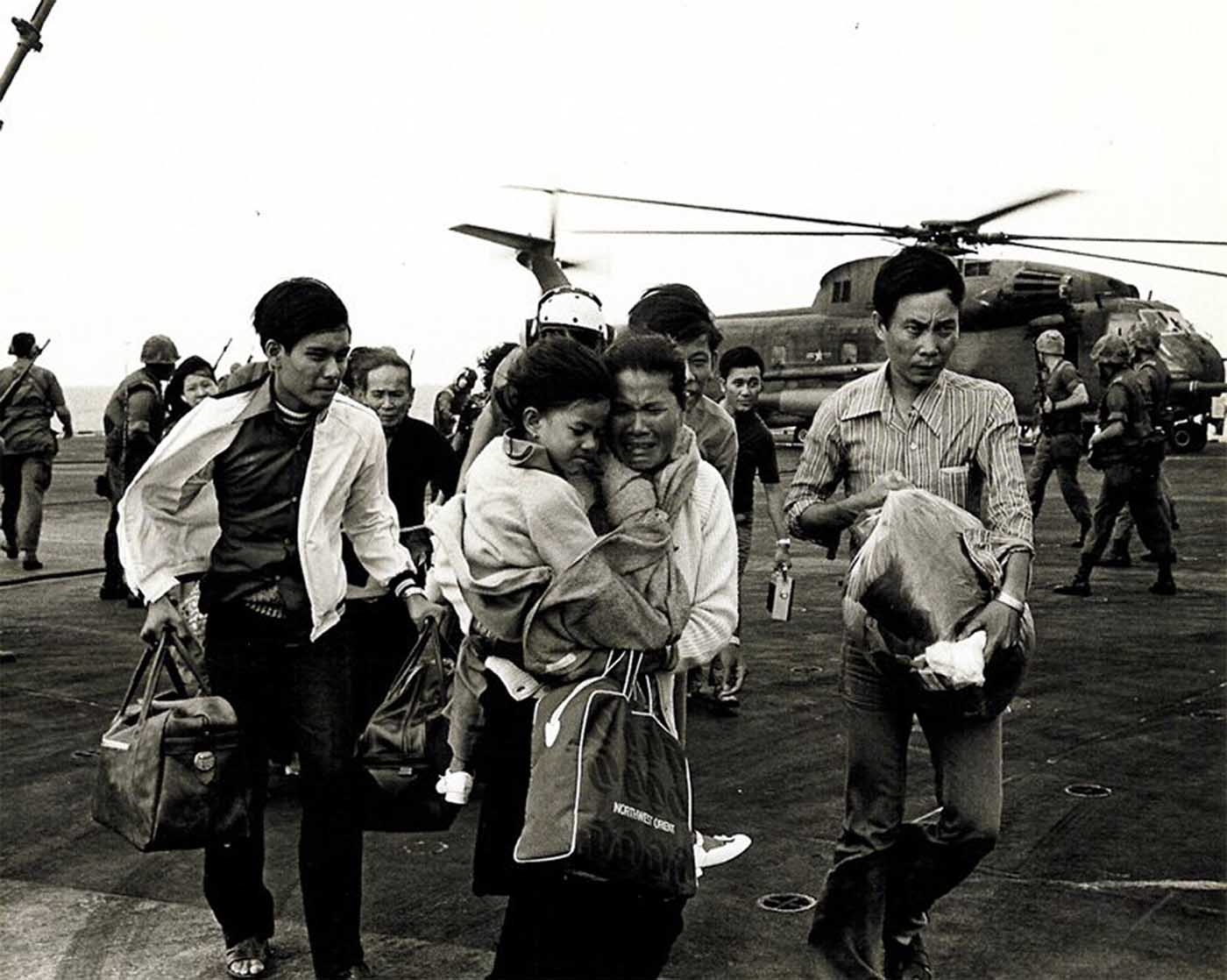
On the ships, the scale of the human crisis was just as striking. Thousands of Vietnamese refugees arrived aboard U.S. Navy vessels with nothing but the clothes on their backs and whatever they had managed to carry. The language barrier between the refugees and American military personnel created an immediate logistical challenge. Simple systems were improvised on the spot to manage the chaos.
Aboard USS Hancock, arriving refugees were issued numbered tags as they came on board. Their belongings were tagged with the same number so that families and their possessions could be matched up despite the communication barrier between Vietnamese civilians and the Marines managing the process.
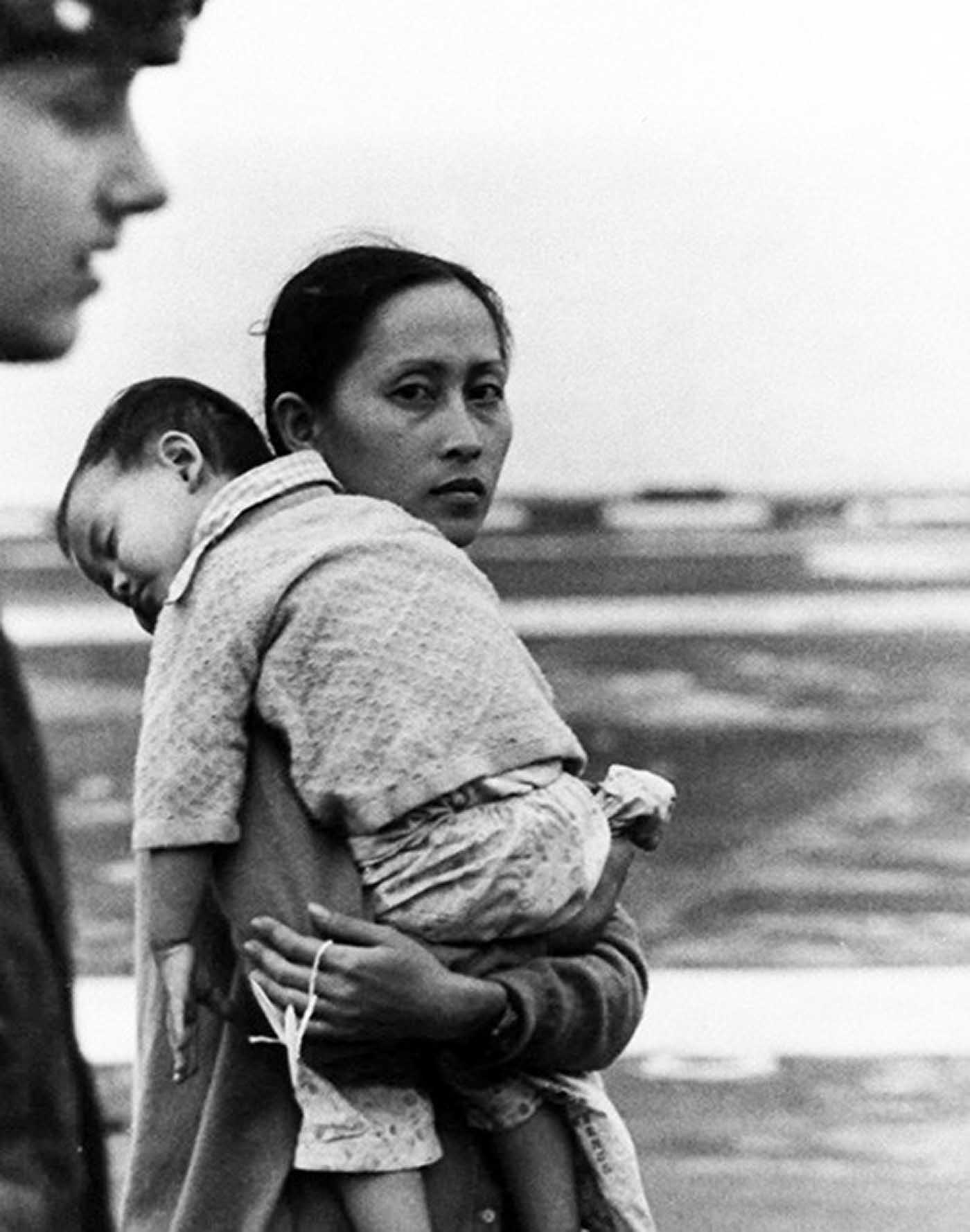
The people arriving were not just names in a logistical spreadsheet. They were families — mothers carrying children, fathers gripping the hands of their sons and daughters — who had just fled a country they would never return to.
When the operation ended, the numbers told the story of the effort. Over the course of the two-day airlift, 1,373 Americans and 5,595 Vietnamese and third-country nationals were evacuated by helicopter. In total, counting those who fled by other means and were processed by U.S. forces, 138,869 Vietnamese ended up in American custody and were processed as refugees for entry into the United States. The U.S. Embassy and Defense Attaché Office had managed to extract 130,000 people — American citizens, Vietnamese civilians, and nationals from other countries — under fire, under pressure, and under an unforgiving deadline.
Operation Frequent Wind closed out twenty years of American military involvement in Vietnam. The evacuation ran for just two days, but the planning, preparation, and execution behind it represented one of the most complex emergency operations the U.S. military had ever carried out. Hundreds of difficult decisions were made in real time — including the choice to throw millions of dollars worth of aircraft into the ocean — all in service of getting as many people out as possible before the window closed.