In October 1966, photojournalist Larry Burrows embedded with American Marines fighting south of the Demilitarized Zone (DMZ) in Vietnam. He was there to document what soldiers actually experienced — not the sanitized version, but the mud, the blood, and the exhaustion. What his camera captured became some of the most powerful images of the entire war.
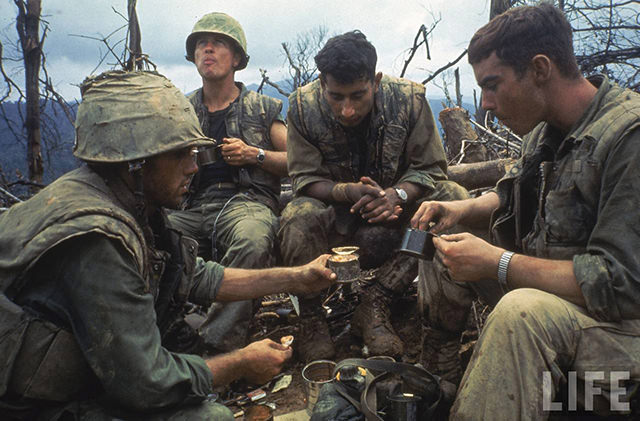
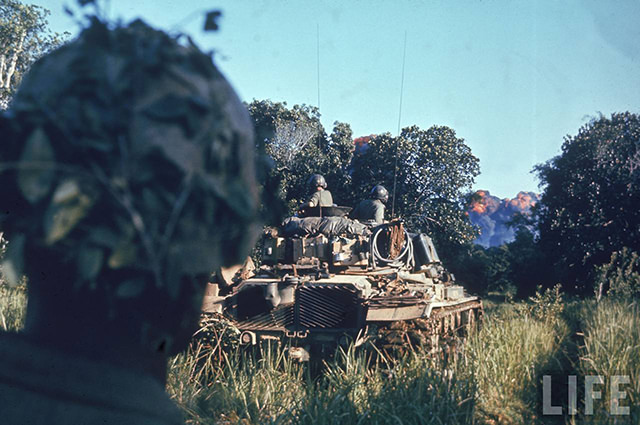
The terrain around the DMZ was brutal. Heavy rains from the season had turned the ground into thick mud. Bombed-out trees marked where artillery and airstrikes had hit. Marines moved through this landscape carrying heavy gear, fighting an enemy that knew the ground far better than they did. Every patrol was a physical ordeal on top of a deadly one.
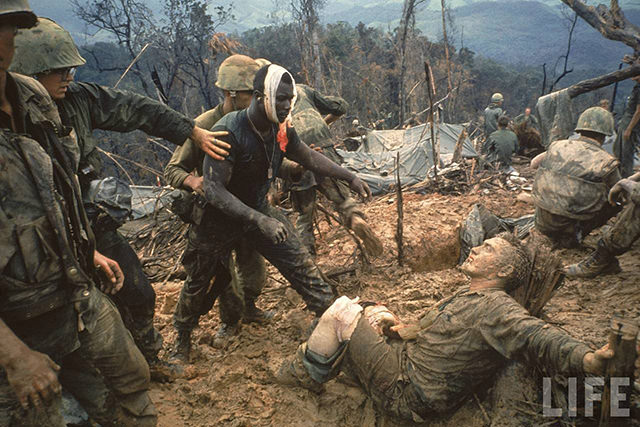
Operation Prairie, the military campaign underway at the time, put Marines directly in the path of North Vietnamese forces fighting for control of key terrain, including Hill 484. The firefights were intense and the casualties were real. Burrows stayed close to the front lines throughout, never stepping back when the fighting escalated.
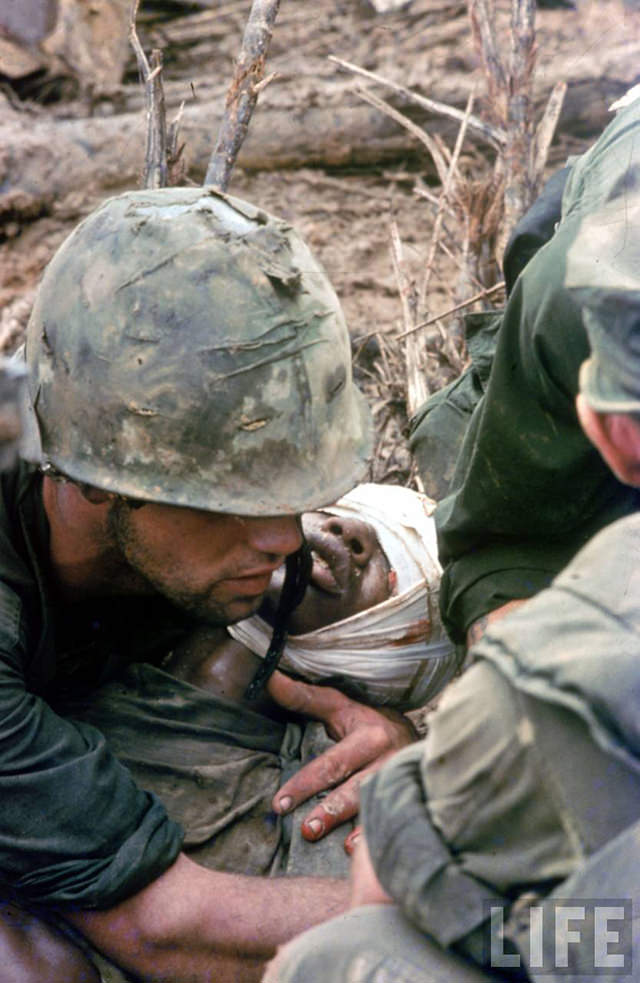
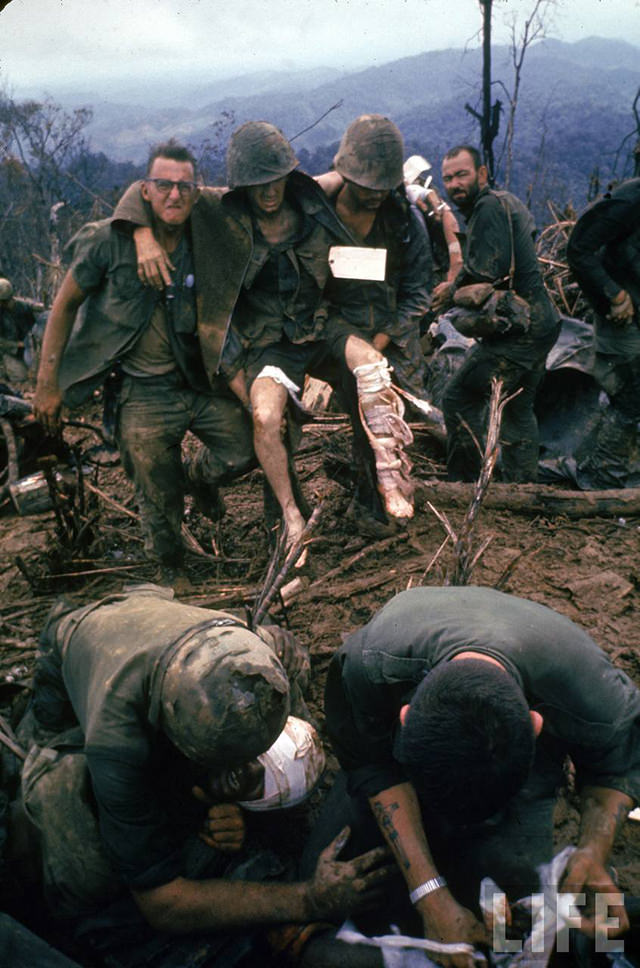
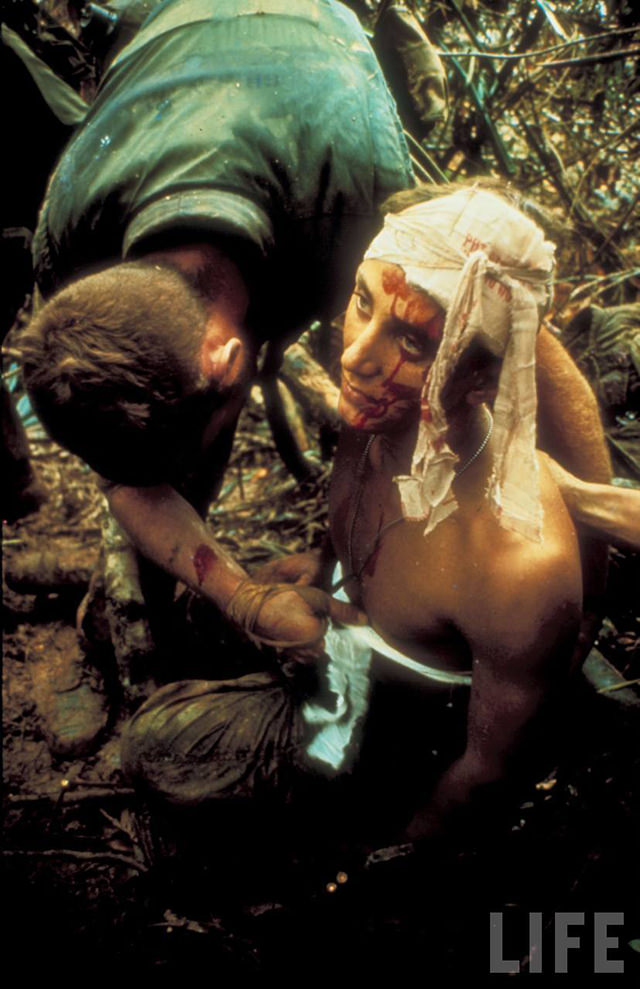
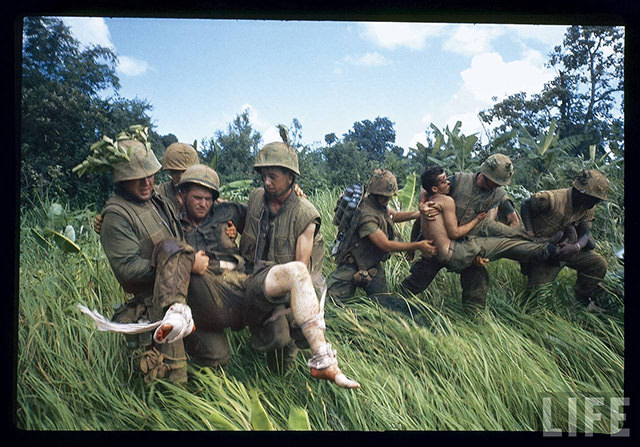
Wounds in this war were severe. Bullets, shrapnel from explosions, and hidden booby traps tore through men’s bodies. Medics and fellow Marines treated the injured under fire, often with no cover. Burrows photographed these moments without staging them — the bandages, the blood, and the urgency were all exactly as they appeared.
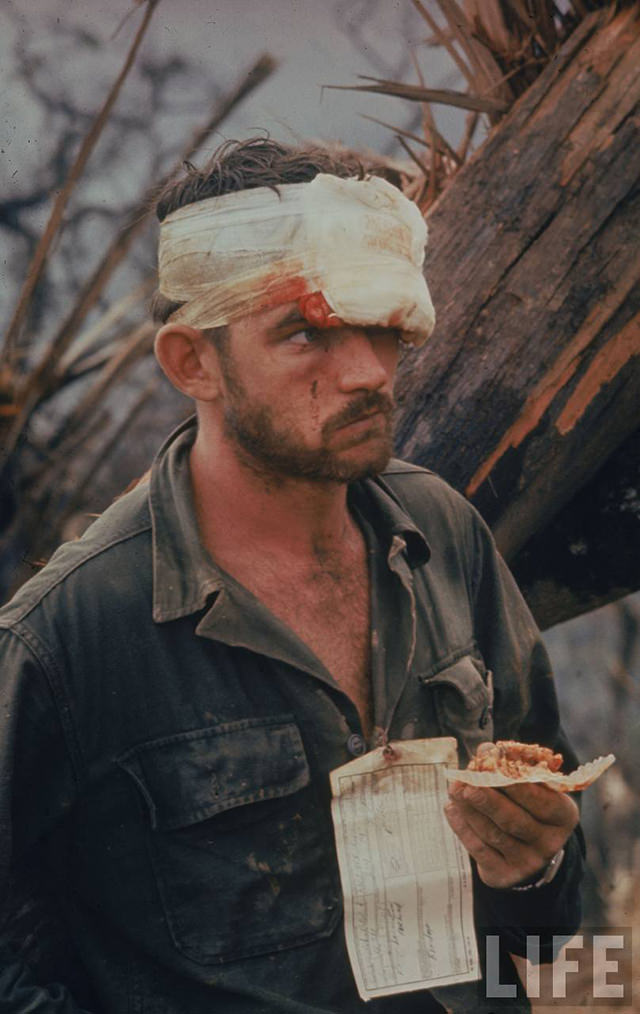
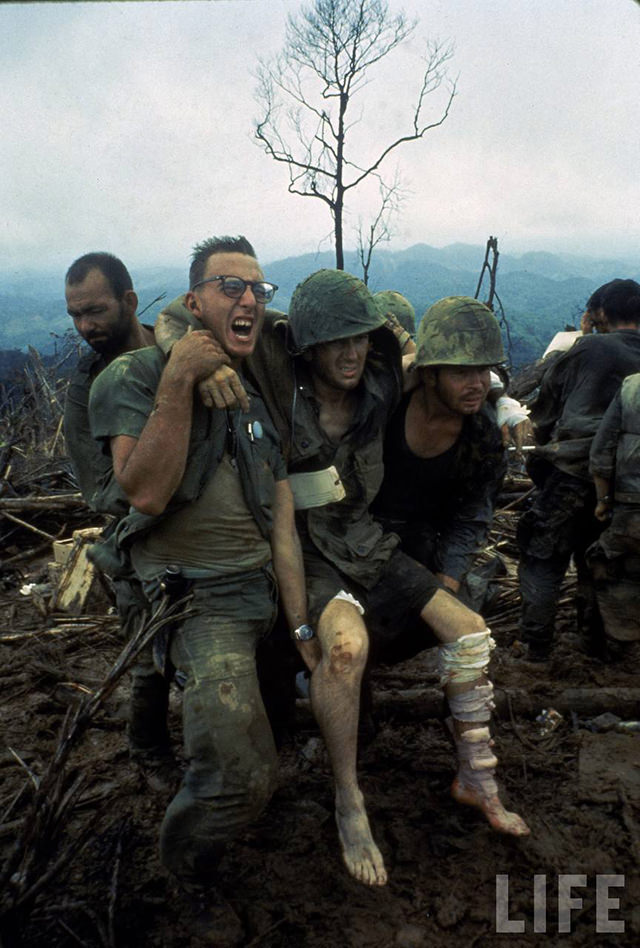
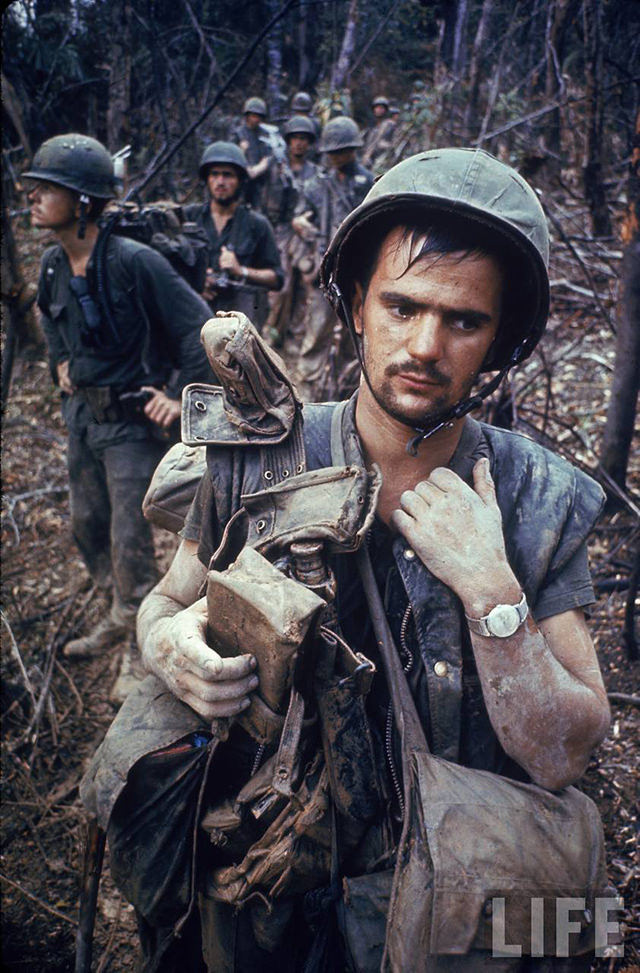
The faces in Burrows’ photographs say as much as the wounds do. Shell shock, pain, and blank exhaustion are written across young men who had been fighting in heat and humidity with no end in sight. These were not posed portraits — they were stolen seconds from one of the war’s most grinding ground campaigns.
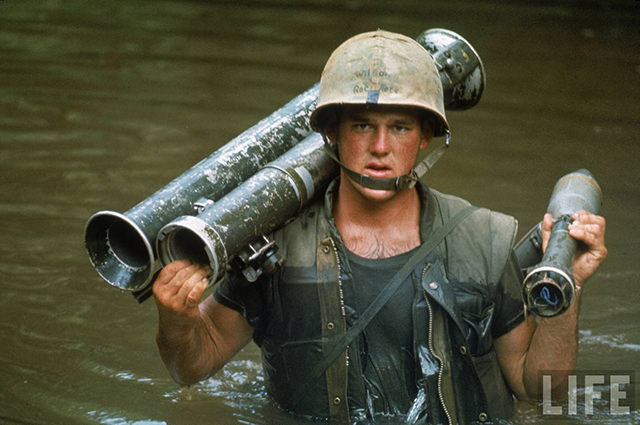
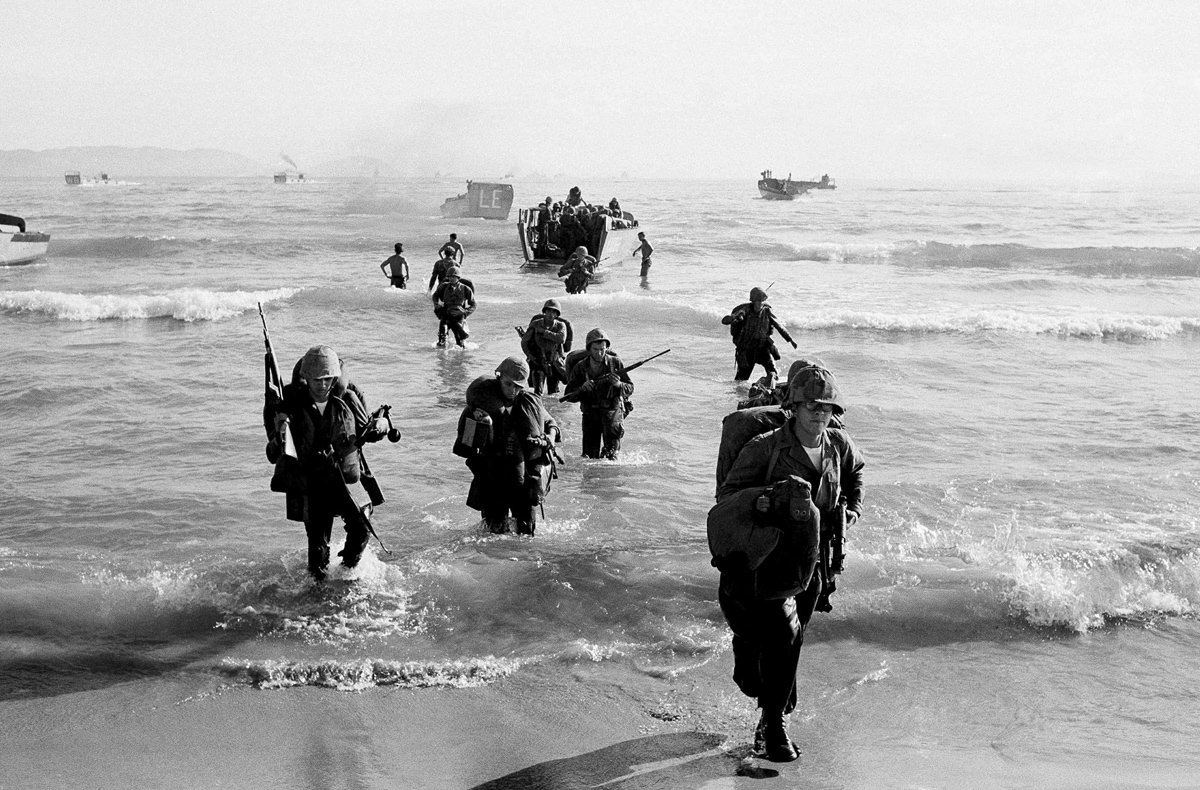
Burrows moved with squads on patrol, crossed streams with them, and crouched in the mud beside them when gunfire broke out. He documented not just the violence but the weight of every hour between the fighting — the patrols, the waiting, the carrying of heavy weapons through difficult ground.
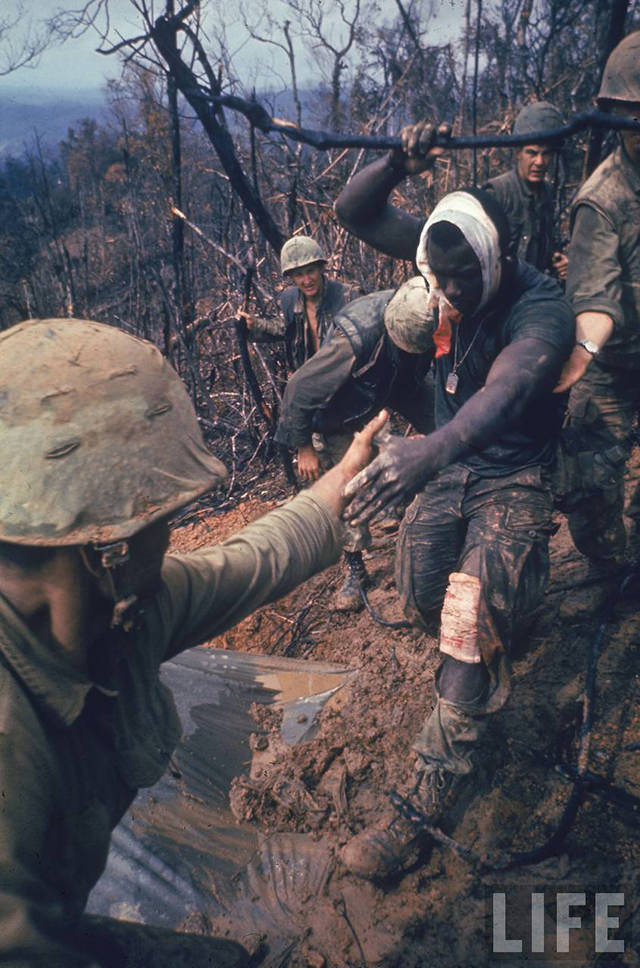
Getting the wounded out was its own fight. Marines helped injured comrades to air evacuation points while still under threat of enemy fire. The dead also had to be recovered — a task Burrows photographed directly, including scenes where Marines retrieved fallen comrades as rounds continued to land nearby.
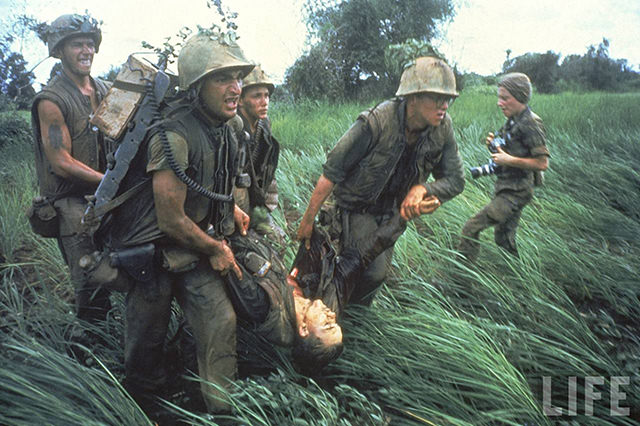
The 2nd Battalion, 5th Marines were among the units Burrows followed through the sweep below the DMZ. Their mission was to root out North Vietnamese forces dug into the hills and jungle. The cost in casualties was high, and Burrows’ lens recorded it all without flinching.